UCLA Fielding School of Public Health Magazine - Summer 2026 | Protecting Tomorrow Today
Taking collective action to ensure healthier days lie ahead
DEAN’S MESSAGE
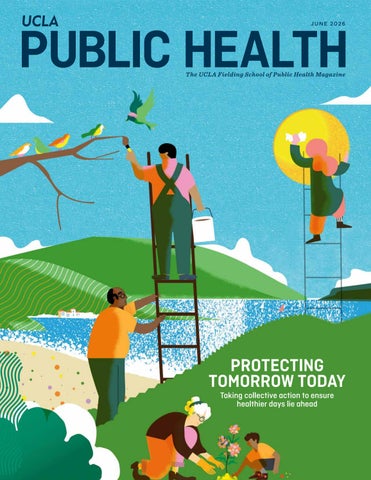
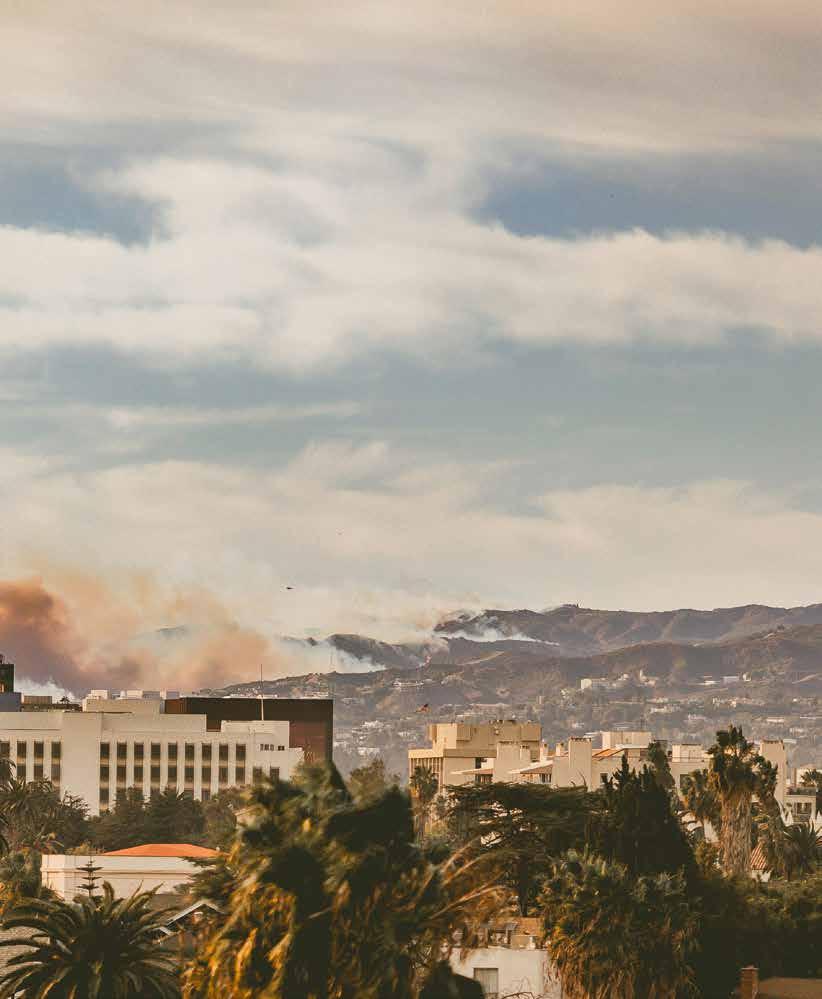
AS I PREPARE MY FINAL DEAN’S MESSAGE for our magazine and reflect on our school’s incredible accomplishments over the nearly eight years I’ve served as dean, I am filled with gratitude and pride about all we have accomplished together. Through both research and partnerships with communities and policymakers, we have helped to improve lives, all while utilizing our degree programs to educate future public health leaders — individuals who go on to join the legions of FSPH alums making a difference locally, nationally, and around the world. Of course, although I have decided to return to my faculty work full time, our school’s impactful activities will only gain steam. As the cover of our magazine depicts, the theme for this issue is “protecting tomorrow today.” On the pages that follow, you will read about some of the myriad ways UCLA Fielding is taking actions now that will ensure a healthier future.
That future is being secured, in part, by our school’s investment in new, highly talented faculty — rising stars who have brought in new energy while expanding UCLA Fielding’s expertise in the most pressing public health topics of the day. During the last eight years, we have recruited 41 new full-time equivalent faculty members across our five academic departments, some of whom are featured in this issue. You can also read, starting on page 37, about how we are protecting tomorrow today through our school’s tremendously popular new undergraduate public health degree program, which equips the next generation with public health principles that they can apply, in powerful ways, to any profession they ultimately choose.
Beginning on page 10, we present four-page sections in which faculty pairs from each of our academic departments engage in conversations about the steps needed to build a healthier future in their area of focus, alongside students in their department describing the paths that led them to public health and how they intend to use their FSPH education to make a difference. In this issue, you can explore some of the many ways UCLA Fielding faculty, students, and staff mobilized to assist communities affected by the 2025 L.A. County wildfires, then joined with other institutions on an unprecedented collaborative scientific effort to better understand the short- and long-term health impacts of such events — which, unfortunately, are sure to become more common with the changing climate (page 30). We also highlight our 2026 Research, Innovation & Impact Day, which celebrated the ongoing research and practice successes of our faculty, students, and staff (page 42); and we describe the continuing impact, locally and globally, of the FSPH graduates recently inducted into the UCLA Fielding Hall of Fame (page 46).
We face many challenges in the current public health landscape, but as my tenure as dean draws to a close, I am nothing but optimistic. When I think of the history of public health in successfully overcoming seemingly intractable problems, I know our field will continue to find solutions that will build healthier communities. And when I consider the amazing work of our FSPH faculty, staff, alums, and students, I have no doubt our school will remain at the forefront of public health research, education, policy, and practice.
Having the privilege of leading the UCLA Fielding School of Public Health has been the honor of a lifetime. The article starting on page 4 chronicles some of our shared accomplishments that have set the stage for a successful future. I return to my faculty role at our school with a full heart, and comfort in knowing that our school’s best days lie ahead.
Dr. Ron Brookmeyer
Dean
PROTECTING TOMORROW TODAY
When it’s most effective, public health can go unnoticed. When we aren’t getting sick or injured, we’re unlikely to credit infectious disease surveillance, food-safety regulations, occupational safety measures, or vaccination programs. When our air and water are clean and the conditions in our communities are conducive to a healthy lifestyle, we don’t necessarily connect the dots to the public health research, advocacy, and policies that made it all possible.
Much of public health is about reducing risk, preventing illness, and promoting the long-term well-being of populations. It’s about investing in a healthier future for communities by addressing
the social determinants — including education, employment, income, transportation, housing, and access to nutritious foods — that are major drivers of health status and outcomes.
At a fraught moment for the field, UCLA Fielding School of Public Health faculty, staff, students, and graduates have remained steadfast in their commitment to the often-unheralded work of addressing concerns upstream, building more resilient systems, and shaping policies and programs that will foster better health for generations to come. Read on to learn about some of the many ways the school is protecting tomorrow today.
Thriving Through Turbulent Times
As Dr. Ron Brookmeyer steps down from his role as dean, the school is in a stronger position than ever before
10 Faculty Conversation: Promoting Safe Workplaces and Communities
Drs. Rachael Jones and Yoshira Ornelas Van Horne of the Department of Environmental Health Sciences discuss how exposure scientists can tackle an issue disproportionately affecting low-income populations
14 Faculty Conversation: Weighing AI’s Impact on Public Health
Drs. Andrew Holbrook and Sijia Li of the Department of Biostatistics discuss the implications of the explosion of artificial intelligence for public health
17 Student Perspectives: Department of Biostatistics
First-person accounts on what drives these individuals to make a difference
18 Faculty Conversation: Advancing Health Policy Through Equity-Centered Data
Drs. Ninez Ponce and Kathryn Leifheit of the Department of Health Policy and Management discuss why it’s imperative for research to identify needs of marginalized populations and make findings accessible
21 Student Perspectives: Department of Health Policy and Management
First-person accounts on what drives these individuals to make a difference
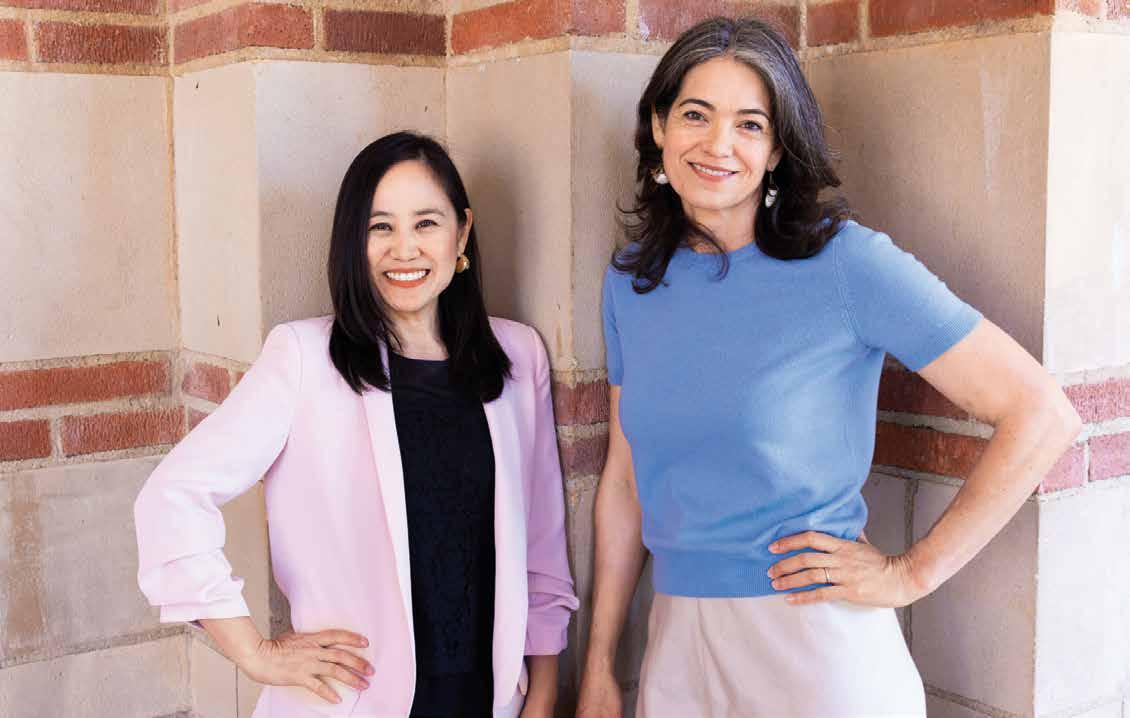
Drs. May Sudhinaraset and Rebecca Delafield of the Department of Community Health Sciences discuss a preventable public health problem and what must be done
25 Student Perspectives: Department of Community Health Sciences
26 Faculty Conversation: Fighting Cancer by Uncovering Risks and Trends
Drs. Zuo-Feng Zhang and Mia Hashibe of the Department of Epidemiology discuss how traditional and emerging tools can inform prevention and earlydetection strategies
29 Student Perspectives: Department of Epidemiology
First-person accounts on what drives these individuals to make a difference
30 Our Future Under Fire
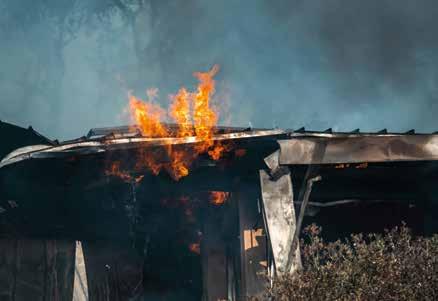
After rallying to assist affected communities following the 2025 L.A. County wildfires, UCLA Fielding is leading the effort to better understand and reduce health risks associated with the inevitable climate-related disasters that loom ahead
37 Major Impact
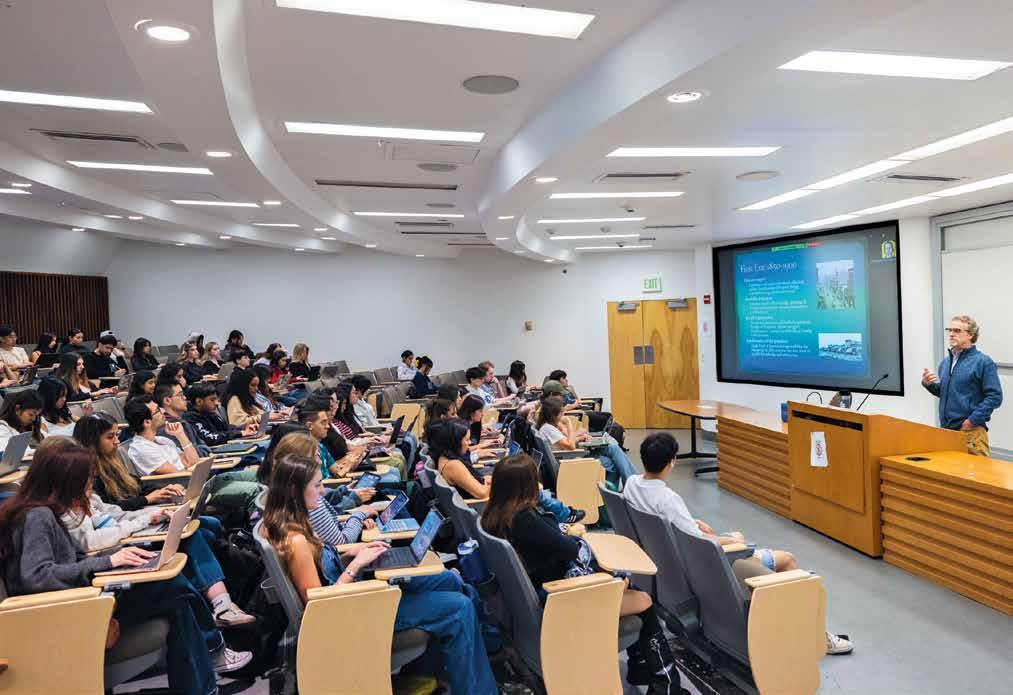
UCLA’s popular new undergraduate public health degree program, taught by FSPH faculty, draws students passionate about improving the health of communities, regardless of the profession they ultimately choose
First-person accounts on what drives these individuals to make a difference
First-person accounts on what drives these individuals to make a difference
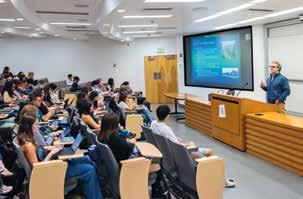
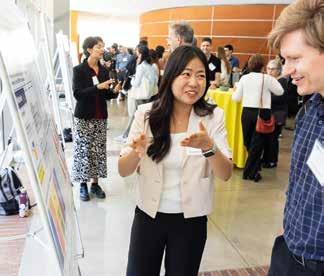
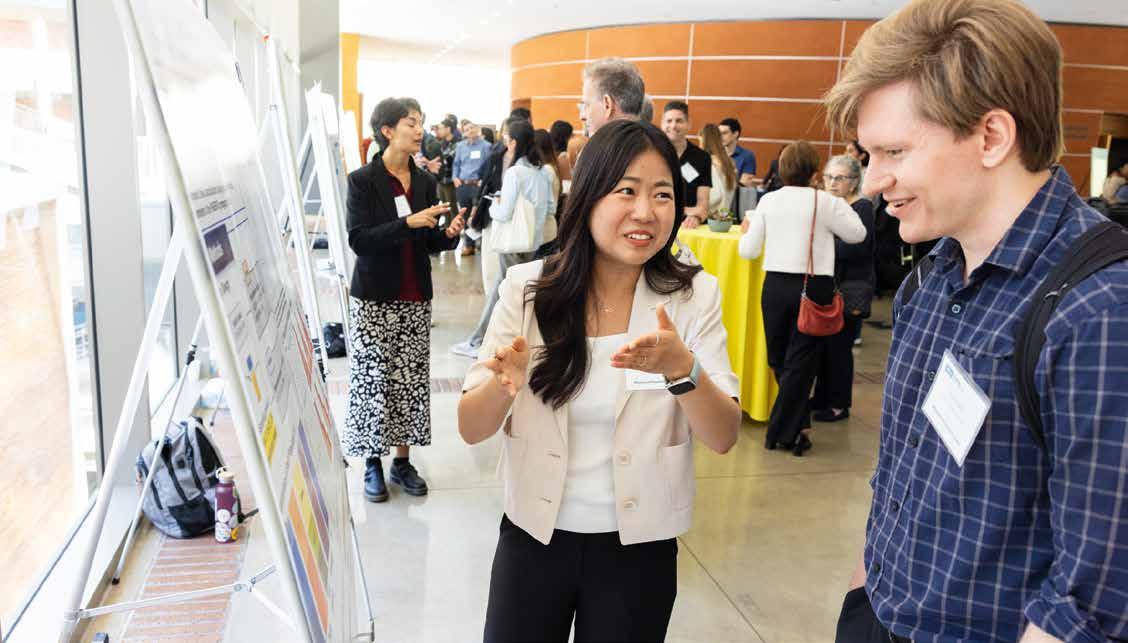
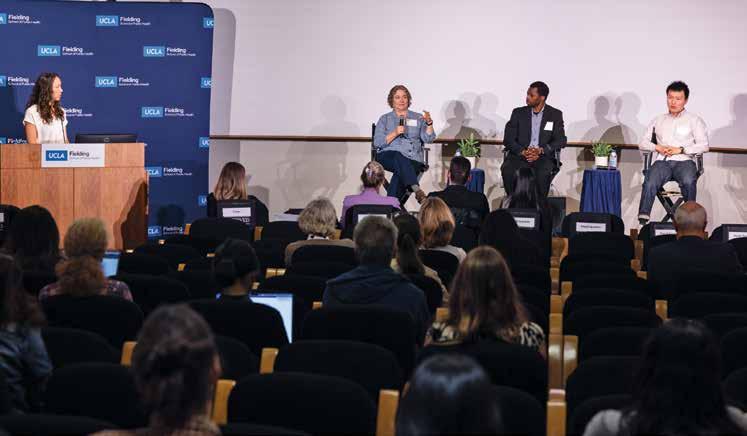
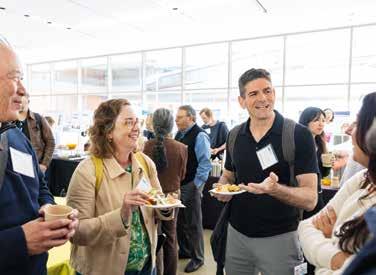
The UCLA Fielding community gathered in April for the 2026 Research, Innovation & Impact Day, an event that celebrated the vital role of public health research and practice during difficult times
46 Tops of the Class
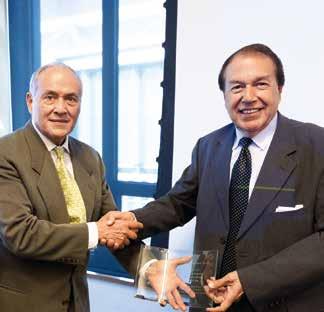
The most recent inductees into the UCLA Fielding Hall of Fame exemplify the school’s commitment to research, education, and service at home and around the globe
School Work
53 Grants & Contracts
58 Faculty Honors & Service
59 Bookshelf
60 Transformative Investments
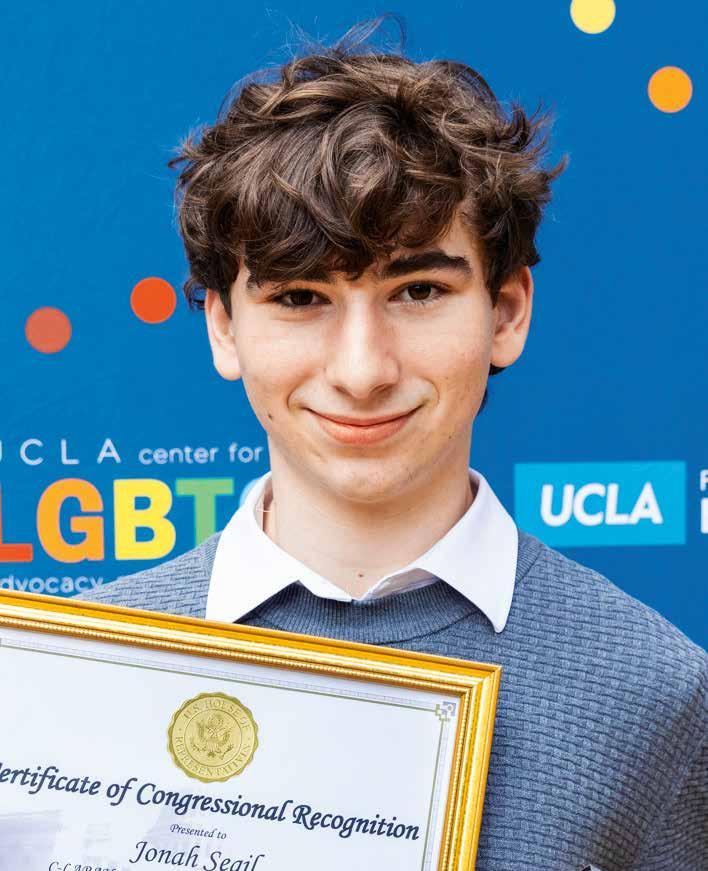
When high school junior Jonah Segil learned about cuts in government funding for the FSPH-based UCLA Center for LGBTQ+ Advocacy, Research & Health, he sprang into action
Dr. Ron Brookmeyer
Dean
MAGAZINE STAFF
Carla Denly
Executive Editor & Associate Dean for Marketing and Communications
Dan Gordon Editor & Writer
Rent Control Creative Design Direction
Brad Smith
Contributing Writer & Editor
Sharon Han
Photography Coordinator
UCLA Fielding School of Public Health Website: ph.ucla.edu
Manage Your Subscription: ph.ucla.edu/subscriptions
Follow us on social media: @UCLAFIELDING
UCLA Public Health magazine is published by the UCLA Fielding School of Public Health for the graduates, faculty, students, staff, and friends of the school. Copyright 2026 by The Regents of the University of California. Permission to reprint any portion must be obtained from the school. Please send requests to marcomm@ph.ucla.edu.
STAY CONNECTED:
EDITORIAL BOARD
Thomas R. Belin, PhD Professor, Biostatistics; Pamina Gorbach, DrPH Professor, Epidemiology; Moira Inkelas, PhD Professor, Health Policy and Management; Marjorie Kagawa-Singer, PhD, MN Professor Emeritus, Community Health Sciences; Cathy Lang, PhD Assistant Dean for Research; Adjunct Associate Professor, Community Health Sciences; James Macinko, PhD Associate Dean for Research; Professor, Community Health Sciences and Health Policy and Management; Michael Prelip, DPA Professor, Community Health Sciences; Beate Ritz, PhD Professor, Epidemiology and Environmental Health Sciences; May C. Wang, DrPH Professor, Community Health Sciences; Zuo-Feng Zhang, MD, PhD Professor and Chair, Epidemiology; Yifang Zhu, PhD Professor, Environmental Health Sciences; Frederick Zimmerman, PhD Professor, Health Policy and Management
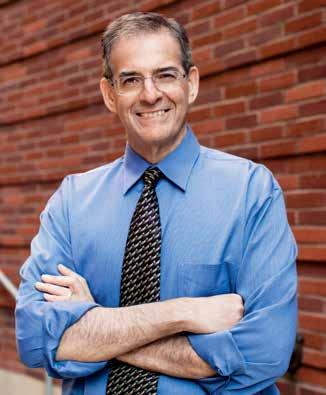
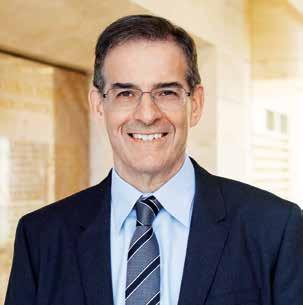
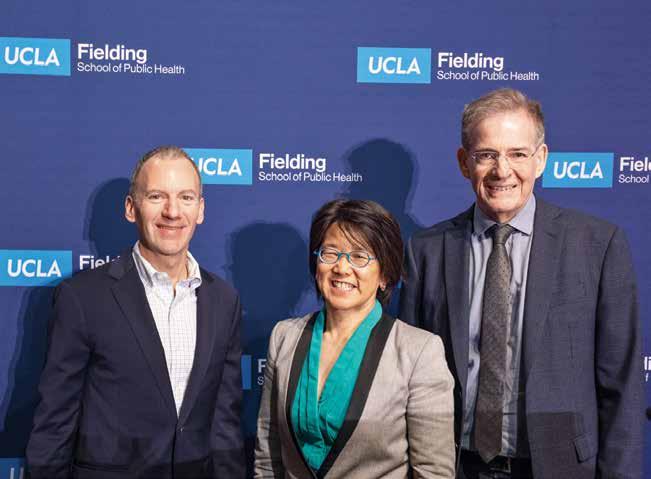
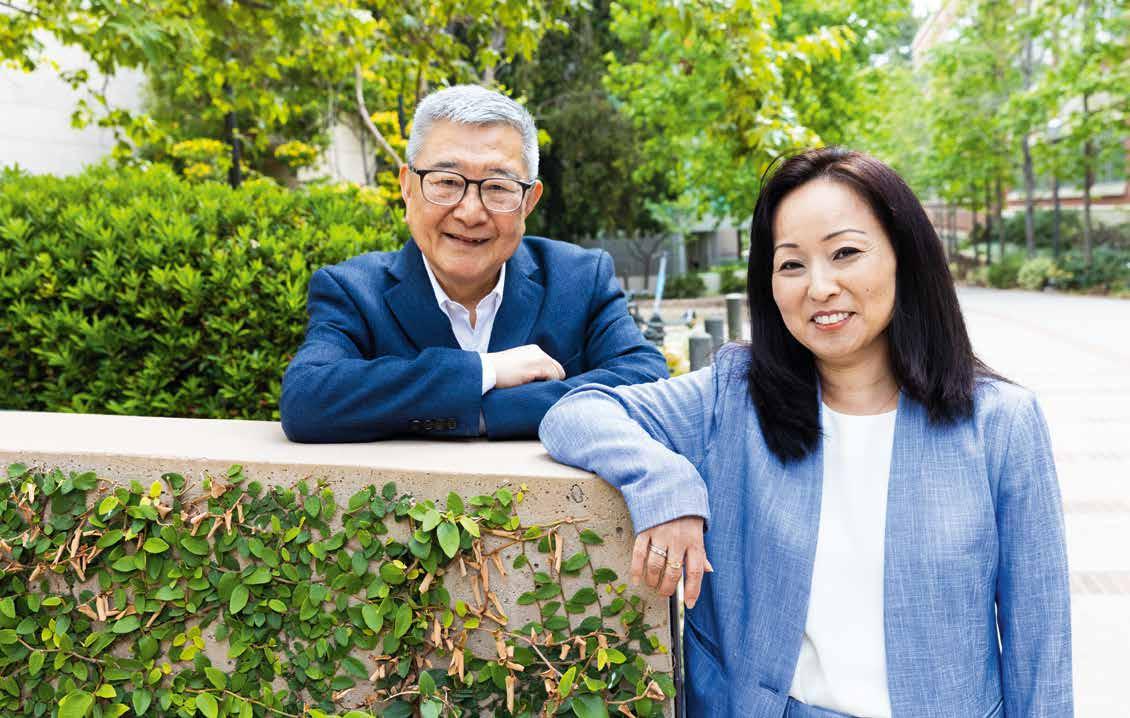
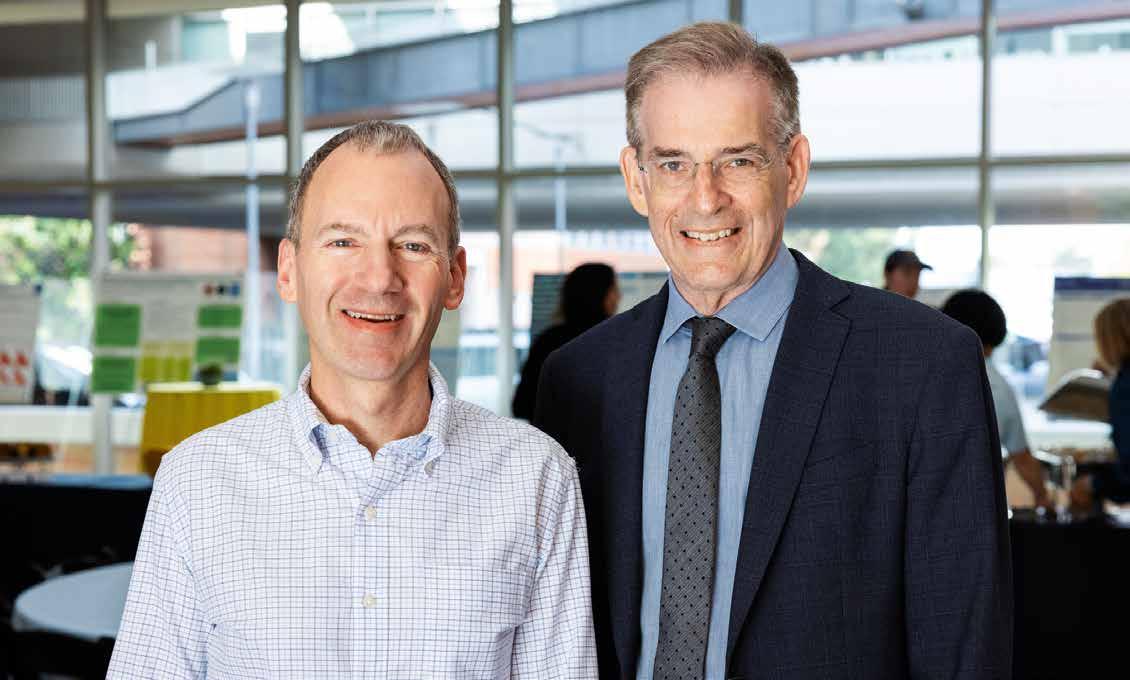
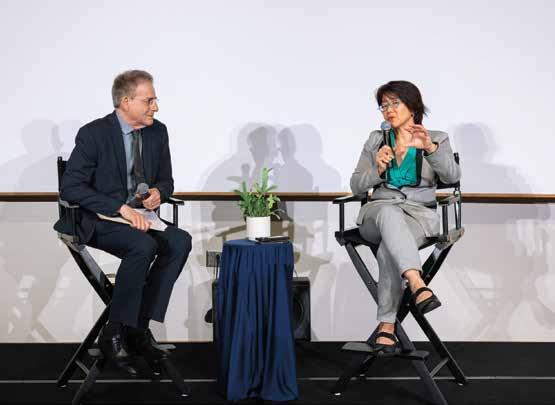
IMMEDIATELY BELOW: DEAN RON BROOKMEYER WITH DR. JAMES MACINKO, FSPH ASSOCIATE DEAN FOR RESEARCH, AND DR. ERICA PAN, DIRECTOR AND STATE PUBLIC HEALTH OFFICER FOR THE CALIFORNIA DEPARTMENT OF PUBLIC HEALTH, AT THE 2026 FSPH RESEARCH, INNOVATION & IMPACT DAY; BOTTOM
BROOKMEYER AT 2025 UNDERGRADUATE CAPSTONE EVENT.
Thriving Through Turbulent Times
Dr. Ron Brookmeyer’s tenure as UCLA Fielding dean officially started during a once-in-acentury global pandemic, and it didn’t get easier from there. Yet as he steps down from the role, the school is in a stronger position than ever before.
HIS APPOINTMENT AS DEAN OF THE UCLA Fielding School of Public Health coincided with the onset of a global public health crisis like no other experienced in the last 100 years. His tenure concluded during a previously unthinkable assault on core public health principles, along with unprecedented threats to funding for university research.
Dr. Ron Brookmeyer, who decided to step down as of June 30, 2026, after nearly eight years leading the UCLA Fielding School of Public Health, had many goals when he accepted the formal position in January 2020 after 14 months as interim dean. But one was overarching. “I wanted to leave the school in a better place than I found it,”
says Brookmeyer, who will now focus full time on research and teaching in his role as a distinguished professor in UCLA Fielding’s Department of Biostatistics. As a renowned biostatistician, Brookmeyer’s expertise includes his ability to make sense of numbers, often in the face of uncertainty. But as it pertains to his time as dean, the data are unequivocal: Despite extraordinary challenges, the school has never been stronger or more impactful.
UCLA Fielding’s faculty has grown in both size and reputation, consistently ranking among the campus leaders in per capita extramural research funding. Thanks to generous supporters, the number of FSPH endowed
LEFT:
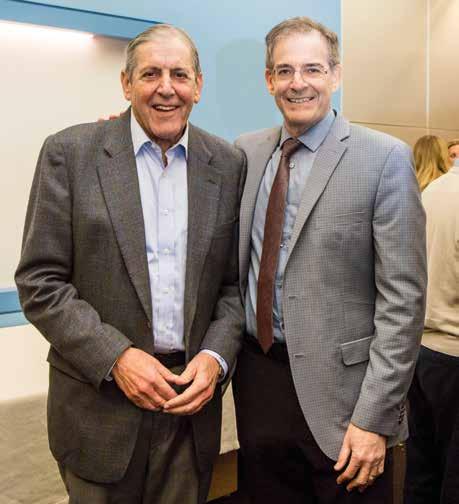
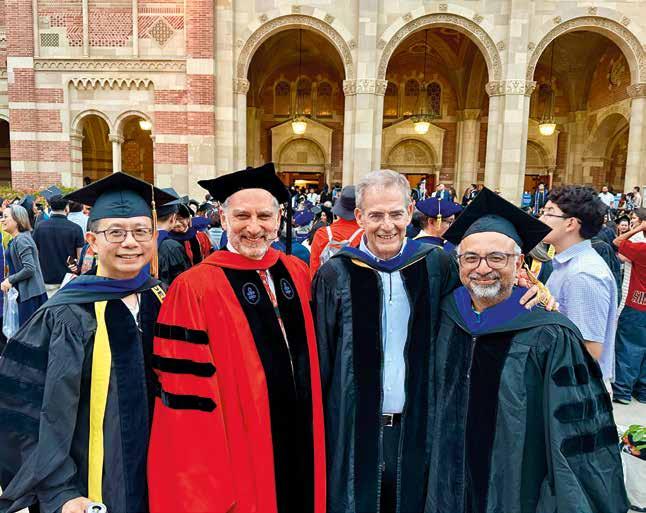
TOP: BROOKMEYER WITH FACULTY MEMBERS DRS. YIFANG ZHU AND THE LATE STEVEN WALLACE AT THE 2019 LESTER BRESLOW DISTINGUISHED LECTURE; MIDDLE: WITH FACULTY MEMBERS DRS. GILBERT GEE (LEFT), TOM BELIN (SECOND FROM LEFT), AND SUDIPTO BANERJEE (RIGHT) AT THE 2025 FSPH COMMENCEMENT CEREMONY; AND BOTTOM: WITH FACULTY MEMBER DR. JONATHAN FIELDING AT 2018 HOLIDAY OPEN HOUSE EVENT.
chairs has tripled during Brookmeyer’s tenure — providing a critical and enduring tool for recruiting and retaining top faculty and giving them flexibility in their academic pursuits.
The school’s student body has increased by nearly 50%, in part through the development of several new academic programs. Brookmeyer led the effort to reinstate the popular undergraduate Bachelor of Arts and Bachelor of Science majors in public health at UCLA, significantly expanding UCLA Fielding’s footprint on the campus and bolstering its future impact in communities. He worked tirelessly to improve the physical infrastructure of the school while championing the development and launch of a new FSPH website. And Brookmeyer’s leadership across the wider UCLA community included chairing the campuswide COVID-19 Future Planning Task Force, which provided evidence-based guidance to the university during the unfolding pandemic.
The Council on Education for Public Health (CEPH) — the independent U.S. agency that accredits schools of public health — awarded UCLA Fielding the highest scores possible on more than 120 criteria during FSPH’s most recent accreditation review. Meanwhile, the school has steadily improved in U.S. News & World Report’s national Best Public Health Schools list, climbing from 11th at the start of Brookmeyer’s tenure to its 2026 ranking of tied for sixth in the country among the 224 public health schools and programs CEPH accredits.
But in this case, the data don’t tell the complete story. Those who have worked closely with Brookmeyer during his tenure laud the collegiality he built at the school through his leadership style. “Ron promoted a transparent environment in which faculty, staff, and students felt heard and respected,” says Dr. May Wang , former chair of the school’s Faculty Executive Committee. “He has a special gift for active listening, which was tremendously helpful for the school as it navigated through some unprecedented challenges.”
“Ron promoted a transparent environment in which faculty, staff, and students felt heard and respected.”
— Dr. May Wang
BROOKMEYER CAME TO UCLA FIELDING IN 2010 with no intention of ascending to an administrative leadership role. In nearly three decades on the faculty at the Johns Hopkins Bloomberg School of Public Health, he had earned acclaim for research that combined statistics, epidemiology, and information sciences to develop models projecting the future magnitude of major public health problems. As a researcher at Johns Hopkins in the early days of the AIDS epidemic, Brookmeyer co-authored a landmark 1986 paper in The Lancet accurately projecting that, given the HIV virus’s long incubation period, the 27,000-plus cases reported up to that point represented the tip of the iceberg. By the time he arrived at UCLA Fielding, Brookmeyer was immersed in work that would draw worldwide attention through its projection that the number of Alzheimer’s cases in the U.S. would nearly quadruple in the first half of the 21st century.
But in 2018, as campus leaders began the national search for a new FSPH dean, they approached Brookmeyer, who had run Johns Hopkins’ interdepartmental Master of Public Health program from 2002 to 2008. “I knew from that experience that I could bring people from different departments and disciplines together toward a common purpose,” Brookmeyer says of his decision to accept the offer to become interim dean.
In December 2019, Brookmeyer received a call from the UCLA provost informing him that he had been selected as the school’s permanent dean. Brookmeyer was in China at the time, teaching workshops at the invitation of the Chinese Center for Disease Control and Prevention alongside Dr. Roger Detels , FSPH distinguished professor of epidemiology, whose relationship with Brookmeyer dated back to the earliest days of the Multicenter AIDS Cohort Study, or MACS (Detels headed the UCLA site and Brookmeyer worked at the Hopkins site).
By the time Brookmeyer’s appointment was announced, in January 2020, it was becoming clear that an outbreak in China the previous month was beginning to spread rapidly across Asia and beyond. And so, as Brookmeyer’s official term as UCLA Fielding dean began, public health was thrust into the spotlight like never before.
The school moved proactively to help both the campus and the broader community understand what was unfolding and what public health measures were called for — although, as Brookmeyer notes, “There was no manual for what to do. The data were still coming in.”
“[Dean Brookmeyer’s] leadership and expertise were invaluable in helping UCLA navigate through uncharted territory.”
— Dr. Darnell Hunt
On Feb. 10, 2020, when barely more than a dozen cases had been identified in California, UCLA Fielding co-hosted “The Novel Coronavirus: What Do We Know and What’s Next?” With the UCLA Center for Chinese Studies, Brookmeyer moderated a panel that included three FSPH faculty members — Detels, Dr. Anne Rimoin , and Dr. Zuo-Feng Zhang — as well as Dr. Alex Wang from the UCLA School of Law and Dr. Otto Yang from the UCLA David Geffen School of Medicine. The event, which drew an overflow crowd as well as a significant audience online, foretold the school’s leadership on the issue. As early as mid-January, FSPH faculty experts were positioned as key sources in local, national, and international news media coverage of the outbreak, a role that would continue throughout the COVID-19 pandemic, giving the school a level of visibility far disproportionate to its size.
As chair of the campuswide COVID-19 Future Planning Task Force, Brookmeyer brought together disparate campus stakeholders to determine how the university should respond in the face of evolving data. “It’s all about balancing risk, and there were many trade-offs to consider — which is something we as public health experts are trained to do,” he says. “We had different groups providing their subject-matter expertise and the idea was to piece the data together and reach a consensus … then be prepared to pivot as new information came in.”
“Dean Brookmeyer led this school through a time of crisis when the world grew especially aware of the importance of the field of public health,” says Dr. Darnell Hunt , UCLA executive vice chancellor and provost. “His leadership and expertise were invaluable in helping UCLA navigate through uncharted territory.”
BROOKMEYER STAYED ON AS CHAIR of the task force until September 2020 as the campus completed preparations for the fall quarter, then stepped aside to turn his full
attention to his role as dean. Among the first major projects was to work with faculty and staff to develop and adopt UCLA Fielding’s 2021 Strategic Plan. That document, along with its 2024 update, laid out a vision for the school that promoted critical areas central to public health in the next decade, including infectious diseases; climate change; data science and artificial intelligence; health equity; and communicating public health.
Guided by these and other priorities, Brookmeyer oversaw a process involving department chairs and faculty search committees that recruited 41 full-time equivalent (FTE) faculty to the school, including 10 that represented new positions. The faculty recruits since 2018, comprising more than half of UCLA Fielding’s 79 FTE positions, have strengthened and in some cases expanded the school’s expertise in areas such as climate change, maternal and child health, aging, AI, and data science, among others. Moreover, Brookmeyer says, “when faculty come in with impactful work and ideas, it brings new energy and vitality to the school.”
The school’s expanded impact is also represented by the new degree programs. These include the Master of Healthcare Administration and Master of Data Science in Health, both of which provide new educational routes for nontraditional students looking to build on their public health training through online and hybrid platforms.
Among the crowning achievements during Brookmeyer’s tenure was the reinstatement, after more than 40 years, of an undergraduate public health degree program at UCLA. Brookmeyer worked closely with Dr. Kyle McJunkin , assistant dean for academic programs; FSPH’s Faculty Executive Committee chair at the time, Dr. Catherine Sugar ; and other faculty members over the course of multiple years before the program, which offers Bachelor of Science and Bachelor of Arts degrees in public health, gained the approval of the UCLA Academic Senate in 2022. The program has
been an unqualified success, with public health ranking in the top 15 out of more than 140 majors high school seniors select from when applying to UCLA. “It’s been heartening to work with so many passionate students who feel strongly about health equity and want to work in a multidisciplinary fashion to make an impact in communities,” Brookmeyer says.
His observations come from direct experience: For the last three years, Brookmeyer has taught the required biostatistics course for undergraduate public health majors. “Successful teaching involves empathy — putting yourself in the student’s shoes, hearing what you’re saying from their perspective, and recognizing that everyone has a different learning style and there’s not only one way to teach,” Brookmeyer says. “Finding the best ways to reach individual students and seeing the excitement in their eyes as they learn is as rewarding as it gets.”
Another top priority for Brookmeyer was to revamp the school’s physical space and infrastructure — bringing not only a more inviting aesthetic, but also a sense of identity for the school as well as an impetus for interaction and collaboration. The student-centric overhaul included establishing the school’s first common area, the Public Health Community Space, where students can collaborate and study on the first floor; and moving the Admissions and Student Services offices from the basement level to new, renovated offices on the first floor. Digital screens were placed in the lobby for announcements about FSPH events, and Brookmeyer commissioned a design firm to create two vibrant murals along the school’s main corridor, illustrating the contributions of public health and UCLA Fielding. From there, Brookmeyer championed work on other floors, including more than two dozen renovated or new faculty and staff offices, a new FSPH conference room, the first new FSPH classroom in decades, an upgrade in IT, and updated audiovisual capabilities in lecture halls and conference rooms.
During Brookmeyer’s tenure, UCLA Fielding has also greatly increased its communications efforts, most notably through the launching of the new school website. During major public health events, FSPH faculty are increasingly turned to by news media, policymakers, and others for their expertise. Brookmeyer also established, along with Associate Dean for Research James Macinko, the FSPH Research, Innovation & Impact Day, first held in April 2023 and reprised in April 2026, to showcase the work of faculty to the broader community.
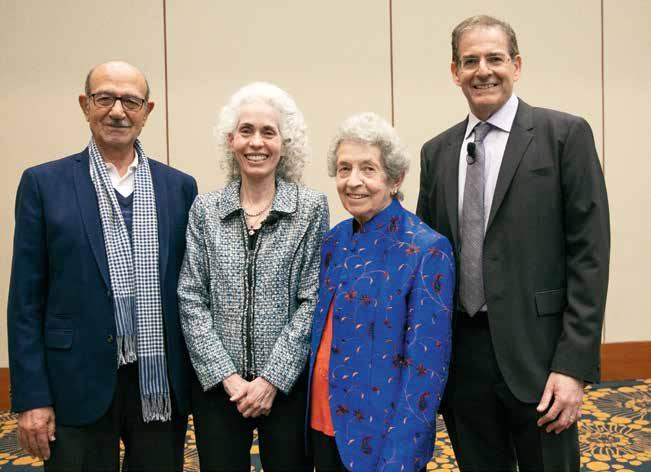
L. TO R.: FACULTY MEMBER AND FORMER DEAN DR. ABDELMONEM A. AFIFI; DR. BARBARA FERRER, DIRECTOR OF THE LOS ANGELES COUNTY DEPARTMENT OF PUBLIC HEALTH; DEVRA BRESLOW; AND BROOKMEYER AT THE 2019 LESTER BRESLOW DISTINGUISHED LECTURE.
THE CRITICAL IMPORTANCE OF PUBLIC HEALTH to the welfare of populations both at home and around the world has been reinforced time and again during Brookmeyer’s tenure as dean — whether through COVID and other infectious disease outbreaks; environmental disasters and the growing threat of climate change; or the increased attention to health promotion, health policy, and community-based strategies to address health inequities. “History teaches us that there will always be public health crises,” Brookmeyer says. “The challenge is to make sure our society appreciates and invests in public health between those crises, because we know how to make an impact when we have the proper resources and support.”
As he concludes his time at the helm of UCLA Fielding, Brookmeyer is confident that the school is well positioned to play an ever-increasing role in these efforts. “We have terrific faculty and staff, and we have built programs that will continue to attract top students who will be public health leaders in the future,” he says. “It’s been an honor to have had the opportunity to work with colleagues in taking us to this point, and now I am excited to see the great accomplishments for UCLA Fielding in the years to come.”
PROMOTING SAFE WORKPLACES AND COMMUNITIES
When it comes to potentially dangerous exposures to environmental hazards, where you work and live matters. Workers in low-wage industries disproportionately experience an array of threats, both known and unknown; similarly, low-income populations are the most likely to live in communities where exposures to harmful pollutants are the highest. In public health, exposure scientists conduct the research that brings attention to these environmental threats, and work with policymakers to develop and ensure compliance with federal regulations, as well as partnering with communities for actions that address unhealthy and unsafe environments.
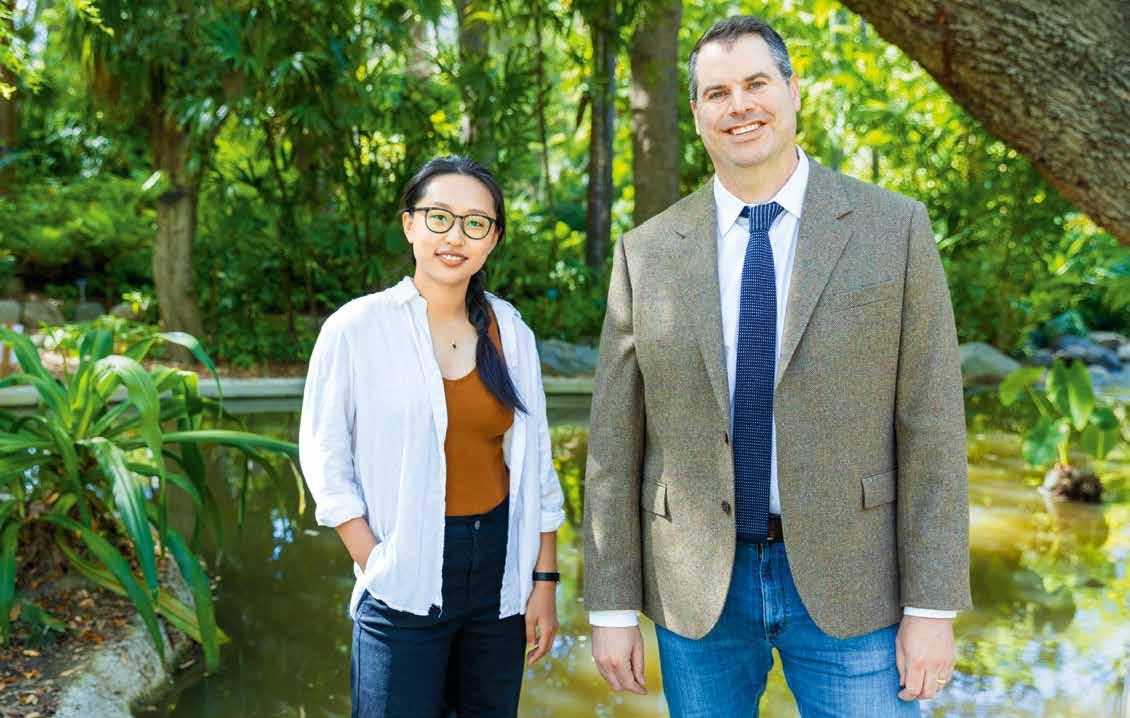
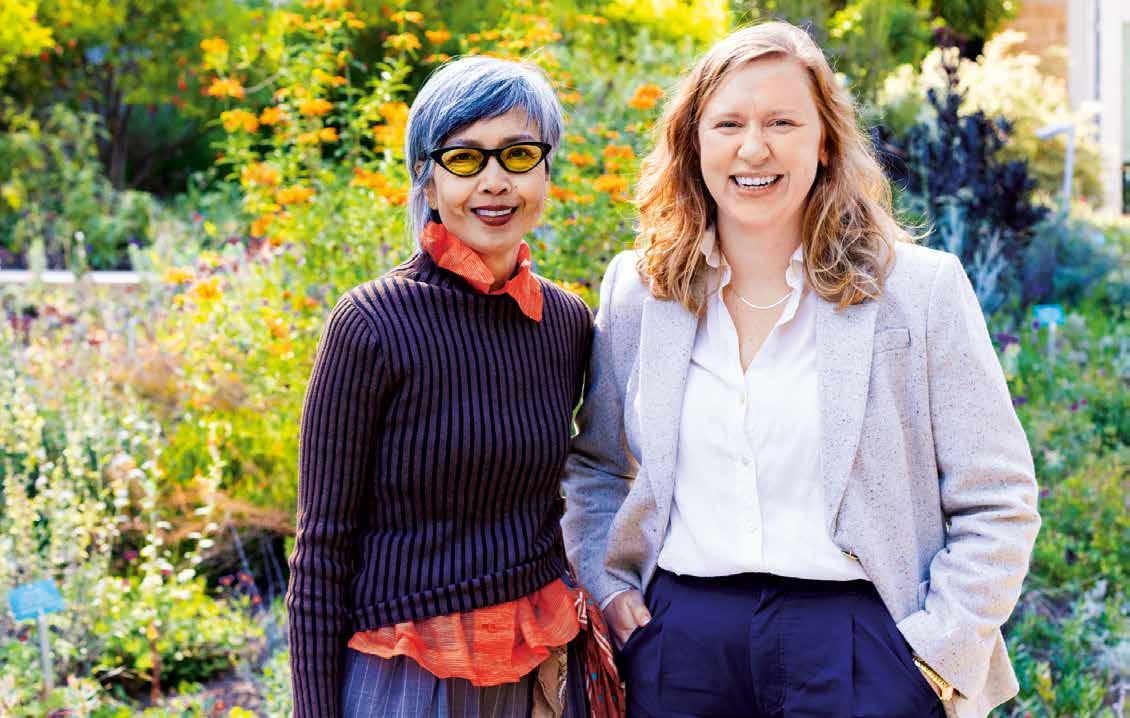
Dr. Rachael Jones , professor and chair of UCLA Fielding’s Department of Environmental Health Sciences, is an exposure scientist and industrial hygienist whose research has centered on the assessment and control of workplace exposures to infectious agents, especially respiratory viruses. More recently, her work has looked at the impact of power and inequity on occupational health and safety. She is director of two FSPH-based centers: the Southern California Education and Research Center, and the Center for Occupational & Environmental Health. Dr. Yoshira Ornelas Van Horne, assistant professor in the department, is an exposure scientist and environmental justice scholar whose research addresses unequal exposures to harmful contaminants that affect structurally marginalized communities. She recently served on a National Academies of Sciences, Engineering, and Medicine panel to improve how federal, state, and local governments conduct cumulative impact assessments that affect public health.
IN THE POPULATIONS BOTH OF YOU STUDY, THERE IS A THEME OF POWER INEQUITY — MARGINALIZED GROUPS DISPROPORTIONATELY SUFFERING FROM EXPOSURES. HOW DOES THAT PLAY INTO YOUR WORK?
RACHAEL JONES: The industrial hygiene field has traditionally followed a biomedical model: You describe a chemical or other physical stressor in the environment, track whether or not it causes illness in the population, then try to control that exposure. The problem is that there are many social, political, and economic factors that make jobs the way they are. We’ve made lots of progress in reducing exposures over the years — many fewer people are injured, made ill, or killed because of their work today than in the 1960s, 1970s, and prior decades. But we still have many jobs with exposures to chemicals, noise, vibration, and heat — along with psychosocial factors related to wages, access to work, and discrimination that segregate women and communities of color into higher-hazard occupations. My colleagues and I are interested in describing this phenomenon more explicitly, with the goal of changing how jobs are constructed and what people are expected to endure.
YOSHIRA ORNELAS VAN HORNE: I work with what we call communities at the fenceline of contamination. That means that industries like smelters, fumigation facilities, or petrochemical businesses are located next to
these communities, and their proximity to these industrial sources leads them to becoming overexposed. Employees who work in industries that are the most overburdened by exposures also tend to be the people who live in these fenceline communities. So, they are exposed not only at the workplace, but also where they live. There is power in documenting that, then using the knowledge to work with communities and policymakers to address those injustices.
DR. JONES, YOU TALKED ABOUT THE PROGRESS IN REDUCING INJURY, ILLNESS, AND DEATH IN THE WORKPLACE. TO BOTH OF YOU, WHERE ARE YOU ENCOURAGED, AND WHERE HAS PROGRESS BEEN LACKING?
RJ: We have made significant progress in the use of different kinds of process designs in industrial systems that reduce the emission of chemicals and reduce noise exposures. There is also greater recognition that certain chemicals cause diseases, which motivates changes. Unfortunately, though, federal government activities in worker health and safety are sporadic. Early in my career, I was recruited to work on an infectious disease standard for OSHA [the Occupational Safety and Health Administration] because my work is often focused on transmission of respiratory pathogens among healthcare workers. That was around 2012. Well, we still don’t have that standard, and now we’re
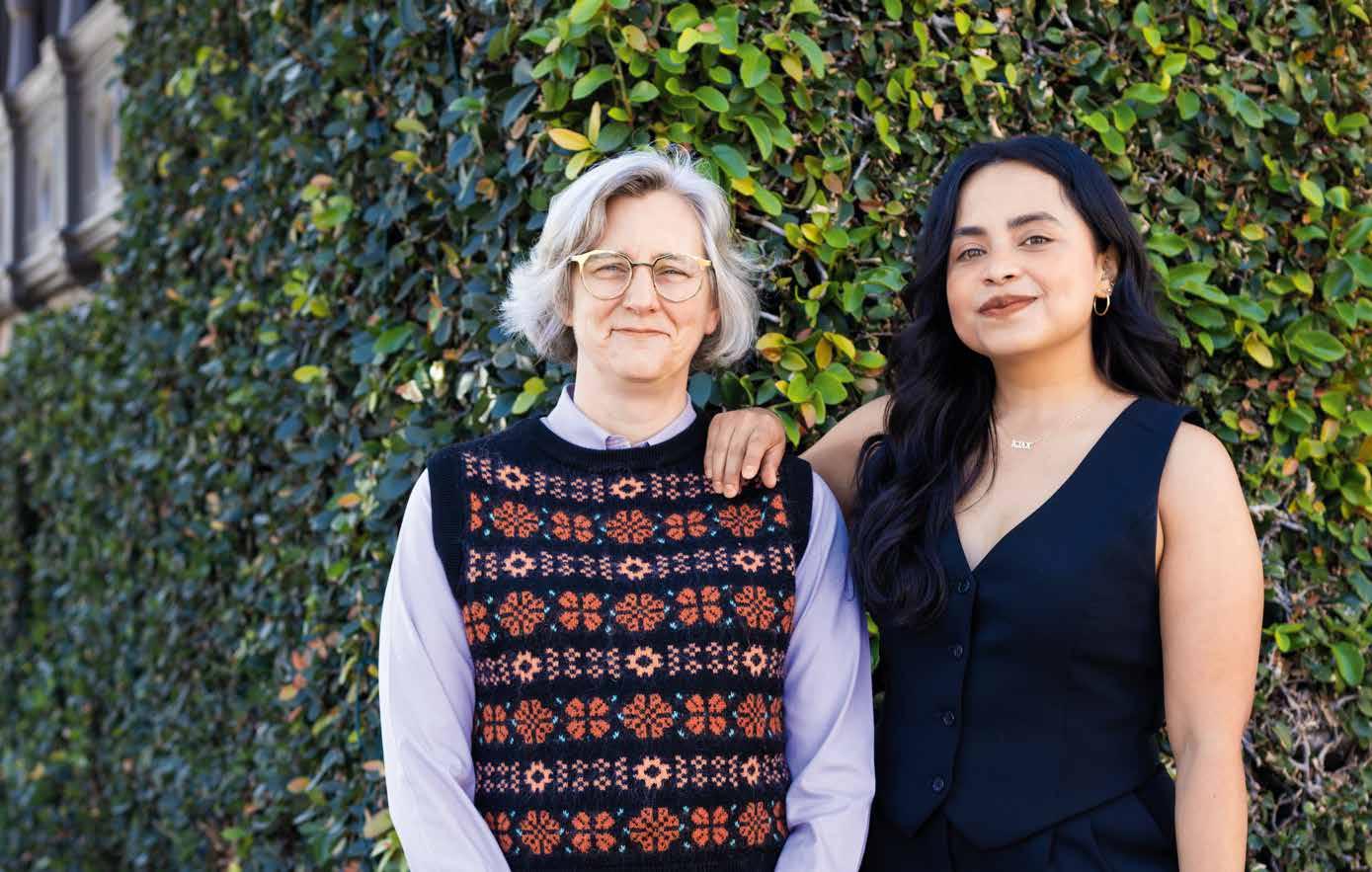
DRS. RACHAEL JONES (LEFT) AND YOSHIRA ORNELAS VAN HORNE
—DR. RACHAEL JONES
seeing a push to deregulate. That being said, I was excited to come to UCLA Fielding and to work in California, where there is significant regulatory activity. In this state, we have community and worker organizations that are gathering information and advocating for change, along with a close network of allies that includes the UC campuses, Cal OSHA, and other regulatory bodies and public health agencies. I will also say that for researchers and advocates, there’s a lot of interest in training workers, which I greatly value. But the workers can’t change their workplace. That’s the responsibility of their employers, and there is not a strong enforcement mechanism. So one of the big frustrations to me is that, as much as I enjoy the time spent educating workers and answering their questions, they have very limited control about how their workplace actually changes.
YOVH: We had been seeing a push for environmental justice through funding for programs and research, but much of that has been gutted at the federal level, and that progress has stalled. So, for those of us in this field, it’s a scary time. The focus has shifted to state and local systems, and at least in California, there have been many environmental justice wins. For example, I’m working with Rise St. James, a grassroots organization that has been advocating for their community in an area known as Cancer Alley in Louisiana [an 85-mile stretch where numerous petrochemical plants expose communities to harmful chemicals]. In California, the regulatory landscape is much more robust after years of advocacy groups pushing for SB 1137. Through this mandate, if there’s a new oil well being built in Los Angeles County, it has to be set at least 3,500 feet away from what are known as sensory-receptor sites, like childcare, schools, and people’s homes. Similarly, in California, while the rule-making process is complicated, there is a greater recognition and democratization of the enforcement and permitting process.
WHAT DO YOU SEE AS THE MOST IMPORTANT SKILLS FOR THE NEXT GENERATION OF EXPOSURE SCIENTISTS?
YOVH: I feel very strongly about mentoring the next generation, both at UCLA and through my work with Agents of Change, a national fellowship program aimed at providing science communication and policy translation training to emerging researchers. I currently work with high school
students as part of two grants I have. One is to build capacity for Indigenous communities to measure air contaminants. Less than 15% of these communities currently have the capacity to do their own air monitoring. The other is a federal grant to engage South Dakota students in research in their homelands. The best moments for me are when students cross the bridge from repeating information to having their own ideas and make the connection between the science and what they have seen in their own communities.
—DR. YOSHIRA ORNELAS VAN HORNE “ THERE ARE MANY SOCIAL, POLITICAL, AND ECONOMIC FACTORS THAT MAKE JOBS THE WAY THEY ARE.”
RJ: In terms of the skills, I have a very expansive view of the field and a strong belief that people with all different competencies can make contributions to our overall mission. There’s so much need in occupational and environmental health that, regardless of whether or not you completed organic chemistry laboratory, if you have a passion and the ability to think and use your voice, I believe you can make a difference.
YOVH: I agree, passion is everything. I’m of the mentality that we can teach our students the technical skills, but we can’t teach passion.
WHAT DO YOU SEE AS NEW CHALLENGES FOR THE FIELD, AND WHAT MAKES YOU HOPEFUL THAT PROGRESS CAN BE MADE?
YOVH: There’s so much interest in AI, and I think there’s a lot we can automate in terms of integrating these new satellite data, sensor data, and public data sets much more quickly than in the past. But we still need primary data collection to answer fundamental questions of whether enforcement is working and exposures are being reduced. So, while the field is moving in this big-data, “let’s measure everything” mentality, capacity-building efforts and student training programs that are well versed in what it takes to conduct primary data collection for action remain essential.
RJ: On the positive side, advances in technology continue to make the way we measure things a lot easier, which democratizes the data collection and makes it more important than ever that we be able to articulate the needs, motivations, and implications of our findings, whether to regulators or communities. I’m hoping this will lead us to return to a time where we have more collective action.
“EMPLOYEES WHO WORK IN INDUSTRIES THAT ARE THE MOST OVERBURDENED BY EXPOSURES ALSO TEND TO BE THE PEOPLE WHO LIVE IN THESE COMMUNITIES.”
Expanding Environmental Horizons
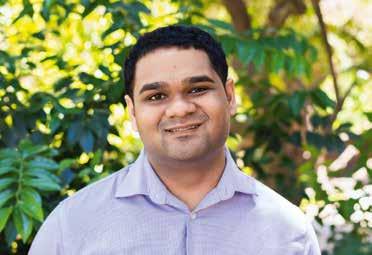
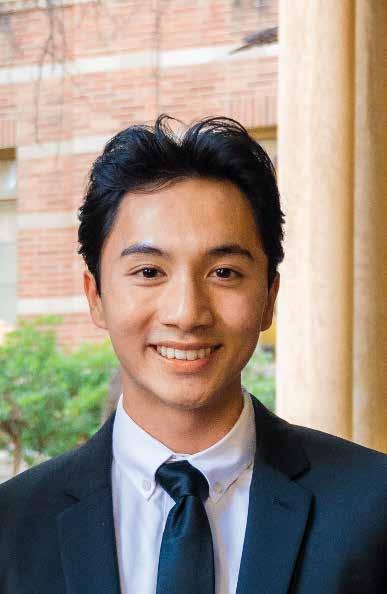
Aiden Chal MPH Student, Environmental Health Sciences
Before enrolling at UCLA Fielding, I had no idea how encompassing environmental health sciences was. My background was in sustainable transportation and electric vehicles. At FSPH, I hoped to learn more about the health effects of greenhouse gases and tailpipe emissions, and leverage that in my career. I have learned about that, but also so much more. My expansive education taught me about air pollution, water pollution, climate change and health, and even industrial hygiene practices.
When it was time to fulfill my applied experience practice requirement, I pivoted from sustainable transportation to an environmental health and safety role, landing a position at Takeda Pharmaceuticals. There, I applied my newfound academic knowledge to industry practices. Each day of my internship was different, working on projects with implications for the health of both people and the environment. The experience led to internships in my second year at Cosm Los Angeles and Aramark/Yosemite Hospitality.
I leave with an appreciation for the expansive nature of environmental health sciences: not only its applications, but also the many sectors that need our skills. I look forward to applying my FSPH education in my new position on the Environmental Health and Safety team at Walt Disney Imagineering.
Protecting Those Who Protect Us
Sunny Liu PhD Student, Environmental Health Sciences
Environmental hazards are not limited to polluted air or contaminated water. They are also present in the workplaces where people spend much of their lives. Occupational exposures can shape health in ways that are often invisible, cumulative, and difficult for workers to avoid. Many individuals do not have the ability to choose their working conditions, yet those conditions can profoundly influence long-term health.
My interest in occupational health grew from both my academic training in epidemiology and environmental health sciences, and my experience working in emergency medical services. As a paramedic and EMT, I have witnessed the physical and psychological demands placed on emergency responders. Firefighters and EMS providers often work extended shifts, experience disrupted sleep, encounter hazardous environments, and respond to high-stress situations. These exposures are widely accepted as part of the job, yet their long-term health consequences remain understudied.
Occupational settings provide an important opportunity to understand how repeated exposures influence health over time. Emergency responders operate in environments characterized by overlapping hazards — including chemical exposures, demanding organizational conditions, physical strain, sleep disruption, and chronic stress. My research with Dr. Jian Li aims to identify patterns of risk and generate evidence that can inform safer workplace practices and policies, helping ensure that those who protect our communities are protected themselves.
Approaching Exposures Proactively
Emma Landskroner, MPH PhD Candidate, Environmental Health Sciences
My path to public health has been a personal one. Watching someone I love suffer from cancer, paired with my work in clinical research, showed me how our health system functions in a perpetual state of response — acting only after disease has taken hold rather than preventing it in the first place. Public health is different; it is proactive and addresses the root causes of disease. That conviction led me to occupational and environmental health.
At UCLA Fielding, I work under Dr. Candace Tsai to characterize pollutants, using in vitro and in vivo exposure models. These include emerging chemicals used in the commercial laundry and dry-cleaning industries, hair products that still contain formaldehyde, and urban interface wildfire nano-ash. With my background in biology and training in industrial hygiene, exposure science, and toxicology, combined with chances to link research to actual public health practice and community involvement, I have sampled and assessed various exposures to better understand their potential role in carcinogenesis and other chronic disease pathways. Ultimately, I aim to promote a proactive approach to evaluating chemicals and particulates, along with risk prevention. I want to ensure that safeguarding worker and community health becomes the standard, not the exception.
WEIGHING AI’S IMPACT ON PUBLIC HEALTH
The explosion of artificial intelligence as an everyday tool has dominated the public discourse like few other topics, fueling widespread debate over how it will transform society, for better or worse. For public health, AI offers the potential for such benefits as accelerating research, improving disease surveillance, and enhancing decision-making capabilities, but its growth also raises troubling environmental, educational, and equity concerns, among others. Given the integral role of statistics and data science in powering the AI revolution, UCLA Fielding’s Department of Biostatistics is a key player in working with not only other FSPH departments, but also outside entities in promoting the use of AI in ways that will advance public health responsibly and equitably.
Dr. Andrew Holbrook , FSPH associate professor of biostatistics, employs AI and machine learning to study spatial epidemiology and Alzheimer’s disease; he is currently part of a UCLA and Harvard team using these tools to develop models aimed at making sense of highly complex patterns of neurons in an effort to better understand the changes that occur at the earliest stages of the disease. Dr. Sijia Li, assistant professor in the department, develops statistical methods for using data from multiple sources to answer scientific questions, toward the goal of addressing some of the challenges inherent in real-world applications in clinical trials, electronic health records data, infectious disease, mental health, and health equity.
HOW HAS AI AFFECTED YOUR WORK AS BIOSTATISTICIANS?
SIJIA LI: As AI has surged, it’s made me realize that the tools I learned in my training and have built up over the years are especially relevant. In my work, I care a lot about uncertainty because, for example, in clinical trials, where healthcare decisions are made based on the output, how certain you are about your estimates matters a great deal. AI models are very complicated, with millions of parameters. And the more complicated the models, the more we should care about uncertainty, about how robust they are, and about their transportability. If I run an AI model on one population, does it perform as well on a different population? These properties of certainty, robustness, and transportability are classical statistical concepts, and we have both well-established and newly developed methodologies to tackle those concepts. So my focus has definitely shifted to AI-related problems, but the way I approach those problems stays the same — through a statistical lens.
ANDREW HOLBROOK: As Sijia was saying, our training as statisticians gives us formal tools that we can bring to bear on AI. It also goes the other way, where AI is providing us with new tools that can advance our work. I’m developing new AI methods for Alzheimer’s disease and phylogenetics in viral epidemiology. With Alzheimer’s disease, the neuroscientific data my team is working with is extremely high-dimensional.
When I was first learning about statistics, a typical dataset might have 10 descriptors, or what we call predictor variables. With this neuroscience data, it’s 10,000, and it changes over time. AI is very good at generating scientific insight from that complicated data. So, because data these days tends to be extremely dynamic and high-dimensional, that’s one way in which many statisticians are using AI. But unlike AI engineers, who seek to create a product that applies to many datasets, we think about the underlying structures of the actual dataset we’re investigating. In that sense, when a statistician uses AI as a tool for analyzing difficult datasets, we are actually increasing AI’s scope.
WHAT IS AI’S POTENTIAL FOR ADVANCING PUBLIC HEALTH OVERALL, AND WHAT CONCERNS DO YOU HAVE, IF ANY?
SL: One thing I’m really excited to see is how AI can help foster adaptive policymaking, guiding optimal intervention strategies. As an example, when disasters like the California wildfires occur, as statisticians, we estimate the health and social outcomes of a population. But how do we better prepare for the next one? How do we allocate resources in an optimal way? We can use real-time AI models to help us get the information we need to react faster.
AH: AI is inevitably going to turbocharge science. The rate at which we’ve been advancing technologically
DRS. SIJIA LI (LEFT) AND ANDREW HOLBROOK
“AI IS INEVITABLY GOING TO TURBOCHARGE SCIENCE. BUT IT’S A DOUBLEEDGED SWORD.”
—DR. ANDREW HOLBROOK
is going to increase immensely. But it’s a double-edged sword. An integral part of public health is the economic well-being for individuals and families, and we see AI causing major disruptions in industry. So, whereas I’m optimistic in terms of the science, I am more pessimistic about the effects of AI on the general economy and I worry that, with shortsighted decisions by our leaders, the generation now entering the workforce isn’t going to have the same opportunities as my generation. We already have immense income inequality, which is a public health problem, and I see the potential for AI making that worse.
SL: It’s definitely a double-edged sword as it relates to public health. AI can help us solve complex public health problems, but the data centers and the energy being consumed create new burdens on our environment, so to some extent using AI to develop policy becomes a cost/benefit calculation. Another concern I have with the overuse of AI tools is that, if people rely on the same system for so many things, will our thoughts start to converge? In public health, as in so many other fields, we benefit from diverse ways of thinking. Beyond that, AI models rely on a set of training data. The population underlying that training dataset is not typically going to be an underrepresented or marginalized group.
WHAT
DO YOU SEE AS THE PROS AND CONS FOR EDUCATION, BOTH AT THE K-12 LEVEL AND FOR PUBLIC HEALTH STUDENTS?
AH: A major part of education is training in skills that give us the ability to make a living. AI can help quite a lot there, because it’s about establishing workflows to more efficiently conduct science or accomplish the things that we want to do. But there’s also education to benefit the soul, the human psyche, and that’s the part I see being threatened by AI. If you’re overly reliant on AI, you’re missing out on all the edifying parts of education that build you up as a person.
SL: AI is a very useful tool that should be a core skill set. But when I reflect on my learning process, it’s the critical thinking that’s most important. My fear is that people are losing the habit of checking how knowledge is derived and where it’s coming from.
WHAT AI-RELATED SKILLS DO YOU EXPECT ALL FSPH GRADUATES WILL NEED TO THRIVE IN THE PUBLIC HEALTH WORKPLACE OF THE FUTURE? AND SPECIFICALLY FOR GRADUATES OF YOUR DEPARTMENT, WHAT ARE THE SKILLS THEY WILL NEED TO SUCCEED?
SL: For public health students, these AI platforms provide a chance to practice summarizing their problem. For biostatisticians, that means formalizing a scientific problem into a statistical problem. AI tools also give students an opportunity to polish their presentation skills. And for anyone in the public health field, the ability to formalize a problem and explain it clearly to a broader audience is important.
AH: As biostatisticians, we have certain methods, concepts, tools, and ways of thinking that are useful whether you’re in industry, public health, government, or doing academic research. I would contend that you don’t know how to use AI effectively if you don’t know how to do things yourself as well. I see classic statistical tools and AI tools as complementary. Both must be taught for students to fully leverage the tools we’re giving them.
“AI IS A VERY USEFUL TOOL THAT SHOULD BE A CORE SKILL SET. BUT WHEN I REFLECT ON MY LEARNING PROCESS, IT’S THE CRITICAL THINKING THAT’S MOST IMPORTANT.”
— DR. SIJIA LI
The Power of Statistics in Revealing Disease Susceptibility
Amaan Jogia-Sattar MS Student, Biostatistics
Most common diseases arise not from a single gene, but from the cumulative influence of thousands of small inherited differences. Translating these associations into biological understanding remains a fundamental challenge in biomedical research. Addressing this challenge requires understanding how inherited variation shapes gene regulation and why, as a result, individuals differ so widely in disease susceptibility and treatment response. My interest in this problem took root during a summer research program at UCLA, where I worked on integrating electronic health records with biobank data to study breast cancer survivorship. This experience convinced me that rigorous statistical methodology is central to uncovering the biological mechanisms that drive disease.
At UCLA Fielding, under the supervision of Dr. Brunilda Balliu, I am developing statistical and computational methods to study how inherited variation influences regulatory mechanisms using longitudinal functional genomics data. UCLA Fielding’s collaborative culture and methodological depth have provided a strong foundation for this work. Looking ahead, as I enter the PhD program in FSPH’s Department of Biostatistics, I hope to develop methods that close the distance between genetic discovery and clinical application so that insights from genomic research can more meaningfully inform how we prevent, treat, and understand complex disease at the population level.
Identifying Neuromarkers for Autism Spectrum Disorder
Emma Landry PhD Candidate, Biostatistics
After obtaining my undergraduate degree in mathematics, I was drawn toward research in which I could apply my quantitative skills to real-world biomedical problems. I became particularly interested in developing new methods to help improve scientific understanding of complex data structures, for which standard statistical techniques are typically insufficient. This led me to join the FSPH Department of Biostatistics, where I have been able to work on problems that combine methodological innovation with impactful scientific contributions. In my dissertation, I focus on the identification of neuromarkers for Autism Spectrum Disorder (ASD) in electroencephalogram (EEG) studies through the development of novel Bayesian functional and distributional data analysis methods.
Autism is a neurodevelopmental condition typically diagnosed after the second year of life through behavioral symptoms, but its presentation is highly heterogeneous, often leading to delayed or missed diagnoses. EEG offers a noninvasive and low-cost clinical tool to monitor brain development, facilitating earlier and more effective interventions. By leveraging the underlying geometry of the complex signals, my methods better identify and quantify differences in the brain activity among children with and without ASD. In the future, I hope to expand these approaches to other types of neuroimaging data, leading to improved understanding of brain development and supporting better diagnosis.
Developing AI Models to Characterize Alzheimer’s Progression
Ryan O’Dell PhD Student, Biostatistics
My interest in public health grew from a desire to understand how subtle changes in biological systems can shape health outcomes. My research focuses on neurodegenerative diseases such as Alzheimer’s disease, where these processes develop gradually. A central challenge I hope to address is understanding how changes in the brain accumulate, and how these changes relate to cognitive decline. To better understand these changes, I work on analyzing novel longitudinal recordings from the brain that capture how activity unfolds over time. My work focuses on developing AI models that can separate different patterns of activity and track how they change across different brain regions. The aim is to distill complex, high-dimensional brain activity data into interpretable progression forecasts. This approach helps to reveal subtle changes that better characterize disease progression, with the long-term goal of improving how we detect these shifts earlier.
The UCLA Fielding School of Public Health has given me a unique opportunity to work on critical questions about disease progression. I hope to build on this work by developing tools that improve how we characterize neurodegenerative diseases and support earlier intervention.
ADVANCING HEALTH POLICY THROUGH EQUITYCENTERED DATA
Among the most powerful vehicles by which public health saves and improves lives is through policy. From vaccine mandates and tobacco control laws to regulations that ensure clean air and water, policies informed by public health research and advocacy have far-reaching impacts that affect us all. But some policies bring more benefits than others, and not all communities reap the same rewards. Moreover, identifying the evidence for what’s needed and what’s best from the public health perspective isn’t always sufficient given the realities of competing interests and political considerations in the policy development process.
Dr. Ninez Ponce, professor and Fred W. and Pamela K. Wasserman Endowed Chair of UCLA Fielding’s Department of Health Policy and Management, champions better health data, especially for marginalized groups. As director of the FSPH-based UCLA Center for Health Policy Research, Ponce oversees the center’s California Health Interview Survey (CHIS) — the largest state health survey and a critical source of information on the needs of California’s diverse population. CHIS has set the standard with its “democratization of data,” making it easily accessible in order to drive policy change at both the grassroots and legislative levels. Dr. Kathryn (Kate) Leifheit , FSPH assistant professor of health policy and management, is a social epidemiologist who aims to identify policy levers to improve population health and health equity, with a focus on housing programs and policies. Her research has documented health impacts of widespread housing insecurity and evictions, as well as the health impacts of key housing policies.
DR. PONCE, YOU HAVE SPOKEN OF THE IMPORTANCE OF EQUITY-CENTERED DATA. WHAT HAVE BEEN THE HISTORIC SHORTCOMINGS IN HOW DATA ARE COLLECTED, AND HOW HAS THAT CONTRIBUTED TO HEALTH DISPARITIES?
NINEZ PONCE: My interest in this started after a report in the late 1980s by the Secretary of Health and Human Services Task Force on Black and Minority Health. It looked at excess deaths across five major racialized groups, and showed that the Asian population fared best. But aggregated Asian data hid the variation within the population — for example, excess deaths were very high among newer, low-income Asian immigrant groups — and led to a misallocation of resources. Major federal surveys had the same problem. I’m a health economist who cares most about the tails of a distribution — not the average, but the marginalized populations whose needs too often go unaddressed, especially when we aren’t specifically measuring them.
KATHRYN LEIFHEIT: In my research, I often use publicly available data to estimate the effects of a policy on population health. A constant frustration is that, as much as we would like to look for heterogeneity in the impact of a policy on different communities, often there just isn’t enough data to reliably estimate those effects. That’s a huge limitation. Policies often have varying health impacts, which is why we’re tremendously grateful for people like Ninez
who collect data and oversample subgroup populations so that we can dig into those potentially differential effects. CHIS is leading on this front. Their data are far more detailed than what you would find in federal surveys.
THROUGH YOUR WORK, YOU BOTH HAVE PROMOTED A MORE EXPANSIVE VIEW OF HEALTH THAT TAKES INTO ACCOUNT SOCIAL DETERMINANTS. WHY IS THAT IMPORTANT TO CONSIDER IN POLICYMAKING?
KL: Increasingly, I’m realizing how limiting it is when we work in our silos. We just published a paper that found one of the key drivers year over year in the change in homelessness within states are climate disasters — losses of homes due to wildfires and floods, for example. We know this all too well in Los Angeles, but the increasing frequency of these disasters is also a major contributor to the housing crisis nationally. It points to the need to be interdisciplinary and to think across systems about social exposures. Another example, especially in Los Angeles, is that we’ve heard from advocates that, over the past year, immigrants are having a tough time paying their rent because of increasing ICE presence. People are afraid to go to work, putting them at risk of eviction and homelessness.
NP: CHIS started mostly as a surveillance tool on individual health behaviors and especially health insurance,
DRS. NINEZ PONCE (LEFT) AND KATHRYN “KATE” LEIFHEIT
but we have listened to researchers, advocates, and others on the front line who have argued that social drivers create both opportunities and barriers that affect health. So, the CHIS questionnaire has expanded to include topics such as housing insecurity and health, medical debt, climate change, mental health, gun violence, adverse childhood experiences, and even the frequency of policing in neighborhoods. All of these social drivers provide context for a person’s health, and so we’re opening this up for researchers to explore those associations.
KL: Right after the 2025 L.A. wildfires, my team emailed Ninez and asked, “Is CHIS asking about housing insecurity related to climate change?” And of course, CHIS had already been asking that question for many years, and now has data that includes impacts of the L.A. wildfires.
WHEN YOUR WORK HAS SHOWN THAT A PARTICULAR POLICY DIRECTION WOULD BE EFFECTIVE, HOW DO YOU PREVAIL UPON THE PEOPLE WHO SET THE POLICIES?
KL: That’s always the tricky part. Part of it is finding the right policy window and asking the question at the right time. For example, during the COVID pandemic, a lot of people lost their jobs or couldn’t go to work, so there was a fear that there would be a mass wave of evictions — people not able to pay their rent, then losing their shelter at the moment when shelter in place was our No. 1 public health intervention. So, we did a study where we looked at expiration of eviction moratoria within states in the summer of 2020, and saw that evictions during that time were associated with increased COVID cases and deaths. Because we asked a question that was of urgent interest to policymakers at the time and partnered with community advocates, the evidence got to the right people and was used to extend a federal eviction moratorium issued by the CDC.
NP: That work was huge, and it speaks to Kate’s tenacity. To influence policy, of course you need excellent scholarship, which Kate has, but that kind of engagement is also essential.
In making the case, good data is critical but it has to be combined with real experiences. Marrying the evidence for a policy with testimonials from the people who are affected is more powerful than either one alone. You have to recognize when there is that policy window and to fashion the evidence in a way that’s palatable to policymakers. At the
“ WE ENCOURAGE OUR STUDENTS TO ASK NOT JUST WHAT THE EFFECT OF A POLICY IS, BUT FOR WHOM.”
—DR. KATHRYN LEIFHEIT
Center for Health Policy Research, we issue short, digestible reports, knowing that many people aren’t going to read the peer-reviewed journal articles. And in striving for health equity, it’s also important that we democratize knowledge by making our data easily accessible to everyone who can make use of it — not just policymakers, but also community-based organizations, students, researchers, and others.
KL: This idea of democratizing data access has ripple effects for junior faculty and students, particularly those who don’t have access to a huge amount of grant funding to go out and collect their own data. People at institutions that aren’t as well resourced as UCLA use CHIS data to speak to health problems in their communities, which is so powerful.
WHAT DO YOU TRY TO INSTILL IN YOUR STUDENTS THAT WILL HELP THEM BE SUCCESSFUL, PARTICULARLY WHEN IT COMES TO POLICY ADVOCACY?
NP: I emphasize the importance of rigor. There is certainly no shortage of passion among public health students, and that’s a wonderful thing. But it’s not enough to just care about an issue or a population; you have to build the best possible evidence to move policy that addresses the inequities you’re outraged about.
KL: We encourage our students to ask not just what the effect of a policy is, but for whom. Who benefited, who was harmed. And don’t just think about the average, population-wide effects — which economists call “marginal effects” — but effects among the marginalized, as Ninez said so eloquently earlier.
“IN STRIVING FOR HEALTH EQUITY, IT’S IMPORTANT THAT WE DEMOCRATIZE KNOWLEDGE BY MAKING OUR DATA EASILY ACCESSIBLE TO EVERYONE WHO CAN MAKE USE OF IT.”
— DR. NINEZ PONCE
Turning Advocacy in to Sustainable Action for Women’s Health
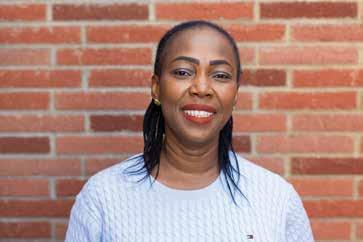
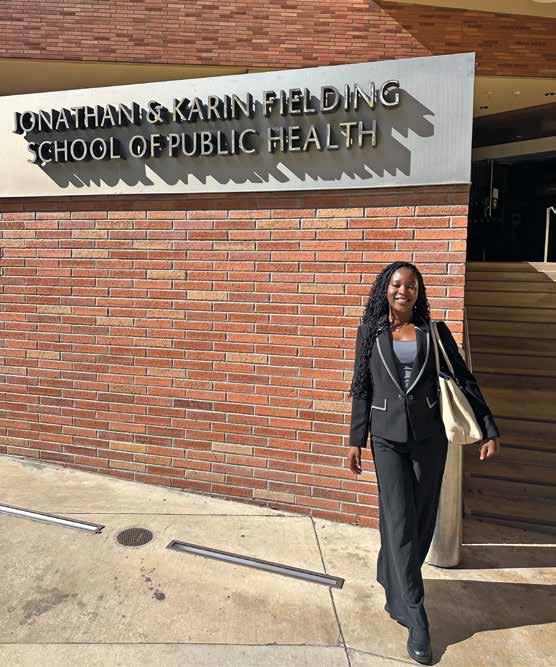
Fatima Maada Bio MHA Student, Health Policy and Management
As the First Lady of Sierra Leone and the president of Organization of African First Ladies for Development on our continent, my focus on the health and well-being of women and girls is deeply personal because I have witnessed, firsthand, how often their pain is minimized, their conditions misdiagnosed, and their voices unheard. Across many communities, women’s health — particularly uterine and hormonal health — remains neglected, under-researched, and burdened by stigma. Conditions such as fibroids, endometriosis, menstrual disorders, and reproductive cancers are too often endured in silence, treated as “normal,” or addressed only when they become life-threatening.
My commitment is to bring these realities into the light by sharing firsthand accounts, elevating lived experiences, and advocating for evidence-based solutions that integrate uterine health into primary healthcare systems. We cannot achieve equity in health if we ignore the very organs that define so much of a woman’s physical, emotional, and reproductive life.
My time at UCLA Fielding is equipping me with the intellectual tools, analytical rigor, and global perspective needed to confront these challenges strategically. It is empowering me not only to speak with passion, but with data, policy insight, and systems-level understanding. UCLA is strengthening my capacity to transform advocacy into sustainable action and to help shape a world where women’s health is no longer an afterthought, but a priority.
Advancing Health Equity Through Patient Care and Policy
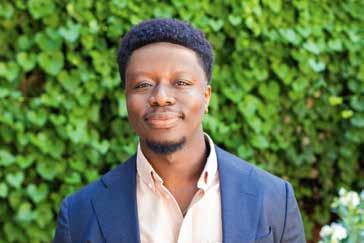
Martin Kyalwazi MD/PhD Student, Health Policy and Management
The root of my interest in health policy and health economics stemmed from my desire to understand the implementation of the Affordable Care Act (ACA). As a middle school student in Sacramento during its enactment, and a high school student during its implementation, I was captivated by the law’s politicization, legal battles, and financial ramifications for various healthcare stakeholders. Though my siblings and I were covered by California’s Medicaid/ Children’s Health Insurance Program prior to the ACA, my parents and many others in Sacramento’s Black and immigrant communities gained coverage only through the law’s Medicaid expansion. The knowledge that access to healthcare for my family and other low-income households was at stake drove me to seek information supporting the ACA’s preservation. As my analysis matured with age, I learned how to evaluate evidence pertaining to the law and utilize it to inform my viewpoint, rather than the converse.
My doctoral training in Health Policy and Management, combined with my medical training through the MD/ PhD program, has equipped me with a strong foundation in health policy and economics, as well as the methodological tools necessary to generate rigorous, policy-relevant evidence. I am committed to using my education to advance health equity, both in direct patient care and in the design of health policy.
Designing and Implementing Policies to Reduce Barriers to Care
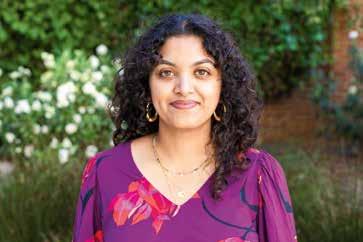
Divya Bharadwaj MPH Student, Health Policy and Management
I grew up hearing about healthcare disparities rooted in insurance, whether it involved the level of care sought out (urgent vs. primary care) or the quality of the services received. I found this to be an interesting phenomenon to explore while working toward my BA in Public Policy. I gravitated toward public health as a space where I could create systems-level changes while remaining in the healthcare field. I found myself continually drawn to public health as a vehicle for ensuring that policy decisions are grounded in evidence and accessible to the communities they affect.
Through my MPH program, I am gaining the skills to design and implement programs that reduce barriers to care and improve health outcomes. Using this knowledge, I look forward to joining a health system and working on the delivery and implementation of healthcare to make sure that individuals are getting access to the services they need, at a price they can afford. The UCLA Fielding School of Public Health is developing my ability to understand policy, but also how to integrate it in order to ensure success. I’m excited to take these skills into the workforce and positively impact patients.
ADDRESSING UNACCEPTABLE MATERNAL MORTALITY RATES
The World Health Organization has stated that maternal mortality is “a critical barometer of the quality, accessibility, and equity of health systems,” as well as an indicator of the status of women’s rights. By that measure, we are failing. As recently as 2023, the United States was one of only seven countries to report a significant increase in maternal mortality since 2000. And although rates have declined since then, among high-income nations the U.S. has the highest rate of maternal deaths, according to the health policy organization KFF. These rates are fueled by wide and growing racial and ethnic disparities, with people of color having not only the highest rates of pregnancy-related death, but also the lowest use of early prenatal care.
Dr. May Sudhinaraset , professor and vice chair of FSPH’s Department of Community Health Sciences, focuses on understanding the social determinants of migrant and women’s health, both globally and in the U.S., particularly as these pertain to maternal and reproductive health inequities. Dr. Rebecca Delafield , assistant professor of community health sciences and the Jonathan and Karin Fielding Presidential Chair in Health Equity, examines the factors that influence healthcare quality and outcomes in the pregnancy and perinatal period, with a focus on the Native Hawaiian and Pacific Islander communities.
IN WHAT SENSE DOES A COUNTRY’S MATERNAL MORTALITY
RATE REFLECT THE STATUS OF WOMEN AND THE QUALITY OF THE HEALTHCARE SYSTEM?
MAY SUDHINARASET: The same kinds of power inequities and underlying structures that determine who is valued in a society are going to play out in a healthcare setting; so, when you look at who is disrespected, dismissed, or ignored in that setting, it’s typically individuals who experience vulnerabilities outside of healthcare settings as well. Maternal mortality is a reflection of broader inequities and societal attitudes related to who is deemed valuable and deserving of certain treatments and outcomes.
REBECCA DELAFIELD: It’s also important to recognize that how a society treats women outside of the healthcare setting plays a critical role in maternal mortality and the disparities we see. When you don’t invest in women and their health, when you don’t recognize the vulnerability of pregnancy and parenting and have supports for women and families to help them remain healthy and strong through this experience, it’s going to lead to bad outcomes. So, it’s not just healthcare —pregnancy-related deaths are often a result of failures by multiple systems across a person’s life course. Maternal mortality is highly preventable, but among high-income countries, the U.S. is not doing well.
IN WHAT WAYS IS THE U.S. BEHIND OTHER HIGH-INCOME COUNTRIES WITH REGARD TO POLICIES THAT MIGHT BE CONTRIBUTING TO HIGHER MATERNAL MORTALITY?
RD: One glaring difference is the lack of universal healthcare. The U.S. is also among the only high-income nations without paid family leave. Many of these deaths are postpartum, including from suicide, and much of the support in the postpartum period is built into other countries’ systems in a way that isn’t consistently available in the U.S., particularly in the safety-net system.
MS: While there are some countries where reproductive rights policies have been expanded, in the United States we have seen an increase in restrictive reproductive rights policies, particularly after the Dobbs [U.S. Supreme Court] decision. That has made it a lot more difficult to provide person-centered women’s healthcare. It has resulted in clinic closures and people having to travel longer distances. Clinics that have historically provided the comprehensive range of sexual and reproductive healthcare, including miscarriage management or counseling, have had to scale back. As a result, people are facing delays in women’s healthcare broadly — not just abortion services — that impact maternal health outcomes as well.
DRS. MAY SUDHINARASET (LEFT) AND REBECCA DELAFIELD
“MATERNAL MORTALITY IS A REFLECTION OF BROADER INEQUITIES AND SOCIETAL ATTITUDES RELATED TO WHO IS DEEMED VALUABLE.”
— DR. MAY SUDHINARASET
WHAT ARE SOME OF THE OTHER ACTIONS THAT WOULD HELP TO PREVENT THESE DEATHS AND REDUCE THE DISPARITIES?
RD: We have to look at what happened not only at the time of the death, but also in the progression toward it. What occurred in the prenatal period, and what has this individual experienced prior to the pregnancy? If they experienced trauma, were they asked about that and connected with treatment? Dr. Sudhinaraset and I examine access to care, but integral to that is the relationship and communication with the provider. Is the care appropriate? Are the right questions asked? Are there language barriers or hostilities that prevent the healthcare setting from being a healing space? California is a leader in improving perinatal medical interventions, but there are also many things that happen before and after the pregnancy that contribute to maternal mortality.
MS: One of the leading contributors to maternal mortality is mental health conditions during the pregnancy and the postpartum period. California now has a mandate to screen for these conditions during the perinatal period, but in practice we’re well short of universal screening. And many healthcare providers find that even if women are diagnosed, there aren’t necessarily places for them to go for treatment when they need mental healthcare.
When we think about what drives the disparities, we have to look both inside and outside the healthcare system. There are inequities related to reproductive justice, which means the right to have a child or not to have one, and to be able to parent that child in a safe and supportive environment. There are inequities that bear on preconception health, including social determinants such as housing and nutrition. And for many communities, people don’t necessarily have adequate language access, culturally concordant, or respectful care.
WHAT DO YOU HOPE TO PASS ON TO STUDENTS WHO ARE INTERESTED IN PURSUING THIS AREA OF WORK?
MS: One of the things that is most meaningful for me is when I mentor the types of students who aren’t always part of the traditional academic space or the research process. Some of the skills I hope to impart is the focus on structural inequities related to maternal healthcare — how we understand issues like racism and poverty, how policy shapes outcomes, and how we can think about solutions that focus on structures like policies and institutions rather than the individual.
RD: I love that focus on the structural issues in the context of maternal and perinatal health, because so often the message to mothers and families implicitly or explicitly is, “You’re doing something wrong.” A lot of the responsibility is placed on women who, many times, when something goes wrong will already blame themselves, which is heartbreaking and disempowering.
“ WE STILL SEE CONCERNING MATERNAL MORTALITY STATISTICS, AND JUST KNOWING THE DISPARITIES ISN’T ENOUGH.”
—DR. REBECCA DELAFIELD
WHAT, IF ANYTHING, MAKES YOU HOPEFUL ABOUT PROGRESS IN THIS AREA IN THE FUTURE?
RD: There’s much more awareness of the disparities, and for that I credit community voices. Black women have been a huge part of getting maternal health into the public conversation. For the work that Dr. Sudhinaraset and I do, communities have successfully advocated for disaggregating data to advance our awareness. Without that information, you’re five steps behind. I do feel the change is yet to come. We still see concerning maternal mortality statistics, and just knowing the disparities isn’t enough. Individual stories are absolutely necessary, because data isn’t sufficient to change the minds of people in power. The fact that these disparities have persisted over time means we haven’t done it right yet.
MS: What gives me hope is that I’m seeing more and more community mobilization and galvanization. The power of collective action on the ground is more important than ever, and increasingly academia is working with community-based organizations and policymakers as partners, seeking to understand the impact of these policies and to bring about the changes we need.
Health Information That Connects
Nikolas Wianecki PhD Student, Community Health Sciences
I became interested in health communication after seeing a disconnect between the health information that is available and what people actually do with it. Everyone interprets information through their own contexts, including what they trust, what feels relevant, and what seems possible. That gap, which exists across nearly every health issue, isn’t just about access to information, but whether it connects.
Through my studies and work at UCLA, I’ve witnessed this firsthand. In a vaccine communication project in California, I worked with community partners to support more accessible and culturally relevant messaging. More recently, with my adviser Dr. Philip Massey, I’ve evaluated digital health campaigns in West Africa that use community voices to share reproductive health information. Across these experiences, framing has shaped whether people engage with information.
That focus is what draws me to this field. I’m interested in how communication can better connect awareness to action, particularly in areas like climate change and environmental hazards, where the issue is still debated by some and feels abstract to others. At UCLA Fielding, I’ve developed the tools to study these problems in real-world settings and in partnership with communities. I want to help reshape how public health communicates so information doesn’t just reach people, but resonates enough to lead to change.
Breaking Cycles, Building Health
Jocelyn Chau-Goh MPH Student, Community Health Sciences
My experience with incarceration has deeply shaped how I see public health and the work I want to do. After my release, I struggled to find stable employment and direction, and I experienced how difficult it is to rebuild without education, job skills, or consistent support. Those barriers impact more than income. They shape mental health, confidence, sense of purpose, and overall well-being. Returning to school became a turning point. It opened doors and changed what I believed was possible. As I continued my education, I learned more about recidivism and the systems that shape it. It became clear that access to education is strongly linked to lower recidivism rates. It can reduce violence and crime, increase financial stability, and create safer, more supportive communities, with benefits that extend across generations.
At UCLA Fielding, I have become more aware of the health challenges faced by incarcerated and formerly incarcerated populations. To me, reducing recidivism is one of the most meaningful public health interventions. When people have access to education, employment, and support after release, individuals and communities are better positioned to thrive. My goal is to create pathways to education and opportunities for justice-impacted individuals and to contribute to community-based participatory research that partners directly with impacted communities, because those closest to the problem often hold the solutions.
Decolonizing Disability in Public Heath
Adrian Chavez MPH/MSW Student, Community Health Sciences
“Nothing about us without us.”
— Alice Wong (1974–2025)
As a Deaf, neurodivergent scientist of Indigenous (Nahua/Guachichil) and Mexican descent, I am constantly navigating systems that treat my differences as deficits. I regularly observe how healthcare, education, and social services are shaped by settler colonial ideas of normalcy that prioritize independence, productivity, and conformity, thereby excluding and harming those, like myself, who communicate and exist in the world differently.
These lived experiences have led me to disability justice and a commitment to decolonizing disability in public health and beyond. Within public health, I am especially interested in how neurodevelopmental disabilities intersect with race, language, and culture, shaping inequities in care and support across the lifespan for people who are Deaf and on the spectrum. To me, decolonizing disability means centering interdependence, accessibility, and community-defined care, while transforming systems to support diverse ways of being.
At UCLA Fielding, I am building skills in policy, advocacy, and implementation science to move beyond individual-level interventions and toward systems change. Ultimately, I am committed to advancing disability justice by centering disabled voices, redistributing power, and helping build systems that are designed with us, not for us.
FIGHTING CANCER BY UNCOVERING RISKS AND TRENDS
Driven by an aging and growing population, the number of new cancer cases is on the rise in the U.S., and as treatments for many cancers improve, the number of cancer survivors also continues to increase, their ranks now estimated to be 18.6 million. Given these trends, cancer epidemiologists are integral to public health efforts that inform policies and strategies for reducing cancer risk, improving early detection, and enhancing quality of life for survivors.
Dr. Zuo-Feng Zhang , distinguished professor and chair of UCLA Fielding’s Department of Epidemiology, is a cancer epidemiologist whose early studies involved going door to door in villages in China with some of the world’s highest rates of liver cancer among middleaged men. In the 1990s, he was among the leaders in the then-emerging field of molecular cancer epidemiology, which identifies biological markers associated with cancer risk, often through interactions with environmental and behavioral factors. Zhang then served as director of FSPH’s NCI Molecular Cancer Epidemiology Training Program for nearly three decades. Dr. Mia Hashibe (MPH ’99, PhD ’02), a professor in the department, has succeeded Zhang as the program’s director. Hashibe’s research focuses on genetic susceptibility to cancer and the long-term trajectories of cancer survivors, including the intersection of cancer treatment and long-term risk of conditions such as cardiovascular disease.
THE COVID-19 PANDEMIC AND OTHER OUTBREAKS PUT THE SPOTLIGHT ON INFECTIOUS DISEASE SURVEILLANCE AND CONTROL. COULD YOU EXPLAIN WHY EPIDEMIOLOGY FOCUSED ON CHRONIC DISEASES SUCH AS CANCER CONTINUES TO BE AS CRITICAL AS EVER?
ZUO-FENG ZHANG: For one thing, there is overlap. Approximately 10% to 12% of cancers are related to infection — from, for example, Helicobacter pylori, hepatitis B, hepatitis C, human papilloma virus, and others. The pandemic also had cancer implications: Many people with cancer died because they couldn’t access proper treatment. Many cancer screenings stopped, and as a result we are finding more advanced cancers now. But more than that, as people live longer and we have gotten better at treating infectious diseases, chronic disease accounts for three-quarters of deaths in the world. In some countries, such as the U.S. and China, it’s upwards of 88% to 90%.
MIA HASHIBE: Even with advances in treatment, we still have more than 600,000 cancer deaths per year in the United States. We’re also seeing concerning increases in young people under 50 getting cancer.
WHAT ARE EXAMPLES OF IMPORTANT CANCER INSIGHTS EPIDEMIOLOGISTS PROVIDE?
MH: In the U.S., we have these great registries that we can draw from to help uncover new trends in cancer — without
those, we wouldn’t know about these higher rates in the under50 population. Identifying these trends helps us to understand where to focus public health efforts. The other key contribution we make is to find risk factors, such as understanding how something like obesity or the consumption of ultra-processed foods contributes to cancer. There was a 2025 paper by one of the directors of a program at the National Cancer Institute estimating that between 1975 and 2020, screening and prevention efforts resulted in 4.8 million fewer deaths, whereas treatment advances accounted for 1.2 million fewer. So prevention is very important, and epidemiology is crucial to guiding those efforts.
ZZ: The biggest success, of course, is related to tobacco smoking. Once the epidemiological evidence was published and the U.S. Surgeon General’s report came out warning of the relationship with lung cancer in 1964, smoking rates started to drop. Now we know smoking is related to 13 different cancers, along with cardiovascular disease, COPD, and diabetes. It has been estimated if nobody smoked, 15% to 20% of cancer could be prevented. And tobacco cessation programs require little investment when you consider the benefits.
WHAT ARE SOME EMERGING FACTORS THAT WILL REQUIRE MORE STUDY GOING FORWARD?
MH: Obesity is a major factor in the U.S. population because of its impact on metabolic disease, which in turn
DRS. ZUO-FENG ZHANG (LEFT) AND MIA HASHIBE
affects cardiovascular disease and cancer risks. We will need to learn more about the impact of GLP-1 agonist drugs on cancer prevention and cancer survival. These drugs were originally prescribed only for diabetes; it’s only recently they are being used for weight loss in people without diabetes, and since cancers occur at least 10 years after an exposure, we’re just at the beginning of being able to study how that will affect risk. There is also growing attention on risk factors associated with microplastics and pesticides, as well as cannabis as legalization has increased its use.
ZZ: With GLP-1 drugs, as prices drop and so many more people are using them to reduce body weight — even without a prescription — there are many unknown questions that will need to be studied. A lot of obesity-related cancers may be reduced, but there could be other risks that will increase.
“ THESE LARGE DATABASES AREN’T DESIGNED SPECIFICALLY FOR EPIDEMIOLOGY. SO THERE WILL CONTINUE TO BE A NEED TO DESIGN GOOD STUDIES AND TALK TO PEOPLE.”
—DR. ZUO-FENG ZHANG
HOW HAVE THE TOOLS AVAILABLE TO EPIDEMIOLOGISTS ADVANCED OVER THE YEARS?
MH: The growth of electronic medical records, or EMR, has given us a powerful tool for following people over time. Much of my research uses SEER-Medicare data, which links two large population data sources to provide detailed information related to cancer among Medicare beneficiaries. Using EMR with these large databases, I can see things like whether people who develop cancer had higher blood pressure at some point, or depression at some point. We have more genetic data available, which allows us to look for disease-risk stratification. The high-risk cancer genes like BRCA1 and BRCA2 represent a huge success for cancer epidemiology. Those genes are impacting a lot more cancers than we expected, and that’s led to prevention strategies. In the field of molecular epidemiology, the liquid biopsy, which is a noninvasive way of looking for cancer cells in the blood, saliva, or urine, is really exciting. It’s not to the point where it can be used for cancer screening, but I’m very hopeful it will be useful in detecting recurrences. There are studies showing that the liquid biopsy might identify a cancer recurrence a year earlier than imaging can.
ZZ: Another exciting emerging tool for cancer epidemiologists involves the “omics” fields — genomics, proteomics, epigenomics, and other fields that use high-throughput methods to study large sets of biological molecules to better understand how an organism works. People are using these technologies to look at certain markers and learn how they are related to exposures and cancer prognosis. We are also seeing a merging of diseases in research. For example, Dr. Hashibe is looking at the two major causes of death — cancer and cardiovascular disease — through what’s called cardio-oncology, which is how heart disease patients get cancer and how cancer patients get heart disease. Researchers like Dr. Hashibe are starting to use AI to detect heart disease from the breast cancer screening mammograph. That’s very exciting, because it can lead to the discovery of different biological pathways, which can add new elements to our prevention and control strategies.
WHAT ROLE DO YOU FORESEE FOR AI IN CANCER EPIDEMIOLOGY?
ZZ: It’s going to play a major part in future epidemiological studies, but it won’t eliminate our traditional methods. When I was starting, for all our studies we would get our participants’ contact information, go into the field, and talk to them. There’s less of that now, but these large databases aren’t designed specifically for epidemiology. So there will continue to be a need to design good studies and talk to people.
MH: I agree — AI will help us in terms of speeding up data analysis, but the complexity of epidemiologic studies will require humans to still design them. Even when we look at SEER-Medicare study data to analyze Asian cancer survivors and their risk of cardiovascular disease, we go back to focus groups and individual interviews to understand their experiences and how, for example, their culture impacts their treatment and their interactions with physicians. Some things you can’t get from big data. We will still need space for one-to-one interviews, which give a different level of depth to a study.
“IDENTIFYING THESE TRENDS HELPS US TO UNDERSTAND WHERE TO FOCUS PUBLIC HEALTH EFFORTS.”
—DR. MIA HASHIBE
Using Data to Understand Diseases and Influence Policy
Emily Richards MS Student, Epidemiology
Working in a laboratory setting with the infectious neurodegenerative prion diseases during my undergraduate education led me to develop a fascination for diseases and their outcomes, as well as an appreciation for the power of data in guiding our understanding of diseases and influencing public policy. Epidemiology brings together my innate curiosity of biological processes, enjoyment of thinking through and solving puzzles, and desire to have genuine, observable impacts on the health and well-being of communities around me. As I develop my master’s thesis project, I am particularly drawn to questions that have clinical applications, such as improvement of screening tests and better understanding of the genetic and molecular factors driving diseases.
I am incredibly grateful for the rigorous training and small class sizes at UCLA Fielding that permit plenty of room for curiosity, as well as the approachability of the faculty. After my master’s, I plan to work for a few years and gain applied epidemiology experience before pursuing further education. I am excited to see where the future takes me and know that regardless, UCLA Fielding is setting me up with the skills to analyze, interpret, communicate, and advocate for better health outcomes.
Pursuing Education to Promote LGBTQ+ Health
Eun Kwak MPH Student, Epidemiology
I’ve always known I wanted to work with the LGBTQ+ community, but it wasn’t until I started working at the UCLA Center for LGBTQ+ Advocacy, Research & Health (C-LARAH) five years ago that I understood the scope of work and research that it was possible to do in this field. I currently manage multiple research projects covering HIV prevention, PrEP uptake and adherence support, and stimulant use reduction; through these, I have seen how public health research can have direct, positive impacts on individual community members, as well as influencing long-term, policylevel change to promote population health. I want to work with LGBTQ+ communities to support everyone in living their healthiest and most fulfilled lives. I especially want to emphasize how important it is to protect the rights of the transgender community and access to gender-affirming care, particularly now.
After four years of working at C-LARAH, I wanted to pursue my MPH to gain a greater understanding of epidemiological research methods and grow as a research professional. I’ve learned so much already in my first year. My FSPH education has left me inspired, excited, and empowered to pursue my own research projects in the future.
Building Causal Evidence for Population Health
Matthew Coates PhD Candidate, Epidemiology
I have always known that I wanted to pursue a career that addressed social or health inequities, perhaps because of my parents’ careers in social work, education, and public health. Prior to beginning a PhD in Epidemiology at UCLA, I worked in global health research for eight years. Part of my work involved modeling the costs and population health impacts that could result from increasing the coverage of interventions to manage severe, chronic noncommunicable diseases in countries with low-resourced health systems. Through this work, I developed an interest in learning causal inference and epidemiologic methods to make my research more rigorous.
This interest in causal inference led me to Dr. Onyebuchi Arah and the epidemiology department at the UCLA Fielding School of Public Health, which has a strong emphasis on causal inference and epidemiologic methods. During my doctoral training, with support from Dr. Zuo-Feng Zhang and the Cancer Epidemiology Training Program, my research has applied causal inference methods to cancer, vaccine, and perinatal epidemiology. After my PhD, I hope to continue research in these areas in an academic career, using and building on existing causal inference frameworks and methods to bolster evidence for decision making in ways that improve population health equity.
OUR FUTURE UNDER FIRE
After rallying to assist affected communities following the 2025 L.A. County wildfires, UCLA Fielding is leading the effort to better understand and reduce health risks associated with the inevitable climate-related disasters that loom ahead.
IN THE FINAL DAYS OF ONE OF THE MOST DESTRUCTIVE NATURAL DISASTERS IN CALIFORNIA HISTORY, the director of the UCLA Fielding School of Public Health’s Center for Public Health & Disasters assessed both the immediate impact and the long-term ramifications.
“This is our Hurricane Katrina — an epochal disaster that’s changing Los Angeles,” Dr. David Eisenman , FSPH professor of community health sciences, said at an FSPHhosted event on the fallout from the fires. “The fire transformed everything: our air, soil, landscapes, and institutions.”
For more than three weeks during a month not typically associated with heat, wildfires ravaged Los Angeles County, fueled by conditions of drought, low humidity, a buildup of vegetation, and wind gusts reaching 80 to 100 mph. Starting on Jan. 7, 2025, more than a dozen wildfires burned through the region, the most destructive being the Eaton Fire in the Altadena-Pasadena communities in the foothills of the San Gabriel Mountains; and the Palisades Fire in western Los Angeles, adjacent to the Santa Monica Mountains. By the time the blazes were fully contained on Jan. 31, they
had claimed at least 31 lives, burned more than 37,000 acres, damaged or destroyed more than 18,000 homes and structures, and forced more than 200,000 people to evacuate.
But Eisenman, who also serves as co-director of FSPH’s UCLA Center for Healthy Climate Solutions (C-Solutions) and is a professor in the UCLA David Geffen School of Medicine, points out that the L.A. wildfires should by no means be seen as an isolated event. Indeed, as climate change and the shifting physical environment continue to make fire, heat, and other weather-related disasters more common across the country and around the world, the public health response to Los Angeles, along with the preparation for future natural disasters, carry lessons that can be applied almost anywhere.
Beginning in the first hours of the L.A. County wildfires, UCLA Fielding faculty, staff, and students fanned out across the region, rallying to respond — from supporting those displaced by the wildfires and assisting in the recovery effort, to conducting pivotal research assessing the health effects of the fires and addressing the most urgent questions in anticipation of future events. As was the case during the COVID-19 pandemic, FSPH expertise was in heavy demand from the affected communities and the news media, and faculty maintained a visible presence. “Many of us are more used to commenting on a paper we publish in a peer-reviewed journal well after the completion of a study,” notes Dr. Yifang Zhu , FSPH professor of environmental health sciences and an air quality expert. “But communities need information in an unfolding disaster, so it’s important to provide the best guidance possible even before the research is complete.”
“ This is our Hurricane Katrina — an epochal disaster that’s changing Los Angeles. The fire transformed everything: our air, soil, landscapes, and institutions.”
— Dr. David Eisenman
Before the flames had been fully extinguished, UCLA Fielding researchers joined with investigators from multiple institutions on an unprecedented collective scientific effort to understand the short- and long-term health effects. The Los Angeles Fire Human Exposure and Long-Term Health Study (L.A. Fire HEALTH Study), a 10-year initiative supported by the Spiegel Family Fund and other foundations, is being conducted by a consortium led by UCLA Fielding and the Harvard T.H. Chan School of Public Health, featuring experts in environmental exposure assessment, atmospheric chemistry, health outcomes, wildfire risk assessment and management, and data science. The study’s principal investigator is Dr. Kari Nadeau , who was appointed FSPH dean, effective July 1 (see page 50).
Leaders of the L.A. Fire HEALTH Study note that the impacts of the fires extend far beyond the burned areas. Their research aims to evaluate which pollutants were present, at what levels, and where; how that changed over time; and the respiratory, neurological, cardiovascular, reproductive, metabolic, immune system, and mental health impacts of the wildfires. A key goal is to share evidence-based, rapid answers with the affected communities, as well as with civilians, firefighters, businesses, researchers, and government agencies. Among the significant early results already generated by L.A. Fire HEALTH: a 2025 study, led by Nadeau and published in Nature Medicine, which found that after individuals are exposed to wildfire smoke — especially
firefighters — their immune cells are damaged. Moreover, Nadeau and her laboratory found that for firefighters who battled the Eaton and Palisades blazes, the levels of lead and mercury in their blood were five and three times higher, respectively, than the lead and mercury levels of colleagues who had fought earlier forest fires in less-populated areas in Northern California.
“This fire was quite unique in the sense that we had an enormous amount of human infrastructure burned, and that has led to a myriad of toxic effects that we haven’t seen in a large urban area before,” says Dr. Michael Jerrett , FSPH professor of environmental health sciences, the Jonathan Fielding Chair in Climate Change and Public Health, and co-director of C-Solutions, who co-leads UCLA Fielding’s contingent on the L.A. Fire HEALTH consortium, along with Nadeau, Eisenman, and Harvard’s Dr. Joseph Allen. “Our estimates are that about 9.5 million people were exposed to heavy smoke and another 11 million experienced moderate smoke exposure, so this has the potential to generate substantial health effects.”
“The L.A. Fire HEALTH Study offers a significant opportunity to conduct the most comprehensive research to date on the effects of wildfires on human health,” says Dr. Jonathan Fielding , FSPH distinguished professor of health policy and management and a founder and co-director of C-Solutions.
ABOVE: UCLA STUDENTS CONDUCT SOIL TESTS IN PASADENA TO SUPPORT FIRE RECOVERY. RIGHT: VOLUNTEER IGOR BRONZ AND UCLA FIELDING’S DR. KIRSTEN SCHWARZ AT A SOIL TESTING EVENT IN LOS ANGELES.
“In addition, our collaboration can establish protocols for communicating actionable messages to residents. The UCLA Center for Healthy Climate Solutions and our partners look forward to coordinating these efforts. We need to be prepared, because with the ever-increasing threat of climate change, more wildfires are a certainty.”
The work of UCLA Fielding faculty, staff, and students, both in response to the L.A. County wildfires and in anticipation of future disasters, has been all-encompassing. It has included efforts aimed at promoting the health and safety of firefighters and recovery workers; providing free post-fire soil testing and air quality monitoring to protect health in the hardest-hit communities; and addressing the mental health impacts in the fire’s aftermath. Between the L.A. Fire HEALTH Study initiative and other projects, it has included some two dozen studies focusing on human health, air pollution, water pollution, and soil contamination. What follows is a sampling of these efforts.
PROTECTING WORKERS AND FIRST RESPONDERS
A UCLA Fielding team of experts trained, tested, performed medical evaluations, and distributed respirators with cartridges to more than 650 workers performing debris removal and smoke remediation at sites across
Los Angeles County following the fires. The project, funded by the California Department of Public Health, trained workers — including many temporary workers, day laborers, and domestic workers — who otherwise had little or no experience dealing with the mix of potentially toxic debris left after a major wildfire. The FSPH team included faculty and staff from the UCLA Center for Occupational and Environmental Health (COEH) and Southern California Education and Research Center (SCERC).
The complex mix of particulate matter and volatile organic compounds released from burned structures and vehicles, unlike the mix released in a typical brushfire, represents a significant concern for the cleanup team. Debris removal, demolition, and construction stir up dust and other contaminants, creating further exposure risks for workers. The FSPH team held training and fit-testing sessions across the county, with a focus on communities where workers were being recruited for fire-related debris cleanup, smoke remediation, and reconstruction projects in disaster areas.
“We were very concerned that there would be an influx of day laborers and other informally employed workers doing debris cleanup without being provided appropriate respiratory protection and associated training, either because their employers were not fulfilling their obligations or they were considered independent contractors,” says Dr. Rachael Jones, professor and chair of FSPH’s Department of Environmental Health Sciences and director of both COEH and SCERC.
Given the increasing number of wildfires that begin in open space and cross into urban areas, Jones and colleagues from UCLA and the Oakland, CA-based Public Health Institute were also funded by the California Legislature to study the attitudes of wildland firefighters toward wearing respiratory protection. “During the fires, we saw firefighters battling these flames with almost none of them wearing the protection that is standard in structural firefighting,” Jones says. “One of the key things we found is that firefighters were not fundamentally opposed
to the idea of respiratory protection in wildland settings. They are well aware of the health hazards and want protection, but have reasonable concerns about how respirators might impact the ability to perform their jobs safely.”
Jones notes that firefighters want to be engaged in the development of improved respirators and in policies about how they will be used, so that they can be confident the devices will prevent exposure inhalation hazards without increasing other risks on the job. “Their questions are when to use it, how can you use it without decreasing the ability to perceive safety risks, and how can you use it without significantly increasing fatigue,” she says. Separately, Jones and her colleagues sought feedback on how the respiratory designs could be modified to make them more usable, and have conducted testing on the performances of the cartridges against smoke in response to concerns expressed by the fire service.
TESTING RESIDENTIAL SOIL
A community-university partnership co-led by Dr. Kirsten Schwarz, FSPH associate professor of environmental health sciences, and including a group of UCLA Fielding students, supported the recovery through a series of pop-up events where residents in fire-impacted areas were invited to bring soil samples from their properties for free testing. More than 250 residents participated.
The LA Urban Soil Social Impact Collaborative, funded by the UCLA Center for Community Engagement, was established to advance equitable access to healthy soils in Los Angeles through community soil testing and education, clean soil resources and remediation, and policy change. The partnership includes UCLA faculty, staff, and students, as well as community-based, tribal, private, and academic partners across Los Angeles. “Everyone is invested in the fact that urban soils have a lot of benefits, but in Los Angeles they are compromised by pollution and there are ways we can work together to address that,” says Schwarz, who co-leads the effort with Dr. Jennifer Jay, a professor in the UCLA Samueli Department of Civil and Environmental Engineering.
In the aftermath of the L.A. wildfires, the collaborative responded to a request from the Altadena community to conduct testing for residents concerned about the safety of their soil. At its events, the team screened samples using portable X-ray fluorescence analyzers to detect heavy metals. Of particular concern is lead, which at certain levels is a known cause of significant illness in children and other vulnerable populations. In addition to the testing, participants received personalized consultations on how to improve soil health and safety in their yards and gardens through strategies such as reducing dust, amending the soil, and creating a barrier between themselves and the contaminated soil.
“Soil screening is a necessary first step, but this needs to be addressed at the systems level,” Schwarz says. “Fire-impacted communities are eager for actionable solutions, and soil amendments, like compost and mulch, are low-cost, accessible options that help us manage risk.”
MONITORING LOCAL AIR QUALITY IN REAL TIME
In a community-driven model for post-wildfire air quality monitoring, a UCLA Fielding team built a network of 20 strategically placed particulate matter sensors — powered by solar energy and connected via cellular network — across western Los Angeles County. The effort, known as the Community Action Project Los Angeles Air, or CAP AIR, includes a user-friendly data dashboard to guide community action. Community and philanthropic partners have supported the project, which has provided residents in the vicinity of the Palisades fire with real-time information on air quality during the recovery period and beyond. The project’s online dashboard uses color-coded icons for air quality ranging from good (green) through hazardous (dark red) for a variety of potentially dangerous airborne particles.
“Our goal is to give residents access to real-time, local air quality data, help identify pollution hot spots, and inform public health responses,” says Zhu, the FSPH professor of environmental health sciences who has led the project.
“It has been very well received by the community. It reduces anxiety to know when the air is safe to breathe.”
ADDRESSING MENTAL HEALTH
The efforts to rebuild after the L.A. wildfires in ways that address the mental health impacts and bolster resilience are characteristic of an emerging approach to disaster response that focuses on community building rather than merely fortifying individuals, notes Dr. Vickie Mays, FSPH professor of health policy and management.
“We’re moving toward a new disaster response model in which, rather than bringing in people, we train members of the community who have lived experience with the event to be disaster community managers,” says Mays, a psychologist who was on the ground in New Orleans providing mental health support after Hurricane Katrina in 2005. “Their role is not only to provide psychological first aid, but also to help people with the cognitive burden during those times of decision making about housing and rebuilding so that affected residents can make these decisions without regret.”
Mays has served as a community partner with the DENA Forward Alliance, a collective of independent organizations helping families and businesses that were impacted by the Eaton fire to rebuild and thrive. She says wildfires create unique mental health disturbances based on the fact
DR. YIFANG ZHU (LEFT) AND MEMBERS OF HER FSPH RESEARCH TEAM INSTALL AN AIR QUALITY SENSOR STATION AT THE PS1 SCHOOL IN SANTA MONICA AS PART OF THE CAP AIR PROJECT.
that they are more likely than other disasters to completely destroy homes and personal belongings, and because being forced to make a snap decision about evacuation and what to leave behind can result in regret. “Our thinking now is that the focus shouldn’t just be on building houses, but rebuilding communities, with the community having a strong voice in how that should occur,” Mays says.
ASSESSING INDOOR EXPOSURES
While more attention is paid to outdoor air quality during and in the immediate aftermath of wildfires, a UCLA Fielding team of faculty, staff, and students found that well after the fires are out, residents who return to their homes may remain at risk of exposure to known carcinogens because of smoke damage. The team collected air samples both indoors and outdoors during the L.A. County wildfires, as well as during the periods when the blazes were partially and then fully contained. They found that the levels of volatile organic compounds (VOCs) were significantly higher in the postfire period than when the fire was active, and were particularly evident in uninhabited homes within the burn zones — suggesting ongoing indoor emissions from smoke-impacted materials.
“We learned that what happens during the fire vs. what happens after the fire is contained are very different,” says Zhu, a co-author of the study. “During the active fire, the
“ We had an enormous amount of human infrastructure burned, and that has led to a myriad of toxic effects that we haven’t seen in a large urban area before.”
— Dr. Michael Jerrett
particle levels are very high, and the smoke is enriched by toxic metals from the things that are burning. Those levels come down quickly after the fire is contained. But the level of indoor VOCs stays high for weeks, which tells us that there are reservoirs inside people’s homes that can continue off-gassing these VOCs for some time.”
Zhu and Jerrett’s research team happened to be gearing up to take air quality samples as part of another field study when the wildfires started, prompting the researchers to change course. The quick pivot allowed them to gain unique insights by measuring the air both inside and outside people’s homes during the fires’ active phase, before returning when the fires were approximately 50% contained, and again well after the fires were extinguished.
The fact that smoke-impacted materials within the home could continue to release potentially harmful VOCs for a prolonged period highlights the importance of emphasizing mitigation measures that improve air ventilation and filtration. “These findings underscore the need for targeted interventions to minimize indoor exposures during the recovery phase,” says Jerrett, the FSPH professor and C-Solutions co-director who co-authored the study. “They raise concerns about indoor air quality post-wildfire, and the potential for prolonged exposure leading to significant health impacts.”
“ We need everyone out of their silos and working together, not just as researchers but in partnership with communities.”
— Dr. Yifang Zhu
UCLA FIELDING CO-HOSTED THE FIRST ANNUAL LA FIRES RESEARCH CONFERENCE, WHICH INCLUDED SCIENTIFIC PRESENTATIONS AND DISCUSSIONS OF THE
Zhu points out that because wildfires in urban areas such as the Palisades and Altadena burn so many structures, vehicles, and household products, the contents of the smoke is different from fires in open areas, and emissions can persist for weeks or months. A study with UC Davis’ Dr. Michael Kleeman that Jerrett and Zhu co-authored as part of the L.A. Fire HEALTH Study found elevated levels of hexavalent chromium and silver in air samples from the debris cleanup zones. Hexavalent chromium, or chromium-6, is a toxic metal and carcinogen that can impact the lungs and is associated with asthma, bronchitis, and lung cancer. While silver is generally safe, its nanoparticles can cause inflammation and cell damage, the study authors noted.
MOVING FORWARD
With so many unanswered questions, Eisenman and Dr. Arash Naeim, UCLA Health’s chief medical officer for clinical research, established the UCLA Wildfire Impacted Communities Research Registry for any community members interested in participating in fire-related research. The first-of-its-kind wildfire registry has signed up approximately 5,000 volunteers — enough to successfully recruit for two studies, one on mental health and one on biological impacts. The registry will also be the basis for a nine-year cohort study looking at long-term effects.
“We will be having wildfires again in Los Angeles,” says Eisenman. “We will be experiencing smoke, whether it’s from Los Angeles or neighboring areas. We really need to get ahead of this and learn how it’s affecting our health if we want protection in the future.”
In January 2026, a year after the L.A. County wildfires, UCLA Fielding co-hosted the first annual LA Fires Research
Conference, attended by some 270 people, which included scientific presentations and discussions among researchers, health professionals, community leaders, and policymakers about the best ways to move forward amid the growing reality of urban wildfires, and how to protect public health before, during, and long after these disasters.
The researchers emphasized that, although wildland fires have been studied for decades, urban wildfires of the scale that occurred in L.A. County pose a fundamentally new challenge, given that an estimated 70% of emissions during these events come not from vegetation, but from human-made infrastructure. “There were toxins being created that we didn’t even anticipate — in the air, in the ash, in the soil, and in the water,” Eisenman says. “We need to learn about the long-term health effects.”
As climate change drives hotter, drier conditions and more extreme weather that makes these disasters more common, UCLA Fielding faculty, staff, and students are finding that their knowledge and skills are applicable in ways they hadn’t anticipated, Eisenman notes.
Zhu is a case in point: She has spent much of her career focused on studying industrial sources of air pollution, but that expertise became directly relevant to the urgent questions posed by indoor and outdoor pollution from the wildfires.
Zhu says getting ahead of the next disaster will require the type of team effort launched by the L.A. Fire HEALTH Study. “This is not just an air problem; it’s multi-environmental media,” she says. “We have particles going from the sky into people’s homes, and depositing on the surface. We have dust and soil impacts, and gas into the water system. And all of those change over time. We have things that aren’t supposed to burn getting burned, creating compounds postfire that we didn’t know existed. We need everyone out of their silos and working together, not just as researchers but in partnership with communities. We know L.A. won’t be the last city to have this type of urban wildfire, and that this won’t be the last one in L.A.”
BEST WAYS TO MOVE FORWARD AMID THE GROWING REALITY OF URBAN WILDFIRES.
STUDENTS IN HPM 120
LISTEN TO A LECTURE BY DR. BURT COWGILL, FSPH ASSOCIATE PROFESSOR OF HEALTH POLICY AND MANAGEMENT. THE COURSE, WHICH COVERS BASIC CONCEPTS UNDERLYING HEALTHCARE SYSTEMS ORGANIZATION, FINANCE, AND POLICY, IS ONE OF THE REQUIREMENTS FOR UCLA’S UNDERGRADUATE PUBLIC HEALTH DEGREE PROGRAM.
Major Impact
UCLA’s popular new undergraduate public health degree program, taught by FSPH faculty, draws students passionate about improving the health of communities, regardless of the profession they ultimately choose.
IN A LECTURE HALL ON THE SEVENTH FLOOR OF UCLA’S CENTER FOR the Health Sciences on a Wednesday afternoon in April, the discussion centers on whether the U.S. healthcare system has entered a new era.
How might AI and the move toward precision medicine transform the diagnosis and treatment of patients — as well as, potentially, widening existing health disparities? Will a greater recognition of the importance of such factors as housing, the physical environment, and access to healthy foods lead to more effective strategies for improving communities’ health? In the era of social-media influencers and vaccine skeptics, what’s happening with the physician-patient relationship, and is science too often taking a back seat?
STUDENT PROFILE
BRENDA OSAGIE
Even as a young child in Nigeria, Brenda Osagie was well aware of the difficulties people in her community had in accessing quality healthcare. Those inequities became even more apparent to Osagie when her family moved to the United States. After entering UCLA as a molecular, cell and developmental biology major, Osagie decided to change course. “Public health was everything I wanted,” she says. “It takes a holistic approach to tackling the global discrepancies I’ve seen firsthand.”
For the summer before her senior year, Osagie was part of the CDC/John R. Lewis Undergraduate Public Health Scholars Program at UCLA Fielding, one of seven such programs in the nation. As part of the experience, she did an internship with the California Black
Women’s Health Project. Putting into practice what she’d learned in her first year as a public health major, Osagie conducted research on the disproportionate impact of Alzheimer’s disease on Black women and authored a policy brief addressing racial disparities and systemic barriers. Osagie has been admitted to UCLA Fielding’s MPH program for the fall, where she hopes to earn her degree in Health Policy and Management and use her education to reduce access barriers for underrepresented communities of color, whether in Nigeria or the United States. “You can see how much UCLA Fielding cares about us,” Osagie says of how she’s experienced FSPH as an undergraduate. “They want us to succeed, and they do everything to make this a tight-knit community.”
The individuals wrestling with these and other lofty topics are undergraduate students in HPM 120, one of the required classes for enrollees in UCLA’s undergraduate public health major. The course, taught by Dr. Burt Cowgill , associate professor in the UCLA Fielding School of Public Health’s Department of Health Policy and Management, introduces students to the basic concepts underlying healthcare systems organization, finance, and policy.
And if the debate over the direction of healthcare in the U.S. remained unsettled by the end of the discussion, the students are in agreement on the value of applying the public health framework to the challenges ahead.
For Itzel Herrera , the classroom discussions about inequalities within the healthcare system resonate with her life experience. Herrera grew up in South Los Angeles, the daughter of immigrants. With no hospital or clinic nearby, she recalls taking long bus trips with her mother to see her pediatrician, and accompanying her mother for her appointments, where Herrera was asked to translate instructions into Spanish — something she felt ill-equipped to do as a child.
After entering UCLA as a physiological science major, Herrera switched to public health for her junior year, along with a double minor in environmental systems and society, and geospatial information systems (GIS) and technology. She began working as a GIS intern for the nonprofit environmental organization Breathe Southern California, which promotes clean air and healthy lungs through research, education, advocacy, and technology.
Herrera plans to apply her public health education to a career as a GIS analyst. “I’ll have a different perspective than most,” she says. “Public health is teaching me that there are many ways to approach inequalities, and that everything is connected.”
Cowgill says his undergraduate students are every bit as engaged in the content as the master’s and professional students he’s taught for the last 12 years. “No matter what discipline you go
into, public health is a way of thinking in which you’re addressing problems at a population level — from making healthcare accessible to building communities where there are affordable fresh fruits and vegetables, safe places to exercise, and minimal effects of pollution,” he says. “COVID shed a big light on public health, and now we’re helping the next generation understand the broad impacts it can have.”
In 2023, UCLA Fielding began offering two undergraduate public health degree programs — the Bachelor of Arts and Bachelor of Science — for the first time in four decades. The undergraduate public health minor, also taught by FSPH faculty, had been an option for students since 2003. Even in the years prior to the COVID-19 pandemic, interest in public health among UCLA students had soared, notes Dr. Kyle McJunkin , FSPH assistant dean for academic programs, with applications to the minor increasing by more than 70% from 2015 to 2020, and many more students outside the minor enrolling in the growing number of public health courses offered. That interest has only grown in the three years since the major was reinstated. In freshman applications to UCLA for 2025-26,
“ OUR UNDERGRADUATE STUDENTS ARE HIGHLY MOTIVATED, PASSIONATE, AND LOOKING FOR OPPORTUNITIES TO BE INVOLVED IN IMPROVING COMMUNITY HEALTH.”
—DR. SHIRA SHAFIR
public health was among the top 15 majors selected out of approximately 140 options, McJunkin says.
Jessika Herrera , FSPH director of undergraduate student services, says students tend to be drawn to the program by their lived experiences. “For a lot of them, public health is something that is very personal,” she says. “Students feel a direct connection to what they’re learning in the classroom, and are driven by a desire to make things better for people
they’ve seen as left behind.”
McJunkin oversees the major’s community engagement requirement, in which students complete 80 to 100 hours in an appropriate corporate, governmental, research, educational, or nonprofit setting. With the support of a graduate student instructor, the experience allows students to examine, learn, and reflect on issues related to working in the field of public health. Students also complete a two-quarter
STUDENT PROFILE
MATTHEW VU, BS ’25
After both of his grandmothers were diagnosed with cancer in 2014, Matthew Vu resolved to become a physician. But as a high school student at the outset of the COVID-19 pandemic, Vu decided his medical career would involve more than treating individual patients. “The pandemic highlighted the inequities of our health systems,” Vu says. “I saw public health as a field I wanted to integrate into my career.” Vu entered UCLA intending to minor in public health, but when the major became an option during his sophomore year, he jumped at the chance to become part of the first cohort.
Vu expects to benefit from the grounding he received in biostatistics
and epidemiology, as well as from the education about health inequities — reinforced by his experience as a volunteer providing street-side health and social services to unhoused people through the UCLA Mobile Clinic Project. He has enrolled as a medical student at UC San Diego beginning in the fall, more intent than ever on incorporating public health in his future medical practice. “I want to be a physician who works in communities and puts out research that addresses health inequities,” Vu says. “I believe everyone deserves the right to good-quality healthcare, and being around faculty and students who felt the same way motivated me to continue in that pursuit.”
STUDENT PROFILE
SIERRA BENAYON-ABRAHAM
Before she took her first public health course at UCLA, Sierra Benayon-Abraham thought the field was primarily about measuring the health status of the population. After completing the curriculum toward her BA in Public Health, Benayon-Abraham says, “I know it’s that, but also so much more. If you’re interested in the biostatistics side, you can hone in there. If you’re interested in the community health sciences part of it, you can focus on that. And if you like it all, you can dip your toes in every aspect.”
Benayon-Abraham gravitated toward community health sciences and public health policy, ultimately deciding to augment the major with a double minor in community engagement and social change and entrepreneurship. She became passionate about exploring healthcare
laws and public health legislation from a legal standpoint. “I love that you can take a deep dive into how certain communities are affected differently, and improve their outcomes through advocacy and new policies,” she says.
The realization that so many of her friends outside the major knew little about public health led Benayon-Abraham, as a reporter for the Daily Bruin campus newspaper, to launch an opinion column, “Beyond the Statute,” in which she explored the experiences of marginalized communities with public health policies. In the fall, BenayonAbraham will begin pursuing her master’s in journalism, after which she plans to go to law school with the intention of focusing on health law and eventually using her journalism background to write about public health topics.
capstone project focused on a public health issue. “Our students come with their sleeves rolled up, anxious to put what they’re learning into practice,” says Cowgill, whose PH 191C class, offered for the first time this year, had students evaluate a gang alternatives program and present their findings to the organization’s leadership.
Dr. Shira Shafir, professor in UCLA Fielding’s epidemiology and community health sciences departments, taught CHS 120, the core course in community health sciences, for the first two cohorts of public health majors. Beginning with the 2025-26 academic year, she’s teaching PH 50A and 50B, which provide a foundational introduction to the field. “Our undergraduate students are absolutely stellar,” Shafir says. “They are highly motivated, passionate, and looking for opportunities to be involved in improving community health.”
Shafir says a transformative moment for many undergraduate public health students comes at the beginning of the first course, PH 50A, when she emphasizes that very often, a person’s ZIP code matters more for their health than their genetic code. “It’s incredible to see students begin to reimagine how to make communities healthier when they realize that health isn’t just about a physician making a diagnosis and writing a prescription,” Shafir says. “A lot of these students are premed and had thought of treating patients as the one way to impact health. What I enjoy most is the opportunity to introduce them to this discipline about which I’m so passionate, and to show them the power a public health-based approach can have on a population level.”
Because public health isn’t addressed in most high schools, exposing UCLA undergraduates before they’ve made decisions about graduate school and their careers is an important way to draw top minds to the profession. But Dr. Ron Brookmeyer, FSPH dean and distinguished professor of biostatistics, points out that the exposure is important regardless of whether students ultimately pursue public health careers. “These students are learning
about prevention, health equity, and a population-based approach to solving problems,” Brookmeyer says. “That kind of thinking is invaluable regardless of the profession they choose.”
locally, as director of communicable disease control and prevention for the Los Angeles County Department of Public Health.
“It’s been a great transition in my career to be able to excite the next generation about public health,” says Kim-Farley, who taught PH 50A and 50B to the major’s first three cohorts and most recently developed a new course, EPI 160, on the principles of infectious disease prevention and control. As part of his commitment to supporting undergraduates, Kim-Farley — along with his wife, Han Ju Kim-Farley, also a public health expert — established an endowment to provide financial support and recognize the academic excellence of the top GPA graduating students in the BA and BS programs each spring.
The fact that public health brings together people with wide-ranging interests isn’t lost on Courtney Ralph, a junior with plans to go to graduate school and become a physician assistant. Ralph, who transferred to UCLA and the public health major for her junior year, became interested in public health after coming to appreciate its importance during COVID. “I realized that what causes people to become sick is much deeper than the individual, and that if I wanted to be a provider it would be important to have more insight on that,” she says. “I want to be someone who doesn’t just diagnose and treat illnesses, but who works with communities and recognizes all of the things that go into health.”
IN FRESHMAN APPLICATIONS TO UCLA FOR 2025-26, PUBLIC HEALTH WAS AMONG THE TOP 15 MAJORS SELECTED OUT OF APPROXIMATELY 140 OPTIONS.
McJunkin believes one of the keys to the undergraduate major’s popularity was the investment by Brookmeyer in recruiting some of UCLA Fielding’s strongest classroom instructors for both the core courses and the electives. Among the faculty who eagerly stepped forward to teach the undergraduates was Dr. Robert Kim-Farley, FSPH professor of epidemiology and community health sciences. Kim-Farley’s experience is broad: At various points in his career he has worked internationally — at the World Health Organization’s headquarters in Geneva, at its Southeast Asia regional office, and at its offices in Indonesia and India; nationally, as a member of the U.S. Centers for Disease Control and Prevention’s Epidemic Intelligence Service; and
Kim-Farley says when he was teaching the introductory courses, many of his students were surprised at the breadth of the field. “There are so many ways public health touches us in everyday life, and that large umbrella means there’s a place for students with a wide variety of interests,” he says.
As the HPM 120 class session concludes, Ralph reflects on her experience nearly a year into the program. “It’s a small cohort, so we all take classes and study together, and it’s so inspiring to be around these future leaders,” she says.
“Everyone has very different goals, and we all want to help each other get there. And who knows — maybe one day we’ll be colleagues who will collaborate with each other to make a difference.”
Powering Progress
The UCLA Fielding community gathered in April for the 2026 Research, Innovation & Impact Day, an event that celebrated the vital role of public health research and practice during difficult times.
AT A CHALLENGING MOMENT for public health, the 2026 Research, Innovation & Impact Day on the UCLA campus April 24 made an unmistakable case for the value of UCLA Fielding School of Public Health research in powering progress toward healthier and more equitable communities.
UCLA Fielding students, staff, faculty, and friends convened for a day of sharing research and practice successes and challenges, exchanging ideas, and establishing new connections. In addition to panel sessions on major public health topics, the event included a keynote address from Dr. Erica Pan, director and state public health officer for the California Department of Public Health (CDPH); a Student Impact Poster Showcase, highlighting work led by FSPH master’s and doctoral students; and dedicated time throughout the day for attendees to converse and network. This was the second such event, with the first having taken place in 2023.
Research, Innovation & Impact Day serves multiple purposes, explains Dr. James Macinko, FSPH associate dean for research, who cohosted the 2026 event along with Dr. Ron Brookmeyer, the school’s dean. “This brings our community together to share ideas and spark new collaborations that strengthen public health research, while also providing a sense of connection and mutual support during a challenging funding environment,” Macinko says. “It gives students a valuable opportunity to observe and learn best practices in research and professional engagement, helping to shape the next generation of scholars. And it allows us to communicate more clearly with the public about how research dollars are used, while highlighting the real-world impact public health research has on improving lives and informing policy.”
Brookmeyer notes that while a major goal is to share the important work of the school’s faculty, staff, and students with the public, the event also helps to build camaraderie within the school. “So much of public health is about making connections and forging collaborations, and those seeds are planted by gatherings like this where everyone has the opportunity to learn more about the work their colleagues are leading,” Brookmeyer says. “We also have many new faculty, and this
gives us a chance to feature some of them and introduce their exceptional research.”
In her role as CDPH director and state public health officer, Pan has sought to empower communities and institutions to adopt a “health in all policies” approach that recognizes the importance of addressing the social determinants of health. Her keynote address touched on her professional journey and detailed the difficulties her department has confronted — from COVID-19 through more recent cuts in federal funding, public health workforce reductions, and the proliferation of information not supported by science. After outlining some of the steps CDPH has taken to meet these challenges, Pan closed by quoting Winston Churchill. “He was known for saying, ‘A
“So much of public health is about making connections and forging collaborations, and those seeds are planted by gatherings like this.”
— Dr. Ron Brookmeyer
pessimist sees difficulty in every opportunity; an optimist sees the opportunity in every difficulty,’” said Pan, whose presentation was followed by a Q&A segment led by Brookmeyer. “We’re holding on to that, and how that mindset can shape your reality.”
The day included four multidisciplinary panels, each featuring a moderator and three panelists who gave short presentations and then jointly fielded questions from the audience.
For “Artificial Intelligence & Data Science Powering Public Health,” moderated by Dr. Philip Massey, associate professor and vice chair of community health sciences, the panelists included Dr. W. Scott Comulada, professor of health policy
ABOVE: YOOJIN CHO, A UCLA FIELDING MASTER’S STUDENT IN THE DEPARTMENT OF EPIDEMIOLOGY, EXPLAINS HER RESEARCH POSTER AT THE 2026 RESEARCH, INNOVATION & IMPACT DAY IN APRIL. CHO WAS AMONG 10 STUDENT POSTER FINALISTS RECOGNIZED AT THE EVENT, AND RECEIVED A LESTER BRESLOW IMPACT FELLOWSHIP FOR HAVING THE TOP SUBMISSION AMONG MASTER’S STUDENTS. BELOW: THE PANEL DISCUSSION ON “COMBATING CHRONIC & INFECTIOUS DISEASES,” MODERATED BY DR. KRISTEN CHOI (AT THE LECTERN), FEATURED (L. TO R.) DRS. SUSAN BABEY, ROCH NIANOGO, AND JASON XU.
and management; Dr. Sijia Li, assistant professor of biostatistics; and Dr. Joann Elmore, professor of health policy and management. “In recent years, there’s been an incredible explosion of available data, and if utilized in a responsible manner, it can really advance public health,” Massey noted in introducing the topic. “Today, we’re going to explore with some experts how to utilize data to prevent certain public health crises, address problems, and improve population
health.” The panelists agreed that for all its promise, AI isn’t without potential hazards. Elmore, who spoke of the potential for using artificial intelligence to address diagnostic challenges, opened her presentation with a note of caution for the attendees: “My goal is to help you build a healthy skepticism about AI.”
In introducing “Combating Chronic & Infectious Diseases,” Dr. Kristen Choi, associate professor of health policy and management and the panel’s moderator,
noted that it was an ideal follow-up to the previous discussion on AI. “All of us can see that even though there are some concerns and pitfalls with AI, there’s also much promise of these tools improving public health and clinical care in ways that are really exciting,” Choi said. “But … we still haven’t solved disparities in cardiovascular disease, HIV, depression, or other chronic and infectious diseases that we know are impacting our communities.” The panel of experts featured Dr. Susan Babey, senior research scientist, director of research, and director of the Health Promotion and Disease Prevention Program for the FSPH-based UCLA Center for Health Policy Research; Dr. Roch Nianogo, assistant professor of epidemiology; and Dr. Jason Xu, associate professor of biostatistics.
The first afternoon panel, “Championing Health Equity,” was moderated by Dr. Beth Glenn, professor and vice chair of health policy and management. Introducing the session, Glenn noted that the panel brought together scholars
whose work examines, from varying perspectives, how structural forces shape and produce inequalities and inequities in the population: Dr. Alison Gemmill, associate professor of epidemiology, is a perinatal epidemiologist and demographer who presented on her research into how social and policy contexts
shape maternal and perinatal health; Dr. Yoshira Ornelas Van Horne, assistant professor of environmental health sciences, spoke of her work as an exposure scientist seeking to advance health equity by developing strong community-driven research collaborations;
and Dr. Whitney Pirtle, an associate professor of community health sciences, discussed her research looking at how, why, and to what end racism remains a public health crisis.
The final panel of the day, “Protecting Health in a Changing Physical Environment,” included presentations by Dr. Kathryn Leifheit, assistant professor of health policy and management and a housing researcher who noted she has begun to focus more on how the climate crisis interacts with the housing crisis; Dr. Falco J. Bargagli Stoffi, an assistant professor of biostatistics who spoke on his work applying causal inference and machine learning methods to environmental health and the protection of vulnerable populations; and Dr. Yifang Zhu, professor of environmental health sciences, who shared results from her research on the indoor and outdoor air pollution impacts of the 2025 Los Angeles fires. The panel’s moderator, Dr. Rachael Jones, professor and chair of environmental health sciences, started the session by noting, “Climate change continues to create public health emer-
“ This brings our community together to share ideas and spark new collaborations that strengthen public health research.”
— Dr. James Macinko
gencies for our communities and our society at large.”
Throughout the 2026 Research, Innovation & Impact Day, posters by UCLA Fielding graduate students were on display, highlighting their public health research and practice work. Macinko notes that while the posters by FSPH doctoral students were
research-focused, master’s students were invited to participate based on either their research or work they undertook with communities as part of their practice requirement. “We wanted to model the activities of a research conference to provide students the opportunity to present summaries of their work, pull out the important lessons learned, and get feedback from the attendees,” Macinko says.
After the lunch break, the 10 student poster finalists were recognized, including the two recipients of Lester Breslow Impact Fellowship awards. The finalists, chosen by a faculty committee, included Adam Koncsol and Kelvin Nguyen from the Department of Health Policy and Management; Angelica Barrios, Isabela Cruz-Vespa , and Xumeng Yan from the Department of Community Health Sciences; Yoojin Cho, Jaimie Millizent Lee, and Serena Liu from the Department of Epidemiology; Tomoki Okuno from the Department of Biostatistics; and Yi Fang from the Department of Environmental Health Sciences.
Cho received a fellowship for having the top submission among master’s students, and Yan was awarded a fel-
lowship for having the top submission among doctoral students. “It’s exciting to present my research to the community, and an honor to have been selected as a poster finalist,” says Yan, a third-year doctoral student whose focus is on how individual stressors and experiences with trauma interact with societal sources of stress to affect mental health.
“This gave me a chance to talk about my research in a way that’s approachable, and to practice summarizing the key messages in a way that encourages people to engage.”
In addition to bringing together members of the FSPH community to celebrate the school’s work and exchange ideas, 2026 Research, Innovation & Impact Day, which was streamed live and posted on the school’s YouTube channel, sought to convey the impact of public health research to an external audience. “Our research isn’t just about writing papers for journals; it’s about using our findings to make the population healthier,” Macinko says. “Events such as this help us explain to a larger audience how societal investments in research can translate into changes in people’s lives that help them live longer, and in better health.”
ABOVE LEFT: DR. ERICA PAN, DIRECTOR AND STATE PUBLIC HEALTH OFFICER FOR THE CALIFORNIA DEPARTMENT OF PUBLIC HEALTH, IN A Q&A WITH UCLA FIELDING DEAN RON BROOKMEYER FOLLOWING HER KEYNOTE ADDRESS. ABOVE RIGHT: THE 10 STUDENT POSTER FINALISTS, WHO PRESENTED ON THEIR WORK AND WERE RECOGNIZED AFTER THE
LUNCH BREAK, WITH BROOKMEYER (THIRD FROM LEFT) AND ASSOCIATE
JAMES MACINKO (SECOND FROM RIGHT). OPPOSITE PAGE, BOTTOM: EVENT CO -
HOSTS MACINKO AND BROOKMEYER.
FSPH FACULTY MEMBERS DR. FALCO J. BARGAGLI STOFFI (LEFT), DR. MICHELE GUINDANI (SECOND FROM LEFT), AND DR. JASON XU (RIGHT) WITH UCLA STUDENT GLORIA ZHANG (SECOND FROM RIGHT)
TOPS OF THE CLASS
The most recent inductees into the UCLA Fielding Hall of Fame exemplify the school’s commitment to research, education, and service at home and around the globe.
The seven newest members of the UCLA Fielding School of Public Health Hall of Fame have made a tremendous impact on public health in settings ranging from academic and policymaking to diverse communities across Southern California, the U.S., and abroad.
The latest inductees, joining a list of more than 90 UCLA Fielding alums who have been named to the school’s Hall of Fame since it was established in 2002, were honored at a Dec. 8, 2025, event on campus, co-sponsored by the UCLA Fielding Public Health Alumni Association.
Dr. Patience Afulani
“THE UCLA FIELDING SCHOOL OF PUBLIC HEALTH is where I learned about the social determinants of health, public health theories, program planning and evaluation, and constructs and their measurement — foundations that remain central to my work today,” says Dr. Patience Afulani (MPH ’11, PhD ’15), who was recognized with the Emerging Professional Award. “Most importantly, it is where I dared to dream that I could make meaningful contributions to the field and was made to believe that it was possible.”
A physician who earned her MPH and PhD from UCLA Fielding’s Department of Community Health Sciences, Afulani
is an associate professor in the Obstetrics, Gynecology & Reproductive Sciences and Epidemiology & Biostatistics departments at UC San Francisco. Her research in the U.S., Kenya, and her native Ghana has examined sources of disparities in the use and quality of maternal health services. Among other contributions, she has developed tools to measure person-centered reproductive healthcare; exam-
ined health workforce well-being; and designed and evaluated interventions to improve maternal and neonatal health. Afulani developed the person-centered maternity care scale now used around the globe.
“From local evaluations in California to large-scale interventions in Ghana and Kenya, Dr. Afulani applies research to real-world challenges, directly improving public health outcomes,” noted Dr.
Goleen Samari (PhD ’15), a 2019 FSPH Hall of Fame inductee and associate professor at USC’s Keck School of Medicine, in nominating her former UCLA Fielding classmate for the award.
Dr. Manuel Roberto Calderón Pinzón
senior adviser for HIV/AIDS in Central America and the Caribbean for the Pan American Health Organization and World Health Organization. He has led humanitarian and emergency responses with the UN World Food Programme, World Vision International, Medical Teams International, and Living Water International.
In nominating his brother for the honor, Dr. Mario Ricardo Calderón (MPH ’84), himself a 2015 FSPH Hall of Fame inductee, noted that Calderón Pinzón’s service as a public health official in Guatemala ended because he refused to turn a blind eye to financial corruption. “Integrity has a cost, but it also builds a legacy,” Mario Ricardo Calderón wrote.
AS A VISIONARY PHYSICIAN, public health leader, and global development strategist with over 30 years of service around the world, 2025 Hall of Fame inductee Dr. Manuel Roberto Calderón Pinzón (MPH ’84, pictured, at right in the photo below, with his brother, Dr. Mario Ricardo Calderón) has introduced initiatives that have transformed health systems, advanced maternal and child health, strengthened HIV/AIDS prevention and control, and improved food and nutrition security for vulnerable populations. A graduate of the school’s Department of Health Policy and Management, Calderón Pinzón has served as vice minister of public health in Guatemala and as a
“Public health took me across more than 33 nations, serving with international organizations, NGOs, and the World Health Organization in Central America and the Caribbean,” says Calderón Pinzón. “But beyond titles and borders, what I treasure most are the thousands of lives touched — the children, mothers, families, and communities whose health and dignity were strengthened through programs created with compassion, innovation, and hope.”
Mary Anne Foo
FOR HALL OF FAME INDUCTEE
Mary Anne Foo (MPH ’93), personal experiences with racism as a fourth-generation Chinese/Japanese Californian, along with her parents’ civil rights activism, inspired her to pursue a career advancing health equity and social justice at the national, state, and local
levels. Foo is executive director and founder of the Orange County Asian and Pacific Islander Community Alliance (OCAPICA). Established in 1997, OCAPICA annually reaches more than 80,000 individuals through services across health, education, housing, workforce development, and civic engagement, with a diverse staff of more than 120 who collectively speak over 20 languages.
After receiving her MPH from UCLA Fielding’s Department of Community Health Sciences, Foo formed a lifelong partnership in community-based participatory research with several UCLA colleagues, professors, and peers addressing health disparities. Together, they published first-of-its-kind data, developed interventions, and informed policies and systems with underserved populations. Dr. Jacqueline “Jackie” Tran (MPH ’04, DrPH ’13), who submitted the nomination, noted that Foo’s work has provided desperately needed services to immigrants and refugees in Southern California and nationally. “She reminds us all of the importance of community, collaboration, and social justice,” Tran wrote.
“The UCLA Fielding School of Public Health transformed my knowledge and skills to address beyond individual behavioral change, to systems and policy change approaches to improving healthcare access for the most underserved communities,” Foo says. “I am so honored to still be working with so many of the faculty, researchers, and UCLA alumni who are addressing the highest needs in public health today.”
THROUGH EXTENSIVE RESEARCH and implementation experience in HIV epidemiology, prevention, and intervention, along with his service as a consultant for China’s nationwide HIV/ AIDS campaigns since 2004, Dr. Na He (PhD ’03) has had a major influence on the health of China’s population. “His extensive collaborations with institutions like the UCLA Department of Epidemiology, China’s National Health Commission, and the China CDC highlight his commitment to collaboration in public health,” stated Dr. Roger Detels, FSPH distinguished research professor of epidemiology, and one of two who nominated Detels’ former student, along with Dr. Zuo-Feng Zhang , professor and chair of the department. “He has shown courage in tackling socially sensitive health issues, advocating for vulnerable populations.”
A professor of epidemiology and dean of the School of Public Health at Fudan University in Shanghai, He has led or co-led more than 30 research grants, including large National Institutes of Health projects. He currently heads the multicenter HIV and Aging-related Noncommunicable Diseases Study (HANDS) in China, which employs epidemiological and multi-omics approaches to investigate risk factors and mechanisms of aging and aging-related noncommunicable diseases in the HIV population. He has more than 400 peer-reviewed publications and has made significant contributions to public health education and policy in China.
Dr. Na He Dr. Cozzette Lyons-Jones
and well-being of vulnerable populations are deeply rooted in the graduates,” He says. “No matter where we are and no matter how challenging it is, we take collaborative action for public health.”
forging a key partnership with Charles R. Drew University that led to the launch of Internal Medicine and Pediatric Sports residency clinics. During the COVID-19 pandemic, the 2025 Hall of Fame inductee provided clinical leadership supporting the design and launch of drive-through testing, training of providers in telehealth adoption, and development of infection-control protocols aligned with public health guidance.
A physician who earned her MPH from FSPH’s Department of Health Policy and Management, Lyons-Jones has served as president of the Association of Black Women Physicians. Her contributions have earned her the Physicians for a Healthy California Leadership Award and recognition as an NAACP Image Awards Community Health Hero. “Cozzette sets the highest bar for community medicine, particularly in advancing health and wellness in historically underserved areas,” stated Avram Kaplan, who teaches in the department and, with 2002 FSPH Hall of Fame inductee Jessie Lee Sherrod (MPH ’80), was one of two individuals to nominate Lyons-Jones. “Her energy and dedication are a constant.”
Lyons-Jones describes her career path this way: “A sense of community guided me into the safety-net space in Watts. There, I have had the privilege of serving communities that look like the one that raised me. We have worked to elevate quality, build training programs, launch telehealth during the pandemic, and strengthen systems worthy of the people we serve. Community health centers should never be clinics of last resort — they should be centers of excellence: equitable, dignified, and culturally attuned.”
“The UCLA Fielding School of Public Health’s globalized vision and mission of protecting and promoting the health
AS CHIEF MEDICAL OFFICER AT Watts Healthcare Corporation, a historic Federally Qualified Health Center in Los Angeles, Dr. Cozzette LyonsJones (MPH ’18, pictured on the right in the adjacent photo, with Avram Kaplan) has driven innovations that have included expanded remote patient monitoring, AI-enabled diabetic retinopathy screening, and enhanced clinical documentation tools, as well as
Dr. Anne Rimoin
AN INTERNATIONALLY recognized expert in emerging infections, global health, surveillance systems, and vaccinations, Dr. Anne Rimoin (MPH ’97, pictured below right with Dr. Zuo-Feng Zhang), professor in FSPH’s Department of Epidemiology and Gordon-Levin Endowed Chair in Infectious Diseases and Public Health, has made a powerful impact both at home and abroad. Among her many contributions, Rimoin, a graduate of the school’s Department of Community Health Sciences who serves as director of the UCLA Center for Global Health Security, has conducted studies leading to fundamental
understandings of the epidemiology of mpox in the post-eradication of smallpox; long-term immunity to Ebola virus in survivors; and durability of immune response to the Ebola virus vaccine in health workers in the Democratic Republic of the Congo (DRC).
She has worked in the DRC since 2002, having founded the UCLA-DRC Health Research and Training program. The program has strengthened health infrastructure and transformed
the field’s understanding of emerging pathogens through the training of U.S. and Congolese epidemiologists to conduct high-impact infectious disease research. “Her courage is evident in her willingness to lead fieldwork in complex and high-risk settings, and to speak publicly and frequently — often at personal risk — during major outbreaks, including COVID-19 and mpox,” stated Dr. Sudipto Banerjee, FSPH senior associate dean and professor in FSPH’s Department of Biostatistics, who nominated Rimoin along with Dr. Zuo-Feng Zhang , professor and chair of FSPH’s Department of Epidemiology. “As both an alumna and faculty member, Dr. Rimoin is a source of pride for the school.”
Says Rimoin: “As a native Angeleno, there is nothing more meaningful than building a global career rooted in my hometown. UCLA has given me the greatest gifts: great mentorship, great methods, great colleagues, great students — and a great purpose.”
Dr. Ritu Sadana
A GLOBAL PUBLIC HEALTH
LEADER who has shaped World Health Organization (WHO) strategies on aging and equity, Dr. Ritu Sadana (MS ’87), who was inducted into the 2025 FSPH Hall of Fame with the Lester Breslow Lifetime Achievement Award, says it was UCLA Fielding that laid the foundation for her impactful career. “UCLA taught me early on that health is created where people live, learn, work, and age — and that students, communities, civil society, and governments all have a role,” Sadana says. “I am especially honored that my induction is for the Lester Breslow Lifetime Achievement Award; Professor Breslow’s focus on health, not only disease, continues to inspire my
work with partners around the world.”
Sadana led the first WHO Global Strategy and Action Plan on Ageing and Health, conceived the United Nations Decade of Healthy Ageing 2021-2030 — endorsed by the UN General Assembly — and led development of the “Decade of Healthy Ageing: Baseline Report,” documenting strategies to accelerate
country-level progress. She currently heads WHO’s efforts to align services and systems to optimize health and well-being at every stage of life. Sadana is lead author of the “WHO Framework to Implement a Life Course Approach in Practice,” a forward-looking initiative that bridges child, adolescent, adult, and older people’s health to improve health trajectories and reduce inequalities.
“Her work has substantially impacted global health policies and practices, contributing to meaningful improvements in health outcomes for older adults worldwide,” stated Dr. Ninez Ponce (PhD ’98), a 2023 FSPH Hall of Fame inductee and professor and chair of FSPH’s Department of Health Policy and Management, in nominating Sadana for the award.
Nominations to the UCLA Fielding School of Public Health Hall of Fame can be made for any of three awards: the Hall of Fame Award, the Lester Breslow Lifetime Achievement Award, and the Emerging Professional Award. Nominees are considered by a committee made up of the UCLA Fielding Public Health Alumni Association Board and faculty members. For more information on how to submit a nomination, contact the FSPH Office of Development and Alumni Affairs at (310) 825-6464 or publichealth@support.ucla.edu.
SCHOOL WORK KARI NADEAU NAMED DEAN OF THE UCLA FIELDING SCHOOL OF PUBLIC HEALTH
Dr. Kari Nadeau , an internationally recognized leader in public health, medicine, and disease prevention, has been named dean of the UCLA Fielding School of Public Health, effective July 1, 2026.
Since 2022, Nadeau has served as chair of the Department of Environmental Health and John Rock Professor of Climate and Population Studies at the Harvard T.H. Chan School of Public Health, where she also directs the Allergy, Extreme Weather, and Exposomics Laboratory. In addition, she
holds a professorship in medicine at Harvard Medical School.
Across her leadership roles at Harvard, Nadeau has helped to drive significant growth in research funding, expand educational programs, and advance innovative curricula in public health, policy, and translational science. Before joining Harvard, she spent more than two decades as a faculty member at the Stanford University School of Medicine, where she remains an adjunct clinical professor in the pediatrics department.
“I am delighted to accept the position of dean of the UCLA Fielding School of Public Health,” Nadeau said. “My career has prepared me to build on the Fielding School’s excellence in research, education, and community impact. I am deeply grateful and honored to join UCLA and to contribute to furthering the school’s growth and success.”
Nadeau succeeds Dr. Ron Brookmeyer, who served as the school’s interim dean from 2018 to 2020 and as dean from 2020 to 2026.
CHANCELLOR JULIO FRENK TO DELIVER 2026 UCLA FIELDING COMMENCEMENT ADDRESS
Dr. Julio Frenk will deliver the keynote address for the UCLA Fielding School of Public Health’s Commencement ceremony June 12 at Royce Hall. Frenk, chancellor of UCLA and a distinguished professor in the Department of Health Policy and Management at UCLA Fielding, is also a fourth-generation physician.
After arriving at UCLA, Frenk participated in a campuswide Listening Exercise, and those discussions culminated in One UCLA, a collective vision for the university’s future. Before joining UCLA as chancellor in January 2025, Frenk served as president of the University of Miami from 2015 to 2024, and was the dean of the Harvard T.H. Chan School of Public Health from 2009 to 2015.
In addition to Frenk’s leadership in higher education, he served as the federal secretary of health of Mexico from 2000 to 2006, and was the founding director-general of the National Institute of Public Health in Mexico, one of the leading institutions of its kind in low-
and middle-income countries. His other leadership roles have included service as executive director in charge of evidence and information for policy at the World Health Organization and as senior fellow in the global health program of the Bill & Melinda Gates Foundation.
MICHELE GUINDANI NAMED INTERIM CHAIR OF THE DEPARTMENT OF BIOSTATISTICS
Dr. Michele Guindani (pictured in the left photo), professor in the UCLA Fielding School of Public Health’s Department of Biostatistics, was named interim chair of the department, effective July 1, 2026.
Renowned for his work in Bayesian statistics, biostatistics, and data science, Guindani focuses his research on the analysis of complex, high-dimensional biomedical data, with a particular emphasis on neuroimaging, radiomics, integrative genomics, microbiome data, clustering, and Bayesian nonparametric modeling. Guindani succeeds Dr. Damla Senturk (right photo), who decided to step down as chair and transition full time to her role as professor of biostatistics.
A quarter-century ago, when environmental engineer
Dr. Yifang Zhu flew in to Los Angeles to begin her doctoral studies at UCLA, she saw something new.
“Something I had never seen before — a thick, brownish layer suspended in the air,” said Zhu, who began at the Westwood campus in 1999.
“Because I majored in environmental engineering, I had heard about L.A.’s smog, and knew it was bad, but in that moment, I did not understand why it was harmful — or what it meant for people’s lives.”
Zhu, who earned her PhD from UCLA Fielding in 2003, today serves as a professor in the school’s Department of Environmental Health Sciences, and is an internationally known expert on the public health impacts
of smoke, smog, and air pollution. Her research and leadership, which currently includes involvement in the most significant study of the impact of the 2025 Los Angeles County wildfires, led to her selection to deliver the 51st Lester Breslow Distinguished Lecture in February 2026.
“I certainly did not know that layer in the sky would become the foundation of my career; back then, I did not even know what public health was about,” Zhu said.
“Time flies. Now, I am proud to call myself a public health scholar, and I have learned something simple but powerful from leaders in our field — especially Dr. Lester Breslow — that public health begins with prevention, and prevention begins by identifying risk factors.”
ONYEBUCHI ARAH NAMED INTERIM CHAIR OF THE DEPARTMENT OF EPIDEMIOLOGY
Dr. Onyebuchi “Onyi” Arah (above left), professor in the UCLA Fielding School of Public Health’s Department of Epidemiology for more than 15 years, will serve as interim chair of the department, effective July 1, 2026.
Arah, also a professor in UCLA’s Department of Statistics and Data Science and co-director of the university’s Practical Causal Inference Lab, succeeds Dr. ZuoFeng Zhang (above right), who decided to step down after five years of service to transition full time to his role as distinguished professor of epidemiology.
GRANTS & CONTRACTS
This section includes new grants and contracts awarded between June 16, 2023, and Dec. 31, 2025. Due to space limitations, only funds of $50,000 or more are listed, by principal investigator.
RICHARD AMBROSE
Bureau of Ocean Energy Management (BOEM) Multi-Agency Rocky Intertidal Network (MARINe) Long Term Monitoring Program of Rocky Intertidal Habitats and Species Adjacent to OPS Oil and Gas Operations in the Pacific Region Department of the Interior - Bureau of Ocean Energy Management (BOEM) & University of California, Santa Cruz, $105,220 for four-and-a-half years
Monitoring Rocky Intertidal Habitats in the Santa Monica Bay to Support Habitat Assessments
California Environmental Protection Agency State Water Resources Control Board & California State University, Fullerton, $168,285 for three-and-a-half years
ONYEBUCHI ARAH
Neurodevelopmental Effect of Acetaminophen Exposures
National Institute of Child Health and Human Development & Yale University, $107,561
SUSAN BABEY
Impact of Sugary Beverage Taxes on Weight and Health Outcomes After 3-5 Years
National Institute of Diabetes and Digestive and Kidney Diseases & Kaiser Foundation Research, $81,431 for one-and-a-half years The Priority Populations Initiative (PPI) Evaluation 2.0
California Department of Public Health, $1,250,000 for two years
SUDIPTO BANERJEE
UCLA-CSU Pathways to Doctoral Diversity
UC Office of the President, $350,000 for five years
FALCO J. BARGAGLI-STOFFI
Artificial Intelligence/Machine Learning for Identifying Social Determinants of Health Amazon Web Services, Inc. & Harvard University, $184,770 for two-and-a-half years
ROSHAN BASTANI
Accelerating Cancer Screening (AxCS) Department of Health and Human Services - Health Resources and Services Administration (HRSA) & Northeast Valley Health Corporation, $137,000 for two years
ARTURO VARGAS BUSTAMANTE
Evaluating the Role of Healthcare and Community Factors on Healthcare Disparities Among Aging Immigrants
National Institute on Aging & University of Chicago, $88,090 for two years Understanding Mis- and Disinformation About Health Care Access and Their Impacts on Decision-Making Among Latino Immigrants
National Institute on Minority Health and Health Disparities & University of Hawaii, $571,229 for four-and-a-half years
HAOXUAN CHEN AND YIFANG ZHU
Characterizing the Lung Deposition of Electronic Cigarette Aerosols Using an Artificial Lung System
UC Tobacco-Related Disease Research Program, $300,822 for three years
LIWEI CHEN
Elucidating the High and Heterogeneous Risk of Gestational Diabetes Among Asian Americans: An Integrative Approach of Metabolomics, Lifestyles, and Social Determinants
National Institute on Minority Health and Health Disparities, $3,246,860 for four-and-a-half years
ERICA CRABLE
Dissemination Strategies to Increase Access to Timely Information About Medications for Opioid Use Disorder in Medicaid
National Institute on Drug Abuse, $464,908 for two years
Reconnecting the Research to Policy Pipeline to Prevent HIV Transmission and Effectively Treat Substance Use
National Institute on Drug Abuse, $2,362,500 for four years Reversing Overdose Epidemics Through Simulation, Collaboration, and Unified Efforts (RESCUE)
National Institute on Drug Abuse & University of Minnesota, $173,792 for three years Supporting Data-Driven Decision Making to Support Substance Use Service Expansion Policies and to Prevent Overdoses (D2A)
National Institute on Drug Abuse & Chestnut Health Systems, $185,024 for three years
WILLIAM CUMBERLAND
Influence of Social Media, Social Networks, and Misinformation on Vaccine Acceptance Among Black and Latinx Individuals
National Institute on Minority Health and Health Disparities & University of California, Irvine, $147,590 for five years
VILSA CURTO
Private Medicare Plans and Health Outcomes for Older Adults
National Institute on Aging, $369,537 for two years
LARA CUSHING
Assessing Source Contributions to Air Quality and Noise in Unconventional Oil Shale Plays Health Effects Institute & University of Toronto, $53,958 for three-and-a-half years
Community Health and Air Quality Implications of Refinery Retrofits and Retirements
Environmental Protection Agency, $1,125,000 for three years
The Climate Gap & the National Equity Atlas PolicyLink, $150,000 for two years
Community Health and Air Quality Implications of Refinery Retirements in Los Angeles (CHAIRS-LA)
National Institute of Environmental Health Sciences, $440,770 for two years; Schmidt Family Foundation, $175,000 for two years
ROGER DETELS
CHINA-US HIV/TB Multidisciplinary Training Program
National Health and Family Planning Commission (CHINA) & Chinese Center for Disease Control and Prevention (CHINA), $169,543
ALINA DORIAN
FSPH Transforming Academia for Equity Renewal
Robert Wood Johnson Foundation, $175,000
Continuing Customized Support for Historically Marginalized Faculty in Addressing Systemic Racism at UCLA’s Fielding School of Public Health
Robert Wood Johnson Foundation, $125,000 Region IX Center for Public Health
Preparedness and Response Centers for Disease Control and Prevention & University of California, San Francisco, $247,516 for five years
ALINA DORIAN AND MICHAEL PRELIP
California Pathways into Public Health (Cal-PPH) Initiative
California Department of Public Health & University of California, San Francisco, $2,742,341 for three years
DANIEL EISENBERG
Developing an Evidence Repository to Guide Investments in Student Mental Health Lumina Foundation for Education, $150,000 for one-and-a-half years
DAVID EISENMAN
Supporting Prototype Development of an Extreme Heat Ranking System for California
California Office of Environmental Health Hazard Assessment, $506,725 for one-and-a-half years
Feasibility Study for Assessing Sequela of Hazardous Exposures After LA Fires
Harvard University, $124,969
YVONNE FLORES
Evaluation of Strategies for the Early Diagnosis and Care of Patients with Chronic Liver Disease in Mexico
UCLA Jonsson Comprehensive Cancer Center (JCCC), $50,000 for two years
Genetic and Environmental Risk of NonAlcoholic Fatty Liver Disease (NAFLD)Related Hepatocellular Carcinoma (HCC) in All Latinos: The GENIAL Study
National Cancer Institute & University of Miami, $432,914 for three years
PATRICIA GANZ
Adaptation and Implementation of an Evidence-Based Patient Navigation Intervention for Adolescent and Young Adult Cancer Survivors
National Cancer Institute & Kaiser Foundation Research, $270,261 for six years
Advancing Analysis and Interpretation of Adverse Events and Patient Reported Outcomes in Cancer Clinical Trials (Supplement)
National Cancer Institute & CedarsSinai Medical Center, $110,538 A Model Clinical/Translational Research Program for Breast Cancer Survivors: A Focus on Cognitive Function After Breast Cancer
The Breast Cancer Research Foundation, $825,000 for three years
PATRICIA GANZ AND JULIENNE BOWER
Mindfulness Meditation for Younger Breast Cancer Survivors: Testing Digital Interventions in Clinical and Community Settings
National Cancer Institute, $3,562,370 for five years
PATRICIA GANZ AND ANJIE ZHEN
Evaluating the Effects and Mechanism of Anhydrous Enol-Oxaloacetate on CNS Inflammation and Cancer Related Cognitive Impairment
UCLA Jonsson Comprehensive Cancer Center (JCCC), $150,000 for two years
DANA GARFIN
Climate Change-Related Threats and Mental Health: A Prospective, Longitudinal, Representative Sample of Gulf Coast Residents
The National Academies, $728,443 for two years
Coping with Compounding Risk and Uncertainty: A Longitudinal Study of Cascading Collective Stress in a Probability-Based US Sample
National Science Foundation & University of California, Irvine, $132,227 for three years
Mindful Self-Compassion for Co-Occurring Post Traumatic Stress Disorder (PTSD)/ Substance Use Disorder (SUD) in TraumaExposed Women Experiencing Homelessness Department of Defense - U.S. Army Contracting Command (USACC), $774,089 for three years
GILBERT GEE
A National Asian American Cohort for Assessing Multilevel Determinants in Cancer Etiology: The ASPIRE Cohort
National Cancer Institute & University of California, San Francisco, $106,667 for five years
JESSICA GIPSON
Advancing New Standards in Reproductive Health (ANSIRH) - End of Roe Study
The Buffett Foundation & University of California, San Francisco, $92,596
BETH GLENN
Identifying Promising Strategies to Improve Lung Cancer Screening in Diverse Los Angeles Communities
UC Tobacco-Related Disease Research Program, $649,987 for two years
BETH GLENN AND BRIGITTE GOMPERTS
Collaboration to Reduce Firefighter Cancer Risks: Assessing the Role of Air Toxins in Firehouses
UCLA Jonsson Comprehensive Cancer Center (JCCC), $100,000
PAMINA GORBACH
Exploring, Predicting, and Intervening on Long-term Viral suppression Electronically (EPI-LoVE)
National Institute of Allergy and Infectious Diseases, $9,982,187 for five years
Race & Place: The Impacts of Racial Inequality on Substance Use and HIV Outcomes in Los Angeles
National Institute on Drug Abuse, $3,231,874 for five years
Unraveling the Intersection of Substance Use, Inflammation, and HIV via Hair Levels
National Institute on Drug Abuse & University of California, San Francisco, $985,907 for five years
MICHELE GUINDANI
A Biobehavioral Approach to Explore the Migration-Food Insecurity Nexus as a Social Determinant of Cardiovascular Health
National Heart, Lung and Blood Institute & Rice University, $177,088 for four years
Drug Eluting Silk Fibroin Grafts for Repair of Long Urethral Strictures
National Institute of Diabetes and Digestive and Kidney Diseases & University of California, Irvine, $151,848 for four years
Facilitating Islet Implantation and Engraftment Following Transplantation Using Primed Umbilical Cord Mesenchymal Stem Therapies and Focused Ultrasound
National Institute of Diabetes and Digestive and Kidney Diseases & Stanford University, $116,495 for five years
MIA HASHIBE
Long-Term Adverse Outcomes Among Rural Cancer Survivors in a Population-Based Cohort
National Cancer Institute & University of Utah, $225,161 for one-and-a-half years
ALISON K. HERRMANN
California Reducing Disparities Project
California Department of Public Health & Mixteco/Indígena Community Organizing Project, $80,000 for four years
Programmatic Priorities Toolkit
United States Department of Agriculture & California Department of Public Health, $1,360,230 for two-and-a-half years
Within Our REACH Project
Centers for Disease Control and Prevention & Public Health Advocates, $336,721 for four-and-a-half years
ALISON K. HERRMANN AND MICHAEL TEITELL
Multi-Channel Communication Campaigns for Improvements in Cancer Education and Outcomes (MICEO) in Underserved Populations
National Cancer Institute, $399,892 for two-and-a-half years
JODY HEYMANN
Core Support to the WORLD Policy Analysis Center
Wellspring Philanthropic Fund Inc., $400,000 for three-and-a-half years
Increasing Resilience to Wildfires: Advancing Responses to Air Quality Risks
Gordon E. & Betty I. Moore Foundation, $300,000
Resilience and Growth of the WORLD Policy Analysis Center
Wellspring Philanthropic Fund Inc., $300,000 for two years
ANDREW HOLBROOK
Novel AI Decodes Aging Neurons Cure Alzheimer’s Fund, $402,500 for two years
MOIRA INKELAS
I-Corps: Translation Potential of Generative Artificial Intelligence (AI) and Natural Language Processing (NLP) Methods to Quantify Network Flow Models
National Science Foundation, $50,000
MICHAEL JERRETT
Outdoor and Indoor Environmental Exposures from the 2025 Los Angeles Wildfires
California Environmental Protection Agency Air Resources Board, $75,000
RACHAEL JONES
Linking SARS-CoV-2 Aerosol Viability and Environmental Factors in Healthcare Settings
National Institute of Allergy and Infectious Diseases & University of Utah, $109,995 for three years
Respirator Fit Testing for Workers Engaged in Los Angeles Wildfire Clean-Up Activities
California Department of Public Health, $328,493
Respiratory Protection for Firefighters
Responding to Wildland Fires
UC Office of the President, $1,978,788 for two-and-a-half years
Southern California Education and Research Center (Supplement)
Centers for Disease Control and Prevention, $72,500
Technical Support for COVID-19 Pandemic Response and Infectious Diseases
Department of Labor - Occupational Safety and Health Administration & Eastern Research Group, Inc., $79,605 for one-and-a-half years
Utah Center for the Promotion of Health Equity Research (U-POWER)
Centers for Disease Control and Prevention & University of Utah, $755,766 for four years
OLIVIA JUNG
Advancing Team-Based Innovation to Improve Cervical Cancer Screening in Federally Qualified Health Centers
Jonsson Comprehensive Cancer Center, $50,000
Deepening UCLA’s Engagement with Los Angeles - Social Impact Collaboratives
Interdisciplinary Community-Engaged Research 2024-25 Exploratory Grants
Social Impact Collaboratives
Seed Grant, $50,000
SRIKANTH KADIYALA
California Simulation of Insurance Markets (CalSIM) 2025-2027
California Health Benefit Exchange (Covered California), $927,000 for two years
KATHRYN KIETZMAN
California Elder Index: Enhancements to Advance Health Equity
California Department of Aging, $450,947 California Elder Index II: Enhancements to Advance Health Equity
Department of Health and Human Services
- Administration for Community Living & California Department of Aging, $132,103 California Health Interview Survey (CHIS) Caregiving Module and Long Term Services and Supports Survey
California Department of Health Care Services (DHS), $2,340,237 for five-and-a-half years Health Equity Challenge III
California Healthcare Foundation, $95,988 Health Equity Challenge Phase III
The Molina Healthcare Charitable Foundation, $100,000 Health Equity Challenge IV California Healthcare Foundation, $95,000; The Molina Healthcare Charitable Foundation, $100,000
The Health of Diverse Californians with Needs for Long Term Services and Supports California Healthcare Foundation, $135,000
BO-KYUNG ELIZABETH KIM
Basic Income Guaranteed: Los Angeles Economic Assistance Pilot (BIG:LEAP) City of Los Angeles & University of Pennsylvania, $465,037
JULIA KOERBER AND PAMINA GORBACH
Polysubstance Use and Mental Health Outcomes After Substance Abuse Treatment Among Community-Based Men of Color Who Have Sex with Men in Los
Angeles Living with and without HIV
National Institute on Drug Abuse, $52,499
GERALD KOMINSKI
California Health Policy Research Program 2024-2026
The California Endowment & University of California, Berkeley, $137,000 for two years
California Simulation of Insurance Markets (CalSIM) 2023-2025
California Health Benefit Exchange (Covered California), $866,928 for two years
Using California Simulation of Insurance Markets (CalSIM) to Model Coverage Impacts of State and Federal Policy
California Healthcare Foundation & University of California, Berkeley, $186,667
RANDALL KUHN
Evaluating the Impacts of Street Medicine: Analyzing UCLA Homeless Healthcare Collaborative and Venice Family Clinic Electronic Health Record (EHR) Data
California Healthcare Foundation, $332,339 for two years
Health and Housing Impacts of Unsheltered Homeless Encampment Resolution Programs
National Institute of Nursing Research, $3,411,910 for four years
Impact of Mobile Medical Care for Unhoused Populations on Housing Rates Leon Lowenstein Foundation Inc., & Healthcare in Action, $150,000 for one-and-a-half years
Periodic Assessments of Trajectories of Housing, Health and Homelessness Study (PATHS)
Conrad Hilton Foundation & University of Southern California, $108,765
CYNTHIA KUSTERS
Biological Pathways Linking Sleep Health to Alzheimer’s Disease and Cognitive Decline National Institute on Aging, $646,245 for five years
KATHRYN LEIFHEIT
Transit-Oriented Development: Implications for Childhood Obesity and Asthma
National Heart, Lung and Blood Institute, $865,005 for five years
Housing Policies and Their Impact on Engagement in Substance Use Treatment and Overdose Risk During the COVID-19 Pandemic National Institute of Nursing Research & Johns Hopkins University, $262,040 for four years
JIAN LI
Do Long Working Hours Increase the Risk of Cardiovascular Disease Mortality?
Evidence from the U.S. National Health Interview Survey 1997-2015
Centers for Disease Control and Prevention, $387,420 for three years
JING LI AND YIFANG
ZHU
Residential Appliances in Diverse California Communities: Emission, Exposure, and Health Impacts of Toxic Air Contaminants (RESPECT) California Environmental Protection Agency Air Resources Board, $900,000 for three years
JAMES MACINKO
Do State Alcohol-Related Firearm Laws Reduce Mortality?
A Multicomponent Impact Evaluation
Centers for Disease Control and Prevention, $699,712 for two years
MIRIAM MARLIER
Impacts of Multiple Climate Change
Stressors on Health in California
California Environmental Protection Agency Air Resources Board, $499,999 for two years
Integrating Epidemiologic and Environmental Approaches to Understand and Predict Coccidioides Exposure and Coccidioidomycosis Emergence
National Institute of Allergy and Infectious Diseases & University of California, Berkeley, $180,486 for three years
Planning the Western-US Fire Ecology and Forest Resilience Science Collaborative
Gordon E. & Betty I. Moore Foundation & Cary Institute of Ecosystem Studies, $147,000 for two years
The Western Fire and Forest Resilience Collaboration (WFFRC): A Foundation of NextGen Science, Decision Support, and Operations
Gordon E. & Betty I. Moore Foundation & Cary Institute of Ecosystem Studies, $516,000 for two years
UCLA and Howard University Climate and Equity Internship Program
University of California Office of the President, $57,355 for one-and-a-half years
FOLASADE MAY AND BETH GLENN
Evaluating a Multilevel Intervention to Increase Colonoscopic Follow-up After Abnormal Stool-Based Colorectal Cancer Screening in a Community Safety-Net Setting
National Cancer Institute, $3,050,643 for five years
ELIZABETH ROSE MAYEDA
Historical Social and Environmental Determinants of Memory Decline and Dementia Among U.S. Older Adults
National Institute on Aging & University of Washington, $659,844 for three years
Improving Casual Inference in Alzheimer’s Disease Prevention Research on Modifiable Risk Factors: The Triangulation of Innovative Methods to End Alzheimer’s Disease (AD) (TIME-AD) Project
National Institute on Aging & Boston University, $1,713,129 for five years
The California Brain Health Registry (CALBHR): Advancing Alzheimer’s Disease Research in Diverse Communities
California Department of Public Health & University of California, San Francisco, $654,676 for four years
YING-YING MENG
State and Local Policies on Cigarette Smoking Behaviors and Disparities - Administrative Supplement
UC Tobacco-Related Disease Research Program, $125,000 for four years
MATTHEW MIMIAGA
Los Angeles Clinical Research Site (CRS) for the Multicenter AIDS Cohort Study/ Women’s Interagency HIV Study (MACS/ WIHS) Combined Cohort Study (Supplement) National Heart, Lung and Blood Institute, $1,585,804
Stigma and the Non-communicable Disease Syndemic in Aging HIV Positive and HIV Negative Men Who Have Sex with Men (MSM) National Heart, Lung and Blood Institute & Rutgers University, $320,879 for three years
JACK NEEDLEMAN
How Nursing Staff Skill Mix, Education and Experience Modify Patient Acuity-Based Estimates of Required Unit Staffing Department of Veterans Affairs, $75,999 for three years
Intergovernmental Personnel Act (IPA) for Jack Needleman Department of Veterans Affairs, $61,633 for two years
ROCH NIANOGO
Aging Eyes and Aging Brains in Studying Alzheimer’s Disease: Modern Ophthalmic Data Collection in the Adult Changes in Thought (ACT)
National Institute on Aging & Washington University in St. Louis, $460,437 for three-and-a-half years
Comparative and Cost-Effectiveness of Personalized Targeted Multi-Factorial Approaches to Reducing Disparities in Alzheimer’s Disease and Related Dementias: The TARDIS-AD Project National Institute on Aging, $1,283,632 for two years
AKIHIRO NISHI
Predictive Intelligence for Pandemic Prevention (PIPP) Phase I: Center for Pandemic Decision Science: Developing Robust Paradigms for Anticipating and Mitigating Uncertain Pathogen Threats National Science Foundation & The University of Texas at Austin, $90,997 for one-and-a-half years
KARL O’SHARKEY
Uncovering the Impact of Air Pollution Sources on Autism Spectrum Disorder: A Metabolomic Approach to Identifying Critical Biological Pathways
National Institute of Environmental Health Sciences, $241,326 for two years
EUNHEE PARK AND JENNIFER WAGMAN
Trends in Associations Between Maternal Methamphetamine Use and Congenital Syphilis in Los Angeles County, 2011 Through 2020
National Institute on Drug Abuse, $86,896 for two years
NINEZ PONCE
Additional California Health Interview Survey (CHIS) Collaboration on Measurement of Hate Incidents
California Civil Rights Department, $1,330,621 for five years
American Indian/Alaska Native California Health Interview Survey (CHIS) Publications and Analysis
California Rural Indian Health Board, Inc., $995,000 for two years
2024 American Indian/Alaska Native California Health Interview Survey Oversample and Follow-On Study
California Rural Indian Health Board, Inc., $778,000 for two-and-a-half years
Analyzing Public Comments on Federal Register Notices to Inform Asian American Subgroup Typologies
Robert Wood Johnson Foundation, $389,804 California Health Interview Survey (CHIS) California Health Benefit Exchange (Covered California), $2,695,595 for four years; California Department of Public Health, $6,030,137 for two years; California Department of Health Care Services (DHS), $4,740,958 for four years; California Children and Families Commission (First 5 California), $1,708,429 for two years; Centers for Disease Control and Prevention & California Department of Public Health, $2,110,252; California Healthcare Foundation, $773,221
California Health Interview Survey 2025-2027 - Child Data and Research
California Children and Families Commission (First 5 California), $2,706,000 for two-and-a-half years
California Health Interview
Survey Tobacco Questions
California Department of Public Health, $5,400,000 for four-and-a-half years
California Pacific Islander Socioeconomic Assessment (CAPISEA)
California Department of Public Health & University of California, Irvine, $174,438 Center for Health Policy ResearchSupporting Survey Development
The California Endowment, $1,970,000 for two years
Community-Based Partnerships for Innovations in Health Care
Centers for Disease Control and Prevention & Association of Asian Pacific Community Health Organizations (AAPCHO), $175,000 For Project Support for the UCLA Center for Health Policy Research to Sustain the California Health Interview Survey
California Wellness Foundation, $200,000 for one-and-a-half years
Helping Ensure the Inclusion of Historically Underserved Communities in Data Ecosystems Robert Wood Johnson Foundation, $800,000 for three years
Innovations in Interoperability to Support Underserved Populations & Community-Based Organizations
Centers for Disease Control and Prevention & Association of Asian Pacific Community Health Organizations (AAPCHO), $175,000
Long Beach Oversample
City of Long Beach, $198,752 for two years
Mahealani
The California Endowment, $1,000,000 for two years
O3 Exposure and Respiratory Effects –School Absenteeism, Asthma-Related Symptoms, and Asthma-Related Emergency Department Visits and Hospitalizations
California Environmental Protection Agency
Air Resources Board, $500,000 for two years
Understanding the Multiple Levels of Influence on Access to Care for Latino Youth
National Institute on Minority Health and Health Disparities & University of Hawaii at Manoa, $772,930 for two-and-a-half years
NADEREH POURAT
Consolidated Research and Evaluation Studies
Department of Health and Human Services - Health Resources and Services Administration (HRSA) & Mathematica Policy Research, $317,000
Healthy California For All (HCFA) Commission Unified Financing Planning California Health and Human Services Agency, $800,000 for one-and-a-half years
Healthy California For All (HCFA) Commission Unified Financing Planning II California Health and Human Services Agency, $80,000
THOMAS RICE AND DANIEL EISENBERG
Los Angeles Area Health Services Research Training Program
Department of Health & Human Services (DHHS) - Agency for Healthcare Research and Quality, $3,047,386 for five years
ANNE RIMOIN
Assessment of Knowledge, Attitudes, and Practices Regarding Ebola Virus Disease Vaccines Among Key Populations in the Democratic Republic of the Congo Merck and Company, Incorporated, $405,855
Central African Republic 2023
Immunization Coverage Survey
Gates Foundation, $298,568
Ecological and Epidemiological Investigations of High-Consequence Zoonotic Pathogens at the Livestock, Wildlife and Human Interface (Supplement)
United States Department of AgricultureAgriculture Research Service (ARS), $1,477,856 Evaluating Human Mobility Patterns, Seroepidemology, and Environmental Sampling to Prevent & Respond to Emerging and Re-emerging Pathogens
Canadian Institutes of Health Research & University Health Network (Canada), $71,557 for two years
Integrating COVID-19 Vaccination into the Routine Immunization System in Democratic Republic of Congo (DRC)
The Task Force for Global Health, Inc., $349,970
Knowledge Research Dissemination for Routine Immunization (Supplement)
Gates Foundation, $574,859 for two-and-a-half years
Mpox Serology in Key Populations in Southern Democratic Republic of Congo (DRC)
Gates Foundation, $299,999
Mpox Serosurveillance in the Southern Democratic Republic of Congo (DRC)
Gates Foundation, $369,500
Mpox and Zoonotic Research in Democratic Republic of Congo (DRC)
Canadian Institutes of Health Research & University of Manitoba, $271,177 for three years
Multi Country Zoonotic Disease Surveillance at the Human Livestock Interface
United States Department of Agriculture - Agriculture Research Service (ARS), $939,875 for two years
Potential Introduction to the United States of High Consequence Agriculture Pathogens
United States Department of Agriculture - Agriculture Research Service (ARS), $474,842 for two years
Surveillance of Mpox Seroprevalence and Vaccine Immunogenicity Among California Sexual Health Clinic Attendees
Centers for Disease Control and Prevention, $4,245,733 for four years
Using Vaccinated and Survivor Populations of Filovirus Diseases to Inform Regulatory Science and Development of NextGeneration Vaccines and Other Medical Countermeasures (Supplement) Food and Drug Administration, $440,000
ANNE RIMOIN AND NICOLE HOFF
Democratic Republic of Congo (DRC) Bridging Study
The Task Force for Global Health, Inc., $309,851 Evaluation of the Field Effectiveness of Co-Administration of nOPV2 and bOPV in the Democratic Republic of Congo (DRC) Centers for Disease Control and Prevention & The Task Force for Global Health, Inc., $427,874 Riverine Strategy Coverage Surveys - 3 Provinces
Gates Foundation, $2,066,673 for two years
BEATE RITZ
Air Pollution Exposure and Risk for Cerebral Palsy - A Statewide Study
National Institute of Environmental Health Sciences & Yale University, $85,845 for two years
Environmental Chemical Exposures and Biologic Markers for Cerebral Palsy (EXPOSE CP)
National Institute of Environmental Health Sciences & Yale University, $61,808 for five years
Microbiome, Pesticides and Parkinsons in Latinos (Supplement)
National Institute of Environmental Health Sciences, $296,322 Wildfires, Air Pollution, Metabolome and Cognitive Decline in Parkinson’s
National Institute of Environmental Health Sciences, $409,687 for two years
DAMLA SENTURK
Paradoxical Sensory Responses: A Clue Towards Understanding Biotypes in Autism Spectrum Disorder and Other Neurodevelopmental Disorders
National Institute of Neurological Disorders and Stroke & Boston Children’s Hospital, $175,030 for five years
COURTNEY S. THOMAS TOBIN
UCLA FSPH-Xavier University of Louisiana Community Health and Research Mentorship (C.H.A.R.M.) Pathways Program
University of California Office of the President, $438,903 for three years
CANDACE TSAI
Fiber Sampling Technique and Counting Protocol Development for Carbon Nanotubes Centers for Disease Control and Prevention, $374,192 for three years
LA Health Study for Asbestos and Nanoparticle Exposure Analysis
Spiegel Family Fund, LLC & Harvard University, $50,000 for one-and-a-half years
YOSHIRA ORNELAS VAN HORNE
The JPB Environmental Health Fellows Program Cohort III
The JPB Foundation & Harvard University, $64,423 for two years
JENNIFER WAGMAN
Assessing the Use of Extreme Risk Protection Orders in Cases of Intimate Partner Violence in California
RAND Corporation, $454,104 for two years
Evaluation of California’s Transportation Network Companies (TNC) Industry Protocols for Violence and Sexual Violence
California Public Utilities Commission, $1,030,756
Survivor-Centered Approaches to Firearm Relinquishment: Examining Gun Violence Restraining Orders (GVRO) and Domestic Violence Restraining Orders (DVRO) Implementation in Intimate Partner Violence (IPV) Cases
RAND Corporation, $70,000
Resilience and Growth of the Global Campus Violence Prevention Research Network
Wellspring Philanthropic Fund Inc., $250,000 for two years
Sustaining Global Partnerships to Prevent Campus Gender-Based Violence Wellspring Philanthropic Fund Inc., $400,000 for two years
JASON XU
RAISE:IHBEM: Equilibrium Network Formation and Infectious-Disease Spread: Bridging the Divide Between Mathematical Biology and Economics
National Science Foundation & Duke University, $75,153
NAOMI ZEWDE
Cash Payments and Infant Health: A Natural Experiment
Robert Wood Johnson Foundation, $303,278 for two years
HUA ZHOU
Dynamic Double Machine Learning for High-Dimensional Causal Inference in Neuroscience Applications
Merck and Company, Incorporated, $296,948 for two years
JIN ZHOU
Genetics of Osteoarthritis Susceptibility, Heterogeneity and Progression
National Institute of Arthritis and Musculoskeletal and Skin Diseases & University of Alabama at Birmingham, $275,285 for five years
Intergovernmental Personnel Act (IPA) for Aubrey Jensen
Department of Veterans Affairs - Phoenix Veterans Affairs Health Care System, $158,622 for one-and-a-half years; Department of Veterans Affairs, $62,188
Transforming Precision Medicine: Novel Machine Learning Approaches for Dynamic Prediction of Disease Progression in Massive, Diverse, and Multimodal Cohorts
National Institute of Diabetes and Digestive and Kidney Diseases, $2,143,295 for four years
Uncertainty Quantification for Diabetes Large Language Models (LLMs)
National Institute of Diabetes and Digestive and Kidney Diseases & University of California, San Diego, $175,000
YIFANG ZHU
Air Pollution, Climate Change, and Public Health Training Program
Energy Foundation China (China), $178,750 Assessing Health Impacts of Brake and Tire Wear Emissions in Overburdened Communities of the San Joaquin Valley California Environmental Protection Agency Air Resources Board & University of California, Berkeley, $200,035 for two years
Climate Action - Community-Driven Electric Vehicle Charging Solution (CA-CLEAN)
UC Office of the President, $1,999,249 for two-and-a-half years
Enhancing Health Impact Assessment in California: Integrating HighResolution Air Quality Modeling and Community Characteristics
California Environmental Protection Agency
Air Resources Board, $800,000 for two years
Indoor Air Quality in California: New Evidence and Environmental Justice Implications
California Environmental Protection Agency
Air Resources Board, $504,875 for three years
Indoor and Outdoor Air Toxics from Los Angeles Urban Wildfires: Impacts and Insights
Gordon E. & Betty I. Moore
Foundation, $100,000
FACULTY HONORS & SERVICE
Four UCLA Fielding School of Public Health scholars were listed among Clarivate’s 2025 Highly Cited Researchers list, compiled annually by analytics firm Clarivate: Dr. Sander Greenland, Dr. Ron Hays, Dr. Beate Ritz, and Dr. Marc Suchard. In addition, four FSPH scholars were listed among Clarivate’s 2024 Highly Cited Researchers list: Greenland, Hays, Suchard, and Dr. Carol Mangione.
Dr. Emily Abel received a Lifetime Achievement Award from the American Association for the History of Medicine.
Hamid Arabzadeh was appointed to the California Smoke Claims and Remediation Task Force.
Dr. Sudipto Banerjee received the Jerome Sacks Award for Outstanding Cross-Disciplinary Research from the National Institute of Statistical Sciences.
Dr. John Clemens received the John Dirks Canada Gairdner Global Health Award.
Dr. Anne Coleman received the American Academy of Ophthalmology’s Secretariat Award and the California Academy of Eye Physicians and Surgeons’ Distinguished Service Award.
Dr. Lara Cushing serves on the Scientific Guidance Panel for the California Environmental Contaminant Biomonitoring Program.
Dr. Xiaowu Dai received the Hellman Fellows Award and serves as Outreach Committee chair for the International Chinese Statistical Association,
and as a board member of the Institute for Digital Research and Education.
Dr. Kayla de la Haye was elected a fellow of the Society of Behavioral Medicine and served as vice president of the International Network for Social Network Analysis.
Dr. Rebecca Delafield was awarded the Jonathan and Karin Fielding Presidential Chair in Health Equity.
Dr. Julie Elginer was appointed to the Dental Hygiene Board of California, including serving as chair of the Legislation and Regulatory Committee, and was recognized by UCLA for her service at the state and local levels.
Dr. Susan Ettner was named to Sigma Xi, the Scientific Research Honor Society, and as executive director of the International Health Economics Association.
Dr. Jonathan Fielding delivered the 2025 Commencement keynote address at the UCLA Fielding School of Public Health.
Dr. Julio Frenk was honored with the Hispanic Health Leadership Award by the National Hispanic Health Foundation.
Michael Galper was named to the board of the UniHealth Foundation.
Dr. Patricia Ganz was elected a fellow of the American Association for Cancer Research Academy and received the Visiting Scholar Award from the
National Cancer Institute’s Division of Cancer Epidemiology & Genetics.
Dr. Alison Gemmill was named to the World Health Organization’s Technical Advisory Group on Maternal Mortality and Maternal Cause of Death Estimation.
Dr. Beth Glenn was named co-director of the UCLA Health Jonsson Comprehensive Cancer Center.
Dr. Michele Guindani was elected president and member of the Executive Council, International Society for Bayesian Analysis; chair of the American Statistical Association’s Section on Bayesian Statistical Science; and a member of the International Statistical Institute.
Dr. Felicia Hodge was selected as a member of the circle of Wisdom Keepers for the Native Research Network and serves as an editorial board member for the American Indian Culture and Research Journal.
Dr. Dvora Joseph Davey was appointed to the World Health Organization’s Regional Validation Committee for Triple Elimination of Vertical Transmission (HIV, Syphilis and Hepatitis B) for the Africa Region.
Dr. Olivia Jung was recognized for Best Theory to Practice Paper Award by the Academy of Management’s Health Care Management Division, and as among “Twenty Under
40” by the American Journal of Health Promotion.
Dr. Jian Li received the Mid-Career Award from the International Commission on Occupational Health’s Scientific Committee on Cardiology in Occupational Health.
Dr. Jingyi Jessica Li received a 2025 Guggenheim Fellowship.
Dr. Mark Litwin received the Wyland F. Leadbetter Award from the American Urological Association, New England Section, and both the Inclusive Excellence Trailblazer Award and the Cultural North Star Award from the David Geffen School of Medicine at UCLA. He was also named an Honorary Member of the American Urological Association.
Dr. Philip Massey was recognized with fellow status from the American Academy of Health Behavior in 2023, received the 2024 Mentorship Award from the academy, and served as president of the academy from 2025-2026.
Dr. Elizabeth Rose Mayeda received a U.S. Presidential Early Career Award for Scientists and Engineers from the National Institutes of Health.
Dr. Matthew Mimiaga received a Faculty Award for Excellence in Research on Diversity from the UCLA Academic Senate, was honored with Harvard University’s “Alumni Award of Merit,” and was recognized with a congressional commendation for establishing a domestic
and global center for LGBTQ+ public health at UCLA.
Dr. Jack Needleman was elected to the New York Academy of Medicine.
Dr. Michael Ong received a Field Research Leadership Excellence Award from the Department of Veterans Affairs’ Office of Research and Development, and served as Academic Senate Representative, University of California Regents Health Services Committee.
Dr. Yoshira Ornelas Van Horne served on a National Academies of Sciences, Engineering, and Medicine committee that was created to improve how federal, state, and local governments conduct risk assessment during and after a public health crisis. The committee authored a report titled, “State of the Science and the Future of Cumulative Impact Assessment.”
Dr. Mark Peterson received the American Political Science Association Career Achievement Award in Health Politics and Policy.
Dr. Ninez Ponce was elected to the National Academy of Medicine and was selected as a faculty mentor in the UCLA Chancellor’s Fellowship program.
Tom Priselac was elected to the American Academy of Arts & Sciences; received the Partners in Care Foundation’s Lifetime Achievement Award in 2025; and serves on the USC Leonard D. Schaeffer Center for Health Policy & Economics Advisory Board and the
BOOKSHELF
Recent books and chapters by UCLA Fielding faculty
Gluten Free for Life: Celiac Disease, Medical Recognition, and the Food Industry
By Emily Abel and Margaret K. Nelson
The Sage Handbook of Social Network Analysis
By John McLevey, John Scott, and Pewter J. Carrington; Kayla de la Haye (Contributor)
Investing in Children’s Mental Health
By Daniel Eisenberg and Ramesh Raghavan
Chapter: Smallpox Eradication: Triumph of Science and Management in The Principles and Practice of Disease Eradication
By Joel G. Breman, William H. Foege, Leigh A. Henderson, Rosamund F. Lewis, Anne W. Rimoin, and Jean-Jacques Muyembe-Tamfun
Chapter: Mpox Control and Prevention: Addressing New Disease Modalities and Adapting Control Strategies in the Face of an Evolving Disease in The Principles and Practice of Disease Eradication
Chapter: Evolution of Pediatric Practice in Rudolph’s Pediatrics, 24th Edition
By Neal Halfon and Adam Schickedanz
Psychosocial Occupational Health: An Interdisciplinary Textbook, 1st Edition
By Johannes Siegrist and Jian Li
Chapter: Reproductive Hazards of Occupational and Environmental Exposures in Women and Health, 3rd Edition
By Ondine Von Ehrenstein
Feigin and Cherry’s Textbook of Pediatric Infectious Diseases, Ninth Edition
By James D. Cherry, Sheldon L. Kaplan, Gail J. Harrison, William J. Steinbach, Peter J. Hotez, and John V. Williams; Anne Rimoin (Contributor)
RAND Social and Economic Policy Advisory Board.
Dr. Anne Rimoin received the Society for Epidemiologic Research’s Roger Detels Distinguished Researcher Award in Infectious Disease Epidemiology. She served on the World Health Organization’s Global mpox Partnership Surveillance and Special Studies Working Group, the WHO Mpox partnership –Virus Evolution Working Group, the WHO
By Adva Gadoth, Megan Halbrook, Nicole A. Hoff, Danae Witte, Didine Kaba, Emile Malembi, Robert Shongo, Placide Mbala Kingabeni, Joel G. Breman, Jean Jacques Muyembe-Tamfum, and Anne W. Rimoin
Chapter: Comparing respirable dust characteristics from full-scale cutting tests of three rock samples with conical picks at three stages of wear in Underground Ventilation
By S. Slouka, E. Sidrow, Candace Tsai, and J. Brune
Hierarchical Modeling and Analysis for Spatial Data, 3rd Edition
By Sudipto Banerjee, Allan E. Gelfand, and Bradley P. Carlin
Power and Sample Size in R By Catherine Crespi
Mpox DRC Diagnostics Task Force, and the WHO Poxvirus Collaborative Open Research Consortia Writing Group.
Dr. Beate Ritz received the International Society for Environmental Epidemiology’s John Goldsmith Award for Outstanding Contributions to Environmental Epidemiology.
Dr. Catherine Sugar was elected to serve as vice chair of the UCLA Academic Senate for
the 2026-27 academic year. She will serve as chair in 2027-28.
Dr. Candace Tsai served as co-chair of the joint U.S.E.U. NanoEHS Communities of Research Databases and Computational Mode Initiative.
Dr. Yifang Zhu was recognized by the University of California for her research and community service during the recovery from the 2025 Los Angeles County wildfires.
TRANSFORMATIVE INVESTMENTS
Stepping Up
When he learned about cuts in government funding for the FSPH-based UCLA Center for LGBTQ+ Advocacy, Research & Health, high school junior Jonah Segil sprang into action.
JONAH SEGIL (L.) AND DR. MATTHEW MIMIAGA, C-LARAH DIRECTOR
SINCE ITS FOUNDING IN 2020, THE FSPH-based UCLA Center for LGBTQ+ Advocacy, Research & Health (C-LARAH) has been a leader in research, training, and the implementation of programs to improve the health and well-being of sexual and gender minorities. Through rigorous epidemiology, biobehavioral research, community engagement, innovative interventions, and legislative advocacy, C-LARAH has delivered concrete results in the U.S. and globally — including a cost-effective initiative that decreased stimulant use by 87% among those with stimulant use disorder and a groundbreaking intervention that reduced HIV viral load in adolescents by 74%. But last year, a center that had consistently won competitive federal grants of approximately $8 million annually for its operations experienced substantial funding cuts, threatening its ability to continue vital research and outreach programs.
That didn’t sit well with Jonah Segil , a high school student in Manhattan Beach, CA.
Segil’s activism was initially sparked in middle school, when he was teased and bullied by peers for being gay. “I decided I wanted to make schools and communities safer spaces so other LGBTQ+ people didn’t have the same experience,” he says. He joined a youth advisory council for the Beach Cities Health District and began advocating for the mental health needs of LGBTQ+ youth. After participating on a panel of high school students convened by the Los Angeles County Office of Education, Segil became passionate about public speaking. He interned for a state senator, where he learned about legislative advocacy for LGBTQ+ issues. At his high school, he started a Queer Advocacy Club.
Entering his junior year in fall 2025, Segil was looking for a way to become involved on a larger scale, so he emailed more than a dozen programs and institutions, inquiring about volunteer and internship opportunities. That’s when he learned from Dr. Matthew Mimiaga, C-LARAH director and a professor and
vice chair of FSPH’s Department of Epidemiology, about the funding reductions, which had placed programs and internships on hold. “Jonah was outraged by the funding cuts,” recalls James Segil, Jonah’s father. “He said, ‘Dad, this is so wrong. We have to do something.’”
With guidance from his father — an entrepreneur with experience building technology companies — Jonah Segil sprang to action, offering to partner with Mimiaga to launch a fundraising initiative for C-LARAH. In consultation with Mimiaga and Dr. Gilda Noori, a member of the C-LARAH leadership team, he began contacting potentially supportive philanthropists to request meetings where they could make their pitch. The collaboration helped establish the center’s inaugural Advisory Board and used social media to expand the reach of the group’s efforts. The donations began to roll in, surpassing $100,000 by early 2026.
“Jonah is a remarkable human being; his passion and enthusiasm are inspiring,” Mimiaga says. “He has sparked a new chapter in our philanthropic journey — a collaboration rooted in a shared desire to make a difference for LGBTQ+ individuals in Los Angeles, across the U.S., and in resource-constrained settings across the globe.”
With this new donor support, Segil and other students are now conducting HIV research as part-time C-LARAH interns. Segil has co-authored several articles for peer-reviewed journals along with a first-authored research paper with Mimiaga. “I had always been interested in the health policy side of LGBTQ+ advocacy,” he says. “But this experience has fostered a new passion for me, and now I know I want to incorporate public health in my higher education.”
In light of recent government funding cuts, private philanthropy is essential to continuing the life-saving research and interventional work of C-LARAH. If you are interested in making a contribution, please scan the QR code in the ad on the opposite page.
JOIN JONAH
At FSPH’s UCLA Center for LGBTQ+ Advocacy, Research & Health, researchers, advocates, and community members are working together to advance equity and improve lives through innovative research and community-based programs.
Jonah Segil is part of this movement, helping to shape a future where LGBTQ+ individuals are seen, supported, and prioritized in public health.
Your support makes this work possible. Join Jonah in advancing the next wave of LGBTQ+ health.
Read the full story on the opposite page.
Join us in advancing LGBTQ+ health. Contact publichealth@support.ucla.edu or call (310) 825-6464 to learn how you can support C-LARAH and help create a healthier, more equitable future for all.