UCI-OC Poll




JULY 29, 2026 It’s a toss-up
JULY 29, 2026 It’s a toss-up
Four months before the November general election, the UCI-OC Poll surveyed Orange County residents in the wake of the June primary. The results reveal a county that is closely divided on the major races, deeply split by age and gender, and reshaping its political coalitions in ways that help explain why Orange County remains so competitive
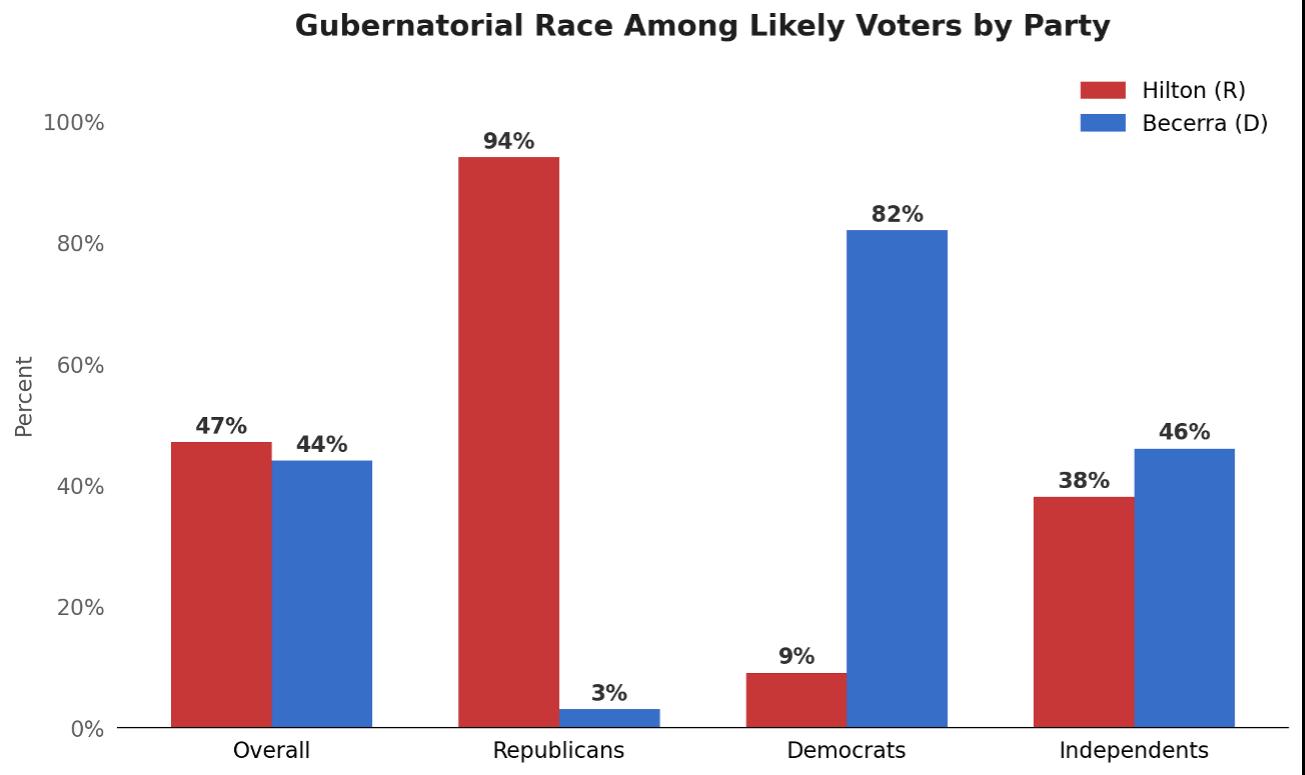
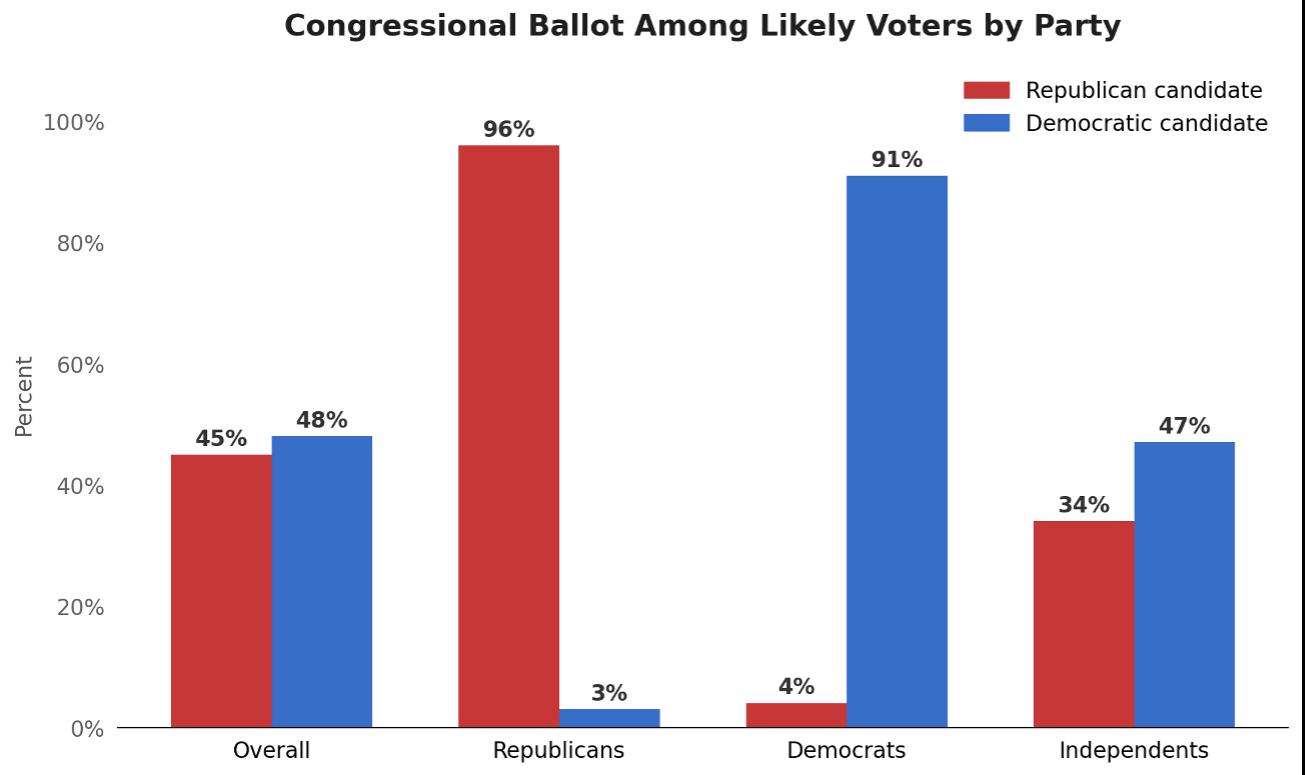
The gubernatorial matchup between Steve Hilton (R) and Xavier Becerra (D) is a genuine toss-up among likely voters, with Independents — now matching Democrats as the county’s largest political bloc favoring Becerra by a clear margin The generic congressional ballot is similarly tight Beneath the horse race numbers, however, the data point to more fundamental shifts: younger voters are overwhelmingly Democratic but far less likely to vote; Latino and Asian-American voters are increasingly unattached to either party; and the cost of housing has eclipsed every other issue as the dominant concern of residents across party lines.
The races for governor and Congress remain highly competitive in Orange County Among likely voters, Steve Hilton leads Xavier Becerra 47% to 44%, while a generic Democratic candidate for Congress holds a similarly narrow advantage over a Republican. Together, the two races suggest that Orange County remains closely divided politically, even as voters appear to approach the gubernatorial and congressional contests somewhat differently.
The coalitions behind the gubernatorial race help explain why Hilton has consolidated Republican support more fully than Becerra has unified Democrats, giving him a narrow advantage in the governor’s race. Becerra, however, runs strongest among Latino and Asian-American residents, women, younger voters, and Independents. White residents, men, and Boomers favor Hilton, while Millennials are essentially evenly divided, making them the pivotal generation in Orange County
The remaining undecided voters more closely resemble Becerra supporters than Hilton supporters. They are disproportionately Independent and younger than the electorate as a whole, and housing is their top issue. At the same time, they are less likely to vote Only about half of Independents say they are absolutely certain to cast a ballot in November, compared with roughly three-quarters of both Republicans and Democrats, and younger voters likewise trail older residents in their reported likelihood of voting. The November outcome in Orange County may therefore hinge less on which candidate voters prefer than on which voters actually cast a ballot.
Orange County remains purple, divided almost equally between Democrats, Republicans, and Independents.
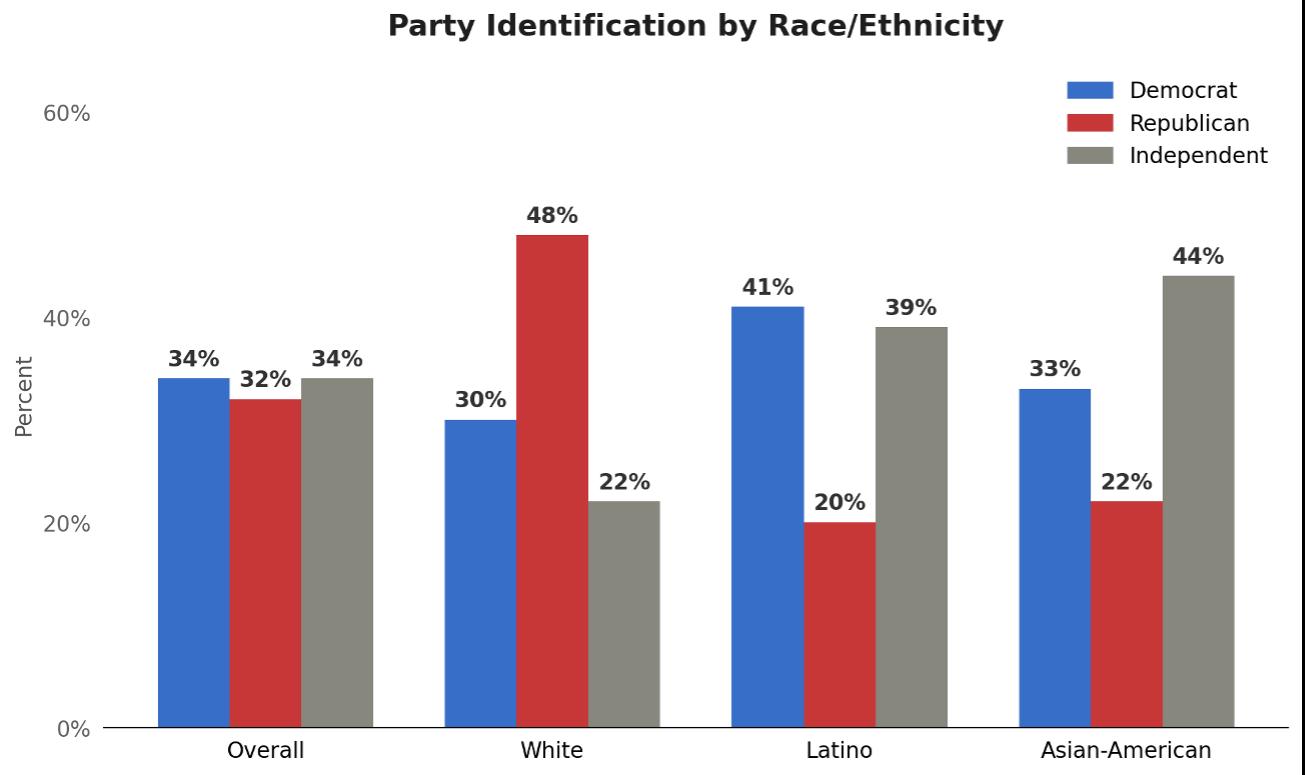
Orange County residents identify as 34% Democrat, 34% Independent or other, and 32% Republican. Independents now match Democrats as the county’s largest political group, with Republicans virtually tied. These results closely mirror the March 2026 UCI-OC Poll, which found a similar three-way split, and reflect a county that continues to resist alignment with either party
The Independent bloc draws disproportionately from younger and nonwhite residents. Nearly half of Gen Z identify as Independent, as do 42% of Millennials. Among racial and ethnic groups, 44% of Asian-Americans and 39% of Latinos identify as Independent, compared with 22% of White residents White residents remain the only racial group with a Republican plurality Together, these findings suggest that political independence has become an increasingly important feature of Orange County politics.
Age differences are the widest in this survey, but younger voters are less likely to vote.
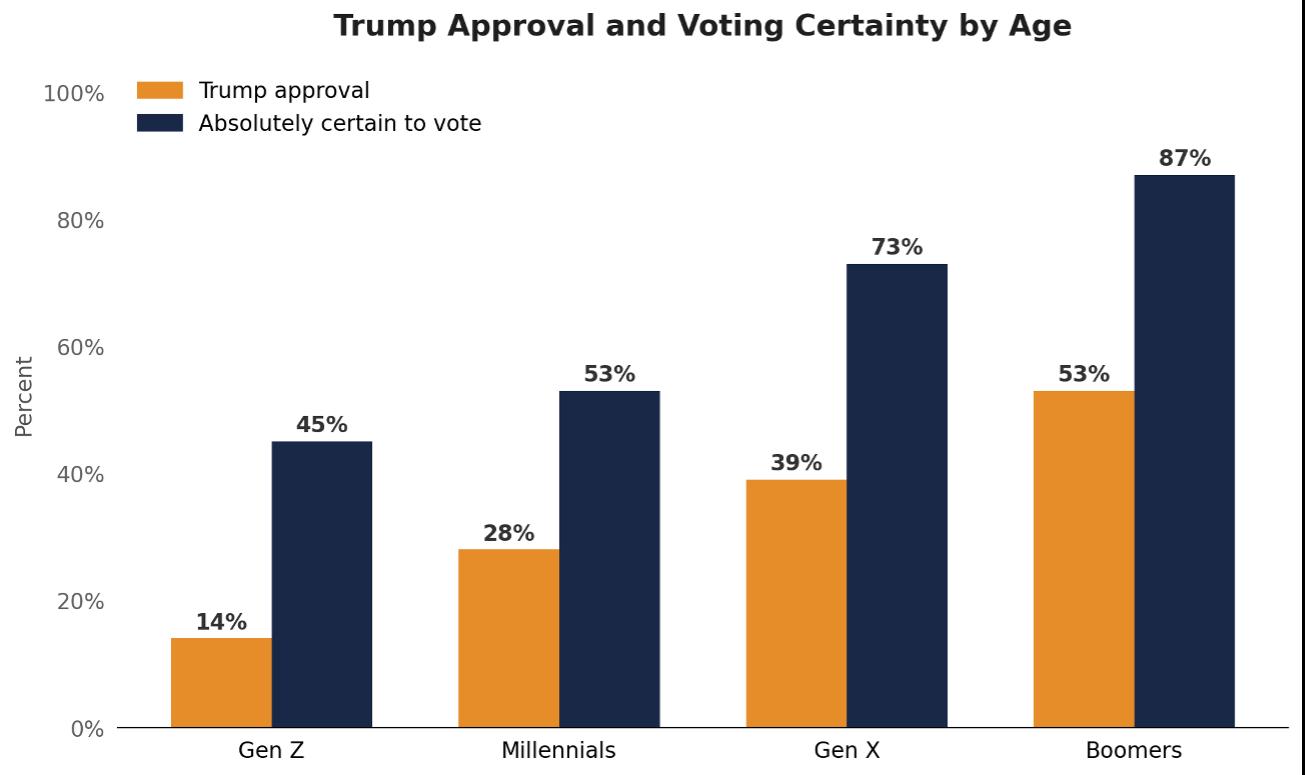
Across nearly every question in this survey, the gap between the youngest and oldest residents is wider than the differences between parties, genders, or racial and ethnic groups. Trump’s approval ranges from 14% among Gen Z to 53% among Boomers. On the gubernatorial race, on the congressional ballot, on top issues, and on the direction of the country, Gen Z and Boomers sit at opposite poles, with Millennials and Gen X in between
Only 45% of Gen Z say they are absolutely certain to vote in November, compared with 87% of Boomers. Among registered voters who skipped the June primary, the most common reasons were forgetting or missing the deadline and feeling that their vote wouldn’t matter sentiments concentrated among younger and Independent residents Whether Orange County remains politically competitive in the years ahead may depend in large part on whether today's generational differences persist over time.
Large shares of Latino (39%) and Asian-American (44%) residents identify as Independent rather than with either major party. In 2024, the UCI-OC Poll found that Latinos had trended rightward while Asian-Americans moved left. In 2026, the more prominent shift for both groups is away from the parties rather than between them.
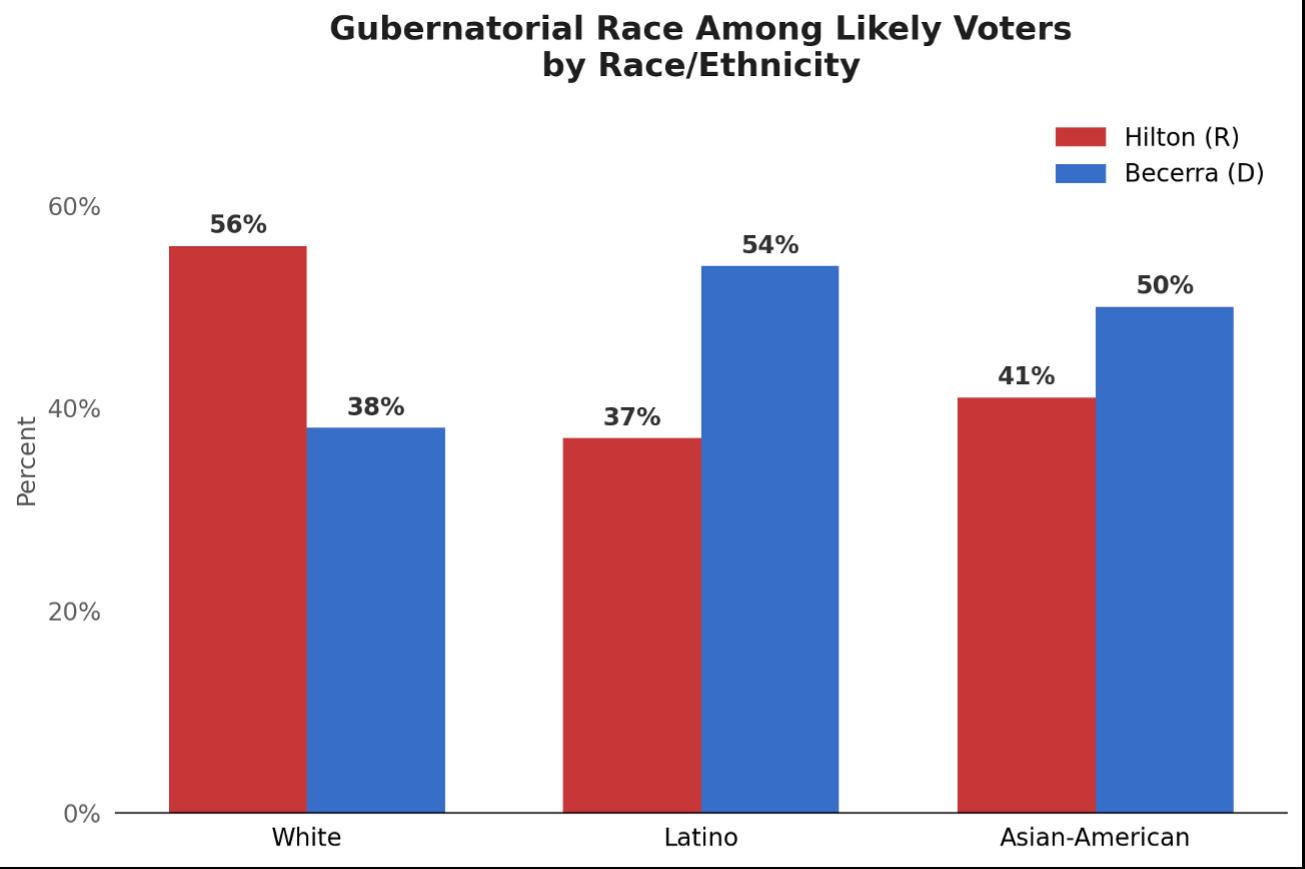
In head-to-head races, both groups still lean Democratic Among likely voters, Latinos back Becerra 54% to 37% and Asian-Americans support him 50% to 41%. The Latino margin is similar to the 2024 Harris-Trump split in Orange County. The Asian-American margin is narrower than the advantage Democrats held in 2024, though direct comparisons between a gubernatorial and presidential contest should be interpreted cautiously As with younger voters, these preferences are qualified by a turnout gap About half of Latino residents and 59% of Asian-Americans say they are absolutely certain to vote, compared with 82% of White residents.
The gender gap runs through every major race.
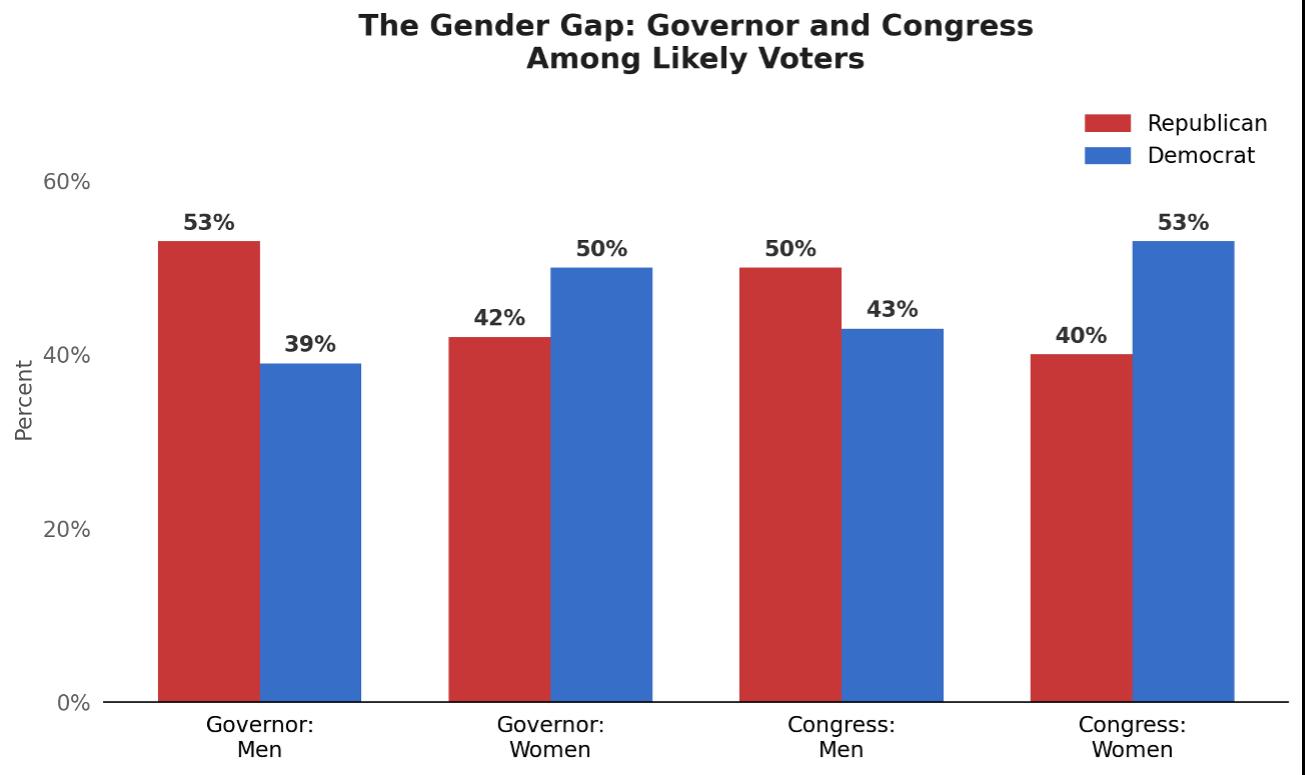
Men and women in Orange County diverge on virtually every electoral question. On the gubernatorial race among likely voters, men back Hilton by 14 points; women support Becerra by 8 On the congressional ballot, the pattern repeats men favor the Republican, women favor the Democrat, with a combined swing of more than 20 points.
The gap extends beyond electoral matchups. Men are more likely than women to approve of Trump and less likely to approve of Newsom. Unlike the generational turnout gap, the gender divide in voting engagement is negligible roughly two-thirds of both men and women say they are absolutely certain to vote.
Residents consistently say the country and state are on the wrong track but feel better about Orange County.
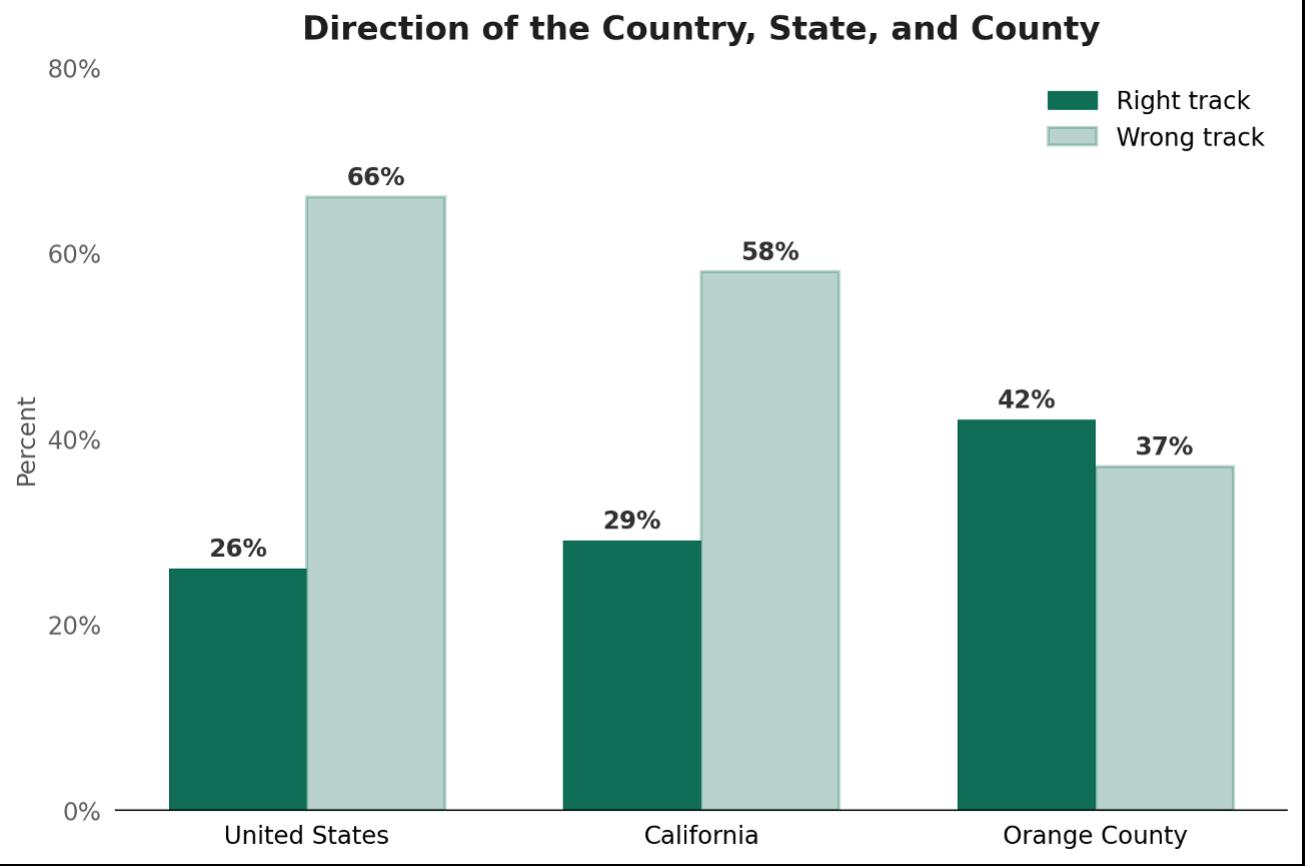
Since the UCI-OC Poll first asked about the direction of the country in May 2023, Orange County residents have consistently said the United States is on the wrong track That view has held across four surveys spanning three years: 65% said wrong track in 2023, 61% after the 2024 election, 62% in March 2026, and 66% today. The share saying the country is headed in the right direction has never exceeded 32%. California draws majority disapproval as well, with 58% saying the state is on the wrong track. Partisan differences are sharp Democrats and Independents drive the negative view of the country, while Republicans and Independents converge on California
Orange County itself has consistently been viewed more positively. In 2023, 46% said the county was on the right track; that figure rose to 50% after the 2024 election before settling at 42% in two 2026 surveys. The most notable feature remains the bipartisan nature of local sentiment: 45% of Republicans and 47% of Democrats say OC is headed in the right direction, coming within two points of each other on a question where they agree about almost nothing at the state or national level.
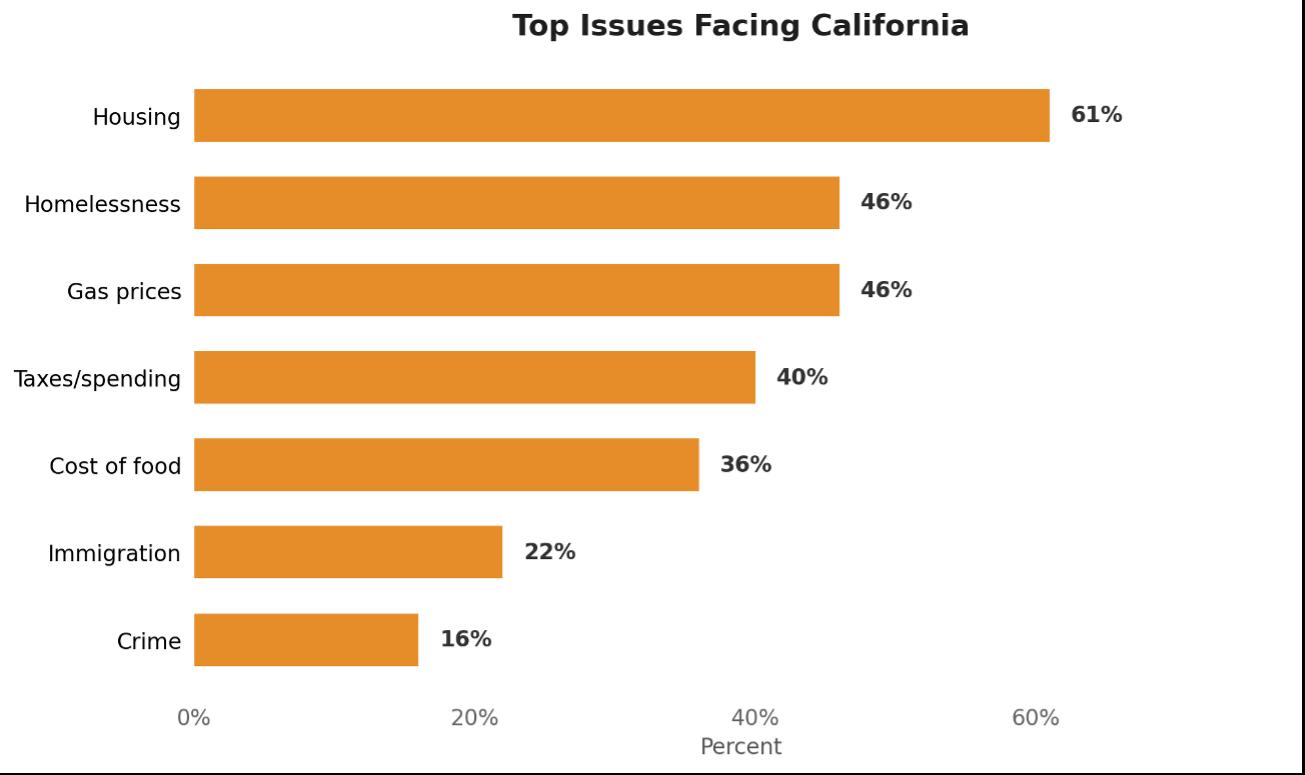
Cost of housing is the top issue facing California according to 61% of OC residents, well ahead of homelessness (46%), gas prices (46%), and taxes and government spending (40%) When asked to identify the single most important issue, 37% choose housing nearly double the next issue and four times the share citing immigration.
What makes housing distinctive is its breadth. It is the top issue for Democrats, Independents, and even Republicans, though Republicans also emphasize taxes and immigration It is the top concern across every racial and ethnic group. And the generational intensity is striking: three-quarters of Gen Z cite housing as a top issue, compared with about half of Boomers. As the single most important issue, the age gap is even wider — half of Gen Z name housing, compared with roughly one in five Boomers. No other issue commands such broad concern across political and demographic groups while simultaneously producing such striking generational differences
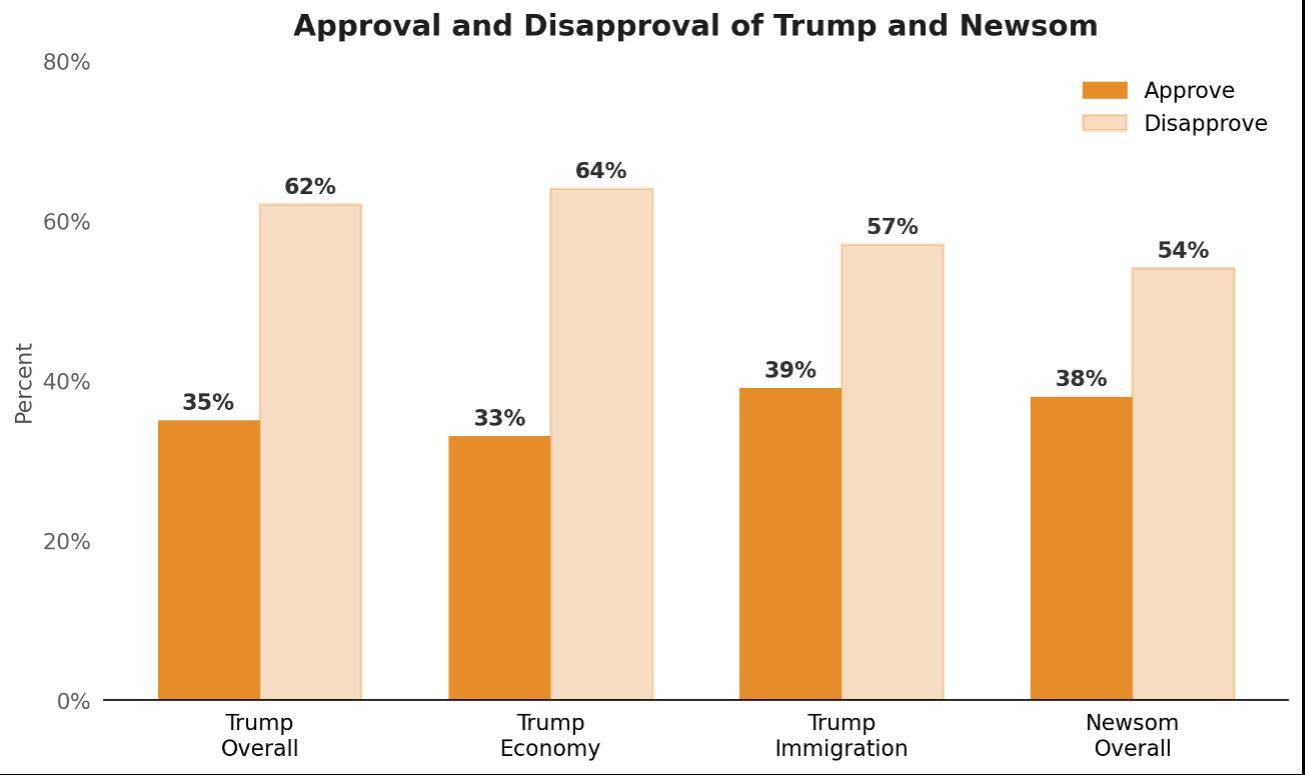
President Trump receives 35% approval and 62% disapproval among Orange County residents, essentially unchanged from the March 2026 UCI-OC Poll Nearly half of all residents strongly disapprove. His support is concentrated among Republicans and Boomers, while Independents, Gen Z, and Latino residents are among his weakest groups.
Trump’s approval on the economy (33%) is about the same as his overall number His immigration approval (39%) is his strongest measure but still draws majority disapproval. In a county where residents overwhelmingly cite housing and other pocketbook concerns as their top issues, the economy numbers are the more consequential finding. Gov. Newsom fares comparably poorly. His approval stands at 38%, with 54% disapproving slightly better than Trump’s overall numbers As in the March poll, Independents rate Trump and Newsom negatively, reinforcing a broader pattern of dissatisfaction with leadership at the state and national levels.
The Orange County Poll was conducted by the School of Social Ecology at the University of California, Irvine in partnership with TrueDot, which fielded the survey. Researchers interviewed 809 adults residing in Orange County, California from June 9–12, 2026 The survey was offered in both English and Spanish, with 778 interviews completed in English and 31 in Spanish.
The survey employed a hybrid sampling design. A total of 467 interviews were conducted with registered voters sampled from the Orange County voter file and reached via text message. An additional 342 interviews were completed with adults recruited through online survey panels Responses from both samples were combined for analysis
To ensure the sample reflects the adult population of Orange County, post-stratification weights were applied along key demographic dimensions, including age, race/ethnicity, educational attainment, and gender. Weights were also calibrated to vote history: 2024 general election presidential vote at the first stage of weighting, and the results of the June 2026 primary election for Governor of California at the final stage
The modeled error estimate for the full sample is ±4.2 percentage points at the 95% confidence level The modeled error estimate accounts for the complexity of the sampling design, including weighting and the use of non-probability panel sources, and should be interpreted as an approximation of total survey error rather than a traditional margin of sampling error Subgroup estimates carry larger modeled errors Percentages may not sum to 100 due to rounding.