UCI-OC Poll
AUGUST 7, 2026





AUGUST 7, 2026
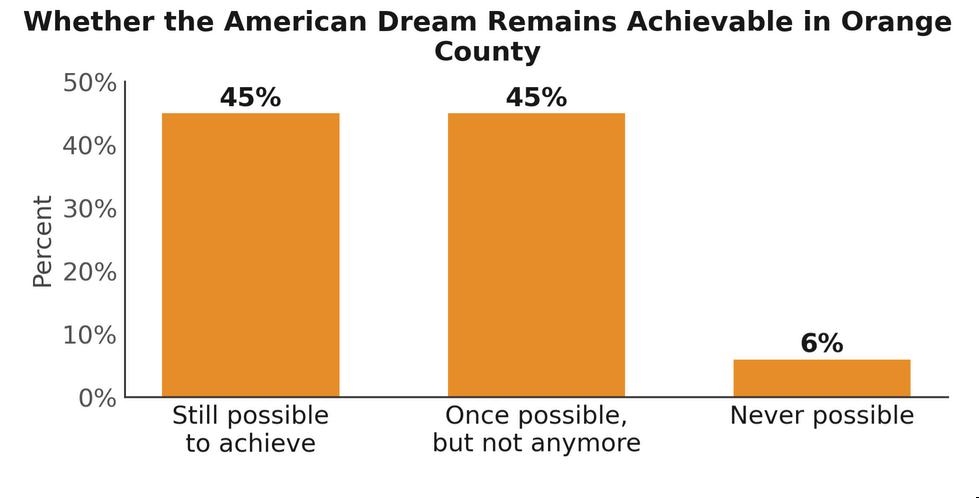
For generations, Orange County has symbolized the American Dream—the belief that hard work can provide the opportunity to build a better life. Today, Orange County residents are evenly divided over whether that promise still holds Forty-five percent say the American Dream remains achievable in Orange County, while an equal 45% believe it was once achievable but no longer is. By comparison, 53% of Americans said in 2024 that the American Dream is possible to achieve. Rather than rejecting the American Dream itself, Orange County residents appear to be questioning whether the county continues to provide the opportunity to achieve it.
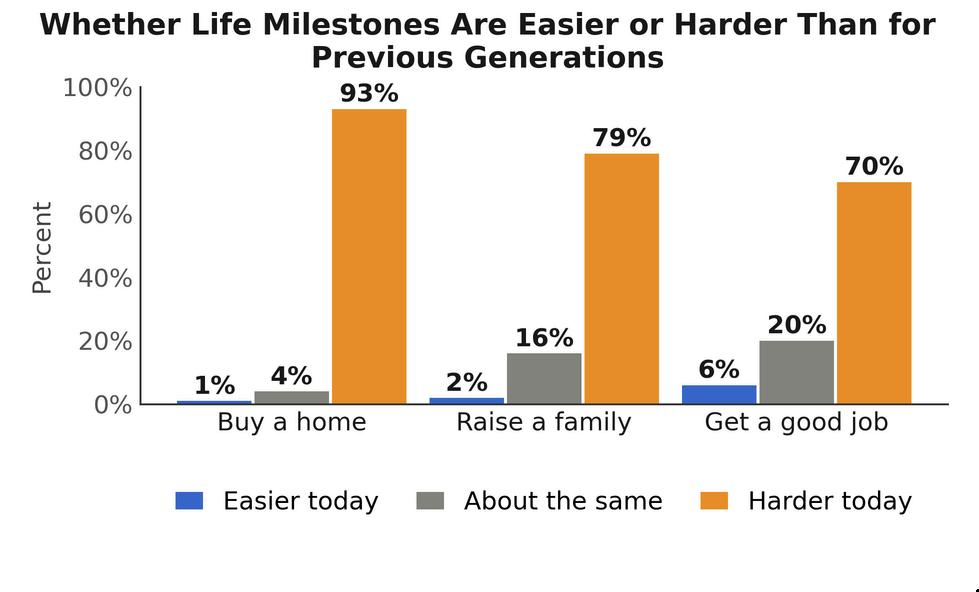
That uncertainty reflects more than concerns about affordability. Residents do not share a single definition of the American Dream. Instead, they emphasize different aspirations, including financial security and stability, homeownership and raising a family, and freedom and personal independence At the same time, many question whether the traditional path to achieving those goals has become more difficult Nearly seven in ten residents (69%) say hard work alone is no longer enough to afford a home and raise a family. Large majorities also believe it is harder than it was for previous generations to buy a home (93%), raise a family (79%), and obtain a good job (70%)
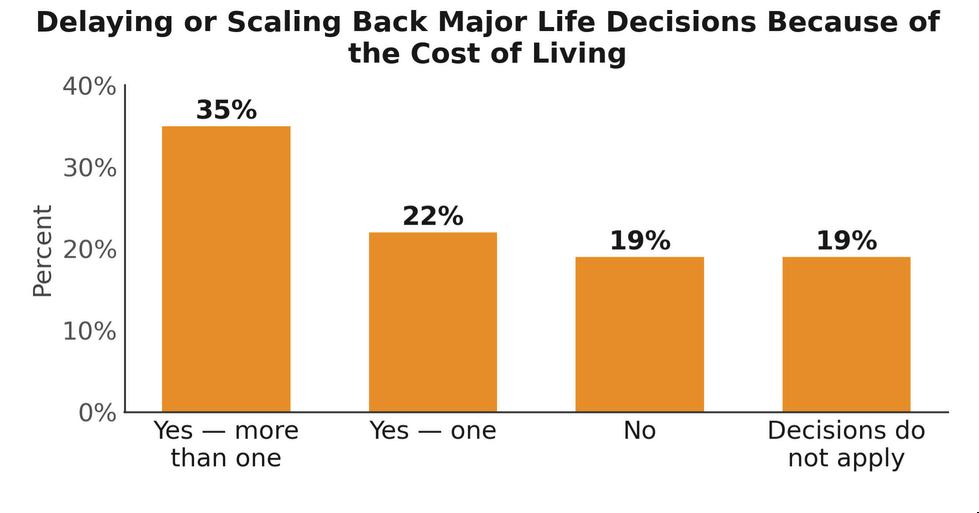
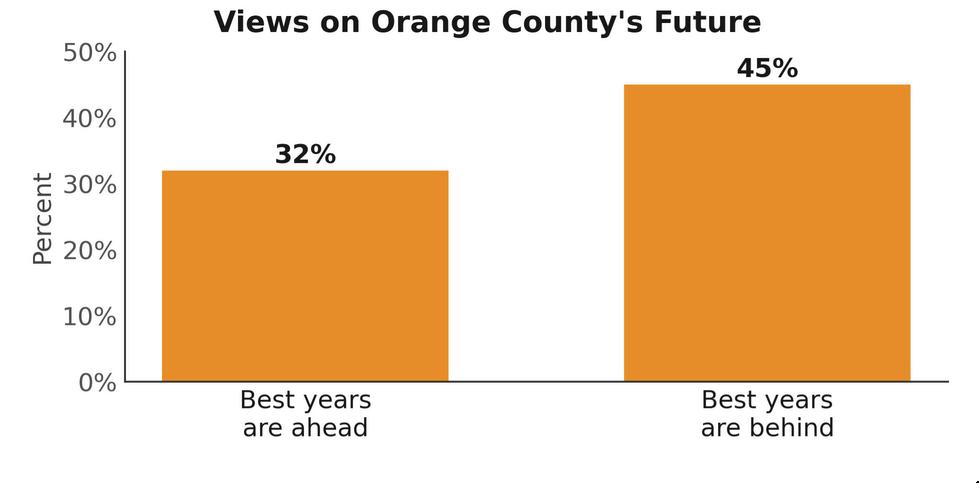
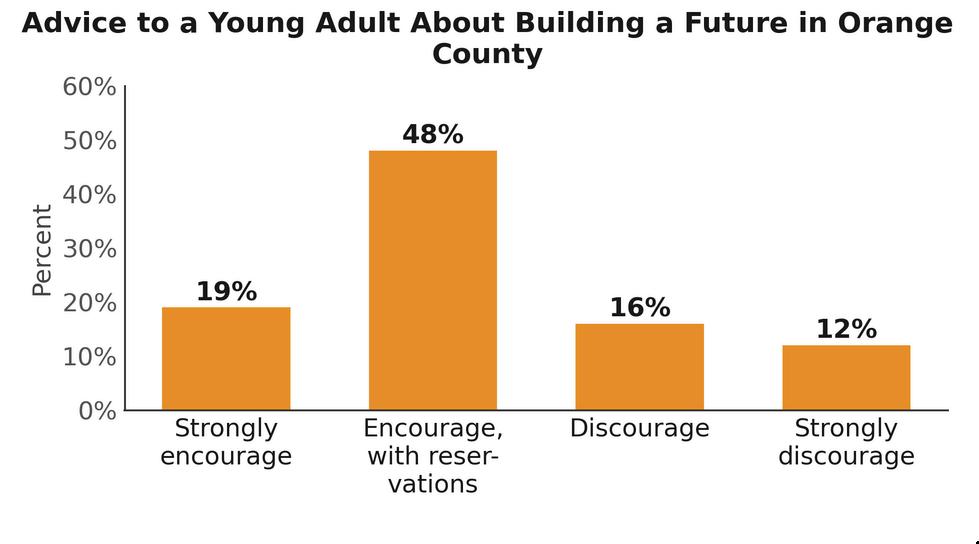
These concerns extend beyond attitudes Fifty-eight percent of residents report delaying or scaling back at least one major life decision because of Orange County’s cost of living, and residents are more pessimistic about opportunity in the county generally than about their own prospects. Even so, most remain committed to Orange County Sixty-seven percent would encourage a young adult to build a future here, although only 19% would do so without reservations At the same time, more residents believe the county’s best years are behind it (45%) than ahead (32%), while 22% offer no opinion. Together, these findings portray a county that continues to value the promise of the American Dream while increasingly questioning whether Orange County can sustain the opportunities that have long defined it
Orange County residents are evenly divided over whether the American Dream remains achievable. Forty-five percent say the Dream is still attainable in Orange County, while an equal 45% believe it was once achievable but no longer is. Just 6% say it was never attainable. The results reveal a county that has not rejected the American Dream but is deeply divided over whether Orange County still provides the opportunity to achieve it
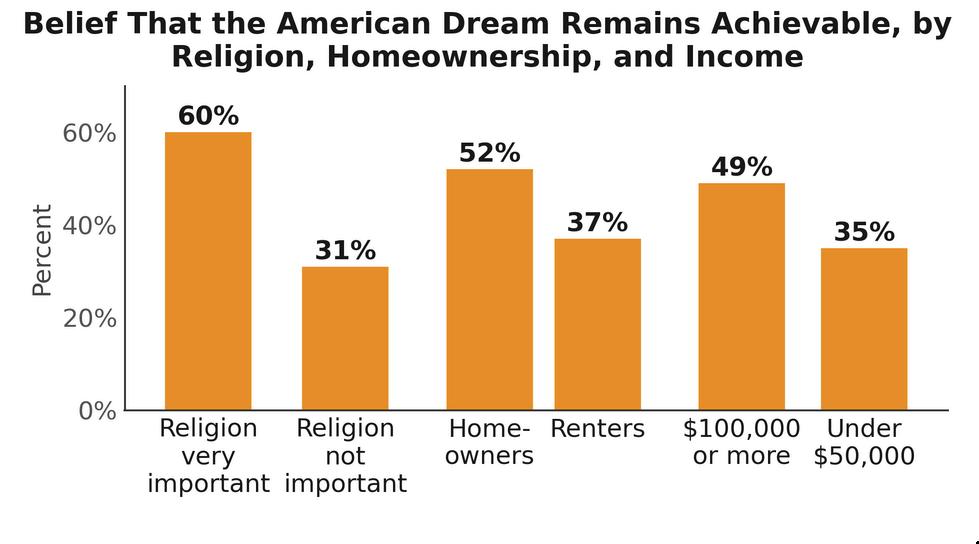
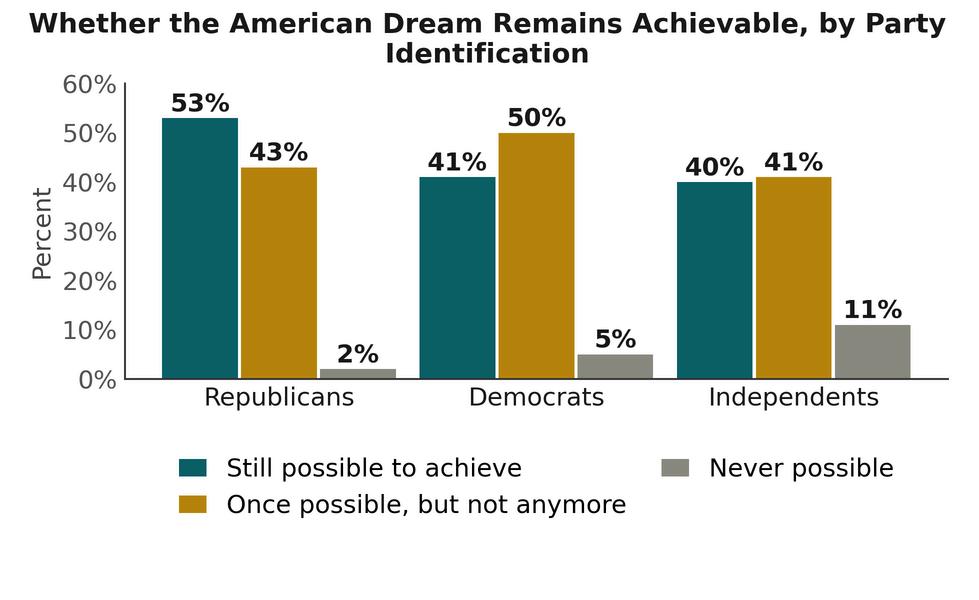
Residents’ views differ much more sharply along some lines than others. No demographic characteristic distinguishes those views more clearly than the importance of religion in residents’ lives. Sixty percent of residents who say religion is very important believe the American Dream remains achievable, compared with 31% of those who say religion is not important Homeownership and income also distinguish residents’ responses Homeowners are considerably more optimistic than renters (52% versus 37%), while half of residents with household incomes of at least $100,000 believe the Dream remains attainable, compared with 35% of those earning less than $50,000. Political differences are evident as well. Republicans (53%) are somewhat more optimistic than Democrats (41%) and Independents (40%)
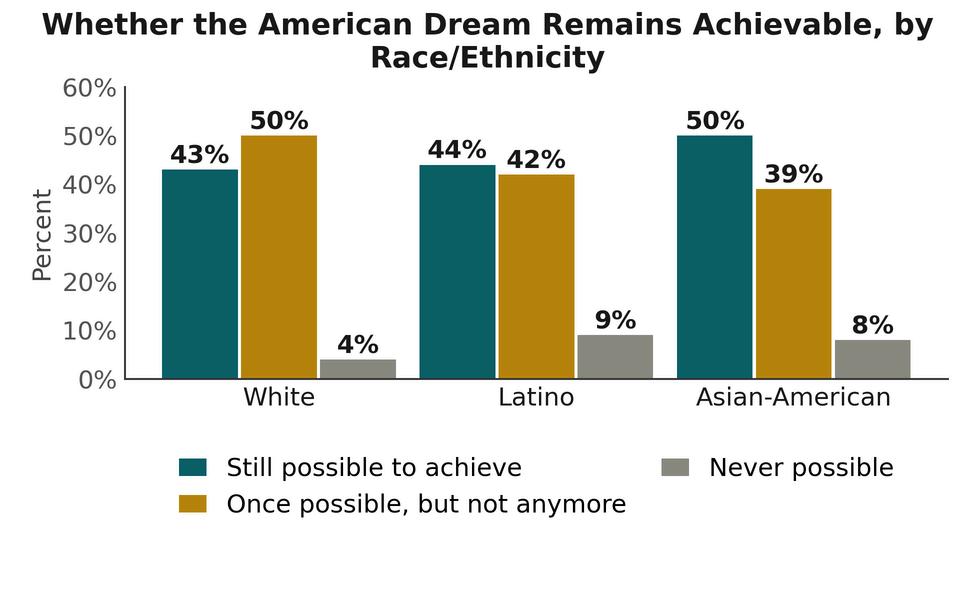
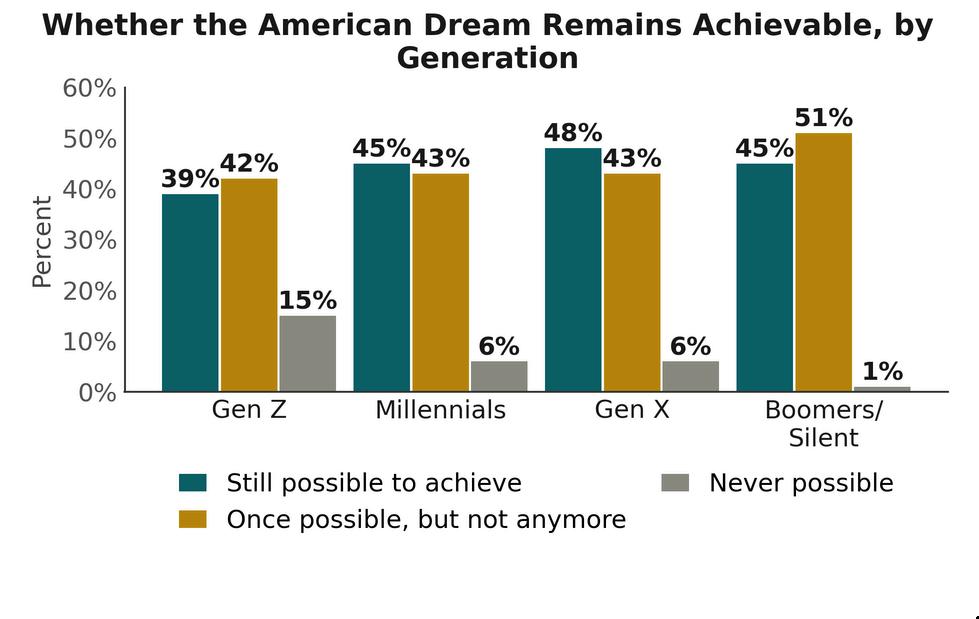
By contrast, race, ethnicity, and age distinguish residents’ views far less on this question. White (43%), Latino (44%), and Asian-American (50%) residents express broadly similar views about whether the American Dream remains achievable Likewise, while Gen Z residents are somewhat less optimistic than older generations, the more notable difference is that they are much more likely to say the American Dream was never achievable (15%, compared with just 1% of Boomers). Together, these results show that residents’ views of the American Dream divide more sharply by religion, homeownership, and income than by race, ethnicity, or age.
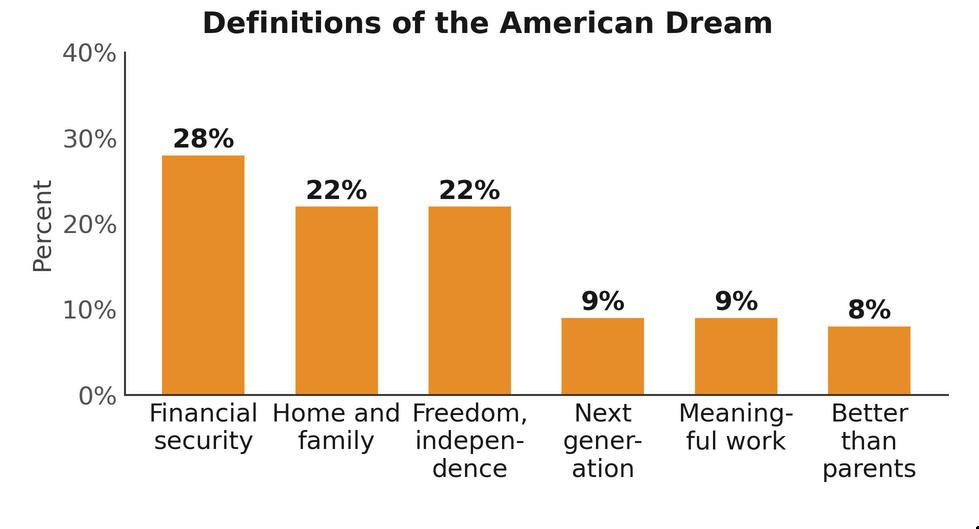
Orange County residents generally define the American Dream through one of three visions. Twenty-eight percent emphasize financial security and stability, while 22% point to owning a home and raising a family, and another 22% emphasize freedom and personal independence. Together, these three responses account for nearly three-quarters of residents’ answers. Far fewer define the Dream primarily as creating opportunities for the next generation (9%), finding meaningful work and contributing to society (9%), or doing better than their parents (8%).
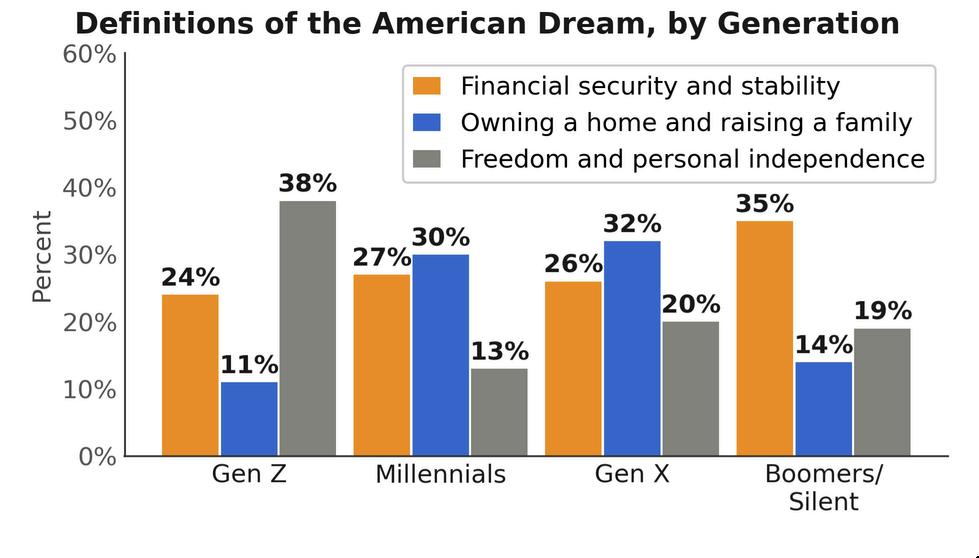
The most striking differences are generational. Gen Z residents are far more likely than any other age group to define the American Dream in terms of freedom and personal independence (38%), while placing much less emphasis on owning a home and raising a family (11%). By contrast, Millennials (30%) and Gen X residents (32%) are much more likely to identify homeownership and raising a family as the defining feature of the American Dream. Boomers stand apart as well, placing greater emphasis on financial security and stability (35%) than any other generation.
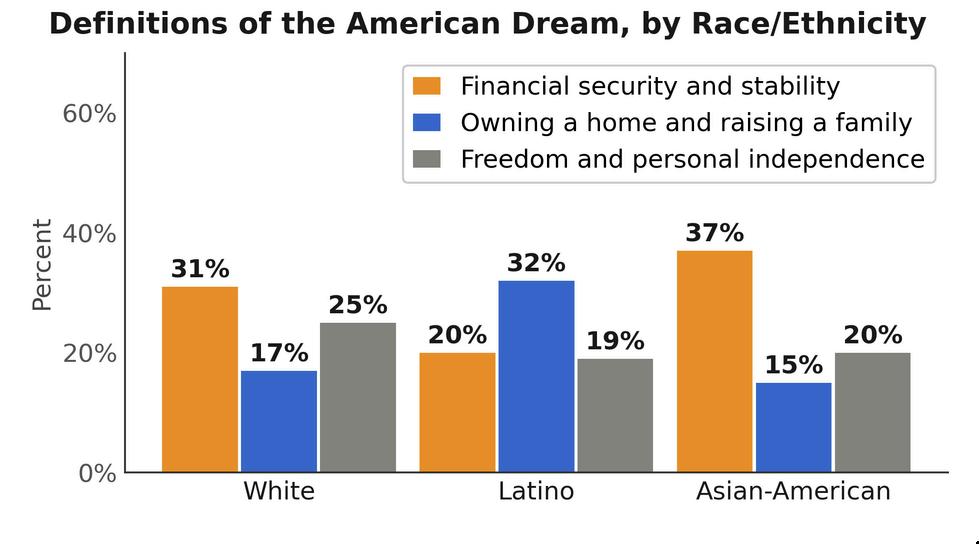
Differences by race and ethnicity are present but less pronounced. Asian-American residents are more likely than other groups to define the American Dream in terms of financial security (37%), while Latino residents more often emphasize owning a home and raising a family (32%)
No matter how residents define the American Dream, they largely agree that achieving it has become more difficult than it was for previous generations. Large majorities say it is harder today to get a good job (70%), raise a family (79%), and especially, buy a home (93%) Few believe any of these milestones have become easier.
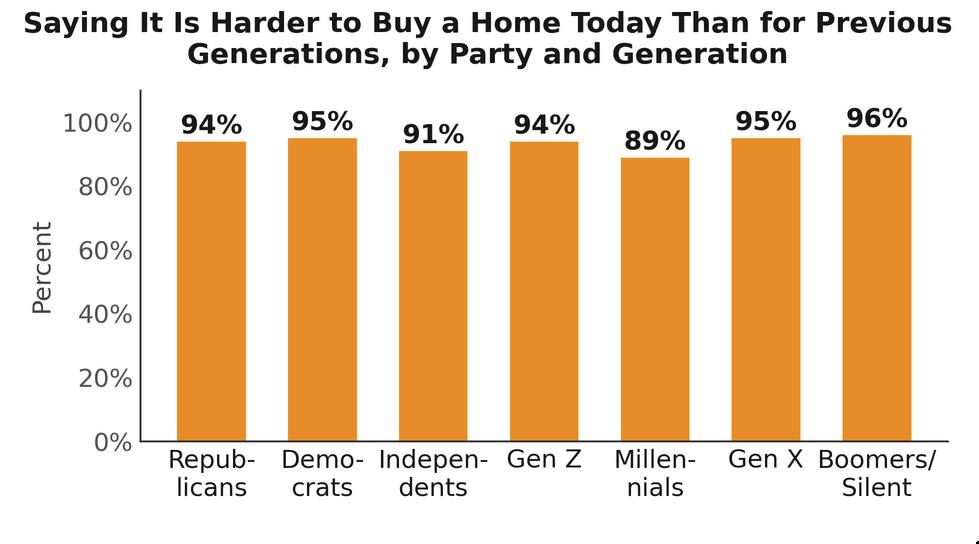
Among these milestones, homeownership stands apart. More than nine in ten Orange County residents say buying a home is harder today than it was for previous generations, including overwhelming majorities across every demographic group. Republicans, who tend to express somewhat greater optimism throughout the survey, say purchasing a home has become more difficult (94%) Democrats (95%) and Independents (91%) hold nearly identical views.
Residents also say that getting a good job and raising a family have become more difficult, although the consensus is not as overwhelming as it is for buying a home. About one in five residents say getting a good job is about as difficult today as it was for previous generations, while opinions about raising a family show somewhat greater variation across demographic groups. Even so, large majorities say both milestones have become harder to achieve These findings suggest that residents’ concerns extend beyond the housing market to many of the traditional milestones associated with the American Dream.
Residents believe the American Dream has become harder to achieve, but they do not believe people are working less hard to attain it.
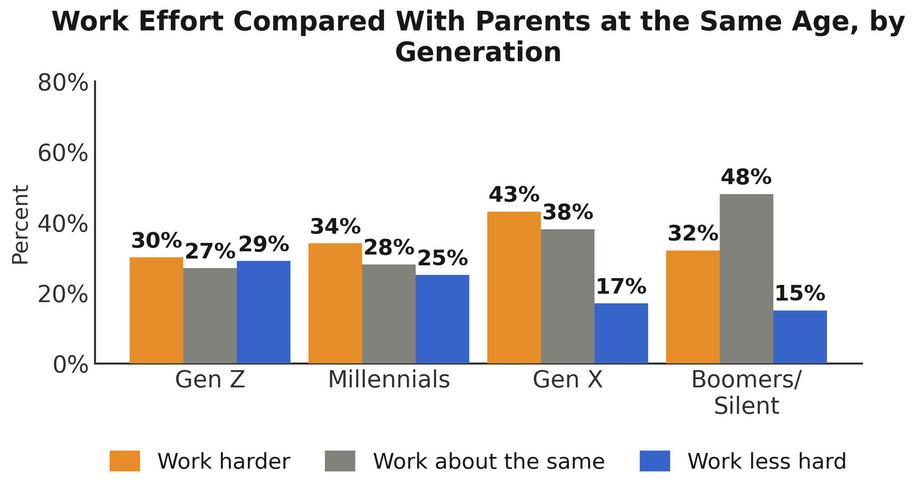
Residents are more likely to say they work harder than their parents did (35%) than less hard (21%) Another 36% say they work about the same amount Asked how they think their parents would assess their work ethic, residents give remarkably similar answers. One-third (33%) believe their parents would say they work harder than they did, compared with 26% who think their parents would say they work less hard. Another 32% believe their parents would say they work about the same.
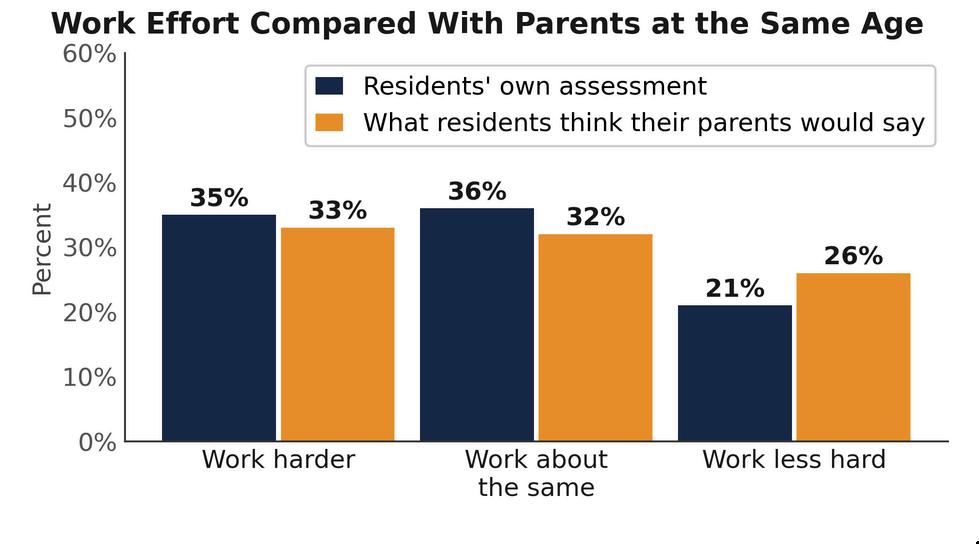
Generational differences are modest. Gen X residents are the most likely to say they work harder than their parents did (43%), while Boomers are the most likely to say they work about the same amount as their parents (48%). Even so, the broader pattern is consistent across generations.
For many Orange County residents, the cost of living is influencing when and in some cases whether they pursue important life milestones. Nearly six in ten residents (57%) say the cost of living has caused them to delay or scale back at least one major life decision, such as buying a home, getting married, having children, or changing careers More than one-third (35%) say they have postponed or scaled back multiple major life decisions
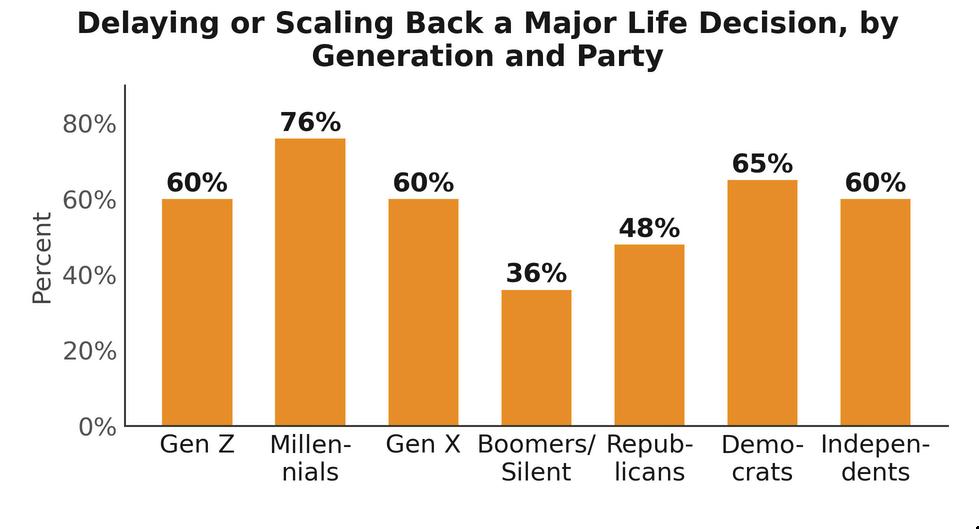
These experiences are not shared equally across the population Millennials report the highest rate of postponing or scaling back major life decisions (76%), followed by Gen Z and Gen X (60% each) and at a much lower rate, Boomers (36%). Democrats (65%) and Independents (60%) are also more likely than Republicans (48%) to report delaying or scaling back major life decisions because of the cost of living.
One of the survey’s most striking findings is the gap between how residents view Orange County’s future and the advice they would give a young adult More residents believe the county’s best years are behind it than ahead (45% versus 32%), while 22% offer no opinion. Yet when asked whether they would encourage a young adult to build a future here, more than two-thirds (67%) said they would. Nearly half (48%) would do so with reservations about the cost of living and opportunities, while only 19% would encourage it without reservation Just over one-quarter (28%) would advise a young adult to build a future elsewhere.
The Orange County Poll was conducted by the School of Social Ecology at the University of California, Irvine in partnership with TrueDot, which fielded the survey. Researchers interviewed 809 adults residing in Orange County, California from June 9–12, 2026 The survey was offered in both English and Spanish, with 778 interviews completed in English and 31 in Spanish.
The survey employed a hybrid sampling design. A total of 467 interviews were conducted with registered voters sampled from the Orange County voter file and reached via text message. An additional 342 interviews were completed with adults recruited through online survey panels Responses from both samples were combined for analysis
To ensure the sample reflects the adult population of Orange County, post-stratification weights were applied along key demographic dimensions, including age, race/ethnicity, educational attainment, and gender. Weights were also calibrated to vote history: 2024 general election presidential vote at the first stage of weighting, and the results of the June 2026 primary election for Governor of California at the final stage
The modeled error estimate for the full sample is ±4.2 percentage points at the 95% confidence level The modeled error estimate accounts for the complexity of the sampling design, including weighting and the use of non-probability panel sources, and should be interpreted as an approximation of total survey error rather than a traditional margin of sampling error Subgroup estimates carry larger modeled errors Percentages may not sum to 100 due to rounding.