Notions 2025



×It is an extraordinary honor to serve as the Neubauer Collegium’s interim director for the 2025–26 academic year. When I was asked to fill in for Tara Zahra, the Collegium’s brilliant Roman Family Director, during her research leave, I was aware of the basic contours of the role. I had evaluated research proposals as a member of the inaugural faculty advisory board, and I later collaborated on a number of Collegium projects myself. When I served in the Provost’s office as Senior Advisor for the Arts, I saw that the Collegium supports a thriving culture of creative expression on campus – most obviously through its exhibitions gallery, but more subtly (and, I think, more substantially) by incorporating the visual and performing arts into the full gamut of its interdisciplinary projects. It was clear to me that Collegium projects were pioneering new forms of inquiry in an environment characterized by a commitment to unfettered exploration. The work was important and groundbreaking, and I was excited to support it.
What I did not see until I took up the position as interim director is that imagination is a key quality –arguably, the key quality – of the Collegium’s work. At a moment when humanistic scholars are buffeted by budget constraints and consolidation, when the broader cultural and political climate is overwhelmingly shaped by uncertainty and threat, the thrill of imaginative work does not seem to be in abundant supply. And yet research activities at the Collegium are animated by varied pleasures: the enthusiastic embrace of new perspectives and partnerships, exhilarating forays into unexplored areas of inquiry, hidden horizons and unforeseen intersections coming into view. As the following pages demonstrate, the wide variety of projects we support share a fervent – even a ferocious – commitment to imaginative exploration of the world’s complexity. That commitment drives our research forward.
This Notions report is a snapshot of Collegium research in action. A look back at highlights from the previous calendar year, a notable one during which we marked our ten-year milestone with a high-profile set of public convenings, also provides a look forward at the next ten years. In January we were honored to receive a major grant from the MacArthur Foundation to launch the Future of the Humanities project, a two-year initiative that will assess and articulate the value of the humanities in higher education and
society. The work will be informed in part by the experiments in thinking that Collegium research teams have tested and refined, the results of which are on vibrant display in the pages that follow.
The work will also be marked by the indelible contributions of our longstanding director Jonathan Lear, who died unexpectedly at the outset of this academic year. We miss Jonathan every day and sense his commitments – his singular wit, generosity, and intelligence – in everything we do. In the characteristically brilliant essay “The Call of Another’s Words,” Jonathan reflected upon the redemptive urgency of realizing the imagination’s potential. His thoughts, written in 2011, resonate just as powerfully today: “If one can succeed in making an imaginative possibility robust, it can have a profound effect on how we live our lives. For our lives are shaped not just by what we take to be the case, but also by our sense of what is possible. Once an imaginative possibility is opened up, there is room for it to become a practical necessity.”
At the Neubauer Collegium we strive to create the conditions that enable our colleagues to open up imaginative possibilities, and to realize the opportunities – and the practical necessities – that follow from that imaginative work.
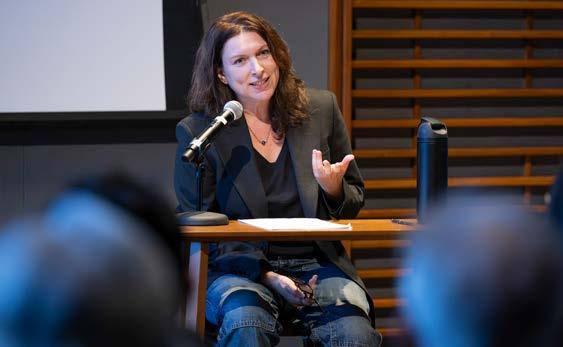
David Levin
Interim Faculty Director
Neubauer Collegium for Culture and Society

Betye Saar: Let’s Get It On, Page 11
The Collegium is a creative environment that allows for unfettered freedom of humanistic inquiry and discovery. The forms of expression are as ambitious and diverse as the ideas themselves.
Betye Saar stood at the podium and smiled. A large crowd had gathered at the Neubauer Collegium to celebrate her latest exhibition, Let’s Get It On: The Wearable Art of Betye Saar, on view in our gallery last winter. The reception, a highlight of the citywide Panafrica Days program that ran March 5–8, 2025, brought together an international who’s who of artists, curators, scholars, and patrons, along with local residents and members of the campus community. Upbeat and clearly moved by the enthusiastic turnout, Saar thanked everyone for coming and welcomed them with characteristic charm. “I started making art as a child, and I still make it,” she explained. “I don’t think it’s anything special, but I have fun doing it.”
The art world, of course, considers Saar a treasure. At 99, she is an inspiration to several generations of artists and artisans, internationally renowned for the way her assemblages channel myth, magic, and memory to address the entangled legacies of racial and feminist struggles in America. Her 1971 piece Eshu (The Trickster) was displayed prominently in Project a Black Planet: The Art and Culture of Panafrica, a major 2025 exhibition at the Art Institute of Chicago curated by the research team on the Collegium’s multi-year Panafrica project. The Collegium show offered a distilled version that was sharply focused on the way Saar’s early work in costume design informed her pioneering explorations of Pan-African themes. Let’s Get It On featured

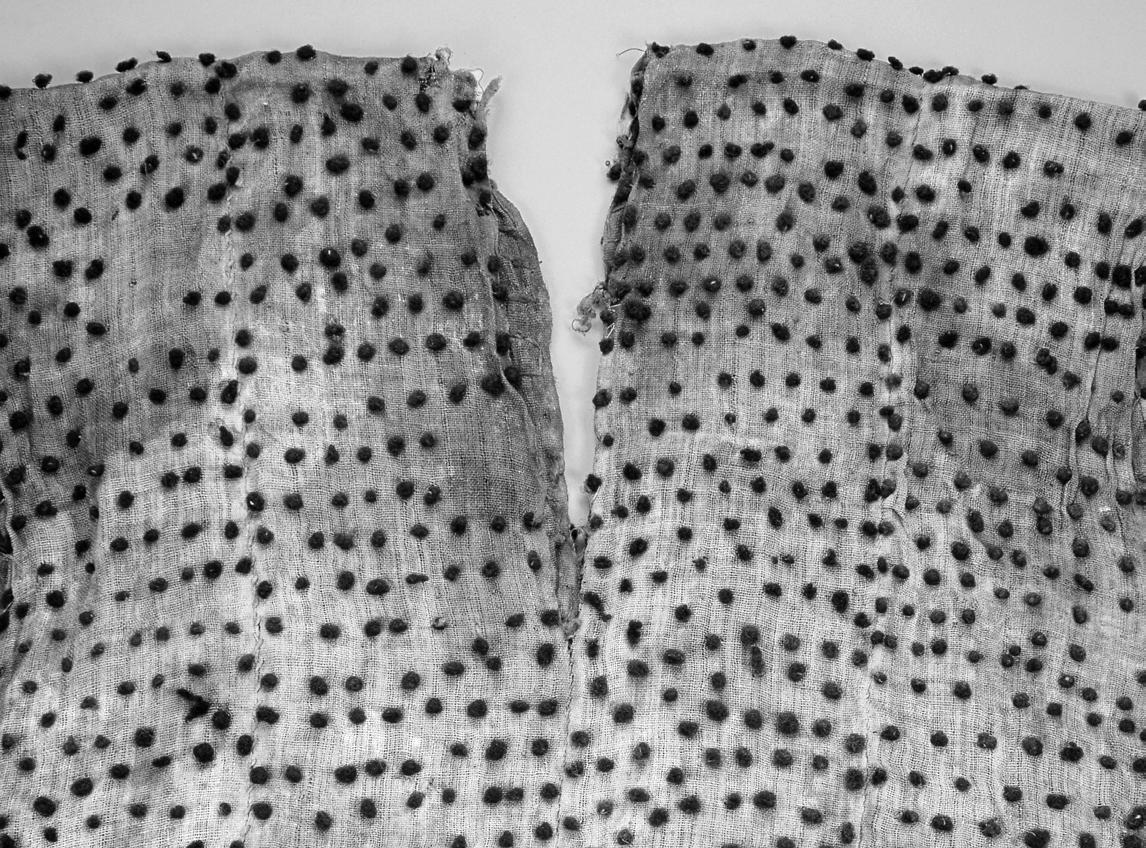
never-before-seen works in the context of a pivotal visit Saar made to the Field Museum in 1974, when she encountered historic objects from Africa for the first time and was inspired to reimagine herself as an artist channeling her ancestry. A ceremonial Bamum robe Saar saw during that trip became a centerpiece of the Collegium show. Its display brought Bamum leaders from the Chicago area to the March 7 reception, and the community returned on April 11 for a private event to honor Bamum culture and explore the history of the robe. Project a Black Planet is currently on view at MACBA in Barcelona, and the Los Angeles gallery Roberts Projects will present Let’s Get It On along with a companion volume this summer in honor of Saar’s 100th birthday.
LEARN MORE
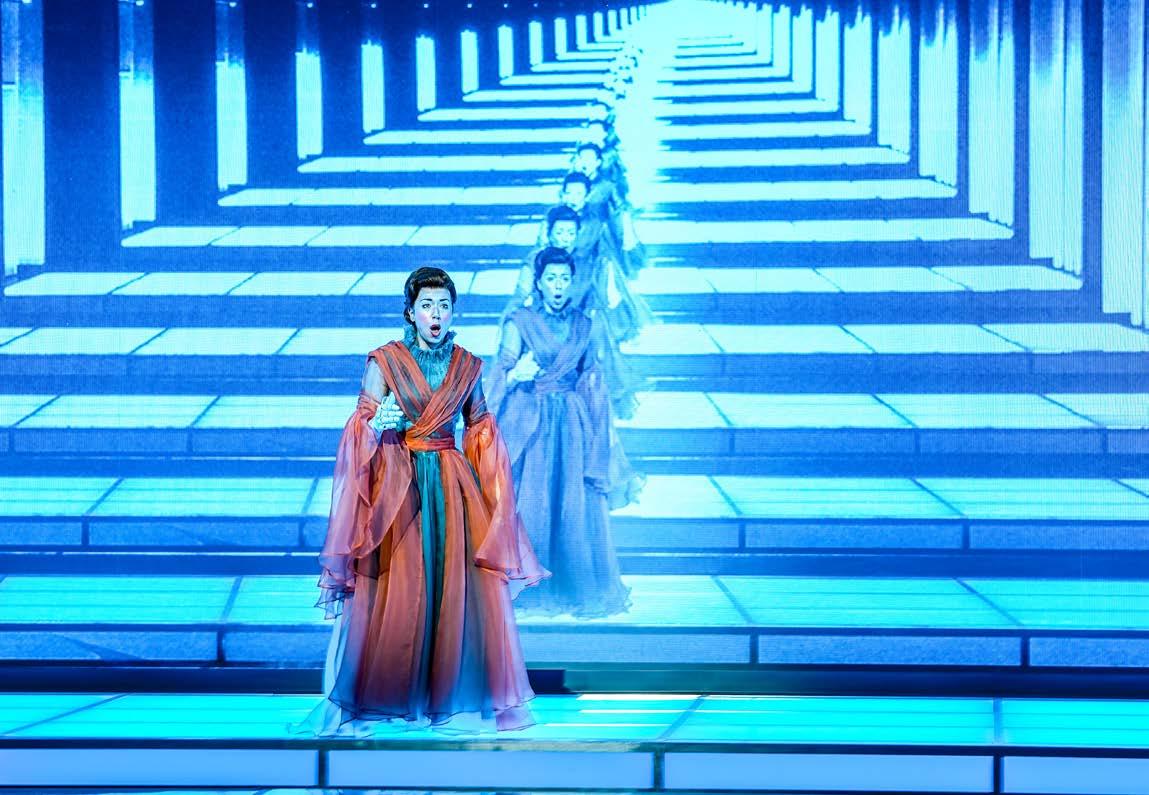
Positioned in the center of a Venn diagram where research and performance intersect, the Arts Labs project brings together artists and scholars who are experimenting with new ways to foster creativity. In 2025 the teams designed and tested new forms of creative scholarship through an event series that included a reading by the advisory poetry editors of the Paris Review; a panel discussion on the future of opera with acclaimed director Yuval Sharon; a “movement theory” lab featuring performances and discussions with choreographers; and a developmental workshop with the creative team behind the musical Out Here, which premieres at Court Theatre in April 2026. What unites these seemingly disparate initiatives is a commitment to incubating ideas in an environment where the arts are fully integrated into research inquiry.
LEARN MORE
What does it mean to practice history in public? In the spring of 2025, the Histories of Culture in Disastrous Times research project took this question as a starting point for a focused set of conversations among faculty, students, and members of the public. Whether historical knowledge is produced and shared by academic or non-academic institutions, the process is defined by its commitment to critical thinking and informed civic discourse. Participants considered a range of challenges and opportunities as they reconceived the meaning of public history at UChicago and beyond.
LEARN MORE
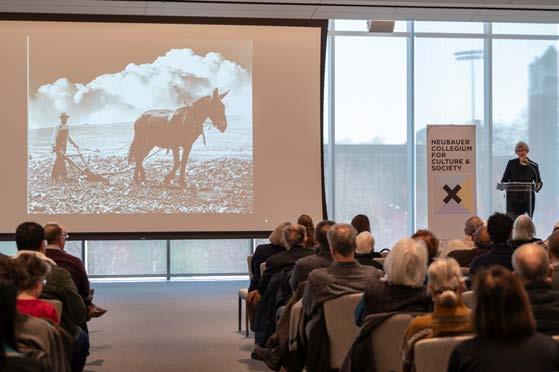
On April 8, 2025, the former Harvard President and eminent Civil War historian Drew Gilpin Faust gave a talk at the Rubenstein Forum on the changing presence of the U.S. South in American consciousness. Faust established links between declining specialized interest in Southern history and the region’s current demographics, social policies, and political trends. The legacy of the Civil War is integral to the national narrative, she argued. Americans fail to acknowledge this influence at their peril.
LEARN MORE
Naming Panafrica is itself a bold act of imagination that resonates in different ways and to varying degrees with the artists and viewers implicated in the term. Taking the rich history of Pan-Africanism into account, Project a Black Planet rises to meet the movement’s ambitions and plurality with an undertaking that is truly at the scale of the world.
From the foreword to the Project a Black Planet exhibition catalogue, edited by Antawan I. Byrd, Elvira Dyangani Ose, Adom Getachew, and Matthew S. Witkovsky, the research team on the Neubauer Collegium’s Panafrica project
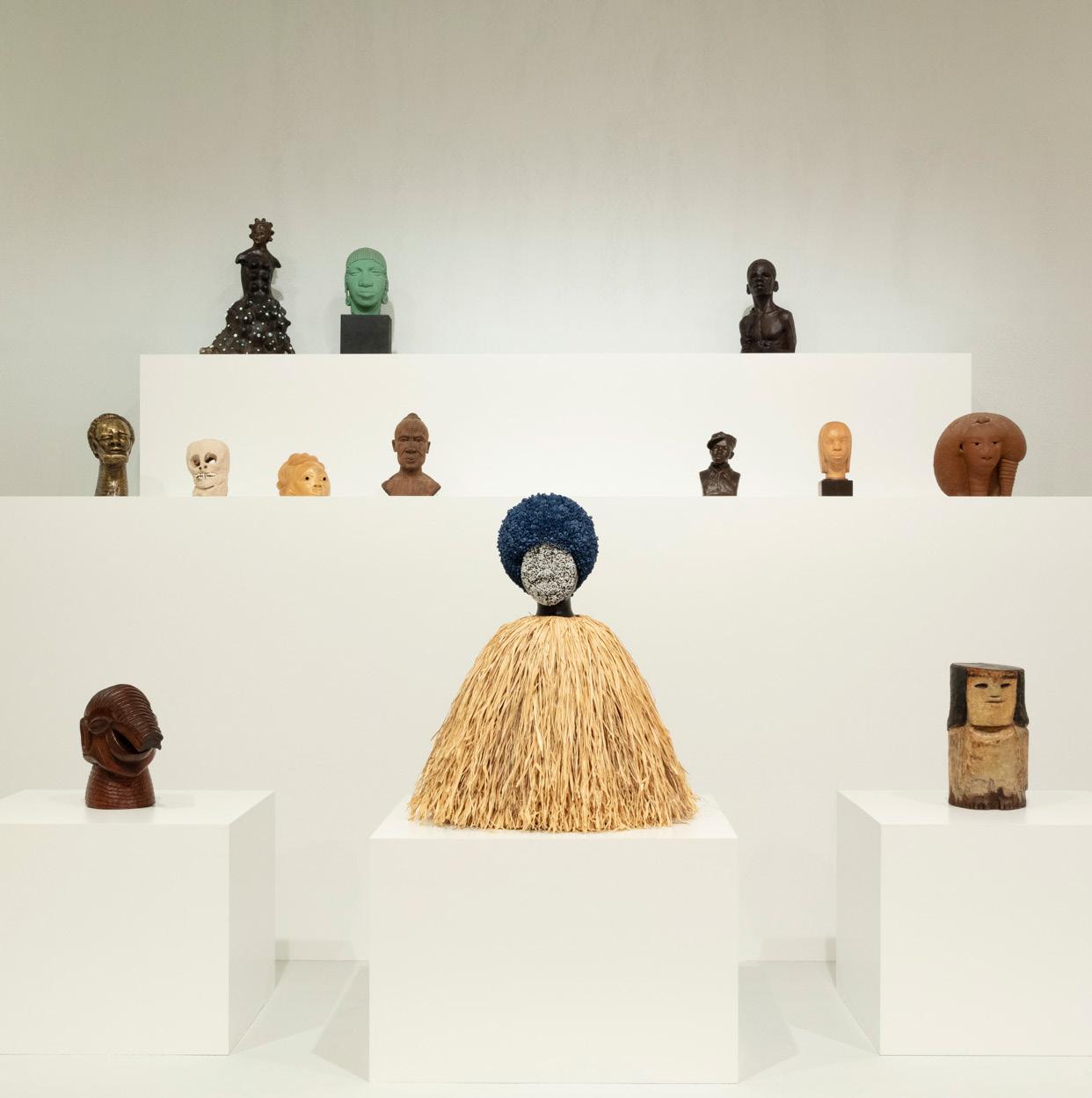
Installation view, Project a Black Planet: The Art and Culture of Panafrica, Art Institute of Chicago, Dec. 15, 2024 – March 30, 2025. Center: Simone Leigh, Dunham, 2017. Photo by Joe Tallarico, courtesy of the Art Institute of Chicago.

Joy is often considered in relation to simple pleasures. These projects are probing its complex interplay with experiences of solace, struggle, and freedom.
Zoya Cherkassky: The Global Political Crisis
What was that guy reading? Visitors to the Neubauer Collegium gallery last fall encountered a cartoonish painting of a nude woman reclining in a field of grass. The title of the book she was reading was easily legible on the cover: Capital after Globalism. But on the other side of the room, in a painting titled The Loner, a morose and rather hirsute naked fellow sat in a chair reading a book with no title, silently inviting a thousand punchlines.
The Global Political Crisis featured a suite of erotic paintings and drawings by Zoya Cherkassky, many of which elicited titters from our guests. Humor and playful provocation, key elements of her artistic style, figured prominently in the works on view. In one large drawing, a woman wearing a modest checkered dress carries a placard bearing the words “You are headed for hell!” across a nude beach. In another, a man seated on a couch wearing only his underpants and a handlebar mustache shares a bottle of wine with a topless woman in heels. The painting is titled First Date.
Despite the show’s levity and wit – and its attention to the various mechanics of sexual congress – The Global Political Crisis doubled as an ironic commentary on sober matters including the right to privacy, freedom of expression, and war. A double émigré, first from her homeland of Ukraine and then from Tel Aviv (she recently moved to New York), Cherkassky began seeking solace from the
violence surrounding her by sketching people in moments of tenderness and connection.
“It’s hard to know what can be said in the midst of all this horror,” Cherkassky said. “The desire to escape the need to speak out by retreating into the personal and intimate is, of course, naive and unrealistic — as we know, the personal is political too.”
On the first day of the show, a large sheet of butcher paper was taped to a wall in the lobby with a note inviting visitors to share their responses. The “graffiti wall,” as we called it, slowly filled with comments and doodles — and, in one case, a fully formed essay. The effect was powerful. An experiment with public engagement confirmed Cherkassky’s belief that the show was ultimately concerned less with sex than with the freedom to talk about sensitive subjects.
LEARN MORE
LGBTQ+ Intergenerational Dialogues
Research has documented the unique challenges that LGBTQ+ individuals face. This project poses a question that has not yet been explored: Can intergenerational dialogues help counter legacies of injustice and improve the well-being of LGBTQ+ people?
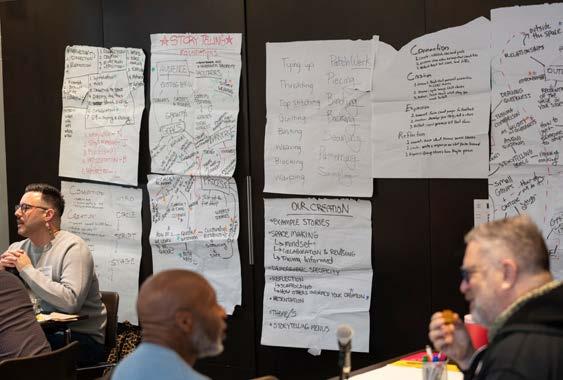
In 2025 the Collegium hosted three daylong workshops at which a group of younger and older adults shared their insights on social connections, forms of self-expression,
strategies for conflict resolution, and more. The participants have been collaborating since 2019, and the camaraderie and mutual respect they have cultivated are pivotal to the project’s success.
The research team is using ethnographic field notes, survey techniques, and other analytic methods to study the educational, psychological, and cultural impact of these dialogues. They will present their findings at a capstone event in the spring of 2026, including a collaboratively authored toolkit with best practices intended for use by community organizations.
LEARN MORE
Fredrik Værslev: The Joy of Painting
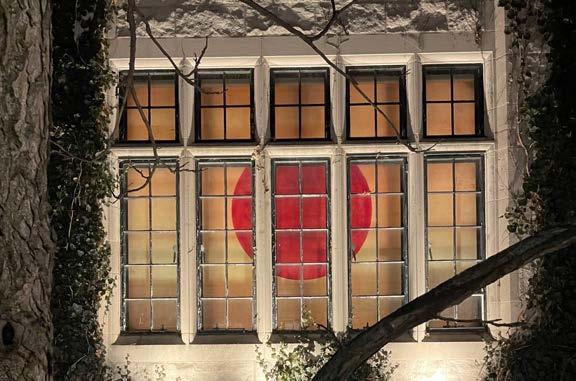
Our Winter 2026 exhibition features eight large-scale paintings by the Norwegian artist Fredrik Værslev, whose works interrogate the aesthetics and cultural politics of abstraction. One giant painting reduces the iconography of the Japanese flag down to its bare essentials: color and form. Another calls to mind a speckled stretch of sunshade. A scrunchedup bit of canvas resembles a parted curtain, and a work from Værslev’s “Terrazzo” series invokes the spirit of Jackson Pollock. The rigor of Værslev’s formal language notwithstanding, the exhibition is a heartfelt homage to the pleasures of making one’s mark.
LEARN MORE
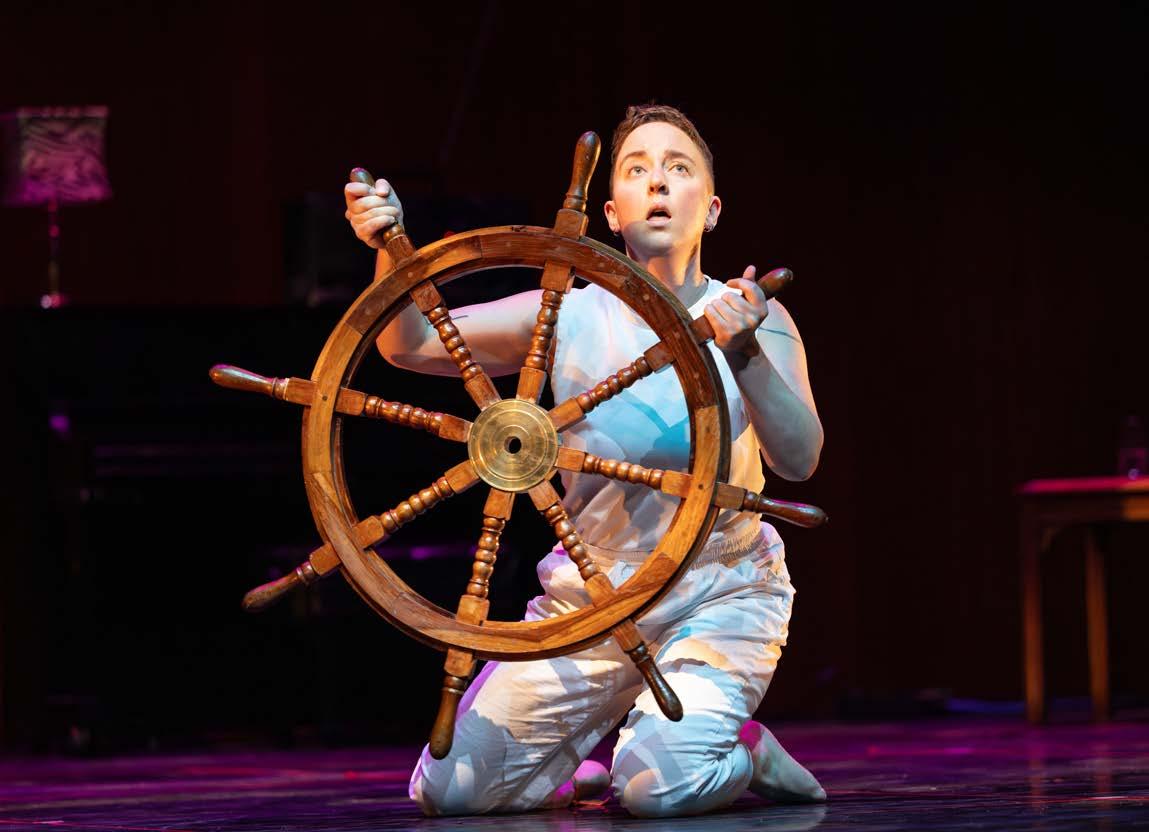
As you experience Cage’s joyous anarchy for yourself, you may find it freeing. You may find it unbearably moving. You may find it silly. You may find it teeming with meaning. You may find it meaningless. You may find your mind wandering. You may find yourself awestruck at the constituent parts that make up this insane art form called opera, those parts that are usually fused together so seamlessly that you take them for granted.
Interdisciplinary
are reframing our understanding of humanity’s response to planetary crisis –and partnering with communities that are safeguarding local ecologies.
How can the study of natural dyes help communities steward their cultures? Can new scientific knowledge about native plant and animal species help communities strengthen their local economies? And what’s a caracol purpura, anyway?
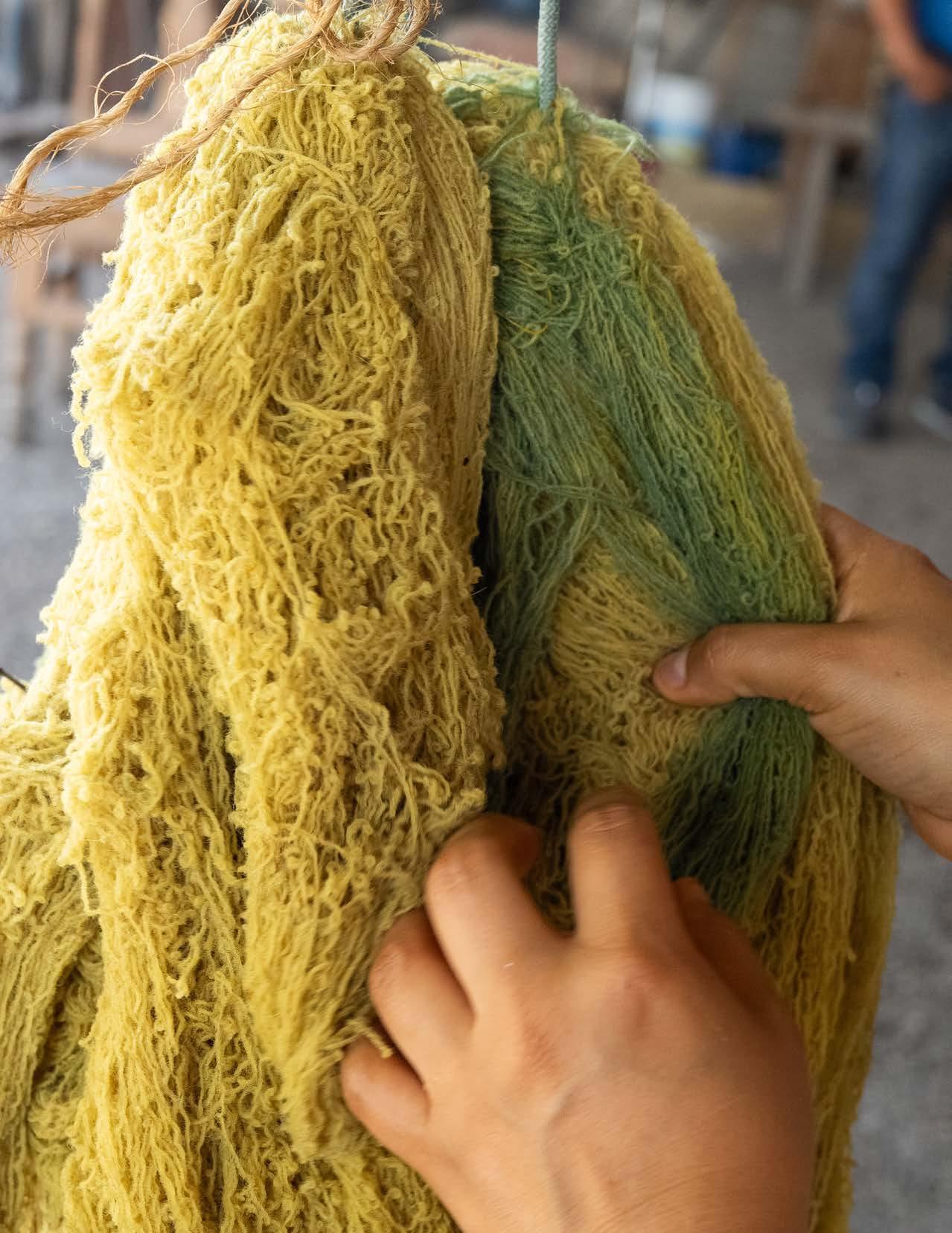
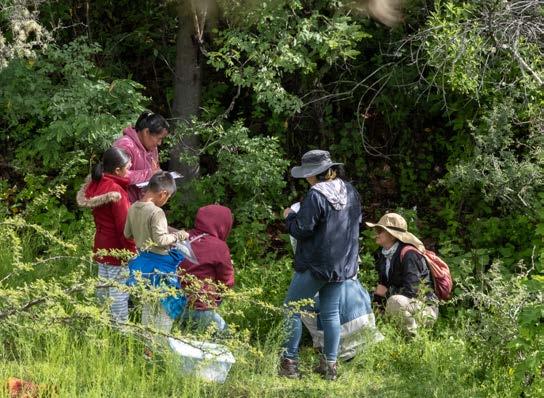
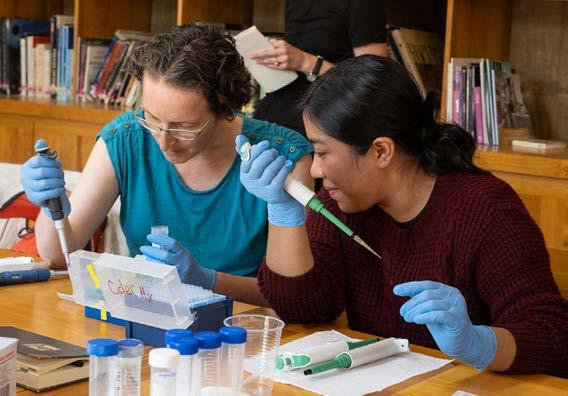
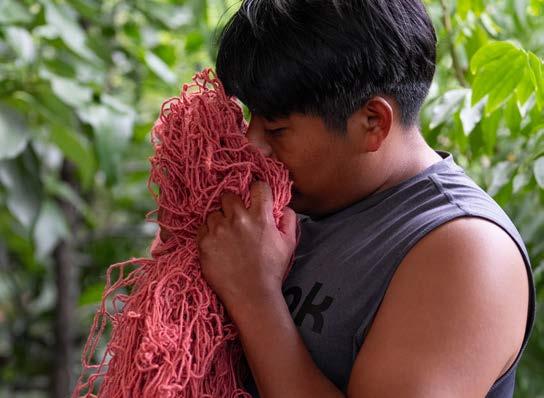
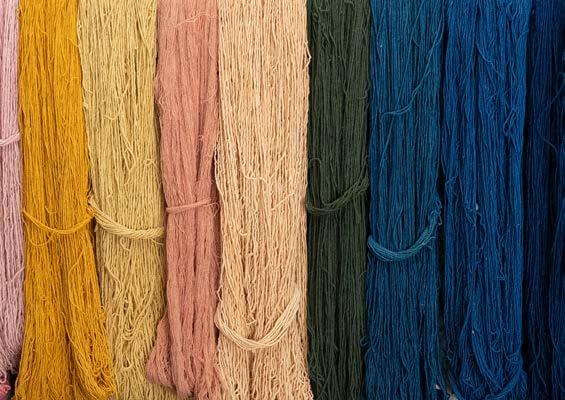
The Biodiversity of Color project is partnering with artists and artisans in southern Mexico to explore dye practices that predate Spanish contact. By facilitating fieldwork and lab experiments on the plants and animals from which colorants are extracted, the team is helping communities alleviate the pressure of international interest in locally sourced natural dyes – and safeguarding their future use.
In August and December 2025 the team led two weeklong workshops with local artisans in Teotitlán del Valle and Pinotepa de Don Luis, small villages in the Oaxaca region. The group harvested specimens from the area, including indigo (used for blue dyes); grana cochinilla insects (red); and caracol purpura, an endangered species of snail that produces a rich purple dye. They used cutting-edge tools and methods to press and dry plants, take high magnification photographs, and extract DNA for barcoding analysis. By combining traditional expertise with these scientific methodologies, the local artisans generated new information, improving their ability to manage and protect the region’s biodiversity.
Community participants reported that their direct involvement in data collection and
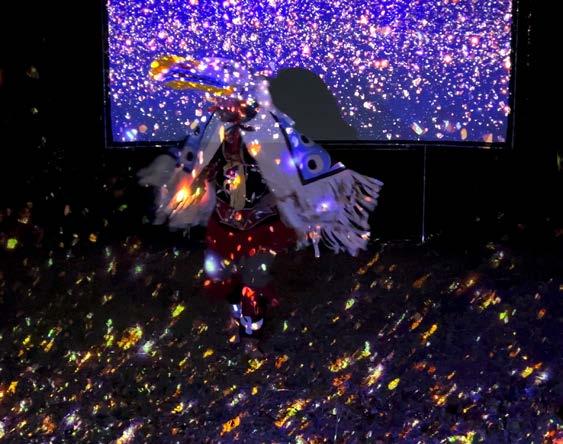
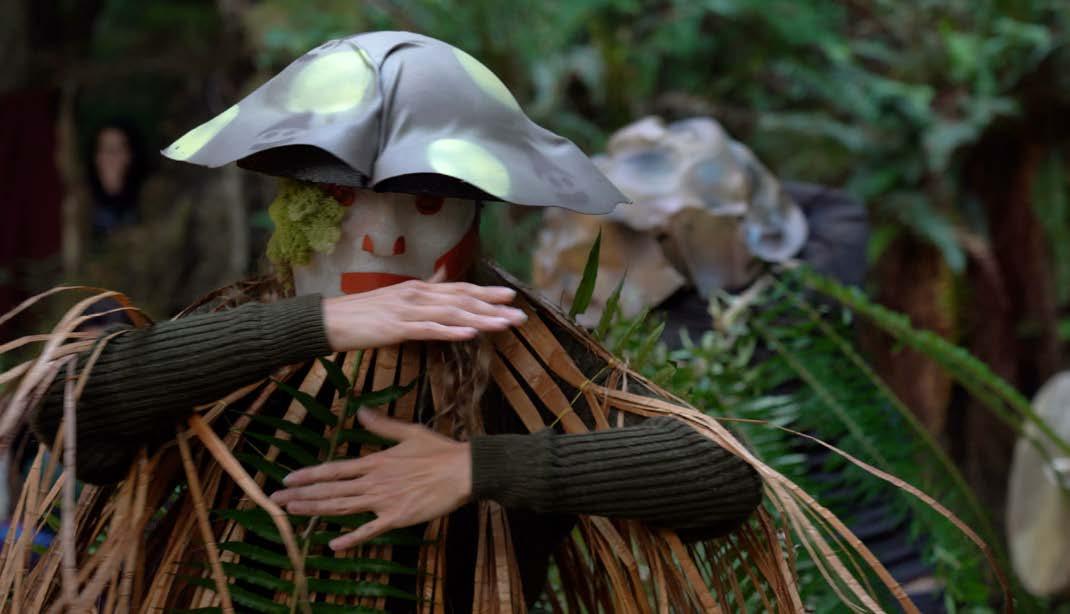
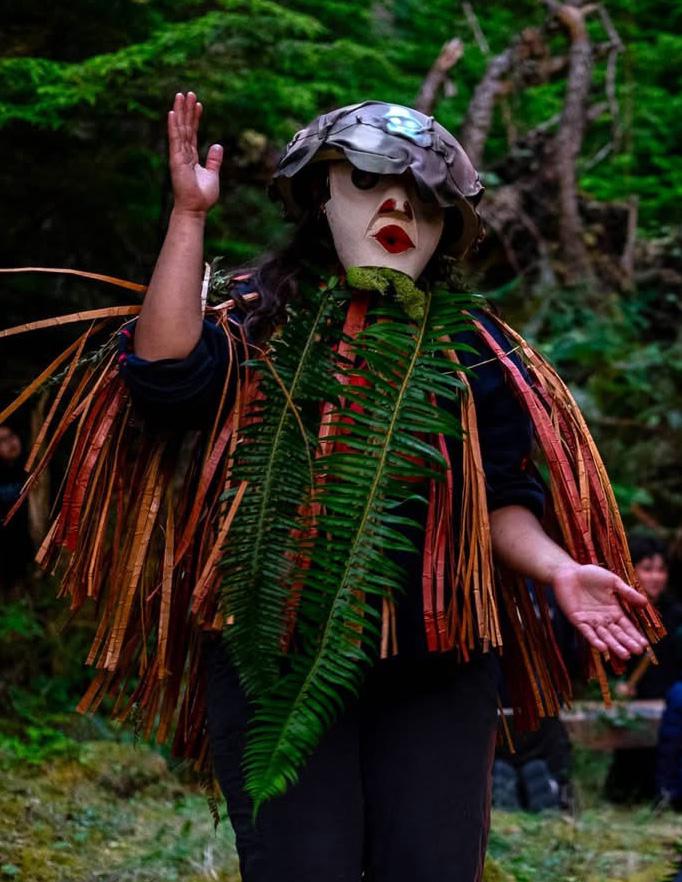
Kelly Richardson’s Origin Stories projected on Makwala–Rande Cook for the Ma’amtagila Dance of the Seagull. Part of Ax’nakwala: land-based art activations during the 2025 Tree of Life Gathering hosted by the Awi’nakola Foundation and Ma’amtagila Nation. Photo by D. Wallace.
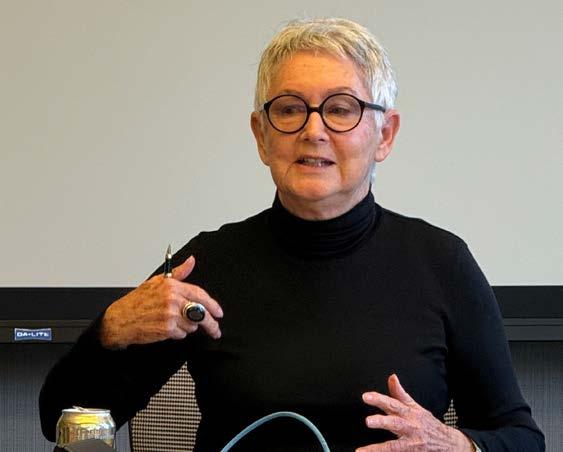
Collegium Visiting Fellow Vicki Kirby, a critical theorist at the University of New South Wales, presenting a paper on culture as a form of “nature at work,” Oct. 31, 2025.
analysis challenged not only their understanding of the resources they use but also their relationship with the “experts” who manage the local biodiversity. As partners with the research team, community members are posing their own research questions to guide further inquiries. Plans for bilingual publications and joint exhibitions in Chicago and Oaxaca will make their findings widely accessible.
LEARN MORE
Research on “plant intelligence” is transforming the way scientists and humanistic scholars think about the natural world and humanity’s place in it. The Phytological Critique project is building on links being forged among disparate areas – including neuroscience, environmental science, media studies, anthropology, and the arts – to develop new frameworks for understanding contemporary environmental crises.
On October 3-4, 2025, the research team hosted “Green Heresies,” a conference on recent developments in the field of critical ecology. Bringing together scholars and artists across disciplines through presentations, discussions, screenings, and keynote lectures, the conference introduced cutting-edge research on plant intelligence into ongoing debates about the Anthropocene.
Vicki Kirby, a critical theorist at the University of New South Wales who is collaborating on
the project, was in residence as a Visiting Fellow in the fall of 2025. During her time in Chicago she developed a theory of culture as a form of “nature at work.” Kirby presented a paper on “Vegetal Literacies” at the “Green Heresies” conference and led a colloquium at the Committee on Environment, Geography, and Urbanization (CEGU) challenging human-centered approaches to ecological debates. Both arguments explore how an anthropocentric worldview can appear as the cause of ecological crises as well as their possible solution.
LEARN MORE
This project assembles three interdisciplinary groups – Awi’nakola, Gulf South Open School, and Untidy Objects – to share land-based research and develop artistic responses to their distinct North American contexts. In July 2025, members of Untidy Objects and Collegium staff joined the 2025 Tree of Life Gathering hosted by the Awi’nakola Foundation and Ma’amtagila Nation. They participated in ceremony, learned about forest ecology and Indigenous law, and witnessed two remarkable events: the Ax’nakwala program of landbased art activations by the Awi’nakola artists and the Ma’amtagila’s historic Declaration of Sovereignty. In October, members participated in the Anthropocene Consequences convening in Chicago. They will reconnect in May 2026 to chart future trajectories.
LEARN MORE
We feel honored to work together with this team of community members, artists, anthropologists, historians, and scientists, and to contribute to a better understanding of these species with ancestral uses.
Oscar Pineda-Catalan and Sonia Hernandez, research team members on the Biodiversity of Color project

Does
the rise of artificial intelligence require a reconception of what it means to be human?
× × ×
“There are things that AI doesn’t do very well that are opportunities for people in the humanities,” said Ted Underwood, a professor of information sciences and English at the University of Illinois. “AI is really good at writing lots of kinds of texts. It summarizes things well. But it has not done a great job of putting novelists out of work.”
Underwood was speaking at a public roundtable discussion at the Neubauer Collegium on October 18, 2025, organized by the Humanistic AI research project and presented as part of the 2025 Arts & Humanities Day. The discussion capped a two-day workshop that brought together 24 scholars representing 12 institutions.
The project, headed by UChicago professors Hoyt Long and Chris Kennedy, aims to identify the opportunities and hazards that generative models present to humanistic scholars as well as the impact AI tools are having on creative processes. Through a series of presentations and breakout sessions, participants at the October workshop defined three core areas of inquiry that will guide their research going forward.
One cohort will investigate the potential of large language models to address humanistic questions through simulated scenarios. Another group is examining how AI tools might assist in the process of knowledge discovery and creative production. The third group will explore the historical antecedents, philosophical implications, and creative
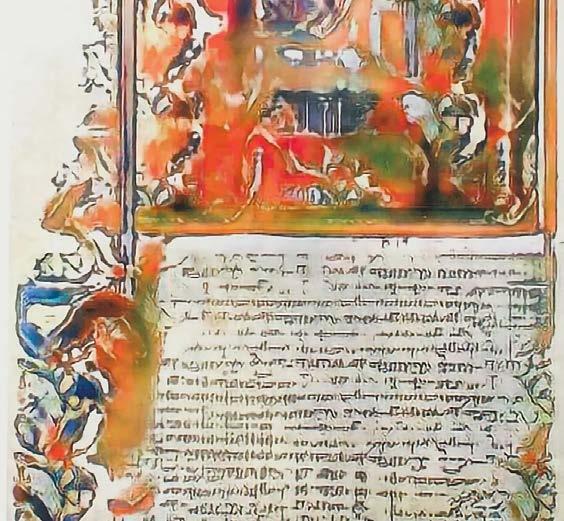
potential of AI “slop,” a term used to describe poor-quality AI-generated content that circulates widely.
Hoyt and Kennedy see strong potential in the research trajectories taking shape. A member of the “simulations” cohort, Kennedy is keen to learn what cutting-edge modeling techniques can reveal about human culture, behavior, and interaction.
“In studying the differences between two kinds of language production systems — humans and language models — we can learn something about both of them, and the differences then become the basis for new insights,” Kennedy said. “Humanists are particularly good at this kind of comparative work, and our hope is that extending it to a comparison of humans and AI will lead to unexpected and exciting discoveries.”
LEARN MORE
Raqs Media Collective: Cavalcade
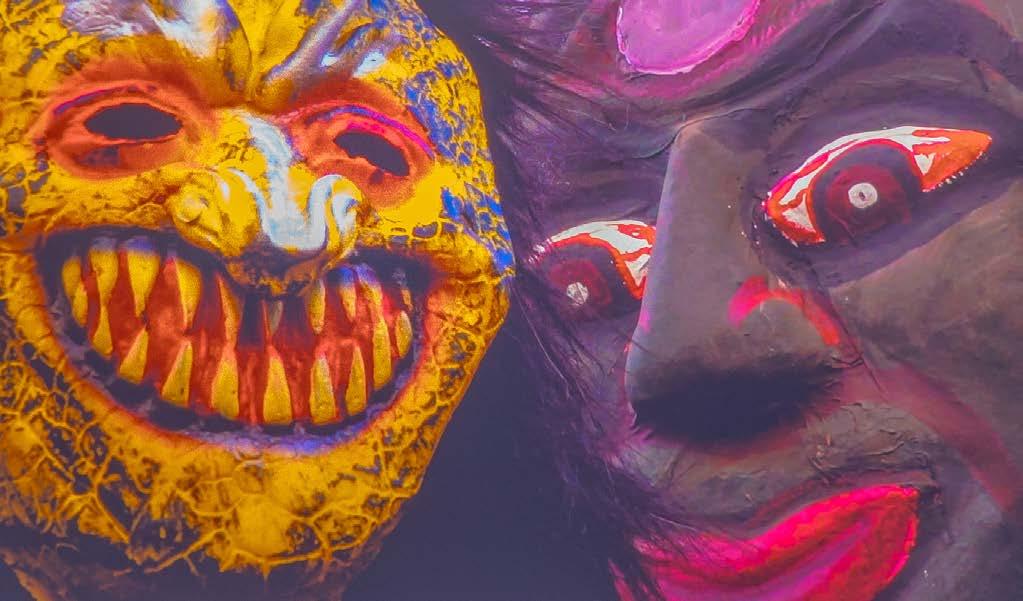
The capstone conference of the three-year Reimagining Cosmopolitanism project, held in May 2025, was coupled with the opening of Cavalcade, a gallery exhibition featuring digital prints and a new film by the Delhi-based Raqs Media Collective. The film depicted the wedding procession of the Hindu gods Shiva and Parvati as a delightfully raucous meditation on the themes of the research project. Expanding the Kantian concept of global citizenship to include not just humans but all life forms and even sentient machines, Cavalcade also stretched the time horizon of the procession to geologic scale. The
film invited viewers to imagine a sort of cosmic parade that transcends history and encompasses all beings, including not just carnival revelers but also our human ancestor Lucy, ghosts, demons, and a monkey-like cyborg with spiraling arms.
The artists experimented with AI technology to see if they could trick it into “hallucinating.” Three large prints incorporated AI-generated texts and images made in response to the artists’ prompts. The works playfully undermined contemporary fears about the potential of AI to co-opt creative labor.
An event celebrating the publication of the Oxford Handbook of Cosmopolitanism, the major output of the Reimagining Cosmopolitanism project, will take place at the UChicago John W. Boyer Center in Paris in the summer of 2026, and the Raqs exhibition will travel to the University of Michigan in 2027.
LEARN MORE
Director’s Lecture with Annie Dorsen
On Feb. 9, 2026, polymath artist, director, and writer Annie Dorsen gave a lecture performance at the Logan Center titled “Prometheus Firebringer,” part of the Neubauer Collegium Director’s Lecture series. The talk stitched together citations from a wide range of sources, including scholarly texts, poems, and interviews, to create an evocative meditation on dramatic tragedy, the nuances of intellectual property law, and contemporary anxieties about AI. An interdisciplinary panel of UChicago faculty joined her afterward for discussion.
LEARN MORE
This was a rare opportunity for us to brainstorm research ideas that transcend any one discipline, and for those of us in the humanities and computer sciences to connect on an intellectual level. That made the whole event really exciting.

Collegium projects bring critical focus to translation in all its forms – not only between languages but also across disciplines, cultures, historical periods, and modes of thinking.
As an early model for the global economy, the Silk Road was never simply about commerce between China and the West. It was a metaphor for economic, social, and cultural connections stretching as far as Kenya, Cambodia, and Baghdad. The Silk Road Imaginaries project explored how the thoroughfare for merchant trade across Asia in premodern times can be theorized primarily as a political, diplomatic network. In 2024 and 2025 the research team hosted a series of discussions and lectures at the Collegium and the University’s Francis and Rose Yuen Campus in Hong Kong. The events featured scholars of the cultures historically associated with the Silk Road. Their insights spanned many disciplines, including ancient history, archaeology, comparative literature, public policy, and political theory. Through a sustained, wide-ranging investigation of the interconnected past, the project helped illuminate ways to shape a 21st-century vision of a common economic and political future.
LEARN MORE
This innovative collaboration is producing an open-access born-digital volume on the theory and history of music. Expanding the
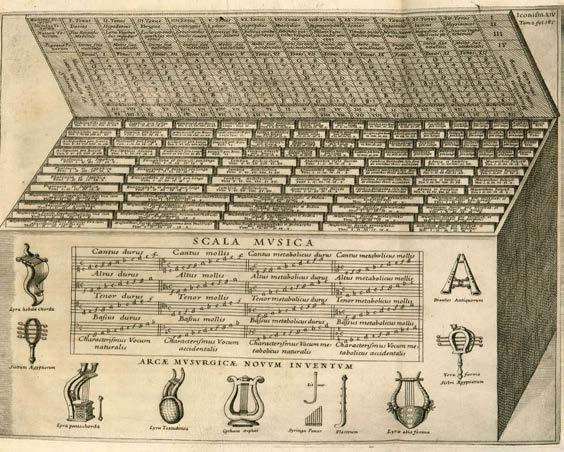
scope of the Anglophone music theory canon, the project includes entries from more than 100 contributors with specialized knowledge in languages and cultures around the globe. The digital format allows for multimedia exploration and new ways of navigating this anthology of sources, including texts, images, and audio files spanning prehistoric times to the early 20th century. The volume will be the first of its kind published by the Chicago Online Research and Publication Service (CORPUS) at the University of Chicago. It does not aspire to be comprehensive; it will, however, lay the foundation from which future studies might emerge.
LEARN MORE
Mainstream linguistic theories have tended to sideline language shifts, regarding them as signs of degredation and decay, but the Linguistic Futures project is placing them at the center of inquiry. The research team is mobilizing new evidence to update long-held theories about “endangered languages.” In September 2025, an international group of 20 scholars gathered at the Collegium to workshop case studies for a forthcoming volume on language endangerment and preservation. Participants are currently integrating feedback into their contributions, and the group will convene next summer at the UChicago Paris Center to further refine their work. The publication will reframe the core questions that have motivated the study of sociolinguistics for decades.
LEARN MORE
The interdisciplinary group of scholars on this project are producing new theories for understanding representations of migration across historical time periods and geographical regions. Over 50 scholars are participating, with expertise spanning antiquity to the present, and disciplinary insights from across the humanities and social sciences. At their first workshop, in July 2024, the group looked at methodologies for studying the literature of migration. A second convening focused on the ways migration has shaped literary genres and challenged national and regional traditions. Papers developed through the project will be published in the forthcoming Oxford Handbook of Literature and Migration.
LEARN MORE Translation Networks and the Stakes of Comparison
This seed-stage project is laying the groundwork for a comparative study of the translation and reception of modern Arabic and Hebrew literature. The research team is applying cutting-edge computational methods and mapping tools to visualize the networks through which a corpus of texts were translated and circulated across languages and national borders. Insights generated through the study will shed new light on the region’s political histories, conflicts, connections, and future possibilities.
LEARN MORE
The unique environment of the Neubauer Collegium, and the autonomy it supports, has created space for the kind of intellectual risk-taking that is increasingly censored and silenced in academia and beyond, even as these risks remain essential to robust scholarship, public debate, and the pursuit of new, critical, and transformative ideas and paradigms.
Dima Ayoub, Associate Professor and Chair of the Arabic Department, Middlebury College, 2025–2026 Visiting Fellow,
Engaging the public has been a central feature of the Collegium’s work from the start of my tenure as executive director. The form that should take was less obvious, especially given how experimental the Collegium model for research was. Our starting point in 2015 was to consider the entire first floor of the Collegium – the Forum and the Exhibition Gallery –as a space for welcoming the public into our work. Anyone could walk in off the street and become familiar with, and query, research in progress. And view the gallery exhibitions that so often intersected with research ideas in play or floated entirely new thought experiments. Much of our engagement with the public meant leaving our own space and meeting others in theirs to listen and learn, an institutional dialogic that mattered particularly for building deeper public engagement – actual working partnerships with community groups and different kinds of organizations.
This idea of deep listening, of engagement as an iterative dance between welcoming others to one’s hearth and venturing forth to the homes of others, allowing time for the collective work to emerge and find its footing and voice, is not how organizations are encouraged to think about “robust” public presence. It’s not the steady drumbeat of unilateral brand-building that institutions are urged to deploy, especially at their formative stages. Yet this approach, giving ideas their time and sharing thoughts when there are thoughts to share, aligns with the Collegium’s overall philosophy of interdisciplinary collaboration. The work we incubate is linked by a humanistic throughline, but is otherwise exhilaratingly openended. It encompasses a breathtaking sweep of topic, practice, and location in time and place. Our many research partners, including the public who are engaged in the work we do, are as eclectic as the work itself. We waited years to start producing a public-facing report, in order to listen. We view Notions to be a starting point – an experiment that will evolve over time – an opportunity to share some of the extraordinary images from research interactions we’ve experienced over the last calendar year, with the idea that readers will formulate their own ideas and interpretations.
The Collegium is entering its second decade. Its approach to research, like its approach to public engagement, relies on long-term relationship building that belies the “speed dating” methods increasingly in play at universities. Our approach is slower to formulate, but it holds up. And it is very much in keeping with how former Collegium director Jonathan Lear, who, as well as being an eminent philosopher, was also a practicing psychoanalyst, thought about collaborative research and its audiences. Jonathan, who died unexpectedly in September, was a gifted listener. And he knew that relationships, the bedrock of any community, whether among researchers or between researchers and the larger interested public, take time.
The Collegium was recently awarded a grant from the MacArthur Foundation to host a series of convenings over the next two years on the future of humanistic research and teaching in North America. This is both a great honor and responsibility. We will draw heavily on what we’ve learned from past partnerships and collaborations, from the cumulative wisdom of over 150 research projects over the last decade, involving hundreds of experts of all kinds. And from the engaged public audiences who have supported, questioned, and informed the work of the Collegium since launch, and upon whom, in the end, the future of humanistic thought and action ultimately depends.
Elspeth Carruthers Executive Director Neubauer Collegium for Culture and Society

p. 1: Raqs Media Collective, Cavalcade (still), 2025. Digital video projection. Courtesy of the artists.
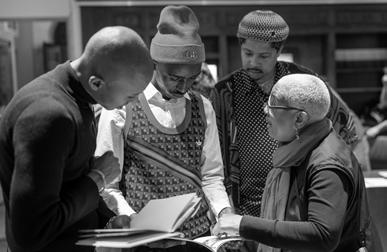
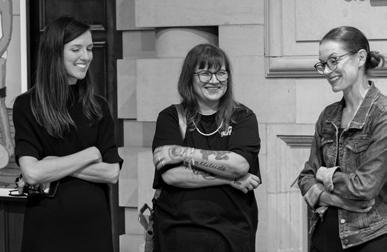
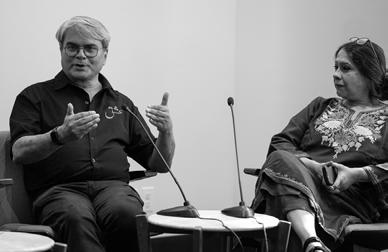
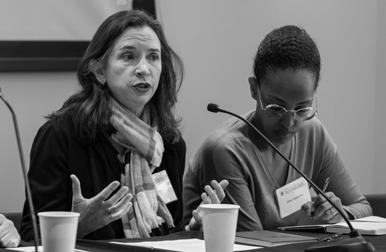
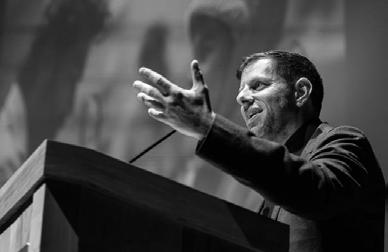
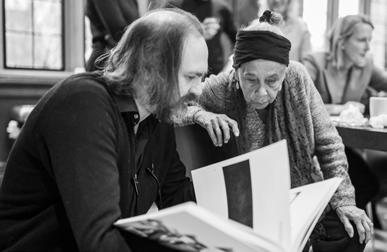
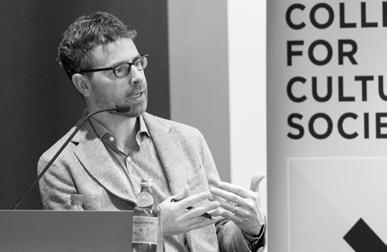
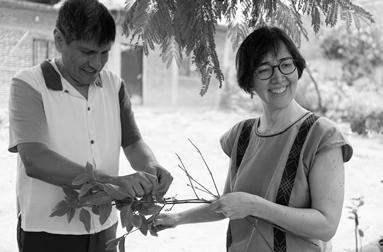
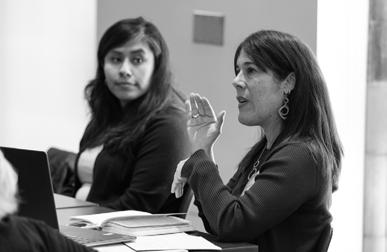
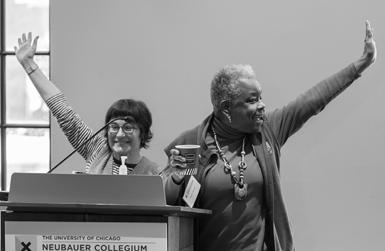
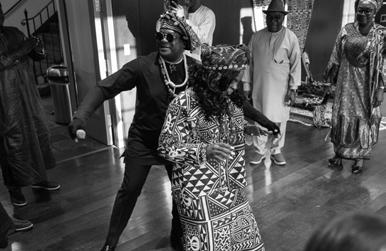
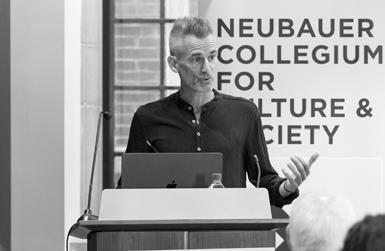
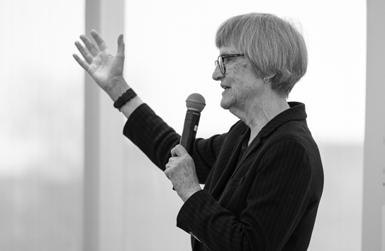
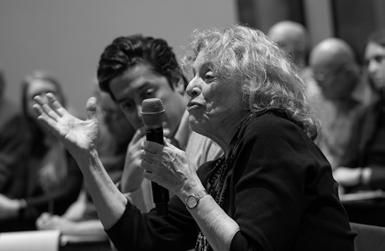
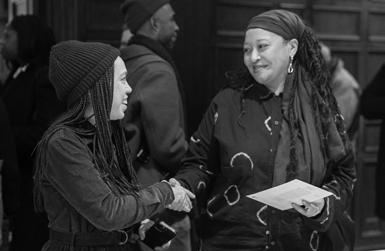
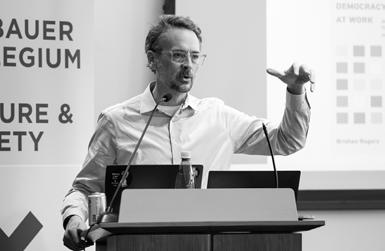
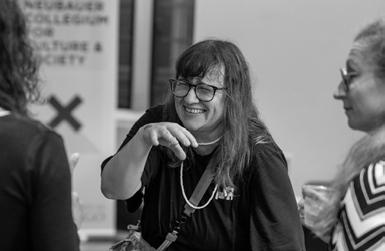
pp. 2 and 31: Participants at recent Neubauer Collegium events, including: Panafrica Days reception, March 7, 2025; Director’s Lecture with Drew Gilpin Faust, April 8, 2025; “Bamum Celebration” reception for Let’s Get It On: The Wearable Art of Betye Saar, April 11, 2025; “City of Refuge: Immigration in Chicago and Beyond” symposium, April 24, 2025; “Data and Democracy at Work” lecture by Brishen Rogers, May 2, 2025;
Yuval Sharon’s Berlin Family Lectures on “Anarchy at the Opera,” May 6, 13, & 20, 2025; “Reimagining Cosmopolitanism” capstone conference, May 8–9, 2025; “Green Heresies” conference, Oct. 3–4, 2025; “What Is a Union?” keynote address by Daisy Pitkin at the “What Force on Earth?” conference, Oct. 10, 2025; “Reimagining Humanistic Pursuits in the Age of Generated Media” roundtable discussion, Oct. 18, 2025; CEGU Colloquium with Vicki Kirby, “Natural Convers(at)ions: Or, What If Culture Was Really Nature All Along?” Oct. 31, 2025; LGBTQ+ Intergenerational
Dialogue project workshop, Dec. 6, 2025. Opening receptions for gallery exhibitions including: Zoya Cherkassky: The Global Political Crisis, Sept. 25, 2025; Let’s Get It On: The Wearable Art of Betye Saar, Jan. 30, 2025; Raqs Media Collective: Cavalcade, May 8, 2025. Biodiversity of Color research project fieldwork and workshops, 2024–2025. All photos by Abel Arciniega, Max Herman, and María José Zavala Balcázar.
p. 3:
Photo courtesy of David J. Levin.
p. 4:
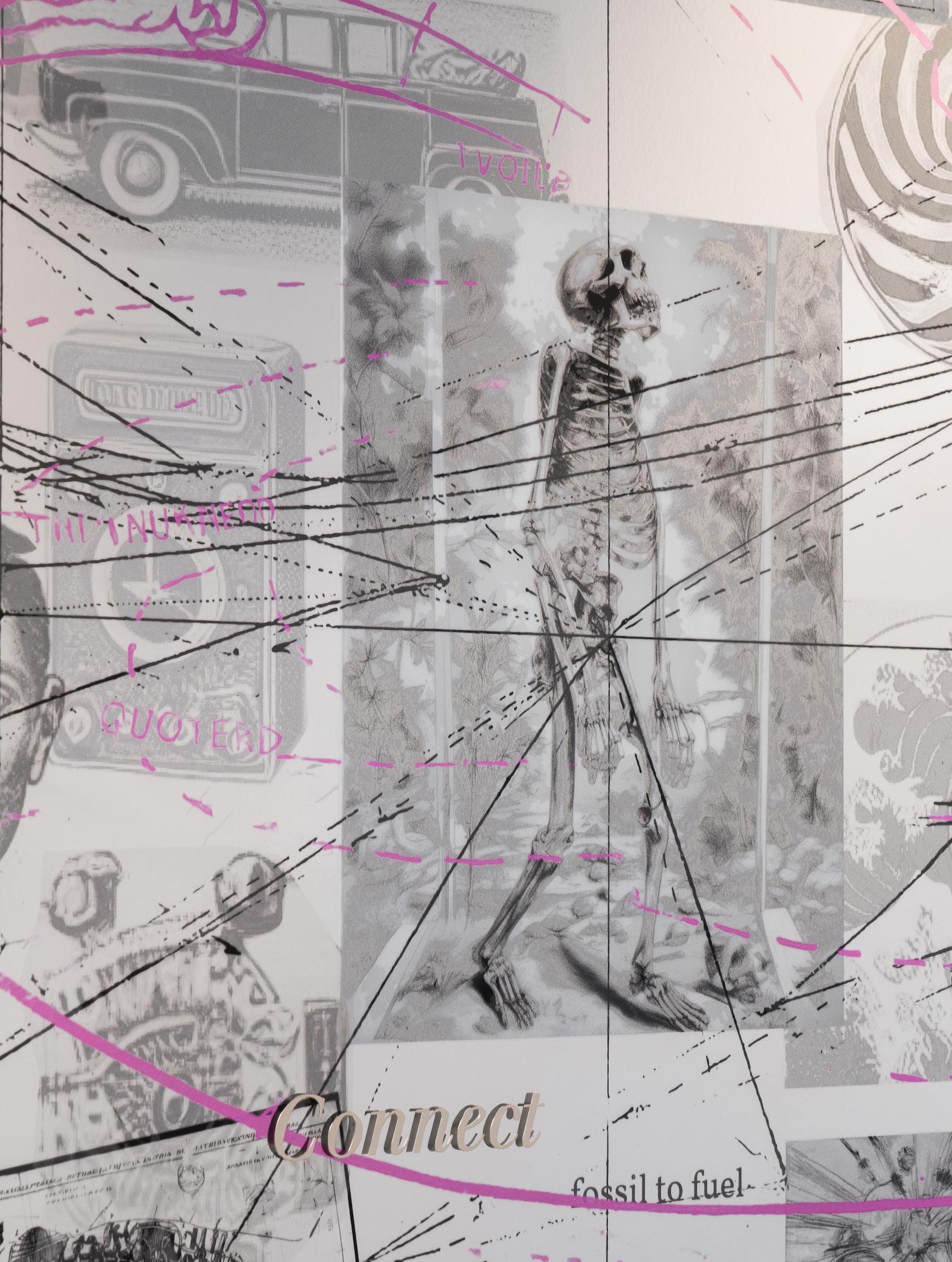
Zoya Cherkassky, Untitled (Drawing Table) (detail), 2025. Courtesy of the artist.
p. 5:
Raqs Media Collective, Cavalcade (detail), 2025. Courtesy of the artists.
p. 6:
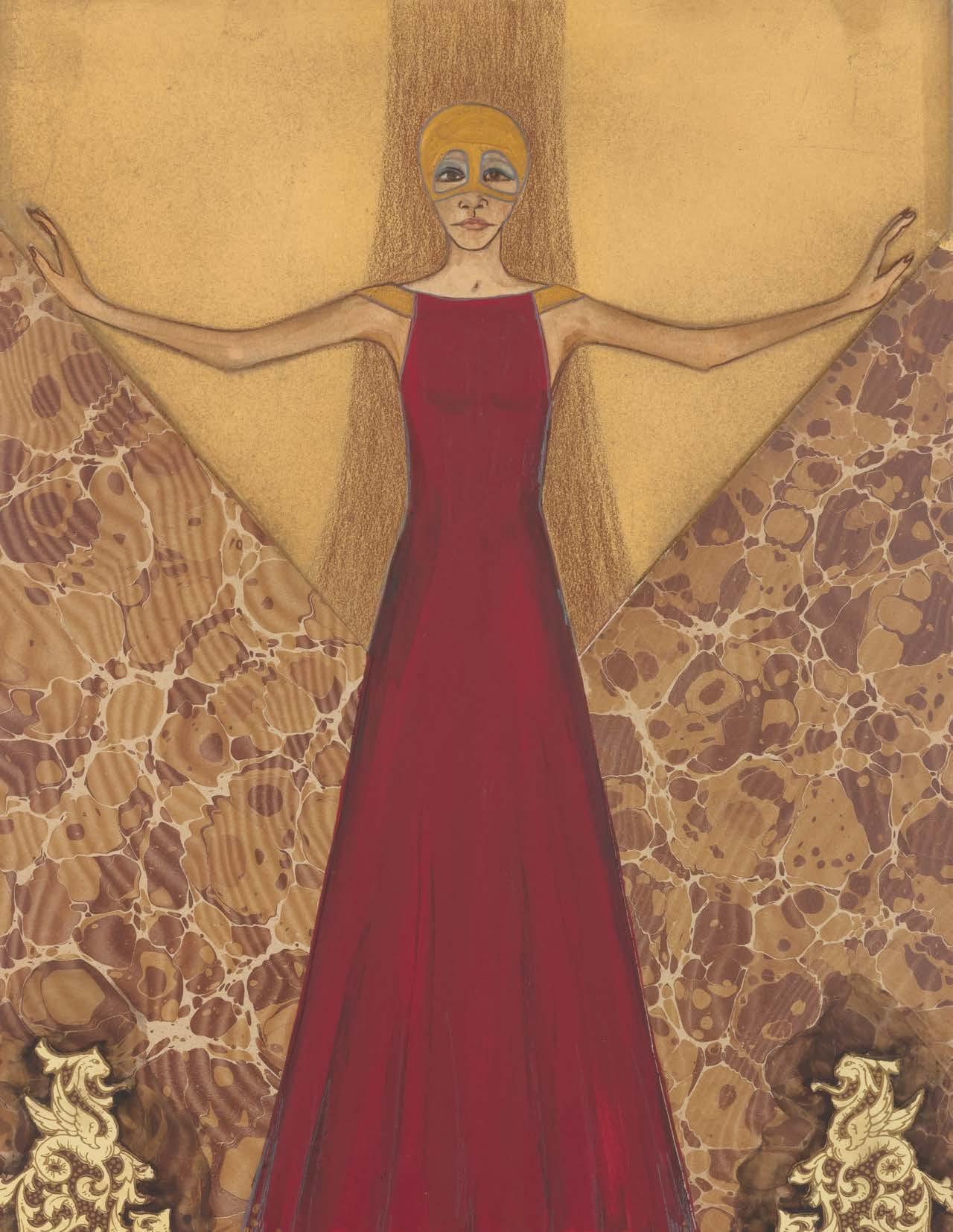
Betye Saar, Antigone: Red Dress, 1969–1970. Courtesy of the artist and Roberts Projects.
p. 7:
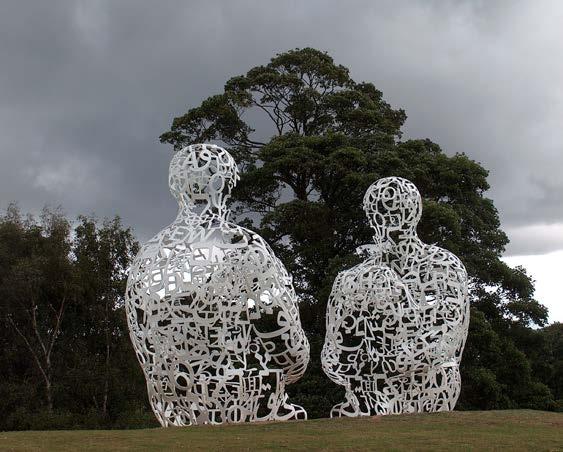
Jaume Plensa, Spiegel (detail), 2010. Via Flickr.
pp. 8 and 34: Performance still, Makwala–Rande Cook’s Dance of the Fungi Kingdom. Part of Ax’nakwala: land-based art activations during the 2025 Tree of Life Gathering hosted by the Awi’nakola Foundation
and Ma’amtagila Nation. Photos by D. Wallace.
p. 9:
Participants at the Biodiversity of Color research project workshop in Taller de Soledad, Oaxaca, August 2025. Photos by María José Zavala Balcázar.
p. 10:
Bamoi/Bamum Robe. Cameroon, late 19th century. Collection of the Field Museum. © The Field Museum, Image No. A111017c, Cat. No. 174062, Photographer Diane Alexander White.
p. 14: Zoya Cherkassky, Love, 2025. Courtesy of the artist.
18:
p. 22:
Raqs Media Collective, Cavalcade (detail), 2025. Courtesy of the artists.
p. 26:
A truck on the Karakoram Highway in northern Pakistan, part of the China-Pakistan Economic Corridor, October 30, 2017. Photo by Muzamil Hussain Toori via Wikimedia Commons.
p. 30:
Erielle Bakkum.
Arts Labs 2024–2027
Leslie Buxbaum Theater and Performance Studies
David Levin Germanic Studies, Cinema and Media Studies, and Theater and Performance Studies
Tina Post English, Creative Writing, and Theater and Performance Studies
Srikanth Reddy English and Creative Writing
Autonomy Is Not Freedom 2025–2026
Sarah Black Sculpture, School of the Art Institute of Chicago
Marc Downie Cinema and Media Studies
Samantha Frost Criticism and Interpretive Theory, University of Illinois
Amber Ginsburg Visual Arts
Lindsay Katsitsakatste Delaronde Art Practice, University of Victoria
Kelly Richardson Visual Arts, University of Victoria
Sm’hayetsk Teresa Ryan
Indigenous Knowledge and Natural Science, University of British Columbia
Suzanne Simard
Oscar PinedaCatalan Biological Sciences
Michael Rossi History
Histories of Culture in Disastrous Times 2023–2025
Alice Goff German History
Jennifer Allen History
Anubav Vasudevan Philosophy
Maria Antoniak Computer Science, University of Colorado
Ted Underwood Information Sciences and English, University of Illinois
Matthew Wilkens Information Science, Cornell University
× × × ×
Julia Rhoads Theater and Performance Studies
Kai Ihns Poet, Editor, and Scholar
Amy Lesen Environmental Leadership and Participatory Change, Antioch University
Rebecca Snedeker Artist and Public Scholar, Gulf South Open School
Monique Verdin Artist, Gulf South Open School
MakwalaRande Cook Founder and Artistic Director, Awi’nakola Foundation
Forest Ecology, University of British Columbia
Stephanie Smith Curator and Writer
Paul Walde Visual Arts, University of Victoria
Biodiversity of Color 2024–2027
Claudia Brittenham Art History
Sonia Hernandez Surgery
Humanistic AI 2025–2027
Hoyt Long Japanese Literature and Digital Studies
Chris Kennedy Linguistics
Ari Holtzman Computer Science and Data Science
Mikayla Kelley Philosophy
Mina Lee Computer Science and Data Science
Jason Salavon Visual Arts
David Bamman Information, University of California, Berkeley Eamon Duede Philosophy, Purdue University Atoosa Kasirzadeh Philosophy and Software & Societal Systems, Carnegie Mellon University
Cody Kommers
Alan Turing Institute
Laura K. Nelson
Sociology, University of British Columbia
Nanyun (Violet) Peng
Computer Science, University of California, Los Angeles
Richard Jean So Digital Humanities and English, Duke University
The LGBTQ+ Intergenerational Dialogues Project 2025–2026
Adam J. Greteman Art Education, School of the Art Institute of Chicago
Lisa L. Moore
Social Work, Social Policy, and Social Administration
Karen A. Morris Visual and Critical Studies, School of the Art Institute of Chicago
Nic M. Weststrate Educational Psychology, University of Illinois Chicago
Linguistic Futures 2025–2027
Lenore Grenoble Linguistics
Susan Gal Anthropology and Linguistics
Jonathan Kasstan University of Westminster Migrations in Literature 2024–2026
Hadji Bakara Language and Literature
Nate Crocker
English
Josephine McDonagh English
Charlotte Sussman English, Duke University
Panafrica: Histories, Aesthetics, Politics 2021–2025
Antawan Byrd Northwestern University
Adom Getachew Political Science
Elvira Dyangani Ose MACBA Contemporary Art Museum
Matthew Witkovsky Art Institute of Chicago
Phytological Critique 2023–2026
Thomas Lamarre Cinema and Media Studies, East Asian Languages and Civilizations
Stacy Moran English, Media and Engineering, Arizona State University
Michael Fish Anthropology
Zach Yost Cinema and Media Studies
Yangqiao Lu Cinema and Media Studies
Isabel Kranz Cultural Studies, University of Applied Arts Vienna
Vicki Kirby Sociology and Anthropology, University of South Wales
Christina Jauernik Architect, Artist, and Scholar
Adam Nocek Philosophy of Technology, Science and Technology Studies, Media and Engineering, Arizona State University
Jun Mizukawa Anthropology and Religion, Lake Forest College
Reimagining Cosmopolitanism 2022–2025
Mohammad Al Attar Playwright Prathama Banerjee Center for the Study of Developing Societies
Dipesh Chakrabarty History and South Asian Languages and Civilizations
Sanjay Seth University of London
Lisa Wedeen Political Science
Silk Road Imaginaries 2023–2025
Richard Payne Near Eastern Languages and Civilizations
Ariel Fox Chinese Literature, East Asian Languages and Civilizations
Thinking Music: Global Sources for the History of Music Theory 2023–2026
Thomas Christensen Music and the Humanities
Carmel Raz Histories of Music, Mind, and Body, Max Planck Institute for Empirical Aesthetics
Lester Hu Music, University of California, Berkeley
Translation Networks and the Stakes of Comparison 2025–2026
Na’ama Rokem Modern Hebrew
Literature and Comparative Literature
Dima Ayoub
Arabic and International Studies Middlebury College