Grace Alice Ó Sé:
‘It’s 2026, why do I have to censor the word sex?’
What should an Irish student know about Ukraine?
I asked Zelensky personally.
2
February 2026
Alternative Munster: Meet Cork’s The Revolt. Odinary Saints by Niamh Ní Mhaoileoin.
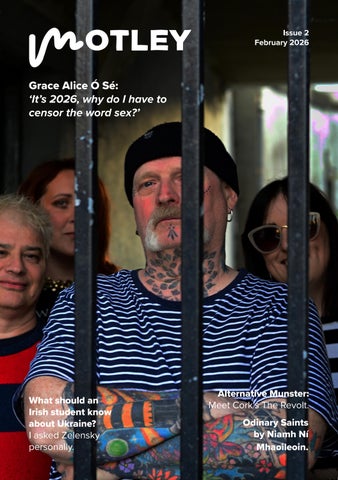
‘It’s 2026, why do I have to censor the word sex?’
What should an Irish student know about Ukraine?
I asked Zelensky personally.
2
February 2026
Alternative Munster: Meet Cork’s The Revolt. Odinary Saints by Niamh Ní Mhaoileoin.
Student Media Manager: Ray Burke rayburke@ucc.ie
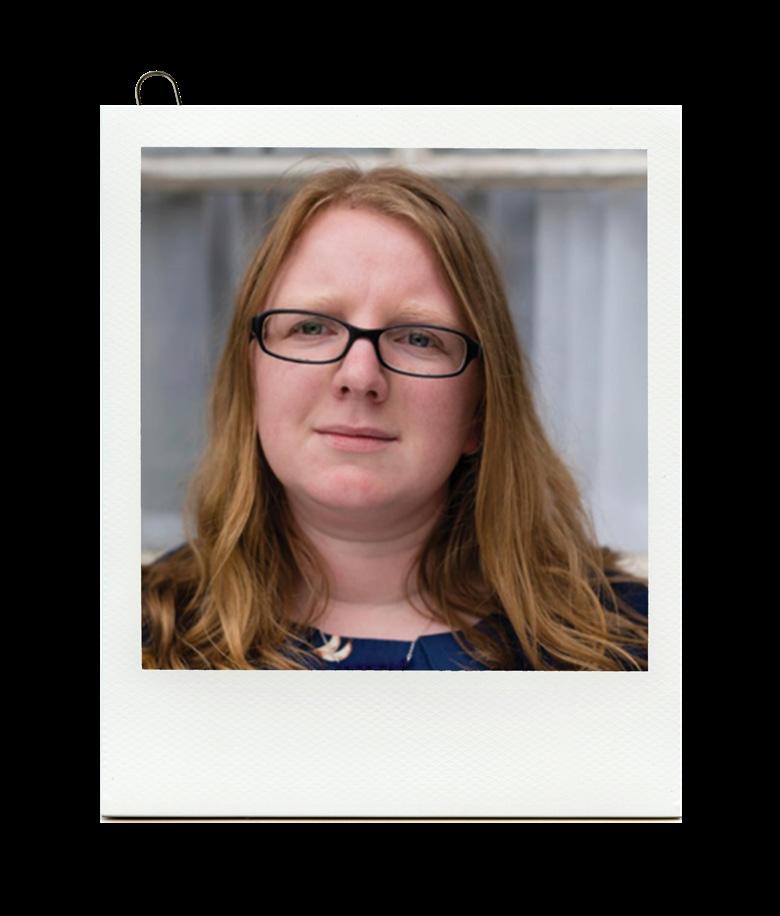
Editor: Paula Dennan motleyeditor@ucc.ie
Deputy Editor: Cleo Morrison O’Riordan motleydeputyeditor@ucc.ie
Current Affairs and Investigations
Stepan Krykun
Oisín Bailey motleycurrentaffairs@ucc.ie
Features and Opinions
Nefeli Pyrovolaki
Claire Dineen motleyfeatures@ucc.ie
Arts and Culture
Roisin Connolly Nermeen Ileiwat motleyartsculture@ucc.ie
Music Editor
Ray Burke motleymusic@ucc.ie
Events Guide Editor
Gemma Sadler motleyentertainment@ucc.ie
Designer: Sara Troisi
Copy Editor: Kate Holohan
Website Manager: David Lesiak
Social Media Manager: Leah Hurley
For advertising or sponsorship queries email: rayburke@ucc.ie
Alternative Munster: meet Cork’s The Revolt. 03 07 15 29
Odinary Saints by Niamh Ní Mhaoileoin.
Grace Alice Ó Sé: ‘It’s 2026, why do I have to censor the word sex?’
What should an Irish student know about Ukraine? i asked Zelensky personally.
MUSIC
Motley’s second issue of the year is the perfect encapsulation of what we meant when describing the new-look magazine as being student-led but for readers in college and beyond. From Cork’s alternative music scene to an interview with Ukrainian President Volodymyr Zelenskyy by way of an MA student’s experience juggling studying while working, Motley understands that students don’t live single-issue lives. What is happening locally connects with the national and international.
Our Current Affairs and Investigations Editor, Stepan Krykun, covers an evolving campus story about the Societies Office pausing all existing and future applications for new societies in October 2025. Stepan’s investigation examines the implications for political societies and students’ political expression and freedom on campus.
In international politics, Motley’s Deputy Editor, Cleo Mor-
risson O’Riordan, interviews Corkonian changemaker Donna Schwarz about her experiences on the Global Sumud Flotilla and her commitment to the Palestinian movement. Stepan Krykun had the opportunity to ask Ukrainian President Volodymyr Zelenskyy a question during his recent State visit to Ireland.
Our Music Editor, Ray Burke, explores Cork’s punk scene by profiling The Revolt. The article also covers the band’s work co-hosting Alternative Munster, a monthly alternative music night, at The Poor Relation. Johnny Rohce writes about how he balances working with studying for his MA in Creative Writing. While Lucy Olsman shares an essay about how Cork shapes her imagination.
I speak with Sex & Intimacy Specialist, podcaster and author Grace Alice Ó Sé to gain insight into her time studying at UCC, her career, and the misinformation young people see online
about sex and relationships. Our Deputy Current Affairs Editor, Oisín Bailey, looks at the impact AI has on the jobs market for recent graduates.
Rounding out our arts, culture and music coverage, our music contributors take us on a tour of their favourites from 2025.
Nominated for the 2026 Dublin Literary Award, Niamh Ní Mhaoileoin’s debut novel, Ordinary Saints, gets its paperback release on February 26. The story is a nuanced exploration of faith, family, grief, the experience of growing up queer in Ireland and the legacy of the Catholic Church, writes Motley Editor Paula Dennan.
Jay is a queer Irish woman in her late 20s living in London. I deliberately use the word queer here because Jay describes herself as a queer woman and a lesbian. She is not completely estranged from her family in Ireland, but her relationship with her parents is strained. It doesn’t get any easier when Jay’s father informs her that the Catholic Church has opened a cause for canonisation for her brother, Ferdia. Ferdia died when Jay was a teenager, following an accident while he was in Rome, studying to be a priest. Ferdia was always the most devout among her deeply religious family. Jay, however, hasn’t been a practising Catholic in over a decade. The news of Ferdia’s possible sainthood forces her to revisit aspects of her religious upbringing that she thought she had already overcome. Her initial reaction is, “Can you imagine me there in the front row in Saint Peter’s Square? The lesbian sister of a literal saint.”
Jay’s insistence on leaving
religion and her family behind when she left Ireland means that she doesn’t immediately feel comfortable sharing the news about Ferdia’s possible sainthood with Lindsay, the woman she is dating. They have spoken about religion and Ferdia’s death so little that Jay didn’t realise that Lindsay was also Catholic. This is a revelation that prompts Lindsay to ask, “I’m from Liverpool and my name’s McLoughlin. What religion did you think I was?”. When Jay eventually broaches Ferdia’s potential canonisation with Lindsay, almost halfway through the novel, they argue about how their respective lives were shaped by the Catholic Church. Jay insists that it didn’t define Lindsay’s life because she only attended a Catholic school, but didn’t go to mass. Lindsay’s reaction to hearing that Ferdia was a trainee priest is to tell Jay that he was complicit in the past abuse carried out by priests and nuns as well as the Catholic Church’s historic failure to meaningfully account for the crimes committed because, “none of their hands are clean.”
I attended a Catholic school, but my family weren’t regular mass goers, so my experience with Catholicism is closer to Lindsay’s than Jay’s. Yet Ordinary Saints hooked me from the opening line; “The first time I kissed a girl my brother died.”
“This rage could have made Ordinary Saints a story with only one note, but ní mhaoileoin combines jay’s rage with compassion and empathy, resulting in a nuanced exploration of faith.”
A darkly funny sentence that signals to the reader that writing about serious topics does not need to be devoid of humour. Rage also permeates the story as Jay grapples with the expectations and scrutiny that Ferdia’s cause for canonisation places on her. When Father Richter is sent to find out how Jay will speak about her own faith, should she be involved with Ferdia’s cause, she tells him that the question “isn’t about my standing with the Church, it’s about the Church’s standing with me.” This rage could have made Ordinary Saints a story with only one note, but Ní Mhaoileoin combines
Jay’s rage with compassion and empathy, resulting in a nuanced exploration of faith. Ní Mhaoileoin does not shy away from naming the atrocities committed by the Catholic Church, but she also examines what continuing to have faith means for people who have not stopped attending mass despite the failures of the Catholic Church as an institution.
The novel is structured in three parts. Part One focuses on the aftermath of Jay finding out about Ferdia’s potential canonisation. Part Two sees Jay return to Ireland for Ferdia’s anniversary mass. In Part Three, Jay and her mother attempt to rebuild their relationship. Throughout the novel, we learn more about
Ferdia through Jay’s flashbacks to their childhood, some of the emails they exchanged after he moved to Rome and Jay reconnecting with Ferdia’s friend, Brian, who was with him when he died. These elements build a layered picture of Ferdia, giving the reader a more rounded understanding of who he was beyond his potential sainthood.
Niamh Ní Mhaoileoin was inspired to write Ordinary Saints, her first novel, by her own Catholic upbringing and by a news story about the beatification of Italian teenager Carlo Acutis published in 2020. Pope Leo XIV canonised Acutis in September 2025. Ní Mhaoileoin uses the framing of what if your

brother became a saint? to explore faith, familial relationships, grief, the legacy of the Catholic Church and the experience of growing up queer in Ireland. Ordinary Saints is an assured debut from a writer unafraid to ask questions that don’t have easy answers.
Ordinary Saints by Niamh Ní Mhaoileoin is published by Manilla Press, an imprint of Bonnier Books UK.
“Ní mhaoileoin uses the framing of what if your brother became a saint? To explore faith, familial relationships, grief, the legacy of the catholic church and the experience of growing up queer in Ireland.”
“I expected to feel scared, flying away from my old life, but in the air, all I felt was a delicious freedom soaring through me.”
Equipped with a free cheese sandwich and a small bottle of prosecco, I flew from Amsterdam to Cork on August 29, 2025. I expected to feel scared, flying away from my old life, but in the air, all I felt was a delicious freedom soaring through me.
I was going to pursue the MA Creative Writing at UCC, a university with over 4000 inter-
national students. There was really no need for me to do this – I already had a masters degree in English Literature and my student debt had reached terrifying heights. However, I couldn’t help feeling that something was still missing. I needed a year away to figure out if I was strong enough to sail through life on my own, whether this boyfriend was the one I wanted to marry, and what I wanted my life to look like. It was also a convenient way to postpone a full-time worklife a little longer. “You can still work your whole life,” my dad had said. “Now is the time to live.”
I was completely unfamiliar with Ireland – I had never been there, and my English Literature studies had mostly centered around the United Kingdom and the States. All I knew was that there were supposed to be lots of green hills and rain. I thrive
in gloomy weather, so these seemed like ideal conditions to kickstart a writing career. Ireland was also admittedly cheaper than the UK, the fee for EU students pursuing the MA Creative Writing at UCC is €9900.
My writing ambitions were simple: I wanted to master ekphrastic writing, writing about art. In particular, I wanted to write a novel inspired by my favourite work of art: Love My Little Princess by Hikari Shimoda. In order to reach that goal, I was going to learn how to write very descriptively about everything that struck me about Cork.
One of the first exercises I got in my programme was to leave my headphones off for a day, and to jot down everything that I heard. Leaving my accommodation, I was all ears. At the end of the morning, my list looked as follows:

Hissing of leaves
Whirring of bus engine
The swishing of raincoat sleeves against backpacks
An old lady coughing
“An cead stad eile”
The squeaking of brakes
The gentle bell of the stop signal
Most of these were written on the 206 bus from Grange, where I live, to the city centre. Over the past couple of months, I’ve noticed that most of my inspiration strikes on these twenty-minute bus rides. I believe you can learn a lot about a new place by travelling by public transport. For instance, in the mornings there are usually seas of children in blue and green school uniforms. I learned that most primary schools are either all-boys or all-girls schools in Cork, which is uncommon in the Netherlands.
Another thing I learned from my bus rides is that cars are prominent in Cork. According to statistics, Cork is the county with the most cars in Ireland after Dublin. Sometimes traffic can slow you down by more than an hour! However, since I do most of my writing on the bus, I don’t mind the delays very much. I simply have to leave the house a bit earlier for classes.
In November, I started to note down what I saw while commuting:
Sisters passing a vape back and forth. Their lashes dramatically curled to the ceiling. A
man with a mustache and a joke brewing in his mind. A voice bellowing pleasantries. He was off the bus as soon as he got on. A girl with hair nearly as whiteblonde as mine. Lots of neatly-dressed fathers trying their hardest to connect with their sullen teenagers.
By looking closely at what occurred around me, I was able to practice writing vividly. Cork has proven to be full of interesting people that have played an important role in my writing.
Another aspect of Cork that has inspired my writing is Coffee Scape, a café on the side of the river. My classmates and I decided early on in the programme that we would do weekly manuscript meetings in which we could all share the progress of our novel-writing and give each other feedback. Each week would be someone else’s turn to share their work. Coffee Scape became our go-to place to have these meetings.
We would step in every Friday and order a piece of baklava or a feta-and-spinach borek, along with a cup of coffee. We’d scurry to the back of the restaurant, because we were such a big group and didn’t want to be in anybody’s way. Here, we’d push a bunch of tables against each other, and begin our snack-fuelled meetings.
In Coffee Scape, I’ve received a lot of help with my previously-mentioned manuscript inspired by Hikari Shimoda’s art, and the atmosphere of the café has truly made all the difference. Outside you can see the river and a beautiful mural across from it. If we were lucky, it would rain on the days of our meetings,
Words: Lucy Olsman
which made the get-togethers even more cosy.
Now I’m back in the Netherlands for the Christmas break, but I’m already eager to return to Cork and explore even more of what the city has to offer. I’m planning on doing some more writing in pubs while sipping a Beamish. I’m curious to see what the rest of the year will bring me.
“Cork has proven to be full of interesting people that have played an important role in my writing.”
‘IT’S 2026, WHY DO I HAVE TO CENSOR THE WORD SEX?’

On the day we spoke, Grace Alice Ó Sé’s most recent Instagram post is a reel about answering a man’s question about your body count by saying that you’re not sure whether the third counts, because it was technically manslaughter. It showcases her no-nonsense approach to the sex-and-intimacy educational content that she dishes out online, calling out patriarchal double standards with a side order of dark humour.
Viewers who stick around will soon find themselves muttering, “Why didn’t anyone tell me this before now?” to their phone as Grace speaks about a range of sexual-health- and intimacy-related topics including vaginismus, the pros of scheduling intimacy without shame, busting myths about HIV, and how to bring pleasure into your life in whatever form that takes for you. Her social media also features clips from her podcast, The G Spot.
After working as a sex educator at Sexual Health West in Galway, Grace launched her own business offering one-to-one and couples sex & relationships coaching, workshops, and her online course for adults, “Libi-
do Unlocked: Understanding & Boosting Desire”. She also leads and coordinates RSE & Me, a relationships and sexuality programme for schools and Youthreaches in Ireland. Her book, Sex Educated, is a comprehensive, inclusive, shame-free and evidence-based guide to sex and relationships for teenagers and young people. Written and published in conjunction with Sexual Health West, Sex Educated draws on the expertise of their WISER (West of Ireland Sexuality Education Resource) team, and the experience they have gained while delivering workshops to young people. The book addresses some of the questions asked in these workshops.
Motley’s Editor, Paula Dennan, caught up with Grace Alice Ó Sé to discuss her time studying at UCC, her career, and the misinformation young people see online about sex and rela-
“I think we’re in a moment of cultural shift [...] If we are trying to move to a place where sex is something that we can discuss as openly as mental health or physical health, that is going to take time.”
tionships.
Q: You studied Occupational Therapy at UCC before getting your Master’s in Health Promotion at the University of Galway. Can you tell me a bit about your time studying at UCC and whether you feel it set the foundations for the career you have now?
A: I actually started a different course in UCC first for like a year when I was 18. I started doing Biological and Chemical Sciences, no idea why. I don’t know what I was doing. I was just like, I’m going to college, I’m picking something to do, and I hadn’t really thought it through. I actually dropped out and I went back to do OT [Occupational Therapy] because a friend was doing it and I was really interested in it.
I did the OT degree from 2011 to 2015 and it definitely formed the foundation of my work. If you had said to me back then that I would end up being a sex educator and intimacy coach, I would have been like, what? I didn’t even know that was a job. I didn’t know that’s where my expertise would end up being, because in the course itself, sexuality wasn’t hugely covered. It’s quite a far-reaching course. When you’re training to be an occupational therapist, you learn to work with people of all different ages, with all different conditions, mental health conditions and physical difficulties, so it was a really good introduction to working with patients, clients, or service users.
I’m quite a problem solver and that’s almost exactly what OT is: it’s looking at a difficulty someone has and, okay, what can we do practically to help
you move towards this goal. Although [my degree] wasn’t specifically around sex, it was very foundational. I don’t do life coaching [Grace is a sex and relationships coach], but the role of a coach … there is quite an overlap between coaching and occupational therapy. So it did fall into place eventually. I don’t strictly use my degree in the sense that I’m not a registered OT, but I’ve definitely used a huge amount of what I learned in OT.
Q: You’re a sex and intimacy educator, coach, podcaster and author, which I imagine means the specifics of your day change depending on what you are working on. How do you structure and balance your time between different projects?
A: I think a lot of people would look at my timetable and think, oh my god, she’s very organised but also chaotic. It’s like a blend of the two because I am a highly organised person, but I do things in a very specific way that makes sense to me. Every day does look different, but that’s what I love. I think that’s what my brain enjoys as well.
There are so many different parts to my business. There’s one-on-one coaching and couples coaching, that’s done at home online. There is working with groups of women doing online events. My social media is recorded and operated from home. I do travel to Dublin for work; podcasts, meetings and media work. I like it because it lets me get out of the house and socialise. It’s a nice blend of the two.
With my school programme, I now hire educators to deliver it,
so I just manage it. I was going to schools myself for years, but I decided to stop, drawing on what I learned in occupational therapy. We call it “OTing” ourselves and “OTing” your own life. So, looking at your own life and what’s working and what’s not. We have a finite amount of energy and time. You can’t be going out to schools all over Munster and also trying to grow your business in ten other different ways, so you have to look at where to pull back and maybe get help, and then where to focus your energy. I’m getting better at that, at saying, OK, I can hire an educator to do the programme but I can’t hire someone to appear on a podcast for me. That has to be me. You learn to prioritise your time and energy. I found out the year before last that I am autistic. So, again, I have a very particular way of doing things and I do get quite tired. I’ve always struggled with energy levels, so I have to be really careful and strict with where I let my energy and time go.
I don’t have the perfect schedule. I don’t have the perfect work-life balance, but I’m getting there. It’s a work in progress.
Q: Your social media content focuses on sex, intimacy and relationships education, so you have to deal with the algorithm and what you can and can’t say. How do you find that?
A: It’s frustrating. It’s 2026, why do I have to censor the word sex? It’s ridiculous. And it’s not just ridiculous, I actually do think it’s harmful on a deeper level because it shows, culturally, that we’re not there yet. I know these platforms are owned
by people outside of Ireland, so it’s not just Ireland, but it’s really frustrating. You kind of have to learn to work with it; you learn to do what you can.
Q: Conversations about sex, sexuality, consent, pleasure, and STI prevention have increased in the media and to a broader extent in people’s daily lives in recent years. From your experience of working with young people and adults, is there anything you feel that we, as the general public, could be doing more of or doing differently when it comes to discussions around consent, intimacy, or sexual pleasure? A recent HSE survey showed that over half of 18-30-year-olds have never been tested for an STI, so more knowledge hasn’t necessarily translated into action.
A: I think we’re in a moment of cultural shift and that takes time. If we are trying to move to a place where sex is something that we can discuss as openly as
mental health or physical health, that is going to take time. I do feel like we’re getting there. That survey mightn’t suggest that we are, but there are always going to be weak spots we need to work on.
If you look at mental health –which I know is a little bit separate, but it’s all connected–when I was in college, talking about it was still very new. We didn’t have a lot of the language we have today. Going to therapy wasn’t as normalised. That has changed hugely. I’m not saying everything is fixed, of course it’s not, but there has been a huge cultural shift in how we talk about mental health … we’re not there yet with sexual health. It’s going to take a bit longer because sex, Ireland, and the history there is really complicated. There’s a lot of intergenerational shame. It’s really about keeping our eye on the ball and continuing to move forward. In Ireland, the curriculum around sex education is

changing and that is fantastic. But it’s more than just schools. It’s parents. It’s the media. It’s how we talk about these topics. No one wants to get an STI, but it’s part of the reality of having sex that there is a risk of an STI. If only we could see more people talking openly about it. I’ve noticed celebrities and public figures talking a bit more about sex in general, which is great. Maybe if we can get to the point where we can say– I mean I’ve said it on my Instagram, I’ve been tested many times for STIs. I’ve done HIV testing. I’ve been HIV tested. Just normalising it rather than being like, it’s something dirty. It can be tied up with slut-shaming as well, so there’s a lot to unpack there. Sometimes, with young people, there is going to be an element of oh, it will never happen to me. That risk awareness takes a while to develop.
There is this assumption that because younger people grew

up with the internet, they have all this information at their fingertips. And they do, but they also have a ton of misinformation. I think health literacy and media literacy are not doing so well right now. I see claims being made about sex by bros and sometimes gals with microphones and podcasts and I’m like, Jesus Christ, the misinformation. The stuff that is still steeped in misogyny, purity culture and homophobia…We’ll always have to battle against stuff like that. There’s a lot of misinformation out there and people of any age are susceptible to it. But I’m thinking particularly of younger people who don’t necessarily have the lived experience yet of being in relationships or different sexual relationships. It must be very confusing.
Q: I know you’ve said that sexual and mental health are different, but I like how you drew a comparison between them when you mentioned that there have been changes in the way we speak about mental health over the years. Conversations about sexual health are changing as well, albeit slower than we’d like. I see it on campus with the Bród Society and the Feminist Society teaming up with UCC’s Safe and Sound project and Cork’s Sexual Health Centre to hold regular rapid HIV-testing clinics.
A: I used to do it in Galway a lot [Grace previously worked as a sex and relationships educator
with Sexual Health West], the rapid HIV-testing clinics. There would be loads of students showing up.
The comparison to mental health is not a perfect comparison. But it’s a good symbol of hope that we can change. Things can change. As a nation, we’ve progressed quite quickly when you look at how things have changed over the last few decades.
There is a lot of divisiveness in the world right now and it is being stoked online. Not to make it too political, but sex is tied up with the political. There’s no separating it. We need to be really careful not to roll back on our progress. We’ve done fantastically, but we need to keep our eye on the ball, as I’ve said, and keep moving forward, because there will be naysayers. There will be people who say that we’re moving too fast, or we’re moving in the wrong direction. But a lot of people, I feel, are just uncomfortable with change. A lot of these people are older and they don’t understand that young people now are growing up in a very, very different world.
Grace Alice Ó Sé is a sex and intimacy specialist, podcaster, and author. Her book Sex Educated is available from Sexual Health West. You can learn more about Grace’s work at gracealice.com or on Instagram: @grace_alice_oshea.
“Sometimes, with young people, there is going to be an element of oh, it will never happen to me.”
You get accepted to UCC, take the train or the bus down, move into whatever mess of a house or apartment, and start class. You meet and make friends that you’ll either know for life or who will disappear by semester’s end. It’s usually after the first week or two that students check their finances and feel the pinch of all the fun. At this point, the thought of getting a job and the associated difficulties arise; where do you start, where do you look, and is it even possible to make everything work?
I’ve been at UCC since 2019, from my undergraduate studies to now completing my Master’s. That’s almost as long as I spent in secondary school, but with the added weight of financial pressures and adult responsibility. It wouldn’t be wrong to say that the balance between studies, social life and work is like balancing on a tightrope. Especially in this cost-of-living crisis, where 20% of UCC students are working more than 20 hours a week to get by, according to the UCC SU Cost of Living Report. I can tell you that I am part of that 20%. And, I can tell you that some students have the luxury of not worrying about the ‘job’ aspect, but assuming you do need to work, how do you – well, make it work?
As a full-time Master’s student working four days a week,
with a rented roof over my head and a blessed social life, I can tell you it is doable. However, it comes with drawbacks.
There are 168 hours in a week. Assuming you get a good night’s rest, 56 of these are spent asleep. That leaves 112 hours awake. 112 hours a week to pursue your chosen degree, to work alongside said degree, and to live. This was the biggest issue I dwelled on when deciding whether to pursue a Master’s at the age of twenty-five. Could I do it? Would I manage paying rent and bills, committing to the college workload, and staying sane outside the structure of academia and work rosters? The answer was yes, but by a hare’s hair.
“Everyone has an invisible system that governs how their life works, how it’s structured, and how each day plays out.”
Everyone has an invisible system that governs how their life works, how it’s structured, and how each day plays out. For most, it’s intuitive, but I can say it does help to write it down as I did. I broke it down like this:
30-40 hours
Social 14-21 Hours
Work 15-30 hours
Total 92 Hours (minimum ) 119 Hours (maximum )
The first place to start is your college hours; how much time do you have to spend attending classes, completing assignments, and studying for your degree? The second thing to consider is your work life. How many hours can you work in a given week, without interfering with your commitment to academia? Finally, the tricky and subjective part: how much time do you need to give to yourself between cooking, shopping, socialising and doing sweet nothing?
On average, classes and
study should crop up between 30 and 40 hours per week. After that, you’ve got your life admin: cooking, cleaning, shopping, commuting, and the quiet maintenance needed to keep your life running. For me, this adds up to about 28 hours a week. Then you need your social hours: the time to be just a person, to do nothing or to pursue a hobby. For me, this runs between 14 and 21 hours a week. This leaves us to work hours, which in my case run anywhere between 15 and 30 hours, depending on the given week. I wrote this all down
Notes Travel, Cooking, Maintenance
Classes, Study Time, Assignments
Socialising, hobbies, sweet nothing
What’s left after everything else
before my Masters started, and it did me wonders.
These numbers and hours are subjective, and considering that others’ financial needs or expenses may be different to mine, it’s time to talk about the sleuthy and sexy dollar sign of money. The main expense you should prioritise is your rent. It is the highest and most brutal cost that will come out of your bank account each and every month.
I pay on the lower end of the average for a house share
at €600 a month. Each week I need to earn above €150 to put aside for rent and everything else goes towards maintenance and living. I work 4 days a week – anywhere between 20 and 25 hours – at the minimum wage of €13.50, in 2025. My take-home can be anywhere between €270 to €330 a week. So about half of my earnings go towards rent and the rest go to living, maintenance and socialising. It’s pretty grim. But I make it work. And you can too.
You’ve got to prioritise your essential bills, and structure your finances around that. Specifically, your rent dictates how much time and energy you have for everything else. Cheaper rent can mean fewer working hours a week, with more time put towards studies and social life; higher rent usually means the opposite. It’s frustrating, but sometimes you need to make these temporary trade-offs and be forced to work at these limits. The key in all of this is being clear with yourself as to what matters most right now – and where possible, finding extra ways to make that bit more money without working more hours. This all depends on where you work.
Since I was sixteen, I have worked in a women’s boutique, a bar, an off-license, a discount shop, an off-license again, a famous clothes brand shop, a big bar in Cork City, a hotel, a bookshop, my own mini media enterprise, a call centre, another bookshop, and back to the off-license again. When you read the rosters 2 p.m to10 p.m., 12 p.m.
Words: Johnny Roche
to 8 p.m., 8:30 a.m. to 5:15 p.m., and even 6 p.m. to 3 a.m., it is not unusual to feel a sense of irritation. So which one works?
As boring as the answer is, it depends. An interview question any job will ask you is why you’re fit for the role on offer. The real question you need to answer, that only you will be able to ask yourself, is whether this job is a fit for you. Sometimes you won’t have the opportunity to answer or even to ask the question of whether it’ll suit you. Sometimes, you have to take what’s put in front of you.
For some, the late shifts in a bar or hotel can work after your college day. For others who value their evenings, a bookshop or small discount store might be a better fit. Maybe you have a small hobby that you can monetise to earn an extra bit of cash. Maybe you can find a part-time job to align with your studies. Maybe you just need to take whatever is offered and not think about it too much. Trust me, I’ve been there.
You need to ensure that where you work firstly is aware of your academic obligations, and secondly is sound about it. The bigger the place you work, the more likely your input regarding what days you can or can’t work will be forgotten by the hiring manager when their next work-related problem surfaces. Choose small. Choose local. Choose a place where you’ll remember everyone’s name by the end of your first week. Choose a smile and a handshake, and conversation when someone’s clearly busy. Choose a chat about your degree, why you chose it and what you hope
to do in the future. Money isn’t at stake here; it’s your life and your time, and your choice can be the deciding factor as to whether it’s time well or poorly spent.
In the current cost of living crisis, increases to the minimum wage rarely keep up to pace with the rising prices of rent, groceries and electricity. There are few options, but I can offer advice. Several local businesses will offer time-and-a-half or double pay on Sundays or Bank Holidays. Hospitality work in bars, restaurants or hotels can bring in extra income through tips without adding on more hours. When I worked as a cocktail bartender in a hotel, I would walk out on the weekends with an extra €100 in tips in my backpocket. It’s one of the better entry-level jobs for students, though the drawback – and the reason I don’t do it anymore – are the late nights.
At twenty-five, I’m fortunate to be where I am, but when I tell you I’m tired, I’m tired. I’m penning this on a wet day at Christ-
mas that I have off and nothing to do but listen to the rain, reflecting on the semester just done. I did it, I made it through what is ultimately the busier semester this side of my Master’s, but feel solemn, for what I had to give up.
I’m not yearning to hit the town on a Thursday night as I did when I was younger, but I can say I definitely don’t know my classmates as much as I wanted to. I lagged on certain assignments and classes and didn’t give it my all. I felt a strain on my physical body, having little time for the gym or exercise in the bid to get by.
I’ve definitely told myself breakfast was a marketing ploy in the early 20th century, and gone into the afternoon hungry. I’ve also definitely been waiting for the new year to apply for my tax back and have that sliver of worry regarding money gone for however long it lasts. I’ve thought about moving home, and scoured any bit of extra resources I have. I’ve gone overboard and had to use
whatever was there in the fridge. I’ve thought about my degree, whether it was the right choice, and if I’ll ever be able to fund myself once it’s done. And if you’re relating to even half of these, you’re probably doing better than most.
The other half are those moments in between everything, the walks to work under the cold night sky, and the stars winking away at you like they know something you don’t. The intermediary moments at work, when you’re laughing away about nothing and still being paid for it. The days during the week that you treat yourself to a nice meal, pig out and lie in when you can. The confetti that explodes when you submit that last assignment to Canvas, as if you’ve just won something when you’ve simply survived. The first and last days of greetings and goodbyes.
They’re small, gorgeous moments, and sadly don’t fix your rent or timetable, but remind you that it’s all worth it, even if it’s just digital confetti and a not-too-late lie-in.
“The confetti that explodes when you submit that last assignment to canvas, as if you’ve just won something when you’ve simply survived.”
“So I absolutely think that they [Irish people] understand what it’s like to fight for freedom and that in the end there will be victory eventually”
- Volodymyr Zelensky
On December 2, 2025, for the first time in the history of the two countries, the Ukrainian president came to Ireland for an official visit. Zelensky visited and gave a speech to the Houses of Oireachtas, the Seanad and the Dáil. The couple also met President Catherine Connolly, thoughtfully signing “We greatly appreciate Ireland’s generosity in providing temporary shelter
to displaced Ukrainians” in the Áras an Uachtaráin guestbook. Towards the end of the day, Zelensky addressed the Ukrainian community in Ireland at an exclusive meeting in the centre of Dublin, beside St Stephen’s Green, which lasted only an hour. Surprisingly, I managed to get on the list of people inside, and had the unique opportunity to ask a question for Motley
Amid the decreasing number of articles showcasing and reminding the Irish public about the war in Ukraine, I felt it was my obligation to ask Zelensky a question, to which the answer
would be relevant to the student demographic. So there I was, going through the metal detector, trying to come up with a way to word it. After many security measures and two hours of waiting, the president and a number of Ukrainian ministers entered the room, welcomed by the deafening applause of some 40 selected members of the Ukrainian community in Ireland. The thing I was most surprised by was the president’s apparent downto-earth-ness. His attitude was relaxed and confident. Zelensky sat down smiling, in a chair across from the Ambassador of
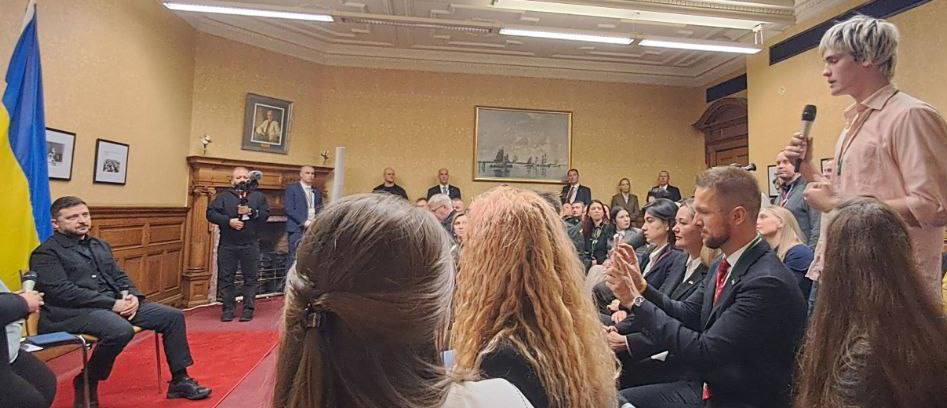
Ukraine to Ireland and simply asked us all “How do you feel this meeting should go?” . The room quickly agreed, each of us would try to ask him a question, and he would try his best to answer concisely. Soon it was my turn.
Q: As a person representing Ukraine as a country in International Relations, what do you think young Irish people, Irish students, should know about Ukraine?
A: In my opinion, the whole world knows about Ukraine already, if we’re talking honestly, and it is, unfortunately, war that made this happen. [The world knows] about the struggle and the resilience. I think that all of this the world respects and understands. Today, to say something singular [that the Irish people should know about] is difficult. We are completely different people, united not even by this hate towards the aggressor… the Ruskies, but rather, I believe, united by love towards Ukraine. I think that this sentiment [love] is stronger than hate. Ukrainians are freedom-loving people, yes we are that way, and it’s amazing. I think that to be honest, the Irish understand this. Their path, their struggle for independence: a small country against a big country; the colonialism of that period is only different in technology, compared to the colonialism of the current day, of today’s time. So I absolutely think that they understand what it’s like to fight for freedom and [they understand] that in the end there will be victory eventually. There’s a big price… such a big price..., but yeah. I think that you need to bring them to
our country: Ukraine is vast and varying, everyone will find something for themselves here.
President Zelensky’s response encapsulates my personal way of looking at future Irish-Ukrainian relations: the similarity of the struggles of the two countries is undeniable. It is precisely on this mutual understanding a long-lasting partnership should be built. President Zelensky seemed to express a similar sentiment in his address to the Dáil and the Seanad earlier that day:
“Our peoples, Ukrainian and Irish, are among the few in Europe who spent centuries fighting for the right to remain themselves. And now, for nearly four years of Russia’s full-scale war against our people, our children, the most devastating war for freedom in Europe since the Second World War, Ireland has stood firmly and clearly for our independence and for a just end to this war. Thank you for your steadfast support, for these years of standing with us…”
For now, Zelensky’s approach seems to be working: Irish ministers signed off on €100 million in non-lethal military support for Ukraine, as well as further €25 million for the country’s urgent energy needs. On January 14, President Zelensky declared a national state of emergency in the energy sector as temperatures as low as -19C arrived in Kyiv paired with intensifying Russian attacks on civilian infrastructure.
Many European people, the Irish being no exception, seem to follow a trend of believing that the war either stopped a long time ago or is about to come
to an end following a peace deal between the US, Russia, and Ukraine. Those beliefs stem from the lower number of articles portraying the harsh Ukrainian reality in the Irish media. A stark reminder of Irish lack of security came with President Zelensky on December 2, 2025, as unidentified drones were launched in the Irish skies, and came as close as 500m to the Irish naval vessel LÉ William Butler Yeats. So while the Russian invasion drags on and threatens international law and order, leaders of both countries seem to understand that a path to victory for all Europe is through mutual respect, support and diplomatic relations.
Zelensky said in his address to the Dáil and the Seanad, “Ireland is doing so much to help others understand why it is important to stand together and to remain a community based on shared values. Thank you for that. We will continue to co-ordinate with you and with everyone who can help and to inform all those who can influence the outcome, so that one day we can achieve what many still believe to be impossible, not just silence instead of bombs, not just clear skies instead of Russia’s drones and missiles, and not just a pause between strikes but lasting peace, guaranteed security and true justice.”
Justice and peace for all is what Europe strives for: Ireland is no exception. This visit symbolised more than a formal meeting of leaders, it offered a sign of a shared responsibility and yet inspired both nations, as well as the community of refugees Ireland hosts.
Over the past two years, many students at UCC have committed to showing solidarity with Palestine, through frequent walk outs, marches, and the presence of an active BDS group on campus . While in Cork, off campus, the Cork Palestine Solidarity Campaign holds weekly marches, distributes educational material on Palestine, and facilitates events.
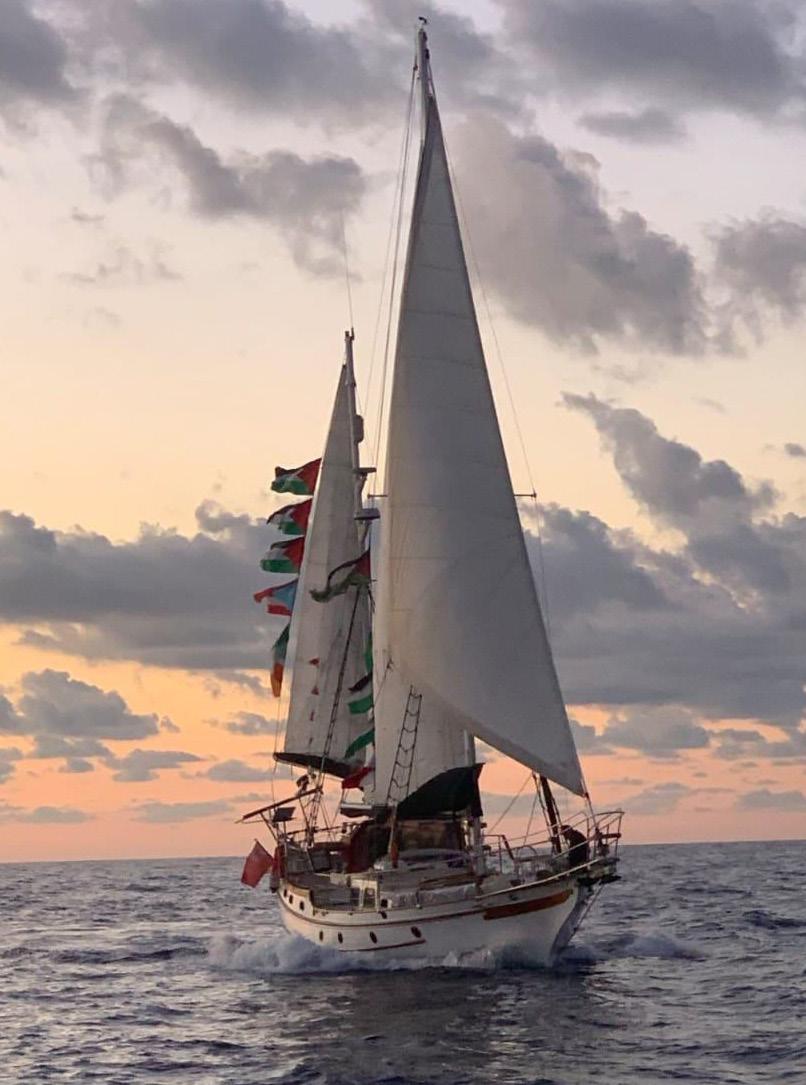
The United Nations and Oxfam report that over 70,000 Palestinian people living in Gaza have been murdered through the Israeli Genocide and over 80% of Gaza’s infrastructure has been destroyed, including hospitals, homes and schools. More than 2 million Palestinian citizens, almost half the population of Ireland, are currently under an Israeli imposed siege in the Gaza Strip. For many Irish activists, the images of destruction emerging from the Genocide were unacceptable. This led to a large Irish presence on the Global Sumud Flotilla, a voyage carried out by civilians, which aimed to deliver essential aid to Gaza.
When reflecting on the Global Sumud Flotilla, one is filled with pride due to the large impact that our small country has had on such an impactful hu-
manitarian mission. There were approximately 22 Irish citizens on board around 42 ships which set sail towards Gaza. On board were notable figures like Sinn Féin senator Chris Andrews and actor Liam Cunningham. Locally, Cork was represented by visible changemakers such as Donna Marie Schwarz, Paddy O’Donovan and Tadgh Hickey. I was able to catch up with Donna Marie Schwarz to discuss her experiences on the Global Sumud Flotilla and her commitment to the Palestinian movement.
Q: How did you originally get involved in pro-Palestinian activism? How did you become involved in the Global Sumud Flotilla fleet? Were you approached by a group or organisation to join the fleet or did you feel inspired to pursue an opportunity to join?
A: I wouldn’t have called myself an activist, just someone that sees injustices, in this case genocide, and wants it to stop. I kept waiting for some kind of intervention by the UN to do something about the atrocities being aggressively bombarded on the Palestinian people, especially in Gaza. … I started following Gazans and activists on Instagram and watched as Greta
“More than 2 million Palestinian citizens, almost half the population of Ireland, are currently under an Israeli imposed siege in the Gaza Strip.”
Thunberg and Thiago Avila and other international activists set sail on The Madleen, were intercepted and abducted. After their release, the news of another bigger flotilla was announced. I didn’t hesitate and applied immediately as I had been on protests, donating to aid agencies, writing to TDs, sharing information on Instagram but knowing that aid wasn’t getting through at the borders and had received just a single reply to my emails, which was from Richard Boyd Barrett. This was a legal, humanitarian peaceful mission, I thought this was something I
could do at the very least. So, I signed up with the Global Movement to Gaza Eire, a grassroots organisation and did an interview with them and was invited to join the Flotilla in Tunis.
Q: Yourself and your fellow activists were heading into a huge amount of uncertainty. Was joining the voyage a difficult decision to come to?
A: I absolutely knew I wanted to get stuck in. While we were in Tunisia, more people turned up than was expected, than we had boats for … like, it was people from the global south, rightly so, that were going to be accommodated first. Then it was MPs and journalists, I thought I was going to have to go home and, this was after being in Tunisia for two weeks, I was devastated. The news was coming in about what was happening in Gaza, and after the drone strikes in Tunisia, it just emphasised more why we were there, to try and get as much international attention as possible on the people of Gaza to encourage governments to do something. I was struck by grief, but also I knew that [the Flotilla] was happening anyway. Then I got a phone call to say we have a place for someone with a European passport.
When we were in Crete, I think it was the family boats engine had burnt out, with the threat that Ben Gvir had issued about treating us as terrorists and that we could be imprisoned for up to 6 months or they would stop the flotilla by any means possible, we were each given the opportunity to end our part in the mission off the island of Crete. Having already experienced the drone attacks the fear
Words: Cleo Morrison O’
I felt was real and I wept at the thought of the risk but knew I was going to continue as did almost everyone else. To try to break the illegal siege by sea and allow essential humanitarian aid to flow into Gaza and to give the people there a fighting chance for self determination and justice was what was the driving force and no threat by an inhumane bully would stop us from trying.
Q: Would you mind briefly speaking about your detention period? The accounts of the detained have been harrowing yet so impactful, as they highlight the extent of the abuse and abandonment of international law by the IDF.
A: So, our treatment there was nothing in comparison to how Palestinians are treated, and they are also being detained without any charges against them. Over 3,000 without any charges against them for more than six months, you’re talking about children, women, men.
The interception began at 8 p.m. on October 1 with water cannoning off boats, ours was water cannoned four times before they boarded us at roughly 5:30 a.m. on Tuesday morning of October 2.
They were in full armoured gear with helmets and balaclavas, armed to the teeth. They searched the boat, tore the place apart, damaging storage units as they did so… we were searched on the boat and handed over our passports to them too, but got them back on arrival at Ashdod Port. We were on deck at the bow for the duration of the time it took them to bring us to the port. We had no con-
cept of time at all for the whole journey.
When we first arrived at the processing centre, we were strip searched, our luggage was confiscated from us and our passports were taken off us. It was about, I think, five or six stations that we had to go through. So, you went through the metal detectors, then they took you behind a screen, told you to take off your clothes – they even went through my hair. [At] the next station, your luggage was searched, then passport, fingerprinting, eyes and pupils. Then, it was to customs where they asked questions like why did you come illegally to Israel? I was like, “I don’t want to be here, you brought me here.” I suppose I didn’t realise the severity of the situation as well.
We had training in how to react, you know, try not to make eye contact, don’t answer any questions you don’t want to, don’t sign anything - other than the one that said you wanted to be deported within three days. At the processing centre, they removed hijabs from the Muslim women and it was horrific for them, they managed to fashion hijabs out of the prison issue t-shirts.We had no opportunity to go to the toilet. From the minute we landed at the port, I had two guards that kept hold of me the whole time, I had bruises on my arms from them for about a month. As the day went on, the treatment got worse to other members on the flotilla.
I still had my bottle of water with me and I asked, could I have a drink of water? They all looked at each other and said, “If it’s okay with the guards” and I
was like, I can’t believe I’m asking permission to have a drink of water. We were put onto prison trucks, these kind of armoured vehicles with hard seats. There was, I suppose they were meant to be for individuals, cages, they would fit three to four people into each of these cages [This happens after the processing at the port]. So,then, they drive to the prison...It seemed to be an eternity, you couldn’t see where you were going, no idea of time.
On arrival to Kt’ziot prison we were placed in a compound roughly 5m x 8m with barbed
“We’re a democracy, and our governments are meant to be representatives of the people. As far as I know, the people don’t want this going on.”
wire and fencing, with a second compound beside it, where we were put after being put into prison garb. There were roughly 50+ of us. Here, we finally got access to a toilet. There was one toilet there for, let’s say there was 50 of us…we had to form ridiculous queues. They’d take one at a time…it was all part of kind of psychological games they were playing with us, they loved to just torment us. These are all violations of human rights. We didn’t have yard time, we didn’t have shower access, just treated horribly.
I ended up in a cell where there were 15 of us, the cells were supposed to be for five people. The area where the cells were, had high wall perimeters with two observation towers. There were 13 cells, each had five beds in them, there were over 130 of us.The cells were small about 3m x 8m including the toilet. We would literally fall asleep and then there was banging on the door, and lights switched on. The first night, we were woken seven times, each night they would do the same pointless waking and counting
of us, I could have been asleep for two hours, I could have been asleep for two minutes…I had no idea…we were taken to a judge in the middle of the night. I don’t even know if this guy was a judge or just a guard…I never got to see [a lawyer].
We were taken to a doctor who just took photographs and that was kind of it. They asked if we were on medication, it didn’t really matter, because they just threw them in the bin. People were denied their medications. When we looked for a medic for someone, they would be like “no doctors for animals” . We only saw our consulate advisor for, I’d say, 15 minutes, and then we were being rushed at that, and we saw him as a group. I was concerned because my captain had said to me, “when your consulate comes to see you, can you ask them to come see us?”. He was really worried that they’d be left there.
The guards that we encountered were kind of menacing. They would eat food, smoke cigarettes, drink fresh water in front of us while we had a 1.5m bathroom toilet with a sink, and they told us to drink the water from the sink, we had no cups or anything at the start. There were these buckets of food, big stainless steel things, full of food out in the open for hours, a couple of our comrades would go round and distribute food, but at that stage, it was inedible anyway. A lot of people were on hunger strike. It was quite terrifying, [the soldiers] were fully armoured with guns and shields. I found out after, that there has been three [alleged] accounts of sexual assault.
It’s strange, I suppose it was the solidarity of everybody there, we carried each other, we really did. We knew that however badly we would be treated, it still was not anything, anywhere close to what the Palestinians were going through.
Q: Although the Irish state has been outspoken in their support for the Palestinian people, there has been conversations between Irish politicians, and your fellow activists, in which the government was accused of not acting to its full potential. Do you feel, both in the supports you were offered during your detention and in a wider capacity, that the Irish state could be doing more?
A: Absolutely. I have to say the consulates in both occupied Palestine and in Athens were exceptional, they’re extremely fabulous people. Do I feel we were supported by our government? Sinn Fein Senator, Thomas Gould, advocated for me in the Dáil, when we were abducted, and I’m glad they got to hear what we went through [when the activists returned], but it seemed that all they were willing to do was facilitate listening to our story. We suggested to the joint committee [the Joint Committee on European Union Affairs and the Joint Committee on Foreign Affairs and Trade] that thet could’ve sent the Irish navy as the Italians, Spanish and Turkish naval authorities had.
Simon Harris apparently said in September that, if anything happened to us, they would hold Israel accountable, but they’re still not holding anybody accountable for what happened to us. We were illegally abduct-
ed from international waters. We had done nothing illegal. We were basically kidnapped, and piracy had happened on open waters. They still haven’t returned the boats. Other than that, the Occupied Territories Bill seems to have kind of vanished. We could be boycotting, divesting, and sanctioning. I feel like, acknowledging Palestine as a state, that it’s all lip service, Palestine has always existed.
[The government] could be doing a lot more. Something very important that the Irish government could do is to stop the US military from using Shannon Airport and to stop further data centres from being built, for various reasons, but the use by Israel’s Unit 8200 ( a top secret military intelligence branch) of Microsoft Azure cloud platform for mass surveillance of Palestinians phone calls …is one of them.
We’re a democracy, and our governments are meant to be representatives of the people. As far as I know, the people don’t want this going on. It seems to me that everything that’s happening is down to civilians, down to civilians boycotting, like with Eurovision, for example. We’re the second largest importer of Israeli goods, and it’s mostly to do with the tech and pharmaceutical companies. If we can source the materials somewhere else, that would be a starting point.
Q: Do you believe that another flotilla could potentially be successful?
A: I do, I do, that is what all the flotillas were, their mission was to break the siege and to create a humanitarian corridor. The last flotilla, they organised
in under two months. Hopefully, this flotilla, they’re hoping will be much, much bigger with more people involved.
Q: Do you feel that the level of media attention hindered the ultimate goal of delivering aid and breaking the siege, or do you believe that the media’s role helped amplify the powerful symbol of the flotilla ?
A: Well, the western media only took up on it when we got intercepted, and when it became, you know, really newsworthy. Al Jazeera were the main ones, that kind of followed us, and maybe the global south news outlets, not so much the northern global media. There were independent journalists onboard the flotilla, one journalist from Algeria was on my boat. Sarah Clancy and Chris Andrews did radio interviews. There were a lot of people, like Greta [Thunberg] and a lot of MPs, European MEPs, that would have had a lot of followers, I think that’s how a lot of the word got out really.
Q: On symbols, flotilla was a beautiful symbol of unity. How did you feel that the community onboard not only your own ship, but the entire fleet, was unified towards a common goal in promoting humanitarian relief and justice, from such an array of different nationalities and backgrounds?
A: So as many people that were on board the flotilla, there were as many people on land supporting us within the movement and then, like my own personal support, it was incredible. So it’s like, not only a movement of people going on the flotilla, it’s everybody else in the orbit of the flotilla too. So there’s thousands
of people involved in it, and it’s just fantastic. I only got to meet a handful of people, everyone on board the boat, people that were in my cells and then on the plane and then, subsequently, I met the other Irish participants. There were other people who had their boats break down and they never finished the mission, or they never got detained. My crew members were Tunisian, Algerian and South African and they had a lot of assumptions about me being from the West. I hadn’t realised a lot, and that was interesting to learn about our shared histories.
“It is vital that the Irish people and government remain steadfast in our dedication to the Palestinian people.”
Just through conversation, it’s like we’re all just people at the end of the day, you know?. Prior to our eye opening discussion, the flotilla came incredibly close to successfully breaking the illegal Israeli siege on Gaza and the Palestinian people and delivering vital aid. The final boat, the Marinette, was intercepted at just over 40 nautical miles from the shores of Gaza. Amidst the organisation of another siege breaking Flotilla effort, which is set to embark on the same journey as its predecessor in Spring 2026, it is vital that the Irish people and government remain steadfast in our dedication to the Palestin-
ian people and their struggle for liberation, as our government is legally obliged to under the 1948 Genocide convention, which was ratified by Ireland in 1976. Civilian action works, civilian pressure on international governments and organisations has led to the recognition of a Palestinian state by countries such as Ireland, the United Kingdom in September 2025 and France at the 80th United Nations General Assembly. While boycotting,divesting and sanctions has led to major action, such as AXA insurance divesting 20 million dollars worth of shares from Israeli banks. Actions like the flotilla are not only symbols to the western world and our leaders, they are a light house beacon to the Palestinian people, flashing across the ocean showing that they are seen and supported.
Engaging with the BDS movement, boycotting and divesting support from brands which fund or benefit from Israeli goods and companies, attending local marches and sharing or reposting information online about the ongoing genocide are all ways that students can support and engage with the Palestinian cause.
Motley extends its deepest gratitude to Donna Schwarz for the conversation with the magazine.
Universities across the world, as places of knowledge and culture, have always acted as hubs of change, from the Chicago Seven to the recent Nepalese Gen Z revolution. These all started out as political movements inside of universities. How are political movements treated back home?
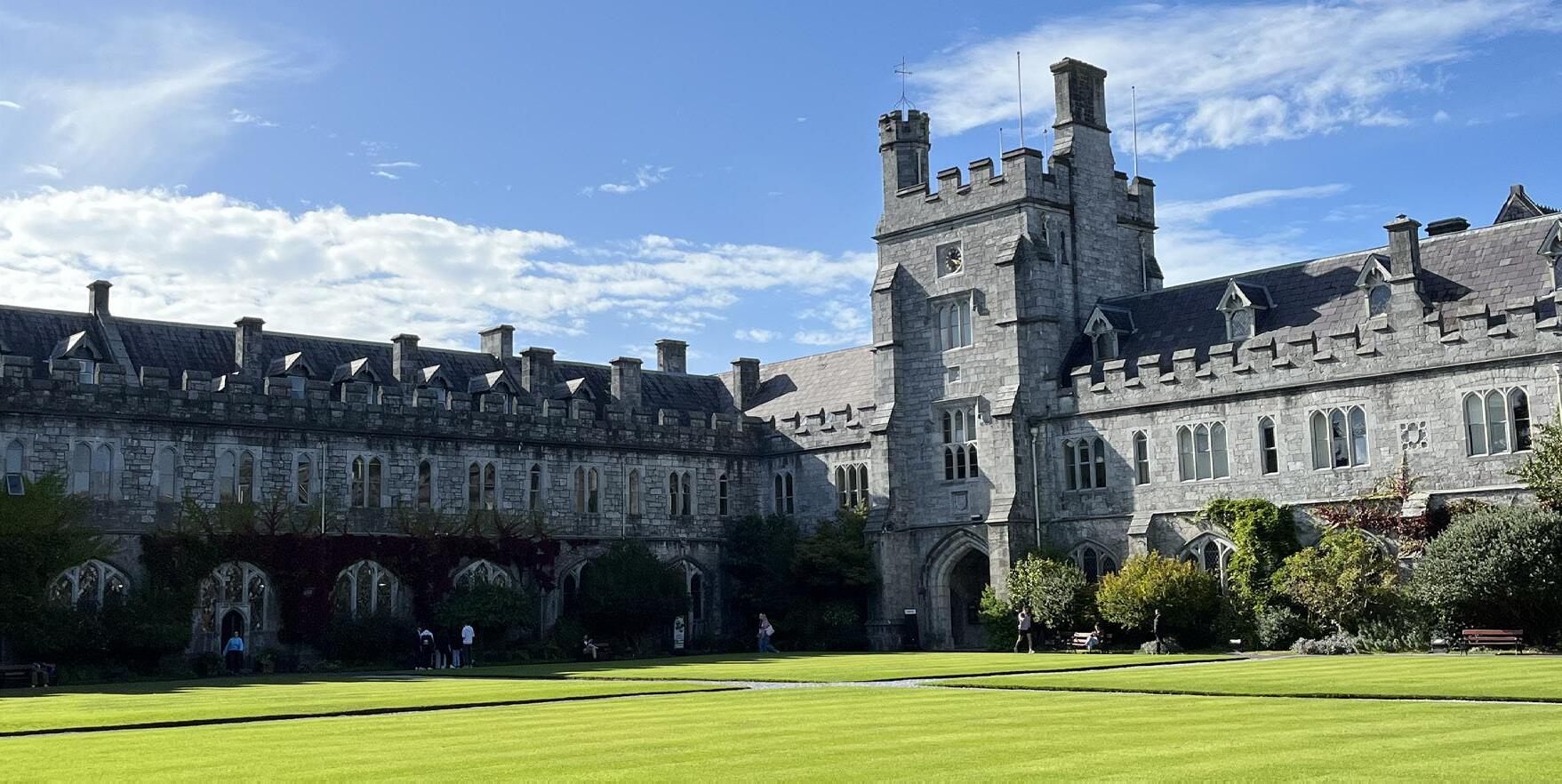
UCC, as one of the largest universities in Ireland, used to have its fair share of political expression: from the Students’ Union and its elected officials who organise protests and campaigns, to a range of societies, until recently, Cork’s University was diverse and active in its political expression.
The selection of societies is varied, from those that offer a platform for discussion like the Law Society, Philosophical Society and the Government and Politics Society to the political societies, with national level counterparts such as Sinn Féin, Fianna Fáil and, until recently, Fine Gael.
That is until the end of October 2025, when the UCC Societies, citing s2.4 of the Charity Act, 2009,amended in 2024, UCC’s new proposed policy,which in the end did not get ratified, that all societies from now on must remain neutral in politics and beliefs, and must not endorse any political candidate and/or party.
The text reads: “Any breach of this requirement will be considered a serious violation of UCC Societies Policy and may result in penalties up to and including disbandment of the Society.”
This was met with harsh criticism from the Societies Senate, spearheaded by the Government and Politics Society, which sent out a long email, a copy of which Motley has seen, calling for societies to vote against the new policy, claiming that before making such a decision, the UCC Societies Executive could have consulted the societies affected. The email stated that an alternative interpretation of the Charities Act, 2009, was possible where the political societies would remain independent. The email also questioned the intentions of the new policy, asking “Would this policy not give the Executive the power to disband all Political societies over time?”, and arguing “We believe this is an overreach of power and a breach of academic freedom.”
Conclusively, the new policy was voted down by the Societies Senate. Two days later, on October 23, 2025, the Societies Office paused all current applications for new societies and stopped accepting any new ones.
Motley’s Current Affairs editor contacted the Government
and Politics Society for comment but received a reply stating that they are in the process of “preliminary discussions with relevant parties and aren’t in a position to comment further at this time.”
Young Fine Gael (YFG) are one of the political groups most affected by the sudden change in policy. According to a YFG representative at UCC, the Societies Office no longer recognised them as a society as of September 2024, which prompted the society to spend the following academic year updating their constitution and gathering the signatures of students on campus, all of which are part of a standardised application process.
After submitting their application in September 2025, it
“They’re not just blocking political expression anymore on campus. They’re blocking every expression on campus.” -Bebhinn
was rejected within 20 to 25 minutes of sending, despite YFG receiving advice on how to improve the application from the Societies Office back in July 2025. Bebhinn Lombard, YFG’s Munster representative and a student at UCC told Motley, “We were blocked from an official appeals process because we were never considered a prospective society”.
When YFG tried to reapply the next morning, they were rejected again, as the Societies Office was not allowing new applications. The only available action, according to Bebhinn, was to contact the media, which they did. The Irish Examiner article published on November 19, 2025, was the first media coverage of the situation, which prompted the PR & Media Officer of the Societies Office to send an email that same day forbidding societies from directly engaging with media, asking that all interaction happen through press releases, which would be edited and distributed by the office itself.
“They’re not just blocking political expression anymore on campus. They’re blocking every
expression on campus,” Bebhinn said, “Sinn Féin, Fianna Fáil, the Social Democrats and us [former society of YFG] are all on the same page. Let’s be real, it doesn’t happen that often, politically. [...] Like, that’s how bad this is, that they’re actually uniting all the political societies.”
Another outcome of this change in policy materialised in the ban on the Philosophical Society’s proposed debate motion of “TTH believes that Hamas should not have a place in a Palestinian Government” in late October, 2025 as the Irish presidential election was happening. The Philosophical Society committee’s motion was inspired by comments made by then-presidential candidate, Catherine Connolly, that Hamas was “part of the fabric of the Palestinian People” and that it should be up to Palestinians to decide who they want to lead their country. Connolly’s comments were in response to Keir Starmer, the British prime minister, stating that Hamas would have no role in a future Palestinian government. In the end, the Philosophical Societies debate was allowed and commenced on November 24. If even statements used by presidential candidates are suppressed within the university, what else can be said about freedom of expression?
One student spoke to Motley’s Current Affairs Editor about the ongoing situation between the Societies Office and the societies involved. The student requested anonymity, so Motley will refer to her as Emma.
Emma said, “In recent years, specifically this year, the executive office of societies in UCC
Photo: Bebhinn Lombard
has been trying to remain very political in every aspect, so if your beliefs and your political compass are not aligned with what the university has in mind, their reputation, they’re most likely not going to allow it.”
Her opinion on the matter seems to contradict the statement Motley received from the Societies Office. Emma continues, “But it doesn’t happen directly. They don’t tell you ‘oh no, you can’t do that because it is too political and it doesn’t align with our political compass.’ They try to stall for as much time as they can. For example, they would not approve risk assessments, or they would not approve some kind of assessment of an event, or initiation of a society, just so they have time to make that side give up on their idea. So it’s nothing very direct. It’s very subtle in that sense… which is just pressure on societies.”
In a statement Motley received, the Societies Office mentions the Charities Act, 2009, stating: “The UCC Societies Executive is currently engaging with students and members of the university community as part of this consultation. This process is ongoing, and no final decision has been made. UCC Societies remains committed to transparent, democratic decision-making and assures students that there is no intention to limit or restrict political expression on campus.”
The Societies Office did not answer the question posed of “Why [did the UCC Societies Office] ask the societies to only interact with the media through press releases distributed by the Societies’ Office themselves?”
The intentions of the Societ-
ies Office are open to interpretation. Some comments suggest that this may be an act which suppresses the freedoms of political expression and gatherings, a statement that would make some sense considering the current global authoritarian trends in the modern world. “Students, as people who reside in Ireland or are citizens of Ireland have the right to assembly, right to freedom of speech and expression, which is heavily infringed on at the moment. Someone decides to stop activity just because it doesn’t align with their personal moral or political compass,” said Emma in our interview.
Regarding YFG’s future at UCC, Bebhinn said “And we’re not accepting censorship on campus. We are not accepting undemocratic processes on campus. We’re not asking for a lot. We’re asking for a place at a freshers stand. We’re asking for, you know, debates to take place on campus.”
As the Societies Office attempts to balance its legal obligations with the political ex-
pression of existing societies and potential future societies, such as YFG, what is clear is that the UCC should act as a hub of change and freedom of expression for students and researchers alike. And for now, the office outlines the same goals in their statements.
“[Regarding YFG’s future at UCC], we’re not accepting censorship on campus. We are not accepting undemocratic processes on campus.”
-Bebhinn
Emma concludes, “And if UCC wants to be a healthy community, in which change is pos-
sible, and diversity, and equality is treasured. In my personal opinion, they should be able to assure students that this is the place to have a constructive debate.”
For decades, we college students were told a simple story: work hard, earn a degree, and the job market would reward us. Entry-level positions were the bridge between education and experience. University served as a place to learn, make mistakes and gradually build a career. Today, that bridge is collapsing under the weight of Artificial intelligence. With its creators framing it as a productivity tool, it is rapidly absorbing the very jobs that allowed graduates to get their start.
While tech companies celebrate and strive for efficiency gains and innovation, a growing number of recent graduates are discovering an uncomfortable truth: AI is not just changing work, it is erasing the bottom rung of the career ladder. The co-founder of a large UK-based recruitment firm, Auria Heanley, in an interview with The Guardian, has gone so far as to say that there is “no doubt” about the negative impact of Artificial Intelligence on the job market for young people, “AI combined with wider economic uncertainty is making it much tougher for graduates to find these roles.”
Entry-level jobs have served Current Affairs and Investigations
a critical function. They were not designed for mastery but for growth and getting your foot in the door. Roles such as junior analysts, research assistants, copywriters, customer support associates, paralegals, and administrative coordinators allowed new graduates to learn industry norms while contributing incremental value.
AI systems now perform many of these tasks faster, cheaper, and without the need for training or benefits, and what’s most attractive is that these machines don’t have lives; they don’t get sick, have a child, get married, mourn the loss of a loved one, and they don’t have labour laws. The benefits of a workforce made entirely of machines are unparalleled compared to humans. Resume screening, basic data analysis, transcription, content drafting, coding assistance, customer service chat, and legal document review are functions once assigned to recent graduates that are increasingly automated.
The result is not simply fewer jobs, but fewer accessible jobs. Employers still want experienced workers and ensure that those jobs at the top aren’t
“AI is not just changing work, it is erasing the bottom rung of the career ladder.”
at the same risk. However, they are eliminating the roles that once created that experience. This creates a catch-22 for graduates: you need experience to get a job, but the jobs that give experience no longer exist.
According to a report by the McKinsey Group, an American-based firm, up to 30% of work hours across the US economy could be automated by 2030, a trend accelerated by generative AI. Furthermore, 375 million workers globally – 14% of the global workforce – may need to switch occupational categories and learn new skills.
Proponents of AI often argue that “new jobs will be created.” Historically, this has been true in the long run. But graduates are not living in the long run; we are living in the present, with rent due, student loans accruing interest and résumés being reject-
ed by automated systems.
AI disproportionately harms new entrants to the workforce because they have the least bargaining power. When a company can replace a junior employee with software, they do not replace that worker with a more advanced human; they reallocate tasks upward or automate them entirely. Senior employees become overloaded, junior roles disappear and the pathway into the profession narrows.
This dynamic also accelerates credential inflation. Internships now require prior internships. Entry-level roles demand years of experience. Schooling becomes a holding pen rather than a choice, pushing students into more debt while delaying employment.
Universities continue to market degrees as career investments, but the return on that investment is increasingly uncertain. Many academic programmes are structured around preparing students for roles that AI is actively replacing. Students are trained to write essays, analyse basic data, summarise research or produce standard creative work, exactly the tasks AI excels at.
This mismatch raises ethical questions. If institutions know that the labour market for graduates is shrinking due to automation, what responsibility do they have to adapt curricula, reduce costs or warn students? At present, most universities benefit financially from enrolment while students absorb the risk.
The burden falls hardest on those without elite networks. Wealthier students can rely on personal connections, unpaid internships or financial cushions.
Others are left competing in an oversaturated market where algorithms and not humans decide who gets filtered out.
Automation Without Accountability
Unlike past technological shifts, AI adoption is occurring with minimal public oversight. AI is vastly outpacing the speed at which proper and effective legislation can be implemented, thus producing a quasi-unregulated market. Companies deploy systems that reshape labour markets without democratic input or regulatory scrutiny. There is no requirement to assess how many jobs are displaced, no obligation to retrain workers and no mechanism to ensure that productivity gains benefit society rather than shareholders alone.
The narrative of “AI as a tool” obscures the reality that tools can replace workers when profit incentives align. Corporations are not neutral actors; they respond to cost reduction and competitive pressure. If an AI system can eliminate ten entry-level positions, it will be adopted, regardless of the social consequences.
Defenders of AI often frame resistance as anti-progress. This is a false binary. The issue is not whether technology should advance, but who benefits and who bears the cost.
Progress that concentrates opportunity at the top while eroding access at the bottom is not neutral; in fact, it is regressive. When AI replaces entry-level jobs without replacing the function they serve in human development, it undermines the very idea of meritocracy. A system that tells young people to “adapt” while removing the
Words:
means to do so is not innovative; it is close-minded and selfish.
Acknowledging the problem is the first step to preventing this issue from pushing us off the cliff entirely. Universities, policymakers and employers must stop pretending thatmarket forces alone will resolve this crisis.
We need to incentivise or legislate companies to retain and train entry-level workers rather than automate them away, while regulating AI deployment in labour-critical sectors. Creating public sector and apprenticeship pathways that prioritise human development over automation is key.
AI is often described as the future of work. For many college graduates, it feels more like the end of it, at least at the starting line. When the first rung of the ladder disappears, telling people to “climb higher” becomes an empty slogan.
If society continues to automate opportunity itself, we should not be surprised when graduates question the value of education, the fairness of the economy and the legitimacy of the systems that govern both. Progress that leaves an entire generation behind is not progress.

Words: Ray Burke
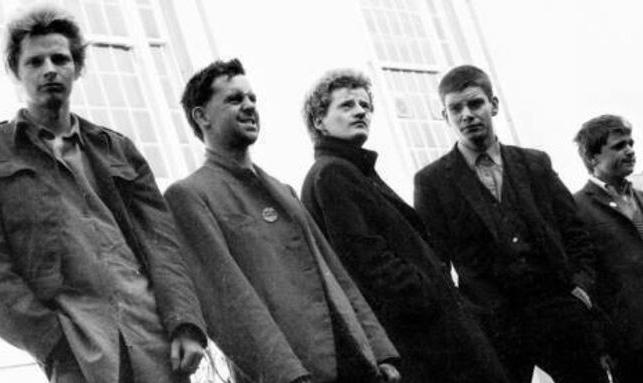
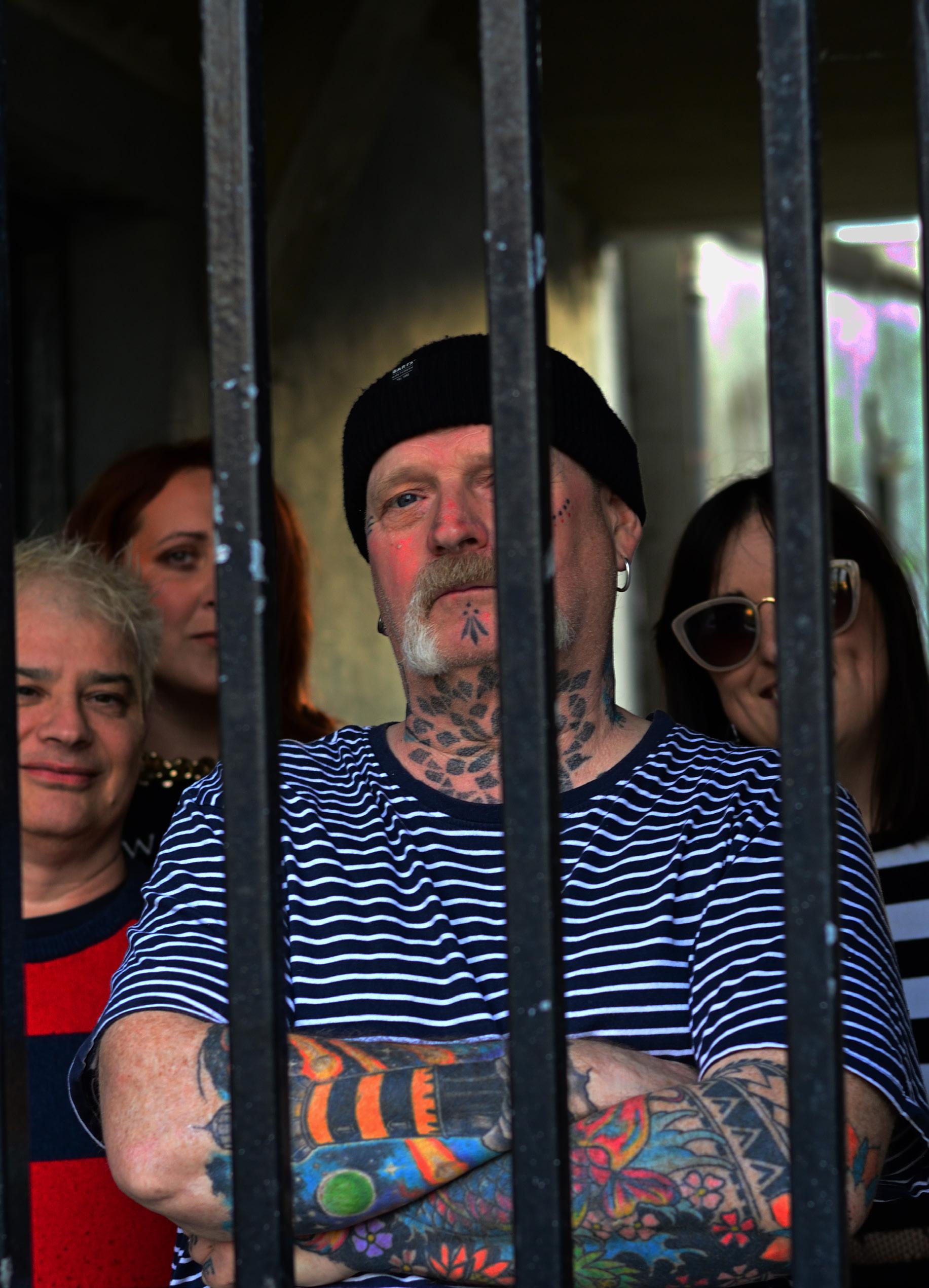
The Revolt are rooted in Cork punk history, but they’re using it to make new noise, not to pose beside it. From the first two songs, the pull was obvious. Over the past eighteen months, I’ve spoken with the band three times, catching them as the lineup clicked into place, the rooms filled up, and the live momentum quietly turned into something solid.
The first time I clocked The Revolt wasn’t at a gig. It was artwork in my inbox: April 2024, a new release submission. The subject line did that thing it always does when it says “PUNK” and “Cork” in the same breath, earning a closer look. But this was different. The package was fully realised. The artwork had intent. It suggested a band that knew what it was doing before it ever stepped on a stage. Too often, new bands fire off a threeline bio and a YouTube link and hope for the best. This made me stop scrolling.
Then came the second glance. Keith “Smelly” O’Connell on drums. Nun Attax. Five Go Down to the Sea? In Cork, that kind of name still carries weight, not in a museum-piece way, but in the way certain rooms and eras are spoken about with a shorthand reverence. I was too young to experience the Arcadia years first-hand, but that doesn’t stop the romanticism. When I first moved to Cork as a student, I wandered around the sites of
old venues the way other people wander graveyards, aware that entire scenes had lived and died in those spaces. You still hear it in how people talk: rooms, lineups, nights that went sideways or went legendary. Names that mean something if you know. The city remembers.
“When I first moved to cork as a student, I wandered around the sites of old venues the way other people wander graveyards, aware that entire scenes had lived and died in those spaces.”
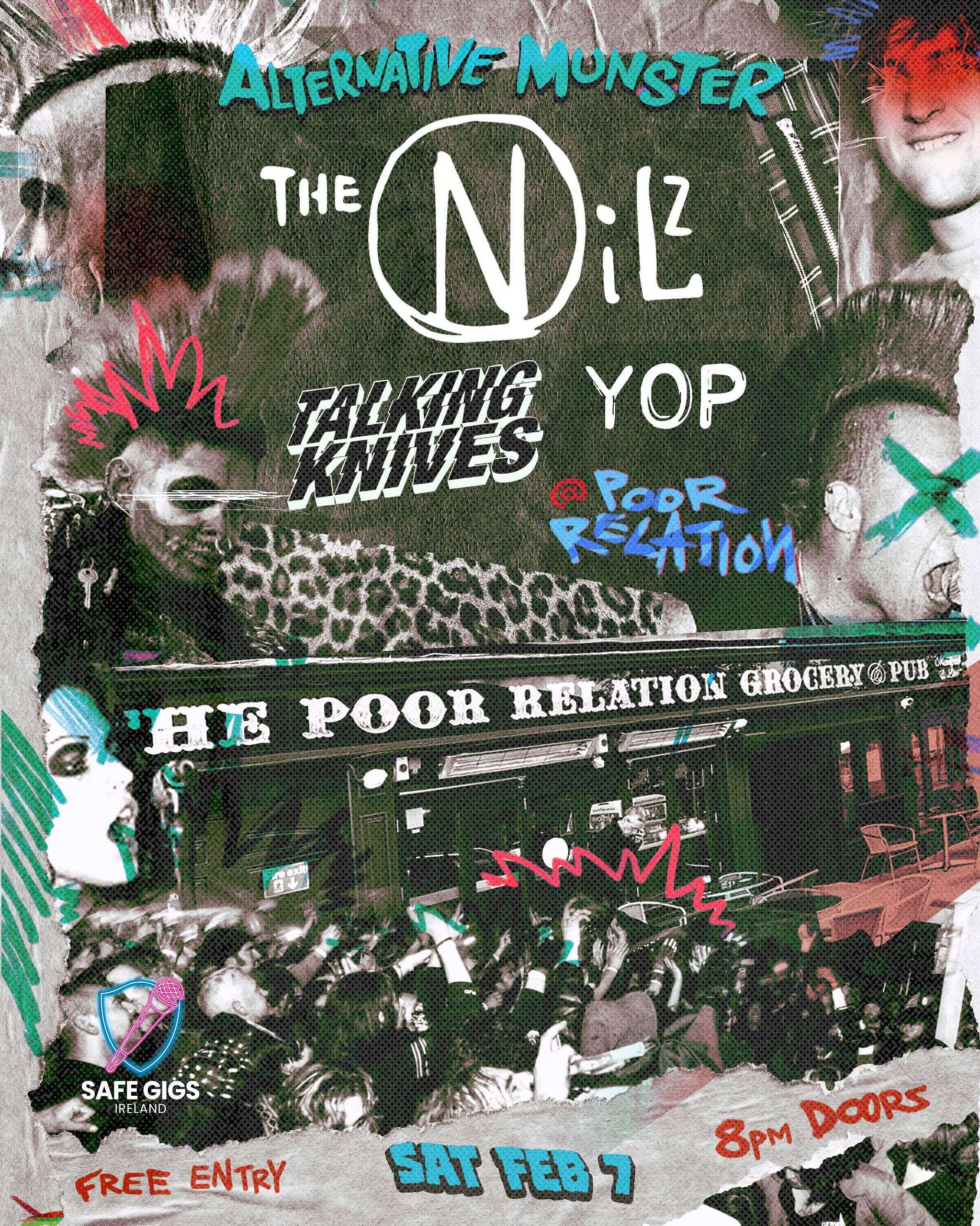
If you want to see what that looks like in 2026, don’t start with a streaming link. Start with a Saturday at The Poor Relation. The Revolt aren’t interested in reenactment. The band is down the back, and there is always room for dancing, or leaping around, whatever we call it. Between acts. people spill outside for air and you get the kind of
chat that only happens when nobody’s pretending or rushing off. It feels like a proper community has sprung up around these nights, welcoming in the way the best punk venues always are.
The Revolt, alongside fellow Corkonians Easy Company, cohosts Alternative Munster at The

Poor Relation, and it’s grown into its own ecosystem. Familiar faces, new bands, a steady rhythm of gigs that makes the city feel smaller in the best way. Everyone’s in the room for the same reason. No hierarchy, no genre policing.
The Revolt’s current line-up is Jessie Russell on lead vocals, Sarah O’Callaghan on guitar and
vocals, Smelly on drums, and Kalli Schlauch on bass. Across conversations, Jessie keeps coming back to the same description of the band: unpompous and welcoming, “We’ll play with anyone. We don’t care.” It’s not bravado. It’s practical. A way of running gigs and sharing bills that keeps nights open rather than locked down.
Jessie’s route into the band is simple. “I met Smelly the day before the first version of The Revolt went into the School of Music,” she says. “Annette Lynch
No sermon, no redemption arc. Just the fact of it, “I drummed for therapy.”
There’s context here, too. His first time back on stage after years away was at the Finbarr Donnelly tribute at Cyprus Avenue, with original member Ricky Dineen of Nun Attax reformed for the night as ...And Nun Came Back; read about them elsewhere in this issue. Two songs in, he was fucked. That’s the reality. Old names come up the way they always do when musicians are placing themselves on
a teenager. Bands in college. Punk, though, was new territory. “I’d never played in a punk band before,” she says. “The pedals. The noise. It was really fun.” The Revolt don’t sound like one person’s taste imposed on everyone else. They sound like four histories colliding and figuring it out in real time.
You hear that in how songs come together. Jessie tells the story of “Fla Boi”. She had lyrics and a melody, but no guitar part. Everyone was stuck. Sarah went to the toilet. When she came
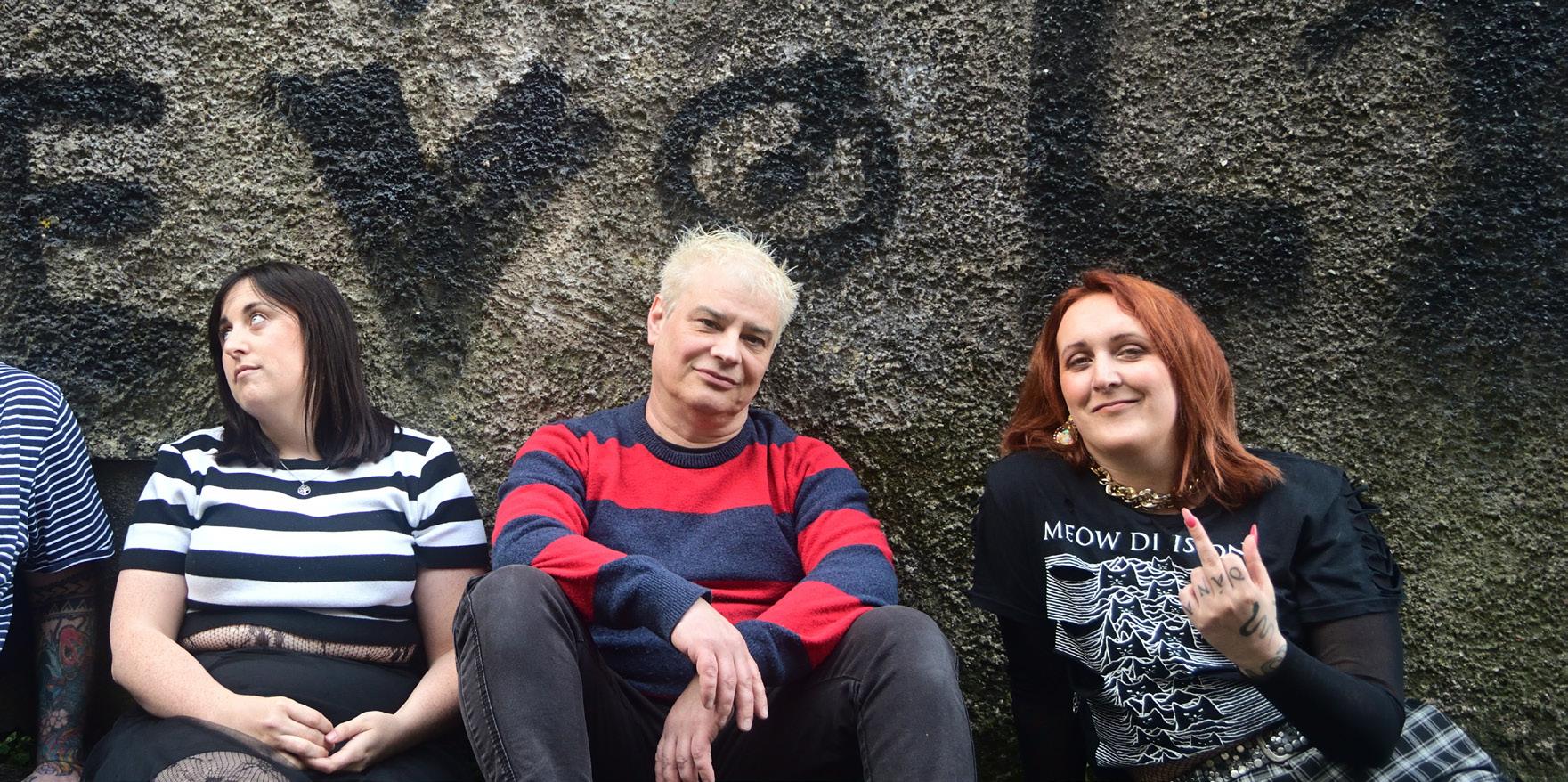
called me and said, ‘Jess, there’s someone here to meet you,’ and I went, ‘Oh, Stinky, how are ya.’” The next day she was recording backing vocals. “I stuck to the bottom of their shoe and I’m still here.”
What Smelly talks about instead of nostalgia is what playing does for his head. He’s open about sobriety. Thirteen years.
a map of friendships and shared histories. Memory and muscle memory tangled together. On The Revolt’s EP, the title track “The Ghost of Churchfield Shuffle” feels like the clearest line back to that older playing. Not imitation. Just a familiar swing in the gut.
Sarah arrives from a different direction. Classical guitar as
back, the guitar line arrived. That’s band life. Sometimes the work is grinding. Sometimes it’s stepping away for two minutes.
Kalli joined in July, and the band audibly tightened around him. He puts it plainly. “My joining was rather me looking for them than them looking for me… but I knew I could do it better than the former bass player,”
he adds, joking. He grew up in Germany, played in punk bands from fifteen, moved around, and landed in Cork in 2003. The part that sticks isn’t talent. It’s how long it can take to find the right people. Commitment. Turning up. Staying.
Before Kalli, bass duties included Kieran Stack, who is credited as co-writing the track “Never Say His Name”. Line-ups change. What matters is when things lock in. By the time the EP lands, the songs sound lived with, argued over, tightened, and then released.
The Ghost of Churchfield Shuffle, the band’s five-track EP, released on July 25, 2025 is produced and engineered by Duncan O’Cleirigh at Blackwater Studios. Lyrically, it circles the band’s favourite subject: the modern world being a pain in the arse. But it never lectures. The songs move. They hit. The choruses stick.
The title track takes ghosting and stretches it beyond dating. It’s about disposability. The quiet cruelty of silence when the messages are clearly read. “My phone works both ways,” Jessie sings, half complaint, half punchline. It’s sharp, funny, and very Cork in its bluntness.
The closer, “Never Say His Name”, is the band at their most deliberate. Inspired by the West Cork podcast and the murder of Sophie Toscan du Plantier, it refuses to centre the man who has dominated coverage for decades. “We wanted to shine a light on the side of the story that gets buried,” Jessie says. “The truth of the victims.” Don’t feed the myth. Don’t give the name oxygen.
Across our conversations, they keep coming back to practicalities. Buying rather than streaming. Small contributions that actually land in a band’s pocket. A community that shows up, pays in, brings a friend, buys a shirt, and makes the room viable. DIY here isn’t a slogan. It’s the difference between a band existing and quietly disappearing.
That’s why Alternative Munster matters as much as any release. A regular night run by people who actually go to gigs. The room works. Bands down the back. A proper merch corner. Space to move. The posters matter too. Collectable, loved, kept. The artwork feels like part of the whole thing, telling you what kind of night you’re walking into before you hit the door.
That same ethos scales up with Sound and Safe, an all-day fundraiser running from 2 p.m. to 2 a.m. at Kino, organised in association with Alternative Munster. Proceeds go to Safe Gigs Ireland and the Sexual Violence Centre Cork. The line-up is stacked, including God Alone, 50 Foot Woman, and Galway’s Puck, who released one of 2025’s strongest mini-albums and are great live.
The Sexual Violence Centre Cork has been providing support services since opening as the Cork Rape Crisis Centre in 1983, later expanding its remit and name to reflect the breadth of survivors it supports. Safe Gigs Ireland works directly with venues, promoters, artists and crews to create zero-tolerance environments for harassment and assault. Sound and Safe isn’t symbolic. It’s doing something.
‘‘This is a band that shows up. That keeps a night alive. That makes rooms feel welcoming rather than cliquey.’’
There is also new music arriving in that context. “Notorious P.I.G.” lands in time for the event. It’s pointed. Unambiguous. “This one is for Nikita Hand and anyone affected by gender-based violence,” the band says. The single will be available to buy on February 14, with a video screening taking place during the fundraiser. Tickets are available via Eventbrite.
The easy way to talk about The Revolt is history. The harder way is the present tense. This is a band that shows up. That keeps a night alive. That makes rooms feel welcoming rather than cliquey. Plenty of bands burn bright for six months and disappear. Staying is the work.
The Revolt are staying. Loud, stubborn, human. The past is in the room, but it’s not there to be worshipped. It’s there to be used. The point is always the next gig, the next song, the next room.
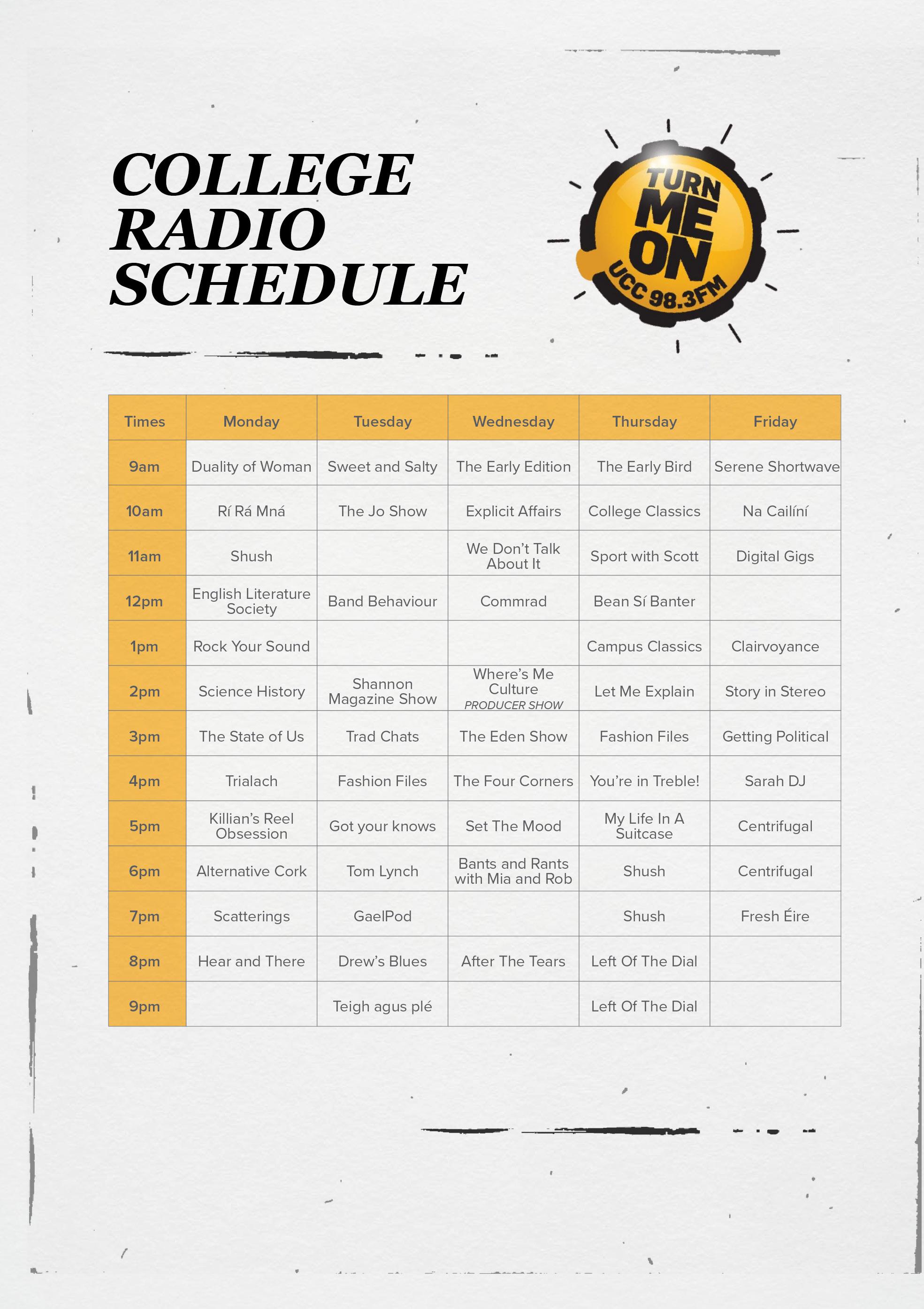
PR: radio@ucc.ie, Volunteer: radio.tech@ucc.ie, New Music: newmusic98.3FM@ucc.ie.
Music Words: Ray Burke
Tom Prendergast is not a footnote in anyone else’s story. He’s where things happen. Before the label mythologising kicks in, before scenes become documentaries and anniversary reissues, there’s usually one person in a room who just does the work: puts on the bands, plays the records, and makes the connections. Tom has been that person on both sides of the Atlantic, and he’s still doing it, with the same faith in music and dedication to community.
He left Ireland for the US in the early 80s and settled in Hoboken, looking across at Manhattan while figuring out how to stay afloat, at one point working in Maxwell’s – meeting Paul Westerberg while there, I’m not jealous at all – and saving enough to help open Pier Platters with Steve Fallon and Bill Ryan. Not long after, in 1986, he started Bar/None Records, initially to put out a record by Rage To Live, fronted by Glenn Morrow, who soon became his partner in the label. Bar/None’s early run included releases by They Might Be Giants, and that matters not because it’s a trivia point, but because it’s testimony to what Tom has always had: a great ear for tunes.
Back in Ireland, he’s rooted in Limerick’s arts community as a DJ and visual artist, with a prac-
“It’s radio as companionship rather than performance: standards nudging up against indie rock, strange oneoffs, and old and new obsessions surfacing at the exact right moment.”
tice built around daily creativity and a passionate embrace of all things cultural in the city. He’s the beating heart of that community in multiple ways. He knows everyone, and everyone knows him. He’s also the host of The Last Bus Home, a weekly late-night programme that isn’t “eclectic” as a brand. You’re not going to get anything like it elsewhere. It’s radio as companionship rather than performance: standards nudging up against indie rock, strange one-offs, and old and new obsessions surfacing at the exact right moment. The show airs live on LCCR
on Sunday nights at 10.30 p.m., and is repeated on UCC98.3FM on Wednesday nights at the same time. So when the city is
Photo: Katie Verling
thinning out, when the last pints are being ordered and the bus timetable starts to feel personal, Tom is there to curate your drive home, your bedtime, or the start of your late-night shift, moving through music by instinct, not by instruction. We caught up with Tom for a brief chat and, true to
form, he answered like someone who doesn’t over-explain the magic trick. He just keeps on keeping on.
Ray:
Your show goes out late, but you’re an early riser. Talk us through a typical morning. What’s the soundtrack?
Tom:
A typical morning-breakfast to the sound and sight of the birds as they feed hungrily from the food I leave out.
Ray:
The Last Bus Home has a real warmth and intimacy to it. What are you trying to give people at that hour?
Tom:
I pack a large bag with way too many cd’s.I usually have an idea of the first one or two songs and all the others follow suit.
Ray:
When you’re picking music for the show, what are you listening for most?
Tom:
Same as above.
Ray:
What are the tracks that never fail to fill the floor for you?
Tom:
Omar Souleyman - Warni Warni, Black Country, New Road - Instrumental, Jockstrap - 50/50.
Ray:
What’s your favourite kind of transition to pull off in a set?
Tom:
Mostly I don’t know what I’m doing, but I just see what works.
Ray:
What’s a perfect room to DJ in?
Tom:
The Record Room – Home away from Home.
Ray:
What makes a DJ night feel like a community night rather than just a night out?
Tom:
When there are multiple nationalities dancing together and getting to know each other –Heaven.
Ray:
You’ve done this for years. What keeps it interesting for you?
Tom:
I love music and dancing.
Ray:
Name a few Irish tracks, artists, or releases you think deserve far more love than they get.
Tom:
Peadar O Riada
Laura Duff Tra Phaidin, Shakalak.
Ray:
Quick-fire round: headphones or monitors? opening tune or closing tune? plan or instinct? And finally, when are you coming to Cork to DJ for us? Would you be up for making it a regular monthly or bi-monthly night?
Tom:
Monitors
Both Instinct Invite me and I will come Monthly works for me.
“I am in Cork for The Take Off Festival At Dance Cork Firkin Crane on either the 20th or 21st February – Can’t Hardly Wait.”
Neither can we.
Every November and December, reputable broadsheets, magazines, and the internet run the same ritual: confetti of rankings, hot takes dressed up as facts. It always arrives before the year is actually over, because humans can’t resist declaring a winner while the match is still on.
We let the year finish, then asked our own people what they actually lived with in 2025. Not a definitive list, not a claim that we heard everything, just the albums that survived the group chats, the songs that still hit, and the gigs that offered a little bit of an escape from the mundane. These are picks from Motley contributors and UCC 98.3FM presenters, in their own words. This was our year. Kinda.
Stacey Cambridge: Duality of (Wo)man, Mondays 9 a.m. to 10 a.m.
Favourite albums of 2025 Romance Deluxe Edition (Fontaines D.C.), the bonus tracks add loads. It’s already a non-skip album, and these tracks actually complement the standard edition rather than feeling like a cash grab.
Man’s Best Friend (Sabrina Carpenter), this is pop done properly: masterclass production that sits in the same space as ABBA, Carly Simon, and Bucks Fizz. She’s a student of great pop.
Contributors: Stacey Cambridge, Tanya Egan, Ruthi
Getting Killed (Geese), raw, guttural, and screeching. I love catching artists as the momentum builds, and I think Geese and frontman Cameron Winters are headed somewhere big. Am I mad to call him a neo-Springsteen?
Who’s the Clown? (Audrey Hobert), a brilliant debut that gives “quirky pop” a shot in the arm. Hobert’s writing on Gracie Abrams’ “That’s So True” is pushed to 90 here.
West End Girl (Lily Allenprop), a proper comeback from a British pop princess of the 2010s. A concept album that knows exactly what it’s doing.
Favourite songs of 2025
“Sayonara” (Kneecap), Prodigy influence all over it, but filtered through a Kneecap punch.
“Illegal” (PinkPantheress), a great reworking of a timeless classic, with Underworld’s “Dark and Long (Dark Train)” energy in the bones of it.
“Parachute” (Hayley Williams), the rollout for Ego Death at a Bachelorette Party was so unusual, and this track feels almost too intimate, like reading somebody’s diary.
“The Rope” (Wunderhorse), some people hated how radio-friendly it was, but I thought it worked as a great B-side to Midas.
“Inferno” (The Last Dinner Party), the hook is ridiculous, and the backing vocals do a lot of heavy lifting. “I’m Joan of Arc,
I’m dying, just waiting for your call” is pure wit and tongue-incheek.
“Dread” (The Moment score), it’s unsettling in the best way. A. G. Cook’s work on this is properly tense.
Gigs of 2025
Oasis, Croke Park: Watching lads go in as strangers and come out as best mates, my own dad included, was genuinely brilliant.
Bob Dylan, The Gleneagle: He got an easily eight-minute standing ovation and had to come back out for a second send-off. Class act.
Charli XCX, Malahide: She rocked the gaff.
These Charming Men, The Olympia: A Smiths tribute band that is genuinely up there with a reunion, which I’ll get in trouble for saying. They filled the whole place.
Kneecap, Cork City Hall: They lifted the roof, and I even got a few photos on my phone after a very polite crowd-surf. Legends.
Looking ahead to 2026: Kneecap’s three singles have me properly excited for their now-confirmed 2026 album, and I’m also keeping an eye out for Harry Styles’ fourth album. I respect an artist who lets a project breathe and comes back with something fully baked.
Tanya Egan
Favourite albums of 2025: Lux (ROSALÍA), Eusexua Afterglow (FKA Twigs), 10 (SAULT),
Ruthi Hennessey, Tadhg Kennelly, Cliodhna O’Driscoll, Ruby Poland, Tia Weldon, Ray Burke
Feather Sword (Qin Fanqi), Choke Enough (Oklou), WE WERE JUST HERE (Just Mustard), Danger in Fives (Wombo), Virgin (Lorde), Something Soft (M(h)aol), and Addison (Addison Rae).
Favourite singles of 2025: “Love Crimes” (FKA Twigs), “Illegal” (PinkPantheress), “Cobra” (Geese), “NEXT2U” (Vaticanjail), and “You’re Dead” (Jadu Heart).
Looking ahead to 2026: I’m most looking forward to Charli XCX’s soundtrack for the upcoming “Wuthering Heights” film, directed by Emerald Fennel. Singles like “House” and “Wall of Sound” paint a haunting narrative of emotional despair and addictive love. I’m hoping the full soundtrack gives that story a complete arc, and an intense ambience to match the film’s darker themes.
Ruthi Hennessey: Band Behaviour, Tuesdays 12 p.m. to 1 p.m.
Favourite albums of 2025: People Watching (Sam Fender), The Crux (Djo), EURO-COUNTRY (CMAT), The Provocateur (ADÉLA), Addison (Addison Rae), Midnight Sun (Zara Larsson), DON’T TAP ON THE GLASS (Tyler, The Creator), and Man’s Best Friend (Sabrina Carpenter).
Favourite songs of 2025: “I Was Just A Boy” (Madra Salach), “FaSHioN” (CORTIS), “Bittersweet” (Cliffords), “David” (Lorde), “Talk of the Town” (Fred again.., Reggie, Sammy Virji).
Gigs of 2025: Sabrina Carpenter, 3Arena, Dublin. Macklemore, Virgin Media Park, Cork. CMAT (as support), Boucher Road Playing Fields, Belfast. Sam Fender, Boucher Road Playing Fields, Belfast. Kingfishr, The
Marquee, Cork.
Looking ahead to 2026: I’m really excited for both Harry Styles’ and BTS’s new albums. Their comebacks are going to be huge, so it’ll be interesting to see how they play out. This year’s Electric Picnic lineup, Bad Bunny’s Super Bowl halftime show, and Ariana Grande’s tour are also top of mind. It’d be class to see more up-and-coming Irish artists getting their flowers this year, too.
Tadhg Kennelly: Trialach, Mondays 4 p.m.
Favourite albums of 2025: Old Earth (Rory Sweeney), black british music (Jim Legxacy), and Fancy That (PinkPantheress).
Favourite songs of 2025: “Iruka” (Alarico), “3x” (Jim Legxacy and Dave), “Chief” (Behne and JOYC), “Talk of the Town” (Curtisy, Lil Skag and owin), and “Future Drill” (Summerhill).
Gigs of 2025: Rory Sweeney, Fuinneamh Festival. Puzzy Wrangler, Fuinneamh Festival. Irish Hash Mafia cypher, All Together Now. Lewis Doyle Singer, All Together Now. Ross from Friends, Guinness Cork Jazz Festival (Cyprus Avenue).
Looking ahead to 2026: Whatever Rory Sweeney and Curtisy are planning next. Getting back to All Together Now and Fuinneamh. I need to get back to more live music in Cork, and I’m seeing The Cure in Dublin in June, which is a lifelong dream.
Clíodhna O’Driscoll: Co-Deputy Music Editor, Motley Favourite albums of 2025: Ego Death at a Bachelorette Party (Hayley Williams), Blizzard (Dove Ellis), EURO-COUNTRY (CMAT), Who’s the Clown? (Au-
drey Hobert), Choke Enough (Oklou), Getting Killed (Geese), If You Asked For A Picture (Blondshell), People Watching (Sam Fender), Bleeds (Wednesday), and More. (Pulp).
Favourite singles of 2025: “Tennis” (Lily Allen), Salt of the Lee (Cliffords) [EP], “Good Morning Farmer!” (Fizzy Orange), “Miffed It” (Way Dynamic), and “Swallow” (For Nina).
Looking ahead to 2026: Stove (Lana Del Rey), The Mountain (Gorillaz), Wuthering Heights (Charli XCX), Phoebe Bridgers (rumoured new record), So Much Country ’Till We Get There (Westside Cowboy) [EP].
Ruby Poland: Co-Deputy Music Editor, Motley
Favourite albums of 2025: Cosplay (Sorry), The Provocateur (ADÉLA), MAYHEM (Lady Gaga), Addison (Addison Rae), For Melancholy Brunettes and Sad Women (Japanese Breakfast), Achilles (Kevin Atwater), I can see the future (Leith Ross), Natural Pleasure (BRONCHO), and Silver Deliverer (Aly and AJ).
Favourite songs of 2025: “Magic Spell” (Dea Matrona), “The Sun” (Brittany Broski), “Sex Dream” (Jesse Detor), “Sublevel” (Tempers), and “But They Were Kissing” (Kevin Atwater).
Gigs of 2025: La Femme, The Academy, Dublin.
Tia Weldon: former producer at college radio station
Favourite albums of 2025: Live in Denver (Panic! at the Disco), Set It Off (Set It Off, self-titled), Ego Death at a Bachelorette Party (Hayley Williams), The Sound a Body Makes When It’s Still (Hot Mulligan), EURO-COUNTRY (CMAT).
Favourite songs of 2025:
“Rotten” (Set It Off), “Tonight” (PinkPantheress), “Parachute” (Hayley Williams), “Tonight, Tonight” (Panic! at the Disco), and “Monica Lewinskibidi” (Hot Mulligan).
Gigs of 2025: Pierce the Veil, I Can’t Hear You World Tour.
Looking ahead to 2026: I’m really looking forward to any expansion in the alternative and rock scene. Beloved local Waterford band Aliensincaves recently announced they’re disbanding, but they’ve hinted at future music this year through other projects, so I’m curious where that goes. My biggest gig of the year is CMAT in Cork. I’m also hoping to see and hear a lot less from Taylor Swift.
Ray Burke: Music Editor, Motley; Left of the Dial, Thursdays 8 p.m. to 10 p.m.
Favourite Irish albums and releases I lived with in 2025
The County Star (Kean Kavanagh), loved this album so much, country pop ragged sweetness.
Sea Legs (Laura Duff), heartbreaking and beautiful songs of loss and grief.
The Altered Hours (The Altered Hours), excellent stuff from one of Cork’s finest.
I expect the same of u (Some Images of Paradise), incredible debut from young Limerick band, this knocked me on my ass first listen, so good.
The End (Junior Brother), still knocking them out of the park, Ronan just keeps on getting better. Folk with teeth.
Something Soft (M(h)aol), funny and ferocious, great album, they were excellent in Coughlan’s this year too, hope they return soon.
All Smiles Tonight (Poor Crea-
ture), you had me at Ray and Philomena.
Grushy (The Redneck Manifesto).
New Wave Vaudeville (Skinner), sounds like No Wave, but not regressive, vital and fresh.
Luster (Maria Somerville), Connemara haze never sounded so good.
EURO-COUNTRY (CMAT), she’s unstoppable, this album deserves all the credit it gets.
Oylegate (Paddy Hanna), one of my absolute favourite Irish songwriters, another oddball pop masterpiece from a man with endless talent.
The Hate Agents Leer At The Last Isle Of Hope (Jinx Lennon) another cracker from Louth’s favourite son, passion with and.
DIASPORA GREEN (Jordan Kelly), lucid Limerick rap.
Still circling back to Waiting Room (Maria Kelly), sharp and tender.
Go Mutant (Search Results), jangly sprint grin.
WE WERE JUST HERE (Just Mustard), shimmery and addictive.
Days of Heaven (Junk Drawer), scrappy hooky charm.
So Long to Knowing (Mother of Pearl), shoegaze muscle heart.
Grushy (The Redneck Manifesto), serrated post-rock joy.
BEAUTY IN THE BEAST (Curtisy), Dublin swagger.
Sure Look (An Slua).
Regretamine (The Scuntz), punky party chaos.
GavinDaVinci, talented Tipperary rapper moves into mature stage.
Favourite international albums of 2025: More. (Pulp), Instant Holograms On Metal Film
(Stereolab), NEVER ENOUGH (Turnstile), Love Chant (The Lemonheads), bittersweet pop, and Heavy Metal (Cameron Winter).
Most played songs of 2025: “It’s Amazing To Be Young” (Fontaines D.C.) “Diana” and “Crawl” (I Dreamed I Dream), “Ghost of Churchfield Shuffle” (The Revolt), and Kean Kavanagh, all of them!
Gigs of 2025: Gillian Welch and David Rawlings, Vicar Street. The Altered Hours, St Luke’s. The Pogues, Manchester. Oasis, Dublin. The Flaming Lips, Berlin. Fontaines, Porto. Kim Deal, same. The absolutely glorious craic at Kaught at the Karpark. Looking ahead to 2026: Sound and Safe in Kino on Valentine’s Day. Stereolab, Kilkenny Roots – Big Star, and the rest of the ridiculous line-up –an annual pilgrimage for me and one of the great music festivals around. The Cure in Dublin in June. Primavera. Patti Smith and The Flaming Lips, and GGI in September. New stuff from Fixity, and a long-anticipated release from Major Feen, plus new stuff from Bill Callahan, Courtney Barnett, Death Grips, Lucinda Williams, Sleaford Mods and so many more.
If there’s a thread running through all of this, it’s that the stuff that lasts is rarely the neatest or the most hyped. It’s the record you kept instinctively returning to, the infectious chorus that facilitated your bounce to and from college or work, the local act you finally saw and then wouldn’t shut up about for weeks. That’s what this list is trying to catch: taste as a lived thing, not a scoreboard.
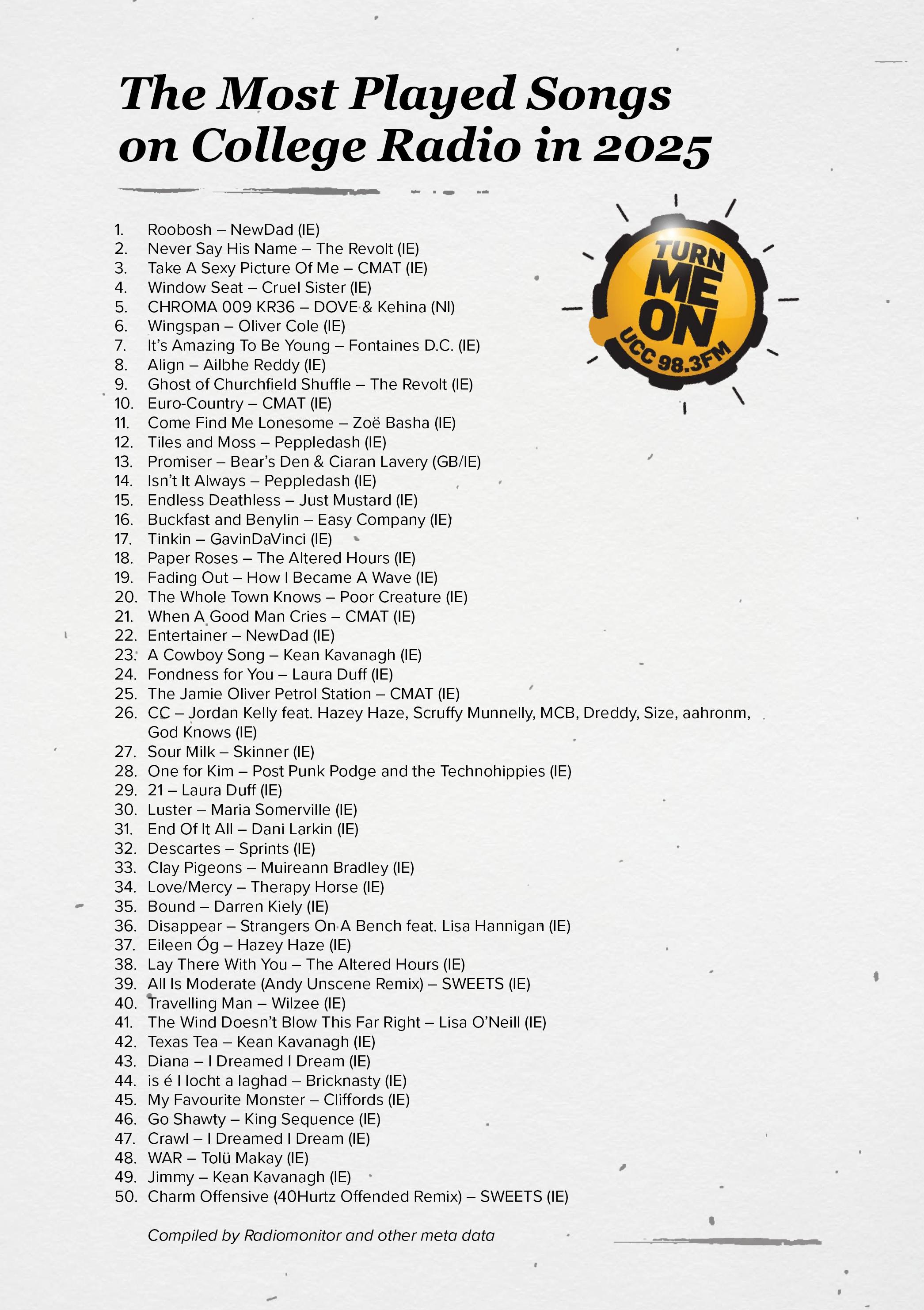
Ricky Dineen has been shaping Cork’s post-punk story for so long that you might be forgiven for not noticing he’s still in motion: still writing, still playing, still chasing the feeling rather than polishing the past. A guitarist and songwriter from Churchfield on the northside of Cork city, Dineen first emerged with Nun Attax, one of the city’s earliest punk bands, before moving through Five Go Down to the Sea? and Beethoven, projects that helped define a wiry, angular Cork sound that never behaved itself.
If Kaught at the Kampus is the scene’s famous artefact, it’s also a reminder of how fantastically strange it all was: the Arcadia Ballroom as a kind of underground civic centre, a crowd learning its own manners, songs that sounded like they were built out of tension and nerve, and that still sound remarkably fresh and inventive. Those ripples can be heard in great contemporary acts like Pretty Happy, I Dreamed I Dream, and Dineen is part of that lineage, but he’s not trapped in it. The retrospective of all three bands, Hiding from the Landlord, released a few years ago on the excellent
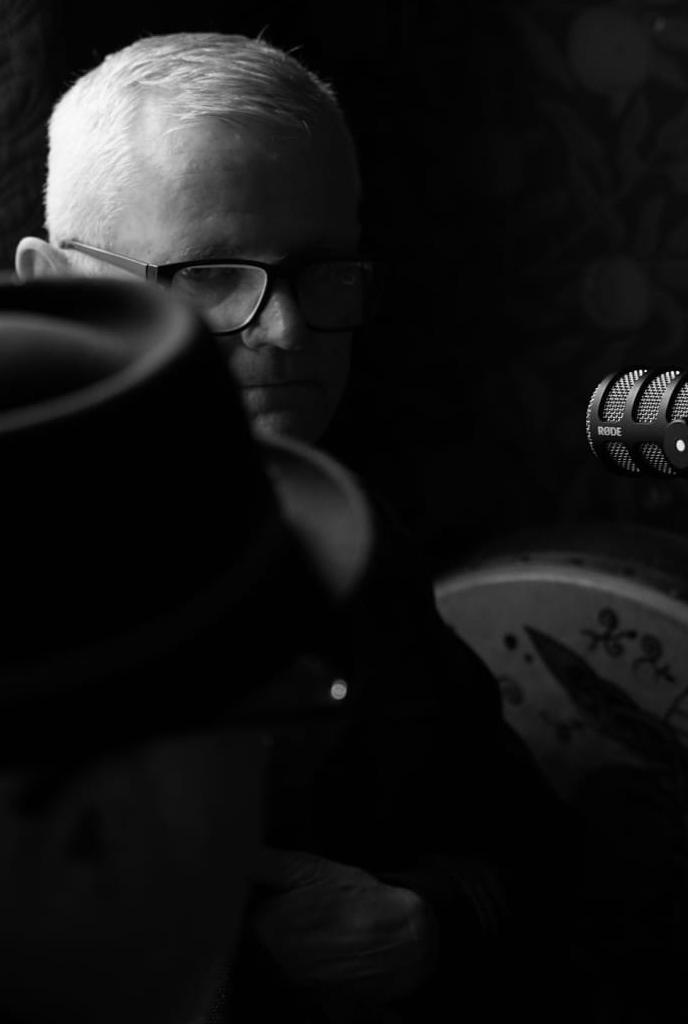
AllChival label, is an essential listen.
“Ricky Dineen has been shaping Cork’s post-punk story for so long that you might be forgiven for not noticing he’s still in motion: still writing, still playing, still chasing the feeling rather than polishing the past.”
In recent years, he has kept the fire lit through Big Boy Foolish, his duo with Liam Heffernan, and through …And NUN Came Back – also with Heffernan –an occasional project drawing from the music he made with the late Finbarr Donnelly. With … And NUN Came Back rolling out for key moments like Donnelly’s anniversary gigs, Kaught at the Karpark, and now the Sound & Safe show at Kino Cork. The band are excellent live, and lead singer Tom Healy does a ferociously good job at channelling Donnelly. If, like me, you were too young to have experienced Donnelly live, it’s an unmissable treat to see the two work such real justice. We asked Ricky ten questions, and he answered with that great Cork wit, so ap-
parent in all his work: memories first, mythology later.
Ray: You usually roll … And NUN Came Back out for anniversaries and the recent Kaught at the Kampus celebration, Indiependence aside. Is it still a special-occasion thing, or will we see more nights like this?
Ricky: It will still be an ‘occasional’ thing. We were asked to do this shortly after the KATK [Kaught at the Kamous] gig, so the lads were rehearsed and ready to go. I have no doubt, though, that this will not be the last we hear of aNcb [And NUN Came Back].
Ray: When you think of Finbarr, what’s the first real-life detail you remember that has nothing to do with songs or gigs?
Ricky: I always think of the first time I met him in the flesh. It was on the path between the Glen and Assumption Road. You knew straight away we had a special guy here; he looked like a frontman, even though that wouldn’t happen for a while after that.
Ray: That Kaught at the Karpark night, how did it start, and did it feel as good to play as it did to be in the crowd?
Ricky: It was first thought of and brought to life by the guys in Pretty Happy. It felt great to play in and was great to see so many old faces there. Indeed, I was delighted to see some younger people there enjoying themselves.
Ray: When you hear Kaught at the Kampus now, what moment still jumps out first? Maybe it’s not that night specifically but a special memory from the
Arcadia?
Ricky: There’s a pic taken backstage by Pat Galvin that I quite like. It was taken after the gig and featured most of the musicians that took part, drinking stubby bottles of Carling. We were young once!
Ray: When you’re putting a set in 2026, what decides it: what still holds up, what still feels risky, or what the room wants? How do you feel about how the music has held up? It still sounds so fresh.
Ricky: Trying to remember them was the hardest part. The earlier Nun Attax songs are the easiest to play, so we included the three tracks from KATK first and moved on from there. The songs with the Cello were harder to recreate, but Liam uses an Ebow on “Why Wait Until April”, which fits in nicely. Overall, I think we get a nice balance.
Ray: If someone tried to make a Good Vibrations-type film of that Cork period, what would they have to capture so it doesn’t turn into a nostalgia piece? What are some parallels between then and now?
Ricky: We’ll have to see the documentary, which is being made right now.
Ray: Who is playing you, and who is playing a few of the other main characters?
Ricky: Ha ha, I used to be called Gollum when my hair was cut tight, so I guess the guy who plays him, unless he’s computer-generated, then I can be played by a handsome AI character. Jim Carrey would have been an ideal Donnelly, the facial expressions, the mouth. If Jim is not available, give it to Kevin Donnelly, his nephew; very
similar features and a good artist in his own right.
Ray: This Kino show is billed Sound & Safe. Back then, what did “safe” actually mean at gigs, and what should it mean now?
Ricky: It used to mean not getting beaten up by marauding punk bands! Seriously though, it wasn’t a thing we gave a thought to back in the day, though I’m sure it was happening. I’m now more aware of it, and proud to be asked to play in support of safe gigs and against sexual violence. No one should feel unsafe coming to a gig.
Ray: Ye also play together in Big Boy Foolish. What’s the plan for 2026?
Ricky: We plan to release a single fairly soon and looking forward to playing with Cypress, Mine! in Dublin. The annual Bobstock festival on Cape Clear Island is another gig we enjoy playing. We’ll just keep plugging away.
Ray: Quickfire round one venue you still want to play, one record you never tire of, and one bit of advice you’d give your younger self starting out.
Ricky: I always liked the look of the Kino as a venue that I would have liked to play, that ambition will be fulfilled on February 14. One of my favourite gigs ever was in the Savoy with FGDTTS? [Five Go Down To The Sea?] Now that it’s open again, I’d like to go back there, though we may have a better chance of playing at the Event Centre.
Record: Anything by Siouxie/ John McGeoch
Advice: Sign the fucking record contract!
Tickets for Sound & Safe are available via Eventbrite.
“I’m now more aware of it, and proud to be asked to play in support of safe gigs and against sexual violence. No one should feel unsafe coming to a gig.”