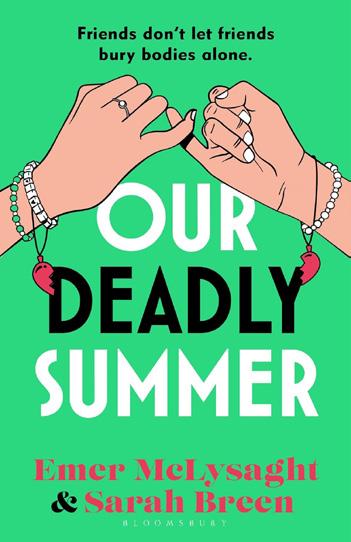
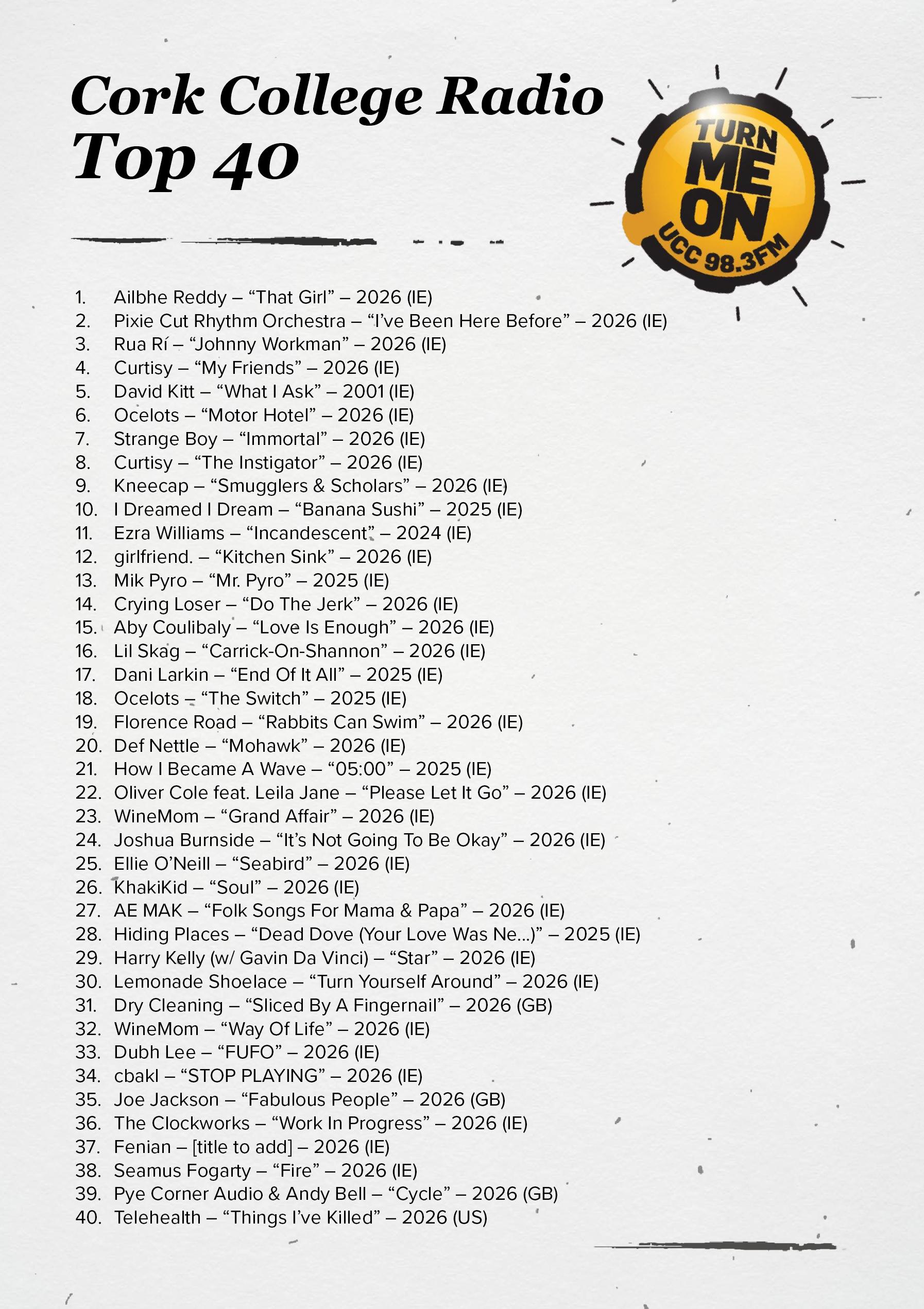
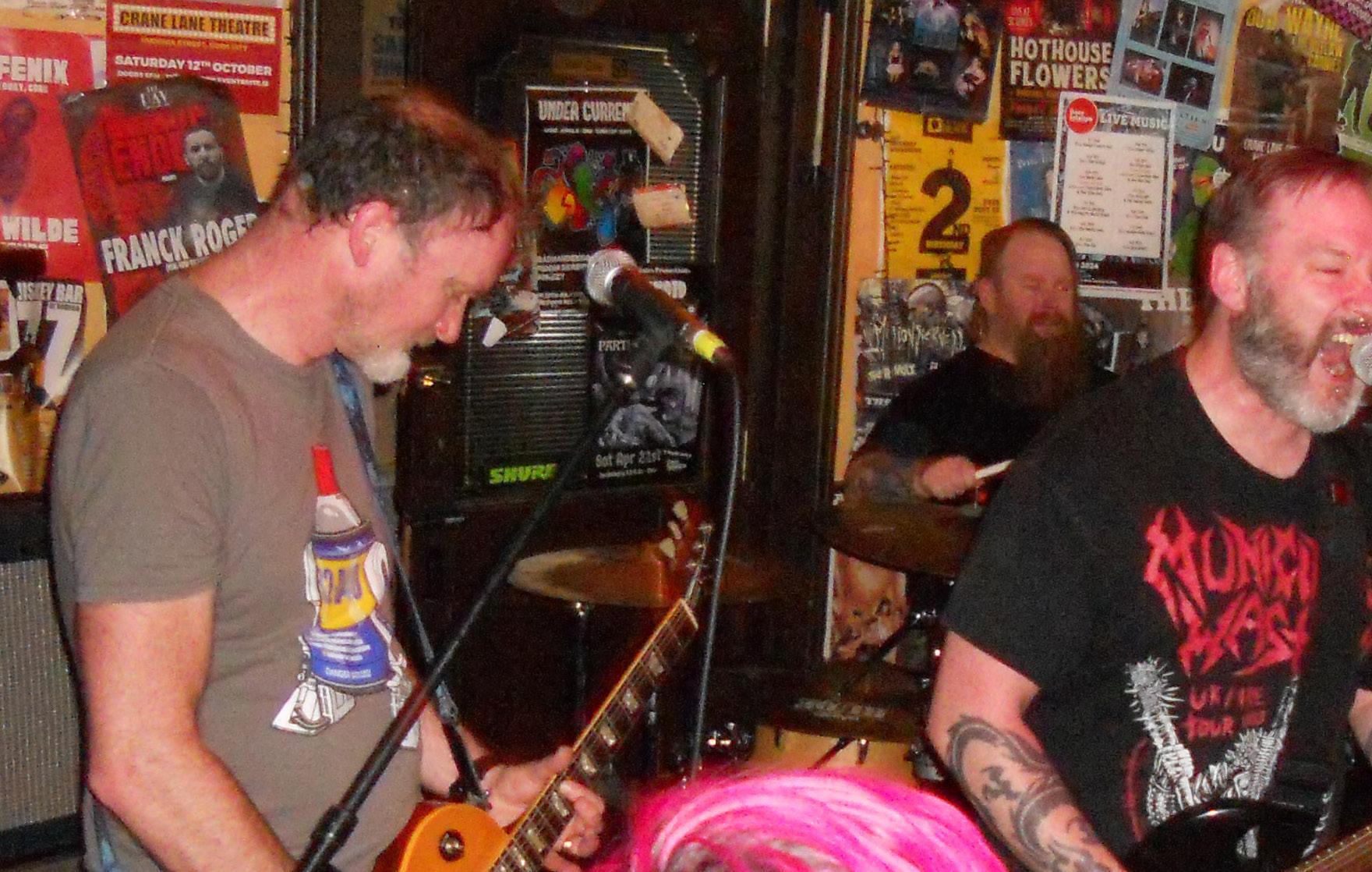
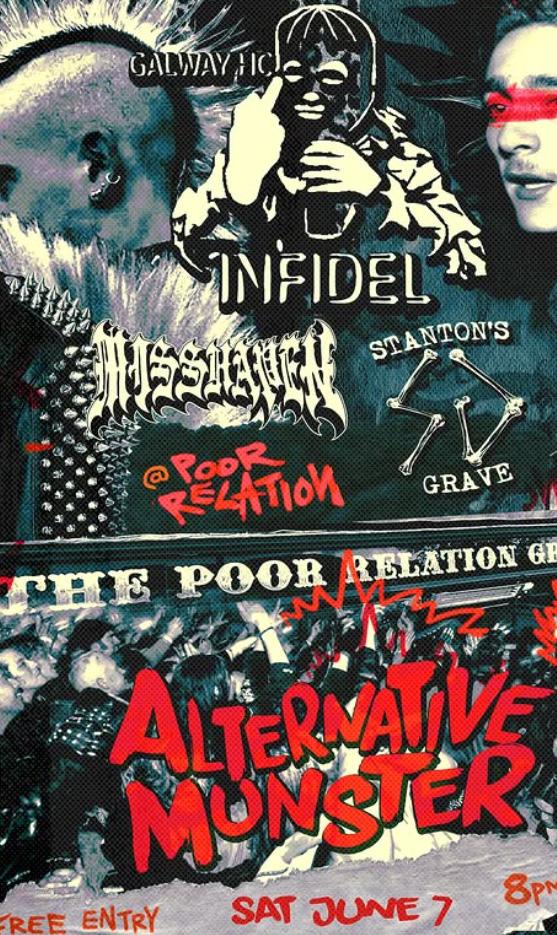
Reading: An advance copy of Our Deadly Summer by Emer McLysaght & Sarah Breen, the new novel from the writing duo behind the Oh My God, What a Complete Aisling series. It’s out May 21 from Bloomsbury.
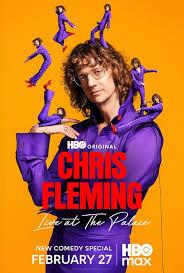
Watching: Chris Fleming’s comedy special, Live at the Palace. Abigail Thorn’s latest Philosophy Tube video essay, Britain Still Has Conversion Therapists Here’s Why.
Listening to: The Secret World of Roald Dahl – Created and hosted by writer and producer, Aaron Tracy, this narrative non-fiction podcast about Roald Dahl will have you saying “Wait, what?” more than once. Even if you think you know about Dahl’s life as a spy, screenwriter, and author, it is so much stranger! The Secret World of Roald Dahl also doesn’t shy away from the darker aspects of Dahl’s legacy, including his antisemitism.
Cleo Morrison O ‘Riordan, Deputy Editor
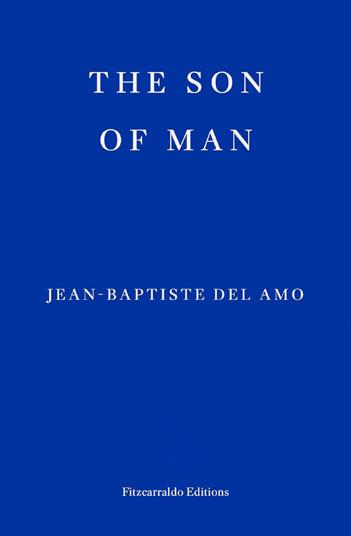
Reading: The Son of Man by Jean-Baptiste Del Amo.
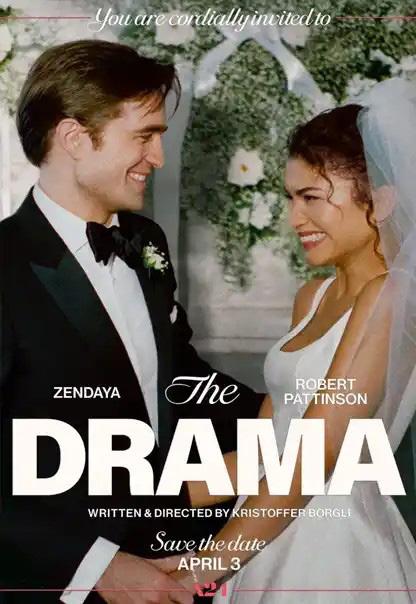
Watching: The Drama starring Zendaya and Robert Pattinson.
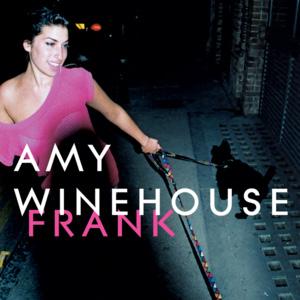
Listening to: The Frank album by Amy Winehouse.
Leah Hurley, Social Media Manager
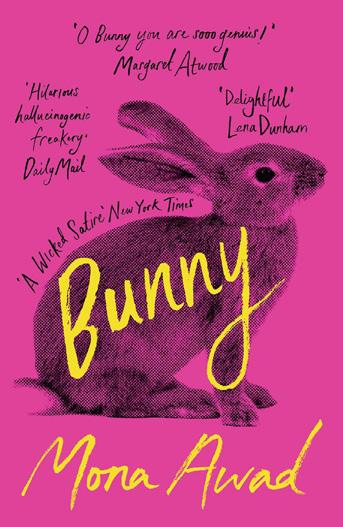
Reading: Bunny by Mona Awad.
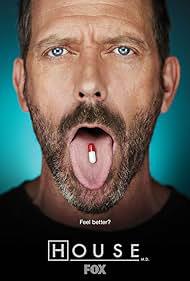
Watching: House M.D., just finished Love Story.
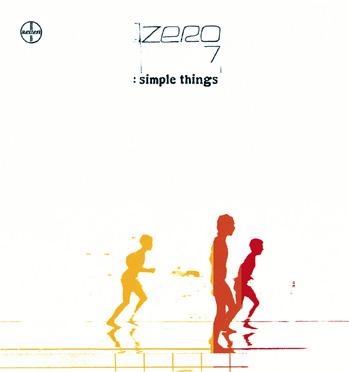
Listening to: Simple Things by Zero 7.
Motley Recommends
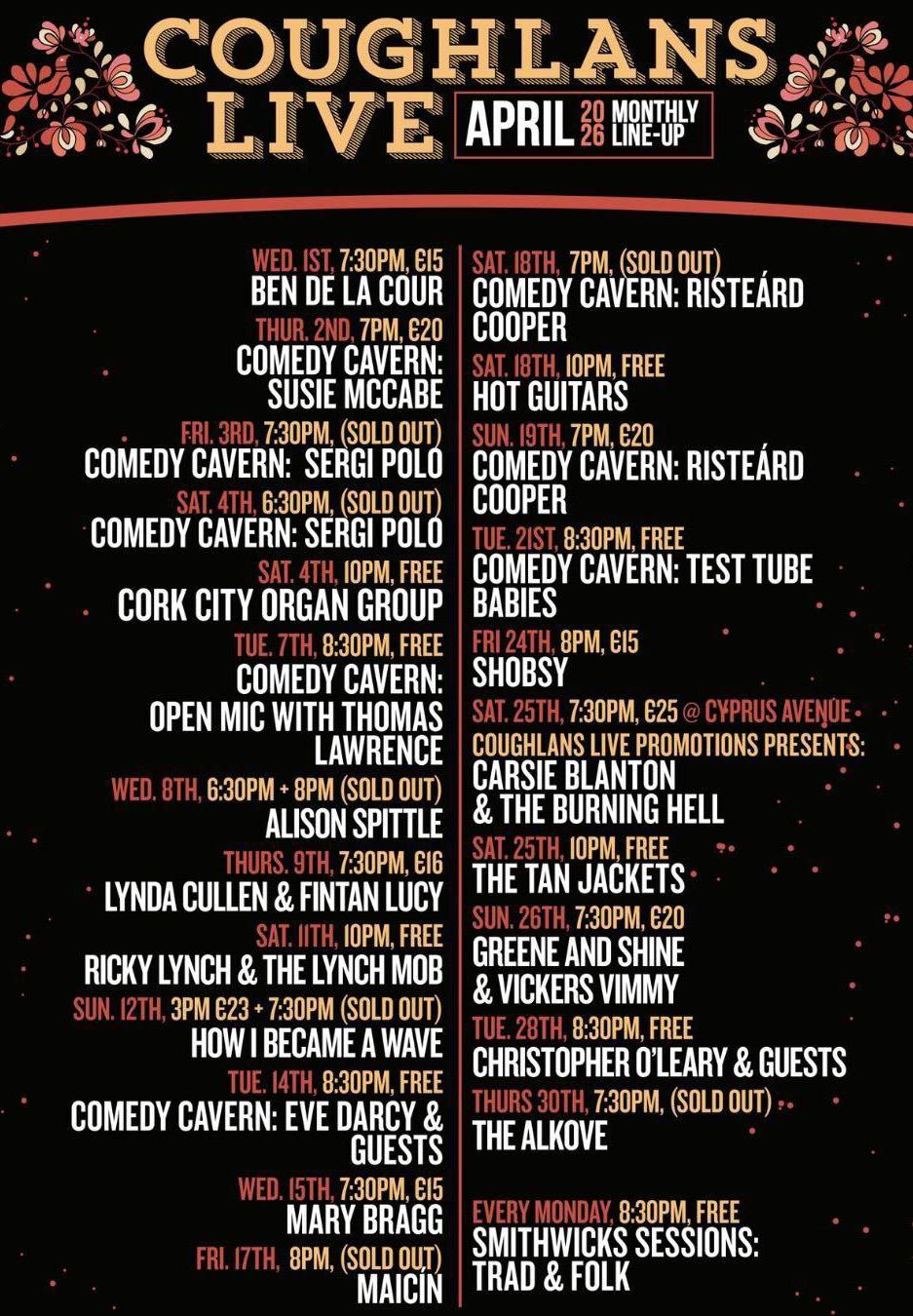
RECOMMENDED GIGS
Maicín | Coughlan’s, Cork
Friday April 17 2026
Maicín at Coughlan’s is sold out and down to waiting list only, but it still feels worth chancing. Some gigs make a guide because they are easy to get into. Others make it because they carry that nagging sense you may be missing one of the last chances to catch a band on the rise in an intimate setting. Coughlan’s has long been good for that kind of near-the-stage electricity, and this one has the feel of a night people will wish they had managed to get into.
ESMA Fest | Cyprus Avenue, Cork
Friday April 24 2026
ESMA Fest is the kind of bill that makes sense as a recommendation because it offers a lot without feeling scattershot. With Iona Lynch of Cliffords, Hannahbella, The Kates and more on the bill, it looks like a sharp snapshot of emerging Irish artists in one hit, not a token showcase stitched together for convenience. For anyone trying to keep pace with what’s forming right now, rather than what
has already been stamped as important, this is a good one to find out. The best festival-style line-ups give discovery a bit of shape, and this looks set to do exactly that.
Carsie Blanton and The Burning Hell | Cyprus Avenue, Cork, Dolan’s, Limerick and De Barra’s, Clonakilty
Saturday April 25, Sunday April 26 and Monday May 4 2026
Carsie Blanton and The Burning Hell are doing three Irish dates down here, with Cork, Limerick and West Cork all getting a crack at one of the strongest touring double bills of the season. They land in Cyprus Avenue on Saturday, April 25, Dolan’s on Sunday, April 26 and De Barra’s on Monday, May 4. Blanton’s Irish following has grown steadily, and not by accident. She seemed to become far more visible during Covid, especially through social media, and with Turning Pirate booking the Irish dates, the rooms here have grown with her. Her songs are sharp, funny, politically awake and never smug about it. Add
The Burning Hell, who bring their own wit and bite, and you have a line-up with real substance from across the water.
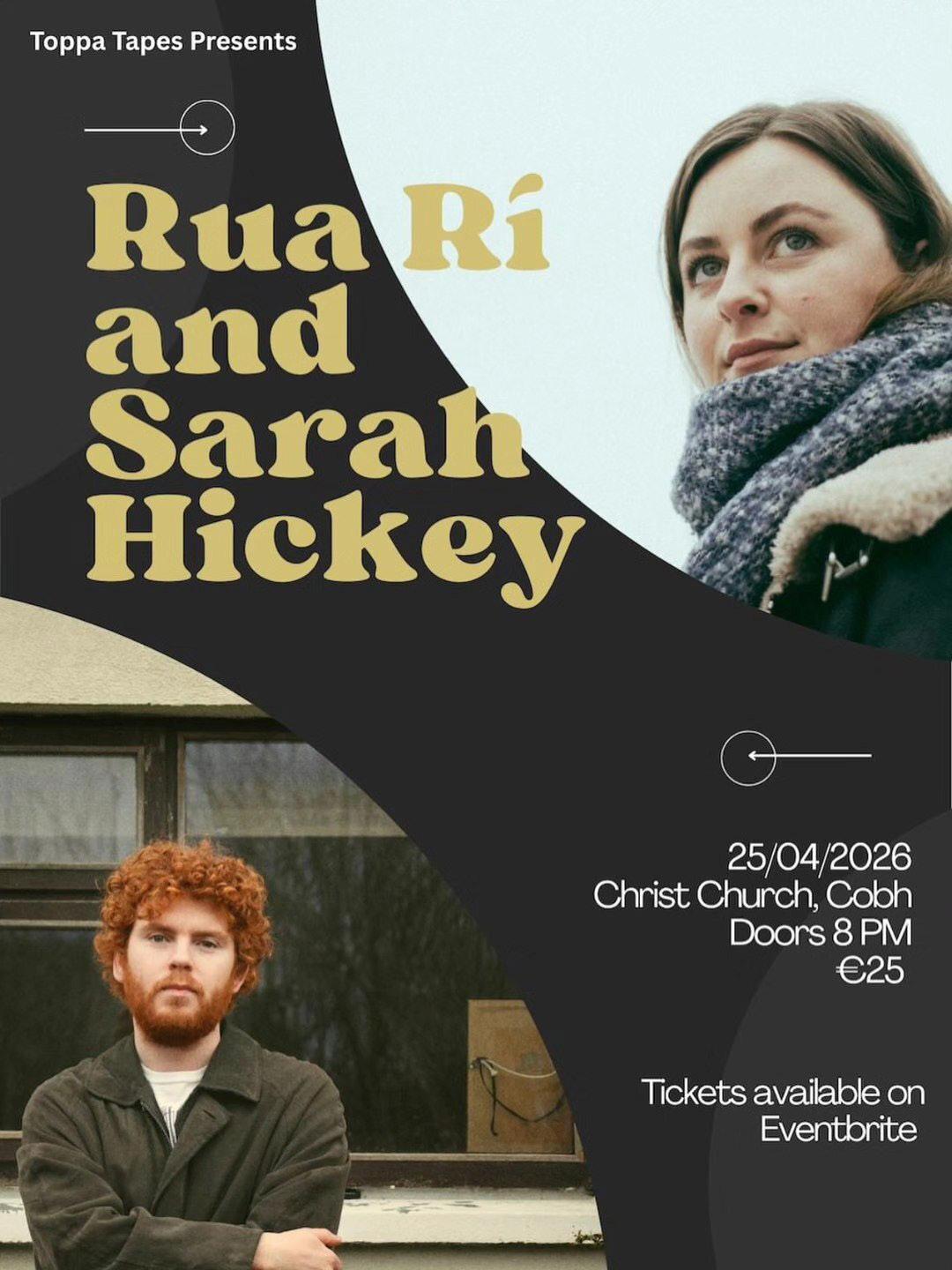
Toppa Tapes presents Rua Rí and Sarah Hickey | Christ Church, Cobh
Saturday April 25 2026
This has all the makings of a properly lovely songwriter bill. Rua Rí’s debut album, Tell Your Mother I Saved Your Life, lands on May 1, and if you want the fuller picture on why that matters, there is more on him elsewhere in this issue. For the purposes of a gig guide, it is enough to say he has the kind of voice and presence that can pull a place inward without losing warmth. With Sarah Hickey alongside him, Christ Church in Cobh looks like a great setting for this double bill. Always lovely to get out to Cobh too.
Joshua Burnside | Cyprus Avenue, Cork
Friday May 1 2026
Similarly to Rua Rí, Joshua Burnside’s songs carry enough detail, drift and oddness to keep them from settling into tidy modern folk, and that slight sideways
quality is a large part of the appeal. There is craft, obviously, but also atmosphere, bite and a refusal to smooth everything out. It’s Not Going to Be Okay is a grief-shaped record, written in the wake of the death of a close friend, and the more pared-back approach seems to let that loss sit right at the centre of it. Live, he has the kind of presence that can pull a packed place into real attention, with enough atmosphere and edge to make the set feel bigger than the stage it is happening on.
HamsandwicH (acoustic) with Driven Snow | Connolly’s of Leap
Saturday May 2 2026
HamsandwicH have been doing this long enough to hold a big festival crowd in the palm of their hand, with Niamh Farrell one of those frontwomen who can set a field bouncing and then cut straight to something more tender without losing anyone. The acoustic dates are not a lesser version of the band, just a different lens on it, with the three core members playing close enough for the years between them to show. They carry themselves like family because, at this stage, they more or less are. That folds in nicely with an-
other family affair, husband and wife team Driven Snow on support. The sickeningly sweet pair (see TikTok for evidence) are a fantastic band we still have not caught live, which makes this one especially anticipated in the Motley office.
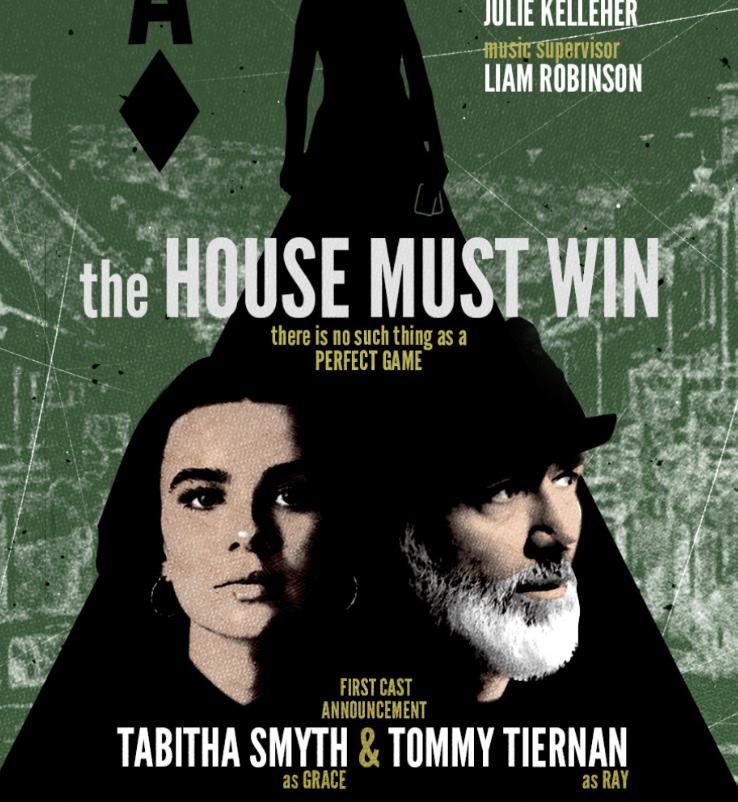
The House Must Win by Mick Flannery | The Everyman, Cork Wednesday May 6 to Saturday May 16 2026
Not a gig in the strict sense, but a massive homecoming for this currently touring show. The House Must Win sees Mick Flannery expand the world of Evening Train into a full musical, with UCC alumni Julie Kelleher directing and Tommy Tiernan making his musical theatre debut. That could have felt like a vanity project in other hands. This does not. There is real intrigue in seeing something Cork-made stretch itself in this way, especially for anyone who remembers the first life of these songs and the charge they carried in venues like the dearly missed Lobby, moving to bigger rooms as Mick’s popularity grew nationally and then internationally. Local work does not need to stay small to stay honest, and this looks like one of the more culturally significant runs of the month.
Cable Boy | Wavelength at Cyprus Avenue, Cork Friday May 8 2026
Cable Boy are always worth catching now, another act that is destined for bigger things. The Dublin five-piece are out with their debut album Forever, and there is enough snap and movement in what they do to stop it settling into reheated guitar-band nostalgia. This is indie with pulse.
Leevy, Smithereens and Hánt | Cyprus Avenue, Cork Friday May 8 2026
This is one of the more appealing local bills of the month precisely because the acts are coming at things from different angles. Smithereens have been on the rise since winning the Battle of the Bands in Cyprus a few years ago. We’ve got them several times since, and it’s great watching them win over new fans. With Leevy and Hánt, you get three distinct approaches to what a live set can do. Bills like this often tell you more about the health of a city’s music culture than touring names ever will.
Motley Recommends ALBUM REVIEWS
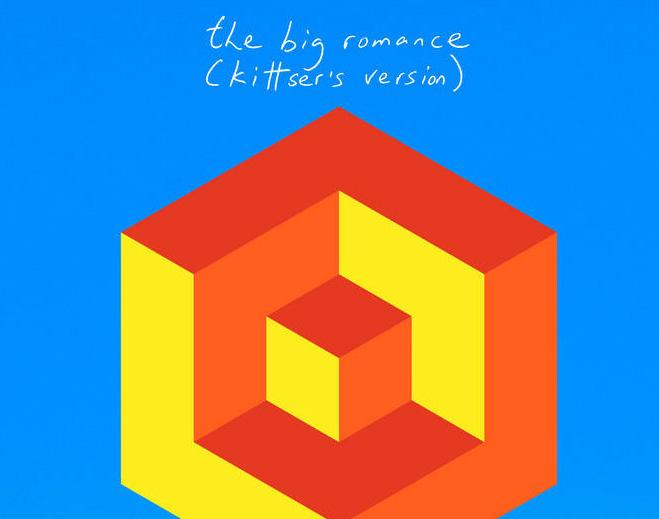
David Kitt, The Big RomanceKittser Version
Small Moments was already enough to tell you David Kitt had it. It was quieter, smaller, and in an Irish context it more or less defined the bedroom recording before that phrase was flattened into marketing copy. It was inward-looking, but the talent was plain. The Big Romance widened the palette without losing the intimacy. The beats were sharper, the scope broader, the songs more urban, but still carried that dreamlike drift through them. There was folk, hip hop, electronics, and yet it never felt like a grab-bag of influences, or someone trying on styles in the mirror hoping they might fit. It was coherent. Kitt’s trick was making a record that sounded modern and handmade at once, tender without drifting into vagueness, experimental without becoming cold. “You Know What I Mean”, “A Song From
Hope St.” and “Bubble” gave it shape and movement, while “Into the Breeze” carried that lift the album still has.
What people may forget now is that Kitt never carried those songs with fragility. Having Witnnessed festival shows around the time, I remember how easily the record could open out on stage. The songs could turn rockier live, sitting seamlessly beside raucous covers of “Higher and Higher”. That is part of what makes this version interesting. It is nostalgia, of course it is, but it is also Kittser’s Version of the 2001 album, made because Warner owns the original recording and dealing with them is another version of that old music-business story, where the artist makes the thing and someone else keeps the deeds. The release adds new tracks, and Kitt’s voice now carries subtle differences, shaped by the albums since and by life itself. What it confirms is
simple enough: those of us who loved this on release were right. There is still magic here.
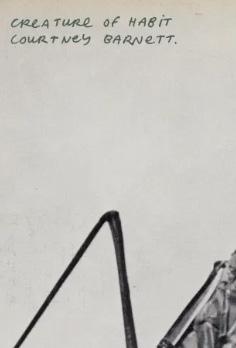
Courtney Barnett, Creature of Habit
Courtney Barnett’s fourth studio album comes after a stretch where things had gone a bit quieter. Not bad, not fallow, just less declarative. Creature of Habit is not some left-turn shock either, but it does sound like the beginning of something slightly different. Barnett had moved from Melbourne to Los Angeles, Milk! Records were winding down, and a lot of this was written out in Joshua Tree, which feels about right when you hear the record. Not because it sounds huge and cinematic or any of that, but because there is a kind of dry pressure in it, a sense of someone sitting with their own head for a while.
It is a bit bigger, a bit more guitar-forward than the last proper studio album, but not in a way
that feels forced. Barnett still sounds like Barnett. The deadpan is there, the observational detail is there, the little side-eye in the writing is still intact. But there is less hiding in it this time. Less shrugging things off before they land. The songs feel more open, a bit more exposed maybe, and better for it. She is not reinventing herself, not dramatically anyway, but she is letting a bit more air in.
“Site Unseen”, with Katie Crutchfield, is one of the best examples of that. It is open-hearted without getting all gooey, collaborative without feeling collaborative as a box ticking exercise, and just a really beautiful song. Across the record, Barnett circles creative block, self-doubt and personal change, but she does not make a grand drama out of any of it. That is part of what works. Anyone waiting for her to blow the doors off and come back with some wildly different version of herself might be left wanting. But there is growth here, and there are new shades in the writing. Not a reset. Not a revolution. Just a
good songwriter stretching a little, and doing it pretty well.
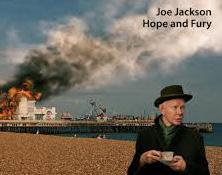
Joe Jackson, Hope and Fury I have loved Joe Jackson for as long as I have loved music, like Bowie or anyone I latched onto before primary school and never let go of, which is to say for longer than most tastes survive childhood. Jackson has never settled into heritage-act complacency. Like Bowie, he has always been in flux. One minute he is writing immaculate pop songs, a song cycle around the theme of the seven deadly sins, a tribute to Duke Ellington, and next he is making a record built around the fictional music hall singer Max Champion! There has always been mischief in the machinery. His new album, Hope and Fury, his first studio album of pop songs since 2019’s Fool, finds him in lean, sharp form, hopping genres without losing footing. It’s not baggy. Nine songs, no wasted motion. It gets in, says its piece, and leaves a mark.
“Fabulous People” is the obvious doorway here. It has a little of Night and Day in its gait, and
if you grew up on “Steppin’ Out” and “Real Men”, you will feel that tug straight away, not as self-plagiarism but as a reminder that Jackson still knows exactly how to build a hook around unease. It circles similar territory too, and like “Real Men”, it offers no neat answer, no moral ribbon tied at the end. Even a line like “I tried to be myself, but no one cared” lands funny, cutting and a little bruised at once.
His writing has not stiffened. If anything, the craft is even clearer now because he has less interest in showing off than in landing the tunes. The choruses still catch. The melodic instincts are still absurdly strong. The cynicism never curdles into smugness. Hope and Fury is Joe Jackson at 71 sounding fully like himself, which is to say he still has more curiosity, bite and style than most artists manage in their prime. Joe Jackson is still the man.
MOTLEY RECOMMENDS
Ray Burke, Music Editor
Reading:
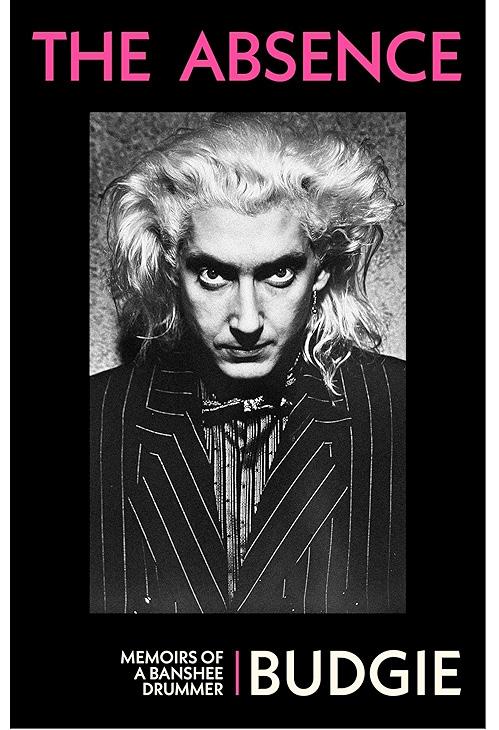
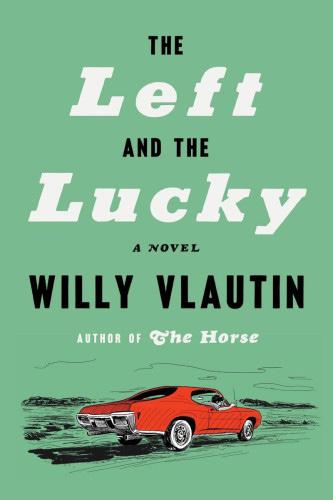
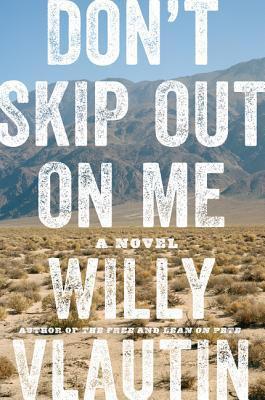
I got The Absence: Memoirs of a Banshee Drummer by Budgie at Christmas, left it at my parents’ house, and only picked it up recently. Once I did, I devoured it. Loved it. Awaiting the release of The Left and the Lucky, I read Don’t Skip Out On Me by Willy Vlautin, which was great. I pretty much love everything that man does. His prolificness panics me a bit, because I keep waiting to be disappointed and, so far, I ha ven’t been.
Watching:
I’m very late to the party here, but a party it is. I’m tearing through Industry and daydreaming about shifting my morals and changing professional gears.
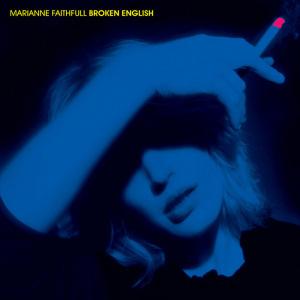
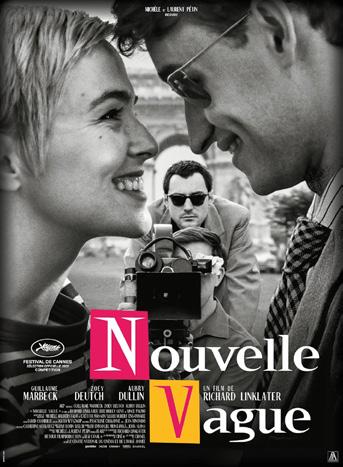
I also really enjoyed Broken English, the documentary about Marianne Faithfull. I rewatched Nouvelle Vague after seeing it at the Cork Film Festival and, maybe because I was in the middle of a bit of film fatigue the first time, I enjoyed it a lot more on the revisit.
Listening to:
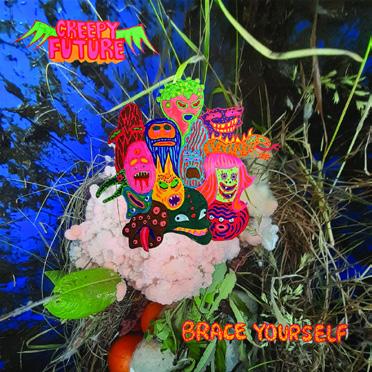
The excellent new Creepy Future album, Brace Yourself, available on Bandcamp or from Alex at Distrotable.
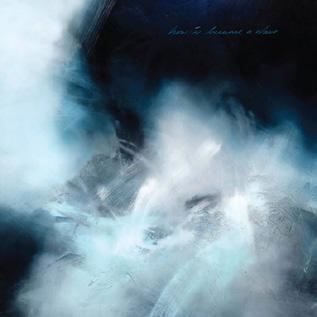
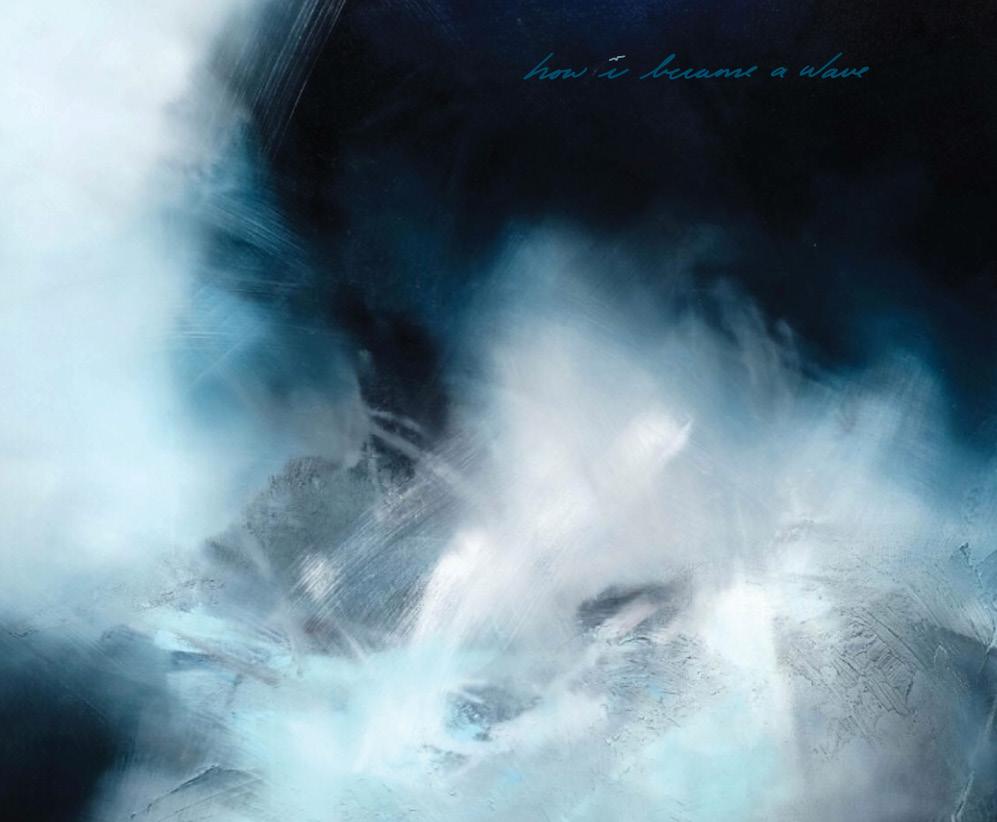
The great new Harry Kelly single ‘Stay’ has been on heavy rotation as has ‘Sister to None’ from Therapy Horse. I love How I Became A Wave’s excellent self-titled album and I’m looking forward to seeing him live this weekend.
Although it came out last year, I’m a bit obsessed with Jean Pack’s Allora at the moment.
Current Affairs and Investigations
Words: Paula Dennan
A PLETHORA OF REFERENDA
During the UCC Students’ Union (UCCSU) elections on March 9-11, four referenda were held alongside the voting for the 2026/27 Sabbatical Officers, College Representatives, and Campaign Representatives. A separate special referendum was held on March 19-25. The referenda covered several issues, including whether UCCSU should remain affiliated with Aontas na Mac Léinn in Éirinn (AMLÉ), the establishment of new Sabbatical Officer positions, and an increase in the student capitation fee to fund the new Sabbatical Officer roles.
1. AMLÉ AFFILIATION
Students were asked if UCCSU should remain affiliated with AMLÉ, which costs €2.50 per part-time student and €5 per full-time student.
Total poll: 3498
Quorum: 2689
Tá: 3043
Níl: 455
AMLÉ AFFILIATION REFERENDUM PASSED.
2. COMHIONANNAS DON GHAEILGE IN AML/EQUALITY FOR THE IRISH LANGUAGE IN THE SU
Students voted on whether to amend the UCCSU Constitution to give equal status to Irish and English throughout the SU’s day-to-day operations. The proposed amendment also includ-
ed the assertion that UCCSU will defend and promote the right of students to interact with UCC and the SU through the Irish language, if that is their preference.
Total poll: 3555
Quorum: 2689
Tá: 3376
Níl: 179
COMHIONANNAS DON GHAEILGE IN AML REFERENDUM PASSED.
3. ESTABLISH A SUSTAINABILITY SABBATICAL OFFICER POSITION
Students voted on whether
UCCSU should create a paid full-time Vice-President for Sustainability (also called the Sustainability Officer) on the SU Executive and remove the existing part-time Environmental and Sustainability Representative position from the SU Executive.
ANN SABÓIDEACH A BHUNÚ/ ESTABLISH A SABBATICAL IRISH LANGUAGE AND CULTURE OFFICER POSITION
Students voted on whether UCCSU should create a paid fulltime Vice-President for Irish Language and Culture (also called the Irish Language and Culture Officer) on the SU Executive and remove the existing part-time Irish Language and Culture Representative position from the SU Executive.
Total poll: 3249
Quorum: 2689
Tá: 2954
Níl: 295
OIFIGEACH NA GAEILGE AGUS CHULTÚR NA HÉIREANN SABÓIDEACH A BHUNÚ REFERENDUM PASSED.
5. SPECIAL REFERENDUM
The special referendum asked students whether to increase the capitation fee by €4 for two years to fund both the new Sabbatical Oifigeach na Gaeilge agus Cultúir na hÉireann and Sabbatical Sustainability Officer positions.
Total poll: 2304
Quorum: 2689
Tá: 1800
Níl: 504
SPECIAL REFERENDUM FAILED DUE TO NOT REACHING QUORUM.
The special referendum did not reach the minimum number of votes required for the result to be valid. The quorum was 2689, but only 2304 students cast a vote. This means that despite 1800 students voting to increase the capitation fee to fund the new Sabbatical Officer positions, the referendum did not pass.
Based on the result of the special referendum, the newly created paid full-time Sustainability Officer and Irish Language and Culture Officer sabbatical positions will need to find alternative funding sources.
UCCSU ELECTION
RESULTS 2026: YOUR NEW SABBATICAL OFFICERS AND REPRESENTATIVES
The candidates for this year’s UCC Students’ Union (UCCSU) elections ranged in backgrounds and opinions. But they were all united in their desire to represent their fellow students for the next academic year. Voting took place March 9-11, with the results being announced in The New Bar on the evening the polls closed. Here are your new Sabbatical Officers, College Representatives and Campaign Representatives for the 2026/27 academic year.
2026/27 SABBATICAL OFFICERS
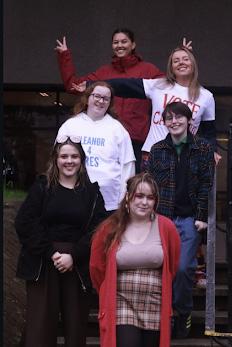
Eleanor McCahill becomes the new President of the UCCSU, having run unopposed. Alex Dramba becomes the Commercial and Fundraising Officer, having also run unopposed. The same goes for Luna Fleming, the new Communications and Engagement Officer. The story is no different for Maksym Levchenko, the new Education Officer and Makhabbat Shaimakhanova, the Entertainments Officer. The only real contest was for the position of Welfare Officer, where Caoimhe Brinkley, Lauren Rose Neff and Oisín Bailey competed for the same role; Caoimhe Brinkley the one succeeding.
President:
ELEANOR MCCAHILL
Commercial and Fundraising: ALEX DRAMBA
Communications and Engagement: LUNA FLEMING
Education: MAKSYM
LEVCHENKO
Entertainment: MAKHABBAT
SHAIMAKHA NOVA
Welfare: CAOIMHE BRINKLEY
Other positions up for election included part-time volunteer
representatives to the Students’ Union.
2026/27 COLLEGE REPRESENTATIVES
College of Arts, Celtic Studies and Social Sciences will be represented by Jess Hurley, who ran against Ryan Joseph Coughlan and Oliver Keane. Anna Clarre O’Flynn is the newly elected representative for the College of Science, Engineering, and Food Science, beating
Sebastian Blaskovics to it. Law and Business students will be represented by Suzzie Elif, who ran against Zhelea Aram Hassan. The College of Medicine and Health will be represented by Kacper Bogalecki, who ran unopposed.
2026/27 CAMPAIGN REPRESENTATIVES
Continuing the trend established previously in this election, all the SU Campaign Representatives ran unopposed. Beth Moore is the new Environmental and Sustainability Representative. Tia Weldon was elected Equality and Diversity Representative. The Ionadaí Gaeilge Agus Cultúir (Irish Language and Culture Representative) position went to Amhlaoibh Ó Síocháin Ó Beolaín.
FOXHUNTING. WHY DO OUR REPRESENTATIVES IGNORE US?
Ireland is a representative democracy. The people of Ireland elect representatives to the Dáil who make decisions on our behalf. It is legal for a TD to knowingly vote against the views of their constituents and there is no formal mechanism to punish them for doing so. Though it might seem like an oversight, our representatives’ ability to defy public opinion is actually central to the system. They represent the people, but they are not the people themselves. There are strengths to this. Taxes, for example, are never popular, but they are necessary for the government to fund essential services. If you still feel unrepresented, there is always the failsafe of voting your representative out at the next election, a threat which keeps TDs fairly attuned to what their constituents want.
The exception, apparently, is foxhunting. 124 TDs voted against a ban on foxhunting, 70.4% of the Dáil, despite the fact that over 72% of the general population support the ban, according to an Ireland Thinks survey commissioned by the campaign group Uplift. This massive parliamentary majority was assured because the three largest parties in the Dáil all applied their party whip for this vote,
“The foxhunting vote shines a light on an uncomfortable truth, in a representative democracy politicians have fundamentally different interests from the general population, however they might usually align.”
meaning TDs were told by their party how to vote. Three major arguments were put forward by each of the parties, all attempting in different ways to address the central issue of democratic legitimacy.
Firstly, there is the protection of rural tradition. This was an argument used mainly by Fine Gael, including their 2025 presidential candidate Heather Humphreys. Foxhunting, it was argued, is a sport with an ancient history, supported by the rural community, and it would be unfair for the urban population to impose a ban upon them. This argument is not borne out statistically, according to a Red C survey commissioned by the Stand With Badgers campaign group, 68% of the rural population also support a foxhunting ban. Fianna Fáil have primarily used the argument that the bill would restrict farmers from protecting their livestock or shooting foxes on their land. Others, such as Junior Minister and Independent TD Michael Healy-Rae, have expanded this to suggest the bill is a Trojan horse to sneak in such restrictions. The first claim is untrue; the bill does not outlaw farmers shooting foxes on their land. The second claim is more intriguing. It is not logical; the government could easily amend the law if they thought it was deficient in those aspects, rather than blocking it outright, but saying that the public have been deceived is a common tactic for politicians whose positions lack majority support. This happened following the Brexit referendum in the UK, when some pro-Remain politicians supported holding a second referendum, claim-
ing the public had been misled during the first. Sinn Féin have advocated for tight regulation of foxhunting, claiming an outright ban would only lead to the practice becoming more covert. This is possible and does seem to occur in the UK, which has a foxhunting ban that Northern Ireland is exempt from. However, foxhunting is not an inconspicuous activity, and it seems virtually certain that a ban would reduce the level of it at the very least.
“Though it might seem like an oversight, our representatives’ ability to defy public opinion is actually central to the system. They represent the people, but they are not the people themselves.”
The crucial point, the one which has caused the most confusion about the foxhunting controversy, is what motivated it. Clearly the issue is important to the Fianna Fáil, Sinn Féin and Fine Gael leaderships, or they would not have applied their party whips for the vote. Money appears to be the most obvious solution to this lingering question. Foxhunting is a traditionally
aristocratic activity, and people who partake in it usually have the money to make political donations. Whether or not they have in this case is unclear, because Ireland has a very opaque funding disclosure system. It is true that the Northern Irish branch of the UK political pressure group the Countryside Alliance has lobbied for foxhunting in this country, fearing a ban here would lead to a ban in the North, just as they unsuccessfully did in the UK. A significant number of its members are aristocrats, for example its Vice-President the Baron Dunleath.
The foxhunting vote shines a light on an uncomfortable truth, in a representative democracy politicians have fundamentally different interests from the general population, however they might usually align. The process of electing our representatives makes them more likely to be wealthy, due to the cost of campaigning. You can see this in the demographic who tend to become politicians. Nearly 25% of TDs were landlords prior to the 2024 general election, according to the Dáil’s Members’ Interests report released in that year, compared to just 2% of the Irish population. Political parties can alleviate this problem, allowing working-class people to gain political office. This happened in the UK recently with Hannah Spencer, a plumber who was elected as a Green Party MP. Upon being elected, Spencer mentioned that she had recently qualified as a plasterer, on top of her role as a local councillor. This illustrates how much less time working-class people can spare on political involvement, making
Current Affairs and Investigations
it far more difficult for them to attain elected office.
Political donations face a similar dilemma. It is much easier for parties to appeal to institutions with concentrated wealth, like a corporation or a lobby group, than to a large number of individual contributors. Any party that does not receive corporate donations will have to fight an uphill battle against the ones that do. As such, even if a working-class person was elected as a TD, they would always be constrained by their party leadership and the whip system. For an example of how this can operate, Sinn Féin TD Réada Cronin has expressed personal opposition to foxhunting but still voted against the ban
because of her “obligations as a party member”. Despite various regulations to contain the influence of money in politics no restrictions can ever fully change the fact that the average person and the average TD are very different people, who do what they do for very different reasons.
At this point you may be wondering how you can make your voice heard. There is the option of writing a letter to your TD threatening to withhold your vote over an issue, though in cases like the foxhunting ban where the party whip is applied, they are far less likely to be swayed. Still, while the number of letters a TD can ignore might go up in that case, in a small country like
ours, where election winners and losers are often separated by only a few hundred votes, it adds up. There is also the option of setting up systems of direct democracy. We have these in Ireland already, with Citizens’ Assemblies and referendums, but they could be expanded to give the people at large greater voice. Finally, and this is by far the most radical option, we could choose some representatives in a lottery, instead of by election. This was the system of democracy used in ancient Athens, and while it certainly has drawbacks, it could prevent the disconnect between people and policymakers outlined in this article.
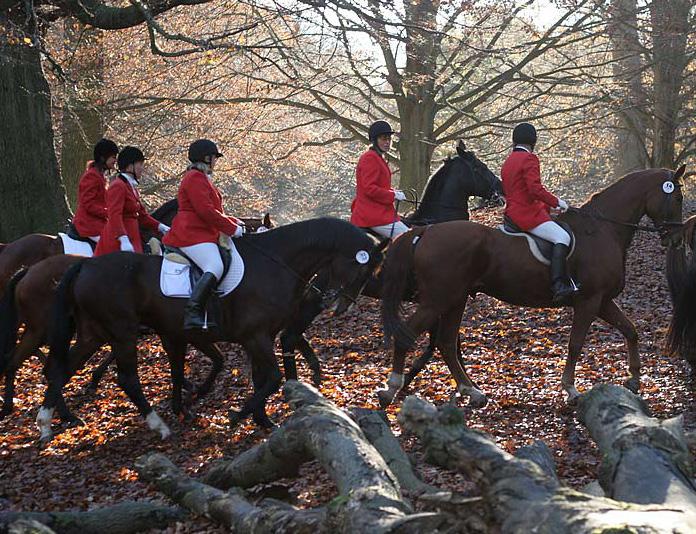
Picture from the traditional Hubertusjagt horse race in Jægersborg Dyrehave north of Copenhagen, Denmark by Henrik Jessen. 7 November 2004.
HOW FEMALE ATHLETES ARE REDEFINING SPORTS
It is an indisputable fact that female athletes are redefining sport. We need only look at women like Simone Biles, who are achieving new things within the sporting world. Biles, the most decorated gymnast in the world, has won a combined total of 41 Olympic and World Championship medals, and has created five novel gymnastics skills of her own. Biles’ milestones are not solely confined to gymnastics, however. She is one of the most notable athletes who has openly spoken about her performance anxieties, particularly her experience with the “twisties”. This is a “mental performance issue where a gymnast becomes disoriented mid-air” and is unable to complete a “twisting skill they’ve done countless times before”. Her conversation around anxieties and pressure is a refreshing and empowering outlook on competing.
Amber Glenn, who is the first female figure skater since Michelle Kwan who boasts three consecutive U.S national titles, has not only broken records on the ice, but is also deconstructing period taboos in sports. After her performance at the 2026 Winter Olympics, Glenn used her Instagram account to discuss the impacts of having your period while competing. Her post explains, “it’s always really hard, especially when you’re wearing something like this and have to
perform in front of the world”. The costume of a figure skater is definitely not a woman’s first choice while being on her period. The story on her Instagram continued to highlight how hard that is and “people don’t talk about it”. So many women suffer physical pain while on their period, but also experience mental symptoms such as “irritability, distress and more”. Although Glenn lost out on a medal, ultimately she was most devastated that she “lost the happiness and the enjoyment” she hoped to experience while on the ice, admitting during a post-performance interview that that is what she
“With new mindsets, these athletes are inspiring groups of young women, not just to excel in their sports, but also to train and perform in ways which work for them, rather than just doing what they are told.”
“truly wanted” and is what she really “missed out on”. Glenn’s openness exhibited how real period pain is and the effect it can have on competing.
Not only have Simone Biles and Amber Glenn influenced participation rates and broken new records within their sports, but they have also transformed what it means to be an athlete. Through strong, artistic performances, cool hairstyles, and speaking out about performance pressure and period stigma, today’s female competitors are changing the sporting world. With new mindsets, these athletes are inspiring groups of
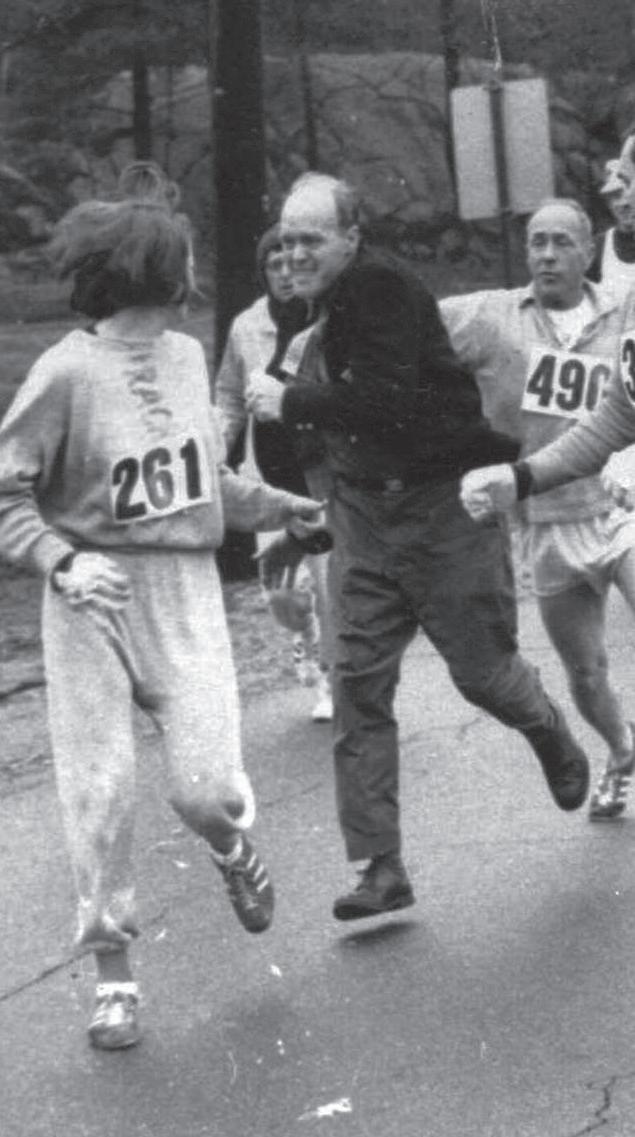
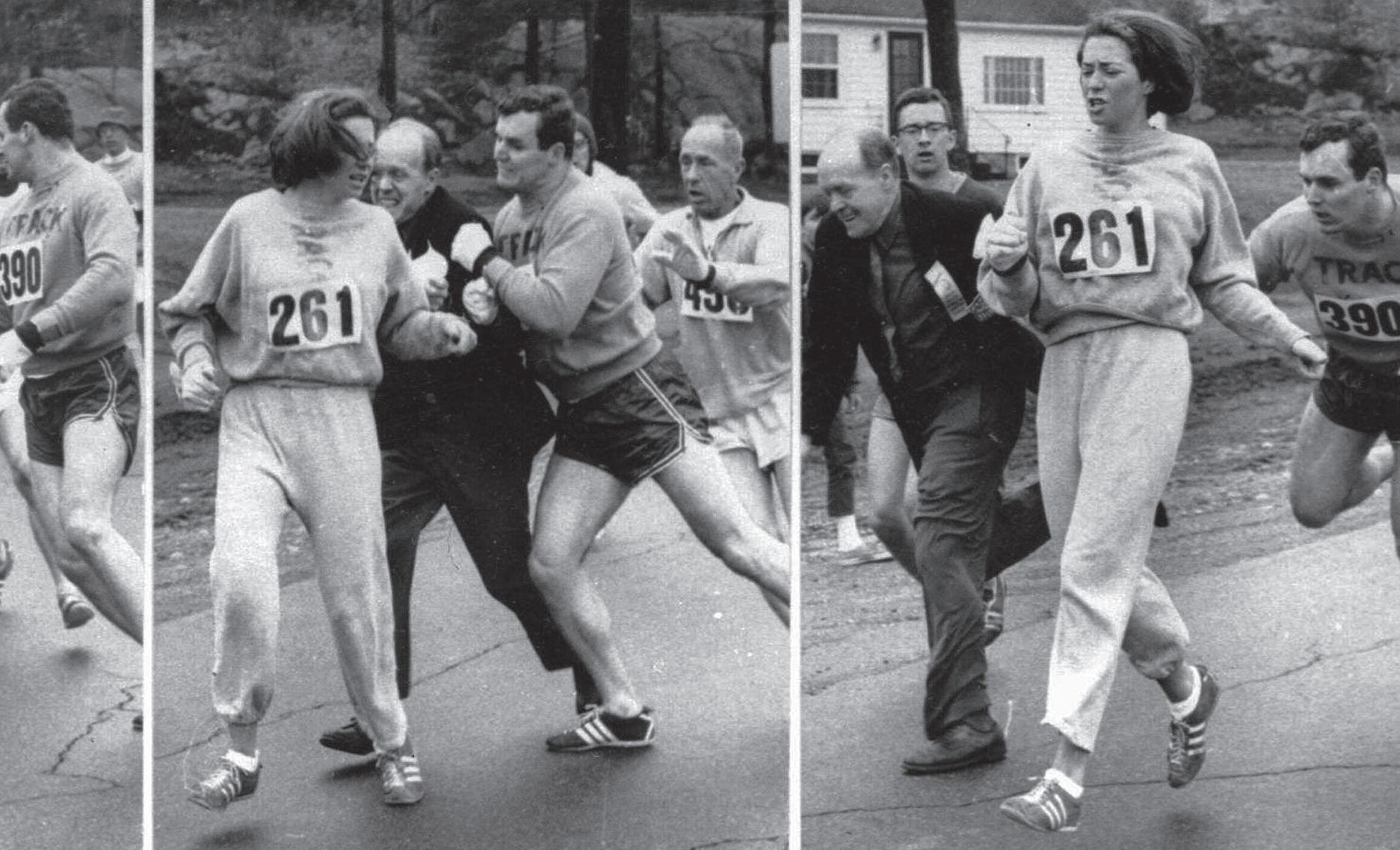
Katherine Switzer runs the Boston Marathon;
young women, not just to excel in their sports, but also to train and perform in ways which work for them, rather than just doing what they are told. Numerous boundaries have been broken, and it is safe to say that the girls and women of today’s sports are taking over!
Our present-day female athletes are not the only women who have had to fight tooth and nail not only to be respected, but also to be recognised in their sports. In recent decades, girls and women have begun achieving equal rights and representation within their sport. Even now, however, there are still many restrictions and limitations placed on female athletes. To revisit the point raised by Amber Glenn, the menstrual cycle and the little education which accompanies it is a major contributor to low levels of female participation in
sport. A UK parliamentary report on health barriers for girls and women in sports provides research which exhibits that “issues around periods are the most commonly cited barrier to participation among secondary school girls”. The major anxieties girls have towards taking part in sports while on their period include: “distress about being in pain and discomfort, worries about leaking, and experiencing low moods while on their period as a main concern”. Lack of funding, low participation rates, and false prejudices about women’s sporting abilities are just a few hurdles each female athlete must overcome when pursuing any sport. Any one of these boundaries relies on the very real and very practiced sexist narrative surrounding female athletes. How many times has the term “you run like
a girl” been thrown around as an insult? It is misogynistic preconceptions such as these that have made it necessary for female athletes to excel at their sport to prove that they are worthy of competing. As a female athlete, it is not enough to work hard or perform well, you must be exceptional. You must outperform all those around you, just to be considered a competitor in your own sport.
No other case better exemplifies these toxic assumptions than that of Billie Jean King. In 1973, and what has since been notoriously named the Battle of the Sexes, Billie Jean King defeated Bobby Riggs 6-4, 6-3 and 6-3 after he challenged her to a tennis match. King originally declined the dare, arguing she felt no need to prove herself to a retired male player. Riggs, however, made continuous claims, inMarathon; the Jock Semple incident.
Features and Opinions
cluding that the “women’s game was so inferior to the men’s game that even someone as old as he was could beat the current top female players.” After such provocation, King decided to play him, not just to defend herself, but also in order to fight for gender equality and recognition in all female sports. Billie Jean King inevitably took Bobby Riggs in straight sets and, in doing so, marked a major milestone for female athletes. While this was an incredible achievement by King, it ultimately illustrates the reality of women only being taken seriously after beating a male athlete. In order to be recognised as a real athlete, women must not only win against their female competitors, but also surpass their male counterparts. These double standards are perfectly illustrated by the fact that the Battle of the Sexes usually overshadows King’s many other tennis achievements, including 12 singles Grand Slam Titles.
Billie Jean King is not the first female athlete who has had to supersede all expectations to be taken seriously as a competitor, nor even be allowed to compete. In 1967, Katherine Switzer became the first woman to ever complete the Boston Marathon. The archaic reason given at the time as to why no woman had raced beforehand was that women could not run long distances. There were endless myths circulating about why it was inconceivable for a woman to run long distances, one being that it would ruin her “reproductive organs”. Of course, these are just tales made up to effectively exclude women from actively participating in sports which are
typically seen as male-dominated. Fortunately, none of these assumptions deterred Switzer. She ran the marathon despite the race manager, Jock Semple, attacking her within the first 6 miles of the race. Semple lunged at Switzer, “grabbing her shoulder” and flinging her back, an experience she describes in her memoir Marathon Woman. He then shouted at her to “Get the hell out of my race and give me those numbers!”, before swiping at her front, trying to “rip off her bib number”. This aggression and hysteria was triggered by no other cause than the fact that she was a woman running a race. It seems irrational now, but this was the scrutiny many women faced when simply trying to participate in sports. Switzer knew at that moment that she had to complete the marathon, turning to tell her coach that she would finish the race on her “hands and knees” if she had to. Switzer’s determination and resilience broke down numerous barriers and discredited several stereotypes, which had previously prohibited women from participating in sports. This remarkable achievement of being the first woman to have completed the Boston Marathon highlights the unsavoury truth that to be accredited as an athlete, a woman must be one who stands out. That your accomplishments as a female athlete are not regarded, let alone celebrated, unless you are parallel to no other for doing the impossible. A female athlete’s struggle should only have to be showing up, training and competing, instead of her additionally having to fight to exceed unthinkable landmarks, such as
being the only woman to have won the Boston Marathon.
Countless other women have fought for gender equality in sports through their athletic performances. Women such as Serena Williams, Simone Biles and so many others have paved the way for the female athletes of today to transform the narratives around competing and what it means to be a sportsperson. Such change has never been more visible than at the
recent 2026 Winter Olympics. Several of the female athletes competing at the games have completely reconstructed the grounds for competition. During the Milan-Cortina Olympics, Eileen Gu officially became the “most decorated athlete in her sport”, while also “becoming the first woman to compete in all three events”. After winning “three medals” (1 gold, 2 silver), at the Winter Games, Gu was asked why these medals meant
so much to her. Her response is truly inspiring as she argues in a post performance press conference that her goal is “in being a pioneer”. With this achievement, Gu hopes to “leave the path a little bit more open”. The path she has chosen to focus on is “that of women in sports, women in extreme sports, women in free skiing”. Additionally, the medals she has won and the records she has beaten mean so much to her because “in a male-dominated sport, these records are held by a woman”. These accomplishments by Gu were no light feat. Eileen Gu has undoubtedly reshaped records and reenvisioned what type of athlete we think of when we think of extreme sports, such as free skiing.
Likewise, the female figure skaters of the Winter Olympics have rebuilt what it means to be an athlete. Alysa Liu has proven that with a positive attitude, a hyped soundtrack and a cool hairstyle, anything is possible. Her gold medal is an incredible achievement, but what stands out even more is her refreshing outlook on competing. It is not a secret that figure skating has once been an extremely pressure-filled and toxic sport. At sixteen, Liu was forced to take a step back from skating after
it “became an immense source of stress for her.”, which she explains in post performance interviews since returning. Liu admitted how she would “uncontrollably cry every time she practiced at the rink.” She had “no freedom regarding what she ate, how she dressed, when she practiced” and countless other decisions which should have been hers alone. After taking time away from the sport and discovering what was worth prioritising and what was worth letting go, Liu returned with an unmatched positive outlook. After delivering an exceptionally exciting, artistic and fun performance, Liu has been asked endlessly how she kept so calm. Her response: “I was peak happiness when I was out there on the ice”. She joyously tells how she gets to share her “art on the world’s biggest state”, and quizzes “what’s not to be happy about?”. Throughout the Winter Games, Alysa Liu has shown that by not putting up with “harsh and dehumanizing coaches”, as well as not being told what she “can and can’t eat”, her performance and love for the sport have never been greater. Plus, no one can deny that not only does she look completely cool and in control, but she also seems to be having the time of her life while skating!
“As a female athlete, it is not enough to work hard or perform well, you must be exceptional. You must outperform all those around you, just to be considered a competitor in your own sport.
Photo: Lai Man Nung
DENTAL OUTREACH AFRICA: MEET THE UCC STUDENTS WHO ARE USING THEIR SKILLS FOR GOOD THIS SUMMER
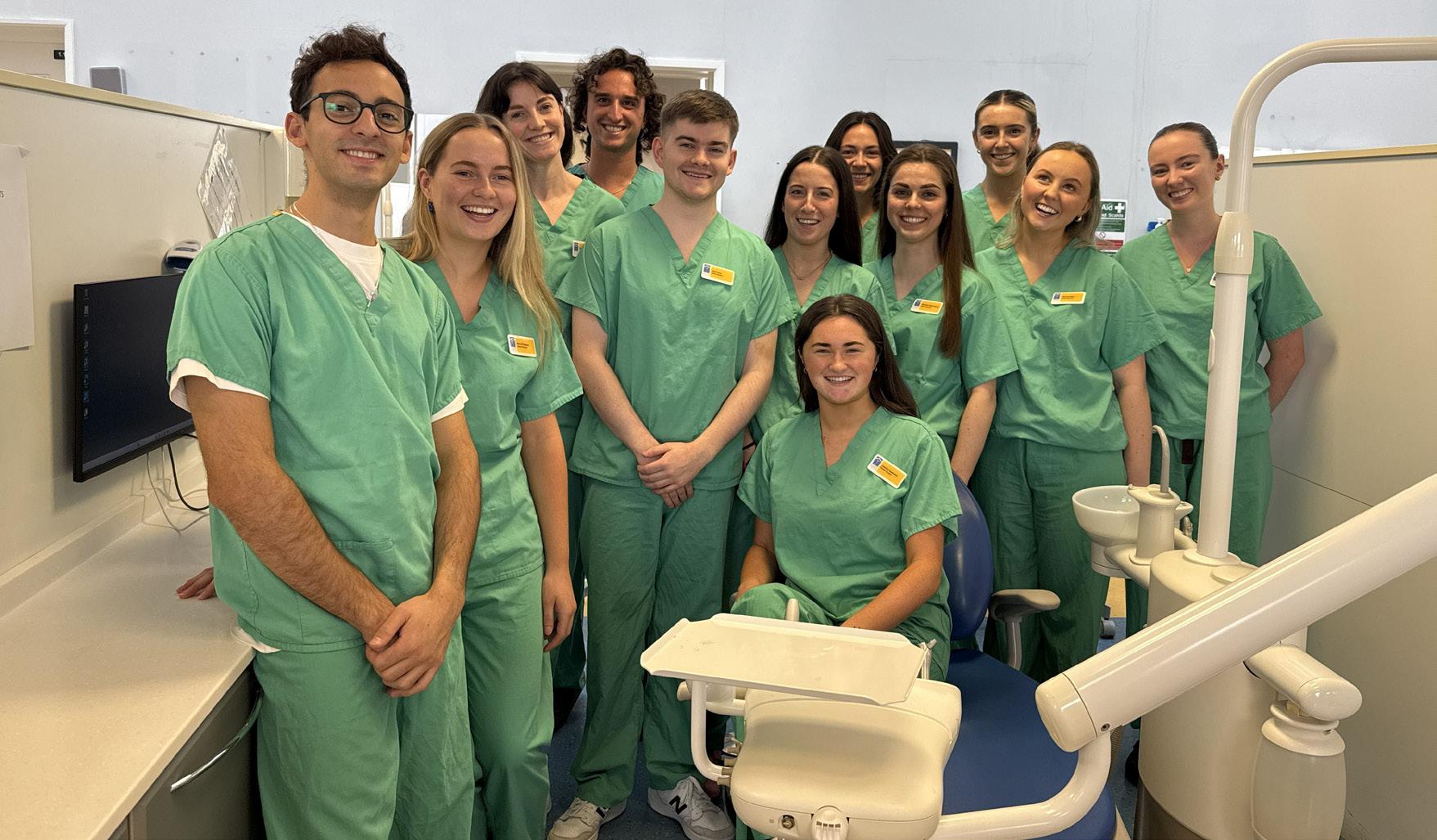
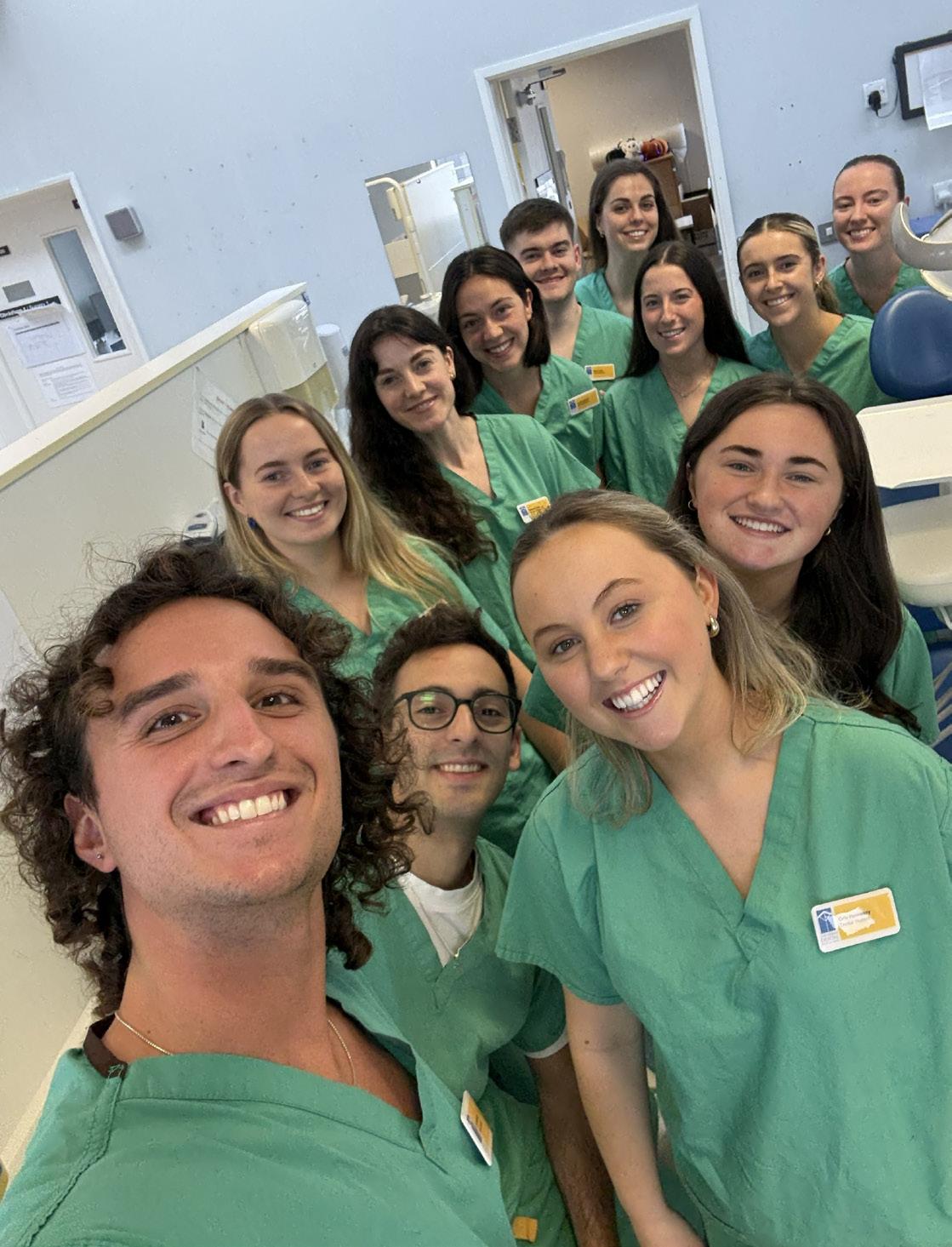
In July 2026, eight fourth-year UCC dental students will travel to Tanzania through a volunteer programme, to provide free dental care to rural communities in Zanzibar. The members of UCC’s 2026 Dental Outreach Team are Ely Weinreich, Azaria Antosh, Emily O’Meara, Glen Crowe, Isabelle Kingston, Meghan Kelly, Michaela Ronan-Hynes, and
Orla Hennessey. Ely Weinrich, coordinator of the project, spoke with Nefeli Pyrovolaki, Motley’s Features and Opinions Editor, about the upcoming trip.
Could you explain what Dental Outreach Africa is for UCC students and other Motley readers who are unfamiliar with your project? Have volunteer groups of dentists gone to Zan-
zibar before?
Dental Outreach Africa is technically a new programme. Dental outreach in general has been a part of dental societies’ mission over many years and multiple groups have gone on these trips to provide free dental care for at-need populations. In previous years teams have gone to Nepal, where they’ve given care in very
rural villages to people who had needed care for a long time and had not been able to access any sort of hospital or clinic.
Those trips were a very grassroots kind of project; the teams worked with an organisation that took them out to those villages and they would give free dental care out of a tent or a centralised building in the village. So, very bare-bones kind of dentistry, usually just extractions, or what we call atraumatic restorative treatment or ART – that’s basically using hand instruments, you’re not drilling or anything, but you’re using very rudimentary instruments to do as much as you can with the materials that you’ve got.
So, those trips were amazing for the people that have gone, and [dental outreach] is usually a trip that’s only for 4th year students in dentistry, because we want to provide dental care that’s appropriate, and any year below 4th year is not at the skill level that we would want them to be at, and 5th years have graduated already, so we can’t really do 5th years. [4th year] is the perfect time for us to give quality care, as people who are still in school.
I took on the role of Outreach Coordinator this year to keep that going, and maybe improve some things, and to try to really get a good group of people out there. However, in September 2025, there were the Gen Z protests in Nepal, where they overthrew their government. It ended up being something good, I believe, for the society there, but unfortunately, because this is a society-run trip, we need to take risk assessment into con-
sideration. Our trip wasn’t approved because of the government instability. There was an interim government, and there wasn’t any assurance from an international perspective of the safety of people going [to Nepal]. There are several claims as to the safety of Nepal right now and how it’s changed, but for us, we wanted to know that we were definitely assured of the safety of the volunteers.
So, I wanted to try to find another way to deliver help to those who are in need, and I actually reached out to the Outreach Coordinator for Trinity’s DOVE (Dental Overseas Voluntary Elective) programme, Jovita Jude – she’s in the dental programme in Dublin. I was asking her if they did any outreach themselves and where they went, and she brought up this location, Zanzibar in Tanzania, which is an island off [the coast of] Africa. She was telling me great things about the organisation they worked with, which is called Cooperating Volunteers, so I did some research [into the organisation]. Since Trinity had worked with them before, it made it a bit easier for us to trust them, because you don’t really know who you’re working with until you work with them. Having that kind of reassurance was great. The volunteers were happy to go to Africa as well, so I booked the trip.
It’s a very similar trip, but instead of in a rural village in Nepal, we’re working in a rural village in Zanzibar, and the main difference, I would say, is that there’s actually a hospital that we get to work in as well. So, during the week we are working
in the hospital in Makunduchi, and then on the weekends we’re going to more rural villages like Paje and Bwejuu, which may not have accessibility to that hospital, to give atraumatic care at camps there, which is more similar to what they did in Nepal. A lot of preventative talk, a lot of education and how to take care of your teeth, et cetera. The trip is happening this summer, July 3 is when we leave. The specific end date for the group is July 10, but every volunteer has the option to stay for extra days.
Who initiated the planning for this trip? Is this something that UCC dentistry students do every year, or is this the first time that this kind of volunteering trip has been organised?
This trip is one that takes place almost every year. It is organised by students within the dental programme. Whether it’s coordinated by the executive board or by self-directed groups of dental students is decided on a yearly basis. This year, I’ve taken the trip on as a society initiative. The Dental Society’s executive committee is elected. Last year, elections were held in March or April, and I ran for my current position. We organise events and initiatives for the BDS (Bachelor of Dental Surgery) programme: everything from Dent Ball to mixers, sporting events, and anything else related to dental students falls under the Dental Society’s scope. Dental Outreach operates in a similar vein. Every dental student is technically a member of the Dental Society, but the executive committee – around ten people – is the organising body that drives it all. I strongly feel that organis-
Features and Opinions
ing this trip through the society is the best way to run a trip of this scale. Operating under UCC means we go through a more structured, step-by-step process, more bureaucratic in the technical sense, but ultimately better organised. We benefit from extensive risk assessments, templates, and institutional support that help ensure the best possible experience for everyone involved, both in terms of the care delivered and the wellbeing of our volunteers.
I’m glad to have this position and to be leading this effort. Ultimately, though, it’s a team endeavour, all the volunteers pitch in, especially when it comes to fundraising.
At the beginning of this decade, Tanzania’s dentist-to-patient ratio was found to be 1:360,000, which is below the WHO standard. Moreover, the main reason given by Tanzanian survey respondents (27.9%) for not seeking emergency dental treatment was the lack of financial means to cover the cost. In light of these inadequacies in the Tanzanian dental system and barriers to accessing dental care in Tanzania, the treatment you will be delivering in Zanzibar to people who have not been able to access it before will definitely be life-changing.
Exactly, I think it’s doing just as much good as, say, Surgeon Noonan. It fills a really important niche there, because dentistry –I genuinely believe dentistry is medicine, you know? We can’t overlook it, it’s a huge part of everyone’s everyday experience in life: eating, talking, self-confidence, just existing. I don’t know
if you’ve ever had tooth pain before, but it sucks. It’s debilitating. There’s nothing you can do. You always have to eat; you have to eat three meals a day. You can try to avoid the side, but at the end of the day, you need to get it taken care of, and that’s what I’m really excited to give to these people in Zanzibar. Dental caries (tooth decay) is one of the most common non-communicable health conditions in the world. It happens to everyone, it doesn’t
“Genuinely believe dentistry is medicine, you know? We can’t overlook it, it’s a huge part of everyone’s everyday experience in life: eating, talking, self-confidence, just existing.”
matter if you’re from Africa or from Nepal or from Ireland. You mentioned that, as well as treating people, you will be delivering information and education about dental hygiene to the inhabitants of Zanzibar’s rural villages. The importance of education in medicine and dentistry cannot be overlooked, so this approach will definitely be impactful.
Education is super important, it’s something more modern than dentistry. Even though dentistry
is all about technology, I think that in medicine as a whole, prevention and education has made its way into the limelight. At the end of the day, we don’t really have cures for things; we have medicines and treatments, but those always come with their own risks, so why even get the disease to begin with? If we can educate people properly and give them appropriate ways to care for their oral hygiene then they won’t have these problems to begin with, and we won’t have to come. Of course, I love volunteering my time, but if we don’t have to and they could be healthy without us, that’s even better, right?
The fact that the team will be based in a hospital during the week, instead of the more basic facilities that volunteers were working out of in Nepal will probably be a big help for you, in terms of access to better instruments.
Definitely! We’ve been sent photos of the hospital setup. It is different when you work in a hospital, because a lot of hospitals are funded by governments, or if they’re not funded by governments, they have a private board that oversees stuff. There are definitely more standards that are upheld, so it’ll be a cleaner environment to treat people in, and we’ll have better access to more modern technology. I believe we will have access to fast handpieces, which are like the drills that you see in dentistry, so we will be able to give better treatment on the weekdays to the people who are able to access the hospital in Makunduchi.
How are you and the other volunteers planning to fund
this trip? Is there anything that UCC students and other Motley readers can do to support you in your project, financially or otherwise?
We’ve all been assigned roles to try to raise money to help subsidise the costs, because at the end of the day we are giving free healthcare, so the entire financial burden is on the volunteers. Flying to Africa and being there is expensive, so raising enough money is our main goal at the moment. Technically, we aren’t a charity, because the money we are raising is not going to the hospitals, but it’s going to assist us in getting there.
The most direct ways to support us are through fundraising, word of mouth and spreading our message. As many UCC students know, things are very expensive these days and [cost] is a huge barrier for us to get down to Africa. The flights are over a thousand euro per person [from Dublin in July], on top of the programme itself, which we have to pay for. We also have to purchase food and water bottles and accommodation and all that stuff.
So what I’d like to get out there is that if someone wants to help with subsidising our trip, any donation to the GoFundMe would be amazing. If you can’t donate, maybe just share our story – if people were interested in volunteering in the future, we could organise something for dentists in general. Our goal is to provide care for people within the realm of dentistry and any way that we can expand that message or support the people who are trying to achieve that goal is a win for us.
So, yeah, share it with your friends or family, anything helps; €20, €2, €0.02, anything. If we get the message out to a lot of people, a lot of people make a difference. You don’t have to commit, you know, your whole tuition or anything to help us. You can commit one lunch, €5. Instead of getting a sub or a hot chicken roll at Centra, you can donate to us, so we can give an extra person care. That would be amazing. Also, if anyone has any connections to any dental companies like Colgate, Crest or whatever, if we can get free toothpaste or anything, sponsor
us please! (laughs)
Motley wishes Ely and the other volunteers the best success with their promising project. To support the team in their efforts, you can follow Dental Outreach UCC on Instagram: https://www.instagram.com/dentaloutreachzanzibar.
All donations to the team’s GoFundMe page are greatly appreciated: https://www.gofundme.com/f/help-us-bring-smilesto-zanzibar.
This dental outreach trip is enabled by Cooperating Volunteers: https://volunteerabroadcooperating.com/our-impact/.
IRISH SUMMER BUCKET LIST: A GUIDE TO PLANNING YOUR NEXT ROADTRIP
There is a specific kind of magic that happens when the sun finally reaches Ireland. A few bright, teasing days in March are all it took to spark ideas and inspire this list of the perfect summer road trip destinations. If you’re looking for an Irish gem, beyond the bustling capital streets, look no further than these unique places to visit. Grab a friend, a 99 (before it melts), and the car keys, and hit the road to… Carraghduff Farm
For a weekend of alpacas, themed glamping huts and a stunning view of Lough Corrib.
Kerry International Dark-Sky Reserve
For an evening of exploring the breathtaking Valentia Island, and a night of stargazing in one of the world’s three Gold Tier reserves.
Bere Island
For an unforgettable weekend at Wild Atlantic Glamping. Travel tip: book September 17-20 to attend the Bere Island Arts Fes-
tival for a weekend of poetry, art and music. The closing night ceili and incredible artist workshops make this an unmissable highlight of the summer.
Seal Rescue Wexford
To spend a day as a seal rescuer, or learning how to support this amazing charity. Make sure to stop by the stunning Hook Lighthouse and enjoy some roadside purchased strawberries at Cahore Beach to make the most of everything the Model County
has to offer.
Inis Mór, the Aran Islands
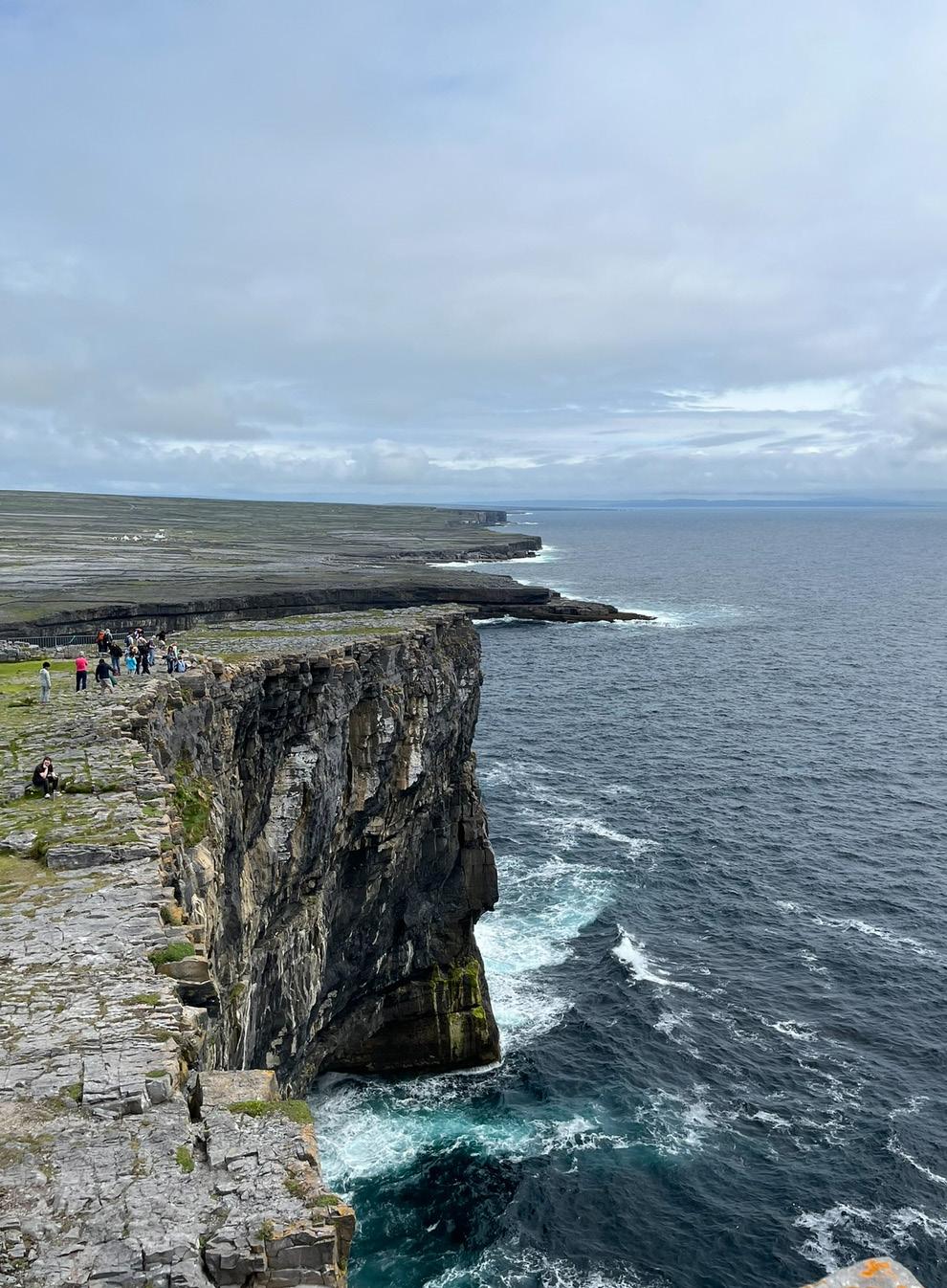
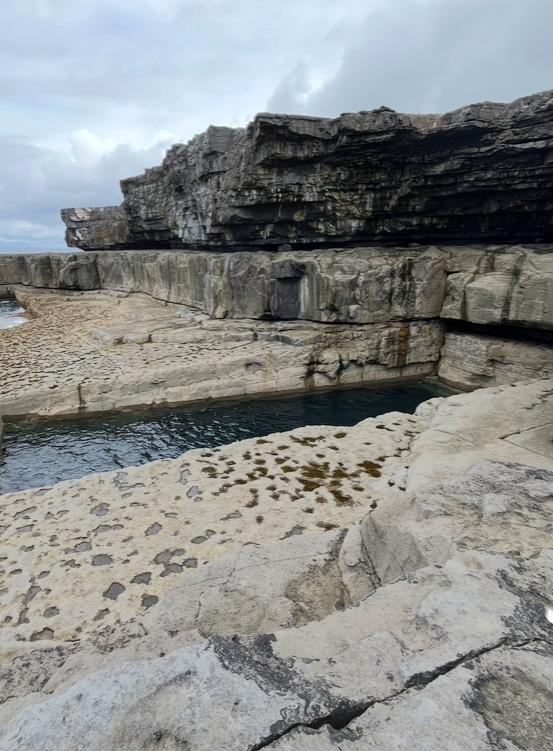
Rent a bike, pitch a tent and spend a few days cycling around the 3000-year-old Dún Aonghasa and Kilmurvey Beach, the island’s only blue flag beach. Travel tip: don’t miss the Guinness cake at Teach Nan Phaidí.
Galway City
Enjoy a morning strolling through the Saturday market, grab a coffee and a pastry at Magpie Bakery before heading across to the famous Charlie Byrne’s Bookshop. Work up an appetite with a swim at the incredible Salthill diving board before finishing up with what Big 7 Travel has named the 15th best pizza in the world at The Dough Bros. Kinsale
Spend the afternoon amongst the brightly coloured houses, browsing in Bookstór, and catch some live music at Prim’s Bookshop or an evening drink in the Bulman bar.
Gougane Barra
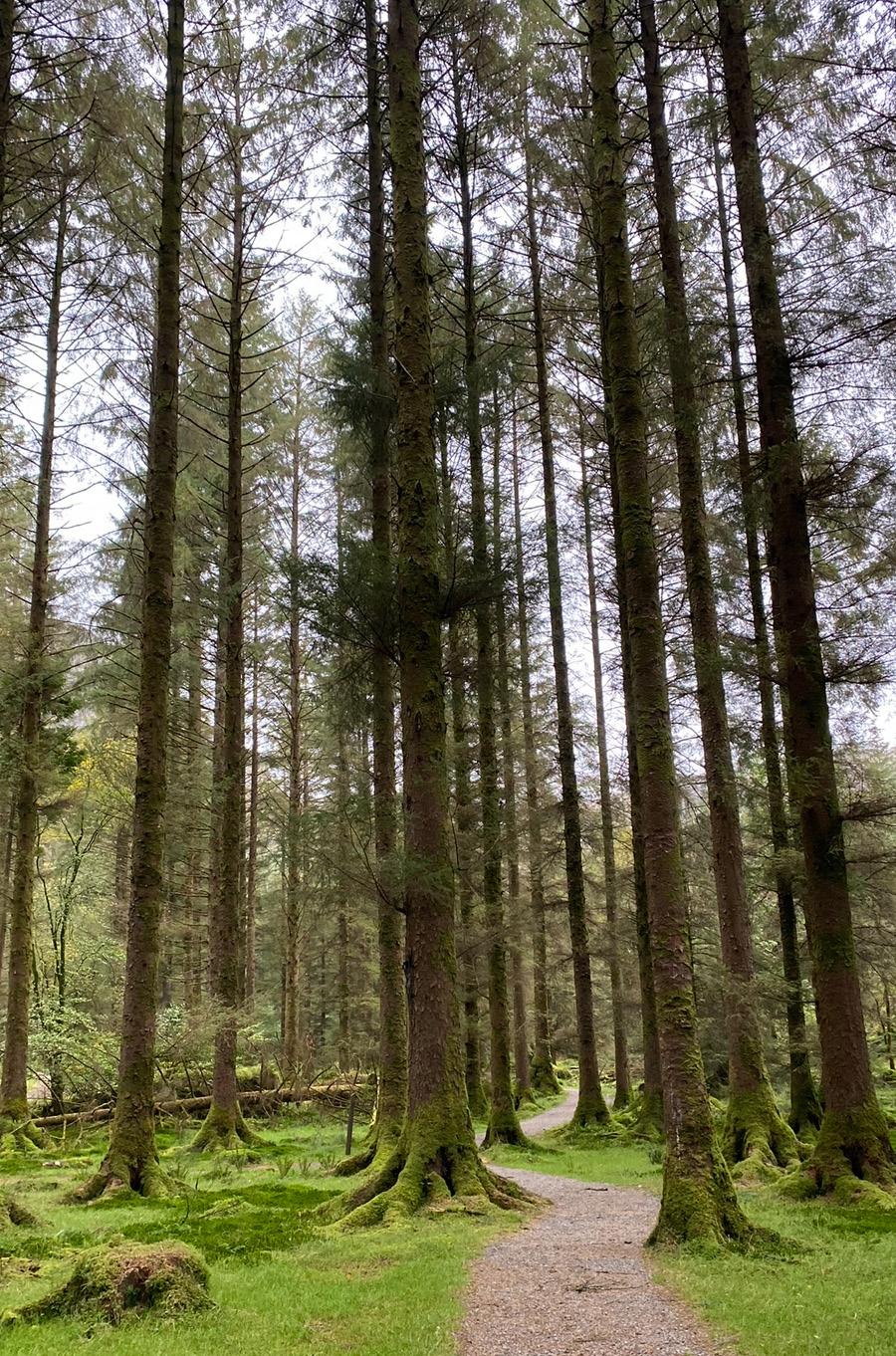
For Cork’s most beautiful walks. Don’t forget to stop by St Finbarr’s Oratory for some history and Toons Bridge Dairy in Inchigeelagh for some of the best pizza in Cork.
Dingle
For the unique experience of holding a baby lamb, or an afternoon in the aquarium or out on the waves with Dingle Sea Safari.
Wicklow
For an afternoon exploring the national park and Glendalough’s rich historical monastic city, or stop by Wicklow Way Wines winery to learn how the award-winning Irish Móinéir strawberry and raspberry wines are made.
The Fleadh Cheoil
Always an Irish summer highlight, the Fleadh is heading to Belfast for the first time from August 2-9. It promises a week of culture, dance and incredible musical performances.
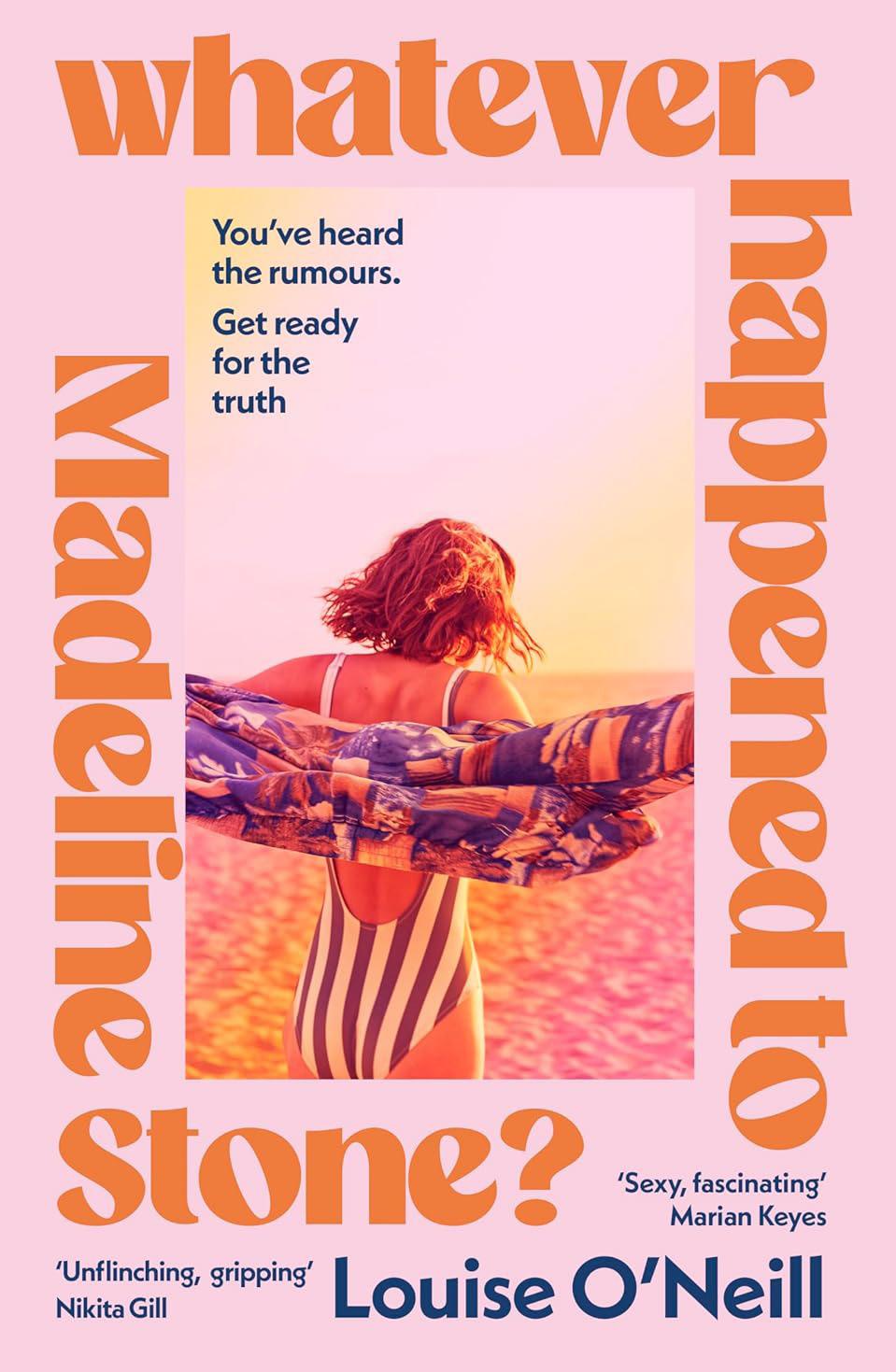
BOOK REVIEW: WHATEVER HAPPENED TO MADELINE STONE? BY LOUISE O’NEILL
Whatever Happened to Madeline Stone?, Louise O’Neill’s latest novel, opens with a prophecy. In 1988, a psychic informed Erin Stone that her identical twin daughters, Madeline and Chelsea, would be “famous and beautiful”, with one of them becoming “the most celebrated woman of her generation.” However, for this to happen, “her sister must die.” The psychic doesn’t tell Erin which daughter will succeed and who will die.
Jumping forward to 2025, the novel drops us into Chelsea Stone’s life as her former Vigilante Queens co-star, Kelly, tries to get her on board for the 20th anniversary reunion show. Nya, their other co-star, has agreed to do it. There is just one problem. Vigilante Queens, described as “Charlie’s Angels for a new generation”, may have made her “a bona-fide star”, but Chelsea walked away from her acting career and the limelight when her sister, Maddie (Madeline) disappeared in 2008. The last thing Chelsea wants is to draw attention to herself. Nick, her husband and uber-wealthy founder of the social media platform Foto, agrees that doing the reunion show is a bad idea.
“Whatever happened to madeline stone? Is an unsettling examination of misogyny, exploitation, and our obsession with celebrity culture and gossip.”
When a storage locker containing Maddie’s belongings is found and splashed all over the internet, Chelsea’s wish to be left alone is shattered. But can she finally find out what happened to her sister while keeping her own secrets hidden from the media?
The remainder of the story unfolds across the dual timelines of the late 90s/early 2000s and the present day, as we follow Chelsea and Maddie’s star turns on the sitcom Double Trouble and watch their careers diverge when Chelsea is cast in Vigilante Queens instead of Maddie.
The dual timeline works well by immersing the reader in the toxic early noughties celebrity gossip culture, elements of which are likely still lodged in your brain, whether or not you actively read blind items, Perez Hilton or TMZ. The online display of the contents of Maddie’s storage locker is based on something that happened to Paris Hilton. O’Neill draws on these familiar elements to build a picture of an industry where only one of
the Stone sisters was ever likely to be a media darling, because pitting women against each other for clicks doesn’t stop for twin sisters; no psychic prophecy needed. The noughties really were a law unto themselves, no matter what the current wave of social media induced Y2K nostalgia wants you to believe. I enjoy novels with multiple timelines, but I would have loved for the early noughties sections to be from Maddie’s viewpoint. Maddie likely would have been just as unreliable a narrator as present-day Chelsea. But hearing from her directly would’ve made the revelations that come later more impactful because I’d have a stronger connection to who Maddie was as a person. There is a case to be made that not completely understanding Maddie’s life is the point. But for me, the disconnect meant elements of the story fell flat.
Billed as Daisy Jones and the Six by Taylor Jenkins Reid meets I’m Glad My Mom Died by Jennette McCurdy; Whatever Happened to Madeline Stone? confronts the audience’s complicity in how celebrities are treated by the media. O’Neill explores the dark side of the entertainment industry and the trauma caused by the business of being a child star. The novel is described as a mystery and a thriller. The mystery label makes sense because we need to find out why Maddie disappeared. We’re also trying to figure out who is publishing Maddie’s belongings online. However, the pacing is much slower and more stop-start than what I expect from thrillers. The uneven pacing did not feel deliberate, which detracted from
Words: Paula Dennan
my reading experience because I spent much of the time wondering why things were moving so slowly and others felt like everything happened in a rush.
Part family drama, part Me Too novel, part social commentary on toxic fandoms and celebrity culture, there are times when O’Neill doesn’t quite manage to bring all of these elements together. Resulting in moments where I was left wondering why specific storylines had been included at all, other than as attempts at shock value that didn’t quite land.
Whatever Happened to Madeline Stone? is an unsettling examination of misogyny, exploitation, and our obsession with celebrity culture and gossip. It is sure to spark conversations at book clubs and beyond, even if it didn’t quite hit the mark for this reader.
Whatever Happened to Madeline Stone? by Louise O’Neill is published by Bantam, an imprint of Transworld and Penguin Random House.
“Chelsea’s wish to be left alone is shattered. but can she finally find out what happened to her sister while keeping her own secrets hidden from the media?
Words: Cleo Morrison O’
YOUR GUIDE TO THE 98TH ACADEMY AWARDS: WHO WON BIG AND WHO WON OUR HEARTS
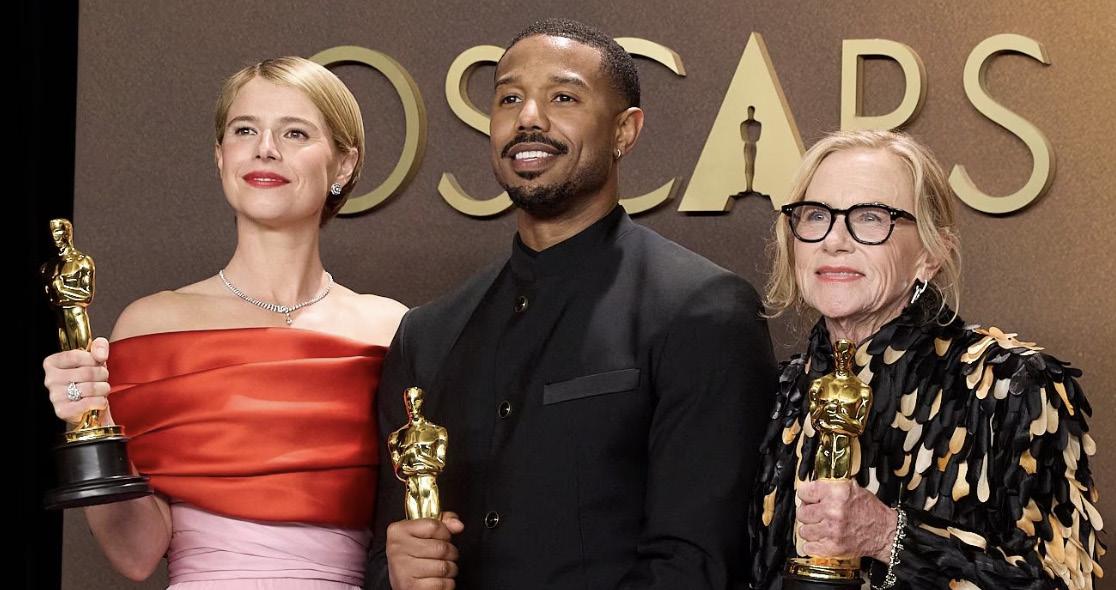
In its 98th year, the Academy Awards stage was dominated by powerful performances and stories, not only played out in the films nominated, but by real people showcasing real grief on stage. All The Empty Rooms, a heartbreaking project spanning 7 years which brought the real bedrooms of victims of American school shootings to living rooms around the world, won Best Documentary Short Film. Mr Nobody Against Putin, which showcased a terrifying story about a school turned military propaganda centre following the beginning of Russia’s war against Ukraine, and a teacher’s brave battle to expose the story on the international stage, won Best Documentary Feature Film. Pavel Talankin, the teacher of the school depicted as well as one of the directorial team behind the film who brought the story forth, gave an impactful acceptance speech, in which he implored the world “in the name of our future, in the name of all of our children, stop all of these wars now.”
Joachim Trier’s Sentimental Value, a film that grapples with loss and difficult family relationships, won Best International Feature Film. Yet this category was overshadowed by the absence of ac-
tor Motaz Malhees, a Palestinian actor who played the lead role in The Voice of Hind Rajab, which was nominated in the same category and is based on the heartbreaking final moments of Hind Rami Iyad Rajab. Motaz Malhees was affected by a travel ban hindering his entrance to the United States. Javier Bardem, who was presenting the Best International Feature Film award, wore a pin emblazoned with “No a la Guerra” (No to War) for the second time. The first being in 2003 as a protest against the Iraq War. He also wore a Handala pin, a symbol of solidarity with Palestinian refugees and the desire to return to their land. On stage, Bardem offered the words “No to war, and Free Palestine.”
This year’s awards season has sparked debate about how and where the intersection between political action and art should be showcased. Speaking at the BRIT Awards, CMAT said, “more than ever, art is politics because you don’t get to make art in a fascist state.”
Speaking of fascist states, Paul Thomas Anderson’s One Battle After Another, which offers a thoughtful, uncomfortable musing on the current American state, unconventional fam-
“This year’s awards season has sparked debate about how and where the intersection between political action and art should be showcased.”
ily dynamics, solidarity, protest, addiction and how far a person will go for the ones they love, was nominated for 13 awards, winning 6. Most notably, Best Picture, Best Supporting Actor, Best Director and Best Adapted Screenplay. The film’s casting director, Cassandra Kulukundis won the first-ever Academy Award for Best Casting. One Battle After Another will have you googling Sean Penn’s age, laughing and bristling all at the same scene, accompanied by a fun soundtrack.
It would be impossible to speak about an impressive soundtrack without commenting on the musical power within the night’s standout Sinners, which took
Photo: provided by the Academy of
home Best Original Score for Ludwig Göransson’s work on the film. This was Göransson’s third Academy Award.
Sinners, a poignant and deeply important film shining a light on topics such as racism, displacement, white supremacy, culture and tradition through history, music and religion, generational trauma and even child loss, has been the film to beat this award season, breaking the record for the highest number of Academy Award nominations a film has ever received, with 16 nominations. Director Ryan Coogler, with other impressive works across his filmography including Fruitvale Station, Creed and Black Panther, won Best Original Screenplay, making Coogler the second black artist ever to win the prestigious award. Lead actor Michael B. Jordan took home the coveted Best Actor award for his portrayal of the Smoke Stack twins. In another fantastic win for Sinners, Autumn Durald Arkapaw became the first woman ever to win
a Best Cinematography award for her beautiful work.
Comedian Will Arnett gave a poignant reminder about the looming threat of AI to the arts, stating “tonight, we are celebrating people, not AI”. This is a stark reminder of the writers’ strikes only two years ago. During these strikes, many writers, actors, film makers, and individuals reliant on the film industry to work and live engaged in almost 150 days of striking due to pay, working conditions and AI regulation which is a threat to many of the incredible creative jobs that make film so enjoyable and the Academy awards possible. Last year, two films, Emilia Pérez and The Brutalist, which were nominated for awards used AI voice technology. Brady Corbet’s The Brutalist won Adrien Brody a Best Actor accolade, despite using such technology.
In an exciting and unexpected twist, for the seventh time in Oscars history, tied winners The Singers and Two People Exchanging Saliva won Best Live
Action Short Film. KPOP Demon Hunters won Best Animated Feature Film, and Best Original Song for the track ‘Golden’, an incredible achievement as it marks the first time a South Korean film team has won this prestigious Animation Award.
It’s no secret that Ireland is a nation of talented artists, this year in particular was characterised by an incredible array of Irish contributors to the beautiful films on display at the Academy Awards. From Richard Baneham who was part of the visual effects team behind Avatar: Fire and Ash, which brought home the award for Best Visual Effects, to Andrew Lowe, a producer behind best picture nominee Bugonia, Ireland was widely represented on the biggest stage of awards season. Last, but perhaps most anticipated, Jessie Buckley, who gave a career-defining performance in Hamnet that had every eye in the theatre I watched it in teary, brought home Ireland’s first Best Actress Award.
Words: Elsa Forrest
CORK FRINGE –SCRATCHING THE ITCH OF OUR CITY’S ARTISTS
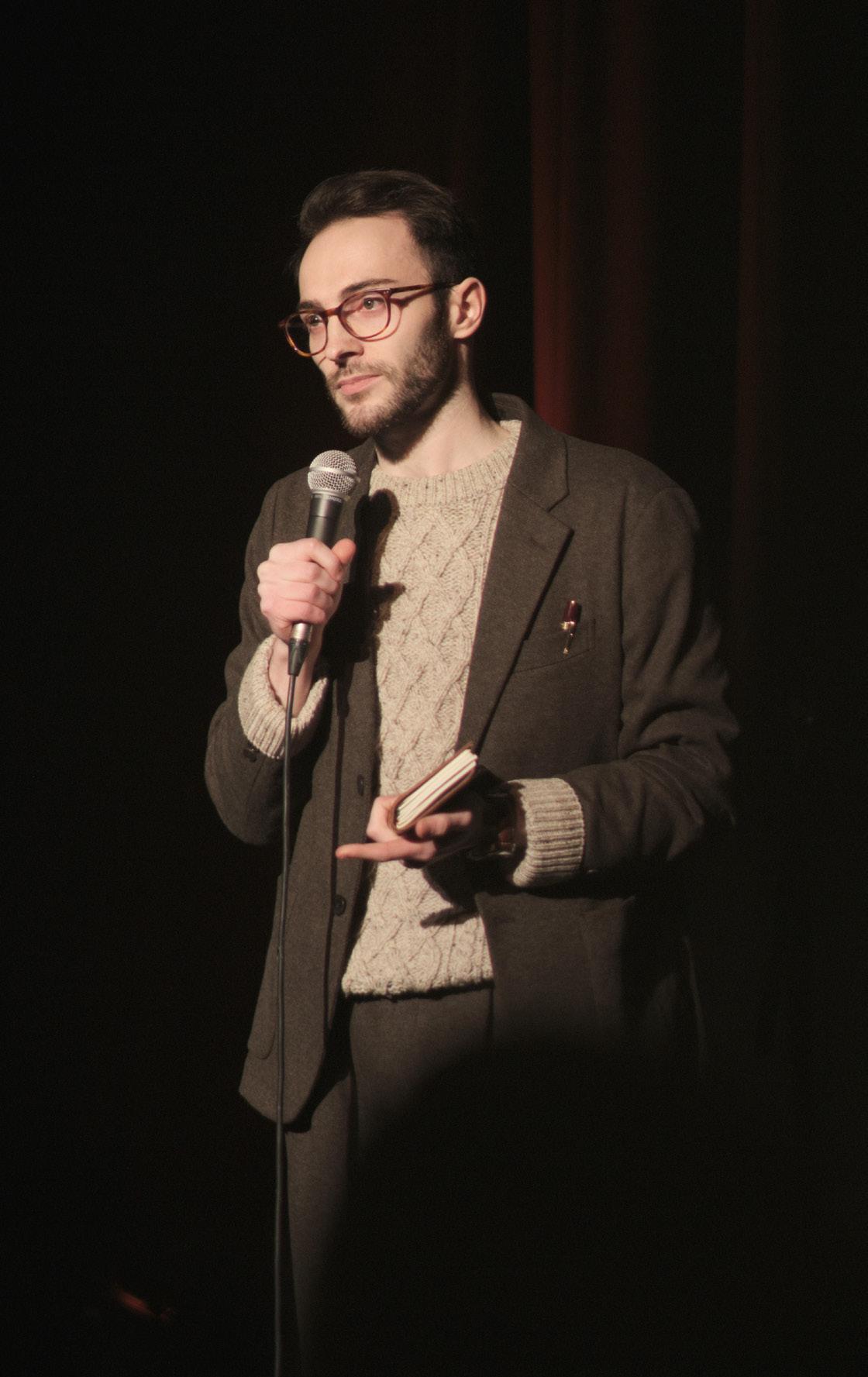
As a young writer in Cork city, the opportunity to meet other artists in a space that isn’t behind a €40 paywall is rare, so when I heard about Cork Fringe’s upcoming Scratch! event my calendar was cleared. Cork Fringe was founded by UCC alumni Daniel Cremin and Ineke Lavers, with the pair working with artists across the city to put on a showcase of “the weird, the wonderful, and the often under-represented in the Cork artsscene.” Lavers and Cremin met during their time in UCC, founding Cork Fringe,with local artists at the forefront of their minds. Inspired by the Edinburgh Fringe Festival, Cork Fringe provides budding artists an opportunity to present their work to a community regardless of what stage they’re at in the creative process. The annual Fringe festival takes place in May, with smaller events such as Scratch! nights happening throughout the year. Cork Fringe underscores the value of “the rough and ready,” allowing artists to share work in the early stages of development in a low-stakes, community-oriented space. The previous Scratch! Night took place in the Triskel Arts Centre on February 20, through an open-mic format.
The most recent Scratch! Night consisted of various acts,
from poetry and prose to burlesque dancing and comedy. While there is a wealth of artists scattered throughout the city, the pair noticed that the various disciplines weren’t mixing. Cork Fringe strives to bring artists of all kinds together. Although the annual Fringe festival is their biggest, Cork Fringe is, at its core, “an arts organisation that will do things throughout the year,” ranging from “networking events,” “build-your-team events”, and “Scratch! Nights.”
“Doesn’t have to be pretty or perfect.”
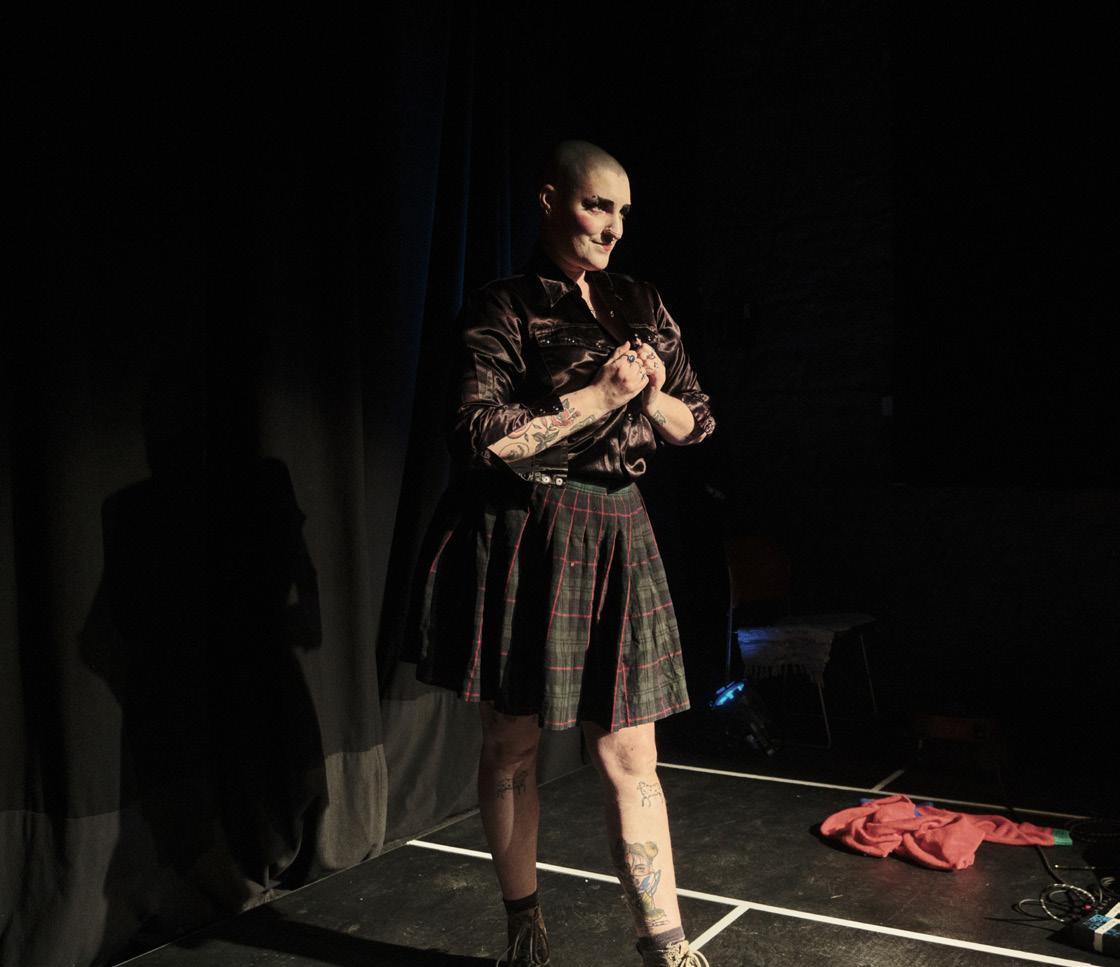
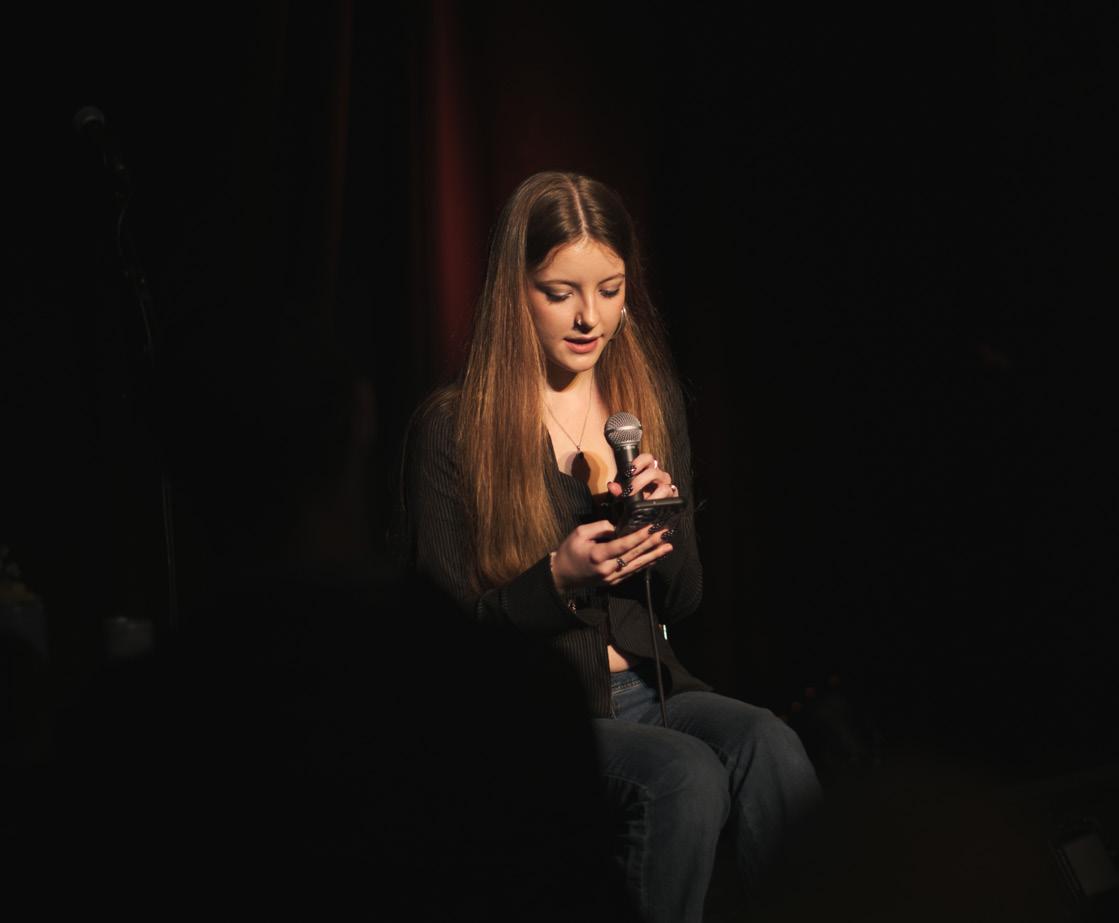
I had the opportunity to speak with two performers from the night: Kerry-born Elise Carey-McGibney and Australian-native Mads about their experience. As a young poet, Carey-McGibney described the difficulty in reaching audiences as an artist in the early stages of her career. Having moved to Cork to pursue her studies in criminology, Carey-McGibney stressed the importance of organisations such as Cork Fringe in allowing her to integrate with the “Cork writing life,” a sentiment echoed by burlesque
dancer Mads. Having spent the past few years touring around Australia, Mads feels as though the open, friendly atmosphere in the Cork arts scene allows them to pursue their passion for punk burlesque, a discipline that “doesn’t have to be pretty or perfect.” Both artists remarked on the lack of judgement and the welcoming environment on the night of the Scratch!. Mads observed the skill it takes “to curate a space that made everyone feel safe,” where attendees felt comfortable enough to spontaneously showcase their work. Creating a relaxed environment, without a rigid structure, is a priority for the organisers. “It’s better that way,” Cremin believes. “That way you have people who, on the way in, say, ‘I’m just going to watch’ and then twenty minutes later they’re up on stage.”
Carey-McGibney expresses the need for “multidisciplinary events” to foster “the sense of community” that is integral to creatives of all sorts. It seems as though many artists within Cork City feel disconnected from their peers, with there being a general feeling that polished work and established artists are prioritised over those in the early stages of their creative journey. Elise describes how “getting your work out there is really hard, especial-
Photo: Zé Bateira courtesy of Cork Fringe
“Cork fringe underscores the value of ‘the rough and ready,’ allowing artists to share work in the early stages of development in a low-stakes, community-oriented space.”
ly as a young creative, so these events are really important.” The arts scene in any given area often feels exclusive and inaccessible, inevitably leading to what Mads describes as a lack of “fresh blood.” “I hate when an arts scene is underground. It becomes an invite only kind of thing,” they tell me. Artists I have encountered over the years attribute their difficulty in reaching audiences to the lack of support for them in Cork, and while that is partially true, Mads emphasises the multitude of opportunities within the community, “if you’re willing to take them.” Alongside a lack of opportunities, aspiring Irish artists are still struggling to break away from accusations of, what is colloquially called “notions.” When asked about this, Mads emphasised the need to “fight your own insecurities, your ability to say ‘f*ck you’ is there.” Many artists struggle to finance their work, which is a problem Cork Fringe strives to remedy. They deal with “all of that so you can just perform your show and get in front of an audience.” The work that will be showcased in the upcoming festival will be from a range of artists, including established creatives and those who are taking their first step in the industry. Lavers and Cremin are determined to provide a space for artists to be able to work within their own city, to create something that enables the creative community to stay in Cork instead of having to seek opportunities in bigger cities.
The founders of Cork Fringe are no strangers to the difficulty of finding work in such a competitive industry, particularly in a smaller city. Despite the
struggles many emerging artists face, the arts scene is alive and well. This year, over 200 artists applied to the Fringe Festival, with half of them being from Cork City. Cremin attributes this sustained interest in the arts to the need to tell a story, “It’s a lot easier to go into something like STEM and to have a guaranteed salary, but there’s so many people who have stories to tell. Whenever the need to tell a story outweighs the need for security is when you get some of the really great work.”
Throughout my conversations with Lavers, Cremin, Carey-McGibney and Mads, one word seemed to come up again and again: community. For Mads, community “is the lifeblood of being an artist. It takes a village to both create shows. There’s not a huge amount of money [in the arts] so all we have is each other.” Originally from Townsville, Australia, Mads’ perspective on the lifestyle in Cork City is fresh. They noticed the small, but encouraging group of people who want “to show up and support each other.” This sentiment was echoed by Carey-McGibney and the organisers themselves. While it can be daunting to put yourself out there in a country with an ever-evolving arts scene, Cremins notes that the welcoming nature of artists is not only uniquely Irish but also uniquely Corkonian. As for advice for young artists, the consensus was clear: “beg, borrow and steal,” were Lavers’ words of wisdom, with Mads emphasising how rewarding volunteering as an assistant or partaking in a Fringe festival is, “The Fringe festival is all about society com-
ing together and doing whatever they want.”
Events like the Scratch! are essential in showcasing the necessity of art in a society that seems to prioritise practical fields of work. Providing artists with this platform reiterates the
need for art, a need which is as much of a pillar of life as the sciences.
Cork Fringe takes place May 8-10 in various locations around the city. The festival programme and ticket details are available at corkfringe.com.
Photo: Zé Bateira courtesy
Words: Paula Dennan
HACHETTE CANCELS PUBLICATION OF SHY GIRL BY MIA BALLARD OVER SUSPECTED AI USAGE
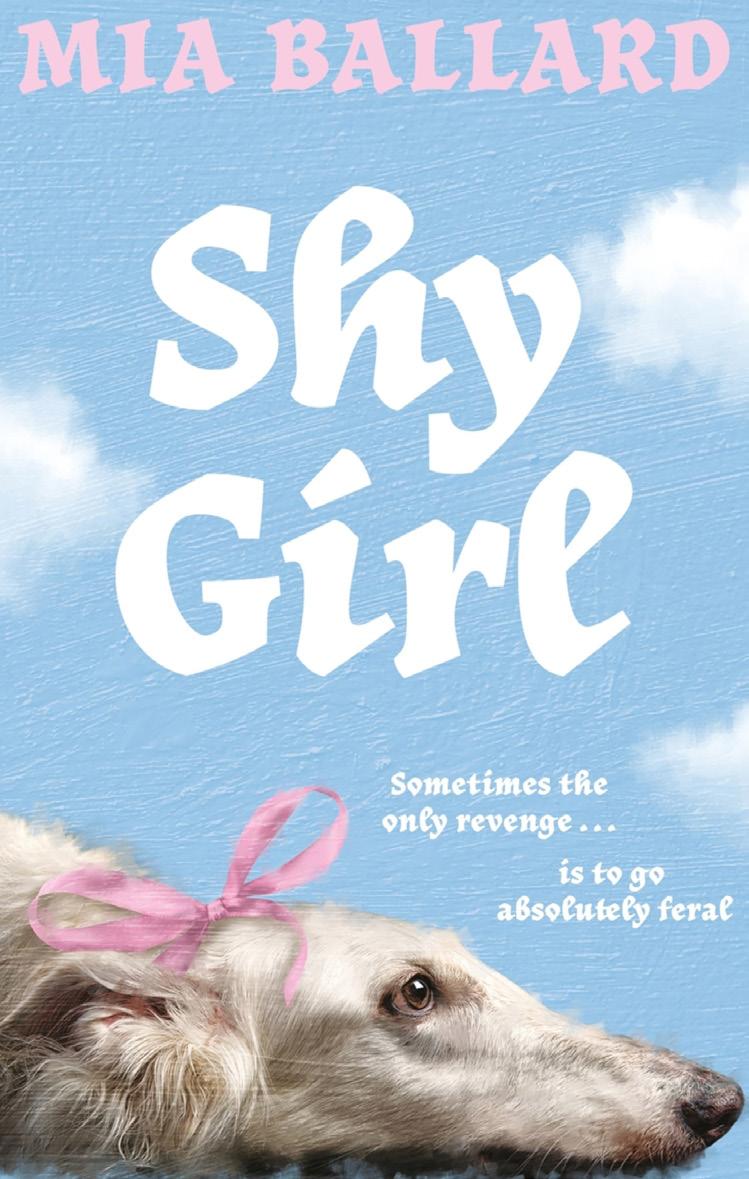
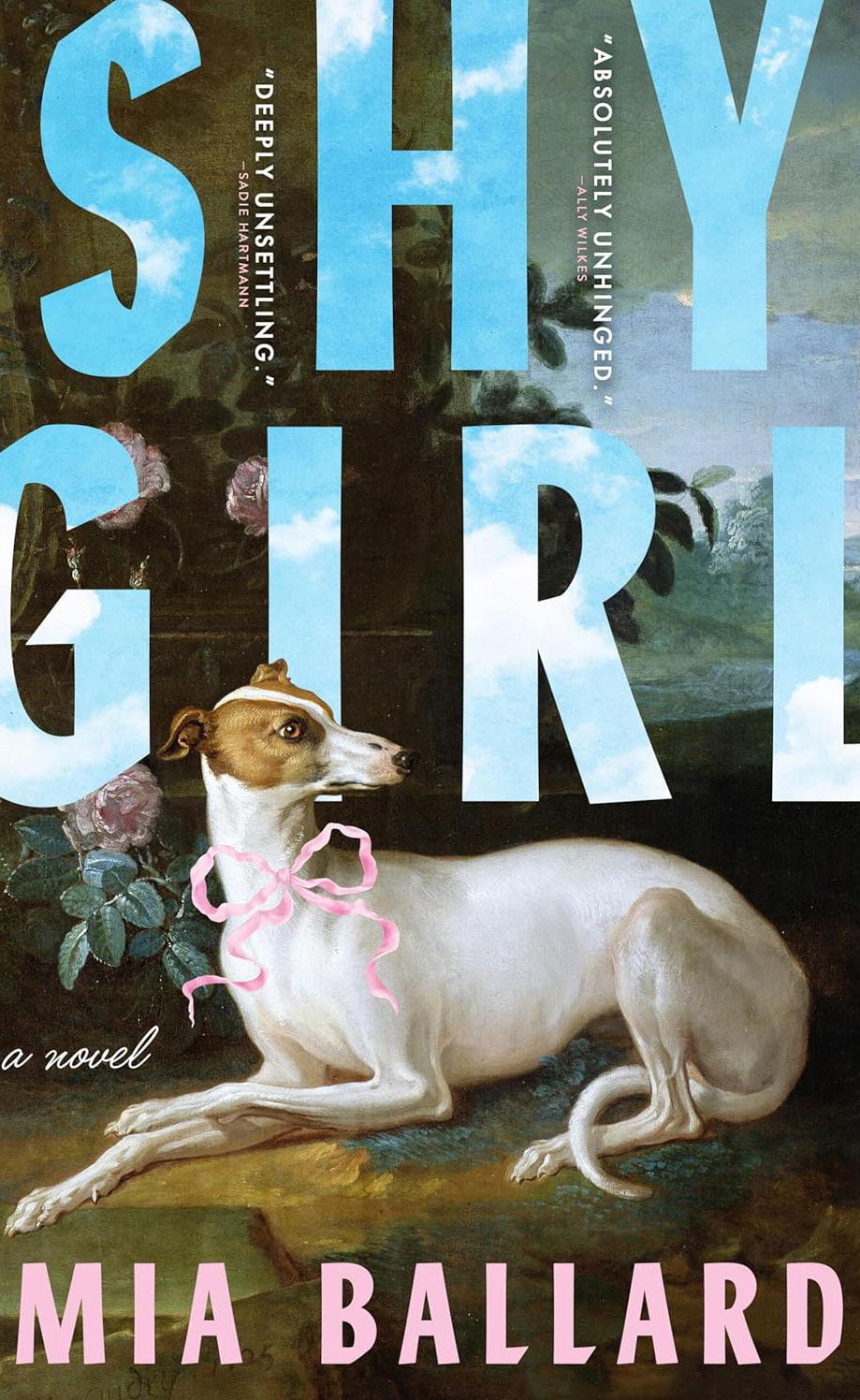
On March 19, The New York Times broke the news that Hachette Book Group (Hachette) were no longer publishing Shy Girl, Mia Ballard’s debut novel, in the US. Hachette also announced the novel would be discontinued in the UK, where it was published in November 2025. The decision came after The New York Times contacted Hachette with evidence that Shy Girl seemed AI-generated, and the publishing house stated that it then conducted “a thorough and lengthy review of the text.”
In an email to The New York Times, Ballard denied using AI to write her novel but said that “an acquaintance she hired to edit the self-published version of the novel” was the person who used AI. This appears to confirm that at least portions of the self-published version of Shy Girl involved AI usage, although Ballard contends it was during the outsourced editing process, not her original writing.
If you do not spend your time in bookish corners of the internet, the accusations that Mia Ballard allegedly used AI to write Shy Girl most likely came as a shock. However, concerns over Ballard’s potential use of AI first surfaced when she initially self-pub-
lished Shy Girl in February 2025. One-star reviews written on Goodreads in May, June, and July 2025 include readers describing Shy Girl as “some parts had me questioning if they were written with the use of AI”, “it read like AI wrote most of it!”, and “AI-generated slop.”
In June 2025, Wildfire, an imprint of Hachette, announced it would be publishing an updated edition of Shy Girl in the UK that November. This traditionally published edition would include new chapters and an additional short story. Orbit, another imprint of Hachette, announced that the updated edition would be published in the US in April 2026. Orbit’s press release announcing that it had acquired the rights to publish Shy Girl described the novel as a fem-gore horror novel for fans of Nightbitch by Rachel Yoder and A Certain Hunger by Chelsea G. Summers. The Guardian reports that the UK edition of Shy Girl sold around 1800 print copies.
In January 2026, Max Spero, who is the co-founder and CEO of Pangram – an AI detection programme – posted a Pangram report on X that flagged Shy Girl as being 78% AI-generated. The New York Times also used
AI detection tools in its analysis of passages from the novel and found “recurring patterns” associated with AI-generated writing, including “gaps in logic, excessive use of melodramatic adjectives and an overreliance on the rule of three.” But are AI detection tools reliable?
For many people, Hachette’s decision to no longer publish Shy Girl is confirmation that Ballard used AI and also shows the publishing house taking accountability. But Hachette’s actions raise questions that, as yet, have not been answered. How did the novel make it through the editing process at an imprint of a global publishing house without the self-published version’s AI-writing being detected? What was involved in the “thorough and lengthy review of the text” that Hachette conducted after being contacted by The New York Times, and why wasn’t this level of review carried out during the initial editing process? Ballard hasn’t explained when she first became aware that the person she hired to edit the self-published version used AI. She told The New York Times that she is unable to discuss how AI was used because she is “pursuing legal action.”
Photo: provided by the Academy of Motion Picture Arts and Sciences
The publishing industry has always been about gatekeeping who gets published and who doesn’t. Self-publishing allowed writers to sell directly to their readers, without needing a publishing house. Publishing houses are now searching for self-published work to republish, traditionally. Not all self-publishing is created equally; some authors hire an editor, while others rely solely on self-editing their own work. In this case, Ballard hired an external editor but contends that it was the editor who used AI on Shy Girl. In acquiring and updating the novel, Hachette does not appear to have noticed that AI may have been used in its creation.
As readers, we are unlikely to find out the exact chain of events and the full story of what Mia Ballard did or didn’t do with AI while writing Shy Girl. Hachette’s cancellation of Ballard’s novel and by extension her career after The New York Times picked up this story indicates that one of the world’s largest publishing houses may be incapable of detecting AI-generated or AI-assisted fiction. Or, concerningly, it can detect AI-assisted writing, but hopes that readers cannot. Neither of these bodes well for authors, readers, and publishers who want to keep AI usage for writing and editing out of the traditional publishing industry.
“The publishing industry has always been about gatekeeping who gets published and who doesn’t. self-publishing allowed writers to sell directly to their readers.”
HOW DOES BAD BUNNY’S SUPER BOWL HALFTIME SHOW REDEFINE “AMERICAN IDENTITY” IN THE AGE OF TRUMP?
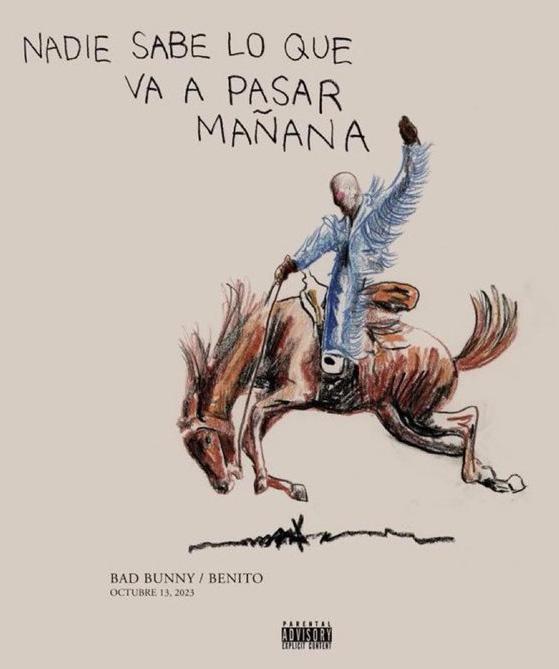
Move aside Taylor Swift. Benito Antonio Martínez Ocasio, AKA Bad Bunny, is now the king of easter eggs. Bad Bunny fans will know that his music has always been rich in symbolism, but his Super Bowl Halftime Show performance in early February put that fact on display for the whole world.
The Puerto Rican rapper included several key messages in his Halftime Show performance. One of these stressed that America is more than just the US. The US shares an American history with the rest of the Americas, made up of both deeply painful truths, slavery, economic imperialism, and outright colonialism, and hopeful realities, cultural and racial diversity which inspires artistic creativity and nations of immigrants and diaspora.
As a Puerto Rican, Benito is well-positioned to make this critique. A short lesson in modern Puerto Rican history is helpful here. Until the Spanish American War ended in 1898, Puerto Rico was a Spanish colony. That year, the United States took control of the island. Puerto Ricans
were not granted US citizenship until 1914. In 1952, Puerto Rico ratified a new Constitution and became a US Commonwealth. Puerto Ricans carry US passports, but they cannot vote in US federal elections and have no representation in the US government. This relationship between Puerto Rico and the US, which many, most notably Pedro Albizu Campos (1893–1965), leader of the Puerto Rican Nationalist Party, have argued is a form of colonialism, allows the rapper to consider American identity as an American, a Caribbean, and a Latin American.
The performance opens with a shot of jíbaros (Puerto Rican agricultural workers) harvesting sugarcane, with Bad Bunny emerging from the sugarcane fields. Sugarcane symbolises the historical spectre of Atlantic colonialism, which continues to haunt the Americas. The insatiable demand for sugar in Europe fuelled the equally insatiable demand for slave labour, financing the continued enslavement of people of African descent and the genocide of indigenous populations. These fields lurk at
“The us shares an american history with the rest of the americas, made up of both deeply painful truths, slavery, economic imperialism, and outright colonialism, and hopeful realities, cultural and racial diversity which inspires artistic creativity and nations of immigrants and diaspora.”
the edges of Bad Bunny’s joyful performance, a reminder of that heavy history.
Benito also reminds his audience that those painful truths aren’t confined to the past. Puerto Rican singer Ricky Martin’s performance of Bad Bunny’s song, “Lo que le pasa a Hawaii” (“What Happened to Hawaii”), arguably his most explicit criticism of modern US colonialism – in Puerto Rico and Hawaii – leads into a performance of “El Apagón” (“The Blackout”). This song offers a stinging critique of the US government’s and Pro-Trump Puerto Rican government’s negligent response to the devastation wrought on Puerto Rico by Hurricane Maria in 2017, which led to frequent power failures. Benito wrote the song for and participated in widespread anti-government protests on the island in the aftermath. During his halftime performance, Bad Bunny marches out of that darkness carrying La Monoestrellada, the flag of Puerto Rico created in 1895 and outlawed by the US government after 1952. This part of the performance not only exposes continuing US colonialism in Puerto Rico, but it also highlights the long history of Puerto Rican resistance to occupation.
“Nueva Yol” (the Puerto Rican pronunciation of “New York”), the show’s joyful high point, celebrates Puerto Rican culture in New York. The song samples the popular 1970s song “Un Verano en Nueva York” (“A Summer in New York”) performed by Puerto Rican singer Andy Montañez and El Gran Combo, tracing the rich cultural history of the Puerto Rican diaspora. Toñita, owner of the long-running Caribbean
Social Club in Williamsburg, Brooklyn reprises her cameo appearance from the song’s music video. If the pink casita hosting a house party in the show’s opening minutes is meant to encapsulate joyful Puerto Rican culture on the island, the New York City block which appears around the middle of the show reveals the Puerto Rican diaspora, and indeed, many US Latinos, as the beating heart of the urban US. US Latinos represent an American identity that extends beyond US borders.
Bad Bunny’s message about diversity, history, creativity and American identity comes to a head in the show’s final moments as he declares “God Bless America!”, a football cradled in his elbow. He takes these words and the symbolism of the football, which some Trump supporters such as Megyn Kelly have claimed as a symbol of MAGA identity in recent months, and changes this to provide a deeper meaning. As Bad Bunny begins a roll call of the nations of the Americas and flag bearers gather behind him, he presents viewers with an American identity which has always been there and continues to thrive despite Trump’s efforts to squash it – colourful, joyful, loving in all its diversity and complexity. By the time he turns the football around, the message inscribed on it is already clear, “Together, we are all America.” Bad Bunny reminds America that to redefine its identity, it must realise that it is a shared identity.
RUA RÍ, LOOKING FOR SOME WORK
Rua Rí has the kind of voice that can make a room feel smaller in the best possible way. Not smaller as in lesser, but closer. More charged. More intimate. The first time I saw him, that was the thing that hit hardest. Here was someone working in recognisable singer-songwriter territory, but never trapped by the dead air that phrase can sometimes carry with it. There was wit in the songs, a sly looseness in the delivery, and the sense that he was less interested in presenting a finished persona than in letting the songs arrive with their edges still showing.
That is why this debut album has felt worth waiting for. Tell Your Mother I Saved Your Life, due on May 1 through Soft Boy Records, arrives with enough going for it already to quicken the pulse if you have been following Seán Damery’s work for a while. I would have loved to have heard the album in full before writing this, but did not get it in time, so what follows is based on the first two singles and “Wonderland”, originally released in 2023, a beautifully infectious tune whose inclusion on the album makes complete sense. More ears need to hear it. Even with that caveat, the shape of the record is already intriguing. It sounds like a comingof-age record rooted in Cobh, Cork and the places around them, caught between wanting to leave and being tied to where
you are from.
The Kean Kavanagh connection only adds to the anticipation. To my ears, Kean released one of the finest Irish records of last year, so knowing he was producing this one made the forthcoming album all the more exciting. The two of them played an excellent Crane Lane show before Christmas, and even in that setting there was a sense of things opening out a little, the songs pushing beyond the solitary frame in which many people first encountered Rua Rí.
The connection itself goes back years. Damery first met Kavanagh at Irish college, where Kean was working in a studio. They stayed in touch, and by March 2023 Damery got in touch with him directly about recording some songs. Not an album, not at first. “I just wanted to get some more songs out,” he says, thinking it might be an EP. Instead, the whole thing stretched, stalled, moved, restarted, with Damery flying between Cork and London, beginning songs in one place and finishing them in
another. “The length of the process definitely helped it become an album for sure.”
That sense of drift becoming direction comes up again and again in the conversation. Damery is not someone who talks as though he sat down and reverse-engineered a coherent statement. If anything, he resists that kind of neatness. Asked whether he was consciously writing to fit the sound of what had already been recorded, he laughs it off. “I actually am unable to write that intentionally,” he says. “If I go in like that, I’d just be sitting there. I’d be frozen.” Songs found their way onto the record because he was already in its weather, not because he was forcing them towards some master plan. The single “Johnny
Workman”, for instance, began as a fingerpicked instrumental he thought was finished until Kavanagh told him there had to be a song there. Damery did not even want to write it. It ended up becoming the single.
The making of the album sounds gloriously unorthodox, too. There was no fixed band going in to cut the thing live. Instead, songs were built piece by piece between London and Cork, with whatever was to hand and whoever fit. Friends drift in and out of the record. Finn Cusack Holden plays guitar across it. Stefan Murphy is all over it on double bass and lap steel. There is, by Damery’s own admission, “a lot of me badly playing the tin whistle”. A loose snare gets played with fingers. Instruments
“The single ‘Johnny workman’, for instance, began as a fingerpicked instrumental he thought was finished until kavanagh told him there had to be a song there. damery did not even want to write it. it ended up becoming the single.”
appear because they are in the room or because someone knows someone who can add the right thing. That patchwork method sounds close to the spirit of the songs themselves: informal, intuitive, slightly makeshift, but more coherent than it has any right to be.
That looseness has always been one of his strengths. Even when the writing is precise, there is air in it. Room for a strange image, a line that swerves unexpectedly, a flash of humour rubbing against something bruised. There is localness in Rua Rí’s songs, but not the kind that gets lacquered for effect. It feels inhabited. Lived in. Like someone who knows these places well enough not to romanticise them.
The Soft Boy release gives that world a bigger frame without flattening out what makes him interesting. Damery is very clear about what the label changes in practical terms. Before this, he says, he did not really understand the difference between simply putting something out and properly releasing it. Soft Boy, through Kavanagh, Kojaque and Steve Byrne, has given the record a support structure, with press, radio and rollout handled in-house. He talks about it with gratitude, but also with the kind of excitement that still feels new to him. At one point, he admits, “I’m so hyped,” still a little amazed that he has made something that will exist as a physical record.
And “Wonderland” already sounded like the work of someone who deserved to be heard more widely. Damery is adamant that it belongs on the album, even though it arrived earlier.
He loves it too much to leave it behind. More than that, he wants it to live on a record. Plenty of great artists never get as far as holding the thing in their hands. No wonder he wants this one there.
Of the songs heard so far, “Johnny Workman” and “Makeover” suggest a record with a bit more mischief in it than lazy shorthand might expect from the phrase singer-songwriter. Damery describes them as the two “poppiest” and “wacky” songs on the album, with “Makeover” in particular arriving as a full-on pop song, goofy in lyric and structure. It is already, by his account, the sort of song that sends crowds into linked-arm chaos at gigs. Both singles are excellent, and “Johnny Workman” even made its way into our college radio Top 40 elsewhere in this issue. The rest of the album, he says, sits closer to the region of “Wonderland”, though fuller than Shepherd’s Delight, with more bass, more arrangement, more instruments at work inside the songs. That is enough to suggest development without rupture, which is exactly what you would want from him.
He does not seem especially interested in chasing perfect replication live. The release plan is modest by design. A few very small shows first, ideally in pubs, then a proper run later when the vinyl is ready. He wants to give the record time to find people rather than force it straight into a touring cycle. That instinct suits him. Rua Rí has often been most effective at human scale, whether in a sold-out Sirius Arts Centre room in Cobh or in the smaller Cork gigs where the songs are
allowed to breathe. His Christ Church, Cobh show with Sarah Hickey on April 25 feels part of a broader story too. Cobh remains strangely underused as a place for original music, despite its obvious pull and the fact that Sirius has a serious musical history of its own.
There is a wider scene hovering around all of this as well. Cork continues to produce strange, gifted musicians who do not always get folded into the national story quickly enough, and Damery is generous when asked who else people should be listening to, mentioning Jean Pack, Inchworm and Moldboy. The same communal thread runs through the “Johnny Workman” video, which came together through Cork-based creatives Nicole DeLarge and Shane Joyce after Damery saw their
“Cork continues to produce strange, gifted musicians who do not always get folded into the national story quickly enough, and damery is generous when asked who else people should be listening to, mentioning jean pack, inchworm and moldboy.”
work on a Jean Pack video and knew they were the right people. Songs made through friendship, records built through trust, visual worlds assembled from the same orbit rather than dropped in from outside. That part of it suits him, too.
The excitement here is not simply that Rua Rí has made an album, or that he is releasing it through Soft Boy, though both are reason enough to pay attention. It is that nothing heard so far suggests that a bigger frame has flattened the oddness out of him. He still sounds like himself. Still sly. Still emotionally specific. Still capable of slipping from tenderness into something half-mad and winning. That is the best outcome. Not an artist being tidied up for a wider audience, but one being heard more clearly.
“There is localness in Rua Rí’s songs, but not the kind that gets lacquered for effect. it feels inhabited.
Lived in. Like someone who knows these places well enough not to romanticise them.”
Words: Ray Burke
Stills from Johnny Workman by Nicole DeLarge.
Words:
ON THE ROAD WITH DAVID KEENAN
David Keenan sounds like he is already halfway elsewhere when the interview begins. He is heading towards another town, another room, another crowd. There is no sense of arrival about him, nothing staged. He speaks like someone still inside the work, still feeling his way through it as he goes.
That suits the moment he is in. Across his records, Keenan has kept slipping sideways from any version of himself that might be easiest to sell back. Modern Mythologies, released in November 2025, does not sound like a clean break so much as a release of pressure, as though something in him has finally stopped bracing. The record has breadth to it, but not the strained kind, not the sound of someone reaching for range because range itself has become a brief. It comes across more like a songwriter letting the songs arrive in the shapes they want.
He is warm straight away and alert. When a question catches him, you can hear it. He laughs, doubles back, picks up a phrase and works through it rather than flattening it into a pre-set answer. Asked about Modern Mythologies as the point where he allowed himself not to be fixed to one version of himself, he puts it simply: the record gave him “permission to put all my approach on an album and not box it in”. Genre, he says, can be left to other people. “The songs are
just coming as they’re coming.”
That refusal to file everything neatly runs through the whole interview. Keenan talks about the “internal kickback” that comes with freedom, the part of you that immediately starts worrying how the work will be received. But he has no real interest in sanding songs down until they fit whatever shape is currently rewarded. Again and again, he comes back to what he calls the “primary purpose”, which is “just writing great songs”, songs that “stand up on their own without any music”. That is the test. Everything else comes later, or should.
When he speaks about the healing around the album, the tone shifts. He talks directly about “coming through experiences with addiction” and the stigma around that, but he does not dress any of it up. “Everybody wants a martyr as long as it’s not them that has to do the dying,” he says, and the force of the line is in how little it asks to be admired. He is not trying to build a tragic aura around himself. Music, in the way he talks about it, is not image management and not catharsis for show. It is survival, and craft, and the thing that stayed open when other routes did not. “There’s many, many people I went to school with that didn’t have the outlet and they’re not here,” he says. “So music is that vital to me, really.”
He is equally blunt about the culture around music now. Story versus metrics. Vocation versus promotion. “It’s not for metrics, it’s for the story, it’s for the listening and the learning,” he says. Later, he is plainer still: “A lot of the music industry these days is just pure marketing.” That lands because he is not speaking from the sidelines. He is out touring, still building, still trying to make a life inside it. What he rejects is not ambition, but the deadened version of ambition where visibility becomes the art and the work itself is reduced to packaging.
So he goes back to the places where music still feels like an exchange rather than a campaign. Small rooms. Grassroots venues. Direct contact. He talks about them with real fondness. “You go in, you get fed, you get to chat,” he says. It is a modest description, which is exactly why it sticks. For all the mythic language that moves through his songs, he is drawn just as strongly to “the ordinary emotions”, to brief acts of decency, to the details that keep a person from drifting too far into abstraction. Asked whether songs begin with myth or with the small observed thing, he answers without fuss: “I think the latter.”
The same instinct shapes how he talks about accent and identity. His grandfather’s advice to sing in his own accent was not just about pronunciation. It was about getting closer to himself:
“your own speaking voice, your own singing voice, your own accent, your own identity.” He is not sneering at performance here. He understands the lure of characters, masks, and alter egos. He even admits they can be freeing. But he also knows how easily performance curdles into compromise, and how quickly Irishness can be turned into a legible export. The pressure is always there, hovering in the background. How much of yourself are you willing to give away in order to fit the model.
That tension runs through Focla ar Chanbhás, Paddy Hayes’s Irish-language documentary,
which followed Keenan over 500 days as he wrote and recorded Modern Mythologies. The film screened at Docs Ireland and later at the IFI, though I have not found a confirmed wider release date beyond screenings. Watching himself on screen gave him distance from his own intensity. He could see the early stiffness, the caution, the self-consciousness. What mattered was what came after. “Play is the operative word,” he says. It is one of the best lines in the interview because it shifts the whole frame. He is not trying to become lighter exactly, but looser. Less reverent. More willing to trust melody,
instinct, accident.
Even “El Paso”, revived as “El Paso (365)” with fellow Dundalk artist Reggie, sits inside that same drift away from ownership and towards afterlife. It is a song he wrote as a teenager. He says it has had “about nine lives at this point”. He sounds amused by that, and a little moved by it too. Not protective. Not precious. Just aware of the strange fact that songs keep travelling after the self that made them has changed.
By the end, Keenan does not sound like a man defending a theory of art. He sounds like someone trying to stay answerable to the work. His advice to younger artists is plain enough. Build community. Put in the groundwork. Watch for spin. Learn to manage yourself. Keep playing live. In a culture drunk on shortcuts, it is a stubborn position. The birds can be heard in the background as the interview closes, a small accidental flourish. It suits the piece. Nothing in the exchange feels over-produced. That is probably why it lingers.
“By the end, Keenan does not sound like a man defending a theory of art. He sounds like someone trying to stay answerable to the work.”
Words: Ray Burke
SPIN THE BLACK CIRCLE
VINYLTHON RETURNS AS RADIO HEADS KEEP THE RITUAL OF VINYL ALIVE.
Vinylthon and Record Store Day begin in roughly the same place, but they are no longer telling quite the same story. Vinylthon came out of the momentum and visibility Record Store Day gave to vinyl culture, but it has grown into its own clearly defined beast. One begins with radio and the ritual of putting records on air. The other begins with shops and the ritual of going out to find them. In 2026, Vinylthon runs across Saturday, April 18 and Sunday, April 19, its 11th year, raising money for scholarships and future broadcasters through the College Radio Foundation. Record Store Day lands on Saturday, April 18 and began on April 19, 2008. It has since grown into an international event built around independent record shops, special releases, queues, caffeine, mild disappointment, occasional delirium, and the old pleasure of heading home with something under your arm that feels like it has weight.
Vinylthon is not just nostalgia dressed up as programming. It is a reminder that college radio still knows how to handle music as an object rather than as background wallpaper, and we’re advocating for the broader com-
munity or commercial and community stations to come along and see that. More than 230 stations took part last year, and nearly 250 are involved this year. That says plenty on its own. At a time when listening is increasingly flattened into convenience, playlists and ambient scrolling, Vinylthon still asks something of the broadcaster and the listener alike. You choose the record. You lift it out. You drop the needle. You commit to a side. There is a little labour involved. That is part of the point.
We caught up with Vinylthon founder Rob Quicke, who was clear that the whole thing came directly from seeing what Record Store Day had done for independent shops. “I really wanted to capitalise on the momentum that Record Store Day started,” he says. “I love RSD and the fact that they have kept independent record shops alive, and I wondered if we could do something similar for radio stations, who have been instrumental in playing vinyl records on the air for decades. It seemed like an obvious idea to me.”
For Quicke, the scale of Vinylthon now is only part of the story. The thing that still seems to
surprise him is the level of commitment it draws out of people. “We have close to 250 radio stations participating every year,” he says. “It’s a beloved event because music on vinyl is still adored by the public, and broadcasting on the radio with vinyl is a very human experience.
That’s something that AI cannot match: the stories, the emotions, and the deeply personal curated playlists.” He laughs about hearing stories of people doing 12-hour shifts and sleeping in the station just to keep an all-vinyl broadcast going. It sounds a bit mad because it is a bit mad, but that is also why it works. Vinylthon would hardly exist if radio people were not slightly obsessive by nature.
Quicke is equally blunt about where he wants it to go. “There are thousands of radio stations around the world that can participate,” he says. “That’s the main purpose for Vinylthon; it’s a fundraiser that is helping support the next generation of radio professionals.” That side of it counts for more than any romance around
crackle and sleeves. Vinylthon is not just a weekend for people who like old formats. It is an argument that radio still has a future, provided people keep making it properly.
Martin O’Connor, who presents Shush on Mondays and The Quieter Shush on Thursdays at 6 p.m. on UCC98.3FM, returns to Vinylthon for a second year. He is refreshingly practical on why vinyl keeps pulling people back. “It offers a more tangible, intentional listening experience,” he says. “Putting on a record is an active process, from opening the sleeve to placing the needle.”
For O’Connor, that shifts listening away from the passive drift of digital music, where songs can easily become something half-heard and permanently in
the background. He also points to the reaction against algorithm-driven listening, with more people wanting control over what they hear and how they hear it. Vinyl, in his view, restores a sense of ownership. It lets people build a relationship with music over time, while crate digging makes discovery itself part of the pleasure.
His own Vinylthon set this year sounds like exactly the sort of thing the weekend should make room for. O’Connor is part of the Glounthaune Vinyl Group, a crowd who meet regularly to play records, swap stories and
“It’s a beloved event because music on vinyl is still adored by the public, and broadcasting on the radio with vinyl is a very human experience. That’s something that AI cannot match: the stories, the emotions, and the deeply personal curated playlists.”
talk about music, generally for longer than they meant to. He is bringing a few of them into the studio with him, so listeners can expect two hours of records, conversation, collecting lore, the thrill of the hunt, beloved favourites and, inevitably, a few strong opinions. It should feel, he says, like sitting in the room with them, whether you are a lifelong collector or just somebody who likes the sound of a needle hitting a record. The music, he says, will move from indie to punk to dub to ska to ambient to pop and back again.
Record Store Day, by contrast, is the public carnival of the same instinct. It now involves around 300 independent shops across the UK and Ireland. It is easy to sneer at it, and plenty of people do. The queues can be annoying. The prices can be ridiculous. There is always some overcooked reissue on coloured vinyl pretending to be holy writ. I have never been especially interested in paying through the nose just because a sticker tells me something is limited. If the pressing is good, I do not much care whether it is a first run or a reprint. That said, everyone who buys records knows the feeling of finding something special for sensible money, and loving it all the more because it felt like you got away with something. Record Store Day lives inside that tension between genuine pleasure and full-blown nonsense.
The criticism of Record Store Day has been around for years and not without reason. Rupert Morrison of Drift Records argued in The Guardian in 2018 that its “confused ethos” sat uneasily with the spirit of independent re-
tail, and in 2022 he went further, saying supply chain chaos and vinyl shortages meant the event was harming some indie shops rather than helping them. Other retailers have made the same basic point in different ways: major-label exclusives, novelty pressings and huge limited runs can clog pressing plants and leave smaller labels stuck waiting. None of that kills the day, but it is part of the picture, and there is no point pretending otherwise. Nobody gets that exercised about a format with no life left in it.
“Cork has long treated record shops as somewhere between a meeting point, an education and a refuge from the rest of town.”
Cork has long understood the social life of record shops better than most. The city’s record-shop history is not just retail history. It is civic memory with price stickers. Comet Records still hangs around local lore like a half-legend, the kind of place people reference with the tone usually reserved for vanished venues and old pubs. A 2015 retrospective recalled five copies of the first Stone Roses album selling in about five minutes, which tells you something
about the hunger around a good shop and a city tuned into what is coming in. Even after the shutters came down, Comet and Jim O’Mahony remained part of the wider music community. Cork has long treated record shops as somewhere between a meeting point, an education and a refuge from the rest of town.
Plugd, now at 3 Cornmarket Street, is still the clearest example of the record shop as cultural engine rather than mere retail unit. It is a long-running record shop, venue and third space, and that rings true. I was in and out of Plugd while in college at UCC, and gigs and events have been part of it for as long as I can remember. That has survived its different incarnations, including the Triskel years and what followed. A proper record shop does not just sell stock. It gives a scene somewhere to happen. Plugd has been doing that for years.
Just across the road, Bunker has built its own following, which says a lot about Cork. On paper, two independent record shops within a close radius should be awkward. In practice, they seem to understand that they feed slightly different instincts and there is enough mutual respect not to stomp all over each other’s lane. If that’s not community, what is? Bunker, at 1 Camden Place, feels exactly right for records with its basement energy, a bit of a stash-house atmosphere, somewhere you can lose more time than you meant to. John Dwyer opened it in 2017, and the place has the feel of somewhere run by somebody deep in the culture rather than merely retailing to it. He is often
juggling customers, questions and wide-ranging music talk all at once. Check next month’s issue for a fuller interview with John, where he talks about watching young Cork bands come up after first getting to know some of them when they were still calling into the shop in school uniform, and other music-related tales.
The rest of Cork’s record map fills out the picture in its own way. 33RPM, at 2A MacCurtain Street, has carved out a distinct lane under Claudia Hernandez and Erwin Morales, with reggae, soul, hip hop and Latin and African records sitting alongside the staples that keep a shop alive. It is the kind of place that runs on taste, conversation and graft rather than bulk-buying muscle. Music Zone, now in Deanrock Business Park in Togher, has another stubborn arc. Founded by Ray O’Brien in 2001, surviving the long slump for physical formats, relocating after the Douglas fire, and still treating
Record Store Day and in-store performance as part of the culture rather than as a side hustle. Golden Discs on Patrick Street complicates the neat line that only independents count. It is a chain, yes, but the Patrick Street branch and the Vinyl Lounge above it have become part of Cork’s vinyl life in a real way, and manager David O’Donovan told the Irish Examiner last year that vinyl had been “our saviour”. Even that says something. Cork did not embrace the vinyl revival from a distance. It folded it into the city.
That is probably the simplest way to frame the relationship between Vinylthon and Record Store Day. They are independent of each other, but still close relations. One says records still belong on air. The other says they still belong in towns. Cork makes the case for both. Its record shops, past and present, are not decorative leftovers from an analogue age. They are
Words: Ray Burke
working parts of the city’s musical metabolism. On Vinylthon weekend, the presenter lifting a record from its sleeve and the person queueing outside a shop on Patrick Street or MacCurtain Street are part of the same chain. One spins it. One sells it. Both keep the link alive.
Ray Burke @leftofthedialray will play an all-vinyl set from 12 p.m. to 3 p.m. on Saturday, April 18 on UCC48.3FM, and Martin O’Connor @shush.radio will be on from 5 p.m. to 7 p.m. with some very special guests joining him live in studio.
Next month, we will have an interview with John from Bunker.
“Cork did not embrace the vinyl revival from a distance. it folded it into the city.”
Words: Tanya Egan
HOW I BECAME A WAVE:
– ALBUM REVIEW
If you like a more chill, relaxed and heartfelt sound, then this album might be for you. Previously from The Hard Ground, Pat Carey is one of Cork’s proud own and decided to set his chart his own path with a solo project. He released his debut solo album, How I Became a Wave, on March 27. The album consists of nine tracks and confidently sets the tone, packed with an earnest, gentle melodic rock feel. I got the chance to sit down and take a more detailed look at the project, so here are my own thoughts.
The record begins with a contemplative track titled “You Always Had A Way With Words”. It begins with a slow guitar melody and appears to describe a moment in the narrator’s life where they feel constricted to someone’s thoughts of themself. I think this track creates an evocative opening. From the first chorus, the slow guitar rhythm creates a rhythmic hook that reflects being tied down to a person. At the end, there is a creeping eerie feeling that the narrator may want something more.
Thematically, I believe the album explores ideas of contemplation over someone who is holding you back and who you. This ultimately leads to a euphoric realisation of freedom that you can just move on from that moment in your life. At least, that is how I interpret the story. I think the imagery displayed
in the first track is indicative of that. When assembling the other tracks together, like “Cycles”, that showcases a sense of initial frustration, but with a thought process of feeling you can escape the pressure.
Furthermore, I find the instrumentation in this record is quite beautiful and crisp. The single “Sea Swell” highlights this aspect in a strong way. It is quite upbeat in tone and reveals a feeling of freedom and joy towards the end. The arrangements constructed in this specific track are what make it such a standout moment. The violin and cello combined with the guitar provide a crashing sound that I feel is a very powerful symbolism of happiness.
My favourite element of this album is the slow harmony
around halfway through “05:00”. I find it to be quite a simple tune but it is quite ethereal and enchanting. I like these pieces of the record the best as they highlight the theme of memory and reflection in a soft manner.
From listening to the entire record, I get the impression that this is a record designed with a clear vision in mind. The tracks provide a strong sense of imagery and wistful storytelling, which comes from an artist who is well comfortable in his writing and talented in their performance. Moreover, the theme of this album is honest and empathetic. Lastly, the instrumentation is highly impressive. I was also surprised by what I found captivating in this album and discovered what I considered to be my most favourite of the year.
Words: Ray Burke
10 QUESTIONS WITH: STANTON’S GRAVE
Stanton’s Grave, the long-running Cork punk four-piece of Ant on lead vocals and guitar, Conor on bass, Senior on guitar, and Eoin on drums, have been part of the city’s loud end for long enough to count as veterans, but nothing about them feels settled or ceremonial. Pulling from punk, hardcore, metal and whatever else gets dragged into the room, they’ve built a sound that’s abrasive, melodic, political and hard to neatly box in. Their last few appearances at Alternative Munster in The Poor Relation have been properly off the hook, the kind of shows that leave the room wrecked and happy, which
feels like its own argument for keeping this kind of scene alive. What comes through in talking to the band is the same thing that comes through live: rage, humour, community, and no interest in standing still.
Hardcore crust, metal, and whatever else gets dragged in. Has that blend become more deliberate over time, or is it still a case of throwing everything in and seeing what happens?
It’s never been a deliberate choice to blend genres the way we do. Somebody comes in with a part or even a full song and we build on it in the practice room, so there are decades of various
“If you hear a band that's a little bit weird or different, there's a good chance they're from Cork.”
influences being filtered into every choice we make. We’re basically a jam band!
Cork has no shortage of great bands, and a lot of them have a sound that actually feels tied to the city. What, if any-
thing, feels specifically Cork about Stanton’s Grave?
This kinda follows on from the previous question, but because Cork has a relatively small scene you get punks, metallers and indie heads all hanging out together and listening to each other’s music and then blending all that to make music that’s never easy to label as specifically as “melodic hardcore punk” (which might be the closest match to our sound). If you hear a band that’s a little bit weird or different, there’s a good chance they’re from Cork.
A World in Ruin is a title that leaves little room for ambiguity. When you were writing that material, what was fuelling that anger, and has that shifted since? What’s informing the songs now?
When we started writing that material, there was already an
increase in global fascist activity, but when the orange goblin was elected in the US, it seemed to act as a sign for all the closeted right-wing loonies to fully take the filters off. Since then, the whole world has become a much less safe place for women, trans
people, queer folk or people of colour and how could any sane person not be constantly filled with rage that our other world leaders seem to have no interest fixing this?
Songs like “He Who Shouts Dumbest” and “Donald Fuck”
Photo: Lily O Caoim
suggest a band that has no interest in disguising the target. Do you trust bluntness more than metaphor when it comes to writing lyrics, or does that depend on the song?
I think it depends on the song. Sometimes we like to write about big ideas or themes, but every now and then we drill down to a “fuck this one person in particular” mentality. That said, if we had made “Shut Up” specifically about the administration in 2008, it may not be as relevant as it unfortunately is to this day.
You’ve been around long enough to have older tracks like “Tearing Stickers” sitting beside newer material. When you listen back, what has genuinely changed in the band, and what has stayed stubbornly the same?
Obviously, we’ve had a couple of lineup changes over the years which has had an effect on the songwriting. The earliest stuff was written when it was just me and (original drummer) Eoin and you can hear the songs were a bit more basic, with only two of us working on them. After Senior joined, then (current drummer) Eoin and then Conor, there were more of us to drive the writing one way or another, and we have a tendency to push each other to try new and more interesting things to do musically, so it never feels boring or stale to play.
One thing that we still do though is occasionally just improv a whole new song out of nothing and as mentioned before, it seems we’ll never run out of things to get pissed off enough to write a song about.
Community is integral to any punk scene’s survival, and
it’s been great to see what has formed around Alternative Munster. Where has that sense of scene lived in Cork in your lifetime, and what does the Stanton’s Grave version of community look like in practice?
When Ant first arrived in the city around ‘98 and met Conor (when he joined Section Eight), we had a big DIY scene centred around An Phoenix (now El Fenix) with bands like Ten Point Rule, Kerosene, SFE, Sludgehook, and loads more. We made friends then, who are still like family.
“The whole world has become a much less safe place for women, trans people, queer folk or people of colour and how could any sane person not be constantly filled with rage that our other world leaders seem to have no interest fixing this?
Over the years some bands and people came and went, but there’s always been someone here to keep the punk flag flying. Now, all these years later,
Words: Ray Burke
we’re lucky to have children of our own who are making friends and playing shows within the new punk scene, thanks to gigs like Relapse Fest or Sound & Safe that are able to accommodate a younger crowd for at least part of the day.
You’ve released through Dammit Records as well as Bandcamp. In a scene that still runs heavily on DIY energy, what makes a label or release setup actually useful to a band like Stanton’s Grave?
While it gives a great feeling to put out a release by ourselves, it does limit us these days to only releasing digitally because it’s still pretty expensive to make physical media. It would be great to pull together the funds for a vinyl release.
Another thing Dammit was able to do was get our songs played on radio shows and podcasts in Europe and the US, thanks to all their contacts. Unfortunately, as a band full of introverts, we’re pretty bad at giving ourselves that push that they provided.
If somebody only knows Cork punk through the older canon and comes to Stanton’s Grave cold, what do you think they’d misunderstand about what the scene looks and sounds like now, especially once they see the band live?
Surely at this point we are the older canon, ha! I guess if someone heard us after only hearing Kaught at the Kampus, they might expect that everything is much more metal-influenced nowadays, but we’re only a small part of a diverse scene here in Cork – we’re happy to play on bills with influences ranging from
death metal to space rock to ska and we love it all. One might also expect only violence and misery, but we also like to have fun; otherwise, why keep going?
If someone has never heard Stanton’s Grave before and you’ve one song to make them get it straight away, what are you playing and why?
We’d probably have to say “Shut Up & Eat Your Freedom”. It doesn’t showcase everything we do musically, but it encapsulates all the high-energy rage and has always been a crowd favourite.
Quick-fire round, favourite venue, past or present? One record you return to all the time? One Irish act more people should be paying attention to right now? If you were starting out again, would you do anything differently? What are you
looking forward to for the band in 2026?
We’ve always had a soft spot for Fred Zeppelins, and they’ve always been very good to us as a home away from home.
Ant: Against the Grain by Bad Religion
Conor: Broken Star by The Broadways
Eoin: Crisis by Alexisonfire
Senior: Dimension Hätross by Voivod
Only one?! That’s way too tough a choice – you’ve got An Slua - the album they put out last year is amazing; Hope is Noise are about to come out of hiatus and most likely blow us all away; for a younger band we’d have to give a shout to Horse Named Kid – they’ve really impressed us with their progress the last few times we’ve seen them.
Starting out we wish we’d been better at following up on gig opportunities and just talking to more people in general –we’re not unfriendly, we’re just terrible procrastinators!
For 2026, we want to finally get the rest of the Shut Up & Listen EP mixed and released, and then hit the road – there’s loads of scenes after springing up around the country that we’re mad to get to.
If Stanton’s Grave sound angry, they also sound energised by the fact that the scene around them is still moving, still changing, and still giving younger bands space to come through. For anyone coming to them cold, their own recommendation is “Shut Up & Eat Your Freedom”, which feels like a solid place to start.