Ludlow Construction Company and the Enduring Strength of Western Massachusetts
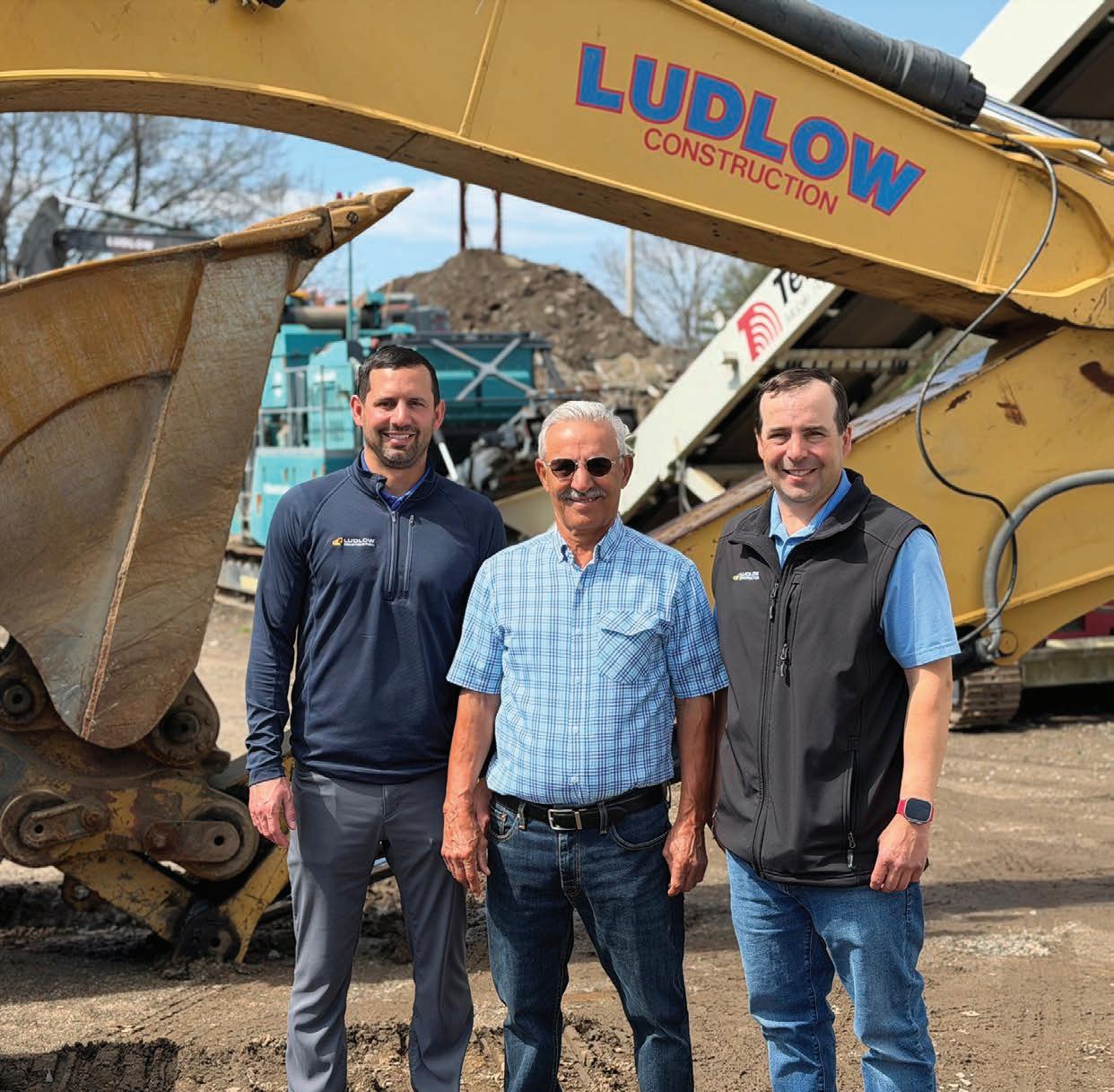
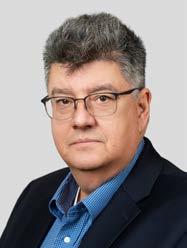
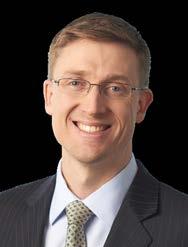
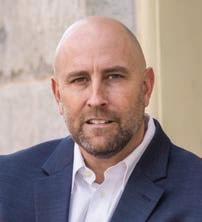
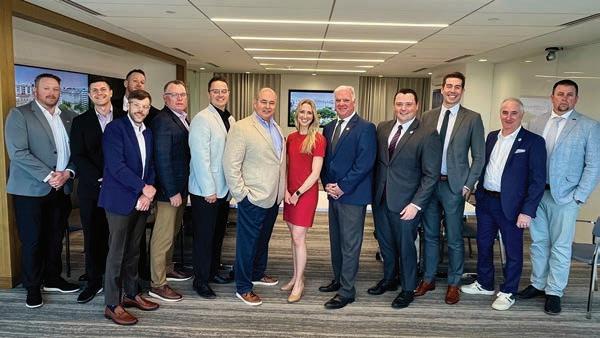
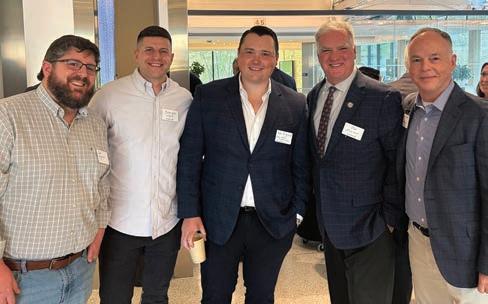
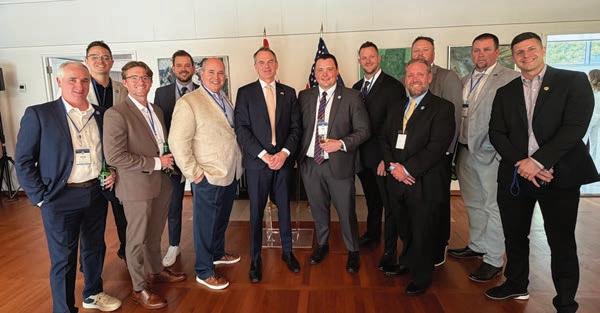
Ludlow Construction Owners (L-R): Michael Pio, Joseph Pio, and Scott Pio
OFFICERS
President
CHRIS
President
QUERINO
Treasurer
LISA
W. L. French Excavating Corp.
Secretary
JUSTIN
J. F.
MARCELLA
GERRY
BRIAN
C. C. Construction, Inc.
JULIA D’ALLESSANDRO
D’Allessandro Corp.
JERRY GAGLIARDUCCI
Gagliarducci Construction, Inc.
MARCO GIOIOSO
P. Gioioso & Sons, Inc.
MARK LANGEVIN
Phoenix Communications, Inc.
WILLIAM LEONARD
Aqua Line Utility, Inc.
KARIN MARSHALL
Boston Concrete Corp.
MIKE McCARTHY
J. Derenzo Co.
RYAN McCOURT
McCourt Construction Company
JOHN McGRATH
Methuen Construction Co.
MICHELE NORTON
HUB International New England
RICHARD PACELLA, JR.
R. M. Pacella, Inc.
FRED ROGERS
Scrap It, Inc./Minichiello Bros., Inc.
MARK SZELA
Insituform Technologies LLC
CHRISTOPHER WALSH
W. Walsh Company, Inc.
JOSEPH NOLAN
Executive Director
3 President’s Message:
IN THIS ISSUE
72 Years Strong: Building Infrastructure, Advocacy, and the UCANE
• Senate Passes Mass Ready Act; Adopts UCANE Amendment to Strengthen WIAC
• House Passes FY27 Budget; UCANE Weighs in on Key Issues
• Wrangling Over Ballot Questions Continues; SJC Enters the Fray
• Administration Awards $10.3 Million to Address Emerging Contaminants like PFAS and Manganese in Drinking Water
•
Editor: Joseph F. Nolan; Magazine Designer/Associate Editor: Sherri Klayman; Associate Editor: Suzanne Hatch; Writer: Brandon Ward Construction Outlook Chair: Chris Valenti Editorial Board: Chris Valenti, Querino Pacella, Lisa French Kelley, and Justin Goodheart
CONSTRUCTION OUTLOOK published monthly by the Utility Contractors’ Association of New England, Inc., 300 Congress Street, Suite 101, Quincy, MA 02169; Tel: 617.471.9955; Fax: 617.471.8939; Email: jnolan@ucane.com; Website: www.ucane.com. Statements of fact and opinion are those of the authors alone and not necessarily those of UCANE and the Construction Outlook editorial board and staff. Subscriptions are included in dues payments for UCANE members. Presorted Standard postage paid at Brockton, MA. POSTMASTER, please send form #3579 to Construction Outlook, Crown Colony Office Park, 300 Congress Street, Suite 101, Quincy, MA 02169.
JOINING FORCES TO BETTER SERVE YOU
The Jack Farrelly Company, Putnam Pipe and HR Prescott have united, as part of the Core & Main family.
• W. Boylston, MA 508-835-4431
• Bloomfield, CT 860-769-6760
• East Lyme, CT 860-739-5457
• New Britain, CT 860-826-0517
• Hopkinton, MA 508-435-3090
• North Haven, CT 203-777-5548
• Westbrook, ME 207-464-0585
• N. Billerica, MA 978-459-6701
• Norwood, MA 781-407-9133
• Taunton, MA 508-880-8736
• Worcester, MA 508-752-7473
• Loudon, NH 603-263-7350
• New Milford, CT 860-210-6262
• Springfield, MA 413-732-8400
• Johnston, RI 401-725-0140
We’re still the dependable experts you’ve always known, but now as one team, continuing to handle all your water, wastewater, fusible, and storm drainage material
72 Years Strong: Building Infrastructure, Advocacy, and the UCANE Family
Since assuming the role of UCANE President in January, it has been an honor to represent an organization and industry built on hard work, professionalism, and strong relationships. At GVC Construction, my wife Geselle, my brother Mike, and I understand firsthand the dedication it takes to succeed in this business and the importance of maintaining a strong, united voice for the underground utility industry throughout New England.
As we move further into the 2026 construction season, UCANE remains focused on one of our most important missions, advocating for sustained investment in water and utility infrastructure throughout Massachusetts and across the country. Water, sewer, stormwater, electrical, and fiber optic systems may largely remain underground and out of sight, but they are among the most essential assets supporting public health, economic development, housing growth, and the daily lives of our residents and businesses.
Our association continues working closely with legislative leaders, regulators, and industry partners both on Beacon Hill and in Washington, D.C. to ensure these critical infrastructure needs remain a priority. Aging water and wastewater systems, lead service line replacement, PFAS mitigation requirements, and growing utility demands all require serious longterm investment and planning. UCANE and its members will continue advocating strongly for policies and funding that recognize these realities and support the contractors and workers responsible for completing this vital work safely and efficiently.
This month, we are also proud to celebrate one of the most meaningful programs within our association, the UCANE Scholarship Program. This year, UCANE will award 12 $3,000 scholarships to deserving students with ties to UCANE member companies. Supporting education and helping the next generation pursue opportunities in our industry and communities is something UCANE takes tremendous pride in.
In addition, for the first time, UCANE will present a scholarship in honor of Fred Laskey upon his retirement after approximately 25 years of distinguished service as Executive Director of the Massachusetts Water Resources Authority (MWRA). Fred has been a tremendous partner to UCANE and a dedicated advocate for water infrastructure investment throughout the Commonwealth. We are honored to recognize his legacy through this scholarship.
We are also looking forward to another great UCANE tradition this summer — our Annual Golf Tournament on July 15 at Pinehills Golf Club in Plymouth. Moving the event to Pinehills will allow us to nearly double participation and welcome even more members, guests, clients, and industry friends for what promises to be a tremendous day at a worldclass facility. I encourage our contractor members to reserve a couple of foursomes and bring out your crews for a great day of networking and camaraderie with peers from across the industry.
UCANE has always been, first and foremost, about its members. For more than 72 years, this association has been an extended family united by a shared purpose. We are proud of the traditions built by the generations before us, and we look forward to many more years together as we continue standing shoulder to shoulder to build and maintain the water, wastewater, electrical, and fiber infrastructure networks that will support our communities for generations to come. n
Senate Passes Mass Ready Act; Adopts UCANE Amendment to Strengthen WIAC
In mid-April, the Massachusetts Senate passed the environmental bond bill, Senate Bill 3064, An Act to Build Resilience for Massachusetts Communities (aka the Mass Ready Act). The bill, which includes approximately $3.94 billion in bonding authorizations, features policy proposals such as the preservation of public beach access, expedited timelines for culvert replacement projects, and requirements to inform prospective homebuyers and renters of flood risks. UCANE is grateful to the Senate for including an amendment to expand the strategy and planning that goes into efforts to continue to close the water infrastructure funding gap.
In particular, the Senate’s version of the Mass Ready Act would authorize state borrowing to invest in a resilient environment and an accessible natural world. According to the Senate President’s Office, the bonding authorizations support priorities in five key areas:
• Guarding Against Climate Change and Extreme Weather Events. Highlighted by $500 million for the Municipal Vulnerability Preparedness (MVP) program, supporting climate resiliency planning in cities and towns.
• Protecting Clean Drinking Water and Soil. $450 million for the Massachusetts Clean Water Trust to protect access to clean water across the Commonwealth, in addition to $120 million for PFAS remediation in public and private wells. $125.5 million to support resource conservation and preservation ini-
tiatives, including $5.5 million for the Healthy Soils Grant Program.
• Investing in Infrastructure. $225 million for coastal infrastructure and resilience. $800.5 million for properties and roadways owned and managed by the Department of Conservation and Recreation (DCR). $521.6 million for state and municipally owned dams across the Commonwealth.
• Conserving the Natural World. $50 million for MassTrails Grants, including $10 million for accessibility upgrades that protect access to trails for all Massachusetts residents. $20 million to support the biodiversity goals of the Department of Fish and Game (DFG).
• Supporting Farmers and Nutritional Food Access. $20 million for capital investments to support the growth and economic competitiveness of the Commonwealth’s agricultural, commercial fishing, and cranberry-growing sectors. $132.5 million for the Food Security Infrastructure Grant (FSIG) program including $7.5 million for the Massachusetts Food Trust Program (MFTP) to increase access to healthy, affordable food.
UCANE filed two amendments to the Senate’s version of the environmental bond bill: one amendment to address treating police details as an administrative item during the bid process and one amendment to refine the focus of the statutorily created Water Infrastructure Advisory Committee (WIAC). UCANE has long argued
continued on page 7
Mark Molloy, Esq.
that the mission of the WIAC, which was created as part of Chapter 259 of the Acts of 2014, is too undefined. The existing mission of the WIAC is simply “to monitor the progress of closing the gap in funding for water, wastewater, and storm water infrastructure.” Given the rise of issues associated with stormwater, PFAS, lead, and other matters not fully contemplated in 2014, the adopted amendment ensures the WIAC’s mission is updated to assess the potential funding gap and costs necessary to close the Commonwealth’s water infrastructure gap. UCANE thanks the Massachusetts Senate for including this more focused and updated mission language within the Mass Ready Act.
The Massachusetts Senate passed the bill on a 36-3 roll call vote. The bill, which now sits in front of the House Committee on Ways and Means, can be viewed at: https://malegislature. gov/Bills/194/S3064. The more refined mission for the WIAC can be found in Section 15 of the bill.
House Passes FY27 Budget; UCANE Weighs in on Key Issues
In late April, the Massachusetts House of Representatives approved its fiscal year 2027 (FY27) budget proposal, totaling $63.41 billion. Over the course of three days of debate, the House added $82.9 million in new spending to their budget proposal for FY27; approximately $1 million more than the total amount of new spending added in FY26 and $4 million less than the three-year average of House debate spending of $86.9 million. Total spending in the House budget is $63.14 billion, slightly higher ($53.8 million) than the Governor’s original proposal.
While this marks the first time since the FY24 budget process that the final House budget includes a higher spending total than the Administration’s recommendation; the gap between the two spending plans remains at less than 1 percent. According to a report by the Massachusetts Taxpayers Foundation (MTF), the House added 815 earmarks to its budget during debate, leading to $74.5 million in new spending. This was 26 more earmarks than were added during the House’s FY26 budget process. The number of earmarks added to the budget – in both the House and Senate – has steadily increased over the last several years.
Key Funding Highlights for UCANE’s Areas of Interest:
• Level funding of $63.3 million for the Clean Water Trust’s contract assistance.
• $1.5 million for the Commonwealth Sewer Rate Relief Fund.
• $5.9 million for the underground storage tank program.
• Slightly over $51.1 million in funding for the MassDEP.
UCANE, in addition to reviewing the over 1,700 budget amendments offered to FY27, the association weighed in with support on two of the proffered amendments (increasing the MassDEP’s administrative line-item and further delaying ACT/ HDO rules if held legal) and in opposition to one amendment (applying prevailing wage to offsite fabrication). In supporting an increase to
the MassDEP line-item, UCANE wrote that:
“With increased funding for its operating line-item (2200-0100), the MassDEP can do incredible work in maximizing the SRF program and address the many water infrastructure issues facing the Commonwealth. This not only benefits the Commonwealth, but directly assists municipalities and their residents who rely on the MassDEP’s expertise in navigating the SRF process. From UCANE’s perspective, any increase in municipalities utilizing the SRF program
Legislative Update continued from page 9
means more construction work and, accordingly, the creation of more good paying jobs. As the Commonwealth tries to continue its economic growth in the light of softening revenues, programs that create job growth while improving our infrastructure are vitally important.”
While the House did not adopt language relative to increasing the MassDEP’s line-item, the overall budget process usually sees the line-item increased in subsequent drafts. In opposition to an amendment trying to apply prevailing wage to offsite fabrication, UCANE joined with the Associated Builders and Contractors (ABC), Associated General Contractors, Massachusetts (AGCMA), Associated Industries of Massachusetts (AIM), Associated Subcontractors of Massachusetts (ASM), Construction Industries of Massachusetts (CIM), and the National Association of Industrial and Office Properties, Massachusetts (NAIOPMA) in successfully opposing the same.
The Massachusetts Senate will present its own budget in early May. Following that, a Conference Committee will be formed to reconcile differences between the House and Senate versions before the July 1 deadline marking the start of FY27.
For more details on the House FY27 budget, visit: https://malegislature.gov/Budget/HouseBudget.
continued on page 13
COMPONENT
Wrangling Over Ballot Questions Continues; SJC Enters the Fray
The Massachusetts Supreme Judicial Court (SJC) recently issued closely watched advisory opinions on two proposed 2026 ballot questions aimed at reforming the Legislature— one targeting legislative stipends and the other expanding application of the public records law. The opinions were requested by the Massachusetts Senate, which invoked a rarely used constitutional mechanism to seek guidance on whether the initiatives comply with separation - of- powers principles. While advisory opinions are not legally binding, they carry significant weight and are likely to shape both legislative action and the trajectory of the ballot campaigns heading toward the November election.
On the proposed reform of legislative stipends, the justices expressed substantial constitutional concerns. The measure would condition lawmakers’ eligibility for additional compensation
on compliance with procedural and performance requirements tied to legislative activity. The court concluded that, while compensation itself can be addressed through the initiative process, the proposal appears to go further by attempting to regulate internal legislative procedures—an area constitutionally reserved to the House and Senate. As a result, the justices signaled that the stipend proposal likely exceeds the permissible scope of a ballot initiative by intruding on the Legislature’s authority to govern its own rules and operations.
In contrast, the court took a more favorable view of the proposed public records ballot question. That measure would extend Massachusetts’ public records law to cover the Legislature and the Governor’s Office—entities historically exempt from its reach. The justices concluded that the proposal constitutes a valid “law” rather than an im -
continued on page 15
P.O. Box 913 • Falmouth, MA 02541
396 Gifford Street • Falmouth, MA 02540
PH 508-548-1800 • FX 508-457-1825
Visit our website @ www.lawrencelynch.com White Bros. – Lynch Corp.
P.O. Box 155 • Oak Bluffs, MA 02557
PH 508-693-0845 • FX 509-693-0312 Lawrence-Lynch Corp.
20 Vineyard Ave. • Oak Bluffs, MA 02557
permissible attempt to dictate internal legislative procedure, emphasizing that its primary purpose is to create a new public right of access to government records rather than to regulate how the Legislature conducts its internal business. This distinction allows the public records initiative to proceed on firmer constitutional footing, setting up a clear divergence between the two reform efforts as they advance toward
The SJC’s work is not done yet. The ballot question relative to reducing the income tax from five percent to four percent faces scrutiny in May as opponents attempt to strike it from the ballot as a result of its potentially impermissible wording. In addition, the Massachusetts Executive Office of Administration and Finance (ANF) recently released a memorandum highlighting that passage of the income tax ballot may jeopardize separate charitable giving and corporate tax relief provisions – resulting in taxpayers being unable to claim relief under either provision. Expect more news related to the income tax ballot initiative as we approach the end of the legislative session in July.
continued on page 17
We improve the lives of our partners, and our family by going beneath the surface to build America’s essential infrastructure.
While we’re capable of taking on any trenchless construction project across the U.S., we’re bestsuited for the hard jobs no one else wants to touch.
We are proud to offer an array of trenchless construction methods to choose from to perfectly fit every job. Partner with us on your next project.
Jack and Bore
Hand Mining
Micro-tunneling
Conventional Tunneling
Horizontal Directional Drilling
Rehabilitation
Bettering lives from the ground up
Built on Experience, Focused on Results.
With a track record of excellence and positive outcomes, our nationally recognized Construction & Public Contracts practice is committed to delivering results for you and your business. We understand construction and our clients’ needs and businesses. Our experienced attorneys thrive on addressing complex challenges by leveraging their extensive industry knowledge, partnering with industry leaders, and participating in a vast network of professional affiliations.
Our comprehensive suite of services includes contract analysis, drafting, negotiation, procurement and bid protest issues, strategic project advice, crisis management, claims preparation, prosecution and defense, and all forms of dispute resolution, such as mediation, arbitration, litigation, and appeals. We also assist with compliance and investigations, OSHA investigations, insurance recovery, and risk management.
We can help you navigate any phase of your project and protect your interests through practical advice and effective legal strategies.
Administration Awards $10.3 Million to Address Emerging Contaminants like PFAS and Manganese in Drinking Water
In April, the Healey-Driscoll Administration announced that more than $10.3 million in grants have been awarded to 18 public water suppliers to promote consistent access to clean drinking water for Massachusetts residents. The Massachusetts Department of Environmental Protection (MassDEP) selected these projects to help treat and remove contaminants such as PFAS and manganese. This grant program is federally funded; MassDEP collaborates with the U.S. Environmental Protection Agency (EPA) to support projects that assist small and disadvantaged communities to address drinking water contaminants, including those identified on EPA’s Contaminant Candidate Lists.
According to the press release from the MassDEP, PFAS and manganese are among
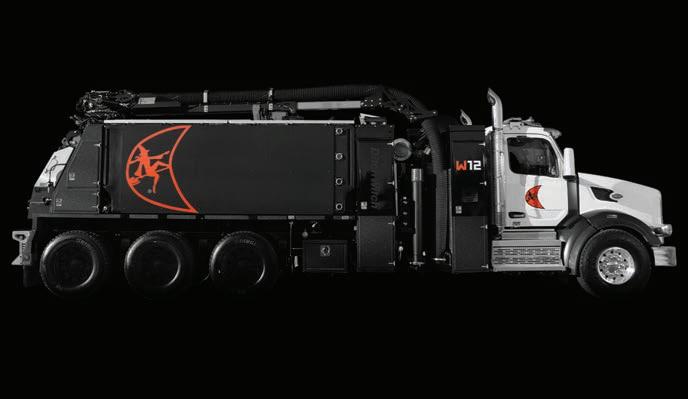
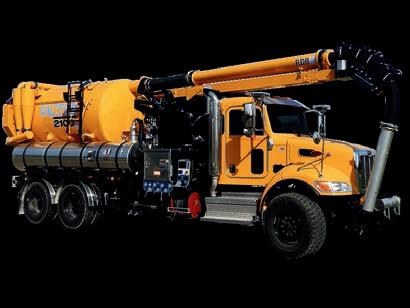
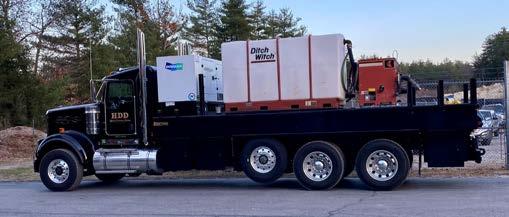
The Biggest, Baddest Ditch Witch Hydrovac to ever hit the wild ...
Introducing the most powerful Ditch Witch truck vac to ever hit the open road — the Warlock Series W12. With a 2,800 PSI water system, 12 cubic yard debris tank capacity, and a 5,000 CFM, 27″ Hg vac system, this beast-of-a-machine easily devours jobs of all shapes and sizes.
the list of contaminants that are increasingly impacting water resources. PFAS are a group of harmful man-made chemicals widely used in common consumer products, industrial processes, and in certain firefighting foams. Exposure to sufficiently elevated levels of PFAS compounds can cause a variety of health effects, including developmental effects in infants, impacts to certain organ functions and the immune system, and an elevated cancer risk. Manganese is a naturally occurring element that is present in water, soil, air, and food. While a small amount of manganese is necessary for good health, long-term exposure to high levels in drinking water may have adverse impacts to the human nervous system.
Middletown, DE: 302-376-0784 Baltimore, MD 410-687-1700
Legislative Update continued from page 17
Among some of the public water system projects receiving grant awards, included but not limited to:
• East Brookfield Water Department, East Brookfield ($500,000). The public water system will use these funds to provide treatment for removal of iron and manganese from an existing well, along with construction of new well and treatment plant.
• Falmouth Water Department, Falmouth ($250,000). The public water system will use these funds for an evaluation and assessment of source water (including for PFAS and Manganese) at existing and previously installed wells along with the permitting and development of new source water to begin the planning and design of a new treatment facility.
• Huntington Water Department, Huntington ($700,000). The public water system will use these funds for connection of a household with PFAS contamination to the existing public water system and testing of neighboring private wells.
• Maynard DPW, Water Division, Maynard ($2,300,000). The public water system will use these funds for pilot testing and a feasibility study for PFAS and manganese removal and to begin the planning and design of a combined treatment system.
• Milford Water Department, Milford ($1,000,000). The public water system will use these funds for a pilot study to evaluate alternative PFAS removal processes for the design of a new water treatment plant, and for construction of the water treatment plant.
• Norton Water Department, Norton$1,500,000. The public water system will use these funds for an alternatives analysis and pilot testing to address PFAS and manganese at two well sources, and to address PFAS at an existing treatment plant.
• Rowley Water Department, Rowley ($1,500,000). The public water system will use these funds for piloting, planning and design, and construction of a new water treatment system to remove PFAS from the source water.
continued on page 21
Products and Services
Legislative Update continued from page 19
• Templeton Municipal Light and Water Plant, Templeton ($500,000). The public water system will use these funds for a pilot testing and feasibility study to address PFAS, and to begin the planning and design for construction of a water treatment facility.
• Ware Water Department, Ware ($500,000). The public water system will use these funds for pilot testing and a feasibility study for PFAS and Manganese removal along with the planning and design of a new water treatment plant.
• Webster Water Department, Webster ($500,000). The public water system will use these funds for the construction of two new PFAS treatment facilities to remove PFAS from two water system wells.
For more information about grants available under the Emerging Contaminants in Small or Disadvantaged Communities program, please visit: https://www.mass.gov/info-details/emerging-contaminants-in-small-or-disadvantagedcommunities-grant.
continued on page 23
150 Grossman Drive Suite 200
Braintree, MA 02184 (617) 773-9200 LEXINGTON
238 Bedford Street
Lexington, MA 02420 (781) 861-1800
News in Brief
• Commonwealth Returns to Adding … Some Jobs. The end of April saw the Executive Office of Labor and Workforce Development release March 2026 jobs figures. Preliminary data shows that the state added 6,800 jobs, shortly after Massachusetts lost 7,200 jobs in February. Overall, state data shows Massachusetts lost 7,500 jobs since March 2025, although it added 12,700 jobs over the past six months. The Massachusetts unemployment rate landed at 4.7% in March, ticking down from February’s 4.8% but up from 4.3% in March 2025.The national unemployment rate was 4.3% in March. The state’s labor force fell by 15,000 in March with 12,300 fewer people employed and 2,700 fewer unemployed, according to officials. There were also about 64,200 fewer employed people in March compared with the year before. Massachusetts' labor force participation rate was 65.8% for the month, down from a revised 66% in February and 66.7% last year. The national labor force participation rate was 61.9% in March. Sectors seeing job growth in March included professional and business services (3,400 jobs gained), trade, transportation, and utilities (2,400 jobs), construction (2,000 jobs), and education and health services (2,000 jobs). Sectors that lost jobs were information (500 jobs), other services (600 jobs), and leisure and hospitality (2,300 jobs lost). Jobs in financial activities were level in March.
• Administration Awards $70 Million for Additional Vocational School Opportunities. The Healey-Driscoll Administration announced on the last day of April that it has awarded more than $70 million in Career Technical Education (CTE) program capital grants to 28 high schools and career technical schools across Massachusetts. This multi-year investment will significantly expand access to hands-on learning opportunities and help meet the growing demand for careerconnected education statewide. The funding will create up to 2,500 new CTE seats by expanding 23 career tech programs, launching 27 new CTE programs and upgrading equipment, technology, and lab spaces across participating schools. CTE programs are offered during the regular school day at dedicated CTE schools and at some traditional high schools. Further, CTE Partnership Programs “After Dark,” expand access by offering CTE programs outside of the traditional school day. CTE programs also support adult learners, particularly unemployed and underemployed individuals from underserved populations and underrepresented groups, with career train
ing and technical skills to meet the needs of Massachusetts employers through the Career Technical Initiative (CTI).
• EPA Releases Sewer Overflow Funding. The EPA announced the availability of approximately $80 million through the Sewer Overflow and Stormwater Reuse Municipal Grant program to help communities address stormwater and sewer infrastructure needs. According to an EPA press release, the grants will strengthen systems that safely capture and manage stormwater to help prevent contaminants, including untreated sewage, from polluting nearby waterways. The agency will provide funding from both fiscal years 2025 and 2026 totaling $2,927,000 to Massachusetts, which will disperse funding accordingly. Stormwater can be a significant source of water pollution and a public health concern. It can collect various pollutants, including trash, chemicals, oils, and dirt/sediment, and convey them to nearby waterways. When mixed with domestic and industrial wastewater in combined sewers, stormwater can also contribute to combined sewer overflows during heavy storm events. n
Construction & Public Contracts Group, Hinckley Allen, LLP
Lean, Mean, “Fraud-Fighting” Machine: The United States Department of Justice Creates a New “National Fraud Enforcement Division”
In an April 7, 2026, written memorandum for the United States Department of Justice (“DOJ”), the Acting Attorney General of the United States established a new “National Fraud Enforcement Division” to streamline and strengthen efforts to attack government fraudsters. This latest enforcement effort underscores the need for public contractors to deal forthrightly with federal, state, and local governments.
The Acting Attorney General advised that the DOJ “has never adopted a comprehensive and coordinated approach to investigating and prosecuting fraud against taxpayer dollars and taxpayer funded programs.” Until now.
The “core mission” of the National Fraud Enforcement Division will be to “zealously investigate and prosecute those who steal or fraudulently misuse taxpayer dollars.” It will “fulfill” this “mission” by:
• “Coordinating with agencies responsible for administering benefit programs;”
• “Partnering with federal, tribal, state, territorial, and local law enforcement on fraud-fighting efforts;”
• “Developing systems and processes that ensure identification of fraud against taxpayer dollars;” and
• “Equipping prosecutors and law enforcement with state-of-the-art tools and resources needed to bring criminal actors to justice.”
The DOJ will start by “consolidating and realigning relevant resources into the National Fraud Enforcement Division” to “avoid duplication,” “minimize layers of bureaucracy,” and “maximize results.” The DOJ will also take “immediate action” to expand the
new National Fraud Enforcement Division into a “robust litigating division.”
The memorandum went on to direct the establishment of more than a dozen detailed “protocols” to “ensure swift movement towards fulfilling the mission” of the new division. Among other things, the National Fraud Enforcement Division will assume “operational control” over several fraud units, including the Government Fraud Unit. Not only that, each United States Attorney’s Office: (1) will designate an experienced prosecutor to be responsible for administering the mission of the National Fraud Enforcement Division in each district; and (2) must “ensure” that “investigations and prosecutions for fraud against tax-
continued on page 27
Christopher Morog Partner
Robert T. Ferguson Partner
payer-funded programs are adequately staffed and diligently pursued.” The memo also called for the establishment of a grant program “to enable state and local prosecutors to join the mission of the National Fraud Enforcement Division as Special Attorneys or Special Assistant U.S. Attorneys.”
In addition, the memo requires the Office of Legal Policy to review “relevant laws, regulations, and guidelines bearing on fraud investigations, prosecutions, and penalties, and provide recommendations to the Deputy Attorney General for strengthening such laws, regulations, and guidelines.”
Public contractors should take notice, as the DOJ routinely seeks to hold contractors in fraud and false claims cases accountable for their actions. Only 15 days after the DOJ announced its new fraud-fighting initiative, the DOJ announced that it had commenced a civil forfeiture action against an out-of-state defense contractor. Alleging a “corrupt scheme” to obtain taxpayer dollars in connection with Department of Defense contracts, the government is seeking the forfeiture of a mansion that was allegedly purchased and renovated with $30 million in illicit funds.
This is just a recent example. Public contractors often operate under a microscope because they are
constantly making statements, representations, and certifications to federal, state, and/or local governments in exchange for payment for work performed under government contracts. Think: applications for payment, change order requests, and the like. Contractors face the risk of potential exposure if these types of statements, representations, and certifications are not fully accurate. Of course, each case rises and falls on its facts.
That said, knowing that the government is further ramping up its efforts to mount more coordinated and streamlined enforcement actions against suspected fraud, public contractors should review and update their policies as necessary, diligently administer those policies, and train their teams. It is critical for public contractors to recognize potential red flags or exposure areas, and act appropriately to address them. Even where government officials seemingly invite action – such as requesting a contractor to bill for one pay item under a different pay item – contractors should be careful not to bill for work they did not actually perform. Otherwise, they can run the risk of an unwanted government enforcement action. n
April 2026 Monthly Update
Water Week 2026
April 2026 Monthly Update
FY27 Appropriations Process
CWater Week 2026
Water Week 2026
oalition members gathered in Washington during the week of April 13 for Water Week events alongside a range of water sector stakeholders. Representatives from Illinois, New England, and New Jersey held dozens of meetings with their congressional delegations, building relationships and making the case for protected and sustained federal water infrastructure funding.
The FY27 budget and appropriations process has continued to ramp up in April.
Coalition members gathered in Washington during the week of April 13 for Water Week events alongside a range of water sector stakeholders. Representatives from Illinois, New England, and New Jersey held dozens of meetings with their congressional delegations, building relationships and making the case for protected and sustained federal water infrastructure funding.
Members also gathered for an in-person coalition meeting, featuring guest speakers from the Association of State Drinking Water Administrators (ASDWA) and the National Association of Water Companies (NAWC), who shared their perspectives on federal water policy, as well as ways that their organizations can work more closely with CWCC. We also leveraged the coalition meeting to discuss ways to best harness and expand the coalition’s efforts to make change in Washington.
On Friday, April 3, the President’s Budget Request for federal agency spending levels was submitted to Congress. As was the case in FY26, the EPA budget documents recommended a nearly 90% cut to the Clean Water and Drinking Water State Revolving Fund (SRF) programs, as well as a massive cut to the Water Infrastructure Finance and Innovation Act (WIFIA) loan program.
Coalition members gathered in Washington during the week of April 13 for Water Week events alongside a range of water sector stakeholders. Representatives from Illinois, New England, and New Jersey held dozens of meetings with their congressional delegations, building relationships and making the case for protected and sustained federal water infrastructure funding.
Members also gathered for an in-person coalition meeting, featuring guest speakers from the Association of State Drinking Water Administrators (ASDWA) and the National Association of Water Companies (NAWC), who shared their perspectives on federal water policy, as well as ways that their organizations can work more closely with CWCC. We also leveraged the coalition meeting to discuss ways to best harness and expand the coalition’s efforts to make change in Washington.
In addition to our own CWCC meetings and programming, coalition members attended several other events alongside partners throughout the water sector. This included:
It is important to remember that the President’s Budget Request is merely a recommendation to Congress, and not a policy measure with any real impact. Still, these sharp cuts are a disappointing picture of the administration’s position towards spending on water infrastructure. CWCC responded, releasing a press statement criticizing the budget request. This statement was shared with congressional offices in addition to media outlets.
Members also gathered for an in-person coalition meeting, featuring guest speakers from the Association of State Drinking Water Administrators (ASDWA) and the National Association of Water Companies (NAWC), who shared their perspectives on federal water policy, as well as ways that their organizations can work more closely with CWCC. We also leveraged the coalition meeting to discuss ways to best harness and expand the coalition’s efforts to make change in Washington.
In addition to our own CWCC meetings and programming, coalition members attended several other events alongside partners throughout the water sector. This included:
• Opening happy hour and reception hosted by the Reservoir Center for Water Solutions, a collaborative coworking and event space in DC’s Navy Yard. CWCC was recently approved to become a formal partner of the Reservoir Center (more on this below).
In addition to our own CWCC meetings and programming, coalition members attended several other events alongside partners throughout the water sector. This included:
• Opening happy hour and reception hosted by the Reservoir Center for Water Solutions, a collaborative coworking and event space in DC’s Navy Yard. CWCC was recently approved to become a formal partner of the Reservoir Center (more on this below).
Current Strategies also released two updated reports about SRF cuts. In early April, Current released the Federal Water Funding Cliff report, which shows the state-by-state impacts of supplemental Infrastructure Investment and Jobs Act (IIJA) water infrastructure investments expiring, leading to a roughly 75% reduction in the funds states would receive for water infrastructure relative to the five years covered under IIJA.
• Opening happy hour and reception hosted by the Reservoir Center for Water Solutions, a collaborative coworking and event space in DC’s Navy Yard. CWCC was recently approved to become a formal partner of the Reservoir Center (more on this below).
• Panel discussions and keynote remarks at Water Week programming hosted by national water utility trade associations. This included remarks from members of Congress, EPA political leadership, and other water sector stakeholders.
• Panel discussions and keynote remarks at Water Week programming hosted by national water utility trade associations. This included remarks from members of Congress, EPA political leadership, and other water sector stakeholders.
• A rooftop reception at DC Water ’s headquarters.
• A rooftop reception at DC Water ’s headquarters.
• A reception at the Danish Embassy, co-hosted by Current Strategies and Grundfos.
On April 27, Current released the Draining our Future report, which shows the state-by-state impacts of the additional 89% reduction to the SRF programs recommended in the budget request. Both reports were covered in Politico and shared broadly on Capitol Hill ahead of hearings to consider funding levels.
• Panel discussions and keynote remarks at Water Week programming hosted by national water utility trade associations. This included remarks from members of Congress, EPA political leadership, and other water sector stakeholders.
• A reception at the Danish Embassy, co-hosted by Current Strategies and Grundfos.
• A rooftop reception at DC Water’s headquarters.
We were excited to see many coalition members during the week, and we look forward to building this event further in future years as a staple of how CWCC engages in Washington.
• A reception at the Danish Embassy, co-hosted by Current Strategies and Grundfos.
We were excited to see many coalition members during the week, and we look forward to building this event further in future years as a staple of how CWCC engages in Washington.
We were excited to see many coalition members during the week, and we look forward to building this event further in future years as a staple of how CWCC engages in Washington.
In FY26, Congress thankfully did not follow the administration’s recommendation to enact sharp cuts in water funding, instead passing final appropriations bills that included flat levels of funding for the SRFs and WIFIA. We are optimistic that Congress will operate in the same way for FY27, and are advocating strongly for maintained, if not increased, levels of funding.
continued on page 31
PIPE RENEWAL OR REPLACEMENT, MANHOLE REHAB
• Geopolymer Lining
• Pipe Bursting
• Manhole Rehabilitation
PIPE RELINING
• CIPP Lining
• UV CIPP Lining
• Slip Lining
• Clean & CCTV
Serving the municipal and industrial markets, you can count on Vortex Services Northeast for end-to-end trenchless rehabilitation services!
INSPECTION, CLEANING & ASSESSMENT
• Multi-Sensor Inspection
• Specialty Cleaning
GROUTING
• Leak Stoppage
• Soil Stabilization
• I&I Prevention
In the lead up to appropriations bills being released and marked up over the next two months, Current is engaging with all members of the House and Senate Appropriations Committees to share the coalition’s appropriations requests and messaging around the importance of water funding. In addition to the coalition’s own advocacy meetings and letters, CWCC has endorsed multiple sign-on letters with other water sector organizations.
Next steps in the process for FY27 included a series of budget hearings during the week of April 27, in which EPA Administrator Lee Zeldin defended his Agency’s budget request before several congressional committees. Current is engaging with these committee members to share specific information on the impacts of water funding cuts to members’ states and districts, as well as to plant questions. Current and CWCC will share customized coverage of these hearings with coalition members in follow up.
Following the EPA budget hearings, the House and Senate Appropriations Subcommittees on Interior, Environment, and Related Agencies, will release bill text and hold markups to consider their draft FY27 spending bills. The House has scheduled its markup
for Thursday, May 21, and the Senate’s markup is yet to be scheduled, but will most likely take place in June.
EPA Reauthorization Legislation
Congressional activity is continuing around legislation to reauthorize EPA water infrastructure programs which are set to expire after the current fiscal year (FY26). These programs include the Clean Water and Drinking Water SRFs, WIFIA, and several complementary grant programs that support drinking water, wastewater, and stormwater investments nationwide.
Key committees in the House and Senate fielded legislative priorities from members of Congress related to this effort in January and February, a process which Current and CWCC engaged with to share support for reauthorizing core programs and providing direct appropriations, as was done in the Infrastructure Investment and Jobs Act (IIJA).
In April, we heard updates from the Senate Environment and Public Works (EPW) Committee staff that are leading efforts to draft an initial bill, which they hope to release in May or June. A central piece to these negotiations is the authorized level of annual funding that will be assigned to the SRF programs.
IS YOUR INSURANCE PROGRAM KEEPING PACE IN TODAY’S MARKET?
Let us review your programs and recommend improvements to ensure you are fully protected should the unexpected happen.
Following consultation with EPW staff, Current is leading a letter with CWCC and other national water sector organizations to request the highest practicable authorized funding amount of $5.85 billion for each the Clean Water SRF and Drinking Water SRF.
In addition to supporting reauthorization of the SRFs at increased levels, Current and CWCC are also supporting the reauthorization of the full suite of State and Tribal Assistance Grants (STAG) that may
be used to fund infrastructure projects. Authorizing these programs is a prerequisite step that puts pressure on the House and Senate Appropriations Committees to maintain and increase funding for water infrastructure in annual spending bills.
We will continue to track and engage with this legislation and provide timely updates to coalition members. It is expected that the negotiation process around this bill will continue throughout the calendar year.
UCANE’S Employee Safety Manuals
Your Company Must Have a Comprehensive Safety Program!
This year’s Safety Manual includes information on:
• Updated DOL Drug Testing information and Updated CDL information
• Massachusetts Safety Standards - COVID-19
• OSHA’s Final Rule on Silica Exposure Limits
• OSHA’s Final Rule on Improved Tracking of Workplace Injuries and Illnesses
• OSHA’s Final Rule on Confined Space in Construction
• OSHA’s New Requirements for Reporting Severe Injuries
Promote a Safe Working Environment
It should be your company’s policy to provide a safe place to work, with the prevention of accidents being your ultimate goal. Your Insurance/Bonding carrier requires a Safety Program. State and Federal Agencies require a Safety Program.
OSHA Inspectors Will Be Enforcing:
• Overall Construction Safety (29 CFR 1926)
• Excavating Standards
• Written Safety and Health Plans
• Hazard Communications Programs
• Drug Free Workplace
• OSHA 10-Hour Training Requirements
Examine the UCANE Pocket Directory
When ordering Company Safety Manuals, the Safety Manual section only, in the back of UCANE’s Pocket Directory, will be made up into an individual Employee Pocket Safety Manual with Your Company Name and Logo printed on the cover. Employee signature cards verifying compliance with safety manual procedures are included. When signed, these cards should be placed in each employee’s file.
Employee Pocket Safety Manual Order Form
Company Name:___________________________________ Authorized By:________________________
Pocket Manuals w/Signature Cards: Qty.:____________ x $4.75 Ea. = $_________________________
Printing and Set Up Charge for Personalized Covers: $_________________________
Company Logo enclosed Company Logo to be mailed My check is enclosed EMPLOYEE
Employee Pocket Safety Manuals are available to UCANE members only. PAYMENT MUST ACCOMPANY ORDER. Utility Contractor’s Association of New England, Inc. • 300 Congress Street, Suite 101 • Quincy, MA 02169
Ludlow Construction Company and the Enduring Strength of Western Massachusetts
There is a particular kind of pride in Western Massachusetts.
Long before most people are awake, lights are already on in equipment yards across New England. Coffee is poured, engines turn over, and trucks roll out toward jobsites where the day’s work begins long before sunrise. In heavy civil construction, the rhythm is familiar: early mornings, long days, and a shared understanding that the work ahead matters. For more than 30 years, that routine has defined Ludlow Construction Company.
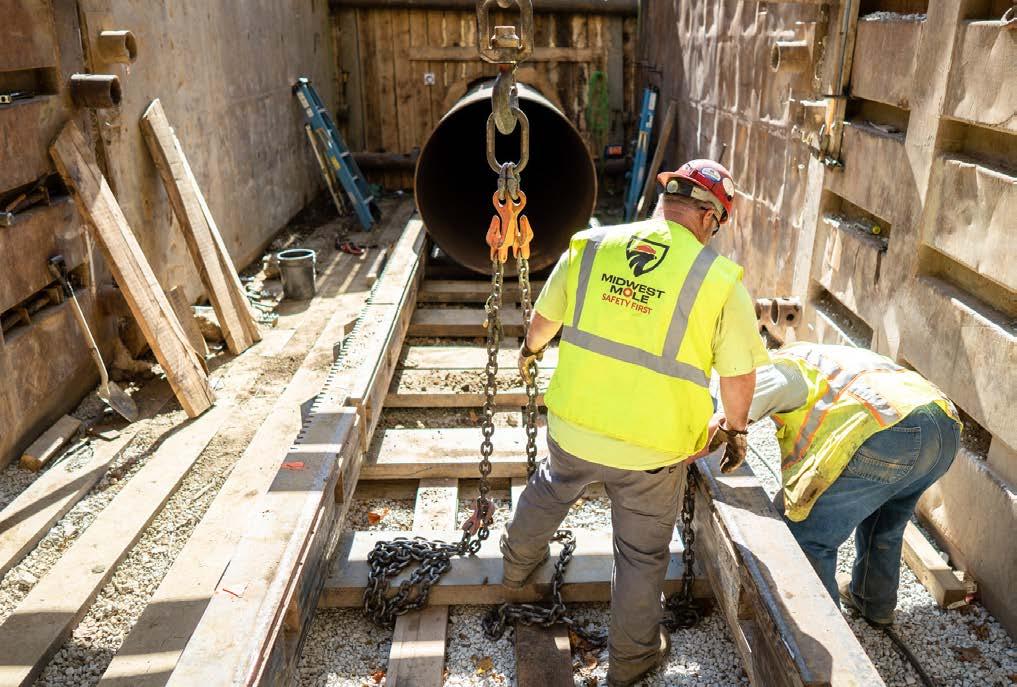
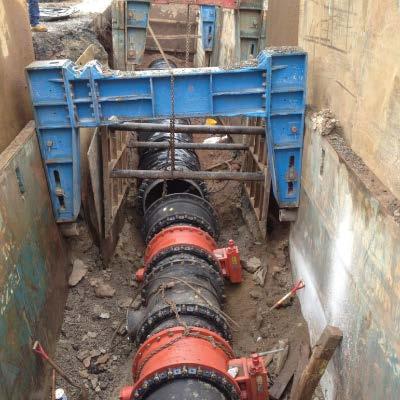
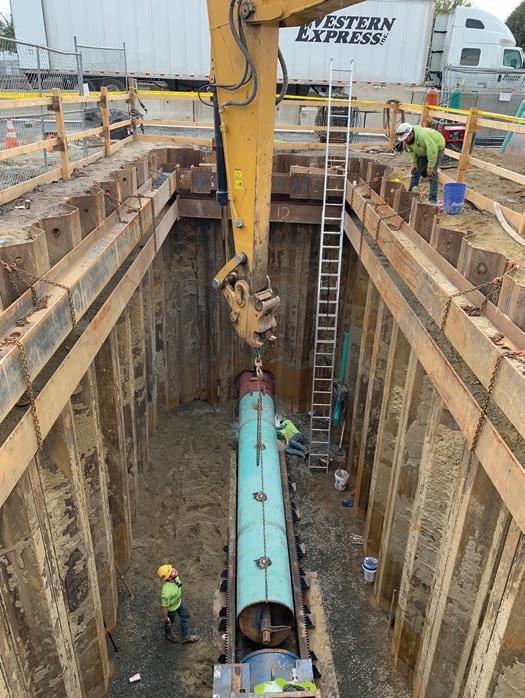
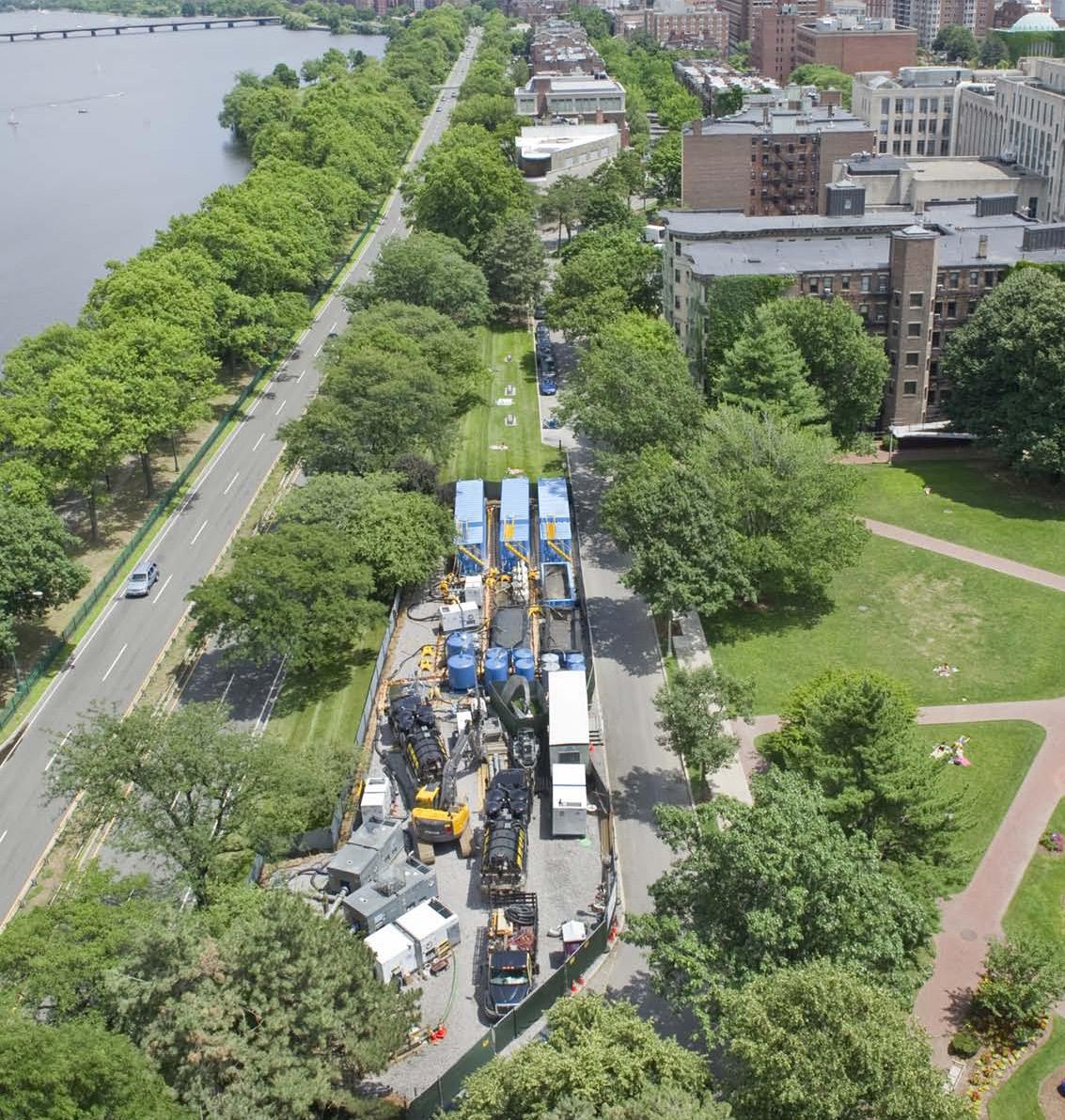
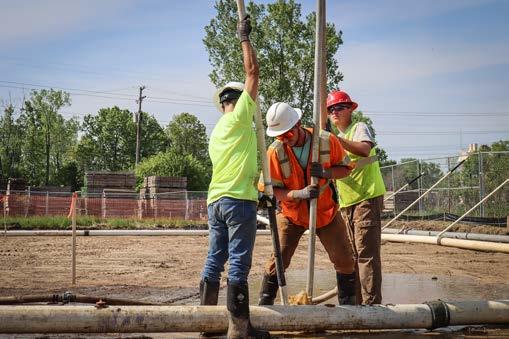
MDC West Hartford - Ludlow crews work to install a 42-inch water main.
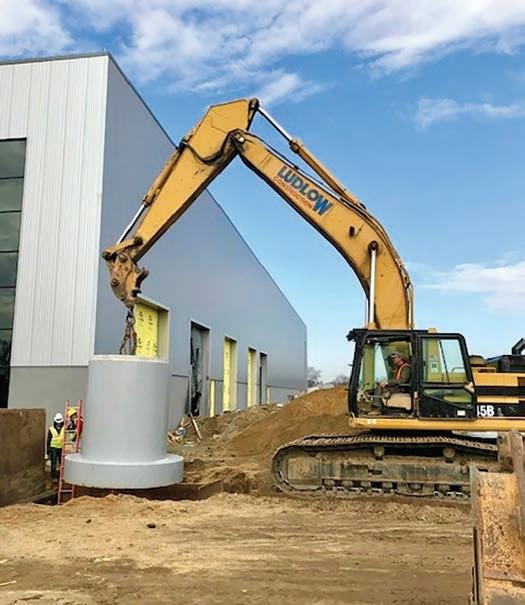
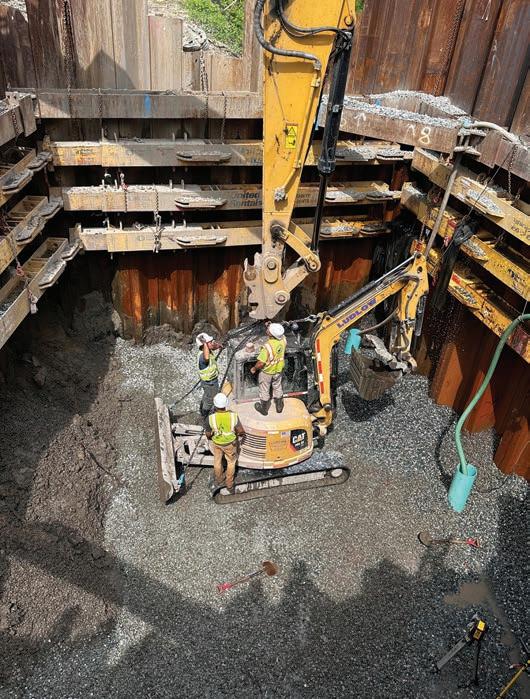
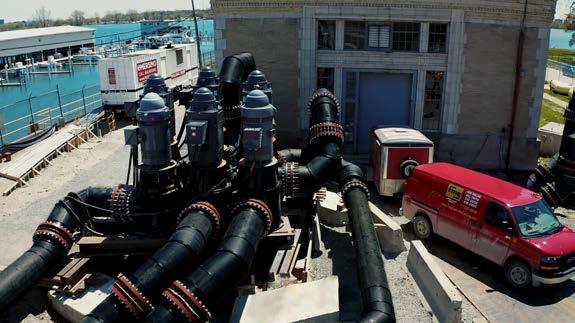
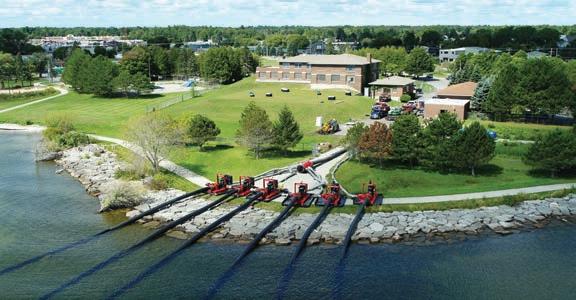
CRRC Springfield, MA - Crews installing a pumping station on the rail car site.
Founded in 1992 and headquartered in Ludlow, Massachusetts, the company has grown into one of the region’s most respected civil and utility contractors. Ludlow is family-owned business – built from the ground up by Joseph Pio. Born in northern Portugal and oldest of five children, Joseph took on the responsibility of helping provide for his family from a young age. The Pio family moved to the United States when Joe was eight. A true self-starter, Joseph worked multiple jobs to put himself through college at North Adams State, where he majored in accounting. During his college years, he was drafted into the Army during the Vietnam War. After returning home to Ludlow, he began working for a local road construction company as an accountant and learning the business. It quickly became clear to him that a well-managed company held tremendous potential for success.
In 1978, Joe and two partners founded F&J Construction, specializing in water, sewer, and roadwork projects. Over the next 13 years, the company experienced steady growth, expanding its capabilities and establishing a strong reputation throughout the region. However, in the early 1990s, Joseph and his partners made the decision to part ways.
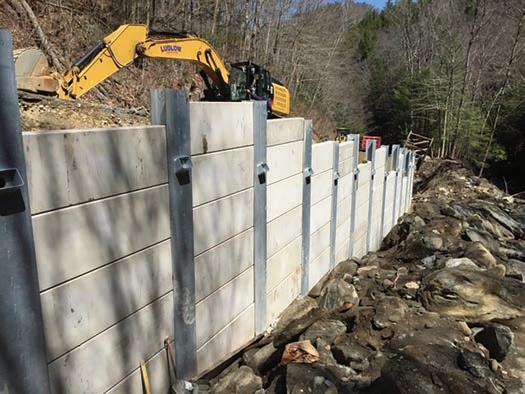
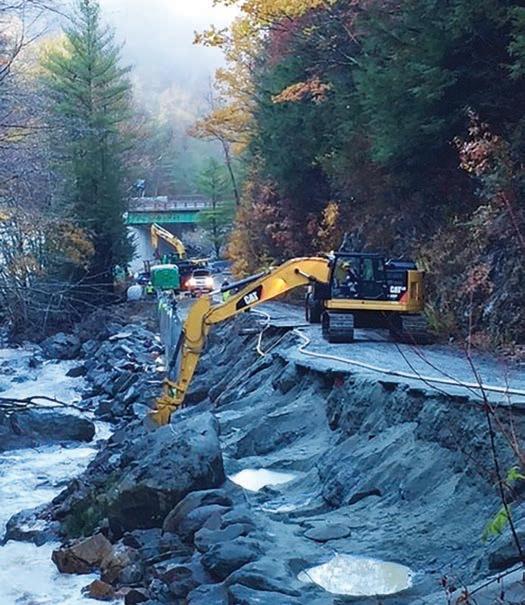
Rock Rd., Savoy, MA
begins excavation in preperation of soldier wall after Hurricane Irene washed out the road completely.
day. Despite these many obstacles, Ludlow Construction began to show signs of success.
In the early 2000s, sons, Scott, a graduate of Bentley University (2000), and Michael a graduate of Brandeis University (2005) joined their father in the business. True to Joe's belief that his sons should know every aspect of the business, both sons started as laborers, working during their college summer breaks. The brothers worked their way through the ranks to become foreman, each running their own crews. Today, Scott and Mike lead the company's day-to-day operations — Scott as President and Michael as Treasurer/Secretary. Over the past 15 years, the brothers have played an instrumental role in driving the company's remarkable growth. What began as a two-crew operation has grown into a thriving company of more than 100 employees — including six family members who share in the vision.
Under the Pio’s leadership, Ludlow Construction has grown while maintaining discipline. Investments in equipment and workforce have been measured. Relationships with municipalities and private clients have been cultivated over time. “When you’re a family company, your name is associated with everything you do,” Scott Pio, the company President, reflects. “We’ve always believed that if we’re going to build it, we’re going to build it right.
Undeterred, Joe took on the immense challenge of building a new construction business from the ground up. In 1992, Joe along with partner, John Chelo, established Ludlow Construction Co. Inc. Starting over meant more than just a new name—it required dealing with high startup costs of purchasing equipment, securing financing and insurance, hiring skilled employees, winning bids in an already competitive market, and taking on significant financial risk. Building the business meant long days that rarely ended when the work did. After hours spent on jobsites, Joe would then shift his focus to the behindthe-scenes demands of handling finances, coordinating logistics, managing schedules, and planning for the next continued on page 36
Black
- Ludlow
Black Rock Rd., Savoy, MA - Crews work to install soldier pile wall.
These are communities we live in. These are roads our families drive on. That matters to us.”
Ludlow Construction reflects both the character of Western Massachusetts and the values that define the Utility Contractors’ Association of New England, Inc.: craftsmanship, reliability, safety, and long-term stewardship. To understand the company, you have to understand the nature of its work. This is not decorative construction. It is not ribbon-cutting architecture. It is the infrastructure beneath the surface — the systems that allow communities to function every day without most people ever noticing.
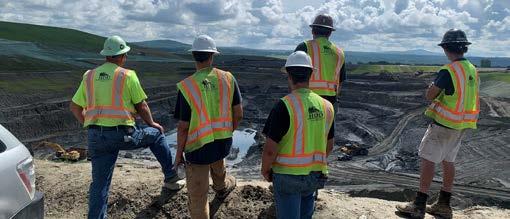
Much of this work disappears once the job is finished. That invisibility is a sign of success. For more than three decades, Ludlow Construction has installed miles of underground utilities across Massachusetts and Connecticut. Crews have replaced aging municipal infrastructure, separated stormwater systems to meet environmental mandates, rebuilt deteriorating roadways, and prepared sites for residential and industrial growth. They have worked in dense urban corridors and in rural hill towns where terrain complicates every move. They have cut through ledge, managed groundwater, navigated traffic control challenges, and restored surfaces so seamlessly that residents soon forget the disruption ever occurred. That is modern infrastructure work. It is choreography. It requires foresight, discipline, and the ability to solve problems in real time. Operators must place buckets within inches of existing utilities. Foremen must adjust to subsurface conditions that rarely match plans perfectly. Project managers must anticipate conflicts before they arise.
Ludlow Construction has played a pivotal role in CSO sewer and drain separation projects across major cities, contributing to the restoration and protection of rivers and streams from pollution. Completing multiple projects in Chicopee and Holyoke, Ludlow has worked to separate the sewer lines from the drain lines in order to prevent the combined sewage flows from entering our rivers during periods of heavy rainfall.
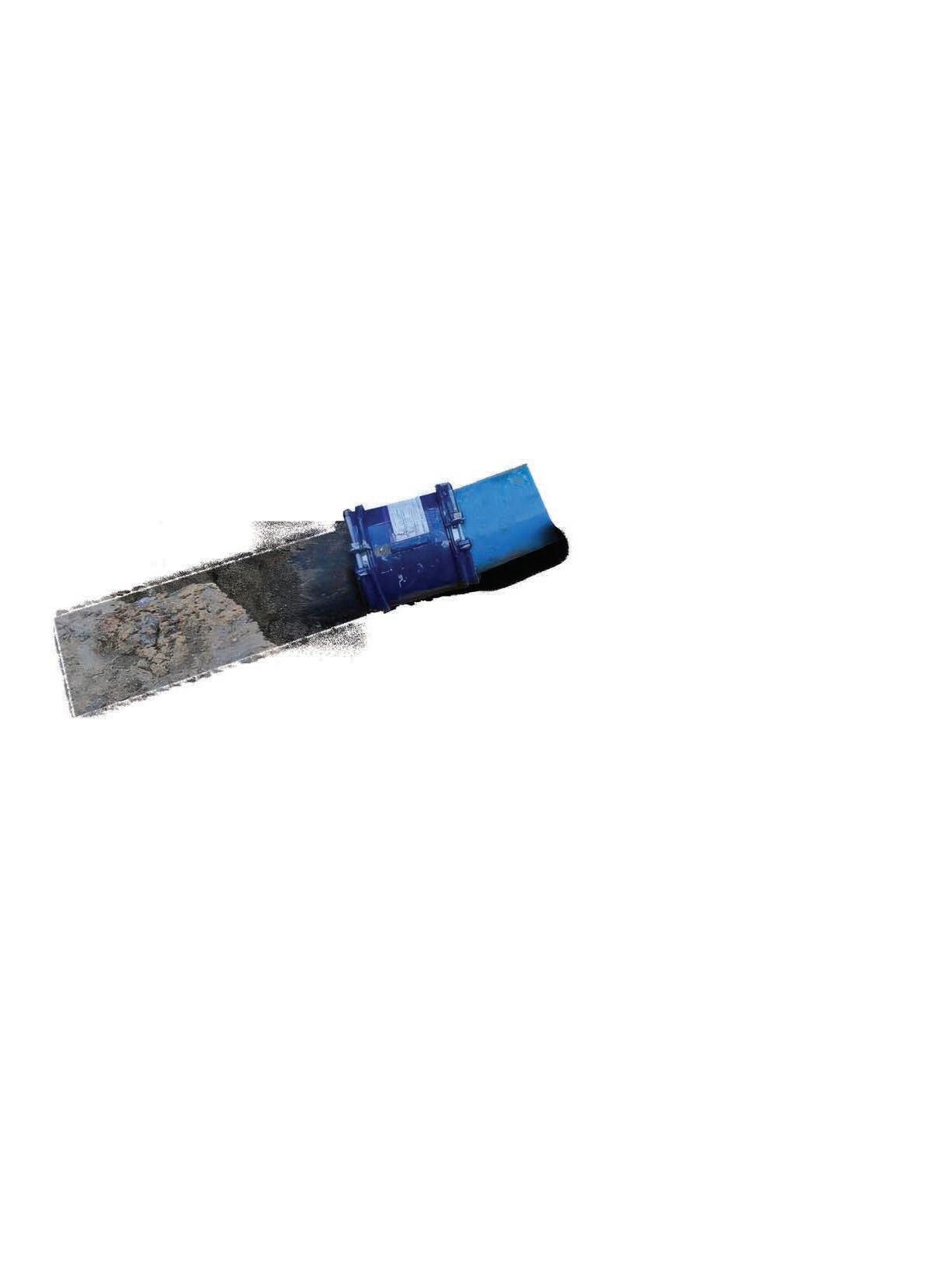
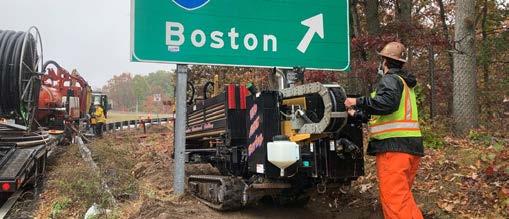
South Fairview CSO Project, Chicopee, MA: Like many older communities, Chicopee has a sewer system that combines storm water with household waste. This system can mean that some household sewage can be swept into the Connecticut River without treatment. This impacted up to 50 streets in the South Fairview section of the city, which needed new sewer lines installed. Completed in late 2025, this $20M comprehensive underground utility reconstruction project consisted of the installation of approximately 14,400 linear feet of new sanitary sewer gravity main ranging from 8-inch to 18inch PVC pipe and over 90 manhole replacements. The storm drainage scope included 8,400 linear feet of new 12-inch storm drainpipe. The water main scope encompassed the installation of approximately 14,700 linear feet of 6-inch to 12-inch ductile iron water main, complete with
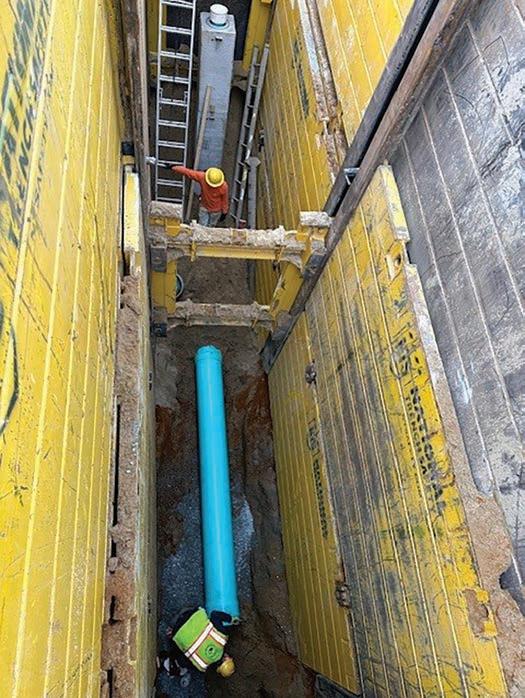
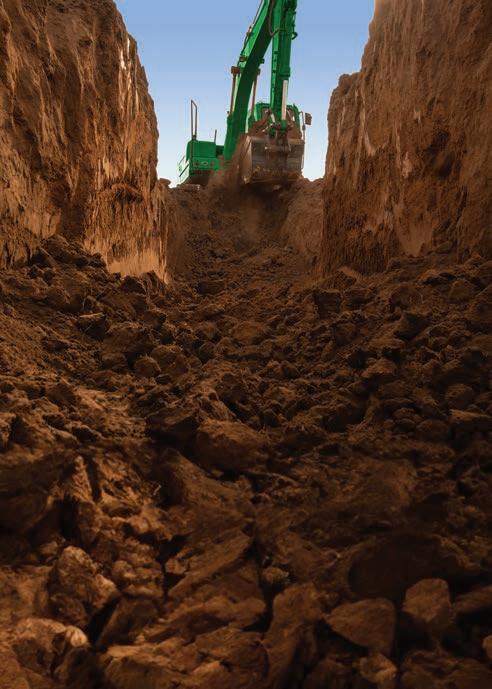
Chicopee, MA CSO Project - Crews installing an 18inch sewer pipe in 20-foot deep excavation.
gate valves and boxes and hydrant assemblies.
Western Massachusetts is not forgiving. Hills shift. Water finds its way. Weather challenges schedules and morale alike. Companies that endure in this environment develop toughness — not bravado, but competence rooted in experience. On one such project, in the rural north western part of the state, Ludlow showed its range of capabilities on a project that tested the company’s resilience.
Black Rock Road in Savoy, MA: Surging waters during Tropical Storm Irene damaged the Black Rock Road in Savoy so badly, seven sections qualified for federal emergency repair funding. Ludlow bid the $7M emergency project and was awarded the task of repairing 1.3 miles of road that was all but washed away. Reconstruction required drilling into rock, installing soldier piles, and constructing substantial retaining systems in steep terrain. Quoted from a local newspaper. "There were sections -- 200 feet long and 60 feet deep -- where nothing was there anymore," said John Tynan, the chair of the town Select Board. The project was complex, and the treacherous terrain only added to the challenge. Navigating difficult conditions required creative problem-solving and adaptability. For this difficult project, the company
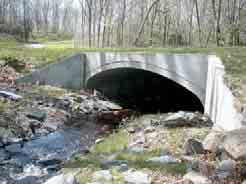
MA DOT, South Hadley, MA - Crews excavate in preperation of headwall and culvert installation.
was honored with an award from the New England Chapter of the American Public Works Association.
From Contamination to Clean Water
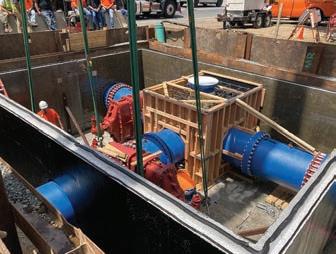
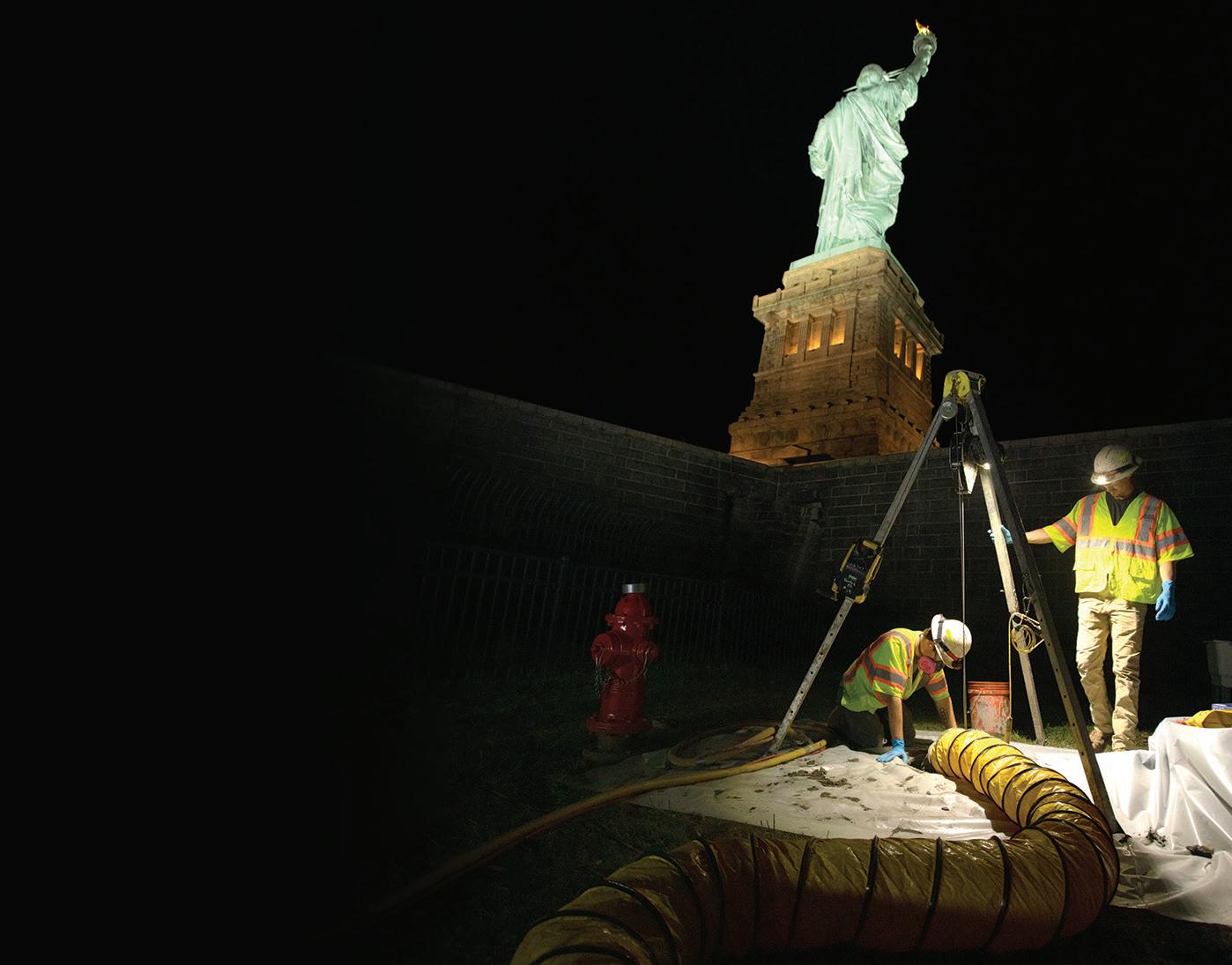
Durham Meadows Superfund Waterline Project, Durham, CT: In Durham, CT, Ludlow Construction worked with the Environmental Protection Agency and United States Army Corp. of Engineers to complete one of its most ambitious projects to date. For decades, the residents and businesses of downtown Durham had struggled with contaminated groundwater issues stemming from the Durham Meadows Superfund Site, a former manufacturing facility that had inadequately disposed of industrial chemicals for years. Completed in 2022, the $25M Durham Meadows Superfund Waterline Project successfully delivered clean, safe drinking water to the Town of Durham. The scope of the project was formidable. Ludlow installed over 27,000 lineal feet of pipeline, ranging from 6 inches to 20 inches in diameter and stretching nearly six miles from Middletown to Durham. The infrastructure buildout also included a new 790,000-gallon water storage tank, along with booster stations and meter vaults engineered to
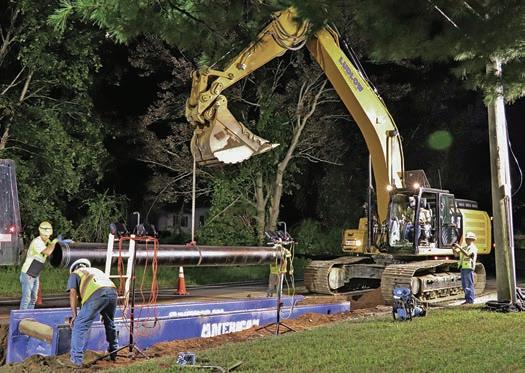
Durham, CT - Crews work at night installing water pipe to provide clean water to Durham.
keep the system running reliably for generations to come. Working in close collaboration with two federal agencies, Ludlow navigated the complex regulatory and logistical requirements that come with Superfund remediation work — balancing environmental compliance, engineering precision, and community impact every step of the way.
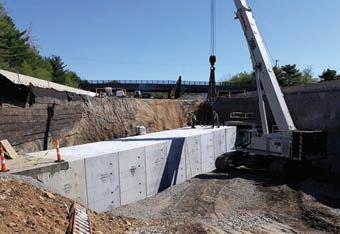
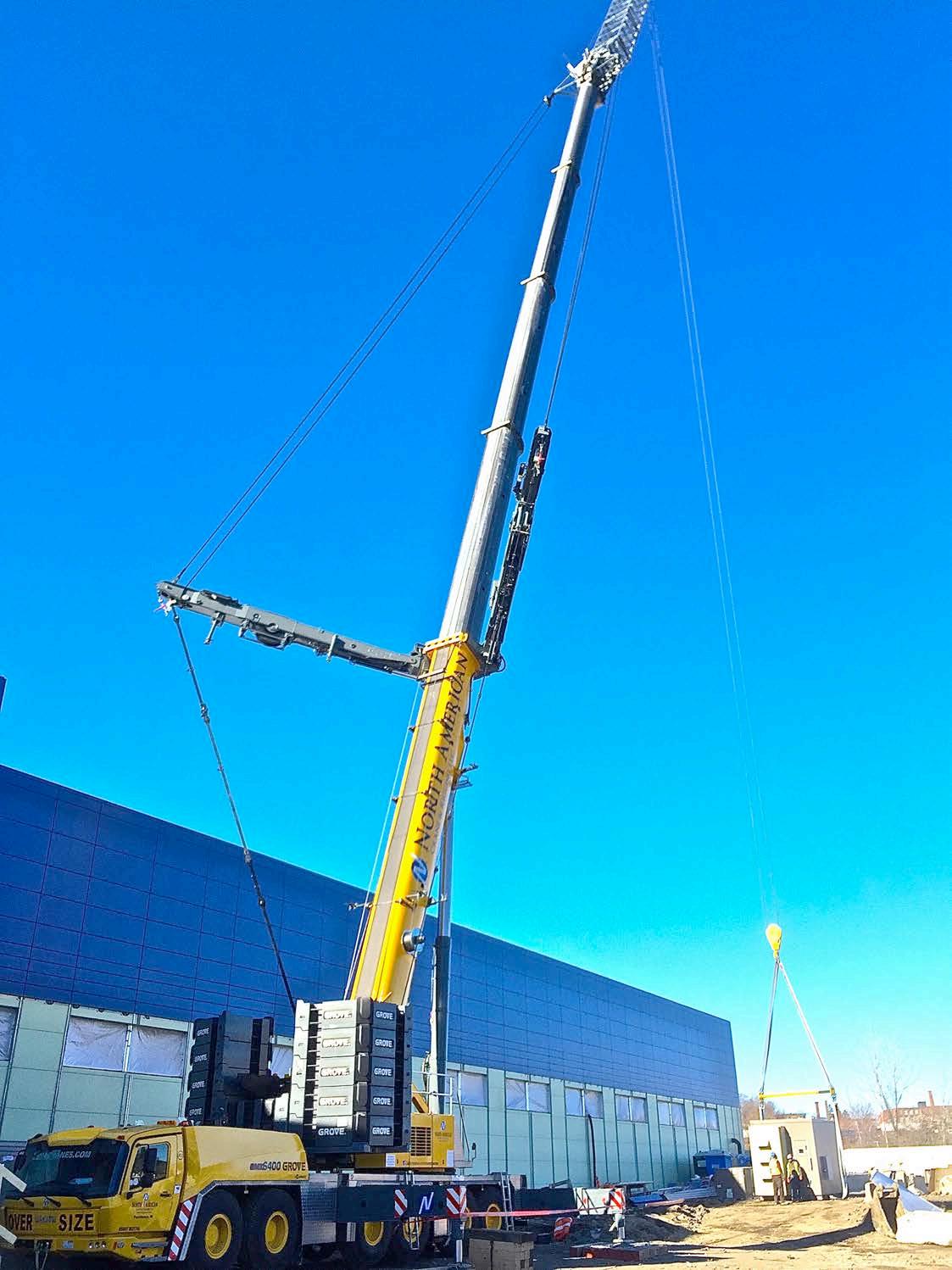
Industrial development has also shaped the company's portfolio. At the CRRC North America Railcar Factory in Springfield, MA, Ludlow performed major ground-up site development, including massive excavation cuts and fills, all new underground infrastructure including utilities, and concrete footing excavations for the 205,000 sq. ft. High Bay Railcar Assembly Facility — large enough to fit three and a half football fields — as well as a 2,240-foot dynamic test track. Rounding out the scope of work were new retaining walls, curbing, sidewalks, and full excavation and grading for the parking areas.
continued on page 38
Such projects carry pressure and visibility; they are tied to economic development and regional growth. Yet the core work remains the same: build the foundation correctly so everything above it succeeds.
Recent Projects
Some of the company’s current large-scale projects involve large MA DOT funded work.
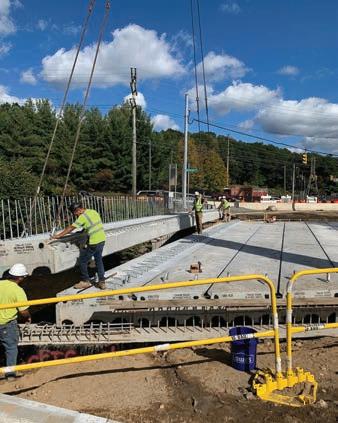
Reconstruction of Memorial Avenue (Route 147), West Springfield, MA. Started in late 2022, This $27M project consists of full restoration of water and drain pipes, as well as a complete road reconstruction. The project consists of a “road diet” concept from a four-lane traveled way to a two-lane traveled way with a center two-way left turn lane. Also featured in the design are new bike lanes, sidewalk reconstruction, updated signals, redesigned pedestrian crossings, and updated ADA accommodations. A massive undertaking on its own, but added to the complexity of the project is that the western end of Memorial Avenue passes through the sprawling fairgrounds of "The Big E" — the Eastern States Exposition and the largest fair in the entire northeastern United States, which draws over a million visitors each fall. Any reconstruction or improvement of Memorial Avenue must therefore contend with the extraordinary demands of the Big E, carefully balancing construction schedules, traffic management, and access routes to ensure that one of New England's most iconic traditions can continue to welcome its massive crowds without disruption.
Riverdale Street (Route 5) in West Springfield, MA. This over $50M project is one of Ludlow’s biggest contracts to date. Started in 2025, this large-scale undertaking spans a length of 3.2 miles on a major thruway between the towns of West Springfield and Holyoke. The project calls for approximately 10,461 linear feet 12-inch pipe – comprising of 6,550 linear feet water pipe and 3,255 linear feet drainage pipe. The scope of work includes concrete roadway rehabilitation and new sidewalks, new traffic signal updates at several locations, drainage system improvements, and guardrail improvements. The project is currently on schedule and expected to take four years to complete.
These projects are major transportation improvement operations that involve roadway widening, water, drainage and sewer upgrades, sidewalks, curbing, and new signalization. For motorists today, it feels like a straightforward stretch of road. For the crews who are building it, represents months of sequencing, excavation, pipe installation, grading, paving, and coordination — all while maintaining traffic and supporting surrounding businesses.
Through all of this, Ludlow Construction has remained family-owned. That fact is more than a footnote — it defines the company’s culture. Construction is cyclical. Funding rises and falls. Regulations evolve. Equipment grows more sophisticated and more expensive.
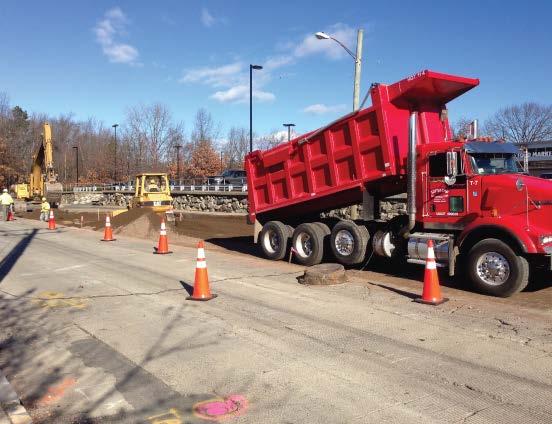
Jackson St., Holyoke MA CSO Project - Crews performing Jack and Bore across the Holyoke Canal System.
Companies that last more than 30 years do so because they think long term.
That perspective is distinctly Western Massachusetts — personal, grounded, and accountable.
It also mirrors the ethos of UCANE.
As a member of the Utility Contractors’ Association of New England, Inc. Ludlow Construction is part of a network of contractors, suppliers, and engineers committed to advancing the industry. Civil construction is inherently collaborative. Engineers design systems. Suppliers provide materials. Trucking firms and specialty contractors contribute essential expertise. Many of those partners are fellow UCANE members.
Within that network, Western Massachusetts holds a special place. The association has long recognized the strength and contribution of its western contingent — firms that operate in more rural and topographically challenging environments, yet deliver work equal in complexity and importance to any project in Greater Boston. UCANE’s advocacy for infrastructure investment on Beacon Hill and in Washington, D.C. is not limited to one region. It reflects a statewide commitment to ensuring that communities from Springfield to the Berkshires receive the funding and
support necessary to modernize aging water, sewer, and transportation systems.
Companies like Ludlow Construction translate that advocacy into action.
The broader conversation around infrastructure funding has intensified in recent years. Aging water systems require replacement. Environmental standards demand improved stormwater management. Roadways must be reconstructed to meet modern demands. While policymakers debate budgets and bond bills, contractors in Western Massachusetts continue installing pipe, grading subbase, and setting structures. They convert policy into pavement.
Equally important is the workforce carrying that responsibility forward. Heavy civil construction depends on skilled operators, experienced foremen, knowledgeable project managers, and laborers who understand the rhythm of a jobsite. Recruiting and retaining that talent is one of the industry’s most pressing challenges. It is also one of its greatest opportunities.
“Our company’s success is rooted in our employees,” Mike Pio says. “From the first shovel in the ground to the final layer of pavement, it's the tireless effort of our employees that makes every road construction project something we're truly proud of.”
On Ludlow Construction jobsites, that intergenerational transfer of knowledge is visible. Younger workers learn trench safety and compaction standards from seasoned veterans. Supervisors who have spent decades in the field mentor those just entering the trade. In many ways, this reflects the structure of UCANE itself — an association built on generational continuity and shared expertise.
For UCANE, companies like Ludlow Construction represent the backbone of the organization. They are steady contributors. They support the association’s mission. They uphold safety standards. They demonstrate that excel-
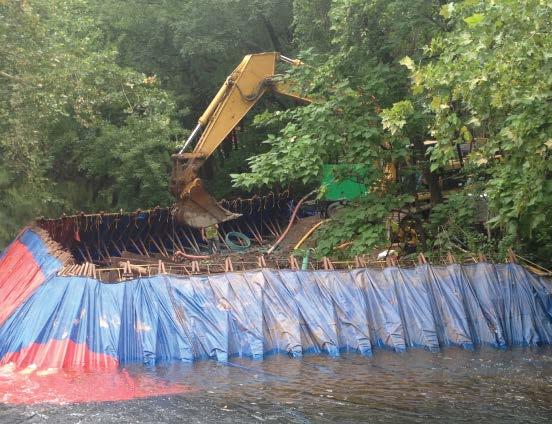
Bristol, CT - Ludlow diverting the river and installing a 24-inch sewer main below the river.
lence in heavy civil construction is not confined to metropolitan centers but thrives throughout the Commonwealth.
Perhaps the most telling aspect of Ludlow Construction’s story is its consistency. There is no single marquee project that defines the company. Instead, there are hundreds of completed jobs — some large, some modest — that collectively form a legacy of service. Roads that function smoothly. Utilities that operate reliably. Sites prepared for homes and businesses. Infrastructure restored after storms. Systems upgraded to meet modern environmental standards.
Most residents will never know which contractor installed the pipe beneath their street or rebuilt the drainage system protecting their neighborhood. They simply expect water to flow, pavement to hold, and storm drains to perform.
In the end, Ludlow Construction Company embodies the best traditions of Western Massachusetts construction — steady leadership, disciplined craftsmanship, and deep respect for community. It is a company built not for spectacle, but for durability. Not for short-term gain, but for long-term contribution.
As UCANE looks ahead to 2026 and beyond, advocating for sustained investment in water, sewer, and transportation infrastructure across the Commonwealth, it does so with confidence in its members. From Greater Boston to Springfield and throughout the Berkshires, the association’s strength lies in companies that show up every day prepared to build what matters most.
Ludlow Construction has been doing exactly that since 1992.
In Western Massachusetts, their work runs deep — beneath the pavement, beneath the neighborhoods, beneath the headlines, supporting communities quietly and reliably.
Some companies seek recognition. Others earn respect, Ludlow Construction has earned both. n
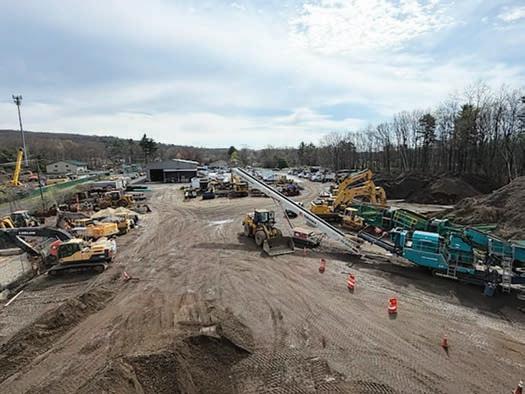
Ludlow, MA - Ludlow Construction’s main yard at Carmelina’s Circle
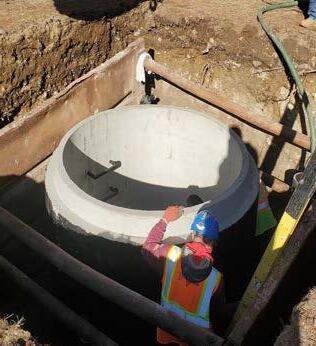
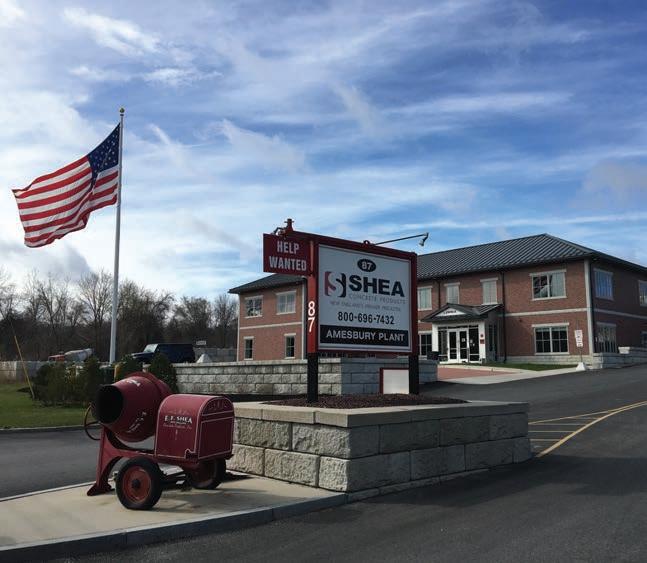
For over 75 years, Shea Concrete Products has proudly served the New England construction market by providing industry leading product quality and service to our customers and industry partners. Our robust product line of precast concrete products provides solutions for all project types and our truck fleet ensures on-time delivery.
Preparing for a Trench Safety Stand Down
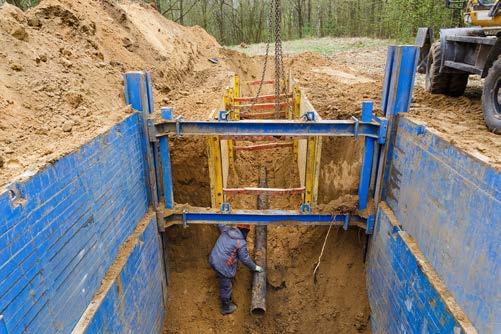
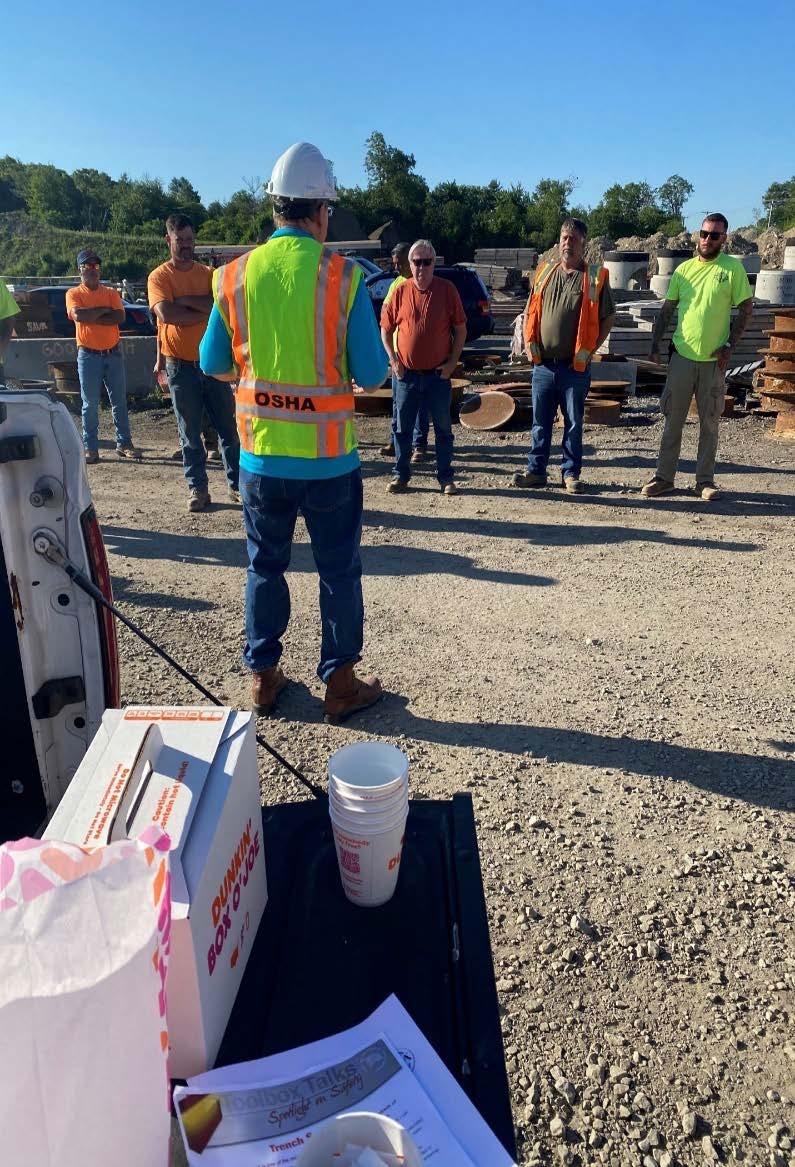
Every year, trench and excavation work reminds our industry of a hard truth: experience alone does not prevent a collapse. Planning does. Supervision does. Protective systems do. Field discipline does. That is why the Trench Safety Stand Down, scheduled for June 15–19, deserves the attention of every utility contractor, owner, project manager, superintendent, and safety professional in New England.
For UCANE members, this should be more than another event on the calendar. It is a practical opportunity to pause active work, refocus attention, and make sure trench safety is not just a written policy, but a visible expectation on every jobsite. The best stand-downs do not feel ceremonial. They feel useful. They give crews a chance to review real hazards, talk through real decisions, and sharpen the habits that keep people alive. They also give management a chance to step back and ask whether the company’s trench safety standards are truly being supported in the field.
A good place to start is NUCA’s Trench Safety Stand Down webpage at nuca.com/events/tssd
The site gives contractors a ready-made starting point for planning a meaningful stand-down. It includes downloadable stand-down materials, access to webinars, toolbox talks, training materials, and links to OSHA trench safety resources. In other words, contractors do not need to build an event from scratch. The framework is already there. A company can use the site to pull together a short stand-down for one crew or build out a more structured safety event across multiple projects and supervisors.
That matters because one reason stand-downs sometimes fall flat is that people overcomplicate them. They think they need a long program, a polished presentation, or a half day away from produc -
tion to make it worthwhile. In reality, a trench safety stand-down can be very effective if it is focused, practical, and led with purpose.
The urgency is real here. Last year, a trench collapse killed one worker and seriously injured another and the company incurred $4.6M in fines. The enforcement action that followed underscored a point our industry cannot afford to ignore: trench incidents are rarely just freak accidents. They are more often the result of multiple failed controls, unsafe assumptions, and missed opportunities lining up at the same time. By the time the soil moves, the real failure has often already happened in planning, supervision, or decision-making.
That is exactly why a trench safety stand-down has value. It allows companies to stop treating trench
Safety Corner continued from page 41
safety as a familiar topic and instead treat it as what it is: one of the clearest areas in construction where disciplined planning and consistent execution can prevent tragedy.
The June stand-down is an ideal time for companies to test whether those expectations are actually understood, not merely assumed.
For owners and project managers, one of the best ways to approach the week is to start with a simple question: If one of your crews opens a trench today, what do you expect to see before anyone steps into it? The answer should be immediate and consistent.
• You should expect a designated competent person.
• You should expect the soil and site conditions to be evaluated.
• You should expect the appropriate protective system to be selected and installed.
• You should expect spoil piles and heavy equipment to be set back.
• You should expect ladders or other means of egress to be in place.
• You should expect someone to stop the job if conditions change.
If those expectations are vague, inconsistent, or dependent on which supervisor is running the work, then the stand-down has already exposed an area that needs attention.
This is where online tools and associations can be especially helpful. Toolbox talks can help supervisors lead focused discussions instead of generic reminders. Training materials can reinforce the technical basics that often get skipped when crews are busy. Webinar content can give managers and safety professionals a stronger structure for what to cover and how to frame it. OSHA links provide a direct path back to the regulatory expectations that support the company’s field rules. Used the right way, these resources can turn a stand-down from a conversation into a practical reset.
A useful stand-down does not need to be complicated. In fact, simple is often better. The goal is not to overwhelm crews with every excavation rule they have ever heard. The goal is to focus attention on the critical decisions that prevent a collapse or stop a bad condition from becoming a fatal one.
A strong stand-down can be done in 30 to 40 minutes. Start with a real example. Review a recent trench incident, especially one from Massachusetts or New England, and discuss what likely went wrong. Keep it factual and professional. The point is not to scare people. The point is to make the hazard real.
Then move into the non-negotiables. Review the company’s expectations for:
• Protective systems
• Inspections
continued on page 45
Corner continued from page 43
• Spoil pile setbacks
• Ladder access
• Utility awareness
• Stop-work authority
Reinforce that no employee should enter an unprotected trench because “it will only take a minute.” Some of the worst decisions in construction happen when experienced people convince themselves that a shortcut is acceptable because the task is brief.
After that, take the conversation into the field. If possible, use an active trench, a mock setup, or even a photograph-based review. Ask the group what they see. What is correct? What is wrong? What would make them uncomfortable? What condition would make them stop work? This matters because workers often recognize hazards more quickly when they are looking at something concrete rather than listening to a lecture.
Next, challenge the competent-person process. Who has that authority on the project? What is being documented? What happens when rain comes through, vibration increases, or the trench sits open longer than planned? What happens when production pressure conflicts with the safe way to do the
job? A stand-down should not avoid those questions. It should confront them directly. If supervisors feel pressure to keep moving when conditions no longer support safe entry, management needs to hear that.
Finally, end with a commitment. Each superintendent, foreman, or project leader should leave the meeting with one trench-safety action to complete that week. That may be retraining on trench box use, checking access and egress practices, reviewing tabulated data, improving inspection documentation, or correcting how spoil piles are staged. Awareness is good, but action is what changes outcomes.
This is also the right time to remind leaders that trench safety failures often begin well before the excavation starts. Many problems are created upstream.
• Was the right protective equipment available when needed?
• Was enough room allowed in the work plan for shielding or sloping?
• Was the schedule built in a way that encouraged rushing?
• Did anyone revisit the excavation plan after weather or site conditions changed?
continued on page 47
F.W. WEBB WATER WORKS
Providing contractors & municipalities innovative solutions for new construction and aging infrastructure
• Did project leadership give competent persons real authority, or only the title?
These are management questions, not just field questions.
That is why owners and project managers should be visibly involved in the stand-down. When leadership participates, crews understand that trench safety is not only a safety department issue. It is a company issue. It is an operational issue. It is a leadership issue.
A trench collapse does not care how experienced the crew is. It does not care whether the job is nearly complete. It does not care whether the task looked simple. It only cares whether the controls were there when the soil moved. That is why this stand-down matters. It is a chance to slow down, refocus, and make sure the systems, habits, and expectations needed to prevent the next collapse are in place before the next trench is opened. n
MATERIALS AVAILABLE FOR PURCHASE:
• 1” MINUS PROCESSED GRAVEL
• ¾” & 1½” CRUSHED STONE
• SCREENED LOAM
• SCREENED SAND
MATERIALS ACCEPTED:
• BROKEN ASPHALT
• NON & REINFORCED CONCRETE
• CONCRETE WITH WIRE MESH
• ROCK
• BL ASTED LEDGE
TRENCH SAFETY
PREVENTS CAVE-INS SAVES LIVES
EXPLORE OUR SERVICES AT SUNBELTRENTALS.COM OR CONTACT US AT 888-846-1078 TO
NOW AVAILABLE: BOSTON GRAVEL
PLANT
LOCATION:
200 LEGACY BLVD. DEDHAM, MA 02026 Plant: 617-590-0024
OFFICE: 1039 EAST STREET DEDHAM, MA 02026 Office: 781-329-4111 Fax: 781-329-1039
DELIVERIES AVAILABLE ON LARGE ORDERS. PLEASE CALL FOR PRICING.
Federal Funding at a Crossroads: UCANE’s Advocacy at Water Week 2026
As Executive Director of the Utility Contractors’ Association of New England, Inc. (UCANE), I had the opportunity in April to travel to Washington, D.C. (April 12-18) for Water Week 2026. I was joined by UCANE’s Legislative & Membership Administrator, Brandon Ward, in this effort. Advocacy trips like this are not ceremonial; they’re essential. If we are not in the room, our industry isn’t part of the conversation. And right now, that conversation is about the future of water infrastructure in this country.
Water Week brings together the full spectrum of our industry—contractors, engineers, regulators, utility leaders, and policymakers—from across the United States. Everyone comes to Washington with the same underlying concern: Our nation’s water infrastructure systems are being stretched well beyond their useful life, and the funding needed to repair or even maintain these systems is anything but guaranteed.
We started Monday evening at the Reservoir Center for Water Solutions, where the tone for the week was set early. A briefing on State Revolving Fund (SRF) appropriations confirmed what many of us already suspected—federal infrastructure funding is heading toward a cliff as key provisions of the Infrastructure Investment and Jobs Act (IIJA) begin to expire after 2026. There is no clear plan for what comes next.
That uncertainty informed each conversation we had.
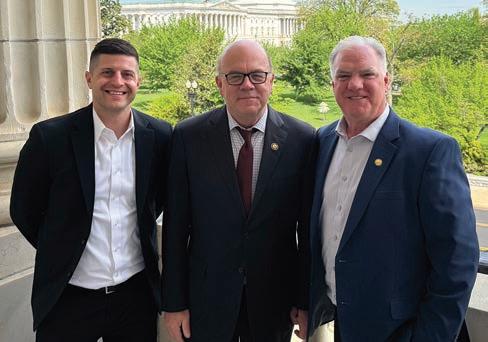
On Tuesday morning, Brandon and I walked into the Cannon House Office Building to meet with Representative Jim McGovern and his Legislative Director, John Swords. Congressman McGovern understands infrastructure—not as an abstract policy issue, but something that affects real communities. We talked about what our members are seeing in the field: rising material costs, workforce shortages, and municipalities struggling to keep up with basic system maintenance, let alone modernization.
From there, we joined our New England partners at New England Water Works Association (NEWWA) and New England Water Environment Association (NEWEA) for a Congressional briefing. This regional alignment is important. When New England speaks
continued on page 51
Water Week continued from page 49
with one voice, we are far more effective in Washington. And our message was consistent: the need for long-term, reliable investment in water infrastructure is not optional—it’s foundational.
The afternoon took us to the National Water Policy Fly-In Conference at the Wharf. If the morning meetings were about telling our story, the Fly-In was about understanding the bigger picture. We heard directly from the U.S. Environmental Protection Agency on federal priorities, sat through a panel on regulatory direction, and listened as Members of Congress laid out their perspectives on funding and legislative strategy.
One session stood out, a discussion on the impact of data centers and artificial intelligence on water demand. It’s not something most people associate with infrastructure, but it should be. These facilities require enormous amounts of water for cooling and operations. They’re being built at a rapid pace, and they’re adding a new layer of demand to systems that are already under strain. It was a reminder that the pressures on our infrastructure are not just aging; they’re evolving.
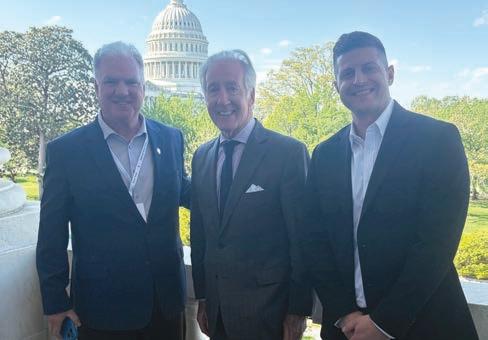
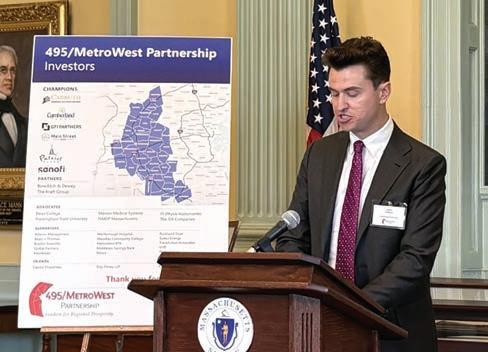
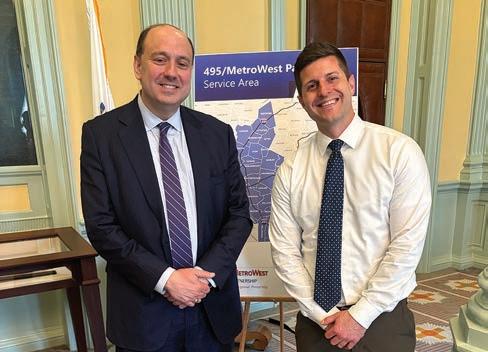
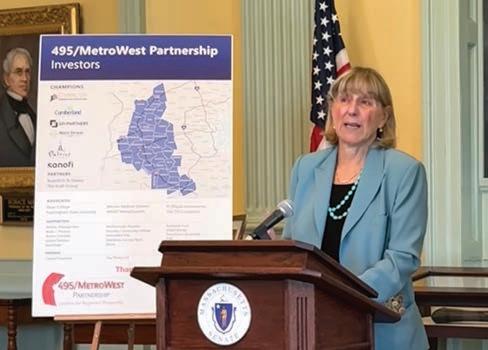
We also joined our peers from NEWWA and Springfield Water & Sewer Department for an extended meeting with Congressman Richard Neal, the Ranking Democratic Member of the House Committee on Ways and
continued on page 53
Restroom Solutions That Show Up Ready
Standard and ADA-compliant portable restrooms, flushing units, and handwashing stations built for construction job sites. Reliable delivery and weekly servicing to support your jobsite operations.
Standard and ADA-compliant portable restrooms, flushing and stations built for construction job sites. Reliable delivery and weekly servicing to support your jobsite operations. northeastportablerestrooms.com
Water Week continued from page 51
Means, ensuring that our advocacy message extends beyond the Massachusetts delegation.
That night, at the Water Week reception hosted by DC Water, the conversations continued in a more informal setting. These events may not make headlines, but they’re where relationships are built. You talk to agency staff, congressional aides, industry leaders, and people who shape policy behind the scenes. And those relationships matter when it comes time to move an issue forward.
Wednesday was less about presentation and more about coordination as we spent the day working closely with our federal lobbying team and national partners.
This is where it’s important to recognize the people helping carry UCANE’s message in Washington. We worked closely with our partners at the Clean Water Construction Coalition (CWCC), represented by Kyle England and Ryan Sharpe from the Utility & Transportation Contractors Association of New Jersey. The CWCC represents contractors across the country who build water and wastewater infrastructure, and aligning with them allows UCANE to be part
of a much larger, unified national voice advocating for our industry.
Through the CWCC, we also coordinated with Mae Stevens and Ted Mondloch of Current Strategies, who are UCANE’s registered lobbyists on Capitol Hill and help coordinate our federal advocacy efforts. Their relationships and guidance are critical in making sure our message is clear, consistent, and heard by the right people. There are a lot of competing interests in Washington. If we are fragmented, we get lost. If we are unified and clear, we get heard.
Later that day, we attended a reception at the Dancontinued on page 55
Water Week continued from page 53 ish Embassy hosted by Current Strategies. It was one of the more interesting events of the week—not because of the setting, but because of the perspective. Water infrastructure challenges are not unique to the United States. Countries around the world are dealing with aging systems, funding gaps, and increasing demand. Some are ahead of us in how they plan, invest, innovate, and maintain their infrastructure. There is value in listening, in comparing approaches, and in understanding where we can do better.
We ended the evening with a coalition dinner at Mission Dupont Circle. Again, not a formal setting— but often the most productive. These are the moments where partnerships are strengthened, where ideas are exchanged freely, and where the groundwork is laid for future collaboration.
ment and Public Works.
The message we delivered was consistent at every stop.
Yes, PFAS mitigation matters. Yes, lead service
Water Week continued from page 55 opment, and make modern life possible.
One of the most valuable parts of this trip, though, was not just what we said, it was what we learned.
We heard how other states are structuring funding programs. We saw how utilities are managing regulatory pressure. We learned how emerging demands—from technology, from climate, from population growth—are shaping infrastructure needs. And we bring that knowledge back with us to Massachusetts.
Because advocacy doesn’t end in Washington. It continues on Beacon Hill, in municipal offices, and on job sites across the Commonwealth.
At the end of the day, trips like these are about making sure there is a pipeline of work for our contractors, that communities have the resources they need, and that we are doing our part to support safe, reliable water systems for the public.
Water Week is not just a conference. It’s a reminder. If we don’t advocate for this infrastructure, no one else will do it for us. And we at UCANE intend to keep showing up. n
DigSafe.com or Call 811 Before
• Pre-mark the location of intended excavation using white stakes, paint or flags.
• In MA, ME, NH, RI and VT, notify Dig Safe® at least 72 hours in advance, not including weekends and holidays.
• Notify non-member facility owners.
• Maintain the marks placed by underground facility owners.
• Use caution and dig by hand when working within 18” of a marked facility.
• If a line is damaged, do not backfill. Notify the affected utility company immediately if the facility, its protective coating, or a tracer wire is damaged.
• Call 911 in the event of a gas leak, or if a damaged facility poses a risk to public safety.
• Know your state’s excavation requirements.
• Go to digsafe.com for educational material and current laws.
JUNE 2025 IS TRENCH SAFETY MONTH!
JUNE 2025 IS TRENCH SAFETY MONTH!
NATIONAL TRENCH SAFETY STAND DOWN
NATIONAL TRENCH SAFETY STAND DOWN
NATIONAL TRENCH SAFETY STAND DOWN
NATIONAL TRENCH SAFETY STAND DOWN
June 16-20, 2025
June
16-20, 2025
June 16-20, 2025
June 15-19, 2026
June 16-20, 2025
What is a Safety Stand Down?
What is a Safety Stand Down?
What is a Safety Stand Down?
What is a Safety Stand Down?
A Safety Stand Down presents the opportunity for employers to talk directly to employees and others about safety. These Stand Downs will focus on trench & excavation hazards and reinforce the importance of using trench protective systems and protecting workers from trenching hazards.
A Safety Stand Down presents the opportunity for employers to talk directly to employees and others about safety. These Stand Downs will focus on trench and excavation hazards and will reinforce the importance of using trench protective systems and protecting workers from trenching hazards.
A Safety Stand Down presents the opportunity for employers to talk directly to employees and others about safety. These Stand Downs will focus on trench & excavation hazards and reinforce the importance of using trench protective systems and protecting workers from trenching hazards.
A Safety Stand Down presents the opportunity for employers to talk directly to employees and others about safety. These Stand Downs will focus on trench and excavation hazards and will reinforce the importance of using trench protective systems and protecting workers from trenching hazards.
How to Conduct a Safety Stand Down
How to Conduct a Safety Stand Down
How to Conduct a Safety Stand Down
How to Conduct a Safety Stand Down
Companies will conduct a Trench Safety Stand Down by taking a break to have a toolbox talk or another safety activity to draw attention to the specific hazards related to working in and around trenches/excavations. We ask that companies provide feedback about their Stand Down, such as when it was held, how many workers participated, how you shared information with employees. UCANE will collect the information, publicize the overall total number of participants, and publish the names of the companies that held a Trench Safety Stand Down. Forms will be made available to submit information about your Stand Down.
Companies will conduct a Trench Safety Stand Down by taking a break to have a toolbox talk or another safety activity to draw attention to the specific hazards related to working in and around trenches/excavations. We ask that companies provide feedback about their Stand Down, such as when it was held, how many workers participated, and how you shared information with employees. UCANE will collect the information, publicize the overall total number of participants, and publish the names of the companies that held a Trench Safety Stand Down. Forms will be made available to submit information about your Stand Down.
Companies will conduct a Trench Safety Stand Down by taking a break to have a toolbox talk or another safety activity to draw attention to the specific hazards related to working in and around trenches/excavations. We ask that companies provide feedback about their Stand Down, such as when it was held, how many workers participated, and how you shared information with employees. UCANE will collect the information, publicize the overall total number of participants, and publish the names of the companies that held a Trench Safety Stand Down. Forms will be made available to submit information about your Stand Down.
Companies will conduct a Trench Safety Stand Down by taking a break to have a toolbox talk or another safety activity to draw attention to the specific hazards related to working in and around trenches/excavations. We ask that companies provide feedback about their Stand Down, such as when it was held, how many workers participated, how you shared information with employees. UCANE will collect the information, publicize the overall total number of participants, and publish the names of the companies that held a Trench Safety Stand Down. Forms will be made available to submit information about your Stand Down.
Trench
Safety Stand Down (TSSD) Goals
Trench Safety Stand Down (TSSD) Goals
Stand Down (TSSD) Goals
Stand Down (TSSD) Goals
UCANE has been a leader in this National Event since 2017. The goal of the event is to reach out to the many workers who work in and around trenches and excavations to provide them with information about current excavation requirements and safety procedures for working in trenches. By reaching as many workers as possible we can reduce the number of fatalities and serious injuries that occur each year in our industry, and make others, such as municipal and industry workers who are also exposed, aware of these serious hazards.
UCANE has been a leader in this National Event since 2017. The goal of the event is to reach out to the many workers who work in and around trenches and excavations to provide them with information about current excavation requirements and safety procedures for working in trenches. By reaching as many workers as possible we can reduce the number of fatalities and serious injuries that occur each year in our industry, and make others, such as municipal and industry workers who are also exposed, aware of these serious hazards.
UCANE has been a leader in this National Event since 2017.The goal of the event is to reach out to the many workers who work in and around trenches and excavations to provide them with information about current excavation requirements and safety procedures for working in trenches. By reaching as many workers as possible we can reduce the number of fatalities and serious injuries that occur each year in our industry, and make others, such as municipal and industry workers who are also exposed, aware of these serious hazards.
UCANE has been a leader in this National Event since 2017.The goal of the event is to reach out to the many workers who work in and around trenches and excavations to provide them with information about current excavation requirements and safety procedures for working in trenches. By reaching as many workers as possible we can reduce the number of fatalities and serious injuries that occur each year in our industry, and make others, such as municipal and industry workers who are also exposed, aware of these serious hazards.
UCANE CONTRACTORS ARE THE MOST PROFESSIONAL IN THE BUSINESS!
UCANE CONTRACTORS ARE THE MOST PROFESSIONAL IN THE BUSINESS!
UCANE CONTRACTORS ARE THE MOST PROFESSIONAL IN THE BUSINESS!
UCANE CONTRACTORS ARE THE MOST PROFESSIONAL IN THE BUSINESS!
Building Relationships on Beacon Hill
UCANE Legislative & Membership Administrator Brandon Ward attended the 495/ MetroWest Partnership's Annual State House Day, which served as an important opportunity to meet with leaders in business, municipal government, and the nonprofit sector working to advance the region's core economic interests: transportation, housing, and water resources. The 495/MetroWest Partnership has been a leader in highlighting the important role that water infrastructure plays in spurring economic growth and housing pro -
duction in the greater Boston region. Speakers included Senate President Karen Spilka, Speaker Pro Tempore Kate Hogan, Assistant Secretary Juan R. Vega, and Senator Jamie Eldridge, with other members of the regional legislative delegation in attendance including Representative Jack Patrick Lewis. UCANE extends a special thanks to Senator Eldridge who filed an amendment as part of the Environmental Bond Bill to further strengthen the mission of the state's Water Infrastructure Advisory Committee. n
Michele L. Norton, AAI, CRIS Senior Vice President, Account Executive – Construction HUB International New England, LLC
Fleet Safety, Auto Liability, and Hidden Vehicle Exposures
For many years, Workers’ Compensation was often considered the primary insurance cost driver for utility contractors. While Workers’ Compensation remains an important part of any contractor’s insurance program, many companies across the region are seeing a clear shift in underwriting focus in recent years. Commercial Auto Liability has become one of the most scrutinized and volatile areas of the Property and Casualty marketplace.
This shift isn’t difficult to understand. Utility contractors depend on vehicles every day to move crews, tools, materials, and equipment between yards, jobsites, emergency callouts, and municipal projects. Trucks and trailers are constantly operating in traffic, backing into tight areas, navigating narrow streets, and working near pedestrians and motorists. In New England, those challenges are intensified by weather, aging roads, congestion, and seasonal driving hazards.
As a result, one serious auto claim can have consequences far beyond the immediate loss. It can affect pricing, carrier appetite, deductible structure, and Umbrella capacity for several renewal cycles. At the same time, many contractors continue to overlook another meaningful source of exposure: Hired and Non-Owned Auto Liability, which can arise when rented vehicles or employee-owned vehicles are used for company business.
The Reality of Auto Liability
Commercial Auto claims have become more expensive across nearly every industry. Repairs that once involved body work and basic parts now often require replacement of sensors, cameras, lane-assist technology, collision warning systems, and recalibration of electronic components. Even a mod -
est impact can generate costs far higher than many owners expect.
Liability severity has also increased. Medical treatment costs continue to rise, and claims involving soft tissue injuries or disputed fault are more likely to involve attorneys than in prior years. Jury verdict trends and settlement expectations have also influenced insurer reserving practices. From an underwriting standpoint, carriers are looking closely at any fleet-driven account with recurring incidents or poor controls.
For utility contractors, the issue is amplified because driving exposure is woven into everyday op -
continued on page 64
Why New England Creates Unique Challenges
Utility contractors in this region often operate in environments that are considerably more difficult than those found in less congested parts of the country. Massachusetts, Rhode Island, and portions of Connecticut have dense road networks, older municipal layouts, limited shoulder space, and heavy
commuter traffic. Streets in many cities and towns were built long before modern truck sizes and current traffic volumes existed. In Greater Boston and surrounding communities, contractors regularly maneuver through double-parked streets, narrow intersections, active pedestrian zones, and construction congestion. Similar conditions exist in older downtown areas throughout Worcester County, Providence, Hartford, Lowell, Lawrence, Springfield, and other urban centers.
Weather is another defining factor. Snow, freezing rain, black ice, reduced daylight, and potholes all contribute to loss frequency during the winter months. Vehicles stopping unexpectedly, reduced traction, and visibility challenges can quickly turn routine travel into a claim event. For contractors who also perform emergency response or storm restoration work, exposure may actually increase during the worst weather periods.
Claims Seen Most Often
Many fleet losses are not catastrophic accidents involving high speeds. Instead, they’re common operational incidents that occur repeatedly across the industry. Backing into parked vehicles, fencing, structures, or jobsite obstacles remains one of the most frequent claim scenarios. Mirror strikes on narrow roads or in urban traffic are another common issue. Trailers clipping curbs, poles, signs, or adjacent vehicles during turns can create expensive property damage claims. Equipment shifting during transport or debris falling from a vehicle can lead to thirdparty allegations even when actual damages are modest.
Additionally, there are work zone incidents. Motorists merging late, speeding through cone patterns, or failing to recognize lane shifts can collide with contractor vehicles or equipment. In many cases, liability may be disputed, but the contractor is still pulled into the claim. These losses may appear small individually, but frequency matters. Underwriters often view repeated low- to mid-level claims as a sign of weak fleet controls.
Insurance continued from page 63 continued on page 65 erations. Vehicles are not incidental to the business, they are essential. Every truck dispatched to a site represents productivity, but it also represents risk. Consequently, any company with a fleet, especially a considerable one, tends to be underwritten as a transportation risk rather than a construction risk.
Why Underwriters are Asking More Questions
Today’s underwriting process is far more detailed than it was even a few years ago. Carriers no longer look only at fleet size and loss runs. They increasingly want to understand how a contractor manages drivers, vehicles, third-party operators, and incident response. A company that can clearly explain its hiring standards, MVR review process, distracted driving rules, maintenance procedures, and post-accident protocols is usually viewed more favorably than one that cannot.
The presence of telematics and in-vehicle camera systems certainly help to support a better underwriting narrative, particularly when management can demonstrate that the data is actually reviewed and acted upon. Conversely, a contractor with several preventable claims, no written fleet policy, and little documentation may find fewer markets willing to quote, less flexibility on pricing, or higher retentions. In most cases, insurance results are now tied directly to operational discipline, so a recognized and practiced fleet safety program is key.
The Hidden Exposure: Hired and Non-Owned Auto
One of the most overlooked and misunderstood areas of Commercial Auto Liability is Hired and NonOwned Auto coverage. Many contractors assume that if a vehicle is not owned by the company, it is not the company’s problem. That assumption can be costly.
Hired Auto generally involves vehicles rented, leased short-term, or borrowed for business use. This might occur when a truck is down for repairs, when extra vehicles are needed for a temporary project, or when a company rents units during storm response activity. Non-Owned Auto usually involves employeeowned vehicles being used for company purposes. A supervisor driving to a jobsite in a personal SUV, an estimator traveling to meetings in their own car, or an employee picking up parts in a personal truck may all create Non-Owned Auto exposure.
If an accident occurs during a business-related trip, the injured party may pursue not only the driver, but also the employer. Plaintiffs often argue that the employee was acting within the course and scope of employment at the time of the incident. Even if the
continued on page 66
Insurance continued from page 65
employee’s Personal Auto insurance responds first, the contractor may still face litigation and excess exposure. For utility contractors, this risk is more common than many realize. Companies with multiple yards, changing schedules, emergency response obligations, and mobile supervisors often rely on personal vehicle use regularly without formally recognizing it.
Regional operating conditions can increase the likelihood of Hired and Non-Owned Auto claims. Parking constraints in urban areas may lead supervisors to use personal vehicles instead of larger company trucks. Temporary rentals may be used during snow season or while fleet units are under repair. Emergency utility restoration work may require quick mobilization using whatever vehicles are available. These are practical business decisions, but they should be matched with proper insurance review and written internal controls, including but not limited to verifying Personal Auto coverage and limits of employees using their own vehicles for work.
Best in Class Practices
The most successful contractors are approaching fleet risk as a management function rather than
simply an insurance purchase. They are investing in maintenance and inspection protocols, training, accountability, and measurable controls. Many are using dash cameras to defend against false allegations and coach driver behavior, including cellphone and other device use behind the wheel. Distracted driving isn’t unique to contractors. It’s everyone on the road.
Others are using telematics to identify speeding, harsh braking, or poor route habits. Some are tightening driver eligibility standards and requiring cleaner records before assigning vehicles. They are also reviewing personal vehicle use more carefully to mitigate negligent entrustment issues. Instead of allowing informal use, they are creating written policies, verifying employee insurance, and establishing minimum acceptable liability limits. This proactive approach resonates strongly with underwriters.
What Contractors Can Do to Prepare for Renewal
Contractors should work with their insurance broker and begin preparing for renewal well in advance. A clean and organized submission can materially improve insurer response. Loss runs should be reviewed for patterns rather than simply totals, for areas to change course, as necessary. If backcontinued on page 67
ing claims are recurring, explain what has changed. If winter losses drove poor results, describe revised seasonal protocols. If telematics or cameras were implemented midyear, highlight that progress. If specific drivers have unfavorable MVRs, document that they’ve completed a driver training refresher. Underwriters prefer accounts that acknowledge issues and demonstrate corrective action. The carriers want a partnership, to work with contractors and their broker, to help them be better.
Final Thoughts
Commercial Auto Liability is one of the defining insurance issues for utility contractors in and around Massachusetts and New England. Between traffic congestion, difficult road conditions, weather, roadside operations, and hidden Hired and Non-Owned Auto exposure, vehicle risk deserves executive-level attention. Workers’ Compensation still matters, but many insurers now focus first on fleet performance when evaluating contractors. The companies that treat vehicle risk strategically—through culture, training, accountability, and planning—will be best positioned for stronger renewals, safer operations, and lower long-term cost of risk. n
Delivery
ON-SITE/INCIDENT & PREVENTION
• Project Safety Staffing
• Medical Trailers and Wellness Programs
• Drug /Alcohol Screening
TRAINING & DEVELOPMENT
• CPR/First Aid/Narcan/Pathogens
• Competent Person
• Reasonable Suspicion
REGULATORY COMPLIANCE EXAMS
• Pre-Employment Physicals
• DOT/FMCSA Exams
• Respiratory Fit Testing & Training
CONFINED SPACE & HIGH ANGLE RESCUE
• Highly Specialized and Trained Team Members
• On-Site making sure your employees are safe
If SRF Funding Contracts, Here's How Water Projects Slow Down
The White House’s budget proposal would cut the Drinking Water and Clean Water State Revolving Funds by more than 90 percent. What now?
The White House’s preliminary Fiscal Year 2027 budget proposal would reduce overall EPA funding by 52 percent and cut capitaliza tion for the Drinking Water and Clean Water State Revolving Funds by more than 90 percent.
“The Drinking Water and Clean Water State Re volving Funds are the primary mechanism for federal water infrastructure investment,” said Clean Water Construction Coalition Chair Kyle England. “These loans revolve at the state level, ensuring that local water utilities have access to affordable financing.”
For utilities, that structure determines whether projects move from design to construction.
Across drinking water and wastewater systems, SRF financing sits at the center of capital delivery. Treatment upgrades, nutrient removal retrofits, lead service line replacement, and system rehabilitation are routinely built around the assumption that SRF loans will be available within a defined funding cycle. The combination of below-market interest rates, extended repayment terms, and principal forgiveness in some cases allows utilities to align debt with ratepayer capacity. Without that structure, many projects do not pencil out in their current form.
“These drastic reductions are out of step with the nation’s growing water infrastructure needs,” England said, pointing to EPA estimates that exceed $1.2 trillion over the next two decades. “The consequences of underinvestment are already evident.”
The gap between funding capacity and infrastructure need is already widening.
A contraction in SRF capitalization would first show up in the timing of projects. Utilities that have completed design and permitting often rely on predictable access to state funding queues. When those queues tighten, projects do not disappear, but they stop moving. Work that is ready to bid can sit for multiple funding cycles, extending delivery timelines and exposing utilities to continued construction cost escalation.
The pressure is most acute for projects that depend on subsidy. Many utilities build capital programs assuming that principal forgiveness or subsidized rates will offset a portion of total cost. Without that support, projects may need to be resized or phased, and in some cases deferred. Elements that are not directly tied to compliance, including redundancy and resilience improvements, are often the first to be removed to keep projects financially viable.
U.S. Senator Sheldon Whitehouse (D, R.I.), speaking at the Water and Wastewater Equipment Manufacturers Association's Washington Forum and Emerging Leaders Meeting last week, said the proposed cuts are unlikely to pass but acknowledged that SRF funding levels will be part of broader negotiations.
“It isn't going anywhere,” he said, referring to the proposal, “but we still need to negotiate around what we're going to do on state revolving funds.” SRF projects, like several he cited in Rhode Island, are “wisely spent” dollars on “essential infrastructure.”
SRF funding levels directly shape how utilities sequence and finance capital programs. As funding becomes more constrained, SRF programs shift toward stricter prioritization. Projects tied to permit limits, enforcement actions, and immediate public health risks are more likely to advance. Projects focused on continued on page 71
long-term system performance, capacity expansion, or optimization face longer delays. For utilities, that changes the shape of capital planning, pushing investment toward compliance-driven timelines.
Financing also begins to shift. Without SRF loans, utilities turn to municipal bonds and other forms of borrowing that carry higher interest costs and more rigid terms. Larger systems with strong credit profiles can absorb that shift more easily. Smaller and midsized utilities, which rely more heavily on subsidized financing, face a narrower set of options and greater pressure on rates.
The effect extends into how projects are delivered. SRF-backed programs are often structured to bundle multiple improvements into a single coordinated effort. When funding is limited, those programs are broken into phases tied to available financing. Construction stretches over longer periods, costs increase, and integration becomes more complex, particularly for treatment facilities where upgrades are interdependent.
Over time, the absence of consistent SRF funding changes how utilities manage their systems. Planned rehabilitation programs give way to more incremental and reactive work. Operational measures are used to
Your trusted partner in construction
maintain performance while capital projects are delayed, increasing ongoing costs without addressing underlying infrastructure needs.
“If enacted, these cuts will erode the SRF programs and harm communities by making it harder to obtain financing for necessary projects,” England said.
The immediate effect is not fewer projects on paper. It is a slower system. Projects take longer to move
For over a decade, we’ve proudly supported UCANE, and our commitment to protecting what matters most.
We partner with construction professionals to navigate risk and build with confidence:
Owners
Developers
General contractors
Designers
Subcontractors
At The Baldwin Group, we’re not just protecting projects — we’re Protecting the Possible.