INTERACTIVE TABLE OF CONTENTS: CLICK TO JUMP TO ARTICLES INSTANTLY!
68 FROM PROTECTION TO MANAGEMENT
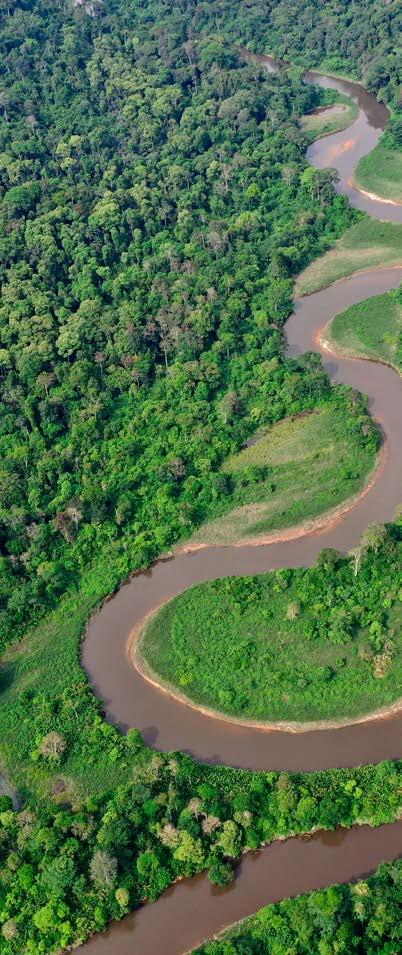
Using Science to Safeguard Congo’s Jewel
78
80
INFOGRAPHIC
The Dirty Dozen and the Clean Fifteen
CHILEAN CETACEAN CONSERVATION CENTER
Chile’s Transformation From a Whaling Nation into a Marine Conservation Leader
92
100
STEVEN PLATT
A Spotlight on Herpetology and Reptile Intrigue
ENDANGERED SPECIES
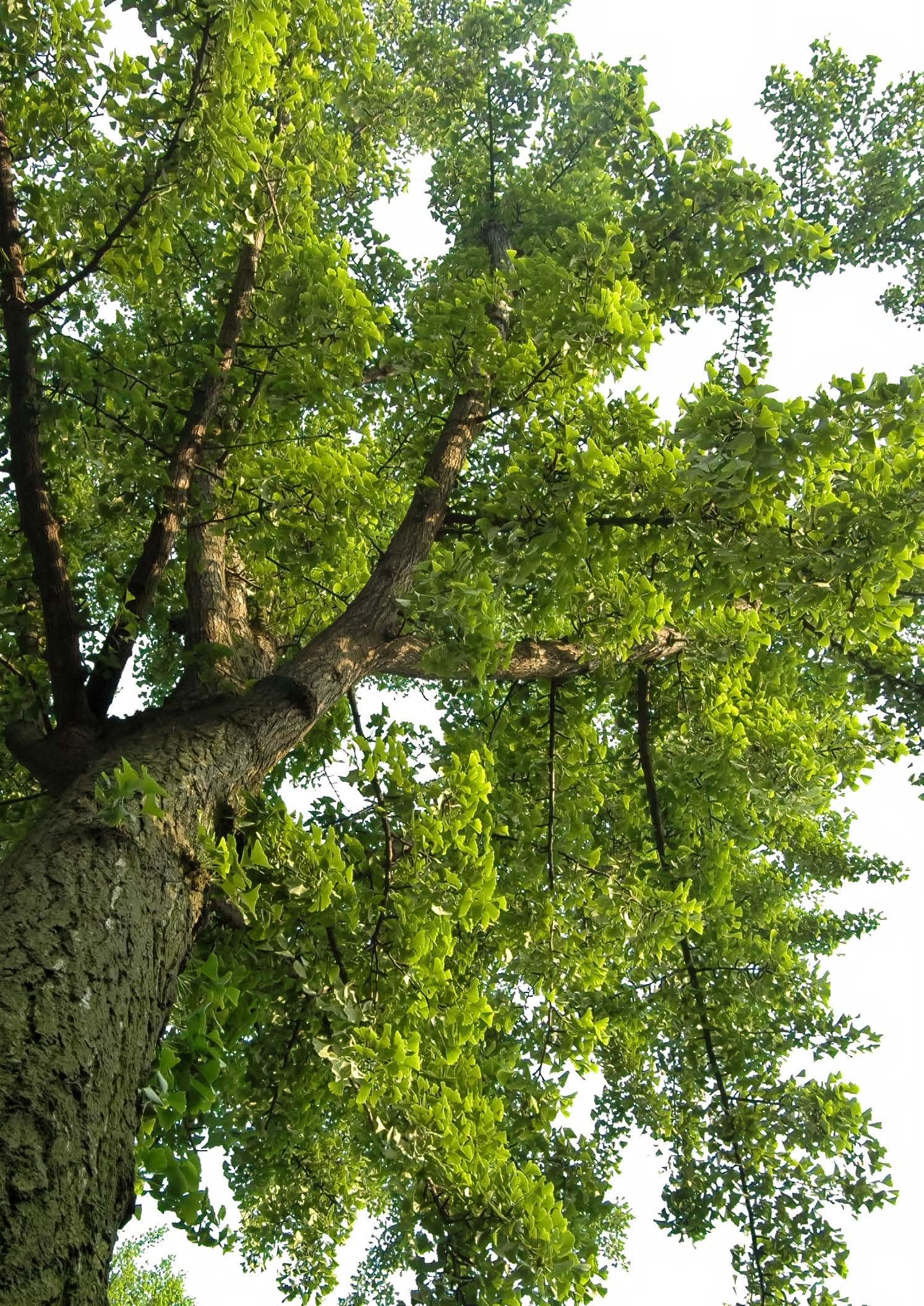
Maidenhair Tree
INTRODUCTION
I have loved animals for as long as I can remember. As a child, I went door to door on behalf of WWF to raise money for green sea turtles. I don’t remember if I did a particularly good job, but it helped me at a young age to become aware of doing something good for animals and nature.
My greatest hero back then was Steve Irwin. One of his quotes has stayed with me: “Treat animals as you would like to be treated yourself.” This is something I have lived by ever since; animals and nature don’t have a voice, or at least not one we humans can understand. They can’t tell us when our actions harm them or their habitat, and many people simply don’t realize the impact we have in our day-to-day lives.
Take sunscreen, for example. When you swim in the ocean wearing ordinary sunscreen, UV filters don’t just protect your skin — they wash off into the water. Along with other forms of pollution and environmental stress, these chemicals can harm marine ecosystems, especially coral reefs.
Corals rely on a delicate balance between polyps that build the coral structure and microscopic algae that live inside them. These algae use sunlight to produce nutrients and give corals their color. UV filters in sunscreen can disrupt the light reaching the coral, which may cause the algae to leave.
When the algae leave, the coral loses its color — and its main source of energy. This process is called coral bleaching. Bleached corals are weaker and more likely to die. And this doesn’t just affect fish and sea turtles; coral reefs support vast marine life and help produce a large share of the oxygen in our atmosphere via photosynthesis. When reefs die, entire ecosystems collapse with them.
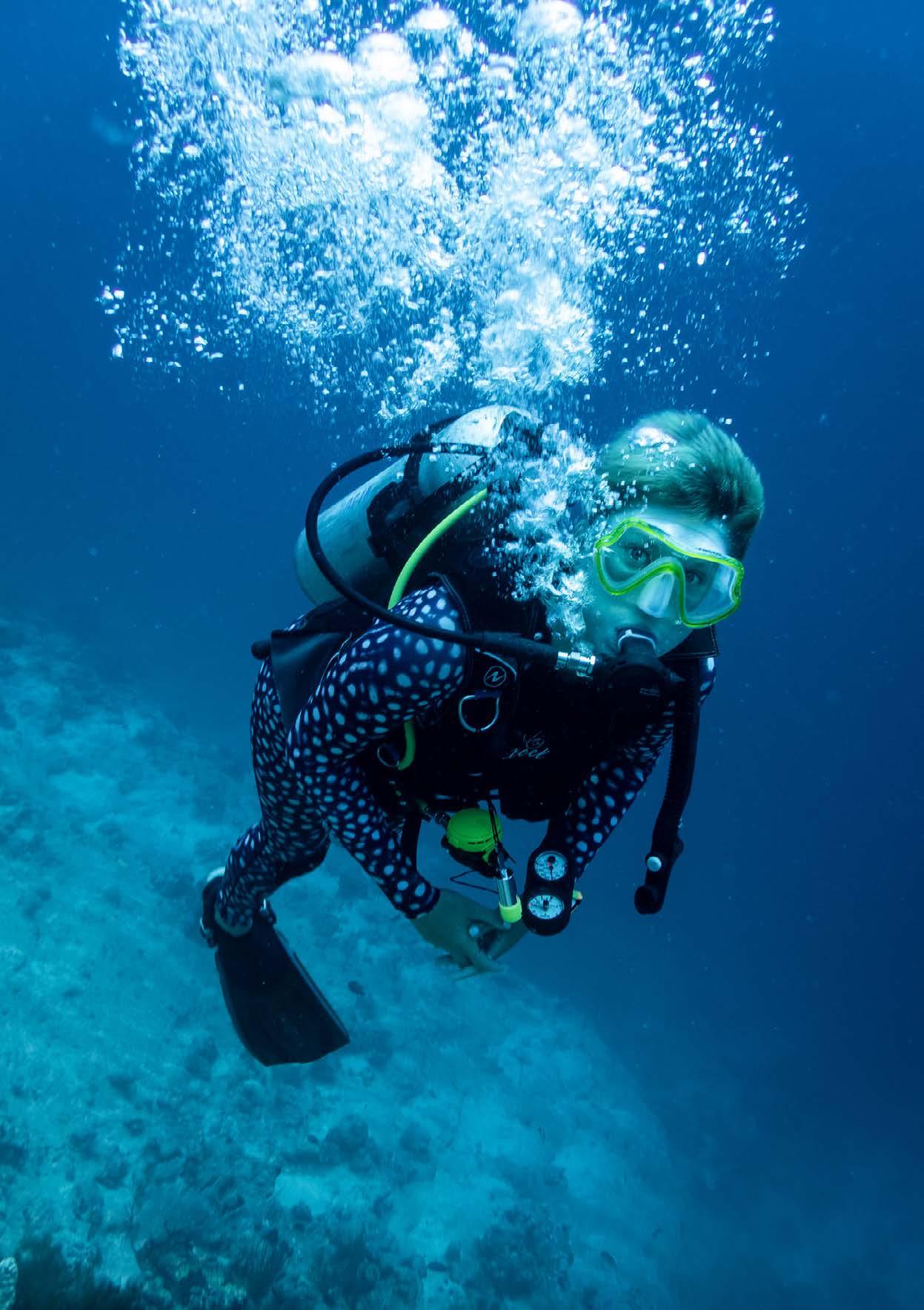
As a diver, I’m acutely aware of how beautiful and fragile the underwater world is. By being underwater, you see the direct effects of our behavior up close. Imagine bleached or broken coral without a single fish in sight, a fishing net entangled in the reef, or a turtle with a scar on its carapace from a boat propeller.
In Zanzibar in 2024, I witnessed some of the worst coral bleaching I’ve ever seen — vast stretches of coral turned completely white, with only a few fish left. It felt like diving through a graveyard. Our guide explained that much of this damage comes down to a lack of awareness. Tourists aren’t informed about the harmful effects of sunscreen or touching coral, and many local fishermen don’t realize that overfishing destroys the very reefs fish depend on.
On the other side of the island, however, I saw the complete opposite. There, a marine protected area has been established where fishing is no longer allowed and there are no big tours with tourists being organized. During my dive, the ocean was full of life: healthy, colorful coral and schools of fish. It’s a powerful reminder that when we protect nature, nature recovers.
And that’s something I love about Ubuntu. It’s about showing the good that’s happening around the world. People, organizations and communities who work every day to make the world a little better. Positive stories that remind us that change is possible and that small choices matter. It’s inspiring, and honestly, something we could use more of.
In my work as a graphic designer, I tell stories through visuals. Helping people see, feel or understand things they otherwise might have missed. That’s also why I joined Ubuntu. I want to use those skills to raise awareness, give nature a voice by showing both its beauty and its vulnerability, and highlight the people who are already making a difference.
I believe small actions can have a huge impact. Whether it’s choosing reef-safe sunscreen, being a mindful tourist, or supporting sustainable practices, every effort counts. So if this magazine inspires even a few readers to make kinder choices for the planet, it’s already worth it.
- Jacinta Breijer Graphic Designer
THE QUIET REVOLUTION:
On a humid morning in Nairobi, Kenya, a courtroom empties with a slow shuffle of feet: lawyers pack their files, police officers glance at their phones, and a judge wipes his glasses as he prepares for the next case. Another wildlife trafficking trial has just been dismissed, not because the suspects were innocent but because no one in that room had the full story.
In a different district, miles away, another judge handled a similar case involving the same suspects, the same crime network, the same rhino horn supply chain. Yet another trial bites the dust. None of these cases speak to each other, and the accused walk free again.
This was all too familiar: cases dismissed, suspects slipping away, and crucial evidence lost in a haze of bureaucracy. Meanwhile, elephant tusks and rhino horns continued to move seamlessly from local poaching grounds to international markets. Criminals were better coordinated than the systems tasked to stop them. This fragmentation, this quiet disarray, became the starting point for a partnership between Judy Muriithi from LAPA (Lawyers for Animal Protection in Africa) and Tabitha Agaba from Transparency Advocacy, determined to change the narrative of wildlife crime enforcement.
Written by Flavia Manieri
EAST AFRICA
JUDY’S TURNING POINT: THE LAWYER WHO HAD HAD ENOUGH
When you meet Judy, she speaks with the serene confidence of someone who has chosen the harder road and made peace with it. “I used to deal with divorces, family disputes, and property cases,” she recalls. “People are difficult, that work drains you. I thought animal law wouldn’t have much to do with people,” she pauses, letting the irony settle. “I was clearly wrong,” she says, smiling.
Her shift into animal law wasn’t a clean break so much as a slow awakening. The more she saw, the more she realized wildlife crime was as entangled with people as any divorce dispute, just with higher stakes, more secrecy, and far more violence. Yet the shift felt right, now she felt she could make a difference. “At least now I am using my legal background for something good, helping to protect both animals and the environment.” she adds.
“AT LEAST NOW I AM USING MY LEGAL BACKGROUND FOR SOMETHING GOOD, HELPING TO PROTECT BOTH ANIMALS AND THE ENVIRONMENT.”
The turning point came when Judy realized she shared a vision with fellow Lewis & Clark Law School alumni, Amy P. Wilson and Jim Karani. “We were like-minded people who came up with an idea to introduce solutions that resonate with Africa,” Judy explains. “True transformation will only begin when Africa stops seeking external validation and starts empowering its own experts. Africa’s challenges require African-derived solutions; by looking inward, we can harness grassroots knowledge and internal technical skills to build systems that truly work for us.” That is how LAPA was born, driven by a shared idea that Africa needed African solutions.
LAPA’s office buzzes with energy and passion, something that could even be felt from behind the camera during our interview. The team works on everything from legal advocacy to research to strategic litigation, advocating for stronger protections for all animals and the environment.
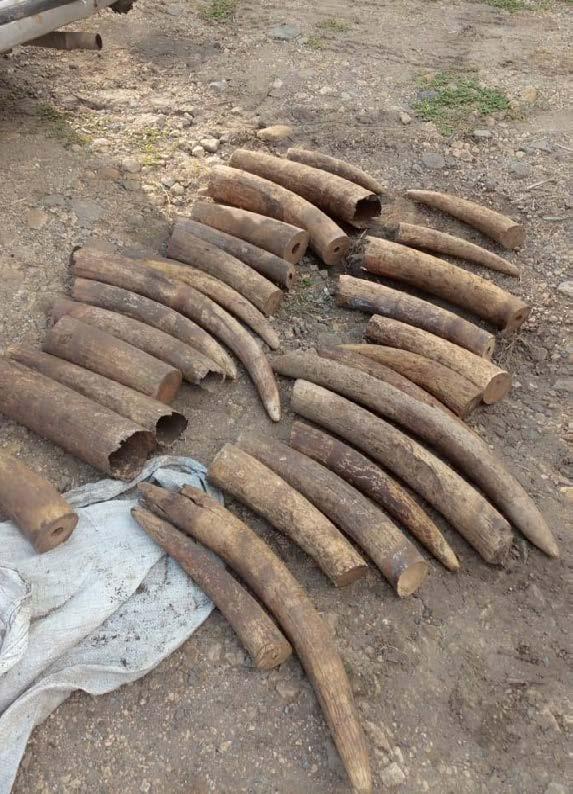
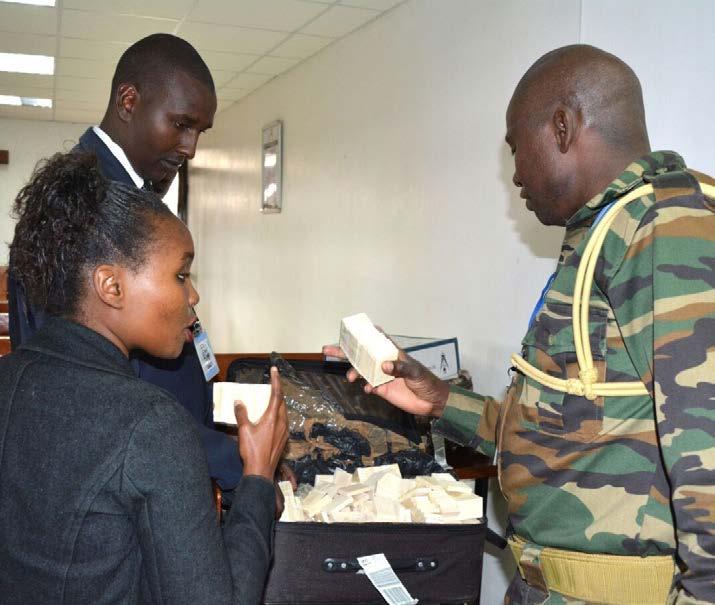
Fifty-five kilograms of ivory seized by KWS officials in Nairobi in January 2020 from a repeat offender. Photo credit: LAPA
Judy with a court official at Maseno Law Courts. Photo credit: LAPA
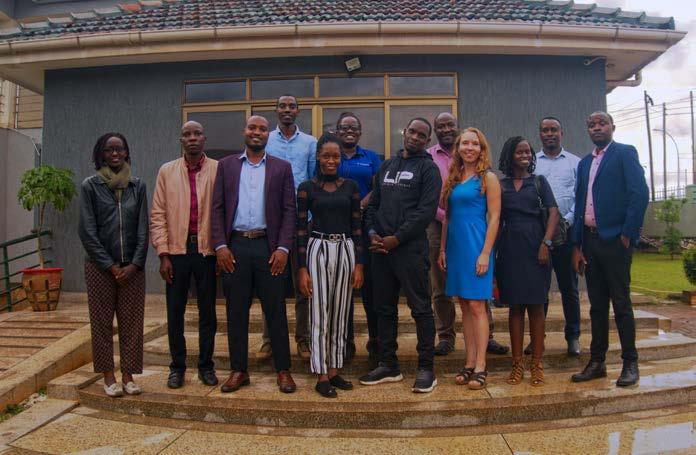
Group photo of journalists, trainers, and partners at InfoNile after a wildlife crime training supported by the Resilience Fund, InfoNile, and the Natural Resource Conservation Network. Tabitha is first from the left.
TABITHA’S PATH: THE ANALYST WHO SEES THE INVISIBLE
If Judy entered conservation and animal protection through law, Tabitha was guided by morality and hard data.
In Kampala, Uganda, Tabitha begins her morning by scrolling through incident reports. Some are short: an intercepted shipment of pangolin scales, a suspicious truck arriving at a border post, a confiscated cache of illegal ivory. Others are gut-wrenching: a ranger killed by poachers, a mutilated elephant found near a village, a rhino horn traced back to an insurgent group. Tabitha reads them all the same way, as data points in a much bigger story. “I work in transnational organized crime, and wildlife crime is one of the areas we are currently focusing on,” she explains. “People think wildlife crime is a conservation issue, but it’s not. It’s a security issue.”
“PEOPLE THINK WILDLIFE CRIME IS A CONSERVATION ISSUE, BUT IT’S NOT. IT’S A SECURITY ISSUE.”
Tabitha’s work shows just how much violence and corruption lie beneath the surface of what many still see as a niche conservation issue.
At Transparency Advocacy, Tabitha follows the money and the networks of wildlife crime, the hidden routes connecting traffickers in rural Kenya to middlemen across East Africa and, ultimately, to buyers in Asia. She tracks how illicit wildlife products are used to purchase weapons, and how corruption greases each step of the journey. “Wildlife crime in East Africa is found at every level,” she explains. “It sits at the intersection of business, corruption, and conflict. And for transnational crime to thrive, corruption is what makes it possible. It’s the law enforcement officers who wave shipments through. It’s the border officials who pretend not to see what’s in the truck.” She sees the problem not in isolated incidents but in patterns, flows, and networks. For her, illegal wildlife trade is not just about animals; it is about economic stability, regional security, and national integrity.
Still, even armed with conviction and analytical skills, Tabitha found herself hitting the same wall
Tabitha Agaba
Photo credit: Andrew Aijuka/InfoNile
Photo credit: Andrew Aijuka/InfoNile
as Judy: the data she needed was scattered across countries, institutions, and archives no one ever opened. Then the two organizations decided to join forces.
THE IDEA THAT COULD CHANGE EVERYTHING: WHERE JUDY AND TABITHA’S WORLDS CONVERGE
Though LAPA and Transparency Advocacy approach wildlife crime from different angles — legal advocacy and crime analysis — their worlds overlap in one crucial way: they both deal with a system so fragmented that criminals can slip through cracks undetected. This is where the Wildlife Information & Tracking System (WITS) enters the story.
WITS is an ambitious, Africa-wide platform that gathers, consolidates, and analyzes wildlife crime data across police departments, customs agencies, courts, and countries. It pieces together what Judy calls “the broken puzzle”: “It brings together fragmented data,” Judy explains. “Information that used to live in silos, now lives in one place.” The scale of what WITS could solve becomes obvious when Judy revisits the Kromah case: Kromah and his associates, part of a West African trafficking cartel, had over ten open
cases in Kenya alone. “None of those cases were consolidated,” she says. “Different courts didn’t have access to each other’s files or information. Cases were dismissed, the suspects got away, then arrested again,” Judy says, shaking her head. “Now, with WITS, things have changed. We can profile individuals, map networks, identify patterns, and make sure everyone — from investigators to prosecutors — has access to the full picture.” WITS doesn’t simply collect information; it transforms it into evidence that holds up in court.
For Tabitha, the system is a lifeline. Transparency Advocacy uses WITS to support regional investigations, tracking wildlife crime in East Africa and eventually, across the continent. “We use WITS to gather and analyze this data,” she explains. “Then we make it available to law enforcement and policy officers, and the next step is collaborating with courts to ensure cases are supported by solid evidence.”
With WITS, all the dots can finally be connected: a suspect’s history, their known associates, the routes they use, the patterns they follow. Prosecutors can build stronger cases, courts can recognize repeat offenders, and investigators can track networks across borders. The goal is simple,
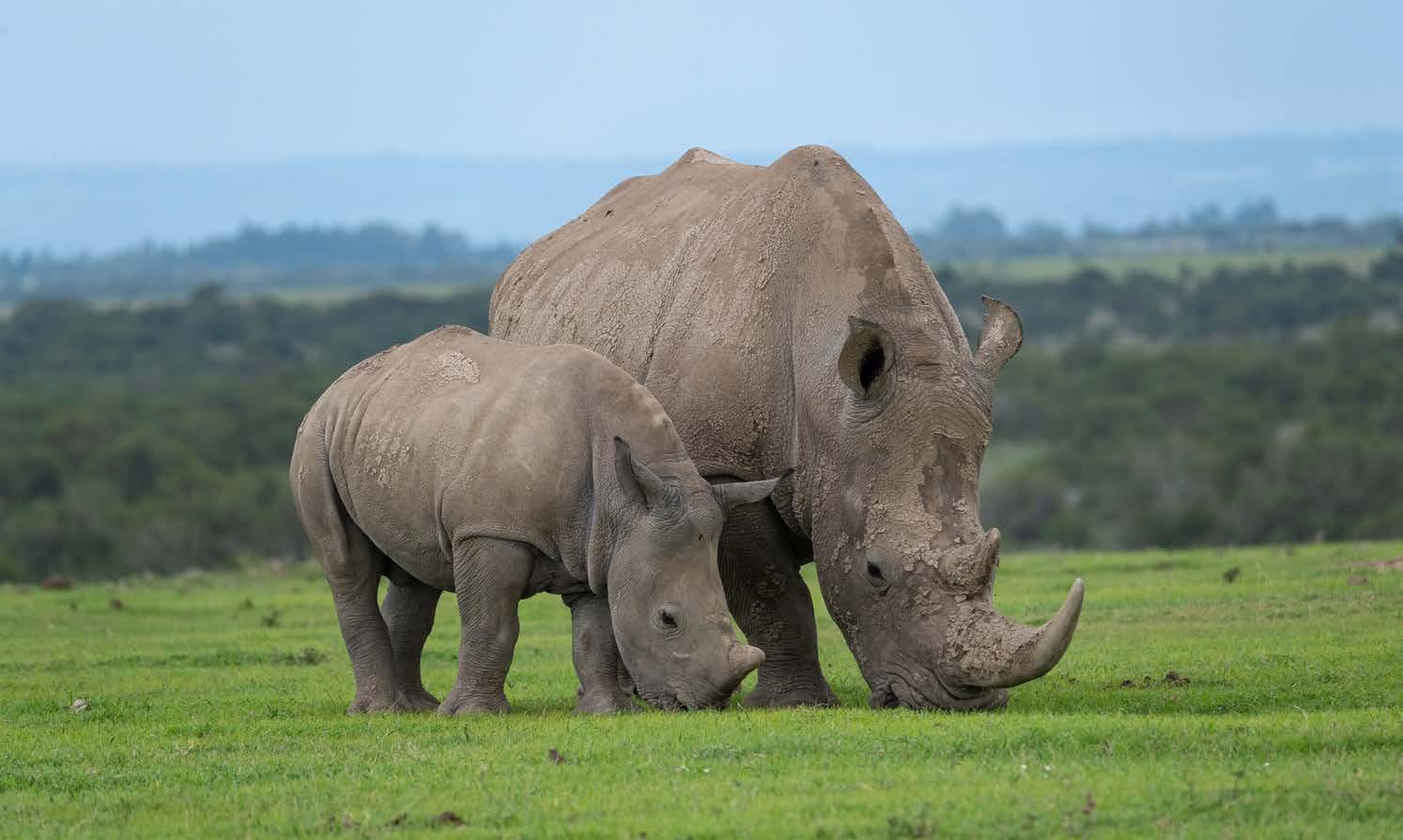
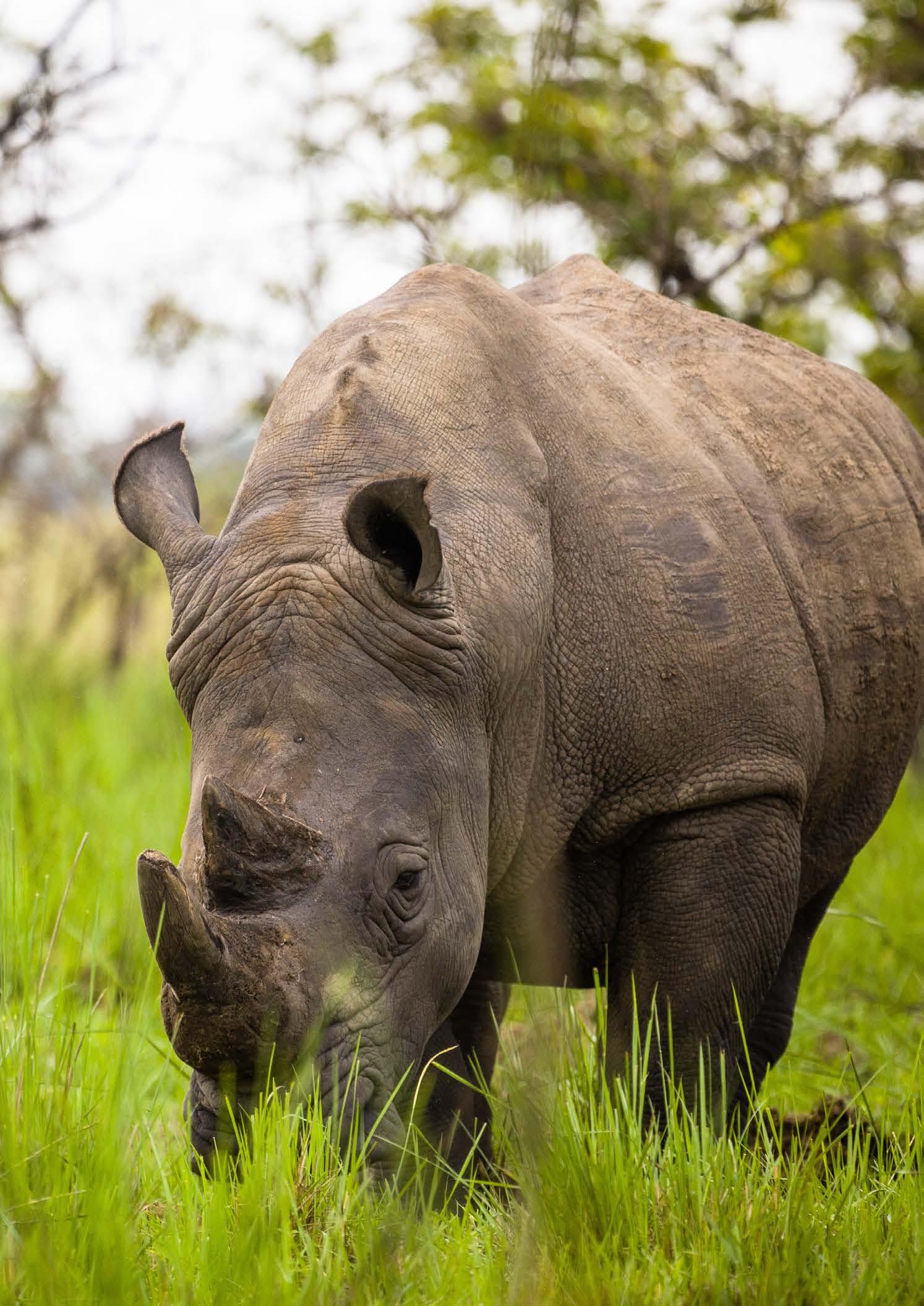
White rhinos at Ol Pejeta Conservancy, Kenya
Photo credit: Eli Wilson/Shutterstock.com
EAST AFRICA
but revolutionary: to close the information gaps that allow criminals to thrive. For the first time, Africa can fight wildlife crime as a coordinated regional effort.
BREAKING THE CULTURE OF SECRECY
In the beginning, one of the greatest obstacles Judy anticipated for WITS wasn’t logistical or operational; it was mistrust. Across the continent, wildlife organizations, government agencies, and law enforcement bodies have historically guarded their data fiercely. Information was seen as leverage, currency, or political capital. When Judy introduced WITS, she expected resistance and skepticism but was instead met with curiosity and interest by organizations from across Africa, who saw the potential for collaboration and wanted to see where the data overlapped, how the patterns emerged and what they could learn from each other. “I was very surprised by the positive response,” says Judy. “Organizations were happy to access more data on wildlife crimes elsewhere, which was a big change from before, when information was rarely shared.” Tabitha agrees, “Collaboration is what will save wildlife, and we were really happy to join forces with LAPA.” The shift in mindset toward openness and cross-border thinking is perhaps the most transformative change WITS has catalyzed.
THE CHALLENGES: BUILDING HOPE WITH LIMITED RESOURCES
Despite WITS’s early success, the organization still operates with the kind of stretched resources typical of many nonprofits. “Funding is always a challenge, but that’s the case whenever you launch something new. People first need to understand what WITS is and how it can support their work,” says Judy. Tabitha nods to the same truth, “We face more challenges than wins, and securing funds is an ongoing hurdle,” she admits. Tabitha recounts that for months, Transparency Advocacy relied on volunteers to gather data, analyze cases, and train users. “But we hold on to hope. Hope for what this work can bring: more convictions, better policies, and real change for conservation in Uganda and across Africa,” she adds.
Obstacles aside, Judy and Tabitha keep pushing forward, their perseverance rooted in something deeply personal. For Judy, it’s about passion and identity: “I love the environment and animals,” she says. “I want my work to resonate with my values, and the vision of building a better future for Africa keeps me going.” For Tabitha, it’s about responsibility and a long-term vision: “We have an obligation to protect our wildlife and their habitats; their loss is our loss. Wildlife crime threatens economic stability, security, and biodiversity.” Judy and Tabitha speak of a future where Africans shape their own solutions, those born from lived experience, community voices, and local realities.
THE ROAD AHEAD: REDEFINING WILDLIFE CRIME
While WITS currently focuses on detecting illegal wildlife activities, Judy sees a much larger scope ahead. She envisions expanding WITS to include human-wildlife conflict cases, incidents that rarely reach official channels but define everyday life for rural communities. “Many cases go unreported,” she says. “If we gather victimization data from communities, we can align global efforts with what people on the ground actually experience.” The goal of understanding the full spectrum of wildlife-related violence in Africa is a step toward a holistic, continent-wide conservation strategy.
Judy with an investigator and a KWS official at JKIA Law Courts during a wildlife trafficking case involving a Vietnamese national apprehended while in transit from the DRC to Vietnam. Photo credit: LAPA
EAST AFRICA
Tabitha hopes for something equally ambitious: for wildlife crime to be recognized not just as a conservation issue, but as a security issue. “The approach needs to broaden,” she insists. “Wildlife crime affects all aspects of society. It funds weapons, it fuels conflict, and it destabilizes nations. We need it to be discussed in wider circles, not just in conservation forums.”
Together, they envision a future where Africa’s fight against wildlife crime is united, data-driven, and rooted in local communities with impact felt across the continent.
A CALL TO RECLAIM AFRICAN WILDLIFE’S FUTURE
At the heart of both LAPA and Transparency Advocacy lies a shared belief: the fight belongs to Africa. “Wildlife conservation isn’t a white man’s issue,” Tabitha says. “It’s important to all of us, and these crimes affect our futures.” Judy adds a powerful call: “Our actions don’t affect us
alone; they have ripple effects. We must be our neighbor’s keeper!” Their message is loud and clear: Africa’s wildlife future will not be secured by outsiders, but through local innovation, collaboration, and tenacity.
Tabitha and Judy are proof that change doesn’t always begin with big speeches or dramatic arrests. Sometimes it starts with just one person who refuses to look away from broken systems and instead sets out to fix them. Wildlife crime is not a side issue, it is not a niche problem. It is a threat that swallows ecosystems, fuels armed conflict, corrupts institutions, and erodes Africa’s natural heritage.
And yet, within these realities scarred by neglect and hushed in silence, local and collaborative solutions are emerging. A lawyer disillusioned with systemic injustice. A crime analyst driven by compassion and data. Two organizations that refuse to settle for broken systems. And a revolutionary platform built not in Silicon Valley but in Africa, for Africa. Their work is a quiet revolution: one that stitches together forgotten cases, empowers prosecutors, builds community trust, and slowly restores integrity to wildlife protection.
In the end, WITS is not just a database. It is a promise that Africa’s wildlife and human communities will be protected, and those who threaten it will no longer escape accountability.
THE NEW GENERATION THAT CHOOSES TO COEXIST: HOW NATURE SAVED KURT JONES AND THOUSANDS OF YOUNG AUSTRALIANS
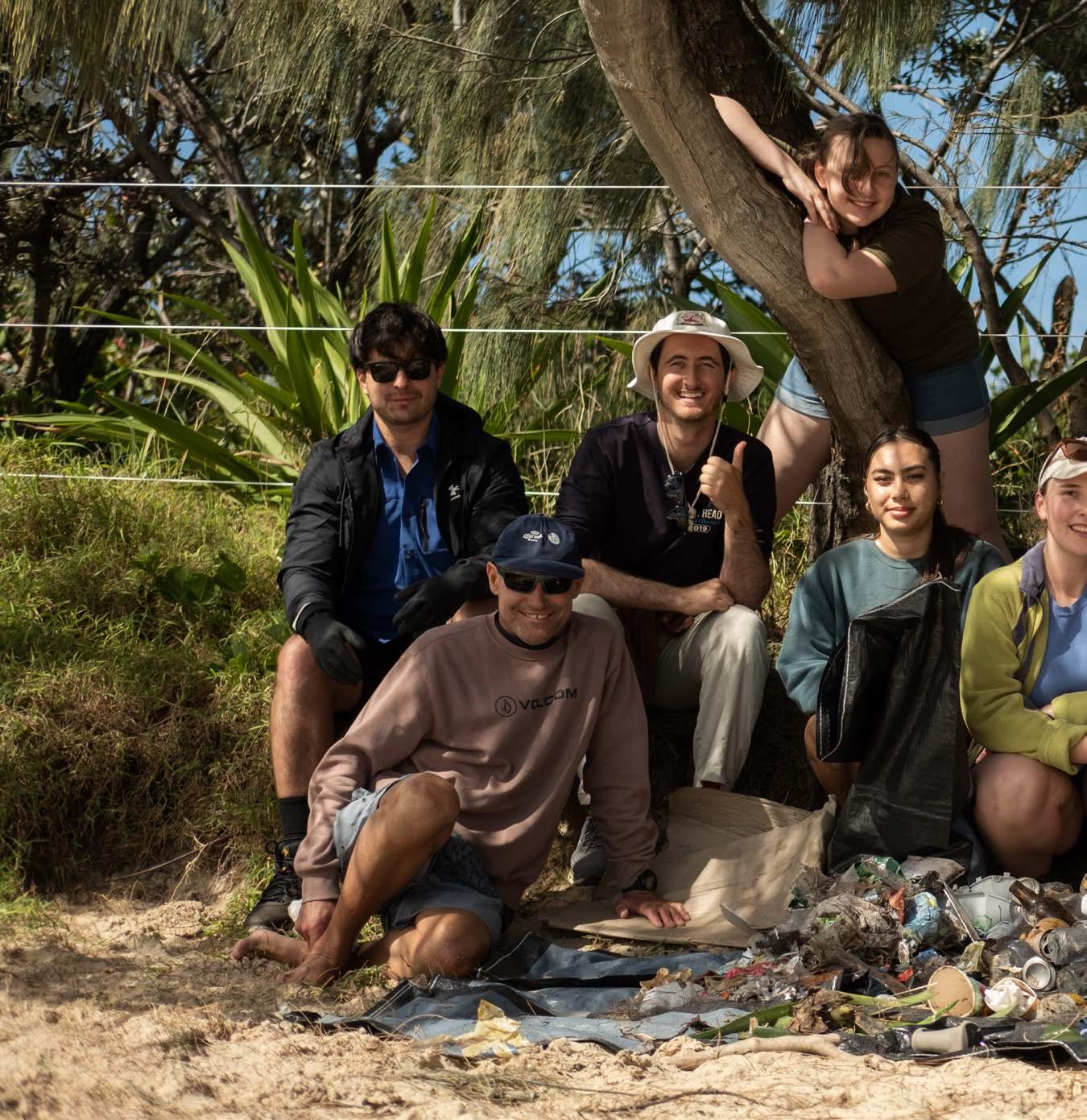
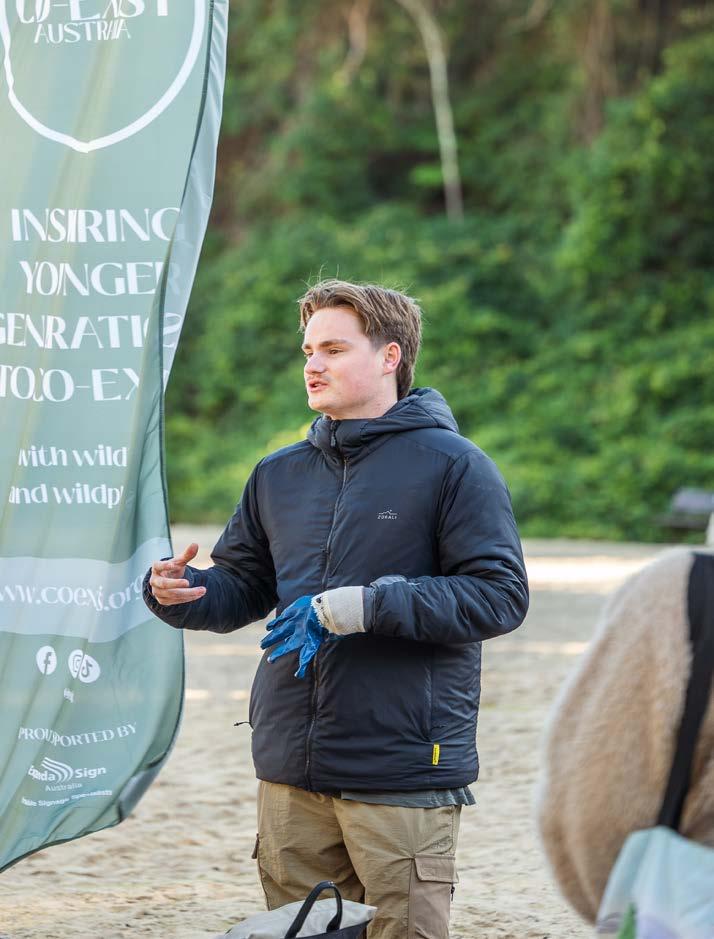
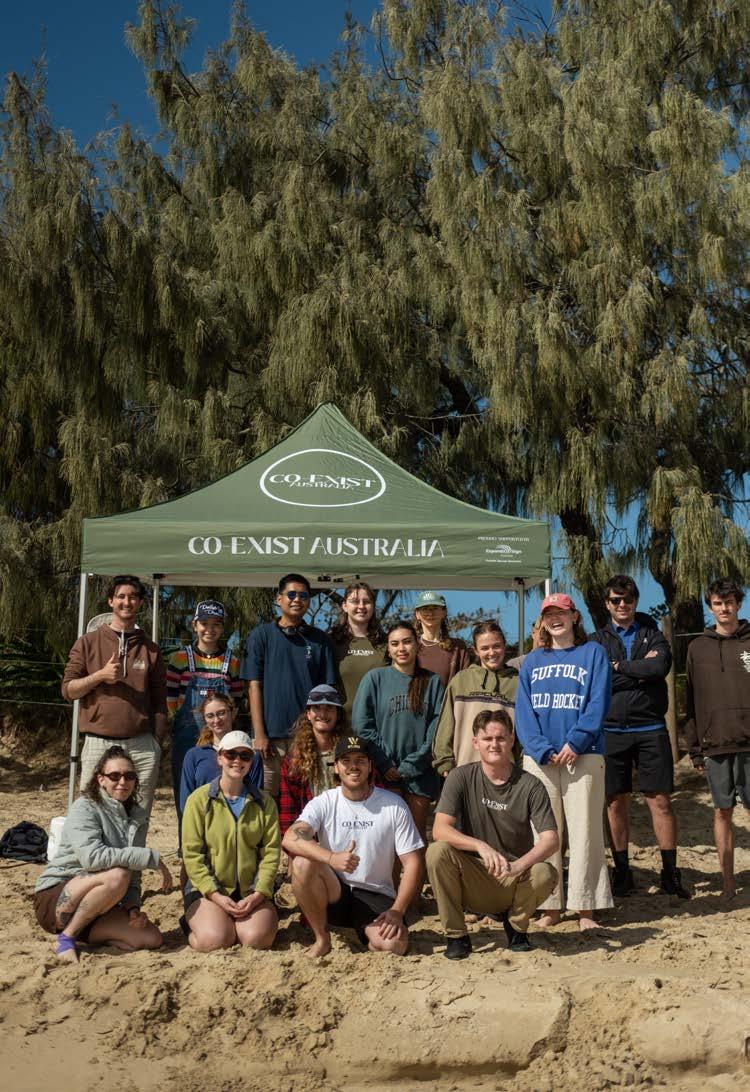
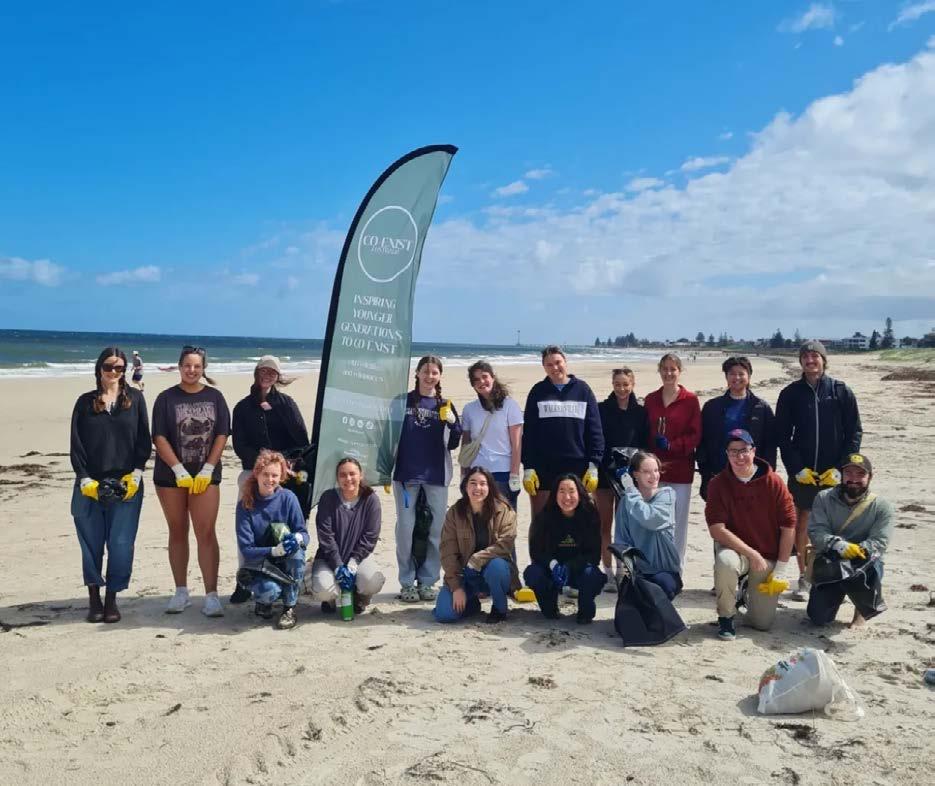
Volunteers and Kurt Jones at a beach cleanup Co-Exist event in Sunshine Coast, Australia. Photo credit: Co-Exist Australia
From a disengaged and disconnected young man to the founder of the youthled environmental organization Co-Exist Australia, Kurt Jones’ journey shows how nature can transform a life. Through his story unfold the voices of a new generation searching for meaning, impact, mental well-being, and a stronger bond with the wilderness.
Written by Zoe Duc
AUSTRALIA
Kurt Jones didn’t grow up in nature. From a low socio-economic background in Queensland, Australia, his only contact with the living world was limited to the four fences of his garden. Yet long before founding the organization Co-Exist Australia, he was observing and rescuing the small animals that crossed his yard. “I look back now and realize I was already becoming a wildlife conservationist,” says Kurt, “but my childhood was never about spending time in the wilderness.” Far from the wide-open spaces he would protect one day, his world was confined.
A turbulent child, Kurt grew up in a family environment marked by substance abuse, violence, and instability. “This created a pretty naughty kid at school,” he explains. “I would be getting in trouble and I couldn’t sit still.” In total, Kurt had to change primary schools five times.
Kurt Jones at a Co-Exist beach cleanup event in Sydney, Australia
Photo credit: Co-Exist Australia
These successive changes ended up creating a feeling of disengagement in him. “I didn’t feel like I could connect to the school system and with normal people,” he explains. A feeling shared, as the 2023 State of the Nation Report shows, with 40-50% of Australian students reporting high levels of disengagement.
As he moved on to high school, because of his behavior, Kurt couldn’t join a mainstream institution and was instead directed to a specialized one for disengaged youth.
Also called a flexischool, this establishment brought together young people in difficulty, creating a tough environment, one that many struggled to break away from. “A lot of those kids committed suicide, are unemployed, have kids very young, are in juvie or jail,” explains Kurt.
Yet in the midst of this chaos, a teacher found the right words. “One day, he pulled me aside and said, ‘Kurt, you don’t know it, but you’re a leader, and at the moment, you’re leading people in a very negative way. If you choose to lead people positively, then you could make a really big difference,’” Kurt recalls.
“As a young kid, when you come from a home where there’s domestic violence, drug and alcohol abuse, where you’re dealing with the child safety system, hearing these things was honestly unbelievable,” he explains.
Along with the constant mentoring from his teachers, the real turning point came with outdoor education. “If kids can’t sit still in the classroom, maybe we should allow them to have more time outside.” says Kurt. And that’s exactly what the flexischool already offered.
Located in the heart of the Australian bush, surrounded by lakes, kangaroos and koalas, Kurt remembers spending most of his classes in nature. “For math, we were building huts. For science, we were learning about water quality.” The students cooked breakfast over a campfire and brought their computers to work by the lake. “Every subject we studied was integrated through outdoor learning,” adds Kurt.
Moreover, he had the opportunity to choose electives such as environment or animal studies, which was a revelation to him: “Straight away, I found my passion. It was like letting a dog out of its cage.”
“IF KIDS CAN’T SIT STILL IN THE CLASSROOM, MAYBE WE SHOULD ALLOW THEM TO HAVE MORE TIME OUTSIDE.”
Alongside these classes, the school organized a camp in nature every term. Kurt shares, “It was like falling in love for the first time with the wilderness, and I figured out, this is what I want to do. I want my career to be about protecting the outdoors and its wildlife.”
Kurt was so enthusiastic that he joined every single camp. “It was the first time I’d ever gone camping. We went canoeing in beautiful rivers, or hiking through incredible mountain ranges,”
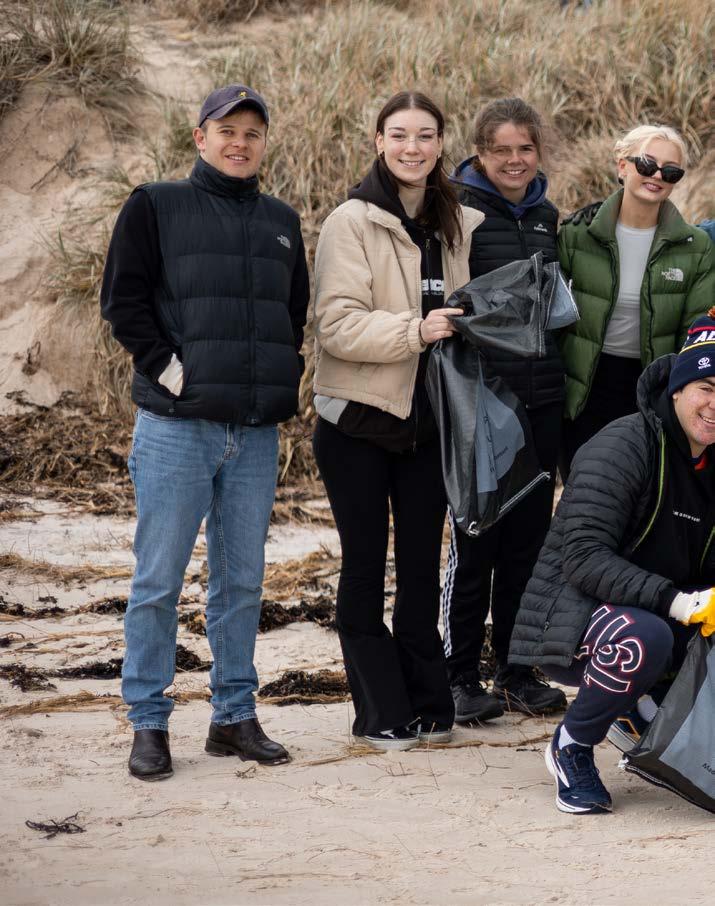
Kurt Jones with volunteers during a beach cleanup Co-Exist event in Sunshine Coast, Australia
Photo credit: Co-Exist Australia
he reminisces. Without this school and the opportunity to appreciate nature, Kurt would probably not be at the head of a successful environmental organization today.
Over the years, these outdoor experiences became much more than simple moments of discovery. They shaped Kurt’s deeper understanding of the connection between humans and nature.
More specifically, he learned that nature teaches essential skills such as teamwork, communication, and adaptability. According to him, a whole part of learning is being lost today because children no longer spend enough time outside. “But the encounters you have with animals and their natural habitats are just transformational,” he says.
He also noticed how time in nature directly improves mental health, a growing issue in Australia. According to the 2024 Australian Youth Barometer, 1 in 5 young people sought psychological support in the previous year. Kurt is one of the lucky ones, he says, “I am so blessed that I had great people around me who invested time, but also that I was able to find my passion through connecting with nature.”
These experiences helped Kurt realize that nature is not only about beautiful places and animals. It’s about people, too. For him, protecting these vast spaces is a co-benefit, “Because we are nature,” he notes.
And in a country as rich and fragile as Australia, that connection matters more than ever. As one of the world’s 17 mega-diverse nations (countries that harbor exceptionally rich biodiversity with species found nowhere else), Australia has already lost more than 100 species since European colonization in the late 1700s, and over 1,600 are now threatened.
Observing these issues, Kurt decided to volunteer at the Australia Zoo and with a koala rescue group.
It was during these volunteer experiences that Kurt grasped something major: “I’m the only young person here.” Yet, at that age, Australian youth are already exposed to climate change through social media. “But it didn’t go further than that. Young people were vocal about climate change and environmental justice on Instagram, but you didn’t see them actually cleaning beaches, or getting involved with conservation,” he adds. There was a missing link between knowledge and action.
“I AM SO BLESSED THAT I HAD GREAT PEOPLE AROUND ME WHO INVESTED TIME, BUT ALSO THAT I WAS ABLE TO FIND MY PASSION THROUGH CONNECTING WITH NATURE.”
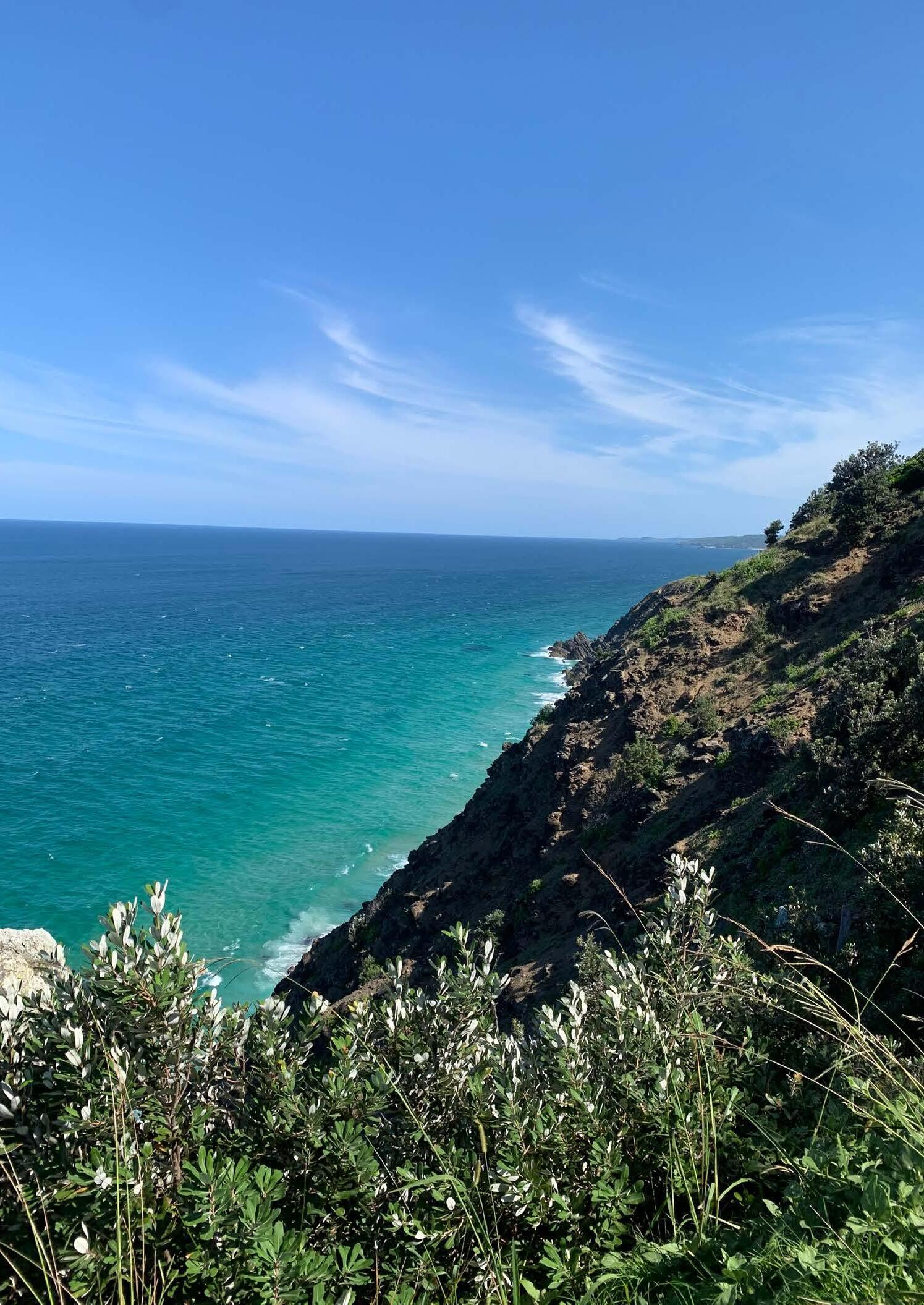
Cliffs and ocean view, Cape Byron State Conservation Area, New South Wales Australia
AUSTRALIA
Still, climate change negatively affects the mental health of two-thirds of young Australians, according to a YouGov survey. This growing anxiety about the state of the planet is something Kurt hears often from young people. Many describe feeling powerless, believing that planting a few trees on the weekend cannot fix a global crisis and that the responsibility largely lies with governments.
For Kurt, this sense of hopelessness, fueled by fear, anger, and disengagement, reflects the very symptoms now commonly referred to as ecoanxiety.
But as Kurt reminds us, the solution lies in action. “Like one of my heroes, Dr. Bob Brown, an Australian politician and great environmentalist, said, ‘Don’t get depressed. Get active. Get involved. Do something.’” This philosophy continues to be spread through Co-exist Australia, the organization founded by Kurt in 2022.
For him, this call to action quickly became reality during a school assignment at the age of 16.
The project brief was to develop a business idea, with a mission, vision and organizational structure. While most students chose clothing brands or beauty salons, Kurt had a very different idea. “I said to my teacher, ‘I’m doing all this volunteering and I’m always the only young person around. I have an idea for a not-for-profit organization for young people to get involved in local conservation,’” he recalls.
The project went so well that Kurt understood he could actually turn this idea into reality. He still laughs about it: “I have a friend now who said, ‘Kurt, I can’t believe that this Word document on a school laptop has turned into a national organization with a half-million-dollar budget.’”
As school came to an end, and while landing a job as a media manager for Sunshine Coast Snake Catchers, Kurt couldn’t stop thinking about Co-Exist
He first pitched his idea to some organizations and was surprised to receive negative feedback. “A few of them said that it wouldn’t work, that I was too young or that young people won’t volunteer,” he confides. Though discouraged for a minute, Kurt bounced back and decided to create his own organization.
It was while watching a documentary featuring his hero, Steve Irwin, that the word “coexist” came up. And as soon as Kurt started building his organization, that name felt like an obvious choice. Six months after graduating, Co-Exist Australia was registered as a charity.
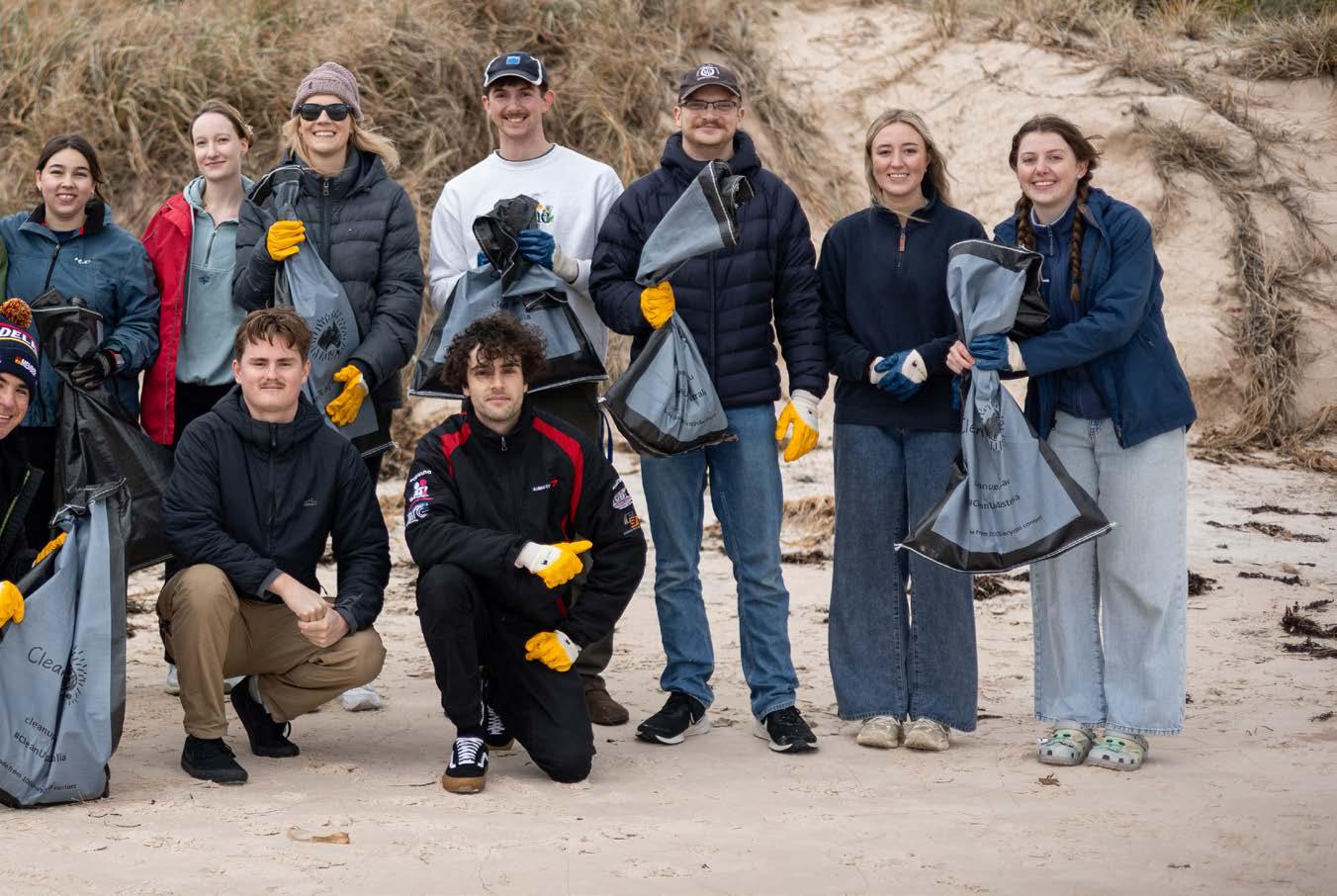
Volunteers and Kurt Jones at a beach cleanup Co-Exist event in Sunshine Coast, Australia
Photo credit: Co-Exist Australia
Behind this name lies a clear idea: reconnecting young people with nature and giving them the power to create change. “Normally, young people are not going to beach cleanups or tree plantings. But they might go on a hike or a camping experience,” he observed. In that way, young people are slowly introduced to conservation.
It is on this principle that Kurt built Co-Exist’s collectives, local branches in different Australian cities. The idea is to organize these social events
once a month, and then several environmental ones, like beach cleanups and tree plantings. The first collectives soon appeared across Queensland, but that was only the beginning.
A year later, Co-Exist had already engaged over 200 young people across 24 events throughout Queensland. That’s when Kurt realized the scale of the demand and decided to open a collective in Perth. The success was such that, with more than 50 participants at each event every few weeks, he decided to travel to see it for himself.
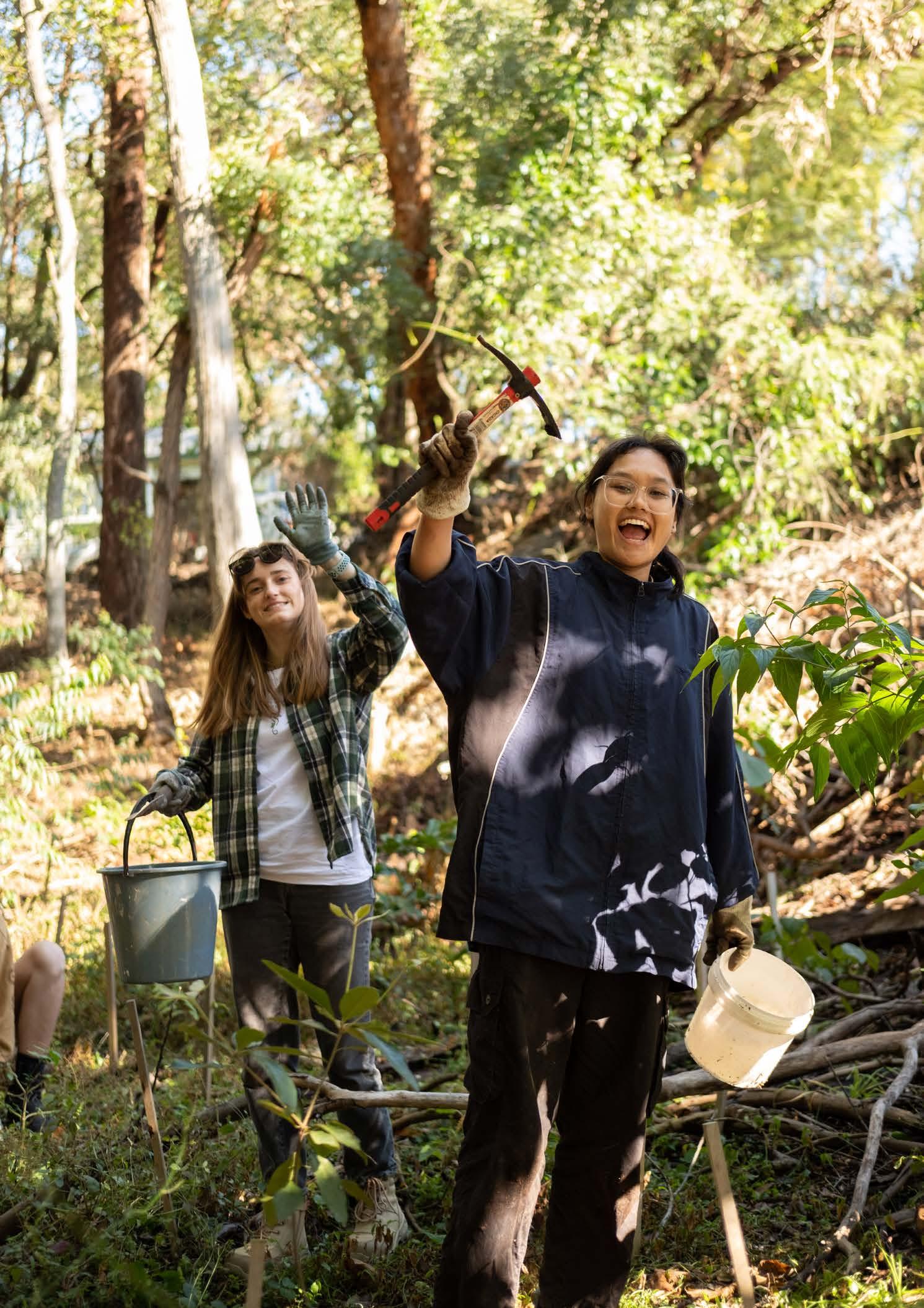
Volunteers at a tree planting Co-Exist event in Brisbane, Australia
Photo credit: Co-Exist Australia
It was there that everything changed. As he was walking through the streets of Perth, Kurt received a call from the Vincent Fairfax Family Foundation. What seemed to be a simple conversation to learn more about Co-Exist turned into a half-million-dollar partnership.
With this news, Kurt was able to resign from his job with the Snake Catchers and become Co-Exist’s full-time CEO. After that, everything accelerated: more events, a growing community, and 60 young leaders trained in conservation.
By working closely with local councils and guided by trained staff with environmental science backgrounds, Co-Exist ensures that each project follows regional ecosystem plans, from choosing the right native species to planning the restoration work.
Guided by these staff, young volunteers carry out the practical work on the ground. They plant trees grown from wild-collected native seeds, care for the sites previously restored, and remove invasive species. This structure allows their impact to remain tangible, accurate, and grounded in real conservation science. No diploma is required, just a willingness to learn and take part.
Beyond the fieldwork itself, what matters most to Kurt are the faces, the stories, the bonds created, and the transformation observed among young people.
It all starts with something simple: a hike, a conversation. Friendships form, the desire to see each other again grows, and, without even realizing it, the introduction to conservation happens naturally. That’s how the urge to protect nature begins, just like it did for the young man Kurt met in Melbourne.
“He was probably 20, was addicted to video games and hated going outside. But one day, while he was at the market, he ran across a Co-Exist stall and spoke with our Melbourne leader. He then started coming to most events. Now he’s gone from constantly being inside gaming, to meeting new friends and falling in love with conservation,” Kurt shares. And this young man is not the only living proof of nature’s transformative power.
Hannah Lyttle is a young woman who used to feel deeply anxious about the environment, influenced by the news and social media. While she was studying Environmental Science and Conservation at university, her eco-anxiety kept growing.
But one day, after hearing Kurt on the radio, she decided to join her first event and fell in love with the community. “Now, she’s the Brisbane collective leader, and went from being filled with eco-anxiety to inspiring hundreds of young people in their city to catalyze change,” Kurt rejoices.
“IT ALL STARTS WITH SOMETHING SIMPLE: A HIKE, A CONVERSATION. FRIENDSHIPS FORM, THE DESIRE TO SEE EACH OTHER AGAIN GROWS, AND, WITHOUT EVEN REALIZING IT, THE INTRODUCTION TO CONSERVATION HAPPENS NATURALLY.”
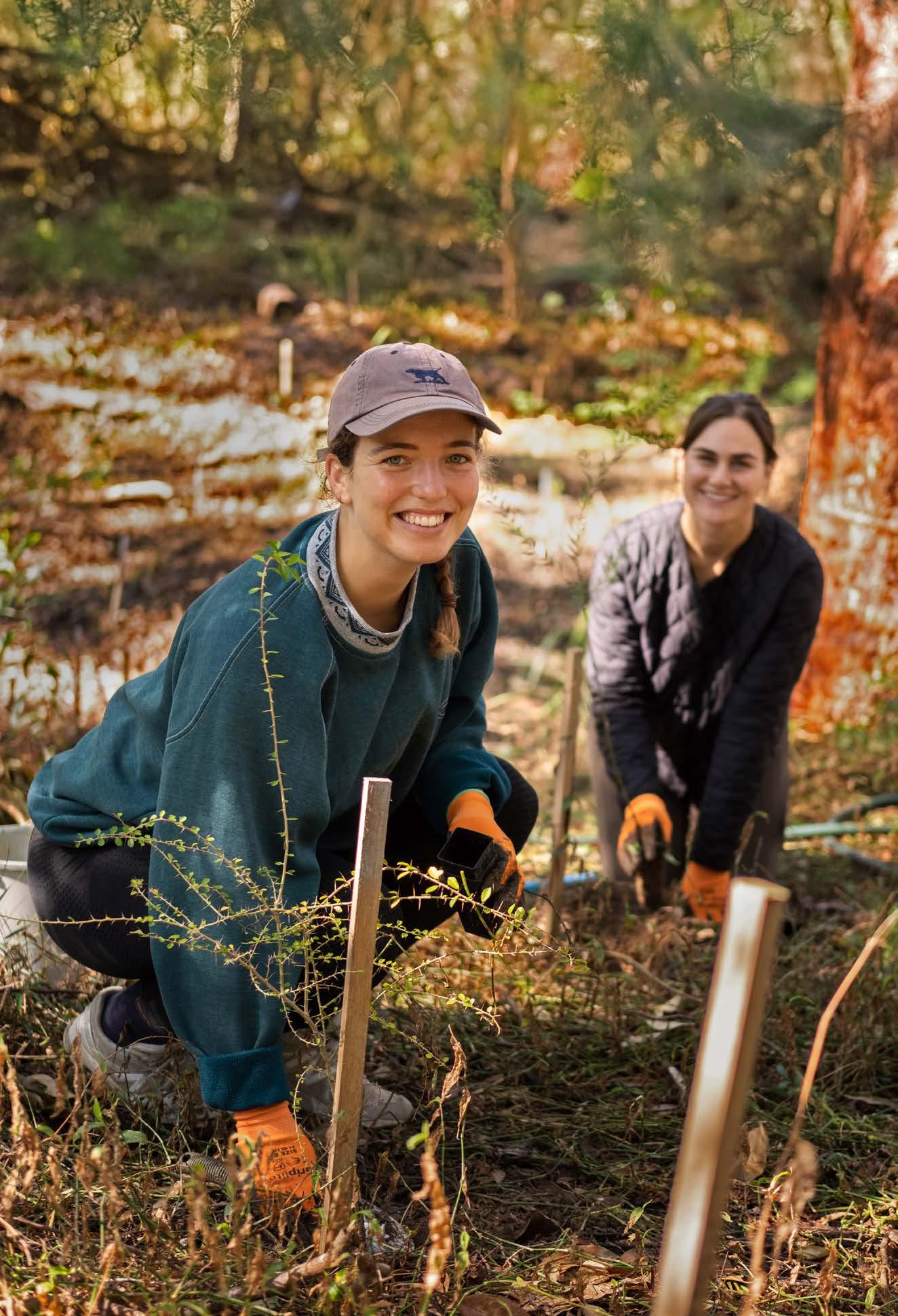
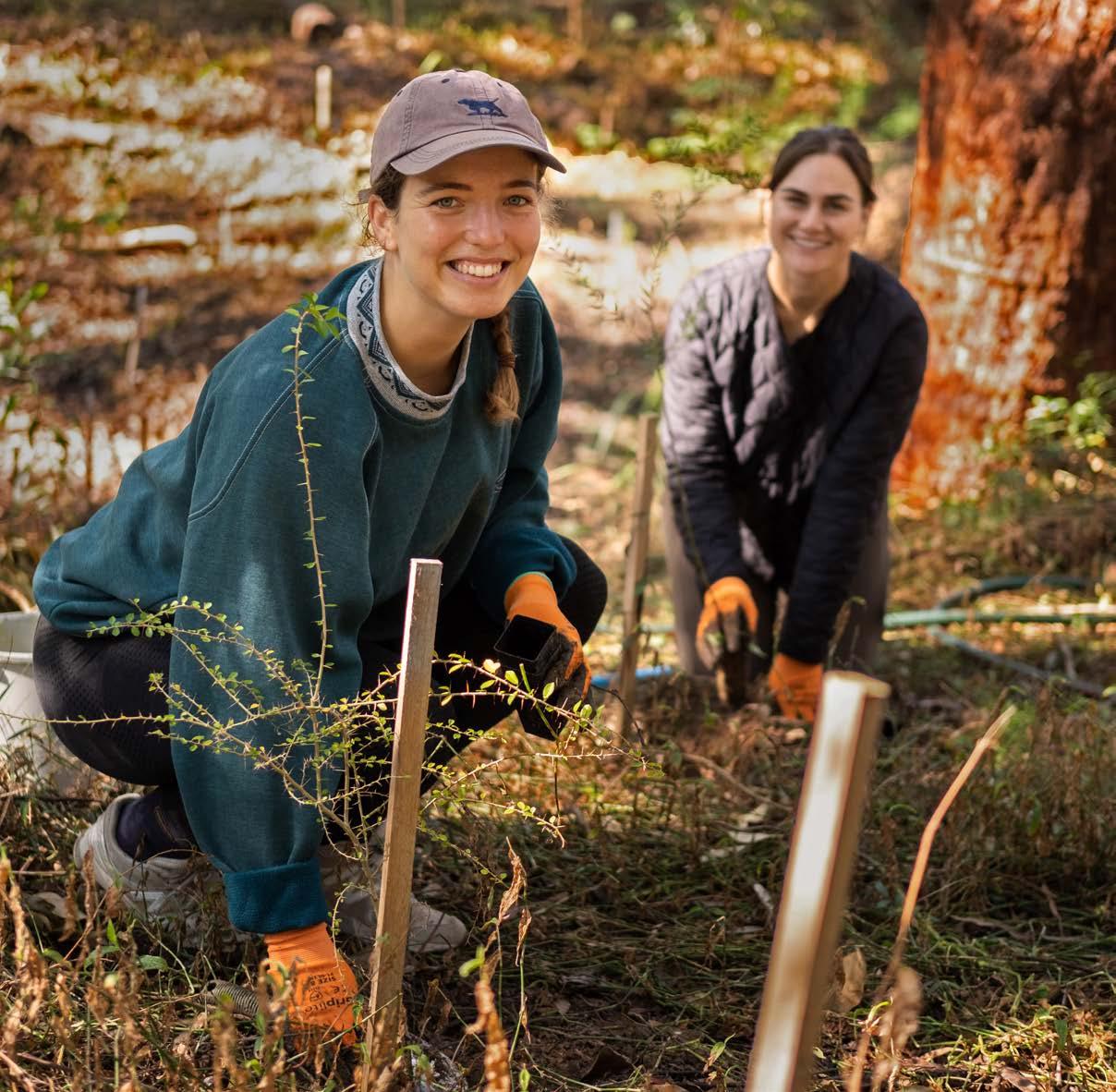
Two volunteers planting trees during a Co-Exist event in Brisbane, Australia Photo credit: Co-Exist Australia
AUSTRALIA
Moved by these stories, Kurt and his team wanted to better understand how their actions were truly impacting young people. At each event, they take the time to listen to their stories, experiences, changes, and offer them emotional support that is visibly much needed.
The common threads in these narratives are the friendships formed and the mental health benefits of getting involved. At Co-Exist, eco-anxiety and loneliness give way to connection and purpose, exactly what Kurt hoped for when he founded the organization. He wants to show that conservation and the environment aren’t always doom and gloom, but a space where young people feel inspired and empowered to act.
“We’re on a mission to create large-scale change, not only to restore our local ecosystems, but to actually inspire a whole generation of young Australians,” says Kurt. “Not just to protect the planet, but to go back to the root issue, which is the connection to nature.” Without this connection, change becomes difficult.
Even though Kurt is a clear example that young people are capable of great things, some stereo-
types persist, and it remains difficult to be taken seriously when building an organization at 20.
“The hardest thing about being a young person is going straight from school to starting a charity. You don’t necessarily have all the skills and experience to do that. So I’ve had to learn a lot, adapt really quickly, and be open to criticism,” he admits.
Despite criticism, rejection, and a lack of confidence in young people, the results speak for themselves: Kurt was a Queensland finalist for the 2025 Young Australian of the Year, and has received the 2024 Queensland Young Achiever Award and the 2024 Sunshine Coast Young Citizen of the Year.
Today, at 22 years old, looking back on his journey, Kurt recognizes how much his childhood and life experiences have shaped the person he has become. “I used to be a very disengaged young person. Then I fell in love with nature, found my passion, and the rest is history,” he says. “If it weren’t for the experience I had in nature in high school, I would probably be living a very different life, one that wouldn’t be positive,” Kurt concludes.
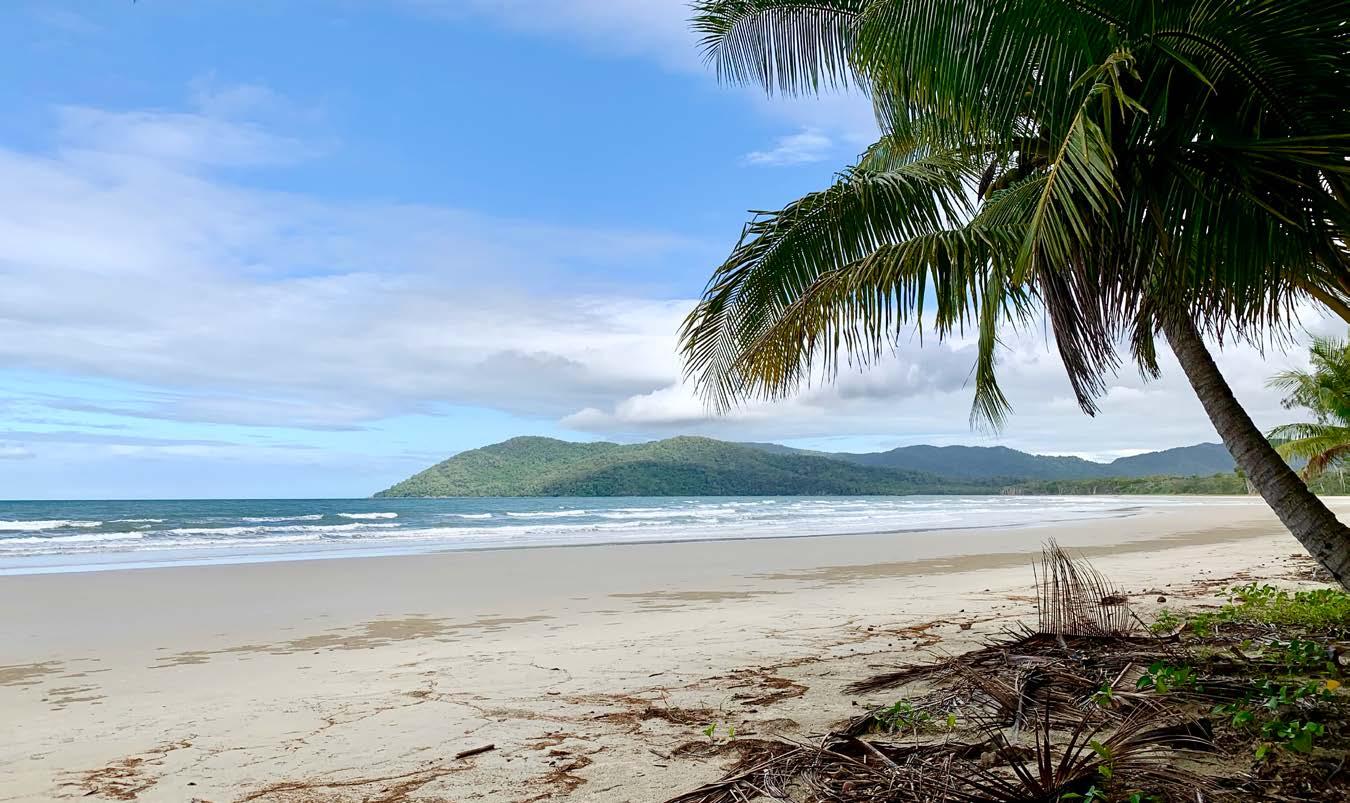
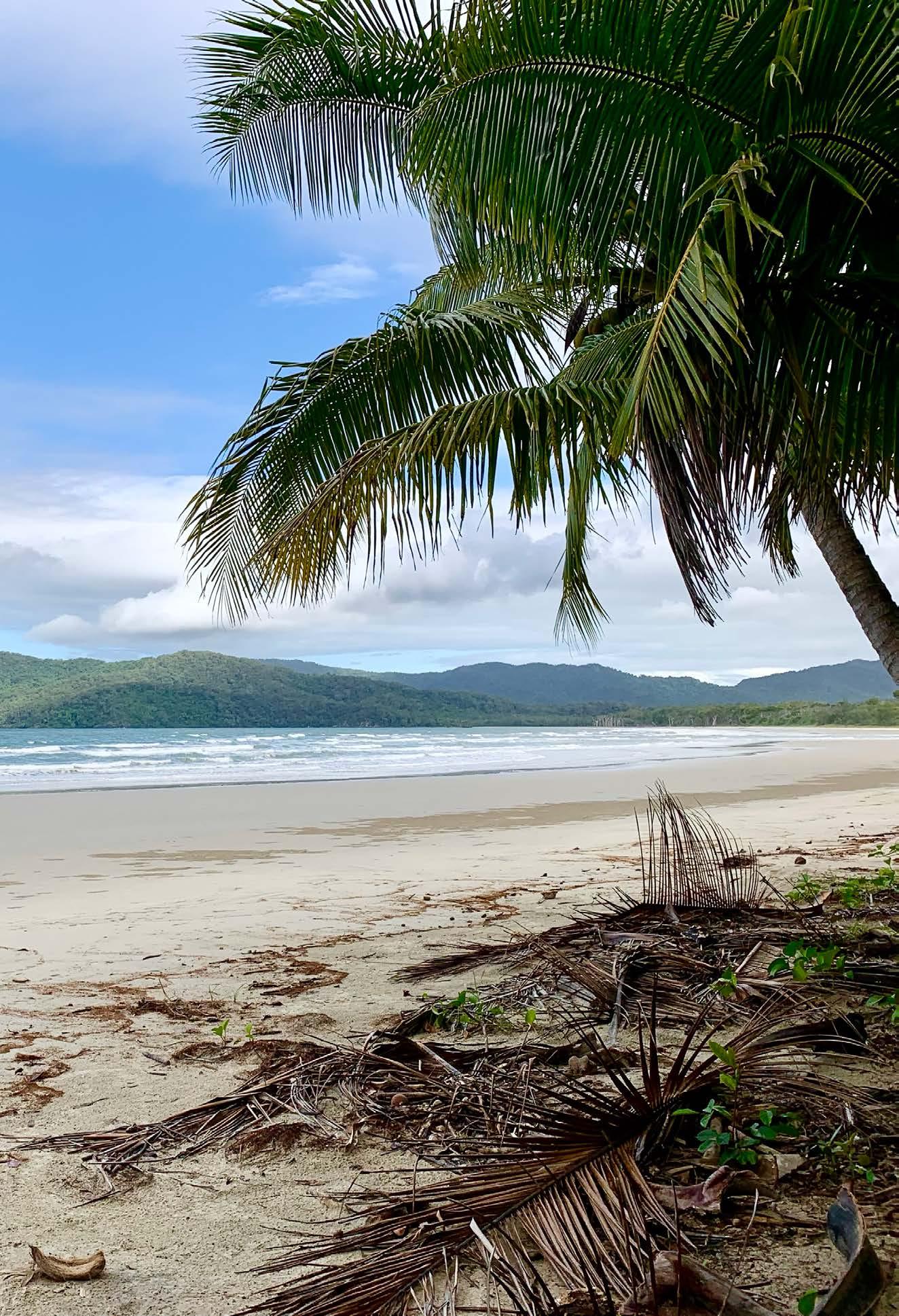
Beach in Daintree National Park, Far North Queensland Australia
Photo credit: Zoe Duc, 2023
Through Co-Exist, Kurt is already seeing how nature can have the same impact on young people as it had on him, a beautiful irony considering that, at first, some told him that young people wouldn’t want to get involved. Yet, according to the 2024 Australian Youth Barometer, 70% of young Australians took part in at least one volunteering activity during the year. Clearly, they simply need to be given the opportunity.
And the results live up to the hope Kurt places in youth. Since 2023, Co-Exist has brought together more than 3,800 young people across 350 events in 12 cities, planted 25,000 trees, and removed nearly 3.8 tons of waste from the environment. The results go far beyond memories, friendships, and smiles. Thanks to him, the new generation of Australians is making a tangible impact on the environment.
And sometimes, all it takes is one encounter with nature to turn a disengaged young person into a changemaker. Co-Exist Australia offers these youths more than an experience; it gives them a sense of belonging. And by trusting them, offering a safe space and giving them the tools to create change, the next generation, alongside Kurt, is already building a future where people and nature finally coexist.
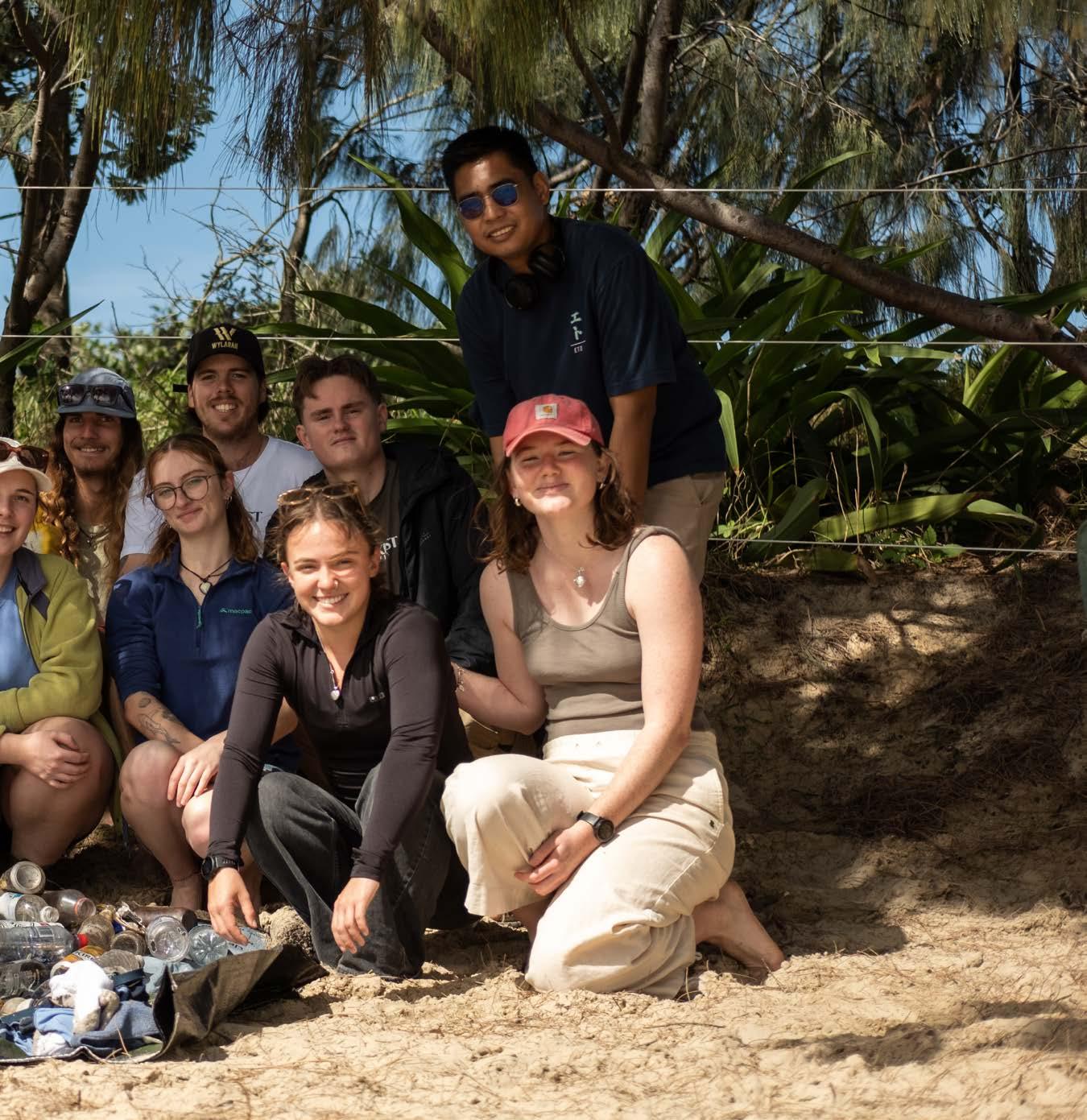
Volunteers at a beach cleanup Co-Exist event in Sunshine Coast, Australia
Photo credit: Co-Exist Australia
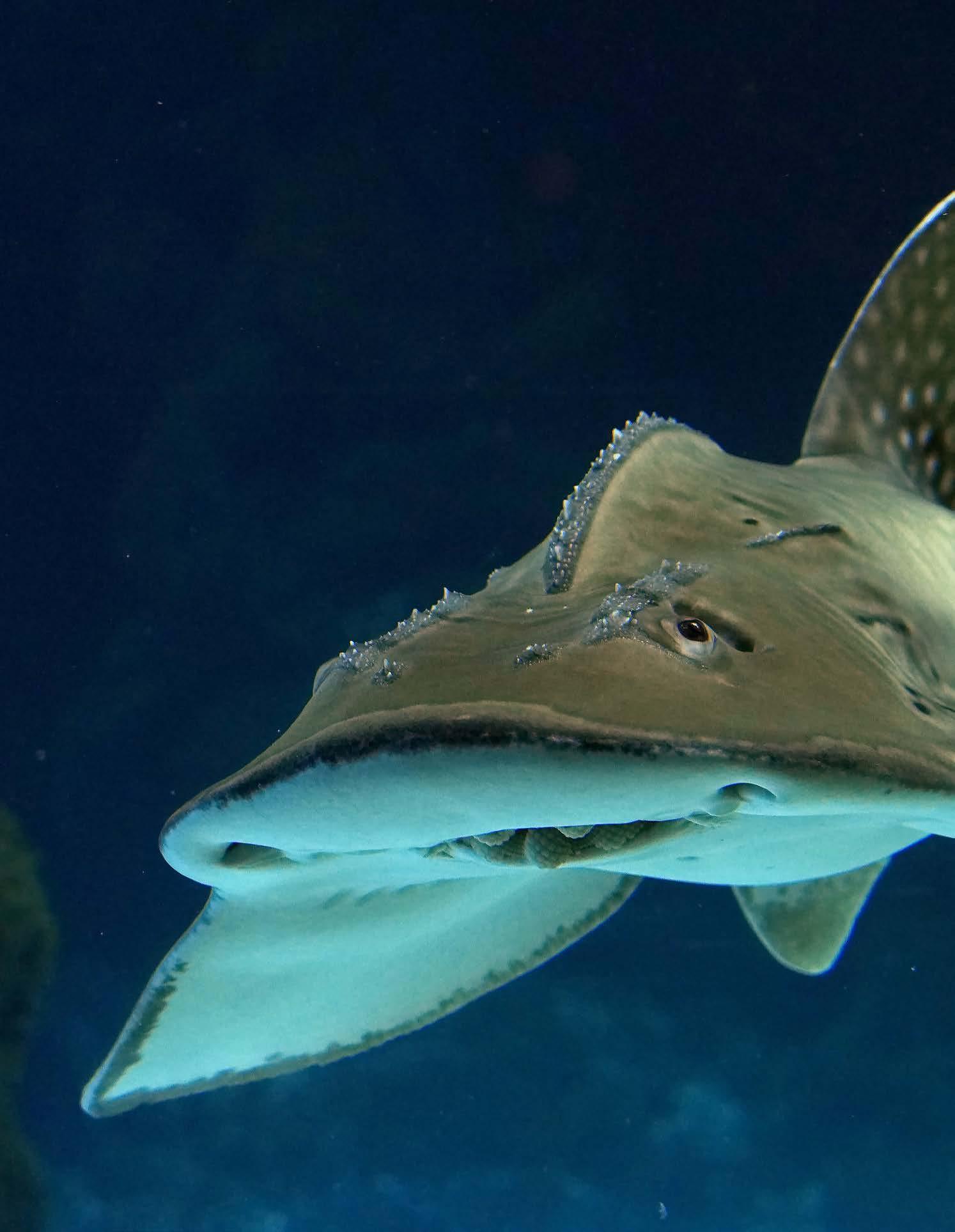
The Bowmouth Guitar Shark (Rhina ancylostoma)
Photo credit: Markus Kammermann - stock.adobe.com
NEW TO NATURE BOWMOUTH GUITAR SHARK RHINA ANCYLOSTOMA
In 2025 the Nippon Foundation-Nekton Ocean Consensus, the world’s largest collaborative initiative to accelerate the discovery of marine life, announced 866 new marine species had been found in the ocean depths off Mozambique and Tanzania. One of the discovered species was a subspecies of guitar shark, the Bowmouth Guitar Shark (Rhina ancylostoma), which is part of a unique group of animals that share characteristics of both sharks and rays.
Written by Marc Kranendonk
NEW TO NATURE
A NEW SPECIES MEMBER OF THE GUITAR SHARK FAMILY
Launched in April 2023, Ocean Census is a 10-year project aimed at closing the gaps in our knowledge of marine life with a huge effort of exploration. With so little of our oceans known, and millions of undiscovered species out there, the project is an ambitious, collaborative attempt to identify and research as many new species as possible. With identification of species taking up to 14 years to be finalized, such a project is essential to helping our understanding of how we can better protect marine life and prevent extinction for many unknown species before we are too late.
At around the depths of 200 meters off the coasts of Mozambique and Tanzania, renowned shark expert David Eberet, known as the ‘Lost Shark Guy’, identified a (possibly) new Guitar Shark. Usually, this species is found at depths of up to 90 meters, so the discovery was a head turner when they noticed the shark appearing this far down off a vast region. From that, there came only one conclusion to draw: this was a species of guitar shark new to science.
CHARACTERISTICS OF GUITAR SHARKS
Finding a new species and formally identifying it are two different things. Once a species is discovered, its formal identification goes through an often lengthy process that can be broken down into 5 steps:
1. Discovery and collection of the species. This is the first stage, already achieved by Ocean Census, where scientists first encounter a species in the field.
2. Taxonomists sort and conduct preliminary screening of specimens. Many marine species look similar to each other, and there are millions of them known, which prolongs the timeline of the process.
3. Morphological study. Scientists look for consistent, diagnostic traits like bone structure, internal anatomy, and development stage.
4. Genetic analysis. DNA needs to be compared and interpreted.
5. Writing and publishing the species description. This is where a species is described in a peer-reviewed scientific journal, compared explicitly with all similar species, and given an official Latin name.
The first subspecies of bowmouth guitar shark (Rhina ancylostoma) was discovered by German naturalists Marcus Elieser Block and Johann Gottlob Schneider in their publication Systema Ichthyologiae in 1801. Since then, 37 other subspecies of guitar sharks, including last year’s discovery, have made themselves known to science.
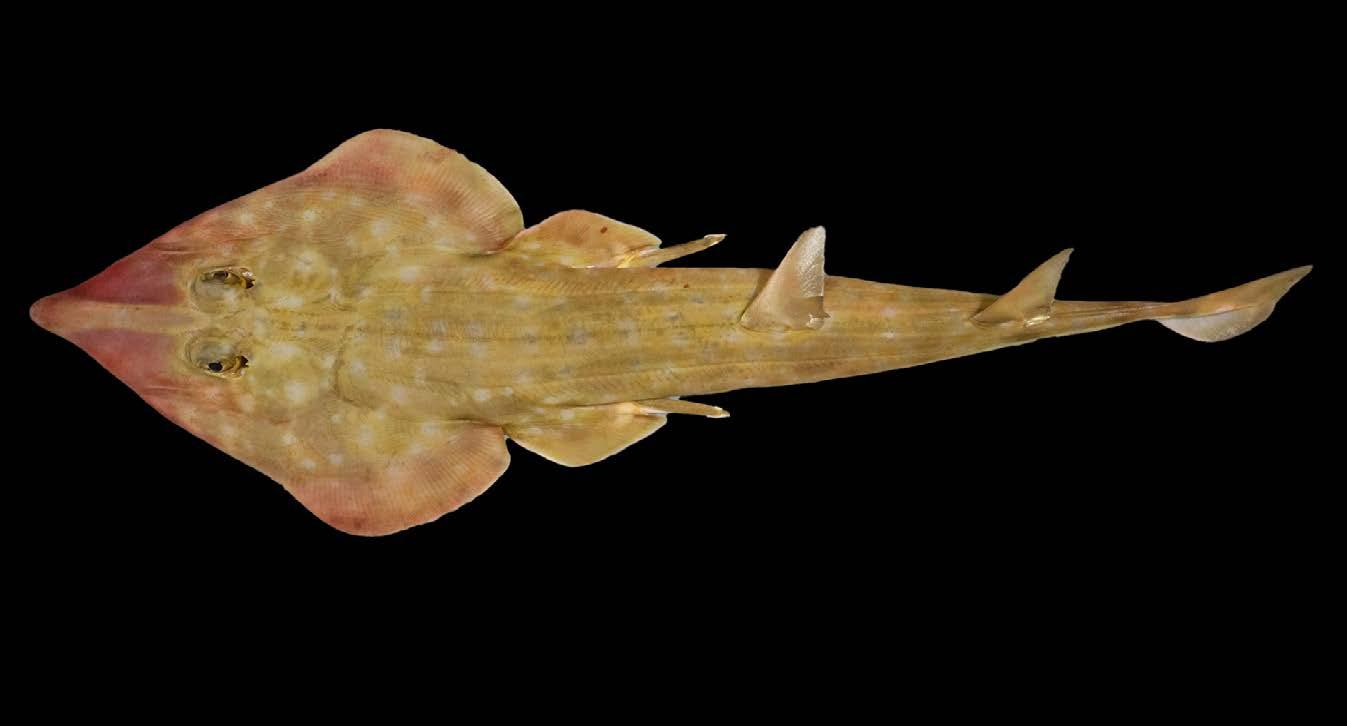
The bowmouth guitar shark’s name might raise a few eyebrows, but its appearance combines three very literal features. The bowmouth refers to its broad, arched mouth at the front of the head, which looks similar to a bow, and is much wider than most sharks or rays. From above, the outline of the animal resembles a guitar, or a violin if you prefer a classical comparison. Its body shape starts off flat at the front, and the back half narrows into a shark-like tail, giving off the silhouette we associate with the aforementioned string instruments. However, the bowmouth guitar shark also goes by the names of sharkray and mud skate. And, not to fuel greater confusion, but it’s not a true shark either. While its tail and dorsal fins give it a shark-like appearance, it’s actually considered a species of ray, belonging to the Rhinidae family, which includes the likes of sawfish and wedgefish.
HABITAT AND BEHAVIOR
Guitar sharks are a rare species, despite their many variants, occurring widely in the tropical coastal waters of the western Indo-Pacific. All guitar sharks are considered roamers of the benthic zone, which in the marine world is the region at the lowest level of a body of water. The sea floor is their home, and the most recent
This newly identified guitar shark, found off Tanzania, is only the 38th known species of its kind and belongs to one of the ocean’s most threatened vertebrate groups.
member prefers to lurk in the deeper, darker areas of the western Indo-Pacific waters. They are naturally strong swimmers, patrolling over sand and mud, hunting for bony fish, crustaceans, and molluscs. However, they don’t hunt like most true sharks. Sharks are known to roam the open waters in long-distance pursuits. They’re endurance hunters who strike their prey with a bite-and-release technique and slashing violence. On the seafloor, the guitar shark combines its shark-like speed with a raylike feeding technique. It’s an ambush predator, focused on short bursts of speed, suction feeding, and energy conservation. They lurk in the mud and sand, partially burying themselves, relying on their stillness and patience to grasp at a meal, striking when the opportunity is just right.
Guitar sharks are solitary in nature, loosely distributed between each other, without any coordination or herd behavior. They are also not territorial, but they have been observed returning to the same feeding and resting areas. Speaking of which, they give birth to litters of two to eleven pups, with each baby growing by feeding on a yolk sac, similar to the yolk inside a chicken egg. Once the mother gives birth, the pups are fully formed young. This reproductive process is common among rays and sharks, and is one of the reasons they’re vulnerable to endangerment. The pregnancy cycle produces a
small litter compared to other aquatic life, and that plays into a slow population recovery and high vulnerability to overfishing.
THREATS TO THEIR CONSERVATION
Anywhere along the coastal waters of the western Indo-Pacific Ocean you may find the familiar sight of fishing boats, occurring at the artisanal and commercial scale. In both cases, the bowmouth guitar shark is threatened. On the artisanal side, these sharks are caught for their fins and meat, and sold at fish markets all over the world. The issue at hand is that the exact numbers of catch often go unreported, as is the nature of the international fishing trade, which makes it difficult to know the extent to which their population is impacted by unmanaged artisanal fishing. Thankfully, the Convention on International Trade in Endangered Species of Wild Fauna and Flora (CITES) has caught wind of the issue, requiring any trading of bowmouth guitar sharks to be officially regulated, sustainable, and not harmful to the species survival. Agreements such as CITES are necessary to hold governments accountable for the situation.
Industrial fishing methods, like bottom trawling and blast fishing, are on the other end of the spectrum. Trawlers specifically view species such as the bowmouth as nuisances, tearing up their nets with their bulky bodies and thorny
skin. Bottom trawling damages their muddy and sandy habitats on which they heavily rely. Added to that, the habitat is already under stress due to human coastal development, pollution, and coral reef degradation.
The combination of fishing and habitat destruction has put the species on the IUCN Red List as Critically Endangered. Clamping down on illegal and unregulated fishing exploitations will be crucial for the future of bowmouth guitar sharks. International agreements that ensure the protection and safety of the bowmouth guitar shark, which repopulates in small numbers, will give the species a chance to recover.
WHAT DOES THIS DISCOVERY MEAN FOR THE FUTURE OF THE GUITAR SHARK FAMILY?
Guitar sharks are up against it. Their habitat is impacted by human activity, and their reproductive cycle is slow. This is coupled with the fact that official species identification and research take time, and time is not on their side. Discovering the 38th subspecies of its kind at deeper levels of the Indo-Pacific Ocean region suggests that its habitat is more extensive than expected. It also further demonstrates that they play a vital role in the seafloor environment at various levels and the greater marine food web. However, there is so much of the ocean we do not know, and cannot
see, and just because that life is often out of sight, it does not mean they aren’t impacted by our activity above. Unsustainable fishing practices will force species like the bowmouth guitar shark into a corner of extinction, and the consequences may prove dire. A continued effort to bring attention and awareness to the matter can save them time, while scientific research continues to learn more about them. This is why the Ocean Consensus project is so important, as it will dedicate a decade of exploration to bringing species like the bowmouth guitar shark into the public eye, reminding us how truly diverse our world is.
Habitat: Tropical coastal waters of the western Indo-Pacific
Size: 2.7 - 3 meters (9 - 10 feet)
Diet: Bottom-dwellers like crustaceans, molluscs and bony fish
IUCN Red List Status: Critically Endangered
Population: Unknown, but rapidly declining
Common name: Bowmouth Guitar Shark
ECOPRENEUR BEGINNER BOOTCAMP
HELPING YOU START YOUR NATURE VENTURE
You have a wild idea to help the planet, yet struggle to see how to get the first paying supporters. In just 8 weeks, the bootcamp helps you gain the clarity, confidence, and support you need to build your nature business, step by step. With handson feedback and weekly group calls, you’ll test your ideas, build a business model, create your offer, and find your audience, alongside other ecopreneurs.
Scan the QR code now or click here and receive an additional 60-minute one-on-one coaching session for free (worth €200) with Oliver Dauert, founder of Wildya, or Michelle Egly, co-founder. Simply write UBUNTU2026 after the payment.
Photo
THE CHIEF AND THE PANGOLIN: A CHARMING COOPERATION
STORY
“If you want to go fast, go alone. If you want to go far, go together.” – African Proverb
Pangolins are the most trafficked mammals in the world.
The roots of the pangolin black market in Zambia are deeply entangled with basic human desires for health and success, and ancient traditions that survive in dim light.
Maina Malaya, communications officer at Wildlife Crime Prevention (WCP) Zambia, understands better than most that working in conservation often means engaging with people more than with wildlife.
Inspiring and unusual, the story Maina has shared with us is about bringing the roots of the pangolin black market out into bright light — the brightness of a room filled with open-minded and creative individuals.
Written by Giulia Frezzato
ZAMBIA
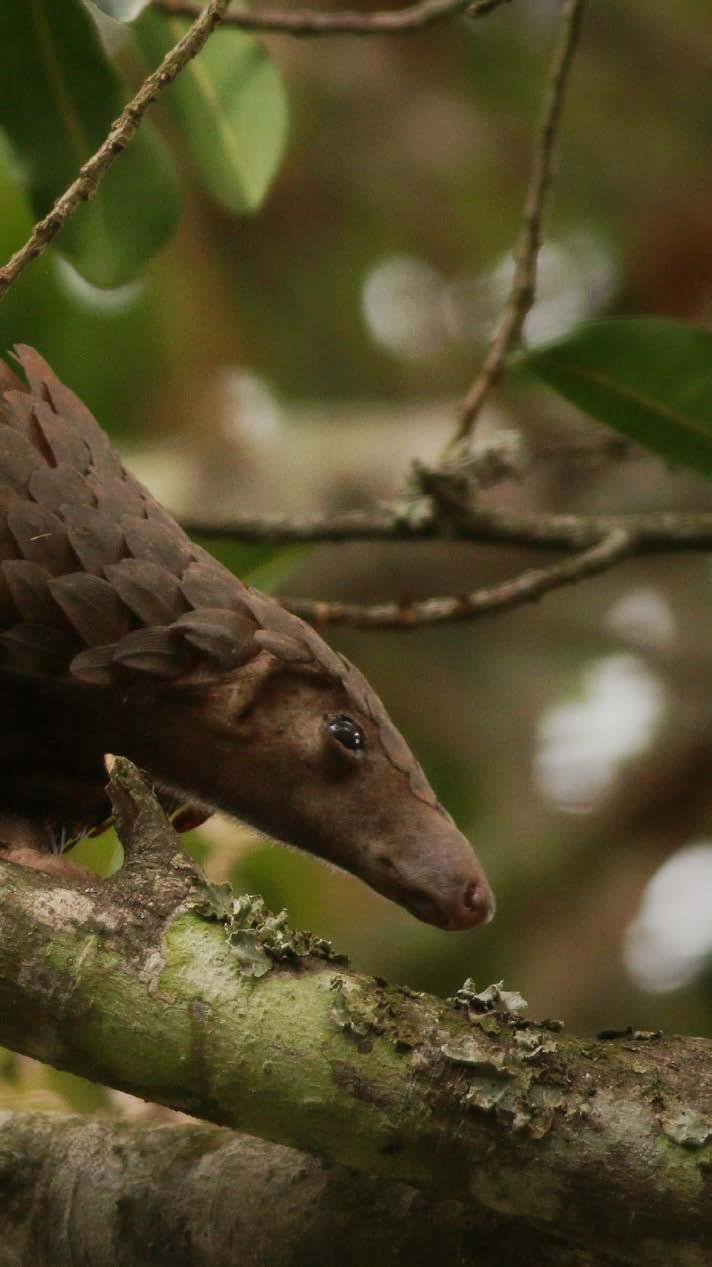
Rescued tree pangolin foraging
Photo credit: Jay Jones
ZAMBIA, PANGOLINS AND THEIR RESCUE
Zambia is home to two species of pangolin — the Temminck’s Ground Pangolin (Smutsia temminckii) and the White-bellied Tree Pangolin (Phataginus tricuspis). According to the IUCN, both species are experiencing declining population trends, with the former listed as Vulnerable and the latter as Endangered.
Unlike many other trafficked species, pangolins hold the greatest value to poachers when sold alive. This presents a significant welfare issue, but it also offers a sliver of hope: rescued pangolins intercepted before sale can often be rehabilitated.
Wildlife Crime Prevention (WCP) Zambia runs a specialized pangolin rescue center as part of their Protect the Pangolins Programme. Many animals arrive after being reported by members of the public, and they are safely handed over through the Department of National Parks and Wildlife. Nevertheless, seized pangolins typically arrive malnourished, weak, injured, and sometimes pregnant. They require expert care, intensive monitoring, and a careful rehabilitation process before they are fit for release.
Each animal rescued from poachers and successfully returned to the wild represents a small but meaningful step toward conserving the
species. So far, 89% of released pangolins have been recorded alive and healthy one month after release, a promising figure. Yet their future is never guaranteed, and nothing prevents them from falling once again into the wrong hands.
THE CAMPAIGN
Pangolin trafficking is driven, unsurprisingly, by the significant financial rewards it offers poachers, rewards dictated entirely by consumer demand. So while vets, animal scientists and handlers work tirelessly to return rescued pangolins to the wild, WCP’s Communications Department focuses on bringing the sticky subject of pangolin trafficking into the open.
Targeting the root of the problem — the demand for pangolin-derived products —, the Pangolin Demand Reduction Campaign is as much about people as it is about pangolins. And dealing with people is when Maina Malaya is in her natural environment.
Maina first encountered WCP Zambia as a thirdyear Environmental Education student, back when the organization was still in its infancy in 2017. Two years later, she returned to WCP for an internship and this time, with a Bachelor of Education in Environmental Education degree. “I thought I was going to be an educator, in classrooms, but as I continued and did the internship, I found it very interesting. It was a new environment, to have to sit all day and be at a laptop and talk to people.”
As she took the opportunity to join WCP for her first job, she discovered just how much she enjoyed engaging with communities. So in 2020, she brought her passion for the environment together with her naturally outgoing nature by stepping into the role of Communications Officer for WCP Zambia.
Today, Maina leads two projects: the Women for Conservation initiative (a platform that works to encourage women to participate in conservation projects and leadership training), and the newly launched Pangolin Demand Reduction Campaign.
THE BEGINNING OF THE PROJECT
As a landlocked country, Zambia faces trafficking pressures both for the domestic black market and from transit to neighboring nations, even though the species is strictly protected under the law in both Zambia and neighboring range states.
Between 2021 and 2023, an increasing number of pangolins were confiscated from traffickers. This is when Maina and her team started looking into the causes of a concerning increase in local traffic.
“We wanted to understand the illegal pangolin trade, but mainly we wanted to find out what the drivers were. Only then could we come up with a solution.”
Data collection during the initial study in 2024
In 2024, they started collaborating with social science specialist Prof. Diogo Verissimo, a conservation and behavioral science researcher from Oxford University, to conduct a research project to understand pangolin trade drivers and to identify the local end consumers. Their findings revealed that cultural beliefs form the backbone of domestic pangolin trafficking in the country.
As Maina explains, “largely, the local trade or consumption of pangolin is driven by beliefbased use and the perceived economic benefits. I broke this down into three [main drivers]: the first is traditional medicine, there’s so many people who believe that crushed pangolin scales can heal a number of ailments. Secondly, traditional and cultural practices, scales, blood and fat are believed to be a big catalyst for charm making, called ‘Chizimba’ locally. And lastly, mythical superstitions: pangolins are believed to have mystical powers. For example, someone reported that just by keeping a pangolin scale in your
pocket, you can attract a lot of favor, a lot of money, you go to work and everybody loves you, you can get promotions… things like that.”
So, regardless of species, like in Asia, pangolins are used in traditional medicine, but more uniquely in Zambian culture, their body parts are also believed to bring good luck.
TRADITIONAL HEALERS AND LEADERS IN ZAMBIAN SOCIETY
Charms are delivered by Ng’angas, or traditional healers, who purchase and distribute animal parts to patients who seek their help. In the context of pangolin trafficking, they could be considered “the middlemen”.
Traditional healers are a vital part of Zambian folklore. 90% of Zambians identify as Christian, but, in truth, traditional African religions and Christianity have been merged into a mixed system since colonial times. Particularly in rural
Photo credit: WCP Zambia
communities, doctors and herbalists, priests and diviners, therapists and spiritual healers all serve advisory roles. Traditional healing practices involve turning first to nature as a source of spiritual and physical health, seeking guidance from healers often before conventional healthcare providers.
Pangolin welfare and conservation, already threatened by habitat loss and bushmeat hunting, clash with all traditional practices that involve their capture and slaughter for charm making.
Another key element in Western Zambia’s society is represented by traditional leaders. They ruled pre-colonially and have now regained official authority. Currently, 288 leaders oversee large portions of the country, holding responsibilities in local administration and recognized roles within the Zambian constitution, with the House of Chiefs providing a platform for their advisory work. As Maina explained, “traditional leaders
are the keepers of knowledge that guide their community,” thus they represent the go-to persons for anything to do with belief-based practices.
INVOLVING LEADERS AND HEALERS IN THE CAMPAIGN
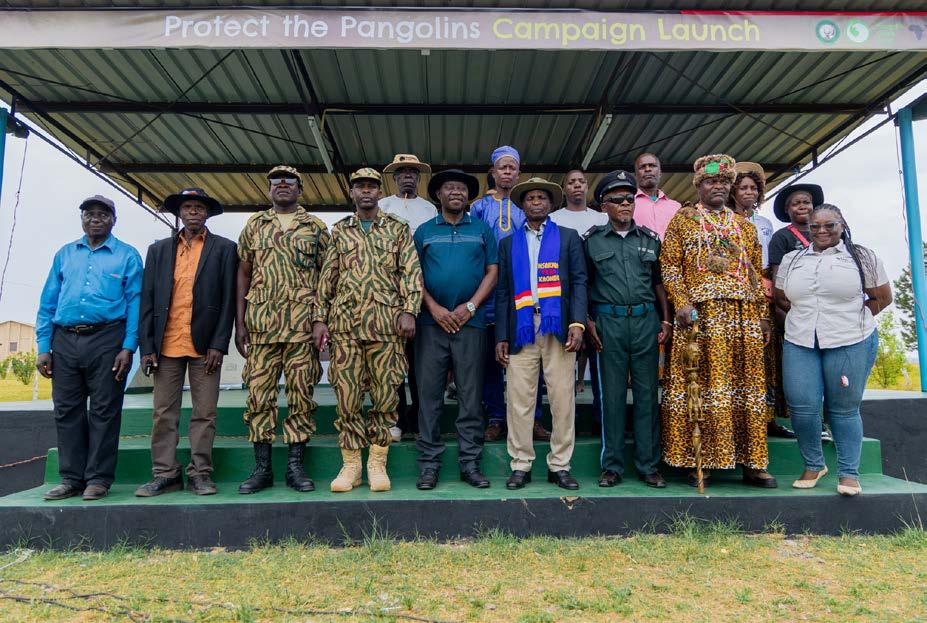
Traditional leaders and healers hold significant influence over community attitudes. For the Pangolin Demand Reduction Campaign to reach local “users” of pangolin-derived goods, their involvement was crucial.
The team began with a co-design process focusing on the Northwest of the country, a region with high levels of trafficking and a known pangolin habitat. They identified and anonymously interviewed members of the public who were known to be pangolin users. They then focused on engaging leaders and healers, the main influencers in these areas of tradition and beliefs.
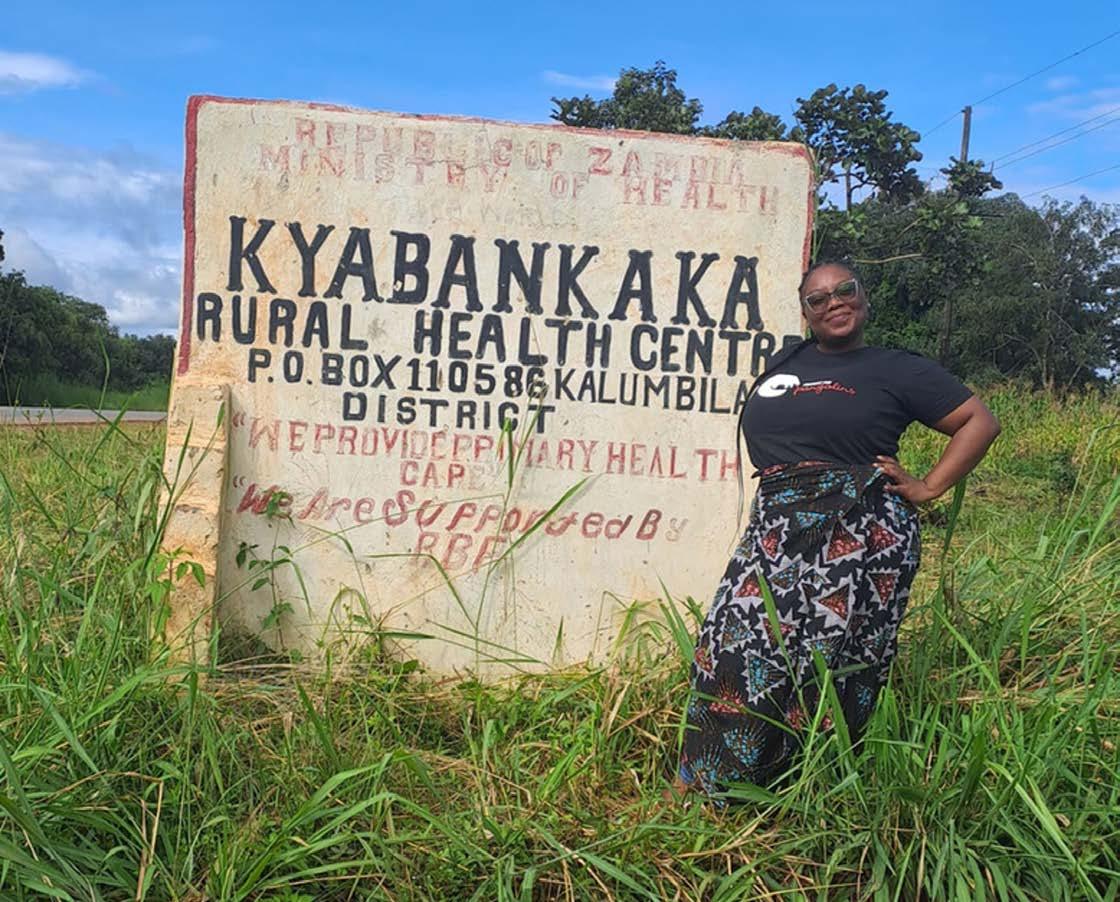
Maina in Solewi in an area named after pangolins after visiting traditional leaders
Photo credit: WCP Zambia
Pangolin trafficking in Zambia today is no small matter: it is considered a crime punishable by a minimum of five years in prison. Families can face severe financial hardship if a breadwinner is arrested and jailed, and reporting others can be a delicate issue, as it may affect local revenue.
It was clear that Maina’s plan would require locals to trust that WCP would not report them. Building this trust meant tireless research, networking, workshops, phone calls, and meetings — a process that forms the foundation of any successful collaboration.
The key, they quickly realized, was finding a way to bring leaders, and even more so, healers, into the conversation without making anyone feel accused or afraid of being reported for fuelling the black market. Instead, they needed everyone to understand that the best ideas would emerge through collaboration. “It was very important that [traditional healers] didn’t feel accused as they
ZAMBIA
were coming on board: we explained that we wanted to work together so that we could help reduce this demand.”
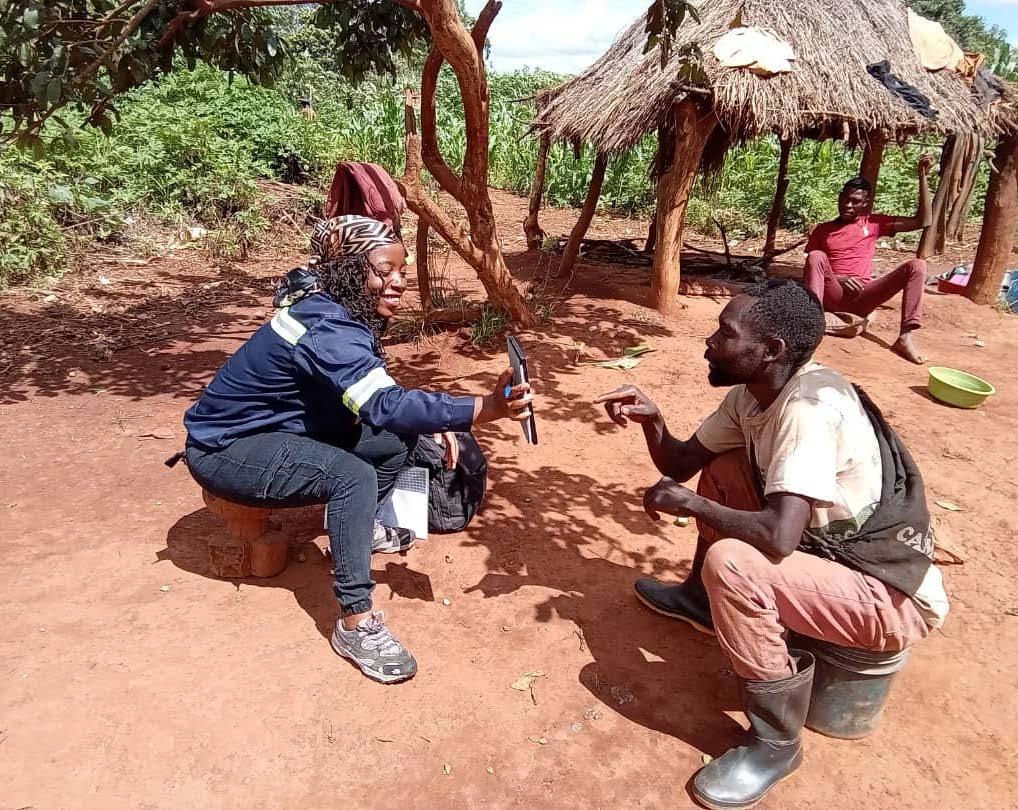
Being a woman in this context, while also navigating language barriers, made the task even more complex. “There are some challenges to being a woman. When I’m introduced to these rural groups, I’m expected to dress a certain way, or they’ll think I’m being disrespectful. I need to wear a wrapper around my waist every time, they expect you to wait until you’re properly introduced, until a man leads the way and they tell them who you are and what you are there for.”
In Zambia, there are seven official languages and several formally recognized ethnic groups, among many other languages, dialects, cultures and ethnic identities. As Maina explained, in the country’s Northwest, most leaders do speak English, but many healers live deep in rural areas where English, and even Nyanja — one of Zambia’s most widely known languages — aren’t spoken nor understood. Before she could move forward, she had to find a translator who could bridge the language gap — a small step on paper, but a crucial one for reaching healers, gaining their trust, and fostering collaboration.
AN UNDREAMED-OF COOPERATION
Despite all the hard work they put into networking, even Maina and her team didn’t expect to encounter a great degree of openness to collaborate on such a thorny subject.
However, leaders and even healers, the very people whose use of pangolin-derived items kept the trafficking alive, began showing a genuine willingness to work together.
A year into the project, that early breakthrough has grown into something remarkable. Fifteen traditional healers and ten traditional leaders now play an active role in the campaign — an achievement no one had imagined at the outset. They have become contributors, problem-solvers, and sources of insight. As Maina reflects, “In most times, the people we accuse and sideline are often the ones who end up helping the most.”
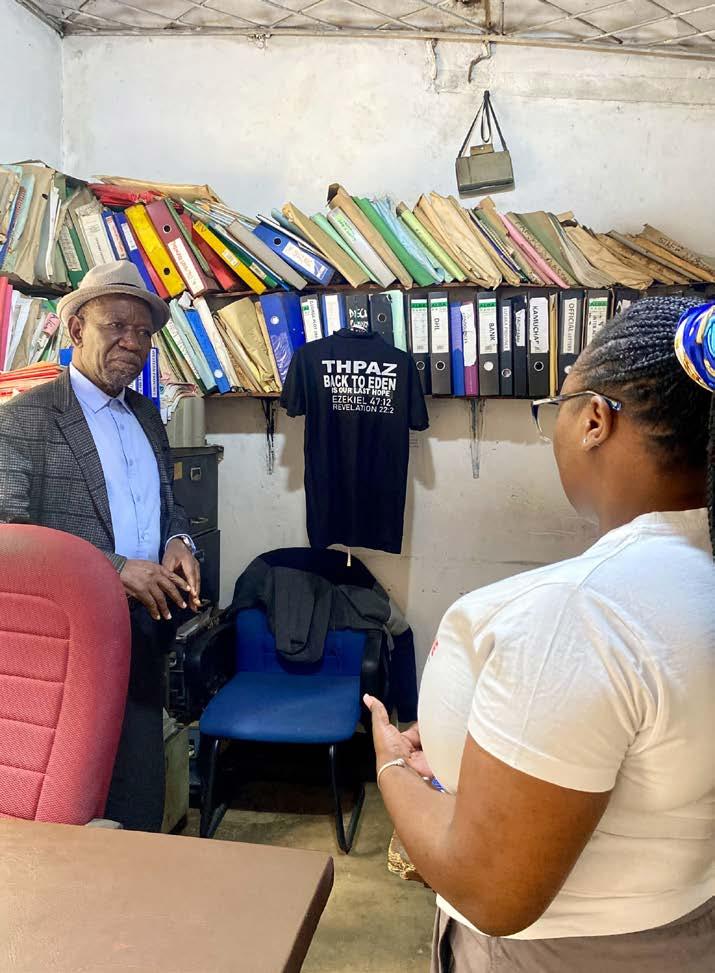
Maina taking a tour of the Traditional Health Practicioners Association of Zambia with the current president Dr. Vongo in 2024
Photo credit: WCP Zambia
The next challenge was engaging the wider public to raise awareness on the fact that pangolins are a protected species and that catching them or using any pangolin-derived products is illegal.
In many fields, including conservation, positive messages usually resonate with people more effectively than negative or threatening ones. The goal here was to reach the public through a constructive, engaging experience. Working with traditional leaders and healers, the team sought an acceptable and effective way to deliver the message. Maina’s passion for education, first sparked as a student, found a new outlet, though in an unexpected form. The solution they devised might surprise you: a comical theater play.
THE CHIEF AND THE PANGOLIN
So how do you spark curiosity about a taboo subject, one suddenly put into the spotlight, without making your audience uncomfortable?
Turning a difficult topic into a light-hearted, drama-free pantomime is no small effort; in fact, it takes a combination of skill, humor and creativity blended together in the play-writing cauldron to soften a serious message without undermining its importance. But this is how “The Chief and the Pangolin” slowly took shape.
Yet, even with the show ready to go live, Maina couldn’t shake her biggest worry. “Every time you see the word ‘pangolin’ on social media, somebody, somehow, is going to comment ‘jail’ [on the post], like.. the minute you see this animal you’re gonna go to jail, so I was feeling a bit anxious that, you know, we’re having this whole event about pangolins...My fear was that turnout would be very low.”
But the night held a surprise. Thanks to the traditional leaders and healers’ contribution to amplify the message, more than 200 people filled the seats.
“I THINK A LOT OF PEOPLE CAME OUT OF CURIOSITY. THEY WANTED TO TALK ABOUT THIS ANIMAL IN A WIDER SPACE AND COMFORTABLY FOR THE FIRST TIME.”
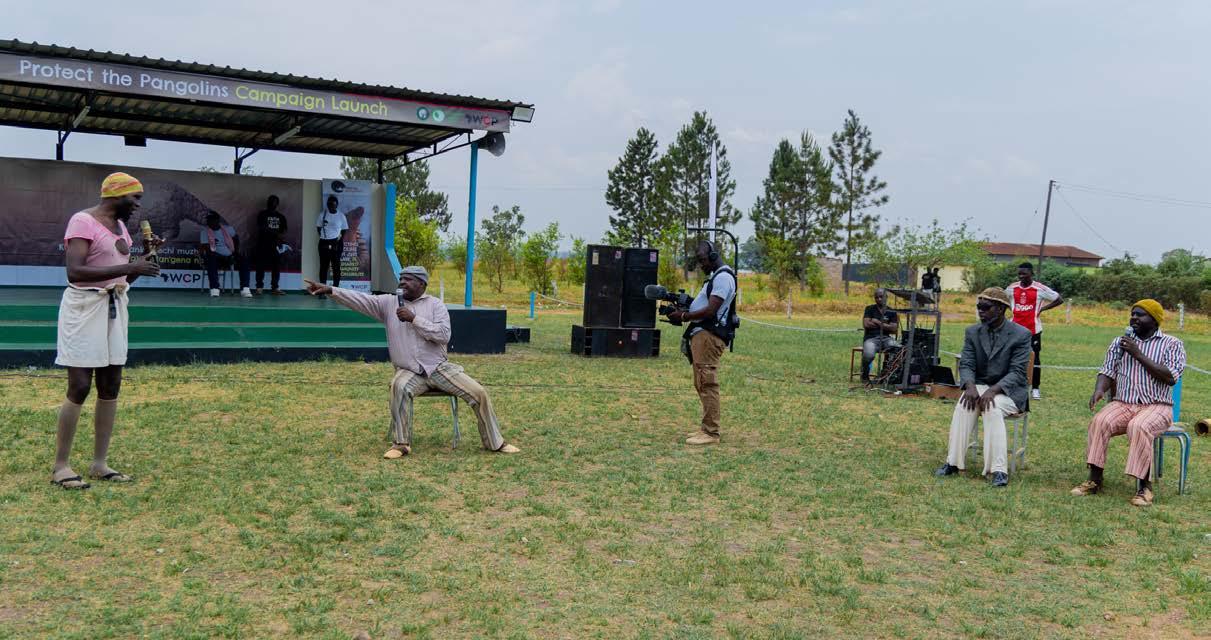
The Pangolin and the Chief play being performed during the launch in 2025
Photo credit: WCP Zambia
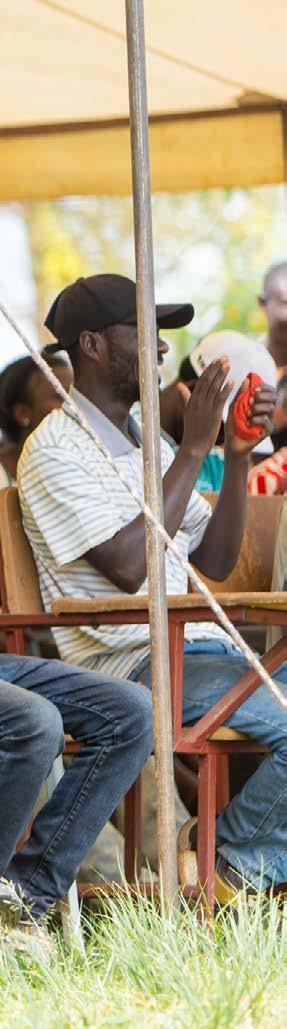
Audience during the campaign launch reacting to the play
“There was a lot of laughter in the audience and I think a lot more fascination than anything. I think a lot of people came out of curiosity. They wanted to talk about this animal in a wider space and comfortably for the first time.”
They’d done it. A long-standing taboo had been transformed into a communal moment; something entertaining, social and enjoyable for local people of all ages — healers, leaders and conservationists alike. And more importantly, the message had been delivered to the community, at last.
AWARENESS FOSTERS CHANGE
WCP’s research has shown that the main consumers of pangolin-derived products tend to be married, self-employed men over 50 years old — people who belong to a generation still deeply connected to traditional knowledge. Far from disregarding the importance of keeping a unique cultural heritage alive, there is hope that younger
generations will gradually and naturally move away from illegal practices, reducing the demand for pangolin-derived products over time.
Working on the Pangolin Demand Reduction
Campaign has meant that no day has been the same for Maina’s team. Meeting people with such diverse backgrounds to work towards meaningful change has been an incredible opportunity for personal and professional growth. But, for Maina, “Zambian healers protecting pangolins is the biggest story out of this”: finding the support of the very prescribers of pangolin-based remedies was the most unexpected and fulfilling phenomenon to learn from.
“It has been an amazing experience. The people who are often sidelined have actually come forward and decided to help; I’ve been received better by them than by any other group, because they realized that they were being treated equally and considered an input.”
Photo credit: WCP Zambia
While this pioneering and inspiring project is currently limited to the Northwestern region of Zambia, if proved effective, it could serve as a model to replicate elsewhere.
It is still too soon to know whether the campaign has begun to shift attitudes toward pangolin trafficking. WCP is gathering data through questionnaires, but the results are not yet in. Still, if the project had only changed the behavior of a small percentage of the play’s attendees and survey participants, it would be a big step in the right direction. While financial incentives to wildlife trafficking remain difficult to counter, a decline in local demand could at least begin to destabilize the pangolin market.
To borrow a familiar cliché for a campaign that is anything but ordinary: the ocean is made of drops. As Maina says, “A lot of us underestimate how much we can contribute to protecting wildlife. Every action you do, as an individual, counts: it combines into a bigger effort.”
Just as each rescued pangolin represents a step away from extinction, in conservation, as in life, every action, however modest, matters. This feels even greater when the ripple effect of positive change includes personal growth, open collaboration, and, best of all, a smile.
Protect the Pangolins Campaign launch 2025
Photo credit: WCP Zambia
JAY BLATTI STARGAZER
the
of the
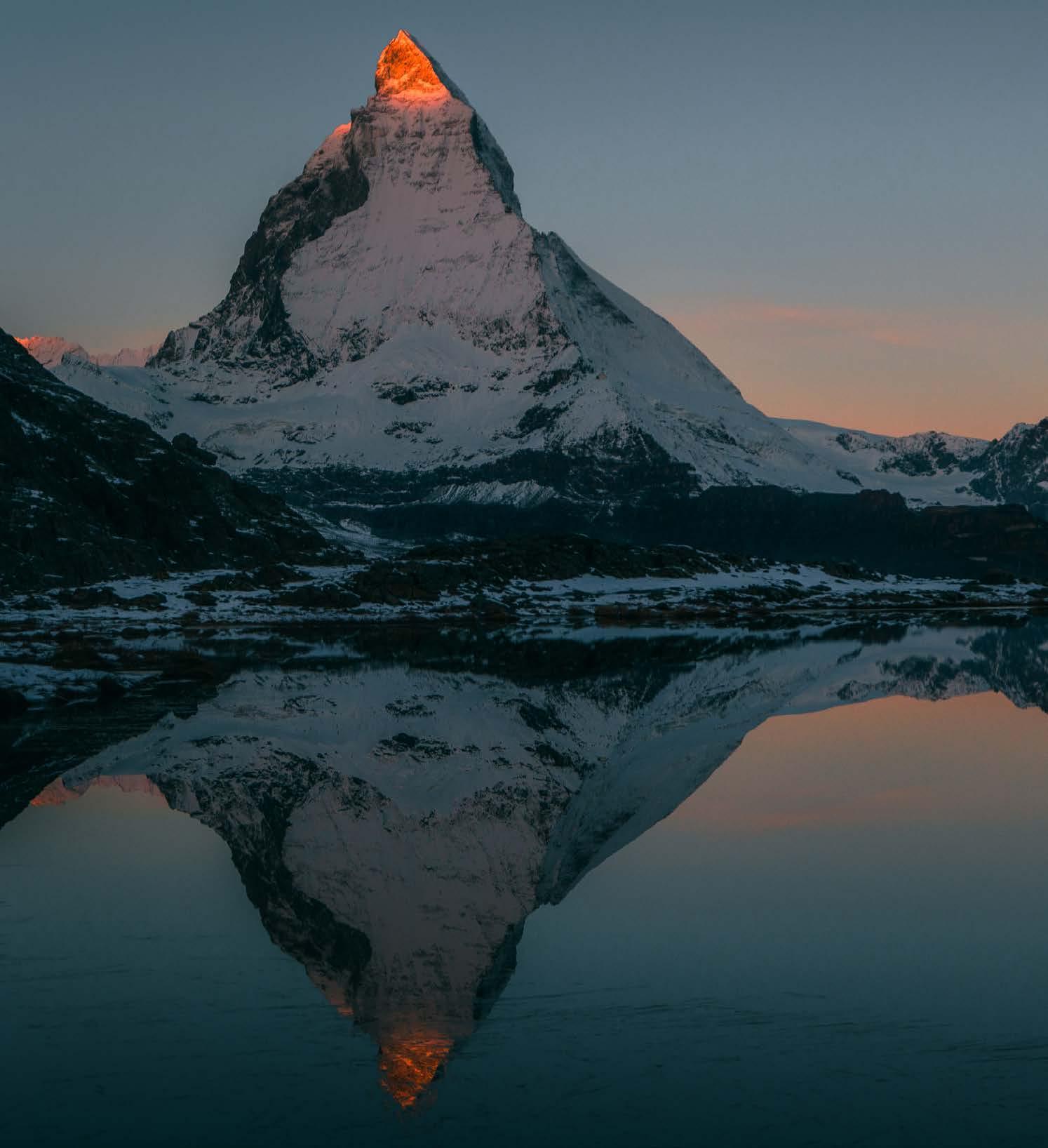
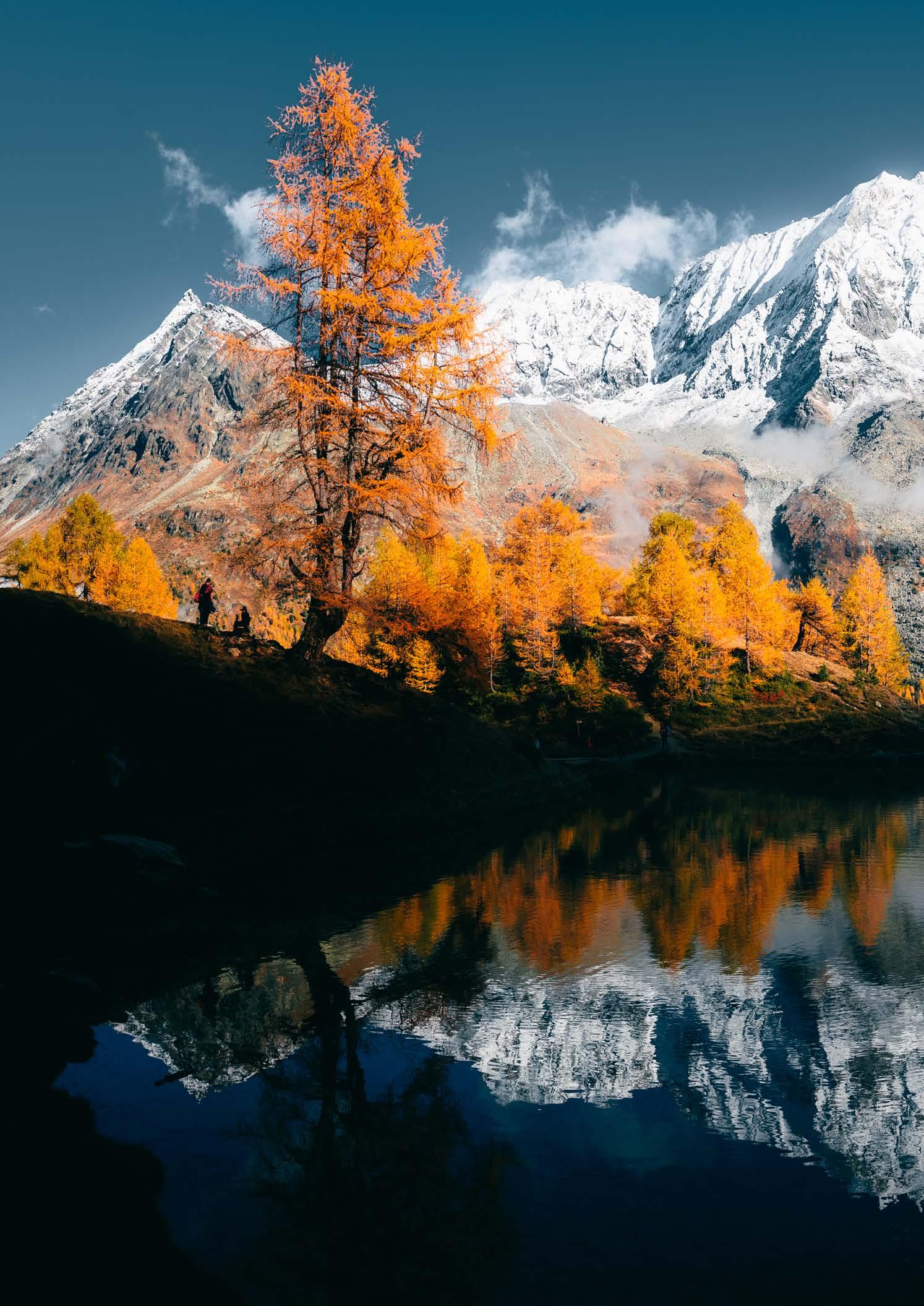
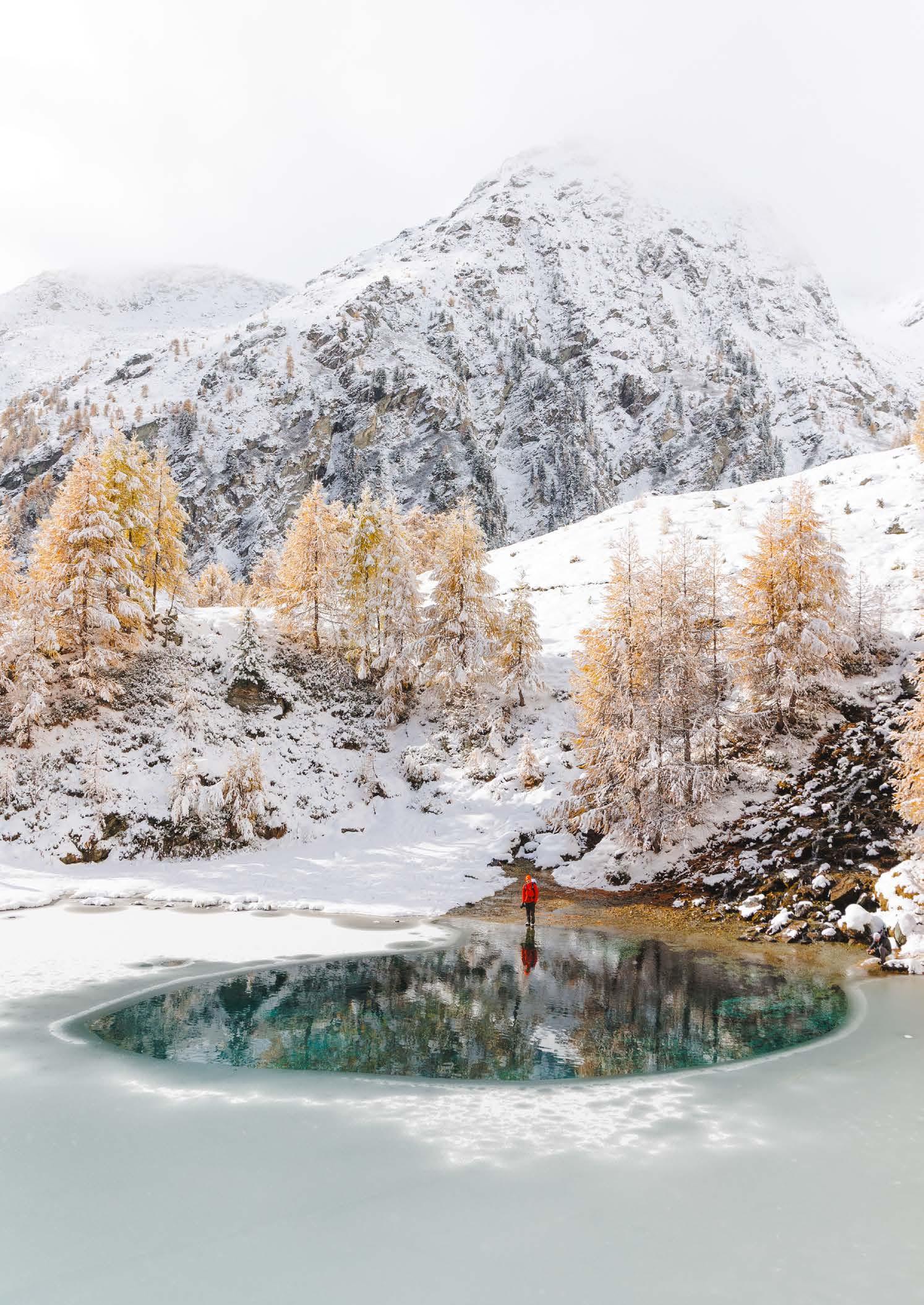
Reflection at
end
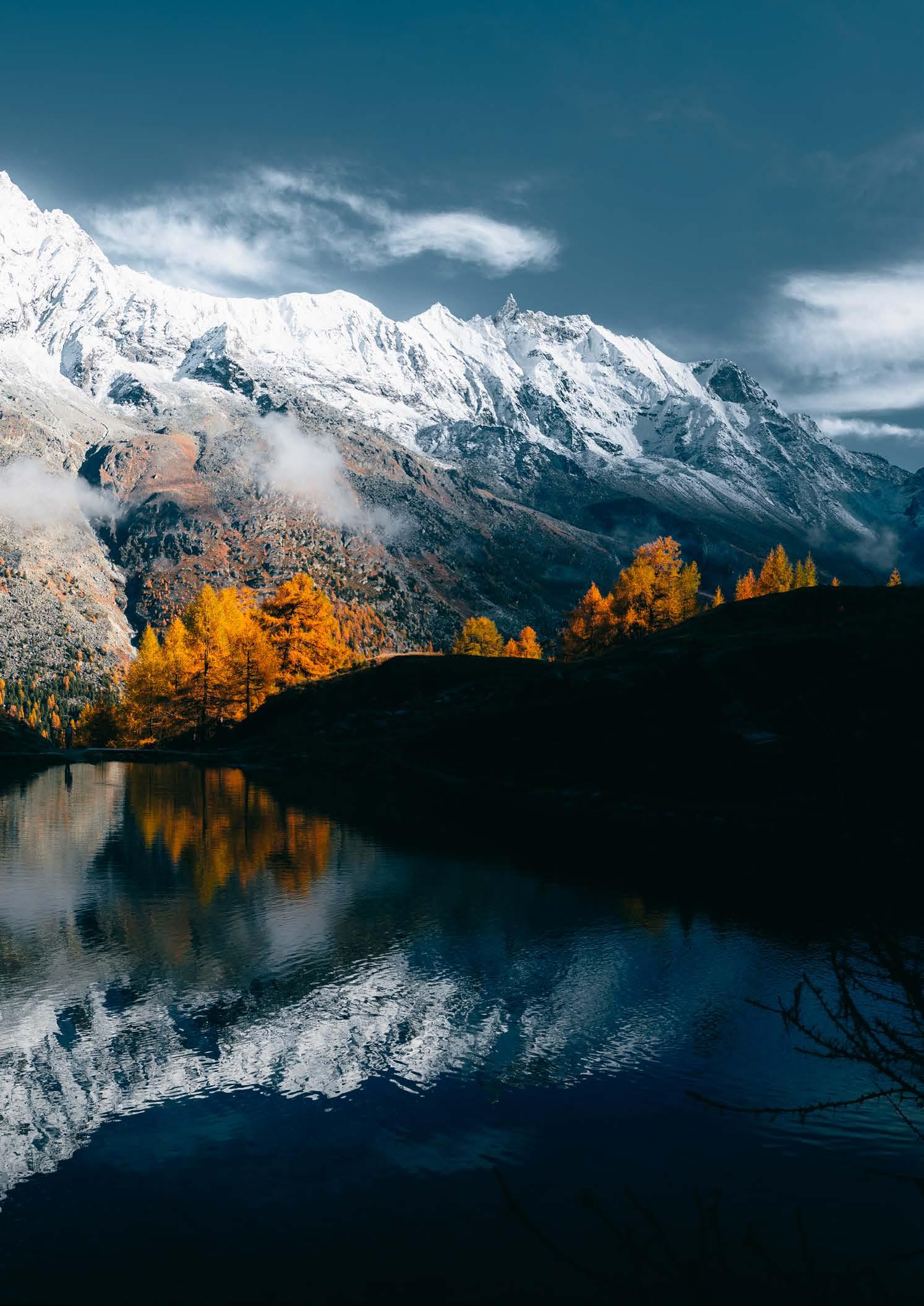
afternoon Lac Bleu, Arolla, Switzerland
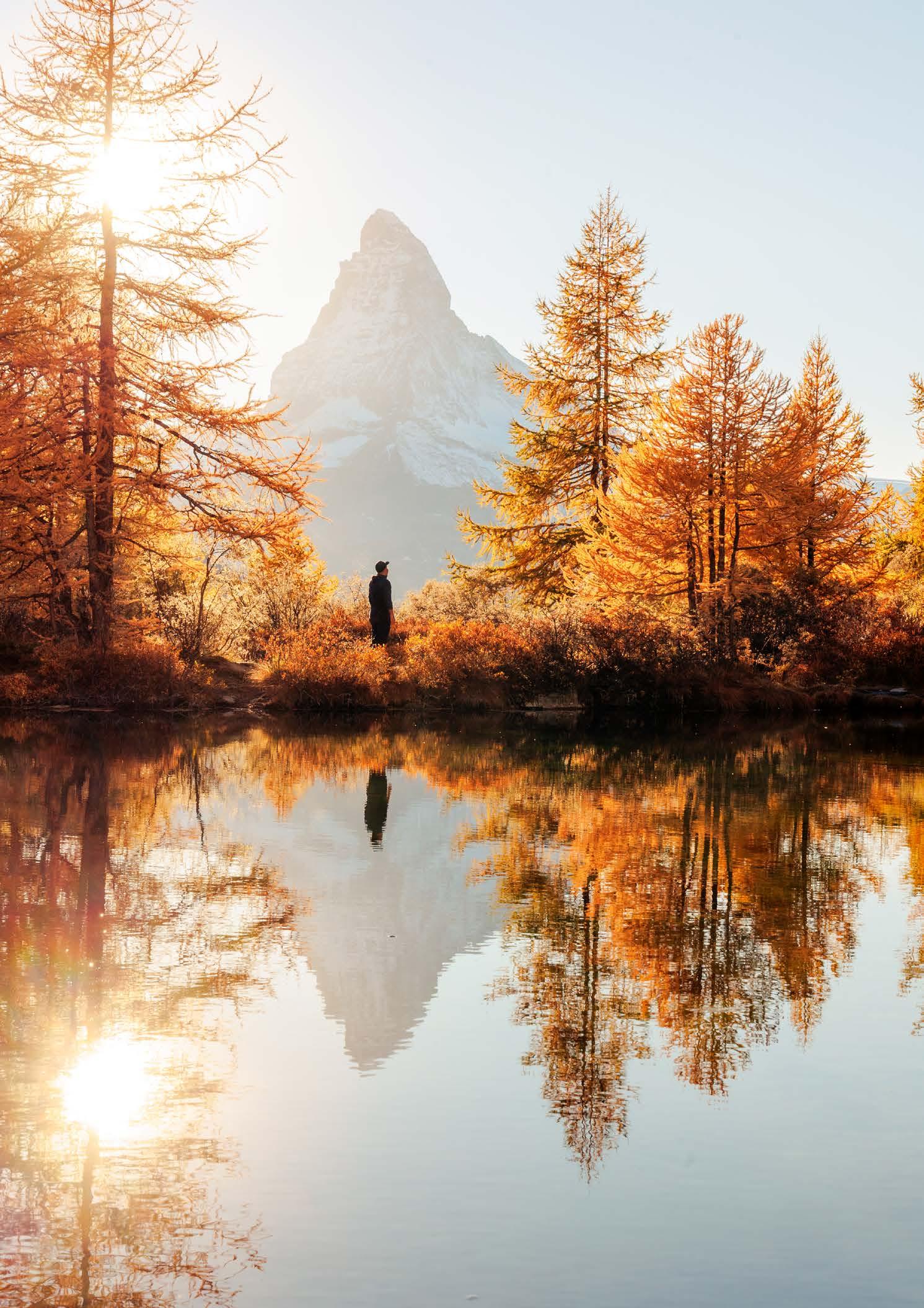
Self-portrait at Grindjisee in autumn Zermatt, Switzerland
Nature has always been my happy place: a space where time slows down, colors feel deeper, and curiosity comes alive. I don’t naturally express myself through long sentences, so I let my images speak instead. Photography is simply my way of translating and sharing what I feel when I’m out there.
Outdoors, I approach each scene with the same attention I would give a person: sensing the mood, the silence, the movement, and the small details that make a place unique. I’m especially drawn to light, mountains, and the way seasons transform a landscape. Long before I press the shutter, the story begins in the way I wander, observe, and allow myself to be surprised.
I believe that by observing and photographing nature with care, we also learn to see it differently, and maybe to protect it instinctively. I often include a human silhouette in my pictures to give a sense of scale to the scene, and to remind us of how extraordinary, and sometimes fragile, these places are. As much as possible, I try to leave no trace and not disturb wildlife.
As an introvert, nature is where I reset: where energy returns, perspective shifts, and ideas spark effortlessly. Being out there brings clarity and reminds me of what truly inspires me. Through my images, I try to share that feeling: an invitation for the viewer to step outside, breathe, explore, and rediscover familiar places with fresh eyes.
If my work makes someone want to grab a backpack, get active in the fresh air, chase the light, or simply pause and feel fully present, then I’ve achieved what matters most.
- Jay Blatti
Lac de Joux, Switzerland
Fishermen at sunset
Instagram
Website www.jayblatti.com
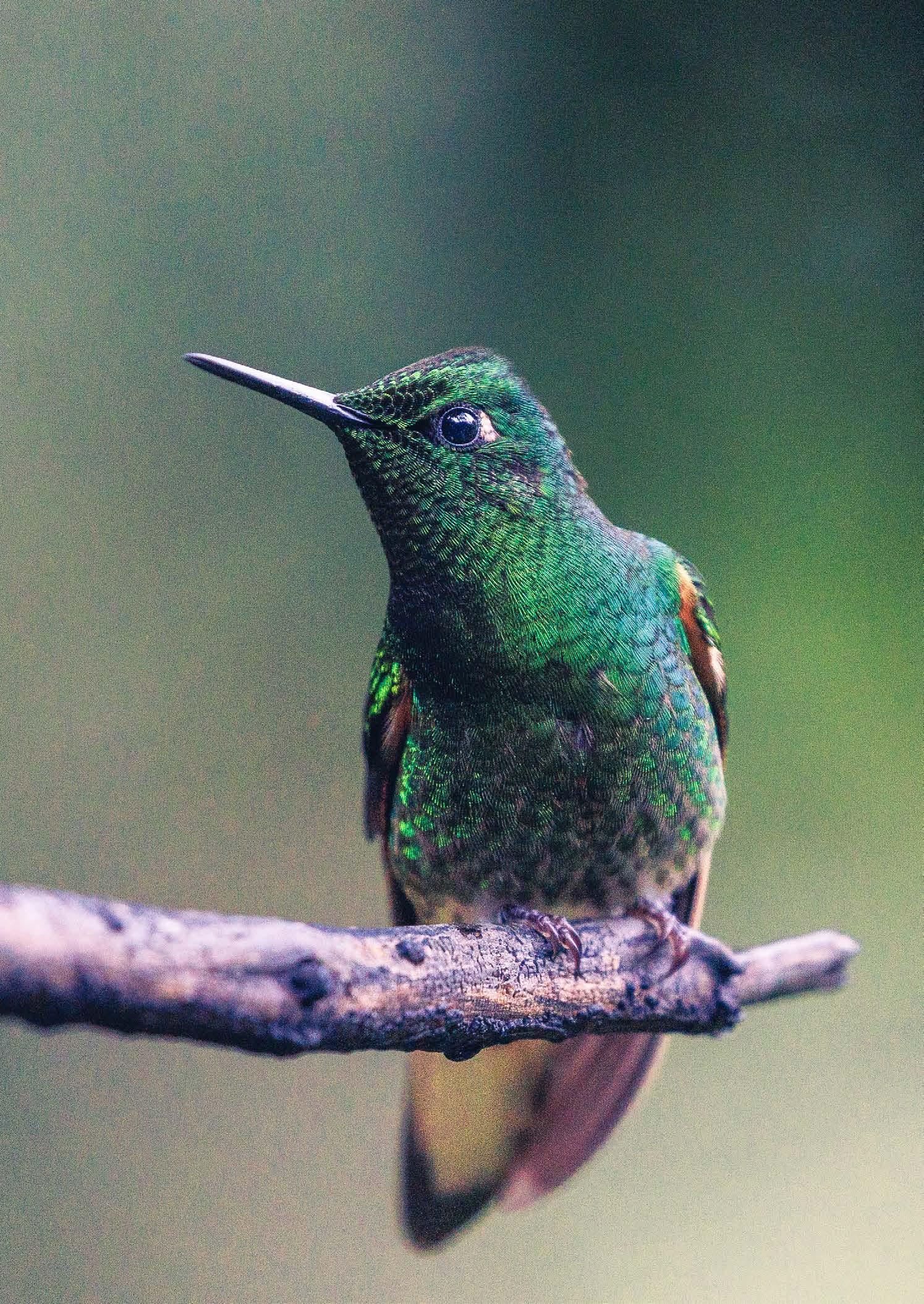
Hummingbird in the forest Cocora valley, Colombia
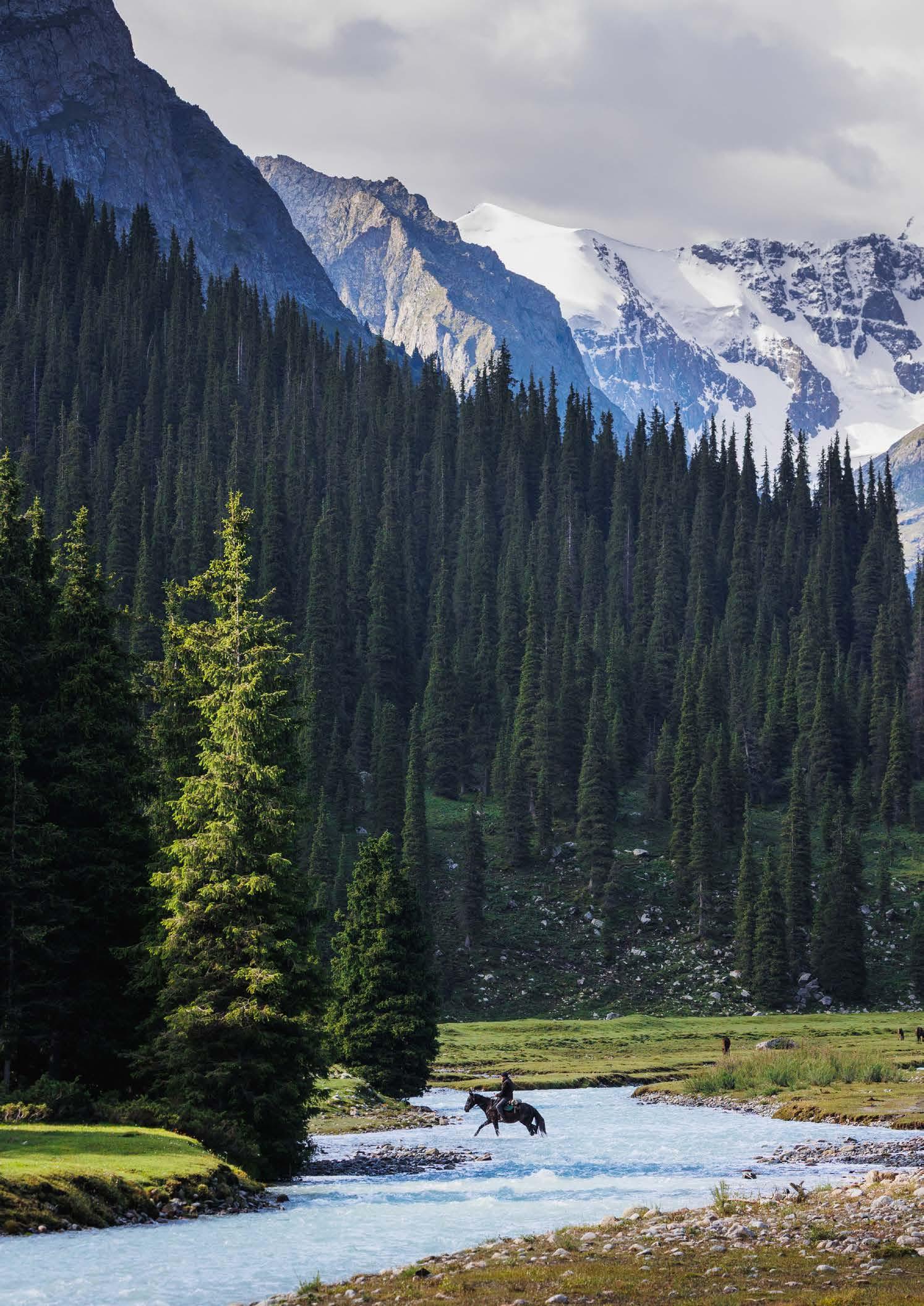
Horses have a special place in the Kyrgyz culture Kyrgyzstan
Self-portrait at sunset with a view over the Dents du Midi Leysin, Switzerland Instagram
Switzerland
A participant in one of my photo workshops, taken in between seasons Lac
Bleu, Arolla,
Photo credit: Peter Csoban
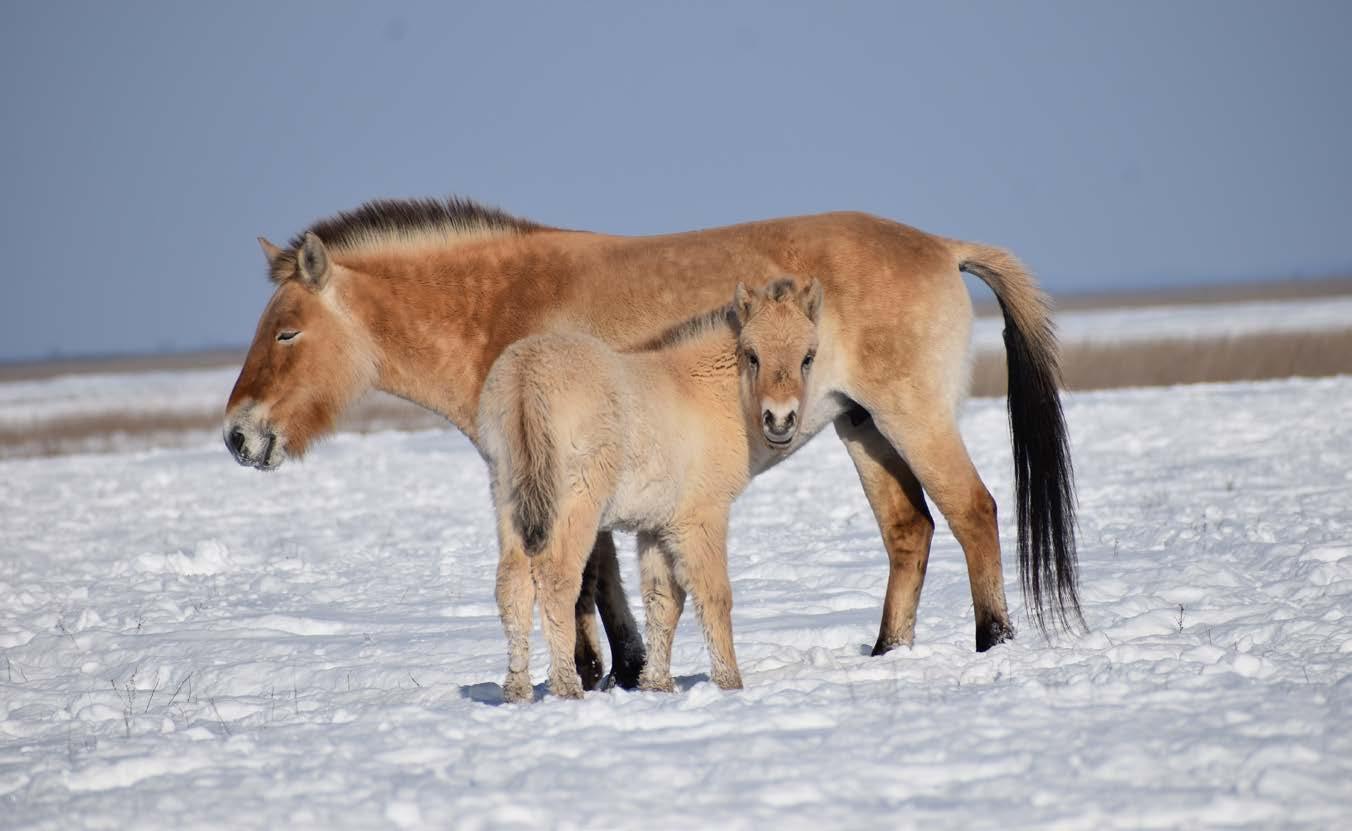
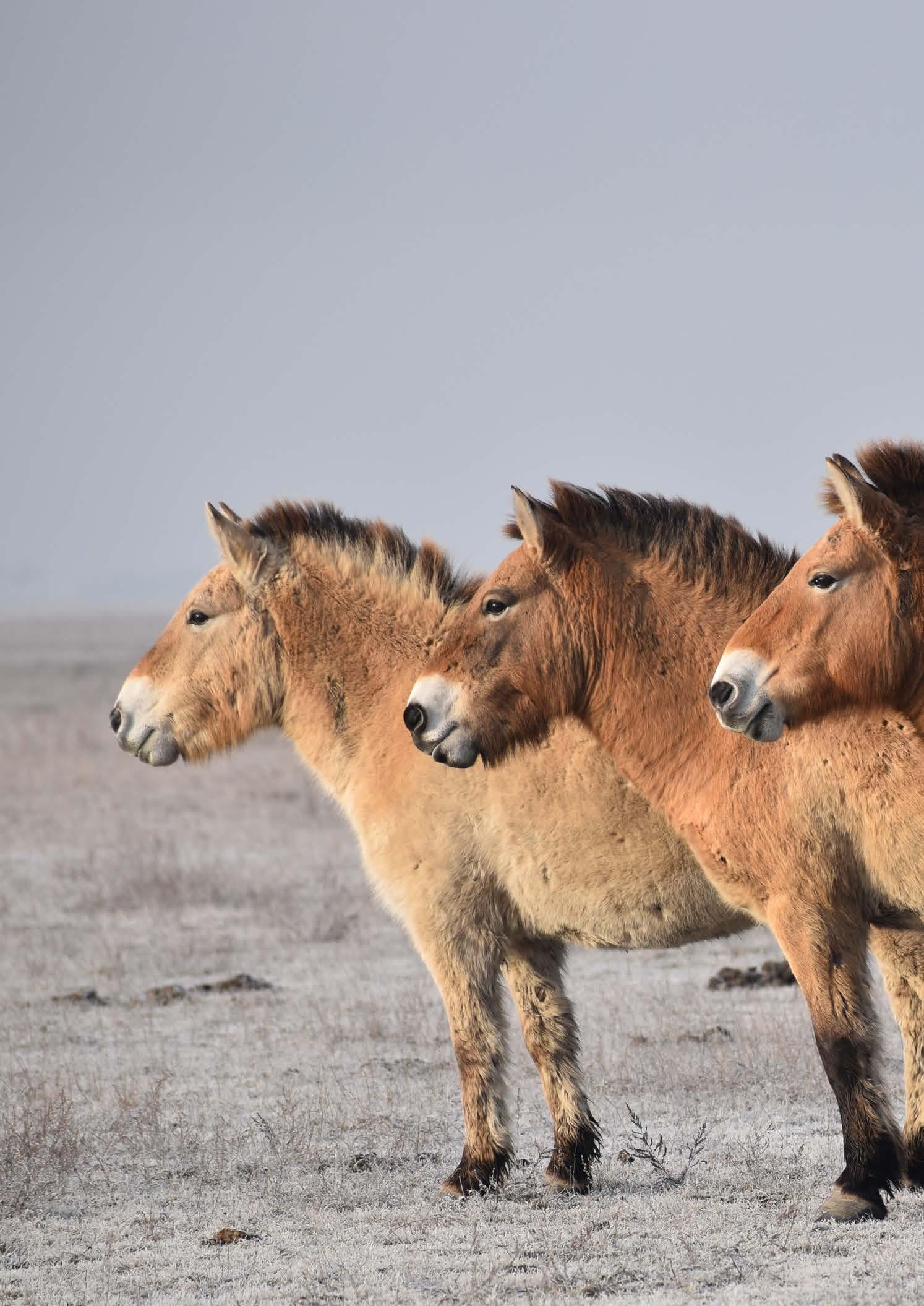
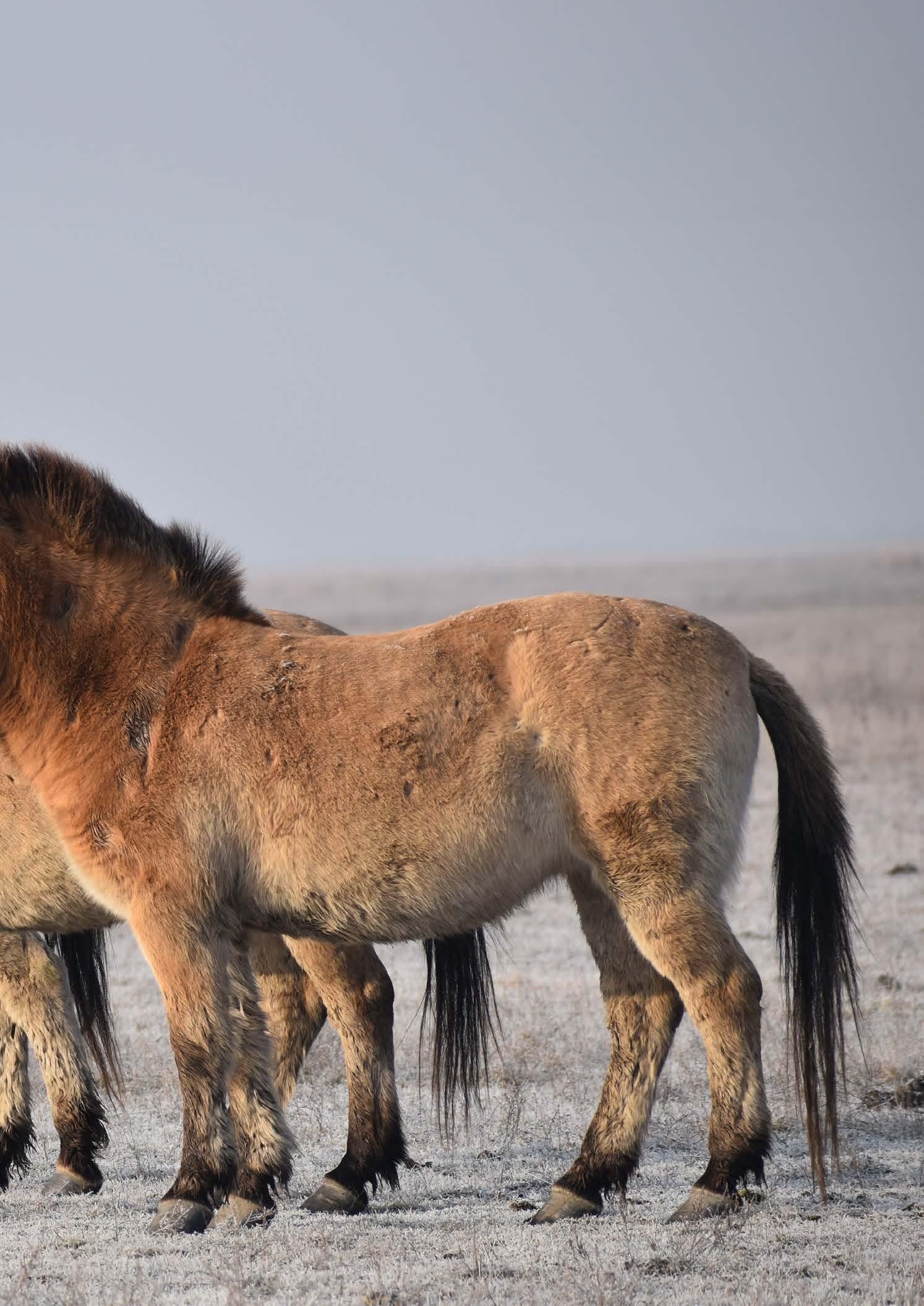
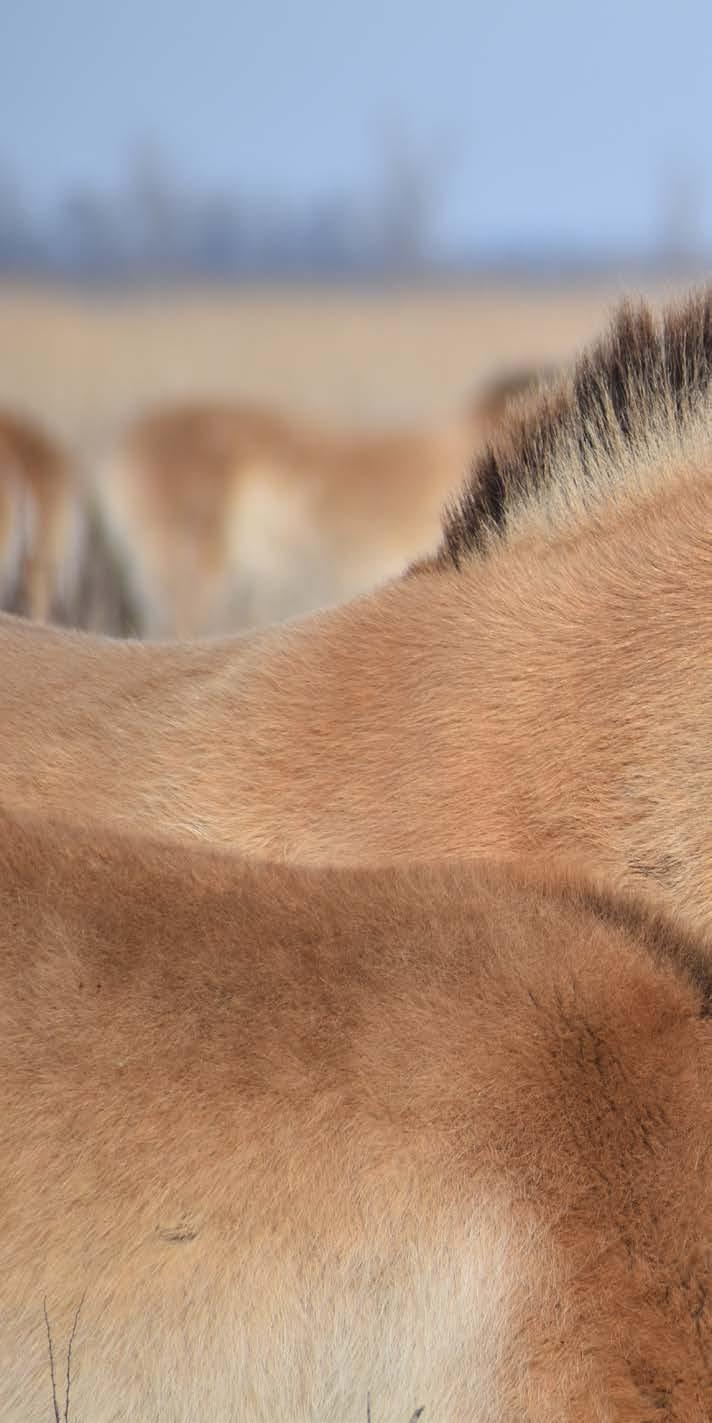
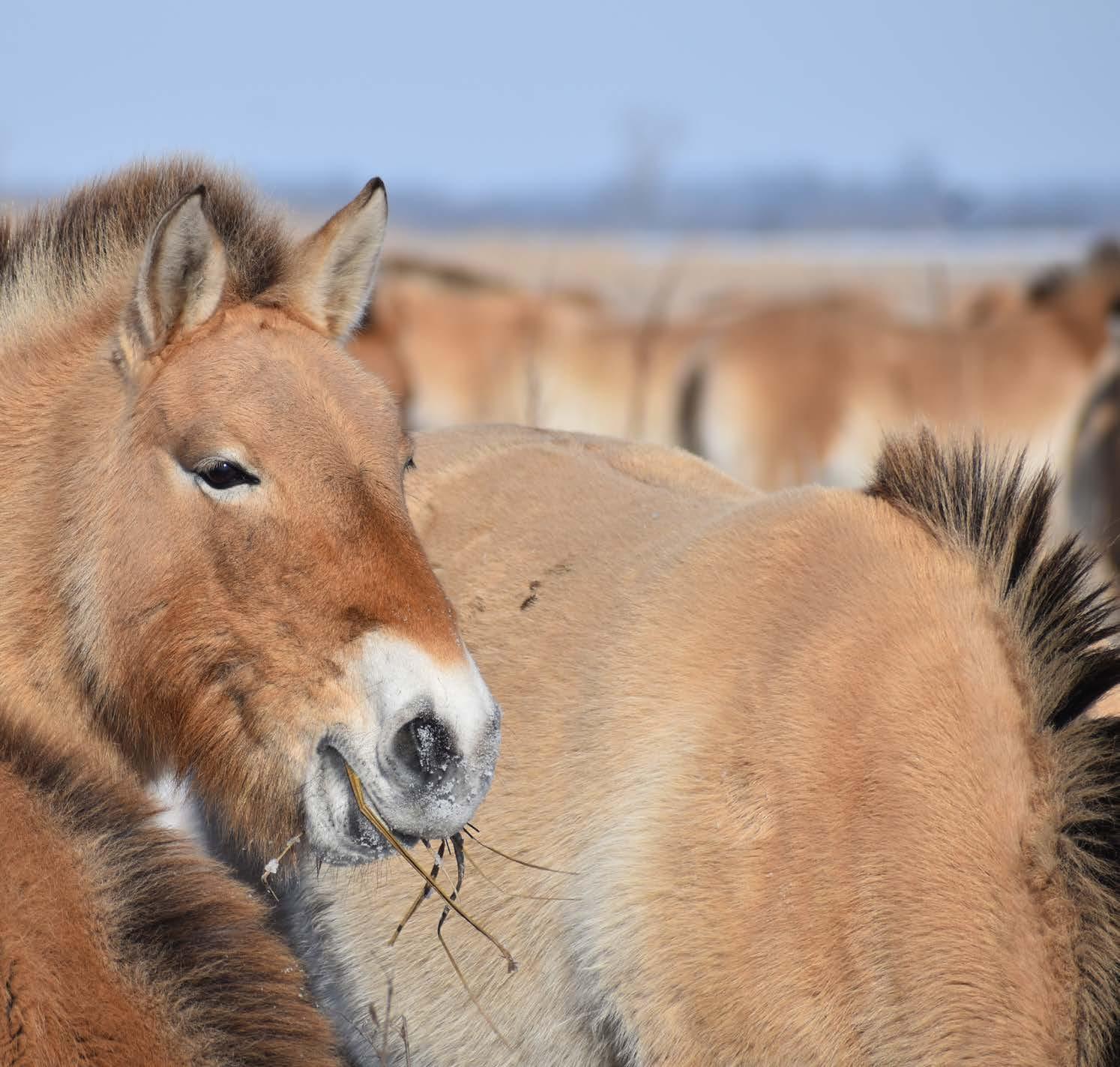
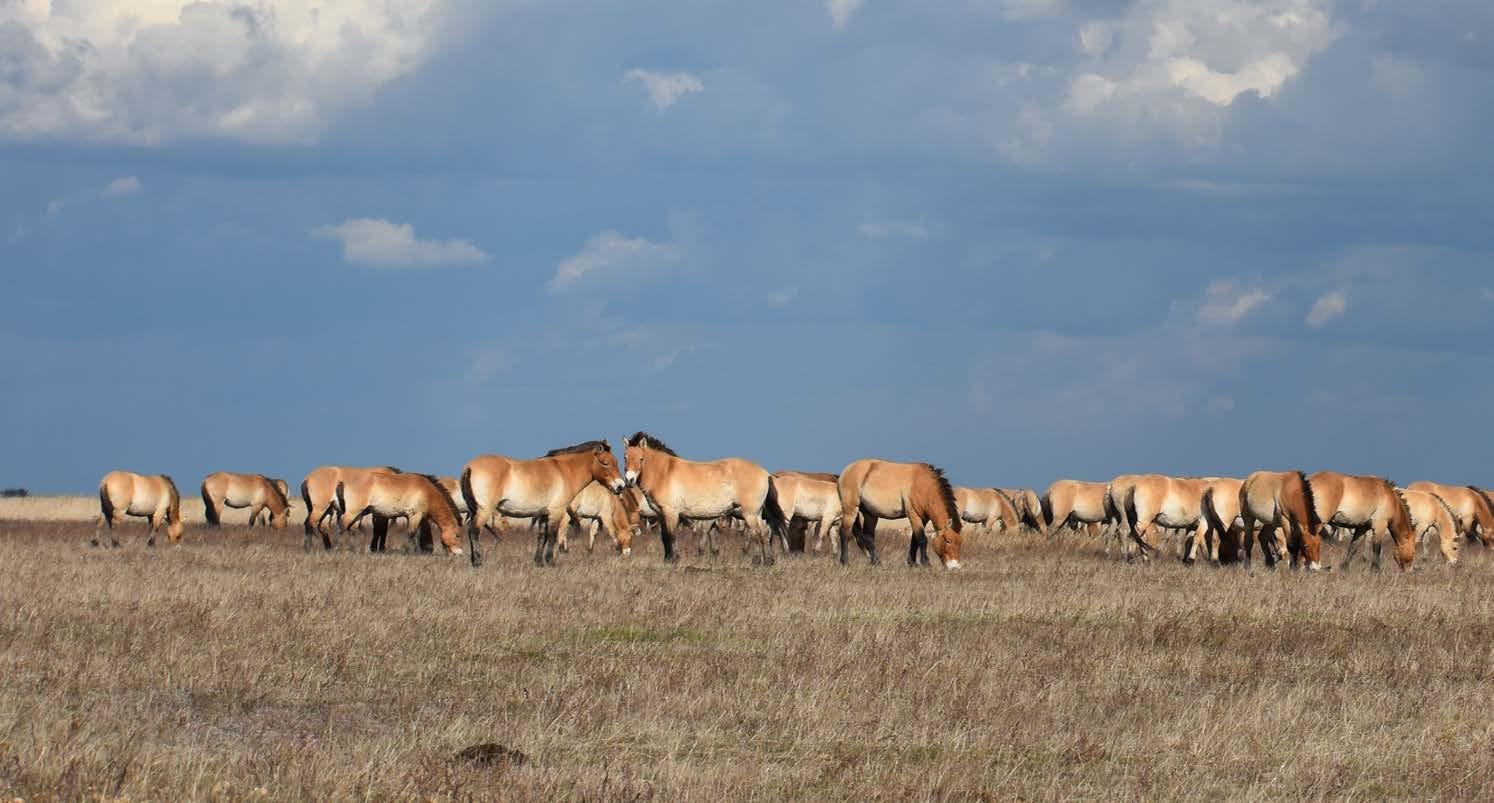
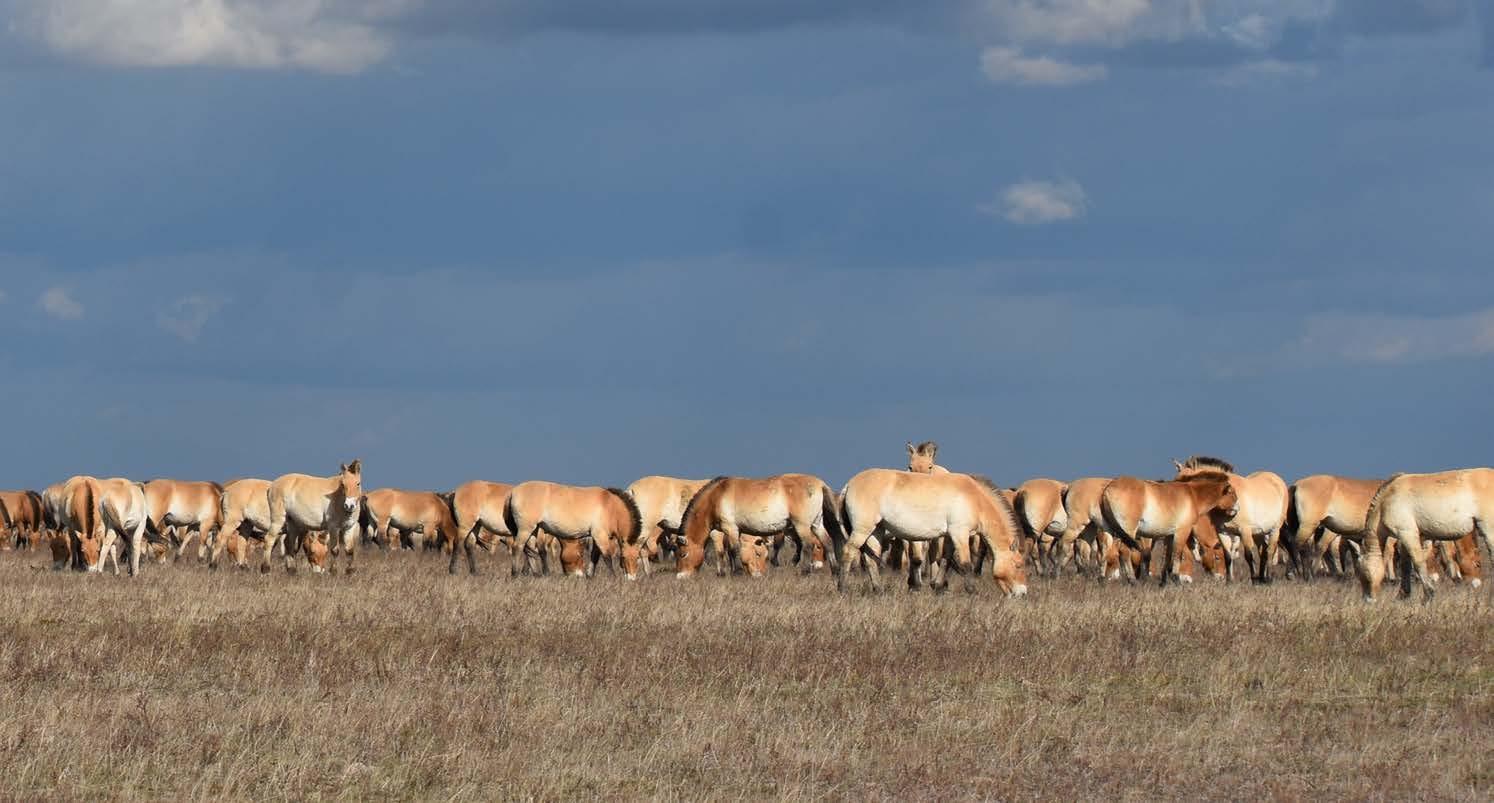
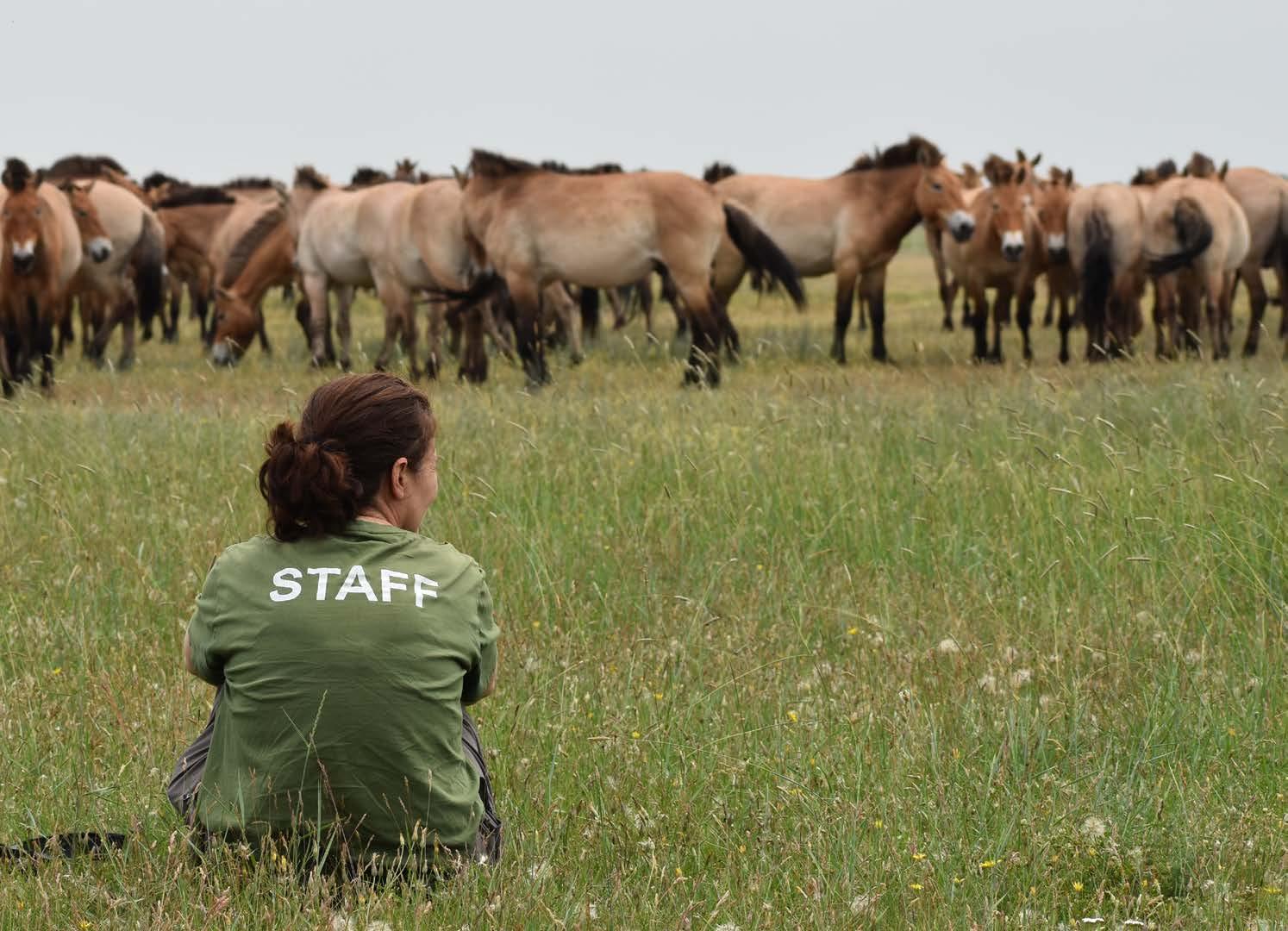
In the vast grasslands of eastern Hungary’s Hortobágy National Park, a population of wild horses lives. The Przewalski’s Horse (Equus ferus przewalskii), also known as the Takhi, Mongolian wild horse or Dzungarian horse, is an endangered wild horse species whose historical range once spanned most of Central Asia from China to Mongolia to Kazakhstan.
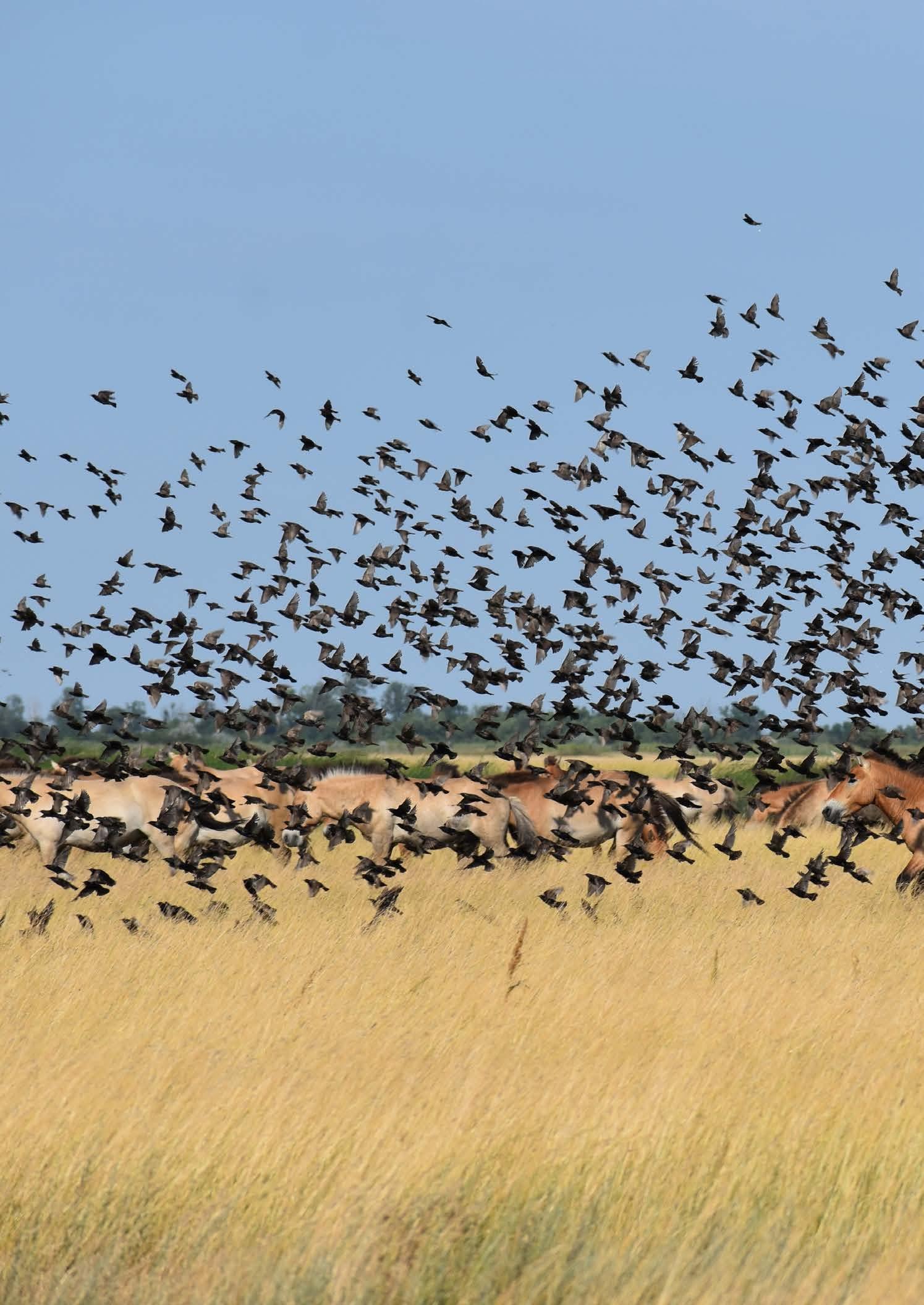
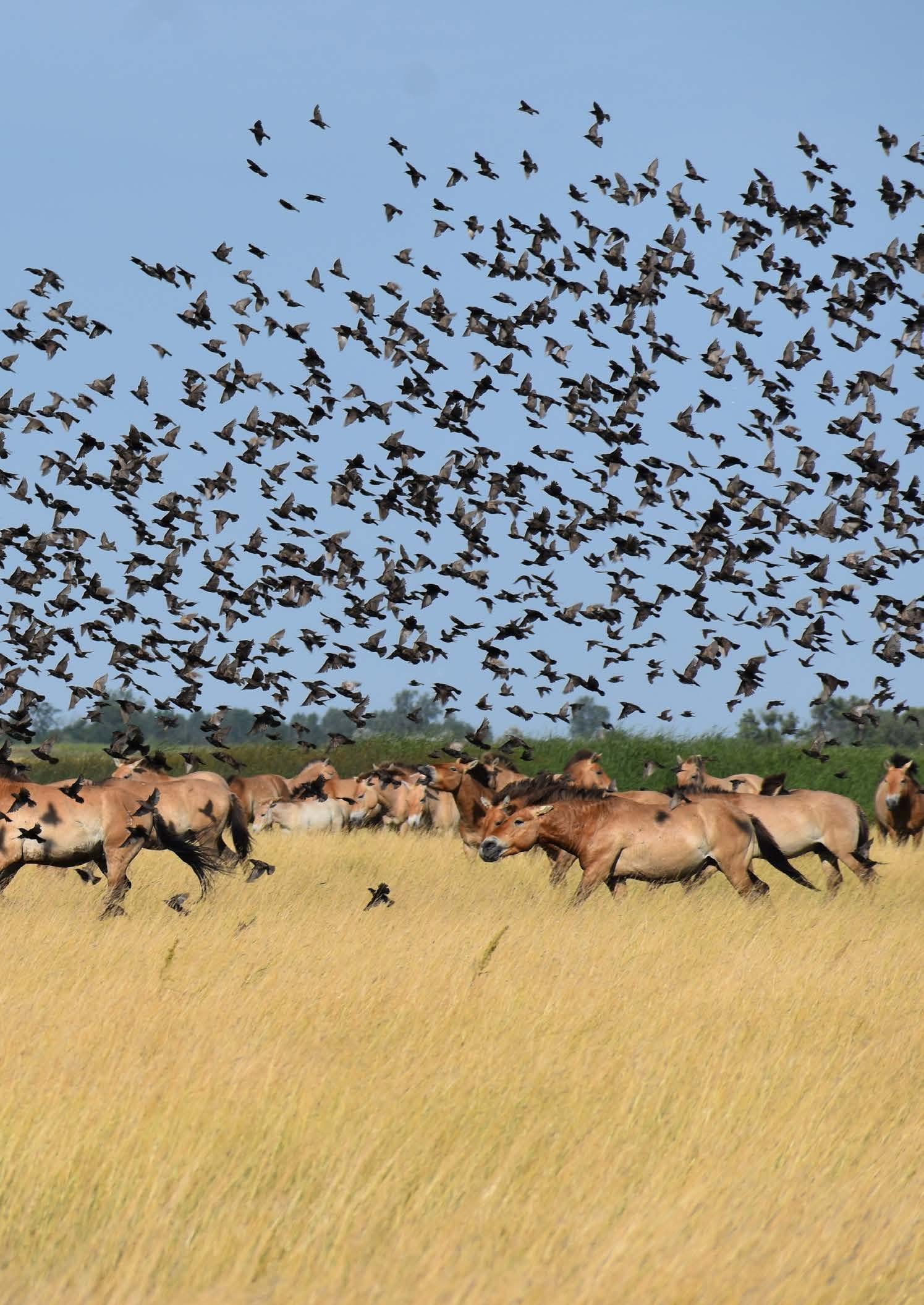
The Przewalski’s Horse is a keystone herbivore species that provides essential ecosystem services. The horses, like many large herbivore species, help maintain healthy grassland ecosystems through grazing, which ensures soils are aerated and nutrients are distributed. Their introduction across Europe and reintroduction across Asia has been a significant success, with the species returning to its native steppe, offering hope for the species’ future.
Viola Kerekes, Project Coordinator within the Pentezug Reserve, shares her experience working with the horses, how she got into the conservation field, and her team’s inspiring vision for the future of Przewalski conservation.
Written by Chelsea Whittingham
THE TALE OF THE PRZEWALSKI’S HORSES
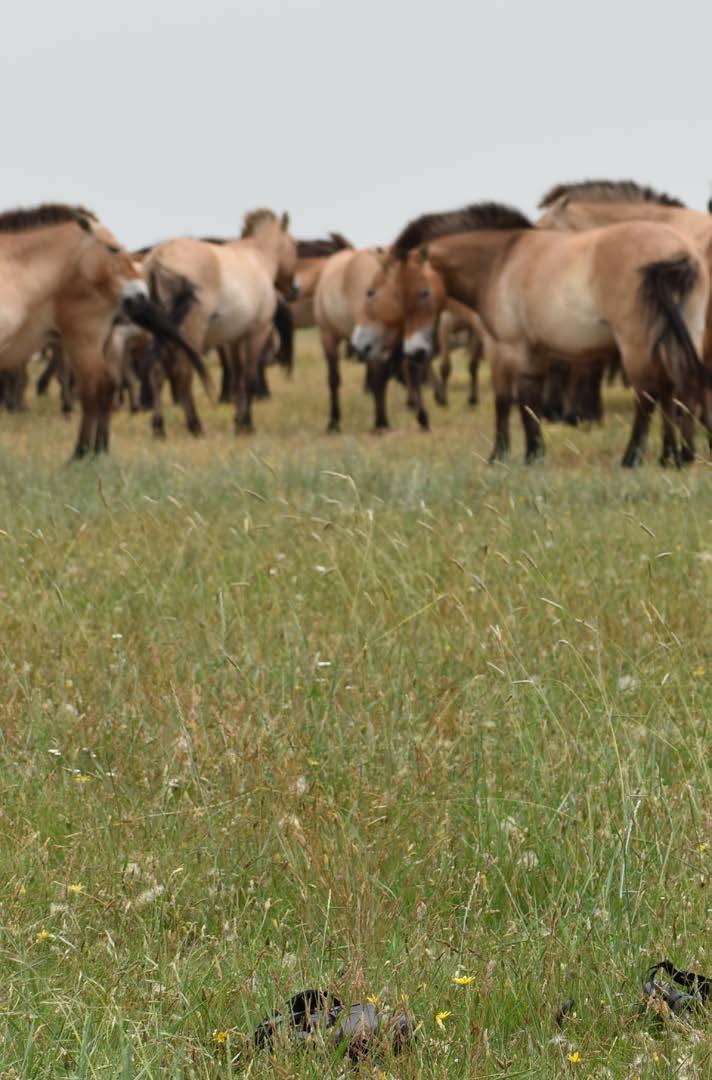
The Przewalski’s horse is considered a subspecies of the extinct wild horse (Equus ferus). It is identifiable by its stocky size, which is shorter than its domesticated relatives, and dark dorsal stripe. What sets this species apart from other horses is that it is the only truly wild horse and has never been domesticated by humans. An interesting component of Prewalski’s horses’ social structure is that they form groups called harems (multifemale groups with one male). These bonds and harem groups facilitate cooperation, reduce internal aggression, and ensure the well-being of the group members within the harsh steppe environment.
Unfortunately, due to a multitude of threats, such as hybridization with domestic horse species, low genetic diversity within existing populations, habitat destruction, human disturbance, and climate change, the species population has been negatively impacted over the years.
For thousands of years, the Przewalski’s horse has been the ultimate survivor, but climate change is significantly impacting the surrounding environmental conditions and therefore its survival. As watering holes vanish and the grasslands deplete or transform into desert, these resilient horses are being forced to face new challenges.
After the discovery of the species in the 1800s — when the Russian explorer Nikolai Przewalski first observed them — it took only a century before the Przewalski horses were declared extinct in the wild. Nevertheless, thanks to focused conservation efforts and reintroduction programs that released captive individuals in the wild, their status has now slightly improved and is steadily increasing. Since the 1990s, the conservation and reintroduction efforts have allowed the species to return to its ancestral home – approximately 2,500 individuals are currently roaming the world.
SAVING THE SPECIES
At the heart of Hortobágy National Park lies the Pentezug Reserve, a vast stretch of steppe where Przewalski’s horses live in semi-wild freedom. The reserve was founded with a simple but radical vision: to protect one of Hungary’s last remaining wilderness areas and to interfere as little as possible, allowing natural processes to unfold behind a protective fence. For more than two decades, the team at Pentezug has quietly supported the survival of this ancient species, contributing to one of Europe’s most compelling
Photo credit: Peter Csoban
conservation stories. Within this strictly protected landscape, dedicated to the restoration of natural steppe ecosystems, the Przewalski’s horse once again roams its historic range. Their presence speaks not only to the recovery of a single species but to the power of patience, protection, and trust in nature itself. It’s a reminder that when given space to heal, the wild can find its way back, galloping steadily into the future.
“YOU HAVE A FEELING THAT YOU ARE IN HARMONY WITH THE NATURE LIVING THERE… YOU FEEL THAT YOU ARE A PART OF SOMETHING. ”
Photo credit: Peter Csoban
HUNGARY
Before the reserve was created and Viola started working with Przewalski horses, her life was already focused on the natural world. “From my childhood, I was always attracted to animals, and I always loved watching them. I especially liked horses and dogs and I used to ride a horse when I was a high schooler,” Viola informs. A lifelong fascination with wildlife led her to achieve both her bachelor’s and master’s in Biology, after which she continued with her PhD. Now completed, her PhD focused on the population dynamics of horse herds within the reserve.
Currently, conservation efforts by Viola and her team at the reserve involve protecting existing populations within the reserve, closely monitoring their health and social interactions, raising awareness of the species’ conservation, and studying their genomics and genetic diversity. Additionally, Viola’s work includes analyzing data of group composition and DNA samples. Gathering this data requires Viola to live close to the Pentezug Reserve, and she gets to spend part of her time with them in nature. “You have a feeling that you are in harmony with the nature living there… You feel that you are a part of something.” Viola adds.
A COLLABORATIVE APPROACH TO CONSERVING PRZEWALSKI’S HORSES
Due to the delicate nature of the conservation work within the reserve and the limited area, members of the public are not allowed access to the horses. Herd sizes are carefully monitored to prevent overuse of the land, and the restricted access within the reserve plays a quiet but essential role, ensuring the horses do not come into contact with domesticated horses or become reliant on human interaction for food.
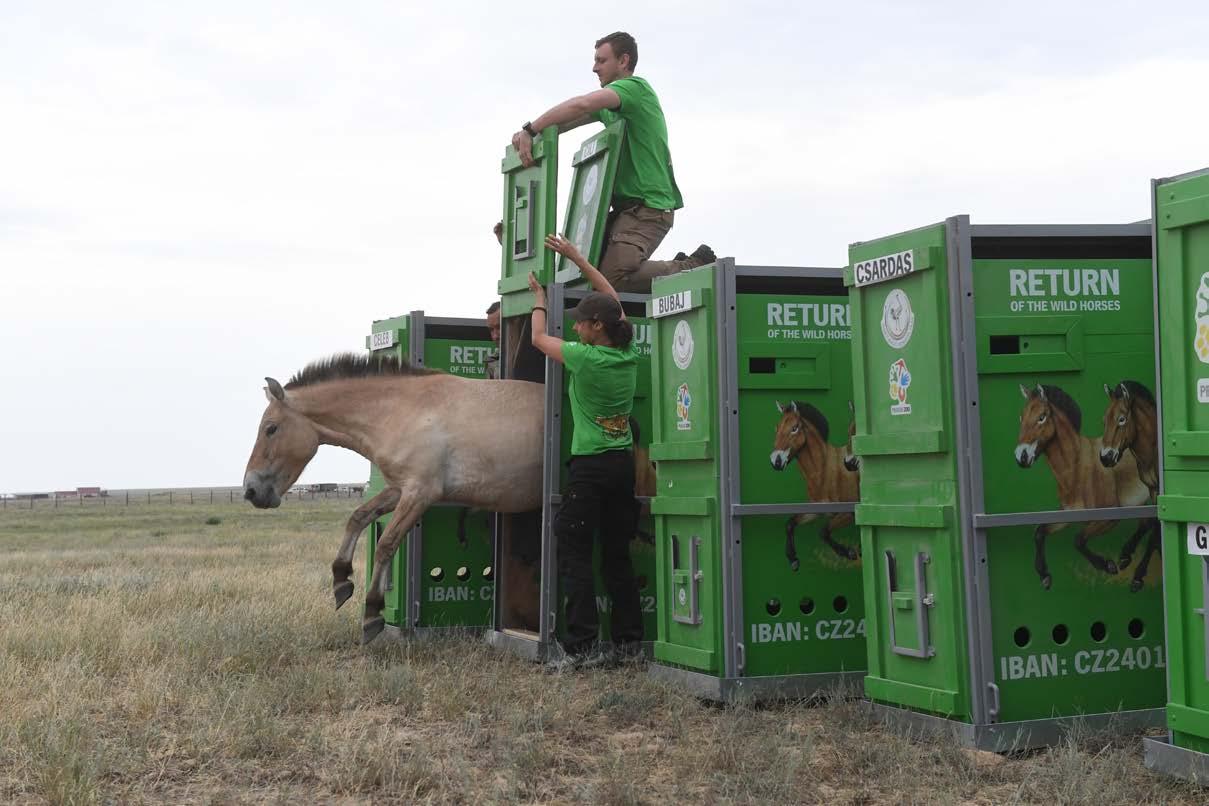
However, the reserve in Hungary isn’t the only place where successful conservation efforts are carried out. Important reintroduction work is also being done across multiple sites in Mongolia and Kazakhstan. What started as a regional conservation project has transformed the Pentezug Reserve into a hub for broader Przewalski’s horse restoration efforts. For example, horses raised in Hortobágy have been part of international reintroduction initiatives; crucial reintroduction work took place earlier this year, with a group from Hortobágy joining European-bred stock in being transported back to Kazakhstan’s Altyn Dala Reserve to help re-establish wild herds on the horses’ native steppes. This kind of cooperation between
Photo credit: Peter Csoban
HUNGARY
organizations and countries to relocate populations echoes wider global efforts to revive the species once declared extinct in the wild.
Additionally, the captive breeding and reintroduction efforts within Mongolia took place across the vast steppe and Gobi landscapes and were a significant success. Currently, there are approximately 750 horses in Mongolia living in wild or semi-wild conditions across the Hustai Nuruu National Park, Gobi B Strictly Protected Area, and Khomyn Tal National Park.
Furthermore, with the help of Earth Island Institute, an American environmental organization, the team in Hungary has held workshops about the horses with other organizations. According to Viola, eleven institutes across Europe and Asia signed a memorandum of cooperation and created the Przewalski’s Horse Conservation Alliance. The alliance works to mitigate the conservation challenges the horse faces and raise public awareness towards the conservation efforts being conducted by the different organizations. “For a few years now, my colleague, Peter Csoban, and I have been cooperating internationally with other Przewalski Horse institutions; we both think we can help
the species on a higher level with hard work, cooperation, and enthusiasm.”
CONSERVATION CHALLENGES
Conserving Przewalski’s horses in Hungary, like most conservation efforts, was not smooth sailing. Firstly, the reserve was limited in size; its 3,000 hectares limit the area in which the horses can roam, in turn creating a competition for resources.
Genetically, the Przewalski differs from domestic horses by having 66 chromosomes, two more than domestic horses. These extra chromosomes allow them to produce fertile hybrid offspring with domestic horses, which can negatively impact their conservation. Hybridization and breeding with domestic horses can dilute the genetic makeup of the offspring and lead to the loss of wild adaptations as natural selection is disrupted and offspring are less adapted to their wild environment.
One of the initial challenges after introducing captive-bred individuals of the species was that the first few harem individuals from the zoo couldn’t adapt well. Furthermore, populations are still fragmented and climate change and human disturbance pose significant challenges.
HUNGARY
“The Przewalski’s horses still live in separate subpopulations that aren’t connected with a corridor between them,” informs Viola. These conservation challenges faced by Przewalski’s horse populations and their reintroduction efforts can be mitigated through future research and increased awareness of the species.
LOOKING TO THE FUTURE
Viola and her team have many exciting plans for the future, including furthering the reach of the Przewalski reintroduction and managing the population numbers. Additionally, expanding the horses’ range and reducing the rate of habitat and population fragmentation.
Forming professional connections and joining forces with other Przewalski conservation organizations across Central Asia is crucial for the survival of the species. Different projects and conservationists forming connections, working together, and sharing ideas are pillars in conserving biodiversity and protecting the environment.
The population of Przewalski’s horses is steadily increasing due to significant conservation efforts in Hungary and beyond. Protecting these wild horses is an important conservation project that significantly benefits the surrounding ecosystems’ ecology and biodiversity. The work of Viola and the team at the Pentezug Reserve is vital to the species’ survival, with high levels of protection serving as a stepping stone toward this wild horse species thriving across the vast expanse of its historic homeland.
Ultimately, the survival of the Przewalski’s horse is a story of an endangered wanderer finally finding its way home. Driven by a massive cross-border mission, the species has returned to its ancestral homeland. Viola and her team have done amazing work restoring Przewalski’s horse population within Hungary and raising awareness of the importance of their conservation. Their presence revives the soil, encourages wildflowers and fauna to bloom, and brings back a wide variety of birds and wildlife that had vanished alongside them.
When the steppe is restored to its former glory, it becomes a breathing, vibrant sea of grass full of biodiversity; a place finally healed with horses roaming free, ensuring the wild remains a living reality for generations to come. If you want to one day work with these beautiful wild horses and restore ecosystems, Viola concludes with some inspiring advice to future conservationists, “Never give up. Work hard and follow your heart.”
“NEVER GIVE UP. WORK HARD AND FOLLOW YOUR HEART.”
Photo credit: Peter Csoban
Release of Przewalski’s horses
Photo credit: Attila Kovács
AN INVITATION TO SEE WHAT’S RIGHT IN FRONT OF US
Many of us move through our days half-aware, catching only glimpses of the natural world in passing, forgetting how magical the world truly is. The same can’t be said for Chris Fink, author and professor of English and Environmental Studies at Beloit College in Wisconsin, USA. Just read his micro-essays to see what I mean.
Written by Reinhard Venzke
BOOK REVIEW
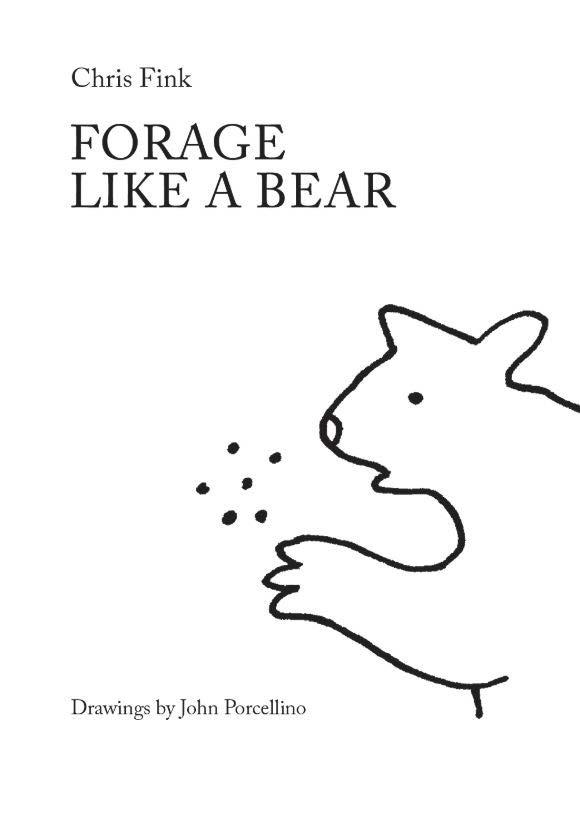
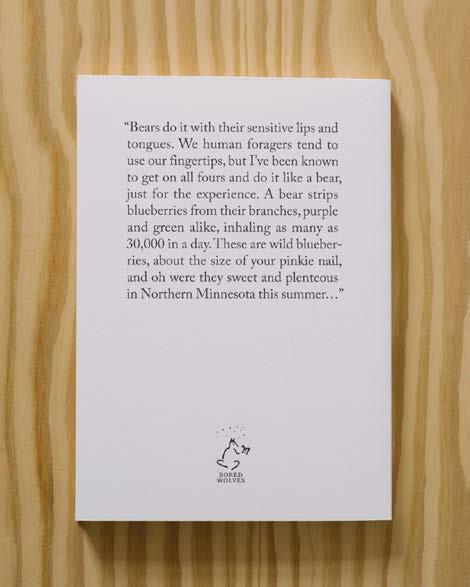
Forage Like a Bear, published by the indie Polish publisher Bored Wolves in 2025, is a collection of micro-essays that act as a guide to look at the world with new eyes and to pay attention to the small, stubborn miracles living just outside your front door. These micro-essays are part nature lesson, part personal reflection, part diary entry — but above all, they are invitations. Invitations to explore, to pay attention, and to be present in the nature that surrounds you.
Born out of a series of radio stories that aired on Northern Public Radio, the broadcast arm of Northern Illinois University, Chris’s rules when writing each piece were simple:
“PAY ATTENTION TO NATURE, PAY ATTENTION TO MY EMOTIONS, INCLUDE MY FAMILY, RURAL LIFE, AND JUST TELL A STORY.”
Due to the limited airtime given to each story — a mere 100 seconds — Chris had to explore form in a way he never had before. And before long, he realized he had stumbled upon something quite novel. “I realized that this kind of micro-essay, with the severe word limit, doesn’t really exist in book form… I was working in a new medium.”
Each piece begins with a small personal recollection, the kind of run-of-the-mill moment we all have: taking the dog for a walk, hearing a train pass without ever seeing it, noticing the ordinary routines of a day. What shifts isn’t the event, but Fink’s attention. His keen, mindful awareness draws the reader toward the smallest creatures, plants, and insects — and toward his own place within something much bigger. And from these small moments of presence, he somehow manages to pull out something meaningful about life and living.
“I grew up on a gravel road along a small river. As a kid, I spent considerable time in the woods and on the river. My parents were backyard birders, and I inherited their interest in paying attention and learning the names of plants and animals,” says Fink.
BOOK REVIEW
But instead of leaving his love and appreciation of nature to his own writing, he is now teaching a new generation of writers the wonders of nature through his month-long Writing Wilderness class, which he teaches every summer at the Coe Wilderness Field Station near Ely, Minnesota.
“In my class, we focus on paying attention to the things we experience in the wilderness and telling stories about those experiences. Unlike in a science class, where students are typically taught objective observation skills, I encourage students to include themselves in their stories, as if they’re just another part of the wilderness.”
After reading this slim volume, you’d be hardpressed not to walk away with a renewed sense of wonder, eager to step outside your front door and look for the world we so often overlook.
THE LEAST -
Chris Fink
You could go your whole life without knowing there is such a creature as a least chipmunk, which I almost did until last week’s adventure in the Boundary Waters Wilderness with my family and the Ellisses. At our Basswood Lake campsite, we were outflanked by an army of the tiny dervishes.
You might think chipmunk is as low to the ground as a squirrel-ish rodent can get. The least chipmunk is lower, but what he lacks in stature, he makes up in attitude. He carries his least tail like a least flagpole. He’s all racing stripes and lightning forays for the food bag. He lowers his tail for no camper.
In the Boundary Waters, you know enough to put your food away, but your toothbrush? The least chipmunks stole mine and discarded it among the caribou moss with their least teeth marks and least spittle all over it. Soon, the varicolored camp sporks fell victim, and a fine piece of afternoon was lost to a spork hunt. When the pasta strainer disappeared we knew we had a problem.
“AFTER READING THIS SLIM VOLUME, YOU’D BE HARD-PRESSED NOT TO WALK AWAY WITH A RENEWED SENSE OF WONDER, EAGER TO STEP OUTSIDE YOUR FRONT DOOR AND LOOK FOR THE WORLD WE SO OFTEN OVERLOOK.”
It takes a least person to truly appreciate a least creature. Four-year-old Valentina was held rapturous by the least chipmunks. She even had a special name for them: munk-munk. Watching Vale watch the munk-munks, I understood one good reason to come to the wilderness: to leave the big problems of the world at home and readjust your focus, for a few days, on least things.
On our last day at the campsite, all seven of us watched as a munk-munk perched on a greenstone stool and dined on a single orange M&M. It was an encounter both unexpected and insignificant, yet wholly worthy of attention.
John Porcellino’s line drawings accompany these quiet reflections with the same quiet reverence. Rather than “coloring in the scene,” his minimal, unadorned lines hold the same stillness and simplicity as Fink’s observations, giving the reader the space to breathe and bring their own experience to the reading.
“The essays in Chris’ book are so spare and stripped down,” says John. “Drawings that were more detailed or highly rendered, I think, might have pulled the reader out of the experience. I just wanted to find a simple, clear image to add a kind of grace note to each story. A quiet pause, or breath, before moving on to the next one. I didn’t want the images to compete with the writing, but to serve it.”
Around the world, nature conservation involves advocating for and establishing governmentprotected areas. However, achieving protection is only the first of many steps. Once protection occurs, questions must be posed, and decisions regarding how the area will be managed must be made. Should these areas be passively preserved by leaving them completely undisturbed, or should they be actively managed? Should local communities be granted access and a role, or should human presence be entirely excluded? Governments, from the municipal to the national level, answer each of these questions differently, with local circumstances playing a major role in how protected areas are enforced and managed.
Written
by Thijs Montalvo Conkouati lagoon
Photo credit: Arthur Laboureur
REPUBLIC
Conservation practices have undergone a significant evolution. Historically, the dominant approach of ‘fortress conservation’, an exclusionary, hands-off model that viewed nature and people as separate, often barred local communities from their traditional lands. This practice shifted as evidence mounted that excluding people often proved ineffective in safeguarding nature, sometimes led to human rights injustices, and that simply leaving degraded areas untouched did not guarantee ecological recovery. Today, the most forward-thinking conservation organizations favor an inclusive model that integrates the needs and knowledge of local communities. This often involves establishing ‘buffer zones’ where regulated access is permitted, and utilizing scientific research as well as traditional ecological knowledge as the primary guides for management. This transition recognizes that local communities can be nature’s most effective advocates and enforcers and that scientists and local knowledge holders serve as crucial detectors to prevent and reverse environmental degradation.
In the southwest corner of the Republic of the Congo, lies Conkouati-Douli National Park. This protected area is situated between the natural gradient separating Congo’s equatorial forest and coastlines, covering 795,000 hectares in total, of which 412,195 are marine. Since 2021, ConkouatiDouli has operated under a 20-year privatepublic co-management agreement between the Congolese Government and Noé, a French nature conservation NGO. Since their arrival in the area, Noé has brought a forward-thinking conservation vision of protected areas, one that is looking to ‘reinvent a living and sustainable world, where biodiversity and humanity live in harmony’. Noé and the Congolese Government have an agreement where the ‘government stays completely in charge of every final decision, but they give the operational management to an institution (Noé)’. This allows Noé to carry out its vision in the area by recommending and implementing science-driven actions on the park’s management, but ultimately allowing the Congolese government to retain decisionmaking power. In this way, Noé aims to guide the
region to a point where both nature and the local communities’ futures are safeguarded for years to come.
Despite its relatively smaller size, in comparison to other National Parks, this park is home to great biodiversity and many of the region’s most charismatic fauna. Gorillas and chimpanzees rest within the park’s forests, sea turtles lay their eggs among the park’s beaches, and hippos and manatees share the park’s lagoons. A trek through the park can take you through sweeping savannahs, stark mountainous terrain, lush forests, shaded swamps, twisting mangroves, and sublime beaches. In 2023, the park also extended its marine protected area, encompassing areas that now include humpback whale migratory passages and breeding and calving grounds. In addition to the park’s natural resources, traditional local communities surround the park’s borders and utilize its salt and freshwater resources, bushmeat, fruits, and timber within its buffer zones. These communities still practice traditional ways of living and have cultures steeped in deep ecological knowledge of the land that has allowed them to effectively live in the region for millennia. It truly is a unique part of Congo’s coast.
As part of Noé’s new footprint in the area, scientists were brought in to begin conducting ecological studies to better understand the flora and fauna within Conkouati-Douli. Among the area’s new scientists is Yorick van Hoef, the Conservation Manager of the park. Originally from Belgium but spending his early childhood in Africa, specifically in Rwanda and Burundi, Yorick’s childhood experiences in nature motivated him to go back to the continent upon finishing his education. His robust background in conservation science in other areas, like Lopé National Park in Gabon, solidified his desire to stay in the region, and he has since helped Conkouati-Douli’s leadership to begin planning and carrying out Noé’s vision for the protection of the area. His love for scientific discovery and nature has allowed him to settle in a unique area of the world and dig into the questions that are pivotal in effectively managing ConkouatiDouli’s ecosystems.
REPUBLIC OF THE CONGO
One of Yorick’s first tasks since arriving has been to organize and launch the park’s first in-depth ecological survey to document the baseline of several of the park’s iconic species, such as its elephants and great apes. At the end of 2025, Yorick shared his experiences in designing, managing, and taking part in the survey. Noé will use this survey to inform future decision-making as well as serve ecotourism opportunities in marketing the uniqueness of the Park’s fauna to the world. Apart from diving into different species’ population dynamics, the survey also allowed for a better understanding of the human activity in Conkouati-Douli as well as the training of the local community in western science survey techniques. Noé wants to ensure the local community is positively involved with Conkouati-Douli’s protected status, and hiring local people to run some of the operations is one way in which they intend to meet this goal.
THE SURVEY - EASY IN THEORY, COMPLEX IN PRACTICE
Conducting ecological surveys to accurately estimate population sizes can be a tricky business. Surveys of large, open areas are often done via aircraft by running aerial counts through several statistical tools to get estimates. Surveys in forested areas are more difficult, requiring surveyors to walk along linear transects (randomly pre-selected linear paths) and document the occurrence of any target species. This was the survey method used in Conkouati-Douli, thanks to parts of the park containing dense forests.
In practice, Yorick’s teams walked 500 meters along randomly selected starting points within different areas of the park and recorded any ‘signs’ of large mammals. Signs could include dung for elephants or nests for primates. Because of the thickness of the understory canopy, direct encounters with any animals would be extremely rare and therefore not representative of the densities of the populations. In order to account for the lack of direct observations and to document more ‘cryptic species’, Yorick also deployed camera traps and used their results in his population estimations.
While all of this sounds relatively straightforward, walking along the randomly selected transects in challenging terrain and changing ecosystems can be a major task. Eight teams of 6-7 people were assembled, with every team member having a different role.
Ngongo River
Photo credit: Arthur Laboureur
“THERE WAS SOMEONE ASSIGNED TO CLEAR THE VEGETATION WITH A MACHETE, AS WELL AS AN ASSIGNED TEAM LEADER. SOMEONE ELSE TAKING NOTES ON PAPER AND ANOTHER TAKING THE SAME NOTES ON A SMARTPHONE. THEY HAD SOMEONE WITH A COMPASS TO ENSURE TEAMS WERE TRAVELING ALONG THE SAME LINE AND ANOTHER PERSON WITH A TOPOFIL (A TOOL) TO MEASURE PRECISE DISTANCES. THE LAST ONE TO TWO TEAM MEMBERS WERE COUNTING DUNG ON THE GROUND AND NESTS IN THE TREES.”
Elephant collaring mission 2025
Photo credit: Thomas Nicolon
REPUBLIC OF THE CONGO
“There was someone assigned to clear the vegetation with a machete, as well as an assigned team leader. Someone else taking notes on paper and another taking the same notes on a smartphone. They had someone with a compass to ensure teams were traveling along the same line and another person with a Topofil (a tool) to measure precise distances. The last one to two team members were counting dung on the ground and nests in the trees.”
Teams would simultaneously work on different transects within the park and had between 10 and 15 days in the field. Once all safety precautions were arranged and teams assembled following Yorick’s supervision, “it was quite exciting. I was looking at the map and seeing teams in the field and gathering data. Honestly, as a scientist, it’s kind of a dream. You are supervising a huge data collection, which is pretty cool.”
This sense of excitement in meeting the project’s objectives was also present in the field. As Yorick explained, “The team was traveling through very extreme habitats. For example, they crossed rivers in some of the transects, which was very courageous. They were basically swimming. I had told them they didn’t have to because there is no data to collect within the rivers, but they were dedicated to the challenge… But yeah, it’s been quite fun to both watch and be a direct part of. I also joined one transect with one of the teams that was mainly a swamp, and it was a very difficult environment. You have water up to your knees, and spiky plants to watch out for. So beyond it being fun, it can also be tough.” It was clear that the teams were determined and persistent in their approach to the survey, which greatly aided in making the overall project a success. When the final bell was rung, a total of 198 linear transects had been completed, covering a total of 99 km and collecting data on over 7,000 indirect and direct sign observations!
In addition to collecting data on local fauna, teams would also travel along the path of least resistance (called recce) to their next starting transect points (covering additional distance, over 700 km total). While doing this, they would
document sites of human activity and different habitat types to paint an even more in-depth picture of what the local landscape is like within the park. Human activity could also be used to explain different population dynamics, which the data may reveal, with some species very wary of humans while others potentially utilize edge habitats. Like a detective piecing together clues to a crime, Yorick’s job is to piece together where different animals congregated, how many used the park, and why.
Based on all of this information, the park will be able to see how animals are using the various protected landscapes. Some areas are considered areas of eco-development, which act similarly to ‘buffer zones’, and some areas are entirely exclusionary. In areas of eco-development, local people can continue to practice traditional livelihoods such as hunting, fishing, and fruit gathering, in line with Noé’s commitment to facilitating local benefits of the park. Exclusive zones are strictly restrictive of human activities and can act as refuges for any animal species away from human activity. This way, both local communities and the local wildlife can benefit.
From all of Yorick and his team’s work, the park has so far found several interesting observations. Chimpanzee and elephant numbers appear to be stable, a great place to start in Noé’s management. Yorick also mentioned that Mandrills, an iconic “flashy baboon” species known for their large, complex societies and sexual dimorphism, were seen to be more widespread than expected. And the first recorded instance of the greynecked rockfowl, a rare bird species prized by bird watchers, was found in the area. Lastly, interesting local observations were made, such as higher recurring instances of chimpanzee nests within swamp areas, leading to Yorick’s hypothesis that maybe “these ecosystems are less disturbed by humans or other species, and so they (chimpanzees) make use of these to sleep more quietly.” All in all, a more accurate image of the park’s non-human inhabitants was drawn, and important data for future management decisions was assembled.
Wild chimpanzee encounter
Photo credit: Thomas Nicolon
REPUBLIC OF THE CONGO
THE BIGGER PICTURE
While the discoveries that came about in this survey are interesting for discovery’s sake, ultimately, how they influence management can be most important. Through the data collected on large mammal densities, camera trap occurrence, human activity, and habitat types, several management strategies can be implemented.
Firstly, the measurement of population densities can guide important enforcement policies and quotas on different bushmeat and hunting allowances. Camera trap occurrence can spot rare species and allow for the potential of the area to be seen as an interesting ecotourism location. The grey-necked rockfowl, for example, is a beautiful bird which many birdwatchers are likely interested in spotting as an elusive species. Human activity documentation is important to see which areas of the park are heavily used by local communities and which areas act more as refuges, as well as to document illegal activities. In this, park managers can monitor activity hotspots and better understand animal movements. Lastly, documentation of habitat types can spot future trends as ecosystems change.
In addition to guiding future park decisions, the survey was also a nice step towards “bridging the gap between traditional knowledge and modern conservation science”. Teams were not only built on knowledge of the survey; Yorick made use of the knowledge already present within the community. “I built teams that paired more experienced older people with younger people. Young people generally know the forest and habitat less well, but on the other hand, are used to using things like technology and smartphones. Whereas older villagers have better knowledge of elephants, for example, and how to differentiate a gorilla nest from a chimpanzee nest, et cetera.” Valuing different knowledge systems allowed the project to be a success and has contributed to training the next cohort of individuals in an important conservation methodology.
As the project nears completion, important changes to Conkouati-Douli’s policies and management could be on the horizon. At the very
least, a better understanding of the ecosystems and activities of the park’s inhabitants will be drawn, and steps toward Noé’s vision of promoting coexistence will be made. For Yorick, this is just one of the first steps in his exploration of ConkouatiDouli’s unique landscapes. He is already thinking about future questions to be answered and ways to harness the findings of this survey to better protect the region’s wildlife and the cultures of the people who may depend on them. Mandrills, for example, are relatively understudied, and the appearance of the grey-necked rockfowl warrants further investigation. For Yorick, there is still much to discover and get excited about, and hopefully, with these discoveries, the park will continue to be valued for both its unique nature and importance to the traditions of local communities. Through this, the park and the people who depend on its vitality will continue to thrive well into the future.
Camera traps are used for the ecological survey
Photo credit: Yorick van Hoef
Photo credit: Yorick van Hoef
Deep into the forest during the collaring mission
Photo credit: Thomas Nicolon
THE DIRTY DOZEN AND THE CLEAN FIFTEEN: WHEN ORGANIC REALLY COUNTS
“YOU ARE WHAT YOU EAT”
You’ve probably heard that phrase a thousand times. Usually, it’s in reference to sugary treats or highly processed foods. Today we’re talking about fresh produce. The fruits and veggies we add to our plates to keep us healthy.
Conventional agriculture drives up its production rate with pesticides and fungicides to ward off unwanted critters. But these chemicals leave trace elements on the produce that reaches the supermarket shelves and… our plates. Organic farming practices, on the other hand, apply strict rules on the use of chemical pesticides and fertilizers, opting instead for natural counterparts. The result? Healthier food and soil.
The laws around agricultural crop spraying vary from country to country. The European Union imposes a strict limit on the use of glyphosate (found in Roundup), for example, which is heavily used in commercial grain farming and, according to studies, has exacerbated gluten intolerance worldwide. The USA and many African countries, on the other hand, have fewer restrictions on its use, and as such, many staple crops are heavily pesticide-managed. ORGANIC FARMING CONVENTIONAL FARMING
BIODIVERSITY
THE CONVERSATION AROUND ORGANIC FOOD IS NUANCED
On a broad scale, eating organic seems obvious, but it’s not always that easy. Commercial farming practices are much cheaper, which drives down food prices to a more affordable rate. The loudest reasoning I’ve heard for not eating organic has been the price tag — and I concur. Purchasing primarily organic is usually out of many of our budgets.
SO, HOW TO FIND THE BALANCE?
As conservationists and nature lovers, we want to prioritize not only our own health, but soil and environmental health too. It comes down to our food choices. Putting your money where your mouth is — quite literally.
Thanks to research by the Environmental Working Group (EWG), we can now walk into supermarkets with an annually-updated list of foods that are safe to buy conventionally, and those which should be bought organic wherever possible.
THE DIRTY DOZEN
THE CLEAN FIFTEEN
Overall, your health is your wealth. Taking care of yourself equips you to take care of the world around you. While this information is sourced from US studies, it is more or less globally applicable. Take the time to research how it might apply to your immediate environment. Get to know your local farmers, learn the practices they apply, or consider growing your own food. This is not an entirely exhaustive list on how to source healthy produce, but it is a great place to start.
Written by Skye Ayla Mallac
SpinachStrawberries
Kale, collard & mustard greens
Grapes
Peaches
Cherries
Nectarines
Pears
Apples Blackberries (new in 2025)
Blueberries
Potatoes (new in 2025)
AsparagusAvocados Bananas
CabbageCarrots Cauliflower
Kiwi MangosMushrooms
Onions PapayaPineapple
Sweet corn (fresh & frozen)
Sweet peas (frozen)
Watermelon
A humpback whale fluke for photo identification. Humpback whales are locally known as jorobadas
Photo credit: CCC
CHILE’S
TRANSFORMATION
FROM A WHALING NATION INTO A MARINE CONSERVATION LEADER
Elsa Cabrera’s story shows that hope is never out of place. She is the Executive Director and Co-Founder of the Chilean organization Centro de Conservación Cetacea (CCC). Where whaling was once omnipresent, she and her small, dedicated team have worked tirelessly to challenge the national marine conservation law and change the trajectory of whale conservation.
Written by Patrizia Baldi
WHAT IS YOUR BACKGROUND, ELSA, AND HOW DID YOU GET TO WHERE YOU ARE TODAY?
I am a bit from everywhere. My parents are Colombians, I was born in the US, and the last 40-something years I spent living in Chile. I knew that I wanted to work in conservation when I saw footage of hunters killing baby seals when I was 12 years old. The mothers trying to save their babies impacted me in a strong way; even at that age, I asked myself what kind of world we were living in. I didn’t want to see things like that happening anymore, and decided that I wanted to use photography as a means of conservation, so I studied photography and filmmaking. With my now wife, Barbara Galetti, and a group of other young people at the time, I advocated for marine conservation, which eventually led to the founding of Centro de Conservación Cetacea (CCC). We just celebrated twenty-four years of our organization! Today, I still take many pictures of whales, but I’m mainly trying to make a difference by working in policy-making.
WHAT DOES THE CONSERVATION WORK AT CCC ENTAIL, AND HOW HAS IT GROWN TO BE THE GLOBALLY RECOGNIZED CONSERVATION ORGANIZATION IT IS TODAY?
We are a Chilean non-governmental and nonprofit organization. We actively work in the conservation of cetacean species and their aquatic ecosystems in Chilean waters and the Southern Hemisphere. Amongst other things, we conduct scientific research, support educational programs and aim to strengthen coastal communities. We have also been able to achieve success with conservation policies, both within Chile and internationally. Formally, we are still a very small organization. In very practical terms, the way to survive is to keep our budget low, because it’s a very competitive field and funding is a challenge. That’s also why we have never intended to gather a huge team of scientists around our organization. What we do instead is form alliances with other NGOs that specialize in areas such as genetic analysis of whale tissues, or political campaigns. We have managed to create a system in which we cooperate with organizations, big or small, from all over the world. Just within Latin America, we work with a network of 70 to 80 NGOs.
CAN YOU TELL US MORE ABOUT THE HISTORY OF WHALING IN CHILE?
Chile was a huge whaling country. Its history started at the end of the 1700s and early 1800s. During that era, only southern right whales or sperm whales could be hunted, because unlike other cetaceans, they float once they are dead, and are therefore more accessible. Southern right whales are also very slow swimmers, so they were particularly easy to hunt. That is also where they got their name from; they were the “right whales” to capture.
When Captain Cook arrived in the Pacific Ocean in the late 1700s, he saw a large number of southern right whales. The whole industrial revolution, from lamps to machinery, relied on whale oil, so French,
Dutch, English and American whalers got wind of the news and came to hunt whales in the South Pacific. Back then, there were no environmental concerns or any knowledge of the impacts that were caused by whaling. By 1850, the population of southern right whales in the South East Pacific had almost been wiped out.
Once technology advanced, it became possible to hunt larger and faster whales. In the 1870s, the Norwegians invented the exploding grenade harpoon, which, once it hit its target, would ignite an explosive charge, which was designed to kill the whale faster and prevent it from sinking. The whalers cut out the blubber, which is what they really wanted, and threw everything else back into the sea. That type of whaling was conducted
all along the Chilean coast, which is evidenced by the remains of whaling stations that still exist to this day.
HOW DID WHALING AFFECT THE CHILEAN PEOPLE AND THEIR RELATIONSHIP WITH THE CETACEANS?
Whaling is an important part of Chilean history. Interestingly, it is also linked to the political movement of Chile’s independence, which they eventually gained in 1810. People used whaling ships to spread political propaganda from port to port.
But whaling had another consequence as well. It not only removed the whales from what is now known as the Chilean waters, but also took with
The dorsal fin of a fin whale
Photo credit: CCC
CHILE
it the culture and the relationship of people with the cetaceans. Before I started my conservation journey, I thought that if I wanted to see a dolphin or a whale, I had to travel somewhere else. Hardly anyone was aware that 50% of the species of cetaceans are represented in Chile’s territorial waters. When we started monitoring whales, I realized that there were many more species in the area than previously thought. But when we learned back then that people were butchering a stranded whale even before it was dead, we decided that we needed to create educational campaigns to raise awareness about the importance of these creatures. Today, there are many NGOs in Chile dedicated to marine conservation efforts, including education, but back then, there was much less consciousness or empathy for the animals. We understood that their actions were the remains of the country’s long-term whaling legacy. But we also knew it didn’t have to stay like this.
DUE TO THE SEVERE POPULATION DECLINES, A GLOBAL MORATORIUM ON COMMERCIAL WHALING WAS IMPLEMENTED BY THE INTERNATIONAL WHALING COMMISSION (IWC) IN 1986. WHAT IMPACT DID THIS HAVE ON WORLDWIDE WHALE CONSERVATION?
I would say that the moratorium is the conservation measure that humankind should be most proud of. Nothing like that has ever been done again. Today, it would simply be impossible to put a measure in place that doesn’t just protect one species from hunting, but all large cetaceans, from sperm whales to blue whales, all around the world, and including national waters. Because of this global standard, humankind has been able to effectively protect whales that were once on the brink of extinction. And it set a precedent for the future. It allowed the IWC to evolve as an international organization. For example, although the IWC doesn’t have a mandate to regulate
whale watching, it does set a lot of guidelines and regulations for the countries to regulate scientific and touristic activities, as well as standards in the management of living whale populations.
From an economic point of view, no major struggle was needed to implement the moratorium at the time. The number of whales in the ocean was so small that hunting them was not economically viable anymore; they were commercially extinct. When the moratorium passed, it was supposed to last for ten years, but fortunately, it has become somewhat permanent — and it has been doing what it was supposed to do. It avoided the extinction of many whale species and allowed for their recovery, with some populations even reaching pre-whaling levels.
THAT’S AMAZING! HOWEVER, NOT EVERYONE WANTS TO COMPLY WITH THE MORATORIUM.
That’s correct. The ban remains in place to this day, despite some nations like Norway, Iceland, and Japan continuing whaling under objections, reservations, and scientific permits. There is an ongoing debate, with conservationists pushing for its full enforcement, and some countries advocating for its removal or modification. Japan was the main motor behind driving the lifting of the global moratorium and returning to whaling. No one wanted to have bad blood with Japan, so the IWC allowed them to kill thousands of whales illegally under the disguise of scientific whaling, even while they were still members of the IWC, for more than 20 years. Although the convention allows countries to hunt whales for scientific purposes, it was never intended to be carried out on such a large scale. In some seasons, Japan killed more than 1000 whales. After Australia presented the case to the International Court of Justice and won in 2014, it was determined that there were no scientific grounds for the whaling. The ruling of the court put even more political pressure on Japan, so they stopped.
They left the International Whaling Commission in 2018 because they were frustrated that they weren’t able to lift the moratorium, and because they said the organization was, quote,
“dysfunctional”. They believe that, as the International Whaling Commission, the IWC should allow countries to continue whaling. But what they overlook by making that statement is that one of the main objectives in the convention of the IWC is to regulate whaling operations, so whale populations can be preserved for future generations! Japan has now resumed whaling in its own exclusive economic zone.
ORIGINALLY, IT WAS WHALERS WHO HAD NAMED THE BLUE WHALE ‘ALFAGUARA’. HOW DID YOU DECIDE TO GIVE THIS NAME NEW MEANING AND PURPOSE WITH THE ALFAGUARA PROJECT?
When we went out in the boat, we were initially trying to find the southern right whale, since there had been many years with no formal record of the species in Chile. What we discovered instead were a lot of blue whales. We were observing them with the well-recognized American whale scientist Dr. Carole Carlson, who was a member of the IWC Scientific Committee and an associate researcher with the International Fund for Animal Welfare at the time. She was amazed at how many blue whales there were, and told us that we needed to
South American sea lion
Photo credit: CCC
start a scientific project. We decided to call our research program Alfaguara, because it’s a local name that we found in the Pacific Regional Fishing Agreement. We wanted to take this term, which was related to the destruction and extraction of nature, and repurpose it for our conservation project. This January marked our twenty-second year of field work, so it makes me proud to say that we are carrying out the longest systematic scientific research study on blue whales in Chile.
Over the years, we have been able to gather a lot of interesting information on blue whales. We now have a good idea of their abundance in Chilean waters. Because of the tissue samples we have taken through non-invasive biopsy, we also know about toxins in their bodies. At least 30% of our blue whale population comes here every year, so they show very high site fidelity, particularly to this feeding area. Each blue whale can be identified by unique light patches on their dark skin, which look different for each individual. The morphological characteristics of this population are distinct from those of other blue whale populations, and it is now popularly known as the “Chilean blue whale.” We take pictures of the side profile of the fin, which helps us locate the light patches. When a whale surfaces, its lighter patches reflect the light, showing up as blue. If you ever see a huge blue patch coming towards the surface, you know it’s a blue whale. That’s where its name comes from! While maintaining our own individual photo-identification catalog, we also share one with a number of Southern Hemisphere researchers, through which we have been able to compare blue whales from different catalogues in South Africa, Australia, India, and Chile. This collaborative initiative has really enhanced our knowledge of their movements throughout the years.
HOW ARE THE WHALE POPULATIONS IN CHILEAN WATERS DOING TODAY?
The main species we see in our study area is the blue whale, but there are also humpback whales, and we have monitored and recorded southern right whales. The Southeast Pacific (or Chile-Peru) population of the southern right whale is classified as critically endangered by the International Union for the Conservation of Nature (IUCN), while fin whales are listed as vulnerable and blue whales as endangered.
Blue whales have been incredibly impacted by whaling worldwide. Although they are distributed worldwide, there are only between 10,000 and 25,000 specimens left in total, which means only a small part (about 3%) of their pre-whaling numbers remain! When we did our last abundance estimate for the local population at Centro de Conservación Cetacea, we estimated 600 whales, but two years ago, our data showed a decrease of more than 30% in this population. This is a huge concern.
The southern right whale population in Chile hasn’t shown any signs of recovery since 1850. Back in 2008, its population was estimated to be only 50 mature individuals, which is almost extinct. Following the IUCN’s critically endangered classification of the Chile-Peru population of southern right whales, we collaborated with our government representatives at the IWC to advocate for and promote the development of a Conservation Management Plan (CMP) for this population under the IWC’s Conservation Committee.
The main objective of the CMP for this population of southern right whales is to guide and encourage its recovery. To achieve this overarching goal, the plan’s main focus is on scientific research and practical conservation measures in Chile and Peru. It includes monitoring activities such as sighting surveys, photo-identification and the collection of genetic data; strengthening national capacities to respond to whale entanglements and strandings; and fostering coordination between Chile and Peru to provide advice on whale-watching regulations and raise public awareness.
We now have a sense that their population numbers are slowly increasing. The good news is also that, in collaboration with other organizations, we found that some southern right whales from the Atlantic, a very healthy population of more than 2,000 whales, are crossing over to the Pacific. This is the first time that has ever been recorded. We were very concerned that with our small population of 50 individuals, there would be a genetic bottleneck. Now we are crossing our fingers that these two populations will find each other to create a better gene pool and increase the probability of survival in the future.
WHAT ARE SOME THREATS TO WHALES THAT YOU WOULD LIKE TO HIGHLIGHT?
By interfering and destroying their environment, we humans are wiping out their food sources, be it directly due to overfishing or indirectly via the destruction of habitat and climate change. Whales usually navigate in the open ocean, but at times they will enter our fjord system along Chile’s coastline, where they come in contact with industrial salmon farming. This is a huge problem, as a lot of whales get entangled in the infrastructure used by this industry. Salmon farming is practically unregulated in Chile, so there
Southern right whales
Photo credit: CCC
are thousands of cages, nets and underwater infrastructure. More than 400 salmon farms are currently operated inside protected areas. It is very regrettable that by allowing this, we are preventing protected areas from fulfilling their purpose.
What’s more, the salmon farming industry has increased the number of vessels that navigate through the Patagonia channels. It’s also a tourist route that carries big cruise ships. Many whales collide with these boats and die. Since whales are slow-living animals, they reach sexual maturity quite late in their lives and reproduce slowly. They also don’t give birth to many calves, meaning it’s even more critical that as many individuals as possible survive. Every whale lost due to human activities represents a significant impact on the survival and recovery potential of that population and, ultimately, the entire species. We really need to think about how we are conducting ourselves as a human species and what we are doing to these amazing animals.
TO
FURTHER PROTECT THE WHALES AND
THEIR
SURROUNDING ECOSYSTEMS,
THE CHILEAN NATIONAL WHALE SANCTUARY WAS ESTABLISHED IN 2008, WHICH IS ONE OF THE LARGEST OF ITS KIND WORLDWIDE. WHAT CAN YOU TELL US ABOUT ITS CREATION?
Out of all the projects we have undertaken, the sanctuary is dearest to me. We were able to be part of the change. When we first started in 2001, there was almost no relationship between people and whales. But when a whale is stranded now, the people’s first instinct is not to butcher the animal, but to take care of it and rescue it. This has to do with the educational work that we and many other individuals and organizations have put in. We were able to plant a seed of empathy and appreciation for whales and conservation. The only issue was that the law was not keeping up with this cultural change.
Many of the Chilean IWC members respected the moratorium and passed a decree, which was ultimately adopted by the Undersecretariat of Fisheries (a department of the Chilean
government). The implementation at the national level represented a promise that there would be no whaling for the next 30 years. This was a great start; however, we knew that it was only a temporary measure. We needed a state policy that would be independent of the government in power, no matter the current or future political inclination. We wanted a permanent moratorium.
We presented the idea to one of the Chilean representatives of the IWC, because we thought he would be able to understand the importance of this. But we were disappointed. He looked at us and asked, “Who do you represent in this proposal? Who elected you?” We were taken aback by his reaction, but it didn’t deter us. I had just read a book about how Australia had changed its policy back in the 1980s; they did a national poll asking the Australian people if they wanted to continue or stop the practice of whaling. The Australian public spoke and decided they didn’t want whaling in their country, therefore changing their policy.
We realized that without political support, it was going to be impossible to reach our goal. But we also understood that due to all the community work we had been doing, there was a lot of public support for our proposal. So we decided to follow Australia’s example and carried out a national poll with the same parameters as any political poll would be conducted. One of the questions asked was if the public wanted a National Whale Sanctuary. We were hoping for maybe 70% of consent, but instead, 99% of the voters showed support for the sanctuary and 98% said it was going to be the most important environmental legacy of the President who would do it! When these results came back, the politicians finally understood. Our then-President Michelle Bachelet also addressed the country at the Chilean Congress in 2008 to talk about why a sanctuary would be beneficial. It was very emotional; everyone in the room — hundreds of government officials and authorities — stood up and applauded for a whole minute. It was a bill that didn’t have anything to do with fishing, economic interest, or blocking a certain country and befriending another. It was simply about protecting the whales, and it was beautiful. Everything came together at that point.
CHILE
Usually, laws advance very slowly and get watered down, but not in this case. A 99% agreement of the public meant things were advancing very quickly, and no one had time to block any of it. Within the following eight months, we got the Congress, the Senate, the deputies, all the ministries, the Chilean Navy, etc., on board, and we had a whale sanctuary.
WHAT DOES THE WHALE SANCTUARY SPECIFICALLY ALLOW OR FORBID?
Technically, it’s not a sanctuary, but a law. The meaning of it coincides with the meaning of the IWC. It’s an area where whales can’t be killed. Having this as an additional precautionary measure is important. It ensures that lifting the moratorium and allowing international vessels to hunt whales in Chilean waters will be much more difficult in the future. If the lifting of the moratorium were ever to occur — a scenario we actively work to prevent — it is crucial to note that the law also mandates that Chile’s vote at the IWC on any such proposal will always be “No.” It’s a very complete law with protocols in place; it forbids dolphin captivity and has mechanisms to create key protected areas for whales. We also have one of the most complete regulations in the world for whale watching. For instance, it forbids any whale watching from a marine platform for southern right whales. People can only watch these cetaceans from the coast, which they like to frequent.
Because this is now a state policy, we have a lever to work with if any commissioners at IWC are not representing the law. In any case, the press and the public have consistently demonstrated commendable vigilance in holding commissioners accountable for their conduct and decisions. It turns out there are two things that are untouchable in this country: Children and whales. That’s a beautiful thing.
WHAT ARE SOME OF THE MOST SIGNIFICANT AREAS OF THE CHILEAN WATERS WHEN IT COMES TO THEIR BIODIVERSITY?
Chile is located in a very strategic area, both geopolitically and biologically. The Humboldt Current is one of the most productive areas in the world. During summer, huge plankton blooms occur from the Southern Patagonia zone down to Antarctica, so many whale species come here to feed. The most important feeding area of blue whales in the Southern hemisphere has been identified to lie Northwest of Chiloe Island, and North of the Los Lagos region.
Of course, such biodiverse areas also represent an important responsibility to our country, as the ecosystem as a whole needs to be respected and protected, starting from the tiniest phytoplankton that allows the blooming of the krill. Krill is magic, because it maintains everything. It makes me emotional seeing a blue whale feeding on krill, because in that moment, you can see how
A whale biopsy is done to learn more about toxins
Aerial surveys include data management and photography
Photo credit: CCC
Photo credit: CCC
everything is interconnected. This tiny little crustacean is making the largest species in the world survive, thrive and reproduce. It’s magnificent.
INDEED! UNFORTUNATELY, THOUGH, NOT ONLY WILDLIFE IS INTERESTED IN KRILL. COMMERCIAL HARVESTING BY KRILL FISHERIES IS A COMMON PRACTICE IN THE SOUTHERN OCEAN, AS KRILL IS PROCESSED INTO FISHMEAL FOR AQUACULTURE OR OMEGA-3 SUPPLEMENTS (KRILL OIL) FOR HUMAN CONSUMPTION. CAN YOU TALK ABOUT HOW KRILL FISHERIES AFFECT THE LONG-TERM SUSTAINABILITY OF THE OCEAN?
Sure. As the basis of the food network in the marine ecosystem, krill supports all life from the smallest fish to the largest whale. There are certain productive areas that are regularly visited by a variety of species. Krill fisheries are concentrated in these same areas and therefore represent a competition for resources, which is incredibly concerning for whales, penguins and other fauna who rely on the krill for food.
This is where CCAMLR (Commission for the Conservation of Antarctic Marine Living Resources) comes in. It is a fishery organization responsible for fishing activities in the Southern Ocean. It was founded back in the 1980s because there was a krill “fever” much like today. The authorities of the Antarctic Treaty knew that it was going to become dangerous and the ecosystems could collapse without regulation. The CCAMLR’s purpose is to regulate krill fisheries to avoid negative impacts. It allows for a catch of krill capped at 620,000 tons a year. Norway wanted to expand the limit this year, which would have been problematic. Fortunately, Chile, Argentina and other member countries said no, and the status quo was maintained.
Under CCAMLR principles, the cap of 620,000 tons should be dispersed to avoid having all the krill fishing occur in the area with the biggest krill concentration. And, even above the cap and everything else, we should question why we need krill in the first place. A large chunk of it is used by the salmon farming industry to feed the fish. 5 kilos of food are needed for each 1 kilo of salmon
that is ultimately obtained. This is simply not sustainable.
CCAMLR needs to orient itself on the objective of its original foundation and base its decisions on science, and not on politics. If things continue like this, krill fishing will generate even more economic interest that is going to permeate through policies. This will ultimately translate into the adoption of measures to increase economic gain and decrease the biological sustainability of Antarctica. To counteract this, I think we’ll need to call for a moratorium on the krill fishery and to call on CCAMLR to comply with its original purpose. From a moratorium of the largest species in the world to one of the tiniest. It would be a great step forward for worldwide conservation.
ARE THERE ANY OTHER MARINE CONSERVATION MEASURES YOU’D LIKE TO SEE COME TO FRUITION?
Yes! We specifically need more protected areas. The Antarctic Peninsula Marine Protected Area (MPA) is a significant, ongoing proposal by Chile and Argentina, which was presented to
Gathering to raise awareness for the Whale Sanctuary
CCAMLR, and aims to safeguard 670,000 km2. The idea would be to divide the area into no-take zones (strictly protected areas where all forms of resource extraction like fishing, mining and dredging are completely banned) and permitted krill fishing zones to balance conservation with sustainable use.
It would be important because it could help protect species migrating through and feeding in the area. We have to remember that whales and other vulnerable species are not only threatened by fisheries, but also experience high mortality from the impacts of pollution, entanglements, collisions, and climate change. Destruction is moving fast, so all measures we can take as humanity should be taken. We need to put in effort and create pressure on governments. There’s no time to waste!
STEVEN PLATT: A SPOTLIGHT ON HERPETOLOGY AND REPTILE INTRIGUE
Conservationists come from a variety of backgrounds and walks of life, from scientists, activists, writers to artists — and everyone in between. That said, the large role of researchers cannot be underplayed. Much of the science behind conservation in practice is thanks to the diligent work of experts who devote themselves to a subject, sometimes spending their entire careers becoming authorities on their particular specialty. It is because of researchers such as these that breeding programs get put together, that endangered species get protected, and that catastrophic species loss can be staved off.
One such expert is Steven Platt, a Louisiana-born herpetologist who has worked in the field for more than 40 years. He has a storied and fascinating career more than worth highlighting; known primarily for his work with crocodilians and turtles in Asia, Steven has made a name for himself helping preserve some of the world’s rarest of these species.
Written by Nathan Turnbull
Steven began his career by acquiring a BSc in Forestry and Wildlife Management from Louisiana State University. “I don’t quite remember what attracted me to the field initially,” he says. “I just can’t remember a time when I wasn’t interested.” During this early stage of his academic career, he cites a particularly strong influence in Whit Gibbons’ ‘Their Blood Runs Cold’, an educational and informative account from the career of one of the world’s leading herpetologists. After completing his BSc, Steven rolled straight into an MSc at Southeastern Louisiana University, where he was further encouraged by an old cohort of alumni wildlife biologists who studied Crocodilians (among the first to do so) to pursue Herpetology.
From here, he went to Australia on a postgraduate internship, working with another famed crocodilian scientist — Graham Webb — researching crocodiles. Steven remembers this as an intense and enlightening experience, and the one that secured his prolonged interest in this area of conservation.
With his interests now focused, he went on to study for a PhD at Clemson University, where he spent a lot of time in the field. Encouraged by a supervisor to start writing grant proposals as soon as possible, Steven was able to secure a research role based in Belize, studying the ecology of Morelet’s crocodile (Crocodylus moreletii). Sharing his time between teaching and field work, his love for being out in the wild was reinforced by getting to spend this time studying something he truly loves. “Field work has always been my true calling,” he says, “it’s the part of this work that I love the most.”
His PhD was funded by the Wildlife Conservation Society, founded in 1895 as the New York Zoological Society. It was one of the first real conservationfocused organizations to be created in the US, and has evolved and expanded ever since. Now, it focuses on combining both in-situ and ex-situ conservation in practical ways: WCS is currently in charge of 5 zoos and 1 aquarium in the US, and also facilitates countless projects around the world, primarily built around 14 different priority areas that are globally critical for conservation.
“FIELD WORK HAS ALWAYS BEEN MY TRUE CALLING, IT’S THE PART OF THIS WORK THAT I LOVE THE MOST.”
Working together with a Village Team in the field.
Photo credit: Wildlife Conservation Society
A defining moment in the trajectory of his career, he remembers, was making the decision to commit to the WCS and a life of working in the field. In the early 2000s, Steven was working as an academic, first as a lecturer in the Department of Mathematics and Science at Oglala Lakota College located on the Pine Ridge Indian Reservation in southwest South Dakota for four years, and then as an assistant and associate Professor in the Department of Biology at Sul Ross State University in Alpine, Texas for five years. Towards the end of this stint in academia, he was even awarded tenure (guaranteed permanent employment). But despite enjoying teaching greatly, he yearned to be out in the wilds too much to continue on, and just three weeks later, made the decision to leave this life behind and move to Asia in 2011. “I did like the small town living in Sul Ross, though,” Steven reminisces. “The desert environment was fascinating, and cultivated all kinds of interesting wildlife, but I knew that South East Asia was where I could really make a difference.”
Now, Steven works with the WCS on several of their projects in Southeast Asia, mainly working in Cambodia and Laos on projects related to crocodiles. As a long-standing member of the WCS, his work is every bit as fascinating as would be expected from such a committed and experienced scientist working for such a prestigious organization, one that has such deep roots within the wider world of conservation as a whole. He has spent a lot of time working on Siamese crocodile (Crocodylus siamensis) conservation in Cambodia and Laos, as well as Chinese alligator (Alligator sinensis) reintroduction and monitoring efforts in China.
As an expert on crocodilian species, he highlights just how interesting and dynamic the creatures are out in the wild. He believes that ‘nature documentaries tend to do a disservice to crocs’, citing their fierce intelligence and complex behaviors as the more memorable traits that these animals have, rather than their vicious natures that documentaries tend to overstate. “Crocs are not a particular threat to humans unless threatened, and while territorial, never tend to cause problems
if left alone and respected with the correct degree of caution.” This was an issue he often found would come up during his reintroduction work in places like China: whenever reintroduction was discussed, local councils and governments would always be scared of potential attacks and the ‘dangerous natures’ of the animals. He puts this down to a lack of awareness about the true
natures of crocs, something that would be best addressed through re-education from a school-level onwards. “A big part of public perceptions towards crocs is the misrepresentation that is so common in modern media, and conservation efforts would be somewhat easier if people understood just how interesting and charismatic they can be.”
“A BIG PART OF PUBLIC PERCEPTIONS TOWARDS CROCS IS THE MISREPRESENTATION THAT IS SO COMMON IN MODERN MEDIA, AND CONSERVATION EFFORTS WOULD BE SOMEWHAT EASIER IF PEOPLE UNDERSTOOD JUST HOW INTERESTING AND CHARISMATIC THEY CAN BE.”
A female guarding her nest
Photo credit: Wildlife Conservation Society
SOUTHEAST ASIA
As such, reintroduction efforts have been very slow due to public perceptions and the concerns raised about crocodiles. Local communities sometimes need to be safeguarded during reintroduction work to avoid human–crocodile conflicts. This safeguarding primarily consists of educational efforts that encourage local communities to understand why peaceful and careful coexistence with these animals is so important for biodiversity and a balanced ecosystem.
However, in rare cases, there are public perceptions that benefit their work. In Laos, locals in the wetlands have unique views on the animals. Their religious beliefs say that ancestors from their families return in spirit through crocodiles, and therefore, the animals should never be harmed. They are sacred. To appease their strict religious views, Steven and the WCS team needed to adhere to certain rituals every time they set out to do fieldwork to show the locals that they had no ill intentions and were respecting the people, the land and the animals. It did, however,
make their job a lot easier in highlighting the importance of their work, as the crocodiles in the area were extremely respected and revered, so reintroduction was encouraged. In his experiences, however, Steven unfortunately considers this case ‘the exception to the rule’.
In a similar capacity to his work with crocodilians, Steven has also spent a lot of time working with turtles. The most notable work in this area comes from his involvement with Burmese Star Tortoise (Geochelone platynotan) reintroduction efforts in Myanmar, and Burmese Roofed Turtle (Batagur trivittata) extinction prevention work in the Chindwin River. The Chindwin is a main river in Northern Myanmar that runs over 840 kilometers as a large tributary of Myanmar’s biggest river: the Ayeyarwady. “The Roofed Turtle work especially,” he mentions, “has been a huge success story.” The work that the WCS has been involved in has helped ‘pull the species back from the brink of extinction’. In fact, it was believed to have gone completely extinct until 2001, when it was rediscovered in the Chindwin. Since then,
The incubation room
Photo credit: Wildlife Conservation Society
SOUTHEAST ASIA
there have been extensive projects to establish secure captive breeding populations to slowly reintroduce mature individuals into the wild, which has proven successful so far and has massively aided in population recovery. The Southern River Terrapin (Batagur affinis), which was also rediscovered in 2001, has had an almost identical recovery story in Cambodia.
Saving the Burmese Star Tortoise, however, has been a harder fight, as they are popular in the exotic pet trade and in traditional medicine. Work is ongoing to help this species recover, but conversations around the topic have proven difficult, and therefore, the effort to assist this species has been slower in pace than work done with some other species.
Steven stresses that “the work accomplished in places like Myanmar is hugely down to the
eggs to take to the incubation room
credit: Wildlife Conservation Society
extremely dedicated staff that are involved in these projects, who show enormous amounts of resilience despite no shortage of personal and socio-political hardships. None of my work would be possible without them.”
When discussing his career, Steven looks back with a clear sense of fondness and pride. Something important to him is the idea of discovery: standard understanding of the work he has been involved in for so long, that of Southeast Asian reptiles, was extremely limited when he first started out. Even now, very little is known about the subject. There is a whole lot to learn, and almost all information is new information. Knowing that so much out there is new and ripe to be discovered has played a huge role in the foundations of his career’s successes, and it is this adventurous spirit that has pushed him for so long. Now, with such a wealth of
Collecting
Photo
time spent in conservation, he also expresses that the field is more important and more recognized than ever. When attending public events over recent years, Steven has always been met with a lot of interest and enthusiasm, particularly by the younger generation. He attributes this to an unavoidable awareness of the world: the younger generations have seen climate change in action, have witnessed extinctions and ecological collapse first-hand. As environmental degradation becomes ever more widespread, the fighting spirit grows ever stronger among the people who know they can catalyze tangible change.
Steven shows no signs of slowing down. He plans to continue working on the same projects with no plans to retire any time soon. With so much first-hand experience around how powerful conservation in practice can be, he also encourages people to get involved in any capacity that they can — whether that be making small eco-friendly changes to lifestyle, trying to participate in citizen science projects, or finding their own ways to make a difference. Conservation continues to be paramount to a healthy and diverse planet, and careers like Steven’s are there for the making for those with the interest to pursue them.
LinkedIn @Wildlife Conservation Society Facebook @The WCS
Head-started croc to be released Photo credit: Wildlife Conservation Society
LIVING FOSSIL ON THE EDGE
THE MAIDENHAIR TREE
DID YOU KNOW?
1. Ginkgo biloba is the oldest surviving tree species in the world, having remained mostly unchanged for over 200 million years.
2. The species is both considered endangered by the IUCN Red List and one of the most common street trees in East Asia and North America.
3. Ginkgo trees have male and female trees; male trees are far more common in gardens and cities, as the female fruit is notorious for smelling like “rancid butter”.
4. The oldest individuals can be found in temple complexes across China, often predating the sites of worship themselves. Their seeds and leaves are used in traditional medicines and are symbols of longevity.
5. The species is a certified survivor, being resistant to fire, pests, disease and pollution. Individuals have been the last trees standing after the use of the Hiroshima atomic bomb.
Written by Will Westwood
HABITAT AND ECOLOGY
Despite being classified as endangered by the IUCN Red List, it is likely that you have already seen a Ginkgo biloba, also commonly known as the Maidenhair tree. You can encounter them lining city streets, dotted across temple grounds and featured in ornamental gardens all over the world. With so many individuals spread across the globe, it may be hard to see why they share a level of threat to extinction as tigers and the saber-horned oryx. The answer lies in their unique evolutionary history and fight for survival in a changing world. Yet this apparent contradiction is rooted not in their abundance, but in their extraordinary evolutionary history and the narrow ecological niche they occupy in the wild.
The species itself is a large deciduous tree that reaches over 30 meters in height. It can be easily identified by its signature fan-like leaves that have been taken as emblems in Japan,
from tea ceremony schools to Osaka University. Over centuries, the tree develops a broad, coneshaped canopy that twists and contorts with age, lending mature individuals an almost sculptural quality. It is well-loved for its visual appeal, especially in autumn months, as the green leaves rapidly change to a deep saffron yellow.
In the wild, Ginkgo trees are very particular, being restricted to temperate regions, typically along stream banks where there is ample space, light, and consistent access to water. However, as cultivated trees, they have proved to tolerate a much wider variety of conditions, growing well in different soils and even sub-tropical climates. This adaptability has helped secure the species’ survival, resulting in a species unlike any other living today, not hyperbole but an evolutionary fact, as this tree is the last survivor of an ancient lineage that has remained the same for millennia.
Photo credit: sunnyfrog/Shutterstock.com
QUICK FACTS
• Species: Maidenhair Tree
• Scientific Name: Ginkgo biloba
• Historic Range: East Asia, with cultivation in Europe and North America
• Current Range: Zhejiang, China
• Habitat: Temperate streamside habitat
• Height: Up to 30 meters
• IUCN Red List Status: Endangered
• Current Estimates: Unknown
EDGE OF EXISTENCE - NUMBER 1 IN THE RANKING
The most impressive feat of this species is its incredible age. Fossil records prove the species has existed in its current form for at least 60 million years, and a remarkably similar ancestor first emerged between 170 and 260 million years ago in the Jurassic period, making it among the most ancient species on the planet. These trees stood shoulder-to-shoulder with Braucasaurs, survived the Cretaceous mass extinction, and were ancient before the first flowering plant bloomed.
This extraordinary longevity is underpinned by the ginkgo’s slow life history and distinctive genetic traits, which have enabled it to withstand immense environmental pressures without fundamentally changing. Individual trees can live for more than 1,000 years; the oldest well-documented specimen is approximately 1,400 years old and grows at the Gu Guanyin Buddhist Temple in China. Some
ENDANGERED SPECIES
estimates suggest that ginkgos may live for over 3,000 years. This extreme lifespan is matched by equally slow growth and reproduction, resulting in long intervals between generations — a strategy that has helped preserve the species, even as the world around it transformed.
Given its lack of change when faced with massive changes to its environment, predators and competitors, its continued existence is nothing short of incredible. Surviving fundamental shifts in ecology and climate from the Jurassic to the modern day, the species exhibits incredible durability even with such a narrow ecological niche. What has allowed the species to survive is its incredible hardiness and resistance to damage. Generally speaking, trees are killed not by old age but by their environment, drought, disease, and fires, and Ginkgo trees can handle some of the toughest conditions out there. An example of their incredible tenacity, Ginkgo trees were one of the few species to survive within a 2-kilometer radius of the atomic bomb dropped in Hiroshima. Believed to be dead, with burnt leaves and scorched bark, they made an unexpected comeback the following spring, sprouting fresh green leaves. Seeds from these trees have been collected and cultivated to study the biological feat. One of the world’s oldest species has survived not through just luck but through unbeatable resilience to some of the most extreme environments.
Despite its evolutionary success, the species is the only survivor of its genus, family, order, and class, sharing only ancestry with contemporary gymnosperms like conifers. It is difficult to show how unrelated to other trees Ginkgos are, but it would be similar to humans being the only mammals! Its evolutionary isolation has placed it first on the EDGE of existence gymnosperms (nonflowering, seed-producing plants) list. The EDGE
ENDANGERED SPECIES
programme is a conservation initiative focused specifically on threatened species that represent a unique evolutionary history. Species that have no close genetic relatives, and therefore whose loss would be a greater loss of genetic information and the history of life on earth. Although it is often more familiar to measure conversation targets in terms of the level of threat to survival, or a species’ uniqueness in its appearance or attributes, the EDGE initiative instead quantifies what could be lost if a species were to go extinct and highlights the importance of preserving evolutionary history.
A HISTORIC DECLINE
At its peak, the Gingko tree forests could be found all over the planet. Now it is all but limited to small-scale human cultivation, and a few wild populations in small regions in Zhejiang, China. While you might expect the decline to be a result of deforestation, habitat degradation or climatic changes, fossil evidence shows that this decline began way back in the Cretaceous period between 130 and 66 million years ago. It appears that even with its incredible hardiness and longevity, its population slowly declined over millions of years. By the end of the last ice age, 11,000 years ago, only those small populations in Zhejiang remained. It was even considered extinct in the wild until successful expeditions in the 20th century found the surviving wild populations in limited areas. The cause for the decline remains unconfirmed, but likely, it was simply outcompeted by the newly adapted angiosperms (flowering plants) and eventually replaced. The tree’s slow life history and large seeds are opposite those of the modern species that thrive in a disturbed streamside habitat, indicating that faster, more productive angiosperms pushed the Ginkgo trees out over time.
CONSERVATION EFFORTS
In a way, conservation efforts to preserve this ancient survivor started 1000 years ago. In that time, people found uses for the trees as popular ornamental trees in Buddhist temples across Asia and used their seeds as traditional medicinal applications. Whilst the safety of consuming large quantities of the seed is questioned by some institutions, its popularity as an ornamental
tree has spread across the globe, where it can be regularly found in gardens and city parks. The cultural significance of the tree has not only preserved the species but also introduced it to regions where it has not been found for millions of years. Through the work of Buddhist monks a thousand years ago and contemporary cultivators, we have tied the Ginkgo tree’s existence to our own, ensuring the preservation of its unique evolutionary history, even as the wild population remains endangered. However, given the comparative times our two species have existed, it may be that the Ginkgo tree has actually used us as its latest survival mechanism in its long history.
Modern initiatives have only very recently taken in-situ (in the wild) protections, including China’s 2025 introduction of digital identity cards for individual trees for monitoring and insurances for over five million trees. As well as in the wild, global initiatives have sought to preserve and propagate these remarkable survivors through cultivation. For instance, The Green Legacy Hiroshima project has partnered with the Kew Royal Botanic Gardens to cultivate “A-bomb seeds” from a 200-year-old survivor tree of the atomic blast. By germinating these seeds and distributing the resilient saplings to international sites, they safeguard a unique genetic lineage and uphold the Ginkgo as a living monument to peace and resilience.
Ginkgo biloba is a living time capsule that connects us with the distant past. It is not only a rich source of information for scientists but an incredible evolutionary achievement. Despite its origins at a time completely unfamiliar to our own, we have built a cultural relationship with this species and rescued it from a slow extinction through cultivation.
To see more of the EDGE of Existence project: www.edgeofexistence.org
credit: Meiqianbo/Shutterstock.com
Photo
Photo credit: Jay Blatti
Photo credit outside back cover: Zoe Duc
COLOFON
ART DIRECTOR
Jacinta Breijer
GRAPHIC DESIGN
Arina van Londen
Jesse van de Valk
EDITORS
Katy Ellis
Manon Verijdt
DIRECTOR
Manon Verijdt
CHIEF DIGITAL OFFICER
Tobias van Krieken
ILLUSTRATOR
Stacy Hsu
SOCIAL MEDIA
Joosje Heringa
Megan Abigail White
Reinhard Venzke
WRITERS
Jacinta Breijer, Reinhard Venzke, Nathan Turnbull, Patrizia Baldi, Thijs Montalvo, Marc Kranendonk, Will Westwood, Giulia Frezzato, Flavia Manieri, Skye Ayla Mallac, Zoe Duc, Chelsea Whittingham
INTERVIEWEES
Chris Fink, John Porcellino, Jay Blatti, Viola Kerekes, Kurt Jones, Maina Malaya, Judy Muriithi, Tabitha Agaba, Elsa Cabrera, Steven Platt, Yorick van Hoef and thanks to all contributing photographers!