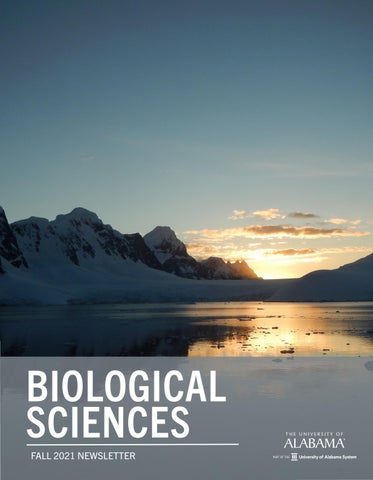
BIOLOGICAL SCIENCES FALL 2021 NEWSLETTER
A LETTER FROM THE CHAIR Excitement for the start of the 2021-2022 academic year is palpable all around campus. Students are happy to be back on campus and working in the labs with our faculty. I am really proud of the way our faculty quickly adapted teaching and research activities during the last year to minimize the impact of the pandemic on our students. We have learned new skills for teaching and for carrying out our research, and we continue to proactively manage our operations so as to minimize the impact of the Delta variant on our students and our research. Despite the challenges we’ve faced, our faculty have been successful in securing funding and recruiting graduate students into our program. We start the year with 115 graduate students, a record number of graduate students enrolled in our program. In the past year, several faculty received awards for their contributions to the mission of the university. Dr. Laura Reed was recognized by the College of Arts & Sciences as a Distinguished Teaching Fellow, and Dr. Kevin Kocot received the 2021 President’s Faculty Research Award in the Emerging Scholar category in the area of Physical and Biological Sciences, Mathematics, and Engineering. In addition, Dr. Jason Pienaar received the prestigious Career Award from the National Science Foundation. The success of our faculty in generating a diversified range of funding is leading to cutting edge research on a wide range of subjects including drug discovery to combat neurodegenerative diseases, stream ecology, biodiversity, and evolutionary studies. Throughout this newsletter you will learn more about their research. We also continue to be proud of our undergraduate students, who have used innovative approaches to remain engaged with the community even during the pandemic. They taught virtual science lessons alongside teachers in our public schools and performed hands-on experiments using real-time Zoom sessions and through self-made teaching videos. Local students learned about topics such as edible DNA, zoology, and plant biology. I encourage you to read more about this award-winning program led by biology instructor Jeanna Yates, who started this effort in 2008 and now serves over 1000 students in our schools each year. This year we welcome four new faculty members: Dr. Arial Shogren, Dr. Ben Titus, Dr. Melanie Higgins, and Dr. Jon Sin. Dr. Arial Shogren studied stream ecology at The University of Notre Dame, where she earned her Ph.D. in Biological Sciences. Most recently, she was a postdoctoral scientist at Michigan State University and was funded by a National Science Foundation Postdoctoral Research Fellowship in Biology. Dr. Ben Titus received his Ph.D. in the Dept. of Evolution, Ecology, and Organismal Biology at The Ohio State University. After earning his Ph.D., he was a Gerstner Scholar & Lerner Gray Postdoctoral Fellow in the Dept. of Invertebrate Zoology at the American Museum of Natural History in New York, and he spent last year as a Marie Curie Postdoctoral Fellow at the University of Lausanne
2
in Switzerland. Dr. Melanie Higgins received her Ph.D. in the Department of Biochemistry & Microbiology at the University of Victoria, Canada, and went on to be the Natural Science and Engineering Research Council of Canada Postdoctoral Fellow Researcher at the School of Molecular & Biomedical Science at the Univ. of Adelaide, Australia, and the Michael Smith Foundation for Health Research Postdoctoral Fellow in the Department of Chemistry at the University of British Columbia, Canada. Dr. Jon Sin earned his PhD in Cell and Molecular Biology at San Diego State University/University of California, San Diego Joint Doctoral Program in 2013. He was an Assistant Professor at Cedars-Sinai Medical Center and is a virologist with specialties in mitochondrial and cardiac biology. The Department is grateful to the many donors who have contributed to our scholarship funds. Many of our students have been awarded scholarships, and they are listed later in the newsletter. If you are interested in supporting our students by contributing to these funds, please contact us by email at bmortazavi@ua.edu or by phone at 205-348-9810. Finally, we are always happy to engage with prospective students, current students, and alumni! If you are considering becoming an undergraduate or a graduate student or are interested in learning about what we are doing in the department, I encourage you to visit our website, send me an email, or give me a call. I am always excited to share what is happening in our department. I would love to hear from you!
DR. BEHZAD MORTAZAVI
Professor and Department Chair Department of Biological Sciences
IN THIS ISSUE 2
Letter From The Chair
3
Table of Contents
4
BSC and New College; The Ciesla Lab
5
Tanglewood Biological Station
6
Training the Next Gen; Biology Outreach
7
Icy Invertebrates
8
Curating Collaboration with UA Museums
9
Meet Our Post-Doctoral Researchers
10
Raising the Biology Research Profile
11
Meet Our New Faculty
15
Celebrating Scholarships
14
CONTACT Department of Biological Sciences
Main Office -1325 Science and Engineering Complex (SEC) (205) 348-1807 bscacademics@ua.edu Box 870344 The University of Alabama Tuscaloosa, AL 35487
Arboretum
4801 Arboretum Way Tuscaloosa, AL 35404 (205) 553-3278 arboretum.ua.edu
Tanglewood Biological Station 496 Tanglewood Road Akron, AL 35441 (205) 348-1817 cstaudhammer@ua.edu
To make a gift to the department, visit bsc.ua.edu/make-a-gift.
3
BIOLOGICAL SCIENCES AND NEW COLLEGE: A relationship that makes each department stronger! For more than 50 years, New College has been the place where University of Alabama students have found a home for the creative expression of their academic desires. New College is an interdisciplinary program where students develop their own course of study. There has been a long-standing relationship between the Department of Biological Sciences and New College, one that includes the cross appointment of faculty between our two units, course offerings that serve the needs of Biology students, and the development of internship programs that broaden our students’ skills, which makes them more competitive as they enter the work force. For example, New College houses the Natural Resources minor, and students can take courses in Environmental Science topics covering forestry, wildlife, birding, and waterways. New College also offers interdisciplinary courses like Environmental Ethics and Policy, which allow students to extend their existing scientific biological knowledge into the realm of humanities.
Dr. Julia Cherry, New College Chair and Professor of Biological Science, explains, “as new fields of biology continue to emerge, New College provides an opportunity for students to design their own majors that historically fall outside those of a normal academic department.” Two areas that have seen a large growth are New College’s new Neuroscience Major and the STEM business program. New College has acted as an incubator to help students develop their courses of study in these two areas, where classes are taken across several departments and colleges on campus, including several foundational classes that are part of the biology curriculum. Another common goal of our two departments is to increase science literacy across our community through the development of several initiatives and courses. As part of New College’s LifeTrack course offerings, students can learn about controversies in science, biomimicry, and biodiversity. The aim of these courses is to increase science literacy, and they do so by providing links to current scientific discoveries in biology labs both at UA and across the world. ■
THE CIESLA LAB IN THE NEWS
Natural product discovery for combatting Parkinson’s Disease Common neurodegenerative diseases such as Parkinson’s are
the researchers
complex, and current therapies provide only temporary relief from
induced Parkinson’s
selected symptoms. Furthermore, existing treatments do not target
in fruit flies using
the underlying biological pathways of the disease, and there is
Paraquat, a highly
currently no way to halt its progression. By the time a Parkinson’s
toxic herbicide, and
patient exhibits typical symptoms, such as tremors and involuntary
found that GardeninA
shakes, it is likely that they have been losing brain function for years.
protected against
Preventative treatments that provide neuroprotective effects hold
the loss of neurons
much promise as a future strategy to protect individuals who are
associated with the
susceptible to Parkinson’s, and it is in this area that the Ciesla lab is
onset of Parkinson’s
making headway.
disease. Flavonoids
Dr. Lukasz Ciesla and his assistant researcher, Dr. Urmila Maitra, recently found that GardeninA, a flavonoid compound naturally found in Gardenia resinifera Roth—a shrub
4
such as GardeninA are found in many fruits and vegetables, and GardeninA is structurally similar to flavonoids found in the peel of citrus fruits. The next steps are to test if GardeninA provides the same
common in India and
antioxidant and anti-inflammatory effects that protect fruit
locally known as Dikamali
fly neurons in a mammalian model. Excitingly, Ciesla and his
(or Brilliant Gardenia in
collaborators have recently secured funding from the National
English)—is able to delay
Institute of Health to do exactly that in a mouse model as well as
the onset of Parkinson’s
to delve further into the exact mechanisms through which these
symptoms in fruit flies. In
compounds work at the cellular level. Given that Parkinson’s is the
this work, supported by
second most prevalent neurodegenerative disease in humans, the
the Alabama Life Research
importance of this work cannot be overstated. We look forward to the
Institute and the American
results of this research, the findings of which could be tremendously
Pharmacological Society,
beneficial to the human condition. ■
TANGLEWOOD BIOLOGICAL STATION USED FOR ECOHYDROLOGY STUDIES Delaney Peterson joined Dr. Nate Jones’ Ecohydrology Lab in the fall of 2020. Before coming to UA, Delaney earned dual degrees in water resources and religion and culture from Virginia Tech. During her undergraduate work, she served as captain of the varsity dance team and also conducted undergraduate research on soils at the Hubbard Brook Experimental Forest in Vermont, developing her love of fieldwork. Despite starting graduate school during the middle of a global pandemic, Delaney has gotten off to a great start here at UA. “I was drawn to UA mostly by the departmental atmosphere—everyone has been so friendly, welcoming, and even willing to help out with my fieldwork. I also wanted to join Dr. Jones’ lab because of the interdisciplinary nature of where we sit; I was really excited by the prospect of doing ecohydrology research in a Biology Department, because the input from collaborators across the discipline would help my research be more well-rounded.” Her graduate research focuses on non-perennial streams, or streams that go dry on a regular basis. “Here in Alabama,” says Delaney’s mentor Dr. Jones, “over 40% of our streams dry on an annual basis. However, we know very little about how streams dry and how that drying impacts downstream water resources (i.e., drinking water supplies, aquatic habitat, and water quality).” Delaney is beginning to answer these questions at The University of Alabama’s Tanglewood Biological Station (tanglewood.ua.edu). Also known as the Nicholene Bishop Biological Station, Tanglewood is a 570-acre nature reserve and research space located south of Tuscaloosa. This
valuable resource offers an area for both faculty research as well as hands-on field experiences in several courses. Specifically, Delaney is using the property to quantify how groundwater interacts with small streams. To do this, she installed 15 groundwater monitoring wells, conducts seasonal stream network surveys, and regularly collects water isotope samples. Delaney’s study is the first of its kind in the upper Coastal Plain, and her findings will directly inform water resource management across the region. Delaney Petersonsays, “This work is important because it fills a key knowledge gap that will hopefully have a positive impact on water policy and management. We don’t have a great understanding of how water moves through the Upper Coastal Plain (where it’s low-gradient but the soils have a lot of clay) or how that water movement affects stream drying. Hopefully, this research will provide a framework for states like Alabama to better understand their water resources and manage them in a sustainable way.” Delaney recently decided to switch from a MS degree program to a direct PhD. She will be joining the Aquatic Intermittency effects on Microbiomes (AIMS) project funded by the National Science Foundation, and her research on non-perennial streams will expand to streams across Alabama’s unique geologic gradient (i.e., lowgradient coastal regions to Appalachia). You can follow along with Delaney’s research on twitter—her handle is @thats_me_del_p. She regularly posts research updates with #TanglewoodTuesday and #BamaEcoHydro! ■
5
TRAINING THE NEXT GENERATION OF BIOLOGISTS
Our link to the National Ecological Observatory Network (NEON)
As the biological sciences continue to expand in research depth, there is a need for highly trained individuals to fill the workforce. The field of Macrosystems Biology—the regional-to-continental scale study of ecosystems—is one of these blossoming areas in biology. The National Science Foundation has invested in the development, building, and operation of The National Ecological Observatory Network (NEON) as a means of studying long-term changes in ecosystems across the US on a macrosystems scale. The NEON program is the largest ecological observatory network in the U.S. with field sites spanning the country, from Puerto Rico to Alaska to Hawaii. The program will collect ecological data from terrestrial and aquatic field sites in 20 North American ecoclimate domains for 30 years. Each of these domains, along with the project’s central facility, is staffed with numerous biologists with research backgrounds spanning the fields of entomology, disease ecology, biogeochemical cycling, and animal population dynamics, to name a few. The NEON program is the first life-science project to be constructed solely with National Science Foundation (NSF) Major
Research Equipment and Facilities Construction (MREFC) funding. This type of funding has historically been reserved for national or international projects, such as space telescopes and particle accelerators, that advance the boundaries of science and engineering and generate data and resources to support the work of hundreds or thousands of researchers over several decades. Since NEON’s inception, faculty members from our department have been involved in the development and design of the project. This has included developing several of the central themes for the project, aiding in site selection, and testing new ecological equipment to be used during the project. Now that the project is operational, our faculty have trained several undergraduate and graduate students, along with postdoctoral scientists, who have transitioned into permanent research and technical positions with NEON. Currently, there are 10 former UA BSC students working for NEON in various capacities, from field technicians to domain managers. Specifically, Dr. Rajit Patankar, a former postdoctoral scientist in the department, is now the field operation manager for NEON domain 11 in Denton, TX. Jamie Galloway, a 2014 graduate of the department, remains in Tuscaloosa and serves as a senior field ecologist in the Ozark Complex. Additionally, Dr. Stephanie Parker, who received her PhD in the department in 2008, is an aquatic ecologist working in the Aquatic Observation System team at the NEON head office in Boulder, CO. Our department is proud of the strong relationship we have developed with NEON and will continue to enhance our education programs, which will enable our graduates to compete for new positions with NEON and other research organization as big data science continues to expand across the globe. ■
BIOLOGY OUTREACH
Biology Majors Teach Virtual Hands-On STEM Lessons to Children of Essential Workers University of Alabama instructor Jeanna Yates leads a summer outreach program to raise awareness of environmental issues and provide a strong science foundation to local K-12 students through hands-on science experiments. With a goal of increasing the love of science in local K-12 students, this program, founded in 2008, originally served 135 students and now typically serves over 1000 students annually. These efforts help keep kids active and engaged in educational activities, while bringing those activities out of the classroom and into a more interactive environment. Studies show that providing young children a strong science foundation results in higher achievement in middle and high school, and provides them with more career opportunities in science and technology fields. Prior to the pandemic the program had already garnished recognition, receiving The University of Alabama Council on Community-Based Partnerships Excellence in Community Affairs Award for Outstanding Faculty/Staff-Initiated Engagement Effort. However, the program took on new challenges, as well as importance, in 2020 with the COVID-19 pandemic. This necessitated creativity on the part of the coordinators and UA student leaders, as well as the K-12 student participants. The University of Alabama biology majors taught hands-on STEM lessons virtually to children of essential workers using Zoom during the
6
COVID-19 Pandemic. A video explaining the outreach program can be found at the following link: https://vimeo. com/419964951. “The 14 UA biology majors did such an outstanding job creating and teaching the ‘Zoom’ hands-on lessons to these K-12 students,” said Yates. Student participants included the Boys & Girls Clubs of West Alabama, Girl Scouts of North-Central Alabama, Children’s Hands-on Museum (CHOM) members, and UA Arboretum members. Supplies were delivered by Amazon to the UA students’ homes and to the Boys & Girls Clubs of West Alabama students, while supply lists were made known on the CHOM and UA Arboretum websites so that parents could buy those supplies. The UA students taught the lessons and performed the hands-on experiments in real-time Zoom sessions, along with making teaching videos. Some of the exciting topics featured included edible DNA, zoology, microscopes, and plant biology. ■
ICY INVERTEBRATES
Antarctica is a remote and challenging place to study, but the cold
Ship-based research is intense. The ship operates 24 hours a day
waters surrounding the southern-most continent are home to rich
with two teams that each work 12 hours a day. When the opportunity
and diverse communities of marine animals. In fall 2020, a team of
arose to step away from the microscope, the team got to experience
researchers, led by Dr. Kevin Kocot in the Department of Biological
what are arguably some of the most beautiful sights in the world
Sciences,traveled to the bottom of the Earth on the Research Vessel /
including breathtaking sunrises that start at 2 AM, huge icebergs, and
Ice Breaker Nathaniel B. Palmer to sample marine invertebrates living
lots of mountains Thanks to support from the US Antarctic Program,
in waters off Antarctica. The overarching goal of this research, funded
the ship’s crew, and the National Science Foundation, the expedition
by the National Science Foundation, is to help improve understanding
was a success and the Kocot lab will be working on the samples they
of the biodiversity and evolutionary history of marine invertebrates
collected until their next expedition to the Eastern Antarctic, which is
living in Antarctic waters.
scheduled for March 2022.
Dr. Kocot’s team focused on a poorly understood group of marine molluscs called Aplacophora. These unusual animals look more like
To learn more about the project, visit its website at www.icyinverts.com. ■
worms than other molluscs such as snails, clams, or squids. Despite their strange appearance, many species are ecologically important members of deep-sea and polar animal communities, but there are only a handful of researchers worldwide who study them. Dr. Kocot’s team sampled animals using trawls and corers and spent most of their time in the lab sorting and imaging specimens under the microscope and preserving specimens for both morphological and genetic studies. Conducting field work in remote places like Antarctica always presents challenges, but the COVID-19 pandemic made this field work especially complex. The team left home on September 20th and quarantined in a hotel in San Francisco. After a negative COVID test, they boarded the RVIB Nathanial B. Palmer, for a two-week quarantine onboard the ship. After the two weeks had passed and everyone tested negative for COVID-19, the ship steamed south. Transit from California to Punta Arenas, Chile took 25 days. After that time, supplies were loaded onto the ship and the team continued to Antarctica.
7
CURATING COLLABORATIONS BETWEEN BIOLOGICAL SCIENCES FACULTY AND UA MUSEUMS Herpetology, and Freshwater Decapods) and Steve Ginzbarg (Herbarium) as well as by student workers and volunteers. In recent years, there has been an increase in collaborations between ALMNH and Biological Sciences faculty and staff. For example, Dr. Kevin Kocot is collaborating with Dr. John Abbott, Director of Museum Research and Collections, and Kendra Abbott, Research and Outreach Coordinator and Research Associate, on a project focused on the conservation genomics of threatened and endangered dragonflies in the southeastern United States. Likewise, Dr. Adiel Klompmaker, Curator of Paleontology and the latest hire in the Alabama Museum of Natural History, has planned and ongoing collaborations with faculty in Biological Sciences. Dr. Klompmaker’s research focuses mainly on biotic interactions among marine animals as well as diverse aspects of the fossil record of crustaceans. UA Museums researchers, like Dr. Abbott and Dr. Klompmaker, are helping to facilitate interdisciplinary research among units, including UA Museums, Biological Sciences, and Geological Sciences, among others. In 2020, Kendra Abbott took on her role as Research and Outreach Coordinator at ALMNH. As part of this role, Kendra works with The Alabama Museum of Natural History (ALMNH) at UA is the oldest museum in Alabama, but it communicates cutting-edge science to a contemporary audience through physical exhibits in Smith Hall, the public face of the museum, as well as quality online programs. The ALMNH serves an important role in natural history collections–based research, interdisciplinary collaborations, and dissemination of research results to the general public through museum exhibits. Catty-corner to Smith Hall, ALMNH faculty curators in Mary Harmon Bryant Hall, the scientific collections facility, conduct behindthe-scenes specimen-based research. Several Biological Sciences faculty members hold curatorial appointments in the ALMNH, curating the biological collections used in this research as well as in outreach and teaching. Dr. Phil Harris is the Curator of Ichthyology and oversees collections of fish (http://uaic.as.ua.edu/) as well as reptiles and amphibians (herpetology) and freshwater decapod crustaceans. The ichthyology collection alone contains over 1.2 million fish, representing 2,448 species. Dr. Kevin Kocot is the Curator of Invertebrate Zoology (https://collections.museums.ua.edu/invertebrate-zoology-collection/) and oversees a collection of over 20,000 lots of specimens, including many now threatened or endangered freshwater mussels and rarely sampled deep-sea and polar organisms preserved for genomics. Dr. Juan Lopez-Bautista is the Curator of Phycology and oversees collections of algae as well as non-vascular plants. Dr. Michael McKain is the Curator of the Herbarium (http://herbarium.as.ua.edu/), which encompasses roughly 69,000 plant specimens representing over 3,000 species. The Biological Sciences natural history collections are supported by collections managers Worth Pugh (Ichthyology,
8
faculty and staff across campus to develop new and exciting exhibits and outreach events to communicate science being conducted at UA to visitors of the ALMNH. Currently, Kendra is working with Dr. Carla Atkinson to develop an exhibit on freshwater mussels, which are incredibly diverse in Alabama and ecologically important but are also threatened by human activities. The UA Museums are an excellent venue for faculty to disseminate their research to the public through museum exhibits. For example, a new exhibit on freshwater mussels and the incredible biodiversity of Alabama freshwater ecosystems was just unveiled this summer. Over the next year, Kendra will be working with Drs. Kocot, Becker, and other BSC faculty to develop museum exhibits to communicate results of their research to the community. We encourage friends of the department to visit the ALMNH in Smith Hall to check out these exhibits and to reach out to our faculty curators for behindthe-scenes tours of our natural history collections in Mary Harmon Bryant Hall. For more information, visit https://bsc. ua.edu/biocollections/ and https://collections. museums.ua.edu/ collections/. ■
MEET OUR POST-DOCTORAL RESEARCHERS
The Department of Biological Sciences is the academic home for diverse researchers at a variety of career stages. Among these are postdoctoral researchers, early-career individuals who have earned a Ph.D. and who are continuing their training by working in collaboration with a faculty mentor. Postdocs are not students but colleagues-in-training who often teach their mentors just as much as their mentors teach them. Postdoctoral positions are typically research-focused, but these individuals also make valuable contributions to teaching, training students, and outreach, as well. Ask any faculty mentor about their postdoctoral colleague and you will undoubtedly hear an emphatically positive answer about how bright, enthusiastic, hard-working, dedicated, and generous with their time these individuals are. Postdocs play a big part in the continued success of our department but are all too often unsung heroes. In this issue of the Bama Biology Newsletter, we wanted to highlight some of our postdoctoral researchers and research associates to recognize their valuable contributions in and outside of the lab. Dr. Carmen Cobo is a postdoctoral
Dr. Sarthok Rahman is a postdoctoral
researcher in the Kocot Lab. She did her Ph.D.
researcher in the Lozier Lab. He has just
at the University of Santiago de Compostela
completed his Ph.D. (2021) in the Hines Lab
in Spain, where she also worked as a
at Pennsylvania State University where he
researcher at both the Marine Biology and
investigated the genetic basis of mimetic color
Hydrobiological field stations. Her research
variation in bumble bees and was part of the
is focused on biodiversity and systematics of
multidisciplinary diverse team introducing
Solenogastres (Mollusca, Aplacophora), with
bumble bees as a new model system for
special interest in the deep-sea fauna; she has
evolutionary genetics. As the newest member of the Lozier lab, Sarthok is
described eight species and a new genus of abyssal solenogasters to date.
excited to be working with Dr. Jeff Lozier and collaborator Dr. Janna Fierst
Currently, she is working on a project titled, “Revolutionizing Biodiversity
on their Understanding the Rules of Life NSF grant to discover the epigenetic
and Systematics Research on Aplacophora (Mollusca) and Training the
mechanisms of cold tolerance across elevations in West American bumble
Next Generation of Invertebrate Systematists.” When she is not doing
bees. Outside of the lab, Sarthok is passionate about science communication,
science, she is reading or looking for the best fishing spot. Sailing is another
tea, cricket, and cooking authentic Indian subcontinent dishes.
of her passions, her little vintage sailboat is waiting for her on the other side Dr. Sasha Greenspan is a research
Dr. Shelby Rinehart is a postdoctoral researcher in the Cherry Lab. Shelby
associate in the Becker Lab. She did her
received their Ph.D. in 2018 from the San
Master’s at the University of Maine and
Diego State University and University of
her Ph.D. at James Cook University in
California Davis Joint Doctoral Program
Australia. Her research is focused on
in Ecology and recently finished their
amphibian disease ecology and global
first postdoctoral position at the Hebrew
change in Brazil. Since coming to UA,
University of Jerusalem in Israel. Their research program aims to use
she has centered her work on effects of
food webs in tidal marshes, semi-arid deserts, and sandy shores to
pathogens and climate on the amphibian microbiome. Outside of work,
understand the links between trophic diversity and ecosystem structure
Sasha enjoys exploring Alabama waterfalls, finding cool salamanders,
and function. When Shelby is not falling down in salt marshes, they
cooking, and cuddling with her two dogs, Hobart and Hyla.
can be found scoping out comedy and drag shows, learning about local
Dr. Victoria Pocius is a postdoctoral researcher in the Kersch-Becker Lab. She did her Ph.D. in the Debinski Lab at Iowa State University investigating monarch butterfly preference and performance across eight native milkweed species. After completing her doctoral training, she gained additional expertise in chemical ecology and insect physiology through additional training in the labs of Jared Ali and Rudolf Schilder at Penn State. As a member of the Kersch-Becker lab, Tori is excited to be working on the interactions between plant defenses, prey quality, and predator/parasitoid attraction, retention, and fitness. Outside of the lab, Tori is passionate about science communication, competitive swimming, and baking.
history, and pampering their two fat cats. Dr. Corianne Tatariw joined the Mortazavi Lab as a postdoctoral researcher in 2016. She did her Ph.D. at the University of Maine on the impacts of human disturbances on nutrient cycling in forest soils. Her current research is focused on nutrient removal in natural and human created wetlands, with the goal of understanding how these ecosystems can improve water quality. Her work includes investigating the long-term impacts of the Deepwater Horizon spill on salt marshes in the northern Gulf of Mexico and identifying the drivers of nitrogen removal in created wetlands. When she is not at work, she can be found in the kitchen in pursuit of the perfect chocolate chip cookie recipe or absorbed in a mystery novel.
9
RAISING THE BIOLOGY RESEARCH PROFILE
A number of faculty in Biological Sciences have recently secured prestigious awards from the National Science Foundation (NSF) and other funding agencies to study wide-ranging biological phenomena. DR. PIENAAR RECEIVES PRESTIGIOUS NSF CAREER AWARD TO STUDY TARDIGRADE CRYPTOBIOSIS The NSF Faculty Early Career Development, or CAREER, Program is the most prestigious award in support of early-career faculty at NSF. Recipients are recognized as being individuals with the potential to serve as academic role models in research and education and to lead advances in the mission of their department or organization. With this award, Dr. Pienaar and his team will use an integrated research approach to unravel the ability of tardigrades from the molecular to morphological and ecological interaction levels to persist in an ametabolic state in the complete absence of water. The team will also develop phylogenetic comparative methods to test for coevolution between terrestrial tardigrades and the mosses and liches that
laboratories to identify novel drug templates
DR. WIESNER RECEIVES THE EDITORS’
that can be further used to treat certain forms
CHOICE AWARD
of cancer, neurodegenerative diseases, chronic
Dr. Weisner is a recent graduate of the
pain, diabetes, and many other illnesses. Dr.
department whose paper “Variations in
Ciesla is a candidate for the second phase of
metabolic energy efficiency and entropy
this grant program to continue research and
production during temperature extremes across
development of the potential product for a
a longleaf pine savanna” was recognized as an
further two years.
outstanding research paper by Agriculture and
DRS. SHOGREN AND BENSTEAD RECEIVE
Forest Meteorology in December 2020. The
A NSF GRANT TO STUDY THE ROLE OF SESTON IN STREAMS This two-year project is titled “Collaborative Research: MSA: ConFines: Continental-scale study of the role of fine particles in riverine material fluxes.” Drs. Shogren and Benstead will use data from the National Ecological Observatory Network (NEON) sensors to increase our understanding of the role of fine particles in ecosystems as they are transported
they live in. For the educational part of the
down streams.
award, Dr. Pienaar will train undergraduate
DR. KOCOT RECEIVES THE 2021
and K-12 students in tardigrade species discovery through an immersive summer research experience at UA and surrounding middle and high schools. This brings the total number of recent CAREER awards held in the department to four.
PRESIDENT’S FACULTY RESEARCH AWARD Dr. Kocot’s award was in the Emerging Scholar category in the area of Physical and Biological Sciences, Mathematics, and Engineering. He will be recognized
DR. CIESLA RECEIVES NIH GRANT
during the President’s Faculty Research
FOR DRUG DISCOVERY TECHNOLOGY
Award Ceremony, to be held at the Bryant
TRANSFER
Conference Center the afternoon of April
A technology transfer proposal, titled
20, 2022 (delayed to next year due to social
“Cellular membrane affinity chromatography
distancing protocols).
kit for drug discovery,” began in July 2021
DR. REED HAS BEEN SELECTED AS A
and runs for one year. This proposal is in collaboration with Regis Technologies and will develop cellular membrane affinity chromatography (CMAC) kits to allow for the identification of compounds present in complex matrices that specifically interact with immobilized transmembrane proteins. The newly developed CMAC kit will speed up the identification of phytochemicals targeting
DISTINGUISHED TEACHING FELLOW FOR THE COLLEGE Faculty members with outstanding records of teaching and student learning are selected from nominations made by their department chairs, colleagues, or students. The teaching fellows receive stipends for three years to support teaching-related projects.
article was part of Wiesner’s research leading to the completion of her doctorate, which focused on using laws of thermodynamics to understand how longleaf pine forests of the Southeastern United States respond to variation in climate and land use and management. The research led to the conclusion that forests that had great human influences, such as past agricultural use prior to reforestation, needed to use their energy reserves more often when faced with extreme weather conditions. The study also found that sites with great biological diversity recovered their metabolic activity and replenished their energy reserves much quicker than sites with lower biodiversity. When discussing Wiesner’s research with her advisor, Dr. Gregory Starr, Starr stated, “Susi’s use of thermodynamics was extremely creative and has not only provided new insight into the functioning of longleaf ecosystems, but her research is a blueprint for ecologists to study and learn about ecosystems in new ways. Not only does her research provide a foundation to push ecosystem ecology forward, but it can also help land managers and decision makers determine what ecosystems are most vulnerable to change if they must deplete their energy reserves for survival, which may allow for better conservation of these ecosystems.” Dr. Wiesner is currently a postdoctoral research fellow at the University of Wisconsin and is funded by Natural Resources and Sustainable Agricultural Systems Program in the USDA Agricultural Research Service. Susi’s work supports a project
transmembrane proteins. The CMAC kit
quantifying agricultural sources of methane
can easily be applied in drug discovery
emissions to the atmosphere. ■
10
NEW FACULTY HIGHLIGHT: DR. MELANIE HIGGINS PROVIDE A BRIEF SYNOPSIS OF YOUR EDUCATION AND RESEARCH/CAREER INTERESTS. I completed my PhD at the University of Victoria in Canada, where I investigated host glycan metabolism in Streptococcus pneumoniae and studied their roles in pathogenesis. From there, I completed a postdoctoral fellowship at the University of Adelaide in Australia, where I continued my research on pneumococcal pathogenesis and characterized potential vaccine targets. I then pursued a second postdoctoral position at the University of British Columbia in Canada, where I studied the structure-function relationships and mechanisms of bacterial enzymes involved in the biosynthesis of bioactive natural products. These experiences solidified my passion for combining microbiology, structural biology, and biochemistry to interrogate bacterial processes that can directly or indirectly influence human health. More specifically, I would like to gain a better understanding of the mechanisms by which commensal and pathogenic bacteria interact with host glycans in the gastrointestinal tract. I am also interested in studying how bacterial natural products are biologically synthesized, which will support the discovery of new molecules and biosynthetic enzymes. WHAT MOTIVATED YOU TO PURSUE A CAREER IN SCIENCE?
WHAT ARE THE MOST CHALLENGING ASPECTS OF YOUR
My motivation to pursue a career in science stems from my innate
RESEARCH/CAREER?
desire to learn about the fundamentals of life. Life takes on many
One aspect that can be challenging is the complexity of the gut
forms, with each having its own unique cellular processes. My
microbiome. There are trillions of microorganisms that live inside
interests lie in understanding how microbes function.
the human body. Since there is a lot of cross talk and competition
DESCRIBE THE PATH THAT LED YOU TO YOUR CURRENT RESEARCH/CAREER AREA. I have been interested in science from a young age and chose to pursue an undergraduate degree in biochemistry because I enjoyed my high school biology and chemistry classes. While I was an undergraduate, I joined a co-op program where I was involved in various research projects. In my fourth year, I completed a workstudy program where I examined pneumococcal carbohydrate metabolism and pathogenesis. It was through these experiences that I developed a passion for investigating microbial processes using
between these microbes, there can be potential complications when trying to determine the biological roles for specific pathways from a particular bacterial species. WHAT ADVICE WOULD YOU OFFER TO UNDERGRADUATE AND GRADUATE STUDENTS? My advice to students is to start thinking about your career goals early. Figure out what areas of science excite you by getting involved in various research labs or projects, talk to scientists from all sectors, and attend conferences and career fairs. Also, use your supervisor and other faculty members as a resource for career advice and
microbiology, biochemistry, and structural biology techniques.
networking.
WHAT ABOUT YOUR AREA OF RESEARCH (OR CAREER) EXCITES
WHAT DO YOU FORESEE AS THE MOST REWARDING AS WELL AS
YOU THE MOST?
CHALLENGING PART OF YOUR NEW JOB AT UA?
I’m most excited about uncovering and characterizing new
I think the most rewarding part of this new job will be training and
enzyme pathways. I’m particularly interested in gaining a better understanding of how microbes metabolize host glycans in the gut and how they produce small molecules that have therapeutic potential.
mentoring students. I’m very excited to be able to watch students progress through their education and see how their experiences guide their career paths. Something that will be challenging at the start will be finding a good balance between teaching, research, and service.
11
NEW FACULTY HIGHLIGHT: DR. ARIAL SHOGREN PROVIDE A BRIEF SYNOPSIS OF YOUR EDUCATION AND
WHAT MOTIVATED YOU TO PURSUE A CAREER IN SCIENCE?
RESEARCH/CAREER INTERESTS.
Like many ecologists, my initial interest in science came from an early
River signals tell stories as they move and modify the materials flowing
love of being outside. I grew up in Madison, Wisconsin, which is a city
across the landscape: of where water and what it carries has been, where
surrounded by lakes and streams, so I spent a lot of my early life around
it is going, and how it might impact downstream ecosystems. I am
(and in) the freshwater ecosystems near my home. My interest in science
fundamentally intrigued with these stories, listening to them and decoding
as a career option came a bit later, though, while I was an undergraduate
them using tools from ecology and hydrology.
student at Vassar. During the summer between my junior and senior
In terms of academic training, I completed my honors undergraduate
years, I accepted a research technician position at The Cary Institute
degree in biology at Vassar College in 2013. I then went right to graduate
of Ecosystem Studies. My mentor from the Cary made it clear that
school to study stream ecology at The University of Notre Dame,
freshwater research was a viable career option, which motivated me to go
and earned my Ph.D. in biological sciences in 2018. In my doctorate
to grad school and pursue an academic career.
work, I assessed the impact of stream flow on the fate and transport of emergent materials from the mesocosm to the river scale. Mostly, I worked on constraining the fate and transport of suspended particles, like environmental DNA (eDNA)—a mixture of cells, mucus, and other tissues containing genetic materials that can be found in aquatic environments.
WHAT ADVICE WOULD YOU OFFER TO UNDERGRADUATE AND GRADUATE STUDENTS? My main advice is to work with the people you like to work with! It makes things a lot more fun, regardless of your career stage or trajectory.
After finishing grad school, I accepted a postdoctoral position at Michigan State University (MSU), where I was a National Science Foundation
DESCRIBE THE PATH THAT LED YOU TO YOUR CURRENT
Postdoctoral Research Fellow in Biology (NSF-PRFB). As a postdoc,
RESEARCH/CAREER AREA.
my research focus telescoped from the reach to the watershed scale. My
While there’s always a bit of serendipity to anyone’s career path, both
postdoc research has explored the fate of carbon and nutrients in Arctic
of my graduate and postdoc projects were very dynamic projects that
watersheds associated with the Arctic Long-Term Ecological Research
provided critical experience working productively with interdisciplinary
(LTER) Toolik Field Station. While the scale and place of my research
teams. My academic training is in ecology, but I truly developed as a
unit changed substantially between grad school and postdoc, the core
scientist by working at the intersection of stream ecology, hydrology, and
theme remains the same: understanding how environmental variation
biogeochemistry. I have found that the node where these fields meet is a
influences the fate of ecosystem materials flowing through river networks.
rich, productive space to ask and answer critical and interesting questions.
As I transition into a faculty position here at UA, my research program
It also facilitates a lot of creativity in how you approach a question, which is
will study the interactions between abiotic and biotic drivers, recognizing
one of my favorite aspects of field research.
that the lateral movement of water and material from terrestrial to aquatic systems is a key indicator of ecosystem structure and function. While I’d like to continue to do work in the Arctic, my goal is to establish research sites here in Alabama.
WHAT ABOUT YOUR AREA OF RESEARCH EXCITES YOU THE MOST? The most exciting thing I learned during my postdoc at MSU is to “mind the gap”—to find out what we as scientists might be missing by ignoring relevant spatial scales, under-studying certain periods of time, or by only using a single perspective to study a problem. I think it’s important for scientists to constantly ask, “What are we missing?” Not only does asking this question help present new ways to fill the evident knowledge and data gaps and improve our understanding, but it’s also an exciting way of finding new research topics and questions! It’s especially fruitful for focusing research efforts in remote or understudied regions and finding new ways to solve problems. WHAT ARE THE MOST CHALLENGING ASPECTS OF YOUR RESEARCH/CAREER? The challenge that stands out to me has been the pandemic, which has completely derailed plans for fieldwork, impacted progress on various projects, and moved team communication online. I am not alone in how the pandemic has negatively impacted my research plans. However, despite these barriers, the last year has made me appreciate the resilience of students, postdocs, and faculty when we try and make the best of a bad situation.
12
NEW FACULTY HIGHLIGHT: DR. JON SIN PROVIDE A BRIEF SYNOPSIS OF YOUR EDUCATION AND RESEARCH/CAREER INTERESTS. I received my BS in General Biology at the University of California, San Diego (UCSD) in 2003. Following this, I completed my doctoral work in the Cell and Molecular Biology joint doctoral program between San Diego State University and UCSD. It was there that I worked with Dr. Ralph Feuer and began researching how the common human virus coxsackievirus hijacks cellular autophagy machinery to escape the cell in previously undescribed autophagosome-derived microvesicles. After finishing my PhD, I began my postdoctoral training at Cedars-Sinai Medical Center under Dr. Roberta Gottlieb. My primary focus during my postdoc and after transitioning to assistant professor at Cedars was to investigate how coxsackievirus manipulates mitochondrial activity to further viral replication and viral spread. With the knowledge we gathered from our studies we were able to identify a number of highly effective and safe antiviral drugs to combat viral infection both in cultured cells as well as in animal models. Through this work, I was also able to obtain several externally funded research grants, and I am very excited to carry out those research projects in my new home at The University of Alabama! DESCRIBE THE PATH THAT LED YOU TO YOUR CURRENT RESEARCH/CAREER AREA. When I began laboratory research, I studied common environmental factors, such as herbicides, that would cause disease in humans. It was when I started my doctoral work that my mentor, Ralph Feuer, opened my eyes to the world of virology, and I learned about how some viruses have evolved to wreak havoc in their host. This led me to focus on investigating the “molecular arms race” that occurs between host and pathogen. Learning more about these interactions has allowed my group to not only understand how viruses thrive in the cell but also how to disrupt these processes in order to stop the virus in its tracks and prevent cell/tissue damage. WHAT ADVICE WOULD YOU OFFER TO UNDERGRADUATE AND GRADUATE STUDENTS? Never stop having fun with your science. The quickest way to burn out in research is to lose sight of what got you excited about it in the beginning. So your Western blots fail five times in a row, or you suddenly get opposite results in everything you’re doing. It happens. Just stop, take a breath, regroup with your lab, and refresh. You’ll be back on track in no time. WHAT DO YOU FORESEE AS THE MOST REWARDING AS WELL AS CHALLENGING PART OF YOUR NEW JOB AT UA? It’s definitely lab mentorship. I love mentoring new scientists, and it’s an incredible feeling when I can help instill a passion for science in my mentees. I think the challenging aspect of this is that you have to give a lot of yourself to your trainees. Mentorship is about serving your mentees rather than the other way around. You need to be patient and willing to
WHAT MOTIVATED YOU TO PURSUE A CAREER IN SCIENCE? I have always been fascinated by the cellular and molecular processes that allow our bodies to function the way they do, and I have learned through the years that we can learn so much from studying the factors that disrupt these processes. This is what led me to pursue a career in virology, studying how viruses hijack and disrupt host cell machinery and formulating novel therapeutic approaches to limit infections and treat diseases caused by the viruses. WHAT ABOUT YOUR AREA OF RESEARCH (OR CAREER) EXCITES YOU THE MOST? My work primarily focuses on coxsackievirus infections, which are very common in humans. This virus typically causes mild symptoms but can sometimes lead to severe inflammatory diseases, such as meningoencephalitis, pancreatitis, and myocarditis. These severe disease manifestations are more common in young children, who are more susceptible to fatal illness. To date, there are no effective vaccines for coxsackievirus nor are there effective treatments for the diseases that the virus causes. Our group has reported on a number of previously unknown methods by which coxsackievirus exploits the host cell, and with this knowledge, we have been able to test several highly effective strategies to treat coxsackievirus-associated diseases like pancreatitis and myocarditis. WHAT ARE THE MOST CHALLENGING ASPECTS OF YOUR RESEARCH/CAREER? Perhaps the main challenge I face in my research is that from time to time, when the science leads to more unconventional hypotheses that go against the grain, I end up fixating on them. I feel like we learn so much more when we try to answer those “higher risk” questions. Problem is though that sometimes the rest of the research community will hold more skepticism at first, so it takes a lot more convincing to really drive the point home. That being said, it’s absolutely worth it in the end.
dedicate a lot of your own resources to them. My best mentors all did this for me, so I see it more as paying it forward.
13
NEW FACULTY HIGHLIGHT: DR. BEN TITUS PROVIDE A BRIEF SYNOPSIS OF YOUR EDUCATION AND RESEARCH/CAREER INTERESTS. I received my BSc in Ecology at a small liberal arts college in Westerville, Ohio (Otterbein College) and followed that up with a MSc in Marine Biology at Auburn University. I ended up back in Ohio for my PhD in the Dept. of Evolution, Ecology, and Organismal Biology at The Ohio State University. After OSU, I was a Gerstner Scholar & Lerner Gray Postdoctoral Fellow in the Dept. of Invertebrate Zoology at the American Museum of Natural History in New York. I spent last year as a Marie Curie Postdoctoral Fellow at the University of Lausanne in Switzerland. Throughout my entire academic background, my research interests have revolved around understanding the evolution and ecology of tropical marine mutualisms. My research program pursues questions at all levels of biological organization but is WHAT MOTIVATED YOU TO PURSUE A CAREER IN SCIENCE?
primarily centered on the systematics of sea anemones and their
I actually started undergrad as a business major, but a trip to the
symbionts. Many of the species I work on are poorly studied and
Caribbean before I enrolled reignited a long-held interest in the ocean.
so field sampling and molecular species delimitation analyses are
After suffering through an economics class, I found out there was a
important to account for the true species level diversity in the
paleontologist in the Biology Dept. who studied fossilized coral reefs. I
groups I work in. From there I can generate downstream hypotheses
met with them at the end of my freshman year and decided to change
that are rooted in a well-resolved phylogenetic framework.
my major to ecology. I was able to conduct research in Belize and the
I am currently funded through NSF to pursue the systematics
Dominican Republic, and that really sealed my desire to pursue science
and species delimitation of the clownfish-hosting sea anemones,
as a career.
as well as pursue some questions regarding the origin of tropical
DESCRIBE THE PATH THAT LED YOU TO YOUR CURRENT RESEARCH/CAREER AREA. After undergrad, I knew I wanted to pursue a MSc in Marine Ecology, but I wanted nothing to do with molecular research. I was able to find a position in a field ecology lab with Dr. Nanette Chadwick at
sea anemone diversity more broadly. My other long-term research interests are focused on using full genome sequencing for the clownfish-hosting anemones to test some fundamental hypotheses regarding mutualism and genome evolution. WHAT ADVICE WOULD YOU OFFER TO UNDERGRADUATE AND
Auburn University working on tropical sea anemone mutualisms in
GRADUATE STUDENTS?
the Caribbean and Red Sea. As I developed my thesis, the questions
This is a tough one. There are so many different paths to take, but
that I seemed the most interested in ended up requiring a molecular
broadly, for undergraduates I would really stress the importance of
approach. I ended up taking a Molecular Ecology course with Dr. Scott
figuring out what kind of science you like to do and prioritize pursuing
Santos and really fell in love with it. From there I began to realize that
research opportunities in that field rather than prioritizing projects on an
no one was studying the evolution of tropical sea anemones. Ultimately,
organismal group you might be interested in but in a field you aren’t excited
I was able to combine my field background and organismal familiarity
about. If you can do both, great, but that’s not always possible.
with sea anemone symbioses with my new interests in molecular systematics and find a great PhD position with Dr. Meg Daly at OSU. WHAT ABOUT YOUR AREA OF RESEARCH (OR CAREER) EXCITES YOU THE MOST? I think it’s the variety. Mutualisms are complex, and to really understand how biodiversity evolves within mutualisms, it requires
For graduate students, the only universal advice I have is that you have to learn to like writing. It’s the only part of science that you are truly doing by yourself. Project development, data collection, and data analysis can all be done with another person sitting beside you start to finish, but the first draft of any grant or manuscript is pretty much done alone. If you are inherently motivated to write, a career in science gets a lot easier!
a deep understanding of their distributions, associations, ecology,
WHAT ARE THE MOST CHALLENGING ASPECTS OF YOUR
diversity, and behaviors. I end up developing a lot of different types of
RESEARCH/CAREER?
projects, so while the core of my research is focused on systematics,
I think it’s the variety…haha. For all the reasons listed above. It’s
I get to pursue pretty much any question that interests me. It makes
important to focus on the major questions and not get sidetracked with
things a lot of fun!
every potential project idea that materializes along the way.
CELEBRATING SCHOLARSHIPS Every spring, outstanding graduate and undergraduate students are recognized for their achievements and awarded muchappreciated scholarships. Thank you to the donors who have made these scholarships possible!
GRADUATE AWARDS Cell and Molecular Biology Research Award Leigha Stahl, YounJi Nam, Timothy Bushman The Joab Langston Thomas Scholarship Bryan MacNeill, Sontosh Deb Outstanding Teaching by a Graduate Student Spring 2020 – M’Kayla Motley Spring 2020 – Frank Gigliotti Fall 2020 –Jennifer Fortunato Fall 2020 – Taylor Ledford Tanglewood/Arboretum Research Award Jake Herschberger Award for Graduate Students Performing Research in Marine Sciences Aurora Giorgi, Matteo Monti, Meghan Yap-Chiongco Award for Graduate Students Performing Research in Ecology and/or Evolution Wesley Neely, Shannon Buttimer The Bishop-Stackman Marine Science Endowed Scholarship Taylor Ledford, Matteo Monti The Ralph L. Chermock Prize Wesley Neely, Vanessa Marshall The Graham Prize Jennie Thies, John Sutton
UNDERGRADUATE AWARDS The Michael L. McDaniel Memorial Scholarship Sarah Darby Gaston, Brianna Holder, Lilah Havens The Septima Cecilia Smith Award, Biology John Conger The Septima Cecilia Smith Award, Marine Science Shelby Hatchett
Grantland and Louise Rice Scholarship, Microbiology Erin Mayeux, Austin Stansbury, Cassandra Minnie, Madeleine Obuya, Alexander Carayiannis Holzanagel Award in Biology Major Rowan Batts, Caroline Bond, Patrick Lewis, William Laycocks, Madison Lawson
The Septima Cecilia Smith Award, Microbiology Eric Espinal
The James D. and Donjette Yarbrough Scholarship John Paul Williams Soriano, Emily Ray, Cole Kiser, Sara Brooke Larson, Abby Myers
Grantland and Louise Rice Scholarship, Biology Matthew Roy, Anisha Gupta, Olivia Spaedy
The J. Henry Walker Memorial Scholarship Haley Marcotte, Joseph Wentling
Grantland and Louise Rice Scholarship. Marine Science Brianna Maack, Rowan Batts
15
Mailing Address Here