PORTFOLIO

I am a student actually enrolled in Building Architecture M.Sc at Politecnico di Milano. My aim is to find the right coordination between each scale in the architectural project.
My main interests are focused on science and technology applications in the architectural field, as well on the new challenges posed by their development in the architecture industry.
Artistic, scientific and cultural eteronomy is what led me to develop a transversal education on different fields, both on a theoretical and practical approach, trying to unify these two complementary spheres.
Mobile: +39 3923270915
E-mail: tiziano.ballestra@gmail.com
Home: Vallecrosia (IM), Italia
Instagram: tz.png
ESPERIENZE LAVORATIVE
TIROCINIO
MaBa.SAPERLab, Via Ampère 2, Milano
Attività di ricerca su materiali e tecnologie per l’architettura - 2024
TIROCINIO
Fabrizio Alborno Architetti, Via Lagazzi 10, Bordighera
Assistenza in studio - 2020
ISTRUZIONE
Corso in Building Architecture
Politecnico di Milano, Via Ampère 2, Milano
- 2024/in corso
LAUREA TRIENNALE
Corso di Progettazione dell’Architettura
Politecnico di Milano, Via Ampère 2, Milano
- 2021/2024
DIPLOMA DI SCUOLA SUPERIORE
Liceo Scientifico Aprosio, Via Don Bruno Corti 7, Ventimiglia
- 2016/2021
LINGUE
ITALIANO
Lingua madre
INGLESE
Cambridge Certificate, Livello B2
COLLABORAZIONE
Nel processo creativo e nella suddivisione del lavoro
PROBLEM-SOLVING
Nella comprensione delle esigenze e nel trovare soluzioni
COORDINAZIONE
Nelle attività di gruppo come nel lavoro autonomo
ESPERIENZE FORMATIVE
POLICOLLEGE
Corso formativo in scienza e Tecnologia dei materiali
- 2021
SOFTWARE
DISEGNO / MODELLAZIONE
Autocad
Rhino+Grasshopper 3ds Max
VISUALIZZAZIONE
Twinmotion
Arnold Render + 3ds Max
POSTPRODUZIONE / IMPAGINAZIONE
Adobe Photoshop
Adobe Illustrator
Adobe Indesign
[EN]CLOSURE
01. [EN]CLOSURE
Expansion of CSAC Archive
Valserena Abbey, Parma
02. UNVEILING PORTA VITTORIA
Project for a new Civic Library
Ex Porta Vittoria Station, Milano
p. 6-17
p. 18-29
UNVEILING
PORTA VITTORIA
03. SUNFLOWER
Project for a student pavilion
Via Golgi, Milano
04. IMAGES ON TARO RIVER
Interior reuse
Old industrial complex, Borgo Val di Taro
p. 30-39
p. 40-51
SUNFLOWER
IMAGES ON TARO RIVER
Team:
Samuele Amigoni
Violetta Anichini
Andrea Arsie
The project’s theme can be described as the expansion of the artistic and cultural archive actually located into the Valserena Abbey, in Parma. The design practice had to dialogue with the historical presence of the monastery complex of the XII century: not only private spaces had to be created, but public ones should have been designed for University sudents and for all the comunity of Parma.
The prosecuted concept starts from the initial intention of enclosing the abbey complex, which has remained undefined and incomplete after the multiple evolutions durring the centuries. The project [EN]CLOSURE tries, then, to give unity to the complex and, with a simple gesture, recreates two main cloisters. The one on the West is accessible to the entire population, thanks to a new plaza which can be used as an open air theatre for cultural and artistic events. On the other side, the eastern cloister has a more private function, designed as a sculpture garden which dialogues with the wide exhibition space at the ground floor of the eastern wing. This hosts private and public study spaces at the first floor, for university students, with laboratory areas open to the most practical and artistic courses.
To connect the West and the East wings we designed a covered passage, which allows the connection between private and public spaces of the project.
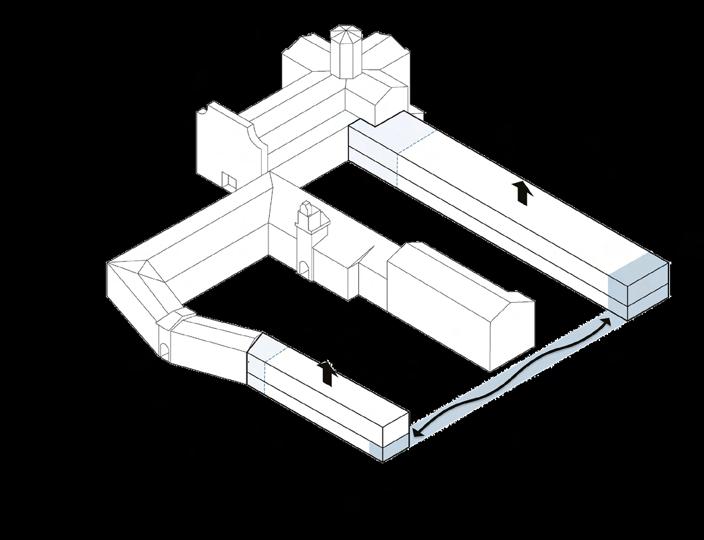
Volumes and connections
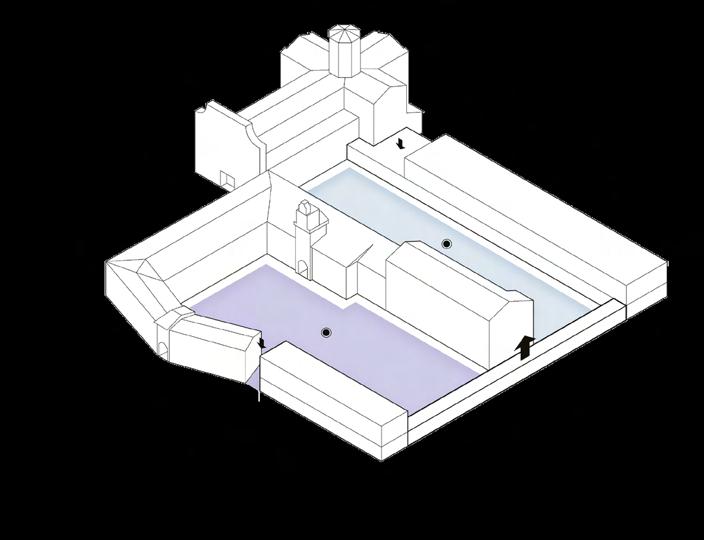
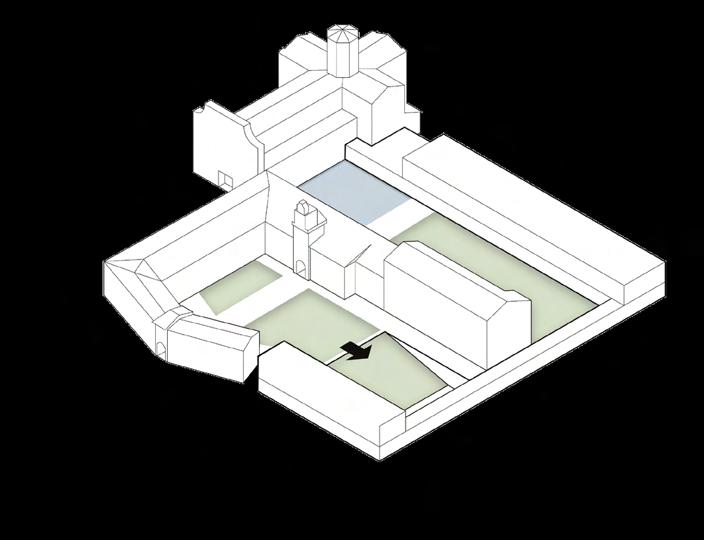
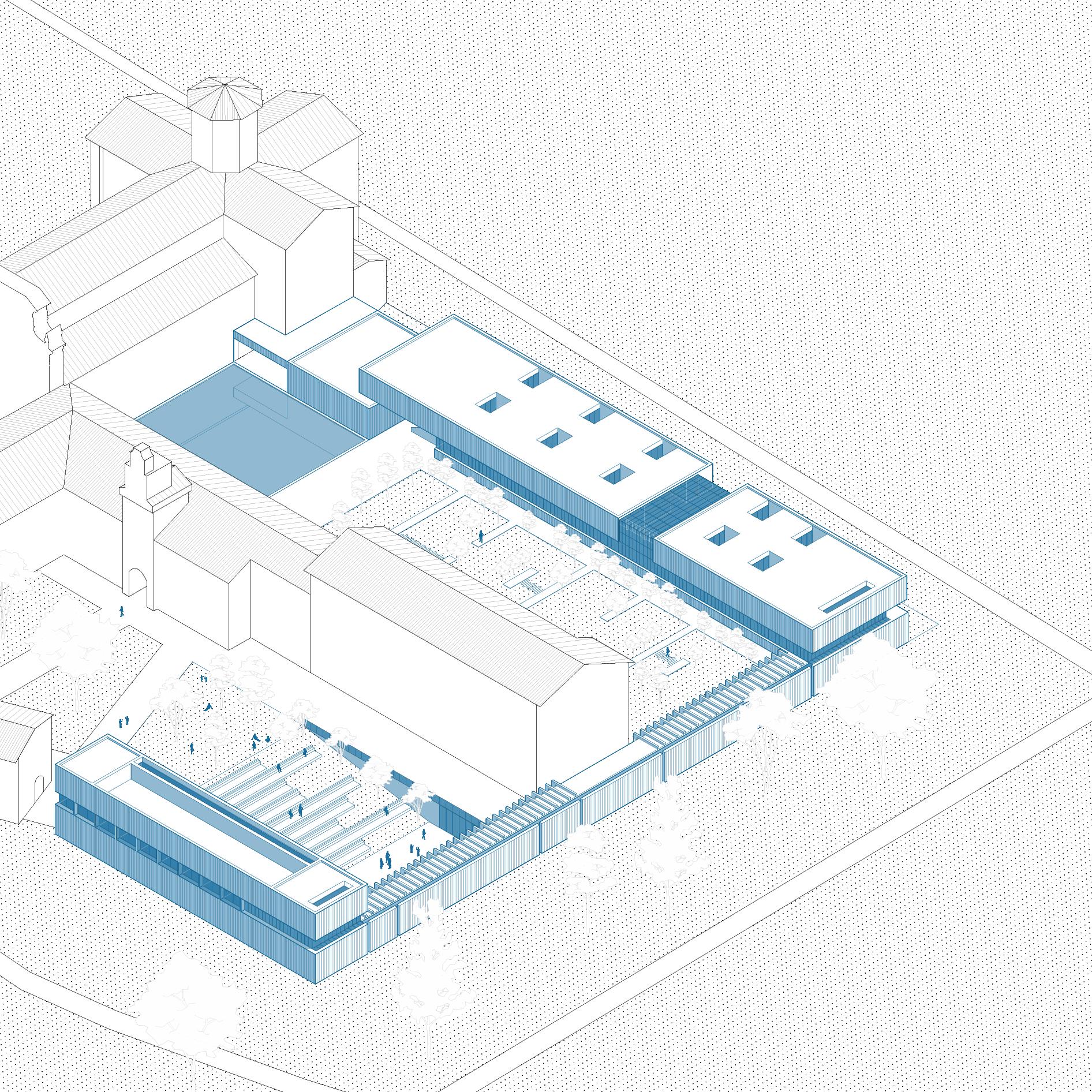
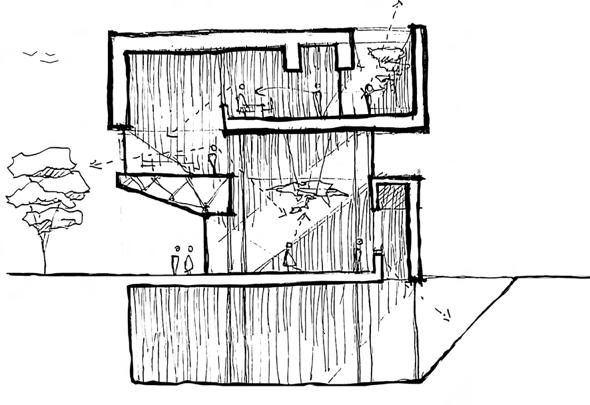
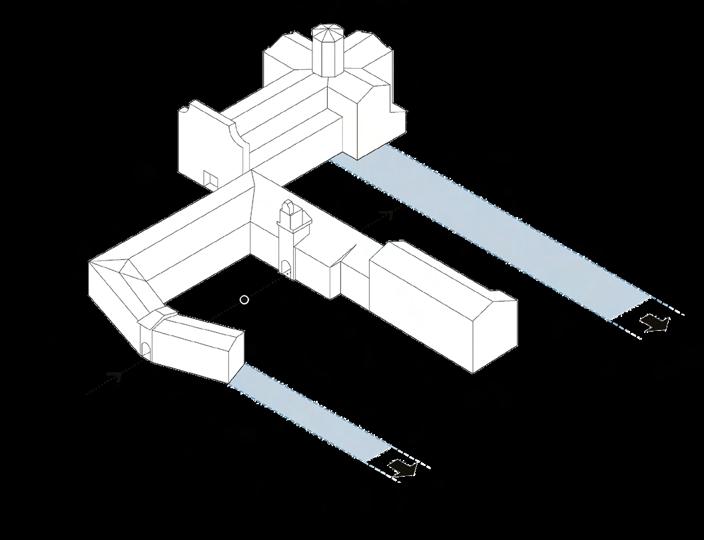
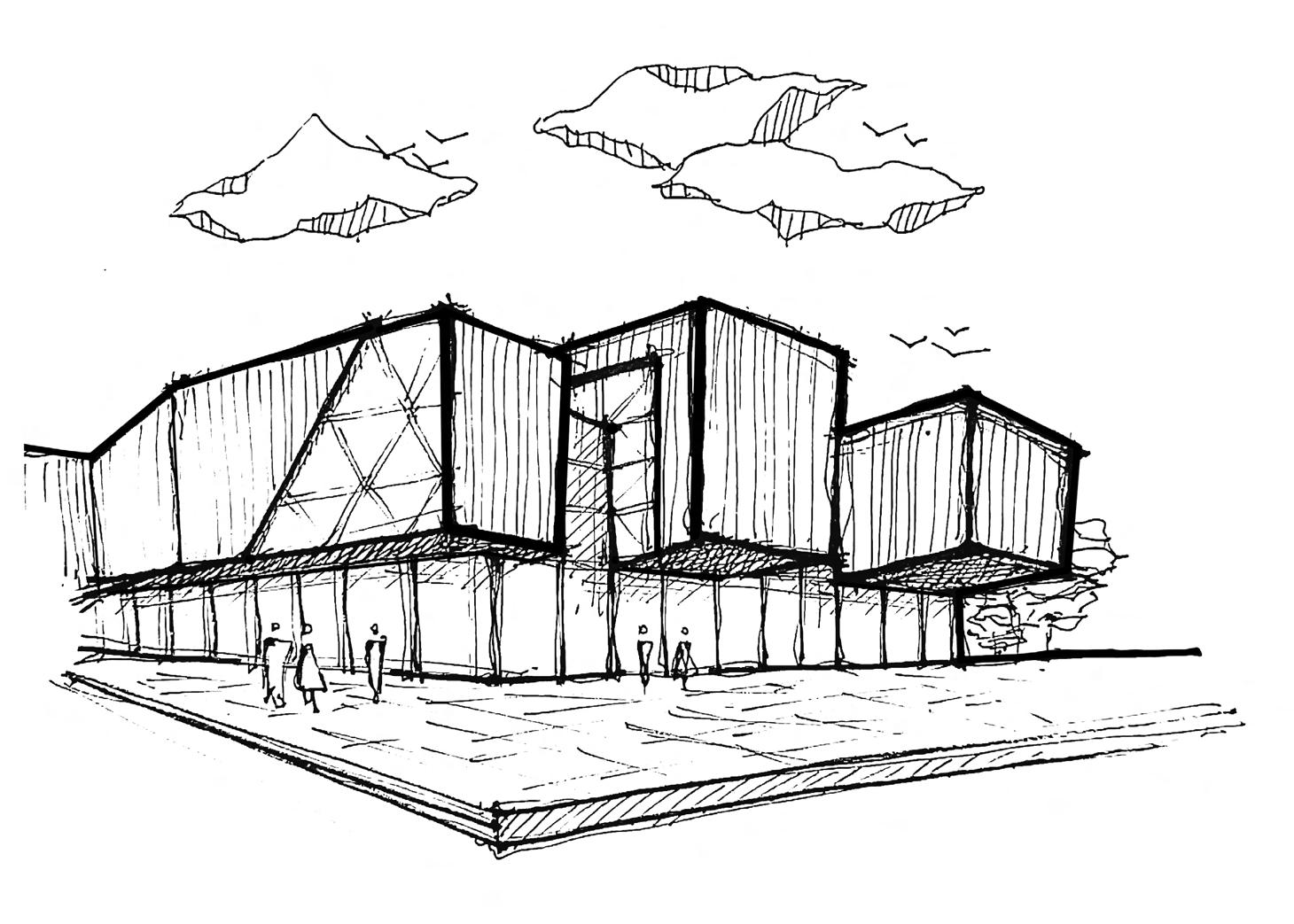
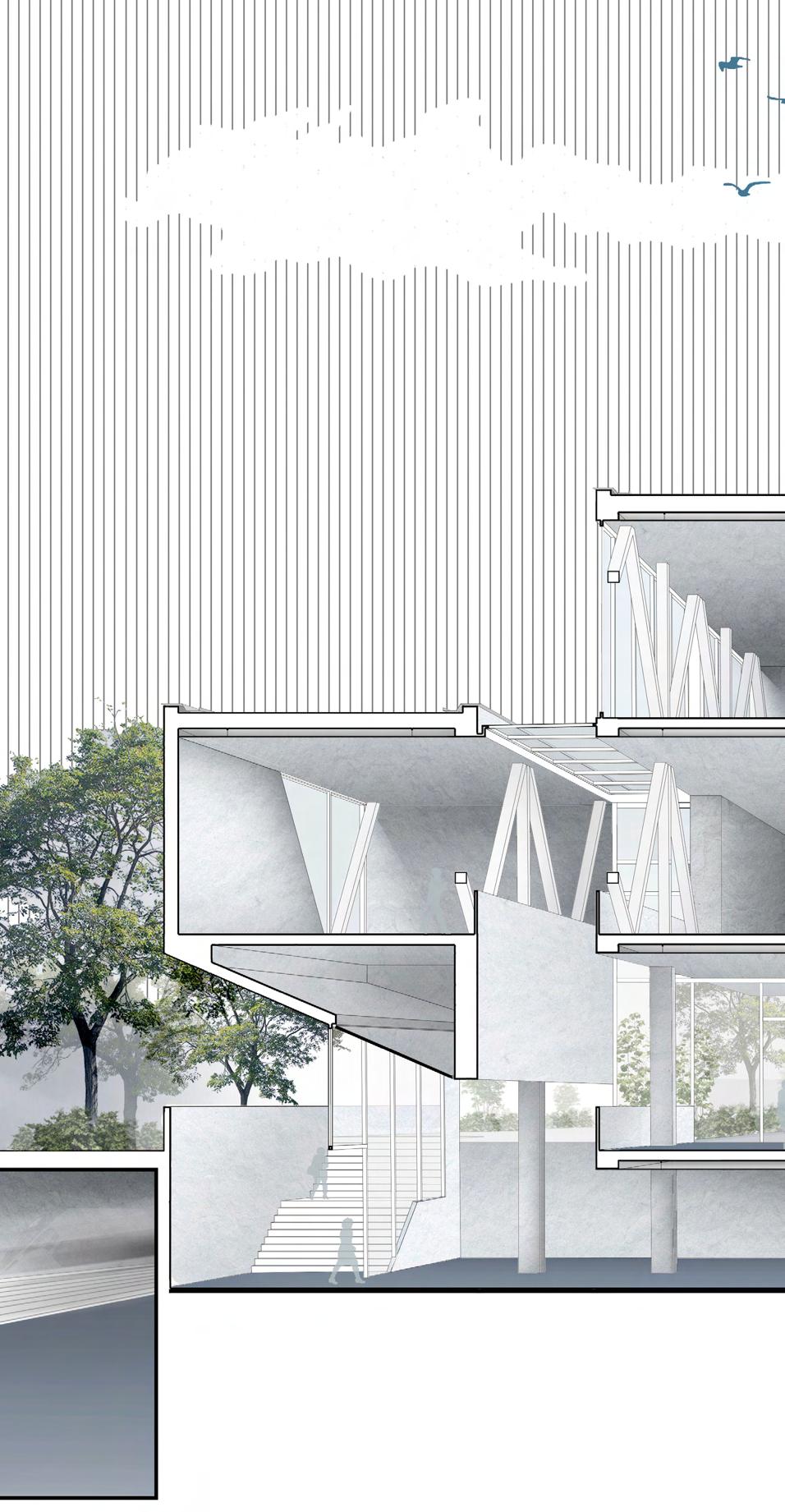
The archive expansion is configured as a physical extension of the abbey’s spaces, trying to complete the functional program through private and public activities. From a morphological point of view, great relevance is given to the alignments with the church’s transept, and the incomplete wing of the abbey.. The project’s aim was to close the entire complex by a massive enclosure, and this led to choose a very solid and heavy architectural nature: this is enphatized by a solid and continuous wall at the ground floor, above which two massive volumes are suspended, reinforcing the enclosure on the East and the West side.
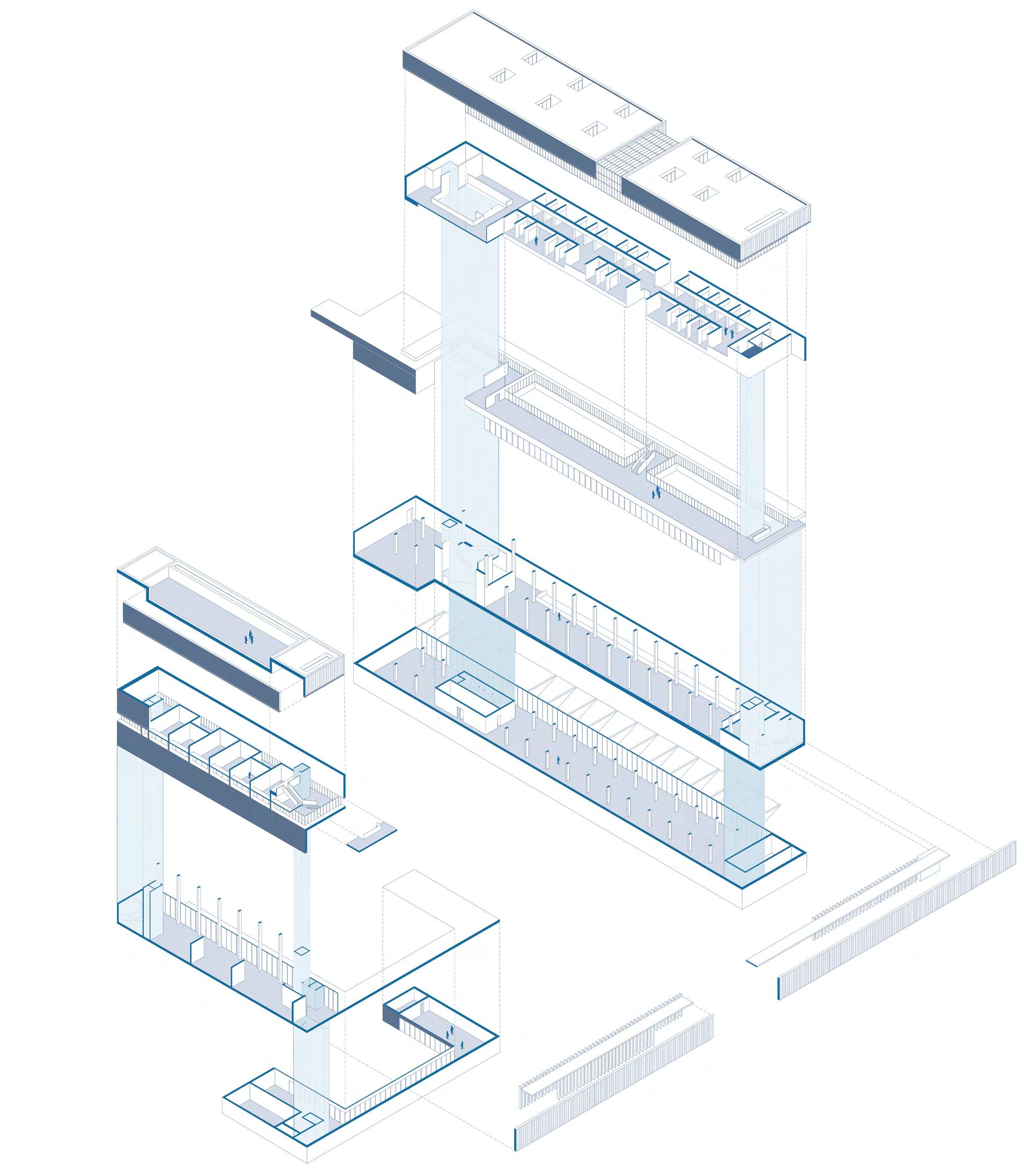
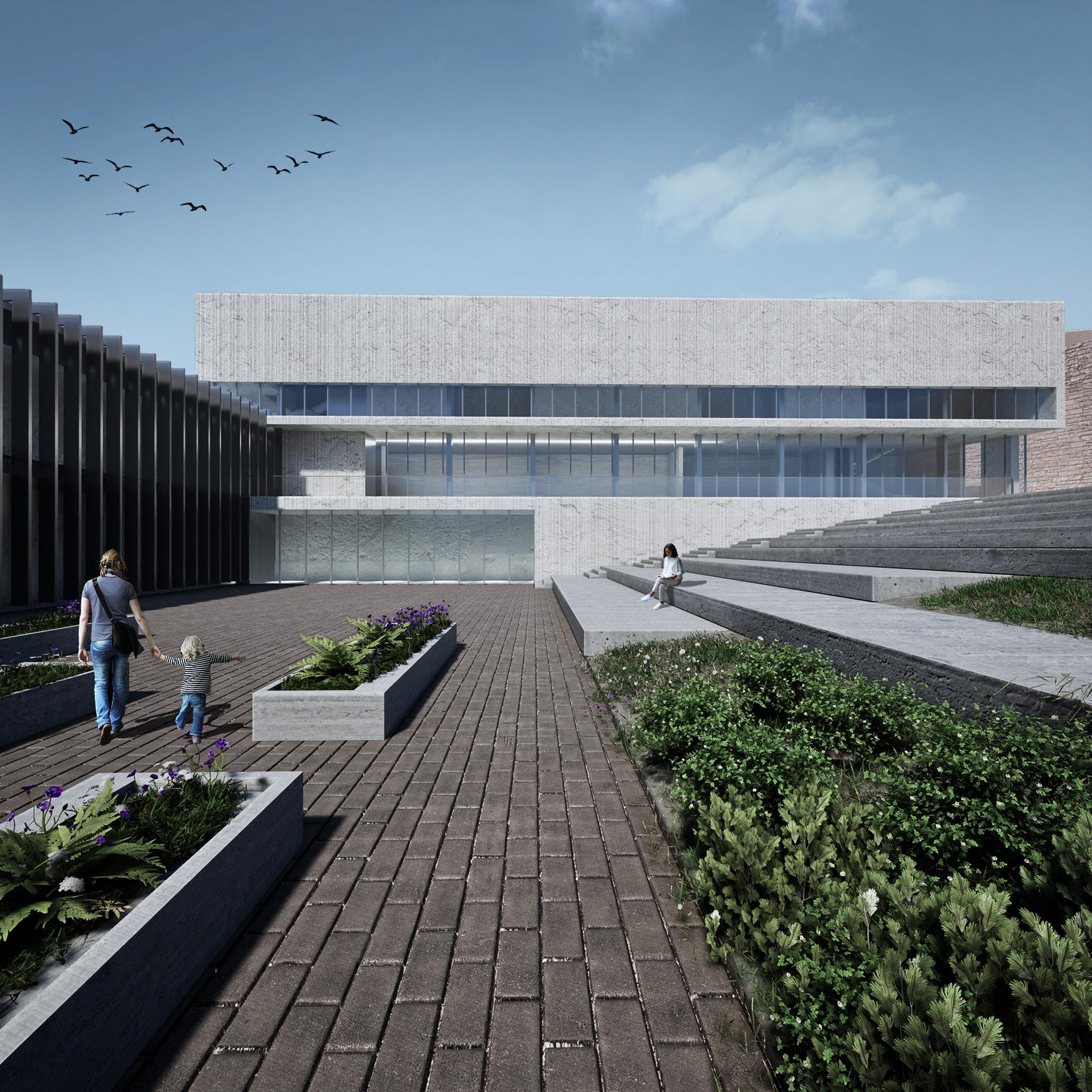
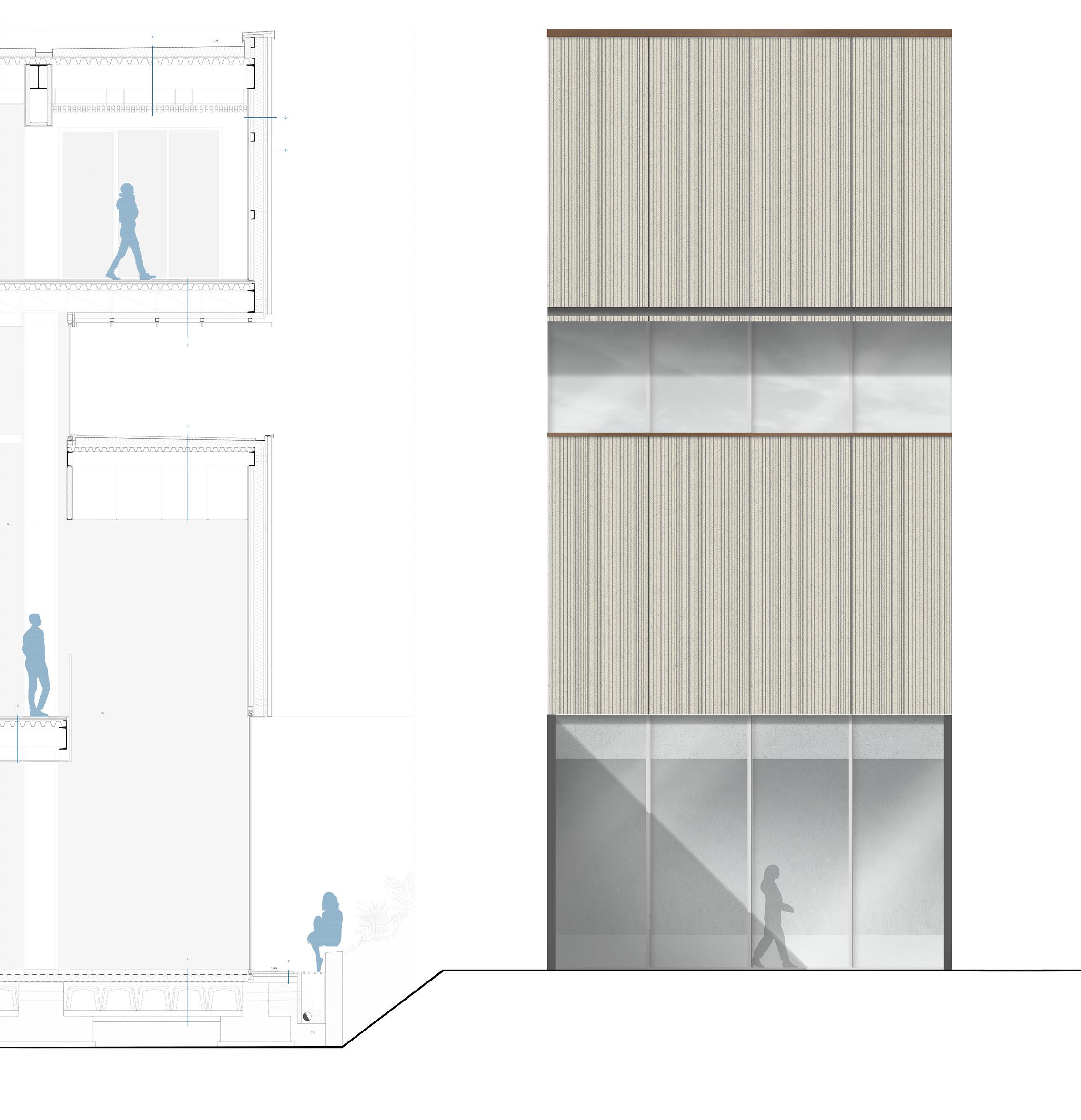
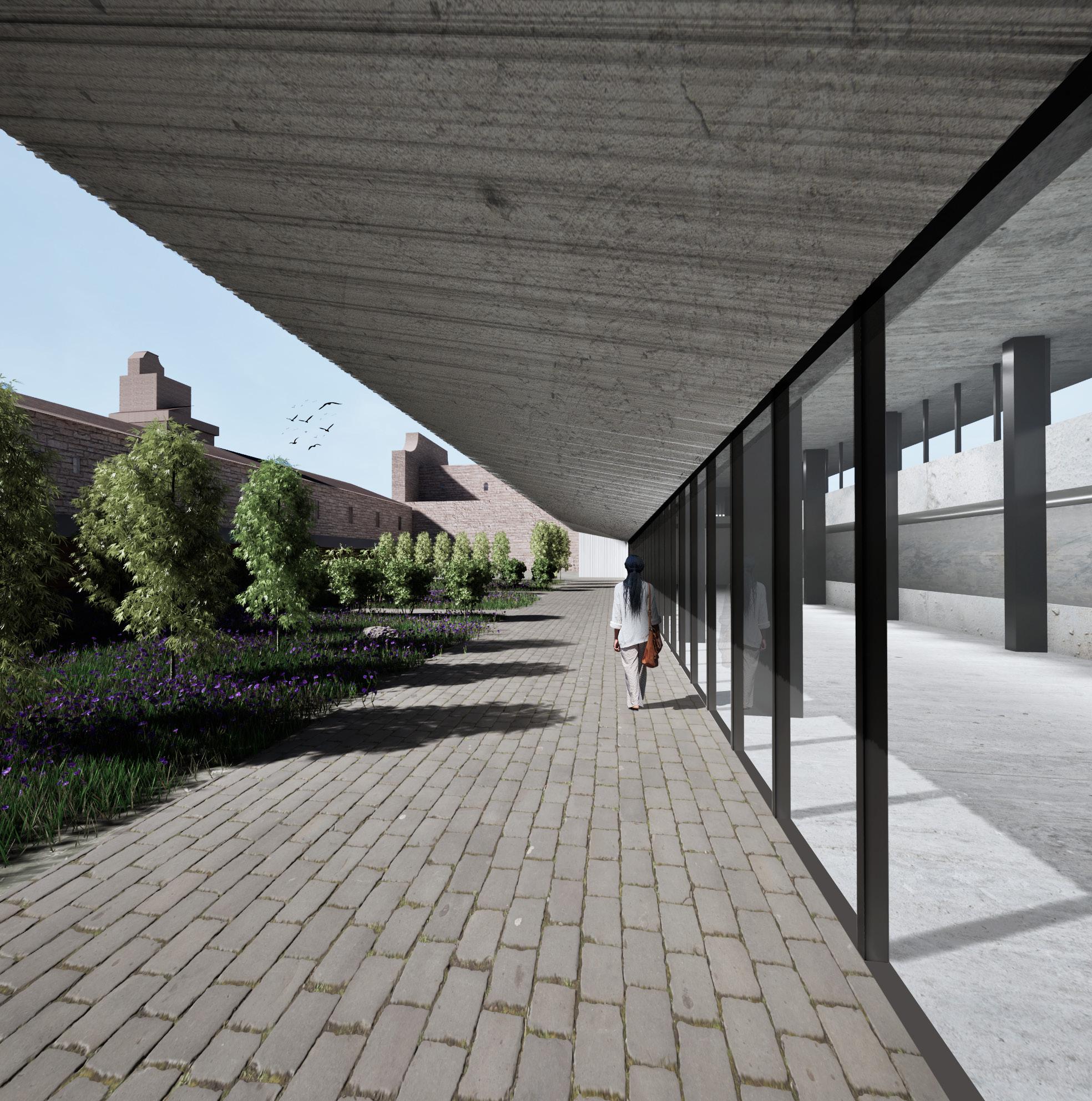
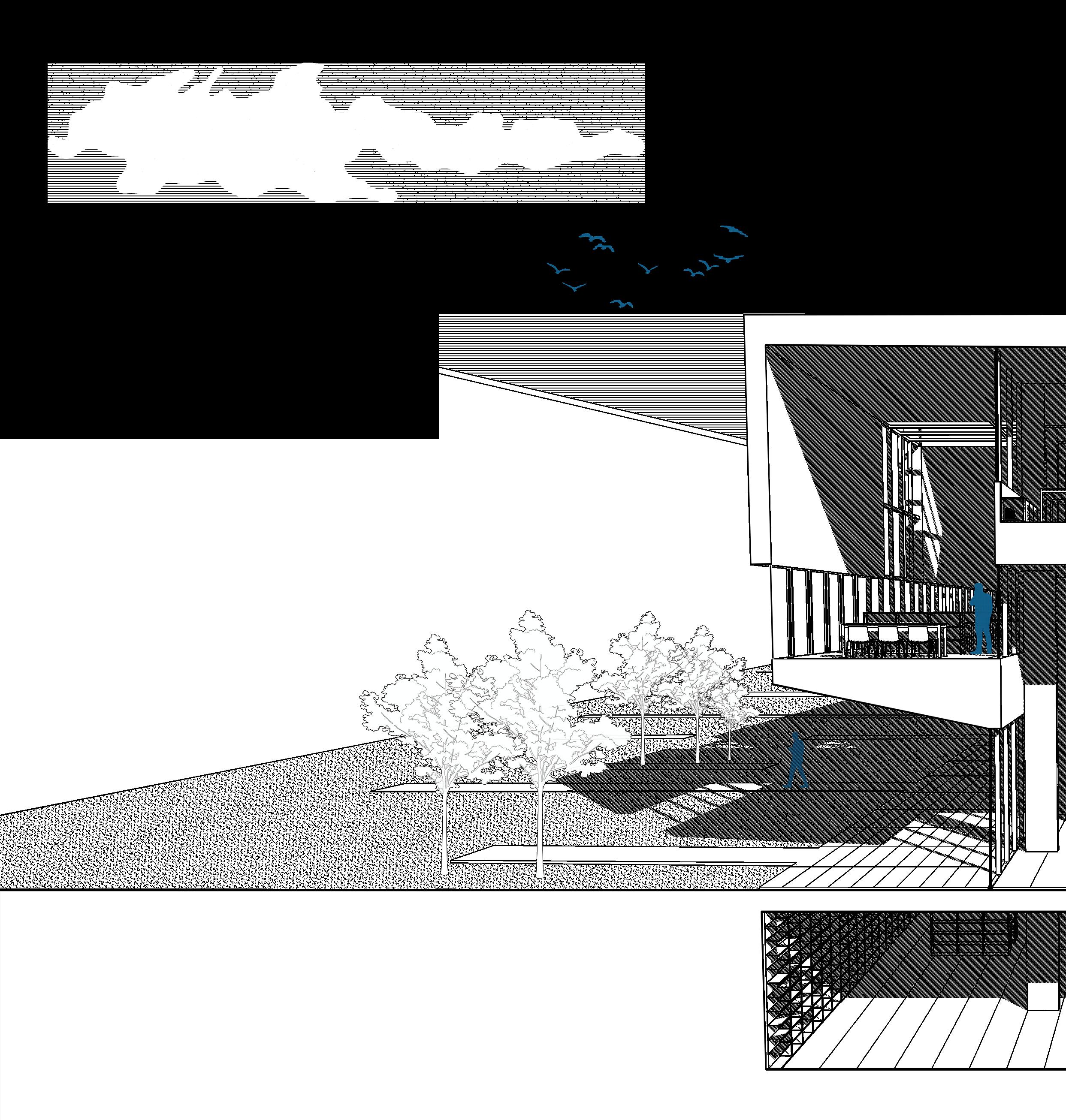
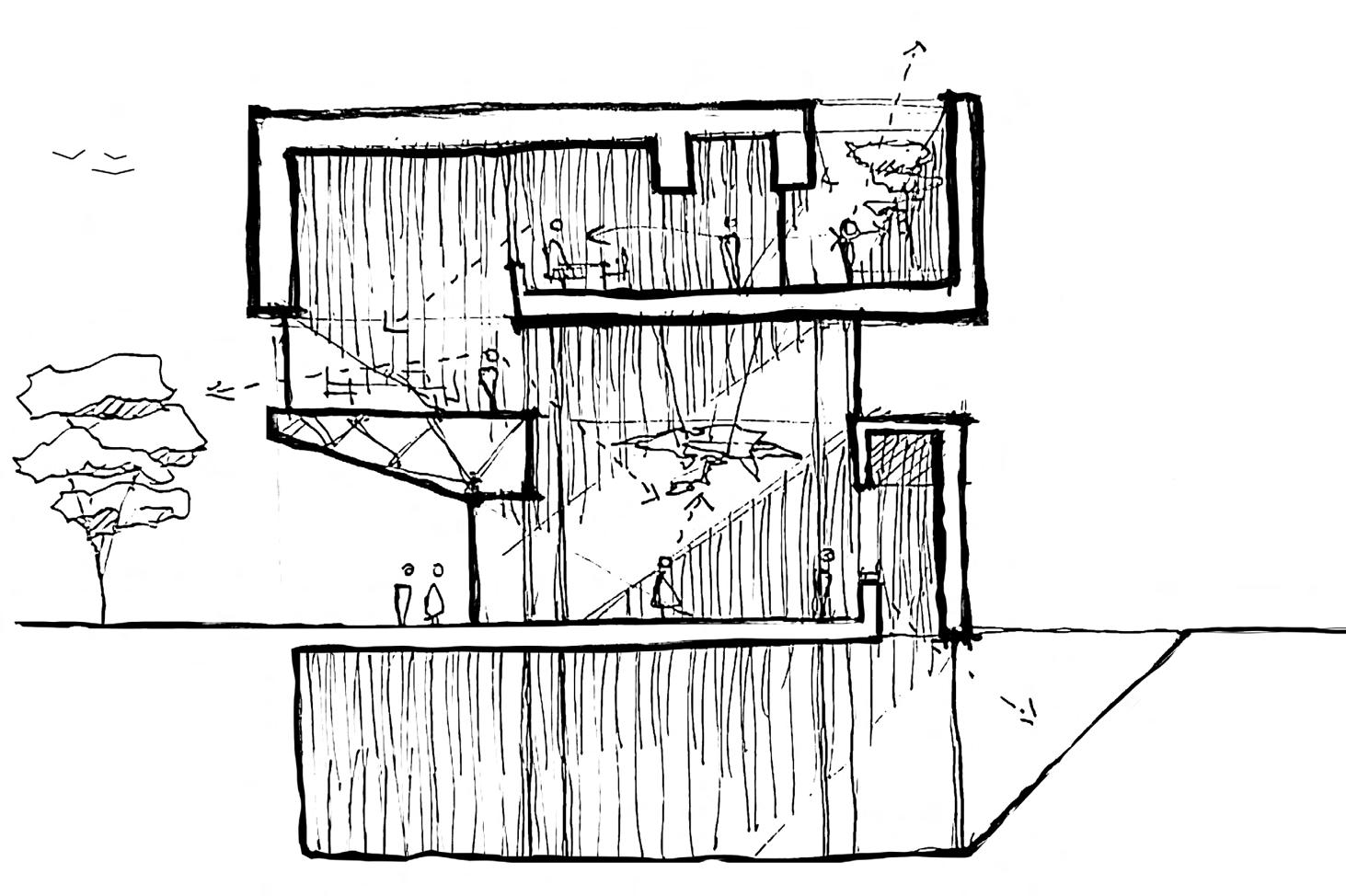
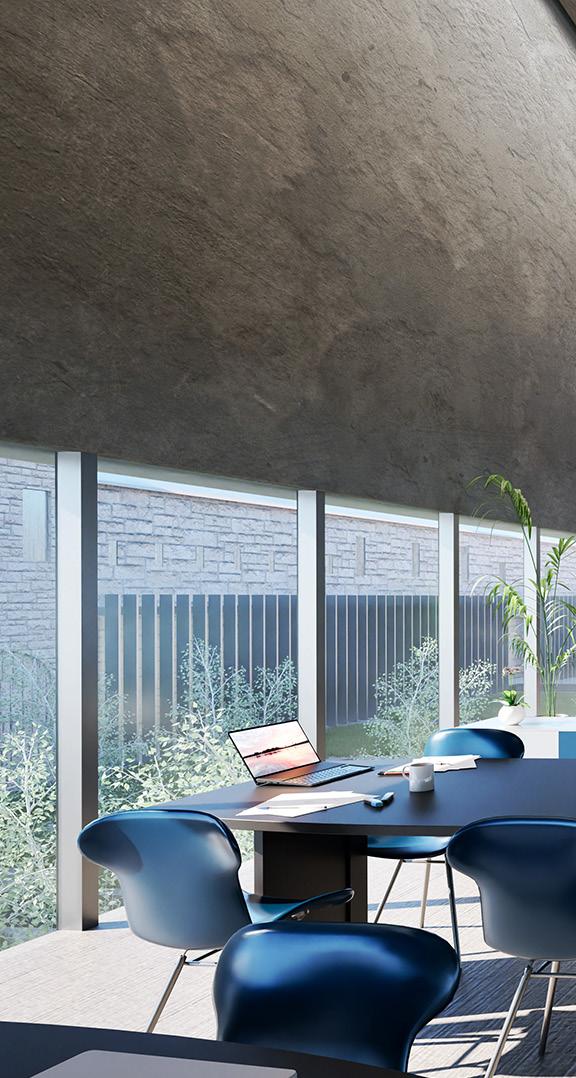
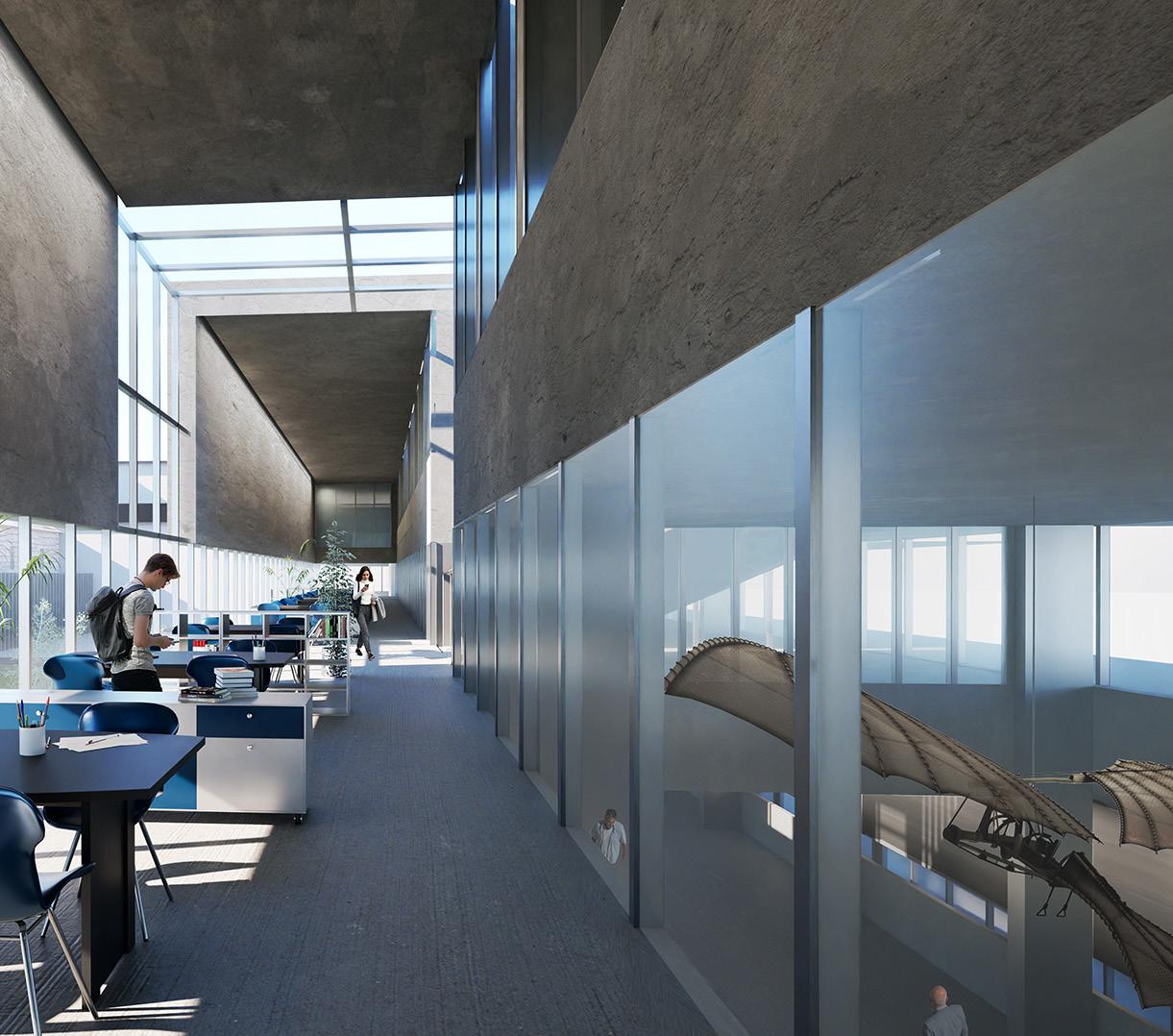
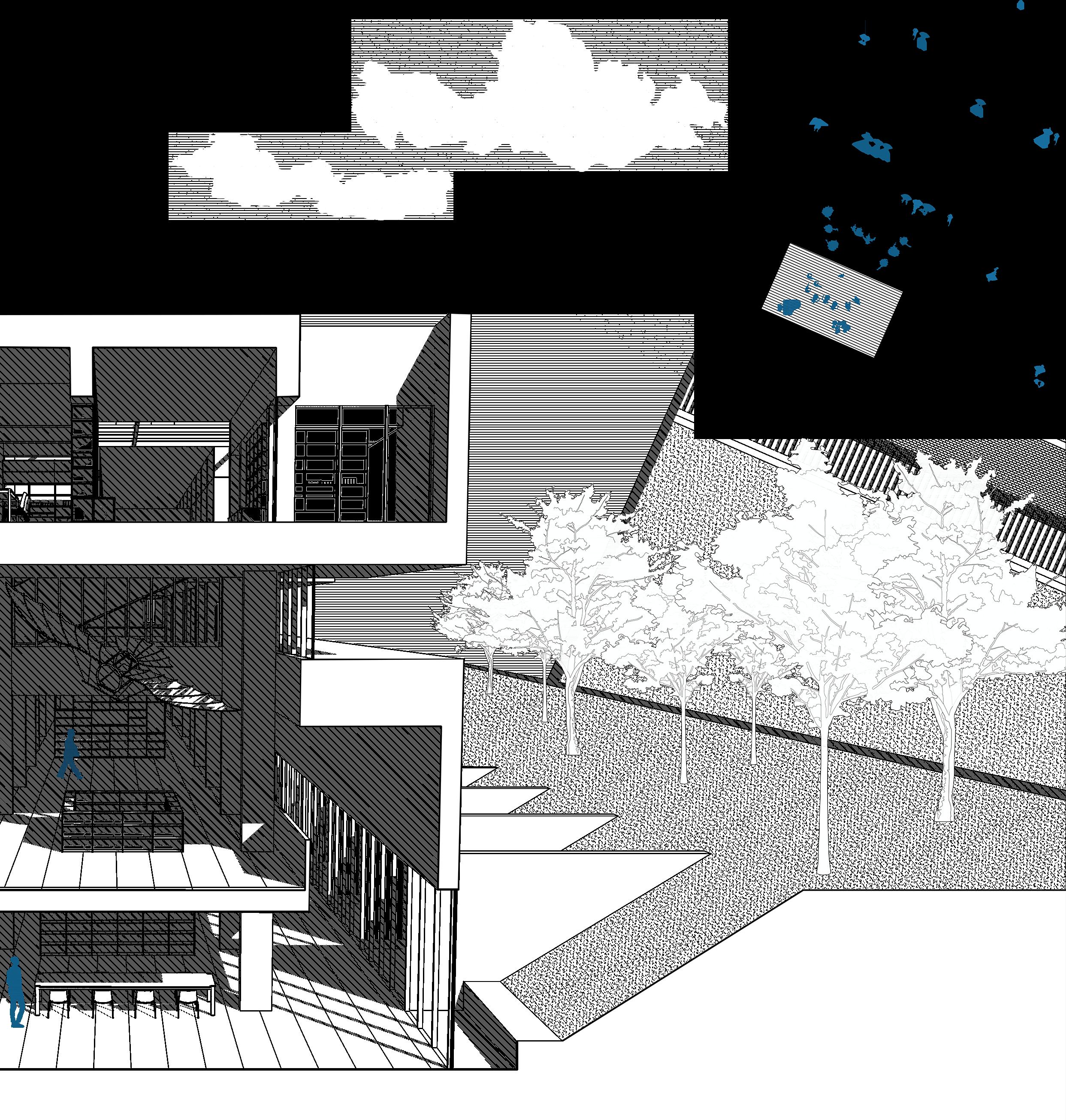
One of the most relevant parts of the project required the accurate design of the East wing of the new complex. This one had to host simultaneously the archive extension, the new exhibition space and the coworking spaces for the university students. In order to maintain a strongly ermetical nature of the project’s elevations, the East wing section had to be designed thinking about light’s main entrance points: the result is a volume excavation which allows the interior spaces to be enlighted all day long from different points, creating a greater spatial and functional complexity between the different levels and areas.
Team: Violetta Anichini Bintou Bamba
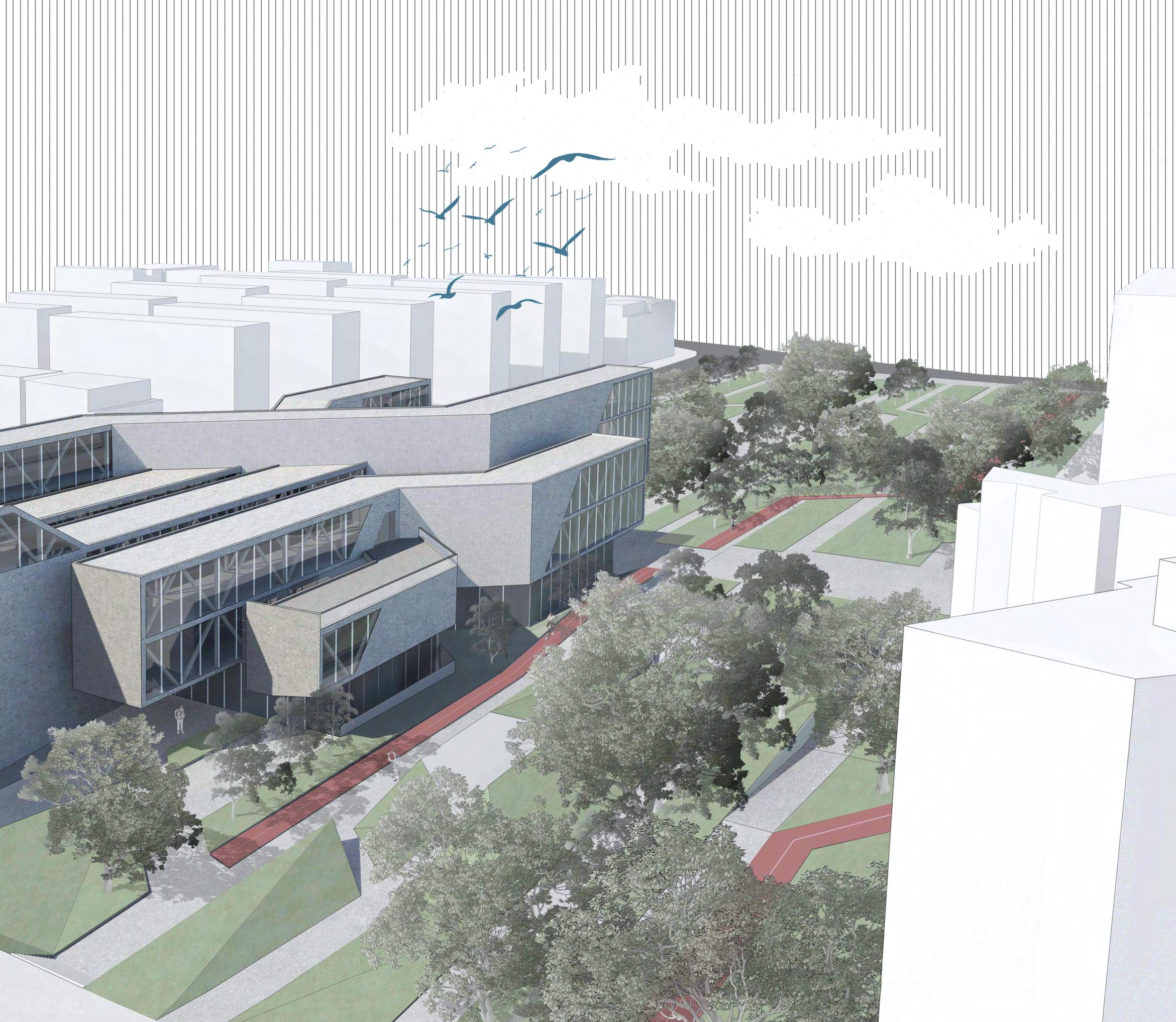
The project “Unveiling Porta Vittoria” originates from the public competition for the construction of the new BEIC (European Library of Information and Culture) in Milan, located in the former Porta Vittoria railway yard area. Drawing from the strong historical identity of the project site, the idea was to revive the historic presence of the railway tracks, which are currently underground.
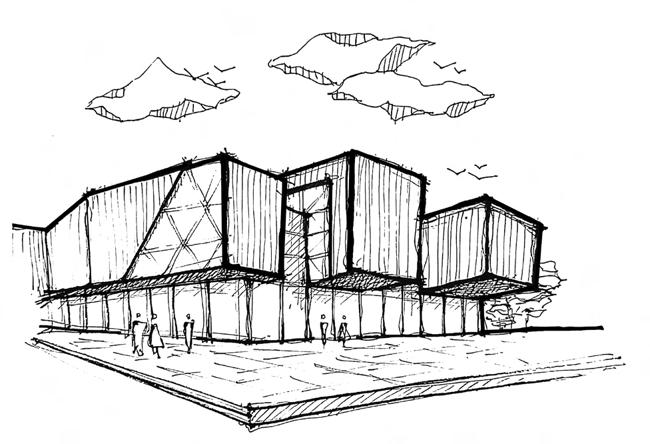
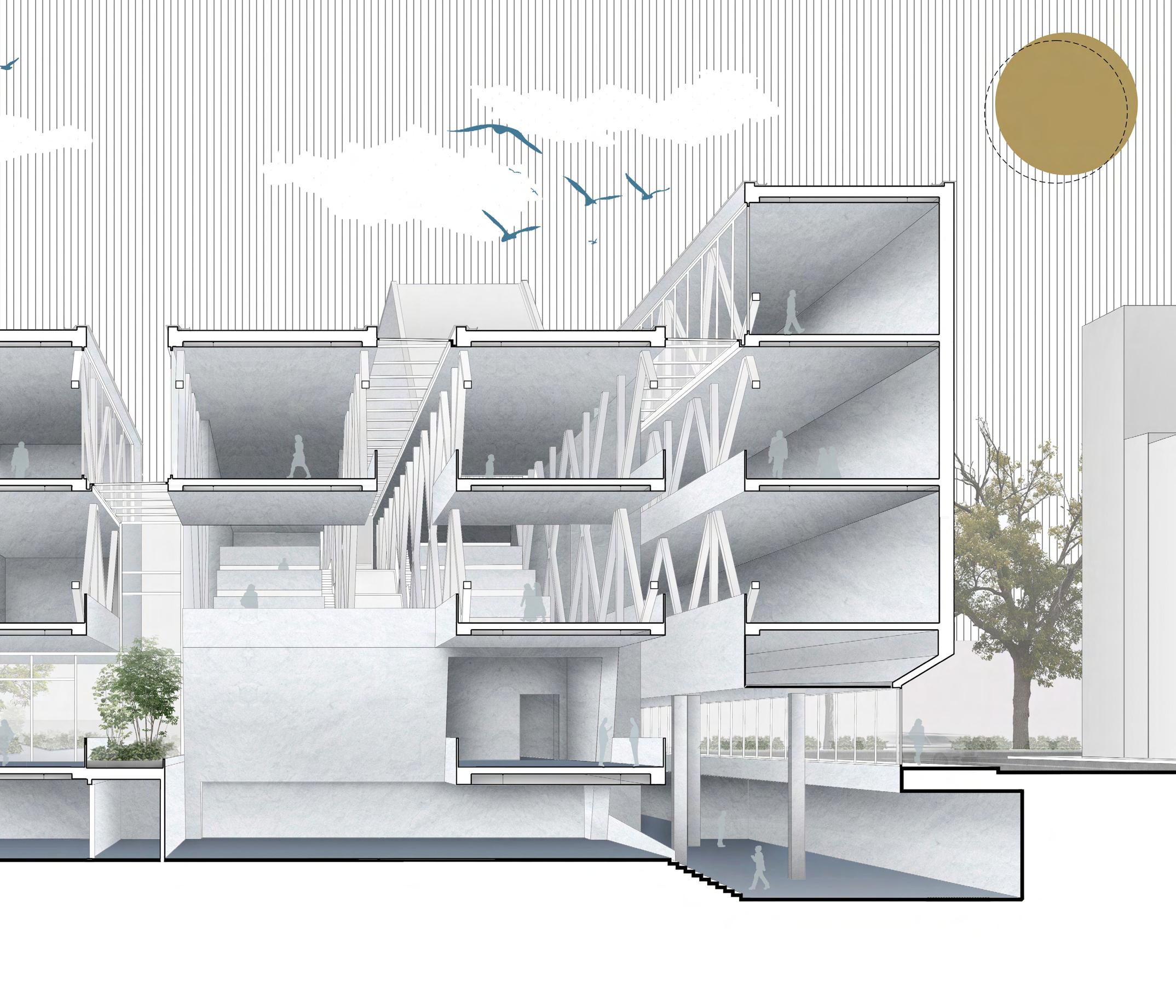
The project is envisioned as a series of suspended bands that intertwine with each other, symbolically recalling the tracks of the former railway yard. Each of these bands contains, on different floors, the various thematic areas of the library, with uninterrupted access ensured by the intersections between them.
The dynamic and flexible space of the upper levels constantly overlooks the ground floor and the underground level, which house the main entrances and key public functions. Particularly important is the connection to the current underground railway link, from which it is possible to directly access the large underground hall.
From this central space, one can also access the auditorium foyer, a place for cultural exchange and a central hub that is directly accessible from the outside through a northern entrance.
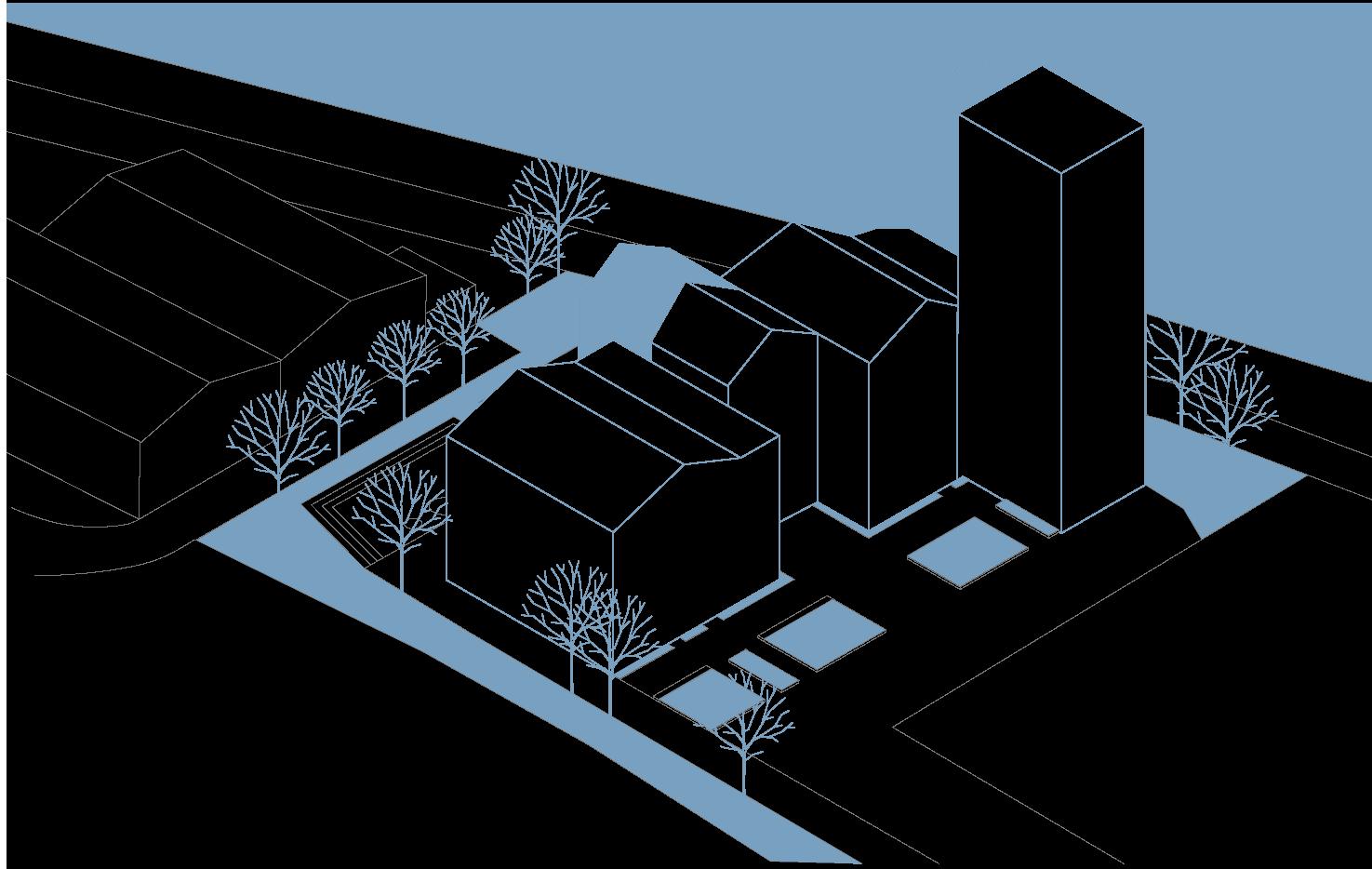
The project for the current state focuses on dividing the interior spaces into two overlapping sections: while the ground floor is equipped with all public facilities and is thus open to the external areas, the first floor, which is more enclosed, is dedicated to the private spaces of the guest rooms. The setback of the central volume has allowed for the entrance to the structure to be emphasized and for a new glass volume to be added behind it, housing a winter garden. Finally, the tower has been given its own autonomy, becoming a public exhibition space with a panoramic terrace at the top.

Considering the track of the underground railway
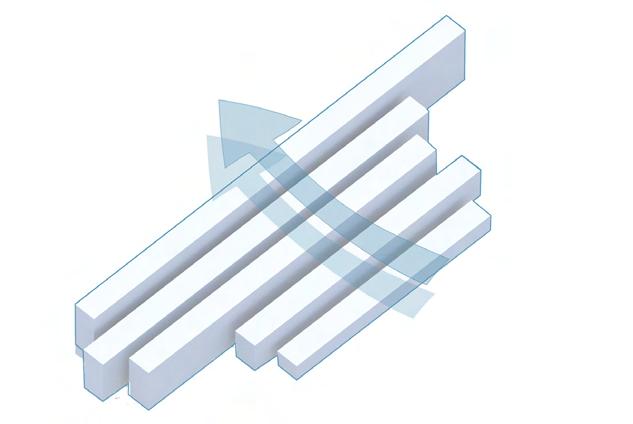
Increasing
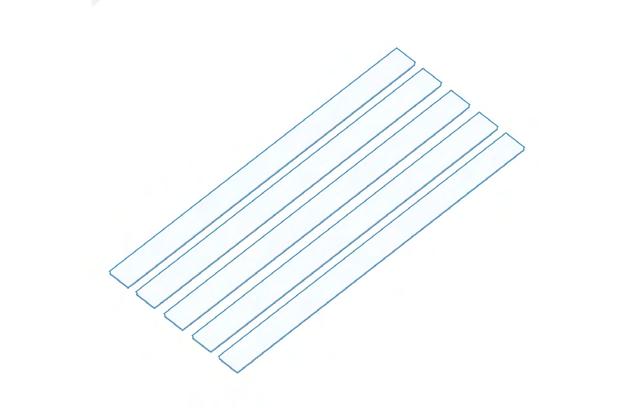
Creation of the bands
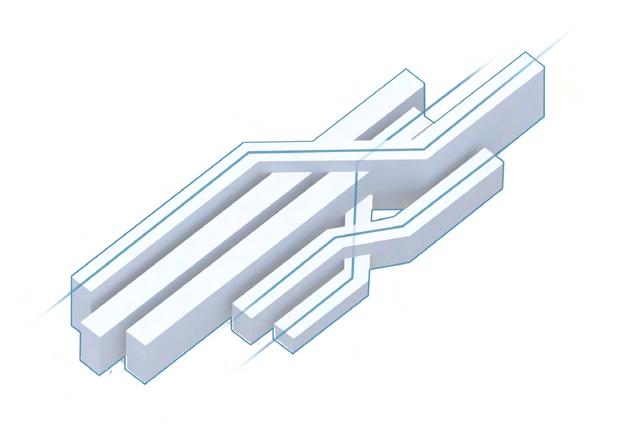
Intertwining bands
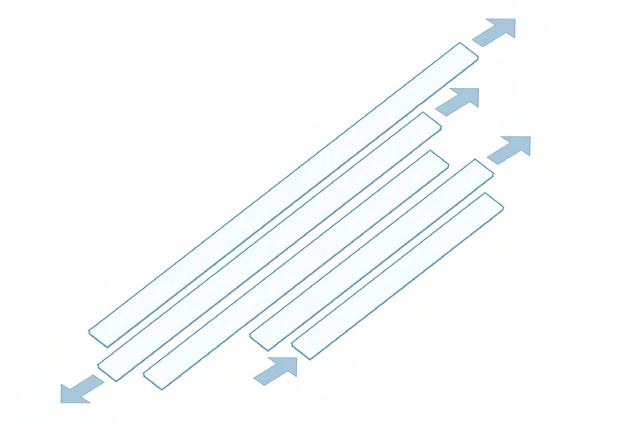
Stretch in order to design new relationships
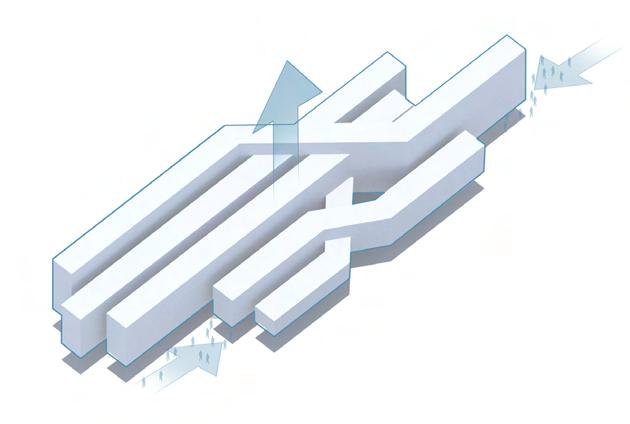
Suspended volumes and entrances creation
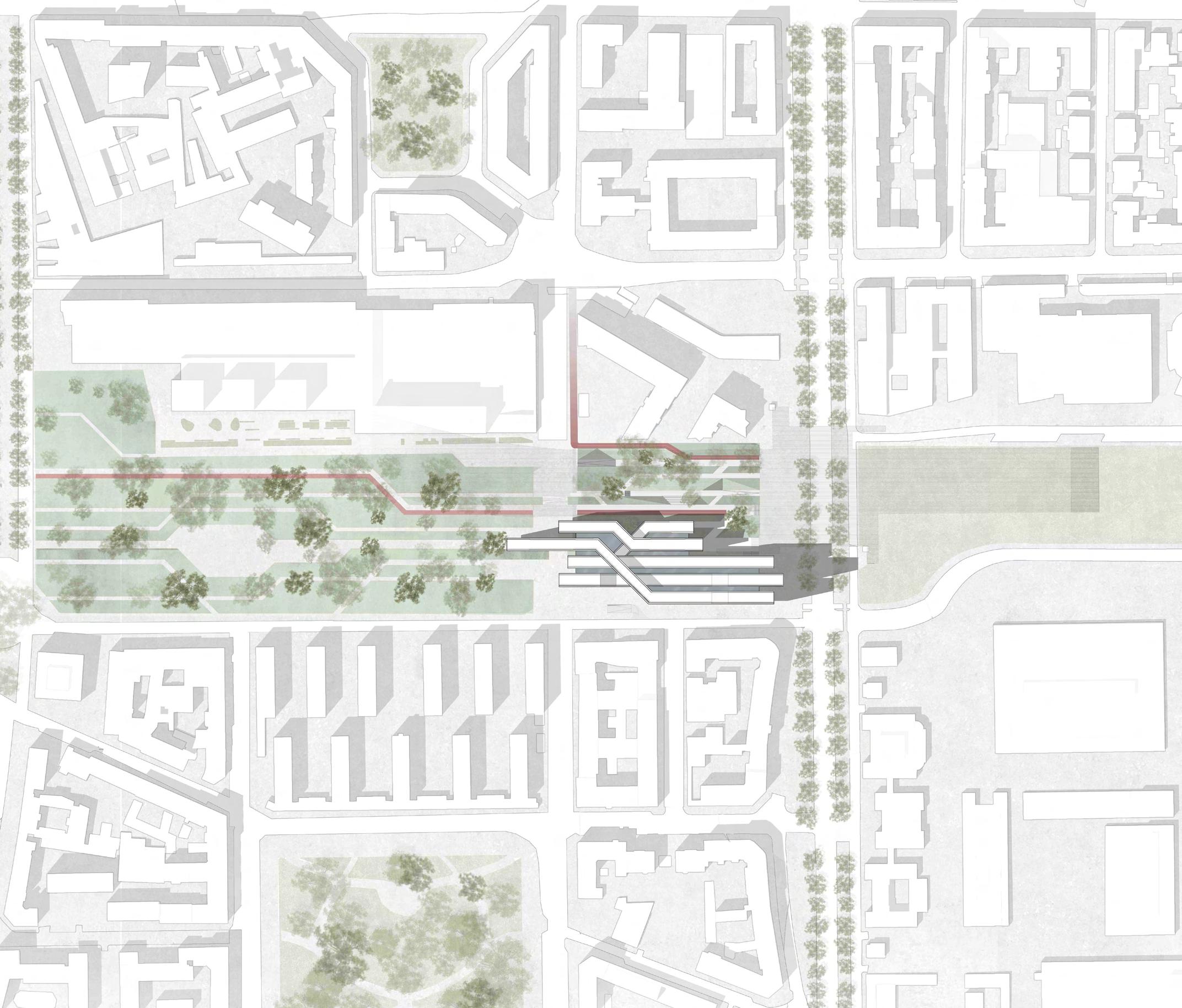
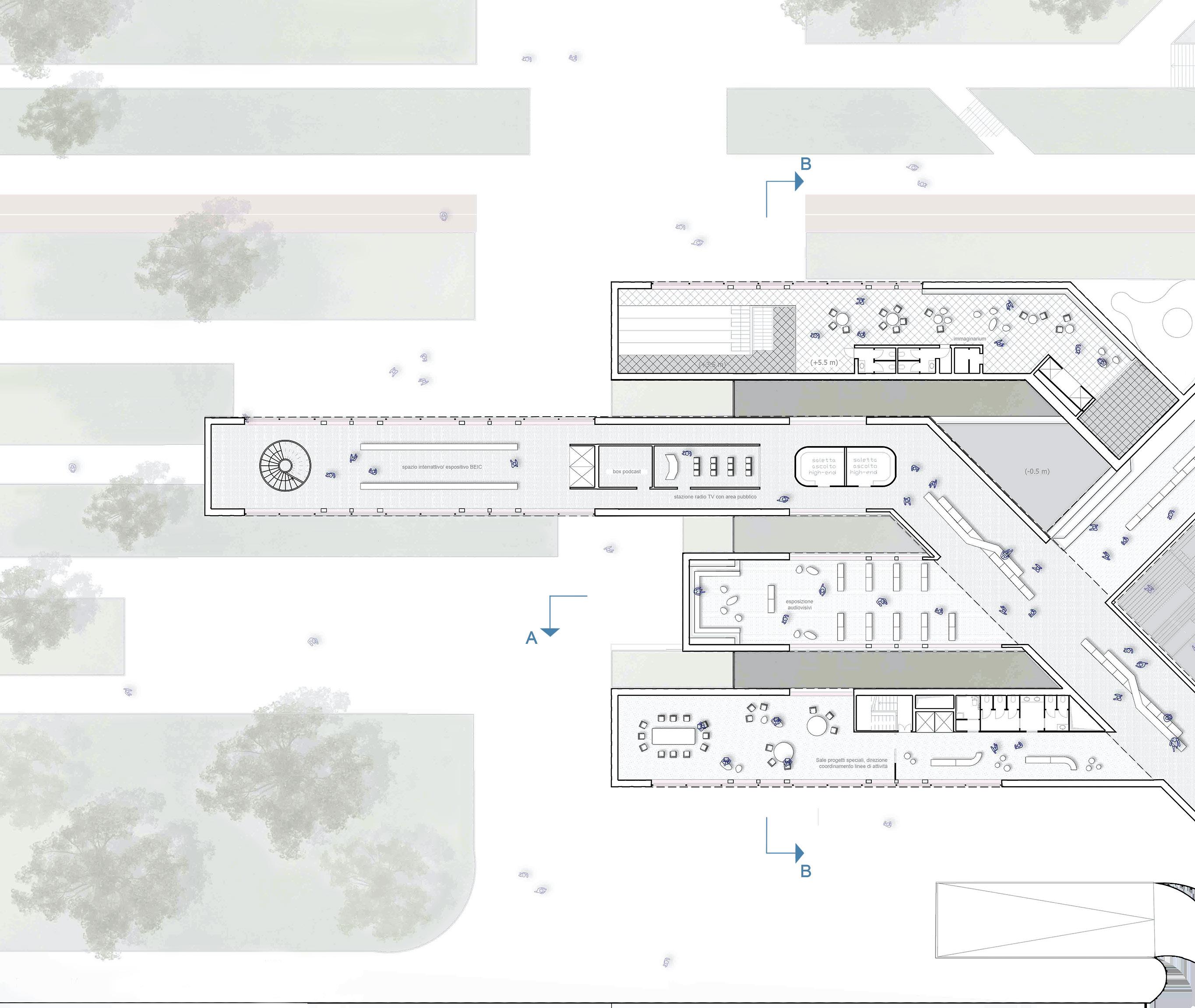
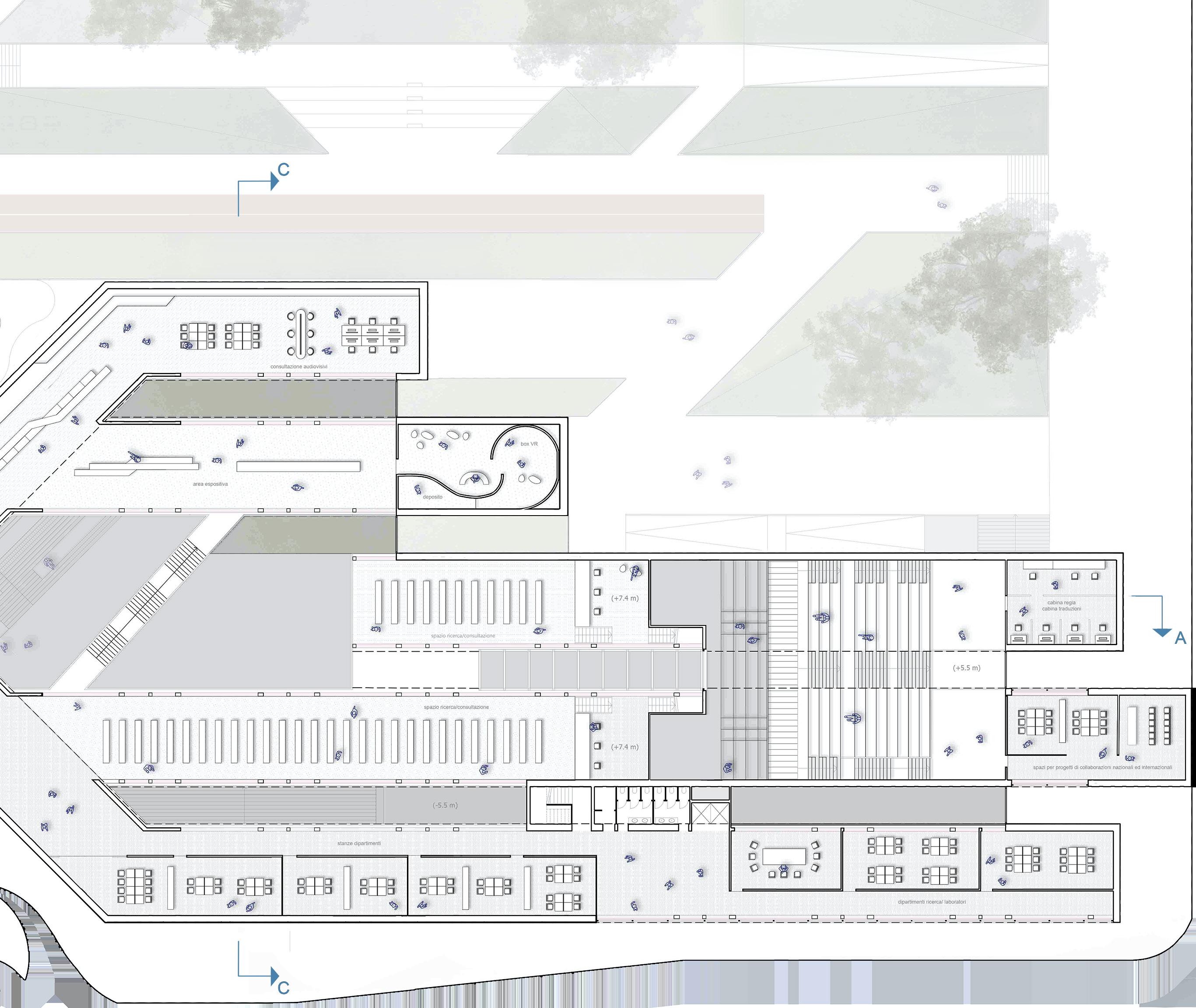
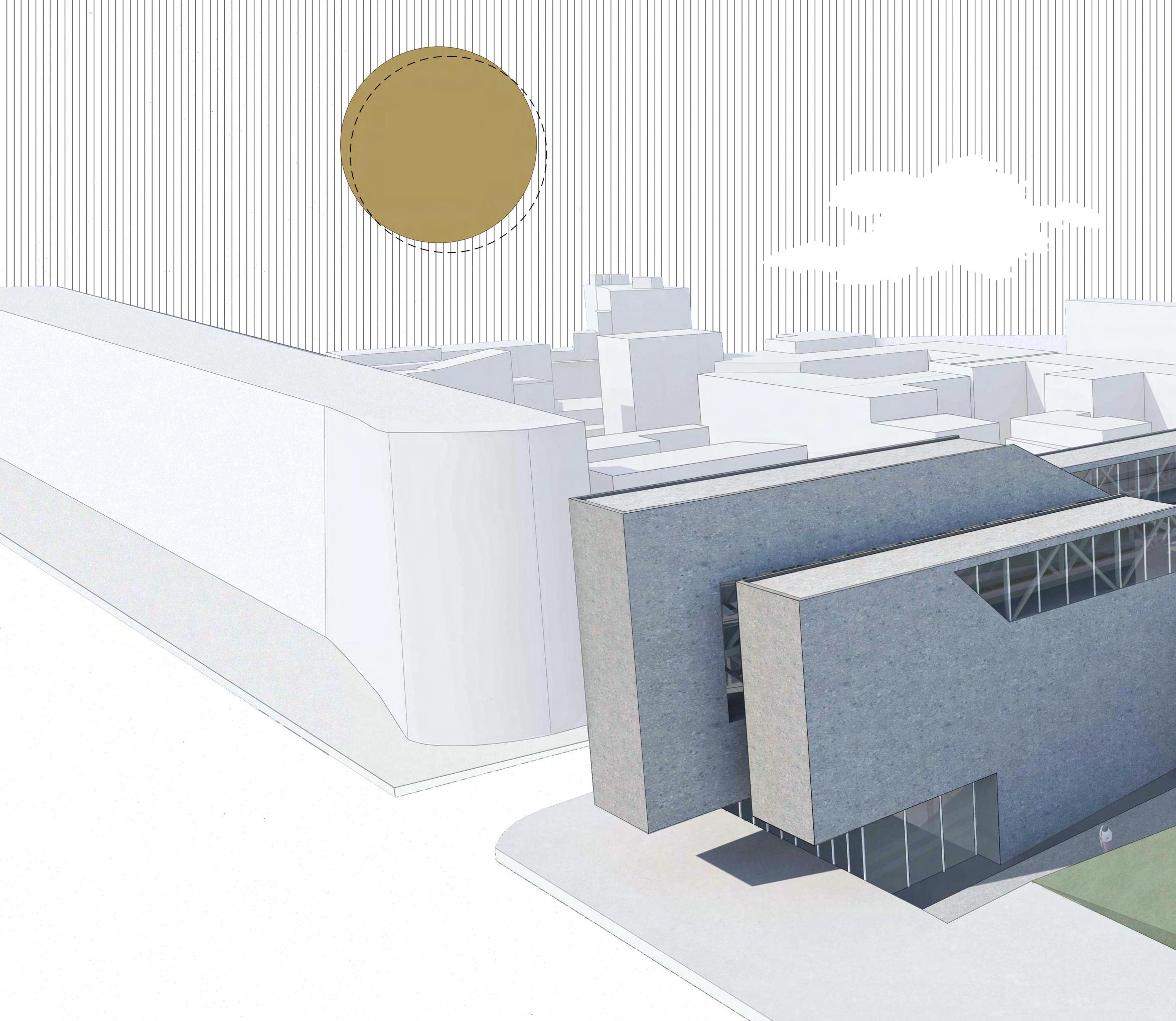
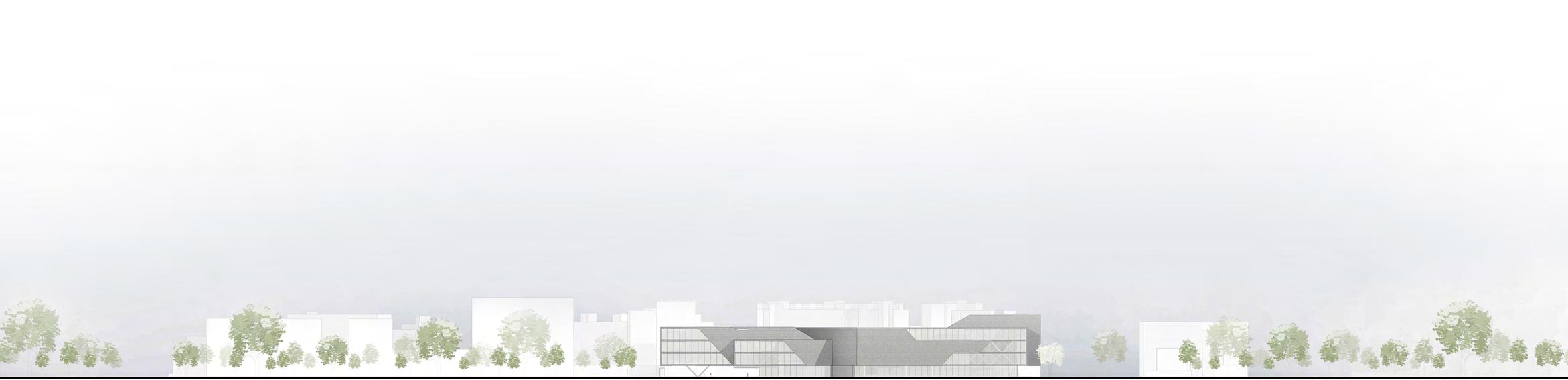
Numerous types of relationships have been established within this project. The first, with the history of the site and the city of Milan, can be seen in the figurative intertwining of railway tracks, represented by the crossing of Gre stone bands, a material chosen for its relevance in the Milan context. Finally, in relation to the surrounding environment, the decision to gradually elevate the building from the park up to the same height as the urban front to the South was of great importance, creating a clear dialogue with the latter.
Course:
Parametric 3D Cad Drawing
The theoretical course on 3D Parametric CAD Design, focused on learning to use Grasshopper for design purposes, provided an opportunity to practically apply the acquired principles in the design of a student pavilion.
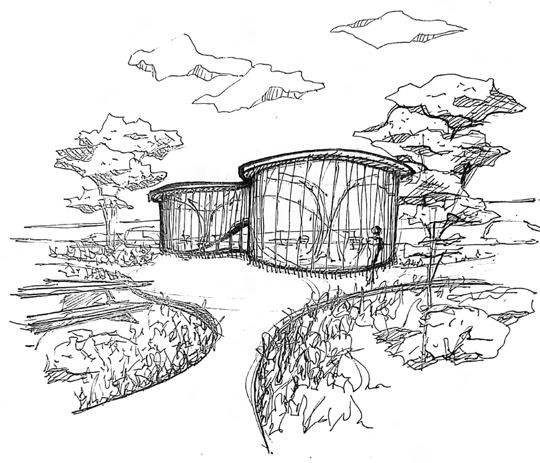
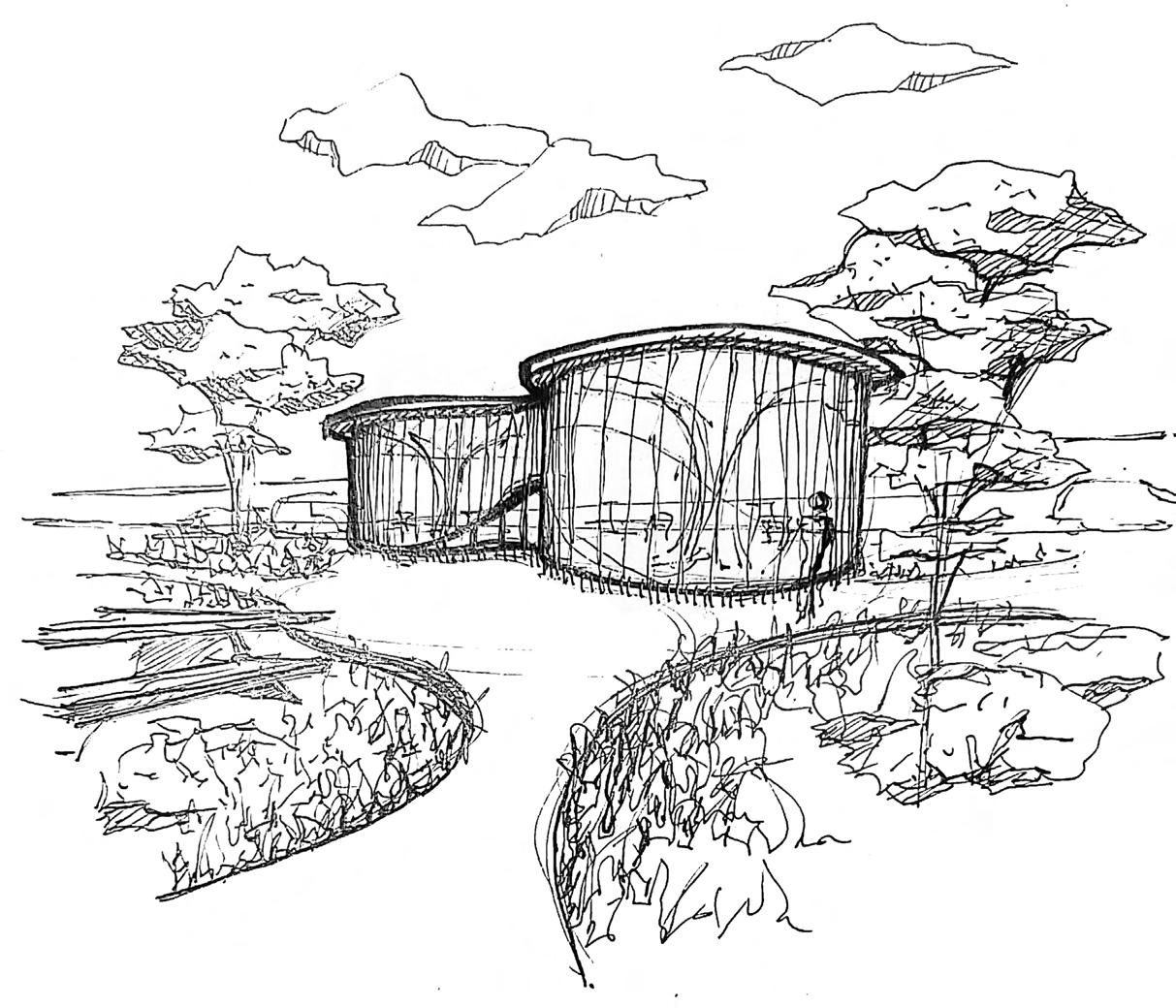
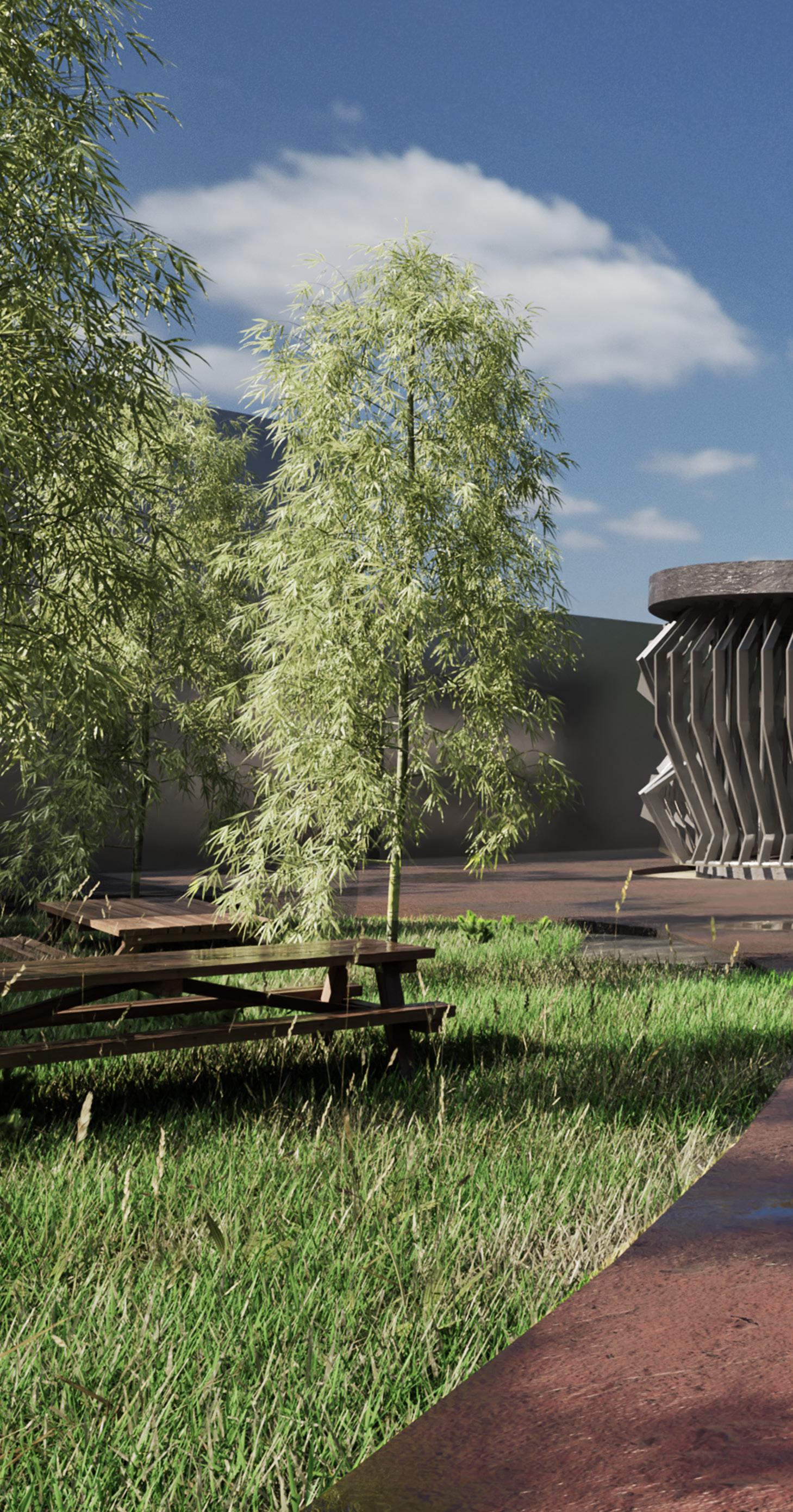
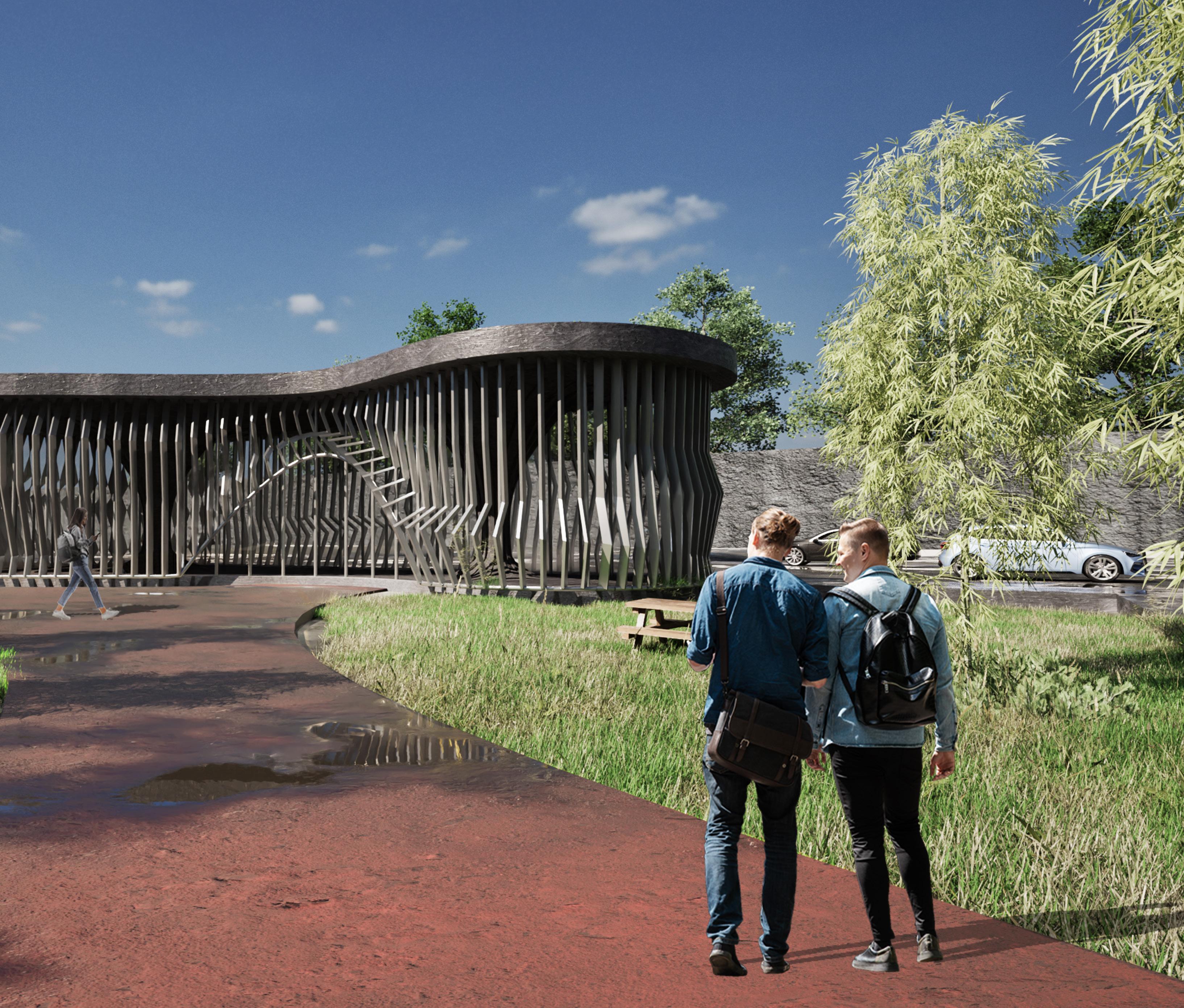
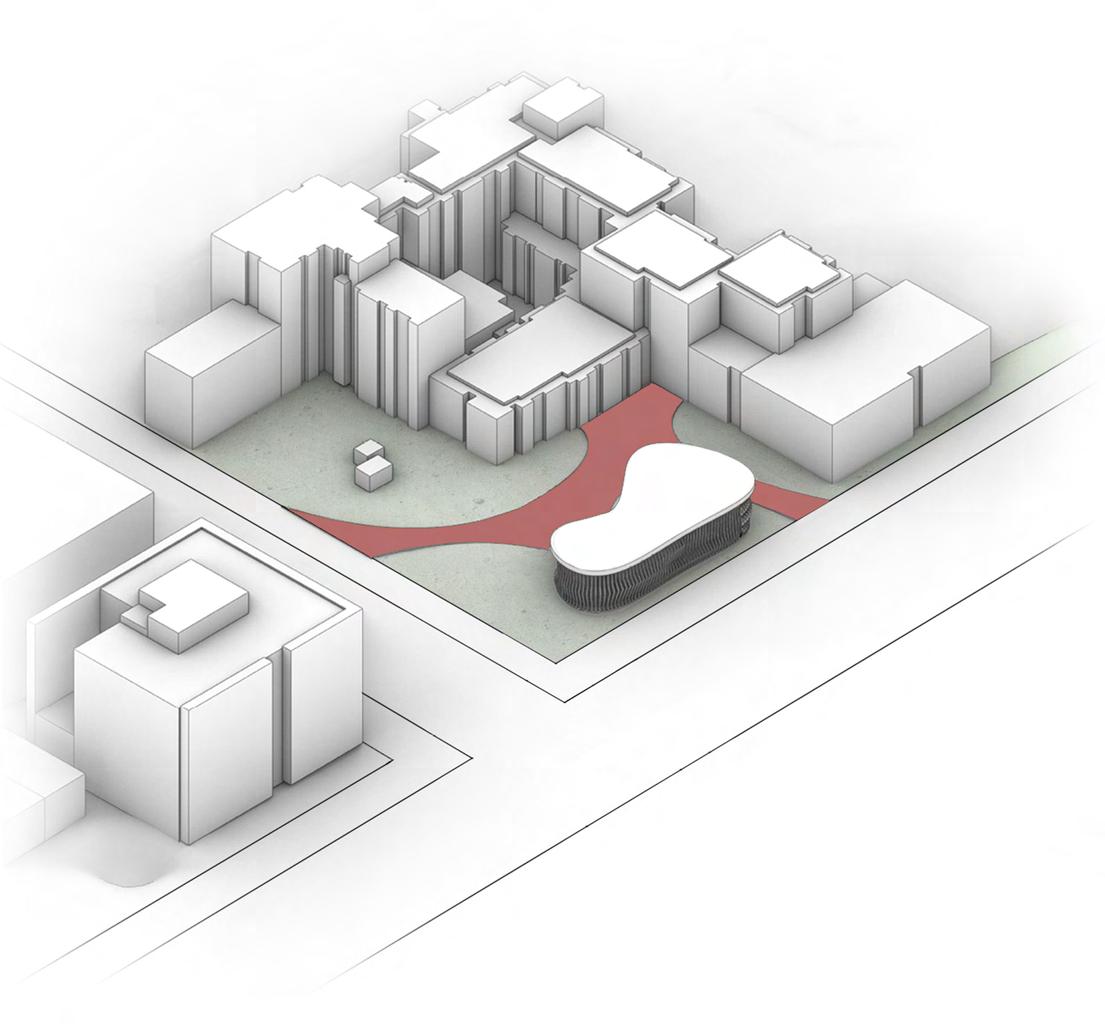
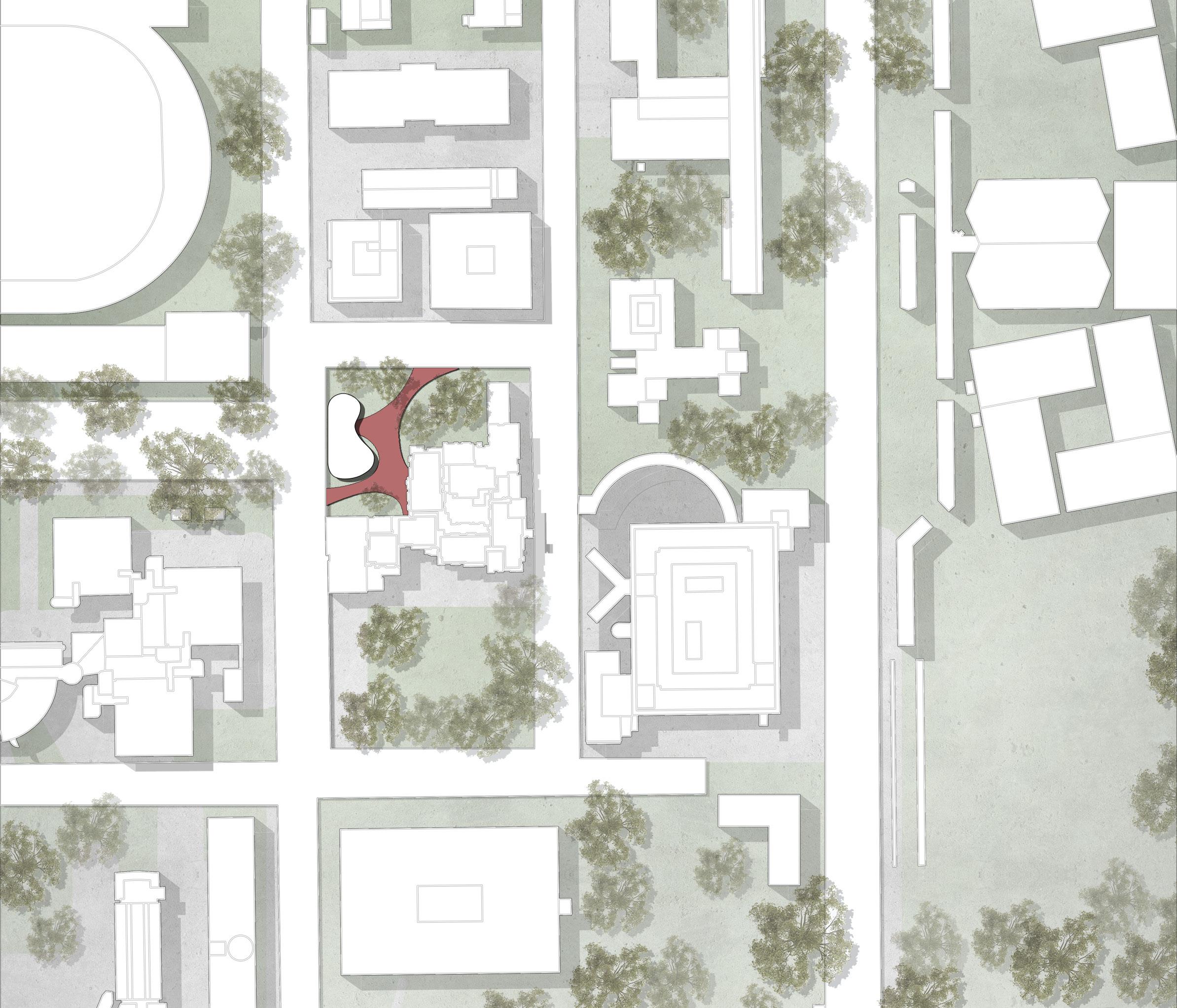
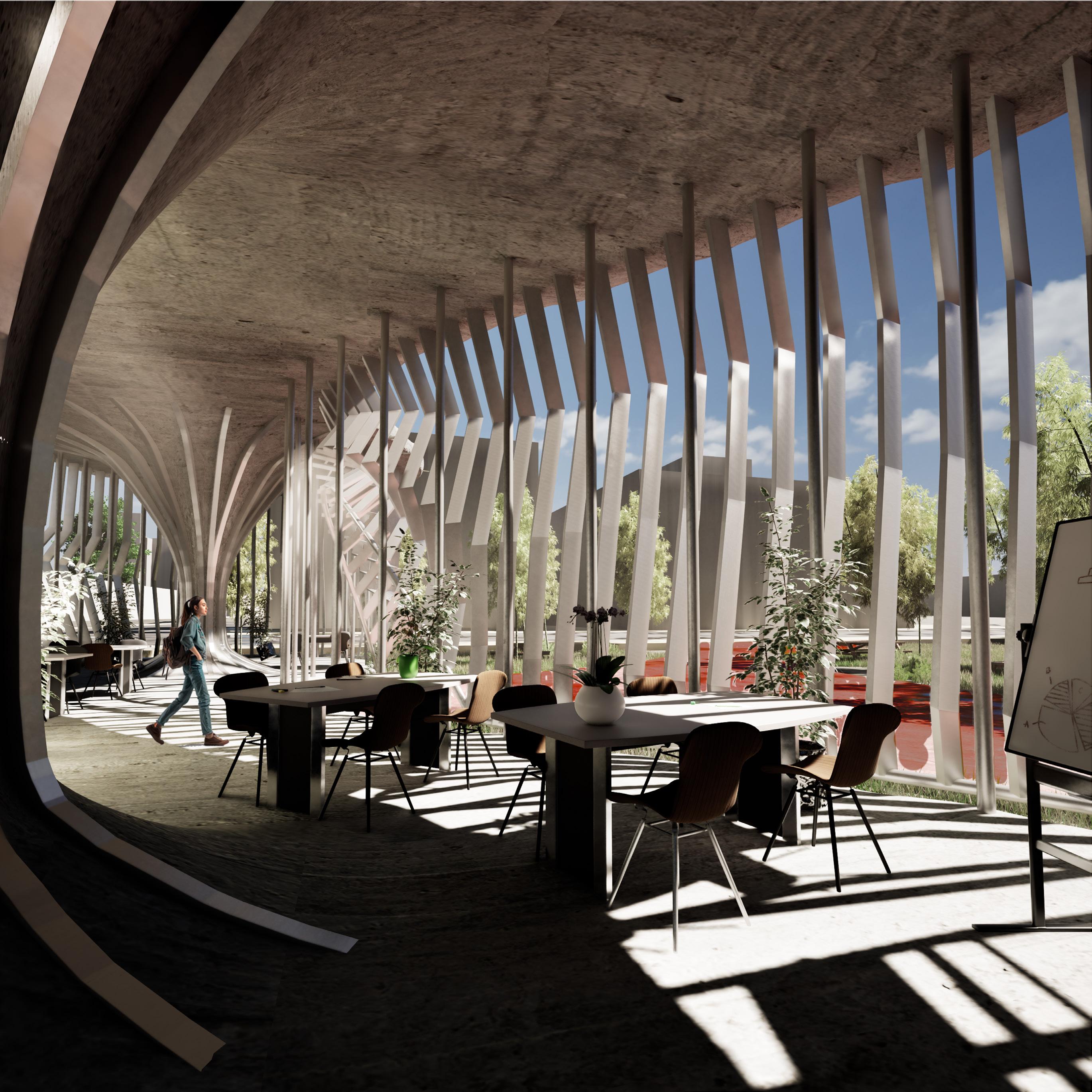
The “Sunflower” project was born from the idea of creating a study space that would meet the principles of thermal and lighting comfort, while simultaneously offering students the right level of privacy. Its geometric layout reflects the need to strengthen and add movement to the urban frontage on Via Golgi, which is currently quite rigid; inside, however, the design shapes itself to form a green square, a public urban space accessible to everyone and a point of interaction between the pavilion and the surrounding university environment.
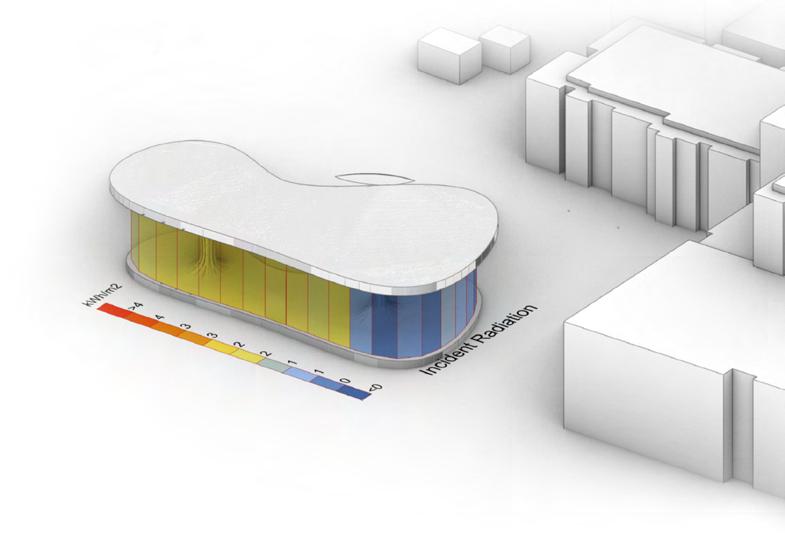
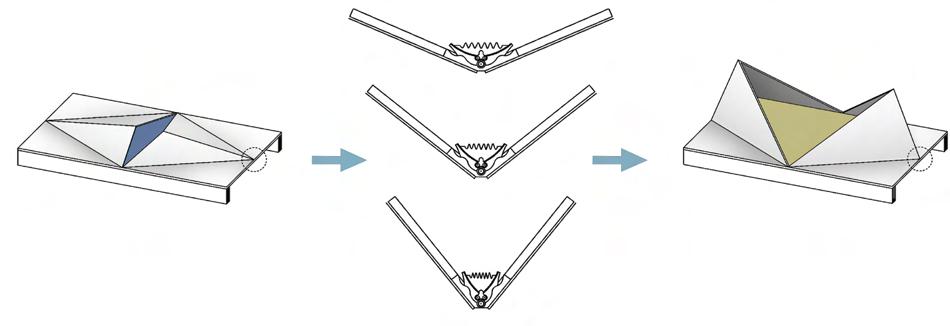
To block as much sunlight as possible and reduce incoming radiation, the decision was made to design a vertical slat covering. The overall form is defined by the effect that the pavilion’s collective vision creates in the observer’s eyes, generating a pattern that gives the project a sense of dynamism over time. To further enhance shading on the south-facing side, a system of kinetic panels was devised, which open and close in response to the incident solar radiation.
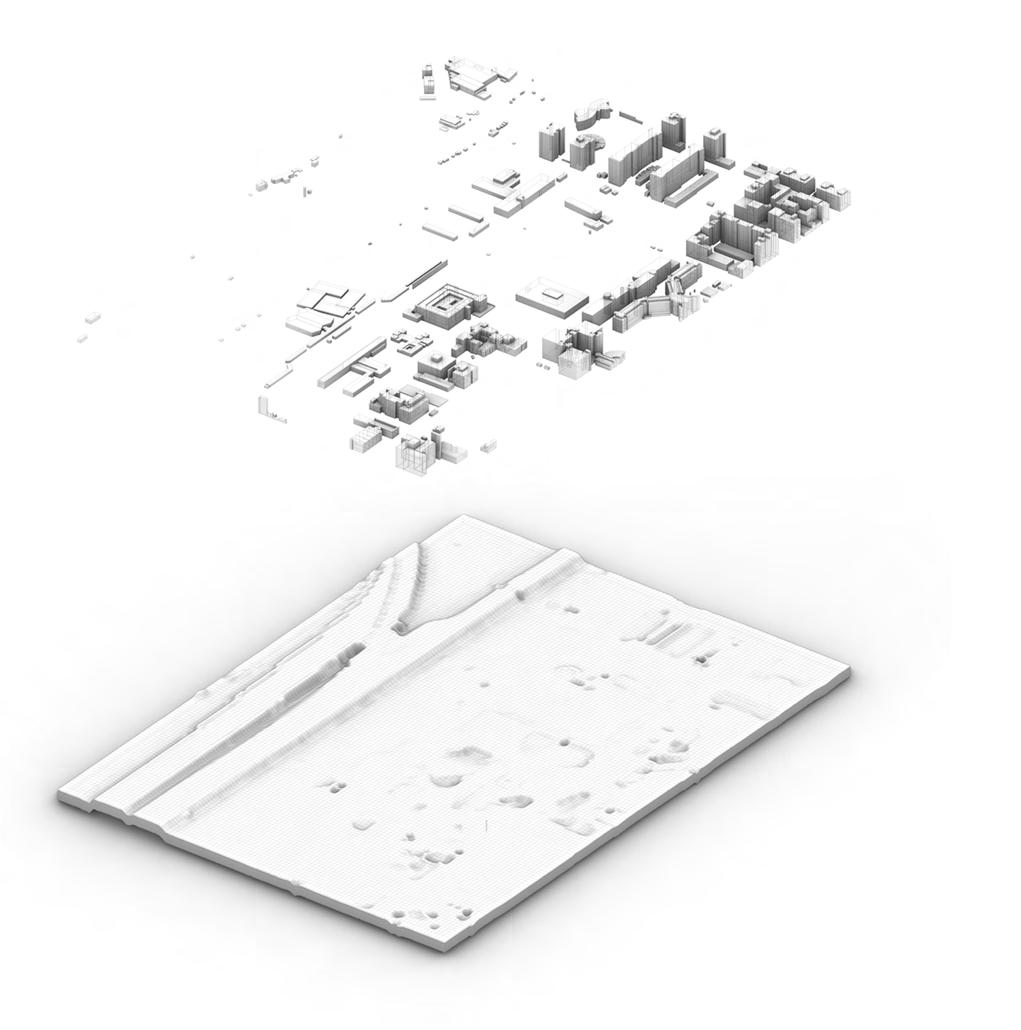
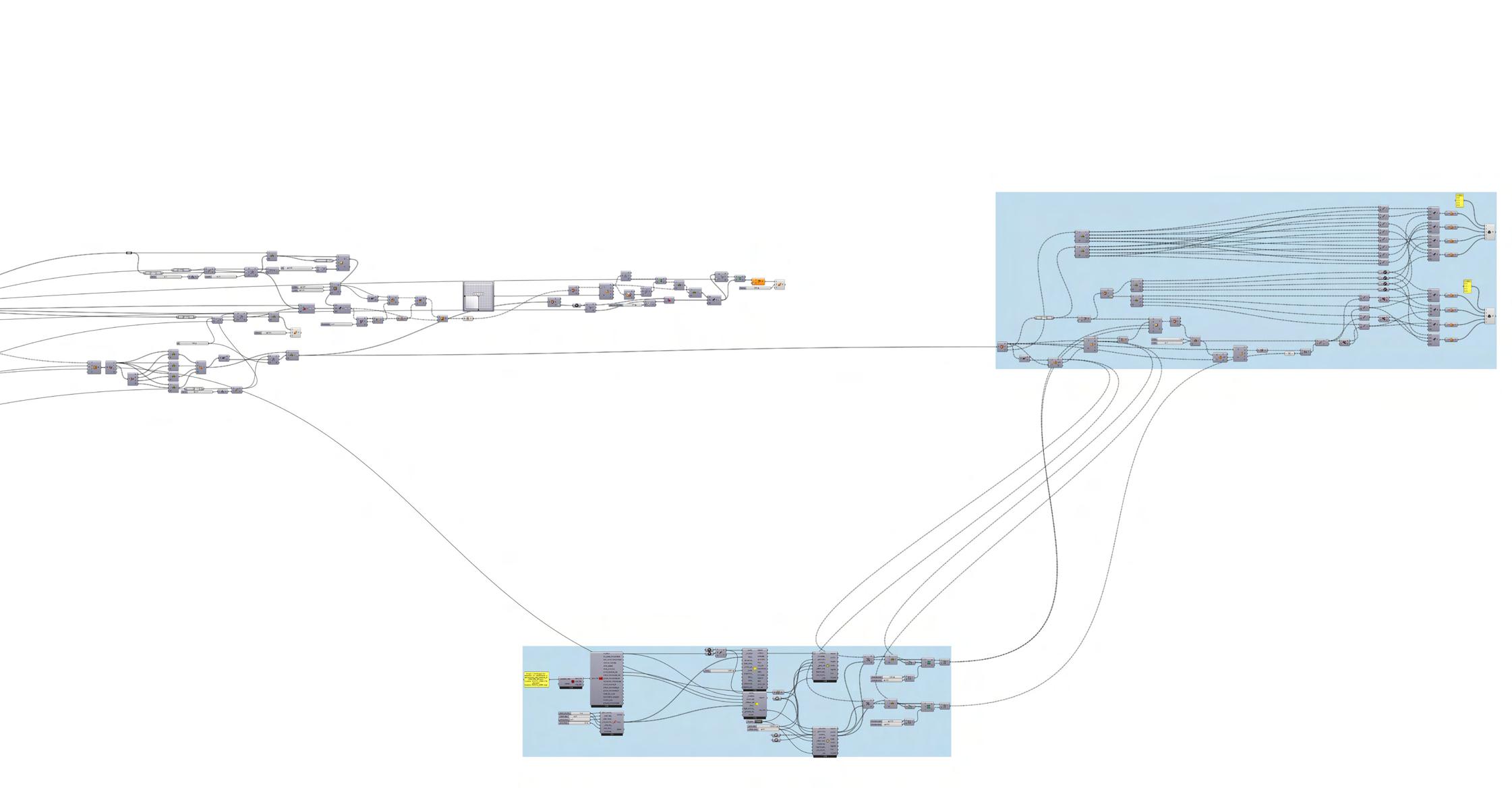
In order to proceed with the pavilion modeling, it was necessary to digitally recreate the context in which the project would be situated. To achieve this, .shp files were extracted from GIS software, containing data on the surrounding buildings and the exact elevation above sea level of the terrain. Once these files were obtained, Grasshopper was used to model the terrain and position the surrounding buildings. The geometry of the pavilion and the landscaping design could then begin, based on an analysis of the area’s flows and environmental conditions.

The South-facing façade of the pavilion features a cladding made up of heat-responsive panels. These panels can open or close thanks to springs made of Nitinol, a shape-memory alloy that expands when exposed to heat and contracts at room temperature.
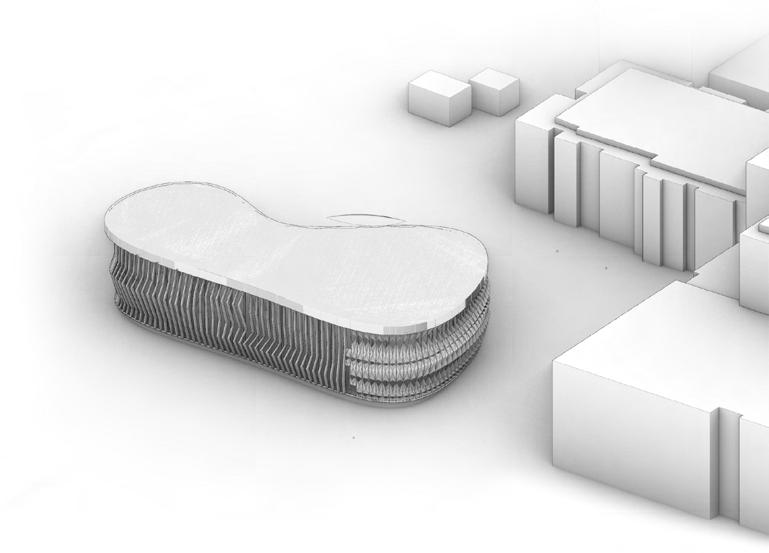
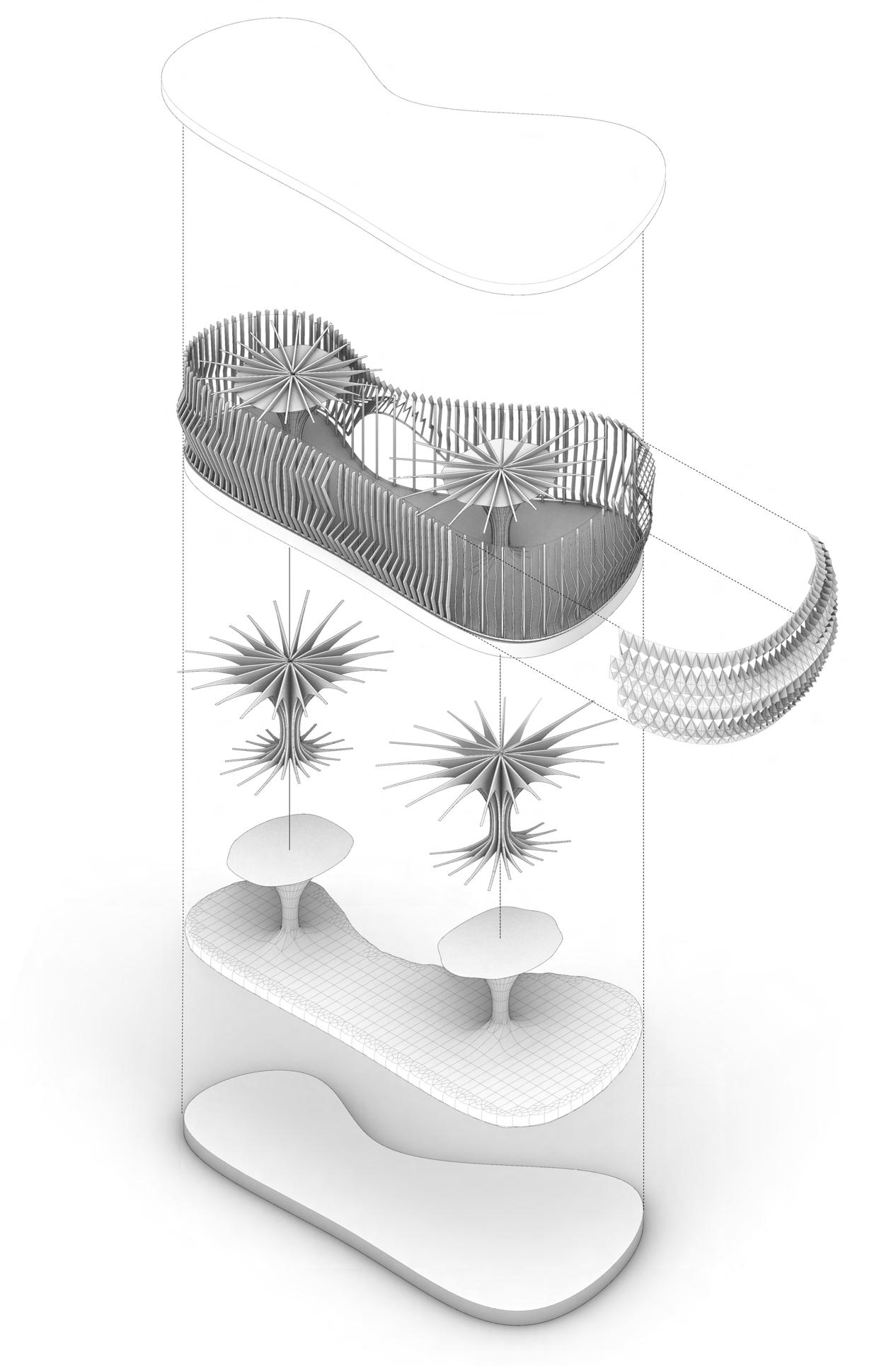
The entire pavilion modeling has been generated thanks to a single planar curve at the beginning of the script. The main elements that characterize the pavilion have been created from this shape, and these are:
1. The basement;
2. The glass facades and its structure;
3. The roof, to which the external cladding is anchored.
The hyperbolic structural elements that define the interior spaces were modeled starting from two lines connecting the floor to the roof. Once modified using a “variable pipe” command, they were blended with the first two lines through a SubD fusion. Finally, to create the structural ribs, several radial planes were intersected with the surface, generating curves that were given volume through extrusion.
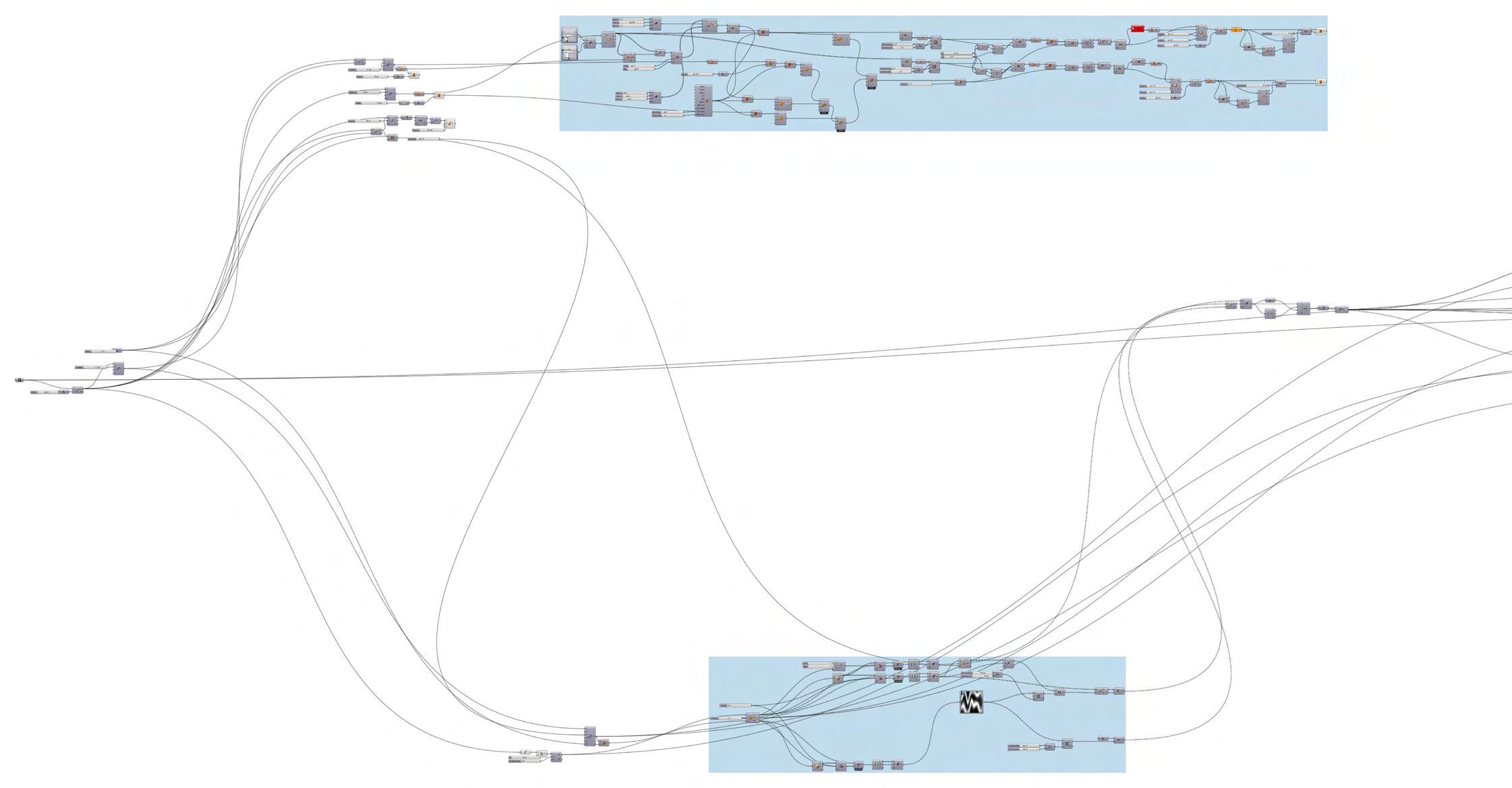
Once the external surface is subdivided in several points, their position was moved through a vertical motion and a second one, normal to the surface: its intensity has been regulated through a seamless image. The following points were joined with vertical polylines, whose rectangular section extrusion formed the exterior shading system. The entrance arc on the West facade was generated by gradually scaling those polylines from a specific point.
Using a “closest point” command, the faces of the responsive cladding surface were identified and then broken down into individual edges. The midpoints of these edges were connected with lines that formed the borders of the panels, which were then scaled and moved in the normal direction from the original surface in proportion to the incident radiation recorded by Ladybug. The combination of the base polylines with the scaled and displaced ones generated the pattern of the responsive panels.
Interior Design Studio
Team:
Marco Maria Angelelli
Bintou Bamba
Martina Emilia Boffi
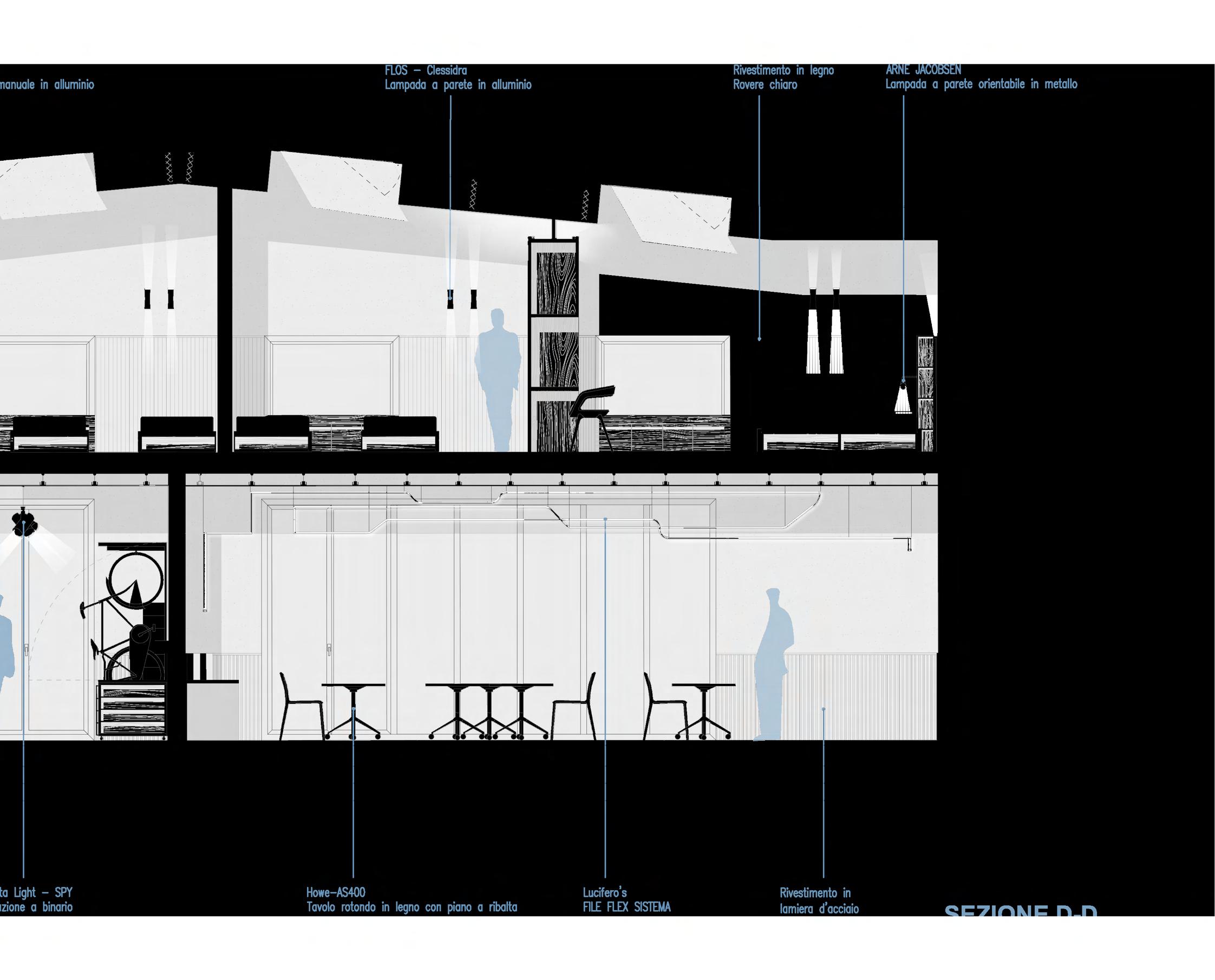
“Images on taro River” can be described as an interior reuse project, aim of which is the restoration of a small industrial complex located in Borgo val di Taro. The project’s theme is the insertion of public activities which can promote bike-tourism in the area.
For these reasons, short-term residential functions were chosen as the main function of the complex, through the design of a guesthouse on the first floor, assisted by a coffee and a bistrò at the ground floor. A completely public Fab Lab has also been included in the functional program, open to the entire community of Borgo Val di Taro, together with a multifunctional room which can be divided into two separate areas: the first one may be used as a music classroom, while the second part is available for events or public counsils.
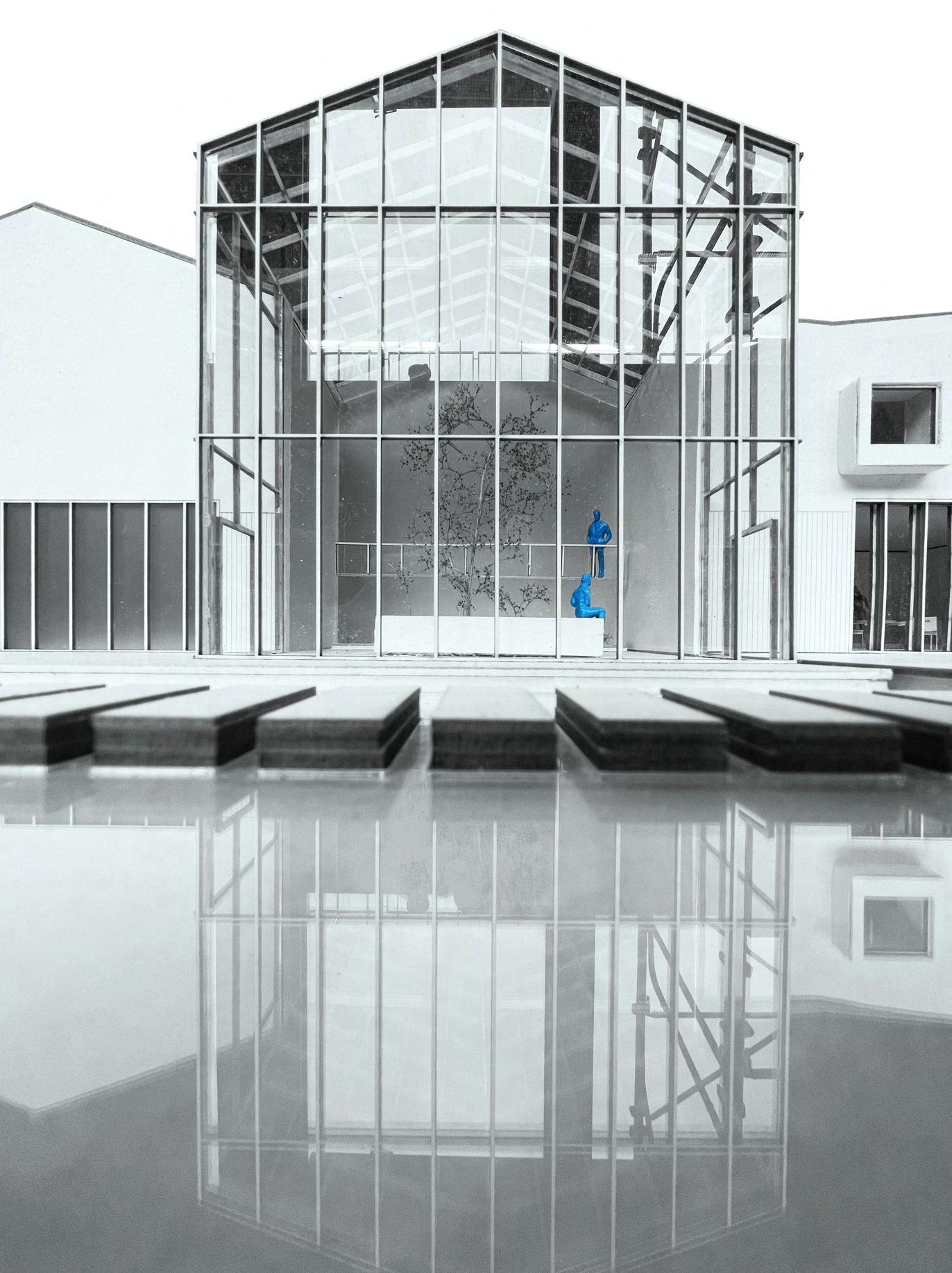
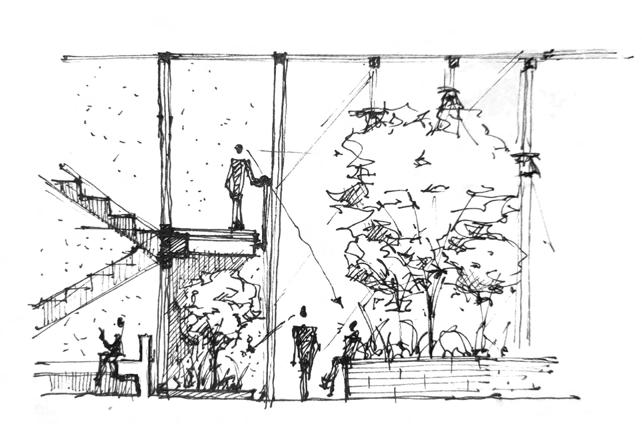
Finally, a winter garden enlarges the interior space hosting the coffee and the bistrò, while it reflects itself into a body of water which reinforces the connection between the entire polyfunctional hub and the Taro River, the city’s symbol.
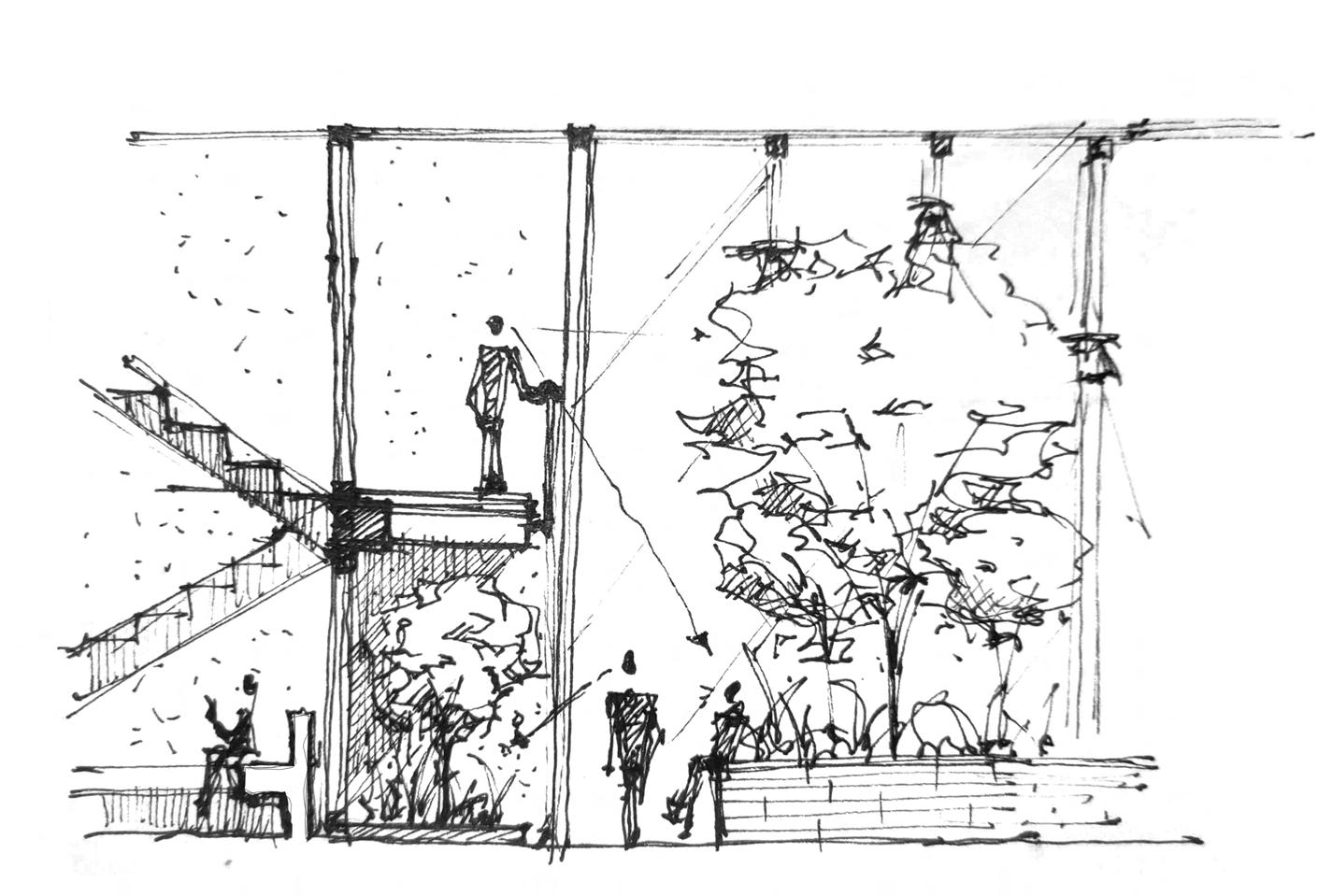
The last part of the interior design concerns the tower of the complex. It has acquired a really strong indipendence, becoming an exhibition space : this has been made possible thanks to the design of a staircaise ascending towards the top of the tower, place for the panoramic terrace of the new complex.
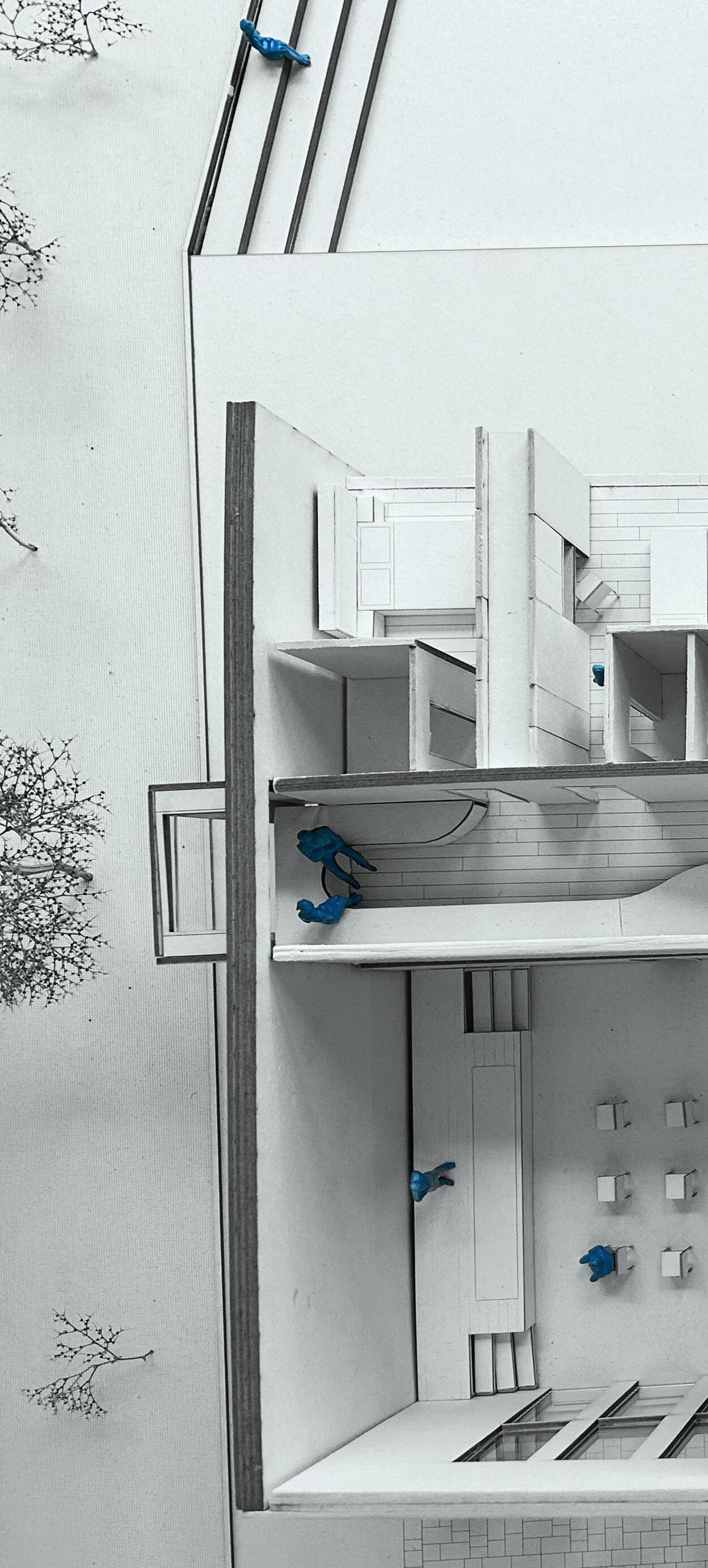
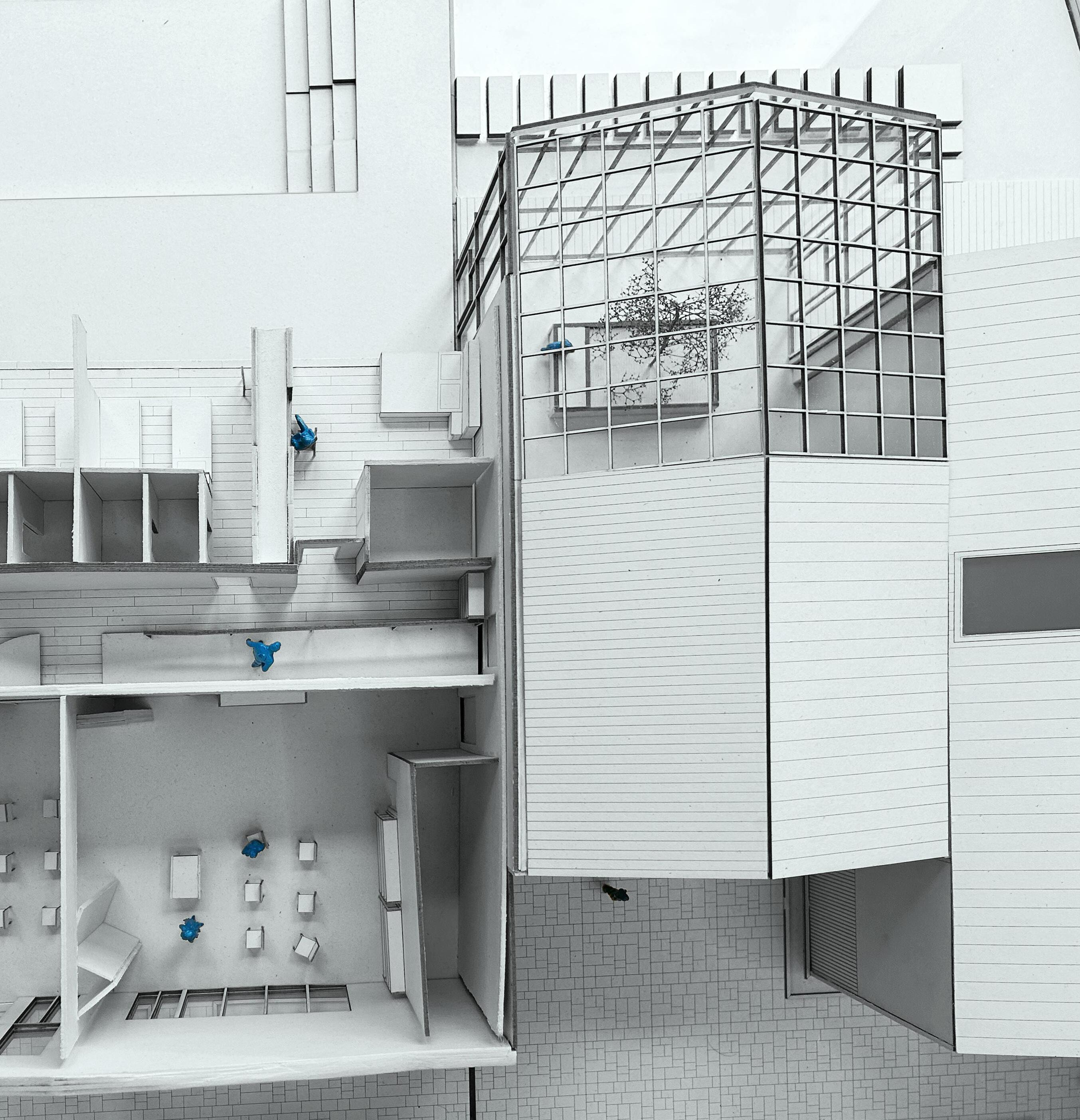
The project for the current state aims to divide the interior spaces into two overlapping sections: while the ground floor is equipped with all public facilities and is thus open to the external spaces, the first floor, more enclosed, houses the private areas of the guesthouse rooms. The setback of the central volume has allowed for the enhancement of the building’s entrance and the addition of a new glazed volume at the rear, hosting a winter garden. Finally, the tower has been given its own autonomy, turning it into an exhibition space open to the public, culminating in a panoramic terrace.
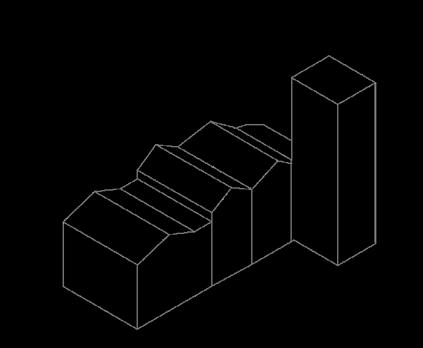
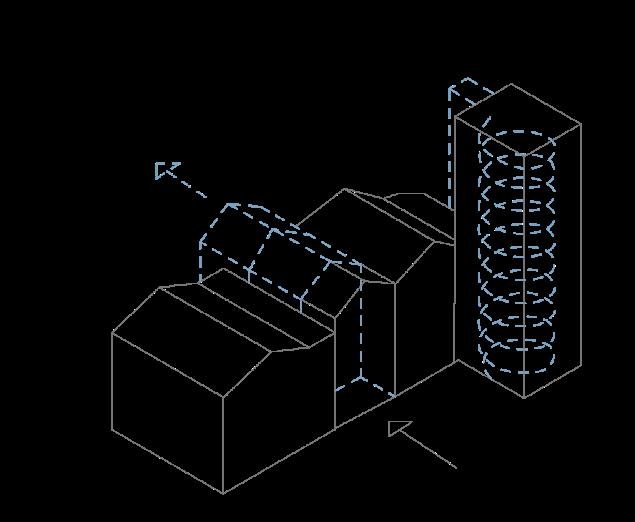
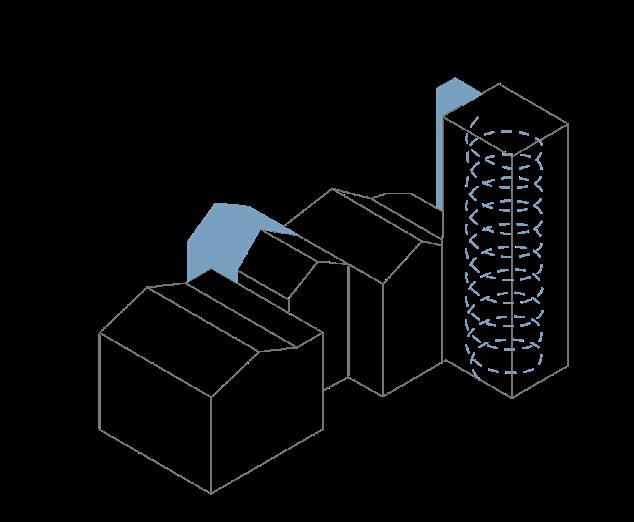
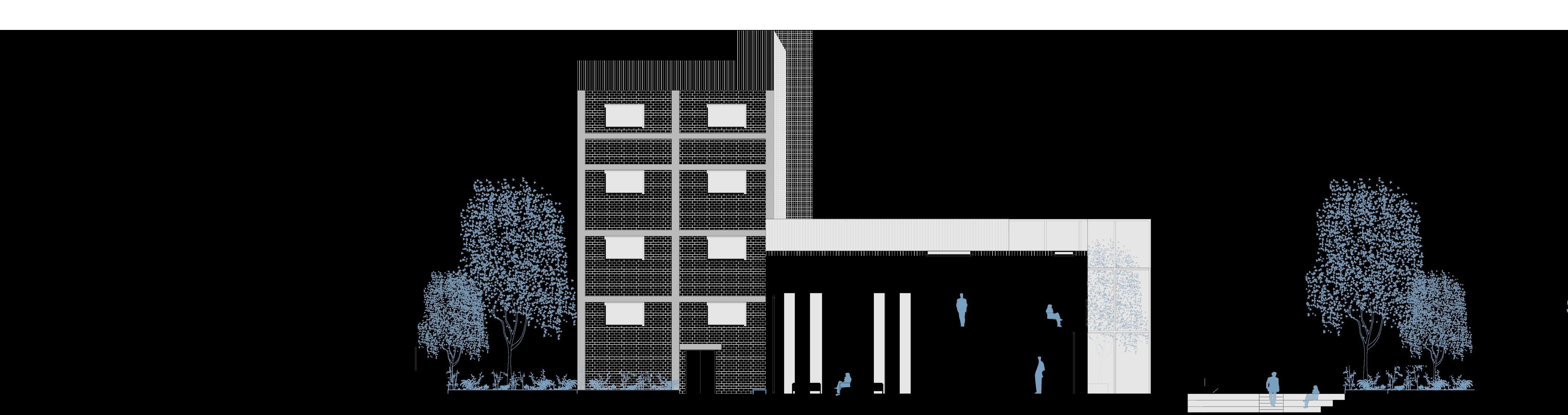
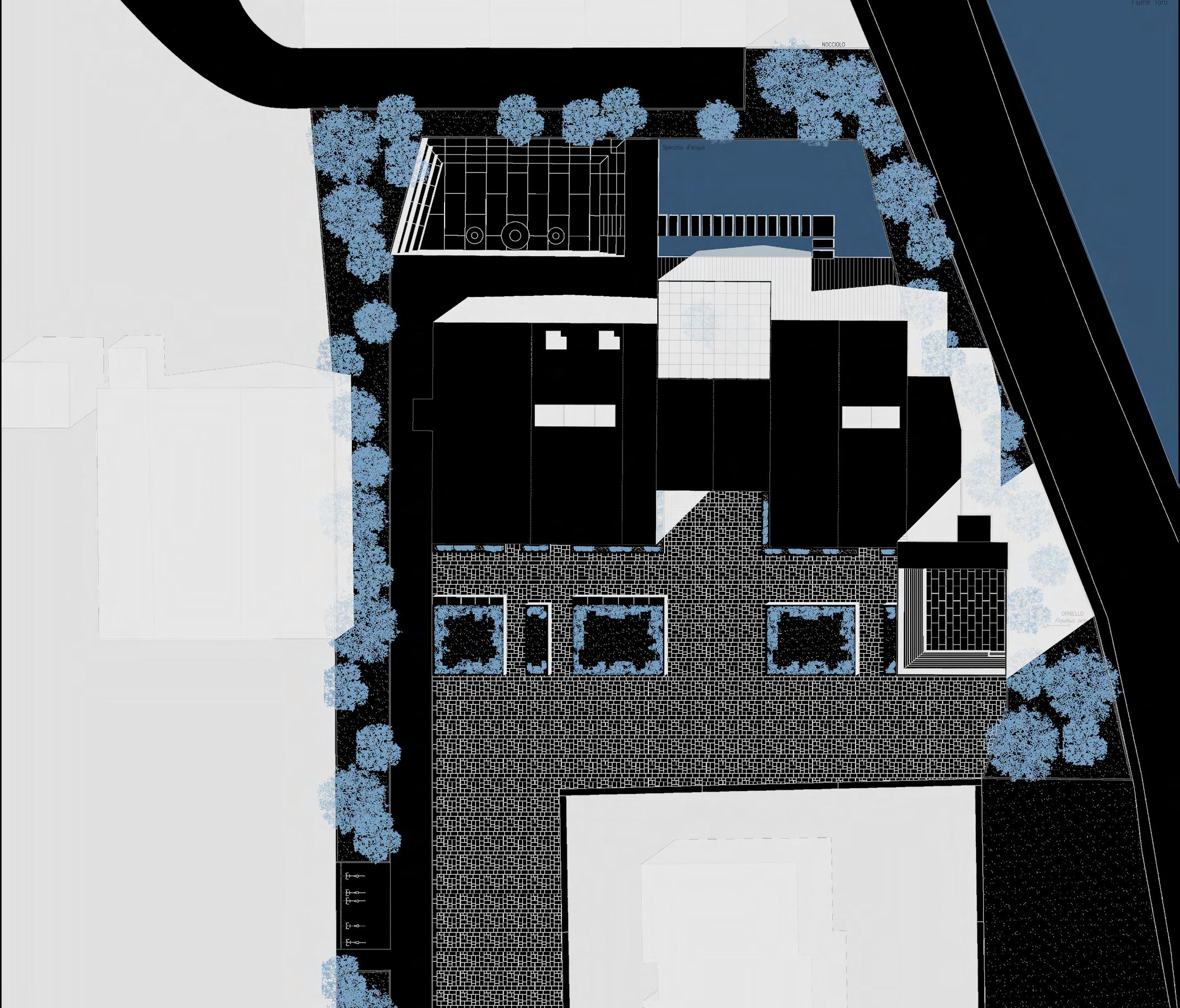
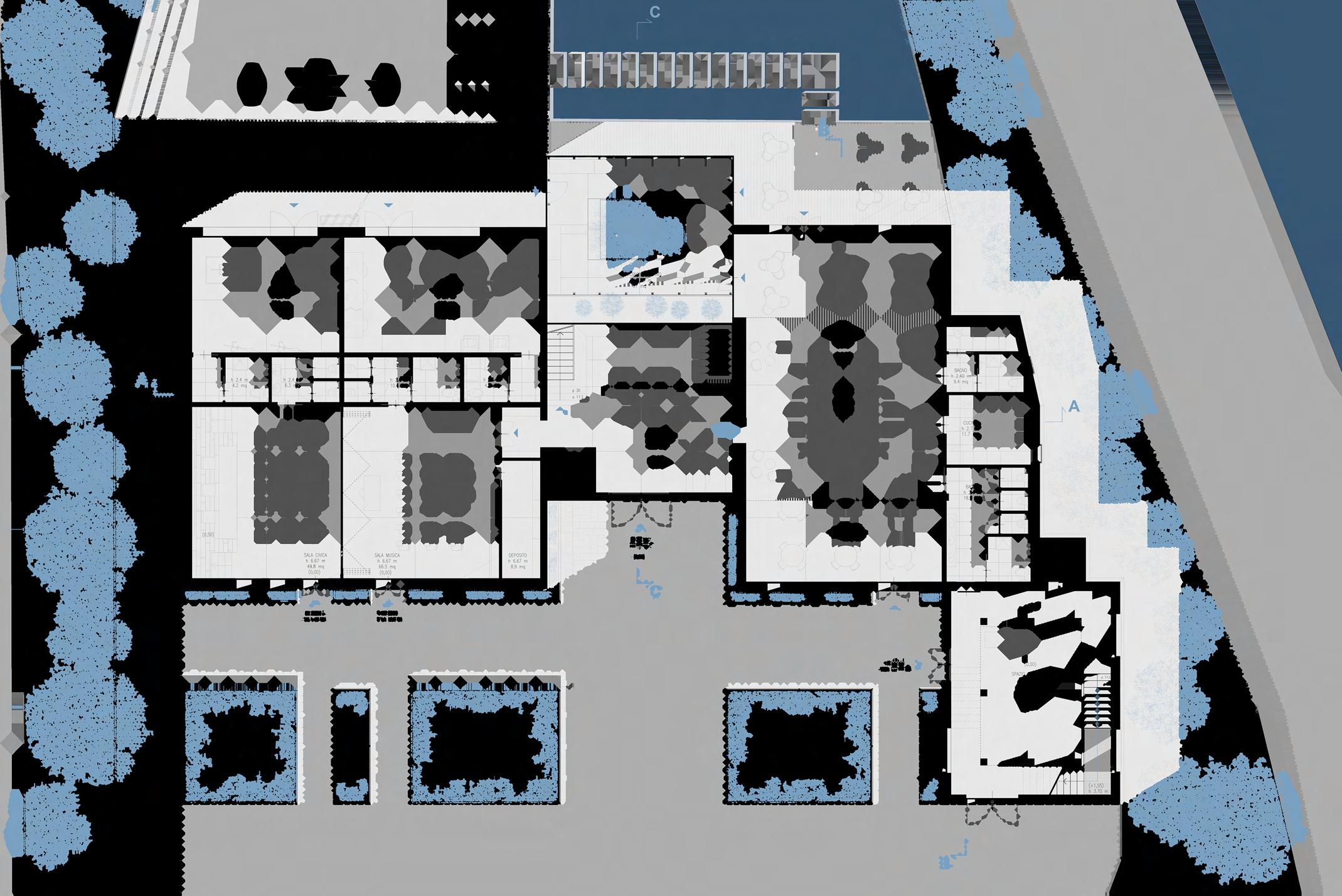
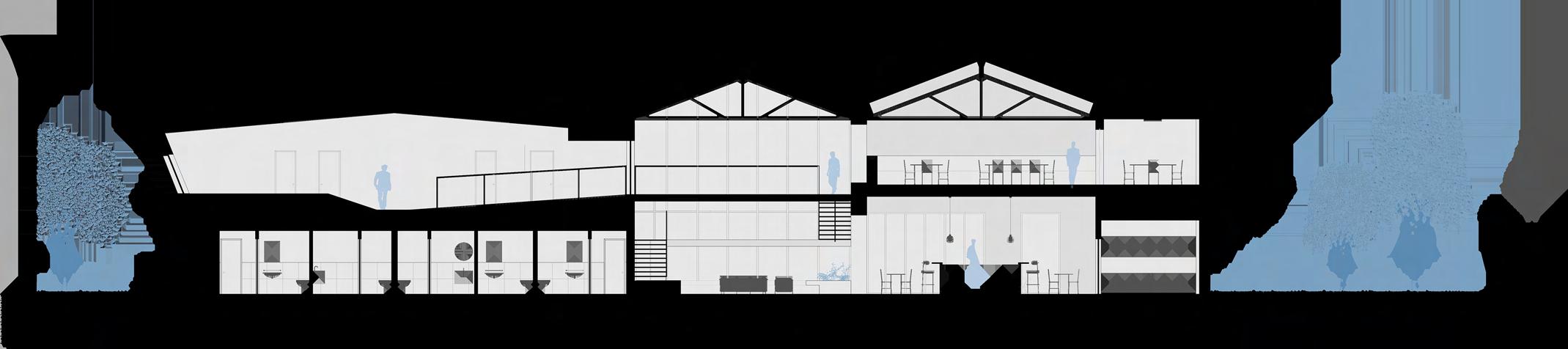

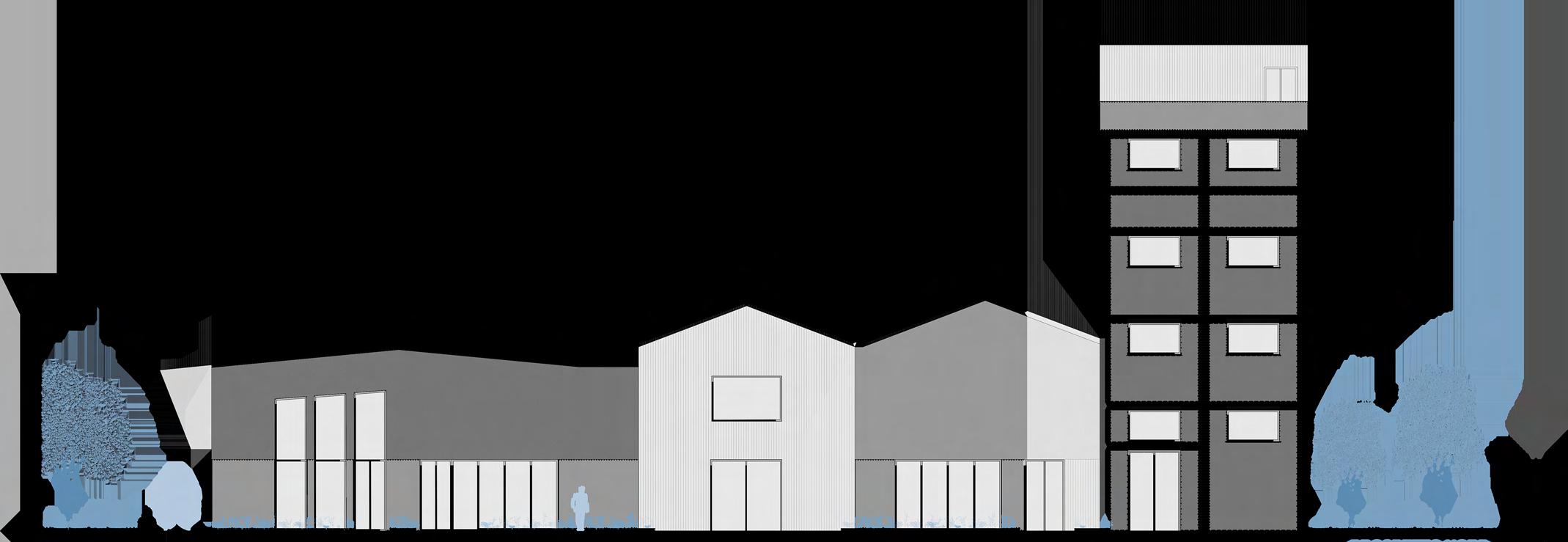
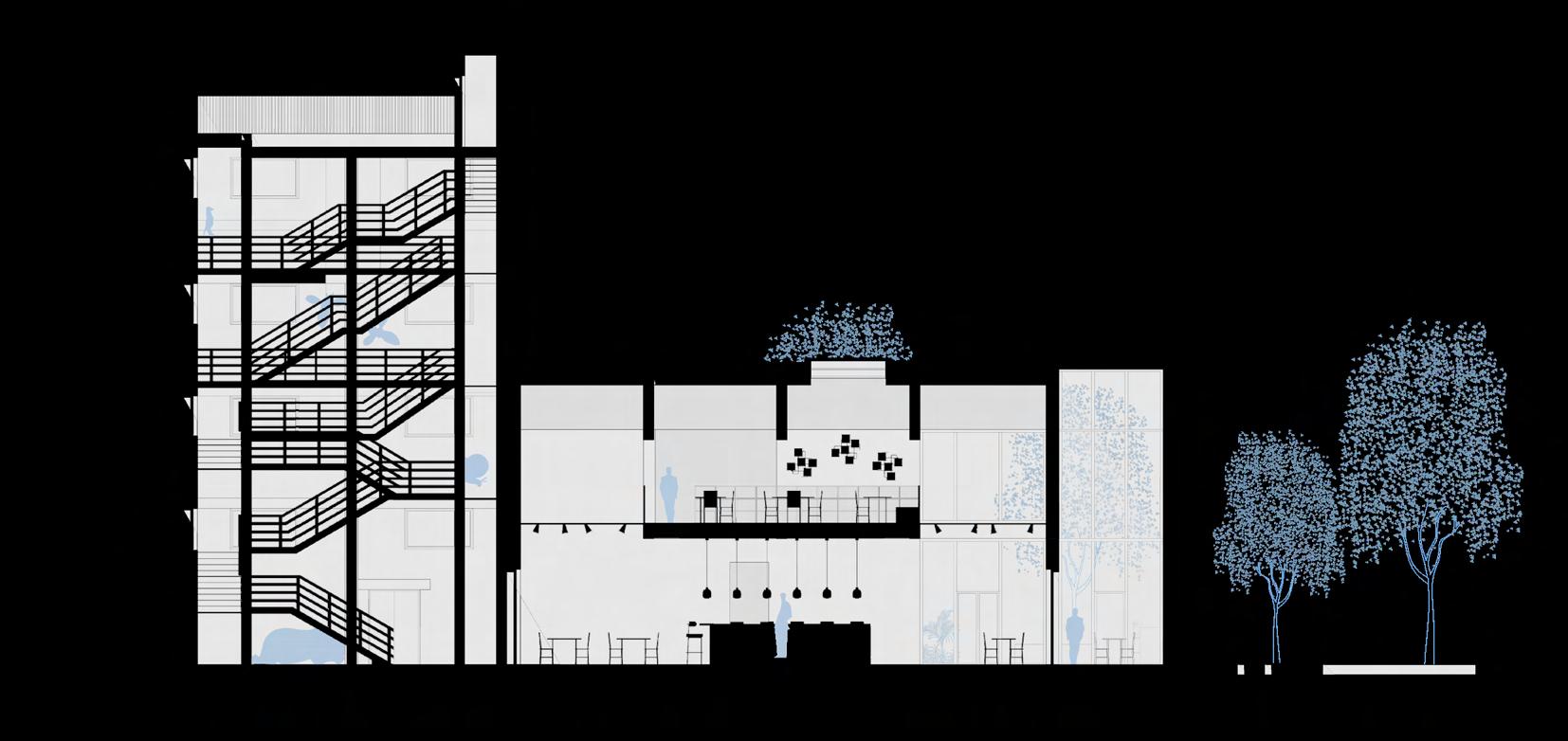
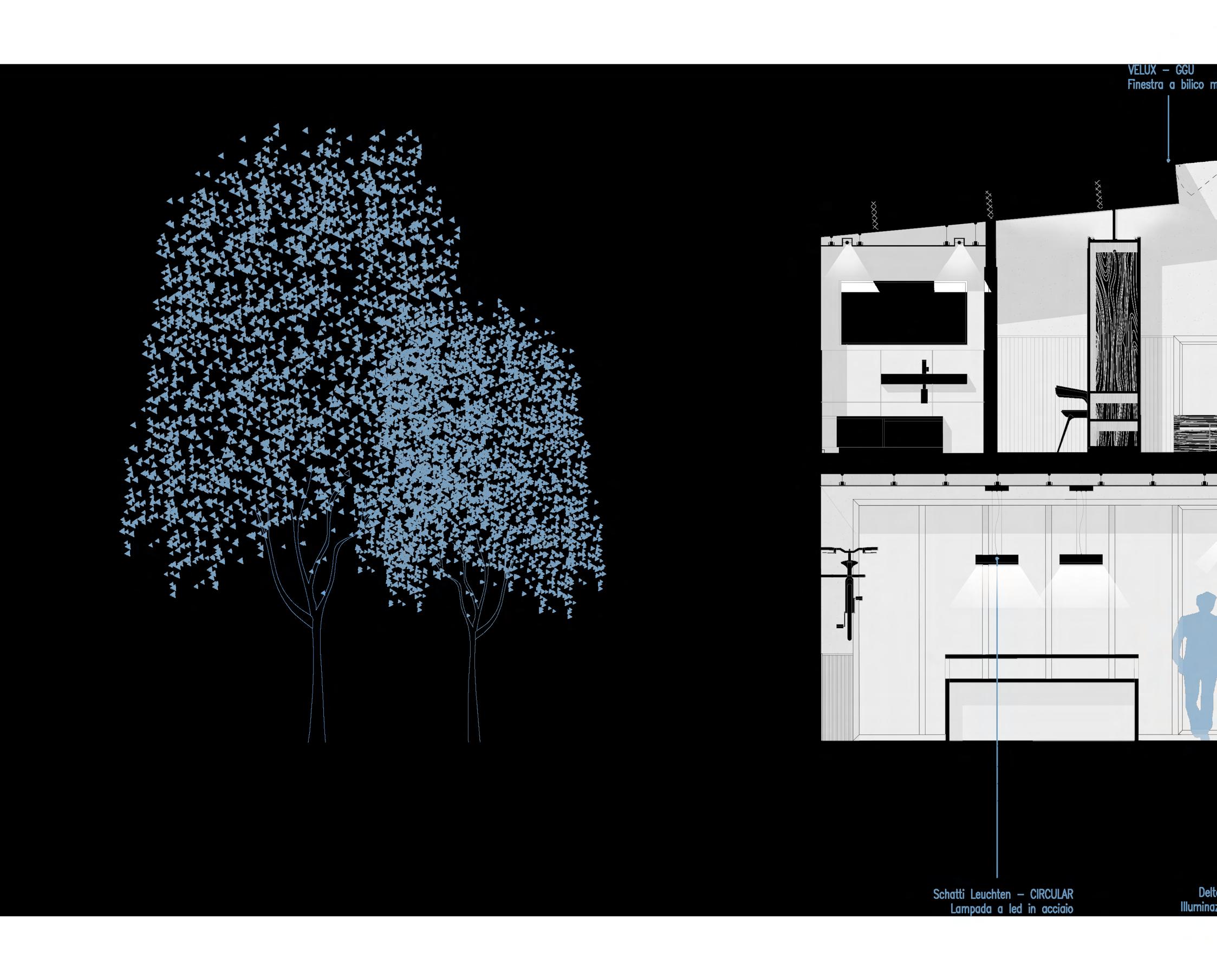
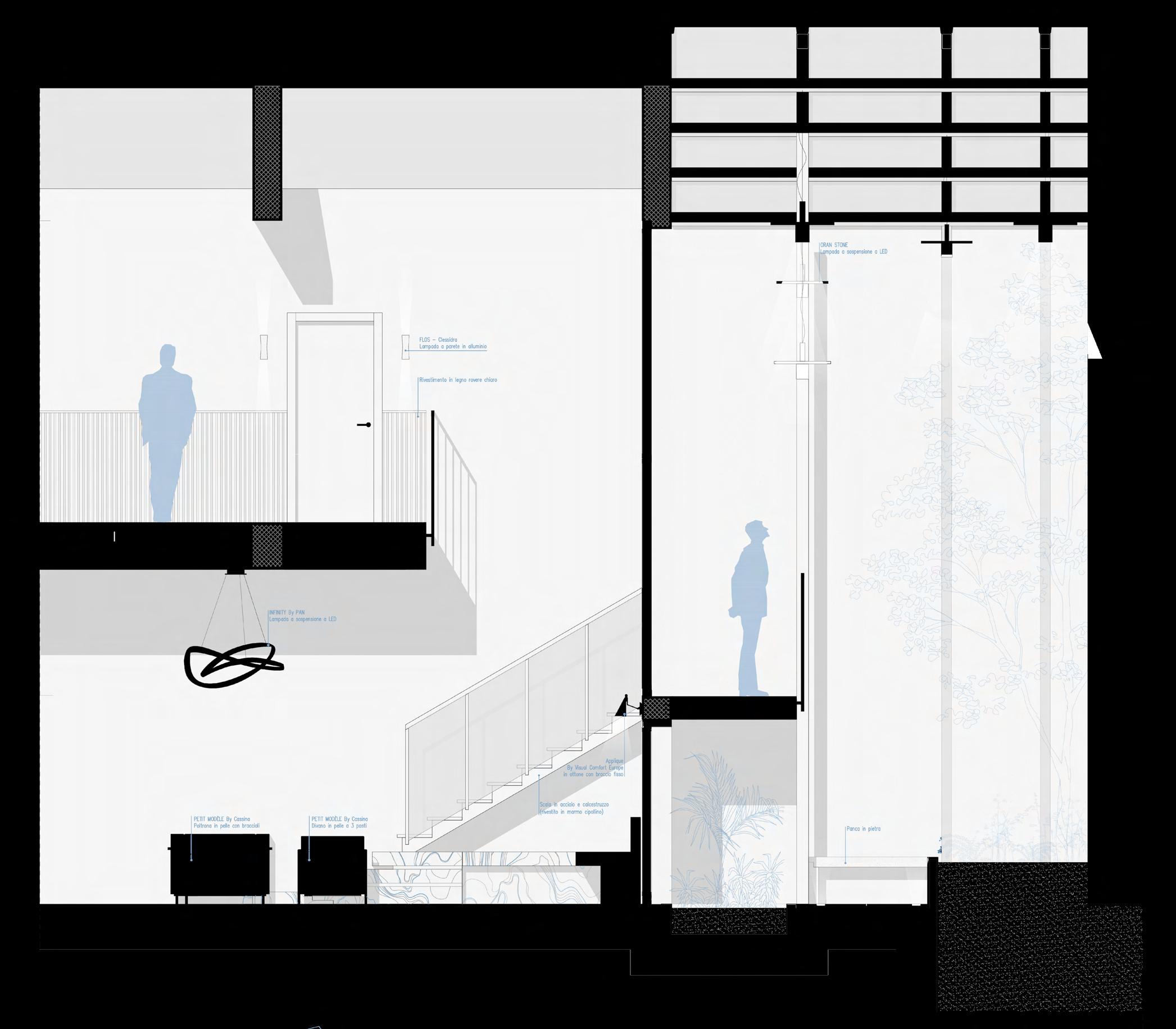
The project included the addition of a winter garden to the existing structure, a green space for rest and relaxation, connected to the bistro and overlooking the body of water to the south.
0 2 5