Upcoming Listening Session and Texas Energy on Track Podcast Regulatory Conference Save The Date Commissioners’ Corner Oil & Gas Industry Resources 4 5 7 8 9 10 11 12 14
Plugging Orphaned Wells Is a Top Priority For Railroad Commission Of Texas
2026 Outreach Events
RRC Staff Attends Ground Water Protection Council Underground Injection Control Conference
Advancing Geothermal Regulation Across Texas
TABLE OF CONTENTS
LETTER FROM THE RRC
Welcome to the March edition of Energy News. As we move into spring, the agency remains focused on advancing the Railroad Commission of Texas’ (RRC) mission of protecting public safety, strengthening Texas’ energy infrastructure and responsibly managing the state’s natural resources. This issue highlights new geothermal developments across the state and ongoing public service outreach efforts that help connect Texans with important regulatory information.
Thank you for your continued engagement with the RRC’s work. We look forward to sharing more updates, insights and accomplishments with you in the months ahead.
PLUGGING ORPHANED WELLS IS A TOP PRIORITY FOR RAILROAD COMMISSION OF TEXAS
BY: WEI WANG, EXECUTIVE DIRECTOR OF THE RAILROAD COMMISSION OF TEXAS
As conversations about orphaned and leaking wells continue, it's important for Texans to know the facts. Addressing orphaned wells is a top priority for the Railroad Commission of Texas.
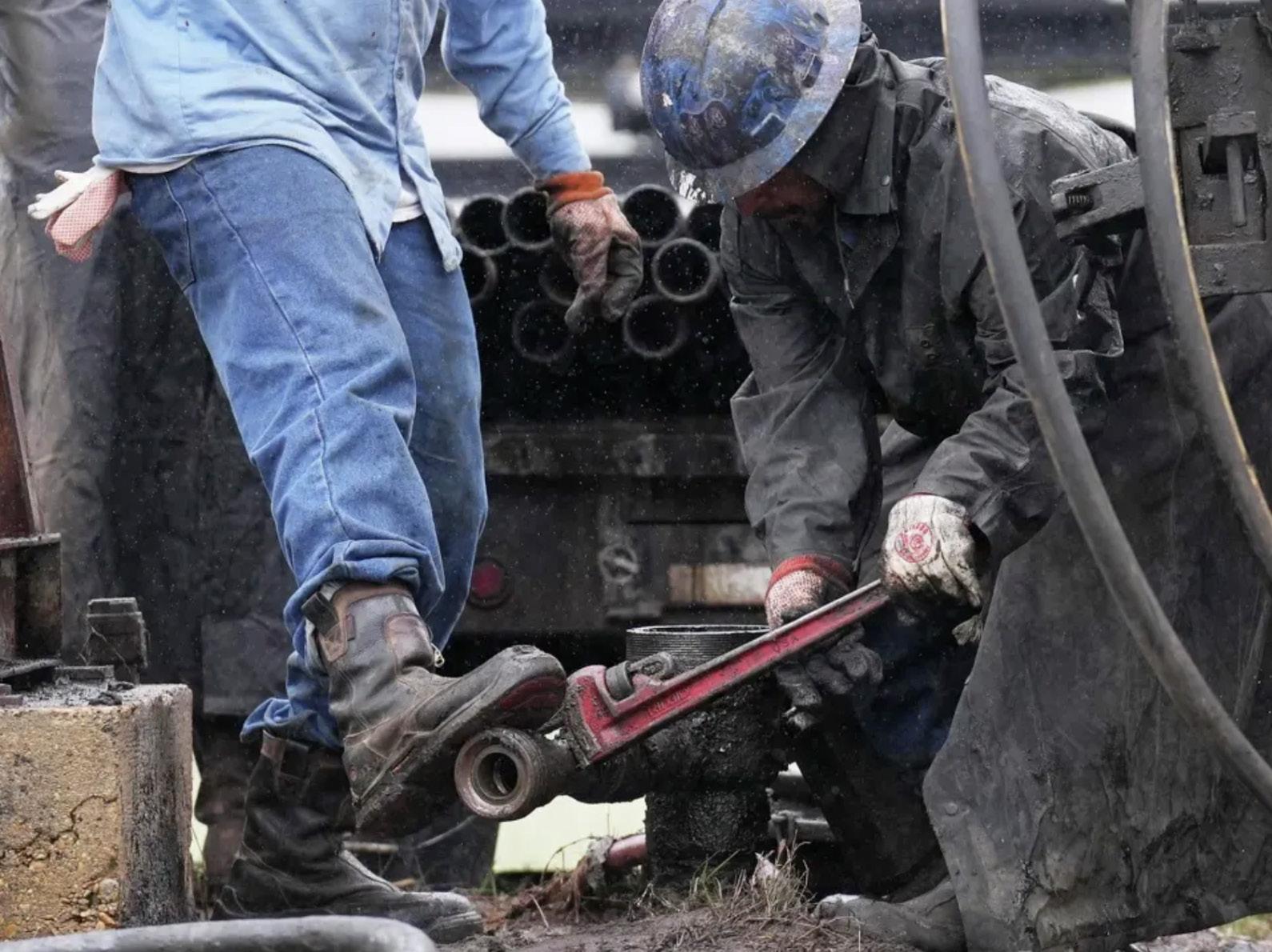
The vast majority, approximately 86%, of oil and gas wells are responsibly plugged by operators. But if an operator is noncompliant or goes out of business and a well has been inactive for at least 12 months, the well becomes "orphaned." Fortunately, the RRC administers its award-winning State Managed Plugging Program to plug these wells. And make no mistake, the process does not stop here. The RRC’s Legal Enforcement teams work with the O ce of the Attorney General to try to recoup the plugging costs from these defunct companies.
Once a well is deemed an orphan, it falls under the monitoring jurisdiction of the RRC and is placed on a list to be plugged, under the supervision of agency inspectors, by RRC contractors. The RRC uses a robust prioritization system that scores wells on multiple factors including age, location, condition and environmental and safety concerns to ensure that high-risk, high-priority wells are plugged first, protecting Texans from the most serious hazards.
In some rare cases, such as an uncontrolled release or leak that poses a threat to health and safety, immediate action is required. These leaking wells are often more complex and costly than other plugging projects, but they are critical for protecting nearby communities and natural resources. All plugging operations, whether completed by industry or the RRC, must meet the same strict requirements defined by state regulation, to ensure groundwater, oil, gas or geothermal resources remain protected.
Since 1984, the SMP has plugged over 47,000 wells across Texas. Alongside continued improvements in technology and regulation, Texas has one of the lowest increases in orphaned well populations among all oil-producing states, according to a recent Interstate Oil and Gas Compact Commission study.
But how does Texas pay for all of this?
State-funded orphaned well-plugging is supported by the oil and natural gas industry directly through the RRC's Oil and Gas Regulation and Cleanup Fund and indirectly through production taxes deposited into the General Revenue Fund. The RRC also receives federal support through the Infrastructure Investment and Jobs Act. The U.S. Department of the Interior awarded the RRC $254.2 million in grant funding to plug orphaned wells and the RRC is eligible to receive an additional $119.5 million in future grant phases.
And during the 89th Legislative Session, the Texas Legislature approved an additional $100 million — the largest one-time infusion of funds for oil and gas well-plugging.
Our dedication to addressing emergency wells is not isolated to plugging the wells when
incidents occur. To enhance the integrity of the underground disposal of produced water, new permit application requirements were recently adopted for saltwater disposal wells in the Permian Basin. These requirements include stricter guidelines to ensure injected fluids remain confined to designated disposal formations, preventing emergency water flows while safeguarding ground and surface fresh water.
Several additional changes were made during the last legislative session to address orphaned wells including SB 1146, which streamlines the process for operators to plug orphaned wells on or near their leases, while SB 1150 requires operators to plug wells that are over 25 years old and have been inactive for at least 15 years.
The RRC is the oldest regulatory body in Texas and is tasked with regulating one of the largest oil and gas industries in the world. Despite the scope and scale of our responsibilities, we continue to rise to the challenge and are committed to protecting both public safety and the environment. The agency welcomes continued dialogue on a topic that remains vitally important to all Texans.
Wei Wang is the executive director of the Railroad Commission of Texas, the state agency with primary regulatory jurisdiction over the oil and natural gas industry in Texas.
This article was originally published in the Houston Chronicle on February 8, 2026 and can be viewed using the link below.
2026 OUTREACH EVENTS
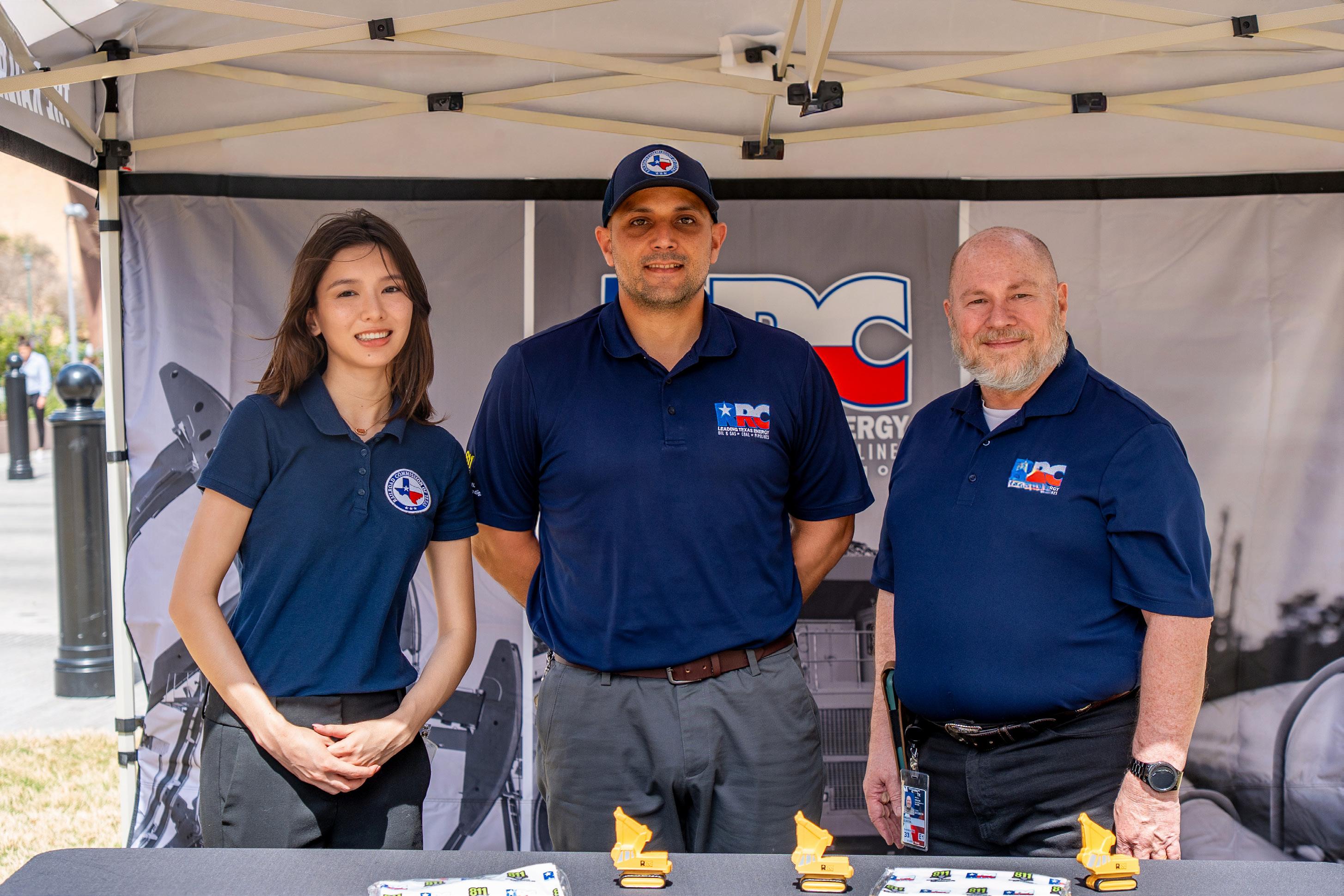
The Railroad Commission of Texas’ (RRC) O ce of Public Engagement (OPE) continues to build strong connections through presentations and conversations within the communities it serves.
The RRC is grateful for the opportunity to engage in meaningful discussions about its work and mission.
The 2026 Ground Water Protection Council (GWPC) Underground Injection Control (UIC) Conference brought regulators, industry leaders and technical experts together in Fort Worth from February 10–12.
The Railroad Commission of Texas (RRC) was well represented, with staff from Technical Permitting and Planning and Administration in attendance, learning about UIC program development and regulatory coordination.
Attendees participated in in-depth sessions on emerging regulations, new technologies and best practices shaping the future of underground injection control. The conference also featured technical workshops and numerous networking opportunities, allowing participants to exchange insights and strengthen collaboration across the sector.
By taking part in these discussions, the RRC helps advance shared goals for safe, reliable underground injection practices across the industry.
ADVANCING GEOTHERMAL REGULATION ACROSS TEXAS
Geothermal regulation is advancing across Texas, and the Railroad Commission of Texas (RRC) staff have been actively engaged as interest in the sector accelerates. Both emerging companies and major energy firms are developing geothermal projects, supported by new resource mapping from the National Laboratory of the Rockies that highlights several favorable regions in the state.
Texas’ strong business environment and evolving regulatory framework are creating momentum for geothermal development. Growing electricity demand — particularly from data centers — has increased interest in geothermal systems as a reliable, around-the-clock energy source. Sage Geosystems recently received federal funding for a feasibility study at Fort Bliss, and other military installations, including Joint Base San Antonio and Ellington Field Joint Reserve Base, are also evaluating geothermal potential.
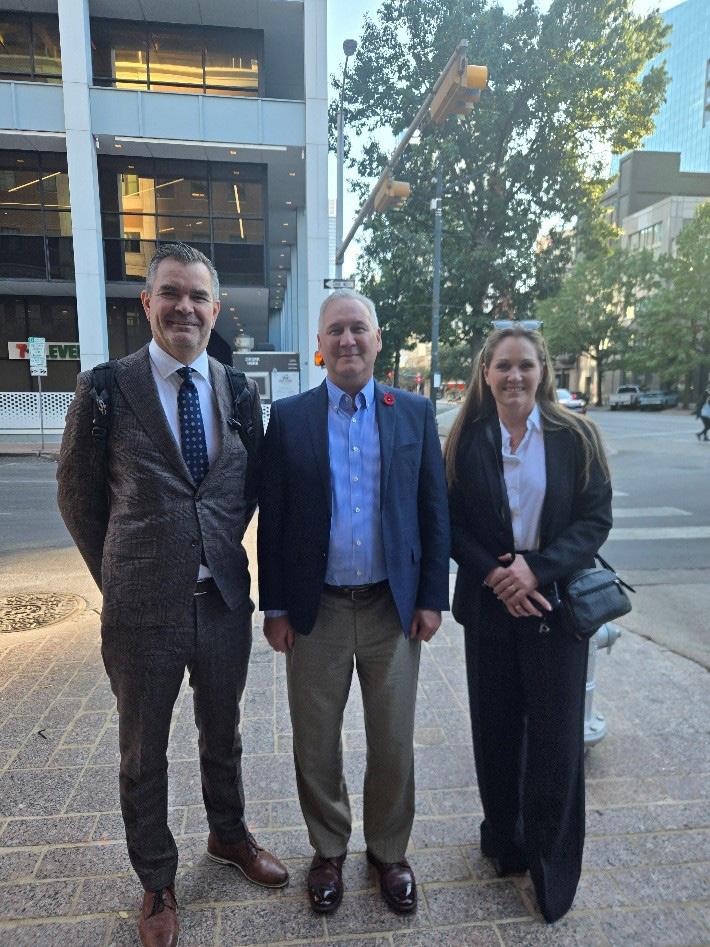
Staff from the RRC received an invitation from the Texas Geothermal Energy Alliance (TxGEA) to present how Texas regulates geothermal energy to Iceland’s ambassador to the United States, Svanhildur Hólm Valsdóttir, and Einar Tómasson, trade commissioner at Business Iceland, underscoring shared interest in
collaboration. Additional invitations followed from the American Association of Petroleum Geologists, the American Association of Professional Landmen and the Ground Water Protection Council to moderate a panel on geothermal infrastructure, legal considerations and regulatory frameworks.
UPCOMING LISTENING SESSION AND TEXAS ENERGY ON TRACK PODCAST
EPISODE 13: SURFACE MINING AND RECLAMATION DIVISION
In this episode of Texas Energy on Track, host Bryce Dubee and co-host Nick Kraynok talk with Joseph Parks, Director of the Surface Mining and Reclamation Division at the RRC. Tune in for an insightful discussion on how the division reclaims abandoned mine sites in Texas, where these mines are located, what technologies are used and more!
EPISODE 14: OFFICE OF PUBLIC ENGAGEMENT
Join hosts Bryce Dubee and Nick Kraynok on Texas Energy on Track as they sit down with Scott Sroufe and Tiffany Cotledge from the O ce of Public Engagement. They explore how the agency connects with communities across Texas, the types of events they participate in and the goals behind their outreach efforts.
AN RRC PODCAST
TEXAS
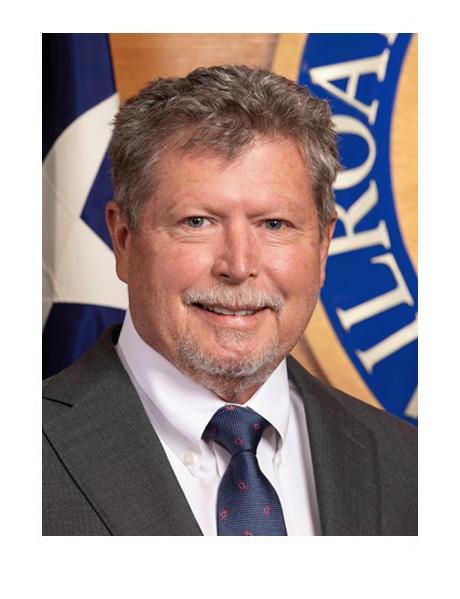
In February, Chairman Wright traveled extensively across the state to share the Railroad Commission's important work. He started the month in Houston, where he gave a keynote speech at Argus America’s Crude Oil Summit.
The following week, Chairman Wright traveled to San Antonio to attend the Annual Water Law Conference, participating in a fireside chat and panel discussion on the treatment of produced water for beneficial reuse alongside TCEQ Commissioner Catarina Gonzalez.
A er a return trip to Houston to attend NAPE and participate in a regulatory panel, Chairman Wright returned to Austin for a meeting with the Texas Alliance of Landmen.
Last week, Commissioner Craddick visited Corpus Christi, where President Trump delivered remarks centered on domestic energy production and the role of Texas in U.S. energy independence.
Speaking along the Gulf Coast—home to major export terminals and energy infrastructure—he emphasized the importance of oil and natural gas development to national security, economic growth, and job creation.
During his remarks, Trump highlighted Texas’ leadership in crude oil production, liquefied natural gas (LNG) exports, and refining capacity. He discussed policies aimed at expanding drilling, streamlining federal permitting, and reducing regulatory burdens on energy producers.
He also framed domestic energy production as a strategic asset in global markets, particularly in light of geopolitical instability and international energy demand.
Commissioner Christian recently penned an op-ed celebrating the EPA’s repeal of the endangerment finding.
“It is billions of taxpayer dollars spent to “solve” a problem politicians overstated, using technology that isn’t proven at scale, while creating new safety risks that didn’t previously exist. And it all happens while families struggle with higher energy bills, inflation, and an electric grid that is less reliable than it was a decade ago.
“Meanwhile, the global picture hasn’t changed. The United States is told to cut emissions, while countries like China continue building coal plants at a staggering pace. Emissions aren’t reduced, they’re exported, along with jobs and energy security.
“The EPA’s repeal of the endangerment finding is a step back toward honesty. It acknowledges that CO2 is not the villain it was made out to be.”
OIL AND GAS INDUSTRY RESOURCES
OIL & GAS PRODUCTION STATISTICS
View monthly production totals of crude oil, condensate and total oil; and of gas well gas, casinghead gas and total natural gas.
VIEW CURRENT PRODUCTION STATISTICS
ENFORCEMENT ACTIONS
The Commission has primary oversight and enforcement of the state’s oil and gas industry and intrastate pipeline safety.
VIEW LATEST ENFORCEMENT ACTIONS
The Public GIS Viewer allows users to view oil, gas and pipeline data in a map view.