APRIL 2026
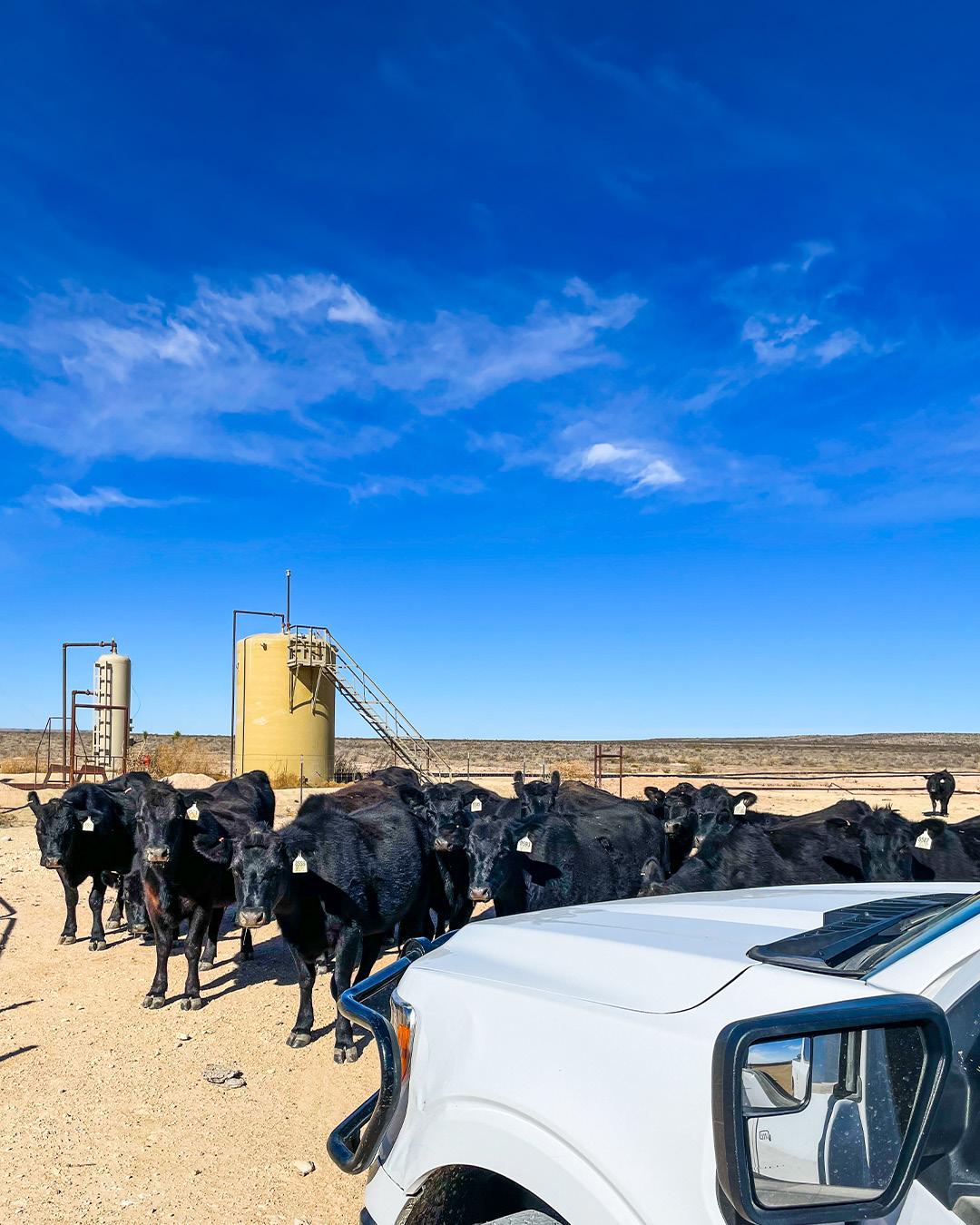
Cows spotted in Pecos County
Photo from Jimmy Hernandez

APRIL 2026
his year marks an important milestone for the Railroad Commission of Texas (RRC): 135 years of serving the people of our state. Since 1891, the Commission has played a vital role in Texas' growth, adapting alongside the industries and communities we serve while remaining committed to safety and responsible regulation.
For more than a century, our agency's work has helped shape Texas into the energy leader it is today. From its early days regulating railroads to overseeing the development of the state's oil and natural gas resources, the RRC has been at the center of decisions that helped fuel economic opportunity and strengthen communities across Texas.
Generations of dedicated public servants have carried that responsibility forward,
ensuring that the agency continues to meet the needs of a rapidly growing and evolving state.
While much has changed in 135 years, one constant has been the people behind the mission. Every division, every district o ce and every employee contributes to the work that keeps the Commission running smoothly. Your dedication continues the proud tradition of service that defines this agency.
As we celebrate this anniversary, I invite you to reflect on the legacy of the RRC and the role each of us plays in shaping its future. Thank you for the professionalism and teamwork you bring to the Commission each and every day. Together, we will continue building on 135 years of service to Texas.
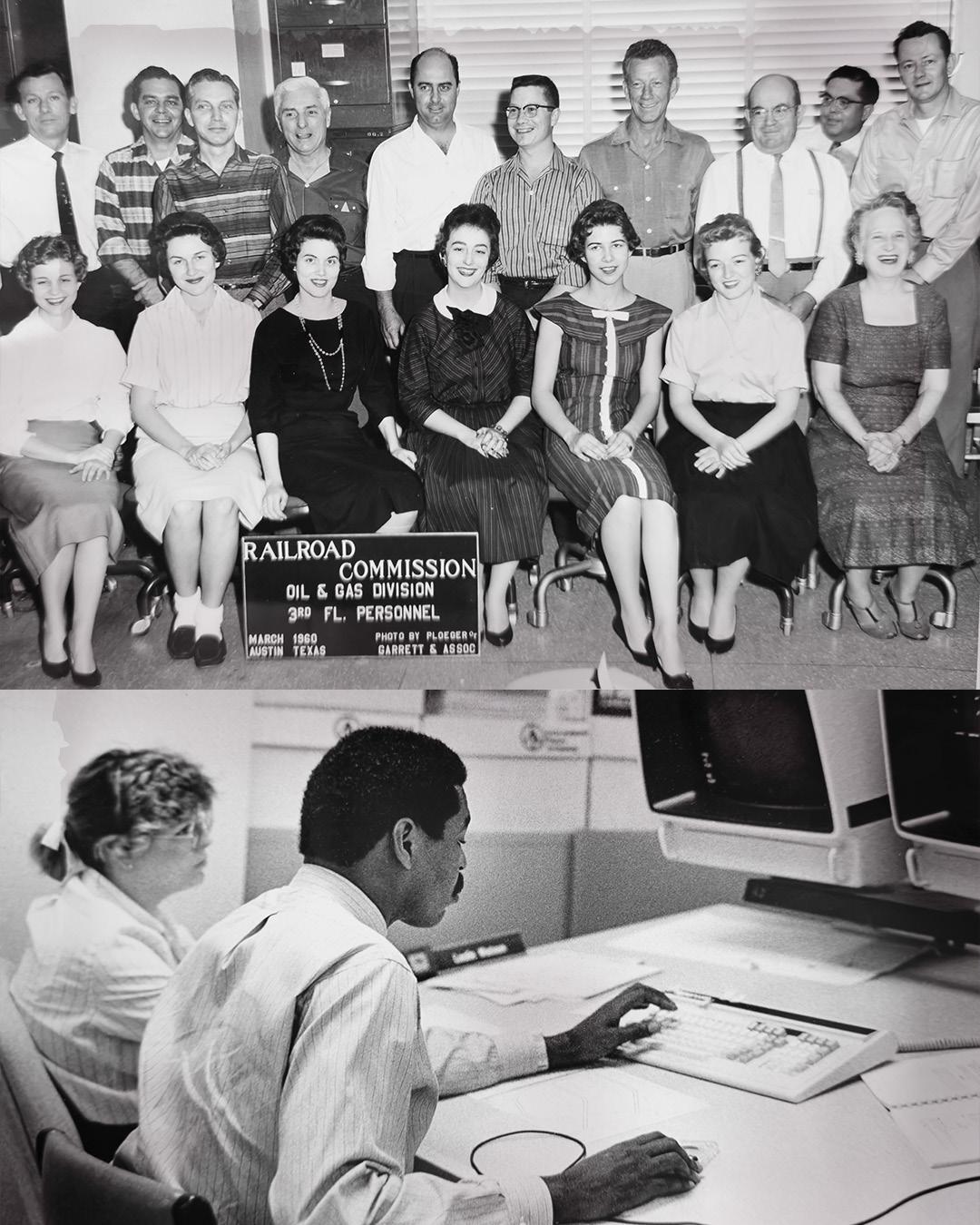
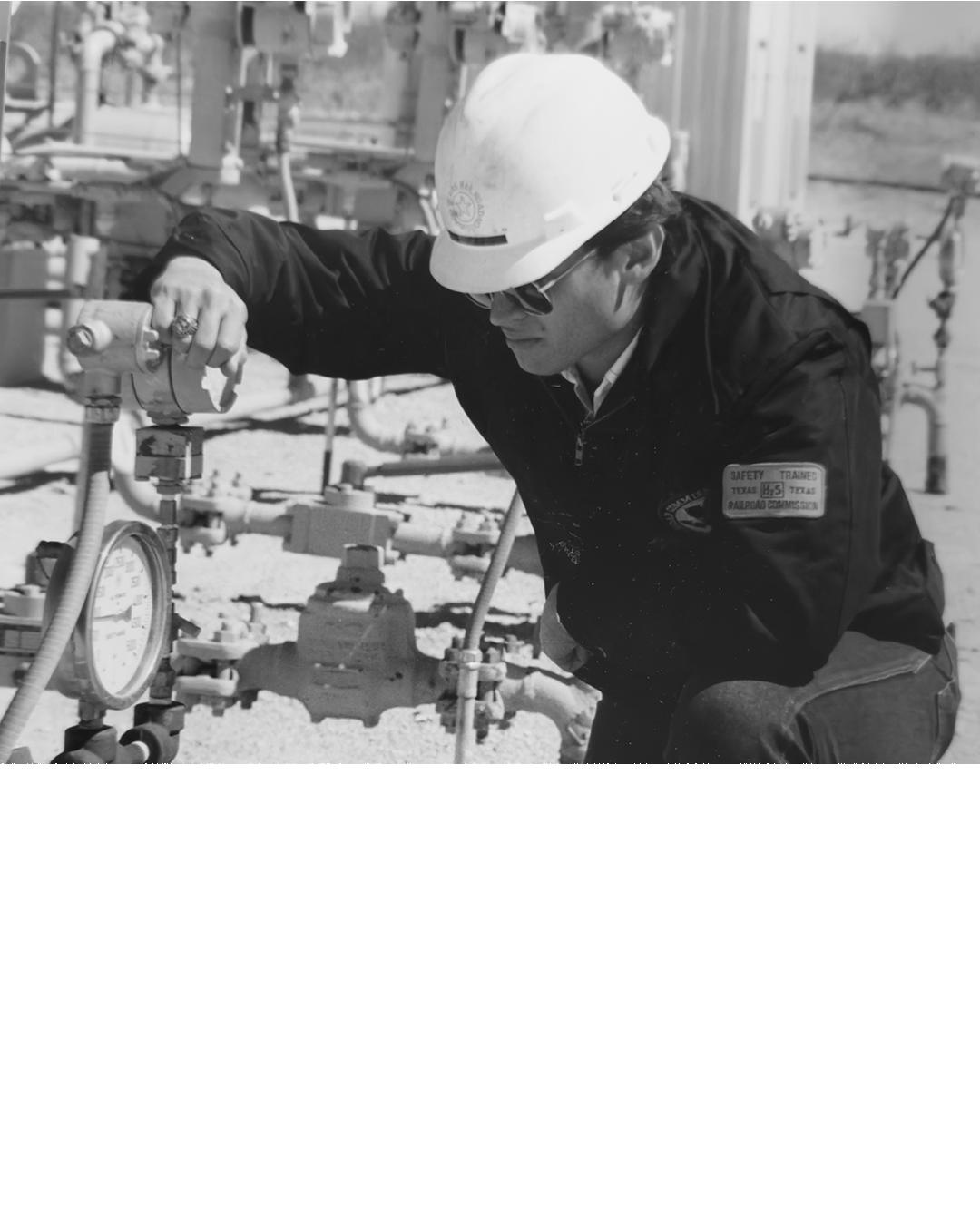
The Railroad Commission of Texas (RRC) was born out of a late 19th-century movement to bring fairness and accountability to the rapidly expanding railroad industry. At the time, railroads controlled the flow of goods across Texas, and concerns about discriminatory rates and monopolistic practices were widespread. James S. Hogg’s successful 1890 gubernatorial campaign centered on creating a regulatory body to rein in these abuses, which led to the establishment of the RRC in 1891.
Although the Commission’s name still reflects its origins, its mission quickly expanded as Texas entered the oil age. The discovery of oil at Spindletop in 1901 ushered in a new era, and the RRC became a central force in shaping the responsible development of the state’s energy resources.
Over the decades, the Commission continues to play a pivotal role in regulating oil and gas production, influencing not only Texas but energy markets around the world.

Erik Hanson is joining the Railroad Commission of Texas’ (RRC) Legal Enforcement Division as an Investigator, bringing with him a strong background in geology, field operations and regulatory compliance. His experience across multiple roles within the Commission positions him well to support the division’s mission of ensuring responsible oil and gas operations in Texas.
He grew up in Roseville, California, and earned his Bachelor of Science in Geology from California State University, Sacramento. Erik moved to Midland, Texas, in 2012 to be closer to family and began his career as a Wellsite Geologist. In April 2013, he joined the Commission in the District 8 o ce, where he served as Lead Plugger for nearly two years before being promoted to Engineering Specialist in January 2015.
In his role as an Engineering Specialist, Erik focused on strengthening compliance among oil and gas operators by drafting violation letters and recommending enforcement actions when necessary. He is excited to continue supporting that mission as an Investigator within the Legal Enforcement Division.
Outside of work, Erik enjoys spending time with his family, traveling, reading and going to the range.
Welcome, Erik Hanson!
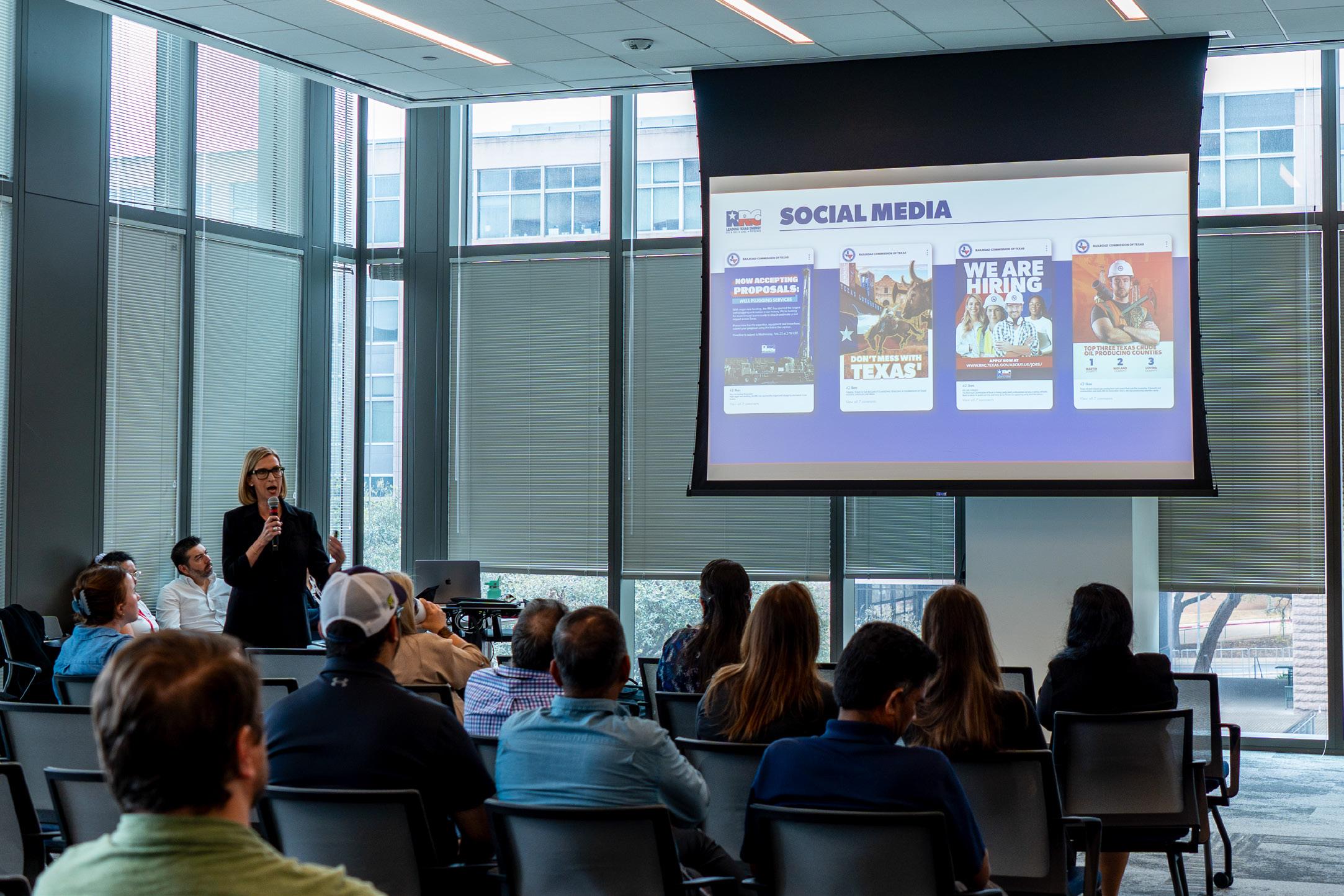
On March 5, 2026, the Communications Division and Office of Public Engagement renewed the monthly One Agency, One Team series, bringing staff together to reinforce a shared commitment to service. During the session, team members walked through their roles and responsibilities, offering a clearer understanding of how each function contributes to the agency’s mission and the communities we support.
The renewed series is designed to build stronger connections across divisions, encourage open communication and
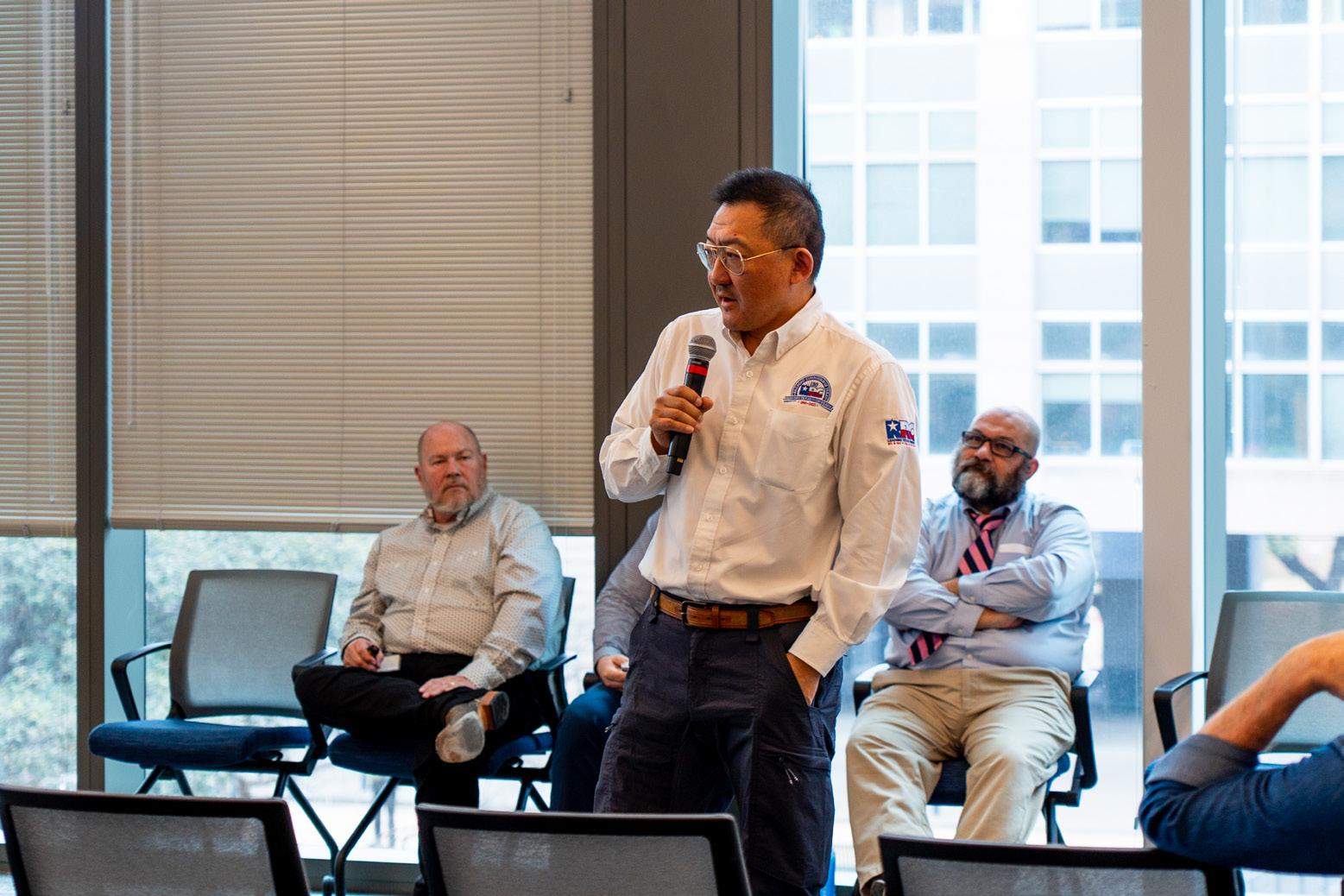
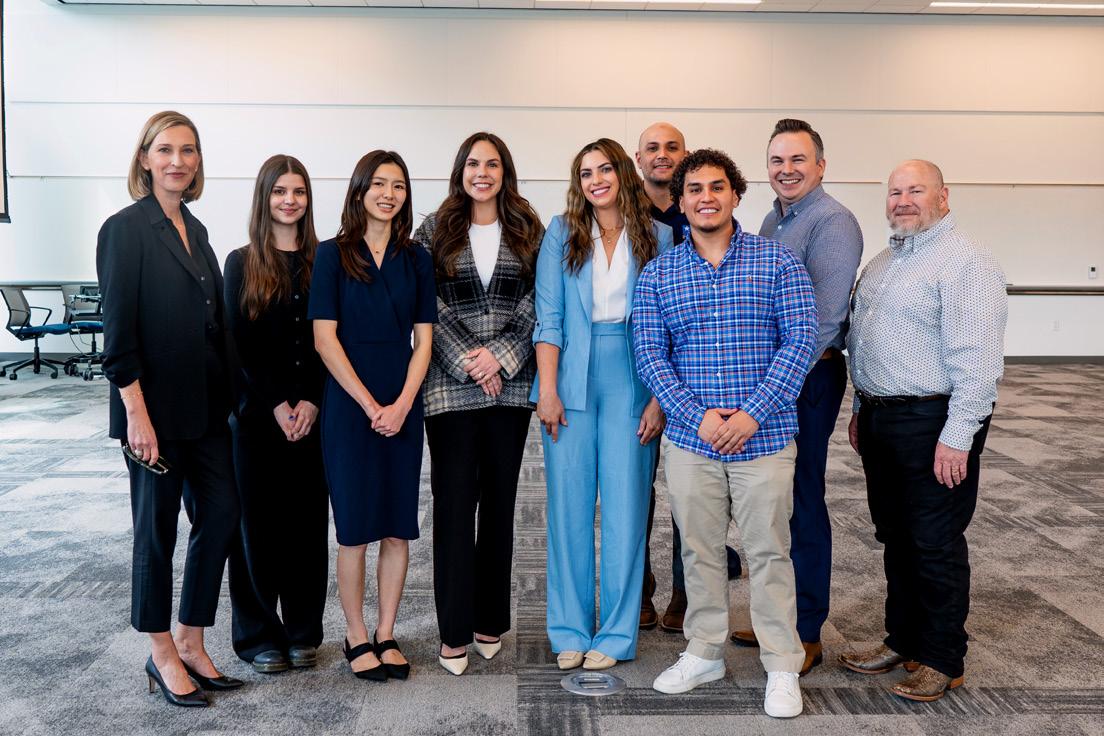
highlight the collaborative work happening behind the scenes. By creating space for staff to learn from one another, the initiative strengthens the agency as a whole and ensures that our collective efforts remain aligned, coordinated and community-focused.
Future sessions will continue to spotlight different divisions, share best practices and foster a culture of partnership that supports both internal operations and public-facing work.
Keep your eyes out for the next session!
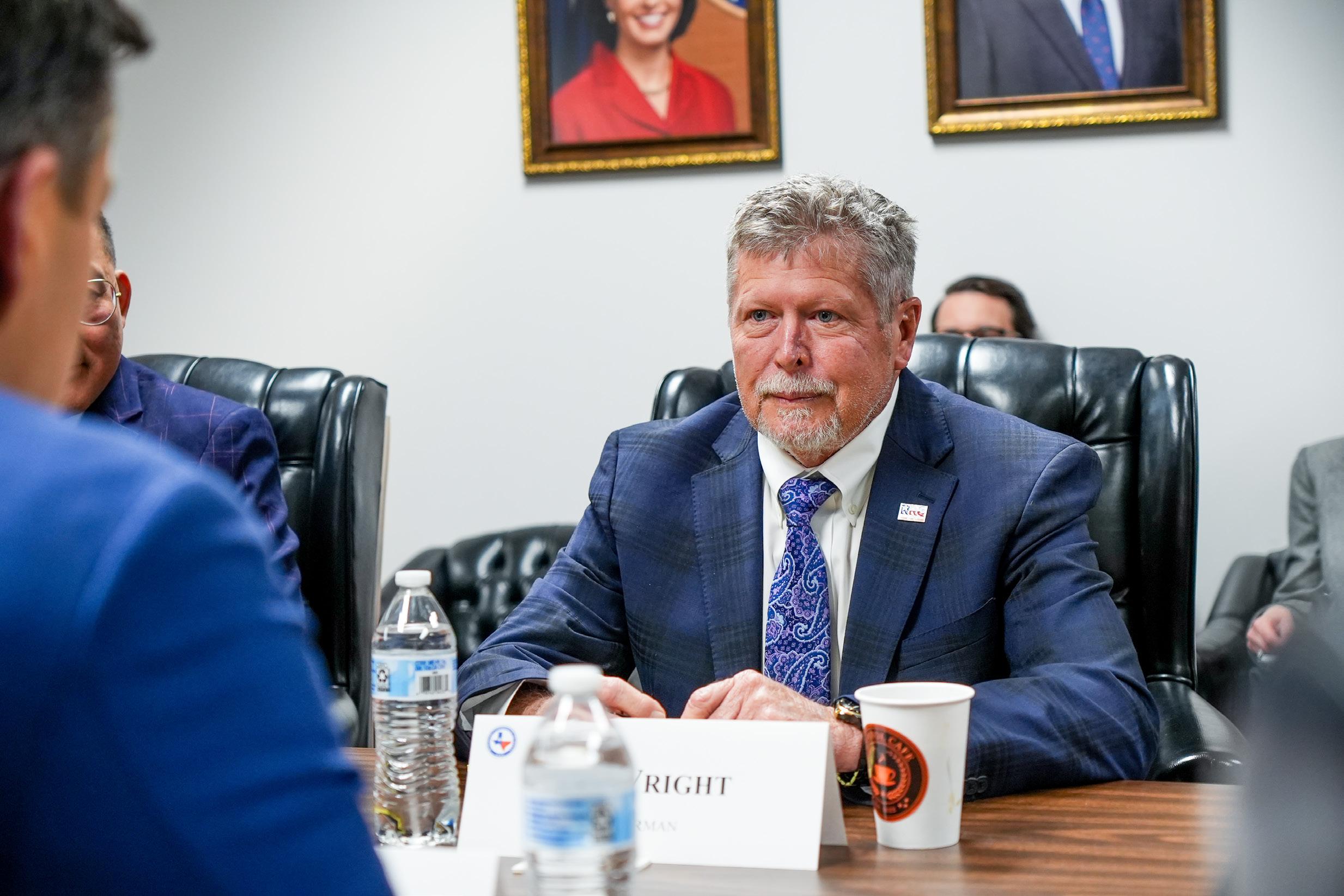
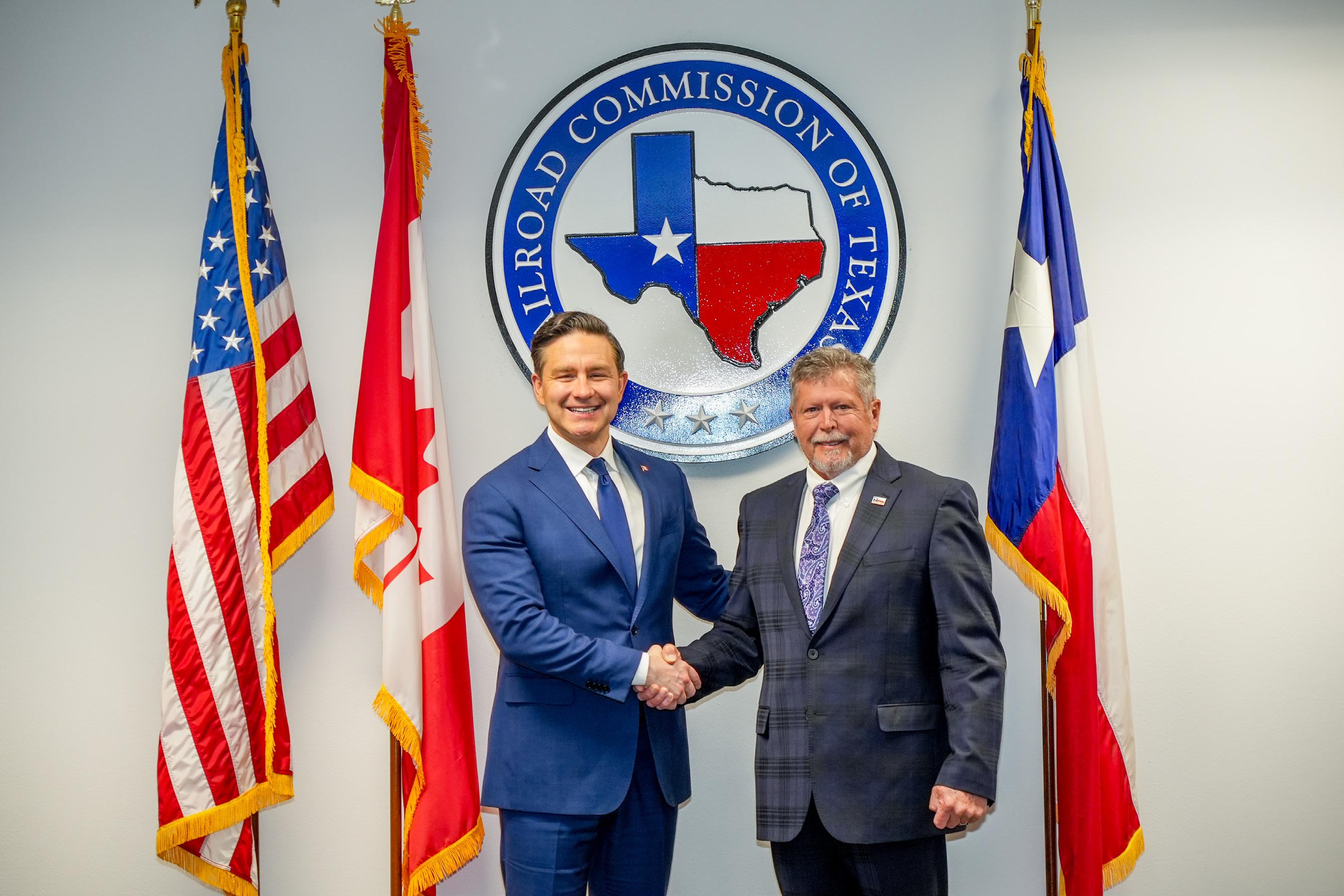
The Railroad Commission of Texas (RRC) welcomed a group of Canadian dignitaries to our Austin headquarters on March 17 for a conversation about how Texas continues to lead the world in energy regulation and development.
The delegation, led by Canadian Conservative Leader Pierre Poilievre, spent time learning about the RRC’s responsibilities and how the Commission’s work supports one of the most active energy economies in the world.
“It was an honor to host Canadian Conservative Leader Pierre Poilievre at the Railroad Commission of Texas,” said RRC Chairman Jim Wright. “As a native of the Canadian oil and gas producing province of Alberta, Leader Poilievre understands that energy security and common-sense regulatory policies serve as the foundation of a strong economy.”
“The Railroad Commission of Texas has a long and storied history prioritizing common-sense, pro-growth energy policies and it was a
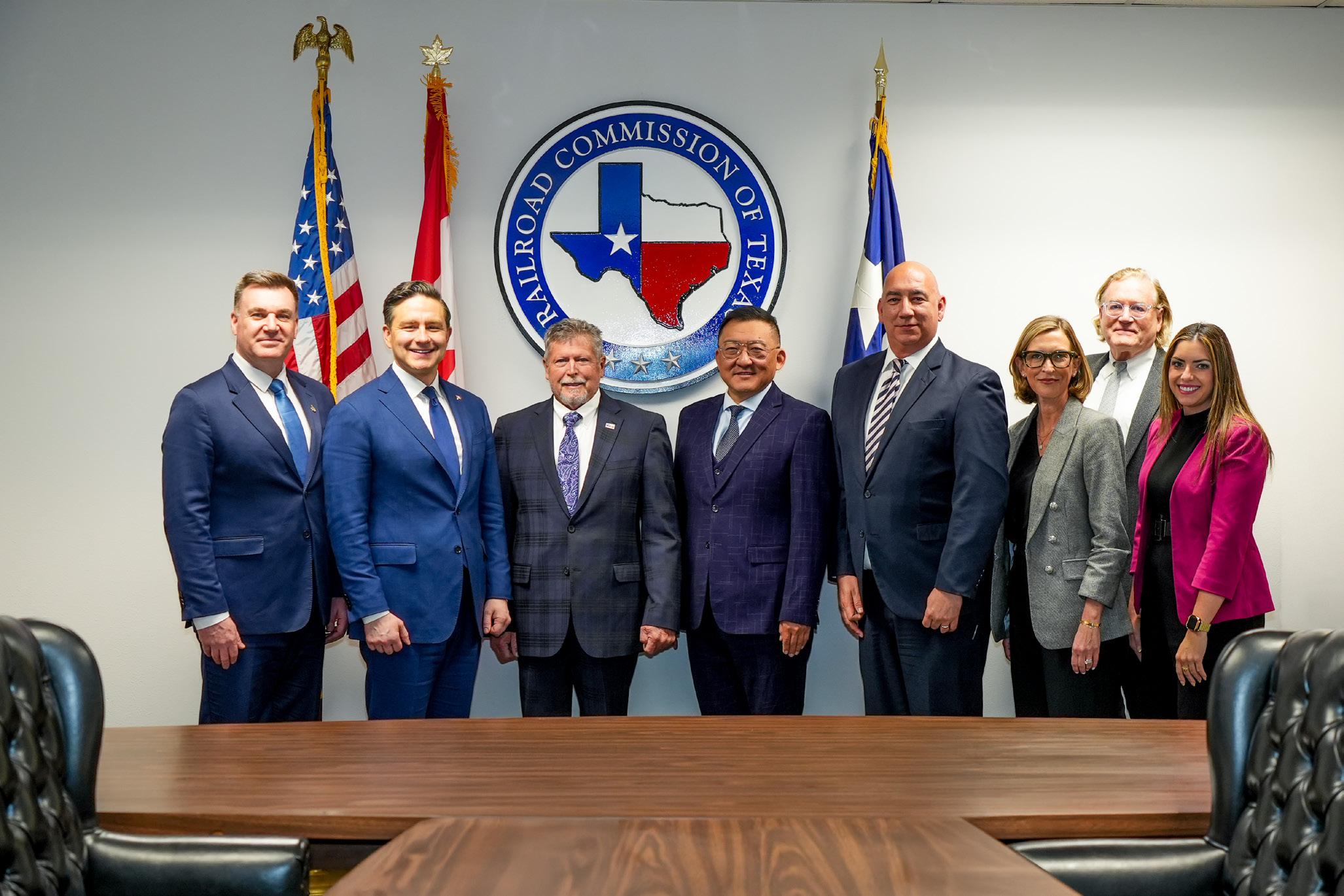
pleasure to discuss the Commission’s outlook and approach with our northern neighbors,” he added.
International visits like this are nothing new for the RRC. Over the past year, the Commission has welcomed delegations from Germany and Argentina who wanted to learn more about Texas’ regulatory approach. Agency representatives also met with Canadian financial leaders to highlight our long standing partnerships with Canadian provinces, including collaboration through
the Interstate Oil and Gas Compact Commission (IOGCC).
This latest visit is another reminder that the RRC remains an important voice in global discussions about energy production and regulation.



improve how we support the oil and gas industry: the P-5 Virtual Agent, scheduled to launch in April 2026.
This project was proposed in the fall of 2025, and by December, Proof of Concept was approved, and procurement was underway.
The P-5 department receives nearly 2,000 calls each month through its general phone queue.
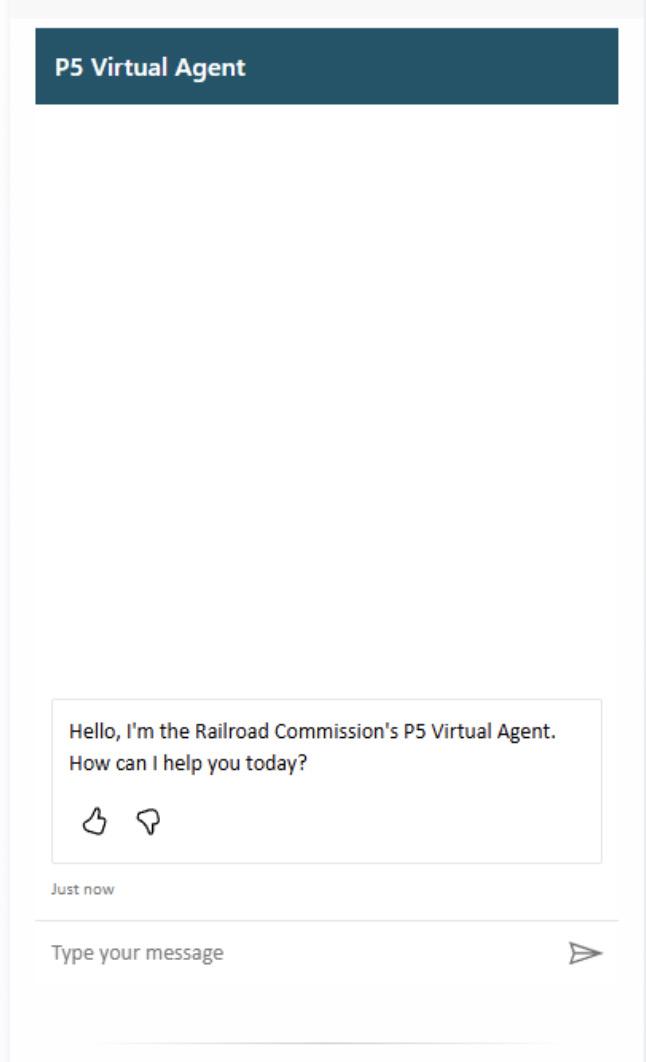
Many of these questions can be answered quickly with information already available on P-5 webpages and documents. The virtual agent is designed to scan these resources and provide users with accurate, immediate answers. Reducing call volume will allow staff to focus on more complex needs, shorten processing times and continue delivering high-quality customer service to the industry.
Development of the virtual agent began in January 2026, when the initial environment and system were set up. As of March, the team is completing user acceptance testing, refining training data and preparing for deployment to production.
With a planned launch in April 2026, the next phase will focus on real-world use. The team will work closely with industry partners to gather feedback, monitor performance and make ongoing improvements to ensure the virtual agent becomes a reliable, user-friendly resource.
This vision was initiated by Joe Stasulli to develop a P-5 Virtual Agent that delivers timely and meaningful support to our partners. This has been a massive undertaking with collaboration across multiple divisions. Advancing this effort has required extensive coordination across ITS, Oil and Gas, Communications and General Counsel, reflecting a strong commitment to crossdivisional collaboration. Thank you to everyone who has contributed their expertise and effort to move this project forward.
Project Team
Jennifer Gilmore, Nayeli Gutierrez, Ken Holman, Diya Lalchandani, Steve Hilchey, Nathan Pantle, Eva Bastos, Katherine Kopec and Frederick Caberto.

As a friendly reminder, employees may participate in social media networks outside the workplace using a personal email address and/or personal social media account, but should always use good judgment. Please avoid sharing confidential or legally privileged Commission information and refrain from presenting personal views as the official position of the Commission.
We encourage everyone to share their work and celebrate our wins online. Our Social Media Policy offers helpful guidance to support responsible engagement.
You can review the full policy on RRC Inside.


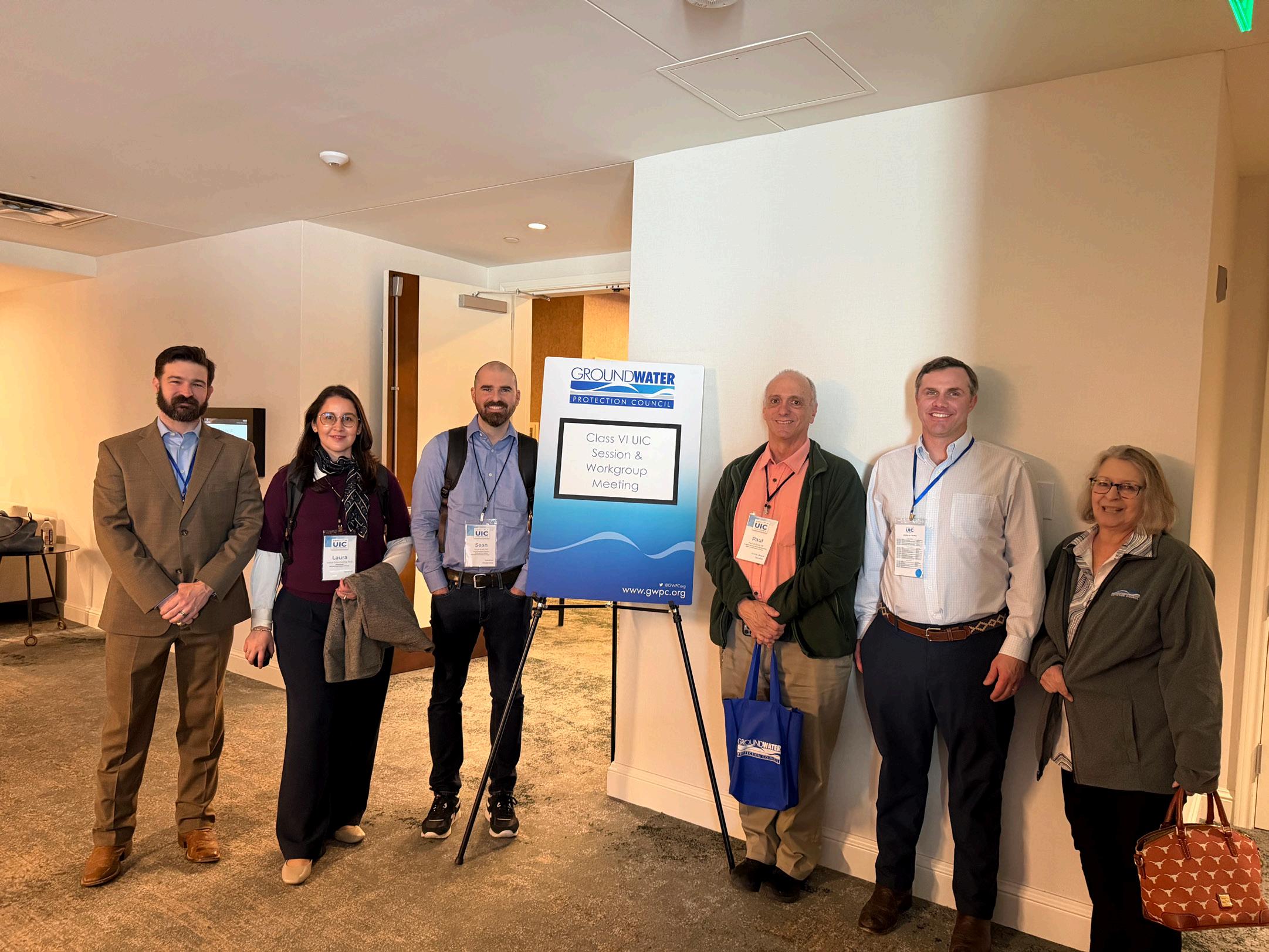
The 2026 Ground Water Protection Council (GWPC) Underground Injection Control (UIC) Conference brought regulators, industry leaders and technical experts together in Fort Worth from February 10 –12.
The Railroad Commission of Texas (RRC) was well represented, with staff from Technical Permitting and Planning and Administration in attendance, learning about UIC program development and regulatory coordination.
Attendees participated in in-depth sessions on emerging regulations, new technologies and best practices shaping the future of underground injection control. The conference also featured technical
workshops and numerous networking opportunities, allowing participants to exchange insights and strengthen collaboration across the sector.
By taking part in these discussions, the RRC helps advance shared goals for safe, reliable underground injection practices across the industry.
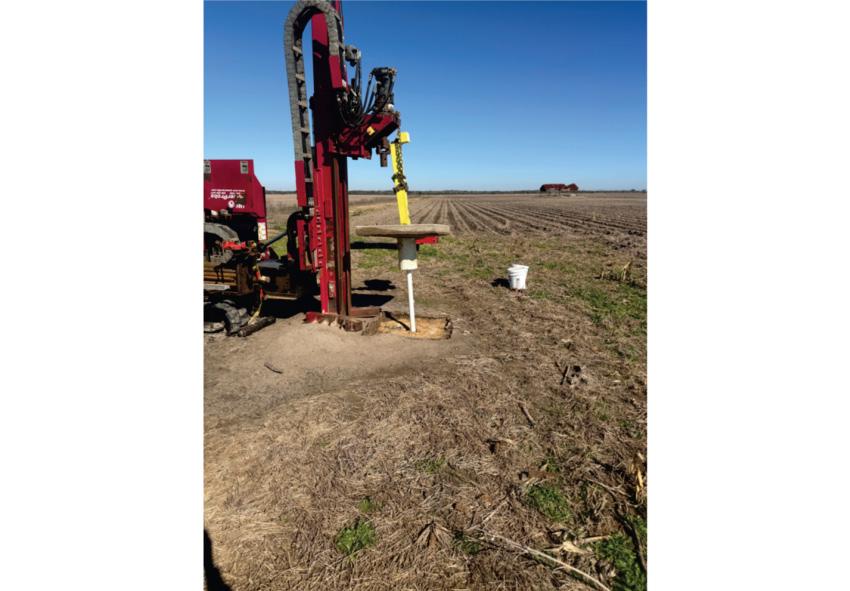
Nancy Forster, a District Office Cleanup Coordinator (DOCC) for District 3, is proud to see increased recognition of women in Site Remediation—thanks in part to the efforts of Dr. Andy Piñon. As one of the DOCCs in District 3, Nancy serves as the liaison, leading remediation efforts with RRC-approved engineering firms in the district. Her focus has always involved managing multiple RRC legacy sites toward closure, and the team has done just that, as implied by the title.
In District 3, the team has successfully closed three legacy sites using tools already available to operators across Texas. To the best of our knowledge, no other DOCC in Site Remediation has used the administrative tool of a Restrictive Covenant (RC) to close such sites. One such site in Matagorda County was recently closed. Nancy directed the selected firm through the process of additional assessments, including the installation of temporary and permanent monitoring wells and groundwater sampling, which confirmed that the only Constituent of Concern (COC) on the site is
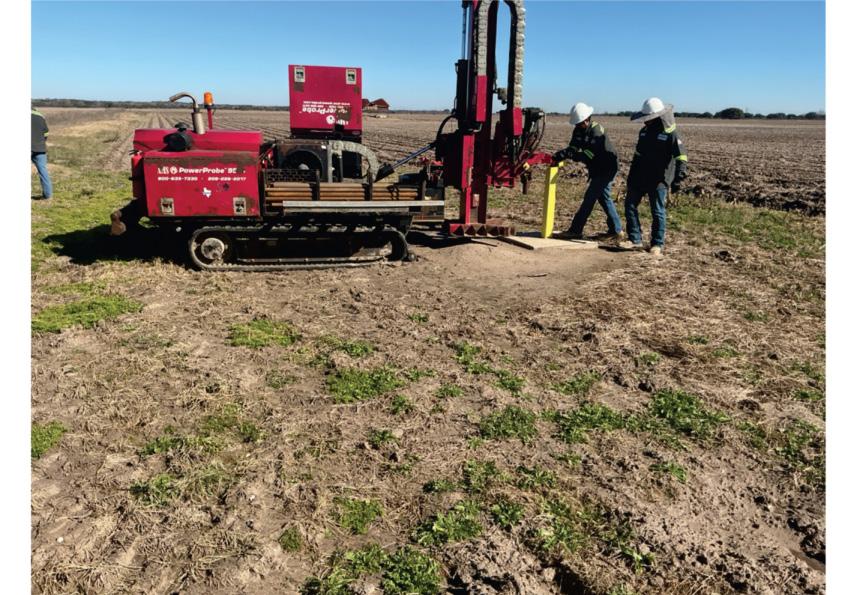
No Chloride concentrations were observed in soil above the RRC Screening Level of 3,000 milligrams per kilogram (mg/kg). Because only residual groundwater impacts above the Texas Secondary Maximum Contaminant Level (TSMCL) of 300 mg/L remain within a defined and stable plume, the use of an RC was the most logical choice for
This effort required collaboration; the landowner had to agree to sign the RC. As a Texas P.G., Nancy alleviated the landowner’s concerns with support from Seth Boettcher of RRC Legal. This demonstrates that by helping each other across the RRC, the agency truly operates as One Team.
With more than 35 years of environmental experience, particularly in remediation, Nancy emphasizes the importance of properly closing a site and taking it off the books. In District 3, she looks forward to leading additional RRC legacy sites to closure. Another one bites the dust…
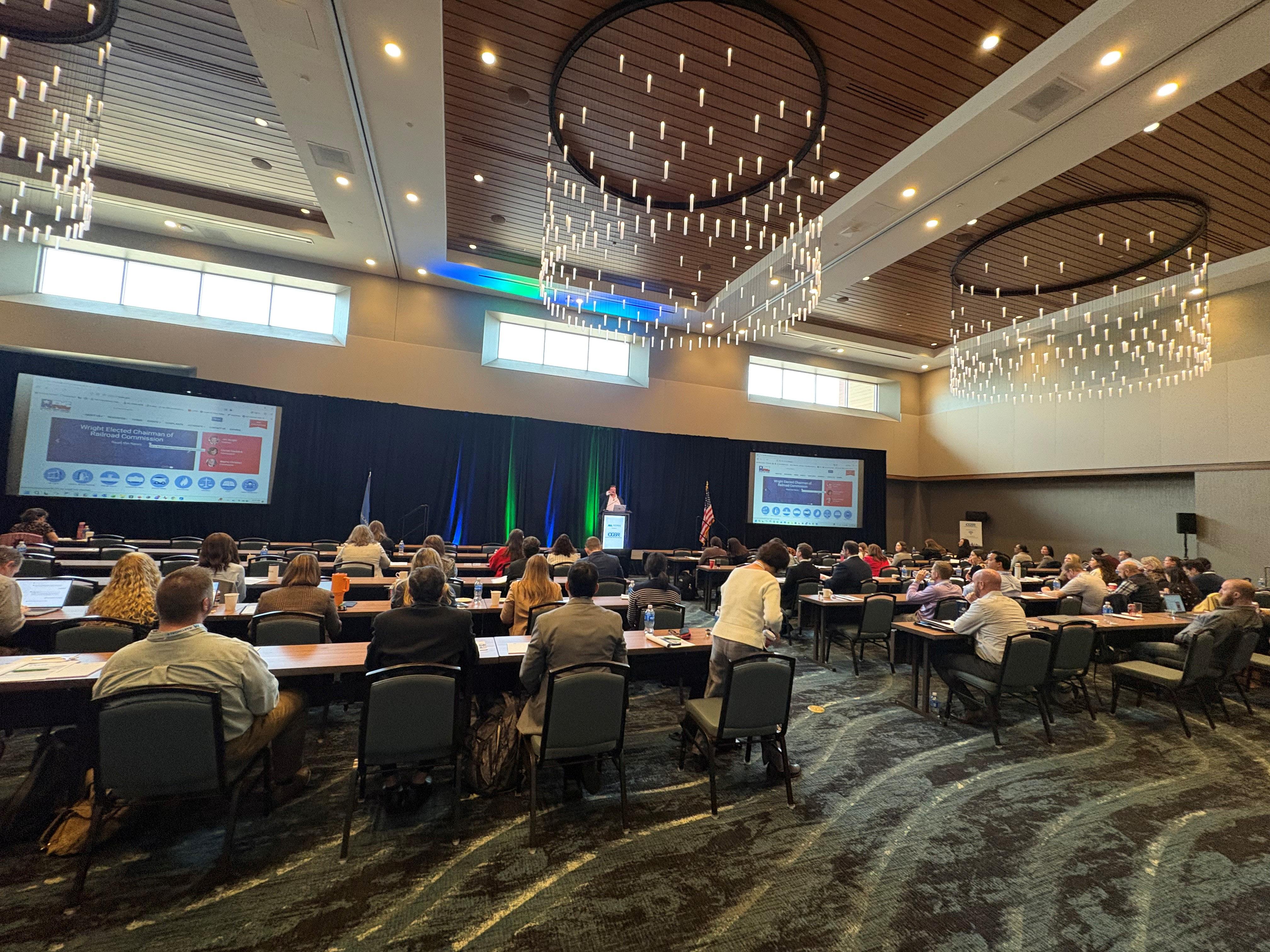

Rafael Navas, Public Outreach Manager, and Joe Stasulli, Oil and Gas Administrative Compliance Director, represented the agency at the Oil and Gas State Reporting Conference (OGSR) in Oklahoma City in February.
They hosted an informational booth for attendees, answering questions and sharing resources while Joe delivered a presentation designed to help participants navigate the Railroad Commission of Texas (RRC) website, use Online Research Queries, locate the Oil and Gas Division’s Texas Administrative Code and identify the appropriate departmental contacts.
The conference offered a valuable opportunity
to connect with stakeholders and highlight tools that enable accurate, efficient reporting.
In February, Seth Boettcher from the RRC’s Office of General Council represented the agency at Texas A&M University School of Law’s 15th Annual Energy Law Symposium, a leading forum for forward-looking energy policy and legal analysis.
He spoke on a panel focused on legal careers in the energy industry, offering a firsthand perspective on government service, explaining the work of RRC attorneys and sharing insights into the agency’s role in supporting responsible and effective energy regulation.
Staff from the Office of Public Engagement (OPE) continued their commitment to serving rural Texas with a busy tour of the Panhandle this past month. Public Outreach Coordinator, Tiffany Cotledge, met with the Rotary Club of Lubbock and the Borger Kiwanis Club to share agency updates and answer local questions. A huge shout-out to the Pampa District Office, whose staff joined the OPE team to
The Office of Public Engagement and the Communications Division recently hosted the agency's third Listening Session, giving Texans a chance to learn more about the RRC and share their perspectives on the agency’s role in regulating the oil and gas industry.
The March 11 session brought together 38 participants, who expressed appreciation for both the presentation and the opportunity to ask questions on topics such as carbon capture, produced water and orphan wells.
The next session is scheduled for May 13.

Did you know that April is National Volunteer Month? You may know that every Fall, the state conducts the State Employee Charitable Campaign (SECC), but did you know we offer benefits that create opportunities for you to give back throughout the year?
In honor of National Volunteer Month, we are highlighting certain leave benefits employees can use to give back to their community. Read below for more info!
• Employees can receive up to five hours each month to participate in mandatory training or perform volunteer services for CASA.
• Employees who are volunteers of an organization that is a member of the Texas Voluntary Organizations Active in Disaster may receive, with authorization, up to 10 days each fiscal year to participate in disaster relief services. The services that are provided must be for a state of disaster declared by the Governor.
• Employees who are volunteer firefighters, EMS and/or search and rescue volunteers may receive, with authorization, up to five days a year to attend training services.
• In emergency situations, with authorization, paid leave may be granted to a volunteer firefighter, an EMS volunteer or a search and rescue volunteer as needed during normal work hours.
Leadership Lens is a monthly feature dedicated to sharing valuable insights from RRC leadership. Through Q&As, leaders reflect on their past experiences, discuss strategic approaches, share their vision for the future, highlight division resources and o er practical tips to support professional growth.
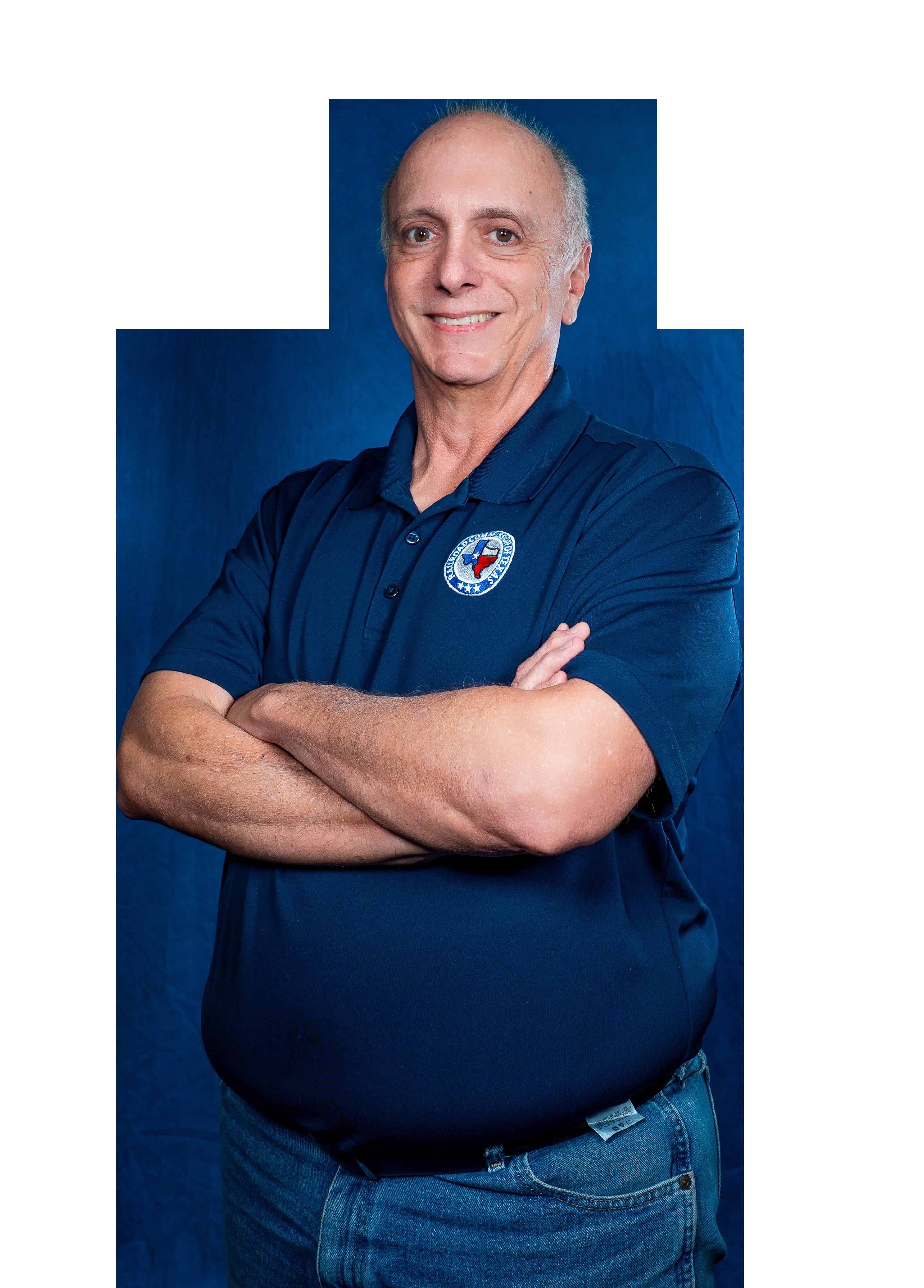

1
Can you share a memorable moment from your career at the Railroad Commission?
There is not one moment, there are thousands, good and bad, that have come together for me at the Commission. What is important to me is that I keep myself open to learning and growing from everyone I encounter along the way. July will mark my 15th year at the Commission; oil and gas regulation is my third career—environmental engineer, seminarian, now petroleum engineer (the third time is the charm!). I have grown more as a person, an engineer and a leader in these past few years than I did in my first 25 years of professional life, and I attribute much of this growth to my work at the Commission. But mostly, I have grown from the relationships forged with Commission staff, industry representatives and non-governmental organizations, as we, the regulated community, faced the contemporary challenges of produced water management (including induced seismicity, injection issues and produced water recycling), flaring and rulemaking. The relationships and experiences born of the earlier challenges laid the foundations for addressing later challenges. So, what I want to say is that good relationships—and the requisite honesty, communication, openness, integrity, reliability and trustworthiness—matter.
2
How do you see your division evolving over the next few years?
The Oil and Gas Division will develop the capabilities to effectively respond to and prevent future problems through data, analysis and interpretation. Our legacy data systems do not provide efficient means of engaging with and learning from the huge amounts of data collected in the normal course of our regulatory business. Our new electronic and data initiatives provide us with the opportunity to radically change how we interact with our data… and thus how we interact with the industry, the environment, the people of Texas and the resources we are charged to protect. Some aspects of data knowledge and proficiency will become essential. I don’t necessarily mean that everyone will learn Python, but we will need to have a better understanding of the rules that require data, where and how the data is stored and how different data elements relate to one another.
3
4
What advice would you give to new employees?
Be curious! Get to know the rules. Get to know the “why” behind the rules. Get to know the “spirit” or the “breath” of the rules. Take the time to learn. What rule(s) does your job require you to know? Do you know when the rule was last updated? Do you know why? Have you read the preamble to that rulemaking? What is your personal professional opinion on how a rule can be improved? Can you defend that opinion? Have you shared this insight with your manager? Why not?
And the same goes for data. Be curious! Take the time to learn!
If you were to play hooky from work, where would we find you?
Well, that depends on a variety of factors. If it is sunny, I would probably be at Lazarus Brewing on Airport Boulevard with my wife and pit crew buddies from our kids’ high school marching band. If it is raining, we would probably be at Austin Beerworks Sprinkle Valley. But if we are hungry, we would be at Oddwood Brewing on Manor Road because of the barbecue and pizza. Or somewhere new. You never know; hooky just happens.

Track Changes is a useful editing tool in Microso Word that lets you record edits, comments and formatting updates without permanently altering the original content. When Track Changes is turned on, any insertions, deletions or formatting adjustments are visibly marked so reviewers can easily see what has been modified. This is especially helpful when collaborating with others, reviewing policies or approving formal documents.
To use Track Changes in Microso Word, go to the Review tab and select Track Changes to turn it on. As you make edits, they will appear as marked changes in the document. You can also add comments by highlighting text and selecting “New Comment.” Once the review is complete, changes can be accepted or rejected individually, or all at once, using the
options in the “Review” tab. Using Track Changes improves collaboration, reduces confusion and maintains document accuracy. Always ensure the feature is turned off before finalizing and sharing the completed version, and review all comments and tracked edits to confirm the document reflects the intended final content.

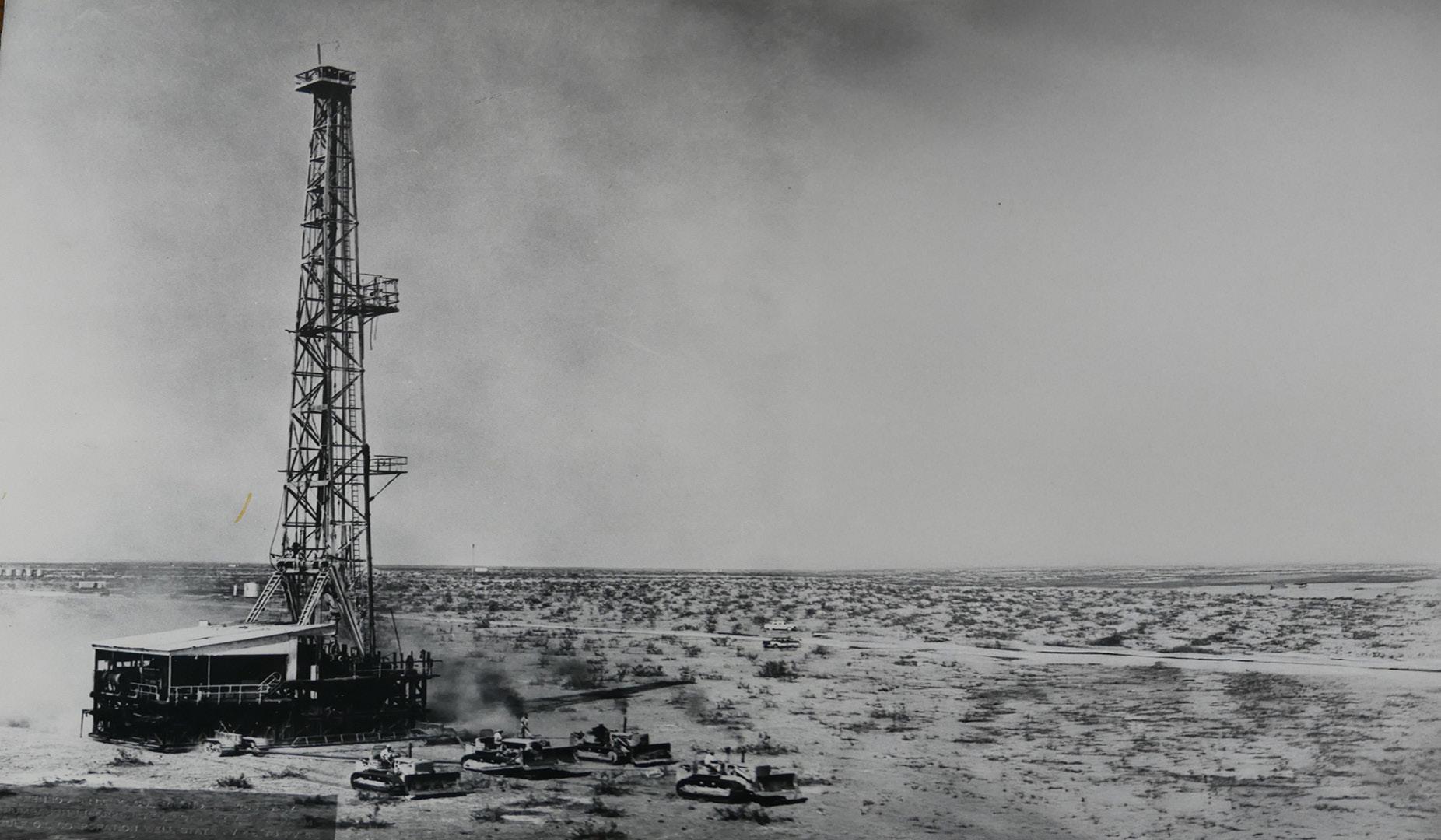
The Penrod Drilling Company’s Rig No.1, a jack-knife rotary rig, is shown here a er being moved into position by Rumbaugh, Inc. from Gulf Oil Corporation.
This photo was taken on October 7, 1936. The Rumbaugh family were early pioneers in the petroleum industry.