The 2026 Conference Theme is "Unexpected". Unexpected invites us to explore those moments of revelation and inspiration that break the conventional molds. As landscape architects and designers, we move beyond predictable patterns to discover groundbreaking solutions, novel concepts, and unanticipated beauty. Join us as we delve into how the unforeseen can propel us towards extraordinary achievements. Through insightful sessions, engaging workshops, and collaborative networking, we'll uncover the unexpected possibilities that redefine landscapes and design in ways that leave a lasting impact.
Let’s embrace the unexpected and let it shape our visions for a more vibrant and innovative future.
CONTINUING EDUCATION CREDITS
To track your attendance, your name badge will be scanned before each session. Badge scanners will be by the entrance for the first 15 minutes of each session. If you badge is not scanned you will not receive your CEU credit.
CEU CERTIFICATE ACCESS:
https://www.expobadge.com/ certification/ASLA2026
Use this link to receive your certificate of attendance with the continuing education units you earned.
Log in with the email address used when you registered for the conference. You can save the file to a .pdf document, or print the certificate for your records. This site will be live 24-hours post-conference.
CONFERENCE MOBILE APP
Access the conference mobile app by installing the Yapp app and entering my.yapp.us/TXASLA2025 or scan the QR code:
CONNECT WITH US!
LINKEDIN // Texas ASLA INSTAGRAM // @texasasla FACEBOOK // Texas ASLA WEBSITE // texasasla.org
AWARDS BOOKLET:
SPECIAL THANKS TO OUR CONFERENCE SPONSORS!
TITLE webuildfun
KEYNOTE Landscape Structures
AWARDS Vestre
CLASSROOM A funabounds
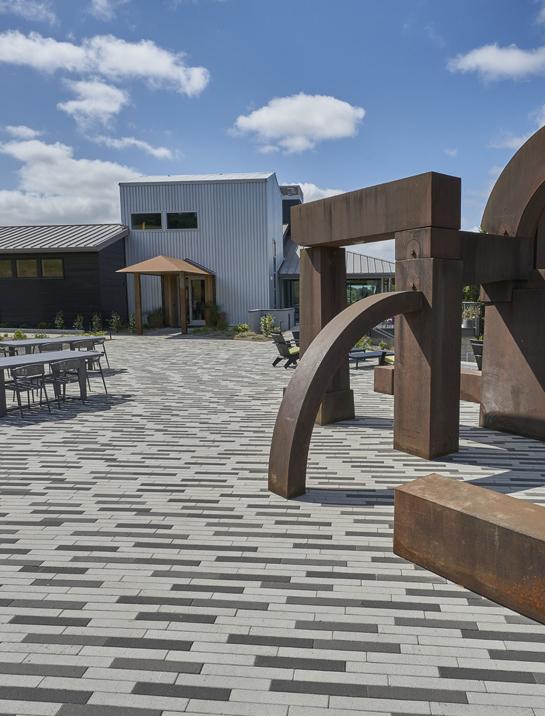
CLASSROOM B Keystone Hardscapes
CLASSROOM C Synlawn Texas
TOUR Parkscapes Texas Form & Fiber GreenTheory
LAUNCHPAD
Landscape Forms, Inc. Child's Play / Burke / Corkeen
DREAM BIG BRONZE Longhorn Inc Kompan in-Contro
MOBILE APP ArborStakes™l
TOTE BAG Millis Development & Construction
TAPE MEASURE Synthetic Grass DFW
TAKE A GOAL, LEAVE A GOAL Principal Industries
LANYARD
EverGro Organic Recycling
PHOTO OP B-K Lighting
NETWORKING MENTORING Kimley-Horn
BINGO CARD EXPO
SCAVENGER HUNT
Belgard Commercial The Western Group Streetlife USA Inc
Landscape Forms, Inc. funabounds
USA Shade
Bamert Seed Company SynLawn Texas
TEXAS ASLA 2025 // FORT WORTH
MESSAGE FROM THE PRESIDENT
Dear TXASLA Members, Sponsors, and Conference Attendees,
Welcome to the 2026 Texas ASLA Annual Conference in Fort Worth. This year’s theme, Unexpected, invites us to celebrate the unforeseen moments of creativity, insight, and community impact that define the evolving practice of landscape architecture.
Since we last met in 2025, our chapter has continued to move forward with purpose and heart. Together, we have celebrated members whose leadership and design excellence earned well-deserved recognition, strengthened outreach and mentorship efforts that support emerging professionals and students, and expanded programs that invite new voices into our profession. We are especially thrilled to share that the Goliad Stone Walls & Pylons project earned Third Place in the Historic American Landscapes Survey (HALS) Challenge. This nationally recognized project documents the historic stone walls along the Texas Revolution Memorial Highway (SH 29, now US 183) at Sparrow Creek and the railroad underpass, underscoring the value of preserving Texas’s cultural landscapes. Across the state, Texas landscape architects are shaping resilient, inclusive, and meaningful places— and telling the story of why our work matters more than ever.
This year’s conference challenges us to embrace the unexpected. In our work, the most impactful ideas often emerge through curiosity, collaboration, and moments we didn’t plan for. Over the next few days, I encourage you to lean into conversations, ask new questions, and find inspiration not only in the sessions, but in the shared experience of being together as a community.
I am continually inspired by the generosity, creativity, and commitment of our members. Thank you for the time, energy, and passion you bring to this profession and to Texas ASLA. Your involvement strengthens our chapter and helps shape a future we can be proud of.
I hope this conference leaves you energized, connected, and excited for what lies ahead.
Warm regards,
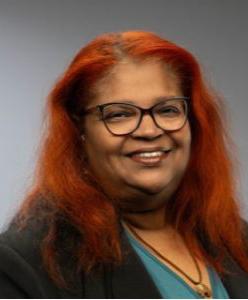
Margarita Padilla-Posey, PLA, ASLA
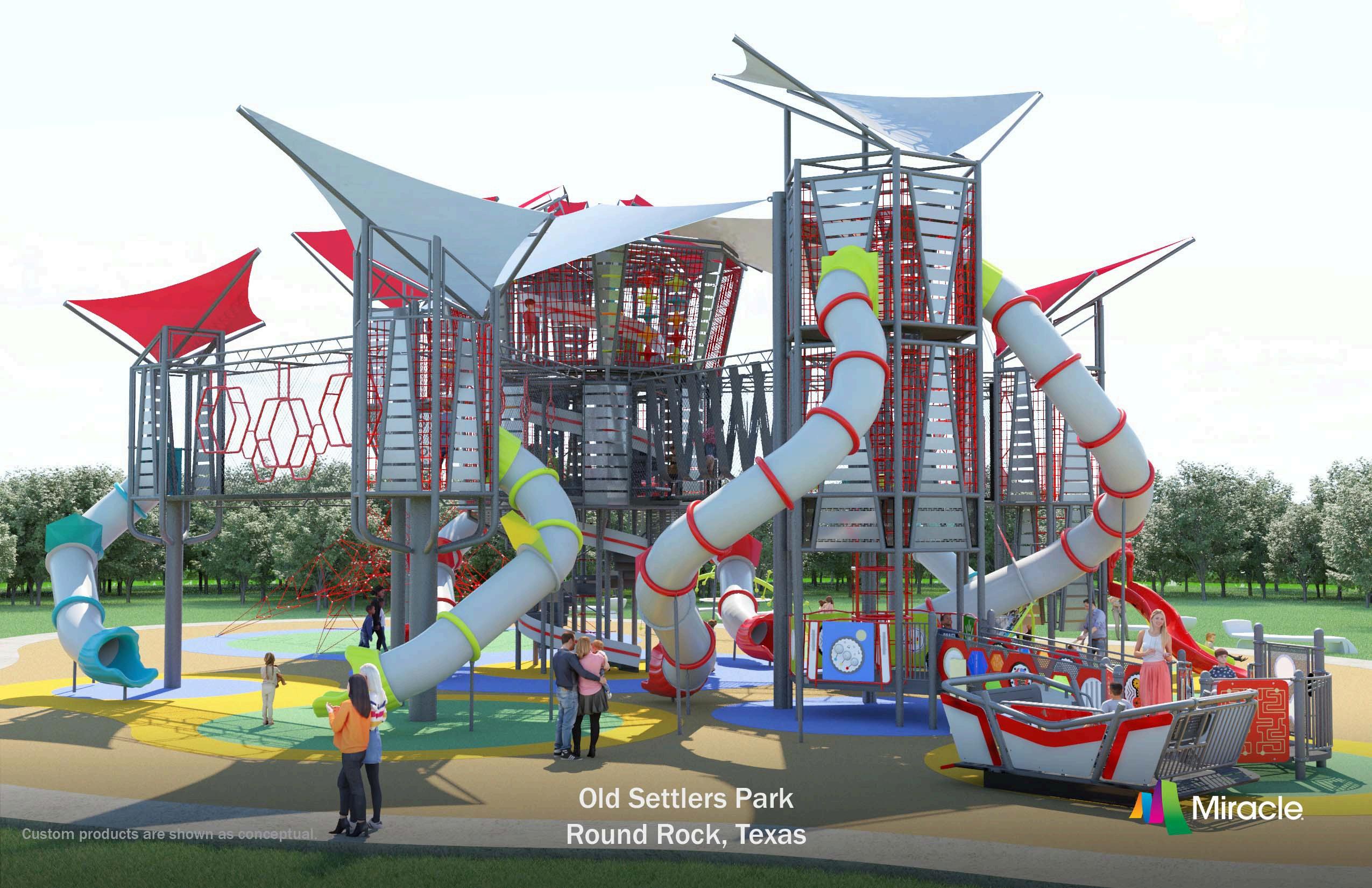
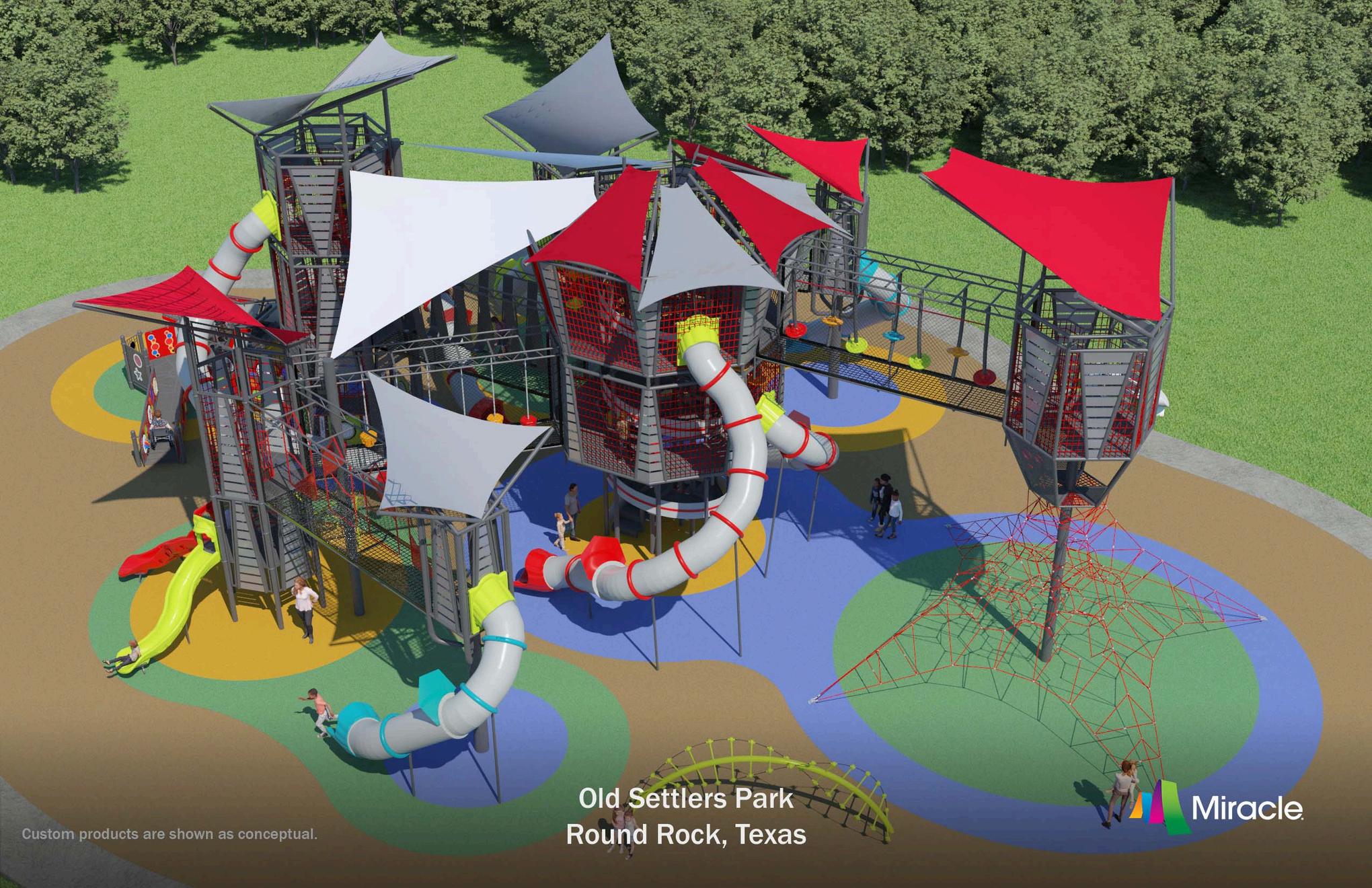
A seriously Texas-Sized playground is coming to Round Rock, TX very soon! Looking to make a “Texas-Sized” impact on your community? Scan the QR code or visit www webuildfun com to learn more
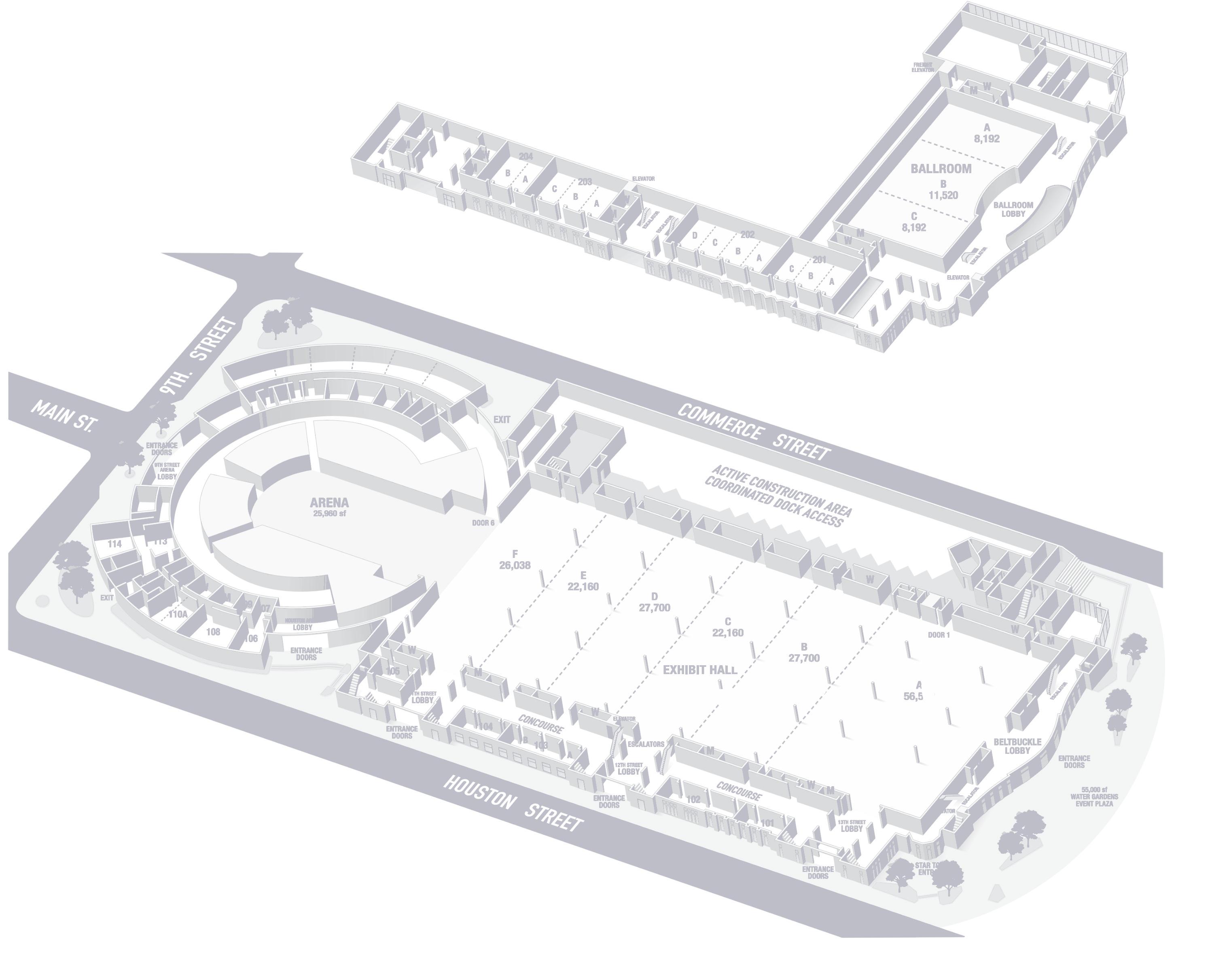
CONVENTION CENTER
FORT WORTH CONVENTION CENTER
1201 HOUSTON ST, FORT WORTH, TX 76102
FREE INTERNET ACCESS
Complimentary Internet is a free service and is available for use in all public spaces and meeting rooms.
1. Open Wi-Fi settings on your device and select “Guest Wifi”.
2. First time users will be directed to a splash page to accept terms.
LEVEL2//CLASSROOMS
LEVEL1//EXHIBITHALL&CHECK-IN
CLASSROOM C/201 ABC
ALUMNI RECEPTIONS
BALLROOM
300’s
Landscape Structures Inc. Omega II Fence Systems Tree Mann Solutions
Pink Dirt Site Furnishings
Kraftsman
Holophane / Acuity Brands
Bartlett
Maglin Site Furniture
FenceTrac
Adventure
Native
Form and Fiber, Inc.
PlayWell Group
Exterior Covers
Plant Food
Outdoor Fitness
+ Gardiner
Stake Solutions LLC.
Moon Visions Lighting Invisible Structures
Streetlife USA Inc.
Renfrow+Co
Synthetic Grass Pros
Kompan, Inc.
Playgrounds Etc LLC
fun abounds
Civano Growers
B-K Lighting
BEGA North America
Alamo Stone Company
Water Storage Tanks, Inc.
Kafka Granite
Streetbond by GAF
Child's Play / Burke / Corkeen
Fermob
Iron Age Designs
Landscape Forms, Inc.
Daltile
Waterplay
Creative Play Solutions
DuraPlay
inCon-trol Water Systems
Environmental Design Inc.
Watertronics Netafim
Texas Nursery & Landscape Assoc. HudSign
EXHIBIT HALL + EXHIBITORS
12:30 PM - 5:00 PM
2:30 PM - 5:00 PM
1:30 PM - 2:30 PM
TUESDAY
SCHEDULE
Check In: Attendee Badge Pick-Up & Registration
Exhibitor Registration | Registration Desk
Healthy Schools, Thriving Students: How Green Schools Promote Wellness & Learning | Rich Bienvenu & Danielle Cleveland
Classroom C /201 ABC
2:30 PM - 3:30 PM
3:30 PM - 4:30 PM
2:00 PM - 4:00 PM
6:30 PM - 8:30 PM
Beyond the Myths: Redefining Inclusive Play for Every Body | Natalie Mackay
Classroom C /201 ABC
Building Resilience: Identifying Nature-Based Solutions in an Urban Environment | Hayden Akana
Classroom C /201 ABC
Journey Through the Galaxy: An Interactive Playground Tour | Jeremy Blad, Amber Shive, Quincy Crow, & Greg Hawkins
Convention Center Registration Desk
Fort Worth Zoo Walking Tour | Ashley Lewis
Convention Center Registration Desk
Reviving a 1930 Icon for a 21st-Century Neighborhood Tour | Kenzie Porter, Mark Dabney, Alysa Gapinski, & John Ainsworth
Convention Center Registration Desk
Welcome Reception | Modern Art Museum of Fort Worth
3200 Darnell St. Fort Worth, TX 76107
Welcome Reception
6:30 PM - 8:30 PM
Join us at the Modern Art Museum for an evening of mixing and mingling. The Modern maintains one of the foremost collections of modern and contemporary international art in the central United States. Various movements and styles are represented in the first-floor galleries, including Abstract Expressionism, Pop Art, and Minimalism. (light food and drinks provided)
3200 Darnell St. Fort Worth, TX 76107
Modern Art Museum of Fort Worth
Healthy Schools, Thriving Students: How Green Schools Promote Wellness &Learning
1:30 PM - 2:30 PM
Outdoor spaces are vital to student wellness, learning, and community connection. When thoughtfully designed, school landscapes become extensions of the classroom—supporting mental health, physical activity, and social engagement while fostering curiosity and environmental stewardship. This session explores research on how outdoor environments influence cognition, stress, and well-being, and shares strategies and case studies that show how schools can integrate outdoor learning, set wellness goals, and design sustainable, resilient spaces that help students and communities thrive.
CEU Credits: (1) CEPH, HSW, Sustainable
Speakers Bios
Rich Bienvenu, PLA / ASLA /LEED AP BD+C Principal, LPA Design
With over 30 years of experience in Landscape Architecture, Rich Bienvenu has been a driving force in the development of sustainable landscapes across California and Texas. His work consistently uses design to foster meaningful connections between people, nature, and the built environment. Rich has led the design of more than 200 educational projects, with a focus on higher education, including work at both public universities and private institutions. His portfolio also includes corporate campuses, commercial and institutional projects, mixed-use developments, and a wide range of public and private landscapes. As Director of Design for Landscape Architecture at LPA Design Studios, Rich plays a central role in multidisciplinary collaboration, working closely with architects and civil engineers from the earliest project stages to dissolve the boundaries between interior and exterior environments. He contributes across all regional LPA offices, championing program-driven, socially focused site design rooted in sustainability. A graduate of the College of Environmental Science and Forestry at Syracuse University, Rich has received numerous accolades, including a National ASLA Honor Award for Toyota Motor’s South Campus in 2005 and several recent Texas ASLA awards for work at LPA. He is passionate about mentoring emerging professionals and advancing LPA’s mission of design excellence with no excuses. In 2025, LPA was named the National AIA Firm of the Year. Rich is a licensed landscape architect in California and Texas and an active member of the American Society of Landscape Architects (ASLA) and the U.S. Green Building Council (USGBC). He recently relocated to San Antonio, TX.
Danielle Cleveland ASLA / LEED AP BD + C Associate, Project Designer, LPA Design Studios
Danielle Cleveland is a landscape architect with over 20 years of design experience in education, civic, corporate and healthcare projects. She works closely with LPA’s in-house research team to provide evidencebased design solutions that help clients plan purposeful learning and work environments for wellness. She brings a research-based approach and a passion for designing nature-based outdoor learning, gathering and play environments that promote wellness for all learners in each developmental stage, acknowledging physical or mental variability for an equal chance to thrive. Danielle works closely with clients to understand their needs and provides creative, budget-conscious design solutions that engage each user.
Beyond the Myths: Redefining Inclusive Play for Every Body
2:30 PM - 3:30 PM
You’ve heard the excuses: “Most people aren’t disabled,” “Inclusive is boring,” “Flat ground isn’t a playground,” and “It’s not worth the money.” These aren’t opinions—they’re myths blocking progress. Here’s the truth: you can’t aim for what you don’t know exists. Inclusive playgrounds aren’t boring or wasteful—they set the standard when done right. This session busts five common myths with real quotes and real project examples. No matter the space, budget, or resistance, you’ll learn how inclusive design works—and how to advocate for it with confidence.
CEU Credits: (1) CEPH, HSW, Barrier Free
SpeakerBio
Natalie Mackay Executive Director Unlimited Play
Natalie Mackay is the founder and CEO of Unlimited Play, a nonprofit dedicated to building playgrounds where every child, regardless of ability, can play side by side. Inspired by her son Zachary, who was born with a rare nervous system disorder, Natalie turned personal heartbreak into a mission of hope. Since founding Unlimited Play in 2003, she has led the creation of more than 150 inclusive playgrounds across North America, transforming communities through play that fosters connection, dignity, and belonging. A graduate of Brigham Young University with a degree in Recreation Management, Natalie combines professional expertise with lived experience to push beyond ADA requirements, creating playgrounds that are both imaginative and truly inclusive. These spaces feature thoughtful design elements such as wide ramps, sensory rich play panels, and accessible surfacing that allow children and families of all abilities to play, grow, and thrive together. Natalie’s work has received national attention, with features on The Kelly Clarkson Show, Nice News, Women’s World, Parents Magazine, and Costco Connection. As a frequent speaker, she has shared her expertise at national conferences including NRPA, ASLA, and many others. Through her advocacy and leadership, Natalie continues to challenge perceptions and inspire action, proving that when playgrounds are designed for everyone, they transform not just play spaces, but entire communities.
Building Resilience: Identifying Nature-Based Solutions in an Urban Environment
3:30 PM - 4:30 PM
As Texas cities continue to expand, the demand for infrastructure that balances growth, resilience, and sustainability have never been greater. Traditional gray infrastructure often addresses only a single function, such as flood control or mobility, while missing opportunities to deliver broader ecological, social, and economic benefits. Nature-based solutions (NbS) provide a multifunctional alternative, managing stormwater, restoring biodiversity, reducing urban heat, offering recreational opportunities, and enhancing cultural and community value. This session will explore how the San Antonio River Authority (SARA) is implementing a proactive process to identify and prioritize high-potential NbS projects early in the planning process.
CEU Credits: (1) CEPH, Sustainable
SpeakerBio
Hayden Akana Landscape Designer San Antonio River Authority
Hayden Akana is the Landscape Designer for the San Antonio River Authority (SARA), where she has been a part of the Planning Unit within the Engineering Department. Her work is centered on implementing naturebased solutions (NBS) that enhance water quality and urban environments within SARA’s four-county jurisdiction, reflecting her commitment to sustainability and environmental stewardship. With an emphasis on resiliency and promoting local multi-benefit solutions, Hayden has contributed to significant SARA projects such as the Leon Creek BMP project for the Watershed Master Plan Program, the Nature-Based Solutions program, and the new Water Quality Improvement Strategies in the San Antonio River Basin program. Her efforts aim to foster safe, clean, and enjoyable rivers while addressing environmental and community needs. Alongside her professional work, Hayden is dedicated to community engagement and education. She volunteers at local events to inform the public about the San Antonio River Authority's efforts, emphasizing the importance of small-scale actions in contributing to larger environmental goals, as well as empowering and educating individuals to make a positive impact on their surroundings. Through her work, Hayden strives to create meaningful connections between people and nature, underscoring the importance of landscape architecture in building resilient, sustainable communities that are prepared to face the environmental challenges of the future.
Journey Through the Galaxy: An Interactive Playground Tour
2:00 PM - 4:00 PM
Great design may appear effortless, but achieving it requires vision, collaboration, and intention—and playgrounds are no exception. This session invites participants to tour Galaxy Park, the outdoor interactive playground in the courtyard of the Fort Worth Museum of Science and History, and experience firsthand how thoughtful design transforms community spaces. As we walk through the site, we’ll discuss the planning process, equipment selection, and the larger vision behind creating a play environment that is engaging, inclusive, and rooted in best practices. Along the way, we’ll connect this local example to broader global trends that are shaping playground design today, exploring how aesthetics, materials, and innovation can elevate outdoor spaces into places of both play and meaning.
CEU Credits: (1) CEPH, HSW, Barrier-Free
Speakers Bios
Jeremy Blad Principal, Valley Quest Design
Jeremy is the co-founder and lead design principal of Valley Quest Design, a registered landscape architect with more than 20 years of professional practice and an avid fan of playground design, Jeremy's broad experience encompasses a wide variety of landscape architecture - from transportation, urban planning, parks and recreation to residential, commercial, hospitality, and institutional. Jeremy's work has taken him all over the world and this country. Before Valley Quest's founding, Jeremy's work took him to the Middle East and Asia, including living and working for four years in Abu Dhabi, United Arab Emirates. He has worked for several engineering, planning, architecture and landscape architecture firms of various sizes. These days, Jeremy is content staying in one place for the most part in Denton, Texas, and working on public and private projects of all types - but still loving playgrounds more than almost any others!
Quincy Crow Civil Engineer, Kimley-Horn
Quincy graduated from Texas A&M University with a Bachelor's in Landscape Architecture and a Master of Science in Land Development. His experience and expertise effectively integrate creative design with practiced delivery which benefits both the project and the client. While working for one of the leading land developers in Dallas-Fort Worth, Quincy was responsible for delivering more than 1,000 lots and nearly $60M in award-winning amenities. Quincy's time is best spent in the field and studio, making certain the design intent is achieved on budget and on time. From land planners and architects to utility companies and municipalities, Quincy coordinates teams to see a project from the pages of a plan to the splendor of a grand opening event.
Speakers Bios
Amber Shrive Vice President of Education, Fort Worth Museum of Science and History
Amber Shive, Vice President of Education at the Fort Worth Museum of Science and History (FWMSH), holds a degree from the University of Texas at Austin and has over 17 years of experience at the museum. Having first engaged with the museum as a student in the Museum School program, she now oversees the development, implementation, and evaluation of its diverse educational initiatives, including on-site education programs, Museum School, hands-on demonstration, and outreach efforts. A form high school teacher, Amber leads with a deep commitment to lifelong learning, utilizing innovative teaching techniques and technologies to enhance program design. Collaborating with a dedicated team, she advances the museum's educational vision, increasing school participation and family learning engagement while addressing the needs of diverse audiences and community stakeholders.
Greg Hawkins Brand Ambassador, Whirlix Design Inc.
Greg has dedicated his career to enhancing opportunities for engagement with the outdoors. Over more than two decades in the field, Greg has witnessed transformative changes in recreation—from design innovations and evolving materials to impactful trends shaping how communities use and value public spaces.
After a dozen years in Corporate America, Greg brought his business experience into the recreation industry, where he has since specialized in playgrounds, skateparks, shade, and spraygrounds—primarily with Landscape Structures, Inc. His expertise positions him at the forefront of advancing inclusive, sustainable, and innovative outdoor environments. Greg takes pride in sharing industry insights, drawing on years of collaboration with professionals and communities to create inviting, meaningful spaces.
Known for his ability to stay ahead of industry developments, Greg provides informed guidance tailored to the unique needs of each project. He is passionate about creating environments that inspire joy, connection, and well-being while generating lasting impact for communities. His work reflects a commitment to progressive design and the belief that fulfillment comes not only from serving ourselves, but from investing in others.
Fort Worth Zoo Walking Tour
2:00 PM - 4:00 PM
This guided tour offers a landscape architect’s perspective on over 20 acres of recently developed zoo exhibits that have elevated the Fort Worth Zoo into one of the region’s top attractions. Ashley Lewis will share lessons learned from designing complex, themed environments that balance aesthetics, functionality, and animal needs. Topics will include floodplain reclamation, complex filtration systems, engineering, thematic elements and habitat enrichment. Participants will see firsthand how thoughtful site planning, grading, and multi-disciplinary coordination come together to create immersive, educational spaces that connect people to wildlife.
CEU Credits: (1) CEPH, HSW
Speakers Bios
Ashley Lewis, PLA
Landscape Architect, Dunaway Associates
With over a decade of experience shaping the Fort Worth Zoo’s evolution, Ashley Lewis brings a sharp eye for detail and a talent for orchestrating complex design efforts. With a sharp eye for detail and a talent for orchestrating complex design efforts, Ashley Lewis plays a pivotal role in bringing large-scale projects to life. As a seasoned landscape architect, she excels at leading multidisciplinary teams through every phase of design and construction, ensuring that vision and execution align seamlessly. Her work has been instrumental in delivering some of the Fort Worth Zoo’s most ambitious capital improvements, where natural beauty and functional design meet. Beyond the zoo, Ashley’s portfolio spans parks and public spaces across the metroplex, reflecting her commitment to creating environments that serve both people and place.
2:00 PM - 4:00 PM
This session explores the unexpected revival of Fort Worth’s 1930 Public Market through the combined perspectives of BOKA Powell and Kimley-Horn. Once a bustling hub of commerce and community, the Market stood vacant for decades, its iconic tower and terra cotta façade fading into the background of a rapidly growing city. Today, through adaptive reuse and thoughtful design, the Public Market is reemerging as the centerpiece of a new mixed-use neighborhood that bridges history and modern living. BOKA reimagined the Market building with sensitivity to its historic character while introducing contemporary functions that activate the interior and reconnect it to the street. In parallel, Kimley-Horn’s landscape architecture team drew on the Market’s agricultural and civic past to shape plazas, walkways, and gathering spaces where materials, planting, and circulation patterns reinterpret history for today’s community. These landscapes act as connective tissue, re-establishing the Market as a civic anchor while creating flexible spaces for farmers’ markets, festivals, and everyday life. The Harden, an adjacent residential development, offered a contrasting design opportunity. Here, KH created a distinctly modern landscape that responds to resident expectations, with a luxury pool and amenity deck that embody contemporary living. Together, the historic and modern landscapes establish a dialogue between past and present, each reinforcing the other. Attendees will learn how BOKA and KH collaborated with the Texas Historic Commission, balanced preservation with innovation, and uncovered unexpected opportunities within constraints. This case study shows how architecture and landscape architecture can transform history into an active, resilient, and inspiring community anchor.
CEU Credits: (1) CEPH, HSW
Speakers Bios
Kenzie Porter, PLA
Landscape Architect, Kimley-Horn
Kenzie Porter is a Landscape Architect and Shareholder with Kimley-Horn, bringing 13 years of experience serving public and private sector clients across community development, retail, mixed-use, parks, and urban living projects. She is recognized for her energy, collaborative spirit, and commitment to exceptional client service, consistently delivering creative solutions that balance innovation, functionality, and long-term value. Passionate about translating client goals into thoughtful, enduring places, Kenzie approaches every project with a problem-solving mindset and a focus on schedule, budget, and community impact. She emphasizes sustainable design practices that integrate low-impact development, water conservation, and resilience. A graduate of Texas A&M University’s Landscape Architecture program, Kenzie also serves on the Professional Advisory Board for the university’s LAUP program, is active in ASLA, and sits on the Urban Land Institute Advisory Board for Building Industry Leaders.
Mark Dabney, AIA, NCARB
Principal, BOKA Powell
Mark Dabney brings more than 30 years of architectural and interior design experience to the firm. Most of Mark’s career has been within Fort Worth and Tarrant County. Mark brings strong leadership skills and professionalism to all projects. Integrity, consensus building, listening and understanding a client’s needs are very important to Mark’s work. He has served as Project Manager and Project Architect on a wide variety of projects throughout his career. Mark maintains a high level of commitment to ensure that clients’ needs are satisfied. Mark delivers excellent service and reliability that clients appreciate.
Alysa Gapinski Landscape Architect, Kimely-Horn
Alysa has eight years of experience serving a diverse group of clients across various project sectors, including parks and recreation, retail, mixed-use, and urban living. As a landscape architect, she takes pride in finding creative solutions to meet client needs and address site constraints, regardless of the project's scale or complexity. Alysa brings a team-oriented approach to her work and embraces cross-disciplinary collaboration to deliver designs that are not only visually aesthetic but also practical and sustainable for both current and future generations.
John Ainsworth,
PE Civil Engineer, Kimley-Horn
John Ainsworth is a Project Manager with 13 years of experience leading civil engineering projects across Texas. His work spans multifamily, healthcare, industrial, retail, commercial, and office developments, giving him a broad perspective on complex project delivery. John is recognized for his ability to keep teams coordinated, maintain clear communication with clients, and provide reliable technical expertise in paving, drainage, utility infrastructure, entitlements, and due diligence. His diverse experience allows him to think creatively and apply practical solutions that align with both regulatory requirements and client goals. John’s commitment to exceptional client service and project success drives his approach, ensuring every design decision contributes to long-term value and community benefit.
5:30 AM - 7:30 AM
7:30 AM - 5:00 PM
8:00 AM - 9:00 AM
9:00 AM - 10: 00 AM
10:00 AM - 11:00 AM
WEDNESDAY SCHEDULE
TOUR | Fort Worth Botanic Garden Jogging Tour
Check In: Attendee Badge Pick-Up & Registration
Keynote Speaker | Ballroom
Exhibit Hall Break | Exhibit Hall AB
Session 2A |
11:00 AM - 11:30 AM
11:30 AM - 12:30 PM
Session 2B |
Designing a National Park and Preserve: The Journey to the 64th Leah Campbell, Tina Valdecanas, & Jonathan Campbell
Classroom A
Avoid the UNEXPECTED by Using Good Specifications Kevin Wang
Classroom B
Session 2C |
Rooted in Place: Re-imagining the Lady Bird Johnson Wildflower Center | Tary Arterburn, Michael Britt, Christy Ten Eyck, Lee Clippard
Classroom C
Exhibit Hall Break | Exhibit Hall AB
Session 3A |
TRWD Recreation Master Plan | Adam Brewster
Classroom A
12:30 PM - 1:45 PM
1:45 PM - 2:45 PM
Session 3B | Session 3C | Session 4A |
Need to know: TBAE Investigations and Enforcement | Pim Mayo, Steve Ramirez
Classroom B
From Mermaids to Meadows: The Unexpected Journey of Spring Lake | Alex Morvant, Jonathan Ogren, Gordon Bohmfalk, Regan O’Brien
Classroom C /201 ABC
Lunch on your own
Surviving the Irrigation Walk-Through | James Pole
Classroom A
Session 4B |
Session 4C |
Lessons from the History of Play | Theresa LaForest
Classroom B
From Overlooked Edge to Civic Destination: The Loop Plaza Story | Jodi House, Jeff Raudabaugh,, Philip Haigh
Classroom C
2:45 PM - 3:45 PM
3:45 PM - 4:45 PM
WEDNESDAY SCHEDULE
Exhibit Hall Break | Exhibit Hall AB
Session 5A |
4:45 PM - 6:00 PM
6:30 PM - - - - - - - -
Session 5B |
Session 5C |
Living Monuments: Preserving Heritage and Indian Marker Trees as Cultural Landscapes | Cheryl Donaldson
Classroom A
Adopting Green Infrastructure in Texas's Urban Regions: Innovative Concepts, Strategies, and Practices | Allan W. Shearer, Eric A. Bernard, Galen Newman, Taner R. Ozdil
Classroom B
Designing for Culture and Inclusion: Alice Martinez Rodriguez Park | Margarita Padilla, Simone Riedl, and Suzanne Quinn
Classroom C
Award Ceremony | Ballroom Alumni Receptions
Texas A&M Alumni Reception | Room 204 AB
Texas Tech Alumni Reception | Room 203 AB
UTA Alumni Reception| Room 203 C
KEYNOTE 1 Creative Resilience
8:00 AM - 9:00 AM
Landscape architects are increasingly aware of the challenges and threats that climate change poses to our built environment and landscapes. Many of us are also increasingly engaged as part of interdisciplinary planning and design teams to develop landscape strategies to mitigate climate risks or make our communities more resilient to them. However, the majority of our projects are not climate adaptation or resilience projects per se, and while many forward-thinking clients and communities prioritize climate adaptation and resilience in the work we do, this is not always the case. What are often perceived as long-term climate threats may pale in comparison to other priorities such as financial security, affordable housing, access to transit and open space, or even the aesthetics for the spaces we design. However, studies and lived experience tell us that designing for and investing in adaptation and resilience now leads to benefits in quality of life and economic stability in the long run.
(1) CPEH, HSW, Sustainable
Keynote SpeakerBio
Pippa Brashear, RLA, WEDG
Resilience Principal and Partner, SCAPE
Pippa Brashear is Resilience Principal and Partner at SCAPE. A leading national expert on resilience planning and design for climate adaptation, Pippa works with multi-disciplinary teams to develop landscape strategies and next-century infrastructure that integrate environmental, economic and social benefits. She leads both planning and built work teams within the firm, bringing an ecological and people-driven approach to SCAPE’s projects—informed by systems thinking; an understanding of natural and nature-based systems; engineering methods; and social and environmental equity.
Pippa holds a Master’s in Landscape Architecture and Master’s in Urban Planning with Distinction from the Graduate School of Design (GSD) at Harvard University. She also holds a Bachelor’s of Arts, cum laude, in Environmental Science and Public Policy from Harvard College.
Designing a National Park and Preserve: The Journey to the 64th
10:00 AM - 11:00 AM
The next national park and preserve is on its way to Macon, GA. Not only will it be the 64th national park in the US, but it will also be Georgia’s first and a major landmark initiative. This land holds deep cultural significance, offers substantial economic potential, and represents a rare opportunity to support both conservation and responsible development. At the heart of this effort is a co-management model: for the first time in U.S. history, a removed Indigenous Nation will co-manage a national park alongside the National Park Service from 1,000 miles away. The Muscogee (Creek) Nation, whose deep ties to the land predate their forced removal in the 1800s, is working closely with federal, state, and regional partners to ensure this sacred area is protected and preserved for generations to come.
Leah has 18 years of experience working on projects for both public and private sector clients including parks, streetscapes, master planned communities, mixed-use development, commercial retail, and more. As a licensed irrigation designer, Leah looks at the preservation of water resources and works to develop efficient irrigation designs that utilize both cost savings for the client and best practices for the environment. Leah was born in Okmulgee, OK which is the Muscogee (Creek) Nation Capital. She was raised in Morris, OK on a Centennial Farm that was settled in 1895 by her Great Grandmother and deeded to their family in 1905. The land was part of her great grandmother’s Creek Indian Allotment and it was recognized as an Oklahoma Centennial Farm by the Oklahoma Historical Society in 1995. Leah’s upbringing, coupled with her heritage, is what motivated her to become a Landscape Architect. Working with natural landforms, and inspiring others to see the beauty in the landscape has always been important to her and what makes her passionate about the work she does.
Tina Valdecanas Principal, Clarity of Place
Tina Valdecanas is a Principal and co-founder of Clarity of Place—a strategic consulting firm—driving its mission to help clients integrate tourism into their local economies and demonstrate the relevancy of destination management organizations. Tina employs her passion for understanding how communities “work” and how placemaking and destination promotion can be leveraged to help clients build communityshared value and grow their visitor economies. Tina’s most recent destination projects range from helping to solve capacity and optimization issues at large, demand-driver venues to strategic and stewardship planning initiatives to help clients ensure the long-term viability of their visitor economies. Tina received her undergraduate degree with honors from the Edmund A. Walsh School of Foreign Service at Georgetown University and her graduate degree from the Nitze School of Advanced International Studies at Johns Hopkins University.
Jonathan Campbell Vice-President, Kimley-Horn
Jonathan, Vice President at Kimley-Horn, has made a meaningful impact on the LA+LP community nationwide. He leads with intention, fostering collaboration and encouraging creative problem-solving throughout every project. He takes the time to understand your staff and values the opportunity to contribute to communities where we live, work, and share history. His thoughtful approach to client relationships reflects KimleyHorn’s commitment to delivering successful landscape architecture projects. Jonathan finds deep fulfillment in seeing communities engage with the spaces he and his team have designed. His passion for service is evident in his volunteer work with CASA, where he creates playhouses to support fundraising efforts. In recognition of this work, he received the ASLA Community Service Award in May 2024. For Jonathan, the greatest reward is watching people connect with the places he helps bring to life.
Avoid the UNEXPECTED by Using Good Specifications
10:00 AM - 11:00 AM
Specifications prevent issues by clearly defining materials, methods, and standards, reducing ambiguity and enabling accurate pricing. They set quality benchmarks and testing requirements that catch problems early while addressing safety, site conditions, and durability to minimize risks. Specs also ensure the project meets all necessary codes and regulations, and by serving as a central reference for the team, they streamline communication and keep the work moving efficiently.
CEU Credits: (1) CEPH, HSW, Sustainable
SpeakerBio
Kevin K. Wang, FCSI, CCS, CCCA, CDT, SCIP Director of Specifications, MOREgroup
Kevin Wang has over 26 years of experience in architecture, most of it dedicated to producing construction specifications. This focus on specifications has yielded exposure to numerous project types throughout Kevin's career, resulting in a detailed knowledge base of construction materials and applications. His experience includes a diverse range of project types, including healthcare, government facilities, K-12 schools, senior living, hospitality, multi-family residential, commercial offices, higher education, retail centers, industrial facilities, automobile dealerships, places of worship, and mixed-use developments. After spending two decades as an independent specifications consultant, he is now Director of Specifications for MOREgroup, overseeing the specifications teams for the entire firm. In this capacity he works to improve practices and efficiencies, both within the specifications department, as well as working to integrate specifications into the overall project delivery workflow process.
Kevin is active in the Construction Specifications Institute (CSI), having served on the Dallas Chapter Board continuously for over a decade, including a term as President. He is also currently on the Fort Worth Chapter Board, South Central Region Secretary, and Director-at-Large on the CSI National Board. He was elevated to Fellow of the Institute in 2024. He is also an active member of Specifications Consultants in Independent Practice (SCIP) and is a former board member.
Kevin lives in the Dallas suburb of Plano, Texas with his wife and their blended family. He enjoys playing classical guitar, running, watching sports, hiking, and listening to film score music. A lifelong Disney fan, he would live full time at Disneyland if he could figure out how to make that happen.
Rooted in Place: Reimagining the Lady Bird Johnson Wildflower Center
10:00 AM - 11:00 AM
The Lady Bird Johnson Wildflower Center has long stood as the regional epicenter of ecological stewardship, native plant research, and landscape architecture innovation for the state of Texas and beyond. In a pivotal moment for the institution’s growth and sustainability, a multidisciplinary team made up of eleven consultants, including Studio Outside Landscape Architects, Lake|Flato Architects, and Ten Eyck Landscape Architects, undertook the creation of a comprehensive Master Plan to guide the Center’s evolution over the next several decades. This session will explore how the design team worked in close coordination with the Wildflower Center to develop a plan that amplifies its mission to “Inspire the Conservation of Native Plants” though elevated visitor experiences, enhanced ecological performance, and a sustainable financial model, strengthening the organization’s role as a state botanical garden grounded in environmental resiliency.
CEU Credits: (1) CEPH, HSW, Sustainable
Speakers Bios
Tary Arterburn
Partner, Studio Outside
Tary Arterburn, FASLA Tary’s design leadership merges with natural energetic spirit, guiding often experimental, and innovative design. Tary is internationally recognized for his design practices and ability to personalize new, as well as existing deeply rooted client relationships. Generosity, level headedness, and sound judgment add to his design rigor heavily rooted in regional nuance, innovative details, and systems.
Christy Ten Eyck PLA, FASLA
Owner, Ten Eyck Landscape Architects Inc.
Christine Ten Eyck’s mission is to connect the urban dweller with nature, and with each project strives to invent progressive ways to create stimulating and serene outdoor living environments in the southwest region. Hardscape design skills coupled with knowledge of indigenous plant palettes have produced outdoor living laboratories for learning and socializing which are nationally recognized as inspirational examples of campus planning projects. Ten Eyck is committed to collaborating with clients and other designers to create meaningful, timeless spaces.
Lee
Clippard
Executive Director , Lady Bird Johnson Wildflower Center
Lee Clippard is the executive director of The University of Texas at Austin Lady Bird Johnson Wildflower Center. He has been a member of the leadership team at the Wildflower Center since 2014, and prior to serving as executive director led the Center’s communications, marketing, plant information and guest experience efforts. Lee holds a bachelor’s degree in biology from UT Austin and a master’s degree in entomology from the University of Wisconsin-Madison. Before joining the Wildflower Center, he was the Senior Director of Communications for the UT Austin College of Natural Sciences. He is a native plant and natural history enthusiast committed to plant and wildlife conservation and creating beautiful, resilient environments.
TRWD Recreation Master Plan
11:30 AM - 12:30 PM
This session provides an overview of the Tarrant Regional Water District’s (TRWD) first-ever Recreation Master Plan — creatively addressing how floodways, reservoirs, and water infrastructure can invite recreation, connectivity, and ecological stewardship. People are naturally drawn to water, and TRWD understands the growing desire for public access to shorelines and outdoor experiences.
The Recreation Master Plan was developed in partnership with Dunaway Associates and PROS Consulting. The team implemented a robust public engagement process that elevated community voices and directly informed design priorities. More than just a vision, this is an actionable plan — with a clear roadmap of large and small projects that will guide TRWD’s recreational investments and partnering for years to come. Attendees will explore how over 100 miles of trails, lakes, and parks were planned to enhance quality of life, promote environmental stewardship, and connect communities, while introducing sustainable land management practices that are reshaping how TRWD maintains and stewards its land and water resources.
CEU Credits: (1) CPEH, HSW,Sustainable
Adam Brewster Senior Landscape Architect/Associate Principal Dunaway Associates
A Texas Tech graduate with over 20 years as a licensed landscape architect, Adam Brewster brings seasoned leadership and creative vision to every project. He led the planning effort to reimagine how people connect with the Trinity River and area lakes, helping TRWD craft a comprehensive strategy to enhance public access, recreation, and ecological stewardship across the district’s vast natural resources. Adam’s collaborative approach and passion for outdoor spaces have shaped transformative projects throughout the region, including city-wide planning initiatives, parks, pools, trails, and zoos across the state—each driven by a commitment to creating meaningful, lasting connections between people and the outdoors.
SpeakerBio
Need to know: TBAE Investigations and Enforcement
11:30 AM - 12:30 PM
Nobody wants to become the subject of an investigation by their licensing board. So how do you avoid it? And if it does come to pass, how do you make it as easy as possible on yourself? In this presentation, you’ll learn all you need to know about investigations and enforcement at TBAE, from beginning to end. And remember to bring your curiosity, because we’ll be there to answer all your questions.
CEU Credits: (1) CEPH, HSW
Speakers Bios
Steve Ramirez
Managing Investigator
Texas Board of Architectural Examiners
Steve has 30 + years of regulatory experience in the fields of building & design. This includes a 23 - year career with the City of Austin Inspections & Code Enforcement Department. He began his work with the Texas Board of Architectural Examiners (TBAE) in October of 2015 in the Registration Department, and for the last 7 years, he’s worked as a TBAE Investigator. Steve has a Bachelor of Science Degree in Architectural Studies from the University of Texas at Austin and is a Certified Investigator (Council on Licensure, Enforcement and Regulation).
Pim Mayo
General Counsel
Texas Board of Architectural Examiners
Pim Mayo is TBAE’s General Counsel and previously held the position of Assistant General Counsel. She has been a practicing attorney for 15 years, including over 10 years working in enforcement for state agencies. Pim grew up in the Dallas area, graduated from the University of Texas at Austin, and received her law degree from St. Mary’s School of Law in San Antonio.
From Mermaids to Meadows: The Unexpected Journey of Spring Lake
11:30 AM - 12:30 PM
Spring Lake, at the headwaters of the San Marcos River, is one of North America’s most significant ecological and cultural landscapes. Fed by over 200 springs, its clear waters support eight endangered species and have sustained human habitation for more than 12,000 years. Its history includes Indigenous settlement, industrial use, and the Aquarena Springs amusement park, known for glass-bottom boats and underwater shows. Today, it is home to Texas State University’s Meadows Center for Water and the Environment. This session highlights how Spring Lake is being transformed into a resilient park where cultural heritage and ecological conservation work together to inspire future landscape architecture.
CEU Credits: (1) CEPH, HSW, Sustainable
Speakers Bios
Alex Morvant Senior Associate, Ten Eyck Landscape Architects
Alex Morvant, PLA is a Senior Associate at Ten Eyck Landscape Architects Inc. where he guides projects from concept through construction with a focus on design excellence, ecological performance, and cultural meaning. His portfolio includes transformative public and institutional landscapes across Texas and the Southwest, with notable contributions to the San Antonio Botanical Garden, Harwood Park, Headwaters at the Comal, and campus projects at Tec de Monterrey in Mexico City, Texas State University Spring Lake Vision Plan, and UTPB Campus Transformation. Alex is passionate about designing landscapes that evolve gracefully over time, embracing the dynamic relationship between people and nature. He is also engaged in TELA’s practice development and long-term leadership, ensuring the firm’s design-first ethos continues to thrive. Born and raised in Lafayette, Louisiana, Alex’s cultural upbringing is rooted in Cajun traditions – whether he’s cooking family recipes, speaking French, or cheering on the LSU Tigers. He carries the values of hospitality, storytelling, and resilience from his Southern Louisiana heritage into his design work, where he strives to create landscapes that are both deeply ecological and deeply human. Now based in Central Texas, he lives in New Braunfels with his wife Kristen and their daughter Amelia.
Speakers Bios
Jonathan Ogren
Principal & Environmental Planner, Siglo Group
Jonathan Ogren is the founder and principal of Siglo Group, a firm focused on ecological and conservation planning. He has broad expertise in environmental assessment, regional analysis, conservation planning, mapping, and land use feasibility studies. A University of Texas graduate, Jonathan holds an M.A. in Geography and the Environment, and a B.A. in Biology. His early professional career included roles with NASA, the Lady Bird Johnson Wildflower Center, and Sequoia National Park. Jonathan has also contributed to the Imagine Austin Comprehensive Plan Advisory Task Force, and his leadership continues to guide Siglo Group’s sustainable land planning projects.
Regan O'Brien
Senior Associate, TELA
Regan discovered her fascination with public space by exploring her hometown of San Antonio on foot. Stringing together parks, neighborhoods, and portions of the Riverwalk, she began to realize the vital connection between cities, natural spaces, and the people who inhabit them. Regan continues to study the city as a constant observer and loves to imagine better solutions for American urbanism. Regan is driven by the subtle, and often overlooked, natural beauty and intrigue of neglected sites. She strives to embrace, promote, and educate users on native ecologies and shape places that are joyful and inspiring.As a landscape architect, Regan enjoys all phases of design, from mapping and analysis, to complex coordination and construction observation. Regan is currently working on a large arroyo restoration project at the University of Texas El Paso, a continuation of the impactful work TELA has completed over the last decade.
Gordon Bohmfalk Director of Facilities Planning, Design, and Construction Texas State University
Gordon Bohmfalk, AIA, LEED AP, is a distinguished architect with a career focused on sustainable design and campus development. He currently serves as the Director of Facilities Planning Design & Construction at Texas State University, a role he has held since November 2020. In this position, he oversees capital improvement projects and contributes to the university's campus planning. Before joining Texas State, Bohmfalk's experience included a four-year tenure at Trinity University, where he served as both University Architect and Director of Campus Planning & Sustainability. From 2007 to 2016, he was the Planning & Design Branch Manager for the Texas Parks and Wildlife Department. His career also includes more than two decades as an architect, builder, and developer. Bohmfalk holds a Bachelor of Architecture degree from the University of Texas at Austin.
1:45 PM - 2:45 PM
This session will address the gap between what is included on landscape irrigation system drawings / specifications, and what is actually installed. Whether due to restraints on available time or budget, a proper final inspection of the landscape irrigation system is rarely conducted - and contractors know this. With the intention of ensuring that property owners are receiving what they assume that they are paying for, and that the irrigation designer's efforts are recognized, specific steps will be outlined to help landscape architects and project managers confirm that landscape irrigation contractual requirements are being fulfilled.
CEU Credits: (1) CEPH, HSW, Sustainable
James Pole Owner, James Pole Irrigation Consultants
James Pole is the owner of James Pole Irrigation Consultants and a recognized leader in the design and specification of commercial landscape irrigation systems in Texas. With more than 40 years of industry experience, he has served as a design team member and contract administrator on projects exceeding $1 million in irrigation construction value. James manages a staff of ten licensed irrigation designers and provides consulting and design services for private and municipal projects across Texas and the United States. He holds a Bachelor of Science in Forestry with a Watershed Management option and a minor in Horticulture from Stephen F. Austin State University. A Licensed Landscape Irrigator and Certified Texas Irrigation Auditor, James is an active member of multiple professional irrigation associations and has extensive experience with advanced, water-efficient irrigation technologies and centralized control systems.
SpeakerBio
Lessons from the History of Play
1:45 PM - 2:45 PM
Playgrounds are more than just places for children to play; they are community hubs that echo the past and shape the future. By tracing the history of playgrounds, we uncover unexpected lessons from the past that hold surprising relevance today. Early play spaces, often improvised or rooted in natural landscapes, invited creativity, risk, and open-ended exploration. While modern standards have brought critical advances in safety and accessibility, they sometimes come at the cost of adventure and engagement. This session will explore how designers can balance these realities by reintroducing elements of risk, inclusivity, and resilience into today’s play environments. By looking backward to move forward, we reveal how the playful innovations of the past can inspire playgrounds that feel fresh, unexpected, and deeply relevant to the children and families who use them.
CEU Credits: (1) CEPH,HSW,Barrier Free
Speakers Bios
Theresa LaForest Manager, Specification and Strategic Partnerships Berliner Play Equipment
Theresa holds a degree in Mechanical Engineering and has seven years of experience in the parks industry, where she specializes in designing inclusive, open-ended play structures. As a Specification Manager, she combines her technical expertise with creativity, supporting designers in the early stages of park and playground planning. Passionate about promoting accessibility and innovation, Theresa advocates for spaces that cater to individuals of all ages and abilities, fostering healthier, more connected communities. She has presented at various ASLA conferences and events across the U.S., sharing insights on the evolution of play, risky play, and inclusive design. Her work focuses on pushing the boundaries of playground design to create environments that encourage exploration, creativity, and play for everyone.
From Overlooked Edge to Civic Destination: The Loop Plaza Story
1:45 PM - 2:45 PM
In this session, Dr. Tara Dudley, assistant professor at the University of Texas at Austin, and Samantha Panger, a landscape designer at Design Workshop, will explore the interdisciplinary process of uncovering and contextualizing the contributions of Black craftsmen in shaping the built environment at UT Austin. Drawing from research featured in the "For Whites" exhibit, they will discuss the importance of celebrating labor, the delayed recognition of Black craftsmen’s achievements, and how their work is influencing modern building projects.
CEU Credits: (1) CEPH, HSW
Speakers Bios
Jodi House
Principal, TBG Partners
Jodi House is a Principal in TBG Partners’ Dallas office, where she leads a team of landscape architects focused on civic spaces, parks, and community-driven design. With nearly 20 years of experience, she provides strategic oversight and fosters a collaborative approach to ensure her team delivers thoughtful, engaging places aligned with each client’s vision while responding to the community’s goals. Jodi has led the planning and implementation of park projects that range from regional parks and trails systems, community developments, inclusive play spaces and sports facilities. Her work is distinguished by integrating nature, supporting community wellness, and delivering spaces that are well-used, adaptable, inclusive and deeply rooted in place.
Jeff Raudabaugh
Principal, TBG Partners
Jeff Raudabaugh, TBG Partner’s Director of Experiential Design, creates branded environment solutions and establishes wayfinding strategies uniquely tailored for each project. With more than 25 years of experience in graphic design and technical illustration, Jeff provides an innovative and evolving approach to environmental graphic design that results in creative and impactful project solutions. In addition to conceptual ideation, Jeff is responsible for instituting graphic design standards for a variety of projects and works directly with clients to finalize these standards and ensure responsive and successful implementation.
Philip Haigh
Executive Director, The Loop Dallas
Philip Haigh, Executive Director of The Loop Dallas, is dedicated to uniting neighborhoods and transforming Dallas into a hub of walkable green spaces. The Loop Dallas is currently delivering all projects needed to complete the 50-mile circuit: the long-awaited Trinity Forest Spine Trail, the Hi Line Connector, the Discovery Gateway, and The Loop Plaza. The organization's dedication to its mission has also been underscored by securing an additional $53 million in funding from multiple public sources, bringing the total for all projects to a remarkable $95 million, raised from private and public donations.
Living Monuments: Preserving Heritage and Indian Marker Trees as Cultural Landscape
4:00 PM - 5:00 PM
Heritage trees represent resilience, ecological strength, and community memory, serving as vital connectors between the natural and cultural environment. Among them, Indian Marker Trees hold special significance in Texas, shaped by Indigenous peoples as wayfinding markers, boundary signs, and cultural touchstones. These living monuments challenge preservationists and landscape architects alike to consider trees not only as ecological assets but as integral elements of cultural landscapes. This session explores the intersection of heritage tree preservation, Indigenous cultural recognition, and landscape architecture practice. Using examples of Indian Marker Trees and heritage tree protection efforts across Texas, the program will examine policy mechanisms such as preservation overlays and heritage tree ordinances, while also emphasizing the importance of Indigenous voices and community engagement in decision-making. Attendees will leave with practical strategies for integrating living heritage into urban planning and landscape design, methods for balancing ecological resilience with cultural stewardship, and tools to advocate for the recognition of heritage trees as vital elements of our shared history.
CEU Credits: (1) CEPH, HSW
SpeakerBio
Cheryl Donaldson
Public Administration & Public Policy
UT Arlington College of Architecture, Planning & Public Affairs
Cheryl Donaldson is a PhD student in Public Administration and Public Policy at the University of Texas at Arlington, specializing in historic preservation governance. Her research explores how governance structures, public engagement, and intergovernmental coordination shape preservation policy and practice. She applies frameworks such as Stakeholder Theory, Value-Centered Preservation, and Urban Regime Theory to study how preservation initiatives can be strengthened through collaboration across commissions, planning staff, and city councils. In addition to her academic research, Cheryl serves on the City of Arlington’s Landmark Preservation Commission and is a Board Member of the Arlington Historical Society, where she actively supports Knapp Heritage Park and the Fielder House Museum. Her professional and volunteer roles allow her to engage directly with the intersection of policy and practice, bringing lived case studies into her scholarship and teaching. Her recent projects have focused on cultural landscapes and living heritage, with a particular emphasis on heritage tree preservation and Indian Marker Trees as cultural landmarks in Texas. These efforts reflect her broader commitment to bridging ecological resilience with cultural stewardship, and to ensuring that preservation strategies are inclusive of both tangible and intangible heritage. Through her combined academic and civic work, Cheryl demonstrates how preservation governance can not only protect historic sites but also foster stronger community connections, cultural recognition, and resilience across landscapes.
Adopting Green Infrastructure in Texas's Urban Regions: Innovative Concepts, Strategies, and Practices
4:00 PM - 5:00 PM
Texas has gone through one of the most catastrophic flash flood events in its recent history in early July 2025, impacting Central Texas and resulting in the loss of at least 135 lives. As these flash flood occurrences have increased in numbers in recent decades, the question is whether the impacts of such weather events on lives and the built environment were preventable. This panel introduces new and re-imagined foci for green infrastructure (GI), which is on the agenda of Texas's academic and professional landscape architects from the four professional landscape architecture programs in Texas. By focusing on examples from four metropolitan regions where the panelists are housed (Austin/San Antonio, Dallas/Fort Worth, Houston, Lubbock, Midland/Odessa), the panel will describe how innovative concepts, strategies, and practices in GI can be utilized in education, research, professional practice, and outreach to help address environmental and societal concerns.
CEU Credits: (1) CEPH, HSW, Sustainable
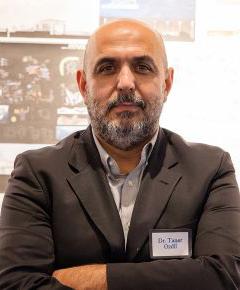
Taner R. Ozdil
Associate Professor & Associate Director for Research
The University of Texas at Arlington
Taner is an Associate Professor for the Landscape Architecture Program and Associate Director for Research for The Center for Metropolitan Density (CfMD) at CAPPA at The University of Texas at Arlington. He is also the President of the Council of Educators in Landscape Architecture (CELA). His scholarly, professional, and teaching activities focus on creating environmental, economic, and social value through landscape architecture, urban design, and physical planning in urbanized regions. Taner’s work has been recognized by CELA (Teaching Award-Jr.), LAF (CSI Fellow), and TX-ASLA (Honor & Merit Awards for Research & Kay Tiller Service Award). Taner received his BLA from Ankara University, MLA from the University of Colorado at Denver, and a Ph.D. from Texas A&M University.
Galen Newman
Professor & Department Head
Texas A&M University
Galen is Professor and Head of the Department of Landscape Architecture and Urban Planning at Texas A&M University. His research focuses on urban regeneration, community resilience, landscape performance, land use science, and advanced digital urban analytics. He is highly published, has received large amounts of external funding from national organizations, and has received numerous prestigious national awards for his teaching, research, and service. For example, as part of his teaching, his students have won 7 national ASLA student design awards and nearly 30 TX-ASLA student design awards.
Allan W. Shearer
Professor & Associate Dean for Research and Technology
University of Texas at Austin
Allan is the Potter Rose Professor in Urban Planning and the Associate Dean for Research and Technology at The University of Texas at Austin School of Architecture. In this role, he oversees the facilitation of interdisciplinary research at the intersection of environmental, social, and economic concerns. His own research centers on how individuals, communities, and societies create future scenarios and how these descriptions of possible tomorrows are used to inform present-day decisions with a particular emphasis on environmental security.
Eric A. Bernard
Director of Planning, KDC Associates
Past
Chair,
Texas Tech University
Eric is Director of Planning at KDC Associates and previously Co-Director of the Texas Produced Water Consortium and Chair of Landscape Architecture at Texas Tech. His research and practice focus on water in holistic ecological planning and design in multi-dimensional solutions spanning scales and system dynamics. His vision for regenerating 8.6 million acres of Permian Basin ecosystems and re-watering the Pecos River in Texas with polished desalinated produced and brackish aquifer water is the focus of his practice, client, community, and decision maker engagement.
Adopting Green Infrastructure in Texas's Urban Regions: Innovative Concepts, Strategies, and Practices
Designing for Culture and Inclusion: Alice Martinez
Rodriguez Park
4:00 PM - 5:00 PM
The Floyd Casey Park Development in Waco is a groundbreaking regional park that celebrates Hispanic culture while setting new standards for inclusivity. Envisioned as a living museum of Hispanic folklore, the park will feature wetlands, sports courts, a skate park, a vibrant plaza, and the city’s first all-inclusive playground. It demonstrates how cultural storytelling, ecological restoration, and universal design can come together in one cohesive public space. It is the city’s largest public park investment in recent years and introduces Waco’s first all-ability playground.. The session will also highlight the use of AI tools in both concept and final design. Working closely with collaborators, the team translated AI-generated ideas into Hispanic culture–inspired playground elements, celebrating heritage and responding to community aspirations.
CEU Credits: (1) CEPH, HSW
Speakers Bios
Margarita Padilla
Project Manager and Landscape Architect, Design Workshop, Inc.
Margarita Padilla-Posey is a Project Manager and Landscape Architect at Design Workshop’s Austin studio, bringing nearly two decades of diverse experience across mixed-use developments, community master planning, amenity centers, public and private parks, estate master planning, and residential design. A graduate of Texas A&M University with a Bachelor of Landscape Architecture, she has worked in small firms, interdisciplinary practices, and design-build companies, and she leverages her fluency in Spanish to strengthen communication and project delivery. Originally from Guatemala and the mother of three daughters, Margarita has also demonstrated a deep commitment to ASLA since college, having served as Central Texas Secretary, Texas Chapter Conference Chair, Diversity Equity and Inclusion Chair and currently as President Elect of the Texas Chapter. Actively engaged in the Diversity, Equity, and Inclusion Committee since its inception and a participant in the first Diversity Summit in 2013, she continues to advance initiatives such as Dream Big with Design in Texas. Passionate about education starting at the K–12 level, Margarita is recognized for her creativity, collaborative leadership, and belief that working together is essential to supporting the growth and diverse future of the profession.
Designing for Culture and Inclusion: Alice Martinez Rodriguez Park
Simone Mansur Riedl, CPSI Lead Architectural Designer, KOMPAN Inc.
Simone Mansur Riedl is a lead Architectural Designer with nearly nine years of experience shaping KOMPAN’s custom-designed playgrounds across the United States and internationally. She is a graduate of the Federal University of Rio de Janeiro in Brazil, where she earned her degree in Architecture and Urban Planning.
With more than 25 years in the field, Simone specializes in the design of innovative outdoor and indoor play environments - from themed playgrounds, outdoor fitness spaces, waterparks, community parks, and sports facilities. Her expertise includes specialization in product and equipment customization, technical detailing, playground safety and compliance, site development, topography, and conceptual hand sketching. Her portfolio includes small to large-scale projects around the world, with several award-winning destinations in the US, Canada, China, Turkey, Mexico, and Brazil.
A strong advocate for inclusive play, Simone is dedicated to creating environments that foster happier, healthier, and greener communities. Her work reflects a commitment to thoughtful design, cultural richness, and meaningful engagement with the landscapes where communities live, play, and thrive.
Suzanne Quinn Manager, KOMPAN Play Institute, Americas.
Suzanne Flannery Quinn, PhD (Syracuse University, USA) is the manager of KOMPAN Play Institute, Americas. In this role, Suzanne conducts research on child development, with a focus on how children and families use playgrounds. This research helps playground designers and playground owners to create exciting playgrounds that are thrilling for children of all abilities to play together in a common space, with sustainable materials in naturalized environments. Suzanne has a background in research and teaching at universities in the US and the UK, and is the author of a catalogue of peer reviewed empirical research and theory in human development.
5:30 AM - 7:30 AM
7:30 AM - 12:00 PM
8:00 AM - 9:00 AM
9:00 AM - 10: 00 AM
10:00 AM - 1:00 PM
9:00 AM - 2:30 PM
10:00 AM - 11:00 AM
THURSDAY
SCHEDULE
Tour | Public Art Jogging Tour | Nicholas Nelson
Meet in Front of Convention Center
Check In: Attendee Badge Pick-Up & Registration
Keynote Speaker | Ballroom
Exhibit Hall Break | Exhibit Hall AB Book Signing with David Hopman | Launch Pad
Expo Bingo | Take a Goal Leave a Goal | Job Board | ASLA Resources
Exhibit Hall AB
Career Discovery DREAM BIG | (invite only) Room 102
Session 7A |
11:00 AM - 11:30 AM
11:30 AM - 12:30 PM
Session 7B |
Designing for Life and Death: Green Burial Grounds as Living Landscapes
Bethany Foshée, Elaine Kearney, Leah Gundrum
Classroom A
When not if: Navigating Legal Exposure in Landscape Architecture Practice
Clifton Hall, Jonathan Wagner, Josh Sundloff
Classroom B
Session 7C |
Wildfire and Defensible Space - How Landscapes can Protect Homes | Jason Estrella
Classroom C /201 ABC
Exhibit Hall Break | Exhibit Hall AB
Session 8A |
12:30 PM - 1:30 PM
Session 8B |
Re-Visioning Infrastructure to Foster Community Transformation | Jessica Bacorn, Mary Keilers, Michael Robinson, Ranjan Roy
Classroom A
Lighting the Landscape: Balancing Safety, Aesthetics, and Sustainability | Jered Widmer
Classroom B
Session 8C |
Fields: From Open Land to Urban Landmark | Jonathan Campbell, Brian Adams, Todd Watson
Restoring Local Plant Communities: Towards a Deeper Ecological Approach to Native Planting | Christina Moon, John Davis, John Hart Asher, Kyle Anderson
Ballroom
Session 10B |
Forward-looking Principles for Enhancing the User Experience of Creative Regional Designs | David Hopman
Classroom C /201 ABC
Find us in Booth #737 and join us on Wednesday, April 1 from 2:45 to 3:45 p.m. for our in-booth margarita bar Free reusable cup for the first 60 attendees!
Resilient by Design –
Embracing Natural Ecosystems Towards a Sustainable Planet
8:00 AM - 9:00 AM
The keynote will focus on the importance of celebrating our ecosystems and curating experiences that support all species and the earth. We will also discuss how we can live with water, leverage biomimicry, and work with natural ecosystems. Indigenous intelligence will be woven throughout the conversation to reveal nature’s secrets to harmonious coexistence with the ecosystems as well. Finally, we will review EDSA case studies that highlight designing with nature through built and ongoing projects including Naviva in Punta Mita, Mexico and The National Juneteenth Museum in Ft. Worth, Texas. Together, we can elevate perceptions of the planet and encourage people to embrace nature by developing a positive environmental empathy. We have a remarkable opportunity to shape the environment to benefit earth and humanity. Let us all be Resilient by Design.
CEU Credits: (1) HSW
Keynote SpeakerBio
Kona A. Gray FASLA, PLA Principal, EDSA
Nature is our greatest teacher, and Indigenous cultures around the planet have lived in harmony with her for centuries. However, around 1950, the Anthropocene marked a period known as the “Great Acceleration," a rapid increase in human activity and its impact on the planet, including nuclear fallout, pollution, and rising temperatures, revealed a disturbing reality. So, people concerned with the planet and humanity began sounding the alarm in the 1960’s and 1970’s marking the beginning of the environmental movement. Unfortunately, 76 years later, we are experiencing environmental disruptions on a scale never imagined. The evolution of life on this planet requires us to reconnect with nature to restore the earth.
As stewards of the land, we have an obligation to preserve the ecosystems that sustain life for future generations. Although we have made it through major environmental disasters, bouncing back resiliently continues to be proven more difficult. Our species has benefited from evolutionary luck. What is most interesting is the fact that this is not new. We have been challenging humanity and stressing the planet then adapting to the new normal for decades. Makes you wonder if we want to survive…and if we care about our planet. We all know this is not sustainable. Humanity needs an environmental paradigm shift! A move away from human-centered to life-centered emphasizing the value of our interconnected ecosystem relationship. Because the common threads that keep us together are the planet and people.
Designing for Life and Death: Green Burial Grounds as Living Landscapes
10:00 AM - 11:00 AM
The Floyd Casey Park Development in Waco is a groundbreaking regional park that celebrates Hispanic culture while setting new standards for inclusivity. Envisioned as a living museum of Hispanic folklore, the park will feature wetlands, sports courts, a skate park, a vibrant plaza, and the city’s first all-inclusive playground. It demonstrates how cultural storytelling, ecological restoration, and universal design can come together in one cohesive public space. It is the city’s largest public park investment in recent years and introduces Waco’s first all-ability playground. The session will also highlight the use of AI tools in both concept and final design. Working closely with collaborators, the team translated AI-generated ideas into Hispanic culture–inspired playground elements, celebrating heritage and responding to community aspirations.
CEU Credits: (1) CEPH, HSW, Sustainability
Speakers Bios
Leah Gundrum
Landscape Designer, Word + Carr Design Group
Leah Gundrum’s journey into landscape architecture has been anything but linear; it’s been shaped by a series of small, meaningful shifts. From her early days in the medical field as an embryologist to volunteering as a death doula, Leah’s diverse experiences have influenced her unique approach to landscape architecture. Drawing inspiration from her background in science, art, and community work, she brings a holistic understanding of life cycles and human connection to her design philosophy. Now, as a landscape designer at Word + Carr Design Group, Leah focuses on creating spaces that reflect the beauty of these cycles. As she continues to grow in her career, she remains driven by the belief that thoughtful design can reconnect people to nature, culture, and each other, offering solace and meaning in an increasingly complex world.
Bethany Foshée
Stewardship & Outreach Director, Coastal Prairie Conservancy and Cemetery Manager for Nature's Burial
Bethany Foshée joins the Coastal Prairie Conservancy team with extensive experience working with Houston’s environmental nonprofits. Bethany oversees outreach programs and stewardship activities on Coastal Prairie Conservancy’s protected lands. In her role as Project Manager of the Nature’s Burial initiative, Bethany will guide individuals and families as they honor their loved ones, facilitate customer sales, coordinate community development, and manage day-to-day operations. Bethany holds a Bachelor of Science in Wildlife and Fisheries Sciences and a Master of Science in Recreation, Park and Tourism Sciences from Texas A&M University. She is also a licensed funeral director.
Elaine Kearney Managing Principal, TBG Partners
As Managing Principal of TBG’s San Antonio office Elaine guides her team in designing compelling landscapes that are rooted in the ecology and unique environment of the Edwards Plateau region. She brings a sophisticated design perspective to each project that reflects her wide-ranging professional and academic experience. Her background includes design, project management and academic engagements at universities and firms spanning from Harvard to Texas to the Pacific Northwest. Elaine is experienced with managing projects through all phases of the development process, and she also has an aptitude for academia; she has taught at Trinity University and served as a guest critic at UT San Antonio.
When not if: Navigating Legal Exposure in Landscape Architecture Practice
10:00 AM - 11:00 AM
In January of 2017 a publication was made available to all ASLA Members titled Landscape Architecture Licensure Handbook; Ensuring Safe, Healthy, and Resilient Natural and Built Environments as prepared by Josh Sundloff, who will be introducing and moderating the session. This manual compiles a variety of legal cases involving multiple scopes of the landscape architecture profession. Hear from two Landscape Architects in Texas that have provided expert testimony in actual cases where they defended the profession.
CEU Credits: (1) CEPH, HSW
Speakers Bios
Clifton Hall
Principal, Cross Timbers Studio
Clifton Hall is the Principal Landscape Architect at Cross Timbers Studio located in Grandview, TX that began in 2017. Clif is experienced in the fields of both landscape architecture and irrigation design. His experience includes hike and bike trail planning and design, accessibility, streetscape improvements, neighborhood parks, irrigation consulting and design, commercial mixed-use design, and construction administration. As a Landscape Architect, Clif plays an integral role in the planning and design of client projects. His portfolio includes clients from a variety of industries including real-estate, military, transportation, government, and hospitality. Clif is well-versed in both private and public sector projects and serves as an active member of the TX Chapter of ASLA.
Jonathan Wagner
Principal, Studio 16:19
Jonathan Wagner is a licensed Landscape Architect and Irrigator, currently serving as Principal at studio 16:19 in Round Rock, TX, where he leads community-focused design initiatives across Texas. With over 15 years of experience in both public and private sector projects, Jonathan brings a community-centric approach to a wide range of work—from parks and trails to streetscapes and outdoor learning environments. His design philosophy centers on sustainability and resilience, incorporating SITES and LEED principles, rainwater harvesting systems, and native planting strategies to create spaces that heal, inspire, and connect. He holds certifications in permaculture and outdoor learning design, and is passionate about using nature as a tool for education, wellness, and community building. In addition to his design work, Jonathan actively advocates for the profession through his role as Vice President of Government Affairs for Texas ASLA. He also serves on the Professional Advisory Board for the Texas A&M Department of Landscape Architecture and on the Board of Directors for Candlelight Ranch, where he champions the healing power of nature. His leadership has included serving as Chair and President of both the Central Texas and Texas ASLA Chapters.
Josh Sundloff Attorney,
Kirton McConkie
Josh Sundloff is a construction attorney and licensed landscape architect from Salt Lake City, Utah. He represents design professionals, contractors, owners, developers, sureties, and material suppliers in matters ranging from litigation, contract issues, liens, land use, business, and other matters related to design, construction, and real estate development. Josh is the author of Landscape Architecture Licensure Handbook: Ensuring Safe, Healthy, and Resilient Natural and Built Environments, which he updated and authored in cooperation with ASLA National in 2017. His combined legal and professional practice experience positions him to address licensure not only as a regulatory framework but as a tool for safeguarding public health, safety, and welfare in both natural and built environments.
Wildfire and Defensible Space - How Landscapes can Protect Homes
10:00 AM - 11:00 AM
This session will explain how properly maintained landscapes can protect homes and infrastructure in the event of a wildfire using defensible space principles. In wildfires, homes don’t typically burn from a wall of flames. They catch fire through thrown embers from burning vegetation and other combustible material. Defensible space is a fire-resistant buffer zone around a home or structure, created by managing the landscape vegetation and combustible materials to slow or stop the spread of wildfire and protect the property and its occupants. This session will cover landscape principles such as including flame-resistant vegetation in landscape design, appropriate spacing, landscape maintenance, and utilizing fire-resistant material, such as rock, in lieu of flammable mulch. We will also discuss topography and its role in fire movement and intensity through vegetation.
CEU Credits: (1) CEPH, HSW
SpeakerBio
Jason Estrella
Wildfire Mitigation Specialist, Travis County Fire Marshal's Office
I currently serve as a wildfire mitigation specialist with the Travis County Fire Marshal's Office. Previously, I worked for Texas Parks and Wildlife Department as a GIS/landscape specialist and land conservation program manager. I have served as a wildland firefighter for over 10 years at the local, state and federal level, working wildfire and all-hazard assignments throughout the west, south-east, and Texas. I hold a Bachelor of Science Degree in Natural Resource Management from Texas A&M UniversityKingsville.
Re-Visioning Infrastructure to Foster Community Transformation
11:30 AM - 12:30 PM
Since the 1950s, highway construction in the US has often carried steep social and environmental costs, dividing neighborhoods with limited political power, displacing families, weakening economies, and eroding cultural fabric. This session explores how transportation authorities like Harris County Toll Road Authority (HCTRA) can shift from building highways to building community by leading with planning, landscape architecture, and urban design to deliver projects that heal rather than divide. This session highlights how multimodal systems, green infrastructure, open space, and education can work together to create vibrant, resilient places. Attendees will see how agencies can move beyond an engineering mindset to a community-building approach that delivers equity, resilience, and a renewed sense of place.
CEU Credits: (1) CEPH, HSW, Sustainable
Speakers Bios
Jessica Bacorn
Capital Planning Project Manager, Harris County Toll Road Authority
Jessica is dedicated to shaping public spaces that foster connection, accessibility, and community character. With more than 15 years of experience in Landscape Architecture, she brings a thoughtful and grounded approach to public sector projects, balancing design creativity with practical implementation. Within HCTRA’s Capital Planning division, Jessica applies a multidisciplinary perspective to integrate sustainability, usability, and design excellence into transportation and infrastructure projects. Jessica approaches each project with curiosity, care, and a strong appreciation for the role landscapes play in enriching people’s experiences. She earned her Bachelor of Landscape Architecture from Louisiana State University and continues to be inspired by the evolving relationship between design, ecology, and community resilience.
Mary Keilers
Innovation and Research Principal, Clark Condon
Mary is passionate about the environment and is dedicated to making a positive impact through her designs. Over the course of her career, she has amassed a breadth of experience in delivering complex projects on diverse ecological sites and urban environments alike. With a focus on communities and their immersion into the outdoor environment, a significant number of her projects are within the public sector where she provides opportunities for people to experience and learn about nature. She approaches each project with uncompromising stewardship paying special attention to soil science, planting design, and green infrastructure. As the Innovation and Research Principal, her role centers on research and the implementation of new practices, protocols, and development trends within the industry. Mary is continually embracing her natural curiosity through continued education on topics such as soils, native plants, restoration methods, and finds ways to implement the gained knowledge into her projects. She graduated from Texas A&M University with a Bachelor of Landscape Architecture.
Speakers Bios
Ranjan Roy Principal, Director of Urban Design, Asakura Robinson
Ranjan brings a dynamic blend of architectural expertise and extensive experience in urban design and planning to the forefront of his role. With a background that spans across diverse planning projects, Ranjan has played a pivotal role in shaping the public environment in and around Houston. Growing up on three continents—Europe, Asia, and North America—has provided him with firsthand exposure to a range of cultures and environments, profoundly influencing his approach to urban design and planning. This unique global perspective serves as a solid foundation for Ranjan’s innovative and contextually sensitive design solutions. Ranjan is passionate about low impact design or as he likes to look at it as a common-sense approach, treating each project as unique based on location and context. His contributions include working on the Harris County Precinct 2 Parks and Trails Plan, as well as playing a pivotal role in leading urban design efforts for various initiatives, including the Harris County Toll Road Authority’s Community Benefit Plan and the Freedman’s Town Design Concept Report. His commitment to enhancing the public realm and creating sustainable, context-aware designs is evident in the breadth and impact of his work.
Michael Robinson Principal, SWA
Michael Robinson is a Principal with the Houston office of SWA. As a landscape architect and urban designer, he specializes in the role of infrastructure as public space. His experience spans scales from master planning to detail design, which informs his approach to creating coherent and meaningful public spaces on complicated sites that emphasize connectivity, legibility, ecological restoration, and resiliency. His background in both architecture and landscape architecture allows him to view design through multiple lenses that bring rigor to his projects. Michael’s project work in Houston includes Buffalo Bayou Park and its greenway extensions through downtown; and planning and design of parks, greenways, bridges, and streetscapes throughout the region that seek to create consensus across agencies, infrastructures, and communities to create meaningful places. Prior to joining SWA, Michael taught urban research and design in the Rice School of Architecture as Wortham Fellow (2006-2008) and Lecturer (2008-2010) which formed the basis of his work at SWA.
Lighting the Landscape: Balancing Safety, Aesthetics, and Sustainability
11:30 AM - 12:30 PM
Lighting for the exterior environment needs to consider multiple factors to create a successful and balanced solution. These include safety, codes, project context, design aesthetics and function. Layering light into landscape design to appeal to the human experience and reinforce design goals is key to elevating the outdoor environment. This may include integrating light into architectural elements, placing lights at specific elevations or views, and using sustainable dark sky strategies. Consideration of adjacent spaces in the process helps to create a harmonious flow to the site. Ensuring an outdoor space feels safe goes beyond achieving specific light levels. An understanding of uniformity, how the eye adapts to light, and illuminating perimeters are elements in creating a welcoming environment. Coupled with an understanding of light level needs for tasks and intended use, this provides a strong base for the lighting. With growing concerns about light pollution and an increase in Dark-Sky ordinances, the presentation emphasizes sustainable lighting practices that benefit people, wildlife, and the broader environment. The session will provide guidance on exterior lighting best practices, Dark-Sky lighting standards, and how a “less is more” approach will benefit the client, project, and surrounding community. Interpreting local lighting ordinances that are sometimes outdated and focus on quantity over quality, can be daunting and confusing. A professional lighting designer can help decipher these codes, coordinate with the city, and deliver a balanced lighting solution.
CEU Credits: (1) CEPH, HSW, Sustainable
SpeakerBio
Jered Widmer Principal, Director of Dallas Office, The Lighting Practice
Jered Widmer joined The Lighting Practice in 2001 upon graduation from The Pennsylvania State University. Head of TLP’s Dallas office, he has been designing architectural lighting for corporate, retail, historic, hospitality, education, healthcare and places of worship. The diverse work in these sectors allows him to merge creative principles and techniques to enhance the user environment for a more successful project. He educates clients and team members through a collaborative design process, facilitating a better understanding of the impact of lighting. Jered’s passion for digital technology and smart home integration has fueled his pursuit of understanding IoT and Smart Lighting applications and their benefit to our clients and project sectors. He has collaborated with both retail and corporate clients to deliver smart lighting solutions that enhance the user experience and deliver detailed data for improved operational efficiencies.
Fields: From Open Land to Urban Landmark
11:30 AM - 12:30 PM
Discover the multifaceted development of Fields in Frisco, Texas – a 2,545-acre mixed-use project with over $7.9 billion in direct and adjacent investments. This session will reveal how to integrate flexible Planned Development (PD) strategies across diverse environments, manage open spaces, parks, and amenities effectively, and maintain environmental standards. Learn from the collaborative success between ownership, designers, and public officials that expedited market readiness, and acquire new skills to ensure high levels of amenities and open green areas while achieving municipal objectives.
CEU Credits: (1) CEPH,HSW,Sustainable
Speakers Bios
Jonathan Campbell Vice President, Kimley-Horn
Jonathan has made a significant impact on the landscape architecture and land planning (LA+LP) community nationwide. With 20 years of experience, he leads with intention, fostering collaboration and encouraging creative problem-solving throughout every project. His thoughtful approach to client relationships reflects Kimley-Horn’s deep commitment to delivering successful landscape architecture projects. Jonathan finds deep fulfillment in seeing communities engage with the spaces he and his team have designed. His passion for service is evident in his volunteer work with CASA, where he creates playhouses to support fundraising efforts. In recognition of this work, he received the ASLA Community Service Award in May 2024. For Jonathan, the greatest reward is watching people connect with the places he helps bring to life. His dedication and positive impact on the communities he serves demonstrate his unwavering commitment to excellence and service.
Brian Adams Vice President, Kimley-Horn
Brian brings 33 years of experience in planning, urban design, and landscape architecture to the table, with a portfolio that spans local and international markets, including the Americas, China, India, the Caribbean, and the Middle East. Throughout his distinguished career, Brian has been involved in award-winning master planning, large-scale urban space design, and landscape architecture, consistently delivering exceptional results. His extensive experience across a variety of projects has honed his ability to navigate the challenges of complex design projects, always finding innovative solutions that integrate seamlessly with the natural fabric of the environment. Brian's high energy and dedication infuse every project team he leads, inspiring collaboration and excellence. Brian's global perspective and skill set make him a valuable asset to any development, leveraging his deep understanding of diverse cultural and environmental contexts to create spaces that resonate and thrive. His ability to bring visionary concepts to life ensures that each project not only meets functional needs but also enhances the community and environment in meaningful ways.
Todd Watson Senior Vice President, Hunt Realty Investments, Inc.
With nearly 30 years of experience in real estate and land development, Todd Watson is a seasoned professional renowned for his expertise in managing entitlements, master-planning, construction, and sales and marketing for large planned communities. Throughout his career, Todd has progressively taken on more responsibilities, showcasing their exceptional ability to oversee complex projects from inception to completion. Todd excels in managing integrated teams, ensuring both operational and financial success while minimizing operating run-rate. Their strategic approach and collaborative leadership have been instrumental in the successful execution of numerous high-profile developments, making them a distinguished figure in the field. As a presenter at the conference, Todd will share invaluable insights and lessons learned from their extensive experience, providing attendees with a deep understanding of the intricacies involved in real estate and land development.
More and more, designers are seeking creative, natural solutions when designing outdoor play and learning environments. The desire for unique and creative ways to build playgrounds and playground environments is on the rise. In response, playground equipment design is continually evolving with new features, components, and applications. Designers are often discouraged by the safety standards, and while they and their clients wish to apply their creativity to new naturalized solutions, they find themselves intimidated by the standards themselves. It is increasingly important to have a clear understanding of how to apply the playground safety standards, including updated revisions. The session will conclude with a discussion of the standards’ application in playground design as they apply to natural settings using site-built components, with an interactive presentation of some creative and naturebased designs and a discussion of the designs addressing solutions to compliance issues.
CEU Credits:(1) CEPH, HSW, Barrier Free
Kenneth Hurst, PhD
The Recreation Environments Collaborative, LLC
Kenneth Hurst, Ph.D., PLA, has spent much of his career in park and playground development, being involved in promoting play, playground safety, and accessibility, and has spoken at the local, state, and national levels. He applies behavior mapping research to evaluate evidence-based support for the contributions that individual park elements and accessible design make toward levels of use and physical activity in urban park environments. He has spent much of his career in facility planning, park and playground development, promoting play, playground safety, and accessibility. He recently retired from the Department of Landscape Architecture and Urban Planning at Texas A&M University, has joined the NRPA team of Certified Playground Safety Inspector (CPSI) instructors, currently serves on the ASLA Children’s Outdoor Environments PPN, and is engaged in playground safety and design consulting.
SpeakerBio
Unlocking Potential: Activating Vacant Parkland for Inclusive Communities
1:30 PM - 2:30 PM
Learn how the Park Activation Toolkit empowers underserved communities to transform vacant parkland into vibrant, inclusive spaces. Austin, like many U.S. cities, carries the legacy of segregated planning. Through cross-disciplinary collaboration and input from city departments and grassroots community members, the toolkit not only addresses existing disconnections but also paves the way for sustainable and equitable park programming. The toolkit bridges city resource gaps, addresses historical inequities, and creates sustainable parks in any neighborhood. Explore how it sets a nationwide example for equitable park activation. This unified approach exemplifies how diverse expertise can lead to meaningful transformation in public spaces, benefiting communities today and in the future.
CEU Credits:(1) CEPH, HSW
Speakers Bios
Claire Hempel Principal Landscape Architect, Design Workshop
Leading Design Workshop’s studio Principal, Claire, has spent over 20 years shaping communities through landscape architecture, urban design, and land planning. Her expertise in comprehensive community and regional planning drives the creation of sustainable and engaging spaces that foster connection and protect natural ecosystems. Claire’s work is defined by a commitment to impactful design that harmonizes engagement, education, and environmental stewardship.
Ishita Ghosh
Planner, Design Workshop
Ishita Ghosh is an urban planner at Design Workshop’s Austin Studio. She is an observant and curious explorer of urban fabrics across cities, with a portfolio that includes large-scale community comprehensive planning and the ecological restoration of public parks. Ishita’s approach involves integrating her technical, analytical, and research expertise into design narratives that reflect as an innovative toolkit featuring step-by-step guidance in user-friendly language, along with adaptable templates, that empower communities in initiating and managing park activation projects across the city.
Warinda Harris
Non-profit Leader, Central Texas Interfaith
Warinda Harris is an organizer with Central Texas Interfaith (CTI), a nonpartisan, multi-issue coalition of 50 congregations, schools, worker organizations, public health clinics and non-profits that work together to address issues affecting the wellbeing of families and neighborhoods across Central Texas. Drawing upon 20+ years’ experience in interviewing, investigation and storytelling, Warinda identifies, develops and promotes community leaders, training them to share and shape their stories and build connection with others in order to implement public action. Warinda’s most recent work includes coordination of CTI’s partnership with Austin Parks & Recreation Department and Austin Independent School District to explore equitable access to Austin’s green spaces.
Restoring Local Plant Communities: Towards a Deeper Ecological Approach to Native Planting
2:30 PM - 3:30 PM
Through many years of persistent effort, there's an argument to be made that the first "fight" for native plants has been won. The use of native plants has become increasingly commonplace in our practice. As this practice becomes normalized, it's time to develop an approach to native planting that focuses on local context, ecological function, and the practical dynamics of how we can bring deeper ecology into practice. We aim to help drive how we think about native planting across our professions towards a deeper ecological approach that goes beyond the base level idea of incorporating more native plants into our landscapes to be more intentional about how we use native plant communities to foster ecological restoration in the context of the historic ecosystems and climax conditions.
CEU Credits: (1) CEPH, HSW, Sustainable
Speakers Bios
Kyle
Anderson
Associate Planner, Asakura Robinson
Kyle Anderson is an Associate Planner at Asakura Robinson who is driven to explore the intersection of community capacity, ecological restoration, and green design to pursue more substantively sustainable modes of life. With a focus on parks and sustainability planning, they seek to better understand the relationship between communities and their environment, and to equip cities and community organizations with the tools, strategies, and support necessary to foster resilient, adaptable communities capable of maintaining a high quality of life in the face of a changing climate. They bring expertise about nature-based solutions and sustainable building, planning, and design alongside experience working alongside community leaders to foster greater collective impact.
John Davis
Conservation Program Director
City of Kyle Parks and Recreation Department
John Davis is a wildlife biologist with over 30 years of experience working on conservation, community outreach, planning, and advocacy. John worked with the Texas Parks and Wildlife from 1994 to 2022, starting as an Urban Wildlife Biologist and retiring from TPWD as the Wildlife Diversity Program Director, where he oversaw all facets of nongame and rare species conservation, as well as outreach to diverse communities. During his time with TPWD, he also served as a key leader in the planning, development, and advocacy efforts for the state’s Recovering America’s Wildlife Act initiative. John has recently joined the City of Kyle's Parks and Recreation Department as their Conservation Division Manager, leading a team dedicated to creating, enhancing, and managing native landscapes and natural areas throughout the City's parks and open spaces.
John Hart Asher has over 15 years’ experience designing and building functional ecosystems within urban conditions. He has conducted research in ecological engineering, ecological restoration, and land management, offered workshops to professionals and the public, and provided ecological consulting expertise to clients across Texas. As part of the consulting team, John Hart works with integrated design teams of engineers, architects, landscape architects, and developers to integrate sustainable design, practices, and philosophies into projects. He specializes in translating sustainable design into successful projects that provide varying layers of ecosystem services. His main interest is using ecological design to create functional and sustainable landscapes within urban ecologies. A few of his current projects include tall grass prairie restoration in an urban riparian corridor, green roof research and implementation, water conservation, soil remediation, sustainable roadsides, and green infrastructure.
Christina Moon Principal Asakura Robinson
Christina is a Principal Landscape Architect at Asakura Robinson’s Austin. She began her career as a spatial design drafter for NASA consultants, architects, and petrochemical firms. This experience taught her to adapt to a variety of work flow and management styles and the value of documenting processes and design decisions. She enjoys researching and learning about new places and integrating native and well-adapted plant species into meaningful designs that bring people closer to the natural environment. Since getting her Master's of Landscape Architecture, she has worked on park master plans, streetscapes, and planned communities throughout Texas.
Forward-looking Principles for Enhancing the User Experience of Creative Regional Designs
2:30 PM - 3:30 PM
Creative regionalism is a place-based approach to landscape architecture that embraces combining local and regional influences—natural and cultural—into the design process. An emphasis is placed on design responses to the ecological characteristics of a region while respecting other historic and contemporary influences. Landscape architects are shown the effectiveness of a methodology that acknowledges both regional and global traditions and celebrates the creativity of individual designs that anchor the past with the present.
CEU Credits: (1) CEPH, HSW
Speakers Bios
David Hopman
Landscape Architect and Associate Professor of Practice
The University of Texas at Arlington
Since accepting the position as a professor at the Graduate Program in Landscape Architecture at The University of Texas at Arlington in 2004, David Hopman, ASLA, PLA, has energetically pursued a faculty role bridging education, research, and practice. He teaches courses to both graduate landscape architecture and architecture students that reflect his research interests in landscape aesthetics and critical regionalism, landscape architecture research, planting design, and native ecology in metropolitan areas. Landscape architecture practice experience as a registered landscape architect includes Kings Creek Landscaping, HuittZollars, Inc., RTKL, Mesa Design Group, Inc., and a current independent practice. Professor Hopman designed and implemented the first extensive green roof in the Dallas/Fort Worth area in 2008 above the Life Sciences Building at UT-Arlington. He was in charge of the Sustainable Sites Initiative (SITES) certification for The Green at College Park on the UT-Arlington Campus, one of the first three projects worldwide to receive certification in February of 2012. David Hopman is the author of the book, Creative Regional Design: Renewing the Aesthetics of Landscape in Environmental Design and Planning, with a foreword by Frederick R. Steiner (Staunton, VA: George F. Thompson Publishing, in association with the Center for the Study of Place). His ideas on planting with polycultures of native plants can be found in ‘The Field’ posts for the ASLA planting design PPN and in lectures on YouTube.