Six Nations woman seeking Indian Day School application deadline extension
DONNA DURIC donna@tworowtimes.com TWO ROW TIMES

A Six Nations woman has filed legal action against the federal government to extend the deadline for Indian Day School settlement applications, saying the original deadline was unrealistically short.
Audrey Hill filed the action in a federal court on Dec. 21.
Six Nations of the Grand River Elected Council says although there are no official statistics, there are a number of community members who have not yet filled out their claims.
The deadline was July 13, 2022. Most of the application process was open during the pandemic, which advocates say impeded the ability of many to fill them out.
“Evidence we’ve gathered tells us that there are a number of SNGR members who have not filled out claims, and our motion asks for an order that the claims deadline be extended and the claims take up rate be formally reviewed,” SNGR spokesperson Katie Montour said in an email.
Audrey Hill is a class member of the Indian Day School Settlement, which seeks to compensate
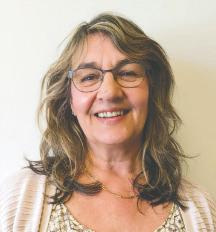
Indigenous children who attended “day schools” across the country until 1997, where many suffered abuse of all manner.
Montour said under federal court rules, Hill has the right to petition the court on concerns about the class action, officially referred to as the Mclean Class Action.
If Hill is successful in court, it will help all other First Nations people across the country who have not yet filed claims. All Day School attendees are guaranteed a minimum of $10,000 in the settlement, with incrementally increasing monetary compensation depending on the severity of abuse claimants can prove.

The claims deadline was originally July 13, 2022.
The class action settlement agreement, however, has a discretionary extension provision to Jan. 13, 2023.
Claimants are not yet out of time, but they are without a further extension (which is being resisted by the parties to the class action) and they will be out of time on Jan. 13, 2023, unless Hill’s filing is successfully argued.
A hearing date has not yet been launched.
Class action members
have called the deadline unrealistic.
Hill, along with Six Nations Elected Council, assert that the class action agreement’s timeline, notification and support process for survivors to seek compensation is "unrealistically short, culturally insensitive and re-traumatizing.”

In addition, they note, the process took place almost entirely within the Covid-19 pandemic.
To give class members a true opportunity to seek compensation, Hill and Six Nations filed a Notice of Motion on Dec. 21, arguing that the deadline should be extended to Dec. 31, 2025.
“IDS survivors endured physical, sexual, and emotional abuse at the day schools, and were separated from their culture and identity,” said Elected Chief Mark Hill. “Many IDS survivors continue to suffer from intergenerational trauma as a result of the abuse experienced in these schools. The class action settlement has favoured speed and cost efficiency over providing the trauma-informed and culturally appropriate assistance that our people needed.”
The claims process opened January 2020 and almost immediately
afterwards, the pandemic hit. "This exacerbated challenges with the short timeline and the plan for notifying and assisting class members, which needed to be done in-person given two-thirds of households in First Nations communities do not have access to high-speed internet,” noted a press release from Six Nations council.
Since the pandemic began, approximately only 28 community sessions have been held in 26 of the approximately 700 affected communities (less than 4 percent).
“To this day, a significant number of class members have not yet made a claim because of limited claims assistance, a lack of cultural sensitivity and unfair timelines,” said Hill. “We know that trauma survivors are often only able to recall or disclose trauma in stages, and most importantly, with time. Because of the lack of reasonable and culturally sensitive assistance provided, I felt compelled to voluntarily assist others with their claims. It should not have come to this.”
Chief Hill said, “The Government of Canada has ignored public statements from First Nations communities noting that
their members will be unable to make a claim within the Claims Period. As Six Nations of the Grand River, we support other IDS actions and are watching closely to see the outcomes. It is disheartening that we now must file another motion with the courts to move towards reconciliation.”
Systemic abuse was suffered by generations of First Nations children attending Indian Day Schools run by the Government of Canada for over a century.
IDS survivors launched a class action lawsuit against the federal government and in 2019, a settlement agreement was established to compensate class members.
The claims period was set at two and a half years, compared to five years for the Indian Residential School Settlement Agreement.
Hill and SNGR say class action settlement members have not received the necessary notice and assistance to complete their claims and the process did not account for First Nations cultural sensitivities, adding that the claims period was too short for trauma-based case, particularly in light of the pandemic.
WEDNESDAY DEcEmbEr 28th, 2022 | www.tworowtimes.com | 519-900-5535 | Grand River Territory | FREE THE SPIRIT OF ALL NATIONS PM42686517 322ArgyleStSouth,Caledonia 289-757-7777 6ParkviewRd,Hagersville (LocatedInsideMorisonInsurance) 1-844-233-4317 STATEOFTHEARTPRODUCTS& EQUIPMENT COMPLIMENTARYHEARINGTESTS CERTIFIEDPROFESSIONALS LIFETIMEFREEADJUSTMENTS& CLEANING HearRight UnderTreatyRightsFirstNationspeopleare entitledtoreceiveHearingAidsatnocost. Comeseeusfordetails. HEARINGAIDSKEEPTHEMINDEXERCISED ANDSHARP! DON’TLETHEARINGPROBLEMSSTOPYOU FROMBEINGPARTOFTHEFAMILY! hearrightcanada.ca WEAREPLEASEDTOANNOUNCEOUR TEAMINCALEDONIA KellyGadoury HearingInstrument Specialist TaraHarview HearingConsultant SNOWMOBILES • SIDE X SIDES • ATVS • MOTORCYCLES • JET SKIS • LAWN MOWERS SALES • SERVICE • PARTS 1264 COLBORNE ST. EAST, BRANTFORD, ONTARIO PHONE 519.759.8140 Come see us for great savings 1045 Brant County Hwy 54 Ohsweken 519-770-3628
keeping you informed.

Food insecurity getting worse across the country, especially hard hitting Inuit communities
It’s been a tough year for those already dealing with food insecurity and tight household finances.
Food bank usage has increased by 35 percent since 2019 and increased costs of living and inflation are driving food insecurity, according to Food Banks Canada, a registered charity that tracks food bank usage and food insecurity.
Food banks across the country have seen a 15 percent increase in visits from March 2021 to March 2022, and a 35 percent increase compared to March 2019.
Food insecurity is defined as the inability to acquire or consume an adequate diet quality or sufficient quantity of food in socially acceptable ways.
This could mean having to choose to pay a utility bill or rent over buying a
stock of varied groceries to feed yourself or your family. Such examples of diet inequality could include living on cheaper staples such as rice, potatoes and beans, with no addition of other food groups, like vegetables or meat.
Other examples of socially unacceptable food habits include hoarding ketchup packets from public restaurants in order to ensure a supply at home.
The pandemic years have highlighted an increase in food insecurity across the country.
Here at Six Nations, people began using the local food bank at a rate SIX times higher in 2022 compared to 2019.
Overall, food bank visits across the country have skyrocketed since 2019, with the highest year-over-year increase in usage since the aftermath of the 2008 recession, according to Food Banks Canada, and a large percentage of those users are

Indigenous - 15 percent - despite making up only three percent of Canada’s population.

Stagnant provincial social assistance rates, the end of pandemic-related benefits, and soaring inflation have all affected the ability of individuals in Canada to feed themselves and their families.
Food insecurity is especially hard-hitting in Canada’s far north, where the majority of the population is Inuit, and a large percentage of increased food bank users across the country are Indigenous.
Indigenous people comprise 15.3 percent of food bank visitors in 2022 compared to eight percent last year.
With a majority of northern and remote communities being home to largely Indigenous peoples, this increase is indicative of a growing issue in the remote north.
According to Food Banks Canada, food costs in the north have remained largely unchanged
since the beginning of the Nutrition North program in 2011, a government subsidy aimed to help with food affordability in the arctic.
For example, in Iqaluit, Nunavut, the cost of a nutritious food basket to feed a family of four in March 2018 was approximately $1,721.56. The same basket of food would cost about $868 in Ottawa.
A bunch of grapes in the north costs $28. A bottle of ketchup costs $16 - which is usually about $5 or $6 in a southern Ontario grocery store.
During the pandemic, household food insecurity in the north has grown rampant. In the Yukon, the Northwest Territories and Nunavut, food insecurity rates reach 17, 22 and 57 per cent, respectively.
In 2020, the federal government recognized this challenge in a report on northern food insecurity by saying that “due to several factors, northerners – in particular, women, children and Indigenous

peoples – are more at risk of experiencing food insecurity than other Canadians.”
Also, the cost of living has contributed to food insecurity country-wide. Increases in housing costs are affecting the way people buy and afford food.
With the end of pandemic benefits in late 2021 occurring almost in lockstep with significant increases in the cost of living in early 2022, the findings from Food Banks Canada illustrate that the past year has been particularly disastrous for low-income households.
According to Statistics Canada, the lowest income households saw their disposable incomes decline by 7.5 per cent in the first quarter of 2022 compared to the previous year. Before the pandemic, the majority of households nationwide whose incomes were low-income were already spending more than 50 percent of their income on rent and utilities.
The 69 percent of food bank clients who live in market rental housing were particularly affected. Massive increases in the costs of core items like food, rent, and fuel mean a proportionately much larger share of this reduced income would go to paying for these essential items.
Food Banks Canada also says that climate change is impacting food security for Indigenous people by limiting access to traditional foods and reducing the availability of ice roads that can be used to deliver food to remote and northern communities.
Food insecurity for Canada’s far north is likely to get worse, too, says Food Banks Canada.
Due to the increased cost of housing and food, along with the ongoing impacts of climate change, the issue of northern food insecurity will likely worsen over the coming months and years, Food Banks Canada predicts.
TWO ROW TIMES December 28th, 2022 2
LOCAL
Stay home if you feel unwell If you have a fever cough and difficulty breathing seek medical attention and call in advance IF YO OUGH AND DIFFICULTY BREATHING, SEEK MEDICAL CARE EARLY 2 M / 6 FT S I X N A T I O N S M O B I L E C R I S I S S E R V I C E S The Six Nations Mobile Crisis Services offers a 24/7 Crisis Line A person seeking crisis support will be connected with a Crisis Response Worker The Six Nations Mobile Crisis Services offers Texting crisis response Texting is available Monday to Friday from 8 30am - 4 00pm A person seeking crisis support through text will be connected with a Crisis Response Worker an d receive messages through text The Six Nations Mobile Crisis Services offers Live Chat crisis response Live Chat or Instant Messaging is done on your computer over the internet Live Chat (Messaging) is available Monday to Friday 8 30am - 4 00pm The Six Nations Mobile Crisis Services is a confidential service offering crisis support to Six Nations of the Grand River The new features run through a program which offers safe and encrypted technology to keep conversations confidential and secure 2 4 / 7 C R I S I S P H O N E L I N E 866-445-2204 or 519-445-2204 L I V E C H A T ( M E S S A G I N G ) Link on sixnationscovid19 ca under Crisis Support Live Chat T E X T M E S S A G I N G 226-777-9480 C O N F I D E N T I A L S E R V I C E S
TWO
TIMES
DONNA DURIC donna@tworowtimes.com
ROW




















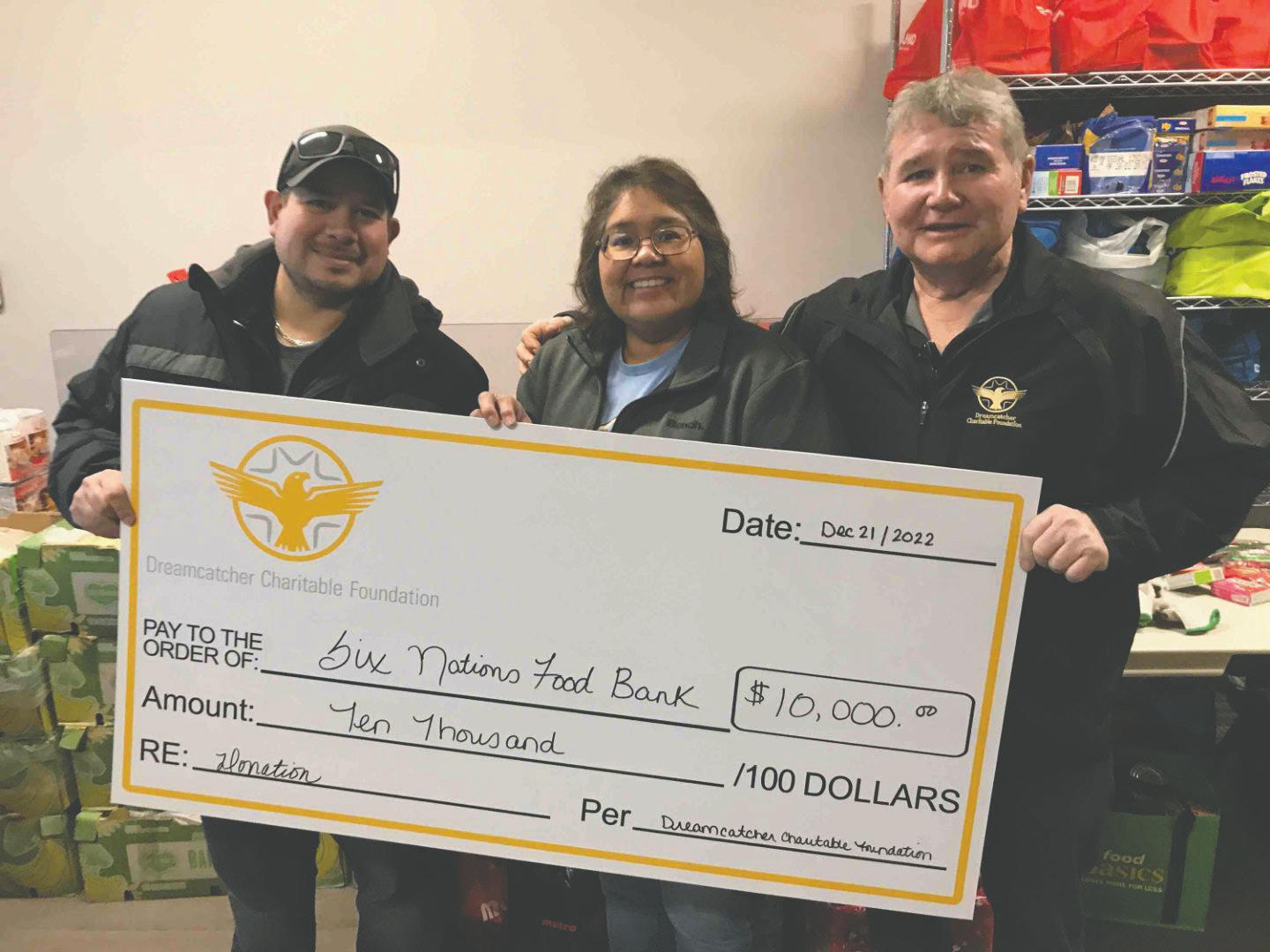
TWO ROW TIMES December 28th, 2022 3 www.patreon.com/2RT Six Nations of the Grand River Visit for the essential services list through the holiday closure www.sixnations.ca HOLIDAY CLOSURE 2022-2023 Essential Services SALES&LEASINGOFHIGHQUALITYUSEDCARS,TRUCKS&VANS! HELPINGWORKINGFAMILIESRE-ESTABLISHTHEIRCREDIT! ASKABOUTOUREXTENDEDWARRANTIES! LEASERETURNS–SAFETIED–LATEMODELS–LOWINTEREST WESERVICEWHATWESELL–NOHIDDENFEES Lynden AUTODEPOT 230LyndenRoad,Brantford,ON,N3T5L8 (besideGalaxyCoinWash) www.lyndenautodepot.com519.752.4535 2017CHEVROLET SILVERADO1500 LSCrewCab4x45.3L6.5ftBox 190,204KM $25,99500 PLUSHST&LICENSE FINANCINGAVAILABLE 2019FORDEXPEDITION PlatinumMax3.5LEcoboost PanoramaRoofNavLeather97,049KM $66,99500 PLUSHST&LICENSE FINANCINGAVAILABLE 2017LINCOLNMKC Reserve2.0LAWDRoofNav LeatherHeatedCoolingSeat60,958KM $27,99500 PLUSHST&LICENSE FINANCINGAVAILABLE 2018HONDACR-V LXAWD1.5LTurboHeatedSeats RemoteStartBackCam147,493KM $26,99500 PLUSHST&LICENSE FINANCINGAVAILABLE 2020CHEVROLET SILVERADO2500 HDLTCrewCab4x46.6LGasoline 8ftBox BackUpCamPrevRental 67,817KM $58,99500 PLUSHST&LICENSE FINANCINGAVAILABLE 2021GULFSTREAM COACH267BHS 26ftGrandRiverBunkHouseUltre-Lite SeriesDoubleBunksSleeps6 $22,99500 PLUSHST&LICENSE FINANCINGAVAILABLE PLEASEBRINGYOURSTATUSCARDANDPAYNOTAX The Dreamcatcher Charitable Foundation made a very generous donation to the Six Nations Food Bank earlier this week for $10,000. The charity answered the call from the Food Bank who put out an urgent request for help -- saying that there has been a sixfold increase in Food Bank reliance on Six Nations in the last year, and that as a result less food is being distributed per family.
JACE KOBLUN jace@tworowtimes.com TWO ROW TIMES
Winnipeg radio station celebrates 50 years of programming
NCI FM celebrated 50 years of connecting to and advocating for parts of Manitoba not often included in mainstream media in December 2021. “You can listen to it and you're hearing some language, but it's also about community. You're hearing people you might know. You're hearing community names and you're hearing stories that you can relate to as well,” said David McLeod, the station's chief executive officer. Native Communications Inc. or NCI was started in the fall of 1971 in northern Manitoba. At the time, there was a burgeoning media scene in the city of Thompson, but McLeod said there was “skewed” representation when it came to Indigenous peoples. NCI officially went on air in Winnipeg in the fall of 1998. McLeod said it now operates 57 transmitters.
First Nations brace for labour challenges brought by Omicron fuelled COVID 19 surge Many First Nations across the country braced for the spread of the Omicron variant as leaders prepared for labour shortages caused by COVID-19 that could be more severe in Indigenous communities. "We are well aware that Omicron is coming,” said Grand Chief Arlen Dumas of the Assembly of Manitoba Chiefs in January.
There were less than 1,000 COVID-19 cases on reserves across the country before last year’s holiday season, but that number quickly surged. At the time in Manitoba, there were 1,388 new COVID-19 cases among First Nations people in a week. First Nations likely won't be spared the COVID-19-related labour shortages seen in health care, policing and other
Year in review – National News
A recap of some of the year’s breaking national news
public sectors across the country, Dumas said. “What has happened in the past, unfortunately, is you have all the water plant operators getting COVID or having to isolate, but that function still needs to be served for the people,” said Dumas.
To slow the spread, at least 10 First Nations in Manitoba have implemented travel restrictions or locked down. While the Delta variant remains dominant among Manitoba First Nations, the task force said it's expected to be overtaken by Omicron by next week.
Yukon to create First Nations school board after referendum approves change
Preliminary results show parents at seven of eight selected school attendance areas in Yukon voted in favour of creating a First Nations school board. A referendum on the proposal ended with parents at schools in Old Crow, Watson Lake, Beaver Creek, Haines Junction and two in Whitehorse approving the measure.
Parents of students at J.V. Clark school in Mayo voted strongly against the move and Elections Yukon said the school can continue to be supported by a school council. The drive to create a First Nations school board in Yukon dates back to 1973 and supporters say it will offer a model of reconciliation providing education from Indigenous and non-Indigenous points of view. Nearly one-quarter of students in Yukon identified as Indigenous in 2019.
New TV business competition invites Indigenous entrepreneurs into the 'Bears' Lair’ A new reality show titled, “Bears’ Lair TV” invited Indigenous entrepreneurs to pitch their businesses to a group of sharp-toothed investors. The televised business competition show was set to air on APTN.
Sparkly Frog Clan Productions said the nine-episode series saw 18 Indigenous entrepreneurs compete for prize money to support their ventures on the path to success.
A judges' panel comprised of Indigenous leaders, known as “the
Bears,” selected six contestants who each received $10,000 before moving on to the next round to vie for a grand prize of $100,000. Executive producer Geena Jackson said in a news release that the show is shaped by Indigenous values that aim to bolster the “quadruple bottom line – balancing people, planet, profit and purpose.” The show strived to distinguish itself from other predator-themed TV business competitions by ensuring that contestants retain ownership of their enterprises instead of giving a cut to investors, awarding points to ventures with a social impact and offering mentorship in addition to financial backing.
Ontario gives $800k to Indigenous health teams to address residential school trauma Ontario dedicated $800,000 to Indigenous healthcare teams to help people experiencing trauma as a result of the residential school system. The government said the money will go to eight Indigenous Primary Health Care Council member organizations to enhance the delivery of culture-based mental health and addictions care. The funding could be used to hire mental-health specialists, such as psychiatrists, social workers and wellness workers, or for training and education, or to develop models of traditional healing such as sweat lodge ceremonies.
Indigenous Affairs Minister Greg Rickford said it will help provide much-needed support for residential school survivors, their families and community members. The government says the new funding is in addition to the $20 million that has been committed to support burial investigations at sites of former residential schools across the province.
Mi’kmaq chiefs reject Acadian Metis as distinct group, oppose N.B. land claim Mi'kmaq chiefs in New Brunswick are speaking out to oppose the land claim by the family of the late Jackie Vautour involving property within Kouchibouguac National Park. For
more than 50 years, the Vautours have claimed they are Acadian-Metis and have the permission of Steven Augustine, a hereditary chief of the Mi'kmaq Grand Council, to remain on the property on the province's east coast.
Mi'kmaq chiefs in the province said the Mi'kmaq hold title to the land that includes the park and the rights have not been extended to the Vautour family or the Acadian-Metis. The chiefs also say they have seen an increase in the number of individuals and groups claiming aspects of the Mi'kmaq culture in order to advance their own personal interests. They say it is a form of cultural appropriation.
“The Mi'kmaq, the Metis Nation of Canada and the Societe de L'Acadie du Nouveau-Brunswick have all rejected the notion that 'Acadian-Metis' are a distinct Indigenous group,” the chiefs wrote. “For the Vautours to continue to claim they have a right to the lands in Kouchibouguac through the Mi'kmaq is wrong and it must stop.”
Elections Canada report finds failures denied First Nations voting rights Elections Canada apologized to voters in three Ontario First Nations communities after breakdowns in communication led to them being denied their right to vote at the last election.
An inquiry by the elections body found that fly-in communities in the riding of Kenora had their local polling stations cancelled ahead of election day.
Many voters were not told about the changes and tried to vote unsuccessfully on polling day. An Elections Canada report into why Indigenous voters in Cat Lake, Poplar Hill and Pikangikum were denied the right to vote found that the local returning officer replaced the election day poll with a one-day advance poll after learning of a conflict with hunting and cultural activities in those communities on Sept. 20.
But the change was not communicated clearly to voters, and the original polling day was advertised on people's voter information cards.
Pope Francis apologizes to Indigenous delegates for residential
schools
Indigenous leaders say they were deeply moved by Pope Francis delivering a long-awaited apology for the Catholic Church's role in residential schools.
The Pontiff stood before a room of around 190 Indigenous delegates and asked for God's forgiveness for the deplorable conduct of members of the Catholic Church.
“I want to say to you with all my heart: I am very sorry,” Francis said, during a final meeting with First Nations, Inuit and Metis delegates at the Vatican. “And I join my brothers, the Canadian bishops, in asking your pardon.”
Francis said he felt shame and sorrow that Catholics, particularly those in charge of education, caused such significant harm.
Many of the delegates who were in the room are survivors of residential schools. Tears rolled down their cheeks after receiving the apology in the Sala Clementina, one of the halls of the Apostolic Palace.
Some members had expressed their apprehension and anxiety prior to the final meeting with the Pope because they were unsure they'd get to hear the apology they had worked so hard for.

Budget 2022 devotes $4.3 billion to Indigenous housing needs Ottawa is preparing to spend $4.3 billion over seven years to help improve Indigenous housing, while also giving more to help communities contend with the harmful past of residential schools.
Spending more this year in housing for Indigenous Peoples is a priority in the agreement the federal minority Liberal government
struck with the New Democrats, as well as Prime Minister Justin Trudeau's re-election platform last year.
Expectations were high leading into the release of the 2022 federal budget, and the Assembly of First Nations alone had asked to see $44 billion in the plan to address current housing needs on reserve, which include issues around repairs and overcrowding.
The national advocacy organization had asked for another $16 billion to account for population growth until 2040.
Indigenous people experiencing home-
lessness in
Montreal a crisis
Montreal's ombudswoman described homelessness experienced by Indigenous people in the city as a “humanitarian crisis.”
Nadine Mailloux conducted a six-month investigation into the living conditions of homeless Indigenous people in the city's central Milton Park neighbourhood, following complaints by citizens about violence, drug trafficking and prostitution in the area. Mailloux said the homeless who are living in the district, particularly the Inuit, are suffering intolerable human distress.
Her report denounced a lack of accountability and collaboration between Montreal authorities and outside organizations to improve the situation and offer appropriate services.
“There are no resources in Montreal specifically dedicated to the Inuit community, despite the fact that it is different from other Indigenous people; they are far from their home communities and families, with a different language and culture,” Mailloux wrote.
New Indigenous health centre first of its kind in Nova Scotia
The physician leading a new clinic in downtown Halifax says its opening marks a pivotal moment for urban Indigenous people's access to health care in the city. The Wije'winen Health Centre is the first of its kind in Nova Scotia, offering culturally specific medical care to the city's growing urban
TWO ROW TIMES December 28th, 2022 4
CONTINUED ON NEXT PAGE
In April, Pope Francis delivered a long-awaited apology for the Catholic Church's role in residential schools. SUBMITTED
Indigenous population.
The clinic, located in the Mi'kmaw Native Friendship Centre, is led by Dr. Brent Young, an Anishnaabe family physician and academic director of Indigenous Health at Dalhousie University's medical school.

"This is a huge step forward for our community, and knowing that we're going to be able to get this service up and running off the ground on our own is a big accomplishment,” Young said in an interview.
The new health centre is an innovative approach to primary care, Young said, connecting patients with the more than 50 cultural supports and services already offered by the Mi'kmaw Native Friendship Centre in tandem with medical care. The friendship centre offers services including cultural mentorship, family wellness support, substance use counselling and adult education.
Enbridge sells minority stake in seven pipelines to Indigenous communities
Enbridge signed a deal to sell a minority stake in seven pipelines in the Athabasca region of northern Alberta to a group of 23 First Nation and Metis communities for $1.12 billion. The deal is the largest energy-related Indigenous economic partnership transaction in North America to date, according to Enbridge.
Athabasca Indigenous Investments (Aii), a limited partnership of 23 Treaty 6 and Treaty 8 First Nations and Metis communities, will manage the investment which includes an 11.57 per cent non-operating
interest in the pipelines. Aii said the deal is expected to bring in more than $10 million annually to the communities represented in the partnership.
Conflict over new Indigenous lobster fishery continues to smoulder amid some progress
Federal conservation officers have seized more than 7,000 lobster traps in the two years since violence flared in Nova Scotia when a First Nation tried to assert a treaty right by fishing out of season. The Department of Fisheries and Oceans confirmed it had confiscated almost 2,000 traps this year alone, a figure that shows the dispute between Ottawa and some Indigenous fishers has not gone away – despite DFO's best efforts to keep a lid on tensions.
Tim Kerr, DFO's director of conservation and protection in the Maritimes, said the department has stepped up patrols in the region to ensure safety and compliance with the rules.
“We're committed to the maintenance of an orderly fishery,” he said in a recent interview, adding that officers are also educating non-Indigenous fishers about treaty rights.
Ottawa announces $40 billion Indigenous child welfare settlement, largest in history Ottawa announced it had secured agreements in principle to compensate First Nations children harmed by its underfunding of child welfare, revealing for the first time early details about what the historic arrangement will cover.
After six weeks of negotiating with the parties,
which included the Assembly of First Nations, Chiefs of Ontario and lawyers for two related class-action lawsuits, Crown-Indigenous Relations Minister Marc Miller said the $40-billion settlement marks the largest in Canadian history.
“No amount of money can reverse the harms experienced by First Nations children,” he told a news conference in Ottawa.
Of the billions earmarked to be spent on the matter – the figure was first reported as part of last month's fiscal update – $20 billion will pay for compensation, and the other $20 billion will be spent on reforming the system over five years. Back in 2016, the Canadian Human Rights Tribunal ruled Ottawa discriminated against First Nations children who lived on reserve because of its chronic underfunding of family and child services in their communities after a complaint was filed in 2007. It also ruled the government's definition of Jordan's Principle was too narrow and needed expansion.
Indigenous Services Minister Patty Hajdu said the government intends to use the $40,000 originally awarded by the tribunal to each affected child and their families as a floor for compensating those who are eligible, while it also believes some children will be entitled to receive more. Determining how specific compensation will be calculated will be part of the work ahead, she added.
First Nations in Ontario face COVID outbreaks Kasabonika Lake, Attawapiskat, Kashechewan and Mishkeegogamang First
Nations all saw significant COVID-19 outbreaks that prompted responses from local pandemic management teams, government agencies, public health authorities and the military.
The Canadian Armed Forces deployed Canadian Rangers to help alleviate pressures on Eabametoong as well as those four other communities last month. A spokeswoman for the Department of National Defence said the Rangers helped distribute firewood and food as residents were isolated and access to the communities was restricted.
In Eabametoong, Atlookan said another factor that contributed to the high number of recent infections was the lifting of numerous public health restrictions across the province.
Fort Albany First Nations. It says evacuees were being hosted in Kapuskasing, Ont., Timmins, Ont., Cochrane, Ont., Hearst, Ont., and Thunder Bay Ont., The department approved funding for the evacuations. The government funding supports accommodation, food, transportation, recreational activities and mental health services for the evacuees.
First Nations leaders from British Columbia are taking their environment and climate policy pitch directly to the international stage at a United Nations climate conference in Africa in an attempt to set a tone for domestic climate policy.
Ontario First Nations residents evacuated due to expected spring flooding
The federal government says residents from two Indigenous communities in northern Ontario were evacuated from their homes due to the threat of flooding.
Indigenous Services Canada says it started evacuating those who wished to leave Kashechewan and
Assembly of First
Nations
delegates reject a resolution calling for chief's suspension
An emergency resolution before the Assembly of First Nations annual meeting to reaffirm the suspension of National Chief RoseAnne Archibald has failed in Vancouver. Archibald took the stage following a vote and expressed her gratitude for the decision to end what she called an unjust suspension.
“I am 100 per cent committed to meeting with the regional chiefs. I need my phone back. I need my emails back. I need to be reinstated fully,” she said.
The resolution said Archibald disclosed confidential information about the complaints against her by the organization's staff, compromising the integrity of the assembly's complaint process. The vote needed the support of 60 per cent of eligible delegates for approval, but the resolution was defeated, with the tally to come later. Archibald alleges she was suspended for trying to investigate corruption within the assembly and called for a forensic audit of the organization for the last eight years.
Indigenous leaders from B.C. take international stage for a climate policy pitch
Leaders of the First Nations Climate Initiative, made up of four B.C. First Nations, say they will leverage their invitation to COP27 to reiterate the climate action plan it presented to the provincial and federal governments in September. Alex Grzybowski, a facilitator for the First Nations Climate Initiative, said one of their key goals among seven policy proposals is to reduce poverty in First Nations communities by implementing innovative climate policies.
First Nations leaders reject Trudeau's proposed gun law, citing risk to treaty rights Chiefs at the Assembly of First Nations voted to publicly oppose the Liberal government's proposed gun-control legislation and stand against sovereignty bills in Alberta and Saskatchewan's legislatures. All three bills would infringe on treaty rights, the First Nations leaders said.
An amendment to Bill C-21, which is currently being debated by members of Parliament, aims to create an evergreen definition for “assault-style” weapons and enshrine it in law, allowing the government to ban hundreds of models of firearms. Some First Nations leaders say they're concerned to see rifles used for hunting on the list and voted to take a stand against the bill, which they say infringes on their treaty rights.
TWO ROW TIMES December 28th, 2022 5
CONTINUED FROM PAGE 4
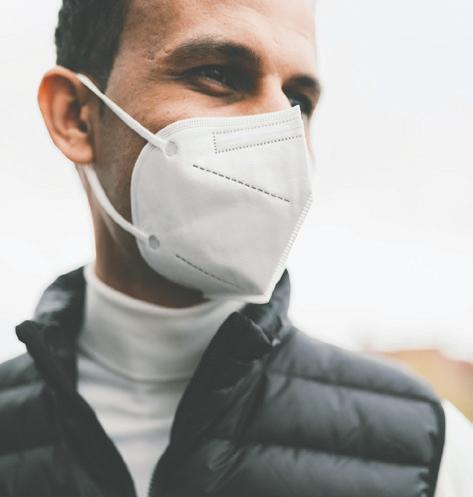
Many First Nations across the country braced for the spread of the Omicron variant as leaders prepared for labour shortages caused by COVID-19 that could be more severe in Indigenous communities. SYNATIX ON UNSPLASH
OPINION
editor@tworowtimes.com
Biodiversity Framework must advance Indigenous led conservation
By Noella Gray and Victoria Hodson
In the early hours of Dec. 19 — the last day of the 15th Conference of the Parties (COP15) conference in Montreal — the Parties to the Convention on Biological Diversity (CBD) adopted their new post-2020 Global Biodiversity Framework.
The goals and targets agreed within this framework, including the widely discussed Target 3, will guide conservation policy and investment for years to come. Target 3 — also known as the ``30x30'' target — calls for the conservation of 30 per cent of global land and sea areas by 2030.
The CBD has long promoted the creation of protected areas (parks) for the protection of both terrestrial and marine environments. The ``30x30'' target is a significant increase from the Aichi targets, set during the COP10 conference in Aichi Prefecture, Japan, which called for 17 per cent terrestrial and 10 per cent marine areas to be protected by 2020.
As researchers who study conservation governance, we have closely followed the four years of negotiations that led to this historic agreement. We believe that as protected and conserved areas increase under the framework, an equity-based approach, which respects Indigenous rights and title, is essential to help bring the transformative changes we need to halt and reverse biodiversity loss.
Challenges of `30x30'
In 2019, scientists called for a global deal for
nature to save biodiversity, including a minimum of 30 per cent of Earth to be formally protected. The High Ambition Coalition _ a group of more than 100 countries including Canada — has advocated for the ``30x30'' target since its launch in January 2021.
Such area-based targets, however, raise concerns. Protected areas have perpetuated colonial ideologies and violated Indigenous rights.
Some international organizations, like Survival International, campaigned against ``30x30,'' fearing that it would lead to further land grabs, human rights violations and dispossession of Indigenous Peoples globally, such as the recent eviction of the Maasai from the Ngorongoro Nature Reserve in Tanzania.
At COP15, many countries insisted that the ambitious ``30x30'' target must be matched by similarly ambitious funding. The Democratic Republic of the Congo initially rejected the framework on Monday, arguing that promised financial transfers from developed to developing countries were still insufficient. Although Congo later agreed to the framework, the tension during the meeting was high. The delegate from Namibia summarized it saying colonial injustice underlies all problems encountered in the CBD.
These concerns — regarding colonialism, global injustice and human rights violations — informed the negotiations of
the Framework at COP15.
One sticking point was whether Indigenous and traditional territories should be included in Target 3 as a distinct category of conservation, separate from protected areas. The International Indigenous Forum on Biodiversity argued that incorporating Indigenous and traditional territories into existing conservation policies, like government-led protected areas, undermines Indige-
Despite the concerns raised, the Global Biodiversity Framework creates opportunities to further Indigenous-led conservation. For example, following international guidelines, the creation and management of Indigenous Protected and Conserved Areas (IPCAs) can count towards the 30 per cent target.
According to the Indigenous Circle of Experts, IPCAs are Indigenous-led,
vation. Over $166 million of this will be dedicated to supporting IPCAs.
During the opening ceremony of COP15, Prime Minister Justin Trudeau announced funding of up to $800 million to support Indigenous-led conservation initiatives over seven years. Later in the summit, Minister of Environment and Climate Change, Steven Guilbeault, jointly announced a new First Nations National Guardians Network with Valerie Courtois, the Director of the Indigenous Leadership Initiative.
The federal, provincial, territorial and Indigenous governments have also announced work towards establishing new IPCAs, including one in the Seal River Watershed in Manitoba and another one around Great Bear Lake (Tsa Tue) in the Northwest Territories.
protected areas increased from 14.1 to 15.3 per cent on land and from 2.9 to 7.5 per cent in the marine environment between 2010 and 2019. The implementation of Target 3 could increase protected area coverage much further in the coming years.
According to COP15's final agreement, the implementation of the Framework must follow a human rights-based approach, acknowledging the human right to a clean, healthy and sustainable environment as recognized by the UN.
nous self-determination.
Ultimately, the final framework fell short of recognizing Indigenous territories as a distinct category of protection.
Some organizations are concerned this will put Indigenous Peoples at greater risk of human rights violations, while others welcomed the strong language in the framework regarding respect for the rights of Indigenous Peoples and local communities.
Canada's role in `30x30'
represent a long-term commitment to conservation and elevate Indigenous rights and responsibilities.
In Canada, there is growing recognition of the role of IPCAs in meeting conservation goals while also supporting reconciliation efforts. In August 2021, for example, the Government of Canada announced an investment of up to $340 million in new funding over five years to support Indigenous leadership in nature conser-
These investments demonstrate a growing recognition that Indigenous-led stewardship has equal or better conservation outcomes than government-led conservation efforts. It also shows the need for innovative forms of conservation governance beyond traditional protected areas. IPCAs present an important opportunity for transformative change, where Indigenous Peoples' rights and responsibilities are upheld, rather than undermined, while working toward global conservation goals.
Beyond COP15
In response to the CBD's previous Aichi targets, the percentage of the Earth's surface covered by
Here in Canada, the federal government only recently passed the United Nations Declaration on the Rights of Indigenous Peoples (UNDRIP) Act, which recognizes and legally upholds the rights of Indigenous Peoples. The outcome of COP15, therefore, coincides with the national implementation of UNDRIP, informing the role that Indigenous rights will play in Canada's conservation agenda.
Canada cannot meet its global commitments without centring Indigenous leadership and working in collaboration with Indigenous peoples.
This can be achieved by following the recommendations of the Indigenous Circle of Experts to provide continued — and increased — support for Indigenous-led conservation initiatives, like IPCAs. Supporting Indigenous-led conservation can help improve biodiversity outcomes while upholding our responsibility to human rights and reconciliation.
Volume 10, Issue 21
Make advertising cheques payable to:
Garlow Media
Oneida Business Park Suite 124 50 Generations Drive, Box 1 Ohsweken, ON N0A 1M0
Thank you for your advertising support!
Publisher: Jonathan Garlow Head of Production: Dave LaForce Editor & Social Media: Nahnda Garlow Writer: Donna Duric
Website Manager: Benjamin Doolittle Senior Writer: Jim Windle Columnist: Rachel A. Snow Writer: Jace Koblun
Advertising Sales Co-ordinator: Marshall Lank Advertising Sales Executive: Christine Patton Advertising Sales Executive: Ashley Smith
Distribution Manager: Tim Reynolds Brantford Distribution: Christian Kovac
Main office: (519) 900-5535 Editorial line: (519) 900-6241 Advertising line: (519) 900-6373
For advertising information: ads@tworowtimes.com General inquiries: info@tworowtimes.com Website: www.tworowtimes.com
TWO ROW TIMES December 28th, 2022 6
Canada cannot meet its global commitments without centring Indigenous leadership and working in collaboration with Indigenous peoples.
'TRT Gamers' Game of the Week
Episode 2: Path of Exile [PC/macOS, Xbox One, PlayStation 4]
By GameTechniqueTV
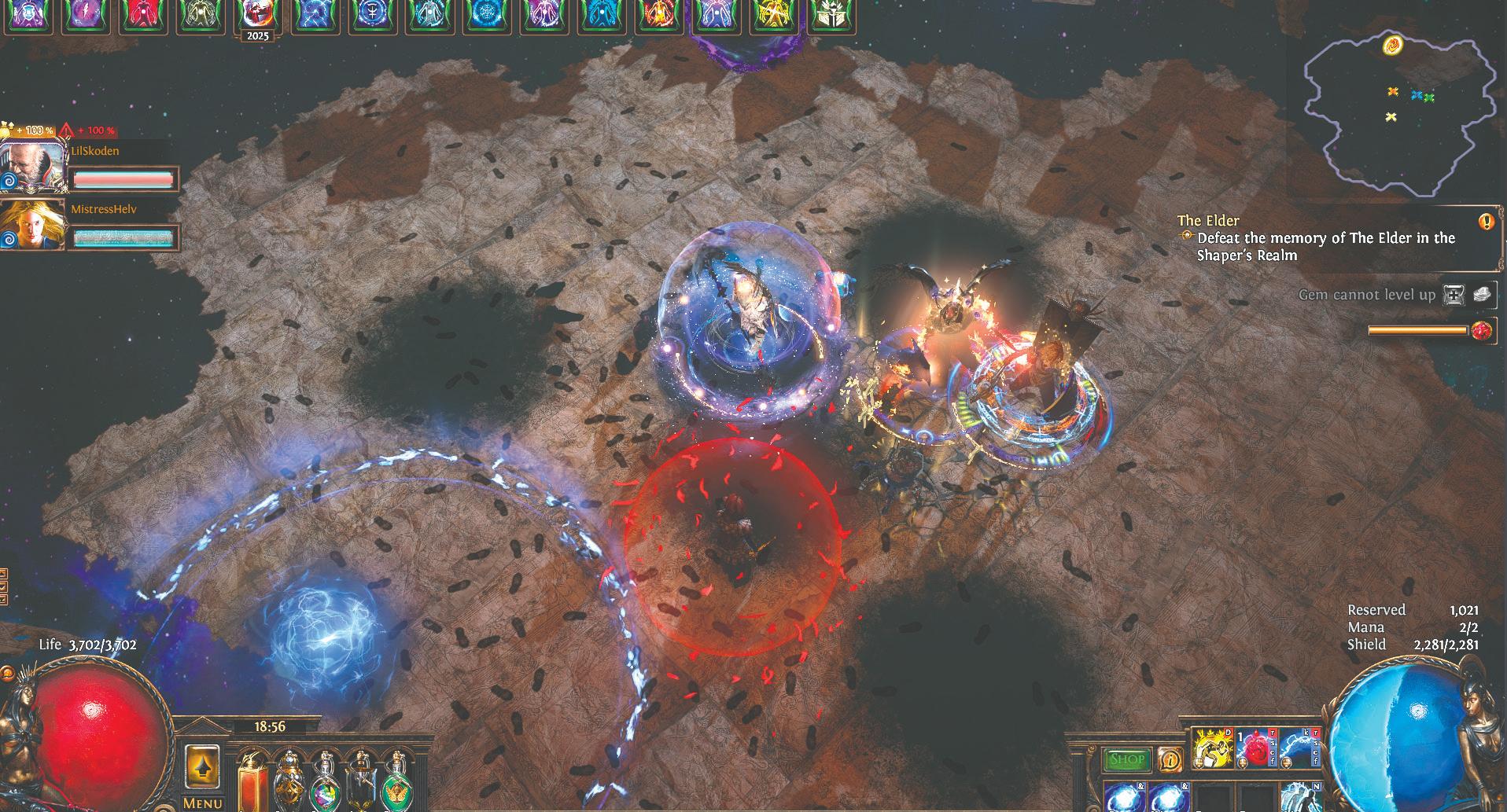
Originally created by a small team of developers led by Chris Wilson and Jonathan Rogers (both had a hand in the development of the popular ARPG Diablo 2), Path of Exile was released back in 2013 and has since been praised for its deep gameplay and excellent graphics.
Path of Exile takes place in the fantasy world of Wraeclast - a dark, unforgiving continent. An unknown number of years has passed since the cataclysm, and society has crumbled into ruin. Cthulhu, a powerful force of chaos and destruction,
now rules over much of Wraeclast, with humanity in chains to serve him as slaves. The world is inhabited by warring factions that include corrupted humans, rebel undead, and
Be
JACE KOBLUN jace@tworowtimes.com TWO ROW TIMES
When deciding where you want to spend New Year’s Eve the only questions worth asking the hosts (after determining a safe ride home) are, “Where is it?” and, “How is your snack game?”
Judging by the wall of menus hung behind the reception desk at the Two Row Times it is clear we love our snacks. And although not many of the staff here proclaim to be chefs or very creative in the kitchen (who has time for that anyways), here are some fun, tasty, and quick snacks you can bring to this year’s New Year’s Eve party to distract the crowd from another round of Monopoly.
Classic Buffalo Chicken Dip

Ingredients
2 tbsp. unsalted butter
2 c. Loosely packed shredded chicken
1/2 c. Buffalo style hot sauce
1 8 oz. package cream cheese
the
ancient horrors from beyond mortal ken—a world where death lurks around every corner. Filled with secrets and dangers, only a few remain, clinging to any semblance of life. Path
of Exile's dark fantasy setting is inspired by the works of H.P. Lovecraft and George R.R. Martin, with a focus on exploration, lore, religion, and
discovery. It is designed around a strong online item economy, deep character customization, and competitive ladder races. Enter the continent
of Wraeclast as one of 7 playable character archetypes (Templar, Marauder, Assassin, Scion, Duelist, Ranger, or Witch). Harness the powers of each, and turn their story of ruin into one of redemption and glory. Explore the vast areas of Wraeclast before deciding on your skills and beginning an even deeper progressive storyline.
The game is a multiplayer online action RPG, with each player exploring the same world and fighting monsters in real-time. The game has been updated with content patches, and a new act was added in 2016. The game is completely free and will never be "pay to win".
You can follow GameTechniqueTV on Twitch and Youtube.

snack hero at your New Year’s Eve party
3 tbsp. Dark brown sugar
3 tbsp. Pure honey
2 tsp. Ground cinnamon
1 1/2 tsp. Kosher salt
1 tsp. Freshly ground black pepper
1/2 to 1 tsp. Cayenne pepper
1 tsp. Chili powder
3/4 tsp. Ground cloves
1/2 tsp. Group ginger
6 c. Pecan halves
Chopped fresh rosemary for garnish
Directions
Pecans can be made up to 5 days in advance.
Recipe from countryliving.com
Zucchini Fritters

Ingredients 2 medium zucchini 1 large egg
2 oz. Pecorino cheese, grated
1/2 c. panko
1 clove garlic, pressed Black pepper
Directions
to 400 F. Grate zucchini; squeeze dry with paper towels and transfer to a bowl.
Step 2: Add egg, Pecorino, panko, garlic, and pepper to zucchini; stir to combine. Drop heaping tablespoonfuls of mixture onto a greased baking sheet and gently flatten.
Step 3: Bake, flipping halfway through, until golden brown and crisp, 18 to 20 minutes.
Recipe from countryliving.com
4 oz. sharp Cheddar cheese, shredded 1 oz. Blue cheese, crumbled Chives to garnish Kettle chips, veggies for dipping
Directions
Step 1: Preheat oven to 350 F. Melt butter in a medium saute pan over medium-low hear. Add chicken and hot sauce. Cook, stirring, until warm. Add cream cheese, cheddar, and half the blue cheese,
and stir until combined. Transfer to an over-safe 2 cup baking dish.
Step 2: Bake until bubbling, 24 to 26 minutes. Serve garnished with chives and remaining blue cheese and chips/veggies.
Recipe from countryliving.com
Sweet-and-Spicy Roasted Pecans
Ingredients
6 tbsp. (3/4 stick) unsalted butter
Step 1: Preheat oven to 325 F. Line two rimmed baking sheets with parchment paper. Melt butter in a large saucepan over medium heat. Add sugar, honey, cinnamon, salt, black pepper, cayenne, chili powder, cloves, and ginger and stir to combine. Cook, without stirring, until sugar is dissolved and the mixture bubbles, 2 to 3 minutes. Remove from heat and stir in pecans.
Step 2: Spread pecans in a single layer on prepared baking sheets, dividing evenly. Bake until brown and toasted, 15 to 16 minutes. Cool in pans on a wire rack. Serve garnished with rosemary.
Step 1: Preheat oven
TWO ROW TIMES December 28th, 2022 7
Buffalo Chicken Dip is always a crowd pleaser.
Zucchini fritters with pecorino cheese are a nice way to incorporate veggies into your new years snacks.
The aftermath of a hectic bossfight. GameTechniqueTV and friends take down one of the end-game bosses for the first time! Path of Exile supports up to 6 people in the same party. GAMETECHNIQUETV


Quebec court sides with First Nation on police underfunding
Indigenous police forces, Ghislain Picard, chief of the Assembly of First Nations Quebec-Labrador, said in an interview.
MONTREAL — First Nations in northern Quebec are calling on the province and the federal government for more funding for Indigenous police forces, following an appeals court decision in favour of the Pekuakamiulnuatsh Takuhikan First Nation on the issue.
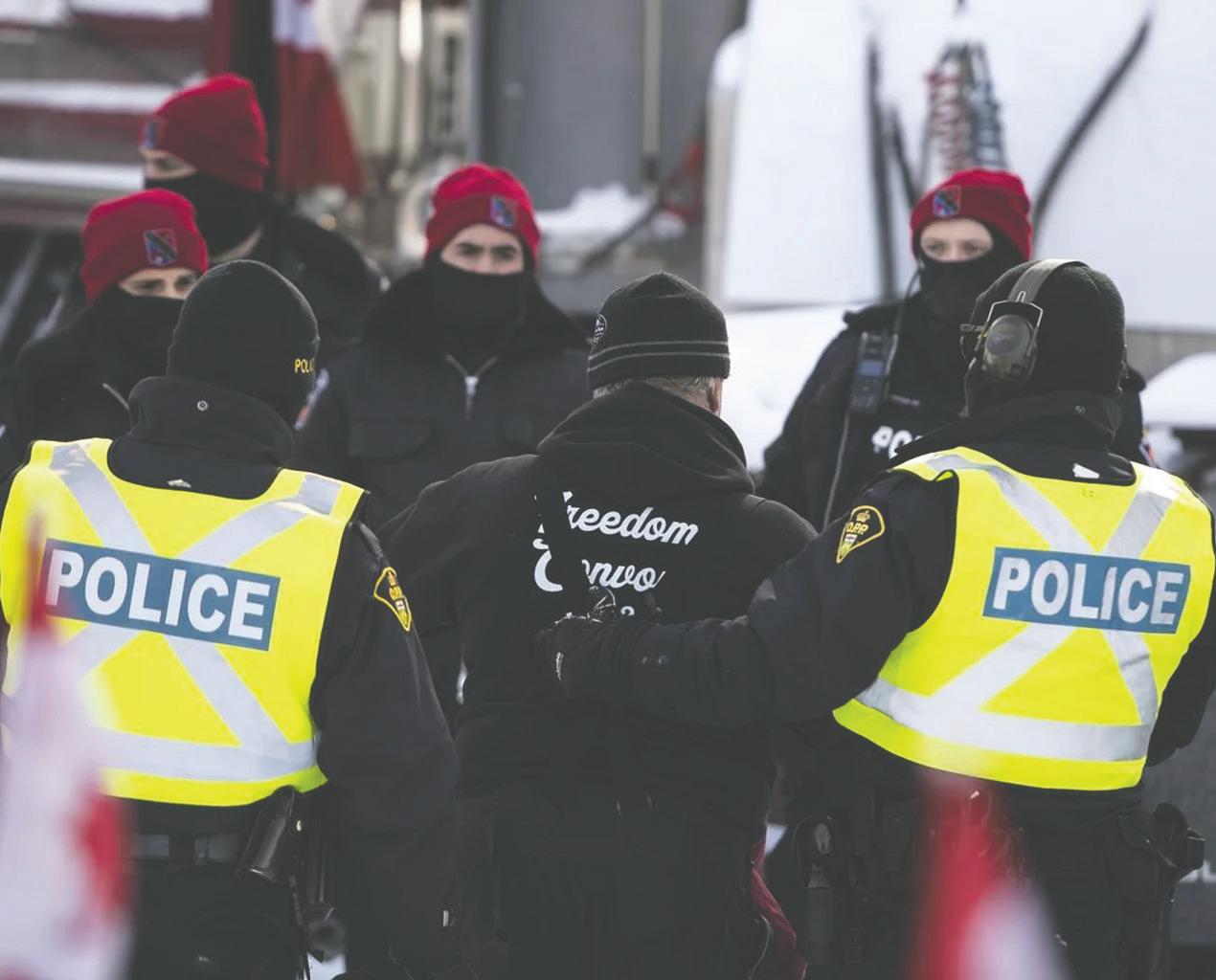
In a judgment rendered Dec. 15, the court agreed that the First Nation located in Quebec's SaguenayLac-St-Jean region was owed $1.6 million from Quebec and Ottawa to cover years of underfunding of its police force.
The court ruling confirms the long-standing position of First Nations communities that the provincial and federal governments are systematically underfunding
``At the end of the day, our police forces are responsible for enforcing the same laws and ensuring the same public safety,'' Picard said. ``Why shouldn't we be funded at the same level as other police services?''
Picard said that members of Indigenous police forces are incentivized to leave and pursue careers in better-paying police services across the country.
``Ensuring peace and order comes at a cost,'' Picard said. If the community is not able to assume this cost, it is certain that the police service as such will suffer, in the same way as the public safety of the members of our communities.``
Kawenni:io / Gaweni:yo Private School
Kawenni:io / Gaweni:yo Private School
(Elementary & High School) 3201 Second Line Hagersville, ON N0A 1H0 Phone: (905)768-7203 Fax: (905)768-7150
(Elementary & Secondary School) 3201 Second Line Hagersville, ON N0A 1H0 Phone: (905)768-7203 Fax: (905)768-7150
``The judgment demon-
The three-judge Court of Appeal panel voted
unanimously to overturn the 2019 Superior Court decision. Appeal Court Justice Jean Bouchard, writing for the panel, concluded that the federal government and Quebec
Kawenni:io / Gaweni:yo Private School (Elementary & Secondary School) 3201 Second Line Hagersville, ON N0A 1H0 Phone: (905)768-7203 Fax: (905)768-7150
had ``acted dishonourably'' in the case.
The defendants had argued that the services of Quebec's provincial police force were free for Indigenous communities, but reports showed that the police force was poorly adapted to the specific cultural needs of Indigenous Peoples.
``By remaining deaf to the grievances of the plaintiff who, rather than using the provincial police, accepted to be served by a police force of lesser quality, the defendants violated their obligation to act with honour,'' Bouchard wrote.
In Quebec City, the province's minister responsible for Indigenous affairs, Ian Lafreniere, said his department would review the court ruling before deciding whether to appeal.
Job Posting Teacher Assistant for Elementary Classroom Positions Mohawk
Posting Period: Until Filled
Job Posting Secondary Teacher
Posting Period: Until Filled
Job Posting
Secondary Teacher
Posting Period: Until filled
Location: Kawenní:io/Gawęní:yo Private School Iroquois Lacrosse Arena -upstairs, Six Nations
Location: Kawenní:io/Gawęní:yo Private School
Start Date: January 2023
Iroquois Lacrosse Arena -upstairs, Six Nations
Annual Salary: Based on Education and Experience
Start Date: ASAP
Location: Kawenní:io/Gawęní:yo Private School Iroquois Lacrosse Arena -upstairs, Six Nations
Start Date: January 2023
Annual Salary: Based on Education and Experience
Annual Salary: Based on Education and Experience
Main Duties and Responsibilities
Kawenni:io/Gaweni:yo board seeks a visionary, innovative Secondary Teachers to join the school team. You will lead by example with your dedication and commitment to our school and community Our community, parents, teachers, support staff, leadership team and Board of Education are committed to doing all they can to support student learning. Your role requires that you have proven capabilities meeting the unique needs of a culturally diverse school community
Kawenni:io/Gaweni:yo board seeks a visionary, innovative Secondary Teachers to join the school team. You will lead by example with your dedication and commitment to our school and community Our community, parents, teachers, support staff, leadership team and Board of Education are committed to doing all they can to support student learning. Your role requires that you have proven capabilities meeting the unique needs of a culturally diverse school community
Main Duties and Responsibilities
Main Duties and Responsibilities
The teacher assistant must be able to speak and use the language to assist the teacher in the implementation of daily lessons; engage in discussions to model language use for students; communicate with staff members; participate in audio-visual presentations and field trips, supervise students in the classroom and during yard duty and use multiple software platforms to complete requirements of the position Job description is available upon request.
Under the supervision of the Principal, the Teacher’s performance will be considered to be synonymous with Kawenni:io/ Gaweni:yo School policies and procedures. The Teacher will deliver lessons based on the guidelines to Secondary students. The Teacher will be responsible to prepare and administer grade tests, lesson units and projects in Gym, Humanities, and be flexible.
Qualifications - Education – Grade 12 High School Diploma and Teacher Assistant Training or equivalent and have a vast knowledge of the Rotinonhsion:ni/Hodinohso:ni culture and/or language.
Qualifications - Education
Under the supervision of the Principal, the Teacher’s performance will be considered to be synonymous with Kawenni:io/ Gaweni:yo School policies and procedures. The Teacher will deliver lessons based on the guidelines to Secondary students. The Teacher will be responsible to prepare and administer grade tests, lesson units and projects in Gym, Humanities, and be flexible.
Qualifications - Education
A Bachelor of Education or equivalent and be a member of the College of Teachers.
Knowledge, Skills and Abilities – Be knowledgeable of the Hodinohso:ni/Rotinonhsion:ni culture. Be proficient in speaking the language. Be knowledgeable in the use of multiple computer applications
A Bachelor of Education or equivalent and be a member of the College of Teachers.
Knowledge, Skills and Abilities
Knowledge, Skills and Abilities
• Previous experience teaching
• Administration of rules and policies among students
• Previous experience teaching
Please submit your resume and cover letter, recent police check including vulnerable sector and all supporting documentation, together with the names of two professional references by email (or mail) attention to Jeremy Green.
• Administration of rules and policies among students
• Instruct students through curriculum-approved lectures, demonstrations and discussions
• Instruct students through curriculum-approved lectures, demonstrations and discussions
• Maintain accurate records regarding students’ performance, assignments, attendance and grades
• Maintain accurate records regarding students’ performance, assignments, attendance and grades
• Evaluate and observe
Mail: Kawenni:io/Gaweni:yo School Human Resource 3201 Second Line Hagersville, ON N0A 1H0
Please submit your resume and cover letter, recent police check and all supporting documentation in person at the school, by fax or mail As soon as possible.
Email: cecileakiwenzie.12 @gmail.com Cell: 519-503-0791
To: Cecile Akiwenzie cecileakiwenzie.12@gmail.com
• Evaluate and observe
Please submit your resume and cover letter, recent police check and all supporting documentation in person at the school, by fax or mail As soon as possible.
To: Cecile Akiwenzie cecileakiwenzie.12@gmail.com Human Resource Coordinator
TWO ROW TIMES December 28th, 2022 10
Human
Resource Coordinator
Pekuakamiulnuatsh
First Nation Chief Gilbert Dominique says the situation is an example of systemic racism toward Indigenous Peoples in Quebec.
strates that First Nations are best suited to identify the real needs of their communities,'' he said in a statement.
CANADIAN PRESS editor@tworowtimes.com TWO ROW TIMES
Chronic underfunding for First Nations police is a massive problem in Canada and a Quebec court is agreeing -- saying that the First Nations in the Lac St Jean area were owed millions from the province and the federal govenment to cover underfunding its police department. CP
OTTAWA — Public Safety Minister Marco Mendicino says he hopes to introduce legislation declaring First Nations policing an essential service early in the new year, with one regional chief calling that timeline ``tight.''
In a year-end interview with The Canadian Press, Mendicino said the prospective law is under developmentwith input from Indigenous stakeholders and communities, who he said deserve ``the same quality of policing'' as non-Indigenous communities.
He described the work as the next step in advancing reconciliation with Indigenous people.
``We need to anchor our work in a relationship that is based on trust, on respect and on a recognition of the inherent right of Indigenous Peoples to self-determine when it comes to public faith,'' Mendicino said.
Ottawa has eyes on First Nations policing law
``It is precisely those values that is channelling the work that we are doing on the ground.''
In September, Mendicino told reporters he would ``work around the clock'' to have the law ready to be introduced this fall, but that did not happen.
Prime Minister Justin Trudeau promised to create legislation declaring First Nations policing an essential service in 2020.
However, Ghislain Picard, a regional chief with the Assembly of First Nations representing Quebec and Labrador, says they have been discussing it with the federal government since the early days of Trudeau's first mandate in 2015.
``Timelines have been pushed back and pushed back,'' he said Wednesday.
He said the hope now is to have legislation presented in spring 2023, but ``a lot of work has to happen between now and then.''
Picard said that discussions about what the legislation should look like involve not only stake-
holders such as the AFN, a national advocacy organization for more than 600 First Nations communities, but also provinces, experts and police chiefs.

``Timelines are going to be tight,'' he said.
The Conservative critic for Indigenous services, Gary Vidal, said that his party will review the legislation when it is introduced.
``However, it is already delayed, and that is not a good start if the government wants us to believe it is a priority for them,'' he said in a statement.
Trudeau's government has also faced pressure, including from Indigenous leaders, to reform the RCMP. The national force often acts as the main service for those living on-reserve because of contract policing agreements that it has in place with all provinces except Quebec and Ontario, which have their own provincial forces.
Crimes such as the stabbing rampage on James Smith Cree Nation in September, which left 11
dead and 18 others injured, have amplified the calls for reform.
Federal NDP Indigenous services critic Lori Idlout said that the tragedy reinforced a critical need for First Nations policing.
``The Liberal government keeps failing them through continuous delays in introducing the legislation,'' the Nunavut MP said in a statement.
``Indigenous peoples have the solutions; they just need a federal partner willing to provide longterm, sufficient and equitable funding.''

Funding is indeed viewed as one of the major barriers. Since 1991, Ottawa has provided funding for police services on First Nations and in Inuit communities, but an internal evaluation this year found the program suffered from a lack of resources and the underfunding of service agreements.
Passing legislation that declares policing on First Nations to be an essential service is the easy part, Picard said.
``How do we fund it is the harder part,'' he said. ``This is really what's at stake here.''
Picard added that many elements will need to be taken into account, such as salaries, benefits, training and infrastructure _ not to mention how needs will differ depending on factors such as a community's remoteness.
``It is complex,'' he said.
The National Inquiry into Missing and Murdered Indigenous Women and Girls also flagged concerns around the inadequate funding with the existing program, and its 2019 report included a call to action to ``dramatically transform Indigenous policing.''
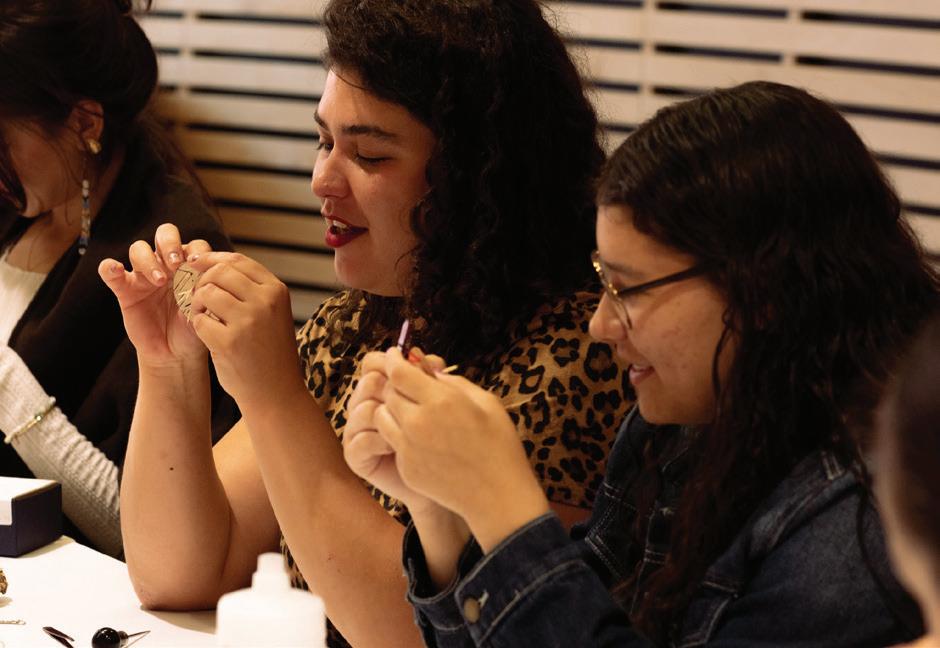

It said Indigenous police services must be funded to the same level as non-Indigenous ones, and undergo audits by civilian oversight bodies.
There are currently 35 First Nations police services in the country, according to Public Safety Canada, the majority of which operate in Ontario
and Quebec.
The First Nations Chiefs of Police Association has said it's received dozens of calls from other communities looking to go the same route, which it says can be a lengthy, complicated process.
Despite not yet coming out with a new law, Mendicino said his government has made progress on the issue by reaching an agreement with the Alberta government and province's Siksika Nation that would allow the community to transition away from relying on the RCMP and instead create a self-administered police service.
Mendicino pointed out that Ottawa also signed an agreement with the Saskatchewan government and the Prince Albert Grand Council, which includes James Smith Cree Nation, to explore new ways to deliver public safety.



``That's what moving forward with reconciliation looks like,'' he said.
``There's still a long way to go.''
TWO ROW TIMES December 28th, 2022 11 ATTENTION POST-SECONDARY STUDENTS! FOR MORE INFORMATION CONTACT: SIX NATIONS POLYTECHNIC students@snpolytechnic.com MCMASTER UNIVERSITY indigssa@mcmaster.ca MOHAWK COLLEGE vlb@mohawkcollege.ca Come to the Pop-Up Study Hall in Six Nations! Need access to stable wifi but you don’t have a need to travel to campus? Come join us at the Pop-Up Study Hall to access wifi at the Gathering Place while you take an online class, do research, and complete your coursework. Funded by Canadian Internet Registration Authority DATES September 28 October 5, 12, 26 November 2, 9, 23, 30 December 7, 14, 21 January 4, 11, 18, 25 February 1, 8, 15, 22 April 5, 12, 19, 26 HOURS 9:00am – 8:00pm LOCATION Gathering Place by the Grand, 2593 Chiefswood Rd, Ohsweken, ON N0A 1M0
CANADIAN PRESS editor@tworowtimes.com TWO ROW TIMES
know the score.
Indigenous goaltender at World Games
Despite becoming a National Hockey League draft pick with a stellar junior career, Roddy Ross is still trying to make others take note of his abilities as a member of Canoe Lake Cree First Nation in Saskatchewan.
Ross, a 22-year-old goaltender, was named to the Canadian men’s hockey team that will compete at the World University Games, which will be held Jan. 11 to Jan. 22 in Lake Placid, N.Y.
Ross is in his second season with the University of Saskatchewan Huskies, and the Games will mark the first time he has represented Canada in an international tournament. The
men’s hockey competition at the Games will feature 12 clubs. The event is also expected to attract numerous scouts from various pro franchises.
Ross had been drafted by the Philadelphia Flyers in the 2019 NHL Entry Draft. Despite attending two training camps with the Flyers, he was never offered a pro contract from the organization.
After using his junior eligibility, Ross opted to continue sharpening his skills in the Canadian university ranks, and hopes his playing will catch the attention of some pro talent seekers at the tournament.
Ross will fly to Ottawa on Jan. 8 to meet the rest of his Canadian teammates.
A 2022 Sports Recap
Northern Star Award to be renamed
On December 5, Marie-Philip Poulin, was named the Northern Star Award winner as Canada's top athlete of 2022, formerly known as Lou Marsh Trophy.
The Northern Star Award has been handed out annually since 1936. But until this year, it was named the Lou Marsh Award after a former football player and NHL referee who spent more than 40 years working in the Toronto Star's sports department.
The award was recently renamed after concerns surfaced in recent years over some of the racist language used in Marsh's
writing. Racist language was found used within some of his articles, including derogatory comments about Six Nations athlete Tom Longboat.
Poulin is the 10th hockey player overall to win the award. Montreal Canadiens goaltender Carey Price was the last to win in 2015.
Poulin was considered instrumental in Canada's gold medal achievement in Beijing. She scored twice in a 3-2 win over the U.S. in the championship game and finished the tournament second in scoring with 17 points.
She had 10 points in seven games at the world championship in Denmark, including an assist on Brianne Jenner's opening goal in a 2-1 win over the U.S. in the gold-medal game.
Since 2019, sports fans have endured a long-standing hiatus of many of their favourite sports due to the Covid-19 pandemic. But this year, athletes, friends, family and fans were finally able to return to play in the ways that they wanted to.
This year saw the return of lacrosse, hockey, golf, figure skating, rugby, baseball and more, in formats that allowed full attendance by those that love the sports. Below is a list of notable happenings within the Indigenous sport sphere:
-The Fred Saskamoose Tournament held a women’s division of 10 competing teams for the first time
-The National Aboriginal Hockey Championships returned, with Team Ontario taking gold in the men’s U18, and silver in the women’s U18
-Nathan Lickers of Six Nations took second place in the Senior Division of the 2022-2023 Skate Can-
ada Challenge
-Kaleb Thomas was named as first Indigenous player to play on Canada’s Junior National Baseball Team, and remains a top pitching prospect
-Six Nations Minor Lacrosse Association opened season after three year hiatus
-Six Nations Minor Hockey Association opened season after three year hiatus
-Iroquois Roots Rugby U14 team secured first win versus Toronto City -Lyle Thompson was awarded Humanitarian of the Year at 2022 PLL Awards
-Six Nations Rivermen led a nearly undefeated season and finished as provincial champions
-The first Indigenous Ontario Golf Championships held at MontHill Golf Course, with John
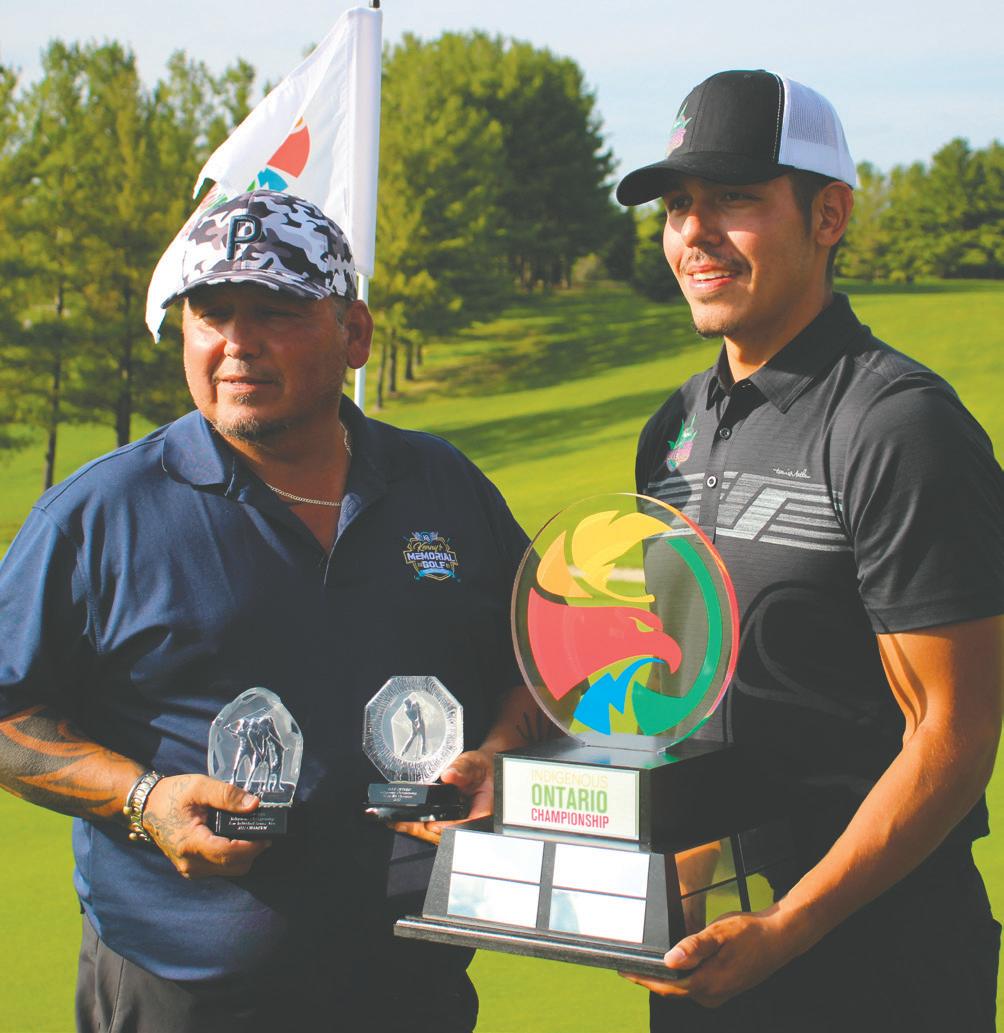
Monture Jr. of Six Nations securing a first place win -Colorado Mammoth took home the NLL Championship, after defeating the Buffalo Bandits 10-8 in Game Three -Neilson Powless, Oneida, became the highest ranked American in pro-cycling

-The World Games saw the debut of the “sixes” field lacrosse format -Haudenosaunee
claimed silver at the World Junior Lacrosse Championship against Canada -Brenden Andersen won the J. Ross Roberston Cup as an OHL champion with the Hamilton Bulldogs
-Down Below Lacrosse won the Dreamcatcher Tournament for the first time

-Sluggers win Six Nations Slo-pitch league -ALL East renamed St.
Catharines Shockwave the Ohsweken Bears, with first expansion draft
-The Professiona Box Lacrosse League opens for it’s first season in the U.S., claiming talent from Six Nations
-Little NHL announces return after three year hiatus for 2023
-Marian Jacko appointed to Hockey Canada Board of Directors
TWO ROW TIMES December 28th, 2022 12
SPORTS
STAFF REPORT editor@tworowtimes.com TWO ROW TIMES
editor@tworowtimes.com
STAFF REPORT editor@tworowtimes.com TWO ROW TIMES
STAFF REPORT
TWO ROW TIMES
The Indigenous Ontario Golf Championships at MontHill Golf Course were a huge event for Six Nations this year. MG
Roddy Ross.
SUBMITTED
TRT
Dreamcatcher's Lacrosse Tournament winners 2022.
SIX NATIONS COUNCIL
Personal Support Worker
Iroquois Lodge, Health Services
Full Time $21.00/hr January 4, 2023
Maintenance Worker Iroquois Lodge, Health Services Part Time TBD January 4, 2023
Activity Assistant Iroquois Lodge, Health Services Full Time $21.00/ Hour January 4, 2023
Registered Early Childhood Educator Child Care Services, Social Services Full Time TBD January 4, 2023
Administration Lead Administration, Health Services Contract $75,000 to January 4, 2023 $82,500
Case Manager Child and Youth Health, Health Services Full Time TBD January 4, 2023
Social Worker Child and Youth Health, Health Services Full Time TBD January 4, 2023
Supportive Housing Case Manager Mental Wellness, Health Services Full Time TBD January 4, 2023
Teacher’s Assistant Child Care Services Full Time TBD January 11, 2023
Registered Early Childhood Educator Child Care Services, Social Services Contract TBD January 11, 2023
Construction Manager Housing Full Time $65,000 to January 11, 2023 $85,000
Caretaker Maintenance Mechanic Parks and Recreation Full Time $18.00/ Hour January 11, 2023
Personal Support Worker Personal Support Services, Health Services Full Time $21.00/ Hour January 11, 2023
Speech Language Pathologist Child and Youth Health, Health Services Full Time TBD January 11, 2023
Payroll/Benefits Officer Ogwadeni:deo Full Time TBD January 4, 2023
Dementia Care Team- Home & Community Care, Part Time TBD January 18, 2023 Elder Companion Health Services
Behaviour Unit Child & Family Services, Full Time $36,400 January 18, 2023
Administration Assistant Social Services
Nurse Practitioner Iroquois Lodge, Health Services Full Time $60.44/ Hour January 18, 2023
Community Outreach Worker Six Nations Cannabis Commission Full Time $70.000 to January 18, 2023 $80,000
Occupational Therapist Child & Youth Health, Health Services Full Time TBD January 18, 2023
Assistant Caretaker Parks and Recreation Part Time TBD January 18, 2023
Maintenance Mechanic
Youth Outreach Coordinator Ontario First Nations Full Time TBD January 6, 2022 Technical Services Corporation
Child and Youth Worker Grand Erie District School Board Full Time $40,638 to January 11, 2022 $49,783
Corporate Finance Accountant Brantford Native Housing Full Time $50,000 to January 14, 2023 $65,000
Registered Early Childhood Educator Mississaugas of the Credit First Nation Full Time/ $40,297.50 to January 18, 2023 (RECE) Program Facilitator Permanent $56,821.50
Community and Public Six Nations of the Grand River Full Time/ TBD Until Filled Relations Officer Development Corporation Permanent Custodian Mississaugas of the Credit First Nation Casual $15.50/ Hour Until Filled
Bingo Sales Representative Six Nations of the Grand River Part Time $18.00 to Until Filled (Customer Service Role) Development Corporation $20.00/ Hour
Lab Technician and Developer Six Nations Polytechnic Part Time TBD Until Filled Weekend Visitor Services Woodland Cultural Center Part Time $18.00/ Hour Until Filled Kanien’kehá:ka Teacher Assistant Kawenni:io/Gaweni:yo Full Time TBD Until Filled for Elementary Classroom Positions English/ESL Teacher Kawenni:io/Gaweni:yo Full Time TBD Until Filled Cook Mississaugas of the Credit First Nation Casual $16.90/ Hour Until Filled IT Technician Ohsweken Speedway Full Time/ $45,000 to Until Filled Permanent $75,000
Senior Manager of Housing Six Nations Housing
Full Time $95,00 to January 18, 2023 (Formerly the Director of Housing) $110,000
Maintenance Staff Six Nations Housing Full Time TBD January 18, 2023
SIX NATIONS AND NEW CREDIT
Temporary Child and Youth Worker Grand Erie District School Board
Full Time/ Temporary $40,638 to January 2, 2023 $49,783
Library Assistant Woodland Cultural Center Full Time/ Contract $18.00/ Hour January 4, 2023
Office Administrator Six Nations Polytechnic Full Time TBD January 4, 2023
Development Officer – Six Nations Polytech Full Time TBD January 4, 2022 Institutional Advancement
Event Coordinator Ontario First Nations Full Time TBD January 6, 2022 Technical Services Corporation
Kitchen Help Sade:konih TOJ TBD Until Filled Weekend Visitor Services Woodland Cultural Center Part Time $15.00/ Hour Until Filled Housing Outreach Worker Brantford Native Housing Full Time TBD Until Filled Tire Technician Hills Tire Full Time TBD Until Filled Project Administrative Assistant Woodland Cultural Centre Full Time TBD Until Filled Operations Manager Kayanase Full Time TBD Until Filled Forestry Labourer Kayanase Summer Student TBD Until Filled Ground Maintenance Worker Kayanase Summer Student TBD Until Filled Gas Bar Attendant Mississaugas of the Credit First Nation Part Time TBD Until Filled Education Curriculum Developer Woodland Cultural Center Contract TBD Until Filled Building Attendant Staff Six Nations of the Grand River Part Time/ $18.00 to Until Filled Development Corporation Permanent $20.00/Hour
Supply Cook Mississaugas of the Credit First Nation Contract/Casual $16.90/Hour Until Filled Supply Teachers Kawenni:io/Gaweni:yo On-Call TBD Until Filled English/TSL Teacher Kawenni:io/Gaweni:yo Full Time TBD Until Filled
The GREAT Job Board is brought to you by Employment Ontario and Service Canada. Only local positions are posted in the paper. For more positions in the surrounding area, visit our job board at www.greatsn.com! To apply for funding, book your intake appointment with an ETC by calling 519-445-2222 (Toll-Free long distance at 1-888 218-8230 or email us at info@greatsn.com.
Phone: 519.445.2222 Fax: 519.445.4777 Toll Free: 1.888.218.8230 www.greatsn.com
TWO ROW TIMES December 28th, 2022 13 Job descriptions are available at GREAT Weekdays...Monday through Friday from 8:30-4:30pm 16 Sunrise Court, Ohsweken
Position Employer/Location Term Salary Closing Date Position
Employer/Location Term Salary Closing Date
EVERY DAY THAT PASSES
I seem to miss you more.
send notices to ads@tworowtimes.com
I miss our little chats, and you walking in the door.
I miss the way you laughed, the way you used to smile.
I would give most anything to have you back awhile.
Life seems so empty, something special is missing.
I seem to spend my time, sad and reminiscing. You gave me happy memories that I will always treasure.
I know a day will come when we will be together. Rest in peace my angel in heaven up above. Sending you my kisses and always my love. Thank you for the memories, thank you for the love.
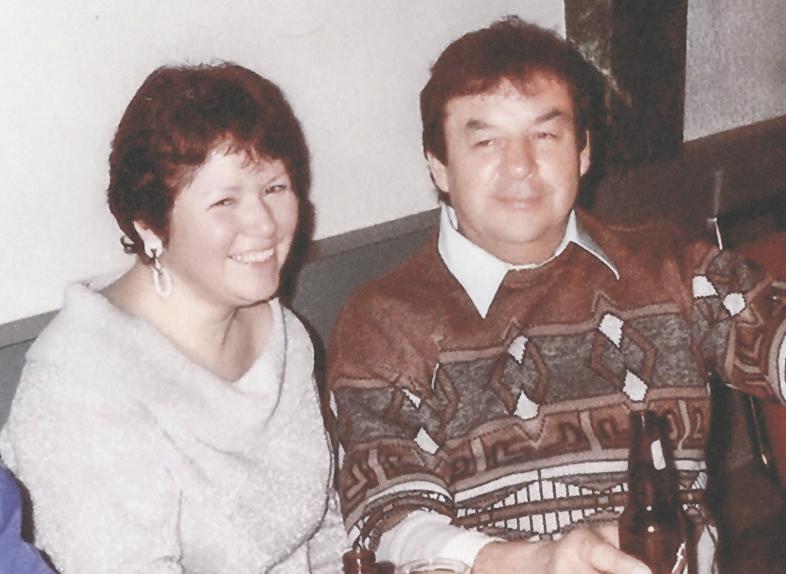
I know you’re watching over me, from heaven above.
Love eternally - DALE
Forestry Services

Recovery is a Process (Jan. 7, 21st Meetings)
This a 12 Step Recovery Christian based Meeting (Breakfast Included). This program is a workbook study (book is available to purchase) that will teach the practical application of the foundational steps to stable recovery and healing from addictions. Breakfast starts at 8:30am and the meeting is from 9am -11am at St. Luke’s Church basement. Please come with an open mind to share your journey and to strengthen your recovery from addictions. Meeting will be every 1st and 3rd Saturday of every month. Typically runs for 14 weeks. Meetings will be held at St. Luke’s Church basement between 3rd & 4th Line. Contact Dorothy-Lee 778-997-1923.
Adult Programs
FREE TRAINING
“Building Confidence for the GED”
The Achievement Centre is offering two weeks of confidence building programming for adults who are wanting to obtain their GED and need a refresher in their math skills and the essential understanding of the GED. January 23 -Feb 2, 2023
Mon - Thurs 9am – 3pm
To register, call: 519-445-0023 x.6902, text: 519-757-5989 or email: angel@ snpolytechnic.com Lunch provided
THURSDAYS 12:30-4:30PM beginning in 2023
Speak with a legal advice lawyer for FREE
Call Tony Bomberry: 519 770 5345 for: Clinic intake and assistance with legal paperwork including Legal Aid Ontario applications
(8:30-4pm M-F)
TWO ROW TIMES December 28th, 2022 14 TWO ROW TIMES 37 WEDNESDAY, APRIL 20TH, 2022 Notice In Memoriam Notice Legal Information ATTN: send notices to ads@tworowtimes.com
Year round installation Toka’t ihsere karihsta enhsahskwahrénhstahkwe’, sheiatewennata’ne Ojistoh Squire 519-774-9633 Roofing Installer
ALLAN WHITE June 6, 1945 - Dec 29, 2019
FAMILY/CRIMINAL LEGAL INFORMATION CLINIC SIX NATIONS JUSTICE DEPARTMENT
ATTN:
ARIES – Mar 21/Apr 20



Cleaning and organizing can wait for another week, Aries. This week you should focus on having fun with your family and friends Enjoy the respite from work.
TAURUS – Apr 21/May 21

Taurus, work is on your brain, but it could be because you’re wired to focus on getting things done. Work is important, but remember to make time for other things as well.
GEMINI – May 22/Jun 21



Your bank account may not be as healthy as it could be, Gemini. Tuck those credit cards away and cut back on purchases for the time being to set things straight.
CANCER – Jun 22/Jul 22


You have been feeling less motivated of late, Cancer. That is likely due to the breakneck speed that you have been going for some time. Slow down and enjoy the break.
LEO – Jul 23/Aug 23

Leo, practicality is your middle name. The next few days you may be focused on whimsy and imagination. It could be all the feelings the holidays are bringing up.
VIRGO – Aug 24/Sept 22
Planetary energies could be affecting those around you and their reception to your ideas, Virgo. Remain patient that things will tip in your favor after some time has passed.
LIBRA – Sept 23/Oct 23

Your thoughts this week are about setting goals for the future, Libra. Not that you haven’t already been doing your share of planning, but now you’re firming up those plans.
SCORPIO – Oct 24/Nov 22

Scorpio, issues with your professional life may be on your mind. It could be time to make a major change in the days to come. Are you ready to move in a new direction?
SAGITTARIUS – Nov 23/Dec 21
New responsibilities have left little time to spend with your significant other, Sagittarius. Carve out moments to snuggle if you cannot get out to a romantic meal or movie.

CAPRICORN – Dec 22/Jan 20
Have you been plotting a move, Capricorn? Make sure your real estate research is up-todate and you’re ready to take the plunge. This move may be a big one.
AQUARIUS – Jan 21/Feb 18
Aquarius, perhaps you have made a few big purchases lately and feel like your budget has taken a hit? Add up receipts and you may find it’s not as bad as you had thought.
PISCES – Feb 19/Mar 20
This is a good time for a change of perspective, Pisces. Maybe you have been looking at things all the wrong way. Switch things up.
TWO ROW TIMES December 28th, 2022 15 TWO ROW TIMES DECEMBER 19TH, 2018 27 SUDOKU Answers for December 28th, 2022 Crossword Puzzle Container Sales and Modi cations Service Since 2007
90 Morton Ave. East, Unit 1-B • Brantford, ON N3R 7J7 Cell: 519.754.6844 • Tel: 519.751.1651 • Fax: 519.751.3328 www.vbinc.ca • Email: vb.container4@gmail.com
Paul LeBlanc Owner
CLUES ACROSS 1. Product or __ (abbr.) 4. Zodiac sign 9. S. China seaport 14. Former OSS 15. Early English printer 16. Aphid genus 17. General’s assistant (abbr.) 18. Aussies 20. Dissuades 22. Make law 23. Drench 24. Soak in a liquid 28. Male child 29. It cools your home 30. Small constellation 31. To call (archaic) 33. Explores beneath the Earth 37. Commercial 38. W. hemisphere organization 39. You can find it in a can 41. “Land of the free” 42 36 inches 43. Footwear 44. Challenges 46. They hold things together 49. Of I 50. Partner to flow 51. Not connected by kinship 55. Worries 58. Garlic mayonnaise 59. A way to take by force 60. Legendary English rockers 64. Your consciousness of your own identity 65. Fencing swords 66. Silly 67. Actor DiCaprio 68. Encircles with a belt 69. Mails a message 70. Longing CLUES DOWN 1. Horse mackerels 2. It can be viral 3. Prickly plants 4. Consciousness 5. Type of sarcoma 6. Tax collector 7. Sun up in New York 8. One who scorches 9. Influential psychotherapist 10. Situated at an apex 11. Communicative 12. Forearm nerve 13. Former CIA 19. Folk singer DiFranco 21. Employee stock ownership plan 24. Large-scale 25. School environment 26. Remove 27. Male parents 31. Large rodent 32. Weighed down 34. Held tightly 35. __ route: going there 36. Explains again 40. Exclamation of surprise 41. Courteously 45. Lying down 47. Judge 48. Forcefully took 52. Loosely compacted sediment 53. High mountain 54. Portable conical tents 56. Cereal grass 57. Dining utensil 59. Thoughtful 60. Helps you walk 61. Indicates near 62. Midway between northeast and east 63. Local area network
















TWO ROW TIMES December 28th, 2022 16
As the New Year approaches us with new hopes, here is wishing you and your loved ones a wonderful year ahead. Happy New Year!
