TUSK TALK

Main image
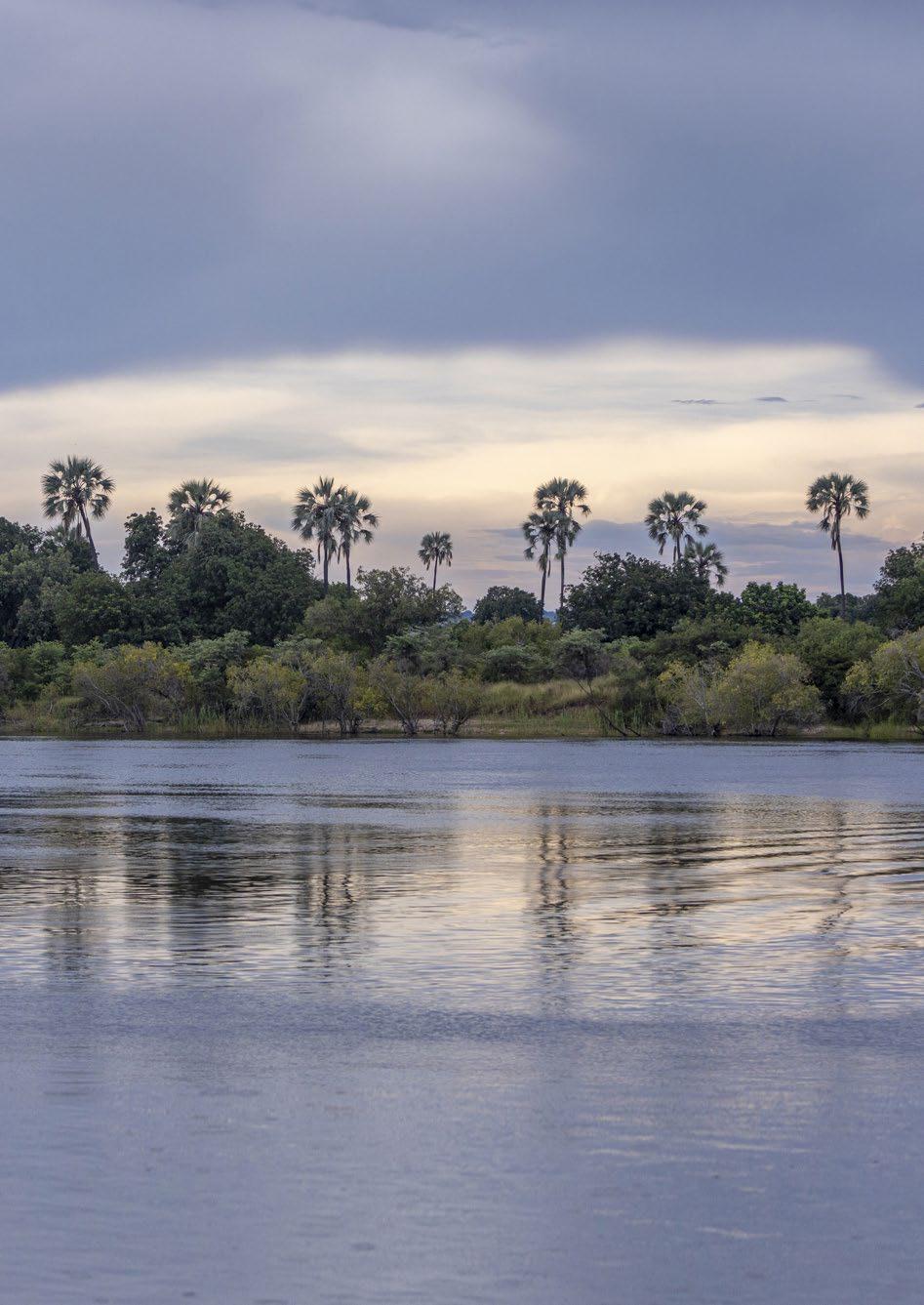
The Zambezi River above Victoria Falls


Alexander Rhodes OBE Tusk Chairman
Alexander Rhodes OBE Tusk Chairman
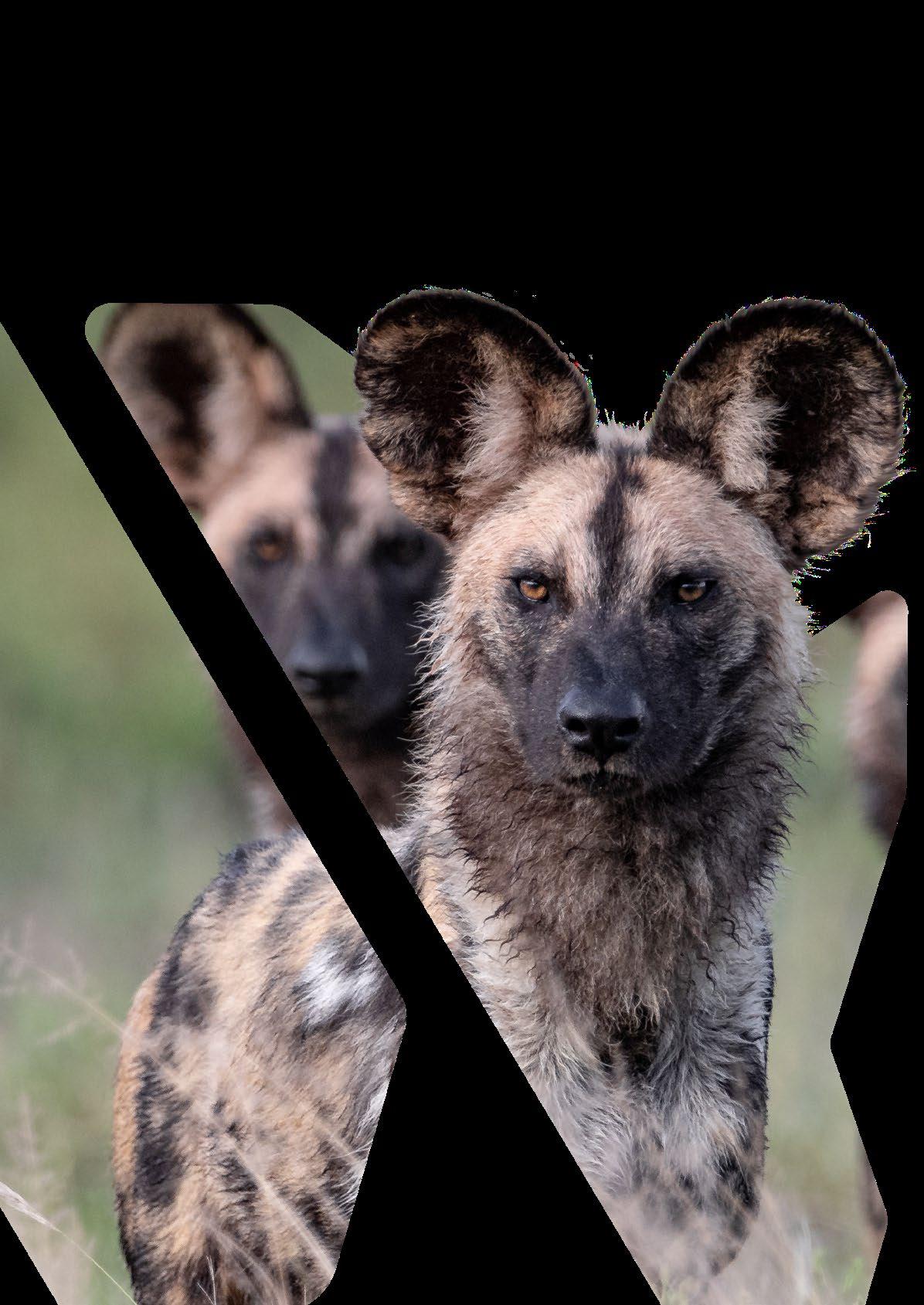
On the morning of 4th March, I came face to face with an adult female African wild dog. It was the last morning of Tusk’s fifth Conservation Symposium in Zimbabwe, and, for me, a deeply personal moment.
My first job out of university was a population study of wild dogs in northern Kenya - weeks of walking, looking and talking. They were there, but I never saw a single one! As our small group moved on, we were captivated by Wilton Nsimango, a gifted educator who for decades has inspired young minds at Painted Dog Conservation's Children's Bush Camp to understand - and feel - the value of wildlife to Hwange's ecosystems.
It is the kind of moment that resets one's bearings. After days of discussion about funding models, resilience, and technological change, here was the thing itself: one of Africa's most endangered predators, surviving and thriving because people had decided that this was worth committing their lives to.

That is the story this edition of Tusk Talk tells, across 78 projects and 27 countriesand the answer to last year's question: can Tusk's long-term, locally-led, partnershipbased model advance conservation in a dramatically changed funding landscape? The answer is in the numbers, and in the work, set out in this inspiring edition.
Conservation in Africa is about people. On the front line, it depends on rangers. On the second morning of the Symposium, we learned that seven staff members had been killed in an attack on Upemba National Park in the DRC - three of them rangers, in what was the most deadly single incident in African conservation in six years. I want to record our grief at those losses. The RangerProtect insurance scheme, part of the Ranger Welfare and Standards Initiative launched by Tusk, the Game Rangers Association of Africa and The Royal Foundation in 2024, has paid claims from animal incidents, homicide, and ISIS-related attacks in Mozambique. Earlier this year, the scheme had over 6,200 members; by the end of 2030 we aim to have 10,000 rangers enrolled. What happened at Upemba is precisely why.
In November, our Royal Patron honoured Kumara Wakjira, Rahima Njaidi, and Laban Mwangi at the 13th Tusk Conservation Awards — made possible by Ninety One, Defender, and the Nick Maughan Family Foundation. The Defender partnership has been renewed for five years, and events in Florida, Silicon Valley, and Milan have welcomed new supporters to our community. I want to thank Deborah Meaden and Paddy Harverson for their years on our Board, and welcome Stuart Graham, Jason Knauf LVO, and - as Chief Conservation Officer - Chantal Migongo-Bake.
The Wildlife Ranger Challenge returns later in the year, and judging for this year’s Tusk Conservation Awards has just finished. The work continues, the community grows - and the wild dogs are still running.

Charlie Mayhew President & CEO, Tusk
Tusk has enjoyed another excellent year and we are hugely proud of the impact that our project partners continue to have across the African continent thanks to the funding Tusk has been able to provide.
We are living through a period where geo-politics are unfortunately dominating the headlines – and leading to a worrying shift of global state aid budgets away from investing in protecting nature. Africa’s unique wildlife and wild landscapes remain under constant threat which means there can be no let-up in our collective efforts to support our partners on the ground. As such, we continue to rely upon your philanthropy to help Tusk underpin their vital work. Indeed I am always humbled by the remarkable passion, knowledge and innovation that is constantly displayed by our partners.
The beginning of 2026 saw us welcome our new Chief Conservation Officer, Chantal Migongo-Bake, who joined us from The Nature Conservancy, where she served as the Deputy Conservation Director for Africa. Chantal brings with her a wealth of experience and we are very proud to have her on the team. Fortuitously the biennial Tusk Conservation Symposium which we hosted at Hwange in Zimbabwe in March provided Chantal with the perfect opportunity to get to know most of our project partners at the same time. Bringing together and spending quality time with such dedicated conservationists is always a hugely energising experience.
The Symposium also provided us with the platform to announce an exciting pilot programme with Starlink. Across the vast, remote landscapes, this new initiative will improve connectivity for the rangers, wildlife managers and researchers, providing them with near-time data analysis from the field. The partnership will benefit a select number of our projects and we hope it will lead to further innovation and opportunities in the coming years.
After two and a half years that have seen significant growth in impact and fundraising for African conversation, Tusk CEO Nick Bubb moved on from Tusk in early June to pursue a new chapter as a Philanthropy Consultant, and is replaced by Tusk President Charlie Mayhew OBE. Nick has brought considerable energy and commitment to Tusk and leaves the organisation in a strong position with a record £15.6 million raised last year, outstanding new talent in the team, and increased funds deployed to conservation. Nick leaves with our immense gratitude and best wishes.
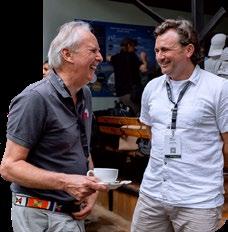
Tusk is only able to have the impact we do thanks to you, our donors, and therefore on behalf of us all I want to express our immense gratitude for your unwavering support and continued generosity. I hope this edition of Tusk Talk provides a further insight into some of the incredible conservation initiatives and people that are making a real difference on the ground. I speak for them all when I say “Thank You!”
Opposite Page
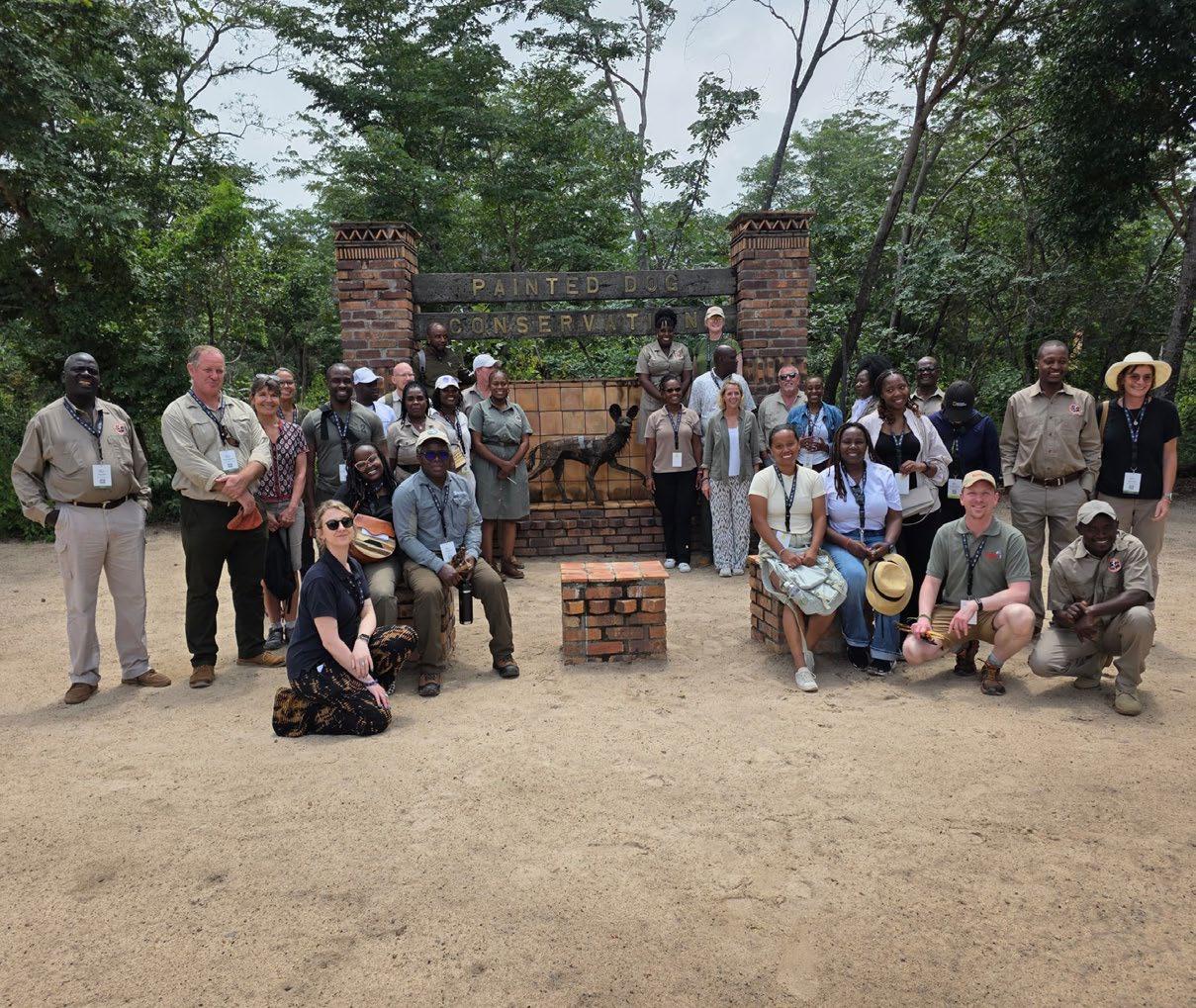
Delegates at Painted Dog
Conservation during the 2026
Tusk Conservation Symposium
Credit:GeorginaGoodwin
Top (Main)
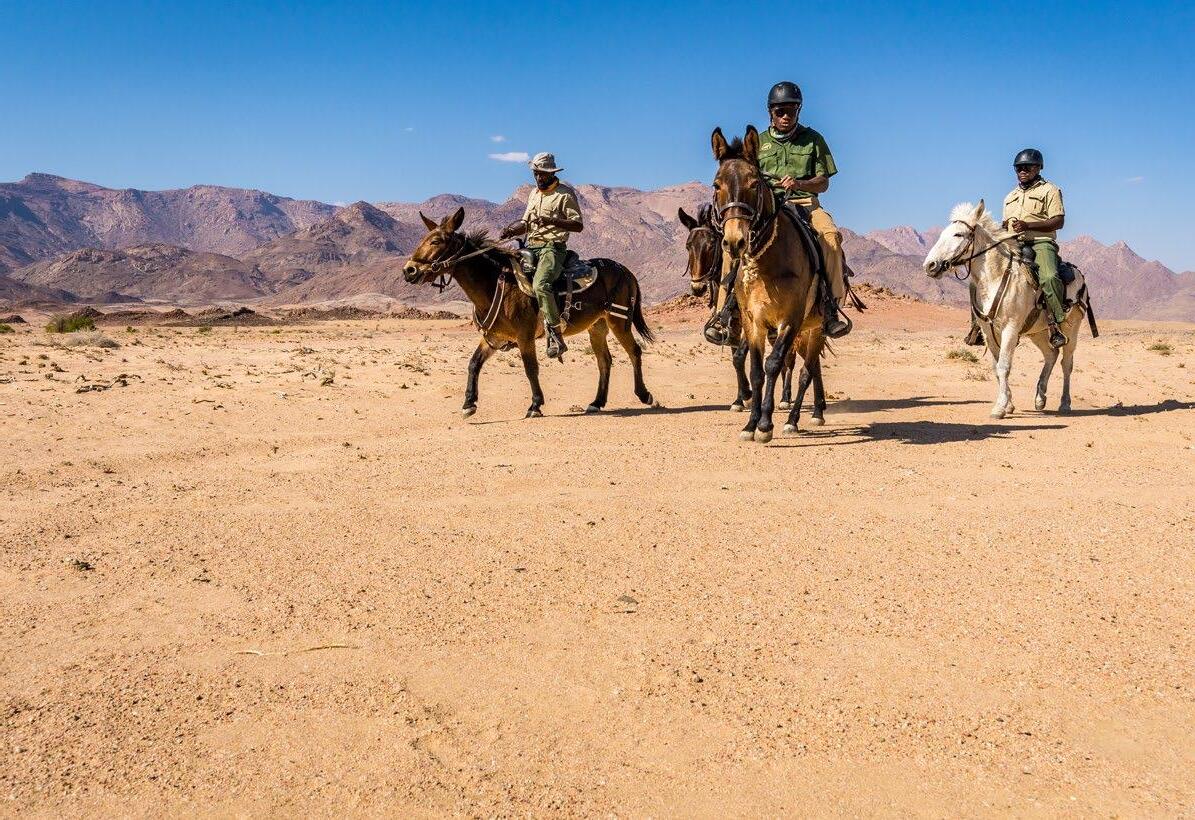
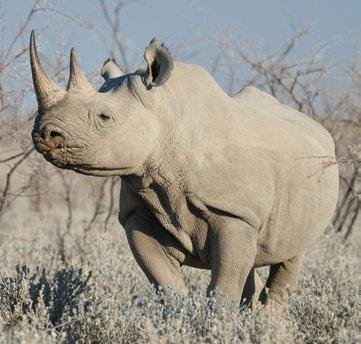
Save the Rhino Trust rangers on patrol in Namibia
Credit:MarcusWestberg
Tusk's 2030 Vision and Mission
Tusk's vision for Africa is a future where biodiversity flourishes and people thrive.
Success in Africa depends on having healthy habitats that sustain life whilst also meeting the needs of communities. This can only be achieved through a collaborative approach, and we pride ourselves on partnering with leading and emerging conservationists throughout Africa, investing in their grassroots conservation work to help protect Africa’s wildlife and landscapes. Expert voices from local organisations, combined with traditional knowledge, are best positioned to address the threats facing their continent.
Africa is home to 25% of the world’s remaining biodiversity, including eight of the remaining biodiversity hotspots. Yet the degradation of biodiversity accelerates climate change, threatens millions of livelihoods, provokes conflict, and increases transmission of zoonotic diseases.
Tusk's 2030 Goals
1. FUNDING: We provide critical funding to enable our project partners to grow and increase their impact on habitat and wildlife. We also invest in the critical role Africa’s wildlife rangers play as nature’s guardians through the Wildlife Ranger Challenge and Ranger Welfare and Standards Initiative.
2. LEADERSHIP: Through the recognition and support of Tusk Conservation Award recipients (seepages23-27) , we raise the profile of African conservation leaders and their significant impacts in the field across Africa.
3. CONVENING: We bring our project partners and wider stakeholders together. Through initiatives such as the Tusk Conservation Symposium (see pages 13 - 18) for knowledge-sharing, innovation, collaboration and impact.
4. COLLABORATING: Through our Collaboration Fund, we enable, nurture and support collaboration between our project partners, for greater synergy and impact.
5. AMPLIFYING: We help to increase awareness, funding and wider support for our partners’ work on the ground, while also sharing important conservation messages, from the vital and varied roles of wildlife rangers to the benefits of communitydriven conservation, both within Africa and internationally.
Introducing the new Tusk logo
For more than three decades, Tusk has grown and evolved. We have expanded our reach, deepened our impact, and strengthened the partnerships at the heart of our work.
As the charity broadens and grows, we felt it was the right moment for our visual identity to evolve with it. This year, we are proud to unveil a new Tusk logo.
In refreshing our logo, it was important to honour our heritage while looking firmly to the future with a distinctive and powerful new look.
At its core, through the African symbol, it reflects the idea that meaningful conservation depends on balance – between habitats, wildlife and people – while also demonstrating the power of collaboration and how Tusk brings individuals, communities and organisations together to empower change across the continent.




Since Tusk was founded in 1990, we have invested more than £150 million to support the growth of over 250 local partner organisations and wildlife ranger teams, enabling and empowering the conservation movement across the continent.
We direct your support towards tackling the greatest threats to Africa’s biodiversity, helping partners to protect vulnerable and endangered species, promote human-wildlife coexistence, find sustainable solutions to conserve habitats, and provide engaging and impactful environmental education programmes.
We also invest in the critical role wildlife rangers play in protecting Africa’s natural resources and supporting their local communities. We are helping to improve the status and welfare of rangers across Africa and professionalising the sector.
Your support over the past year has made a big difference and allows us to continue and grow our investment in African conservation initiatives. Here’s how:
£15.6 million
40+ global revenue
threatened species benefitting from our projects
£1
donated is used across three areas:
92p - Conservation activity 5p - Support costs
3p - Cost of raising funds
*These annual figures are extracted from the audited 2025 accounts.
Global revenue includes income from donations, legacies, charitable activities / fundraising events and investment income.
6,294
rangers insured through Ranger Welfare and Standards Initiative (RWSI)
1,500
coral colonies transplanted onto frames creating new ecosystem growth through Wild Impact
573,000 km2
total landscape under protection by rangers taking part in the Wildlife Ranger Challenge
Vultures released back into the wild following rescue through Vulpro
10,826
human-wildlife conflict incidences mitigated
7
marine projects now supported through Tusk
1.75 million invested in direct conservation activity £13.3 million
children reached using Tusk’s Pan African Conservation Education (PACE) materials
147,000
trees planted through 16 of our project partners
Focus of Tusk funded projects
Protecting endangered species 43%
Preserving and enhancing areas of natural habitats 35%
Promoting human-wildlife coexistence 11% Providing environmental education 8%
Tusk project partner distribution by African
7 Ethiopia
• Ethiopian Wildlife Conservation Authority
8 Gabon
• OELO
9 Gambia
• Red Colobus Conservation
10 Ghana
• HERP Conservation Ghana
11 Guinea
• Chimpanzee Conservation Centre
12 Kenya
• Big Life Foundation
• Lewa Wildlife Conservancy
• Lion Landscapes
• Mount Kenya Trust
• Mountain Bongo Project
• Ngare Ndare Forest Trust
• Tsavo Trust
• Borana Conservancy
• Grevy’s Zebra Trust
• Lamu Marine Conservation Trust
• The Maa Trust
• Milgis Trust
• The Pangolin Project
• Mara Elephant Project
• Sera Wildlife Conservancy
• SORALO
13 Liberia
• Ocean Ecology NetworkLiberian Sea Turtle Project
14 Madagascar
• IMPACT Madagascar
• C3 Madagascar
• Madagasikara Voakajy
15 Malawi
• Lilongwe Wildlife Trust
• Wildlife Action Group
16 Mali
• Mali Elephant Landscapes
17 Morocco
• Ocean Ecology NetworkATOMM
18 Mozambique
• Wild Impact - Bazaruto
19 Namibia
• Save the Rhino Trust
• Integrated Rural Development and Nature Conservation
20 Nigeria
• African Nature Investors Foundation
• SW/Niger Delta Forest Project
• Wildlife Conservation Society
21 Rwanda
• Rwanda Wildlife Conservation Association
22 Sierra Leone
• Reptile and Amphibian Programme RAP-SL
23 South Africa
• Southern African Wildlife College
• VulPro
• Project Rhino
• Transfrontier Africa
• Wildlife ACT Fund Trust
24 Tanzania
• Honeyguide Foundation
• Wild Impact - Mnemba
• MJUMITA
• Lion Landscapes
• Grumeti Fund
• African People & Wildlife
25 Uganda
• Conservation Through Public Health
• Uganda Conservation Foundation
26 Zambia
• Conservation Lower Zambezi
• Conservation South Luangwa
• Zambian Carnivore Programme
• Game Rangers International
• Musekese Conservation
• North Luangwa Conservation Programme (FZS)
• Nsumbu Tanganyika Conservation Programme (FZS)
27 Zimbabwe
• Painted Dog Conservation
• Bhejane Trust
• Malilangwe Trust
• Wildlife Conservation Action
• Conservation and Wildlife Fund
• Gonarezhou National Park (FZS)
• Savé Valley Conservancy
• Tashinga Initiative

Over the past year, Tusk’s support has enabled progress in Gashaka Gumti National Park. A new ranger outpost in the previously inaccessible northern sector is now fully operational, allowing 40 rangers to maintain a permanent presence and conduct regular patrols. Elsewhere, Community programmes have expanded, with the women’s Savings and Loans Group growing from 300 to over 2,000 members and now expanding to include 500 young men too. An initiative has also supported 50 children with scholarships to go into school and upgraded three school classrooms, offices and teaching aids.
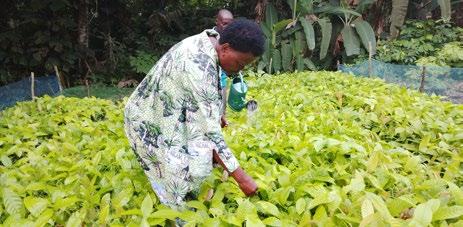
In 2025, CAMBIO awareness campaigns in communities encouraged crop diversification, focusing on perennial crops. As a result, over 20 farmers in three villages adopted cocoa and lime farming, with nurseries now flourishing and ready for transplanting. Building on this success, a new youth training programme for ages 14-20 will launch in July 2026. Over four days, 25-30 young people will be trained on biodiversity conservation, sustainable development, and civic responsibilities, equipping them with knowledge and skills to become responsible stewards of their environment and society.
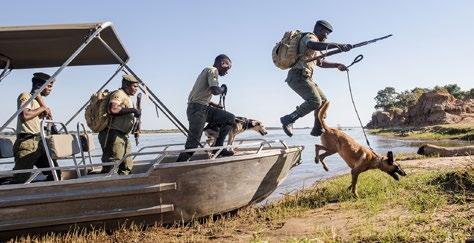
Operating in and around Lower Zambezi National Park, CLZ has strengthened its operational presence, developing key bases at Chilapira and Kulefu and supporting infrastructure within the Department of National Parks and Wildlife (DNPW) to enable rapid response. In 2025, 375 poaching incidents were disrupted, including snares and camps, leading to nearly 100 arrests and an 86% conviction rate. Tusk’s support has helped strengthen law enforcement capability and sustained field operations, contributing to 15,300 patrol person-days over 15,000km.
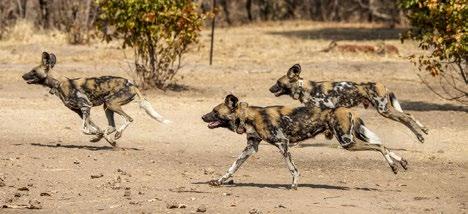
As one of Tusk’s new Wildlife Ranger Challenge funded partners, Great Plains' ‘Project Rewild’ successfully translocated 17 endangered painted dogs from southern Zimbabwe to the Great Plains-managed Sapi Reserve. The move addressed humanwildlife conflict at the source, while restoring predator diversity in the reserve in 2025. To ensure the pack’s long-term stability, Great Plains also translocated 479 impalas to bolster the prey base. The collared dogs are currently healthy and exploring the Zambezi Valley. Rangers and PhD students monitor the pack, with a focus on ecological balance and species recovery.
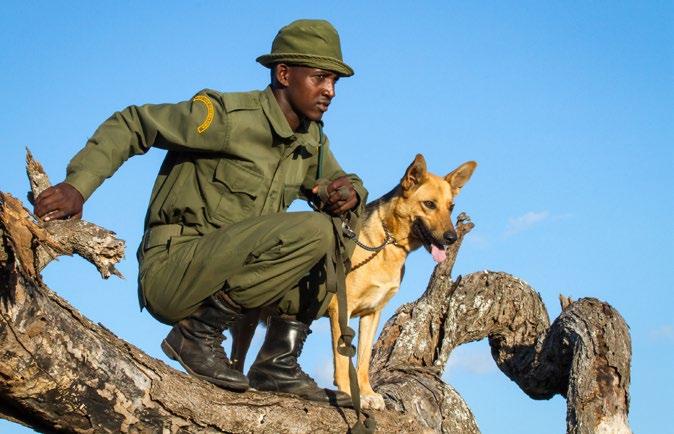
Honeyguide Foundation have strengthened community-led conservation across wildlife management areas in the past year by improving governance, scaling ranger operations, and embedding SMART monitoring systems. Tusk’s support helps maintain three fully operational tracker-dog units and expanding handler capacity through advanced training with Kuru Dogs. Honeyguide’s specialised K9 units, which carry out round-the-clock patrols across the Serengeti, Manyara Tarangire and Mkomazi ecosystems, are central to anti-poaching efforts. Over the past year, their operations have led to zero elephant and rhino poaching incidents, demonstrating the programme’s effectiveness.
Support in Namibia on this project has focused on advancing the People’s Park, an innovative model linking wildlife conservation with community benefit. Tusk was an early investor of this initiative and has continued to fund efforts to establish these parks, with a focus over the past year on community consultations and formal agreements. Funding will allow engagement with local leaders to establish more People’s Parks and supporting non-income conservancies. It will help secure community consent, strengthen local capacity, and support informed decisions that balance conservation with sustainable livelihoods.
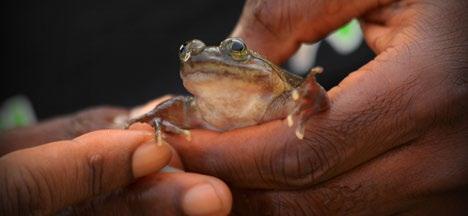
Herp-Ghana's work focusses on community work to protect threatened amphibians and reptiles in the Togo-Volta Highlands. Over the past year, they have produced an amphibian field guide and launched an ecotourism camp to support sustainable conservation funding, while strengthening community comanagement. With Tusk’s funding, Herp-Ghana will be restoring 75 acres of degraded habitat within the Onepone Endangered Species Refuge, improving conditions for endangered species such as the Togo slippery frog. This builds on earlier success of the refuge, expanding from 2,100 to 22,000 acres.
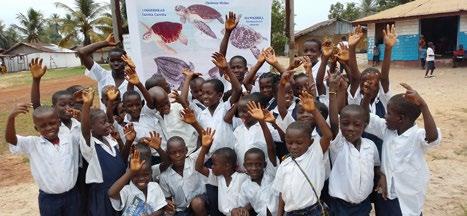
Tusk's support has enabled the continuation and expansion of community-led sea turtle conservation along Liberia’s coastline. In Little Bassa, 14 community monitors have protected 22km of the coast, recording 79 nests in 2025, with 57 successfully hatched. The project also strengthens local livelihoods, including providing smartphones for fishers to report turtle interactions and installing energy-efficient fish smoking ovens that reduce fuel use and improve health outcomes. Building on this foundation, conservation efforts are now expanding into Rivercess and Cape Mount, reactivating community monitoring networks and extending protection to new stretches of critical nesting coastline.
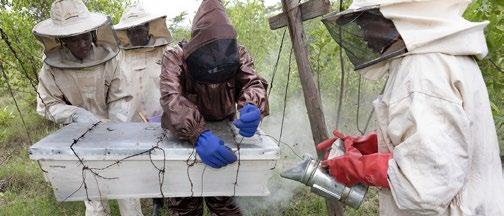
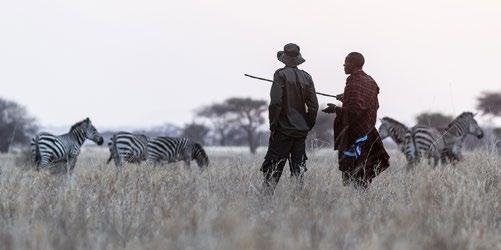
As one of Tusk’s funded partners through the Lewa Safari Marathon, the Maa Trust work with communities in the Maasai Mara focusing on sustainable conservation through community stewardship. Over the past year, they have strengthened their social enterprises through Maa Bees and Maa Beadwork. Maa Bees now reach 533 beekeepers managing 2,665 hives, producing up to 800 kg of honey per beekeeper annually. A new processing plant was also constructed to enhance market access. Maa Beadwork engaged 500 women across 17 communities. This year's focus is on scaling both enterprises, expanding markets, and incubating new social ventures.
Rwanda Wildlife Conservation Association (RWCA), Rwanda Tusk’s support helps strengthen conservation efforts for endangered grey crowned cranes across the region. By signing a landmark transboundary MoU and developing a shared strategic plan, RWCA are working to ensure cranes and their vital wetland habitats are safeguarded across borders. Tusk’s funding allows RWCA to address the issues of encroachment of wetland habitats, including increasing law enforcement, reducing habitat destruction and protecting the biodiversity where the key species, including the grey crowned crane, live. In the coming year, RWCA aims to establish Rwanda’s first private nature reserve - boosting biodiversity and creating a safe haven for wildlife.
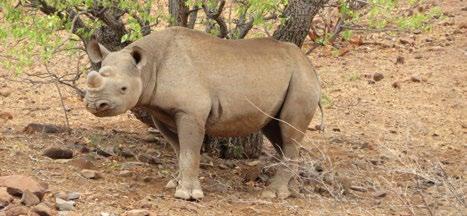
Namibia
In 2025, by sustaining patrols and collaborating with custodian conservancies, Save the Rhino Trust has maintained an impressively low level of poaching, thus further protecting black rhino populations. Tusk’s funding helps strengthen the monitoring efforts of SRT’s field staff. They employ 45 permanent staff, with over 90% recruited from local communities. Key to success has involved their team’s development, including training eight staff at the Southern African Wildlife College, alongside welfare support for frontline rangers through medical access and wellbeing programmes. A 10-year review of the Community Rhino Ranger Programme was also published.
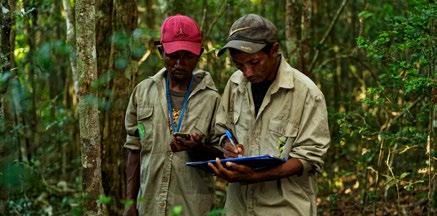
Madagasikara Voakajy, Madagascar
As a beneficiary of the Wildlife Ranger Challenge, Madagasikara Voakajy are an organisation who work with local communities to protect Madagascar’s endemic species and habitats. Funding from Tusk is strengthening their ranger programme, supporting training and patrol costs to help sustain protection of critical forest areas in Mangabe. Thanks to the efforts of ranger Faly Andriamisata and his team there has been a 40% reduction in deforestation between 2023 and 2025 through regular patrols and community engagement.

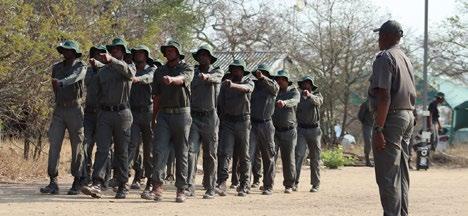
Southern African Wildlife College (SAWC), SouthAfrica
The Southern African Wildlife College remains a cornerstone of conservation training and skills development across southern Africa. In 2025, the College trained and capacitated 2,335 individuals across five priority areas aligned to its 2030 strategy. By embracing a needs-based and collaborative approach, the College is well-positioned to continue meeting the evolving capacity development needs of the conservation sector. Tusk’s support helps to ensure training remains needsbased, responsive and relevant to sector priorities. This includes strengthening collaboration with partners, so graduates are equipped to manage resilient conservation landscapes across the region.
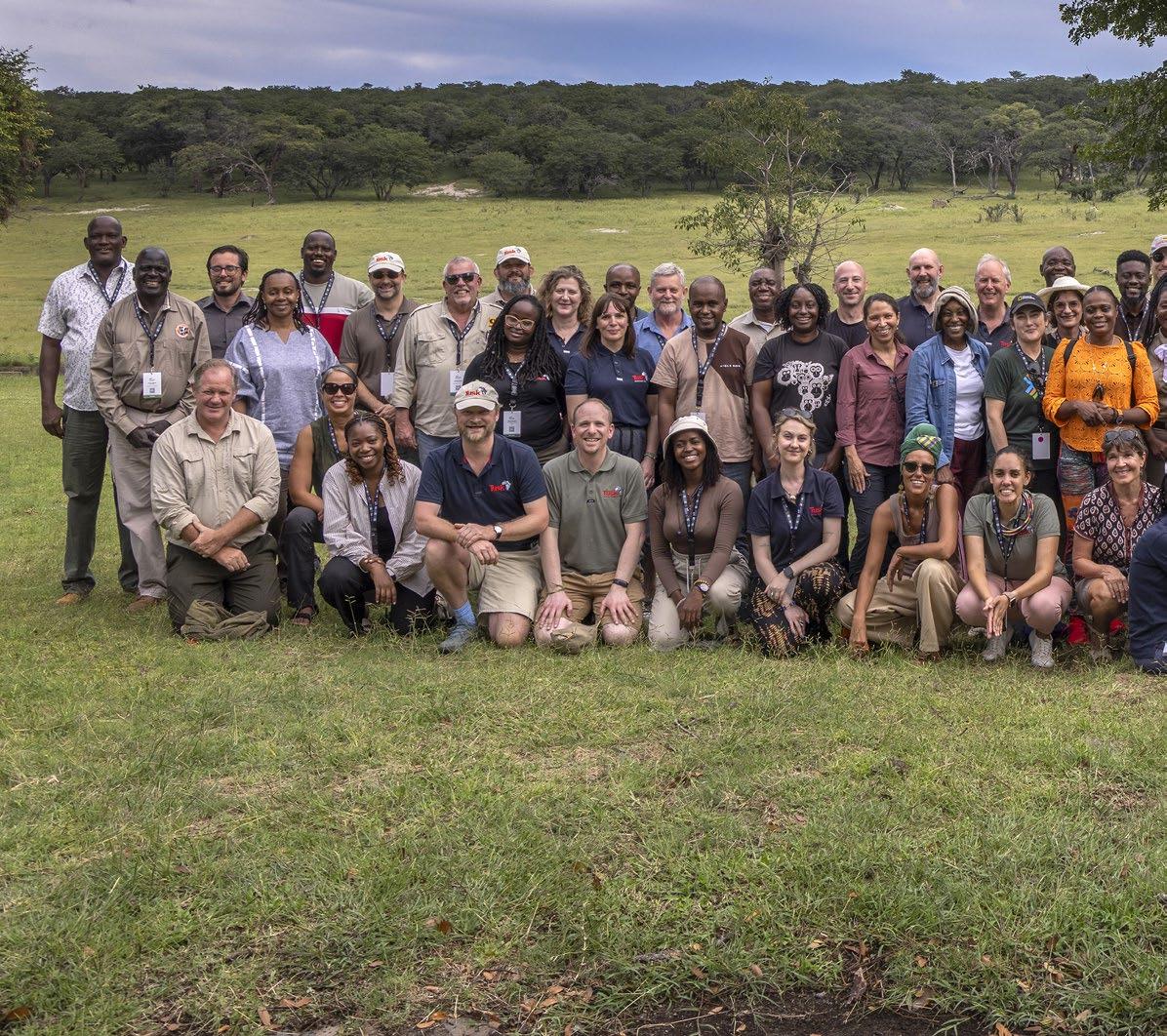
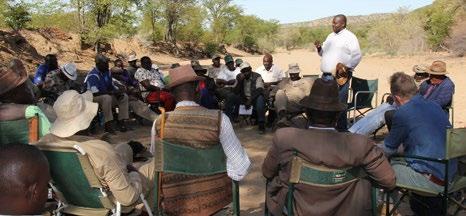
In March, Tusk's biennial Conservation Symposium took place in Zimbabwe, bringing together 70 delegates and guests from across Tusk's network.
The Symposium included structured sessions and workshops alongside field-based learning, set against the inspiring backdrops of Victoria Falls and Hwange National Park where our project partner, Painted Dog Conservation are based.
Since its inception in 2017, the Tusk Conservation Symposium has become a cornerstone of our approach to conservation; creating a trusted space where our partners can step away from day-to-day pressures to share openly, learn from one another, and build meaningful collaborations and maximise collective conservation impact.
Tusk’s role is to convene, connect and enable. While we continue to fund vital conservation work, the Symposium reflects our commitment to going further by facilitating collaboration across our portfolio, encouraging honest exchange, and helping partners identify practical solutions to shared challenges.
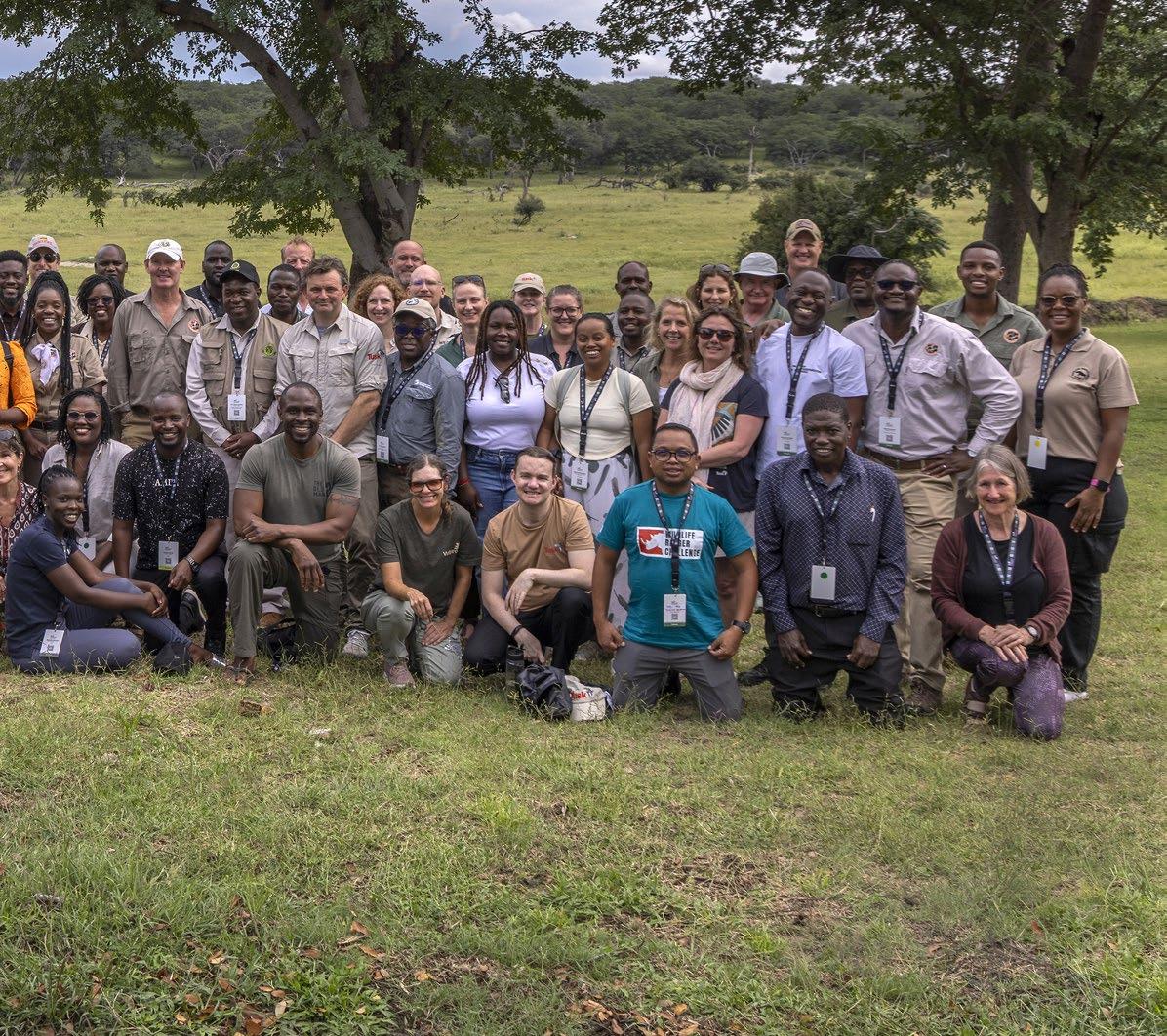
Below
2026 Symposium
delegates gather at Hwange National Park
Insert
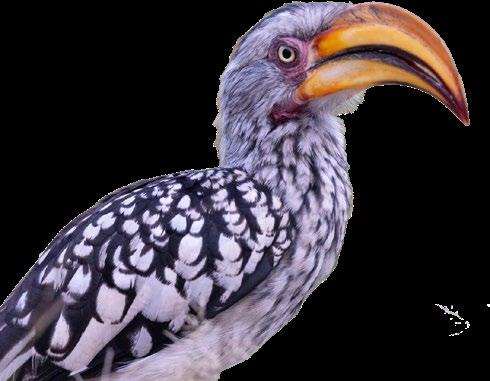
Southern yellow-billed hornbill
Opposite Page
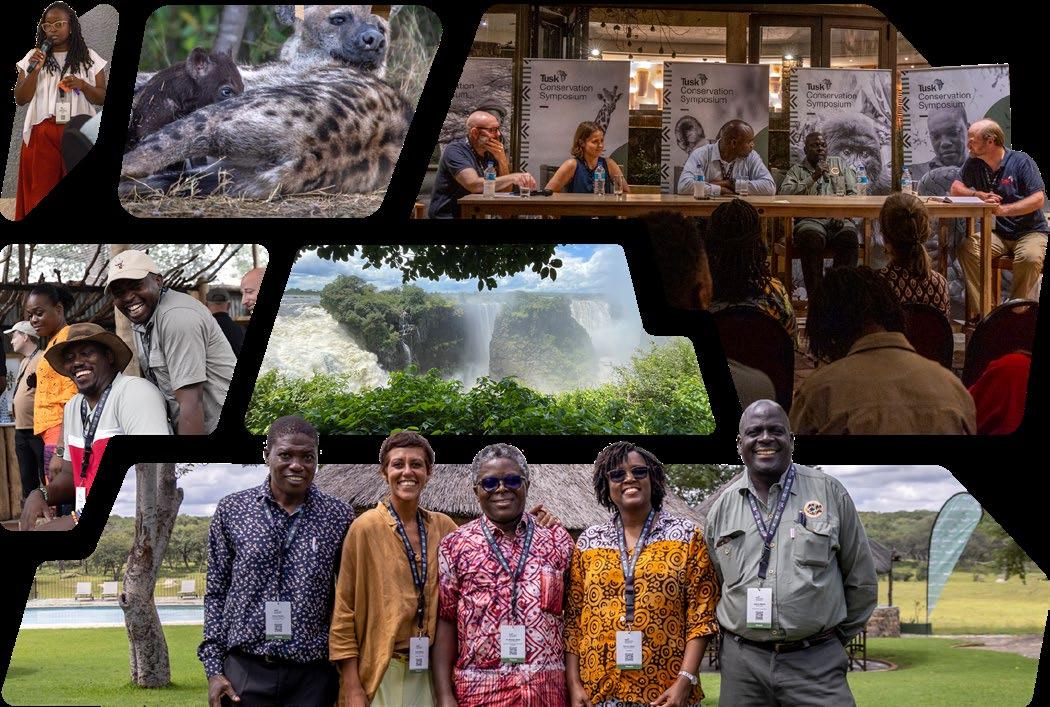
Top Row L-R: Tusk's Winfred Nduati, Hyena and pup, African Rangers panel discussion
Middle Row L-R: Peter Lalampaa from Grevy Zebra Trust with John Kinoti from Lewa and views of the impressive Victoria Falls
Bottom Row L-R: Past Tusk Conservation Award winners
AllImagesCredit: GeorginaGoodwin
By bringing together diverse organisations, from grassroots community initiatives to established conservation programmes, we help unlock collective knowledge and experience that no single organisation could achieve alone.
At a time when conservation organisations are navigating increasing uncertainty, from shifting funding landscapes to climate pressures and operational risks, the Symposium programme explored how African conservation partners are building organisational resilience, aligning local action with global agendas, leveraging communication and technology to drive impact, and sustaining the people who deliver conservation on the ground.
This year’s Symposium was made possible through the generous support of our sponsors and contributors. We are particularly grateful to The Nick Maughan Family Foundation for its backing, alongside the National Geographic Society and Campaign for Nature for their valuable contributions. We also extend our thanks to Painted Dog Conservation for hosting us and sharing their work and landscape.
Through this symposium, we have shared ideas, challenged assumptions and discovered new opportunities to collaborate. Partnerships have been strengthened, new ones have begun to form, and the seeds for future innovation have been planted.
Tusk Conservation Symposium 2026 continued
Across the week, Symposium sessions explored both the challenges facing conservation and the opportunities to address them through collaboration, innovation and stronger communication.
Discussions on organisational resilience focused on how partners are adapting to external shocks, from funding cuts to conflict. The key takeaway was clear: while circumstances may change, an organisation’s mission should not.
Workshops led by Campaign for Nature examined how local conservation efforts can better connect with global biodiversity frameworks and funding mechanisms. A session with National Geographic Society and National Geographic Explorers demonstrated the power of storytelling by focusing on clear, humancentred narratives and tangible goals, conservation stories can move beyond awareness to inspire meaningful action.
One of the Symposium highlights was partner spotlight presentations from Tusk’s partners. These included collaborations generated from previous Symposiums between Vulpro and PACE, and Uganda Conservation Foundation and Lion Landscapes, as well as an inspiring presentation from 2023 Tusk Award winner, Fanny Minesi from Friends of Bonobos.
Technology and infrastructure was another key theme. From satellite connectivity to real-time data systems, partners explored and learned how innovation is transforming conservation delivery in remote landscapes.
An insightful evening panel discussion brought together the voices of Africa’s rangers. The discussion underscored the importance of ranger welfare and reinforced their central role in delivering conservation success.
During these discussions, we enjoyed a visit from Professor Edson Gandiwa, the Director General of the Zimbabwe Parks and Wildlife Management Authority. In his address there was also a clear reminder that technology must support, not replace the people on the ground.
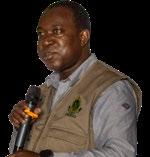
The week concluded with a renewed sense of purpose. By continuing to convene our partners, invest in relationships and champion locally led conservation, we are helping to turn connection into collective action - delivering lasting impact for wildlife, landscapes and communities across Africa.
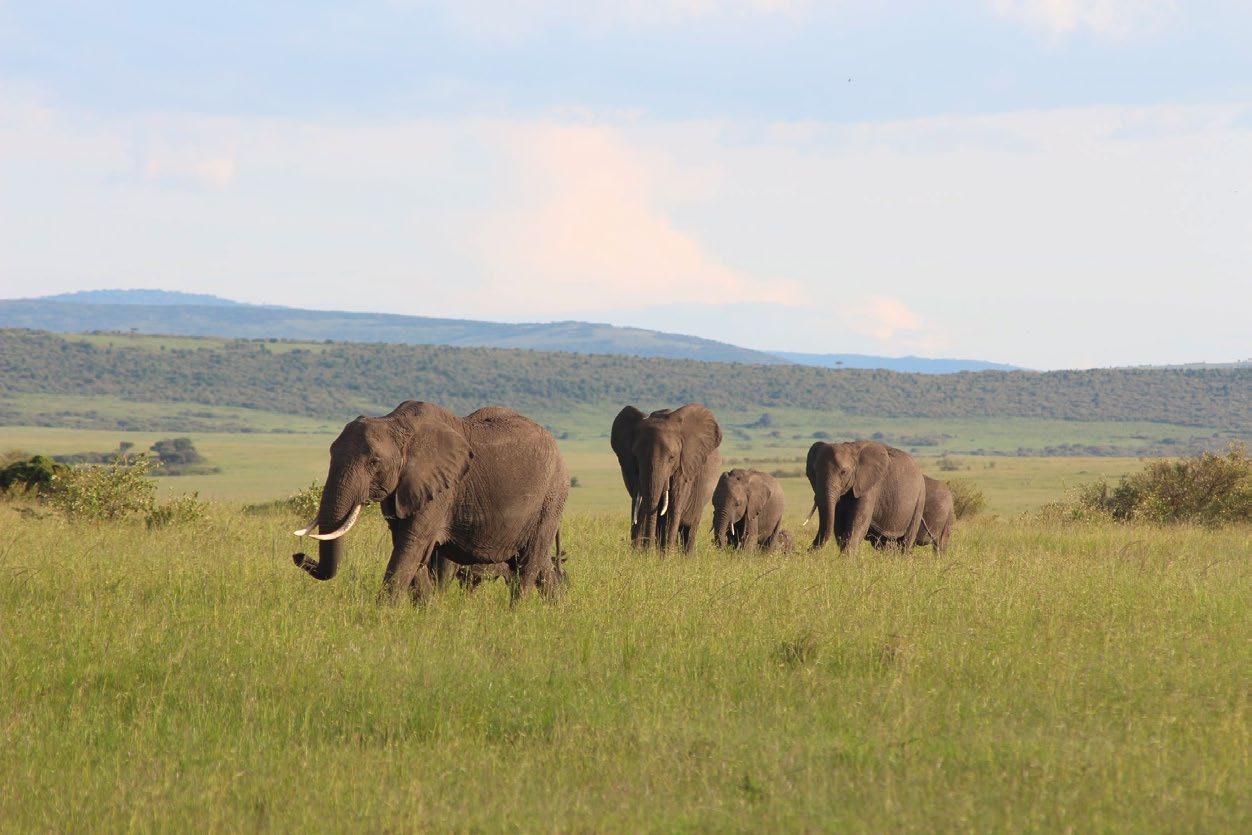
“Hosting this symposium in Zimbabwe felt particularly fitting. Zimbabwe’s extraordinary landscapes and diverse flora and fauna provided such a powerful backdrop for conversations about the future of African-led conservation.
The Nick Maughan Family Foundation is dedicated to supporting wildlife conservation efforts across the globe NMF has committed to supporting Tusk’s mission is to accelerate the impact of African-driven conservation.
The Nick Maughan Family Foundation is dedicated to supporting wildlife conservation efforts across the globe NMF has committed to supporting Tusk’s mission is to accelerate the impact of African-driven conservation.
NMF donations to Tusk include sponsorship of the annual Conservation Awards, the Conservation Symposium and Tusk Art Trails.
NMF donations to Tusk include sponsorship of the annual Conservation Awards, the Conservation Symposium and Tusk Art Trails
If you want to find out more about this year's symposium, check out tusksymposium.com

Did You Know?
The population of painted dogs in Hwange National Park is thriving, with about 230 dogs. However, the total African population is still in decline with only about 7,000 remaining.
For its final day, the Tusk Conservation Symposium took delegates beyond the conference setting and into the field, offering a first-hand look at conservation in action. Participants visited the work of Painted Dog Conservation (PDC) on the border of Hwange National Park, followed by Kakori Conservation within the grounds of Hwange Safari lodge.
At PDC, delegates were immersed in a landscape where African wild dogs, also known as painted dogs, can thrive. The organisation combines anti-poaching patrols and tracking with a rehabilitation facility, a visitor centre and a strong education and community programme. Walking through the rehabilitation facility, delegates saw two current patients in care, a tangible reminder of the ongoing rescue work that has seen 96 injured dogs treated since 2002.
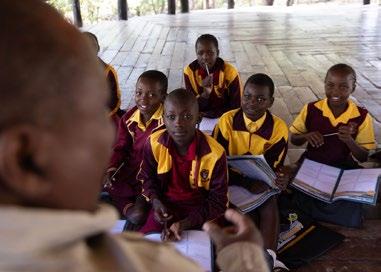
Another highlight was the Wilton Nsimango Children’s Bush Camp, PDC’s education hub. Here, children spend four days learning in the bush through classroom sessions and park visits. The camp has reached around 16,000 children and is widely credited with transforming community attitudes towards wildlife. With the tour of the bush camp led by Wilton himself, it was clear the impact the programme is having on young people, with 17 current PDC staff having once attended the camp. PDC’s Visitor Centre also demonstrated the power of storytelling in conservation, with the life history of a painted dog known as Eyespot illustrating how individual narratives can shift perceptions among tourists and visitors.

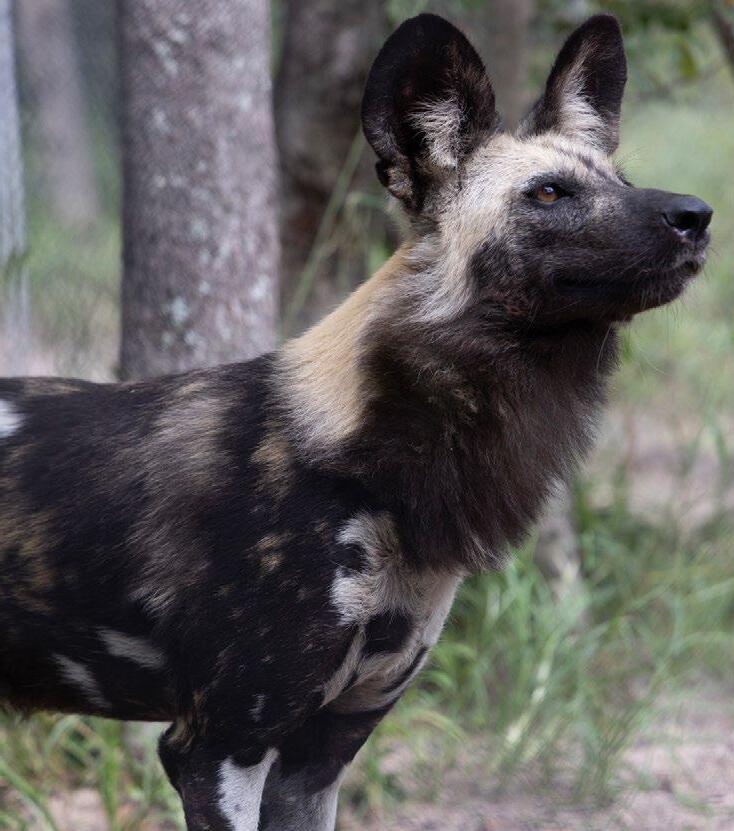
Main image
A painted dog at the rehabilitation facility at PDC.
Right - Top to Bottom
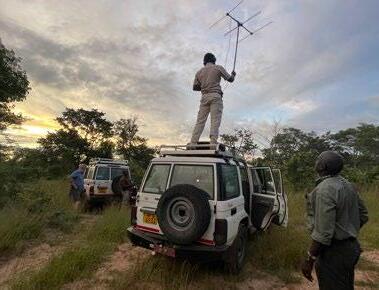
A ranger patrol unit locating a pack of Painted Dogs in Hwange National Park.
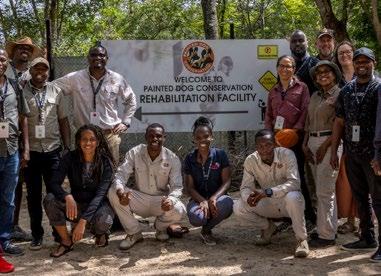
Symposium delegates on a visit to the PDC Rehabilitation Facility.
Children learning at the PDC Bush Camp.
Brickmaking from recycled plastic by Kakori Conservation
Allphotocredits:Georgina Goodwin

If PDC showcased conservation through wildlife protection and education, Kakori Conservation highlighted innovation where community livelihoods, waste management and habitat restoration intersect. At its tree nursery, delegates learned of ambitions to plant 100,000 trees annually, to support habitat restoration and high-value plant species that can create supplychains which benefit local communities and conservation efforts in the area.
Nearby, Kakori’s recycling facility demonstrated how waste can be repurposed. Plastic and glass collected from tourist lodges and communities are transformed into beads and construction building blocks, some of which are being used to build a ‘Centre of Excellence’. Metal, including recovered snares, is recycled into trinkets, and unused advertising banners are repurposed into planting bags used at Kakori’s tree nursery.
A fitting close to the Symposium, the visits brought discussions into focus, giving delegates another perspective of how conservation is delivered on the ground.
Tusk Conservation Symposium 2026 continued
Beyond the insights shared at our Symposia, we believe the deepest learning happens on the ground. We facilitate a deeper connection between conservationists by funding exchange visits, allowing Tusk’s partners to learn from one another on their respective projects.
So far, the Tusk Collaboration Fund has supported more than 35 of these journeys, some of which have led to long-term, impactful partnerships. In the following pages, we feature three such collaborations and look forward to sharing even more stories from our latest Symposium in next year’s Tusk Talk.
Below
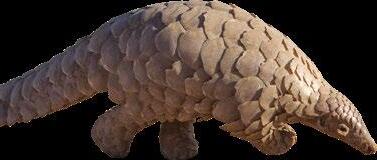
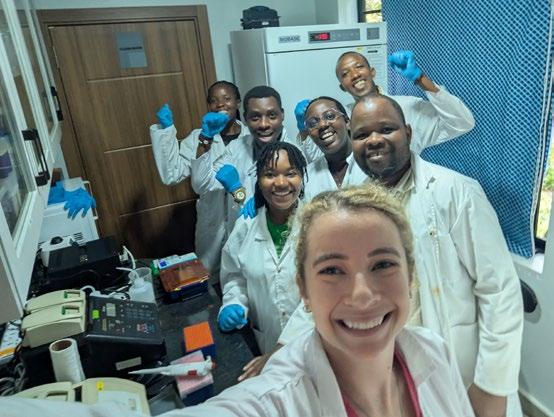
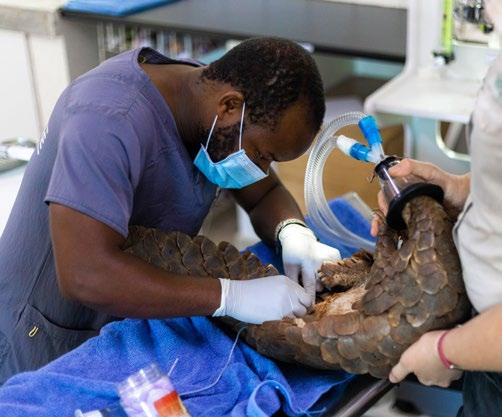
The RWCA and Lilongwe staff at an eDNA workshop and a Lilongwe vet performing treatment on a pangolin.
Right
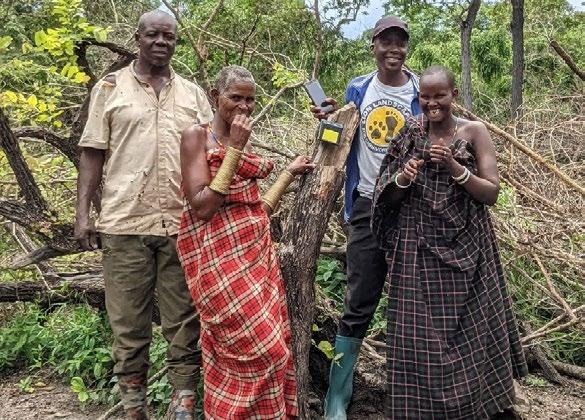
Pastoralists with lion lights at Lion Landscapes
Far right
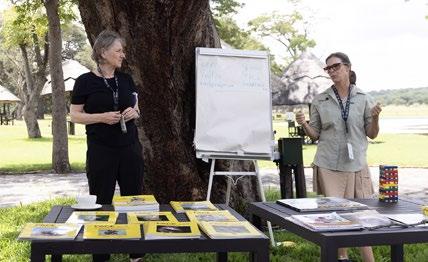
Penny Fraser (PACE) and Kerri Wolter (Vulpro) talking about their collaboration at the symposium.
the Rwanda Wildlife Conservation Association (Rwanda)
Lilongwe Wildlife Trust (LWT) and the Rwanda Wildlife Conservation Association (RWCA) are working on a collaboration which evolved from initial conversations at the 2024 Tusk Symposium. Realising that both organisations run similar programmes - spanning wildlife rescue, environmental education, and ecotourism - the partners are now sharing expertise and knowledge on a range of issues.
In January 2026, with Tusk's support, members of LWT’s research team travelled to RWCA to learn about environmental DNA (eDNA) sampling and analysis techniques. This involves testing soil and pollen samples, for example, for bat and pangolin DNA. These skills will directly benefit the partners’ upcoming projects, including a study of pollinating bats in Rwanda, and a pangolin population assessment in Malawi.
The trip was designed to support learning for both partners. LWT has never worked with eDNA before, and while RWCA has a specialised molecular laboratory capable of DNA extraction, amplification and sequencing, it had not previously worked with environmental samples as a source of DNA.
LWT staff were accompanied by a professor from a Malawian university who is an eDNA expert. They brought soil samples collected during a foraging walk by a pangolin in rehabilitation, and from a pangolin burrow. RWCA also provided pollen samples and flower swabs which they were testing for the presence of bats. Control samples were also provided.
All samples underwent DNA extraction and amplification, and eDNA was confirmed in two of the soil samples, both of which came from the pangolin in rehabilitation. However, sequencing results indicated that only one of these samples contained pangolin DNA (the other was inconclusive). The positive outcome from the pangolin samples demonstrates proof-of-concept for the eDNA technique, but the sampling, extraction, and amplification protocols need to be further refined. More samples will therefore be collected by both LWT and RWCA for further testing.
The seeds of collaboration between the Uganda Conservation Foundation’s (UCF) Carnivore & Scavenger Programme, Lion Landscapes, WildCRU, and the Zambia Carnivore Programme (ZCP) were also first sown through conversations at the 2024 Tusk Conservation Symposium. A partnership then took shape when UCF’s Kidepo Valley Lion Project Officer visited the Lion Landscapes field project in Tanzania’s Ruaha National Park through a Tusk collaboration grant.
This exchange gave UCF’s emerging team a rare opportunity to learn from Lion Landscapes’ community-led approach to carnivore conservation. It highlighted how shared challenges of human-wildlife conflict and habitat pressure are tackled in different ecological and social settings. Just as importantly, it revealed how complementary each organisation’s strengths are.
UCF’s programme spans Queen Elizabeth, Murchison Falls, and Kidepo Valley National Parks, working closely with the Uganda Wildlife Authority (UWA). A key focus is integrating carnivore monitoring into UWA’s EarthRanger operational system, enabling real-time data and more coordinated field responses.
Lion Landscapes brings a research-driven, community-focused model, while WildCRU contributes globally recognised expertise in conservation science and human-wildlife conflict mitigation. ZCP meanwhile adds deep experience in long-term carnivore monitoring and population recovery.
In late 2026, a regional gathering will bring together both early-career and experienced researchers and protected area managers. Rather than a traditional workshop, it will be a work forum to openly examine challenges, share lessons, and align approaches. By focusing on community conservation, technology, and ecosystem management, the partnership aims to turn shared learning into practical action, demonstrating that the future of Africa’s lions depends on collaboration at scale.
Too often, conservation teams operate in isolation. This collaboration seeks to build a stronger, more connected network, enabling practitioners to support, challenge, and learn from one another.
Michael Keigwin CEO, UCF
Vulpro is at the forefront of vulture conservation, with a comprehensive approach that combines rescue, rehabilitation, and captive breeding with scientific research to address threats like habitat loss and illegal poisoning. Tackling negative public perceptions of vultures is also key to their long-term survival, and this is where Tusk’s Pan African Conservation Education (PACE) programme could help.
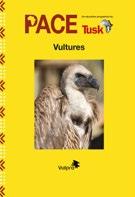
An exchange visit between the two was initiated at the 2022 Tusk Conservation Symposium. This led to a collaboration on the production of a PACE booklet about vultures, the first in a series of PACE booklets dedicated to single species. The booklet was written to be of interest to everyone, and virtual learning sessions were held to explore how best to use it, with the Southern African Wildlife College invited to share their experience and advice.
The booklet quickly became a valuable tool for building relationships with local communities, and community members now volunteer to serve as informants. The vulture booklet has been the catalyst for rebooting and diversifying Vulpro’s education programme and has inspired a further PACE-Vulpro activity book featuring many pictures of vultures drawn by schoolchildren, along with an educators’ guide to ensure the learning continues. It has also been used by many other organisations throughout Africa, translated into Portuguese, and adapted for use in Nigeria by featuring Nigerian species.
Meanwhile, the virtual learning sessions coincided with PACE receiving requests for support and resources for conservation educators, so they were opened up to others, and a community of practice emerged. These virtual learning circle meetings have now become a central part of PACE, with 5-7 meetings each year.

Each year, Tusk brings together a programme of events designed not only to raise awareness and vital funds, but also to bring supporters closer to our work.
Here are highlights from the past year, with other major events featured elsewhere in this magazine.
Dates for the Diary:
• Lewa Safari Marathon 2026: Saturday 27th June
• Wild Night of Comedy, ComedyStore, London: Wednesday 22nd July
• Wildlife Ranger Challenge 2026: Saturday 19th September (see pages 29)
• Tusk Conservation Awards 2026, London: Wednesday 11th November (see pages 23-27)
If you are interested in taking part in future events, please contact info@tusk.org

The Royal Geographical Society hosted a sold-out evening in aid of Tusk, ‘The Great Tree Story LIVE’ presented by Tusk ambassador and explorer, Levison Wood. He was joined for a panel discussion by Bruce Parry, Lucy Shepherd, Dr Rosa Vásquez Espinoza and Lord Zac Goldsmith to explore rewilding and the future of global conservation.
Tusk ambassador Hannah Shergold unveiled a new art collection at the Mall Galleries in London, with proceeds supporting Tusk. The Tusk team joined guests to preview her colourful, contemporary artwork inspired by African and British wildlife. Highlights included a portrait of fellow Tusk ambassador and Rolling Stones legend, Ronnie Wood, which alone raised £65,000.
Spring 2026 saw a band of intrepid runners take on the Bath Half and London Marathon, raising over £50,000 for Tusk. Among the runners was Tusk’s own Brandon Quentin-Hicks, who completed the London Marathon in a zebra costume!
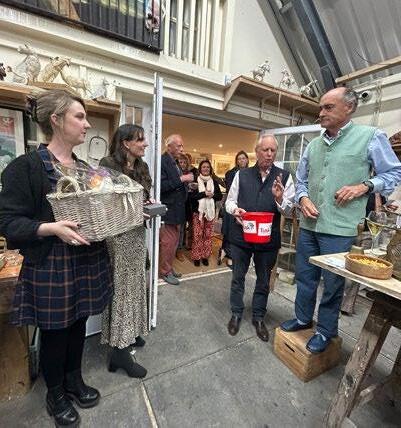
Mark's studio exhibition in April brought together a dynamic collection of new and existing bronze wildlife sculptures, celebrating the natural world while supporting Tusk - a cause he has long championed. With Tusk now based close to Mark’s studio in Tisbury, Wiltshire, it is hoped this will be the first of many future collaborations.
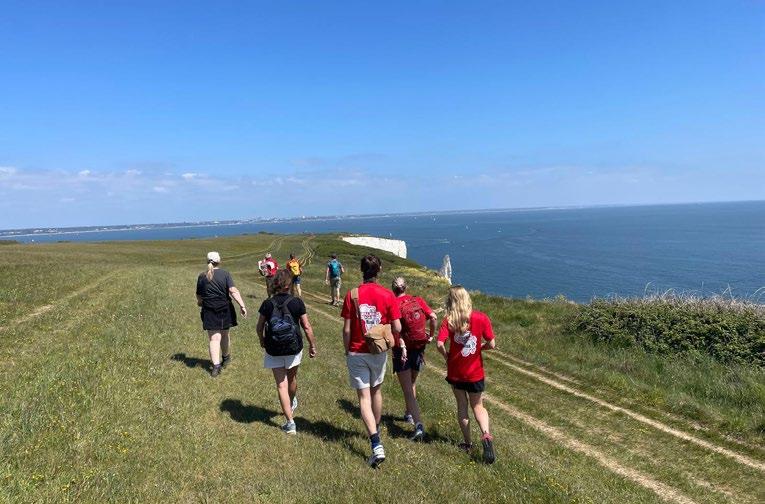
Returning for its second year, this challenge invited supporters to trek 10km and 20km routes along Dorset’s spectacular Jurassic Coast. Since launching in 2025, over 30 supporters have enjoyed taking part, raising funds for Tusk and bringing like-minded people together.
Showcasing Tusk’s work and raising valuable funds

“For 25 years, the Lewa Safari Marathon has united runners, conservationists, philanthropists and communities in a shared mission to protect Kenya’s unique biodiversity and support those living alongside it. Every step taken in this race is a step towards lasting, positive change.
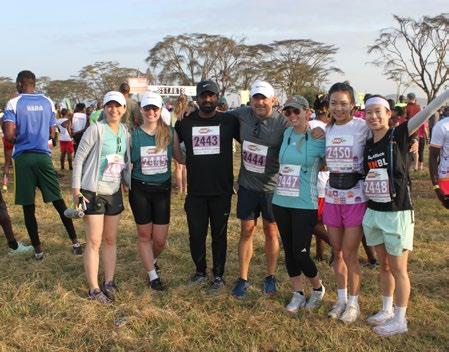
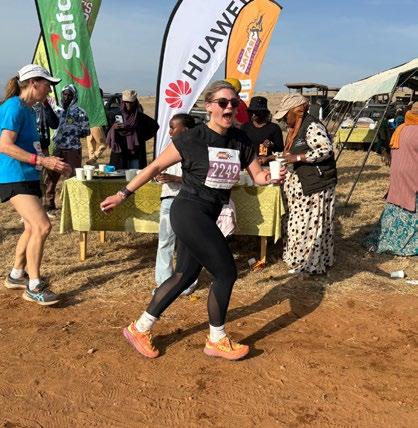
At the end of June 2025, the Lewa Safari Marathon celebrated its 25th anniversary, with record numbers entering the iconic event, following the disappointment of the 2024 cancellation.
The world-renowned marathon, organised by Tusk and Lewa Wildlife Conservancy, and sponsored by Safaricom and Huawei, saw over 1,400 runners from 34 different nationalities competing across the stunning high-altitude terrain of Lewa Wildlife Conservancy, a UNESCO World Heritage Site in northern Kenya.
The men’s race was won by Samson Lemayan, who crossed the finish line in a time of 2:28:35, while the women’s race was won by Mercy Kwambai, with an impressive finish of 2:47:17.
Whilst the marathon may be the headline act, the event also welcomed hundreds of runners who were able to take part in either a half marathon, 10km and children’s race (5km), making it a true festival of running from hardened athletes to those just wanting to take on a new challenge.
Last year’s silver jubilee edition of the marathon honoured a quarter of a century of life-changing investment in wildlife conservation, community development, health and education projects across Kenya.
Opposite Page
Top: Brandon QuentinHicks takes part in the London Marathon for Tusk
Left: The Mark Coreth Exhibition
Middle: Trek for Tusk along the Dorset coast
Right: Hannah Shergold’s portrait of Tusk Ambassador, Ronnie Wood
Right Page
Top: Runners set off from the start of the 2025 marathon Credit:DavidKabiru
Left: Tusk’s Elli Hooper running
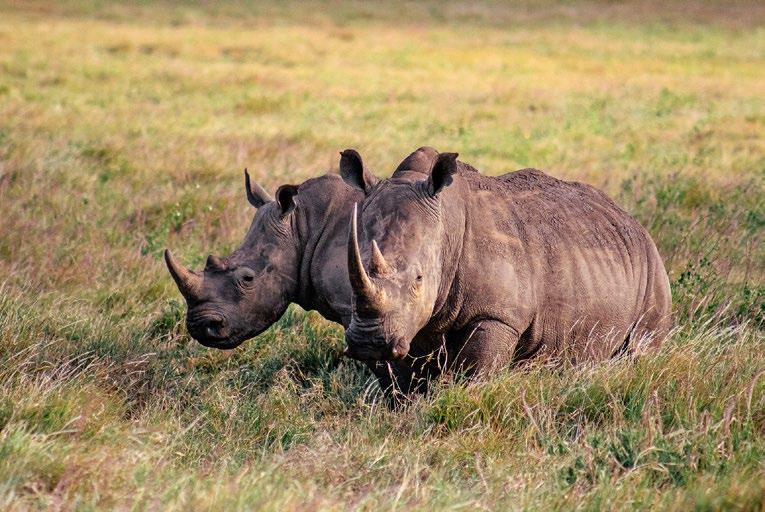
Middle: Southern-white rhino at Lewa
Right: Runners from across the world competing in the marathon
Many of Kenya’s most endangered species are now better protected and rural communities have benefitted, thanks to funds raised by runners taking part. Since the first marathon, money raised has helped fund Kenyan initiatives contributing to a doubling of hawksbill turtles and more than a doubling of young Grevy’s zebra numbers. Rhinos, including black rhinos, have increased by a quarter in one reserve and mountain bongos are safer in their habitats around Mt Kenya and the Aberdares – the only place they are found in the world.
The Marathon in Numbers
Over 25,000 runners have taken part to date
$10,000,000 has been raised since the marathon started in 2000 10 project partner organisations supported through funding 7 flagship species supported annually through the marathon
2025 & 2026 Events continued
FLeft Page
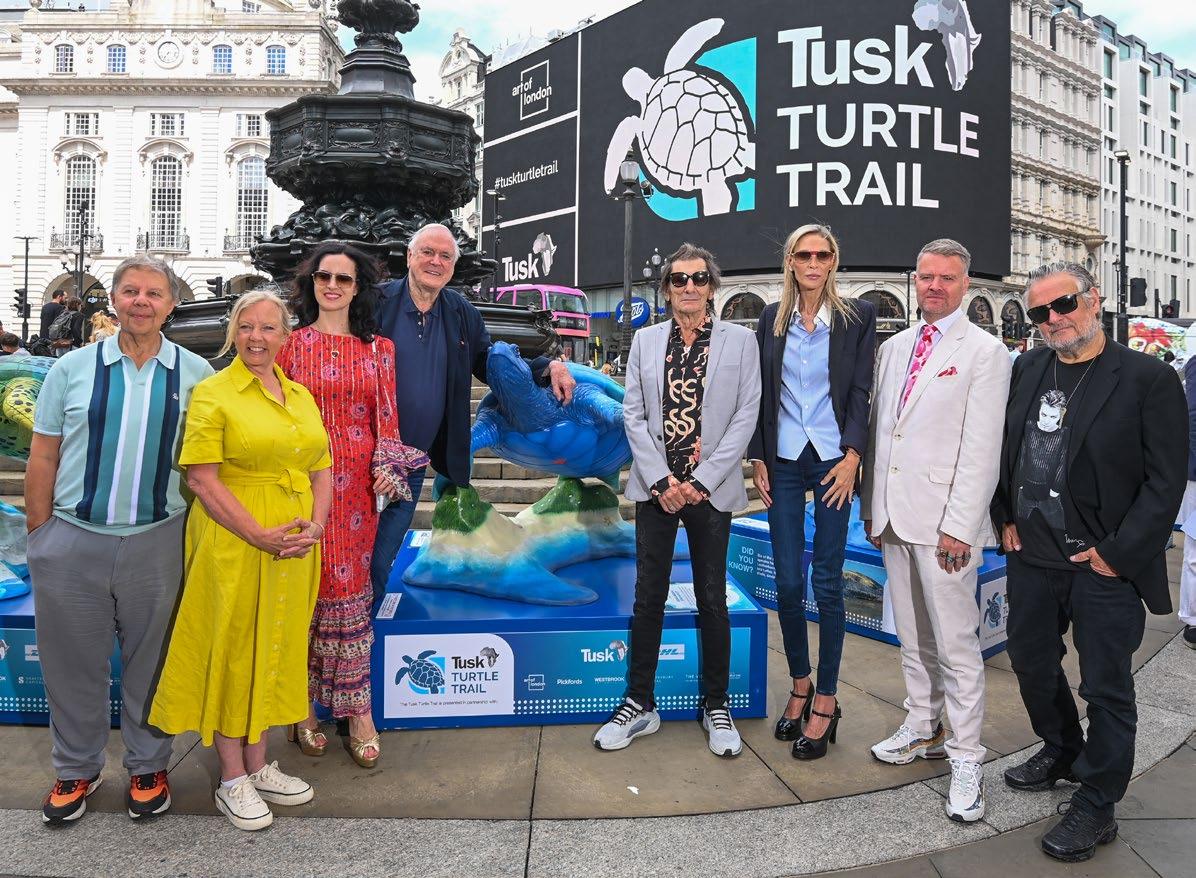
Top: Tusk ambassadors and artists gather at Piccadilly Circus in London for the launch of the Turtle Trail in July 2025
Credit:GettyImages
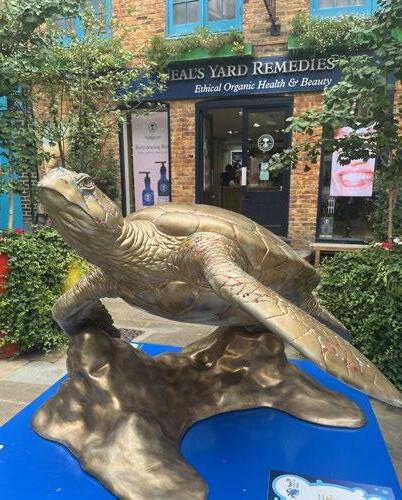
Left: Artist Chila Burman’s painted turtle sculpture
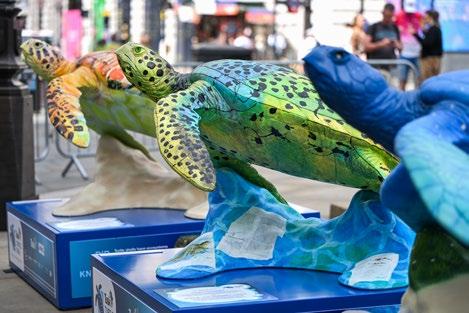
Middle: Turtles lined up at the launch
Credit:GettyImages
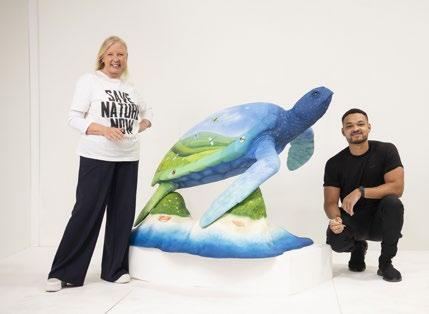
Each of the sculptures was adorned with unique artwork from globally renowned artists and celebrities. Tusk ambassadors included Rolling Stones guitarist Ronnie Wood, actor and comedian John Cleese and his wife Jen, as well as Deborah Meaden who was supported by fellow Dragon’sDen entrepreneur, Steven Bartlett. They were joined by artists including Hannah Shergold, Jemma Powell, Ralph Steadman and Rankin among others.
ollowing the successful Tusk Rhino, Lion and Gorilla sculpture trails between 2018 and 2023, the Tusk Turtle Trail launched last July.
Over the summer, 16 life-size marine turtle sculptures took pride of place on the streets of central London. Iconic London landmarks including Covent Garden, Piccadilly Circus, Leicester Square and even the top of the Shard were home to these unique installations, all with the aim of increasing awareness of the plight of marine turtles, and other ocean species.
It was particularly important to highlight marine turtles as they have been navigating the planet’s oceans for over 100 million years. Alarmingly their numbers have plummeted in recent decades, with five of the seven species now threatened with extinction.
Right: Deborah Meaden and Steven Bartlett with the turtle they designed
Opposite Page
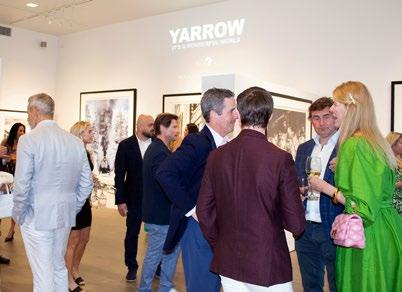
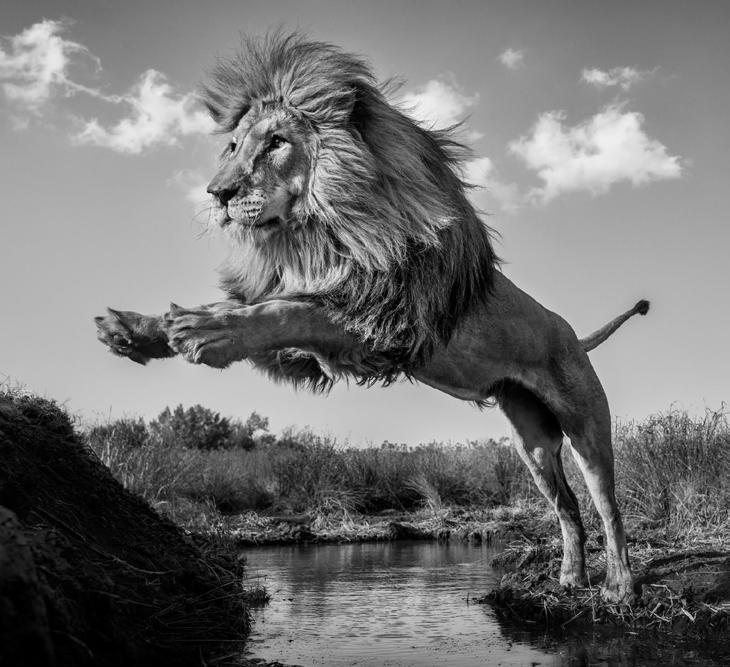
Top: David Yarrow event in Florida 2025
Bottom: Safari Under the Stars in Wellington 2026
The Tusk Turtle Trail culminated in October with an auction at The View from The Shard, raising over £160,000 to support Tusk’s partner-led marine conservation programmes across Africa, from the threatened turtle nesting beaches in Liberia, to the vital coral reef systems in Kenya.

In Autumn 2025, the previously endangered green turtle was downgraded from ‘endangered’ to ‘least concern’ on the IUCN Red List, marking a major conservation victory.
Did you know that approximately half of annual Tusk revenue comes from US individuals and organisations?
The number of US donors as well as total US giving has doubled in the last three years. Our Patrons’ Circle also includes 100 US members hailing from 17 states, and we are grateful to have donors in all 50 states.
We’ve had some memorable events in the US over the past year:
In May, Tusk ambassador, photographer David Yarrow, hosted Tusk’s first ever event in Texas in conjunction with his exhibition at Gold Mountain Gallery, Fort Worth. The Tusk in California events series in September wrapped up the year for US supporters. Receptions in Beverly Hills, Newport Beach, Napa, and Silicon Valley gathered 200 friends and donors of Tusk. Texas and California events afforded opportunities for the Tusk team to meet new and existing supporters in person beyond our historical events on the east coast.
Building on last year’s Florida events series, February saw Tusk launch a major event in Wellington: Safari Under the Stars. The gala, which welcomed 250 guests, took place at the National Polo Center. The evening, which was hosted by well-known equestrian commentator, Stephen Wilde, included a dinner and a live auction conducted by Bonhams.
The event went on to raise over $200,000 towards Tusk’s mission. The event was made possible thanks to a dedicated event committee and our generous sponsors. Returning to East Florida in March, Tusk partnered with Tusk ambassador David Yarrow, African Community & Conservation Foundation, and Cookson Adventures for fundraising events in Palm Beach.

Would you like to be involved?
If you would like to have your business or organisation among our US sponsors, or would like to join the Patrons’ Circle in the US, please contact lauren@tusk.org
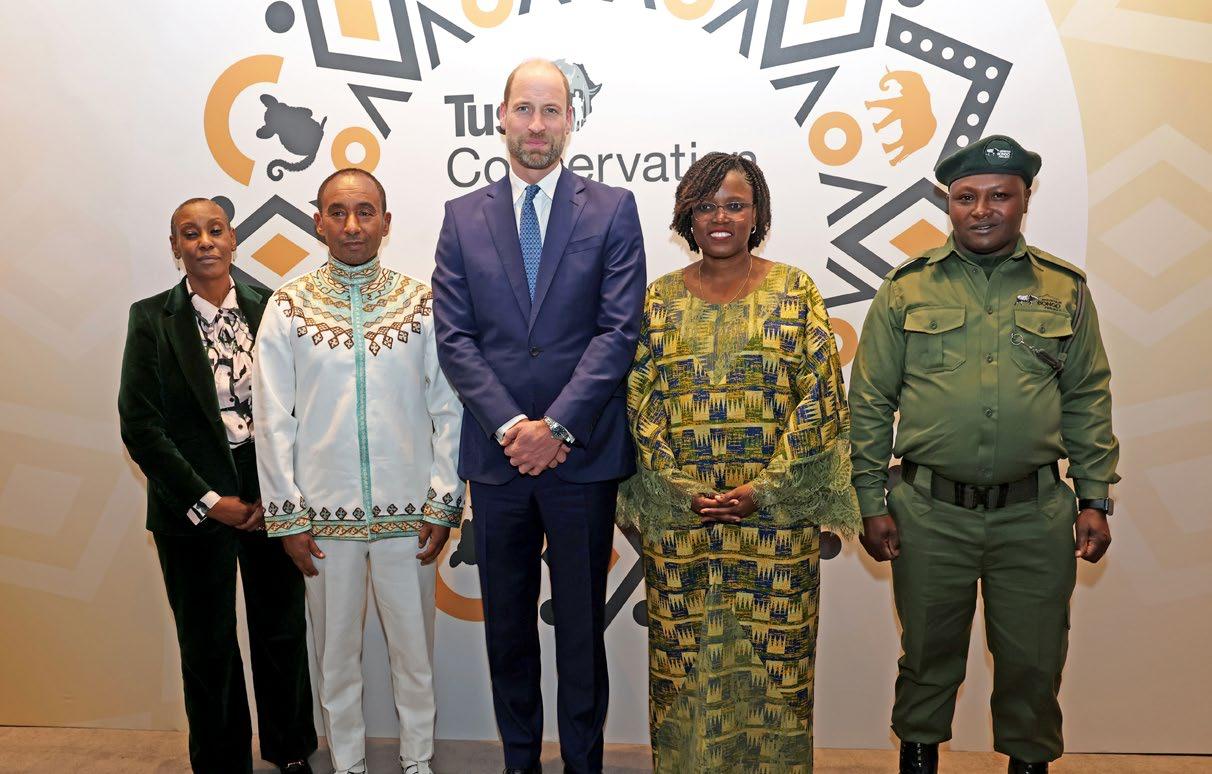
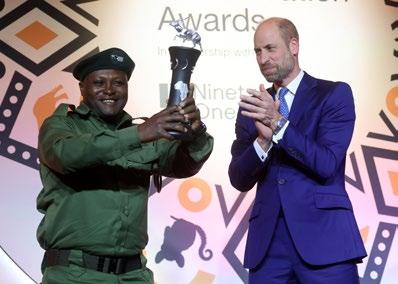
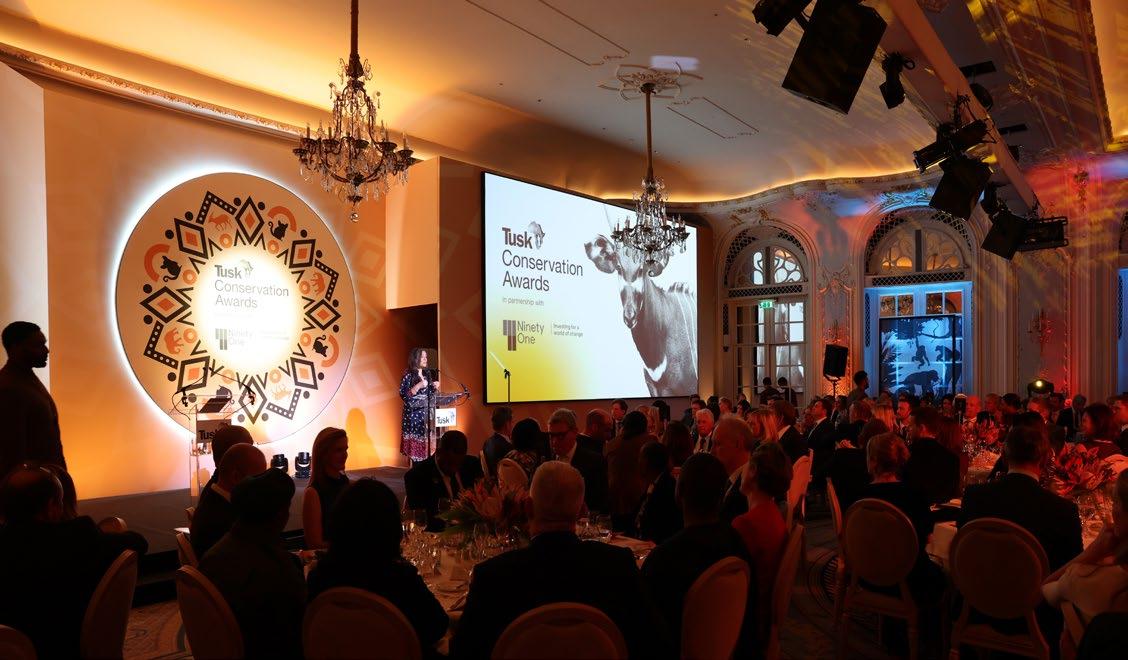
On 26th November 2025, Royal Patron of Tusk, HRH The Prince of Wales presented the annual Tusk Conservation Awards in London.
Established in 2013 in partnership with Ninety One, the awards celebrate the achievements of extraordinary people whose work protecting Africa’s irreplaceable natural heritage might otherwise go unnoticed. All award winners not only receive grants to support their work, but also the international recognition they have earned, which further contributes to the development of their projects.
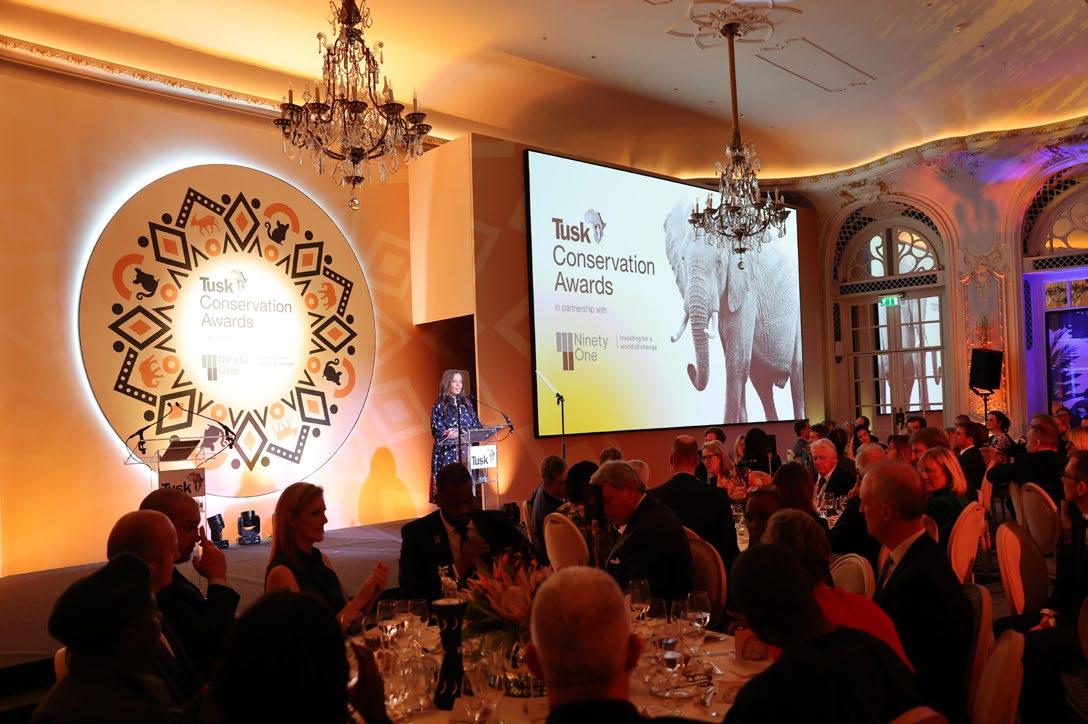
The ceremony returned to the magnificent surroundings of The Savoy in London, where the Prince took to the stage to pay tribute to three of Africa’s frontline conservationists’ outstanding work and to present them with their unique trophies. Joining him on stage was natural history broadcaster Liz Bonnin who hosted the ceremony alongside speeches from Tusk CEO Nick Bubb and Tusk Trustee Beatrice Karanja, as well as musical performances from the London African Gospel Choir.
The winners of the 2025 Awards:

The Prince William Award SponsoredbyNinety One
This lifetime achievement award is given to a distinguished individual for their outstanding dedication and exceptional continued contribution to conservation in Africa.

The Tusk Award SponsoredbyDefender
The award given to an emerging leader in conservation, recognising outstanding success in their chosen field.

LABAN MWANGI
The Tusk Wildlife Ranger Award
SponsoredbyTheNickMaughan FamilyFoundation
The award recognises the dedication and commitment of an individual who works in the field to protect Africa’s wildlife.
Below
HRH The Prince of Wales presenting the Prince William Award
Opposite Page
Top Row L-R: Beatric Karanja, Kumara Wakjira, Prince William, Rahima Njaidi and Laban Mwangi
Second Row L-R: Award winners with their trophies and the London African Gospel Choir performing at the ceremony
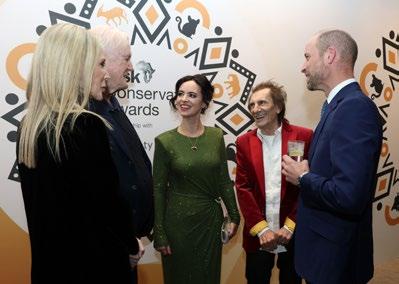
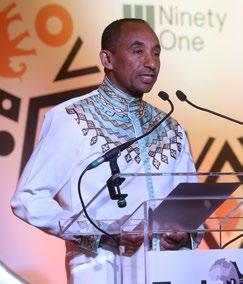
Third Row L-R: Prince William meets Tusk Ambassadors’ John & Jen Cleese and Ronnie and Sally Wood, Deborah Meaden with Lord & Lady Bath and Kumara Wakjira’s speech
Bottom Row L-R: Liz Bonnin hosting the awards ceremony at the Savoy
AllImagesCredit:ChrisJackson (GettyImages)

“Laban, Rahima and Kumara are wonderful examples of what can be achieved locally, regionally and at the national level. Identifying and supporting locally-led conservation has always been at the heart of Tusk’s ethos.
Humanity thrives when nature is given the space to provide us with the clean air, water, and food that we all require. That is why the insight and expertise of the Tusk award winners should inspire us to drive change. We must continue to amplify their voices and support their vital work.
HRH The Prince of Wales KG, KT



Tusk Conservation Awards 2025

Director General Ethiopian Wildlife Conservation Authority (EWCA), Ethiopia
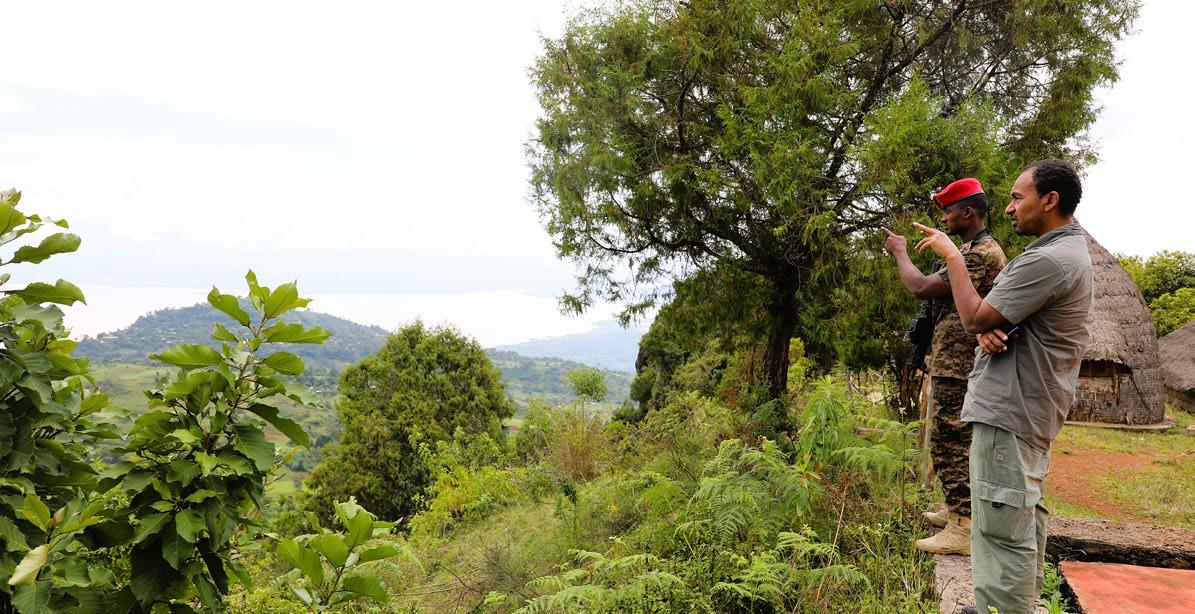
Kumara has contributed over three decades of his life to wildlife conservation in Ethiopia and the broader Horn of Africa region.
His work modernising the national wildlife policy, transforming public attitudes, strengthening ranger capacity, and pioneering innovative solutions to safeguard threatened species and habitats across the country makes him a worthy winner of the award.
Through his lifelong dedication, Kumara has redefined what it means to be a conservation leader in Africa - not just protecting wildlife, but integrating conservation into Ethiopia’s political, cultural, and social identity.
Looking back over your career, what achievements have given you the most satisfaction?
On the scientific side, I led studies on Bale monkey behaviour and ecology and established long-term work on elephant conservation, including ecology, genetics and spatial movement. In policy, I led revisions of Ethiopia’s wildlife legislation and helped strengthen political support for conservation, ecotourism, rhino reintroduction and protected area expansion. In leadership, I supported EWCA capacity building, introduced EarthRanger, drones and sniffer dogs to reduce wildlife trafficking,
Over the past 9 years of my leadership tenure, around $55 million has been mobilised to support wildlife conservation in Ethiopia.
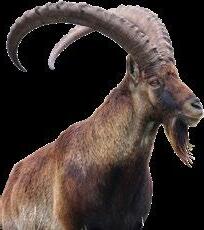
Protected areas cover 13.2% of Ethiopia’s total land mass. Within that, the Walia ibex population has recovered from under 100 to over 800 but remains critically endangered.
With Ethiopia’s wildlife facing numerous conservation threats, what current challenges are most urgent?
The most urgent challenges are habitat loss and fragmentation driven by agricultural expansion, settlement, deforestation, overgrazing, mining and land investment, largely linked to population growth and weak land-use planning.
Poaching and illegal wildlife trafficking remain serious threats, alongside increasing human–wildlife conflict. Protected areas are also affected by frequent bushfires. Climate pressures, including prolonged dry seasons and drought in lowland areas, further stress ecosystems.
What advice would you give emerging conservation leaders?
My advice is to build a deep understanding of what conservation truly means. It is not optional or recreational; it is essential for securing water, soil fertility, biodiversity, food systems, climate stability and public health. Without it, ecological and economic sustainability is impossible. Emerging leaders must also recognise that conservation depends on strong cooperation between government, communities and partners. Field practitioners, in particular, should place local communities at the centre of planning and implementation. Effective leadership combines ecological understanding with social awareness, integrating science, local knowledge and technology to achieve coexistence between people and nature.
What effect has winning the Prince William Award had on you personally and for EWCA?
Winning the Prince William Award elevated my personal profile, credibility and visibility at continental and global levels. It generated extensive national and international media attention framing me as a conservation hero.
The award recognition has given me additional leverage to strengthen my policy and strategic influence, driving partnership and stakeholder engagement at all levels. Moreover, the winning built the image of Ethiopia and EWCA in particular.
Looking ahead, what legacy or milestone would you most like to achieve in the next decade?
My focus is on strengthening long-term conservation systems in Ethiopia.
A key priority is preventing species extinction, particularly Walia ibex and elephant population growth through improved protection, habitat restoration and landscape connectivity. Expanding UNESCO World Heritage Site listings for areas such as Gambella, Borana and Lake Abbe is another milestone. Ultimately, I want to inspire young people to see conservation as a meaningful career and ensure stronger infrastructure and institutional capacity across protected areas.

Executive Director
Mtandao wa Jamii wa Usimamizi wa Misitu Tanzania (MJUMITA), Tanzania
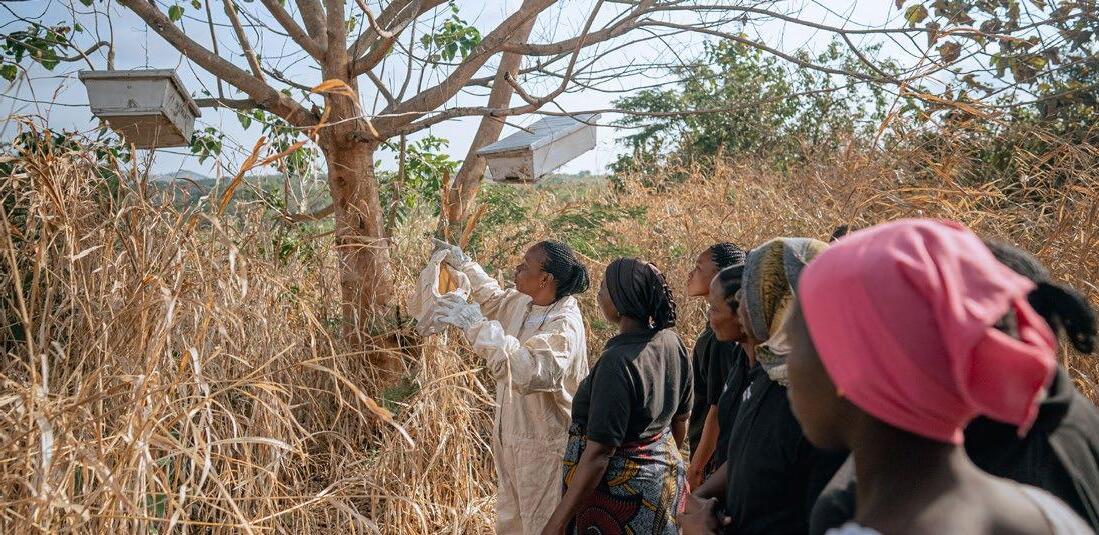
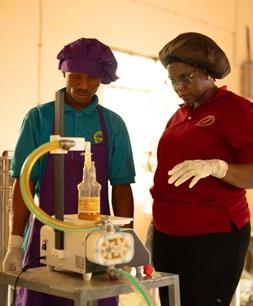
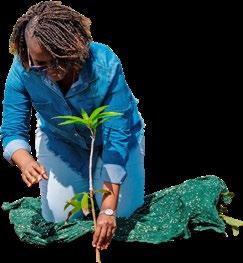
Rahima was honoured at the awards for her transformative leadership in community-based forest management, her tireless advocacy for land rights and gender equality, and her pioneering work to secure the future of Tanzania’s forests through people-led conservation.
Rahima founded MJUMITA, Tanzania’s only community-led forest conservation network, to give rural communities a voice in protecting their natural resources.
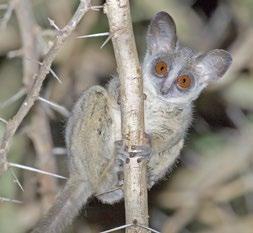
Illegal logging, uncontrolled fires, poor governance and habitat destruction remain persistent threats, and by protecting the forests she is simultaneously protecting Tanzania’s endangered plants and wildlife, species such as the Rondo galago (bush baby), a small primate once thought to be extinct.
Rahima leads a movement spanning 503 villages across 16 regions of Tanzania and operates across 2 million hectares of forest. From this, $560,000 has been generated from sustainable charcoal production.
How did you find out you had won a Tusk Award?
I found out that I had won the Tusk Award through an email that I ignored reading, telling myself that it might be a scam because I did not apply for anything. I finally decided to respond to it and a response from the Tusk team eventually led me to realise that it was actually true.
Since receiving the Tusk Award, has the recognition opened new opportunities for MJUMITA?
Since receiving the award from Tusk, the visibility of MJUMITA has grown significantly at both national and international levels. The recognition has strengthened our credibility with partners, donors, and government institutions, creating new opportunities for collaboration and funding. One of our partners has even nominated me for an Outstanding Conservation Leaders in Africa prize. The Award has also helped position community forest management as a proven and scalable climate and conservation solution.
What has been the most inspiring change you’ve seen in the communities you work with this year?
The most inspiring change has been the growing confidence and leadership of communities, especially women and youth, in managing their forests and advocating for their rights.
What challenge remains hardest to overcome, even with strong community support?
The biggest challenge that remains hardest to overcome is competing land-use pressures driven by poverty, population growth, and limited economic alternatives. Even when communities support conservation, they still need reliable income sources. Bridging this gap by creating sustainable, forest-friendly livelihoods at scale remains a critical priority.
As a female leader in your field, what changes are you seeing in women’s involvement in conservation locally?
Women are increasingly moving from being beneficiaries to decision-makers in natural resource governance. More women now serve on village natural resource committees, village governments, and lead enterprises such as beekeeping and sustainable charcoal, as well as actively participate in land-use planning. What most is their confidence to speak, lead, and influence decisions that shape their future.
Looking ahead, what is the next milestone you hope to achieve for Tanzania’s forests and the communities that depend on them?
The next milestone is scaling community-based forest management so that more villages benefit from secure land rights, climate finance, and sustainable forest enterprises. The goal is to demonstrate that protecting forests can simultaneously strengthen local economies, climate resilience, and biodiversity conservation.
Tusk Conservation Awards 2025 continued

Head Ranger
Mountain Bongo Project, Kenya
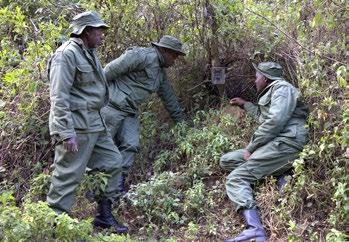
LWhat challenges do you face that people might not fully appreciate?
One of the biggest challenges is the physical and mental pressure of working in dense forest for long periods. Conditions are tough, visibility is low, and we often spend days with limited contact. What people may not realise is how unpredictable it is — from weather to encounters with wildlife or illegal activity. It requires constant focus, resilience, and teamwork to stay effective and safe in these environments.
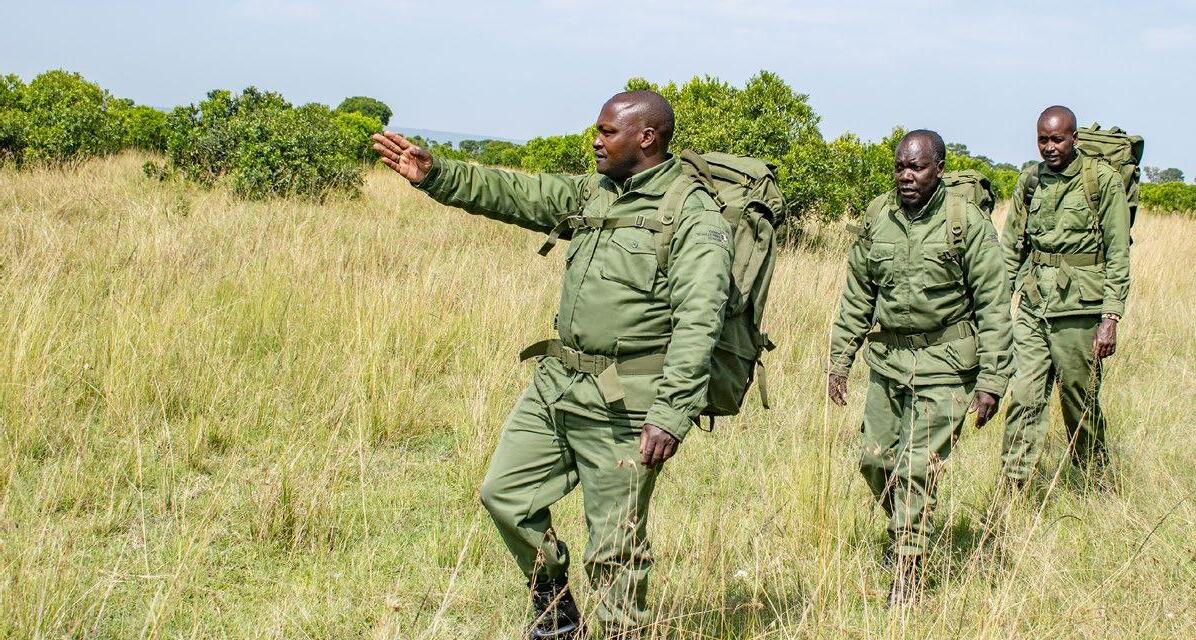
aban has been recognised for his exemplary leadership, integrity, and unwavering commitment to wildlife conservation, especially his protection of the endangered mountain bongo and his impact on local communities.
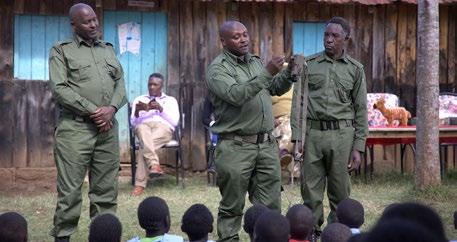
His father’s stories about the elusive bongo, an animal so rare that few had ever seen one, sparked Laban’s lifelong passion to protect them and their forest home. Laban has been part of the Mountain Bongo Project for over 20 years as one of the first rangers. Now serving as Head Ranger, he leads a team operating across the Aberdare and Maasai Mau Forests, two of Kenya’s most vital ecosystems.
Laban stands as a true guardian of Kenya’s natural heritage and a shining example of the courage, compassion, and leadership celebrated by the Tusk Wildlife Ranger Award.
With the support of the Tusk Wildlife Ranger Award, Laban plans to expand MBP’s camera-trap network, strengthen ranger training and equipment, and support community outreach programmes that foster coexistence between people and wildlife.
What does success look like?
Success would mean seeing a stable and growing population of mountain bongos in the wild. It would mean secure habitats, reduced threats, and more frequent sightings and data confirming recovery. Ultimately, success is when future generations can know that mountain bongos are no longer on the brink of extinction but are thriving again in their natural habitat.
Tracking mountain bongo is hard. They move quietly, often at night, and their tracks can disappear quickly due to rain and thick vegetation. Unlike other species, sightings are very rare, so we rely heavily on signs like tracks, dung, and camera traps. This makes monitoring them slow and requires patience and experience.
What is the mountain bongo’s biggest threat?
While poaching is still a major threat, habitat degradation is an equally serious issue that people often overlook. Encroachment, illegal logging, and forest disturbance reduce the quality of habitat bongos depend on. Even small changes in their environment can affect their movement and survival. Protecting and restoring these forests is just as important as preventing poaching.
How will the Tusk Ranger Award help?
Winning the Tusk Ranger Award brings recognition not just to me, but to the entire team working to protect mountain bongos. It helps raise awareness of the challenges we face and the importance of this work. It also builds support for the Mountain Bongo Project, helping us strengthen operations, improve monitoring, and continue protecting this critically endangered species.
I have committed my life to protecting an animal most people will never see. I’ve faced difficult terrain, wild animals, and long days in the forest, but I keep going because I believe these animals deserve a future.
Main image
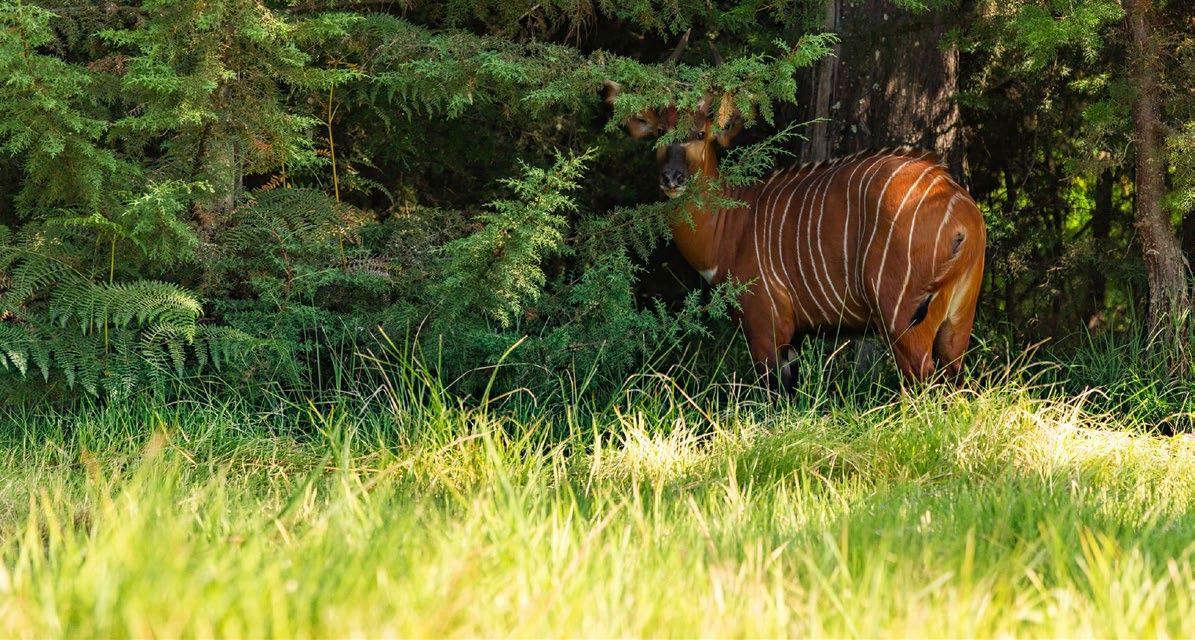
Mountain Bongo
Credit:PeterNdung'u
Left image Laban with rangers speaking to a community
Right image Laban and rangers checking a camera trap
The current estimated wild population of Mountain Bongo is less than 100. Each bongo has a unique stripe pattern, which can help in identifying individuals





At Ninety One, we believe that by supporting conservation in Africa, we are investing for a better tomorrow. We are proud to have partnered with Tusk since 2013. Working together, we can make a difference.
If you’re ever looking for a dose of inspirationthat feel-good boostjust stream any of the stories about Tusk’s tireless conservation work.
Jack Morton are an active sponsor of the ever-inspiring, Tusk Conservation Awards. In an often troubled-world, Tusk is a celebration of the best in humankind’s resilience, design ingenuity, and ability to create positive change.
At Jack Morton, we manifest culture—shaping ideas, behaviors, and experiences that bring people together, spark emotions, and inspire movements. We believe intentional experiences have the power to change hearts, minds, and even the world.
Looking back at the sixth year of the Challenge
Launched in 2020, the annual Wildlife Ranger Challenge (WRC) - organised by Tusk and the Game Rangers Association of Africa (GRAA) - has become a force for pan-African solidarity within the conservation sector.
The Challenge fosters camaraderie while raising global awareness of rangers' critical roles in biodiversity protection, community engagement, and conflict mitigation.
The 2025 campaign began in mid-July, in the run up to World Ranger Day, with two months of training challenges getting underway to reflect the demands of rangers’ work. This involved the Wildlife Ranger Quiz and a number of physical trials including push-up and sit-up challenges as well as a 2.4km running time trial.
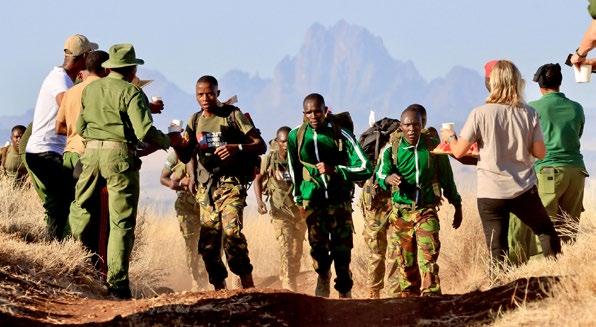
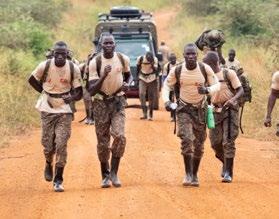
The excitement peaked for Race Day on September 20th. Across the continent from Mali to Mozambique, 2,000 rangers in 4-member teams donned heavy packs - 22kg for men and 10kg for women - to compete in a synchronised 21km half marathon.
Hub events in Kenya, Mozambique, South Africa, Uganda and Zambia, brought teams together to compete in person, and allowed the public and media to witness the action and hear stories of impact firsthand.
Winning Teams
Taking the top honours for the 21km challenge were The Rwanda Wildlife Conservation Association (Men’s) in a time of 2:14:13 and Gonarezhou Conservation Trust in Zimbabwe (Women’s) in a time of 2:44:13.
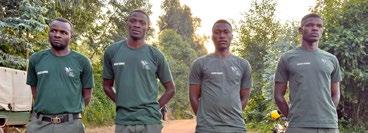
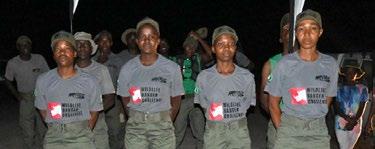
“The support from the WRC has been truly empowering for us as marine rangers. It’s strengthened our ability to protect marine ecosystems, monitor endangered species, and carry out coral restoration work. WRC has made us feel seen, valued, and supported - especially in remote island environments where resources can be limited. Knowing we’re not working alone means a great deal.

The finale coincided with the third African Ranger Congress Kenya’s Lewa Wildlife Conservancy. While the WRC rallies public support, the Congress convenes advocates for professional standards and ranger welfare. Having the two events coincide presented the opportunity to have 27 ranger teams from across Kenya compete against each other at the Conservancy. Supported by founding donor Mark Scheinberg and sponsors including Disney, Defender, and EJF Philanthropies, the WRC drives transformational change for ranger welfare and frontline conservation.
WRC in Numbers
The 2025 Challenge raised $3.35m, bringing the total since 2020 to over $25m
The total landscape protected by rangers in the WRC is 573,000 km2
150 teams across 102 protected areas in 22 African countries competed in the challenge
2025 saw 26 all-female ranger teams and 12 mixed teams

What impact has technology had on your ranger operations?
Head of Monitoring and Patrol Programme
Mount Kenya Trust, Kenya
Enock leads ranger operations that support wildlife protection and ecosystem conservation at Mount Kenya Trust (MKT).
He guides teams in using technology for reporting and tracking illegal activities, coordinating joint operations with partners, and ensuring patrol efforts contribute to biodiversity protection and informed conservation decisionmaking.
MKT receives Tusk funding through the Lewa Safari Marathon and participation in the Wildlife Ranger Challenge.
Enock, what types of wildlife do the rangers in MKT protect and what are their biggest threats?
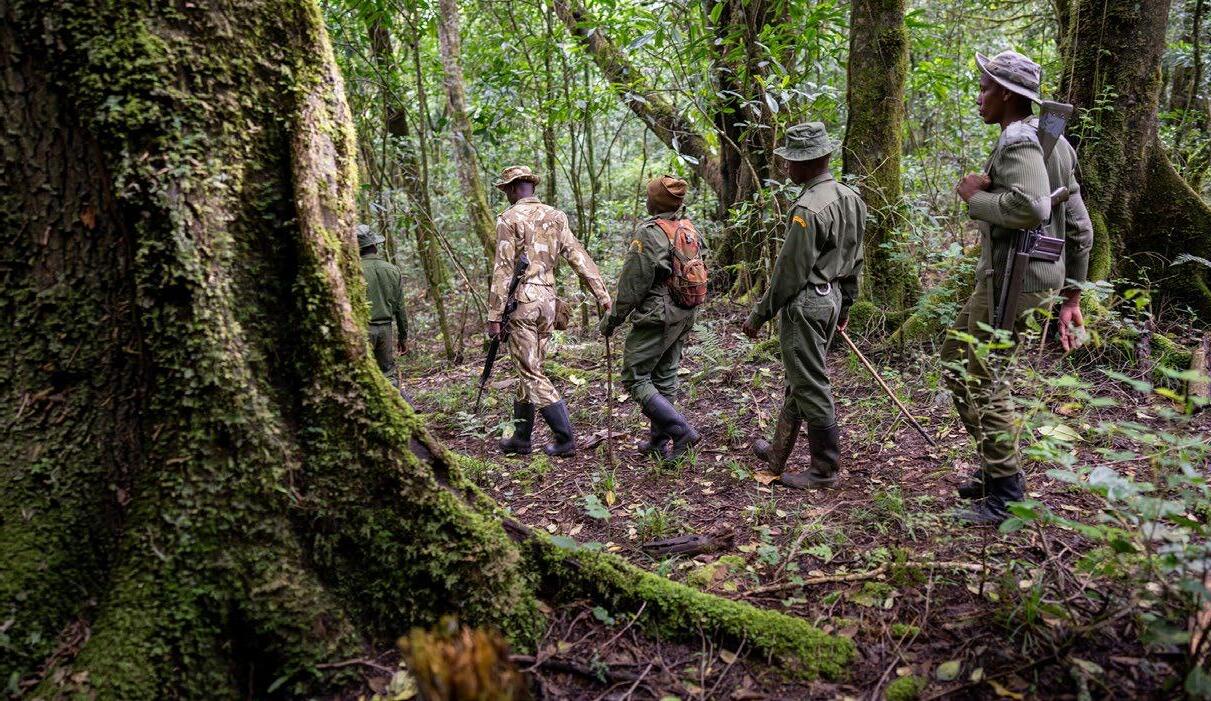
Mount Kenya is home to about 2,000 elephants and a large array of other species listed by IUCN from vulnerable through to critically endangered, such as the mountain bongo, leopard, eland, waterbuck, mountain reedbuck, giant forest hog and black and white colobus monkeys. There are also visits of lion through MKT’s elephant corridor. Threats include snaring, illegal logging, northern pastoralist incursions during the dry season, and wildfires.
Technology has significantly enhanced our efficiency and effectiveness in wildlife protection. Ranger teams now use digital reporting tools like EarthRanger, and Spatial Monitoring and Reporting Tools to record and monitor wildlife, track poaching incidents, and respond rapidly to threats. It has also facilitated our real-time data sharing with government agencies, enabling coordinated operations and improved decision-making.
What are the biggest challenges rangers are presented with on a day-to-day basis?
Rangers face significant daily challenges; these include below-minimum wages, harsh weather conditions, poor housing, inadequate patrol equipment. Lack of regular training leads to skills fading, while undefined work hours mean rangers operate around the clock, often far from family. These conditions, combined with high-risk encounters, make their work physically and emotionally demanding.
What keeps Mount Kenya Trust rangers motivated?
MKT has rangers spread across a vast conservation area in different camps. Therefore, there aren’t that many opportunities to come together. When we do, it really helps motivates the rangers’ work as it includes team sharing and team building.
MKT rangers are from the local community. They are passionate about the environment around them, and protecting its future for their families.
Mount Kenya Trust Rangers at a glance Patrol Range: 1,821km² annually covering forest and wildlife corridors
Number of rangers: 42
Main image
Joint operations between
MKT and KWS Rangers
Top left
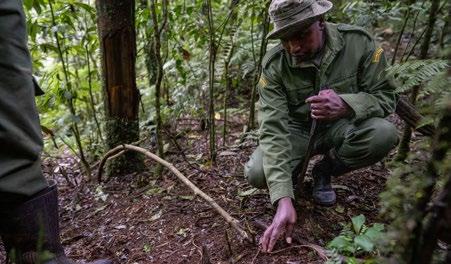
MKT ranger destroying a string snare
Top right
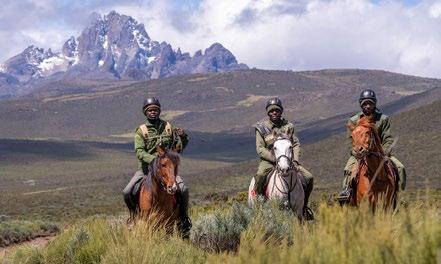
Horseback patrol team
Patrol effort: An average of 147 annual patrols across challenging terrain
Impact: Significant reduction in poaching incidents, improved corridor maintenance, and measurable forest regeneration in active plots.

Louise de Bruin Chief Executive Officer, Game Rangers Association of Africa (GRAA)
Louise has been with GRAA for over a decade, working with ranger teams across a diverse mix of landscapes and advocating for their welfare and professional development, as well as greater recognition of the role they play in conserving Africa’s natural heritage.
GRAA partners with Tusk for the Wildlife Ranger Challenge and Ranger Welfare & Standards Initiative (RWSI).
Here, Louise talks about some recent attacks on rangers on the front line and why protecting them is a priority.
Below
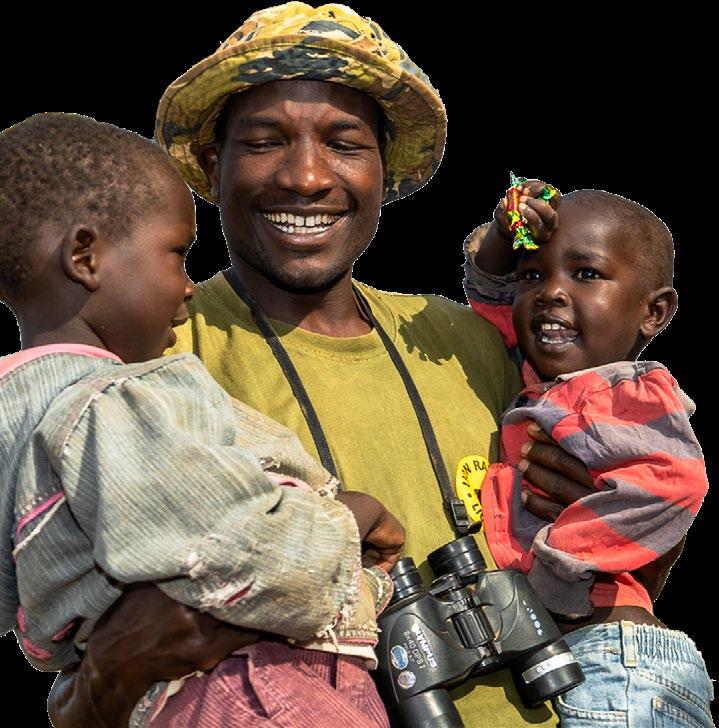
Ranger with his children, Loisaba, Kenya
Credit:TonyWild
Opposite Page (topbottom)
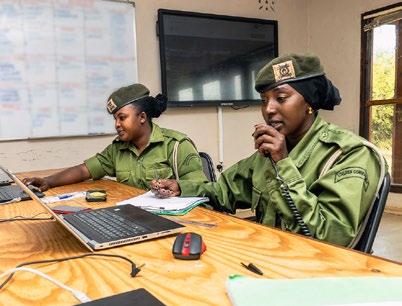
Rangers in the control room at Loisaba, Kenya
Credit:LionLandscapes
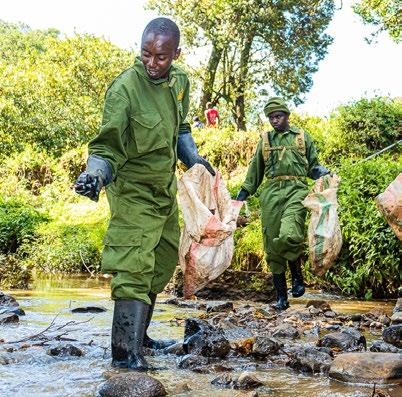
Mount Kenya litter collecting
Credit:MTKTrust
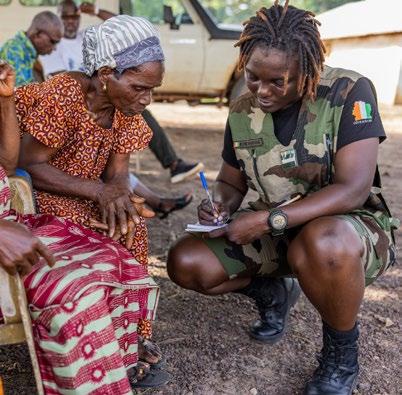
Interviewing local community members, Tai National Park, Ivory Coast
Credit:ThomasNicolon
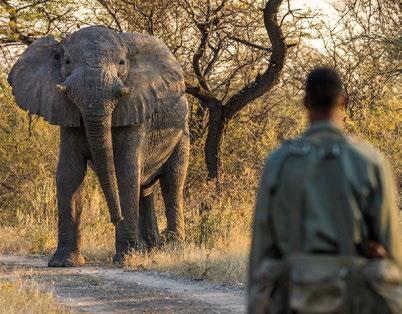
Preventing humanelephant conflict
Credit:MarcusWestberg
Far right top
Mario training, Niassa
National Park
Far right bottom
Mario recovering after the attack
Across Africa’s vast and varied landscapes, rangers stand as the first and often only line of defence for wildlife, ecosystems, and the communities that depend on them. Yet while conservation successes are celebrated, the wellbeing of those who make them possible is often overlooked.
The GRAA believes that effective conservation begins with ranger welfare. If rangers are not protected, supported, and valued, the future of conservation itself is at risk.
Ranger welfare today faces complex and growing challenges. Rangers operate in remote and demanding environments, often with limited resources, inadequate equipment and inconsistent access to basic services such as healthcare and insurance. Beyond these structural challenges, the nature of their work is becoming increasingly dangerous. Protected areas are, in some regions, evolving into high-conflict zones, with violent incursions, organised crime, and extremist activity. The attacks in Niassa, northern Mozambique in 2025, and more recently in the DRC’s Upemba in 2026, are stark reminders of this escalating threat.
The collaboration between Tusk and GRAA through the RWSI represents a shared commitment to transforming how ranger welfare is understood and implemented across the continent. The RWSI is designed to support both rangers and their employers, setting clear welfare standards while providing practical mechanisms to meet them. A key objective is to bring 10,000 rangers under comprehensive insurance cover through RangerProtect, while enabling conservation organisations to gradually integrate the full costs of welfare into their operational budgets.
Today, nearly 7,000 rangers across Africa are covered by RangerProtect, providing life, injury, and disability cover for those operating on the front lines. RangerProtect is not a luxury – it is a necessity. As incidents of violence and injury increase, so too do the number of claims; from 10 in 2023 to 34 in 2025. Behind each of these claims is a human story – a family affected, a career interrupted, a life forever changed.

A ranger from Niassa enables us to better understand the importance of this work. During the 2025 attacks by insurgents affiliated with ISIS, three of his colleagues were killed and two others went missing, their remains only later recovered. Mario was severely injured, suffering a broken femur and significant fractures in both legs. Alone and wounded, he survived for several days in the bush before being rescued. What followed was a long and uncertain road to recovery including multiple surgeries, infection management that at one point threatened amputation, skin grafts, and months of physiotherapy. Far from home, he endured not only physical pain but the emotional toll of isolation and uncertainty about his future.
Mario is covered by RangerProtect. Because of this, he did not face this journey alone. In the same attack, those rangers who lost their lives were also covered. Amid profound loss, their families were not left without support.
Today, Mario’s journey continues. From a wheelchair to external leg fixators, to walking aids – each step forward is hard-won. His hope is to one day return and continue the work he risked his life for. His story is one of resilience and courage, but it is also a powerful reminder of the risks rangers face, and the responsibility we share to support them.
If we are serious about protecting Africa’s natural heritage, we must be equally serious about protecting those who safeguard it. Rangers are not just part of conservation – they are its backbone. Investing in their welfare is not optional; it is essential.


Based in Nairobi, Kenya, Chantal joined Tusk in January 2026 as Chief Conservation Officer. She was previously Deputy Conservation Director for Africa at The Nature Conservancy, bringing with her a wealth of conservation knowledge.
Here, Chantal talks more about her role at Tusk and gives us an insight into her passion for conservation:
What does it mean for you to work for Tusk?
Getting to back African driven conservation in the most practical way. Listening closely to what partners need, then helping unlock the funding, visibility and long-term relationships that let them do their best work.
Tell us about your experience in the sector.
Throughout my career, I have developed a comprehensive understanding of the conservation sector and its diverse stakeholders. Most recently, I played a pivotal role at The Nature Conservancy in leading strategic programmes focused on biodiversity protection, community engagement, and sustainable development. Through that role, I established relationships with many of the partners we work with at Tusk.
My earlier work involved supporting the operations and community engagement efforts of community conservancies in Kenya. Additionally, I conducted research on watersheds in the Rwenzori Mountains of Uganda and on Lake Tana in Ethiopia, working closely with local universities to deepen my understanding of the region’s ecological challenges and opportunities.
What are the current challenges for conservation?
Across Africa, conservation is being squeezed by habitat loss/ deforestation, human-wildlife conflict, and the continuing pressure of wildlife trafficking and poaching, all compounded by rapid change in land use and climate impacts. What gives me real confidence is that Tusk is structured to respond to these realities: we work through a wide partner network and focus on the interventions that hold systems together, supporting species protection, coexistence, collaboration, habitats and education, all while elevating African leadership.
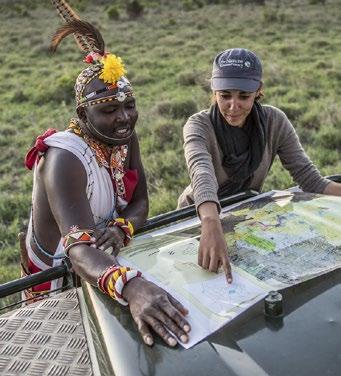
What excites you most about this position?
The chance to help partners go further, faster, especially where better connectivity, real-time information, and smarter coordination can transform what’s possible for field teams. I’m particularly interested in how tools like technological innovation and integrated monitoring can improve protection outcomes and safety for rangers and field staff.
Do you have a personal memory in nature that inspired you?
Recently, I was presented with a gift by a women’s group in Westgate Conservancy in northern Kenya. It was a goat hide, symbolic, as it is women who herd them, with a Grevys zebra, and a beautiful thank-you message made of beads. This was especially meaningful for me, as it reminded me of how important equitable conservation is, even in traditionally patriarchal societies.
In that moment, I felt an overwhelming sense of connection to the landscape and its rhythms. The experience reminded me why this work matters and continues to fuel my commitment to conservation every day.
Spotlight on the people behind our project partners
We asked four inspiring women from our project partners, along with Tusk’s CCO, Chantal, to tell us why they believe female representation in conservation is crucial.
The Interviewees


Camilla Floros, Marine Programme Manager and Principle Scientist - Wild Impact, TanzaniaandMozambique
Dr Moreangels Mbizah, Founder and Executive Director - Wildlife Conservation Action, Zimbabwe
Fanny Minesi, Director GeneralFriends of Bonobos, Democratic RepublicoftheCongo
Evelyn Kimori, PR and Science Communications Lead - Lamu Marine Conservation Trust, Kenya
Why is it important to have women-led initiatives and greater opportunities for women in conservation?
Camilla: Women bring different perspectives, leadership styles, and a strong connection to community, yet they remain underrepresented. Creating opportunities for women strengthens conservation outcomes and builds more inclusive, resilient programmes. At Wild Impact, we actively invest in training and supporting women, from marine rangers to initiatives like Women for Welding in reef restoration.
Fanny: Conservation has traditionally been a male-dominated field, often shaped by approaches that are exclusionary and enforcement-driven. Women bring a different way of engaging with conservation challenges, tending to work more through dialogue, listening, and long-term relationships with communities. Bonobo societies offer a powerful alternative model of leadership: they are matriarchal, and leadership is shared rather than imposed. Conflict exists, but it is rarely resolved through violence.
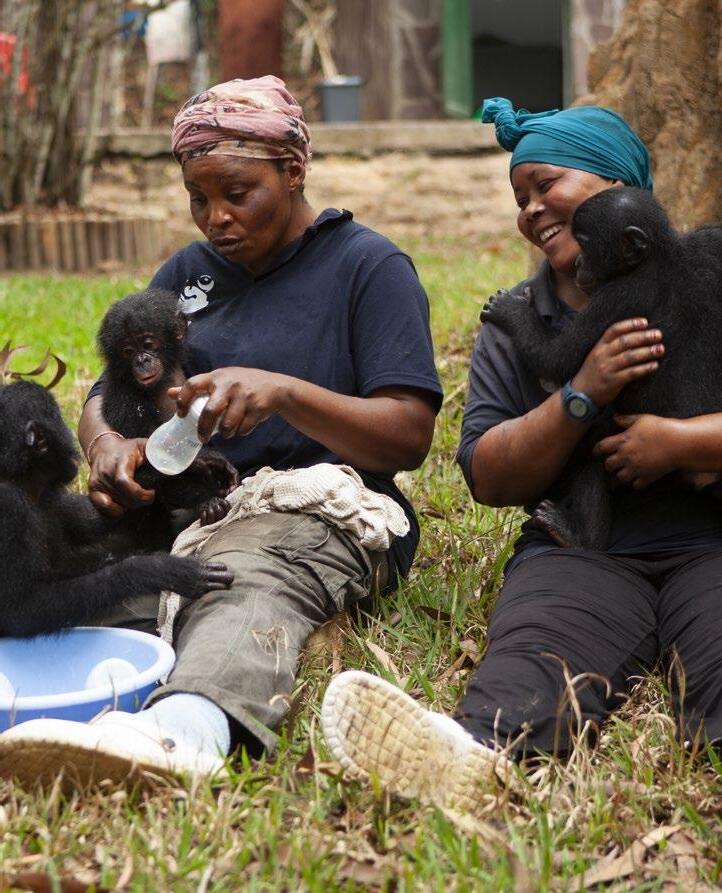
Moreangels: In many rural and resource-dependent communities, women play a central role in managing natural resources, supporting household livelihoods, and fostering environmental stewardship, yet they are often underrepresented in decisionmaking spaces. Empowering women in conservation helps ensure that strategies are more inclusive, locally grounded, and responsive to community needs.
Evelyn: Women are the backbone of coastal communities and the natural caregivers of society, making it instinctive for us to care for Mother Nature. We view the environment through the lens of long-term stability for future generations. When women lead, conservation shifts from a technical project to a shared family and community priority.
Chantal: Women leaders often bring deep strengths in collaboration, long-term relationship-building, and community-centred approaches: exactly the qualities conservation needs to succeed at scale.
What are your hopes for the future for women in conservation?
Camilla: To see more women not only participating in conservation, but leading it - shaping decisions, driving innovation, and inspiring the next generation to see conservation as a space where they belong and can thrive.
Fanny: Change must also come from within. We need to support and educate young girls to see themselves as future leaders, capable of shaping the systems around them. Conservation will only be sustainable if it reflects the realities and perspectives of the communities it serves.
Moreangels: It is important that women’s voices are not only included, but actively valued and influential in shaping policies, programmes, and solutions that protect our planet. This will ensure that conservation efforts are more inclusive, equitable, and effective.
Evelyn: I hope to see more African women moving from support roles into lead scientific and decision-making positions - a generation of women conservationists with the tools to protect their own heritage. I also hope the powerful, yet often hidden, voices of women in coastal communities are fully recognised and appreciated for the immense value they bring as custodians of the sea.
Chantal: That we can change what women and girls believe is possible.
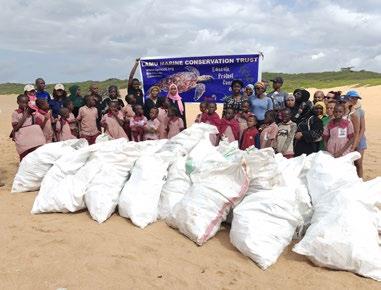
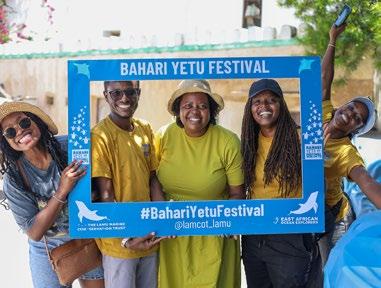
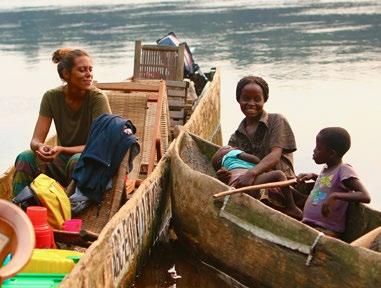
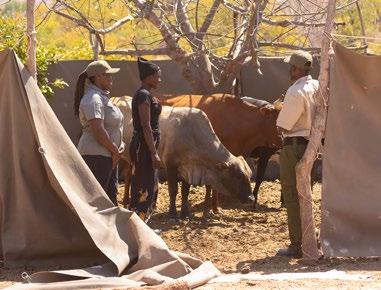
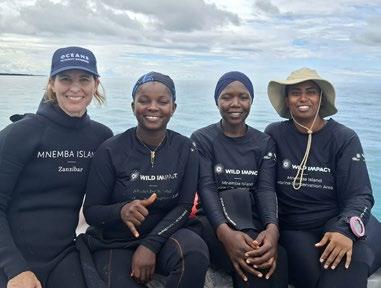
Main image
Friends of Bonobos caretakers feeding baby bonobos
Credit:FriendsofBonobos Far left Chantal Migongo-Bake at The Nature Conservancy
Credit:AmiVitale
Above top to bottom BeachCleanupTakwa,LAMCOT; FannyMinesi; WildlifeConservationAction.Credit:Wildlife ConservationAction; CamillaFlorosandWildImpactmembers

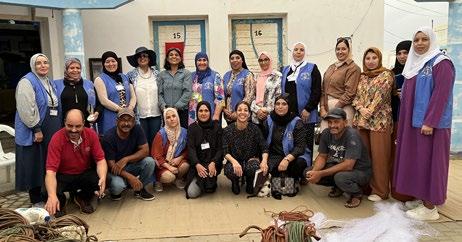
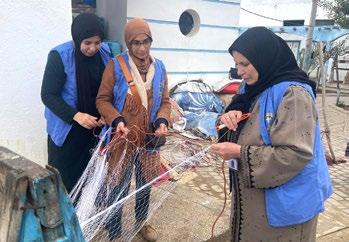
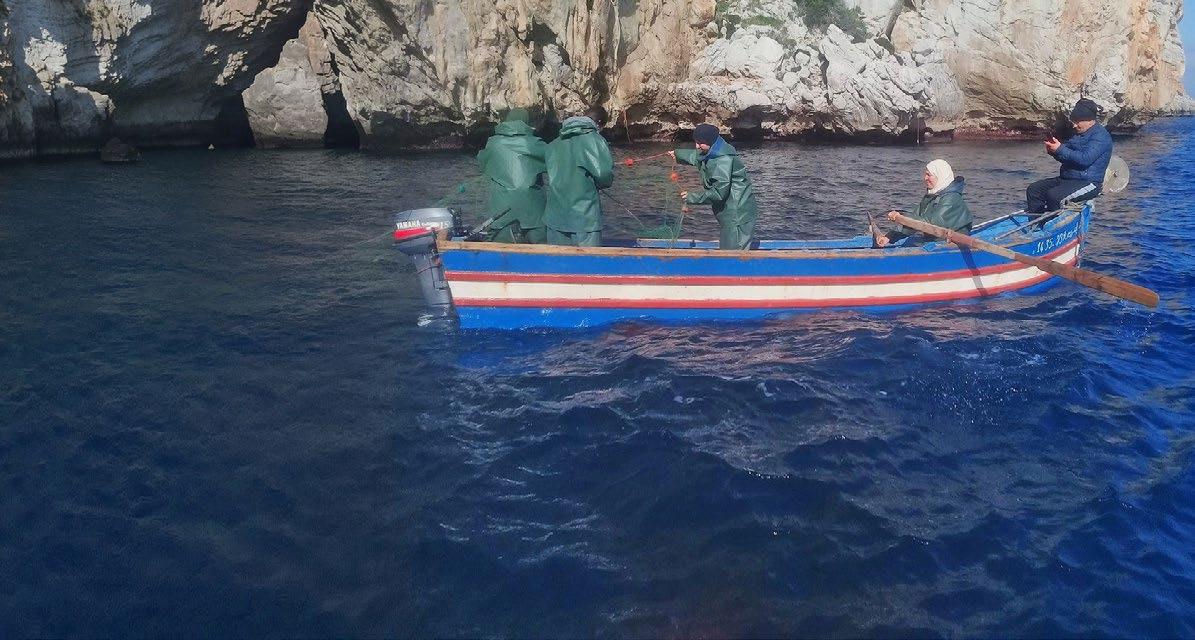
TIWARI Only very recently, I was amazed to discover the remarkable women in the traditional fishing communities of north-west Morocco - women who dive, fish, and mend nets alongside the men. I was inspired to work with these extraordinary women who dared to enter a male-dominated profession.
Co-Founder and President Association pour la protection des Tortues Marines de Maroc (ATOMM)Ocean Ecology Network, Morocco
ATOMM is a non-profit organisation for sea turtle research and conservation in Morocco. The initiative empowers the women of traditional coastal and fishing communities in Morocco to influence the hearts, minds and habits of their children and families to become powerful voices for marine conservation in their neighbourhood and country.
The project promotes the concept that conservation starts at home. Through the education and the engagement of children in marine conservation by their families, they are aiming to build a society where a healthy marine environment is a priority.
We caught up with ATOMM co-founder, Dr Manjula Tiwari to understand a bit more about the project and what it means to her:
The project is deeply personal to me. It began with my early surveys along the Atlantic coast in 1999 to verify reports from the 1950s of abundant sea turtle nesting. Although I found no evidence of nesting, the fishermen told me they often encountered turtles at sea and occasionally caught them in their nets. This launched a collaboration with Moroccan colleagues to study bycatch with the fishermen and led to me co-founding ATOMM.
I realised that fishermen may listen most closely to their families - their wives, sisters, and children. I wanted to empower these women, give them the confidence and skills to influence their families and become powerful voices for marine conservation in their country, and promote the concept that wildlife conservation starts at home.
This realisation led to the creation of Nissae Al-Bahr (“Women of the Sea” in Arabic) with Tusk’s support. I hope Nissae Al-Bahr will be a powerful platform for women’s voices and inspire many more across the country to join the movement.
Women form approximately 50% of the global human population: they must have an equal voice and responsibility towards sustaining this planet. Getting the women from the traditional coastal and fishing societies in Morocco to engage in marine conservation with the support of their families is one of my proudest stories.
It is only thanks to Tusk’s support that we were able to get the women’s project along the north-western coast of Morocco underway. We are grateful to you, Tusk, for believing in its value.
My role is to transfer my scientific and technical knowledge and skills to local partners, help the growth and development of their projects, and empower them to be independent and competent conservation leaders in their country. My childhood, between the tea estates of NE India and schooling along the SE coast of India, encouraged my desire to work with wildlife and conservation. And as a child, I never felt — nor was I ever made to feel — that being a girl would limit me in any way.
Main image
ATOMM at sea
Credit:Derbadi
Above images (L-R)
ATOMM women from the fishing communities of north-west Morocco
Credit:ATOMM
Opposite main image
Sifaka lemur
Opposite images (L-R)
Impact Madagascar conservation work in the field
Credits:ImpactMadagascar
ATOMM in Numbers
Over 125 women receive a salary
Over 800 adults and children participate in environmental education
7 community associations take part in the project


Founder & Member of the Board of Directors
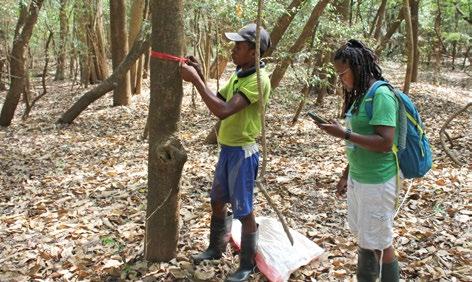
IMPACT Madagascar, Madagascar
Dr Josia is a conservation biologist who has developed numerous research and communitybased conservation programmes in Madagascar. In 2013 (the same year she was also a Tusk Award finalist), she founded IMPACT Madagascar, which has been a Tusk partner since 2015.
We recently caught up with Josia to find out more about her work, and the impact climate change is having in Madagascar:
What is IMPACT Madagascar?
It’s a Malagasy conservation organisation, working at the intersection of biodiversity conservation and community development. We are inspired by a future in which Madagascar’s environment is healthy and the wellbeing of local communities is guaranteed. Our mission is to maintain Madagascar’s remaining forest fragments alongside local communities.
What makes Madagascar’s biodiversity so special?
Madagascar has very unique biodiversity because the long isolation of the island allowed plants and animals to evolve in their own way, leading to very high endemism with most species found nowhere else on Earth. Its wide range of habitats, from rainforests to dry forests and spiny deserts, including savanna, also supports many different forms of life.
How affected were you by the cyclones in January 2026?
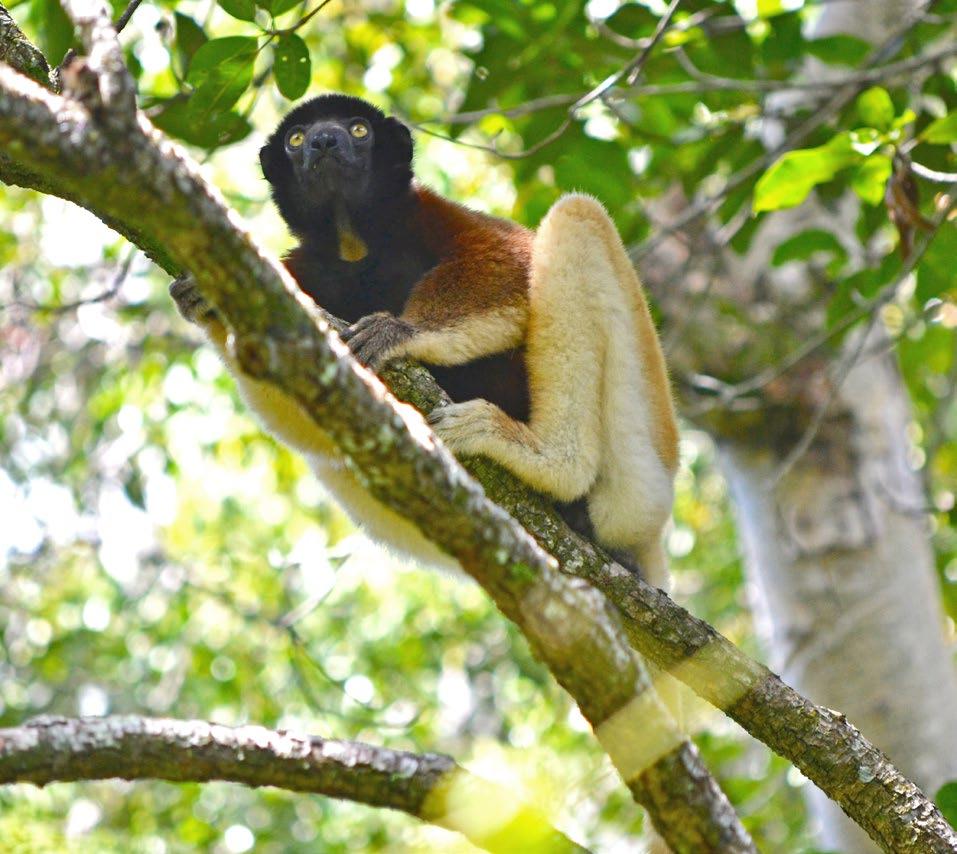
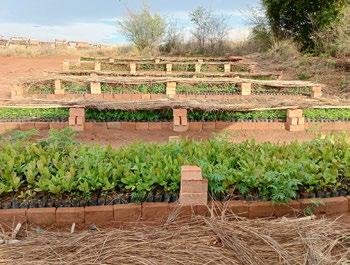
Cyclone Fitia struck northwestern Madagascar and had significant impact. In Ankirhitra, biodiversity was affected through widespread tree loss and habitat degradation. Families lost their homes and roads were inaccessible due to flooding.
In Madiromirafy, around 500 trees were destroyed. Infrastructure was also severely affected, including the destruction of schools, as well as damage to our field camp. Social impacts were even more severe, with about 1,100 people losing their homes and nearly 50% of crops being damaged. The planted seedlings for that rainy season were flooded.
Are you seeing the effects of climate change in Madagascar?
We are seeing more droughts, intense cyclones, floods and wildfires, which damage habitats, and increase pressure on natural resources. This often limits the access to our sites, affecting the realisation of our conservation activities. To combat climate change, several activities are undertaken, including ecological restoration, strengthening fire prevention, protecting key species and habitats. Supporting local communities with alternative livelihood activities, particularly on climate-resilient agricultural approaches, is a key part of our intervention.
What does the future look like?
We need to focus on supporting and accelerating changes at a local level, both on biodiversity management and community livelihoods. If current efforts continue and are strengthened - such as restoring forests, improving community subsistence, and better protection systems - these can help biodiversity recover and become more resilient. The future is a mix of risk and opportunity, but for us, strong conservation and community engagement will make a positive impact.
How has Tusk’s support helped your project?
Support from Tusk has been instrumental in strengthening IMPACT Madagascar’s conservation and community work. This partnership has enabled us to scale up key activities such as habitat restoration, species monitoring and community-based livelihoods, directly contributing to measurable conservation gains.
IMPACT Madagascar at a glance (2025):
Total managed site surface: nearly 300,000ha
Degraded areas restored: 58ha
Population of crowned sifaka: increased to 600
Seedlings planted: 300,000

John Cleese Actor, comedian, screenwriter, producer and Tusk ambassador
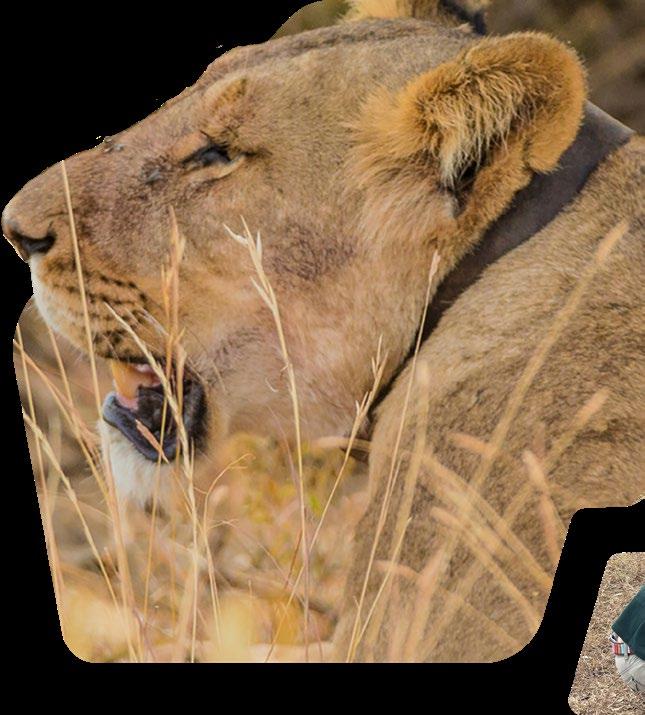
Last December, in their capacity as Ambassadors for Tusk, John and Jen Cleese joined Tusk Founder and President Charlie Mayhew on visits to two Tusk-supported projects – Lion Landscapes and Oceans Without Borders. Here, John shares a personal reflection on his experiences during the trip.
There are places in the world where time seems to drift away.
The urgency of modern life loosens its grip on us, and something far deeper begins to surface. A rhythm not measured in hours and minutes, but in natural continuity.
Laikipia, in northern Kenya, is one such place.
At Loisaba Conservancy, the land stretches wide beneath an endless sky. Acacia trees stand like sentinels, their shadows stretching across earth with centuries of life unfolding in delicate balance. Here, nothing is hurried.
It was within this vast stillness that we encountered the work of Lion Landscapes.
To speak of lions today is to speak, inevitably, of fragility. Fewer than 20,000 remain in the wild—a number that feels impossibly small for a creature so iconic, so deeply woven into the story of Africa. But here, there is hope. Not in control, but in coexistence. In understanding how nature works.
Main image
A collared lioness
Credit:LionLandscapes
Top row
John and Jen Cleese with Oceans Without Borders & green turtle
Credit:JenWade
Bottom row
John and Jen Cleese with Lion Landscapes, inspecting a darted lioness being fitted with a tracking collar
We were initiated into that understanding in the most magical way.
A lioness lay sleeping beneath the soft shade of a tree, her golden coat catching the shifting light. She had been tranquillised by the team - her stillness symbolising the trust placed in human hands.
We were close enough to hear her breathing.
Even at rest, she carried an undeniable presence - something ancient, something sovereign.
We named her Amber.
There was something profoundly moving in that moment. An acknowledgement of connection. The collar placed around her neck would allow her movements to be followed.
This will enable her and her pride to be watched over by the conservancy, and potential problems spotted before they develop. For instance, nearby communities are alerted when lions are close, reducing conflict and allowing both people and wildlife to exist side by side.
This is the essence of Lion Landscapes: not simply protecting lions, but creating a future in which they can continue to exist alongside those who share their land.
And yet, beyond the science and strategy, what remains most vividly is the feeling.
A cheetah, poised in perfect stillness before movement.
A leopard, slipping between shadows, seen only for a moment.
Zebra scattered like brushstrokes across the horizon.
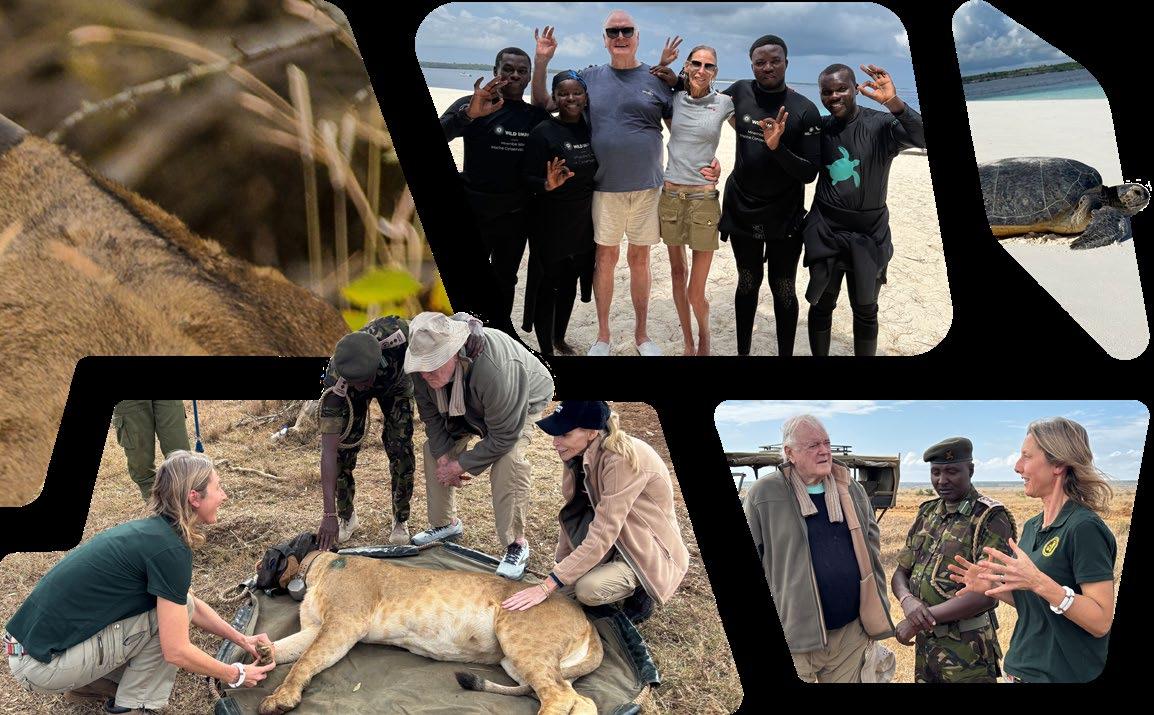
And overhead, the unmistakable flash of a lilac-breasted roller - its colours so vivid they seemed almost imagined.
Even the smallest details felt significant.
Lunch, taken in the open, surrounded by life moving freely around us. No barriers. No distance. Just a quiet, mutual awareness.
In those moments, something shifted.
Removed from everything familiar, we were returned to something essential - a deep, instinctive understanding of what truly matters.
That same sense of wonder followed us across the water to Mnemba Island, off the coast of Zanzibar.
If Loisaba speaks in vastness, Mnemba speaks in light.
Here, the ocean reveals a different kind of world - fragile, intricate, and no less extraordinary. Coral reefs, often called the rainforests of the sea, hold more than a quarter of all marine life. And yet, like lions, they are under threat.
Through the work of Oceans Without Borders, there is hope here too.
Slipping beneath the surface, we entered a world in quiet recovery. Coral frames stood like underwater gardens, nurturing new life. Fish moved in shimmering patterns through structures that, only years ago, had been damaged or lost.
It was both beautiful and sobering - a reminder not only of what has been lost, but of what can still be restored.
And then, unexpectedly, came joy.
Dolphins appeared - effortless, playful, moving through the water with a freedom that felt almost unreal. For a moment, everything else fell away. There was only movement, light, and a shared sense of something fleeting and perfect.
But it was on land that the most profound moment unfolded.
As evening softened into night, a turtle emerged from the sea.
Slowly, deliberately, she made her way up the beach. Each movement carried by an instinct unchanged for millennia. We watched in silence as she searched for a safe place to lay her eggs, her flippers digging carefully into the sand, testing and feeling, guided by something far older than memory.
It was not a moment for words.
Around us, life continued in quieter forms - the gentle presence of dik-diks moving through the undergrowth, the soft rustle of unseen creatures, the steady rhythm of an island existing in balance.
Across land and sea, the message was the same.
These places, these animals, these delicate ecosystems are not separate from us. They are part of a shared world, one that depends not only on protection, but on care, understanding, and responsibility.
Our journey was not simply a journey across landscapes, but a return.
A return to stillness.
To perspective.
To what is real.
One truth becomes impossible to ignore:
The wild does not belong to us.
But its future, can be assured by the intelligent, co-operative, and careful nurture of conservation movements like Lion Landscapes and Oceans without Borders. These people love their work!
How Defender is supporting VulPro's vulture conservation
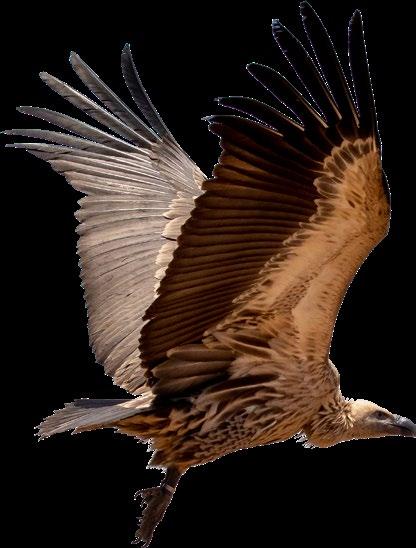
For over 20 years, Jaguar Land Rover has supported Tusk, sharing our vision and commitment to protect the natural world.
One of our most exciting developments over the past year has been through the Defender brand, with vehicles now deployed directly into the field across projects Tusk supports. The first partner to benefit was Vulpro, based in South Africa, which received a brand-new Defender 130 in June 2025.
Vulpro are working to transform how the world sees vultures – birds often misunderstood, yet vital to the ecosystem. As a result of threats such as poisoning, use of vultures for belief-based purposes, human indifference and energy infrastructure, several species are now critically endangered. Through rescue, rehabilitation, captive breeding, release, research and engagement programmes, Vulpro is giving vultures a second chance.
However, this work comes with a significant number of challenges: extreme temperatures, vast distances, limited mobile technical capability, and severely degraded roads and tracks to get to the vultures.
Recognising these demands, we identified Vulpro as an ideal recipient of the Defender. We caught up with CEO, Kerri Wolter who described its impact after several months as a “game changer”.
“The roads at Shamwari (Private Game Reserve, in the Eastern Cape) are just full of corrugations. With a normal vehicle, you feel like you're sitting in a tin can, making it feel as if the car is about to fall apart around you. With the Defender, I just do not feel the corrugations and in fact, it feels as if the roads are constantly graded. I only notice how bad the roads are if I get into another vehicle. The Defender has made the drive on these rough roads much safer as it holds the terrain with such steadiness and stability.
Since Vulpro’s vehicle arrived it has been involved in over 100 rescue missions, supporting 309 vultures which have benefitted from the mobile veterinary treatment. It has enabled them to cover vast distances that previously may have required air travel.
Top image
Cape vulture
Credit:VulPro
Right top image
VulPro releasing a vulture back into the wild
Credit:VulPro
Right bottom row
Kerri Wolter from VulPro making use of their Defender in the South Africa terrain
Many injured vultures are now collected and transported to Vulpro’s rehabilitation centre by road. Those unable to return to the wild, remain under expert care, playing a vital role in captive breeding programmes, with chicks being released when ready.
The vehicle transports a remarkable range of vultures – adult and younger birds, chicks, and even eggs housed in a portable incubator powered by the vehicle. With their long necks, and delicate physiology, vultures are highly vulnerable during transport. The vehicle’s high-tech suspension system capability and adaptability make transportation much more risk free.
As Kerri recalls: “We released two birds recently at Shamwari on the worst roads I have seen. The Shamwari CEO didn't believe we could actually get up there. I showed him how the car can actually lift the suspension, and he kept quiet very quickly.
"We then transported the two birds up, and because of the functions in the Defender, we could just go into a rock crawl, and we drove up this horrendous path where you could hardly feel the bumps. It just allowed us that capability of being able to reach areas which we would not have been able to reach, and we would not have been able to release those birds at that particular site. The game viewing vehicles at Shamwari can't actually take any of our crates in their vehicles. They're not purpose built, compared to the Defender, which can very comfortably take two plus more crates. And so it's been an absolute game changer for us.”
Lappet-faced Vulture Torgostracheliotos
IUCN Status: Endangered
Global Population: 8,500
South Africa Population: Red listed status as critically endangered, with an estimated population of 180 breeding pairs.
Did you know: Also known as the Nubian vulture, the Lappet-faced vulture is the largest vulture species in Africa, with a wingspan of between 2.5–2.9 metres. However, because of their large size and wide-ranging habits it does lead to a significant impact wild. Last year Vulpro successfully managed to breed their first due to be released back into the wild this year.
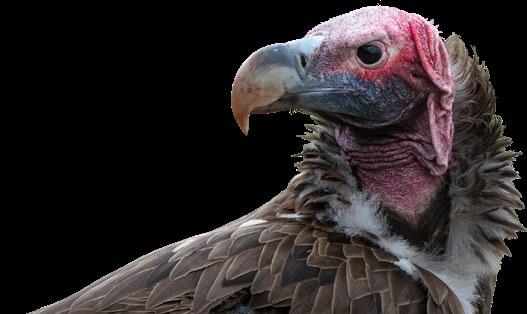
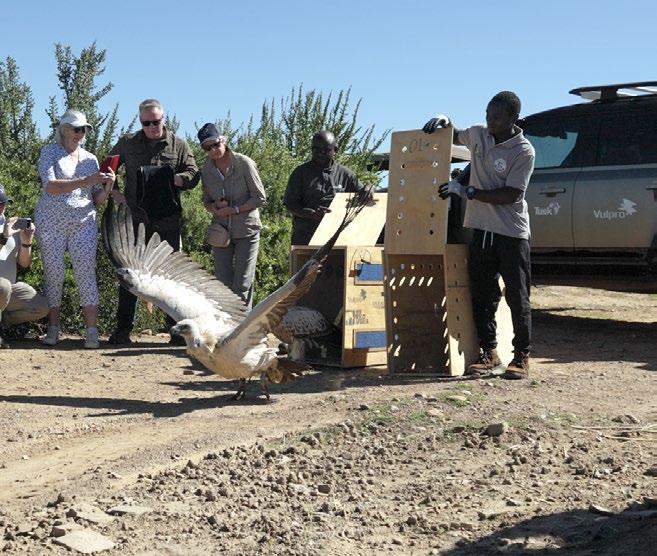
Following this early success, Vulpro is set to receive a second Defender later in 2026, which will support operations at their Hartbeespoort base, north of Johannesburg.
The rollout of Defenders will continue across other Tusk partners. Vehicles have already been deployed to Wild Entrust in Botswana and Save the Rhino Trust in Namibia, with further vehicle deliveries planned for Borana Conservancy in Kenya and Painted Dog Conservation in Zimbabwe over the coming year.
From remote cliff tops to rugged reserve tracks, these vehicles are doing far more than navigating difficult terrain. They are helping to carry species back from the brink. And for vultures once written off, that journey is only just beginning.
“We’ve been proud partners of Tusk for over twenty years, and as the challenges facing wildlife have grown, so too has the need for practical support. That’s why we’re working closely with partners like Vulpro, helping equip them for their vital, day-to-day work.
Seeing the impact - from rescue through to rehabilitation and release is incredibly powerful. Defender, its vehicles and its culture of innovation, is designed to help teams operate in the toughest environments, protecting vultures and the ecosystems they sustain.
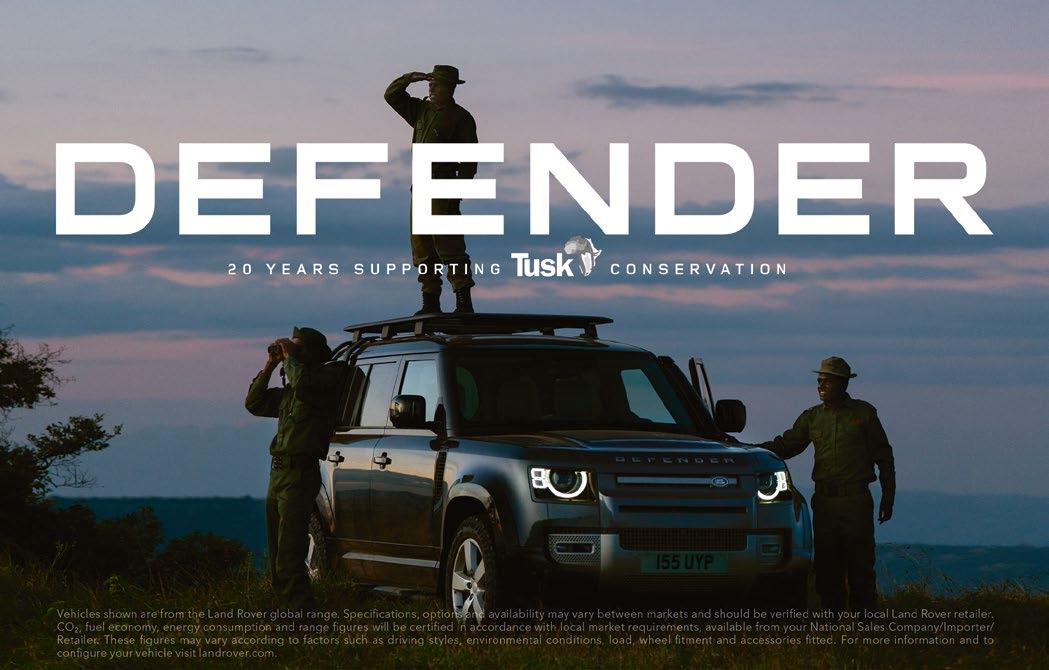
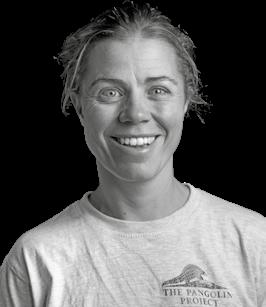
The Pangolin Project, Kenya
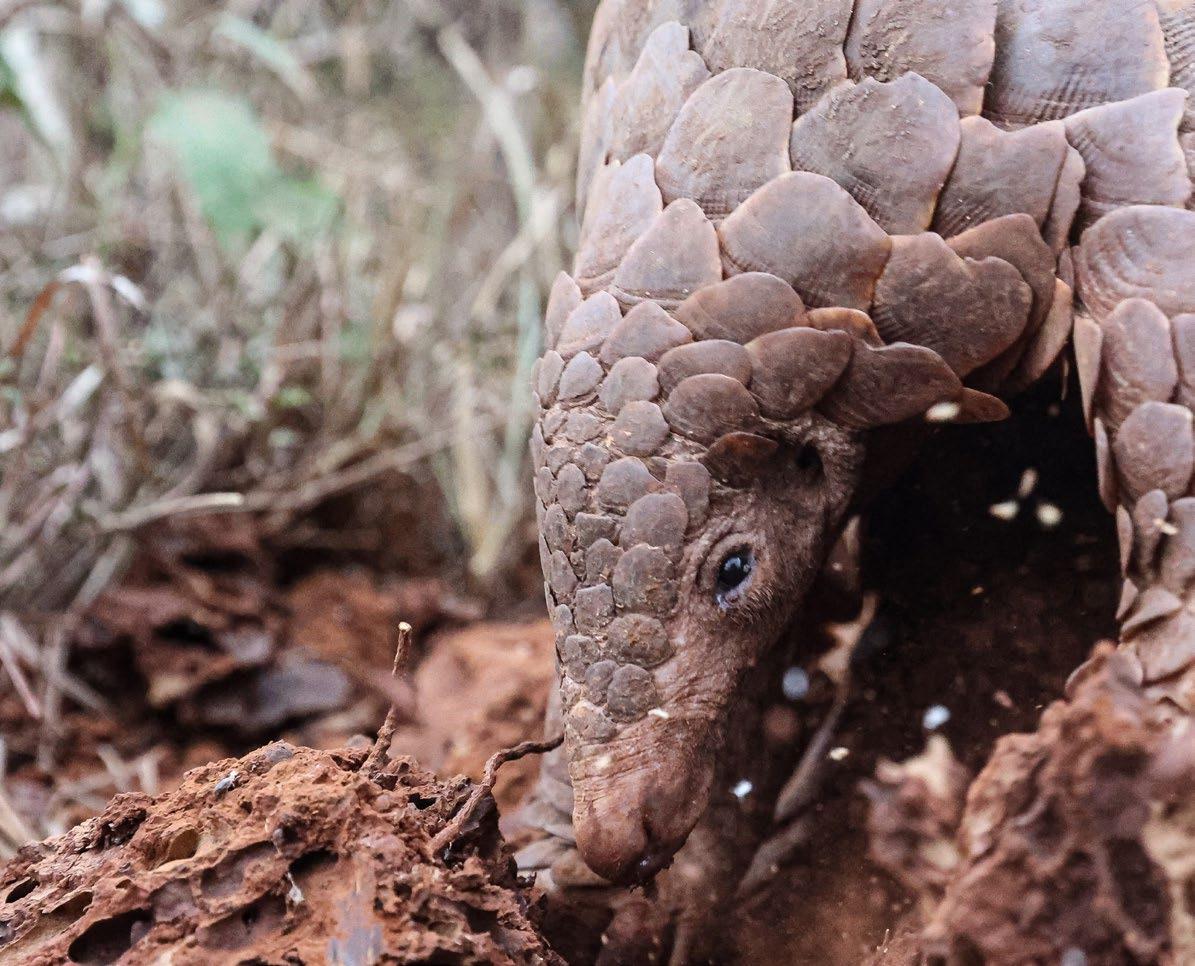
The Pangolin Project (TPP) is a conservation organisation focused on protecting pangolins and the habitats they depend on. Working in the Nyekweri ecosystem, west of the Maasai Mara, the area is home to the last known population of giant ground pangolins in Kenya. Until 2021, the species was believed to be extinct in the country.
They are also working to secure long term lease agreements with landowners, building for future reforestation and security.
Here Claire gives us some insight into the work TPP are carrying out:
How did you get involved with pangolin conservation?
My background is in veterinary work and I was drawn into this work through a growing awareness of how little we knew about pangolins in Kenya. When it became clear how vulnerable they are, and how quickly their habitat was being lost, it felt important to take a more focused and practical approach to protecting them.
What role does the project play in protecting pangolins?
This project is unique because we are working on a long-term solution — a communitybased pangolin sanctuary. In the meantime, we are also working to protect every remaining individual in a population. Only 25 individuals remain in the area, and the main threat is not poaching but land use change and electric fencing. It’s a very hands-on, very immediate project. At the same time, it’s not just about one species — it’s about securing an entire ecosystem and working closely with communities to do that.
Why are pangolins so special?
They are the only mammals covered in scales, and they play an important role as the balancers and indicator species for ecosystem health. Globally, they are the most trafficked mammal in the world. In Kenya, there are three species of pangolin. The forest dwelling species - the giant ground pangolin and white bellied tree pangolin are extremely rare, and until recently very little was known about where they were or how they lived.
How do you monitor pangolins?
Pangolins are fitted with tracking devices which allow us to monitor their movements and understand their behaviour — where they feed, where they shelter, and how they use the landscape. This is supported by a dedicated team on the ground — our Pangolin Protection Units who track animals at night to ensure they remain in safe zones.
Technology is essential because it gives us real-time information, but it only works because of the people on the ground. The combination of both is what makes the approach effective.
Any recent success stories you would like to share?
One of the biggest successes has been simply being able to locate, tag and monitor multiple individuals in a population that was previously almost unknown.
As a result, we are able to build a portfolio and find new individuals that visit tagged pangolin. This has completely changed our understanding of the species and helps us to develop conservation strategies.
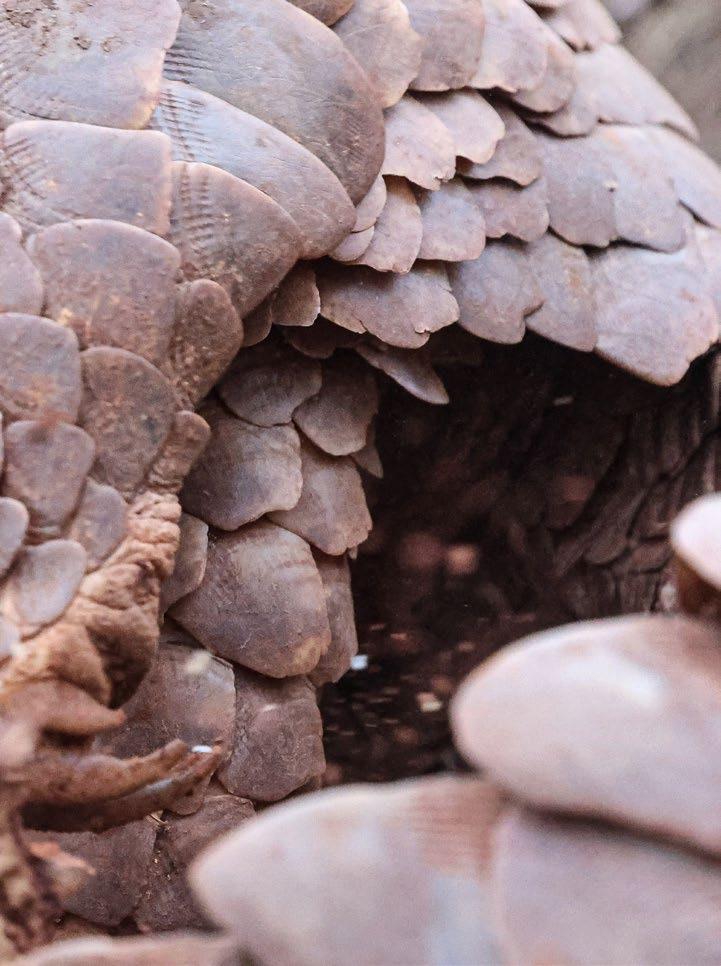
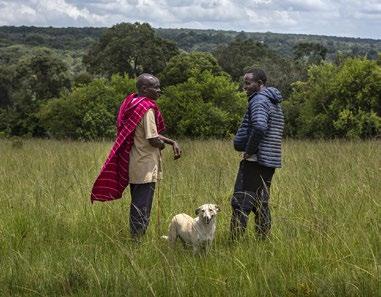
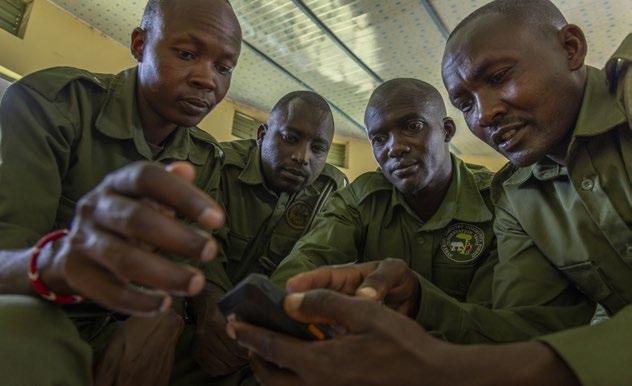
We’ve also made strong progress in working with communities to reduce threats, particularly around fencing. 206 landowners are now in conservation lease agreements, and we have also de-electrified 130km of fencing. These are early but important steps as we move towards securing 10,500ha.
What does the future look like?
In the short term, the focus is on protecting every remaining pangolin in Nyekweri and securing the habitat they depend on.
In the longer term, we want to see a stable, connected landscape where pangolins and other wildlife can thrive, supported by strong local governance, sustainable financing, and communities who benefit from conservation. This in turn will impact pangolin populations that don’t just stabilise but start to rebound.
How has Tusk’s support helped you and your project, and how do you view Tusk as a partner?
Tusk’s support has been critical in helping us establish and grow the project. They were there from the very beginning when we had just five staff and we now have 40! Their support has enabled us to move quickly, test approaches, and build the foundations for long-term success.
Main image
Giant ground pangolin
Credit:MarkBoyd
Right insert
Rangers tracking pangolin movements
Credit:GeorginaGoodwin
Right top to bottom Paul Nangida & Father on Community Land
Credit:GeorginaGoodwin
Pangolin Tagging
Credit:AnthonyOchieng
Forest with deforestation in the distance
Credit:AnthonyOchieng
Tagged Pangolin
Credit:KoenBetjes
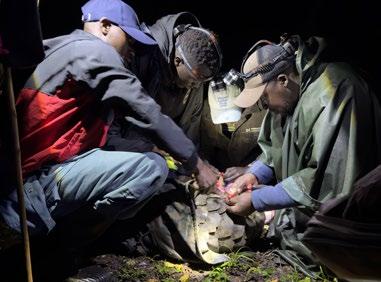
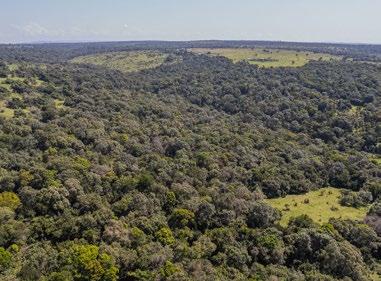
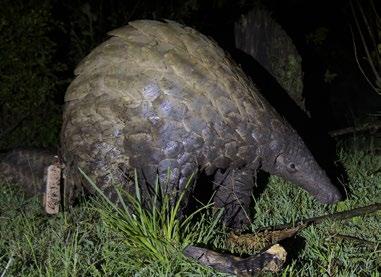
The Pangolin Project in Numbers
TPP works across 25,090 hectares
130km of electric fencing removed
97 camera traps deployed
30 people employed from the local area
Peter Lalampaa Executive Director, Grevy's Zebra Trust, Kenya
Grevy’s Zebra Trust (GZT) works to conserve and grow the most threatened of the three zebra species – the Grevy's zebra.
Here, Peter Lalampaa, Executive Director, provides an insight into this special ‘white-rumped’ species
Why are Grevy's zebra so unique and special?
Grevy's zebra are the largest members of the equid family, occupying a unique ecological niche in northern Kenya. The Samburu call them "Loiborkurum," meaning "white-rumped." As one elder said, they "provide beauty and serve as indicators of healthy rangelands, showing us where there is pasture, water, and peace."
What are their main threats?
Grevy's zebra face habitat degradation, which is linked to overgrazing, competition with livestock for resources, restricted water access, disease, subsistence poaching, infrastructure development, and climate change.
What is GZT's role in protecting them?
GZT exists to conserve and grow the Grevy's zebra population in Kenya, grounded in one belief: solutions for Grevy's zebra must be solutions for people. Over 93% of our team come from local communities. In 2025, our monitoring teams walked over 65,000km, enabling us to document critical habitat for Grevy’s zebra.
GZT’s work is organised around five goals. One: valuing Grevy’s Zebra within local communities. Two: understanding populations through accurate information to help backup action. Three: supporting survival by their mitigating threats. Four: regenerating rangelands for people and wildlife. Five: connecting landscapes through integrated land use for community and zebra needs.

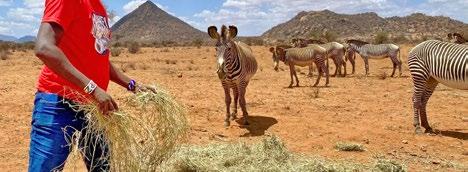
Credit:AndrewLetura
Do you have a memorable moment in the field with zebras?
One memory that has stayed with me took place while camping at Westgate Community Conservancy during vegetation surveys. Here we work with local communities to restore grasslands through planned grazing. Early one morning, we climbed a rock to scan the plains below and spotted a herd of Grevy’s zebra. Among them was a newborn foal, its long legs awkward against its tiny body. As insects buzzed and weaver birds chattered nearby, I felt overwhelmed with gratitude. In that moment, the herd became a living symbol of what ecosystem restoration can achieve - and a reminder that the future of the Grevy’s zebra depends on healthy landscapes.
Grevy's zebra
Equusgrevyi
IUCN Status: Endangered Global Population: 3,000 in the wild
Appearance: Finely detailed stripes, large fuzzy ears, bright white belly, and a distinctive charcoal dorsal stripe framed by a white patch near the rump.
Terrain and habitat: Arid and semi-arid grasslands and shrublands.
Population growth indicators (2025): 33% of all Grevy's zebra recorded were foals and juveniles.
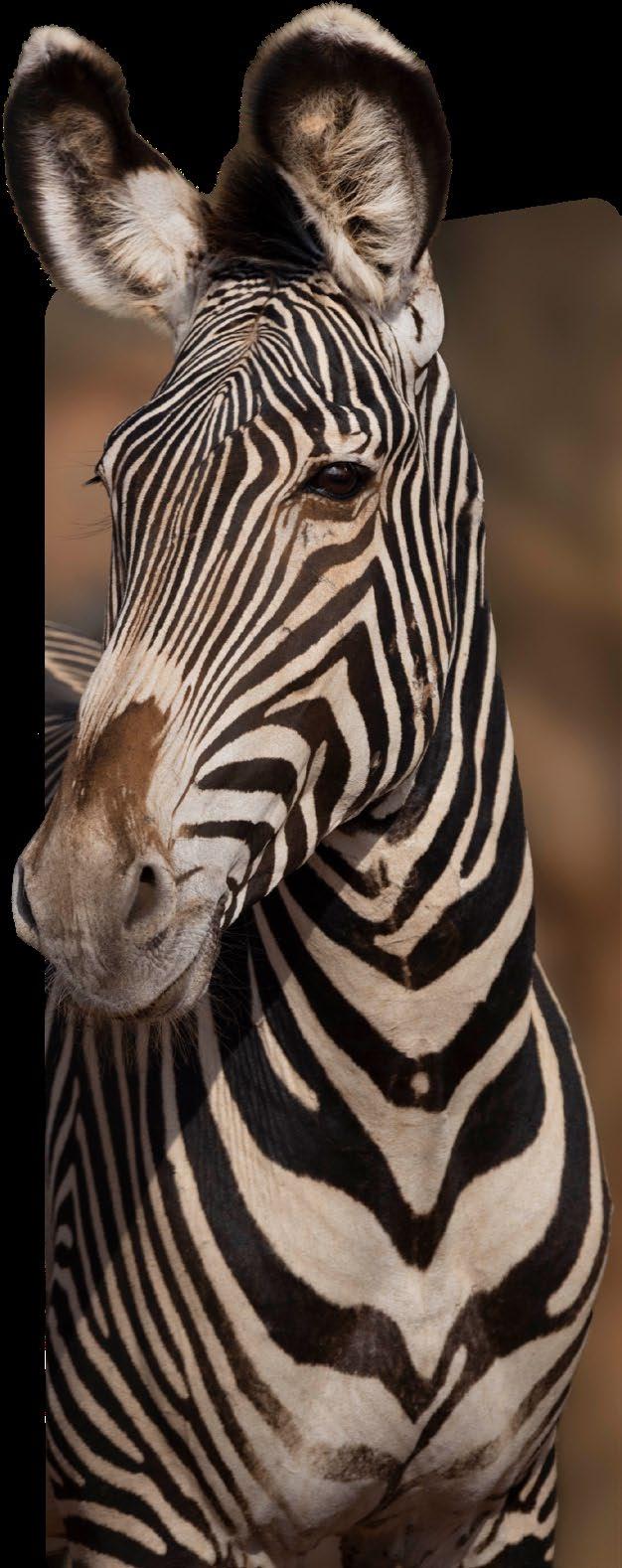

Dr Matt Becker, CEO, Zambian Carnivore Programme, Zambia
Hyenas are so cool - Anyone who spends time around them loves them!"
We recently caught up with Dr Matt Becker, CEO of Tusk partner, Zambian Carnivore Programme (ZCP) to talk about the often maligned and misrepresented hyena.
Why are hyenas so special?
Throughout history hyenas have been portrayed negatively but are actually Africa’s most successful, widespread and socially complex large carnivore. They are highly skilled hunters, dispelling their reputation as purely scavengers and form robust social units, with an enforced matriarchal hierarchy. With one of the strongest bite forces and stomach acid of any mammal, hyenas can break down whole carcasses, reducing waste and providing critical sanitation for the whole ecosystem. They also have over 11 distinct calls, that can be heard up to 5km away!
What is ZCP's role in protecting hyenas?
Our work includes conducting long-term conservation science work, given that the dynamics of hyenas is so poorly understood, but also direct conservation, such as de-snaring and coexistence work through mitigating conflict with livestock. We also encourage as many people as possible to
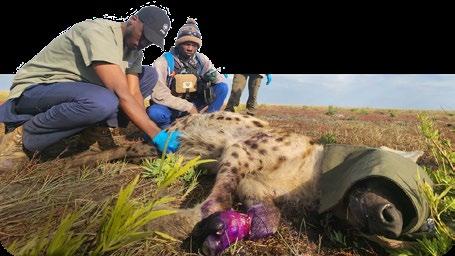
Why are hyenas so vulnerable and what are their main threats?
Hyenas are highly-invested mothers that have small litters of 1-2 cubs, so populations cannot recover quickly. They are subject to the same threats that face other large mammals, such as habitat loss, prey depletion and conflict, but they also suffer from a severe lack of conservation support.
Do you have any memorable moments in the field with hyenas?
Some of my most memorable moments have been at communal dens in Liuwa. As curious animals, hyena cubs often come out to see you. This has led to some wonderful times spent out amongst cubs as they played with each other and their mothers.
What do you think the future holds for them?
We’re optimistic as more and more people are learning about hyenas, how special they are, and how much they need our help.
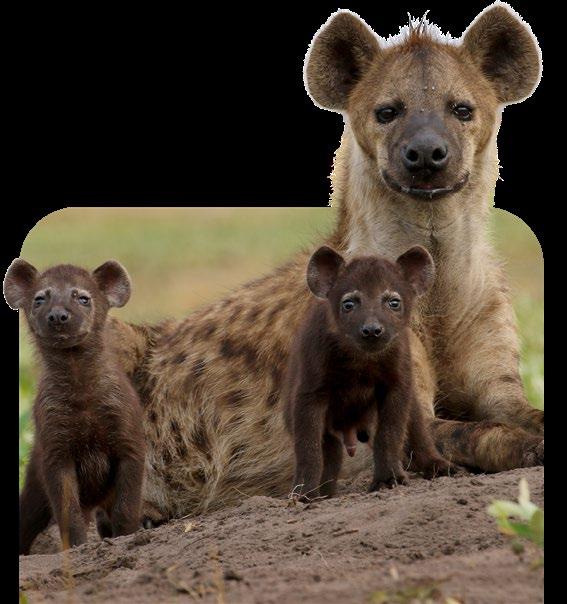
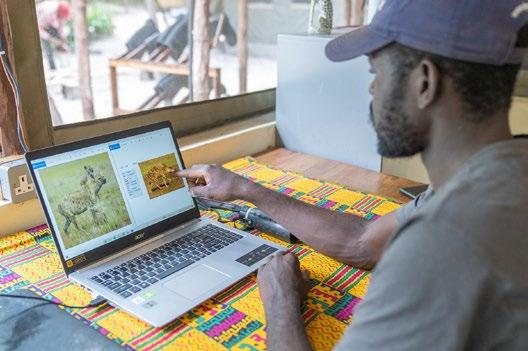
IUCN Status: Least Concern
Weight: Spotted hyenas are Africa's second largest carnivore. Weighing around 40-90kg.
Bite force: Spotted hyenas have a bite force of 1100 PSI, 7 times stronger than the average human (162 PSI).
Females: Female hyenas have up to three times as much testosterone as males, and as a result spotted hyena societies are matriarchal.
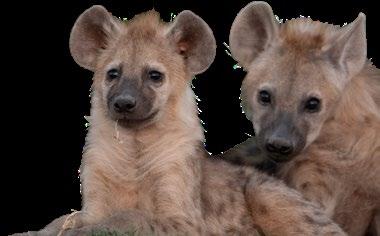
Spotlight on the people behind our project partners
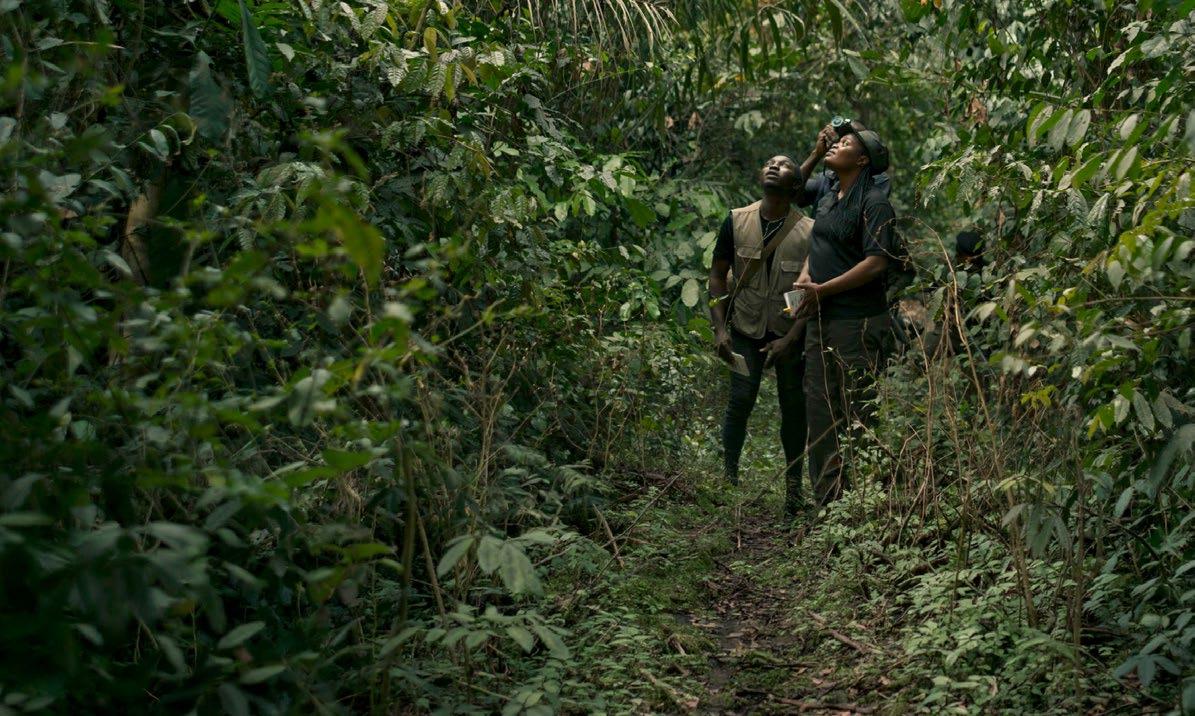

Founder and Director
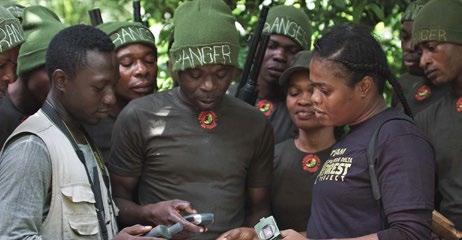
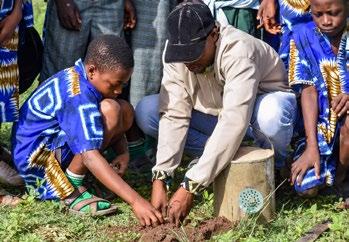
SW/Niger Delta Forest Project, Nigeria
Once you’ve seen a forest emptied of species very quickly, you stop asking “who is responsible for conserving it?” and start asking “how fast can I act.”
Rachel Ikemeh
An interview with Rachel, of SW/Niger Delta Forest Project and 2021 Tusk Award finalist.
Tell us a bit more about the SW/Niger Delta Forest Project
We are driven by a three-fold mission: provide the conservation solutions that will ensure the survival of threatened species and habitats; build local capacities for actions to be sustained; become a resource hub to increase public participation in conservation.
Our work has helped to bring back the critically endangered Niger Delta red colobus monkeys from the brink of extinction and has increased the protection of other wildlife and habitats through the establishment of protected areas.
Since 2012, we have been pioneering conservation actions amid the harsh realities of widespread biodiversity loss, insecurity, and in landscapes overlapping regions with extremely high human population densities – at the intersection of social, economic, political and ecological challenges.
What makes the chimpanzee populations where you operate so special?
Preliminary genetic research has shown that chimpanzee populations in south west Nigeria are distinct from other known chimpanzee subspecies. These populations have been isolated for many years, mostly due to biogeographical factors, resulting in unique genetic traits now found nowhere else on Earth. In some sites, such as Ise Forest, a single remaining population survives, making protection of these forests critical for preserving this previously undocumented chimpanzee lineage.
What other primates are also under threat or important to the forest environment?
In addition to chimpanzees, the project works to protect several threatened primate species, most notably the critically endangered Niger Delta red colobus monkey, which has been brought back from the brink of local extinction through sustained conservation intervention.
What are your most ground-breaking discoveries over the past few years?
One of the most emotional moments for my team and I was capturing the first ever footage of a chimpanzee, foraging in the Ise Forest Conservation Area. It came after years of hard protection work and confirmed what we were fighting for. During the same time, we also captured the first-ever footage of the Niger Delta red colobus monkey since its discovery.
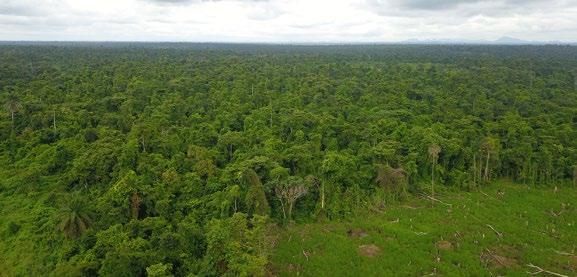
Any other success stories you would like to share?
A major hallmark of our work has been bringing tangible, community-led conservation to one of the world’s most vital carbon sinks, a landscape that is arguably the most neglected on the planet. By establishing a physical presence where there was previously none, we have successfully secured critical habitat and ensured active, positive management.
Our "boots-on-the-ground" approach is rigorous, representing a fundamental shift in the region's trajectory. Where there was once unchecked exploitation, there is now a strong team of indigenous people who are rangers, biomonitoring specialists, and conservation managers ensuring that these forests remain standing.
We are proving that even in Africa’s most populous nation, where human and ecological needs are in constant tension, it is possible to create a future where both can thrive.
What does Tusk’s support mean to your project?
In a field where funding often fluctuates, few organisations share our conviction that lasting impact requires a constant "boots-on-the-ground" presence. Tusk understands that the backbone of conservation is the people protecting it, which is why they prioritise the role and welfare of rangers. Their partnership helps us maintain the absolute consistency required to keep forests standing; in conservation, consistency is everything.
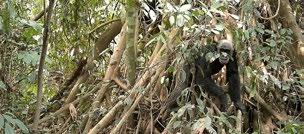
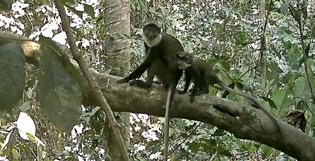
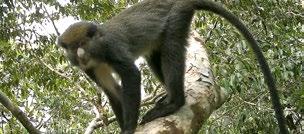
SW/Niger Delta Forest Project in Numbers
Threatened species positively impacted: 18
Area of increased protection: 14,430 acres over 4 protected areas
Local jobs created (full and part-time): 186
321 community members upskilled
21,900 local youths engaged in conservation education
5,197 households with improved socio-economic benefits
The Niger Delta is home to the second-largest swamp forest in Africa and the third-largest contiguous mangrove system in the world
Main image
Rachel Ikemeh from SW/ Niger Delta Forest Project walking with her team in the forest
Left insert image
Rachel and rangers observing camera trap footage
Top Left
Conservation education through tree planting
Bottom left image
Ise forest with deforestation in the foreground
Camera trap images
Top left: Chimpanzee
Top right: Putty nosed monkey
Bottom left: White-throated guenon
Bottom right: Red colobus monkey

Whether you’re already going global or you’re just beginning your export journey, we can support you.
Find out how DHL Express can deliver for you at dhlguide.co.uk or call us on 01332 828402.
Remembering Dr Iain Douglas-Hamilton CBE (1942 – 2025)
Last December, the conservation world lost a legend: Dr Iain DouglasHamilton, the renowned Scottish zoologist and elephant conservationist who sadly passed away at the age of 83.
He was also one of Tusk’s earliest ambassadors, helping guide our initial conservation strategy and undertaking a number of lectures in support of our efforts.
Iain began his career in the 1960’s, researching elephant social behaviour in Tanzania’s Lake Manyara National Park. He referred to that time as “a golden age for elephants”. While investigating the status of elephants throughout Africa, he was among the first to alert the world to the poaching crisis, documenting the destruction of over half of Africa’s elephants in a single decade. This led to the crucial decision by CITES to ban the international trade in ivory in 1989. Subsequently his sciencebased advocacy for stronger protections played a key role in getting domestic markets for ivory closed, most importantly China’s in 2018.
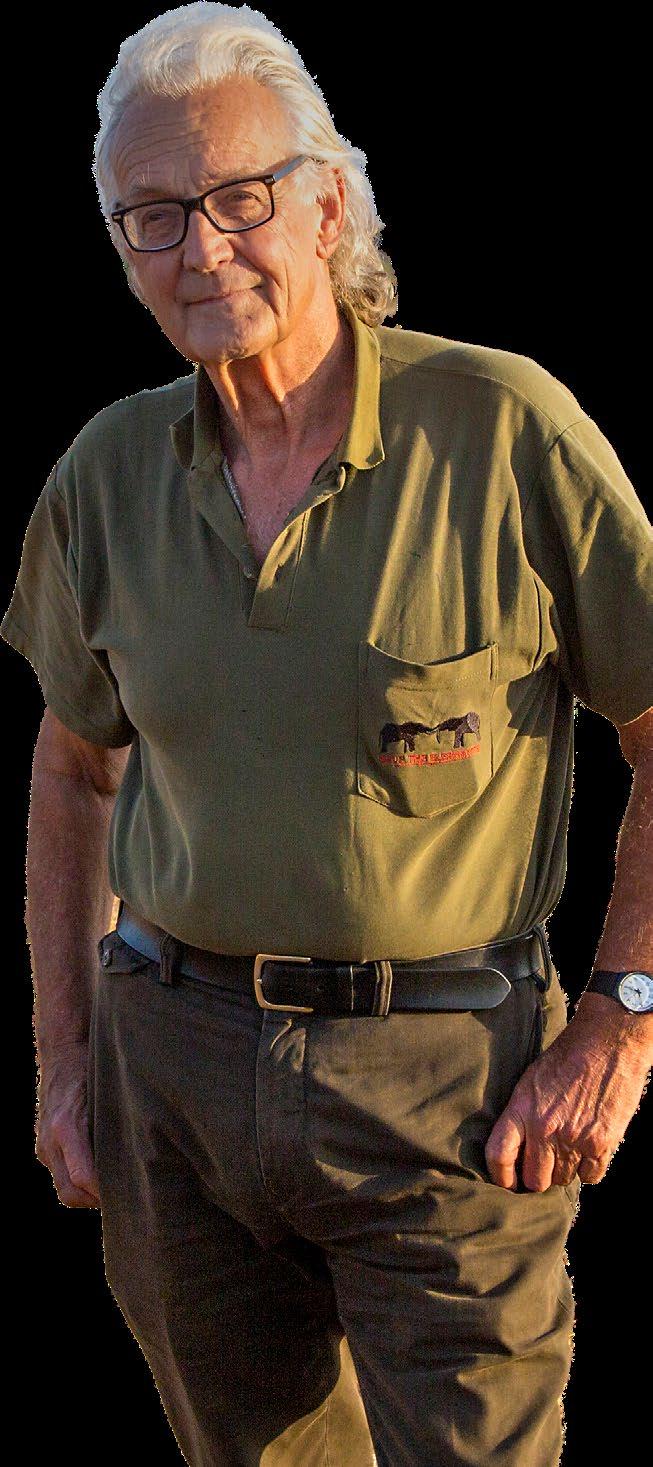
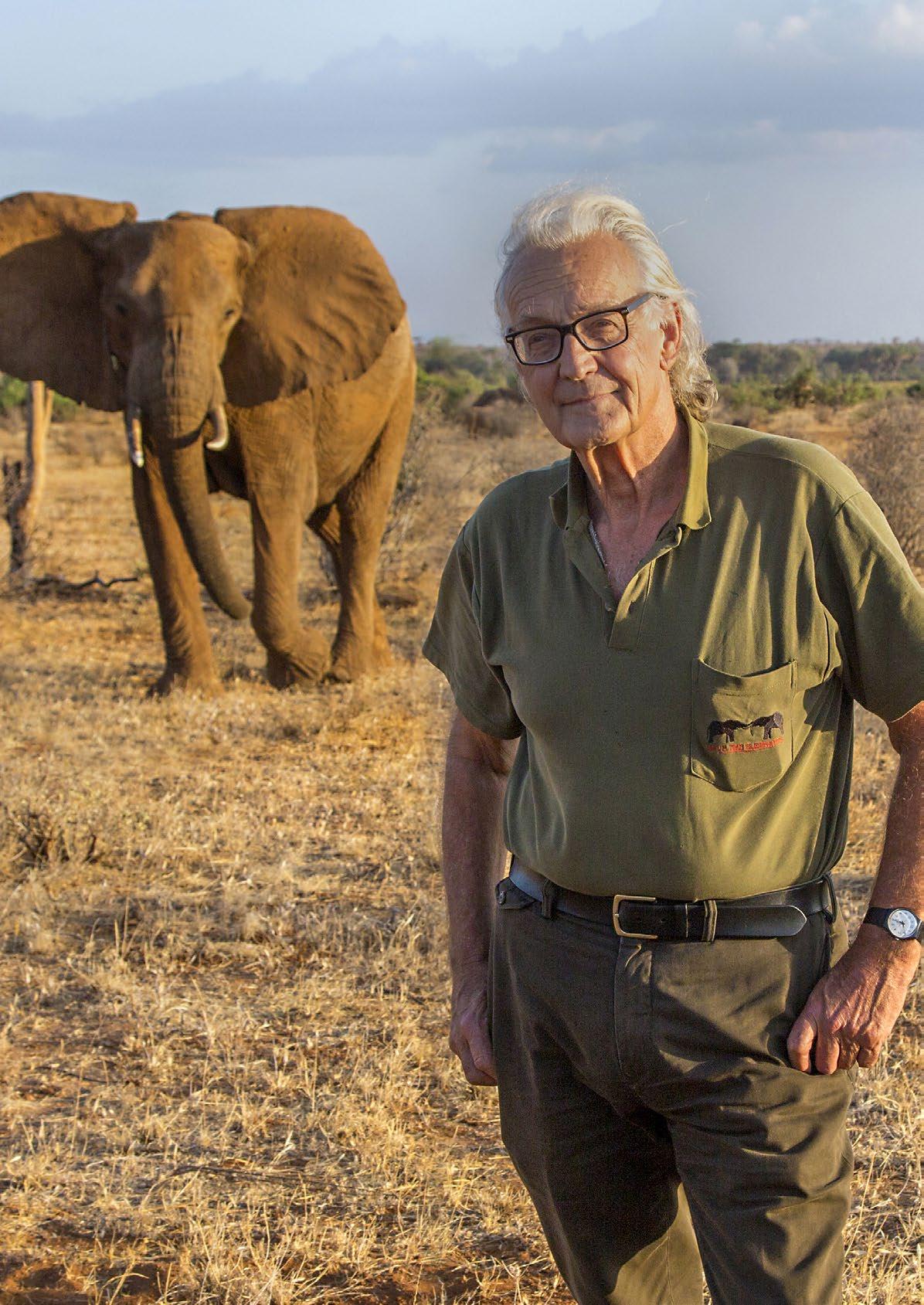
“Iain’s passion for elephants was infectious, and I feel immensely fortunate to have enjoyed some memorable moments flying with him and having the privilege of sitting with him amongst the elephants of Samburu where he seemed to know every individual by name. His passing is a huge loss to Africa and the conservation community, but his legacy lives on through the team he has built and inspired at Save the Elephants.
Charlie Mayhew OBE Tusk President & CEO
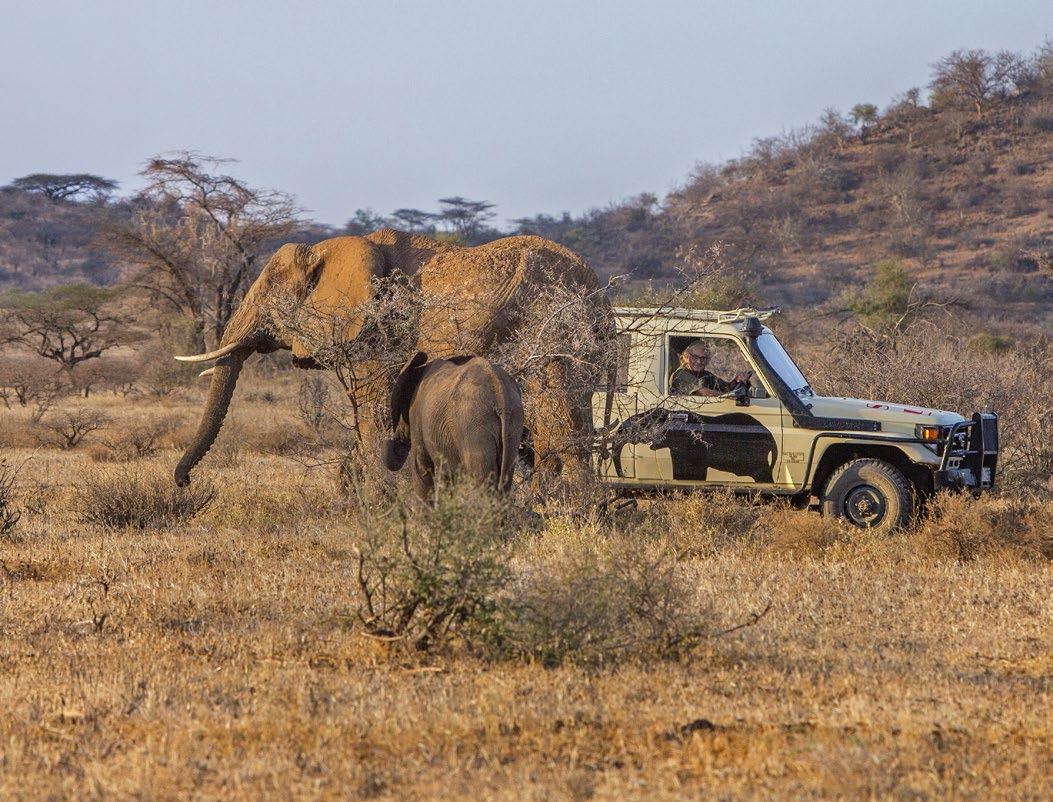
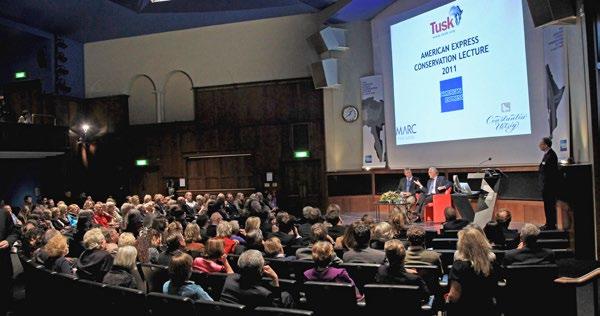
Iain revolutionised our understanding of African elephants through his groundbreaking research, pioneering the first scientific study of the social behaviour of wild elephants. In 1993, Iain founded his Kenyan based organisation, Save the Elephants, to help deepen our understanding of their intelligence, protecting their wild habitats, and promoting a peaceful coexistence between people and elephants.
As a Tusk Ambassador, together with Tico McNutt of the Botswana Predator Conservation Trust, Iain delivered the 2011 Tusk Conservation Lecture on how technology was transforming wildlife conservation in Africa. His innovative use of GPS tracking technology and aerial survey techniques transformed elephant monitoring and protection strategies, becoming standard practices in wildlife conservation and helping to reduce conflict with communities; work that continues to this day.
In May 2014, Iain presented the second Christie’s Conservation Lecture in aid of Tusk. Speaking to a packed audience, Iain spoke on the theme of “Hope for Elephants in a Time of Danger”.
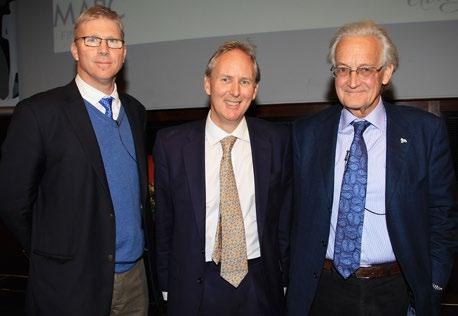
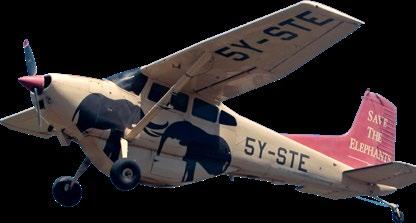
Main image
Dr Iain Douglas-Hamilton
Credit:GeorginaGoodwin
Above top
Iain observing a mother and calf African elephant
Credit:GeorginaGoodwin
Bottom left
Iain presenting at the Tusk Conservation Lecture 2011 at the Royal Geographical Society
Bottom right
Iain with Tico McNutt and Charlie Mayhew at the Tusk Conservation Lecture 2011
Insert
Save The Elephants biplane
The evening raised funds to provide more GPS tracking collars for the elephants of northern Kenya, and in memory of the famous giant tusker, ‘Mountain Bull’, who had been killed earlier that month.
Iain and his wife Oria co-authored two awardwinning books, Among the Elephants (1975) and Battle for the Elephants (1992) and his work was the subject of many television documentaries including The Secret Life of Elephants (2008) and a recent feature documentary A Life Among Elephants (2024).
Iain’s impact and achievements earned him many awards and accolades, including a CBE from Queen Elizabeth II in 2015. Iain’s depth of knowledge and experience with elephants was second to none. He was never happier than when sitting in the African bush with a young scientist studying maps of elephant tracks, speculating together about what might be going on in the creature’s mind.
Iain will be greatly missed, but his legacy and contribution to conservation will live on for generations to come.

Penny Fraser PACE Co-ordinator
Pan African Conservation
an African Conservation Education (PACE) is Tusk’s own, in-house education programme.
Free of charge to educators across the whole of Africa, it contains a multimedia educational pack.
Penny Fraser, who has worked as the PACE Coordinator for the last 10 years, tells us about how she became involved in PACE, and what it means to her:
What is your role and how did you get involved in PACE?
From the early 1990s until 2017 I lived in Cameroon. I worked in the arid north, tropical forest and savanna areas, helping communities, authorities and landowners to source seed, make tree nurseries, and organise growing and cultivation of trees. This involved a lot of education and training, and the PACE materials were always massively popular.
Tusk enabled us to design and run environmental education courses in universities, long running inservice training for teachers, environmental camps for kids and conservation farming training for very remote communities.
I took on the role at PACE in 2016, and I organise production and distribution of educational materials and work closely with Tusk partners to create new resources (books, films, action sheets) on wildlife and conservation issues as well as other topics requested.
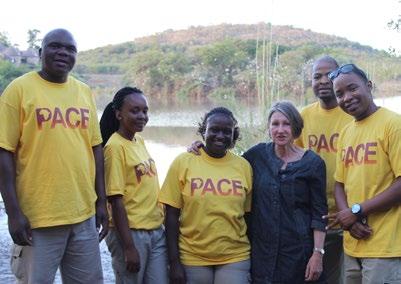
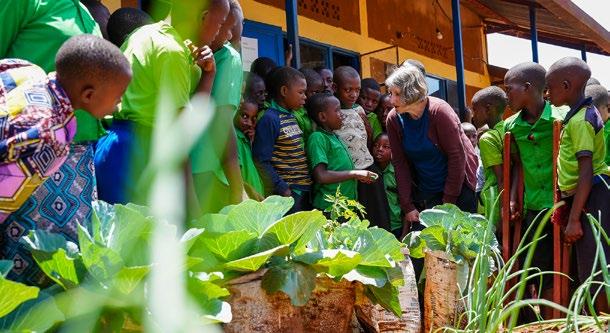


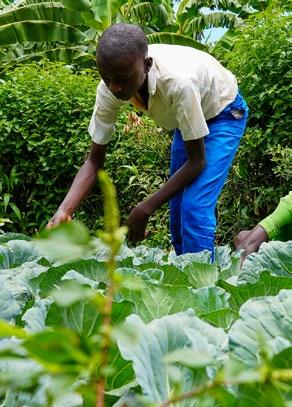
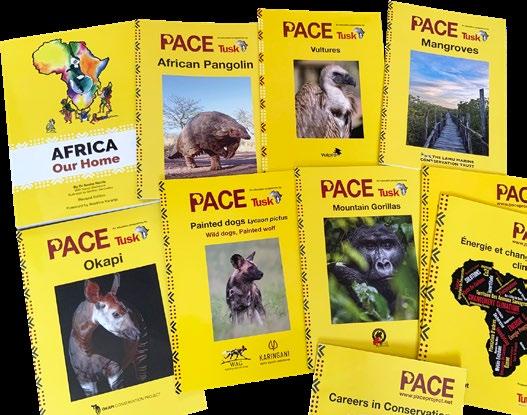
What makes PACE so special and unique?
PACE is uniquely positioned within the Tusk portfolio, the only project directly created and managed by Tusk. The educational materials are co-created with frontline conservation researchers and practitioners from Tusk partner projects.
We provide high quality educational material to some of the most remote areas and communities. We provide information on actions people can take in their contexts, at their level. Our species and habitat booklets provide fantastic images and interesting information that people in these areas rarely have access to, helping kids really understand and appreciate their natural heritage.
PACE is positive: we celebrate nature and provide solutions, not reprimands.
PACE is simple: we use tried and tested methods and approaches.
PACE is local: it provides useful content on local African issues.
Memorable moments from seeing PACE being used first-hand:
When I went to collect books from a large printing company in Nairobi, a lady came over and said she liked the one on bats the best; she’d learned so much and realised how fascinating they were. She had never liked bats before. In urban areas bats are persecuted terribly; I was so happy we’d changed someone’s attitude.
After a teacher in Cameroon used our action sheets to run a practical on improved cook stoves for her students, three of the boys started a small business, building improved cook stoves for all their neighbours.

PACE intervention is supporting the longterm reduction in wildlife crime around Hwange National Park in Zimbabwe as the consequences for poaching are better understood and communities adopt human-wildlife-conflict solutions (such as growing chillis).
Anew PACE booklet on okapi, completed a 7,000km journey at the end of last year to reach communities supported by the Okapi Conservation Project (OCP) in north-east Democratic Republic of Congo (DRC).
Developed as a collaboration between PACE and OCP for people living within the okapi’s forest range, the resource uses photos, science and facts to celebrate one of Africa’s most elusive mammals. The okapi, a shy, forest-dwelling species endemic to the region is found nowhere else in the wild.
The delivery of 1,000 booklets marked the culmination of a complex logistical operation. After setting off from the UK and arriving at Kampala in Uganda, the materials were transported across the country, before crossing Lake Albert and into DRC. The journey involved remote, poor-quality roads and dense forest. After navigating challenging border crossings and a series of diversions due to regional insecurity, the booklets triumphantly arrived intact at the OCP headquarters in Ituri.

Originally conceived following discussions at the 2024 Tusk Symposium, the Okapi booklet has since attracted wider interest from other PACE partners, as educators are keen to talk about the little-known but charismatic species.
These books will be so encouraging to our communities as they don’t always realise the global importance of their forest and the wildlife. It makes them joyous and so proud to see their story in print.
Director of Conservation, Okapi Conservation Project
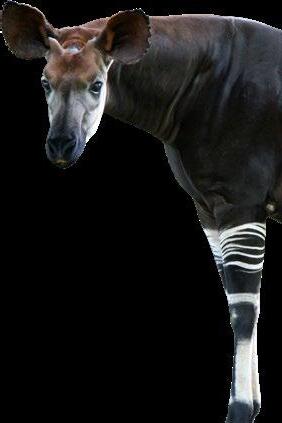
Spotlight on success stories from the Malilangwe Wildlife Reserve, Zimbabwe


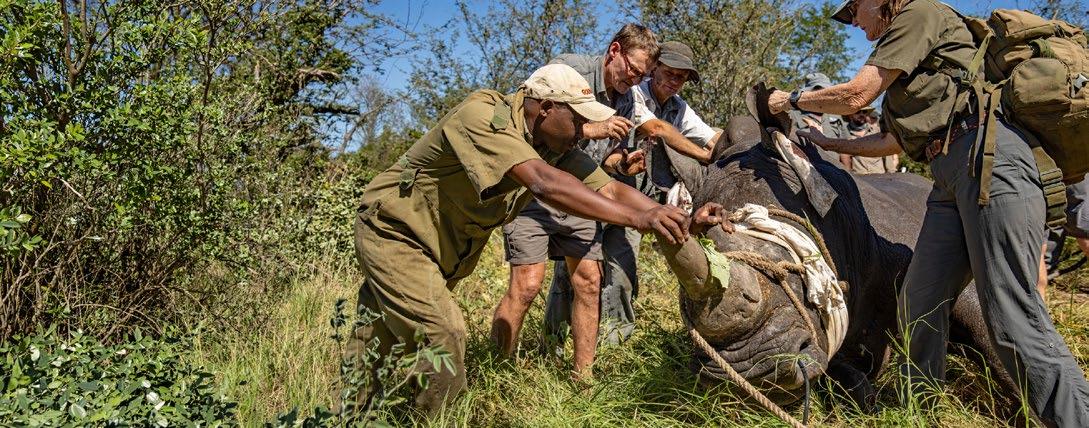
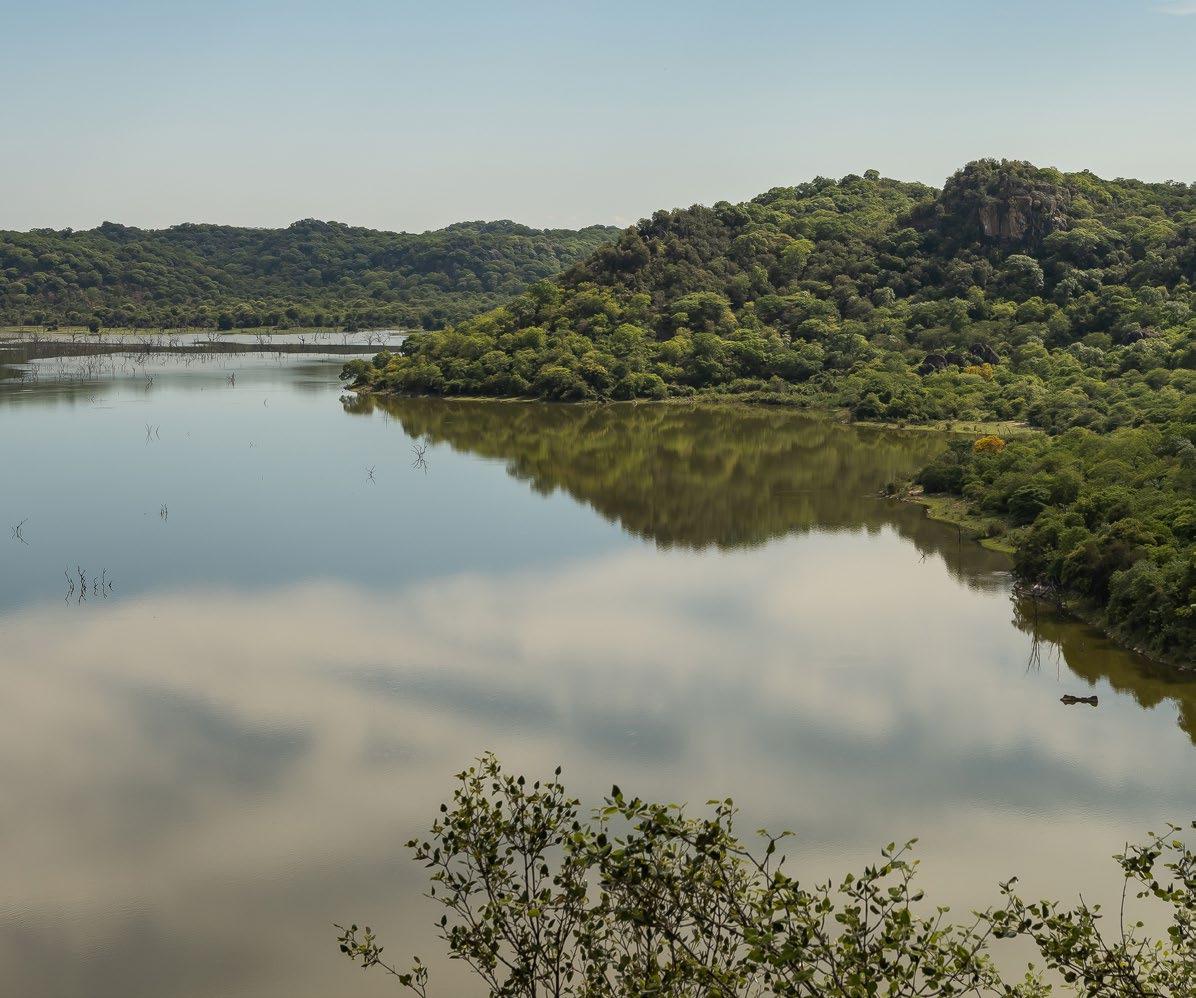
The Malilangwe Trust, Zimbabwe
We are a non profit organisation committed to biodiversity conservation and dedicated to uplifting the lives of people living around the Malilangwe Wildlife Reserve in southeastern Zimbabwe.
Since its establishment in 1994, the Trust has been devoted to restoring and preserving the reserve’s historic ecosystems, protecting endangered species, and advancing ecological research through science based conservation. Together, the reserve’s 38 distinct habitats sustain a rich array of insect, amphibian, reptile, mammal and bird species. It is home to thriving populations of both black and white rhino as well as elephant, buffalo, lion, leopard, hyena and wild dog. Alongside these iconic species is an abundance of smaller life forms including 331 bird species. One of the reserve’s defining ecological features is the Malilangwe Dam, a vital freshwater system that supports several fish species, including the renowned tigerfish, as well as healthy populations of hippo, crocodile and a vast array of water birds.
Main image
Malilangwe Dam
Credit:EmmaJackson
Insert image
White Rhino translocation
Credit:JennyHishin
Right images top to bottom
Junior rangers doing a training run in the forest
Malilangwe canine unit on patrol
Maliangwe Trust team loading a white rhino to relocate to Gonarezhou
National Park
Black rhino
Allimagecredits:Jenny Hishin
This diversity is the product of over three decades of patient ecosystem restoration guided by sciencebased management. By maintaining natural processes, rehabilitating degraded areas and managing wildlife populations sustainably, the reserve continues to function as a healthy ecosystem.
The Trust is led by our Executive Director, Mark Saunders, who has been with the organisation for more than 15 years. He is deeply committed to building strong relationships - not only within the boundaries of Malilangwe, but also with neighbouring communities and conservation partners. He believes that living in the natural world is a constant source of inspiration and being able to contribute meaningfully to its protection is both a privilege and a responsibility.
A cornerstone of Malilangwe’s community engagement is its commitment to local employment, recruited from the surrounding communities. Many become the eyes and ears beyond its boundaries, strengthening both security and community relations.
The Trust’s conservation work is complemented by our dedicated team of scouts, whose daily anti-poaching patrols and biological monitoring provide essential ecological data which feeds into a comprehensive animal database. Our scouts’ participation in the Wildlife Ranger Challenge has enhanced team capacity and supported the establishment of the reserve’s first canine unit.
One of our most notable contributions to national conservation has been our role in rhino translocation. Black and white rhino populations have continued to grow steadily. In 2025, we partnered with the Gonarezhou Conservation Trust to translocate 30 white rhinos, returning the species to Gonarezhou National Park for the first time since the early 1900’s. This initiative builds on an earlier milestone - the reintroduction of black rhinos to Gonarezhou in 2021. This forms part of our long-term strategy to establish viable rhino populations across Zimbabwe.
While continued growth of rhino populations represents a significant conservation success, it is also one of the Trust’s greatest challenges. Ensuring the species’ safety across new sites depends on organisations that can fund, protect and manage rhino populations through coordinated security strategies, well-trained anti-poaching teams and sustained financial support.
Tusk has been integral in strengthening our Junior Ranger Programme - an initiative launched in 2018, that provides life-skills training while nurturing the next generation of conservationists. It is one of the programmes our team is especially proud of. Through the programme, boys from neighbouring communities are mentored by our scouts and instructors and gain exposure to conservation education, wildlife protection, cultural heritage, and environmental sustainability. The programme inspires participants to value the environment and fosters a strong sense of responsibility both at home and within their communities. After graduation, this commitment is further strengthened when junior rangers and their scout mentors work together to build a house for an underprivileged family in the community.
Looking ahead, our future lies in strengthening and expanding protection, monitoring and long-term wildlife management, while continuing to empower the next generation.
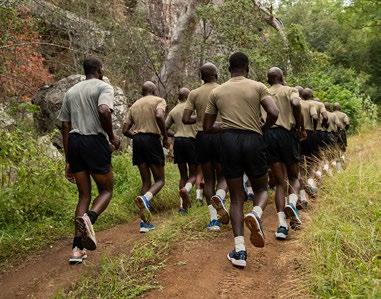
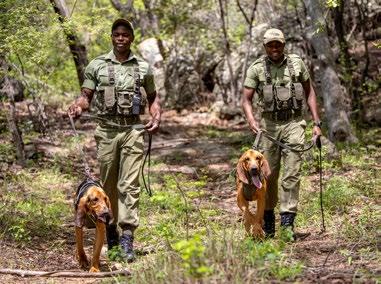
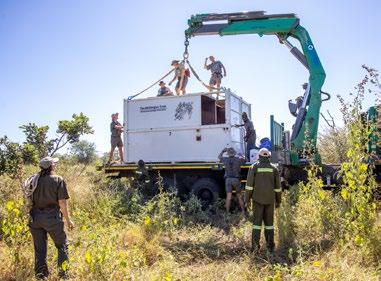
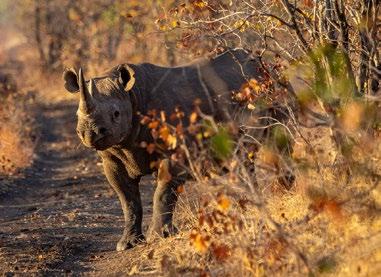
The Malilangwe Trust at a glance
Size of Malilangwe Wildlife Reserve: 50,000ha
Number of scouts protecting the reserve: 111
Black and white rhino populations: increased tenfold since 1998
The Reserve: home to 536 species of animals and 1,043 species of plants

Deborah Meaden Businesswoman, investor and Tusk ambassador
The private sector has a vital role to play in conservation. Businesses bring innovation, investment, and scalability. Ecotourism, innovative finance and tech innovations are all powerful tools that, when aligned with conservation expertise, can drive meaningful and lasting environmental impact.
Deborah Meaden
We recently interviewed Deborah about her journey from discovering Tusk in 2010 to becoming an Ambassador and Trustee from 2016-2025.
How and why did you become involved in Tusk?
I was introduced to Tusk through a mutual connection who felt Tusk would be a strong fit for me –an organisation delivering meaningful, tangible impact on the ground through community engagement and best-in-class local partnerships. They were absolutely right!
What moments or achievements stand out?
Tusk, through its partners, makes a difference every single day — for both wildlife and the communities living alongside it. Three initiatives, in particular, have been transformative: the Tusk Conservation Symposium, which brings partners together to collaborate and share expertise; the Tusk Conservation Awards, which shine a light on extraordinary conservationists; and the Ranger Welfare and Standards Initiative programme, which provides vital protection for the families of rangers risking their lives on the frontline of wildlife protection.
What aspects of Tusk’s work are you most passionate about championing?
What I most admire about Tusk is its recognition of the interconnectedness of conservation. To be effective, conservation must be approached holistically. It’s difficult to single out one area, but tackling poaching, wildlife trafficking, and human-wildlife conflict remains a strong personal driver for me.
How has your perspective on African conservation evolved through your involvement with Tusk?
Africa is on the frontline of climate change, and its impacts on people, wildlife, and ecosystems have been felt for years. Effective conservation depends on protecting habitats for both communities and wildlife. Tusk has helped me better understand the complexity and urgency of achieving this balance.
From your visits to Tusk’s project partners, are there any moments that have stayed with you and driven you on to do more?
It is impossible to single out one defining moment from my visits. Seeing my first cheetahs at Lewa Wildlife Conservancy, tracking an injured elephant known as ‘Mountain Bull’ - who thankfully made a full recovery - or witnessing the extraordinary work of anti-poaching teams all stand out.
Main image
Young cheetah in Lewa
Credit:MargureiteSmiths vanOyen
Top
Deborah Meaden at the Tusk Conservation Awards 2025
Deborah at Lilongwe
Wildlife Centre in Kenya
Opposite page top
David Attenborough at the Tusk Conservation Awards
2016
Credit:GettyImages
Opposite page bottom
Lion at Longleat Safari Park
Credit:WillBurrardLucas
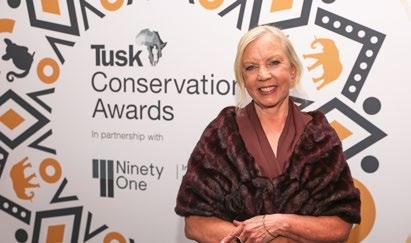
“Deborah’s longstanding contribution and commitment to Tusk as both a Trustee and ambassador has been phenomenal. As you would expect, Deborah’s acumen and extensive business experience has so often proved to be insightful as well as an invaluable support. As she continues in her ambassador role, we know that she will continue to champion the work of Tusk.

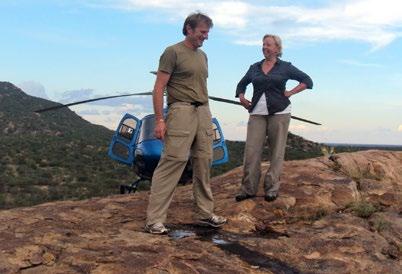
Charlie Mayhew OBE Tusk President & CEO
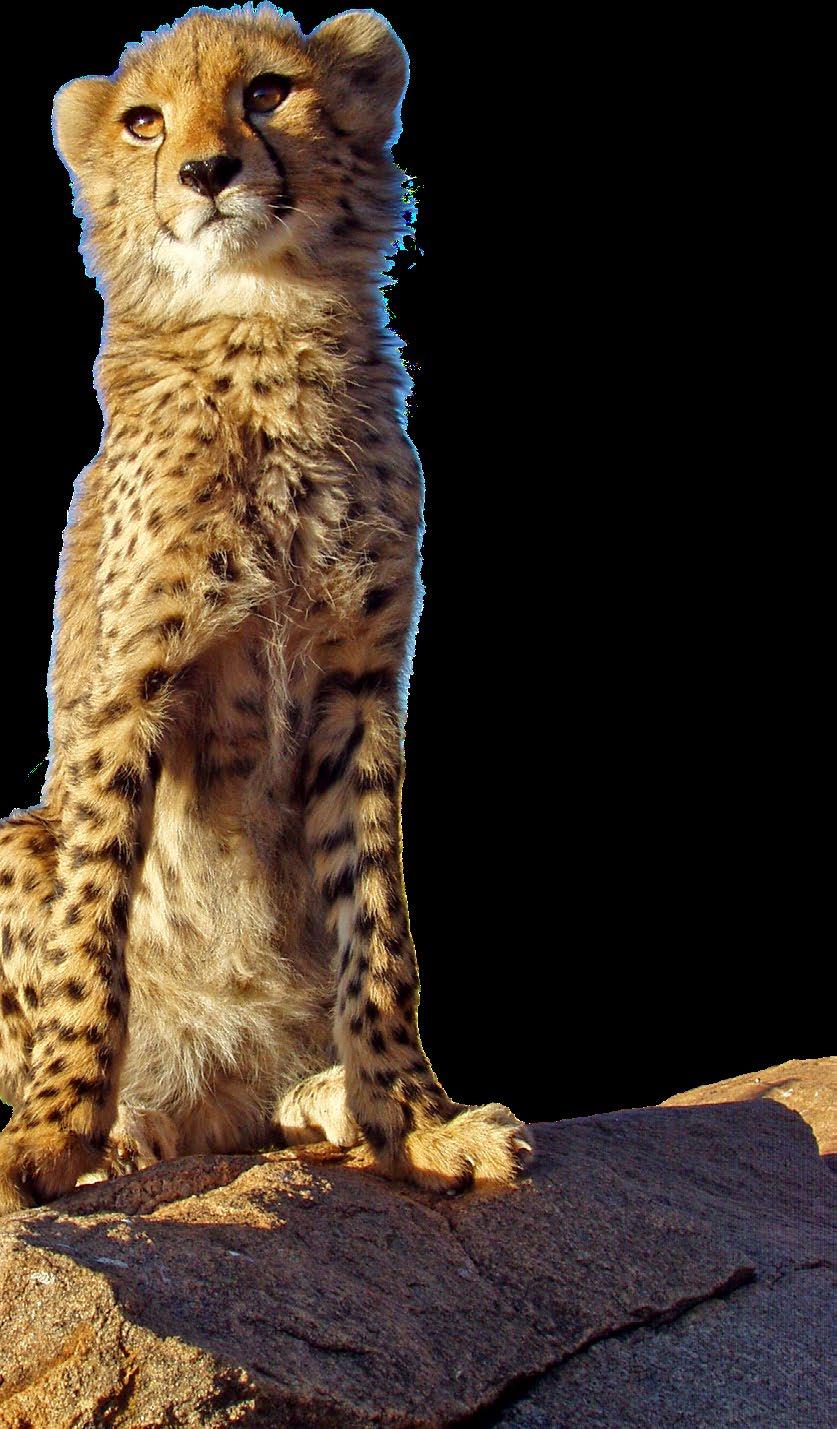
In May, we all celebrated Sir David Attenborough’s 100th birthday. His contribution to a global appreciation of the natural world has inspired not only the Tusk team but also many of our donors and supporters.
As we celebrate his milestone, we look back to the 2016 Tusk Conservation Awards, when Sir David joined Prince William on stage to honour the winners. The Prince also presented him a special award for his “immense contribution” to conservation. Caught by surprise, Sir David went on to deliver a powerful speech that received a standing ovation - an unforgettable moment in Tusk’s history.
Africa is on the front line of conservation. In Africa, people are getting killed in the name of conservation. It’s hard, it’s tough and the people who do it, who are represented here tonight are true heroes and heroines. What they are protecting is one of the great treasures of the world. …I am humbled to be in the same room as you from Africa, the nominees and winners.
Sir David Attenborough
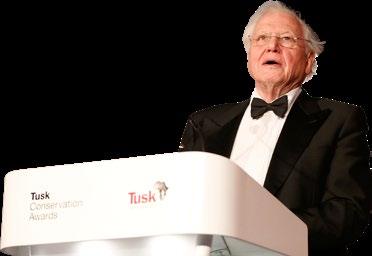
For more than 20 years, Tusk has been supported by Longleat, with their famous Safari Park celebrating 60 years throughout this year.
In 1966, the gates first opened to visitors who were able to see lions roaming the Wiltshire landscape from the comfort of their cars, in the first Drive-Through Safari to open outside of Africa.
It was a bold yet visionary move by the 6th Marquess of Bath and today his grandson, the 8th Marquess, continues to build on his legacy. Lady Bath is a Tusk Ambassador, and conservation is at the heart of what Longleat does, harnessing its unique platform to inspire change by blending its heritage and habitat to strengthen its commitment to conservation, sustainability and education. It has contributed more than £500,000 to support Tusk’s work since the partnership began in 2004, and several of the park’s keepers have witnessed and supported the frontline work of Tusk’s partners.
The park also ensures guests are informed about the work of Tusk at the start of its Safari in the painted dogs Look Out.
To mark the 60th anniversary, Longleat staff have been doing additional fundraising for Tusk, including running both the London Marathon and Lewa Safari Marathon.
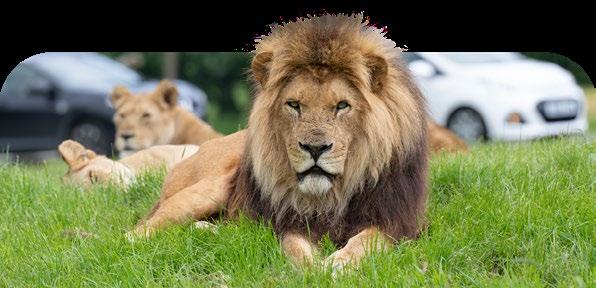
Credit: Jo Taylor

Gbenga Akinnagbe Actor, writer and Tusk ambassador
We caught up with one of Tusk’s newest Ambassadors, Nigerian-American actor, Gbenga Akinnagbe. Best known for his acclaimed work in film and television, he is also an activist with a strong interest in social and environmental issues.
How and why did you become involved in Tusk?
I became an ambassador after being invited to the Tusk Conservation Awards in 2024 by my good friend and Tusk Trustee, Beatrice Karanja. I was inspired by the stories that were shared. I was also invited to another Tusk event in New York, held for fellow Tusk Ambassador, David Yarrow.
At both events, I was fortunate to meet many dedicated members of the Tusk team, as well as passionate supporters.
What stands out to me most is the charity’s approach. Tusk understands there is no one-size-fits-all solution. They take the time to understand each programme and trust the people on the ground to apply resources where they are most needed.
Have you visited any of Tusk’s project partners?
In February last year, through speaking with Bea, I arranged a visit to the Rwanda Wildlife Conservation Association and met their founder and CEO, Olivier Nsengimana.
One memory that stands out is visiting Olivier’s crane sanctuary just outside of Kigali. The work he has done to save injured birds and restore their population is moving, and emblematic of how many conservation solutions already exist on the ground; repairing the relationship between wildlife, land and humans.
While travelling last year, I also visited Tusk projects in Kenya, including the Mara Elephant Project and Lewa, and, as someone with West African roots, I didn’t expect to feel such a strong connection to East Africa. More recently, I attended the Tusk Conservation Symposium in Zimbabwe to meet and learn from some of Tusk’s partners. I’m hungry for more knowledge, and the people I met at the Symposium really inspired me.
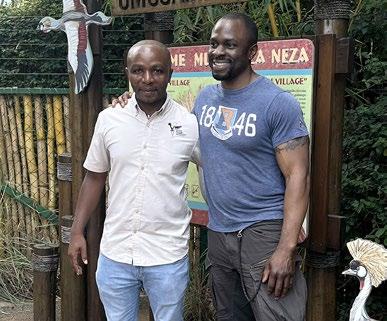

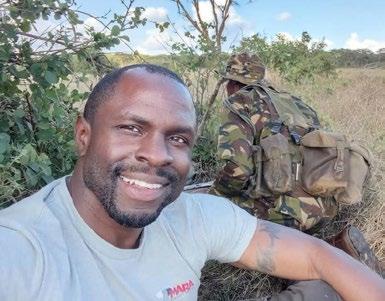
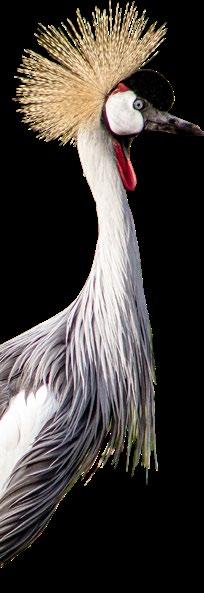
Why is the work of charities like Tusk so important for conservation in Africa?
African conservation provides vital ecological and economic value to the world. Between resource extraction by international conglomerates and global dependence on African assets, it is imperative that conservation efforts continue to preserve wildlife, waterways and landscapes. All of which help sustain life and clean air worldwide. Where Africa goes, so goes the planet.
Last year, I took part in the Wildlife Ranger Challenge training challenges and saw firsthand how daunting, yet rewarding, their work is.
Gbenga Akinnagbe
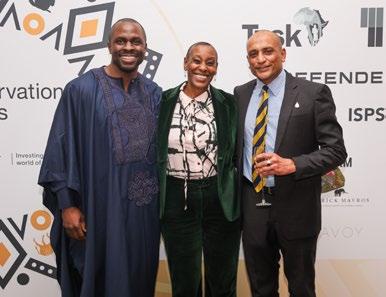
Left Grey crowned crane
Top to bottom
Gbenga with RWCA founder & CEO Olivier Nsengimana
Visiting RWCAs’s laboratory
Credits:RWCA
Joining a ranger patrol at the Lewa Wildlife Conservancy
Gbenga at the 2025 Tusk Conservation Awards with Beatrice Karanja and Mo Shah
Over the past year, the Tusk team has grown to 24, with several new people joining the charity, alongside many familiar faces - some of which you may know already.
Here we share some short reflections from a few members of the team.

Adele Emmett
, Head of Corporate Partnerships & Events
What are you most proud of after 20 years working at Tusk?
It’s been fantastic to work at Tusk for 20 years. Back in 2006 I was just the fourth team member to join and my role was much more about daily admin than organising big events and developing partnership like it is now. I’m really proud of the fact that the Tusk Awards, Tusk Symposium, Lewa Safari Marathon and sculpture trails have all developed as well as they have and am very much looking forward to returning to the Tusk Gala format at Longleat House this September and in New York in December.

Magdaline Marucha, Conservation Partnerships Officer
What conservationist do you find the most inspirational?
David Attenborough has been a lifelong inspiration since my teenage years. His documentaries, particularly ‘The Year Earth Changed’, post Covid-19 pandemic, have been incredibly impactful. I find him most inspirational because of his dedication to conservation and ability to educate and captivate audiences worldwide, highlighting the urgent need for environmental action.

Winfred Nduati, Conservation Partnerships Manager
What projects do you find the most inspirational?
Across Tusk’s 79 supported projects, it’s difficult to single out one because each plays a vital role on both conservation and community development. However, the Mali Elephant Landscapes (MEL) project stands out for its work in one of Africa’s most fragile regions, heavily impacted by climate change and insecurity. By engaging local youth and communities to protect elephant corridors, MEL safeguards one of Africa’s last desert elephant populations while empowering young people to lead conservation and build resilience for the future.

Beth Crame, Fundraising & Office Assistant
What projects do you find the most inspirational?
Two of my favourite project partners are Lion Landscapes and VulPro. For Lion Landscapes, I love that they created a points system to reward communities for images of carnivores captured on their camera traps. This initiative has created a shift in attitudes towards large carnivores, which could otherwise be persecuted in retaliatory killings. Vulpro because they rescue, rehabilitate and bring important awareness to stunning vultures, who are absolutely crucial to a healthy ecosystem.
PURVEYOR OF FINE WINES & SPIRITS SINCE 1749
justerinis.com
Together we can do even more to advance conservation in Africa
Tusk's Patrons’ Circle is a group of committed supporters who generously donate at least £1000/$1500 a year, providing essential funding for the Tusk Conservation Fund.
As a member, you will join a community of likeminded people who are passionate about Africa, wildlife and conservation, and who want to feel a greater connection to the cause.
Depending on your level of giving and how much you’d like to hear from us, the Patrons’ Circle enables members to see the impact of their generosity through a range of dedicated communications and special events, with first-hand updates from our project partners in the field.
Last year, we hosted virtual calls with Tusk project partners, including Wild Impact, The Pangolin Project, MJUMITA, and a fascinating discussion about the illegal wildlife trade and the rangering profession, with Dr Richard Milburn, Precious Malapane and James Sumari.
This year, alongside calls and in-person receptions with various project partners, we have also launched a brand new and exclusive Patrons’ Circle members’ area on our website, which will be a hub for Patrons’ Circle information, project calls and upcoming events!
Collectively, the Patrons’ Circle provides significant and – importantly – sustained annual income that contributes directly to the broad portfolio of project partners that we support across Africa. Being a Patron isn’t just about supporting the crises now, but investing firmly in the future.

Find out more
Interested about the Patrons’ Circle? Please contact Jemma Chambers jemma@tusk.org or Susie Coreth susie@tusk.org
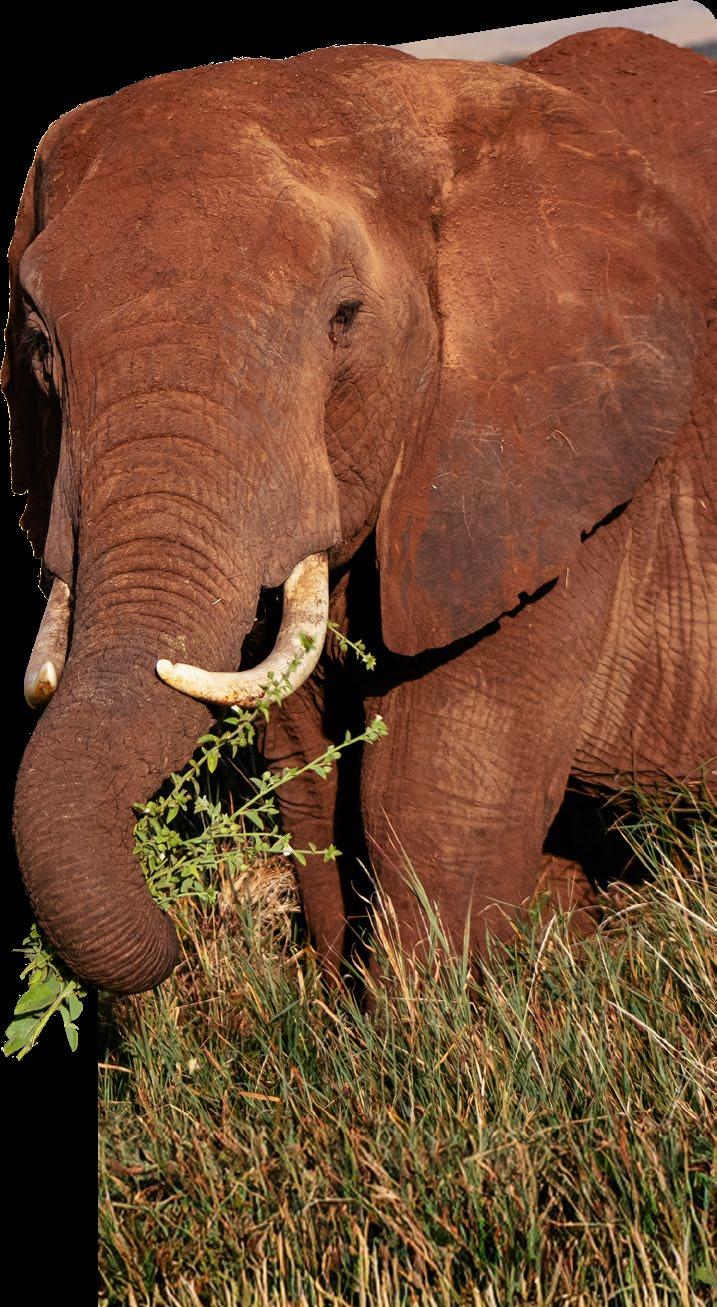
“
Through being a member of the Patrons' Circle, I see the impact that Tusk has had on the ground. It is also very refreshing to see the support and optimism of other like-minded people. I am incredibly proud to support Tusk.
Welcoming young professionals to an initiative where we hope to grow the future of conservation philanthropy. Tusk Next Gen works with a committee who organise fun and social fundraising events for the next generation of Tusk supporters.
2026 marks a new era for our next generation initiative, moving from Generation Tusk to Tusk Next Gen!
Why? We feel it connects more to both Tusk and the audience we are looking to engage with it. So, if you know any young philanthropists in their 20s and 30s who’d like to become part of an exciting Next Gen movement, please send them our way!
We’ve recently welcomed two new committee members (hooray to Sanjna and Charlie!) and have a plethora of events lined up for the year, including pub quizzes, singles safaris, padel tournaments and a comedy night.
The 2025 padel tournament, hosted at The Padel Yard, was a highlight of last year’s calendar, bringing together new and old next gen supporters for a tantalisingly competitive evening. Similarly, our Pub Quiz: Winter Edition was a sell-out event, helping to raise over £1,000 for our Christmas Big Give campaign!
In addition to a packed programme of activities, we’ve also launched a Next Gen Regular Giving programme, encouraging young people to start giving regularly to charity and see the huge impact that their continuous and consistent support can have. Regular giving truly is the lifeblood of conservation, and for as little as the cost of one coffee a month, you can make a genuine difference.
The Committee
The committee is fronted by Gwen Audran, Camille Barton, Charlie Bay, Sanjna Jain, Louisa MacDonald, Athene St John, Anna Stenning, Ellie Stoneham, Abe Unwin and James Webb.
To find out more about Tusk Next Gen and how to get involved, please contact Susie Coreth at susie@tusk.org or follow the Instagram page @tusk_next_gen
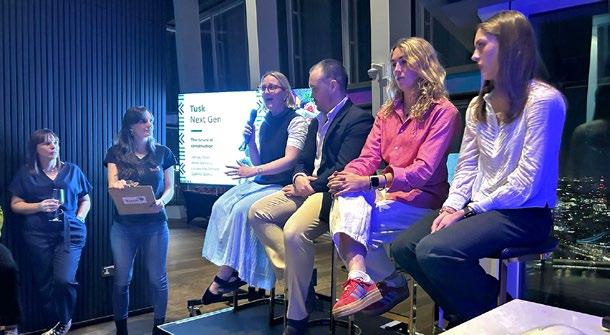
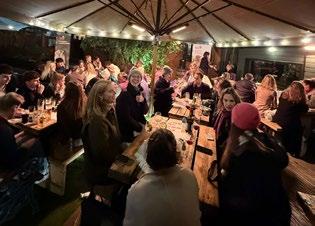









Make a difference with Tusk
By supporting Tusk, you can make an even greater difference for Africa’s wildlife, natural habitats and people.
Use the donation form at the back to send a cheque, visit tusk.org or use the QR code to donate online: Please Donate Now

For American supporters wishing to donate in the most tax-efficient way you can choose to support our work through ‘The Friends of Tusk’ – a donor advised fund administered on behalf of Tusk by CAF America. Gifts made here are tax deductible in the US (CAF America Tax ID 43-1634280). Donate online at tusk.org or contact our US Philanthropy Officer, Lauren Davis at lauren@tusk.org for more information or a gift form.
Tusk accepts over 100 different cryptocurrencies through The Giving Block, the most environmentally friendly crypto-donation platform on the planet. To find out how you can make a safe and easy crypto-donation, visit tusk.org/crypto
Tusk fundraising quiz
Right Jasmine completing her fundraising
Tusk’s work would not be possible without the funds raised through the amazing energy and enthusiasm of our supporters. Whether taking on a challenge, creating your own event, fundraising alone, or with friends or colleagues, we’re here to support your efforts. Contact beth@tusk.org for your fundraising pack or for more ideas and advice.


Meet Jasmine, a passionate young conservationist, who teamed up with Tusk to make a difference. Jasmine sold handmade jewellery, walked 8.5 miles and raised over £400 to help protect her favourite animal - rhinos!
Jasmine caught up with us to explain her inspiration behind her fundraising: "I knew I wanted to raise money for rhinos so I wrote toSteveBackshall.Headvisedfor metosupportTuskTrust."
Thank you Jasmine for your support and dedication!


Every donation we receive makes a huge difference to our work, but gifts left in Wills are particularly special to us, as we know that such a gift comes from someone who cared deeply about our mission to protect Africa’s wildlife. You can choose to leave a fixed sum or a percentage of your estate - a gift of just 1% can create a legacy of lasting impact. By choosing to leave a gift in your Will today, you help ensure vital conservation work continues to protect Africa’s wildlife for generations to come.
“I was so pleased to read that my legacy will go into the Tusk Foundation which secures the longterm future of the charity. This is my wish as I am so impressed with all that you do and I do know how essential your work is for the long term future of Africa which has meant so much to me in my life.
Andrew Harvie-Clark, Tusk Supporter
Top to bottom
Tusk Shop products with Teemill
Patrick Mavros Tusk Collection
Birchall’s Serengeti tea in support of Tusk
Honeysuckle & Rose mugs with Annabel Pope designs
Grant Macdonald x Rosamond
Lloyd Study of a Rhino & Calf
Check out our social media for the latest news and to help spread the word and be part of the conversation. Join our Digital Community
tusk.org @tusk_org tusk_org tuskcharity company/tusk-org
Buy something special and support our work at the same time. As well as offering a selection of Tusk items, we are also supported by many fantastic artists, designers and authors who donate a share of their profits to our work. tusk.org/shop




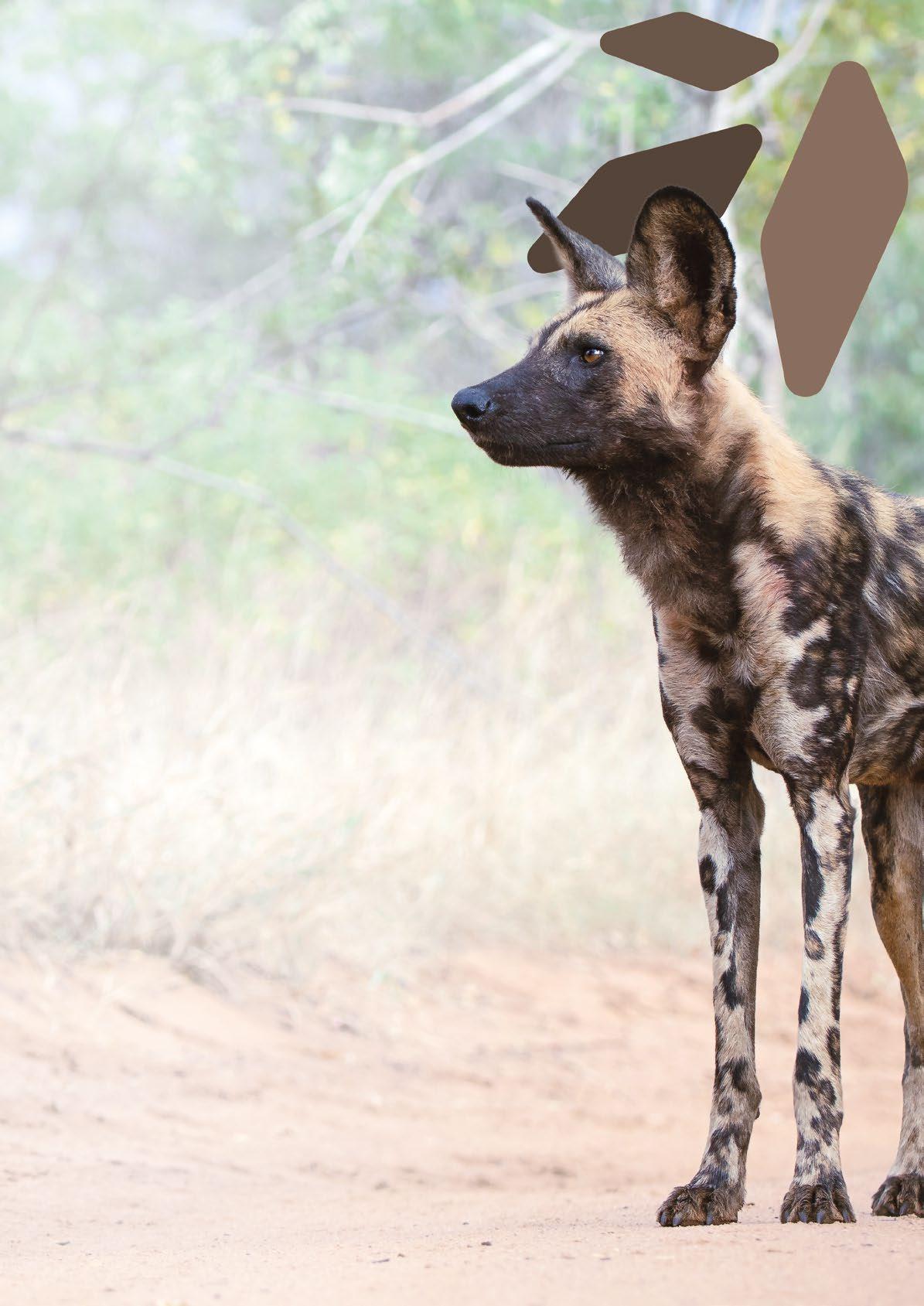
We are incredibly grateful to all our supporters, too numerous to mention here, whose donations have been critically important in supporting our work. We would like to thank the following for their particularly generous contributions and gifts in kind, without which, much of what we have achieved over the past year would not have been possible.
Companies & Institutions
A Nelson & Co., Accor, AMREF Flying Doctors, Art of London, Atlas Towers, Aviva, B2Gold Namibia, Birchall Tea, BlackRock, Bonhams, British Airways, Broad Reach Investment Management, Bryers, CAF America, Capture Communications, Cheyenne Mountain Zoo, Cookson Adventures, Cotswold Wildlife Park & Gardens, Defender, DHL, Disney Conservation Fund, Elewana Collection, Exceptional Travel Company, Farrant Group, Fortemus Films, Goldman Sachs International, Honeypot Dating, HSBC Private Bank, Huawei (Kenya), Ibid Capital, ICEA Lion Group, J L Modern Gallery, Jack Morton, Jaguar Land Rover, Justerini & Brooks, Katten Muchin Rosenman, Kensington Palace, Land & Life Foundation, Lewa Wildlife Conservancy, Lioden, Longleat, Menagerie Wines, Menlo Polo Club, Mishcon de Reya, National Bank of Kenya, New West End Company, Ninety One, Oakland Zoo, Patrick Mavros, Pickfords, Plantwood Communications, Prosource, Pula, Rachel Spencer Photography, Rave Coffee, Ravenswood Solutions, Ridgemount Hotel, Royal African Safaris, Safaricom PLC, San Diego Zoo Wildlife Alliance, Shaftesbury Capital, Spun Gold TV, Tett Safaris, The Londoner, Time & Tide, Tropical Heat Group, View from the Shard, Virginia Hayward, Volcanoes Safaris, West Midlands Safari Park, Westbrook Gallery.
Charitable Trusts, Schools & Public
A & R Woolf Charitable Trust, Addo Trust, African Community & Conservation Foundation, Allan & Nesta Ferguson Charitable Settlement, Andersen-Formolo Family Foundation, Armstrong Foundation, ASAMAA Charitable Trust, Aspen Business Center Foundation, Bearrem Charitable Trust, Big Give Trust, Blair Trust, Bradley & Katherine Wickens Foundation, Brown Foundation, Campaign for Nature, Cedar Hill Foundation, Chalk Cliff Charitable Trust, Charity of Stella Symons, Charles Hayward Foundation, CHK Foundation, Clyfford Foundation, Corcoran Foundation, David L Tandy Foundation, David Yarrow Family Foundation, Dean & Anna Backer Fund, Earlane & Sam Croom Foundation, EJF Philanthropies, Ernest Kleinwort Charitable Trust, F P Journe Society, Friedman-French Foundation, Game Rangers Association of Africa, Golden Bottle Trust, Grace E & Grenville B Lloyd Foundation, Great Plains Conservation Foundation, Holloway Family Fund, Hugh Symons Charitable Trust, International Rhino Foundation, ISPS Handa, Jason Family Foundation, JCJK Trust, Joanne K Schmidt Foundation for the Preservation of Global Wildlife, JRS Biodiversity Foundation, Lizandy Charitable Trust, Lyon Family Charitable Trust, Maliasili, Marjorie Coote Animal Charity Trust, Master Charitable Trust, Millard Family Foundation, National Geographic Society, New England Biolabs Foundation, Nick Maughan Family Foundation, Ocean Family Foundation, P F Charitable Trust, Rettet Die Elefanten Afrikas, Ricochet Foundation, Rock Paper Scissors Foundation, Royal Foundation of the Prince and Princess of Wales, Ruth & Sheldon Goldstein Foundation, Save African Rhino Foundation, Scott (Eredine) Charitable Trust, Sisi & Savita Charitable Trust, Souter Charitable Trust, Springfield Foundation, Stichting Painted Dog Conservation, Tara Getty Foundation, Thomas Family Charitable Trust, Toby and Regina Wyles Charitable Trust, Vijay & Shama Bhardwaj Foundation, Vodafone Foundation, Wanyama Foundation, Wildlife Conservation Network, Worshipful Company of Cutlers, Yasamin Rouholamin Trust.
Main image
Painted dog
Credit:JoTaylor




Thank You
continued Individuals
Dawn Aaron, D Abernethy, Bradley Abrams, Benny Adler, Pierre Alexander, Peter Anderson, Jeanne Andlinger, Magda Archer, Mark Armenante & Young Sohn, Scott Ashman, Kay & Jim Ashton, Neeta Atkar CBE, Gwen Audran, Stéphane & Rachel Audran, Elisabeth Audran, James Augir, Erica Austin, Steve Backshall, Marc & Heather Balizer, W & C Bannister-Parker, Vivek Bantwal, David Barnes, Susan Barnes, Christina Barrell, Steve Bartlett, Jeremy & Nikki Barton, Lord & Lady Bath, Barry & Diane Bekkedam, Malcolm Bell Macdonald, Michelle Berners-Price, Jonathan & Rachel Biggs, Nigel Bliss, Kathleen Bloomfield, John Bogle Jr, Sergei Boissier, Shane Bolton, Liz Bonnin, Timothy Boulton, Courtney Boyd, Christian & Karin Bradeen, Tom & Heather Brady, Iain & Jane Bratchie, Gillian Brazier, Matt Breidert, Mitchell Bridgewater, Matt Bromham, Andrew Brown, Heidi Brown, Tom Bulpitt, Stephanie Burnett, Philip Buscombe, Tom Cahalan, Joe & Farrah Calder, Jeanne Callanan, Vickie Cameron, Rob & Nick Carter, Tom Cartwright, Jim Chapman, John Cleese & Jennifer Wade, Stephanie Collomb Collete, Liza Connelly & Paul Toomey Jr, Richard & Amanda Connor, Janice Cook Aron, Elizabeth Coplon, Mark Coreth, Samantha & Jamie Corsellis, Gus Corsellis, Lisa Cotton Seymour, Robin Creswell, Daryl Creswell, Kyle Daniel, Adam Dant, Adam Davis, Michael Dawson, Johan De Bruijn, Caroline Scrase Dickins, Tim & Lorraine Dixon, Nicholas Duncan OAM, David & Philipp Ebsworth, Nicholas Edmiston, Gregory Edwards, Henry Egerton, Chris Eldridge, Edward & Sandy Elgar, Penny Ellis, Sir Robert & Lady Fairbairn, Katherine Farrow, Fred & Susie Fehsenfeld, Stuart Finnie, Ryan Floyd, Jen & James Ford, Mark Franklin, James Fraser, Kindy French, Mark Gabbertas, Kirsten Gardner, Tara & Jessica Getty, Adam & Nicole Gibbs, Sholto Gilbertson, Mark Goddard, Georgina Goodwin, Stuart & Teresa Graham, Katie Grand, Lawrence Grassi, Gary & Amy Green, Matthew Guerreiro, Helena Guest, Pierre & Sarah Halimi Lacharlotte, Susanne Hallergard, Samantha Hallman, Robert Ham, Margaret Hanratty, Ronald & Ellen Harris, Carol Hayes, Emily Hill, Roger Hills, Peter Hinkley, Kara Hobbs, Kristin Holloway, Martha Holmes, Lady Mary Holmes, Sue Hostetler, Lawrence Houghton, Roy Hughes, Brian Hull, Phillip Ihenacho & Carine Smith, Tim & Sue Jackson, Anna Jackson, Janet Jeffs, Antony Johansen, Hillary Juan, Christophe & Valerie Jungéls-Winkler, Carol Kemm, Adam Kerr, Simon & Heidi Kirby, Marina Kleinwort, Julian & Susie Knott, Gus Knott, Charles Koppel, Chila Kumari Burman MBE, Stephen & Margaret Lansdown CBE, Richard Lanyon, Ahmad Lari, Richard Lee, Camilla Legh, Jan Leighton, Hamish & Venetia Leng, Rosamund Lloyd, Juan Loaiza & Donna Howe, David Lomas, Michael Lonergan, Jane Longley, Christian Lund, Ben Lundie, Paul Mannus, Rhodri Mason, Nick Maughan CBE, Jill May BEM, Stuart McCracken, Gail McCullie, Kelly & John McLay, Deborah Meaden & Paul Farmer, Therese Mersentes, Steve Messinger, Joe & Susan Meyer, Harland Miller, Lauren & Joe Minchin, Kit Moncrief, Carlye Morosky, Jonathan Muir, Midori Myazaki, Caroline Negley, Alan Newman, Keith Scolan & Heather Nosko, John O'Connor, Jack Ogden, Michael O'Hanlon, Margaret O'Neill, Geoffrey Page-Morris, Oliver Pawle, Rupert Pelly, Mauro Perucchetti, Luc Pillard, Simon Pottinger, Nicholas Powell, Jack Savoretti & Jemma Powell, Heston Powers, Zachary Pugh, Tamara Rabil, Rankin, Hugh Rattray, Robert Replogle, John Rhodes, Alexander & Katherine Rhodes, Lady Rice, Carey Richardson, Anna Riethman, Katherine Ringrose, Helen Jane Roberts, Jessica & Brian Robinson, Nigel & Tilly Robinson, Paddy Ronan, Paul Rose, Robert Rosenberg, Katy Roxburgh, Jaime Rupert, Tim & Victoria Russell, Sam Russell, Christopher Sabaitis, James Salimu, Mark Scheinberg, Matt Scholey, Andrew Scott, Edward Selfe, Gary Shedlin, Hannah Shergold, Catherine & Andrew Shilston, Mary Shirley, Anne Sibbald, Stuart Sillars, Michael Smith, Rachel Spencer, Frank Speno, Leigh-ann & Martin Sprock, Anthony Squibb, Maisie Squire, Christopher Stanley-Smith, Ralph Steadman, Rob Stewart, Steven Stone, Shawna Stout, Nick & Sheila Stranks, Louise Studd, David Stulb, Danielle Sugarman, Ellen Susman, Kelso Sutton II, George & Eliana Swann, Kirsten Theisen, Peter & Fiona Thomas, Chris Thompson, Sir Christopher Thompson Bt, Hendrik du Toit, Chris Townsend CBE, Paul Tudor Jones II, Miriam Twaalfhoven, Mark Tyndall, Rita Vallet, Ron van der A, Jacob Vilato, Stephen Vinall, James & Nicky Vyvyan-Robinson, Suzy Wahba, Toby Warren, Richard & Laura Webb, Christopher Webster, Chris Westbrook, Dave White, Peter & Diana Whiteside, Ronnie & Sally Wood, Sandy Wood, David Yarrow.
We are extremely grateful and honoured to have received a number of gifts in Wills, which are particularly special to us and will support our work in Africa long into the future.
We are extremely grateful to the following for their generous support of our work.
ROYAL
HRH
HON
Sir
Iain
The
TRUSTEES
Alexander
Dr.
Yamina
Nick
Fundraising&EventsManager
DEVELOPMENT BOARD Dr
TUSK CONSERVATION AWARDS JUDGES