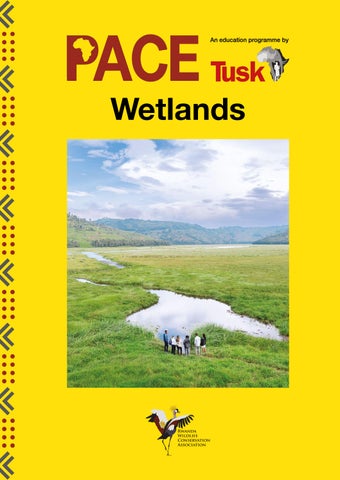
Wetlands
PACE–Pan African Conservation Education was created by Tusk and Siren Conservation Education in 2004. This booklet on Wetlands was created by Penny Fraser, Providence Uwanyirigira and Bernard Ndayisaba.
Design and layout was by Katie Puremont. Thanks to Olivier Nsengimana, Jemma Hogwood and Deo Ruhagazi for their expertise, encouragement and open collaborative spirit, and Dan Bucknell for editorial support.
Published by Tusk Trust, 1a Place Farm, Court Street, Tisbury, Wiltshire, SP3 6LW, UK.
© 2026 Tusk Trust & Rwanda Wildlife Conservation Association, RWCA.
First published 2026.
A catalogue record for this booklet is available from the British Library.
ISBN 978-1-0684834-0-0
Moral rights of the authors have been asserted. All rights reserved. The authors have made every effort to ensure the accuracy and currency of information in this publication.
PACE – Pan African Conservation Education
PACE is an education programme of Tusk www.tusk.org. It was set up in 2004, and since then its conservation education materials have reached more than 1.6 million people in 34 African countries.
PACE is about helping people solve their everyday environmental problems, especially problems that impact on their wellbeing, and on the wildlife and ecosystems we all depend on.
Our educational resources are free. They are arranged in modules: Living with Wildlife, Water, Soil, Trees, Energy, Living by the Ocean, Urban Living, Health and Careers in Conservation.
We work with conservation partners across Africa, helping people connect and reconnect with nature, to understand, value and protect it. This resource on Wetlands is part of the Living with Wildlife module.
Why wetlands?
Wetland ecosystems are amongst the most threatened on earth, yet many of us don’t realise their importance. Wetlands support a vast biodiversity and complex food webs. They provide us with clean water, they protect against flooding, drought and erosion, and are a key part of local and global water and carbon cycles, culture and economies. Wetlands have shaped human cultures for centuries.
This booklet is about inland, freshwater wetlands. It Illustrates and explains exactly what they are, where they are found, and different types of wetland. There are sections on wetland plants and wildlife. The importance of wetlands as ecosystems, the threats they face and what we can each do to help protect them is explained.
There are photographs and examples from across Africa. This resource was produced with Rwanda Wildlife Conservation Association and designed for conservation clubs, but will be useful in schools, homes and for general reading.
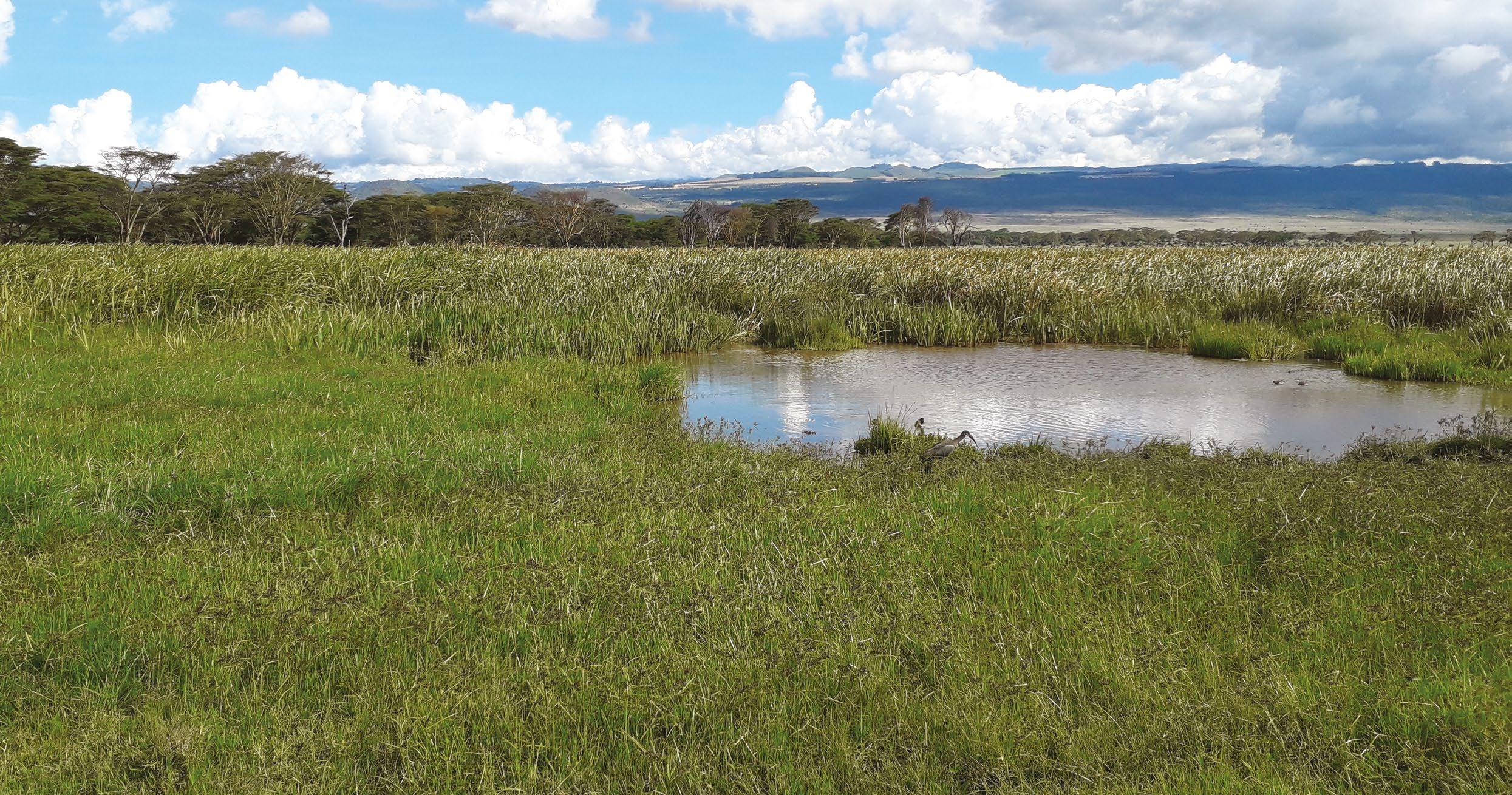
Lewa Wildlife Conservancy, Kenya
Where do we find wetlands?
Characteristics of wetlands
Hydrology – the water
Pedology – the soil
Size
Types of wetlands found in Africa
Wetland plants
Wetland wildlife
RWCA – Rwanda Wildlife Conservation Association
RWCA is a conservation organisation, started in 2014 by a team of young Rwandan vets and wildlife conservationists. Their goal was to abolish the illegal trade in endangered grey crowned cranes, and they have largely succeeded. RWCA now employs more than 300 people at various conservation sites across the country and their activities include conservation, research, education and community development work.
RWCA also set up a wetland nature reserve in Kigali as a home for disabled grey crowned cranes that would not survive in the wild. It is called Umusambi Village and has many visitors who come to see the cranes and learn about conservation and the importance of wetlands.
RWCA’s research and conservation efforts now include many endangered and threatened species and habitats. They work with and for the communities living alongside wildlife, in Rwanda, and the wider east African region.
By partnering with PACE and the Tusk network, RWCA’s expertise and experience reaches and helps people in countries Africa-wide: Pan African Conservation Education.
Wetlands
Introduction
A wetland is an ecosystem where the ground surface is saturated or flooded with water either permanently or temporarily.
Wetlands are areas of land, usually flat, where there is water at or near the surface of the soil either all the year, or for parts of the year. The water depth may be just centimetres or it may be many metres.
There are different kinds of wetlands. The climate, topography and geology of the area influence if, where and the type of wetland that will occur in a particular place.
Lakes, rivers and oceans can be considered as wetlands, but generally, wetlands are places where water is still or slow moving, and not very deep.
Wetlands can be freshwater, brackish and saline. This book is about freshwater wetlands, it doesn’t deal with manmade, nor salty, coastal wetlands like mangrove swamps, salt marshes and coastal lagoons. These have a mix of salty water from the sea and fresh water from land and distinct flora and fauna.
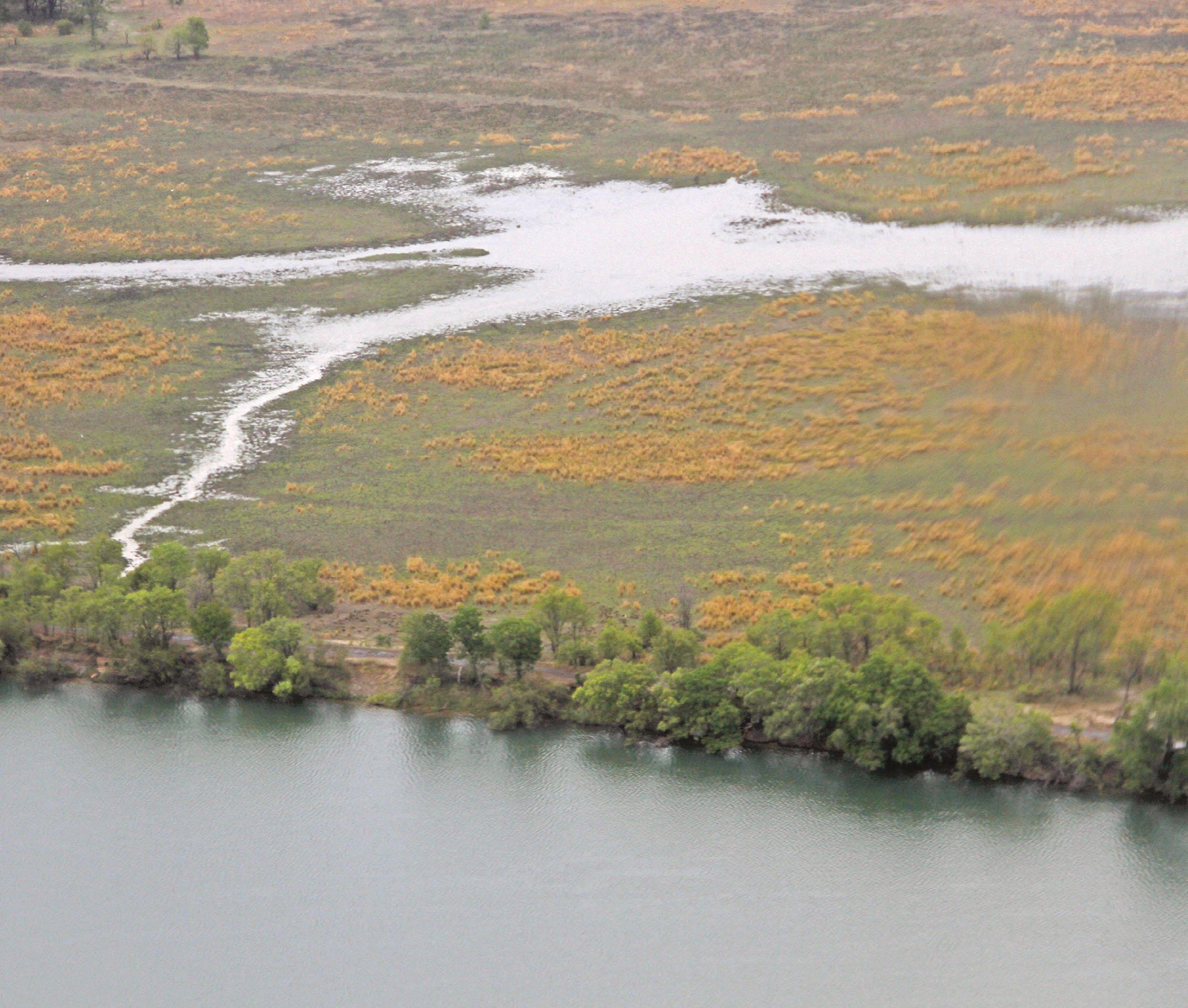
Marshland beside the Zambezi river above Victoria Falls.
Aquatic means to do with or to live in water.
Terrestrial means to do with or to live on land. Wetlands are neither aquatic nor terrestrial. They are intermediate, between the two. They have characteristics of both terrestrial and aquatic ecosystems. They also have characteristics unique to themselves. These are explained on the next pages.
The marshy areas alongside rivers and streams are wetlands. But rivers and streams are aquatic habitats.
There are many different kinds of wetland. You’ll see pictures and information about common types of wetland in the pages of this book.
Saline wetlands have salty water. Only certain species can live in salty water.
Brackish wetlands have slightly salty water.
Freshwater wetlands have water that is not at all salty.
Rivers, streams, lakes and estuaries are aquatic habitats.
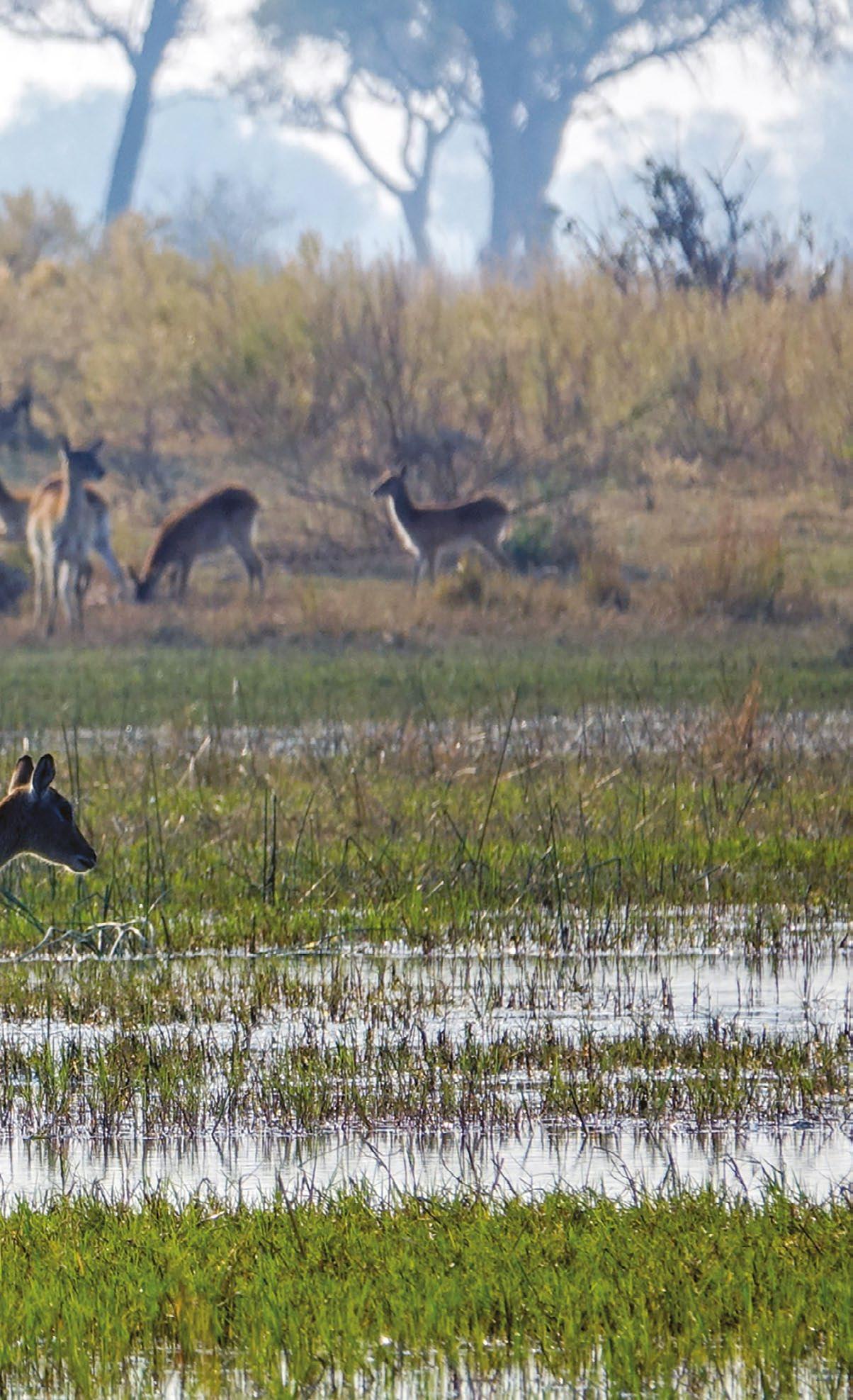
Where do we find wetlands?
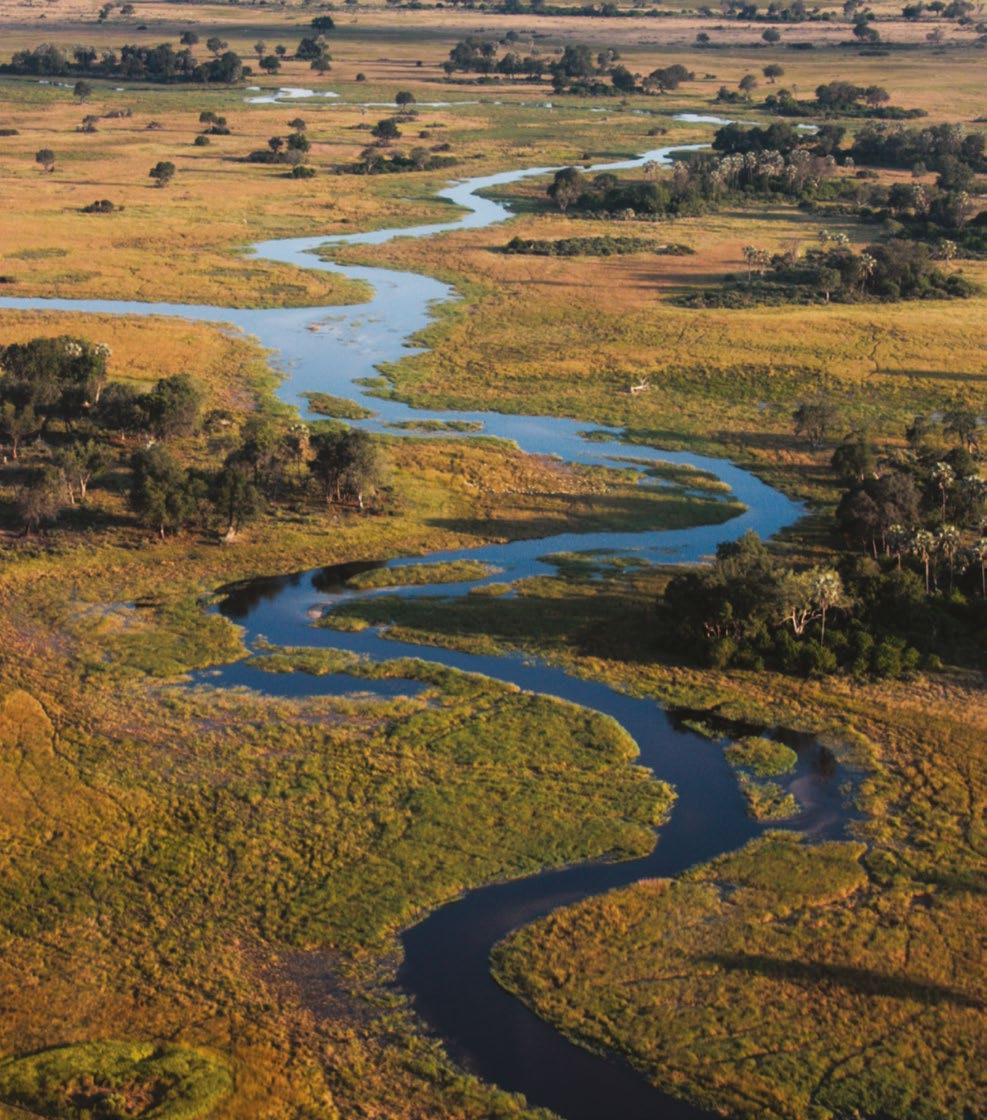
Wetlands are often next to rivers, lakes or the ocean. They may be in low lying areas that collect water that has flowed down slopes. They may also be in high places where the rock prevents water from passing down through the ground. Wetlands may be on slopes where the type of rock prevents water draining away. Impervious rocks can cause underground water to come to the surface. Impervious rocks, or heavy clay soil, can also stop rainfall or overland flow from draining down into the ground. The water that gathers may then create wetland habitats.
Impervious or impermeable means that water doesn’t pass through easily.
Geomorphology is the shape of the landscape – hills, valleys, plains.
Areas that have pervious or permeable rock will have few wetlands because water drains away quickly. Lava on sites like Mount Cameroon, and rock made from coral, like that on the Kenyan coast at Lamu is porous. Both places have few freshwater wetlands.
Impermeable rocks like shale, and layers of clay, cause water to gather near the surface of the ground.
Botswana
Characteristics of wetlands
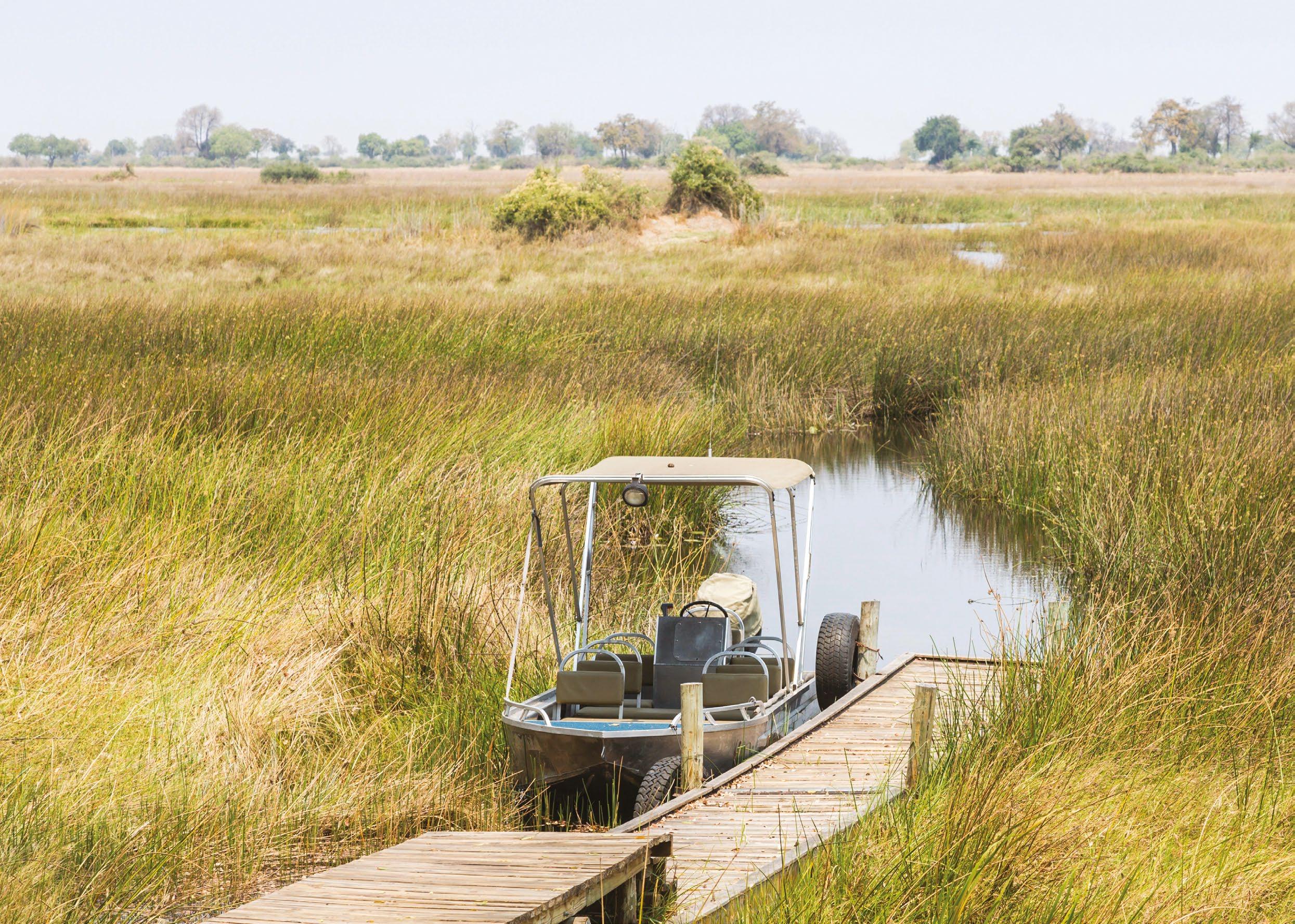
Hydrology – water. Water is the main characteristic of wetlands. It may be a few centimetres or metres deep. Wetlands may dry out completely at times, but to be called a wetland the soil must have been waterlogged for long periods or regularly.
Hydrology – the study of water.
Hydrologist – person who studies water.
Anaerobic means there is very little or no oxygen.
Pedology – the soil. The type of soil influences which plants and animal species live in a place, and the foodwebs that they create.
Wetland soils usually contain a lot of organic material (from dead plants and animals). This is because when the ground is waterlogged there is little oxygen present. Without oxygen most organic matter doesn’t decompose completely. Most of the bacteria and micro-organisms that break down dead organic matter can not survive in wetlands because they need oxygen to live. Those that can live there work very slowly. They also give off smelly gases. That’s why wetland soil (and mud) is often smelly!
When decomposition is slow, dead and decaying plant and animal material builds up.
Wetland habitats have distinctive soils, and distinctive plants that grow there.
Peat is a type of soil that forms in and under wetlands. It is dark brown or black in colour and fibrous. It is made of partly decomposed organic matter that builds up over many, many years. Peat can be very deep.
Peat is an important carbon store. When dried it burns well.
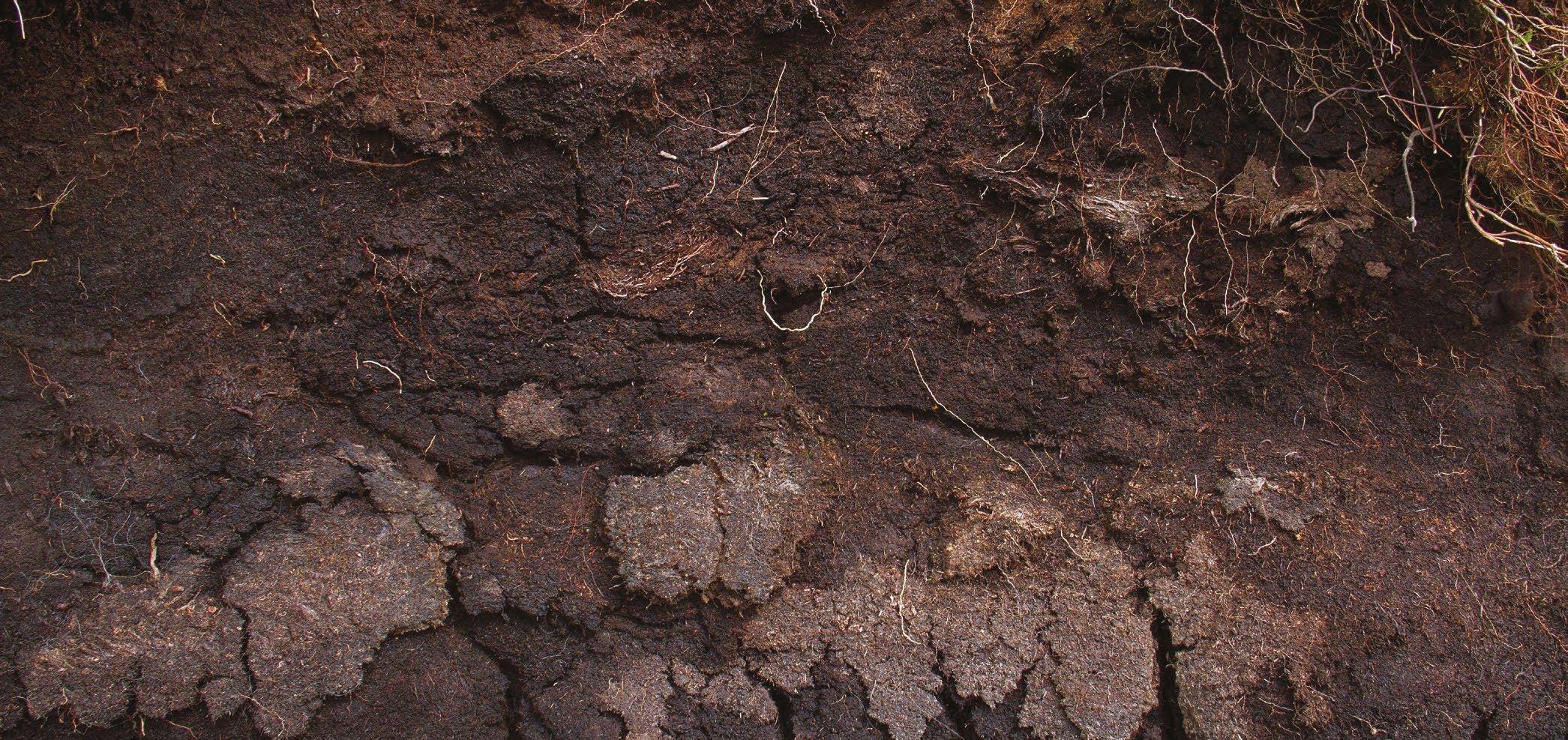
At the bottom of Rugezi marsh in Rwanda scientists measured peat 7m thick. They believe the peat may be as deep as 20m.
Wetlands have hydric soils.
Hydric soils form in waterlogged, anaerobic conditions.
Size: how big are wetlands?
Wetlands may be vast, or they may be as small as 1-2m around a spring, stream or other water source. The inner Niger delta in Mali, one of Africa’s largest swamp areas covers 36,000km2 The Sudd wetlands in Sudan are the biggest in Africa, the second biggest in the world – up to 90,000km2 in the wettest wet season.
The size of wetlands change with the seasons and will be different year by year depending on climate.
Uganda
Types of wetlands found in Africa
Vlei
Inland delta
Marsh
Marshland
Creek
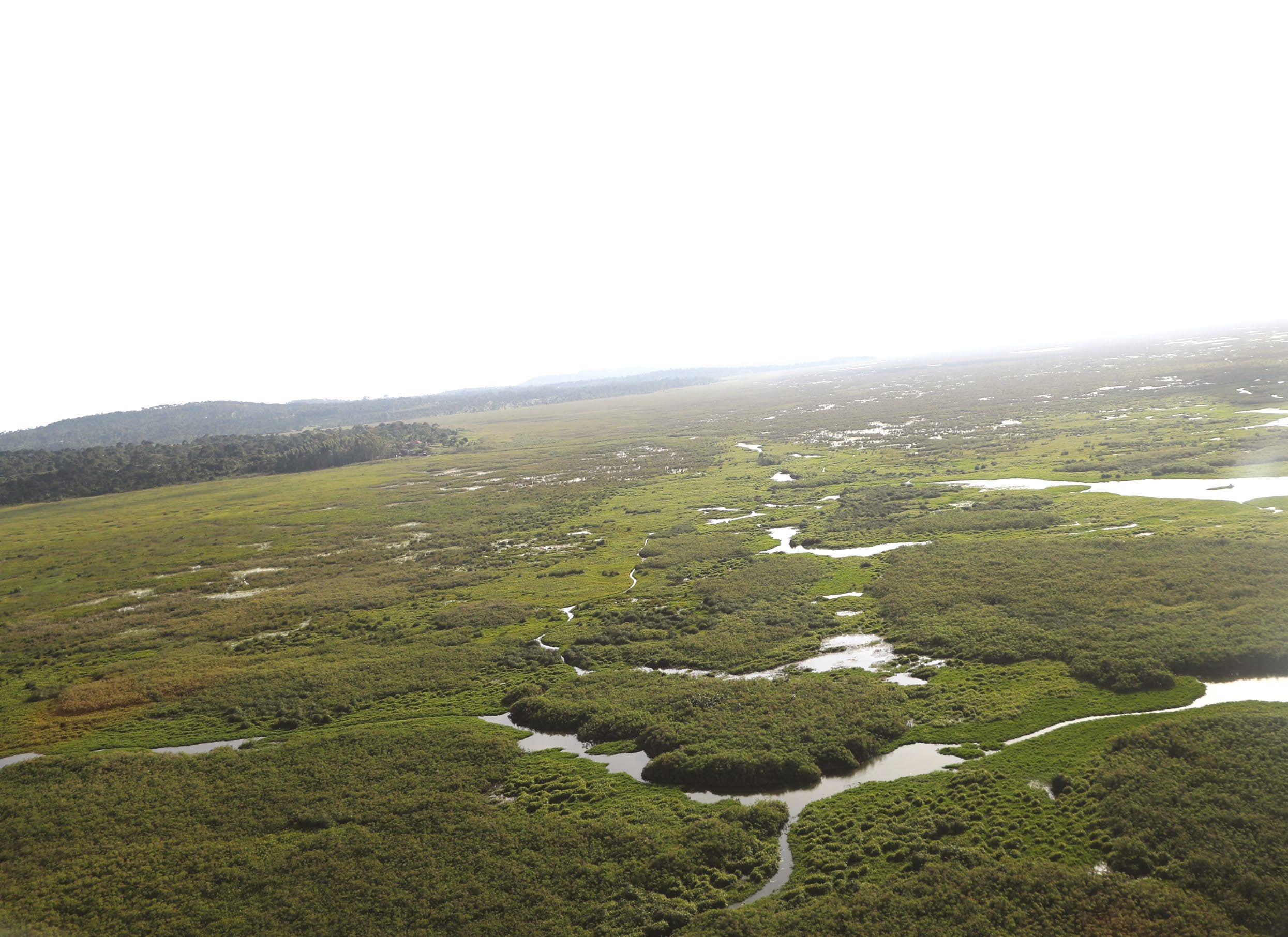
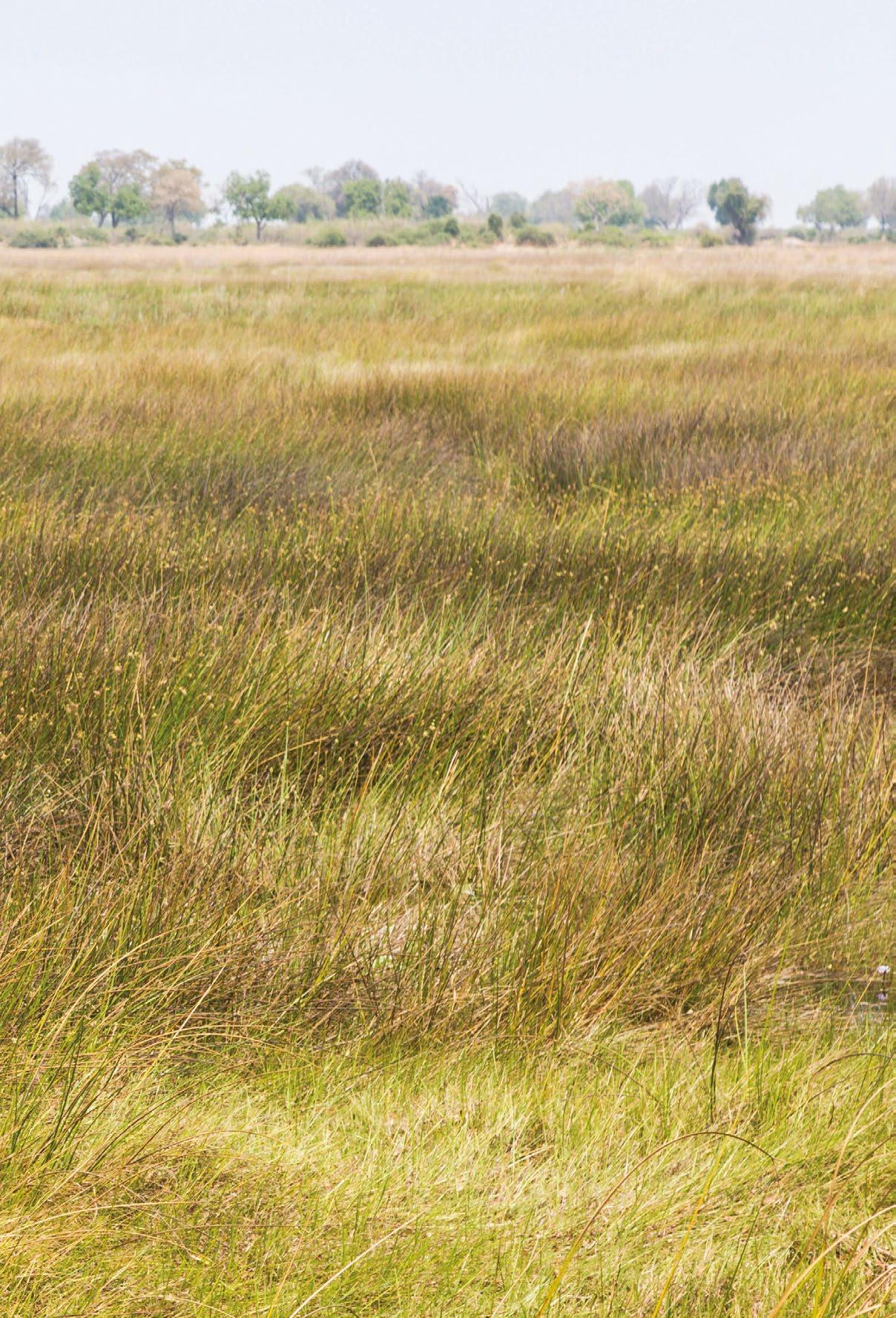
In wetlands the water table is usually at or near the surface.
Dambo
Floodplain
Mudflat
Wet meadows
Mabamba Swamp, Uganda.
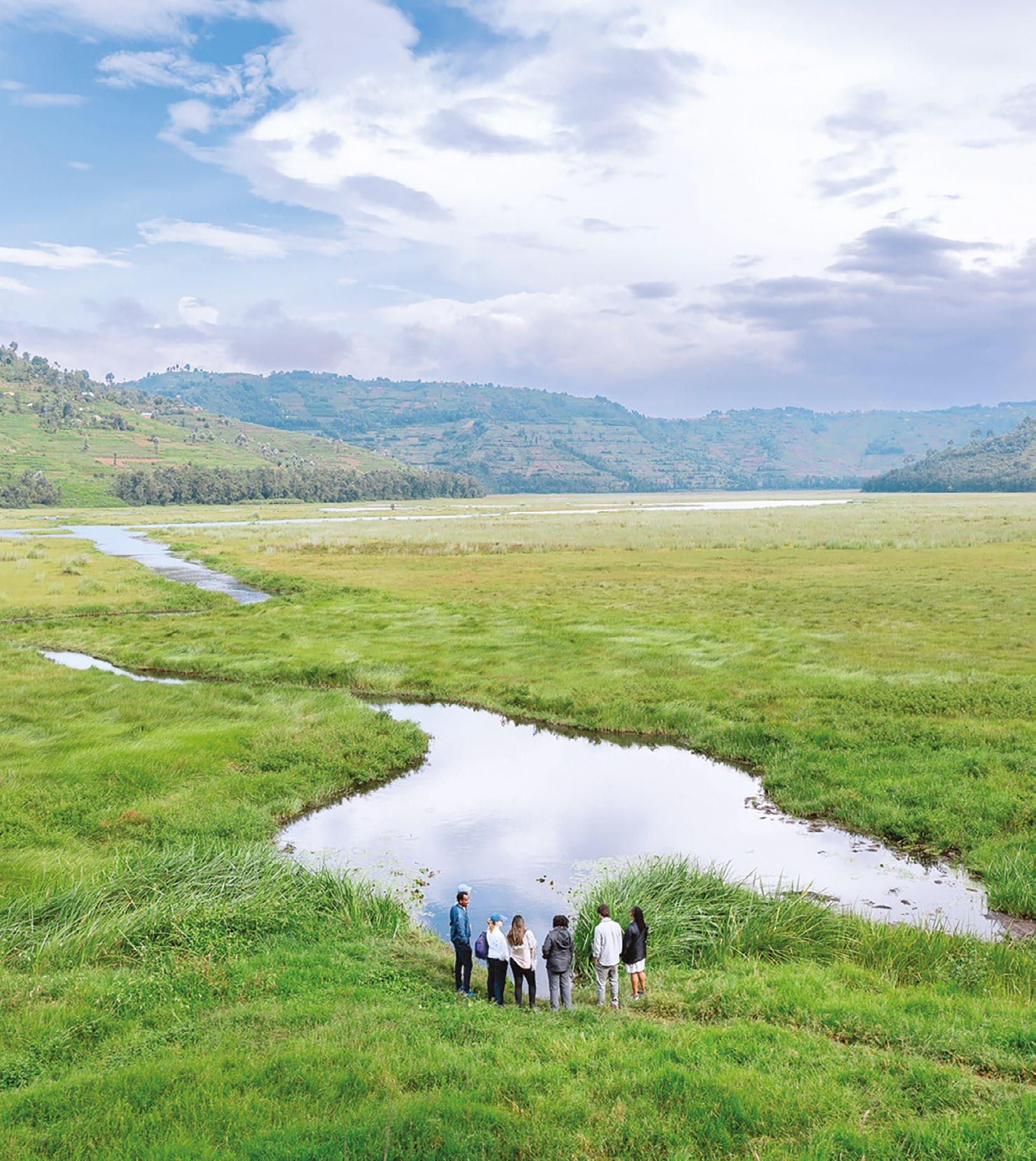
Marshes are open wetland areas, with still or slow moving water. Marshland has many herbaceous plants –reeds, grasses, sedges, ferns and mosses – rather than trees. Marshes may have plants that grow underwater. They may have plants that grow like a mat floating on the water surface, as in this picture of Rugezi marsh.
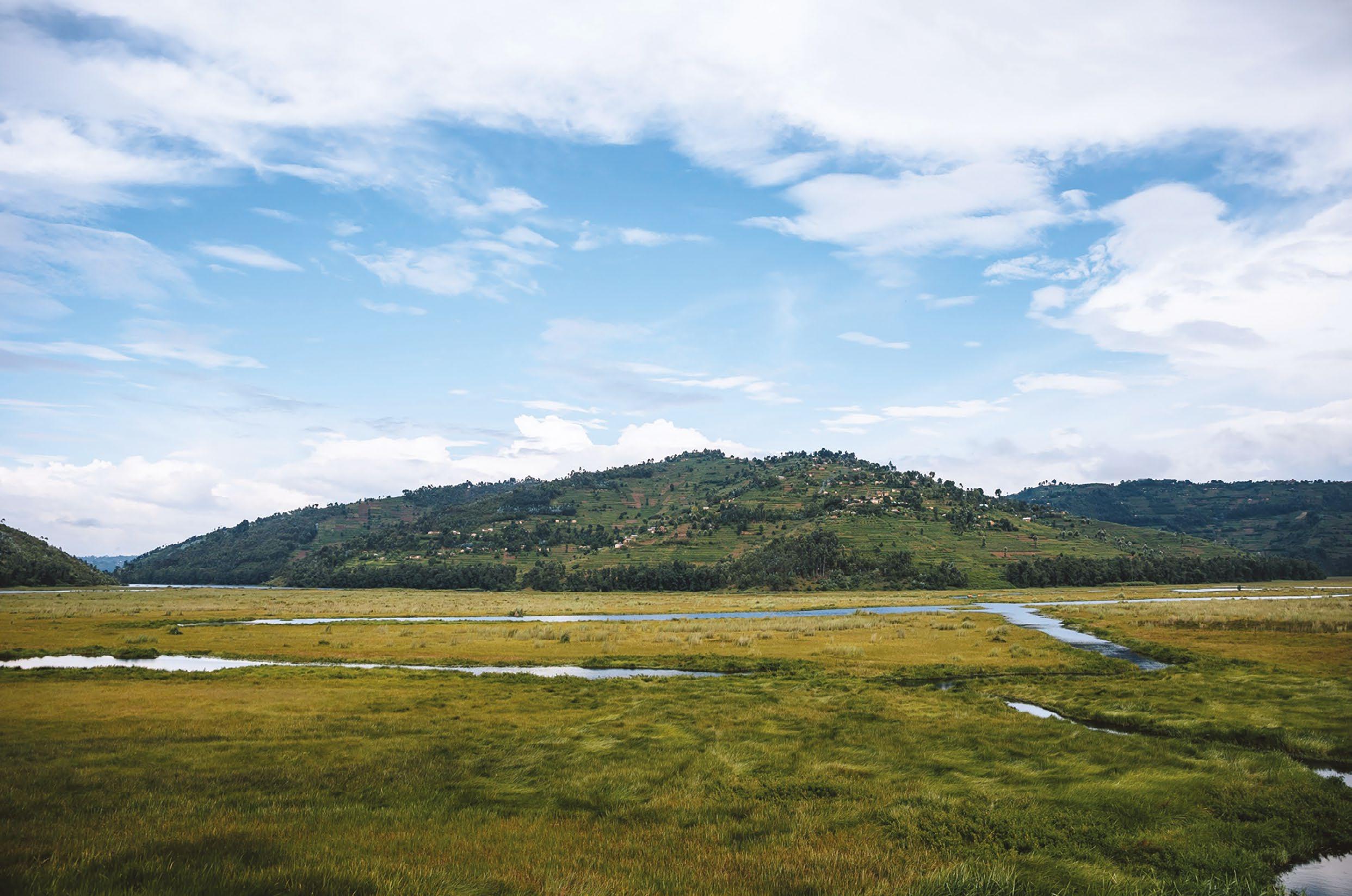
Rugezi marsh in Rwanda.
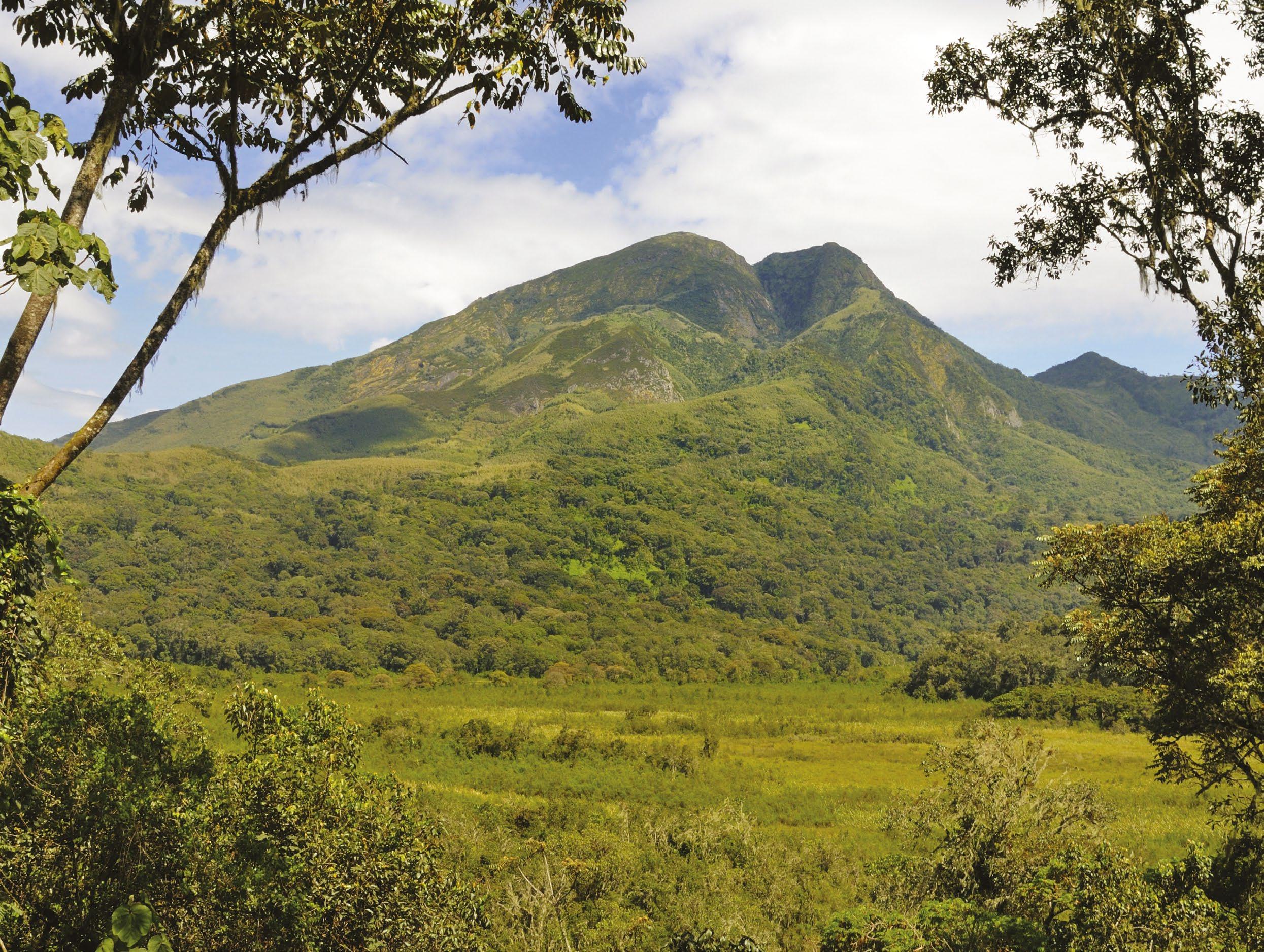
Wetlands at the base of Mount Kahuzi, DRC.
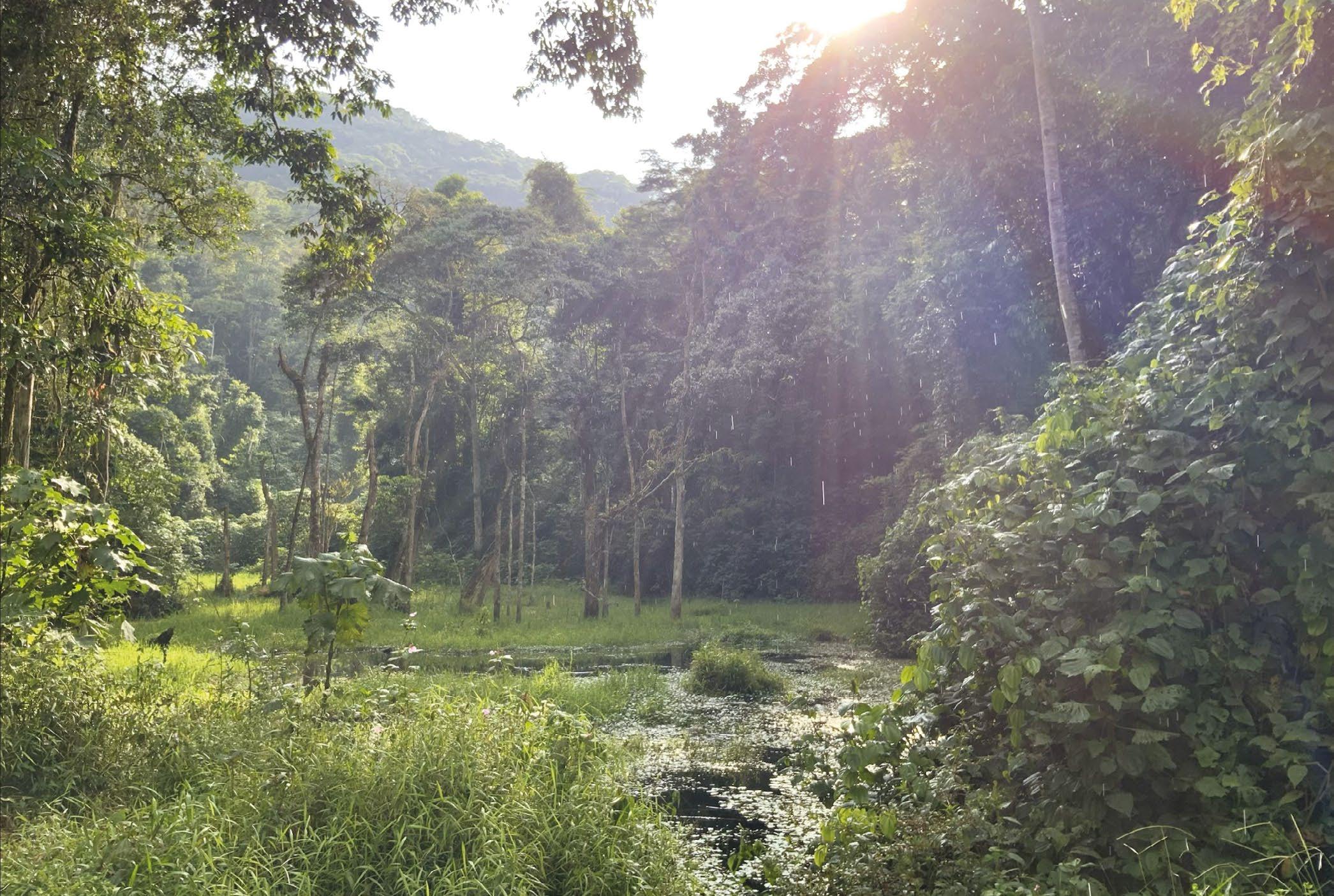
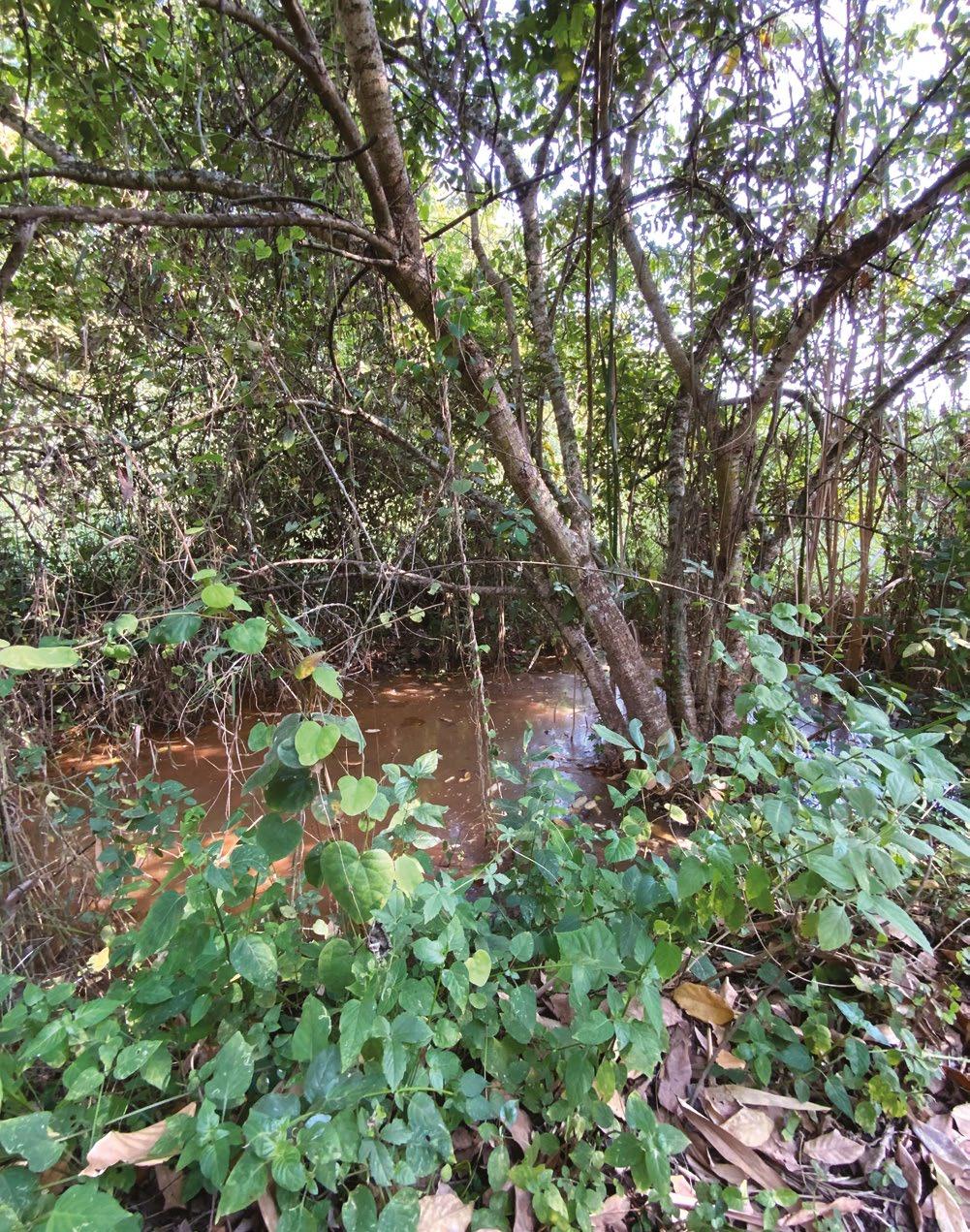
Swamps have more woody plants and trees than marshland. They are mostly in basins, or low lying floodplains alongside rivers or slow moving streams.
Swampy clearings in montane forest, Bwindi National Park, Uganda.
Woody swamp in central Africa.
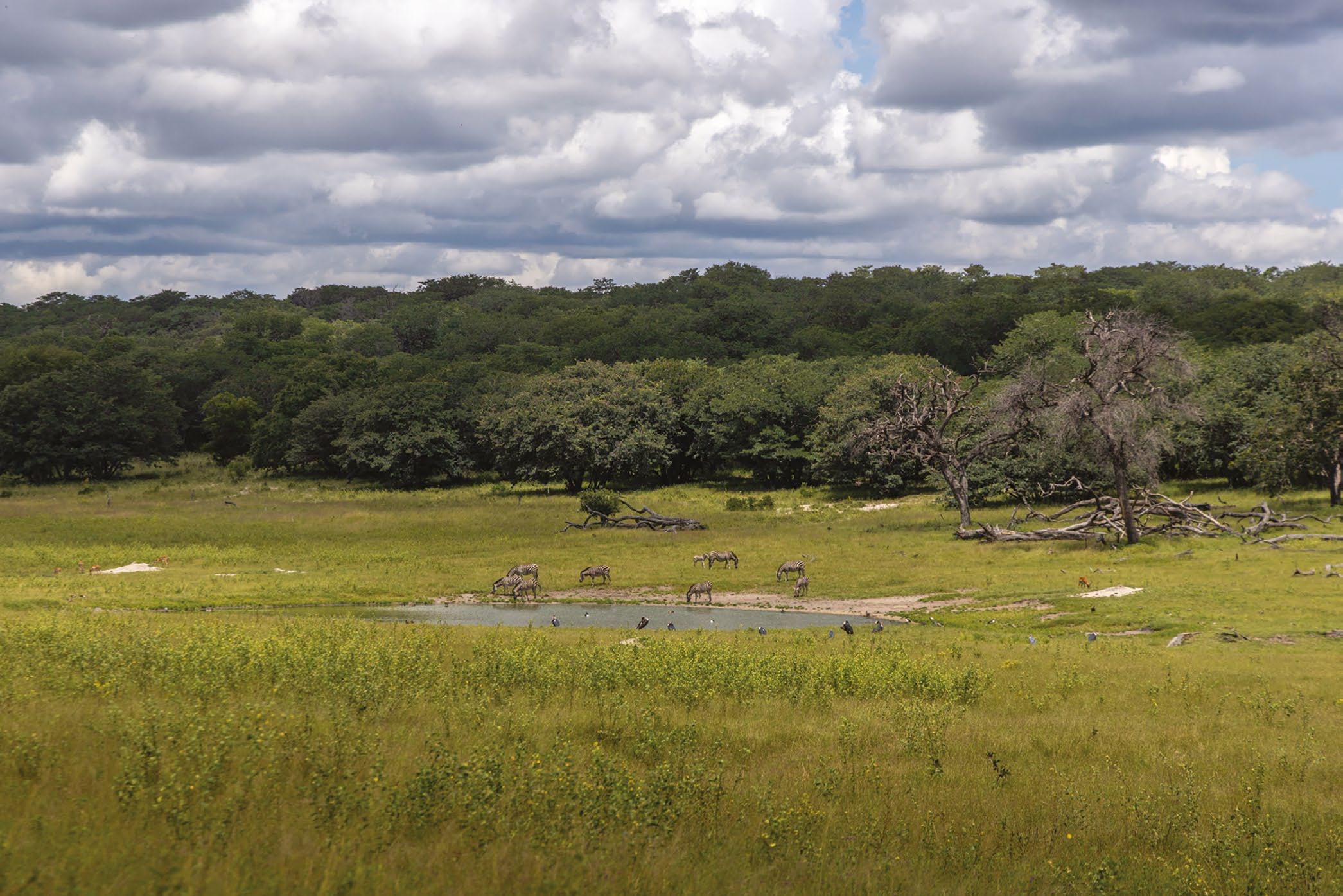
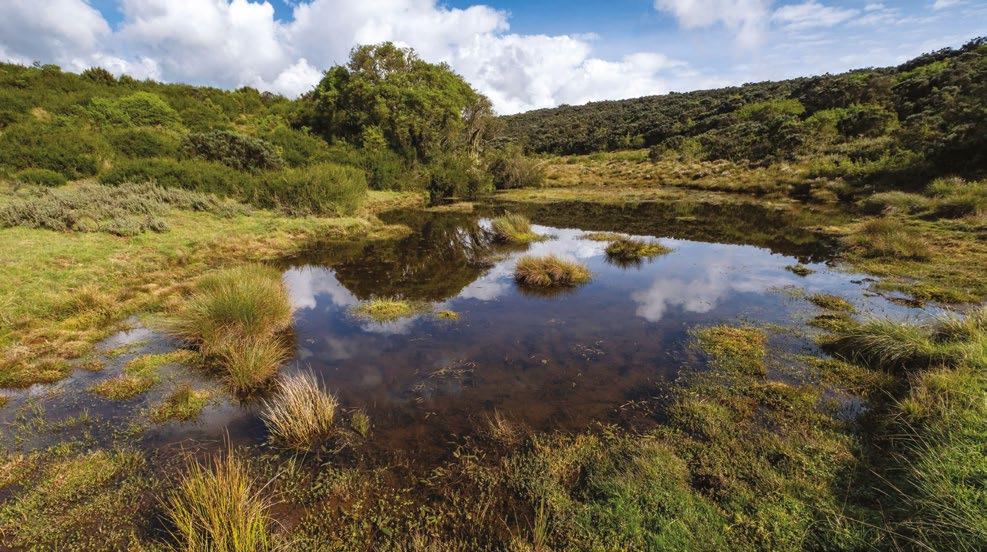
Vlei in southern Africa, and dambo in east Africa, are low-lying grassland that is flooded in the rainy season, and dry, on the surface, during the winter, dry season and droughts. A vlei or dambo can be kilometres wide. It will be drier on the outside and wetter in the middle. They may also be called flooded meadows.
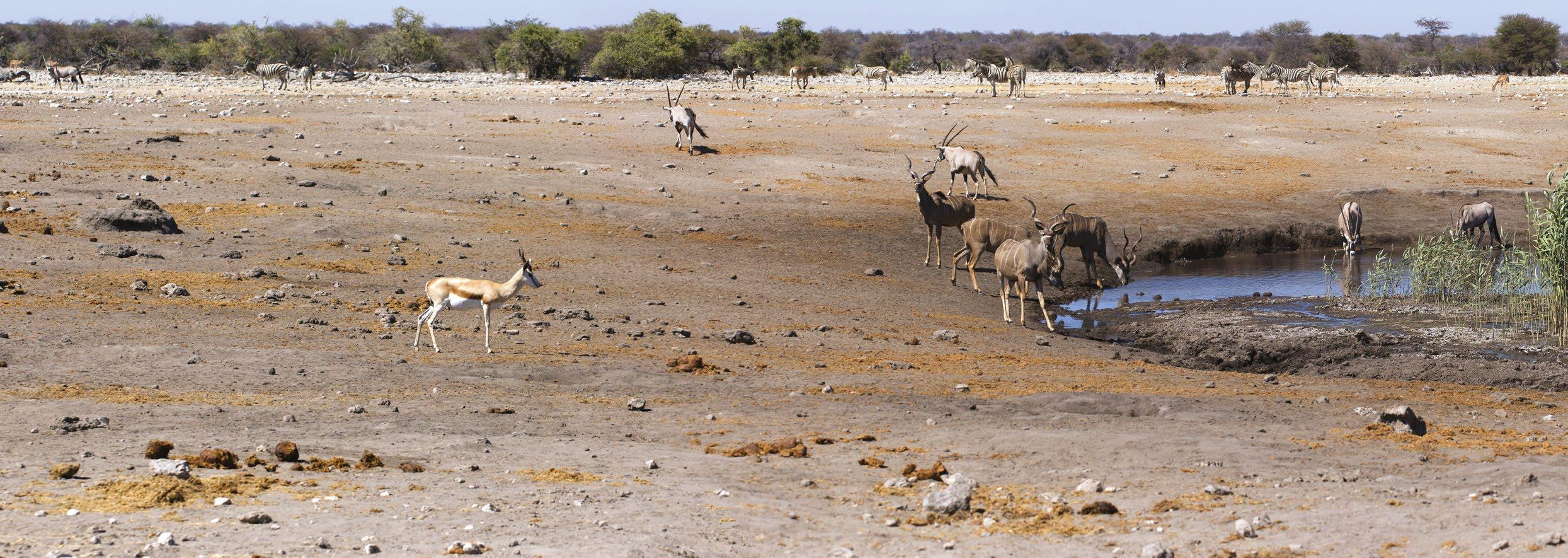
Pans are shallow depressions where rainwater collects, usually seasonally, in arid areas. They are important as watering holes. Some pans become brackish or salty. Some become a source of salt. They are often sandy.
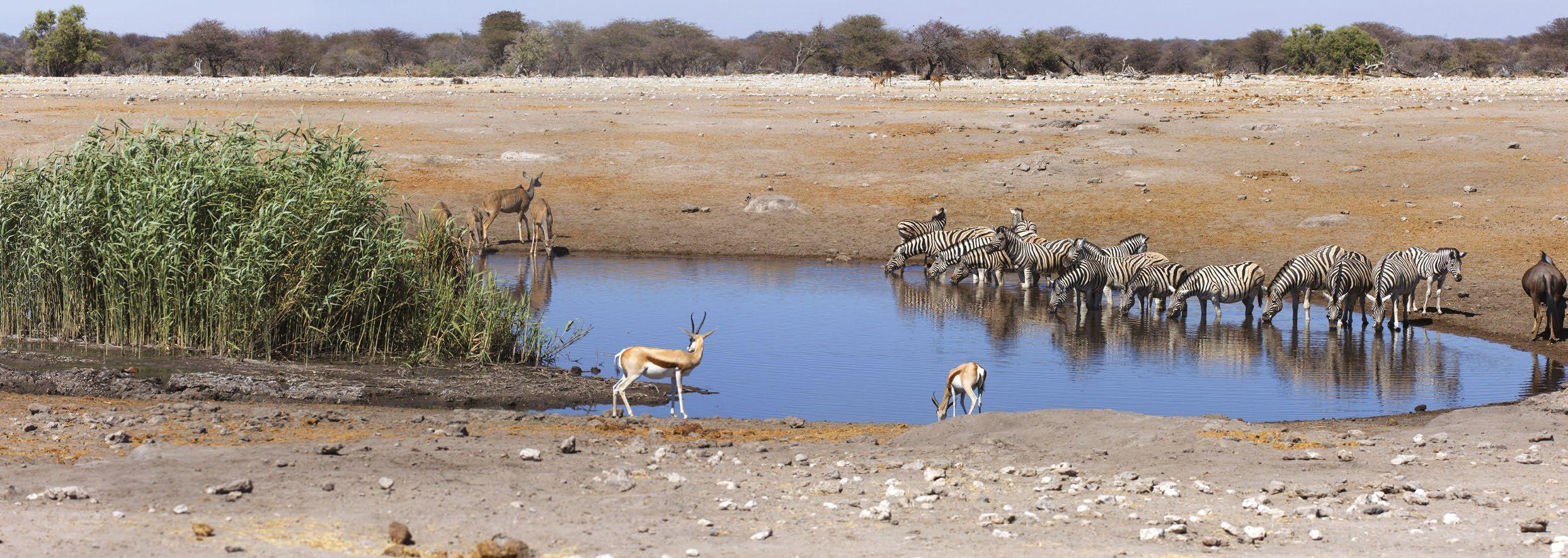
Dete Zimbabwe
Etosha National Park, Namibia
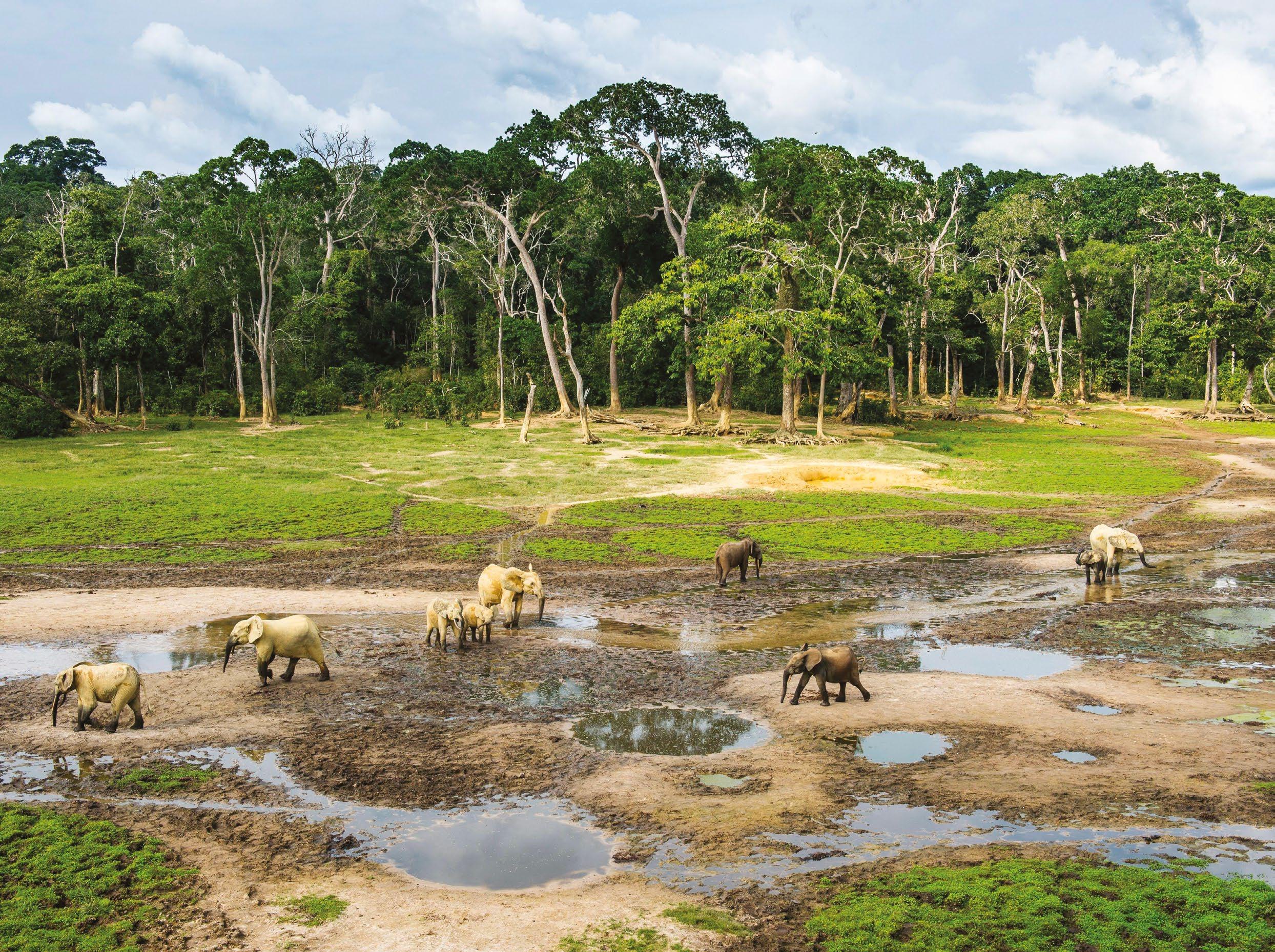
A Bai is a wetland clearing in the rainforest. Bai is a Baka word, from the people of the central African rainforest.
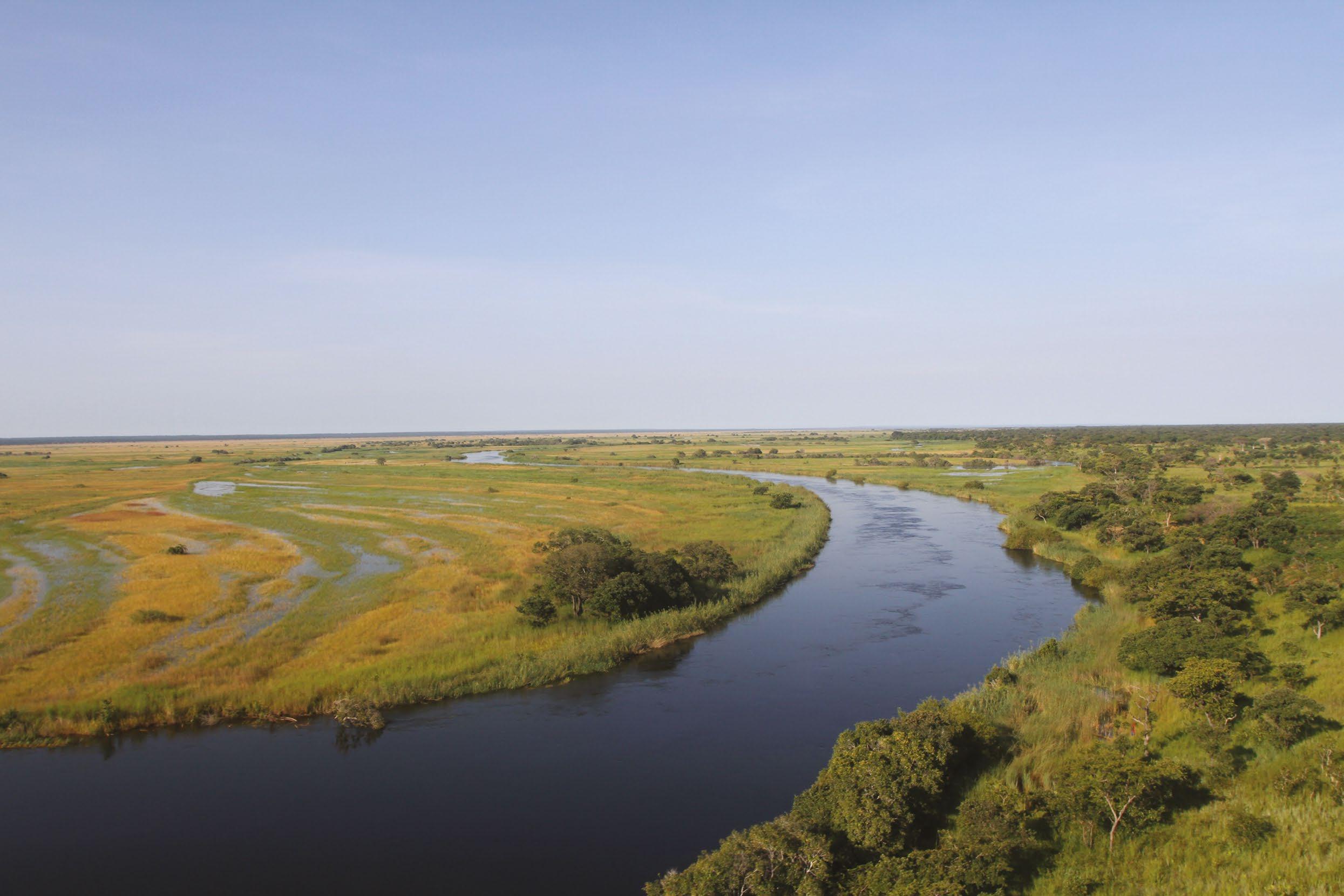
‘Flood plains’ are flat areas next to rivers that can easily flood.
Inundated flood plain in Cangandala National Park, Angola.
African forest elephants, Dzanga Bai, CAR.
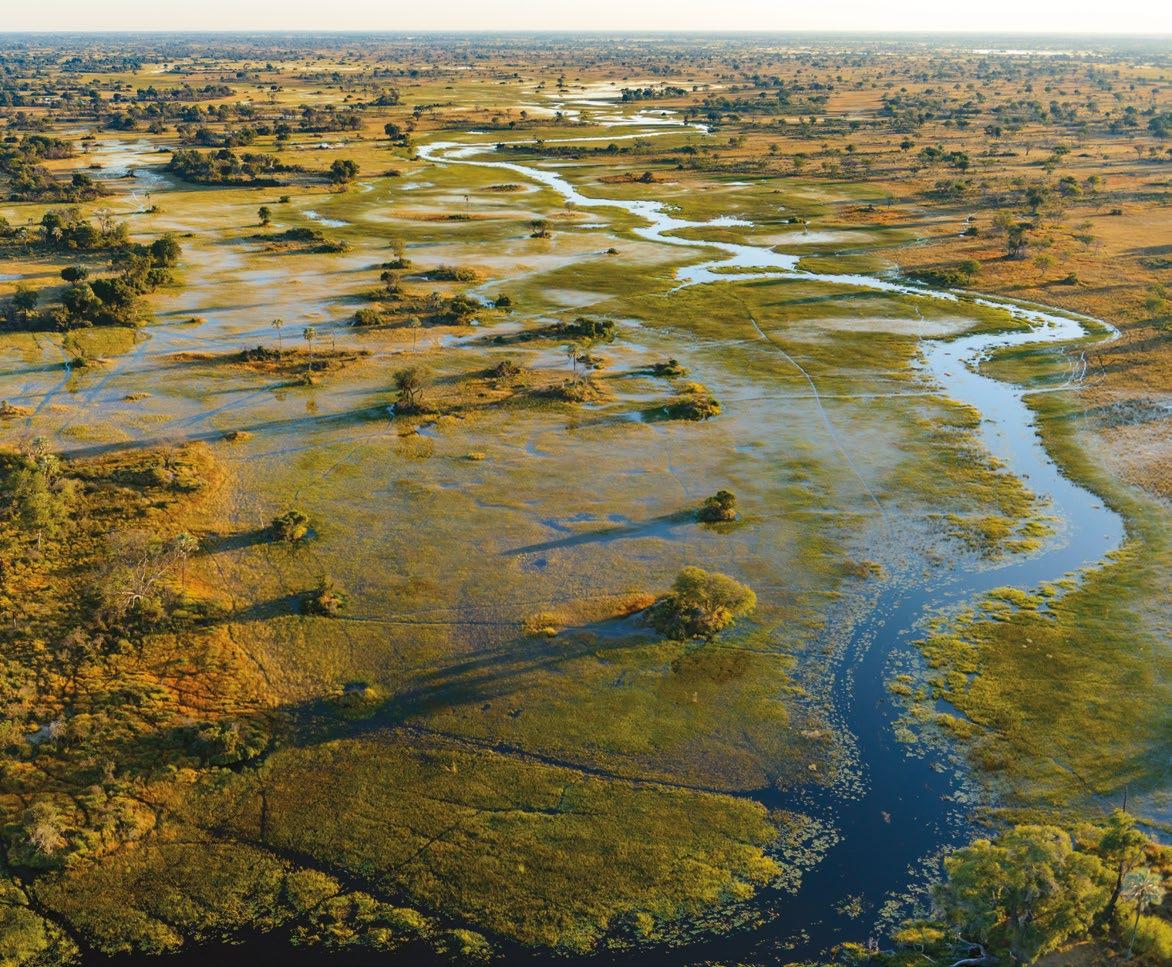
A delta is a river that’s split into many spreading branches. Most river deltas form near the coast, where a river starts to flow slowly, before entering the ocean. The Niger river in Nigeria, Nile in Egypt, Zambezi in Mozambique have famous deltas.
Inland deltas form where rivers divide and empty into a flat inland area. They have a core that is always wet and expands when rainy season floods arrive.
In Botswana the Okavango River becomes an inland delta: 13,000km2 is permanently flooded. It becomes 60,000km2 when wet season floodwater arrives – 500km from north to south!
The Okavango water doesn’t flow out into the ocean, it seeps underground or evaporates. There is no river coming out of the delta, only in!
The Upper Niger basin is an inland delta.
The Lorian swamp in north east Kenya is an inland delta. It is fed by the Ewaso Ng’iro River. Water from the Aberdare mountains flows into the Ewaso river, that becomes a delta when it reaches a large low lying area 196km x 25km in size. There is no river flowing out, the swamp water evaporates or seeps into underground aquifers.
The Amboseli swamps in Kenya are fed by underground water from Mount Kilimanjaro. The swamps have no river outlets, the water drains into underground aquifers.
Bogs are wetlands that get most of their water from rain. The soil is low in nutrients because very little sediment is carried in. They are often acidic, have soft, saturated, peaty ground, lots of moss, stunted trees and tend to be on ground higher than the area around.
Fens are fertile and not acidic, get their water from rain, but also surface runoff and groundwater that has picked up nutrients.
Ox-bows form where rivers have changed course. The river channel remains and may be seasonally flooded, or contain water all year.
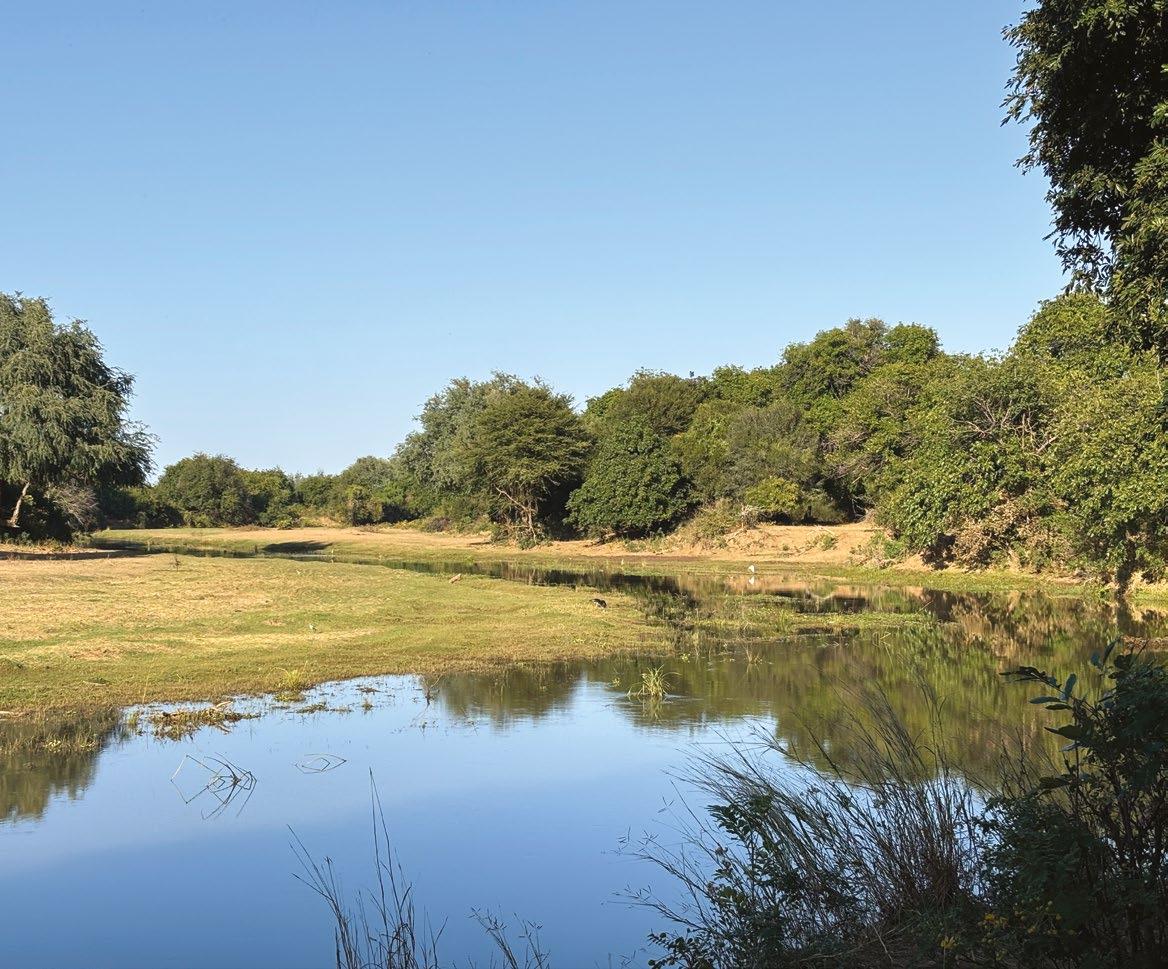
Aberdares, Kenya
Zambia
Wetland plants
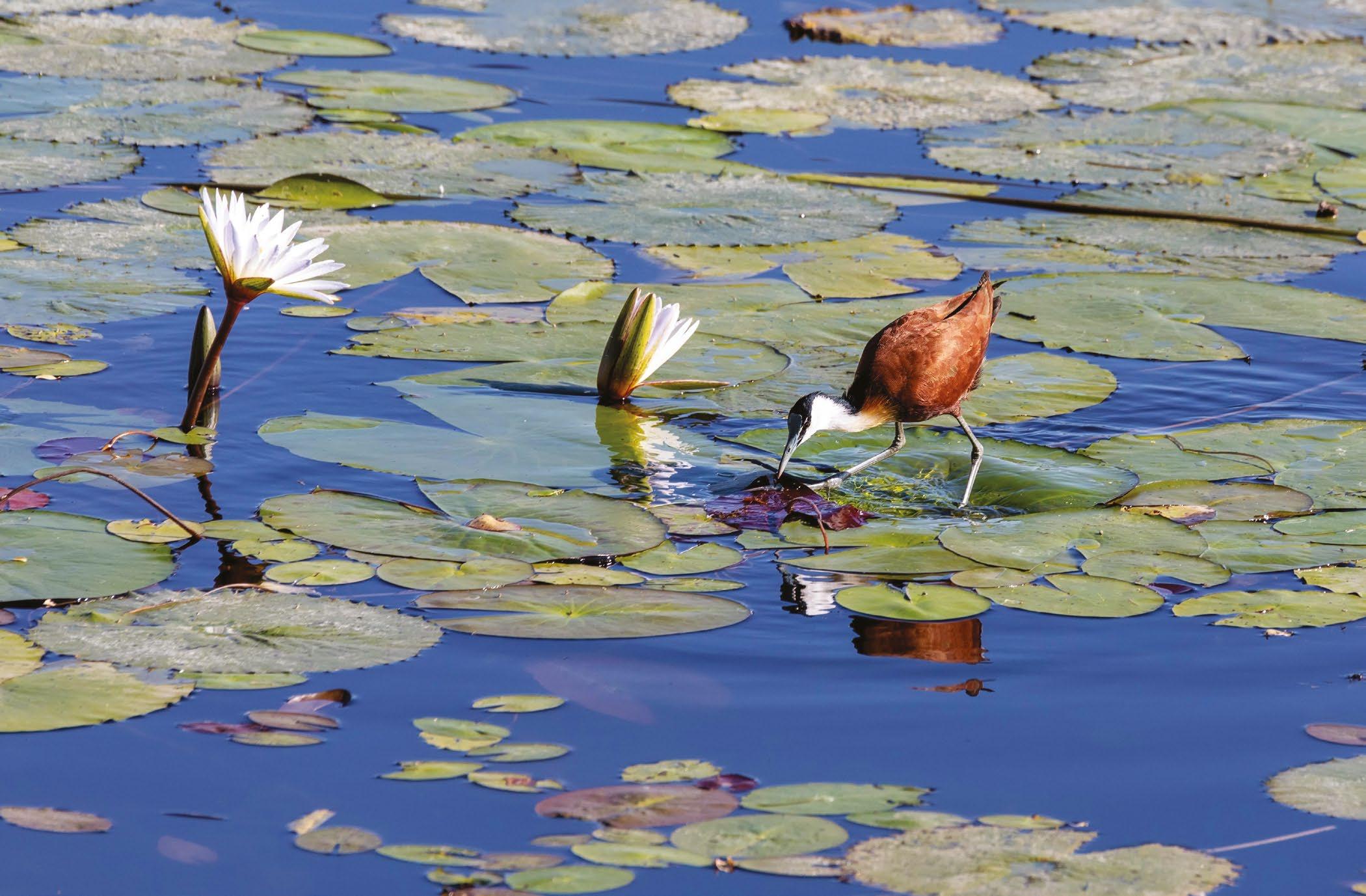
Floating plants, like water lily and water hyacinth can form a mat on the water surface. They often have round, smooth leaves with air pockets to help them float.
Wetland plants are suited, or adapted, to live in wet and waterlogged conditions. Wetland plants are called hydrophytes – hydro means water, phytes means plants.
• Some hydrophytes grow up out of the water,
• Some grow on the water surface.
• Some grow completely underwater with the whole plant submerged.
Submerged plants often have long, thin, divided leaves.
Floating plants may have leaves on the water surface and roots in the mud below, or the roots may hang in the water. These hanging roots do not have to support or anchor the plant, their job is just to absorb nutrients so they are often thin and feather like.
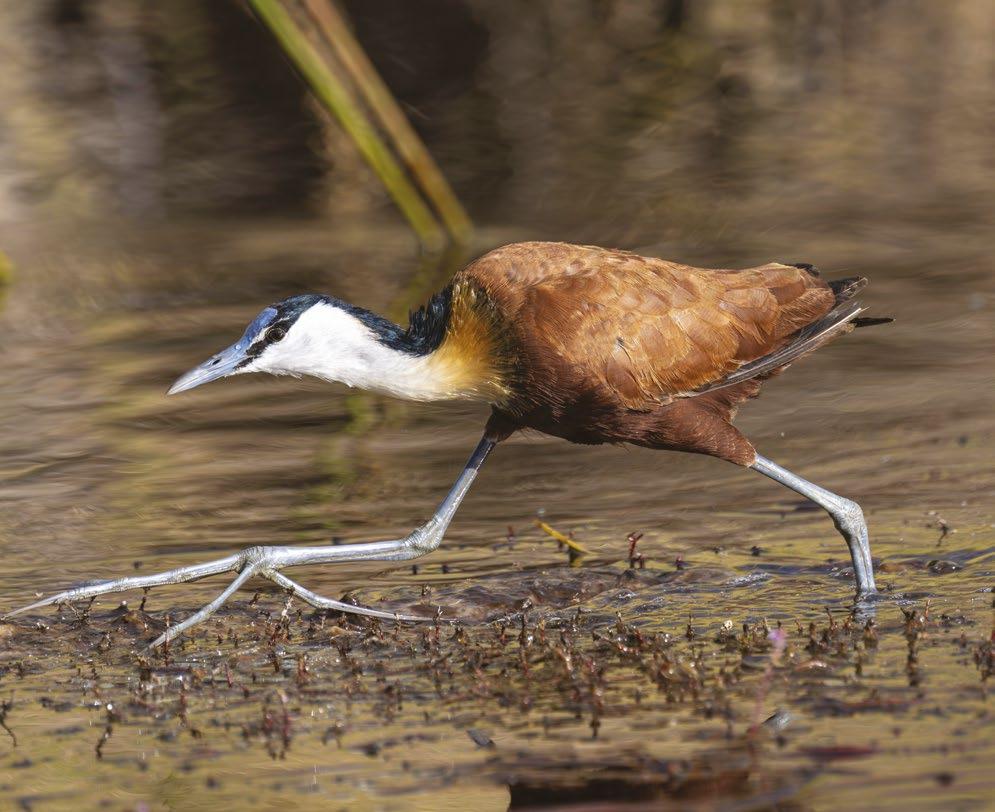
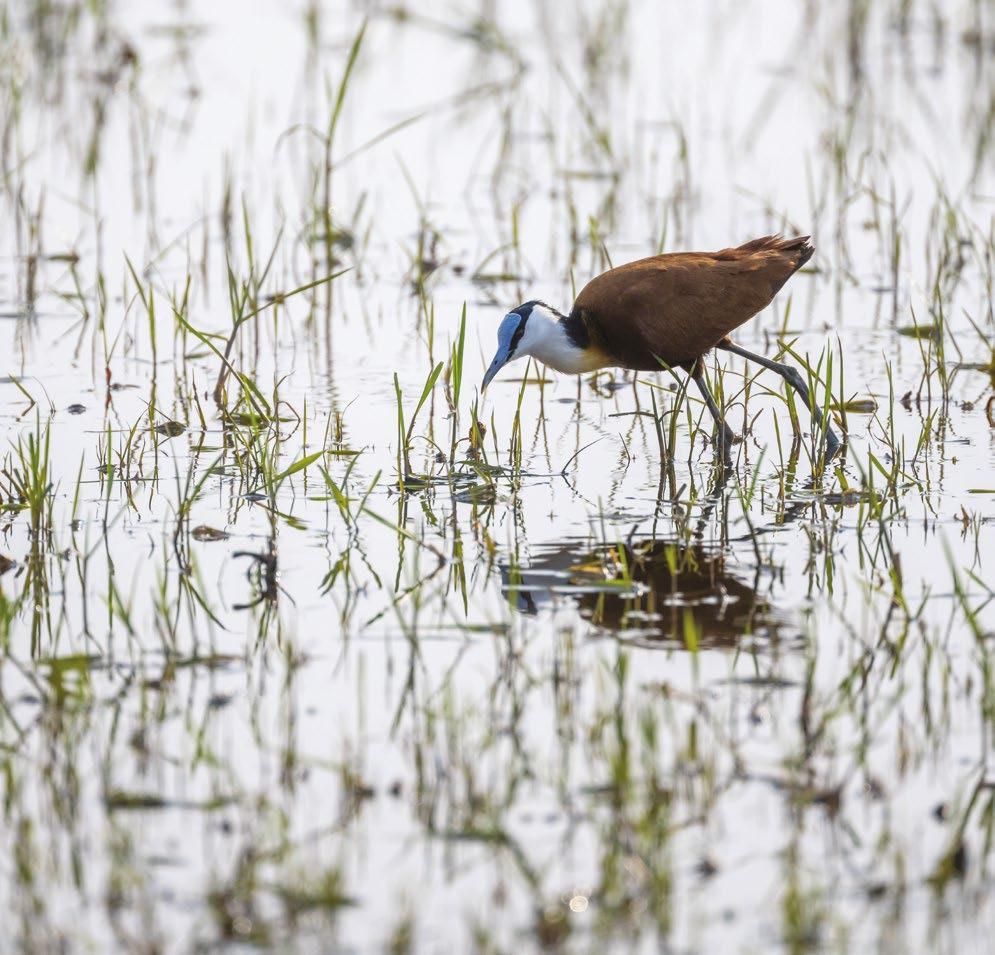
African jacana, Actophilornis africanus. Its feet are long and spread, an adaptation to prevent sinking into mud.
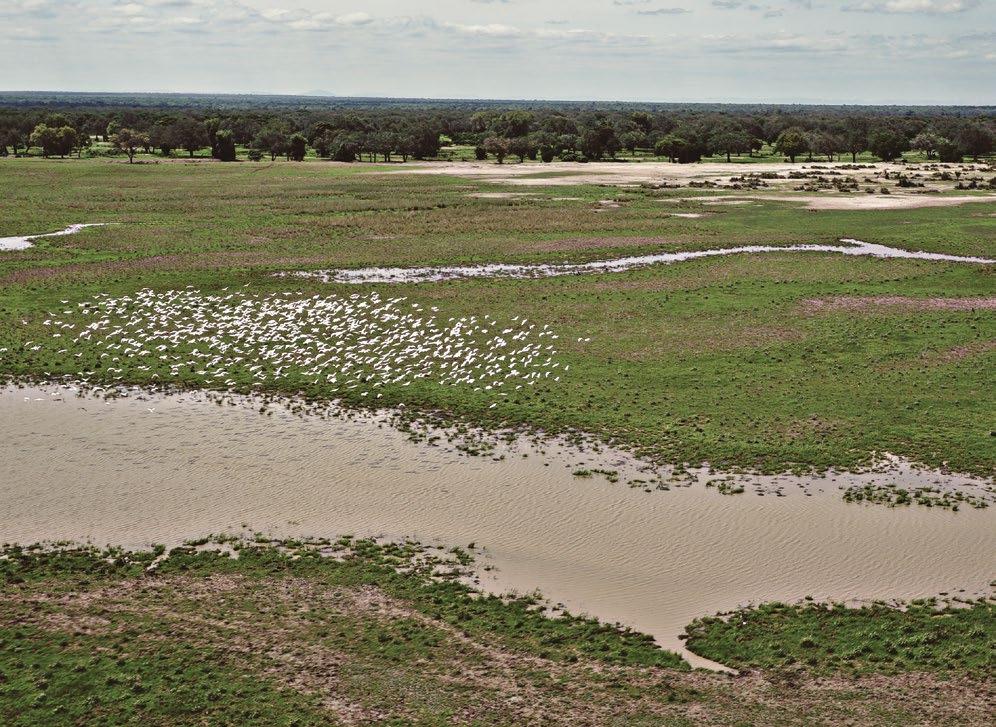
Most types of grass like drier places. Grass species are more common in areas that are flooded or waterlogged only part of the year, like these flooded meadows in Zambia, below.
Phragmites and Miscanthus are common wetland grasses.
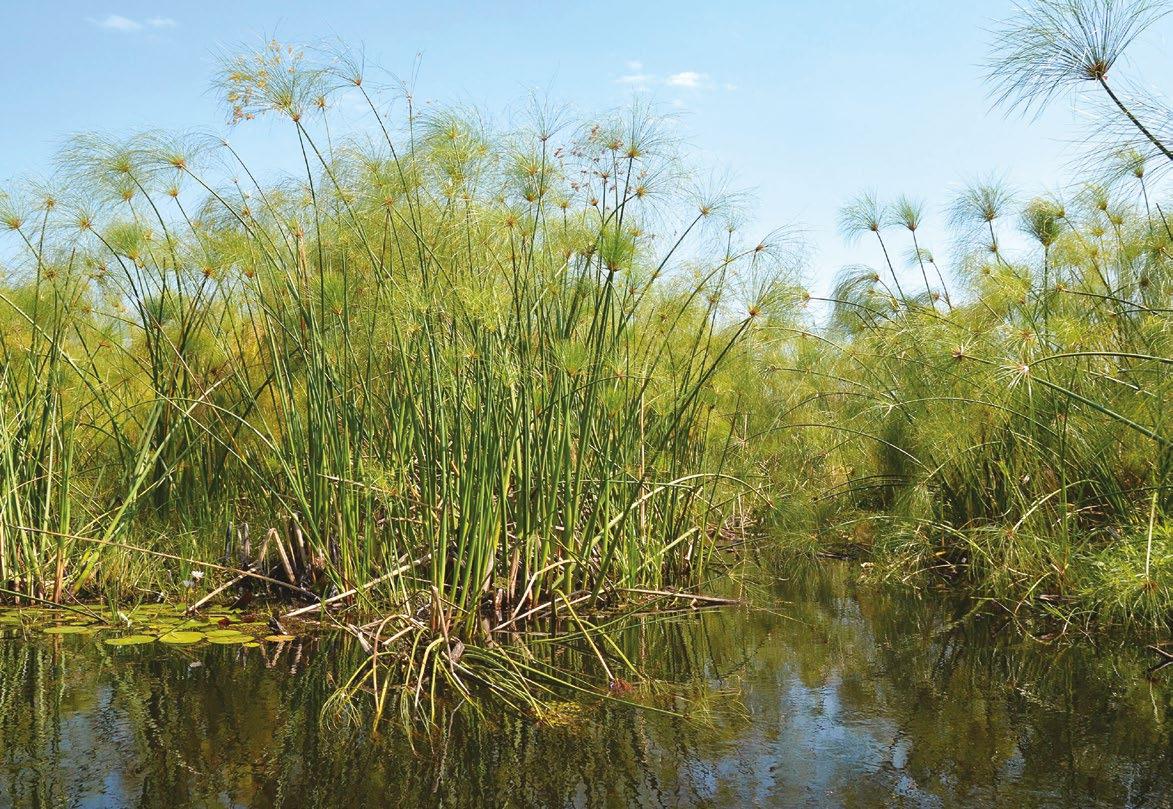
Emergent wetland plants have roots below and leaves that grow up above the water surface. To emerge, or to be emergent, means coming out or rising up from.
Reeds are a kind of grass common in wetlands. They have tall, hollow, round, stiff stems.
Rushes also have stiff round stems.
Sedges are like grass but have solid stems that may be triangular and don’t have nodes.
Papyrus sedge Cyperus papyrus (below), also called paper reed, Nile grass or matting plant is common in African wetlands.
The grasses in dambos have deep roots that reach down to underground water, even in the dry season.
Grasses have hollow round stems.
The solid sections in grass stems where the leaves grow from are called nodes.
Wetland wildlife
Many animals depend on wetlands at certain times of year, especially in the dry season when food and water is scarce elsewhere. Some animals depend on wetlands for breeding, because the vegetation provides cover. Some species are wetland dwellers, they only live in wetlands, and are so well adapted to wetland conditions that they can not survive for very long in other habitats. Sitatunga, lechwe, otters, hippos and crocodiles are obligate wetland species.
Invertebrates: do not have a back bone, skull or spinal cord. Wetlands have a lot of invertebrates: like dragonflies, damselflies, some crickets, snails, shrimps, worms and beetles. The Okavango swamps in Botswana are home to nearly 100 different dragonfly species!
Vertebrates: (in the group chordata) have a bony spine or backbone inside their body and they have a bony skull that protects the brain. Mammals, birds, amphibians, reptiles and fish are all vertebrates.
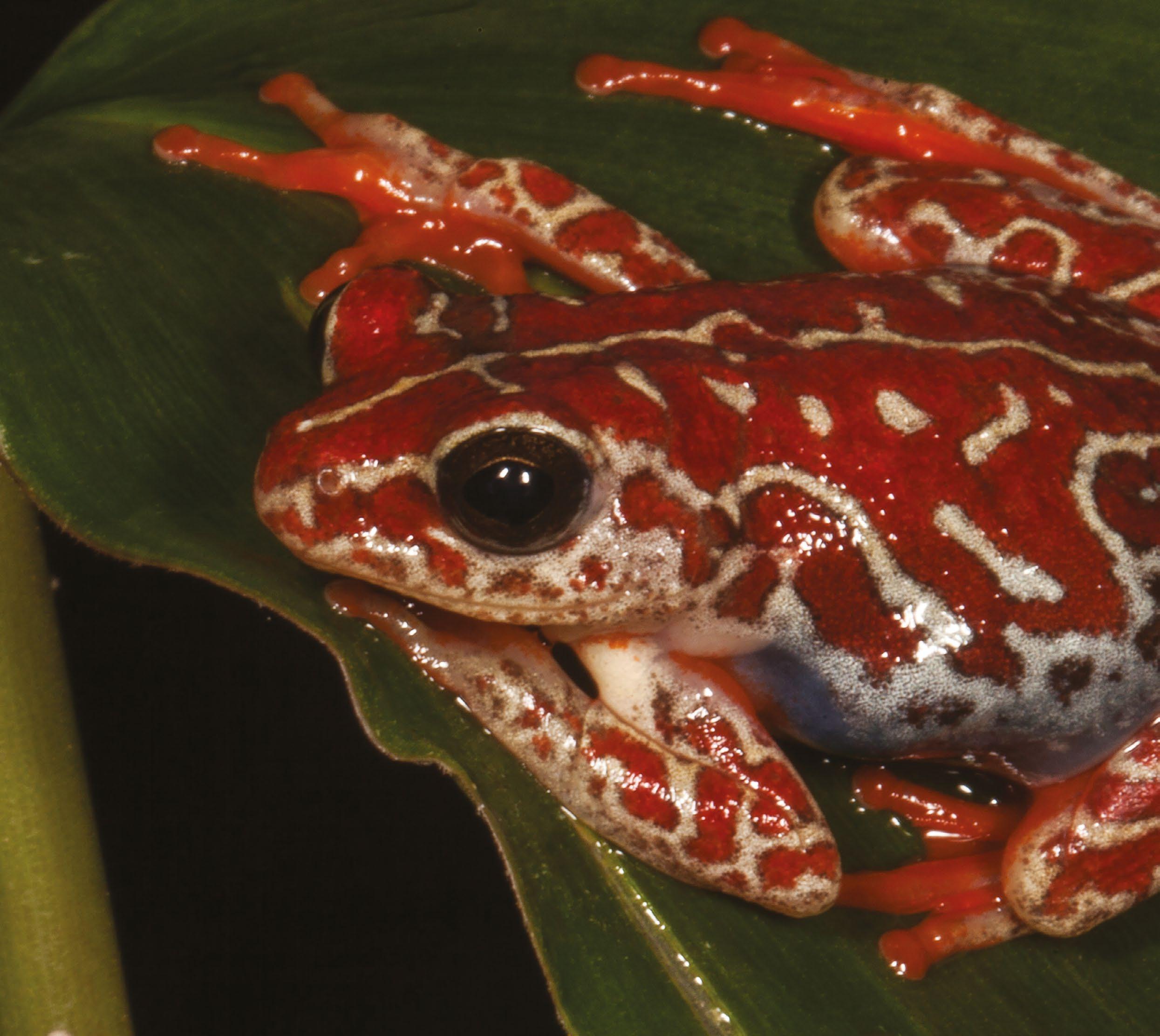
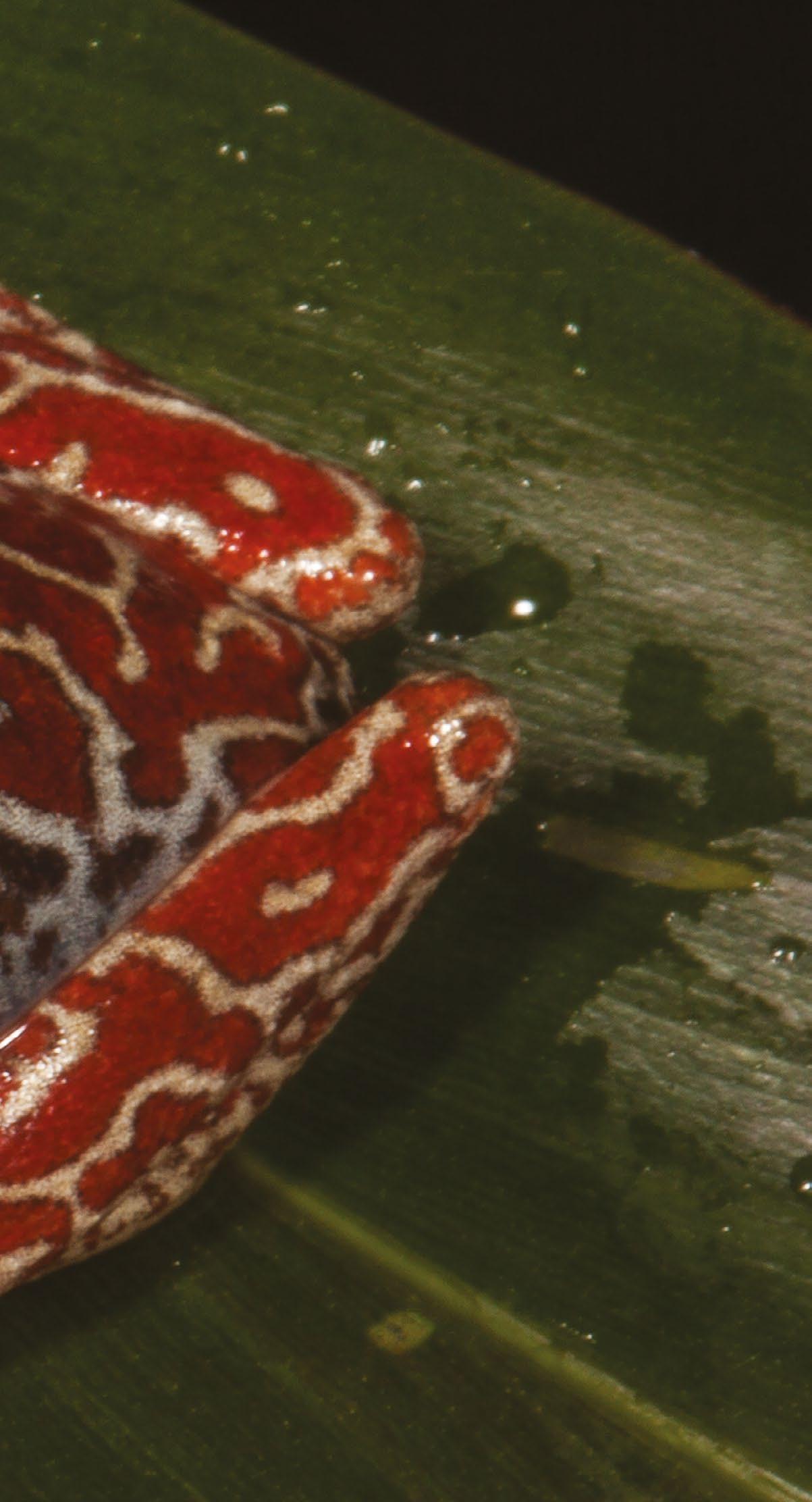
Angolan Reed Frog, Hyperolus parallelus, Cangandala National Park, Angola.
Amphibians
Frogs and toads are amphibians. They have thin skin which dries up easily. They take in water and oxygen, and breath out CO2 through their skin. To stay healthy they need a wet or damp habitat. Also, their eggs are jelly like, laid in water and depend on water to stay viable.
Young frogs and toads are called tadpoles
They completely depend on water to survive.
Reptiles
Some reptiles live in water for most of their lives and rely on water for their survival. They find the food they need in wetlands. Some snakes, like the olive marsh snake are wetland species.
Freshwater turtles use wetlands, rivers and lakes for feeding and breeding.
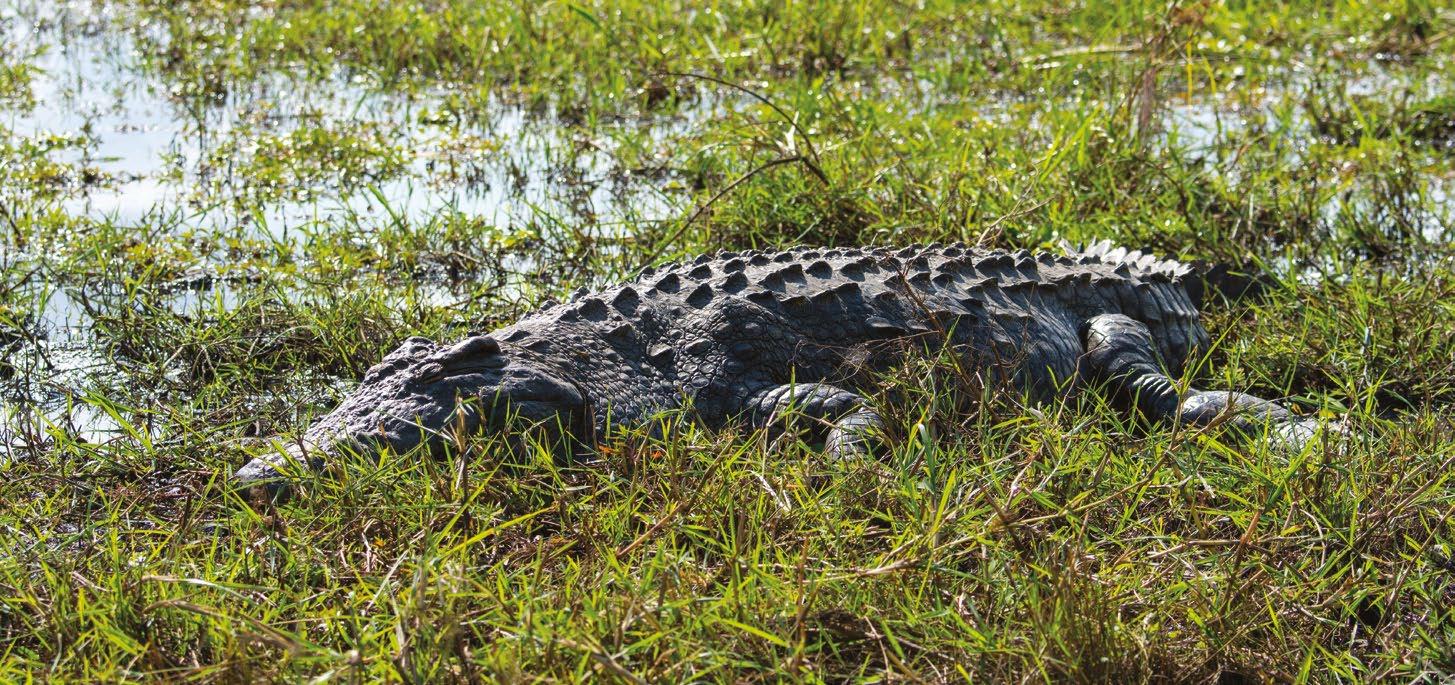
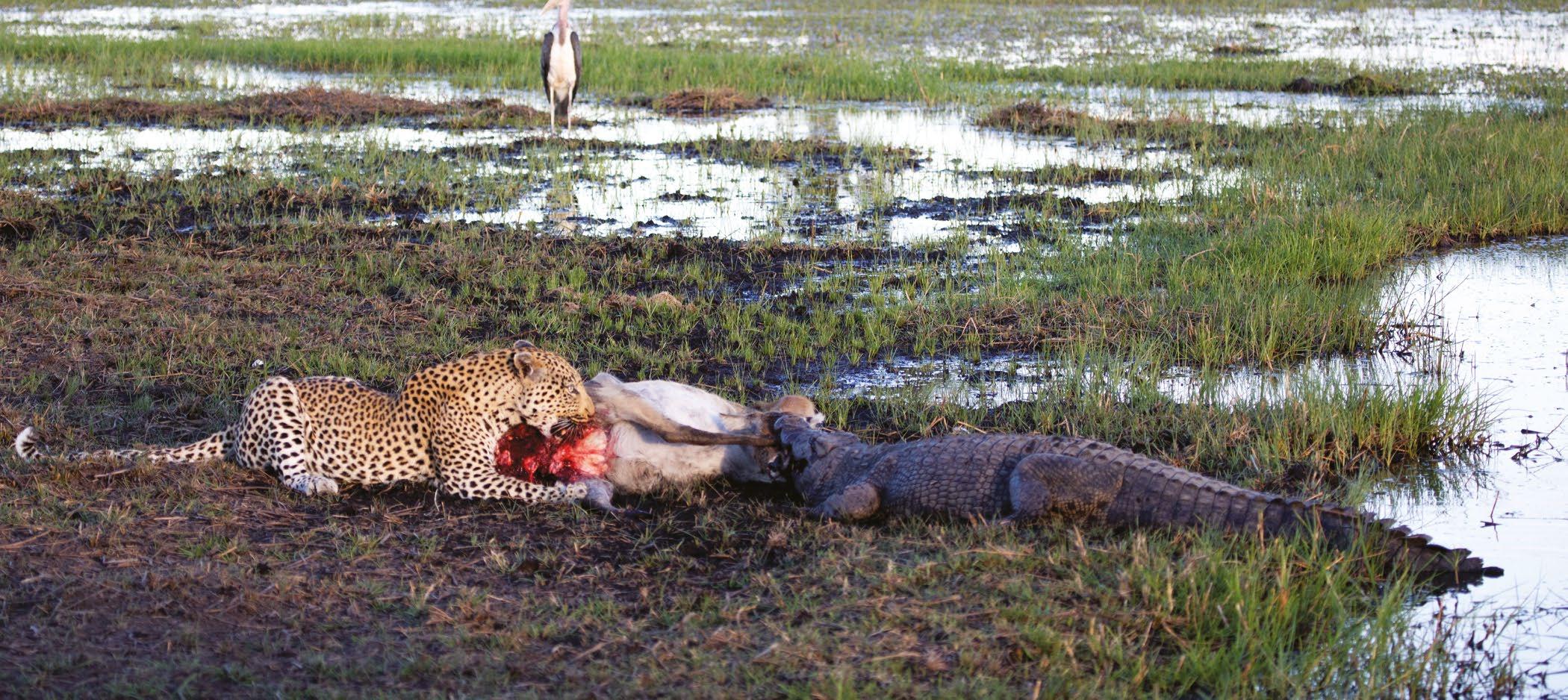
West African crocodiles live in the lagoons and wetlands, marshes, swamps and rivers of west and central Africa. Nile crocodiles live in lakes, rivers, swamps and marshes. They are common in central, east and southern Africa. They are apex predators.
Reptiles and amphibians are ectothermic, sometimes called cold-blooded.
Ecto means outside and thermic means temperature.
Ectotherms – animals with body temperature that follows the temperature of its environment. They bask in the sun, on a warm rock or in warm water to absorb heat, and are less active in cold.
Fish
Many freshwater fish depend on wetlands for breeding. Herons, kingfisher, fish eagle and other predators like otters and mongoose feed on the fish.
Birds
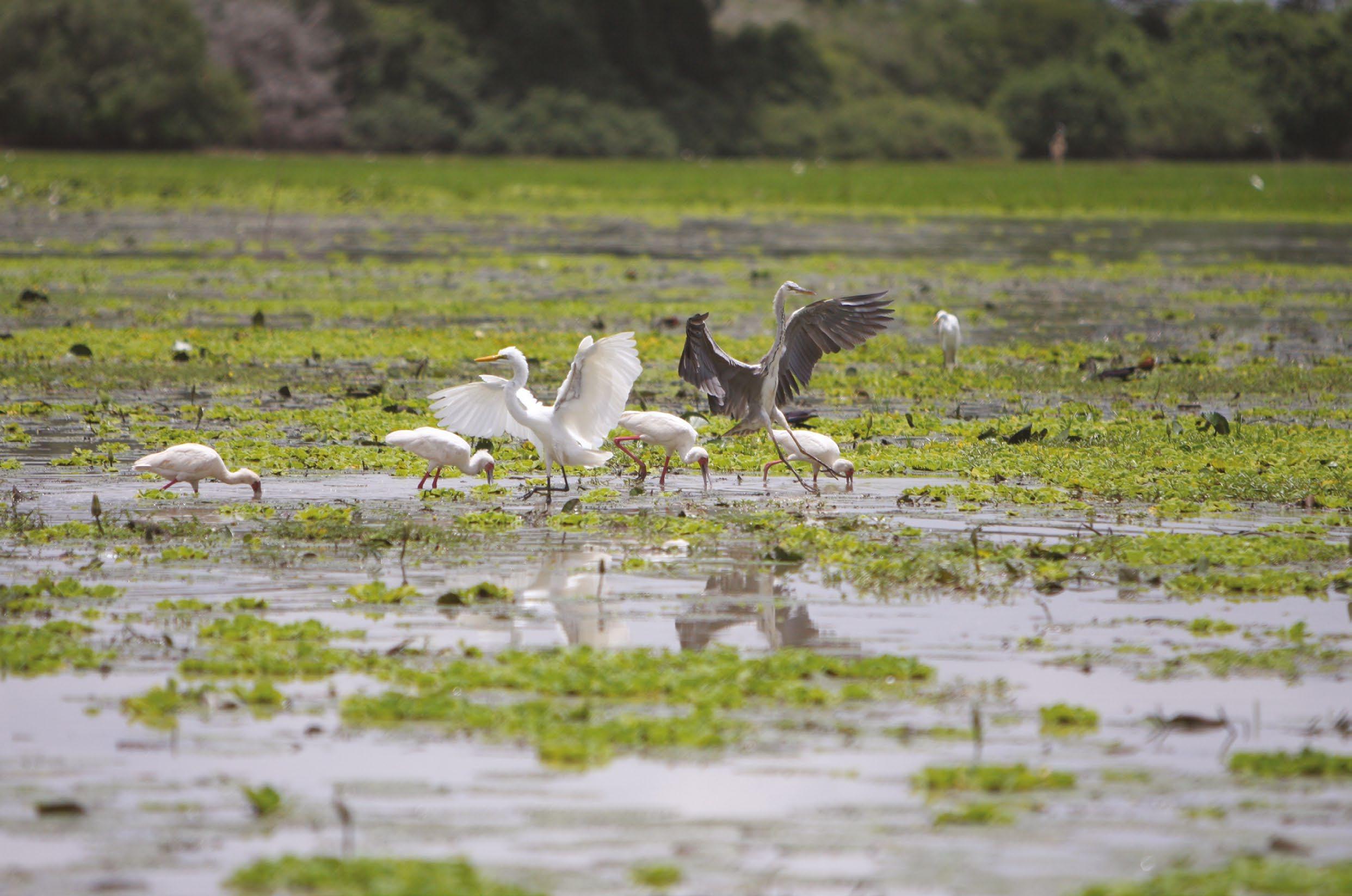
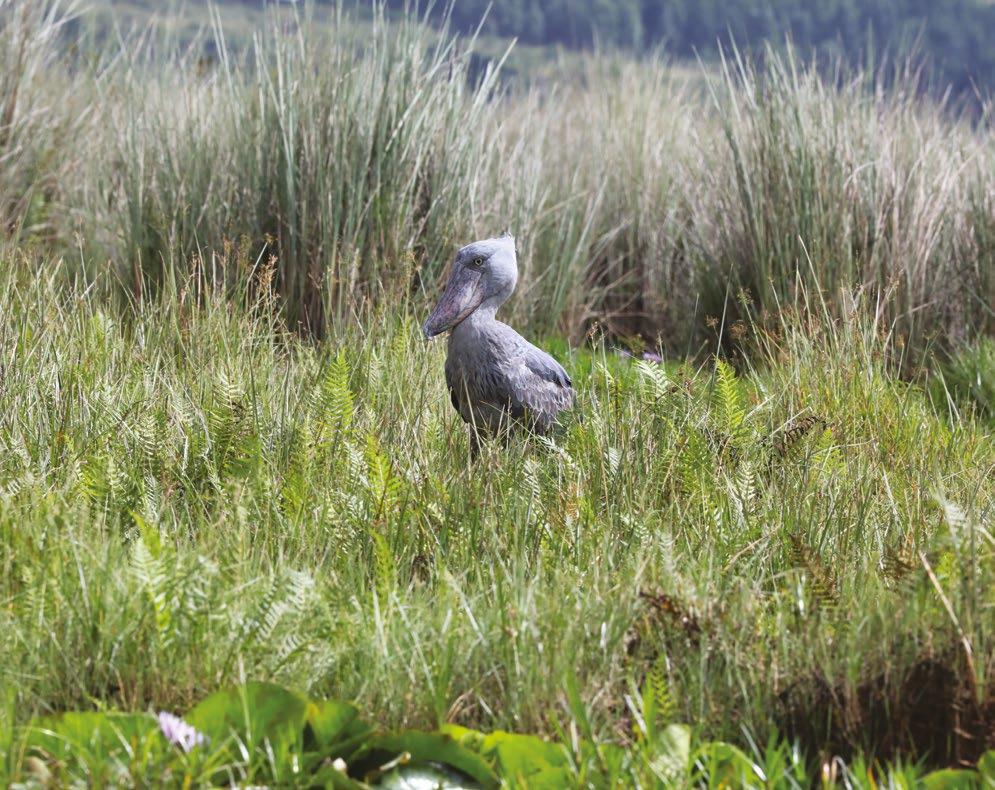
Wetlands provide a home for water birds (like ducks, geese, kingfishers and sandpipers). Cranes, shoebill and storks are also wetland species.
All these birds use wetlands for breeding, feeding, and use the vegetation cover to raise their young.
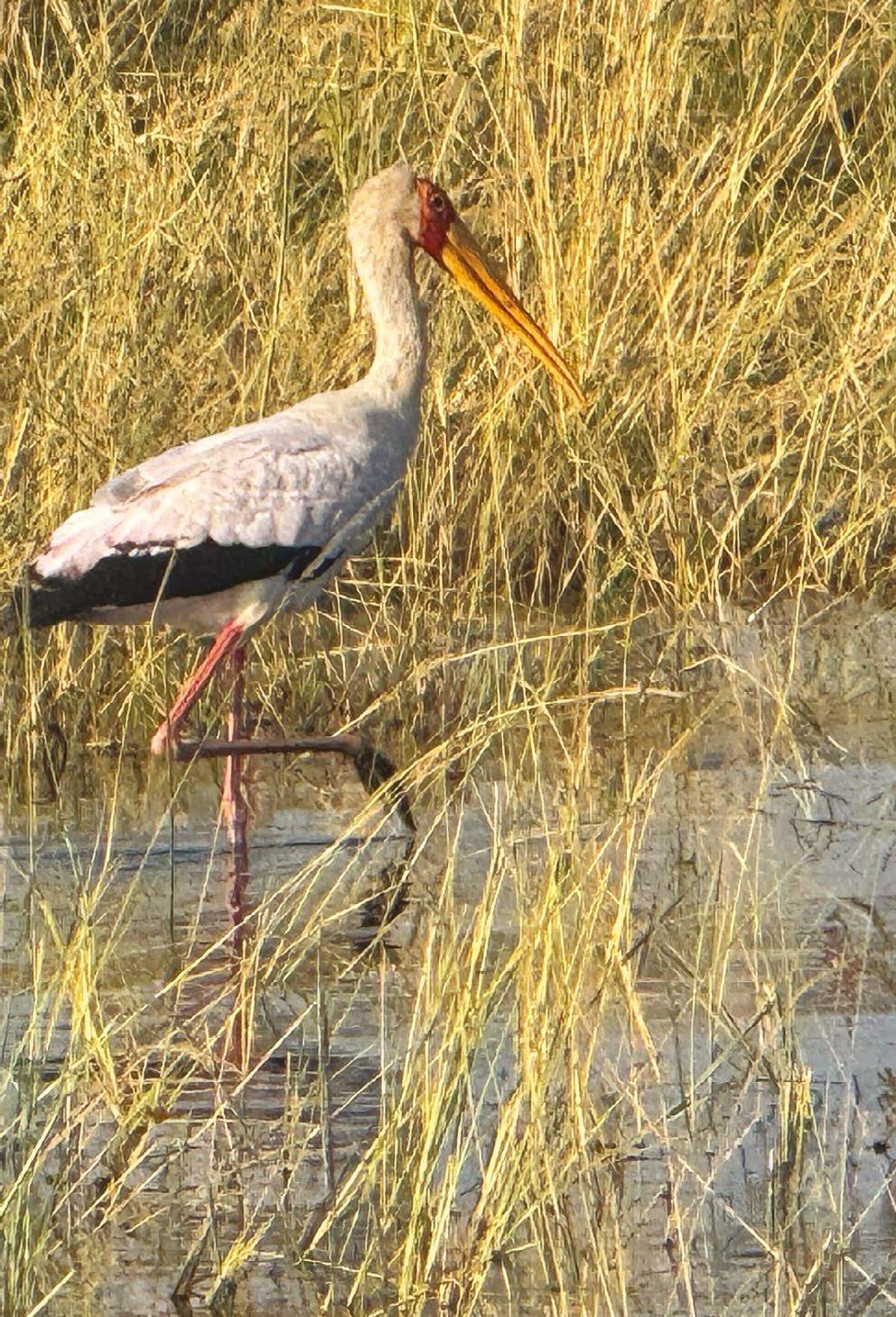
Northern Kenya
Shoebill Uganda.
Yellow billed stork, South Luangwa, Zambia.
The floodplains of the Senegal, Niger and Chad basins support more than a million water birds.
The Djoudj National Bird Park in Senegal and Diawling National Park, in Mauritania, provide habitat for more than 3 million birds, from nearly 400 species!
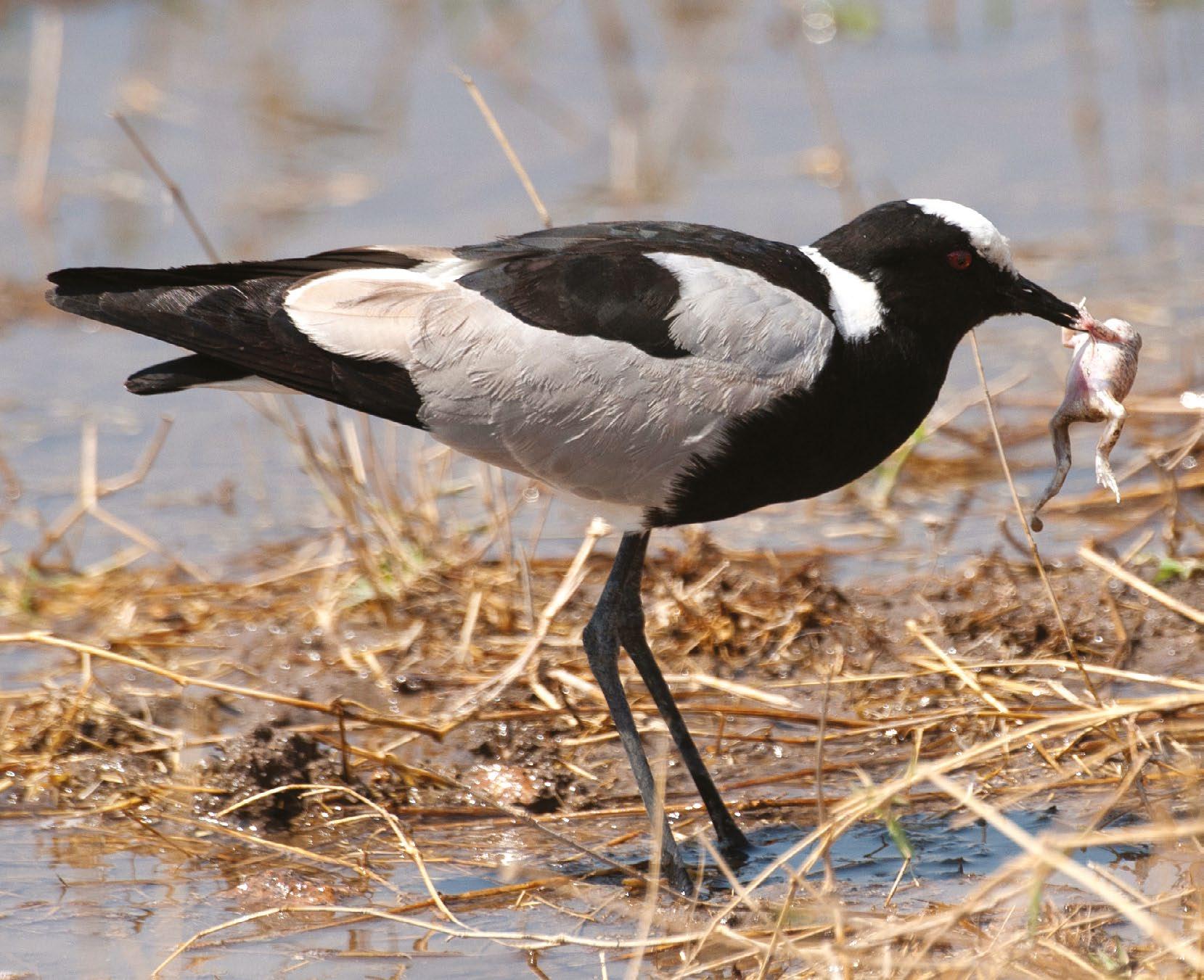
The Blacksmith bird (a plover or lapwing) is associated with wetland areas in east and southern Africa.
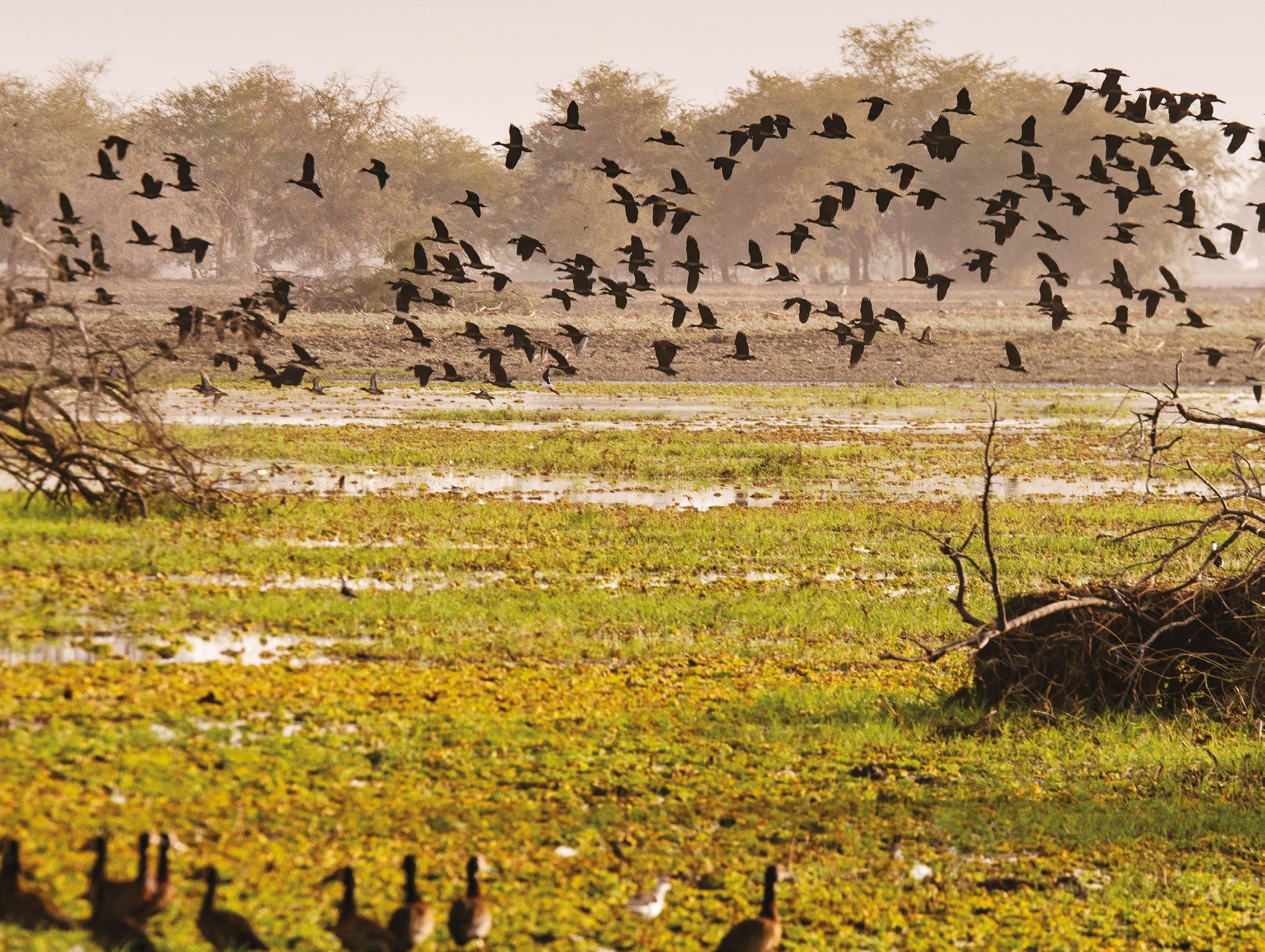
Wetlands in Zakouma National Park, Chad .
Migration stopovers
Millions of birds migrate between Europe and tropical Africa every year. Certain wetlands are essential stopover sites where they rest, feed and in some cases breed. There is plentiful food in the wetlands.
Grazing animals like zebra and antelope migrate to the Zambezi wetlands in southern Africa for the dry season, and when rains come return to drier savannah and woodlands.
Migration – is when an animal moves from one area to another according to the season. Migration may be to avoid bad weather, lack of food, to find suitable breeding grounds, or other reasons.
An example is wildebeest migrating between Tanzania and Kenya.
Migration routes, or flyways, that migrating birds use to and from northern breeding sites.
Mammals
Wetlands are home for mammals of all sizes: from small rodents and swamp rats, marsh mongoose and otters to hippos and buffalo.
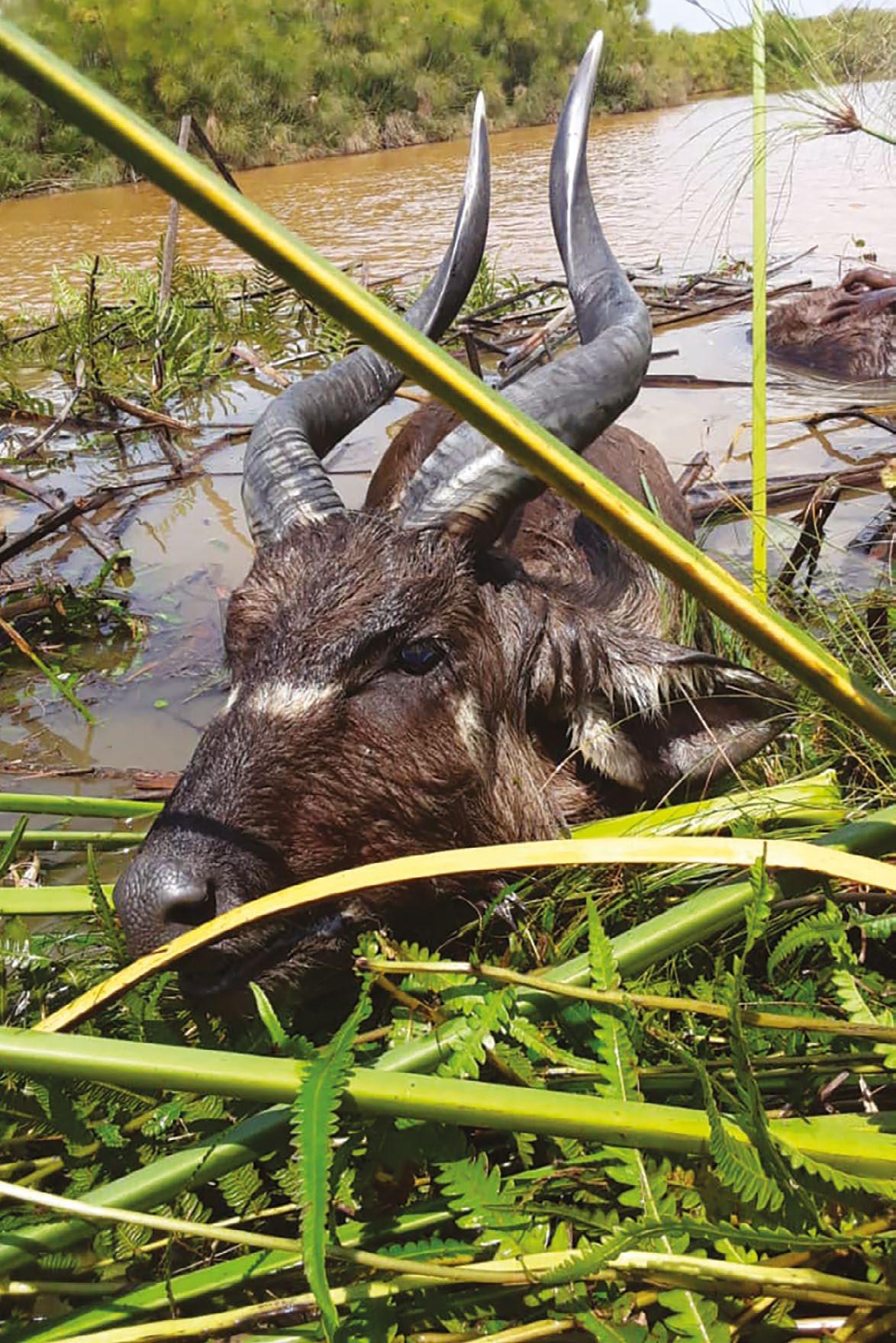
Sitatunga, Tragelaphus spekei, live in marshes and swamps in central Africa. Sitatunga are the largest antelope adapted to wetlands. Their hooves have two long splayed (banana shaped) toes that spread their weight. This stops them sinking in wet mud and allows them to walk on unstable floating plants. They are less agile moving on land than other antelope. They are strong swimmers and can hide underwater. Their skin is oily to protect against the water. They only venture out of swamps and marshes for short times when they know they are safe from predators.
Sitatunga arrange vegetation to make a platform on the water, as a resting place.
Obligate species are very specialised for surviving in just one habitat.
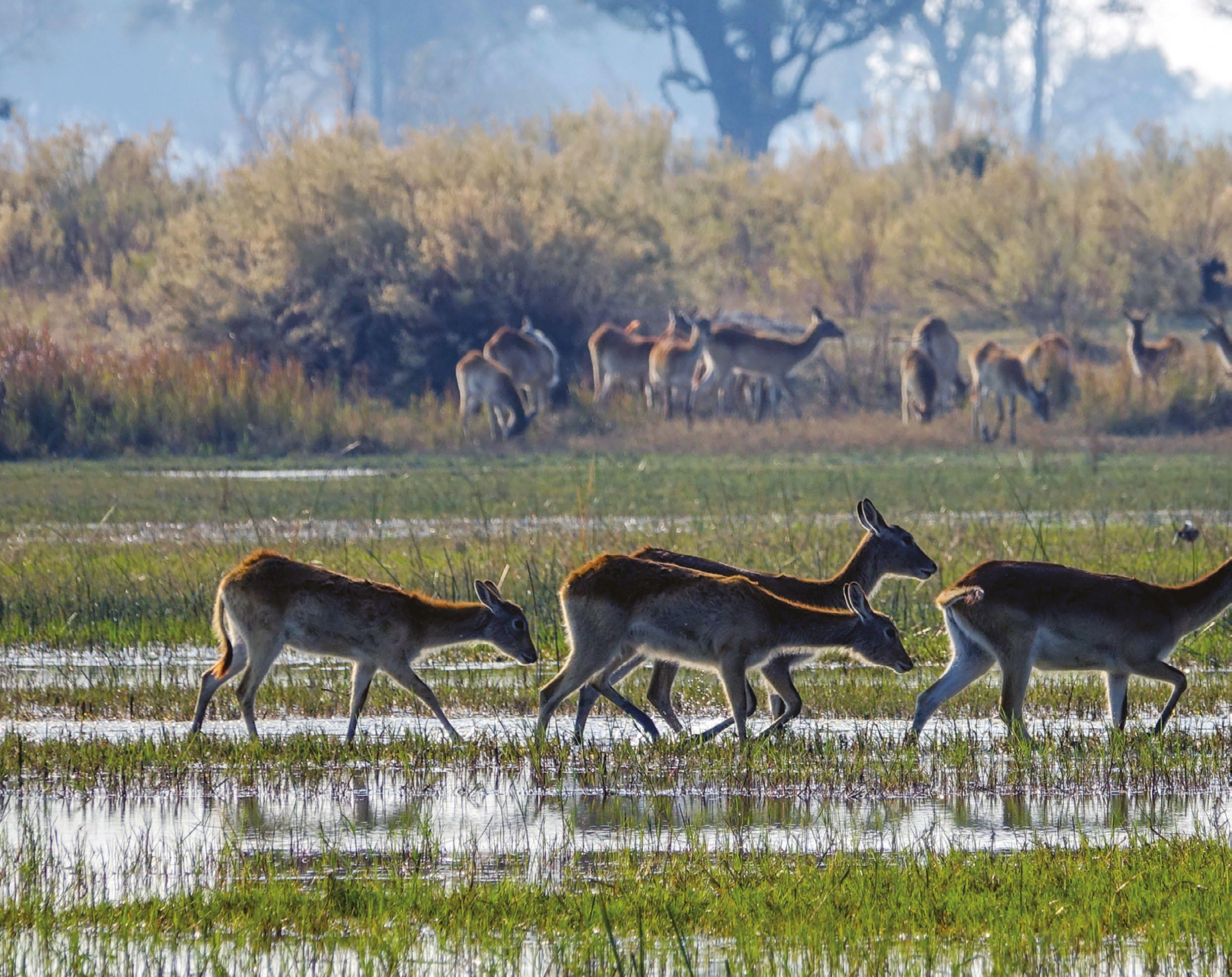
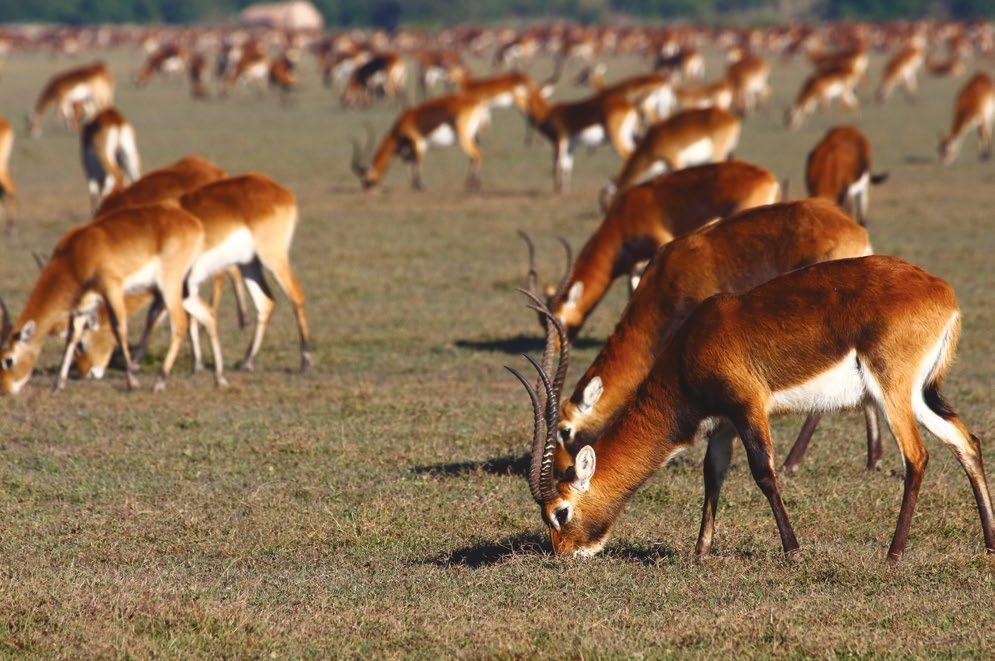
Lechwe, in central southern Africa are adapted to wetlands. They have elongated, splayed toes like the sitatunga. In Zambia they are only found in wetlands.
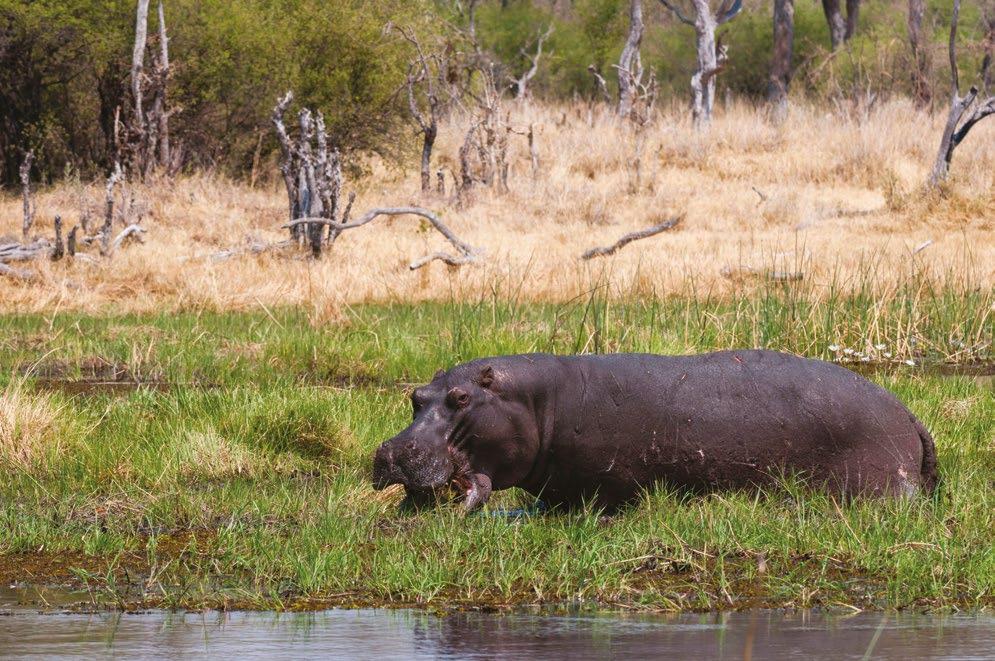
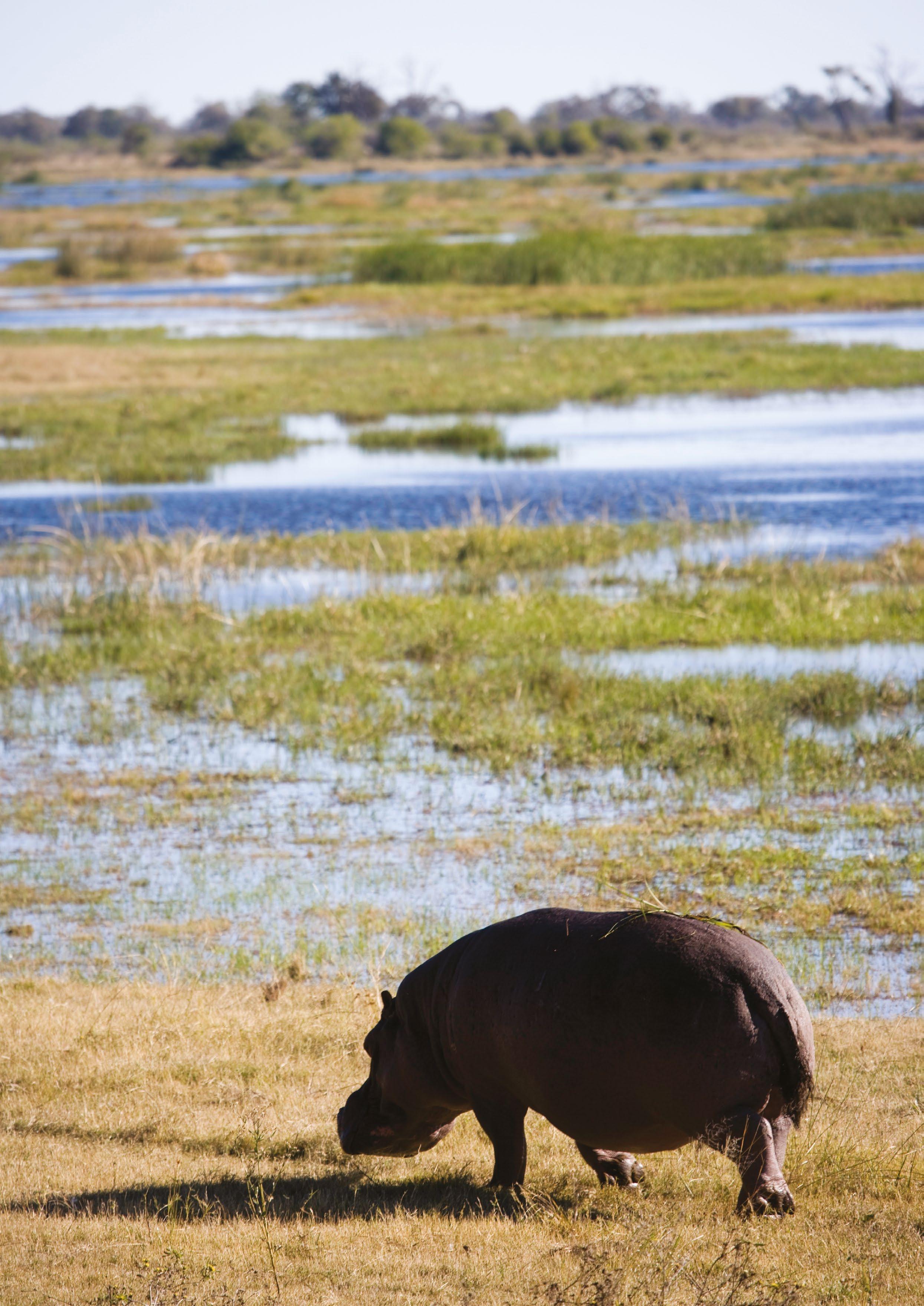
Hippos live in wetlands as well as rivers and lakes. They spend hot days in the water to protect their skin from the sun, and emerge to graze when it is cooler and at night. They need wetlands for that protection.
Black lechwe, Kobus smithemanni, grazing, Bangweulu wetlands, Zambia.
Hippopotamus, Hippopotamus-amphibius, eating water plants, Okavango delta, Botswana.
Buffalo and water buck are usually found near wetlands. They are some of the first non obligate species to suffer when rain is scarce, and will retreat to marshy and swamp areas in dry periods.
Many species of wildlife use wetlands, but may not depend on it all the time.
In dry seasons wetlands are a vital refuge for wildlife. They are often the only source of water, and of nutritious vegetation for grazing and browsing animals. This also makes them a good place for predators to hunt.
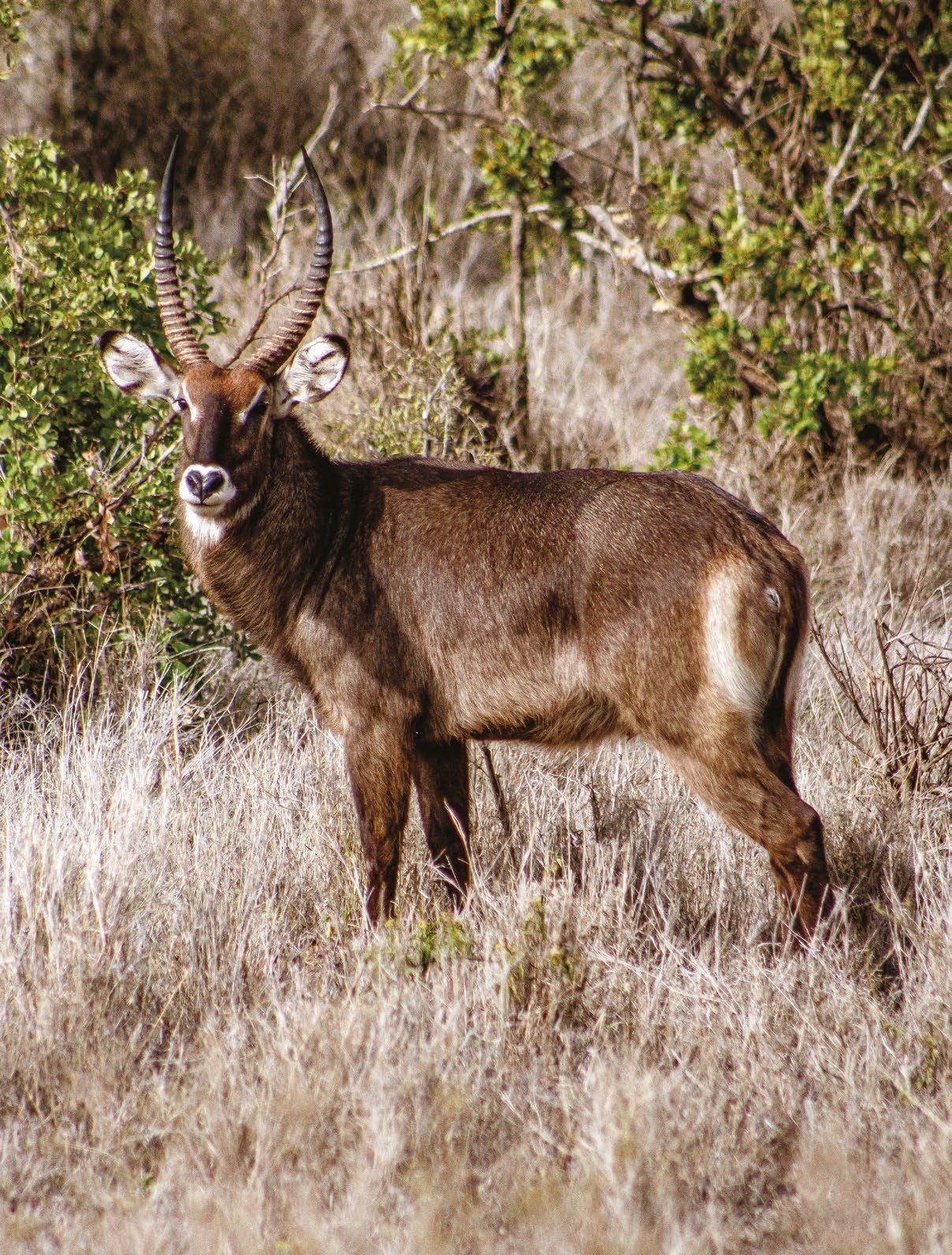
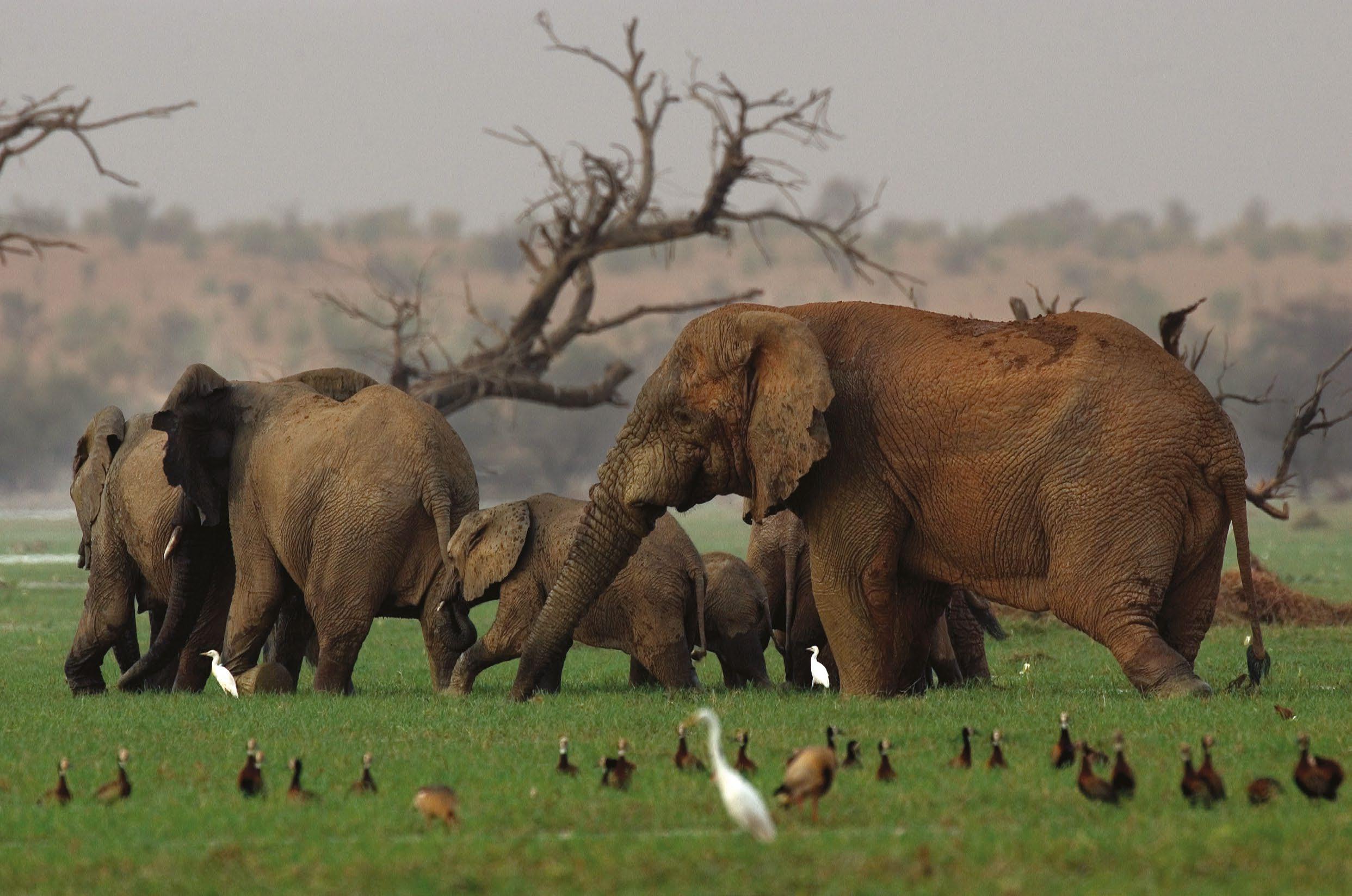
Borana, Kenya
Mali
Wetland ecosystems
Ecosystem productivity is the amount of vegetation that grows in a period of time. Wetlands have very high productivity. Slowflowing or seasonally flooded wetlands are usually the most productive, and species rich.
Wetlands support many food chains and food webs.
Herbivores gather at wetlands to drink, and in dry seasons to graze. This makes wetlands a good hunting ground for predators.
Ramsar Sites are wetlands of international importance. There are more than 400 Ramsar sites in Africa.
Wetlands are high in biodiversity. Biodiversity is the number of different species.
Ecosystem – a community of living and non-living things, their physical environment and all the relationships and interactions between them.
Habitat – where an organism lives. It may be small or vast and include one or more ecosystems.
Wetland biodiversity
Wetlands are some of the most biodiverse ecosystems on the planet.
The Okavango delta in Botswana has more than 1300 different plant species!! More than 80 different fish species, >33 amphibian species, >64 reptile, >480 bird species, >130 mammal species!
Flooded forest around the Ogooué River in Gabon, like many forest wetlands in Congo, DRC and CAR, is home to forest elephants, hippos, chimpanzees, western gorillas, giant pangolins, African manatees, red-capped mangabeys, African dwarf crocodiles, central African slender-snouted crocodiles, and many, many, more wildlife species.
The role of wetlands
Wetlands are a key part of local and global ecological cycles and systems.
The water cycle
Wetlands provide us with clean water, because they filter the water that enters and flows through.
Wetlands protect against flooding. They act like a sponge. During heavy rain they store and hold back flood water. By reducing flooding they also protect against erosion.
Wetlands help provide regular water supply because they release their stored water gradually throughout the year, even in the dry season and periods of drought. They also feed underground aquifers. These are like underground water reservoirs that we get fresh water from using wells and bore holes.
Wetlands are important for our economies.
Wetlands are important culturally.
Wetlands are important for leisure and relaxation.
The carbon cycle
Wetlands are vital to local and global carbon cycles. Wetland soils are very organic. The organic matter (dead plants and animals) is made of carbon. By storing this carbon, it is not released into the atmosphere, where it would exacerbate climate change. Exacerbate means to make worse!
The vast peatlands of the Congo forest swamps and the Nile delta are some of the biggest carbon stores in the world!
Sustain means to keep going. Something is sustainable if it can continue to produce and thrive.
Degrade means to lose quality.
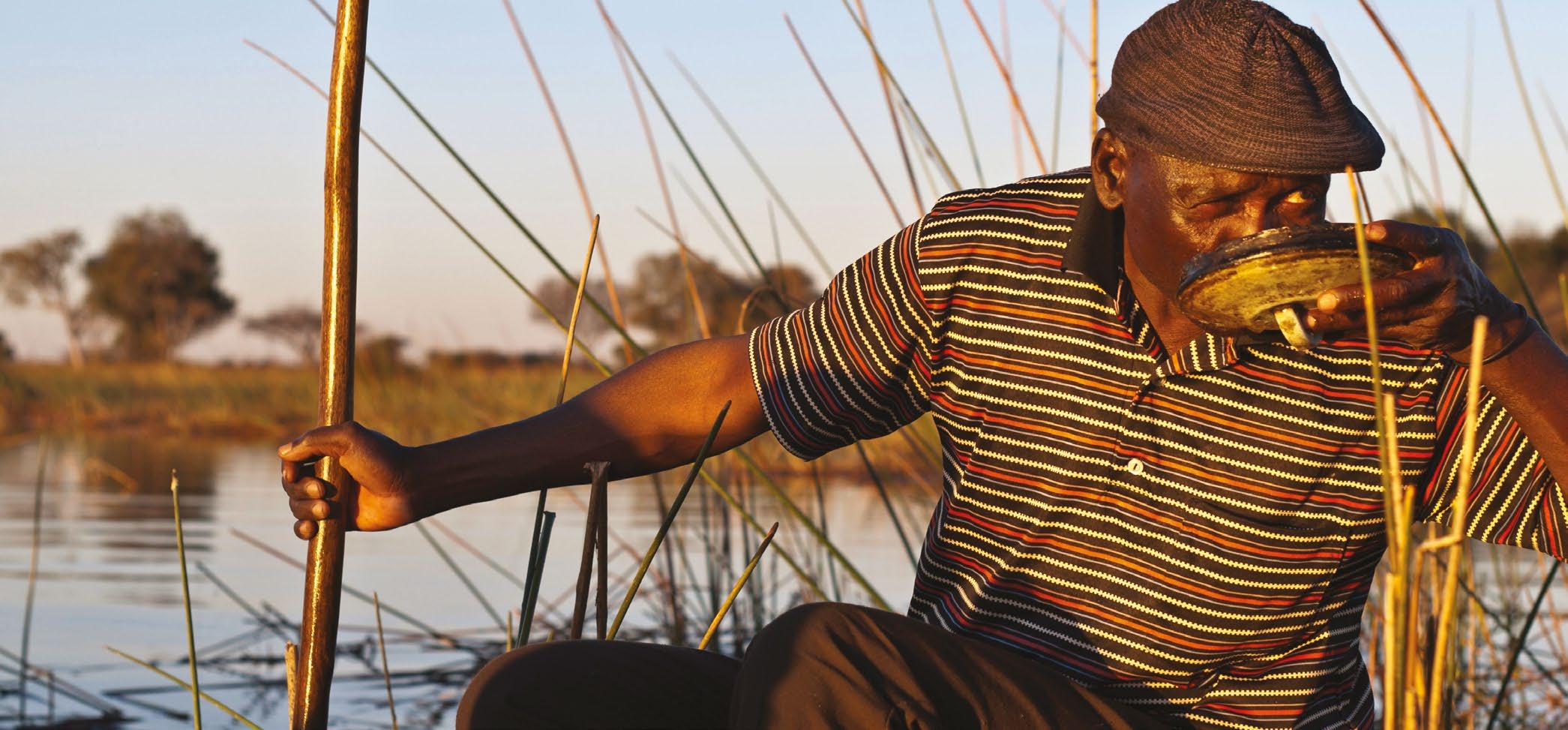
Wetlands protect and regulate.
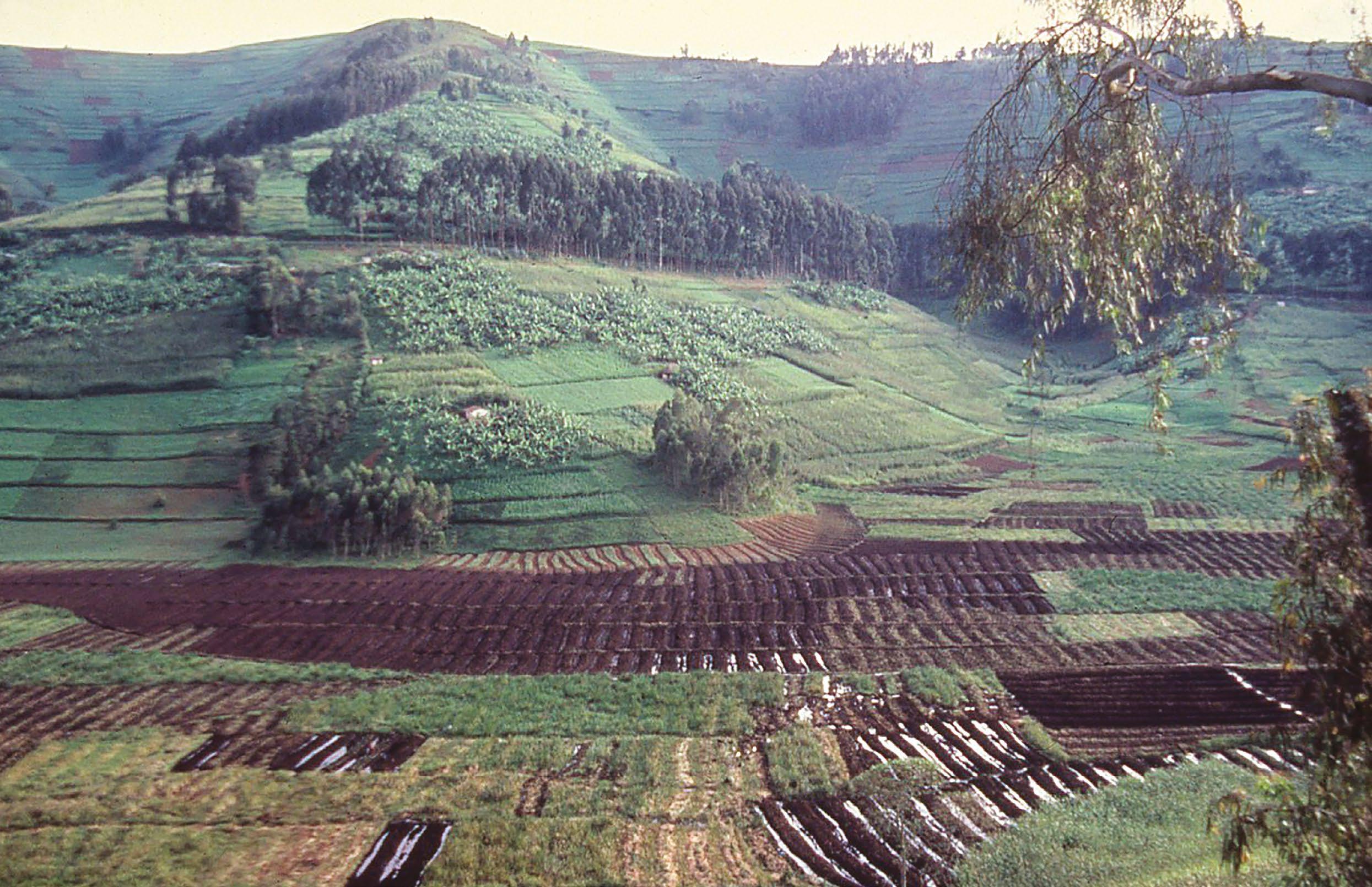
People and wetlands
For many hundreds of years, wetlands have provided people with food, fuel, energy, water and much more.
Ecosystem services are the benefits people derive from the environment or an ecosystem:
• Products like fish, fodder, medicine.
• Processes like nutrient and water cycling.
• Roles like regulating and protecting against floods and climate change.
• Social and well-being benefits.
• Primary production – like the birds and bats that live and grow in wetlands. They pollinate crops, providing ecosystem services.
As the human population has increased, use of wetlands has become unsustainable.
Many wetlands have been degraded, many have disappeared.
Rwanda
Human induced threats to wetlands
Draining
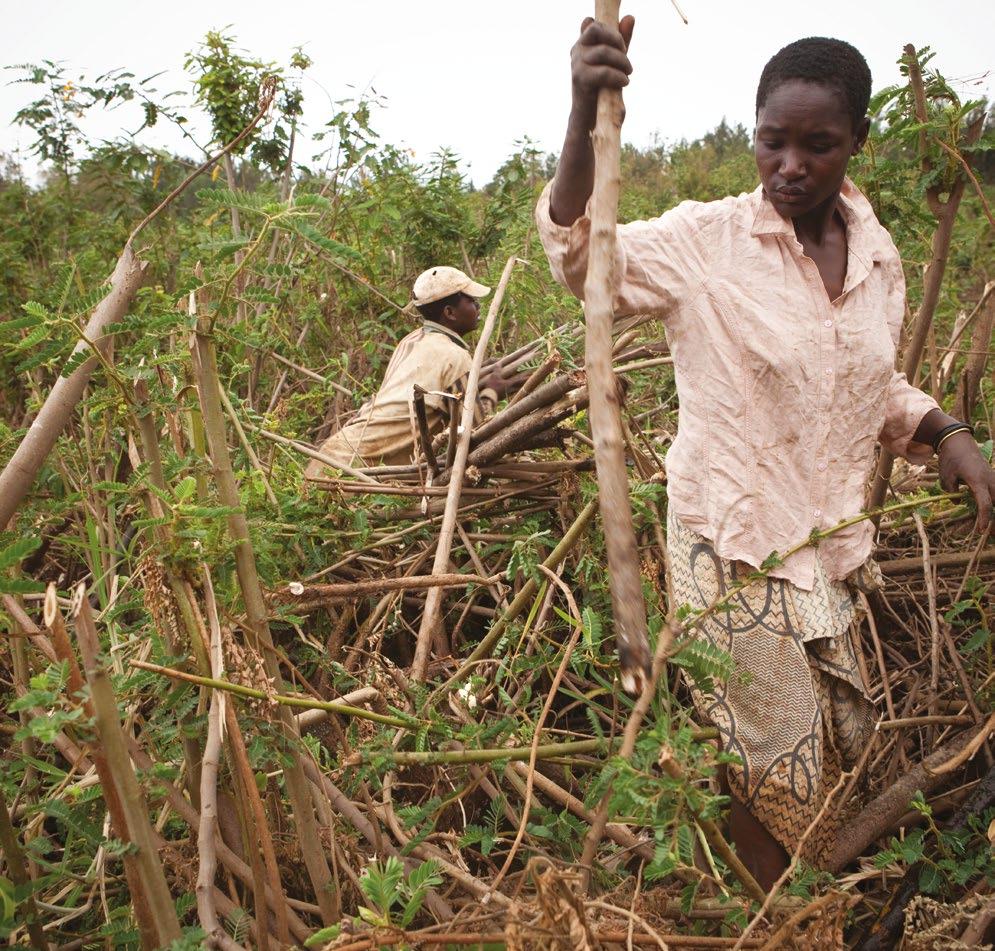
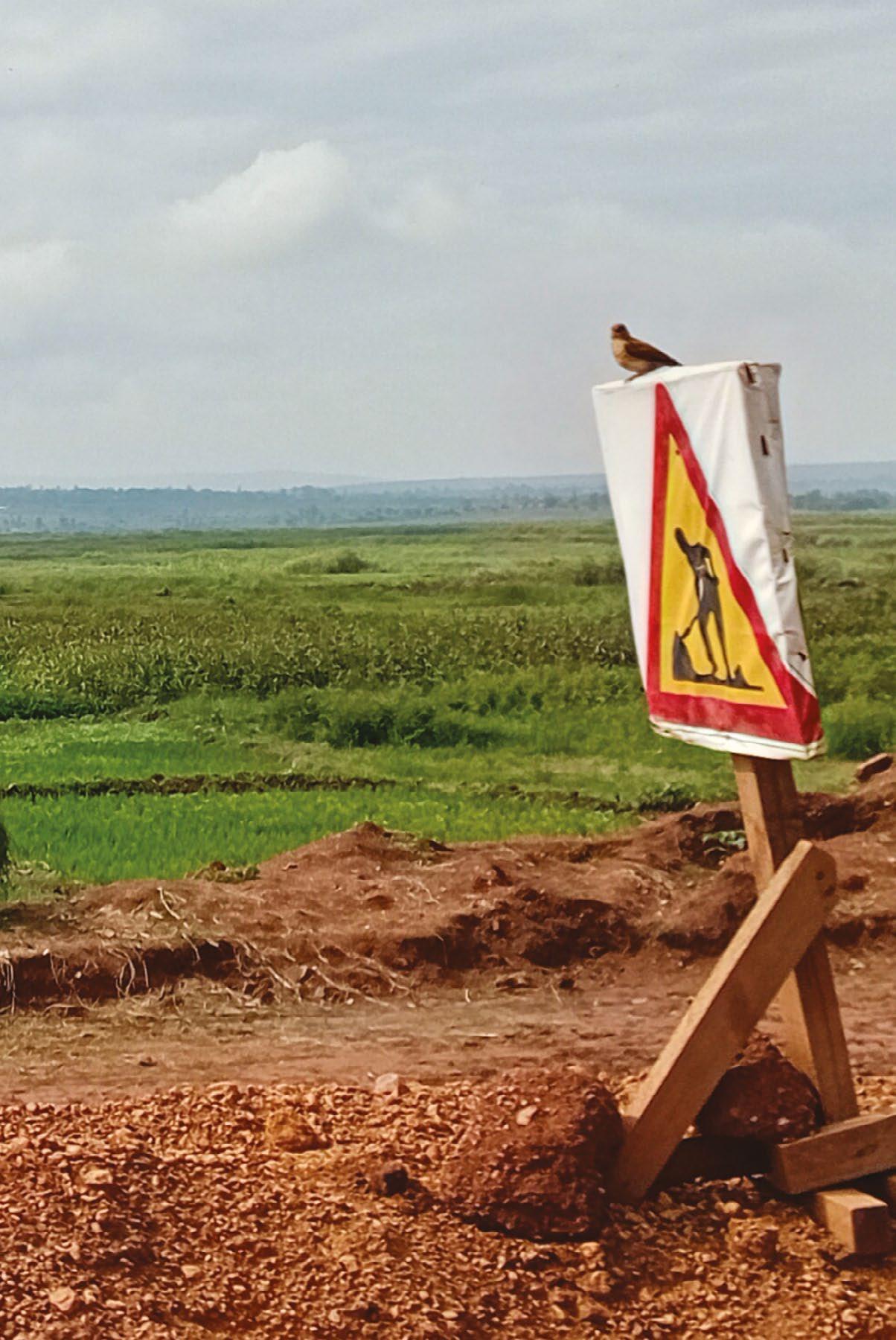
Wetlands are often cleared of natural vegetation so that they can be used for pasture or agriculture. The biodiversity is lost and water storage, flood protection and water purifying role is lost.
Clearing the hillsides around wetlands causes erosion, flooding and mudslides. Burning, overgrazing and overharvesting has the same effects.
Overharvesting can be of fish, wildlife, wood, grass, reeds.
Pollution
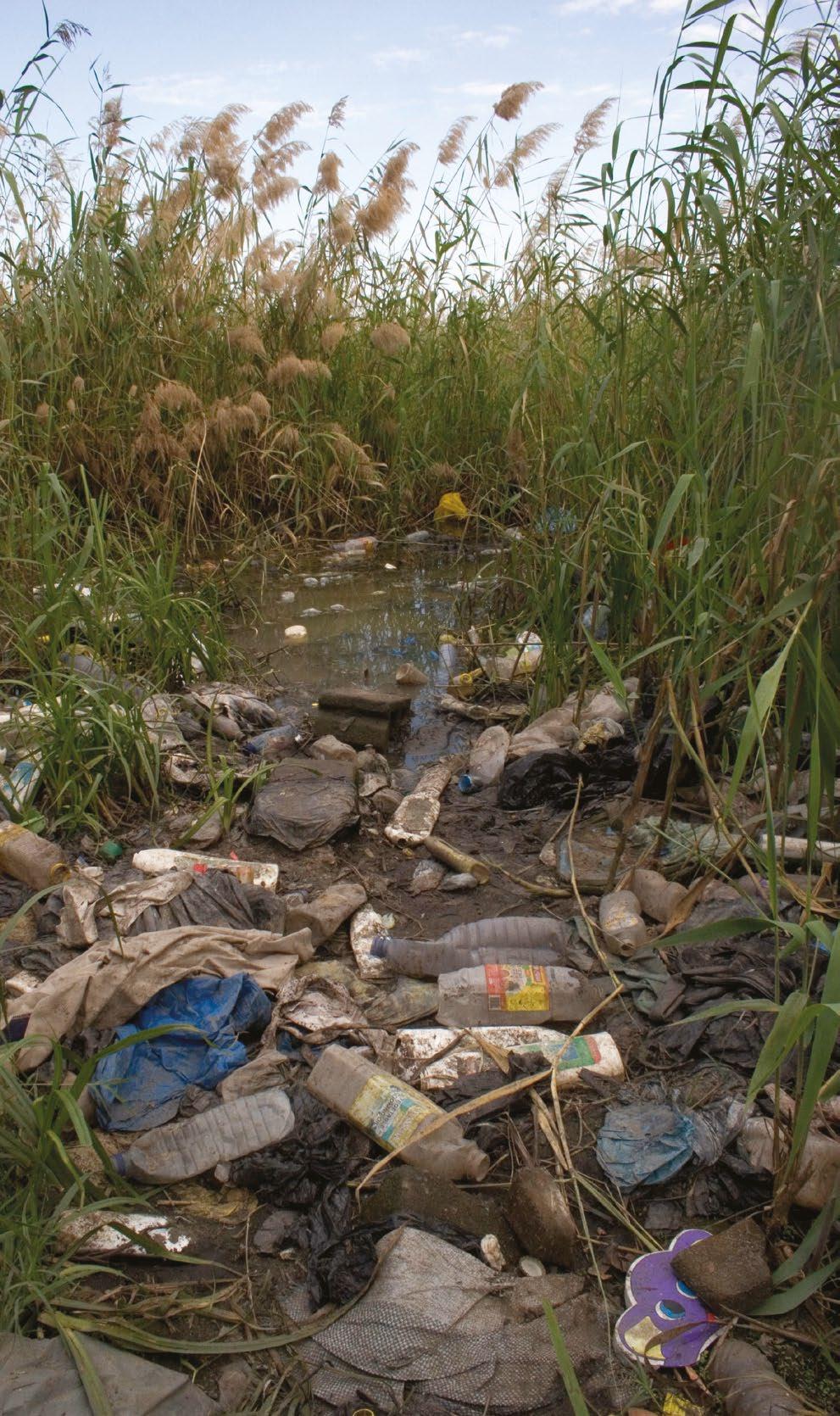
Using wetlands as waste dumping grounds by factories, businesses, construction sites and households is very dangerous, and wrong. Sewage, waste water, machine and vehicle oils, plastics, foodstuff, fertilisers, pesticides are all pollution that will destroy wetlands. Pollution contaminates water, poisons plants and wildlife and disrupts natural processes.
What threats to the wetlands can you see in these pictures?
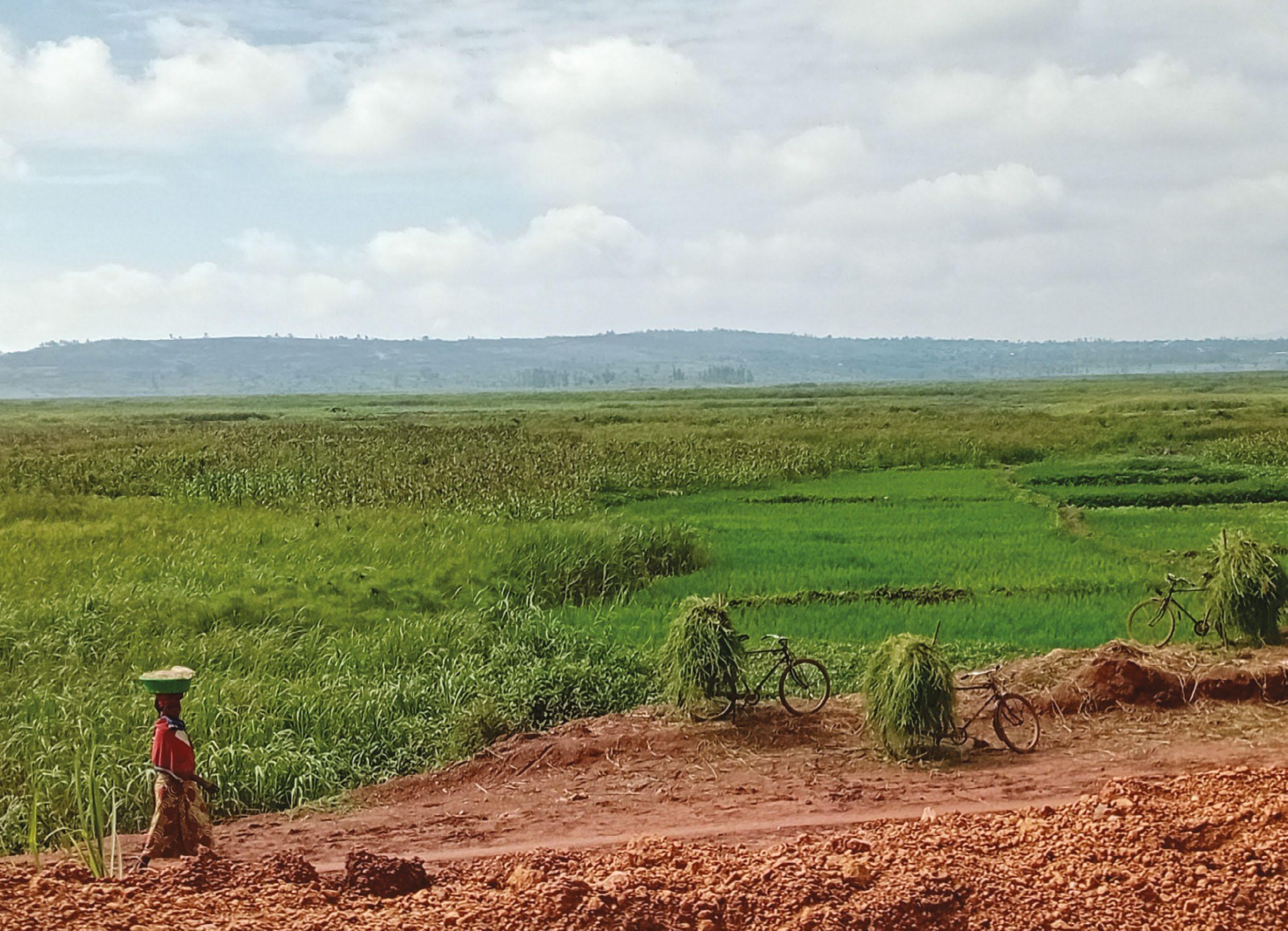
We can protect wetlands
Sustainable practices can improve living standards and protect wetland ecosystems.
Wetland conservation – what can we do to help?
In Rwanda RWCA works with communities living close to wetlands. Together they have introduced sustainable practices, that improve living standards and protect the wetlands.
Planting fodder grasses
Communities plant the grass species they used to collect in the wetlands, on their farms. Cultivating fodder species and species for weaving is more convenient than trekking, harvesting and carrying grass from the marshland. WIN:WIN
Improved cook stoves
Energy saving cook stoves are replacing open firesides in local homes: improved cook stoves are healthier (they create less smoke) and use less wood.
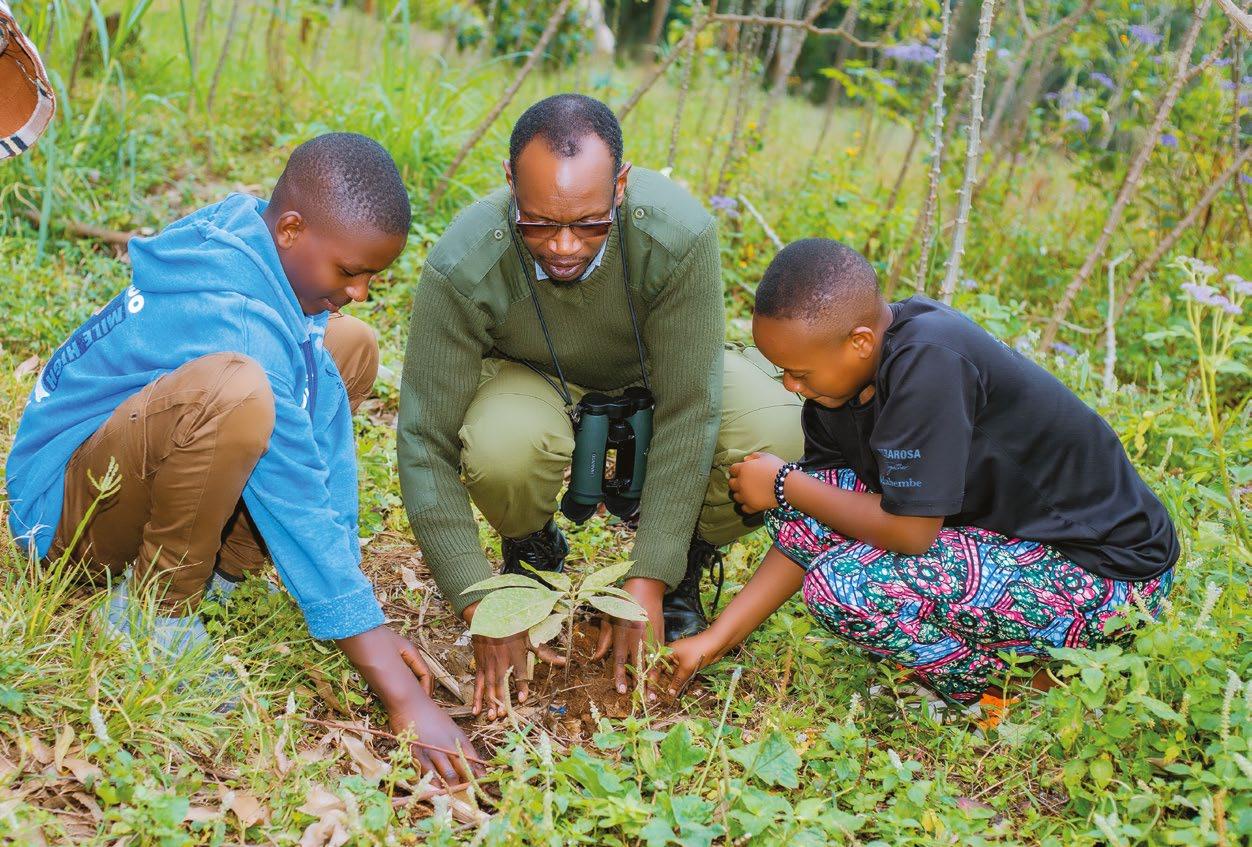
Tree planting and tree care
Planting and growing indigenous trees is always popular. Trees help prevent erosion. Native agroforestry trees are planted to provide fodder for cattle and goats, to improve the soil, provide shade, firewood, timber, fruits, medicine and food for honey bees.
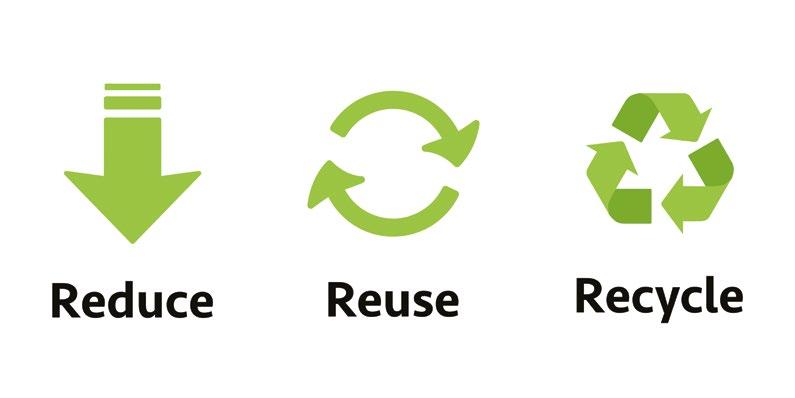
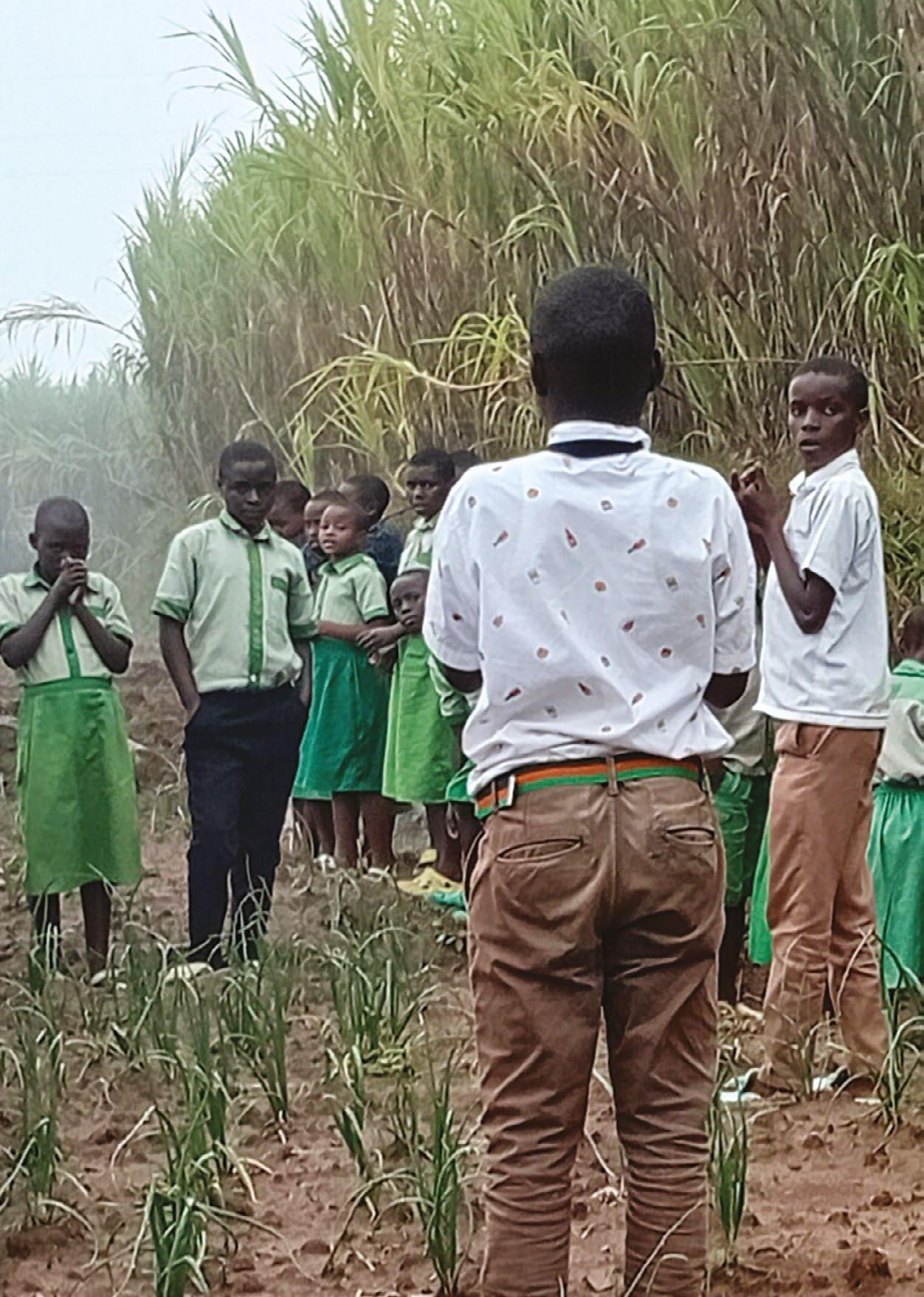
Managing household waste
Straw coloured fruit bat
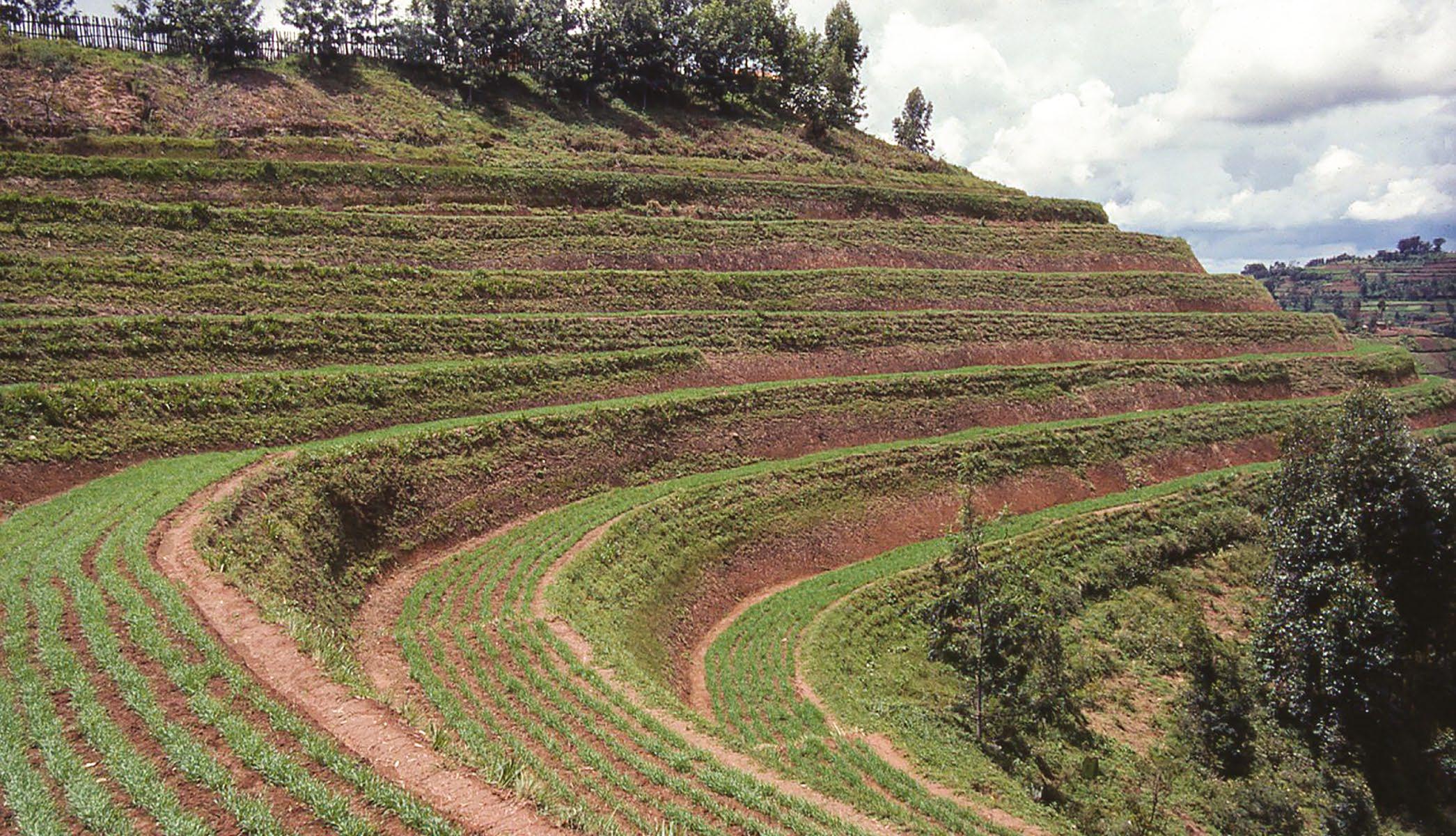
Terracing
Radical terraces on hillsides around the wetlands makes farming easier, retains soil and its fertility, and reduces erosion that was degrading the marshland.
Farm production improved.
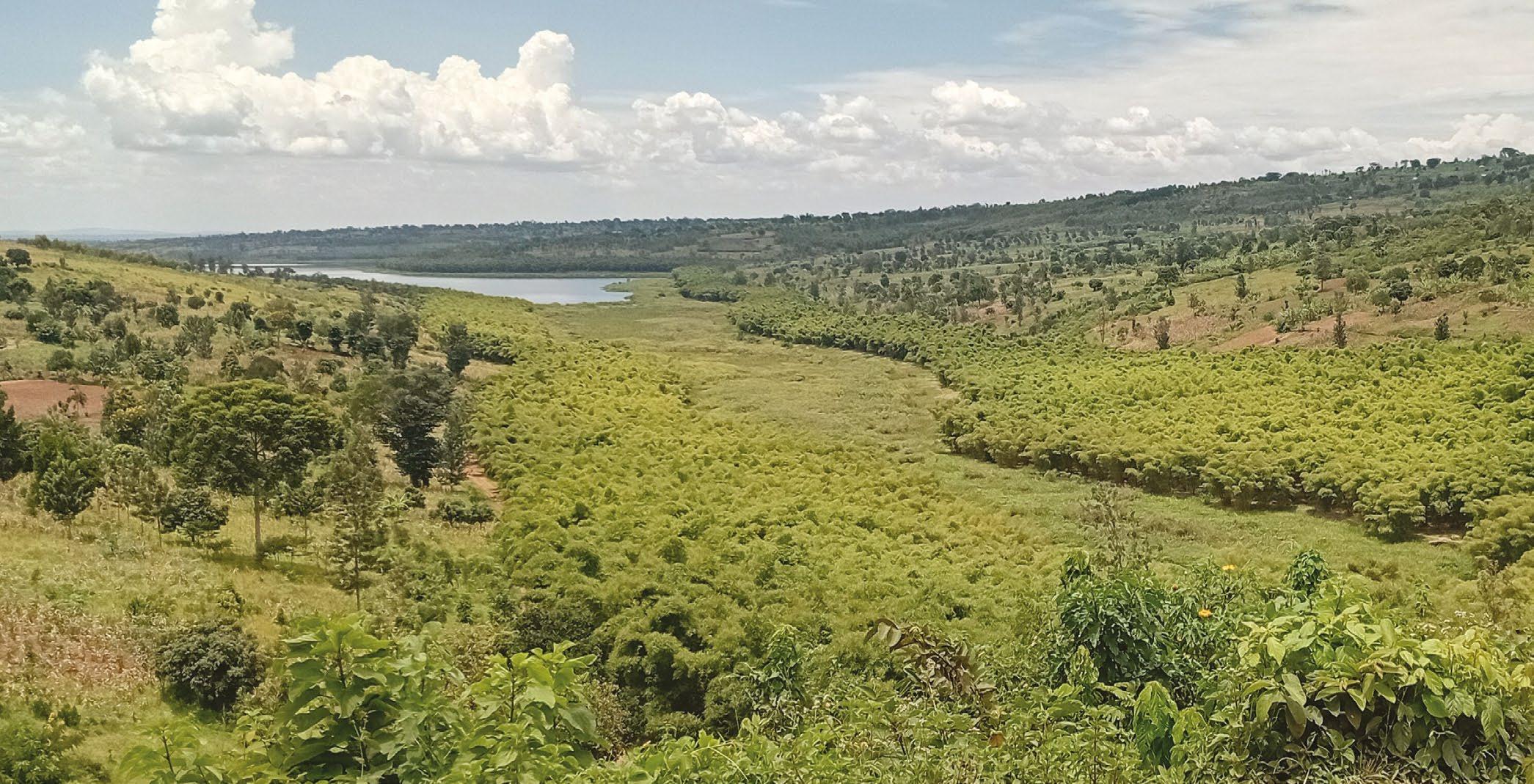
Buffer zones
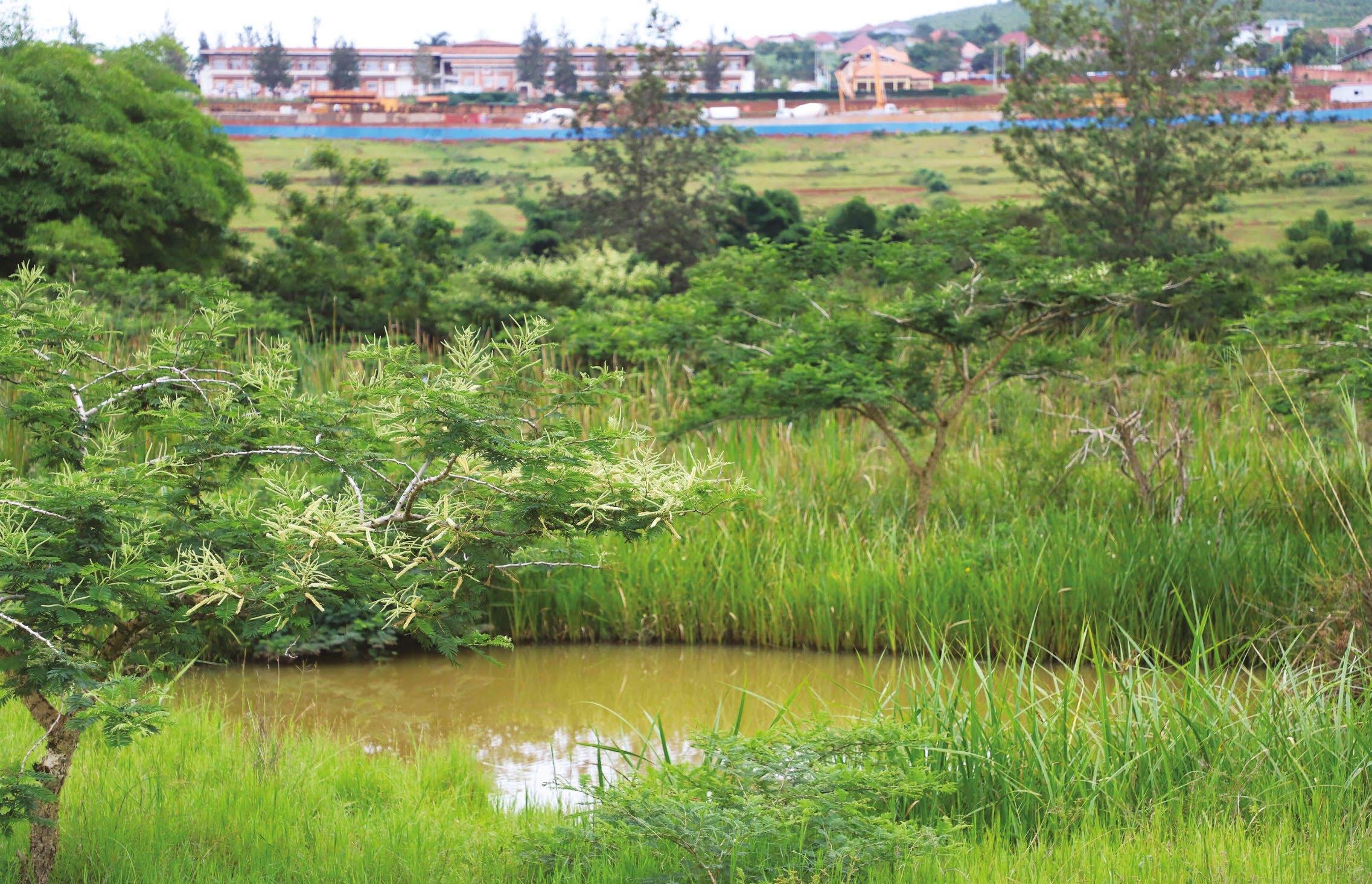
Woodland has been planted around this marshland in eastern Rwanda. The trees are a buffer zone and clear boundary between agricultural land and protected wetlands in the valley bottom.
Tourism
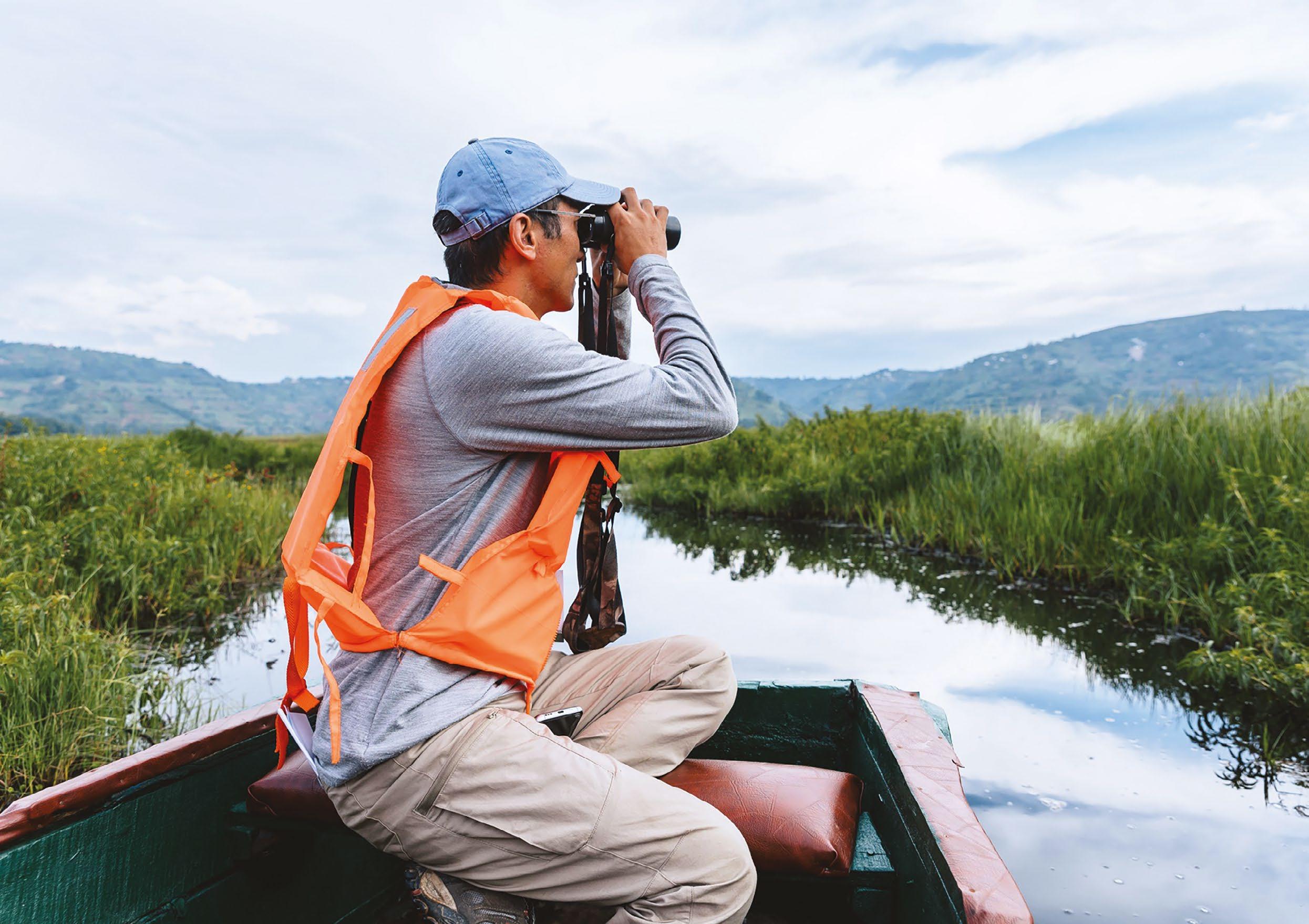
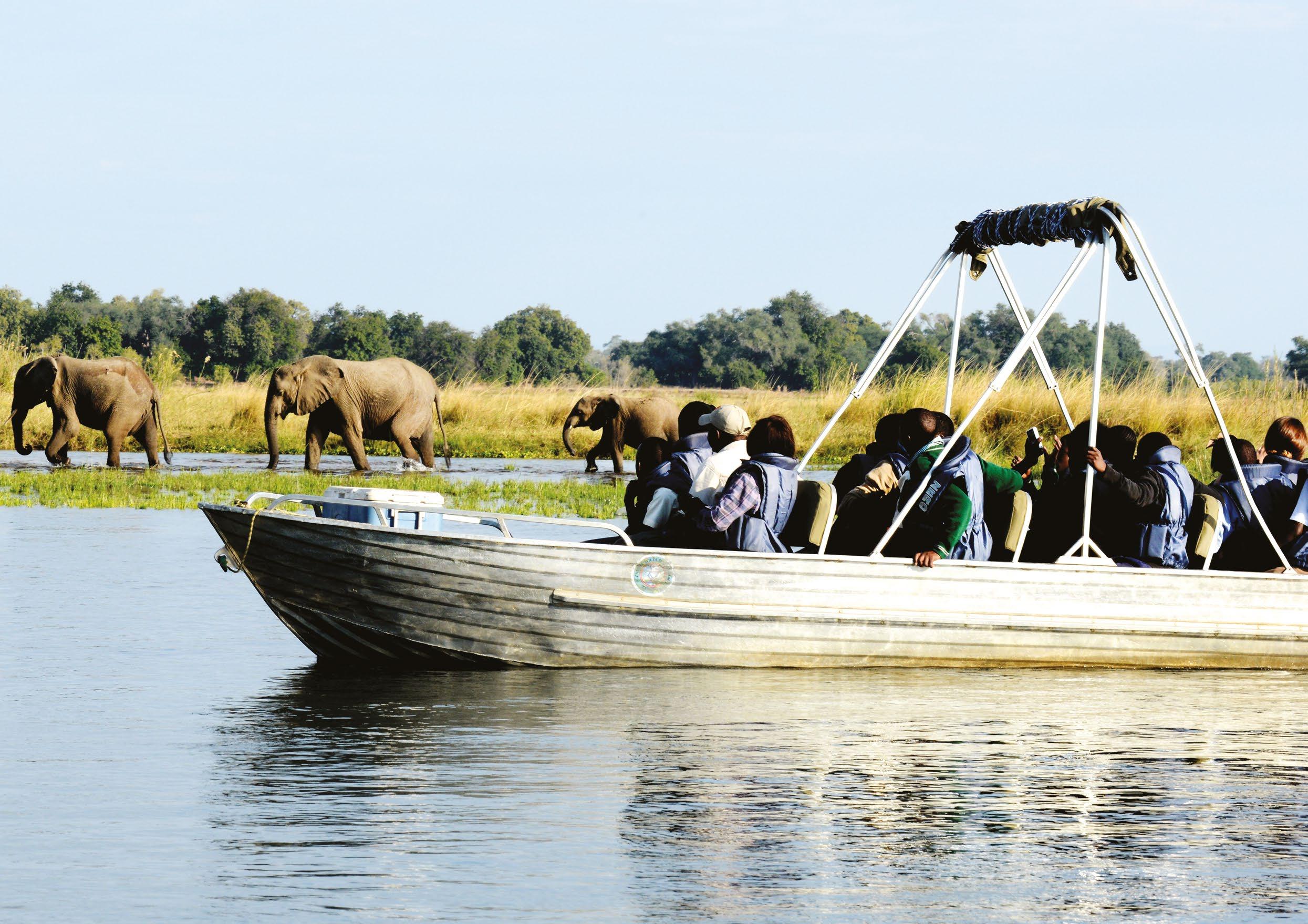
When nature and wildlife flourish then tourists travel to see and enjoy it. Tourism creates jobs and income, for rangers, guides, drivers, restaurants and other services and suppliers.
Wetland restoration
Wetlands can be restored. Umusambi Village in Kigali is an area of wetland that was drained and farmed. The distinctive plants and wildlife disappeared completely.
But agriculture was stopped, native vegetation was replanted and wildlife returned – including cranes, bats, kingfishers, owls, sitatunga, butterflies and many other invertebrates.
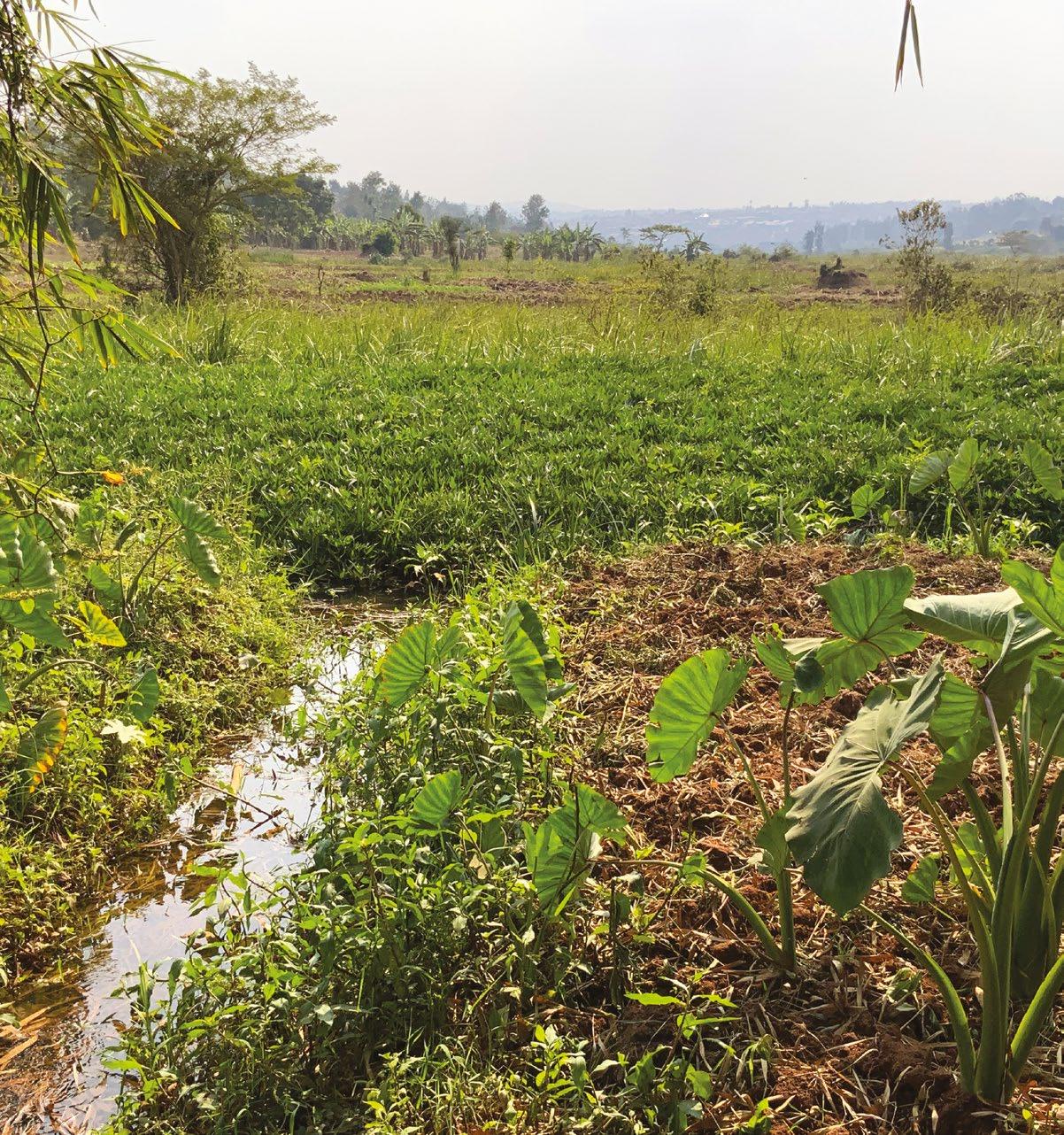
Restore means to return to how it used to be.
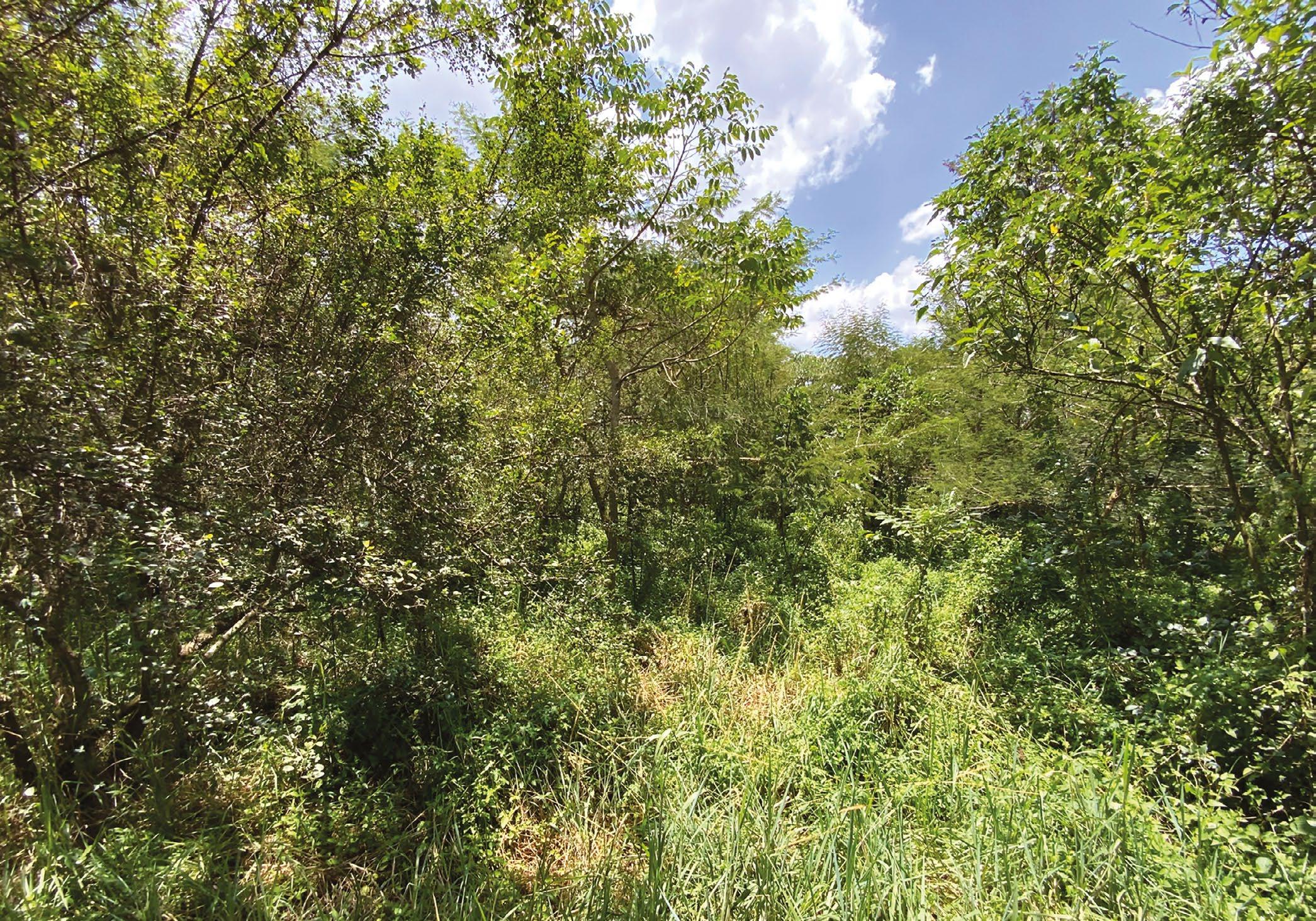
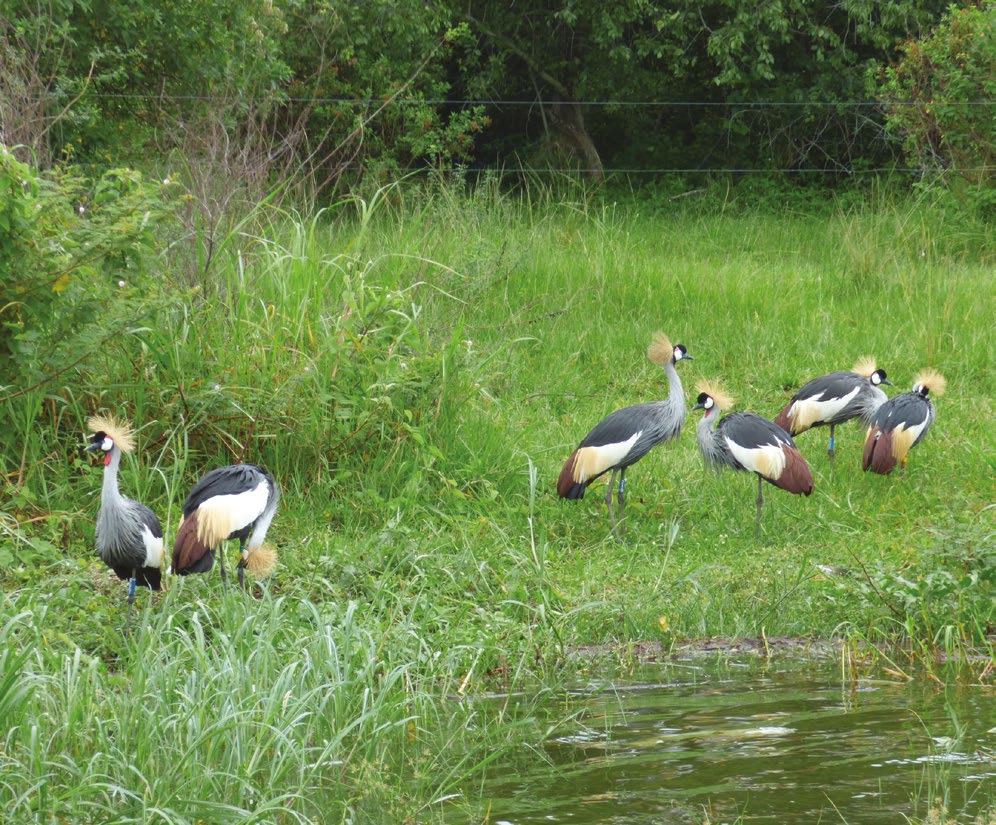
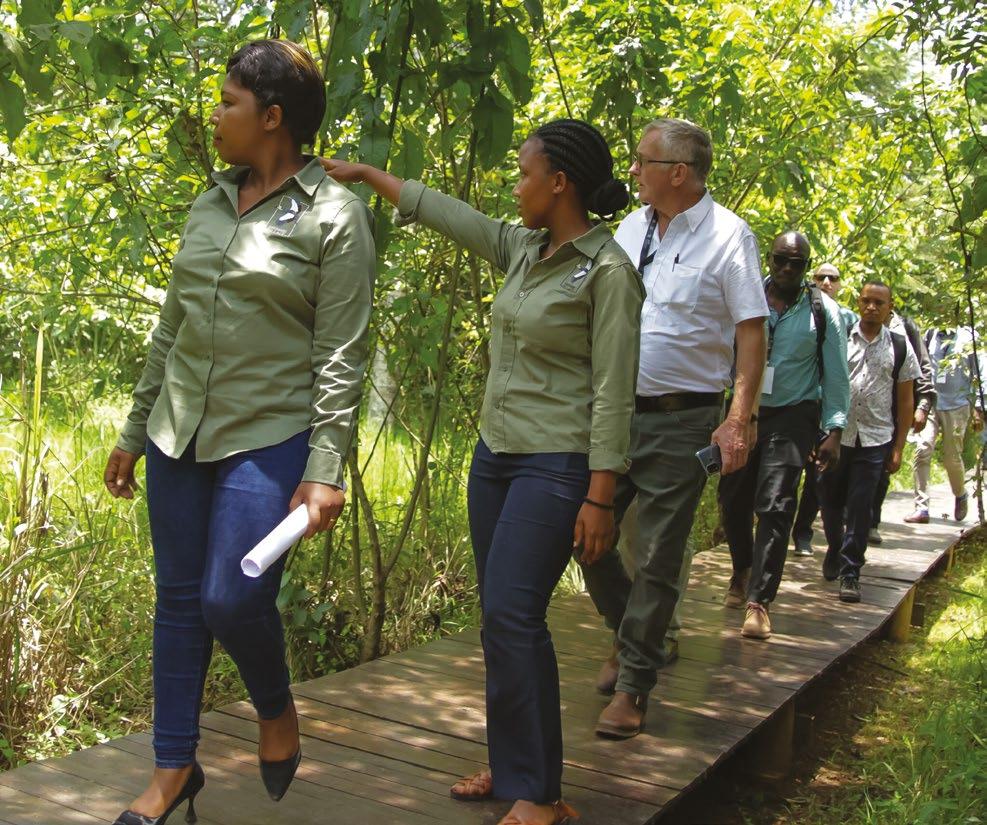
Umusambi Village was restored by RWCA and is now an RWCA wildlife sanctuary and visitor centre.
Nature is thriving and many interesting jobs have been created.
It is a conservation success story.
Umusambi is the Kinyarwanda name for Grey crowned crane.
References
P. Grundling & A.P. Grootjans. 2018. Petlands of Africa, pp 1413-1422 in The Wetland Book.
P. Grundling, A.P. Grootjans & A. Linström. 2016. Rugezi Marsh, a High Altitude Tropical Peatland in Rwanda. Pp 1-12 in The Wetland book.
J. De Leeuw, M.Y. Said, S. Kifugo, Z. Musyimi, J.K. Mutiga & D. Peden. 2012. Benefits of Riverine Water Discharge into the Lorian swamp, Kenya. Water, 2012 4(4) pp1009-1024. https://doi.org/10.3390/w4041009
R. W. S. Fynn, M. Murray-Hudson, M. Dhliwayo & P. Scholte. 2015. African wetlands and their seasonal use by wild and domestic herbivores. Wetlands ecology & Management 23 (2).
P. Grundling, A.P. Grootjans & A. Linstrom. 2018. Rugezi Marsh a High Altitude Tropical Peatland in Rwanda.
https://nilebasin.org/en/action-area/transboundary-wetlands
UNESCO World heritage convention. Sudd wetland. https://whc.unesco.org/en/tentativelists/6276/
E. Mandishona & J. Knight. 1922. Inland wetlands in Africa: A review of their typologies and ecosystem services. Progress in Physical Geography. Vol. 0(0) 1–19
T. Kabili. 1996. An overview of African wetlands. A working paper. Ramsar Bureau, Switzerland.
University of Leeds, 2022. True size of world’s largest tropical peatland revealed for the first time. Faculty of environment news. https://environment.leeds.ac.uk/faculty/news
A.K. Takoukam. 2021. African manatee (Trichechus senegalensis) habitat suitability at Lake Ossa, Cameroon, using trophic state models and predictions of submerged aquatic vegetation. Ecol Evol. 11(21):15212–15224. 10.1002/ece3.8202
E.G Hockridge & A.B Davies. 2025. Islands in the forest:a photo exploration of Congo’s Bai ecosystem. Ecological Society of America, Bulletin Vol 1 2025 .
A.R. De Clerk, et al. 2016. A Review of Depressional Wetlands (Pans) in South Africa, report to Water Research Commission. WRC Report No. 2230/1/16 ISBN 978-1-4312-0771-8 April 2016
Ramberg, Lars & Hancock, Peter & Lindholm, Markus & Meyer, Thoralf & Ringrose, S. & Sliva, Jan & Van As, Jo & Post, Cornelis. (2006). Species diversity of the Okavango Delta, Botswana. Aquatic Sciences. 68. 310-337. 10.1007/s00027-006-0857-y.
M. Atmaca. Bird Migration and Bird Watching. Ten Hot Days in Hatay. Ed. Y. Ergün. Mustafa Kemal Üniversity, publication 19, 17-21.
More information
Wetlands international https://www.wetlands.org/valuing-wetlands
S. Mureithi. 2024 Wetlands in Africa, www.wetlands.org, especially the wetlands atlas www.wetlandatlas.org/en
Image credits
RWCA, front cover. p21 top. P32 top x2.
Charlie Mayhew, p13, Oxbow, Zambia. P16, crocodile Zambia. P18 x3.
Penny Fraser, P1, p10, p11 top, p26, p28, p29 top, p31.
Tusk, p8, Mabamba, Uganda. P9 top, Rugezi, Rwanda. P12 lower, Angola. P16 Reed frog. P22 Waterbuck Borana, Kenya & Elephants Banzena, Mali. P28 lower. P30 top Rugezi. P30 lower, Francois D’Elbee, Tusk.
P3 Zambia, Anka Agency International/Alamy
P4 Botswana JVT/iStock
P5 Steven Humphreys/iStock
P6 G. Prentice/Alamy
P7 Matthijs Wetterauw/Alamy
P9 lower, DRC FLPA/Alamy
P11 lower, imageBROKER.com/Alamy
P12 African forest elephants, Dzanga Bai, Dzanga-Sangha, CAR, imageBROKER/Michael Runkel
P13 Okavango flood waters Roger de la Harpe/Alamy. Moorland Aberdare Alamy
P14 top African jacaranda, Bwabwata, Namibia, Alamy. Lower, In Moremi Botswana imageBROKER/Alamy
P15 African jacaranda top, imageBROKER/Alamy. Lower, Papyrus, Botswana, Alamy. Meadows Zambia Karen Lowe
P19 Blacksmith plover, Agami PhotoAgency. Birds Zackouma Chad, Simon Hathaway/Alamy
P21 top, Sitatunga RWCA. Middle black lechwe, Leslie Reynolds/Alamy. Hippo, Sergio Pitamitz/Alamy
P23 pjmelsbury/iStock
P24 Okavango delta Jorge Fernandez/Alamy
P25 Robert Ford iStock
P27 left Tanzania Jake Lyell/Alamy, right Mozambique Tom Gilks/Alamy
P29 lower, Robert Ford
P32 lower, Imago/Alamy
P34 pjmalsbury iStock
PACE is an education programme of Tusk. We help people understand and solve everyday environmental problems that impact on their wellbeing, and on the wildlife and ecosystems we all depend on.
PACE is about helping people connect or reconnect with nature, to understand its inherent value and protect it for future generations.
PACE shares information about the environment and wildlife, and very practical ways in which people are addressing common environmental problems, so that we people, wildlife and our planet have a secure and healthy future. Someone, somewhere has found a solution!
There are ten modules in the PACE pack, this booklet is part of the Living with Wildlife module.
PACE is for students, teachers, community use and general reading. Contact pace@tusk.org | www.paceproject.net