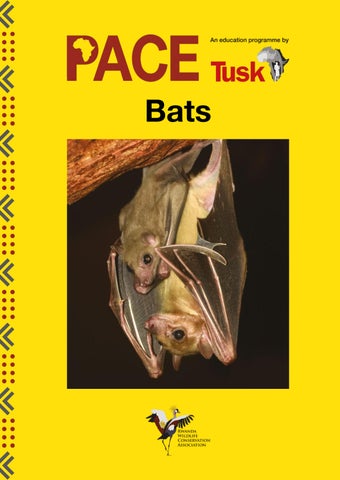

Bats
PACE – Pan African Conservation Education was created by Tusk and Siren Conservation Education in 2004.
This booklet on Bats was proposed by Rwanda Wildlife Conservation Association educators during a PACE collaboration visit in 2024. It was compiled by Penny Fraser assisted by Providence Uwanyirigira, with design and layout by Katie Puremont. Thanks to Peace Iribagiza for sharing her knowledge of Bats, and to Deo, Olivier and Jemma for editorial support.
Published by Tusk Trust, 1a Place Farm, Court Street, Tisbury, Wiltshire, SP3 6LW, UK
© 2025 Tusk Trust & Rwanda Wildlife Conservation Association.
First published 2025.
A catalogue record for this booklet is available from the British Library.
ISBN 978-1-7393445-9-7
Moral rights of the authors have been asserted. All rights reserved. The authors have made every effort to ensure the accuracy and currency of the information in this publication. The authors disclaim any liability for loss, injury or damage incurred as a consequence, directly or indirectly, from the use and application of the contents of this booklet.
PACE – Pan African Conservation Education Why Bats?
PACE is an education programme of Tusk. PACE is about helping people solve their everyday environmental problems, especially problems that impact on their wellbeing, and on the wildlife and ecosystems we all depend on. PACE works with conservation and education partners across Africa. We strive to connect people with nature, to understand, value and protect it.
Our educational resources are available free of charge. They are arranged in modules: Living with Wildlife, Water, Soil, Trees, Energy, Living by the Ocean, Urban Living, Health and Careers in Conservation. This resource is part of the Urban Living module.
Bats are fascinating animals – they are active and can see at night, and they hang upside down when resting! Many people mistake bats for birds or insects, and there are a lot of unfounded myths and superstitions about them.
Sadly, because they are unusual and few people see them clearly, bats are often misunderstood. The result is that we humans are often persecuting bats, unnecessarily and unfairly.
We need bats. Our ecosystems need bats. We made this book, with lots of clear photos, to help us learn what bats are really like, why they are important, and how we can help to protect them.
PACE
RWCA
Bat taxonomy
Appearance & size
Mega or fruit bats
Micro or yang bats
Distribution
Habitat
Habits & routine
Hygiene
Senses
Communication
Echo location
Feeding and diet
Movement
Colonies, community and family
Reproduction
The role of bats in ecosystems
Predators
Human threats
Bat conservation
RWCA – Rwanda Wildlife Conservation Association
RWCA is a Rwandan conservation organisation started in 2014 by a team of young Rwandan vets and wildlife conservationists. Their goal was to abolish the illegal trade in Rwanda’s endangered grey crowned cranes, and they have largely succeeded. RWCA now employs more than 250 people at conservation sites across the country, and works with the communities living alongside wildlife, in Rwanda, and the wider East African region.
RWCA’s activities include conservation, research, education, and community development work. RWCA now works to protect many endangered and threatened species and habitats including bats. The RWCA bat specialist leads a number of research and conservation projects with different types of bats in Rwanda. For example, Community Conservation Champions carry out monthly counts of straw-coloured fruit bat colonies, protecting their roosts and educating local people. Research includes species identification, GPS monitoring, faecal analysis, and acoustic studies. This is helping people to learn more about bats and inform conservation work. Education and awareness raising is a key priority of RWCA.
Bats
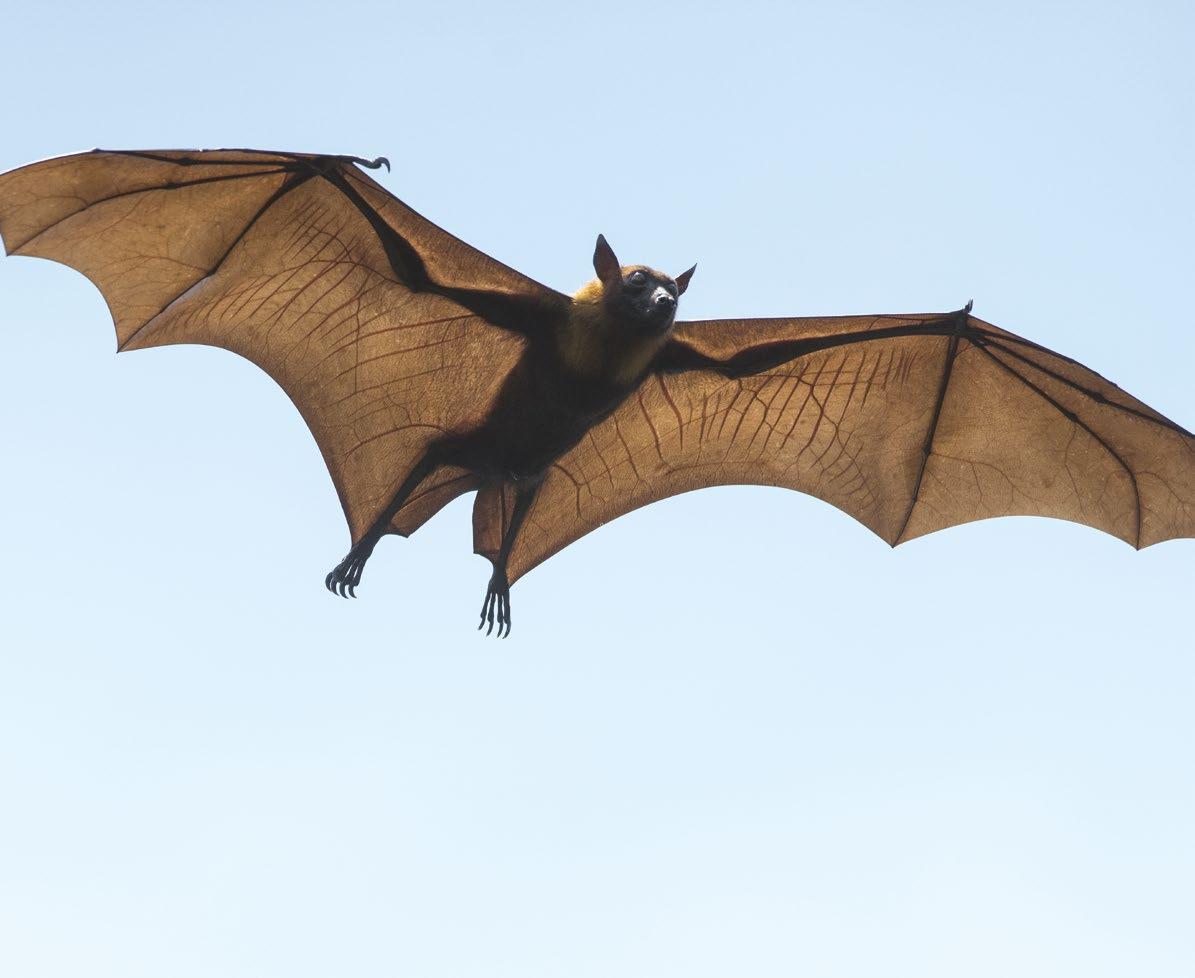
Bat taxonomy
Bats are mammals. It is easy to mistake them for birds, especially at a distance. But bats are mammals. They give birth to live young, and breast feed them.
Kingdom: Animalia
Phylum: Chordata
Class: Mammalia
Order: Chiroptera (bats)
Family: there are 18 bat families
Genus: there are more than 200 species in Africa.
Chiroptera = Hand wing
There are 1640 bat species in the world, and more than 200 in Africa.
120 bat species live in Kenya, 105 in Tanzania, 54 in Rwanda, and researchers keep discovering more… Bats are in the taxonomic order Chiroptera that is named from the Greek words ‘Chir’ meaning hand and ‘pteron’ meaning wing.
Appearance
There are bats of different sizes, shapes and colours, depending on the species. Bats have fur on much of their body. The colour varies, most are black, brown, red, tan or grey. They have short snouts and large ears like a rodent. Their front limbs are wings, joined to the body by a skin-like membrane. They fold their wings around themselves when resting.
You know which family a bat is in by its nose!
Size
Most bats are small. The smallest has a body 3-5cm long and a wingspan of 20- 25cm. It weighs only 4g!
The largest African bat is the hammer-headed bat – males can have a wingspan of nearly one metre! Wingspan is the distance from the tip of one outstretched wing to the other.
The second largest bat species in Africa is the straw coloured fruit bat. They can weigh 350g, and are not much smaller than the hammerheaded bat!
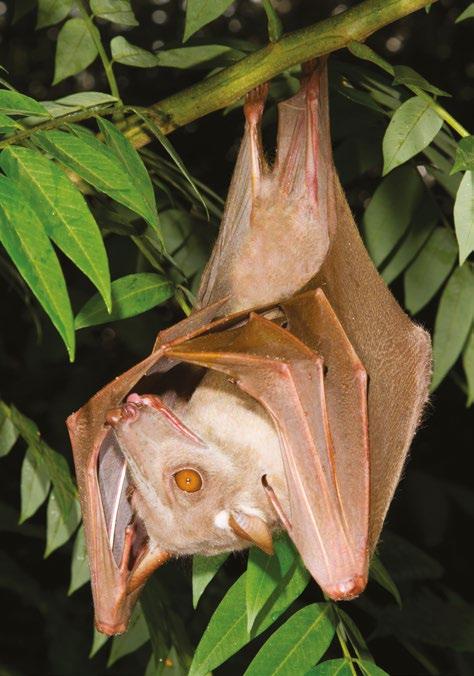
Bats are often confused for other species.
Some people see large bats and think they are birds.
Some people see small bats and think they are insects.
Bats are mammals.
Hammerhead bat, DRC
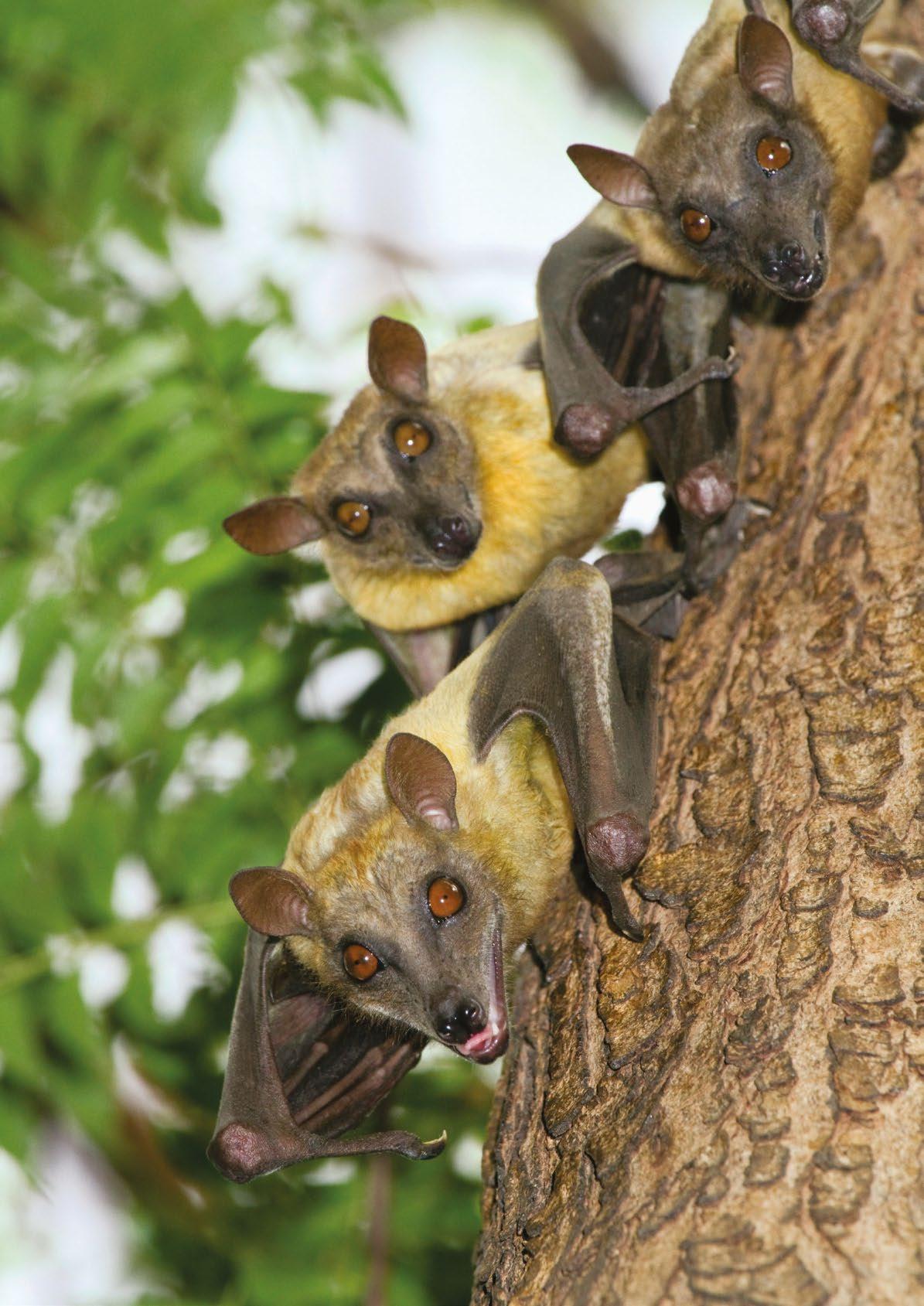
African straw coloured fruit bat, Eidolon helvum, Cameroon
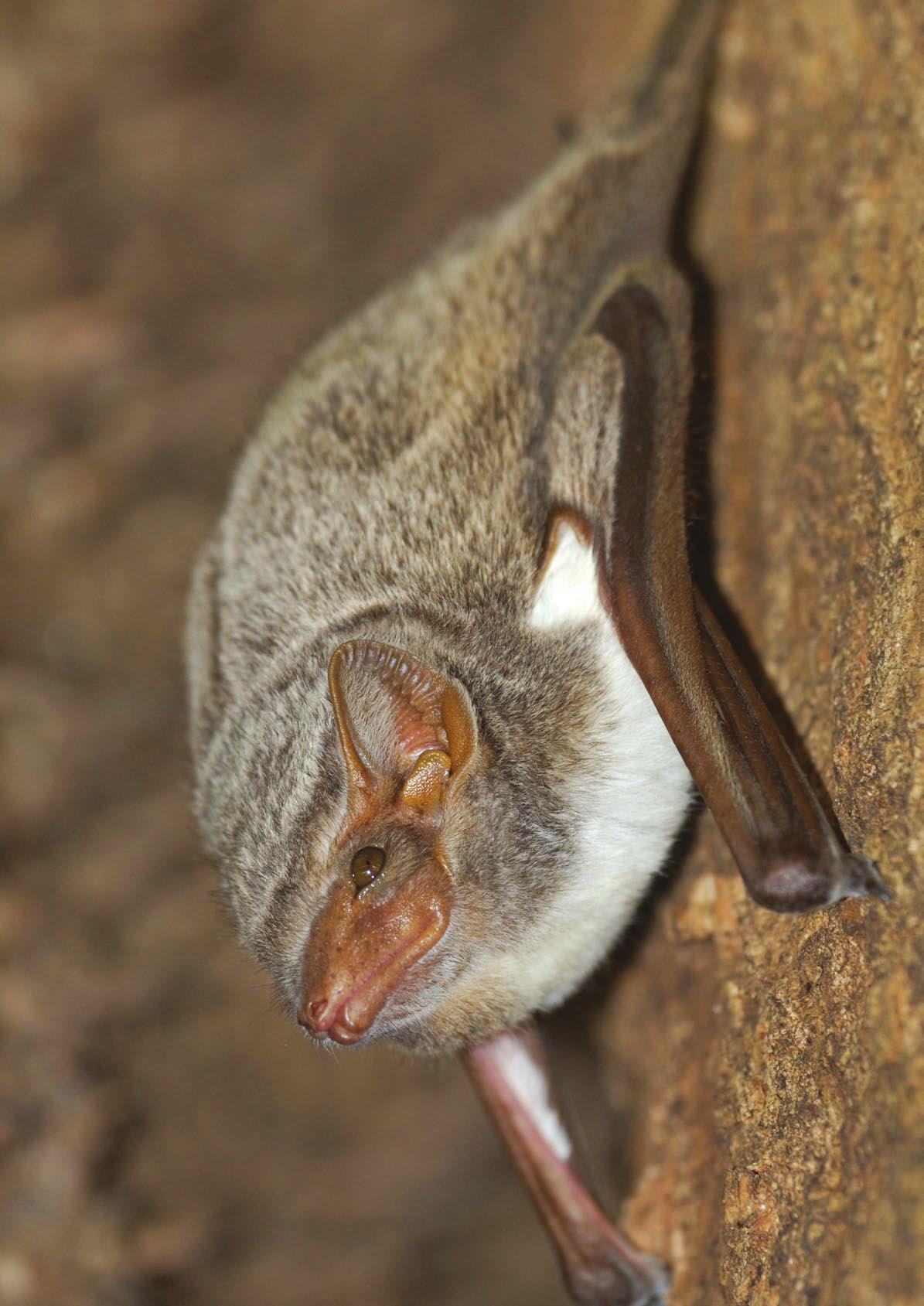
Mauritian Tomb Bat Taphozous mauritianus roosting in dry deciduous forest, Madagascar
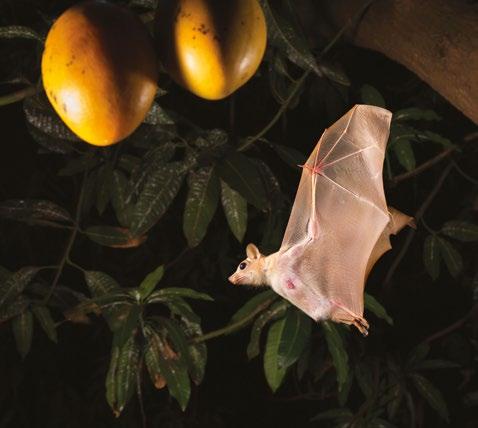
Mega or fruit bats
Sometimes called Yin – short for Yinpterochiroptera – are the bigger species. They can weigh up to 1.7kg. They have dog like faces, a long snout and nose and large eyes. They have good smell and sight. They mostly eat fruits. They have bigger eyes and smaller ears than micro bats.
Micro or Yang bats
Yang is short for Yangochiroptera. Yang bats are smaller. They are insectivorous, meaning they mostly eat insects.
They have small eyes and poor sight. They use echolocation to navigate and find prey.
Their ears are large. They often have complicated shaped faces.
Pteropodidae is the scientific name for the fruit bat family.
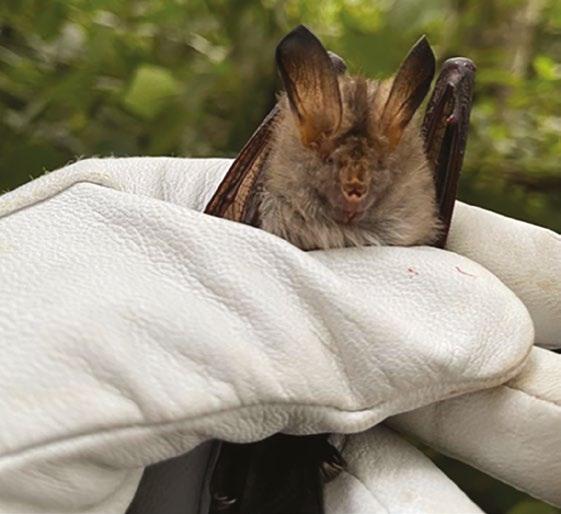
Bats are mammals, they give birth to live young, and breast feed them.
Bats are the only mammals that can fly.
The smallest mammal in the world is a bat – it weighs less than a small coin.
Peter’s dwarf epauletted fruit bat, Ghana
The researcher holding this bat is wearing leather gloves, and is expertly trained on how to handle bats safely. Untrained people must not touch bats.
Distribution
There are bats on all the continents on earth, except Antarctica. They are most common in tropical and equatorial areas where there are lots of insects for them to eat, and weather suits them. It is difficult for bats to fly in the cold, wet, windy weather that is more frequent in other places.
Some bat species are widespread. These maps show the distribution of four different bat species.
African straw coloured fruit bat Eidolon helvum
Yellow-winged bat Lavia frons
Hammer headed bat Hypsignathus monstrosus
Wahlberg’s epauletted fruit bat Epomophorus wahlbergi
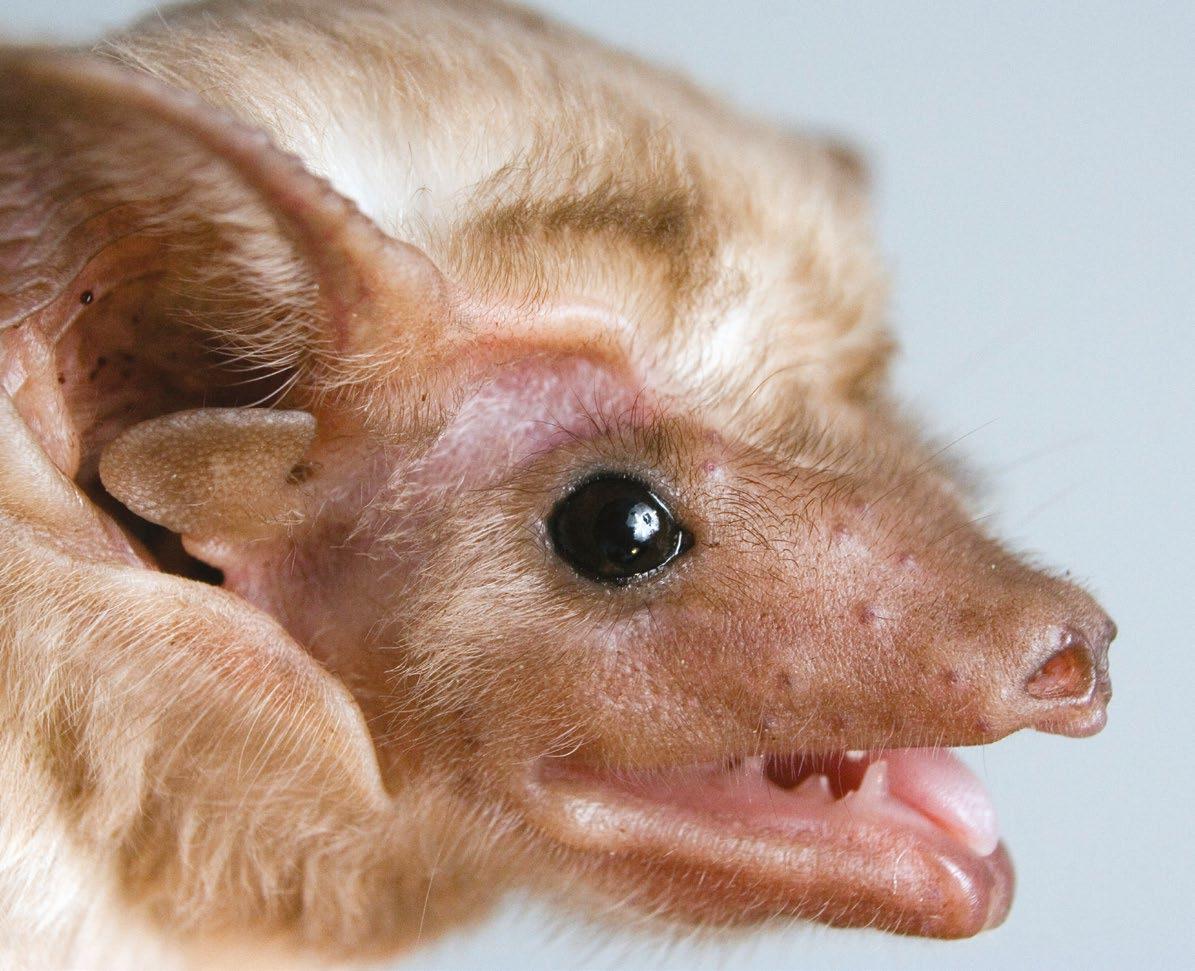
Some species are not widespread. The Hildegarde’s tomb bat is endemic to part of the Kenya and Tanzanian coast.
Endemic means it doesn’t live anywhere else.
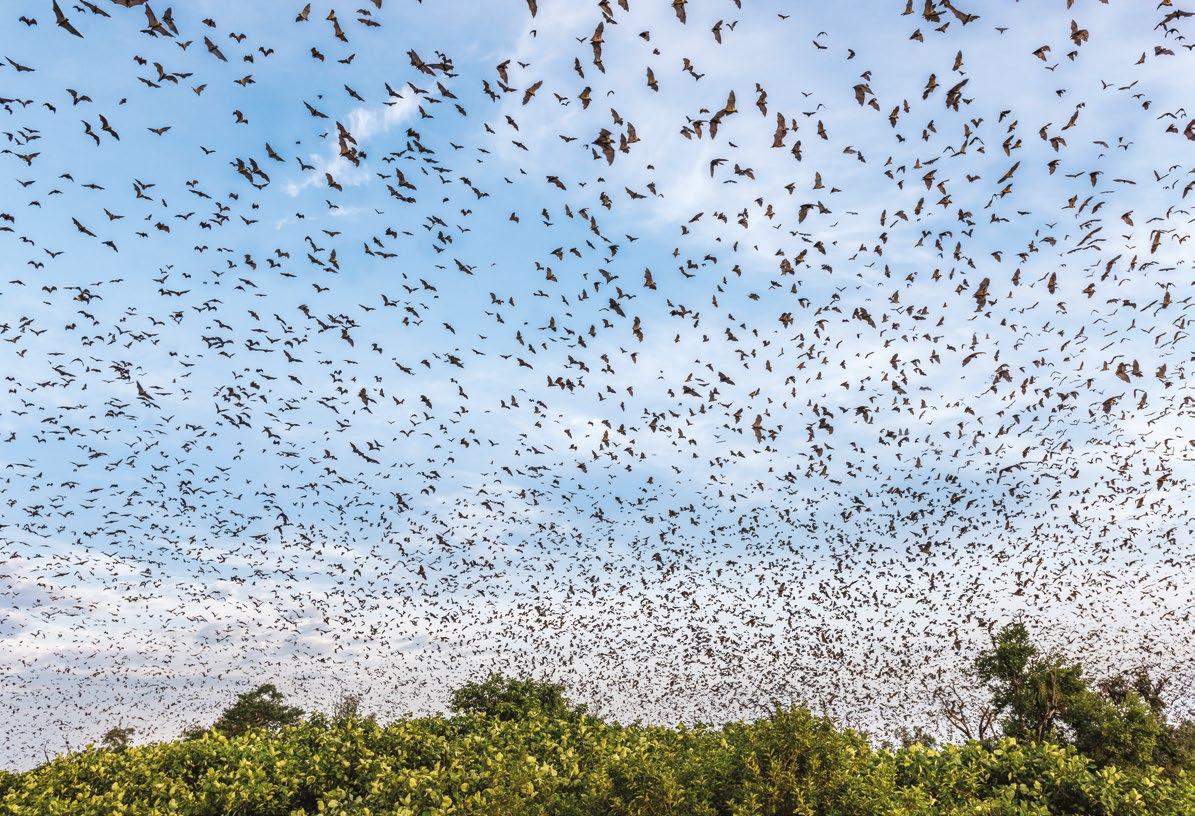
A group of bats in the air is called a cloud.
tomb bat Taphozous hildegardeae
Hildegardes
Habitat
Some bat species only live in certain habitats. African sheaf tailed bats live in dry savannah, desert and shrubland areas. They roost in caves. Hildegarde’s tomb bats need caves to roost in and dry forest for foraging.
Other species live in a wide range of habitats. The African straw coloured fruit bat, Eidolon helvum is an example. They like tall trees for roosting, but will forage in rainforest, savannah, farmland or other open areas.
Many bat species thrive around our homes and compounds, even in towns. African little free tailed bats, Chaerephon pumilus, are an example. Straw coloured fruit bats are also often common in urban areas.
Roost – place where bats (or birds) sleep. The name for a group of bats that sleep together.
Forage – to look for or collect food.
Nocturnal – active and forage for food at night, and rest in the day.
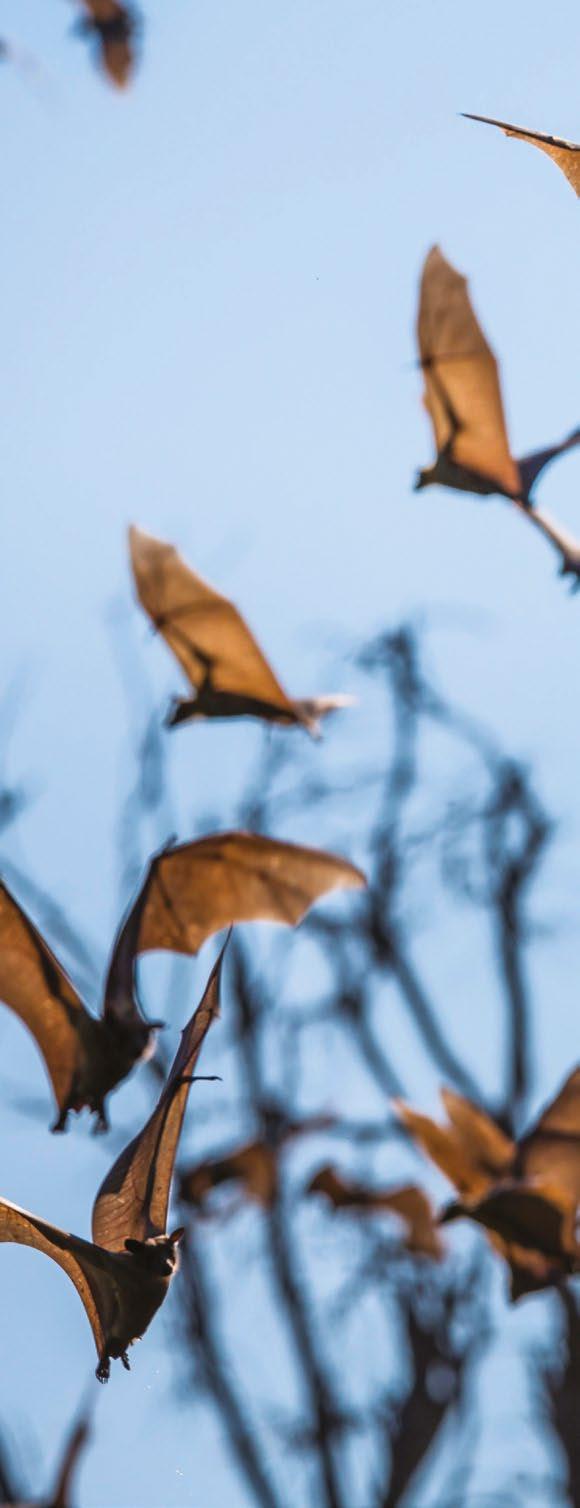
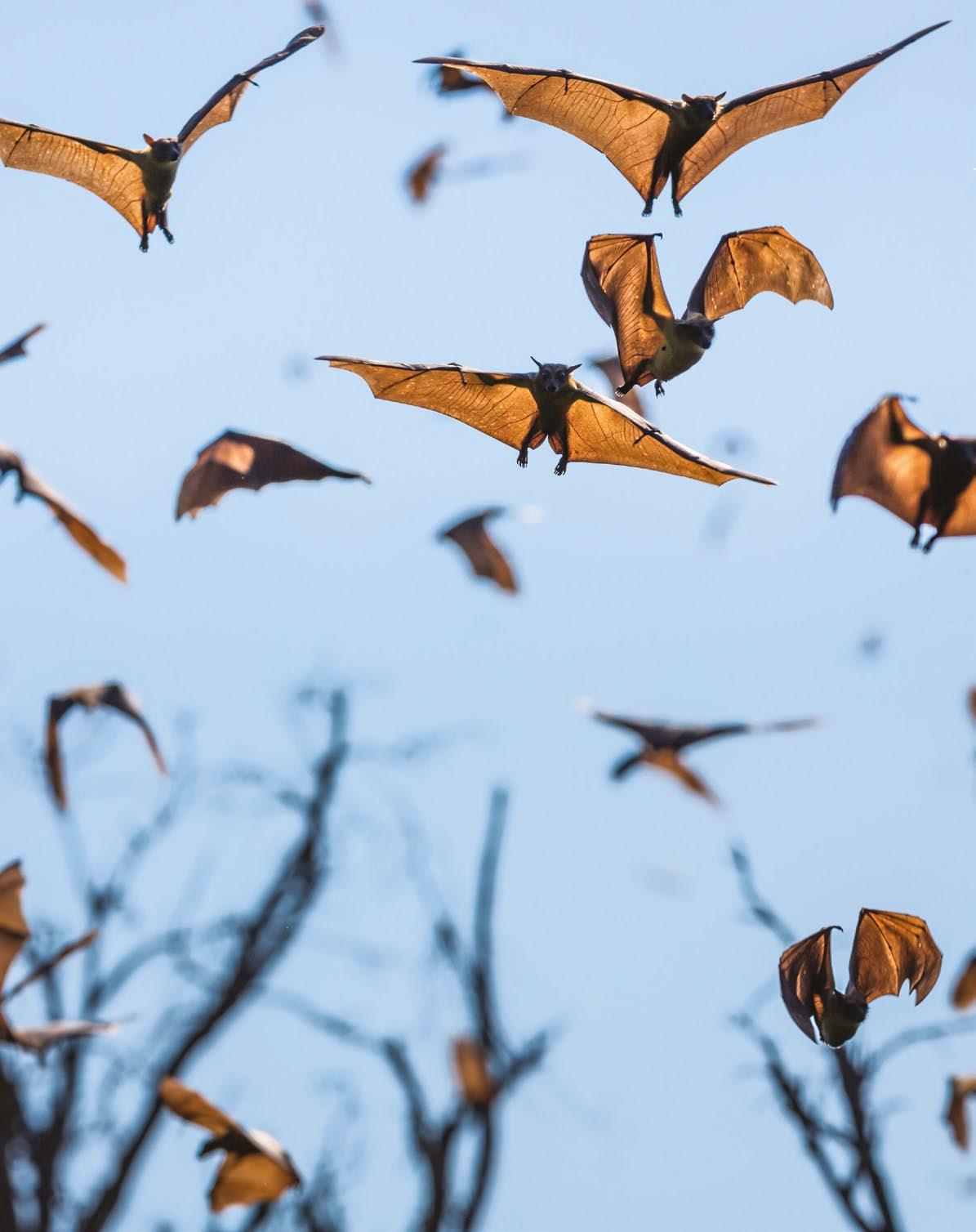
African straw coloured fruit bats, Eidolon Helvum, Zambia
Habits and routine
Almost all bats are nocturnal. They will leave their roost around dusk, spend the night foraging, and return at dawn.
Most bats rest during the day. They are social, roosting in groups, sometimes thousands together, sometimes just five to ten. Depending on the species and available sites, bats roost in trees, bushes, or under palm fronds. Some bats roost in buildings – under a roof, in the eaves, under tiles or on walls. They will roost in cracks and crevices of buildings, and under bridges and other structures. Some roost in caves and on rocky cliffs.
They are watchful when resting. The bats get disturbed by wind, noise, birds or other creatures, causing them to be restless, and often noisy.
A large bat roost can cause trees to lose their leaves.
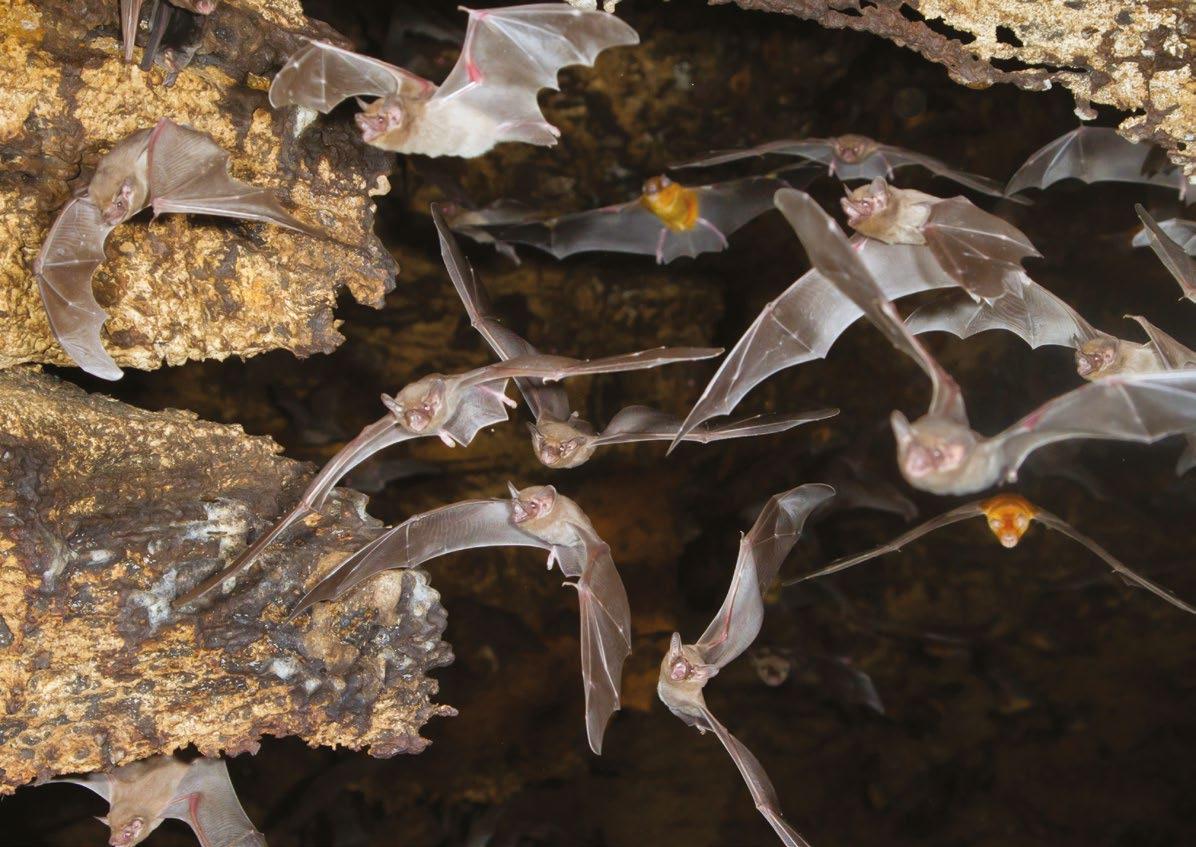
African sheaf-tailed bats, Coleura afra, leaving their cave roost on Kenyan coast
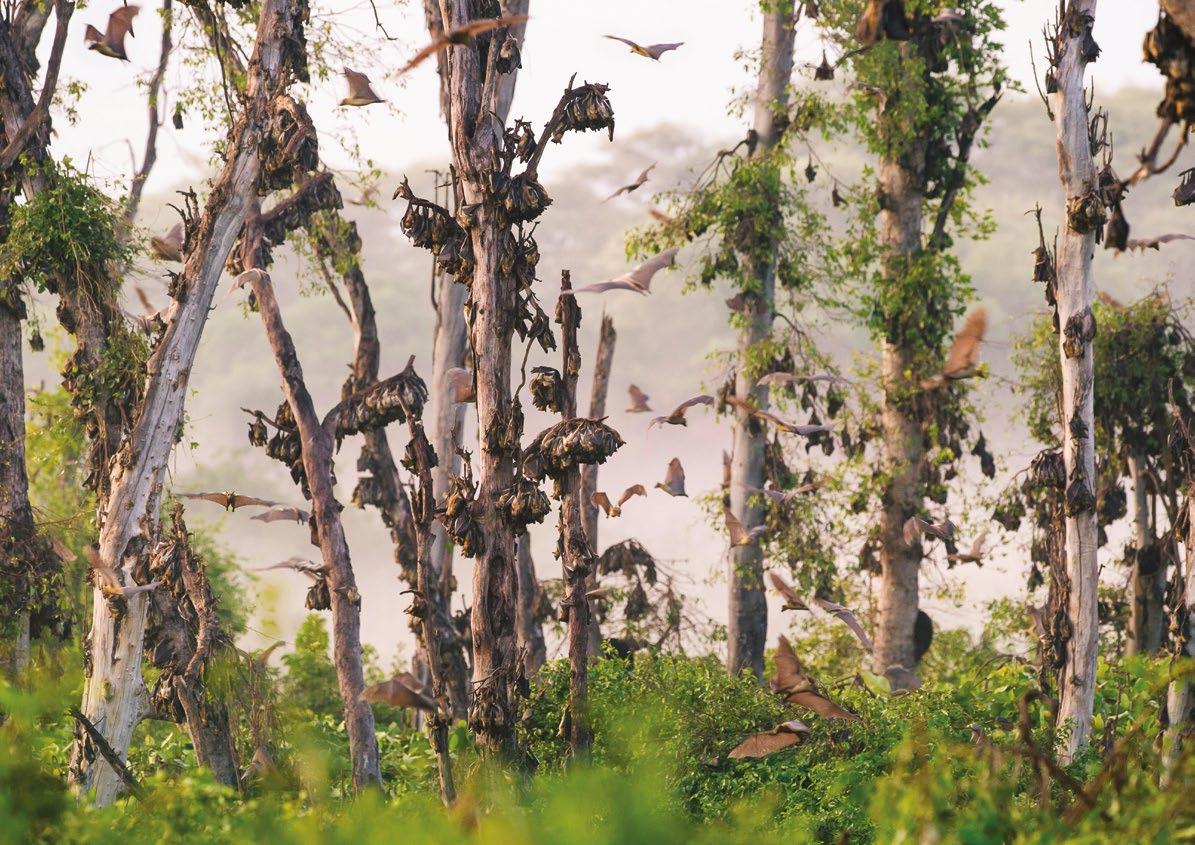
Opposite: Eidolon helvum roost, in the Burundi capital city, Bujumbura Eiodolon helvum roost in swamp forest, Zambia
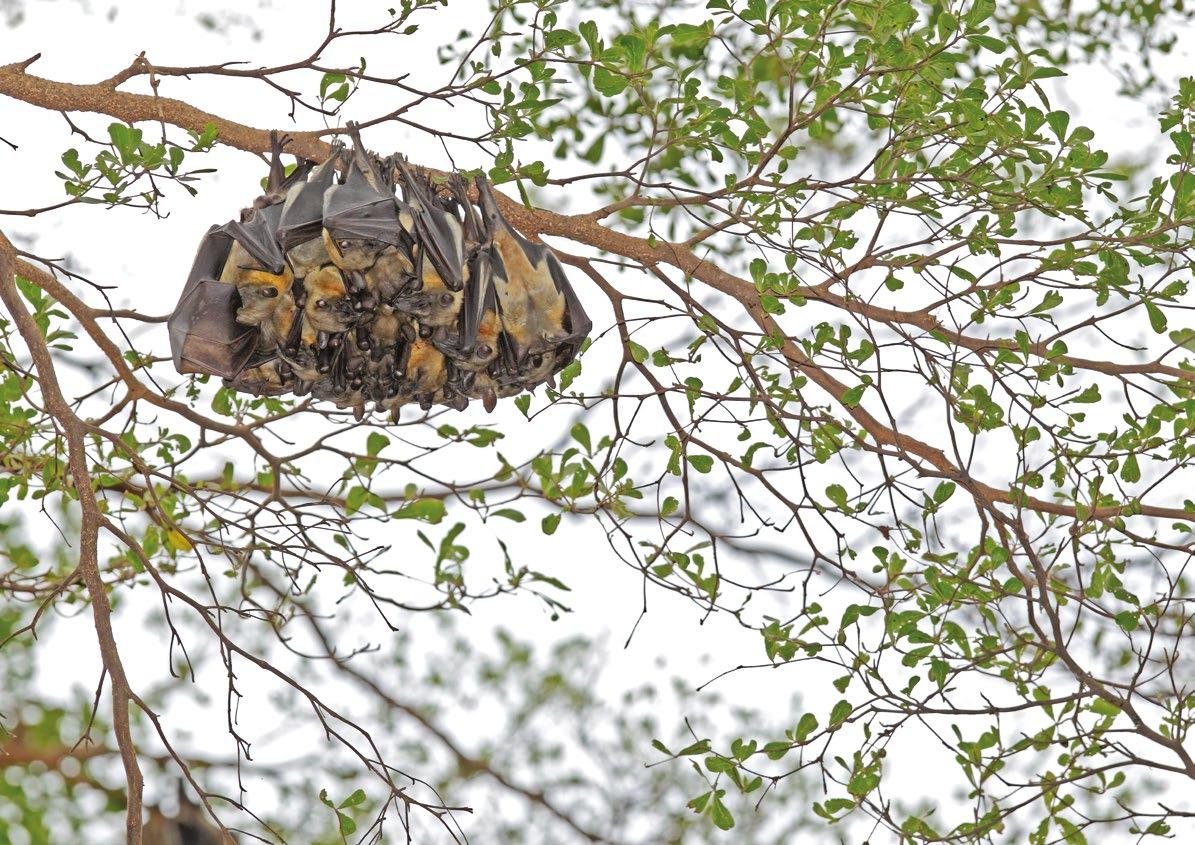
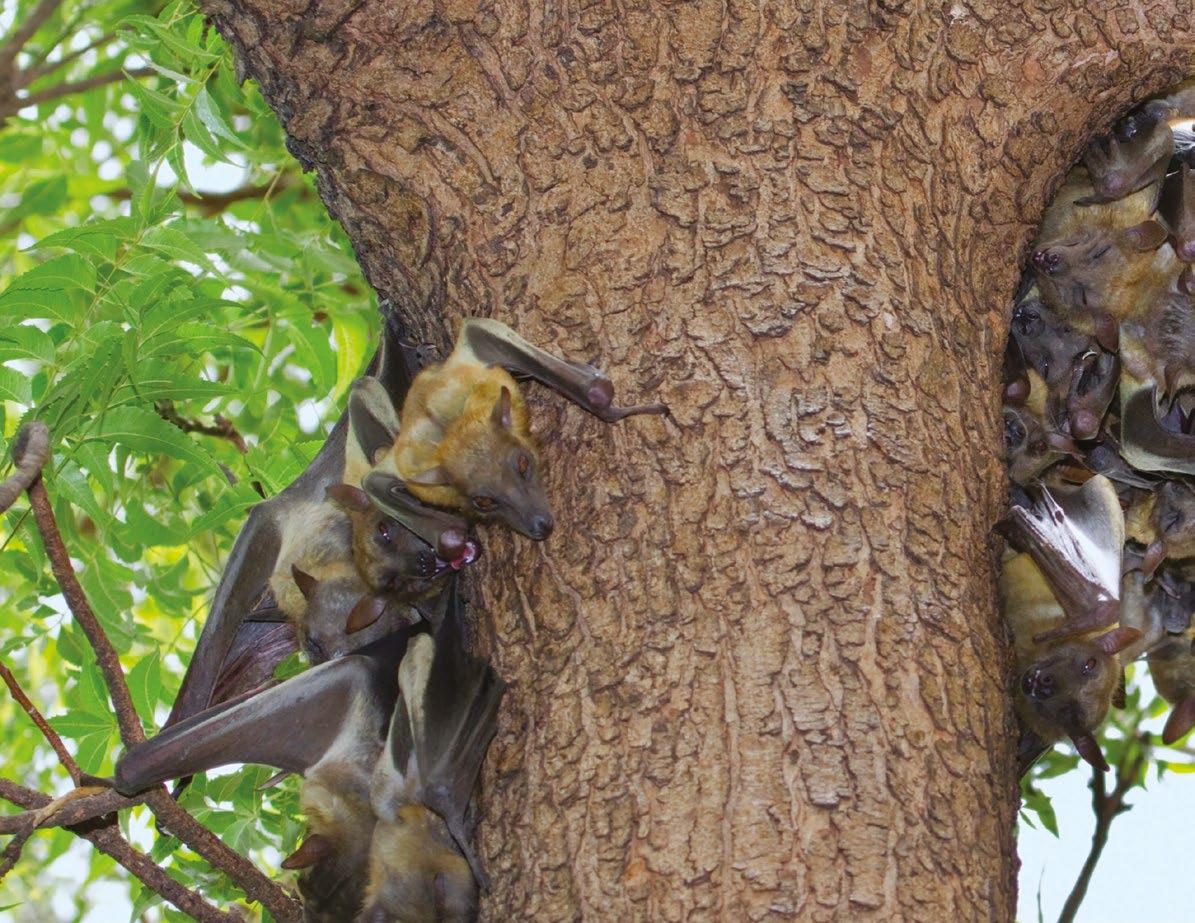
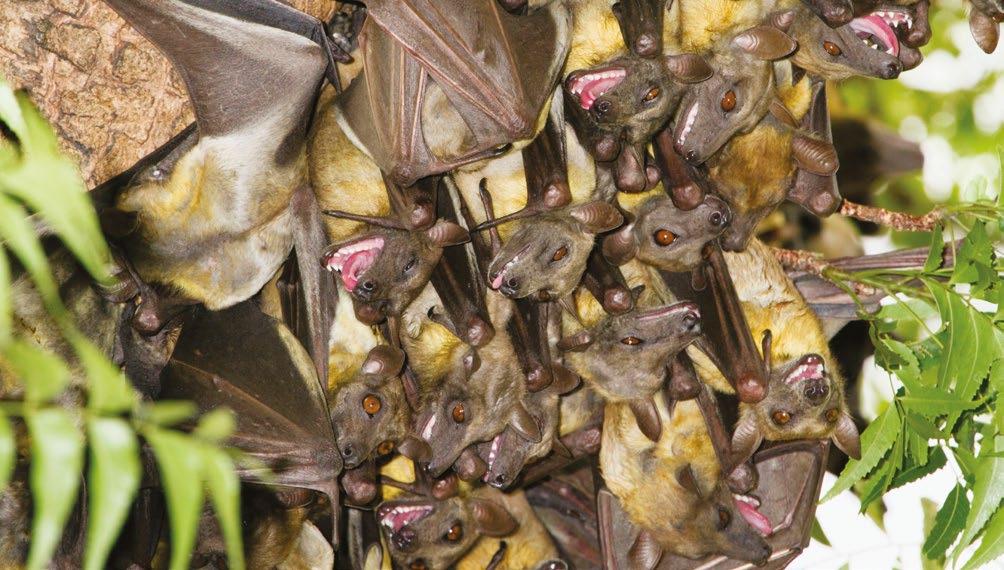
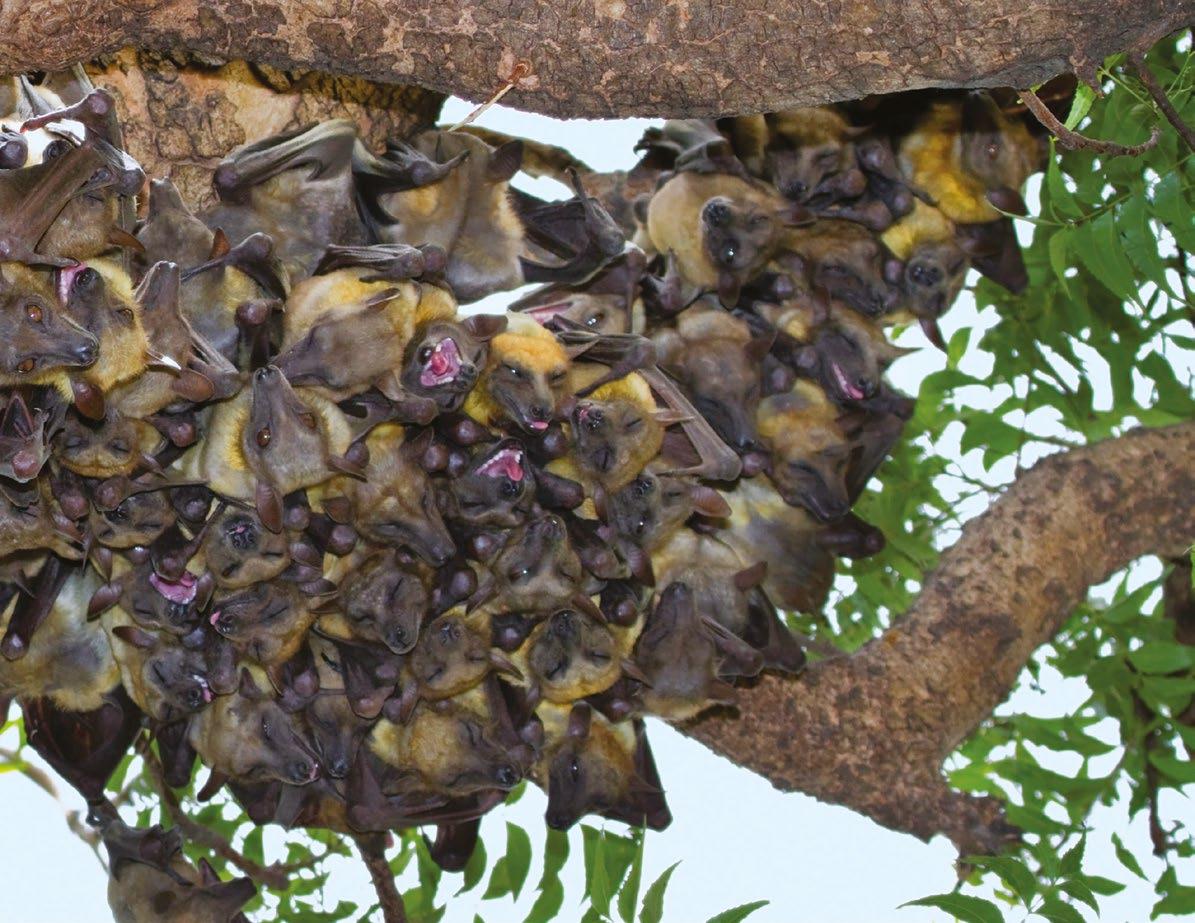
Eidolon helvum colony in neem tree, north Cameroon
Some bat species roost close to each other.
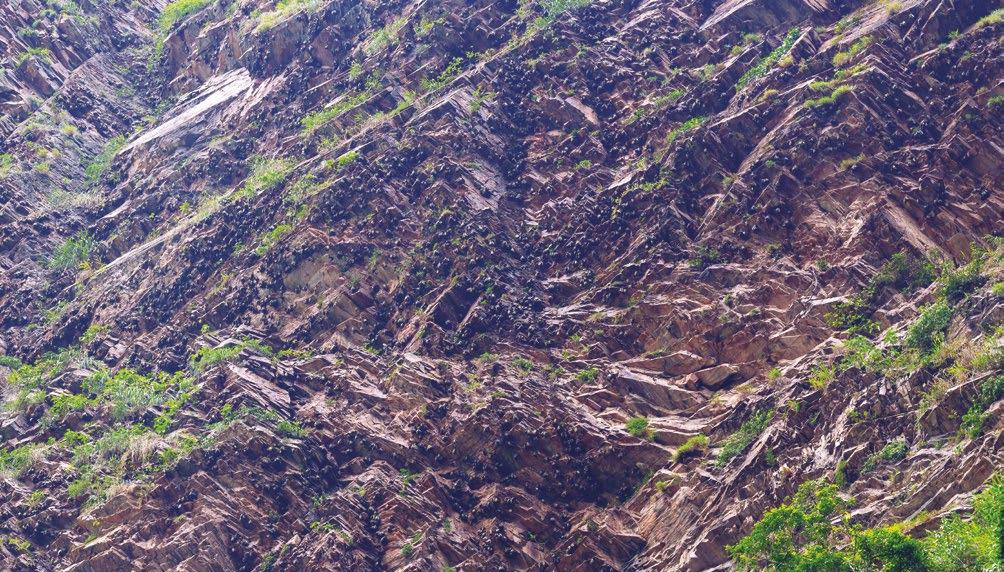
Bat roost on cliff face, Ghana
Some bat species will leave a space between themselves and their neighbour.
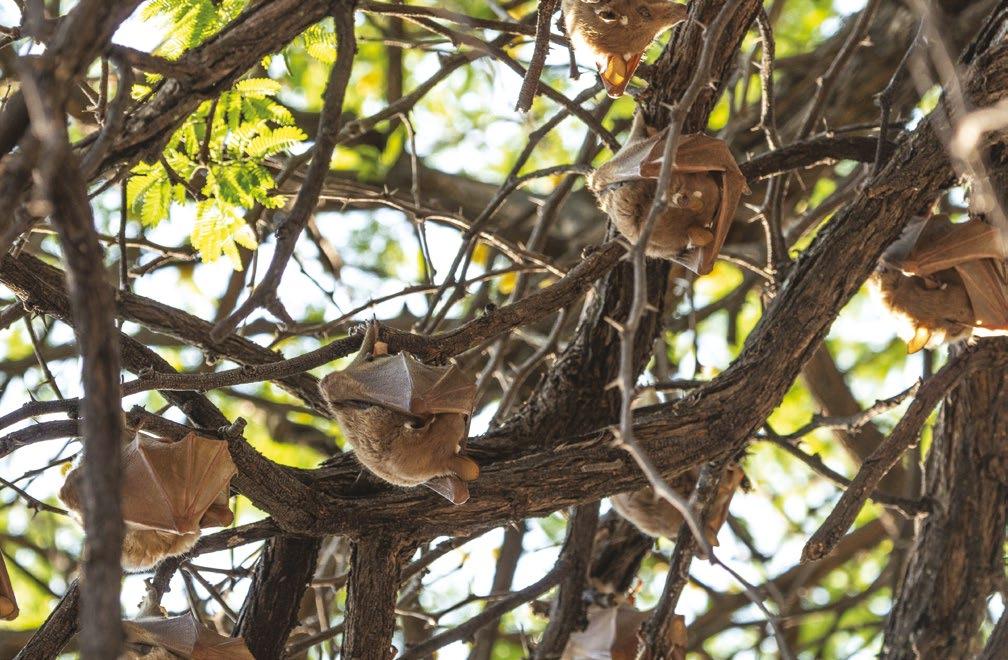
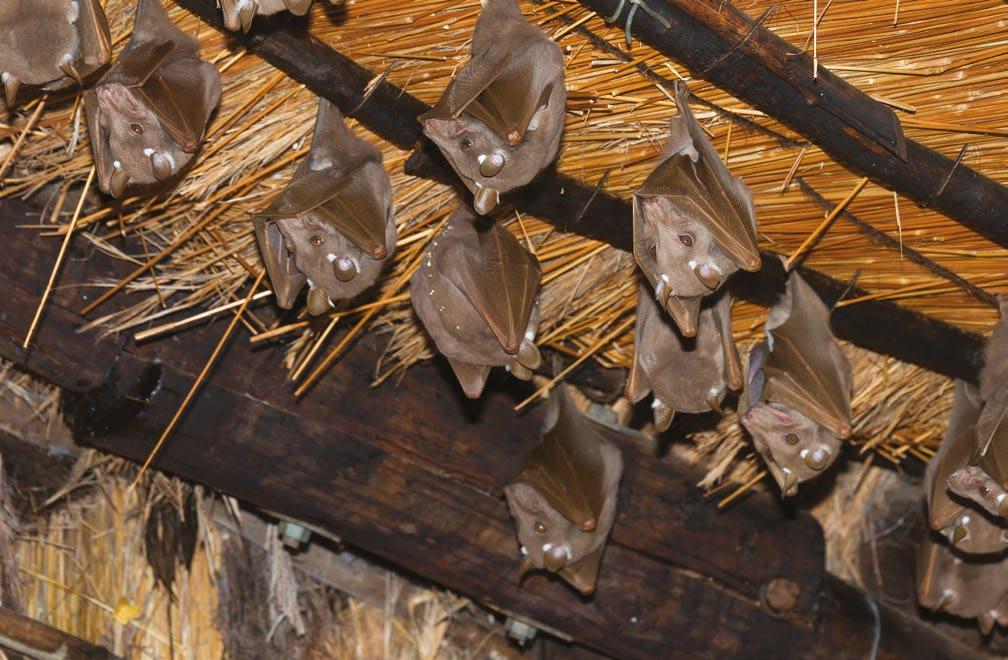
Fruit bats, Hwangwe national park, Zimbabwe
South Africa
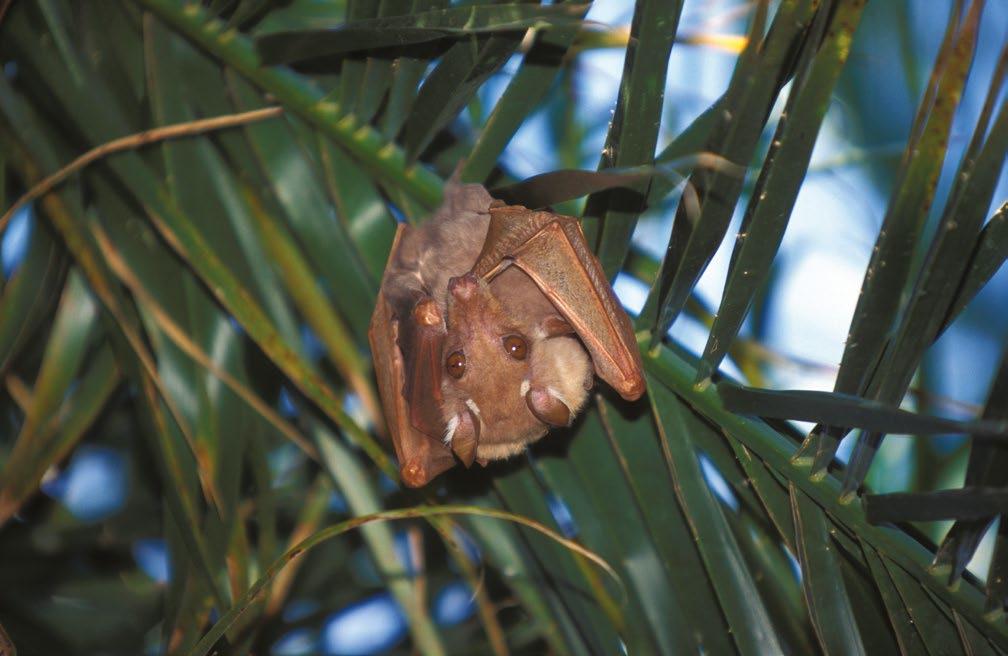
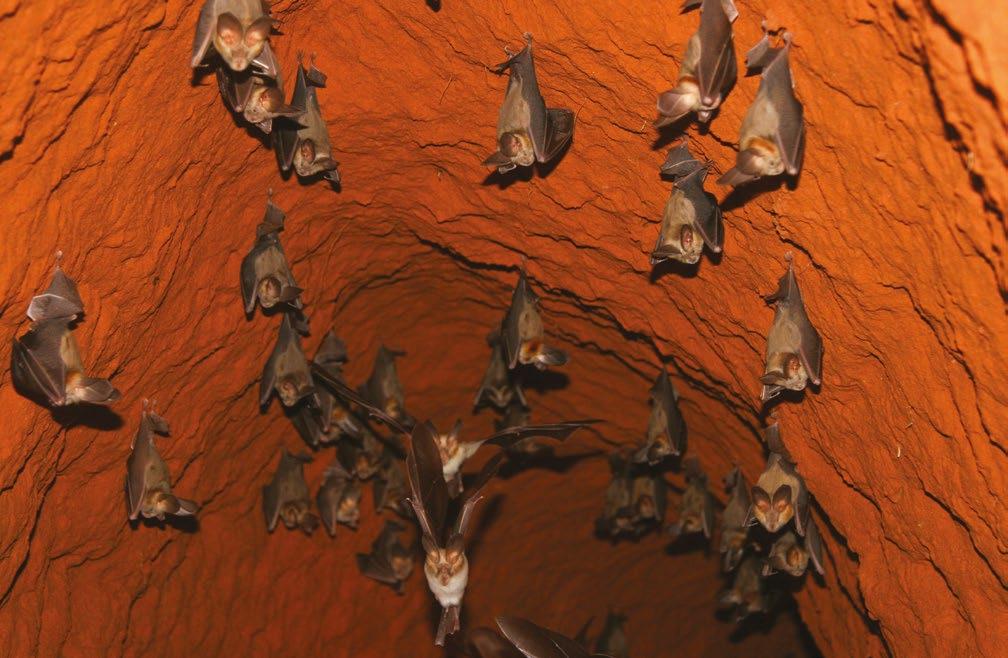
Bat roost in sand cave, northern Cape, South Africa
Peter’s epauletted fruit bat, Botswana
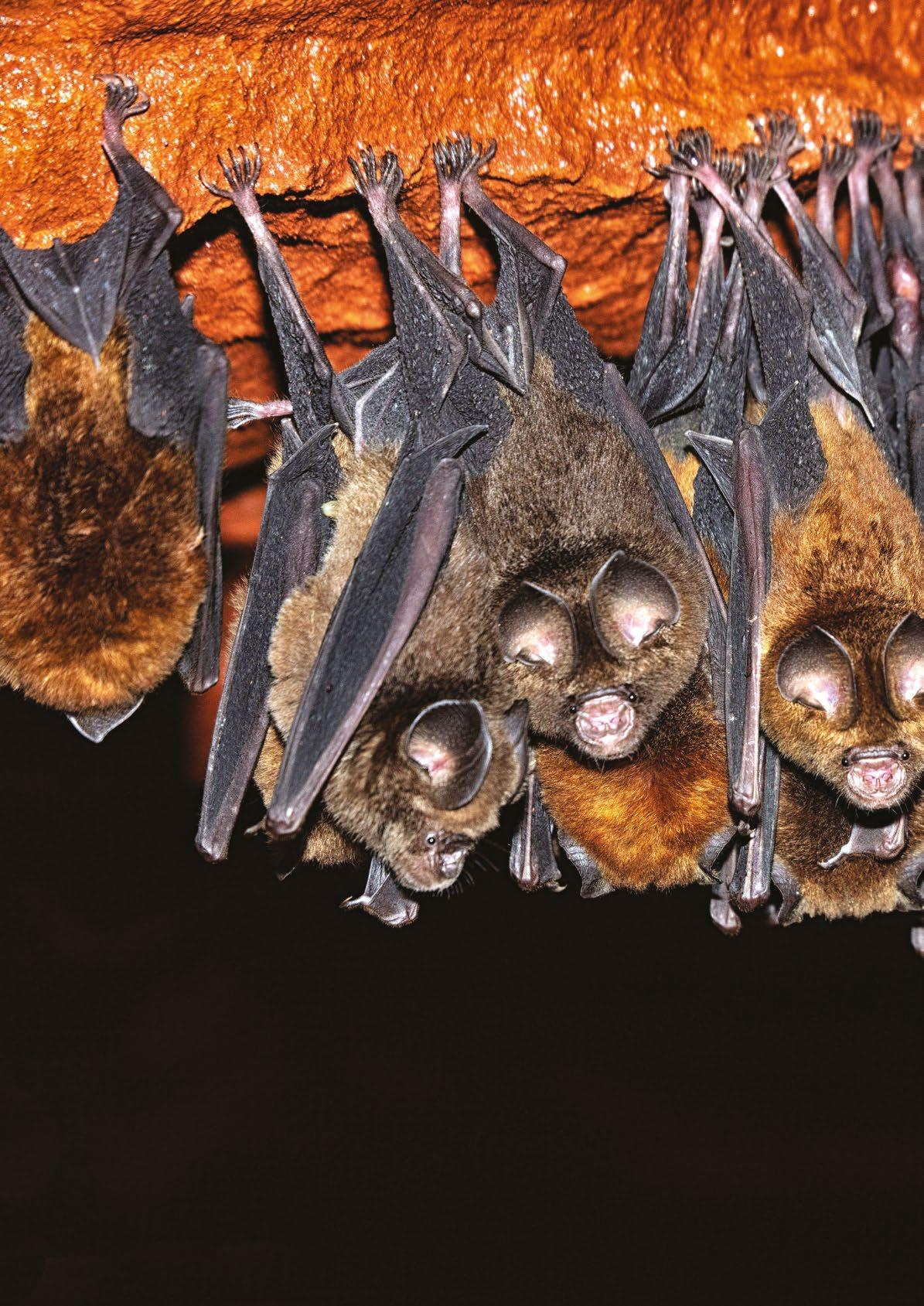
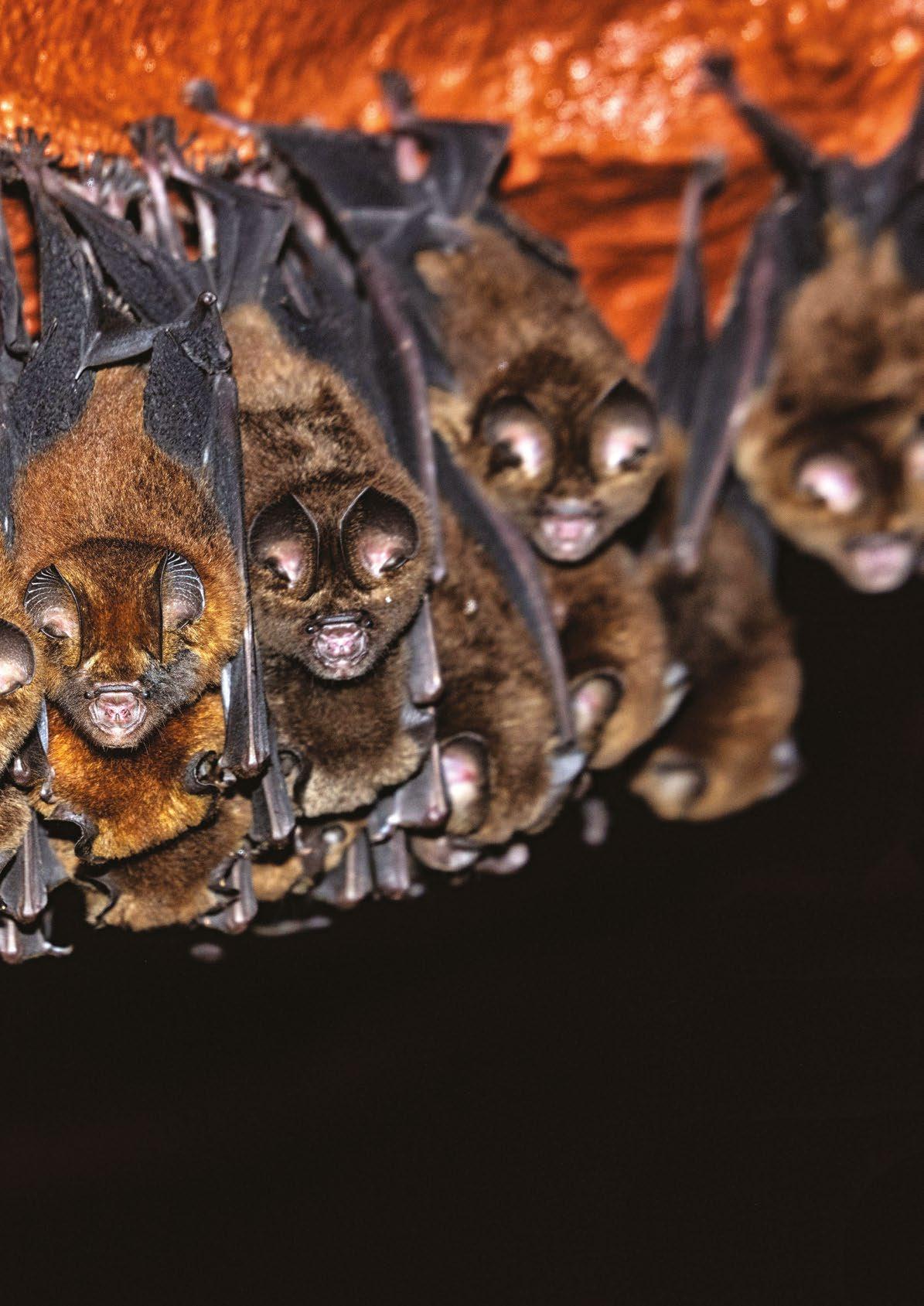
Sundervall bats, in a forest cave, CAR
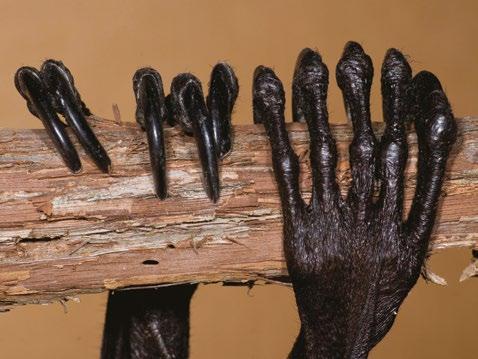
Most animals clench their muscles if they want to hold onto something. Bats are different. When they are relaxed their claws automatically grip without effort.
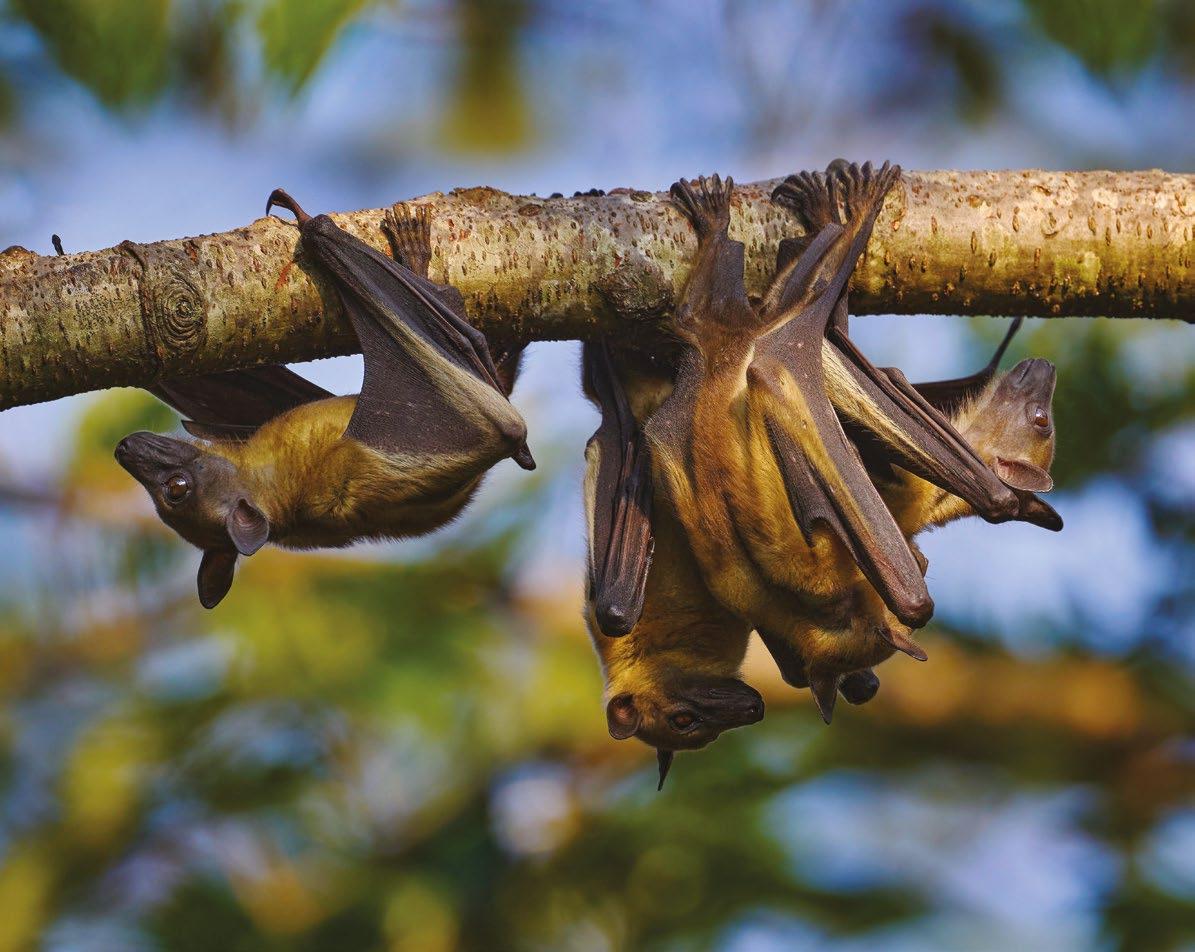
Bats have a good reason to hang upside down. Their wings aren’t as strong as bird wings, so they aren’t able to build up enough speed when taking off from the ground or a sitting position. They can enter into flight with no effort if they start from hanging upside down rather than from a perched position.
Bats can sleep, even die and will stay hanging.
Eidolon helvum roost, Uganda
Eidolon helvum claws gripping a branch
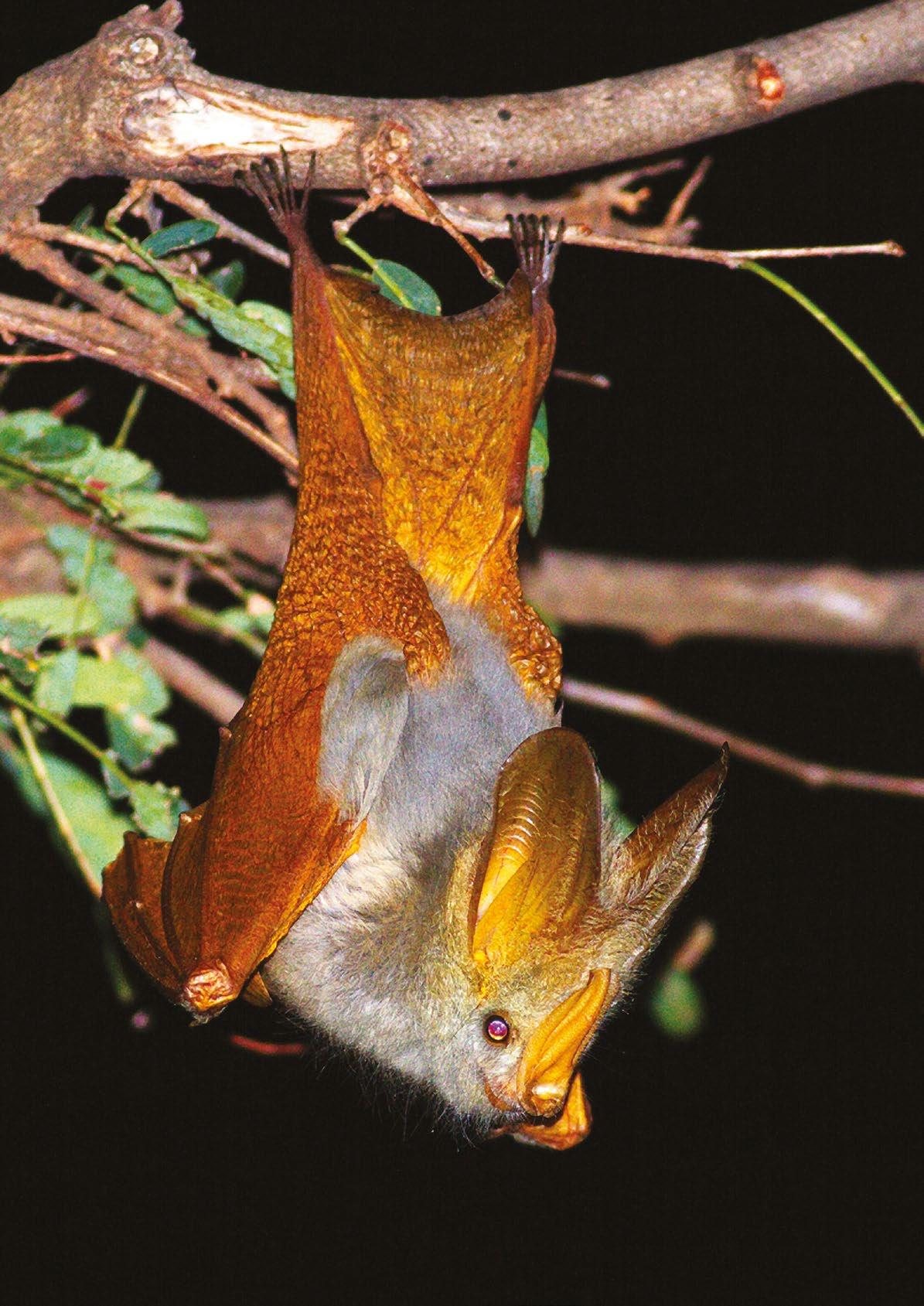
Yellow winged bat on an acacia branch, Tanzania
Hygiene
Bats are very clean, they groom themselves and each other.
Bats are not affected by some diseases, including some that can harm or kill humans. Bats can look healthy when they are carrying diseases, so never touch a bat – living or dead.
ZOONOSE, zoonosis or zoonotic disease is a disease that passes from animals to humans or from humans to animals.
Rabies is an example. Our dogs get rabies, so do mammals that live in the wild. Bats can get rabies. Humans can catch rabies.
Senses
Bats have the same senses as humans: smell, sound, sight and touch are all important.
Mega or fruit bats, have good eye sight and good smell.
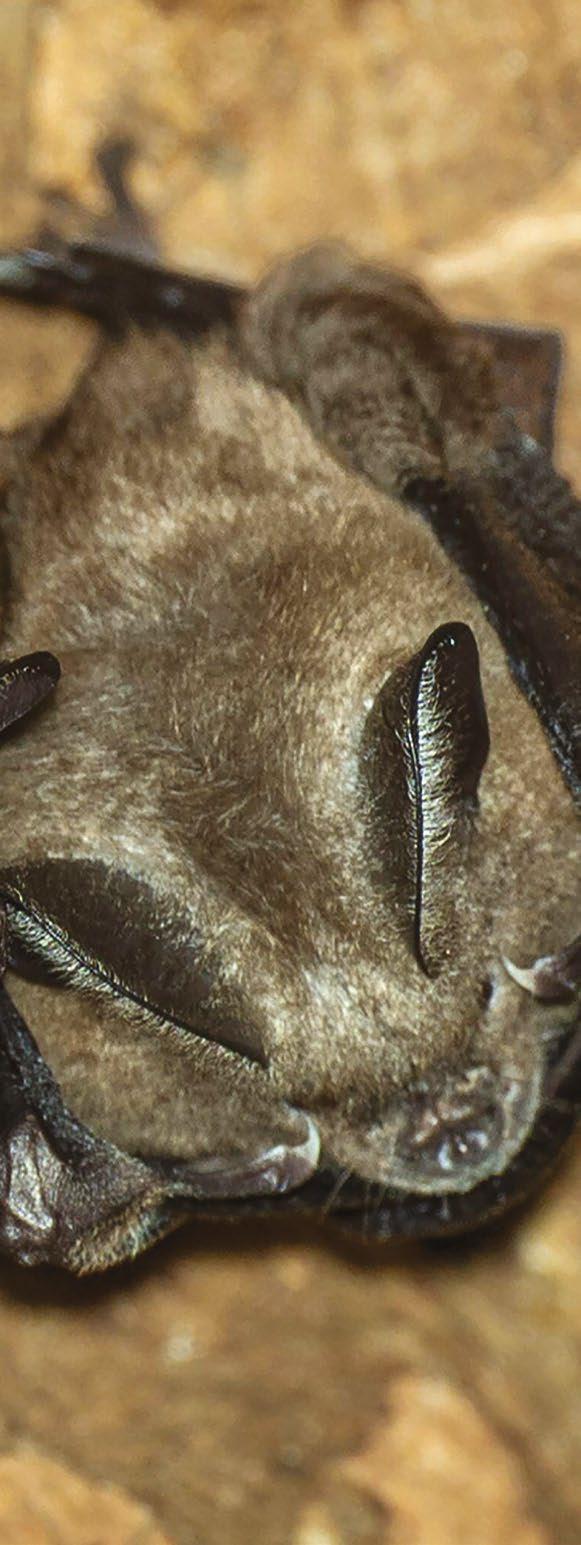
Microbats have poor sight and smell, but can detect sound very well. They use ultra sound and echolocation. Humans can not hear ultra sound.
Bats can see in the daytime, but because their eyes have night vision, bright light can confuse them.
Echolocation is sometimes called bio sonar or biological sonar.
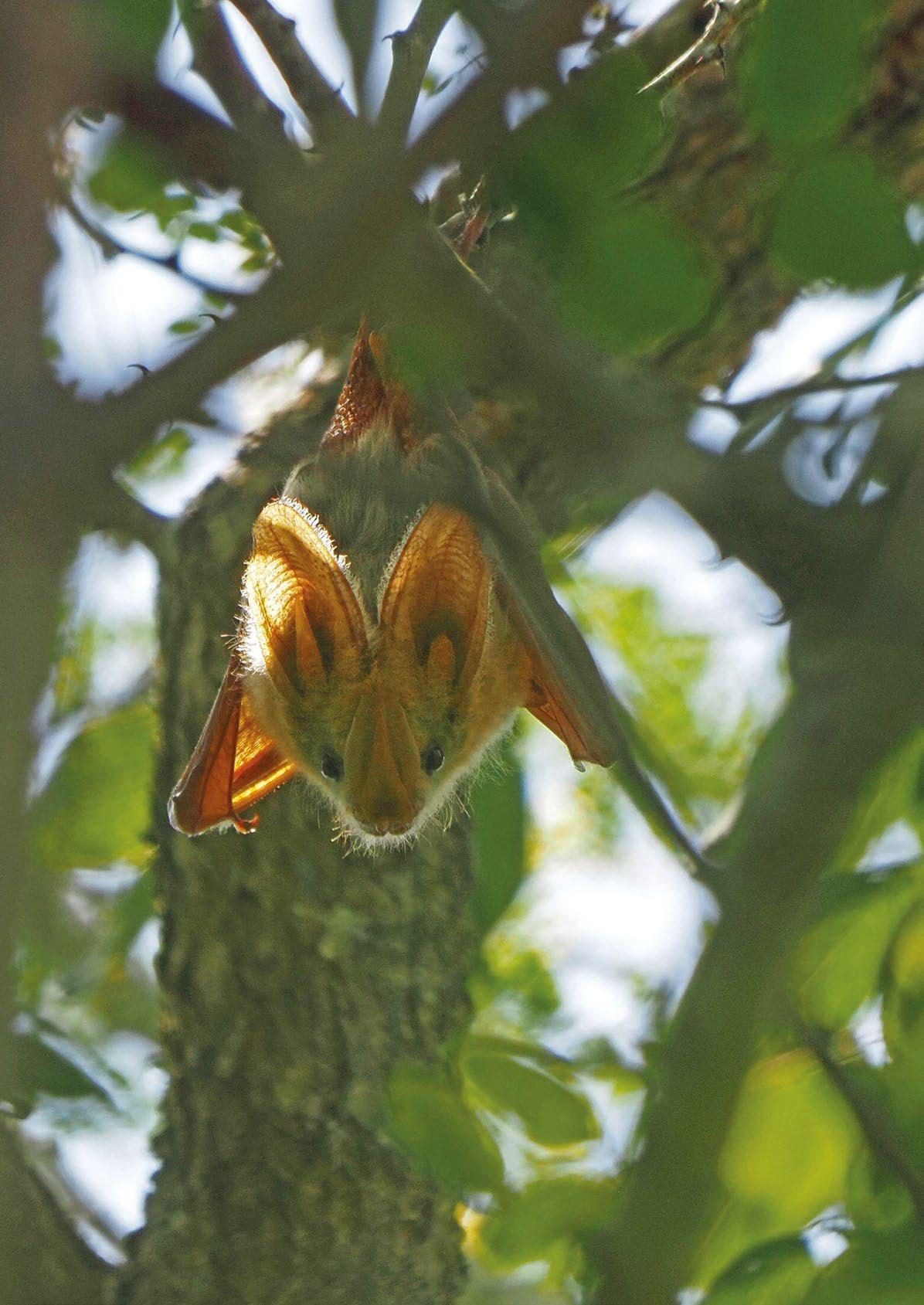
Yellow winged bat, Lavia frons, resting in shade of savannah tree, Tanzania
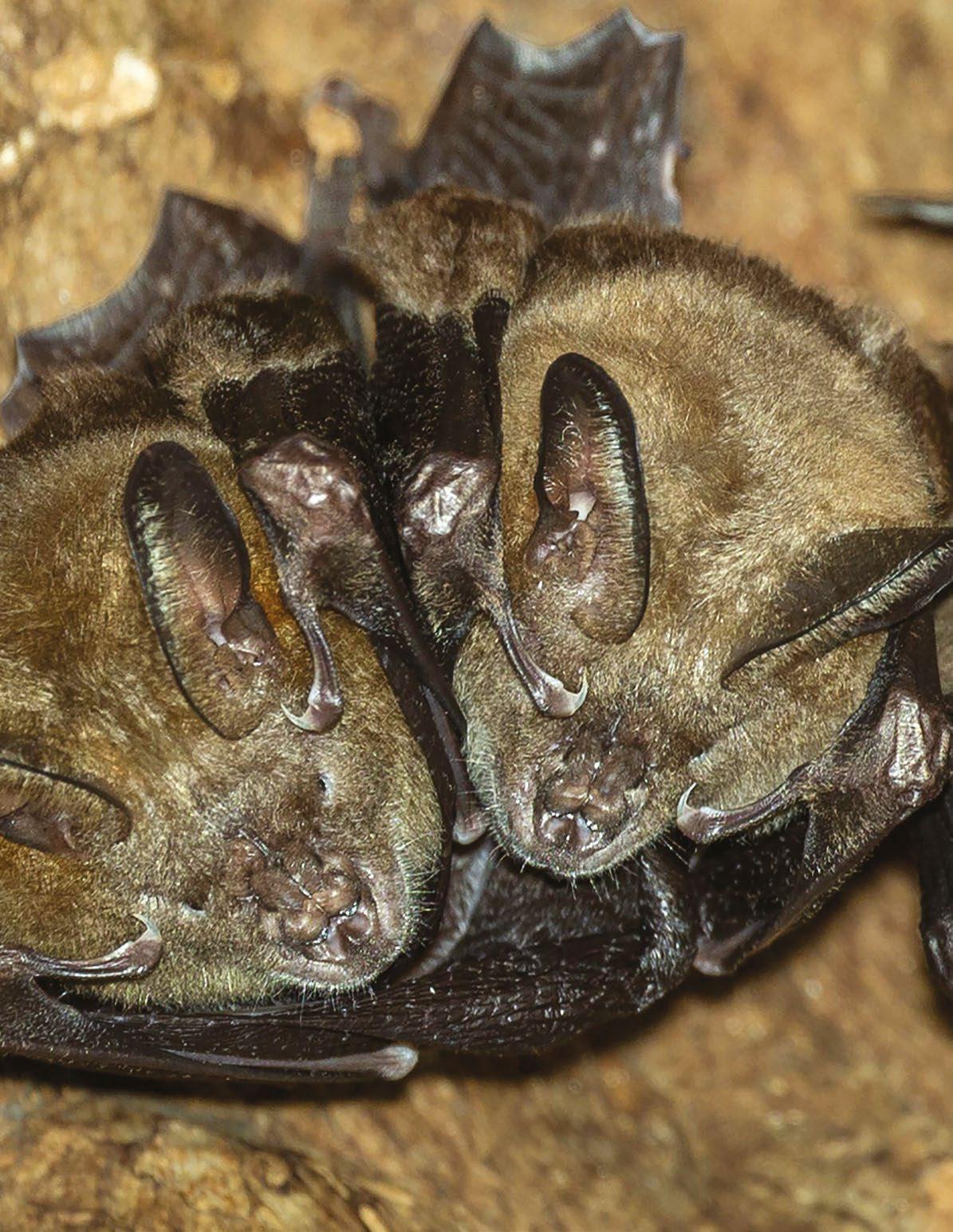
Bats roosting in side a baobab tree, Malawi
Communication
Bats produce sounds to socialise, when mating and to alert each other. Fruit bats produce sounds that can be heard by humans. They can be very noisy, when roosting and when feeding.
LISTEN to the call of an Epauletted fruit bat here: https://bit.ly/HHFruitBat
Humans can not hear the ultra sounds used by microbats.
Some species use audible calls and echolocation.
Echolocation
An echo is sound that has bounced back off a surface. Echolocation is using the sounds that bounce off objects to navigate.
Microbats use echolocation. They make continuous sounds, and use the echoes that bounce back off of objects to judge where objects are, and how to navigate around them. They have large ears to help them detect sound. Dolphins in the sea use echolocation, and some animals that live underground use it.
Microbats have very large ears and very tiny eyes.
Feeding and diet
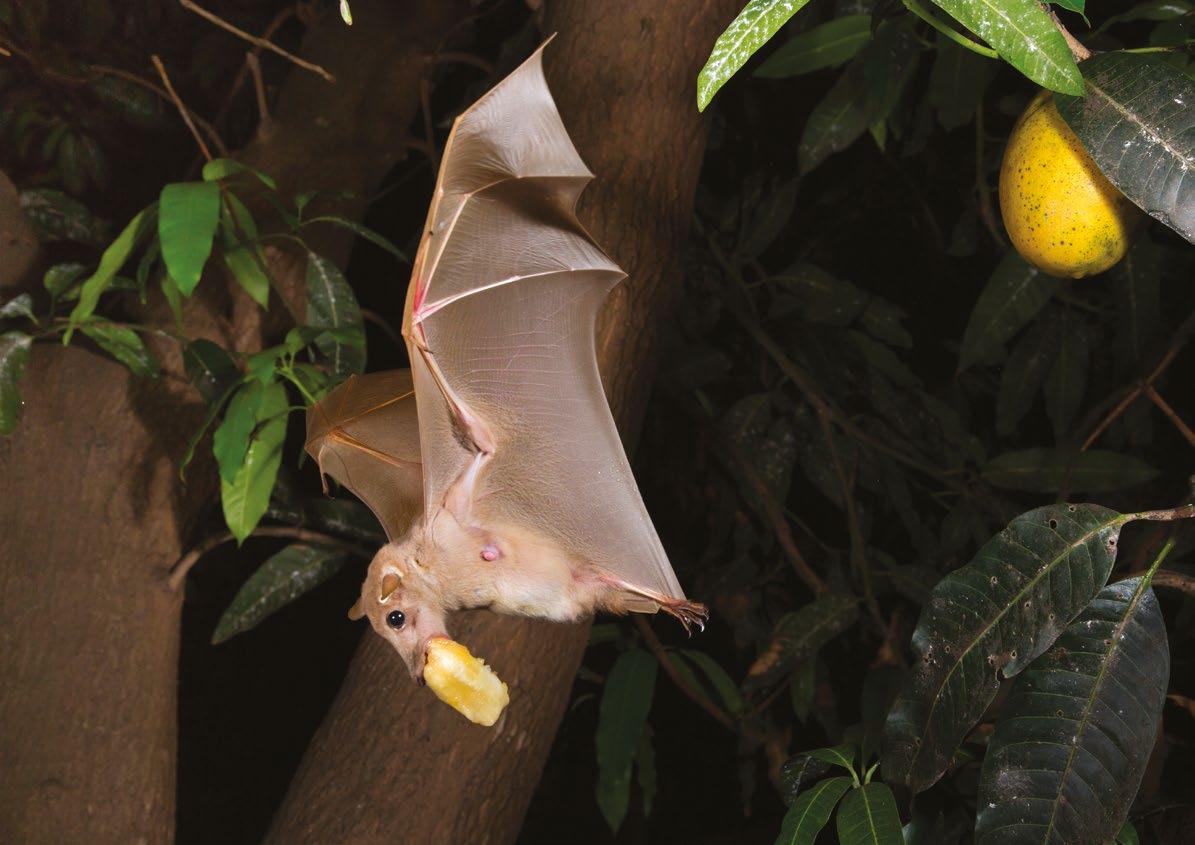
The diet of bats depends on the species. Mega or fruit bats eat mostly fruit – also the pollen and nectar of plants. Some have long tongues to reach nectar inside flowers.
Fruit bats use smell to find ripe fruits to eat, so have a long snout and nose like a dog. They use eyesight to navigate through trees to find the fruits and flowers they want to eat. They have bigger eyes than micro-bats.
Fruit bats may fly 80km in one night looking for food!
When bats are feeding on a fruit tree they can be very noisy.
Lifespan – bats can live up to 30 years old in the wild.
Bats that mostly eat insects are called Insectivorous or microbats. Micro means small.
Fruit eating bats are called fruit bats, or megabats. Mega means big.
Gambian epauletted fruit bat, Ghana
Some bats are carnivores – which means they eat meat.
Some species catch and feed on fish.
Some bats feed on the nectar of flowers –they are nectivores.
Some bats eat frogs, termites, butterflies, as well as moths, beetles, mosquitoes and| other insects.
A bat can eat
1200 mosquitoes in an hour!
Insectivorous bats find their prey using sound. They use echolocation.
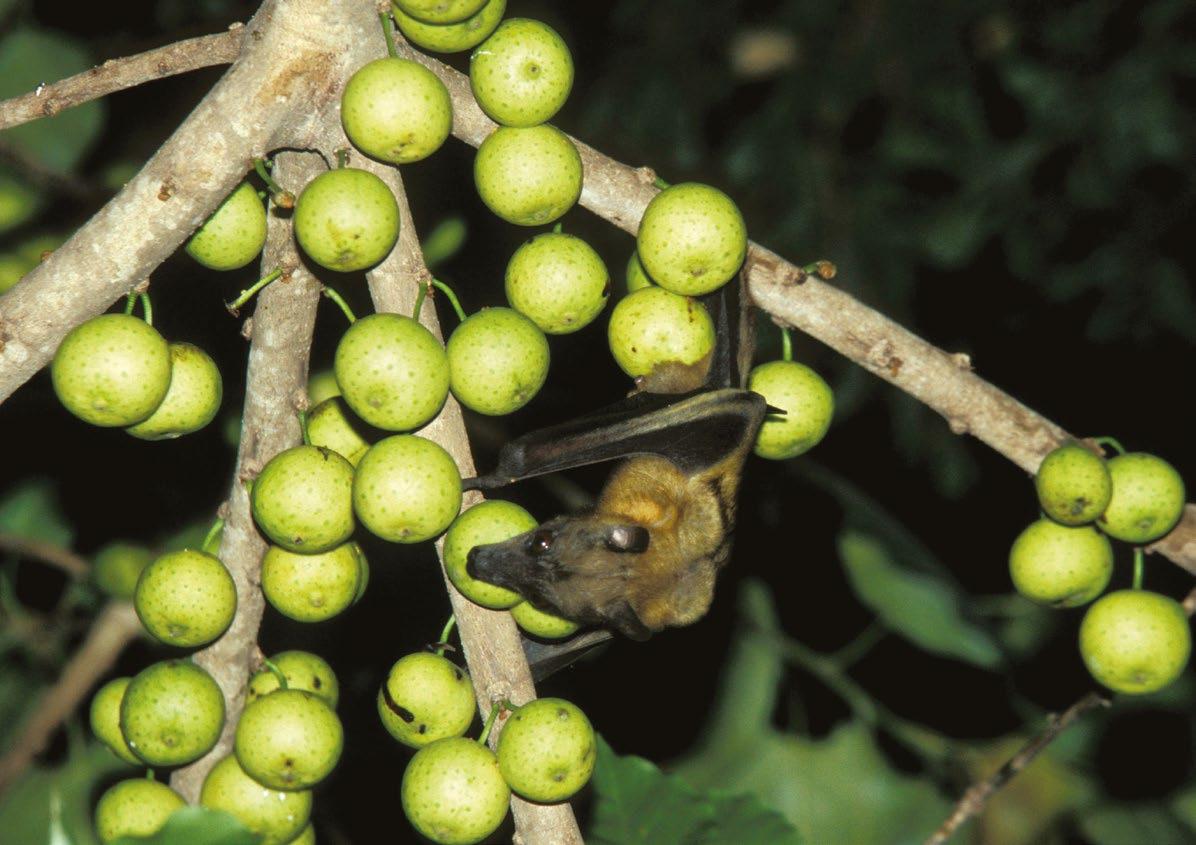
Feeding on wild fig tree
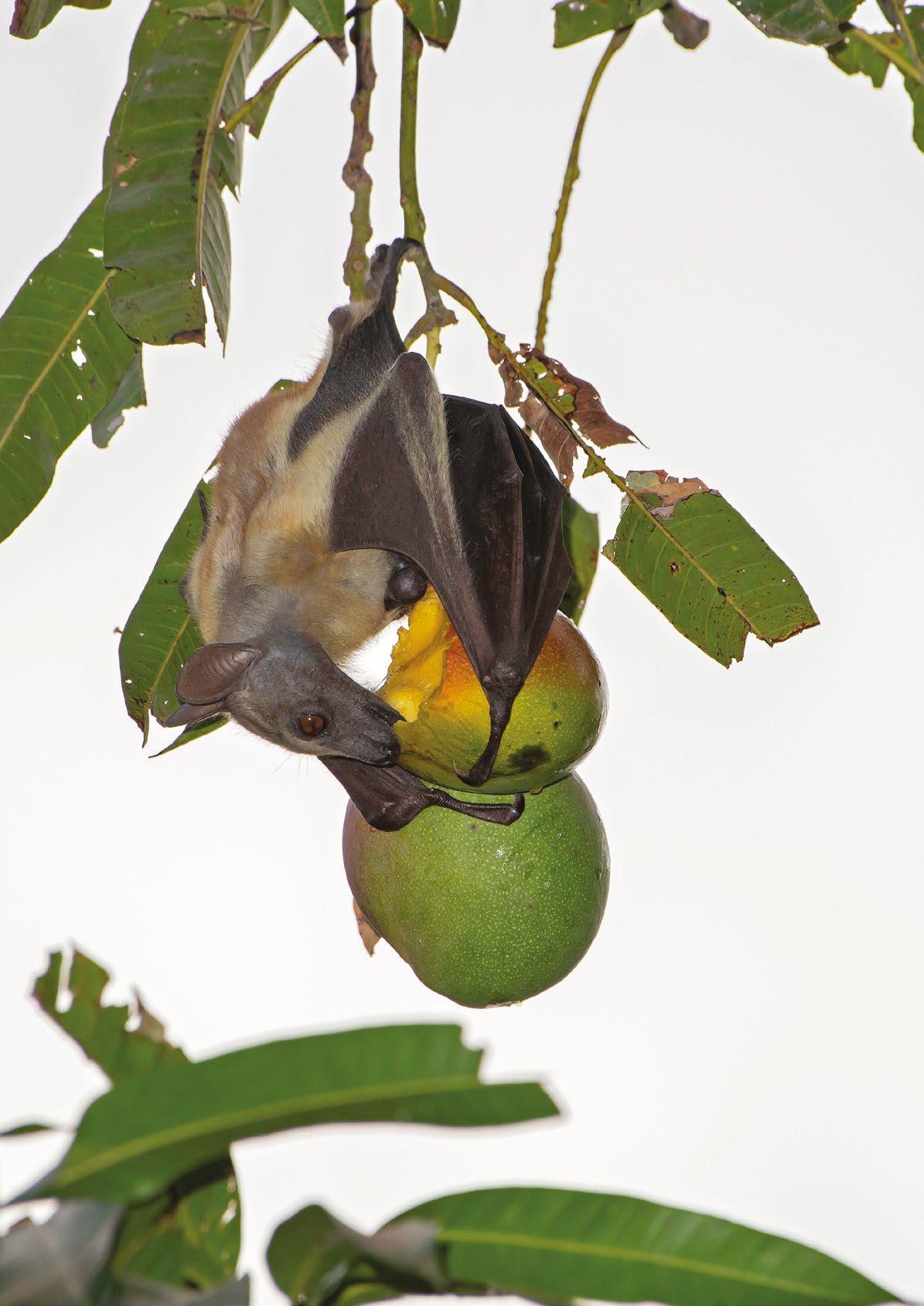
Straw coloured fruit bat
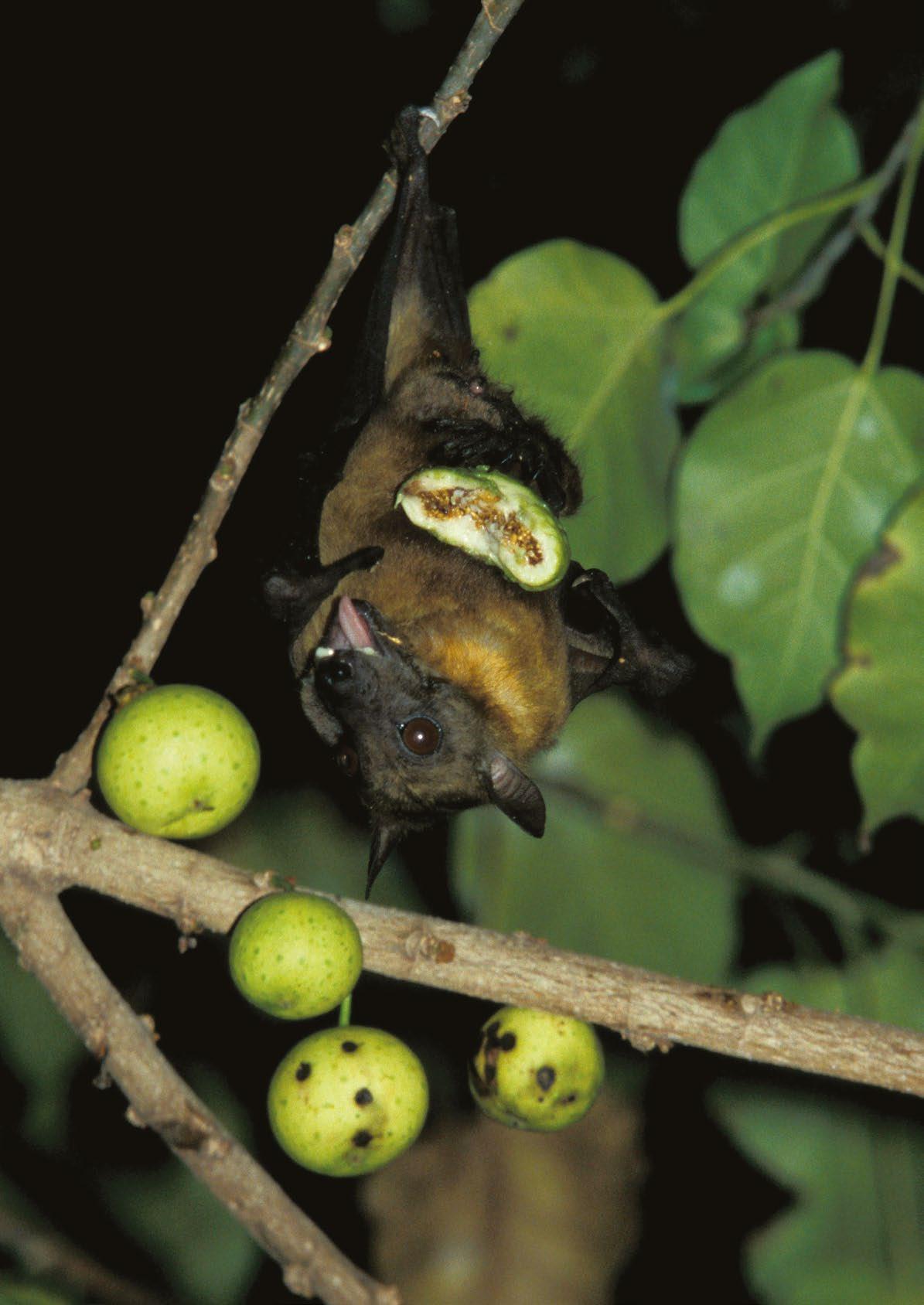
Gambian epauletted fruit bat, Ghana
Movement
Bats are the only mammals that can fly.
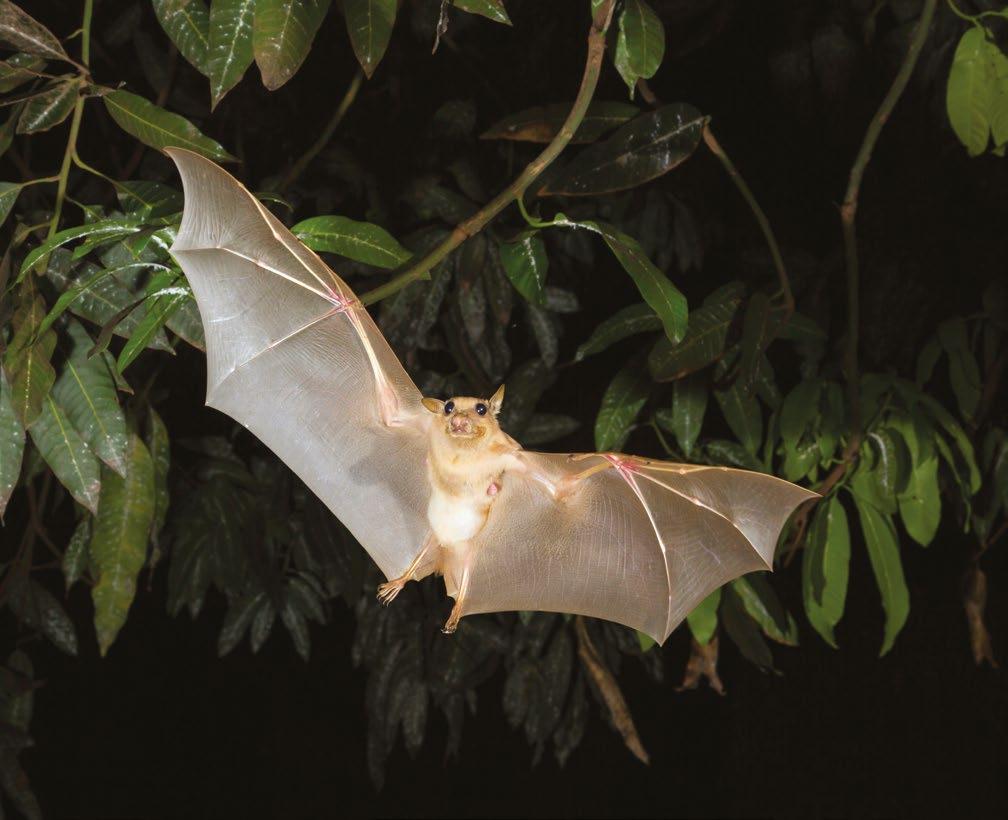
Bats are very agile flyers. Small bats dart and change direction quickly and easily.
Stretch out your fingers, then twist and turn them, then you can imagine how agile bats can be as they fly.
Bats can not move well on the ground. Bat wings are not strong enough to take flight from the ground. If a bat lands on the ground, it must scuttle up a tree, rock or building and fly from there.
Bat wings are like elongated fingers with membrane between each finger. Hand wings!
The Mexican free-tailed bat, Tadarida brasiliensis can fly at 100mph. It’s the fastest mammal, faster than a cheetah.
Gambian epauletted fruit bat, Ghana
Colonies, community and family
Bats may live in colonies for all or part of the year. African sheath-tailed bats, like these in Kenya can have colonies of 50,000 individuals. Within the colony there will be families and
single sex sub-groups. There will be harems of a single male with about 20 females. There will be bachelor groups of young males. Young females may stay in the harem, or join a new group.
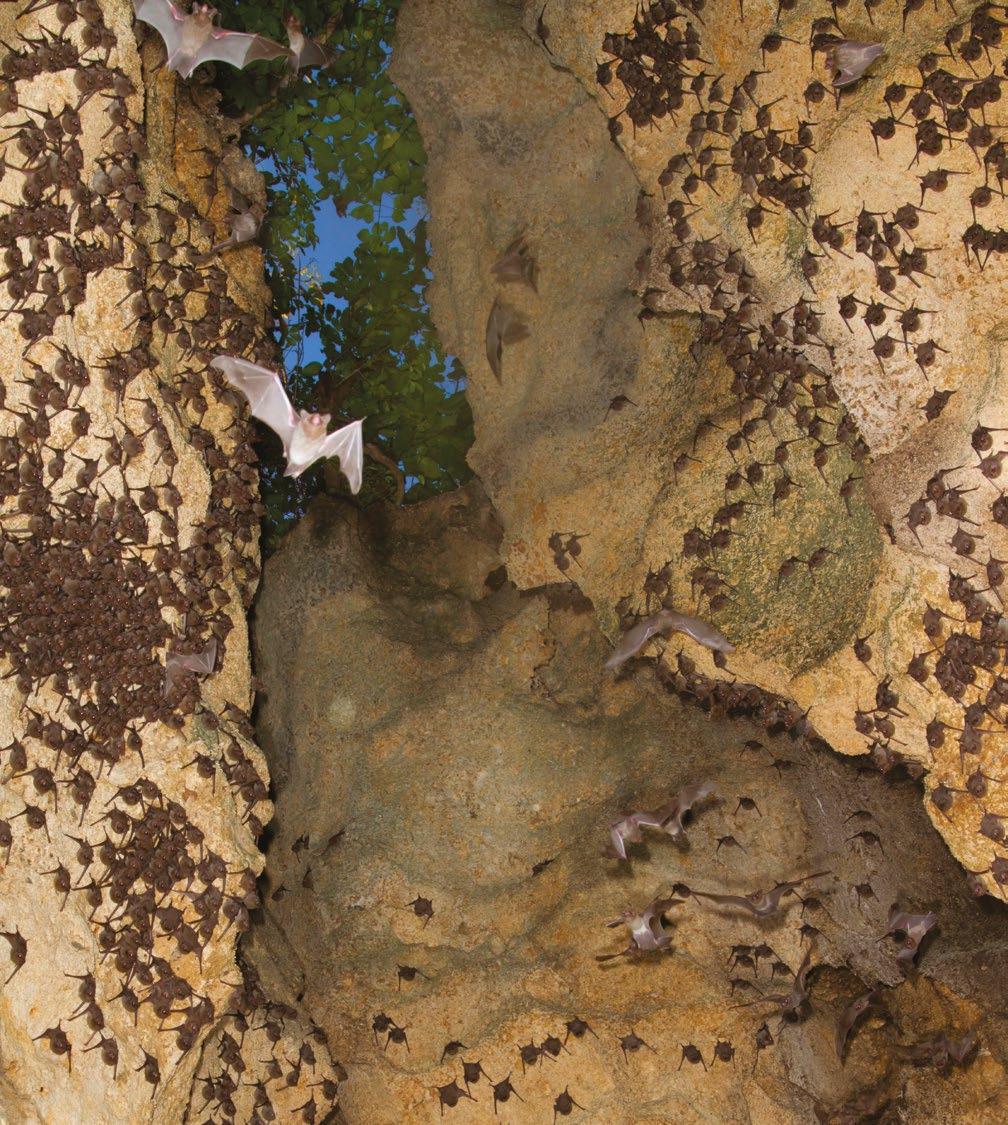
African sheath-tailed bat, Coleura afra colony in cave on Kenya coast
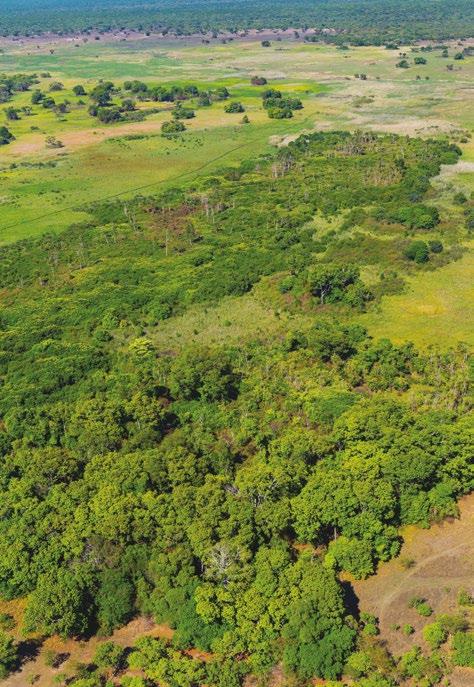
Every year, from October and December, up to ten million African straw coloured fruit bats migrate to Kasamka national park in Zambia. The bats travel thousands of miles, to feed on fruits and flowers in the Kasamka forests. They arrive with the wet season and stay 6-8 weeks.
The roosts cover trees, like the ones below, spreading out to feed every morning.
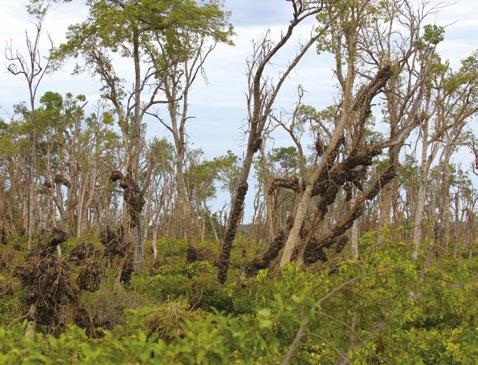
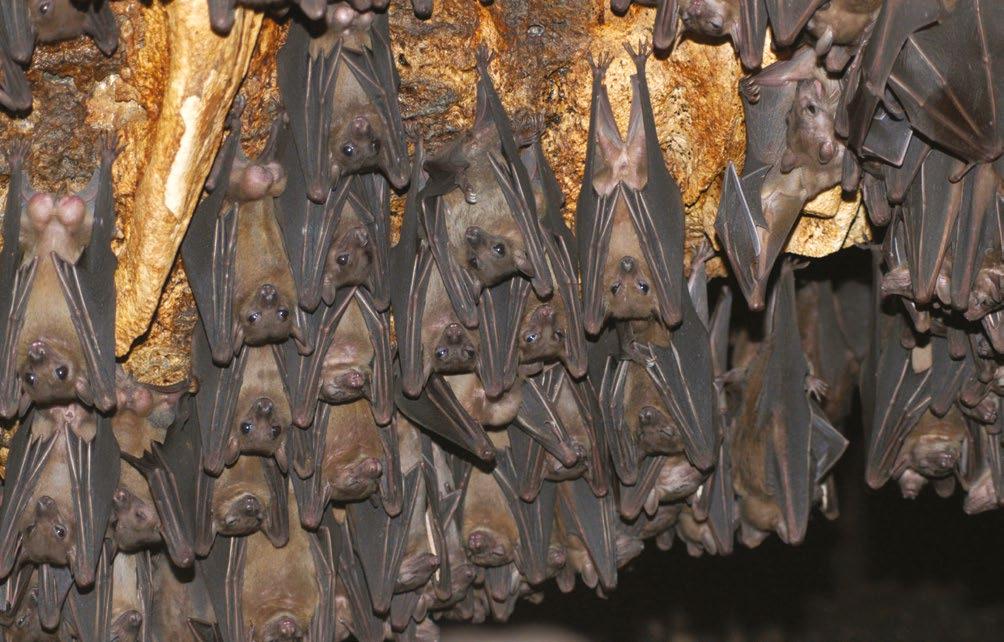
For many bat species males and females stay separate, except when mating. This is a colony of male bats in central Africa.
Rosettus aegyptiacus bats in a cave in Uganda
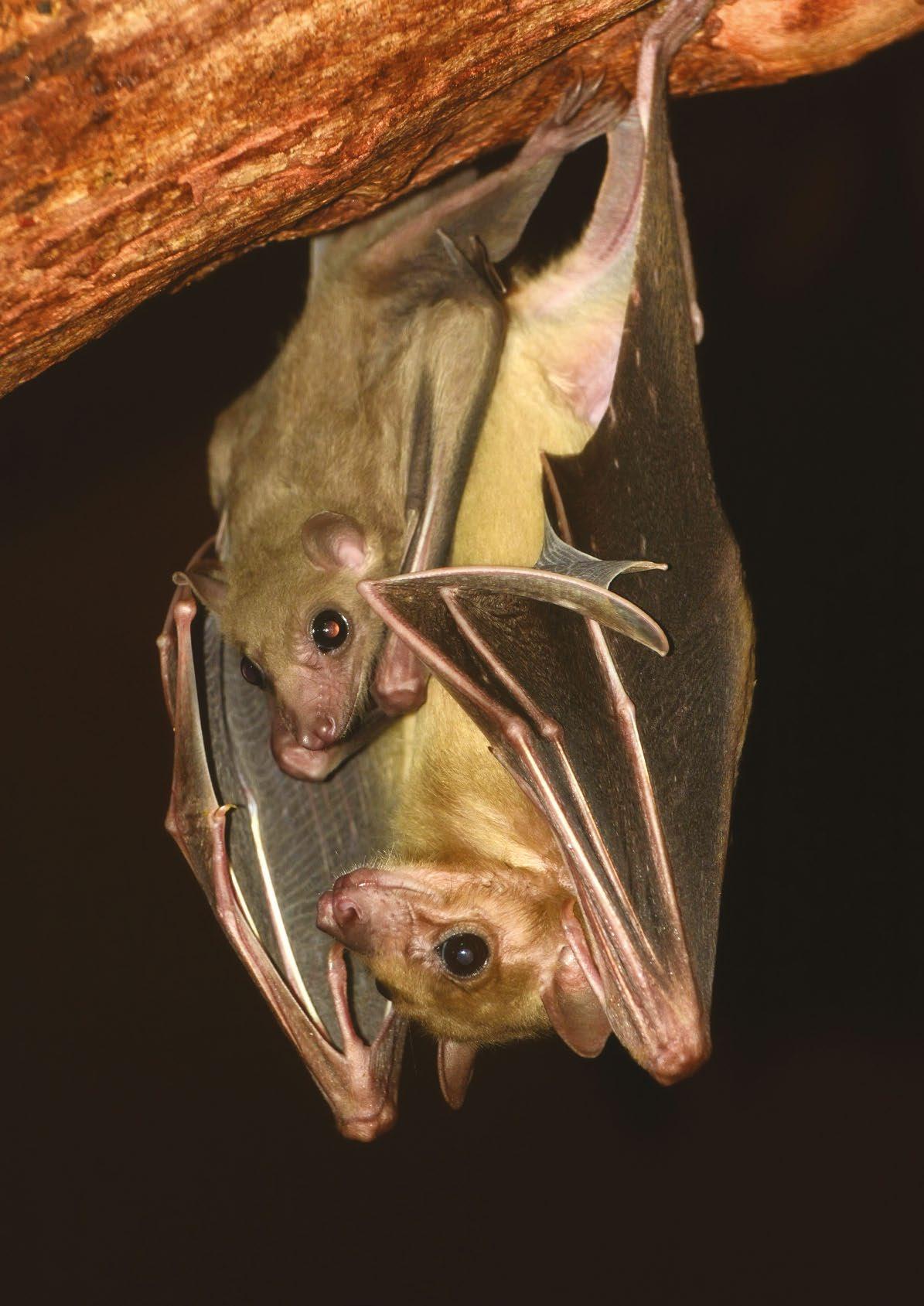
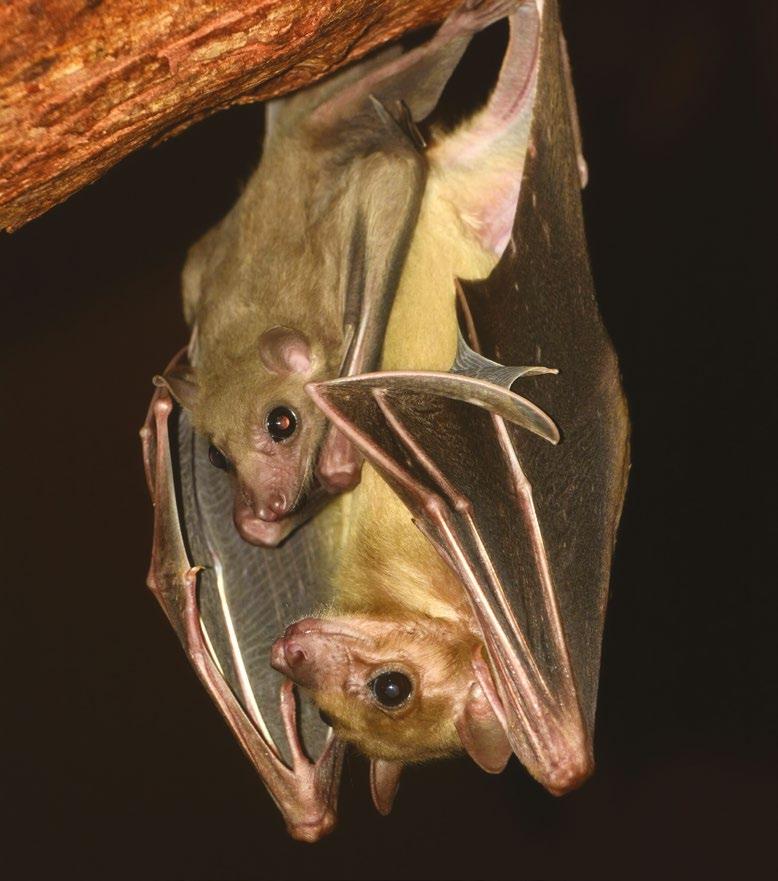
Egyptian fruit bat – Rousettus aegyptiacus – mother and pup
Reproduction
• A bat is sexually mature after about 18 months, depending on the species.
• Pregnant females live together in maternity colonies, and stay there until their pups are weaned.
• The gestation period is 6-9 weeks, depending on the species. The length of pregnancy can be longer if weather is bad or food scarce.
• Female bats give birth to only one, rarely two pups per year.
• Bats are mammals, females breastfeed (suckle) their young.
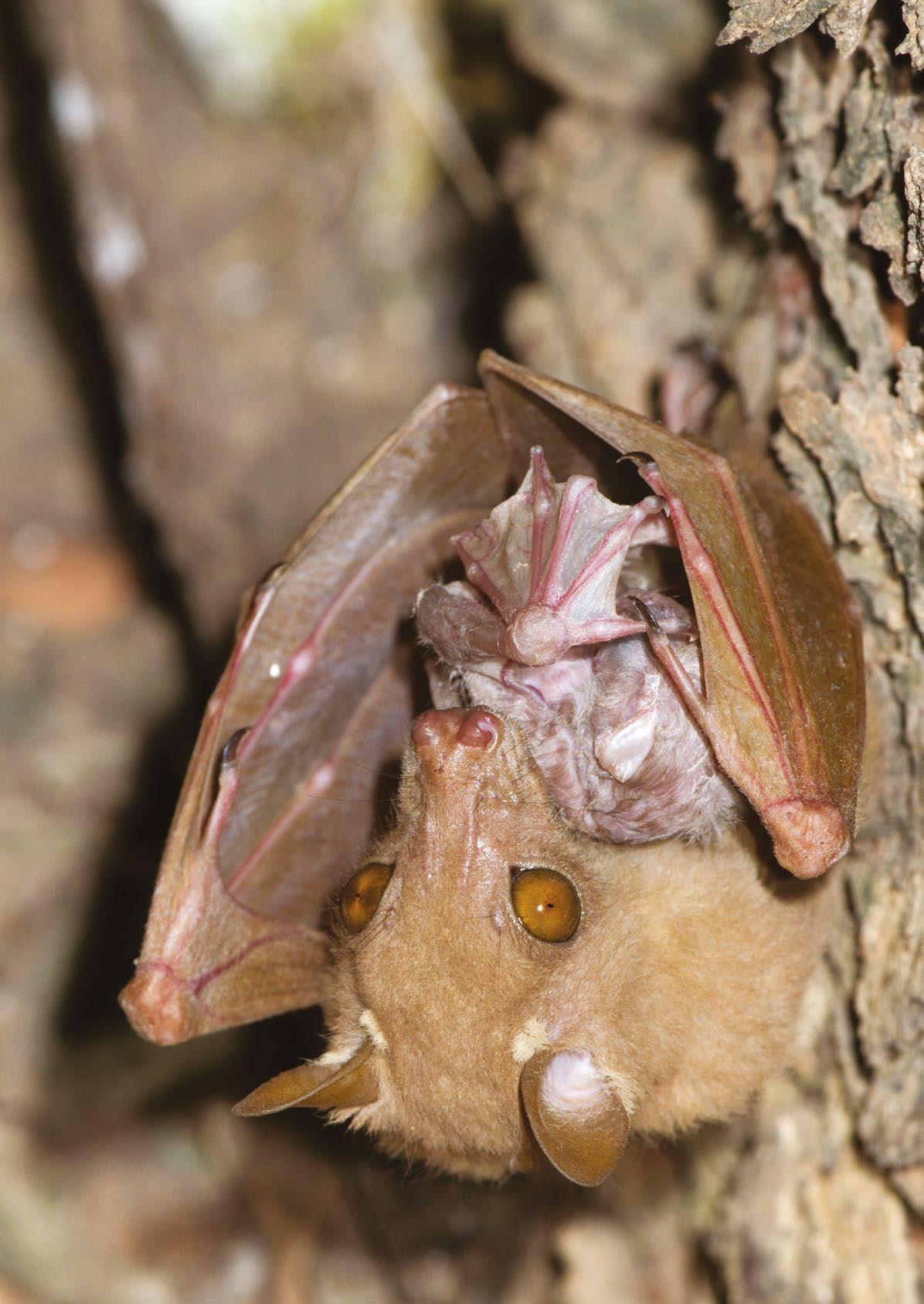
Peter’s dwarf epauletted fruit bat grooming newborn pup. Cameroon
The largest known bat colony is in Texas, USA. It is a maternity colony. More than 15 million pregnant Mexican free-tailed bats go there every year to deliver and raise their pups.
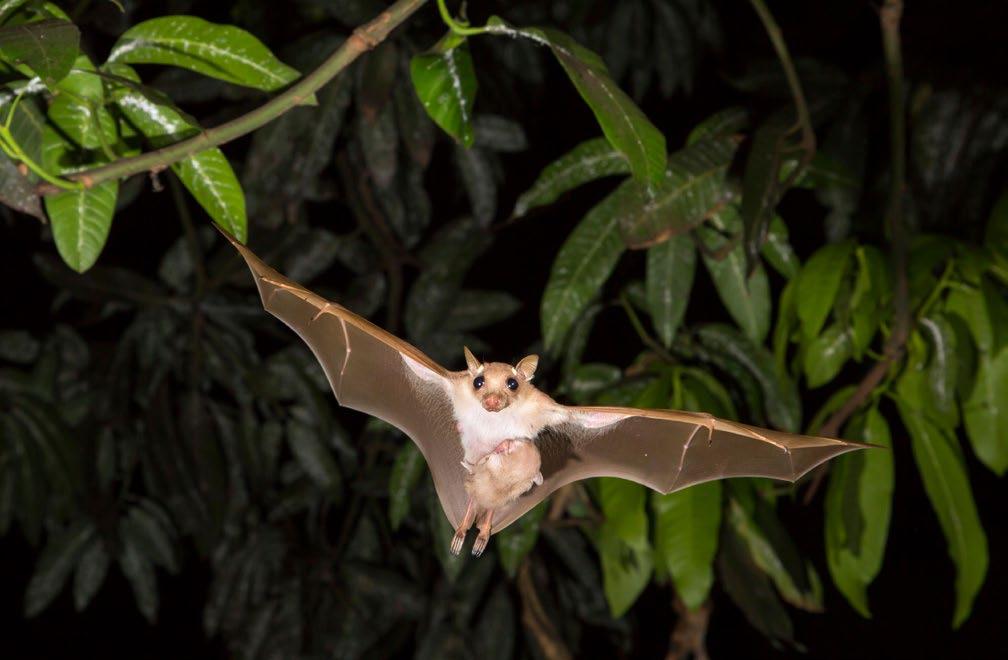
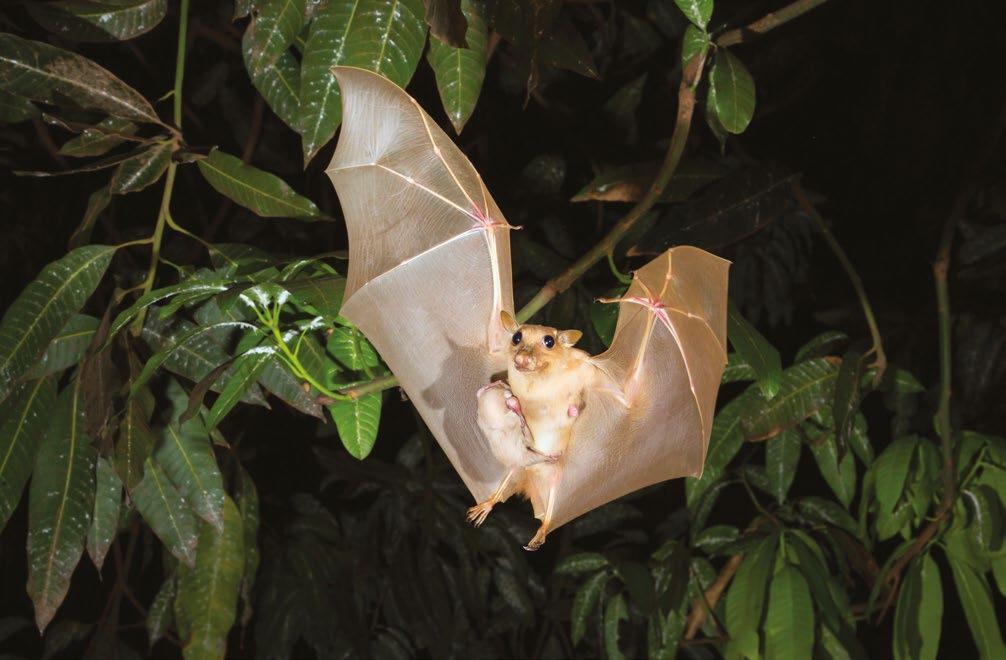
A baby bat is called a pup.
The role of bats in ecosystems
Bats pollinate many fruit, spice and medicinal plants, including mangos, guava, avocados, bananas, corn and cotton.
Bats disperse seeds of nut trees, figs, cocoa and other plants in their poo.
Bat poo is very good fertiliser.
A bat can eat its body weight in insects in one night.
In North America, by eating insects that are agricultural pests bats save $3.7 billion of crop damage a year!! That’s a lot of good work!!
Bats are important food for predator species.
We and other creatures depend on bats, they help keep our ecosystems healthy. We need them, as much as they need us!
Predators
Owls, hawks, snakes and other predator species eat bats.
Humans hunt and eat bats in some places. We now know that humans must never eat bats. Humans should never touch bats. There are many diseases that can pass from humans to bats, and also from bats to humans.
To keep us all safe never touch bats, and never eat bats.
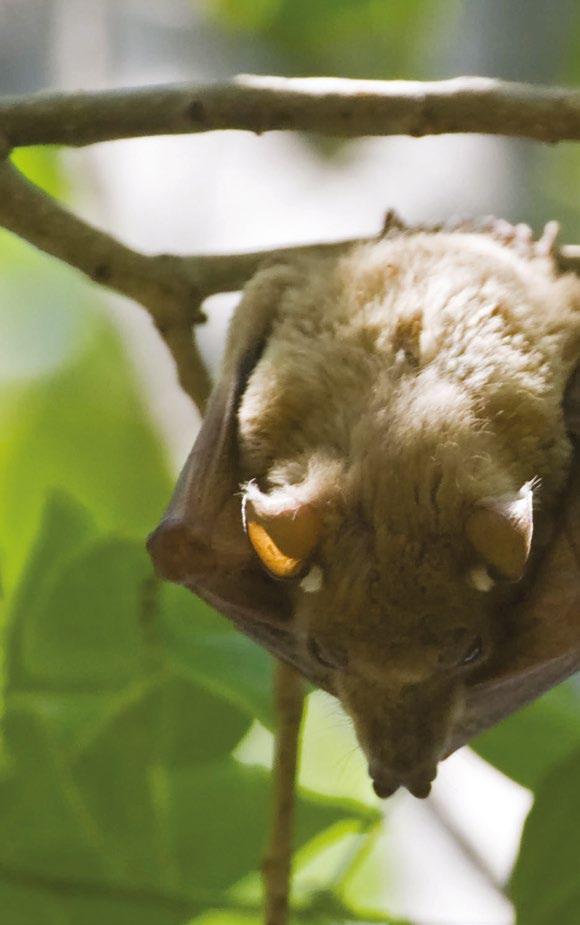
Human threats to bats in Africa
• Habitat loss – fewer places to forage and roost.
• Pesticide use.
• Hunting for bushmeat.
• Killing for art, decoration and witchcraft –juju or muti.
• Negative beliefs and misunderstandings about bats are a big problem. They cause people to harm and persecute bats unnecessarily.
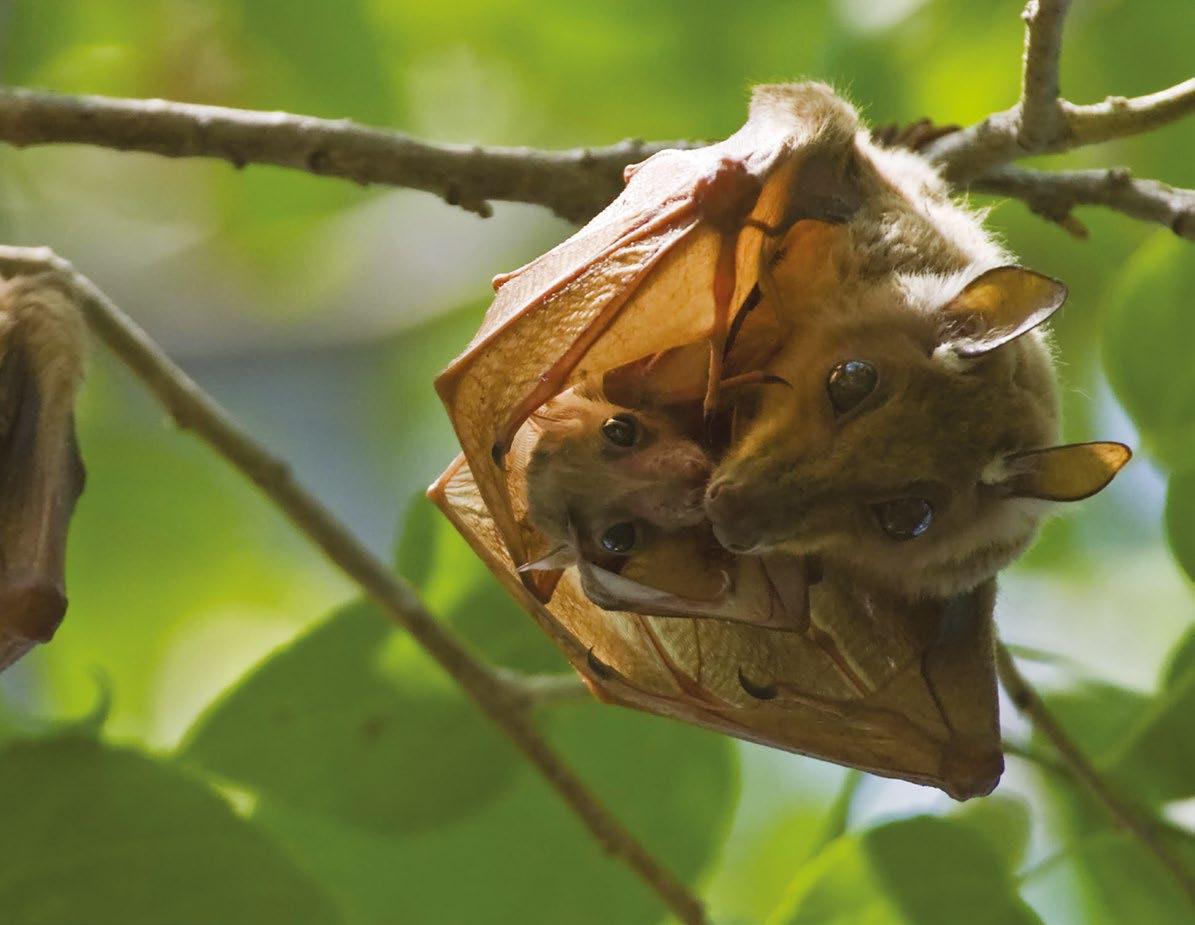
• Chiropterology –the study of bats.
More than 20% of the world’s bats, and 23 species are threatened with extinction. We need to help them.
• Chiropterologist –a bat expert.
Extinct means does not exist, anywhere. An endangered species is a species in danger of becoming extinct.
Bat conservation
There is a lot we still don’t know about bats.
Peace Iribagiza is a Rwandan bat specialist. Peace and other chiropterologists study bats to fill the gaps in our knowledge. Some of the techniques they use are acoustic studies, faecal studies, capture and GPS tracking.
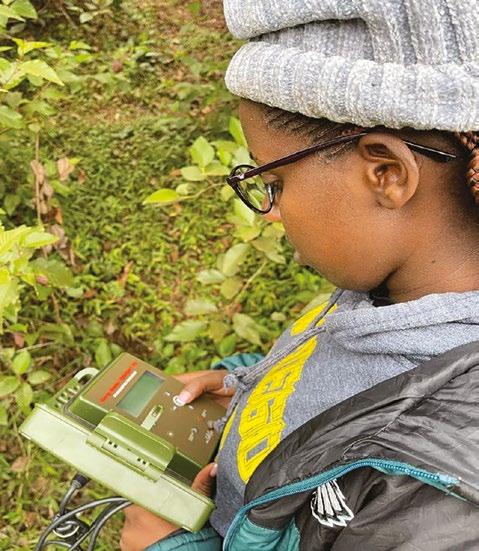
Acoustic studies
Each bat species has unique sounds that they make. These include territorial, social and echolocation calls, and feeding ‘buzz’ sounds.
In this photo Peace is using an acoustic detector/ recorder to record and learn the sounds made by insectivorous bats in Rwanda. The equipment picks up and records sounds, which are analysed using apps on a phone or computer. The sound recordings will all be kept, in a special library.
Peace can use acoustic monitoring to know where the different species live, and how far they travel – their distribution and range. She can learn about their behaviour, how they use various habitats and when they are active. She is studying their movement, behaviour patterns and ecology.
Faecal studies
Chiropterologists study bat droppings, the faeces. It shows exactly what the bats ate. By regularly collecting droppings under roosts, a chiropterologist can know how the bat’s diet changes at different times of the year. This is one part of bat ecology.
Capture
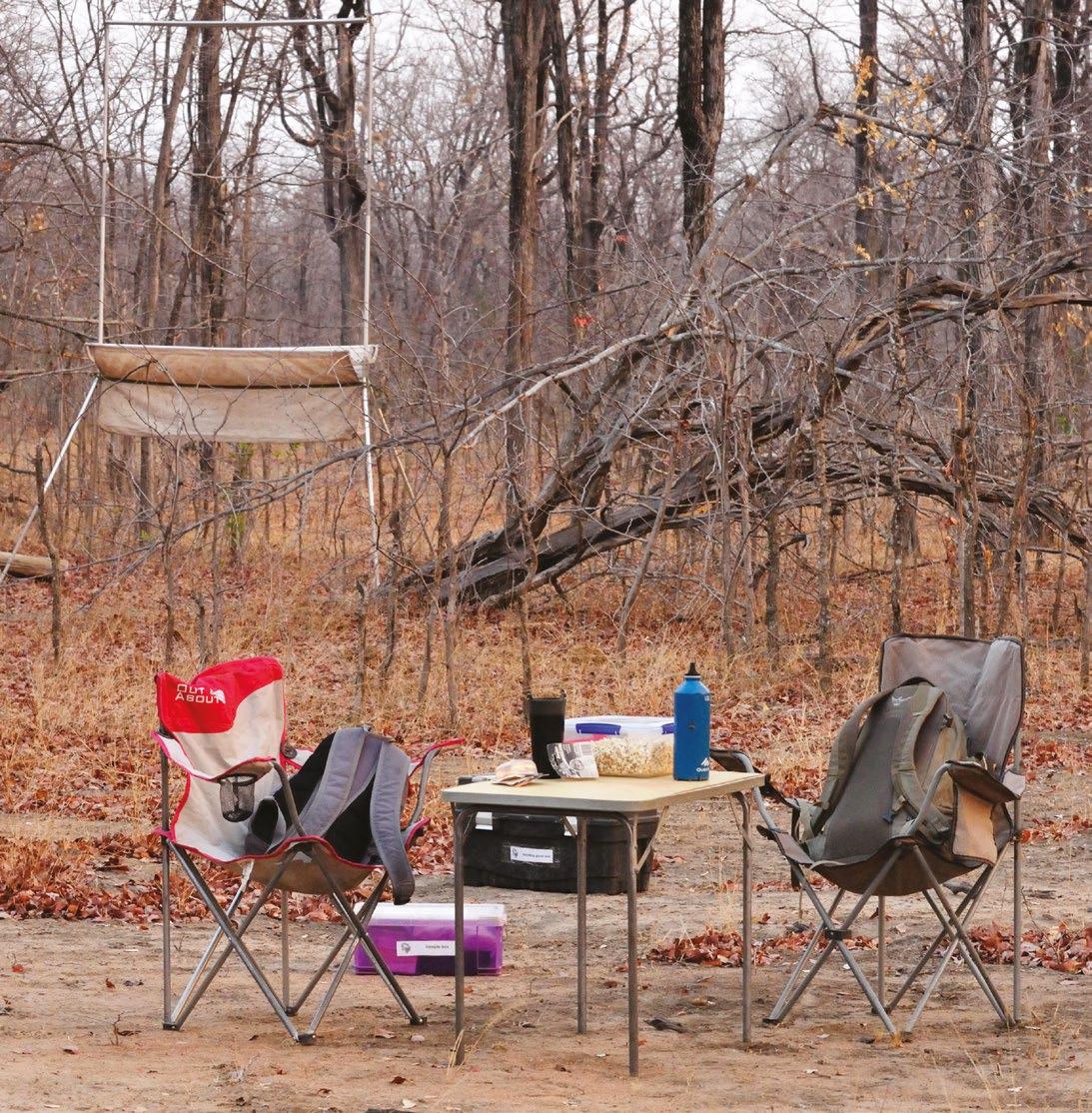
Bat researchers sometimes use very light nets so they can capture and observe bats close up, without harm – mist nets, hand nets and harp traps are examples.
Acoustic means to do with sound.
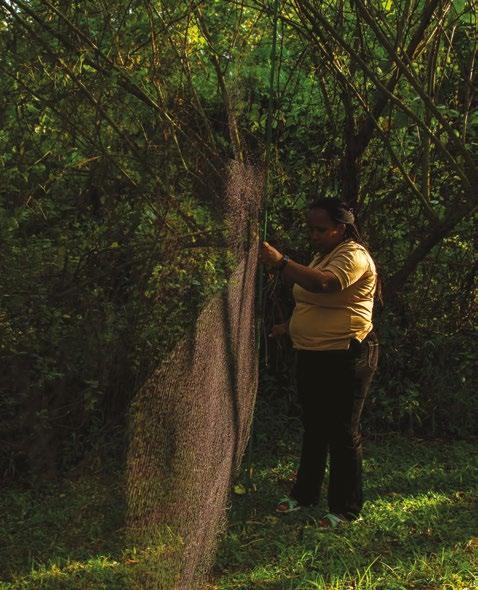
Peace surveying bats in Rwanda
A mist net in Kigali
A GPS / Global
Positioning
System links to satellites in space to give information on location and movement.
GPS tracking
Researchers put tiny GPS tags on bats. The tags can weigh just 1g and send a signal that is picked up by a phone or computer. These signals allow us to track exactly where a bat moves, and how long it spends in any place. Knowing movement patterns, when and where the tagged bat moves and for how long helps conservationists know which habitats need to be protected to keep the bats safe.
RWCA uses a community approach to bat conservation. They train rangers and local people who live near bat colonies. In Rwanda these community conservation champions do monthly bat counts at the roosts of strawcoloured fruit bats (Eidolon helvum). The rangers and community champions also do education in schools and communities around bat colonies.
Surveying bats with a harp net, Liwonde, Malawi
What can we do to help bats?
• Watch and enjoy bats!
• Don’t injure, taunt or kill bats.
• Avoid disturbing bat roosting sites: never throw stones or burn areas near bat colonies.
• Don’t cut down trees where bats roost.
• Plant trees for bats to roost and forage in.
• Keep light to a minimum near bat colonies.
• Share what you’ve learned from this book!
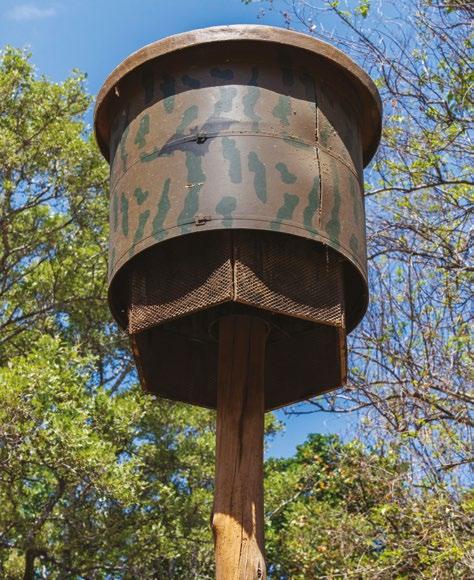
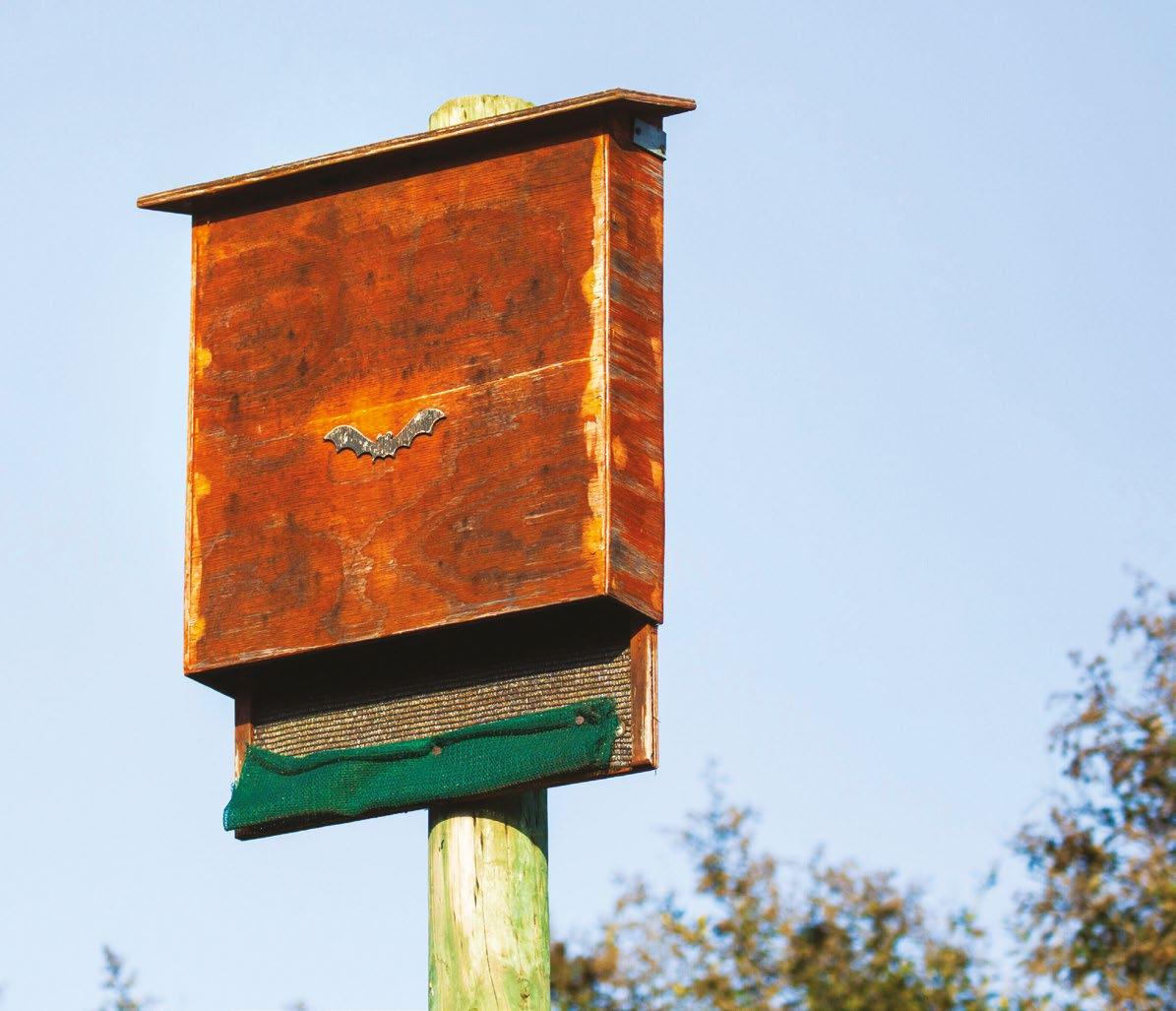
• If you really don’t like having bats in your roof then safely encourage them to leave their homes, and perhaps you can make a bat house for them. Observe when bats leave to forage, and when none remain inside cover the entrance hole. They will find somewhere else to roost.
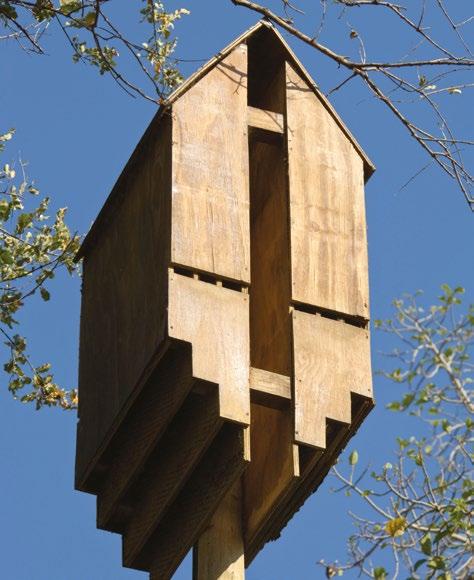
Some farmers put bat ‘houses’ in their fields – to encourage bats to come and live there and eat the insects. This is an alternative to using chemical insecticides on crops.
The pictures below are bat ‘houses’ – they provide a roosting place for bats when natural roosts are limited. You may like to construct one in your neighbourhood. They should be in open areas away from lights, electric wires and other obstructions.

Living safely around bats
Never never eat bats.
If you can touch a bat, don’t. A bat that lets you touch it may be sick. To protect it from us, and to stay safe, never touch a bat.
If you do touch a bat or bat poo wash your hands well with soap and water.
If you have bats living in the roof of your house always keep food and water supplies covered to prevent contamination from bat urine and droppings.
We need bats so don’t hurt them.
References
Bat Conservation Trust www.bats.org
Bat Conservation International www.batcon.org
PREDICT Living Safely with Bats Book (Africa version_27 July 2018).pdf University of California Davis & USAID Laverty, T. M., Teel, T. L., Gawusab, A. A., & Berger, J. 2021. Listening to Bats: Namibian Pastoralists’ Perspectives, Stories, and Experiences. Journal of Ethnobiology, 41(1), 70-86. https://doi.org/10.2993/02780771-41.1.70
Bat Conservation International. Bats. vol 43-issue 3.2024. Field Notes A Rising Star in Rwandan Bat Conservation, Meet Peace Iribagiza, by Annika S. Hipple. https://digital.batcon.org
GBIF: Global Biodiversity Information Facility. https://www.gbif.org/species/2432527
Bats of the world. Bat Conservation Trust. www.bats.org.uk www.rwandawildlife.org
https://www.inaturalist.org/guide_taxa/513004
Straw coloured fruit bat distribution. c The IUCN Red List of Threatened Species: Eidolon helvum – published in 2020. https://dx.doi.org/10.2305/IUCN.UK.2020-2.RLTS.T7084A22028026.en
The Rainforest Trust. Kasamka bat migration www.rainforesttrust.org
Image credits
Front cover & p33. Egyptian fruit bat – Rousettus aegyptiacus – mother and baby. Itsik Marom / Alamy Stock Photo
P1 Straw coloured fruit bats returning to roost in early morning. Kasanka, Zambia. Garbutt / Alamy stock photo.
P3 Independent Birds / Shutterstock.
P4 Female hammerhead fruit bat Hypsignathus monstrosus roosting in rain-forest, DRC. Kuzmin / Alamy.
P5 African straw coloured fruit bats Eidolon helvum. Northern Cameroon. Kuzmin / Alamy.
P6 Mauritian tomb bat, Tazhozous mauritanus. Madagascar. FLPA / Alamy.
P7 Peter’s dwarf epauletted fruit bat, Ghana. Kuzmin / Alamy. Lower, bat in glove, RWCA.
P9 Hildegardes tomb bat, Taphozous hildegardeae. Kenya. Kuzmin / Alamy.
P10/11 Eidolon helvum, flying, Kasanka national park, Zambia. Burrard-Lucas / Alamy.
P12 African sheath tailed bats Coleura afra emerging from coastal cave, Kenya. Kuzmin / Alam.
P13 Eidolon helvum roost, Bujumbura, Burundi. Hemis / Alamy stock photo. Lower, Eidolon helvum, daytime roost in ever-green swamp-forest, Kasanka, Zambia. Garbutt / Alamy.
Pp14/15 & p14 below Eidolon helvum colony, neem tree, North Cameroon. Kuzmin / Alamy.
P15 below, fruit bat roost on rock face, Ghana. Image Professionals GmbH / Alamy
P16 Fruit bats, Hwangwe National Park, Zimbabwe. Schoene / Alamy. Below: Bat roost under thatch roof, South Africa, Chris Willwmsen / iStock.
P17 Top, Peters epauletted fruit bat, Epomophorus crypturus, Botswana. FLPA / Alamy. Below, bat roost in sand cave, northern Cape, South Africa. AfriPics / Alamy.
P18/19, Sundevall bats, Hipposideros caffer, in forest cave. Dzanga-Ndoki National Park, CAR.
P20 Eidolon helvum roost, Uganda. Prosicky / Alamy. Lower, E. helvum claws grasping branch. Minden Pictures / Alamy.
P21 Yellow-winged bat hanging on acacia branch, Tanzania. Greaves / Alamy.
Pp22/23 Yellow winged bat, Lavia frons, roosting in shade of savanna tree, Nyerere NP, Tanzania. Holroyd / Alamy.
P24 Bat roost inside baobab tree, Liwonde NP, Malawi. Lindsay / Alamy.
P25. Hammer-headed Fruit Bat call. Frank Willems, XC940650. Accessible at www.xeno-canto.org/940650 CC licence.
African Straw-coloured Fruit Bat social calls from a colony. Alain Malengreau, Rubavu, Rwanda. Xeno-Canto XC981192 CC licence
Typical pinging call sounds of epauletted fruit bat Kafue, Zambia. Either Wahlberg’s or Gambian Epauletted Bats. ©Wild Ambiance, 2025.
P26 Gambian epauletted fruit bat, Ghana, Kuzmin / Alamy.
P27 & 29 Gambian epauletted fruit bat feeding on fig tree. Papilo / Alamy
P28. Straw coloured fruit bat, E. helvum feeding on mango. Nature picture library / Alamy.
P30 Gambian epauletted fruit bat Epomophorus gambianus, flying, Ghana. Kuzmin / Alamy.
P31 African sheath-tailed bat, Coleura afra, colony in cave, coastal Kenya. Kuzmin / Alamy.
P32 top left, Eidolon helvum roost in swamp forest, Kasanka N. P. Zambia. imageBROKER / Alamy. Right, Bat colony, swamp forest in Kasanka NP. imageBROKER / Alamy. Lower, Egyptian fruit bats, Rousettus aegytiacus, Uganda. Chronicle / Alamy.
P34 Female Peter’s dwarf epauletted fruit bat, Micropteropus pussilus, on tree grooming pup, Cameroon. Kuzmin / Alamy.
P35 Top: Female Peter’s dwarf epauletted fruit bat, Micropteropus pussilus, flying with pup on belly, Ghana. Lower: Female Gambian epauletted fruit bat, flying with pup on belly, Ghana. Both by Ivan Kuzmin / Alamy.
Pp36/37 Fruit bat with pup, Botswana. Credit: Tierfotoagentur / Alamy
P38 Bat survey, Rwanda. RWCA.
P39 Surveying bats, Liwonde, Malawi. Bird / Alamy stock photo.
P40 Bat boxes, L to R, Garden route National Park, Genevieve Vallee / Alamy: and Letaba rest camp, Kruger, S.Africa. Mauritius images GmbH / Alamy and Toon / Alamy stock image.
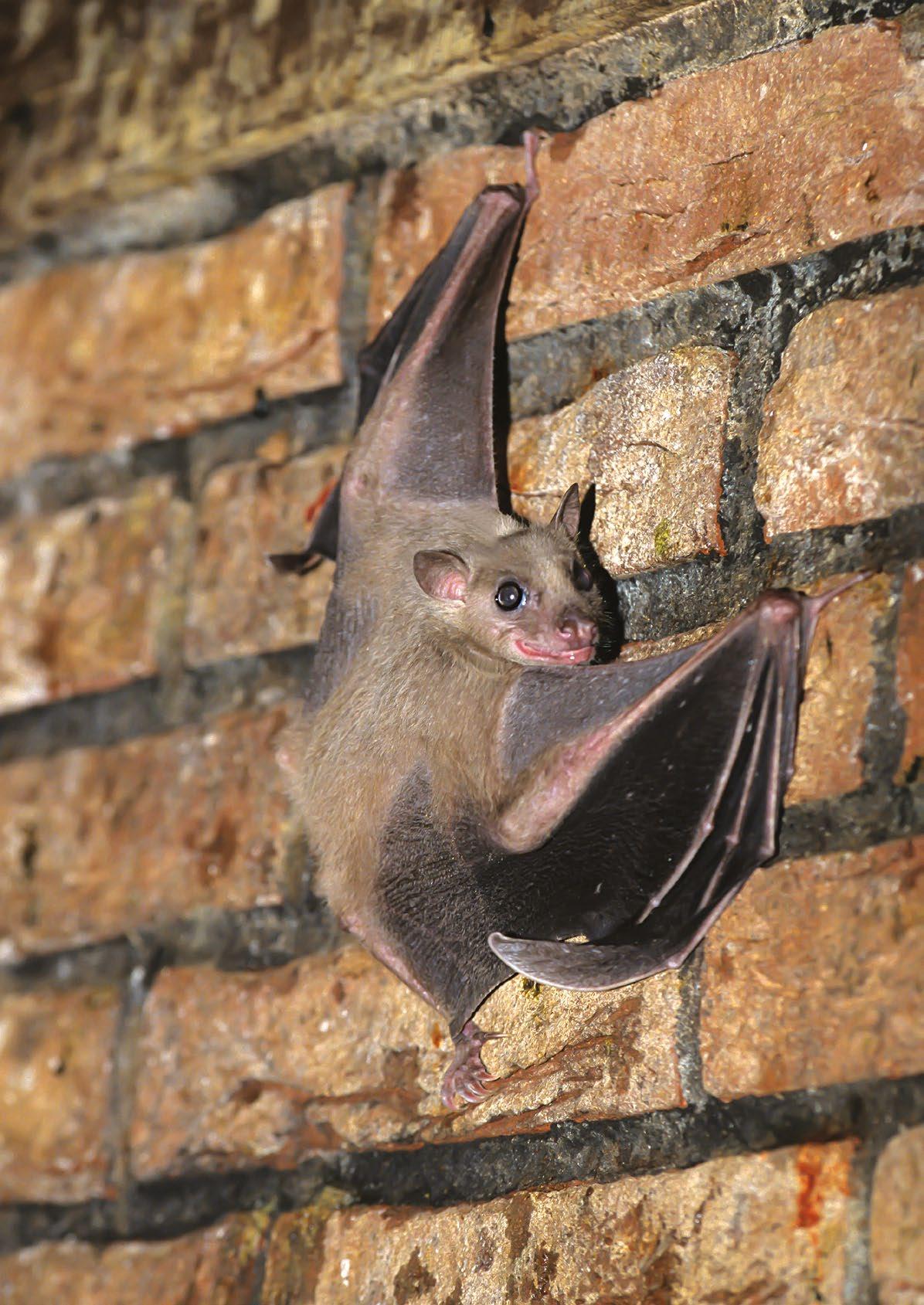
P44 Egyptian fruit bat, Rousettus aegytiacus, roosting on brick wall, Kenya. Shuttterstock.
Bats are nature’s night-shift heroes. Let’s protect them!

PACE is an education programme of Tusk. We help people understand and solve everyday environmental problems that impact on their wellbeing, and on the wildlife and ecosystems we all depend on. PACE is about helping people connect or reconnect with nature, to understand its inherent value and protect it for future generations.
PACE shares information about the environment and wildlife, and very practical ways in which people are addressing common environmental problems, so that we people, wildlife and our planet have a secure and healthy future. Someone, somewhere has found a solution!
There are ten modules in the PACE pack, this booklet is part of the Living with Wildlife module.
PACE is for students, teachers, community use and general reading. Contact pace@tusk.org | www.paceproject.net
Acknowledgements
Tusk thanks DHL for their significant and generous support of PACE. Their support has been fundamental to the success of PACE to date.