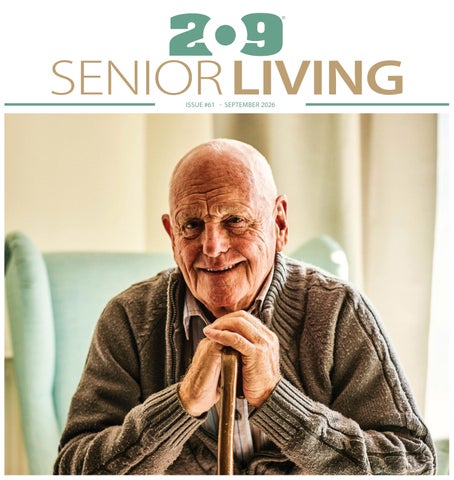
SENIOR LIVING ISSUE #61 - SEPTEMBER 2026
This is our idea of a merger. Family... it’s far more important than profits. That’s why in these days of mergers and corporate takeovers, we’ve made a commitment to stay a family-owned business.
247 N. Broadway • Turlock 634-5829 www.allenmortuary.com SEPTEMBER 2026
2
209 SENIOR LIVING
ISSUE #61 ● SEPTEMBER 2026
C O N T E N T S AGING RESEARCH . . . . . . . . . . . . . . . . . . . . . . . . . . . 4 ADVENTURE . . . . . . . . . . . . . . . . . . . . . . . . . . . . . . . . 6 AI HEALTH. . . . . . . . . . . . . . . . . . . . . . . . . . . . . . . . . . 7 PET THERAPY . . . . . . . . . . . . . . . . . . . . . . . . . . . . . . . 8 WELLNESS. . . . . . . . . . . . . . . . . . . . . . . . . . . . . . . . . . 9 SILVER ECONOMY . . . . . . . . . . . . . . . . . . . . . . . . . . 10 MENTAL HEALTH . . . . . . . . . . . . . . . . . . . . . . . . . . . 12 SENIOR SOCIAL LIFE . . . . . . . . . . . . . . . . . . . . . . . . 13 AN AGING DIET . . . . . . . . . . . . . . . . . . . . . . . . . . . . 14 PUBLISHER Hank Vander Veen EDITOR Kristina H. Hacker
SALES & MARKETING Beth Flanagan Melody Wann Charles Webber
ART DIRECTOR Harold L. George GRAPHIC DESIGNER Sharon Hoffman
DIGITAL Rich Matheson
To advertise in the next Senior Living, call
All Our Best to You.
Manteca • 209.249.3500 Oakdale • 209.847.3021 Turlock • 209.634.9141
We created The Haven at Bethany assisted living so that older adults can benefit from truly personalized attention and enjoy life with greater autonomy and purpose. From the welcoming atmosphere and attentive support available day and night, The Haven is assisted living that’s all about living one’s best life.
1215 West Center Street #203 • Manteca, CA 95337
©Copyright 2023. 209 Senior Living All rights reserved. Reproduction in whole or in part of any text, photograph or illustration without written permission from the publisher of 209 Senior Living is strictly prohibited. The opinions expressed in 209 Senior Living are those of the authors and do not necessarily reflect the view of 209 Senior Living management or owner. 209 Senior Living assumes no responsibility and makes no recommendation for claims made by advertisers and shall not be liable for any damages incurred.
SEPTEMBER 2026
Every Day. 930 West Main St., Ripon, CA 209-693-5069
INDEPENDENT LIVING | ASSISTED LIVING | IN-HOME CARE | ADULT DAY SERVICES INDEPENDENT LIVING | ASSISTED LIVING | IN-HOME CARE | ADULT DAY SERVICES SKILLED NURSING & REHABILITATION | MEMORY CARE SKILLED NURSING & REHABILITATION RCFE # 390312809 | MEMORY CARE
3
209 SENIOR LIVING
AGING RESEARCH
Health Span vs. Lifespan
FOR GENERATIONS, AGING RESEARCH FOCUSED PRIMARILY ON ONE QUESTION: HOW CAN PEOPLE LIVE LONGER? Today, many researchers are asking a different question: How can people stay healthier for longer? The concept is known as health span, a term used to describe the number of years a person remains healthy, active and free from serious chronic disease. While lifespan measures how long people live, health span focuses on quality of life during those years. The emerging field of geroscience seeks to understand how the biological processes of aging contribute to conditions such as heart disease, diabetes, Alzheimer’s disease and other chronic illnesses. Rather than treating each dis-
ease separately, researchers are exploring whether targeting the underlying mechanisms of aging could delay or reduce the risk of multiple conditions at once.
approaches may help delay the onset of chronic conditions rather than simply treating them after they develop. At the same time, health care providers are increasingly using tools that support more personalized approaches to healthy aging. These include genetic testing, aging biomarkers and individualized nutrition plans that account for a person’s unique health profile, lifestyle and risk factors. The goal is to move from reactive care to preventive care.
EXPLORING THE BIOLOGY OF AGING
Scientists are investigating several promising approaches. Researchers are studying compounds such as NAD+, a naturally occurring molecule involved in cellular energy production, as well as medications like metformin, which is commonly used to treat Type 2 diabetes. Other areas of interest include senolytics, therapies designed to remove aging cells that no longer function properly, and treatments that target chronic inflammation, which has been linked to many age-related diseases. While much of this research remains experimental, early studies suggest these
SEPTEMBER 2026
A FUTURE FOCUSED ON HEALTHY AGING
Researchers at the Buck Institute for Research on Aging reported in 2025 that therapeutic plasma exchange, a procedure that removes and replaces portions of blood plasma, reduced participants’ biological age by as much as 2.6 years
4
209 SENIOR LIVING
based on certain biomarkers of aging. While experts caution that more research is needed to understand the longterm implications, the findings highlight the rapid pace of innovation in aging science. For most older adults, however, the factors that contribute to health span remain familiar. Regular physical activity, a nutritious diet, quality sleep, stress management, social engagement and preventive health care continue to be among the most effective tools for maintaining health as people age. Geroscience research may eventually provide new therapies that help people remain healthy longer. But the field’s broader message is already clear: successful aging is not simply about adding years to life. It is about adding life to those years.
Cards as Vibrant as Your Business
Confi Confidence dence Confiden to toFlourish Flourish to Flourish to Flouris
We believe living We We believe believe living living well well means means knowing knowing support support is is there there well mea whenever it’s and needed. whenever whenever it’sit’s needed. needed. AtAt Manteca Assisted Living and At M Manteca Assisted Living Memory Care, each day i Memory Memory Care, each each day is is met met with with encouragement, encouragement, Care, day reassurance, and room to reassurance, reassurance, and and room room toto thrive. thrive.
Residents flourish throug
Residents Residents flourish flourish through: through: • •Engaging Engaging Experiences Experiences
• Engaging Experiences • •Personalized Personalized Support Support
• Meaningful Connectio • •Meaningful Meaningful Connections • •Comfort Comfort && Security Security Connections
Experience a community w Experience Experience a community a community where where support support and and possibility possibility grow together. grow grow together. together.
We print business cards that stand out. Elevate Your Brand. Order Now!
Contact our team today Contact Contact our team today learn more. our team today toto learn more. | | MantecaAL.com MantecaAL.com 209-305-4896 209-305-4896MantecaAL.com | 209#392701580 Lic.Lic. #392701580
209MULTIMEDIA.COM
1130 Empire Avenue, Manteca, 1130 1130 Empire Empire Avenue, Avenue, Manteca, Manteca, CACA 95336 95336 CA 95336
SEPTEMBER 2026
5
209 SENIOR LIVING
1130 Empire Avenue, Manteca, CA
ADVENTURE
Local Exploration is Trending WHEN PEOPLE THINK ABOUT TRAVEL, THEY OFTEN PICTURE AIRPLANES, PASSPORTS AND WEEKS SPENT AWAY FROM HOME. BUT FOR MANY OLDER ADULTS, SOME OF THE MOST REWARDING ADVENTURES MAY BE FOUND MUCH CLOSER THAN THEY REALIZE. A growing number of retirees are embracing day trips, weekend excursions and “micro-adventures” that allow them to experience something new without the cost, stress or planning associated with major vacations. The appeal is simple because local travel offers opportunities for discovery while remaining accessible, affordable and flexible.
SEEING FAMILIAR PLACES WITH FRESH EYES Many people spend years focused on careers, raising families and managing busy schedules. In the process, they often overlook attractions in their own communities and neighboring regions. Retirement can provide an opportunity to revisit those places with a different perspective. Historic districts, museums, botanical gardens, state parks, scenic drives and cultural festivals can all become destinations for exploration. Even communities located just an hour or two away may offer experiences that feel entirely new. Regional tourism organizations have increasingly promoted local travel opportunities, encouraging residents to discover hidden gems close to home. These excursions can be as simple as visiting a small-town farmers market, exploring a historic lighthouse, attending a theater performance or taking a guided nature walk. Many retirees are finding that local adventures provide the
same sense of curiosity and excitement often associated with larger trips, without the expense and logistical challenges of extensive travel.
cerns, caregiving responsibilities or mobility limitations, local travel may also feel more comfortable and manageable. These shorter adventures can provide many of the benefits associated with travel, including mental stimulation, social interaction and exposure to new experiences. Research has consistently shown that staying engaged and active contributes to overall well-being as people age. Local travel can encourage people to connect with friends, family members and community groups. Organized bus tours, hiking clubs, photography groups and historical societies often create opportunities for exploration alongside social engagement.
TRAVEL AT YOUR OWN PACE One advantage of staying close to home is flexibility. Unlike traditional vacations, day trips and short excursions can be tailored to individual interests, energy levels and budgets. Travelers can leave in the morning and return home the same evening or plan overnight stays without committing to a lengthy itinerary. For older adults managing health con-
SEPTEMBER 2026
6
209 SENIOR LIVING
THE ADVENTURE NEXT DOOR Travel doesn’t always require crossing state lines or boarding an airplane. Sometimes the most memorable experiences are waiting in places that have been overlooked for years. A scenic trail, a local art exhibit, a small-town restaurant or a nearby waterfront may offer a sense of discovery that rivals destinations much farther away. Retirement often creates more freedom to explore, learn and try new things. By looking beyond familiar routines and embracing nearby adventures, older adults may find that some of the best journeys begin just a few miles from home.
AI HEALTH
From Reaction to Prevention
FOR DECADES, HEALTH CARE HAS LARGELY FOCUSED ON TREATING PROBLEMS AFTER SYMPTOMS APPEAR. Emerging artificial intelligence (AI) tools could help change that by identifying health risks earlier, giving older adults and their care teams more time to intervene. According to the University of Florida’s Department of Applied Physiology and Kinesiology, AI-powered eldercare is one of several aging trends expected to shape the coming years. Researchers are developing systems that can analyze speech patterns, brain activity, wearable device data and other information to identify potential health concerns long before they become obvious. The goal is simple: Predict problems sooner and personalize care more effectively.
and refined, they represent a shift toward earlier detection and intervention. For older adults and their families, that could mean more opportunities to plan care, explore treatments and adopt lifestyle changes that support brain health.
PREDICTING COGNITIVE DECLINE One of the most promising applications involves Alzheimer’s disease and other forms of dementia. The National Institute on Aging reported researchers developed an AI speech-analysis model that predicted progression from mild cognitive impairment to Alzheimer’s disease with 78.2% accuracy. By analyzing subtle changes in speech, researchers hope to identify individuals at greater risk before significant cognitive decline occurs. Scientists are also exploring how AI can analyze biological signals during sleep. Researchers at Mass General Brigham developed an AI model that examines brain wave patterns collected during sleep studies. According to the organization, the technology was able to predict future cognitive impairment years before symptoms emerged. While these tools are still being studied
SEPTEMBER 2026
WEARABLES OFFER ANOTHER LAYER OF PROTECTION AI is also becoming increasingly important in wearable health technology. Medical alert systems and smart wearable devices can continuously monitor movement, activity levels and other health indicators. Some systems can recognize patterns that may signal a problem and alert caregivers or emergency responders when assistance is needed. The University of Florida notes wearable technology is becoming a key part of preventive eldercare strategies. One ex-
7
209 SENIOR LIVING
ample cited is a medical alert bracelet that detected 80% of test falls without generating false alarms. Fall detection is particularly important because falls remain one of the leading causes of injury among older adults. Faster response times can help reduce complications and improve outcomes. Organizations such as the National Council on Aging point to advances in medical alert systems that incorporate automatic fall detection and other monitoring features designed to support independent living. AI will never replace the relationship between patients and health care professionals. However, as these technologies develop, they may become valuable tools that help doctors, caregivers and older adults identify risks earlier, make more informed decisions and maintain quality of life for longer.
PET THERAPY
Animal-Assisted Interventions FOR MANY OLDER ADULTS, LONELINESS, ANXIETY AND SOCIAL ISOLATION CAN BECOME SIGNIFICANT CHALLENGES. While counseling, medication and support groups all play important roles in mental health care, another intervention is gaining attention in senior living communities, hospitals and care facilities: pet therapy. Also known as animal-assisted therapy or animal-assisted interventions, pet therapy involves structured interactions between people and trained animals under the guidance of professionals or trained handlers. The goal is not simply recreation. These programs are designed to support emotional, cognitive and social well-being. Research has shown that spending time with animals can help reduce stress and encourage positive social interaction. For older adults, those benefits can be especially meaningful. According to Eldercare Alliance, pet therapy may provide mental stimulation, decrease anxiety, reduce feelings of loneliness and trigger the release of endorphins, the brain’s natural feel-good chemicals. The organization notes that animal-assisted therapy may help individuals with memory disorders recall specific memories and engage in communication activities.
MORE THAN ONE KIND OF THERAPY
Pet therapy can take several forms depending on a person’s needs and goals. According to Right at Home, animalassisted therapy is typically a structured, goal-oriented intervention that incorporates trained animals into a treatment plan. Other programs may focus on animal-assisted activities, which are less formal and emphasize companionship, recreation and social engagement. For seniors, this might include visits from therapy dogs at a senior living community, one-on-one sessions that incorporate animals into counseling or memory-care programs, or group activities
centered around interaction with trained therapy animals. While dogs are the animals most commonly associated with pet therapy, they are not the only option. Programs may include cats, rabbits, guinea pigs, horses and other animals depending on the setting and therapeutic goals.
Animals can act as social bridges, encouraging conversation among residents and helping people engage with caregivers, family members and peers. For older adults who may be grieving a loss, adjusting to a new living environment or experiencing reduced social contact, interaction with an animal can provide comfort and companionship without judgment or expectations. Eldercare Alliance reports pet therapy can help alleviate anxiety and loneliness while providing emotional support and opportunities for communication.
COMBATING ISOLATION AND IMPROVING MOOD One of the greatest strengths of pet therapy is its ability to foster connection.
SEPTEMBER 2026
8
209 SENIOR LIVING
Studies have found animal-assisted interventions may reduce symptoms of depression and improve overall mood. Simply petting or interacting with an animal can create a calming effect and offer a welcome distraction from worries or physical discomfort. As communities continue searching for ways to support healthy aging, pet therapy offers a reminder that healing doesn’t always come from a prescription bottle. Sometimes it arrives on four legs, wagging its tail and ready to make a new friend.
WELLNESS
Individualized Wellness Plans FOR YEARS, WELLNESS PROGRAMS FOR OLDER ADULTS OFTEN FOLLOWED A FAMILIAR FORMULA: ATTEND AN EXERCISE CLASS, EAT A HEALTHY DIET AND STAY ACTIVE. Today’s approach is becoming far more personalized. According to DosePacker, one of the emerging trends in senior living is the development of tailored wellness plans that address the whole person. Rather than focusing on a standard program for everyone, providers are increasingly considering factors such as mobility, chronic health conditions, personal interests and individual goals when designing wellness strategies. The shift reflects a growing understanding that healthy aging looks different for every person.
PHYSICAL, MENTAL AND SOCIAL WELLNESS Personalized wellness plans often begin with physical health, but they don’t end there. Exercise programs are increasingly being adapted to individual needs. Some older adults may benefit from strength training designed to maintain muscle mass and improve balance. Others may prefer walking programs, yoga, water exercise or gentle movement therapies that accommodate physical limitations. Organizations such as the National Council on Aging support evidencebased healthy aging programs that encourage physical activity while helping participants manage chronic conditions and maintain independence. Experts emphasize the importance of cognitive and social engagement. Research published through the National Library of Medicine found that interventions including cognitive training, social activities and technology-based experiences can support brain function and overall well-being in older adults.
Social wellness is receiving greater attention as well. Community programs, volunteer opportunities, educational classes and group activities help older adults maintain relationships and reduce feelings of isolation. According to All Seniors Foundation, community-based wellness programs increasingly combine physical activity, lifelong learning and social engagement to support healthy aging from multiple angles.
LOOKING AT THE WHOLE PERSON The newest wellness models recognize that health is influenced by more than exercise and medical care. Stress management, sleep quality, nutrition and emotional well-being are becoming important components of comprehensive wellness planning. Some providers are incorporating complementary approaches such as meditation, mindfulness practices and acupuncture alongside traditional medical care. According to ChenMed, preventive care strategies that focus on lifestyle, nutrition, physical activity and ongoing health monitoring can help support longterm wellness and quality of life for older adults. The goal is not simply to help people live longer. It is to help them live better. As wellness programs continue to evolve, many senior living communities and health care providers are moving toward a more holistic model that addresses physical, mental, emotional and social health together. By tailoring services to individual needs and preferences, they hope to create plans that are both more effective and more meaningful for the people they serve. For older adults, that means wellness is becoming less about following a generic checklist and more about building a lifestyle that supports personal goals, independence and overall well-being.
SEPTEMBER 2026
P.L. Fry & Son Funeral Home
Katie Vera-Cruz Advanced Funeral Planner
(209) 244-5283 #FD637
katieclemons92@gmail.com
QUALITY FUNERAL SERVICE SINCE 1932
“Planning ahead for the future gives us peace of mind in the present.”
209-239-1242 290 N. Union Rd., Manteca, CA 95336 # FD637 • www.plfryandson.com 9
209 SENIOR LIVING
SILVER ECONOMY
Businesses and Older Consumers AS THE POPULATION AGES, BUSINESSES ARE INCREASINGLY RECOGNIZINGOLDER ADULTS REPRESENT ONE OF THE LARGEST AND FASTEST-GROWING CONSUMER GROUPS IN THE WORLD. Economists and market analysts refer to this trend as the silver economy, a term used to describe the products, services and economic activity associated with older adults. According to the University of Florida’s Department of Applied Physiology and Kinesiology, the concept originated in Japan during the 1970s as the silver market, referring to goods and services designed specifically for older consumers. Today, the silver economy has become a major global force. The University of Florida reports the longevity-focused market was valued at nearly $42 billion in 2024 and is projected to reach approximately $67 billion by 2034. Those figures reflect growing demand for products that support health, independence, safety and quality of life as people live longer than previous generations.
MORE CHOICES
The growth of the silver economy is already changing what consumers see on store shelves and online marketplaces. Market researchers at Global Market Insights note increasing demand for products such as mobility aids, home safety equipment, assistive technologies, health-monitoring devices and adaptive household products. As manufacturers respond, older adults are gaining access to a wider variety of solutions designed to help them remain active and independent. Many of these products look different than they did in previous decades. Today’s designs often emphasize convenience, comfort and style rather than focusing solely on medical needs. The trend extends beyond health care. Businesses are expanding offerings in travel, financial services, home modification, fitness, technology and entertain-
ment to meet the needs of older consumers. As Baby Boomers and Gen Xers continue reaching retirement age, demand is expected to increase further. Demographers often refer to the current wave of aging Americans as the Peak 65 generation because record numbers of people are turning 65 each year.
in how society views aging. According to analysis from the International Monetary Fund, longer life expectancies are creating new opportunities for economic participation, consumption and innovation. Rather than viewing population aging solely as a challenge, economists increasingly recognize that older adults contribute significant purchasing power, experience and expertise to the economy. For consumers, that shift may translate into greater choice and improved accessibility. As Medicare, Medicaid and health
AGING AS AN ECONOMIC OPPORTUNITY The silver economy reflects more than demographic change. It represents a shift
SEPTEMBER 2026
10
209 SENIOR LIVING
care providers face growing pressure to serve an aging population, experts expect continued investment in products and services that support healthy aging. From smart home technologies to health-monitoring devices and age-friendly home designs, innovations once considered niche products are becoming mainstream offerings. The result is a marketplace increasingly designed with older adults in mind. As the silver economy continues to grow, consumers may find more tools than ever to help them remain independent, connected and engaged throughout later life.
VALLEY OAK DENTAL GROUP Serving the community since 1979
Serving the community since 1979 General Dentistry Dr. Bonnie Morehead Dr. Ron Joseph Dr. Rudy Ciccarelli Dr. Elizabeth Grecco Dr. Khorsand
Valley Oak Dental Group is a multispecialty group practice committed to excellence. Our Pediatric Department provides a comfortable, caring atmosphere for your children. We provide the latest General Dentistry procedures in a state-of-the-art dental suite. Our Oral Surgery Department provides general anesthesia and I.V. sedation in a safe, professional environment.
Oral & Maxillofacial Surgery Dr. Mark Grecco
Pediatric Dentistry Dr. Mohammad ElFarra
Pediatric Dentistry
Dr. Mohammad El Farra
(209) 823-9341
www.valleyoakdentalgroup.com
1507 W. Yosemite, Manteca • Between Airport and Union SEPTEMBER 2026
11
209 SENIOR LIVING
Members of • California Dental Association • American Dental Association • San Joaquin P.P.A.
MENTAL HEALTH
Finding Your Third Place FOR MANY PEOPLE, RETIREMENT IS A LONG-AWAITED MILESTONE. IT OFFERS FREEDOM FROM SCHEDULES, MEETINGS AND DEADLINES. But once the novelty wears off, some retirees discover that work provided more than a paycheck. It also provided routine, purpose and social connection. That’s where the concept of a third place comes in. Sociologists use the term third place to describe locations outside of home and work where people gather, socialize and build community. Coffee shops, libraries, community centers, places of worship and hobby groups are all examples. These spaces help people form relationships and maintain a sense of belonging. During working years, many people naturally spend time in three places: home, work and a third place. Retirement removes one of those anchors. Without realizing it, retirees may find their social circles shrinking as workplace interactions disappear. Finding a new third place can help fill that gap.
PLACES TO SOCIALIZE
The good news is that today’s retirees have more options than ever before. Local libraries host book clubs, lectures and discussion groups. Community centers offer fitness classes, art workshops and educational programs. Volunteer organizations provide opportunities to give back while meeting people who share similar values and interests. Hobby-based communities are also growing in popularity. Gardening clubs, quilting circles, photography groups and woodworking workshops allow people to continue learning while connecting with others. For those who enjoy friendly competition, bowling leagues, pickleball courts and card clubs offer both recreation and camaraderie. Gaming has become another unexpected source of community. Across the country, gaming lounges and hobby
stores are attracting adults of all ages for board games, tabletop role-playing games, strategy games and social events. In Michigan, Homebrew Tabletop Game Lounge offers a place for people of all ages with weekly gatherings focusing on seniors and retirees. It offers game rentals, game sales and food and beverages made by local vendors. “We’re excited to create that third place” for people throughout the Greater Lansing area,” says co-owner Jeff Croff. “Whether folks want to play old standbys like dominoes, checkers and euchre
SEPTEMBER 2026
or the latest in hobby games our library is ready to fill the need, while they hangout and relax in the lounge. We want to be the place that isn’t home or work, where folks can gather with friends and family or even make new friends over a game and a drink.” The appeal often goes beyond the games themselves. Regular gatherings create opportunities for conversation, laughter and lasting friendships. Many participants say the experience gives them something to look forward to each week.
12
209 SENIOR LIVING
BENEFITS TO THIRD PLACES The National Library of Medicine reports an increasing number of studies suggest third places have become convenient and comfortable places for older adults to enhance their social interaction and network. The research consistently shows strong social connections are linked to better physical and mental health as people age. Staying engaged with others can help reduce feelings of loneliness, improve emotional well-being and contribute to a greater sense of purpose.
SENIOR SOCIAL LIFE
Seniors and the dating scene DATING IN ONE’S GOLDEN YEARS IS A COMMON EXPERIENCE FOR MANY SENIORS. WHETHER IT’S THE RESULT OF A LOSS OF A SPOUSE OR OTHER LIFE EVENTS, MANY PEOPLE FIND THEMSELVES LOOKING FOR LOVE IN THEIR GOLDEN YEARS. According to statistics from The Senior List and the Pew Research Center, roughly one-third of adults 65 and older in the United States reported being single in 2022, a percentage exceeded only by people between the ages of 18 and 29. Many older singles are not looking for a committed relationship; some just want to have fun exploring the dating scene. With that in mind, here’s how seniors can explore dating, which may look and feel a little different than the last time seniors were dating.
IDENTIFY YOUR REASON FOR DATING Seniors should establish the reasons they are ready to get back into the mix. Identifying the motivation for mingling can help set the right course for finding a partner. Sometimes it boils down to wanting someone to share hobbies, go to dinner or travel with. Some seniors like the idea of having a relationship with someone, but living apart with their own homes and sense of independence. Others are looking for the next Mr. or Mrs. Right, and want a partner to share their life with in all ways.
GOING DIGITAL While meeting people in person is possible, particularly when those with similar interests are pulled together through clubs or social events, the dating world has increasingly moved online. Online dating is a popular and modern way to
meet new people. Apps like OurTime and SilverSingles are geared specifically to the older demographic, while Bumble is women-led. Meetup is not a dating app, but one for meeting people with an interest in sharing specific experiences.
BE OPEN AND HONEST Great relationships are rooted in honesty. Individuals should skip the ‘glory days’ photos of their youth or even 10 years ago and use current photos for dating apps. People should be specific with what they are looking for, like a travel companion to go to Europe or someone who enjoys trying the local culinary scene Being honest and specific increases the chances of finding a good match.
BE SAFE Seniors are often the targets of scams, and by tugging at the heartstrings, scammers can exploit vulnerabilities. AARP says nearly 60,000 people reported romance scams to the Federal Trade Commission in 2024, when victims reported losing $2.95 billion. Wanting to move conversations off of dating apps and directly to texts or other messaging platforms where they can’t be monitored is a red flag. Scammers often indicate they live far away and can’t meet in person and will give excuses to that effect. Others will promise the world and be in constant contact. It’s a cause for concern anytime a person mentions needing money or having an investment opportunity. If and when a senior meets with a date, the interaction should take place in a public location for the first several dates. Double-dating with a friend also can be a safe approach. Dating in one’s golden years requires some adjustments and an emphasis on safety.
SEPTEMBER 2026
Comfort, Care & Peace of Mind The Alexander Cohen Hospice House brings families comfort when it’s needed most. Offering 24/7 inpatient symptom management and short-term respite care in a beautiful, home-like environment.
SCAN TO TAKE A TOUR hospiceheart.org 209.578.6300
13
209 SENIOR LIVING
AN AGING DIET
Safe ways seniors can lose weight THE PREVALENCE OF OBESITY AMONG ADULTS 60 AND OLDER IS SIGNIFICANT. According to the Centers for Disease Control and Prevention, 39 percent of adults 60 and over met the criteria for obesity over a two-year period between August 2021 and August 2023. The National Council on Aging notes the importance of maintaining a healthy weight as you age. Seniors who qualify as obese, which occurs when a person’s body accumulates and stores excessive amounts of body fat, carry a higher risk of chronic diseases like type 2 diabetes, heart disease, and certain types of cancer. The NCOA also notes that excess body weight puts a strain on the joints, increasing the risk for osteoarthritis and making daily movements more difficult. People with obesity also are more likely to develop asthma and sleep apnea. Seniors diagnosed with obesity are urged to seek safe and healthy ways to lose weight. Fad diets and other means to quick weight loss can be dangerous, but the NCOA notes simple lifestyle changes and healthy habits can help seniors safely lose weight. ● Consume nutrient-dense foods. Lean proteins, whole grains, fruits, and vegetables offer plenty of vitamins, minerals and fiber but tend to be low in calories. That makes them ideal options for people looking to lose weight, as they contribute to feelings of fullness without consuming a lot of calories. ● Incorporate physical activity into your daily routine. Exercise can pose problems for older adults who qualify as obese. The joint issues that can affect older adults with obesity can make traditional exercise regimens that incorporate strength training and moderate to vigorous aerobic activity very difficult, and maybe even dangerous. But the NCOA notes that exercise need not be intense to be effective. Walking is a great physical activity for older adults. Swimming
also is excellent, as it provides a full-body workout that’s easy on the joints. Seniors are urged to speak with their physicians about physical activities they can handle.
from avoiding caffeine from the afternoon on to avoiding screens after dinner, to prepare their bodies to get better rest at night.
● Don’t sleep on sleep. Sleep can be an effective ally for seniors looking to lose weight. The NCOA notes that seven to nine hours of sleep per night helps support a healthy metabolism and regulate hunger. Seniors who have trouble falling asleep at night can try various strategies,
● Work to combat stress. The NCOA reports that stress is a contributor to weight gain. And stress and disorders linked to it are perhaps more common among adults 60 and over than people realize. In fact, according to the Anxiety and Depression Association of America,
SEPTEMBER 2026
14
209 SENIOR LIVING
anxiety disorders, which are a notable source of ongoing stress, are the most widespread mental health condition among older adults. Sufficient sleep, meditation and deep breathing exercises can help seniors combat stress, and that in turn may help older adults avoid excess weight gain. Obesity is a problem among older adults. Finding safe ways to lose weight can have a profound effect on seniors’ short- and long-term health.
your
LIFE ON
TERMS
OFFERING INDEPENDENT LIVING, ASSISTED LIVING, & MEMORY CARE CALL ABOUT OUR MOVE-IN OFFERS
(209) 340-3142
430 North Union Rd., Manteca, CA 95337 Visit Our Website
CogirofManteca.com
License #392700473
SEPTEMBER 2026
15
209 SENIOR LIVING
SEPTEMBER 2026
16
209 SENIOR LIVING