






MAY
PUBLISHER/OWNER
CONTRIBUTING
American Graffiti Festival & Car Show returns with 1,000+ classics and a full weekend of nostalgia
New inductees join Modesto’s Walk of Fame honoring the icons of the cruising era
the bygone era of carhops
Before fast food windows and digital menus, there was a time when dinner arrived on roller skates.
The man who built the ’55 Chevy that became a movie star
A volunteer‑powered cultural hub grows into a regional destination
Graffiti‑themed art exhibit opens at Kruse Lucas Imports 5 8 10 11 13 14

Modesto’s biggest Graffiti summer tradition returns with 1,000+ classics, live music and a full weekend of nostalgia
BY SABRA STAFFORD
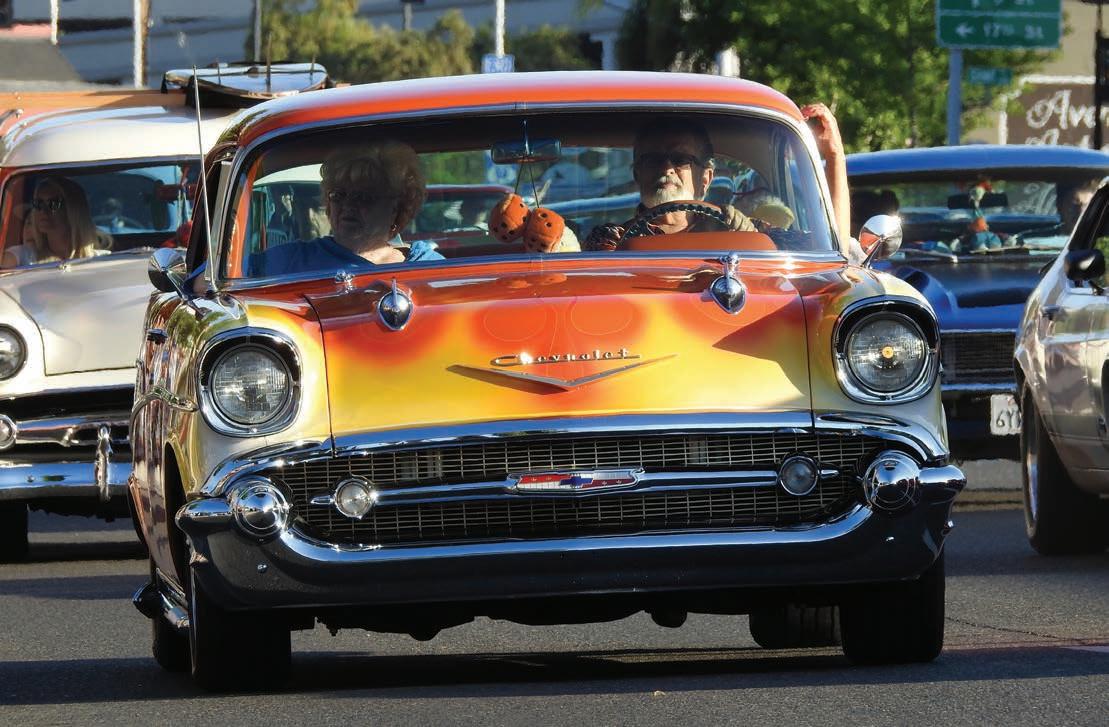
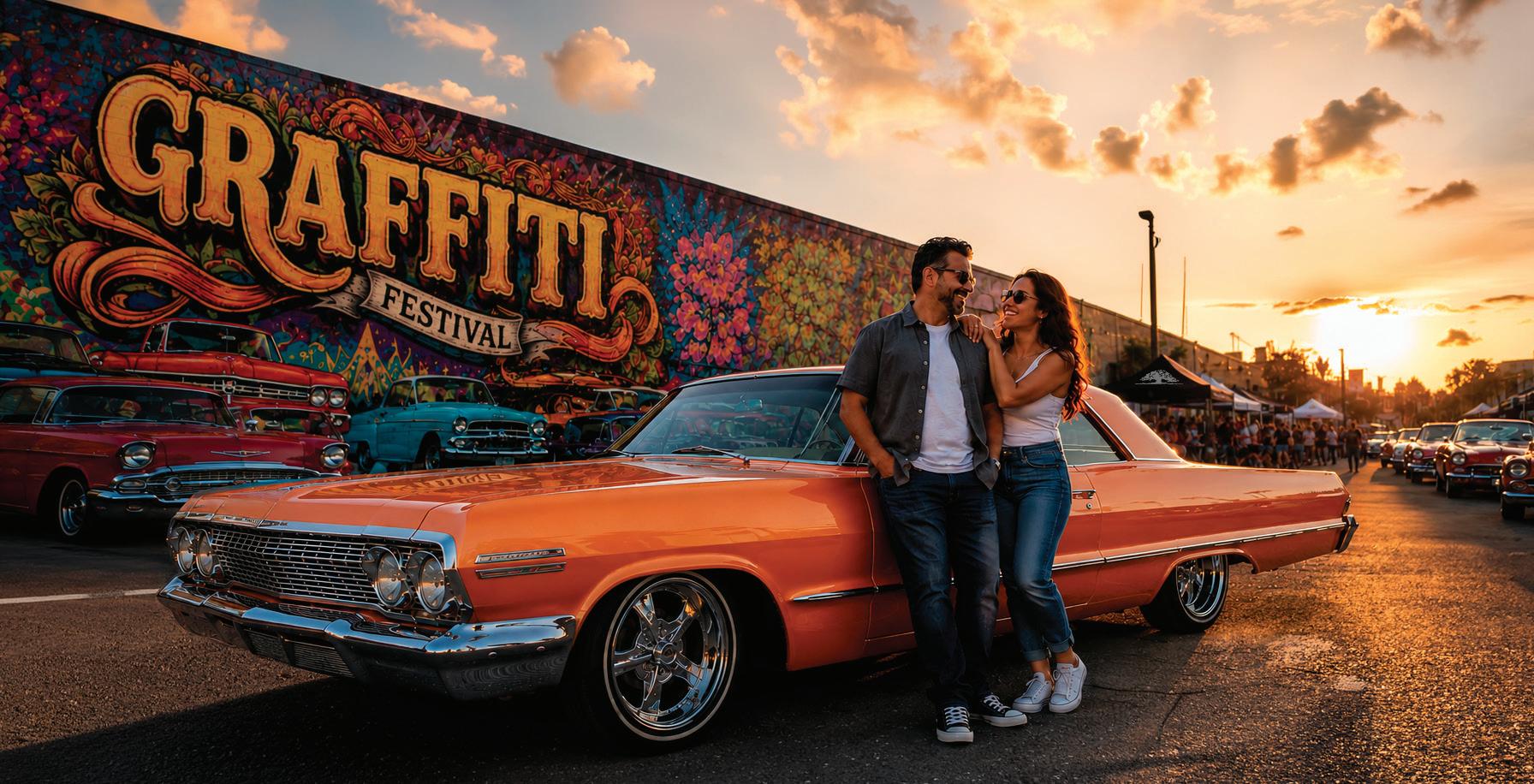
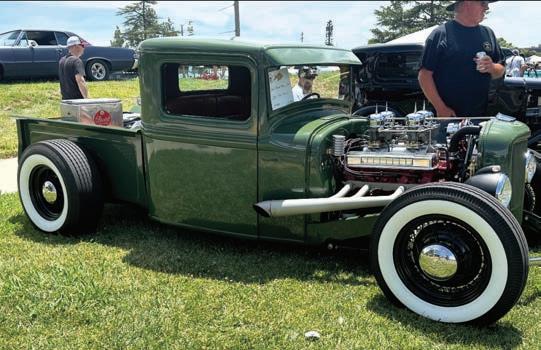
The engines will fire up across Modesto as the 2026 American Graffiti Festival & Car Show rolls into town June 12–14, bringing with it the chrome, rumble and summertime energy that have defined Graffiti Summer for decades. The event, organized by the Kiwanis Club of North Modesto, remains the city’s largest and oldest Graffiti celebration, drawing more than a thousand classic cars and thousands of spectators while raising money for youth programs throughout the region.
The weekend begins Friday, June 12, with the official Classic Car Pa-
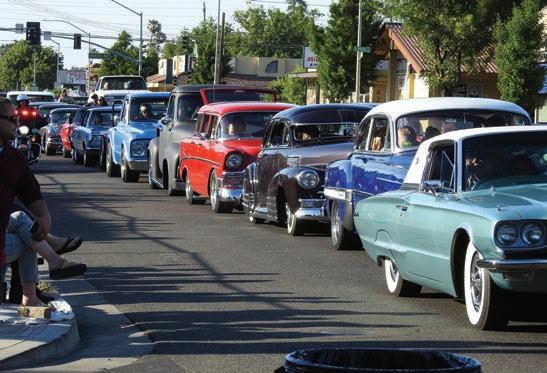

rade and Cruise from 5:30 to 8:30 p.m. Only the first 1,000 registered show vehicles are allowed on the route, which winds through downtown Modesto and up McHenry Avenue to Briggsmore. Street closures start around 3:30 p.m. and continue until cleanup wraps up around 9 p.m. For many, the cruise is the heart of the festival, a rolling tribute to the era that inspired George Lucas’ American Graffiti and cemented Modesto’s place in car culture history.
The main festival opens Saturday, June 13, from 9 a.m. to 5 p.m., and
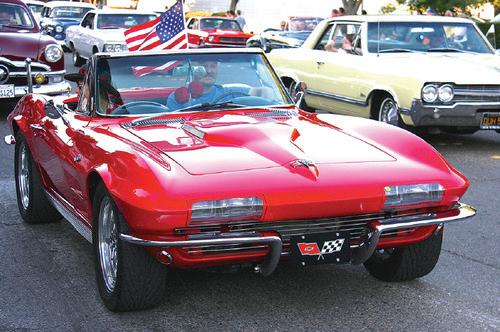
continues Sunday, June 14, from 9 a.m. to 3 p.m., at Modesto Junior College’s West Campus at 2201 Blue Gum Ave. Between 1,200 and 1,400 classic vehicles typically fill the grounds, creating a sprawling outdoor museum of polished fenders, custom paint, vintage engines and the unmistakable nostalgia of the cruising era. Spectator admission is $10, with kids 12 and under free with an adult. Tickets can be purchased at the gate with cash or card or in advance online.
The festival atmosphere stretches well beyond the cars. Nearly 100 vendors will offer everything from food and drinks to crafts, car gear and collectibles. A Kid Zone gives younger visitors a place to play while parents explore the show. Live music runs throughout the weekend, beginning Saturday morning with the Modesto Valley Music Institute, followed by No Way Back performing classic rock hits from the ’60s through the ’80s. Third Sol closes out Saturday with high energy funk, soul, Latin and R&B. On Sunday, Chicago the Tribute brings the horn driven sound of the legendary band to the festival stage.
While the event is a celebration of Modesto’s cruising heritage, its purpose is rooted in service. The North Modesto Kiwanis Club uses the festival as its major annual fundraiser, supporting scholarships, a large Christmas basket program for local families and grants to dozens of youth focused nonprofits. Every ticket, registration and vendor fee helps the club continue its mission of helping children and teens across the community.
Decades after its debut, the American Graffiti Festival remains the signature event of Graffiti Summer, drawing car owners from across California and the West Coast. For many, it’s a bucket list show. For locals, it’s a weekend that feels like home — engines rumbling down McHenry, neon reflecting off chrome, and a community gathering to celebrate the culture that shaped a generation. ●
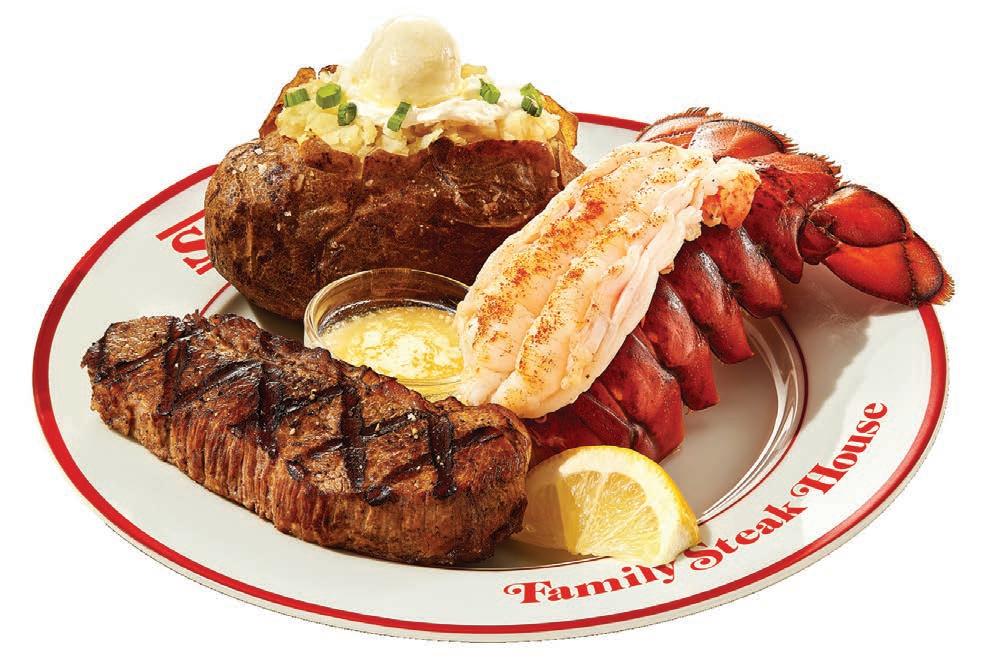



Our Signature Steak, perfectly seasoned and full of flavor, with North Atlantic Lobster Tail. Includes choice of side.
UNLIMITED SALAD BAR
Make your own creation, as healthy or as indulgent as you want, at the original salad bar.


Joe Cardoso considered it a tremendous honor last year to be inducted into Modesto’s Legends of the Cruise Walk of Fame. For a man who grew up far from the world of chrome and horsepower, the recognition still feels surreal.
“It’s kind of amazing,” Cardoso reflected. “I was born in the Azores, just a poor kid from a place that didn’t even have cars. I rode a donkey when I was a kid. I came here in 1962 when I was seven, and we worked constantly on the farm west of Ceres.”
Cardoso was one of several honorees celebrated during the annual ceremony held the first Wednesday in June on Tenth Street. Inductees have their names added to sidewalk markers along the historic strip.
Cardoso’s connection to Modesto’s cruising culture began in the 1970s while he was a student at Ceres High School. Fascinated by mechanics, he excelled in shop classes and spent his free time building go karts and tinkering with engines. His first car carried a 265, but his second — a 1956 — ran a 283 with dual four barrels. Before long, he fell in love with big block Chryslers and even squeezed a 440 into a 1971 Datsun pickup.
After marrying Reta Ramsey in 1974, Cardoso entered the auto industry, gaining experience at Thompson and Krause Automotive’s machine shop, where he built hundreds of Chevy Vega engines. He later worked at Modesto’s Mercedes dealership, where he met future business partner Terry Lucas. Together they founded Yosemite Machine.
In the early 2000s, Lucas introduced him to Chuck Billington, Don Monaco, and Jack McCoy, leading to collaborations on land speed race engines. “We set about 22 records,” Cardoso said proudly. His career highlight came at El Mirage, where he hit 200 mph on a 1.3 mile strip in a streamlined racer. “At first it’s pretty scary,” he admitted. “But after more passes, it’s not quite so scary.”
His final major project took him to the Bonneville Salt Flats, where he, Lucas, and close friend Gerry Enck built a Dodge Dakota powered by a Mercedes five cylinder diesel with 50 pounds of boost. Cardoso set a class record at 147 mph and reached a top speed of 162. After Lucas’ departure, Cardoso continued running and expanding Yosemite Machine, which still operates on
BY JEFF BENZIGER
Empire Avenue today.
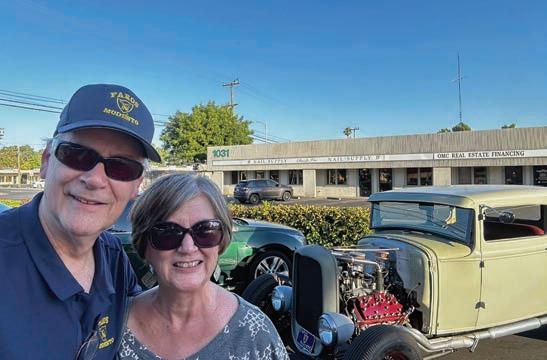
Toni Sauls
Lifelong Modestan Toni Sauls grew up in Modesto’s cruising years and became a leading figure in the region’s classic car community. A Roosevelt Junior High student and 1962 Downey High graduate, she was part of the same class as filmmaker George Lucas. Long before American Graffiti put Modesto on the map, Toni was already living the culture it portrayed.
In 1959 and 1960, she cruised 10th and 11th Streets with her brothers Eddie and Steve Andrade, later riding alongside her future husband, Jerry Sauls. The couple honeymooned in a 1957 Ford Fairlane 500, and their firstborn son, Todd, came home from the hospital in a 1940 two door sedan.
Toni and Jerry joined the Modesto Area Street Rod Association, where Toni became the club’s first female president. Her leadership earned her national recognition as the Lady Street Rodder of the Year from the National Street Rod Association. She remains active today, driving her 1932 Ford Roadster to shows from Reno to Pismo Beach and supporting development of Modesto’s Classic Car Museum.
Allen Beebe
Allen Beebe came to Modesto from the Midwest and quickly became a force in business and motorsports. Between 1967 and 2010, he built a restaurant empire of more than 49 locations across Northern California, including the region’s first Taco Bell.
Beebe’s passion for racing led him to short track competition from 1969 to 1982, but business demands eventually shifted him from driver to team owner. In 1984, he founded Beebe Racing Enterprises, putting his son Troy behind the wheel. The team found immediate success, earning the 1984 Rookie of the Year title and the 1985 NASCAR Late Model Championship at Stockton 99 Speedway. Over the next two decades, Beebe Racing remained a strong presence, competing in NASCAR’s Southwest Series and later earning multiple wins and championships with driver Eric Holmes, including the 2004 NASCAR Elite Toyota All Star Showdown.
Beebe was inducted into the West Coast
Stock Car Hall of Fame in 2010. That same year, he sold his restaurant holdings and opened BRE Rods & Classics in Salida. Today, he devotes much of his time to children’s charities throughout the Central Valley.
Modesto High graduate Westley Delay discovered his love for speed early, starting with motorcycles and dirt bikes. While attending Modesto Junior College in 1960, he spent time at a McHenry Avenue muffler shop, where his interest in race cars led him to help build — and eventually drive — the shop owner’s drag car. The team competed successfully through the early 1960s, progressing from a Ford flathead engine to a six cylinder and finally a Buick nail head V8 that pushed Delay past 140 mph on the drag strip. Rising racing costs eventually ended the venture, but Delay remained a fixture in the local automotive scene. He purchased D&M Muffler on I Street in the 1960s, becoming well known for exhaust work and repairs. He continued racing motorcycles at venues including Lodi’s Cycle Bowl and Nevada’s Sand Hill, and later assisted McCoy Racing in Baja competitions. Though he retired from professional racing in the early 1980s, Delay continued riding well into later life.
For Terry Lucas, a lifetime in mechanics began in his teens, turning wrenches in his father’s garage and teaching himself the inner workings of engines and transmissions. At 19, he met Vicki, who embraced his passion and became his partner at drag races, helping manage strategy and keeping the team grounded.
They also raced boats, with Terry modifying vessels and Vicki keeping the operation organized. In 1976, they moved to Oakdale, where Terry worked at Volvo and briefly partnered with Joe Cardoso. His career took a major step forward when he co founded Kruse Lucas Imports with Jean Kruse, establishing a respected name in the region’s automotive world.
In the early 1990s, Lucas was introduced to land speed racing at El Mirage Dry Lake by Daniel Shanahan. That connection led to partnerships with Don Monaco, Jack McCoy, and Chuck Billington on a Flathead Ford racer. Their 2002 Bonneville attempt reached 189 mph, and the team went on to
set 18 records. Monaco reached 197 mph, Billington hit 207 mph, and Lucas himself achieved an extraordinary 233 mph — a testament to decades of mechanical mastery.
Michael Fleming
For Michael Fleming, motorsports began on the water. As a young member of the Modesto Yacht Club, he built and raced boats with his father, gaining early mechanical experience that soon carried over to go karts and cars. At Downey High, he excelled in Industrial Arts and joined the Deacons car club, where he gained hands on experience that shaped his future.
Fleming’s professional career began at Laguna Seca as a Formula B mechanic, and he quickly advanced through open wheel circuits, including Indy Light. He later transitioned into NASCAR, working in the Winston Cup, Winston West, and Nationwide series. Under the mentorship of Ivan Baldwin and Gary Nelson, who were working with Jack McCoy, Fleming earned two Southwest Tour championships and worked with racing legends Bobby Allison, Harry Gant, and Darrell Waltrip.
His career reached its peak as crew chief for McLaren North America’s BMW GTP IMSA team, where he led endurance racing campaigns.
Mamie Disciascio Noto Alberti
Though she passed away in 2004, Mamie Alberti’s influence remains one of the most beloved chapters in Modesto’s youth and car cul-
ture. Her Italian restaurant on Coffee Road, across from Downey High School, became a sanctuary for teenagers throughout the 1950s. Known affectionately as the Knights Round Table, the restaurant was a gathering place for Faros, field kids, and gearheads.
Mamie moved to the Coffee Road property in the mid 1940s, and when Downey High opened across the street, she transformed her front yard into a castle themed restaurant. Young drivers cruised by to show off their cars, and Mamie became both a mother figure and a disciplinarian — famous for her “savage swatter” paddle and broom. Her blend of love, structure, and community spirit shaped generations of Modesto teens.
The North Modesto Kiwanis Club was honored for its decades of service to local nonprofits and for hosting the American Graffiti Festival and Parade. Chartered in 1966, the club has long focused on youth programs. In 1981, members held their first Concours d’Elegance at the MJC West Campus. That event eventually evolved into the American Graffiti Festival and Parade, now one of Modesto’s signature celebrations. The club continues to support youth programs, scholarships, and community organizations.
For Joe Stewart, the love of cars began early. At 11, he bought his first vehicle — a 1930 Ford
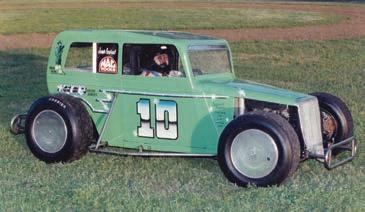
Model A — and by 15 he had painted his first car, a 1946 Chevy. Over the next 60 years, he restored cars with the philosophy that each should be better than the last. When he discovered street rods and muscle cars, his enthusiasm grew. “All our cars are home built — not big budget vehicles, but fun machines,” he says.
His wife of 61 years, Barbara, has been his partner in every sense — photographing cars and helping choose their vehicles. Stewart’s cars have appeared on T shirts and show posters, and his hobby expanded into collecting pedal cars, Coke machines, die cast models, and gas station memorabilia. He even built a full gas station in his backyard to display his collection.
A founding Goodguys member, Stewart believes cars are meant to be driven, and his road trips have taken him across the states — a lifetime spent behind the wheel of machines he built with his own hands. ●
BY SABRA STAFFORD
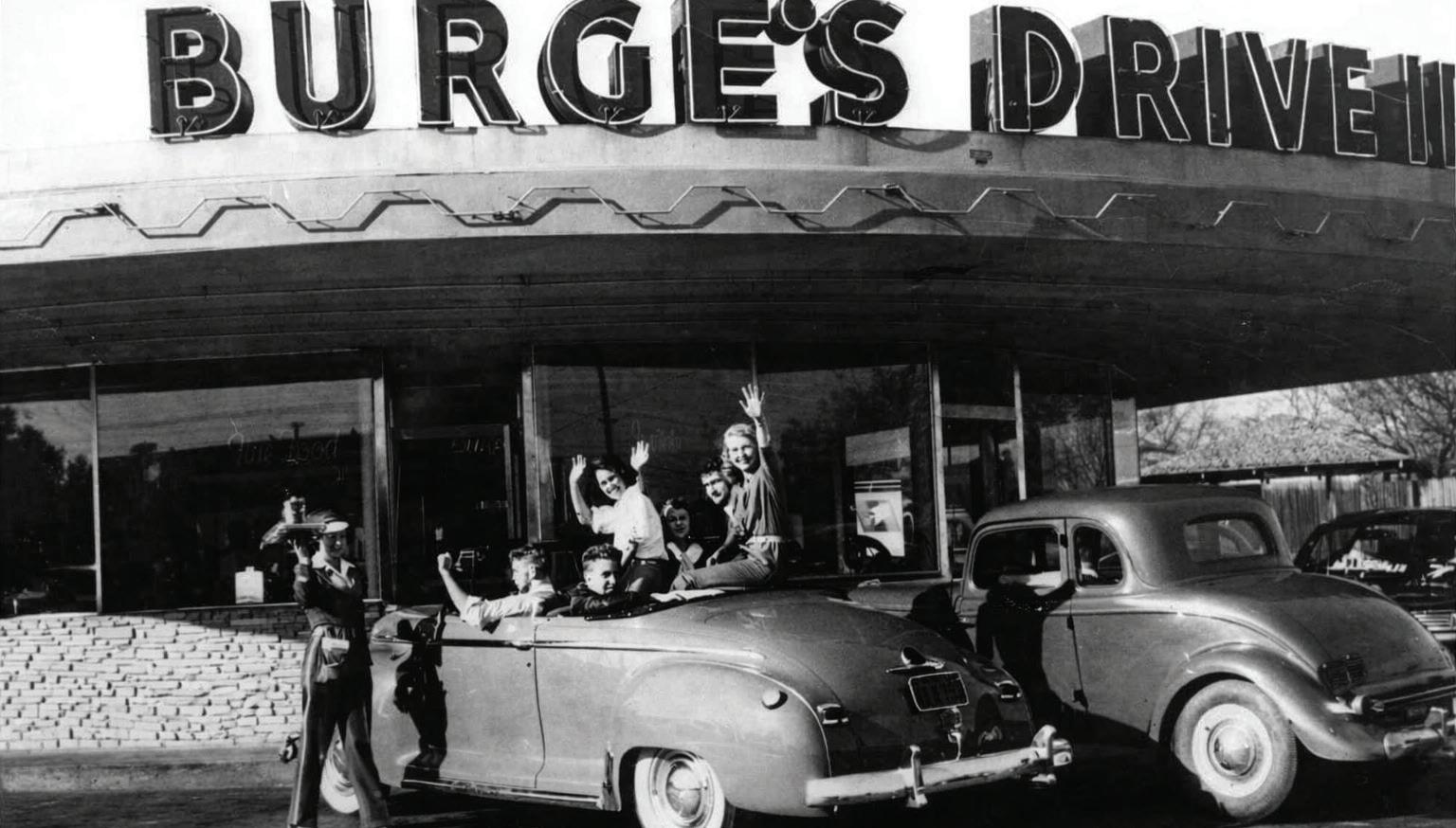
Before fast food windows and digital menus, there was a time when dinner arrived on roller skates. In the 1950s and early ’60s, the drive in restaurant was the social center of countless American towns, and Modesto was no exception. Long before the cruise shifted to McHenry Avenue, the heart of Modesto’s scene was 10th Street, where neon signs glowed over rows of idling Chevys and Fords. At the center of it all stood Burge’s Drive In, one of the city’s most popular hangouts and a place where carhops knew half the customers by name.
The system was simple. Drivers pulled into a stall, flipped on their headlights or pressed a call button, and a carhop glided over to take the order. At Burge’s, as at many California drive ins, the food arrived on a metal tray that hooked onto the car’s window — sturdy enough to hold a couple of burgers, a basket of fries and a frosty drink. Some drive ins trained their carhops to skate, not as a gimmick but because it let them cover the lot faster during the dinner rush.
The job itself demanded balance, memory and speed. Carhops navi gated tight rows of cars packed with teenagers, balanced heavy trays and kept track of dozens of orders without spilling a shake. In the early years, most were young women, hired because owners believed customers tipped better when the service came with a smile.
Burge’s was known for its burgers, fries and shakes — the kind of simple, satisfying food that defined the era. A night on 10th Street often meant making a loop, pulling into Burge’s for a bite, then heading back out to cruise again. The drive in wasn’t just a restaurant; it was a meeting place. Teens compared engines, swapped stories, and sometimes found a date for the night. Carhops saw it all — the flirtations, the rivalries, the pride that came with a freshly waxed hood.
By the mid 1960s, the culture began to fade. Rising labor costs, new health regulations and the rise of drive through windows made carhops less practical. Burge’s eventually closed, and the cruising scene shifted north toward McHenry as Modesto grew. But the memory of those early years — the trays, the skates, the glow of neon on chrome — remains tightly woven into the city’s identity.
its influence is still visible every June. When classic cars roll through Modesto during Graffiti Summer, they carry with them the echoes of those 10th Street nights, when a burger and a milkshake were as much a part of the cruise as the rumble of a V8. ●
Modesto Irrigation District has various programs that can help you unplug to conserve energy and plug-in to sustainability.
Modesto Irrigation District has various programs that can help you unplug to conserve energy and plug-in to sustainability.
The power is in your hands.
The power is in your hands.

Today, the tradition lives on mostly in stories and photographs, but
BY JOE CORTEZ
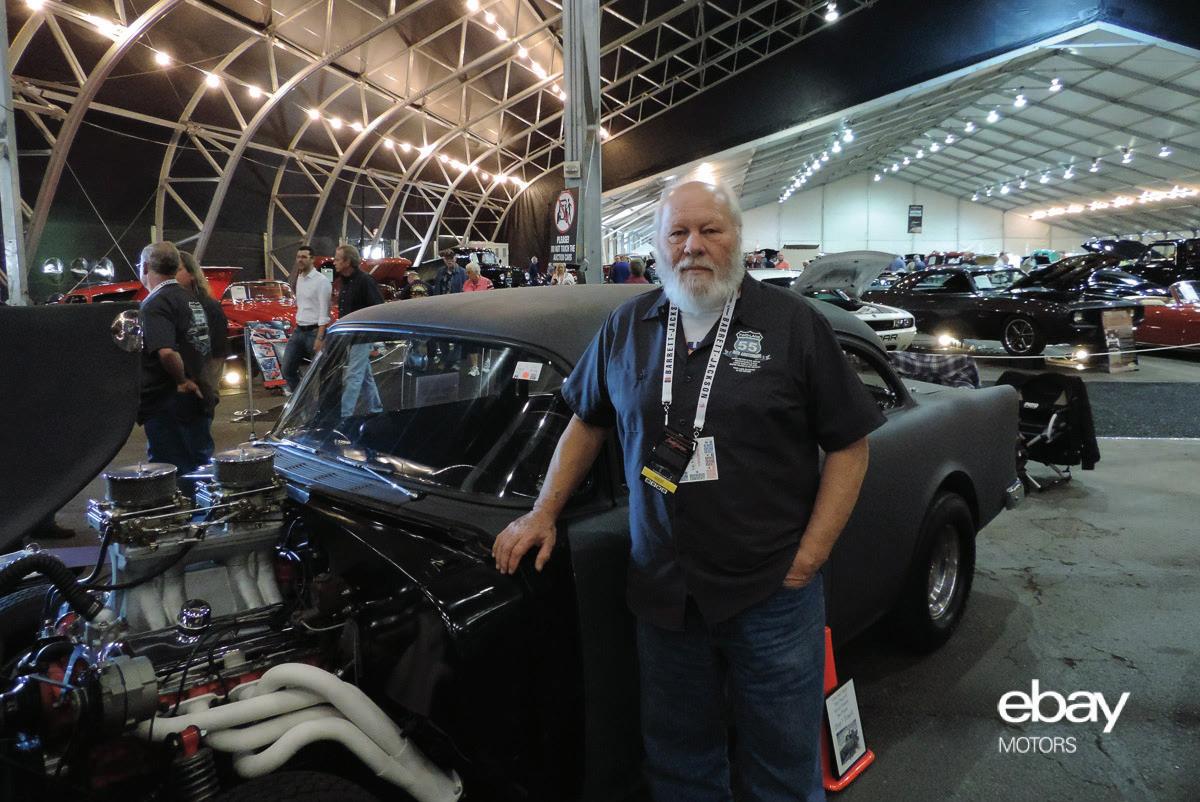
It’s been nearly 53 years since a piece of cinematic brilliance called American Graffiti — written and directed by Modesto native George Lucas — debuted at the Locarno Film Festival in Switzerland. The best picture nominee, which had virtually no plot, celebrated a simpler time when cruising, rock ’n’ roll, hamburgers and cherry Cokes defined teenage life.
The film launched the careers of Ron Howard, Harrison Ford, Richard Dreyfuss, Paul Le Mat, Cindy Williams and Suzanne Somers. But it also made a star — albeit a reluctant one — out of a former juvenile delinquent from Southern California named Richard Ruth.
After nearly 40 years in Merced, Ruth is now retired in Arizona with his longtime companion, Wanda Keenan. He was 27 with two young children when production began on American Graffiti, living in Southern California and trying to make ends meet. He had recently launched Competition Engineering and was gaining a reputation as one of the best race car builders in the region.
But it was building a “pretend” race car for the Silver Screen — a 1955 Chevy 150 — that would make Ruth a household name among
classic car aficionados.
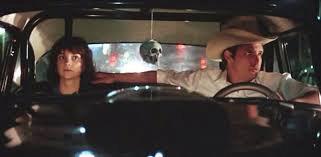
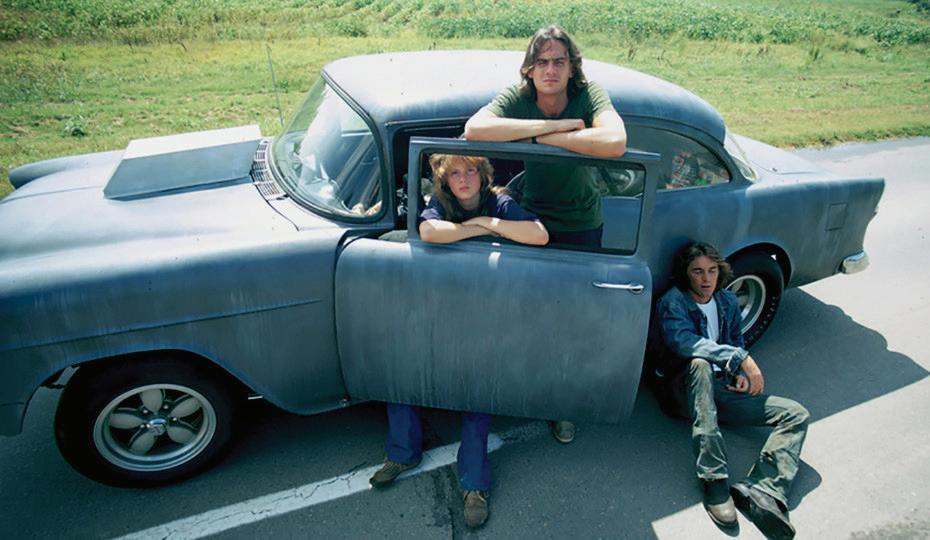
The ’55 Chevy driven by Harrison Ford’s character, Bob Falfa, in American Graffiti wasn’t originally built for Lucas’ film. It first appeared in the 1971 Monte Hellman movie Two Lane Blacktop, where it belonged to a character known only as “The Driver,” played by musician James Taylor.
In that film, Taylor and Beach Boys drummer Dennis Wilson roam the country looking for races. Ruth even appears briefly as a gas station attendant, asking Taylor if he built the headers himself and mentioning a Thames panel truck with “a little bit of transmission trouble.” The movie was a wandering, plot light reflection of the Vietnam era malaise — but the car became the star.
And the car’s builder became part of its legend.
Ruth was born in Phoenix in 1945, the son of an Arizona Highway Patrol officer and a mother from St. Louis. After the family moved to Southern California, his parents split, and Ruth and his sister were raised by their mother in Highland Park. She worked as a secretary at Remington Rand, typing more than 100 words a minute on manual typewriters.
Young Richard spent afternoons in the company’s repair shop, where technicians noticed his talent and gave him the mechanical aptitude test used for new hires. He aced it — at age 8 or 9.
But while he excelled mechanically, he struggled academically. “I couldn’t read and write too well,” Ruth said. “I never graduated from an elementary school, a junior high school, high school … nothing.”
He also fought — often and successfully. Bigger kids tried to make a name for themselves by taking him on. “If you get into a fight with somebody, you have to make sure they know you won,” he said.
His behavior eventually landed him in reform school, where he learned to weld. That skill led to jobs working on cars, then to opening his own shop, and eventually to becoming one of Southern California’s most sought after race car builders.
When Two Lane Blacktop associate producer Gary Kurtz needed a hot
rod for the film, Ruth was the logical choice — though he insists it wasn’t automatic.
“I knew a guy named Billy Kinchloe, who was working for Universal Studios,” Ruth said. “He knew they were talking about making a car movie. I had to submit a bid. I guess I was the lowest. They gave me some money up front, and I was on my way.”
Kurtz ordered three 1955 Chevys: one stunt car, one camera car and one primary car. A local Chevy dealership arranged for GM to deliver three big block crate motors. One car received a leftover 1969 L 88 427; the other two got new 454s. Ruth installed a Weiand tunnel ram intake with dual Holleys on the main cars and a single four barrel on the stunt
car, which also had a full roll cage and a Ruth designed braking system that allowed it to be intentionally skidded or rolled.
After Blacktop wrapped, the cars were stored on the Universal lot — until Kurtz began collaborating with Lucas on American Graffiti two years later.
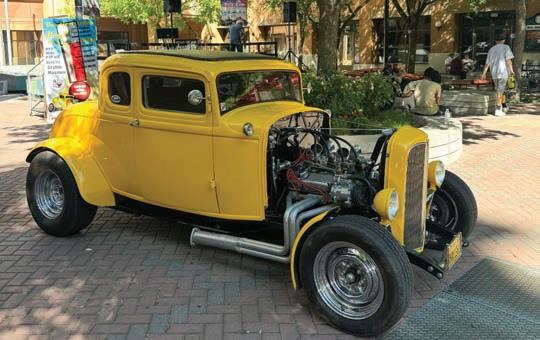
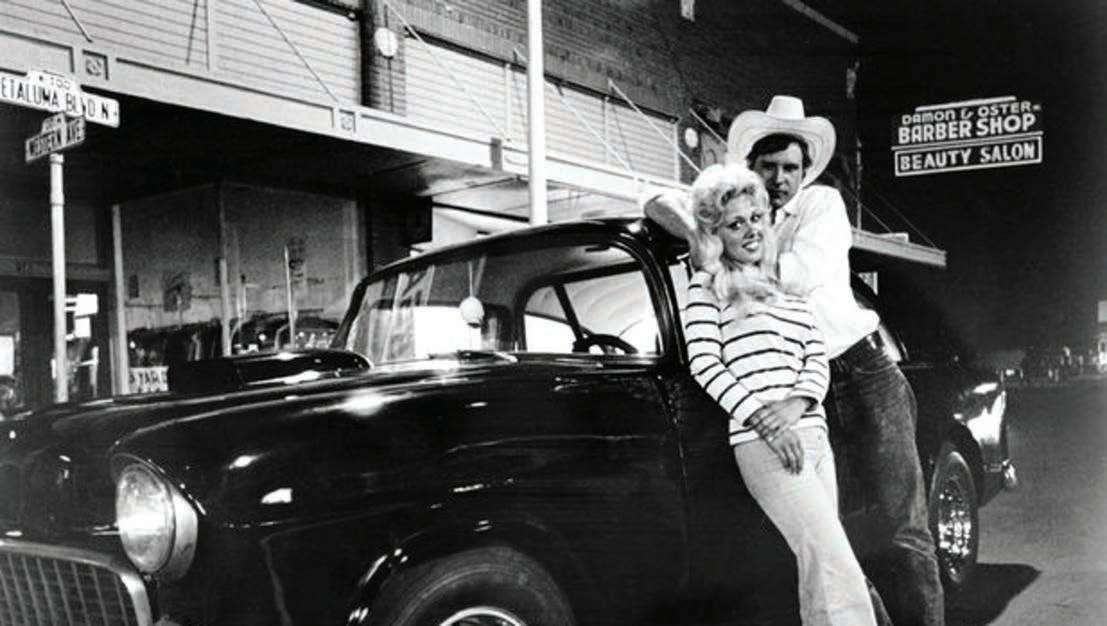
Ruth had nothing to do with the second film. His ’55 was simply painted black and handed to Ford’s Falfa, who spends the movie hunting for a race with John Milner’s yellow ’32 Ford coupe. Their showdown on Paradise Road became one of the most iconic street racing scenes ever filmed.
And that’s how a car built for a different movie became a cultural touchstone.
Keenan said she had no idea about Ruth’s connection to the films when they met. “He
mentioned one day that he built a car for a movie,” she said. “Naturally, I thought that was interesting, so I started researching it. I found all these Two Lane Blacktop fan pages with thousands of followers. And the most amazing thing — it’s worldwide.”
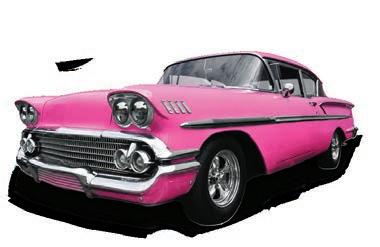
American Graffiti captured one summer night in Modesto, a nostalgic look at a time when teens were defined by their wheels. The film featured a 1958 Chevy Impala, a 1958 Edsel Corsair, a 1956 Thunderbird, a 1955 Studebaker, a 1951 Mercury and Milner’s ’32 Ford coupe.
But the car that left the deepest imprint was the ’55 Chevy 150 — designed for another film, built by a man who never sought fame.
Years later, Ruth was riding his motorcycle across the country when he heard about an American Graffiti convention in Arizona. He stopped to look around and saw long lines of fans waiting for autographs from Candy Clark and Paul Le Mat.
Then someone recognized him.
Word spread quickly: the builder of the ’55 Chevy was in the room. Soon, the line to meet Ruth was longer than those for the actors.
“This has humbled me a lot,” Ruth said. “I’m really nothing more than a hot rod guy, just doing his thing. That’s all I was doing then. And I did it because it was fun.”
He paused, then added, “But, sure, I’m proud of it.”
Editor’s note: 209 Multimedia staff writer Joe Cortez is the stepson of Richard Ruth. ●
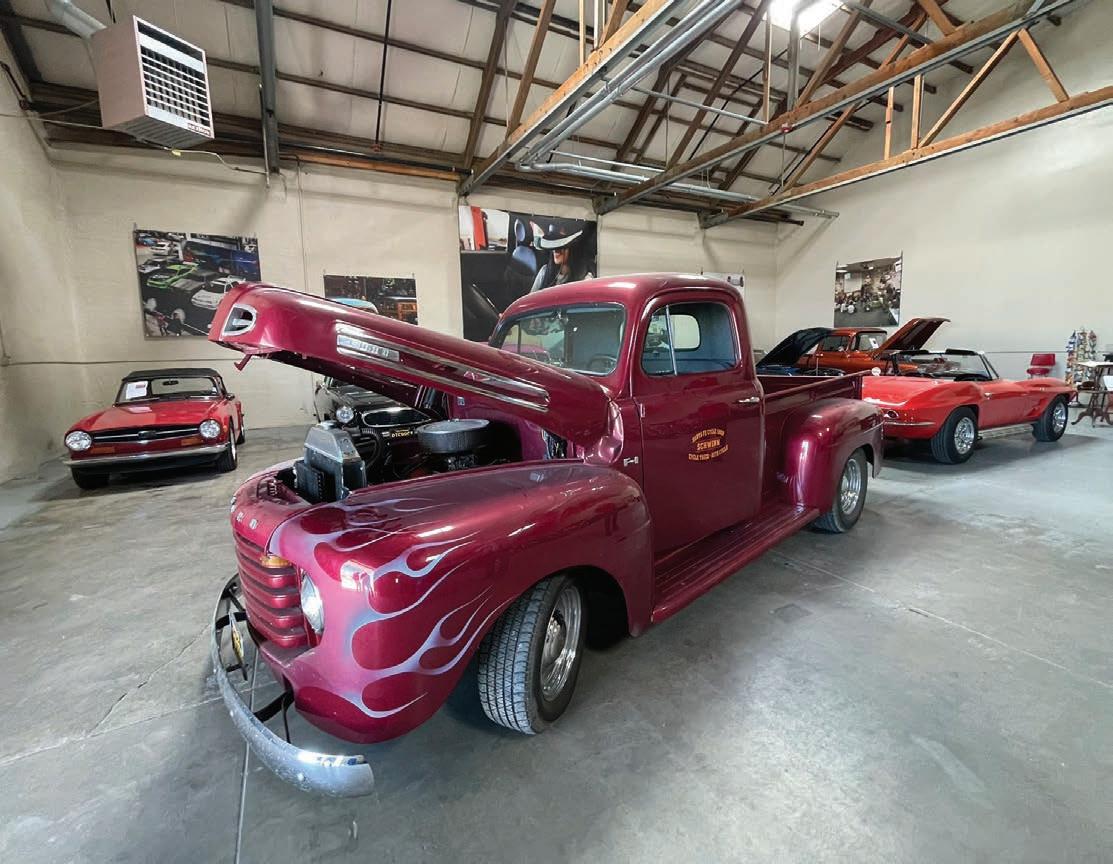
The Graffiti USA Classic Car Museum is steadily transforming a former industrial building on North Ninth Street into a cultural center celebrating Modesto’s cruising heritage and the local history that inspired George Lucas’ American Graffiti.
The volunteer run 501(c)(3) nonprofit welcomed more than 20,000 visitors over the past year during free weekend preview hours offered whenever construction allowed. Guests explored rotating displays, viewed classic cars and supported the project through the museum gift store — a sign, organizers say, that community interest in Modesto’s shared history remains strong even as the site continues to evolve.
Despite ongoing work, the museum has become a regional gathering place at a time when large exhibit venues have grown scarce. Major events drawing thousands included the bi annual County Crossroads Quilters show, Valley Dream Car’s “Trunk or Treat,” the museum’s inaugural car show with more than 60 trophies awarded, and the Modesto Marathon packet pick up and expo, which brought in roughly 2,500 runners from across the country. The site
also hosted Modesto City Schools career technical education programs, Rotary supported community events and regional training sessions, including a Save Mart employee training.
From February through May, Graffiti USA shifted into a temporary arts hub, presenting two community art shows and a series of performances and programs. Events included a Modesto Artists Movement poetry slam, a Prodigy Piano recital, a Strings showcase and a choir performance featuring more than 180 local singers in a production by Opera Modesto.
Construction milestones continue to shape the museum’s immersive storytelling approach. Three of 20 planned exhibit exteriors are now complete: a replica Nichols Newsstand storefront honoring the downtown Modesto original; “Murf’s Records,” inspired by the former J Street record shop; and a Radio Museum celebrating KTRB’s K 5 legacy, featuring a 10by 10 recording studio, podcasting space and a 500 square foot exhibit on local radio and music history.
The museum also highlights the work of Graffiti USA Classic Car Sales, an all volunteer dealership that helps fund the project while
serving classic car owners. Over four years, the team has sold more than 100 vehicles to buyers nationwide through online and in person platforms including classiccars.com, Hemmings, Cruisin’ News, AutoTrader Classics and AutoHunter. The program has become a resource for families navigating estate transitions, helping place heirloom vehicles with new owners.
Organizers are currently seeking artifacts and exhibit materials, including items related to customizer Gene Winfield, period concert posters, publications, records and vintage equipment for the newsstand, record store and radio exhibits. Print materials do not need to be permanently donated; staff can make copies and return originals.
Limited weekend access will continue through the summer as construction allows. The museum store and kids activity booth will appear at community events and car shows throughout the region.
For visiting details and updates, call 209 409 8617 or visit www.graffitiusamuseum.com. ●
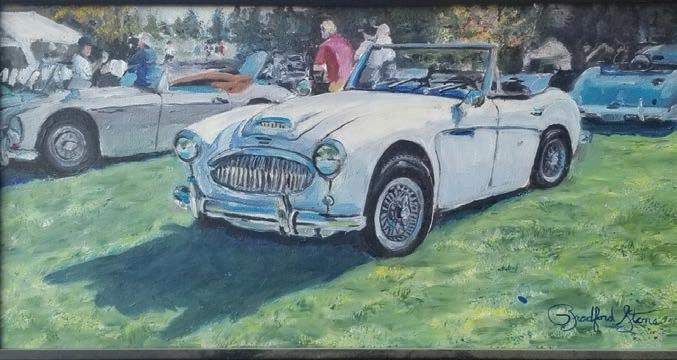
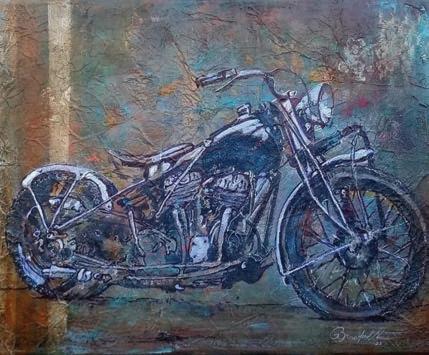
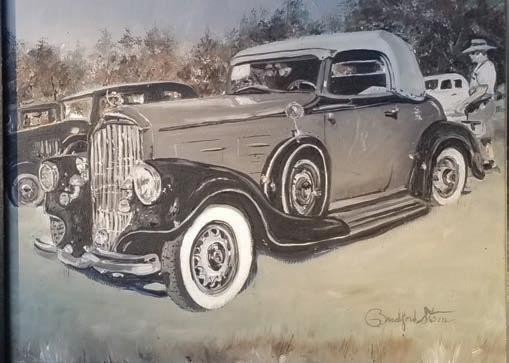
The Kruse Lucas Art Gallery is showcasing the work of Valley Springs artist Brad Stone as part of its Graffiti Exhibit, highlighting cars from different eras.
Stone, known for working across a range of mediums and subjects, has recently focused his attention on capturing the elegance and nostalgia of classic vehicles. His latest pieces emphasize the lines and character of automobiles, blending artistic interpretation with a sense of history.
His work will be on display through June, July and August at the gallery, located at 525 Tully Road. The gallery is open Monday through Thursday from 7 a.m. to 6 p.m., except holidays. For more information, call 209-529-9111.