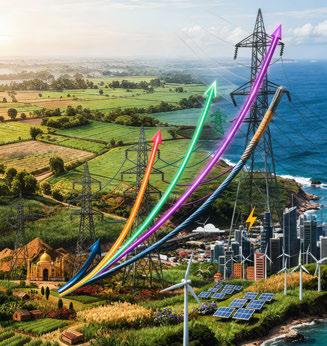
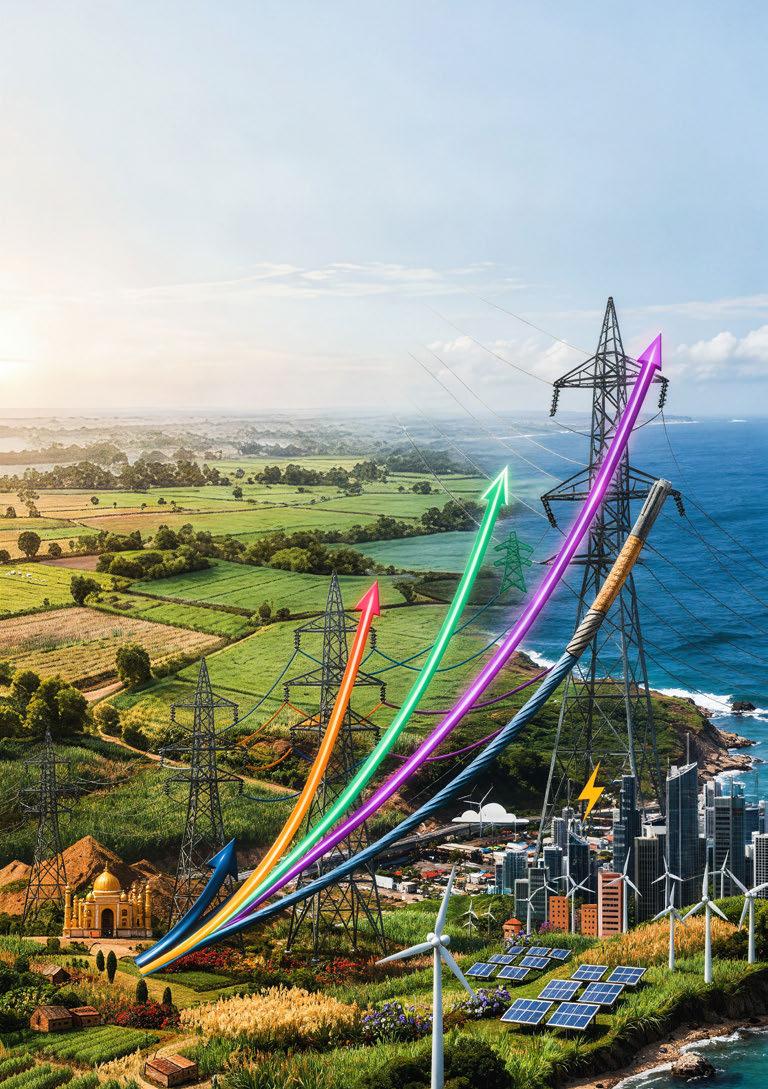
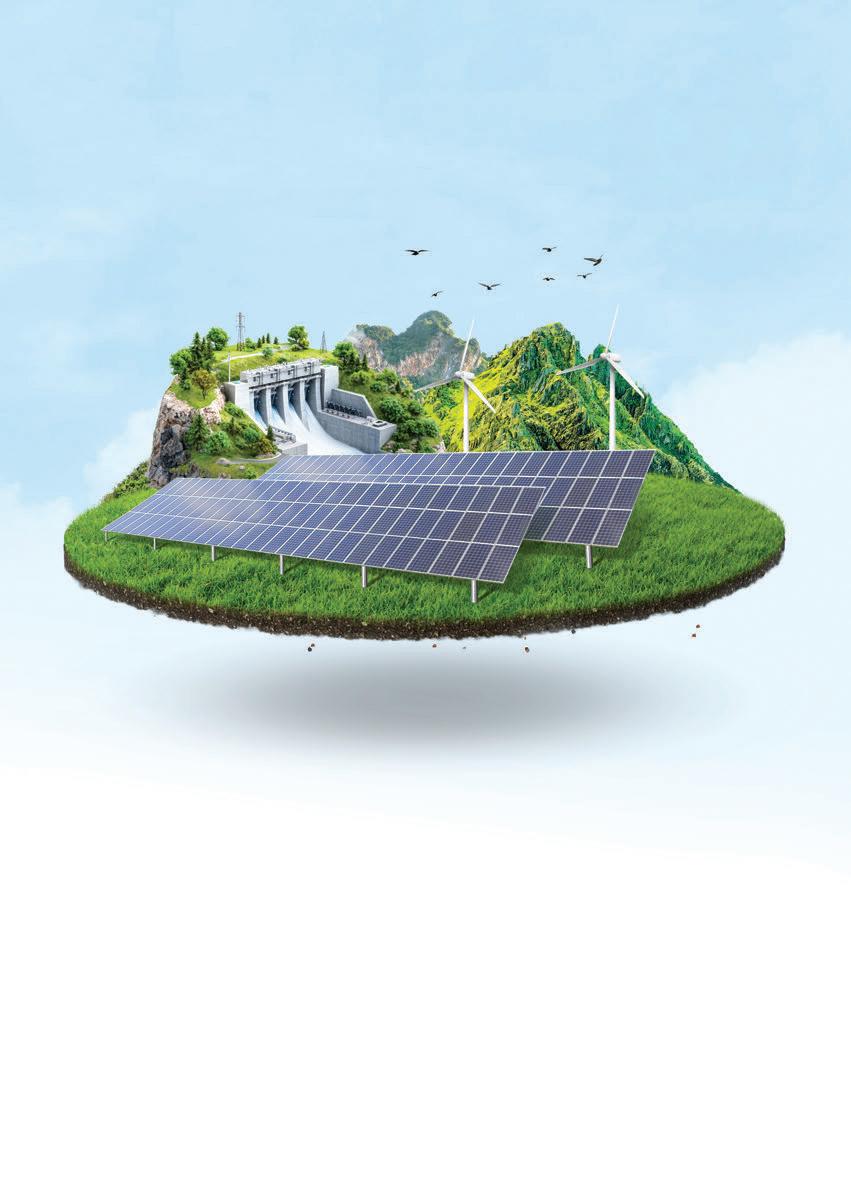
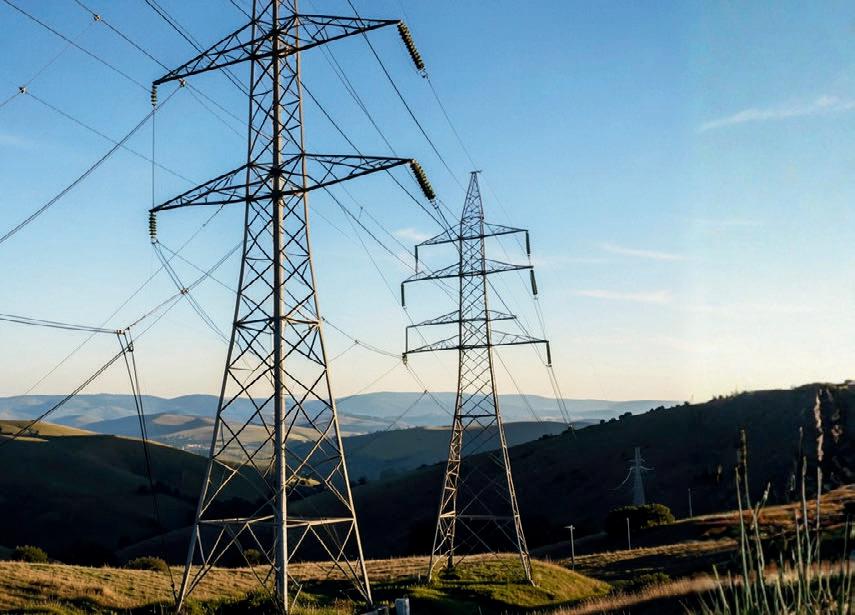
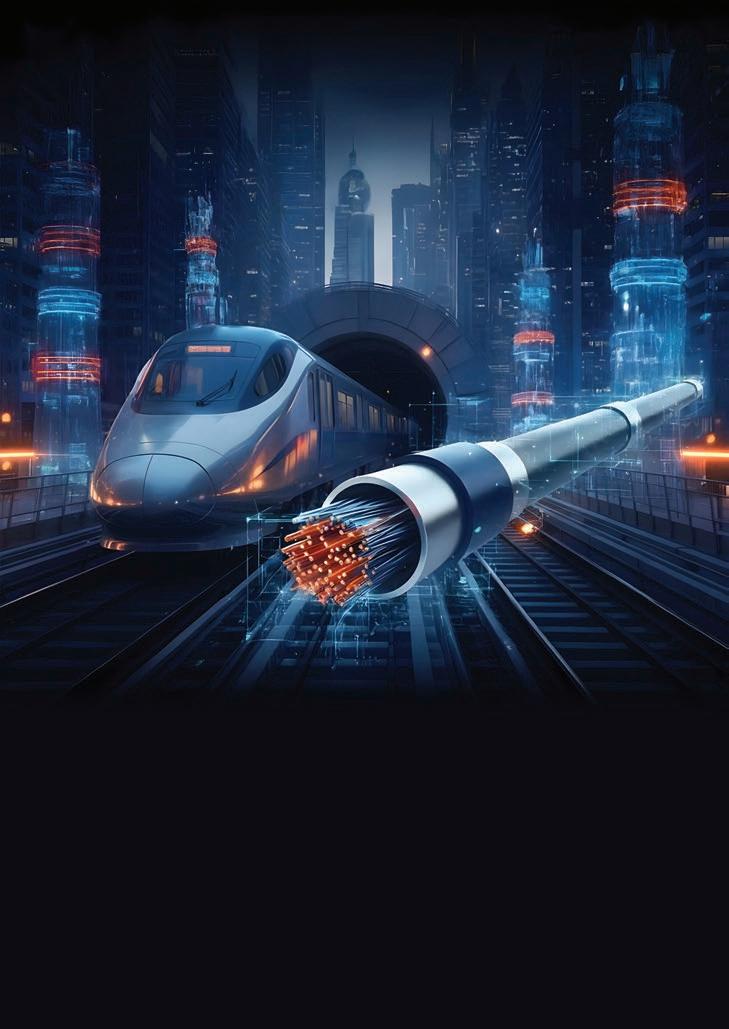
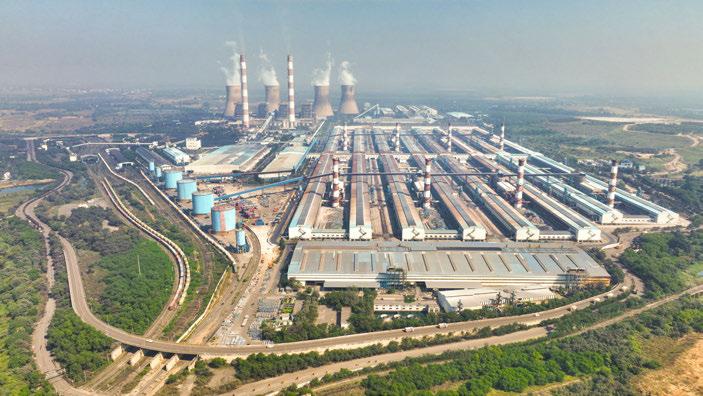
As India’s electricity demand grows and renewable generation expands, transmission planners face increasing Right-of-Way constraints in building new corridors. Reconductoring existing lines with advanced conductors is emerging as a practical strategy to expand grid capacity while making more efficient use of existing infrastructure.
The pressure on India’s transmission infrastructure has rarely been this visible. Rising electricity demand and the accelerating integration of renewable energy are only part of the reason. The emergence of large renewable generation clusters is adding a new layer of complexity to an already stretched system. Expanding the grid, however, is becoming progressively complex as acquiring new transmission corridors faces growing Right-of-Way (RoW) constraints, from land acquisition challenges and environmental clearances to urban congestion and competing land use. In this context, utilities are increasingly exploring reconductoring of existing transmission lines as a practical strategy to augment capacity within established corridors, upgrading ageing conductors with higher-performance alternatives to increase power transfer without building entirely new lines.
Grid Expansion Has Its Limits
The scale of the challenge is significant. India already operates one of the world’s largest interconnected transmission networks, spanning hundreds of thousands of circuit kilometres across multiple voltage levels. According to the Ministry of Power and Central Electricity Authority data, India’s national grid now spans over 500,000 circuit kilometres of transmission lines (220 kV and above), with transformation capacity exceeding 1,400 GVA, making it one of the world’s largest synchronous power systems. At the same time, the country’s energy transition targets, including 500 GW of non-fossil capacity by 2030, are expected to significantly increase the need for transmission
infrastructure capable of evacuating power from renewable generation clusters to load centres.
Meeting this demand will require substantial additions to the transmission system over the coming years. The National Electricity Plan (Transmission) 2022–32 estimates that over 114,000 circuit kilometres of new transmission lines will be required by 2032 to support demand growth, particularly to connect emerging renewable energy hubs in regions such as Rajasthan, Gujarat, and southern India.
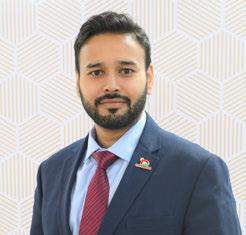
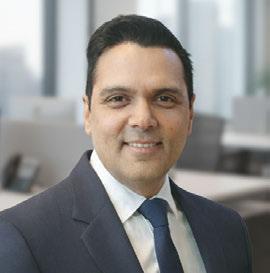
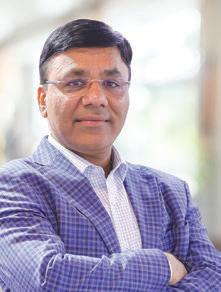
Right-of-Way constraints are emerging as one of the most persistent obstacles in meeting these targets. Securing land corridors for highvoltage lines often involves lengthy negotiations, environmental approvals, and increasing resistance in densely populated or urbanised areas. Manish Agrawal, MD, APAR T&D Projects Pvt. Ltd., puts it plainly: “With a population nearing 140 crore, acquiring new Right-of-Way (RoW) for greenfield lines has become timeconsuming, costly, and uncertain.”
India’s Transmission Expansion Challenge
The consequence is a widening gap between what is planned and what actually gets built. “This is reflected in recent execution gaps—only 81 per cent of planned transmission line additions were achieved during the 13th Five-Year Plan, with similar shortfalls continuing thereafter due to RoW and land acquisition delays,” he adds.
As these challenges intensify, utilities are beginning to reevaluate existing transmission corridors as assets that can be upgraded rather than replaced. Industry participants increasingly see reconductoring as a practical response to these constraints. Reconductoring, in this context, is emerging as a credible grid-strengthening strategy, one that works with the realities of land, regulatory, and environmental constraints rather than against them.
The Case for Reconductoring Reconductoring refers to the process of replacing existing
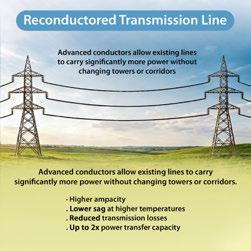
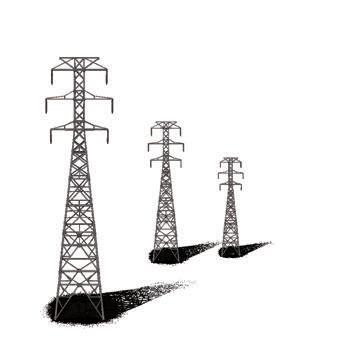
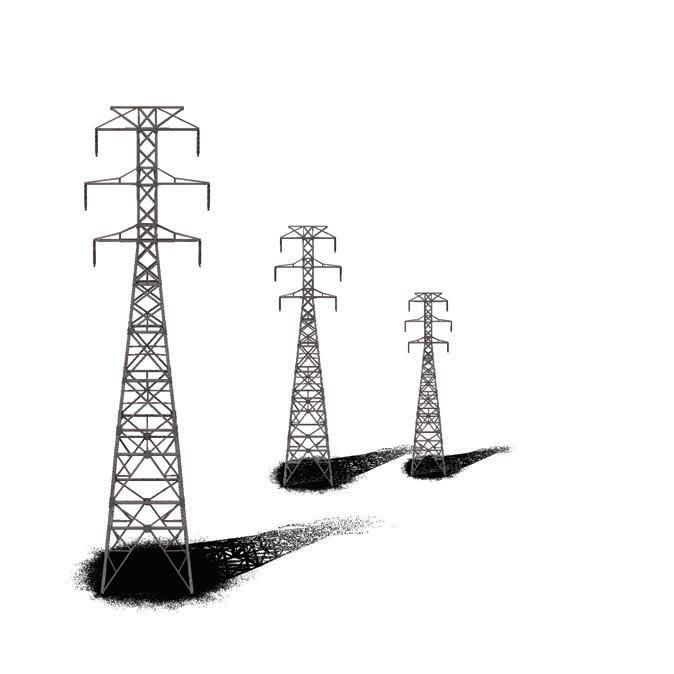
conductors on transmission lines with higher-performance alternatives capable of carrying significantly greater current while operating within the same structural and spatial constraints. Because the existing towers, insulators, and transmission corridor remain unchanged, the approach allows utilities to increase line capacity without undertaking the complex process of building entirely new transmission infrastructure. In an environment where acquiring additional Right-of-Way is becoming increasingly difficult, this strategy offers a relatively faster and often more cost-effective pathway for augmenting grid capacity.
The concept is gaining traction precisely because many existing networks were originally designed for much lower levels of power transfer. Built decades ago, these lines reflected the demand patterns, generation sources, and load centres of a very different era. As renewable generation clusters expand and electricity consumption continues to rise, upgrading these legacy assets is becoming an important consideration in transmission planning.
Drivers of Reconductoring
Why Utilities Are Turning to Reconductoring
RoW Acquisition Delays
Faster Implementation
Higher Line Capacity
Lower Environmental Impact
Overcomes land use and regulatory bottlenecks for new corridors.
Unlocking additional capacity from existing corridors is, increasingly, what utilities are turning to reconductoring for. As Manish Agrawal, CEO, Conductor & Telecom Businesses, APAR Industries, explains: “Reconductoring offers a faster, scalable alternative by leveraging existing corridors to increase power transfer capacity—often up to two times— while reducing losses and extending asset life by 25–30 years, without the complexities of new land acquisition.”
Transmission planning frameworks in India are also beginning to recognise the role of such upgrades. Planning documents of the Central Electricity Authority (CEA) identify reconductoring and uprating of existing lines as viable options for increasing transmission capacity within existing corridors, particularly in areas where acquiring new Right-of-Way has become difficult.
Regulatory developments are now reinforcing this shift. As
Replaces conventional conductors with high-capacity HTLS conductors.
Minimizes land disturbance, new tower construction, and material use.
Manish Agrawal notes, “The Central Electricity Authority has revised RoW norms for HTLS conductors, clearly defining reduced corridor requirements across voltage levels and terrains, making reconductoring administratively smoother and quicker to implement.”
Several transmission utilities have already begun experimenting with such upgrades. Projects implemented by Power Grid Corporation of India Limited (PGCIL) as well as various state transmission utilities have deployed high-temperature low-sag (HTLS) conductors on existing 220 kV and 400 kV transmission lines, enabling significant increases in current-carrying capacity without requiring new towers or transmission corridors.
This approach is particularly relevant where developing entirely new transmission corridors is impractical. In densely populated regions, environmentally sensitive areas, and congested urban and renewable evacuation corridors, upgrading existing
lines is often the faster and more practical alternative.
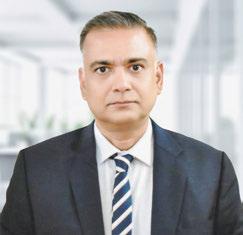
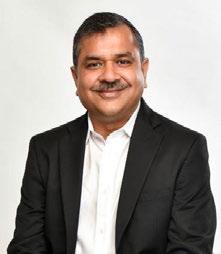
Technology developers and conductor manufacturers also see reconductoring as an important opportunity for modernising ageing grid infrastructure. According to Devesh Goel, Director and CEO, Laser Power & Infra Limited: “The world is looking at India for turnkey solutions, specifically reconductoring projects where utilities need to increase capacity on existing towers without massive civil work.”
Such solutions highlight how reconductoring is evolving into a mainstream strategy for optimising transmission networks. As grid operators balance the need for rapid capacity expansion with the practical constraints of land acquisition and environmental approvals, upgrading existing lines is increasingly being considered alongside the construction of new transmission corridors.
By 2031-32 India will require approximately 114,687 circuit km of additional transmission lines (220 kV and above) and ~776 GVA additional transformation capacity.
The Conductor Evolves
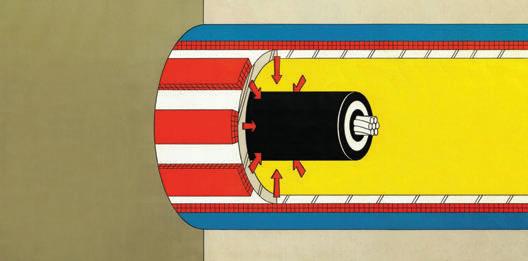
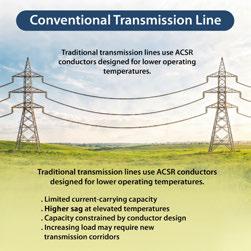
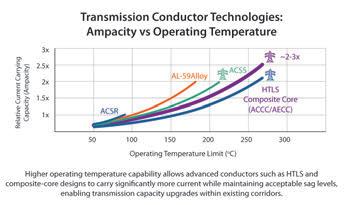
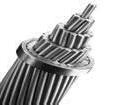
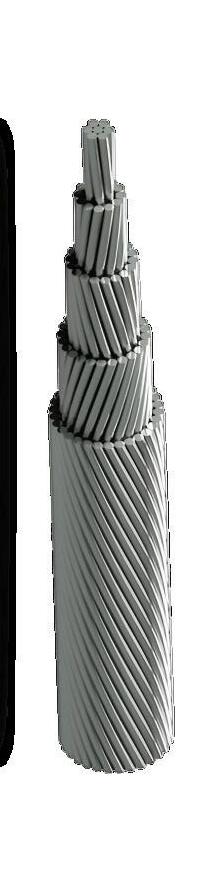
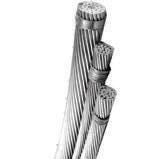
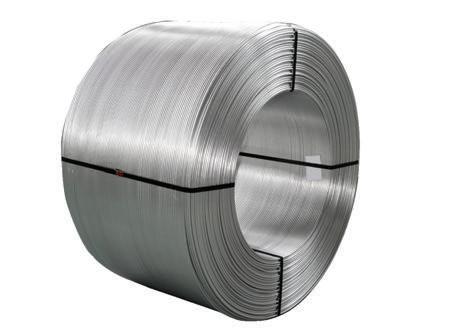
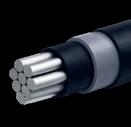
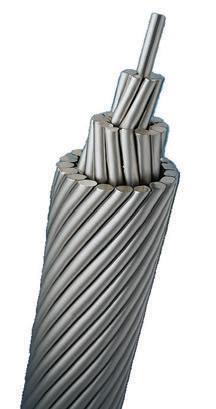
The growing interest in reconductoring is closely tied to advances in transmission conductor technology. Conventional aluminium conductor steel reinforced (ACSR) conductors, long used in overhead transmission lines, were designed to operate within specific thermal and mechanical limits. As power flows increase, these conductors can experience higher thermal expansion and sag, constraining the amount of current that existing lines can safely carry. Newer conductor technologies are addressing these limitations, enabling significant increases in capacity without requiring changes to tower structures or transmission corridors.
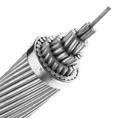
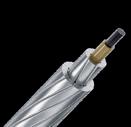
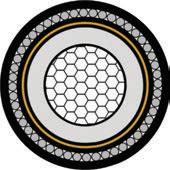
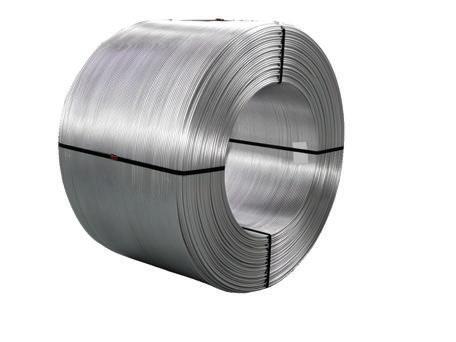
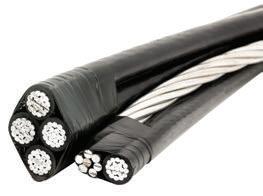
High-temperature low-sag (HTLS) conductors represent one of the most widely discussed solutions in this context. Designed to operate at higher temperatures while maintaining mechanical stability, HTLS conductors allow transmission lines to carry greater current without excessive sag. Various design approaches, including advanced aluminium alloys, composite or carbon fibre cores, and specialised strand geometries, are being developed to enhance ampacity, reduce resistance losses, and improve overall performance under demanding operating conditions.
For conductor manufacturers, these technologies are opening new possibilities for upgrading existing infrastructure. Devesh Goel, Director and CEO, Laser Power & Infra Limited, notes that the shift toward higher-performance conductors is transforming how transmission capacity upgrades are approached: “Our high-temperature low-sag (HTLS)/ Aluminum Encapsulated Carbon Core (AECC) conductor products can be a suitable solution for this bottleneck.”
Composite-core designs such as AECC combine lightweight carbon fibre cores with aluminium strands, allowing conductors to operate at higher temperatures while maintaining lower sag characteristics. This enables utilities to increase power transfer capability without requiring major structural modifications to transmission lines.
Other conductor innovations are also contributing to improved transmission performance. Technologies such as trapezoidal wire designs, advanced aluminium alloys, and specialised surface coatings can enhance current-carrying capacity while reducing electrical losses. As Manish Agrawal of APAR Industries points out, newer conductor designs are increasingly focused on delivering higher ampacity and lower losses to improve grid efficiency: “Technologies such as HTLS-
Reconductoring: Increasing Transmission Capacity Within Existing Corridors
ACCC® support this transition by enabling capacity expansion within existing infrastructure while facilitating renewable integration and long-term reliability.”
Together, these technological developments are expanding the range of options available to utilities seeking to upgrade transmission infrastructure. As the operational limits of traditional conductors become more apparent under rising power flows, advanced conductor technologies are enabling reconductoring to move from a specialised engineering solution toward a broader strategy for strengthening transmission networks.
India Steps Up
The move toward advanced conductors is also drawing attention to India’s growing capability to manufacture and supply next-generation transmission solutions. As utilities increasingly look to HTLS and composite-core conductors for reconductoring projects, the question of domestic manufacturing capacity is directly relevant to the pace and scale of deployment.
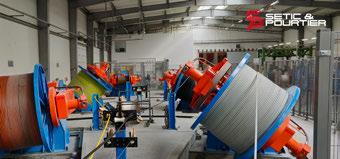
Indian manufacturers have moved well beyond conventional conductor production. APAR Industries describes itself as the largest one-stop solution provider for the design, manufacturing, upgrading, and testing of conductors globally, and has executed over 165 turnkey reconductoring projects across India. The company holds around 50 per cent market share in domestic reconductoring projects, a figure that reflects both the scale of its manufacturing operations and the depth of its project execution capability. In FY2023-24, APAR expanded its manufacturing capacity for alloys, high-efficiency, and HTLS conductors from approximately 3,120 kilometres per month to 5,722 kilometres per month, a scale-up that reflects deliberate preparation for growing demand.
Sterlite Power Transmission is another manufacturer that has built significant capacity in this space. The company has an existing manufacturing capacity of 1,00,000 MT for conductors and has announced plans to expand this to 1,50,000 tonnes to meet rising demand, with its conductor manufacturing
capacity booked for the next 12 to 14 months. In the reconductoring segment, the company has received orders from utilities including DVC, GETCO, WBSETCL, and OPTCL.
Specialised manufacturers are also contributing to this ecosystem. Devesh Goel, Director and CEO, Laser Power & Infra Limited, points to a concrete example of technology localisation: “By being the first in India to manufacture AECC conductors under a technology partnership with the US, we prove that India is a viable hub for high-end technology absorption and local value addition, capable of serving the world’s most demanding power grids.” He adds, “Through this partnership, we are able to locally manufacture advanced, high-capacity conductors in India, significantly reducing import dependency and production lead times.”
As domestic manufacturing capability matures alongside growing project demand, India is increasingly positioned not only as a market for reconductoring solutions but as a credible source of the advanced conductor technology that makes them possible.
The Bigger Picture
As India’s electricity demand continues to grow and renewable generation expands across geographically concentrated clusters, strengthening the transmission network will remain central to ensuring reliable power delivery. While the construction of new transmission corridors will continue to play an important role in grid expansion, practical constraints related to land acquisition, environmental clearances, and urbanisation are increasingly prompting utilities to explore complementary approaches for enhancing network capacity.
In this context, reconductoring is gaining recognition as a strategic option for upgrading existing transmission infrastructure. As conductor technologies continue to mature, they are expanding the range of options available to transmission planners seeking to balance rapid capacity expansion with practical infrastructure constraints, and the domestic manufacturing ecosystem is scaling in step with that demand.
The direction of travel is becoming clearer. As Manish Agrawal puts it, “Going forward, reconductoring should be evaluated as the first option for capacity enhancement, with its feasibility assessed before undertaking any Greenfield transmission expansion.” He adds, “Additionally, policy support to encourage the adoption of HTLS conductors for new transmission lines—particularly in urban and forested areas—would enable higher capacity deployment with lower Right-of-Way impact.” Together, these are not peripheral recommendations; they represent a fundamental rethinking of how India plans and builds its transmission infrastructure going forward.
KEI Industries India Combines Technical Depth, Scalable Production, and International Reliability to Serve Globe
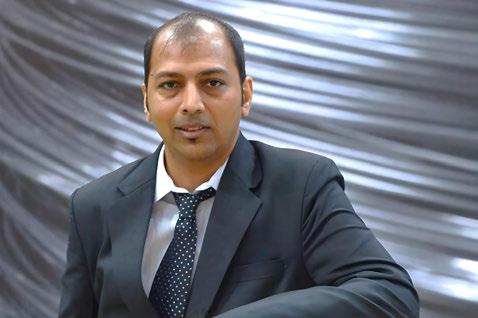
In an exclusive interaction with Wire & Cable India, Mr. Anil Gupta, CMD, KEI Industries Limited shares how India has emerged as a centre of excellence in precision manufacturing, advanced metallurgy, and globally aligned quality systems. KEI Industries contribute to strengthening India’s image as a global engineering hub by showcasing
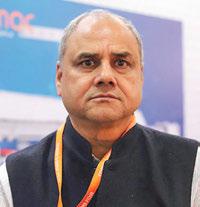
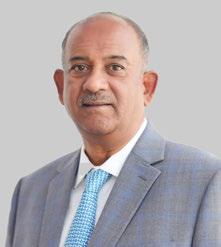
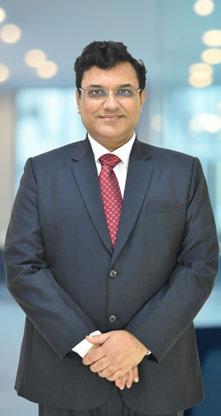
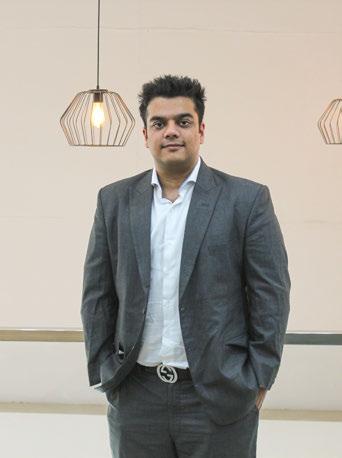
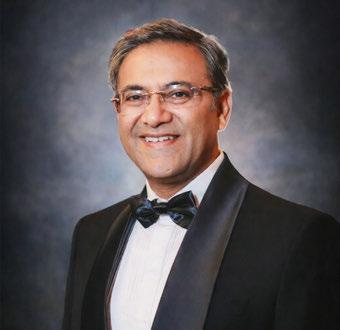
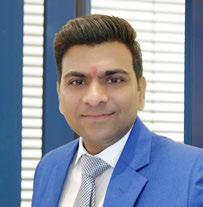
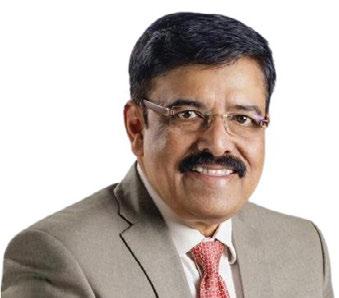
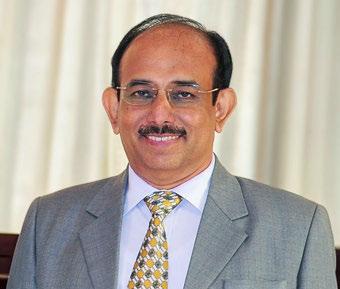
Mr. Anil Gupta, CMD, KEI Industries Ltd.
Wire & Cable India: What will you showcase at WIRE Düsseldorf to highlight India’s technological capabilities and manufacturing excellence to a global audience?
Anil Gupta: At WIRE Düsseldorf, KEI Industries’ Stainless Steel Wires Division will highlight India’s emergence as a centre of excellence in precision manufacturing, advanced metallurgy, and globally aligned quality systems. Our presentation will reflect how Indian engineering today combines technical depth, scalable production, and international reliability to serve demanding global industries.
quality manufacturing, adherence to international standards, and continuous investment in technology, sustainability, and skill development. The company, through its consistent global engagement and reliable delivery, aims to position India as a trusted partner for advanced, future-ready wire and cable solutions.
We will showcase our advanced stainless steel wire portfolio, featuring high-performance austenitic, ferritic, martensitic, and special-grade variants designed for critical applications across automotive, energy, fasteners, welding, springs, medical, and industrial engineering sectors. Alongside this, we will emphasize our robust manufacturing infrastructure, stringent quality assurance practices, and commitment to continuous innovation, reinforcing India’s position as a trusted and future-ready partner in the global wire and cable value chain.
WCI: International trade fairs play a crucial role in shaping industry collaborations. How do platforms like WIRE Düsseldorf help Indian manufacturers connect with global markets and customers?
AG: Platforms like WIRE Düsseldorf act as a global convergence point where Indian manufacturers can engage directly with international customers, technology partners, and decision-makers. These forums enable meaningful exchanges on standards, innovation, and emerging market needs, helping Indian companies align their capabilities with global expectations. They also create opportunities to build long-term partnerships, expand export footprints, and position India as a reliable and competitive player in the global wire and cable value chain.
WCI: From your participation at WIRE Düsseldorf, what key global market insights are you hoping to gain and bring back to strengthen India’s wire and cable manufacturing ecosystem?
AG: Through our participation at WIRE Düsseldorf, KEI Industries aims to gain deeper insights into new/emerging
global trends in smart manufacturing, advanced materials, renewable energy, and mobility sectors. We look forward to understanding customer expectations around performance, sustainability, and compliance, which will help us further enhance our new product development. These learnings will be brought back to strengthen India’s wire and cable ecosystem by driving innovation, improving global competitiveness, and building future-ready solutions as per consumer requirements.
WCI: Over the years, how have you seen India’s representation evolve at international trade fairs, and how do you contribute to strengthening India’s image as a global engineering hub?
AG: Over the years, India’s presence at international trade fairs has evolved from being primarily cost-competitive to becoming strongly innovation-led and quality-driven and many companies are coming forward for participation. At KEI Industries, we contribute to strengthening India’s image as a global engineering hub by showcasing worldclass manufacturing, adherence to international standards, and continuous investment in technology, sustainability, and skill development. Through consistent global engagement and reliable delivery, we aim to position India as a trusted partner for advanced, future-ready wire and cable solutions.
WCI: What core Indian manufacturing strengths differentiate you on the global stage? For what turnkey solutions is the world looking at India?
AG: India’s core manufacturing strengths lie in precision engineering, high-quality production, cost efficiency, and rapid scalability. At KEI Industries, we leverage these strengths to deliver turnkey solutions in power distribution, renewable energy, industrial automation, and smart infrastructure. The world looks to India for end-to-end, reliable, and sustainable wire and cable solutions that combine innovation, performance, and adherence to global standards—showcasing India as a dependable partner in building future-ready infrastructure.
WCI: Technology partnerships and acquisitions are critical today. How are Indo-global collaborations helping reinforce India’s engineering leadership?
AG: Indo-global collaborations like KEI Industries’ partnership with Swiss giant Brugg Cables are enabling Indian manufacturers like us to access advanced technologies, best practices, and international expertise, strengthening our engineering capabilities. These partnerships help us innovate faster, meet global compliance standards, and develop high-performance, sustainable solutions. By combining India’s manufacturing efficiency with global technological excellence, we reinforce India’s position as a trusted leader in the wire and cable industry worldwide.
WCI: Which international regions do you see as strategic growth markets, and how is India positioned as your global manufacturing base to support these expansions?
“ The world looks to India for end-toend, reliable, and sustainable wire and cable solutions that combine innovation, performance, and adherence to global standards—showcasing India as a dependable partner in building futureready infrastructure.”
AG: Strategic growth markets for KEI Industries include Europe, the Middle East, Africa, Australia, the USA and Southeast Asia, where demand for reliable, highperformance, and sustainable wire and cable solutions is rising. India, with its advanced manufacturing infrastructure, skilled workforce, and adherence to international quality standards, serves as a robust global manufacturing base. This enables us to efficiently serve these markets with scalable, cost-effective, and technologically advanced solutions, reinforcing India’s role as a trusted partner in the global wire and cable supply chain.
WCI: How are cost pressures across raw materials, energy, or logistics being managed without compromising product reliability or compliance?
AG: At KEI Industries, we address cost pressures across raw materials, energy, and logistics through process optimization, strategic order-based sourcing, and energyefficient sustainable manufacturing practices. By investing in advanced technologies, quality automation, and supply chain efficiencies, we ensure that product reliability, performance, and global compliance standards are never compromised. Also, key raw materials such as copper/ aluminum, which impacts cost are linked with order deliveries to minimize the financial impact. This approach allows us to deliver high-quality, cost-effective solutions while maintaining India’s reputation for engineering excellence.
WCI: How are sustainability expectations from customers or regulators translating into changes in product design, manufacturing practices, or material choices?
AG: Sustainability expectations are driving KEI Industries to innovate across product design, material selection, and manufacturing practices. We are increasingly adopting eco-friendly materials, energy-efficient processes, and anti-waste production methods, while ensuring full compliance with global environmental standards. These initiatives allow us to deliver reliable, high-performance wire and cable solutions that meet customer and regulatory sustainability requirements, reflecting India’s commitment to responsible and future-ready manufacturing.
Bansal Wire Industries India Combines Scale, Engineering Depth and Cost Competitiveness For Global Supply Chains
In an exclusive interaction with Wire & Cable India, Mr. Pranav Bansal, MD & CEO, Bansal Wire Industries Limited , highlights that India’s strength lies in its ability to combine large-scale manufacturing, deep engineering expertise, operational agility, and a competitive cost structure. At Bansal Wire Industries, this positioning is reinforced through continuous investments in
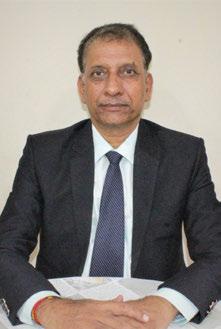
Mr. Pranav Bansal, MD & CEO, Bansal Wire Industries Ltd.
Wire & Cable India: What will you showcase at WIRE Düsseldorf to highlight India’s technological capabilities and manufacturing excellence to a global audience?
Pranav Bansal: At WIRE Düsseldorf 2026, we will showcase how Indian manufacturing has moved decisively from being a cost-driven sector to being technology-led and applicationfocused industry. Our emphasis will be on high-performance steel wire solutions for power transmission, renewable energy, automotive and specialised industrial applications,
advanced galvanising and surface treatment technologies, process automation, and robust testing infrastructure, laying a clear roadmap to scale capacity to 6 lakh MTPA. The company also collaborates closely with customers during product development and qualification stages, delivering customised wire solutions tailored for high-performance and demanding applications.
where consistency, fatigue performance and long service life are critical.
From our perspective, we will highlight our new-generation manufacturing infrastructure, including our roadmap to scale towards 6 lakh MTPA of capacity. Equally important will be our capabilities in advanced galvanising, surface engineering and precision process control, which enable longer spans, lower sag and superior corrosion resistance for demanding grid and infrastructure projects.
We also intend to demonstrate how Indian companies are building robust quality systems, traceability and certification readiness to meet global procurement standards. The larger message is that India is now capable of delivering not only scale, but engineering depth, customised solutions and long-term reliability positioning the country as a serious manufacturing and technology partner for global customers.
WCI: How do platforms like WIRE Düsseldorf help Indian manufacturers connect with global markets and customers?
PB: Global trade platforms such as WIRE Düsseldorf create a unique opportunity for Indian manufacturers to move beyond transactional engagement and build strategic, long-term relationships with international customers. They allow direct interaction with OEMs, EPC players, utilities, distributors and technology partners who are actively evaluating new supply chains and manufacturing bases.
For Indian companies, these platforms are particularly valuable in demonstrating engineering capability, production maturity and compliance readiness in a
“ Indian companies are increasingly presenting themselves through the lens of engineering capability, quality assurance, application expertise and long-term reliability.”
transparent and credible environment. Customers are increasingly interested in understanding how suppliers manage quality systems, sustainability practices, digital manufacturing and scalability areas where Indian manufacturers have made significant progress. Such exhibitions also enable deeper technical discussions around application requirements, qualification cycles and regional regulatory frameworks.
At a time when global customers are consciously diversifying sourcing and building resilient supply networks, platforms like these play a catalytic role in integrating Indian manufacturers into global value chains and positioning India as a reliable alternative manufacturing hub.
WCI: What key global market insights are you hoping to gain and bring back from WIRE Düsseldorf?
PB: Our primary objective is to gain early insight into how global customers are redefining performance expectations for wires and cables in the context of energy transition, digital infrastructure and advanced industrial applications. We are keen to understand emerging requirements related to higher operating temperatures, longer service life, improved fatigue behaviour and enhanced corrosion protection.
Another important area of learning will be regulatory and compliance evolution, covering sustainability reporting, product traceability, environmental performance and responsible sourcing. These factors are increasingly influencing supplier qualification and long-term contracts. We also look forward to learning from global technology providers on advances in wire drawing, coating technologies, energy-efficient processes and digital quality systems.
Equally valuable will be insights into how customers are approaching supply-chain resilience, localisation strategies and multi-country sourcing models. Our intent is to bring these market perspectives back into our investment planning, R&D priorities and capability development so that the Indian wire and cable manufacturing ecosystem remains aligned with future global demand, rather than reacting to it after the fact.
WCI: How has India’s representation evolved at international trade fairs, and how do you contribute to strengthening India’s image as a global engineering hub?
PB: India’s presence at international trade fairs has evolved significantly over the past decade. Earlier, the focus was
largely on capacity and pricing. Today, Indian companies are increasingly presenting themselves through the lens of engineering capability, quality assurance, application expertise and long-term reliability. We contribute to this shift by consistently positioning ourselves as a technologydriven manufacturer rather than a commodity supplier. Our investments in modern equipment, advanced galvanising and surface treatment technologies, process automation and testing infrastructure reflect this approach.
We also work closely with customers during product development and qualification stages, enabling customised wire solutions for demanding applications such as power transmission, renewable energy and automotive. In addition, strong governance practices, transparent quality systems and growing sustainability integration help build trust with global partners.
WCI: What core Indian manufacturing strengths differentiate you on the global stage? For what turnkey solutions is the world looking at India?
PB: India’s strongest differentiator lies in its ability to combine large-scale manufacturing, deep engineering talent and operational flexibility within a competitive cost framework. This allows Indian manufacturers to efficiently serve both high-volume programmes and specialised, application-driven requirements.
Our integrated manufacturing model, strong domestic sourcing ecosystem and multi-product capabilities enable us to offer consistent quality across diverse end-use segments such as power, infrastructure, automotive and industrial engineering. Another major strength is India’s rapidly maturing supplier and tooling ecosystem, which supports faster prototyping, localisation and continuous product improvement.
Globally, India is now being looked at for turnkey manufacturing solutions that go beyond production alone. These include application engineering support, customised processing, testing and certification readiness, scalable manufacturing and dependable supply continuity making India a strategic manufacturing and engineering base rather than only a low-cost sourcing destination.
WCI: How are Indo-global collaborations helping reinforce India’s engineering leadership?
AG: Indo-global collaborations are playing a critical role in accelerating technology adoption and strengthening engineering practices across Indian manufacturing.
“ India is increasingly well positioned to act as our global manufacturing base due to its expanding industrial infrastructure, improving logistics connectivity and a supportive manufacturing and export policy environment.”
“ Indian teams are exposed to international qualification systems, documentation practices and product validation processes, which are essential for deeper integration into global supply chains. Such collaborations allow Indian manufacturers to contribute to product and process innovation, and this transition is vital for reinforcing India’s position as an engineering leader and for ensuring that the country plays a more active role in shaping future industrial technologies.”
Partnerships with international equipment suppliers, technology firms and global customers provide access to advanced processes, materials knowledge and digital manufacturing frameworks.
For companies like ours, these collaborations help shorten development cycles and enable the production of wire solutions that meet evolving global performance and compliance standards. They also expose Indian teams to international qualification systems, documentation practices and product validation processes, which are essential for deeper integration into global supply chains. Over time, such collaborations allow Indian manufacturers to contribute to product and process innovation, rather than only executing predefined specifications. This transition is vital for reinforcing India’s position as an engineering leader and for ensuring that the country plays a more active role in shaping future industrial technologies.
WCI: Which international regions are strategic growth markets, and how is India positioned as your global manufacturing base?
PB: We see Europe, the Middle East, Southeast Asia and selected African markets as key growth regions, driven by investments in power infrastructure, renewable energy, urban development and industrial expansion. Each of these markets presents different regulatory and performance expectations, but all require reliable and scalable supply partners.
India is increasingly well positioned to act as our global manufacturing base due to its expanding industrial infrastructure, improving logistics connectivity and a supportive manufacturing and export policy environment. The availability of skilled engineering talent and a strong domestic raw-material ecosystem further strengthens this advantage.
Our India-centric manufacturing strategy allows us to centralise technology investments, quality systems and process innovation, while serving multiple international markets with consistent performance standards. Similar is the case with our modular capacity planning and diversified product portfolio, providing flexibility to respond to quick project-based demand and regional growth cycles. This combination of scale, flexibility and engineering depth makes India a resilient and competitive manufacturing hub for supporting our international expansion.
WCI: How are cost pressures being managed without compromising product reliability or compliance?
PB: In today’s environment, sustainable cost management requires structural efficiency rather than short-term cost reduction. Our focus is on productivity improvement, energy efficiency, material optimisation and higher equipment utilisation to address inflationary pressures across inputs and logistics.
We are investing in automation and digital process controls to reduce variability, rework and wastage, which directly supports both cost competitiveness and quality consistency. Strategic supplier partnerships and improved demand forecasting also help stabilise procurement and reduce supply-side volatility. Importantly, we do not dilute testing protocols, certification processes or process discipline to manage costs. In fact, robust quality systems reduce long-term costs by minimising failures, claims and requalification cycles.
Our approach is to treat operational excellence and compliance as cost enablers rather than cost burdens. Predictable, well-controlled manufacturing processes ultimately provide the most reliable pathway to managing input pressures while continuing to meet global reliability and regulatory expectations.
WCI: How are sustainability expectations translating into changes in product design and manufacturing practices?
PB: Sustainability is increasingly influencing both customer purchasing decisions and regulatory frameworks. This is driving tangible changes across product development, manufacturing operations and supply-chain practices. We are prioritising reductions in energy intensity, improvements in material yield and process optimisation to lower the environmental footprint of our operations. New investments are being aligned with energy-efficient equipment, improved waste recovery systems and responsible water management practices.
From a product perspective, customers are seeking longerlife solutions, better corrosion protection and designs that reduce maintenance and replacement cycles. This directly shapes our R&D focus, coating technologies and surface engineering capabilities. We are also strengthening traceability and documentation systems to support growing expectations around responsible sourcing and sustainability reporting. Sustainability is not only a compliance requirement. It is a long-term competitiveness driver that enhances operational resilience, strengthens customer confidence and supports sustained access to global markets.
Mr. Nirmal Saraf, Director, Nirmal Wires Pvt. Ltd. (Group Nirmal)
Group Nirmal
India Emerges As a Dependable Engineering Base for Wires & Cables Sector
“ Rather than one-way technology transfer, partnerships today are increasingly co-development driven, where Indian manufacturing scale combines with global engineering inputs to deliver robust, compliant solutions.”
In an exclusive interaction with Wire & Cable India, Mr. Nirmal Saraf, Director, Nirmal Wires Pvt. Ltd. (Group Nirmal) , says India is well positioned to deliver customized wire grades, tailored alloy coatings, application-specific fencing and protection systems, and aluminium conductors optimized for power networks—backed by technical guidance, documentation, and long-term supply assurance, providing end-to-end solutions. He adds that the company is strengthening India’s image as a global engineering hub through a strong focus on product innovation, disciplined quality systems, and customer-led improvement. Group Nirmal’s adherence to internationally recognised ASTM and JIS standards underscores its commitment to global benchmarks, while structured customer feedback and redressal mechanisms ensure that market insights are systematically translated into product and process enhancements.
Wire & Cable India: What will you showcase at WIRE Düsseldorf to highlight India’s technological capabilities and manufacturing excellence to a global audience?
Nirmal Saraf: At Wire Düsseldorf 2026, Nirmal Wires (Group Nirmal) will showcase how India has transformed into a reliable, technology-driven manufacturing hub. We will present our diverse portfolio, which includes galvanized and black steel wires, advanced Zn-
Al alloy-coated NIZNAL® wires, fencing and rockfall protection systems, nylon-coated wires, and AL59 aluminum conductors for power transmission.
With an annual capacity exceeding 216,000 MT, our exhibits will emphasize consistency at scale, process control, and global compliance. Interactive technical presentations will highlight corrosion-resistance performance, lifecycle benefits, and stringent
quality assurance systems aligned with international standards. Our goal is to demonstrate that Indian manufacturing combines engineering expertise, reliability, traceability, and sustainability, meeting global expectations not only in terms of cost but also in long-term performance and supplychain confidence.
WCI: International trade fairs play a crucial role in shaping industry collaborations. How do platforms like WIRE Düsseldorf help Indian manufacturers connect with global markets and customers?
NS: International trade fairs such as WIRE Düsseldorf help Indian manufacturers integrate with global markets and build meaningful industry collaborations. Such platforms bring together manufacturers, raw material suppliers, equipment makers and buyers on a neutral, focused stage, making it easier to establish supply relationships and access larger procurement networks.
For many Indian companies, especially mid-sized and emerging players, this direct exposure provides an efficient route to connect with utilities, EPC contractors, renewable energy developers, and governmentlinked agencies worldwide. Such exhibitions also enable companies to showcase new technologies while gaining first-hand insight into global innovations that encourage domestic producers to upgrade products and processes.
International delegations create export and trade opportunities, helping Indian manufacturers better understand certification, compliance, and quality benchmarks required for overseas projects. Additionally, conferences alongside exhibitions foster dialogue on standards, regulations, and policy priorities, supporting long-term alignment with global infrastructure and energy transition goals.
WCI: From your participation at WIRE Düsseldorf, what key global market insights are you
hoping to gain and bring back to strengthen India’s wire and cable manufacturing ecosystem?
NS: Over the last decade, India’s representation at international trade fairs has evolved significantly. From being seen largely as a costcompetitive sourcing base to being recognised as a serious engineering and manufacturing partner, India has made substantial strides in showcasing its technological advancements and capabilities. Participation from the Indian wire and cable industry has grown steadily in scale and sophistication, with Indian manufacturers engaging buyers across Europe, North America, the UK, the GCC, Australia, and Southeast Asia.
global engineering hub by focusing on product innovation, disciplined quality systems, and customerled improvement. Our adherence to internationally recognised ASTM and JIS standards reflects a commitment to global benchmarks, while structured customer feedback and redressal mechanisms ensure that market insights are systematically translated into product and process enhancements. Engaging global customers on technical capability, reliability, and long-term value, we are helping reinforce the perception of Indian manufacturing as quality-driven, technology- capable, and globally dependable.
“
As infrastructure investments, renewable integration, and grid modernisation accelerate worldwide, India’s wire and cable industry is well placed to move from an alternative supplier to a preferred global partner.”
Today, discussions at these platforms are less about price and more about compliance, international certifications, product performance, lifecycle durability, and supply reliability. This shift has been reinforced by global geopolitical realignments, supply chain diversification away from singlecountry dependence, Europe’s accelerated grid expansion driven by energy security concerns, and tightening trade frameworks around sustainability and carbon disclosures.
Aligned with this broader industry evolution, we are contributing to strengthening India’s image as a
Looking ahead, as infrastructure investments, renewable integration, and grid modernisation accelerate worldwide, India’s wire and cable industry is well placed to move from an alternative supplier to a preferred global partner, and we see ourselves playing an active role in that transition.
WCI: What core Indian manufacturing strengths differentiate you on the global stage? For what turnkey solutions is the world looking at India?
NS: India’s key manufacturing advantage lies in its ability to deliver scale with discipline—large volumes produced under rigorous quality systems. Group Nirmal reflects this strength through seven modern facilities, integrated testing, and a workforce skilled in precision wire drawing and coating technologies. We are the only integrated conductor manufacturers in India. Our manufacturing process starts with aluminium ingots and galvanized steel wire cores, enabling us to produce finished products entirely in-house.
Globally, customers are increasingly seeking turnkey solutions, not just products. India is well-positioned to deliver complete offerings: customized wire grades, tailored alloy coatings for corrosion resistance, application-specific fencing and protection systems, and aluminium conductors
optimized for power networks. Beyond manufacturing, customers value India’s capability to provide technical guidance, documentation, and long-term supply assurance. This combination of engineering customization, cost-efficient production, and end-to-end support enables Indian manufacturers to integrate seamlessly into infrastructure, energy, agriculture, and industrial projects worldwide.
WCI: Technology partnerships and acquisitions are critical today. How are Indo-global collaborations helping reinforce India’s engineering leadership?
NS: Indo-global collaborations are accelerating India’s transition from a cost-driven supplier to a technologyaligned manufacturing partner. Through exposure to international standards, testing protocols, and application requirements, Indian manufacturers are strengthening product validation and process sophistication.
Group Nirmal, global customer engagement and technical exchanges have influenced advancements in coating technologies, corrosion-resistance performance, and lifecycle optimization. These collaborations improve alignment with European and international norms, enhance traceability systems, and elevate quality assurance practices.
Rather than one-way technology transfer, partnerships today are increasingly co-development driven, where Indian manufacturing scale combines with global engineering inputs to deliver robust, compliant solutions. This reinforces India’s leadership as a dependable engineering base capable of supporting long-term infrastructure and energy projects across multiple regions.
WCI: Which international regions do you see as strategic growth markets, and how is India positioned as your global manufacturing base to support these expansions?
NS: Europe, the Middle East, Africa, and Southeast Asia are strategic growth regions driven by infrastructure renewal, power transmission expansion, and urban development. Europe, in particular, demands high-performance, certified, and sustainable wire solutions requirements,well aligned with Indian manufacturing maturity. India’s strong domestic raw-material ecosystem, skilled workforce, and scalable infrastructure position it as a stable global manufacturing base.
For Group Nirmal, India enables phased, long-duration project supplies without specification drift, critical for large fencing, power, and infrastructure programs. Additionally, India’s logistical connectivity and expanding trade frameworks strengthen its role as an export hub. From a single manufacturing base, we can reliably serve diverse regional standards while maintaining consistency, cost control, and compliance.
“ India’s strong domestic raw-material ecosystem, skilled workforce, and scalable infrastructure position it as a stable global manufacturing base.”
WCI: How are cost pressures across raw materials, energy, or logistics being managed without compromising product reliability or compliance?
NS: Managing cost pressures today requires process efficiency rather than specification dilution. Group Nirmal focuses on optimizing zinc and aluminium usage, improving yield efficiency, and deploying energyefficient production systems to control input costs.
Long-term supplier partnerships help stabilize raw material sourcing, while integrated planning reduces logistics variability. More importantly, cost management is embedded within strict quality frameworks, ensuring mechanical properties, coating thickness, and dimensional accuracy remain fully compliant with international standards.
By emphasizing lifecycle value instead of upfront pricing, we deliver products with longer service life and reduced replacement frequency, which lowers total cost of ownership for customers. This approach allows us to absorb volatility while preserving reliability, certification integrity, and performance consistency.
WCI: How are sustainability expectations from customers or regulators translating into changes in product design, manufacturing practices, or material choices?
NS: Sustainability expectations are increasingly shaping both product engineering and manufacturing discipline. At Group Nirmal, this translates into designing longerlife products such as our NIZNAL® Zn–Al alloy–coated wires that outperform conventional GI Wires by 6 times, reducing material consumption over time.
Manufacturing practices emphasize energy-efficient operations, optimized metal usage, and responsible sourcing. For aluminium conductors and steel wires, focus has shifted toward durability, recyclability, and reduced maintenance cycles. Rather than symbolic compliance, sustainability is treated as a performance metric, where extended service life, lower replacement rates, and efficient resource use deliver measurable environmental benefits. This aligns closely with global regulatory expectations and customer procurement criteria, particularly in Europe and other regulationintensive markets.
Laser Power & Infra Limited
India Powers Ahead with ValueEngineered Transmission Solution
Stating India’s shift from ‘cost-effective’ to ‘value-engineered’ transmission solutions, Mr. Devesh Goel, Director & Chief Executive Officer, Laser Power & Infra Limited , highlights that the company, through a technology partnership with US based TS Conductor Corp, is the first in India to manufacture AECC conductors. This collaboration enables the local production of advanced, high-capacity conductors, significantly reducing import dependence and shortening lead times. The company offers energy-efficient transmission conductors that are lighter, stronger, and capable of carrying more power than conventional conductors.
Mr. Devesh Goel,
Director & Chief Executive Officer, Laser Power & Infra Limited
Wire & Cable India: What will you showcase at WIRE Düsseldorf to highlight India’s technological capabilities and manufacturing excellence to a global audience?
Devesh Goel: At WIRE Düsseldorf, we are showcasing a shift from traditional volume-based manufacturing to high-tech, high-efficiency solutions. Our exhibit focuses on the next generation of Transmission and Distribution (T&D): Aluminum Encapsulated Carbon Core (AECC) / Hightemperature low sag (HTLS) conductors. By presenting these alongside our AL-59 All Alloy Aluminum Conductor (AL-59) and Aluminium Conductor Steel Support (ACSS) variants, we are demonstrating that India can now deliver conductors with 2-3 times the capacity of ACSR with half the line losses, while maintaining low thermal sag and compatibility with traditional installation methods, making them a cost-effective solution for grid modernization.
We are also highlighting our Medium Voltage Covered Conductors (MVCC), which address the global need for safer conductors which prevent accidental contacts with other conductors or grounded parts and are suitable for medium-voltage applications between 6.6KV to 33KV and enable us to establish a PAN India presence by enhancing distribution efficiency and expanding our operational capabilities across diverse terrains and climates.
WCI: International trade fairs play a crucial role in shaping industry collaborations. How do platforms like WIRE Düsseldorf help Indian manufacturers connect with global markets and customers?
DG: Düsseldorf is the “Olympics” of the wire industry. For an Indian manufacturer like Laser Power & Infra, it provides a stage to engage with utilities and EPC majors from Europe, the Americas, and Africa simultaneously. These interactions often fast-track the vendor prequalification process and help us understand region-specific compliance standards like IEC and IEEE in real-time.
WCI: From your participation at WIRE Düsseldorf, what key global market insights are you hoping to gain and bring back to strengthen India’s wire and cable manufacturing ecosystem?
DG: We are looking closely at two things: advanced material science and circular economy trends. Specifically, we want to understand how global
leaders are integrating recycled aluminum and low-carbon polymers into their supply chains. Bringing these insights back helps us align our R&D with global sustainability benchmarks, ensuring that the Indian manufacturing ecosystem remains export-competitive.
WCI: Over the years, how have you seen India’s representation evolve at international trade fairs, and how do you contribute to strengthening India’s image as a global engineering hub?
DG: Indian representation has moved from simple wire rods to complex, engineered products. We contribute to this by shifting the narrative from “cost-effective” to “value-engineered.” By being the first in India to manufacture AECC conductors under a technology partnership with the US, we prove that India is a viable hub for high-end technology absorption and local value addition, capable of serving the world’s most demanding power grids.
WCI: What core Indian manufacturing strengths differentiate you on the global stage? For what turnkey solutions is the world looking at India?
DG: One of our differentiators is backward integration. Our speciality products division supports backward integration through the in-house production of aluminium rods, aluminium alloy rods, and PVC / XLPE compounds used in cable insulation and manufacture of speciality cables.
In our forward integration strategy, in the year 2015, we strategically expanded our business by entering the engineering, procurement, and construction (EPC) segment in the power distribution sector, focusing on rural electrification projects, power distribution infrastructure development, and installation of substations, among other turnkey solutions.
Our EPC segment focuses on delivering turnkey solutions for rural and urban electrification, distribution, and power infrastructure development. The world is looking to India for turnkey solutions,
specifically reconductoring projects where utilities need to increase capacity on existing towers without massive civil work. Our Hightemperature low sag (HTLS) / Aluminum Encapsulated Carbon Core (AECC) conductor products can be a suitable solution for this bottleneck.
WCI: Technology partnerships and acquisitions are critical today. How are Indo-global collaborations helping reinforce India’s engineering leadership?
DG: We are a licensed stranding partner of TS Conductor Corp (“TS Conductor”), a U.S.-based company renowned for its transmission technology. The
India is a viable hub for high-end technology absorption and local value addition, capable of serving the world’s most demanding power grids.
strategic partnership combines TS’s linemen-friendly design, easy workability, field compatibility, and proprietary pre-tensioned carbon fibre composite core technology with our proven capabilities in precision manufacturing and large-scale production.
Through this partnership, we are able to locally manufacture advanced, high-capacity conductors in India, significantly reducing import dependency and production lead times. This collaboration will allow us to offer energy-efficient transmission conductors that are lighter, stronger, and capable of carrying more power than conventional ACSR or CFCC conductors. Their engineered
durability, with aluminium encapsulated sealed environmental protection to the core, safety and longevity by design make them ideal for utilities seeking to upgrade transmission lines without costly infrastructure overhauls.
WCI: Which international regions do you see as strategic growth markets, and how is India positioned as your global manufacturing base to support these expansions?
DG: We see significant growth in North America, Europe since both have shown consistent and substantial increases in power sector investment, underlining their commitment to grid modernization, renewable energy integration and energy transition policies. Eastern India offers notable advantages for wire, cable, and conductor manufacturers due to logistics infrastructure (wellconnected through ports and rail), proximity to raw material resources, and supportive policies, making it an attractive manufacturing base. Our manufacturing units are strategically located near key ports in Kolkata and Haldia, providing logistical advantages for both domestic and international markets.
WCI: How are cost pressures across raw materials, energy, or logistics being managed without compromising product reliability or compliance?
DG: We manage cost pressures through operational discipline and scale. Our three integrated units allow us to optimize raw material usage and hedge against volatility in the LME (London Metal Exchange).
WCI: How are sustainability expectations from customers or regulators translating into changes in product design, manufacturing practices, or material choices?
DG: Sustainability is no longer optional. Our eco conductors are designed to optimize transmission performance while supporting energy efficiency and sustainability. Featuring trapezoidal wire construction, they offer higher compactness and lower resistance, leading to significantly reduced transmission losses.
Supermac Industries (India)
India Today Represents Precision, Reliability, Innovation Aligned with Global Expectations
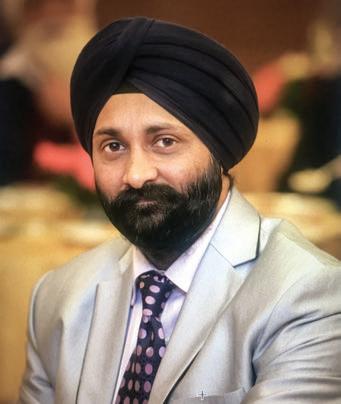
Mr. Jasvinder Singh, Managing Director, Supermac Industries (India) Limited
In an exclusive interaction with Wire & Cable India, Mr. Jasvinder Singh, Managing Director, Supermac Industries (India) Limited , observes that India’s manufacturing ecosystem is gaining global recognition for delivering precise, reliable, and innovationled engineering solutions. Supermac Industries reinforces this position through advancements in HV/EHV technologies, integration of smart manufacturing, sustainability transition, and support for expanding global infrastructure, while maintaining strict adherence to international quality and compliance standards.
India’s participation has evolved from selective product displays to comprehensive engineering solutions. The industry today demonstrates scale, confidence, and technical maturity comparable to global benchmarks.
Wire & Cable India: What will you showcase at WIRE Düsseldorf to highlight India’s technological capabilities and manufacturing excellence to a global audience?
Jasvinder Singh: At WIRE Düsseldorf, the emphasis will be on India’s emergence as a technology-led manufacturing nation. The showcase reflects advanced engineering, integrated automation, turnkey capabilities, and globally compliant manufacturing standards. The narrative is clear: India today represents precision, reliability, and innovation aligned with global expectations.
WCI: International trade fairs play a crucial role in shaping industry collaborations. How do platforms like WIRE Düsseldorf help Indian manufacturers connect with global markets and customers?
JS: Such platforms provide structured engagement with global industry leaders and decision-makers. They enhance credibility, enable technology comparison, and promote long-term industrial partnerships. The participation reinforces India’s role as a serious and dependable contributor to global markets.
WCI: From your participation at WIRE Düsseldorf, what key global market insights are you hoping to gain and bring back to strengthen India’s wire and cable manufacturing ecosystem?
JS: The focus is on tracking advancements in HV/EHV technologies, smart manufacturing integration, sustainability transitions, and global infrastructure momentum. These insights support alignment of India’s manufacturing ecosystem with future global industry directions.
WCI: Over the years, how have you seen India’s representation evolve at international trade fairs, and how do you contribute to strengthening India’s image as a global engineering hub?
JS: India’s participation has evolved from selective product displays to comprehensive engineering solutions. The industry today demonstrates scale, confidence, and technical maturity comparable to global benchmarks. India is increasingly viewed as a reliable global engineering hub.
WCI: What core Indian manufacturing strengths differentiate you on the global stage? For what turnkey solutions is the world looking at India?
JS: India’s strengths include deep engineering expertise, scalable manufacturing infrastructure, operational agility, and consistent quality standards. Global markets increasingly recognize India for delivering integrated turnkey solutions and end-to-end project capabilities.
WCI: Technology partnerships and acquisitions are critical today. How are Indo-global collaborations helping reinforce India’s engineering leadership?
JS: Indo-global collaborations enable accelerated technology access, shared innovation, and localization of advanced
systems. These partnerships strengthen India’s transition from production base to strategic engineering partner.
WCI: Which international regions do you see as strategic growth markets, and how is India positioned as your global manufacturing base to support these expansions?
JS: Infrastructure modernization and energy transition initiatives are generating demand across global markets. India’s scale, talent base, and manufacturing ecosystem position it as a competitive and dependable global supply base.
WCI: How are cost pressures across raw materials, energy, or logistics being managed without compromising product reliability or compliance?
JS: Cost optimization is driven by operational efficiency, disciplined sourcing strategies, and engineering innovation, while maintaining uncompromised adherence to international quality and compliance standards.
WCI: How are sustainability expectations from customers or regulators translating into changes in product design, manufacturing practices, or material choices?
JS: Sustainability is now embedded as a core engineering principle. Emphasis is placed on energy efficiency, material optimization, waste reduction, and lower-carbon manufacturing practices to meet evolving global regulatory and customer expectations.
Assomac Machines India Transforms Into ManufacturingandSkillsHub for Global Markets
The wire industry and the broader steel sector, enters 2026 on its strongest footing to date. Demand visibility is improving significantly across both domestic and international markets, driven by a growing customer focus on highquality standards and rigorous compliance. While these shifts may appear incremental, they are collectively transforming the logistics and quality benchmarks of the industry.
In an exclusive interaction with Wire & Cable India, Mr. Nirmal Singh, Director, Assomac Machines Limited , shares that India today stands as a focal point for global investment, attracting interest from both advanced and emerging countries alike. Backed by strategic policy reforms and the empowerment of MSMEs, the country is expanding its manufacturing footprint and transforming India into a vital ‘manufacturing and skills hub’ for the global market. Assomac contributes to this transformation by supplying advanced technologies and product mix designed to meet the evolving demands of a modern global industry.
Wire & Cable India: What will you showcase at WIRE Düsseldorf to highlight India’s technological capabilities and manufacturing excellence to a global audience?
Nirmal Singh: The Wire show in Düsseldorf has always held a unique significance for us. It is five days of relentless energy—a period of intense learning, knowledge sharing, and high-level networking with the global wire fraternity. This year, we are proud to showcase our latest mechanical advancements and the tangible, successful results they are delivering in the field.
Regarding India’s technological and manufacturing standing on the global stage, we find ourselves in a position where we must run a marathon and a sprint simultaneously. Amidst ongoing geopolitical tensions, our
priority must be to cultivate a robust, export-driven ecosystem while relentlessly pursuing the technological upgrades required to compete in today’s rapidly evolving market.
WCI: International trade fairs play a crucial role in shaping industry collaborations. How do platforms like WIRE Düsseldorf help Indian manufacturers connect with global markets and customers?
NS: In today’s globalized economy, specialized international trade fairs have become indispensable. While industry events occur daily across the globe, these exhibitions provide a singular, high-impact platform for businesses seeking global expansion. For our organization, Wire Düsseldorf holds a position
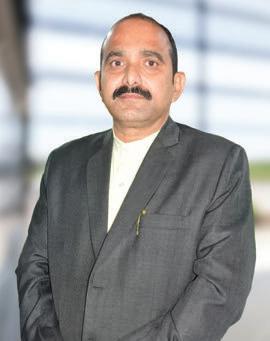
Mr. Nirmal Singh, Director, Assomac Machines Limited
of unique importance. Our history with this prestigious event dates back to 1992, marking over three decades since our debut as an exhibitor.
For us, the show serves as a premier networking hub, facilitating vital connections with potential customers, long-standing clients, and key suppliers who provide the essential inputs for emerging technologies. Beyond relationship building, the event is a strategic barometer, allowing us to stay ahead of evolving industry trends and shifting consumer preferences.
Furthermore, as the world’s largest product-specific exhibition, Wire Düsseldorf significantly amplifies our brand visibility. It offers an unparalleled stage to showcase our latest technological milestones and our growing international footprint to a highly targeted audience. Ultimately, this forum is instrumental in helping us identify new market opportunities and forge partnerships with global technological consultants.
WCI: From your participation at WIRE Düsseldorf, what key global market insights are you hoping to gain and bring back to strengthen India’s wire and cable manufacturing ecosystem?
NS: In contrast to the high resource demands of individual client visits, a premier trade fair like Wire Düsseldorf offers a highly cost-effective gateway to a global audience. These exhibitions provide a distinct competitive advantage, allowing us to maintain industry leadership by showcasing our most innovative products and services. Beyond the direct visibility, the event serves as a vital learning forum, offering unique opportunities to engage with and learn from the stalwarts of the international wire industry.
WCI: Over the years, how have you seen India’s representation evolve at international trade fairs, and how do you contribute to strengthening India’s image as a global engineering hub?
NS: With decades of experience
navigating the exhibition floor, we have seen a remarkable transformation in how the wire and cable industry connects. The global trade fair landscape has become more sophisticated and localized. By decentralizing their flagship events, organizers like Messe Düsseldorf have made it easier for the global fraternity to engage without the constraints of extensive travel.
At Assomac, our participation is calculated and purposeful, often involving collaborative consultations with organizers to identify highpotential markets. It is particularly
nations alike. The Financial Year 2026 Economic Survey underscores that, even amidst global headwinds and geopolitical challenges, India’s growth remains exceptionally robust. Key to this success has been a strategic focus on policy reform; by deregulating and empowering MSMEs, India has successfully expanded its manufacturing footprint. This evolution is transforming the Nation into a vital ‘Manufacturing and Skill Hub’ for the global market, offering a stable and innovative environment for the international wire and cable fraternity.
WCI: Technology partnerships and acquisitions are critical today. How are Indo-global collaborations helping reinforce India’s engineering leadership?
As India’s infrastructure undergoes a massive expansion, long-term steel anchors are emerging to support a wide array of sectors—from power and solar energy to automotive and telecommunications.
heartening to see a surge in fellow Indian companies joining these international stages. This collective presence, supported by the increasing prominence given to us by global organizers, is successfully rebranding India as a powerhouse of engineering excellence on the world stage.
WCI: What core Indian manufacturing strengths differentiate you on the global stage? For what turnkey solutions is the world looking at India?
NS: Today, India stands as a focal point for global investment, drawing interest from advanced and emerging
NS: As a vital component of the broader steel sector, the wire industry enters 2026 on its strongest footing to date. Demand visibility is improving significantly across both domestic and international markets, driven by a growing customer focus on high-quality standards and rigorous compliance. While these shifts may appear incremental, they are collectively transforming the logistics and quality benchmarks of the steel industry. For Assomac, being deeply embedded in this ecosystem, the next two years represent a unique convergence of innovation, reinvention, and market stability.
In today’s industrial climate, technological partnerships have become essential. As India’s infrastructure undergoes a massive expansion, long-term steel anchors are emerging to support a wide array of sectors—from power and solar energy to automotive and telecommunications. Assomac continues to play a pivotal role in this transformation, supplying cutting-edge technology across both ferrous and non-ferrous segments. With an expansive product mix and the capability to manufacture specialized wire grades, we are committed to meeting the sophisticated demands of a modernizing global market.
WCI: Which international regions do you see as strategic growth markets, and how is India positioned as your global manufacturing base to support these expansions?
NS: With a growing global footprint, Assomac is actively engaging with serious inquiries from emerging markets in the Middle East, Africa, and South America. We are fully prepared to address this consistent demand through our commitment to ‘Quality and Timely Delivery.’
To support this trajectory, we have undertaken a massive expansion of our production facilities, bolstered by a specialized team of industry
WCI: How are cost pressures across raw materials, energy, or logistics being managed without compromising product reliability or compliance?
NS: While geopolitical volatility has led to a significant rise in raw material and input costs, affecting capital goods manufacturers and customers alike, Assomac remains uniquely positioned to absorb these pressures. Thanks to our proactive investments in advanced machinery and a culture of engineering excellence, we have optimized our production processes to maintain stability. We continue to provide high-performance solutions, ensuring that even in a fluctuating market, our product reliability and quality standards remain
NS: Sustainability is no longer an elective consideration; it is a fundamental shift in the global demand landscape. To meet these evolving standards, Assomac emphasizes the use of high-durability components and extended lifecycle support to ensure long-term operational stability for our clients.
We are dedicated to integrating the best manufacturing practices, with a specific focus on highefficiency equipment designed to reduce energy consumption. Our approach is holistic: we offer endto-end consultancy and engineering services, including G.A. drawings, logistical planning, and hazardous
When safety lives in wires Happiness thrives in homes
Every time the light comes on, safety should too. With that in mind, we built our wires to be RoHS-compliant, fire-retardant. Our wires are availble in 7 vivid colours and in sizes ranging from 0.75sq mm to 6sq mm, so that you can pick the right wire for your every need.
WIRES & CABLES
Mikrotek India Emerges As A Global Sourcing Destination for End-to-End Die Solutions
Wire & Cable India: What will you showcase at WIRE Düsseldorf to highlight India’s technological capabilities and manufacturing excellence to a global audience?
Kamal Babu: Beyond products, we will demonstrate our capability to deliver engineered solutions from die design and application support to die refurbishment and performance optimization. Our focus is on longer die life, higher productivity, tighter tolerances, and lower total cost of ownership, which reflect India’s growing strength in precision manufacturing and advanced materials engineering.
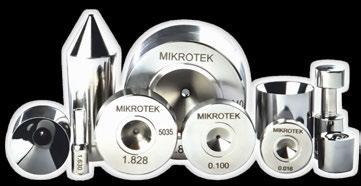
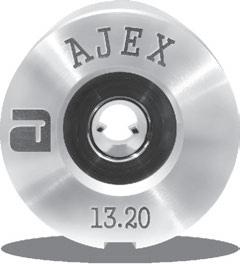
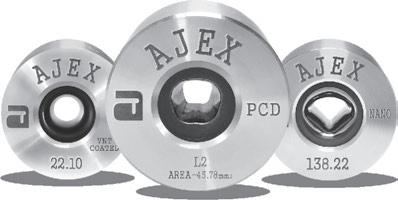
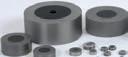
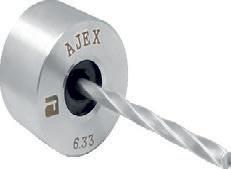
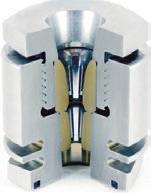
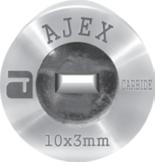
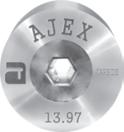
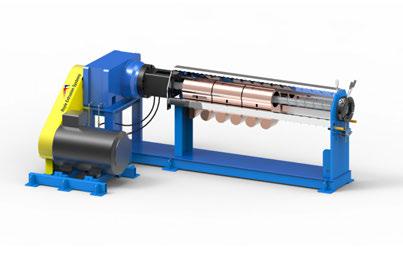
Mikrotek will showcase its complete range of high-precision wire drawing
In an exclusive interaction with Wire & Cable India, Mr. Kamal Babu, Chairman & Managing Director, Mikrotek Machines Limited , shares that Indian companies are increasingly being recognized for their precision engineering, reliability, and innovation. He adds that Mikrotek is gaining insights into new conductor materials, advanced lubricants, and smart manufacturing practices to upgrade its designs and processes in India. With its end-toend die solutions, backed by competitive costs and consistent quality, the company is reinforcing India’s position as a preferred global sourcing destination.
We believe that sharing expertise builds India’s image as a serious engineering and solutions hub.
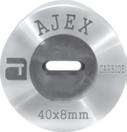
tooling and solutions, including ND, PCD, SSCD (Mono) diamond dies and TC dies, diamond coated dies, enamelling dies, shaving dies, split dies with tungsten carbide inserts, extrusion tools, and advanced polishing and die maintenance systems.
WCI: International trade fairs play a crucial role in shaping industry collaborations. How do platforms like WIRE Düsseldorf help Indian manufacturers connect with global markets and customers?
KB: WIRE Düsseldorf provides a unique global meeting point where technology providers, OEMs, and end users interact face-to-face. For Indian manufacturers like Mikrotek, it enables us to present our engineering capabilities directly to decision-makers and understand real-time customer challenges. WIRE Düsseldorf is ultimately about meeting customers face-toface and understanding their real production challenges. For us, it is less about exhibiting products and more about listening to wire and cable manufacturers, their needs for higher speeds, longer die life, better surface finish, and lower downtime.
These direct interactions help us offer customized solutions rather than standard products. Customers can evaluate our technology firsthand, discuss specific applications, and build confidence in our service and technical support. Such platforms create trust, shorten decision cycles, and help us become long-term solution partners to global customers, not just suppliers.
WCI: From your participation at WIRE Düsseldorf, what key global market insights are you hoping to gain and bring back to strengthen India’s wire and cable manufacturing ecosystem?
KB: We aim to understand evolving requirements around highspeed drawing, ultra-fine wires, sustainability, and automation. Global customers are demanding higher productivity, longer tool life, and energy efficiency. Insights into new conductor materials, advanced lubricants, and smart manufacturing practices will help us upgrade our designs and processes in India.
Our goal is to bring back these learnings and integrate them into product innovation, benefiting not
just Mikrotek but the broader Indian wire and cable ecosystem.
WCI: Over the years, how have you seen India’s representation evolve at international trade fairs, and how do you contribute to strengthening India’s image as a global engineering hub?
KB: Earlier, Indian participation was mostly price-driven. Today, it is technology- and qualitydriven. Indian companies are increasingly recognized for precision engineering, reliability, and innovation.
At Mikrotek, we contribute by delivering globally benchmarked quality standards, exporting to multiple countries, and positioning ourselves as a knowledge partner through technical seminars, symposiums, and customer training programs. We believe that sharing expertise builds India’s image as a serious engineering and solutions hub.
WCI: What core Indian manufacturing strengths differentiate you on the global stage? For what turnkey solutions is the world looking at India?
KB: India’s strengths lie in engineering talent, flexible manufacturing, cost efficiency, and the ability to customize solutions quickly.
Mikrotek offers end-to-end die solutions, from new dies and inserts to reconditioning, polishing equipment, consumables, and technical support. Customers prefer suppliers who can handle the
complete die lifecycle rather than just individual components. This turnkey approach, combined with competitive costs and quality, makes India an attractive global sourcing destination.
WCI: Technology partnerships and acquisitions are critical today. How are Indo-global collaborations helping reinforce India’s engineering leadership?
KB: Collaborations allow knowledge exchange and faster innovation. By working closely with global wire drawing machine manufacturers, lubricant suppliers, and industry experts, we align our die technology with evolving process requirements. Such partnerships improve product performance and ensure compatibility with international standards. Indo-global collaboration helps Indian companies move up the value chain from manufacturing to technology leadership.
WCI: Which international regions do you see as strategic growth markets, and how is India positioned as your global manufacturing base to support these expansions?
KB: The American and European markets continue to be our primary strategic focus, driven by modernization of power infrastructure, renewable energy projects, EV mobility, and increasing demand for high-performance specialty cables. These regions require consistent quality, precision tooling, and reliable technical support — areas where Mikrotek adds strong value.
At the same time, we see significant growth opportunities in India, Southeast Asia, the Middle East, and emerging economies where new wire and cable capacities are being established.
India serves as our global manufacturing hub, supported by skilled engineering talent, strong process control, and scalable production capabilities. This allows us to deliver world-class quality with competitive lead times and costs, enabling us to efficiently support customers across all these regions from a single, reliable base.
WCI: How are cost pressures across raw materials, energy, or logistics being managed without compromising product reliability or compliance?
KB: We focus on operational efficiency and process optimization rather than cost cutting. By improving yield, reducing
India’s strengths lie in engineering talent, flexible manufacturing, cost efficiency, and the ability to customize solutions quickly.
waste, standardizing processes, and investing in precision manufacturing, we control costs while maintaining quality.
Long-lasting dies also reduce customers’ downtime and replacement frequency, creating overall cost savings. Reliability and
compliance are non-negotiable, and we ensure all products meet international standards.
WCI: How are sustainability expectations from customers or regulators translating into changes in product design, manufacturing practices, or material choices?
KB: Sustainability is becoming a key design parameter. Our longer-life dies reduce material consumption and waste. We also focus on energyefficient manufacturing, recycling practices, and responsible sourcing of raw materials.
From a customer perspective, efficient dies help reduce power consumption, downtime and lubricant use during drawing operations, contributing to lower environmental impact. We see sustainability not just as compliance but as an opportunity to create smarter, more efficient solutions.
Sarvasv Group Indian Companies Focusing on Advanced Technology, Quality, and Global Standards
In an exclusive interaction with Wire & Cable India, Mr. Sumit Kapoor, Director, Sarvasv Group , says that Indian companies today are focused on advanced technology, quality, and global standards, reinforcing their position as reliable manufacturing partners worldwide. He adds that Sarvasv Group is contributing to this shift by showcasing innovative solutions, upholding manufacturing standards, and building trusted partnerships across global markets.
Wire & Cable India: What will you showcase at WIRE Düsseldorf to highlight India’s technological capabilities and manufacturing excellence to a global audience?
Sumit Kapoor: We will present our advanced machinery and engineering solutions developed for the wire and cable industry, mainly our ‘rotating machines’. Our focus is on reliable performance, precision, and customerspecific solutions. We will showcase the changes in Indian manufacturing infrastructure and its alignment with global standards.
WCI: International trade fairs play a crucial role in shaping industry collaborations. How do platforms like WIRE Düsseldorf help Indian manufacturers connect with global markets and customers?
SK: WIRE Düsseldorf offers Indian manufacturers direct access to international customers, technology partners, and industry experts. It helps companies showcase their capabilities, understand global market needs, and build long-term business relationships across different regions.
The exhibition provides an excellent opportunity to demonstrate India’s manufacturing strength, interact with global customers, and discuss how our solutions can help improve production efficiency and quality, leading to knowledge sharing and business opportunities.
WCI: From your participation at WIRE Düsseldorf, what key global market insights are you hoping to gain and bring back to strengthen India’s wire and cable manufacturing ecosystem?
SK: Through our participation, we aim to understand global technology trends, changing customer expectations, and new regulatory and sustainability requirements. These insights will help us improve our products, adopt best practices, and contribute to the growth of India’s wire and cable manufacturing ecosystem.
WCI: Over the years, how have you seen India’s representation evolve at international trade fairs, and how do you contribute to strengthening India’s image as a global engineering hub?
SK: Over the years, India’s presence at international trade fairs has become stronger and more professional. Indian companies now focus on advanced technology, quality, and global standards. We support this image by showcasing innovative solutions, maintaining high manufacturing quality, and building trusted partnerships worldwide.
We have integrated AI into our operations for predictive maintenance, to minimize down time, real-time quality control and process optimization.
WCI: What core Indian manufacturing strengths differentiate you on the global stage? For what turnkey solutions is the world looking at India?
SK: India’s major strengths include cost-effective manufacturing, skilled manpower, engineering expertise, and innovation. Globally, India is recognized for providing complete turnkey solutions in wire and cable manufacturing, industrial machinery, automation, and engineering systems.
“ We are adopting energy-efficient designs, eco-friendly materials, and recyclable components, emphasizing waste reduction, responsible sourcing, and environmentally conscious practices.”
Mr. Sumit Kapoor, Director, Sarvasv Group
“ India plays a central role as our manufacturing base due to its skilled workforce, competitive costs, strong supply chain, and strategic location.”
WCI: Technology partnerships and acquisitions are critical today. How are Indo-global collaborations helping reinforce India’s engineering leadership?
SK: Indo-global collaborations help in technology sharing, skill development, and product improvement. These partnerships enhance India’s engineering capabilities and strengthen its position as a dependable global manufacturing and technology partner.
WCI: Which international regions do you see as strategic growth markets, and how is India positioned as your global manufacturing base to support these expansions?
SK: Europe, Southeast Asia, the Middle East, African countries and the Americas are our key growth markets. India plays a central role as our manufacturing base due to its skilled workforce, competitive costs, strong supply chain, and strategic location.
WCI: How are cost pressures across raw materials, energy, or logistics being managed without compromising product reliability or compliance?
SK: We manage rising costs through efficient sourcing, energy-saving manufacturing processes, optimized logistics, and continuous process improvement, while ensuring strict adherence to quality, safety, and international compliance standards.
WCI: How are sustainability expectations from customers or regulators translating into changes in product design, manufacturing practices, or material choices?
SK: Sustainability is an important focus for us. We are adopting energy-efficient designs, eco-friendly materials, and recyclable components. Our manufacturing processes emphasize waste reduction, responsible sourcing, and environmentally conscious practices.
“
India is recognized for providing complete turnkey solutions in wire and cable manufacturing, industrial machinery, automation, and engineering systems.”
Ddev Plastiks Industries Limited
India’s Technical Depth and Process Maturity in
Advanced Compounding Strengthen Its Global Position
Mr. Ddev Surana, CEO & Director, Ddev Plastiks Industries Limited
Mr. Rajesh Kothari, Director, Ddev Plastiks Industries Limited
In an exclusive interaction with Wire & Cable India , Mr. Ddev Surana, CEO & Director, and Mr. Rajesh Kothari, Director, Ddev Plastiks Industries Limited , highlight that Indian manufacturers today exhibit strong technical depth and process maturity, earning global recognition for engineering capabilities and quality standards. At Ddev Plastiks Industries Limited (DPIL), this capability is reinforced through continuous investments in advanced compounding technologies, laboratory infrastructure, and globally benchmarked quality systems that consistently deliver performance at par with international standards.
Wire & Cable India: What will you showcase at WIRE Düsseldorf to highlight India’s technological capabilities and manufacturing excellence to a global audience?
Globally, customers increasingly look to India for integrated material solutions that combine technical performance, reliability, and value.
DPIL: At WIRE Düsseldorf 2026, we will showcase our advanced range of PVC, XLPE, HFFR, and specialty polymer compounds developed specifically for demanding wire and cable applications. From a technical standpoint, we will highlight our in-house R&D capabilities, automated compounding lines, precision process controls, and stringent testing protocols that ensure consistency, reliability, and global compliance. Our focus is on delivering high-performance materials that meet evolving safety, thermal, and electrical standards worldwide.
WCI: International trade fairs play a crucial role in shaping industry collaborations. How do platforms like WIRE Düsseldorf help Indian manufacturers connect with global markets and customers?
DPIL: WIRE Düsseldorf acts as a technical and commercial convergence point for the global wire and cable ecosystem. It enables direct engagement with OEMs, cable manufacturers, and technology partners, allowing us to understand application-specific challenges and performance expectations. These interactions accelerate collaboration, product customization, and qualification processes, helping Indian manufacturers integrate seamlessly into global supply chains.
WCI: From your participation at WIRE Düsseldorf, what key global market insights are you hoping to gain and bring back to strengthen India’s wire and cable manufacturing ecosystem?
DPIL: We are keen to gain insights into next-generation material technologies, stricter fire and safety norms, sustainability requirements, and emerging applications such as EVs, renewable energy, and highspeed data cables. These learnings directly influence our formulation development, process optimization, and testing standards, enabling us to proactively align with future global demands and enhance India’s technical competitiveness.
WCI: Over the years, how have you seen India’s representation evolve at international trade fairs, and how do you contribute to strengthening India’s image as a global engineering hub?
DPIL: India’s representation has shifted from being perceived as primarily cost-driven to being recognized for engineering capability and quality excellence. Today, Indian manufacturers demonstrate strong technical depth and process maturity. At Ddev Plastiks, we contribute by investing in advanced compounding technologies, laboratory infrastructure, and globally benchmarked quality systems that consistently deliver performance at par with international standards.
WCI: What core Indian manufacturing strengths differentiate you on the global stage? For what turnkey solutions is the world looking at India?
DPIL: India’s strengths include a technically skilled workforce, flexible manufacturing, and the ability to scale efficiently while maintaining cost competitiveness. Our differentiation lies in formulation expertise, rapid development cycles, and the capability to offer customized polymer solutions for diverse cable applications. Globally, customers increasingly look to India for integrated material solutions that combine technical performance, reliability, and value.
WCI: Technology partnerships and acquisitions are critical today. How are Indo-global collaborations helping reinforce India’s engineering leadership?
DPIL: Indo-global collaborations facilitate the exchange of technical knowledge, best practices, and advanced process methodologies. Working closely with international clients and technology providers allows us to co-develop compounds, validate products against global benchmarks, and adopt innovative materials science approaches. Such partnerships strengthen India’s engineering leadership and accelerate our transition toward higher-value, technology-driven solutions.
WCI: Which international regions do you see as strategic growth markets, and how is India positioned as your global manufacturing base to support these expansions?
DPIL: We see strong opportunities across the Middle East, Africa, Europe, and Latin America, driven by infrastructure expansion, renewable energy projects, and telecom growth. India provides a robust manufacturing base with reliable raw material access, skilled manpower, and efficient export logistics. This allows us to serve global customers with consistent quality, competitive pricing, and dependable lead times.
WCI: How are cost pressures across raw materials, energy, or logistics being managed without compromising product reliability or compliance?
DPIL: From a technical perspective, we address cost pressures through process efficiency, formulation optimization, waste reduction, and energy-efficient operations. Automation and real-time monitoring improve yield and consistency, while strategic sourcing ensures stability. Importantly, compliance and performance remain non-negotiable, and every product is validated through rigorous testing before dispatch.
WCI: How are sustainability expectations from customers or regulators translating into changes in product design, manufacturing practices, or material choices?
DPIL: Sustainability is increasingly influencing our material design and manufacturing strategy. We are developing halogen-free, lowsmoke, and recyclable compounds, reducing energy consumption through efficient processes, and minimizing waste generation. Additionally, we focus on responsible sourcing and lifecycle thinking to ensure our products meet global environmental and safety standards while supporting customers’ green initiatives.
Our differentiation lies in formulation expertise, rapid development cycles, and the capability to offer customized polymer solutions for diverse cable applications.
25+ Years of Experience
Systematic Group India Delivers Precision-Engineered Solutions Built for Scale and Long-Term Performance
Wire & Cable India: What will you showcase at WIRE Düsseldorf to highlight India’s technological capabilities and manufacturing excellence to a global audience?
Sidharth Agrawal: At WIRE Düsseldorf, we are showcasing how Indian manufacturing has moved well beyond scale and cost competitiveness into technology, consistency, and reliability.
Our focus is on high-performance galvanized wires, Galvasys (zinc aluminium alloy coated wires), specialty coatings and fibre optic cables solutions that meet global standards for power, telecom, and infrastructure applications.
What we want global customers to see is that Indian manufacturers today are capable of delivering precisionengineered products, stable quality across large volumes, and long-term performance in demanding environments. For us, WIRE is not just about products- it’s about demonstrating India’s capability to be a dependable global manufacturing partner. We would like to invite all at the Hall 9/ Booth-9A77 to experience these capabilities first hand.
In an exclusive interaction with Wire & Cable India , Mr. Sidharth Agrawal, Managing Director, Systematic Group, shares that Indian manufacturers today are capable of delivering precision-engineered products, stable quality across large volumes, and longterm performance in demanding environments. The current free trade pact with the EU & other countries, is further improving the global supply chain. As a company, Systematic Industries sees strong growth potential in the wire and cable segment and efficiently delivers quality products to diverse markets within competitive timelines.
Mr. Sidharth Agrawal, Managing Director, Systematic Group
WCI: International trade fairs play a crucial role in shaping industry collaborations. How do platforms like WIRE Düsseldorf help Indian manufacturers connect with global markets and customers?
SA: Platforms like WIRE Düsseldorf are extremely important because they bring the entire global value chain under one roof from machine manufacturers, raw material suppliers to OEMs, EPC contractors, and technology providers.
For Indian manufacturers, this creates direct access to decision-makers, helps us understand evolving customer expectations, and allows us to position ourselves as longterm partners rather than transactional suppliers. These fairs also help build trust-when customers can see the product, meet the team, and understand manufacturing depth, it accelerates collaboration and market entry.
WCI: From your participation at WIRE Düsseldorf, what key global market insights are you hoping to gain and bring back to strengthen India’s wire and cable manufacturing ecosystem?
Unit I - B-5 & 6, Sector B-3, Tronica City, Loni, Ghaziabad, Uttar Pradesh - 201102
Unit II - C-5, Sector B-3, Tronica City, Loni, Ghaziabad, Uttar Pradesh - 201102
Unit III - C-42, 43 & 44, Sector B-3, Tronica City, Loni, Ghaziabad, Uttar Pradesh - 201102
SA: One key insight we look for is how global customers are redefining performance and expectations, especially for power transmission, telecom, and infrastructure products.
We also closely observe trends around corrosion protection, material optimization, sustainability benchmarks, and digital traceability. Bringing these insights back helps Indian manufacturers align investments, upgrade processes, and stay globally competitive.
The idea is not just to adopt global practices, but to adapt them efficiently for Indian manufacturing strengths.
WCI: Over the years, how have you seen India’s representation evolve at international trade fairs, and how do you contribute to strengthening India’s image as a global engineering hub?
SA: At Systematic, we have been active participants at Wire Dusseldorf for more than 20 years. We strongly feel it’s a great platform to have one to one connect & personal touch which is very important in today’s digital world.
India’s presence has evolved significantly. Earlier, Indian companies were largely seen as cost-driven suppliers. Today, we are increasingly viewed as technology-driven manufacturers with strong engineering depth and execution capability.
WCI: What core Indian manufacturing strengths differentiate you on the global stage? For what turnkey solutions is the world looking at India?
SA: India’s biggest strengths lie in engineering talent, manufacturing flexibility, integrated supply chains, and scalability.
Globally, customers are increasingly looking at India for turnkey solutions- whether it is complete wire solutions for fencing and agriculture, transmission-ready conductors and OPGW systems, or customized wire products for infrastructure and automotive applications.
India offers a unique combination of technical capability and adaptability, which allows faster customization without compromising quality.
WCI: Technology partnerships and acquisitions are critical today. How are Indo-global collaborations helping reinforce India’s engineering leadership?
SA: With the current free trade pact with EU & other countries, it is going to change the global supply chain in years to come. Indo-global collaborations play a crucial role in accelerating learning and innovation. Technology partnerships, joint developments, and selective acquisitions help Indian companies bridge capability gaps faster, adopt advanced processes, and meet emerging global standards.
These collaborations are no longer one-sided. Indian manufacturers today bring manufacturing excellence, cost-efficient execution, and scale, while global partners contribute niche technologies and market access. Together, this strengthens India’s position as a global engineering leader.
WCI: Which international regions do you see as strategic growth markets, and how is India positioned as your global manufacturing base to support these expansions?
SA: We see strong growth opportunities in Europe, the Middle East, Africa, Southeast Asia, and parts of Latin America, driven by investments in power transmission, telecom networks, and infrastructure modernization. The USA of course will remain to be the top market due to its demand.
India is well-positioned as a global manufacturing base because of its robust industrial ecosystem, skilled workforce, improving logistics infrastructure, and policy support for exports . From India, we can efficiently support diverse markets with consistent quality and competitive timelines.
WCI: How are cost pressures across raw materials, energy, or logistics being managed without compromising product reliability or compliance?
SA: Cost pressures are a global challenge today, whether related to raw materials, energy, or logistics. We manage this through process optimization, backward integration where possible, energy-efficient operations, and long-term supplier partnerships .
At the same time, there is no compromise on product reliability, testing protocols, or compliance standards . Cost efficiency comes from smarter operations, not from cutting corners. That mindset is critical to sustaining global trust.
WCI: How are sustainability expectations from customers or regulators translating into changes in product design, manufacturing practices, or material choices?
SA: Sustainability is increasingly becoming a customer expectation rather than a regulatory requirement alone . This is translating into changes such as improved coating technologies for longer life cycles, reduced material wastage, energy-efficient manufacturing, and responsible sourcing.
Our focus is on designing products that last longer in service, reduce maintenance needs, and minimize environmental impact over their full lifecycle. Sustainability, for us, is closely linked with quality and durability.
Indian manufacturers today bring manufacturing excellence, cost-efficient execution, and scale, while global partners contribute niche technologies and market access. Together, this strengthens India’s position as a global engineering leader.
KLJ Group India Advances As A KeyPartnerinGlobal ManufacturingValueChains
In an exclusive interaction with Wire & Cable India, Mr. Kamal Jain, Director, KLJ Group , highlights that India today delivers advanced engineering solutions that address complex global applications and demanding operating environments, underscoring the country’s expanding role in co-development and innovation-led partnerships. KLJ Group contributes to this partnership by offering comprehensive, end-to-end capabilities across the wire and cable value chain, supported by high levels of automation, digitally integrated quality systems, international certifications, and robust R&D and customization, aligned with stringent global quality standards.
Mr. Kamal Jain, Director, KLJ Group
Wire & Cable India: What will you showcase at WIRE Düsseldorf to highlight India’s technological capabilities and manufacturing excellence to a global audience?
Kamal Jain: At WIRE Düsseldorf, we will showcase India’s end-toend capabilities across the wire and cable value chain, demonstrating how Indian manufacturers combine advanced engineering, cost competitiveness, and global-quality standards.
The key highlights will include next-generation wire and cable solutions for power transmission, renewable energy, EVs, railways, and infrastructure; advanced manufacturing technologies, including automation, precision
tooling, and digital quality control, aligned with global certifications (IEC, ASTM, ISO); innovation-led materials and processes, such as high-performance alloys, specialty conductors, and sustainable, lowcarbon manufacturing practices; scalable manufacturing excellence, showcasing India’s ability to deliver high volumes with consistency, reliability, and supply-chain resilience; and collaborative R&D and customization capabilities, underscoring India’s readiness to partner with global OEMs and EPC players. Together, these elements position India not just as a competitive manufacturing base, but as a trusted global technology partner capable of delivering innovation, quality, and scale to international markets.
India is firmly positioned as a global manufacturing and engineering base to support expansions with scale, speed, and reliability.
WCI: International trade fairs play a crucial role in shaping industry collaborations. How do platforms like WIRE Düsseldorf help Indian manufacturers connect with global markets and customers?
KJ: Platforms like WIRE Düsseldorf play a pivotal role in bridging Indian manufacturers with global markets by serving as a high-impact meeting point for technology, business, and collaboration. Such international trade fairs help Indian companies by providing direct access to global buyers and decision-makers, including OEMs, EPC contractors, distributors, and technology partners from across Europe, the Americas, and Asia.
These fairs also enhance global visibility and credibility, allowing Indian manufacturers to demonstrate compliance with international standards and position themselves as reliable, long-term partners.
It facilitates technology exchange and partnerships, through exposure to global innovations, best practices, and opportunities for joint ventures, licensing, and co-development. Further, it enables market intelligence and trend awareness, helping Indian companies understand evolving customer expectations, regulatory requirements, and future technology directions. It accelerates export growth, by shortening sales cycles through face-to-face engagement, trust-building, and real-time technical discussions. Overall, platforms like WIRE Düsseldorf act as powerful catalysts, helping Indian manufacturers move beyond transactional exports to build strategic, sustainable global relationships.
WCI: From your participation at WIRE Düsseldorf, what key global market insights are you hoping to gain and bring back to strengthen India’s wire and cable manufacturing ecosystem?
KJ: From our participation at WIRE Düsseldorf, we aim to gain actionable global insights that can be translated into tangible improvements across India’s wire and cable manufacturing ecosystem. The key insights include identifying emerging technology
trends, such as advanced conductor materials, high-voltage and ultrahigh-voltage solutions, and smart cables integrated with digital monitoring.
Further, it helps to analyze evolving sustainability expectations, including low-carbon manufacturing, recyclable materials, energy-efficient processes, and stricter ESG compliance demanded by global customers. One can witness the shift in global demand, particularly driven by renewable energy, EV infrastructure, data centers, railways, and grid modernization.
WCI: Over the years, how have you seen India’s representation evolve at international trade fairs, and how do you contribute to strengthening India’s image as a global engineering hub?
KJ: Over the years, India’s representation at international trade fairs such as WIRE Düsseldorf has evolved significantly—from being largely cost-driven to becoming technology-led, quality-focused, and innovation-oriented.
India supports expansions through scalable manufacturing capacity, engineeringdriven customization, global certifications and compliance, costefficient, high-quality production, and supplychain resilience and speed.
It provides insight into international quality and certification benchmarks, helping Indian manufacturers further align with and exceed the global performance and safety standards. It also helps in understanding the best practices in automation and Industry 4.0, covering predictive maintenance, real-time quality analytics, and digitally integrated supply chains.
By integrating these learnings, India’s wire and cable industry can accelerate innovation, enhance sustainability, and strengthen its global competitiveness, reinforcing India’s position as a future-ready manufacturing hub.
Earlier, Indian participation was often viewed through the lens of price competitiveness. Today, Indian exhibitors present advanced engineering solutions that meet complex global applications and demanding operating conditions. It also showcases world-class manufacturing practices, backed by automation, digital quality systems, international certifications, and strong R&D and customization capabilities, reflecting India’s growing role in co-development and innovation partnerships. Indian exhibitors set a clear sustainability narrative, aligned with global ESG expectations and responsible manufacturing goals.
Our contribution to strengthening India’s image as a global engineering hub includes showcasing high-value, technology-intensive products rather than commodity offerings; engaging in technical and strategic dialogues with global customers, not just commercial discussions; building long-term partnerships based on trust, reliability, and consistent performance; and representing India as a solution provider, capable of innovation, scale, and speed. Collectively, these efforts reinforce India’s transition from a manufacturing destination to a globally respected engineering and technology powerhouse.
WCI: What core Indian manufacturing strengths differentiate you on the global stage? For what turnkey solutions is the world looking at India?
KJ: India’s differentiation on the global stage comes from a rare combination of scale, engineering depth, adaptability, and cost-efficient
innovation. These are the strengths that only a few manufacturing ecosystems can offer together. As a result, India is increasingly viewed not just as a supplier, but as a turnkey solutions partner.
The core Indian manufacturing strengths lie in end-to-end capability, engineering-led problem solving, scalable and resilient manufacturing, global quality at competitive cost, speed and flexibility, faster development cycles, shorter lead times, and agility in responding to changing global demand, and growing sustainability focus.
The turnkey solutions for which the world is looking to India are: wire and cable systems for power transmission, renewables, EV charging, railways, metros, and smart infrastructure; complete electrical and connectivity solutions, including conductors, accessories, and system integration; infrastructure-ready manufacturing, covering engineering support, testing, certification, logistics, and aftersales service; customized industrial and specialty solutions for harsh environments, high performance, and long lifecycle applications; and OEM and EPC partnerships, where Indian manufacturers act as long-term technology and supplychain partners. Together, these strengths position India as a trusted global hub for turnkey, future-ready manufacturing solutions, capable of delivering quality, innovation, scale, and reliability in equal measure.
WCI: Technology partnerships and acquisitions are critical today. How are Indo-global collaborations helping reinforce India’s engineering leadership?
KJ: Indo-global collaborations are playing a decisive role in reinforcing India’s position as a center of engineering excellence, by combining global technology leadership with India’s scale, talent, and manufacturing strength.
These partnerships are strengthening India’s engineering leadership in several ways such as technology infusion and co-development, acceleration of innovation cycles, upgradation of manufacturing standards, integration into global
supply chains, and capability building and talent development.
Collaborations with global leaders enable access to advanced materials, automation systems, and process know-how, while Indian teams contribute value engineering and application adaptation. Joint R&D, licensing, and selective acquisitions help compress development timelines and bring globally competitive products to market faster. Exposure to international best practices elevates quality systems, safety norms, and sustainability benchmarks across Indian facilities. Indo-global alliances
WCI: Which international regions do you see as strategic growth markets, and how is India positioned as your global manufacturing base to support these expansions?
KJ: We see multiple international regions emerging as strategic growth markets, driven by infrastructure investment, energy transition, and modernization of power and connectivity systems. At the same time, India is firmly positioned as a global manufacturing and engineering base to support these expansions with scale, speed, and reliability. Some of the strategic growth regions are Europe, the Middle East, Africa, Southeast Asia and North America.
Indo-global partnerships are transforming India from a manufacturing base into a globally networked engineering hub, where innovation, scale, and execution converge to deliver world-class solutions for global markets.
India supports these expansions through scalable manufacturing capacity, engineering-driven customization, global certifications and compliance, cost-efficient, highquality production, and supply-chain resilience and speed. By leveraging India as our manufacturing and engineering backbone, we are able to serve global markets efficiently while remaining agile, competitive, and future-ready, making India a cornerstone of our international growth strategy.
WCI: How are cost pressures across raw materials, energy, or logistics being managed without compromising product reliability or compliance?
position Indian manufacturers as preferred long-term partners within multinational sourcing and production networks. Knowledge transfer, training, and cross-border engineering teams strengthen India’s human capital and technical depth.
Together, these Indo-global partnerships are transforming India from a manufacturing base into a globally networked engineering hub, where innovation, scale, and execution converge to deliver worldclass solutions for global markets.
KJ: Managing cost pressures while maintaining product reliability, safety, and global compliance requires a disciplined, engineering-led approach rather than short-term cost cutting. We address rising costs across raw materials, energy, and logistics through a combination of strategy, technology, and scale.
By value engineering and material optimization, we redesign products to improve performance-to-cost ratios without compromising standards or specifications. We ensure strategic sourcing and make supplier partnerships for long-term relationships, dual sourcing, and localization to reduce volatility and supply risk. We also undertake energy efficiency and sustainability initiatives
with investments in energy-efficient equipment, process optimization, and renewable energy to offset rising power costs.
With manufacturing automation and digital controls, we improve yields, lower scrap rates, and consistent quality through real-time monitoring and predictive analytics. By integrating logistics and planning, we optimize freight planning, regional warehousing, and better demand forecasting to control logistics costs.
We also ensure strict adherence to compliance and testing with no dilution of international standards in terms of quality, safety, and certification remain non-negotiable. By focusing on process excellence and engineering intelligence, we are able to absorb external cost pressures while continuing to deliver reliable, compliant, and globally competitive products.
WCI: How are sustainability expectations from customers or regulators translating into changes in product design, manufacturing practices, or material choices?
KJ: Sustainability expectations from global customers and regulators are no longer peripheral, they are directly shaping how products are designed, manufactured, and sourced across the wire and cable value chain. These expectations are translating into structural, long-term changes rather than incremental adjustments. Key transformations include product design, materials and inputs, manufacturing practices, and compliance and transparency.
In product design, low-loss and energy-efficient designs reduce lifecycle energy consumption in power transmission and distribution. The products are made with longer service life and higher reliability, minimizing replacement frequency and resource use, and design-for-recyclability, enabling easier material recovery at end of life.
Further, increased use of recyclable and eco-friendly materials, including halogen-free, low-smoke compounds, and optimized metal usage is a further step in this direction, with responsible sourcing of raw materials, traceability and compliance, aligned to global ESG and regulatory frameworks. Reduced material intensity is achieved through advanced conductor designs and precision engineering.
For compliance and transparency, energy-efficient and low-emission production processes are supported with automation and process optimization. There is higher use of renewable energy within manufacturing operations to lower carbon footprints. Water stewardship and waste reduction, including closed-loop systems and higher recycling rates are utilized in the manufacturing process. Lifecycle assessments (LCA) and environmental product declarations enable customer and regulatory reporting requirements. Sustainability is embedded alongside performance and safety, driving a shift toward smarter design, cleaner manufacturing, and responsible material choices, strengthening long-term competitiveness while meeting rising global expectations.
AEI Machines
Harnessing India’s Engineering Ecosystem for Global Markets
Wire & Cable India: What will you showcase at WIRE Düsseldorf to highlight India’s technological capabilities and manufacturing excellence to a global audience?
Alok Jain: At WIRE Düsseldorf 2026, AEI Machines will showcase India’s growing strength in delivering advanced, reliable, and globally competitive wire and cable manufacturing solutions. Our focus will be on high-performance equipment engineered with precision, automation, and longterm productivity in mind.
We shall demonstrate how AEI Machines are not only cost efficient but we deliver worldclass technology, robust design, and export quality standards. Our regular participation reflects India’s evolution into a trusted hub for engineering excellence in the wire and cable sector.
WCI: International trade fairs play a crucial role in shaping industry collaborations. How do platforms like WIRE Düsseldorf help Indian manufacturers connect with
Citing India as a powerful global manufacturing base, backed by a strong industrial ecosystem, engineering expertise, skilled workforce, favourable communication capabilities and time-zone advantage, and a cost-toquality advantage, Mr. Alok Jain, Managing Director, AEI Machines , discusses with Wire & Cable India how the company gains support from Indian customers helping them to rapidly learn and implement solutions locally while shielding itself from global demand shocks, supporting exports, and driving global growth strategy with confidence.
Mr. Alok Jain, Managing Director, AEI Machines
“ Having strong support from Indian customers helps us learn and implement solutions quickly locally and also shields us from global demand shocks. We are leveraging this foundation to support exports, meet international demand efficiently, and drive our global growth strategy with confidence.”
global markets and customers?
AJ: Platforms like WIRE Düsseldorf serve as a vital gateway for manufacturers to engage directly with global cable producers, and technology partners. These exhibitions enable meaningful interactions that go beyond sales. They provide a platform for joint development opportunities, longterm supply partnerships, and knowledge exchange for setting interoperability framework and industry standards.
For companies like AEI Machines, it is an ideal platform to showcase Indian engineering capabilities, build trust with international
customers, and position India as a dependable contributor to the global wire and cable value chain.
WCI: From your participation at WIRE Düsseldorf, what key global market insights are you hoping to gain and bring back to strengthen India’s wire and cable manufacturing ecosystem?
AJ: WIRE Düsseldorf offers an unmatched opportunity to understand emerging global trends in areas such as machine learning, artificial intelligence integration, sustainable manufacturing, higherspeed production lines, and evolving compliance standards.
There are valuable insights from customer interactions from globally varied customers in Europe, the Middle East, and the Americas. As a company focused on continuous innovation, the product we supply globally is the same product we supply in India and these learnings come back to further strengthen India’s ecosystem through improved design, enhanced automation and data integration, enhanced safety compliance and globally aligned manufacturing practices.
WCI: Over the years, how have you seen India’s representation evolve at international trade fairs, and how do you contribute to strengthening India’s image as a global engineering hub?
AJ: India’s presence at global trade fairs has transformed significantly. Earlier, India was largely seen as a cost-driven manufacturing destination. Today, Indian companies are increasingly recognized for innovation and performance exports.
AEI Machines strives to contribute to this evolving image by consistently delivering equipment that meets evolving international benchmarks. With over 55 years of experience, we have been exporting rigid stranding and screening lines worldwide, and the proven performance and reliability of these machines have been instrumental in building the strong global reputation that we enjoy today.
WCI: What core Indian manufacturing strengths differentiate you on the global stage? For what turnkey solutions is the world looking at India?
AJ: India’s manufacturing strengths are reflected in its ability to deliver robust engineering and cost-effective innovation. At AEI Machines, we bring over 55 years of experience in designing and manufacturing high performance stranding lines, making us a trusted and reliable partner for customers worldwide.
Our specialization in stranding technology, combined with proven machine durability, consistent output quality, and strong after-sales
support, positions AEI Machines as a dependable source for complete stranding solutions. The global industry increasingly looks to companies like ours for turnkey stranding systems that offer longterm performance, efficiency, and international compliance.
WCI: Technology partnerships and acquisitions are critical today. How are Indo-global collaborations helping reinforce India’s engineering leadership?
AJ: Indo-global collaborations are playing a major role in strengthening India’s position as a technologydriven engineering leader. For AEI Machines, partnerships with international players expand our horizons and bring new perspectives that are fundamental to innovation.
Such collaborations create a strong pool of intellectual ideas that drive better engineering solutions, enhance global competitiveness, and foster an environment built on shared knowledge and a common commitment to advancing technology for the benefit of the global wire and cable industry.
WCI: Which international regions do you see as strategic growth markets, and how is India positioned as your global manufacturing base to support these expansions?
AJ: Internationally, we see strong strategic growth potential across Europe, the Americas and the Middle East, where demand continues to rise for both greenfield as well as brownfield projects. India serves as a powerful global manufacturing base due to its strong industrial ecosystem, proficient engineering capability, skilled workforce, favourable communication skills and time zone, and unique costto-quality advantage. Having a very strong support from Indian customers helps us learn and implement solutions quickly locally as also shields us from global demand shocks. We are leveraging this foundation to support exports, meet international demand efficiently, and drive our global growth strategy with confidence.
WCI: How are cost pressures across raw materials, energy, or logistics being managed without compromising product reliability or compliance?
AJ: With supply chains intertwined globally and frequent geopolitical events, cost pressures and logistics challenges are here to stay. However, these parameters affect all suppliers to the industry offering similar classes of equipment and ultimately customers are looking for overall cost of ownership rather than the most inexpensive equipment.
Our focus is to weather these challenges in the best possible way to offer a very competitive value proposition by offering ‘No Compromise’ solutions that focus on performance, efficiency and reliability. We concentrate on design optimization, selection of bought out parts that are known as the best in the market, tight tolerance machined parts, smart inventory planning and energyefficient manufacturing practices. Our approach ensures customers receive equipment that remains durable, certified, and performanceconsistent over its very long lifecycle.
WCI: How are sustainability expectations from customers or regulators translating into changes in product design, manufacturing practices, or material choices?
AJ: Sustainability is now a core requirement, not an option. Customers and regulators are driving demand for energy-efficient machinery, reduced waste in production, environment-friendly material choices and practices as well as longer lasting and recyclable components.
At AEI Machines we have always been integrating sustainable engineering practices into product development, improving energy performance, and supporting customers in building greener wire and cable manufacturing facilities aligned with global ESG standards.
Taprath Elastomers India Delivers Application-Ready Compound Solutions Backed by
Innovation and Material Performance
In an exclusive interaction with Wire & Cable India, Mr. Abhishek Rathi, Founder & Director, Taprath Elastomers LLP , shares that India today represents a dependable global engineering partner backed by strong manufacturing execution. Taprath contributes to this positioning by manufacturing highperformance formulations designed for demanding cable applications, demonstrating innovation, manufacturing systems, and material performance.
India is a serious contributor to global supply chains, not only for its cost competitiveness, but also for its engineering capability and quality consistency.
Mr. Abhishek Rathi, Founder & Director, Taprath Elastomers LLP
Wire & Cable India: What will you showcase at WIRE Düsseldorf to highlight India’s technological capabilities and manufacturing excellence to a global audience?
Abhishek Rathi: At WIRE Düsseldorf 2026, Taprath will showcase India’s capability to deliver engineeringled, application-specific polymer solutions for the wire & cable industry at global benchmarks. We will highlight our advanced material platforms such as electron beam crosslinkable cable compounds, thermoplastic LSZH/HFFR insulation and sheathing compounds, NBR powders for PVC modification, and functional additive masterbatches engineered for long-term reliability, safety, and processing efficiency. Our focus is to demonstrate that India is not just a manufacturing base, but a technology-driven innovation partner for global cable manufacturers.
WCI: How do platforms like WIRE Düsseldorf help Indian manufacturers connect with global markets and customers?
AR: WIRE Düsseldorf is one of the most important global platforms because it enables direct engagement
with decision-makers across OEMs, compounders, cable manufacturers, and certification-driven markets.
For Indian manufacturers like Taprath, the exhibition accelerates global business by enabling faster customer qualification and approvals, in-person technical discussions for application development, and long-term partnerships built on performance, compliance, and supply reliability. It also helps position India as a serious contributor to global supply chains, not only for cost competitiveness, but for engineering capability and quality consistency.
WCI: What key global market insights are you hoping to gain and bring back to strengthen India’s wire and cable manufacturing ecosystem?
AR: Our key objective is to understand how global customers are evolving their requirements around fire safety and low-smoke performance (especially for infrastructure and transit), sustainability-driven material selection, high-speed processing compatibility and productivity targets, and reliability expectations for solar, EV, railway and speciality cables.
We aim to bring back insights that help strengthen India’s ecosystem through better standard alignment, performance benchmarking, and next-generation product development, so Indian cable manufacturing continues moving up the value chain.
WCI: How have you seen India’s representation evolve at international trade fairs, and how do you contribute to strengthening India’s image as a global engineering hub?
AR: India’s presence has evolved from being viewed primarily as a cost-driven supplier to being increasingly recognized for capability, scale, and technical competence. Today, Indian companies are demonstrating world-class performance in materials, manufacturing systems, and innovation.
Taprath contributes to this shift by focusing on highperformance formulations designed for demanding cable applications, consistent product quality backed by process control and technical support, and collaborative development with customers to solve real manufacturing challenges. Our aim is to represent India as a dependable global engineering partner with strong execution.
WCI: What core Indian manufacturing strengths differentiate you on the global stage? For what turnkey solutions is the world looking at India?
AR: India’s biggest strengths today are manufacturing scalability, engineering adaptability, and cost-effective innovation. The world increasingly looks at India for turnkey solutions where performance and value must come together.
At Taprath, our key differentiation is delivering ready-torun compound solutions that simplify manufacturing for customers, covering insulation, sheathing, crosslinkable systems, and functional additives that improve reliability and productivity. Globally, customers want partners who can provide not just raw materials, but complete, application-ready solutions, and India is increasingly meeting that expectation.
WCI: How are Indo-global collaborations helping reinforce India’s engineering leadership?
AR: Indo-global collaborations are becoming essential for building speed, specialization, and scale. These partnerships help India accelerate leadership by combining global application requirements and compliance expectations, India’s manufacturing strength and engineering execution, and joint development cycles that shorten time-to-market.
For Taprath, international collaboration strengthens our ability to deliver solutions aligned with global performance needs, especially in high-safety cable applications, where material science and consistency are critical.
WCI: Which international regions do you see as strategic growth markets, and how is India positioned as your global manufacturing base to support these expansions?
AR: We see strategic growth opportunities across Europe, Middle East, Southeast Asia, and selective opportunities in Africa and other emerging markets. India is well positioned as a global manufacturing base because it offers strong advantages in capacity scalability, skilled technical resources, and competitive manufacturing economics. Taprath aims to support global customers with dependable supply and consistent quality from India.
WCI: How are cost pressures across raw materials, energy, or logistics being managed without compromising product reliability or compliance?
AR: Cost pressures are real globally, but at Taprath, we manage them through engineering and process discipline rather than compromising performance. Our approach includes formulation optimization while maintaining compliance and long-term properties; manufacturing efficiency improvements and waste reduction; supply chain planning to improve availability and logistics stability; and delivering compounds designed for stable processing, reducing customer rejections and downtime. Ultimately, reliability and compliance cannot be compromised in the wire & cable segment. So, we focus on controlling total cost through smart engineering, not shortcuts.
WCI: How are sustainability expectations translating into changes in product design, manufacturing practices, or material choices?
AR: Sustainability is no longer optional. It is directly shaping product design and material selection. Customers and regulators are increasingly asking for safer fireperformance materials such as LSZH/HFFR systems, lower emissions and improved environmental profiles, longer service life to reduce replacement cycles and waste, and materials that support responsible manufacturing practices
At Taprath, we see sustainability as a performance-driven shift, where products must deliver safety, durability, and compliance while also aligning with environmental expectations. This is influencing both our R&D direction and the way we support customers with future-ready material solutions.
Indo-global collaborations are becoming essential for building speed, specialization, and scale. These partnerships help India accelerate leadership by combining global application requirements and compliance expectations, India’s manufacturing strength and engineering execution, and joint development cycles that shorten time-to-market.
Be part of the art wire dusseldorf 13 - 17 april 2026 hall 12 / e 72
Mukand Limited
India’s Technical Capability, Cost Competitiveness, and Reliability Redefine
Its Role in Global Manufacturing
As global customers are looking to diversify their sourcing and build resilient supply chains, Mr. Neeraj Kant, Chief Executive Officer, Mukand Limited tells Wire & Cable India that the company is strengthening India’s reputation as a global manufacturing center, by showcasing engineering depth, consistent quality, and a strong commitment to sustainability and innovation. The company is providing top-notch engineering solutions, while adhering to international standards for performance and compliance across the steel and heavy industries.
Mr. Neeraj Kant, Chief Executive Officer, Mukand Ltd.
Wire & Cable India: What will you showcase at WIRE Düsseldorf to highlight India’s technological capabilities and manufacturing excellence to a global audience?
Neeraj Kant: Mukand Limited, one of the largest manufacturers of stainless steel long products in India, has been exhibiting at Wire and Tube, Düsseldorf since 2008. This year, our company Mukand Limited will proudly showcase the remarkable capabilities of India’s advanced stainless steel manufacturing ecosystem through its comprehensive and integrated expertise in stainless steel long products. Our extensive portfolio includes premium
“ Customers are increasingly turning to India for integrated solutions that lower complexity and speed up time-to-market, from design support and material engineering to manufacturing, testing, and logistics.”
quality bars, wire rods and rebars that cater to diverse industrial applications and demanding customer requirements.
Our exhibits will demonstrate how seamlessly technology, quality systems and process excellence converge at Mukand will deliver superior products. Visitors to our stand will gain detailed insights into our state-of-the-art melting, rolling and finishing facilities that incorporate the latest innovations. They will learn about our deep metallurgical expertise developed over decades, and witness our proven track record in ensuring consistent quality across a wide range of grades and specifications that not only meet but often exceed the most stringent global standards.
We look forward to highlighting our technology upgradation initiatives that keep us at the forefront of innovation, advanced process controls that ensure precision and reliability, and sustainability-driven
manufacturing practices aligned with global environmental priorities. These capabilities exemplify India’s transformation from being primarily a cost-efficient manufacturing base to emerging as a reliable, high-quality and innovation-oriented supplier serving discerning global markets.
Through our participation at Wire and Tube, Düsseldorf, we aim to reinforce our position as a trusted partner and demonstrate how Indian manufacturers like Mukand Limited are ideally positioned to support global customers with precision-engineered products, dependable supply chains and long-term partnerships that drive mutual growth and success in an evolving industrial landscape.
WCI: International trade fairs play a crucial role in shaping industry collaborations. How do platforms like WIRE Düsseldorf help Indian manufacturers connect with global markets and customers?
NK: International trade fairs such
as WIRE Düsseldorf serve as powerful platforms for building meaningful industry collaborations and accelerating global market access for Indian manufacturers. These events create unparalleled opportunities for companies to showcase their capabilities and establish their presence in international markets.
For us, WIRE Düsseldorf enables direct engagement with a diverse global audience, from customers and distributors to technology providers and industry experts, under one roof. These face-toface interactions help build trust, credibility and deeper technical conversations, which are critical in the stainless steel industry where quality, consistency and application knowledge matter. The personal connections formed at such events often translate into lasting business relationships and collaborative opportunities.
These platforms also allow Indian manufacturers to benchmark their capabilities against global peers, stay aligned with evolving international standards, and gain first-hand insights into emerging trends, customer expectations and technological advancements. The continuous exchange in these events strengthens product development and enhances competitiveness in export markets.
“Indian manufacturers have established strong capabilities in metallurgy, precision engineering, and process optimization, enabling them to deliver complex requirements quickly, consistently, and with flexibility. These qualities are becoming more and more important in global supply chains.”
Companies can evaluate their market position, identify areas for improvement, and adapt their strategies to meet global demands effectively.
Most importantly, exhibitions like WIRE Düsseldorf help position Indian companies as reliable, technologydriven and globally relevant partners, enabling long-term relationships rather than transactional engagements, and supporting India’s growing role in the global stainless steel supply chain.
WCI: From your participation at WIRE Düsseldorf, what key global market insights are you hoping to gain and bring back to strengthen India’s wire and cable manufacturing ecosystem?
NK: We have a strategic opportunity to learn firsthand about global market dynamics and industry advancements by attending Wire Düsseldorf. Understanding new application trends in a variety of industries, changing consumer performance standards in various markets, and the growing industry focus on high-strength, specialty, and sustainable stainless steel grades that satisfy contemporary manufacturing demands are our main areas of focus.
We can more accurately evaluate how requirements for surface finish, dimensional accuracy, quality consistency, and traceability are evolving across international markets and applications through direct interactions with global customers, technology providers, and industry experts.
Learning from international best practices in quality control, process automation, and energy-efficient manufacturing is another crucial lesson. Our continuous efforts to improve operational excellence and match our products with manufacturing standards that are prepared for the future are supported by these insights.
By applying these lessons, we hope to improve our product offerings, fortify cooperation with downstream consumers, and significantly contribute to the development of India’s stainless steel manufacturing industry.
WCI: Over the years, how have
you seen India’s representation evolve at international trade fairs, and how do you contribute to strengthening India’s image as a global engineering hub?
NK: India’s representation at international trade shows has changed dramatically over time, going from being primarily viewed as a cost-competitive manufacturing base to being acknowledged as a major center for technological capability, process innovation, and engineering excellence. These days, Indian businesses present cuttingedge manufacturing techniques, environmentally friendly solutions, and internationally recognized quality standards in addition to their products.
“ Global customers are looking to diversify sourcing and build resilient supply chains. India’s combination of technical capability, cost competitiveness, and reliability positions it as a preferred partner for comprehensive manufacturing solutions.”
At Mukand, our performance on the international scene contributes to enhancing India’s reputation as a global center for engineering. We prioritize showcasing engineering depth, quality consistency, and a strong dedication to sustainability and innovation. We contribute to the narrative that India can provide top-notch engineering solutions by participating in insightful technical conversations, openly disclosing our manufacturing capabilities, and conforming to international standards for performance and compliance.
Equally important is the mindset—we approach international platforms as long-term partnership opportunities rather than transactional engagements. This helps build trust, credibility, and a strong “Made in India” reputation that
is driven by capability, not just scale.
WCI: What core Indian manufacturing strengths differentiate you on the global stage? For what turnkey solutions is the world looking at India?
NK: India’s ability to integrate engineering depth, scale, and adaptability is one of its key manufacturing advantages. Thanks to a strong talent pool and a problemsolving culture, Indian manufacturers have established strong capabilities in metallurgy, precision engineering, and process optimization. This enables us to deliver complex requirements quickly, consistently, and with flexibility - qualities that are becoming more and more important in global supply chains.
India distinguishes itself on the international scene by providing turnkey, or end-to-end, solutions as opposed to individual products. Customers are increasingly turning to India for integrated solutions that lower complexity and speed up time-to-market, from design support and material engineering to manufacturing, testing, and logistics.
At Mukand, this translates into offering value beyond materialsthrough application engineering support, customized grades, and dependable execution. As global customers look to diversify sourcing and build resilient supply chains, India’s combination of technical capability, cost competitiveness, and reliability positions it as a preferred partner for comprehensive manufacturing solutions.
WCI: Which international regions do you see as strategic growth markets, and how is India positioned as your global manufacturing base to support these expansions?
NK: Due to renewed infrastructure investments, energy transition initiatives, and the need for highquality engineered materials, we see significant strategic growth opportunities in Europe, the Middle East, Southeast Asia, and a few North American markets. These areas are searching more and more for dependable partners who can meet changing sustainability and regulatory requirements while delivering
consistent quality.
Today, India is central to the global growth strategy and serves as a primary manufacturing base. The country offers a unique combination of advanced metallurgical capabilities, skilled engineering talent, and scalable infrastructure, enabling us to support diverse international markets efficiently. Our manufacturing operations in India are aligned with global standards, allowing us to deliver products that meet stringent international specifications.
WCI: How are cost pressures across raw materials, energy, or logistics being managed without compromising product reliability or compliance?
NK: The cost pressures across raw material, energy and logistics etc are evident in today’s dynamic business scenario. However, at Mukand, we focus on optimizing the entire value chain rather than addressing costs in isolation. This includes strategic sourcing of raw materials, continuous improvements in our manufacturing
process to improve efficiency, and smarter logistics planning to reduce volatility and waste.
Equally important is our emphasis on process control and standardization. By strengthening internal systems, investing in technological upgradation, and closely monitoring critical parameters, we ensure that cost efficiencies do not translate into compromises on quality or compliance.
Beyond the product itself, we place strong emphasis on service quality as a key differentiator. Mukand focuses on delivering a high standard of customer service alongside superior, differentiated products. Our dispatch compliance and on-time-in-full (OTIF) performance is currently among the best globally, reinforcing customer confidence even in challenging cost environments.
In parallel, we work closely with customers to align on specifications, planning cycles, and long-term requirements. This collaborative approach allows us to manage cost pressures transparently while
continuing to meet global standards and regulatory expectations.
WCI: How are sustainability expectations from customers or regulators translating into changes in product design, manufacturing practices, or material choices?
NK: Sustainability expectations from customers and regulators are shaping decisions in product design, manufacturing practices, and material selection. What was once an added consideration is now a basic requirement in how products are made and delivered. Customers want materials that last longer, are more efficient, and have less impact on the environment throughout the product lifecycle. From a manufacturing standpoint, this trend leads to a stronger focus on energy efficiency, resource use, and cutting emissions. At Mukand, we are investing in cleaner processes, better scrap use, and stricter controls to reduce waste while keeping performance and compliance. Sustainability is becoming part of our operational decision-making instead of being treated as a separate initiative.
Steel Wire Manufacturers Association of India (SWMAI)
Wire & Cable India: What will you showcase at WIRE Düsseldorf to highlight India’s technological capabilities and manufacturing excellence to a global audience?
Ajay Vedmutha: At WIRE Düsseldorf 2026, we will showcase India’s evolution from a cost-competitive manufacturing base to a technology-driven, globally compliant engineering partner. Our focus will be on high-performance steel wire ropes, specialty wires, and value-added solutions developed for critical applications such as elevators, cranes, ports, mining, oil & gas, infrastructure, and renewable energy.
Equally important will be demonstrating process excellence—advanced metallurgy, automation, digital quality monitoring, and consistency at scale—proving that Indian manufacturers today deliver precision, reliability, and longterm performance, not just volumes.
WCI: How do platforms like WIRE Düsseldorf help Indian manufacturers connect with global markets and customers?
AV: WIRE Düsseldorf is not just a trade fair; it is a global convergence point for technology, buyers, and decisionmakers.
For Indian manufacturers, it provides direct access to global OEMs and EPC players, distributors and system integrators,
India’s
Transition from Manufacturing Base to Co-Innovation Partner for Global Markets
In an exclusive interaction with Wire & Cable India , Mr. Ajay Vedmutha, Chairman, Steel Wire Manufacturers Association of India (SWMAI), shares that India is evolving from a cost-competitive manufacturing base to a technology-driven, globally compliant engineering partner. The steel wire industry is promoting collective industry standards, encouraging technology upgrades, and representing Indian capabilities on a global stage.
Mr. Ajay Vedmutha, Chairman, Steel Wire Manufacturers Association of India (SWMAI)
and technology licensors and raw-material innovators.
Such platforms enable face-to-face credibility building, faster trust, and deeper technical discussions—something no virtual engagement can fully replace. It also allows Indian companies to position themselves as long-term partners, not transactional suppliers.
WCI: What key global market insights are you hoping to gain and bring back to strengthen India’s ecosystem?
AV: We aim to bring back insights on emerging performance standards and certifications; global expectations around traceability, lifecycle performance, and safety; trends in automation, digital manufacturing, and smart factories; and sustainability benchmarks and carbon-accounting practices. These learnings help Indian manufacturers align future investments with where the global market is headed, ensuring India remains competitive for the next decade—not just the next order.
WCI: How has India’s representation evolved at international trade fairs, and how do you contribute to strengthening India’s image?
AV: Over the years, India’s presence has evolved from being price-led to capability-led. Today, Indian exhibitors are confident, technically strong, and solution-oriented.
As an industry leader and through SWMAI, I actively work toward promoting collective industry standards, encouraging technology upgrades, and representing Indian capabilities through global forums.
Our goal is clear: ‘to establish India as a trusted global engineering hub, known for scale, quality, and innovation.’
WCI: What core Indian manufacturing strengths differentiate you globally? For what turnkey solutions is the world looking at India?
AV: India’s key strengths include strong engineering talent, deep metallurgical knowledge, ability to deliver customized solutions at scale, and agile manufacturing with faster turnaround times.
Globally, India is increasingly looked at for turnkey wire and rope solutions, especially for infrastructure, lifting, power transmission, renewables, and industrial applications— where design-to-delivery integration is critical.
WCI: How are Indo-global collaborations helping reinforce India’s engineering leadership?
AV: Indo-global collaborations bring together the best of both worlds—global technology and Indian execution strength. These partnerships enable faster adoption of advanced processes, joint development of high-performance products, and improved compliance with international norms. Such collaborations are accelerating India’s transition from a manufacturing base to a co-innovation partner for global markets.
WCI: Which international regions are strategic growth
markets, and how is India positioned as your global base?
AV: We see strong growth potential in Europe, Middle East, North America, Africa and select Asian economies. India, with its scale, skilled workforce, and improving infrastructure, is ideally positioned as a global manufacturing and export hub, supporting these regions with consistent quality, competitive costs, and reliable supply chains.
WCI: How are cost pressures being managed without compromising quality or compliance?
AV: Cost pressures are real, but they are being addressed through process optimization and yield improvement, energy efficiency initiatives, long-term sourcing strategies, and automation and waste reduction. The focus is always on cost intelligence, not cost cutting, ensuring product reliability, safety, and compliance remain non-negotiable.
WCI: How are sustainability expectations translating into manufacturing changes?
AV: Sustainability is now integral to business strategy. This translates into energy-efficient furnaces and processes, increased recycling and resource optimization, reduced emissions and water consumption, and designing products with longer life cycles. Indian manufacturers are aligning sustainability with operational excellence, making it both environmentally responsible and economically viable.
India’s participation at WIRE Düsseldorf 2026 reflects confidence, capability, and commitment. As Indian industry leaders, our responsibility is to ensure that the world sees India not only as a manufacturing destination, but as a global engineering partner of choice.
ENGINEERED FOR WELDS YOU CAN TRUST
Reduce downtime, cut waste, and boost output with our British made cold pressure welding machines and dies.
Precision built for rod, wire, strip, and profile, they deliver consistent weld strength and repeatable accuracy across every shift.
See our machines in action at
See PWM at Wire Dusseldorf 2026 Hall 9 Stand B41
Pressure Welding Machines Ltd
Tel: +44 (0) 1233 820847 info@pwmltd.co.uk
Machine & Controls
India Balances Premium Technologies and Economical Manufacturing
In an exclusive interaction with Wire & Cable India, Mr. Ashok Kumar Jain, Owner, Machine & Controls , shares that India today stands out for engineering flexibility, execution speed, and cost-effective innovation. The world increasingly looks to India for end-to-end machinery solutions, without the premium price tag. Machine & Controls offers the right balance between premium product/component selection and economical solution, thus offering a win-win situation across the value chain.
Wire & Cable India: What will you showcase at WIRE Düsseldorf to highlight India’s technological capabilities and manufacturing excellence to a global audience?
Ashok Jain: At WIRE Düsseldorf, we highlight India’s expertise in designing and executing of turnkey projects for FRP, ARP, Optical Fibre cable and Energy cable lines, backed by automation, process know-how, and installations that meet international standards.
WCI: International trade fairs play a crucial role in shaping industry collaborations. How do platforms like WIRE Düsseldorf help Indian manufacturers connect with global markets and customers?
AJ: Yes, indeed it plays a vital role. International trade fairs like WIRE Düsseldorf are powerful platforms for machine manufacturers to access global markets. They enable Indian machinery OEMs to showcase engineering capability, automation expertise, and customization capacity directly to international customers. Such face-to-face engagement builds trust, opens export opportunities, and accelerates global partnerships.
WCI: From your participation at WIRE Düsseldorf, what key global market insights are you hoping to gain and bring back to strengthen India’s wire and cable manufacturing ecosystem?
AJ: We are trying to gauge the global momentum towards power and optic fibre cables. India is witnessing one of the biggest power cable booms in the past 40 years. We expect a lot more exposure in terms of new and potential clients, vendor associations for supplying high quality and grade material and also associations with the global companies. As we all know, India has become a hub for manufacturing. We are open for associations with global giants for manufacturing and providing services for better, economical and faster solutions for Indian as well as global clientele.
WCI: Over the years, how have you seen India’s representation evolve at international trade fairs, and how do you contribute to strengthening India’s image as a global engineering hub?
AJ: Over the years, India’s presence at international trade fairs has evolved from being cost-focused to capability-driven. We contribute by showcasing globally benchmarked machine design, automation, and execution, reinforcing India’s position as a serious and dependable global engineering hub.
WCI: What core Indian manufacturing strengths differentiate you on the global stage? For what turnkey solutions is the world looking at India?
AJ: India stands out for engineering flexibility, speed of execution, and cost-smart innovation. The world increasingly looks to India for end-to-end machinery solutions—from design and manufacturing to commissioning—without the premium price tag. We offer the right balance between premium product/component selection and economical solution, due to our manufacturing capabilities thus offering a win-win situation for everyone.
“ Indo-global partnerships blend Indian manufacturing efficiency with global technology and standards. These collaborations accelerate innovation, enhance reliability, and position India as a trusted execution partner—not just a low-cost supplier.”
Mr. Ashok Kumar Jain, Owner, Machine & Controls
WCI: Technology partnerships and acquisitions are critical today. How are Indo-global collaborations helping reinforce India’s engineering leadership?
AJ: Indo-global partnerships blend Indian manufacturing efficiency with global technology and standards. These collaborations accelerate innovation, enhance reliability, and position India as a trusted execution partner—not just a low-cost supplier. Machine & Controls has opened itself and is working on multiple collaborations with industry giants for the faster, reliable and economical solutions without compromising on the quality.
WCI: Which international regions do you see as strategic growth markets, and how is India positioned as your global manufacturing base to support these expansions?
AJ: Europe, the Middle East, Africa, and Southeast Asia are key growth regions. With India as our global manufacturing base, we offer state-of-the-art machines, scalable production, faster delivery, and localized customization to support these expanding markets.
WCI: How are cost pressures across raw materials, energy, or logistics being managed without compromising product reliability or compliance?
AJ: Through design optimization, localized sourcing, and process automation. The focus is on engineering smarter— not cheaper—so reliability, compliance, and performance remain non-negotiable.
“ India is witnessing one of the biggest power cable booms in the past 40 years and has become a hub for manufacturing, associating with global giants for manufacturing and giving better services, economical and faster solutions for Indian as well as global clientele.”
WCI: How are sustainability expectations from customers or regulators translating into changes in product design, manufacturing practices, or material choices?
AJ: Sustainability is moving from compliance to competitive advantage. We’re integrating energy-efficient designs, material optimization, and waste-reduction practices into our machines—because greener operations now matter as much as higher output. With Industry 4.0, IoT and now AI we aim to integrate the seamless usage of our machine from one centralised area without human intervention. Energy efficient components are chosen to reduce the carbon footprint of the machines during operation and production.
India as an Innovative hub for Wire rope equipments
India’s presence has matured significantly, from a cost-centric narrative to a capability- and technology-led one. Today, Indian companies are confidently showcasing scale, precision, compliance, and innovation.
In an exclusive interaction with Wire & Cable India, Mr. Rajendra Ekbote, Managing Director, Swaraj Technocrafts Ltd. , emphasizes that the synergy of Indian engineering with global technology providers is positioning India as a credible, innovation-driven hub for wire and wire rope manufacturing equipment. Swaraj Technocrafts Ltd. supports this momentum through exportgrade machinery, transparent quality systems, and advanced solutions including wire drawing machines, ecofriendly electro-galvanizing lines and solutions, patenting lines developed with Altman Technologies (USA), and wire rope manufacturing machines engineered in collaboration with a leading Korean technology partner, aligning its capabilities with global expectations.
Mr. Rajendra Ekbote, Managing Director, Swaraj Technocrafts Ltd.
Wire & Cable India: What will you showcase at WIRE Düsseldorf to highlight India’s technological capabilities and manufacturing excellence to a global audience?
Rajendra Ekbote: At WIRE Düsseldorf, we will showcase India-developed advanced machinery and complete process solutions for the wire and wire rope industry. Our portfolio includes high-precision wire drawing
machines, modern electro-galvanizing lines, eco-friendly galvanizing solutions, advanced patenting lines developed in collaboration with Altman Technologies (USA), and wire rope manufacturing machines engineered in partnership with a leading Korean technology provider.
What differentiates us is not only the product range, but the manufacturing backbone behind it. Our equipment is built using modern, high-precision metalworking infrastructure,
including advanced boring machines, CNC turning centers, and state-of-the-art machining centers, ensuring tight tolerances, structural rigidity, and long-term operational reliability. This foundation allows us to deliver machinery that offers process stability, superior surface finish, higher productivity, and consistent compliance with international standards.
Through technical engagement and application-focused discussions, we aim to demonstrate how Indian engineering today combines global technology partnerships with precision manufacturing excellence, positioning India as a credible and innovation-led hub for wire and wire rope manufacturing equipment worldwide.
WCI: How do platforms like WIRE Düsseldorf help Indian manufacturers connect with global markets and customers?
RE: WIRE Düsseldorf is not just an exhibition; it is a global decision-making platform. For Indian manufacturers, it enables direct engagement with OEMs, system integrators, and technology leaders, allowing us to align our capabilities with global expectations. These interactions help us move from transactional relationships to long-term strategic partnerships, positioning India as a credible global manufacturing and engineering base.
WCI: What key global market insights are you hoping to gain and bring back?
RE: Our focus is on understanding future application trends, regulatory direction, and technology roadmaps across regions. Areas such as advanced materials, digital manufacturing, automation, and sustainability-driven design are particularly important. Translating these insights into our operations helps strengthen not only our company but also India’s wire and cable manufacturing ecosystem.
WCI: How has India’s representation evolved at international trade fairs, and how do you strengthen India’s global image?
RE: India’s presence has matured significantly—from a cost-centric narrative to a capability- and technology-led one. Today, Indian companies are confidently showcasing scale, precision, compliance, and innovation. As a company, we contribute by consistently delivering export-grade products, transparent quality systems, and engineeringled solutions, reinforcing India’s image as a reliable global engineering hub.
WCI: What core Indian manufacturing strengths differentiate you globally? What turnkey solutions is the world seeking from India?
RE: India’s differentiation lies in engineering depth, manufacturing flexibility, cost efficiency at scale, and speed of execution. Globally, customers increasingly look to India for end-to-end turnkey solutions, covering design, tooling, manufacturing, testing, and supply-chain management, particularly in infrastructure, power, automotive, and industrial sectors.
WCI: How are Indo-global collaborations reinforcing India’s engineering leadership?
India’s differentiation lies in engineering depth, manufacturing flexibility, cost efficiency at scale, and speed of execution. Globally, customers increasingly look to India for end-toend turnkey solutions, covering design, tooling, manufacturing, testing, and supply-chain management, particularly in infrastructure, power, automotive, and industrial sectors.
RE: Indo-global collaborations are accelerating India’s transition from manufacturing excellence to technology leadership. By combining global IP and best practices with India’s execution capability and scale, these partnerships enable faster innovation, higher quality benchmarks, and global market penetration, strengthening India’s position as a co-creator of engineering solutions.
WCI: Which regions are strategic growth markets, and how is India positioned as your global base?
RE: Europe, the Middle East, Africa, and Southeast Asia remain key growth regions, driven by infrastructure development and energy transition. India is uniquely positioned as our global manufacturing base due to its capacity, scalability, skilled talent pool, and improving logistics and compliance framework, enabling us to support global customers efficiently and competitively.
WCI: How are cost pressures managed without compromising reliability or compliance?
RE: We address cost pressures through operational excellence, automation, and modern manufacturing practices, rather than compromising on quality. Our philosophy is clear: cost leadership must be achieved through process discipline, technology adoption, and continuous innovation, while maintaining strict adherence to global reliability and compliance standards.
WCI: How are sustainability expectations influencing product design and manufacturing?
RE: Sustainability has become integral to both strategy and execution. We are embedding it into product design, material selection, energy usage, and waste management practices. These initiatives are aligned with global ESG expectations and ensure that our manufacturing remains responsible, competitive, and future-ready.
Vikas Spool
India Delivers Reliable and Cost-Effective Packaging Solutions for Wires and Cables
In an exclusive interaction with Wire & Cable India, Mr. Vikas Yadav, Chief Marketing Officer, Vikas Spool Private Limited , shares that India is capable of delivering high-volume, consistent-quality packaging solutions for critical wire and cable applications, backed by strong manufacturing depth and reliable supply capabilities. He adds that Vikas Spool is contributing to this momentum by offering both standard and customised spool and reel solutions, helping manufacturers reduce packaging costs without compromising performance.
Wire & Cable India: What will you showcase at WIRE Düsseldorf to highlight India’s technological capabilities and manufacturing excellence to a global audience?
Vikas Yadav: At WIRE Düsseldorf 2026, Vikas Spool will showcase its range of plastic and steel reels developed specifically for the wire and cable industry. A key focus will be our 100% recycled ABS plastic spools. These are accurate in dimensions, balanced and provide dependable strength for fine metal wires.
Our participation will highlight India’s capability to combine scale manufacturing with responsible material usage, supported by in-house recycling, strong process control, and the ability to develop new spool designs quickly based on customer requirements.
WCI: International trade fairs play a crucial role in shaping industry collaborations. How do platforms like WIRE Düsseldorf help Indian manufacturers connect with global markets and customers?
VY: WIRE Düsseldorf provides Indian manufacturers with direct access to global wire and cable producers who are actively looking for reliable and cost-effective supply partners. For companies like ours, it enables faceto-face technical discussions, product evaluation, and faster qualification with international customers. These platforms help shorten the distance between capability and opportunity.
WCI: From your participation at WIRE Düsseldorf, what key global market insights are you hoping to gain and bring back to strengthen India’s wire and cable manufacturing ecosystem?
VY: We aim to better understand global expectations around spool packaging performance, dimensional tolerances, material preferences, and sustainability benchmarks. Insights into how international customers evaluate reels and spools for high-speed and fine-wire applications will help us further refine our designs and quality systems to meet global benchmarks.
WCI: Over the years, how have you seen India’s representation evolve at international trade fairs, and how do you contribute to strengthening India’s image as a global engineering hub?
VY: India’s presence has grown from being primarily cost-driven to being capability-driven. More Indian companies now present engineered products rather than only commodities. We contribute by demonstrating that India can deliver high-volume, consistent-quality packaging solutions for critical wire and cable applications, supported by strong manufacturing depth and dependable delivery.
“ India serves as our global manufacturing base due to its strong industrial ecosystem, availability of skilled workforce, and cost competitiveness. From India, we can supply large volumes of standardized as well as customized spools to multiple geographies.”
Mr. Vikas Yadav, Chief Marketing Officer, Vikas Spool Pvt. Ltd.
WCI: What core Indian manufacturing strengths differentiate you on the global stage? For what turnkey solutions is the world looking at India?
VY: India’s strengths lie in scalable manufacturing, skilled manpower, and adaptability to customer-specific requirements. At Vikas Spool, we offer standard as well as customised spool and reel solutions - from design and material selection to moulding, testing, and supplyallowing wire and cable manufacturers to reduce packaging costs without compromising on performance.
WCI: Technology partnerships and acquisitions are critical today. How are Indo-global collaborations helping reinforce India’s engineering leadership?
VY: Indo-global collaborations enable Indian manufacturers to align their products with international operating conditions and performance expectations. Continuous feedback from global customers helps drive product improvements and strengthens India’s position as a dependable engineering and manufacturing partner.
WCI: Which international regions do you see as strategic growth markets, and how is India positioned as your global manufacturing base to support these expansions?
VY: Europe, the United States, and Africa are strategic growth markets for us. India serves as our global manufacturing base due to its strong industrial ecosystem, availability of skilled workforce, and cost competitiveness. From India, we can supply large volumes of standardized as well as customized spools to multiple geographies.
“
We aim to better understand global expectations around spool packaging performance, dimensional tolerances, material preferences, and sustainability benchmarks.”
WCI: How are cost pressures across raw materials, energy, or logistics being managed without compromising product reliability or compliance?
VY: Our in-house recycling facility provides strong control over material quality and cost. High-volume processing of polymers, efficient plant layout, and long-term supplier relationships help manage cost volatility while maintaining consistent quality and batch traceability.
WCI: How are sustainability expectations from customers or regulators translating into changes in product design, manufacturing practices, or material choices?
VY: Sustainability is integral to our operations. We manufacture almost 80% of our spools using 100% recycled polymers, operate a 1100-kW rooftop solar plant, and run a zero-liquid-discharge campus. These initiatives help us reduce environmental impact while delivering reliable products that meet customer expectations.
VIVIDH WIRES LIMITED
As global markets look to India for import-substitution and turnkey supply of specialized grades earlier sourced from high-cost regions, Mr. Ashwani Gupta, Executive Director, Vividh Wires Limited , tells Wire & Cable India that the company is contributing to this shift by prioritizing reliability over rapid expansion. With rigorous Kaizen-driven quality systems and consistent performance across export and domestic supplies, Vividh Wires is helping reinforce India’s position as a mature, technology-led engineering hub.
Wire & Cable India: What will you showcase at WIRE Düsseldorf to highlight India’s technological capabilities and manufacturing excellence to a global audience?
Ashwani Gupta: At WIRE Düsseldorf 2026, Vividh Wires will be showcasing the evolution of Indian manufacturing from “volume-driven” to “value-driven.” Specifically, we will highlight our specialized capabilities in high-nickel alloy wires and superfine stainless steel wires (down to 0.04mm). These are segments where European and North American manufacturers have traditionally held a monopoly. By demonstrating that Indian manufacturers can achieve
India is perfectly positioned to support diversification of supply chain because we have achieved a sweet spot: our energy and labor costs are competitive, but our technical skills are advanced.
the same metallurgical precision and surface finish consistency as global leaders, we intend to position India as a hub for critical application wires— such as those used in aerospace fasteners, medical braiding, and highperformance filtration. Furthermore, we will be showcasing our “Green Wire” initiatives, highlighting our transition toward renewable energy in production, which is increasingly becoming a prerequisite for European buyers.
WCI: International trade fairs play a crucial role in shaping industry collaborations. How do platforms like WIRE Düsseldorf help Indian
Mr. Ashwani Gupta, Executive Director, Vividh Wires Ltd.
manufacturers connect with global markets and customers?
AG: Platforms like WIRE Düsseldorf serve as a reality check and a bridge. For Indian manufacturers, they are the most effective way to dismantle the legacy perception that India is solely a “low-cost” destination. When a global customer walks into our booth and sees that our production tolerances and testing infrastructure mirror their own, the conversation shifts from price to partnership. These fairs allow us to bypass intermediaries and understand the direct pain points of end-users in Germany, Italy, or the Americas. It is about moving up the value chain—from being a vendor to becoming a strategic supply chain partner.
WCI: From your participation at WIRE Düsseldorf, what key global market insights are you hoping to gain and bring back to strengthen India’s wire and cable manufacturing ecosystem?
AG: My primary interest lies in observing the integration of Industry 5.0 and sustainability into the wire drawing process. Europe is often a few years ahead in adopting automation that complements human intelligence rather than just replacing it. I am keen to understand how European counterparts are managing carbon auditing and traceability, as these will soon become non-negotiable trade barriers (like CBAM). Bringing these insights back is crucial because, for Vividh Wires to remain competitive, we must not only match global quality but also global compliance and ethical standards.
WCI: Over the years, how have you seen India’s representation evolve at international trade fairs, and how do you contribute to strengthening India’s image as a global engineering hub?
AG: The evolution has been stark. A decade ago, Indian pavilions were often visited for commodity products. Today, visitors come to us for complex, engineered solutions. The conversation has matured from “Can you make this cheaper?” to “Can you develop this specific grade for us?”
At Vividh Wires, we contribute to this image by prioritizing reliability
over rapid expansion. We have always believed that one bad batch damages “Brand India” more than a missed shipment. By maintaining strict adherence to our Kaizen-driven quality protocols and ensuring our export-grade wires perform identically to domestic supplies, we reinforce the trust that India is a mature, technology-led engineering hub.
WCI: What core Indian manufacturing strengths differentiate you on the global stage? For what turnkey solutions is the world looking at India?
AG: India’s core differentiator today is agility combined with technical competence. Unlike some competing nations that operate on rigid, massivescale models, Indian manufacturers
AG: Technology is no longer a guarded secret; it is a shared currency. Indo-global collaborations are helping us leapfrog the learning curve. Instead of spending decades perfecting a process through trial and error, partnerships allow us to import best practices in metallurgy and heat treatment. For Vividh Wires, these interactions—whether formal joint ventures or technical consultancies— have been instrumental in refining our processes for high-alloy wires. They validate our capabilities and give global OEMs the confidence that an Indian partner speaks the same technical language.
WCI: Which international regions do you see as strategic growth markets, and how is India positioned as your global manufacturing base to support these expansions?
By demonstrating that Indian manufacturers can achieve the same metallurgical precision and surface finish consistency as global leaders, we intend to position India as a hub for critical application wires.
like Vividh Wires offer the flexibility to customize chemical compositions and mechanical properties for niche applications without prohibitive minimum order quantities. The world is looking to India for “import substitution” solutions—turnkey supply of specialized grades (like Duplex and PH grades) that were previously sourced from high-cost geographies. We offer a “China Plus One” alternative that doesn’t compromise on quality or geopolitical reliability.
WCI: Technology partnerships and acquisitions are critical today. How are Indo-global
AG: Europe remains a strategic priority due to the structural shift in their manufacturing base caused by high energy costs; they are increasingly outsourcing energyintensive processes like wire drawing. Simultaneously, the North American market is opening up as they diversify supply chains. India is perfectly positioned to support this because we have achieved a sweet spot: our energy and labor costs are competitive, but our technical skills are advanced. With our recent capacity expansions in Greater Noida and our focus on forward integration, Vividh Wires serves as a reliable “backend” manufacturing engine for distributors and component makers in these highgrowth regions.
WCI: How are cost pressures across raw materials, energy, or logistics being managed without compromising product reliability or compliance?
AG: We manage cost pressures through efficiency, not shortcuts. Our philosophy has always been to prioritize the bottom line through operational excellence rather than just chasing top-line revenue. We have invested heavily in captive solar power generation to insulate ourselves from fluctuating energy costs. On
the material front, our long-standing relationships with primary steel mills allow us to hedge effectively. We use Lean Manufacturing and Kaizen principles to minimize waste. Every kilogram of scrap saved contributes to our competitiveness, allowing us to absorb some market volatility without passing it on to the customer or compromising on quality.
WCI: How are sustainability expectations from customers or regulators translating into changes in product design, manufacturing practices, or material choices?
AG: Sustainability is no longer a “good-to-have”; it is a license to operate. We are seeing a clear demand for “low-carbon” steel and fully recyclable packaging materials. At Vividh Wires, this has translated into tangible changes: we are aggressively
With our recent capacity expansions in Greater Noida and our focus on forward integration, Vividh Wires serves as a reliable “backend” manufacturing engine for distributors and component makers in these high-growth regions.
Applications: Mineral solutions for Reinforcement and Improved processing, Flame Retardancy and Volume Resistance in Wires & Cables
Elastomyn FR Shield is Non-Toxic, Non-Halogenated, Non-Brominated, alumino-silicate based Smoke Suppressant, Char promotion and Thermal barrier additive/Synergist which improves flame retardancy performance yet optimum cost components
Elastomyn MK is a dehydroxylated, high-purity with low Iron (Fe2O3), Titanium Dioxide (TiO2), and Potassium Oxide (K2O) high-performance metakaolin engineered for enhanced chemical efficiency and reactivity. Its optimized morphology and high aluminosilicate activity make it ideal for minimizing ionic conductivity, which is critical for volume resistivity in PVC cable compounds.
Kaolin, Calcium Carbonate
Shyam Metalics
Reflecting India’s Advanced Manufacturing Capabilities, Sustainable Practices & Global Standards
Wire & Cable India: What will you showcase at WIRE Düsseldorf to highlight India’s technological capabilities and manufacturing excellence to a global audience?
Divyansh Agarwal: At WIRE Düsseldorf, we will showcase India’s technological capabilities and manufacturing excellence in the wire and cable sector. Shyam Metalics, being one of India’s largest manufacturers of ferro alloys, also operates captive power plants with huge capacities. This integrated setup gives us a significant advantage, ensuring reliable production, energy efficiency, and the ability to meet large-scale global demands.
We will highlight our low phosphorus grades, welding grade wires, and specialty alloys such as 904L stainless steel, all of which are fully developed and manufactured in-house. These products reflect our strong focus on quality, consistency, and applicationspecific performance.
Our manufacturing strength is backed by state-of-the-art machinery, including Danieli Morgårdshammar
In an exclusive interaction with Wire & Cable India, Mr. Divyansh Agarwal, Director, Shyam Metalics , shares that Indian companies today are showcasing advanced manufacturing capabilities, sustainable practices, and products that meet international standards, reflecting the country’s growing technological maturity and global ambition. Shyam Metalics contributes to this transformation by demonstrating Indian engineering that can scale with speed, responsibility, and excellence. The growth is not only driven by expanding capacity and innovation, but also by its commitment to sustainability, ethical operations, and community upliftment.
rolling mills and Eurodraw advanced wire-drawing technologies, enabling precision, scalability, and globalstandard output.
With over 100+ grades manufactured, our portfolio demonstrates not only technical depth but also high customisation capabilities, allowing us to tailor products precisely to customer and industry requirements across international markets.
Through this showcase, we aim to position Shyam Metalics, and India, as a reliable, technology-driven, and globally competitive manufacturing partner.
WCI: How International trade fairs like WIRE Düsseldorf empower Indian manufacturers?
DA: International trade fairs play a pivotal role in shaping global industrial collaboration. Platforms such as WIRE Düsseldorf provide Indian manufacturers with a unique opportunity to connect directly with international markets, customers, and technology leaders.
For Indian companies, WIRE
Düsseldorf serves as a gateway to global buyers, original equipment manufacturers (OEMs), and distributors from across the world. Unlike digital platforms, trade fairs enable face-to-face interaction, which builds trust and accelerates decisionmaking in high-value industrial transactions.
Participation in such prestigious exhibitions significantly enhances brand visibility and credibility. Indian manufacturers are positioned alongside leading global brands, helping shift perceptions from cost-driven sourcing to quality- and technology-focused manufacturing.
Additionally, WIRE Düsseldorf offers exposure to the latest innovations, sustainability practices, and regulatory standards. This knowledge enables Indian companies to align their products with global expectations and remain competitive in international markets.
Beyond sales, the platform facilitates strategic collaborations, including joint ventures, technology transfers, and long-term supply partnerships. It
Mr. Divyansh Agarwal, Director, Shyam Metalics
also helps companies identify reliable distribution networks, shortening the market entry process.
In essence, international trade fairs act as powerful enablers, helping Indian manufacturers integrate into global value chains, foster innovation, and build enduring international relationships.
WCI: From your participation at WIRE Düsseldorf, what key global market insights are you hoping to gain and bring back to strengthen India’s wire and cable manufacturing ecosystem?
DA: At Shyam Metalics, we have always stood for more than just steel. We believe that true strength lies not only in the products we manufacture, but in the lives we uplift and the future we help shape. Our participation at WIRE Düsseldorf is therefore driven by a larger purpose—to bring back global insights that strengthen not only India’s wire and cable manufacturing ecosystem, but also the communities and environment connected to it.
We aim to gain deep insights into advanced manufacturing technologies, sustainable production practices, and evolving global quality standards. The European Union’s Carbon Border Adjustment Mechanism (CBAM) is transforming global trade by tying market access to the carbon footprint of products. As India expands its exports to Europe, the wire and cable industry must align with global decarbonization norms, enhance energy efficiency, adopt cleaner technologies, and establish transparent carbon accounting systems. Building a competitive low-carbon manufacturing ecosystem will be essential. Insights from WIRE Düsseldorf will help benchmark global best practices, navigate emerging carbon-linked trade requirements like CBAM, and position India’s wire and cable sector as both globally competitive and environmentally responsible.
WCI: Over the years, how have you seen India’s representation evolve at international trade fairs, and how do you contribute to strengthening India’s image as a global engineering hub?
DA: Over the years, India’s
representation at international trade fairs has evolved remarkably—from being viewed primarily as a costcompetitive manufacturing base to being recognized as a fast-emerging, quality-driven global engineering hub. Indian companies today are showcasing advanced manufacturing capabilities, sustainable practices, and products that meet stringent international standards, reflecting the country’s growing technological maturity and global ambition.
As a rapidly growing industrial enterprise, Shyam Metalics contributes meaningfully to this transformation by demonstrating how Indian engineering can scale with speed, responsibility, and excellence. Our growth is driven not only by expanding capacity and innovation, but also by a strong commitment to sustainability, ethical operations, and community upliftment. By consistently delivering globally compliant products and embodying a purpose-led approach to industrial development, we help strengthen India’s image as a trusted, future-ready engineering partner—one that builds both world-class infrastructure and a more empowered, inclusive Bharat.
WCI: What core Indian manufacturing strengths differentiate you on the global stage? For what turnkey solutions is the world looking at India?
DA: India’s core manufacturing strength lies in its ability to combine scale, speed, cost-efficiency, and engineering depth—making it one of the world’s most reliable hubs for large-scale industrial solutions. As the largest producer and consumer of steel globally, India offers an integrated ecosystem backed by skilled manpower, strong domestic demand, and continuous capacity expansion.
At Shyam Metalics, this advantage is reflected in the rapid growth of stainless steel long products, a segment expanding at nearly 7.5% annually in India. With an estimated market size of 4.85 million tonnes in FY25, stainless steel long products are becoming the preferred solution for durable and sustainable infrastructure worldwide. Our products offer a long service life—up to five times longer than traditional carbon steel rebars— while significantly lowering life-cycle and maintenance costs.
“By consistently delivering globally compliant products and embodying a purpose-led approach to industrial development, we help strengthen India’s image as a trusted, futureready engineering partner—one that builds both world-class infrastructure and a more empowered, inclusive Bharat.”
What further differentiates us is our indigenous, Make in India–driven manufacturing model, supported by one of the largest workforces in the sector, with over 17,500 skilled professionals. This enables us to deliver end-to-end, turnkey solutions—from high-quality stainless steel long products to applicationready materials for infrastructure, construction, and industrial projects.
Globally, the world is increasingly looking at India not just for raw materials, but for durable, sustainable, and cost-effective engineering solutions, and Shyam Metalics stands at the forefront of this shift—combining rapid growth, manufacturing excellence, and longterm value creation.
WCI: Technology partnerships and acquisitions are critical today. How are Indo-global collaborations helping reinforce India’s engineering leadership?
DA: Technology partnerships and strategic acquisitions have become vital enablers of India’s engineering leadership on the global stage. Indoglobal collaborations allow Indian manufacturers to rapidly absorb advanced technologies, global best practices, and international quality benchmarks, while simultaneously offering world scale, speed, and costefficient execution.
Through collaborations with European, American, and Asian partners, Indian companies are strengthening capabilities in automation, advanced materials, sustainability, and precision engineering. These partnerships help shorten innovation cycles, accelerate product development, and ensure compliance with global standards—reinforcing India’s position as a trusted engineering and manufacturing hub.
Equally important, India brings to these collaborations its deep engineering talent, robust manufacturing ecosystem, and execution excellence. The result is a win–win model where global technology meets Indian scale and adaptability. Such partnerships are not just enhancing competitiveness; they are enabling India to move up the value chain—from contract manufacturing to co-creation, turnkey solutions, and long-term global partnerships, firmly establishing India as a leader in future-ready engineering.
WCI: Which international regions do you see as strategic growth markets, and how is India positioned as your global manufacturing base to support these expansions?
DA: We see Europe, Latin America, and Southeast Asia as strategic growth markets, driven by largescale infrastructure development, urbanization, energy transition projects, and rising demand for durable and sustainable construction materials. These regions increasingly value quality, regulatory compliance, and long service life, which aligns strongly with our stainless steel long product portfolio.
India serves as our global manufacturing backbone, offering a unique advantage through its scale, cost efficiency, skilled manpower, and integrated supply chains. As the world’s largest steel producer and consumer, India provides a resilient ecosystem that enables us to support global expansion with consistent quality, competitive pricing, and reliable delivery.
At Shyam Metalics, our India-based manufacturing facilities—supported
by rapidly growing capacity and a workforce of over 17,500 professionals—allow us to serve international markets while adhering to stringent quality and sustainability standards. By leveraging Made in India manufacturing, advanced processes, and a strong focus on green production, we are well positioned to deliver long-lasting, low life-cycle cost solutions, reinforcing India’s role as a trusted global manufacturing hub.
WCI: How are cost pressures across raw materials, energy, or logistics being managed without compromising product reliability or compliance?
DA: Managing cost pressures across raw materials, energy, and logistics without compromising product reliability or compliance is driven by Shyam Metalics’ fully integrated ‘ore-to-metal’ manufacturing model. With in-house iron ore and ferro alloy capabilities, we significantly reduce exposure to raw material price volatility while ensuring consistent quality and traceability across the value chain.
Our manufacturing strength is anchored by a robust metal production capacity of 15.13 million TPA, supported by state-of-the-art facilities and a workforce of over 17,500 skilled employees. Energy costs, one of the most critical cost drivers, are efficiently managed through 83% captive power generation, which ensures supply reliability, cost stability, and compliance with environmental standards.
This high level of vertical integration, combined with operational scale and process optimization, allows us to absorb external cost pressures while maintaining stringent global quality norms, regulatory compliance, and long-term product performance. As a result, Shyam Metalics consistently delivers reliable, sustainable, and globally compliant solutions—even in a volatile cost environment.
WCI: How are sustainability expectations from customers or regulators translating into changes in product design, manufacturing practices, or material choices?
DA: Sustainability expectations from global customers and regulators are increasingly shaping how we design
products, operate facilities, and choose materials at Shyam Metalics. These expectations are no longer viewed as compliance requirements alone, but as key drivers of innovation, operational excellence, and long-term value creation.
We are actively working towards year-on-year reductions in carbon emissions, and our focused initiatives have resulted in a 25% reduction in greenhouse gas emissions within a single quarter. Our emission reduction strategy is aligned with a long-term Net Zero roadmap, supported by investments in renewable energy sources such as wind and solar. A significant part of our transition includes increasing the use of solar power in our operations, moving steadily toward the production of Green Steel manufactured with cleaner energy inputs.
On the manufacturing front, we are embedding energy-efficient and clean production practices across our facilities. Our approach includes the implementation of Zero Liquid Discharge (ZLD) systems to ensure that no industrial wastewater leaves our plants untreated, as well as advanced air pollution control systems aimed at achieving near-zero emission discharge into the air. These measures enable emission reduction at every stage of the value chain while conserving water and improving overall environmental performance.
Collectively, these efforts have already led to a reduction of over 4 million tonnes of CO₂ equivalent across Scope 1 and Scope 2 emissions, reinforcing our commitment to responsible manufacturing.
From a product perspective, sustainability expectations are driving a shift towards longer-lasting, highperformance materials with lower lifecycle costs. By focusing on durability and efficiency, we help customers reduce maintenance requirements and overall environmental impact.
Through Green Steel initiatives, renewable energy integration, Zero Liquid Discharge systems, and responsible material choices, Shyam Metalics is aligning industrial growth with environmental stewardship — supporting a future that is stronger, greener, and globally competitive.
In an exclusive interaction with Wire & Cable India, Mr. Vimal Sanghvi, Director, Ratanakar
Wire Private Limited shares that India is strengthening its wire manufacturing ecosystem by demonstrating consistency, compliance, and engineering reliability on the global stage. Ratanakar Wire is focusing on process optimization, energy efficiency, and strong supplier partnerships to advance its stainless steel wire manufacturing capabilities, ensuring precision, consistency, and full traceability.
Mr. Vimal Sanghvi, Director, Ratanakar Wire Pvt. Ltd.
Wire & Cable India: What will you showcase at WIRE Düsseldorf to highlight India’s technological capabilities and manufacturing excellence to a global audience?
Vimal Sanghvi: At WIRE Düsseldorf, Ratanakar Wire Private Limited will showcase its advanced stainless steel wire manufacturing capabilities, focusing on precision, consistency, and full traceability. We aim to highlight India’s ability to deliver globally competitive quality with reliable scale.
WCI: International trade fairs play a crucial role in shaping industry collaborations. How do platforms like WIRE Düsseldorf help Indian manufacturers connect with global markets and customers?
VS: WIRE Düsseldorf enables direct engagement with global customers and OEMs, helping Indian manufacturers showcase capabilities, understand market expectations, and build long-term partnerships based on quality and trust.
WCI: From your participation at WIRE Düsseldorf, what key global market insights are you hoping to gain and bring back to strengthen India’s wire and cable manufacturing ecosystem?
VS: We seek insights into evolving customer requirements, tighter tolerances, sustainability expectations, and European compliance standards, which will help strengthen India’s wire manufacturing ecosystem.
WCI: Over the years, how have you seen India’s representation evolve at international trade fairs, and how do you contribute to strengthening India’s image as a global engineering hub?
VS: India has moved from being seen as a low-cost source to a value-driven, technology-capable manufacturing hub. We contribute by demonstrating consistency, compliance, and engineering reliability on the global stage.
WCI: What core Indian manufacturing strengths differentiate you on the global stage? For what turnkey solutions is the world looking at India?
VS:India’s strengths lie in engineering adaptability, skilled manpower, and
scalable manufacturing. Globally, customers look to India for turnkey solutions combining quality, customization, and cost efficiency.
WCI: Technology partnerships and acquisitions are critical
India’s strengths
supply chain, skilled workforce, and improving infrastructure.
WCI: How are cost pressures across raw materials, energy, or logistics being managed without compromising product reliability
Macro Bars & Wires (India) Representing Indian Steel Wire Industry On Global Stage Since 3 Decades
In an exclusive interaction with Wire & Cable India, Mr. Jitendra Kanugo, DirectorMarketing, Macro Bars & Wires India Private Limited , says that India’s progress lies in adopting the latest technologies while aligning them with local conditions. The company, offering customized solutions in the stainless steel wire segment, keeps itself updated with the necessary technology, the competitive advantage and the will to work, to ensure its continuous success.
Mr. Jitendra Kanugo Director-Marketing, Macro Bars & Wires India Pvt. Ltd.
Wire & Cable India: What will you showcase at WIRE Düsseldorf to highlight India’s technological capabilities and manufacturing excellence to a global audience?
Jitendra Kanugo: We are showcasing our stainless steel wires at WIRE Düsseldorf. The company has been manufacturing stainless steel wires since 1978, and exporting to 55 countries in 6 continents, ensuring quality wires, timely delivery and efficient service consistently. The wires are available in a variety of grades, finishes and sizes ranging from 0.10 mm – 24 mm and offer customized solutions for different applications.
WCI: International trade fairs play a crucial role in shaping industry collaborations. How do platforms like WIRE Düsseldorf help Indian manufacturers connect with global markets and customers?
JK: This is one of the biggest trade shows for wire in the world and we have been exhibiting in it since 1996. It’s a great place to meet existing and potential customers. However, in present times, competition is rampant with more sellers than buyers. This platform gives a choice to the
buyer to meet suppliers who align with their needs.
WCI: From your participation at WIRE Düsseldorf, what key global market insights are you hoping to gain and bring back to strengthen India’s wire and cable manufacturing ecosystem?
JK: From machinery to the latest technologies, everything is on display here. Beyond selling products to targeted markets, Wire Düsseldorf offers the full spectrum of solutions needed to stay relevant in the industry ecosystem.
WCI: Over the years, how have you seen India’s representation evolve at international trade fairs, and how do you contribute to strengthening India’s image as a global engineering hub?
JK: From a few Indian companies exhibiting in 1996 to now around 100 companies, the event has expanded over the years. We, as sellers in this exhibition, have the necessary technology, the competitive advantage and the will to work. These factors combined ensure our success to future leadership.
WCI: What core Indian manufacturing strengths differentiate you on the global stage? For what turnkey solutions is the world looking at India?
JK: We are a small family-owned stainless steel wire manufacturing company. Our promoters are full time involved in the business. We have over 45 years of experience, and dedicate ourselves to fulfilling the needs of our customers. We don’t play the bulk game and offer our expertise in particular products.
WCI: Which international regions do you see as strategic growth markets, and how is India positioned as your global manufacturing base to support these expansions?
JK: I think the entire world is our market. Currently we export to over 50 countries in 6 continents. India is central to our global manufacturing strategy and is strongly positioned as a high-growth hub for the wire and cable sector. The country offers a strong industrial ecosystem, a skilled engineering talent pool, and a cost-competitive manufacturing environment, enabling us to scale wire and cable production efficiently while maintaining global quality standards. At the same time, India’s diverse operating conditions allow us to develop, test, and refine robust, application-specific solutions. This strengthens our local as well as export capabilities, positioning India as a strategic manufacturing hub for serving both emerging and developed markets and supporting our wire and cable expansion worldwide.
“India
is central to the global manufacturing strategy and is strongly positioned as a high-growth hub for the wire and cable sector.”
WCI: How are cost pressures across raw materials, energy, or logistics being managed without compromising product reliability or compliance?
JK: Logistics is a huge cost pressure to the Indian companies. Until the country’s infrastructure is not upgraded to world class levels, we, as manufacturers ,will have a big disadvantage in terms of distribution and supply chain management.
WCI: How are sustainability expectations from customers or regulators translating into changes in product design, manufacturing practices, or material choices?
JK: Our product does not fall in the design category. However, we are trying to reduce our carbon footprint in each process or operations.
India Moving Up With New Technologies, Global Quality Standards Mangalchand Tubes (Fibure)
India’s wire and cable ecosystem is improving with new technologies, global quality standards, sustainability trends, and emerging applications. In an exclusive interaction with Wire & Cable India, Mr. Chetan Choudhari, Managing Director, Mangalchand Tubes Private Limited , shares how the company is adopting more energy-efficient processes, reducing waste, optimizing materials, and developing longer-lasting products, meeting global standards.
Wire & Cable India: What will you showcase at WIRE Düsseldorf to highlight India’s technological capabilities and manufacturing excellence to a global audience?
Chetan Choudhari: At WIRE Düsseldorf, Fibure, a brand of Mangalchand Tubes, will showcase advanced reinforcement and technical yarn solutions engineered specifically for optical cable applications.
Our focus is on high-modulus, low-elongation reinforcement yarns, fire-retardant materials, and application-specific engineered fibres designed for optical fibre cables like aramid ripcords, water swellable yarns, coated glass roving and zero-shrink binders.
WCI: International trade fairs play a crucial role in shaping industry collaborations. How do platforms like WIRE Düsseldorf help Indian manufacturers connect with global markets and customers?
CC: WIRE Düsseldorf brings global OEMs, designers, and decision-makers into one ecosystem. For Indian manufacturers like us, this enables validation of products against global benchmarks, early engagement in nextgeneration cable designs, and face-to-face technical discussions.
WCI: From your participation at WIRE Düsseldorf, what key global market insights are you hoping to gain and bring back to strengthen India’s wire and cable manufacturing ecosystem?
CC: We aim to learn about new technologies, global quality
standards, and emerging cable applications. Understanding future regulatory and performance requirements is essential to shaping our roadmap.
WCI: Over the years, how have you seen India’s representation evolve at international trade fairs, and how do you contribute to strengthening India’s image as a global engineering hub?
CC: India’s presence has evolved from being largely priceoriented to increasingly technology- and solution-focused. Fibure contributes by showcasing specialized, patentpending yarns and fibres developed for global standards, reflecting our focus on innovation and new product development.
WCI: What core Indian manufacturing strengths differentiate you on the global stage? For what turnkey solutions is the world looking at India?
CC: Fibure leverages India’s strengths in process engineering, customization, and scalable manufacturing. We can quickly adapt yarn designs to specific cable constructions and performance needs. Cost efficiency is achieved through process optimization, not quality compromise.
WCI: Technology partnerships and acquisitions are critical today. How are Indo-global collaborations helping reinforce India’s engineering leadership?
CC: Indo-global collaborations accelerate learning on both sides. Global partners bring advanced standards and application exposure, while Indian manufacturers bring
Mr.
process innovation, agility, and scalable execution.
WCI: Which international regions do you see as strategic growth markets, and how is India positioned as your global manufacturing base to support these expansions?
CC: Europe, the Middle East, America, and Southeast Asia are focus regions for us, driven by infrastructure development, fibre expansion, and the rapid growth of AI data centres. India acts as a centralized manufacturing base, enabling us to support these regions with consistent quality, scale, and supply reliability.
WCI: How are cost pressures across raw materials, energy, or logistics being managed without compromising product reliability or compliance?
CC: Cost pressures are addressed through process optimization, material efficiency, and engineering-led analysis rather than dilution of specifications, ensuring that compliance and reliability remain non-negotiable.
WCI: How are sustainability expectations from customers or regulators translating into changes in product design, manufacturing practices, or material choices?
CC: Our manufacturing practices focus on waste reduction and resource optimization. Sustainability is viewed as a driver of better engineering, not a constraint.
Avtar Steel Limited
India Supports International Expansions with Consistent Quality, Competitive Pricing, Dependable Delivery
In an exclusive interaction with Wire & Cable India, Mr. Sameer Gathani, President – Sales & Marketing, Avtar Steel Limited , says that customers worldwide are increasingly viewing India as a manufacturing partner that combines competitive pricing with international standards, building long-term reliability. He adds that the company is strengthening its end-to-end manufacturing capabilities to ensure consistent quality, greater customization, and a dependable global supply.
Mr. Sameer Gathani, President – Sales & Marketing, Avtar Steel Limited
Wire & Cable India: What will you showcase at WIRE Düsseldorf to highlight India’s technological capabilities and manufacturing excellence to a global audience?
India serves as our global manufacturing base by offering costeffective production, skilled workforce, strong infrastructure, and scalable manufacturing capabilities. At Avtar Steel Limited, this enables us to support international expansions with consistent quality, competitive pricing, and dependable delivery.
Sameer Gathani: Avtar Steel Limited is one of the fully integrated stainless steel mills in India that will showcase India’s growing technological capabilities and manufacturing excellence through our high-quality stainless steel long products and advanced production processes.
We will highlight our expertise in manufacturing precisionengineered stainless steel products that meet international quality standards, supported by modern machinery, strict quality control systems, and skilled manpower at our facility.
WCI: International trade fairs play a crucial role in shaping industry collaborations. How do platforms like WIRE Düsseldorf help Indian manufacturers connect with global markets and customers?
SG: Platforms like WIRE Düsseldorf help Indian manufacturers connect with global markets by providing direct access to international buyers, distributors, and industry partners. For companies such as Avtar Steel Limited, these fairs enable us to showcase product quality, manufacturing capabilities, and compliance with global standards, while understanding international market trends and customer requirements. This supports export growth, partnerships, and strengthens India’s position in
the global stainless steel and wire industry.
WCI: From your participation at WIRE Düsseldorf, what key global market insights are you hoping to gain and bring back to strengthen India’s wire and cable manufacturing ecosystem?
SG: Through our participation at WIRE Düsseldorf, we aim to gain insights into global quality standards, advanced stainless steel product manufacturing technologies, and emerging application trends. These learnings will help Avtar Steel Limited enhance product development, process efficiency, and align with international customer expectations, ultimately strengthening India’s wire and cable manufacturing ecosystem and export competitiveness.
WCI: Over the years, how have you seen India’s representation evolve at international trade fairs, and how do you contribute to strengthening India’s image as a global engineering hub?
SG: India’s representation at international trade fairs has evolved from being cost-focused to capability-and quality-driven. At Avtar Steel Limited, we contribute to strengthening India’s image as a global engineering hub by delivering consistent quality, reliable manufacturing processes, and products that meet international standards, while engaging transparently with global customers and partners.
WCI: What core Indian manufacturing strengths differentiate you on the global stage? For what turnkey solutions is the world looking at India?
SG: India’s core manufacturing strengths lie in cost-efficient production, skilled manpower, engineering flexibility, and the ability to scale reliably. For companies like Avtar Steel Limited, these strengths translate into end-toend stainless steel long product manufacturing solutions, including consistent quality, customization, and dependable supply. Globally, customers look to India for turnkey manufacturing partnerships that combine competitive pricing with international quality standards and long-term reliability.
WCI: Technology partnerships and acquisitions are critical today. How are Indo-global collaborations helping reinforce India’s engineering leadership?
SG: Indo-global collaborations are strengthening India’s engineering leadership by enabling technology transfer, process optimization, and adaption of international best practices. For manufacturers like Avtar Steel Limited, such partnerships help improve product quality, manufacturing efficiency, and compliance with global standards, positioning India as a trusted and innovation-driven engineering partner worldwide.
WCI: Which international regions do you see as strategic growth markets, and how is India positioned as your global manufacturing base to support these expansions?
SG: We see Europe, the Middle East, and Southeast Asia as key strategic growth markets due to rising demand for quality stainless steel long products and reliable supply
partners. India serves as our global manufacturing base by offering cost-effective production, skilled workforce, strong infrastructure, and scalable manufacturing capabilities. At Avtar Steel Limited, this enables us to support international expansions with consistent quality, competitive pricing, and dependable delivery.
WCI: How are cost pressures across raw materials, energy, or logistics being managed without compromising product reliability or compliance?
SG: Cost pressures are managed through efficient sourcing, optimized production processes, and continuous monitoring of energy and logistics costs. At Avtar Steel Limited, strict quality controls and observance to international standards ensure that product reliability and compliance are never compromised, even while maintaining cost competitiveness for global customers.
WCI: How are sustainability expectations from customers or regulators translating into changes in product design, manufacturing practices, or material choices?
SG: Sustainability expectations are driving improvements in energy efficiency, waste reduction, and responsible material sourcing.
At Avtar Steel Limited, these requirements are translating into optimized manufacturing processes, better resource utilization, and strict compliance with environmental regulations, ensuring our products meet global sustainability standards while maintaining performance and quality.
Ajex & Turner Wire Technologies
India’s Leap to High-end Engineering and R&D for Integrated Manufacturing Solutions
In an exclusive interaction with Wire & Cable India, Mr. Prayag Bansal, Business Development Head, Ajex & Turner Wire Technologies shares that India’s integrated tooling ecosystems can optimize global production lines, fostering trust and opening doors for ‘Made in India’ solutions to solve complex manufacturing challenges across Europe and the Americas. Ajex & Turner contributes to this momentum by providing a center for sophisticated R&D, and delivering consistent quality in complex projects like TW trapezoidal die series. The company reinforces India’s reputation as a reliable, high-end global engineering hub capable of leading the industry’s next technological leap.
The world is now looking to India for advanced turnkey solutions in die-shop management, and with projects like our TW trapezoidal dies, we are ready to take the next step in global leadership.
Wire & Cable India: What will you showcase at WIRE Düsseldorf to highlight India’s technological capabilities and manufacturing excellence to a global audience?
Prayag Bansal: At WIRE Düsseldorf 2026, Ajex & Turner will unveil our latest breakthroughs in high-performance tooling, specifically our new TW trapezoidal dies and nano split dies. These innovations are designed to meet the increasing global demand for complex conductor shapes and faster setup times. Alongside these, we will exhibit our specialized range of PCD dies and precision grinding and polishing machines. Our showcase is a testament to India’s capability to produce integrated, world-class engineering solutions that handle everything from ultra-fine drawing to the heavy-duty processing of alloy and stainless steel.
WCI: International trade fairs play a crucial role in shaping industry collaborations. How do platforms like WIRE Düsseldorf help Indian manufacturers connect with global markets and customers?
PB: Platforms like WIRE Düsseldorf are essential for transforming Indian manufacturers from regional suppliers
Mr. Prayag Bansal, Business Development Head, Ajex & Turner Wire Technologies
into global strategic partners. For Ajex & Turner, this fair is a launchpad to engage in deep technical dialogues with international engineers. It allows us to demonstrate how our integrated tooling ecosystems can optimize global production lines, fostering trust and opening doors for “Made in India” solutions to solve complex manufacturing challenges across Europe and the Americas.
WCI: From your participation at WIRE Düsseldorf, what key global market insights are you hoping to gain and bring back to strengthen India’s wire and cable manufacturing ecosystem?
PB: Our focus is on AI-assisted production planning and the evolution of digital twin technology in tooling maintenance. Furthermore, we are looking to gain critical insights into navigating Europe’s CBAM (Carbon Border Adjustment Mechanism) and ever-evolving environmental regulations. Understanding these global benchmarks will allow us to bring back strategies for building hyperefficient, compliant supply chains, ensuring the Indian wire and cable ecosystem remains resilient and competitive in a decarbonizing global market.
WCI: Over the years, how have you seen India’s representation evolve at international trade fairs, and how do you contribute to strengthening India’s image as a global engineering hub?
PB: Indian manufacturing has gathered incredible steam, moving rapidly from basic labor-intensive production to high-tech, capital-intensive engineering. At Ajex & Turner, we contribute to this momentum by proving that India is no longer just a “low-cost” alternative, but a center for sophisticated R&D. By delivering consistent quality in complex projects like our TW trapezoidal die series, we reinforce India’s reputation as a reliable, high-end global engineering hub capable of leading the industry’s next technological leap.
WCI: What core Indian manufacturing strengths differentiate you on the global stage? For what turnkey solutions is the world looking at India?
PB: The outdated notion that Indian manufacturing is “cheap and subpar” is being dismantled. At Ajex & Turner, we believe that cost is ultimately a function of the quality the customer chooses to receive. We differentiate ourselves by providing premium, world-class quality alongside free replacements at a very economical price point—a value proposition few can match. The world is now looking to India for advanced turnkey solutions in die-shop management, and with projects like our TW trapezoidal dies, we are ready to take the next step in global leadership.
WCI: Technology partnerships and acquisitions are critical today. How are Indo-global collaborations helping reinforce India’s engineering leadership?
PB: Indo-global collaborations are pivotal in bridging the gap between cutting-edge design and efficient execution. We are looking forward to collaborating with European OEMs to fulfill their specialized tooling needs, especially as we expect a strong demand rebound in wire manufacturing worldwide. These partnerships allow us to merge international standards with Indian manufacturing
Indian manufacturing has gathered incredible steam, moving rapidly from basic labor-intensive production to high-tech, capital-intensive engineering.
agility, reinforcing our leadership in the global engineering landscape.
WCI: Which international regions do you see as strategic growth markets, and how is India positioned as your global manufacturing base to support these expansions?
PB: We see significant growth in the European, MENA, and Southeast Asian markets. India is perfectly positioned as our global manufacturing base due to its robust engineering talent and evolving infrastructure. Our facility’s ability to pivot between different material requirements—from nonferrous alloys to high-carbon steel—enables us to support these diverse international regions with high-precision tools like our nano and TW dies efficiently.
WCI: How are cost pressures across raw materials, energy, or logistics being managed without compromising product reliability or compliance?
PB: We manage cost pressures through vertical integration and process innovation rather than compromising on quality. By manufacturing our own die-maintenance machinery—such as our grinders and polishers—we control our internal costs. This allows us to maintain the highest standards for our PCD and nano split dies while keeping the final product economical for the end user, ensuring that price remains a reflection of value rather than a compromise on reliability.
WCI: How are sustainability expectations from customers or regulators translating into changes in product design, manufacturing practices, or material choices?
PB: Sustainability is driving us toward “Extreme Longevity.” Our new nano and PCD dies are engineered for maximum wear resistance, which reduces industrial waste and downtime. Additionally, as we adapt to regulations like CBAM, we are focusing on more energy-efficient manufacturing processes. Our machines are now designed to help customers extend the life of their existing tools through precision polishing, directly supporting a more sustainable and circular manufacturing model.
Peddington Lubricants & Coatings
India Emerges as a Hub for Scalable, Sustainable Wire & Cable Solutions
Cost pressures are managed through supplychain optimization, energy efficiency, automation, and lean manufacturing, ensuring reliability and compliance remain uncompromised.
Mr. Salil Mahajan, Director, Peddington Lubricants & Coatings Pvt. Ltd.
In an exclusive interaction with Wire & Cable India, Mr. Salil Mahajan, Director, Peddington Lubricants & Coatings Private Limited , shares that India today stands out for its scalable, cost-effective engineering and turnkey solutions. He adds that the company is
Wire & Cable India: What will you showcase at WIRE Düsseldorf to highlight India’s technological capabilities and manufacturing excellence to a global audience?
Salil Mahajan: We are showcasing new developments in lubricants and coatings which would help reduce consumption while still maintaining high performance. We have also developed single products which can be used for multiple applications, so now the customer needs to maintain minimal inventory at their end. We have also formulated dust free
strengthening India’s position on global scale by offering multi-use products and driving innovation toward lighter, more durable, and environmentally responsible wire and cable solutions.
lubricants as we truly believe in the green movement.
WCI: International trade fairs play a crucial role in shaping industry collaborations. How do platforms like WIRE Düsseldorf help Indian manufacturers connect with global markets and customers?
SM: Wire Dusseldorf helps bring global companies together; it is the perfect culmination where east meets west. It is often difficult for Indian suppliers to connect with European, African and American
clients, this works as a one stop shop where buyers and sellers are introduced with a common agenda of growth.
WCI: From your participation at WIRE Düsseldorf, what key global market insights are you hoping to gain and bring back to strengthen India’s wire and cable manufacturing ecosystem?
SM: WIRE Düsseldorf helps us track global trends in advanced materials, automation, and sustainability. These insights allow us to align
Indian manufacturing with global benchmarks and strengthen competitiveness.
Today, we showcase advanced engineering, quality, and compliance, positioning India as a reliable global engineering partner.
WCI: What core Indian manufacturing strengths differentiate you on the global stage? For what turnkey solutions is the world looking at India?
SM: India stands out for scalable, cost-effective engineering and turnkey solutions—from design and manufacturing to project execution and after-sales support.
WCI: Technology partnerships and acquisitions are critical today. How are Indo-global collaborations helping reinforce India’s engineering leadership?
SM: Such collaborations accelerate technology transfer, co-innovation,
and global market access, combining global expertise with India’s manufacturing scale and talent.
WCI: Which international regions do you see as strategic growth markets, and how is India positioned as your global manufacturing base to support these expansions?
SM: Regions such as Europe, the Middle East, Southeast Asia, Africa, and the Americas continue to be strategic growth markets. India serves as a strong global manufacturing base due to its cost competitiveness, skilled workforce, and improving infrastructure. From India, we can efficiently support global demand while maintaining quality, compliance, and delivery timelines.
WCI: How are cost pressures across raw materials, energy, or logistics being managed without compromising product reliability or compliance?
SM: Cost pressures are managed through supply-chain optimization, energy efficiency, automation, and lean manufacturing, ensuring reliability and compliance remain uncompromised.
WCI: How are sustainability expectations from customers or regulators translating into changes in product design, manufacturing practices, or material choices?
SM: Sustainability is increasingly embedded into product design and manufacturing decisions. This includes the use of recyclable materials, energy-efficient production processes, reduced emissions, and responsible sourcing. Customer and regulatory expectations are driving innovation toward lighter, more durable, and environmentally responsible wire and cable solutions—without compromising performance or safety.
SETIC & POURTIER: Serving as Global Strategic Partner for Stranding & Cabling Solutions
SETIC & POURTIER will participate in Wire Düsseldorf and will showcase the latest innovations, such as a 1250 mm single twist assembly line and HVDC prespiralling and compacting head.
SETIC & POURTIER will be participating in the Wire Düsseldorf 2026 trade fair. This edition marks a major milestone with the presentation of a unified brand identity under the signature: ‘Wire and cable solutions powering a changing world’, converging industrial expertise and supporting customers through profound digital and energy transformations.
Acting as a global strategic partner for stranding/cabling solutions, SETIC & POURTIER’s product portfolio gives the wire & cable industry the ability to select different state-of-theart and advanced twinning and cabling solutions for producing a wide range of cables. Each solution is perfectly adapted to each of our partners.
At the booth, SETIC & POURTIER will showcase key technologies illustrating the versatility and performance of their cabling solutions:
The booth will feature a 1250 mm single twist assembly line, together with single backtwist pay-offs. This configuration, dedicated to control, instrumentation, and data cables, offers high flexibility for sensitive products and dynamic applications, including EV charging and battery cables.
The company will also showcase HVDC prespiralling and compacting head. It is an impressive unit designed for HVDC power cable applications. This unit ensures a high compaction rate, excellent roundness of the final conductor, and accurate roller settings, supporting the most demanding power transmission requirements.
The enhanced high-speed double twist bunchers, single twist take-up with backtwist payoffs and various complete strander solutions are perfectly adapted for the production of EV charging, batteries and data cables for this industry.
SETIC & POURTIER also fulfils the needs for industrial data cables, Industrial Internet of Things (IIoT), robot and strong growth in the global LAN market with its one-step or two-step solutions, such as double twist twinners & quadders, group twinners.
Thierry Pietroniro, Area Director, commented: “Our wide range of compacted 61 wires copper/aluminium large double twist machines (up to 1250 MCM / 630 mm² and reel diameters up to 2600 mm) offers decisive advantages-Over 40% increase in productivity, and less than 30% reduction in energy consumption compared with traditional methods, these machines can manufacture multiple LV/MV cable sections from a single input wire dimension, making them perfect to boost productivity and reduce operating costs.’’
SETIC & POURTIER also connects its customers to all energy sources. The demand for clean energy, including
improved infrastructure, has been on the rise in the past few years, resulting in new market challenges. SETIC & POURTIER has the most advanced solutions to meet these challenges for sustainable clean energy and infrastructure, proposing heavy-duty stranders, cablers, screening, planetary and armouring lines. Its high-efficiency revolutionary multiwire concentric stranding line is also widely used to boost the productivity for low and medium energy cables.
The company continues to expand its wide range of offerings with a higher number of wires up to 169 for rigid stranders together with pulling capstan up to 80 tons, and XL drum twisters up to 60 tons. All of these machines are designed and manufactured with the highest standards in design and manufacturing to produce all types of high-voltage and extrahigh-voltage power cables, from overhead cable (including ACCC™, ACSS-TW and ACSR-TW) to submarine or land cables AC type (using high quality Milliken conductor) or DC type (using large round compacted conductor or profiled “Keystone” wires).
Aware of its social and environmental responsibilities, SETIC & POURTIER places decarbonization at the heart of its strategy.
The C2S Customer Services department is the ideal partner to combine productivity with sustainability. By providing specialized spare parts, upgrades and maintenance, C2S extends the lifetime of existing machines, minimizing environmental impact while optimizing production line performance.
Meanwhile, BOW TECHNOLOGY continues to innovate with its high-grade carbon bows for all brands of double twist equipment. The patented GreenBow2 closed-bow model ensures significant energy savings of up to 30%, actively contributing to a more sustainable industry.
Customers can meet the experts at Hall 10, Booth F59, to discover how the company’s solutions enable digital and energy transformations worldwide.
Feb 05, 2026
MARTINAL® Fine Precipitated ATH
MAGNIFIN® Precipitated MDH
HYDRAL® Fine Precipitated ATH
KEMGARD® Smoke Suppressants
DOWLEX™ Linear Low Density Polyethylene
ELITE™ Linear Low Density Polyethylene
ENGAGE™ Polyolefin Elastomers
INFUSE™ Olefin Block Copolymers
FUSABOND™ Functional Polymers
ELVALOY™ Acrylate Copolymers
ELVAX™ EVA
POLESTAR™ 450 Metakaolin
POLESTAR™ 200R Calcined Kaolin
OP200R Calcined Kaolin
IMERCARB® Calcium Carbonate
ENSACO® Conductive Carbon Black
TIMREX® Primary Synthetic Graphite
C-NERGY™ Conductivity Additives for Li-ion Cells
C-THERM™ Thermal Conductivity Additives
CHARGUARD™ Organoclay Fire Retardant Synergist
MFL Group Sustained Investments Put India’s Wire & Cable Market on a Fast Track
India offers strong domestic demand, supportive policies, and long-term investment opportunities for wire & cable industries. The demand is fueled by infrastructure, housing, renewables, and 5G networks, supporting capacity expansion and technology upgrades.
Ms.
Lucia Frigerio,
Executive Vice President, MFL Group
In an exclusive interaction with Wire & Cable India, Ms. Lucia Frigerio, Executive Vice President, MFL Group , says that the wire and cable segment is witnessing strong momentum, backed by sustained investments. Emerging markets such as India continue to be driven by infrastructure development, electrification, and telecom projects, with investments showing no signs
Wire & Cable India: Please briefly outline your company’s cable and wire industry product focus, including key technologies, product types, and principal enduse sectors.
Lucia Frigerio: At Wire Düsseldorf, our focus is on showcasing our complete coverage of wire production technologies, from drawing and stranding to extrusion and treatment. With over 100 years of experience,
of slowing down. MFL Group is addressing the evolving demands through its comprehensive portfolio of wire production technologies such as drawing, stranding, extrusion and heat treatment, further strengthened by its service arm, MFL Care, and digital division, MFL X, to ensure long-term partnerships and maximize production line performance.
we have always strived to meet our customers’ needs, embracing every technology to be the single partner they can rely on.
This year, we will introduce our latest innovations, including: the Combi-Line for the direct production of rebar from wire rod, eliminating intermediate processing steps and significantly increasing overall efficiency; the bead wire complete line, a fully integrated solution for
bead wire manufacturing designed for high productivity and consistent quality; automation solutions, advanced systems that streamline production, reduce manual intervention, and improve overall line performance; the latest developments in our double-twist strander portfolio, designed to enhance performance and expand application ranges; the solar cable line, covering the entire process from rod breakdown to the
ADVANCING CABLE
PERFORMANCE & ENERGY
TRANSMISSION
High-Performance Compounds & Precision Tapes for Modern Cable Manufacturing
EMPOWERING COMPOUNDS FOR POWER & CONTROL
XLPE & Semicon Compounds up to 500 kV
Solar LSZH E-Beam & Self-Cured Compounds
Special PVC Compounds for Power & Control Cables
XLPE & FR-XLPE UL Certified Compounds
HIGH-PERFORMANCE CABLE TAPESWHY NAVANK
PTFE (Polytetrafluorethylene) Tape
Mica Tapе
Polyimide (Kapton) Tape
Aluminium Foil Mylar Tape
Reliable global sourcing
High-performance cable materials
Engineered for modern manufacturing
Quality focused partnerships Address:
tinning line to ensure efficient and reliable solar cable production; and the new annealer, optimized for large diameters, such as submarine cable conductors.
All these technologies are further supported by our service division, MFL Care, which will introduce our new service packages, designed to support customers throughout the entire lifecycle of their production lines. These packages are enabled by our digital division, MFL X, which provides the digital tools and datadriven solutions needed to ensure continuous partnership and maximize production line performance. On the MFL X stage, we will highlight machine vision applied to cable quality monitoring, showing how digital solutions further enhance our production expertise.
WCI: Within your core product segments, how would you characterise current demand conditions and order visibility?
LF: Across our core product segments, demand in the wire & rope industry remains stable, with pockets of growth in specific markets and applications. In contrast, the wire & cable segment is experiencing strong momentum, supported by sustained investment.
WCI: Within your manufacturing offerings, how do you currently assess investment sentiment among wire and cable producers, particularly in emerging markets such as India?
LF: Investment sentiment among wire and cable producers in emerging markets like India is strong. The demand is driven by infrastructure, electrification, and telecom projects, and investments show no signs of slowing. Companies are actively expanding capacity and adopting modern manufacturing technologies. Overall, there’s clear confidence and momentum in the market, supporting ongoing capital expenditure.
WCI: Which manufacturing disciplines, automation measures, or quality-assurance practices have delivered the most tangible improvements in your yield or rework reduction?
LF: Several automation measures and digital solutions have significantly
Our latest innovations, including-the Combi-Line for the direct production of rebar from wire rod; the bead wire complete line for a fully integrated solution for bead wire manufacturing; our double-twist strander portfolio, designed to enhance performance and expand application ranges; the solar cable line for efficient and reliable solar cable production; and the new annealer, optimized for large diameters cable conductors.
improved yield and reduced rework, mainly by eliminating manual handling and increasing process consistency.
A key example is our fully automatic rewinding and packaging line for coils up to 200 kg. This integrated system handles low- and high-carbon wire and strand and manages the entire downstream process—rewinding, cutting, threading, strapping, labeling, wrapping, and palletizing— without manual intervention. Only one operator is required for supervision.
Similar benefits come from our compacting and strapping system and from automated loading and unloading on stranding lines. Across our equipment, we continuously implement automation wherever it brings value, including automatic reel changeover, wire clamping, coil and spool handling, cutting, labeling, material sampling, reel extraction, and even automatic bearing greasing to support stable, low-maintenance operation.
On the digital side, MFL X plays a central role through Acumen, our IIoT platform that provides real-time monitoring, remote diagnostics, and performance analysis across
the line. Acumen helps identify deviations early, supports predictive maintenance, and enables datadriven process optimization. This is complemented by Eagle, which continuously monitors wire and cable quality, allowing defects to be detected sooner and scrap to be reduced. Together, advanced automation and the MFL X digital ecosystem create a closed-loop approach that delivers higher productivity, lower rework, and more consistent quality.
WCI: How are sustainability and decarbonisation goals translating into practical changes at your company?
LF: Last year, we published our first voluntary sustainability report, reflecting a mindset that has been evolving for years. Back in 2014, we moved into a new headquarters designed with the environment in mind, an efficient facility that integrates systems to reduce energy and water consumption. In 2018, we achieved ISO 14001 certification, formalizing our commitment to responsible environmental management. In 2024, we further invested in clean energy with a photovoltaic system, while also working on environmental product declarations to measure the impact of our machinery. More broadly, our approach to engineering focuses on energy efficiency, and extended component durability, ensuring that every machine we produce contributes to reducing environmental impact throughout its lifecycle.
Caring for people has always been central to our approach. Over the years, we’ve improved workplace health and safety through updated procedures, better training, and certifications, including ISO 45001. We actively engage with schools and universities, believing that sharing knowledge and creating opportunities for young people is one of the most meaningful ways to generate longterm impact.
Integrity and good governance are also essential. Several years ago, we adopted the Organizational Model 231, reinforcing our focus on risk prevention and ethical practices. Through all these initiatives, sustainability is not an abstract goal,
it is embedded in the way we operate every day.
WCI: How are cost pressures across raw materials, energy, or logistics being managed without compromising product reliability or compliance?
LF: Companies are strengthening relationships with suppliers and diversifying sourcing to reduce exposure to price volatility; optimize inventories and use lean manufacturing methods to reduce waste and inefficiencies; and invest in quality and process control systems that maintain consistency and compliance even under cost pressure.
WCI: How has the wire and cable industry benefited, in practical terms, from automation or realtime digital control?
LF: The wire and cable industry has seen tangible benefits from automation and real-time digital control, especially in a period of skilled workforce shortages and higher turnover. By automating
critical production steps, companies can maintain productivity, reduce dependence on individual operator expertise, and improve process consistency. For example, our fully automatic rewinding & packaging line allows a single operator to manage a process that previously required three people, completing each cycle in just 120 to 150 seconds.
At the same time, digital control tools like our Acumen app provide real-time insights into machine performance, enabling operators to anticipate stoppages, spot inefficiencies, and compare performance differences across shifts and production mixes. This not only increases output but also ensures repeatable quality and efficiency.
WCI: Looking ahead three to five years, which wire & cable segments or applications are most likely to drive the next investment cycle?
LF: According to our experience, we think in wire & cable, growth will be led by fibre-optic and communication
cables, renewable energy and smart-grid cables, low-voltage/ building wires, and EV-related highperformance cables. In wire & rope, investment will focus on construction, industrial lifting, marine/offshore, and specialty ropes, particularly high-strength and corrosion-resistant solutions.
We also expect automation, digital control, and advanced materials to play an increasingly important role in these investments.
WCI: How do you see India as a market?
LF: Overall, India offers strong domestic demand, supportive policies, and long-term investment opportunities for both industries. In wire & cable, demand is fueled by infrastructure, housing, renewables, and 5G networks, supporting capacity expansion and technology upgrades. In wire & rope, growth comes from construction, industrial lifting, and transport projects, with strong infrastructure spending driving steady demand.
Rosendahl Nextrom
India’s Growth Trajectory Fueled By Investment Cycles, Domestic Consumption and Market Expansion
“Most companies in India have clear growth plans. They are already through the first phase of their investment cycle, and are implementing the next stages of expansion.”
Wire & Cable India: Please briefly outline your company’s cable and wire industry product focus, including key technologies, product types, and principal end-use sectors.
Pankaj Priyadarshi: Our focus at Rosendahl Nextrom has been on tracking the direction of technology and delivering solutions ahead of time. At the same time, we focus on developing technologies that solve chronic problems and long-standing requirements of the industry. Currently, a lot of our work is happening around large data and energycarrying capacities required for data centers, e-mobility, and energy transmission.
WCI: Within your core product segments, how would you characterize current demand conditions and order visibility?
PP: As far as our order book is concerned, we have been
Stating India a high-growth market driven by strong domestic consumption, investment cycles, and expanding end-use segments, Mr. Pankaj Priyadarshi, Global Director –Business Development (Fibre Optics) and Director, South Asia , reflects on Rosendahl Nextrom’s journey in the country. The company, celebrating its Silver Jubilee with 25 years of operations in India, has continuously challenged itself over the years to raise the bar, making its machines adaptable to a wider range of raw materials, while driving standardization and economies of scale. Looking ahead, Rosendahl Nextrom is focusing on AI-driven planning and forecasting to reduce lead times, improve accuracy, and enhance yields.
very busy and are fully booked for the current year.
WCI: Within your manufacturing offerings, how do you currently assess investment sentiment among wire and cable producers, particularly in emerging markets such as India?
PP: For us, India is an inspirational story. We see a very high confidence and enthusiasm for growth, fueled by India’s growth trajectory. With the dynamics of trade protectionism bringing uncertainty and volatility in export markets, India’s voracious domestic consumption has kept the industry healthy and growing.
Most companies we work with have clear growth plans. They are already through the first phase of their investment cycle, and are implementing the next stages of expansion. The outlook is very positive.
Mr. Pankaj Priyadarshi, Global Director – Business Development (Fibre Optics) and Director, South Asia, Rosendahl Nextrom
“India is an inspirational story. We see a very high confidence and enthusiasm for growth, fueled by India’s growth trajectory. With the dynamics of trade protectionism bringing uncertainty and volatility in export markets, India’s voracious domestic consumption has kept the industry healthy and growing.”
WCI: Which customer or application requirements are currently exerting the greatest pressure to improve productivity and quality within your product range?
PP: We see an upward trend in multiple technologies. AI -driven computing requirements are putting tremendous pressure on the development of specialty data cables. The house wire industry is taking sure steps to improve compliance with regulation as well as productivity. The optical fibre industry has been facing challenges on all fronts and has worked relentlessly on improving transmission efficiencies, developing smaller fibre sizes, and reducing production costs.
WCI: Which manufacturing disciplines, automation measures, or quality-assurance practices have delivered the most tangible improvements in your yield or rework reduction?
PP: We see wider adoption of our RIO line control to improve quality and efficiency, and increase productivity. Beyond real-time quality control, significant savings can be achieved by automating process steps, enabling faster startups, and reducing material usage.
Cable production lines are highly complex, and advanced line control allows all components to work together in an optimized way. What is possible today is already impressive, and with AI-supported features—some of which we have already implemented—even greater accuracy, yield improvement, and rework reduction can be achieved.
WCI: How are sustainability and decarbonisation goals translating into practical changes at your company?
PP: Our clientele, especially in the Western hemisphere, has always been very conscientious about sustainability goals, which led to the development of sustainability modules within our line control. This allows the factory manager to closely monitor and control the carbon footprint of the production line. This feature is available in our India offering as well, and we are hopeful that we will see a higher rate of adoption going forward.
WCI: How are cost pressures across raw materials, energy, or logistics being managed without compromising product reliability or compliance?
PP: The geopolitical situation today is very dynamic and is putting pressure on costs and timelines. Our customers keep challenging us with newer targets, and this keeps us busy, making our machines adaptable to a wider range of raw materials, implementing standardization of equipment for economies of scale, and implementing AI driven planning and forecasting to reduce lead times.
WCI: How has the wire and cable industry benefited, in practical terms, from automation or real-time digital control?
PP: What we see in our latest generation lines is a very tangible improvement in production speeds, reduction in set up times, improvement in flexibility to take short runs, a quantum leap in process consistency, and overall stronger control over product quality.
WCI: Looking ahead three to five years, which wire & cable segments or applications are most likely to drive the next investment cycle?
PP: We are looking closely at data centers, e-mobility and energy distribution.
WCI: How do you see India as a market?
PP: In 2026, Rosendahl Nextrom will celebrate its Silver Jubilee on completion of 25 years in India.
We were in the Indian market when it was taking its first baby steps in manufacturing OF and OFC, energy and automotive cables, datacom cables and other products on Rosendahl machines.
It is a very satisfying and emotional feeling for us to see these machines still going strong and providing great service after all these years. For us, India is a study of ambition and resilience; it is a very important strategic market for us.
“We were there when the Indian market was taking its first baby steps in the manufacturing of OF and OFC, energy and automotive cables, datacom cables and other products on Rosendahl machines, and it is very emotional and satisfying to see these machines are still going strong and providing great service over all these years.”
Bartell Machinery India Moving Toward Scalability, Future-ready Technologies
Wire & Cable India: Please briefly outline your company’s cable and wire industry product focus, including key technologies, product types, and principal end-use sectors.
Mike Hovey: Our company specializes in advanced manufacturing solutions for the wire and cable industry, with a strong focus on stranding and armouring technologies that support high-performance cable production. We design and deliver high-speed stranding machines and interlock armouring machines engineered for precision, reliability, and consistent output, even in demanding operating environments.
Beyond core machinery, our portfolio is complemented by automation and quality-control solutions that enhance process stability, improve productivity, and ensure compliance with increasingly stringent industry standards. These technologies help manufacturers achieve higher line speeds, better conductor geometry, and repeatable quality while optimizing energy and operational efficiency.
India is not just a high-growth market but also as a competitive manufacturing and export hub, says Mr. Mike Hovey, Director, Global Sales, Bartell Machinery , in an exclusive interaction with Wire & Cable India. Indian wire and cable manufacturers prefer scalable, future-ready technologies that enable phased capacity expansion while maintaining operational flexibility and Bartell Machinery meets this demand with a practical, productivityled approach. The company combines energy-efficient machine designs with smarter process optimisation and material efficiency, extending equipment life cycles and improving process stability in the wire and cable manufacturing.
Mr. Mike Hovey,
Director, Global Sales, Bartell Machinery
“India is one of the most dynamic and strategically significant markets for the global wire and cable industry.”
In addition to equipment and technology, we place strong emphasis on after-sales service and technical support. Our experienced service team supports customers throughout the machine lifecycle from installation and commissioning to preventive maintenance, process optimization, and upgrades. With a combination of on-site support, remote diagnostics, and quick access to spare parts, we help ensure high machine availability, consistent performance, and minimal downtime, enabling our customers to operate with
confidence in demanding production environments.
Our solutions are widely used in the production of power cables and specialty cables, where mechanical integrity and long-term performance are critical. The primary end-use sectors we serve include power transmission and distribution as well as ESP (Electrical Submersible Pump) cables, which require robust construction and precise armouring to perform reliably under extreme electrical, thermal, and mechanical conditions.
WCI: Within your core product segments, how would you characterise current demand conditions and order visibility?
MH: The demand across our core product segments remains stable to positive, underpinned by sustained long-term investment in power infrastructure. These structural drivers continue to support demand for reliable, high-performance stranding and armouring solutions, particularly in power and specialty cable applications.
While short-term fluctuations are visible due to macroeconomic factors such as geopolitical uncertainty, and project phasing, overall order visibility remains reasonably strong. We see healthy enquiry levels and solid conversion, especially for projects involving capacity expansion, modernization, and specialty cable production, where technical performance and process reliability are critical. Overall, despite near-term uncertainties, the medium- to long-term outlook across our core segments remains constructive.
WCI: Within your manufacturing offerings, how do you currently assess investment sentiment among wire and cable producers, particularly in emerging markets such as India?
MH: Investment sentiment among wire and cable producers, particularly in emerging markets such as India, remains fundamentally positive, supported by strong longterm structural drivers. Continued investment in power infrastructure, renewable integration, and electrification is reinforcing confidence across the sector.
That being said, capital deployment has become more selective and disciplined. Producers are increasingly focused on investments that deliver measurable improvements in productivity, efficiency, and asset reliability, rather than pursuing expansion for volume alone. This reflects a more mature investment approach, with close attention to return on capital, total cost of ownership, and long-term competitiveness.
In India, in particular, manufacturers are demonstrating a clear preference for scalable, future-ready technologies that enable phased capacity growth while maintaining operational flexibility. Decision-making is increasingly strategic, with greater emphasis on technology differentiation, local service capability, and long-term partnership value.
WCI: Which customer or application requirements are currently exerting the greatest pressure to improve productivity and quality within your product range?
“Investment sentiment among wire and cable producers, particularly in emerging markets such as India, remains fundamentally positive, supported by strong long-term structural drivers. Continued investment in power infrastructure, renewable integration, and electrification is reinforcing confidence across the sector.”
MH: The strongest pressures to improve productivity and quality are coming from customers operating in high-performance and critical cable applications. Key requirements include tighter dimensional tolerances, higher and more stable production speeds, and consistent quality over extended, continuous production runs, where even small deviations can have significant downstream impacts.
At the same time, customers are placing greater emphasis on process stability, reduced scrap rates, and repeatability, driven by rising raw material costs and the need to maximise yield. There is also increasing demand for enhanced traceability, real-time process monitoring, and data-driven quality assurance, enabling manufacturers to document compliance and maintain tighter control over production variables. These pressures are particularly pronounced in low voltage power cables, and specialty cable applications, where regulatory compliance, safety standards, and long service life are critical. In such segments, quality expectations are non-negotiable, and productivity gains must be achieved without compromising reliability or consistency.
WCI: Which manufacturing disciplines, automation measures, or quality-assurance practices have delivered the most tangible improvements in your yield or rework reduction?
MH: The most meaningful improvements have come from a systematic shift toward automation and data-driven process control. The adoption of closed-loop control systems and in-line quality monitoring has enabled manufacturers to detect and correct deviations in real time, resulting in measurable reductions in scrap and rework and a more stable production process.
At the same time, precision tooling and standardized setup disciplines have significantly improved repeatability across shifts and production runs, leading to shorter start-up times, fewer adjustments, and consistently higher first-pass
yield, even at elevated line speeds. Equally critical has been the emphasis on preventive maintenance and structured operator training. These practices have delivered clear gains in equipment availability, process consistency, and output reliability, ensuring that productivity improvements are sustained over time rather than achieved at the expense of quality.
WCI: How are sustainability and decarbonisation goals translating into practical changes at your company?
MH: Our sustainability and decarbonization goals are being delivered through practical, productivity-led actions. We are focused on energy-efficient machine designs, process optimisation, and material efficiency that enable customers to produce more with less lower energy per unit, reduced scrap, and minimal reprocessing.
By extending equipment life cycles and improving process stability, our solutions consistently deliver measurable gains in yield and energy intensity, translating sustainability into lower operating costs, faster payback, and stronger longterm returns for our customers.
WCI: How are cost pressures across raw materials, energy, or logistics being managed without compromising product reliability or compliance?
MH: Cost pressures across raw materials, energy, and logistics are being addressed through a disciplined engineering and sourcing strategy, rather than through any compromise on reliability or compliance. We are focusing on engineering optimization, modular machine platforms, and design standardization to manage input costs while preserving performance and regulatory integrity.
At the same time, we are strengthening supply-chain diversification and localization to improve resilience and reduce exposure to logistics volatility. Equally important is our close collaboration with customers to ensure that technical specifications are precisely aligned with application requirements, avoiding unnecessary overengineering while maintaining full compliance with industry and regulatory standards. This approach allows us to control total cost of ownership for customers, even in a volatile cost environment, while continuing to deliver consistent quality, reliability, and long-term operational confidence.
WCI: How has the wire and cable industry benefited, in practical terms, from automation or real-time digital control?
MH: Automation and real-time digital control have delivered tangible, operational benefits across the wire and cable industry. In practical terms, they have enabled higher and more consistent productivity, faster and more repeatable setup cycles, and reduced dependence on individual operator skill, all while maintaining strict quality standards. The use of real-time digital monitoring and closed-loop control allows deviations to be identified and corrected early in the process, rather than after production. This has translated into improved equipment uptime, lower scrap and rework levels.
“ Capital deployment has become more selective and disciplined. Producers are increasingly focused on investments that deliver measurable improvements in productivity, efficiency, and asset reliability, rather than pursuing expansion for volume alone. This reflects a more mature investment approach.”
WCI: Looking ahead three to five years, which wire & cable segments or applications are most likely to drive the next investment cycle?
MH: The next investment cycle in the wire and cable industry is expected to be driven primarily by power transmission and distribution. The strongest demand for wires and cables is coming from the power and renewable energy sector, driven by transmission and distribution expansion and the rapid shift toward solar and wind projects. Construction and infrastructure including housing, metro rail, highways, and smart cities are also major contributors.
At the same time, telecom and digital infrastructure are fueling growth with the rollout of 5G and data centers. Emerging sectors like electric vehicles and railways are creating new demand channels, making the industry’s growth broad-based and sustainable. Future investments are likely to be technology-led rather than purely capacityled, with manufacturers prioritising advanced, automationready manufacturing solutions that support quality, productivity, and long-term operational resilience.
WCI: How do you see India as a market?
MH: India represents one of the most dynamic and strategically significant markets for the global wire and cable industry. Sustained investment in infrastructure, expanding domestic consumption, and growing export orientation continue to create strong, long-term demand across multiple cable segments. What is particularly notable is the evolution of Indian manufacturers toward a technology- and quality-led mindset. Producers are increasingly prioritising efficiency, process reliability, and compliance with global standards, positioning India not only as a high-growth market but also as a competitive manufacturing and export hub. As a result, India is emerging as a core long-term market for advanced wire and cable manufacturing solutions, supported by a combination of scale, technical ambition, and alignment with international quality and performance expectations.
SETIC & POURTIER
India Becomes an Investment Hotspot for Advanced Technologies
Wire & Cable India: Please briefly outline your company’s cable and wire industry product focus, including key technologies, product types, and principal enduse sectors.
Benjamin Grasset: SETIC & POURTIER focuses on the designing and manufacturing of highperformance rotating machines for the wire and cable industry. Our key technologies include double twist stranding, rigid stranding, drum twisting, single twist, and group twinners, delivered through integrated line concepts. We serve a wide range of end-use sectors including power transmission and distribution, automotive, aerospace, data and telecommunications, as well as renewable energy applications such as offshore wind and solar.
WCI: Within your core product segments, how would you characterise current demand conditions and order visibility?
BG: Across our core segments, demand remains robust, supported by global electrification trends, grid expansion, and renewable energy investments. Order visibility has improved compared with previous years, with medium-term project pipelines providing solid production planning horizons. Growth is visible across all geographic regions worldwide, without exception.
WCI: Within your manufacturing offerings, how do you currently assess investment sentiment among wire and cable producers, particularly in emerging markets such as India?
In an exclusive interaction with Wire & Cable India, Mr. Benjamin Grasset, Sales Manager, SETIC & POURTIER , says that India is rapidly emerging as a strategic investment destination for advanced wire and cable manufacturing technologies. He notes that producers are expanding capacities, modernising plants, and upgrading machinery to serve domestic and export markets. SETIC & POURTIER cater to a wide range of enduse sectors, including power transmission and distribution, automotive, aerospace, data and telecommunications, and renewable energy, fulfilling the demands for technological innovation and high-performance equipment in these industries.
BG: Investment sentiment among wire and cable producers is strong, especially in emerging markets such as India and Southeast Asia. Producers are expanding capacity, modernising plants, and upgrading to higher-performance machinery to
Mr. Benjamin Grasset, Sales Manager, SETIC & POURTIER
Investment sentiment among wire and cable producers is strong, especially in emerging markets such as India and Southeast Asia. Producers are expanding capacity, modernising plants, and upgrading to higher-performance machinery to meet both domestic infrastructure demand and export opportunities.
meet both domestic infrastructure demand and export opportunities. India, in particular, is showing accelerated investment driven by energy transition projects and supported by strong government initiatives.
WCI: Which customer or application requirements are currently exerting the greatest pressure to improve productivity and quality within your product range?
BG: Customers are facing increasing pressure to deliver higher conductor performance, tighter tolerances, and defect-free production at scale. Applications such as special automation and robotic cables, EV cables, LV / MV / HV power transmission, and data center infrastructure require superior quality in terms of productivity, concentricity, conductors’ surface, and overall process stability.
WCI: Which manufacturing disciplines, automation measures,
or quality-assurance practices have delivered the most tangible improvements in your yield or rework reduction?
BG: The most significant improvements come from advanced automation, precision tension control systems, in-line measurement, and highly stable rotating equipment. The integration of inline measurement systems and real-time monitoring allows early deviation detection and immediate correction.
WCI: How are sustainability and decarbonisation goals translating into practical changes at your company?
BG: Sustainability objectives are translating into new mechanical designs and electrical systems aimed at reducing the energy consumption of our machines. Our after-sales divisions are also continuously working on second-life solutions and energy reduction initiatives. For example, bow technology focuses on optimised bow profiles and designs aimed at reducing energy consumption.
WCI: How are cost pressures across raw materials, energy, or logistics being managed without compromising product reliability or compliance?
BG: To address raw material, energy, and logistics cost pressures, we focus on engineering efficiency, machine durability, and global process optimization. By improving line uptime, developing new technologies with higher output, reducing maintenance intervals, and lowering energy consumption per tonne produced, we help customers maintain competitiveness without compromising compliance or product integrity.
WCI: How has the wire and cable industry benefited, in practical terms, from automation or realtime digital control?
BG: Automation and digitalisation have delivered measurable gains in operational and production consistency.
WCI: Looking ahead three to five years, which wire & cable segments or applications are most
likely to drive the next investment cycle?
BG: We expect the next investment wave to be driven by all ranges of power cables, EV infrastructure, and advanced data transmission cables. These segments require increasingly sophisticated stranding and cabling solutions, creating strong opportunities for technological innovation and high-performance equipment.
WCI: How do you see India as a market?
BG: India represents one of the most dynamic growth markets for the wire and cable industry. Rapid urbanisation, grid modernisation, renewable energy deployment, and transport electrification are fuelling sustained cable demand. Combined with a maturing manufacturing base and strong export ambitions, India is set to remain a strategic investment destination for advanced production technologies.
We expect the next investment wave to be driven by all ranges of power cables, EV infrastructure, and advanced data transmission cables. These segments require increasingly sophisticated stranding and cabling solutions, creating strong opportunities for technological innovation and highperformance equipment.
VT Kämpfer
Inside the Wire Drawing Machine : How Tooling Expertise Boosts Output, Quality and Productivity
In an exclusive interaction with Wire & Cable India , Mr. Uwe Scharunge, Managing Director, Verschleißtechnik Kämpfer GmbH, Herborn, Germany , with an unmistakable conviction in his tone shares that the infrastructure boost and socio-economic growth are lending to the rise in the demand for wires and cables in India, which in turn is driving the need for its machinery and tooling. As a machine tool component and sub-assembly manufacturer, the company aligns closely with this demand by providing machine tool functional parts to the developed and the developing countries along with India supporting the upsurge in the demand in this segment. In demanding wire drawing operations, even small improvements can have major impact on productivity and product quality. Advanced tooling concepts and precise tool tuning inside the drawing machine are becoming key performance drivers. In this context, specialized tool manufacturers – often regarded as hidden champions – play a decisive role in enabling higher efficiency, stability, and consistent performance in demanding production environments.
Mr. Uwe Scharunge, Managing Director, Verschleißtechnik Kämpfer GmbH
Wire & Cable India: Please briefly outline your company’s cable and wire industry product focus, including key technologies, product types, and principal end-use sectors.
Uwe Scharunge: Our product portfolio includes machine tool functional parts, typically displaying high-wear resistance characteristics. The key machining operations could be named as CNC turning and CNC grinding, coating and finishing; while the key components and assemblies manufactured are Capstans, Pulleys, Rollers, and Contact Tubes. Our principal customers are Machine Tool Manufacturers, and the end users using the machine for producing wires and cables and, in turn, looking for replacement parts upon wear and tear due to sustained deployment for production needs.
WCI: Within your core product segments, how would you characterise current demand conditions and order visibility?
US: Developed and developing countries, driven by infrastructure and socio-economic growth, continue leading the demand for the wires and cables. This, in turn, drives the need for machinery and tooling used in their production. As manufacturing capacity expands, the demand for such equipment remains closely linked to machine sales and is recurring in nature. Additionally, the push for higher productivity in developed markets, and the growing focus on quality improvement in developing markets, continue to generate the sustained demand.
WCI: Within your manufacturing offerings, how do you currently assess investment sentiment among wire and cable producers, particularly in emerging markets such as India?
US: The Indian wire and cable industry is projected to experience robust growth of approximately 13–16% in FY26, driven by intense infrastructure
development, renewable energy projects, and real estate demand. This growth is supported by the sentiment of the investors who are optimistic about the dynamics in this segment and is expected to prevail for at least a few years without any other major disruption insights that might affect the demand adversely.
WCI: Which customer or application requirements are currently exerting the greatest pressure to improve productivity and quality within your product range?
US: The customers in the target market like India continue to look for faster deliveries with budgetfriendly offerings. The competition from neighbouring countries like China, with its established systems for addressing customer expectationsright from the stage of enquiry through sales and after-sales support, has also influenced the way the manufacturers around the world look at their potential regional markets and the evolving ecosystem. Further, the service and support system packaged and integrated with the product is expected to be a part and parcel of the `deliverables´ expected from the supply chain.
WCI: Which manufacturing disciplines, automation measures, or quality-assurance practices have delivered the most tangible improvements in your yield or rework reduction?
US: The daily pre-planned standup meetings with the production and management teams for alignment of integrated deliverables, inclusion of internal as well as external experts for thematic discussions and continuous improvements - be it technical, administrative, or financial, rootcause analysis linking the problem to its source, extended network for partners and suppliers supporting manufacturing operations and participation of the top-management for enabling customer outreach have delivered the most tangible improvements in our yields and has certainly reduced the instances of internal rework or rejections for the manufactured components and subassemblies.
WCI: How are sustainability and decarbonisation goals translating into practical changes at your company?
US: Our energy and resourceintensive in-house manufacturing processes are currently under review, with plans to outsource a few noncritical operations to competent vendors who can also offer greater logistical efficiency. Further, the new air-compressor installation enhances operational performance by delivering optimized air pressure to shop-floor utilities while significantly reducing energy consumption and, consequently, carbon dioxide emissions. Lastly, the company has begun its transition toward a paperless office by ensuring seamless access to digital media across all levels of the organization. This comes in addition to the already installed automated lighting system detecting the presence of the associates in the vicinity for efficient use of electricity towards the lighting needs and the use of the peripherals. All these initiatives are integrated into the policy and being implemented in a way so as to translate the sustainability and decarbonisation goals into a routine dynamic work-habit that unfolds itself every day and every moment in the factory as well as in the office.
WCI: How are cost pressures across raw materials, energy, or logistics being managed without compromising product reliability or compliance?
US: Processes and Products demanding higher overhead costs for operation have been identified and being sought for outsourcing to partner setups to bring in economies of scale for processing the same. The cost-efficient alternative manufacturing facilities in targeted regions worldwide offer the convenience of being in the proximity of the regional customer while offering the opportunity to address the processing at a cost in tandem with the regional competition. The `response time´ to the customer needs has also come down drastically with this measure. Resource consumption is also being optimized through product redesign, process improvements, and production
planning and control, enabling lower wastage and higher output.
WCI: How has the wire and cable industry benefited, in practical terms, from automation or realtime digital control?
US: The deployment of CNC machine tools, especially for the key processes such as turning and grinding operations, has resulted in savings of time and resources while ensuring error-free deliveries. Automation in business processes has lent us an upper hand in streamlining the routine tasks such as accessing and tagging E-Mails, searching for information over the ERP system and utilising the cloud tools for information sharing in real-time, among other internal activities.
The wire and cable industry is yet to take a leap in aligning with and keeping pace with technological advancements in design, manufacturing, and business processes, particularly to meet the growing demands of the automotive, aerospace, consumer electronics, and other sectors.
WCI: Looking ahead three to five years, which wire & cable segments or applications are most likely to drive the next investment cycle?
US: The next investment cycle is expected to be driven by value-added manufacturing processes for endproduct offerings like wire and cables for E-mobility, Renewable energy, Electronics, Aviation, and Defence sectors. The economies of scale need to be realised through integration of the `Product-and-Service Mix’ along with batch scale production and standardization.
WCI: How do you see India as a market?
US: India as an emerging market is growing strong and steady, offering promising returns over the long run. With the perception of India as a market for the world, the region also needs to double itself up for addressing the manufacturing needs of the overseas Company who wishes to sell locally in India. Without this, the logistical expenses for bringing in the goods from distant countries
would not look feasible and the overall potential and attractiveness as a Marketplace could look hazy. The country, although, offers a great potential as a destination for `Outsourcing´ for Manufacturing and Service with a pool of available talent and abundance of competent resources to cope up with the manufacturing demands of the international market.
However, challenges exist in terms of lack of comprehensive offerings and support through all stages of the enquiry, order, delivery, and after-sales support. There seem to be missing links in the mechanisms to understand and capture customer requirements and tune the business processes to address customer expectations. The country has an abundance of skilled resources along with state-of-the-art facilities for manufacturing and test but lacks trained personnel who can navigate the processes through a system that works towards realising end-to-end goals for the customers.
India as an emerging market is growing strong and steady, offering promising returns over the long run. With the perception of India as a market for the world, the region also needs to double itself up for addressing the manufacturing needs of the overseas Company who wishes to sell locally in India.
Perhaps, it also needs to pep itself up for adapting to the dynamic and comprehensive needs of the export market while tuning itself to catch
WOYWOD – Manufacturer of the well-known PLASTICOLOR Brand presents:
DOUBLE DOSING SYSTEMS
(COLOR CHANGE)
· Cutting down on waste and rejects during production
· Instant color change during production
· Simple handling and operation
· Extreme small amount of pre-mixed material
· Reduction of setup/production cost
· Synchronized operation (speed of dosing unit synchronized with speed of production machine)
For further information, please contact us: Woywod Kunststoffmaschinen GmbH & Co. Vertriebs-KG Fon +49 (0) 89 854800 · info@woywod.de
up with the momentum of growth at the scale and precision sought by the overseas customer.
The potential in this area is immense, and our company has already launched several initiatives to expand our sourcing activities in India. Over the past year, these efforts have steadily progressed through structured supplier assessments and capability evaluations. With the approval of the first sample parts and the successful assessment of the underlying processes at our supplychain partners, we expect the first consignments for production lot orders to reach us in the third quarter of this year.
We are highly optimistic about the opportunities ahead and look forward to shaping our future together with our extended supply chain partners. As we continue this journey, we remain curious, confident, and committed to forging and leading a successful and sustainable partnership.
Dosing & Mixing Systems Made in Germany
Endless Opportunities woywod.de/en
India’s Rising Investments in HV and EHV
Cable:
Unlocking New Opportunities for Machine Manufacturers
Wire & Cable India: Please briefly outline your company’s cable and wire industry product focus, including key technologies, product types, and principal enduse sectors.
Veikko Nieminen: Maillefer provides one of the most comprehensive portfolios in the wire and cable industry, delivering machinery, complete production lines, and integrated solutions across all major wire and cable segments. The company is widely recognized as a leading technology provider for high-end high-voltage (HV) and medium-voltage (MV) applications, while also maintaining strong capabilities in low-voltage (LV), telecommunications, and fibre-optic segments.
WCI: Within your core product segments, how would you characterize current demand conditions and order visibility?
VN: Demand in the HV and MV wire and cable segments have shown
In an exclusive interaction with Wire & Cable India, Mr. Veikko Nieminen, Sales Director, Maillefer , says that India is a rapidly expanding market, supported by strong economic growth. The increased investments in electrification, power and renewable energy infrastructure, and onshore and subsea applications are driving investments in HV and EHV wire and cable segments. Maillefer is leveraging this strong demand by delivering advanced wire and cable machineries, complete production lines, and integrated solutions, while also maintaining strong capabilities in low-voltage (LV), telecommunications, and fibre-optic segments.
Mr. Veikko Nieminen,
Sales Director, Maillefer
“ India, now the world’s most populous country, continues to demonstrate robust economic growth. This is reflected in significantly increasing investment activity within the wire and cable industry, positioning it as one of the most important growth markets globally.”
sustained growth and are expected to remain strong. This development is primarily driven by increased investments in renewable energy infrastructure and the continued expansion of electrification. As customers typically plan investments on a long-term basis, order visibility remains relatively strong.
WCI: Within your manufacturing offerings, how do you currently assess investment sentiment among wire and cable producers, particularly in emerging markets such as India?
VN: India, now the world’s most populous country, continues to demonstrate robust economic growth. This is reflected in significantly increasing investment activity within the wire and cable industry, positioning India as one of the most important growth markets globally.
WCI: Which customer or application requirements are currently exerting the greatest pressure to improve productivity and quality within your product range?
VN: The most demanding requirements are currently observed
Performance is The Foundation Upon Which Trust is Built
PRODUCT RANGE INCLUDES
APPLICATIONS
Power Cables
House Wiring
Underground Power Cables
Flexible PVC Cables
Solar Cables
AB Cables
Electric Vehicle (EV)
MVCC Cable
APPLICATIONS
Communication Cables
Control Cables
Instrumentation Cables
Marine Cables
Building and Construction Cables
Automotive Cables
Solar Power Cables
Data Centers an IT Cabling
in high-voltage (HV) and extra-highvoltage (EHV) solutions for both onshore and subsea applications. These projects involve substantial capital investments and require the highest levels of technical performance and quality assurance. As a recognised technology leader, Maillefer is frequently selected as a preferred supplier in this segment.
WCI: Which manufacturing disciplines, automation measures, or quality-assurance practices have delivered the most tangible improvements in yield or rework reduction?
VN: In response to significantly increased production volumes in recent years, Maillefer has strengthened its procurement and quality management functions. This approach ensures consistent quality across internal manufacturing operations and the supplier base, while supporting improved yield, reduced rework, and enhanced delivery performance. Our continuous improvements of our project execution process, engineering and planning processes have also delivered improved accuracy.
WCI: How are sustainability and decarbonisation goals translating into practical changes at your company?
VN: Sustainability has long been a core principle of Maillefer’s product strategy, particularly through technologies that support renewable energy generation and transmission. In recent years, increased emphasis has been placed on reducing the carbon footprint of Maillefer’s own manufacturing operations, as well as that of customer cable production processes, in alignment with recognized sustainability frameworks such as EcoVadis.
“ The growing deployment of distributed renewable energy sources and the resulting need for long-distance power transmission are anticipated to sustain strong investment demand in HV and EHV cable production technologies. We also foresee near and longterm growth in optical fibre, and data center applications.”
WCI: How are cost pressures across raw materials, energy, or logistics being managed without compromising product reliability or compliance?
VN: The wire and cable manufacturing sector has experienced considerable cost pressure over the past five years. Maillefer has addressed these challenges through continued product development and closer collaboration with strategic suppliers to improve cost efficiency. Where necessary, part of the cost increases has been reflected in customer pricing, while maintaining full compliance and product reliability.
WCI: How has the wire and cable industry benefited, in practical
terms, from automation or realtime digital control?
VN: Automation and real-time digital control have generated measurable benefits for wire and cable producers, particularly in the areas of process stability, quality assurance, scrap reduction, and production efficiency. Maillefer continues to advance digitalization through AI-based technologies, such as topography scanning, with the long-term objective of enabling smart factories with fully automated operation and quality control.
WCI: Looking ahead three to five years, which wire and cable segments or applications are most likely to drive the next investment cycle?
VN: Current market dynamics are expected to continue over the medium term. The growing deployment of distributed renewable energy sources and the resulting need for long-distance power transmission are anticipated to sustain strong investment demand in HV and EHV cable production technologies. We also foresee near and long-term growth in optical fibre, and data center applications.
WCI: How do you see India as a market?
VN: India represents a rapidly expanding market, supported by strong economic growth and the world’s largest population. These factors are expected to drive substantial investments in power transmission infrastructure, thereby significantly increasing demand for Maillefer’s advanced wire and cable manufacturing solutions.
India Is Shifting Gear To Automated Machines for Enhanced Efficiencies Windak Group
In an exclusive interaction with Wire & Cable India, Mr. Dieter Gerger, Sales Manager, Windak Group , shares that India is a key market for the company, witnessing a clear shift from manual to fully automated machinery. He adds that Windak, with its advanced coiling, spooling, and rewinding machines, delivers end-to-end cable packaging solutions, while continuously monitoring quality to ensure that premium, market-ready cables reach end customers.
Wire & Cable India: Please briefly outline your company’s cable and wire industry product focus, including key technologies, product types, and principal end-use sectors.
Dieter Gerger: The Windak Group brings every cable manufacturer’s brand into focus. The first impression is a visual one—shaped by the packaging that protects and presents the cable’s true value. For sales and marketing managers, packaging is a strategic tool, central to how a product is perceived in the market. Windak turns these strategies into reality, offering fully automated solutions tailored to exceed every packaging requirement with precision, efficiency, and impact.
WCI: Within your core product segments, how would you characterise current demand conditions and order visibility?
DG: The demand in our core product segments remains very strong, despite weak economic growth in Europe. Windak’s core competencies are coiling, spooling, and rewinding. In recent years, these areas have seen a clear trend toward more sustainable packaging solutions, such as carton packaging, reduced plastic usage, and recycled plastics. Windak has aligned with this trend and offers efficient machinery solutions to support these requirements.
WCI: Within your manufacturing offerings, how do you currently assess investment sentiment among wire and cable producers, particularly in emerging markets such as India?
Mr. Dieter Gerger, Sales Manager, Windak Group
DG: We are seeing a shift from manual to fully automated machines. Unlike manual equipment, which depends on human operation, automated solutions offer higher efficiency and faster return on investment, making them increasingly attractive, even in emerging markets like India.
WCI: Which customer or application requirements are currently exerting the greatest pressure to improve productivity and quality within your product range?
DG: On one hand, rapid and strong growth can no longer be managed with manual machines. On the other, fully automated machines provide continuous quality control, ensuring that only premium-quality cables reach the end customer. Finally, meeting this demand requires highly efficient and powerful machinery, which Windak is able to provide.
WCI: Which manufacturing disciplines, automation measures, or quality-assurance practices have delivered the most tangible improvements in your yield or rework reduction?
DG: Windak machines continuously monitor the quality of the cable during packaging. Any defect is detected before it reaches the packaging stage, ensuring that faulty products are removed early in the production process. This requires a sophisticated system designed to minimize cable waste while discarding defective sections. To address this, Windak has developed “Intelligent Scrap Handling”, which reduces scrap length and allows remaining, already packaged cable to be market-ready in shorter lengths.
WCI: How are sustainability and decarbonisation goals translating into practical changes at your company?
DG: Windak has long focused on reducing CO₂ emissions. This commitment has been implemented across several production processes as well as in office operations. Windak machines are equipped with high-efficiency motors, and a LEAN production approach has been adopted to minimize waste and energy consumption.
WCI: How are cost pressures across raw materials, energy, or logistics being managed without compromising product reliability or compliance?
DG: At Windak, quality, reliability and durability are non-negotiable priorities. To manage cost pressures from raw materials, energy, and logistics without compromising these standards, we rely on long-term supplier partnerships that provide transparent cost structures. This approach allows us to absorb or pass on costs to customers in a fair and controlled manner, ensuring consistent product performance and compliance.
WCI: How has the wire and cable industry benefited, in practical terms, from automation or real-time digital control?
DG: Automation in the wire and cable industry has transformed production by reducing human intervention and the errors that naturally occur. This leads to higher
output, lower scrap rates, and consistently improved product quality for customers. Preventive maintenance further enhances efficiency, as machines can detect early signs of issues and automatically take corrective action, minimizing downtime and maximizing availability. The result is a clear win on every front—efficiency, quality, reliability, and overall operational performance.
WCI: Looking ahead three to five years, which wire & cable segments or applications are most likely to drive the next investment cycle?
DG: We see significant growth in house wiring, driven by the rapid expansion of cities and the resulting demand for new homes and apartments. Another fast-growing market is data cables, fueled by the widespread adoption of AI. AI requires extensive data centers, which in turn drives demand for data cabling. Therefore, we expect the next investment cycle to focus on both power cables and data cables.
WCI: How do you see India as a market?
DG: India is a rapidly growing market across all sectors, but the increasing demand can no longer be met with manual machines. Expanding infrastructure, data centers, and new living spaces for the rapidly growing population are essential. This makes India a very important market for Windak, and we aim to contribute by enabling this growth efficiently, without compromising quality or performance.
Manufacturers & Exporters of all types
SANT ENGINEERING INDUSTRIES fo nded in the ear b Mr Krishan LaI Malhotra is the leading Man fact rer and E porter of all t pes of Plas c and Cable Machiner orld ide and is commi ed to fostering E cellence in this field.
We ha e the pleas re to introd ce o rsel es as one of the leading man fact rers and e porters of all t pe Plas cs & Cable machine of ide ranging si es / specifica ons in India ha ing e perience of o r si decades. O r compan strateg is to gi e lot of emphases on C stomer sa sfac on, q alit control & also in co-opera on inno a on / technological, ad ancement in plant & machiner . We dedicated in energ sa ing / cost economic, C stomer Ser ices & en ironment friendl techniq es.
O r e per se in follo ing areas :
• High speed Insulation line and Sheathing line for House Wiring, Multicores Flat / Round & Control Cables.
• High output and best in class Sheathing lines for Power cables.
• Efficient Triple Extrusion line for SIOPLAS (XLPE) cables.
• State of the art Extruders - upto 175 MM.
• Robust Payoffs & Take ups of all types and sizes as per requirement upto 4 Meters
• Cross Head Single / Dual / Triple.
• Haul Off Catterpillars upto 5000 Kgs traction force.
580, Main Faiz Road, Street N0.17, Karol Bagh, New Delhi -110005 (INDIA) Phone: +91 11 23679498, 23521090 | Mobile: +91 9868107361, +91 9717263888 Email: charanjeevmalhotra@gmail.com | Web: www.santengineeringindustries.co.in / www.santengineeringindustries.com
Ho sing Wire Machineries
Po er Cable Machineries
Triple Extruder
Flyer
Auto Changeover
175mm Extruder
Sioplas Extrusion Line upto 33 kv
Payoff & Take up
Caterpillar
Mr. Nilesh Chorage, General Manager, SIKORA INDIA (Mumbai)
SIKORA INDIA
Indian Cable Manufacturers
CompoundingCapabilities
The wire and cable industry is currently growing at a rate exceeding 8% CAGR and growth will continue. Almost every single cable manufacturer planned significant capex towards the capacity expansion in power cable and data cable, and we see that the trend will continue for the next couple of years.
In an exclusive interaction with Wire & Cable India, Mr. Nilesh Chorage, General Manager, SIKORA INDIA (Mumbai) , describes India as one of the most dynamic and forward looking markets for the wire and cable industry with strong growth potential. He highlights a clear trend among cable manufacturers toward backward integration into cable compounding. As material purity or compound selection becomes increasingly stringent, the demand for advanced inline contamination detection and sorting systems accelerates, strengthening SIKORA’s role in enabling process optimization and real-time quality analysis.
Wire & Cable India: Please briefly outline your company’s cable and wire industry product focus, including key technologies, product types, and principal enduse sectors.
Nilesh Chorage: ‘Technology To Perfection’ is SIKORA’s guiding principle. For more than 50 years, our company has been a leading provider of measuring and control systems for industrial wire and cable production. Since 2025, SIKORA has been part of the MAAG Group, a global supplier of integrated polymer processing solutions and a member of the Dover Corporation.
SIKORA delivers innovative solutions based on AI, laser, X-ray, radar, optics, ultrasound and electromagnetic technologies and sets standards with solutions for quality control, process optimization and cost savings in many industrial sectors.
In the cable sector, modern laser and X-ray technologies measure precisely and reliably product parameters such as outer diameter, ovality, wall thickness and concentricity. In addition, our product portfolio comprises spark testers for the detection of insulation faults, lump detectors
for the detection of faults on the product surface, capacity measuring systems as well as devices for reliable conductor preheating and temperature measurement.
The application areas are diverse. For example, SIKORA technologies are installed in extrusion lines for quality control of automotive and data cables as well as building wires. Also, in insulating and sheathing lines as well as for measuring and controlling high voltage cables in CV lines or in drawing towers during optical fibre manufacturing, the SIKORA systems are predestined. Our portfolio is rounded off by inspection and sorting systems for plastic pellets such as XLPE.
WCI: Within your core product segments, how would you characterise current demand conditions and order visibility?
NC: India is a highly power-hungry market, and sustained investments in energy infrastructure have driven strong growth in the power cable sector. This has led into exponential demand for our X-ray based inline process control solutions. Based on current project pipelines and customer conversations, we see that order is visibly extending over the next couple of years.
WCI: Within your manufacturing offerings, how do you currently assess investment sentiment among wire and cable producers, particularly in emerging markets such as India?
NC: The wire and cable industry is currently growing at a rate exceeding 8% CAGR and growth will continue. Almost every single cable manufacturer planned significant capex towards the capacity expansion in power cable and data cable, and we see that the trend will continue for the next couple of years.
WCI: Which customer or application requirements are currently exerting the greatest pressure to improve productivity and quality within your product range?
NC: Power cable, cable compounders and data cable are applications that demand expertise in process optimisation and inline quality analysis. A notable trend is the backward integration of major cable manufacturers into cable compounding. To meet increasingly stringent material purity
and MV cables. With the help of X-RAY 8700 NXT, customers are able to monitor eccentricity and wall-thickness at 8 points, enabling precise centering during start-up and accurate thickness control during production. By using X-RAY 8700 NXT inline, the customer successfully reduced its manufacturing cost significantly.
India is a highly powerhungry market, and sustained investments in energy infrastructure have driven strong growth in the power cable sector.
requirements, there is a strong demand for inline contamination detection and sorting solutions, particularly through the purity scanner advanced from SIKORA.
WCI: Which manufacturing disciplines, automation measures, or quality-assurance practices have delivered the most tangible improvements in your yield or rework reduction?
NC: The rising XLPE material costs have significantly increased the focus on process optimisation in the Sioplas/Silane lines for the LV
Process improvement measures have long been needed in the manufacturing of sector cables due to their structure. The industry’s typical challenges of high start-up scrap and material overconsumption have been addressed by our latest X-RAY 6000 PURE. The inline measurement offers values at the 6 points, which helps the customer to control wall thickness to the minimum value. This not only reduces the cable failure but also helps reduce start-up scrap and minimise the material consumption during the overall production process.
WCI: Looking ahead three to five years, which wire & cable segments or applications are most likely to drive the next investment cycle?
NC: Renewable energy will be a key driver. Continued growth in the power industry will stimulate further investments in power cable and cable compounds, while the boom in data centres will drive the data cable industry for the next couple of years.
WCI: How do you see India as a market?
NC: India is a dynamic and forward-looking market with strong long-term growth potential. While challenges such as currency depreciation and geopolitical uncertainties may create shortterm volatility, the overall outlook remains positive, supported by infrastructure development and rising energy demand.
ZUMBACH Electronic To Showcase Smart Measurement Systems for Wire & Cable Applications
ZUMBACH Electronic will showcase ODAC® laser diameter and ovality gauge, SIMAC® surface inspection system, QC non-contact, off-line measuring stations, UMAC® CI - a compact, high-tech wall thickness data acquisition system, and RAYEX® S x-ray wall thickness measuring system, shaping the future of production quality and process optimization across a wide range of wire and cable applications.
ZUMBACH Electronic will once again take center stage at Wire 2026, the premier international wire & cable trade fair, held in Düsseldorf from 13th April 2026.
As a world-leading manufacturer of inline measuring systems, Zumbach will be exhibiting the new and improved ODAC® laser diameter and ovality gauges -16 TRIO, 16XY and 18XY models at Wire 2026, packed full of new features including integrated OPC-UA interface, extended defect detection capabilities, FFT, integrated length and speed measurement, and much more. Renowned for precision, over 100,000 ODAC® laser measuring heads have been utilized globally in the past 60 years. They provide the highest non-contact measuring accuracy of diameter, ovality and position for your wire and cable manufacturing. Their excellent priceperformance ratio optimizes production costs as well as improving overall product quality, even in the harshest conditions.
Apart from that, the company will also exhibit the SIMAC® surface inspection system. The new SIMAC® surface inspection system provides a state-of-the-art solution that utilizes artificial intelligence algorithms to detect and identify material defects and anomalies including colour deviations, cracks,
the new SIMAC® 120 enables surface inspection on products up to 108 mm (4.25”) in diameter.
The company will showcase QC noncontact, off-line measuring stations, designed to deliver fast, accurate, and repeatable measurements for wire, cable, and tube samples. These systems combine cutting-edge components to provide unparalleled accuracy and ease of use, ideal for quality control laboratories or factory floors. They offer operators a user-friendly, repeatable solution for measuring outside diameter and ovality, ensuring compliance with exacting specifications and enabling production optimization.
The ODAC® laser measuring heads can also be used in conjunction with our DVW and DVO oscillating units – a proven measuring solution for external minimum and maximum product dimensions, typically used to measure height and width, especially useful in the manufacturing of nonround products such as sector cables and flat conductors and busbars.
impact profitability and product reliability.
Along with suitability for use with black surfaces, the new SIMAC® range offers a user-friendly set-up and a selection of other advantages, including defect classification, segmentation and reclassification capabilities. Completing the range,
With 4 decades of Ultrasonic measuring experience and expertise, the company has also developed the UMAC® CI - a compact, high-tech wall thickness data acquisition system that comprises a processor and associated sensor. Designed specifically for use in extrusion lines, for measuring and logging wall thickness, eccentricity and other relevant parameters, at a scanning rate of 1000 measurements per second for each transducer.
It utilizes the newest measuring algorithms, offers easy integration and quick setup, as well as providing visualisation of the measurements via the embedded Webserver. The UMAC® utilized in conjunction with the ODAC® and USYS® provides a cutting-edge solution for on-line
measurement of the inner conductors and wall of Twinax (duplex) cables that are used in AI supercomputer data centers – a breakthrough that enables cable manufacturers to produce cables of the highest standard required for AI computing.
Lastly, the company will exhibit RAYEX® S x-ray wall thickness measuring system which is an allin-one solution for measuring wall thickness, ovality, eccentricity and diameter. The RAYEX® S can measure product sizes between 1.5 mm and 100 mm, with wall thickness testing from 0.3 mm. It is a calibratable and certifiable solution that provides automatic control of the line speed
or the extruder output capacity, and enables easy product recipe creation.
Visitors can visit ZUMBACH
Electronic at WIRE 2026 for live product demonstrations of the company’s latest technologies and systems showcasing real-time, non-contact measurement for wire and cable applications. They will also get expert consultations on process optimization - meeting with ZUMBACH’s technical specialists to discuss specific production challenges and discover how the company’s solutions can help reduce waste, improve consistency, and boost throughput.
NEWS
Visitors will gain insight into Industry 4.0 integration and data connectivity and see how ZUMBACH systems integrate with smart factory environments for next-generation manufacturing, and understand the long-term value that ZUMBACH can offer to their operations with decades of global expertise and a strong local presence, combining world-class innovation with personalized service and support. Join us in Düsseldorf at Hall 11, Booth D41, to experience how the cutting-edge technologies are shaping the future of production quality and process optimization across a wide range of wire and cable applications.
Bajaj Electricals Enters Wires Segment with Launch of Secura Wires
Bajaj Electricals has entered the wires segment with Secura Wires, expanding its electrical portfolio to meet rising residential safety demand.
Feb 10, 2026
Bajaj Electricals Limited has announced the launch of Bajaj Secura Wires, marking its entry into the wires category and strengthening its diversified electrical solutions portfolio. Introduced under the company’s Lighting Solutions business, the new range targets residential applications with a focus on safety, reliability, and performance.
The Secura Wires portfolio includes four variants– Secura (FR), Secura Plus (HR-FR), Secura Green (FR-LSH), and Secura Green Plus (ZH-FR), designed to address varied safety and usage requirements. All products are RoHS and REACH compliant, reinforcing Bajaj Electricals’ emphasis on quality and sustainability.
Available in multiple colours, wire sizes range from 0.75 sqmm to 6.00 sqmm, offered in 90-metre and 180-metre pack sizes. The launch aligns with the company’s strategy
to build an integrated, end-to-end electrical solutions ecosystem.
Commenting on the launch, Mr. Rajesh Naik, COO –Lighting Solutions, Bajaj Electricals Ltd, said the move represents a strategic expansion aimed at combining safety, performance, and trust backed by the company’s legacy of over 80 years.
Fainplast Indian Companies Scale Up Technology and Quality to Gain Competitive Edge
In an exclusive interaction with Wire & Cable India, Mr. Joshua Bruni , Foreign Sales Manager, Fainplast shares that many Indian companies are growing fast in technology and quality- resulting in global competition. He sights this as the engine of business giving foreign players the kick to innovate to stay competitive. Fainplast has implemented new technology, sensors and measurement systems together with more powerful softwares and AI to improve the quality of its compounds and reduced percentage of non-conform products for high quality wires and cables.
Wire & Cable India: Please briefly outline your company’s cable and wire industry product focus, including key technologies, product types, and principal end-use sectors.
Joshua Bruni: Fainplast is highly focused on plastic compounds for cables, being in this major market for several years. Besides the production of specialty PVC compounds for cables, Fainplast is a global leader in the production and supply of LSZH thermoplastic and crosslinkable compounds that find an increasing use in many types of cables with specific focus on power and signal cables for public buildings, renewable energy and data centers.
WCI: Within your core product segments, how would you characterise current demand conditions and order visibility?
JB: Despite the global geopolitical uncertainty and the high cost of conductive metals that is influencing the demand for cables and its isolating materials, we see a long term positive uptrend for this industry driven by the global increase in per capita energy consumption and growing use of digital technology.
However, as the uncertainty and high costs remain, long term projects and main infrastructure projects struggle to take off.
WCI: Within your manufacturing offerings, how do you currently assess investment sentiment among wire and cable producers, particularly in emerging markets such as India?
JB: I think the wire & cable sector has a bright future with new and established companies and strong investments in production capacity is fulfilling the growing demand for cables.
Many cable manufactures now understand the importance of investing in new technology to improve productivity, cable performance and increase their product portfolio towards segments with higher margins.
Mr. Joshua Bruni, Foreign Sales Manager, Fainplast
Many cable manufactures now understand how it is important to invest in new technology to improve productivity, cable performance and increase their product portfolio towards segments with higher margins.
The growing idea of globalism, as we have known it, is getting to an end of course and influencing their decision to invest or buy locally and import raw material and machines.
The result of this is a major focus on local supplies and this helps the regional market to be more integrated. As a matter of fact, we see many Indian companies growing fast in technology and quality and we face more competition but this is the engine of business and gives us the input to stay always ahead of the market.
WCI: Which customer or application requirements are currently exerting the greatest pressure to improve productivity and quality within your product range?
JB: The customers always push for more performing materials to gain competitive advantages and reduce costs. So this is a mega trend that is always there since I remember but of course in this moment, we see a specific request for materials having higher flame retardancy or
products that are formulated with more sustainable, less dangerous raw materials or with raw materials that have a better and safer supply chain.
Additionally the customers are investing on new technology to improve their productivity and also search for materials that are able to perform well at high line speed.
WCI: Which manufacturing disciplines, automation measures, or quality-assurance practices have delivered the most tangible improvements in your yield or rework reduction?
JB: The implementation of new technology, more sensors and measurement systems together with more powerful softwares and in some cases AI has improved the quality and reduced percentage of non conform products but has also had a devastating impact on the right evaluation of human competence.
In 2026, we still think there is no specific technology that can have a higher impact on quality and productivity than the human capital of a company.
WCI: How are sustainability and decarbonisation goals translating into practical changes at your company?
JB: The megatrend of sustainability and decarbonization is doing its part within the cable industry. We see many major cable manufactures putting a lot of emphasis on reducing their carbon footprint and selecting their partners based on such principles, and in Fainplast we have done the same in the last couple of years.
We have taken giant steps towards reduction of our carbon footprint. But on the other hand, we see a very pragmatic approach in the cable industry that is typical of B2B markets where the physical, thermal and electrical properties of the materials have always been a priority. A cable must be a “green” cable but still must guarantee its performance in time. With more emphasis for sustainability, we see instead in
markets where the products have a short lifetime and the performance in time of the materials is not so important.
WCI: How are cost pressures across raw materials, energy, or logistics being managed without compromising product reliability or compliance?
JB: We work daily to find alternative sources of raw materials, to improve our logistics costs and we have massively invested to reduce our energy costs.
In 2025 we have completed the installation of rooftop solar panels for a total energy production capacity of 3.5 MW that together with our cogeneration plant helps reduce our energy costs and dependence from the power grid.
WCI: How has the wire and cable industry benefited, in practical terms, from automation or realtime digital control?
JB: Automation and real-time digital control is helping the cable industry deliver more reliable cables and reduce inefficiency.
We see a specific request for materials having higher flame retardancy or products that are formulated with more sustainable, less dangerous raw materials or with raw materials that have a better and safer supply chain.
WCI: Looking ahead three to five years, which wire & cable segments or applications are most likely to drive the next investment cycle?
JB: In the next few years, I do not think there will be a specific cable segment that will drive the market. Of course it’s possible that some segments will gain bigger shares of the market.
I think, for example, fibre optics and data cables will get benefit with massive investments in AI and data centers and it’s possible there will be a more intensive use of cables as the automotive industry move towards EV, but in general, I think there will be a big need of cables in many regions of the world that are still not fully electrified or in developed countries where the current infrastructures are not adequate
Fibre optics and data cables will get benefit with massive investments in AI and data centers and it’s possible there will be a more intensive use of cables as the automotive industry move towards EV.
WCI: How do you see India as a market?
and need to be replaced with more powerful networks.
NEWS
JB: India is the most populous country in the world, so of course there are big expectations for this market to grow. I think the political stability in the last few years has helped India towards this growth but I think there are still many cultural and ideological challenges that India must face. Every time I visit India, I see a country that is rapidly growing but still deeply bound to its history and traditional values so I think India must find its own path towards modernization. A path that hopefully will not be just a path of brutal capitalism where a few become very rich and poor people remain poor but where better living conditions and some wealth can come for everyone and western stereotypes do not cancel the heritage and peculiar beauty of Indian civilization.
Polycab Appoints Shashi Amin as Director and CEO for B2B Channel & Corporate Communication
Polycab has appointed Mr. Shashi Amin as Director (Non Board Member) and CEO-B2B Channel & Corporate Communication, following the resignation of Mr. Bhushan Sawhney, effective from January 05, 2026.
Jan 05, 2026
Polycab has appointed Mr. Shashi Amin as Director (Non Board Member) and CEO-B2B Channel & Corporate Communication, following the resignation of Mr. Bhushan Sawhney as Executive President and Chief Business Officer - B2B.
In line with the strategic priorities and to ensure strong leadership for B2B verticals, the Board has appointed Mr. Amin as Director (Non-Board Member) effective from January 05, 2026.
Mr. Shashi professional journey includes leadership roles across prominent organizations like Apar Industries Limited, BICC Bahrain and Nicco Corporation Limited. Prior to Apar Industries Limited, he was associated with Polycab India Limited for over 11 years as President and SBU Head Cables.
He has more than 37 years of experience in sales & marketing, business development and P&L management in the cable industry. Mr. Amin has completed his Bachelor of Technology (Electrical Power System) from Amravati University and Master’s in Marketing
Mr. Shashi Amin, Director and CEO- B2B Channel & Corporate Communication, Polycab
Management from Welingkar Institute of Management, Mumbai.
DOMEKS
India’s Focus on Export-oriented Quality Encourages Investment in Automated Production Technologies
company’s cable and wire industry product focus, including key technologies, product types, and principal end-use sectors.
Beyza AVCI: DOMEKS has been designing and manufacturing turnkey cable packing lines and compounding production lines since 2002. We provide cable manufacturers with integrated solutions for compounding and automated cable packaging processes, enabling more efficient and controlled operations.
Today, more than 500 DOMEKS machines are operating in over 40 countries, demonstrating proven durability, efficiency, and long-term operational reliability in real production environments.
WCI: Within your core product segments, how would you characterise current demand conditions and order visibility?
BA: When we look at current demand conditions, we observe that investments in energy infrastructure, renewable energy, and large-scale cable production continue to support
In an exclusive interaction with Wire & Cable India, Ms. Beyza AVCI, Mechanical Engineer – R&D and Sales Marketing Engineer, DOMEKS , shares that India’s increasing focus on export-oriented manufacturing and quality standardization is encouraging investment in automated and efficient production technologies. DOMEKS works with several active customers in the Indian market for cable packing systems and compounding lines. The company not only views India as a high-growth market, but also as a long-term strategic partner in the global supply chain, with strong potential for technology-driven modernization in the coming years.
“In emerging markets, particularly in India, we observe a stable investment trend among cable manufacturers. Investments are not limited to capacity expansion; increasing automation levels and improving production efficiency are also key priorities.”
the market. Demand for automatic cable packing lines and compounding systems remains steady; however, investment decisions are now taken in a more structured and selective manner compared to previous years.
Our order visibility is currently around eight months on average, although this may vary depending on the scope and configuration of each project. Particularly for integrated and high-capacity systems, decision-making processes tend to be
more detailed.
Overall, despite periodic fluctuations, we believe the wire and cable industry maintains solid mid- and long-term growth potential.
WCI: Within your manufacturing offerings, how do you currently assess investment sentiment among wire and cable producers, particularly in emerging markets such as India?
BA: In emerging markets, particularly in India, we observe a stable investment trend among cable manufacturers. We currently work with several active customers in the Indian market, and there is consistent demand both for cable packing systems and compounding lines.
Investments are not limited to capacity expansion; increasing automation levels and improving production efficiency are also key priorities. As manufacturers move toward more controlled and sustainable production infrastructures, interest in integrated solutions continues to grow accordingly.
WCI: Which customer or application requirements are currently exerting the greatest pressure to improve productivity and quality within your product range?
BA: One of the key expectations from our customers today is increasing production speed while maintaining consistent quality standards. In cable packing lines, higher cycle rates are requested without compromising coiling accuracy and packaging stability. This represents a significant engineering challenge within the industry.
At DOMEKS, we continuously improve our systems to address this challenge. Through enhanced mechanical stability, precise control systems, and optimized software architecture, our lines are capable of operating at high speeds while maintaining repeatable quality and process stability.
On the compounding side, the critical balance lies between production capacity and material homogeneity. Maintaining compound consistency at higher output rates is essential. With our configurations and advanced dosing control systems, we are able to achieve both high productivity and consistent product quality.
WCI: Which manufacturing disciplines, automation measures, or quality-assurance practices have delivered the most tangible improvements in your yield or rework reduction?
BA: At DOMEKS, we view improvements in efficiency and reductions in rework not merely as production performance indicators, but as the natural outcome of our integrated line engineering approach. The most tangible improvements in this area have been achieved through our fully automated cable packaging solutions and process-controlled compounding technologies.
In particular, the high process stability and standardized winding geometry achieved in our automatic cable packaging lines minimize variability caused by manual intervention, significantly reducing the need for rework.
“India represents one of the most dynamic and promising markets in the global wire and cable industry.”
Controlled cable handling and consistent post-packaging quality ensure a production standard that meets the expectations of global markets.
In our compounding lines, a specialized process architecture that enhances homogeneity, together with advanced traceability infrastructure, minimizes batch-to-batch quality fluctuations. Through in-process data monitoring, potential deviations are detected at an early stage, leading to lower scrap rates.
In our approach, quality control is not a final inspection step, but a continuous validation mechanism integrated throughout the entire production process. This system-based philosophy enables our customers to operate with lower risk, shorter downtime, and stronger return on investment.
WCI: How are sustainability and decarbonisation goals translating into practical changes at your company?
BA: At DOMEKS, we treat sustainability and decarbonisation goals as a core element of our engineering and production approach. We develop energy-efficient line architectures and minimize raw material waste and scrap rates through process stability. In line with this strategy, we have also invested in solar energy systems at our production facilities to reduce our operational carbon footprint.
In our compounding technologies, enhanced homogeneity and controlled processing result in lower waste levels, while the quality consistency achieved in our automated cable packaging lines reduces the need for rework. In addition, the motors used in our automated cable packaging machines are regenerative, enabling energy recovery during operation and contributing to higher efficiency.
Reduced scrap rates and improved energy performance naturally support the reduction of carbon emissions. Furthermore, through long-life machine design, modular upgradeable systems, and digital monitoring infrastructure, we ensure that our equipment operates efficiently and sustainably for many years. For us, sustainability is not a separate initiative, it is a natural outcome of how we design, manufacture, and continuously improve our technologies.
WCI: How are cost pressures across raw materials, energy, or logistics being managed without compromising product reliability or compliance?
BA: We manage rising raw material, energy, and logistics costs through engineering optimization rather than compromising quality. By improving process efficiency, reducing scrap, and designing energy-efficient and modular systems, we lower total operating costs while maintaining reliability and compliance.
At the same time, we diversify our supply network to reduce logistical risks. Our focus is on protecting long-term
operational stability and performance not achieving shortterm cost savings at the expense of quality.
WCI: How has the wire and cable industry benefited, in practical terms, from automation or real-time digital control?
BA: The wire and cable industry has gained a more predictable, stable, and efficient production structure through automation and real-time digital control. In both automatic cable packaging and compounding lines, continuous process monitoring and instant data tracking enable early detection of quality deviations.
In practical terms, this translates into lower scrap rates, reduced rework, and shorter downtime. At the same time, digital recording of production parameters ensures full traceability, strengthening compliance with customer expectations and international quality standards.
Automation has therefore delivered not only higher speed, but also greater consistency, risk reduction, and long-term operational reliability.
WCI: Looking ahead three to five years, which wire & cable segments or applications are most likely to drive the next investment cycle?
BA: Over the next three to five years, we expect investment to be driven primarily by infrastructure modernization, renewable energy projects, and data-driven industries.
The expansion of power grids, solar and wind installations, and electric vehicle infrastructure will continue to increase demand for high-performance and fire-safe cable solutions.
In parallel, data centers and telecommunications infrastructure, particularly fibre optic networks are emerging as strong investment drivers due to accelerating digitalization worldwide. These segments require higher production efficiency, consistent quality, and reliable automation. As a result, manufacturers are increasingly investing in advanced compounding and fully automated cable packaging technologies to meet both technical and cost-performance expectations.
WCI: How do you see India as a market?
BA: India represents one of the most dynamic and promising markets in the global wire and cable industry. Rapid urbanization, infrastructure expansion, renewable energy investments, and strong growth in manufacturing are creating sustained demand for cable production capacity.
In addition, India’s increasing focus on export-oriented manufacturing and quality standardization is encouraging investment in more automated and efficient production technologies.
We see India not only as a high-growth market, but also as a long-term strategic partner in the global supply chain, with strong potential for technology-driven modernization in the coming years.
APAR Industries Establishes US Presence to Strengthen Global Cable Footprint
APAR Industries has set up operations in the United States, expanding its global reach to serve power, infrastructure and industrial projects.
Feb 4, 2026
APAR
Industries Limited has announced the establishment of its presence in the United States, marking a significant step in its global expansion strategy. Through APAR USA, the company aims to support projects across data centres, utilities, renewable energy, electric vehicle infrastructure and industrial sectors in the world’s largest economy.
With over six decades of experience and operations spanning more than 140 countries, APAR will bring its engineering expertise, high-performance cable solutions and UL-certified products closer to US customers. The new base is designed to offer local responsiveness, warehousing support and seamless supply for critical infrastructure projects.
APAR stated that the US market is a long-term strategic priority, with a focus on building trusted partnerships,
ensuring quality compliance and supporting the development of next-generation electrical infrastructure.
FUHR GmbH & Co. KG
India’s Evolving Needs for Technology, Robust Machine Design and Local Technical Support
Mr. Benjamin Joachim,
Authorised Officer and Sales Manager, FUHR GmbH & Co. KG
Citing India as an emerging market having a strong focus on technology, robust machine design and local technical support
Mr. Benjamin Joachim, Authorised Officer and Sales Manager at FUHR GmbH & Co. KG , tells Wire & Cable India that the company, through its local representative Kemtree, is understanding the Indian market’s technical requirements and customer expectations, strengthening its customer engagement, project support, and reliable after-sales service elements, thereby building long-term partnerships in India.
India is a key growth market for FUHR. Infrastructure expansion, electrification and a strong domestic manufacturing base are creating sustained demand for wire and cable production equipment.
Wire & Cable India: Please briefly outline your company’s cable and wire industry product focus, including key technologies, product types, and principal end-use sectors.
Benjamin Joachim: FUHR GmbH & Co. KG develops and supplies rolling mills and complete rolling lines for the production of flat, shaped and profile wire. Our core competence lies in precision rolling of copper, aluminium and all other ferrous and non-ferrous metals. The focus is on mechanically stable mill designs, precise roll tooling and reliable drive and control systems. Our principal end-use sectors are power transmission and distribution, automotive and e-mobility, renewable energy, electronics, and industrial applications requiring tight dimensional tolerances and reproducible surface quality.
WCI: Within your core product segments, how would you characterise current demand conditions and order visibility?
BJ: The demand in our core segments is generally stable, with growth primarily driven by energy-related applications. At the same time, the global environment has become noticeably more fragile, which is reflected in more cautious investment behaviour. Order visibility remains reasonable, but customers are taking longer to finalise decisions and are planning investments more carefully.
Projects are increasingly structured in phases, with a clear preference for modular solutions that reduce risk and allow capacity expansion once market conditions become clearer.
WCI: Within your manufacturing offerings, how do you currently assess investment sentiment among wire and cable producers, particularly in emerging markets such as India?
BJ: Investment sentiment is cautious but fundamentally positive. Wire and cable producers are investing when there is a clear link between the equipment and improved productivity, quality or capacity. In emerging markets such as India, there is a strong focus on proven technology, robust machine design and local technical support rather than highly customised or experimental solutions.
WCI: Which customer or application requirements are currently exerting the greatest pressure to improve productivity and quality within your product range?
BJ: The main pressure comes from tighter dimensional tolerances, improved surface quality and higher output rates. Customers also expect stable processes across different materials and product geometries. Shorter setup times and reliable reproducibility over long production runs are becoming increasingly important.
WCI: Which manufacturing disciplines, automation measures, or quality-assurance practices have delivered the most tangible improvements in your yield or rework reduction?
BJ: The biggest improvements come from precise roll pass design, consistent tooling quality and well-tuned process control. In-line measurement and closed-loop control help to stabilise production and reduce scrap. Standardised commissioning and clear process documentation also play an important role in minimising rework.
WCI: How are sustainability and decarbonisation goals translating into practical changes at your company?
BJ: For FUHR, sustainability is closely linked to efficiency and durability. We design equipment to minimise material losses and energy consumption while ensuring long service life. Reducing the number of process steps and enabling stable production with less scrap has a direct impact on energy use and emissions, both for us and for our customers.
WCI: How are cost pressures across raw materials, energy, or logistics being managed without compromising product reliability or compliance?
BJ: We address cost pressure mainly through standardisation and modular design. Critical components are not downgraded; instead, systems are engineered to be as simple, robust and efficient as possible. An important aspect for our customers is that scalability in plant productivity can also translate into scalability in investment budgets. Modular machine concepts allow producers to start with a defined capacity and expand step by step as demand develops. Over the lifecycle of the equipment, reliable operation, high availability and low maintenance requirements remain the key factors in offsetting external cost pressures.
Investment sentiment is cautious but fundamentally positive. Wire and cable producers are investing when there is a clear link between the equipment and improved productivity, quality or capacity.
WCI: How has the wire and cable industry benefited, in practical terms, from automation or real-time digital control?
BJ: Automation and real-time digital control have mainly improved process stability and repeatability. Operators can detect deviations earlier and react more consistently, which leads to more predictable quality and reduced dependency on individual operator experience.
In addition, requirements for data analysis and quality documentation have increased significantly. To address this, FUHR has developed its data acquisition and analysis system F-MAS. F-MAS enables precise recording, evaluation and documentation of process and quality data. It is available as an option for FUHR’s tactile measuring systems but can also be retrofitted to existing digital or analogue measuring systems. During development, particular emphasis was placed on compatibility with third-party systems, especially with regard to upgrading existing production lines.
WCI: Looking ahead three to five years, which wire & cable segments or applications are most likely to drive the next investment cycle?
BJ: Investment will largely be driven by power transmission, renewable energy, e-mobility and compact, high-efficiency conductor designs. Flat and shaped wire applications are expected to gain further importance as material efficiency and space-saving designs become more critical.
WCI: How do you see India as a market?
BJ: India is a key growth market for FUHR. Infrastructure expansion, electrification and a strong domestic manufacturing base are creating sustained demand for wire and cable production equipment. Indian customers are technically well informed, cost-aware and increasingly focused on long-term reliability and stable production processes. This aligns well with FUHR’s engineeringdriven approach. An important factor for our activities in India is our local representation through Kemtree. With Kemtree, we have an experienced and reliable partner who understands both the technical requirements of the market and the expectations of Indian customers. The local presence enables close customer contact, efficient project support and reliable after-sales service, which are essential for long-term partnerships in this market.
Madem Reels Group
India is Rapidly Moving Toward Automated, WorldClass Manufacturing
Citing India as one of the most attractive global growth markets, Mr. Leandro Mazzoccato, CEO, Madem Reels Group , shares with Wire & Cable India that Indian manufacturers are shifting toward higher automation and export-grade quality, making itself a strategic long-term market for foreign investments.
Wire & Cable India: Please briefly outline your company’s cable and wire industry product focus, including key technologies, product types, and principal end-use sectors.
Leandro Mazzoccato: We specialize in premium wooden drums for the wire and cable industry, having HT ISPM 15, CO₂ Neutral, Kiln-Dried, and PEFC green certifications.
WCI: Within your core product segments, how would you characterise current demand conditions and order visibility?
LM: The demand for our core products remains healthy, driven by structural growth. Our order visibility is robust, and the investment is increasingly linked to productivity and product upgrades rather than purely on volume expansion.
WCI: Within your manufacturing offerings, how do you currently assess investment sentiment among wire and cable producers, particularly in emerging markets such as India?
LM: The investment in the wire and cable sector is clearly positive, particularly in emerging markets like India. Producers are expanding capacity and modernizing their lines to meet the rising demand, export potential, and stricter quality standards. India is moving rapidly toward more automated, world-class manufacturing.
“ We have achieved CO2 Neutral Certification, becoming the first company in the wooden drums industry to receive this recognition.”
WCI: Which customer or application requirements are currently exerting the greatest pressure to improve productivity and quality within your product range?
LM: The strongest drivers that are improving our products’ quality and productivity are tighter tolerances, and higher throughput expectations, with the need for traceability and zero-defect performance and credible sustainability certifications.
WCI: Which manufacturing disciplines, automation measures, or quality-assurance practices have delivered the most tangible improvements in your yield or rework reduction?
LM: The biggest gains have come from closed-loop automation, in-line inspection, and real-time process monitoring. These measures reduce scrap, stabilize output, and lower material rework rates.
Mr. Leandro Mazzoccato, CEO, Madem Reels Group
WCI: How are sustainability and decarbonisation goals translating into practical changes at your company?
LM: Decarbonisation goals are becoming operational as customers want energy-efficient lines, lower material waste, and compatibility with recyclable compounds. We have achieved CO₂ Neutral Certification, becoming the first company in the wooden drums industry to receive this recognition.
WCI: How are cost pressures across raw materials, energy, or logistics being managed without compromising product reliability or compliance?
LM: We address cost pressure through efficiency, improving yield, reducing downtime, and optimising energy and material usage. The priority remains delivering reliability and compliance, so that the cost reduction is achieved through smarter production rather than lowering specifications.
WCI: How has the wire and cable industry benefited, in practical terms, from automation or real-time digital control?
LM: Automation has delivered measurable improvements in consistency, uptime, and faster changeovers. Real-time digital control enables earlier detection of deviations, reducing scrap and ensuring stable quality in products and processes.
WCI: Looking ahead three to five years, which wire & cable segments or applications are most likely to drive
“ The investment in the wire and cable sector is clearly positive, particularly in emerging markets like India. Producers are expanding capacity and modernizing their lines to meet the rising demand, export potential, and stricter quality standards.”
the next investment cycle?
LM: The next investment cycle will be led by high-voltage transmission cables, renewable energy networks, EV and charging infrastructure, and fibre/data cables. These segments demand advanced process control, automation, and higher-spec manufacturing technology.
WCI: How do you see India as a market?
LM: India is one of the most attractive global growth markets. Grid buildout, renewable energy expansion, infrastructure investments, and industrialization are creating sustained demand. More importantly, Indian producers are shifting toward higher automation and export-grade quality, making it a strategic long-term market for the time to come.
NEWS
Universal Cables Revises Capex to INR 550 Crore, Capacity Expansion to be Completed by September 2026
Universal Cables has revised its capacity expansion capex to INR 550 crore, with phased commissioning planned through September 2026.
Feb 11, 2026
Universal Cables Limited has announced an upward revision in the capital outlay for its ongoing organic capacity expansion project to approximately INR 550 crore, from the earlier estimate of INR 482 crore. The project is now planned to be completed in a phased manner by September 2026.
As part of the expansion, Universal Cables is augmenting manufacturing capacity across Low Voltage (LV), Medium Voltage (MV), High Voltage (HV) and Extra High Voltage (EHV) cables, as well as PVC compounds and winding wires. Two out of four planned Continuous Catenary Vulcanization (CCV) lines for MV and HV cables have already been commissioned and achieved near-optimal utilisation during Q3 FY26. The remaining two CCV lines
are expected to be commissioned by May 2026 and September 2026, respectively.
Additionally, the company’s new Low Voltage cable plant at Satna is expected to commence commercial production by end-February 2026, after a slight delay.
woywod India movinG toWards ease of operations, Innovation & operationaL safety
Calling India as an emerging, ambitious and exciting market with growth potential in all areas of the cable and wire industry, Mr. René Günther, Sales Director, Woywod Kunststoffmaschinen GmbH & Co. Vertriebs-KG , shares with Wire & Cable India that ease of operation and operational safety of the devices or dosing units and systems are becoming important in the country. WOYWOD is looking forward to continuing its work with its valued customers to develop advanced solutions for mixing and compounding to meet rising customer expectations.
India is an emerging industrial nation with ambitious goals in infrastructure, green energy and environmental protection. The demand for products in the cable sector is increasing.
Mr. René Günther, Sales Director, Woywod Kunststoffmaschinen GmbH & Co. Vertriebs-KG
Wire & Cable India: Please briefly outline your company’s cable and wire industry product focus, including key technologies, product types, and principal end-use sectors.
René Günther: WOYWOD Kunststoffmaschinen GmbH & Co. Vertriebs-KG focuses on precision dosing and mixing systems for plastics processing in the cable and wire industry.
With our modular plasticolor system, we provide volumetric and gravimetric dosing, mixing and color change solutions tailored to extrusion applications. Our systems support efficient, scalable production of cables, wires and fibre optics, as well as technical profiles and other extruded products.
Our key end-use sectors include cable and wire
manufacturers, plastics extrusion and injection molding with customized solutions designed for quality, durability, and cost efficiency.
WCI: Within your core product segments, how would you characterise current demand conditions and order visibility?
RG: In our area, dosing, material conveying and drying demands are still very high. There is an increasing demand for high-quality solutions, as customer expectations regarding product quality are rising.
WCI: Within your manufacturing offerings, how do you currently assess investment sentiment among wire and cable producers, particularly in emerging markets such as India?
RG: India is an emerging industrial nation with ambitious goals in infrastructure, green energy and environmental protection. The demand for products in the cable sector is increasing.
WCI: Which customer or application requirements are currently exerting the greatest pressure to improve productivity and quality within your product range?
RG: Ease of operation and operational safety of the devices or dosing units and systems are most important. In India, the trend is also increasingly moving away from processing compounded material. With regard to longterm cost savings and manufacturer-controlled product quality, the shift is towards in-house mixing directly on the extruders, especially for foamed and cross-linked products.
WCI: Which manufacturing disciplines, automation measures, or quality-assurance practices have delivered the most tangible improvements in your yield or rework reduction?
RG: The avoidance of production waste and reproducible production processes have brought-in tangible improvements in our work. Individual planning of the systems tailored to the product to be produced helps to establish efficient and cost-conscious manufacturing.
WCI: How are sustainability and decarbonisation goals translating into practical changes at your company?
RG: This begins with the selection and monitoring of upstream suppliers and continues in the design of the equipment and systems. Energy-efficient motors and the use of low-voltage technology are measures we have implemented to ensure sustainable operations. Electric vehicles are also increasingly being used to generally drive decarbonization forward.
WCI: How are cost pressures across raw materials, energy, or logistics being managed without compromising product reliability or compliance?
“In India, the trend is increasingly moving away from processing compounded material. With regard to long-term cost savings and manufacturer-controlled product quality, the shift is towards in-house mixing directly on the extruders, especially for foamed and cross-linked products.”
RG: Here too, consistent development and training of our employees helps in compliance management and product quality. Modern manufacturing methods and well-trained employees form the foundation for wellmanaged operations and product reliability.
WCI: How has the wire and cable industry benefitted, in practical terms, from automation or real-time digital control?
RG: The demands of quality products are constantly increasing. The use of the technologies enhances efficiency and repeatability. The analysis of relevant data which we provide helps to analyze and utilize business and quality data.
WCI: Looking ahead three to five years, which wire & cable segments or applications are most likely to drive the next investment cycle?
RG: Looking ahead, energy transmission, high-speed data transmission (data centers) and custom cable manufacturing will be the main focus in the wire & cable application.
WCI: How do you see India as a market?
RG: We have gathered many impressions over the past years. India is an emerging, ambitious and very exciting market with great growth potential in all areas of the cable and wire industry. We are also looking forward to continuing to work together with our valued customers to develop solutions that advance India’s exciting development.
Traxit (Klüber Lubrication GmbH)
Indian Wire Manufacturers Focussing on Process Optimization and Sustainability
In an exclusive interaction with Wire & Cable India, Mr. Guido Kellmann, Head of Global R&D, Application Engineering, Traxit (Klüber Lubrication GmbH) , shares that India is one of their most important global growth market and that achieving lasting success in India requires close and collaborative partnerships between manufacturers, customers, and local partner- emphasizing on making production more effective and efficient using drawing lubricants.
Wire & Cable India: Please briefly outline your company’s cable and wire industry product focus, including key technologies, product types, and principal end-use sectors.
Guido Kellmann: Traxit Wire Lubrication, a brand of Klüber Lubrication, is a global leader in the production of dry drawing lubricants for the wire industry. We supply all wire applications made from iron and steel wires, as well as stainless steels. Through our global sales network, consisting of distributors and agents, we are close to our customers and ensure short delivery routes.
WCI: Within your core product segments, how would you characterise current demand conditions and order visibility?
GK: The demand in our core product segments reflects the current global economic environment and therefore remains challenging. However, in selected regions such as India, we are experiencing joint growth with our distribution partner Kemtree International. Customers particularly value our high product quality as well as the close, collaborative partnership between Traxit Wire
Lubrication and Kemtree International. Our central topics include: How can production be made more effective and efficient using drawing lubricants.
India is one of our most important global growth markets.
Achieving lasting success here requires close and collaborative partnerships between manufacturers, customers, and our local partner Kemtree International. Innovation and technological progress are essential to meeting rising quality expectations and ensuring long-term competitiveness.
Mr. Guido Kellmann, Head of Global R&D, Application Engineering, Traxit (Klüber Lubrication GmbH)
WCI: Within your manufacturing offerings, how do you currently assess investment sentiment among wire and cable producers, particularly in emerging markets such as India?
GK: Investment activity among Indian wire manufacturers primarily focuses on process optimization and sustainability. The main question is how production can be further improved and made more efficient under existing manufacturing conditions. Our products are increasingly becoming the focus of attention and together with manufacturers, we work on improvements such as increasing production speed, reducing lubricant consumption, and lowering production waste to meet their demands.
WCI: Which customer or application requirements are currently exerting the greatest pressure to improve productivity and quality within your product range?
GK: Ensuring consistently high lubricant quality is at the heart of our work, with the aim of sustainably improving our customers’ production processes over the long term. This includes higher production speeds, reduced die wear, optimized lubricant consumption, and in many cases shorter delivery times.
These requirements result in two key areas of action for us: product development and technical consulting; and delivery performance and international production.
We continuously analyze how to better tailor our products to the specific wire-drawing processes of our customers. A key component is our intensive consulting approach and close on-site collaboration with manufacturers. In product development, we combine the expertise of the research institutions and our own R&D department to ensure that new product solutions are perfectly aligned with current customer and market requirements.
Our customers’ core expectations include short and reliable delivery times. With our own plant in China, where our second R&D center is located, we are globally positioned.
Our production is closely aligned with our European plant, ensuring that all products meet international quality standards. This enables us to supply our products to the customers from both European and Chinese facilities.
WCI: Which manufacturing disciplines, automation measures, or quality-assurance practices have delivered the most tangible improvements in your yield or rework reduction?
GK: For our products, one aspect is central: direct feedback from our customers, particularly when a product does not deliver the expected results. In such cases, we react immediately and support the customer directly on site. Together, we analyze the situation within the specific production process and develop tailored solutions.
Close and continuous customer relationships are essential as it ensures consistent, high quality products over the long term, reduces waste, and drives targeted developments.
In addition, we work closely with machine and die manufacturers that keep us up to date with the latest technological developments and market requirements.
WCI: How are sustainability and decarbonisation goals translating into practical changes at your company?
GK: Traxit Wire Lubrication, a brand of Klüber Lubrication, implements a wide range of targeted sustainability measures. Our European plant is fully powered by green electricity, and active water management that helps us reduce fresh water consumption and significantly cut wastewater.
Production residues are recycled in a resource-efficient manner. In our newest production hall, we are also able to manufacture dry drawing lubricants completely without the use of water. Additional waste-reduction measures are firmly anchored both in production and in our administrative processes.
Through our global sales network in the key regions of the wire industry, we significantly shorten transport routes. This leads to noticeable cost and CO₂ savings while also supporting more efficient customer supply.
WCI: How are cost pressures across raw materials, energy, or logistics being managed without compromising product reliability or compliance?
GK: Compliance, product quality, and product reliability are our highest priorities. We make no compromises in these areas. Our customers rely on us as a dependable and trustworthy partner, often for decades. This long-term trust confirms our commitment to always maintain the highest standards.
As a company, we follow a sustainable and responsible governance approach based on transparency and openness. We comply with all legal requirements and implement compliance consistently and without compromise.
Our pricing reflects market conditions for raw materials, energy, and logistics. This means our prices mirror developments in these areas while also representing our high product quality.
WCI: How has the wire and cable industry benefited, in practical terms, from automation or real-time digital control?
GK: From our perspective, automation and digitalization are key drivers for sustainable and future-oriented business management in the wire industry. We expect their importance to increase significantly in the coming years, with production control becoming even more efficient through digital and automated processes.
As a manufacturer of drawing lubricants, we are in close contact with our customers as well as with machine and die manufacturers. This close cooperation enables us to support customers both technically and in terms of process optimization, while also gaining early insights into developments in machinery, tooling, and production technologies. Through this continuous exchange, we
The demand will increasingly shift from basic lubricants toward high-performance, premium-quality products. Manufacturers of drawing lubricants will therefore have to focus more strongly on premium grades and on close, collaborative partnerships with their customers.
& cable segments or applications are most likely to drive the next investment cycle?
GK: In the iron and steel wire industry, significant investments will be required in the coming years, particularly in the segments of construction steel and tyre cord. Drivers include major infrastructure projects and developments in the mobility segment. Beyond these traditional core segments, applications involving copper and aluminium wire will also gain importance, driven by developments in the energy and mobility sectors.
WCI: How do you see India as a market?
GK: We consider the Indian market as one of the most important growth markets globally, as well as within the Asia-Pacific region. The market growth for the wire products will continue to rise and lead to a significant expansion of production capacities.
can identify changes in production at an early stage and incorporate them into our product development, ensuring that we can continue to provide customers with tailored, modern solutions.
WCI: Looking ahead three to five years, which wire
At the same time, we expect product quality requirements to evolve in the coming years. The demand will increasingly shift from basic lubricants toward high-performance, premium-quality products. Manufacturers of drawing lubricants will therefore have to focus more strongly on premium grades and on close, collaborative partnerships with their customers. Technological development, both in production and in process control, will play a central role and be a decisive factor in determining which suppliers will be sustainably successful in the market.
Vidya Wires Aims to Expand Its Capacity by 18000 Metric Tonnes
Vidya Wires aims to increase its capacity from 19,680 MT to 37,680 MT, adding 18,000 MT to its existing capacity. The company is also broadening its product portfolio and proposing machinery upgrades to improve efficiency, optimize resource use, and lower production costs.
Vidya Wires is increasing its capacity from 19,680 MT to 37,680 MT, adding 18,000 MT to its existing capacity, with market share expected to rise from 5.7% (FY25) to 11.3%.
The company is also broadening its product portfolio and evaluating the establishment of overseas operations or marketing setups to build a sustainable and scalable global presence.
As a part of product portfolio expansion, the company will increase its products from 12 to 20, including continuously transposed Copper conductors, solar cables, copper foils, copper components, special enamelled copper strips for EV, multi paper covered Copper conductors, enameled Feb 05, 2026
Additionally, the company proposed machinery upgrades to improve efficiency, optimize resource use, and lower production costs.
NAVANK CABLE B.V.
Global Manufacturers ExpandinIndia; ServingDomesticand NeighbouringMarkets
In an exclusive interview with Wire & Cable India, Mr. Naval Singhal, Chief Business Officer, NAVANK Cable B.V. , says multinational cable manufacturers are setting up plants in India to serve both the domestic market and export to neighboring regions. He adds that NAVANK operates at the intersection of global manufacturing and local market execution, bringing world-class materials, deep application expertise, and reliable supply-chain solutions to cable makers building the next generation of infrastructure.
Wire & Cable India: Please briefly outline your company’s cable and wire industry product focus, including key technologies, product types, and principal end-use sectors.
Naval Singhal: NAVANK is a global supplier of advanced raw materials for cable manufacturing, bridging leading international producers with cable manufacturers across optical fibre, power, and data cable segments. Founded in 2009, we began as an India-focused business and have since evolved into a globally integrated platform, with operations in India and the Netherlands, warehouses across Chennai, Mumbai, Delhi, and a growing footprint in Portugal to serve European customers efficiently.
Our portfolio spans performance-critical materials across the cable value chain such as compounds like LSZH B2CA and UL grades, XLPE up to 500kV; semiconducting compounds, PBT, and specialized formulations for EV
charging, solar, railway, and marine cables; infrastructure materials like water-blocking tapes & yarns, and highspeed foil mylar tapes for data cables, mica tapes (10 micron thickness) suitable to meet test standard BS6387 CWZ-950°C for 3 hours; and specialty additions like polyimide tapes, HDPE tapes, and self-fusing EPR tapes for high-temperature and demanding applications. Each product is selected and engineered with a single goal: ‘reliable processing, regulatory compliance, and long-term performance in real operating conditions.’
Our materials support the global infrastructure build-out across telecom, renewable energy, electric mobility with EV charging infrastructure; and industrial, railway & marine applications.
WCI: Within your core product segments, how would you characterise current demand conditions and order visibility?
Mr. Naval Singhal, Chief Business Officer, NAVANK Cable B.V.
NS: The demand across our segments remains structurally strong but uneven, reflecting differing infrastructure cycles and execution dynamics. Our optical fibre materials are the fastest-growing part of our portfolio. In 2024, we shipped over 5,000 tonnes of optical fibre compounds into the Indian market, up from just 200 tonnes in 2018. The power cable materials are following a more predictable trajectory. Renewable energy installations, especially large-scale solar projects across the Rajasthan and Gujarat corridors are driving steady demand for FR-XLPE and UV-resistant compounds. We closed 2025 with USD 17 million in gross sales value, and our forward order book through Q2 2026 is nearly fully covered.
WCI: Within your manufacturing offerings, how do you currently assess investment sentiment among wire and cable producers, particularly in emerging markets such as India?
NS: Currently, the investment sentiment among Indian cable manufacturers is the strongest in the past 15 years. What we are seeing is not a short-term capex burst, but a structural shift driven by three reinforcing forces: government-led infrastructure spending across power, renewables, railways, and digital connectivity; rising quality and certification requirements to access export markets (UL, ISO, CPR, etc.), and China-plus-one supply chain reconfiguration, which is pushing global OEMs to qualify Indian suppliers. Together, these factors are reshaping how Indian cable manufacturers think about scale, capability, and global relevance.
Tier-1 players such as Polycab, KEI, and Havells are no longer limiting themselves to incremental capacity additions. They are committing to greenfield plants and large-scale expansions. This investment behavior is cascading down the value chain. Mid-tier manufacturers, previously cautious, are now following suit. Customers who were buying 100–200 tonnes annually from us just three years ago are now forecasting 500–800 tonnes, driven by multiple CCV lines coming online.
What’s particularly notable is the quality of investment, not just the quantity. Manufacturers are building in-house testing and validation capabilities to meet export standards such as UL certification for the US, ISO systems for global OEMs, and European CPR (Construction Products Regulation) compliance.
WCI: Which customer or application requirements are currently exerting the greatest pressure to improve productivity and quality within your product range?
NS: Across our product range, three customer requirements are exerting the greatest cost pressure to improve both productivity and quality: fire safety in enclosed spaces, cable miniaturization, and material traceability for export compliance.
Fire safety has moved from a ‘specification item’ to a regulatory, reputational, and non-negotiable need. Indian codes now mandate LSZH cables in enclosed public environments such as metro and railway systems, airports and hospitals, and commercial buildings and data centers.
Further, urban telecom deployments are driving aggressive cable miniaturization. Operators want higher fibre counts within existing duct infrastructure, which is accelerating adoption of high-fibre-count ribbon cables, tighter buffer tube geometries, and smaller overall cable diameters.
Material traceability has become the fastest-growing quality requirement, particularly for customers exporting to the US and EU. Customers now expect complete documentation, including raw material certificates, RoHS and REACH compliance, country-of-origin declarations, and full batchlevel traceability.
WCI: Which manufacturing disciplines, automation measures, or quality-assurance practices have delivered the most tangible improvements in your yield or rework reduction?
NS: We have adopted manufacturing-grade quality disciplines across sourcing, logistics, and customer support. Two practices have delivered the most tangible improvements in yield and rework reduction are: independent quality verification and root-cause technical support.
We no longer rely solely on supplier certificates for critical materials such as semiconducting compounds and precision water-blocking tapes. Before containers leave our suppliers, we engage independent laboratories to conduct incoming inspections at origin.
Further, when the customers report process issues, such as melt-flow inconsistency or extrusion instability, we avoid reflexive batch replacement. Instead, our technical team visits the customer’s facility to review material handling
“
Investment sentiment among Indian cable manufacturers is the strongest. What we are seeing is not a short-term capex burst, but a structural shift driven by three reinforcing forces: government-led infrastructure spending across power, renewables, railways, and digital connectivity; rising quality and certification requirements to access export markets, and China-plus-one supply chain reconfiguration, which is pushing global OEMs to qualify Indian suppliers.”
practices, extrusion parameters, and equipment settings. In many cases, the root cause lies outside the material itself. This approach reduces unnecessary rework and material replacement, lowers customer scrap rates, and builds longterm trust that price-based competitors struggle to match.
WCI: How are sustainability and decarbonisation goals translating into practical changes at your company?
NS: Sustainability in the cable materials business is inherently complex because we sit mid-value chain. We don’t control upstream petrochemical feedstocks or downstream end-of-life disposal. That being said, we can meaningfully influence both through product selection, supplier engagement, and logistics design. Over the last five years, we have been focusing on LSZH compound acceleration, recycled-content development, and logistics optimization.
WCI: How are cost pressures across raw materials, energy, or logistics being managed without compromising product reliability or compliance?
NS: Cost pressure is a constant in the cable materials business. Key inputs like polyethylene and polypropylene resins, copper, energy, and ocean freight are volatile and largely outside our control. Rather than chasing shortterm price cuts that risk quality or compliance, we manage costs through three structural levers: procurement timing, value engineering, and operational efficiency, supported by disciplined currency risk management.
Cost pressure is unavoidable, but margin erosion is not. By combining smart procurement timing, credible value engineering, logistics and inventory efficiency, and disciplined FX risk management, we’re able to absorb volatility without compromising product reliability, compliance, or customer trust. In a market where many players react tactically, this structured approach has become a competitive advantage.
WCI: How has the wire and cable industry benefited, in practical terms, from automation or real-time digital control?
NS: From our vantage point as a materials supplier, we see automation delivering benefits in two key areas: process control and supply chain visibility.
Five years ago, tracking a container from Shanghai to Chennai was opaque—you’d get an estimated arrival date and hope for the best. Now, we use freight tracking platforms that give real-time vessel location, port congestion alerts, and predictive arrival times. This lets us give customers accurate delivery commitments and manage our warehouse capacity more efficiently. If we see a shipment delayed by a week due to port congestion, we can proactively arrange alternate supply from our local inventory or expedite a different shipment.
The challenge with automation is that it creates brittleness if you’re not careful. So while we’re enthusiastic about automation, we also maintain human oversight and the ability to escalate exceptions quickly. Technology should amplify good judgment, not replace it.
WCI: Looking ahead three to five years, which wire & cable segments or applications are most likely to drive the next investment cycle?
NS: Three segments will drive investment: renewable energy interconnection, electric vehicle charging infrastructure, and data center connectivity.
WCI: How do you see India as a market?
NS: India is the most exciting market in the world for cable materials, and I don’t say that lightly. In 2009, India consumed around 10 million fibre-kilometers of optical fibre cable annually. Today it’s over 50 million FKM and growing at double digits. Power cable demand has followed a similar trajectory, driven by grid modernization and renewable energy integration. India now has around 50+ CCV lines, and would be 80+ by the end of 2026-27.
What makes India compelling isn’t just growth—it’s the nature of the growth. This isn’t incremental demand from GDP expansion; it’s structural demand from infrastructure build-out that’s decades overdue. Fibre penetration in India is still only about 20% of cell towers, compared to 80%+ in developed markets. The rural broadband gap is enormous—only 95% of villages have any internet access, and most of that is slow wireless.
The power sector is equally dynamic. India needs to add 200+ GW of thermal and renewable generation capacity by 2030 to meet projected demand growth. The grid needs to be upgraded to handle bidirectional power flow from distributed solar. Electric vehicle charging needs to be built out. All of this requires cables—transmission cables, distribution cables, EV charging cables—and each represents a materials opportunity for us.
India is also becoming a manufacturing hub. Multinational cable manufacturers are setting up plants in India to serve both the domestic market and export to neighboring regions. India has competitive labor costs, improving logistics infrastructure, and a large domestic market that can absorb production during export slowdowns.
The challenges are real but manageable. Bureaucracy can slow project execution. Import duties and GST create complexity. Payment cycles can be long, especially with government customers. Currency volatility adds financial risk. But these are all navigable if you have the right operating model—local presence, patient capital, strong customer relationships, and the ability to ride out shortterm volatility.
Looking ahead, I see India’s cable materials market growing from about USD 9 billion in 2024-25 (Power cable USD 5 billion, OFC USD 2 billion, data and specialty cable around USD 2 billion) to USD 25 billion by 2030, driven by 15-20% annual growth in fibre optic materials and 10-12% in power cable materials.
When I look at the infrastructure deficit, the government commitment, and the capabilities of Indian manufacturers, I’m convinced that the best years for this industry are ahead of us.
Metalube India
India’s Push for Advanced Wire Drawing Technologies Accelerates Demand for Next-Generation Lubricants
In an exclusive interaction with Wire & Cable India, Mr. Amit Gupte, Managing Director, Metalube India , shares that India represents one of the most buoyant and strategically important wire and cable markets globally. Valued at USD 9.32 billion in 2024 and is projected to reach USD 17.08 billion by 2032, producers are increasingly investing in high-end wire drawing machinery from globally renowned OEMs. This is driving the demand for premium lubricant solutions. Metalube India is meeting these demands with its Lubricool™ and Alumol™ ranges, to ensure optimal equipment performance, wire quality, and process efficiency.
Mr.
Amit Gupte, Managing Director, Metalube India
The widespread adoption of industry-leading wire drawing equipment from OEMs further reinforces the need for next-generation wire drawing lubricants.
Wire & Cable India: Please briefly outline your company’s cable and wire industry product focus, including key technologies, product types, and principal end-use sectors.
Amit Gupte: Metalube’s core focus within the cable and wire industry is the development of next-generation wire drawing lubricants for non-ferrous applications. Leveraging advanced semi-synthetic and fully synthetic lubricant technologies, our Lubricool™ 900 series represents our most technically advanced and sustainable wire drawing lubricant range to date. Our principal end-use sectors include copper, aluminium, and tin-plated wire manufacturers, where highspeed drawing performance, surface quality, and process stability are critical.
WCI: Within your core product segments, how would you characterise current demand conditions and order visibility?
AG: Demand within our core product segments is currently at an all-time high. Wire drawing manufacturers are producing higher volumes at faster line speeds than ever before, making high-performance lubricants essential to maintaining productivity and quality. As a result, our copper and aluminium wire drawing lubricants have become keystone products in a rapidly expanding industry. To support this growth, we ensure global product availability through our regional hubs in India, Dubai, China, the UK, and Brazil, providing strong order visibility and supply reliability.
WCI: Within your manufacturing offerings, how do you currently assess investment sentiment among wire and cable producers, particularly in emerging markets such as India?
AG: Investment sentiment among wire and cable producers, particularly in India, is extremely strong. The Indian wire and cable market was valued at USD 9.32 billion in 2024 and is projected to reach USD 17.08 billion by 2032, reflecting substantial capital investment and demand across the sector.
Producers are increasingly investing in high-end wire drawing machinery from globally renowned OEMs such as Niehoff and SAMP. This trend for the best-in-class machinery is driving demand for premium lubricant solutions, including
our Lubricool™ and Alumol™ ranges, to ensure optimal equipment performance, wire quality, and process efficiency.
WCI: Which customer or application requirements are currently exerting the greatest pressure to improve productivity and quality within your product range?
AG: The greatest pressure comes from the extreme operational demands placed on modern wire drawing machines: higher speeds, increased drawing counts, and tighter tolerances than the industry has ever experienced. At the same time, customers expect lubricants to deliver longer service life, reduced consumption, and alignment with broader sustainability and environmental objectives. These combined requirements have driven the development of our nextgeneration lubricant technology, culminating in our Lubricool™ 900 series.
WCI: Which manufacturing
disciplines, automation measures, or quality-assurance practices have delivered the most tangible improvements in yield or rework reduction?
AG: The most tangible improvements have come from the close collaboration between our expert technical service team and our customers. Rigorous onsite trials, structured evaluations, and continuous performance monitoring ensure optimal outcomes before fullscale implementation. In addition, our world-class fluid management process has been fundamental in improving lubricant stability, consistency, and operational reliability, significantly reducing rework and enhancing yield across wire drawing operations.
WCI: How are sustainability and decarbonisation goals translating into practical changes at your company?
AG: Sustainability is embedded at the core of Metalube’s product development strategy. Our objective
is to deliver lubricants that last longer, perform at higher levels, and reduce environmental impact.
A key example is Lubricool™ 960, a fully synthetic, mineral-oil-free wire drawing lubricant. This formulation delivers enhanced drawing efficiency while simplifying disposal and supporting customers’ environmental and decarbonisation goals. Plus, in 2026, we’ve taken third-party support and completed an exercise to clearly define and understand our ESG, scope 1, 2 and 3 targets and goals, which is available in our very first sustainability report.
WCI: How are cost pressures across raw materials, energy, or logistics being managed without compromising product reliability or compliance?
AG: Our R&D team continually innovates to address cost pressures related to raw materials, energy, and logistics. By focusing on higher-performance, longer-
lasting formulations, we help customers reduce overall lubricant consumption and energy usage per tonne of wire produced. In parallel, our experienced technical service team supports customers with best-practice guidance, ensuring efficient product use without compromising reliability, compliance, or performance.
WCI: How has the wire and cable industry benefited, in practical terms, from automation or real-time digital control?
AG: Automation and digital control have improved process consistency and traceability across wire drawing operations. At Metalube, we support this transition by providing on-site technical training, advising customers on data collection, performance monitoring, and routine checks to optimize lubricant usage and machine performance.
WCI: Looking ahead three to five years, which wire and cable segments or applications are most likely to drive the next investment cycle?
AG: Over the next three to five years, we expect continued investment across copper and aluminium wire, as well as submarine and underground cable applications. These segments demand higher technical performance and reliability, and Metalube is actively developing new lubricant technologies to support these evolving requirements.
WCI: How do you see India as a market?
AG: India represents one of the most buoyant and strategically important wire and cable markets globally. With significant investment underway and strong growth projections, it is a market that cannot be ignored.
The widespread adoption of industry-leading wire drawing equipment from OEMs such as Niehoff and SAMP further reinforces the need for next-generation wire drawing lubricants, positioning India as a key growth market for Metalube.
Buss AG Advanced Compounding Technologies Empower Indian Cable Manufacturers
In an exclusive interaction with Wire & Cable India, BUSS AG highlights that Indian producers are increasingly investing in advanced compounding technologies to achieve quality compounds, greater process stability, and compliance with stringent regulatory standards. BUSS, with its co-
Wire & Cable India: Please briefly outline your company’s cable and wire industry product focus, including key technologies, product types, and principal end-use sectors.
BUSS: BUSS focuses on advanced compounding solutions for demanding wire and cable applications. Our core technology is the patented co-kneader, addressing heat and shear-sensitive formulations.
kneader technology, enables highly efficient distributive mixing, significantly reducing material degradation, scrap rates, and rework in demanding cable formulations, while supporting energy-efficient, future-ready manufacturing.
Our product portfolio covers co-kneaders for low, medium, high and extra-high-voltage insulation compounds, HFFR & silane crossed linked compounds for public infrastructure, semiconductive layers, filling and specialty compounds, and PVC pelletising.
Principal end-use sectors include energy transmission and distribution, building and infrastructure, transportation, and industrial cable applications, with growing emphasis on sustainable and recyclable materials.
WCI: Within your core product segments, how would you characterise current demand conditions and order visibility?
BUSS: Demand remains robust in segments linked to power infrastructure, renewable integration and urbanisation. Regulatory requirements for flame-retardant and low-smoke materials continue to support the demand for HFFR compounds. Order visibility is generally stronger for infrastructure-related projects, while some short-term volatility remains in more price-sensitive, commoditydriven segments.
WCI: Within your manufacturing offerings, how do you currently assess investment sentiment among wire and cable producers, particularly in emerging markets such as India?
BUSS: Investment sentiment in emerging markets such as India is clearly positive. Producers are increasingly investing in modern compounding technology to achieve higher quality, process stability and compliance with tightening regulations. In India, we see a strong interest in compact, energy-efficient and future-proof solutions that allow manufacturers to scale up quality without excessive complexity.
WCI: Which customer or application requirements are currently exerting the greatest pressure to improve productivity and quality within your product range?
BUSS: The key pressure points include optimized filler loadings in HFFR and semiconductive compounds, stricter electrical, mechanical and surface quality requirements, demand for reproducibility and process stability, and the need to process sensitive polymers and additives with minimal degradation. These requirements directly translate into a need for precise thermal control, gentle but effective mixing and robust process monitoring.
WCI: Which manufacturing disciplines, automation measures, or quality-assurance practices have delivered the most tangible improvements in your yield or rework reduction?
BUSS: The most tangible improvements have come from gentle compounding with controlled shear and temperature profiles, multi-point feeding strategies for fillers and additives, process customization based on rheological behaviour, and advanced monitoring of critical process parameters. In particular, BUSS co-kneader technology enables excellent distributive mixing, significantly reducing material degradation, scrap rates and rework in demanding cable formulations.
WCI: How are sustainability and decarbonisation goals translating into practical changes at your company?
BUSS: Sustainability is embedded in both our product design and process philosophy. We support the shift from cross-linked to thermoplastic and fully recyclable cable materials, enabling circular-economy concepts.
Our machines are designed for exceptionally long service life, with many installations operating for decades and continuously modernised. Compact plant layouts, optimized energy consumption, reduced material waste and simplified cleaning all contribute to lower environmental impact and reduced CO₂ footprint.
WCI: How are cost pressures across raw materials, energy, or logistics being managed without compromising product reliability or compliance?
BUSS: Cost pressures across raw materials, energy and logistics are primarily addressed through process efficiency and material optimisation rather than through compromises in quality or compliance.
A key lever is the efficient use of raw materials, enabled by precise compounding and highly effective distributive mixing, which helps minimise material waste, scrap and rework. Energy consumption is reduced through compact plant designs, optimised thermal management and stable, repeatable processes that avoid unnecessary start-up losses or off-spec production.
In addition, robust and reproducible process technology supports consistent product quality even when formulations or supply conditions vary. This allows manufacturers to maintain compliance with increasingly stringent technical and regulatory requirements while operating under challenging cost conditions.
WCI: How has the wire and cable industry benefited, in practical terms, from automation or real-time digital control?
BUSS: Automation and real-time digital control have significantly improved process stability, traceability and reproducibility. Digitally enabled machine monitoring supports predictive maintenance, higher uptime and consistent product quality.
For cable compounds with narrow processing windows, real-time control is essential to ensure compliance with electrical and mechanical specifications.
With BUSS SenseHUB, these capabilities are taken even further. The platform consolidates live process, quality and maintenance data in one digital ecosystem, enabling operators to react immediately to deviations. In addition, SenseHUB provides meaningful analytics and dashboards that help continuously optimize performance and energy efficiency across multiple production lines.
“ Indian cable manufacturers are investing in modern technology to compete globally, and we see strong long-term potential supported by local representation through Reifenhäuser India Marketing Private Limited.”
WCI: Looking ahead three to five years, which wire & cable segments or applications are most likely to drive the next investment cycle?
BUSS: Looking ahead, the wire & cable applications that most likely to drive the next investment cycle are HV and EHV AC/DC cables for grid expansion, renewable energy and interconnection projects, HFFR compounds for public infrastructure, and recyclable and low-carbon cable materials. These segments combine regulatory pressure, sustainability targets and long-term infrastructure investment.
WCI: How do you see India as a market?
BUSS: India is a strategically important and fast-growing market for BUSS. Infrastructure expansion, energy transition and increasing quality standards are driving demand for advanced compounding solutions.
“ India is a strategically important and fast-growing market for BUSS. Infrastructure expansion, energy transition and increasing quality standards are driving demand for advanced compounding solutions.”
Indian cable manufacturers are investing in modern technology to compete globally, and we see strong longterm potential supported by local representation through Reifenhäuser India Marketing Private Limited.
TROESTER Expands Its Company Portfolio With TROESTER Robotics
TROESTER GmbH & Co. KG acquired the Turkish companySC OTOMASYON MAKİNE SANAYİ A.Ş. which now operates under the name ‘TROESTER Robotics’ and is integrated into the TROESTER Group structure.
Mar 10, 2026
TROESTER GmbH & Co. KG acquired the Turkish company SC OTOMASYON MAKİNE SANAYİ A.Ş., based in Istanbul, in 2025. The company now operates under the name TROESTER Robotics and is integrated into the TROESTER Group structure.
Over the past years, the company has established itself as a reliable partner for leading international industrial companies and is known for high-quality automation solutions, innovative robotic systems and the successful implementation of complex production processes.
Since launching its first major automated line for the tire industry in 2019, the company has delivered unique industrial automation solutions. Its technology is considered “proven technology”: the applications have been running reliably for years and enjoy a high level of customer satisfaction.
This strategic investment strengthens TROESTER’s position in automation and robotics solutions and creates additional synergies for future growth. It also marks an important step in TROESTER’s long-term strategy of developing autonomous production systems that enable fully integrated and low-labour manufacturing processes. Through this acquisition, TROESTER gains access to robotic applications across the entire tire factory – from individual process stations to fully networked production lines.
LTR: Stephan Bartelt, Thomas Holzer, Isahan Köker, Ali Ekber, Emrah Sengül
Demand for robotic solutions is growing worldwide, as manufacturing companies in regions such as Europe, China and North America are increasingly affected by workforce shortages. With TROESTER Robotics, TROESTER is now able to meet this demand in the future with integrated solutions from a single source.
“The company brings start-up spirit, agility and strong innovative capabilities, while TROESTER contributes decades of experience, established commercial structures, a global sales network and long-standing customer relationships. Together, this creates a clear competitive advantage and a USP that sets us apart in the market,” says Mr. Thomas Holzer, CEO, TROESTER GmbH & Co. KG.
The teams look forward to working together and jointly advancing technologically leading automation solutions.
Shakun Polymers
Rising Investments by Indian Cable Makers Drive Demand for Advanced Polymers & Compounds
India is viewed as one of the most attractive wire and cable markets globally, combining strong domestic demand with growing export potential as manufacturers benefit from competitive cost structures and “China-plusone” sourcing strategies.
Mr. Nisarg Mehta, Assistant Manager –Sales & Marketing, Shakun Polymers
In an exclusive interaction with Wire & Cable India, Mr. Nisarg Mehta, Assistant Manager – Sales & Marketing, Shakun Polymers , highlights that India’s large-scale investments in cable manufacturing is significantly strengthening the demand for advanced insulation, sheathing and semi-
Wire & Cable India: Please briefly outline your company’s cable and wire industry product focus, including key technologies, product types, and principal end-use sector. Nisarg Mehta: Shakun Polymers focuses exclusively on compounding solutions for the global wire and cable industry, spanning thermoplastic and thermoset halogen-free flameretardant (HFFR/ZHFR) compounds, black polyethylene sheathing compounds, PVC-based insulation and sheathing compounds and TPR/PVC
conductive compounds. To align with these evolving requirements, Shakun Polymers has intensified its own capital investments and is targeting a production capacity expansion from 70,000 MT per annum to 100,000 MT per annum by 2030.
blends for flexible applications. These materials serve low, medium, and high-voltage power cables, building wires, control and instrumentation cables, renewable and solar cables, as well as data and telecom applications. As part of Orbia’s Alphagary business, we also have ESCONTEK semiconductive compounds, for MV and HV power cable segments that demand highly consistent electrical performance.
WCI: Within your core product segments, how would you
characterise current demand conditions and order visibility?
NM: The demand for cable compounds is being supported by strong growth in India’s wire and cable market, which is estimated to grow at double-digit CAGR through the end of this decade on the back of power, infrastructure, and real-estate investments. This is complemented by healthy exports by the Indian subcontinent to Middle East, Southeast Asia, Americas and Africa, where Shakun compounds are well established with a diversified
cable-maker base. Order booking and visibility from power, building wire, and infrastructure customers extends across the next couple of months, with particularly good traction in higher value-added segments such as flame-retardant, low-smoke, and semiconductive compounds aligned to grid strengthening, renewables, and data connectivity projects.
WCI: Within your manufacturing offerings, how do you currently assess investment sentiment among wire and cable producers, particularly in emerging markets such as India?
NM: Investment sentiment among wire and cable producers, especially in India, is positive, driven by expectations of sustained 10–12 percent CAGR in the broader cables and wires sector through 2030 as the country expands transmission networks, renewables, data centres, and EV infrastructure. Major Indian cable manufacturers are announcing sizable capex programmes for cables, which in turn is reinforcing demand for advanced insulation, sheathing, and semi-conductive compounds. In emerging markets across the Middle East, Africa, and parts of Southeast Asia, investments are closely linked to grid modernization, urbanization, and industrial corridors. Procurement teams are increasingly prioritizing material reliability, compliance, and supply security over lowest first cost, favouring specialized compounders with a global footprint like Shakun Polymers. To cater these new requirements, we have ramped up capex investments and aim to produce 1,00,000 MT annually by 2030, from the current setup of 70,000 MT annually.
WCI: Which customer or application requirements are currently exerting the greatest pressure to improve productivity and quality within your product range?
NM: Cable manufacturers are pushing for compounds that combine flame retardancy, low smoke, minimal toxicity, and long-term ageing performance without sacrificing line speed, thereby making processability and stable dimensions as important as the underlying formulation properties. At the same time, export-oriented customers require harmonised
compliance with IEC, CPR, and regional standards while reducing scrap; this has elevated the importance of tight batch-to-batch control, lower impurity levels in semi-conductive and HFFR compounds, and robust technical support during cable design and qualification.
WCI: Which manufacturing disciplines, automation measures, or quality-assurance practices have delivered the most tangible improvements in your yield or rework reduction?
NM: In partnership with Alphagary, the ESCONTEK semi-conductive line uses automated material handling and accurate raw-material weighing and dispersion to minimise residue and ionic impurities, enabling cleaner extrusion, longer runtimes, and less rework on customers’ cable lines. These investments are complemented by rigorous quality-assurance systems, including standardized test methods that ensure every batch meets stringent cable compound specifications before shipment.
WCI: How are cost pressures across raw materials, energy, or logistics being managed without compromising product reliability or compliance?
NM: Polymer and additive cost volatility, along with rising energy and logistics expenses, is being managed through a combination of formulation optimisation, global sourcing synergies, and a sharper focus on high-value, performance-critical compounds. By leveraging larger-scale procurement and regionally optimised production, Shakun Polymers can help customers stabilise total cost of ownership while still meeting demanding flame-retardant, electrical, and ageing requirements. Internally, higher-efficiency compounding lines and tighter process control reduce scrap and rework, which improves cost competitiveness without compromising the reliability and compliance that cable makers require for critical grid, building, and industrial applications.
WCI: How has the wire and cable industry benefited, in practical terms, from automation or realtime digital control?
NM: Across the wire and cable
industry, automation and realtime digital control are delivering tangible benefits in throughput, scrap reduction, and consistency by coordinating material flow, line speed, and process parameters in an integrated way. In 2024, Shakun invested heavily to make the production fully automated having minimal human intervention. Such endeavours reduce unplanned downtime and quality excursions. Stricter quality control systems and in-line testing are also improving dimensional and electrical quality control, leading to fewer customer complaints, better traceability, and more confidence to run at higher speeds with advanced compounds like HFFR and semi-conductive materials.
WCI: Looking ahead three to five years, which wire & cable segments or applications are most likely to drive the next investment cycle?
NM: Over the next three to five years, the most dynamic investment is expected in EHV transmission cables, renewable and solar cables, data and communication cables, and EV and rail/metro applications, all of which require more sophisticated compounds. Industry analyses point to particularly strong growth in communication and fibre-optic cables, which are projected to outpace other categories as India pursues nationwide fibre-to-the-home targets and builds out hyperscale data centres. At the same time, continued urbanisation, smart-city programmes, and the push for safer buildings will sustain demand for FR, FRLS, and HFFR building wires and control cables, reinforcing the need for high-performance insulation and sheathing compounds.
WCI: How do you see India as a market?
NM: India is viewed as one of the most attractive wire and cable markets globally, combining strong domestic demand with growing export potential as manufacturers benefit from competitive cost structures and “China-plus-one” sourcing strategies. The sector is expected to deliver double-digit growth over the medium term, fuelled by ambitious public investment in power, railways, housing, and digital infrastructure, alongside rapid expansion of renewables and electric mobility.
DEM S.p.A. Indian Manufacturers’ Bold Investment in Advanced Wire and Conductor Technologies
Wire & Cable India: Please briefly outline your company’s cable and wire industry product focus, including key technologies, product types, and principal enduse sectors.
Rahul Jha: DEM S.p.A., Italy, headquartered in Pavia di Udine, is an engineering and equipment manufacturer specializing in wire and rod processing technology for the metalworking and cable/wire sectors. The company designs and supplies machinery and complete production lines not for making cable products themselves, but for producing and transforming wires and profiles that are integral components in cable, reinforcement and other wire-based end products.
DEM core technologies revolve around advanced wire rolling and processing systems. DEM supplies major machinery and system categories for wire manufacturing such as flat & profile wire rolling lines, specialized mills for shaping wire cross-sections; cold rolling equipment & cassettes for precision forming tools for a range of materials; micro-rolling cassettes for fine or specialty wire profiles; auxiliary plant equipment for handling, coiling, and process support machines, and full turnkey lines for complete production facilities integrating automation and peripheral equipment.
The wires and profiles produced using DEM’s equipment serve a variety of downstream applications and industries such as automotive & EV industry that uses flat and shaped
In an exclusive interaction with Wire & Cable India, Mr. Rahul Jha, Technical Consultant, DEM S.p.A. , shares that India is witnessing a clear shift from volume-led expansion toward value-added wire and conductor production. Companies are increasingly backing advanced European technologies to unlock measurable gains in productivity, yield, dimensional accuracy, and to reduce operating cost. DEM is sharpening its capabilities in profile rolling, flat wire processing, and cold rolling equipment to support this shift toward higher-value, precisiondriven production.
wires for motors, generators, and connectors; electrical & electronics utilises copper/aluminium wires for transformers, windings, conductors; construction & infrastructure sector uses reinforcing wires and structural profiles; welding & industrial fabrication segment uses flux cored wire and specialty wire producers; mechanical & consumer goods utilises springs, furniture components, and household
Mr. Rahul Jha, Technical Consultant, DEM S.p.A.
Investment sentiment among wire and cable producers in emerging markets such as India is strong and increasingly strategic. Indian manufacturers are actively investing in capacity expansion and technology upgrades, driven by sustained growth in power infrastructure, construction, renewables, rail/metro projects, and industrial electrification.
appliances; and textiles, precision, medical & specialty components uses shaped wires for niche applications.
WCI: Within your core product segments, how would you characterise current demand conditions and order visibility?
RJ: In the Indian market, the demand for DEM’s product portfolio remains strong and continues to expand, supported by sustained growth in the domestic wire and cable sector, ongoing capacity additions by leading manufacturers, and increasing export-oriented production.
Order visibility is particularly solid for core machinery, especially wire rolling and profile rolling systems, where project pipelines typically extend over the next 6–12 months and beyond. Demand for advanced automation and auxiliary equipment remains stable, though it is more
dependent on modernization cycles and customer investment timing.
WCI: Within your manufacturing offerings, how do you currently assess investment sentiment among wire and cable producers, particularly in emerging markets such as India?
RJ: Within DEM S.p.A. manufacturing offerings, particularly wire rolling, profile rolling, cold rolling and integrated auxiliary systems, investment sentiment among wire and cable producers in emerging markets such as India is strong and increasingly strategic. Indian manufacturers are actively investing in capacity expansion and technology upgrades, driven by sustained growth in power infrastructure, construction, renewables, rail/metro projects, and industrial electrification. At the same time, there is a clear shift from purely volume-based expansion toward value-added wire and conductor production, where DEM’s strengths in precision profile rolling, flat wire processing, and high-efficiency cold rolling are especially relevant.
Overall, the sentiment can be described as confident but disciplined. Customers are willing to invest in advanced European technology when it delivers measurable gains in productivity, yield, dimensional accuracy, and operating cost reduction. Demand for automation, line integration, and modernization packages is also rising, although these investments remain more dependent on individual plant upgrade cycles and project timing.
WCI: Which customer or application requirements are currently exerting the greatest pressure to improve productivity and quality within your product range?
RJ: Within DEM’s product range, the strongest pressure to improve productivity and quality is currently coming from the following customer and application requirements:
Tighter dimensional tolerances and repeatability: Customers increasingly require consistent cross-section
geometry, especially for profile and flat wire, where even small deviations impact downstream processes and final product performance.
Higher line speed with stable quality: Producers want to increase throughput without sacrificing surface finish or dimensional control—driving demand for highspeed rolling solutions, robust mill design, and stable process control.
Superior surface quality and defect reduction: Applications in automotive, electrical, and precision industrial sectors demand improved surface finish, reduced marks, and fewer defects, pushing upgrades in rolling technology and roll management.
Faster changeovers and flexible production: Manufacturers are under pressure to handle more product variants with shorter delivery times, increasing the value of cassettebased rolling systems, quick setup, and modular line design.
Lower conversion cost and energy efficiency: With raw material and energy costs remaining sensitive, customers seek solutions that improve yield, reduce scrap, minimize downtime, and lower operating costs through efficient rolling and automation.
Automation, monitoring, and process traceability: Demand is rising for integrated automation, digital monitoring, and consistent process documentation—particularly for export-oriented producers and quality-certified industries.
WCI: Which manufacturing disciplines, automation measures, or quality-assurance practices have delivered the most tangible improvements in your yield or rework reduction?
RJ: For DEM rolling stands (flat/ profile rolling and cassette-based systems), the most measurable improvements in yield increase and rework reduction typically come from a combination of mechanical discipline, automation, and processfocused QA, as mentioned below:
Precise stand alignment and
repeatable cassette positioning: The strongest yield gains come from maintaining consistent stand geometry such as accurate cassette mounting, roll centering, and stable pass alignment. This directly reduces out-of-tolerance material during start-up, and prevents dimensional drift during long runs.
Roll management discipline (wear control + grinding accuracy): Structured roll inspection, controlled regrinding, and documented roll life history reduce surface defects, marking, and profile variation, especially important for profile and flat wire rolling.
Standardized setup recipes and controlled pass design: Using defined rolling recipes such as gap settings, reduction schedule, lubrication parameters, speed/tension values, minimizes operator dependency and improves first-pass yield.
Inline monitoring and fast correction loops: Monitoring rolling load, speed, tension, and vibration, combined with operator alarms and corrective guidelines, helps detect instability early and prevents large batches of rework.
Automation of speed synchronization and material handling: The synchronised pay-off/ take-up control, loop control (where applicable), and stable coiling reduce breaks, coil defects, and handlingrelated scrap.
Preventive maintenance focused on critical stand elements: Routine checks on bearings, lubrication, guides, roll chocks, and tightening systems improve stand stability and reduce unplanned downtime, which is a major cause of scrap in rolling operations.
QA practices built around traceability and root-cause prevention: Dimensional inspection at defined intervals, profile measurement templates, batch traceability, and structured corrective actions reduce repeat defects and stabilize quality over time.
WCI: How are sustainability and decarbonisation goals translating into practical changes at your
company?
RJ: At DEM S.p.A (Italy), sustainability and decarbonisation goals are translating into practical, engineering-led improvements across both our manufacturing operations and the solutions we deliver to customers. On the product side, DEM’s rolling and profile wire technologies support lower energy consumption per ton, improved material yield, and reduced scrap through high-efficiency cold rolling, stable process control, and repeatable cassette-based rolling systems. This directly helps wire and cable producers reduce their conversion cost and carbon footprint while improving quality.
Internally, DEM continues to strengthen its focus on efficient production practices, optimized resource usage, and responsible supply-chain selection, while also expanding automation, digital monitoring, and predictive maintenance approaches that reduce waste, downtime, and rework. Overall, sustainability is increasingly embedded into both our equipment design philosophy and our operational priorities, aligned with customer expectations and evolving global standards.
WCI: How are cost pressures across raw materials, energy, or logistics being managed without compromising product reliability or compliance?
RJ: Cost pressures across raw materials, energy, and logistics are being managed through a combination of engineering optimisation, disciplined sourcing, and stronger process control, while maintaining full reliability and compliance standards.
From a manufacturing and delivery standpoint, DEM focuses on standardisation of critical components, strategic supplier partnerships, and careful material selection to ensure consistent quality and availability. At the same time, we work to reduce total cost through design efficiency, modular machine architecture, and optimised production planning, which limits rework, lead-time risk, and
unnecessary logistics exposure.
On the customer side, our solutions help offset cost volatility by improving energy efficiency, material yield, and uptime—reducing scrap, lowering conversion costs, and ensuring stable production performance. Overall, the approach is to protect reliability and compliance through strong QA discipline, while improving cost competitiveness through smarter engineering and operational efficiency rather than compromise on standards.
WCI: How has the wire and cable industry benefited, in practical terms, from automation or realtime digital control?
RJ: In practical terms, automation and real-time digital control have delivered clear, measurable benefits to the wire and cable industry, especially in productivity, quality stability, and operating cost reduction.
First, automation has improved line efficiency and uptime by reducing operator dependency, minimizing setup errors, and stabilizing running conditions at higher speeds. Functions such as synchronized pay-off/take-up control, tension regulation, and automated changeover support help producers reduce wire breaks, coil defects, and unplanned downtime.
Second, real-time digital monitoring has strengthened quality consistency and process repeatability. By tracking key parameters such as rolling load, speed, tension, temperature, and dimensional stability, manufacturers can detect deviations early, correct them faster, and reduce scrap and rework. This is particularly valuable for flat and profile wire, where tolerances and surface quality are critical.
Finally, digital control supports traceability, compliance, and continuous improvement. Production data logging enables better root-cause analysis, preventive maintenance planning, and consistent documentation— supporting both export requirements
and customer audits.
Overall, automation and digital control have shifted wire production toward higher throughput with tighter tolerances, lower conversion cost, and more predictable quality.
WCI: Looking ahead three to five years, which wire & cable segments or applications are most likely to drive the next investment cycle?
RJ: Over the next three to five years, the next investment cycle in wire and cable is expected to be driven by high-value, precision conductor applications, particularly those requiring profile shaping, tight tolerances, and consistent surface quality, which strongly aligns with DEM’s profile wire and flat wire rolling technologies.
The demand is expected to rise in water treatment, oil & gas, mining, and industrial filtration, where V-wire and filter wire are critical components. These applications require high dimensional accuracy, repeatable profile geometry, and stable production, driving investment in advanced profile wire
rolling machines.
The strongest investment momentum is expected in the power transformer and electrical equipment sector, supported by grid expansion, renewable integration, and higher transformer demand. CTC production requires high-quality flat copper wire with strict tolerance control, surface finish, and edge quality—supporting investments in DEM flat wire rolling solutions.
Transmission and distribution upgrades, renewable projects, and industrial electrification will continue to increase demand for premium conductors, pushing manufacturers toward higher efficiency and better yield in wire processing.
As producers expand exports, there will be greater focus on quality certification, traceability, and repeatability, encouraging investment in advanced rolling stands, automation, and process monitoring.
WCI: How do you see India as a market?
RJ: India is a highly strategic and high-potential market for DEM, supported by strong structural growth in power, infrastructure, industrial manufacturing, and export-oriented production.
The demand is being driven by continuous expansion in the wire and cable sector, with manufacturers investing not only in capacity, but increasingly in value-added and precision products—such as profile wire (V-wire / filter wire) and flat copper wire for transformer and CTC applications. These segments require tight tolerances, repeatability, and stable high-speed production, which aligns strongly with DEM’s rolling and cassette-based technologies.
At the same time, Indian producers are becoming more quality and efficiency focused, seeking solutions that deliver higher yield, lower conversion cost, and consistent compliance for both domestic and international markets. Overall, India represents a long-term growth market where DEM’s technology positioning fits well with the industry’s shift toward advanced, high-performance wire products.
Universal Cables Partners TS Conductor Corp for HTLS Manufacturing in India
Universal Cables Limited signs a manufacturing pact with TS Conductor Corp to produce advanced HTLS conductors domestically for power transmission.
Universal Cables Limited (UCL) has approved a Manufacturing Agreement with TS Conductor Corp, a global leader in High Temperature Low Sag (HTLS) conductor technology. Under the agreement, UCL will manufacture HTLS conductors in India using TS Conductor’s proven technical expertise.
The collaboration strengthens India’s power transmission infrastructure by enabling higher current carrying capacity with minimal sag, making it ideal for line uprating and grid expansion. The partnership aligns with UCL’s strategy to expand its technology-driven product portfolio and cater to evolving utility requirements.
Supporting Government initiatives like Make in India and Jan 19, 2026
Atmanirbhar Bharat, the agreement promotes indigenous manufacturing, technology transfer, and supply chain resilience. The locally manufactured HTLS conductors will support reconductoring projects, grid congestion relief, and renewable energy integration across the country.
Mr. Olivier Di Rico, Sales Manager, Eurotek S.r.l.
“Market sentiment is extremely positive, particularly in India. Local manufacturers are upgrading from standard machinery to high-end European technology to compete globally through superior finished product quality.”
Eurotek S.r.l. India Emerges As A Strategic Partner Amid Rapid Pace of Industrial Growth
In an exclusive interaction with Wire & Cable India, Mr. Olivier Di Rico, Sales Manager, Eurotek S.r.l. , shares that India’s pace of its industrial growth is remarkable and that it is not just a target market for global industry, but a strategic partner. Eurotek sees strong investment opportunities in India, driven by government plans for electrification and digital infrastructure. The company supports Indian manufacturers in their leap toward global standards, offering the reliable products combined with increasingly robust local technical support.
Wire & Cable India: Please briefly outline your company’s cable and wire industry product focus, including key technologies, product types, and principal end-use sectors.
Olivier Di Rico: Eurotek is a leader in the design and manufacture of high-precision extrusion heads for the wire, cable, and pipe industries. Specialists in processing complex materials, from fluoropolymers to LS0H, we offer customized solutions for the fibre optic, automotive, energy, and offshore markets. With an innovation-driven approach, we transform customer needs into high-precision systems with optimized flow based on quality and performance requirements.
WCI: Within your core product segments, how would you characterise current demand conditions and order visibility?
OR: The energy transition and broadband expansion continue to drive robust global demand. With stable medium-term order visibility, we leverage our custom engineering capabilities to meet the increasing
selectivity of customers, who now demand fast delivery times and maximum manufacturing flexibility.
WCI: Within your manufacturing offerings, how do you currently assess investment sentiment among wire and cable producers, particularly in emerging markets such as India?
OR: Market sentiment is extremely positive, particularly in India. We are seeing a strong propensity to invest, driven by government plans for electrification and digital infrastructure. Local manufacturers are upgrading from standard machinery to high-end European technology to compete globally through superior finished product quality.
WCI: Which customer or application requirements are currently exerting the greatest pressure to improve productivity and quality within your product range?
OR: The greatest pressure stems from the need to reduce setup times and minimize material waste during line startup. Applications such as high-speed data cables
require sub-millimetric tolerances; for this reason, we have enhanced our research into internal fluid dynamics to ensure perfect polymer distribution.
WCI: Which manufacturing disciplines, automation measures, or quality-assurance practices have delivered the most tangible improvements in your yield or rework reduction?
OR: Through our advanced flow simulation software, we design tailor-made solutions perfectly integrated into our customers’ extrusion lines. The ability to premodel polymer behavior allows us to eliminate process criticalities, removing the need for costly rework and ensuring that quality targets are met immediately.
WCI: How are sustainability and decarbonisation goals translating into practical changes at your company?
OR: For us, sustainability means material efficiency. By designing extrusion heads that ensure high-precision layering, we help our customers reduce virgin raw material consumption and the energy footprint of their plants. Internally, we are optimizing our production processes to eliminate energy waste and adopting paperless policies.
WCI: How are cost pressures across raw materials, energy, or logistics being managed without compromising product reliability or compliance?
OR: We manage cost volatility through strategic procurement planning and consolidated partnerships with our suppliers. Our response to rising prices is not a compromise on quality, but rather design innovation:
we create more efficient and durable products capable of drastically reducing the Total Cost of Ownership (TCO) for the end customer.
WCI: How has the wire and cable industry benefited, in practical terms, from automation or real-time digital control?
OR: The cable industry benefits significantly from the precision of digital line control. Our heads are engineered to integrate seamlessly into this environment: thanks to an optimized fluid-dynamic design, they ensure flawless consistency in diameter and concentricity. This inherent structural stability allows for a 15-20% reduction in scrap rates, without the need for constant manual adjustments.
WCI: Looking ahead three to five years, which wire & cable segments or applications are most likely to drive the next investment cycle?
OR: The segments driving the next cycle will be EV charging cables, subsea cables for offshore wind, and the continued expansion of fibre optics and FTTH, in emerging markets. The demand for increasingly compact, high-performance cables will require more sophisticated co-extrusion technologies.
WCI: How do you see India as a market?
OR: We view India not just as a target market, but as a strategic partner. The pace of its industrial growth is remarkable. Our challenge is to support Indian manufacturers in their leap toward global standards, offering the reliability of ‘Made in Italy’ combined with increasingly robust local technical support.
Bansal Wire to Invest INR 150 Crore to Set Up Steel Wire Plant in Gujarat
Bansal Wire plans a 90,000-tonne capacity facility at Sanand to strengthen its leadership position in Western India.
January 21, 2026
Bansal Wire Industries has announced a planned investment of INR 150 crore to establish a new steel wire manufacturing facility at Sanand, Gujarat.
The proposed plant will have an annual capacity of 90,000 tonnes and is targeted for completion by December 2027.
The expansion is aimed at strengthening Bansal Wire’s leadership position in Western India and meeting growing regional demand for steel wire products. The company said the new facility will enhance its production
capabilities, improve market reach, and support long-term growth objectives.
REELEX Packaging Solutions
India Steps Up Investment in Smart, Autonomous Technologies for Wire & Cable Production
Wire & Cable India: Please briefly outline your company’s cable and wire industry product focus, including key technologies, product types, and principal enduse sectors.
David Gerhart: REELEX Packaging Solutions is the inventor and sole developer of the patented REELEX® coil; a precision figure-eight winding configuration that enables cable and wire to dispense inside-out with zero twists, tangles, knots, or rotation in a variety of unique and sustainable packaging formats. REELEX eliminates job site installation frustration while improving efficiency, safety, and material handling and cost reduction across the supply chain.
As the creator of the REELEX method, we uniquely design, manufacture, and support every aspect of the system, including: REELEX coiling and spooling machinery, applicationspecific package formats and designs, and global installation, service, and technical support.
With more than 70 years of proven performance, REELEX has
In an exclusive interaction with Wire & Cable India, Mr. David Gerhart, CEO, REELEX Packaging Solutions , says India has emerged as a key growth engine for the wire and cable sector, with manufacturers stepping up investments in smarter and more autonomous production technologies.
REELEX is strengthening its position through end-to-end packaging solutions—including advanced coiling and spooling machinery and application-specific package formats and designs—while accelerating Industry 4.0 initiatives, with the aim of becoming the packaging partner of choice for leading cable and wire manufacturers.
become the packaging brand of choice for the world’s leading cable and wire manufacturers serving telecommunication, construction, industrial and other end use markets.
Given the unique nature of the REELEX figure-8 wind, our engineers have accumulated extensive knowledge and experience about tension, precision and control
“ We’re very optimistic about the growth prospects in India, as well as other emerging regions. The existing customer base that we have in India is thriving and we think that there is more business to be done throughout the country.”
systems. This experience has been used in a variety of specialty projects ranging from military applications to remote vehicle applications, to oil and gas, and much more.
WCI: Within your core product segments, how would you characterize current demand conditions and order visibility?
DG: It’s been a challenging 2025 because of all the global market uncertainty driven by geopolitical events such as tariffs, trade wars, geopolitical conflicts, interest rates, government shut downs. Now, as far as visibility in the future, our visibility is only as good as our customers’ interest in disclosing their capital purchasing plans. Our business strategy as a result is to deliver a high-service delivery model, so we can react quickly and serve demand when we get surprised.
WCI: Within your manufacturing offerings, how do you currently assess investment sentiment among wire and cable producers, particularly in emerging markets such as India?
DG: We’re very optimistic about the
Mr. David Gerhart, CEO, REELEX Packaging Solutions
“ We see stable demand in the core copper markets and seeing heavier interest from fibre optic manufacturers with the growth of AI data centers.”
growth prospects in India, as well as other emerging regions. The existing customer base that we have in India is thriving and we think that there is more business to be done throughout the industry in the country. We’re currently engaged in ongoing project discussions with several other Indian companies.
WCI: Which customer or application requirements are currently exerting the greatest pressure to improve productivity and quality within your product range?
DG: While we see stable demand in our core copper markets, we’re seeing heavier interest from fibre optic manufacturers with the growth of AI data centers. We are seeing a continual pressure to help improve product packaging performance, reduce material cost of goods, and enhance packaging sustainability efforts.
WCI: Which manufacturing disciplines, automation measures, or quality-assurance practices have delivered the most tangible improvements in your yield or rework reduction?
DG: As a capital equipment provider, we’ve implemented lean manufacturing principles so we can eliminate waste and increase our speed of delivery for our customers. We’ve been investing in Industry 4.0 initiatives and we’re using them to help our customers respond more rapidly to the changing manufacturing environments in their own plants. Remote diagnostics, data collection and real-time performance monitoring are just some of the initiatives we’re seeing benefit customers’ efforts to reduce scrap
and improve throughput and product quality.
WCI: How are sustainability and decarbonization goals translating into practical changes at your company?
DG: The REELEX packaging format helps customers eliminate the amount of plastic content from their packaging; often from 5.25lbs. (2500g) down to 0.07lbs (36g) per package. Continually reviewing machine designs and components allows us to make engineering decisions on components that are “greener” and more energy efficient while providing the same or higher levels of performance. We’ve replaced a lot of our traditional pneumatic applications with electronic servo drives to be more efficient on plant resources.
WCI: How are cost pressures across raw materials, energy, or logistics being managed without compromising product reliability or compliance?
DG: REELEX is always working hard to absorb inflationary pressures on our cost line by coming up with new innovative designs so our customers have a stable price experience from us as a manufacturer. The unique REELEX packaging solutions create a smaller, lighter product package for our customers, allowing them to realize savings in shipping costs by both volume and weight; all while improving product performance for the end user.
There is always pressure to maintain or reduce machine production and operating costs. REELEX has developed many long-term supplier relationships over our 70 years, which helps us provide best cost solutions to our customers.
WCI: How has the wire and cable industry benefited, in practical terms, from automation or realtime digital control?
DG: With the inception of Industry 4.0 in 2011, manufacturers continue to invest in developing faster, smarter and more autonomous systems to support the manufacturing world. Machine automation continues to enhance and expand the capabilities of the labor force in the workplace to
make manufacturing more efficient, and in many cases safer for the workers in the plants. Closed loop systems that continually react and adjust almost instantaneously to the data being collected helps identify potential issues before they occur, provide a safer working environment and maximize machine up-time to improve manufacturing throughput.
WCI: Looking ahead three to five years, which wire & cable segments or applications are most likely to drive the next investment cycle?
DG: Fibre optics for sure. And fibre options are opening other opportunities for a range of complementary products that REELEX can help provide solutions for as well. Demand for copper-based products isn’t going away any time soon, and with aging equipment in these plants that doesn’t meet today’s efficiency and safety standards, we expect to see investment made into these segments to enable our customers to meet market demand well into the future. And of course, we’re always keeping eyes on “what’s next” in the development of new applications and products in and out of the wire and cable market.
WCI: How do you see India as a market?
DG: We see India as a key growth market and a pillar to our future growth. REELEX maintains long standing relationships with manufacturers in the wire and cable industry in India; many for over 30-years. Maintaining these relationships and expanding deeper through their organizations combined with the new customers we’re working with will keep India as a key growth market for REELEX for many more years.
“Manufacturers continue to invest in developing faster, smarter and more autonomous systems to support the manufacturing world.”
Tramev India’s Shift Towards High Precision Equipment & Process Efficiency
In an exclusive interaction with Wire & Cable India, Tramev positions India as a key strategic growth market, with a positive investment sentiment among wire and cable producers. There is a clear industry shift from manual mechanical tools toward high-precision equipment. As a technology solutions provider, Tramev focuses on clean-cut technologies, portable hydraulic and batteryoperated equipment, and advanced stearate regeneration technologies designed to enhance yield, reduce rework, improve surface quality, and optimize overall operational efficiency in wire and cable manufacturing.
Wire & Cable India: Please briefly outline your company’s cable and wire industry product focus, including key technologies, product types, and principal end-use sector.
Tramev: Tramev specializes in specialized machinery and tools for the primary production and processing of metallic wire, cables, and rods. Our core expertise lies in portable hydraulic and battery-operated technologies. Our batteryoperated “plug-and-play” compact units eliminates the need for bulky external pumps.
Our product portfolio includes hydraulic, portable cordless cutters, straighteners, and punching tools, wire drawing lines (TRSP series), unwinders, tilters, head-welding machines, and shredders for scrap reduction.
WCI: Within your core product segments, how would you characterize current demand conditions and order visibility?
TR: The current conditions show a strong shift toward mobile and cordless solutions. The demand is particularly high for the portable battery-operated series (straighteners and cutters), as producers look to increase flexibility on the shop floor.
Visibility remains high as mills modernize their maintenance and preparatory (pointing) workflows to reduce downtime.
Also, order visibility is supported by the global renewal of power grids and infrastructure, which keeps the demand for heavy-duty cable shears (up to 180mm) steady.
WCI: Within your manufacturing offerings, how do you currently assess investment sentiment among wire and cable producers, particularly in emerging markets such as India?
TR: Investment sentiment among wire and cable producers in India is extremely positive. The push for high-quality infrastructure and the growth of the steel industry have led producers to move away from low-cost, low-durability local tools toward high-end Italian engineering. Indian producers are increasingly looking to replace manual or outdated mechanical tools with high-precision European equipment to meet worker safety, which favours Tramev’s “100% Made in Italy” range.
WCI: Which customer or application requirements are currently exerting the greatest pressure to improve productivity and quality within your product range?
TR: The greatest pressure comes from the need for operational safety and speed. In the wire drawing and fastener industries, the time taken to ‘thread’ a new coil into a machine is a major bottleneck. Tramev’s development of portable battery straighteners and cutters specifically addresses the need to reduce downtime during the coilloading process while ensuring operator safety by removing trip-hazard hoses.
WCI: Which manufacturing disciplines, automation measures, or quality-assurance practices have delivered the most tangible improvements in your yield or rework reduction?
TR: Tramev emphasizes clean-cut technology and stearate regeneration which improves yield and reduces rework. The precision blade geometry with specialized alloy steel blades ensure a clean shear, reducing the need for grinding or rework before the wire enters the drawing die. Further, integrated pressure valves in hydraulic tools ensure that every cut or bend is executed with the exact same force, eliminating human error.
WCI: How are sustainability and decarbonisation goals translating into practical changes at your company?
TR: Tramev translates sustainability and decarbonisation goals into energy efficiency, scrap reduction, and durability. Their battery-powered tools consume significantly less energy than traditional pneumatic or large-scale hydraulic systems. The SR-517 shredder reduces metal scrap volume by a 20:1 ratio, facilitating more efficient recycling logistics. And the designing tools with a service life of 10+ years significantly reduces the environmental impact compared to disposable, low-quality alternatives.
WCI: How are cost pressures across raw materials, energy, or logistics being managed without compromising product reliability or compliance?
TR: To manage rising costs without compromising reliability, Tramev focuses on design durability. By using high-quality Italian components and robust mechanical designs, they offer a lower Total Cost of Ownership (TCO). Their tools are designed for a long service life with minimal maintenance, which offsets the initial investment cost compared to cheaper, less reliable alternatives.
WCI: How has the wire and cable industry benefited, in practical terms, from automation or real-time digital control?
TR: Automation in wire processing has transitioned from ‘manual estimation’ to ‘real-time precision’. For example, Tramev’s latest cordless tools feature electronic control
boards that monitor battery health and cycle counts, ensuring the tool is always operating at peak efficiency. In larger production lines, automated ‘one-button’ pointing and feeding systems have drastically reduced manual handling risks.
WCI: Looking ahead three to five years, which wire & cable segments or applications are most likely to drive the next investment cycle?
TR: EV infrastructure, renewable energy, and specialty steels are applications that drive the next investment cycle in the wire and cable segment. Massive demand for specialized copper and aluminum cables for charging networks and electric vehicle’s internal wiring; high-voltage subsea and underground cables for wind and solar farms; and hightensile wires for the aerospace and advanced medical sectors are the sectors that are gaining traction for investments.
WCI: How do you see India as a market?
TR: India is a pivotal strategic market. With massive infrastructure projects, the Indian wire and cable industry is scaling up to global standards. Tramev views India as a cornerstone market. With India’s focus on expanding its national power grid and its rise as a global hub for fastener and automotive component manufacturing, Tramev sees it as a primary growth driver. Tramev with Mechiton Engineering Solutions actively participates in Indian trade fairs to engage with local producers who are modernizing their plants with ‘Industry 4.0’ ready equipment.
NEWS
WOYWOD Focuses on Automation, Process Reliability and Customised Solutions for Wire & Cable Applications
Jan 29, 2025
For over 50 years, WOYWOD Kunststoffmaschinen GmbH & Co. Vertriebs-KG stands for high-quality dosing, mixing and conveying technology under the PLASTICOLOR brand. At WIRE 2026 in Düsseldorf, WOYWOD will once again present itself as a specialist for customized solutions in cable and plastics processing. At the trade fair, the focus will be on intelligent automation and maximum process reliability. A particular highlight will be the self-cleaning PC 1500 dosing unit. The fully automatic cleaning system enables material changes in approximately 90 seconds, setting new standards in efficiency and ease of use.
Another highlight is the ultrasonic material flow sensor for real-time monitoring of the material flow directly at the dosing unit’s outlet. This innovative sensor technology significantly improved process control and helps to sustainably prevent production errors as well as material and secondary costs.
The trade fair presentation will be complemented by selected volumetric and gravimetric mixing stations, conveying and color-changing systems, throughput measurement devices and magnetic separators –solutions designed for both standardized applications and
Mr. René Günther, Sales Director, WOYWOD Kunststoffmaschinen GmbH & Co. Vertriebs-KG
individual customer requirements.
Also on display for the first time at WIRE is WOYWOD’s new exhibition stand, which celebrated its premiere at K 2025 and now provides the perfect setting for personal technical discussions.
WOYWOD stands for practical innovations and customised solutions – from individual components to complete plant concepts. At WIRE 2026, visitors can expect expert advice and proven solutions for efficient and safe production processes. Visit Woywod at Wire Düsseldorf from April 13–17, 2026, in Hall 9, Booth A42.
In an exclusive interaction with Wire & Cable India, Mr. Jungtae Kang, CEO, LOYPOS , shares that investment sentiment in India remains strong, driven by power-grid expansion, manufacturing growth, and telecom network upgrades. The demand for HVDC, OFC, and submarine cables is rising steadily, fueled by the rapid rollout of data centres, 5G, and FTTx networks. He adds that this momentum is creating strong synergies for LOYPOS in the market, with the company expecting the positive investment trend to sustain over the long term.
Mr. Jungtae Kang, CEO, LOYPOS
Wire & Cable India: Please briefly outline your company’s cable and wire industry product focus, including key technologies, product types, and principal end-use sectors.
Jungtae Kang: LOYPOS specializes in the production and supply of semiconductive woven tapes essential for the manufacturing of HVDC cables, EHV cables, and submarine cables.
With more than 40 years of manufacturing experience, we have been delivering high- quality products to customers across all continents. Since partnering with our agent SMEETS in 2002, we have been creating strong synergies in the global cable market, particularly in the areas of quality, delivery reliability, and
customer service.
WCI: Within your core product segments, how would you characterise current demand conditions and order visibility?
JK: The demand for power cables remains solid, driven by ongoing power-infrastructure expansion and the growth of renewable -energy projects. In particular, the high-voltage and extra-high-voltage cable segments are supported by many mid- to long-term projects, which suggests that order visibility will remain stable going forward.
WCI: Within your manufacturing offerings, how do you currently assess investment sentiment among wire and cable producers,
particularly in emerging markets such as India?
JK: In emerging markets such as India, investment sentiment among cable manufacturers remains strong, driven by simultaneous expansion of power-grid infrastructure, manufacturing- sector growth initiatives, and upgrades in telecommunications networks. Demand for automation and high-efficiency equipment is rising quickly, and we expect this positive investment trend to continue over the medium to long term.
WCI: Which customer or application requirements are currently exerting the greatest pressure to improve productivity and quality within your product range?
JK: To ensure the quality and reliability of HVDC and submarine cables, manufacturers are increasingly demanding improvements in the consistency of semi-conductive tape thickness and resistivity, stable workability even on high- speed production lines, enhanced durability against long-term thermal and electrical stress, and better compatibility with the overall cable structure.
WCI: Which manufacturing disciplines, automation measures, or quality-assurance practices have delivered the most tangible improvements in your yield or rework reduction?
JK: Automation measures such as precise process control to improve coating uniformity and resistivity stability, automated tension control and high- speed winding, online quality monitoring, pre - stabilization of base -fabric quality, and process standardization to reduce operator dependency.
WCI: How are sustainability and decarbonisation goals translating into practical changes at your company?
JK: We are working to develop more energy-efficient equipment, minimize waste within the production process, and expand the use of recycled materials. In addition, we are actively investing in production facilities that help reduce carbon emissions, guided by Life Cycle Assessment (LCA) principles.
WCI: How are cost pressures across raw materials, energy, or logistics being managed without compromising product reliability or compliance?
JK: We are stabilizing our cost structure by expanding process automation, improving energy efficiency, and diversifying our supply chain. At the same time, we never compromise on product reliability or regulatory compliance, maintaining strict quality standards for all critical components.
WCI: How has the wire and cable industry benefited, in practical terms, from automation or real-time digital control?
JK: We are seeing multiple benefits, including faster production speeds, lower defect rates, reduced operating costs, and improved worker safety.
In particular, real-time data-driven process control has minimized quality variation and significantly improved our on-time delivery performance.
WCI: Looking ahead three to five years, which wire & cable segments or applications are most likely to drive the next investment cycle?
JK: We expect the strongest growth to come from high-voltage and extra-high-voltage cables - particularly HVDC and submarine cables - driven by power-grid modernization. In addition, wires for electric vehicles and battery industries, as well as optical fibre cables for data centers, 5G, and FTTx networks, are also projected to be major growth drivers.
WCI: How do you see India as a market?
JK: India offers strong long-term growth potential as power and telecom infrastructure continue to expand. However, due to uncertainties such as policy shifts and the pace of project execution, the market requires a cautious and balanced approach that considers both opportunities and risks.
Bansal Wire to Deploy INR 2,500 Crore in New Steel Cord Manufacturing Vertical in UP
The investment is a part of the planned INR 3,500 crore capex that will be deployed over the next five years. As part of the project, the company will build a 20,000-tonne pilot facility with an investment of INR 150 crore, which will be commissioned by the end of this year.
Jan 23, 2026
Bansal Wire Industries Ltd is planning to deploy INR 2,500 crore of its planned INR 3,500 crore capex over the next five years into a new steel cord manufacturing vertical at its Dadri plant in UP. The investment will be made through borrowings and internal accruals. The investment will occur in a phased manner over the next three years.
Managing Director Mr. Pranav Bansal told a media outlet that almost 60 percent of the steel cord is still largely imported to meet India’s requirement. We are the first Indian company to enter this segment.
As part of the main project, the company will build a 20,000-tonne pilot facility with an investment of INR 150 crore, which will be commissioned by the end of this year.
APAR Industries: Pioneering High-Performance Conductors for India and the World
As India’s power and telecom infrastructure scales up, APAR Industries Limited is advancing innovation focused on high-ampacity, low-loss, and green solutions. In an exclusive interview with Wire & Cable India, Mr. Manish Agrawal, CEO, Conductor & Telecom Businesses, APAR Industries Limited, & MD, APAR T&D Projects Pvt. Ltd., discusses APAR’s innovation-led product portfolio and the role of reconductoring with advanced HTLS conductors in increasing capacity, enhancing reliability, and enabling N-1/N-2 redundancies across existing transmission corridors.
Mr. Manish Agrawal , CEO, Conductor & Telecom Businesses, APAR Industries Limited, & MD, APAR T&D Projects Pvt. Ltd.
Wire & Cable India: To begin with, could you tell us what’s new in the conductor and telecom division at APAR?
Manish Agrawal: We are expanding our manufacturing capacities in India to meet growing domestic demand under the Make in India and Atmanirbhar Bharat initiatives, while also targeting opportunities in export markets.
APAR’s Product-Led Innovations Strengthening Power Networks: Our focus remains on developing innovative, high-performance conductor solutions for nextgeneration transmission needs. For new lines, we have introduced advanced AL59 solutions, including AL59 Plus, offering high ampacity, low losses, and reliable performance in harsh environments; and have been proposed to the CEA for upcoming greenfield renewable projects. Shapedwire designs—round, trapezoidal, and Z-shaped—utilise over 85% of conductor diameter, enhancing ampacity, reducing losses, and optimising line efficiency.
APAR’s coated conductor technology improves thermal performance by enhancing emissivity and absorptivity characteristics, enabling up to 25% higher current-carrying capacity while significantly reducing transmission losses.
Our ACCC Info Core design has integrated optical fibres into its core to continuously monitor core integrity, ensuring defect-free installation and reliable operation.
Through HTLS reconductoring, we are upgrading existing transmission corridors efficiently, leveraging current infrastructure for faster, cost-effective capacity enhancement.
Our MVCC solutions up to 33 kV enhance efficiency, reduce losses, and improve network safety and reliability. With UV-resistant XLPE insulation, they are ideal for challenging environments—including monsoons, high winds, coastal or polluted areas, forests, and residential or commercial corridors.
APAR’s Optical Phase Conductors (OPPC) combine power transmission and optical communication, enabling cost-effective last-mile and largescale fibre expansion across 11–33 kV medium-voltage networks, particularly in urban and space-constrained corridors where OPGW or ground wires are absent.
This year, we plan to offer extra-highvoltage underground turnkey cabling solutions, while continuing our focus on developing next-generation, greener conductor solutions with high ampacity and low losses.
Reconductoring offers a faster, scalable alternative by leveraging existing corridors to increase power transfer capacity—often up to two times—while reducing losses and extending asset life by 25–30 years, without the complexities of new land acquisition.
Speaking about our Telecom Solutions business, we continued to broaden our reach, delivering end-to-end OFC networks for leading private telecom operators, while also marking our presence in the Railways sector. In partnership with Indian Railways, we are building robust telecom infrastructure—fibre networks and towers along railway corridors—to support the safety-critical Kavach system, reinforcing secure and reliable rail operations. Further, we created a new business vertical—GridComm— focused on operating and monetising existing OPGW dark fibre assets through PPP frameworks to unlock additional value for the telecom and digital infrastructure ecosystem. Under this, we secured our first order from Karnataka Power Transmission Corporation Limited (KPTCL), covering the operations and monetisation of approximately 6,100 km of fibre network for a period of 15 years.
WCI: Which products are currently the most exciting for you, both for present and future markets?
MA: As stated earlier, the solutions that stand out today and for the future are those delivering high ampacity and lower losses, driving both performance and value for our customers. Aligned with this, our portfolio—including ACCC (trapezoidal and Z-shaped), AL-59 Plus, and coated conductors—is highly innovative and advanced.
Complementing these are our ESGdriven green products—CTC, PICC, and ACCC-ULS—which improve transmission efficiency, reduce carbon emissions, and extend asset life. Notably, CTC, introduced a few years ago, has now been mandated by the CEA for transformer windings above 400 A, creating strong domestic and export potential.
On the optical front, OPGW and OPPC solutions address high-speed data and telecom needs in mediumvoltage, urban, and space-constrained networks. In addition, hybrid and submarine cables are emerging as
high-growth strategic segments, driven by 5G expansion, data centers, and global connectivity, offering significant long-term opportunities domestically and internationally.
WCI: What kind of global market footprint does APAR have today?
MA: Our global footprint spans 140+ countries and some of our largest export markets include North America, South America, Middle East, Europe, Africa, and SAARC countries.
WCI: Have the recent sanctions impacted your business in the North American market?
MA: Yes, there was an initial impact. The U.S. imposed a 50% duty on our products, which put us at a disadvantage compared to manufacturers from countries such as Bahrain and a few others, who were able to price their products more competitively.
Following a review, the authorities applied Section 232 tariffs uniformly across all supplying countries, including Bahrain and others.
As a result, all exporters are now subject to the same 50% duty, regardless of country of origin. The earlier 40–50% cost disadvantage we faced has now significantly narrowed, effectively restoring a level playing field.
With this parity in place, we have started receiving RFQs and orders again, and the market impact today is substantially lower than it was earlier. In fact, momentum has begun to pick up, and business activity is gaining traction once again.
WCI: Looking ahead, what developments can we expect from APAR in the conductor division?
MA: With respect to developments, our focus is on ESG, ensuring that our products and operations contribute to lower carbon emissions, higher energy efficiency, and long-term
environmental responsibility. We are also embracing automation across manufacturing and operational processes to improve precision, productivity, and quality while reducing lead times.
In terms of solutions, we have been developing high-ampacity, low-loss solutions that enhance performance and reliability across transmission and distribution networks. These innovations are designed to meet evolving power demands while optimising efficiency and network resilience.
In the railways copper segment, we have introduced Copper–Magnesium (Cu-Mg) catenary wires and Copper–Silver (Cu-Ag) contact wires. APAR is the largest Indian supplier of copper conductors to Indian Railways and the first Indian company to develop and supply copper conductors for the highspeed bullet train project.
WCI: Why is reconductoring particularly important for India at this stage?
MA: Reconductoring is especially critical for India today because transmission expansion is constrained far more by land availability and approvals than by technology. With a population nearing 140 crore, acquiring new Right-of-Way (RoW) for greenfield lines has become time-consuming, costly, and uncertain. This is reflected in recent execution gaps—only 81 per cent of planned transmission line additions were achieved during the 13th Five-Year Plan, with
We created a new business vertical—GridComm— focused on operating and monetising existing OPGW dark fibre assets through PPP frameworks to unlock additional value for the telecom and digital infrastructure ecosystem.
This year, we plan to offer extra-high-voltage underground turnkey cabling solutions, while continuing our focus on developing next-generation, greener conductor solutions with high ampacity and low losses.
similar shortfalls continuing thereafter due to RoW and land acquisition delays. Reconductoring offers a faster, scalable alternative by leveraging existing corridors to increase power transfer capacity—often up to two times—while reducing losses and extending asset life by 25–30 years, without the complexities of new land acquisition.
Regulatory developments are now reinforcing this shift. The Central Electricity Authority has revised RoW norms for HTLS conductors, clearly defining reduced corridor requirements across voltage levels
and terrains, making reconductoring administratively smoother and quicker to implement. Together, persistent RoW constraints, execution challenges in conventional expansion, and enabling regulations place India at a pivotal point where reconductoring emerges as one of the most practical and cost-effective pathways for grid augmentation. Technologies such as HTLS-ACCC® support this transition by enabling capacity expansion within existing infrastructure while facilitating renewable integration and long-term reliability. Going forward, reconductoring should be evaluated as the first option for capacity enhancement, with its feasibility assessed before undertaking any greenfield transmission expansion.
India’s power transmission ambitions. First, reinforcing the Make in India and nation-building agenda through higher minimum local content requirements would help build resilient domestic manufacturing capabilities and reduce import dependence. Second, faster conclusion and rationalisation of Free Trade Agreements (FTAs) would improve market access and enhance the global competitiveness of Indian manufacturers.
In partnership with Indian Railways, we are building robust telecom infrastructure—fibre networks and towers along railway corridors—to support the safety-critical Kavach system, reinforcing secure and reliable rail operations.
WCI: Are there any policy recommendations or forms of government support that you believe would benefit the industry?
MA: Yes, there are several policy measures that could meaningfully strengthen the industry and accelerate
Additionally, policy support to encourage the adoption of HTLS conductors for new transmission lines—particularly in urban and forested areas—would enable higher capacity deployment with lower Right-of-Way impact. Enhanced export incentives are also important to allow Indian players to compete effectively with subsidised global suppliers, especially from China. Finally, regulatory recognition and support for loss capitalisation would improve project economics and encourage utilities to invest in highefficiency technologies.
SETIC & POURTIER And SAMP Agree On The Use Of Pourtier Medium And Low Voltage Technology
SETIC & POURTIER SAS and SAMP Srl have reached an agreement to share the Pourtier medium and low voltage rotating machine technology. From now on, both companies will offer this technology under their own brands.
Mar 10, 2026
SETIC & POURTIER SAS and SAMP Srl have reached an agreement to share the Pourtier medium and low voltage rotating machine technology. From now on, both companies will offer this technology under their own brands: SETIC & POURTIER under the POURTIER brand and SAMP under the SAMP brand.
Both companies will independently develop and commercialize the rotating technology going forward. The agreement aims to eliminate confusion among customers caused by the previous division of Pourtier technology and to provide greater clarity and flexibility for
both companies and their clients.
The commercial terms of the agreement remain confidential.
Havells Building Resilient Supply Chain Through Collaboration & Quality Focus
Wire & Cable India: Congratulations on your recent recognitions, including the Regional Procurement Icon of the Year, at the India Procurement Congress 2026 by ISCM, and being named among the Top 10 Chief Procurement Officers in the APAC region. Oftentimes, these milestones are backed by endless trials, errors, and never giving up. To start with, could you walk us through some of the key supply chain procurement bottlenecks which you recognised and overcame, and what has been your biggest learning?
Sandeep Bhargava: The biggest bottleneck that India faces in its supply chain is lack of proper infrastructure, plus the availability of good quality, competitive suppliers within the region. India is not self-sufficient in most commodities except aluminium. The majority of the products or commodities required in cables and wires are dependent on imports. Even the Indian suppliers are not Indiacentric, all of us are profit-centric. The largest smelters and producers of copper and aluminium influence the government to impose tariffs on good quality international suppliers, which in fact increases inflation.
At a time when global supply chains are being reshaped by geopolitics, volatility, and shifting manufacturing priorities, India’s growing wire and cable industry is mapping its way on the global stage. In this in-depth interaction with Wire & Cable India, Mr. Sandeep Bhargava, Chief Procurement Officer, Havells India Limited , shares a candid perspective on the structural bottlenecks, strategic learnings, and transformative shifts defining procurement today. Drawing from his extensive experience across automotive and manufacturing ecosystems, he makes a compelling case for collaboration over competition, India-centric policymaking over profitcentric thinking, and quality-led growth over short-term cost advantages. From navigating raw material volatility and Chinaplus-one strategies to embedding sustainability, automation, and AI into procurement decisions, Mr. Bhargava outlines a pragmatic roadmap for building a resilient, globally competitive, and future-ready Indian manufacturing ecosystem.
If we focus on making India selfsufficient in raw materials, we would be able to compete globally. Today, that is not the case. Raw materials produced domestically are among the costliest in the world. We need to be India-centric, not company-centric. We need to work the way Japan doesJapan first, companies second. In India, unfortunately, it is the company first and then the country.
WCI: What has been your biggest learning while maneuvering through the challenges, if you could share
“ We collaborate closely with our suppliers and encourage suppliers to collaborate with each other to serve us better. This has strengthened our supply chain and ultimately reduced overall costs.”
any one of them?
SB: We can be successful if we collaborate. I learned this during my time in the automotive industry, where I spent around 16 years, including 13 years in a Japanese company. Even the biggest competitors collaborate in the automotive sector. We have seen mergers and examples like Suzuki manufacturing vehicles sold as Toyota in India.
In procurement, we have adopted the same approach. We collaborate closely with our suppliers and encourage suppliers to collaborate with each other to serve us better. This has strengthened our supply chain and ultimately reduced overall costs.
WCI: Over the past decade, how have you seen India’s wire and cable supply chain system evolve in terms of scale, quality, and global competitiveness?
SB: Being a wire and cable manufacturer in India today is a boon because the Government of India has decided to invest heavily in infrastructure and power. The demand for cables is huge. An analysis I conducted about five years ago showed that the industry has no choice but to grow if we are to meet infrastructure
Mr. Sandeep Bhargava, Chief Procurement Officer, Havells India Limited
and power requirements.
At the then-existing growth rate, nearly 25% of demand would have required imports by 2030. Fortunately, new players are entering the market, which helps balance demand and supply. This is not a threat to existing players. In fact, by around 2035, demand and supply are expected to balance out.
Even with ongoing capacity expansions expected to complete by 2029–30, the increased capacity will only just suffice domestic demand by 2035. All capacities will be fully utilised. Exports have not yet been pursued aggressively; current production primarily serves domestic demand and existing export commitments.
WCI: Volatility in raw material prices remains a major concern for the industry. How does Havells balance cost efficiency with supply security in such an environment?
SB: Volatility has existed since the 2008 global financial crisis, and traditional commodity fundamentals no longer apply. Banks now influence the London Metal Exchange. The only solution is risk management. At Havells, we maintain a mix of priced and unpriced materials. Imports from regions like Japan, the Middle East, and Southeast Asia are priced to avoid customsrelated issues. Domestic purchases are largely unpriced under open pricing agreements with suppliers, allowing us to manage sudden price fluctuations.
This approach lowers the weighted average price. Our objective is not to earn through pricing but to protect margins. We have been successful in mitigating volatility risks, with no losses from price fluctuations. The only impact is a short delay, about two weeks, in passing increased costs to customers.
WCI: The Indian wire and cable industry is witnessing the entry of several new players. From your perspective, how is this impacting supplier ecosystems, pricing structures, and quality benchmarks? Do you foresee consolidation or increased specialisation?
SB: This development is actually a boon for the country. Increased competition, along with the entry of new smelters, will improve availability and lead to better pricing for consumers. Greater availability naturally drives competition,
which ultimately benefits the end user.
WCI: How has the ‘Make in India’ initiative influenced procurement strategies across the wire and cable industry?
SB: In the current scenario, it is not just the ‘Make in India’ initiative, but also the evolving geopolitical situation across the globe that has compelled us to explore new ways to strengthen and improve our supply chains. The global shift towards a China-plus-one strategy has made India the most viable alternative, alongside Southeast Asia and Latin America. Today, both India and the world at large are recognising India’s growing importance.
As a result, we are seeing many of our global suppliers establish offices in India. At the same time, we are consciously avoiding sourcing from countries facing geopolitical unrest, adverse alignments, or strained relations with India. Our supply chains are increasingly aligned with countries that have strong and friendly ties with India, which has led to a significant reduction in lead times.
Additionally, with supplier offices setting up operations in India, warehouses are also being established locally. What earlier involved lead times of nearly 30 days has now been reduced to around seven days. This shift has also positively impacted our working capital cycle. Overall, the current geopolitical environment is working in India’s favour by reinforcing its importance globally, and we must capitalise on this opportunity.
WCI: Many global manufacturers are adopting the China-plus-one sourcing strategy. How do you see India’s role evolving in this shifting global landscape?
SB: Post-COVID, the anti-China sentiment in the West accelerated the search for alternatives. The three primary alternatives have been India, Southeast Asia, and Latin America. For the Eastern hemisphere, India is the first choice.
In the last four years, significant manufacturing has moved from China to India, supported by incentives such as those announced by the Japanese government. This shift has strengthened India’s ecosystem, benefiting sectors like automotive and
machinery. India must now capitalise on this opportunity by simplifying regulations.
WCI: How are evolving trade policies, tariffs, and regional regulations influencing procurement decisions for Indian wire and cable manufacturers?
SB: We source primarily from friendly countries such as Japan and the Middle East, along with domestic suppliers. We are minimally affected by tariffs from the U.S. or elsewhere. Our exposure to China is limited to about 7.5–8% of purchases, and we reduced this dependence post-COVID. Natural events like earthquakes in Japan impact us more than trade tariffs. Overall, geopolitical alignment plays a key role in sourcing decisions.
WCI: While sourcing from friendly countries, do you ever have to compromise on quality?
SB: No. By friendly countries, we primarily mean Japan. Even when sourcing from Southeast Asia, suppliers are often Japanese-controlled or Japanese-made. For air conditioners, copper tubes and other key materials come from Japanese suppliers. About 50–60% of our commodity spend is with Japanese suppliers. Aluminium sourced from Indonesia is also Japanesecontrolled. We are extremely strict in supplier selection and adherence to specifications.
WCI: Sustainability is becoming a key focus area across global supply chains. How is this influencing procurement decisions?
SB: Sustainability is a reality. Our wire and cable division adopted sustainable practices even before regulations mandated them. All our compounds are halogen-free and lead-free, driven initially by export requirements to Europe and the U.S.
Currently, about 68% of our material value comes from sustainable sources, and we aim to reach 90% within two years. We are training 65 suppliers on sustainability, with plans to cover all suppliers. Havells is a strong proponent of sustainable mining and production.
WCI: With significant reliance on Japan, does dependence on one country pose long-term geopolitical risks?
SB: Copper sourcing options include
Japan, Southeast Asia, Russia, China, Europe, Africa, and the U.S. The Western Hemisphere is logistically expensive, and Africa presents geopolitical challenges. Historically, we sourced from Russia, Africa, Southeast Asia, and Japan. Today, we focus on Southeast Asia and Japan due to strong India–Japan relations and aligned value systems. While sourcing from Russia is not prohibited, export considerations have led us to avoid it.
WCI: Looking ahead, what capabilities should Indian suppliers and manufacturers prioritise to strengthen India’s position as a global hub for the wire and cable industry?
SB: Quality competitiveness is critical. While price matters, the next generation, including Gen Z, is highly quality-conscious. Investment in good-quality machinery and
“ We are working with Bain & Company, and within the next six months, AI will be integrated into our systems.”
process improvement is essential. Quality should be viewed as a cost that can be eliminated through better processes. Automation and advanced manufacturing, including dark factories with minimal human intervention and zero rejection, are the future. India needs to build an ecosystem that supports such capabilities.
WCI: AI is gaining importance across industries. How do you plan to use it to improve product quality?
SB: AI can help benchmark production costs globally and identify gaps in processes. It should be used as a tool for comparison and improvement, not as a replacement for human decisionmaking. We are working with Bain & Company, and within the next six months, AI will be integrated into our systems.
WCI: Would you like to give any closing remarks?
SB: These are good times for India. We need to build an India-first ecosystem through collaboration rather than competition. Demand will continue to grow, and there is enough opportunity for everyone. By collaborating, optimising efficiencies, and reducing costs, we can collectively strengthen India’s manufacturing ecosystem.
Rosendahl Nextrom Acquires WINDAK Group
Feb 12, 2026
Rosendahl Nextrom GmbH, a global technology leader in the cable, wire, fibre optics and battery industries, has acquired the Estonian WINDAK Group, a specialist in automated coiling, packaging and logistics solutions. As a result of the transaction, WINDAK becomes part of the Rosendahl Nextrom Group, a member of the Austrianbased KNILL Group.
The acquisition represents a strategic expansion of Rosendahl Nextrom’s technology portfolio, adding downstream solutions that complement the group’s existing expertise in production and processing technologies. Customers will benefit from a broader, more integrated offering along the cable and wire value chain.
“WINDAK is an excellent strategic fit,” said Gerhard Jakopic, CEO of Rosendahl Nextrom. “By combining our strengths, we expand our technological scope and create additional value for customers worldwide. This step allows us to address customer requirements more comprehensively while continuing our global growth strategy.”
Following the acquisition, WINDAK will continue to operate as an independent business unit with a locationbased management structure. Johann Jaekel and Ashley Brettell will be based in Tallinn, while Dan Shelander and Madis Tomson will be managing the US branch. This setup ensures continuity in leadership, close collaboration with customers and teams, and a smooth integration process.
(former owner and Managing Director Windak Inc.), Siegfried Altmann (CEO, Rosendahl Nextrom), Johann Jäkel (Business Unit Director, Rosendahl Nextrom), Staffan Edström (former owner and CEO Windak), Georg Knill (owner Rosendahl Nextrom), Jan Naslund (former owner and Senior Engineer, Windak).
“Our priority is a seamless integration with minimal disruption,” explained Siegfried Altmann, CEO of Rosendahl Nextrom. “Customers can rely on continuity, established contacts and the same high level of technical expertise.”
WINDAK’s former CEO, Staffan Edström, who has led the company as an owner-managed business since its foundation, commented on the transaction: “Rosendahl Nextrom provides the right industrial environment to ensure stability and to continue WINDAK’s successful growth path.”
From left to right: Dan Shelander
Bonton Cables India To Commission NewFacilityin Salarpur;Aimsto IncreaseCapacityBy Threefolds
In an exclusive interaction with Wire & Cable India, Mr. Vivek Yadav, CEO, Bonton Cables India Pvt. Ltd. shares that the company is at a juncture of tremendous growth. Bonton Cables India currently operating two manufacturing units at Bhiwadi and Kaharani (Rajasthan), has a production capacity of 90 km per shift per unit, and is on the way to commissioning its third manufacturing facility in Salarpur, as an extension of its existing product facilities, with a planned production capacity of approximately 18,000 kilometres per month. The upcoming plant will increase the company’s current installed capacity by nearly three times and is slated to become operational at the start of the next financial year.
Wire & Cable India: Congratulations on your appointment as CEO of Bonton Cables. What motivated you to take up this role, and what excites you most about this new chapter?
Vivek Yadav: I saw a significant opportunity to create long-term value for the Bonton Cables brand. The promoters have built a strong foundation, and the business is now at a critical inflection point where the right strategic decisions can unlock tremendous growth. Given the scale of opportunity in the Indian economy,
Bonton Cables is positioned as India’s most certified cable company, reflecting its early and sustained investment in global and national certifications.
there is ample space for companies that focus on quality, reliability, and certification-led manufacturing to gain market share. What excites me most about this role is the opportunity to build a stronger brand presence and scale the business across both institutional and trade segments.
WCI: With 37 years of industry experience, how do you plan to leverage your expertise to strengthen Bonton Cables’ market position?
Mr. Vivek Yadav, CEO, Bonton Cables India Pvt. Ltd.
VY: My immediate focus is on strengthening the organisation through better structures in people, processes, and systems. Sustainable growth requires strong internal alignment, disciplined execution, and clear market strategies.
We are working towards creating structured approaches for both the institutional and trade segments. At the same time, we will deepen our engagement in existing markets while expanding into geographies where our presence has been limited. This combination of operational discipline and market expansion will help strengthen Bonton’s position in the industry.
WCI: Your joining coincides with a phase of expansion for Bonton Cables. What are your immediate strategic priorities for the company in the coming months?
VY: Over the past two decades, Bonton Cables has built a strong reputation with several prestigious customers and has been associated with marquee projects such as the new Parliament building, metros, airports, and other critical infrastructure developments. However, the brand’s reach across geographies, customer segments, and the trade ecosystem still has significant headroom for growth.
Our immediate priority is to build organisational structures that can support scale, expanding market coverage, strengthening the sales network, and building systems that enable sustainable and consistent growth.
WCI: Bonton Cables currently operates two manufacturing units at Bhiwadi and Kaharani. Could you share insights on their capacities, product mix, and how they support your growth strategy?
VY: Bonton Cables currently operates two manufacturing facilities located at Bhiwadi and Kaharani in Rajasthan. These units form the backbone of our production capabilities and support the company’s requirements across project, institutional, and infrastructure segments.
Each unit has an installed production capacity of approximately 90 km per shift, with current utilisation levels of
around 80%. The facilities manufacture a wide range of products including building wires, power and heavy-duty cables, fire survival and fire-safe cables, control and instrumentation cables, multicore cables, telecom, LAN, coaxial, solar, and other specialised cables. The plants use key raw materials such as copper, aluminium, PVC, XLPE, and GI wires and strips.
From a strategic perspective, these facilities allow us to maintain consistent production, support large-scale infrastructure and institutional projects, maintain strong delivery reliability, and provide the flexibility required to scale volumes as demand increases across multiple sectors.
WCI: The company has a new
The
Indian wire & cable industry is set for robust domestic expansion driven by electrification and infrastructure, while its export potential is strengthening through diversification into global markets and trade agreements. This dual momentum positions the sector for sustained growth over the next decade.
manufacturing unit planned at Salarpur. What will be its capacity, investment size, and how will it enhance production capabilities?
VY: To support its next phase of growth, Bonton Cables India is commissioning a third manufacturing facility in Salarpur, designed with a planned production capacity of approximately 18,000 kilometres per month. This new plant
alone will be nearly three times the company’s existing installed capacity and is scheduled to become operational from the beginning of the upcoming financial year.
WCI: How will the Salarpur facility differentiate Bonton Cables in terms of technology, automation, and product innovation?
VY: The Salarpur facility is a natural extension of our existing manufacturing capabilities but will incorporate the latest generation of machinery with higher levels of automation and process optimisation.This will enable improved productivity, better process control, and greater operational efficiency.
In addition, we are realigning the product mix across our manufacturing locations so that each facility focuses on optimised product segments. This will improve both production speed and overall capacity utilisation while enhancing our ability to respond to market demand.
WCI: Bonton Cables positions itself as India’s most certified cable company. How important are certifications in today’s market, and how has it become more important over the years?
VY: Certifications have become a critical decision-making parameter in today’s construction, infrastructure, and industrial markets. In sectors such as government infrastructure, metro rail, airports, and other safetycritical projects, certifications are now mandatory rather than optional.
Over the years, the industry has witnessed a clear shift. Earlier, certifications were considered an additional value proposition. Today, they are a baseline requirement for participation in high-value projects. Consultants, architects, and system integrators are placing much greater emphasis on safety standards, environmental compliance, and longterm reliability.
Bonton Cables has positioned itself as India’s most certified cable company, reflecting our early and sustained investment in global and national certifications such as UL, IATF 16949, ISO, RoHS2, REACH, BS, and IS standards. Our in-house NABL-
accredited testing capabilities further reinforce this commitment.
This strong certification framework enables us to participate confidently in high-compliance and high-value infrastructure projects across India and international markets.
WCI: What trends do you see shaping the wire and cable industry in India, particularly in infrastructure, renewable energy, and EV segments?
VY: The Indian wire and cable industry is entering a strong growth phase driven by infrastructure development, electrification, renewable energy expansion, and the rise of EV infrastructure.
The market was valued at approximately USD 9.3 billion in 2024 and is expected to grow to over USD 17 billion by 2032, reflecting steady long-term demand. Real estate and construction remain major demand drivers, accounting for roughly 35% of cable applications, while power transmission and distribution
upgrades are creating sustained demand across states.
Renewable energy expansion — particularly solar and wind — are also significantly increasing cable requirements for both generation and grid connectivity. Additionally, the growing rollout of EV charging infrastructure is creating demand for specialised low-voltage and flexible cables.
Exports represent another major opportunity. India exported approximately USD 2 billion of insulated wires and cables in 2024, and the country has emerged as a net exporter in recent years. With growing international certifications and competitive manufacturing capabilities, Indian manufacturers are gaining increasing acceptance in global markets such as the Middle East, Africa, Europe, and North America.
WCI: Finally, what message would you like to share with customers, partners, and employees as you
lead Bonton into its next growth phase?
VY: The Indian wire and cable industry is entering a decade of strong growth driven by infrastructure expansion and electrification, while export opportunities are also strengthening through global diversification and trade partnerships.
Bonton Cables is well positioned to participate in this growth across both domestic and international markets. While we already have a strong presence in the projects segment, we are now also strengthening our focus on the trade business with structured programmes for distributors, dealers, and retailers.
Equally important is our investment in people. We are strengthening our sales organisation not only in terms of numbers but also in terms of capability, with teams trained in both technical and customer engagement skills.
Our guiding philosophy is simple — ‘We grow together with our customers, partners, and employees.’
Lämneå Bruk To Showcase Live Innovation from Payoff to Rewinding
Atwire Düsseldorf, Lämneå Bruk is proud to present its largest exhibition presence to date. For the first time, the company will welcome visitors at two booths in Hall 9 – a traditional location at the hall entrance (9A06) and a second booth directly opposite across the aisle (9A07). This expanded presence allows us to bring more machines onto the show floor and demonstrate our technology live.
Throughout the event, two machines will be running several times a day, giving visitors a hands-on look at efficient, high-precision wire handling in real operation.
One key highlight is the No Twist Coiler (NTC) – an innovative take-up solution designed to produce twistfree wire coils. The NTC enables flexible coil sizes and shapes, as well as drum winding, ensuring minimal scrap and maximum usability. Its specially designed flyer allows increased line speeds of up to 40 m/s, enhancing both productivity and coil quality. Operation times during show hours: 9:30, 10:30, 13:30, 15:30; Friday: last run at 14:30
We will also display a fully automatic Precision Layer Winder, developed for efficient and reliable rewinding operations. With winding accuracy down to one hundredth of a millimetre and a fully automatic spool exchange, the machine significantly reduces manual labour while
enabling continuous, uninterrupted production. Operation times during show hours: 9:45, 10:45, 13:45, 15:45; Friday: last run at 14:45
Complementing the live demonstrations, visitors can also explore a wire drawing machine and a sandpaper descaler, illustrating Lämneå Bruk’s broad process expertise and system thinking across the entire wire production line.
Beyond the machines, Lämneå Bruk invites visitors to engage with the company in a more interactive way. Games with the chance to win giveaways, an interactive factory tour offering insights into Lämneå Bruk’s production facilities, and other hands-on activities provide a relaxed and engaging way to learn more about the company, its people, and its approach to wire drawing solutions.
wire Düsseldorf remains the most important meeting place for the global wire industry, and the Lämneå Bruk team is looking forward to welcoming visitors in Hall 9. The exhibition provides an opportunity not only to see machines in operation, but also to exchange ideas, discuss production challenges, and explore smart, customized solutions for efficient wire drawing and handling.
Mar 5, 2026
Vedanta Aluminium’s USD 10 Billion
Capex Roadmap: Building Aluminium Powerhouse for the World
Vedanta Aluminium is supporting the nation’s expanding aluminium production ecosystem, whilst reducing external alumina dependence and meeting global demands- making India a global manufacturing hub. In an interaction with Wire & Cable India, Mr. Rajiv Kumar, CEO, Vedanta Aluminium , outlines USD 10 billion capex roadmap towards strengthening the aluminium value chain- creating India’s largest single location 5 million TPA alumina refinery at Lanjigarh; land acquisition in Dhenkanal, Odisha for expansion; transitioning into 1 million TPA capacity at BALCO, Chhattisgarh; accelerating investments in value-added products, logistics, and export-oriented infrastructure- enabling better market access, improved supply chain efficiency, and stronger competitiveness for growing downstream portfolio.
The Lanjigarh refinery is a critical pillar of our aluminium value chain and central to our long-term growth plans. Over the years, we have expanded its capacity from 2 million TPA to 5 million TPA, creating India’s largest single location alumina refinery and significantly strengthening alumina security for our Jharsuguda and BALCO smelters.
Wire & Cable India: Vedanta Limited has outlined a USD 10 billion capex roadmap. Can you share how this capex will be allocated across growth corridors such as downstream capacity expansion, value-added products, and export infrastructure for the aluminium business?
Rajiv Kumar: We are directing our capex within Vedanta Limited’s broader investment roadmap towards strengthening the aluminium value chain, with a clear focus on capacity expansion and downstream integration.
At Lanjigarh, our alumina refinery has already enhanced its infrastructure to support a 5 million TPA footprint. We have also secured land in Dhenkanal, Odisha, for a major new expansion project to further reinforce our raw material security. At BALCO in Korba, Chhattisgarh, we are on the cusp of transitioning into a 1 million TPA aluminium producer.
Simultaneously, we are accelerating investments in value-added products, with a clear ambition to move toward a 90% VAP share. This aligns with the needs of high growth sectors such as electric mobility, renewable energy, power transmission, infrastructure, and aerospace. We have significantly enhanced our billet production capabilities as part of this shift.
Selective investments in logistics and export-oriented infrastructure are also underway, enabling better market access, improved supply chain efficiency, and stronger competitiveness for our growing downstream portfolio. These initiatives collectively position Vedanta Aluminium to meet rising global demand while supporting India’s vision of becoming a global manufacturing hub.
WCI: The Lanjigarh refinery has been central to Vedanta Aluminium’s journey. How does this asset fit into the broader
growth plan in terms of improving raw material security and enhancing cost competitiveness?
RK: The Lanjigarh refinery is a critical pillar of our aluminium value chain and central to our long-term growth plans. Over the years, we have expanded its capacity from 2 million TPA to 5 million TPA, creating India’s largest single location alumina refinery and significantly strengthening alumina security for our Jharsuguda and BALCO smelters. This scaleup sharply reduces dependence on external alumina and supports the nation’s expanding aluminium production ecosystem.
In parallel, we are advancing domestic bauxite sourcing and operationalising captive coal assets to further optimise raw material and power costs. These efforts are designed to bolster cost competitiveness, enhance operational resilience, and safeguard our value chain from global supply disruptions.
Lanjigarh is therefore much more than an operational facility, it is the backbone of our journey toward 100% vertical integration, world class cost efficiency, and long term resilience as we scale to become one of the world’s leading aluminium producers.
“India’s aluminium demand is projected to grow nearly sixfold, from around 5.5 million tonnes today to an estimated 37 million tonnes by 2047.”
WCI: What are the key demand drivers you are seeing in the Indian aluminium market, particularly from the wire and cable segment? How is Vedanta Aluminium positioning itself to support these industry trends?
RK: India’s aluminium demand is accelerating sharply, driven by rapid expansion in power transmission networks, renewable energy integration, electrification, and the shift toward electric mobility. The wire and cable segment, in particular, is witnessing strong growth as India’s electricity demand, expected to maintain a 6% annual growth rate through 2026, requires highly efficient, high conductivity materials for long distance transmission and next generation grid infrastructure.
Aluminium, with its high strength-to-weight ratio and superior conductivity, is an essential material for this transformation. To address this, in 2024 Vedanta Aluminium introduced two advanced products tailored for the power sector — the AL59 ingot and the fine drawing application EC-grade wire rod. Both are engineered for high precision applications such as fine drawing, conforming, and enamelling, making them indispensable in transformer and motor winding. By supplying Al-59 ingots directly, we offer a cost-effective, energy-efficient, and operationally streamlined solution to our customers, positioning ourselves as a valuedriven supplier in the aluminium alloy segment.
“ The wire and cable segment, in particular, is witnessing strong growth as India’s electricity demand, expected to maintain a 6% annual growth rate through 2026.”
These launches reflect our commitment to meeting the sector’s evolving requirements with high-quality feedstock that drives both efficiency and sustainability. Our wire rods, with up to 99.8% purity, provide exceptional conductivity and durability, ensuring efficient long-distance power distribution. With superior metallographic properties and design flexibility, they deliver consistent performance that enhances reliability across the power value chain. As India builds future-ready infrastructure to support renewables, smart grids, and electric mobility, these products will serve as critical enablers of an affordable, uninterrupted, and sustainable power supply.
WCI: Sustainability is increasingly becoming a differentiator in metal supply chains. How is Vedanta Aluminium planning to advance its green aluminium initiatives, especially for customers in the electrical and infrastructure sectors?
RK: Sustainability is at the centre of Vedanta Aluminium’s business strategy, and we are embedding circularity, recycling, and energy efficiency across our operations to create a truly future ready aluminium value chain. Our efforts focus on reducing the carbon intensity of aluminium production while ensuring that our customers have access to reliable, low carbon materials.
Our low-carbon portfolio includes Restora, produced using renewable energy, and Restora Ultra, made with aluminium recovered from dross generated in the smelting process. These rank among the lowest-carbon aluminium products in the market today and align with the global trend of decarbonization and meet customer demands for sustainable products.
To advance our sustainability agenda, we have committed to achieving Net Zero by 2050 or earlier, guided by a twopronged strategy, that is, decarbonising operations and carbon mitigation. We are rapidly increasing the share of renewables in our energy mix, improving process efficiencies, and transitioning to cleaner fuels across facilities. We are
undertaking large-scale afforestation efforts around our operational locations to create long-term carbon sinks.
As part of our energy transition pathway, we aim to achieve 30% renewable energy in our power mix by 2030. We plan to procure around 1,500 MW of renewable power through longterm PPAs, supplementing the 1.57 billion units of renewable energy already consumed in FY25, the highest within India’s aluminium industry. This has substantially lowered our Scope 2 emissions. We are also accelerating clean fuel adoption through biomass cofiring, solar powered systems to replace diesel gensets, and transitioning our alumina refinery to natural gas.
On the efficiency front, innovations such as our patented ’Vedanta Lining Design’ for aluminium smelter pots reduce energy consumption by 200–250 kWh per tonne, contributing to significant CO₂ abatement. We are also integrating natural gas in our cast houses through our partnership with GAIL (India) Ltd. At Lanjigarh, the use of over 20 tonnes of biomass briquettes per day for steam generation will help eliminate more than 10,000 tonnes of CO₂ equivalent annually.
Through these initiatives, Vedanta Aluminium is building a robust, transparent, and low carbon supply chain, enabling our customers in the electrical and infrastructure sectors to meet their own energy efficiency and sustainability targets while moving India closer to a greener industrial future.
WCI: With evolving competition from both domestic players and rising imports, how does Vedanta Aluminium plan to strengthen its competitive edge in terms of product quality, cost effectiveness, and customer service?
RK: Vedanta Aluminium’s competitive edge rests on our ability to innovate at scale, customise with precision, and deliver exceptional customer experience backed by full value chain integration. As competition evolves, both from domestic players and rising imports, we are deepening our focus on high-quality, differentiated products supported by strong technology, R&D, and digital capabilities.
A key strength is our ability to engineer highly customised products. Our R&D and customer technical services teams work closely with customers to co-develop high-performance billets, tailor-made wire rods, and casting solutions customised to precise application requirements. This level of metallurgical customisation enhances performance across conductivity, drawability, strength, and surface finish, enabling customers to achieve greater efficiency in their own manufacturing.
Many of these advancements are enabled by proprietary design interventions and operational innovations, including patented process improvements, such as our advanced smelter potlining technology, that enhance energy efficiency and reinforce our cost competitiveness.
In parallel, we are transforming customer engagement through ’Vedanta Metal Bazaar’, the world’s largest online superstore for primary aluminium. The platform has fundamentally reshaped how aluminium is procured in India, offering more than 750 product variants and delivering transparency, speed, and convenience to a traditionally
“ We are transforming customer engagement through ’Vedanta Metal Bazaar’, the world’s largest online superstore for primary aluminium. The platform has fundamentally reshaped how aluminium is procured in India, offering more than 750 product variants and delivering transparency, speed, and convenience to a traditionally complex process. ”
complex process. With AI driven price discovery, live shipment tracking, LME linked price booking, and seamless financial reconciliation, Metal Bazaar brings a B2C grade digital experience to B2B buyers.
Our fully integrated value chain continues to give us structural cost advantages that are difficult to replicate. Combined with world class technology partnerships and global operations across 60+ countries in Asia, Europe, North America, and South America, we serve a diverse customer base in automotive, power, infrastructure, building and construction, and renewable energy. This positions Vedanta Aluminium as a reliable supplier offering consistent quality, competitive pricing, and strong technical support.
WCI: As the CEO of Vedanta Aluminium, at this point in time, what are you most excited to work on? Could you also share some key challenges and learnings that have shaped your journey so far?
RK: What excites me most today is the scale of opportunity before us. India’s aluminium demand is projected to grow nearly sixfold, from around 5.5 million tonnes today to an estimated 37 million tonnes by 2047, as the country accelerates its journey in energy transition, electric mobility, defence, infrastructure, and high-tech manufacturing. We are positioning Vedanta Aluminium to lead this transformation. The demerger will allow us to operate as a focused, pureplay aluminium company with sharper allocation, greater strategic agility, and the ability to unlock long-term value as we expand capacity, deepen value-added product offerings, and build a truly world class aluminium powerhouse for India.
What energises me every day is the work we are doing across the value chain, strengthening raw material security, scaling our refining and smelting footprint, advancing premium products for sunrise sectors, and embedding sustainability and digital excellence into the core of our operations. The challenge, of course, lies in navigating a rapidly evolving global market, ensuring cost competitiveness, and building future ready capabilities while growing at speed.
As India builds the manufacturing ecosystem of the future, I am excited to add to shaping an aluminium industry that is globally competitive, technologically advanced, and deeply aligned with the nation’s growth ambitions.
pro-Infrastructure budGet to boost demand for differentiated poLyoLefins: Borouge
At Plast India 2026, Borouge highlighted its expanding role in India’s fast-growing wire and cable segment, backed by global capacity expansion and deeper local investments. In this interaction with Wire & Cable India, Mr. Eddie Wang, SVP, Region Asia South and Mr. Jong William, Asia South Commercial VP of Energy & Infrastructure, Borouge , discuss their recent financial performance, innovation focus, India strategy, and outlook for the wire and cable industry.
Wire & Cable India: Borouge has recently delivered a USD 1.1 billion net profit in 2025. Could you share the driving factors behind this and the challenges you had to overcome along the way?
Eddie Wang: First of all, we are very proud of our results for 2025. The industry has been facing challenges over the past few years, with a lot of uncertainty arising from geopolitics and trade conflicts. We had to manage a lot of dynamics.
If you look at our results, the key success factors behind our delivery are, first of all, maintaining what we are really good at, which is operational excellence. Our production units have been running very well. Also, commercial excellence has been important. We have stayed committed to our key principle of differentiation at scale and value-based selling, as well as providing application-driven solutions. This is part of Borouge’s DNA.
At the same time, having a resilient feedstock position has been another key factor. Last but not least, cost discipline helped us navigate the situation.
Most importantly, this delivery is about the people.
L to R: Mr. Jong William, Asia South Commercial VP - Energy & Infrastructure, and Mr. Eddie Wang, SVP, Region Asia South, Borouge
We have a very strong team with a common objective, keeping our eyes on the goal and working together. In India, we also have a very strong local team as part of our global organisation, contributing to this proud result.
WCI: Is there one challenge which you would like to share, which you overcame and are proud of?
EW: The market is very volatile, and we had to deal with price volatility because of excess capacity. We had to be very agile in driving value creation through innovation and application-based solutions, and by working closely with customers who recognise the value of our products.
From a commercial perspective, this has been one of the key success factors.
WCI: What are you showcasing here at Plast India 2026? How has your experience been so far? How is it different from the last time?
EW: The event has been great. This is day two, and we are seeing a lot of back-to-back meetings with key customers.
We are presenting many innovative solutions across various segments, including infrastructure, energy,
advanced packaging, healthcare, and agriculture. We have also brought a couple of new products to the Indian market for the first time.
Compared to the previous edition, the event has become bigger and more mature. I remember three years ago when I was here, this facility was newly established. Today, it is much more well organised. We are very pleased to be here.
WCI: How does India fit into Borouge’s broader South Asia growth strategy, and how do you view the long-term potential of India’s wire and cable industry?
EW: India is a very important market for Borouge. We operate in growth markets, and India is clearly a growth market within those growth markets. If you look at GDP growth, it has been strong, at around 6 to 8 percent. Polyolefin demand typically grows a couple of percentage points faster than GDP, so long-term growth will be strong.
Volume growth is important, but for Borouge, it is equally important to focus on the quality of the business, the appreciation of value creation, and the differentiation of products across various segments.
For example, the recently published budget includes many pro-growth and infrastructure investments. This will drive demand for differentiated polyolefin products.
Let me give you a couple of examples. One example is within the manufacturing focus of the budget, where pharmaceutical and healthcare products are important elements. In healthcare, we have historically been relying on supply from our parent company, Borealis. This time, we have introduced products for applications such as IV bottles and syringes to support the Indian market.
On the infrastructure side, data centres are an important growth area. They require high-performance (dustfree) piping solutions that ensure clean operating environments and long product life. These are examples of how differentiated solutions fit into India’s growth.
Specifically, the wire and cable industry is one of the fastest-growing segments aligned with our growth strategy. Borouge is a leader in providing energy solutions for the wire and cable industry, including XLPE insulation, jacketing materials, and semiconductive compounds.
We believe India is at a tipping point for high growth over the next 10 to 20 years. This growth is driven by urbanisation, rising income levels, and increasing electricity consumption. Renewable energy expansion is also a key driver.
India has a target of 500 gigawatts of renewable energy by 2030, and current capacity is roughly at half of that. This requires major investments in transmission and distribution.
India is also shifting from overhead to underground
India is a very important market for Borouge with a strong GDP growth at around 6 to 8 percent. We believe India is at a tipping point for high growth over the next 10 to 20 years.
cables, which require higher-quality and higher-voltage materials to reduce energy losses. All these factors make the wire and cable segment very important for our growth strategy.
WCI: Borouge has strengthened its footprint in India through new offices and a warehouse in Chennai. Why did you choose Chennai, and how do these investments improve supply reliability and responsiveness?
EW: I think our footprint growth in India reflects our very long history here. Borouge is a young company with about 25–26 years as a company, and we have been in India almost from day one. In fact, we started from Mumbai, with our headquarters office in Mumbai.
In 2013, we added Delhi as the second office. We also have a commercial footprint, with home-based teams in other parts of India.
As we grow, we find that one of the important values for our customers in the Indian market is supply chain flexibility and resilience. Customers value this a lot.
Especially in the southern part of India, Chennai allows us to strengthen our presence, where historically our footprint was relatively weaker. This helps us improve service levels to our customers. It also enables us to supply small and medium-sized customers who may require local currency sales, which helps us expand our capabilities.
Of course, Chennai is one of the first locations where we have established a logistics hub in the Indian market, but it will not be the last one. As we continue to grow, we will keep exploring the feasibility of expanding into other areas based on customer needs.
WCI: What application-led innovations is Borouge bringing specifically for the wire and cable sector?
Jong William: Yes. Innovation is in the DNA of Borouge and Borealis. There are two key innovations we want to share in this context.
One key innovation is in high-voltage cable insulation, which reduces transmission losses and supports longdistance transmission, both on land and subsea.
Another important area is fibre optic cables. With the growth of data centres and future telecom technologies, there is increasing demand for micro-fibre solutions.
We have developed low-shrinkage jacketing solutions that enable smaller cable sizes and lower material usage while maintaining performance. These innovations are important for the future of the industry.
WCI: Looking ahead, what changes will shape material selection in the wire and cable industry?
JW: Market demand will be the key driver. India’s growing power demand, infrastructure expansion, and data centre growth will increase cable demand.
Power plants are often located far from consumption centres, requiring long-distance transmission and higher-voltage cables.
Transport infrastructure will also drive significant demand. Airways, including new and expanding airports, will require reliable wire and cable solutions. For example, Mumbai was one of the airports where we contributed by providing wire and cable material solutions.
At the same time, railways, including metro and upcoming high-speed rail projects, will also require substantial cable infrastructure to support safe and efficient operations.
WCI: Could you share insights into your key strategic initiatives and your biggest learning from India?
EW: We are expanding our XLPE capacity in the UAE,
The wire and cable industry is one of the fastest-growing segments aligned with our growth strategy. Borouge is a leader in providing energy solutions for the wire and cable industry, including XLPE insulation, jacketing materials, and semiconductive compounds.
which will significantly increase our ability to supply the wire and cable industry.
We are also expanding our polyethylene capacity by 1.4 million tonnes, increasing total capacity to approximately 6.4 million tonnes.
In India, we continue to invest in commercial and logistics infrastructure.
As for your second question on my biggest learning from India, I would say it is optimism. Despite global uncertainty, we see strong confidence among customers and partners. This optimism will drive India’s growth over the next 10, 20, and 30 years and create opportunities for companies like us.
RR Kabel is rolling out a INR 1,200 crore capex plan to support 18% volume growth, with cable utilisation already at 90%.
Feb 11, 2026
RR Kabel Ltd is implementing a INR 1,200 crore capital expenditure plan over three years, with nearly 80% of the investment directed towards the cables business. The expansion has been planned to support a targeted 18% annual volume growth, with capacity additions being absorbed progressively.
From a utilisation standpoint, cable manufacturing facilities are currently operating at around 90% capacity, indicating strong demand momentum, while the wires segment is running at approximately 70% utilisation, providing headroom for future growth as new capacities are commissioned.
During the first nine months of the current financial year, RR Kabel has incurred around INR 280 crore of capex towards its wires and cables businesses.
Mixer S.p.A. Compounds for ESP Systems Shaping the Reliability of Cables
Mixer S.p.A. introduces EKOPREN® 3IS131 and EKOPREN® 3IS151- two highperformance EPDM-based compounds, specifically developed to meet the demanding requirements of ESP cable insulation. Suitable for operating voltages up to 25kV, they combine electrical reliability with excellent material stability, making them a strong choice for modern artificial lift systems.
For thirty years, Mixer S.p.A. has been dedicated exclusively to the development of compounds for the cable industry. This continuous specialization has allowed the company to build deep expertise in material behaviour under extreme operating conditions and to invest in scientific research aimed at improving safety, stability, and long-term performance. Supported by its deep experience and knowledge of the industry, also enhanced by its own technical customer support, Mixer cooperates with cable manufacturers worldwide, contributing to reliable and high-quality solutions for demanding sectors such as oil & gas, energy, and high temperature applications.
Electric Submersible Pump (ESP) systems are one of the most common solutions used in the oil and gas industry to lift hydrocarbons when natural reservoir pressure is no longer enough. Within each ESP line, the power cable is a key component: it acts as the electrical lifeline connecting the surface equipment to the downhole motor. Because these systems often operate at great depths and in tough environments, cables must be built to handle high temperatures, mechanical stress, and exposure to aggressive fluids. A typical ESP cable contains three copper conductors, arranged either twisted together or laid in parallel. Each conductor is individually insulated with materials chosen for their ability to withstand temperatures up to 200°C, high pressure, and chemically harsh conditions. Common insulation materials include EPDM (Ethylene Propylene Diene Monomer), Polypropylene (PP), and various fluoropolymers. It is within this challenging context that Mixer S.p.A.
introduces EKOPREN® 3IS131 and EKOPREN® 3IS151. These two highperformance EPDM-based compounds have been specifically developed to meet the demanding requirements of ESP cable insulation. Suitable for operating voltages up to 25 kV, they combine electrical reliability with excellent material stability, making them a strong choice for modern artificial lift systems. Both materials are designed to deliver outstanding thermal endurance. They retain their mechanical and
electrical properties at temperatures reaching 200°C, conditions typically found in deep wells, high temperature geothermal applications, and other extreme settings. Thanks to this thermal resilience, the insulation layer remains stable over time, reducing the risk of early aging or degradation.
In addition, EKOPREN® 3IS131 and EKOPREN® 3IS151 ensure highly consistent electrical insulation throughout long operating cycles. Their carefully balanced polymer design provides excellent dielectric strength and high electrical resistivity. This contributes to safer, more reliable ESP operation and helps minimize the likelihood of electrical failures.
Overall, these two EKOPREN® compounds reflect Mixer’s dedication to developing reliable, high-quality materials tailored to the specific challenges of the oil and gas industry. Fully compliant with IEEE 1018, they support long-term safety, durability, and efficiency for ESP cable manufacturers and operators around the world.
With EKOPREN® 3IS131 and EKOPREN® 3IS151, Mixer S.p.A. reinforces its dedication to providing technically advanced and reliable solutions for high demanding- applications. Through scientific research, decades of focused expertise, and technical customer support worldwide, the company continues to offer materials that help manufacturers enhance safety, operational continuity, and performance in ESP systems operating under the most demanding conditions. Mixer S.p.A. will participate as an exhibitor at Wire Düsseldorf, the trade fair scheduled from 13th to 17th April 2026 in Germany, confirming its presence and its vision in the cable industry.
ROYLE FLUOROPOLYMER EXTRUSION LINES:
Powering
Connectivity Beyond the Globe in Spacecrafts
In this exclusive interaction with Wire & Cable India, Mr. Paulson T Kunjukunju, Vice Chairman & Chief Technology Officer, Royle Extrusion Systems Private Limited (wholly owned subsidiary of Royle Systems Group (USA) in India ), shares that India
Mr Paulson T Kunjukunju, Vice Chairman & Chief Technology Officer, Royle Extrusion Systems Private Limited
With a legacy spanning over two centuries (founded in USA in 1855), Royle processes the expertise to build high technology lines for critical applications, like the fluoropolymer cables capable to withstand extreme temperatures, radiation and high efficiency transmission requirements as of the cables for spacecrafts used in Chandrayaan- III.
There are certain moments in a country’s journey that redefine what is possible. When ISRO’s ChandrayanIII reached the moon on 23 August 2023, it was not only a triumph for space engineering, aerospace engineering, systems engineering, etc. but, it was also a triumph for several small unseen components that are put together to form the hardware of such critical machines. Missions like these – that dabble in such
has the capability to compete globally by manufacturing and delivering intricate extrusion system technologies that match global standards in quality, design and cost competitiveness.
extremes – test the caliber of these unseen components. One such component is cables- that can connect and communicate, withstanding the pressures, temperatures with utterly reliable performance. And while ISRO chose fluoropolymer cables, it is a matter of immense joy and pride for Royle Extrusion Systems Private Limited, Pune, to be manufacturers of fluoropolymer cable extrusion lines. Royle, with its legacy of over two centuries of technology edge, could manufacture and commission extrusion lines for such critical applications of making theseFluoropolymercables.
Fluoropolymer insulation such as Teflon, PFA, FEP etc. – chosen with intensive research underlines the importance of stability and reliability. These cables can handle an extensive variety of extremes – excessively challenging temperatures, radiation, and high frequency communication. At Royle, wherefailure is not an option, we are proud to be manufacturer of such extrusion lines that can cater to critical requirements with its legacy of technology.
Royle Fluoropolymer Extrusion Line
Processing fluoropolymers is quite different from normal compounds like PVC, XLPE, XLPO, etc. These fluoropolymers –Teflon, PFA, FEP etc. – are extremely corrosive, have high processing temperature and higher temperature resistance, they do not flow like regular polymers, they are highly pressure sensitive, have very high draw down ratio and have a very narrow processing window. Therefore, a normal PVC or XLPO extruder cannot be adapted to extrude these compounds. The extruder design for such compounds was built up from Royle’s data base of over a century of building similar critical machines.
Possessing capability to manufacture such extrusion machinery is a huge achievement at Royle’s manufacturing facility in India. Royle Extrusion Systems Private Limited is a wholly owned subsidiary of Royle Systems Group (USA) with manufacturing facility in India since 1992. The facility in Pune
has been supplying to the group’s global requirements. It was a proud moment for Royle Extrusion Systems Private Limited in India to supply Continuous Catenary Vulcanization (CCV) Lines to USA (commissioned in 2023).
Royle India’s capability for high technology lines for critical applications such as fluoropolymer lines is also a vivid demonstration that India can compete globally to provide products that areat par in quality design and price levels , if not competitively better.
To the emerging context of advancements in communication technologies (5G/6G), defense technology, space technology, data centers for Ai and IT,EVs, Sustainability priority of Solar and Wind power cables etc. Royle Extrusion Systems Private Limited in Pune, India is fully geared up to support the global and domestic requirements.
AESA SA Acquires Select Assets of Schuetz Messtechnik GmbH
AESA SA has acquired selected assets of Schuetz Messtechnik GmbH, strengthening its innovation capabilities in cable metrology and high precision instrumentation.
Feb 18, 2026
AESA SA has announced that it has acquired selected assets of Schuetz Messtechnik GmbH following the passing of its founder, Detlef Schuetz. This transaction strengthens AESA innovation capabilities in cable metrology and high precision instrumentation.
With this transaction, AESA complements its product lines, thereby offering a broader and deeper range of solutions to its customers and remains at the forefront of technology developments through its strong commitment to R&D.
Headquartered in Bevaix near Neuchâtel, Switzerland, AESA is a global leader in high quality measuring instruments and laboratory testing solutions for energy and telecom cables. With an ever increasing demand for cables with well-defined electrical properties, AESA has spearheaded numerous novel technologies and solutions
optimizing production processes, reducing raw material consumption, and thus enhancing sustainability.
Founded in the 1960s and with its deep roots in academia through decades of collaboration with Research Institutes and renown electronic companies, Schuetz Messtechnik has led the development of high accuracy ohmmeters and related devices for the qualification of transformers and testing of sheet surface resistance.
KonnArk Polymers Fulfilling Demand for Halogen-free and Low Smoke Materials; Complying With International Standards
Wire & Cable India: As infrastructure projects like metro rails and smart cities expand with stricter fire safety protocols, which of your current compounds are specifically engineered to meet cable manufacturers’ fire performance requirements, and what cable types or sectors are they most suited for?
Murli Ballan: SAB’s thermoplastic material SABIX® is used in railway cables, offering features like halogenfree, no flame propagation, flame retardant, and self-extinguishing properties. These cables meet EN 45545-2 standards and are suitable for railway construction, bogie, jumper cable, or sensor cable applications .
LSZH (Low Smoke Zero Halogen) materials, used by Prysmian Group, offers LSZH fire-rated cables for critical applications, including metro rail and aviation projects. These cables are designed to reduce smoke and toxic gas emissions during fires.
SABIX R 605 FRNC, R 615 FRNC, and R 645 FRNC TP data cables satisfy
In an exclusive interaction with Wire & Cable India, Mr. Murli Ballan, Director, KonnArk Polymers Private Limited, underscored the cable industry’s move toward halogen-free and low smoke materials in response to rising fire safety standards. To support this transition, the company has developed flame-retardant compounds engineered for efficient processing in highspeed extrusion lines and compatibility with crosslinking technologies such as e-beam and silane grafting. Designed to withstand elevated temperatures and mechanical stress, these compounds deliver enhanced thermal stability and mechanical integrity compared to conventional vinyl-based insulation systems, while complying with international fire safety standards, including CPR Euroclass B2ca, C1a, and other applicable standards.
Mr. Murli Ballan, Director, KonnArk Polymers Private Limited
“ We work closely with cable manufacturers to ensure our products comply with regional requirements, such as EN 50575 for European markets and IEC 60331 for global standards.”
NFPA 130 and EN 45545-2 standards, making them suitable for fixed, protected installations in trains and rail systems.
These compounds are suited for various sectors, including railway and metro, smart cities, and - industrial applications.
WCI: How are you leveraging halogen-free flame retardants, mineral fillers like ATH or MDH, or phosphorus-based systems in your fire-safe formulations to align with cable manufacturers’ processing capabilities and fire safety needs?
MB: The cable industry is shifting towards halogen-free solutions, and manufacturers are leveraging various
technologies to meet fire safety needs.
HFFRs like aluminum trihydrate (ATH) and magnesium hydroxide (MDH) are widely used due to their low cost, environmental friendliness, and low smoke generation. These mineral fillers release water vapor when heated, cooling the material and reducing flammability. ATH and MDH are used in power cables for their thermal stability and flame retardancy.
Combining different HFFRs, like ATH and MDH, or adding synergists like zinc borate, enhances performance and reduces loading levels. Surface-treated HFFRs and nano-technology improve dispersion, compatibility, and overall performance in polymer matrices.
These technologies are used in various cable applications, including power cables, communication cables, and automotive cables. HFFRs and synergistic blends are used in automotive cables for their thermal stability and resistance to harsh environments.
Phosphorus-based flame retardants, such as red phosphorus, ammonium polyphosphate (APP), and phosphate esters, are also popular. They work by promoting char formation, which limits oxygen access and slows combustion. Intumescent systems, combining a carbon source, acid source, and blowing agent, expand when exposed to heat, creating a protective char layer. Phosphorusbased systems and intumescent systems are used in communication cables for their low smoke and toxicity.
WCI: Cable manufacturers report varying levels of success with newer fire-resistant compounds in high-speed production environments. How do your fireretardant compounds perform in high-speed extrusion or when used with crosslinking processes like e-beam or silane grafting?
MB: Our fire-retardant compounds are designed to perform well in high-speed extrusion and with crosslinking processes like e-beam or silane grafting. For instance, silane-grafted polyolefins have shown excellent flexibility and handleability, making them suitable for high-speed production environments.
These compounds maintain their fire-resistant properties even when subjected to high temperatures and mechanical stress. The use of silane crosslinking, in particular, offers improved physical and thermal characteristics compared to traditional vinyl insulation coatings.
Some key benefits of our fireretardant compounds include improved flexibility, enhanced fire resistance, and high-temperature stability. Our fire-retardant compounds are suitable for various cable applications, including power cables, communication cables, and automotive cables.
WCI: Metro rail projects increasingly specify low smoke and toxicity requirements
“ The next big leap in fire-safety material science is expected to come from advancements in nanotechnology, intumescent systems, and synergistic blends. These innovations will enhance fire resistance, reduce smoke and toxicity, and improve mechanical integrity.”
alongside mechanical durability standards. What breakthroughs have you made to help cable manufacturers in reducing smoke density and toxicity without compromising mechanical integrity in LSZH compounds?
MB: Metro rail projects are prioritizing low smoke and toxicity requirements alongside mechanical durability standards. To address this, breakthroughs have been made in LSZH (Low Smoke Zero Halogen) compounds.
LSZH compounds can achieve smoke density (Ds-4) values of ≤300, meeting EN45545 standards. This is accomplished through the use of organophosphorus compounds like BPADP, which significantly decrease smoke density and heat release. These compounds produce minimal toxic gases when burned, ensuring a safer environment. The addition of PC-siloxane copolymers improves mechanical properties like impact resistance and flowability without compromising smoke density. These advancements enable LSZH compounds to meet stringent requirements for metro rail projects, ensuring safety and durability.
WCI: Global export markets demand varying certification standards while domestic requirements continue evolving. Are your compounds developed and certified in direct response to cable manufacturers’ compliance
needs for CPR Euroclass B2ca, C1A, or other international fire safety standards? How do you support them in regional compliance efforts?
MB: Our compounds are developed and certified to meet various international fire safety standards, including CPR Euroclass B2ca, C1A, and others. We work closely with cable manufacturers to ensure our products comply with regional requirements, such as EN 50575 for European markets and IEC 60331 for global standards.
Some of our certified compounds include Halogen-Free Flame Retardants (HFFRs)- meeting CPR B2ca and Cca standards for low smoke and toxicity; phosphorusbased systems- Complying with IEC 60331 for fire resistance; intumescent systems- Expanding to create a protective char layer, meeting CPR B2ca standards.
We support regional compliance efforts through customized formulations where tailored compounds meet specific standards and applications. We also ensure testing and certification by collaborating with notified bodies to ensure compliance, and provide technical expertise and guidance on material selection and processing. Our products are designed to meet stringent fire safety requirements, including CPR Euroclass B2ca, C1A, and others.
WCI: The tender specification process for infrastructure projects often requires collaborative material development. Can you share a recent example where you developed or customized a fireretardant compound for a cable manufacturer’s specific project or tender requirement?
MB: A recent example of collaborative material development for a cable manufacturer’s specific project involves creating a fire-retardant cable material using a combination of polyethylene, ethylene propylene diene monomer, kaolin, calcium carbonate, and a flame retardant. The flame retardant is a nitrogenphosphorus flame retardant and modified magnesium hydroxide, which provides good flame retardant and mechanical properties.
The preparation method involves: Mixing that combines polyethylene, ethylene propylene diene monomer, kaolin, calcium carbonate, and flame retardant in a reaction kettle; stirring and heating that involves stirring for 30 minutes at 1000rpm and mixing for 15 minutes at 130°C; and extrusion by adding the mixture to a double-screw extruder for extrusion granulation.
This customized compound meets specific project requirements, such as low smoke density and toxicity, while maintaining mechanical integrity.
WCI: Advanced material science applications are beginning to appear in commercial fire-resistant formulations. Are you working with nano-fillers, intumescent systems, or synergistic blends that go beyond traditional ATH-based flame retardants, specifically to enhance fire resistance in cables?
MB: Advanced material science is indeed revolutionizing fire-resistant formulations. We’re seeing significant advancements in nano-fillers, intumescent systems, and synergistic blends that surpass traditional ATHbased flame retardants.
For Nano-fillers, carbon nanotubes (CNTs) and graphene oxide (GO) are being used to enhance thermal stability and flame retardancy. For instance, a combination of CNTs and GO has shown to increase the tensile strength of polyacrylonitrile (PAN) copolymer from 26.8 to 52.53 MPa.
Intumescent Systems, like ammonium polyphosphate (APP) and melamine, expand when exposed to heat, creating a protective char layer. Researchers have developed TAmodified CNTs wrapped on APP, which improved the limiting oxygen index (LOI) of natural rubber (NR) composites to 28.6% and achieved a V-0 rating in UL-94 tests.
Synergistic blends such as combining phosphorus-containing flame retardants with CNTs or graphene have shown enhanced flame retardancy and smoke suppression. For example, a blend of SiAPP and aMWCNT reduced the peak heat release rate (PHRR) of polystyrene composites by 53.7%.
These advancements are being applied to enhance fire resistance in cables,
ensuring safer infrastructure and compliance with evolving regulations.
WCI: Circular economy principles are reshaping material selection processes throughout the value chain. How are you addressing environmental concerns in fireretardant compounds—whether through halogen-free formulations, recyclable blends, or bio-based additives?
MB: Circular economy principles are driving innovation in fire-retardant compounds, and there are several approaches being explored to address environmental concerns.
Many manufacturers are shifting towards halogen-free flame retardants, which are more environmentally friendly and reduce toxic emissions during combustion. Phosphorusbased compounds, such as DOPO derivatives, are popular alternatives.
Moreover, bio-based flame retardants, like tannic acid, phytic acid, and lignin, are gaining traction due to their renewable origin, low toxicity, and excellent char-forming capabilities. Researchers are also developing recyclable blends that combine biobased polymers with flame retardants, enabling the creation of sustainable, fire-resistant materials.
Some notable examples include starch-based flame retardants, phytic acid-based flame retardants, lignin-based flame retardants. These advancements aim to reduce the environmental footprint of fire-retardant compounds while maintaining their effectiveness.
WCI: The gap between laboratory certification and field performance remains a discussion point in industry forums. What kind of feedback do you typically receive from cable manufacturers regarding fire performance in terms of what works well, and what still needs improvement?
MB: The gap between laboratory certification and field performance is a common discussion point. Based on industry feedback, what works well is Halogen-free flame retardants (HFFRs) that perform well in reducing smoke and toxicity. Further, intumescent systems provide effective fire protection in various applications.
Laboratory testing (e.g., UL 94, LOI) often predicts performance, but field conditions can be more challenging.
Some of the areas for improvement are durability, smoke suppression, mechanical integrity, real-world scenarios. Cable manufacturers often highlight the need for more realistic testing by simulating real-world conditions to bridge the gap between lab and field performance. Material compatibility is another significant aspect ensuring flame retardants work well with various cable materials and designs.Lastly, long-term performance with verifying durability and fire resistance over the cable’s lifespan.
WCI: Material science innovation continues driving performance advances while addressing processing challenges. From a compounder’s perspective, what’s the next big leap needed in firesafety material science to meet the cable industry’s evolving needs?
MB: The next big leap in firesafety material science is expected to come from advancements in nanotechnology, intumescent systems, and synergistic blends. These innovations will enhance fire resistance, reduce smoke and toxicity, and improve mechanical integrity. Some key areas of focus include:
Ceramic Insulation Technology: Allows cables to function even when the outer insulation melts, ideal for critical applications like emergency lighting and alarm systems.
Smart Cables with Sensors: Detect and report abnormalities like excessive heat, enabling proactive measures to prevent fires.
Eco-Friendly and Sustainable Materials: Low-smoke, zero-halogen (LSZH) materials and bio-based flame retardants are gaining traction.
Lightweight and Flexible Designs: Easier installation without compromising fire resistance.
The cable industry is also looking at AI-powered fire detection and clean agent suppression systems to enhance safety.
Reshu Madan Joins Havells India as President and SBU Head
Reshu Madan joins Havells India as President and SBU Head after concluding a long tenure at Sterlite Electric, marking a key leadership transition.
Dec 17, 2025
Reshu Madan has joined Havells India Limited as President and Strategic Business Unit (SBU) Head, marking a new chapter in his career. Mr. Madan expressed gratitude to Mr. Anil Rai Gupta, Chairman & Managing Director of Havells India, and the company’s leadership team for their trust and warm welcome, and said he looks forward to contributing to the company’s next phase of growth.
Earlier, Mr. Madan concluded a fulfilling over 7 years tenure at Sterlite Electric, where he led transformational efforts and collaborated closely with leadership, colleagues, board members, customers, and partners.
Rosendahl Nextrom Showcase Innovations Across Energy, Mobility and Communication Sectors
Feb 02, 2026
At Wire 2026, technology provider Rosendahl Nextrom will showcase intelligent, automated solutions designed to address real-world challenges and boost productivity. Rosendahl Nextrom is set to showcase innovations across the sectors energy, mobility and communication.
Energy Sector: Rosendahl introduces its first completely standardized, high-speed insulation line. Cost-efficient, material-saving, and designed for the most common use cases, it reaches new levels in output and material performance, particularly in LSOH/HFFR processing.
Polypropylene insulation is a strong, efficient and scalable option for MV cables. By looking at production as a whole, Rosendahl spotted its potential early on and has continuously advanced the technology since its introduction in 2018.
In the energy sector, visitors will discover continuous forming and welding solutions for water- and gas-tight applications.
Mobility Sector: Building on its work with high-temp polymers, Rosendahl has also developed processes for new materials in magnet wire insulation, such as PEEK, TPI, PPSU, and PFA.
Communication Sector: As AI technology is now woven into every aspect of human lives, Copper and fibre optic solutions from Rosendahl and Nextrom deliver everything needed for modern data centers and networks: Speed, reliability, and energy efficiency for long- and short-distance connections alike.
Nextrom provides the complete toolkit for next-generation data centre infrastructure with manufacturing solutions for rollable ribbons, rollable ribbon ‘super bundles’, and premises cables for rack-level connections. These technologies enable compact, high-fibre-count designs for efficient, high-capacity data center networks.
Nextrom’s Multicolor Ringmarking ensures high-quality fibre identification with 80+ color combinations and minimal attenuation increase, overcoming limitations of traditional inkjet marking. Its wet-on-wet process that delivers sharp rings at up to 1,600 m/min, unlocking new cable concepts and higher fibre counts.
Moving ahead, Rosendahl Nextrom has taken early steps toward integrating humanoid robots into cable manufacturing, offering a glimpse of what’s next in automation. RIO line control has received major updates, including integrated AI features that finetune precision up to 50% and reduce start-up scrap by up to 80 %. A major step toward sustainable, high-speed production. Visitors can experience all innovations live in Hall 9, Booth A60.
Mr. Reshu Madan, President and SBU Head, Havells India
SIKORA To Showcase Numerous Innovations Under Its ‘Technology To Perfection’ Campaign
SIKORA will present its entire range of systems for quality control and cost optimization in cable production under its ‘‘Technology To Perfection’’ campaign.
Mar 10, 2026
Atwire 2026, SIKORA, under its campaign “Technology To Perfection,” will unveil numerous innovations such as the measuring device from the LASER PRO series for measuring cable diameters. The new LASER PRO series has a measuring rate that is 10 times faster than the measuring heads of the well-known LASER Series 2000.
The company will also showcase X-RAY 8000, an advanced CV system that measures wall thickness, eccentricity, and diameter quickly, precisely, and without distortion. This enables a wall thickness reduction of around 5%, resulting in significant material and cost savings. At the same time, the durable XLL X-ray technology ensures a long service life. Special, selfcleaning, and non-toxic (NTX) measuring windows guarantee particularly safe and healthy handling in the CV line.
When manufacturing high-voltage and submarine cables, maximum material purity is crucial. The PURITY SCANNER ADVANCED uses X-ray technology and optical cameras to detect impurities in plastics such as XLPE or PP and automatically sorts them out.
With the X-RAY 6000 PRO, SIKORA introduces another member of the X-ray measuring system family. The system continuously provides measurements of wall thickness, eccentricity, and diameter in insulating and sheathing lines. These are clearly displayed on the monitor of the ECOCONTROL 6000 processor system.
SIKORA will also be presenting its new LM PRO length measuring system to the public for the first time. It measures length and speed without contact and with an exceptional accuracy of +/- 0.05%. The system also offers direction and standstill detection as well as reliable measurements from 0 m/min. Since the system operates without mechanical contact, slip and wear are completely eliminated.
Further, the company’s new Line Performance Optimizer (LPO) is a software program designed to detect quality fluctuations in cable production lines at an early stage. The LPO analyzes high-precision individual values without averaging and combines the data from all SIKORA measuring devices in the ECOCONTROL processor system. This provides a transparent overview of the quality level of the entire line.
The measuring heads of the FIBER Series 6000 device series guarantee maximum performance to ensure fiber optic quality. They monitor the entire drawing process—
from diameter, fiber position, vibration frequency, and temperature to the detection of air lines and knots –and control it precisely. Particularly noteworthy is the measuring rate of the FIBER TENSION 6003 of up to 50 kHz, which enables optimal tension measurement.Visitors can experience the performance of the measuring heads live.
The service team in Bremen and in the worldwide subsidiaries ensures the reliability and availability of SIKORA systems – quickly, competently, and close to the customer. At wire, SIKORA will present its comprehensive service portfolio: from installation and commissioning to individual consulting and practical device training –tailored precisely to the respective requirements. The “Technology To Perfection Lounge” offers space for discussions with SIKORA experts. SIKORA is located at wire in Hall 9, Booth A41.
The X-RAY8000 ADVANCED is used for quality control in CV lines.
Group Nirmal Holds Inaugural Puja Ceremony at Deulti Factory
Group Nirmal conducted a sacred puja ceremony at its Deulti factory, inaugurated by Chairman Shri Ramautar Saraf to mark progress.
Jan 20, 2026
Group Nirmal recently organized a sacred puja ceremony at its Deulti manufacturing facility, signifying an auspicious beginning rooted in faith and tradition. The ceremony was inaugurated by the company’s Chairman, Shri Ramautar Saraf.
Employees and management gathered to participate in the ritual, reflecting the company’s strong cultural values and commitment to progress.
Windak to Debut New 3-in-1 MultiCoiler-MC260
Windak, a global specialist in automated cable packaging solutions, will exhibit at WIRE 2026 in Düsseldorf at Stand 10A22, presenting two new innovations aligned with the Windak’s WIRE 2026 theme: ONE WIND, ONE WORLD, ONE WINDAK.
This year’s presence highlights Windak’s continued focus on smarter, more sustainable and efficient cable packaging, built around real production challenges faced by cable manufacturers worldwide.
Under the theme, Windak brings its global team and customers together around one shared goal: smarter cable packaging through innovation, teamwork, and longterm partnerships. At WIRE 2026, Windak will introduce the brand new MultiCoiler MC260, designed for cable manufacturers who demand high-speed performance, flexible and more sustainable packaging in one automated solution.
The fully automatic MultiCoiler MC260 is designed to outperform alternatives by combining flexibility, compact footprint, easy setup and automation. It is available in 3 packaging configurations:
It has advanced tension control through a modern servopneumatic horizontal accumulator, supporting stable, high-output processing even for thin cable types. The configurable coil OD and ID sizes, enabling easy adaptation of product specifications to different local market and packaging requirements. It is designed for left-to-right or right-to-left operation, supporting flexible line design and plant layout requirements.
The MC260 addresses key coiling challenges by combining advanced cable handling with sophisticated tension control system to ensure uniform coil packages, reduce tangling, and improve output on thin cable diameters.
Windak will also present the AutoLoader AL60, a semiautomatic take-up system designed for extrusion lines, jacketing lines, and master reel operations. For cable plants struggling with heavy manual reel handling and unpredictable changeovers, the Windak AL60 automates the most physically demanding steps — loading, positioning, and unloading of several-ton reels, transferring that work to a fully automated loading and unloading system with a pre-set reel conveyor.
With integrated infeed and outfeed buffer conveyors, the AL60 supports both AGV-assisted and forklift-based reel handling. By eliminating heavy manual work, the AL60 protects operators from back strain and related incidents, stabilizes output across shifts, and allows different reel sizes to run in one continuous operation. Its flexible reel handling also helps use the full remaining cable length on master reels and reduces scrap.
With <1-minute reel changeovers and up to 50-100% higher output, AL60 turns heavy reel handling into a safe, consistent, and efficient part of the production flow. Windak invites all WIRE 2026 attendees to visit Stand 10A22 to explore the latest innovations and discuss futureready automation solutions for the wire & cable industry. The team looks forward to engaging with manufacturers, partners, and visitors, continuing the tradition of fostering growth and developing success together.
Mar 16, 2026
Inaugural Puja Ceremony at Group Nirmal's Deulti facility