



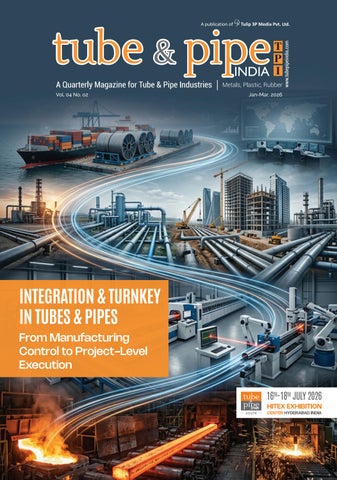
• Latest industry news and trends
• Comprehensive feature coverage
• The latest industry findings
• In-depth interviews with industry leaders
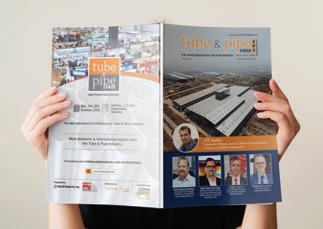
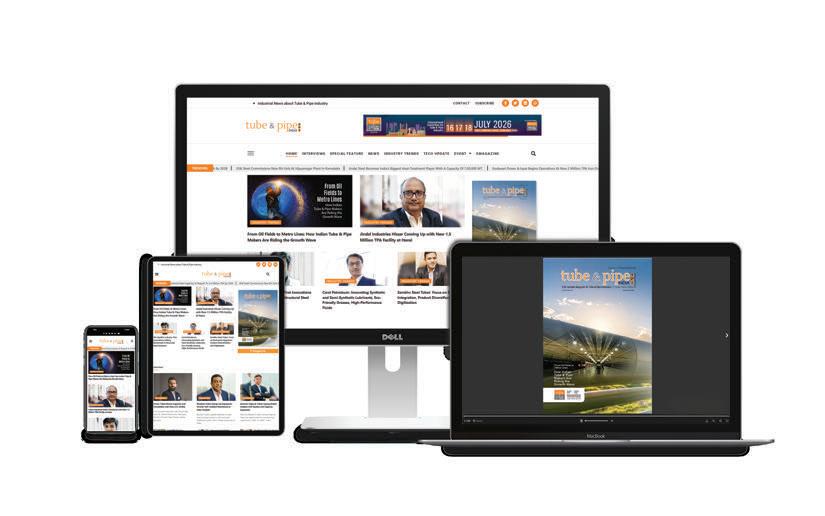
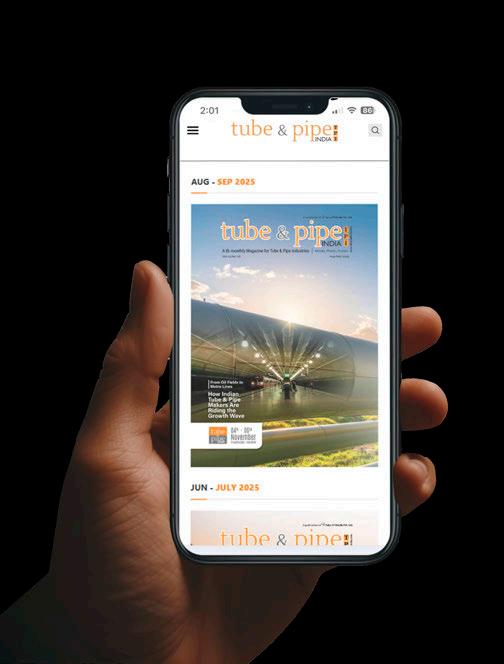
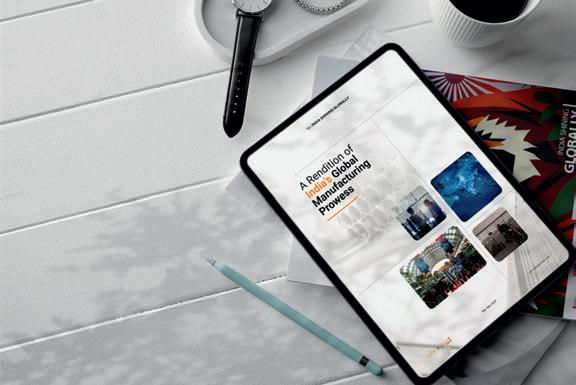
The print version of the magazine is supported by an e-magazine. The fully interactive digital edition makes it possible to read the magazine anytime and anywhere, hence delivering enhanced value for the advertisers. Each edition is posted online and all the previous editions are archived on the site

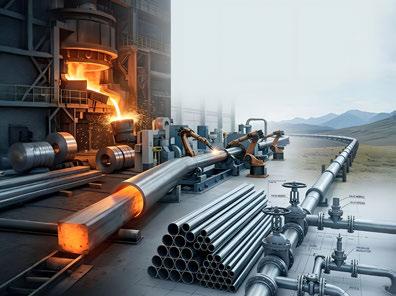












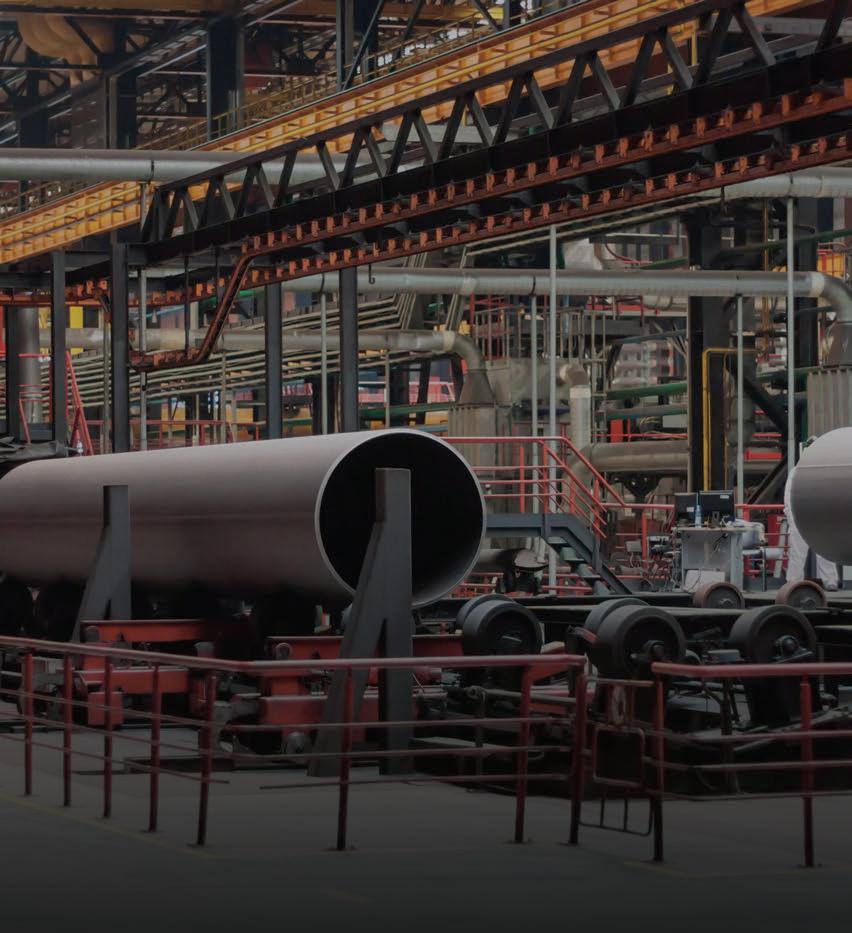
Beyond input costs and logistics, the impact may also be visible in demand timing and commercial structures, though this may not uniformly materialise across segments.

The ongoing conflict involving Iran, Israel, and the United States has introduced a fresh layer of uncertainty into global energy and trade systems. For the Indian tube and pipe industry, the relevance of such a crisis lies not in broad geopolitical narratives, but in how specific operational inputs are exposed, or insulated, from these disruptions.
To begin with, several core inputs remain largely unaffected in direct terms. Iron ore, the base raw material for steelmaking, is predominantly sourced domestically in India and does not rely on Middle Eastern supply routes. Similarly, domestic availability of steel, whether in the form of hot rolled coils, plates, or billets, remains stable due to the presence of large integrated producers such as Tata Steel, JSW Steel, and SAIL. Industrial inputs such as water, labour, and most consumables including welding electrodes are locally available and insulated from external shocks. Industrial gases, though energy-linked, are also produced domestically and do not face supply-side disruption.
Coking coal, while critical to steelmaking, is largely imported, with India dependent on imports for nearly 85–90 percent of its requirements, primarily from Australia and the Americas, with supply routes that do not intersect the conflict zone. As such, its availability remains intact, though freight and cost fluctuations may arise. Similarly, alloying elements such as nickel, chromium, and molybdenum, used in specialty tube segments, are sourced from regions outside the Middle East, limiting direct disruption to supply.
In contrast, the most immediate and significant exposure arises from energy and logistics. Crude oil and liquefied natural gas, both of which are substantially imported by India, with crude import dependence at around 85 percent and LNG exceeding 50 percent, are directly sensitive to developments in the Gulf region. Any escalation that affects the Strait of Hormuz or raises risk premiums leads to higher fuel costs. This transmits quickly into furnace operations, heat treatment, and galvanizing processes, increasing production costs. In parallel, diesel price movements impact the transportation of both raw materials and finished goods.
Logistics presents a second critical pressure point. Disruptions in key maritime routes, including the Red Sea, through which a significant share of India’s trade with Europe transits, lead to higher freight rates, longer transit times, and increased insurance costs. For an exportoriented industry, this affects delivery schedules and working capital cycles more than physical production, while also introducing delays and cost pressures in the import of capital equipment, machinery, and critical spares.
Beyond input costs and logistics, the impact may also be visible in demand timing and commercial structures, though this may not uniformly materialise across segments. In line pipes and infrastructure-linked supply, procurement decisions can see deferrals as cost visibility weakens, affecting order book clarity. EPC contractors operating under fixed-price contracts face margin pressure, prompting quicker renegotiations and tighter pricing cycles. Inventory strategies may also adjust, with some building buffers and others limiting exposure. These changes, where they occur, alter how and when demand materialises.
Taken together, the crisis does not appear to constrain the industry through material shortages. Instead, its effects are more visible in cost escalation and execution uncertainty, shifting the pressure from availability to affordability and from production capacity to delivery reliability.
More importantly, it reorders operational priorities. Cost volatility and execution uncertainty elevate the importance of delivery reliability over cost efficiency. In such conditions, operational control, contractual alignment, and supply chain coordination become critical in determining how effectively manufacturers tackle uncertainty across segments.
Priyank Jain, CEO Tulip 3P Media Private Limited


Indian tube mill manufacturers are increasingly engaging with global customers through technology-led solutions, strong project execution, and dependable aftersales support. In an exclusive interview with Tube&PipeIndia, Mr. YK Bhatia, Business Head – Tube Mill, PP Rolling Mills Mfg. Co. Pvt. Ltd. , shares how international platforms and overseas projects have helped the company benchmark against global suppliers. He discusses PPRM’s advanced tube mill offerings, expanding international presence, and how Indian engineering strengths are contributing to India’s growing credibility as a global manufacturing and solutions hub.
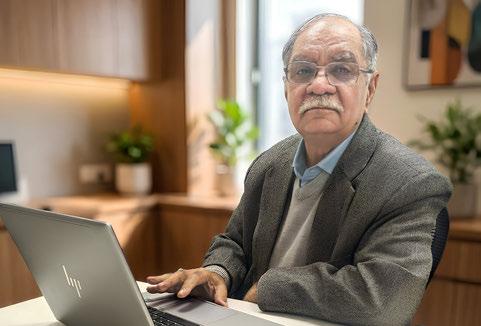
Mr. YK Bhatia
Tube & Pipe India: International industry platforms play a key role in shaping collaboration. How do such platforms help Indian manufacturers like PPRM connect with global markets and customers?
YK Bhatia: From our experience, global industry platforms provide Indian manufacturers with direct exposure to worldwide buyers. They offer valuable insights into international expectations around quality, product range, productivity, and technological standards, while also enabling manufacturers to position their capabilities before a global audience.
TPI: What technologies and solutions does PPRM highlight to demonstrate India’s manufacturing capabilities to international customers?
YKB: PPRM highlights its API tube mills with finishing
lines up to 610 mm × 20 mm, capable of producing grades up to X80. We also showcase high-productivity tube mills with quick-change systems for automotive and structural tubes, along with high-speed flying cold saws featuring advanced automation and world-class technology.
TPI: What kind of global market insights have you gained through international engagements, and how do these strengthen India’s tube and pipe manufacturing ecosystem?
YKB: Through consistent international engagement, we have attracted buyers from Europe and MENA regions as an alternate supplier offering quality and productivity comparable to European manufacturers, while providing more economical solutions suited to competitive market conditions.
“ Our ability to deliver honest, end-toend solutions aligned with international market requirements remains our strongest differentiator.”
TPI: How has India’s representation at global industry platforms evolved, and what role does PPRM play in strengthening India’s image as an engineering hub?
YKB: Over the past three decades, Indian companies have significantly increased their presence internationally. This has helped establish India as a source of world-class technology, quality manufacturing, and dependable aftersales service. PPRM’s global project execution and customer support reinforce this perception.
TPI: PPRM has executed major tube mill projects across multiple regions. How has this shaped your global project execution strategy?
YKB: PPRM has built a presence across MENA, Europe, South America, Southeast Asia, and Japan. We have established regional aftersales teams to ensure timely service and spare support. Being accessible to customers and offering complete, transparent solutions has been key to building long-term relationships globally.
TPI: What core strengths differentiate PPRM as an Indian engineering company on the global stage?
YKB: Our ability to deliver honest, end-to-end solutions aligned with international market requirements remains
our strongest differentiator. This approach allows us to compete effectively across diverse global markets.
TPI: How important is quality discipline when supplying high-value engineered products to markets such as the USA and Europe?
YKB: Supplying to these markets demands total quality at every stage—from engineering and component selection to manufacturing. Rigorous testing after assembly, supported by thorough documentation, is a standard practice in our daily operations.
TPI: How do global collaborations and partnerships contribute to PPRM’s innovation and leadership?
YKB: A world-class manufacturing setup, TPM-driven practices, and continuous improvement have helped us attract collaborations with leading global companies. Our strong technical team is a key pillar in sustaining leadership across tube and rolling mill technologies.
TPI: How is PPRM addressing sustainability and quality compliance requirements for exports?
YKB: Strong leadership across core functions, combined with continuous training and exposure to global best practices, has enabled our teams to consistently meet international quality and compliance expectations.
TPI: Which regions remain strategic growth markets for PPRM going forward?
YKB: MENA, South America, and the Indian domestic market will remain our key focus regions, supported by India as our global manufacturing base.
Hi-Tech Pipes has commenced commercial production at its Kathua greenfield facility, strengthening capacity expansion and regional market presence.
Jan 05, 2026
Hi-Tech Pipes Limited has started commercial production at its greenfield manufacturing facility in Kathua, Jammu & Kashmir, marking a key milestone in its expansion strategy. The new plant has an installed capacity of 80,000 tonnes per annum and will manufacture ERW steel pipes, coated pipes, and other value-added steel products.
Equipped with modern automation and advanced quality-control systems, the facility is designed to meet stringent customer and industry standards. Its strategic location enables efficient supply to Jammu & Kashmir, Punjab, and Himachal Pradesh, catering to demand from infrastructure, construction, water distribution, fabrication, and industrial sectors.
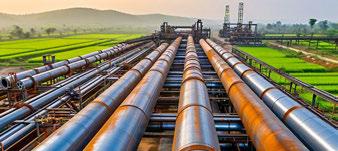
The commissioning aligns with the company’s focus on increasing the share of value-added products, supporting improved realizations and stronger EBITDA per tonne. The Kathua plant is expected to contribute meaningfully to volumes and profitability from mid-Q4 FY26 onwards, reinforcing Hi-Tech Pipes’ long-term growth roadmap.
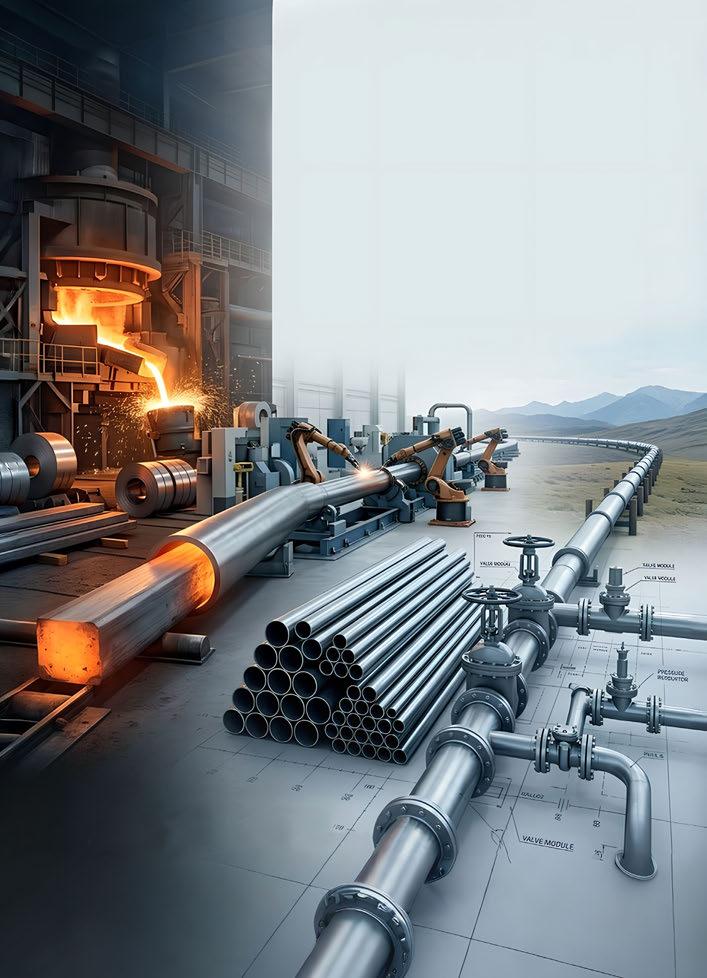
From raw material to project execution, integration in tubes and pipes take multiple forms across value chain.
Integration in the tube and pipe industry spans multiple configurations, from raw material linkage and manufacturing control to system-level supply and, in specific cases, turnkey execution. These approaches are not universal, but adopted selectively where application requirements and project structures demand greater coordination and accountability, and may see wider adoption in similar segments as such requirements evolve.
In segments of the Indian tube and pipe industry, particularly among manufacturers serving infrastructure and export-driven applications, how capabilities are being organised within firms is evident. Rather than operating as standalone product suppliers, some companies are structuring their operations to cover multiple stages of the value chain, ranging from manufacturing and processing to quality assurance and delivery. This is not uniform across the industry, nor is it a default model, but it is evident among players serving requirements where consistency, compliance, and execution responsibility extend beyond the product itself. It is within this subset of manufacturers that integrated manufacturing and end-to-end capability begin to emerge as a defining operational approach.
Integration, where it exists among Indian tube and pipe manufacturers, does not present itself as a uniform manufacturing expansion, but as a shift in how offerings are structured for specific applications. In certain cases, this takes the form of extending beyond pipe production into associated components or services, while in others it reflects tighter control over multiple stages of manufacturing to ensure consistency and compliance.
“Today, we have positioned ourselves to support our buyers with complete stainless steel piping and tubing solutions,” says Rahul Gujar, President & Business Head – SS Business, Jindal SAW Limited. A company like Jindal SAW, whose stainless steel portfolio spans seamless and welded tubes, fittings, and flanges across industries, illustrates precisely this, where the claim to complete solutions is backed by the operational depth to deliver them across multiple stages.
A similar structuring of capabilities is visible among companies such as APL Apollo Tubes, where downstream processing and application-linked offerings extend beyond basic tube production, and Welspun Corp, where integration spans plate processing, pipe manufacturing, and coating for line pipe applications.
For instance, MAN Industries (India) Limited refers to its capability in delivering “integrated, end-to-end pipeline solutions,” where pipe manufacturing is combined with coating and project-linked execution requirements. “Globally, customers increasingly look to India for turnkey pipeline solutions encompassing pipe manufacturing, coating and execution support,” explains Nikhil Mansukhani, Managing Director, MAN Industries (India) Limited. Here, integration is aligned with the expectations of large infrastructure projects, where procurement and execution are closely linked.
A different configuration is visible in Chandranchal Enterprise Pvt. Ltd., where the integration extends across product categories, including pipes, fittings, valves, and seals, positioned as a single-system offering for water infrastructure. Pawan Kumar Kejriwal, CMD, Chandranchal Enterprise Pvt. Limited, describes this approach as that of “a comprehensive, single-window solution provider for drinking water infrastructure.”
In contrast, companies such as Goodluck India Ltd. and Mangalam Worldwide Limited reflect integration primarily within manufacturing operations. Their emphasis remains on controlling multiple stages of production, across product lines and quality systems, rather than extending into system-level execution. This form of integration is less visible at the project interface but is linked to consistency in supply, adherence to standards, and repeatability across export markets.
These variations indicate that integration, where present, is not a singular model but a set of configurations shaped by application, product category, and market interface. The distinction between system-level integration and manufacturing-level integration becomes important in understanding how different companies interpret and deploy this capability.
The configurations described earlier indicate that integration, where present, takes more than one form, and the distinction between these forms is necessary to avoid treating it as a single capability. Broadly, distinct patterns are observable among the companies, including integration across raw material linkage, manufacturing processes, downstream processing, and system-level delivery.
In the seamless and high-performance segment, companies such as Maharashtra Seamless Limited reflect integration through linkage between steelmaking and pipe production, enabling control over material properties and consistency across applications. A comparable approach is visible in Ratnamani Metals & Tubes, where integration extends from tube and pipe manufacturing across material categories into downstream stages such as coating and induction bending, enabling the company to meet application-specific compliance and finishing requirements in sectors such as oil and gas and process industries.


Control over raw material and metallurgy through linkage between steelmaking and pipe production.
Multi-stage production control across forming, processing, and quality systems.
Supply of pipes along with fittings, valves, and related components for system compatibility.
Extension into execution, including coating, specifications, and project delivery coordination.
In companies such as Goodluck India Ltd. and Mangalam Worldwide Limited, integration is primarily internal to manufacturing. It involves control over multiple stages of production, product range expansion, and alignment of processing and quality systems. Goodluck India Ltd. reflects this through integrated manufacturing capabilities spanning multiple product categories, “including ERW, CDW/DOM, cylinder and hydraulic tubes, forgings, flanges, precision tubes, structural steel, and UL-certified galvanized EMT and RIGID conduits,” indicating control across a broad production and processing range. This form does not necessarily extend to project execution, but it enables consistency across batches, adherence to international standards, and flexibility in meeting varied specifications across export markets. A similar emphasis is visible in Mangalam Worldwide Limited, described as a “fully integrated stainless steel” operation, where process discipline and traceability are central to performance.
A different approach is visible in MAN Industries (India) Limited and Chandranchal Enterprise Pvt. Ltd., where integration extends beyond manufacturing into systemlevel delivery. Here, the offering includes not only the pipe but also associated components or services, such as coatings, fittings, valves, or execution-linked support, aligned with project requirements. In such cases, integration is linked to reducing interface risks and ensuring compatibility across the installed system.
These forms are not interchangeable. Manufacturing-level integration is oriented toward process control and product consistency, while system-level integration is oriented toward project execution and end-use performance, with additional variations emerging across material linkage and downstream processing. The distinction helps explain why integration appears in different configurations across companies, depending on the applications they serve and the markets they operate in.
Buyer-Side Drivers, Not Manufacturing Expansion
In the cases where integration is visible, its adoption appears linked less to internal expansion and more to the way procurement and execution are structured in certain end-use segments. In project-driven environments, particularly in oil and gas pipelines and water infrastructure, procurement is often aligned with execution timelines and performance accountability rather than with standalone product supply. This places emphasis on reducing the number of interfaces involved in delivery.
For companies such as MAN Industries (India) Limited, where engagement is closely tied to EPC contractors and large-scale infrastructure projects, the ability to offer pipes along with coating, induction bending, and in-house testing aligns with this structure. Similarly, Chandranchal Enterprise Pvt. Ltd. operates in a segment where compatibility across pipes, fittings, valves, and seals
is critical to system performance, making a consolidated offering functionally relevant.
This change in procurement preference from multiple vendors supplying individual components to fewer suppliers assuming broader responsibility creates conditions where integration becomes operationally useful. It is not a default requirement across all segments, but in cases where execution risk and delivery coordination are critical, the ability to consolidate these within a single supplier becomes a differentiating factor.
In specific project-driven contexts, integration extends beyond manufacturing and system-level supply into turnkey capability, a configuration where the manufacturer’s responsibility is no longer confined to the product but extends into the conditions of its delivery. This involves not only producing and supplying pipes or associated components, but also aligning the offering with execution requirements, such as coating, project specifications, and delivery coordination within larger infrastructure projects.
Among the companies considered, this is most explicitly articulated by MAN Industries (India) Limited, where the reference to “end-to-end pipeline solutions” indicates a scope that moves beyond manufacturing into executionlinked responsibility. Here, the relevance of turnkey capability is tied to project structures in which suppliers are expected to integrate with EPC contractors and align with overall delivery timelines and performance requirements. This transition reflects a departure in the role of the manufacturer, from supplying components to participating in the delivery framework of a project.
A related, though differently configured, form is visible in Chandranchal Enterprise Pvt. Ltd., where the supply of pipes is combined with fittings, valves, and seals as part of a consolidated system. While not described in execution terms, this configuration performs a similar function in reducing interface points and aligning supply with installation requirements.
A related configuration is observable in the ductile iron pipe segment, where companies such as Electrosteel Castings align pipe supply with fittings and system-level requirements, reflecting an approach oriented toward consolidated delivery rather than standalone product supply.
These instances indicate that turnkey capability does not emerge as a universal extension of integration, but in contexts where execution responsibility, system compatibility, and coordination across components are integral to project delivery. Where such conditions are absent, integration remains confined to manufacturing or product-level consolidation, without extending into
execution. While integration is oriented toward process control, turnkey capability extends this into execution-level accountability.
The configurations discussed indicate that integration, while visible in specific cases, does not function as a default operating model across the tube and pipe industry. Its applicability remains closely tied to the nature of enduse segments, project structures, and the scale at which companies operate. In segments where procurement is standardised and product specifications are modular, the requirement for system-level integration or turnkey capability remains limited, and standalone manufacturing continues to be a viable and widely adopted approach.
At the same time, integration introduces its own set of operational considerations. Extending across multiple stages of production or into system-level delivery requires alignment of processes, quality systems, and supply chains, often accompanied by higher capital investment and increased coordination complexity. The ability to sustain such a model depends not only on manufacturing capability but also on consistency in execution across all integrated stages.
This results in the coexistence of different operating models within the industry. While some companies structure themselves around integrated or turnkey offerings in response to specific market requirements, others continue to operate with focused product specialisation. At the same time, as project specifications in certain segments become more complex and compliance requirements in export markets continue to tighten, elements of these integrated approaches may find wider application among manufacturers operating in similar domains. The presence of both approaches indicates that integration is not a universal direction, but one of several ways in which companies align their capabilities with the demands of particular applications and markets.
In this context, integration can be understood not as an endpoint, but as a conditional strategy adopted where project requirements or market expectations justify a broader scope of capability. Its relevance, therefore, lies not in its prevalence across the industry, but in the specific contexts in which it provides operational and commercial advantage.


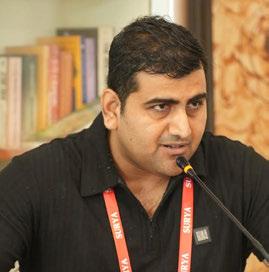
Mr. Prince Kumar Tripathi, General Manager – International Marketing, Surya Roshni Ltd.
Tube & Pipe India: What will you showcase at Tube Düsseldorf to highlight India’s technological capabilities and manufacturing excellence to a global audience?
Prince Kumar Tripathi: At Tube Düsseldorf, we will showcase our endto-end capabilities in advanced tube and pipe manufacturing, reflecting both technological depth and global competitiveness. The focus will be on high-quality ERW, HSAW, precisionengineered tubes, and value-added steel products manufactured in compliance with international standards (EN, ASTM, API, ISO, SLSI,).
As India’s tube and pipe industry steadily moves up the global value chain, Surya Roshni Limited is redefining how Indian manufacturing is perceived worldwide. In an exclusive interaction with Tube&Pipe India, Mr. Prince Kumar Tripathi, General Manager – International Marketing, Surya Roshni Limited, shares insights into India’s growing technological depth, engineering competence, and ability to deliver end-to-end, compliant, and sustainable solutions for global markets. He highlights how advanced manufacturing, automation, strong R&D, and costefficient scalability are positioning India as a reliable partner for infrastructure, energy, automotive, and precision engineering sectors. The discussion also explores evolving global expectations around quality, sustainability, and collaboration, underscoring India’s transformation from a cost-focused supplier to a trusted, technology-led manufacturing hub.
“ India’s core manufacturing strengths on the global stage lie in a unique combination of engineering depth, cost-efficient scalability, and adaptability. A strong base of skilled manpower, robust metallurgy know-how, and increasingly automated facilities enables Indian manufacturers to deliver products that meet stringent international standards while remaining globally competitive.”
We will highlight state-of-the-art manufacturing facilities, automation, stringent quality assurance systems, and strong R&D capabilities that enable consistent performance for critical applications across infrastructure, oil & gas, automotive, renewable energy, and engineering sectors.
Equally important, we will emphasize our strengths in cost-efficient production, reliable supply chains, sustainability initiatives, and customization capabilities, supported by a skilled workforce and continuous
process innovation. Together, these demonstrate India’s evolution from a cost-driven supplier to a technologyled, globally trusted manufacturing hub.
TPI: International trade fairs play a crucial role in shaping industry collaborations. How do platforms like Tube Düsseldorf help Indian manufacturers connect with global markets and customers?
PKT: Platforms like Tube Düsseldorf act as powerful gateways for Indian manufacturers to engage directly with the global steel and tube industry. They bring together buyers, OEMs, technology providers, and decisionmakers from across continents under one roof, enabling meaningful face-toface interactions that accelerate trust and collaboration.
For Indian manufacturers, such forums help showcase capabilities beyond price competitiveness— including quality consistency, compliance with international standards, innovation, and scalability. They provide valuable exposure to emerging market requirements, regulatory expectations, and technological trends, helping companies align their offerings with global demand.
Additionally, these trade fairs facilitate strategic partnerships, distributor networks, and long-term customer relationships, while offering real-time market intelligence. They help Indian manufacturers strengthen their global presence, move up the value chain, and position India as a reliable and future-ready manufacturing partner.
TPI: From your participation at Tube Düsseldorf, what key global market insights are you hoping to gain and bring back to strengthen India’s tube and pipe manufacturing ecosystem?
PKT: From our participation at Tube Düsseldorf, we aim to gain deep insights into evolving global demand patterns, especially in sectors such as energy transition, infrastructure, automotive, and precision engineering, where tube and pipe requirements are becoming more specialized and performance-driven.
“ We see Europe, the Middle East, North America, and select emerging markets in Africa and Southeast Asia as strategic growth regions, driven by investments in infrastructure modernization, energy transition, and industrial expansion.”
We are keen to understand emerging technical standards, customer expectations, and sustainability benchmarks, including low-carbon manufacturing, traceability, and digital quality systems, which are increasingly influencing global sourcing decisions. Exposure to the latest process automation, forming technologies, and value-added applications will also help identify areas for capability enhancement.
By bringing these insights back, we can support the Indian ecosystem in upgrading product portfolios, improving consistency and compliance, investing in advanced technologies, and aligning with global best practices. This will help us to move further up the value chain and strengthen India’s position as a globally competitive and future-ready hub for tube and pipe manufacturing.
TPI: Over the years, how have you seen India’s representation evolve at international trade fairs, and how do you contribute to strengthening India’s image as a global engineering hub?
PKT: Over the years, India’s representation at international trade fairs has evolved significantly— from being viewed largely as a cost-competitive supplier to being recognized as a capable, qualitydriven, and technology-oriented manufacturing base. Today, Indian exhibitors present a much stronger focus on advanced processes, compliance with global standards, automation, and value-added engineering solutions, reflecting the maturity of the ecosystem.
Our contribution to strengthening India’s image as a global engineering hub lies in consistently demonstrating reliability, transparency, and technical competence. We actively engage with global customers to showcase
world-class manufacturing practices, stringent quality systems, sustainable operations, and the ability to deliver customized solutions at scale. By sharing India’s progress in innovation, skill development, and continuous improvement, we help reinforce confidence in Indian engineering capabilities and position India as a long-term, trusted partner in the global supply chain.
TPI: What core Indian manufacturing strengths differentiate you on the global stage? For what turnkey solutions is the world looking at India?
PKT: India’s core manufacturing strengths on the global stage lie in a unique combination of engineering depth, cost-efficient scalability, and adaptability. A strong base of skilled manpower, robust metallurgy know-how, and increasingly automated facilities enables Indian manufacturers to deliver products that meet stringent international standards while remaining globally competitive.
What truly differentiates India is its ability to offer end-to-end, turnkey solutions—from design and engineering support, raw material sourcing, forming and finishing, testing and certification, to logistics and after-sales support. The world is increasingly looking at India for customized tube and pipe solutions, project-based supplies for infrastructure and energy, specialized sections, and valueadded, application-specific products delivered at scale.
Coupled with strong supplier ecosystems, digital integration, and a growing focus on sustainability and green manufacturing, India is being recognized not just as a manufacturing location, but as a comprehensive engineering and solutions partner for global industries.
“ We focus on long-term raw material partnerships, multi-source procurement, and grade optimization, ensuring consistent quality while managing volatility.”
TPI: Technology partnerships and acquisitions are critical today. How are Indo-global collaborations helping reinforce India’s engineering leadership?
PKT: Indo-global collaborations are playing a pivotal role in reinforcing India’s engineering leadership by combining global technology strengths with India’s manufacturing scale and execution capability. Through technology partnerships, joint ventures, and selective acquisitions, Indian companies are gaining access to advanced forming processes, automation, digital quality systems, and specialized application know-how, while global partners benefit from India’s cost efficiency, speed, and engineering talent.
These collaborations accelerate technology transfer, skill upgradation, and localization of high-end products, enabling Indian manufacturers to move faster up the value chain. They also help align Indian production with global standards, sustainability requirements, and customer-specific expectations, enhancing credibility in international markets.
Overall, Indo-global partnerships are transforming India from a manufacturing base into a coinnovation hub, strengthening its position as a reliable, future-ready engineering leader in the global supply chain.
TPI: Which international regions do you see as strategic growth markets, and how is India positioned as your global manufacturing base to support these expansions?
PKT: We see Europe, the Middle East, North America, and select emerging markets in Africa and Southeast Asia as strategic growth regions, driven by investments in infrastructure modernization, energy transition, and industrial expansion. Each of these regions demands high
compliance standards, consistent quality, and reliable long-term supply partnerships.
India is ideally positioned as our global manufacturing base to support these expansions. With its scale of production, competitive cost structure, strong metallurgical expertise, and compliance with international standards, India enables us to serve diverse markets efficiently from a single, integrated platform. The country’s improving logistics infrastructure, expanding port connectivity, and focus on quality, traceability, and sustainability further strengthen its role as a dependable export hub.
By leveraging India’s manufacturing strengths alongside localized market engagement in these regions, we are able to offer globally competitive, application-specific solutions while maintaining flexibility, speed, and reliability for our international customers.
TPI: How are cost pressures across raw materials, energy, or logistics being managed without compromising product reliability or compliance?
PKT: Cost pressures across raw materials, energy, and logistics are being managed through a combination of process optimization, strategic sourcing, and operational discipline, without compromising on product reliability or regulatory compliance. We focus on long-term raw material partnerships, multisource procurement, and grade optimization, ensuring consistent quality while managing volatility.
On the manufacturing side, continuous improvements in automation, yield enhancement, energy efficiency, and waste reduction help lower unit costs and improve process stability. Investments in digital quality systems and in-process controls ensure that efficiency
gains do not come at the expense of compliance with international standards.
From a logistics perspective, better planning, optimized inventory management, and route efficiencies help mitigate freight-related challenges. Overall, the approach is to drive cost competitiveness through systemic efficiency and innovation, ensuring customers continue to receive reliable, compliant, and high-performance products despite external cost pressures.
TPI: How are sustainability expectations from customers or regulators translating into changes in product design, manufacturing practices, or material choices?
PKT: Sustainability expectations from customers and regulators are increasingly shaping decisions across product design, manufacturing practices, and material selection. At the design stage, there is a clear shift toward optimized geometries, lighterweight sections, and applicationspecific grades that deliver the same or better performance with lower material intensity.
In manufacturing, this is translating into greater adoption of energyefficient equipment, process automation, waste and scrap reduction, water recycling, and higher use of renewable energy. Customers are also asking for stronger traceability, lifecycle data, and compliance with ESG and lowcarbon benchmarks, which is driving investments in digital monitoring and reporting systems.
From a material standpoint, there is growing interest in cleaner steel inputs, higher recycled content, and improved yield utilization, while still meeting stringent mechanical and safety requirements. Overall, sustainability is no longer a parallel initiative—it is becoming an integral part of how products are engineered, produced, and qualified, aligning environmental responsibility with long-term reliability and global compliance.
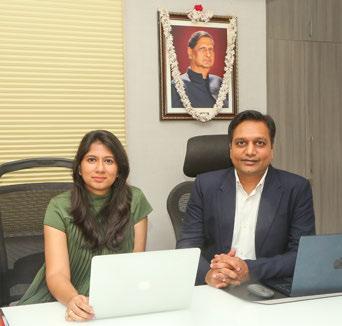
Mr. Nishant Garg and Mrs. Srishti Garg, Directors, MKK Metal Sections Pvt. Ltd.
“India’s
presence has transformed significantly. Earlier, we were largely perceived as volume suppliers. Today, Indian companies are presenting advanced manufacturing certifications, R&D capabilities, and showing strong export track records.”
India’s tube and pipe industry is undergoing a decisive shift, from being viewed primarily as a volume-driven supplier to emerging as a globally respected hub for precision engineering and compliant manufacturing. In this exclusive interview with Tube&Pipe India, Mr. Nishant Garg and Mrs. Srishti Garg, Directors, MKK Metal Sections Pvt. Ltd. , discuss how Indian manufacturers are building global credibility through advanced ERW tube solutions, stringent quality systems, and adherence to international standards. They share perspectives on export markets, sustainability expectations, technology partnerships, and value-added manufacturing, highlighting how India’s engineering talent, scalability, and process discipline are positioning the country as a reliable long-term partner for global infrastructure, mobility, and industrial applications.
Tube & Pipe India: What will you showcase at Tube Düsseldorf to highlight India’s technological capabilities and manufacturing excellence to a global audience?
Nishant Garg: At Tube Düsseldorf, we will be showcasing MKK’s high-precision ERW tubes and engineered sections under our METPRO brand, with a strong focus on structural, mechanical, and automotive-grade applications. Our portfolio includes a wide size range across round, square, and rectangular hollow sections, manufactured in grades such as IS 4923, ASTM A500, EN 10219, and other export-compliant standards.
More than product display, we want to demonstrate India’s capability in consistent quality, tight dimensional tolerances, process automation, and global certifications. Our exports to the US and Europe reflect our compliance with international standards and audit systems. We aim to position India not just as a cost-efficient source, but as a technologically competent and reliable manufacturing partner.
TPI: International trade fairs play a crucial role in shaping industry collaborations. How do platforms like Tube Düsseldorf help Indian manufacturers connect with global markets and customers?
Srishti Garg: Tube Düsseldorf is more than an exhibition, it is a convergence point for decision makers across continents. For Indian manufacturers, it provides direct access to OEMs, distributors, project consultants, and technology providers under one roof.
Such platforms accelerate trust-building. Buyers today want transparency, compliance, and long-term partnerships. Face-to-face interactions help communicate our manufacturing depth, quality systems, and scale. It also allows us to benchmark ourselves globally and identify collaboration opportunities in technology, distribution, and even co-development of specialized products.
TPI: From your participation at Tube Düsseldorf, what key global market insights are you hoping to gain and bring back to strengthen India’s tube and pipe manufacturing ecosystem?
NG: We are particularly keen to understand shifts in demand across infrastructure, renewable energy, mobility, and construction segments. Europe’s sustainability regulations, carbon reporting norms, and traceability requirements are areas where learning is critical.
We also look at automation trends, high-strength material applications, and value added processing that can enhance margins beyond commodity products. These insights help us upgrade not just our own processes but also contribute to strengthening the broader Indian ecosystem through technology adoption and best practices.
TPI: Over the years, how have you seen India’s representation evolve at international trade fairs, and how do you contribute to strengthening India’s image as a global engineering hub?
SG: India’s presence has transformed significantly. Earlier, we were largely perceived as volume suppliers. Today, Indian companies are presenting advanced manufacturing certifications, R&D capabilities, and showing strong export track records.
At MKK, we contribute by consistently aligning with global standards, maintaining export discipline, investing in quality systems, and building long-term relationships with international clients. Our objective is simple: every shipment should reinforce confidence in “Made in India” engineering.
TPI: What core Indian manufacturing strengths differentiate you on the global stage? For what turnkey solutions is the world looking at India?
NG: India’s key strengths lie in technical adaptability, engineering talent, competitive cost structures, and the ability to scale quickly. We combine process efficiency with entrepreneurial agility.
Globally, there is growing demand for integrated solutionsnot just tubes, but cut-to length, value-added fabrication, and customised section development. India is increasingly becoming a base for complete structural and engineering solutions supported by strong metallurgical expertise and quality assurance systems.
TPI: Technology partnerships and acquisitions are critical today. How are Indo-global collaborations helping reinforce India’s engineering leadership?
SG: Indo-global collaborations enable faster technology transfer, access to advanced process controls, and exposure to international compliance systems. Such partnerships accelerate learning curves and help Indian manufacturers leapfrog stages of development.
For companies like ours, collaboration is not limited to equipment procurement-it extends to quality benchmarking, joint product development, and customer integration across markets. This reinforces India’s image as a serious engineering partner rather than just a supply source.
TPI: Which international regions do you see as strategic growth markets, and how is India positioned as your global manufacturing base to support these expansions?
NG: North America, Europe, and parts of the Middle East continue to be strategic growth markets, particularly in infrastructure, renewable energy, and industrial applications.
India’s geographic advantage, skilled workforce, and strong steel ecosystem position it as an ideal global manufacturing base. With improving logistics infrastructure and policy support, Indian plants can serve global markets efficiently while maintaining compliance with regional standards.
TPI: How are cost pressures across raw materials, energy, or logistics being managed without compromising product reliability or compliance?
SG: Cost pressures are a global reality. Our approach focuses on process optimization, yield improvement, lean inventory management, and long-term supplier partnerships. Investments in automation and preventive maintenance also reduce rejections and energy wastage.
Importantly, cost management cannot come at the expense of compliance. Certifications, testing protocols, and traceability remain non-negotiable. Reliability builds brand equity, especially in export markets.
TPI: How are sustainability expectations from customers or regulators translating into changes in product design, manufacturing practices, or material choices?
NG: Sustainability is increasingly influencing procurement decisions. Customers now expect carbon transparency, responsible sourcing, and efficient material utilization.
This is driving changes in energy optimization, waste reduction, improved yield management, and adoption of higher-strength steels that reduce overall material consumption in applications. Sustainability is no longer a regulatory obligation-it is becoming a competitive differentiator.
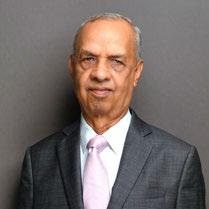
Mr. Mahesh Chandra Garg, Chairman, Goodluck India Ltd.
“ Today, Goodluck Industries is considered a preferred partner to the automobile industry and OEMs, offering precisionengineered products that meet global quality standards.”
Goodluck India Ltd. has steadily built its position as one of India’s most diversified and globally oriented tube and pipe manufacturers, backed by integrated manufacturing, a wide product range, and strong adherence to international standards. With capabilities spanning precision tubes, structural steel, forged components, and value-added solutions for demanding industries, the company reflects the broader evolution of Indian manufacturing toward quality, reliability, and technological depth. In an exclusive interaction with Tube&PipeIndia, Mr. Mahesh Chandra Garg, Chairman, Goodluck India Ltd. , shares how Goodluck is strengthening its global presence, responding to changing market and sustainability expectations, and contributing to India’s image as a trusted engineering and manufacturing partner worldwide.
Tube & Pipe India: What will you showcase at Tube Düsseldorf to highlight India’s technological capabilities and manufacturing excellence to a global audience?
Mahesh Chandra Garg: At Tube Düsseldorf, we will showcase Goodluck India Limited’s integrated manufacturing capabilities, including ERW, CDW/DOM, cylinder and hydraulic tubes, forgings, flanges, precision tubes, structural steel, and UL-certified galvanized EMT and RIGID conduits. We will highlight our advanced automation, robust quality-
control systems, consistent product reliability, and wide size range.
Our display will reflect India’s manufacturing excellence and compliance with global certifications. We will also present our ongoing expansions, positioning us among the few companies capable of producing ERW tubes up to 245 × 15 mm and CDW tubes up to 203 × 14 mm, along with our presence in forged components for defense and aerospace applications.
TPI: International trade fairs play a crucial role in shaping industry collaborations. How do platforms like Tube Düsseldorf help Indian manufacturers connect with global markets and customers?
MCG: Tube Düsseldorf helps Indian manufacturers connect directly with global customers. It allows us to understand market needs and expectations. Such platforms support building long-term and trust-based business relationships worldwide. They also strengthen India’s presence and credibility in the global steel industry.
TPI: From your participation at Tube Düsseldorf, what key global market insights are you hoping to gain and bring back to strengthen India’s tube and pipe manufacturing ecosystem?
MCG: We aim to understand new applications and evolving market needs, as well as changing international standards and the latest technological advancements in the tube industry.
As AI becomes an increasingly important part of manufacturing, we are exploring technologies related to AI, ML, and automation that can help improve product quality, reduce rejections, enhance automation, and achieve greater cost efficiency.
For this purpose, we are sending a team of five skilled engineers to explore the latest developments in the tube industry. These learnings will help strengthen India’s tube and pipe manufacturing ecosystem.
Additionally, with new environmental regulations and compliance requirements such as CBAM and Green Steel initiatives, we aim to understand and identify technologies that will help us meet the evolving demands of the European Union.
TPI: Over the years, how have you seen India’s representation evolve at international trade fairs, and how do you contribute to strengthening India’s image as a global engineering hub?
MCG: India is now recognized as a reliable and technology-driven manufacturing hub. Its image has shifted from being purely cost-focused to being quality- and capabilitydriven. At Goodluck, we support this transformation by delivering globally certified products. We also believe that companies need to consistently maintain the standards and benchmarks set by high-quality mills. We ensure consistent quality across all supplies, while timely execution and strong customer commitment remain our key strengths.
“ We always explain to our customers that reducing prices by cutting corners is not possible, as we do not compromise on quality or service.”
TPI: What core Indian manufacturing strengths differentiate you on the global stage? For what turnkey solutions is the world looking at India?
MCG: India’s key strengths include strong engineering capabilities and cost efficiency. The country also offers large-scale production with high manufacturing flexibility, making India highly competitive in global markets. Worldwide, customers increasingly look to India for complete steel tube solutions, particularly for infrastructure and construction projects. Today, Goodluck Industries is considered a preferred partner to the automobile industry and OEMs, offering precision-engineered products that meet global quality standards.
TPI: Technology partnerships and acquisitions are critical today. How are Indo-global collaborations helping reinforce India’s engineering leadership?
MCG: Such collaborations help Indian companies adopt advanced
technologies. They support improvement in quality systems and manufacturing practices. These partnerships also help meet international compliance standards. As a result, India’s engineering capabilities become stronger. They reinforce India’s position as a trusted global engineering leader not only in India but global companies having collaboration with Indian companies benefited and help them get access to a large talent pool, cost-efficient manufacturing, and scalable production capabilities.
TPI: Which international regions do you see as strategic growth markets, and how is India positioned as your global manufacturing base to support these expansions?
MCG: Goodluck has been an exporter for the last three decades and maintains a presence in more than 100 countries. We do not focus on any single market. Despite facing significant challenges due to trade wars and tariffs, we are currently focused on maintaining our traditional markets and strengthening relationships with all existing customers, especially in the current environment where the push for localization is strong.
Goodluck remains highly focused on serving its existing customers smoothly. At the same time, as our capabilities continue to grow, we are actively exploring new markets and new applications. We see Southeast Asia and Africa as strong potential growth regions, and with the proposed EU–India Free Trade Agreement, we hope to further expand our presence in the European Union.
TPI: How are cost pressures across raw materials, energy, or logistics being managed without compromising product reliability or compliance?
MCG: Cost pressures are an important part of business, and they are particularly challenging for companies like Goodluck that focus strongly on quality products. We always explain to our customers
that reducing prices by cutting corners is not possible, as we do not compromise on quality or service. Through years of hard work, we have built long-term and reliable customer relationships, and we are fortunate to have customers who support us with fair and sustainable pricing. That said, we are equally committed to supporting our customers in reducing overall costs. We continuously invest in optimizing our manufacturing processes to improve efficiency and reduce costs. Energy-efficient initiatives help us control operational expenses, while
strong supply-chain planning ensures smooth and timely execution.
TPI: How are sustainability expectations from customers or regulators translating into changes in product design, manufacturing practices, or material choices?
MCG: Sustainability expectations are one of the key challenges we are addressing across our facilities. Reducing waste is an important priority for us and a core part of how we operate. Sustainability is a key element of our long-term strategy, and our raw material suppliers are also working to reduce emissions,
helping us lower our overall carbon footprint.
We are installing solar power systems and increasing the use of green energy, which we consider our responsibility toward society and humanity. In addition, we are improving our packaging to reduce plastic usage.
Overall, reducing waste and improving efficiency continue to shape the way we operate. We focus on energy-efficient processes across our facilities and use materials in a responsible and efficient manner.
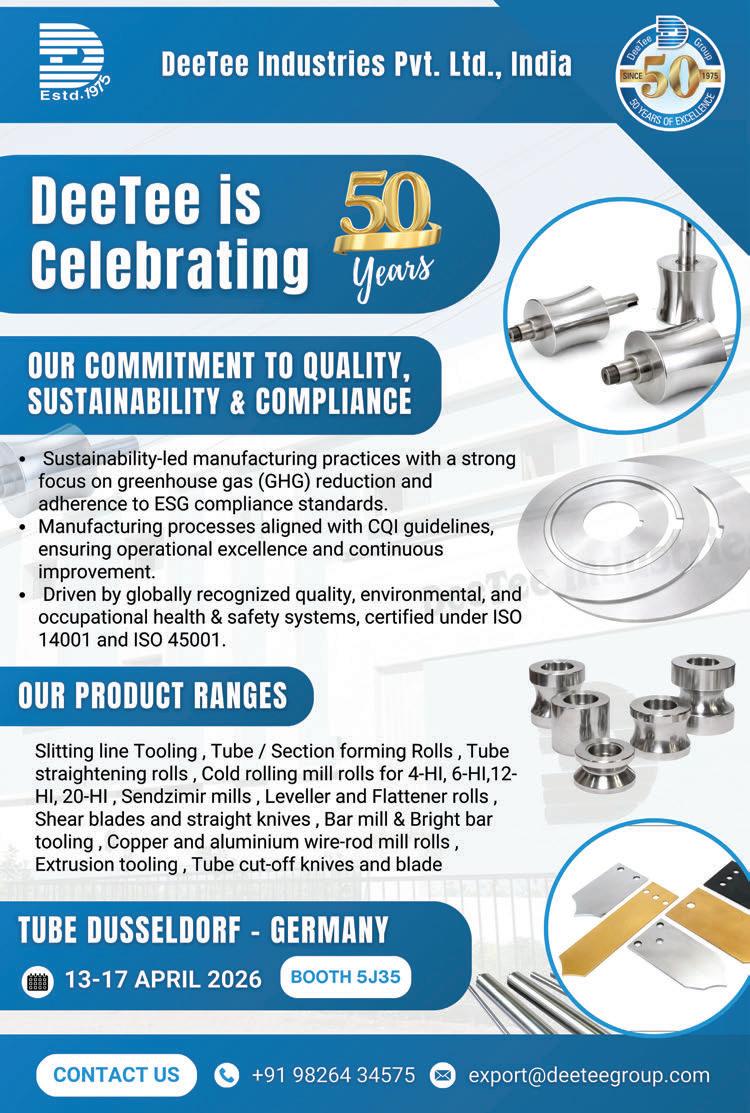
As DeeTee Industries Pvt. Ltd. celebrates 50 years of excellence, the company proudly announces its second strategic acquisition of ALFE Cutting, Spain that will further strengthen DeeTee’s global footprint, and deliver complete metal processing solutions under one unified group.
Dec 24, 2025
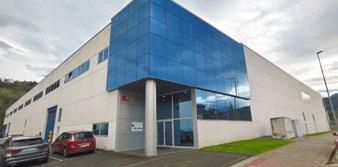
As DeeTee Industries Pvt. Ltd. celebrates 50 years of excellence, the company proudly announces its second strategic acquisition of the Golden Jubilee year—ALFE Cutting, Spain, a globally respected name with over 90 years of specialized tooling expertise.
Following the recent acquisition of COMESA
S.r.l., Italy, a world leader in leveler and flattener roll manufacturing, the addition of ALFE further strengthens DeeTee’s global footprint. Together, these acquisitions create a powerful combination of leveling, cutting, and shearing excellence, delivering complete metal processing solutions under one unified group.
ALFE Cutting: Precision by Legacy
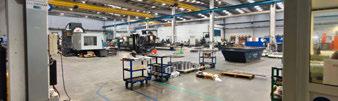
With a strong presence across Spain, Portugal, and Latin America, ALFE brings advanced capabilities in- slitter tooling, shear blades, hardened slideways, hot saw blades, press brake tooling, regrinding, revulcanization & slas tooling management software.
A Clear Advantage for Customers
• Complete Line Solutions: Seamless integration of leveling, cutting, and shearing technologies
• Advanced Materials & Technology: Access to specialized grades such as 51CrMoV4, 86CrMoV7, and more
• Single-Source Convenience: Simplified procurement backed by global expertise and European engineering standards
This second Golden Jubilee acquisition reinforces DeeTee Industries’ commitment to innovation, expansion, and long-term customer value globally.
In an exclusive interview with Tube&PipeIndia, Mr. Nikhil Mansukhani, Managing Director, MAN Industries (India) Limited , shares how the company is showcasing India’s high-technology, large-diameter pipe manufacturing capabilities for critical global infrastructure. He discusses India’s transition from cost-led manufacturing to capabilitydriven execution. MAN Industries’ strengths in delivering integrated, end-to-end pipeline solutions, and the growing importance of sustainability, energy transition, and hydrogen-ready infrastructure. The interaction also highlights the role of global platforms in market access, Indo-global technology collaborations, and how India is emerging as a reliable manufacturing base supporting energy, water, and infrastructure projects across international markets.
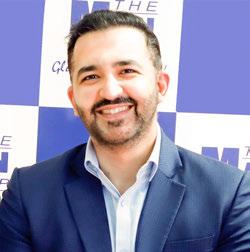
Tube & Pipe India: What will MAN Industries showcase at Tube Düsseldorf 2026 to highlight India’s technological capabilities and manufacturing excellence?
Nikhil Mansukhani: At Tube Düsseldorf 2026, MAN Industries will present India’s high-technology, globally competitive capabilities in largediameter, high-value steel pipes for oil & gas, water, hydrogen, and energy transition infrastructure. The showcase will feature advanced API-grade LSAW, HSAW, and ERW pipes, along with specialised coating solutions, all manufactured in strict adherence to international standards. Through select global project case studies, we will demonstrate India’s proven ability to deliver scale, quality, reliability, and integrated end-to-end solutions for critical infrastructure projects across global markets.
TPI: How do platforms like Tube Düsseldorf help Indian manufacturers connect with global markets and customers?
NM: Tube Düsseldorf provides Indian manufacturers with direct access to global EPC contractors, energy companies, utilities, and technology partners. It enables meaningful engagement with decision-makers, early participation in project discussions, and visibility among international procurement teams. Such platforms help Indian companies showcase technical capabilities, certifications, and execution credentials in a highly credible environment. For manufacturers like MAN Industries, it shortens market entry cycles, strengthens customer confidence, and positions India not merely as a cost-efficient supplier but as a trusted long-term partner for global infrastructure projects.
TPI: What key global market insights do you hope to gain from Tube Düsseldorf 2026?
NM: Tube Düsseldorf offers valuable insights into evolving global demand trends, especially in line pipes, hydrogen pipelines, energy
MAN Industries leverages India’s manufacturing strengths to serve diverse global markets efficiently while meeting regional compliance and delivery requirements, reinforcing India’s role in global infrastructure supply chains.
transition projects, and sustainable infrastructure. We aim to understand changing technical specifications, new material grades, advanced coating requirements, and rising ESG expectations. Equally important are insights into supply-chain realignments, regional procurement preferences, and emerging regulatory standards. These learnings will help us refine product design, invest in relevant technologies, and strengthen India’s tube and pipe manufacturing ecosystem to remain aligned with future global infrastructure needs.
TPI: How has India’s representation evolved at international trade fairs, and how do you strengthen India’s global engineering image?
NM: Over the years, India’s representation at international trade fairs has shifted from being cost focused to capability-driven. Indian manufacturers are now recognised for executing complex, large-scale global projects while meeting the highest quality and compliance standards. At MAN Industries, we contribute by consistently delivering worldclass products, maintaining strong global references, and demonstrating execution excellence. Our participation reinforces confidence in India as a dependable engineering hub capable of supporting critical infrastructure across geographies and applications.
TPI: What core Indian manufacturing strengths differentiate you globally, and what turnkey solutions is the world seeking from India?
NM: India’s key strengths lie in integrated manufacturing, skilled engineering talent, scalable capacities, and competitive cost structures. These advantages allow Indian companies to offer customised, project-specific solutions without compromising quality. Globally, customers increasingly look to India for turnkey pipeline solutions encompassing pipe manufacturing, coating and execution support. MAN Industries leverages these strengths to deliver reliable, end-to-end solutions for oil & gas, water, and energy infrastructure projects across international markets.
TPI: How are Indo-global technology partnerships reinforcing India’s engineering leadership?
NM: Indo-global collaborations play a vital role in strengthening India’s engineering leadership by enabling access to advanced technologies, automation, and best-in-class quality systems. Such partnerships help accelerate capability building in areas like high-grade steel processing, advanced coatings, and digital manufacturing. At MAN Industries, technology collaborations support continuous improvement, enhance global competitiveness, and ensure alignment with evolving international standards.
TPI: Which international regions are strategic growth markets, and how is India positioned as your global manufacturing base?
NM: Strategic growth markets include the Middle East, Europe, Africa, Asia Pacific, Latin America, Southeast Asia, Central Asia and North America, driven by investments in energy, water, and infrastructure development. India is well positioned as a global manufacturing base due to its scale, flexibility, skilled workforce, and improving logistics and policy support. MAN Industries leverages India’s manufacturing strengths to serve diverse global markets efficiently while meeting regional compliance and delivery requirements, reinforcing
India’s role in global infrastructure supply chains.
TPI: How are cost pressures managed without compromising reliability or compliance?
NM: Cost pressures arising from raw materials, energy, and logistics are managed through long-term sourcing strategies, operational efficiencies, energy optimisation, and supplychain integration. Continuous process improvement and automation help enhance productivity and control costs. At the same time, product reliability, safety, and compliance with international standards remain nonnegotiable. MAN Industries prioritises quality and performance, ensuring that cost optimisation never comes at the expense of customer trust or project integrity.
TPI: How are sustainability expectations shaping product design and manufacturing practices?
NM: Sustainability expectations from customers and regulators are increasingly influencing product design and manufacturing processes. This includes optimising material usage, reducing energy intensity, improving waste management, and adopting lower-carbon manufacturing practices. Enhanced product durability and lifecycle performance are also gaining importance. At MAN Industries, sustainability is integrated into operations and investment decisions, not only to meet regulatory requirements but also to strengthen long-term competitiveness in global markets.
MAN Industries prioritises quality and performance, ensuring that cost optimisation never comes at the expense of customer trust or project integrity.
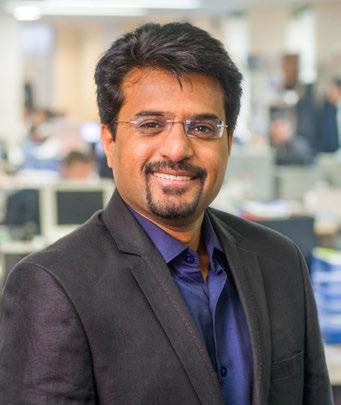
Mr. Rahul Gujar, President & Business Head – SS Business, Jindal SAW Limited
Jindal SAW Limited has emerged as one of India’s most prominent stainless steel pipe and tube manufacturers, supported by integrated operations, a wide and evolving product portfolio, and a strong commitment to quality and sustainability. With increasing global demand for advanced, highperformance tubing solutions across sectors, the company is actively strengthening its position as a reliable “Make in India” supplier to international markets. In this exclusive conversation with Tube&PipeIndia, Mr. Rahul Gujar, President & Business Head – SS Business, Jindal SAW Limited , shares insights on technological advancements, global market trends, sustainability initiatives, and how Indo-global collaborations are reinforcing India’s engineering leadership.
“ Today we have positioned ourselves to support our buyers with complete stainless steel piping and tubing solutions. We are actively working on the global market, adopting international standards, and investing in modern technologies.”
TPI: What will you showcase at Tube Düsseldorf to highlight India’s technological capabilities and manufacturing excellence to a global audience?
Rahul Gujar: Tube Dusseldorf is one of the biggest events to showcase our product line, as this event pulls the buyers and suppliers from across the globe. Our focus would be to present all the latest advancements that we have done in the pipe and tube category. We will showcase our coil tubing, high temperature tubing, special customised tubing for the energy, semiconductor, pharma, aerospace, and engineering sector. We will emphasize on advanced manufacturing technologies, stringent quality and testing standards and sustainable production practices. Our steps to produce green products and lower down the carbon emissions in the environment.
TPI: International trade fairs play a crucial role in shaping industry collaborations. How do platforms like Tube Düsseldorf help Indian manufacturers connect with global markets and customers?
RG: International trade fairs play a crucial role as it gives a platform to share our new developments and get new ideas for diversification. Many Indian manufacturers are
participating in Tube Dusseldorf for multiple years. Today we can connect with buyers in this event showcasing our Make in India offerings while meeting the stringent global standards required for critical segments and positioning us as reliable, cost effective and ideal producers in the global market. These events provide brand visibility and strengthen and build the business relationship.
TPI: From your participation at Tube Düsseldorf, what key global market insights are you hoping to gain and bring back to strengthen India’s tube and pipe manufacturing ecosystem?
RG: This event helps us to get the global market trend and understand the changing buying behaviour of our customer in context to various factors like tariff, quota, CBAM and various other compliance factors. We incorporate the ideas to adapt ourselves to these changes and strategically implement new ideas to keep the business going. The tube and pipe business is very competitive in the current scenario and we have multiple players offering similar product lines. These events help us to implement new diverse ideas so that we can stand out in the crowd and outclass the competition.
TPI: Over the years, how have you seen India’s representation evolve at international trade fairs, and how do you contribute to strengthening India’s image as a global engineering hub?
RG: Over the years, we have seen significant evolvement of Indian players from cost effective suppliers to solution providers with advanced technology and new ideas. We are the largest producers of stainless steel products in India, and would like to present India as the key supplier across the globe. Today we are working on producing sustainable products and we have done various advancements in our production units. We have incorporated solar electricity consumption shifting from the conventional use, we focus on various CSR activities. We are integrated manufacturers and we believe in supplying what we produce without any falsification that gives our customers complete assurance and reliability.
TPI: What core Indian manufacturing strengths differentiate you on the global stage? For what turnkey solutions is the world looking at India?
RG: We are the integrated manufacturers providing total piping solutions. Today we are holding one of the
“ We are the largest producers of stainless steel products in India, and would like to present India as the key supplier across the globe.”
largest product baskets and the trust that we are Make In India producers. We offer various products like- SS pipe, H&I tube, heat exchanger tube, high temperature tube, nickel alloy tube, coil tube and high purity tube with more products to be added in coming years in different segments. Today we have positioned ourselves to support our buyers with complete stainless steel piping and tubing solutions. We are actively working on the global market, adopting international standards, and investing in modern technologies. This builds the trust in our buyers and prospects, making us an established contributor to the global value chain.
TPI: Technology partnerships and acquisitions are critical today. How are Indo-global collaborations helping reinforce India’s engineering leadership?
RG: Technology partnership and acquisitions are the continuous process as we need to be available in the market as per the market requirement. Indo-global collaboration plays a pivotal role and we follow the same. We have various collaborations already done in the past and we are looking forward to new ones in coming years. These partnerships give an extra edge with mutual sharing and development.
TPI: Which international regions do you see as strategic growth markets, and how is India positioned as your global manufacturing base to support these expansions?
RG: For us, Europe, America, Middle East and Far East Asia are the strategic growth markets. We have a good presence in the global market and are looking for further penetration in different segments. Today we are supplying SS pipes and tubes in various regions, we are working on our brand visibility in all these regions and highlight the products which can now be produced as Make in India like Nickel Alloy tube, High Temperature tube, Coil tube and Hi Purity
In an exclusive interview with Tube&Pipe India, Mr. Gopakumar Varma, Senior Vice President & BU Head - Tubular Solutions, Lalbaba Engineering Limited , outlines how Lalbaba Engineering is helping reposition India as a technology-led, globally trusted engineering partner. He highlights the company’s vertically integrated capabilities in cold-finished seamless tubes, focus on high-precision and safety-critical applications, and evolution from cost competitiveness to qualityand process-driven manufacturing. The conversation also explores India’s growing role in turnkey engineering solutions, Indo-global technology collaborations, expanding international market presence, and sustainable manufacturing practices.
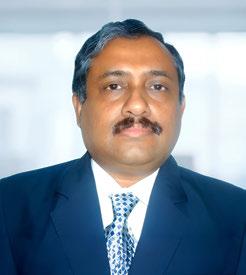
Mr. Gopakumar Varma, Senior Vice President & BU Head - Tubular Solutions, Lalbaba Engineering Ltd.
Tube & Pipe India: What will you showcase at Tube Düsseldorf to highlight India’s technological capabilities and manufacturing excellence to a global audience?
As India’s largest manufacturer of coldfinished seamless tubes, Lalbaba operates as a vertically integrated solution provider, controlling the entire value chain from hot preparation to final testing.
Gopakumar Varma: At Tube Düsseldorf, Lalbaba will showcase its carbon, alloy and stainless-steel tubular solutions, highlighting India’s ability to manufacture high-precision, safety-critical seamless tubes for global applications. As India’s largest manufacturer of coldfinished seamless tubes, Lalbaba operates as a vertically integrated solution provider, controlling the entire value chain from hot preparation to final testing. Our presence will thereby reflect how Indian manufacturing has evolved from capacity-driven production to technology-led, quality-focused engineering, capable of meeting stringent international standards across diverse industries like automotive, railways, energy, industrial sectors and more.
TPI: International trade fairs play a crucial role in shaping industry collaborations. How do platforms like Tube Düsseldorf help Indian manufacturers connect with global markets and customers?
GV: Platforms like Tube Düsseldorf serve as global collaboration hubs, enabling Indian manufacturers to
engage directly with international OEMs, Tier-1 suppliers, and technology partners. These forums facilitate technology exchange, co-development, and long-term strategic sourcing, helping Indian companies integrate more deeply into global supply chains. For Indian manufacturers like us, such platforms also help build credibility and trust, showcasing not just cost competitiveness but process maturity, compliance, and performance reliability, which are critical for longterm global partnerships.
TPI: From your participation at Tube Düsseldorf, what key global market insights are you hoping to gain and bring back to strengthen India’s tube and pipe manufacturing ecosystem?
GV: Our participation in Tube Dusseldorf is expected to enable us gain deeper insights into evolving global demand patterns, emerging applications, and technology trends shaping the tube and pipe industry. Against the backdrop of the India–EU FTA, a strong demand environment combined with India’s growing manufacturing and supply capabilities positions the country as a preferred sourcing destination.
These learnings will help us identify opportunities in higher value-added tubular components and sub-assemblies, where Indian manufacturers can play a vital role by offering sustainable, reliable, and cost-competitive solutions aligned with global market expectations.
TPI: Over the years, how have you seen India’s representation evolve at international trade fairs, and how do you contribute to strengthening India’s image as a global engineering hub?
GV: India’s representation at international trade fairs has evolved from being cost-focused to capabilitydriven. Today, Indian companies are recognised for engineering competence, quality systems, and adherence to global standards.
Lalbaba contributes to this shift by showcasing complex, highperformance tubular products, transparent quality processes, and
globally benchmarked manufacturing practices — reinforcing India’s position as a trusted global engineering and manufacturing hub.
TPI: What core Indian manufacturing strengths differentiate you on the global stage? For what turnkey solutions is the world looking at India?
GV: India’s key differentiation lies in its ability to combine engineering excellence with cost-
Deutsch Precision Tubes (IDPT) — Lalbaba’s joint venture with Poppe + Potthoff GmbH, Germany. Operating a state-of-the-art precision CDS tube line in Badli, Haryana, IDPT supplies fuelinjection lines, steering tubes and structural components to Tier-1 automotive OEMs.
Globally, India is being looked at for turnkey engineering solutions with end-to-end support right from design to advanced manufacturing, system integration, testing, commissioning and lifecycle services. Following this, Lalbaba has expanded into turnkey modernisation programs in the railways sector through our Rail Solutions-as-a-Service (RSaaS) model under which we deliver end-to-end solutions covering system upgrades, lifecycle support and performance assurance to meet market demand of one-stop solution.
TPI: Technology partnerships and acquisitions are critical today. How are Indo-global collaborations helping reinforce India’s engineering leadership?
GV: Indo-global collaborations play a vital role in strengthening India’s engineering game by combining global expertise with Indian ingenuity and skill. A key example is Indo Deutsch Precision Tubes (IDPT) — Lalbaba’s joint venture with Poppe + Potthoff GmbH, Germany. Operating a state-of-the-art precision CDS tube line in Badli, Haryana, IDPT supplies fuel-injection lines, steering tubes and structural components to Tier-1 automotive OEMs. This partnership enhances India’s global credibility by reducing import dependence & delivering world-class automotive tubular solutions manufactured in India.
TPI: Which international regions do you see as strategic growth markets, and how is India positioned as your global manufacturing base to support these expansions?
effective innovation. At Lalbaba, we have established this through our continuous cold drawing process, which as compared to conventional cold drawing, integrates the complete cold-drawn seamless (CDS) tube manufacturing lifecycle into a single, streamlined flow. This process is our key USP that results in tighter dimensional tolerances, superior material characteristics and application-specific performance across automotive, railways, energy, and industrial engineering in faster cycle times.
GV: Lalbaba has established a strong and growing presence across Europe as well as North and South America, which continue to be key strategic markets for us. With recent approvals from KNPC, KOC, and ADNOC, we have further strengthened our footprint in the Middle East. In parallel, Australia represents an important growth market, particularly for mining-focused solutions, and forms a core part of our long-term global expansion strategy.
India serves as our global manufacturing and engineering base,
supported by four manufacturing facilities including Indo Deutsch Precision Tubes (IDPT), a state-ofthe-art R&D centre, NABL-accredited in-house laboratories and a dedicated Learning & Development centre. Backed by a workforce of over 2,000 skilled professionals, this ecosystem enables us to support diverse international markets with consistent quality, scalable capacity, and competitive lead times.
TPI: How are cost pressures across raw materials, energy, or logistics being managed without compromising product reliability or compliance?
GV: Lalbaba’s integrated manufacturing model allows tighter control over inputs, energy
use, and production planning so that cost pressures are addressed rather than compromising on quality. With our initiatives of “ Manufacturing Excellence (TPM/Lean Manufacturing)”, we are confident of improving the operational efficiency and bringing down the cost and delivering a superior quality product in a sustainable manner.
TPI: How are sustainability expectations from customers or regulators translating into changes in manufacturing practices or material choices?
GV: Sustainability is now integral to manufacturing practices-and rightly so. In fact, in our manufacturing approach at Lalbaba, we view sustainability not just as a regulatory
expectation but also as a significant way for the company as well to optimise energy efficiency, waste reduction and responsible sourcing. That’s why at our 7,00,000 sq. ft. Haldia facility, a 2.5 MW rooftop solar PV system has been installed, contributing significantly to our power requirements. By eliminating fossil fuel combustion, this results in zero direct emissions, no soot, and no smoke, while creating a cleaner and safer workplace. In addition, we operate a zero-liquid-discharge effluent treatment plant, where all process chemicals are treated and recycled. This ensures responsible water management and regulatory compliance, while continuing to support high-performance manufacturing.
A 26% green steel mandate in government procurement could unlock up to 16 million tonnes per annum (MTPA) of demand from public projects alone by FY30.
Feb 27, 2026
A 26% green steel mandate in government procurement could unlock up to 16 million tonnes per annum (MTPA) of demand from public projects alone by FY30, according to a report by CII–Green Business Centre, supported by Climate Catalyst.
The findings underscore that Indian steel producers are technically prepared and commercially willing to supply certified low-carbon steel at scale, provided demand is visible and supported by transparent costrecovery mechanisms. On the demand side, public agencies already procure steel at volumes sufficient to anchor a national green steel market.
India’s public procurement, valued at approximately INR 45-50 lakh crore (approx. USD 600 billion) annually, or nearly one-fifth of GDP. In FY 2024, governmentlinked infrastructure projects accounted for 22% of the country’s total steel demand, equal to 30.6 million tonnes of steel. This generated approximately 78 million tonnes of CO2 emissions, roughly equivalent to 21% of India’s total steel-sector emission.
Given the scale of steel consumption and emissions concentrated within public infrastructure, strategic adoption of Green Public Procurement (GPP) for steel could thus create India’s first credible, large-scale
demand signal for low-carbon steel and substantially accelerate the industrial transition already underway.
The projects analysed that introducing green steel into government procurement from FY 2028 is estimated to increase overall project costs by 0.2-1.2%, suggesting that the associated price premium is marginal. In contrast, the emissions reductions achieved are substantial, making green public procurement a highimpact and cost-effective lever for aligning India’s steel sector with global climate commitments.
The analysis draws on in-depth interviews and primary data from 28 steel producers representing 88 MTPA of crude steel capacity, or roughly 60% of India’s current national output. On the demand side, the study incorporates perspectives from 12 of India’s largest public buyers of steel.

Director,
As global supply chains look beyond traditional sourcing hubs, Indian tube and pipe manufacturers are gaining sharper visibility on the world stage. In an exclusive interaction with Tube&PipeIndia, Mr. Danish Chakarwarty, Managing Director, Ferron Tubes Pvt. Ltd. , explains how the company is using international platforms to highlight India’s precision manufacturing strengths, move conversations beyond pricing, and build long-term credibility through consistency, flexibility, and a partnership-led approach to global customers. He also shares why mature markets such as North America and the European Union remain critical for specialised applications, with India well positioned as both an intermediate processing hub and a final manufacturing base.
Tube & Pipe India: What will you showcase at Tube Düsseldorf to highlight India’s capabilities?
Danish Chakarwarty: At Tube Düsseldorf, Ferron Tubes will showcase India’s growing strength in precision manufacturing, faster development cycles, and dependable supply. Our focus is on volume flexibility, quicker sampling, and maintaining consistency once a product is approved.
At Ferron, we often support customer trials by producing full production quantities even when the short-term economics do not work. This approach has helped us build long-term trust and reflects how we see manufacturing- as a partnership, not just a transaction.
TPI: How do platforms like Tube Düsseldorf help Indian manufacturers connect globally?
DC: Platforms like Tube Düsseldorf help Indian manufacturers, including Ferron Tubes, move beyond price-based conversations. They allow direct engagement with global customers on quality, performance, and delivery reliability.
For Ferron, it is an important platform for customer
acquisition, but equally for brand positioning, showing that Indian manufacturers are ready to support global supply chains in a consistent and professional manner.
TPI: What key global insights are you hoping to gain from Tube Düsseldorf?
DC: Global exhibitions help identify where India still needs to improve, especially in advanced alloy grades, highstrength applications, and R&D depth, where countries like Japan and parts of Europe remain ahead.
“At Ferron, we often support customer trials by producing full production quantities even when the short-term economics do not work. This approach has helped us build long-term trust and reflects how we see manufacturing - as a partnership, not just a transaction.”
For Ferron, these insights are important to benchmark ourselves realistically, understand customer expectations better, and focus our investments in areas that will strengthen our long-term export capabilities.
TPI: How has India’s representation evolved at international trade fairs?
DC: India’s presence at global trade fairs has become more focused and confident, with manufacturers participating with clearer export goals and defined product segments.
At Ferron, we contribute to this evolution by focusing on meeting commitments, supporting customer development cycles, and ensuring consistency across orders. We believe this is what steadily strengthens India’s image as a global engineering hub.
TPI: Which international regions do you see as strategic growth markets?
DC: India remains Ferron’s primary market and
“ India’s presence at global trade fairs has become more focused and confident, with manufacturers participating with clearer export goals and defined product segments.”
manufacturing base. At the same time, Africa and the Middle East offer strong long-term growth opportunities driven by industrialisation and infrastructure development. Alongside these, mature markets such as North America and the European Union continue to be important, especially for specialised and precision applications. India is well positioned to support all these regions as both an intermediate processing hub and a final manufacturing base.
Sambhv Steel is developing a greenfield project at Kesda and Kuthrel Unit–II. Under the brownfield expansion, the company has increased its galvanized capacity to 1,16,000 TPA. The company is progressing to doubling the stainless steel CR capacity from 58,000 tons per annum to 1,16,000 per annum.
Feb 02, 2026
Sambhv Steel is developing a greenfield project at its Kesda and Kuthrel Unit–II sites. The company has received environmental clearance from the Ministry of Environment and Forests (MoEF), New Delhi, and project execution has commenced, with significant progress achieved within just two months of breaking ground.
Under its brownfield expansion program, Sambhv Steel has increased both its pre-galvanised (GP) and galvanised production capacities. Earlier, the capacity stood at 1,00,000 tonnes per annum (TPA), which has now been ramped up to 1,16,000 TPA. To support this expansion, the company has commissioned an additional wider-width cold rolling (CR) coil mill.
The company is also progressing towards doubling its stainless steel CR capacity from 58,000 TPA to 1,16,000 TPA, for which the Consent to Establish (CTE) has already been received.
In addition, Sambhv Steel has executed four MOUs to commence stainless steel pipes manufacturing under a co-branding model, with several more MOUs currently under discussion. The co-branded stainless steel pipes are already being sold in Raipur, Gwalior, Sambalpur, and Jamshedpur. Four more MOUs were signed in January, taking the committed volumes to around 700–1,000 tonnes. Going forward, the company plans to scale this up to around 2,500 tonnes.
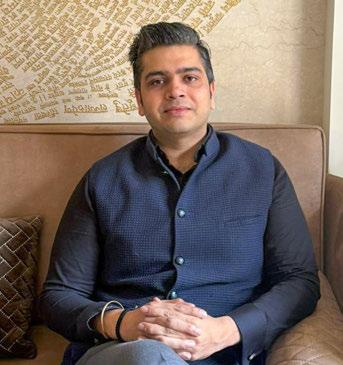
Tube & Pipe India: What will you showcase at Tube Düsseldorf to highlight India’s technological capabilities and manufacturing excellence to a global audience?
Kavish Aggarwal: At Tube Düsseldorf 2026, Vishal Pipes will present a comprehensive portfolio of high-performance ERW steel pipes, galvanized steel pipes, hollow sections, and value-engineered structural solutions manufactured under advanced automated production systems. Our showcase will emphasize high-speed precision mills with stringent dimensional control, advanced galvanizing and surface treatment technologies, robust in-house quality testing aligned with ASTM, EN, and international standards, and large-scale production capability with consistent batch reliability. We aim to demonstrate that India is no longer just a volume-driven supplier but a technology-driven manufacturing hub capable of delivering globally compliant, precision-engineered steel solutions at scale.
In an exclusive interaction with Tube&Pipe India, Mr. Kavish Aggarwal, Director, Vishal Pipes Ltd. , shares insights into the company’s technology-driven manufacturing strategy, expanding global footprint, and evolving role in the international steel tubes and pipes market. He discusses how Indian manufacturers are transitioning from cost-focused suppliers to globally trusted engineering partners, supported by automation, stringent quality standards, and scalable production capabilities. Mr. Aggarwal also highlights the importance of global industry platforms, emerging market opportunities, sustainability initiatives, and strategic collaborations that are strengthening India’s position in advanced steel manufacturing and enabling companies like Vishal Pipes Limited to deliver globally compliant solutions across diverse infrastructure and industrial sectors.
“ Our strategy includes long-term procurement planning, process automation and energy optimization, lean manufacturing systems, supply chain diversification, and continuous productivity benchmarking.”
Mr. Kavish Aggarwal, Director, Vishal Pipes Ltd.
TPI: How do platforms like Tube Düsseldorf help Indian manufacturers connect with global markets and customers?
KA: Tube Düsseldorf is the most influential convergence point for the global tube and pipe ecosystem. It enables strategic engagement with OEMs, EPC contractors, infrastructure developers, distributors, and technology partners from across continents. For Vishal Pipes Ltd., this platform facilitates long-term export partnerships, strengthens brand positioning in regulated markets, enables direct understanding of regional compliance and certification requirements, and opens avenues for technology exchange and strategic collaboration. Such platforms accelerate India’s integration into advanced global supply chains.
TPI: What key global market insights are you hoping to gain?
KA: Our focus areas include steel requirements for
renewable energy and green infrastructure, hydrogenready and corrosion-resistant pipe technologies, advanced coating and longevity enhancement solutions, and ESG compliance frameworks shaping procurement decisions. These insights will directly influence our technology upgrades, product innovation roadmap, and sustainable manufacturing strategy.
TPI: How has India’s representation evolved at international trade fairs?
KA: India’s presence has transformed remarkably over the past decade. The narrative has shifted from “cost competitiveness” to “engineering credibility.” Today, Indian manufacturers demonstrate automation-driven production, international certifications and traceability systems, strong export discipline, and the capability to deliver complex, customized solutions. At Vishal Pipes Ltd., we contribute to this evolution through continuous capital investment, process optimization, and adherence to global compliance frameworks. Our objective is to reinforce India’s image as a dependable, innovation-driven engineering powerhouse.
TPI: What core Indian manufacturing strengths differentiate you globally? For what turnkey solutions is the world looking at India?
KA: India’s competitive advantage lies in an integrated steel ecosystem and raw material accessibility, a skilled engineering workforce, scalable manufacturing infrastructure, agility in customization and shorter lead cycles, and a competitive cost-to-performance ratio. Globally, India is increasingly trusted for turnkey solutions in infrastructure and urban development, renewable energy structures, water transmission systems, structural steel applications, and oil & gas support applications. Vishal Pipes Ltd. combines these strengths with disciplined quality assurance to deliver globally benchmarked solutions.
TPI: How are Indo-global collaborations reinforcing India’s engineering leadership?
KA: Strategic partnerships and technology collaborations are accelerating India’s technological maturity. Through knowledge exchange, advanced process integration, and equipment modernization, Indian manufacturers
are narrowing the technology gap with established global players. These collaborations enable improved metallurgical performance, enhanced corrosion protection technologies, automated inspection systems, and greater production efficiency. This synergy strengthens India’s global engineering leadership while preserving cost competitiveness.
TPI: Which regions are strategic growth markets, and how is India positioned as your global base?
KA: We identify Europe, the Middle East, Africa, and North America as strategic expansion markets driven by infrastructure investment, renewable energy projects, and industrial modernization. India remains our central manufacturing base due to competitive production economics, strong port connectivity, a mature supplier ecosystem, and government support for manufacturing exports. From India, we can efficiently serve diversified global markets while maintaining quality consistency and supply reliability.
TPI: How are cost pressures being managed?
KA: In a volatile global environment marked by fluctuating raw material prices and energy costs, we focus on structural efficiency rather than reactive cost cutting. Our strategy includes long-term procurement planning, process automation and energy optimization, lean manufacturing systems, supply chain diversification, and continuous productivity benchmarking. Cost control is never allowed to compromise compliance, durability, or performance standards.
TPI: How are sustainability expectations influencing manufacturing practices?
KA: Sustainability is now integral to strategic planning. At Vishal Pipes Ltd., we are advancing energy-efficient production systems, waste heat recovery initiatives, optimized galvanizing processes to reduce material loss, water recycling and responsible resource management, and exploration of low-carbon steel sourcing. We align our operations with emerging ESG benchmarks while ensuring product reliability and lifecycle performance.
PPRM’s tube mill at Jagdamba Steel Tube Mill, Nepal, is operating smoothly with an annual production capacity of 72,000 tonnes.
Jan 22, 2026
PPRM has successfully installed Tube Mill 127 at Jagdamba Steel Tube Mill in Nepal, with the facility now running steadily and meeting performance expectations.
The mill is designed to produce round tubes from 21.3 mm to 127 mm, square sections from 19×19 mm to 100×100 mm, and rectangular sections from 20×30 mm to 122×61 mm, with an annual production capacity of 72,000 tonnes.

The installation underscores PPRM’s engineering capability in delivering reliable, high-performance tube manufacturing solutions.
Mr. Aaradhya Baheti, Managing Director, DeeTee Industries Pvt. Ltd.
Tube & Pipe India: What will you showcase at Tube Düsseldorf to highlight India’s technological capabilities and manufacturing excellence to a global audience?
Aaradhya Baheti: At Tube Düsseldorf, we are showcasing precision-engineered tube and pipe solutions manufactured under globally aligned quality systems. Our focus is on advanced and accurate forming, tight dimensional control, and application-specific customization, supported by ISO 9001, ISO 14001, and CQI-aligned process controls. This demonstrates India’s capability to deliver highreliability and cost effective products for demanding global applications.
TPI: International trade fairs play a crucial role in shaping industry collaborations. How do platforms like Tube Düsseldorf help Indian manufacturers connect with global markets and customers?
DeeTee Industries is positioning itself as a capability-driven global manufacturing partner from India. The company focuses on precision-engineered tube and pipe solutions, supported by advanced forming, and globally aligned quality systems. With an integrated approach covering design support, tooling, production, and quality assurance, DeeTee Industries delivers application-specific, highreliability products for global customers. In an exclusive conversation with Tube&PipeIndia, Mr. Aaradhya Baheti, Managing Director, DeeTee Industries Pvt. Ltd. , shares continued investments in process optimisation, skilled manpower, and sustainability initiatives that are strengthening DeeTee Industries’ competitiveness and long-term role in international value chains.
AB: Platforms like Tube Düsseldorf are critical bridges between Indian manufacturers and global customers. They allow direct engagement with OEMs, system integrators, and technology partners in a highly technical environment. For Indian companies, such fairs help to build credibility, understand evolving customer expectations, and align offerings with global benchmarks. They also open doors to long-term partnerships rather than transactional relationships, positioning Indian manufacturers as strategic suppliers in global value chains.
TPI: From your participation at Tube Düsseldorf, what key global market insights are you hoping to gain and bring back to strengthen India’s tube and pipe manufacturing ecosystem?
AB: We are looking to understand emerging application requirements, material innovations, and evolving customer expectations around quality,
traceability, and sustainability. These insights help us align our manufacturing roadmap with future global demand and strengthen India’s tube and pipe ecosystem.
TPI: Over the years, how have you seen India’s representation evolve at international trade fairs, and how do you contribute to strengthening India’s image as a global engineering hub?
AB: India’s presence has shifted from being cost-driven to capability- and credibility-driven. Today, Indian manufacturers are evaluated on engineering depth, consistency, and governance standards. We contribute by investing in advanced processes, skilled manpower, and globally aligned quality systems.
TPI: What core Indian manufacturing strengths differentiate you on the global stage? For what turnkey solutions is the world looking at India?
AB: India’s key strengths lie in engineering adaptability, skilled manpower, scalable manufacturing, and cost-efficient innovation. Globally, customers look to India for turnkey solutions that combine design support, tooling, production, and quality assurance under one roof. India excels where customization, complexity, and speed-to-market are equally important.
TPI: Technology partnerships and acquisitions are critical today. How are Indo-global collaborations helping reinforce India’s engineering leadership?
AB: Indo-global collaborations play a vital role in accelerating technology transfer and capability building. Partnerships with European and global firms help Indian manufacturers adopt advanced processes, automation, and quality systems faster. At the same time, India contributes manufacturing agility and scalability. This two-way collaboration strengthens India’s position as a global engineering partner rather than just a production location.
TPI: Which international regions do you see as strategic growth markets, and how is India positioned as your global manufacturing base to support these expansions?
AB: Europe, North America, and select Asian markets remain strategic growth regions due to their focus on high-quality and compliant products. India is well-positioned as a global manufacturing base because of its improving infrastructure, strong supplier ecosystem, and policy support for manufacturing. From India, we can efficiently serve global markets while maintaining consistency, flexibility, and competitiveness.
TPI: How are cost pressures across raw materials, energy, or logistics being managed without compromising product reliability or compliance?
AB: Cost pressures are being managed through process optimization, waste reduction, long-term supplier partnerships, and energy-efficient manufacturing practices. Digital planning and better demand forecasting also help reduce volatility. Importantly, cost optimization is never allowed to compromise product reliability, safety, or compliance— these remain non-negotiable for global customers.
TPI: How are sustainability expectations from customers or regulators translating into changes in product design,
“ Globally, customers look to India for turnkey solutions that combine design support, tooling, production, and quality assurance under one roof. India excels where customization, complexity, and speedto-market are equally important.”
manufacturing practices, or material choices?
AB: Sustainability expectations are increasingly influencing every stage of manufacturing. We are seeing a shift toward material efficiency, recyclable inputs, energy-efficient processes, and lower-emission operations. Customers are also demanding transparency and compliance with environmental standards. These expectations are driving Indian manufacturers to integrate sustainability not as a compliance requirement, but as a core part of long-term competitiveness.
Greenfield additions, debottlenecking and modernisation to drive the next phase of growth. Jan 23, 2026
APL Apollo Tubes Limited is in the midst of a major capacity expansion programme aimed at scaling its manufacturing capacity to 10 million tonnes by FY30, strengthening its position in the structural steel tube market.
The company’s expansion roadmap includes five greenfield manufacturing facilities at Gorakhpur (200,000 tonnes), Siliguri (300,000 tonnes), Bhuj (300,000 tonnes), New Malur (600,000 tonnes) and Raipur (600,000 tonnes). These projects are expected to contribute a combined additional capacity of 2 million tonnes.


Alongside greenfield expansion, APL Apollo is adding 1 million tonnes through debottlenecking and undertaking plant modernisation initiatives. This includes replacing conventional mills with faster and more efficient equipment to improve throughput and productivity. A detailed execution plan for these initiatives is expected to be outlined within the next year.
Tube & Pipe India: What will you showcase at Tube Düsseldorf to highlight India’s technological capabilities and manufacturing excellence to a global audience?
Jigar Parikh: At Tube Düsseldorf, Arvind Anticor will showcase advanced tube and pipe solutions that demonstrate India’s growing capabilities in precision engineering, automation, and value-added manufacturing. Our focus will be on high-performance products, process innovations, and digitally enabled manufacturing practices that meet stringent global standards. The objective is to highlight India’s ability to deliver not only cost-competitive solutions but also technologically sophisticated and reliable products for diverse global applications.
TPI: International trade fairs play a crucial role in shaping industry collaborations. How do platforms like Tube Düsseldorf help Indian manufacturers connect with global markets and customers?
As global customers demand higher reliability, traceability, and lifecycle performance, India’s tube and pipe industry is recalibrating its value proposition. In this interaction with Tube&Pipe India, Mr. Jigar Parikh, CEO, Arvind Anticor Ltd. , outlines how technology adoption, digital manufacturing, and sustainabilityled engineering are reshaping India’s role in global supply chains. He highlights the growing importance of automation, predictive maintenance, and advanced material solutions in meeting stringent international benchmarks.
Mr. Jigar Parikh, CEO, Arvind Anticor Ltd.
“Digital tools and predictive maintenance systems help reduce variability while ensuring compliance with international standards.”
JP: Platforms like Tube Düsseldorf provide Indian manufacturers with direct access to global customers, technology leaders, and decision-makers under one roof. These forums enable meaningful technical discussions, faster trust-building, and real-time understanding of customer expectations. For Indian companies, such platforms help accelerate market entry, establish long-term partnerships, and position India as a dependable global supply partner.
TPI: From your participation at Tube Düsseldorf, what key global market insights are you hoping to gain and bring back to strengthen India’s tube and pipe manufacturing ecosystem?
JP: We are keen to gain insights into evolving global demand patterns, emerging material technologies, sustainability benchmarks, and automation trends. Understanding customer expectations around traceability, compliance, and lifecycle performance will help us further align India’s manufacturing ecosystem with future global requirements and strengthen our competitiveness.
TPI: Over the years, how have you seen India’s representation evolve at international trade fairs, and how do you contribute to strengthening India’s image as a global engineering hub?
JP: India’s presence at international trade fairs has evolved from being largely cost-focused to becoming technology- and solution-driven. Indian companies today present complex, high-value products with confidence and durability. Arvind Anticor contributed to this evolution by consistently investing in quality systems, R&D, certifications, and customer-centric engineering, reinforcing India’s reputation as a reliable global engineering hub.
TPI: What core Indian manufacturing strengths differentiate you on the global stage? For what turnkey solutions is the world looking at India?
JP: India’s key strengths lie in engineering depth, skilled manpower, flexible manufacturing, and the ability to scale efficiently. Arvind Anticor actively contributed to this shift by investing in R&D, adopting global certifications, and delivering technically complex products that meet or exceed international benchmarks, particularly in sectors such as infrastructure, energy, automotive, and industrial applications. This reinforces India’s image as a dependable global engineering hub with long-term manufacturing credibility.
TPI: Technology partnerships and acquisitions are critical today. How are Indo-global collaborations helping reinforce India’s engineering leadership?
JP: Indo-global collaborations enable faster technology absorption, access to advanced processes, and exposure to global best practices. Customers are increasingly looking to India for turnkey solutions spanning precision tubes, customised profiles, fabrication-ready components, and end-to-end project support. These partnerships help Indian manufacturers move up the value chain, reduce

“ Customers are increasingly looking to India for turnkey solutions spanning precision tubes, customised profiles, fabrication-ready components, and endto-end project support.”
development cycles, and co-create solutions tailored to global markets, thereby reinforcing India’s engineering leadership.
TPI: Which international regions do you see as strategic growth markets, and how is India positioned as your global manufacturing base to support these expansions?
JP: Regions such as Europe, the Middle East, Southeast Asia, and North America present strong growth opportunities. India is well positioned as a global manufacturing base due to its robust supply chain ecosystem, improving infrastructure, and ability to deliver high-quality products at competitive costs while meeting international compliance standards.
TPI: How are cost pressures across raw materials, energy, or logistics being managed without compromising product reliability or compliance?
JP: Cost pressures are being addressed through advanced process optimisation, yield improvement initiatives, energy-efficient equipment, and data-driven production planning. Digital tools and predictive maintenance systems help reduce variability while ensuring compliance with international standards. Anticor- focus remains on delivering optimised total lifecycle cost rather than shortterm price advantages.
TPI: How are sustainability expectations from customers or regulators translating into changes in product design, manufacturing practices, or material choices?
JP: Sustainability expectations are driving fundamental changes in product engineering and manufacturing strategy. This includes lightweight design optimisation, increased use of recyclable and low-carbon materials, energy-efficient processes, and measurable emissions reduction initiatives. Anticor- view sustainability as a core driver of innovation and long-term competitiveness rather than a regulatory obligation.
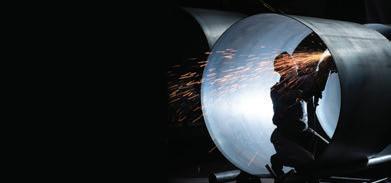
As global demand rises for precise, reliable and cost-effective tube solutions, Indian manufacturers are strengthening their engineering capabilities. Accrete Electromech is positioning itself as a strategic partner across tubular components, sheet metal parts and fabricated assemblies, combining advanced processing technologies with scalable manufacturing. In an exclusive interview with Tube&PipeIndia, Mr. Nikhil Modani, Director , Accrete Electromech Pvt. Ltd., shares perspectives on global market trends, evolving sustainability and cost pressures, the role of technology collaborations, and how India’s manufacturing ecosystem, backed by advanced facilities, wide material capabilities and strong export experience, is strengthening its standing as a trusted global engineering hub.
Tube & Pipe India: What will you showcase at Tube Düsseldorf to highlight India’s technological capabilities and manufacturing excellence to a global audience?
Nikhil Modani: We aim to demonstrate the depth of our engineering capabilities, strong process control, and the reliability that global customers expect from their suppliers. As a component specialist, we will showcase a flexible and comprehensive range of tube processing capabilities, spanning cutting and machining through to honing and skiving–roller burnishing. Through this portfolio, we want to highlight that we are not merely manufacturers, but a strategic, onestop solution provider for tubes, sheet metal components, and assemblies.
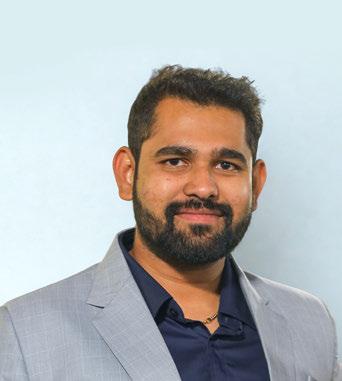
Mr.
Nikhil
Modani, Director, Accrete Electromech Pvt. Ltd.
TPI: International trade fairs play a crucial role in shaping industry collaborations. How do platforms like Tube Düsseldorf help Indian manufacturers connect with global markets and customers?
NM: Tube Düsseldorf is the largest trade fair for the tube industry in the EU and offers unmatched access to global markets and visibility. Over 70% of visitors are senior decisionmakers, while more than 40% attend specifically to identify new suppliers and customers, making interactions highly focused and outcomedriven. In addition, the forums and conferences held alongside the exhibition provide valuable opportunities to engage with key stakeholders across the global tube industry ecosystem.
TPI: From your participation at Tube Düsseldorf, what key global market insights are you hoping to gain and bring back to strengthen India’s tube and pipe manufacturing ecosystem?
NM: Energy transition to clean energy is imperative; we are hoping to understand how the global tube industry is adopting hydrogen and renewable energies in the industry. Another field of interest is AIsupported applications and robotics solutions to enable faster, leaner and more precise production processes. We want to identify key developments in the tube processing industry and gain first-hand knowledge on technological, economic and regulatory issues.
TPI: Over the years, how have you seen India’s representation evolve at international trade fairs, and how do you contribute to strengthening India’s image as a global engineering hub?
NM: We have seen increased participation from the Indian companies at international trade fairs signalling that India’s competitiveness is only growing over time. Indian companies today are presenting themselves as long-term technology and supply-chain partners.
Us being a component specialist; we showcase to the world that you can rely on India to not only source quality raw material at competitive cost but get complete solutions for engineering needs. Our deep understanding of tube processing, manufacturing excellence backed by technologically advanced facilities and customer base, which includes global customers from nine different countries help solidify our nation’s image of a global engineering hub.
TPI: What core Indian manufacturing strengths differentiate you on the global stage? For what turnkey solutions is the world looking at India?
NM: We pride ourselves as a onestop solution provider for tubular components, sheet metal parts, and fabricated assemblies. Our facilities are equipped to handle machining, forming, welding, and super-finishing of tubes. We work closely with customers as a development partner, supporting them from material selection and process optimisation
Now, with the mother of all trade deals signed in the form of the India–EU Free Trade Agreement, we are likely to see significant opportunities emerging from countries such as Germany, Italy, the Netherlands, Poland and Spain.
through to final component delivery. Our flexible and scalable manufacturing capabilities enable us to cater to a wide spectrum of requirements, ranging from highvolume production of up to 100,000 units per day to low-volume, highvalue components with annual demand of around 10,000 units. India is increasingly sought after for turnkey engineering solutions involving tube components across automotive, aerospace, oil & gas, chemical, and hydraulics industries.
TPI: Technology partnerships and acquisitions are critical today. How are Indo-global collaborations helping reinforce India’s engineering leadership?
NM: Technology collaborations help Indian companies to evolve from mere cost competitiveness to technology driven engineering powerhouses. Indian companies spend far less in R&D compared to the European counterparts, so such collaborations help bring in innovative & modern technologies to India. This elevates Indian manufacturers from just suppliers to co-developers of products & processes.
TPI: Which international regions do you see as strategic growth markets, and how is India positioned as your global manufacturing base to support these expansions?
NM: Now, with the mother of all trade deals signed in the form of the India–EU Free Trade Agreement, we are likely to see significant opportunities emerging from countries such as Germany, Italy, the Netherlands, Poland and Spain. Beyond the EU, emerging markets like Brazil are also expected to become important trading partners for India. Indian companies today operate high-quality mills with advanced NDT facilities, a wide range of material grades, and adequate capacities to cater to global requirements.
TPI: How are cost pressures across raw materials, energy, or logistics being managed without compromising product reliability or compliance?
NM: Cost pressures in the steel
We pride ourselves as a one-stop solution provider for tubular components, sheet metal parts, and fabricated assemblies. Our facilities are equipped to handle machining, forming, welding, and superfinishing of tubes.
tube industry are being addressed through technology upgrades, improved process efficiency, and tighter operational controls. Key measures include long-term raw material partnerships, yield and scrap optimisation, energyefficient operations, and logistics consolidation. In addition, with the steel tube industry growing at over 7% CAGR, increasing economies of scale are helping manufacturers partially offset cost pressures and maintain competitiveness.
TPI: How are sustainability expectations from customers or regulators translating into changes in product design, manufacturing practices, or material choices?
NM: Sustainability expectations are increasingly shaping product design and manufacturing practices across the tube industry. Manufacturers are expanding the use of renewable energy, adopting micro- and lowalloy materials to enhance strength while reducing weight, and increasing the use of recycled scrap to improve material yield. In addition, the EU’s Carbon Border Adjustment Mechanism (CBAM) is accelerating the adoption of sustainable practices by making carbon footprint monitoring and reporting a regulatory requirement.
Our deep understanding of tube processing, manufacturing excellence backed by technologically advanced facilities and customer base, which includes global customers from nine different countries help solidify our nation’s image of a global engineering hub.
Tube & Pipe India: What will you showcase at Tube Düsseldorf to highlight India’s technological capabilities and manufacturing excellence to a global audience?
Parth Shah: We have been participating in the Tube Düsseldorf trade fair since 2006, and over the years, it has become an important platform for us to demonstrate India’s growing strength in advanced tube-making technology. Each edition, we aim to present our latest developments in the most innovative and engaging manner. Since 2014, we have consistently showcased at least one live, working model to clearly demonstrate the actual operating principles of our systems. In previous editions, we have presented functional models of straightening machines, tube mills, draw benches, and pilger mill die-mandrel sets, allowing visitors to see the technology in action rather than only in theory.
This year, we will be demonstrating a high-speed tube mill roll station featuring a partially free-rotating roll design. This concept is particularly beneficial for large-diameter stainless steel tubes, where conventional single-driven rolls tend to generate excessive friction, leading to surface marking. The new roll stand design allows differential speeds between
India’s tube and pipe manufacturing sector is increasingly recognised for blending practical innovation with global engineering standards. At the heart of this transformation is a culture of “jugaad”creative problem-solving applied with engineering discipline, which allows Indian manufacturers to deliver solutions that are not only cost-effective but scalable, adaptable, and reliable. In an exclusive interview with Tube&PipeIndia, Mr. Parth Shah, Technical Director, Parth Equipment Limited, shares the company’ s strategic focus on advanced manufacturing processes, end-to-end turnkey solutions, and strong customer engagement.
Mr. Parth Shah, Technical
Director, Parth Equipment Limited
“ Indian engineers are known for developing out-of-the-box solutions that are often simple, logical, and highly economical—what is commonly referred to as jugaad, but applied with engineering discipline.”
the central driven roll and the edge guiding rolls, enabling smoother tube passage with significantly reduced friction from the edge rolls. As a result, the system delivers superior surface quality and finish—an important requirement for high-end stainless steel applications.
TPI: International trade fairs play a crucial role in shaping industry collaborations. How do platforms like Tube Düsseldorf help Indian manufacturers connect with global markets and customers?
PS: Tube Düsseldorf is one of the most prestigious trade fairs for the global tube and pipe industry. Hosted in Europe,
it serves as a truly international meeting point, attracting exhibitors and visitors from the Far East, Southeast Asia, the Middle East, Africa, Europe, and the Americas. This diverse mix of cultures, ideas, and technologies creates a unique environment for global exchange and collaboration.
Our association with Tube Düsseldorf spans over two decades. We have participated as exhibitors nine times over the past 20 years and have also attended the fair as visitors, giving us a close view of its evolution. During this period, we have clearly observed a steady rise in both the number and confidence of Indian manufacturers participating in the exhibition. Equally significant has been the shift in international perception—what was once cautious interest has transformed into strong, positive engagement with Indian technology and capabilities.
The Indian pipe and tube industry has built a solid reputation in export markets such as Europe, North America, the Middle East, and Africa, and this is distinctly reflected in the growing Indian presence at Tube Düsseldorf. Machinery manufacturers from India have benefited in the same way. In fact, some of our overseas customers were acquired directly through this platform. The exhibition provides an excellent opportunity for Indian manufacturers to engage with global customers, understand international market expectations, and stay aligned with evolving global trends.
TPI: From your participation at Tube Düsseldorf, what key global market insights are you hoping to gain and bring back to strengthen India’s tube and pipe manufacturing ecosystem?
PS: Trade fairs such as Tube Düsseldorf act as key convergence points where industrialists, technology developers, and system designers come together to define the future direction of the global tube and pipe industry. For us as technocrats, these platforms offer invaluable insight into emerging market trends, evolving customer expectations, and the technological pathways being adopted worldwide.
The exhibition provides first-hand exposure to new performance requirements, process innovations, and the approaches global players are taking to meet increasing demands for speed, quality, efficiency, and consistency. We closely study these developments and evaluate how such ideas can be adapted and integrated into our own machinery and solutions.
In the past, insights gained from Tube Düsseldorf have directly influenced enhancements in our equipment, including higher levels of automation, the introduction of intelligent control and AI-based tools, and improvements in production speed and output quality. When these advancements are transferred to our Indian customers, they contribute to measurable gains in productivity, competitiveness, and overall manufacturing capability. With the current edition as well, we look forward to gaining similar insights that can further strengthen India’s tube and pipe manufacturing ecosystem.
TPI: Over the years, how have you seen India’s representation evolve at international trade fairs, and
how do you contribute to strengthening India’s image as a global engineering hub?
PS: Over the years, India’s presence at international trade fairs such as Tube Düsseldorf has evolved significantly— both in scale and in substance. Earlier, Indian participation was relatively limited and often viewed through the lens of cost competitiveness. Today, Indian manufacturers are increasingly recognised for their engineering depth, process understanding, and ability to deliver advanced, applicationspecific solutions.
This transformation is clearly visible in the growing number of Indian exhibitors, the confidence with which they present their technologies, and the quality of interactions with global customers. International visitors now engage with Indian companies not just as suppliers, but as technology partners capable of innovation and long-term collaboration.
Our own contribution to strengthening this image has been consistent and deliberate. Through regular participation over the past two decades, we have focused on demonstrating real engineering capability—by showcasing working models, explaining design logic, and highlighting performance-driven innovations rather than only finished products. By introducing advanced concepts such as high-speed roll stations, automation-driven features, and surface-quality-focused solutions, we aim to reflect the true technological maturity of Indian engineering. Such sustained and transparent engagement helps reinforce India’s position as a reliable global engineering hub—one that combines innovation, manufacturing excellence, and a deep understanding of customer requirements across international markets.
TPI: What core Indian manufacturing strengths differentiate you on the global stage? For what turnkey solutions is the world looking at India?
PS: One of India’s strongest manufacturing advantages lies in its culture of innovation rooted in practicality. Indian engineers are known for developing out-of-the-box solutions that are often simple, logical, and highly economical— what is commonly referred to as jugaad, but applied with engineering discipline. These solutions address real production challenges efficiently and can be adapted across a wide range of manufacturing environments, making them both scalable and cost-effective.
Another key strength is India’s capability to deliver integrated, end-to-end manufacturing solutions. Unlike many global manufacturers—particularly in Europe— who specialise in a single category of machinery, Indian manufacturers often design and build multiple systems across the entire production chain. For example, we manufacture equipment ranging from coil processing to tube manufacturing and post-processing operations.
This integrated approach allows customers to source complete turnkey solutions from a single supplier, significantly reducing integration challenges, coordination efforts, and the risk of technical mismatches between machines. For global customers, especially new entrepreneurs and expanding manufacturers, this single-point responsibility is a major advantage. It is this
combination of innovation, flexibility, cost-efficiency, and turnkey capability that the world increasingly looks to India for in modern manufacturing solutions.
TPI: Technology partnerships and acquisitions are critical today. How are Indo-global collaborations helping reinforce India’s engineering leadership?
PS: Indo-global collaborations have undergone a significant transformation over the years. Earlier, many partnerships were primarily transactional in nature, often driven by cost advantages, where Indian manufacturing capabilities were leveraged mainly for economical production. Today, this dynamic has evolved into genuine technology partnerships based on shared expertise, joint development, and mutual value creation.
Modern Indo-global collaborations increasingly involve the combined application of design intelligence, engineering know-how, and manufacturing strength from both sides. Indian engineering has matured substantially, demonstrating high levels of reliability, efficiency, design capability, and execution excellence. As a result, Indian partners are no longer viewed merely as manufacturers, but as equal contributors to technology development and system innovation.
In the global marketplace, Indian engineering solutions have carved out a unique position—offering reliability comparable to established European standards while remaining competitive and flexible in cost. This balance has made Indian companies attractive partners for long-term collaboration. In addition, several Indian engineering firms have successfully pursued overseas acquisitions, further strengthening their global footprint and reinforcing India’s leadership in engineering and manufacturing on the world stage.
TPI: Which international regions do you see as strategic growth markets, and how is India positioned as your global manufacturing base to support these expansions?
PS: We see Africa and the Middle East as key strategic growth markets over the coming years. These regions are witnessing increasing investments in infrastructure, energy, construction, and industrial manufacturing, which directly drive demand for tube, pipe, and associated processing technologies.
India is well positioned to serve these markets as a global manufacturing base. Its geographical proximity to Africa and the Middle East provides a natural logistical advantage, supported by a strong maritime infrastructure along the western coast, with multiple major ports and well-developed industrial corridors. This enables efficient movement of heavy machinery and project cargo to these regions.
Beyond logistics, India’s economic momentum, political stability, and steadily improving ease of doing business add further strength to its global role. Combined with India’s cost-efficient manufacturing, engineering depth, and growing capability to deliver complete turnkey solutions, this makes India an ideal hub to support expansion into these emerging and fast-growing international markets.
TPI: How are cost pressures across raw materials, energy, or logistics being managed without compromising product reliability or compliance?
PS: Managing rising costs across raw materials, energy, and logistics requires a balanced approach that focuses on efficiency without diluting quality, reliability, or compliance. Our primary strategy is continuous improvement in manufacturing efficiency—optimising processes, reducing waste, and improving throughput across operations.
Wherever feasible, we leverage economies of scale through planned mass production, which helps stabilise input costs and improve consistency. Increased adoption of automation and CNC-based manufacturing has also played a critical role by enhancing precision, reducing dependency on manual intervention, and ensuring repeatable quality across components.
Equally important is effective material selection. By carefully evaluating material grades, sourcing strategies, and design optimisation, we ensure that performance requirements are met without unnecessary cost escalation. On the energy front, we are increasingly leveraging renewable sources such as solar power to offset rising energy costs and improve long-term sustainability. Together, these measures allow us to manage cost pressures proactively while maintaining strict adherence to global quality standards and regulatory compliance—ensuring that product reliability remains uncompromised.
TPI: How are sustainability expectations from customers or regulators translating into changes in product design, manufacturing practices, or material choices?
PS: Sustainability expectations from both customers and regulators are increasingly influencing the way machinery is designed, manufactured, and operated. Rather than being treated as a compliance requirement alone, sustainability is now an integral part of engineering decision-making.
From a product design perspective, there is a growing focus on energy-efficient systems, optimised material usage, and designs that reduce friction, waste, and rework during production. Improving process efficiency not only lowers energy consumption but also directly enhances output quality and equipment life. Customers today actively seek solutions that help them reduce operational energy costs and material losses at the shop-floor level.
On the manufacturing side, we are adopting cleaner and more efficient practices, including higher levels of automation, precision CNC machining, and renewable energy integration such as solar power. These measures help reduce emissions, improve consistency, and minimise resource wastage. Material selection has also become more deliberate, with emphasis on durability, recyclability, and long service life, ensuring that machines remain productive and compliant over extended operating cycles.
Overall, sustainability is driving smarter engineering—where efficiency, reliability, and environmental responsibility move together. These changes not only align with global regulatory frameworks but also create long-term value for customers by lowering lifecycle costs and improving operational resilience.
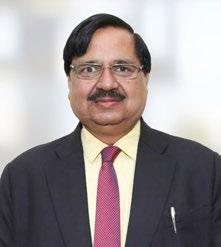
Tube & Pipe India: What will Nirmal Overseas showcase at Tube Düsseldorf 2026?
RK Aggarwal: We will be representing our Direct Forming Machine for the first time. Alongside this, we highlight our decades-long expertise in turnkey solutions for steel tube and pipe manufacturing, covering tube mill machinery, slitting lines, cut-to-length lines, and galvanizing plants.
TPI: How does participation in Tube Düsseldorf help Indian manufacturers connect with global markets and customers?
RKA: This exhibition allows us to meet global customers and partners, strengthening long-term international business relationships and brand visibility. Continuous participation ensures sustained engagement with global stakeholders.
TPI: What key insights are you hoping to gain from the fair?
RKA: We aim to understand global quality standards, emerging automation trends, sustainability technologies, and evolving customer expectations to align our solutions with international benchmarks.
TPI: How do you see India’s growing global image in the tube and pipe industry?
RKA: India is now recognised for advanced technology. Nirmal Overseas provides machines that meet global standards, supported by robust after-sales services, reflecting the country’s increasing credibility in manufacturing.
We have successfully executed numerous turnkey projects in India and abroad, including U.A.E, Syria, Sudan, Egypt, Saudi Arabia, Oman, Yemen, Kuwait, Iraq, Bangladesh, Cameroon, Rwanda, Uganda, Angola, Nigeria, and Nepal.
TPI: What core Indian manufacturing strengths differentiate you globally?
RKA: India’s strengths lie in skilled engineers, flexible designs, fast customization, and competitive turnkey solutions, allowing manufacturers like us to deliver reliable and scalable solutions worldwide.
TPI: How are international partnerships helping reinforce India’s engineering leadership?
Nirmal Overseas Pvt. Ltd, exemplifies India’s engineering prowess in steel tube and pipe manufacturing. In an exclusive interview with Tube&PipeIndia, Mr. RK Aggarwal, CEO, Nirmal Overseas Pvt. Ltd. , shares the company’s decades of experience in turnkey solutions, the company combines skilled engineering, flexible designs, and robust after-sales support to deliver reliable, scalable, and sustainable machinery for international markets, strengthening India’s position as a trusted global manufacturing hub.
RKA: Collaborating with global partners allows us to combine international technology with Indian manufacturing expertise. We have successfully executed numerous turnkey projects in India and abroad, including U.A.E, Syria, Sudan, Egypt, Saudi Arabia, Oman, Yemen, Kuwait, Iraq, Bangladesh, Cameroon, Rwanda, Uganda, Angola, Nigeria, and Nepal.
TPI: Which international regions are strategic growth markets for you, and how is India positioned to support these?
RKA: Our key markets are Europe, the Middle East, Africa, Southeast Asia, and Latin America. India serves as a stable manufacturing base, providing the skilled workforce and flexibility needed to meet global demand.
TPI: How do you manage cost pressures without compromising reliability or compliance?
RKA: Cost challenges are addressed through value engineering, smart sourcing, energy-efficient production, and strong quality control systems, ensuring consistent performance.
Nirmal Overseas provides machines that meet global standards, supported by robust after-sales services, reflecting the country’s increasing credibility in manufacturing.
TPI: How are sustainability expectations influencing your operations?
RKA: We follow eco-friendly practices such as energy-saving designs, reduced material waste, and environment-friendly manufacturing, integrating sustainability into our solutions.
Hi-Tech Pipes has commenced commercial production at its Sikandrabad greenfield plant, strengthening capacity, regional presence, and long-term growth plans. The company also announced a total capex of INR 500 crore to INR 600 crore for the incremental capacity for the coming 2-3 years across operations.
Feb 10, 2026
Hi-Tech Pipes Limited has commenced commercial production at its Sikandrabad Unit-III greenfield manufacturing facility in Uttar Pradesh.
With the commissioning of the new facility, Hi-Tech Pipes has achieved 1 MTPA capacity, supported by recently added capacities at other locations. The Sikandrabad plant adds 1,20,000 MTPA, focused on ERW pipes and hollow sections, enhancing regional balance and operational flexibility. The facility strengthens the company’s footprint in North and Central India, improves supply chain efficiency, reduces logistics costs, and enables faster service to infrastructure, construction, water distribution, fabrication, and industrial segments. Equipped with
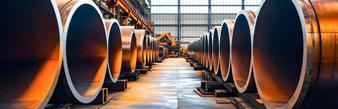
modern manufacturing technology, the plant is designed to deliver superior quality, scalability, and reliability.
Commenting on the development, Ajay Kumar Bansal, Chairman and Managing Director, said the commissioning reflects the company’s disciplined execution and reinforces its commitment to building a regionally balanced manufacturing network while supporting long-term profitability.
India’s tube and pipe industry continues to strengthen its global presence through advanced manufacturing and engineering capabilities. In an exclusive interview with Tube&PipeIndia, Mr. Chandragupt Prakash Mangal, Managing Director, Mangalam Worldwide Limited (MWL) , shares how Indian manufacturers of fully integrated stainless steel long and tubular products are building
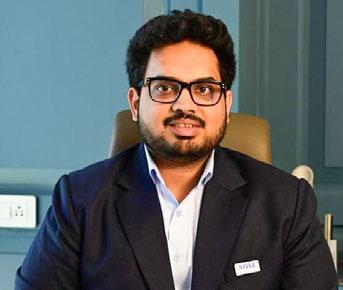
Mr. Chandragupt Prakash Mangal, Managing Director, Mangalam Worldwide Limited
Tube & Pipe India: What will you showcase at Tube Düsseldorf to highlight India’s technological capabilities and manufacturing excellence to a global audience?
Chandragupt Prakash Mangal: At Tube Düsseldorf 2026, MWL will showcase its complete range of finished tubular stainless steel products, including long and seamless tubes and pipes, with a strong focus on three key attributes:
global credibility through quality consistency, process discipline, and application reliability. He discusses the evolving role of international trade platforms, insights gained from global market exposure, India’s manufacturing strengths, and how sustainability, technology collaborations, and long-term governance are shaping India’s emergence as a dependable global engineering and manufacturing hub.
quality consistency, process discipline, and application reliability. Through these offerings, we aim to highlight how Indian manufacturers are building long-term credibility in global markets by continuously investing in advanced manufacturing processes, robust quality control systems, employee training, and digital tools that enhance traceability and process efficiency.
For us, participation is about demonstrating that Indian manufacturing is not merely cost-competitive, but globally relevant in terms of standards, reliability, and innovation.
For MWL, Tube Düsseldorf is a strategic platform to present how our long-term manufacturing vision aligns with global customer expectations, demonstrating that Indian manufacturing is not merely cost-competitive, but globally relevant in terms of standards, reliability, and innovation.
TPI: International trade fairs play a crucial role in shaping industry collaborations. How do platforms like Tube Düsseldorf help Indian manufacturers connect with global markets and customers?
CGM: Platforms like Tube Düsseldorf are important for Indian manufacturers to connect with international markets. Trade fairs allow us to engage in detailed technical conversations with customers and partners, gain direct feedback on application needs, and foster trust through tangible product demonstrations. These interactions help shift the conversation beyond price, emphasizing long-term collaboration founded on quality, reliability, and mutual understanding. From a company perspective, such platforms support our vision of building enduring global partnerships,
where engagement is driven by engineering depth and application understanding rather than transactional selling. For Indian manufacturers, such forums are also invaluable for benchmarking our processes against global best practices and adopting improvements that benefit the broader industry.
TPI: From your participation at Tube Düsseldorf, what key global market insights are you hoping to gain and bring back to strengthen India’s tube and pipe manufacturing ecosystem?
CGM: Exposure to international markets enables us to understand how global customers evaluate suppliers, particularly around quality assurance, traceability, sustainability, and long-term reliability. These insights guide our internal improvements and help set higher benchmarks across the Indian supply chain. For MWL, these learnings are integral to our broader vision of continuously upgrading systems, processes, and governance in line with global expectations. Staying aligned with global expectations ensures that Indian manufacturing continues to progress toward where the industry is heading, not merely where it has been.
TPI: Over the years, how have you seen India’s representation evolve at international trade fairs, and how do you contribute to strengthening India’s image as a global engineering hub?
CGM: India’s presence at international trade fairs has matured significantly. The focus has shifted from quantity to quality emphasizing standards, applications, and technological know-how. Indian manufacturers today are confident in conducting in-depth technical discussions with global counterparts. At MWL, we contribute to strengthening India’s image through consistent delivery, clear communication, and a commitment to dependable practices that foster long-term partnerships, reflecting a new generation of leadership that balances legacy strengths with modern governance and systems.
TPI: What core Indian manufacturing strengths differentiate you on the global stage? For what turnkey solutions is the world looking at India?
CGM: India stands out for its ability to combine engineering expertise with flexible, scalable manufacturing. Global customers are increasingly looking to India for end-toend solutions from processing and finishing to testing, compliance, and sustainable operations. There is growing confidence in India’s capability to manage complete product creation reliably and at international standards, demonstrating the industry’s progress in systems, skills, and operational discipline.
TPI: Technology partnerships and acquisitions are critical today. How are Indo-global collaborations helping reinforce India’s engineering leadership?
CGM: International collaborations are vital to closing capability gaps and accelerating learning. Technology partnerships with developed countries have enhanced process efficiency, product quality, and compliance with global standards. While these collaborations complement in-house expertise, they also allow Indian manufacturers to adopt best practices, strengthen engineering capabilities,
“ India has a distinct advantage over other countries as an industrial manufacturing location within reach of these regions because of its ability to expand production quickly; it has a large pool of skilled workers; and the logistics and trade infrastructure is improving year after year.”
and reinforce India’s leadership in precision manufacturing over time.
TPI: Which international regions do you see as strategic growth markets, and how is India positioned as your global manufacturing base to support these expansions?
CGM: In Europe, the Middle East, and selected areas of South East Asia, markets are still strategically important due to infrastructure and industrial growth. India has a distinct advantage over other countries as an industrial manufacturing location within reach of these regions because of its ability to expand production quickly; it has a large pool of skilled workers; and the logistics and trade infrastructure is improving year after year. For us, India serves as a stable base to support global customers with consistent supply and long-term production planning.
TPI: How are cost pressures across raw materials, energy, or logistics being managed without compromising product reliability or compliance?
CGM: Cost pressures are a reality across the industry, and managing them requires better planning rather than shortcuts. The focus is on improving process efficiency, optimising material usage, and strengthening supplier coordination. At the same time, quality and compliance remain non-negotiable, as long-term customer relationships depend on reliability rather than short-term cost advantages.
TPI: How are sustainability expectations from customers or regulators translating into changes in product design, manufacturing practices, or material choices?
CGM: Growing customer and regulatory expectations regarding sustainability are changing how products are produced, not just what products get produced. This is leading manufacturers to place greater emphasis on energy efficiency, waste reduction, responsible material usage, and structured process systems that embed sustainability into day-to-day operations.
At MWL, sustainability and innovation form the foundation of our growth philosophy, reflected in ongoing efforts around energy efficiency, renewable adoption such as rooftop solar installations, waste optimisation, and a gradual shift toward higher-value, precision-engineered stainless steel products in line with responsible manufacturing practices.
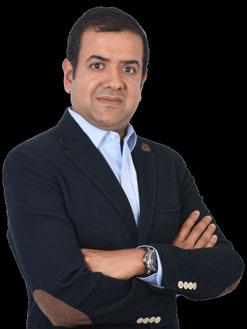
In an exclusive interaction with Tube&PipeIndia, Mr. Gaurav Jain, Director, Mega Pipes Private Limited , highlights that Indian manufacturers are increasingly collaborating with global EPC contractors, pipeline operators, consultants, and technology providers to stay aligned with next-generation pipeline requirements such as higher-grade steels, advanced coating systems, quality documentation and sustainability-focused specifications. Mega Pipes is strategically aligning its products with these global expectations, strengthening India’s position in HSAW and HFW pipe manufacturing for global projects.
Tube & Pipe India: What will you showcase at Tube Düsseldorf to highlight India’s technological capabilities and manufacturing excellence to a global audience?
Gaurav Jain: At Tube Düsseldorf 2026, Mega Pipes will showcase its advanced HSAW (Helical Submerged Arc Welded) and HFW (High Frequency Welded) pipe solutions designed for critical oil, gas, water, and energy infrastructure. Our focus will be on high-diameter, highstrength pipes, advanced internal and external coating capabilities, stringent quality assurance systems, and compliance with leading international standards. Through this, we aim to demonstrate India’s ability to deliver worldclass, export-ready pipe solutions with consistent quality, scale, and reliability.
TPI: International trade fairs play a crucial role in shaping industry collaborations. How do platforms like Tube Düsseldorf help Indian manufacturers connect with global markets and customers?
GJ: Tube Düsseldorf serves as a strategic platform where Indian manufacturers like Mega Pipes can directly engage with global EPC contractors, pipeline operators, consultants, and technology providers. Such interactions enable us to understand evolving technical specifications, align our product offerings with international project needs, and position Indian-made HSAW and HFW pipes as reliable solutions for global infrastructure projects.
TPI: From your participation at Tube Düsseldorf, what key global market insights are you hoping to gain and bring back to strengthen India’s tube and pipe manufacturing ecosystem?
GJ: We aim to gain insights into next-generation pipeline requirements, including higher-grade steels, enhanced coating performance, stricter quality documentation, and sustainability-driven specifications. These learnings will help us further strengthen our manufacturing processes, coatings capabilities, and compliance frameworks, thereby contributing to the continuous evolution of India’s pipe manufacturing ecosystem.
TPI: Over the years, how have you seen India’s representation evolve at international trade fairs, and how do you contribute to strengthening India’s image as a global engineering hub?
GJ: India’s presence has evolved from being volumedriven to value and technology-driven. Today, Indian manufacturers are being recognized for quality consistency, engineering depth, and execution capability. At Mega Pipes, we contribute by showcasing certified products, transparent processes, and globally benchmarked manufacturing practices, reinforcing India’s image as a dependable and advanced engineering hub.
TPI: What core Indian manufacturing strengths differentiate you on the global stage? For what turnkey solutions is the world looking at India?
GJ: India’s key strengths lie in engineering talent, scalable manufacturing, cost efficiency, and flexibility in customization. The global market increasingly looks at India for turnkey solutions covering pipe manufacturing, coatings, quality inspection, logistics coordination, and project-specific compliance, delivered under one integrated framework. Mega Pipes aligns strongly with this expectation.
TPI: Technology partnerships and acquisitions are critical today. How are Indo global collaborations helping reinforce India’s engineering leadership?
GJ: Indo-global collaborations enable access to advanced process technologies, automation, coating systems, and testing methodologies. These partnerships accelerate capability building, reduce time-to-market for advanced products, and elevate Indian manufacturing to global benchmarks, reinforcing India’s leadership in engineered industrial products.
TPI: Which international regions do you see as strategic growth markets, and how is India positioned as your global manufacturing base to support these expansions?
GJ: We see strong growth opportunities in the Middle East, North Africa, and emerging Asian markets, driven by investments in oil & gas pipelines, water transmission,
and energy infrastructure. India serves as a strategic manufacturing base due to its robust supply chain, skilled workforce, and port connectivity, enabling efficient support for these regions.
TPI: How are cost pressures across raw materials, energy, or logistics being managed without compromising product reliability or compliance?
GJ: Mega Pipes addresses cost pressures through process optimization, efficient material planning, energy management initiatives, and long-term supplier relationships. At the same time, product quality, compliance with international standards, and reliability remain uncompromised through rigorous quality control and inspection systems.
TPI: How are sustainability expectations from customers or regulators translating into changes in product design, manufacturing practices, or material choices?
GJ: Sustainability expectations are driving increased focus on energy-efficient manufacturing, optimized material usage, recyclable coatings, and reduced emissions across operations. At Mega Pipes, these expectations are being integrated into process design, supplier selection, and continuous improvement initiatives, aligning business growth with responsible manufacturing.
AM/NS India has become the first integrated steel producer in India to receive Green Steel certification under the Ministry of Steel’s new Green Steel Taxonomy. The company’s hot rolled flat steel products have achieved a four-star rating (emission intensity between 1.6 and 2.0 t-CO2e/tfs), while cold rolled products have received a three-star rating ( emission intensity between 2.0 and 2.2 t-CO2e/tfs).
Feb 06, 2026
AM/NS India has become the first integrated steel producer in India to receive Green Steel certification under the Ministry of Steel’s new Green Steel Taxonomy.
The company’s hot rolled flat steel products have achieved a four-star rating, while cold rolled products have received a three-star rating, following a rigorous independent audit.
‘’This milestone reflects our ongoing efforts in lowcarbon steelmaking, supported by structurally lower-carbon production processes and large-scale renewable energy integration, strengthening India’s position as a globally competitive and sustainable steel producer,’’ says the company in its social media post.
The Union Minister of Steel & Heavy Industries unveiled the Taxonomy of Green Steel for India in Dec 2024. It represents a transformative framework in steel production that will help define green steel, foster innovation, and create a market for low-carbon products in India. The Green steel is rated as follows: Five-star green-rated steel for steel production with emission intensity lower than 1.6 t-CO2e/tfs; four-star green-rated steel for steel production with emission intensity between 1.6 and 2.0 t-CO2e/tfs; and threestar green-rated steel for steel production with emission intensity between 2.0 and 2.2 t-CO2e/tfs.
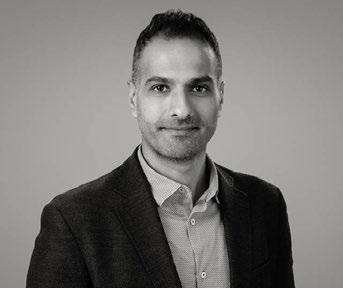
Varun Arora, CEO, Kisaan Die Tech
“ India continues to be our primary manufacturing base, offering the scale, technical capability, and consistency required to support global expansion.”
Tube & Pipe India: What will you showcase at Tube Düsseldorf to highlight India’s technological capabilities and manufacturing excellence to a global audience?
Varun Arora: At Tube Düsseldorf 2026, we will showcase Kisaan Die Tech’s vertically integrated capabilities, from forging and heat treatment to precision machining and testing. Our focus will be on high-integrity forged components (standard & non-standard) that demonstrate India’s strength in metallurgy, process control, and global quality compliance for critical applications.
TPI: International trade fairs play a crucial role in shaping industry collaborations. How do platforms like Tube Düsseldorf help Indian manufacturers connect with global markets and customers?
VA: Trade fairs like Tube Düsseldorf create direct engagement with global OEMs and EPC players.
TPI: From your participation at Tube Düsseldorf, what key global market insights are you hoping to gain and bring back to strengthen India’s tube and pipe manufacturing ecosystem?
VA: We are keen to understand the emerging material
In an exclusive interaction with Tube&Pipe India, Mr. Varun Arora, CEO, Kisaan Die Tech , notes that global players are increasingly relying on India for end-to-end manufacturing solutions—from forging and machining to testing and certification. Kisaan Die Tech meets this expectation through high-integrity forged components that underline India’s expertise in metallurgy, robust process control, and compliance with international quality standards. The company also draws global insights on material selection, sustainability, and quality practices to further enhance product development and strengthen India’s manufacturing ecosystem.
requirements, sustainability expectations, and advanced quality practices being adopted worldwide. These insights help us strengthen our product development and bring global best practices back into India’s manufacturing ecosystem.
TPI: Over the years, how have you seen India’s representation evolve at international trade fairs, and how do you contribute to strengthening India’s image as a global engineering hub?
VA: India’s presence has evolved significantly, from being seen mainly as a low-cost supplier to a trusted engineering and manufacturing partner. We contribute to this shift by consistently investing in technology, certifications, and quality systems that meet international standards.
TPI: What core Indian manufacturing strengths differentiate you on the global stage? For what turnkey solutions is the world looking at India?
VA: India’s strengths lie in engineering adaptability, skilled manpower, and scalable infrastructure. The global market now looks to India for turnkey solutions such as forging, machining, testing, and certification, all under one roof, which is where we position ourselves.
TPI:Technology partnerships and acquisitions are critical today. How are Indo-global collaborations helping reinforce India’s engineering leadership?
VA: Indo-global collaborations help align Indian manufacturing with global quality expectations and customer proximity. Our presence in both India and North America allows us to combine cost-effective manufacturing with localized support, reinforcing India’s engineering leadership.
TPI: Which international regions do you see as strategic growth markets, and how is India positioned as your global manufacturing base to support these expansions?
VA: North America and Europe remain key focus markets, especially for energy, oil & gas, and industrial applications. India continues to be our primary manufacturing base, offering the scale, technical capability, and consistency required to support global expansion.
How are cost pressures across raw materials, energy, or logistics being managed without compromising product reliability or compliance?
Indo-global collaborations help align Indian manufacturing with global quality expectations and customer proximity.
VA: Cost pressures are managed through process integration, efficient forging practices, and in-house capabilities. Quality is never compromised. Our testing, traceability, and compliance systems ensure reliability even in challenging market conditions.
How are sustainability expectations from customers or regulators translating into changes in product design, manufacturing practices, or material choices?
VA: Sustainability is driving improvements in energy efficiency, material utilization, and process optimization. We focus on responsible manufacturing practices that reduce waste while delivering long-life, high-performance components for global customers.
APL Apollo Tubes has announced the elevation of Mr. Chakram Kumar Singh to the position of Director and Chief Operating Officer (COO).
Jan 07, 2026
APL Apollo Tubes has announced the elevation of Mr. Chakram Kumar Singh to the position of Director and Chief Operating Officer (COO). In 2016, Shri C. K. Singh joined APL Apollo Tubes Limited as Plant Head. During his five-year tenure in this role, he played a pivotal part in strengthening operational systems and enhancing productivity. In 2020, he was elevated to the role of Chief Operating Officer, where he has since been leading several strategic initiatives, including the successful commissioning of greenfield and brownfield projects, launch of new product lines, driving costefficiency measures and efficiently managed all the plant operation.
Shri C.K. Singh brings with him nearly 30 years of experience in the steel and manufacturing sector, with a proven track record of delivering operational excellence and driving large-scale industrial transformation. He holds a bachelor’s degree in mechanical engineering from Bangalore University (Batch of 1996) and a Master’s degree in Operations and Project Management.
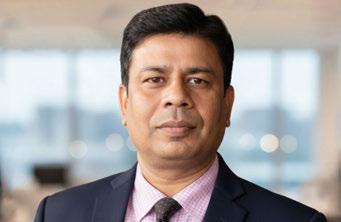
Shri C. K. Singh began his career with the Steel Authority of India Limited (SAIL) as a Trainee Engineer and went on to hold senior leadership positions across reputed organizations such as Adhunik Metaliks, Rashmi Metaliks, Monnet Ispat, and Steel Strips Wheels. Throughout his career, he has built deep domain expertise across plant operations, project execution, product innovation, and cost optimization.
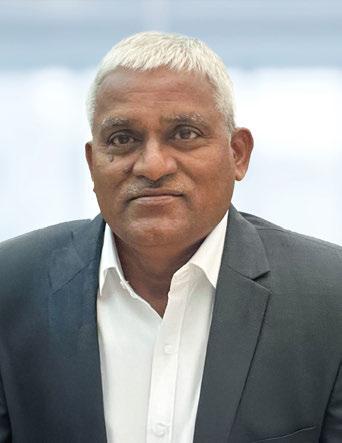
In an interaction with Tube&PipeIndia, Mr. Ramakant Jagtap, Manager – Application Engg., ANUP NDT Pvt. Ltd. , discusses the company’s advanced non-destructive testing (NDT) technologies for the tube and pipe industry, including high-speed inline eddy current testing systems. He also
Tube & Pipe India: What will you showcase at Tube Düsseldorf to highlight India’s technological capabilities and manufacturing excellence to a global audience?
Ramakant Jagtap: At Tube Düsseldorf, Anup NDT will showcase the latest generation of high-speed in-line eddy current testing systems. These systems are designed to detect surface and sub-surface flaws in tubes and pipes at maximum production speeds without contact. We are highlighting India’s capability to produce intelligence-led hardware- equipment that doesn’t just detect defects but uses advanced signal processing and real-time data analytics to help manufacturers optimize their entire production line.
TPI: International trade fairs play a crucial role in shaping industry
We are looking closely at the transition towards green hydrogen and high-pressure carbon capture pipelines. These sectors require zero-compromise testing standards.
shares insights on evolving global quality standards, emerging opportunities in sectors such as green hydrogen and carbon capture pipelines, and how Indian manufacturers are strengthening their position as providers of value-engineered, technology-driven solutions for global markets.
collaborations. How do platforms like Tube Düsseldorf help Indian manufacturers connect with global markets and customers?
RJ: These fairs are the global town square for the industry. For a specialized manufacturer like us, it’s about building trust. NDT (Non-Destructive Testing) is a critical safety function; meeting a client face-to-face and demonstrating our equipment’s precision allows us to move from being a vendor to a technology partner. It bridges the geographical gap and aligns Indian innovations with European and American quality expectations.
TPI: From your participation at Tube Düsseldorf, what key global market insights are you hoping to gain and bring back to strengthen India’s tube and pipe manufacturing ecosystem?
RJ: We are looking closely at the transition towards green hydrogen and high-pressure carbon capture pipelines. These sectors require zerocompromise testing standards. By understanding the evolving ASTM and ISO standards discussed at Düsseldorf, we can bring those insights back to India to ensure our domestic tube and pipe manufacturers are export-ready for the next generation of energy infrastructure.
TPI: Over the years, how have you seen India’s representation evolve at international trade fairs, and how do you contribute to strengthening India’s image as a global engineering hub?
RJ: India has moved from “low-cost sourcing” to “high-tech engineering.” Years ago, India was known for the
tubes themselves; today, we are known for the technology that tests those tubes. Anup NDT contributes by proving that India can compete with the best German or American NDT brands in terms of software sophistication, UI/ UX, and sensor sensitivity, reinforcing India’s image as a sophisticated engineering hub.
TPI: What core Indian manufacturing strengths differentiate you on the global stage? For what turnkey solutions is the world looking at India?
RJ: Our strength lies in agile customization. Unlike rigid global giants, Anup NDT provides turnkey NDT integration, meaning we don’t just sell a box; we design the mechanical handling, the sensors, and the software to fit the client’s specific mill layout. The world is looking to India for “valueengineered technology”—high-end performance at a sustainable life cycle cost.
TPI: Technology partnerships and acquisitions are critical today. How are Indo-global collaborations
helping reinforce India’s engineering leadership?
RJ: Collaborations allow for the best of both worlds approach. By integrating global sensor technologies or highend components with Indian software prowess and manufacturing agility, we create products that are globally competitive. These partnerships help us adopt global best practices in quality control faster than ever before.
TPI: Which international regions do you see as strategic growth markets, and how is India positioned as your global manufacturing base to support these expansions?
RJ: We see significant growth in Southeast Asia, the Middle East, and Eastern Europe, where infrastructure and automotive sectors are booming. India is the perfect base because of our strong engineering talent pool and a robust local steel industry that serves as a massive “live laboratory” for us to test and perfect our NDT equipment before exporting it.
TPI: How are cost pressures across raw materials, energy, or
logistics being managed without compromising product reliability or compliance?
RJ: We focus on smart manufacturing by using our own NDT technology within our processes, we reduce waste. Additionally, our equipment is designed for remote diagnostics. This allows us to support a client in Europe or the USA from our base in India, significantly reducing the logistics and maintenance costs for the end-user while maintaining 100% uptime and compliance.
TPI: How are sustainability expectations from customers or regulators translating into changes in product design, manufacturing practices, or material choices?
RJ: Sustainability in NDT means zero failure with desired sensitivity. Our high-precision eddy current systems catch defects early in the production cycle, preventing the wastage of energy and raw materials on defective final products. We are also moving toward paperless quality reporting, where all test results are digitally logged and cloud-stored, supporting our customers’ “Green Factory” initiatives.
Lalbaba Engineering Limited has signed a Memorandum of Understanding under the Government of India’s Production Linked Incentive Scheme 1.2 for specialty steel. The company proposed that a cold finished seamless tube expansion project at Haldia, West Bengal, will be eligible for incentives under the scheme.
Feb 10, 2026
Lalbaba Engineering Limited has signed a Memorandum of Understanding under the Government of India’s Production Linked Incentive Scheme 1.2 for specialty steel, marking its admission into the nationwide programme aimed at strengthening domestic steel manufacturing.
The company proposed that a cold-finished seamless tube expansion project at Haldia, West Bengal, will be eligible for incentives under the scheme. The MoU was signed at Vigyan Bhavan in New Delhi. The approval covers alloy steel and stainless steel long products.
Mr. Nikunj Dhanuka, Director, Lalbaba Engineering
Limited emphasized that the signing of the MoU under the PLI Scheme represents an important step in advancing domestic seamless tube manufacturing capabilities, aligning with national manufacturing priorities.
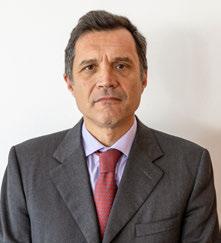
Tube & Pipe India: Please briefly outline your company’s tube and pipe product focus, including key materials, product types, and principal end-use sectors.
Mario Colombo: At FIMIGroup, our tube and pipe focus is centred on the design, manufacturing and commissioning of complete ERW tube and pipe mills, as well as dedicated tube finishing solutions. We support customers from raw coil handling through to the final packaging stage, delivering fully integrated production systems.
Our tube-related portfolio is focused on welded tubes and profiles made from hot rolled steel and other carbon steel grades. We supply solutions for square and rectangular hollow sections as well as tubes for structural and industrial applications. Depending on each customer’s strategy and product mix, our technology can be configured to support different production ranges, ensuring flexibility, repeatability and stable performance.
Our customers serve a wide spectrum of end-use sectors, including construction and infrastructure, industrial manufacturing, mechanical applications, oil & gas, and steel distribution markets requiring reliable output, high productivity and consistent quality. In addition, it is important to highlight that coil preparation is often a critical step before tube manufacturing. For this reason, FIMIGroup also designs and supplies slitting lines that allow coils to be processed into narrower strips according to the widths required for tube and profile production. This
Within our portfolio, we deliver dedicated “Tube industry solutions”, designing, manufacturing and commissioning complete ERW tube and pipe mills as well as tube finishing lines. Our approach combines robust mechanical engineering, advanced automation and inhouse expertise to provide customers with efficient, flexible and future-ready production systems.
capability enables us to support customers with an even more complete approach, covering the entire workflow from coil processing to finished welded tube output.
TPI: Within your core product segments, how would you characterise current demand conditions and order visibility?
FIMIGroup is an Italian engineering and manufacturing group specialised in advanced equipment for coil processing. With decades of experience and a strong international footprint, the group supports steel producers worldwide with innovative, highperformance solutions designed to maximise productivity, quality consistency and longterm reliability. During an exclusive interaction with Tube&PipeIndia, Mr. Mario Colombo, Sales Director, FIMIGroup , discussed the group’s recent ERW tube mill project for Tata Steel in Jamshedpur and shared his perspective on India’s growing strategic importance. As India accelerates infrastructure and industrial expansion, he shed some light on the shift in customer priorities: producers are increasingly investing not only to expand capacity, but also to strengthen competitiveness.
MC: From my perspective, demand conditions in the tube and pipe market remain positive, particularly driven by infrastructure expansion, industrial investment and the need for efficient steel processing across multiple regions. I also see a clear shift in customer priorities: producers are increasingly investing not only to expand capacity, but also to strengthen competitiveness through improved automation, process reliability and reduced operating costs. This is creating solid order visibility for advanced tube mill projects, especially those designed to deliver measurable improvements in productivity, yield and changeover efficiency.
More and more customers are also asking for solutions capable of supporting a broad range of products with minimal downtime, enabling them to respond quickly to evolving market demand.
TPI: Which customer or application requirements are currently exerting the greatest pressure on quality, uniformity, or on-time delivery within your product range?
MC: Across the market, tube producers are facing increasing pressure to guarantee consistent dimensional accuracy, stable weld quality and repeatability, even when processing multiple product sizes and steel grades.
At the same time, production planning is becoming more demanding: manufacturers are expected to deliver faster, reduce lead times, and maintain on-time shipments despite rising complexity in order mixes. This makes reliability, uptime and fast size changeovers key
Our recent installation of a new ERW tube mill project for Tata Steel in Jamshedpur is a clear demonstration of this trend. The tube mill solution is expected to enable production of 100,000 tonnes per year, with very low changeover times and significant operational advantages.
competitive factors. In this context, the real challenge is achieving high output while maintaining uniform quality, especially in high-volume environments where even small inefficiencies translate into significant losses.
TPI: How are material selection, grade complexity, or specification tightening influencing your manufacturing or quality-control practices?
MC: The tightening of specifications and the increasing variety of steel grades are reshaping manufacturing expectations. Higher strength steels, thinner gauges and stricter tolerances require more controlled
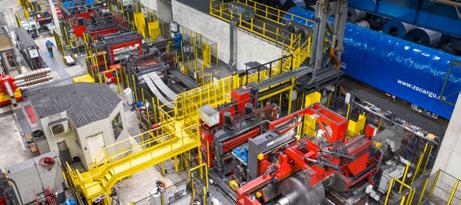
forming conditions, improved process repeatability and advanced automation.
From a tube mill design standpoint, this means that stability in forming and welding is no longer optional: it is essential. Customers need equipment capable of managing grade variability while ensuring consistent product geometry and surface integrity. As a result, quality control is evolving toward integrated process monitoring, automation-driven consistency and more robust finishing solutions that guarantee compliance before product dispatch.
TPI: Which process disciplines, automation measures, or quality-assurance practices have delivered the most tangible improvements in yield or rework reduction?
MC: In my experience, the most tangible improvements in yield and rework reduction are achieved through process stability and automation, supported by highperformance cutting and handling systems. One of the strongest results comes from combining reliable mechanical engineering with advanced automation. At FIMIGroup, we deliver a fully integrated approach where engineering, roll design, mechanics, automation and service are managed in-house. This allows us to optimise each section of the line as part of a single production ecosystem.
A concrete example is our recent project for Tata Steel in Jamshedpur, India, where the tube mill solution is expected to enable production of 100,000 tonnes per year, with very low changeover times and significant operational advantages. In addition, Direct Forming Tube (DFT) technology has proven to deliver real efficiency gains by reducing tooling requirements and minimising material waste compared to traditional forming approaches.
TPI: How are cost pressures across raw materials, energy, or logistics being managed without compromising product reliability or compliance?
MC: Cost pressures are impacting every tube producer, especially in
raw materials, energy consumption and logistics. However, I strongly believe the market is moving toward a mindset where competitiveness is built through efficiency, not compromise.
In this environment, modern tube mills must deliver measurable savings in terms of yield, uptime and operating stability. In the Tata Steel project, expected material savings are around 4%, corresponding to approximately 4,000 tonnes per year. This is a clear example of how optimised technology can directly reduce cost per ton.
Energy optimisation is also becoming increasingly relevant. The integration of high-frequency solid-state welding solutions, designed to optimise energy consumption while ensuring consistent weld quality, represents an important contribution to lowering operating costs without sacrificing compliance.
TPI: How are sustainability expectations from customers or regulators translating into changes in product design, manufacturing practices, or material choices?
MC: Sustainability is no longer just a general topic: it is becoming a measurable requirement across the steel and tube value chain. Customers and regulators are pushing for reduced scrap, improved material efficiency and lower energy consumption per tonne produced.
This is driving investments into modern forming solutions, automation, and optimised line layouts capable of reducing waste and stabilising production.
For example, solutions such as Direct Forming Tube (DFT) technology contribute to sustainability by reducing material waste compared to traditional forming processes, while also improving flexibility and reducing tooling requirements. Ultimately, sustainability is increasingly linked to performance: efficient production is also more environmentally responsible production.
TPI: Looking ahead, within your
core product portfolio, which applications or performance requirements are most likely to drive incremental investment?
MC: Looking ahead, I expect investment will continue to be driven by applications requiring higher quality, tighter tolerances and more demanding production flexibility.
Key drivers include higher throughput production with stable quality repeatability, reduced changeover times to manage wider product mixes, automation-driven consistency and reduced operator dependency, enhanced welding stability and finishing performance, and integrated packaging and handling systems to support fast logistics-ready output. Manufacturers will increasingly focus on technology that generates measurable returns: improved yield, reduced downtime and predictable long-term performance.
TPI: How do you see India as a market?
MC: India is one of the most strategic and fast-growing markets globally for tube and pipe production, supported by industrial development, infrastructure expansion and increasing domestic demand. I see India not only as a high-volume market, but also as a rapidly evolving one, where producers are progressively investing in higherquality output and more advanced manufacturing standards. Our recent installation of a new ERW tube mill project for Tata Steel in Jamshedpur is a clear demonstration of this trend. The project is part of Tata Steel’s plan to increase tube production capacity and quality, targeting both domestic and international markets.
For FIMIGroup, India represents a market where long-term partnerships, technological development and industrial growth align strongly. We see significant opportunities for advanced tube mill solutions and finishing technologies, particularly for customers aiming to compete on quality, productivity and reliability.
FIMIGroup continues to invest in technology and engineering excellence to support tube producers worldwide with reliable, efficient and high-performance solutions.
Mr. Carlo Fratini, Business Development Manager, Crippa Srl
“ India is a cornerstone of Crippa’s global strategy. We see it as a rapidly evolving manufacturing hub with a growing demand for high-end technology.
To support this, we are deeply rooted in India with an extensive sales and service network. We have recently increased our investments in the region to ensure we are physically closer to our customers, providing them with immediate technical assistance, spare parts, and the expertise required to compete on a global scale.”
Crippa Srl, part of the OCTA Group, sees India as a rapidly evolving manufacturing hub with a growing demand for high-end technology. The company recently increased its investments in the region to ensure it is physically closer to the customers. In an exclusive interview with Tube&Pipe India, Mr. Carlo Fratini, Business Development Manager, Crippa Srl , discusses the company’s technology focus, automation strategies, and plans to expand its footprint in the Indian market.
Tube & Pipe India: Please briefly indicate the processing technologies or equipment segments your company specialises in.
Carlo Fratini: Since 1948, Crippa Srl has been a global leader in the design and manufacture of highprecision CNC tube bending and tube end-forming machines. As part of the OCTA Group, we provide fully integrated automated cells, specialized loading/unloading systems, and advanced software solutions tailored for the demanding requirements of the automotive, aerospace, and HVAC industries.
TPI: Within your area of processing expertise, which performance parameters are under the greatest
pressure to improve productivity or cost efficiency?
CF: The primary pressure lies in reducing cycle times while maintaining absolute precision. In high-volume sectors like automotive and HVAC, our customers demand high-speed axis movements and rapid tool changeovers. We focus on maximizing “uptime” through full electric technology, which eliminates the variables of hydraulic systems, ensuring lower energy consumption and higher repeatable speed.
TPI: Where are customers seeing the largest quality or yield gains from upgrades in tube processing equipment?
CF: The most significant gains
are found in scrap reduction and operational flexibility. Even when dealing with small production batches, our customers benefit from exceptionally fast and easy retooling, which is critical for maintaining high productivity in high-mix environments. Furthermore, by utilizing our advanced sensors and “Springback” compensation software, our machines adjust in real-time to material variations, ensuring the highest quality from the very first part.
TPI: How are brownfield constraints influencing equipment design, line integration, and automation levels?
CF: Many of our customers operate in established facilities with limited floor space. To address this, we design compact, modular cells and utilize multi-stack bending heads that allow complex geometries to be produced in a single footprint. Our integration expertise allows us to “drop in” automated solutions that communicate seamlessly with existing legacy MES (Manufacturing Execution Systems).
TPI: What role does real-time monitoring or closed-loop control play in maintaining process stability, consistency, or repeatability within your processing technology?
CF: It is fundamental. Crippa’s systems employ closed-loop control to monitor torque, position, and material resistance constantly. This ensures that the first part produced is identical to the thousandth, regardless of slight variations in the tube’s batch quality or environmental temperature changes.
CF: We are seeing a shift toward highstrength stainless steels, titanium, and exotic alloys in aerospace, as well as thin-walled aluminum for EV thermal management in the automotive sector. These materials have narrow windows for successful deformation, necessitating the extreme precision and tactile feedback found in our latest CNC generations.
TPI: How are energy efficiency and thermal optimisation being addressed in processing operations, particularly heat treatment?
CF: As a company committed to sustainability, we have transitioned heavily toward full-electric platforms. These machines consume power only when moving, unlike
automatically adjusts the next bend. This creates a self-correcting ecosystem that ensures total process stability.
TPI: Looking ahead, within your area of processing expertise, which aspects of your technology are most likely to see increased investment focus?
CF: Our R&D is heavily focused on artificial intelligence and predictive maintenance. We are investing in software that can predict tool wear and optimize bending sequences automatically. Our innovative tube bending machine R42, through high personalization and flexibility and absolute control of each movement, assures high quality and precision bends, very short set-up and scrap times. Our new Siemens SINUMERIK ONE control model defines new standards in processing speed, allowing PLC cycle times up to 10 times faster than its predecessor. Furthermore, we are continuously expanding our global footprint to ensure that our advanced technology is backed by local, highlevel technical support.
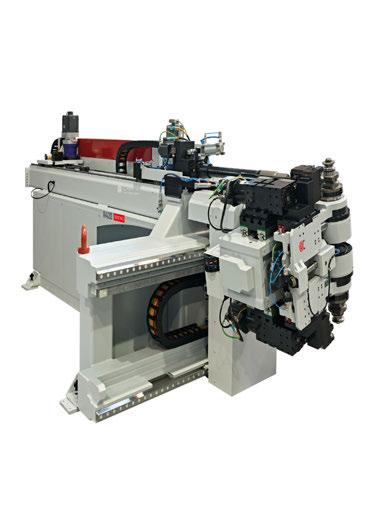
TPI: How do you see India as a market?
TPI: Which material grades, product specifications, or enduse requirements are currently demanding tighter process control within your area of expertise?
hydraulic systems that require constant cooling and energy. For integrated processes involving thermal treatments, we focus on optimizing induction heating cycles to ensure energy is applied only where and when necessary.
TPI: How important is integration with upstream tube mills and downstream inspection systems in achieving stable operations?
CF: Integration is the key to a “zerodefect” strategy. Our machines are designed to interface directly with downstream 3D measuring cells. If a deviation is detected, the inspection system sends a corrective signal back to the Crippa bender, which
CF: India is a cornerstone of Crippa’s global strategy. We see it as a rapidly evolving manufacturing hub with a growing demand for high-end technology. To support this, we are deeply rooted in India with an extensive sales and service network. We have recently increased our investments in the region to ensure we are physically closer to our customers, providing them with immediate technical assistance, spare parts, and the expertise required to compete on a global scale.
Our participation in the IMTEX, METEC and Tube & Wire fairs represents an important step forward in our international expansion strategy and offers us the opportunity to present innovative solutions to an audience of experts and potential clients.
In an exclusive interaction with Tube&Pipe India, Mr. Cesare Vernocchi, Area Sales Manager, OLIMPIA 80 Srl , shares insights on the company’s tube mill portfolio covering carbon and stainless steel applications, emerging trends in high-strength materials, and the role of engineering innovation in
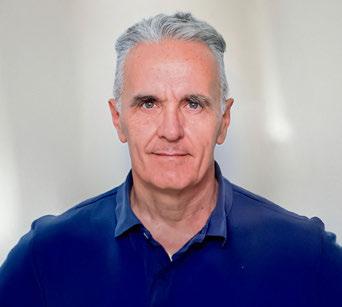
Mr. Cesare Vernocchi, Area Sales Manager, OLIMPIA 80 Srl
Tube & Pipe India: Please briefly outline your company’s tube mill product portfolio, including mill types, size ranges, materials handled, and key customer segments served.
Cesare Vernocchi: Olimpia 80 designs and manufactures a range of tube mills for carbon steel with diameters from 8 mm up to 254 mm, and for stainless steel from 6 mm up to 406 mm. The thickness range spans from 0.4 to 12.7 mm. The proposed lines can produce welded tubes using HF, LASER, or TIG/PLASMA systems. Our main customers are manufacturers of structural tubes and tubes for the automotive sector, heat exchangers and boilers, the chemical and pharmaceutical industries, the food and dairy industry, furniture, and related sectors.
improving mill performance and productivity. Mr. Vernocchi also discusses evolving customer requirements, sustainability considerations in mill design, and the longterm growth potential of markets such as India for advanced tube manufacturing technologies.
TPI: Across your core tube mill offerings, how would you characterise current demand trends, order visibility, and customer investment appetite?
CV: After several years of global market growth, in recent months we have experienced a significant decline in market interest. There are not many “hot” projects at the moment. Our flagship product—direct forming lines for square and rectangular structural tubes—remains the most in demand, together with lines for high-strength steel tubes and stainless steel lines for specific applications.
TPI: Which customer requirements are currently placing the greatest demands on mill design, engineering, or delivery timelines?
CV: All our customers require customized solutions, which is why our tube mills involve substantial engineering and design lead times. Delivery time is an important factor, but it is always closely linked to the complexity of each line. None of our mills are “standard”; each one is genuinely tailored to the customer’s specific requirements.
TPI: How are evolving tube specifications and material complexities influencing your mill design, forming technology, and process control solutions?
CV: Very significantly. We started producing dedicated tube mills for high-strength steels (up to 1600 MPa) several years ago, but each project presents different challenges that must be addressed and resolved. Material characteristics and the diameter-to-thickness ratio, together with speed and the resulting productivity requirements, represent an ongoing challenge.
TPI: Which engineering innovations, automation features, or digital tools have delivered the most measurable improvements in mill performance, uptime, or yield for your customers?
CV: Each project involves research into specific materials, components, and solutions. Special steels and heat
treatments, high-performance bearings, reliable motors and drives, and mechatronic automation solutions are all implemented to minimize operator intervention while ensuring safety and high performance.
A few years ago, at the TUBE trade fair, we presented an innovative flying cut-off system for stainless steel tube production lines. The system uses a fibre LASER source. Following the launch of the first prototype, several customers recognized and appreciated the advantages of this solution— no blades, no burrs, and therefore virtually zero maintenance and machine downtime. As a result, production of these machines has seen significant growth, both for new tube mills and, above all, for existing installations.
TPI: How are you managing cost pressures related to raw materials, machining, electronics, or logistics while maintaining equipment reliability, accuracy, and lifecycle performance?
CV: Constant attention and ongoing commitment are required. When it comes to costs, we seek reliable suppliers while never compromising on true quality. A misjudgment, even on a single component, could put the entire tube mill at risk. Our key suppliers share responsibility with us for the reliability of all machines; this is essential.
TPI: How are sustainability expectations—such as energy efficiency, material utilisation, or reduced scrap— shaping your tube mill designs and auxiliary systems?
CV: Every aspect is taken into account during the engineering
phase. For example, we have been using only AC electric motors with energy recovery wherever possible for many years. We also minimize the use of oils wherever they are not strictly necessary.
TPI: Looking ahead, which tube applications or performance requirements (e.g., automotive, structural, precision tubing, EV-related applications) are most likely to drive customer investment in new or upgraded tube mills?
CV: These are all sectors that we have been serving and supporting for many years. High-strength carbon steels and special stainless steels have become standard for us. Structural lightweighting and corrosion-resistance performance are key drivers for future projects. For example, in the stainless steel sector, the use of ferritic steels in many applications requires specific solutions, which have already been developed and implemented by Olimpia 80 for several years.
TPI: How do you view India as a market for tube mill equipment in terms of growth potential, technology adoption, localization, and export opportunities?
CV: At present, the Indian market is largely driven by costsensitive solutions, with a limited but growing segment of customers placing greater emphasis on quality and performance. This balance may evolve over time, and while change is gradual, we see potential for increased appreciation of higher-value, performance-oriented technologies in the future.
DEE Development Engineers Limited has secured a Letter of Intent (LoI) for the manufacturing of alloy steel seamless pipes. It is the first commercial order to be executed from its new forged seamless pipe facility in Anjar, Gujarat.
Feb 27, 2026
DEE Development Engineers Limited has secured a Letter of Intent (LoI) for the manufacturing of alloy steel seamless pipes, marking the company’s first commercial engagement in its newly established forged seamless pipe plant at Anjar, Gujarat.
The order, valued at INR 58 crore, has been awarded by a domestic entity operating as a joint venture between an Indian and a foreign conglomerate in the power sector.
The execution timeline for the order is Dec 2026.
Commenting on the development, Mr. K. L. Bansal, Chairman and Managing Director, DEE Development Engineers Limited, stated to a media outlet that the seamless pipe facility at Anjar has been developed with
a strategic objective to deepen backward integration and enhance the company’s ability to serve highspecification, critical application requirements in the energy sector.
As global tube and pipe manufacturing evolves toward greater efficiency and precision, the role of highperformance cutting solutions is becoming increasingly important. In an exclusive interaction with Tube & PipeIndia, Dr. Stefan Schaafsma, Chief Commercial Officer, Kinkelder , explains how the Netherlands-based specialist is addressing evolving industry requirements through performancefocused circular saw blades, innovation-led product launches, and strong technical support. He shares insights on demand trends, cost management, sustainability priorities, and Kinkelder’s growing focus on the Indian flying cut-off market.
“We are currently launching three new highperformance KINS’ BLUE circular saw blades for stationary tube cutting, which have already been successfully pre-launched in Europe. Additionally, we have introduced the KINS’ ORANGE OrbitalMaster
Essential saw blade for orbital flying cut-off applications, offering an excellent priceperformance balance.
”
Dr. Stefan Schaafsma Chief Commercial Officer, Kinkelder
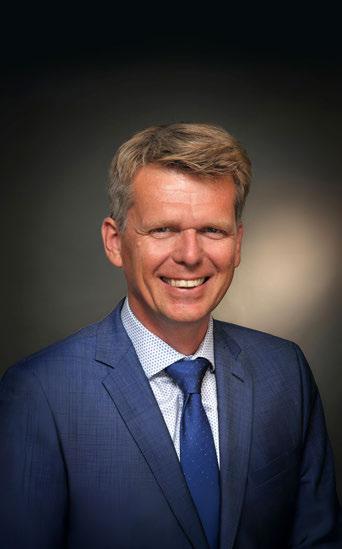
Tube & Pipe India: Please briefly outline your company’s tube and pipe product focus, including key materials, product types, and principal end-use sectors?
Stefan Schaafsma: Kinkelder manufactures TCT circular saw blades for flying cut-off units on tube mills and HSS circular saw blades for tube lines at its facilities in the Netherlands. In addition, we produce HSS, TCT, and segmental blades for stationary sawing machines. Our offering is strongly performance-driven, focused on delivering the best price-performance ratio and lowering the total cost of ownership for tube producers.
TPI: Within your core product segments, how would you characterize current demand conditions and order visibility?
SS: Demand is growing across Europe, North America, Asia, and other regions. Through regular technical support and close service engagement with our customers, we maintain strong visibility on order flows and production developments at tube mills.
TPI: Which customer or application requirements are currently exerting the greatest pressure on quality, uniformity, or on-time delivery within your product range?
SS: Quality, uniformity, and on-time delivery are not pressure points for us. We are currently launching three new high-performance KINS’ BLUE circular saw blades for stationary tube cutting, which have already been successfully pre-launched in Europe. Additionally, we have introduced the KINS’ ORANGE OrbitalMaster Essential saw blade for orbital flying cutoff applications, offering an excellent price-performance balance.
TPI: How are material selection, grade complexity, or specification tightening influencing your manufacturing or quality-control practices?
SS: There are no barriers in this area. Producing quality begins with selecting high-quality materials and working with reliable, trustworthy suppliers. Our European-sourced components fully meet specifications and align closely with our R&D strategy, helping us minimise rework and scrap.
TPI: Which process disciplines, automation measures, or quality-assurance practices have delivered the most tangible improvements in yield or rework reduction?
SS: This is classified information. We have more than 80 years of experience and continuously optimize our production processes to ensure high quality at lower cost. Sharing these details would be like revealing the secret ingredients of a signature chef ’s Tikka Masala. We do not allow strangers in our kitchen.
“India is a key focus market, particularly for flying cut-off units on tube mills. We have introduced a new “Essential” product line tailored for this segment, offering reliable performance at attractive pricing. Our HSS circular saw blades are supplied in India through our distributor, Ravik Engineers Ltd. ”
TPI: How are cost pressures across raw materials, energy, or logistics being managed without compromising product reliability or compliance?
SS: Innovation plays a central role. By improving blade performance and cutting efficiency, we help customers offset cost increases elsewhere. Higher efficiency directly translates into cost savings at the tube mill level.
TPI: How are sustainability expectations from customers or regulators influencing product design and manufacturing?
SS: Environmental, social, and governance principles are embedded in our product and service development. Sustainability considerations are part of our innovation cycle and often result in reduced energy usage and lower overall costs for customers.
TPI: Looking ahead, which applications or performance requirements will drive incremental investment?
SS: We closely follow trends toward lighter, stronger steel pipes and faster tube line speeds. Our blade designs focus on reducing waste and lowering the cutting cost per tonne of steel. Tube mills increasingly recognise that efficiency and productivity, not blade price alone, drive profitability.
TPI: How do you see India as a market for Kinkelder?
SS: India is a key focus market, particularly for flying cut-off units on tube mills. We have introduced a new “Essential” product line tailored for this segment, offering reliable performance at attractive pricing. Our HSS circular saw blades are supplied in India through our distributor, Ravik Engineers Ltd. With the upcoming India–EU trade agreement, we see strong long-term potential and a bright future in this market.
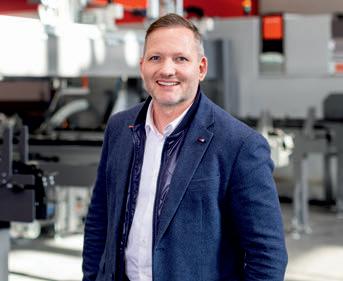
Tube & Pipe India: Please briefly outline your company’s tube and pipe product focus, including key materials, product types, and principal end-use sectors.
Daniel Brenner: With the ByTube Star 130, we have one of the fastest and most accurate tube and profile lasers for the small diameter tube market. The ByTube Star 330, on the other hand, is an extremely versatile machine for large tube diameters, but can also process small diameters. Our machines are suitable for processing mild steel, stainless steel, aluminum, copper and brass. By using up to 10kW in combination with mixed gas, we achieve the best qualities.
TPI: Within your core product segments, how would you characterize current demand conditions and order visibility?
DB: Stable growth can be seen in the tube market worldwide, which is significantly stronger than for flat steel.
TPI: Which customer or application
In an exclusive interaction with Tube&Pipe India, Dr. Daniel Brenner, Global Head of Marketing & Sales Tube, Bystronic Group , shares that India is an important market for the tube industry with strong growth potential. With its core expertise in cutting processes, Bystronic serves this market with tube and profile laser solutions capable of processing both small- and large-diameter tubes. Looking ahead, the company aims to achieve a 10 percent of global market share by 2030.
Dr. Daniel Brenner, Global Head of Marketing & Sales Tube, Bystronic Group
requirements are currently exerting the greatest pressure on quality, uniformity, or on-time delivery within your product range?
DB: Bystronic’s core competence is our cutting process, with which we produce the best quality product ranges in the shortest possible production time. Bystronic’s internal pressure is to fulfill its own requirements and ensure best quality and highest productivity with constant new innovations. The external pressure comes more from an economic point of view and from Asian and Chinese competitors. However, this pressure can be countered with solid European quality work and a fast and absolutely satisfying service.
TPI: How are material selection, grade complexity, or specification tightening influencing your manufacturing or quality-control practices?
DB: There is no great influence here because Bystronic, as a Swiss quality manufacturer, uses only the best
materials and the best equipment to cover all requirements worldwide with ease.
TPI: Which process disciplines, automation measures, or quality-assurance practices have delivered the most tangible improvements in yield or rework reduction?
DB: Bystronic has a standardized quality concept for all our plants worldwide which is based on the top-notch global requirements and guidelines and is complemented by decades of experience.
TPI: How are cost pressures across raw materials, energy, or
“ Stable growth can be seen in the tube market worldwide, which is significantly stronger than for flat steel.”
logistics being managed without compromising product reliability or compliance?
DB: Our priority is to deliver the highest quality machines to tube manufacturers, enabling them to offer some of the best products in the market. Our procurement team works successfully according to the Swiss model, and our suppliers value the credibility that comes with partnering with us.
TPI: How are sustainability expectations from customers or regulators translating into changes in product design, manufacturing practices, or material choices?
DB: As Bystronic always has the highest standards for itself, as described above, additional regulations or higher expectations are no challenge for us and are usually implemented effortlessly.
TPI: Looking ahead, within your core product portfolio, which
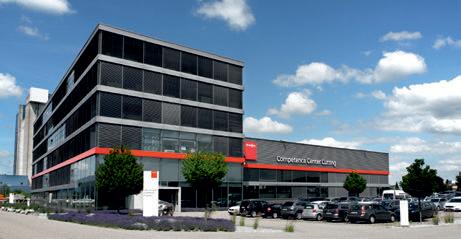
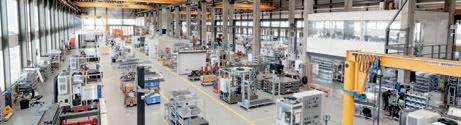
applications or performance requirements are most likely to drive incremental investment?
DB: We are currently developing a tube and profile laser for medium diameters. Of course, a new development always requires a high level of investment. But at the same time, we will continuously invest in improving our machines, both software and hardware. The goal for
Bystronic is to reach 10% market share worldwide by 2030. Of course, this requires investments in all areas such as service, sales and marketing.
TPI: How do you see India as a market?
DB: India is a very interesting market with extremely high growth potential. We need to particularly keep an eye on the tube market.
BMW Industries has entered into an agreement with Indian Oil Corporation Limited (IOCL) for supply of Piped Natural Gas (PNG) for enabling cleaner and more efficient energy usage at the forthcoming manufacturing facility in Bokaro.
Mar 05, 2025
BMW Industries Limited has entered into a strategic partnership for the supply of Piped Natural Gas (PNG) with Indian Oil Corporation Limited (IOCL). The agreement was signed at the Eastern Region Pipelines (ERPL) headquartered in Kolkata, marking a strategic partnership aimed at enabling cleaner and more efficient energy usage at BMW Industries’ forthcoming manufacturing facility in Bokaro.
The adoption of natural gas is expected to support BMW Industries’ transition towards cleaner energy sources, enhance operational efficiency, and reduce the carbon footprint of its manufacturing processes.
Commenting on the development, Mr. Harsh Bansal, Managing Director, BMW Industries Limited, said, “BMW Industries is pleased to partner with Indian Oil Corporation Limited for the supply of Piped Natural
Gas. This partnership reinforces BMW Industries’ commitment to sustainable industrial practices, while also strengthening its long-standing collaboration with leading public sector enterprises, while supporting our efforts to adopt cleaner and more efficient energy sources for our operations. We believe this partnership will further strengthen our operational ecosystem while aligning with our broader focus on sustainable and responsible manufacturing practices.”
For over 25 years, Chandranchal Enterprise Private Limited has been a defining force in India’s water infrastructure landscape — evolving from a specialised trading house into one of the country’s most integrated and respected manufacturers of ductile iron pipes, fittings, valves, and rubber seals. With manufacturing facilities across Baddi and Hyderabad, a corporate headquarters in Chandigarh, and a client network spanning the nation, the company today stands as a INR 500 crore enterprise with a reputation built on quality, integrity, and an unrelenting commitment to its partners. In a candid conversation with Tube&PipeIndia, Mr. Pawan Kumar Kejriwal, CMD, Chandranchal Enterprise Private Limited , the leadership of Chandranchal shares insights on the company’s journey, its manufacturing philosophy, its vision for global expansion, and why it believes the best years for India’s water sector are still ahead.
Mr. Pawan Kumar Kejriwal, CMD, Chandranchal Enterprise Private Limited
Tube & Pipe India: Could you describe Chandranchal’s current product portfolio across pipes, valves and fittings, and the key product specifications you supply to the tube and pipe ecosystem?
Pawan Kumar Kejriwal: Chandranchal Enterprise is among the most enduring and respected names in India’s tube and pipe ecosystem — a legacy built over more than two-and-a-half decades of unwavering commitment to the water infrastructure sector. Our vision has always been singular and clear: to serve as a comprehensive, single-window solution provider for drinking water infrastructure. Every product we manufacture, every partnership we forge, and every facility we build is guided by this purpose.
Our product portfolio is designed to address the full spectrum of water management requirements.
What sets Chandranchal apart is not merely the breadth of this portfolio,
Ductile Iron Flange Pipes IS 8329
Ductile Iron Fittings IS 9523
Rubber Seals IS 5382
Sluice Valves, Air Valves, NRV, Gate Valves, Butterfly Valves
Applicable IS / International Standards
but the depth of engineering rigour behind each product. Every item is manufactured under stringent quality protocols, ensuring that when a client partners with us, they receive a fully integrated, standards-compliant solution — eliminating the need to coordinate across multiple vendors and ensuring seamless compatibility across the entire pipeline system.
TPI: What is your current annual production capacity by product type, and how have you scaled manufacturing capabilities since the company’s inception in 1999?
PKK: Our current installed production capacities reflect the scale of investment and ambition we bring to the industry:
However, the true story of Chandranchal is not captured in tonnage alone, it is a story of strategic evolution and relentless ambition.
When we commenced operations in 1999, Chandranchal was a specialised trading house dealing in ductile iron spun pipes. We understood the market intimately, built deep relationships with our associates, and identified a clear gap: the industry needed a partner who could deliver not just products, but complete solutions with assured quality and reliability.
This conviction led us on a deliberate path of backward integration. Step by step, we established our own manufacturing facilities — first for pipes, then fittings, then valves and rubber seals — transforming ourselves from a trading entity into a fully integrated manufacturing powerhouse.
Today, with manufacturing units strategically located at Baddi (Himachal Pradesh) and Hyderabad (Telangana), and our corporate headquarters in Chandigarh, we have a truly pan-India manufacturing and distribution footprint. From a modest beginning, we have grown into a INR 500 crore turnover group, a milestone that stands as a testament to the trust our clients place in us, the resilience of our team, and the bold yet disciplined vision of our leadership.
Every step of this journey has been organic, purposeful, and rooted in one principle: deliver more value to our people, every single year.
TPI: Which end-use industries drive the most demand for your products, and how is this demand evolving?
PKK: Water infrastructure is our domain of expertise, and it is one we have chosen with deep conviction. In a nation where access to safe drinking water remains one of the most critical developmental priorities, we see our work not merely as manufacturing, but as contributing to a mission of national importance.
Over the past two decades, I have personally witnessed the transformation of this industry. It has evolved from a cast iron–centric era to a modern, ductile iron–driven ecosystem — a material that is decisively superior in strength, longevity, flexibility, and resistance to corrosion. This transition has fundamentally improved the quality and durability of water infrastructure across the country.
Equally transformative has been the regulatory evolution. What was once a largely unorganised sector is today governed by mandatory BIS certification. This has been a watershed moment for the industry — it has raised the quality bar, eliminated substandard operators, and ensured that only serious, qualityconscious manufacturers can sustain and thrive. For a company like Chandranchal that has always placed quality at its core, this is an environment in which we are naturally positioned to lead. With flagship national programmes such as Jal Jeevan Mission driving unprecedented investment in rural and urban water supply, the demand trajectory for high-quality ductile iron products has never been stronger. We see this as the beginning of a long, sustained growth cycle — and Chandranchal is equipped to be at the forefront of it.
TPI: What quality standards and certifications do you maintain to ensure consistency and compliance for domestic and export markets?
PKK: At Chandranchal, quality is not a department, it is a culture. It permeates every stage of our operations, from raw material selection to final dispatch. We hold all relevant BIS certifications across our entire product range. But what truly distinguishes our approach is our philosophy of proactive certification: even where BIS marking is not mandatory, we voluntarily obtain it. We believe our clients and partners deserve absolute, unambiguous assurance of quality — and we leave no room for doubt.
Beyond product-specific certifications, we maintain ISO certifications for both our products and our management systems, ensuring that our processes, documentation, and quality control mechanisms meet globally recognised benchmarks.
Our quality infrastructure includes fully equipped in-house testing laboratories at each manufacturing facility, staffed by trained metallurgists and quality engineers. Every product undergoes rigorous testing — including chemical composition analysis, mechanical testing, pressure testing, and dimensional verification — before it is cleared for dispatch.
This uncompromising commitment to quality is why some of our client relationships span over two decades. When you choose Chandranchal, you are choosing certainty.
TPI: How do you source raw materials and ensure supply chain reliability, especially for high-grade iron and steel inputs? Are there any sustainability criteria in supplier selection?
PKK: The foundation of a great product is great raw material — and we treat our sourcing strategy with the seriousness it demands. All critical raw materials, particularly Pig Iron, are sourced exclusively from reputed primary manufacturers. We consciously avoid secondary or unverified sources, because consistency in input quality is non-
negotiable when you are building infrastructure that communities depend upon for decades.
Our vendor selection process is thorough and forward-looking. Before onboarding any supplier, we conduct comprehensive audits evaluating their quality management systems, production capabilities, financial stability, and growth trajectory. This last criterion is particularly important to us: we seek partners who are investing in their own future, because only suppliers committed to growth and innovation can sustain the longterm partnerships we value. We do not change vendors frequently — we build enduring alliances based on mutual growth.
As an additional layer of assurance, every incoming batch of raw material undergoes rigorous in-house testing at our facilities. Material is permitted to be unloaded and accepted into our production cycle only after it has been tested and approved by our quality team. Not a single kilogram enters our furnace without clearance.
This two-tier approach — meticulous vendor qualification combined with uncompromising incoming inspection — ensures that the integrity of our finished products is never left to chance.
TPI: What recent technology upgrades, automation initiatives, or manufacturing innovations have been implemented to enhance efficiency, precision and throughput?
PKK: Technology and innovation are at the heart of our growth strategy, and our most landmark investment in recent years underscores this commitment: the establishment of a state-of-the-art No-Bake Foundry.
This facility is truly one of its kind in India. It has the capability to manufacture single-piece castings of up to 20 tonnes in both SG Iron and cast iron — a capacity that places Chandranchal in an exclusive league. As of today, we are the only company at a pan-India level operating a foundry of this scale and technical sophistication. This is not incremental improvement — this is a transformative leap in capability.
Our vendor selection process is thorough and forward-looking. Before onboarding any supplier, we conduct comprehensive audits evaluating their quality management systems, production capabilities, financial stability, and growth trajectory.
The No-Bake Foundry enables us to produce precision castings for largediameter pipe fittings with exceptional dimensional accuracy and surface finish, serving both the domestic and international markets. For our clients, this translates directly into superior product performance and reliability in the field.
Beyond this flagship investment, we are systematically automating our manufacturing processes across all facilities. From automated moulding lines to digital process monitoring, our objective is clear: minimise the scope for human error, enhance repeatability, and deliver products that meet the tightest tolerances — consistently, at scale.
We view technology not as an expense, but as a strategic enabler that allows us to deliver higher quality at greater efficiency — a value proposition that ultimately benefits our partners and the communities they serve.
TPI: With sustainability and circular economy gaining importance, how is Chandranchal adapting its product designs, materials, or processes to meet environmental expectations?
PKK: Sustainability at Chandranchal is not a regulatory checkbox — it is a deeply held responsibility towards the environment and the communities in which we operate.
Our No-Bake Sand Foundry is a powerful example of this commitment in action. Unlike the traditional
CO₂ moulding process, our No-Bake system enables 100% reuse of sand within the manufacturing cycle. This is a significant environmental advancement: it eliminates sand wastage entirely and ensures that the by-products of our moulding process are ecologically benign — causing no harm to the surrounding environment.
Across our manufacturing facilities, we have invested in advanced pollution control systems installed at critical points in the production chain. These systems ensure that our emissions remain well within prescribed limits, protecting both our workforce and our surroundings.
But our commitment extends beyond the factory walls. We actively undertake green initiatives including systematic tree plantation drives across our facilities and local communities. We are continuously improving our processes to reduce energy consumption, minimise waste, and recover materials wherever possible.
All our products and processes are fully aligned with applicable government directives and environmental regulations. However, our aspiration goes beyond mere compliance — we aim to set a benchmark for responsible manufacturing in our industry. We believe that the infrastructure we build today must not come at the cost of the environment our children will inherit tomorrow.
TPI: Looking ahead, what are Chandranchal’s strategic priorities to strengthen its presence in the global tube and pipe value chain?
PKK: Having built a formidable domestic foundation over more than 25 years, Chandranchal is now poised for its next chapter: establishing a meaningful presence in global markets.
Our strategic roadmap is centred on three pillars. First, infrastructure expansion — we are investing significantly in augmenting our manufacturing capacity and capabilities to meet the exacting requirements of international buyers. Second, global certifications and approvals — we are proactively working towards securing the
certifications, testing accreditations, and compliance frameworks required to operate seamlessly in export markets across the Middle East, Africa, Southeast Asia, and beyond. Third, partnerships and market development — we are building relationships with international distributors, EPC contractors, and institutional buyers who share our commitment to quality.
We also see tremendous opportunity in leveraging No-Bake Foundry’s largeformat precision casting capability for the export market — a niche where very few manufacturers globally can compete at the scale and quality we offer.
This global expansion is not a departure from our roots — it is a natural extension of the same philosophy that has guided us since 1999: deliver exceptional quality, build enduring relationships, and always strive to be the most trusted partner in every market we serve.
Our goal is ambitious but clear:
to position Chandranchal as a globally recognised name in water infrastructure manufacturing — a company that India can be proud of on the world stage.
TPI: How do you view the ‘Make in India’ initiative, and how are you integrating it in your processes?
PKK: We view the Make in India initiative as one of the most consequential policy frameworks of our time. For India to realise its potential as a global manufacturing leader, this kind of ecosystem-level commitment to self-reliance and indigenous capability building is absolutely essential.
At Chandranchal, Make in India is not a slogan we display — it is a principle we practise every single day. Our integration of this philosophy is comprehensive and deliberate:
For all machinery and equipment procurement, Indian manufacturers are given first preference. We explore import options only when a specific
piece of equipment is genuinely not available from domestic sources. The same discipline applies to our raw material sourcing — we consciously prioritise Indian suppliers over cheaper imports, because we understand that every rupee spent with an Indian manufacturer strengthens the broader industrial ecosystem.
But our commitment goes deeper than procurement. By investing in worldclass manufacturing infrastructure on Indian soil, by creating skilled employment across our facilities in Chandigarh, Baddi, and Hyderabad, and by building products that compete with the best in the world — we are living proof that Make in India is not just an aspiration, but an achievable reality.
We firmly believe that when Indian companies invest in quality, technology, and people, there is no global benchmark we cannot meet or exceed. Chandranchal is committed to being a standard-bearer for this conviction.
The Indian Stainless Steel Development Association (ISSDA) finds that the India–European Union free trade agreement is a significant step in India’s global trade development, but at the same time wants to protect the interests of the domestic stainless steel producers.
Jan 29, 2026
The Indian Stainless Steel Development Association (ISSDA) finds that the India–European Union free trade agreement is a significant step in India’s global trade development, but raises concern to protect the interests of the domestic stainless steel producers.
While the new trade agreement meets the broader trade objective, the association needs to closely study the provisions of the agreement and engage with policymakers to ensure the interest of domestic stainless steel manufacturers is safeguarded as the market opens to foreign players.
Earlier, India and the EU concluded negotiations for the FTA . Under the agreement, several Indian sectors will
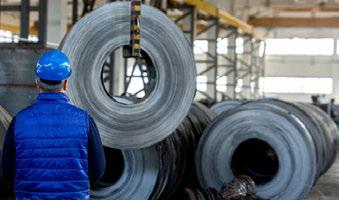
gain duty-free access to the 27-nation European bloc, while EU exporters will be allowed entry into the Indian market at concessional duties. The pact is expected to be signed and implemented later this year.
At Ashirvad, we use predictive maintenance to reduce unplanned downtime and analytics-based demand forecasting to improve production planning. Anomaly detection supports stronger quality control.
Mr. Vipin Rustagi, CIO, Ashirvad by Aliaxis
As digital technologies redefine manufacturing competitiveness in the tube and pipe industry, companies are increasingly leveraging AI, analytics and automation to improve efficiency, quality and responsiveness. In an exclusive interview with Tube&PipeIndia, Mr. Vipin Rustagi, CIO, Ashirvad by Aliaxis , shares how the company is embedding AI-led decisionmaking across operations, supply chain
Tube & Pipe India: AI and advanced analytics are increasingly influencing manufacturing competitiveness. From your perspective, how is AI reshaping operations in the tube, pipe, and fluid management industry?
Vipin Rustagi: AI and analytics are improving efficiency, quality, and speed of decision-making in manufacturing. At Ashirvad, we use
and customer engagement. He discusses Ashirvad’s structured digital transformation roadmap, use of predictive maintenance, IoT and analytics platforms, and the importance of governance-led execution. Mr. Rustagi also outlines how digital platforms are strengthening ecosystem engagement and building long-term operational resilience in a traditionally under-digitised sector.
predictive maintenance to reduce unplanned downtime and analyticsbased demand forecasting to improve production planning. Anomaly detection supports stronger quality control.
Real-time dashboards give us visibility across plant operations, supply chain, and sales performance. We also use technology like IoT systems to
monitor manufacturing parameters and encrypted QR codes on products to support traceability and reduce defects. These digital tools help us achieve consistent operational performance and better customer outcomes.
TPI: What were the key operational or business challenges that prompted Ashirvad to accelerate
its digital and technology transformation journey? What are your major takeaways now?
VR: PVC and pipe manufacturing, as an industry segment, has traditionally lagged in technology adoption. We recognised that to stay competitive and improve governance, we needed to move beyond traditional ways of working. Our ERP was mature, but we needed better analytics, integrated data, and customer engagement tools.
Our major takeaways are that transformation must be grounded in business outcomes, phased in priority areas, and supported with strong governance. We balance compliancerelated investments with those that deliver competitive advantage. Integration across systems and data platforms is crucial to deliver this at scale.
TPI: As CIO, how did you define the roadmap for integrating AI, data analytics, and automation across Ashirvad’s manufacturing and supply chain functions?
VR: Our roadmap focuses on three areas. Firstly, modernising core systems such as SAP ERP and consolidating data in an enterprise data lake for reliable insights. Secondly, enabling analytics platforms to bring operational and supply chain data together for real-time reporting. And driving automation in key processes such as claims and scheme processing, logistics and planning.
We also extended digital tools across customer and partner ecosystems with CRM platforms and engagement systems for dealers and plumbers. These steps have improved planning accuracy, reduced turnaround times and strengthened operational discipline.
TPI: Digital transformation often involves significant challenges. How has Ashirvad addressed the hurdles during modernization of its core systems?
VR: The challenges included legacy technical debt, integration complexity, and capability gaps within the organisation. We addressed these by modernising SAP ERP in phases, building middleware and API layers for system interoperability, and
Our major takeaways are that transformation must be grounded in business outcomes, phased in priority areas, and supported with strong governance.
investing in analytics platforms like Snowflake to unify data.
On the people side, we focused on training existing teams, hiring specialised talent, and creating cross-functional squads to improve adoption. Clear governance and leadership communication helped align teams and reinforce quality and compliance standards.
TPI: What tangible business benefits has Ashirvad realized so far from adopting digital technologies, whether in productivity, cost optimization, or customer responsiveness?
VR: We have seen measurable benefits in efficiency, cost control, and customer responsiveness. Automation of internal processes like scheme and claim handling has reduced processing time significantly. Analytics-led planning has improved forecasting accuracy and reduced operational variances. IoT monitoring and encrypted QR codes have strengthened product traceability and quality control. Digital platforms for dealers, distributors and plumbers have enhanced engagement, improved service responsiveness, and provided transparent execution visibility across our ecosystem.
TPI: How are analytics and digital platforms helping Ashirvad better engage with its wide ecosystem of dealers, plumbers, infrastructure partners, and end customers?
VR: Digital platforms are enabling smoother engagement across our business ecosystem. We have deployed dealer and plumber apps and a CRM system to support order management, scheme claims, loyalty and service interactions. Analytics gives us visibility into channel performance
and scheme effectiveness, enabling more targeted engagement and faster resolution cycles.
These platforms improve transparency and strengthen partner satisfaction by providing timely information and tools to manage their work more effectively.
TPI: Talent availability is often a constraint in advanced digital adoption. How are you building internal capabilities while bridging skill gaps in areas such as AI, data, and digital platforms?
VR: We follow a dual approach of internal capability development and strategic hiring. We run focused training programmes on analytics, data platforms and digital tools. At the same time, specialised talent has been brought in for key transformation initiatives. Cross-functional teams help spread knowledge and build sustained capability within the organisation.
TPI: Looking ahead, what emerging technologies do you believe will have the most significant impact on Ashirvad’s future growth and on the broader tube and pipe manufacturing ecosystem in India?
VR: Advanced planning tools, and digital process optimisation will drive the next phase of growth. Continued use of IoT and analytics will improve operational resilience.
We will also adopt technology in ways that balance compliance, governance, and competitive value, focusing on solutions that deliver measurable business outcomes. Digital transformation is a long-term journey, and we are investing with that perspective.
In an interaction with Tube&PipeIndia,
Mr. Jai Saraf, Chairman, Evonith Steel , outlines the company’s integrated steel manufacturing footprint in Central India, its diversified flat steel portfolio, and plans to expand capacity. He also highlights the company’s strategic entry into ductile iron pipes, driven by rising demand from water infrastructure and government-led development projects across the country. He further discusses Evonith’s logistics advantage due to its central location, its focus on value-added steel products for key sectors, and the role of innovation, sustainability, and circular practices in shaping the company’s long-term growth strategy.
Tube & Pipe India: Please give us an overview of Evonith Steel’s market footprint, key customer segments, and how the company positions itself within India’s steel value chain.
Jai Saraf: Evonith Steel (a combination of Evonith Metallics Limited and Evonith Value Steel Limited) is an integrated steel producer with a Steel Manufacturing Complex in Wardha, Maharashtra. This Complex, which is strategically located in Central India near Nagpur, is home to our manufacturing facilities along with a captive railway siding and other essential infrastructure facilities. This enables us access to all major markets across India and also provides proximity to key raw materials.
Evonith Metallics Ltd (EML) provides the hot metal/pig iron to Evonith
Value Steel Limited (EVSL) and third parties to manufacture steel. EVSL manufactures value-added flat steel products such as hot rolled coils, cold rolled coils, and galvanised coils and sheets (under the brand name of Neelpankh). We have also announced our foray into ductile iron pipes (under the brand name of Nectra), which is expected to be commissioned in the coming quarter, and we have recently broken ground for our manufacturing line of colour coated products and Galvalume sheets. These products are used in various industries including automotive, general engineering, pipes & tubes, railways etc.
As we look forward, our ambition is to position Evonith Steel among the leading steel companies in India, while setting benchmarks in responsible growth. We are embarking
on our plans to expand our production capacity from 1.4 MTPA to 3.5 MTPA over the next three years.
TPI: How does Evonith’s Central India location improve supply chain efficiency and service for customers pan-India?
JS: We are one of the largest integrated flat steel producers in Central India. We are well connected by roads and railways with access to all key product markets across India. Our proximity to iron ore mines helps in sourcing raw materials in a costefficient manner. Post commissioning of our DI pipes plant, we will be the only DI pipes manufacturer within a 300 km radius of our plant. Central India has virtually no largescale DI pipe facilities, creating a significant gap in supply for states like Maharashtra and Madhya Pradesh. Most major DI pipe manufacturing
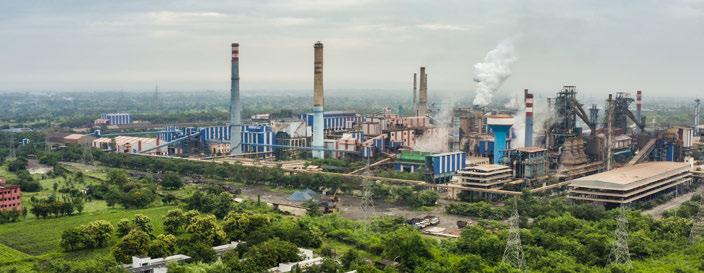
plants are concentrated in East India (West Bengal, Jharkhand) and Gujarat, often thousands of kilometers from project sites in Central India. This geographic imbalance leads to longer transportation distances, higher logistics costs and frequent delivery delays for government and urban infrastructure projects.
TPI: Evonith Steel has a diversified product portfolio spanning hot rolled, cold rolled, and galvanised steel. How does this portfolio cater specifically to the requirements of the metal pipes and tubes industry?
JS: Currently, we produce over 1.2 Million MT of iron and steel products. The OEM customers include BHEL and large pipes, tubes and cylinder makers. We also produce galvanised steel, sold to OEMs tapping into the Indian Railways and non-exposed automotive industries. Going forward, we aim to establish ourselves as a leading DI pipe manufacturer in India, backed by a proven track record of quality, reliability and customercentric service. Evonith Steel, under its brand portfolio of Nectra, aspires to become a preferred supplier for government bodies, EPC companies, contractors, and infrastructure developers with its range of ductile iron pipes.
TPI: Your entry into ductile iron pipes with a planned capacity of 300,000 TPA marks a strategic diversification. What demand trends and market opportunities are driving this move, and how do
you plan to differentiate in this segment?
JS: Ductile Iron (DI) pipes are the preferred solution for drinking water supply, sewage, and highpressure industrial projects due to their durability, strength, and corrosion resistance. Our entry into ductile iron pipes is driven by strong and sustained demand from water infrastructure, irrigation, and urban development projects across India. Government initiatives focused on water supply and sanitation, along with the replacement of aging pipelines, are creating long-term growth opportunities in this segment. Schemes such as the Jal Jeevan
We have announced India’s first centrally located, stateof-the-art ductile iron pipe manufacturing facility with a capacity of 300,000 TPA in Wardha, Maharashtra. With plans to build a strong PAN-India presence, our centrally located manufacturing base enables faster turnaround times, optimized logistics, and enhanced customer reach.
Mission, AMRUT 2.0, Interlinking of Rivers, Swachh Bharat Mission, and various major irrigation and industrial development programs have led to a rapid increase in DI pipe demand in India in recent years.
As part of our long-term vision to diversify and deepen our presence in infrastructure-driven sectors, we have announced India’s first centrally located, state-of-the-art ductile iron pipe manufacturing facility with a capacity of 300,000 TPA in Wardha, Maharashtra. With plans to build a strong PAN-India presence, our centrally located manufacturing base enables faster turnaround times, optimized logistics, and enhanced customer reach.
Entering the DI pipes segment is a natural extension of our commitment to nation-building and sustainable industrial growth. This strategic diversification also helps create a more balanced and resilient product portfolio by adding a stable, longterm demand segment aligned with public infrastructure investments.
TPI: DI pipes industry has many established players with large volumes and market penetration. How do you plan to differentiate in this segment?
JS: We are the first ductile iron pipe plant in Central India, which provides us with a significant logistical advantage. This central positioning enables us to serve key markets across Central, West, and South India more efficiently, resulting in reduced transportation
costs, faster delivery timelines, and improved service responsiveness for our customers. By optimizing freight costs and turnaround time, we aim to offer a more competitive and reliable supply proposition, particularly for government and infrastructure projects where timely execution is important.
TPI: The company has outlined plans to expand capacity from 1.4 million TPA to 3.5 million TPA over the next three years. How have you planned for this expansion?
JS: Our growth strategy continues to focus on meeting India’s growing demand for steel, with the government of India aiming to produce 300 million tonnes of steel annually by the year 2030. The growth of the company is in line with this vision, and we aspire to be one of the leading steel companies in India. To accomplish this, the company plans to increase steelmaking capacity to 3.5 MTPA. The company further continues to investigate brownfield
We are embarking on our plans to expand our production capacity from 1.4 MTPA to 3.5 MTPA over the next three years.
expansions and strategic acquisitions to improve its product range and operational footprint.
TPI: Looking ahead, what key trends, be it sustainability, quality standards, or technological adoption, do you believe will shape the future of our industry? How is Evonith Steel preparing to align with these evolving expectations?
JS: The future of steel lies in innovation, circularity, and digital integration. This year, we launched new steel grades designed for evolving market needs, while embedding
circularity across our operations including recovering metallics from slag, scrap utilization, and scaling waste-to-energy initiatives.
For us, steel is not just a product but a promise to build responsibly, innovate boldly, and grow inclusively. At Evonith Steel, we are forging this promise into reality every day; one tonne, one innovation, one community at a time. Our Brand Promise ‘Here for a Better Today’ perfectly encapsulates what we stand for; Excellence, Impact and People. As we move forward, our commitment remains unwavering to produce steel that strengthens society, protects the planet, and powers progress.
Our belief that ‘no one gets left behind’ continues to be the DNA with which Evonith Steel’s blueprint functions. And our business strategy is aligned with this philosophy, which is evident in our efforts towards excellence in our operations and impact of our initiatives among local communities and our people.
JTL has announced plans to deploy DFT ( Direct Forming Technology) and commission the color coated lines in its plants, thereby producing multi-fold SKUs.
Jan 24, 2026
JTL has announced plans to deploy DFT ( Direct Forming Technology) and commission the color coated lines in its plants that will facilitate the company to produce multi-fold SKUs, increasing its efficiency and capacity utilization. With these new deployments, the company will increase its manufacturing capacity to 2 million TPA by the end of FY27.
The company is also strengthening its footprint in the non-ferrous segment of copper and brass foils through its subsidiary RCI Industries.
In addition, the empanelment with BSNL and receipt order from PSTCL for lattice tower manufacturing
further strengthens JTL’s position across telecom, power transmission, and digital connectivity infrastructure, aligning with its strategy to scale its infrastructure solutions portfolio.
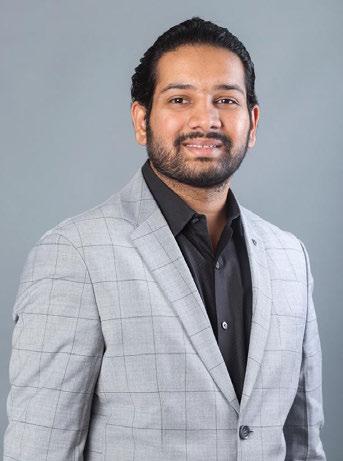
India’s steel industry will enter 2026 on stronger footing than it has ever before. Demand visibility is significantly improving and the supply chains are becoming more organised and customers are moving towards higher quality and compliance-led procurement. Mr. Vedant Goel, Director, Enlight Metals Pvt. Ltd. , in this authored article talks about how these shifts might appear slow but collectively are reshaping the way steel moves across the country. For all the players positioned close to the manufacturing ecosystems, the next two years offer an interesting combination of reinvention and stability.
The period between 2020 to 2023 was more predictable and saw a wave of brownfield expansions among major producers. However, much of that capacity is already absorbed in the system and fresh commissioning is expected to be measured in 2025-2026.
For OEMs it means a more stable supply environment and less volatility in availability and a narrower divergence between contracted and spot prices. According to recent industry estimates, domestic finished steel consumption grew by 13–14% in FY24, and projections for FY25–26 remain steady at 9–10% annually. This seems like a small number but this is consistent growth which gives producers and buyers space to plan procurement cycles with ease.
India’s industrial landscape is undergoing a major shift where infrastructure and mobility categories are becoming long term steel anchors. So, it is now not just limited to construction.
The renewable energy buildout is one of the best examples. With India targeting 500GW of non fossil capacity by 2030, demands for big solar mounting structures, wind towers and transmission components is set to increase meaningfully.
The railway sector, driven by dedicated freight corridors and station modernisation, continues to be one of the largest institutional consumers of steel.
For aggregators and processors, this means a wider product mix, more specialised grades, and consistent requirements for HR/CR Sheets, GI Coils, and structural steel.
Hydrogen Steel: Early Steps, Real Momentum
Green hydrogen across the globe is still at an early stage but India has already begun doing the groundwork. The pilot projects have already been funded by the Ministry of Steel to produce DRI using 100% Hydrogen. The existing blast furnaces have also been injected with hydrogen. These are important technical experiments which have de-risked the scaling up. On the other hand, even the large-scale industries have started the pilot projects for hydrogen-DRI demonstrations and pilot electrolysis.
For example, in the Vijayanagar works, JSW has established a sizable green hydrogen project. This has helped in the coming together of steel making, power readiness and the electrolyser capacity. In this way, India can quickly move from theory to industrial practice, in the areas associated with these pilot projects.
In the near term, the implication is not a sudden supply shift but a gradual rise in demand for cleaner, certified, and traceable materials. OEMs are increasingly asking for documentation on source, batch, and compliance, a trend that aligns with global expectations as hydrogen steel technologies mature.
One of the most encouraging trends entering into 2026 is the reduction of logistics friction. The expanding network of expressways, multimodal parks and digitised checkpoints have tangibly lowered transit uncertainties. This has directly impacted suppliers to maintain 95%+ ontime delivery, something that would have been difficult a decade ago.
Digitisation is equally transformative. From e-invoicing to QR-coded batch traceability, supply chains are slowly moving toward a more transparent operating model. This is improving trust across the ecosystem, particularly among OEMs who rely on consistent, verifiable inputs for their assemblies.
As industries scale, procurement teams are adopting more structured buying practices. Forecasting cycles are longer, order batching is more planned, and compliance documentation is more stringent.
This shift is not about squeezing prices but about reducing risk. With steel prices expected to remain within a relatively narrow band in 2026 barring short-term geopolitical shocks, OEMs are prioritising availability, reliability, and quality over opportunistic buying. For companies that simplify sourcing and offer transparent mechanisms, this is an important opportunity.
One of the quietest but most powerful shifts underway is the rise of data-led procurement. OEMs increasingly want real-time visibility such as delivery timelines, batch histories, pricing benchmarks, and supplier performance.
For suppliers, this changes the nature of partnership. It is no longer enough to supply material; companies must supply information. Those with digital platforms, integrated dashboards, and an analytics-driven approach will be better positioned to meet evolving expectations.
By 2026, the Indian steel industry is likely to look more organised, more transparent, and more closely linked to national manufacturing priorities. Growth may remain steady rather than spectacular, but the ecosystem itself will be healthier.
For aggregators, processors, and distributors, the opportunity lies in delivering reliability at scale, timely supply, verified quality, and digital traceability. These are not just differentiators; they are becoming core expectations.
As India accelerates its journey toward becoming a global manufacturing hub, steel will remain the backbone. The companies that simplify, standardise, and modernise the way steel is sourced will play a meaningful role in shaping the decade ahead.
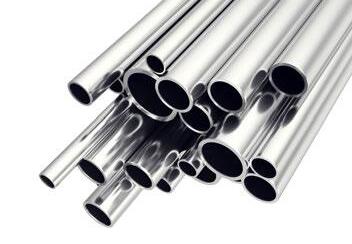
Hariom Pipe Industries has approved the incorporation of a new subsidiary, Metal Mart Private Limited, to be engaged in the trading of metal and steel-allied products.
Jan 08, 2026
Hariom Pipe Industries Ltd. has approved the incorporation of a new subsidiary, Metal Mart Private Limited, to be engaged in the trading of metal and steel-allied products. The company will hold 70% of the share capital, and any transactions with the new subsidiary will be conducted on an arm’s length basis. The incorporation is expected to be completed within 10–20 days, subject to regulatory approvals.

The incorporation of the proposed subsidiary aligns with the Company’s strategic goal of expanding its existing business.
Man Industries secures fresh orders worth INR 550 crore, strengthening its market position across domestic and international projects.
Jan 12, 2026
Man Industries (India) Ltd has won new supply orders totalling approximately INR 550 crore for various pipe products, including coated and line pipes. These orders will be executed over the next six months and come from a mix of domestic and international customers.
The wins underscore the company’s strong reputation in oil & gas, water transmission, and infrastructure
sectors. Following this development, Man Industries’ unexecuted order book has increased to around INR 4,600 crore, reflecting robust demand and strong business visibility.
Welspun Corp has secured a fresh export order for the supply of large-diameter coated line pipes for a project in the Americas, lifting its global order book and strengthening revenue visibility across key markets.
Jan 07, 2026
Welspun Corp has bagged a new export order for the supply of large-diameter coated line pipes for a project in the Americas, further reinforcing its international presence.
Since its last update in September 2025, the company has booked additional domestic orders worth around
INR 3,100 crore. With the latest export win, Welspun Corp’s consolidated global order book has increased to INR 23,460 crore, or about USD 2.6 billion.
BMW Industries achieves financial closure for its Bokaro steel project, securing INR 500 crore from a consortium of leading banks.
Jan 12, 2026
BMW Industries has secured INR 500 crore in debt financing from a bank consortium led by State Bank of India, with participation from HDFC Bank and Yes Bank. The funds will support the development of a greenfield downstream steel complex in Bokaro, Jharkhand.
The facility will have an annual capacity of 3,00,000 TPA of cold rolled full hard coils, 5,00,000 TPA of galvanized coils, and 2,00,000 TPA of color-coated coils.
Scheduled for phased commissioning in early FY27, the strategically located plant will cater to domestic and export markets, strengthening BMW Industries’ downstream presence and long-term growth strategy.
Dilip Buildcon has received PNGRB authorisation for developing, operating and maintaining an ATF pipeline project in Gujarat for 25 years.
Feb 13, 2026
Dilip Buildcon Limited (DBL) has received a Letter of Award granting authorisation to lay, build, operate, or expand a petroleum product pipeline for the transportation of Air Turbine Fuel (ATF) in Gujarat. The approval has been awarded by the Petroleum and Natural Gas Regulatory Board (PNGRB), the statutory regulator for petroleum and natural gas infrastructure in India.
The project involves developing an ATF pipeline from Navgam, Gujarat to the Sardar Vallabhbhai Patel International Airport. Under the authorisation terms, DBL will serve as the exclusive entity responsible for financing, construction, operation, and maintenance of the pipeline. The company will also have the right to

levy and collect transportation tariffs for ATF up to the designated delivery point for a period of 25 years.
The project will be implemented through a Special Purpose Vehicle (SPV), with Dilip Buildcon Limited holding 100% equity. This structure enables DBL to independently manage the long-term development, ownership, and operational responsibilities of the ATF pipeline asset.
East Pipes has approved the establishment of a new external pipe coating line in Dammam, worth approximately USD 21 million (SAR 78.5 million), doubling the plant’s capacity from 4 million square meters, to 8 million square meters per year.
Jan 21, 2026
Saudi Arabia based pipe manufacturer East Pipes has approved the establishment of a new external pipe coating line in Dammam. The project is expected to initiate in Feb 2026 and is expected to be completed in FY 2027-28.
The company indicated that this new pipe coating line will increase the capacity of the plant two-folds, from around 4 million square meters, to 8 million square
meters per year. The total cost of investment is SAR 78.5 million (approx. USD 21 million). The project is funded through cash transactions, financial programs, and bank facilities.
Hilco Industrial has announced the sale of a complete 8” seamless tube manufacturing plant in Montbard, France, a historically significant facility equipped with proven Mannesmann technology and OEM equipment from FIVES DMS Montbard and SMS Mannesmann Meer.
Jan 28, 2026
Hilco Industrial, a global provider of industrial asset solutions, has announced the sale of a complete 8” seamless tube manufacturing plant located in Montbard, France. The facility, formerly operated as Vallourec Bearing Tubes Montbard, has been mothballed in 2025.
The plant represents one of France’s historic centers of Mannesmann seamless tube technology and features core production equipment supplied by FIVES DMS Montbard and SMS Mannesmann Meer, two internationally recognized OEMs in seamless tube and rolling mill engineering.
With an annual production capacity of approximately 80,000 tonnes, the facility has produced hot- and coldrolled seamless tubes for automotive, bearing steel, oil & gas, and industrial applications.
Proven performance, immediate availability
The Montbard plant is a fully integrated operation that processes round billets into finished tubes across a wide dimensional range. Its hot-rolled tube capability extends up to 203 mm outside diameter with wall thicknesses from 8 to 55 mm, while cold-rolled tubes range from 25 to 102 mm outside diameter with wall thicknesses between 2 and 20 mm. The hot rolling section combines Stiefel-type piercing and Assel-type elongation, followed by calibration and rotary sizing, enabling tight dimensional tolerances, low eccentricity, and flexible production scheduling. Cold finishing is
supported by seven cold pilger mills manufactured by Mannesmann Meer and DMS Montbard, enabling precise reduction of outside diameter and wall thickness for demanding bearing and mechanical tube applications.
“This offering represents far more than individual machines—it is a complete, historically proven seamless tube manufacturing ecosystem,” said Margot ter Bogt. “For producers looking to expand capacity, enter high-precision bearing or automotive tube markets, or relocate a fully engineered plant, opportunities of this scale and pedigree are extremely rare.”
The Montbard plant is ideally suited for seamless tube producers seeking capacity expansion, investors targeting brownfield industrial projects, and OEMs or Tier-1 suppliers that require tight tolerances and strong metallurgical control. It is particularly well aligned with markets focused on bearing tubes, mechanical tubing, and API applications.
Grow Ever Group’s Uluberia facility expansion marks a significant step in scaling precision steel tube manufacturing with advanced machinery and world-class quality focus.
Jan 29, 2026
Grow Ever Group has announced the commissioning of its fourth manufacturing division at the Uluberia factory, marking a key expansion milestone for the company. The new division strengthens the group’s precision steel tube manufacturing capacity, supported by modern machinery and tightly controlled production processes.
According to the company, the expansion is aimed at meeting rising demand while ensuring world-class
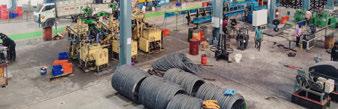
quality, dimensional accuracy, and consistency across applications. The Uluberia expansion reflects Grow Ever Group’s continued focus on scaling operations, enhancing manufacturing excellence, and reinforcing its position in the precision steel tube segment.
Jai Balaji Group has started commercial production of OPVC pipes, tubes, and fittings with an annual capacity of 1200 tonnes.
Feb 02, 2026
Jai Balaji Group has started commercial production of OPVC pipes, tubes, and fittings with an annual capacity of 1200 tonnes, effective February 2, 2026. The company has filed regulatory filings with NSE and BSE, confirming the successful execution of its strategic expansion into high-performance piping solutions announced in May 2025. Company Secretary Ajay Kumar Tantia has signed the official communication, ensuring compliance with listing obligations and disclosure requirements.
This milestone represents Jai Balaji Industries’
diversification into high-performance piping solutions for demanding applications such as water supply, irrigation, and industrial piping systems. With the commencement of OPVC production, the company is now positioned to serve the growing demand for advanced piping solutions in India, establishing its presence in this specialized segment while maintaining its existing business operations.
Surya Roshni has commissioned a new spiral pipe manufacturing project at Malanpur in Madhya Pradesh, to cater to rising water infrastructure demand.
Feb 12, 2026
Surya Roshni Ltd has commissioned a new spiral pipe manufacturing project at its Malanpur facility in Madhya Pradesh, with an investment outlay of around INR 50 crore.
The project has been set up to manufacture spiral pipes primarily for water infrastructure projects, with an installed capacity of about 24,000 tonnes per annum.
The new facility is aimed at strengthening the
company’s presence in water transmission projects across key markets such as Rajasthan, Madhya Pradesh and Uttar Pradesh, supporting growing demand driven by government-led water supply and irrigation initiatives.
Under India’s PLI Scheme 1.2 for specialty steel, Sambhv Steel Tubes and its subsidiary have committed about INR 362 crore to expand stainless and alloy steel production capacity.
Feb 9, 2026
Sambhv Steel Tubes Limited and its wholly owned unit Sambhv Tubes Private Limited have signed separate Memoranda of Understanding (MoUs) with the Ministry of Steel under the Production Linked Incentive (PLI) Scheme 1.2 for specialty steel, the company announced.
Under the agreements, the parent company will invest INR 181.75 crore to establish facilities for manufacturing thin precision-gauge stainless steel sheets (0.18–0.4 mm), with a committed capacity of 116,000 tonnes per year by FY 2027–28.
Meanwhile, Sambhv Tubes Private Limited will invest
INR 180 crore to add a dedicated capacity of 24,000 tonnes annually for alloy steel including stainless steel rolled long products over the same period.
The investments support India’s broader PLI 1.2 initiative, which is drawing commitments from numerous companies to boost domestic specialty steel output, a segment crucial for strategic, automotive, electrical and infrastructure applications.
Scoda Tubes Limited has proposed capacity addition of welded tubes & pipes at Mehsana, Gujarat. The total investment required for this addition is INR 400 million. The proposed capacity addition is to 8,000 MTPA by the end of Q3 FY 2026-27.
Feb 27, 2026
Scoda Tubes Limited has proposed capacity addition of welded tubes & pipes at Mehsana, Gujarat. The capacity addition is proposed in addition to the existing expansion plan of the company as disclosed in Prospectus dated May 30, 2025.
The company’s existing capacity is 1,020 MTPA (excluding capacity addition proposed in Prospectus) and the proposed capacity addition is up to 8,000 MTPA. The period within which the proposed capacity is to be added is by the end of Q3 FY 2026-27.

The total investment required for this addition is INR 400 million (including applicable taxes). The mode of financing is internal accrual and term loan from the bank. The capacity addition will enhance both the product offering and market position, meeting the customer demand.
Tube Investments of India Limited (TII) has announced a strategic entry into the metal injection moulding sector through the acquisition of an 87 percent equity stake in Orange Koi Private Limited worth INR 73 crore.
Feb 10, 2026
Tube Investments of India Limited (TII) has announced a strategic entry into the metal injection moulding sector through the acquisition of an 87 percent equity stake in Orange Koi Private Limited worth INR 73 crore.
This acquisition involves a combination of primary and secondary investments executed in multiple tranches, aligning with TII’s long-term growth strategy of diversifying into adjacent business segments that enhance its core competencies.
Mr. Mukesh Ahuja, Managing Director of Tube Investments of India, emphasized that by combining TII’s engineering expertise and strong customer relationships with Orange Koi’s specialised technologies, we are building a platform that will
deliver substantial value to the customers while strongly positioning the company at the forefront of next-generation precision manufacturing.
TII is India’s leading engineering company engaged in manufacturing of precision steel tubes and strips, automotives, industrial chains etc.
Venus Pipes and Tubes provided stainless steel piping solutions for HVAC and AHU systems at India’s first semiconductor assembly and test facility.
March 10, 2026
Venus Pipes and Tubes Limited has supplied stainless steel piping solutions for the HVAC and AHU systems at India’s first semiconductor assembly and test facility, contributing to the critical infrastructure required for advanced semiconductor manufacturing.
In semiconductor production environments, HVAC systems play a vital role in maintaining cleanroom stability, controlled airflow, and precise environmental conditions. The company’s piping solutions support the facility’s environmental control network, ensuring reliability and operational efficiency.
According to the company, projects of this scale require high levels of precision, consistency, and quality. The participation in the landmark semiconductor project reflects Venus Pipes’ commitment to supporting India’s rapidly advancing industrial and technology ecosystem through robust infrastructure solutions.
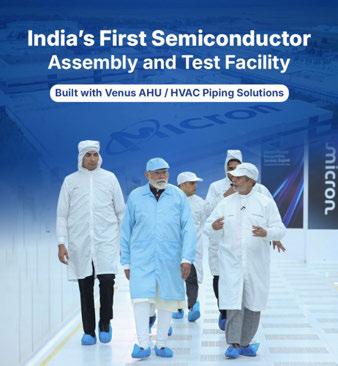
VSTL recently commenced supply of the crash barriers, Power Transmission Line Towers, Electric Resistance Welded (ERW), Octagonal Poles and Galvanized (GI) Pipes produced from its greenfield plant located at Sundargarh in Odisha.
Feb 17, 2026
Vibhor Steel Tubes Limited (VSTL) recently commenced supply of the crash barriers, Power Transmission Line Towers, Electric Resistance Welded (ERW), Octagonal Poles and Galvanized (GI) Pipes produced from its greenfield plant located at Sundargarh in Odisha. Commercial production at the 156,000 MTPA facility in Odisha had started in June 2025. The plant, which entailed a total investment of INR 119.83 crore, offers several value-added steel products such as crash barriers, Power Transmission Line Towers, high mast lighting poles, octagonal poles and monopoles.
Commenting on the company’s performance, Mr. Vijay Kaushik, Chairman and Executive Director, Vibhor Steel Tubes, said, “We have posted a healthy growth in turnover during the third quarter on the back of a robust demand for steel coming from infrastructure and real estate sectors. The government’s sustained
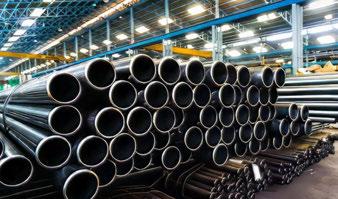
emphasis on infrastructure and manufacturing sectors has helped generate a sustained momentum for the domestic steel ecosystem. With our new capacity now onstream we have been able to garner a sizable share of the demand for value-added steel. We expect good growth in our topline and bottomline on the back of an increasing share of sale of value-added steel moving forward.”
Viraj Profiles has signed an MoU under the PLI scheme, committing INR 280 crore to boost value-added steel manufacturing capabilities.
Feb 10, 2026
Viraj Profiles Pvt. Ltd. has signed a Memorandum of Understanding (MoU) with the Ministry of Steel under the Government of India’s Production Linked Incentive (PLI) scheme, with a planned investment of INR 280 crore.
The investment will be directed toward strengthening technological capabilities, expanding value-added manufacturing, and enhancing India’s position as a global hub for advanced steel products. The initiative aligns with the government’s objective of improving domestic manufacturing competitiveness and promoting innovation-led growth in the steel sector.
Commenting on the development, Rakesh Chauhan, Managing Director, Viraj Profiles Pvt. Ltd., said the PLI framework serves as a catalyst for elevating India’s
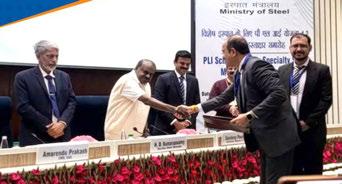
manufacturing capabilities and global competitiveness, adding that the company is proud to contribute to building a stronger steel ecosystem.
The MoU underscores Viraj Profiles’ continued commitment to supporting India’s manufacturing growth while developing world-class capabilities for global markets.
The Water Resources Department, Maharashtra has issued a tender for the construction of a pipe distribution network and water management (CADWM) works in Ghodazari canal division, Nagbhid, in Maharashtra, creating irrigation potential for 3,000 hectares of land.
Jan 07, 2025
The Water Resources Department, Maharashtra has issued a tender for the construction of a pipe distribution network and command area development and water management (CADWM) works in Ghodazari canal division, Nagbhid, Maharashtra.
The project’s objective is to create irrigation potential for 3,000 hectares, supporting agricultural development and improving water management in the region.
The estimated value of the contract is nearly INR 126 crore, and the work is scheduled to be completed within 18 months, including the monsoon period.
The scope of work involves designing and laying an efficient pipeline network along with integrated
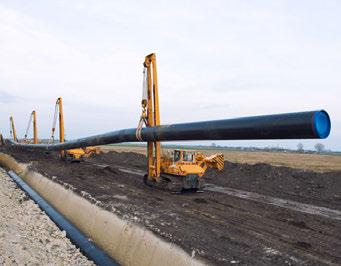
water management interventions to ensure equitable distribution and optimal utilization of water resources. The last date to submit the bid is 15 January, 2026.
Oil India has announced a capacity augmentation project of Numaligarh–Siliguri Product Pipeline (NSPL). The brownfield pipeline project, worth INR 750 crore, has increased its capacity from 1.72 million metric TPA to 5.5 million metric TPA.
Mar 14, 2026
Oil India has announced a capacity augmentation project of Numaligarh–Siliguri Product Pipeline (NSPL) The brownfield project worth INR 750 crore was inaugurated by Prime Minister Narendra Modi.
The 654-km cross-country multi-product pipeline connects Numaligarh in Assam to Siliguri in West Bengal.The pipeline capacity has been expanded from 1.72 million metric TPA to 5.5 million metric TPA, enabling higher fuel transportation. The expansion increased Numaligarh Refinery’s capacity from 3 million metric TPA to 9 million metric TPA, aligned with India’s Hydrocarbon Vision 2030 for the North-East.
The approved cost of the project was INR 860 crore, but decreased by INR 110 crore, demonstrating strong cost discipline. The project also marks an important milestone for the country’s petroleum transportation infrastructure.
Shyam Metalics has also undertaken several projects that will be commissioned in the coming years. The company will expand its two blast furnace projects with investments of INR 200 crore and INR 410 crore, respectively, in 2027. In addition, the company plans to establish an 800 MW power plant at Sambalpur in the same year. The company also plans to set up a hot rolling mill and furnace having a capacity of 1.58 million TPA in 2029.
Jan 24, 2026
Shyam Metalics’ board of directors has approved the voluntary liquidation of Shyam Metalics International DMCC (SMIDMCC), a wholly owned subsidiary of Shyam SEL and Power Limited (SSPL) and a step-down subsidiary of the company.
The company has also undertaken few projects such as: expansion of two blast furnace projects from 0.45 MTPA to 0.55 MTPA and from 0.77 MTPA to 0.98 MTPA and with an estimated investment worth INR 200 crore and INR 410 crore respectively. The project is expected to be commissioned on June 30, 2027.
The company will also establish a power plant at Sambalpur with a capacity of 800 MW. The estimated cost of this project is worth INR 450 crore and is
expected to be commissioned on June 30, 2027.
Shyam Metalics’ will also set up a hot rolling mill & furnace with a capacity of 15,80,000 TPA. The estimated investment of this project is INR 5,400 crore and is set to commission on Sept 30, 2029.
All the above mentioned projects will be funded through a mix of internal accruals and borrowings. These investments are expected to enhance the company’s manufacturing capacity, operational efficiency, and long-term growth prospects.
SMS group inaugurated a new manufacturing facility in Sanand, Gujarat, boosting capacity, jobs, and support for India’s growing steel industry.
Jan 23, 2026
SMS group inaugurated a state-of-the-art manufacturing facility in Sanand near Ahmedabad, marking a major expansion of its operations in India. Built on an 80,000-square-meter site, the Sanand facility will manufacture machinery, equipment, and complete systems for flat and long steel products as well as forging technology. It is capable of producing components weighing up to 125 tons and assembling entire production lines.
According to Fabíola Fernandez, CFO and Member of the Executive Board of SMS group, the investment strengthens the company’s production base and positions SMS as a key supplier to India’s expanding steel industry, where output is expected to grow from about 150 million tons to 300 million tons annually.
Marco Asquini, CEO Region APAC & MEA and Managing Director of SMS India, said the new site combines German engineering standards with local manufacturing, enabling reliable and timely execution for customers.
Strategically located in western India’s industrial hub, the Sanand facility offers close proximity to customers, access to skilled labor, reliable infrastructure, and strong connectivity to major seaports. SMS group said the complex is designed for future expansion, with further investments and workforce growth planned.
SIKORA AG has supplied its CENTERWAVE 6000 system to Suzhou Bechton Plastic Machinery Co., Ltd. to support high-precision PVC-O pipe production at its new Zhangjiagang factory.
Suzhou Bechton Plastic Machinery Co., Ltd., a leading manufacturer of PVC-O plastic pipe production line equipment, has officially opened its new, state-of-theart factory in Zhangjiagang, China. This is a significant step in the company’s capacity expansion and technological upgrade. The new factory is dedicated to setting up a production line for high-performance PVC-O pipes, for which extremely precise and stable measuring devices are required.
As Bechton’s partner, SIKORA showcased its CENTERWAVE 6000 in a live demonstration during the factory open day, which was well attended by visitors. During the event, there were a lot of in-depth exchanges and technical discussions with the visitors regarding the measurement accuracy and product stability of the existing devices, particularly addressing the special process requirements for large PVC-O pipe production lines.
Technical strength: addressing three major challenges in large pipe production with precision
This demonstration directly met the core requirements of Bechton’s new PVC-O pipe production line for pipes in 90 to 400 mm diameter range. It presented how the technical strength of the CENTERWAVE 6000 effectively solves critical production challenges:
• 360° comprehensive monitoring: The CENTERWAVE 6000 uses millimeter wave technology to achieve a 100 % coverage of the pipe circumference during measurement, guaranteeing precise monitoring of the wall thickness of each pipe. This technology effectively overcomes the measurement challenges encountered with traditional methods, ensuring homogeneity of the pipe wall thickness, and thereby enhancing the pipe’s pressure rating and durability.
• Easy operation: The system can automatically identify the refractive index of the material, without any calibration. The CENTERWAVE 6000 is easy to operate and provides precise control over the wall thickness, ensuring quality by preventing the production of
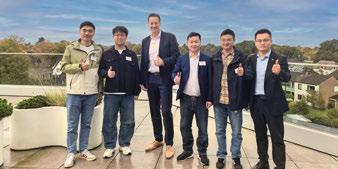
excessively thin pipes or overly thick pipes. Thanks to intelligent control, the system significantly reduces reliance on operator experience and provides realtime data records and trend diagrams. This provides a solid foundation for process optimization and quality traceability.
• Enhancing production line automation: The system enables the seamless integration and communication with the production line. This facilitates automation upgrades, reducing manual intervention and enhancing production stability. By transmitting realtime measurement data to the PLC line control, the CENTERWAVE 6000 optimizes process parameters, thereby significantly improving production efficiency and product quality.
Strategic advancement: expanding the market for high-performance pipes by strengthening cooperation
During K 2025, Mr. Zhou, Bechton’s General Manager, and his team visited SIKORA’s headquarters in Bremen, Germany. Technical discussions between the two companies led to Bechton placing an order for a CENTERWAVE 6000 for its latest PVC-O production line, thus establishing a strategic cooperative relationship.
Following the successful installation and commissioning of the CENTERWAVE 6000 at Bechton’s new factory, it is now fully operational, playing a key role in ensuring the high quality of PVC-O pipes thanks to its reliable measuring performance.
In the future, both sides will focus on upgrading devices and optimizing processes to enhance
production efficiency and product quality. The aim is to jointly develop the high-performance pipe market, serve global customers, drive industry technological innovation, and propel PVC-O pipe production technology forward.
Bechton and SIKORA believe that their cooperation goes beyond a simple device supply agreement. It encompasses technical innovation and collaborative market development, with the aim of delivering
breakthrough solutions to the global pipe industry.
The cooperation between Bechton and SIKORA has deepened at every stage, from on-site demonstrations at Bechton’s new factory to exchanges at the SIKORA headquarters and device procurement, installation and commissioning. Together, they are committed to driving the industry towards a more intelligent, precise and sustainable future.
The acquired technologies will contribute to SMS’ new innovative solution in the field of “green iron”, a hydrogen-based, combined fluidized bed – Open Bath Furnace process incorporating the Circored™ technology.
SMS group speeds up decarbonization of steel production and takes over selected ferrous technologies from Metso. By acquiring selected Metso business units and technologies located in Germany, India, China and Australia, SMS group strengthens and expands its position as a leading full-line supplier for sustainable metallurgy. The acquisition enables SMS group to deliver customized solutions to accelerate the industry’s transition to low-emission iron and steelmaking, adaptable to any site conditions, ore and energy profiles, or regulatory regimes.
By integrating agglomeration technologies for travelling grate pelletizing, sintering and CFB (Circulating Fluid Bed) calcination, SMS group broadens its upstream process offering and strengthens its position for sustainable metallurgy and direct-reduction routes. Iron ore agglomeration is essential for producing the feedstock required by shaft-furnace direct-reduction processes as well as conventional ironmaking. Customers gain a single-source partner for end-to-end solutions—from raw-material processing to finished-product systems— including high-efficiency agglomeration technologies that combine flexible feed handling, advanced heat-recovery and combustion technology, and robust automation.
“As a driving force in decarbonization, SMS and our new team members from Metso merge their research, process expertise and service business. We accelerate scalable, cost effective and sustainable processes for iron and steelmaking. The collaborative spirit of our experts will enable targeted and competitive innovation,” says Thomas Hansmann, CTO of SMS
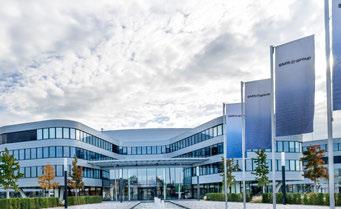
group.
SMS group is leveraging Metso’s Circored™ technology to create a unique hydrogen-based direct reduction process for green ironmaking. This approach combines fluidized-bed reduction from Circored™ with SMS group’s established Open Bath Furnace technology, forming a two-stage reduction process. Unlike conventional direct reduction plants that rely on high grade pellets with high Fe-content and specific physical properties - entailing complex, energy-intensive preprocessing— the Circored™-OBF route accepts iron ore fines with lower-Fe concentration, reducing preparation needs and increasing feedstock flexibility and cost advantages.
Alongside integrating new technologies, SMS group and the integrated Metso teams offer a comprehensive service portfolio for travelling grate and straight grate pelletizing, sintering, alumina calcination and primary metallurgy. Customers will benefit from SMS group’s proven expertise in field services, maintenance, repairs and plant modernizations, supported by an extensive global service network to ensure fast response, optimized uptime and full lifecycle support.
Vardhman Special Steels approved a INR 475 crore investment to build a forging and machining facility in Ludhiana, expanding automotive capabilities.
Dec 24, 2025
Vardhman Special Steels Limited has approved a INR 475 crore capital investment to establish a steel forging and machining facility in Ludhiana. The project, supported by technical collaboration with Japan’s Aichi Steel Corporation, marks the company’s strategic forward integration into value-added automotive components.
The new unit will enable Vardhman to offer end-to-end solutions, from steelmaking to finished forged parts, enhancing quality consistency and supply reliability. The facility aligns with the company’s long-term growth plans across automotive, engineering, tractor, bearing, and allied sectors.
Rashtriya Ispat Nigam Limited (RINL), the corporate entity of Vizag Steel plant (Visakhapatnam steel plant) has reported a profit of INR 54 crore in January 2026. The company achieved a record 94% capacity utilisation and doubled its hot metal production, reaching 19,401 tonnes per day.
Feb 05, 2026
Rashtriya Ispat Nigam Limited (RINL), the corporate entity of Vizag Steel plant (Visakhapatnam steel plant), has reported a profit of INR 54 crore in January 2026, marking a significant milestone in the Vizag Steel plant turnaround journey. The company achieved a record 94% capacity utilisation, up from just 45% 18 months ago.
The hot metal production has nearly doubled, reaching 19,401 tonnes per day, reflecting improved operational efficiency and plant stability.
The recovery has been supported by INR 11,440 crore in central assistance, along with major relief from the state government on power, water, and taxes, strengthening the mill’s financial and operational position.
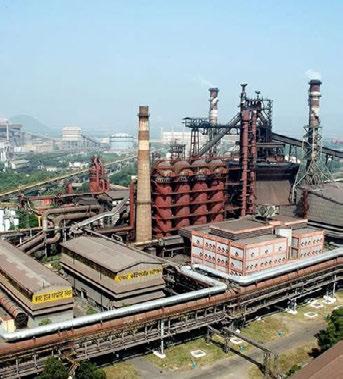
Jindal Steel plans major expansion at its Raigarh plant to meet rising demand for heavy, ultra-heavy structural steel.
Dec 29, 2025
Jindal Steel has announced plans to double its structural steel manufacturing capacity at its Raigarh facility from 1.2 million tonnes per annum (MTPA) to 2.4 MTPA by mid-2028.
The expansion includes commissioning a new dedicated structural steel mill, supported by advanced upstream and downstream technology upgrades. Postexpansion, the company will be able to manufacture ultra-heavy parallel flange sections with depths up to 1,100 mm and weights of up to 1,500 kg per metre, among the largest capacities in India.
The move aims to strengthen domestic availability of heavy structural steel for infrastructure, energy, transmission, renewable, refinery and high-rise
construction projects, while reducing reliance on imports and improving supply-chain resilience.
Certification strengthens Chandan Steel’s global standing in water-critical applications, ensuring compliance with stringent international water-contact material standards.
Dec 22, 2025
Chandan Steel Limited has achieved NSF/ANSI 61 certification for its stainless steel seamless pipes and fittings, marking a significant milestone in its quality and compliance journey. The certification confirms that the company’s products meet rigorous global standards for materials used in contact with potable water, ensuring they are free from leachable contaminants.
Widely mandated across hyperscale data centres, semiconductor manufacturing, potable water infrastructure, and mission-critical facilities, NSF/ANSI 61 certification enhances Chandan Steel’s credibility and positions it as a preferred global supplier for highpurity and reliability-driven applications.
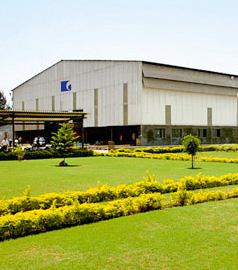
Desco Infratech has received a LOI from BPCL for executing steel and MDPE pipeline infrastructure projects across multiple Indian states.
Feb 13, 2026
Desco Infratech Limited has received a Letter of Intent (LOI) from Bharat Petroleum Corporation Limited for undertaking critical pipeline infrastructure works across multiple states in India.
The scope of work includes steel pipeline laying, MDPE (Medium-Density Polyethylene) pipeline laying, and last mile connectivity projects. Execution will span Karnataka, West Bengal, Bihar, Maharashtra, Jharkhand, and Tamil Nadu, expanding the company’s operational presence across diverse geographies.
The mandate covers backbone steel pipelines forming the primary gas transmission network, along with MDPE pipeline networks used for city gas distribution and last mile connectivity to residential, commercial, and industrial consumers. The multi-segment nature of the project underscores Desco Infratech’s integrated execution capabilities across the oil & gas and city gas distribution value chain, positioning it as
a comprehensive pipeline infrastructure execution partner.
Desco Infratech Limited is a Surat, Gujarat based company working in the engineering, planning & construction segment in the City Gas Distribution, along with the energy sector such as- renewable, water & power sectors in India.
ArcelorMittal Nippon Steel India (AMNS) has unveiled its long-term expansion plan to increase its domestic production of steel by three folds to 25-26 million tonnes per annum. The expansion consists of capacity increase in Hazira steel plant, Gujarat and a greenfield steel mill project in Andhra Pradesh.
Dec 15, 2025
ArcelorMittal Nippon Steel India (AMNS) has unveiled its long-term expansion plan. Under this new plan, the company will increase its domestic production of steel by three folds to 25-26 million tonnes per annum.
The expansion will happen in the company’s existing Hazira steel plant in Gujarat. The Hazira mill will double its capacity from 9 million tonnes per year to 18 million tonnes, reaching 15 million tonnes per annum by 2026.
Alongside, the company will also undertake a greenfield steel mill project in Andhra Pradesh. Having a capacity of 8.2 million tonnes per annum, the project is scheduled for completion by 2030.
Both the projects will be supported by a Capex of USD 6.25 billion that will be invested in 2 phases in 2026-27 and 2027-28. The company will also develop a 7GW renewable energy capacity by 2032, to enhance lowcarbon energy consumption across its operations.
AM/NS has recently launched AM/NS Vibrance and AM/NS Optima to meet the designled needs of Original Equipment Manufacturers across appliance and industrial manufacturing ecosystems.
Feb 18, 2026
AM/NS has recently launched AM/NS Vibrance and AM/NS Optima, two premium solutions engineered to meet the increasing design-led needs of Original Equipment Manufacturers across appliance and industrial manufacturing ecosystems. The two products are significant for expanding the company’s branded steel portfolio to support OEMs productivity and value creation.
AM/NS Vibrance meets OEM’s requirements through advanced coating technology applied over precisionengineered steel substrates, ensuring reliable performance from fabrication through end use. AM/ NS Optima creates highly refined, precise and flawless surfaces, fulfilling varied applications.
Mr. Ranjan Dhar, Director and Vice President – Sales & Marketing, AM/NS India, shared with a media outlet that OEMs focus on precision manufacturing and consistent brand quality. The material choice directly
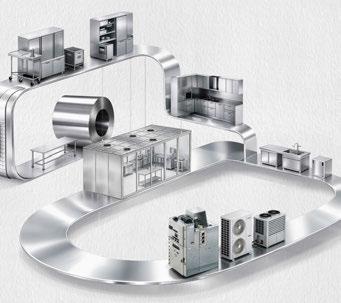
impacts productivity, cost and long-term performance.
The appliance and industrial manufacturing ecosystems continue to be key growth pillars for the company’s value-added steel portfolio.
Avtar Steel Ltd. has marked a significant milestone by receiving a Memorandum of Understanding (MoU) under the Government of India’s Production Linked Incentive (PLI) Scheme 1.2 for Specialty Steel, reaffirming its commitment to strengthening domestic steel manufacturing.
Feb 10, 2026
Avtar Steel Ltd. formally received the MoU under the PLI Scheme 1.2 from Shri H. D. Kumaraswamy, Hon’ble Union Minister of Steel and Heavy Industries. The MoU was accepted on behalf of the company by Mr. Ashok Chawla, Chief Financial Officer of Avtar Steel Ltd.
The participation in PLI Scheme 1.2 represents a strategic step for Avtar Steel as it aligns with the Government of India’s vision to promote specialty steel manufacturing, reduce import dependence, and enhance global competitiveness under the Make in India initiative. The scheme is designed to support investment, technology upgradation, and capacity expansion in downstream steel segments.
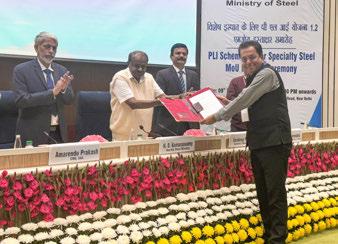
The expansion is centered on two primary petroleum routes: the 62-kilometer Amlekhgunj–Chitwan pipeline and the 50-kilometer Siliguri–Jhapa pipeline, with a combined cost of Rs 15 billion (approximately USD 103.1 million). The infrastructure will be financed through grants provided by the Indian Oil Corporation, and NOC funds of approximately USD 59.4 million.
The Nepal Oil Corporation (NOC) is accelerating the construction of several cross-border petroleum and liquefied petroleum gas pipelines in collaboration with India, securing Nepal’s energy infrastructure.
NOC Executive Director Chandika Prasad Bhatta announced that this initiative aims to modernize fuel transit, reduce heavy reliance on tanker trucks, and ensure a more stable energy supply.
The expansion is centered on two primary petroleum routes: the 62-kilometer Amlekhgunj–Chitwan pipeline and the 50-kilometer Siliguri–Jhapa pipeline, with a combined cost of Rs 15 billion (approximately USD 103.1 million). The infrastructure will be financed through grants provided by the Indian Oil Corporation.
In addition to the pipeline network, the NOC is committing Rs 8 billion (approximately USD 59.4 million) of its own funds to construct a fuel storage facility in Chitwan. This terminal will serve as a strategic hub, allowing for larger reserves and more efficient distribution to the country’s central and western regions.
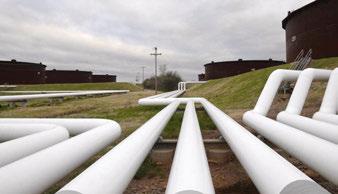
The cooperation also extends to cooking gas. A proposed Rs 12 billion (approximately USD 82.5 million) LPG pipeline stretching from Motihari, India, to Sarlahi, Nepal, is currently under development.
This pipeline alone will decrease annual transportation costs by approximately Rs 6 billion (approximately USD 41.2 million), and expenses associated with road transit. The transition will also reduce the environmental footprint of fuel delivery and minimize traffic congestion on major highways. While the completion date has not been set, the NOC has designated these projects as high-priority initiatives to support Nepal’s growing energy demands.
Jindal Group completes new factory and starts trial runs, expanding manufacturing capacity for MLC pipes and PP silent drainage systems.
Dec 17, 2025
Jindal Group has completed its new manufacturing facility, with trial runs currently underway, marking a key milestone in the company’s expansion journey.
The new plant will manufacture multilayer composite (MLC) pipes and the recently introduced PP Silent Drainage Pipes, strengthening the group’s product portfolio and manufacturing footprint.
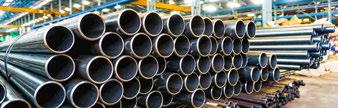
According to Managing Director Sahil Jindal, the facility is an important step toward full-scale production and reflects the collective efforts of the team as the company prepares for the next phase of growth.
Jindal (India) Limited, a part of BC Jindal Group, has commissioned a coating line worth INR 1,100 crore for value-added steel products.
Feb 09, 2026
Jindal (India) Limited, a part of BC Jindal Group, has commissioned a coating line for value-added steel products.
The company has invested INR 1, 100 crore for this new line and is expected to boost the company’s production to around 0.3 million metric tonnes, as per media report. It is expected to contribute 20 percent of JIL total’s revenue in FY 26.
The new line was supplied by SMS Esmech, and is equipped with advanced automation and precise coating control system for better process efficiency.
Shyam Sunder Jindal, Promoter of BC Jindal Group states a media outlet that this new line reflects the company’s long-term vision to build a strong, technology-led downstream steel platform in India,
enhancing product quality and expanding value added offerings.
Bokaro Steel Plant (BSL) is set for a brownfield expansion aiming to increase its production capacity from 5.25 million tonnes per annum to 7.55 million tonnes per annum.
Dec 29, 2025
Union Minister Bhupathiraju Srinivasa Varma has announced that the Bokaro Steel Plant (BSL) is set for a brownfield expansion aiming to increase its production capacity from 5.25 million tonnes per annum to 7.55 million tonnes per annum.
The expansion aligns with India’s goal of self-reliance in steel production and PM’s vision of achieving 300 million TPA steel capacity by 2030. The project involves significant capital investment, and technology upgradation, boosting the steel sector.
The proposed expansion is expected to attract an investment of around INR 25,000 crore to the state of Jharkhand, leading to the economic and industrial growth in the region, along with substantial employment opportunities.
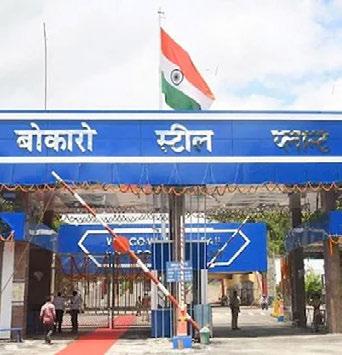
The proposed initial public offering (IPO) is worth INR 191 crore, and the company is issuing fresh equity shares with no offer for sale (OFS) component.
Jan 29, 2026
Steel processing company Bombay Coated and Special Steels has filed a draft red herring prospectus (DRHP) with the capital markets regulator SEBI to raise funds via the initial public offering. The proposed offering is worth INR 191 crore, and the company is issuing fresh equity shares with no offer for sale (OFS) component.
The net proceeds will be utilised for repayment of certain borrowings, financing of capital equipment under existing lease arrangements with Siemens Financial Services Pvt. Ltd. and for general corporate purposes.
Bombay Coated and Special Steels has an aggregate installed processing capacity of 220,506 million TPA in FY 25-26.
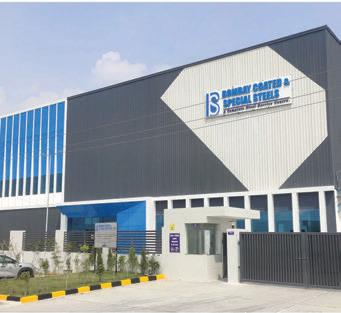
Dynamic Forge & Fittings has completed manufacturing hot induction bends for Oil India’s Duliajan–Numaligarh Gas Pipeline project, meeting stringent technical specifications.
March 10, 2026
Dynamic Forge & Fittings (I) Pvt. Ltd. has announced the successful production of hot induction bends for the Oil India Limited Duliajan–Numaligarh Gas Pipeline (DNPL) project. The components were manufactured to meet strict engineering and quality requirements for critical pipeline infrastructure.
The bends were produced using TMCP line pipes to ensure enhanced strength and toughness, along with one-metre tangent lengths to meet precise pipeline design specifications. The manufacturing process also included Post Bend Heat Treatment (PBHT) to achieve optimal mechanical properties.
To ensure operational reliability and safety, the components underwent 100% hydrostatic testing under witnessed inspection. The company stated that the project reflects its focus on precision engineering, stringent quality control, and reliable solutions for demanding pipeline applications.
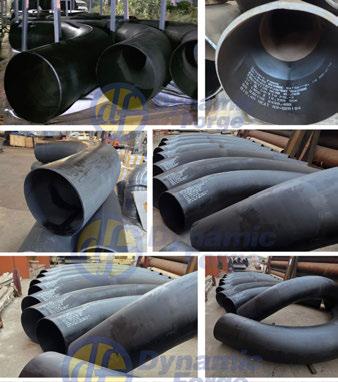
Gallantt Ispat Limited has announced a INR 3,000 crore capital expenditure program. Of this, INR 1,200 crore will be deployed towards capacity expansion, INR 1,500 crore will be invested in the Sonbhadra (UP) and Todpura (Rajasthan) mines to secure long-term raw material linkages, while INR 300 crore has been earmarked for setting up a 78 MW solar power plant.
Gallantt Ispat Limited has announced a capex program of INR 3000 crore. The capex is being deployed, with significant allocation toward backward integration of key raw materials. The remaining investment is directed towards phased capacity expansion over the next 2-3 years.
The company has planned phased expansion in steelmaking with a total installed capacity of ~12.3 lakh MT across Gorakhpur & Kutch units. Gallantt Ispat will invest INR 1200 crore for this expansion. The steekmaking company will also invest INR 1500 crore in Sonbhadra (UP) mines and Todpura (Rajasthan) mine, securing raw material linkage and achieving EBITDA improvement of ~INR 2,000/tonne.
Additionally, the company will deploy INR 300 crore for 78MW solar plant, supporting decarbonization and improving long-term energy efficiency.
Jayaswal Neco Industries Limited has signed a Memorandum of Understanding (MoU) with the Government of Maharashtra for the project, which entails an investment of INR 12,262 crore.
Jayaswal Neco Industries Limited has signed a Memorandum of Understanding (MOU) with the Government of Maharashtra for setting up a 2 million TPA integrated steel plant at Gadchiroli, Maharashtra.
The MoU was signed on Jan 22, 2026, at Davos, Switzerland. The proposed project investment is worth INR 12,262 crore, with direct employment of 2600 staff/workers.
The Government of Maharashtra will facilitate obtaining necessary permissions/registrations/ approvals/clearances/ fiscal incentives, etc. from
the concerned departments of the State, as per the policies/rules and regulations.
Jindal Steel has successfully developed and dispatched its first lot of 6mm Rockhard 400 steel plate from its newly commissioned Heat Treatment Complex at Raigarh, making it the only producer of this grade in India.
Jindal Steel has announced the successful development and dispatch of the first lot of 6mm Rockhard 400 steel plate from its newly commissioned Heat Treatment Complex at Raigarh, enabling faster import substitution of this segment. This achievement has been realised through the combined technical strength of the Raigarh and Angul plants, making it the only producer of this grade in India.
The product was previously supplied by overseas mills, but with its domestic development, it enables shorter lead times and enhanced service responsiveness for the customers. The material is dispatched through GreenLine logistics, leading to operational excellence and environmentally responsible supply chains.
With this advancement, Jindal Steel now offers a comprehensive range of quenched and tempered
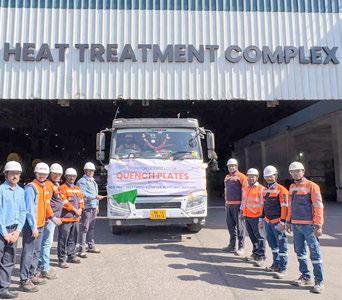
products, further strengthening its position as a single, integrated solutions provider for discerning clients.
Lloyds Engineering enters a licensing agreement to manufacture and sell eco-friendly, acid-free steel pickling technology worldwide.
Lloyds Engineering Works Limited has signed a purchase and licensing agreement with US-based The Material Works Limited to commercialize EPS Gen-4 cells globally. The patented technology enables acidfree steel surface treatment, offering a fully recyclable process with zero effluent discharge.
Under the agreement, Lloyds will make annual payments and earn-out fees while gaining rights to manufacture and sell unlimited units, excluding select geographies. The Material Works will provide technical support, design upgrades, and marketing assistance. Lloyds stated the deal strengthens its technology portfolio and supports global sustainability goals.
Lloyds Metals and Energy Limited has incorporated ‘Virtus Lloyds Resources FZCO’ to expand its investment in metals and mining in the United Arab Emirates. The company aims to enter into a strategic partnership with metals and minerals developers from the United States of America (USA).
Feb 19, 2026
Lloyds Global Resources FZCO (LGRF), a wholly owned subsidiary of Lloyds Metals and Energy Limited, has incorporated ‘Virtus Lloyds Resources FZCO’(“Virtus”), a wholly owned subsidiary in the Dubai Multi Commodities Centre Zone on Feb 17, 2026. Accordingly, Virtus will be a step down subsidiary of Lloyds Metals and Energy Limited.
Virtus will focus on expanding the company’s business of investment in metals and mining in the United

Arab Emirates, Dubai, in the Dubai Multi Commodities Centre Zone. The company aims to enter into a strategic partnership with metals and minerals developers from the United States of America (USA).
Approximately INR 12.39 lakh (AED 50,000), to be paid by LGRF, the wholly owned subsidiary of the company, towards subscription of 100% equity stake in Virtus.
Jayaswal Neco Industries Limited has signed a Memorandum of Understanding (MoU) with the Ministry of Steel, Government of India, to participate in the Production Linked Incentive (PLI) Scheme 1.2 for Specialty Steel, reinforcing its commitment to capacity augmentation and domestic specialty steel manufacturing.
Feb 10, 2026
Jayaswal Neco Industries Limited entered into an MoU with the Ministry of Steel, under the PLI Scheme 1.2 for specialty steel. The agreement aligns with the Government of India’s initiative to boost domestic specialty steel production and reduce import dependence.
Under the MoU, the company will invest INR 45.08 crore in its existing steelmaking facilities for capacity augmentation in the “Alloy Steel including Stainless Steel Rolled-Long Products” category. The planned expansion will result in incremental annual production capacities of 18,000 TPA in FY 2026–27, 30,000 TPA in
FY 2027–28, 55,000 TPA in FY 2028–29, and 80,000 TPA in FY 2029–30.
The company stated that the Ministry of Steel has put in place a clear vision and execution framework to support the growth of specialty steel manufacturing in India. Incentive claims under the scheme will be submitted annually, with disbursements subject to scheme guidelines and budgeted outlay.
Industrial conglomerate Rashmi Group has announced plans to set up a steel production unit in Telangana with an INR 12,500-crore investment, expected to generate up to 12,000 direct and indirect jobs.
Jan 23, 2026
Rashmi Group, known for manufacturing ductile iron pipes, signed a memorandum of understanding (MoU) to invest approximately INR 12,500 crore in Telangana to set up a steel production unit. The MoU was signed with the Telangana Rising delegation led by Chief Minister A. Revanth Reddy during the World Economic Forum (WEF) meeting in Davos. Rashmi Group’s promoter Sajjan Kumar Patwari and director Sanjib Kumar Patwari reaffirmed their commitment to the project, which aligns with the state’s focus on boosting manufacturing and industrial growth.
The investment is expected to generate up to 12,000 direct and indirect jobs. Chief Minister Revanth Reddy lauded the investment, highlighting its potential to strengthen Telangana’s industrial ecosystem. The state government has pledged support for the project, including facilitating coal supply linkages.
Rashmi Metaliks’ ductile iron products have received DWI approval, enabling their use in the United Kingdom’s potable water infrastructure.
Feb 13, 2026
Rashmi Metaliks Ltd. has announced that its ductile iron (DI) pipes and fittings are now approved by the Drinking Water Inspectorate (DWI) for use in the United Kingdom. DWI certification is a key regulatory requirement for products that come into contact with potable water in the UK, confirming compliance with stringent quality, safety, and material standards to protect public health.
The approval reflects Rashmi Metaliks’ adherence to advanced metallurgical processes, rigorous quality control systems, and global manufacturing standards. The company’s DI products are engineered
for high strength, corrosion resistance, and longterm durability, ensuring safe and reliable water transportation from source to end users.
With DWI approval secured, Rashmi Metaliks is positioned to support the UK’s water infrastructure sector, offering scalable, sustainable, and safetycompliant DI solutions for potable water networks.
Feb 09, 2026
The Ministry of Steel and Salem Steel Plant of SAIL have formalized an important partnership under the PLI 1.2 Scheme. Through this MOU, Salem Steel Plant will implement its SMS debottlenecking project, including bay extension and installation of an EOT crane.
This initiative is designed to enhance production efficiency and strengthen the supply of premium quality stainless steel, playing a vital role in supporting
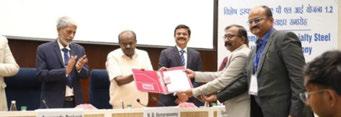
India’s strategic sectors such as railways, defence, and aerospace. The project reinforces the nation’s commitment to Atmanirbhar Bharat and advancing industrial self-reliance.
The tariffs are between 11-12% on some steel products being imported from China, Vietnam, and Nepal for 3 years.
Jan 01, 2026
India has imposed three-year import tariffs between 11-12% on some steel products being imported from China, Vietnam, and Nepal, according to the official government gazette notification issued on December 31, 2025.
The tariff is imposed based on the recommendation by DGTR that is safeguard duty to boost the domestic industry. The safeguard duty is phased as 12 percent from April 2025 to April 2026, 11.5 percent from April 2026 to April 2027, and 11 percent from April 2027 to April 2028, to curb the cheap import of steel in Indian
markets and creating a levelled playing field for the domestic industry.
The new tariff is not imposed on speciality steel such as stainless steel.
Tata Steel has signed a MoU with the University of Science and Technology Beijing (USTB) to collaborate on the development of low-carbon steelmaking technologies.
Mar 17, 2026
Tata Steel has signed a Memorandum of Understanding (MoU) with the University of Science and Technology Beijing (USTB) to collaborate on the development of low-carbon steelmaking technologies, reinforcing the company’s commitment to advancing sustainable steel production.
As part of the MoU, the research teams from Tata Steel, Tata Steel Research and Innovation Limited and USTB will jointly undertake research across four broad themes addressing low-carbon steelmaking: scrap-based steelmaking, steel waste valorisation, endproduct performance, and carbon capture & utilisation technologies.
The collaboration will leverage USTB’s academic expertise along with its experimental and pilot-scale facilities, enabling promising technologies to be tested, piloted and potentially scaled up for industrial application. For Tata Steel, it reinforces a long-standing commitment to innovation-led decarbonisation and the belief that collaboration across borders is essential to building a low-carbon future for heavy industries worldwide.
Commenting on the partnership, Mr. Subodh Pandey,
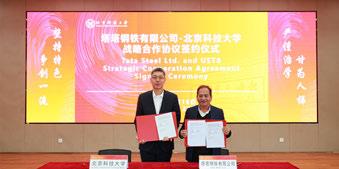
Vice President – Technology, R&D, NMB and Graphene, Tata Steel, said, “Low carbon steelmaking and associated product development for our customers is the need of the hour. At Tata Steel, we are actively driving the global transition to low-carbon steelmaking, and innovation is at the core of this journey. Through our collaboration with USTB, we aim to unlock potential ideas and co-create technologies that will advance our sustainability goals and contribute to a cleaner, more efficient future for the steel industry.”
Prof. Shuqiang Jiao, Vice President of USTB, said: “USTB and Tata Steel have maintained a long-standing partnership built on years of productive collaboration. This new initiative further strengthens their close ties and shared commitment to innovation. By combining USTB’s expertise in metallurgy and materials science
with Tata Steel’s industrial strengths, the two sides will accelerate the engineering validation and industrial application of research outcomes.”
Academician Xinping Mao said, ‘‘The green transformation of the steel industry is a major
challenge faced by the global steel sector and a critical step toward carbon neutrality. The partnership between Tata Steel and USTB will advance low-carbon steel production technologies and contribute to the green and sustainable development of the global steel industry.’’
The company advances circular economy initiatives, ramps up rolling capacity, and boosts renewable investments to support sustainable long-term growth plans.
21, 2026
Vardhman Special Steels Limited announced key sustainability and capacity expansion initiatives as part of its long-term growth strategy. The company launched a closed-loop steel recycling programme with Maruti Suzuki in October, marking a major milestone in its green steel roadmap and commitment to the circular economy.
Work on its new reheating furnace is progressing as planned and is scheduled for commissioning by March 2026. This will increase the company’s rolling capacity to 270,000 tonnes.
During the quarter, Vardhman invested an additional INR 1.13 crore in Sone Solar Private Limited, taking its
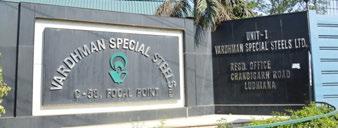
total investment to INR 12.46 crore while maintaining a 26% stake. The company expects this to reduce power costs and support margins over the long term.
Commenting on the results, Mr Sachit Jain, Chairman & Managing Director, said the company remains focused on strengthening operational efficiencies, expanding capacity, and driving sustainable and profitable growth with a minimal carbon footprint.
DDEL has appointed Mr. Brham Prakash Yadav as Chief Financial Officer, effective January 2026.
Jan 08, 2026
DEE Development Engineers Limited (DDEL) has appointed Mr. Brham Prakash Yadav as Chief Financial Officer, effective January 2026. Mr. Yadav is a Chartered Accountant and Cost Accountant with over 30 years of extensive experience in finance and operations within large, multi-plant manufacturing organizations. He possesses a strong track record in governance, capital allocation, and performance enhancement in listed company environments.
His prior roles include leadership of finance functions at prominent engineering and auto-component
companies, where he spearheaded initiatives in financial planning and analysis, working capital optimization, internal financial controls, and regulatory compliance.
The enhanced heat-treatment capability elevates the strength, reliability and performance of our rock hard plates, enabling superior outcomes for construction and mining projects across the country.
Dec 11, 2025
Jindal Steel achieves a significant milestone by becoming India’s biggest heat-treatment player, with a capacity to 7,00,000 MT. This expansion reinforces the company’s commitment to creating a stronger and more advanced manufacturing backbone for the nation.
‘’Our enhanced heat-treatment capability elevates the strength, reliability and performance of our rock hard plates, enabling superior outcomes for construction and mining projects across the country. With greater capability and deeper resilience, we remain focused on supporting India’s most demanding infrastructure needs with steel built to endure,’’ posted the company on its social media handle.
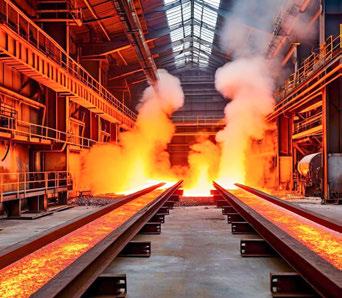
Danieli will design and deliver a 58,000 m³/h water-treatment plant for JSW Steel’s Phase-3 hot strip mill expansion in Dolvi, India.
Feb 12, 2026
Italian engineering firm Danieli has secured a contract with JSW Steel to design and supply a large-scale water-treatment plant (WTP) for the Phase-3 expansion of the company’s 4.5 million TPA hot strip mill at the Dolvi Works in Maharashtra, India.
The plant, with a cooling-water circuit capacity of around 58,000 m³/hour, will supply cooling water to the mill, caster and tunnel furnaces of the thin slab casting and rolling operation. Featuring Danieli’s patented DanFilters™ deep-filtration technology and advanced automation systems, the compact facility is designed for space efficiency, operational reliability and simplified maintenance.
Danieli will execute the project, including design, engineering, supply and advisory services—on a fully indigenous basis to support local value creation and
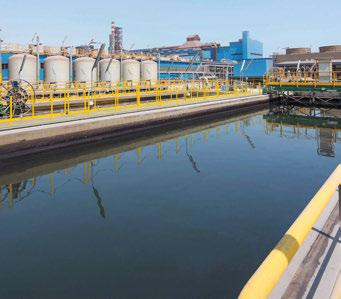
technological self-reliance. The WTP is slated to begin operation by December 2026.
Primetals Technologies wins modernization order from Toyo Kohan to upgrade pickling line efficiency, reliability and maintenance at Kudamatsu plant Japan.
Dec 16, 2025
Primetals Technologies has received an order from Japanese steel producer Toyo Kohan Co., Ltd. to modernize the pickling line at its Kudamatsu plant.
The project scope includes advanced coil handling systems, replacement of existing pickling tanks with durable polypropylene tanks, and the firstever installation of a new laser beam welding (LBW) machine.
These upgrades are aimed at improving operational efficiency, system reliability, and ease of maintenance at the facility.
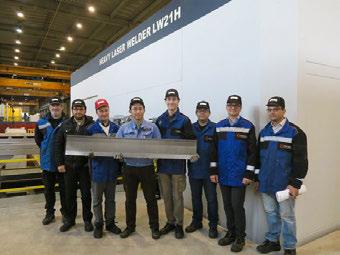
Punjab has attracted over INR 5,400 crore in investments in the steel sector over the past year, strengthening its position as an emerging steel hub in North India.
Feb 24, 2026
Punjab has attracted over INR 5,400 crore in investments in the steel sector over the past year. The state has two major steel clusters located in Mandi Gobindgarh and Ludhiana. Mandi Gobindgarh has around 300 units, including furnaces and rolling mills, contributing significantly to India’s secondary steel market. Ludhiana has strong downstream demand for steel.
Among the major investments are JSW Steel, which has committed INR 1,500 crore for a plant at Rajpura. Tata Steel has set up a unit in Ludhiana with an investment of INR 2,600 crore. Vardhman Special Steels is investing INR 342 crore in Ludhiana, while AISRM Multimetals Private Limited has announced an investment of INR 1,003.57 crore at Jaspallon village.
Industry leaders and the state government attribute the surge in steel investment to Punjab’s proximity to high-demand markets and policy incentives introduced by the government.
Industry and Investment Promotion Minister Sanjeev
Arora told a media outlet that the demand for specialty steel & alloy and auto grade steel is rising in the automobile and engineering clusters. Moreover, with a global focus on green steel and decarbonisation, scrap-based steel production in Punjab is gaining traction from big steel manufacturers, who already have coal-based integrated steel plants in other parts of the country.