Vol. 27 No. 01 | Apr-May, 2026



M/S Aroma Craft & Tissues Pvt. Ltd. Village Noorpur
Budpur, Manglore, Roorkee, Distt. Haridwar
M/S Shree Sanmati Auto Experts Pvt. Ltd. Muzaffarnagar, Meerut Road, (U.P.)











Vol. 27 No. 01 | Apr-May, 2026
Leading supplier of consumables, components, assemblies and new and used paper machinery. We represent well-known manufacturers in the pulp and paper industry who are known for their quality and reliable products. This enables us to provide cost effective solutions to the pulp & paper industry.



Understanding Water Use in Highly Recycled Systems

Aligns With CPCB Standards, Backs Economically Viable &...
Benchmarks 26-29 m3/ Tonne Water Consumption For An...
Stabilizes Freshwater Use Through Targeted Chemical... From Being “Efficient” to Being “Regenerative”
Stabilizes Water Consumption at 10.9 m3/ Tonne
Stabilizes Water Consumption at 2 m³/tonne for 18 Months
Maintains Optimal Fresh Water Consumption at 4–4.5 m³/Tonne
Apr-May, 2026




Stabilizes Specific Water Consumption at 7 m³/Tonne Across Brazil...
Stabilizes Freshwater Intensity Through Enhanced Monitoring... Indian RCF Mills’ Water Intensity Benchmark to Shift Below 10 m³/Tonne...
Advocates for ETP, Online Monitoring to Maximize Water Reuse in...

80. Balaji JMC Paper Mill
Progresses Innovation with Eukaliner®, World’s First Eucalyptus Based Kraftliner 74. Klabin in Mexico Completes 1 Year

Carbon Credits as a Profit Driver for the Pulp & Paper Industry A Mission-Driven Enterprise 83. From Compliance to Competitive Advantage: 84. Heart Touch Paper


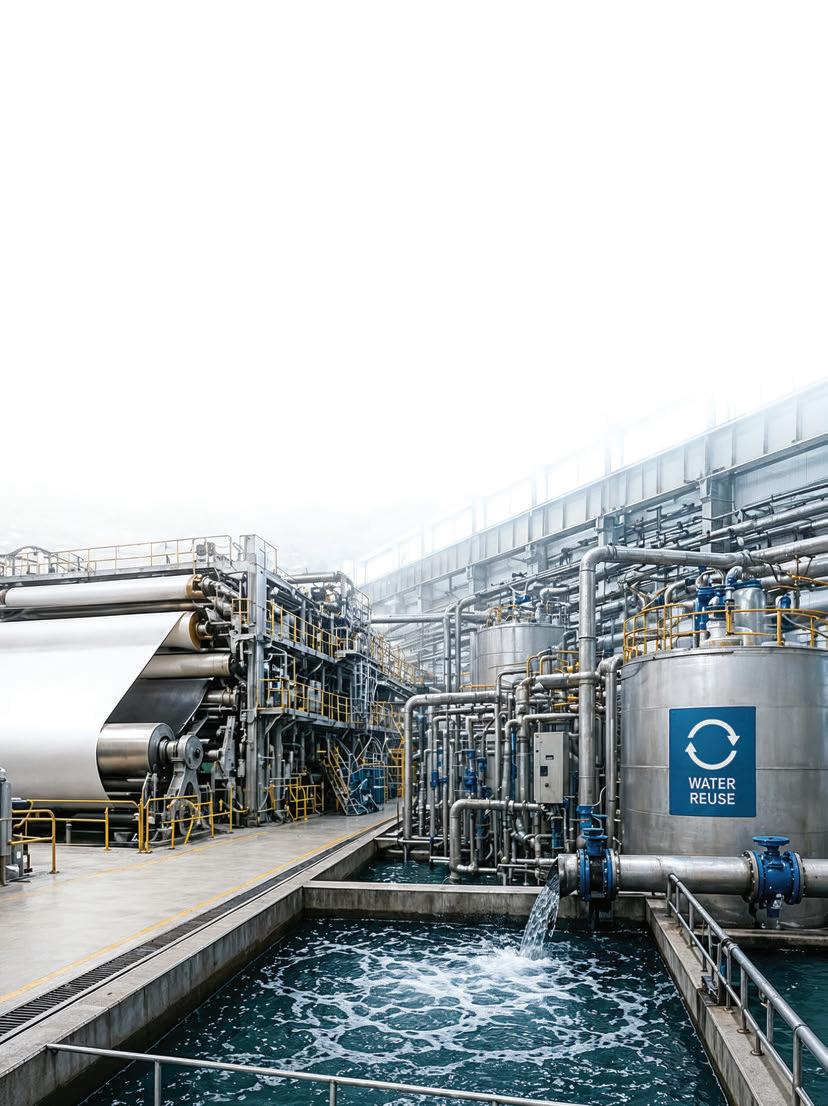
As paper mills move toward highly closed-loop systems, the focus extends beyond how much water can be reduced to how these systems behave under constraint, and what defines their practical limits.
Over the past decade, the pulp and paper industry has made significant strides in reducing freshwater consumption through recycling and closed-loop systems. Leading mills operating with advanced process integration and high levels of internal water circulation have demonstrated that substantial reductions are technically achievable. The question, however, has changed now: not how far consumption can fall, but where it must hold.
At the forefront of this transition are large, globally integrated producers such as Suzano and APP, where water management systems have evolved into disciplined operational regimes. These mills report that freshwater consumption has begun to stabilize, reflecting a balance between reuse, system constraints, and process requirements. This stabilization is not indicative of stagnation but rather signals that these systems are operating within defined technical boundaries.
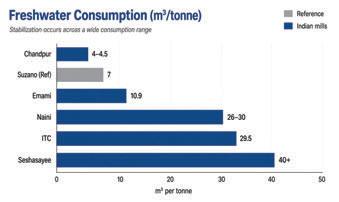
A similar trend is visible across Indian paper mills, albeit across a wider range of operating conditions. At ITC’s Bhadrachalam unit, specific freshwater consumption has stabilized at around 29.5 m³/tonne. Emami Paper Mills has sustained a level of 10.9 m³/tonne, while Chandpur Paper operates at approximately 4–4.5 m³/tonne.
Despite the variation in absolute values, the common thread is stabilization. As Naini Papers observes, this reflects a “closed-loop equilibrium,” where internal recycling loops are balanced against unavoidable system losses. In practical terms, this means that further reductions are no longer driven by incremental improvements alone but are constrained by the inherent dynamics of the system itself.
This change marks an important transition in how water management is understood within the industry. The earlier phase focused on how far freshwater consumption could be reduced through technological adoption and process improvements. The current phase is increasingly
concerned with how these highly recycled systems behave under sustained operation, and what factors define their practical limits. As ITC notes, “…the achievable limit for further water reduction is defined by a balance of technical feasibility, product quality requirements, system reliability, and economic considerations.”
The stabilization of freshwater consumption across mills is often interpreted as a slowdown in progress. The stabilization of freshwater consumption across mills reflects a more fundamental change, i.e., the system has reached an operating balance.
As Naini Papers notes, “Stability indicates that the mill has reached a ‘closed-loop equilibrium’,” where internal recycling loops are balanced against unavoidable system losses. At this stage, water becomes part of a dynamic system where accumulation, dilution, and removal are continuously balanced.
Several mills report that once this equilibrium is reached, further reduction becomes difficult without altering system conditions. At ITC’s Bhadrachalam unit, freshwater consumption has remained steady over recent years, maintained through careful water balance management and continuous monitoring of process circuits. Emami Paper Mills similarly observes that it is operating close to its practical minimum under current conditions, with further reductions constrained by the need to maintain product quality and system reliability.
This plateau reflects the limits of the current operating configuration rather than the theoretical minimum. Beyond this point, further reductions are no longer a matter of incremental optimization but would require structural changes in how water is treated, distributed, or used within the system.
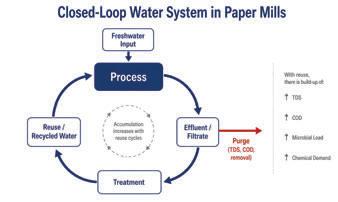
Closed-loop systems operate as controlled equilibrium, not fully closed systems.
Even among global producers operating at lower freshwater consumption levels, a similar pattern is evident. Once high system closure is achieved, the challenge shifts from reducing water intake to managing its internal consequences.
In this context, the plateau marks the transition from efficiency-driven reduction to constraint-driven operation. Understanding what defines this equilibrium, and what disrupts it, becomes essential to identifying how far water reuse can realistically be extended.
As mills push toward greater water reuse and tighter system closure, operational challenges shift inward, now driven by the accumulation of contaminants within recirculating water streams.
Across mills, a key issue is the buildup of dissolved and suspended substances, such as fibers, fines, dissolved organics, and salts, that are not fully removed through conventional treatment. At ITC’s Bhadrachalam unit, this leads to deposit formation requiring periodic “boilout program” for paper machines to maintain system cleanliness. Satia Industries similarly reports wet-end instability, foaming, and reduced drainage efficiency under higher reuse conditions.
At the chemical level, Naini Papers notes that dissolved impurities, or “anionic trash,” interfere with retention aids and strength additives, affecting paper quality and machine performance. Microbial activity in recycled water further contributes to slime formation and runnability issues.
These challenges are not isolated to individual mills but are inherent to the physics and chemistry of closed-loop systems. From a technology perspective, Voith notes that elevated COD levels in recirculated water can stimulate biological activity, resulting in acidification, scaling, and operational instability.
From a process chemistry standpoint, the impact of such accumulation is equally significant. Kemira highlights that rising TDS and conductivity levels often necessitate higher chemical dosing, which in turn places additional demands on water usage for dilution and distribution. In recycled and brown-grade production, excessive water reuse can breed odorous compounds, like volatile fatty acids, hydrogen sulfide, quietly undermining product quality and market acceptability.
Taken together, these observations mark a conspicuous change: water reuse is not simply a question of how much can be recycled, but how its quality evolves within the
system, and how that interacts with process chemistry, equipment, and product outcomes.
Closed-loop systems behave as dynamic environments rather than static infrastructure. The challenge is not just maximizing reuse, but managing its internal consequences while preserving stability and product integrity.
While operational challenges reveal how water behaves under high reuse, the more critical question is why further reduction becomes constrained. Across mills, this limit is not defined by a single factor, but by the interaction of process requirements, water chemistry, and product specifications.
Product quality is a primary constraint. In papermaking, water is not merely a utility; it is an active component that directly influences fiber bonding, brightness, colour, and surface properties. At Emami Paper Mills, water quality directly affects brightness and shade, while ITC notes that key operations, such as chemical preparation and pulp processing, require water of specific quality, limiting reuse, limiting the extent to which recycled water can be used without affecting output quality.
Raw material variability further complicates this. Mills processing agro-residues or recycled fiber streams introduce a higher load of non-process elements (NPEs) such as silica, extractives, inks, and dissolved organics into the system. As Satia Industries points out, these elements accumulate within closed loops and affect wet-end chemistry, equipment reliability, and microbial control, ultimately constraining further reduction in freshwater usage. As Naini Papers notes, the increasing concentrations of dissolved substances can lead to issues such as brightness reversion and corrosion.
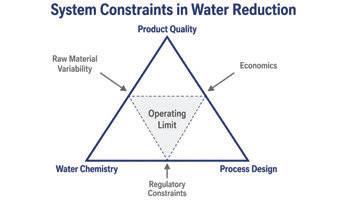
Water reduction is constrained by interacting system variables, not a single factor.
At a system level, these limitations reflect the chemistry of recirculated water. Voith notes that once such contaminants reach saturation, they disrupt the functional


chemistry of the paper machine, leading to quality defects and increased instability. In parallel, Kemira emphasizes that elevated TDS and conductivity levels not only affect chemical dosing requirements but also necessitate additional water input for dilution, thereby counteracting further reductions in freshwater consumption.
Even in highly optimized systems, these constraints define a practical boundary. As Suzano indicates, the limits of water reuse are governed by physicochemical thresholds within the process, beyond which stability and product quality cannot be maintained without significant changes to system design or treatment capability.
As Emami succinctly puts it, “The technical and operational factors that define the practical limit for reduction in water consumption are: high purity water requirements for sensitive grades, equipment and system design constraints, and build-up of dissolved contaminants and microbiological load.”
These factors show that the limits of water reduction are not simply technological. They are intrinsic to how papermaking systems operate. Product requirements, raw material characteristics, and water chemistry define a boundary that cannot be bypassed through incremental improvements.
The question now is not whether water can be recycled, but how long it can remain within the system before its quality begins to compromise operations. Purging thus emerges as a necessary requirement of closed-loop systems.
Across mills, there is clear recognition that contaminants cannot be indefinitely retained within recirculating water streams. Without controlled removal, they reach levels that disrupt stability, damage equipment, and affect product quality.
In this context, purging functions as a regulatory mechanism within the system. At Seshasayee Paper and Boards, “Purging is the ‘safety valve’ of a closedloop system. To maintain a steady state, we periodically remove water to mitigate the buildup of COD, BOD, and color carryover… This controlled purge essentially defines our ‘freshwater floor’—the absolute minimum intake required to dilute contaminants and ensure sustained performance.”
This perspective is echoed across other mills, though expressed through different operational practices. At Naini Papers, purging is framed as a necessary step to control the buildup of NPEs such as potassium and silica, particularly in agro-based systems where such constituents
are inherently higher. Satia Industries similarly notes that periodic or continuous purging is required to manage dissolved solids, organics, and microbial load in closed loops. Even in systems where direct purging is minimized, as in the case of ITC, controlled discharges in specific circuits are maintained to keep TDS and conductivity within acceptable operating limits.
From a system design perspective, this requirement is intrinsic. Voith explains that purging prevents contaminant buildup that would otherwise “poison the process chemistry,” and defines a physical limit: “the absolute minimum freshwater requirement is determined by the ‘evaporation threshold’… at this stage, the only fresh water added is the amount required to replace what is lost to the atmosphere during the drying process and for chemical preparation.”
These insights show that closed-loop systems are not fully closed; they operate as controlled equilibrium systems. Purging is therefore not inefficiency, but a necessary condition for maintaining balance.
In practical terms, it is the purge rate, rather than the reuse rate, that defines how far freshwater consumption can be reduced. Beyond a point, the need for dilution establishes a lower bound that cannot be eliminated without redesigning the system.
As closed-loop systems approach their operational limits, water within the mill ceases to be a uniformly distributed utility and becomes a resource that must be actively managed and allocated. The focus shifts from maximizing reuse in aggregate to determining where and how different qualities of water can be used without compromising process stability or product performance.
Across mills, this takes the form of a “fit-forpurpose” approach. Freshwater is treated as a highvalue input and reserved for critical operations such as high-pressure showers, chemical preparation, and key process stages where quality requirements are stringent.
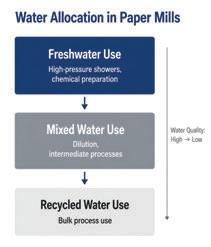
Optimization is achieved through allocation, not uniform reduction.








Suzano articulates this approach as a structured allocation strategy, where freshwater is intentionally directed toward high-sensitivity applications, while recycled streams are deployed across less critical sections. This enables the mill to maintain operational reliability while maximizing overall reuse within the system.
A similar logic is evident across Indian mills. At Naini Papers, freshwater is reserved for what are described as “critical path” areas, such as chemical dilution and high-pressure showers, where water purity directly influences the effectiveness of additives and equipment performance. Emami Paper Mills follows a water “quality tiering approach”, allocating freshwater to critical sections like sealing systems and dilution circuits, while relying on recycled streams for the bulk of process requirements. ITC similarly bases allocation decisions on the tolerance of different process areas to parameters such as TSS, TDS, and chemical residues. Even at low consumption levels, Chandpur Paper applies the same principle, using freshwater strategically while substituting recycled water wherever feasible.
As Chandpur Paper explains, “Freshwater is used in areas where higher water quality is critical, while treated and recycled machine effluent is used in other process stages, allowing us to minimize freshwater dependency without compromising product quality.”
In this framework, water systems operate as interconnected networks rather than linear flows. Allocation decisions are influenced by product mix, raw material variability, and system conditions, determining how close a mill can operate to its minimum freshwater requirement.
As water systems become increasingly closed and complex, stability can no longer be maintained through fixed practices alone. Mills rely on continuous monitoring and responsive control to manage fluctuations in water quality and process conditions. Monitoring thus becomes the basis for operational decision-making.
Across mills, key parameters such as TDS, COD, pH, conductivity, and microbial load are tracked to ensure water quality remains within acceptable limits for reuse. At ITC, additional parameters such as fiber content, colour, and Optical Brightening Agent (OBA) levels are monitored to ensure compatibility with product requirements and process conditions. Deviations in these indicators directly influence decisions on whether water can be reused, requires further treatment, or must be partially discharged.
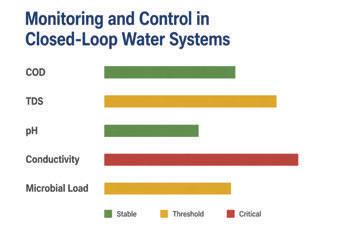
Continuous monitoring enables stable operation under constrained conditions.
The growing complexity of these decisions has led to the adoption of real-time monitoring systems and digital tools. At Emami, online flow meters and tracking systems enable proactive adjustments, while APP relies on continuous monitoring of parameters such as pH, TSS, TDS, and conductivity to maintain process stability.
From a systems perspective, this data-driven approach is becoming essential in managing high-reuse environments. Voith notes that digital platforms enable real-time tracking of parameters such as COD, flow rates, and chemical dosing, allowing mills to anticipate and correct deviations within the water cycle.
At the same time, process chemistry considerations remain closely linked to monitoring practices. Kemira emphasizes that maintaining high levels of water reuse while ensuring product quality depends on monitoring and controlling chemical parameters. Without such control, fluctuations in water composition can lead to increased chemical consumption, instability in wet-end chemistry, and inconsistent product characteristics.
These developments reflect a new operational philosophy. As systems approach their limits, stability is achieved by managing variability within the system, with monitoring acting as the feedback mechanism that enables operation close to minimum freshwater levels.
The ability to measure, interpret, and respond to changing water conditions thus becomes a defining capability for mills operating under high system closure.
If current operating conditions define the present limits of water reduction, further progress will depend on how those conditions evolve. Incremental optimization will yield only marginal gains; meaningful reductions will require

structural changes in water use, treatment, and control.
For global producers such as Suzano, this transition is already framed in terms of system-level improvement rather than incremental efficiency. Further reductions in freshwater consumption are linked to advances in process integration, treatment capability, and operational discipline, rather than isolated upgrades. The emphasis is on strengthening internal loops while maintaining the physicochemical balance required for stable operation.
A similar direction is emerging among Indian mills, though shaped by different operational realities. Satia Industries identifies advanced water treatment technologies, such as membrane filtration, ion exchange, and ZLD systems, as necessary to push beyond current reuse levels, particularly in managing dissolved solids and organics within closed loops. Naini Papers points toward emerging approaches such as advanced oxidation processes (AOPs) and digital twin modelling, which can help predict system load and optimize chemical dosing in real time, thereby enabling higher levels of reuse without destabilizing the process.
However, these pathways are constrained by economics. ITC notes that while advanced treatment can enable further reuse, the capital and operating costs must be justified against marginal gains at already low consumption levels. This introduces a critical dimension to the discussion: the next stage of water reduction is not only a technical challenge but also an economic one.
From a system design perspective, there is also a growing shift toward source-level intervention. Seshasayee Paper and Boards emphasizes the need to move beyond endof-pipe treatment toward addressing contaminants at their point of origin within the process. By targeting streams, such as colored filtrates and high-TDS flows earlier in the cycle, mills can reduce the burden on downstream treatment systems and recover larger volumes of usable water.
Technology providers reinforce this direction. Voith advocates for tiered treatment architectures that combine biological processes with advanced filtration to enable safe operation at lower freshwater consumption levels. At the same time, digital systems are expected to play a larger role in predicting system behavior and optimizing process conditions dynamically. Kemira similarly points to the importance of improved chemical strategies and monitoring frameworks in managing water chemistry under increasingly constrained conditions.
Despite these developments, the fundamental constraint remains unchanged: reductions must be achieved without
compromising product quality or process reliability. As Chandpur Paper notes, “Any future reductions in freshwater consumption would likely depend on advancements in treatment technologies and further improvements in system efficiency, while ensuring that product quality standards are maintained.”
This underscores the nature of the transition ahead. The next stage will require a rethinking of system architecture: integrating treatment, process design, and digital control in a way that allows mills to operate closer to their theoretical limits while maintaining stability and economic viability.
The trajectory of water management in the pulp and paper industry has moved through a clear sequence. What began as a focus on reduction has evolved into a phase where reuse is embedded in operations. Today, the industry faces a more complex challenge: operating effectively within systems that are already highly closed.
Across both global and Indian contexts, freshwater consumption has declined significantly but is now stabilizing. This stabilization reflects the convergence of process requirements, water chemistry, and system dynamics, defining a practical operating boundary.
Within this boundary, mills must manage contaminant accumulation, chemical interactions, and operational variability while maintaining product quality. Purging defines system limits, allocation optimizes usage, and monitoring enables control. Together, these elements form the basis of modern water management.
The implication is clear: the industry has largely learned how to reuse water. The emerging challenge is learning how to operate with it.




In an exclusive interview with Paper Mart, ITC PSPD shared that its current specific freshwater consumption has come down and complies well within the limits prescribed by the Central Pollution Control Board (CPCB) for the pulp and paper sector, that is, 50 m³/ tonne for integrated pulp and paper mills and specialty paper mills, and 10 m³/tonne for recycled paper mills. Further reductions in water consumption would require the adoption of advanced treatment technologies, along with economically viable investment solutions for commercially feasible water‑reuse and recycling measures.
Paper Mart: After implementing water reuse, recycling, and closed-loop systems across your mill, what is your current specific freshwater consumption (m³/tonne), and has this figure
stabilized in recent years?
ITC PSPD: Over the years, our mills have significantly reduced freshwater consumption by systematically implementing water reuse, recycling, and closed-loop processes across operations. As a result, the current specific freshwater consumption has come down to levels that comply well within the limits prescribed by the Central Pollution Control Board (CPCB) for the pulp and paper sector.
CPCB norms allow up to 50 m³/ tonne of product for integrated pulp and paper mills and specialty paper mills, and 10 m³/tonne of product for recycled paper mills. Our present water consumption levels fall within these benchmarks. Any further reduction in water consumption would require significant process or technology-related investments, rather than incremental operational improvements.
PM: Under your present operating regime, where water reuse and recycling systems are already in place, what operational challenges have emerged in terms of process stability, machine performance, or water quality?
ITC: High levels of water reuse and recycling can lead to the accumulation of dissolved and suspended solids in water circuits, potentially affecting product quality, process efficiency, and equipment performance. Increased concentrations may also raise the risk of scaling, corrosion, and fouling in pipelines and heat-exchange equipment, resulting in higher maintenance needs.
These challenges are managed through appropriate water treatment, periodic cleaning programs, automated cleaning systems, and regular monitoring, enabling stable operations and consistent product quality while maintaining high water reuse levels.
PM: At your current level of system closure and reuse, what process, raw material, or product quality requirements limit further reduction in freshwater consumption?
ITC: Product quality requirements and process compatibility place practical limits on further reductions in freshwater consumption. Certain critical operations, such as chemical preparation, high-pressure paper machine showers, and pulp dilution, require water with consistently low conductivity and minimal contaminants to maintain stable operation and product quality. At the same time, lower overall water usage leads to higher pollutant concentrations in effluent streams, which increases the complexity of wastewater treatment and may necessitate additional treatment infrastructure and investment.
Product quality requirements and process compatibility place practical limits on further reductions in freshwater consumption. Certain critical operations, such as chemical preparation, high‑pressure paper machine showers, and pulp dilution, require water with consistently low conductivity and minimal contaminants to maintain stable operation and product quality.
Together, these factors define the current operational boundaries for freshwater reduction while meeting quality and compliance requirements.
PM: In highly recycled operating conditions such as yours, do you periodically purge water from the system? What operational factors make this necessary,
High levels of water reuse and recycling can lead to the accumulation of dissolved and suspended solids in water circuits.....These challenges are managed through appropriate water treatment, periodic cleaning programs, automated cleaning systems, and regular monitoring, enabling stable operations and consistent product quality while maintaining high water reuse levels.
and how does it define your minimum freshwater intake?
ITC: In systems with high water reuse, some controlled discharge of water is necessary to prevent the build-up of impurities. As water is reused repeatedly, substances such as salts, solids, chemicals, and organic matter gradually increase. If not managed, this can disturb process conditions, affect product quality, and cause issues like scaling, corrosion, or equipment malfunction.
Periodic purging helps control these risks and maintain stable operations. Freshwater is then required to replace the purged water and restore acceptable water quality. This controlled purging is therefore an essential part of operating reliably while maintaining high levels of water recycling.
PM: With closed-loop and reuse systems already implemented,
how do you determine where freshwater must still be used versus where recycled water can be used within different sections of the mill?
ITC: Freshwater and recycled water are used across mill operations based on process needs, water quality requirements, and equipment reliability. Each area is assessed for its ability to handle parameters such as solids, dissolved salts, and residual chemicals. Freshwater is used for quality-sensitive applications where consistent water quality is essential, while treated or recycled water is used in less critical applications that can tolerate higher impurity levels
PM: Under these highly recycled conditions, what water quality or system parameters do you monitor most closely, and how do they influence decisions related to reuse levels, purging, or freshwater intake?
ITC: Continuous and comprehensive monitoring of water quality parameters is central to our water management strategy. Key parameters tracked include conductivity, total dissolved solids (TDS), chemical oxygen demand (COD), biological oxygen demand (BOD), pH, temperature, total suspended solids (TSS). Monitoring and analysis of these key parameters ensures current levels of water reuse without compromising process stability, machine efficiency, or product quality.
PM: After implementing available water reuse and recycling measures, have you reached a practical limit to further water reduction under your current operating configuration? What technical or operational factors define this limit?
ITC: With the currently available and commercially viable technologies,
and by following industry best practices, the mills have reached near-optimal water-use efficiency under present operating conditions.
Although advanced treatment technologies such as membrane filtration and reverse osmosis can improve recycled water quality, their capital and operating costs are several times higher than conventional systems i.e. 30 times due to increased energy use, chemical consumption, and operational complexity. Therefore, these options are not economically viable from either a business or sustainability perspective at present.
Further reductions in freshwater use are limited by the ability of existing processes to handle higher impurity levels, strict water quality requirements to maintain product standards, equipment reliability under more concentrated conditions, compliance with discharge norms, and the cost-effectiveness of additional treatment systems. Within these constraints, the mills continue to operate efficiently while maintaining responsible water stewardship and consistent product quality.
PM: Beyond your existing systems and processes, what types of improvements or
changes would be necessary to reduce water consumption further?
ITC: Further reductions in water consumption would require the adoption of advanced treatment technologies along with investment solutions that are economically viable. The existing systems have already incorporated all proven and commercially feasible water-reuse and recycling measures. Any additional improvement beyond the current level would depend on new technologies becoming cost-effective and scalable for sustained operations
Continuous and comprehensive monitoring of water quality parameters is central to our water management strategy.


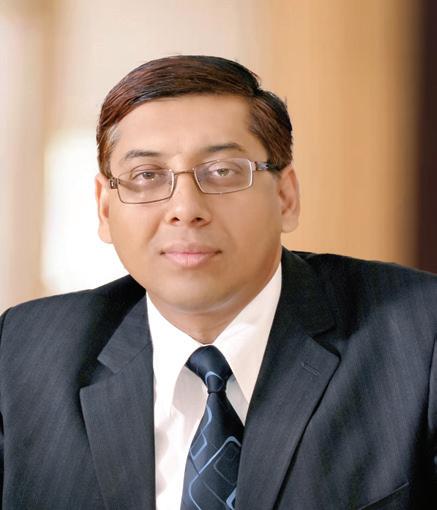
In an exclusive interaction with Paper Mart, Mr. Pawan Agarwal, Managing Director, Naini Papers Limited, highlighted that the benchmark for water consumption in an integrated agro-based mill has significantly reduced from around 60 m³/tonne to nearly 26–29 m³/tonne. He noted that pushing freshwater reduction beyond this threshold may compromise product aesthetics, elevate corrosion risks, and disrupt thermal balance within the process. However, looking ahead, emerging technologies such as advanced oxidation processes, digital twin modelling, and advancements in tertiary treatment can further optimize freshwater usage while maintaining operational efficiency and paper quality.
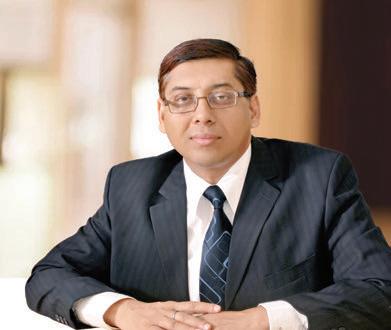
Mr. Pawan Agarwal, Managing Director, Naini Papers Limited
Paper Mart: After implementing water reuse, recycling, and closed-loop systems across your mill, what is your current specific freshwater consumption (m³/tonne), and has this figure stabilized in recent years?
Pawan Agarwal: Specific freshwater consumption is the ratio of total freshwater intake to the total saleable paper produced. For an integrated agrobased mill, the benchmark has shifted from 60 m3/ tonne to approximately 26 - 29 m3/tonne.
Stability indicates that the mill has reached a “Closed-Loop Equilibrium.” When this figure stabilizes, it means the internal recycling loops (backwater recovery) are balanced against the inevitable losses from evaporation in the dryer section and moisture in the sludge/final product.
PM: Under your present operating regime, where water reuse and recycling systems are already in place, what operational challenges have emerged in terms of process stability, machine performance, or water quality?
PA: One of the operational challenges that have emerged in terms of process stability, machine performance, or water quality is wet-end chemistry. As water is reused, “anionic trash” (dissolved organic/inorganic impurities) builds up, interfering with retention aids and strength additives.



• Robo assembly provides continuous movement of showers to ensure good coverage.
• Perfect equal cleaning performance over the entire fabric.
• No Nozzles overlap
• No Stripes marking on forming fabric
• Increased fabric life and save fabric costs
• Significantly reduced water consumption
• 92% than other conventional showers
• Auto synchronisation with M/s Speed
• Target cleaning available to remove particular sticky



Microbial growth is another challenge that arises where warm, nutrient-rich recycled water is a breeding ground for bacteria. This leads to “Slime” formation, causing paper breaks and “holes” in the sheet.
Further, system conductivity is an additional challenge where higher recycling increases the ionic concentration and can suppress the “swelling” of fibers, leading to reduced bonding strength and lower paper quality.
PM: At your current level of system closure and reuse, what process, raw material, or product quality requirements limit further reduction in freshwater consumption?
PA: We limit further reduction in freshwater consumption due to product aesthetics, corrosion risk and thermal balance. For Writing & Printing (W&P) grades, high recycling can cause brightness
reversion (yellowing) due to the concentration of residual lignin and chemicals in the backwater. Further, the concentration of chlorides reaches a threshold where even stainless steel faces ‘‘Pitting Corrosion,’’ risking catastrophic equipment failure. Lastly, water acts as a heat sink. Excessive closure can lead to “overheating” of the process water, which negatively affects vacuum pump efficiency and drainage on the wire.
PM: In highly recycled operating conditions such as yours, do you periodically purge water from the system? What operational factors make this necessary, and how does it define your minimum freshwater intake?
PA: The Purge Principle: A “purge” is a controlled discharge of contaminated water to prevent the buildup of Non-Process Elements (NPEs) like potassium and silica, which are prevalent in agro-residues (straw/bagasse). The minimum
intake is mathematically defined by the evaporative demand of the drying cylinders and the cooling towers, plus the water required to keep the Total Dissolved Solids (TDS) below the saturation/scaling point.
PM: With closed-loop and reuse systems already implemented, how do you determine where freshwater must still be used versus where recycled water can be used within different sections of the mill?
PA: We reserve freshwater usage for “critical path” areas where purity is non-negotiable such as high-pressure showers to prevent nozzle clogging and felt damage; chemical/additive dilution to ensure the efficacy of expensive dyes and sizing agents; and gland cooling to protect mechanical seals from abrasive particles. For pulp dilution and brown stock washing, we use recycled water where the organic load is less critical to the final surface finish.
PM: Under these highly recycled conditions, what water quality or system parameters do you monitor most closely, and how do they influence decisions related to reuse levels, purging, or freshwater intake?
PA: The closely monitored parameters for checking water quality are conductivity/TDS, Total Suspended Solids (TSS), and calcium hardness.
Conductivity is the primary proxy for chemical buildup. High conductivity signals the need for a purge. Total Suspended Solids (TSS) monitors the efficiency of our fiber recovery units (Krofta/DAF) and calcium hardness is crucial for preventing scale formation in the heat exchangers and the vacuum system.
PM: After implementing available water reuse and recycling measures, have
you reached a practical limit to further water reduction under your current operating configuration? What technical or operational factors define this limit?
PA: The practical limit or the plateau is defined by ‘Solubility Limit’ and the ‘Law of Diminishing Returns’.
Solubility Limit: This is the point where the water is “saturated.” Beyond this, dissolved solids will physically precipitate out, causing massive scaling in piping and machinery.
The Law of Diminishing Returns: The capital expenditure (CAPEX) required to save the “last few drops” (via Membrane Technology (RO) or MVR) often outweighs the environmental and economic benefits.
PM: Beyond your existing systems and processes, what


types of improvements or future technological shifts would be necessary to reduce water consumption further?
PA: Some of the future technological shifts that would be necessary to further reduce water consumption are:
Advanced Oxidation Processes (AOP): Using Ozone (O3) or UV to break down recalcitrant organic matter within the internal loops.
Digital Twin Modelling: Using AI to predict the “system load” and automatically adjust chemical dosing in real-time to compensate for water quality fluctuations.
Tertiary Treatment
Evolution: Investing in advanced oxidation processes (AOPs) to break down recalcitrant COD in the recycled loops.




In an exclusive interaction with Paper Mart, Dr. Ajay Satia, Chairman & M.D., Satia Industries, stated that the company has achieved stable freshwater consumption levels, significantly below prescribed norms. Going forward, the company plans to deploy advanced water treatment solutions- such as membrane filtration, zero liquid discharge (ZLD), or ion exchange, along with side stream treatment and improved raw material management to strengthen process control. These initiatives will further increase water reuse and optimize distribution across critical and non critical operations, while ensuring consistent machine performance and product quality.
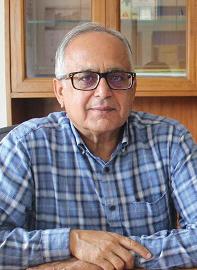
Paper Mart: After implementing water reuse, recycling, and closed-loop systems across your mill, what is your current specific freshwater consumption (m³/tonne), and has this figure stabilized in recent years?
Ajay Satia: Our current specific freshwater consumption is well below the prescribed standards. After implementing water reuse and recycling measures, the value has significantly reduced over the past 3-4 years and has now stabilized around current level, with only marginal yearly variation.
PM: Under your present operating regime, where water reuse and recycling systems are already in place, what operational challenges have emerged in terms of process stability, machine performance, or water quality?
AS: With increased water reuse and recycling, we have observed challenges related to buildup of dissolved solids and organics, leading to wet-end instability, higher
chemical demand, and occasional machine runnability issues such as deposits, foaming, and reduced drainage efficiency. These are being managed through process control and targeted chemical dosing.
PM: At your current level of system closure and reuse, what process, raw material, or product quality requirements limit further reduction in freshwater consumption?
AS: At the current level of system closure, further reduction in freshwater consumption is primarily limited by buildup of dissolved solids and organics in the process water, which affects wet-end chemistry, equipment reliability, and microbial control. Additionally, the agro-based raw materials used, introduce silica and extractives that accumulate in closed loops. Product quality requirements such as brightness, cleanliness, and sizing efficiency also necessitate the use of relatively fresh water in critical sections, thereby limiting further closure without advanced treatment technologies.
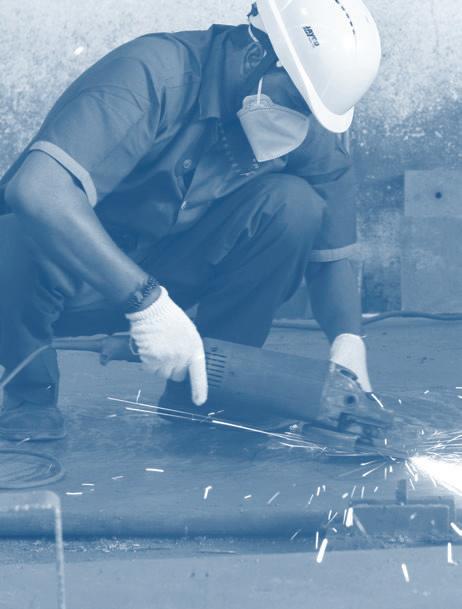
The agro based raw materials used, introduce silica and extractives, that accumulate in closed loops. Product quality requirements such as brightness, cleanliness, and sizing efficiency also necessitate the use of relatively fresh water in critical sections, thereby limiting further closure without advanced treatment technologies.
To achieve further reductions in freshwater consumption beyond current reuse and recycling systems, we would need to implement advanced water treatment technologies such as membrane filtration, evaporation/ZLD, or ion exchange, along with side stream treatment and enhanced process control.
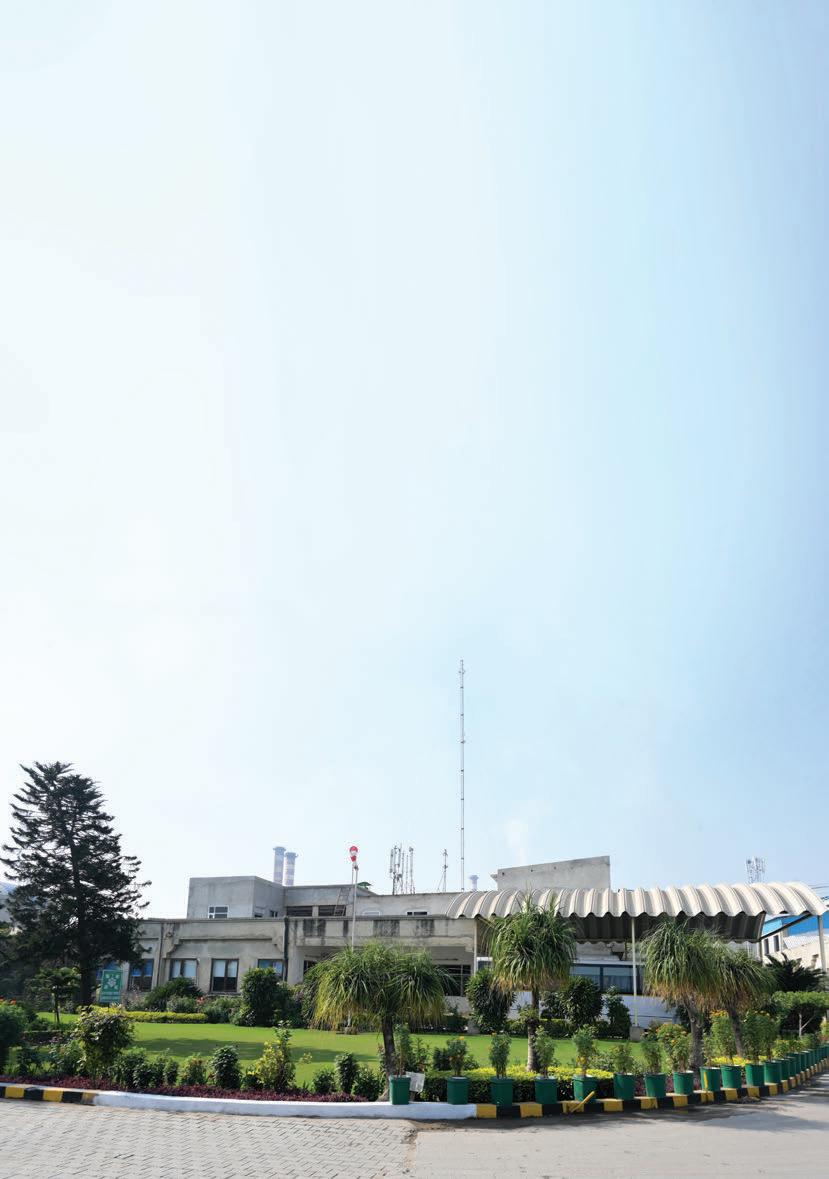
PM: In highly recycled operating conditions such as yours, do you periodically purge water from the system? What operational factors make this necessary, and how does it define your minimum freshwater intake?
AS: Yes, periodic or continuous purging is practiced under highly recycled conditions to control
buildup of dissolved solids, organics, silica, and microbial load. These contaminants accumulate in closed loops and affect process stability, equipment and machine reliability. Further reduction would require significant investment in advanced treatment, side-stream polishing, or process modification.
PM: Beyond your existing systems and processes, what types of improvements or changes would be necessary to reduce water consumption further?
AS: To achieve further reductions in freshwater consumption beyond current reuse and recycling systems, we would need to implement advanced water treatment technologies such as membrane filtration, evaporation/ ZLD, or ion exchange, along with side-stream treatment and enhanced process control. Additionally, upstream raw material management and water allocation optimization across sensitive and non-critical processes would allow safe increase in water reuse while maintaining machine performance and product quality.
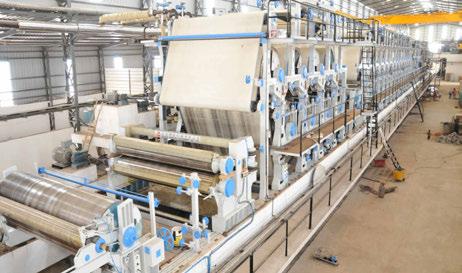
In an exclusive interaction with Paper Mart, Mr. Ganesh Balakrishna Bhadti, Executive Director (Operations & Projects), Seshasayee Paper and Boards Limited, reveals that the mill has stabilized its specific water consumption at around 42.7 m³/tonne, factoring in its diverse product portfolio and frequent grade changes. Moving ahead, the company aims to bridge the gap with global mill benchmarks by shifting its focus from end-of-pipe fixes to source-level treatments. By integrating advanced TDS and color removal systems at the source, the mill targets recovering an additional 4,500–5,000 m³/day, marking a strategic transition from operational efficiency to ‘regenerative’ water management.
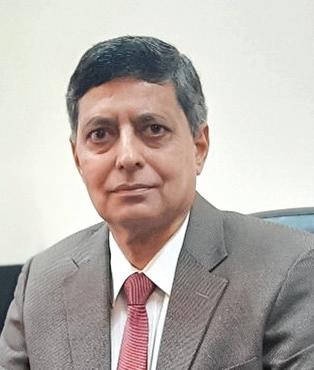
Mr. Ganesh Balakrishna Bhadti, Executive Director (Operations & Projects), Seshasayee Paper and Boards Limited
Paper Mart: After implementing water reuse, recycling and closed-loop systems across your mill, what is your current specific consumption (m3/tonne) and has this figure stabilized in recent years?
Ganesh Bhadti: Our commitment to water circularity has brought our Specific Water Consumption (SWC) to approximately 42.7 m³/tonne of Equivalent Finished Product (EFP) for the period of 2025–26. While we have hit high-water marks of 42 m³/tonne, our current consumption represents a stabilized, optimized balance. It accounts for our diverse product portfolio and the frequent grade changes required by a dynamic market. Our sights are now set on narrowing the gap with global peer mill benchmarks.
PM: Under your present operating regime, where water reuse and recycling systems are already in place, what operational challenges have emerged in terms of process stability, machine performances or water quality?
GB: We have successfully pushed
our recycling rate from 22% to 38%. However, high-level circularity brings physical constraints. Our primary challenge is spatial—limited storage for recycled volumes. We strategically utilize freshwater to maintain the continuity of operations and restore post maintenance cycles of upstream or downstream units. This ensures process continuity and prevents system imbalances that can occur when a closed loop is momentarily interrupted.
PM: At your current level of system closure and reuse, what process, raw material or product quality requirements limit further reduction in freshwater consumption?
GB: In an integrated chemical mill, we are primarily battling the physics of accumulation—specifically Total Dissolved Solids (TDS) and sodium levels. As we close the loop further, Non-Processing Elements (NPEs) tend to build up. If left unchecked, these affect pulp washing efficiency, strain our chemical recovery cycles, and lead to equipment scaling. We cannot compromise on the structural integrity of our machinery or the

Purging is the “safety valve” of a closed loop system. We periodically remove water to mitigate the buildup of COD, BOD, and color carryover, which also prevents anaerobic odor formation. This controlled purge essentially defines our “freshwater floor”—the absolute minimum intake required to dilute contaminants and ensure sustained performance.
final quality of products that our customers expect from us. In order to mitigate these limitations, we are working on various options to address in NPE build up.
PM: In highly recycled operating conditions such as yours, do you periodically purge water from the system? What operational factors make this necessary and how does it define your minimum freshwater intake?
GB: Absolutely. Purging is the “safety valve” of a closed-loop system. To maintain a steady state, we periodically remove water to mitigate the buildup of COD, BOD, and color carryover, which also prevents anaerobic odor formation. This controlled purge essentially defines our “freshwater floor”—the absolute minimum intake required to dilute contaminants and ensure sustained performance.
PM: With closed-loop and reuse systems already implemented, how do you determine where freshwater must still be used versus where recycled water can be used within different sections of the mill?
GB: We employ a graded water management strategy. Freshwater is treated as a premium asset, reserved strictly for high-sensitivity operations such as final pulp washing, boiler feed, chemical preparation, and critical paper machine showers.
Conversely, recycled water, which now meets 36–40% of our total requirement, is the workhorse for raw material washing, cooling systems, and general utilities. This “fit-for-purpose” allocation allows us to maximize reuse without risking operational reliability.
PM: Under these highly recycled
conditions, what water quality or system parameters do you monitor most closely and how do they influence decisions related to reuse levels, purging or freshwater intake?
GB: We keep a vigilant eye on
Under our existing setup, we have reached a practical plateau. To push beyond this would require a fundamental shift in our technological approach rather than just further tightening of existing valves. Our next strategic leap involves the treatment of RDH EOP filtrate and colored process water.






turbidity (maintaining a target below 5 Nephelometric Turbidity Units (NTU)) and brightness. These are our “canaries in the coal mine.” If these parameters drift, it signals system saturation. Without moving toward advanced tertiary treatments, further recycling at this stage would likely trigger microbiological growth and deposit formation.
PM: After implementing available water reuse and recycling measures, have you reached a practical limit to further water reduction under your current operating configuration? What technical or operational factors define this limit?
GB: Under our existing setup, we have reached a practical plateau. The gradual concentration of organic contaminants creates a specific set of hurdles: elevated TDS levels, higher bio-fouling risks, and potential odor issues in the white-water circuits
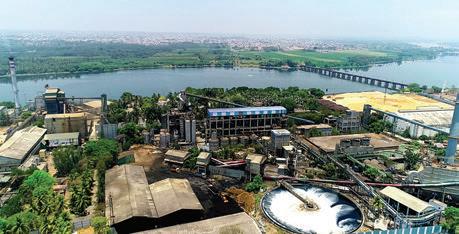
of PM2 and PM3. To push beyond this would require a fundamental shift in our technological approach rather than just further tightening of existing valves.
PM: Beyond your existing systems and processes, what types of improvements or changes would be necessary to reduce water consumption further?
GB: The future lies in source-level treatment rather than end-ofpipe fixes. Our next strategic leap involves the treatment of RDH EOP filtrate and colored process water. By integrating advanced TDS and color removal systems directly at the source, we see a clear path to recovering an additional 4,500–5,000 m³/day. This is how we move from being “efficient” to being “regenerative.”
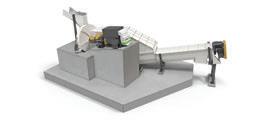
ITC Limited has ordered Valmet to supply a new wood chipping line to its pulp mill in Bhadrachalam, Telangana to serve the growing demand for paperboards and specialty papers. Valmet has received the orders for this sixth chipping line in the third quarter of 2025, and the start-up of this line is scheduled by the end of 2026.
Apr 08, 2026
ITC Limited has ordered Valmet to supply a new wood chipping line to its pulp mill in Bhadrachalam,Telangana. The delivery is part of ITC’s ongoing improvement initiatives at the Bhadrachalam mill to increase chipping capacity with high quality chips. The new line is designed for low wood losses, superior and even chip quality as well as high availability and easy maintenance.
Commenting on the new line, Mr. Harinarayanan, Vice President, Projects, ITC Ltd Paperboards & Specialty Papers Division, said “At ITC, we are committed to investing in advanced technologies that strengthen our operational excellence and sustainability journey. Valmet’s modern chipping solution will play a crucial role in our improvement initiatives at Bhadrachalam, enabling us to better serve the growing demand for high-quality paperboards and specialty papers. We look forward to continuing our collaboration with Valmet on such efficiency improvement initiatives.”
Mr. Sandeep Kumar Bhaskar, Head of Sales (Cooking & Fiberline), Pulp, Energy and Circularity India, Valmet, added, “This project is a significant step in Valmet’s continued long-term cooperation in supporting ITC’s improvement initiatives and sustainable production goals. With our proven technology and strong local presence in India, we are confident that the new chipping line will enhance both productivity and efficiency while ensuring world-class quality.” The order is included in Valmet’s third quarter order book in 2025. Start-up of the new wood chipping line is scheduled by the end of 2026.






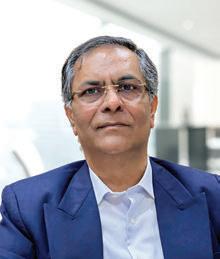
In an exclusive interaction with Paper Mart, Mr. Ashish Gupta, Unit Head and Senior President, Emami Paper Mills, shares that the mill has stabilized its water consumption at 10.9 m³/tonne in 2025-26, by adopting a comprehensive recycling and reuse model. He emphasizes that real-time online flow meters and digital consumption monitoring devices across the mill represents a significant investment in operational intelligence, allowing proactive water conservation in the paper making process.
Paper Mart: After implementing water reuse, recycling, and closed-loop systems across your mill, what is your current specific freshwater consumption (m³/tonne), and has this figure stabilized in recent years?
Ashish Gupta: Since 2021-22,Emami Paper Mills has successfully achieved a significant reduction in freshwater consumption from 12.6 m³/tonne to 10.9 m³/tonne – a sustained reduction of 13.5%. This achievement is the outcome of a multi-year strategic transformation, progressing from basic conservation protocols to a comprehensive recycling and reuse engineering philosophy. We rigorously adhere to water conservation processes and systems; and are thereby able to effectively maintain and stabilize the water consumption at 10.9 m³/tonne.
PM: Under your present operating regime, where water reuse and recycling systems are already in place, what operational challenges have emerged in terms of process stability, machine performance, or water quality?
AG: Paper industry is a highly competitive industry and maintaining best product quality and achieving efficiency is essential for survival and growth. We have adopted water
saving measures considering that quality cannot be compromised while maintaining productivity and efficiency. To this end, the mill operates a tiered water allocation model, directing the highest-purity freshwater exclusively to those process points where substitution would compromise product quality and machine integrity. This is the reason that we are able to maintain the benchmark of less than 11m³/tonne water consumption consistently.
PM: At your current level of system closure and reuse, what process, raw material, or product quality requirements limit further reduction in freshwater consumption?
AG: In paper manufacturing, water quality is one of the most critical ingredients that determines the brightness and shade of the final product, where variation is non-negotiable. Further, wastepaper is increasingly becoming heavily printed with dark and multi-color inks, which makes production of recycled paper and newsprint more challenging. The technical complexity of de-inking intensifies considerably. Additionally, the chemical preparation processes and pressurized showers used in forming sections of paper machine require 100% fresh water for main-

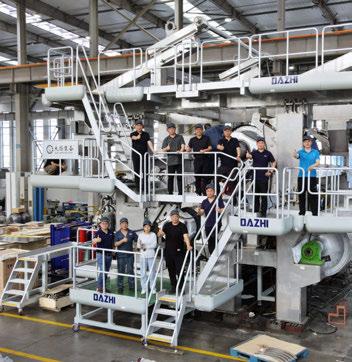
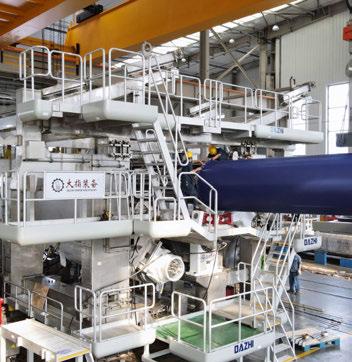
Our latest 3rd Generation Shoe Press—designed to deliver higher efficiency, enhanced dewatering performance, and unmatched reliability—is now ready to be shipped to APP Indonesia’s Tjiwi Kimia PM3.
In addition, we’re proud to announce a repeat order from APP for a full PM6 rebuild, once again featuring our trusted Integra®-Shoe Press. This order reflects APP’s strong confidence in Dazhi’s innovative technology and expert execution.”
The mill operates a tiered water allocation model, directing the highest purity freshwater exclusively to those process points where substitution would compromise product quality and machine integrity. This is the reason, we are able to maintain the benchmark of less than 11m³/ tonne water consumption consistently.
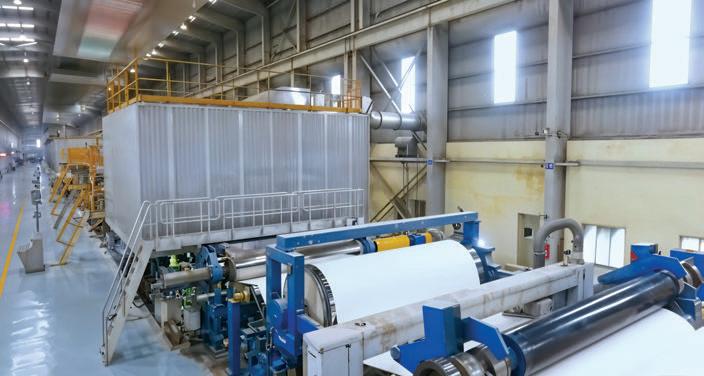
taining product quality and machine runnability. Given this dynamic operating scenario, sustaining a stable sub-11 m³/tonne figure is not a passive outcome — it requires ongoing vigilance and continuous process adaptation in response to shifts in feedstock quality or changes in the finished paper grade. The mill’s ability to hold this number stable is therefore a far more significant operational achievement than the headline figure alone might suggest.
PM: In highly recycled operating conditions such as yours, do you periodically purge water from the system? What operational factors make this necessary, and how does it define your minimum freshwater intake?
AG: In recycled operation, the rejects, ink and contamination in wastepaper are purged at low
consistency from the system. Further changing over from one grade to another grade of paper manufacturing occasionally requires system wash/boil out. Both are inevitable for maintaining essential parameters of the paper and paperboard we produce.
To minimize our freshwater intake, we use available back water of the machine during quality change to the maximum extent.
PM: With closed-loop and reuse systems already implemented, how do you determine where freshwater must still be used versus where recycled water can be used within different sections of the mill?
AG: The allocation of freshwater versus recycled water across mill sections is guided by a water quality
tiering approach. Critical sections— such as high-pressure shower circuits in wire and press parts, and dilution water for final product quality control require freshwater. For all remaining stages of the manufacturing process, loop water
The technical and operational factors that define the practical limit for reduction in water consumption are: high purity water requirements for sensitive grades, equipment and system design constraints, and build up of dissolved contaminants and microbiological load.


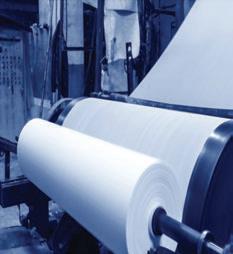


We are a company that started almost two decades ago with a vision to provide practical and long lasting solutions to the burgeoning paper industry in India by creating a fusion of chemistry applications and local industry environment and requirements.
Internal Sizing & Surface Sizing
Retention and Drainage
Dry Strength Resin
Paper Machine Deformer and DE-AERATION
Surface Additives
Felt Cleaning and Conditioning Program
Microbiological & Deposit Control Program
Wet Strength Resin
Stickies Control program
Deinking chemicals
Enzymes
Starch(Native, Modified cationic/oxidized)
Coating thickener
Coating lubricant
Dispersants
Antisclants
Flocculants
Coagulants
Pulp mill Cooking-aid
Pulp mill Wash-aid
Odor control
In paper manufacturing, water quality is one of the critical ingredients that determines the brightness and shade of the final product, where variation is non-negotiable.
or back water is reused.
We use reclaimed ETP-treated water for auxiliary uses like dust suppression, floor washing, ash conditioning, etc.
PM: Under these highly recycled conditions, what water quality or system parameters do you monitor most closely, and how do they influence decisions related to reuse levels, purging, or freshwater intake?
AG: We track four primary water quality parameters in its recirculated streams, each triggering specific operational responses:
Total Suspended Solids (TSS): The most operationally critical parameter. When TSS in recirculated streams exceeds thresholds for specific reuse points, the stream is routed to additional filtration (MGF, ACF, DAF) or diverted to the ETP. Elevated TSS is the most common trigger for freshwater supplementation.
Chemical Oxygen Demand (COD): A proxy for organic contamination load. Elevated COD in backwater accelerates microbiological activity, increases slime risk, and can interfere with chemical dosing efficacy in the stock preparation and de-inking systems.
Biological Oxygen Demand (BOD): It is monitored for compliance with consent-tooperate discharge norms and as an indicator of ETP performance. High BOD in recirculated water would compromise long-term environmental compliance.
Process pH: Process pH is critical in DIP chemistry the peroxide bleaching of de-inked pulp operates within a tight alkaline window. Deviation from target pH in backwater directly affects pulp brightness, a parameter of existential commercial importance in newsprint production.
The deployment of real-time online flow meters and digital consumption monitoring devices across the mill represents a significant investment in operational intelligence. The ability to see water flow data continuously — rather than relying on periodic manual readings — allows process engineers to detect anomalies, pre-empt quality deviations, and intervene before a water quality excursion becomes a production quality event.
PM: After implementing available water reuse and recycling measures, have you reached a practical limit to further water reduction under your current operating configuration? What technical or operational factors define this limit?
AG: Given the present level of system closure and infrastructure constraints, we are operating close to the practical minimum achievable freshwater consumption. At 10.9 m³/ tonne, this is well below the Indian industry average and well ahead of CPCB benchmark of 15 m³/tonne for September 2027. This level of performance is also approaching the benchmarks reported by leading European recycled-fiber mills, which typically operate with superior raw material quality and substantially higher capital investment.
That being said, we are continuously on the lookout for scope to incrementally improve upon the same. The technical and operational factors that define the practical limit for reduction in water consumption are purity of water required for sensitive paper grades; equipment and system design constraints, and the progressive buildup of dissolved contaminants and microbiological load in re-circulated water circuits.
PM: Beyond your existing systems and processes, what types of improvements or changes would be necessary to reduce water consumption further?
AG: The next frontier of water conservation will require the deployment of membrane-based treatment technologies to upgrade recirculated backwater to a quality suitable for reuse within the manufacturing process itself. While the high capital and operating expenditure associated with these technologies currently limits their commercial viability at scale, rapid advances in membrane engineering and energy efficiency are steadily improving their cost-performance ratio. As this technology continues to evolve, it holds strong promises of becoming operationally viable for recycled-fiber paper mills in the near term.

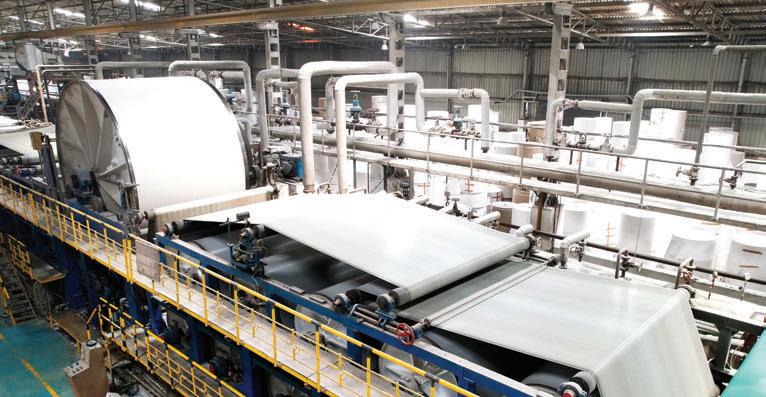

In an exclusive interaction with Paper Mart, Mr. SVR Krishnan, CEO, Sripathi Paper and Boards shares that the mill’s fresh water consumption has stabilized at 2 m³/ tonne in the last eighteen months, which is the lowest among the multiple grade paper mills. The paper and paperboard manufacturer is further fine tuning its processes by adding an effective quaternary clarifier system with multi grade filament filter and additional RO modular systems to further reduce COD and TDS in backwater. Sripathi Paper and Boards is also developing a bio methanation plant in collaboration with globally reputed suppliers and partnering with IIT Madras’ School of Sustainability to drive innovation and process efficiency in water management.
Paper Mart: After implementing water reuse, recycling, and closed-loop systems across your mill, what is your current specific freshwater consumption (m³/tonne), and has this figure
stabilized in recent years?
SVR Krishnan: At present, our fresh water consumption is 2m³/tonne, which is the lowest in the multiple grades paper mill, manufacturing, kraft, newsprint, writing & printing


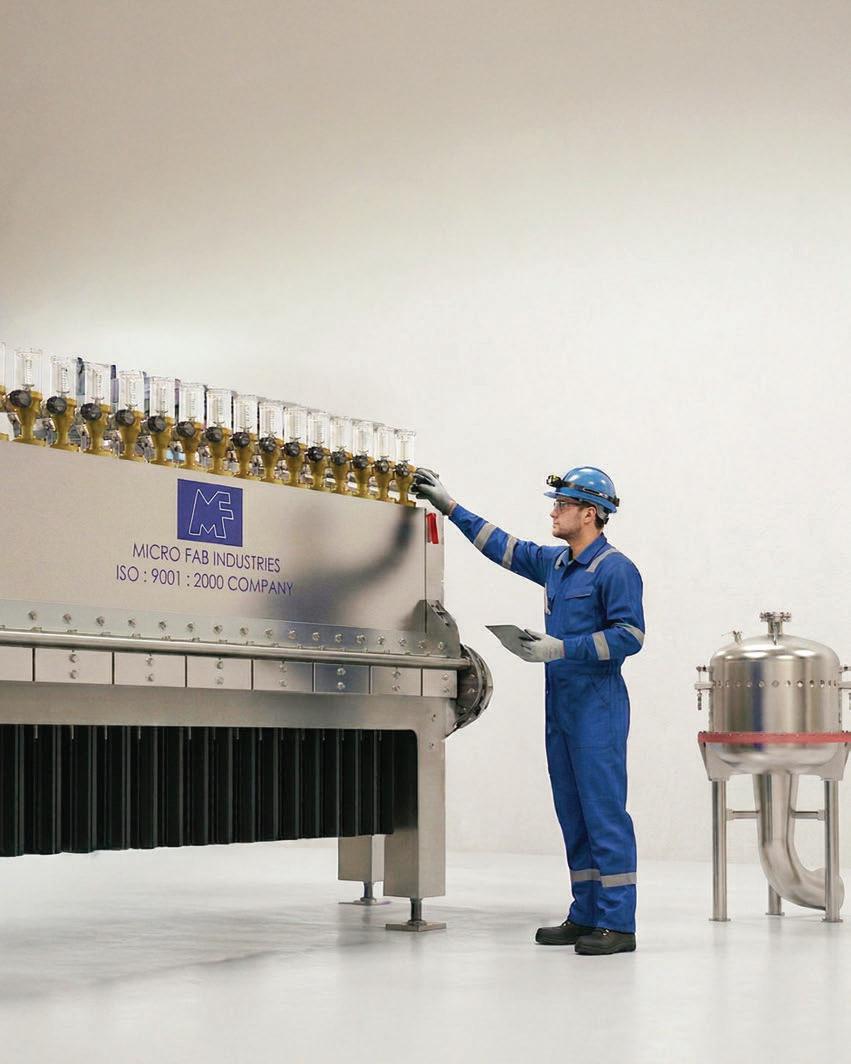
papers and coated duplex boards. In the last eighteen months, the consumption has stabilized and further fine tuning is happening to close the water circuit in totality. However, we are facing some challenges to achieve this goal.
PM: Under your present operating regime, where water reuse and recycling systems are already in place, what operational challenges have emerged in terms of process stability, machine performance, or water quality?
SK: We face many challenges when we cross 75% of the water closure, such as higher Chemical Oxygen Demand (COD), Total Dissolved Solids (TDS) and higher conductivity etc, along with other inorganic compounds.
Initially, there were heavy deposits in the wet end systems, causing a huge number of web breaks on the paper machines due to slime holes, heavy rejection of the final product, and calendar stamping etc. Slowly, things were addressed and resolved one by one, through strengthening of screening & cleaning systems and chemical treatment at various points.
Though things are brought under manageable levels, they are still not away from the sudden shocks with respect to poor runnability on the machine, heavy rejections due to poor cleanliness and higher chemical consumption etc.
PM: At your current level of system closure and reuse, what process, raw material, or product quality requirements limit further reduction in freshwater consumption?
SK: Poor machine runnability of both paper and board machines, higher levels of off quality production, subsequent rejection in downstream operations and poor Overall Equipment Effectiveness (OEE) of the machines are some of the challenges
that limit further reduction in freshwater consumption.
PM: In highly recycled operating conditions such as yours, do you periodically purge water from the system? What operational factors make this necessary, and how does it define your minimum freshwater intake?
SK: In general, we don’t purge backwater from the system, except when the grade order changes. As mentioned earlier, the backwater is being treated at various stages with process chemicals. Fresh water is being used in some critical high pressure showers and for chemical preparation at the wet-end section and also at the coating color kitchen (CCK).
PM: With closed-loop and reuse systems already implemented, how do you determine where freshwater must still be used versus where recycled water can be used within different sections
of the mill?
SK: Fresh water addition is being done for the critical showers and chemical preparation and also to compensate for the evaporation loss from the system. For all the pulpers, process dilution, machine cleaning and general house keeping, we only use backwater by recycling.
We regularly monitor pH, TSS, TDS, BOD, COD and the presence of organic and inorganic components, along with the heavy metals. Based on the tested values and the machine performance, some fresh water top up is being done on a weekly basis or sometimes in between for effective operations across the mill.


PM: Under these highly recycled conditions, what water quality or system parameters do you monitor most closely, and how do they influence decisions related to reuse levels, purging, or freshwater intake?
SK: We regularly monitor pH, TSS, TDS, BOD, COD and the presence of organic and inorganic components, along with the heavy metals. Based on the tested values and the machine performance, some fresh water topup is being done on a weekly basis or sometimes in between for effective
operations across the mill.
PM: After implementing available water reuse and recycling measures, have you reached a practical limit to further water reduction under your current operating configuration? What technical or operational factors define this limit?
SK: Yes, we have reached a very optimum level of fresh water consumption and beyond this extent, it will become extremely difficult to maintain the machine runnability
and meet the quality specification of the final product.
PM: Beyond your existing systems and processes, what types of improvements or changes would be necessary to reduce water consumption further?
SK: Though it is extremely difficult to reduce water consumption further, we are still working on strengthening the mechanical & chemical treatment of the back water to reduce COD and TDS, by the way of an effective quaternary clarifier system with multi grade filament filter and additional RO modular systems.
We are also working for the bio-methanation plant/bio-gas plant with globally renowned suppliers and are partnering with the Indian Institute of Technology–Madras (IIT-Madras), School of Sustainability to further advance our technologies and processes for effective water management.
Alliance International DWC LLC, a supplier and distributor of pulp and paper machinery, to supply a new paper mill with a production capacity of 500 tonnes per day (TPD) in the UAE.
Feb 13, 2026
Alliance International DWC LLC, a supplier and distributor of pulp and paper machinery, has announced a new project. The company will supply a new paper mill with a production capacity of 500 tonnes per day (TPD) in the UAE.
The mill will be equipped with advanced technology to manufacture a wide range of high-quality special papers designed to meet evolving market demands across diverse industries.
‘’This state-of-the-art facility marks a significant milestone in the growth journey and reinforces commitment to innovation, quality, and sustainability in the paper industry. We look forward to the opportunities this
project brings and will continue our journey of excellence with the support of our partners, customers, and stakeholders,” posted Mr. Arvinder Singh Aneja, CEO, Alliance International in his social media handle.



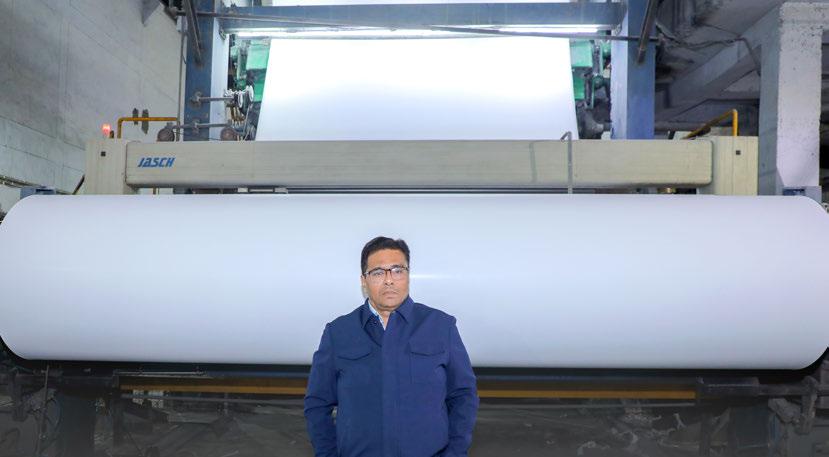
In an exclusive interaction with Paper Mart, Mr. Amit Mittal, MD and CEO, Chandpur Paper, shares that the mill has achieved an optimal level of freshwater usage at approximately 4–4.5 m³/tonne of production, without compromising on the quality of finished product. Moving ahead, the mill continues to explore advanced technologies and process enhancements in wastewater treatment, water recycling, and overall process optimization to further reduce freshwater consumption.
Paper Mart: After implementing water reuse, recycling, and closed-loop systems across your mill, what is your current specific freshwater consumption (m3/tonne), and has this figure stabilized in recent years?
Amit Mittal: Our current specific freshwater consumption is approximately 4–4.5 m3/tonne of production. Over the past few years, after implementing closed-loop water systems, recycling processes, and improved wastewater treatment, this figure has remained largely
stable, indicating that our systems are operating at an optimized level.
PM: Under your present operating regime, where water reuse and recycling systems are already in place, what operational challenges have emerged in terms of process stability, machine performance, or water quality?
AM: Operating under a high level of water reuse presents certain challenges, including increased consumption of process chemicals
and a reduction in the life of machine clothing such as wires and felts. We, at Chandpur Paper, have reached optimum level of freshwater consumption that does not affect the quality of our finished product.
PM: At your current level of system closure and reuse, what process, raw material, or product quality requirements limit further reduction in freshwater consumption?
AM: As a waste paper–based paper manufacturing facility, there are
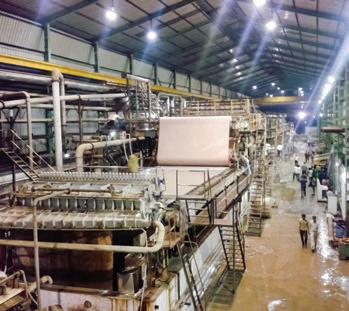

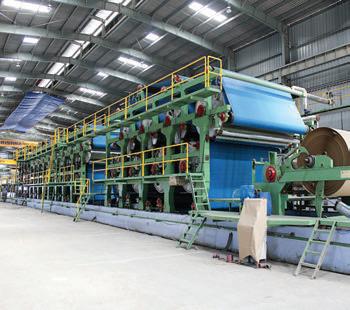

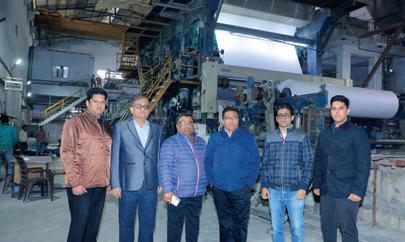
inherent limitations to reducing freshwater consumption beyond a certain level. Adequate freshwater input is necessary to maintain fiber quality, process stability, and the consistency and quality of our finished products.
PM: In highly recycled operating conditions such as yours, do you periodically purge water from the system? What operational factors make this necessary, and how does it define your minimum freshwater intake?
AM: We do not practice periodic purging of water from our system. All machine effluent is either recycled after primary treatment or directed to our Effluent Treatment Plant (ETP), where it undergoes biological treatment before being safely discharged for irrigation purposes.
PM: With closed-loop and reuse systems already implemented, how do you determine where freshwater must still be used versus where recycled water can be used within different sections of the mill?
AM: We have carefully optimized
We closely monitor water quality parameters such as suspended solids, COD/BOD levels, pH, and microbial load, along with process performance indicators. Monitoring important water quality parameters ensures that water reuse does not negatively impact machine performance, chemical efficiency, or product quality.
our process to strategically allocate freshwater and recycled water across different sections of the mill. Freshwater is used in areas where higher water quality is critical, while treated and recycled machine effluent is used in other process stages, allowing us to minimize freshwater dependency without compromising product quality.
PM: Under these highly recycled conditions, what water quality or system parameters do you monitor most closely, and how do they influence decisions related to reuse levels, purging, or freshwater intake?
AM: Under these operating conditions, we closely monitor water quality parameters such as suspended solids, COD/BOD levels, pH, and microbial load, along with process performance indicators. Monitoring important water quality parameters ensures that water reuse does not negatively impact machine performance, chemical efficiency, or product quality.
PM: After implementing available water reuse and recycling measures, have you reached a practical limit
to further water reduction under your current operating configuration? What technical or operational factors define this limit?
AM: We have utilized the latest technologies for waste water treatment to improve the quality of treated water to reduce our dependency on fresh water. We are constantly exploring feasible technologies to further limit and reduce our freshwater consumption without affecting our product quality.
PM: Beyond your existing systems and processes, what types of improvements or changes would be necessary to reduce water consumption further?
AM: We continue to explore new technologies and process improvements in wastewater treatment, water recycling, and process optimization. Any future reductions in freshwater consumption would likely depend on advancements in treatment technologies and further improvements in system efficiency, while ensuring that product quality standards are maintained.
Any future reductions in freshwater consumption would likely depend on advancements in treatment technologies and further improvements in system efficiency, while ensuring that product quality standards are maintained.

of Operational Sustainability, Suzano
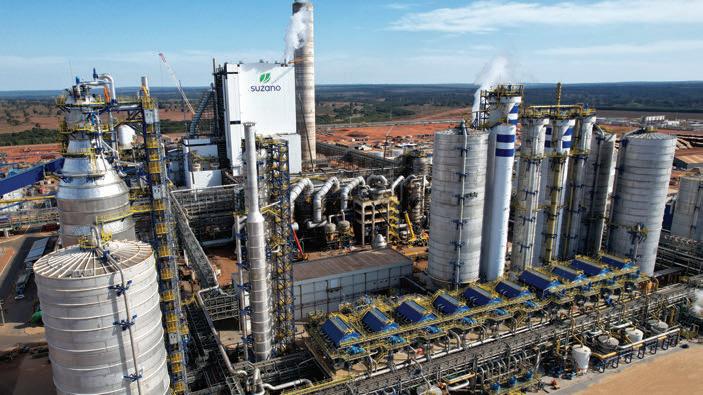
In an exclusive interview with Paper Mart, Ms. Clara Gazzinelli Cruz, Head of Operational Sustainability, Suzano, shared that the company achieved a specific water consumption of 7 m³/tonne across its Brazilian sites in 2025, and is focused on reducing operational water withdrawal across its operations, which is currently close to 25 m3/tonne. Going forward, Suzano aims to further optimize freshwater use through advanced treatment technologies, digital tools, and integrated long-term planning, aligning water efficiency with operational resilience and product quality.
Paper Mart: After implementing water reuse, recycling, and closed-loop systems across your mill, what is your current specific freshwater consumption (m³/tonne), and has this figure stabilized in recent years?
Clara Gazzinelli Cruz: In 2025, the specific water consumption at our Brazilian sites was 7 m³/tonne. Our wider corporate goal is actually focused on water withdrawal in our operations, which is closer to 25 m³/ tonne. We have been introducing process improvements and new technologies to continue reducing this, and making good progress since 2020. Around three-quarters of all the water we withdraw is used in the process, treated and returned to water bodies, in line with strict quality parameters.
Our newest mill in Ribas do Rio Pardo is an internal benchmark of what is possible, using the best technologies available. Despite
the fact this is a huge site, we only increased our absolute water withdrawal by 12% when this came into operation.
In recent years, this indicator has been stable, reflecting the effectiveness of our water management strategy. Rather than relying on isolated efficiency gains, the stabilization of freshwater consumption demonstrates that reuse and recycling practices are fully integrated into day-to-day operations and embedded in operational discipline. Ongoing improvements now focus on maintaining reliability, process stability and resilience under increasingly closed operating conditions, while continuing to pursue incremental efficiency gains where technically feasible.
PM: Under your present operating regime, where water reuse and recycling systems
Beyond our existing water reuse and recycling systems, achieving further reductions in water consumption would require a combination of structural, technological and operational advancements.
are already in place, what operational challenges have emerged in terms of process stability, machine performance, or water quality?
CGC: When you have extensive water reuse and recycling systems in place, it requires a higher level of operational discipline and system control. One of the main challenges is managing the increased concentration of dissolved and suspended substances within water circuits, which can influence process stability and equipment reliability if not properly controlled.
From an operational standpoint,
higher closure levels demand more robust monitoring of water quality parameters and closer integration between process control, maintenance and water treatment systems. Aspects such as scaling, fouling, corrosion and microbiological growth require special attention, calling for adaptive operational strategies, preventive maintenance and, in some cases, additional treatment steps to safeguard machine performance.
These challenges are not limiting factors but rather key considerations when managing mature, highly recycled systems. Addressing them successfully depends on continuous monitoring, data-driven decision making and ongoing optimization to balance water efficiency goals with long-term operational reliability and product quality.
PM: At your current level of system closure and reuse, what process, raw material, or product quality requirements limit further reduction in freshwater consumption?
CGC: At advanced levels of
system closure and water reuse, further reductions in freshwater consumption are mainly limited by process robustness and product quality requirements. Certain stages of production require water with tightly controlled physicochemical characteristics to protect process stability, equipment integrity and final product performance.
As water circuits become more closed, substances that are not fully removed by internal treatments –such as salts, dissolved organics and trace contaminants – tend to accumulate over time. While this is managed within defined operational limits, exceeding certain thresholds may impact raw material interactions, process efficiency and key product quality attributes. These constraints define the technical boundaries within which freshwater reduction remains feasible without introducing operational or quality risks.
Therefore, additional reductions are not only a matter of water balance optimization, but also of ensuring that critical process and product specifications continue to
The practical limit to further water reduction is primarily defined by water quality thresholds, system closure effects, and the need to maintain consistent process performance and product quality.
be met under increasingly recycled operating conditions.
PM: In highly recycled operating conditions such as yours, do you periodically purge water from the system? What operational factors make this necessary, and how does it define your minimum freshwater intake?
CGC: Controlled water purging is an inherent and necessary practice for highly recycled or closedloop systems. As systems become increasingly closed, certain dissolved inorganic salts, organic compounds and non-process elements gradually accumulate within the water circuits and cannot be fully eliminated through internal reuse alone.
Periodic purges are therefore required to maintain water quality within defined operational thresholds, ensuring process stability, equipment protection and consistent product quality.
The need for purging is driven by factors such as concentration cycles, scaling and corrosion risks, microbiological control, and the preservation of stable operating conditions across different process stages.
These technical requirements ultimately define a minimum level of freshwater intake, which is continuously optimized but cannot be fully eliminated under current operating configurations. Managing this balance is a key aspect of operating
mature, highly recycled systems, where water efficiency objectives must be aligned with long-term reliability and performance.
PM: With closed-loop and reuse systems already implemented, how do you determine where freshwater must still be used versus where recycled water can be used within different sections of the mill?
CGC: The decision on where freshwater is still required versus where recycled water can be safely applied is guided by a combination of water quality specifications, operational risk assessment and product requirements. In practice, we segment water uses across the mill based on how sensitive each process step is to variability in parameters such as dissolved solids, suspended matter, organic load, temperature, pH and microbiological activity.
Freshwater is prioritized for high-criticality applications where water quality directly influences equipment integrity, process stability or product performance. Recycled water is applied broadly in less sensitive uses and wherever treatment and control measures ensure that quality remains within predefined limits. This allocation is not static. Instead, it is continuously refined through monitoring, process control and targeted treatment, so that reuse levels can be maximized without compromising reliability.
Ultimately, the approach is to treat freshwater as a strategic input reserved for points of greatest technical need, while expanding safe reuse through operational discipline, fit-for-purpose water quality management and ongoing optimization across different mill functions.
PM: Under these highly recycled conditions, what water quality or system parameters do you monitor most closely, and how do they influence decisions
related to reuse levels, purging, or freshwater intake?
CGC: Close monitoring of water quality and system performance parameters is essential to maintaining stable and reliable operations. Key parameters typically include conductivity, total dissolved solids, suspended solids, organic load, microbiological activity, pH and temperature, as these directly reflect the degree of system closure and the accumulation of non-process elements.
These indicators are used as operational decision tools rather than standalone metrics. Trends and threshold deviations help determine when reuse levels can be safely increased, when additional treatment adjustments are required, or when controlled purging is necessary to prevent adverse impacts on process stability and equipment integrity. Likewise, freshwater intake is adjusted to ensure that critical quality limits are respected while maximizing reuse wherever feasible.
By continuously integrating water quality data with process control and operational experience, highly recycled systems can be managed proactively, allowing water efficiency targets to be met without compromising long-term performance or product quality.
PM: After implementing available water reuse and recycling measures, have you reached a practical limit to further water reduction under your current operating configuration? What technical or operational factors define this limit?
CGC: Our operations are reaching an advanced level of efficiency under our current operating configuration. This does not indicate a lack of opportunity, but rather reflects the technical boundaries associated with operating highly closed and integrated water systems in a stable and reliable way.
This practical limit is primarily defined by water quality thresholds, system closure effects, and the need to maintain consistent process performance and product quality. As reuse levels increase, the accumulation of dissolved salts, organic compounds and other non-process elements imposes constraints that cannot be fully addressed through operational optimization alone. Equipment protection, corrosion and fouling control, microbiological stability and process robustness all play a role in defining these boundaries.
Within this context, opportunities for further reduction tend to be incremental rather than transformational, requiring careful balancing between water efficiency gains and operational reliability. Meaningful additional reductions would likely depend on structural
changes, advanced treatment solutions or process redesign, rather than further optimization of the existing configuration.
PM: Beyond your existing systems and processes, what types of improvements or changes would be necessary to reduce water consumption further?
CGC: Beyond our existing water reuse and recycling systems, achieving further reductions in water consumption would require a combination of structural, technological and operational advancements. As systems approach high levels of closure, incremental optimization has limited reach. Transformative solutions are required to expand possibilities and overcome current technical limits.
Potential pathways include the adop-
tion of advanced water treatment technologies capable of selectively removing dissolved salts and specific contaminants, greater segregation of water loops according to quality requirements, or process redesign aimed at reducing water dependency at the source. Digital tools and advanced analytics can also play an important role by enabling predictive water management, early detection of system imbalances, and more precise control of reuse and purge strategies.
Further progress depends on long-term investment and integrated planning, aligning water efficiency objectives with operational resilience, asset integrity and product quality. Reducing water consumption beyond current levels is less about maximizing short-term efficiency and more about redesigning systems to operate reliably under increasingly constrained water conditions.
Sripathi Paper and Board (P) Ltd., has announced the appointment of Mr. SVR Krishnan as its new Chief Executive Officer (CEO), bringing over 42 years of unparalleled expertise and strategic leadership to the organization.
Apr 22, 2026
Sripathi Paper and Board (P) Ltd. is proud to announce the appointment of Mr. SVR Krishnan as its new Chief Executive Officer (CEO). A stalwart of the Indian pulp and paper industry, Mr. Krishnan brings over 42 years of unparalleled expertise and strategic leadership to the organization.
Mr. Krishnan’s illustrious career is marked by high-impact roles at some of the industry’s most respected names. He most recently served as Executive Director at Khanna Paper Mills Ltd. Prior to that, he was Executive Director at TNPL, where he headed operations across Paper, Paperboard, and Cement units. His extensive tenure of over 23 years at ITC Limited (PSPD) saw him lead large-scale operations and navigate complex corporate acquisitions.
Technically distinguished, Mr. Krishnan holds M. Tech and MBA degrees and is an AMIIE in Chemical Engineering. His unique blend of technical mastery and management vision makes him the ideal leader to drive Sripathi Paper and

Board toward a new era of operational excellence and sustainable growth.
“Mr. Krishnan’s rich experience from the shop floor to the boardroom will be an invaluable asset to our company,” the Board of Directors stated. “His proven track record at TNPL and Khanna Paper Mills underscores his capability to lead Sripathi Paper and Board into its next phase of expansion.”
With his extensive industry knowledge and proven leadership, Mr. Krishnan is set to focus on driving operational efficiencies and strengthening the company’s market position.
In an exclusive interaction with Paper Mart, Ms. Veronika Renyaan, Stakeholder Engagement & Advocacy Manager – Sustainability, APP Group, shared that the company has reduced its freshwater consumption by approximately 8% over the past five years through sustained efforts in water reduction, reuse, and recycling. Going forward, APP Group plans to further lower its freshwater demand by transitioning from high water intensive technologies to more water-efficient alternatives, process redesign, and improved segregation of water streams, enabling effective water reuse and optimization across operations.
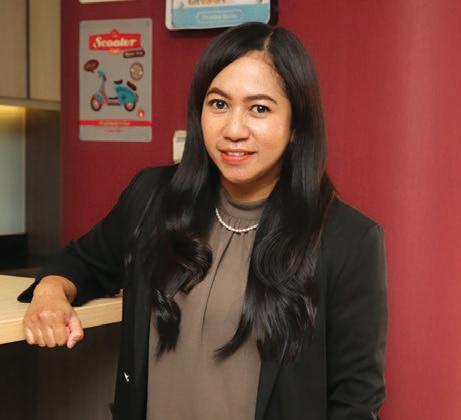
Paper Mart: After implementing water reuse, recycling, and closed-loop systems across your mill, what is your current specific freshwater consumption (m³/tonne), and has this figure stabilized in recent years?
Veronika Renyaan: Over the past five years, our freshwater consumption intensity has decreased by approximately 8% following the implementation of water reduction, reuse and recycling. Over the last three years, freshwater intensity has largely stabilized, indicating that the mill is approaching a practical operating limit under the current configuration.
PM: Under your present operating regime, where water reuse and recycling systems are already in place, what operational challenges have emerged in terms of process stability, machine performance, or water quality?
VR: Water reuse and recycling are embedded in our production processes, including the reuse of treated effluent returned to the
Enhanced real-time monitoring, automation, and process control would be essential to sustain higher levels of water efficiency.
water treatment plant. Increased water reuse presents operational challenges such as variability in recycled water quality, accumulation of dissolved solids, and higher risks of fouling and scaling which may affect machine stability and performance. These challenges are managed through enhanced monitoring and process control.
PM:At your current level of system closure and reuse, what process, raw material, or product quality requirements limit further reduction in freshwater consumption?
VR: At our current level of system closure and water reuse, further reductions in freshwater consumption are constrained primarily by the quality of raw water sourced from the river. In many parts of Indonesia, river water is characterized by relatively high levels of mud and suspended solids, which are further influenced by weather conditions and seasonal changes.
During periods of high rainfall and seasonal transitions, increased mud and suspended solids exceed the effective treatment capacity of the water treatment plant. As the existing treatment system is not designed to process all incoming water, approximately 5–15% of the abstracted river water must be returned to the river to maintain stable treatment performance.
PM: With closed-loop and reuse systems already implemented, how do you determine where freshwater must still be used
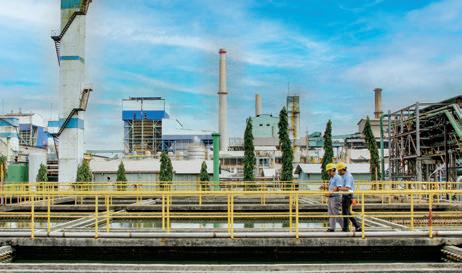
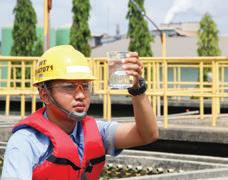
versus where recycled water can be used within different sections of the mill?
VR: Recycled water is prioritized and used in areas where its quality continues to meet the minimum operational and product quality standards. These standards are defined by key parameters such as suspended solids, turbidity, and conductivity, depending on the sensitivity of the process.
As water circuits become more closed, recycled water may reach a saturation point, where the accumulation of contaminants exceeds acceptable limits. When this occurs, controlled freshwater injection is applied to dilute the system, restore water quality to within operational standards, and maintain process stability.
PM: Under these highly recycled conditions, what water quality or system parameters do you monitor most closely, and how do they influence decisions
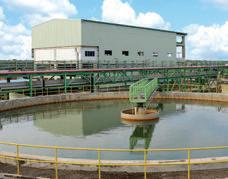
related to reuse levels, purging, or freshwater intake?
VR: Under recycled operating conditions, water quality and system parameters are closely monitored to ensure stable operations, protect equipment, and maintain product quality. Key parameters routinely tracked include pH, total suspended solids (TSS), total dissolved solids (TDS), and conductivity, as these directly reflect the suitability of recycled water within process areas.
Recycled water is reused as long as measured values remain within defined process-specific thresholds. When those indicators approach or exceed acceptable limits, freshwater intake is applied to dilute the system and restore water quality.
PM: Beyond your existing systems and processes, what types of improvements or changes would be necessary to reduce water consumption further?
VR: Beyond our existing systems and
processes, further reductions in water consumption would require a combination of technological upgrades, process redesign, and enhanced water management strategies.
Advanced wastewater treatment plants would enable higherquality effluent, allowing treated wastewater to be recycled back
into process more extensively and reliably. In addition, replacing high water-consuming technologies with lower water-consumption alternatives would further reduce overall freshwater demand. Increasing condensate return to the power plant also represents a significant opportunity, as higher condensate recovery reduces the
need for freshwater makeup water in boiler and utility systems. This includes process redesign, improved water-efficient equipment, and better segregation of water streams based on quality requirements. Finally, enhanced real-time monitoring, automation, and process control would be essential to sustain higher levels of water efficiency.
Under recycled operating conditions, water quality and system parameters are closely monitored to ensure stable operations, protect equipment, and maintain product quality. Key parameters routinely tracked include pH, total suspended solids (TSS), total dissolved solids (TDS), and conductivity, as these directly reflect the suitability of recycled water within process areas.
Andhra Paper Limited (APL) and Haber joined hands to accelerate the adoption of AI-based automation across APL’s mill operations. At the core of this offering is ‘Mt. Fuji’, Haber’s manufacturing intelligence platform which introduces AI agents to integrate real-time operational data with advanced analytics and ML, enabling autonomous process control, and measurable performance improvements in complex operating environments.
Mar 10, 2026
Andhra Paper Limited (APL) and Haber joined hands at Paperex 2025 to accelerate the adoption of AI-based automation across APL’s mill operations.
The partnership supports APL’s ongoing efforts to strengthen operational consistency, enhance process visibility, and accelerate its transition toward datacentric, Industry 4.0-ready mill environments. By integrating Haber’s industrial AI solutions, APL intends to complement its manufacturing expertise with continuous, data-driven decision support.
At the core of this offering is Mt. Fuji, Haber’s manufacturing intelligence platform. Unlike conventional advanced process control frameworks, Mt. Fuji introduces AI agents to integrate real-time operational data with advanced analytics and machine learning, enabling actionable insights, autonomous process control, and measurable performance improvements in complex operating environments.
Commenting on the same, Mr. Anjan Dayam, AGMPurchase, of APL, said, “We are looking forward to seeing how these AI solutions can help us maintain stable oper-
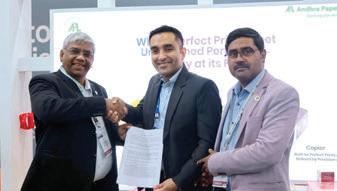
ations, reduce fluctuations in key parameters, and make day-to-day mill processes more predictable and reliable.”
Echoing this focus on operational impact, Mr. Vipin Raghavan, CEO of Haber, added, “Our NDA with APL is focused on driving real, measurable impact, with stronger stability, lower variability, and a more predictable, highperformance mill environment. This represents a decisive step toward making autonomous, high-performance mill operations not just possible, but the new industry standard.”
In an exclusive interview with Paper Mart, Mr. Supratim Pan, Sales Manager at Voith Paper Technology India Pvt. Ltd., and Mr. Henning Laubrock, Head of Sales & Technology at Meri Environmental Solutions GmbH (a Voith company), revealed that the competitive water intensity benchmark for Indian waste-paper-based (RCF) mills is expected to go below 10 m³/tonne. They shared that a critical approach to reduce freshwater consumption is to use clarified whitewater or super-clear filtrate for pulping, dilution, and low-pressure showers. Further, Voith backed its AquaLine Flex solution, which combines advanced biological treatment with filtration systems, enabling packaging paper mills to bring freshwater consumption down to below 5.5 m³/tonne.
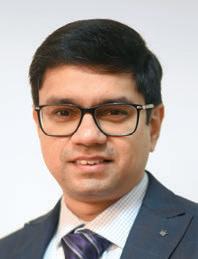

Paper Mart: Based on your experience with mills that have already implemented water reuse, recycling, and closed-loop systems, what specific water consumption range are most Indian mills currently operating in?
Supratim Pan: In our experience, the Indian paper industry is currently navigating a significant performance gap between legacy operations and the new regulatory benchmarks. As per some articles and studies available online, historic water intensity for waste-paper-based (RCF) mills in India reached as high as 59 m³/ tonne, while the current industry average has improved to approximately 39 m³/tonne.
However, we are seeing a “tiering” of the market:
Regulatory Leaders: Mills in water-stressed regions, such as the Ganga river basin, are already operating within the CPCB-mandated range of 1520 m³/tonne for RCF grades.
Integrated Mills: Larger integrated units typically operate in the 2540 m³/tonne range, though they face stricter upcoming enforcement under the 2025 Seventh Amendment Rules.
Voith Technological Benchmarks: In contrast, when we deploy AquaLine Flex architectures, we can stabilize the freshwater consumption for packaging paper production at below 5.5 m³/tonne.
As we move toward the September 2027 regulatory deadline, we expect the competitive benchmark for Indian RCF mills to shift decisively toward the sub-10 m³/tonne range.
PM: In mills operating with high levels of water reuse, what operational and water quality challenges typically emerge?
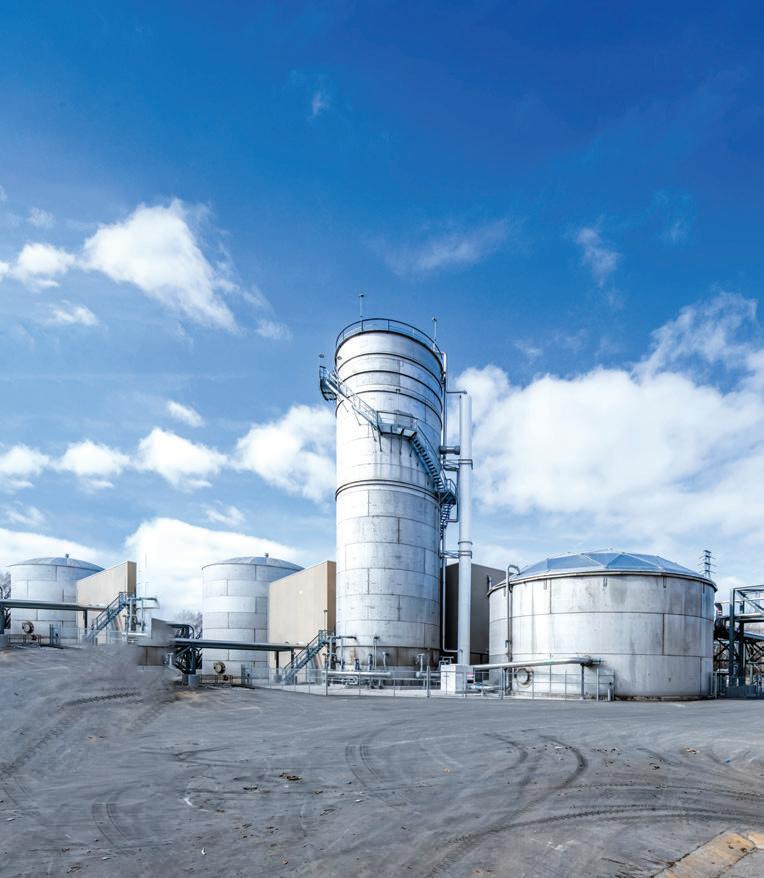
Henning Laubrock: Depending on the starch content in the recovered paper, high levels of Chemical Oxygen Demand (COD) can provide a breeding ground for biological activity. This results in acidification of the process water and thus dissolving of Calcium-Carbonate, slime formation, unpleasant odor even in the final product, and degraded runnability. The dissolved calcium carbonate can precipitate due to pH, temperature or pressurechanges causing severe scaling problems in the effluent treatment plant, at heat exchangers, pipes or spray nozzles. Furthermore, the system becomes highly sensitive to fluctuations in raw material quality. For instance, varying contamination levels in recovered paper bales can cause sudden spikes in dissolved contaminants that destabilize the entire wet-end chemistry
PM: After implementing conventional reuse and treatment technologies, what
As the Indian pulp and paper industry faces tightening regulatory standards, specifically the ‘Environment (Protection) Seventh Amendment Rules, 2025,’ which will strictly enforce new freshwater consumption limits by September 2027the transition to closed-loop systems is no longer optional. At Voith, we are leveraging our global expertise and technologies like AquaLine to help Indian mills reconcile high production targets with extreme water stress.
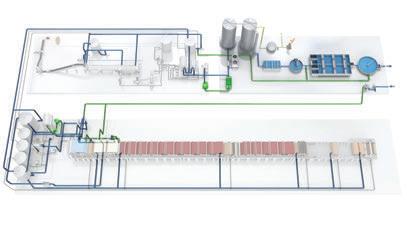
3D rendering of the AuaLine Flex concept
technical or process factors limit further reduction in freshwater consumption?
SP: Conventional mechanical treat-
ment such as sedimentation and standard filtration is excellent for removing suspended solids but is ineffective against dissolved organic
Voith’s Papermaking 4.0 and the MillOne ecosystem allow for real-time tracking of COD levels, flow rates, and chemical dosages. This data driven approach enables the system to identify potential errors in the biological treatment plant before they impact paper quality.
and inorganic Non-Process Elements (NPEs). Once these elements reach saturation in the process water, they interfere with the functional chemistry of the paper machine, leading to quality defects and frequent breaks. A fundamental physical limit is also imposed by the mill’s mass balance. Mills require a minimum intake to compensate for water lost through evaporation in the dryer section. Additionally, water carried away in solid rejects (which can be up to 80% moisture) defines a baseline intake that conventional systems cannot bypass.
In many mills, the missing or wrongly designed counter current principle or the unbalanced sizing of stock & water towers limits a further reduction in freshwater consumption. Many mills have trouble with full sewer water towers, broken towers etc. As they need to keep these levels low, this volume is pumped to the next ‘‘free’’ tower which is mostly located in the stock preparation. Here towers/tanks overflow and bring excessive water peaks to the effluent treatment plant which can cause problems. In addition, the ‘‘lost’’ water is later backed up by freshwater intake into the paper machine.
With a clear counter current flow principle and properly sized stock & water buffers such overflows are basically eliminated. The whole system will be stabilized and can run permanently at the lowest possible freshwater intake.
PM: In highly closed-loop systems, why does periodic purging remain necessary, and
what determines the minimum freshwater requirement?
HL: Periodic purging is essential to prevent the prohibitive buildup of dissolved contaminants that would otherwise poison the process chemistry. The absolute minimum freshwater requirement is determined by the “evaporation threshold.”
For example, in a packaging paper mill, the theoretical limit is approximately 1.5 litres per kg of paper (~1.5 m³/tonne). At this stage, the only freshwater added is the exact amount required to replace water lost to the atmosphere during the drying process and chemical preparation. Achieving this benchmark requires a sufficiently sized, advanced and complex effluent treatment system. In addition, efficient filtration technologies must be used for process water treatment to replace fresh water at the high-pressure showers. Also, the usage of aeration in water towers might need to be considered.
PM: How can mills further optimize water use within their existing closed-loop systems, without simply adding new
Voith’s HydroSeal device reduced suction pressure roll water consumption by 75%. Additionally, using advanced press fabrics like +Peak can enhance dewatering performance, reducing the moisture load entering the dryer section
recycling capacity?
SP: Mills can further optimize existing loops without major capacity expansions by focusing on internal process discipline. A key strategy is replacing freshwater with clarified whitewater or super-clear filtrate for pulping, dilution, and low-pressure showers. Mechanical upgrades also play a vital role. For example, a case study from a tissue mill showed that installing Voith’s HydroSeal device reduced suction pressure roll water consumption by 75%. Additionally, using advanced press fabrics like +Peak can enhance dewatering performance, reducing the moisture load entering the dryer section.
PM: In mills already operating under high reuse conditions, how does monitoring and control help maintain system stability and manage water quality limits?
HL: Stability in high-reuse systems is maintained through advanced digitalization. Voith’s Papermaking 4.0 and the MillOne ecosystem allow for real-time tracking of COD levels, flow rates, and chemical dosages. This data-driven approach enables the system to identify potential errors in the biological treatment plant before they impact paper quality. For example, the OnEfficiency.DIP solution dynamically adjusts chemical dosing to maintain constant quality despite fluctuations in incoming raw material.
PM: What types of technological or process improvements can help mills operate safely at lower freshwater consumption levels than currently achieved?
SP: To operate safely at significantly lower consumption levels, Voith rec-
ommends a tiered approach through our AquaLine architectures. AquaLine Flex integrates advanced biological treatment (anaerobic + aerobic) with filtration units to reduce freshwater consumption to below 5.5 l/kg.
Additionally, the innovative R2S Anaerobic Reactor technology, when combined with Lime Trap, removes approximately 3 tonnes of lime daily (as seen at the Leipa mill, effectively managing scaling issues in closed loops).
PM: Based on current industry experience, what is the realistic lower limit of freshwater consumption achievable in practice, and what factors ultimately define this limit?
HL: Based on current industry experience, the realistic lower limit for freshwater consumption is approximately 2.5 liters per kg of paper produced (~2.5 m³/tonne).
1.5L/kg seems in reach as this limit is ultimately defined by evaporation; at this stage, the only fresh water added
is the amount required to replace what is lost to the atmosphere during the drying process and for chemical preparation of some additives. Achieving this benchmark requires high-level process expertise on the customer side, a properly sized effluent treatment plant, and the successful implementation of the anaerobic treatment in combination with LimeTraps. Some other smaller adaptations such as membrane filtration technologies or aeration should be considered.
Based on current industry experience, the realistic lower limit for freshwater consumption is approximately 2.5 l/kg of paper produced (~2.5 m³/tonne).
UPM Adhesive Materials will expand its footprint in India with a new slitting and distribution terminal near New Delhi.
Mar 30, 2026
UPM Adhesive Materials, a global supplier of innovative self-adhesive label materials, will expand its footprint in India with a new slitting and distribution terminal near New Delhi. The investment enhances UPM Adhesive Materials’ service capability in Northern and Eastern India and reinforces its commitment to the entire Indian market.
The Indian economy is expanding rapidly, driven by megatrends such as urbanization, digitalization and infrastructure development. To match the pace of the market, local label converters need reliable label material supply and shorter lead times.
The new terminal will feature state-of-the-art slitting capabilities and a tailored label material inventory designed to meet regional customer needs. It complements UPM Adhesive Materials’ Mumbai terminal, opened in February 2024, extending service across the country.
”We are excited to strengthen our presence in India with a

new terminal near New Delhi. This investment supports the growth ambitions of our customers in the Northern and Eastern regions and deepens our engagement with the dynamic Indian market,” says Mr. Harri Janhunen, Vice President, Strategy, India & Middle East, UPM Adhesive Materials.
The terminal is expected to begin operations during Q3 2026.
In an exclusive interaction with Paper Mart, Mr. Felix Sahayaraj, Commercial Head & Director – India, Kemira Chemicals India Pvt. Ltd., highlights the significant variation in water consumption across mills manufacturing different paper grades. He notes that brown grade paper mills typically operate within 2–5 m³/tonne of paper, while recycled based duplex board mills consume around 8–10 m³ /tonne. On the other hand, integrated mills producing fine paper require substantially higher water usage, ranging from 40–50 m³/tonne. He further emphasizes that robust online monitoring systems, combined with well managed ETP operations, are critical to maximizing water reuse while consistently ensuring high quality paper production.
Mr. Felix Sahayaraj, Commercial Head & Director – India, Kemira Chemicals India Pvt. Ltd.
Paper Mart: Based on current industry experience, what is the realistic lower limit of freshwater consumption achievable in practice, and what factors ultimately define this limit?
Felix Sahayaraj: Brown paper grade based mills operate at around 2-5 m³/tonne of paper, which is a significantly lower level of water usage. Technological implementation can further improve the quality of paper like reduction in chemical consumptions, and elimination of odour from paper etc.
The recycle based duplex board mills typically consume about 8–10 m³/tonne of paper while integrated paper mills producing fine paper grades have significantly higher water consumption, generally around 40-50 m³/tonne of paper.
PM: In mills operating with high levels of water reuse, what operational and water quality challenges typically emerge?
FS: High level of TDS, conductivity prompts the mill to use higher
chemical dosage. However, many mills prefer less chemical usage in the wet-end sections. In addition to this, most of the mills producing brown/ recycled paper grades face the odour problem, preventing them from exporting paper to other countries.
PM: After implementing conventional reuse and treatment technologies, what technical or process factors limit further reduction in freshwater consumption?
FS: High levels of TDS and conductivity in process water compel mills to increase chemical dosing, which in turn demands additional water for dilution, effective distribution, and other applications—thereby constraining further reductions in freshwater consumption. Moreover, in recycled or brown grade paper production, excessive reuse of process water often leads to odour-related challenges caused by the accumulation of anaerobic bacteria, formation of volatile fatty
Effective ETP treatment....combined with the use of high-quality polymers and robust online monitoring and control systems, can significantly enable mills to lower water consumption without affecting paper quality.
acids (VFAs) and hydrogen sulfide in closed-loop systems, resulting in unpleasant odours in the final product. To mitigate these issues and maintain paper quality, mills typically limit the extent of water reuse, ensuring the production of highquality, odour-free paper.
PM: In highly closed-loop systems, why does periodic purging remain necessary, and what determines the minimum freshwater requirement?
FS: In order to have goodquality paper and lower chemical consumptions, regular purging of water is essential for the paper
mills. Some mills use anaerobic digesters to have good control over the recycled water. However, even anaerobic treatment has limitations due to high levels of calcium concentration in the paper manufacturing process.
PM: In mills already operating under high reuse conditions, how does monitoring and control help maintain system stability and manage water quality limits?
FS: Online monitoring of all process parameters, along with well-controlled ETP plants help the paper mill to maintain high reuse of water and achieve
good quality paper simultaneously.
PM: What types of technological or process improvements can help mills operate safely at lower freshwater consumption levels than currently achieved?
FS: Effective ETP treatment incorporating primary, secondary, and tertiary treatment stages, including clarifiers, anaerobic and aerobic biological systems, and advanced processes such as RO, combined with the use of high-quality polymers and robust online monitoring and control systems, can significantly enable mills to lower water consumption, without affecting paper quality.
Kuantum Papers has expanded its PCC (Precipitated Calcium Carbonate) capacity from 25,000 TPA to 50,000 TPA, effectively doubling its production capability. As part of this expansion, a 750 m³ new storage tank and an advanced handling system have been commissioned.
Feb 25, 2026
Kuantum Papers has expanded its PCC (Precipitated Calcium Carbonate) capacity from 25,000 TPA to 50,000 TPA, effectively doubling its production capability.
As part of this expansion, a 750 m³ new storage tank and an advanced handling system have been commissioned, ensuring improved reliability and consistent material flow to our machines. Additional enhancements include a second reactor line, improved gas handling systems, upgraded slaking capacity, flue gas duct renewal and an external lime warehouse.
‘’We thank Minerals Technologies Inc. for their valued partnership in expanding our PCC capabilities and strengthening our competitive edge by enabling superior paper quality
while optimizing overall production costs,’’ posted the mill on its social media handle.
In an exclusive interaction with Paper Mart, Mr. José Soares, Commercial Director of Paper shares Klabin is a flexible producer and exporter of packaging paper capable of shifting volumes between kraftliner and paperboard according to market demands, while maintaining efficiency, competitiveness, and high quality standards. He further shares his perspective on the Kraftliners innovation describing its progress not as a single disruptive event, but as the ongoing evolution of products and processes, consistently guided by application, performance, and sustainability. With a total production capacity of 4.4 million metric tonnes per year, the company stands out for its applied innovation such as Eukaliner® which is the world’s first kraftliner produced from eucalyptus fibers that delivers high strength at a lower density.

Paper Mart: Could you briefly explain your current kraft paper production capacity and how you foresee this mix changing over the next three to five years?
José Soares: Klabin is Brazil’s largest producer and exporter of packaging paper, leading the domestic corrugated packaging sector and serving as a global benchmark in market pulp, operating in short fiber, long fiber, and fluff segments. The company has a total installed capacity of 4.4 million metric tonnes per year of paper and market pulp, positioning us as one of the key integrated players in the global paper and packaging industry.
Within our paper portfolio, we produce kraftliner, sack kraft, and paperboard. In the kraftliner segment, we have a highly
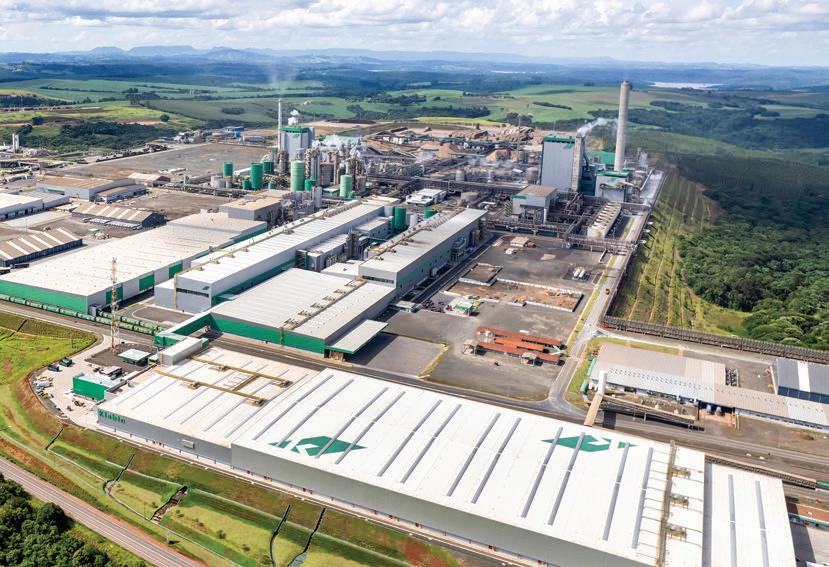
competitive platform, supported by modern industrial assets and the production of differentiated solutions, such as Eukaliner®, the world's first kraftliner produced from eucalyptus fibers, which combines high strength, lower density, and efficiency gains throughout the entire chain. Our operations are guided by performance, reliability, and consistency, serving different global markets.
Looking ahead to the next three to five years, we do not expect significant structural changes in total capacity, but rather a continuous evolution of the mix, supported by our integrated, diversified, and flexible business model, which allows the company to adapt production to the dynamics of the global market. Klabin has a robust
and versatile industrial platform, capable of shifting volumes between kraftliner and paperboard according to demand, while maintaining efficiency, competitiveness, and high quality standards. This flexibility, combined with the efficient use of fibers, the optimization of density while maintaining performance, and the focus on renewable solutions, positions us to consistently meet the structural growth of the paper packaging market in different regions of the world.
PM: What raw materials do you use in your products?
JS: Klabin’s main raw material is renewable pulp fiber, derived from sustainably managed, internationally certified pine and eucalyptus plantations. Our business model ensures full traceability, reliable
Asia stands out as a growth engine, especially China, India, and Southeast Asian countries, driven by urbanization, expansion of domestic consumption, and the rise of e commerce.
supply, and high quality pulp, with a forest base spanning over 900,000 hectares in Brazil’s South and Southeast regions.
Note that the combination of long pine fibers and short eucalyptus fibers is a relevant technical advantage in our portfolio. The long fibers ensure strength and structure,
while the short fibers contribute to better formation, surface, and print quality, enabling the development of high-performance papers with efficient use of resources. Additionally, we use recycled fibers in specific lines, increasing the circularity of the portfolio and meeting different market demands in a sustainable manner.
PM: What are the unique selling points (USPs) that make Klabin a preferred supplier compared to other European manufacturers?
JS: Klabin brings together a set of structural differentiators that support its global competitiveness and position it as a strategic partner for customers in different markets, even when compared to European producers. Among the key factors is our unique business model, which is integrated, diversified, and highly adaptable. This means we operate our own certified, planted forests, maintain state-ofthe-art industrial assets, benefit
from strategically located mills, and leverage integrated logistics, while offering a comprehensive and versatile portfolio for a wide range of applications and markets. In addition, our total installed capacity, which is currently 4.4 million metric tonnes per year of paper and market pulp, is a key factor in providing supply security, traceability, and consistent quality for our customers.
Klabin also stands out for its applied innovation and its ability to drive efficiency across the customer supply chain. One example is Eukaliner®, the world’s first kraftliner produced from eucalyptus fibers, which delivers high strength at a lower density, supporting efficiency gains in both conversion processes and logistics.
In summary, customers choose Klabin because we offer a unique blend of reliability, innovation, and competitiveness, supported by an integrated platform and efficient logistics, ready to serve international
markets with consistency and high quality standards.
PM: In your view, which applications are driving the global demand for kraft paper? Which regions are emerging as the main drivers of growth?
JS: Global demand for kraftliner has been driven primarily by applications related to food packaging, consumer goods, e-commerce, and industrial uses, in addition to the continued growth of industrial bags for segments such as construction (cement), chemicals, and food. A relevant structural factor is the trend of replacing fossil-based materials with renewable solutions, which increases the use of kraftliner in packaging that requires strength, performance, and recyclability. At the same time, customers look for papers that deliver efficiency across the supply chain, with better performance in conversion, lower density, and logistical gains.
Packaging will increasingly depend on the ability to combine scale with flexibility, supported by integrated and resilient business models. Control over the forest base, operational efficiency, asset reliability, and supply security will no longer be differentiators but basic conditions to compete in a volatile and demanding market.
Asia stands out as a growth engine, especially China, India, and Southeast Asian countries, driven by urbanization, expansion of domestic consumption, and the rise of e-commerce. Latin America also shows consistent growth, supported by industrial development and the expansion of the packaging market. In Europe and North America, more mature markets, growth is more closely associated with the sophistication of applications, the sustainability agenda, and the demand for solutions with higher added value. In this context,
producers with scale, integration, and flexibility, such as Klabin, are well positioned to respond to the unique demands of each region.
PM: With the increasing expectations regarding recycled content, how do you plan to preserve the performance advantages of virgin fiber in different regulatory environments?
JS: At Klabin, we believe that developing high-performance papers requires the optimal technical combination of fibers tailored to each application. Virgin fiber is essential for ensuring microbiological control, mechanical strength, stability, and reliability – particularly in demanding applications such as food packaging and those facing significant logistical challenges – with the benefit of being a renewable resource. Recycled fiber, in turn, plays a significant role in contributing to the circular economy and meeting regulatory and market expectations, especially in applications where technical requirements allow its use.
With this perspective and a robust portfolio of packaging papers, our focus is on delivering solutions that best adapt to the needs of

our customers. Through product engineering, we evaluate optimal fiber combinations and develop solutions that maximize machine performance while ensuring efficient resource utilization. This pragmatic approach enables Klabin to serve global customers with high-quality, high-performance solutions, aligned with regulatory requirements and sustainability commitments throughout the entire chain.
PM: From a cost perspective, what is really weighing on the global kraft paper market today? Which of these pressures seem structural, and not temporary?
JS: Costs in the packaging paper sector have been under pressure due to a combination of factors, such as energy, logistics, chemicals, and other industrial raw materials, in addition to increased regulatory complexity in different regions. Energy remains a relevant component, especially in markets more dependent on fossil sources, while international logistics presents higher costs and greater volatility. It is also necessary to consider increasing investments in environmental compliance, operational efficiency, and decarbonization, which have become a permanent part of the industry’s cost structure.

Part of these pressures are structural, not cyclical. The sustainability agenda and environmental regulations are expected to accelerate, along with the drive for greater resource efficiency and carbon footprint reduction. In this context, integrated models based on planted forests, with greater control over raw material, energy, and logistics, are becoming increasingly competitive. This integration allows Klabin to mitigate volatility, preserve margins, and maintain consistency in supply and quality, even in a global environment with more challenging and structurally demanding costs.
PM: When we analyze innovation in the world of kraft paper, where do you see the greatest opportunities emerging today?
JS: The greatest opportunities for innovation in the packaging paper sector are in developing solutions that improve technical performance while using resources more efficiently, enabling the industry to meet increasingly demanding applications. A good example of our efforts in this area is Eukaliner®, which was developed based on research carried out at the Klabin Technology Center (CTK) following years of studies and industrial testing with eucalyptus fiber. The product emerged from the strategic decision to explore the full potential of this fiber in an application traditionally dominated by pine, resulting in the world’s first kraftliner made exclusively from eucalyptus fiber, now manufactured on a large scale at the Ortigueira Unit, in Paraná, Brazil.
The development of Eukaliner® demonstrates that short fiber, when applied with the appropriate technology, can deliver good stacking resistance, better print quality, and logistical gains, as well as greater industrial efficiency and reduced use of resources. This kind of innovation, developed from
forestry expertise, applied research, and state-of-the-art industrial assets, exemplifies Klabin’s perspective on the progress of kraftliner: not as a single disruptive event, but as the ongoing evolution of products and processes, consistently guided by application, performance, and sustainability.
This same rationale guides innovations in other categories of our portfolio, with solutions such as Klamulti®, a paperboard developed for multipack packaging that incorporates microfibrillated pulp (MFC) to increase structural strength and allow for density reduction without loss of performance. In this way, innovation at Klabin is based on the ability to evolve materials and fiber combinations, delivering renewable, efficient, and highperformance solutions for different markets and applications.
PM: In your experience, how are digital tools and automation being integrated in day-to-day operations? Are they already moving the needle in efficiency, consistency, and machine availability?
JS: Digital tools and automation are integrated into Klabin’s daily operations, with significant advances in the integration of technologies such as IoT, smart sensors, real-time monitoring, and analytics. The use of this technology significantly expands the control of process variables, reduces operational variability, and increases production consistency throughout the entire chain.
This higher level of control leads to improved efficiency, greater availability, and enhanced machine reliability. The intensive use of data enables faster responses to deviations, better maintenance planning, and greater operational stability, especially in large-scale assets. For Klabin, digitalization is a pillar of operational excellence,
supporting the competitiveness, predictability, and quality of our products.
PM: We are seeing a much stronger focus on carbon adjustment, forest management, and transparency globally. How has this pressure influenced your product choices, investments, and the demands of your customers?
JS: Klabin has established itself as a global reference in sustainability, supported by a business model based on responsible forest management, transparency, and lowcarbon operations. These principles are intrinsic to our operation and guide the company’s trajectory over its 127 years, influencing strategic decisions and the way we develop our products and assets.
This guidance is embodied, for example, in our emission reduction targets approved by the Science Based Targets initiative (SBTi), which inform our decision-making in the short, medium, and long term. Our commitment includes: reducing Scope 1 and 2 emissions by 42% up to 2030; reducing Scope 3 emissions by another 42% up to 2030; and achieving Net Zero by cutting absolute emissions by 90% up to 2050. These goals are directly reflected in the development of more efficient products, the responsible management of the forest base, and continuous investments in energy efficiency and industrial processes.
Additionally, Klabin has a public and structured sustainability agenda, materialized in the Klabin Sustainable Development Goals (KODS), which sets clear, measurable, and transparent targets aligned with global benchmarks such as the UN SDGs. This agenda guides strategic decisions on topics such as climate, use of natural resources, forest management, circularity, safety,
and social impact, with transparent monitoring through the Klabin ESG Panel.
From the market perspective, this positioning results in more discerning customers who look for suppliers able to provide reliable renewable solutions, ensuring traceability and transparency across the entire supply chain. We are witnessing a growing demand for packaging papers that contribute to reducing emissions within our customers’ scope, replace fossil-based materials, and comply with increasingly specific regulatory requirements, all without compromising performance or competitiveness. In this context, Klabin is able to turn this pressure into a competitive advantage by leveraging its scale, integrating forestry and industrial operations, and offering a portfolio aligned with global sustainability and performance expectations.
PM: Looking ahead to the next decade, what do you believe will
truly set global leaders in kraft paper and containerboard apart?
JS: For Klabin, based on a century of experience in the pulp and paper segment, the differentiation of global leaders in papers for packaging will increasingly depend on the ability to combine scale with flexibility, supported by integrated and resilient models. Control over the forest base, operational efficiency, asset reliability, and supply security will no longer be differentiators and will become basic conditions to compete in a more volatile and demanding market. At the same time, the ability to quickly adjust the production mix to changes in demand will be a critical factor for competitiveness.
Another decisive element we identify is the ability to transform innovation, technology, and sustainability into tangible value for the customer. This includes the intensive use of data and automation to increase efficiency and asset availability, the development of products with improved technical performance and lower resource use, and a
clear and measurable agenda for decarbonization, forest management, and transparency. The leaders of the future will be those capable of consistently delivering performance, efficiency throughout the chain, and verifiable environmental attributes, helping their customers achieve their own competitiveness and sustainability goals.
The combination of long pine fibers and short eucalyptus fibers is a relevant technical advantage in our portfolio. The long fibers ensure strength and structure, while the short fibers contribute to better formation, surface, and print quality, enabling the development of high performance papers with efficient use of resources.
JMC Paper Tech built the first Indian paper mill in Mexico- Balaji JMC Paper Mill, which completed twelve months of commercial production in April 2026. Yesha Patel, CEO, Balaji JMC Paper Mill & JMC Paper Tech Pvt. Ltd., shares the journey of what year one looked like for Balaji JMC Paper Mill.
This past year, JMC Paper Tech crossed a threshold we had been working toward for some time. Through our subsidiary Balaji JMC Paper Mill, we moved from designing and supplying mills to owning and operating one, and year one has validated that step.
Situated at the US–Mexico frontier, the founding of Balaji JMC Paper Mill marked JMC Paper Tech’s venture into North America and its evolution from equipment supplier to technology venture partner, a model with implications well beyond this single project.
With this project, JMC Paper Tech marked two historic milestones: Balaji JMC is the first paper mill in Ciudad Juárez and the first Indian paper mill in Mexico. Those are facts worth stating plainly, because they represent what this project set out to prove: that Indian process engineering and machinery expertise, the foundation JMC Paper Tech has spent decades building, can be deployed not just as an equipment export, but as a fully operational international manufacturing venture.
Ciudad Juárez sits directly across from El Paso, Texas, inside one of the world’s most active and established industrial zones. Under USMCA, containerboard grades we produce in Mexico enter the US duty-free, and from our plant gate in Juárez, every tonne of test liner and fluting medium Balaji JMC produced can reach a corrugated box plant in the both the Southwest US or Mexico within 24–48 hours of dispatch.
Raw material economics reinforced the advantage. The US Southwest generates enormous volumes of Old Corrugated Containers (OCC) through retail, e-commerce, and logistics operations. Balaji JMC’s location enables us to draw from both Mexican domestic OCC channels and cross-border fiber flows, a cost-advantaged feedstock position largely insulated from longhaul freight dynamics.
Commissioning a greenfield paper mill in a border city in Mexico, with an Indian technology team, targeting the North American market, while
simultaneously building a digital operations platform, amplifies every challenge inherent to a startup.
The production line is JMC Paper Tech’s own design of a Double Wire Paper Machine with a forming section, extended nip press section, multi-cylinder dryer section, and size press, all manufactured by JMC. Q1 focused on mechanical erection and wet-end commissioning as JMC’s commissioning engineers, worked alongside a bilingual Mexican operating crew, to achieve firstpaper-on-machine ahead of the internal project schedule.
Ramp-up through Q2 and Q3 was deliberately paced to build operational discipline before pushing throughput. A 24/6 production schedule was established with operator training delivered in both English and Spanish; SOPs for all 15 major process areas were developed bilingually. Grade diversification followed: Test Liner (L100–L450 GSM), followed by Fluting Medium (M100–M450) and Core Board (C200–C400), giving the mill the full product portfolio required to serve the corrugated supply chain. By 2025 year-end, sell-through yield consistently tracked above 92% with
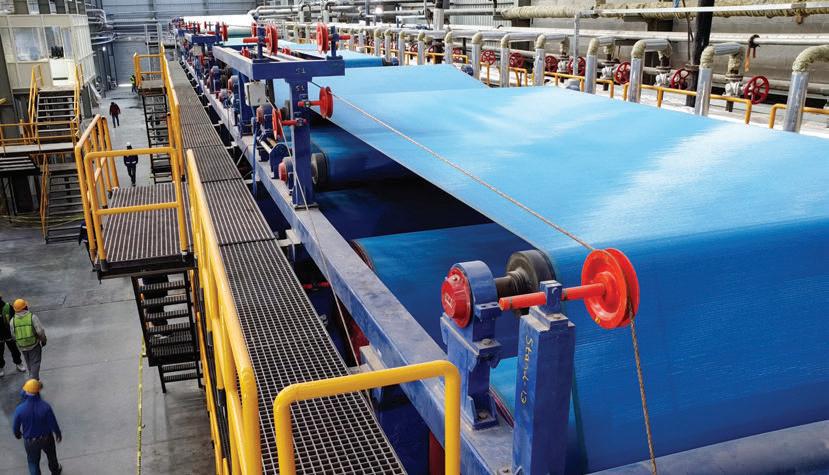
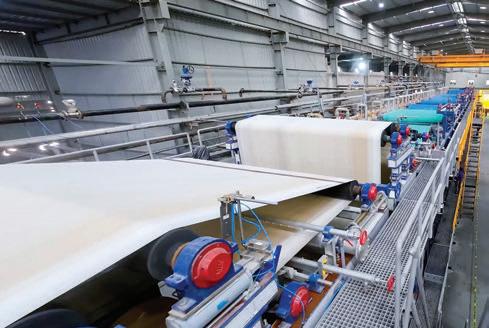
annualized run rate approaching the 58,500 MT/year target.
MILLMIND: AI MEETS PAPER MILL REALITY
The papermaking industry has historically lagged other manufacturing sectors in digital operations. Most ERP platforms are designed for generic manufacturing environments and require costly customization to handle the specific rhythms of a paper mill such as continuous production, grade changes, reel-to-reel traceability,
and the interplay between raw material quality and finished goods specification.
With Balaji JMC we made a deliberate decision to build, rather than buy. MillMind, developed by JMC Paper Tech is an AI-powered, paper-industry-specific platform covering the full production cycle: from OCC receipt and stock management, pulping and stock prep tracking, shift production entry by grade, pope reel and rewinder logs, finished goods weighment and
labeling, work order management, and a shutdown and maintenance planner. The platform is multilingual (English, Spanish, Hindi, etc.), rolebased, and built for ease of use on the mill floor.
The AI layer provides predictive alerts by flagging draw rate anomalies that may indicate headbox consistency issues, correlating utility spikes with potential steam trap failures, and generating automated daily and monthly production reports that previously required
hours of manual compilation.
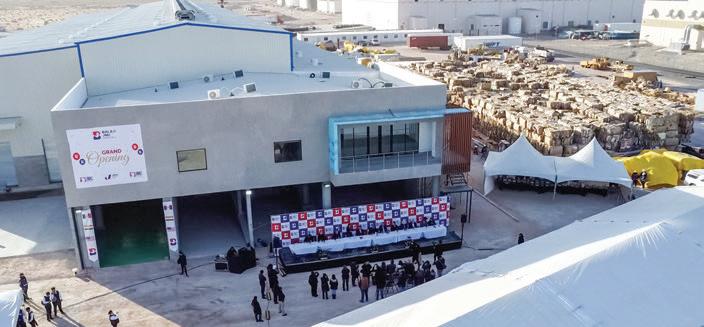
No comparable Mexican recycled fiber mill operates with this level of digital integration. MillMind is a commercially available SaaS platform for the broader paper industry, a product born on the mill floor, ready for the market.
Perhaps no challenge in year one proved more complex or more rewarding than the human dimension. Ciudad Juárez hosts hundreds of maquiladora plants competing for skilled industrial labor. Balaji JMC’s advantage in this environment started with access to JMC Paper Tech’s knowledge base and technical expertise of decades of process engineering that most startups simply don’t have on day one
Knowledge transfer between Indian engineers and Mexican operators was identified from the outset as the primary operational risk. In order to combat this, JMC’s team of engineers
developed a bilingual training program with 15 process area manuals in both English and Spanish. One year later, Mexican operators are running complex papermaking equipment with confidence and technical proficiency. This kind of knowledge transfer is central to how JMC Paper Tech operates. We believe our work is not finished when the machinery is installed — it is finished when the mill is running well.
As Balaji JMC enters its second year, the focus has shifted from commissioning and stabilization to optimization and growth. Throughput ramp toward the 58,500 MT/year annualized target remains the primary operational priority. FSC Chain of Custody and ISO 9001 certifications, targeted for H1 2026, will unlock access to the highest-
value tier of the Southwest US packaging market — major retail and e-commerce fulfillment operations with stringent supplier qualification requirements.
Commercially, the team is actively developing key account relationships in Texas, Arizona, and Southern California, with particular focus on packaging converters serving the cross-border logistics sector. MillMind’s external commercialization at TAPPICon 2026 represents a revenue pathway that extends well beyond Balaji JMC’s own production.
Longer term, JMC Paper Tech’s is evaluating capacity expansion and grade diversification into tissue and specialty packaging, building on JMC Paper Tech’s technology partnership with Kawanoe Zoki Co., Ltd. of Japan.
When Balaji JMC Paper Mill produced its first reel of recycled kraft paper in Ciudad Juárez in early 2025, it was more than a commissioning milestone. It was the first physical manifestation of an idea that had seemed improbable to many: that Indian process engineering could establish a world-class paper manufacturing operation in Mexico, designed from day one to serve the North American market, powered by artificial intelligence, and staffed by a bilingual, cross-cultural team.
One year later, that idea is a running mill. The numbers are tracking. The market is responding. The platform is scaling. I am proud to say that JMC Paper Tech once again demonstrates that the right expertise, deployed in the right market, builds something that lasts.
Under the Government of India’s Carbon Credit Trading Scheme (CCTS), the pulp and paper sector has been notified as an “obligated sector” under the compliance mechanism. Accordingly, eligible pulp and paper manufacturing units are legally required to meet prescribed greenhouse gas (GHG) emission intensity reduction targets.
Emission intensity refers to the amount of carbon dioxide equivalent (CO2 e) emitted per unit of production. Each obligated facility is assigned a baseline emission intensity and a defined reduction target for each compliance period. These targets are issued by the Bureau of Energy Efficiency (BEE) under the Ministry of Power and are legally binding.
Obligated entities must monitor, measure, and report their emissions and production data in accordance with the notified Measurement, Reporting, and Verification (MRV) guidelines. Performance is periodically reviewed by designated regulatory authorities.

If a pulp and paper unit achieves an emission intensity lower than its prescribed target, it becomes eligible to receive Carbon Credit Certificates (CCCs). These certificates represent verified emission reductions and can be traded in India’s national carbon market.
The pulp and paper industry should view regulatory compliance not merely as an obligation, but as a strategic opportunity to strengthen its bottom line through focused process optimization—particularly in energy, water, and wastewater management.
Optimizing these critical resources directly improves key performance indicators (KPIs) and significantly reduces greenhouse gas emissions. This, in turn, delivers two major financial benefits:
1) Lower Cost of Conversion through improved operational efficiency
2) Reduction in Carbon Emissions, enabling the generation of carbon
credits and creation of an additional revenue stream
Together, these benefits enhance profitability while strengthening environmental performance.
If a facility fails to meet its assigned emission intensity target, it must compensate for the shortfall by purchasing and surrendering an equivalent number of CCCs from the carbon market. These credits may be sourced from other obligated entities that have exceeded their targets, or non-obligated entities that have registered eligible offset projects under CCTS.
Failure to meet targets without surrendering sufficient CCCs may result in financial penalties or environmental compensation, as notified by the Government of India. Therefore, compliance through internal emission reduction measures and/or procurement of carbon credits is mandatory.
This framework presents a significant opportunity for the pulp and paper sector to transform sustainability into a long-term competitive advantage. By acting proactively today, organizations can reduce costs, generate new revenue streams, and strengthen their market position while contributing to India’s climate goals.
By Nilesh Mehta Head – Sustainability, Fibertec
Based in Uttarakhand, Heart Touch Paper Pvt. Ltd. is a modern writing & printing paper manufacturing company with a vision to build a sustainable and technologically advanced paper manufacturing unit in North India. The mill produces high quality writing paper, along with printing paper, and waste paper by-products, having a total production capacity of 24,640 TPA. What began as an industrial investment gradually evolved into a mission driven enterprise contributing to education, sustainability, and local livelihoods, symbolizing growth, responsibility, and opportunity.
Annual Capacity: 24,640 tPa
Product Portfolio: writing PaPer, Printing PaPer, and waste PaPer by-ProdUcts
Setup Cost: Inr 4,064.28 lakhs
Market Presence: India, nePal, bangladesh, and sri lanka
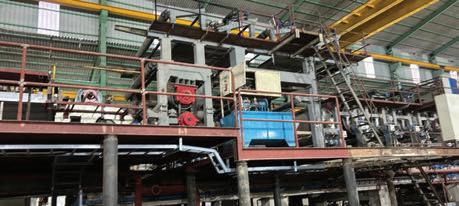
Heart Touch Paper Pvt. Ltd., a modern writing & printing paper manufacturing company, located Jaspur–Kashipur Road, in Uttarakhand, incorporated as a private limited organization, with a vision to build a sustainable and technologically advanced paper manufacturing unit in North India.
Promoted by Mr. Ashok Sharma, the company is established with a clear objective: to produce high-quality writing paper while generating meaningful employment in the region. The foundation of Heart Touch Paper is rooted in its belief and resilience. The promoter envisioned that it could transform recycled waste paper into valuable writing paper, symbolizing growth, responsibility, and opportunity.
What began as an industrial investment gradually evolved into a missiondriven enterprise contributing to education, sustainability, and local livelihoods. The company is led by Mr. Jitendra Pratap Singh, President – Sales, Marketing & Finance. He manages business development, dealer network expansion, customer relations, financial planning, and overall commercial strategy of the company.
The mill operates as a fully integrated writing paper manufacturing facility, equipped with modern automated machinery and advanced quality control sys-
tems. It has an installed capacity of 3.5 tonnes per hour and operates for 22 hours per day. The mill’s total annual production capacity stands at 24,640 tonnes, with writing paper constituting the major share of production at approximately 20,205 tonnes per year. The mill generates employment for 358 individuals and the total project costs INR 4,064.28 lakhs.
The mill produces writing paper, printing paper, and waste paper by-products, with writing paper accounting for approximately 82% of the recovered output, while waste paper by-products constitute around 18% of the total production.
Heart Touch Paper is an exportoriented company holding a
valid export license and currently supplying its products to Nepal, Bangladesh, and Sri Lanka, while maintaining a strong presence in the domestic market across India.
The company’s key strengths lie in its consistent and uniform product quality, competitive pricing, bulk supply capability, energy-efficient RDF boiler and turbine system, recycled raw material–based production, and transparent and professional business practices.
With a strong commitment to sustainability, the company primarily utilizes recycled waste paper as its key raw material, thereby reducing dependence on virgin pulp and supporting environmental
conservation. Energy-efficient captive power systems and carefully planned capacity expansion further enable responsible and sustainable industrial growth.
Looking ahead, the company envisions expanding its allIndia dealer network, enhancing production efficiency, strengthening its presence in export markets, undertaking technology upgrades, and ensuring long-term financial stability and sustainable growth.
With a balanced approach to sustainability, technology upgrade, and market expansion, Heart Touch Paper mill is on a steady path toward long-term growth and steady performance in the paper sector.
Micro Fab Industries has commissioned a 300 TPD state-of-the-art fluting & liner machine in Katra, Jammu, setting a new benchmark in North India’s paper industry.
Mar 02, 2026
Micro Fab Industries has established a 300 TPD state-ofthe-art fluting & liner machine in Katra, Jammu, setting a new benchmark in North India’s paper industry.
The new fluting & liner machine is commissioned in Kathua, strengthening the region’s position in packaging-grade paper manufacturing. The company will manufacture recycled corrugation-based packaging paper with a GSM range of 80–300.
The new machine is designed to deliver high BF strength consistency, optimized steam & power consumption, stable CD profile across GSM range, and efficient reel quality for high-speed corrugation plants.
‘‘The commissioning of this project marks a significant industrial boost for the Katra region, creating local employment
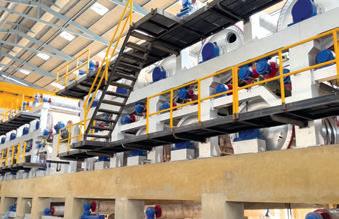
and strengthening supply chains for North India’s corrugation and packaging industry,’’ posted Mr. Kunal Rana, Managing Director, Micro Fab Industries.
The ongoing crisis in West Asia could create multiple challenges for India’s paper industry, affecting exports, energy costs and supply chains. IPMA President Pawan Agarwal, shares his thoughts on how the crisis could disrupt exports, raise energy costs and trigger import pressure on India’s paper industry.
Mar 13, 2026
The ongoing crisis in West Asia is likely to have a significant impact on India’s paper industry, posing a dual challenge of rising energy costs and potential disruption in export markets.
Exports of paper and paperboard from India may face a slowdown as West Asia is one of the most important export destinations for Indian paper. In 2024-25, India exported paper & paperboard worth about USD 980 million, of which nearly USD 290 million, close to 30 percent, was shipped to West Asian markets. The key product categories include uncoated writing & printing paper, coated paper and paperboard, and kraft paper.
At the same time, paper industry, which is energy intensive and closely linked to global trade flows, is likely to feel the ripple effects of escalating geopolitical tensions in the region. Higher energy prices and supply disruptions triggered by the crisis will directly impact production costs for Indian paper mills. Energy constitutes a substantial portion of operating expenses for the sector, and any sustained increase in fuel and power costs will place pressure on margins and competitiveness.
The crisis is also expected to lead to higher ocean freight rates due to increased fuel costs, higher insurance premiums and longer shipping routes arising from disruptions in established maritime corridors. This will further affect export competitiveness for Indian manufacturers.
Another major concern for the domestic industry is the likelihood of trade diversion. Export-oriented paper-producing countries such as China and Indonesia, which also rely heavily on West Asian markets, may redirect surplus inventories to India as their exports to the region will also be affected. This could lead to an increase in imports in India at predatory prices, intensifying pressure on domestic manufacturers.
Commenting on the situation, Mr Pawan Agarwal, President, Indian Paper Manufacturers Association (IPMA) said, “West Asia has traditionally been a strong and growing market for Indian paper exports. Any prolonged disruption in the region could adversely impact demand. At the same time, there is a real risk of surplus paper & paperboard from export-driven economies like China and Indonesia being diverted to India in much larger quantities at unfair prices. As it is, India’s paper industry is beleaguered due to rampant dumping of paper in the domestic market at predatory prices by these countries. It is therefore critical to closely monitor import trends and safeguard the interests of domestic manufacturers while
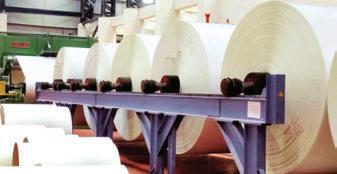
ensuring stability in supply chains.”
Regular supplies of LNG / PNG / Propane Gas / LPG to industries in India is being impacted and has started getting curtailed. This is adversely impacting the operations of Paper Mills. Apart from curtailment in direct supplies of LNG / PNG / Propane Gas / LPG to paper mills, upstream (suppliers) and downstream (customers) industries are also being deprived of regular supplies of LNG / PNG / Propane Gas / LPG, in turn impacting their production and supplies. Paper Mills are facing difficulties in obtaining chemical supplies used in the manufacturing process like hydrogen peroxide, binders, etc. and downstream industries are likewise finding it difficult to manage their operations.
Almost 30% of India’s total exports of paper & paperboard in value terms are to West Asia. While India’s imports of pulp from West Asia are negligible, around 14% of India’s total imports of waste / recovered paper in value terms are from West Asia.
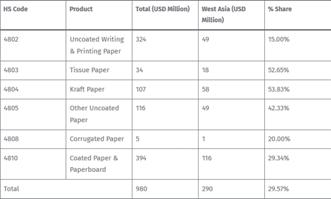

JK Paper has successfully commissioned a Valmet-powered 400 ADMT/day BCTMP plant at CPM Songadh, boosting advanced pulp production capabilities.
Apr 2, 2026
JK Paper has announced the successful startup and commissioning of its advanced BCTMP plant at CPM Songadh, developed in collaboration with Valmet.
The facility features a Valmet HT BCTMP line with a capacity of 400 ADMT per day, enhancing efficiency and strengthening the company’s technological capabilities in pulp manufacturing.
The project execution spanned from Factory Acceptance Testing (FAT) to installation and commissioning, ensuring optimized performance and operational stability.
This milestone underscores JK Paper’s commitment to inno -
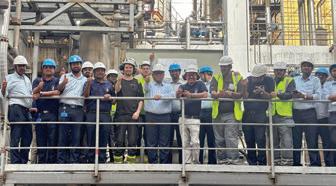
vation and Valmet’s role in delivering cutting-edge pulping solutions to the industry.
Orient Paper has approved the plan to install a new tissue machine with advanced technology, replacing earlier modernization plans of INR 125 crore to INR 213 crore.
Mar 27, 2026
Orient Paper & Industries Limited has approved changes in its capital expenditure at the Amlai facility. The company’s board has approved the plan to install a new tissue machine with advanced technology, replacing earlier modernization plans of INR 125 crore to INR 213 crore.
The company has also decided to cancel its previously approved INR 475 crore modernization project. With the new tissue machine, the company has planned an addition of 23,400 TPA capacity that will added upon the existing capacity of 100,000 TPA capacity.
This move reflects Orient Paper’s strategy towards advanced technology for the tissue paper segment, rather than a broad modernization effort.
Alliance International has signed an engineering contract with NR Agarwal Industries for a new project-a coated board machine with a capacity of 1,500 TPD.
Mar 17, 2026
Alliance International has signed an engineering contract with NR Agarwal Industries for a new project-a coated board machine with a capacity of 1,500 TPD. In a social media post, Mr. Aneja AS, Chief Executive Officer at Alliance International, expressed his gratitude to Chairman Mr. R. N. Agarwal and the entire NR Agarwal team for their continued support.

Alliance International has signs an engineering contract with NR Agarwal Industries
NR Agarwal Industries is setting up of the new multilayer board plant (Unit VI) at Dahej, Gujarat.
Feb 23, 2026
NR Agarwal Industries is setting up of the new multilayer board plant (Unit VI) at Dahej, Gujarat. The company has received approvals from Gujarat Industrial Development Corporation (GIDC) for effluent disposal of 2,000 KLPD (2.0 MLD) through the GIDC pipeline; and water assurance aggregating 4,000 KLPD (4.0 MLD) comprising 2,600 KLPD Narmada water and 1,400 KLPD desalination water.
Pursuant to the above approvals, the company is required to pay approximately INR 4.92 crore as advance towards capital contribution and related charges as per prevailing GIDC policy. These approvals represent a key milestone in the infrastructure readiness of Unit VI and ensure availability of essential utilities for the project. There is no adverse impact
on the company’s existing operations. Further updates shall be disclosed as and when the project gets materialised.
JK Paper Limited has successfully completed a major corporate restructuring effective March 15, 2026, including the amalgamation of three wholly-owned subsidiaries and demerger operations with Enviro Tech Ventures Limited.
Mar 16, 2026
JK Paper Limited has successfully completed a major corporate restructuring effective March 15, 2026, including the amalgamation of three wholly-owned subsidiaries and demerger operations with Enviro Tech Ventures Limited, as per the filing of the National Company Law Tribunal’s sanctioning order with the Registrar of Companies.
JKPL Utility Packaging Solutions Private Limited, Securipax Packaging Private Limited and Horizon Packs Private Limited will be consolidated into JK Paper Limited, along with and reduction and conversion of redeemable preference shares of Enviro Tech Ventures Limited.
The wholly-owned subsidiaries of the company, have been amalgamated with and into JK Paper Limited, with effect from 1st April 2024. These companies have been dissolved without winding up in accordance with the provisions of the scheme, streamlining JK Paper’s corporate structure.
The demerged undertaking of Enviro Tech Ventures Limited (ETVL), a subsidiary of the company, has been transferred to PSV Agro Products Private Limited (PSV Agro), with effect from the 1st April 2025. PSV Agro has issued and allotted equity shares to the eligible shareholders of ETVL, in accordance
with the share exchange ratio specified in the scheme, including 31.12% equity shares to the company. Consequently, PSV Agro has become an associate company of JK Paper Limited.
The redeemable preference shares of ETVL held by the Company stood reduced and converted into unsecured loan of an equivalent amount and the residual business of ETVL including investment in the Sirpur Paper Mills Limited (SPML), has been amalgamated with the company. Upon amalgamation of residual business of ETVL with the company, the said unsecured loan has been cancelled. In consideration of amalgamation of residual business, the Company shall issue and allot equity
shares to the eligible shareholders of ETVL in accordance with the share exchange ratio specified in the scheme.
Upon amalgamation of the transferor companies involved
in the scheme, the combined authorised share capital of the company shall stand increased from INR 500 crore to over INR. 1226.4 crore, subject to approval by Registrar of Companies
Kerala cabinet has approved a INR 741 crore expansion of KPPL to boost capacity, diversify products, and meet rising paper demand.
Feb 12, 2026
The Kerala government has approved a INR 741 crore expansion project for Kerala Paper Products Limited (KPPL), the state-owned paper manufacturer at Velloor in Kottayam district, marking a major push to revive public sector manufacturing. The project aims to enhance production capacity and diversify into writing and printing paper, copier paper, specialty grades and high-quality packaging boards, driven by growing demand from e-commerce, food delivery and retail sectors amid plastic restrictions.
Of the total outlay, INR 175 crore will be infused as state government equity, INR 25 crore by KSIDC, while INR 541 crore will be raised through bank loans. KPPL, revived from the
assets of the defunct Hindustan Newsprint Limited, is expected to achieve an annual turnover of INR 1,500 crore once the expansion is completed within 24 months.
Pakka Limited has appointed Mr. Mayank Jindal as India Business Head who will lead the company’s operational scale-up to meet the surging demand across India and 45 other countries.
Apr 9, 2026
Pakka
Limited has announced the appointment of Mr. Mayank Jindal as India Business Head, as the company aims to attain global leadership in regenerative packaging in the next five years.
A veteran of the global pulp and paper industry with 35 years of experience, Mr. Jindal will lead Pakka’s operational scaleup to meet the surging demand across India and 45 other countries.
Mr. Jindal brings deep expertise in integrated pulp and paper manufacturing, having held senior roles at JK Paper in India, Double A in Thailand, and most recently at Toba Pulp Lestari in Indonesia. He holds a Bachelor of Engineering in Pulp & Paper from IIT Roorkee.
Commenting on his appointment, Mr. Mayank Jindal said: “After spending over three decades working across integrated pulp and paper operations in India and Southeast Asia, joining Pakka feels like a natural next step. The opportunity here is clear—to aim at making our surroundings cleaner through world-class manufacturing and sustainable raw ma-

terials in food-grade packaging, while creating a real global impact. With the infrastructure Pakka has built, I believe we are well-positioned to do exactly that.”
Mr. Ved Krishna, Group Lead, Pakka Limited, said, “Mayank’s appointment signals the seriousness of our growth ambitions. We are building one of the world’s most scaled regenerative packaging operations, and Mayank’s global mill-level experience will be critical in this journey. This is a transformational hire for Pakka.”
Gayatrishakti Tissue Private Limited (GSTPL) has successfully commenced commercial production of 9.0 GSM SILK NATURAL Facial Tissue, becoming the first mill in the world to commercially manufacture this of facial tissue.
Feb 23, 2026
Gayatrishakti Tissue Private Limited (GSTPL) has successfully commenced commercial production of 9.0 GSM SILK NATURAL Facial Tissue. GSTPL became the first mill in the world to manufacture 9 GSM facial tissue commercially.
‘’This innovation marks a historic milestone for the tissue industry, and reflects our commitment to technological excellence, product innovation, and setting new global benchmarks in quality and efficiency,’’ posted Mr. Ravi Singh, Deputy Manager Production at Gayatri Shakti Tissue, on its social media handle.
International Paper to acquire North Pacific Paper Company (NORPAC) from One Rock Capital Partners in a USD 360 million deal. It is part of strategic transformation for International Paper to maximize value creation for customers, shareholders and employees. The acquisition is subject to regulatory approval.
Apr 17, 2026
International Paper has agreed to acquire North Pacific Paper Company (NORPAC) from One Rock Capital Partners in a USD 360 million deal.
NORPAC is a U.S.-based paper manufacturer operating out of Longview, Washington. The company employs approximately 500 people at its paper mill, where it operates three industry-leading machines that produce approximately one million tonnes of containerboard and other grades annually. The facility will complement IP’s existing mill system, increasing system flexibility, reducing costs and expanding capabilities to support growing customer demand for lightweight, high-performance recycled containerboard.
“This acquisition is a strong strategic fit for our business and supports our long-term value creation priorities,” said Mr. Tom Hamic, Executive Vice President and President, Packaging Solutions North America, International Paper. “NORPAC’s attractive customer base, location and operational capabilities strengthen our ability to serve customers in the growing West Coast region. We look forward to partnering with the mill team and its customers to deliver a safe, seamless integration.”
“NORPAC is a high-quality business built on the strength of
its first-rate management team and employees,” said Mr. Tony Lee, Co-Founder and Managing Partner of One Rock Capital Partners. “We are proud to have achieved a years-long transformation of NORPAC during our ownership. We believe this transaction with International Paper underscores the value created at NORPAC and positions the company for continued success as part of a larger platform.”
The acquisition of NORPAC is part of International Paper’s strategic transformation to maximize value creation for customers, shareholders and employees. The acquisition is subject to regulatory approval.
Kuantum Papers completes PM 2 upgrade in control, and product quality through advanced technology integration.
Apr 17, 2026
Kuantum Papers Ltd has completed the upgradation of its Paper Machine 2 (PM 2), strengthening manufacturing capabilities through advanced technological enhancements. The upgrade includes installation of a CD dilution control headbox, pond size press, calendar, improved steam and condensate system, and an additional dryer section.
The company also integrated an advanced QCS system along with DCS controls in stock preparation and approach flow to improve process control and operational efficiency. The project was executed in a record 32 days, reflecting strong coordination and execution capabilities.
The upgrade is expected to significantly improve product
quality, production performance, and overall manufacturing efficiency, reinforcing the company’s focus on building a robust and technology-driven production ecosystem.
The new plant has been designed with the latest manufacturing technology, ensuring higher efficiency, superior product consistency, and greater operational flexibility.
Apr 17, 2026
Subam Papers and Boards Private Limited, the wholly owned subsidiary of the Subam Papers Limited, has announced that it has successfully completed its capacity expansion by setting up a state-of-the-art, automated kraft paper manufacturing plant.
With the successful commissioning of the new plant, the total consolidated manufacturing capacity of Subam Papers has increased from 1,80,000 MTPA to 3,07,750 MTPA, representing an overall capacity expansion of approximately 70.97%. The Kraft paper manufacturing capacity alone has more than doubled, growing by 96.78% from 1,32,000 MTPA to 2,59,750 MTPA.
The new plant has been designed with the latest manufacturing technology, ensuring higher efficiency, superior product consistency, and greater operational flexibility. Full automation across the production process minimises human error, reduces turnaround times, and significantly enhances the company’s ability to service large-volume and quality-sensitive customers across the value chain.
The management views this investment as a cornerstone asset that will underpin the company’s revenue growth and
margin improvement trajectory over the medium-to-long term. This represents a landmark milestone in the company’s strategic growth journey and underscores the management’s commitment to investing in world-class infrastructure and technology to strengthen the company’s competitive position in the Indian paper manufacturing landscape.
A defining feature of the new plant is its capability to manufacture Kraft paper in the 80 to 120 GSM (Grams per Square Metre) range. This specific GSM band is the primary raw material used in the manufacture of paper carry bags, a product category that is witnessing exponential demand
growth across India, driven by legislative, environmental, and consumer-led forces. This value-added, premium-priced product segment commands higher realisations over standard industrial Kraft grades and positions the company to participate in a consumer-driven, sustainability-mandated upgrade cycle.
The company transitions from a commoditised paper manufacturer to a value-added paper solutions provider, targeting a segment growing at double-digit CAGRSs in India.
As part of its broader infrastructure and cost optimization strategy, the company is in the process of installing a Co-generation (COGEN) power plant which is expected to be
commissioned by June 2026. This will additionally create 50 Lakhs units of energy per month, apart from 25 Lakhs units per month from wind mill and solar power. External power purchases will fall sharply from 20 Lakh Units to just 5 Lakh Units per month, a reduction of 75%. Creating overall self-sufficiency in power that will improve from 55.6% currently to 93.75% post-commissioning this COGEN plant.
The management believes that the ongoing capacity expansion, product diversification strategy, and the favourable secular tailwinds in the Indian paper packaging sector collectively position the company for a transformative phase of growth, which is expected to generate sustained and superior long-term value for all stakeholders.
The mill has successfully conducted trials to produce 100 GSM White Top Liner (WTL) paper boards at its Unit 2 facility.
Apr 08, 2026
Shree Ajit Pulp & Paper Limited has achieved a new milestone. The mill has successfully conducted trials to produce 100 GSM White Top Liner (WTL) paper boards at its Unit 2 facility.
WTL paperboard designed for high-quality printing on its white surface while maintaining structural strength on its Kraft base. The 100 GSM is suitable for low-stress packaging, and other applications.
‘‘This accomplishment reflects the team’s dedication,
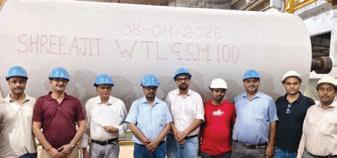
technical excellence, and commitment to quality,’’ posted the mill on its social media handle.
Trident Group will invest INR 5000 crore in Punjab over the next two years. Chairman Rajinder Gupta said that the state will once again be counted among the top ten states in total industrial growth.
Mar 16, 2026
Trident Group’s Chairman Rajinder Gupta has announced that the Group will invest INR 5000 crore in Punjab over the next two years.
He emphasized that the Punjab Government has introduced impressive policies for industry that addressed the issues and concerns of industrial stakeholders.
Mr. Rajinder Gupta further emphasized that Punjab Government deserves appreciation for its sincere efforts to ensure a new dawn in the industrial sector. The day is not far when Punjab will once again be counted among the top ten states
in total industrial growth. It is the right time for Punjab to further excel in this sector. The growth of Punjab in the industrial sector is unprecedented and unmatched.
JK Paper’s Unit CPM has achieved the highest production on BM5, recording 1021 metric tonnes on Feb 11, 2026.
Feb 12, 2026
JK Paper’s Unit CPM has achieved the highest production on PM1 & BM5. The Board Machine 5 (BM5) recorded its highest-ever single day production of 1021 MT on Feb 11, 2026.
‘’At JK Paper, we don’t just set targets; we surpass them, living our core value of commitment to excellence every single day. This achievement is a true reflection of our unwavering focus on performance, teamwork, and operational excellence.’’ posts Ms. Vartika Duggal, HR Officer, on its social media handle.
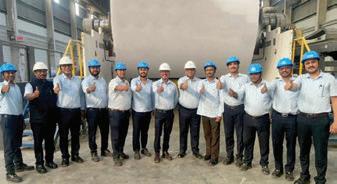
Balkrishna Paper Mills will dispose of machinery at its Ambivali factory for INR 13.62 crore, receiving a 20% advance from buyer Symcom Exim.
Mar 16, 2026
Balkrishna Paper Mills Limited has announced the disposal of machinery located at its Ambivali factory, with the total sale consideration set at INR 13.62 crore plus applicable GST.
The company has already received INR 2.72 crore, representing 20% of the total sale consideration, as an advance on March 12, 2026. The buyer is Symcom Exim Pvt Ltd.
For the financial year ended March 31, 2025, the Ambivali
unit generated revenue of INR 232.36 lakh, accounting for 96.35% of the company’s total revenue.
Lemit Papers announces strategic expansion, partnering with Kadant Lamort to boost recycled paper capacity, efficiency, and sustainability through advanced technology investments.
Apr 6, 2026
Lemit Papers has announced a major step in its capacity expansion plans by strengthening its collaboration with Kadant Lamort, a global technology leader in the pulp and paper industry.
As part of its ongoing CAPEX investment strategy, the company will install a 150 TPD Deinking Pulp (DIP) line along with a 100 TPD back layer system. The move builds on the proven performance of previous collaborations between the two companies.
This development is aimed at enhancing operational efficien-
cy, improving production capabilities, and delivering longterm value in recycled paper manufacturing.
N R Agarwal Industries Ltd has achieved its highest-ever single-day production of Folding Box Board (FBB), recording an impressive 1,035 metric tonnes on Feb 14, 2026.
Feb 17, 2026
NR Agarwal Industries Ltd has achieved its highest-ever single-day production of Folding Box Board (FBB) on PM2, recording an impressive 1,035 metric tonnes on February 14, 2026.
This landmark accomplishment underscores the company’s expanding production capabilities, operational efficiency, and the collective commitment of its team to ensuring optimal capacity utilisation and sustained growth.

BASF is expanding its dispersion production capacity at its Mangalore site with the addition of a new production line, to meet growing demand for premium, sustainable dispersions.
Feb 13, 2026
BASF is expanding its dispersion production capacity at its Mangalore site with the addition of a new production line. The expansion underscores BASF’s confidence in India’s longterm growth and its continued commitment to supporting customers across architectural paints, construction chemicals and paper applications.
To meet growing demand for premium, sustainable dispersions, BASF is enhancing its Mangalore operations, supporting customers’ long-term growth and the evolving needs of key end-user industries.
“The expansion of our Mangalore site will strengthen synergies across BASF’s Asia Pacific manufacturing network, ensure dependable supply, and enable us to provide innovative, cost-competitive dispersion solutions to our customers in India and the region,” said Mr. Andreas Fechtenkoetter, Senior Vice President, Dispersions Asia Pacific, BASF.
Leveraging on its strong acrylic value chain and broad dispersions portfolio, BASF reinforces its leadership in premium and performance-enhancing technologies locally used for paper & packaging segment. The high-solids binders and Basonal® PLUS low Product Carbon Footprint (PCF) series enhance paper coating performance and support India’s sustainability goals, while technical expertise aids new paper mills and flexible
packaging applications. Apart from that, the technologies will be utilised in the architectural and construction sectors.
“The new line is designed to manufacture advanced dispersions that deliver targeted performance and sustainability benefits,” said Mr. Milind Joshi, Business Director, Dispersions, South Asia, BASF. “Acronal® and Basonal® technologies enable low-VOC, durable formulations across paints, construction, and paper applications, backed by reliable local production.”
With the new capacity at Mangalore site, BASF continues to affirm its position as a trusted local partner and an industry leader in dispersions. The investment enhances regional collaboration across Asia Pacific and aligns with BASF’s regional growth strategy to support customers’ long-term success.
Micro Fab Industries has announced its upcoming 200 TPD kraft fluting & liner project, a 100% recycled-based paper mill in Khrew, Kashmir.
Feb 25, 2026
Micro Fab Industries has announced its upcoming 200 TPD state-of-the-art kraft fluting & liner project, a 100% recycled-based paper mill in Khrew, Kashmir.
The project include modern stock preparation & energy-efficient systems, designed for consistency, strength & high BF performance
Mr. Kunal Rana, Managing Director, Micro Fab Industries, posted, ‘‘This will be one of the first major paper mills in the region, marking a new chapter for industrial development in the valley. This project is more than just a paper machine — it’s about employment generation, local growth, and Makein-India engineering reaching the Himalayas.From the plains of Gujarat to the beautiful landscapes of Kashmir, Microfab’s
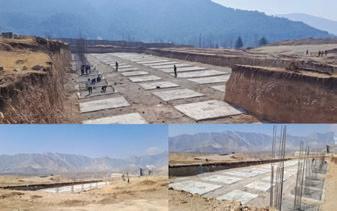
commitment remains the same: ‘Right Engineering. Right Selection. Right Results.’ ‘’
Voith has reached an important milestone with the delivery of its 3,000th headbox, achieving its milestone in papermaking technology.
Mar 24, 2026
Voith has reached an important milestone with the delivery of its 3000th headbox, since its headbox delivery in 1914. Headboxes play a central role in papermaking ensuring uniform basis-weight profiles across paper webs that can reach widths of up to 10 meters. At the same time, they are essential for achieving good formation, enabling a homogeneous fiber distribution in the sheet. Modern headboxes integrate automation systems and have become a decisive factor in the industry.
The 3000th Voith headbox is part of a complete paper machine order for a Chinese customer. The delivery includes two MasterJet 4Tec F headboxes, marking the first application of the MasterJet 4Tec F series. Until now, the MasterJet 4Tec technology had been available only for smaller width headboxes. The F-version is designed for large paper machines, supporting web widths of up to 11.6 meters and operating speeds of up to 1,600 meters per minute.
With MasterJet 4Tec, Voith has further refined headbox performance by combining proven mechanical design with completely new elements. The ModuleJet dilution control system enables precise cross- direction basis-weight control, supporting stable profiles and high reproducibility. These
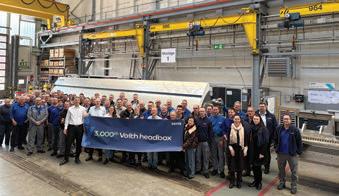
features contribute to improved product quality, reduced raw material consumption and more efficient operation throughout the life cycle of the paper machine.
Delivering our 3,000th headbox is more than a numerical milestone. It reflects more than a century of continuous development, deep process understanding and close collaboration with customers worldwide. Headboxes remain a key lever for paper quality and production efficiency, and with MasterJet 4Tec F we are setting new standards for large, high-performance machines, ‘’ says Mr. Markus Häussler, Head of CoE Headbox, Voith Paper.
SCGP sees investment opportunities in Vietnam and Indonesia, along with market expansion in India, a high potential market. The company will focus on investments in consumer packaging segments to enhance capabilities and strengthen production integration across the value chain.
Feb 23, 2026
SCG Packaging Public Company Limited (SCGP) has allocated a total investment budget of 10,000 million Baht (USD 318 million) for 2026, advancing its growth strategy: expanding consumer packaging businesses, integrating production across the value chain, and improving cost management efficiency.
The company is strengthening manufacturing efficiency through the adoption of automation and Artificial Intelligence (AI) to boost competitiveness and deliver comprehensive solutions that meet customer needs. SCGP also sees investment opportunities in Vietnam and Indonesia, along with market expansion in India, a high potential market.
Mr. Wichan Jitpukdee, Chief Executive Officer, SCG Packaging Public Company Limited (SCGP), revealed that the company has set a total investment budget of 10,000 million Baht, with an EBITDA target of 18,300 million Baht (USD 582 million). The company sees opportunities to expand investments in Vietnam and Indonesia, as well as to grow its market presence in India, where the overall economic outlook shows strong and resilient growth.
SCGP will focus on investments in consumer packaging segments to enhance capabilities and strengthen production integration across the value chain. In addition, SCGP has implemented automation, the adoption of robots, collaborative robots (cobots), and Artificial Intelligence (AI) in its production processes to improve precision in packaging quality control, reduce costs, enhance raw material management, and ensure consistent delivery of high-quality products to customers.

The company plans to further expand the deployment of these technologies to its overseas plants. SCGP continues to actively manage costs in Indonesia and has adjusted energy supply contracts, with cost reduction benefits expected to be realized starting January 2026. The company also plans to increase the proportion of alternative fuel usage to 40%, up from 38%, to reduce greenhouse gas emissions in line with its ESG framework. Overall, SCGP aims to reduce total company costs by 600 million Baht in 2026.
Regarding the packaging industry outlook for the first quarter of 2026, the overall economy and domestic consumption demand across ASEAN markets are expected to continue expanding, supporting steady growth in packaging demand. Packaging prices, recovered paper costs, and freight costs are projected to remain stable. Nevertheless, sales volume is expected to increase from the previous quarter, despite holiday periods in Vietnam and Indonesia. In Thailand, demand is supported by increased packaging usage during the festive season.
Star Paper Mill begins operations at its recycled containerboard mill in Abu Dhabi, reinforcing sustainability and circular economy initiatives in the UAE.
Apr 13, 2026
Star Paper Mill Paper Industry LLC has officially commenced start-up operations at its recycled containerboard mill located in KEZAD, Abu Dhabi, marking a major milestone for the company. Spanning over 59,000 square metres, this state-of-the-art facility represents a significant step in ad-
vancing the UAE’s industrial growth and sustainability agenda. With an annual production capacity of 135,000 metric tonnes, the facility will manufacture a range of brown paper grades, including bag paper, testliner, fluting medium, white top testliner, kraft top liner, and semi-kraft liner.
The new facility will support the region’s push toward sustainability and a circular economy. The initiative is expected to strengthen local manufacturing capabilities while reducing environmental impact.
The company acknowledged the contributions of its team, partners, and government authorities, highlighting their collective role in bringing the project to fruition.
Parason has successfully commissioned a black liquor pressure filter, running successfully at Seshasayee Paper & Boards Limited, in Tamil Nadu.
Feb 23, 2026
Parason has successfully commissioned a black liquor pressure filter, at Seshasayee Paper & Boards Limited, in Tamil Nadu.
The filter is operating successfully and smoothly under plant conditions such as: capacity of 60–70 m³/hr, Electrical Beam Drilled (EBD) screen of 200 Micron, stable DP ranging from 0.1–0.2 bar, inlet TSS of 75 PPM and outlet TSS of < 30 PPM, with no choking issues.
The filter is designed for both agro and wood-based mills. The equipment’s performance has been verified during site trials and handed over successfully.
Sidhu Engineering Works installs eight advanced robo cleaners at a Maharashtra paper plant, enhancing efficiency, reducing water usage, and improving machine performance.
Apr 13, 2026
Sidhu Engineering Works has commenced installation of eight advanced robo cleaners, each with a 4.5-meter width, for the wire and press sections of a leading paper plant in Maharashtra. The systems are designed to enable continuous 24-hour cleaning of wires and felts using only fresh water, eliminating the need to halt showers or rely on treated water.
The innovative Sidhumatic Robo Cleaner technology significantly reduces water consumption to just 6 cubic meters per day, delivering approximately 92% savings compared to conventional shower systems. This approach enhances operational efficiency while supporting sustainable practices.
By ensuring consistent cleaning, the solution plays a critical role in maintaining smooth paper machine operations and
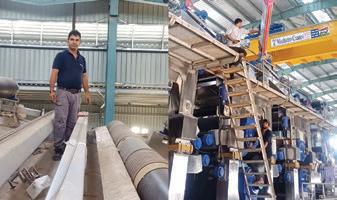
minimizing breakages. Sidhu Engineering Works highlighted its position as a pioneering innovator in India for introducing this technology to the paper industry.
ABB has signed an agreement with Swedish pulp and paper manufacturer Billerud to modernize Paper Machine 5 at the company’s Gävle mill, producing liquid packaging board and liner.
Feb 19, 2026
ABB has signed an agreement with Swedish pulp and paper manufacturer Billerud to modernize Paper Machine 5 at the company’s Gävle mill, one of its key sites for producing liquid packaging boards and liners.
The contract will bring new automation capabilities, updated hardware, improved quality control and refreshed drive technology to a machine that supports a significant share of Billerud’s global packaging output. The upgrades aim to improve efficiency, strengthen cyber security, reduce energy and material use and build a platform ready for next-generation digital and AI tools.
The Gävle mill plays a strategic role in the global packaging value chain. The board produced there is used in consumer goods and food applications around the world, and the facility supports production volumes equivalent to roughly 200 million containers each day across Billerud’s network.
The modernization project brings several core systems onto ABB’s latest platforms, including an upgraded ABB Ability™ System 800xA®, new-generation AC 800M controllers, refreshed quality control capabilities and updated drives. With these integrated, the mill gains a more secure and resilient automation environment that handles data more efficiently. The new setup also creates room for growth, giving Billerud a path to introduce advanced process control and move toward AI-supported optimization as its operations evolve.
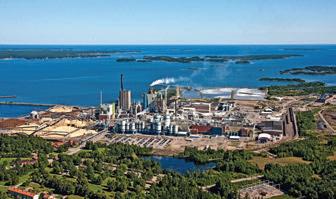
“This project builds on a long relationship between ABB and Billerud in Gävle,” said Mr. Martin Björnmalm, Local Business Line Manager, Pulp, Paper and Fiber, ABB’s Process Industries division. “Upgrading both automation and core hardware gives operators stronger tools, makes the machine more resilient, and prepares the mill for future digital improvements.”
Once the modernization is complete, Billerud will have an automation environment built for both current needs and future growth. The system’s flexibility allows the company to introduce new grades, integrate advanced analytics and continue improving resource efficiency over time. The project further reinforces ABB’s role as a long-term partner to the pulp and paper industry, supported by global expertise and a strong local presence in Sweden.
Ahlstrom plans to close the pulp mill and two paper machines at its mill site located in Mosinee, Wisconsin. The closing will begin on June 30, 2026.
Mar 03, 2026
Ahlstrom has filed a warning letter with Wisconsin’s Department of Workforce Development stating it plans to close its pulp mill and two paper machines at the mill site located in Mosinee, Wisconsin. The closing will begin on June 30, 2026.
The company said in its 2025 financial statements that the company is streamlining its Wisconsin manufacturing strategy by right-sizing the Mosinee site. This includes closing the pulp mill and two older paper machines this

year, while upgrading the two remaining paper machines with advanced technologies and automation. In addition, Ahlstrom has also announced the initiation of a formal consultation process concerning the potential closure of the Radcliffe (UK) site. A decision will be taken pending the outcome of the consultation.
The Mosinee mill produces specialty paper grades, including building and construction materials, food packaging, and tape. The closing will involve cessation of all operations and termination of the identified areas. Over 20 permanent employees and a significant number of hourly-wage based workers working in the mill will be affected by the closure.
Parason has entered into a strategic partnership with Mechspan, UK, offering a comprehensive range of solutions tailored for the paper mills across the United Kingdom.
Feb 16, 2026
Parason has entered into a strategic partnership with Mechspan, UK, to deliver a comprehensive range of solutions tailored to the operational requirements of paper mills across the United Kingdom.
Built on shared values, engineering excellence, and a customer-first approach, the collaboration aims to combine local market insight with Parason’s global technological expertise.
“Proud to have Mechspan and Bill Woodburn representing us in the United Kingdom,” the company shared on its official social media platform.
Through this partnership, Parason seeks to strengthen its regional footprint, leverage Mechspan’s deep local knowl-

edge, and integrate global engineering capabilities to deliver precise, performance-driven solutions to UK paper manufacturers.
Ruchira Papers has appointed Mr. Jatinder Singh as the new Managing Director of the company after the demise of Umesh Chander Garg. He was earlier the WholeTime Director of the mill.
Apr 10, 2026
Ruchira Papers has appointed Mr. Jatinder Singh as the new Managing Director of the company after the demise of Mr. Umesh Chander Garg. His designation was changed from the Whole-Time Director to MD effective from April 09, 2026.

Mr. Singh is an Engineering graduate from Punjab University. He is one of the key figures and promoters of Ruchira Papers Limited. With a profound understanding of the paper industry, he has been instrumental in driving the company’s success as a Whole Time Director. Having spent considerable time in the industry, Mr. Singh possesses in-depth knowledge and insights into the workings of the paper manufacturing sector. His expertise enables him to effectively oversee critical areas such as finance, administration, and raw material procurement for the company.
Through his strategic management, Ruchira Papers Limited has experienced significant growth and expansion. Mr.Singh’s role extends beyond day-to-day operations. He actively contributes to the formulation of business strategies, leveraging his extensive experience to identify opportunities and guide the company’s path to success. With his keen business acumen and a
strong focus on effective implementation, he plays a vital role in ensuring the realization of organisational goals.
The paper machine will start reeling in April 2026. It will perform end-to-end execution, and is engineered for efficiency & strong ROI.
Feb 24, 2026
Micro Fab Industries has announced that a 200 TPD paper machine for Kochar Venture Project will start reeling in April 2026. The paper machine will perform end-to-end execution, and is engineered for efficiency & strong ROI. It is designed and delivered by the Micro Fab Industries (MFI) team.
‘’This is a complete turnkey project executed by the MFI team, from stock preparation to paper machine installation and commissioning. April 2026 will mark another important milestone in MFI’s journey of building high-performance paper mills across India,’’ posted Mr. Kunal Rana, MD, Micro Fab Industries, on his social media handle.
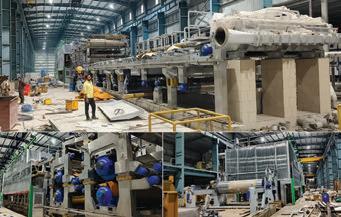
Sidhu Engineering Works has secured an international order from Turkey to supply Robo Cleaners for a high-speed crescent former tissue paper machine.
Mar 10, 2026
Sidhu Engineering Works has received an order from Turkey for its Robo Cleaner system to be installed on a highspeed tissue paper machine operating at 1,850 metres per minute. The crescent former machine will be equipped with two Robo Cleaners, one installed on the wire section and the other on the press felt.
The cleaning system is designed to enhance fabric cleaning efficiency and improve overall paper machine runnability. According to the company, the technology also supports mills in achieving Zero Liquid Discharge (ZLD) goals while

extending the service life of machine fabrics.
Sidhu Engineering stated that it was among the first innovators in India to develop this Robo Cleaner technology, which has since been approved and adopted by several paper mills.
Apr 01, 2026
Metsä Group has begun a pre-engineering project for the first commercial wood-based, carbon capture plant (biogenic plant) in Rauma pulp mill in Southwestern Finland. The company has submitted an application for a reverse auction organised by Finland’s Ministry of Economic Affairs and Employment which distributes investment aid for clean transition projects.
The carbon capture plant will have a nominal capacity of approximately 100,000 tonnes of captured carbon dioxide per year, from the mill’s flue gases.

The application for an environmental permit for the plant was submitted in December 2025, and the official permit decision is expected later this year.
JK Paper Limited received two prestigious recognitions -Business Leader Award and National Best Employer Brand Award, reflecting the company’s commitment to strong leadership and a people-first culture.
Mar 01, 2026
JK Paper Limited received two prestigious recognitions at the 34th World HRD Congress 2026 in Mumbai, reflecting the company’s commitment to strong leadership and a people-first culture. The company has bagged Business Leader Award on Feb 16, 2026 and National Best Employer Brand Award 2025 on Feb 17, 2026.
These recognitions celebrate the visionary leadership of JK Paper, its people - centric culture and the relentless passion of the employees.
‘’Every milestone we achieve is powered by the dedication, integrity and teamwork of the JK Paper. This is more than an award, it’s a reflection of who we are: a community that believes in excellence, innovation and values. Congratu-
lations to each and every member of JK Paper for making this possible. Together, we continue to inspire, lead, and set new benchmarks,’’ posted the company on its social media platform.
SKF India (Industrial) Limited has announced an INR 653 crore investment to develop a next-generation ‘Factory of the Future’ in Pune, expected to be completed by 2030.
Feb 18, 2026
SKF India (Industrial) Limited has announced an INR 653 crore investment to develop a next-generation ‘Factory of the Future’ in Pune. This digitally enabled manufacturing campus is expected to be completed by 2030, marking a significant expansion of the company’s advanced manufacturing presence in India.
The new plant will integrate digital systems and energy-efficient operations, supporting varied sectors, including energy, railways, metals and mining, and other heavy industries.
Mr. Sujeeth Pai, Director – Manufacturing Operations, for India, Southeast Asia and Middle East (ISEAM), SKF India (Industrial) Limited, emphasized that the new plant will be designed as a fully digital and sustainability-embedded facility, representing a fundamental shift in how we manufacture by integrating intelligent systems, real-time insights, and energy-efficient operations to drive higher productivity, qual-
ity, and responsiveness. This is not just capacity expansion, it is about building resilient, agile, and globally competitive manufacturing capabilities anchored in India.
The new facility will consolidate existing production channels while adding new ones, and aims to deliver faster response times and deeper localisation in India.
Saica Group has introduced the first recycled paper adhesive tape, strengthening circularity and sustainability across its paper packaging operations.
Feb 13, 2026
Saica Group has launched the world’s first adhesive tape made entirely from recycled paper fibres, developed jointly by Saica Flex and Saica Paper. The tape is produced using 100% recycled fibres generated within the Group, creating a closed-loop solution where recycled paper is converted into adhesive tape and then reused to protect paper reels.
Designed to replace non-repulpable alternatives, the recycled paper tape adheres securely to paper and cardboard, unwinds smoothly, and can be fully repulped at end-of-use to recover fibres. Following extensive testing at Saica’s R&D centre, the development team achieved a balance between functional performance and recyclability, an area where paper-based tapes often face technical limitations.
Importantly, the solution is compatible with standard reel-wrapping machines, allowing adoption without any equipment modifications. Commenting on the innovation, Mr. Federico Asensio Balet, Technology & Innovation Director at Saica Group, said the application of this innovation to
adhesive tape is only the first step, with further potential uses under active research.
The recycled paper adhesive tape is already being used at Saica Paper’s El Burgo de Ebro facility and will be progressively rolled out across other European sites in the coming months, advancing sustainable reel protection across the Group’s operations.
Smurfit Westrock selected Bellmer for the modernization of its existing PM2. Bellmer’s scope of supply included a TurboCalender equipped with a fully automatic ropeless threading system. In addition, Bellmer is responsible for the complete installation, commissioning, and production support.
Feb 20, 2026
Smurfit Westrock has selected Bellmer as a competent and reliable partner for the modernization of its existing PM2. PM2 has a working width of approximately 6,650 mm and operates at speeds of up to 1,300 m/min.
The mill operates in Piteå, northern Sweden, being Europe’s largest producer of kraftliner. The mill produces more than 700,000 tonnes per year of this high-strength paper for corrugated board, primarily manufactured from fresh wood fibre. In addition, the mill makes an important contribution to the city’s district heating system through energy recovery.
Bellmer’s scope of supply included a TurboCalender equipped with a fully automatic ropeless threading system, enabling sheet transfer from the dryer section through the calender to the pope reel. In addition, Bellmer is also responsible for the complete installation, commissioning, and production support.
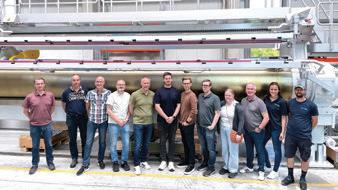
Image source: Bellmer
Earlier in 2025, the joint project team had the opportunity to gain a comprehensive impression of the calender and threading system during factory acceptance tests at Bellmer’s facilities in Willich, Germany. These tests confirmed the excellent functionality of the system. Shortly thereafter, installation at the Piteå mill was carried out according to plan, followed by on-time commissioning and start-up.

Latam Paper
13-15 May, 2026
Buenos Aires, Argentina www.latampaper.com/
Paper Vietnam
10-12 Jun, 2026
Ho Chi Minh City, Vietnam www.paper-vietnam.com/
Paper Eurasia
10-12 Jun, 2026
Istanbul, Turkey https://www.papereurasia.com/en
PAPER-ME Egypt
15-17 Sep, 2026
Cairo, Egypt www.papermideast.com/eg/
Paper & Tissue Show
21-23 Sep, 2026
Abu Dhabi, UAE www.paperoneshow.net
PAPER-ME Saudi Arabia
16-18 Nov 2026
Jeddah, Saudi Arabia https://www.papermideast.com/ksa/
Paperex South India
03 - 05 Dec, 2026
Chennai, India
https://southindia.paperex.in/en-GB
Editor & Publisher Parveen Kumar Jain – pkj@tulip3pmedia.in
Deputy Editor Geetika Jain – gjain@papermart.in
Consulting Editor Dhananjay Kumar – desk@tulip3pmedia.in
Assistant Editor Kannupriya Mehta – desk5@tulip3pmedia.in
Sub Editor Aakriti Virmani– desk4@tulip3pmedia.in
Sr. Graphic Designer Girish Garg – design@tulip3pmedia.in
Graphic Designer Tajinder Singh – design3@tulip3pmedia.in
Advertising & Marketing Akansha Tiwari – mktg3@tulip3pmedia.in Priya Thapar – mktg2@tulip3pmedia.in
Support Team Kushagra Mehrotra Sandeep Kumar Deepak Kumar admin@tulip3pmedia.in
Chief Executive Officer Priyank Jain pj@tulip3pmedia.in
Editorial & Publisher's Office : Paper Mart, Tulip 3P Media Pvt. Ltd. 218, Sanjay Nagar, Gulabi Bagh, New Delhi-110007, INDIA
Correspondence Address: Tulip 3P Media Pvt. Ltd. 501-502, ABW Tower, MG Road, IFFCO Chowk, Gurugram, Haryana-122003, INDIA, Tel.:0124 447 0798 / 99 Mob.: +91 99999 350 11 / 44, E-mail : info@papermart.in / info@tulip3pmedia.in
International Sales : RNP
Nicolas Pelletier 16, rue Bannier 45000 Orleans, France Tel.: +33 682 25 12 06, Fax: +33 238 422910
Owned, Published & Printed By : Parveen Kumar Jain, Published at 218, Sanjay Nagar, Gulabi Bagh, Delhi-110007, INDIA. Printed at: Pankaj Paper Mart, 218, Sanjay Nagar, Gulabi Bagh, Delhi-110007, INDIA.
All disputes regarding this magazine will be settled in Delhi (India) Jurisdiction Only.
The views expressed in the columns of Paper Mart are not necessarily those of the editor or the publisher & they accept no responsibility for them.
CAUTION: No part of this magazine including advertisements designs, prepared by us or through us should be copied, reproduced or transmitted by any one without prior written permission of the publisher.