
table of CONTENTS

The Murphy Institute’s centers and programs provide an education focused on political and economic dynamics, foster ethical reflection on social values, promote research and outreach on public policy, and support top legal scholarship on critical issues. These initiatives and programs are united by their focus on research, teaching, and engagement with both the Tulane community and beyond.

CENTER FOR ETHICS
Established in 2001, the Center for Ethics (CE) supports research, teaching, and scholarly discussion of ethics across a wide range of disciplines and intellectual perspectives. The idea driving CE is that Tulane should have a place where faculty, students, and visitors can broadly examine critical issues of justice and injustice, and citizenship and community. To provide an advanced research infrastructure that attracts and rewards outstanding faculty and students, CE offers both Visiting Faculty Fellowships and Graduate Fellowships.
CENTER FOR PUBLIC POLICY RESEARCH
The Center for Public Policy Research (CPPR), launched in 2010, is a multidisciplinary research center that balances academic research with applied work in the areas of healthcare, public finance, and education policy issues. This Center focuses on increasing public policy research, supporting external grant opportunities, and escalating campus and community outreach. CPPR is enhanced by the systematic and rigorous analysis of social perspectives and alternatives that stem from Murphy's other programs.
CENTER FOR LAW AND THE ECONOMY
In 2019, The Murphy Institute and Tulane's Law School established the Center on Law and the Economy (CLE) to promote multidisciplinary research and collaboration on important issues confronting policymakers and private markets in both developed and developing economies. CLE is a rich resource for graduate, professional, and undergraduate students at Tulane who are interested in issues related to the regulation of economic and financial activity.
UNDERGRADUATE PROGRAM IN POLITICAL ECONOMY
Since 1984, the Political Economy major at Tulane has aimed to promote sustained reflection on the interconnections of politics and economics. It provides undergraduate students with basic skills of economic analysis and a multidisciplinary understanding of the moral and historical foundations of economic institutions and political structures.
MASTER OF ARTS IN POLITICAL ECONOMY WITH DATA ANALYTICS
The graduate program in political economy provides a rigorous and multidisciplinary education centered around contemporary themes in political economy. MA students learn about interactions between economics and politics and develop the quantitative skills necessary to apply their knowledge in academic research, government, & industry.
Core Faculty
Gary Hoover, Executive Director, Department of Economics
Caroline Arruda, Department of Philosophy
Evelyn Atkinson, Tulane Law School
Kevin Callison, Department of Health Policy and Management
C. Justin Cook, Department of Economics
Brandon R. Davis, Department of Political Science
Adam Feibelman, Tulane Law School
Emily Gamundi, Department of Mathematics
Douglas N. Harris, Department of Economics
Mario I. Juarez-Garcia, Department of Philosophy
Carla Laroche, Tulane Law School
Douglas R. Nelson, Department of Economics
Mary K. Olson, Department of Economics
Patrick Testa, Department of Economics
Staff
John Louis Howard, Associate Director
Jennifer Beers, Director of Academic and Scholarly Initiatives
C. Justin Cook, Director of the Master of Arts Program in Political Economy
Katherine Mosier Johnston, Director of Strategic Initiatives and Operations
Norah Lovell, Department Administrator
Erika Cooperman, Program Manager
Brittany Doucette, Program Manager, Communications and Marketing
CENTER FOR ETHICS
Chad Van Schoelandt, Director, Associate Professor and Chair of Philosophy
Caroline Arruda, Associate Professor of Philosophy
Mario I. Juarez-Garcia, Assistant Professor of Philosophy
Elvira Basevich, Visiting Faculty Fellow (University of California, Davis)
Eric Schliesser, Visiting Faculty Fellow (University of Amsterdam)
Shoshana Primak, Graduate Coordinator, Tulane Ethics Bowl
A NEW CAMPUS HOME AND A NEW CHAPTER
WELCOME TO THIS EXCITING ISSUE OF THE EXCHANGE. As always, there is a lot to discuss at The Murphy Institute. We have grown and continue to expand the influence of our work concerning political economy across Tulane’s campus, the broader community, and the nation.
INSTITUTE HIGHLIGHTS
One of our biggest contributions to important conversations about political economy was our participation in the State of the Nation Project (pg. 10). Fully funded by The Murphy Institute, this project brought together a diverse group of thought leaders and citizens from across the political spectrum to provide a consensusbased “progress report” on the nation. The comprehensive “State of the Nation” report candidly assesses the current state of the country across key societal measures, from economic performance and the environment to mental health and life satisfaction. The report was published in February 2025 and picked up by numerous national media outlets, including The Wall Street Journal and The New York Times. Its publication was accompanied by a launch event in Washington, D.C., that brought together leading experts and authors of the report to discuss the report's findings and offer insights into the challenges facing the nation. The Murphy Institute is proud to continue our partnership with this important effort.

Our annual Yates Lecture (pg. 28), held in October 2024, was delivered by Dan Gallagher, the Chief Legal, Compliance, and Corporate Affairs Officer of Robinhood Markets. Our students have a keen interest in financial egalitarianism, and we strive to provide them with speakers who can answer their questions and concerns. As is typical for a Murphy-sponsored event, the room was packed with a mixed audience of students, faculty, and community members. In the fall of 2025, we have the honor of hosting Dr. Mona Hanna of Michigan State University for the Yates Lecture. Dr. Hanna is a renowned pediatrician, professor, and public health advocate whose research exposed the Flint water crisis.
In the spring of 2025, The Murphy Institute was proud to sponsor the Political Economy and Access to Justice Judicial Education Seminar (PEAJJES) for the third year in a row (pg. 57). The seminar began with the mission of educating judges on how judicial decisions impact various aspects of political economy. Initially, the judges came exclusively from the New Orleans area, but the seminar has grown to include sitting judges throughout the Gulf South region.
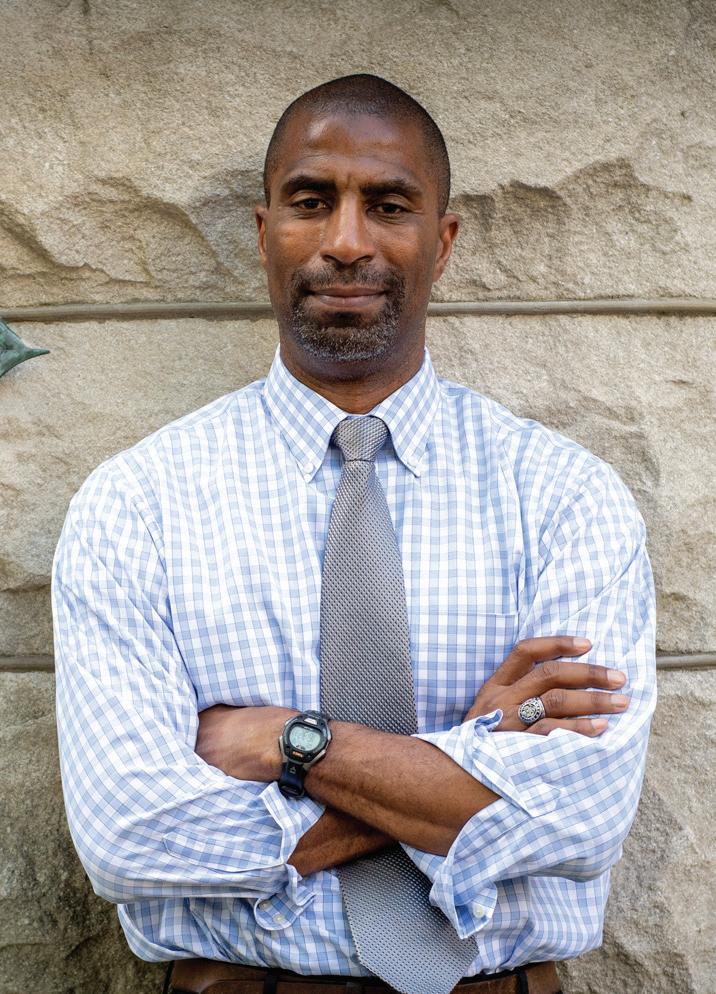
Gary “Hoov” Hoover
The Murphy Institute’s Center for Ethics continues to sponsor “Ethics Bowl” (pg. 48) through the Tulane University Ethics Bowl program (TUEB). The program, which supports collegiate and high school teams, works on campus and in the broader New Orleans community to get students thinking about, talking about, and ultimately working together on some of the toughest moral issues of our time in the context of political economy. The Murphy Institute sponsored National High School Ethics Bowl’s regional tournament on Tulane’s uptown campus in December 2024 and will host the event again this winter.
NEW FACES AND A NEW HOME
The Murphy Institute continues to grow and expand on Tulane’s campus. Over the summer of 2025, we added three new staff members and a new Center director to our team. We are excited to welcome Brittany Doucette as our new Program Manager for Communications and Marketing and Erika Cooperman as our new Program Manager. In addition, our Center for Public Policy Research has a new Director, Dan Friess (pg. 9), from the School of Science and Engineering. We also added a new Department Administrator, Norah Lovell. Our growing team will support the expansion of The Murphy Institute’s joint programming across campus, in the city, and around the globe.
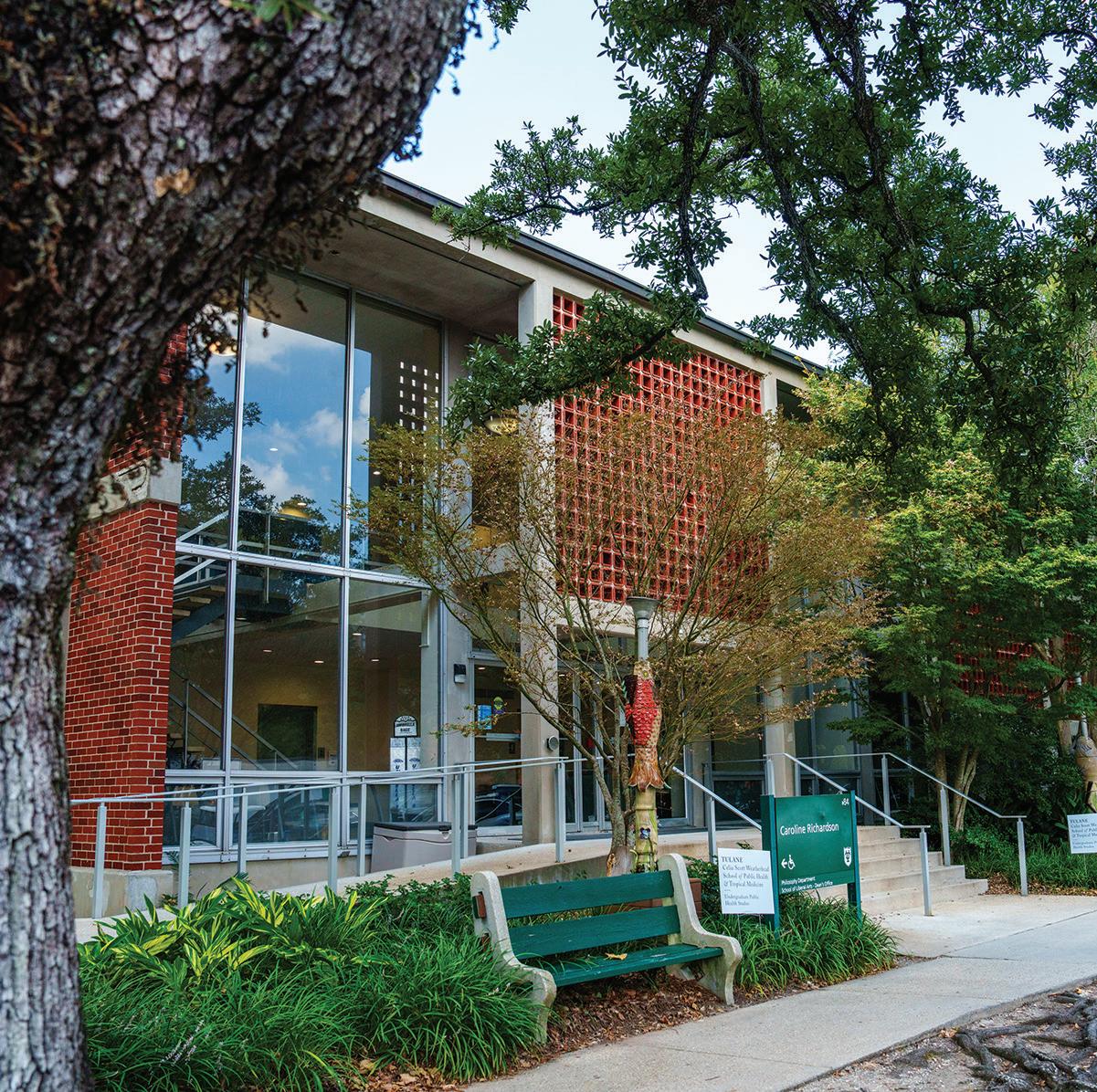
These pages are filled with stories about the changes seen in the “Murphyverse” over the past year. None of them is bigger than our physical move to a new campus home over the summer of 2025 (pg. 8). This new facility will provide improved resources for students, faculty, and staff across all of our programs. If you are ever on campus, please come see us in our new office suite in the Caroline Richardson Building. We would love to have you and give you a tour.
- Gary “Hoov” Hoover, Executive Director Fall 2025
Gary “Hoov” Hoover is the Executive Director of The Murphy Institute and Professor of Economics at Tulane University. A nationally renowned economist, Hoov’s research focuses on economic policy and its impact on wealth and income equality. From 2012-2024 he served as co-chair of the American Economic Association’s Committee on the Status of Minority Groups in the Economic Profession. He is also the current and founding editor of the Journal of Economics, Race and Policy, past President of the Southern Economic Association, and a fellow at CESifo Group Munich.

CENTER FOR PUBLIC POLICY RESEARCH
Daniel Friess, Director, Professor of Earth and Environmental Sciences
Douglas N. Harris, Director of the Education Research Program, Professor and Chair of Economics
Mary K. Olson, Director of the Health Policy Program, Associate Professor of Economics
Patrick Testa, Assistant Professor of Economics
Ricardo B. Ang III, Postdoctoral Scholar in Economics
Hussain Hadah, Postdoctoral Scholar in Economics
Matías Morales Cerda, Postdoctoral Scholar in Economics
CENTER FOR LAW AND THE ECONOMY
Adam Feibelman, Director and Sumter Davis Marks Professor of Law
Evelyn Atkinson, Charles E. Lugenbuhl Associate Professor of Law
Carla Laroche, Felder-Fayard Associate Professor of Law
Kushagr Bakshi, Visiting Assistant Professor of Law
THE EXCHANGE
Katherine Mosier Johnston, Editor and Contributing Writer
Brittany Doucette, Co-Editor and Contributing Writer
Jennifer Beers, Contributing Writer
Erika Cooperman, Contributing Writer
John Louis Howard, Contributing Writer
Shoshana Primak, Contributing Writer
Kelly Hamon, Graphic Designer
Studio Mundi, Inc., Graphic Designer
Jenny Meadows, Copy Editor
Zack Smith, Photographer
Additional photos by Shoshana Primak
For questions and comments, contact: The Murphy Institute: murphy@tulane.edu
Center for Ethics: jbeers@tulane.edu
Center for Public Policy Research: kjohnst@tulane.edu
Center for Law and the Economy: afeibelm@tulane.edu
Undergraduate Program in Political Economy: jhoward2@tulane.edu
Master’s Program in Political Economy: ccook2@tulane.edu
THE MURPHY INSTITUTE
CAROLINE RICHARDSON BUILDING TULANE UNIVERSITY NEW ORLEANS, LA 70118 murphy.tulane.edu

GROWING TOGETHER:
THE MURPHY INSTITUTE'S NEW CAMPUS HOME

THE MURPHY INSTITUTE IS DELIGHTED TO ANNOUNCE ITS RELOCATION to a new, centralized home in the Caroline Richardson Building.
This move marks a significant milestone, bringing together all of our programs and centers under one roof. For the first time, our Undergraduate Program in Political Economy, the Master of Arts Program in Political Economy with Data Analytics, the Center for Public Policy Research, the Center for Law and the Economy, and the Center for Ethics will be together in the same space. This new facility will also house our Murphy Postdoctoral Scholars, CE Faculty Fellows, and the Tulane Ethics Bowl.
Since its establishment at Tulane University in 1984, The Murphy Institute has been proudly housed in Tilton Memorial Hall. This new, modern facility in the Caroline Richardson Building will foster enhanced collaboration and provide improved resources for students and faculty across all programs.
This strategic move reinforces The Murphy Institute’s commitment to interdisciplinary excellence and continued growth within the Tulane community. We can’t wait to welcome you to our new campus home.
THE
DAN FRIESS
AS DIRECTOR OF THE CENTER FOR PUBLIC POLICY RESEARCH
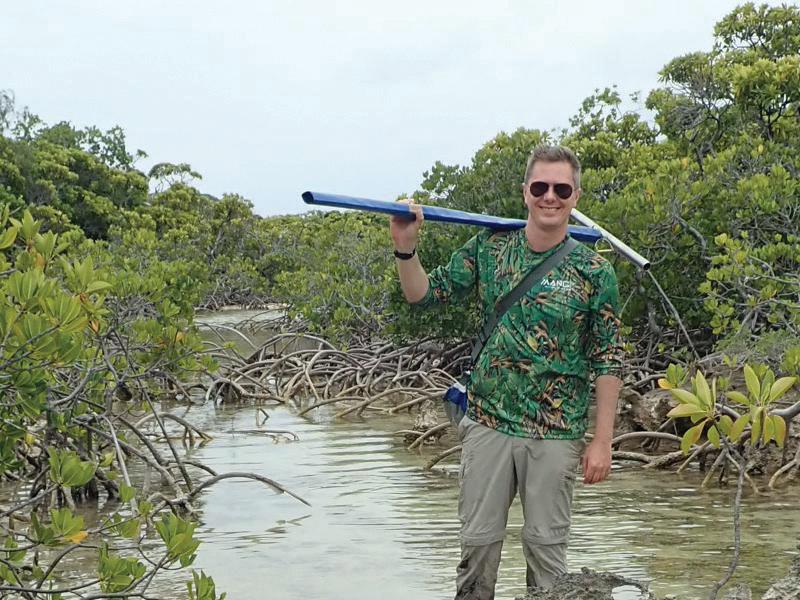
in Louisiana. This restoration work is important not only for research, it is also essential for local communities and organizations interested in utilizing the carbon capture abilities of mangrove forests to mitigate climate change.
Dan joined Tulane’s faculty in 2022, bringing with him a global perspective gained through his extensive international experience. He earned his PhD from the University of Cambridge in 2009, focusing on English salt marshes. Following his doctoral studies, he spent two
DANIEL
FRIESS, THE COCHRAN FAMILY PROFESSOR OF EARTH
AND ENVIRONMENTAL
SCIENCES at Tulane University, was appointed as the new director of The Murphy Institute’s Center for Public Policy Research (CPPR) in July 2025. As the new director, Dan is leading CPPR in its mission to examine, address, and catalyze innovative solutions to 21st-century policy challenges.
Dan brings a wealth of experience and a unique multidisciplinary perspective to this role. A renowned coastal scientist, his research focuses on human-environment interactions in mangroves and seagrasses and how coastal ecosystems can be protected and restored for climate change adaptation. His work often involves collaborations with governments, non-governmental organizations (NGOs), and the corporate sector, demonstrating a commitment to translating research into practical solutions.
A significant area of Dan’s expertise lies in “blue” carbon –the carbon stored in coastal habitats like mangrove forests, seagrasses, and marshes. His research explores the potential of these ecosystems as a powerful strategy for climate change mitigation through carbon crediting mechanisms and within the framework of the Paris Agreement. He also investigates crucial aspects of coastal ecosystem protection and restoration for climate change adaptation, a field of growing importance for coastal communities like those

WORKING IN SOUTHEAST ASIA, YOU JUST SAW HOW IMPORTANT THIS ECOSYSTEM WAS FOR PEOPLE. IT WASN’T JUST AN AREA OF RESEARCH. IT WASN’T JUST AN ACADEMIC TOPIC.
- Dan Friess
years as a researcher and eleven years as a faculty member in Singapore, where his passion for mangrove ecosystems took root. His firsthand understanding of the vital role coastal ecosystems play in the lives of local communities will undoubtedly inform his leadership of CPPR, which aims to produce research with real-world impact.
Dan’s commitment to the field extends beyond his research. Dan is the Co-Editor in Chief of WIREs Climate Change and actively participates in several prominent international organizations, including the Blue Carbon Initiative Scientific Working Group, the International Union for Conservation of Nature and Natural Resources Mangrove Specialist Group, and the Global Mangrove Alliance. The Murphy Institute warmly welcomes Dan to this new leadership role. His expertise in environmental policy and his collaborative approach will be invaluable in guiding the Center for Public Policy Research as it continues to address critical challenges facing our society.

DAN FRIESS, Director of the Center for Public Policy Research and Professor of Earth and Environmental Sciences at Tulane, studies mangroves around the world.
[THE STATE OF THE NATION PROJECT
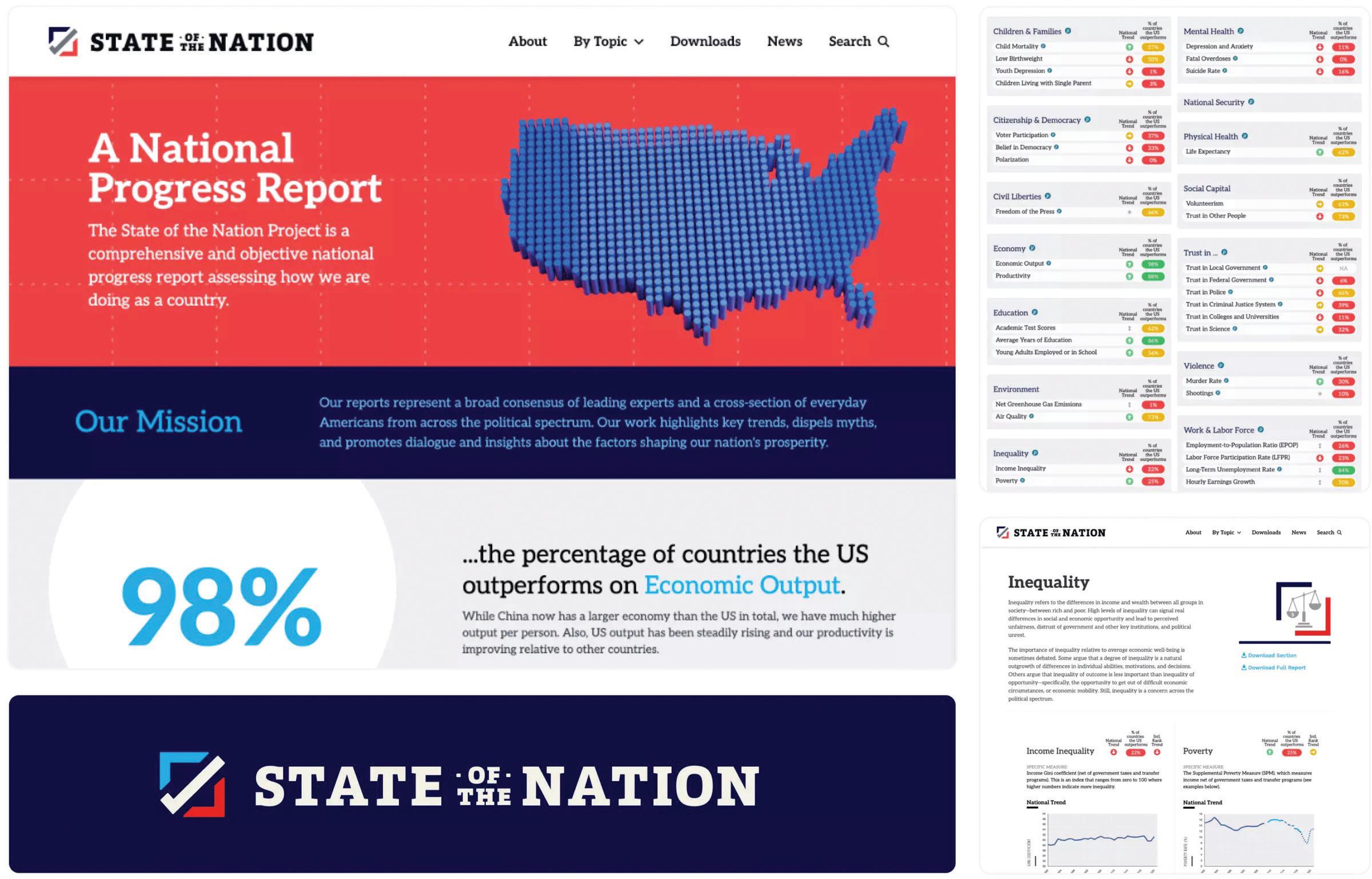
THE STATE OF THE NATION PROJECT, a bipartisan collaboration of former appointees and advisors from the past five presidential administrations funded by The Murphy Institute, released its first comprehensive “State of the Nation” report in February of 2025. The report sheds light on how the United States is doing in key areas — the economy, education, health, the environment, civic engagement, and trust in major institutions — compared to historical trends and peer countries.
The report provides a consensus-based “progress report” for the nation that rises above polarizing headlines and campaign speeches to candidly assess the current state of the country. In tracking 37 measures across 15 key topics that capture America’s progress, stark contrasts were found in the nation’s global standing based on key indicators.
The country is doing extremely well in some areas and extremely poorly in many others. The United States excels economically and is improving in poverty reduction. Yet it lags other high-income nations in mental health, life satisfaction, citizenship and democracy, income inequality, trust in institutions, and rates of violence.
“Ultimately, the goal of the work is to foster progress,” said State of the Nation Director Douglas Harris , Murphy faculty and Chair of the Tulane Economics Department. Harris also directs the Education Research Program in the Center for Public Policy Research.
The report found:
• Economic Strength: The U.S. economy remains a global powerhouse, maintaining its position as one of the world's largest and fastest-growing economies for over a century. This success is underpinned by consistently high worker productivity, improving education levels relative to competitors, and a culture of innovation and
entrepreneurship. While labor force participation has slightly declined, population growth through immigration continues to expand the workforce.
• Gains at Home, Declines Abroad: While the trends within the country show improvement in more areas than decline, international standings in key areas faltered. U.S. trends since 1990 show domestic improvement in the economy, education, environment, health, and violence, but the nation is declining in citizenship, democracy, life satisfaction, mental health, and trust. Internationally, America's position is weakening in environmental protection, physical health, and civil liberties, with gains only in economy and education. This suggests that while the U.S. is advancing domestically, it's falling behind global peers.
• Disconnect between Wealth and Well-being: As material wealth and income levels rise, measures of perceived well-being are declining. Mental health indicators and life satisfaction are deteriorating despite economic gains. Social connections are also fraying, with increasing social isolation and eroding trust. This suggests either that other factors are outweighing the positive effects of rising income, or that the current approach to pursuing material prosperity might be directly undermining psychological and social well-being.
WITHOUT A CLEAR AND ACCURATE DIAGNOSIS OF THE MOST PRESSING ISSUES FACING THE NATION, THERE CAN BE LITTLE HOPE FOR SENSIBLE SOLUTIONS.
- Douglas Harris
The group also polled 1,000 Americans from various regions and political spectrums to gather additional perspectives on the best indicators of national progress. While there were some differences of opinion, the overall findings from the report’s authors are largely consistent with the public’s views.
AND FAILURES
According to Harris, this realization provides hope for the potential to make tangible progress.
“We embarked on this project to provide a more realistic assessment of how the country is doing,” Harris said. “It's noteworthy that such a wide-ranging group could find common ground on how we should gauge our progress. The first step toward moving the nation forward is to gain broad agreement on the real state of the nation. The State of the Nation Project is committed to monitoring these critical measures and engaging the public in dialogues that shape America's future.”
The full report and a detailed breakdown of the findings are available at stateofnation.org.
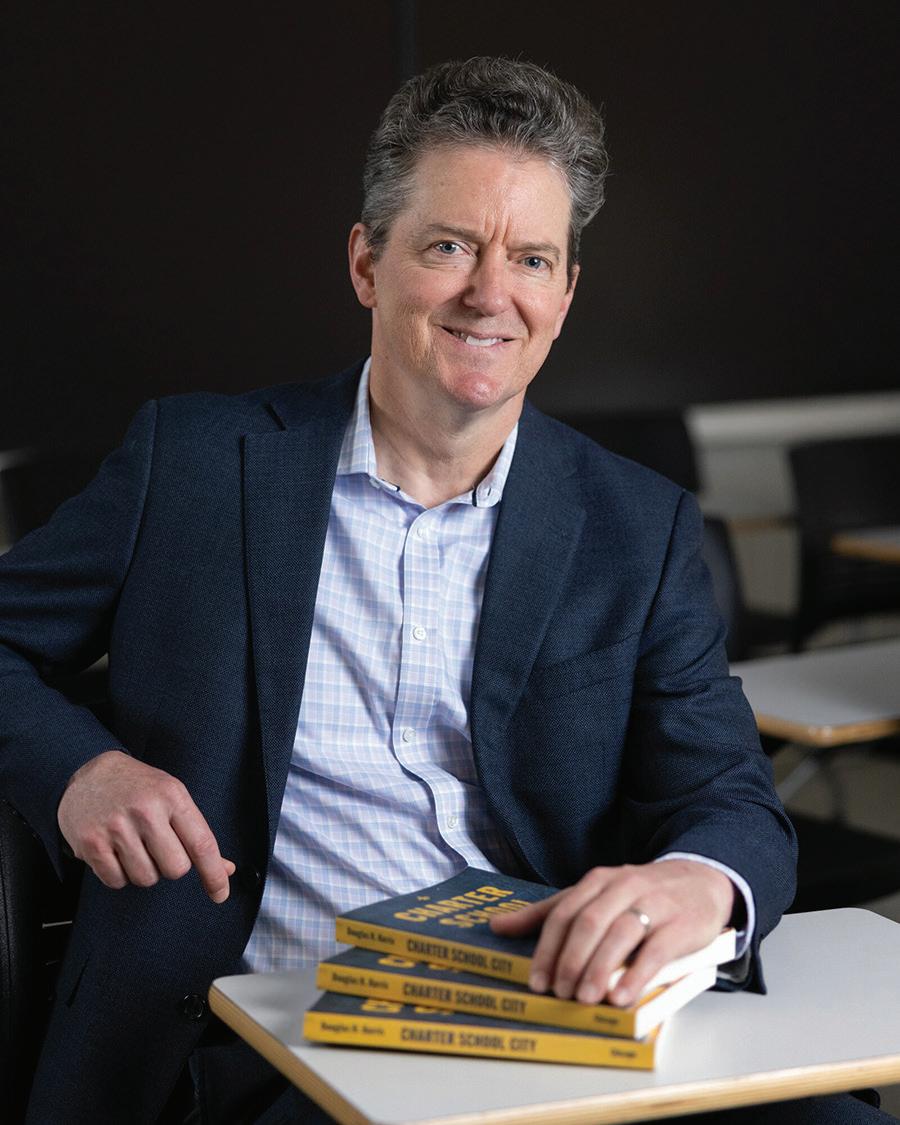
DOUGLAS HARRIS, Director of State of the Nation and Murphy Institute Faculty
[ UNDERGRADUATE PROGRAM
OPPORTUNITIES FOR DEVELOPMENT AND TRANSFORMATION
THE PRIMARY STRENGTH AND DEFINING CHARACTERISTIC OF OUR UNDERGRADUATE
PROGRAM in Political Economy is its multidisciplinary approach. This is exemplified by this year’s graduating cohort, who, in addition to their studies across the four concentrations in our majors, pursued fourteen different double majors and twenty different minors distributed among the thirty-six members of the Class of 2025 cohort. This translates to a wide variety of career options and postgraduate pursuits fostered by this encouragement to engage with political and economic studies in a multidisciplinary way.
The most distinguished graduate in the Class of 2025 must be Ellie Stevenson , 25 . A dual-degree double major in Political Economy and Chemistry, Ellie wrote two senior theses, one for each degree program, and published a paper in Mathematics. She achieved the rare distinction of winning both the William Wallace Peery Medal and the Karlem Riess Award, the latter presented to the top Phi Beta Kappa inductee, as well as graduating with a perfect 4.0 grade point average. Having the choice of proceeding on to either medical school or law school, she chose Yale University School of Law. Ellie intends to continue her multidisciplinary focus.
Another outstanding example of the value of a multidisciplinary approach is Rachel Moody , 25. A triple major in Political Economy, Latin American Studies, and Spanish, Rachel wrote a senior thesis brilliantly combining all three majors, for which she was honored as Senior Honors Scholar
in Political Economy, Senior Honors Scholar in Latin American Studies, as well as being the winner of the Shelley Coverman Memorial Award, honoring an undergraduate or a graduate student who distinguishes themselves in empirical social science research in women’s studies. Rachel writes: “I really enjoyed my time as a Political Economy major. I loved the academic freedom I was given and the diverse electives I was able to take within my major. So sad to be leaving the program but very grateful for everything I gained through it!”
Winning a Fulbright Assistantship to teach English in Austria, Megan Roche , 25 is another excellent example of a student who maximized her multiple interests to create a strong academic platform to support her future endeavors. A double major in Communication, with a minor in German, Megan combined all of her interests into a valuable multidisciplinary perspective. She writes, “I thoroughly enjoyed my time in The Murphy Institute! I learned a lot about many different aspects of political economy, and all the professors were intelligent and engaging.”

Advaith Subramanian ’26 is a dynamic student and researcher whose interests span a number of disciplines. He is a valuable member and a perfect fit for our undergraduate program in Political Economy, where he is free to pursue his diverse topics of research in a multidisciplinary setting. He won a Goldwater Scholarship, usually given to STEM students but appropriate to Advaith given his broad-based approach to healthcare issues, including his recently published paper on tuberculosis transmission, “Effects of Respiratory Isolation for Tuberculosis to Reduce Community-Based Transmission,” published in the journal Clinical Infectious Diseases. As should be clear, our students know no boundaries when it comes to the pursuit of knowledge and the development of skills for future success.
IN POLITICAL ECONOMY ]
The common themes connecting all of the academic experiences of our students are palpable: diversity of interests, freedom of choice, and the quality of teaching among our core faculty. The achievements of our majors speak volumes to their own knowledge and integrity, and also demonstrate the value of our multidisciplinary major. As a Political Economy major, you can study anything and everything, and you can build upon the knowledge that you gain to change the world.
– John Louis Howard, Associate Director
John Louis Howard is the Associate Director of The Murphy Institute and the Director of the Undergraduate Program in Political Economy. He serves as the major advisor and teaches core courses in Political Economy and oversees the Public Service Internship. He has degrees from the University of Georgia (B.A., Philosophy, 1982) and Tulane University (M.A., Philosophy, 1986, and PhD, Philosophy, 1992). Howard has served as The Murphy Institute’s Associate Director since 2005.
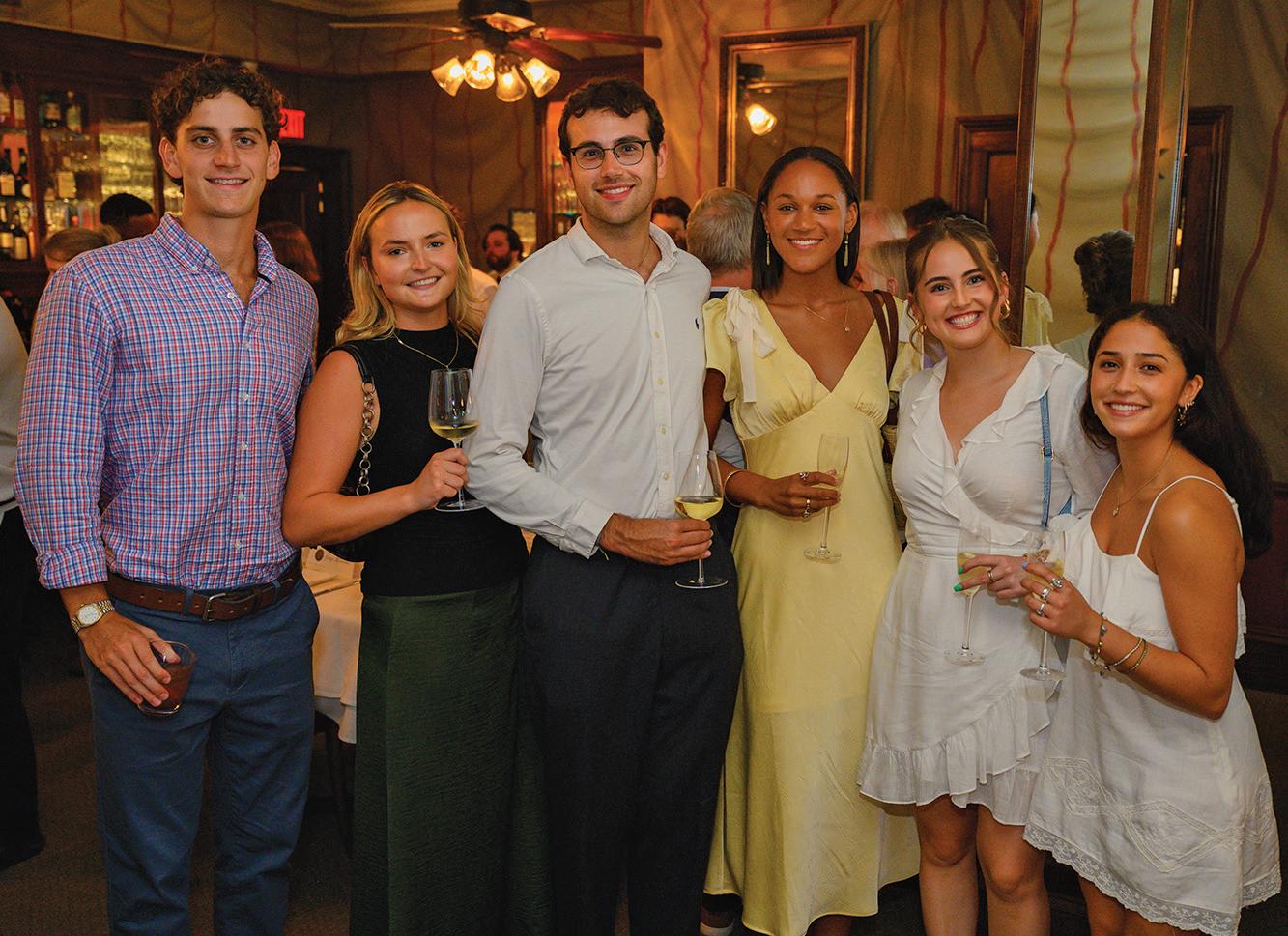
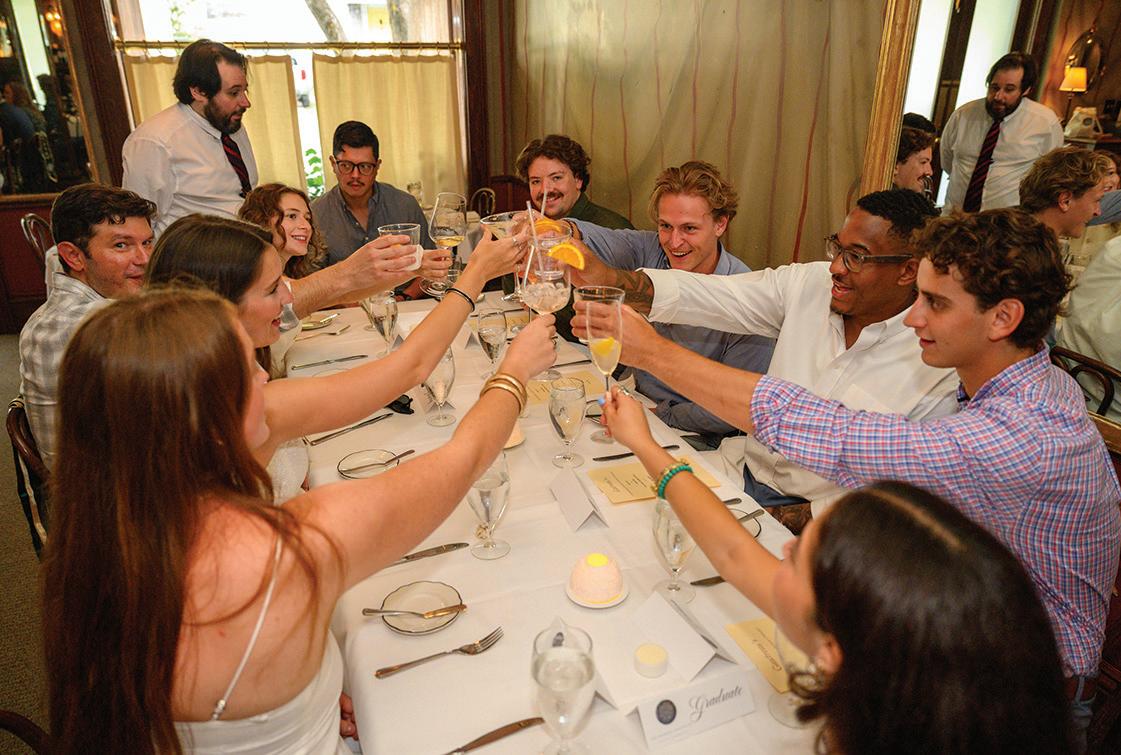
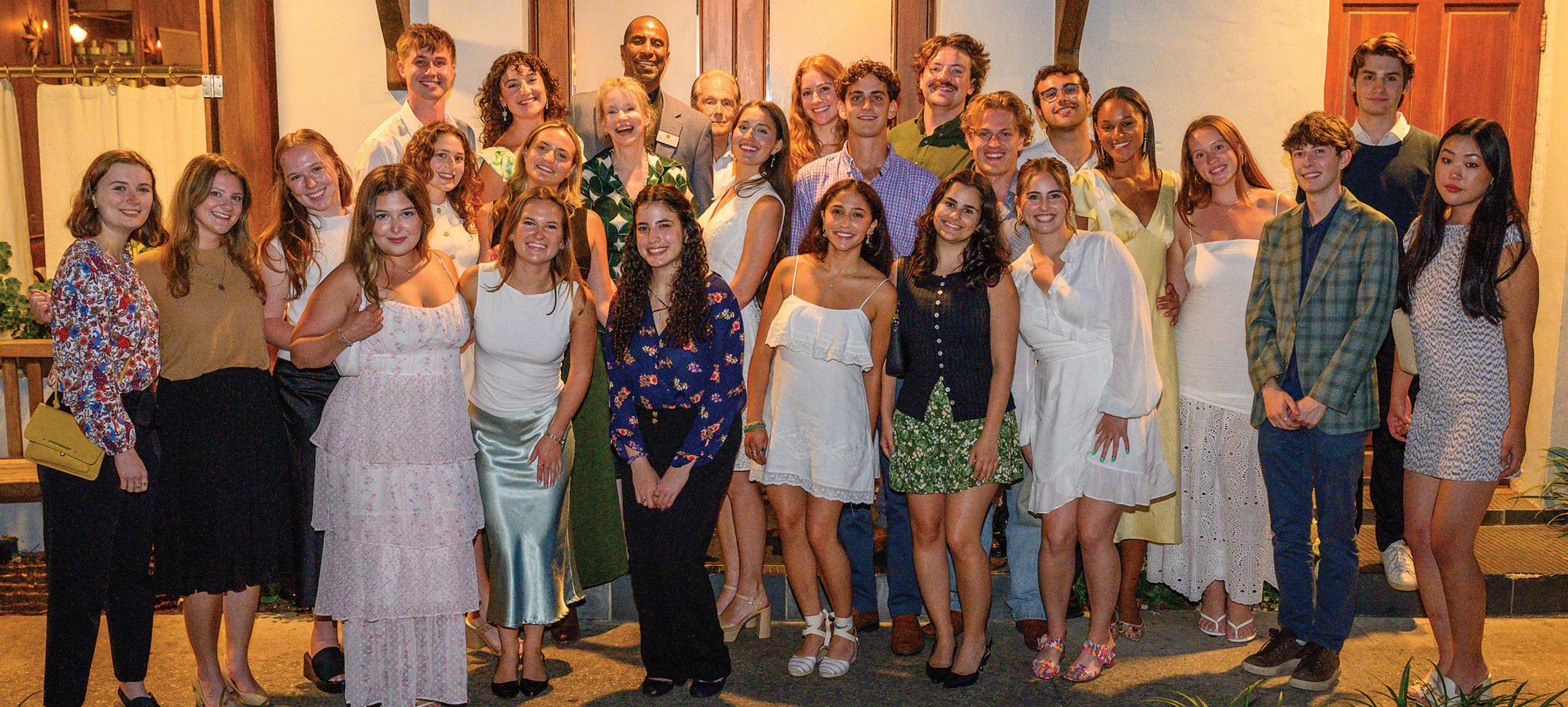
CELEBRATING THE CLASS OF 2025'S TOP SCHOLARS
Tulane University’s highly acclaimed Political Economy major is our most popular multidisciplinary program, designed to promote sustained reflection on the multiple connections between political and economic activities and institutions. The Murphy Institute is proud to celebrate the graduates of the Class of 2025 who have demonstrated outstanding academic achievement, leadership, and dedication to public service while earning this degree.
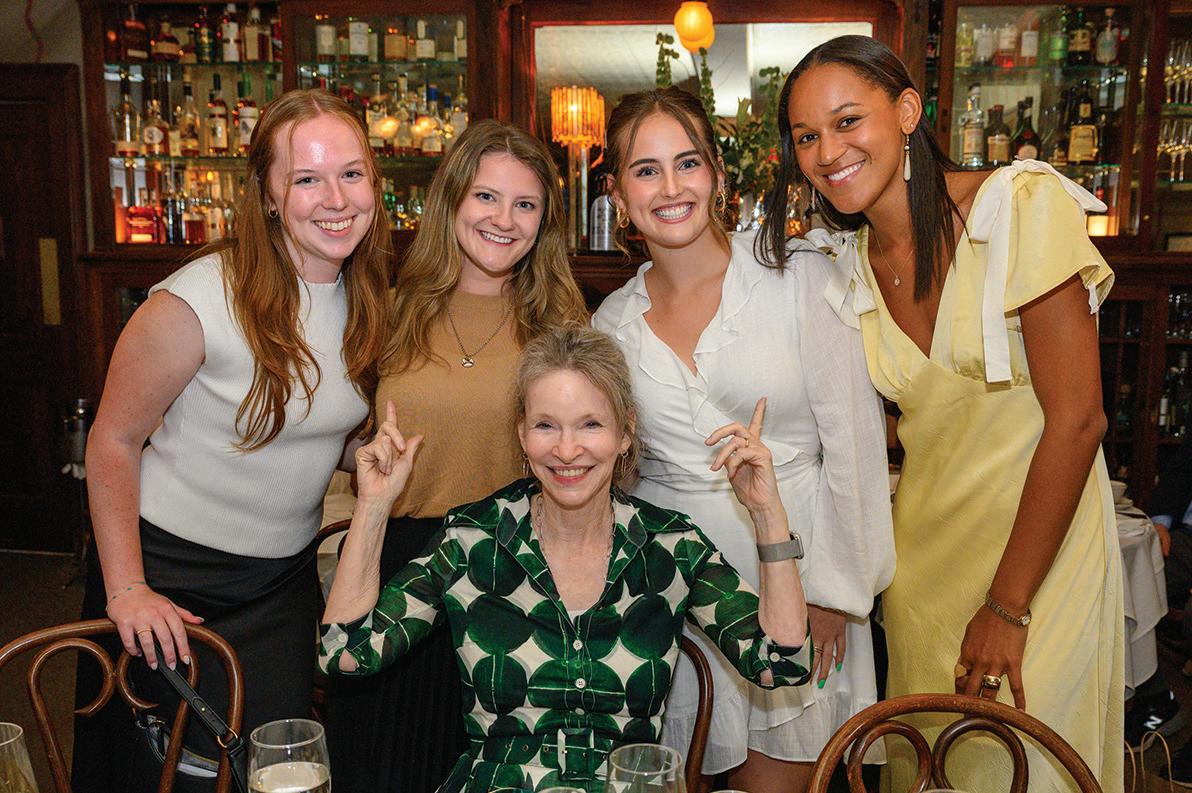
Among this year's distinguished honorees were Ellie Stevenson, who was awarded the prestigious Charles H. Murphy Prize, along with fellow prize winners Megan Roche, Lindsey Cliff, Ellen Schaezler, and Rachel Moody. The Murphy Public Service Award was presented to Skylar Kil and Maya Shields . The celebration was highlighted by the presence of Murphy Foundation Board Chair, Martha Murphy
The Murphy Institute undergraduate Senior Awards Dinner on May 14, 2025. (Left to right) JAMES FOGARTY, LUCY BAILER , ERIK MARTIN , MAYA SHIELDS , RACHEL MOODY, and VERONICA BIRNBERG.
(Left to right) MEGAN ROCHE , ELLIE STEVENSON , MARTHA MURPHY (seated), RACHEL MOODY, and MAYA SHIELDS .
[ UNDERGRADUATE PROGRAM
IN MAY 2025, THIRTY-SIX NEWCOMB-TULANE
COLLEGE SENIORS were awarded Bachelor of Arts degrees in Political Economy. Several received high academic honors, with five students graduating summa cum laude and three students graduating magna cum laude. The summa cum laude graduates are Lindsey Cliff , Rachel Moody, Megan Roche, Ellen Schaezler, and Ellie Stevenson The magna cum laude graduates are Noah Fisher, Kayla Keats and Noah Meyer-Herron . In addition, Meah Matherne and Olivia Meyer gradu ated magna cum laude in Fall 2024.
Of special no te, Ellen Schaezler and Ellie Stevenson became the first female students in program history to graduate with a perfect 4.0 grade point average, and only the fifth and sixth students overall in our program to achieve this accomplishment.
The Charles H. Murphy Prize in Political Economy was awarded to Lindsey Cliff, Rachel Moody, Megan Roche,
Ellen Schaezler , and Ellie Stevenson . The Murphy Institute Public Service Award was presented to Skylar Kil and Maya Shields. The Senior Honors Scholars in Political Economy were Rachel Moody and Ellie Stevenson .
Other members of the Class of 2025 include Lucy Bailer, David Bailit, Veronica Birnberg, Brandy Brennan, Riley Brougher, Riley Clinton , Lillian Flynn , James Fogarty, Ava Ford , Carson Glew, Maahum Jan , Leah Kaplan , Sophia Lindvall , Erik Martin , Jake McLaughlin-Voien , Camila Mowerman , Austin Muelrath , Caton Murry, Samuel Ramos , Caroline Safko, Justin Silver, Maggie Smart , Grace Stanton , Justin Thompson , Julia Weaver, and Jebediah Wells.
Other Fall 2024 graduates include Peter Carroll , Elle Meyer, and Sofia Wuensch
LUCY BAILER graduated cum laude with a minor in Strategy, Leadership and Analytics. She was a member of Phi Alpha Delta Law fraternity. She was a student ambassador for the Tulane Fund Engagement Center and interned at the United States House of Representatives.
DAVID BAILIT graduated cum laude. He was a member of Phi Alpha Delta Law fraternity and Pi Sigma Alpha Honor fraternity. He was vice president of the Sports Analytics club and interned with the Boston Red Sox and the Hyannis Harbor Hawks. He will work in Baseball and Softball Development for Major League Baseball.
VERONICA BIRNBERG was a double major in Communication. She was a member of Phi Alpha Delta Law fraternity and Pi Beta Phi sorority. She was treasurer and president of Club Volleyball, and a member of TU Gente, as well as serving as a TIDES Peer Mentor.
BRANDY BRENNAN graduated in Environmental Science. She was a member of Alpha Lambda Delta Academic Honor Society. She volunteered as a debate coach at The Willow School and was a member of Strong City. She will work as an Accounts Receivable Associate at Uline in Pleasant Prairie, Wisconsin.
RILEY BROUGHER was a minor in Sustainable Real Estate Development. He was a member of Phi Gamma Delta fraternity and the Real Estate Club.
PETER CARROLL graduated in Fall 2024 with a Bachelor of Science in Mathematics. He was a Research Intern for the Bureau of Governmental Research and a Programming Team Member for the undergraduate Tulane Journal of Policy and Political Economy. He is pursuing a Master of Arts degree in Political Economy with Data Analytics at The Murphy Institute.

Lindsey Cliff, BA '25
IN POLITICAL ECONOMY ]
research on Russocentrism at NYU Jordan Center’s Masters and Undergraduate Research Symposium. She was also presented with the Shirley Weil Greengus Memorial Award for Achievement in Political Science. Lindsey will continue her studies as she pursues a Master of Arts in Eurasian, Russian, and East European Studies at Georgetown University’s School of Foreign Service.
RILEY CLINTON graduated with dual minors in Philosophy and Religious Studies. He interned at Meyers Okohson Political Consulting and worked as a Deep Canvasser for Missouri Jobs for Justice. He was President of Monroe Residence Hall (freshman year), President of Aron Residence Hall (sophomore year), and a twice-elected member of the Residence and Housing Association general assembly. He was also a member of Campus Democrats and played on the Club Baseball team.
NOAH FISHER graduated magna cum laude with a minor in Sustainable Real Estate Development. He completed a senior thesis on “The Economic and Political Economic Opportunities of Leveraging Emerging Technologies to Enhance Access to Government Incentives for Real Estate Development” and was inducted into Phi Beta Kappa. He was Finance Chair and Associate Programming Director for the undergraduate Tulane Journal of Policy and Political Economy. He was a member of Wall Street Krewe, the German Club, and the Tulane Real Estate Club. He will pursue a Master of Science degree in Data Science at the University of Chicago.
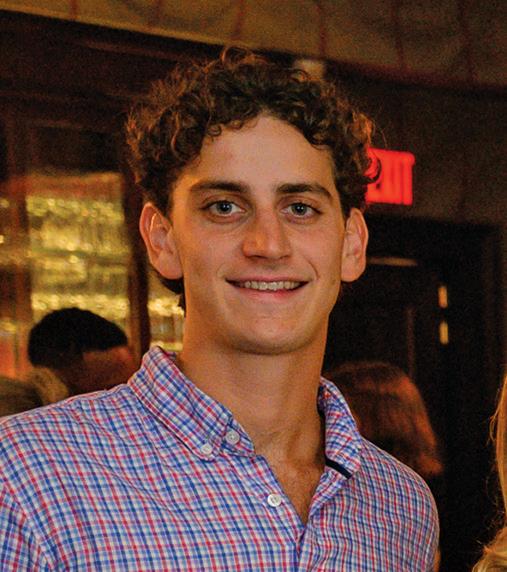
JAMES FOGARTY was a minor in Strategy, Leadership and Analytics. He interned at the Motion Picture Industry Institute and was a Production Intern at Mike Marino Entertainment. He will be a Comedy Touring Agent Trainee for United Talent Agency in Los Angeles, California.
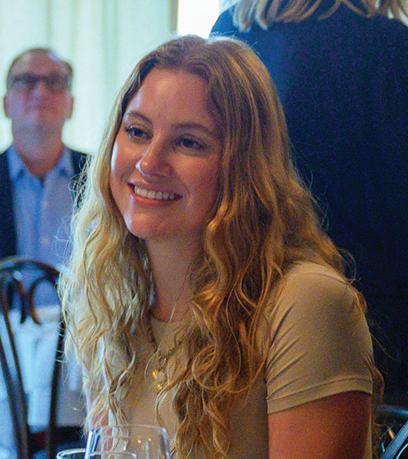
AVA FORD graduated with dual minors in Strategy, Leadership and Analytics, and French. She was a member of Alpha Kappa Psi Professional Business Fraternity (Vice President of Administration, Brotherhood Chair, Campus Outreach Coordinator, Professional Mentor), Club Swimming (Vice President, Secretary), Outreach Tulane (Community Partners Coordinator, Assistant Project Coordinator), Chi Omega Sorority (Recruitment Counselor, Secretary Assistant, Foundations Ambassador), Phi Alpha Delta (Professional Assistant), the Newcomb Big/Little Program, Emerging Leaders Program, and the CACTUS Academy. She interned at Kirkland & Ellis and was an Administrative Aide at the Newcomb Institute. She will be a Private Wealth Management Operations Analyst at Goldman Sachs in Salt Lake City, Utah.
James Fogarty, BA '25
Ava Ford, BA '25
The Murphy Institute celebrated the undergraduate Class of 2025 at the annual Senior Awards Dinner.
[ UNDERGRADUATE PROGRAM
CARSON GLEW was a minor in Business Administration and Management. He interned at the Labor Institute in New York City. He was Vice President of Tu Tones a capella group, and a pitcher on the Club Baseball team.
MAAHUM JAN graduated with a double major in Philosophy. She was a member of Pi Beta Phi, Strong City, the Residential Hall Association Executive Board, and the Philosophy Club. She volunteered for the Newcomb Prison Project and Best Buddies. She was a Legislative Intern for Representative Samba Baldeh in the Wisconsin State Assembly, a Political Consulting Intern for the Association of Public-Safety Communications Officials in Washington, D.C., and an Investigative Intern for the Orleans Public Defenders Office.
LEAH KAPLAN graduated with dual minors in Strategy, Leadership and Analytics, and Urban Studies. She was Vice President of Risk Reduction and Senior and Alumnae Chair for Sigma Delta Tau sorority. She was a Research Intern at the Israeli Policy Agendas Project and an Analytics and Sales Intern at Bloomberg. She will be a Financial Product Analyst at Bloomberg in New York City.
KAYLA KEATS graduated magna cum laude as a double major in Political Science–International Relations with a minor in Spanish. She was a member of Phi Mu sorority and Alpha Lambda Delta National Honor Society. She was a three-year varsity athlete for the Tulane Rowing Association and received the 2024 American Collegiate Rowing Association Southern Regional All-American Athlete Award. She was the second-chair cellist for the Tulane University Orchestra. She served as a Green Wave Ambassador and Wave Leader and volunteered for both Bookfest and Crawfest. She also served as a Student Ambassador for CIEE Council on International Educational Exchange. She will be Assistant Manager for the Park District of Highland Park Aquatics Department in Highland Park, Illinois.
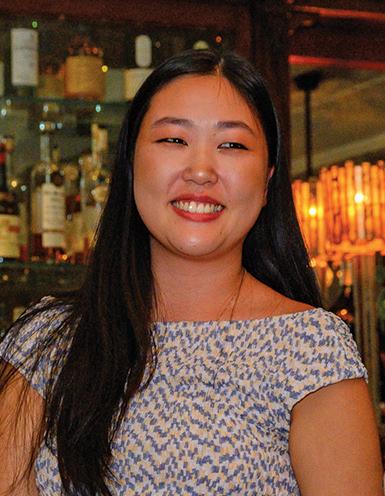
SKYLAR KIL was a dual minor in Strategy, Leadership and Analytics, and Political Science. She was a co-recipient of The Murphy Institute Public Service Award. She was a Legislative Intern in the office of Senator Patty Murray (D-WA) and a Congressional Intern for the Stennis Center for Public Service. She also served as a Service-Learning Assistant for the Tulane Center for Public Service. She was a dynamic leader on campus, serving as Editor-inChief of not one, but two undergraduate journals—the Tulane Undergraduate Law Review, of which she was also the co-founder, and the undergraduate Tulane Journal of Policy and Political Economy —a rare and remarkable accomplishment.
SOPHIA LINDVALL graduated with dual minors in Gender and Sexuality Studies and Strategy, Leadership and Analytics. She was Marketing Chair and Recruitment Logistics Chair for Chi Omega sorority.
MEAH MATHERNE graduated magna cum laude in Fall 2024, with a double major in English and a minor in Spanish. She was engaged and active on campus as a member of Kappa Alpha Theta fraternity (Recruitment Director, By-laws Committee Member, and Member Development Committee), Phi Alpha Delta Law Fraternity, Alpha Lambda Delta Honor Society, and the NewcombTulane College Academic Honor Board. She also served as a Peer Mentor and Wave Leader. She interned as a Judicial Clerk in Harris County, Texas, and was a Student Intern for the United States Probation Office for the Eastern District of Louisiana. She plans to attend law school.
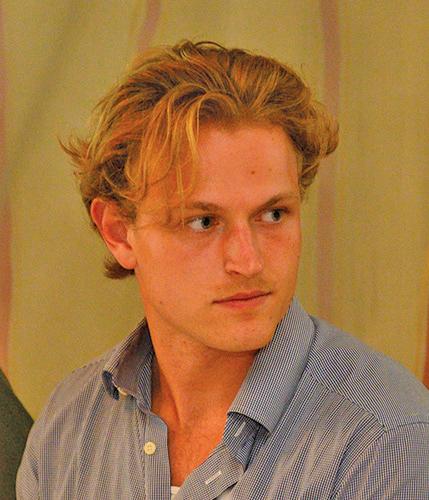
JAKE MCLAUGHLIN-VOIEN was a minor in Entrepreneurial Business. He was a Marketing Intern for Reading Is Fundamental, an Investigator Intern for the Orleans Public Defenders Office, and a Research Intern for the Institute of World Politics.
Skylar Kil, BA '25
Jake Mclaughlin-Voien, BA '25
IN POLITICAL ECONOMY ]
OLIVIA MEYER graduated magna cum laude in Fall 2024, with a double major and Departmental Honors in Computer Science. She completed a senior thesis in Computer Science titled “Data Driven Analysis of Pretrial Incarceration in New Orleans,” using data analysis and predictive modeling to analyze discrepancies in the New Orleans court system, with a particular focus on pretrial custody and case outcomes. She served as a Peer Mentor and interned at the Tulane Center for K-12 STEM Education. She now works as a Solution Consultant at Vertical Launch.
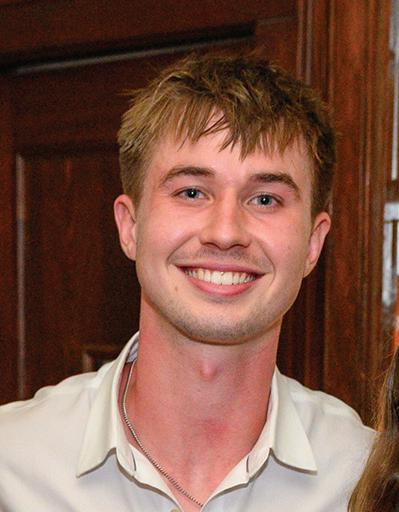
NOAH MEYER-HERRON graduated magna cum laude with dual minors in Public Health and Economics. He was a member of Alpha Phi Omega Service fraternity and an editor for the undergraduate Tulane Journal of Policy and Political Economy. He was a member of the Club Soccer team. Noah interned at the Rhode Island Office of the Health Insurance Commissioner and was an International Trade Assistant at the International Trade Administration. He was also a Research Assistant at the Harvard Center for Health Decision Science at the Harvard T.H. Chan School of Public Health. He will be a Fiscal Policy Intern for the Massachusetts Executive Office of Administration and Finance in Boston, Massachusetts.
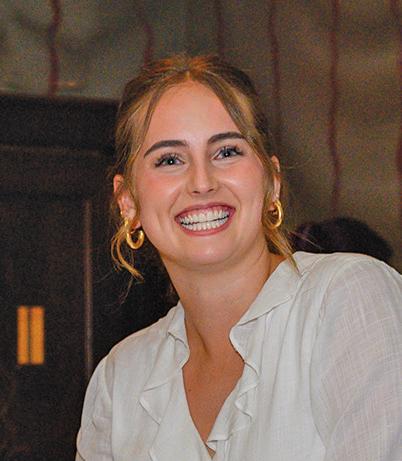
RACHEL MOODY graduated summa cum laude as a triple major, with additional majors in Latin American Studies and Spanish. She was a Newcomb Scholar and was a co-recipient of the Charles H. Murphy Prize. She won a Tulane 34 Award and was selected to the William Wallace Peery Society. She was a Senior Honors Scholar for both Political Economy and Latin American Studies, awarded for her senior thesis exploring the role of women in Latin American drug cartels. She was a member of Oak Wreath and won the Shelley Coverman Memorial Award for outstanding research in the social sciences. She was awarded the Victoria and Harvey Bricker Prize for the Best Paper in Latin American Studies. She has also published a paper: “The Sleevegate Controversy: The Impact of Title VII’s ‘Because of Sex’ Clause on Dress,” in Women Leading Change Journal, Vol. 8 (2): 43-61. Rachel was awarded a Crest Leadership Medallion, served as President of Tower and Crescent, as an editor for the Tulane Undergraduate Law Review, as a Green Wave Ambassador, and as a Mock Trial Team member. She was also a Peer Mentor and ESL teacher with Catholic Charities. She will be a State and Local Advisory Associate with KPMG in New York City.
CAMILA MOWERMAN was a member of Phi Alpha Delta Law fraternity and worked as an Economics Tutor at the Academic Services Center. After a gap year, she plans to attend law school.
I LOVED THE CORE CURRICULUM AND THE GREAT DIVERSITY IN KNOWLEDGE AND PROFESSOR EXPERTISE THAT I REALLY BENEFITED FROM AS A STUDENT.
-
Rachel Moody
AUSTIN MUELRATH interned at Kaiser Permanente as part of their KP LAUNCH Graduate Medical Education Program, and he volunteered in the Emergency Department of Ochsner Hospital. He will be attending California Polytechnic State University in San Luis Obispo, California, in pursuit of a Master of Science degree in Business Analytics.
CATON MURRY was an Altman Scholar and a dual-degree double major in Finance, with a minor in French. She will be an Investment Banking Analyst with Houlihan-Lokey in their Energy Investment Banking Group in Houston, Texas.
Rachel Moody, BA '25
Noah Meyer-Herron, BA '25
[ UNDERGRADUATE PROGRAM
SAMUEL RAMOS was a member of Phi Alpha Delta Law fraternity and was a Green Wave Ambassador. He interned at EF Hutton and was a Research Analyst for Ridgeway Partners.
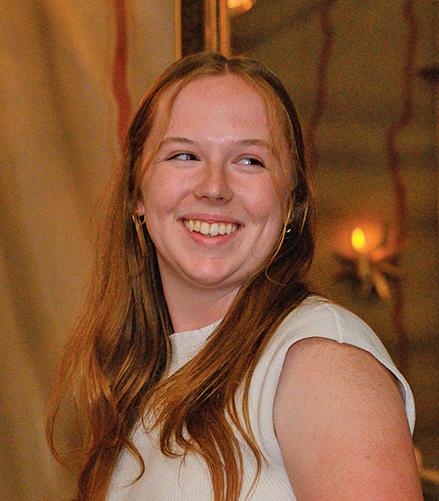
MEGAN ROCHE graduated summa cum laude with a double major in Communication, with dual minors in German and Strategy, Leadership and Analytics. She was a co-recipient of the Charles H. Murphy Prize, was inducted into Phi Beta Kappa, and was a member of Oak Wreath. At the Newcomb Institute, she participated in the Feminist Summer Internship and was a member of the Student Leadership Excellence Cohort. Megan won the Founder’s Award and the Ann Royal Arthur Memorial Award from the German Department. She interned with Planned Parenthood North Central States and with Southeast Louisiana Legal Services, and volunteered with Habitat for Humanity and Outreach Tulane. She served as President of Phi Alpha Delta, Secretary of the German Club, Special Events Chair for Women in Politics, and Engagement Co-Coordinator for Big Easy Emergency Contraception. She was awarded a Fulbright English Teaching Assistantship in Austria.
CAROLINE SAFKO was a minor in Strategy, Leadership and Analytics. She was a Legislative Intern in the office of Congressman Steny Hoyer (D-MD).
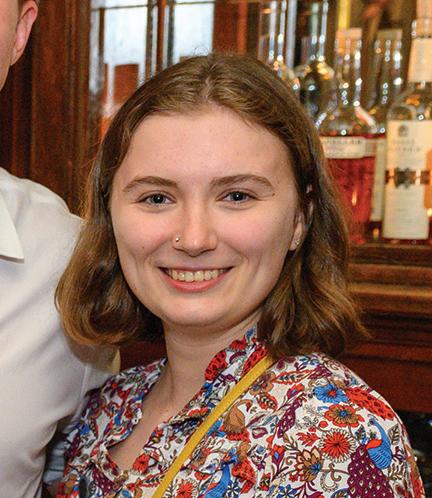
ELLEN SCHAEZLER graduated summa cum laude with a perfect 4.0 grade point average. She was a double major in Sociology, with a minor in Strategy, Leadership and Analytics. She was a co-recipient of the Charles H. Murphy Prize and was inducted into Phi Beta Kappa. She was an active member of Tulane’s Performing Arts Society, serving as its treasurer this year, and was a member of Phi Alpha Delta Law fraternity. She also interned at Flyte and was a Financial Management Intern at the Federal Deposit Insurance Corporation. Ellen plans to apply to law school after taking a year or two to gain experience working at a law firm.

I LOVED ALL THE FREEDOM I HAD TO CHOOSE COURSES THAT BEST ALIGNED WITH MY INTERESTS, WHILE STILL MEETING THE MAJOR REQUIREMENTS.
- Megan Roche
MAYA SHIELDS was a double major in English, with minors in Political Science and Environmental Studies. She was awarded The Murphy Institute Public Service Award and the Jim Runsdorf Excellence in Public Service Student Award from the Center for Public Service. She received a Tulane 34 Award. The English department honored her with the Prize for Citizenship and the Virginia Gleaves Lazarus Memorial Award. Her senior thesis explored the insights Western policymakers can draw from Indigenous Technical Knowledge. She was a research intern at the Tulane Institute on Water Resources Law and Policy. Maya was the founder of the Tulane Earth Day Festival, Vice President of Programming for Epsilon Eta Sigma, and a staff writer for the Tulane Hullabaloo. She was President of CACTUS, a Cowen Scholar, an intern with the Seattle Clemency Project, and the founding treasurer of Students Against Food Insecurity. After working in the public and nonprofit sectors engaged in conservation and environmental work, Maya plans to attend law school to pursue a career in Environmental Law.
Maya Shields, BA '25
Megan Roche, BA '25
Ellen Schaezler, BA '25
IN POLITICAL ECONOMY ]
JUSTIN SILVER was a double major in Philosophy and a minor in Strategy, Leadership, and Analytics. He was a member of Kappa Sigma fraternity and the President of BridgeUSA. He was an International Trade Assistant with the United States Commercial Service of New Orleans, part of the International Trade Administration. He will be a Sales Intern with NNR Global Logistics in Los Angeles, California.
MAGGIE SMART graduated cum laude with dual minors in Philosophy and Public Health.
GRACE STANTON was a minor in Strategy, Leadership and Analytics. She was a member of Kappa Kappa Gamma sorority and BridgeUSA. She was a Government Relations Intern with Invariant and a Public Affairs Intern with Constellation Brands. She lives in Silver Spring, Maryland, and plans to work on Capitol Hill in Washington, D.C.
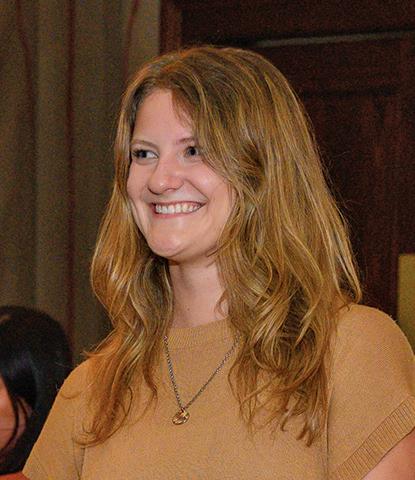
ELLIE STEVENSON graduated summa cum laude with a perfect 4.0 grade point average. She was a dual-degree double major in Chemistry and a minor in Philosophy. She won the William Wallace Peery Medal and the Karlem Riess Award from Phi Beta Kappa, the top two academic awards given by Tulane University. She was a co-recipient of the Charles H. Murphy Prize and was named Senior Honors Scholar in Political Economy. She wrote two senior theses, one for Chemistry and one for Political Economy. She also published a paper in Mathematics. From the Chemistry Department, she received the American Chemical Society Outstanding Senior Award and the William L. Alworth Award in Biological Chemistry, and previously won the Ann Hero Northrup Prize in Chemistry (2023), as well as the Royal Society of Chemistry Certificate of Excellence Award (2024). As a leader on campus, Ellie served as Vice President of Wall/Paterson Community Government, as a Wave Leader, and was a member of Phi Alpha Delta Law fraternity. She has also worked as a teaching assistant in the General Chemistry Lab. Ellie served as a Site Lead Intern for the Tulane University Ethics Bowl program and engaged in community outreach with Tulane Chemistry and Lycée Français de la NouvelleOrléans. She achieved a perfect score on the LSAT and will attend Yale Law School in New Haven, Connecticut.
THE LAW CAN SERVE AS A BRIDGE BETWEEN SCIENTIFIC INNOVATION AND SOCIETAL IMPACT, WHETHER THROUGH POLICYMAKING, REGULATORY WORK, OR INTELLECTUAL PROPERTY LAW.
- Ellie Stevenson
JULIA WEAVER was a double major in Communication, with a minor in Public Health. She was a Childcare Volunteer for Hotel Hope. She interned at Landry Law Firm in New Orleans. She will pursue a degree in Paralegal Studies at the Tulane University School of Professional Advancement.

SOFIA WUENSCH graduated cum laude in Fall 2024, with dual minors in Philosophy and Strategy, Leadership and Analytics. She was a member of Phi Mu fraternity and a Building Manager for the Department of Campus Recreation. She was a member of Phi Alpha Delta Law fraternity and the Secretary for Newcomb Senate. She was a legal Intern for Siegel and Coonerty, LLP. She will attend Seton Hall University School of Law in Newark, New Jersey.
Sofia Wuensch, BA '25
Ellie Stevenson, BA and BS '25
TURNING DATA INTO INSIGHT AND INSIGHT INTO IMPACT: THE MA IN POLITICAL ECONOMY WITH DATA ANALYTICS
THE MASTER OF ARTS IN POLITICAL ECONOMY
WITH DATA ANALYTICS program launched in 2022 and has quickly become the cornerstone of our graduate offerings by pairing rigorous economic reasoning with stateof-the-art data science. Students work at the intersection of public policy, quantitative research, and applied analytics, drawing on The Murphy Institute’s longstanding strengths in political economy while leveraging the latest tools in coding, visualization, and causal inference.
We anticipate another year of student success, with approximately four students poised to complete their degree requirements this fall and another four expected to graduate in the spring. Their capstone projects—ranging from an empirical evaluation of the political business cycle theory to the economic effects of women’s suffrage in the United States—underscore the practical orientation of the curriculum in answering political economy questions.
Demand for the program remains strong: there are seven students in the 2025 cohort, including two talented Tulanians entering through our accelerated 4+1 track where they will have the benefit of obtaining both an undergraduate and a graduate degree in only five years of study. Their diverse academic backgrounds in economics, political science, and engineering promise a vibrant, interdisciplinary community.
The curriculum for 2025-26 has been streamlined. The revised sequence reduces reliance on outside departments for core coursework, fully integrates the new Murphy Institute course Math for Data Analysis – taught by Professor Emily Gamundi , Murphy core faculty and professor of practice in Tulane’s Department of Mathematics – and clarifies the menu of electives. These refinements clarify degree requirements while meeting the program’s learning objectives by preserving the program’s signature mix of theory, coding, and real-world application.

Even in its infancy, the MA-PEDA program has earned national recognition, securing the #4 rank in TechGuide's Best Master’s in Data Analytics Degree Programs for 2025. TechGuide highlighted our innovative curriculum and early career outcomes: among our first two graduates, one is now a private sector data scientist, while the other serves as an administrator at the Atlanta Research Data Center (ARDC) for the U.S. Census Bureau.
With a growing reputation, tailored curriculum, and expanding alumni network, the MA in Political Economy with Data Analytics is poised to be a premier destination for students who seek to turn data into insight and insight into impact.
–
Justin Cook, Director of the MA Program in Political Economy and Associate Professor of Economics
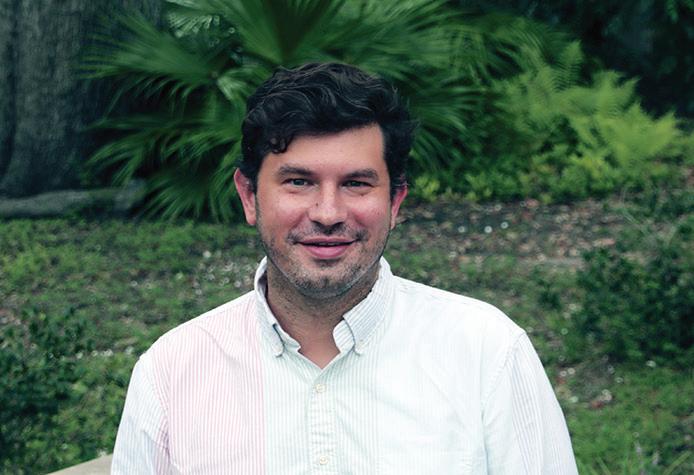
C. Justin Cook is an Associate Professor of Economics and Director of the M.A. Program in Political Economy with Data Analytics, as well as a faculty member of The Murphy Institute. His research focuses on understanding long-running, persistent patterns in economic growth and development. Cook's current work focuses on understanding the persistence of populations and economic output from the historical locations of past civilizations and explores the aggregate impacts of redistributive policies, particularly in India. He received his B.S., M.S., and PhD from Louisiana State University and was an assistant/ associate professor at the University of California, Merced before joining Tulane University.
Justin Cook, Director and Associate Professor of Economics
FROM DATA TO IMPACT: A SPOTLIGHT ON MA-PEDA ALUMNI
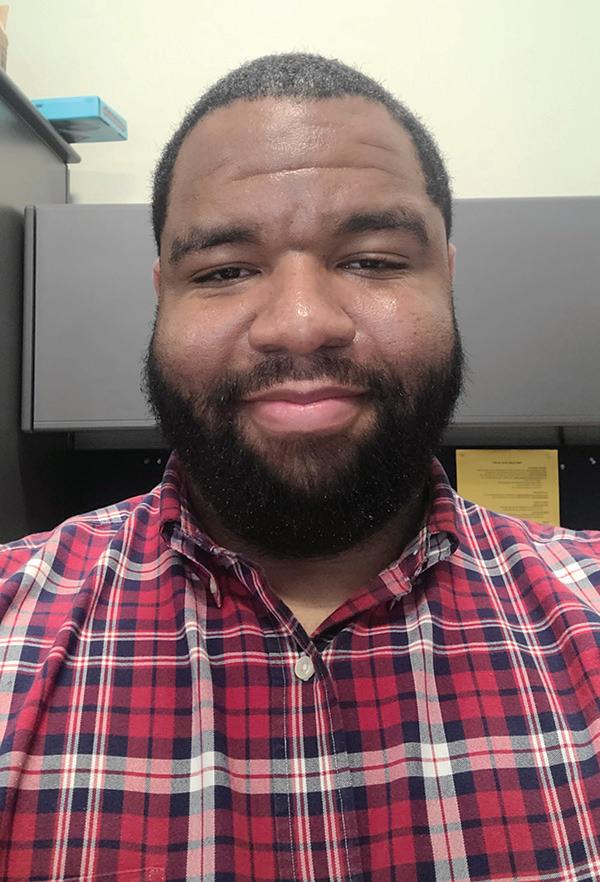

CHASE M. FREDERICK, A GRADUATE OF THE MA-PEDA PROGRAM, is putting the program’s mission to turn data into insight and insight into practice every day. He currently serves as a Survey Statistician and Administrator at the Atlanta Research Data Center (ARDC) located at the Federal Reserve Bank of Atlanta, where he makes sense of microdata by generating insights that inform policies.
Looking back, Chase knew that the Master’s in Political Economy with Data Analytics was the right path for him when he learned about its flexibility and multidisciplinary approach from his Economics Professor, Dr. Justin Cook As the MA-PEDA Director, Cook enthusiastically encouraged Chase to consider the program for its comprehensive curriculum, which explores the interaction between economics and politics using quantitative skills. Frederick enjoyed being able to learn and use advanced technologies and data analytics tools while also exploring contemporary topics in political economy.
“Through the multifaceted coursework and versatility of what I studied across political economy and data analytics, I learned how to properly analyze data and then effectively convey what I analyzed to others,” Chase said.
Now at ARDC, Chase acknowledges the program’s training with preparing him for his current role. In his day-today work as both an administrator and a statistician, he navigates interpersonal dynamics with professionalism while
also working hands-on to collect, analyze, and interpret data. The role at ARDC was one of many offered to him upon graduation from the program.
Chase’s success underscores how the program's unique blend of rigorous academics and practical skills prepares graduates for influential careers in both the public and private sectors.
For more information about the Master of Arts Program in Political Economy with Data Analytics, contact C. Justin Cook, Director and Associate Professor of Economics at ccook7@tulane.edu
THE HIGH-QUALITY EDUCATION AND INTERDISCIPLINARY FOCUS OF THE MA PROGRAM PROVIDE GRADUATES WITH A WELL-ROUNDED BREADTH OF KNOWLEDGE, MAKING THEM ATTRACTIVE CANDIDATES IN THE JOB MARKET.
- Chase M. Frederick
The Federal Reserve Bank of Atlanta
ALUMNI SPOTLIGHT:
HILLARY CARELLI-DONNELL
Political Economy and Government
IN OUR CONTINUING SERIES designed to showcase the achievements of our most distinguished alumni, we present an in-depth look at one of our most accomplished graduates, Hillary Carelli-Donnell. A member of the Class of 2013, Hillary was the Senior Honors Scholar for Political Economy, a member of Oak Wreath, and the co-recipient of the Charles H. Murphy Prize in Political Economy. Their senior honors thesis, “A Neoliberal Education: Schooling in the Crescent City,” was a critique of public education and charter school reforms in New Orleans. Hillary was the president of Women in Politics, and a founding member of the Tulane chapter of Students for Justice in Palestine. In their junior year, they completed the year-long general course at the London School of Economics (LSE).
Hillary went on to earn a Master’s Degree in Public Policy from the Graduate Center at the City University of New York. Their master’s thesis, “Youth Voice and the Promise and Perils of Governmentality: An Analysis of NYC DOE Borough Student Advisory Councils,” addressed the role of youth councils in education policy. They are now the Director of Participatory Budgeting at the New York City Civic Engagement Commission, a city agency designed to enhance civic participation, promote civic trust, and strengthen democracy in New York City. We asked Hillary to share their story, and here is their account in their own words.
HILLARY CARELLI-DONNELL, BA '13
FROM THE BIG EASY TO BIG BEN
During my junior year at LSE, I was confronted with academic material that was more difficult than anything up to that point. The lectures were dense and stimulating. The PhD students who ran my recitation sections would never let us off the hook with easy answers or without a
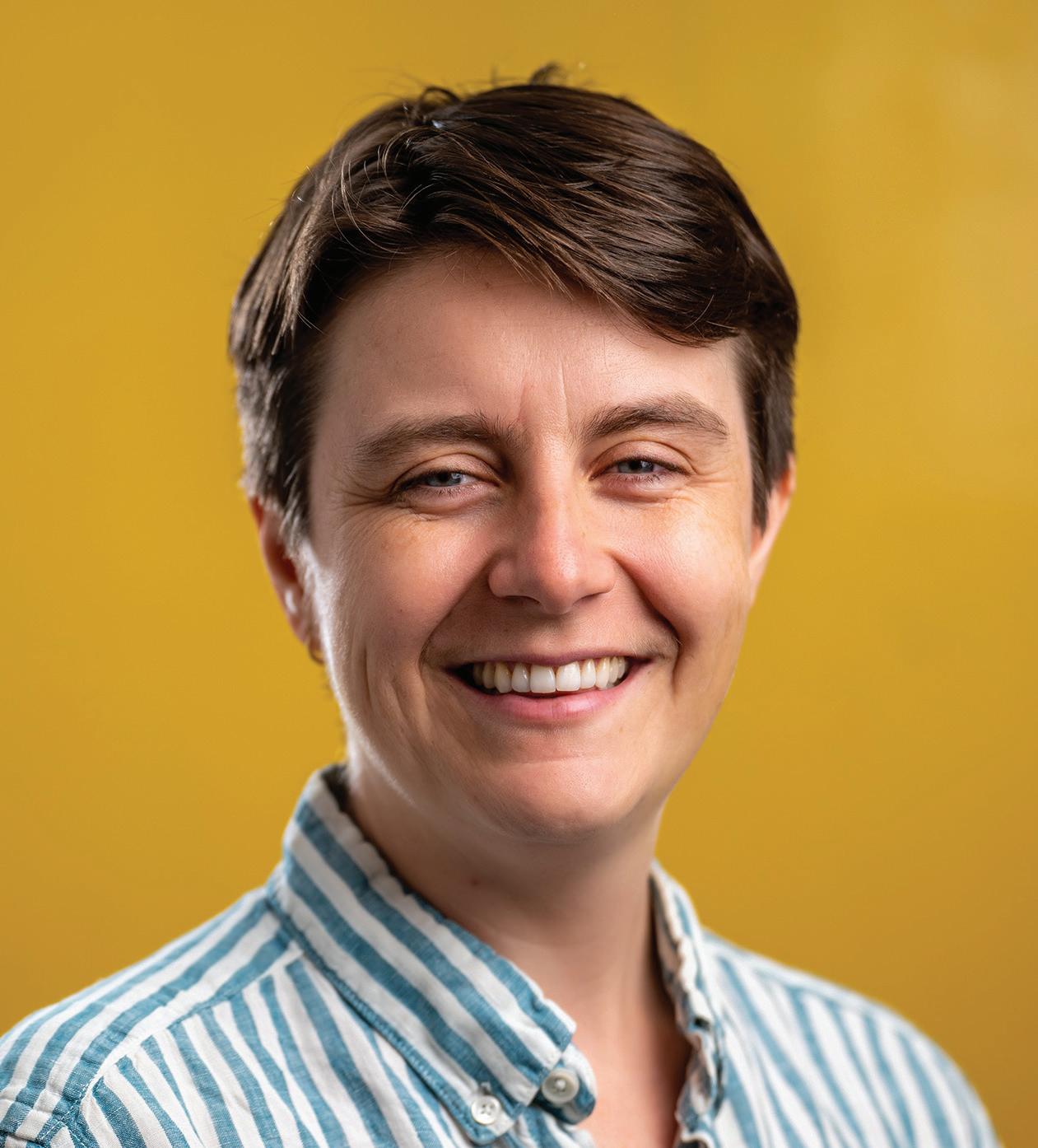
When I graduated from The Murphy Institute with my Political Economy degree in 2013, I was eager to jump into the next stage of my life. Though I knew the next phase would be different than my time on campus, I could not have predicted the meanderings ahead. Looking back on the years since my graduation is like looking at a map of the Mississippi River flowing down from its headwaters, with its numerous unpredictable twists and turns.
critical dissection of what we had heard in the day's lecture. All the intellectual work and theory made me restless for something active and physical. So, I found a canvassing job with London Citizens, a non-partisan progressive coalition organizing thousands of Londoners around a “people’s platform”. Our campaign focused on organizing cleaning workers at Whitehall to back the platform for a higher minimum wage and lower transit fares. I was
seduced by the idea that political education could happen in the streets and that through base building, we could build enough power to pressure politicians to improve the lives of regular Londoners. By day, I was learning about the origins of nationalist movements and the philosophy of economics in class, and by night, I was lurking outside London’s government buildings, approaching people I had never met, attempting to convince them that they had a stake in this platform. I had caught the community organizing bug.
Once back in the States, my first move out of undergraduate studies was to decline an offer for a position as a legislative aide for a Louisiana Congressperson. That choice worried my parents. I didn’t blame them; I was scared to turn it down myself. The economy was still reeling from the crash of 2008, and jobs weren’t easy to come by.
I kept looking and found a job as an assistant for a New Orleans-based social practice artist working on a campaign to raise awareness of the prison-industrial complex. In what I later realized was a rather unconventional setup, I lived in the apartment above her house, and we spent very long hours working together. It almost felt like I worked at a tech startup, but without the air conditioning and the payment in stock options. We organized speaking engagements and rallies, and I helped her document her work on the movement to end solitary confinement. We joined national strategy calls with advocates and organizations working to amplify the campaign and free the Angola 3, two of whom had been imprisoned since the 1970s at the Angola State Penitentiary.
During this period, I learned a lot about campaign organizing, organizational governance systems, crafting messaging, and structuring decisionmaking processes from scratch. I also learned about the pervasiveness of the non-profit industrial complex. This job felt drastically different from any job that was presented as an option to me while at college.
ONWARD TO THE BIG APPLE
By the summer of 2016, when Alton Sterling was killed in Baton Rouge, I had parted ways with my artist-boss. I had cycled through a series of jobs, including working as an ESL and Adult Education Instructor at a community college, driving a forklift in a lumber yard, and teaching sex education at a local non-profit. I had even taken a job as a youth mental health case manager in Kansas City for nine months before deciding I missed New Orleans too
much. In my free time, I also continued to stay connected to various grassroots groups, like the Workers Center for Racial Justice, and spent weekends in Baton Rouge at protests and supporting the Black Lives Matter movement organizing there.
Then, a particularly devastating breakup sent me reeling and yearning for more structure and direction. I tried to connect the dots between my previous experiences and form a coherent narrative about my interests to apply to graduate school. I knew I loved the possibilities for inquiry, critique, and intellectual expansion inherent in the classroom. My course of study was not entirely clear to me, though, which explains the rejection letters from the PhD programs I applied to. I decided instead to find a master’s program
“ MY TIME AT TULANE HAD FELT FRUITFUL AND EXPLORATORY, FROM MY JUNIOR YEAR ABROAD
AT THE LONDON SCHOOL OF ECONOMICS, TO MY SENIOR THESIS RESEARCH ON NEW ORLEANS CHARTER SCHOOL REFORM, AND THROUGH MY CAMPUS ORGANIZING WORK. ”
that would allow me to teach and engage students in the kind of dialogue that I had found so eye-opening and powerful in the seminar classes at Tulane and LSE. So, in 2017, I moved to New York to pursue a Master’s Degree in Political Science at the CUNY Graduate Center.
THE ROAD IS MADE BY WALKING IT
At the Graduate Center, I met brilliant pedagogues who helped me find my way and connect more deeply with topics I cared about, two of which turned out to be young people and participatory politics. For my master’s thesis, I undertook a participant observation of the youth councils that were set up to advise policymakers at the New York Department of Education. Were the councils just virtue signaling progressive politics, or could they have some meaningful effect on the education system? At the time,
I was working at a youth leadership academy that trained students to be on those councils and was able to execute a critical study of the councils by speaking to both students and educators about them.
I had hoped to keep working with the youth councils, but by the time I graduated in 2019, they were essentially eliminated. To pay rent, I found a part-time job at an afterschool program. I was discouraged about the prospects for finding work in my field; I had interviewed and sent applications to numerous New York-based and national organizations and companies to no avail. Finally, I decided to reach out to a former CUNY professor who connected me up with a temporary gig: convening a group of academics to discuss their research on Participatory Budgeting. This set me on the course to find my current job. By late summer of 2022, I found myself starting a job as a public sector employee at the Civic Engagement Commission. I was on a small team about to launch what would be the largest participatory budgeting process in the world.
The last three years of this work have proven to be very fulfilling. The work incorporates elements of collaborative program design, project management, facilitation, and community organizing. It has also opened my eyes to
working at a government agency. As the now Director of New York City’s Participatory Budgeting process, I am working with the same small team I started with three years ago. Our process, like the experiments in Brazil in the early nineties, is designed to put decision-making power about city funds into the hands of residents. Although this job relates to what I studied and combines many of my interests, it’s certainly not a role I could have imagined for myself when I stepped off campus 12 years ago, or when I was wheeling stacks of 2x4s around a lumber yard in New Orleans. While my undergraduate education imparted important critical thinking skills and helped guide me into graduate study, so much outside of the academy has formed my sensibilities.
I am not here in a job I could never have imagined existed because I followed a predetermined path, but because I allowed the river of my life to flow, running over and around obstacles as it carved its path. At hard moments, I felt I wanted to turn back and paddle upstream to an easier time or give up altogether, tired and bug-bitten. In other moments, the rapids were thrilling, every day an adventure. Through it all, the old adage popularized by Paolo Freire has held true for me: my road has been made by walking it.

BUILDING A DATABASE OF RESEARCH ON HOUSING POLICY & RACIAL SEGREGATION
A TEAM OF MURPHY STUDENTS SPENT A PORTION OF THE ACADEMIC YEAR helping to build a database to support crucial scholarly projects focusing on housing segregation, the racial wealth gap, and related topics.
The database includes key pieces of information culled from a variety of real estate records on homes in the New Orleans neighborhoods of Pontchartrain Park and Gentilly Woods. Unique among American housing developments, Pontchartrain Park was the largest Black community whose construction was financed by loans insured by the Federal Housing Administration (FHA) at a time when the agency maintained a whites-only policy for its programs. Gentilly Woods is a near-identical white counterpart to Pontchartrain Park. Developed in the 1950s, both communities consisted of prefabricated homes that were manufactured and assembled on site by the same builder, with Gentilly Woods completed just before the builder broke ground on Pontchartrain Park. However, the homes in Pontchartrain Park cost substantially more. The database will enable scholars to better understand and quantify how the FHA’s racially exclusive programs financially impacted homeowners.
The project, funded by The Murphy Institute, provided an enriching experience for the fourteen students who worked on it. They helped retrieve, copy, and scan over two thousand mortgage documents housed at the Orleans Parish Notarial Archives. Prior to this project, those records had not been converted to digital form, making them difficult to
access and analyze. The students gained firsthand experience working with archival material, allowing them to appreciate the work that goes into maintaining, preserving, and utilizing historical records.
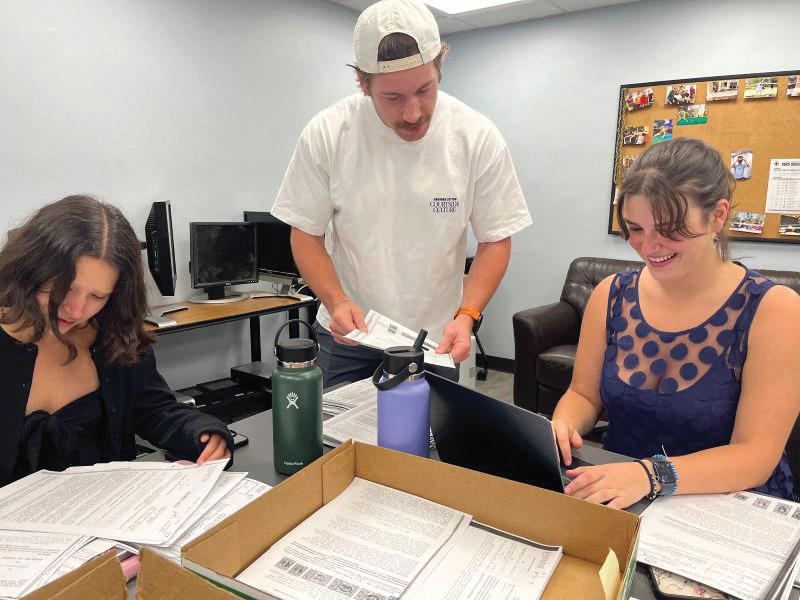
For students Raynah Jacobs, a senior majoring in Political Economy, and Tucker Ward , a senior majoring in Political Science, the project provided them with a deep appreciation for archivists, researchers, and the lawyers who utilize and maintain these archives.
The project was supervised by Richard Winchester, a professor of law at Brooklyn Law School. He discovered the story about the two communities – and the discrepancies in home prices – while doing research on the Federal Housing Administration and its whites-only policy. The funding from The Murphy Institute is making it possible for him to delve into an aspect of the policy that would have otherwise gone unexplored.
THIS WORK EXPOSED ME TO THE THRIVING COMMUNITY OF RESEARCHERS THAT THE ARCHIVES – THE ONLY ONE OF ITS KIND IN THE COUNTRY – SERVES.
- Raynah
Jacobs
Murphy students digitized notarial archives for inclusion in the database.
HONORS, AWARDS, AND SELECT PUBLICATIONS
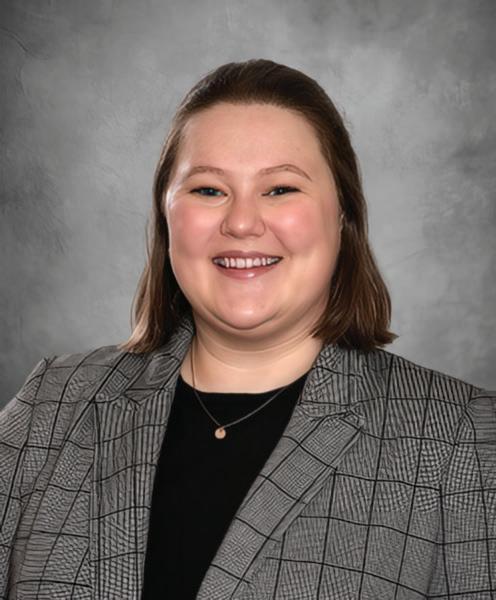
MARY BERG, Murphy Institute alumna (BA ’20), was presented with the 2025 Student Leadership Award for her work in public service and community support by the National LGBTQ+ Bar Association. A co-recipient of the 2020 Charles H. Murphy Prize in Political Economy, Berg is a recent graduate of the University of Wisconsin-Madison Law School.
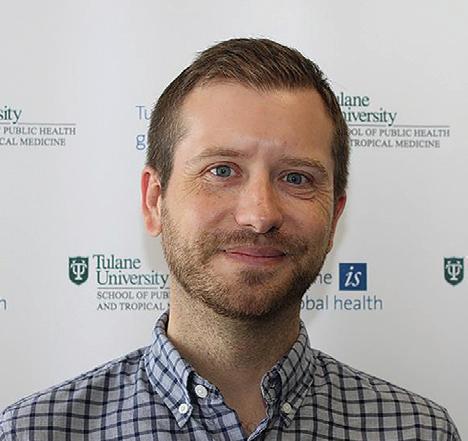
KEVIN CALLISON, Assistant Professor of Global Health Management and Policy, recently published “Health care utilization following the adoption of U.S. paid sick leave mandates: a cohort study using health insurance claims data” in Lancet Regional Health – Americas His other publications include “Spillovers From Medicaid Contraceptive Use to Non‐Medicaid Patients: Evidence From New York” in Health Economics and “Impacts of State COVID19 Vaccine Mandates for Health Care Workers on Health Sector Employment in the United States” in the American Journal of Public Health
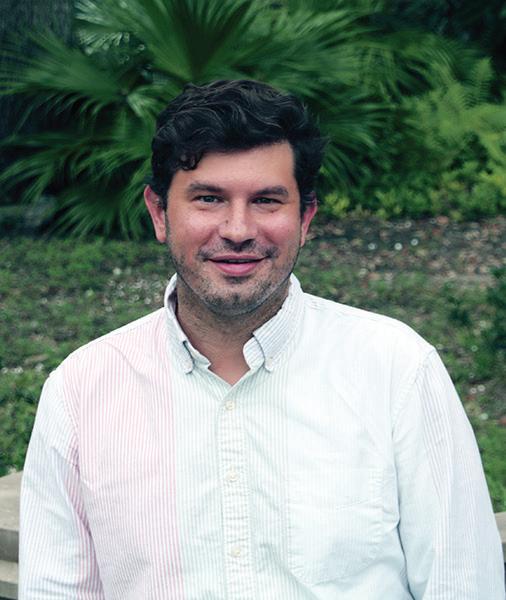
C. JUSTIN COOK, Associate Professor of Economics, co-authored “Cliopatria-A geospatial database of world-wide political entities from 3400BCE to 2024CE” published in Scientific Data . He also continues to serve as the Director of the Master of Arts in Political Economy with Data Analytics.
ADAM FEIBELMAN, Director of the Center for Law and the Economy and Sumter Davis Marks Professor of Law at Tulane Law, has a forthcoming chapter titled “Personal Guarantors and the Indian Insolvency and Bankruptcy Code” in 10 Years of the IBC (Susan Thomas et al., eds). His forthcoming article, “Defining the Scope of Law and Macroeconomics,” (with Nikita Aggarwal), will be published in the Minnesota Journal of International Law .
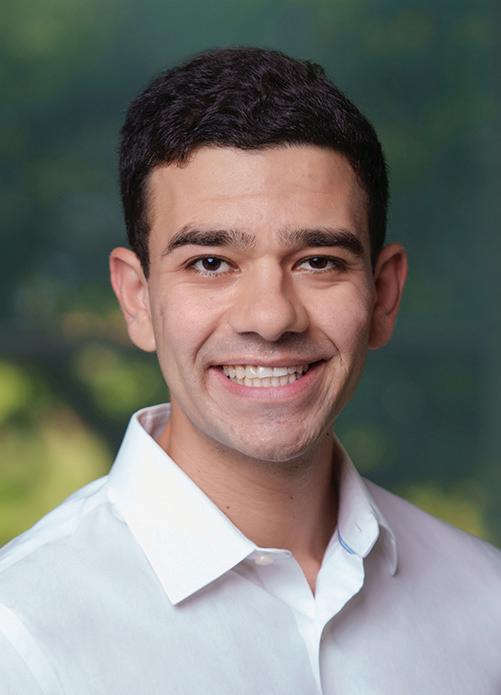

HUSSAIN HADAH, Postdoctoral Scholar of Economics in the Center for Public Policy Research, has a forthcoming publication titled “The Impact of Hispanic Last Names and Identity on Educational and Labor Market Outcomes” in the Journal of Economics, Race, and Policy . Hadah will present his paper “The Effect of Immigration Enforcement on Suicide Rates Among Hispanic Youth” at the 2025 Association for Public Policy Analysis & Management (APPAM) Fall Research Conference, highlighting critical intersections between immigration policy and youth mental health.
DOUGLAS HARRIS, Professor and Chair of Economics and Faculty in the Center for Public Policy Research, led the bipartisan “State of the Nation” report, a comprehensive analysis of how the United States is doing in key areas—the economy, education, health, the environment, civic engagement, trust in major institutions—compared to historical trends and peer countries. Funded by The Murphy Institute, the report provides a consensus-based “progress report” for the nation.
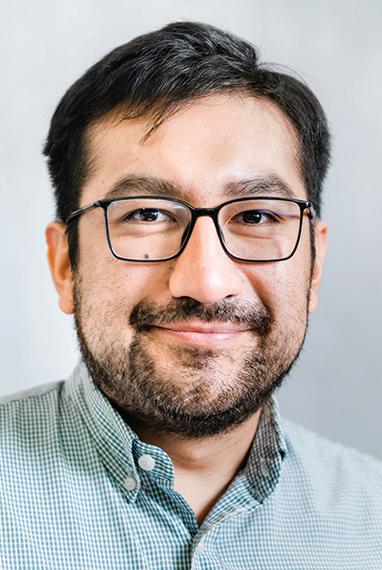
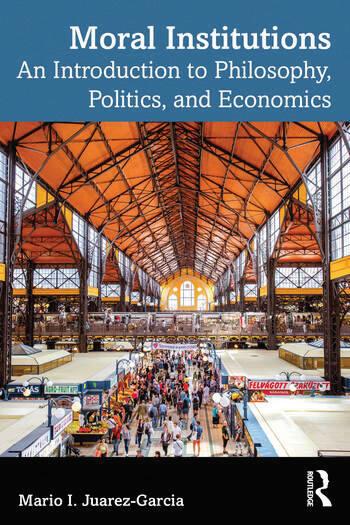
MARIO JUAREZ-GARCIA, Assistant Professor of Philosophy in the Center for Ethics, authored the book Moral Institutions: An Introduction to Philosophy, Politics & Economics (Routledge) and co-edited Arguing About Political Philosophy with Matt Zwolinski (Routledge). His forthcoming paper “Is Omnivorism a Form of Blameworthy Free Riding?” (co-authored with Alexander Schaefer) will be published in Social Theory and Practice. He was invited to join the Research Center for Corruption Studies at the University of Geneva as a fellow.
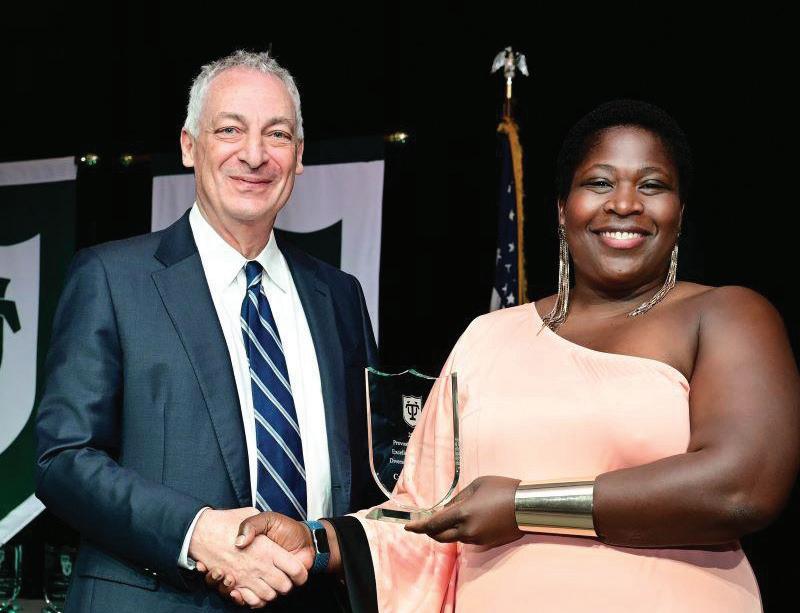
CARLA LAROCHE, Faculty in the Center for Law and the Economy and the Felder-Fayard Associate Professor of Law at Tulane Law, received the 2024 Provost’s Award for Excellence in Equity, Diversity, and Inclusion for her research addressing societal inequality and the promotion of social change. She served as moderator for the Tulane Law Author Talk featuring Dr. Mary Frances Berry, a renowned historian, civil rights scholar, and author of Slavery After Slavery, which explores the forced child apprenticeships used in the post-Civil War South.
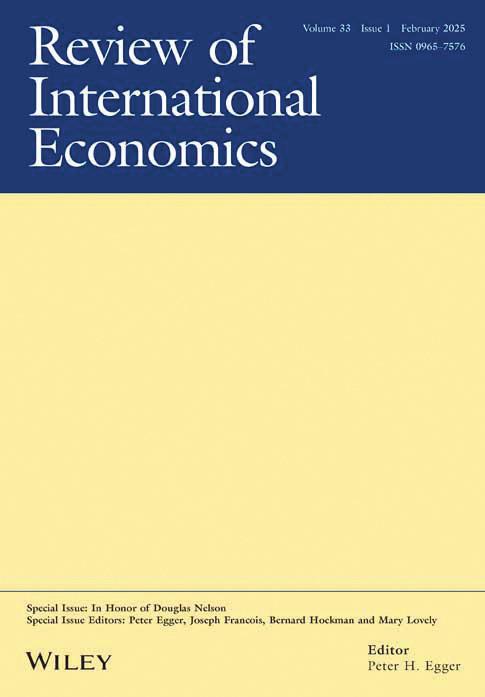
DOUGLAS NELSON, Professor of Economics, was honored in a special issue of the Review of International Economics for significant contributions to the fields of international economics and international economic policy. His research has produced insights on the role economic and political factors play within this domain, including trade policy, migration, contingent protection, and the impact of globalization on labor markets. Drafts of the papers that make up the special issue were presented at a workshop held at the Robert Schuman Centre of the European University Institute in June 2023 and subsequently reviewed and revised for publication in the special issue.
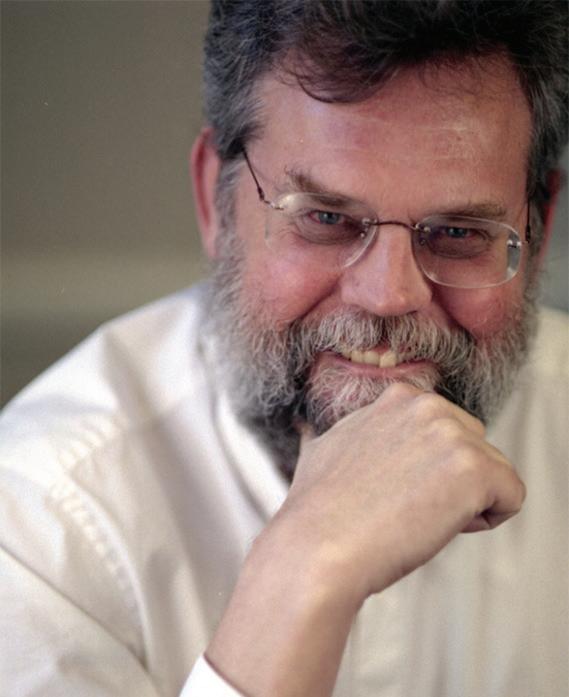
MARY OLSON, Professor of Economics, published “Reassessing the Impact of Health IT: Hidden Costs and Consequences of Vendor Heterogeneity” in the Summer 2025 issue of the Journal of Economics and Management Strategy. Dr. Olson also directs the activities of the Health Policy Working Group, an interdisciplinary network of Tulane faculty and students whose research focuses on a broad range of issues at the intersection of health and the social sciences housed within the Center for Public Policy Research.
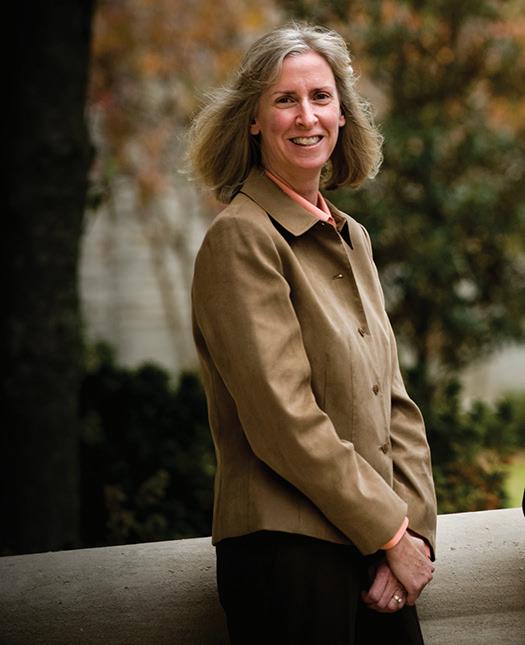
ADVAITH SUBRAMANIAN, a Senior in Murphy’s Undergraduate Program in Political Economy, was awarded the Goldwater Scholarship, a prestigious national award that recognizes outstanding undergraduates pursuing research careers in mathematics, natural sciences, and engineering. His paper on tuberculosis transmission, “Effects of Respiratory Isolation for Tuberculosis to Reduce CommunityBased Transmission”, was published in the journal Clinical Infectious Diseases.
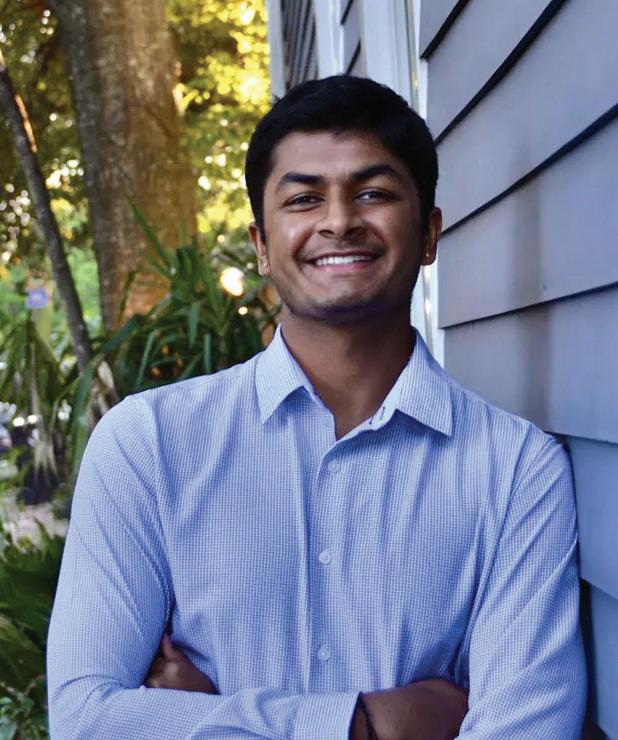
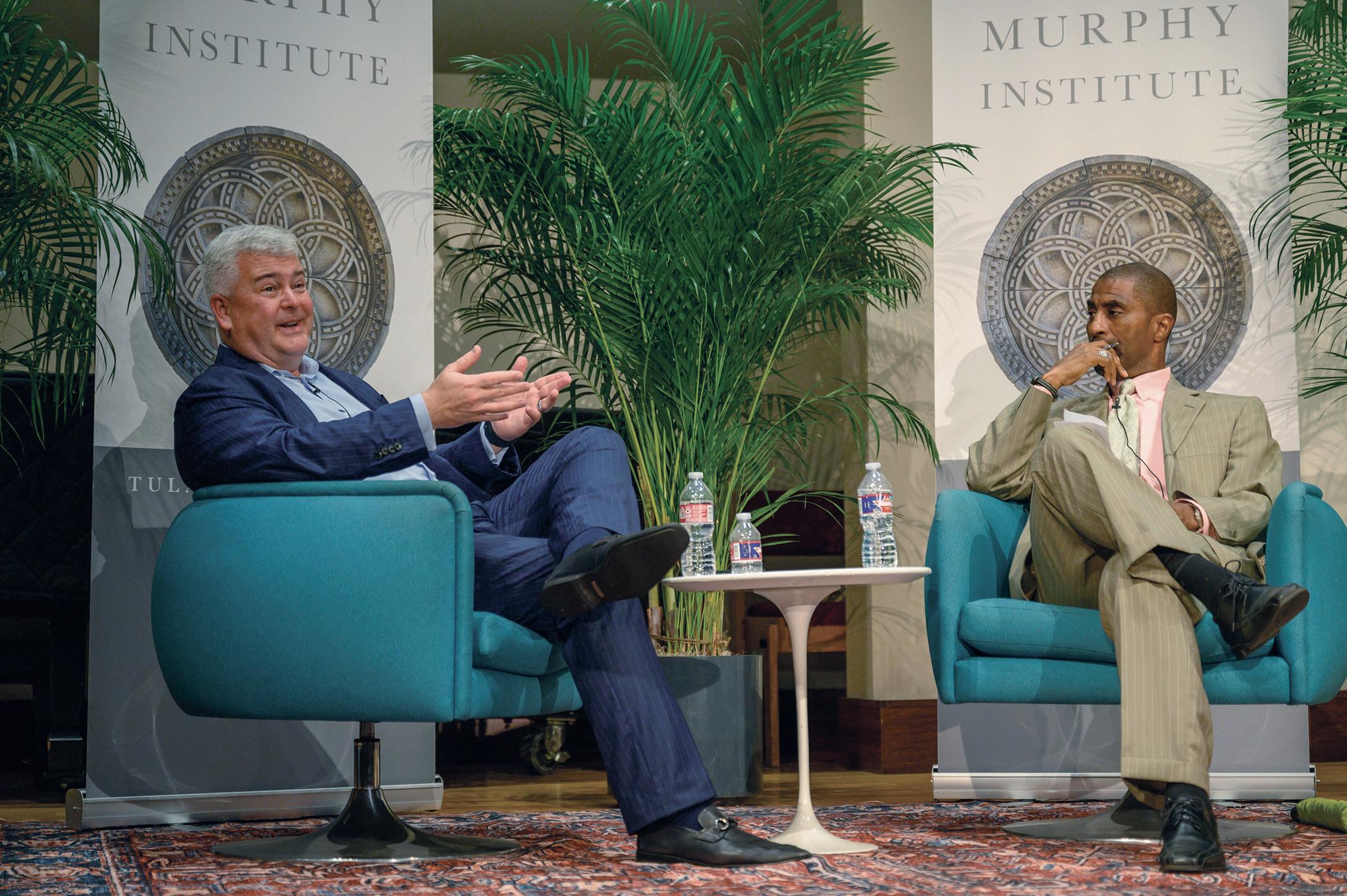
DAN GALLAGHER and Murphy Executive Director, GARY "HOOV" HOOVER (right), 2024 Yates Lecture
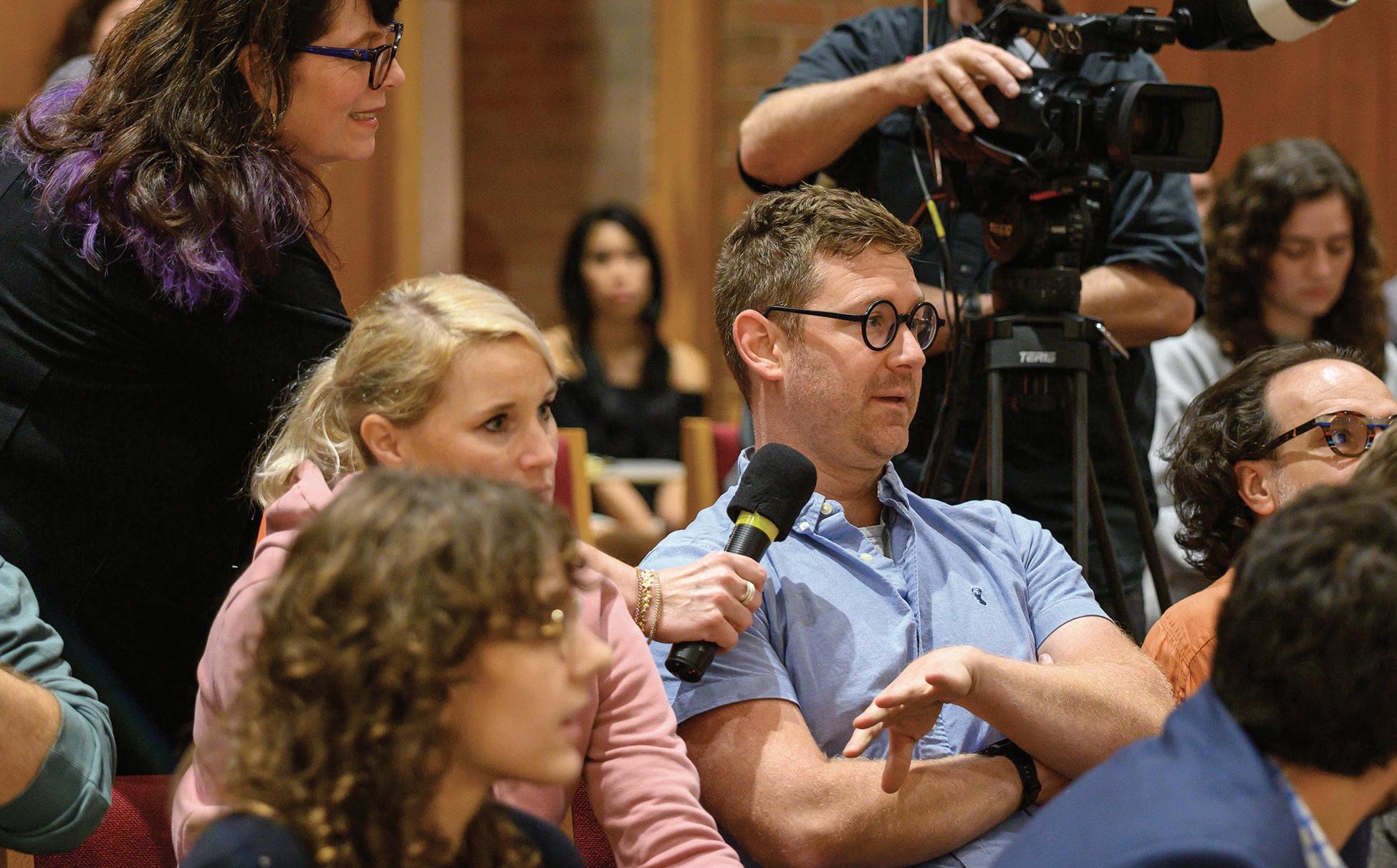
CE Faculty Fellow BEN FERGUSON posing a question to Dan Gallagher
2024 YATES LECTURE : DAN GALLAGHER
DAN GALLAGHER, CHIEF LEGAL, COMPLIANCE, AND CORPORATE AFFAIRS OFFICER AT ROBINHOOD MARKETS,
INC., explored the intersection of technology and finance at the 2024 Mary C. Parker Yates Lecture on November 13, 2024. In his talk, “Navigating the Future of Fintech,” Gallagher delved into the transfor mative power of technology in the financial industry, the unique challenges facing fintech com panies, and the immense potential for innovation to positively impact society.
Gallagher highlighted the growing popularity of app-based financial services, particularly among millennials and Gen Z, who increasingly prefer digital solutions for managing their finances. According to Gallagher, Robinhood has emerged as a leading force in fintech by offering a self-directed trading model in a streamlined, user-friendly interface that promotes financial inclusion to an entirely new class of investors. However, the rapid growth of fintech has also presented regulatory challenges.
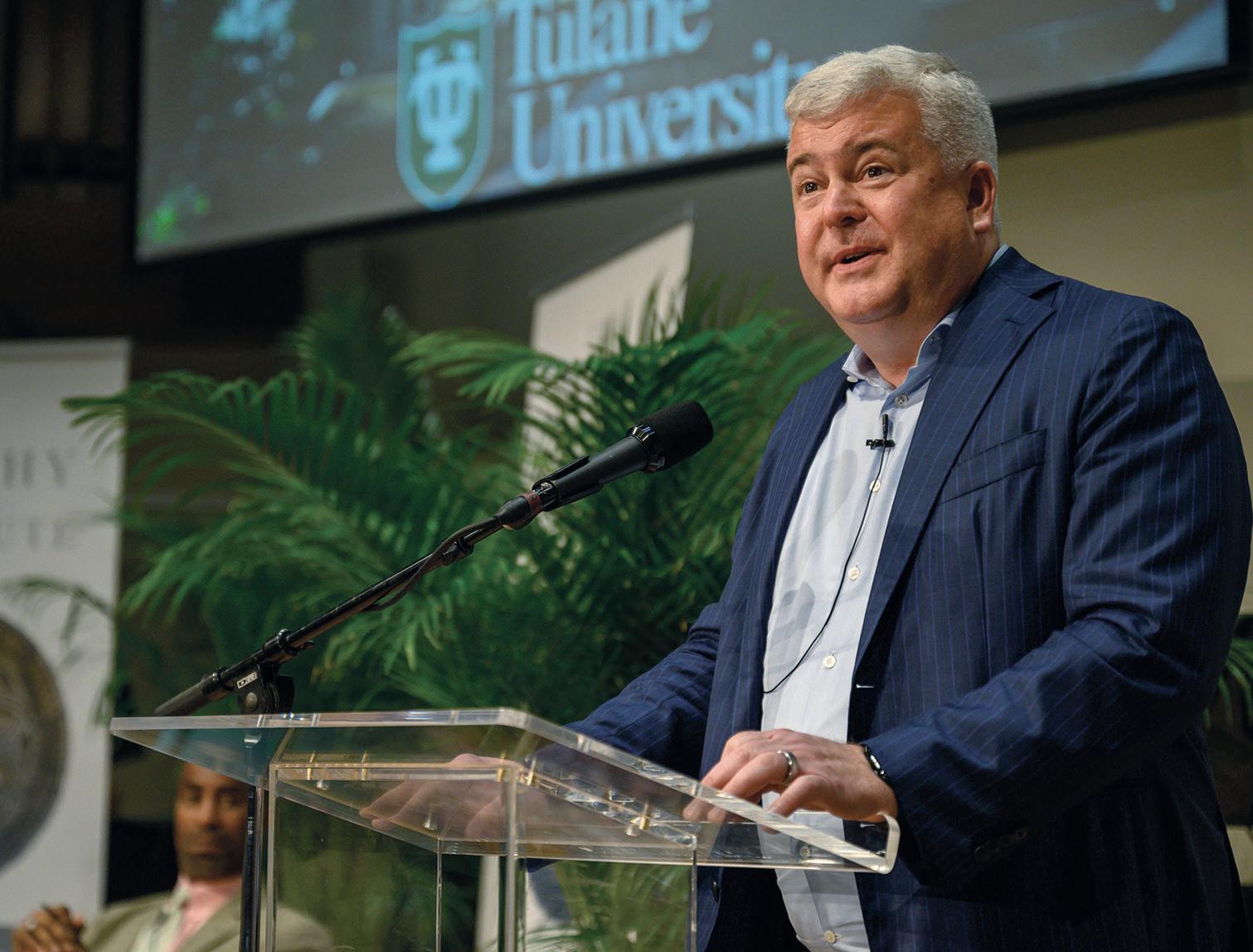
“Outdated regulations often hinder innovation and create obstacles for companies seeking to disrupt traditional financial systems,” Gallagher said. “The rule book from 1934 isn't built for an app; they're built for a brick-and-mortar brokerage.”
Responding to questions from the audience, Gallagher emphasized the importance of investor education and highlighted the need for diverse product offerings, such as self-directed brokerage and advisory services, to cater to different investor needs and risk tolerances.
To address concerns about the potential risks associated with immediate access to investment platforms, Gallagher stressed the importance of transparency, education, and responsible investment practices. While Robinhood empowers investors to make informed decisions, the ultimate responsibility for investment choices lies with the individual.
Dan Gallagher has extensive public and private sector experience in regulatory matters, financial markets, and governance. He previously served as a Commissioner of the U.S. Securities and Exchange Commission (SEC), Partner and Deputy Chair of the Securities Department at the international law firm WilmerHale, and Chief Legal Officer at Mylan N.V., a leading global pharmaceutical company.
“THERE’S A NEED FOR REGULATORY FRAMEWORKS TO ADAPT TO THIS EVOLVING LANDSCAPE, ENSURING INNOVATION WHILE MAINTAINING CONSUMER PROTECTION.”
The Mary C. Parker Yates Lecture, endowed in 1996 by Murphy Institute alumna Rebecca Yates (‘89) Velander in memory of her mother, is The Murphy Institute’s premier public academic event. Designed to promote university-wide discussion of issues of current concern, the annual Yates Lecture brings leading thinkers and public figures to the Tulane campus.
CENTER FOR LAW AND THE ECONOMY

another year of promoting research and collaboration on important issues facing policymakers and private markets in both developed and developing economies. Our ongoing workshop series and the activities of CLE-affiliated faculty continue to educate and inform our community through a variety of events.
This year’s programming included the Ninth Annual Corporate and Securities Roundtable , a day-long symposium that brought together leading scholars and practitioners in corporate and securities law. The Center also co-sponsored the Biennial Bankruptcy & Restructuring Symposium with Tulane Law, featuring expert panels that discussed crucial topics like the future of Chapter 11 and the private-credit industry.
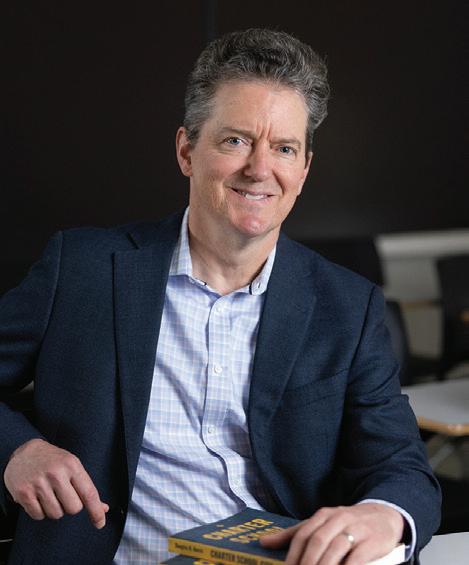
In a special event, we hosted The New York Times technology writers Kate Conger and Ryan Mac for a discussion about their new book, Character Limit: How Elon Musk Destroyed Twitter, providing an inside look at the deal’s immense political and social fallout. Additionally, we welcomed Jessica Pishko , author of The Highest Law in the Land: How the Unchecked Power of Sheriffs Threatens Democracy, for a conversation with Tulane Associate Professor of Law, Maybell Romero. This January, the Center and Tulane Law co-sponsored a symposium on racial capitalism, organized by our law faculty colleague, Saru Matambanadzo
The Center’s core workshop series continued throughout the year, featuring a wide array of visiting scholars and Tulane faculty from the law school and other departments. We were honored to host Judge Carlton W. Reeves , a U.S. District Court Judge for the Southern District of Mississippi. Our spring workshop series, convened by Ata Hindi , the Center’s visiting assistant professor, focused primarily on critical perspectives on international criminal and human rights law. Professor Hindi has recently joined
affiliate, , and will focus on emerging issues in consumer law and policy, with an emphasis on regulatory challenges posed by technological innovations.
In addition to these activities, my article “Defining the Scope of Law and Macroeconomics” is forthcoming in the Minnesota Journal of International Law (co-authored with Nikita Aggarwal). In recent months, I presented my works in progress, “Institutional Determinants of Monetary Sovereignty” at the 2025 Law & Society Conference in Chicago, and “Can States Freeze Foreign Central Reserve Assets Under International Monetary Law?” at the American Society of International Law’s International Economic Law Interest Group Biennial Conference at the University of Michigan Law School (authored with Alveena Shah, our former CLE visiting assistant professor). I also served as a commenter at the annual Consumer Law Scholars Conference at Boston University School of Law, and I have chapters forthcoming in two edited books on the Indian Insolvency and Bankruptcy Act.
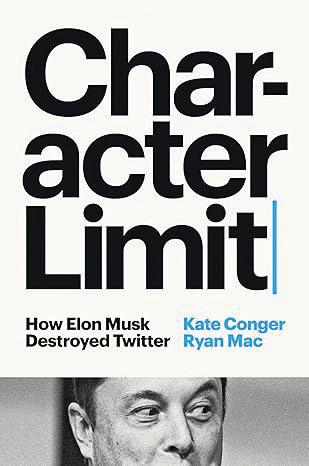
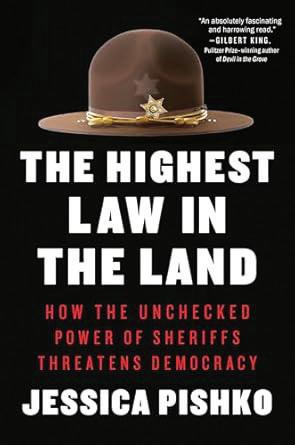
CLE hosted KATE CONGER, RYAN MAC (Character Limit), and JESSICA PISHKO (The Highest Law in the Land) for special discussions on technology, law, and democracy.

PhD in law from the University of Michigan Law School. Between his law school and graduate work, Kushagr gained diverse experience as an associate at a prominent commercial law firm, an extern with the Permanent Mission of Cape Verde to the United Nations, and a law clerk to Justice Mandisa Maya, currently the Chief Justice of the Constitutional Court of South Africa. His dissertation, The Constitutional Morality of Federalism , advances a theory of federalism focusing on the constitutional relationship between India and the union territory of Jammu and Kashmir. He will continue his research on constitutional law and federalism while also teaching trade and cross-border investment.
As we reflect on a year of dynamic programming, we are confident that our commitment to fostering collaborative research and interdisciplinary dialogue will continue to educate and inform the academic community and the public.
– Adam Feibelman, Director
Adam Feibelman is the Sumter Davis Marks Professor of Law at Tulane University Law School and the Director of the Center for Law and the Economy at The Murphy Institute. His teaching and research focus on bankruptcy law, regulation of financial institutions, legal issues related to sovereign debt, and international monetary law.

CLE Director ADAM FEIBELMAN
CENTER FOR LAW AND THE ECONOMY
core workshops
and human rights law:
INGRID BRUNK
Vanderbilt Law School
SELF-DETERMINATION FOR STATES: A TERRITORIAL APPROACH
AARON DHIR
Professor of Law at the University of Connecticut School of Law
EMPOWERING THE PUBLIC IN ALGORITHM GOVERNANCE
KAREN ENGLE
Professor of Law at the University of Texas AN ABOLITIONIST CRITIQUE OF HUMAN RIGHTS: RETHINKING RESPONSES TO GENDERED AND RACIALIZED VIOLENCE
DANIEL HARAWA
Professor of Clinical Law and Director of the Federal Appellate Clinic at NYU School of Law FACILE RACIAL JUSTICE
ATA HINDI
Assistant Professor of Law at Loyola University New Orleans College of Law and Former Murphy Visiting Assistant Professor of Law at Tulane Law School HERE COMES YOUR GHOST AGAIN: INDIVIDUAL IMMUNITIES FOR INTERNATIONAL CRIMES
EISHA JAIN
Henry P. Brandis Distinguished Professor of Law at the University of North Carolina School of Law
JUSTICE IN THE AGE OF CRIMINAL RECORDS
CARLA LAROCHE
Murphy Core Faculty and Felder-Fayard Associate Professor of Law at Tulane Law School FAMILY LEGAL FICTION
JAMELIA MORGAN
Professor of Law and Director of the Center for Racial and Disability Justice at Northwestern School of Law STATUS-ENFORCING CRIMINAL LAWS
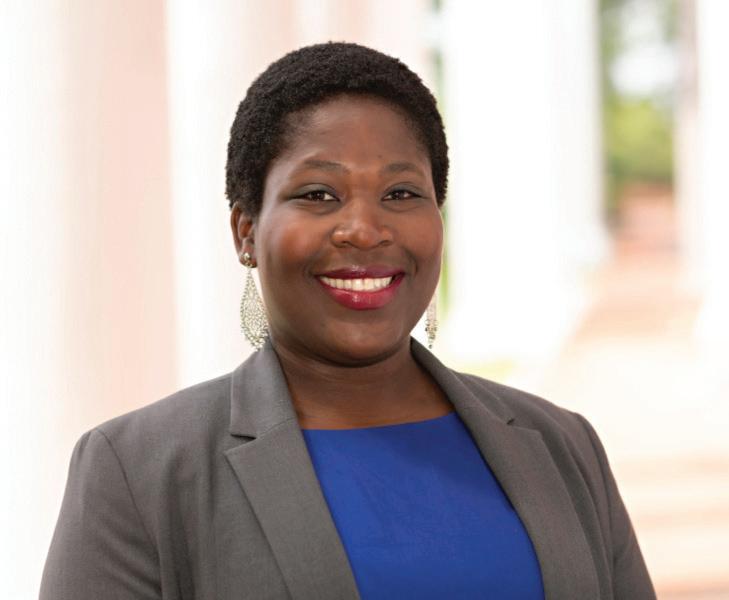
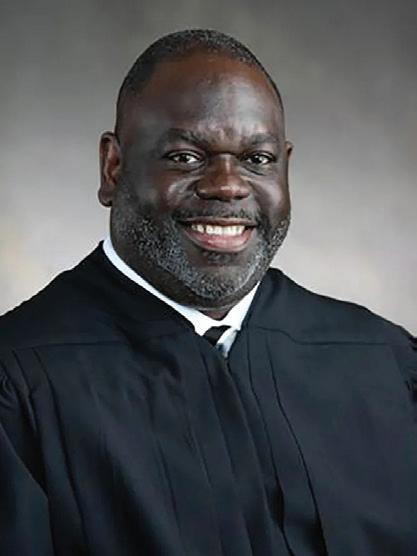
JUDGE CARLTON W. REEVES, U.S. District Court Judge for the Southern District of Mississippi
CARLA LAROCHE, Felder-Fayard Associate Professor of Law
XIMENA DE OBALDIA
Research Fellow at the Tulane Institute on Water Resources Law and Policy OCEANS APART: CONTROL OF THE WATERS IN THE PANAMA CANAL
SHU-YI OEI
David T. Zhang Distinguished Professor of Law at Duke University GLOBAL TAX DECLUTTERING
NGOZI OKIDEGBE
Associate Professor of Law at Boston University School of Law RACISM AS A THREAT TO FINANCIAL STABILITY
STAN OKLOBDZIJA
Assistant Professor of Public Policy at the University of California, Riverside and Former Director of the Center for Public Policy Research
DO HOUSING SUPPLY SKEPTICS LEARN? EVIDENCE FROM ECONOMICS AND ADVOCACY TREATMENTS
HALEY PROCTOR
Associate Professor of Law at Notre Dame Law School LAW AND FACT IN AGENCY ACTION
JUDGE CARLTON W. REEVES
U.S. District Court Judge for the Southern District of Mississippi and Chair of the United States Sentencing Commission A CONVERSATION WITH JUDGE CARLTON REEVES

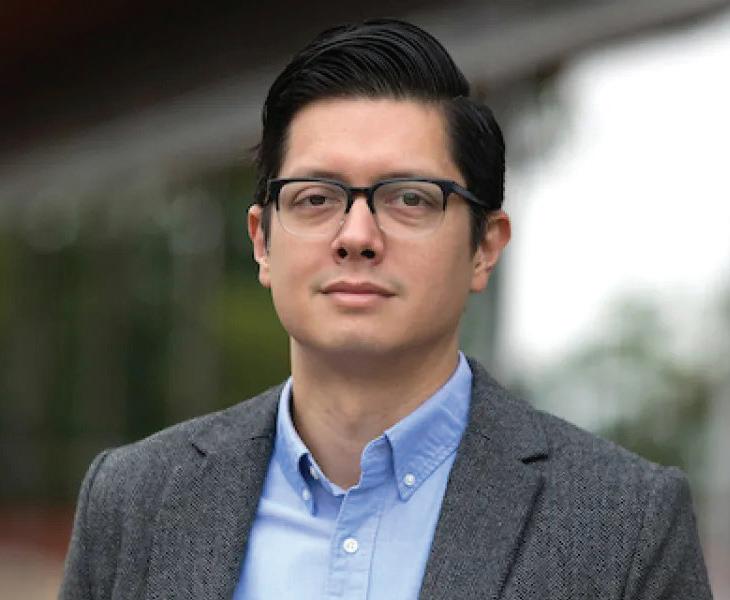
STAN OKLOBDZIJA, Assistant Professor of Public Policy at the University of California-Riverside

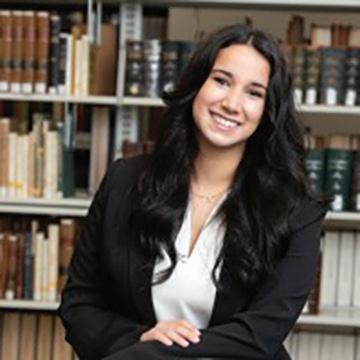
XIMENA DE OBALDIA, Research Fellow at the Tulane Institute on Water Resources Law and Policy
CENTER FOR LAW AND THE ECONOMY
roundtable
GOVERNANCE WOES
DISCUSSANT: ANN LIPTON
Professor of Law and Laurence W. DeMuth Chair at Colorado Law, Former Professor in Business Law and Entrepreneurship, Tulane Law School
BOARD COMPOSITION BEYOND RACE AND GENDER
LISA FAIRFAX
Presidential Professor and Co-Director of the Institute for Law and Economics, University of Pennsylvania Carey Law School
UNTAMED UNICORNS
RENEE JONES
Professor and Dr. Thomas F. Carney Distinguished Scholar, Boston College Law School
BANKRUPTCY GOES PRIVATE
MICHAEL SIMKOVIC
Leon Benwell Professor of Law and Professor of Law and Accounting, USC Gould School of Law
DELAWARE’S ROLE
DISCUSSANT: LORI WILL Vice Chancellor, Delaware Court of Chancery
THE DEATH OF FEE-SHIFTING BYLAWS, OR: THE OTHER DELAWARE EFFECT
JENS FRANKENREITER
Associate Professor of Law, Washington University in St. Louis School of Law
HAVENS FOR CORPORATE LAWBREAKING
WILLIAM MOON
Professor of Law, University of Maryland Francis King Carey School of Law
EVERYONE ELSE’S ROLE
DISCUSSANT: WILLIAM MOON
Professor of Law, Boston College Law School
THE “PEOPLE’S BRIDGE”: POPULAR SOVEREIGNTY
OVER CORPORATIONS AND CHARLES RIVER BRIDGE
EVELYN ATKINSON
Associate Professor of Law, Tulane University Law School and The Murphy Institute Center for Law and the Economy
NO EXIT
MATTHEW WANSLEY
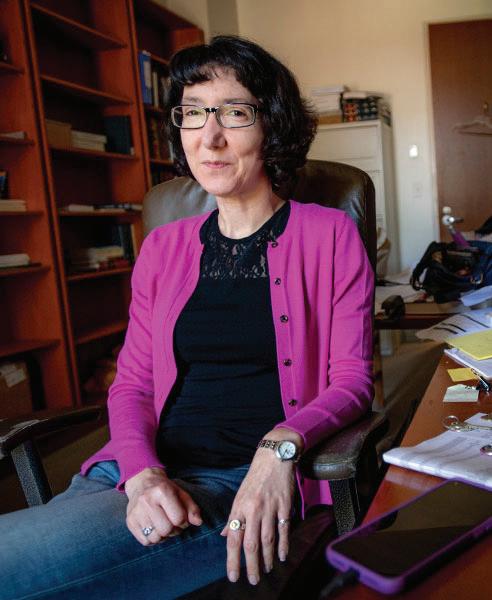
Professor of Law, Benjamin N. Cardozo School of Law
HETEROGENEOUS PREFERENCES
DISCUSSANT: PATRICK CORRIGAN
Professor of Law, Notre Dame Law School
MASS CORPORATE GOVERNANCE AND SUBJECTIVE SHAREHOLDER VALUE
CALEB GRIFFIN
Associate Professor of Law, University of North Carolina School of Law
CUSTOM PROXY VOTING ADVICE
EDWIN HU
Associate Professor, University of Virginia School of Law
INDIVIDUAL INVESTOR IDEOLOGY
JONATHAN ZYTNICK
Associate Professor of Law, Georgetown Law
Organized by ANN LIPTON
University of Pennsylvania Carey Law School School
MURPHY VISITING ASSISTANT PROFESSORSHIP IN LAW
CLE'S VISITING ASSISTANT PROFESSORSHIP IN LAW (VAP) is a centerpiece of the Center's programming, designed to launch the careers of promising legal scholars. The VAP program provides a dynamic and collaborative environment for early-career scholars to build a strong body of research and gain valuable teaching experience.
As Tulane faculty, Visiting Assistant Professors are fully integrated into the intellectual life of both Tulane Law School and The Murphy Institute. They teach courses in their area of expertise and participate in CLE workshops, lectures, and roundtables, engaging with scholars from various disciplines throughout Tulane and the wider legal community. A key benefit of the program is the teaching mentorship and guidance in developing their academic scholarship as the basis for obtaining a tenure-track law teaching position. We are proud to share that every one of our Visiting Assistant Professors has secured a tenure-track position at a U.S. law school upon completion of their CLE professorship.
CELEBRATING ATA HINDI'S NEW ROLE
The Murphy Institute congratulates ATA HINDI , who recently completed his two-year appointment as the Murphy Visiting Assistant Professor of Law. We are thrilled to announce that he has accepted a tenure-track position as an Assistant Professor of Law at Loyola University New Orleans College of Law.
Ata came to Murphy from Tilburg University, where he completed his PhD in Law on the “Colonial and Imperial Legacies on the Laws of War.” He also served as a Research Fellow in International Law at the Birzeit University Institute of Law and as Assistant Editor to the Palestine Yearbook of International Law. He has spent the large part of his career working on international law and human rights, particularly in the Arab World/Middle East and North Africa.

ATA HINDI
CENTER FOR PUBLIC POLICY RESEARCH
EXPANDING OUR REACH AT THE CROSSROADS OF PUBLIC POLICY
THE CENTER FOR PUBLIC POLICY RESEARCH (CPPR) IS A MULTI-DISCIPLINARY RESEARCH CENTER promoting research on the impacts of public policy on the market environment, across health, education, public finance, housing, the environment, and more. I’m excited to join The Murphy Institute; the Center has achieved great heights over the previous academic year, and we’re excited to move CPPR forward in the coming year.
Part of CPPR’s role is to provide space for intellectual interaction and development within the Tulane community. As an example, CPPR hosted the Health Policy Working Group , led by Dr. Mary Olson , with five seminars on topics ranging from financial assistance policy to health inequality and the impacts of Medicaid expansion. CPPR has also facilitated the development of research within Tulane through the expansion of the Murphy Seed Grant Program and sponsored access to the Atlanta Research Data Center (ARDC).
The Seed Grant program provides focused resources for Tulane scholars to explore new academic avenues and serve as a stepping-stone to securing external funding. The research undertaken by grant recipient Tatiane Santos, an Assistant Professor of Health Policy and Management, is already having a direct impact. Her project, “The State of Not-for-Profit Hospital Community Benefit Spending in Louisiana and COVID-19 Impacts,” has led to a collaboration with the Louisiana Center for Health Equity (LCHE). Dr. Santos is continuing her research with LCHE to help launch their Equity Data Action Platform. This work shows how state laws can be improved to increase accountability, transparency, and enforcement of the community benefit program, with the aim of increasing hospital community benefit investments across the state.
The ARDC, located at the Federal Reserve Bank of Atlanta, provides Tulane researchers with access to confidential economic, demographic, and public health microdata from the U.S. Census Bureau and its partner agencies.
]
The sponsored access provided by CPPR allows researchers like our postdoctoral scholar Dr. Hussain Hadah to use Census data in his research examining how Hispanic and Arab Americans integrate into the U.S. economy across multiple generations.
CPPR also continues to fund postdoctoral scholarships hosted by academic departments across Tulane. Last year, we supported three Scholars: Ricardo Ang conducts applied microeconomy research around health and urban economics; Hussain Hadah researches applied microeconomics pertaining to race, identity, and immigration; and Matías Morales Cerda is exploring the economics of education. CPPR is welcoming two additional postdoctoral scholars starting in Fall 2025.
CPPR also aims to facilitate conversations between the Tulane community and external scholars, and we strengthened this mission last year by launching the Guest Scholars Program to enrich the intellectual life of the University. This program provides support for outstanding academics from outside Tulane to spend up to two weeks on campus to collaborate with a sponsoring Tulane faculty member. Dr. Kate Hynes , an Assistant Professor of Economics at Dublin City University, became the inaugural scholar in the new program. She collaborated with Tulane faculty on how trade diversification strategies impact firm performance. Applications continue to be accepted for this program.
Moving forward, we have big plans for CPPR. This year, we are launching a new Dissertation Fellowship program to financially support Tulane doctoral students whose research aligns with political economy and public policy themes.
We are also expanding into new areas of research opportunity. I’m the first Director of CPPR from the School of Science and Engineering (SSE), and through this role, we will strengthen CPPR’s focus on the science-policy interface. Science, engineering, and public policy are all
intricately linked, whether it is science providing the foundation for evidence-based public policy or public policy shaping the funding landscape for scientific research. CPPR had already begun to engage with these relationships through an upcoming Postdoctoral Scholar in Computer Science and the inaugural Murphy Science Policy and Communication Graduate Fellows Program, a collaborative endeavor between CPPR, the School of Science and Engineering, and the School of Medicine. This program trains future leaders to bridge the gap between scientists and other societal stakeholders to advocate for ethical, science-based policy changes. The first two Graduate Fellows, Abdulhafeez Lukmon (Materials Physics and Engineering) and José Irizarry Ayala (Biomedical Informatics), have already embarked on an exciting curriculum specifically designed for the program, which includes a research project on political economy as it relates to science and engineering. We are investigating further avenues to formally expand collaborative opportunities between SSE and the wider Tulane community interested in public policy research and will update you more next year.
Through this expansion of our mission, we will continue to raise the profile of CPPR within the Tulane community and serve as the crossroads of public policy-related research at Tulane University and beyond.
- Dan Friess, Director
Dan Friess is the Cochran Family Professor in the Department of Earth and Environmental Sciences, and the Director of The Murphy Institute’s Center for Public Policy Research. His research focuses on the conservation and restoration of coastal wetlands, and the potential for using policy and market mechanisms to protect wetlands through ‘blue carbon’ credits and accounting.
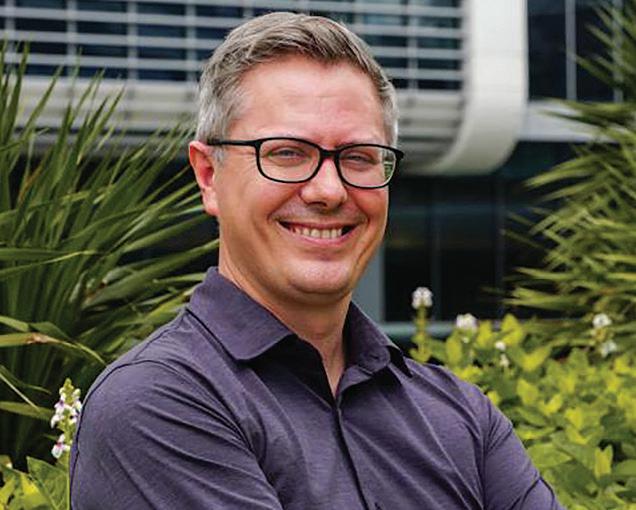
CPPR Director DAN FRIESS
CENTER FOR PUBLIC POLICY RESEARCH
fellowship
UNDERSTANDING SCIENCE IS ONE THING – communicating it effectively, especially to policymakers, funders, and even skeptics, is another. That’s the aim of the SCIENCE POLICY AND COMMUNICATION GRADUATE FELLOWSHIP PROGRAM , which launched in Fall 2024. A joint initiative of The Murphy Institute’s Center for Public Policy Research (CPPR), Tulane’s School of Science and Engineering (SSE), and School of Medicine (SOM), the program is designed to serve as an interdisciplinary hub for second- and third-year PhD students interested in the intersection of science policy, ethics, and communication.
The program was created to address the critical need in the U.S. for scientists to understand how politics and the economy can drive society’s views on science, and how communication is a key part of that. According to founding director Janarthanan “Janan” Jayawickramarajah, former Tulane Chemistry professor and Associate Dean for Research, Faculty Affairs, and PhD Programs in SSE, programs like this fellowship are needed more than ever to tackle the biggest problems facing the world, including climate change, water shortage, and viral pandemics.
“My hope is that the PhD students who complete the fellowship program will not only become excellent laboratory researchers solving critical societal problems but will also be equipped with pertinent knowledge and skills to blossom into leaders advocating for and countering misperceptions of science, engineering, and medicine,” Jayawickramarajah said.
“With this exciting new program, we are taking an active role in giving our students the tools they need to meaningfully engage with policymakers and others who need to know science in order to make betterinformed decisions in their professional and personal lives,” said Robin Forman, Tulane University Provost and Senior Vice President for Academic Affairs.
Students selected for the fellowship must have demonstrated excellence in research and a strong interest in the interrelationships of individuals, governments, and public policy, and how economic theories work in the real world, especially in terms of policy and communication.
During the fellowship, students focus on their dissertations while also taking a course designed around political economy, innovation, and research and development taught by Dr. Susan Cheng , the inaugural Murphy Science Policy & Communication Professor. Cheng is the Associate Dean of Public Health Practice for the Celia Scott Weatherhead School of Public Health and Tropical Medicine. Fellows also attend a national workshop focused on science communication and spend two semesters on a project related to community outreach, science policy engagement, or science and the economy.
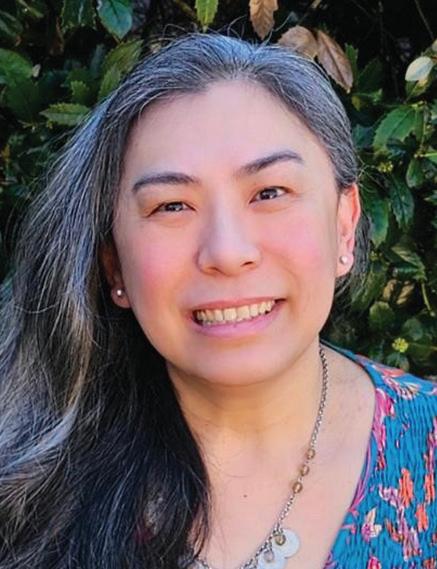
WE HAVE ALWAYS PREPARED OUR STUDENTS TO BE PATH-BREAKING RESEARCHERS AND CREATIVE TEACHERS, BUT SOCIETY REQUIRES THAT SOME OF THESE GRADUATES EMERGE AS EFFECTIVE COMMUNICATORS AND ADVOCATES IN THE PUBLIC SPHERE.
- Robin Forman, Tulane University Provost
DR. SUSAN CHENG

CPPR welcomed its first fellows in Fall 2024. Dr. Heather Machado , Associate Professor of Biochemistry and Molecular Biology and Assistant Dean for the Biomedical Sciences graduate program at the Tulane School of Medicine, co-directs the program, which will welcome two new fellows in Fall 2025. Dr.
Jayawickramarajah founded the fellowship program and served as its director until June 2025. He is currently the Dean of Dedman College of Humanities and Sciences at Southern Methodist University in Dallas, Texas. We thank Janan for his vision and contributions to the program.
IT IS OF UTMOST IMPORTANCE FOR SCIENTISTS TO UNDERSTAND THE POLITICAL ECONOMY ISSUES INTIMATELY AND THEN BE PROACTIVE IN COUNTERING AND DISARMING DETRIMENTAL NARRATIVES.
- Janan Jayawickramarajah
MEET OUR INAUGURAL FELLOWS
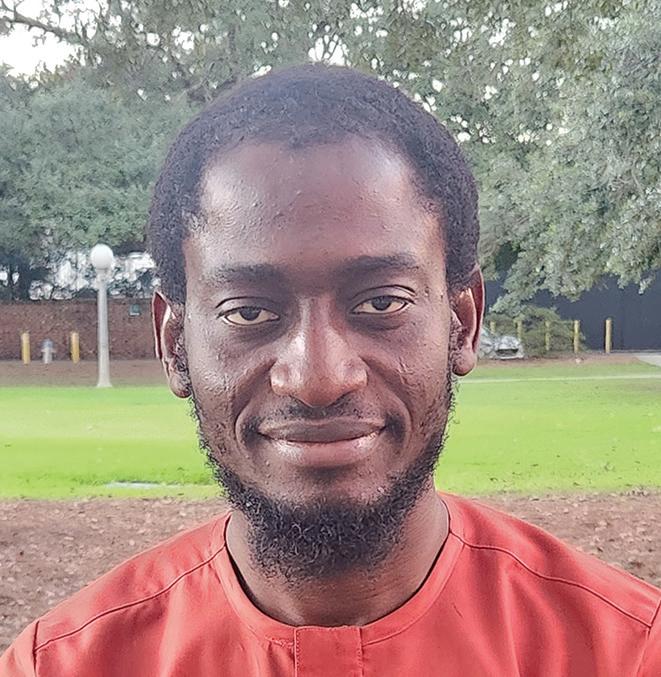
ABDULHAFEEZ LUKMON is a PhD student in Materials Physics and Engineering whose research focuses on developing a dynamically tunable optical device from nanostructures of phase change materials. Prior to Tulane, he completed his MSc in Materials Science and Engineering from Khalifa University, Abu Dhabi, and received his BSc in Metallurgical and Materials Engineering from the University of Lagos, Nigeria.
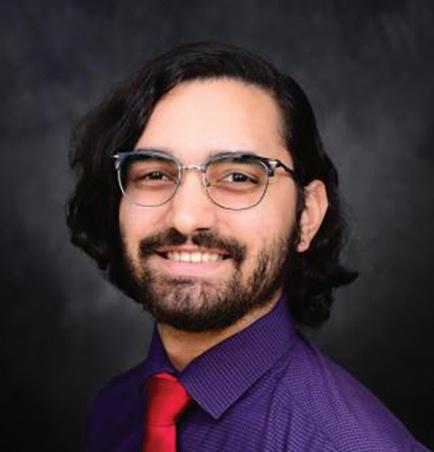
JOSÉ IRIZARRY AYALA is a graduate student in Biomedical Sciences and is working toward a PhD in Biomedical Informatics. His research interests focus on combining genetic, social, and spatial determinants of health for chronic disease risk prevention and health disparities. He received his B.S. in Biomedical Sciences from the Interamerican University of Puerto Rico and his M.S. in Biomedical Informatics from the Tulane University School of Medicine.
DR. HEATHER MACHADO
CENTER FOR PUBLIC POLICY RESEARCH
postdocs
CPPR POSTDOCTORAL SCHOLARS
RICARDO "JR" ANG , a postdoctoral scholar in health economics and policy, is an applied microeconomist with research interests in health and urban economics. He studies how hospital constraints, public policies, and technological changes shape healthcare delivery, physician workforce capacity, and patient outcomes. His current work is focused on how hospital capacity constraints contribute to treatment delays and how those delays in turn affect length of stay, complication rates, and discharge outcomes, drawing on nationwide hospital data and plausibly exogenous variation in operations.
Another strand of his research explores the Medicaid expansion’s role in addressing physician shortages, showing that the policy increased graduate medical education (GME) funding, which in turn expanded residency training capacity, particularly in high-demand specialties and among large, nonprofit, and urban hospitals. Across these projects, Ang uses large administrative datasets and causal inference methods to understand how both policy interventions and institutional constraints affect the delivery of care and the health of populations. His research has been presented at national public policy and economics conferences, including those organized by the Association for Public Policy Analysis & Management (APPAM), and the Southern Economic Association (SEA).
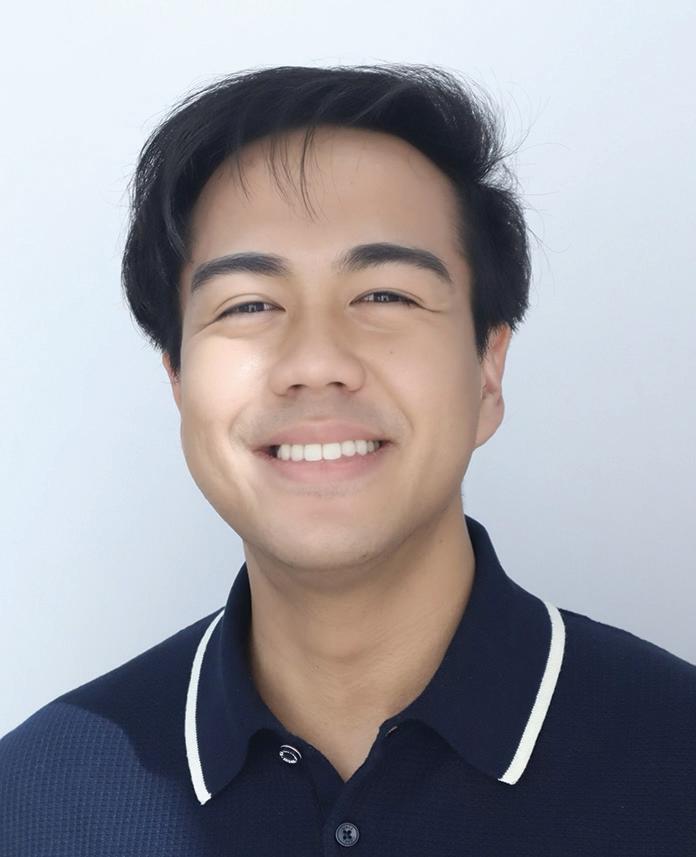
RICARDO "JR" ANG
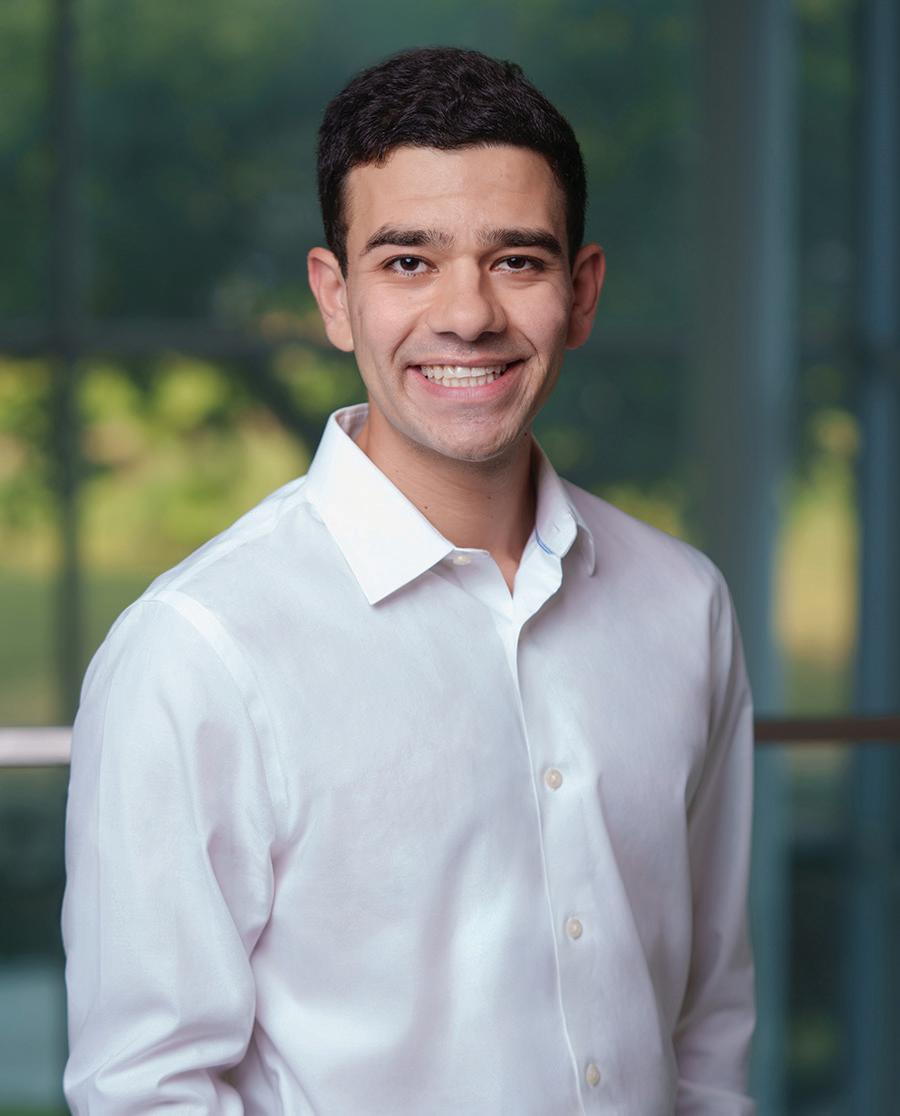
HUSSAIN HADAH , a postdoctoral scholar in economics, researches topics in applied microeconomics such as discrimination, race, identity, mental health, and immigration. He is currently conducting research at the Atlanta Research Data Center (ARDC) using confidential U.S. Census microdata to study how Hispanic and Arab Americans integrate into the U.S. economy across multiple generations. By linking detailed government surveys and census records, his work uncovers patterns in employment, education, and identity that are often invisible in public data. The project offers new insights into how ethnicity and family background shape long-term economic outcomes.
Hadah has a forthcoming publication titled “The Impact of Hispanic Last Names and Identity on Educational and Labor Market Outcomes” in the Journal of Economics, Race, and Policy. He will present his paper, “The Effect of Immigration Enforcement on Suicide Rates Among Hispanic Youth,” at the 2025 Association for Public Policy Analysis & Management (APPAM) Fall Research Conference – a premier gathering for public policy scholarship – highlighting critical intersections between immigration policy and youth mental health. The APPAM conference and this presentation reflect The Murphy Institute’s mission to advance rigorous research on pressing social and economic challenges.
MATÍAS MORALES CERDA , a postdoctoral scholar in economics, conducts research in the economics of education. His current projects include: a study of the effects of providing school-level internet on students' academic outcomes; a study of the short-term consequences of heat on cognitive performance; and a study of how having daughters (as opposed to sons) could shape individuals' attitudes and behavior towards gender equality.
He will present a paper co-authored with Professor Douglas Harris titled “The Effect of School Voucher Policies on Entry and Exit Rates of Schools” at the 2025 APPAM Fall Research Conference. During the summer of 2025, he presented at the Conferences of the European Society for Population Economics, the Royal Economic Society, and the International Conference on Education and New Developments.
Morales is also currently teaching Economics of Education at Tulane and serving as Managing Editor for the Live Handbook on Education Policy Research
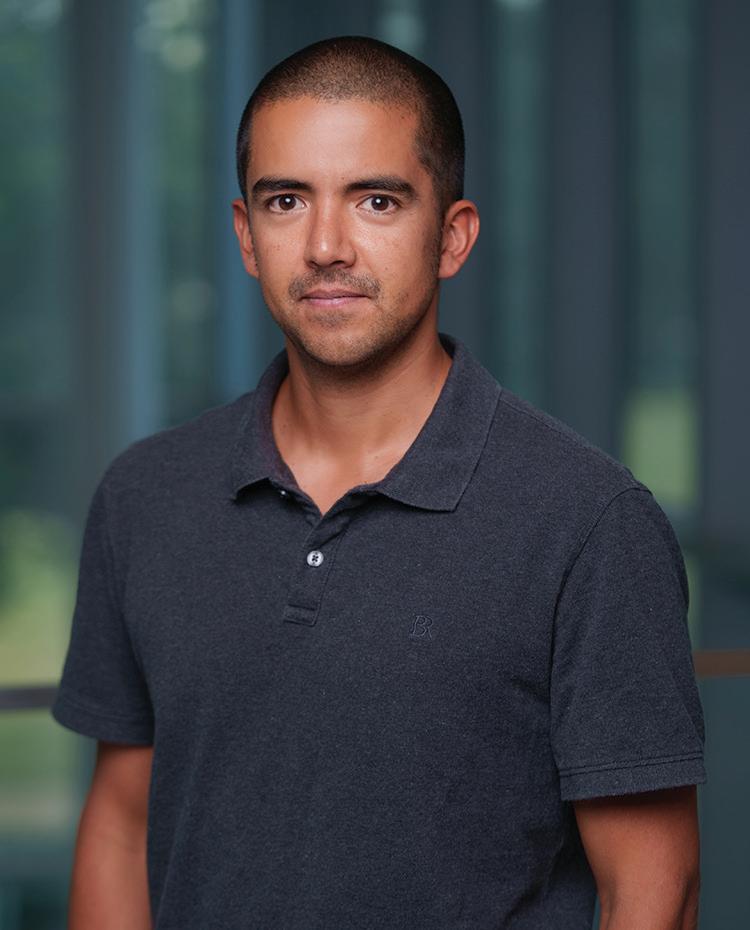
MATÍAS MORALES CERDA
HUSSAIN HADAH
CENTER FOR PUBLIC POLICY RESEARCH
working group
THE MURPHY INSTITUTE’S HEALTH POLICY WORKING GROUP , housed within the Center for Public Policy Research, is an interdisciplinary network of Tulane researchers and practitioners whose research focuses on a broad range of issues at the intersection of health and the social sciences. The working group provides a platform for its members to engage in scholarly exchange and fosters the development of interdisciplinary health policy research.
Each semester, participants and guest speakers present their latest research and receive feedback from group members. The series is organized by Murphy core faculty members Mary Olson , Associate Professor of Economics and Director of the CPPR Health Policy Program, and Kevin Callison , Associate Professor of Health Management and Policy.
HEALTH POLICY SEMINARS: ADVANCING EQUITY THROUGH HEALTH POLICY
RICARDO "JR" ANG
Murphy Postdoctoral Scholar, the Center for Public Policy Research and Department of Economics
EFFECTS OF THE AFFORDABLE CARE
ACT’S MEDICAID EXPANSION ON PHYSICIAN RESIDENCY PROGRAMS
KEVIN CALLISON
Associate Professor of Health Policy and Management, Celia Scott Weatherhead School of Public Health and Tropical Medicine
MEDICAL INNOVATION AND HEALTH
INEQUALITY: EVIDENCE FROM DIRECTACTING ANTIVIRALS
HUSSAIN HADAH
Murphy Postdoctoral Scholar, the Center for Public Policy Research and Department of Economics
PEER EFFECTS IN ADOLESCENT MENTAL HEALTH
TATIANE SANTOS
Assistant Professor of Health Policy and Management, Celia Scott Weatherhead School of Public Health and Tropical Medicine
OREGON’S FINANCIAL ASSISTANCE
POLICY: IMPACT ON COUNTY-LEVEL MEDICAL DEBT IN COLLECTIONS AND HOSPITAL CHARITY CARE SPENDING
BRIGHAM WALKER
Assistant Professor of Health Policy and Management, Celia Scott Weatherhead School of Public Health and Tropical Medicine
PROVIDER-TARGETED 'NUDGES' AND PRIMARY CARE APPOINTMENT AVAILABILITY

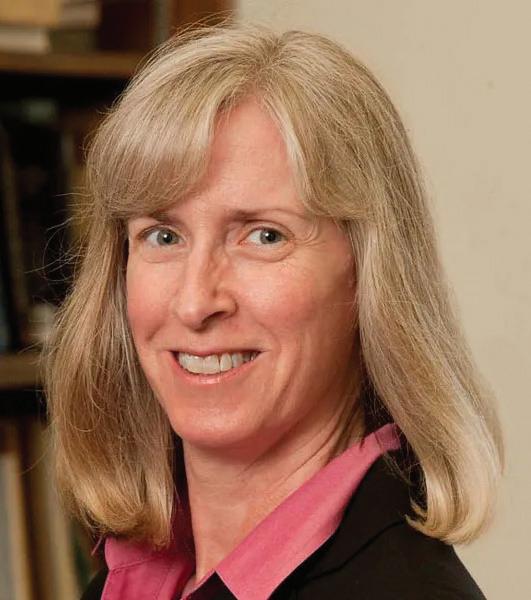

Co-Organized by KEVIN CALLISON
Co-Organized by MARY OLSON
CENTER FOR PUBLIC POLICY RESEARCH
THE CENTER FOR PUBLIC POLICY RESEARCH SUPPORTS PROJECTS AND COLLABORATIONS THROUGH ITS EDUCATION POLICY RESEARCH PROGRAM to advance our understanding of how educational policy impacts student outcomes through evidence-based and applied research. Supported by funding from CPPR, the Education Research Alliance for New Orleans (ERA) at Tulane University collaborates with local education stakeholders to produce objective, rigorous, and useful research that informs the community's understanding of how to improve students' experiences in schools and beyond.
Douglas N. Harris , Director of the Education Policy Research Program and Professor and Chair of the Department of Economics at Tulane University, leads ERA-New Orleans. The Alliance includes an internal team of expert researchers, a national research team composed of experts from across the country, partners within Tulane, and a board of advisors that represents local community groups, teacher unions, and local and state government agencies.
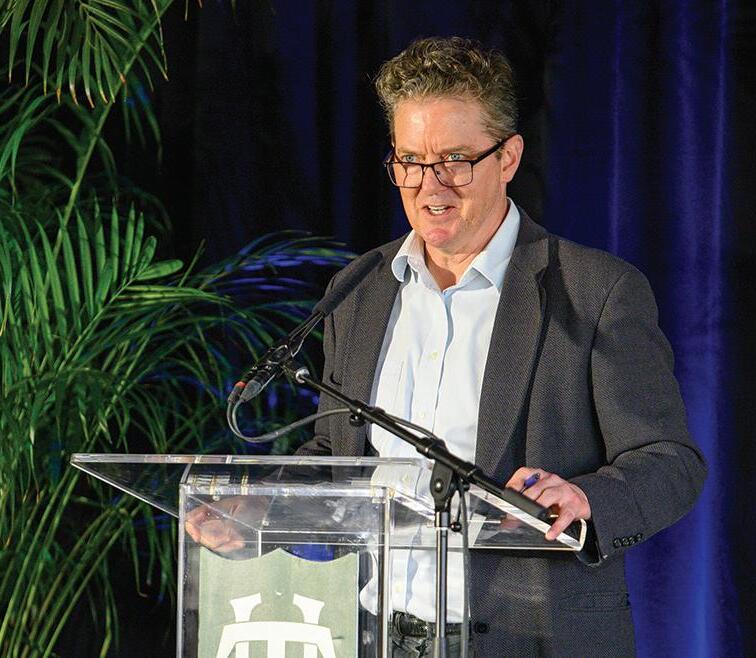
REFLECTING 20 YEARS LATER
HURRICANE KATRINA'S IMPACT ON NEW ORLEANS EDUCATION
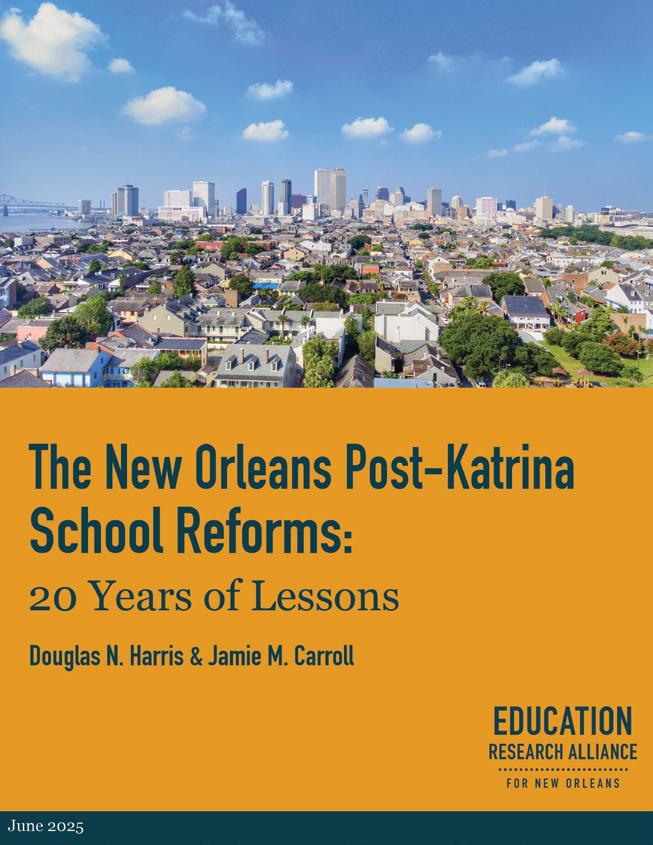
THIS SUMMER, ERA-NEW ORLEANS PUBLISHED A REPORT titled The New Orleans Post-Katrina School Reforms: 20 Years of Lessons which synthesizes findings from over two decades of research. The report provides a comprehensive assessment of the nation's most dramatic educational overhaul, where nearly all public schools were converted to charter schools in the aftermath of Hurricane Katrina in 2005.
Following the report's release, the Alliance hosted an in-person panel discussion on August 23 focused on the past, present, and future of public education in New Orleans. Education leaders, researchers, and community members reflected on how the system has evolved since 2005, examined current outcomes and challenges, and considered what lies ahead for the next generation of students.
DOUG HARRIS
guest scholars
THE CENTER FOR PUBLIC POLICY RESEARCH LAUNCHED THE GUEST SCHOLARS PROGRAM in Fall 2024 to enrich the intellectual landscape of The Murphy Institute and deepen the understanding of political economy across the university. Through the program, Tulane researchers can invite distinguished scholars from outside Tulane to spend one to two weeks on campus, collaborating on research that explores the impacts of policymaking and governance. By bringing together leading thinkers, CPPR offers Tulane faculty valuable outside perspectives and opportunities to engage with other academics advancing discourse on political economy.
Scholars collaborate on research, meet informally with students and faculty, participate in seminars, and take full part in the academic life of the university and The Murphy Institute.

CPPR welcomed its inaugural scholar, Dr. Kate Hynes , an Assistant Professor of Economics at Dublin City University, to Tulane’s campus in April. During her visit, Dr. Hynes collaborated with Tulane faculty on how trade diversification strategies impact firm performance. Her research focuses on foreign direct investment (FDI) and explores how government policies affect FDA, such as taxes, infrastructure investments, and intellectual property rights.
We look forward to welcoming more Guest Scholars to campus to engage with our Tulane community.
APPLY FOR THE GUEST SCHOLARS PROGRAM
APPLICATIONS ARE CURRENTLY BEING ACCEPTED. LEARN MORE AT MURPHY.TULANE.EDU/CENTERS/CPPR/ GUEST-SCHOLARS-PROGRAM
DR. KATE HYNES
CENTER FOR ETHICS
[ ]
ENGAGING MINDS, BUILDING COMMUNITY
THE CENTER FOR ETHICS CONTINUES ITS PATH OF PROGRAMMATIC AND COMMUNITY GROWTH, notably with the expansion of our Tulane University Ethics Bowl Program (TUEB) over the last academic year. Ethics Bowl is a collaborative competition where teams of high school and college students grapple with real-life ethical dilemmas. The collaborative format encourages teams to consider a wide range of questions, such as “should schools ban cell phones?” or “should medical debt be excluded from credit reporting?” and defend a position they believe to be reasonable.
Following a season of supporting Greater New Orleansarea high school students, TUEB supported Tulane’s own Intercollegiate Ethics Bowl team last year by providing coaching and hosting practices to prepare for the Association for Practical and Professional Ethics Intercollegiate Ethics Bowl regional competitions and the National Bioethics Bowl . During the summer of 2025, The Murphy Institute partnered with Tulane’s Office of Pre-College Programs to host a week-long Debating Ethics summer camp for 17 Louisiana high school students. The high schoolers learned how to develop the foundational skills required to discuss complex issues productively, build strong arguments, respond to objections, and explore ethical theories.
CE also facilitates a service-learning program in collaboration with Tulane’s Philosophy Department, where Tulane students studying ethics support the local high school Ethics Bowl teams. With the program’s success last year leading a high school team to Regionals, the Philosophy Department expanded its course offering for Tulane students from one section per semester to two sections per semester, beginning in the fall of 2025. The Center plans to continue supporting TUEB by hosting local scrimmages and the Louisiana Regional competition for the National High School Ethics Bowl
As part of its involvement in the broader academic community, CE represents The Murphy Institute at the Philosophy, Politics, and Economics (PPE) Society’s Annual Meeting held each November in New Orleans. The PPE Society is an international organization encouraging interaction and intellectual cross-fertilization among these historically interconnected disciplines. About two dozen Tulane and Murphy faculty and graduate students attended the November 2024 meeting, including current and former CE Graduate Fellows. Our attendees presented papers, moderated sessions, and attended insightful conference sessions on a broad range of contemporary topics, including philosophy of social science, law, and social/political philosophy.
The Center is honored to welcome a new cohort of Faculty Fellows to our long-running centerpiece program. The fellowship offers visiting academics, selected from a globally competitive application pool, a forum for developing new ideas connected to ethics and political economy with other top scholars, and the opportunity for sustained, focused work on their own research. Fellows will spend an academic year in residence at Tulane, engaged in research, participating in the intellectual life of the Institute, and presenting their work through talks given at the Tulane Department of Philosophy’s seminar series, sponsored by The Murphy Institute.
The 2024- 2025 CE Public Lecture Series featured two public lectures at Tulane from internationally prominent scholars: Nicholas Buccola (Professor of Government and D. Jules L. Whitehill Professor of Humanism and Ethics at Claremont McKenna College) discussed James Baldwin’s understanding of love and patriotism; and Virgil Henry Storr (Professor of Economics in the Department of Economics, George Mason University and the Don C. Lavoie Senior Fellow in George Mason University’s Mercatus Center) explored how markets enable people to morally live good lives.
Through innovative programming, CE will continue to engage a broader campus audience and build collaborations with partners who are equally committed to fostering interdisciplinary discussions about complex economic, moral, and political issues.
— Chad Van Schoelandt, Director
Chad Van Schoelandt is the Director of the Center for Ethics and Associate Professor and Chair of Tulane’s Department of Philosophy. His work focuses primarily on social and political philosophy, particularly in the public reason and social contract traditions, and at the intersections of philosophy, politics, and economics. His research also delves into issues regarding agency and responsibility.
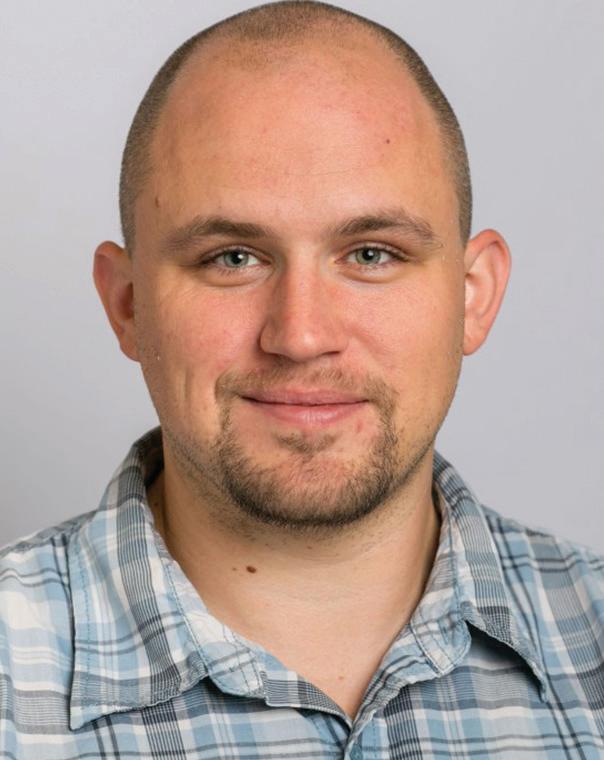
CE Director CHAD VAN SCHOELANDT
CENTER FOR ETHICS
ethics bowl
FOLLOWING THE CENTER FOR ETHICS’ LAUNCH OF THE TULANE UNIVERSITY ETHICS BOWL PROGRAM (TUEB) IN FALL 2023, the 2024-2025 academic year marked a period of significant growth in community engagement and programming, reaching even more students across the Greater New Orleans area. The program’s collaborative format has fostered meaningful relationships among students from local high schools, as well as between those students and Tulane participants.
Tulane students engage through the service-learning program in the Applied Ethics course offered by Tulane’s Department of Philosophy or as members of the collegiate Tulane Ethics Bowl team, contributing to a dynamic and inclusive learning environment for all. Throughout the year, students actively participated in tournaments and campus events, helping to sustain momentum and deepen their skills in ethical reasoning and respectful dialogue as fellow citizens in a complex moral and political community.
TULANE TEAM GOES ETHICS BOWLING—TWICE!
Tulane’s College Ethics Bowl (TUEB) team was proud to compete for a second time in the Association for Practical and Professional Ethics’ Southwest Regional Tournament held in San Antonio, Texas in November of 2024. Juniors Kayla Cuva , Autumn Sommers , and Sania Islam , and senior Maria Cordero were accompanied by CE Graduate Coordinator for TUEB and Philosophy PhD candidate, Shoshana Primak , alongside fellow Philosophy PhD candidate Kuo Bain, first-year medical student Michael Rubsamen, and local high school teacher and TUEB community partner Teriece Reynolds.

Kayla Cuva, the team’s Membership Experience Chair, had this to say of the club’s journey:
“This exposure to such a diverse range of perspectives is an experience I truly cherish. In a world where young people are often deprived of spaces to discuss such critical issues, Ethics Bowl creates a platform where my teammates and I can engage in meaningful conversations, listen to diverse viewpoints, and develop well-rounded conclusions we might not have otherwise reached.”
The team added three new members and two new graduate coaches in Spring 2025 before traveling to Salt Lake City to compete for the first time in the National Bioethics Bowl. As a result of the team’s dedication to the greater Ethics Bowl community, The Murphy Institute is now in talks to host the National Bioethics Bowl in Spring 2027.
THE MURPHY INSTITUTE HAS PROVIDED OUR CLUB WITH THE UNIQUE OPPORTUNITY TO CONNECT WITH PEOPLE FROM MANY DIFFERENT WALKS OF LIFE—DIFFERENT STATES, CULTURES, COUNTRIES, AND ACADEMIC BACKGROUNDS.
- Kayla Cuva
MARIA CORDERO, AUTUMN SOMMERS, SANIA ISLAM, and KAYLA CUVA
LOUISIANA'S FIRST ETHICS BOWL REGIONAL
In December 2024, Tulane proudly hosted Louisiana’s first-ever National High School Ethics Bowl (NHSEB) Regional , welcoming teams from across the state for a day of rigorous and respectful ethical dialogue. The tournament concluded with a Louisiana team earning a spot at the National Championship, which marks an exciting milestone for the state’s growing Ethics Bowl community.
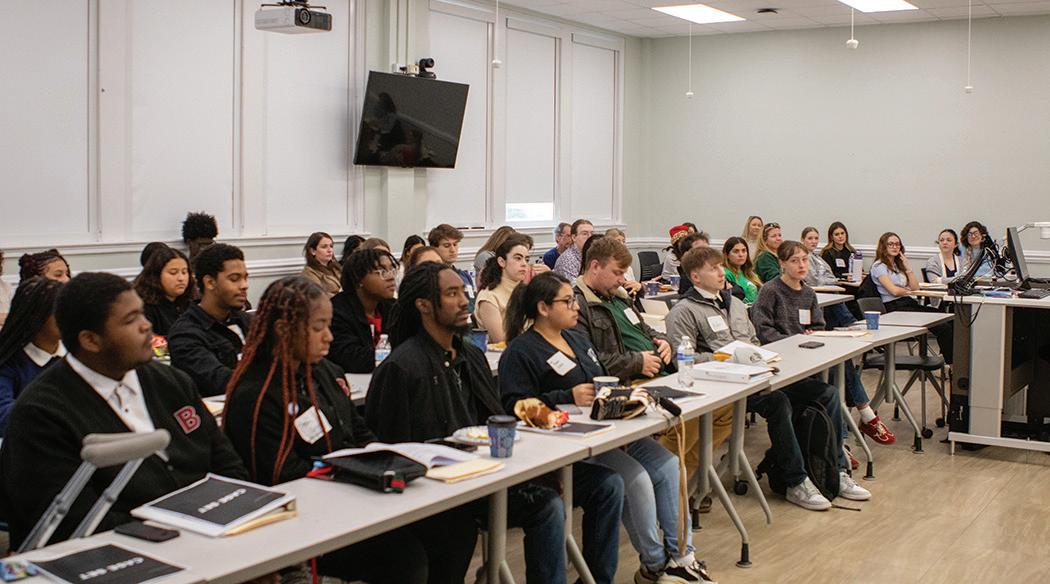
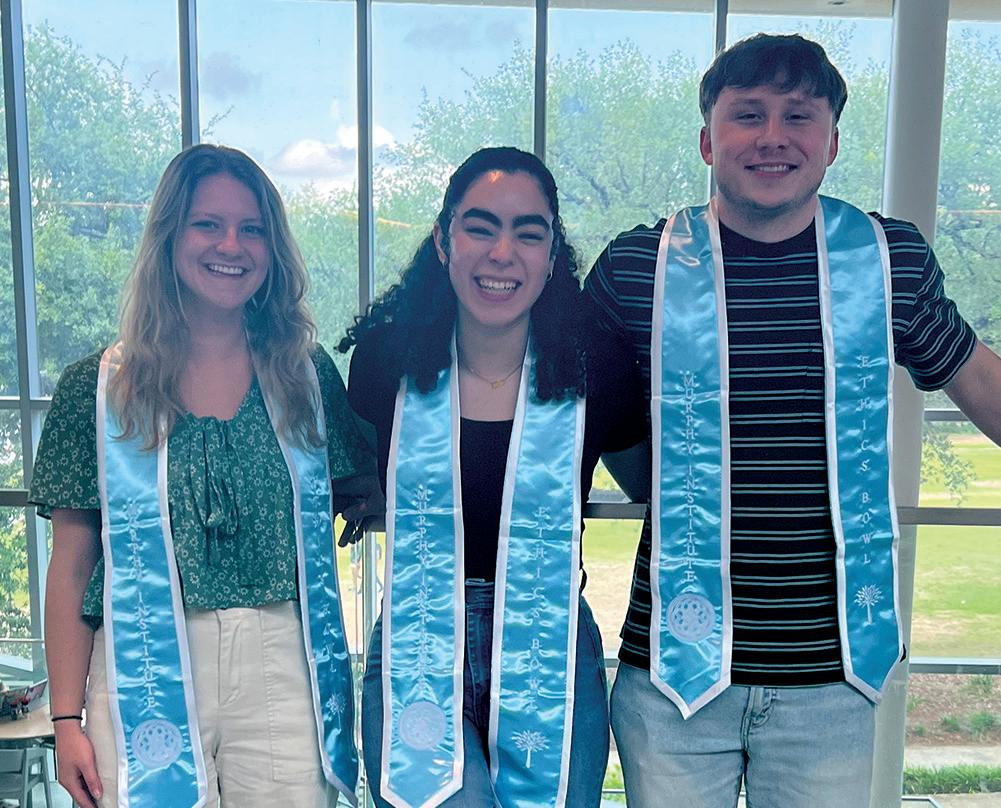
TUEB team members ELLIE STEVENSON, MARIA CORDERO, AIDEN LABAT
SENIOR SPOTLIGHTS: CELEBRATING OUR ETHICS BOWL LEADERS
This year, The Murphy Institute celebrated three Tulane students from the Class of 2025, whose dedication to the Ethics Bowl program has left a lasting mark on Tulane and the New Orleans community.
ELLIE STEVENSON , a double major in Political Economy and Chemistry, coached Ethics Bowl at Fredrick Douglass High School, first as an Applied Ethics service-learner in Fall 2024, and then as an intern in Spring 2025. Now at Yale Law School, Ellie continues to share her passion for collaborative learning and social progress by applying her skills in reasoning, teamwork, and advocacy honed during her Ethics Bowl experience.
MARIA CORDERO , a double major in Philosophy and International Relations, helped launch TUEB in Fall 2023. Maria has been a beloved coach to Bonnabel High School’s Ethics Bowl team, leading them to place 2nd at Louisiana’s first National High School Ethics Bowl Regional Competition in Fall 2024. Tulane’s philosophy department is excited to welcome Maria as a PhD student this fall.
AIDEN LABAT , a major in Design, coached Ethics Bowl at Edna Karr High School during the pilot Spring 2024 Applied Ethics Service-Learning course and later as an intern for Fall 2024 and Spring 2025. His insight as a local Louisiana resident proved formative to the program.
Reflecting on his experience in TUEB, Labat said, “This program has not only spawned a close-knit community between my peers and me but also helped me connect back to the community I come from. Students are not only getting more acquainted with competition and critical thinking but also building a connection across New Orleans for those striving to further their education and opportunities.”
ETHICS BOWL WORK AND THE COURSE ITSELF HAVE NOT ONLY FURTHERED MY UNDERSTANDING OF PHILOSOPHY AND ETHICS, BUT HELPED ME WITH COMMUNICATION, PROBLEM SOLVING, AND UNDERSTANDING COMPLEX SITUATIONS THAT SURROUND OUR DAILY LIFE.
- Aiden Labat
NHSEB Tournament at Tulane University
CENTER FOR ETHICS
public lectures
THE CE PUBLIC LECTURE SERIES SERVES AS A VITAL PLATFORM FOR INTELLECTUAL EXCHANGE. These events bring together scholars and practitioners from a broad range of intellectual and professional disciplines and concerned citizens to engage with pressing ethical questions. Each year, the Center for Ethics invites distinguished academics to present their current work to members of the Tulane community as well as the general public. Since 2001, the Center has welcomed more than 200 guest speakers who have explored a diverse array of contemporary topics in ethics.
For the 2024-2025 series, the Center welcomed two renowned scholars to Tulane University. Nicholas Buccola , a writer, lecturer, and Professor of Government at Claremont McKenna College who specializes in American political thought, explained how love is a central concept to James Baldwin. Additionally, Virgil Storr of George Mason University’s Department of Economics and the Mercatus Center challenged common perceptions of markets as inherently corrupting forces.
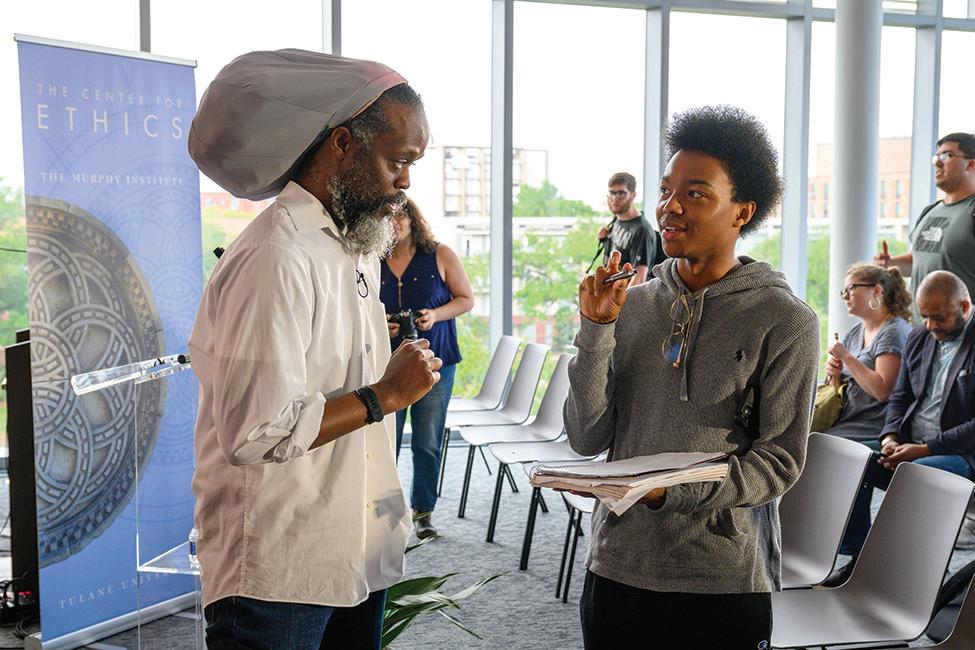
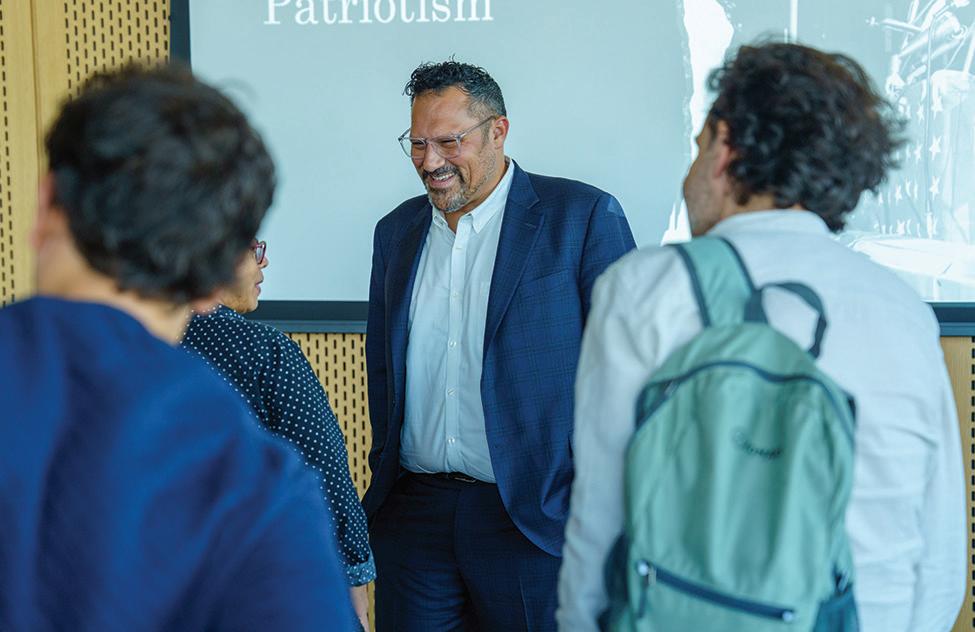
As part of our commitment to programmatic and community growth, the Center for Ethics partnered with external organizations to co-sponsor our public lectures. This collaboration represents a significant step in amplifying CE’s programming to a broader community alongside partners who share our desire to educate and inform the public. We thank our co-sponsors for their support in helping us fulfill our mission of promoting interdisciplinary discussion about the complex economic, moral, and political issues we all face. To view our latest lectures, visit our YouTube channel at YouTube.com/MurphyTulane. WATCH
TO SEE VIDEOS OF THESE AND ALL MURPHY INSTITUTE
LECTURES, VISIT YOUTUBE.COM/MURPHYTULANE.
VIRGIL STORR speaks with a student after his Center for Ethics Public Lecture.
Lecture attendees chat with NICHOLAS BUCCOLA following his talk.
NICHOLAS BUCCOLA
LOVE IS A BATTLE: JAMES BALDWIN’S PATRIOTISM
On September 26, 2024, the Center for Ethics hosted its first Public Lecture of the 2024-25 academic year, featuring Nicholas Buccola, Professor of Government and D. Jules L. Whitehill Professor of Humanism and Ethics at Claremont McKenna College. Buccola specializes in American political thought, particularly autobiographical reflections on race and American identity.
In his lecture, Buccola explained how love is a central concept for James Baldwin, pervasive in both his fiction and nonfiction writing and central to his career as an activist. Buccola explored how love, for Baldwin, simultaneously demands radical empathy and radical confrontation – both toward ourselves and others.
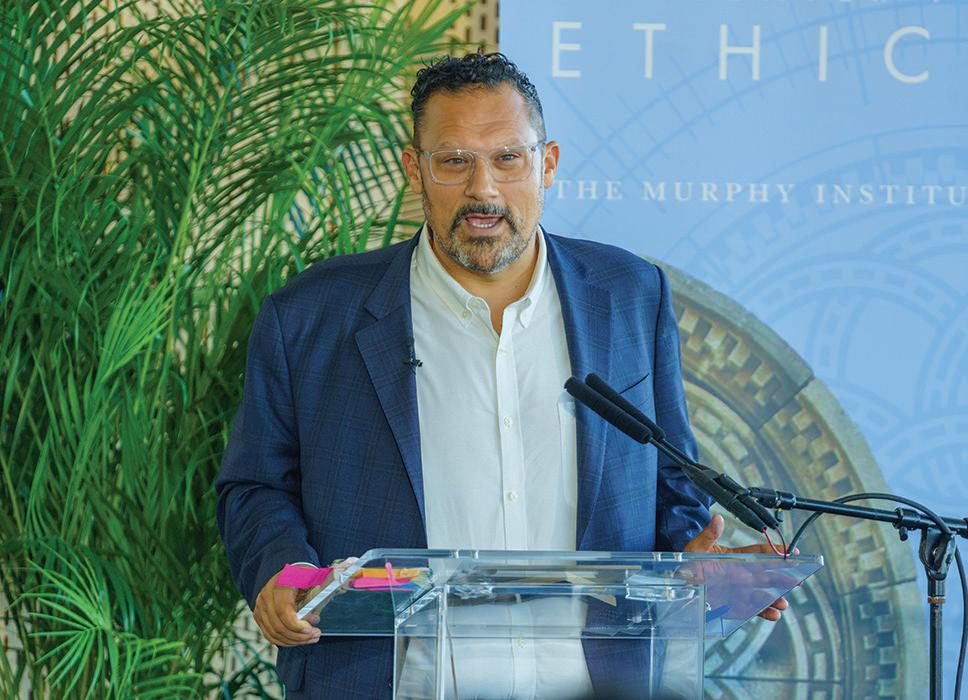
To understand how this complex view of love informs Baldwin's thoughts on patriotism – what it means to love a country, a place, and “home” – Buccola discussed how this notion of love emerges through two distinct lenses: Baldwin's relationship with his father and his pivotal journey to the South in the wake of the Supreme Court's Brown v. Board of Education decision. This event was co-sponsored by Baldwin & Co. Coffee and Books.
VIRGIL
STORR
EXPLORING THE INTERSECTION OF MORALITY AND ECONOMICS: DO MARKETS CORRUPT MORALS?
Virgil Storr delivered the second installment of the 2024-2025 Center for Ethics Public Lecture series on April 24, 2025. Storr is a Professor of Economics in the Department of Economics, George Mason University and the Don C. Lavoie Senior Fellow in George Mason University’s Mercatus Center.
In his lecture, Storr tackled the question "Do Markets Corrupt Our Morals?" challenging the perception of markets as inherently corrupting forces. Using empirical evidence and historical examples, Storr illustrated how market environments can foster virtuous behaviors, altruism, and social trust. He concluded that, with a well-structured policy framework, interaction within markets has the potential to cultivate moral character. This counterintuitive perspective invites a reevaluation of the dynamic relationship between economics and ethics. This event was co-sponsored by 89.9 WWNO.
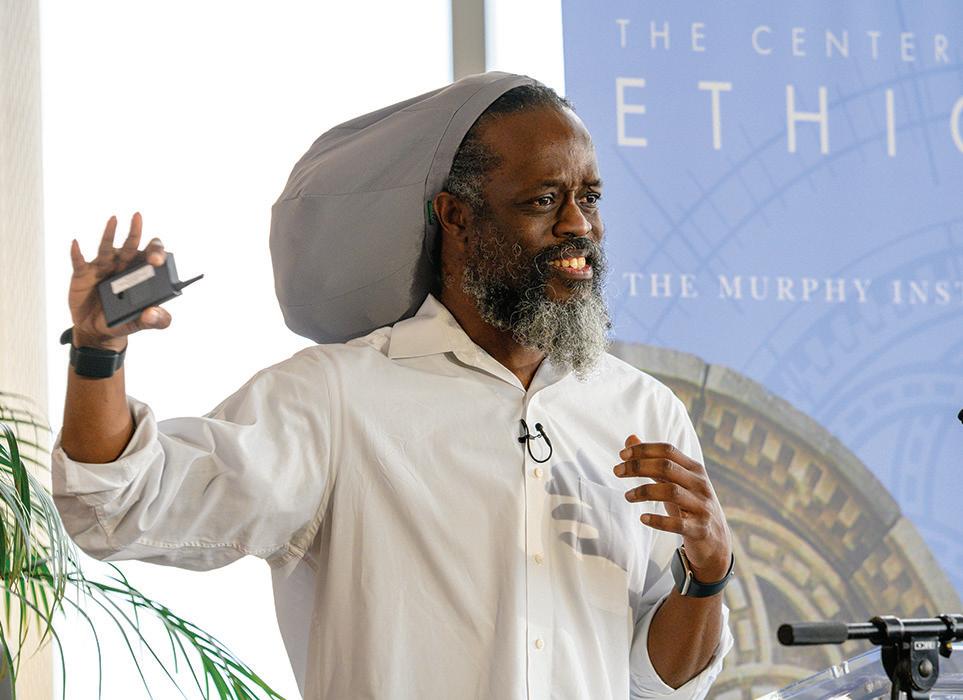
CENTER FOR ETHICS
graduate fellows
THROUGH ITS GRADUATE FELLOWS PROGRAM , THE CENTER FOR ETHICS OFFERS
A YEAR-LONG FELLOWSHIP with financial support to Tulane PhD candidates who have excelled in their fields of specialization and have demonstrated an interest in ethical questions that cross disciplinary boundaries. This funding lets our Graduate Fellows focus their attention exclusively on their dissertation research. It also allows them to participate in CE’s seminars and conferences and network with The Murphy Institute’s affiliated faculty and guest speakers to further their research and professional development. Our recent CE Graduate Fellows represent a broad range of academic fields, including philosophy, public health, history, French and Italian, Latin American studies, and anthropology, to name a few.
We are incredibly grateful for the contributions of our 2024-2025 Graduate Fellows and congratulate them on completing their appointments. We wish them every success in their careers and future endeavors.
2024-2025 GRADUATE FELLOWS
AMETHYST S.K. BIAS completed her PhD with the Department of Philosophy where her research interests included ethics, applied ethics (particularly technology ethics), social and political philosophy, and the philosophy of love. Bias’s dissertation, Navigating Morality in Social Media, was written under the direction of Dr. Chad Van Schoelandt.
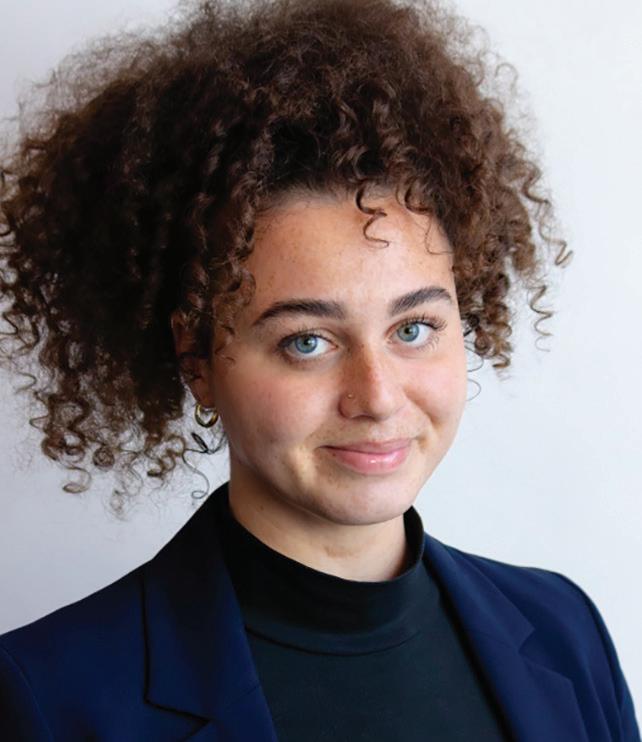
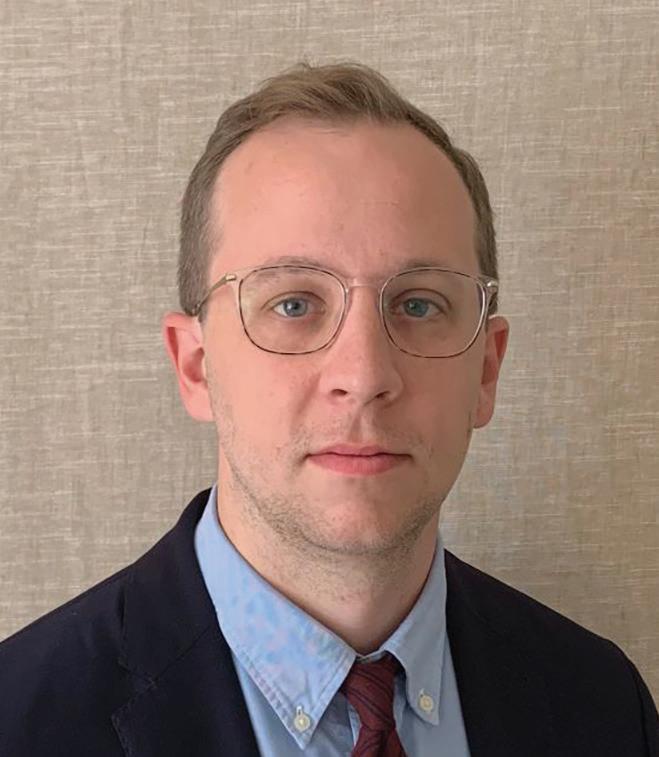
SAMUEL "SAM" HAGE is a PhD Candidate in the Department of Philosophy whose research interests include ancient philosophy and the history of political philosophy. Hage’s dissertation, Socrates Accused: Anytus, Meletus, Lycon and the Corruption of Athens , is written under the direction of Dr. Ronna Burger.
AMETHYST S.K. BIAS
SAM HAGE
ZIJING "JANE" LI is a PhD Candidate in the Department of Philosophy whose research interests include social and political philosophy and ethics. Li’s dissertation, Political Identity and Polarization , is written under the direction of Dr. Chad Van Schoelandt.

TARA JOANN YANEZ is a PhD Candidate in the Stone Center for Latin American Studies. Her research analyzes topics related to gender, race and ethnicity, public security, crime and violence, and peacebuilding initiatives from a sociological lens. Yanez’s dissertation, Navigating Latin American Urban Peripheries: How community-led strategies to create justice and security challenge violent state building projects in Cali, Colombia , is written under the direction of Dr. David Smilde.
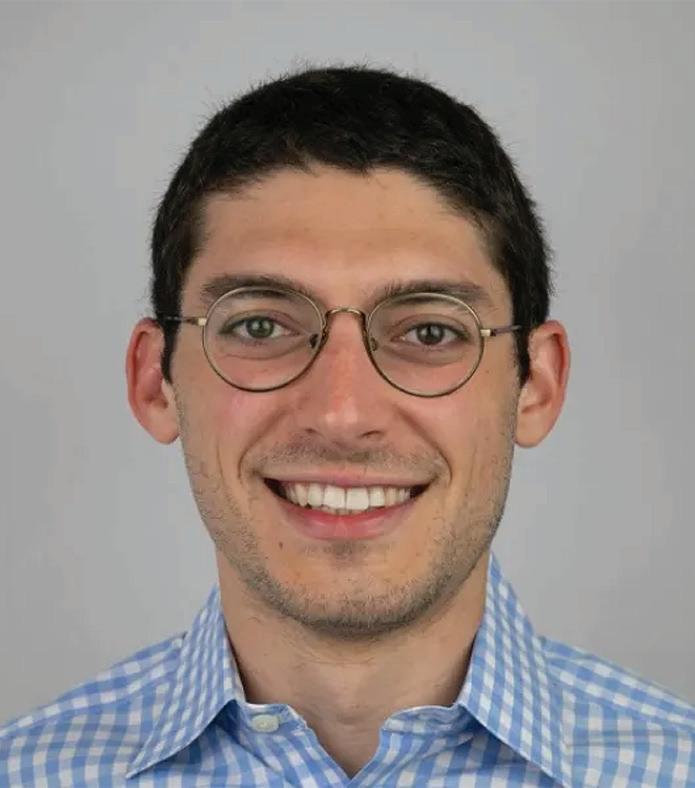
ALEXANDER "ALEX" MONTAG is a PhD Candidate in the Department of Philosophy whose research interests include ancient philosophy, literature and latemodern German philosophy, especially as it concerns the reception and revival of antiquity. Montag’s dissertation, tentatively titled Plato’s Trilogy on the Socratic Turn , is written under the direction of Dr. Ronna Burger.
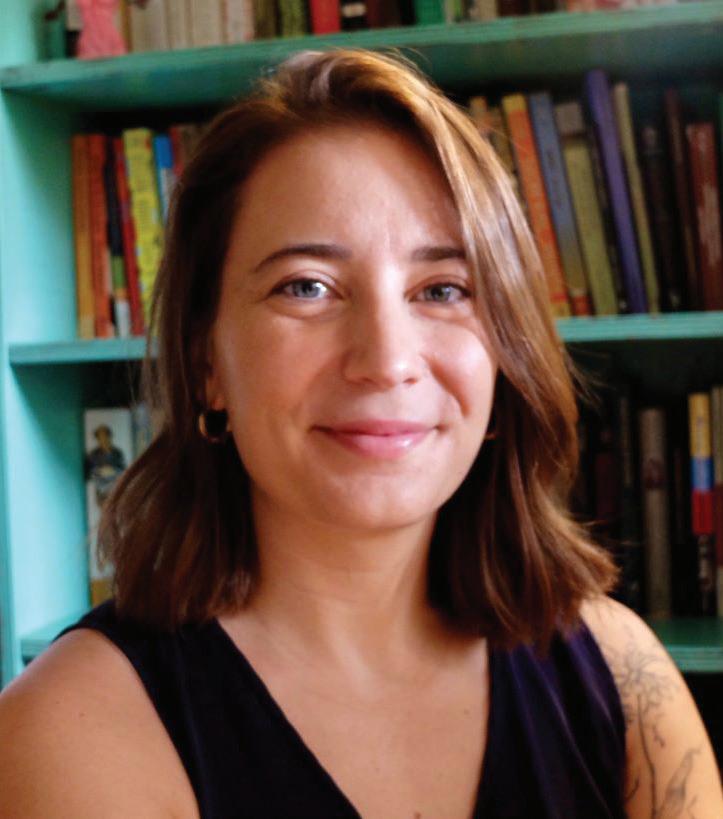
TARA JOANN YANEZ
ALEX MONTAG
JANE LI
CENTER FOR ETHICS
faculty fellows
THE FACULTY FELLOWS PROGRAM IS A KEYSTONE OF THE MURPHY INSTITUTE’S CENTER FOR ETHICS, welcoming distinguished academics in the field of ethics from around the world into the Institute’s vibrant scholarly community since 2003. The 2024- 2025 academic year marked a new milestone as CE hosted its 70th Faculty Fellow. Selected scholars devote one academic year to focus on their personal research projects at the Center for Ethics.
During the year, fellows receive abundant opportunities to develop their ideas through workshops, lectures, and other collaborative events. Through engaging in the intellectual life of The Murphy Institute, CE Faculty Fellows foster professional connections with their peers, Tulane faculty, and graduate students. Each year, Faculty Fellows conclude the program with a sense of accomplishment in their progress and a broader, richer professional network.
2024-2025 CE FACULTY FELLOW PROFILES
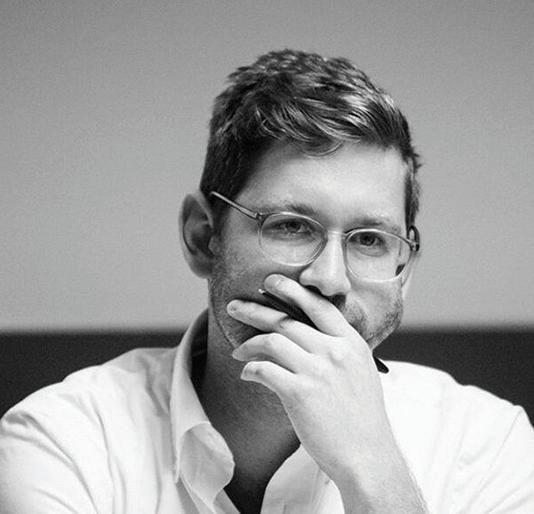
BEN FERGUSON
The CE Faculty Fellowship offers visiting academics a forum for developing new ideas with other top scholars and the opportunity for sustained, focused work on their own research. Ben Ferguson , Professor of Philosophy and Director of the Philosophy, Politics, and Economics (PPE) Program at the University of Warwick, experienced these benefits firsthand. Over the last year, he made substantial progress on a monograph about economic exploitation – a book uniting his earlier work on exploitation with new theories of transactional fairness and fresh perspectives on what makes exploitation morally problematic.
In addition to the book project, he published papers on African bioethics and colonialism, as well as two papers on exploitation. Ferguson is collaborating on an edited volume on the philosophy, politics, and economics of food with another of this year’s fellows, Johanna Jauernig. He attributes much of his productivity to the feedback received through the Murphy-sponsored seminar series hosted by the Tulane Philosophy Department. Additionally, Ferguson found The New Orleans Political Economy Workshop, organized by CE Director Chad Van Schoelandt and Murphy faculty Mario Juarez-Garcia , to be particularly helpful.
Ferguson describes having a “fantastic year in New Orleans” with his wife and toddler and hopes to revisit to connect with colleagues and friends at the next PPE Society conference held annually in New Orleans.
"THE FELLOWSHIP NOT ONLY GAVE ME AN OPPORTUNITY TO PRODUCE FAR MORE WORK THAN I NORMALLY WOULD HAVE IN SUCH A SHORT TIME FRAME, BUT MEETING WITH THE UNIQUE SET OF ACADEMICS THAT THE MURPHY INSTITUTE SUPPORTS GAVE ME MANY IDEAS FOR FUTURE PROJECTS."
- Ben Ferguson

LUCA FERRERO
The environment at The Murphy Institute fosters a dynamic, supportive, and engaging intellectual community that encourages productivity and partnerships with other scholars. Luca Ferrero, Professor in the Department of Philosophy at the University of California, Riverside, describes how the “wonderfully supportive and stimulating environment” influenced his work. Ferrero says, “The seminars, dinners, and informal conversations with faculty, grad students, visiting speakers, and the other faculty fellows helped me see familiar ideas in new ways and pushed my thinking forward.”
Ferrero’s primary project evaluates how people manage to stick with their long-term goals, even when it may be easier to give up or change course. Specifically, his work explores what influences people’s ability to stay committed over time and why this matters to living a meaningful life. The book argues that part of what holds individuals together over time is a kind of memory that helps past decisions continue to guide, without taking away the freedom to choose.
In addition to this effort, Ferrero drafted a monograph on diachronic agency, titled “The Memory of the Will: Agency, Time, and Value,” and prepared two papers, “The Conjectural Beginnings of Diachronic Agency” and “Constitutivism and the Problem of Bad Actions,” which will be submitted for publication and presented at international conferences.
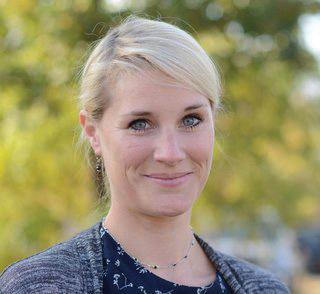
"NEW ORLEANS HAS A RHYTHM ALL ITS OWN—PART IMPROVISATION, PART DEEP TRADITION—AND IT QUIETLY WORKED ITS WAY INTO MY THINKING. THERE’S SOMETHING ABOUT DOING SCHOLARLY WORK IN A CITY THAT REMINDED ME THAT IT IS GOOD NOT TO TAKE ONESELF TOO SERIOUSLY."
- Luca Ferrero
JOHANNA JAUERNIG
Johanna Jauernig , Assistant Professor of Philosophy at The New College of Florida, reflected on the rewards of connecting with other faculty and visiting speakers through the Murphy-sponsored seminar series hosted by the economics and philosophy departments and the Center for Ethics’ Public Lecture Series. She received valuable feedback on her work from Murphy faculty and fellows and enjoyed the opportunity to speak casually with CE Graduate Fellows over lunch.
Through her fellowship year, Jauernig made substantial progress in her work, which evaluates how people’s moral beliefs and emotions influence public debates on issues like new technologies, housing, land use, and fairness during crises. By combining ethics, psychology, and political economy, her work explores why certain policies feel just or unjust – and how these perceptions shape democratic decision-making. During her year in residence as a CE Faculty Fellow, Jauernig published her article “When Goliath sells to David: Explaining price gouging perceptions through power” in Public Choice and has four additional articles currently undergoing review. In addition, Jauernig has one forthcoming article that evaluates the impact of AI technologies on society.

SEMINARS & LECTURES
MULTIDISCIPLINARY ENGAGEMENT IS AT THE CORE OF OUR MISSION. Each semester, The Murphy Institute sponsors a series of seminars and lectures that bring together Tulane faculty and guest speakers from economics, philosophy, and political science to share their latest research on contemporary issues in political economy. These events are open to faculty, graduate students, and the broader Tulane community, reflecting our commitment to fostering intellectual conversations across disciplines.
SEMINARS IN ECONOMICS
SARAH QUINCY , Assistant Professor of Economics at Vanderbilt University
BEN SPRUNG-KEYSER , Assistant Professor of Business Economics and Public Policy at the Wharton School of the University of Pennsylvania
ALEJANDRO ESTEFAN , Assistant Professor of Development Economics in the Keough School of Global Affairs at the University of Notre Dame
JOHN D. GIBSON , Associate Professor of Economics and Finance at the University of Texas at El Paso
JULIETA CAUNEDO , Associate Professor of Economics at Cornell University
CAROLINE WEBER , Associate Professor at the Martin School of Public Policy and Administration at the University of Kentucky
JAMES SALLEE , Professor of Resource Economics at UC Berkeley
KOICHIRO ITO , Professor at the University of Chicago Harris School of Public Policy
EMMA DEAN , Assistant Professor at the Dartmouth Institute for Health Policy and Clinical Practice at the Geisel School of Medicine
YAJIE WANG , Assistant Professor of Economics at the University of Missouri
JUN MA , Professor of Economics and Associate Dean of Graduate Studies at Northeastern University
SEMINARS IN POLITICAL SCIENCE
MICHAEL ALBERTUS , Professor of Political Science at the University of Chicago
ERIN SNIDER , Assistant Professor in the Department of International Affairs at the Bush School of Government and Public Service at Texas A&M University
MOLLY O’NEAL , Former Foreign Service Officer in the U.S. State Department
ALICE XU , Associate Professor at the University of Pennsylvania’s School of Social Policy and Practice and the Department of Political Science
TARIQ THACHIL , Professor and Madan Lal Sobti Chair for the Study of Contemporary India and Director of the Center for Advanced Study of India at the University of Pennsylvania
SEMINARS IN PHILOSOPHY
DUSTIN SEBELL , Associate Professor of Political Science at Michigan State University
ERIC MANDELBAUM , Professor of Philosophy at City University of New York
JENNIFER LACKEY , Professor of Philosophy at Northwestern University
JOHANNA JAUERNIG , 2023-2024 Faculty Fellow at The Murphy Institute’s Center for Ethics
LUCA FERRERO , Professor of Philosophy at the University of California, Riverside and 2023-2024 Faculty Fellow at The Murphy Institute’s Center for Ethics
GINA SCHOUTEN , Professor of Philosophy at Harvard University
BEN FERGUSON , Professor of Philosophy at the University of Warwick and 2023-2024 Faculty Fellow at The Murphy Institute’s Center for Ethics
RACHEL ZUCKERT , Professor of Philosophy at Northwestern University
DEBTS, DEFICITS, AND SUSTAINABILITY:
THE U.S.
FISCAL CHALLENGE TULANE DISTINGUISHED LECTURE IN ECONOMICS
THIS SPRING, JAMES POTERBA , the Mitsui Professor of Economics at MIT and President of The National Bureau of Economic Research, delivered the 2025 Tulane Distinguished Lecture in Economics. In his talk, Poterba addressed the rising national debt and its potential to cause widespread repercussions in the near future. During the timely discussion, Poterba explained how a combination of increased taxation and reduced federal spending could help manage the national debt. He also drew connections between economic theory and its real-world implications, encouraging students to stay informed and engaged as they consider their roles in shaping the future.
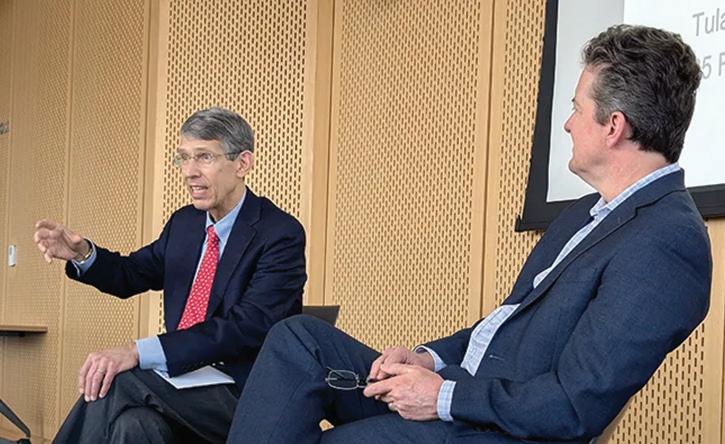
JAMES POTERBA and DOUG HARRIS, Murphy Faculty and Chair of Economics
PEAJJES: INTERDISCIPLINARY TRAINING FOR JUDICIAL IMPACT
THE ANNUAL POLITICAL ECONOMY & ACCESS TO JUSTICE JUDICIAL
EDUCATION
SEMINAR (PEAJJES) offers Louisiana judges a unique opportunity to explore broad principles of access to justice and their interaction with the economy and political process. The three-day seminar provides a platform for judges to gain valuable insights into the realities of justice within their communities. The 2025 seminar was held in March on Tulane’s Health Sciences Campus in Downtown New Orleans, with opening remarks delivered by Murphy’s Executive Director, Gary “Hoov” Hoover
JUDICIAL LAWMAKING AND POLITICAL ECONOMY: HOW THEY INTERACT AND INFORM ONE ANOTHER TOM S. CLARK , Professor of Political Science at Stanford University
THE NETWORK EFFECT OF VIRTUAL COURT
ACCESS: WEIGHING THE COSTS AND BENEFITS
ANDREA MILLER , Senior Court Research Associate at the National Center for State Courts
RURAL RESILIENCE, URBAN RENEWAL:
ADDRESSING AND ADAPTING TO CLIMATE CHANGE IN THE GULF SOUTH
JOHN TRAVIS MARSHALL , Associate Professor of Law at Georgia State University College of Law
POLITICS, PENSIONS, AND PROTECTIONS: ASSESSING INTERSECTING RISKS TO PUBLIC EMPLOYEES AND THE ENVIRONMENT
JORDAN HAEDTLER , Climate Financial Policy Consultant at the Roosevelt Institute
JUSTICE DENIED? WEIGHING THE (POTENTIAL) COSTS OF THE USE OF FORENSIC EVIDENCE IN CRIMINAL JUSTICE ADMINISTRATION
BRANDON L. GARRETT , Professor of Law, Director of the Wilson Center for Science and Justice at Duke University
AT THE INTERSECTION OF INDUSTRY AND THE ENVIRONMENT: THE ROLE OF JUDICIAL DECISIONMAKING
NICHOLAS BRYNER , Director of the Climate Change Law and Policy Project, Professor of Law at Louisiana State University Paul M. Hebert Law Center
THE ETHICS AND ECONOMICS OF SUBSTANCE (AB)USE-AVERSE POLICIES AND DRUG COURT PROGRAMS: SPOTLIGHTING THE OPIOID CRISIS IN RURAL AMERICA
KEITH HUMPHREYS , Professor of Psychiatry and Behavioral Sciences at Stanford University
WHEN "DEMOCRATIZATION" ISN'T ENOUGH: IDENTIFYING AND ELIMINATING THE HIDDEN COSTS OF AI
NGOZI OKIDEGBE , Associate Professor of Law, Assistant Professor of Computing & Data Sciences at Boston University
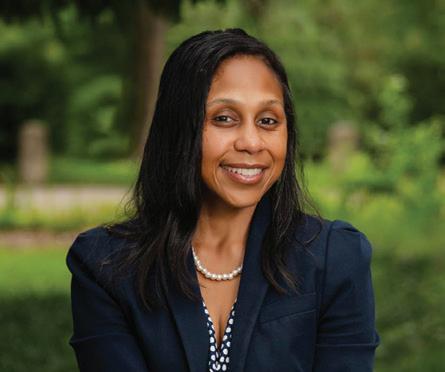
Organized by NGHANA LEWIS, Tulane Associate Chair & Director of Undergraduate Studies, Professor of English & Africana Studies
HISTORY
ESTABLISHED IN MEMORY OF CHARLES H. MURPHY, SR. (1870-1954), and inspired by the vision of Charles H. Murphy, Jr. (1920-2002), The Murphy Institute exists to help Tulane faculty and students understand economic, moral, and political problems we all face and think about. More important, it exists to help us understand how these problems have come to be so closely interconnected.

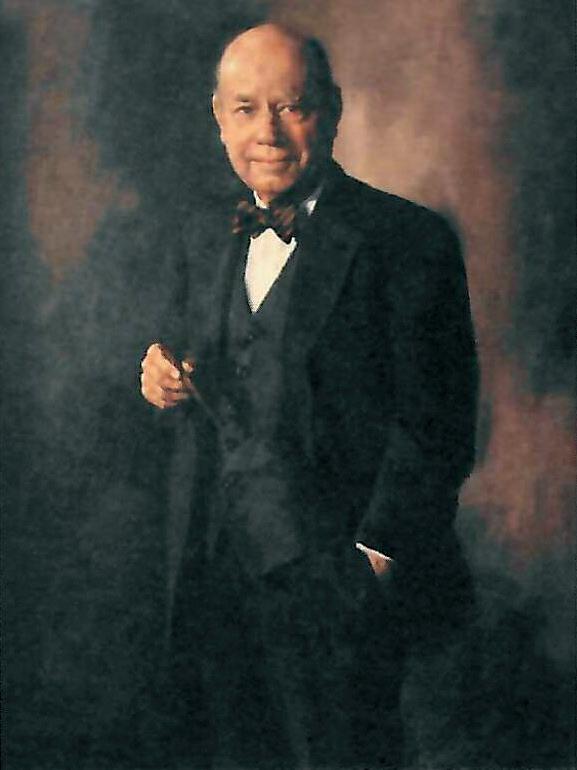

THE FOUNDING OF THE INSTITUTE
The Murphy Institute was established in the memory of Charles H. Murphy, Sr. (1870-1954) and inspired by the vision of Charles H. Murphy, Jr. (1920-2002). Operating in South Arkansas and North Louisiana, Mr. Murphy, Sr. launched family businesses in timber, banking, and oil exploration that were brought together in 1950 under the leadership of Charles H. Murphy, Jr. to become the Murphy Oil Corporation, a worldwide oil and gas exploration and production company based in El Dorado, Arkansas.
Charles H. Murphy, Jr., who served as the Chair and driving force of the Tulane Murphy Foundation until the early 1990s, envisioned The Murphy Institute as an international force in reviving and replenishing “political economy” as Adam Smith first understood it: not just study of interconnections between politics and economics, but a rich multidisciplinary field in which economists, historians, moral philosophers, and political scientists make contributions of shared and equal interest.
The Murphy Institute is supported by the endowment of the Tulane Murphy Foundation. Original donors to the Foundation included Bertie W. Murphy, the widow of Charles H. Murphy, Sr., and their children and spouses: Johnie W. and Charles H. Murphy, Jr. ; Bertie M. and John W. Deming ; Caroline M. and Rt. Rev. Christoph Keller ; and Theodosia M. and William C. Nolan .
Within this broad purpose, The Murphy Institute supports a number of academic programs in the fields of political economy and ethics. Since 1984, it has sponsored a highly acclaimed Undergraduate Program in Political Economy which brings together economists, historians, philosophers and political scientists committed to moving beyond traditional boundaries of their disciplines in a common search for new insights and new ways of studying the interconnections of politics and economics.
To enrich teaching and research in political economy, The Murphy Institute also hosts conferences, seminars, and lectures by prominent public figures and visiting scholars.

the exchange Fall 2025
A PUBLICATION OF THE MURPHY INSTITUTE AT TULANE UNIVERSITY
CENTER FOR ETHICS
CENTER FOR PUBLIC POLICY RESEARCH
CENTER FOR LAW AND THE ECONOMY
UNDERGRADUATE PROGRAM IN POLITICAL ECONOMY
MASTER OF ARTS IN POLITICAL ECONOMY WITH DATA ANALYTICS
THE MURPHY INSTITUTE, CAROLINE RICHARDSON BUILDING, TULANE UNIVERSITY, NEW ORLEANS, LA 70118