
Understanding Today’s Volatile Politics
IT HAS BEEN QUITE A YEAR FOR GLOBAL POLITICS. No one really predicted Britain’s vote to exit from the European Union, the election of Donald Trump in the United States, or the rebirth of populism around the globe. While The Murphy Institute does not issue official predictions, it does take pride in preparing our students and the broader community to help understand these seemingly tectonic changes to our politics.
The Political Economy major—with its broad multidisciplinary approach—is an ideal setting within which to explore the background and origins of our politics. Professor Douglas Nelson’s senior seminar this year posed the big question of how we arrived in this turbulent state. What economic and political factors create our polarized politics and the seemingly never-ending economic dislocations? Does political polarization stem from changes in beliefs of the voters or has the structure of our political parties driven us in this direction? Have international trade and migration affected our economy more than the steady march of technology? Did we make the right political and institutional choices after our recent massive financial crisis? Should we have taken the opportunity to reduce the size of our mega financial institutions? Do we need more or less regulation of business? The students grappled with these
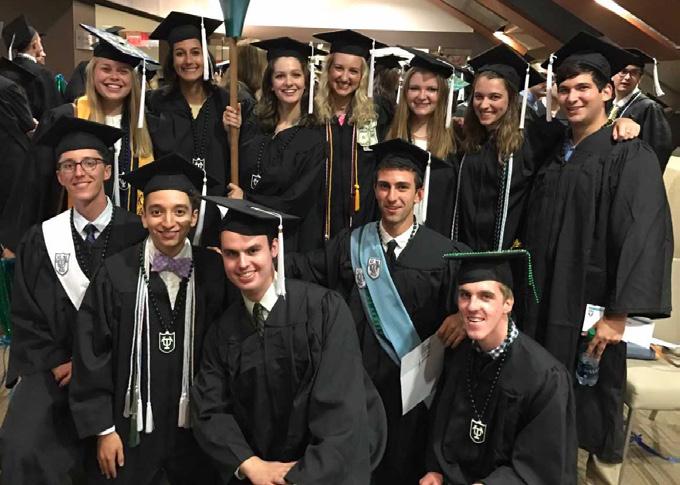
Political Economy Graduates at Tulane’s 2017 Commencement
BOTTOM ROW (L-R) Ethan Champagne, Rob Kellner, Jack Newell, Nathan Fowler, Jonathan O’Farrell; TOP ROW (L-R) Paige Wulff, Maya Welch, Lauren Sobel, Nicole Carle, Ania Marecki, Danielle Roof, Samuel Waxman
Core Faculty
Steven M. Sheffrin, Executive Director, Department of Economics
James Alm, Department of Economics
Bruce Brower, Department of Philosophy
Alison Denham, Department of Philosophy
Adam Feibelman, Tulane Law School
Douglas N. Harris, Department of Economics
Ann M. Lipton, Tulane Law School
Eric Mack, Department of Philosophy
Douglas R. Nelson, Department of Economics
Shu-Yi Oei, Tulane Law School
Mary K. Olson, Department of Economics
Jonathan M. Riley, Department of Philosophy
David Shoemaker, Department of Philosophy
Richard F. Teichgraeber III, Department of History
Martyn P. Thompson, Department of Political Science
Mark Vail, Department of Political Science Staff
Ruth A. Carter, Program Manager
John Louis Howard, Associate Director
Margaret M. Keenan, Assistant Director, Center for Ethics and Public Affairs
Jinyoung Park, Assistant Director, Center for Public Policy Research
THE CEN TER FO R ETHICS AND PUBLIC A FFAIRS Faculty Committee
Bruce Brower, Department of Philosophy
Ronna Burger, Department of Philosophy
Richard Culbertson, School of Public Health and Tropical Medicine
Alison Denham, Department of Philosophy
Stephen Griffin, School of Law
Eric Mack, Department of Philosophy
Mary K. Olson, Department of Economics
Graham Owen, School of Architecture
Jonathan M. Riley, Department of Philosophy
Oliver Sensen, Department of Philosophy
David Shoemaker, Department of Philosophy
Richard F. Teichgraeber III, Department of History
Martyn P. Thompson, Department of Political Science
Richard Velkley, Department of Philosophy
( continued from page 1)
challenging issues in Professor Nelson’s capstone course, drawing on their knowledge and experiences from other courses in political economy.
In both his senior seminar and honor’s colloquium, Associate Director John Howard explored the past and future of social democracy. He posed the question of whether the historical welfare state—which provided a foundation for active and vibrant market capitalism coupled with a social safety network—can survive the relentless pressures from global competition for capital and the growth of new political ideologies hostile to social democracy. While a return to a “golden age of capitalism” is not possible, what reformulations of social democracy would have economic and political salience today?
In addition to our classes, The Murphy Institute also provides a variety of public and scholarly forums where these ideas are debated. Our Yates lecture this year, delivered by Professor Giovanni Peri shortly after the presidential election, focused on the economics of immigration and dispelled many popular myths. Additionally, Professor Nelson organized a conference where leading scholars attempted to understand the apparent increase in hostility to both global trade and migration. Was the response of the public rational or irrational?

Other public lectures and conferences also explored themes relevant to our sense of social anxiety. Our speakers addressed the questions: What role does trust play in our social system? Are there underlying moral foundations for our system of business contracts that need to be re-examined? How can the principles of individualism that we hold so dear be reconciled with our commitments to family and equality?
With today’s uncertainties, it seems now more than ever that the public is seeking answers to broad foundational questions. But not all of these questions are new nor do they have easy soundbite answers. By leading our students to think through these questions, our faculty and guest speakers prepare the Tulane community for arriving at their own answers and perspectives. The Murphy Institute has been posing such questions for more than thirty years now. It is our hope that current students and past graduates alike have gained the strong intellectual background to analyze the complexities of our society and its politics today.

Steven M. Sheffrin, Executive Director August 2017
2017 UNDERGRADUATE PROGRAM REVIEW
EVER-EXPANDING HORIZONS
The persistent search for fresh challenges and new perspectives is a hallmark of our program. This quest leads our majors into various locales and endeavors and helps prepare them for a world that is politically and economically globalized.
Eleven of the eighteen graduates in the class of 2017 participated in a study abroad program or experience. ROB KELLNER ’17 and DANIELLE ROOF ’17 travelled to Cuba, studying local music, culture, and education efforts. MAYA WELCH ’17 and NATE FOWLER ’17 studied in Morocco for one semester. DYLAN TINGLEY ’17 spent his junior year at the London School of Economics. Our students also explored the major cities of Europe: SEAN BRAY ’17 studied in Berlin; SAMUEL WAXMAN ’17 was in Prague; and PAIGE WULFF ’17 studied in Edinburgh.
Our students’ interest in European politics and economics also found a home in the new Tulane chapter of the student organization European Horizons. Branded as a “student think-tank”, European Horizons has more than 42 chapters at universities across the United States and Europe. The Tulane chapter was co-founded by LAUREN SOBEL ’17 , who also served as president of the Tulane chapter and Southern Regional 2016-17 chairperson for the organization. Lauren also attended a national programming event held in Oyster Bay, New York, quickly establishing the Tulane chapter as a major presence in the organization. Many of our majors held leadership positions in the Tulane chapter, including MAYA WELCH ’17 , JONATHAN O’FARRELL ’17 , and JAKE WARD ’18
European Horizons at Tulane hosted a number of interesting events, all arranged and coordinated by the student members. Dr. Christina Kiel of the Political Science Department at Tulane led a discussion on women leaders in European politics. This event was co-hosted by the Tulane student organization Women in Politics, whose president this year was NICOLE CARLE ’17 There was also a roundtable discussion on the topic “How Neoliberalism Feeds Nationalism in the EU,” led by Dr. Mark Vail of the Political Science Department, who also teaches for our program.
This kind of self-motivated student effort is typical of the majors in our program. They obtain a high degree of satisfaction from self-directed study and they break down the limitations of the traditional classroom as a result of this effort. OLIVIA MANZ ’17 speaks for many of our majors: “I have found the program extremely challenging at every point but I am thankful because I sought a challenging course of study. The program has taught me how to get comfortable being uncomfortable, a platitude I rattled off on my college applications but continue to wrestle with while taking intellectually and personally challenging political economy classes. I feel beyond lucky to have been able to learn from the incredible professors in The Murphy Institute and will consider myself forever in their debt.” Her thoughts are echoed by NICOLE CARLE ’17 : “I couldn’t be more grateful to have found political economy here at Tulane! It has allowed me to take a breadth of courses in a range of areas that interest me. It is a unique major and I feel lucky to have had the opportunity to study it.” b
CENTER FOR PUBLIC POLICY RESEARCH
Program Directors
James Alm, Department of Economics, Public Finance
Douglas Harris, Department of Economics, Education Policy
Mary K. Olson, Department of Economics, Health Policy
Adam Feibelman, Tulane Law School, Regulation Policy
EXTERNAL ADVISORY BOARD
Michael McPherson (Chair), President, Spencer Foundation
John Ferejohn, Samuel Tilden Professor of Law, New York University
Geoffrey Galt Harpham, Director, National Humanities Center
Bonnie Honig, Sarah Rebecca Roland Professor of Political Science, Northwestern University
Stephen Macedo, Laurance S. Rockefeller Professor of Politics and the University Center for Human Values, Princeton University THE EXCHANGE
Line58, Communications Consultant Zack Smith, Photographer
Margaret M. Keenan, Contributing Editor Jinyoung Park, Contributing Writer John Louis Howard, Contributing Writer
Send editorial correspondence to The Murphy Institute, 108 Tilton Hall, Tulane University, New Orleans LA 70118 Telephone: (504) 865-5317 Facsimile: (504) 862-8755
For questions and comments pertaining to The Murphy Institute’s Political Economy program, contact jhoward2@tulane.edu; for those pertaining to both the Center for Ethics and Public Affairs and the Center for Public Policy Research, contact mkeenan@tulane.edu.

18 NEWCOMB-TULANE COLLEGE SENIORS were awarded B.A. degrees in Political Economy at the May 2017 University Commencement. Several received high academic honors, with one student graduating summa cum laude. The summa cum laude graduate is ROB KELLNER, who completed his undergraduate career with a perfect 4.0 grade point average.
Other members of the class of 2017 include SEAN BRAY, NICOLE CARLE, ETHAN CHAMPAGNE, CALLIE EICHNER, NATE FOWLER, REBECCA HARRIS, OLIVIA MANZ, ANIA MARECKI, JACK NEWELL, JONATHAN O’FARRELL, DANIELLE ROOF, LAUREN SOBEL, DYLAN TINGLEY, SAMUEL WAXMAN, MAYA WELCH, NATHAN WINSHALL, and PAIGE WULFF
The Charles H. Murphy Prize in Political Economy was awarded to ROB KELLNER and DANIELLE ROOF. The Murphy Institute Public Service Award was presented to MAYA WELCH. The Senior Honors Scholar in Political Economy was ROB KELLNER.
[ UNDERGRADUATE
nature of the program and the variety of perspectives offered by the faculty helped challenge me intellectually and (I think) allowed me to better understand the world and my place in it. Whether or not I end up ‘using my degree’ in my career, I think it has made me a more informed person and a better citizen.”
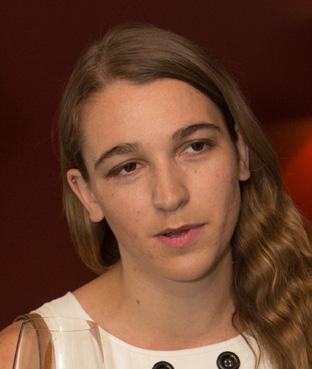
ROB KELLNER pursued the Moral and Historical Perspectives track in Political Economy and completed a minor in Spanish. He won the Charles H. Murphy Prize and was named the Senior Honors Scholar in Political Economy for his honors thesis, “Communist Regime Resilience, the Special Period, and the Cuban Imperative of Managed Change”. He received thesis research support from an honors thesis grant provided by both The Dale E. Miller ’ 89 and Hillary Bachmann Miller ’ 89 Fund and The Frankel Family Undergraduate Research Fellowship Fund (Lisa Frankel ’ 07). Rob was inducted into Phi Beta Kappa and was a member of the William Wallace Peery Society, the highest academic honor society for Tulane undergraduates. He plans to continue his career as a professional musician. He currently plays with the bands Miss Mojo and the Aaron Cohen Band, but he can be found playing keyboards at many familiar New Orleans locations such as Tipitina’s, the Maple Leaf Bar, and New Orleans Jazzfest. Of his time at The Murphy Institute, Rob writes, “I was extremely lucky to select Political Economy as my major. It was everything I could have hoped for. I thought that the multidisciplinary
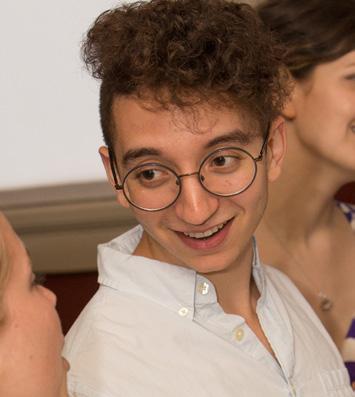
DANIELLE ROOF majored in the Law, Economics, and Policy track and also completed her Secondary Education Teaching certification. She was a co-recipient of the Charles H. Murphy Prize. She was inducted into Omicron Delta Kappa, the national leadership honor society. In pursuit of her teaching certification she worked as a classroom aide at Lusher High School in New Orleans and was also an intern for Team Ascent at Sequoia High School in Redwood City, California. Danielle found great value in her major and writes, “I love being a political economy major. This program has pushed me to grow and expand my interests, challenge myself academically and personally, and has given me a solid framework to build from in my undergraduate career. I think we have a great set of core classes that gives us a very strong basis to pursue any direction that interests us, and I definitely found my capstone seminar to be a fulfilling way to tie it all together.” Danielle plans on a life-long career in education. She will be in California working at a summer program for at-risk middle school students, then will return to New Orleans to begin student teaching in the fall semester at Lusher.
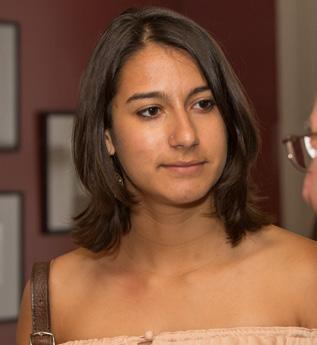
MAYA WELCH was a double major in Mathematics. She received the Murphy Institute Public Service Award. She served as the social chair for the Tulane chapter of European Horizons. Maya was a community outreach intern with the Tulane University Environmental Law Clinic and was a team leader for the Tulane Environmental Justice Summer Intensive Program. She spent a semester abroad at the IES Abroad Center in
POLITICAL ECONOMY PROGRAM ’17 ]
Rabat, Morocco, pursuing research on the effects of climate change on water resources. She also worked as a leader, educator, and facilitator with the Bayou Bridge Pipeline resistance effort, the Floodplain Forest Educational Series with the Gulf Restoration Network, and the United Methodist Women’s Climate Justice Series. She is going to Hyderabad, India, to work at the health nonprofit Healing Fields. The group primarily focuses on providing healthcare access to people living in areas of rural poverty. Maya will continue her research interests in environmental justice by exploring the environmental health effects of rapid industrialization in the area.
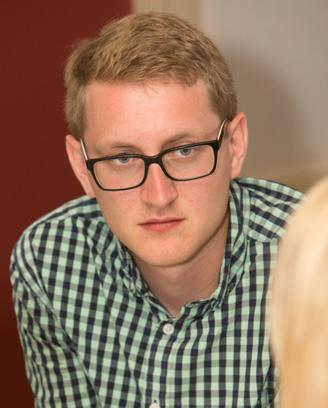
SEAN BRAY was a double major in Germanic and Slavic Studies. He was a community outreach intern for Hewlett-Packard. Sean was awarded a Max Kade Institute Fellowship to attend the University of Regensburg in Germany for the 2017-2018 academic year. At Regensburg he will be participating in a ten-month study and research fellowship as the first part of obtaining a master’s degree in German Studies through the University of Colorado, Boulder.
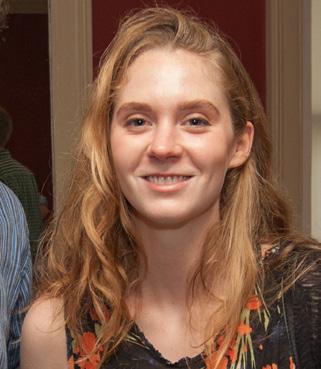
CALLIE EICHNER was a research intern at Better Day Health, working on Medicare payment reform policy. She will attend law school at the University of Texa at Austin. Callie was impressed by her political economy faculty and courses: “I am so glad that I chose the political economy major. I feel that I have a well-rounded view of the world because of the multidisciplinary approach. I have felt supported and challenged by my teachers, particularly Alison Denham and Mark Vail. My classes, due to their size and the strength of their teachers, were always engaging. Students who put in the time to read carefully were rewarded with an increased depth of knowledge and improved critical thinking skills.”
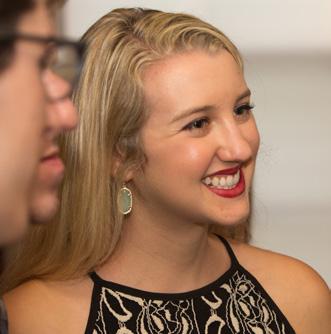
NICOLE CARLE was a double major in Economics and a minor in Political Science. She was a member of Oak Wreath and won the Under the Oaks Award presented by Newcomb College Institute. She was a Newcomb Grant recipient, receiving funding to attend the Cato Institute program on “Liberty and Justice in a Libertarian Framework”. She also received funding to attend the PLEN (Public Learning Education Network) Women and Global Policy Seminar. She was the president of the Tulane student organization Women in Politics. She will attend American University’s Washington College of Law and plans to participate in the Women and the Law program to focus on international war crimes against women and children.
NATE FOWLER completed a diverse array of internships. He worked as a political affairs intern for The Borgen Project, an outreach intern for the American Civil Liberties Union in Louisiana, a communications and development intern for the Institute for Justice and Democracy in Haiti, a policy research intern for the New Orleans Fair Housing Action Center, and a campaign intern for the congressional campaign of Niki Tsongas (D-MA-3). Nate plans to be a political professional and is moving to the Twin Cities to work on a full cycle of a Congressional campaign during the 2018 midterm elections, as well as taking a remote Regional Political Director position with The Borgen Project.
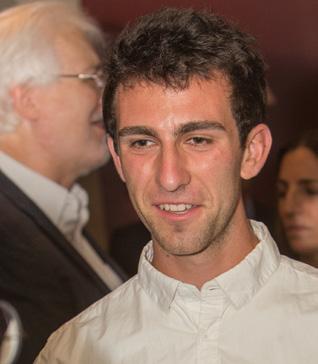
OLIVIA MANZ was elected to three terms as an undergraduate Student Government senator, serving on the Student Life Committee, the Sustainability Committee, and the Judiciary Branch Committee. She was also a freshman representative to Newcomb Senate. Her internships include stints in the office of New Orleans City Council member LaToya Cantrell, the Greater New Orleans Fair Housing
continued on next page
Action Center, as field organizer for the Eggman for Congress campaign (CA-10), and as district office intern for the office of Congressman Joe Garcia (D-FL-26). She also served as a volunteer for Grow Dat Youth Farm, the Garden on Marais, and Our School at Blair Grocery.
JONATHAN O’FARRELL was a double major in Computer Science. He served as treasurer for European Horizons at Tulane. He will move to San Francisco and work as a software engineer for Slack Technologies, Inc.

LAUREN SOBEL served on the NewcombTulane Honor Board for four years and received an Outstanding Student Leader Award for her service. She was co-founding president of the Tulane chapter of European Horizons. She is attending an intensive program at Columbia University for finance and accounting, with an emphasis on emerging markets, financial research, and analysis.
NATHAN WINSHALL earned a Bachelor of Public Health degree and is the first political economy major at Tulane to achieve that distinction. He was chosen from among our senior majors this year to attend the national undergraduate conference for programs in PPE (Philosophy, Politics, and Economics) at the University of North Carolina-Chapel Hill and Duke University. Nathan was a member of the men’s Ultimate Frisbee team and of Students Organized Against Racism. He plans to attend law school.
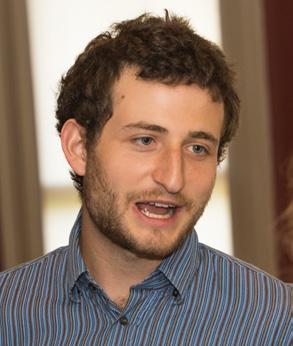
PAIGE WULFF was president of the Associated Student Body. She will pursue a master’s degree in Health Policy from Washington University in St. Louis, Missouri. b
the judith kelleher schafer summer internship grant program
Funds from the Judith Kelleher Schafer Summer Internship Grant Program were used to endow five awards in the amount of $2,500 each for Summer 2017 . The names of the students awarded Summer 2017 Internship Grants, the year of their respective graduation classes, and their intern placements are as follows:
NICK ARENDT ’18 interned for the Bureau of Governmental Research in New Orleans, Louisiana.
EMILY GRIMES ’18 interned for the Greater New Orleans Fair Housing Action Center in New Orleans, Louisiana.
ALEXANDRA KENNELLY ’18 interned for Representative Mike Capuano (D-MA-7) in Washington, DC.
CHARLES POWICKI ’18 interned for state Representative Randy Hunt (R-5th Barnstable) in Boston, Massachusetts.
DAVID WOODSIDE ’19 will intern for the American Security Project in Washington, DC.
,
ALUMNI NEWS
1980s
MAX FLEISCHER ’87 is in his 19th year as environmental legal counsel at the Tennessee Department of Environment and Conservation. He lives in Nashville, Tennessee.
LORIEN SMITH JOHNSON ’88 practices law in Tampa, Florida, at the firm of Ian S. Giovinco, P.A., where she administers probate matters and estate planning. She worked previously at Hines Norman Hines, where she managed more than 50 probate cases. She also worked at Bush, Graziano, Rice and Platter, where she represented dentists in malpractice cases
JAMES H. BOURGEOIS ’89 is Councilman, District 5, for Lafourche Parish, Louisiana. He also continues to serve as Lieutenant Colonel in the United States Army Reserve and the Louisiana National Guard.
1990s
TODD E. PERKINS ’91 practices general medical, surgical, and cosmetic dermatology in Washington, DC. Dr. Perkins obtained his medical degree from Hahnemann University with honors, and was inducted into the AOA national medical honor society. He is a fellow of the American Academy of Dermatology and a diplomate of the American Board of Dermatology and the Board of National Medical Examiners. He is an advisor to several pharmaceutical companies and trains physicians locally and nationally on the proper use of several advanced medical treatments.
ASHLEY W. BOGGS ’92 is now Vice President of Marketing at Deposco, a cloud-based, e-commerce order
management and fulfillment software company in Alpharetta, Georgia.
CHANTALLE VERNA ’96 is an associate professor of history and international relations at Florida International University in Miami, Florida. Her new book, Haiti and the Uses of America: Post-U.S. Occupation Promises ,was published in April, 2017 by Rutgers University Press.
2000s
MOLLY ELGIN-COSSART ’04 is Senior Fellow at the Center for American Progress and Principal at the Omidyar Network, a philanthropic investment firm that invests in entrepreneurs and their visionary ideas to create opportunities for people to improve their own lives, their communities, and the world around them.
TAYLOR GILBERT ’05 is Vice President of Mergers and Acquisitions at Chaffe & Associates, Inc. in New Orleans, Louisiana. He specializes in deal execution, database and market research, due diligence, financial modeling, and strategic planning and financial analysis of critical business decisions for clients in various industries.
LUCAS LOCKHART ’08 received his PhD in Political Science from the University of Minnesota. His dissertation focused on how the political independence of securities market
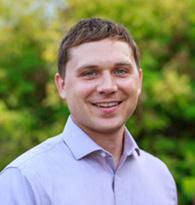
Lucas Lockhart ’08 received his PhD in Politcal Science from the University of Minnesota
regulatory agencies and self-regulatory organizations affects long-term crossnational trends in stock market development and volatility. He also completed licensing as a Certified AntiMoney Laundering Specialist (ACAMS). He is now a Financial Crimes Compliance Research Analyst at U.S. Bank in Minneapolis, Minnesota.
LAURA WEISS ’08 received her MBA from the Fuqua School of Business at Duke University and is now a consultant with the Boston Consulting Group in Dallas, Texas.
2010s
CAMERON CONKLIN ’14 works with a marine conservation organization in Borneo, Malaysia, called the Tropical Research and Conservation Center, while taking courses in marine science and completing her certified Divemaster course as well. Her organization is building artificial reefs in the Celebes Sea around Pom Pom Island, where she lives and works.
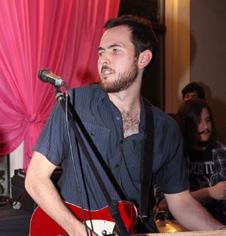
Samuel Fishman ’16 is currently serving as an English Teaching Assistant with a Fulbright grant in Asunción, Paraguay.
SAMUEL FISHMAN ’16 is currently serving as an English Teaching Assistant with a Fulbright grant in Asunción, Paraguay. Before that, he worked as an Organizer on the Hillary Clinton presidential campaign in Philadelphia, Pennsylvania. b
HONORS, AWARDS, AND PUBLICATIONS
b JAMES ALM , Professor of Economics, is the co-editor of Behavioral Responses to Taxation (Edward Elgar, 2016). In addition, he is the co-author of “Evaluating the Economic Effects of Flat Tax Reforms Using Synthetic Control Methods” Southern Economic Journal 83 (2016) and the co-author of “Honesty and Dishonesty in Taxpayer Communications in an Enforcement Regime” Journal of Economic Psychology 56 (2016).
b RONNA BURGER , Professor of Philosophy, Catherine & Henry J. Gaisman Chair, and Sizeler Professor of Jewish Studies, is the author of two essays, “Definitional Law in the Bible” and “The Erotic and the Thumotic Soul,” in the volume she co-edited, The Eccentric Core: The Thought of Seth Benardete (St. Augustine’s Press, 2017).
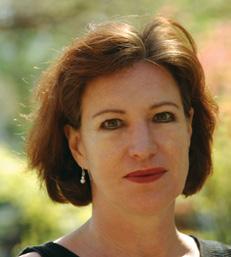
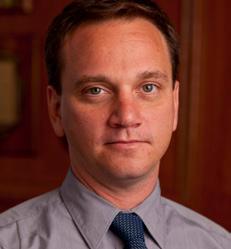
b ALISON DENHAM , Professor of Philosophy, contributed “Empathy and Moral Motivation” to The Routledge Handbook of Philosophy of Empathy , ed. H. Maibom (Routledge, 2017).
b ADAM FEIBELMAN, Associate Dean for Faculty Research and Sumter Davis Marks Professor of Law at Tulane University Law School, published “Law in the Global Order: The IMF and Financial Regulation” New York University Journal of International Law and Politics 49 (2017).
b ANN M. LIPTON , Associate Professor of Law, was the named the Michael M. Fleishman Associate Professor in Business Law and Entrepreneurship at Tulane Law School.
b Professor of Philosophy ERIC MACK is the author of “Natural Rights” in Arguments for Liberty, ed. A. Powell (Cato Institute, 2017) and “John Locke’s Defense of Commercial Society,” forthcoming in Wealth, Commerce, and Philosophy, ed. E. Heath and B. Kaldis (University of Chicago Press, 2017).
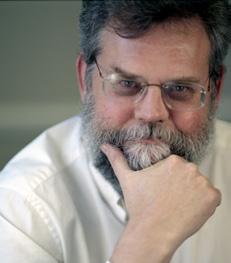
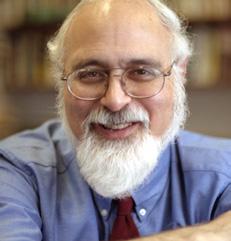
b Professor of Economics DOUGLAS NELSON is the co-author of “Intra-Industry Trade in a Rapidly Globalizing Industry: The Case of Wine” Review of International Economics 24 (2016) and the co-author of “The Role of Goods Trade Networks for Services Trade Volumes” World Economy 40 (2017).
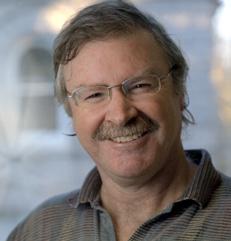
b JONATHAN RILEY, Professor of Philosophy, received a prize award from the ASAN Institute in Seoul, South Korea, for his article “Liberal Pluralism and Common Decency,” which will appear in a forthcoming volume by Palgrave
For the sake of brevity, we asked our faculty to limit journal articles to two. For a complete list of publications, please see our website at murphy.tulane.edu/people/faculty
Macmillan. He also published an entry, “Freedom of Speech,” in The Oxford Research Encyclopedia of Politics, ed. W. Thompson (Oxford University Press, 2017).
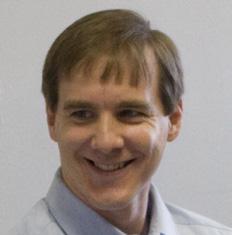
b OLIVER SENSEN , Associate Professor of Philosophy, was elected as the Vice President of the North American Kant Society. He is the author of “Dignity: Kant’s Revolutionary Conception” in Dignity: A History , ed. R. Debes (Oxford University Press, 2017) and “Respect for Intellectually Disabled People” in Disability in Practice , ed. A. Cureton, forthcoming from Oxford University Press.
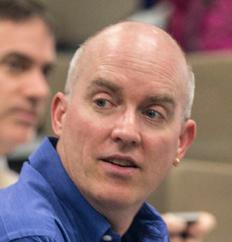
b DAVID SHOEMAKER , Professor of Philosophy, is the editor of Oxford Studies in Agency and Responsibility Volume 4 , forthcoming in 2017 from Oxford University Press, the author of “Empathy and Moral Responsibility” in The Routledge Companion to Empathy , ed. H. Maibom, (Routledge, 2017), and the co-author of “Me and Mine” forthcoming in 2017 from Philosophical Studies . He is the recipient of a John Templeton Foundation sub-grant, under the rubric of the Philosophy & Science of Self-Control Project (Al Mele, Project Director), for “Empathic Self-Control.”
b Professor of History RICHARD TEICHGRAEBER III published an annotated edition of Thorstein Veblen’s The Higher Learning in America (Johns Hopkins University Press, 2015). In addition, Professor Teichgraeber served on a three-person committee to select the recipient of the 2016 Merle Curti Award in Intellectual History, a prize given annually by the Organization of American Historians for the best new book in American intellectual historians.
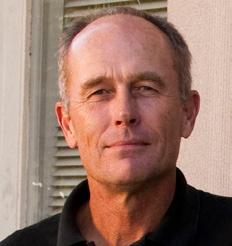
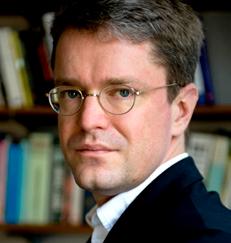
b MARK VAIL , Associate Professor of Political Science, published “The Developmental State in Developed Societies: Power, Partnership, and Divergent Patterns of Intervention in France and Finland in ” Journal of Comparative Politics 49 (2016).
b Celia Scott Weatherhead Professor of Philosophy RICHARD VELKLEY was elected as the President of the Metaphysical Society of America for one year. He also published two papers, “Being and Politics: Seth Benardete on Aristotle’s Metaphysics ” and “Prelude to First Philosophy: Seth Benardete on De Anima,” in The Eccentric Core: The Thought of Seth Benardete , ed. R. Burger (St. Augustine’s Press, 2017).
GIOVANNI PERI
2016 YATES LECTURE
the economic opportunities from immigration
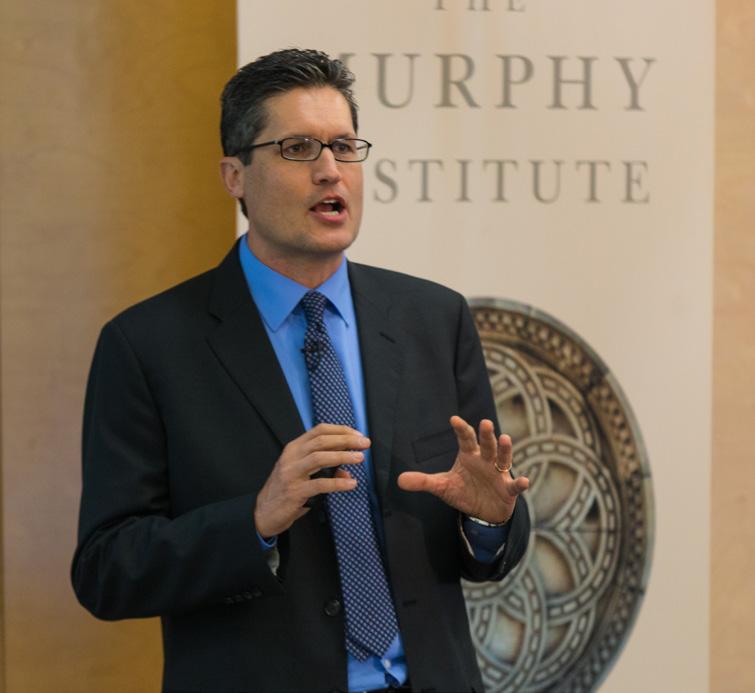
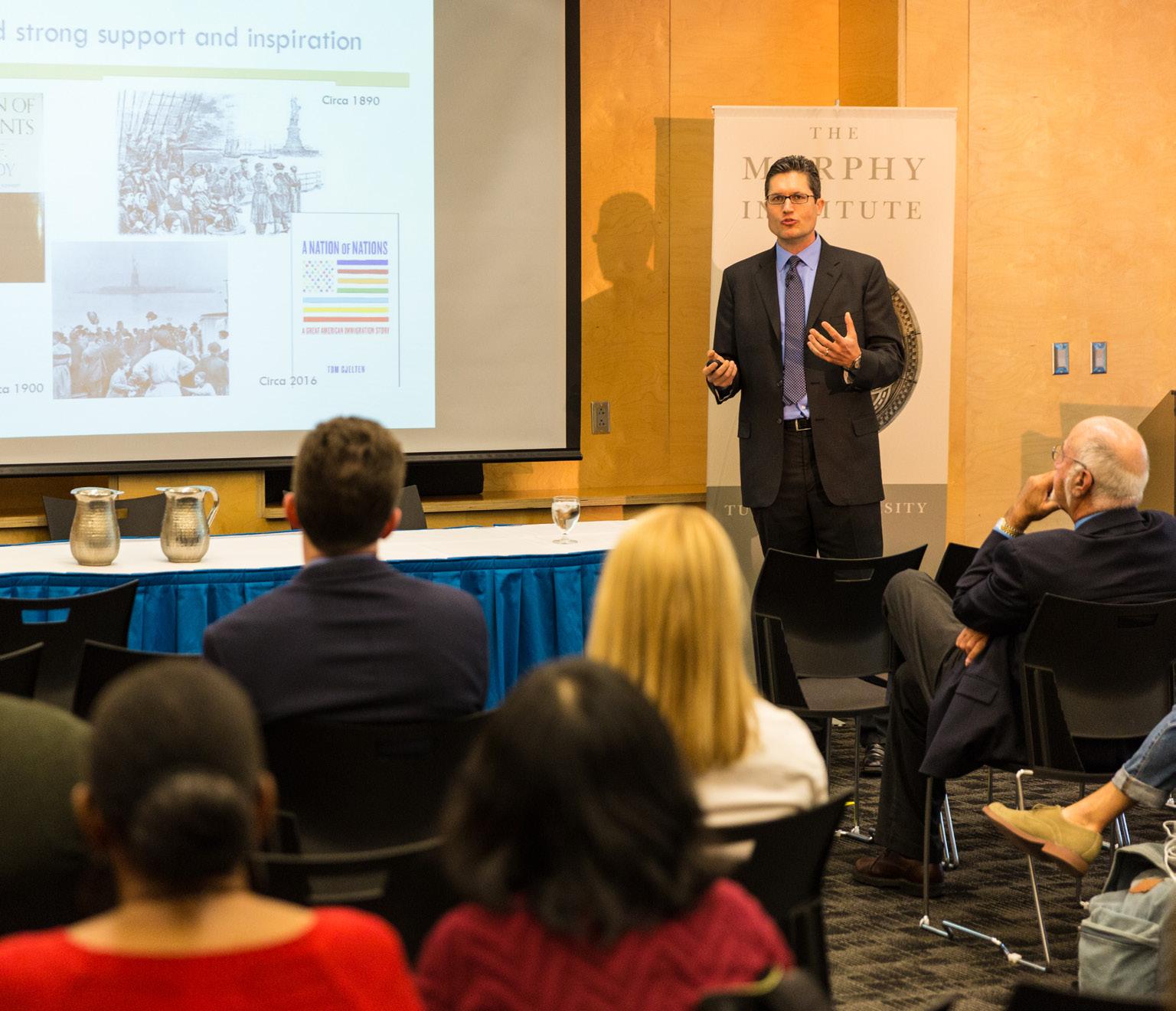
GIOVANNI PERI’S PRESENTATION at the 2016 Yates Lecture focused on the economic opportunities from immigration. Following a brief historical overview of the public’s response to immigration in the United States, Peri walked us through the decline in both undocumented immigration population and in overall Mexican immigration, global trends in immigration, and fastest growing groups of immigrants.
Tackling the claim that immigration hurts American wages, Peri challenged the idea of a fixed number of jobs, stating that demand for labor increases along with population and that immigration is a slow and predictable force.
Peri examined four decades of data and showed that there was no plausible relative effect in the aggregate between
immigration and wages of less educated natives and no absolute effect in areas with large immigration. As for highly-skilled immigrants, they have been crucial contributors to the technological and economic growth in the US.
Peri noted important challenges to immigration, such as integration/assimilation for the less educated and the risk of segregation, as well as social, cultural tensions and reduced consensus for income redistribution.
He concluded with his policy ideas, which included a fact-based, well-planned approach to immigration with balanced policies including high-skilled and low-skilled immigration, access to labor markets (immigration based on labor tends to be the most successful), and consideration for the second generation such as schooling access and upward mobility.
Giovanni Peri is Professor and Chair of the Department of Economics at the University of California, Davis and Research Associate of the National Bureau of Economic Research. He is Editor of the journal Regional Science and Urban Economics and the Director of the UC Davis Temporary Migration Cluster, an interdisciplinary group doing research on international migrations. The author of more than 200 academic articles, he focuses on the implications of international migrations for labor markets, the productivity of the receiving countries, and the determinants of international migrations.
Professor Peri is the recipient of grants for the study of international migrations from the National Science Foundation, the John D. and Catherine T. MacArthur Foundation, the World Bank, and the Volkswagen Foundation.
The Mary C. Parker Yates Lecture, endowed in 1996 by Murphy Institute alumna Rebecca Yates ( ’89) Velander in memory of her mother, is The Murphy Institute’s major public academic event. Designed to promote university-wide discussion of issues of current concern, the annual Yates Lecture brings leading thinkers and public figures to the Tulane campus.
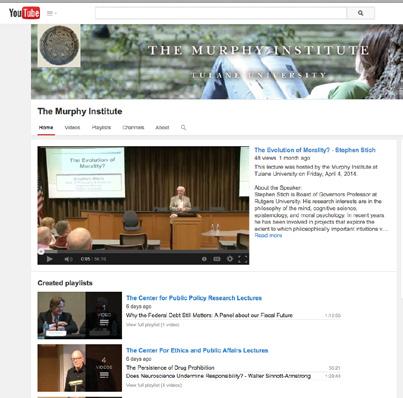
CHECK US OUT ON YOUTUBE!
At Tulane and throughout New Orleans, The Murphy Institute is known for putting on fascinating lectures on current issues by leading academics. In order to share these lectures more widely, we’ve begun featuring our public lectures on our website and our new YouTube channel.
To see our latest lectures, check us out on YouTube at: YouTube.com/MurphyTulane
2017 Yates Lecturer Giovanni Peri presents to a full house at Tulane University.
NAVIGATING FEDERALISM IN CORPORATE AND SECURITIES LAW
This one-day conference, organized by ANN LIPTON , Murphy Affiliate and Securities Law expert at the Tulane Law School, brought together legal scholars from around the country to explore the dividing line between state and federal regulation on corporations. Among issues discussed were problems of large and small shareholders, what states can regulate, the line between corporate law and securities law, and the operation of the SEC.
JAMES COX
Brainerd Currie Professor of Law, Duke University School of Law Revolving Elites: Assessing Capture in the SEC
JILL FISCH
Perry Golkin Professor of Law, University of Pennsylvania Law School
Advance Voting Instructions: Tapping the Voice of the Excluded Retail Investor
KENT GREENFIELD
Professor of Law and Law Fund Research Scholar, Boston College Law School Corporate Power and Campaign Finance
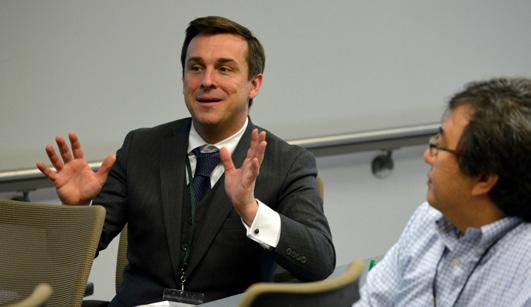
^ ROBERT JACKSON
Professor of Law and Director of the Program on Corporate Law and Policy, Columbia Law School Activist Directors and Information Leakage
ANN LIPTON
Gordon Gamm Scholar and Michael Fleishman
Associate Professor in Business Law & Entrepreneurship, Tulane University Law School Reviving Reliance
JAMES PARK
Professor of Law, University of California, Los Angeles School of Law
Delaware and Santa Fe
EDWARD ROCK
Professor of Law, New York University School of Law Defusing the Antitrust Threat to Institutional Investor Involvement in Corporate Governance
ROBERT THOMPSON >
Peter P. Weidenbruch, Jr. Professor of Business Law, Georgetown University Law Center Delaware’s Dominance: A Peculiar Illustration of American Federalism
URSKA VELIKONJA
Associate Professor of Law, Emory University School of Law Admissions in Public Enforcement
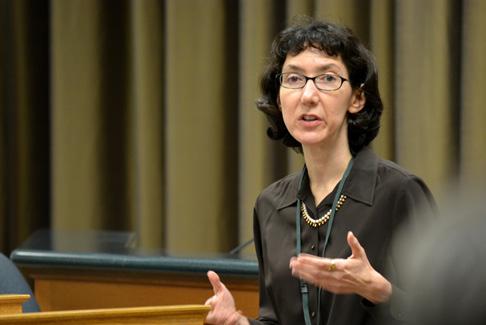
SUMMER KIM
Assistant Professor of Law, UC Irvine School of Law Corporate Long Arms
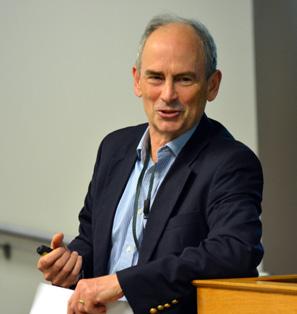

J.W. VERRET
Associate Professor of Law, Antonin Scalia Law School, George Mason University Crowdfunding
organized by ANN LIPTON
ECONOMICS AND POLITICS OF GLOBALIZATION:
WHAT DO WE KNOW, AND NOT KNOW?
This two-day conference was organized by Professor of Economics Douglas Nelson, in collaboration with the World Trade Institute (University of Bern) and the Global Governance Programme (European University Institute). The first day of the conference focused primarily on economic issues, while the second day focused on political issues, with presenters drawn from academia and the policy-making world.
Presenters on the first day discussed issues such as trade in services and the effect of trade shocks on labor markets, emphasizing the need for new data with which to study these issues, and explored a new approach, merging advanced theory and economic techniques, to identify the effects of shocks in full general equilibrium. There were attempts to extend models of general equilibrium to include more sophisticated analyses of job training and unemployment, an examination of effects of unemployment beyond lost income, and a presentation on the local labor market effects of global migration.
On the second day, presenters found themselves on opposing sides, along the theme of the extent to which citizen preferences are driven by economic self-interest and the extent to which such material interests determine political outcomes when globalization becomes a subject of public politics. While some presenters discussed findings that speak to public attitudes toward international trade being influenced by xenophobia and identity politics more so than the economic factors, others argued that material self-interest must remain an essential element in the analysis of the political economy of globalization.
LORENZO CALIENDO
Associate Professor of Economics, Yale University School of Management Trade and Labor Market Dynamics
CARL DAVIDSON Professor of Economics, Michigan State University Globalization and Labor Market Outcomes with Two-Sided Heterogeneity
JOSEPH FRANCOIS
Managing Director and Professor of Economics, World Trade Institute
The Occupational Content of US Trade
CAROLINE FREUND
Senior Fellow, Peterson Institute for International Economics
Identity Politics or Economics? An Analysis of US Election Data
JEFFRY FRIEDEN
Professor of Government, Harvard University
Socio-economic Bases of Populism: Speculative Assertions
BERNARD HOEKMAN
Professor and Director of Global Economics at the Robert Schuman Centre for Advanced Studies, European University Institute
Services Dimensions of Trade Integration
EDWARD MANSFIELD
Hum Rosen Professor of Political Science, University of Pennsylvania
Effects of the Great Recession on American Attitudes toward Trade
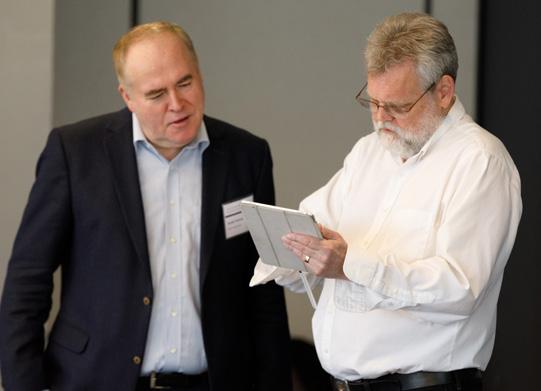
organized by DOUGLAS NELSON
DOUGLAS NELSON
Professor of Economics, Tulane University
Rethinking the Political Economy of Globalization
ÇAGLAR ÖZDEN
Lead Economist, Development Research Group, The World Bank Global Migration and Local Labor Markets
JUSTIN PIERCE
Principal Economist, Federal Reserve Board
Trade Liberalization and Mortality: Evidence from U.S. Counties
DENNIS QUINN
Professor of Economics, Georgetown University
McDonough School of Business
Winners and Losers in International Trade: The Effects of Presidential Voting
tulane property roundtable
Co-sponsored with the Law School, the Tulane Property Roundtable brought together scholars from different sectors of property law for presentation and discussion of work on the regulation of property rights. This roundtable enjoyed scholarship presentations on three different themes: intellectual property, technology, and sharing; public-private property; and the rights and duties of owners. The roundtable showcased the drafts and works-in-progress of its participants and subjected these works to rigorous analysis in a broad dialogue that included multiple perspectives.
NESTOR DAVIDSON
Professor of Law, Fordham University School of Law
Affordable Housing in an Era of Big Data
SETH DAVIS
Assistant Professor of Law, University of California, Irvine School of Law Owners as Fiduciaries?
SONIA KATYAL
Chancellor’s Professor of Law and Co-Director of Berkeley Center for Law & Technology, University of California, Berkeley School of Law Technoheritage
SALLY BROWN RICHARDSON
Charles E. Lugenbuhl
Associate Professor of Law, Tulane University Law School Privacy and Community Property
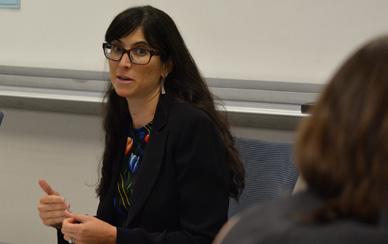
^ SARAH SCHINDLER
Professor of Law, University of Maine School of Law
The “Publicization” of Private Space
JAMES Y. STERN
Associate Professor of Law, William & Mary Law School
Intellectual Property and the Myth of Nonrivalry
Three of The Murphy Institute’s postdoctoral Fellows from the Center for Public Policy Research have completed their two-year appointments and are taking the next steps in their careers.
We congratulate them on their accomplishments while here at Tulane. We are pleased to announce their plans for the coming year.
GULTEKIN GOLLU is joining
Our Lady of the Lake University in San Antonio, Texas, as an Assistant Professor of Economics.
JIANJING LIN is headed to Rensselaer Polytechnic Institute in Troy, New York, as an Assistant Professor of Economics.
TREY DRONYK-TROSPER is remaining at Tulane University as a Visiting Assistant Professor.
working groups
The Murphy Institute Working Groups on Health Policy and on Public Policy bring together faculty from numerous disciplines across Tulane’s campuses to establish a network of professionals and produce interdisciplinary research that addresses critical policy issues.
HEALTH POLICY WORKING GROUP
JIANJING LIN
Postdoctoral Fellow, Murphy Institute
How Do Vendor Heterogeneity and Product Innovation Impact Hospital Performance: The Case for Adopting Electronic Medical Records?
GULTEKIN GOLLU
Postdoctoral Fellow, Murphy Institute
Racial Disparities and Health Reform: Evidence from the Dependent Coverage Provision
JANET SCHWARTZ with CLAIRE SENOT
Assistant Professor of Marketing and Assistant Professor of Management Science, A.B. Freeman School of Business
No Strings Attached? A Study of the Impact of Pharmaceutical Payments to Hospitals
PUBLIC
POLICY WORKING GROUP
DAN TELES
PhD Student, Economics
Does AmeriCorps Crowd Out Private Giving?
BRIGHAM WALKER
PhD Student, Economics
Employment Discrimination against Indigenous People and the Labor Market Impact of Indian Reservations: Evidence from a Field Experiment
DOUGLAS HARRIS
Professor of Economics and Director of Education Research Alliance for New Orleans
The Unintended Effects of “Free” College and Promise Scholarships: Evidence from a Randomized Trial
WEI LONG
Assistant Professor of Economics
Does the Private Sector Provide Police Service More Efficiently? Evidence from French Quarter Task Force
PATRICK BUTTON
Assistant Professor of Economics
A Comprehensive Analysis of the Effects of U.S. Disability Discrimination Laws on the Employment of the Disabled Population
MONICA HERNANDEZ
Postdoctoral Fellow, Murphy Institute
School Discipline and the Post-Katrina New Orleans School Reforms
ALI ENAMI
PhD Student, Economics
Enhancing the Effectiveness of Public School Investments: How Do Different Types of School Expenditures Affect the Educational Attainment of Students?
RODRIGO ARANDA BALCAZAR
PhD Student, Economics
Crime Perception, Time Use, and Obesity
Presentation on External Funding Opportunities by LOU FRANCHINA
Lou Franchina, Senior Development Officer, Office of Corporate and Foundation Relations, presented on private grant opportunities in the research areas of policy and social sciences. Faculty members from economics, sociology, and political science, as well as graduate students and postdoctoral fellows attended this presentation.
workshops
WORKSHOP IN REGULATION & COORDINATION
In this joint workshop between Tulane Law School and The Murphy Institute, visiting scholars presented works-in-progress on regulation of economic activity. The faculty conveners were Adam Feibelman (Law), ShuYi Oei (Law), Nicholas Almendares (Law), and Steven Sheffrin (Economics/Murphy).
USHA RODRIGUES
Associate Dean for Faculty Development & M.E.
Kilpatrick Chair of Corporate Finance and Securities
Law, University of Georgia School of Law
Dictation and Delegation in Securities Regulation
ANN LIPTON
Gordon Gamm Scholar and Michael Fleishman
Associate Professor in Business Law & Entrepreneurship, Tulane University Law School
Federal Securities Regulation and Shareholder
Participation in Corporate Governance
DAVID KAMIN
Professor of Law, New York University School of Law
Getting Americans to Save: In Defense of (Reformed) Tax Incentives
JONATHAN GLATER
Professor of Law, University of California, Irvine School of Law Access and Coherence: Refining the Goals of Federal Higher Education Policy
ANDREW TUCH
Associate Professor of Law, Washington University Law School
The Remaking of Wall Street
tulane tax roundtable
Co-sponsored with the Law School, the Tulane Tax Roundtable brought together tax scholars from around the country, resident Tulane faculty, and Tulane students for discussion and debate about important tax policy issues of our time. The roundtable showcased the drafts and works-in-progress of its participants and subjected these works to rigorous analysis in a discussant-driven workshop format.
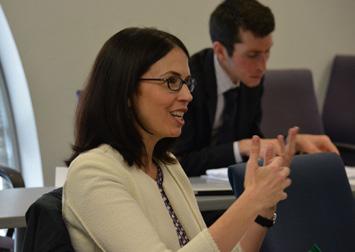
LILY BATCHELDER
Professor of Law and Public Policy, New York University School of Law Accounting for Behavioral Considerations in Business Tax Reforms: The Case of Expensing
LILIAN FAULHABER
Associate Professor of Law, Georgetown University Law Center The Trouble with Tax
Competition: From Practice to Theory
JACOB GOLDIN
Assistant Professor of Law, Stanford University Law School
Tax Preparation and Take-Up on the Earned Income Tax Credit

JOINT WORKSHOP IN POLITICAL ECONOMY
WITH DEPARTMENT OF POLITICAL SCIENCE
The joint Political ScienceMurphy Institute Lecture Series brings together scholars working in comparative and international political economy and human rights for an ongoing conversation about participants’ research agendas. Three meetings took place during this academic year. Each meeting featured a paper by a guest speaker, comments on the paper by a Tulane faculty member discussant, and a Q&A session with the audience. The overarching purpose of the workshop is to enrich the intellectual climate for graduate students, post-doctoral researchers, advanced undergraduates, and faculty in Political Science and The Murphy Institute, as well as other interested participants in the Tulane community.
DANIEL HEMEL
Assistant Professor of Law, University of Chicago Law School
The Federalist Safeguards of Progressive Taxation
MICHAEL KNOLL
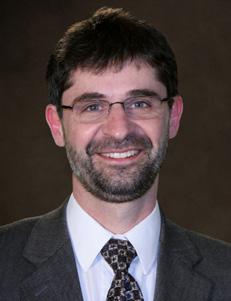
ERIC HELLEINER
Professor of Political Science and Faculty Arts Chair in International Political Economy, University of Waterloo Before Structuralism and Dependency: What Did Latin America Contribute to International Political Economy?
CANDELARIA GARAY
Associate Professor of Public Policy, Harvard University Kennedy School of Government Social Policy Expansion in Latin America
STEPHEN WEYMOUTH
Assistant Professor and Marano Faculty Fellow, Georgetown University McDonough School of Business Winners and Losers in International Trade: The Effects on Presidential Voting
Theodore K. Warner Professor of Law and Professor of Real Estate, University of Pennsylvania Law School
What Is Tax Discrimination and How Can It Be Prevented? A Simple Solution to a Complex Problem
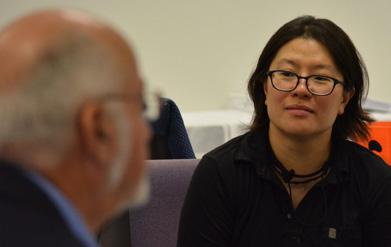
^ SHU-YI OEI
Hoffman F. Fuller Associate Professor of Tax Law, Tulane University Law School Leak-Driven Law
STEVEN M. SHEFFRIN
Professor of Economics and Director of Murphy Institute, Tulane University Personal and Corporate Tax Avoidance: Corporations Are Not Always the Villains
KATHLEEN
DELANEY THOMAS
Assistant Professor of Law and Director of Tax Institute, University of North Carolina School of Law
Taxing the Gig Economy
center highlights
FROM ITS INCEPTION, THE CENTER FOR ETHICS AND PUBLIC AFFAIRS focused on two areas where our faculty had particular expertise: Ethics and PPE, the latter of which investigates the intersection of politics, philosophy, and economics. In recent years, the Center for Ethics has also focused its programming on a third area, Agency and Responsibility, which draws on our faculty expertise in both moral psychology and the intersection of cognitive science and
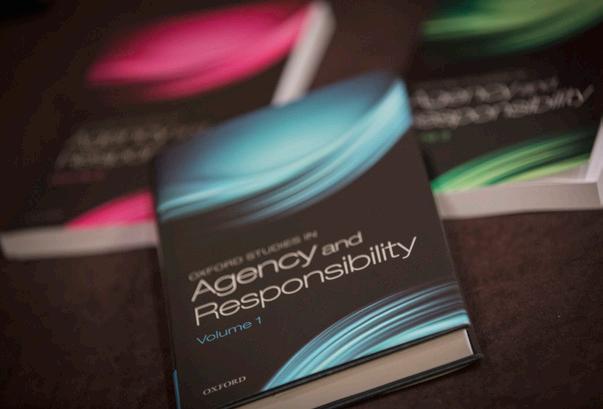
AGENCY & RESPONSIBILITY
This past November, the Center for Ethics hosted an international conference in honor of Gary Watson, Provost Professor of Law and Philosophy at the University of Southern California and a seminal figure in the philosophy of agency and responsibility. The conference, organized by Murphy Institute faculty member David Shoemaker, drew more than 70 academics to New Orleans in order to discuss original papers on themes related to Professor Watson’s work. With the support of The Murphy Institute, Professor Shoemaker has also organized the
fourth New Orleans Workshop on Agency and Responsibility, to be held November 2-4, 2017. Jeanette Kennett of Macquarie University, Michael S. Moore of the University of Illinois College of Law, and Angela Smith of Washington and Lee University will serve as keynote speakers, and papers delivered by the speakers will appear in the fifth volume of Oxford Studies in Agency and Responsibility.
POLITICS, PHILOSOPHY, & ECONOMICS
To support the journal Politics, Philosophy, & Economics , the Center for Ethics hosted its annual PPE Conference on March 10-11, 2017, which focused on economic inequality and the institutions of contemporary capitalism. Papers presented at the conference will appear in a special issue of Politics, Philosophy & Economics . This coming February, The Murphy Institute will host the journal’s conference in New Orleans.
On March 17-18, 2017, the Center for Ethics also provided partial support for a second conference devoted to PPE: the first free-standing conference of the PPE Society, organized
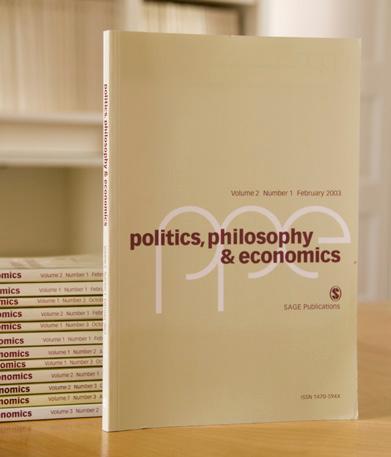
The first three volumes of Oxford Studies in Agency and Responsibility series.
by Geoffrey Sayre-McCord of University of North Carolina, Chapel Hill and co-hosted by the Tocqueville Society at the University of New Orleans. More than 100 political scientists, economists, and philosophers presented at the conference, including The Murphy Institute’s Executive Director, Steven Sheffrin, along with Murphy Institute faculty member Jonathan Riley and two of this past year’s Center Faculty Fellows, Daniel Jacobson and Paul Hurley.
UPCOMING SPEAKERS
Each year, Bruce Brower, Murphy Institute faculty member and Chair of Philosophy, organizes the Center for Ethics and Public Affairs speaker series. Thirteen noted speakers presented their research at the series in 2016-2017 (see page 20). Another group of equally distinguished academics is slated for 20172018: Justin D’Arms, Professor of Philosophy, Ohio State University; Rebecca Tuvel, Assistant Professor of Philosophy, Rhodes College; Richard Dien Winfield, Distinguished Research Professor, University of Georgia; Jamie Dreier, Professor of Philosophy, Brown University; Cristina Bicchieri, Sasha Jane Patterson Harvie Professor of Social Thought and Comparative Ethics, University of Pennsylvania; Nomy Arpaly, Professor of Philosophy, Brown University; Thomas Hurka, Chancellor
FELLOWS 2016–2017
FACULTY FELLOWS
PAUL HURLEY
Edward J. Sexton Professor of Philosophy, Claremont McKenna College
DANIEL JACOBSON Professor of Philosophy University of Michigan
ROSA TERLAZZO Assistant Professor of Philosophy, Kansas State University
GRADUATE FELLOWS
JULIAN KATZ Department of Philosophy
ALIX RIVIÈRE Department of History
NICHOLAS SARS Department of Philosophy
DANIEL TIGARD Department of Philosophy
Henry N. R. Jackman Distinguished Professor of Philosophical Studies, University of Toronto, and David Sobel, Irwin and Marjorie Guttag Professor of Ethics and Political Philosophy, Syracuse University.
CONFERENCE IN HONOR OF ERIC MACK
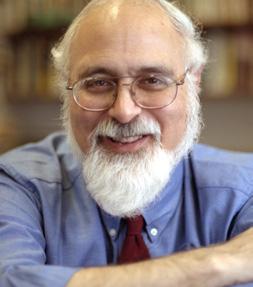
Finally, in honor of longtime Department of Philosophy and Murphy Institute faculty member Eric Mack, upon his retirement, the Department of Philosophy and the Center for Ethics will co-sponsor a conference on themes from Professor Mack’s research. Organized by Philosophy faculty member Chad van Schoelandt, the conference will take place April 13-14, 2018, at Tulane University. Confirmed speakers include Jerry Gaus, James E. Rogers Professor of Philosophy, University of Arizona and Bas van der Vossen, Associate Professor of Philosophy, Chapman University. b
FELLOWS 2017–2018
FACULTY FELLOWS
CHRIS HEATHWOOD Associate Professor of Philosophy University of Colorado Boulder
SUZY KILLMISTER Assistant Professor of Philosophy University of Connecticut
NICK ZANGWILL Ferens Chair in Philosophy University of Hull
GRADUATE FELLOWS
NATHAN BIEBEL Department of Philosophy
JESSE HILL Department of Philosophy
ALLEN RAY Department of Philosophy
ASHLEY SCHMIDT Department of History
seminars & lectures
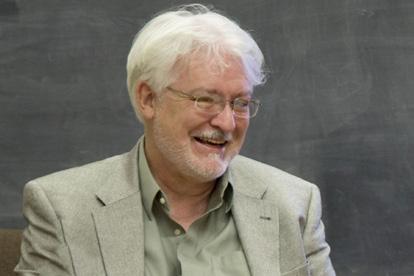
The Center for Ethics and Public Affairs continues its tradition of drawing renowned speakers to give large public lectures and small-audience seminars. The 20162017 academic year brought a tremendously diverse and interesting program — one of our biggest ever — organized by Bruce Brower. Presentations addressed topics including well-being, tax policy, political obligation, and paternalism.
TAMAR SCHAPIRO
Associate Professor of Philosophy, Stanford University Kant’s Philosophical Method and Contemporary Action Theory
ANN CUDD >
PAUL HURLEY
Center for Ethics and Public Affairs
Faculty Fellow
Edward J. Sexton Professor of Philosophy, Claremont McKenna College Consequentialism and the Standard Story of Action
ROSA TERLAZZO
Center for Ethics and Public Affairs
Faculty Fellow
Assistant Professor of Philosophy, Kansas State University Transformative Experiences and Well-being
JENNIFER FREY
Assistant Professor of Philosophy, University of South Carolina Action, Practical Knowledge, and the Good
RICHARD ELDRIDGE
Charles and Harriett Cox McDowell
Professor of Philosophy, Swarthmore College
The Value of Art: On Meaning and Aesthetic Experience in Difficult Modern Art
DANIEL JACOBSON
Center for Ethics and Public Affairs
Faculty Fellow Professor of Philosophy, University of Michigan Mill Does Not Have a Harm Principle
OWEN FLANAGAN
James B. Duke Professor of Philosophy, Duke University
Never in Anger: Cross-cultural Philosophical Variations
KEVIN VALLIER >
Professor of Philosophy and Dean of the College of Arts and Sciences, Boston University Towards a Feminist Libertarian Metaphysics: A Critique of the Selfownership Thesis
JONATHAN DANCY
Professor of Philosophy, University of Texas at Austin Forms of Instrumental Reasoning
GIDEON ROSEN
Stuart Professor of Philosophy, Princeton University
Rage against the Machine: Anger as a Political Emotion
< LIAM MURPHY
Herbert Peterfreund Professor of Law and Professor of Philosophy, New York University Public Law and Private Illusions
Associate Professor of Philosophy, Bowling Green State University Social Trust and Public Reason
organized by BRUCE BROWER
CONFERENCE IN HONOR OF GARY WATSON, 2016
PAMELA HIERONYMI
Professor of Philosophy, University of California, Los Angeles
I Bet You Think This Blame Is about You
MICHAEL MCKENNA Professor of Philosophy, University of Arizona Watsonian Compatibilism
THOMAS M. SCANLON
Alford Professor of Natural Religion, Moral Philosophy, and Civil Polity, Emeritus, Harvard University Learning from Psychopaths
MICHAEL SMITH
McCosh Professor of Philosophy, Princeton University Responsibility, Trust, and Second Chances
R. JAY WALLACE
Judy Chandler Webb
Distinguished Chair for Innovative Teaching and Research, University of California, Berkeley Moral Address: What It Is, Why It Matters
GARY WATSON
Provost Professor of Philosophy and Law, University of Southern California Second Thoughts
SUSAN WOLF
Edna J. Koury Distinguished Professor of Philosophy, University of North Carolina, Chapel Hill
Attributability and the Self
GIDEON YAFFE
Professor of Law, Professor of Philosophy, Professor of Psychology, Yale Law School Compromised Addicts organized by DAVID SHOEMAKER
PPE 2017: CONTEMPORARY MORAL AND POLITICAL PHILOSOPHY
The PPE Conference is an annual event organized by the editors of Politics, Philosophy, & Economics. Papers presented at the conference are targeted for subsequent publication in this top-rated academic journal, which aims to bring moral, economic, and political theory to bear on the analysis, justification, and criticism of political and economic institutions.
STEVEN DURLAUF
William F. Vilas Research Professor and Kenneth J. Arrow Professor of Economics, University of Wisconsin-Madison
A Great Gatsby Curve for the United States: Evidence, Mechanisms, and Policy Implications
HELENE LANDEMORE
Associate Professor of Political Science, Yale University No Production without Representation: On Democratizing the Governance of Large Firms
MARTIN O’NEILL
Senior Lecturer in Political Philosophy, University of York Predistribution: The Very Idea
ROBERTO VENEZIANI
Reader in Economics, Queen Mary University of London Territorial Rights and Colonial Wrongs
STUART WHITE
Fellow and Tutor in Politics, Associate Professor of Politics, Jesus College, University of Oxford Oligarchy and the Constitutional Citizens’ Assembly
profiles of faculty fellows
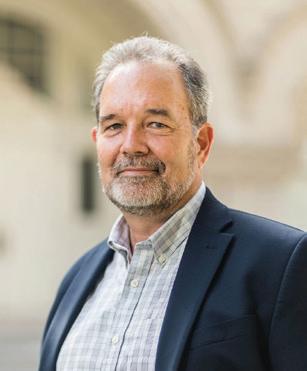
PAUL HURLEY needed no introduction to New Orleans. As the first of the Fellows to be raised in New Orleans, he knows the city well. “There is no other place in the U.S. with a music scene that rivals New Orleans in quality, variety, or affordability,” he says.
“The neighborhood jazz club simply does not exist anywhere else; an evening at Bacchanal, or the Back Room at Buffa’s, or Dos Jefes listening to great music in an intimate setting is an amazing experience that is just not available anywhere else.”
Even with the distraction of the music scene, Hurley accomplished a good deal in New Orleans, dedicating most of his time to a series of articles on consequentialism. He finished revisions on “Why the Consequentialist’s ‘Compelling Idea’ Is Not,” which has now appeared in the journal Social Theory and Practice . After completing a second article, “Consequentialism and the Standard Story of Action,” he wrote a new article, “Exiting the Consequentialist Circle: Two Senses of Bringing About,” and began another essay, tentatively titled “Resolving the Paradox of Passion.”
The Center provided an ideal venue for immersing himself in scholarly activity. In addition to the Center’s Faculty Seminar, Hurley participated in the Center’s PPE and Gary Watson conferences and attended the Monday Law School Colloquia regularly. He reports that discussions with graduate students, Tulane faculty, and his fellow Fellows proved extremely useful, noting in particular how much he appreciated the feedback on the paper that he delivered at the Faculty Seminar.
In late July, Hurley returned to Claremont McKenna College, where he serves as the Edward J. Sexton Professor of Philosophy, but not without new memories of his hometown and the scholarly community he found at Tulane.
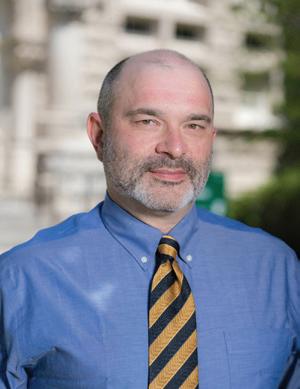
Like Paul Hurley, DAN JACOBSON found that his time at The Murphy Institute galvanized his work. Jacobson spent his time at the Center working on a project which gives a coherent account of John Stuart Mill’s moral and political philosophy. “This has proven elusive for philosophers,” Jacobson notes, “as the central puzzle of Mill scholarship is how to reconcile his two main principles: the principle of utility and the principle of liberty. I suggest that they are not just consistent but, when properly understood, cohere and support each other.”
The chance to discuss his work with the Center’s faculty proved valuable for Jacobson’s work. “David Shoemaker may have inspired a major insight that motivated my ‘Mill Does Not Have a Harm Principle,’” Jacobson says. He’s also grateful for feedback from Jon Riley, Paul Hurley, and Shoemaker when he presented his paper on Mill at the Center for Ethics Faculty Seminar.
“David Shoemaker may have inspired a major insight that motivated my ‘Mill Does Not Have a Harm Principle.’”
PAUL HURLEY
DAN JACOBSON
The city of New Orleans was the perfect place to spend a fellowship year. “David Shoemaker showed me some of his favorite spots in the city and generally was a great host and ambassador,” Jacobson says.
The fall finds Jacobson back at the University of Michigan, where he is a Professor of Philosophy, eager to continue his work on Mill.
ROSA TERLAZZO
spent an ideal year at The Murphy Institute Center for Ethics and Public Affairs. “So much of my time was free for writing, but it was nicely punctuated by chances to read and talk so much good philosophy as part of the seminar series. Paul and Dan were both wonderful to talk to, and having two more senior folks right next door was also really helpful for navigating issues in the larger profession.”
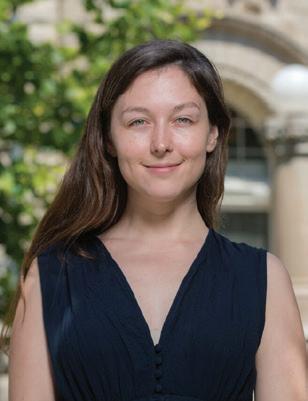
While at the Center Terlazzo wrote a series of three articles that develop the relationship between adaptive preferences and transformative experiences in order to make the importance of that relationship clear to political philosophers. She also wrote a paper on subjectivism and infant well-being and garnered a grant to apply the main work she did in New Orleans to the domain of public education, which will allow her to spend the whole semester of Fall 2017 writing.
Terlazzo also found time to enjoy New Orleans. “I think every future Fellow should get a bike to explore the city,” she says. “I can’t tell you how many nights I would go in totally unexpected directions, getting sidetracked by a second line of music coming out of some hole-in-the-wall place or the most amazing jasmine I’d ever smelled.”
“Paul and Dan were both wonderful to talk to, and having two more senior folks right next door was also really helpful for navigating issues in the larger profession.”
This summer, Terlazzo left New Orleans with fond memories of her stay, returning to Kansas State University, where she is Assistant Professor of Philosophy. b
For information about the 2018-2019 faculty fellowship opportunities, please visit our website at murphy.tulane.edu/center/
ROSA TERLAZZO