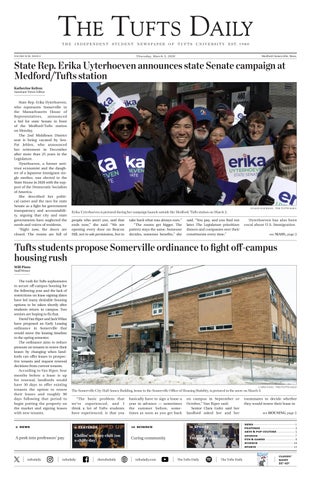
State Rep. Erika Uyterhoeven announces state Senate campaign at Medford/Tufts station
Katherine Kelton Assistant News Editor
State Rep. Erika Uyterhoeven, who represents Somerville in the Massachusetts House of Representatives, announced a bid for state Senate in front of the Medford/Tufts station on Monday.
The 2nd Middlesex District seat is being vacated by Sen. Pat Jehlen, who announced her retirement in December after more than 25 years in the Legislature.
Uyterhoeven, a former antitrust economist and the daughter of a Japanese immigrant single mother, was elected to the State House in 2020 with the support of the Democratic Socialists of America.
She described her political career and the race for state Senate as a fight for government transparency and accountability, arguing that city and state governments have neglected the needs and voices of residents.
“Right now, the doors are closed. The rooms are full of

Erika Uyterhoeven is pictured during her campaign launch outside the Medford/Tufts station on March 2.
people who aren’t you, and that ends now,” she said. “We are opening every door on Beacon Hill, not to ask permission, but to
take back what was always ours.”
“The rooms get bigger. The pattern stays the same. Someone decides, someone benefits,” she
said. “You pay, and you find out later. The Legislature prioritizes donors and companies over their constituents every time.”
Uyterhoeven has also been vocal about U.S. Immigration
Tufts students propose Somerville ordinance to fight off-campus housing rush
Will Pinto Staff Writer
The rush for Tufts sophomores to secure off-campus housing for the following year and the lack of restrictions on lease signing dates have led many desirable housing options to be taken shortly after students return to campus. Two seniors are hoping to fix that.
David Van Riper and Jack Wilan have proposed an Early Leasing ordinance in Somerville that would move the leasing timeline to the spring semester.
The ordinance aims to reduce pressure on tenants to renew their leases by changing when landlords can offer leases to prospective tenants and request renewal decisions from current tenants.
According to Van Riper, four months before a lease is up for renewal, landlords would have 30 days to offer existing tenants the option to renew their leases and roughly 90 days following that period to begin putting the property on the market and signing leases with new tenants.
“The basic problem that we’ve experienced, and I think a lot of Tufts students have experienced, is that you





basically have to sign a lease a year in advance — sometimes the summer before, sometimes as soon as you get back on campus in September or October,” Van Riper said.
roommates to decide whether they would renew their lease in

Senior Clara Goltz said her landlord asked her and her



on Tufts’ four campuses and in its host communities.
Uyterhoeven now fifth candidate for state senate seat
MASS. continued from the front
and Customs Enforcement’s presence in the state. In January, she garnered attention for a social media video demanding ICE get “the f--- out of Massachusetts.”
She has criticized Gov. Maura Healey for a three-year, multimillion-dollar deal with OpenAI, whose tools she says are used in ICE operations. The state says the company will help develop an AI software for state employees in order to increase government efficiency.
In her announcement, Uyterhoeven lambasted the contract, arguing that the governor’s office had handed over individuals’ health, unemployment and tax information to OpenAI. She also claimed that executives from Microsoft, Amazon and Fidelity had been involved in the agreement.
She also highlighted the Pentagon’s recent deal with the company and ICE’s arrest of then-Tufts graduate student Rümeysa Öztürk last year.
“Different party, same choice, and it’s the same AI that is being used by ICE,” she said.
“Rümeysa Öztürk was taken from Somerville. Masked agents, no warning, right here.”
With its construction in sight behind her, Uyterhoeven directly called out Tufts and the Medford Community Development Board for ultimately approving the university’s new dorm on Boston Avenue despite public opposition.
“More than 120 neighbors organized to stop a 10-story dormitory that Tufts University forced onto their street. The mayor opposed it. The board voted no. That should have been the end of it, but the board was pressured to reverse its decision

and approved it … because of a state law from the 1950s that says a university with a nearly $3 billion endowment doesn’t have to listen to the people who live next door,” she said.
She also criticized the university’s payment-in-lieu-of-taxes agreement with Medford, which has drawn criticism for being an unwritten arrangement.
“Tufts pays Medford a mere $450,000 a year in lieu of taxes — a handshake deal, no written record,” she said. “Your property taxes subsidize a multibillion-dollar institution, carrying the weight that they don’t have to.”
When asked why she chose to make her announcement at the Green Line station and in front of Tufts, Uyterhoeven said the community “loves public goods” and that taxing the wealthy to fund them was central to her campaign. Of Tufts, she said she would work to ensure the university pays
its “fair share” to Medford and Somerville and that Harvard does the same with Cambridge.
M. Claire Masinton, a staff attorney at the Mental Health Legal Advisors Committee, said at the event that she was supporting Uyterhoeven because of her work in prisons.
“I see her inside the prisons, meeting with incarcerated folks [and] formerly incarcerated folks,” Masinton said. “This work, to me, is so fundamental, and she really shows up. She’s just a good person. She’s not a politician’s politician. She’s a politician for the people.”
Uyterhoeven fell 3% short of receiving the DSA’s endorsement in early February. The group said the vote was not a reflection on Uyterhoeven but rather the prospects of winning the seat, according to previous reporting by Politico. Uyterhoeven announced her campaign despite previously indicating that she would not run without the DSA’s backing.
The announcement was attended by several early endorsers of Uyterhoeven, including Somerville City Councilors JT Scott and Jon Link, as well as Cambridge City Councilor Jivan Sobrinho-Wheeler.
Megan Brady of the Somerville Educators Union; David Delvalle, a formerly incarcerated educator who works as education and reentry director for the Tufts University Prison Initiative; Julio De La Cruz, vice president of the Local IBEW 2222 electrical workers union; and Sobrinho-Wheeler introduced Uyterhoeven at the announcement.
State Rep. Christine Barber, Cambridge Vice Mayor Burhan Azeem, Winchester School Committee member Tom Hopcroft and Somerville City Councilor Matt McLaughlin are also running for the seat. Uyterhoeven and Barber will leave open seats in the state House of Representatives.
Early Leasing ordinance aims to move timeline to spring semester in Somerville
HOUSING continued from the front
September before moving on to prospective tenants.
“We weren’t planning on renewing the lease, but it felt quite early, and then we only had 48 hours to respond,” she said.
Although the university cautions students against signing leases too early in off-campus housing guides for sophomores, some students say they have felt pressure to act quickly.
“Everyone was telling me by September, by mid-October, the best houses are gone,” Charlie Gavin, a sophomore who went through the process of searching for off-campus housing this past fall, said. “I was a 19-year-old — I didn’t know where to start, what to do.”
Rayna Santos-Wright, a senior, described a similar experience when she searched for housing as a sophomore.
“It was kind of like hell, because we would go through tours and there would already be another group looking,” she said. “You
either had to sign a lease in that moment or it would be gone.”
Wilan said the early timeline can create additional challenges for students, including ending up with “subpar” housing and location, rushing to find roommates, which can lead to “a lot of bad roommate situations” and uncertainty about future plans, including studying abroad.
“Most students don’t know if they’re going to study abroad yet or not … which puts you at a ton of risk, because if you don’t determine you’re going to study abroad [early on], then you need to find a subletter somehow,” Wilan said.
The timeline can also conflict with Tufts’ on-campus housing lottery. Junior-year housing lottery numbers are distributed in early November, after many students have already signed off-campus leases.
The ordinance would first need approval from the Somerville City Council, including sponsorship from a councilor, stakeholder consultation, committee approval and a final vote before the full council.
Somerville City Councilor Emily Hardt expressed interest in the proposal and said that housing was one of the city’s most pressing issues.
“On first glance, I think it’s great and I think that I’d be supportive of pursuing this and figuring out how to solve this issue,” she said.
Certain housing regulations require approval from the Massachusetts state Legislature, which would force Somerville to seek a home rule petition requesting permission to implement the ordinance.
“Even if everybody’s supportive, it would certainly add to the process,” Hardt said.
Early leasing restrictions similar to Van Riper and Wilan’s proposed ordinance have faced challenges in other cities like Ann Arbor, Mich., where the University of Michigan is located. Landlords have attempted to bypass rules by asking prospective tenants to sign agreements promising to sign leases later.
“They were signing agreements to sign a lease in the future as a loophole,” Wilan said.
He added that implementing a similar policy solely in Somerville could present additional challenges because Tufts students also rent houses in Medford.
For now, Van Riper and Wilan are focusing on building awareness among Tufts students and Somerville residents.
“People can get behind [this proposal] and create more awareness and more people that are actually interested in pushing for this,” Van Riper said.
“[Students] think of themselves as Tufts students first and then they just happen to live in Somerville or Medford,” he added.
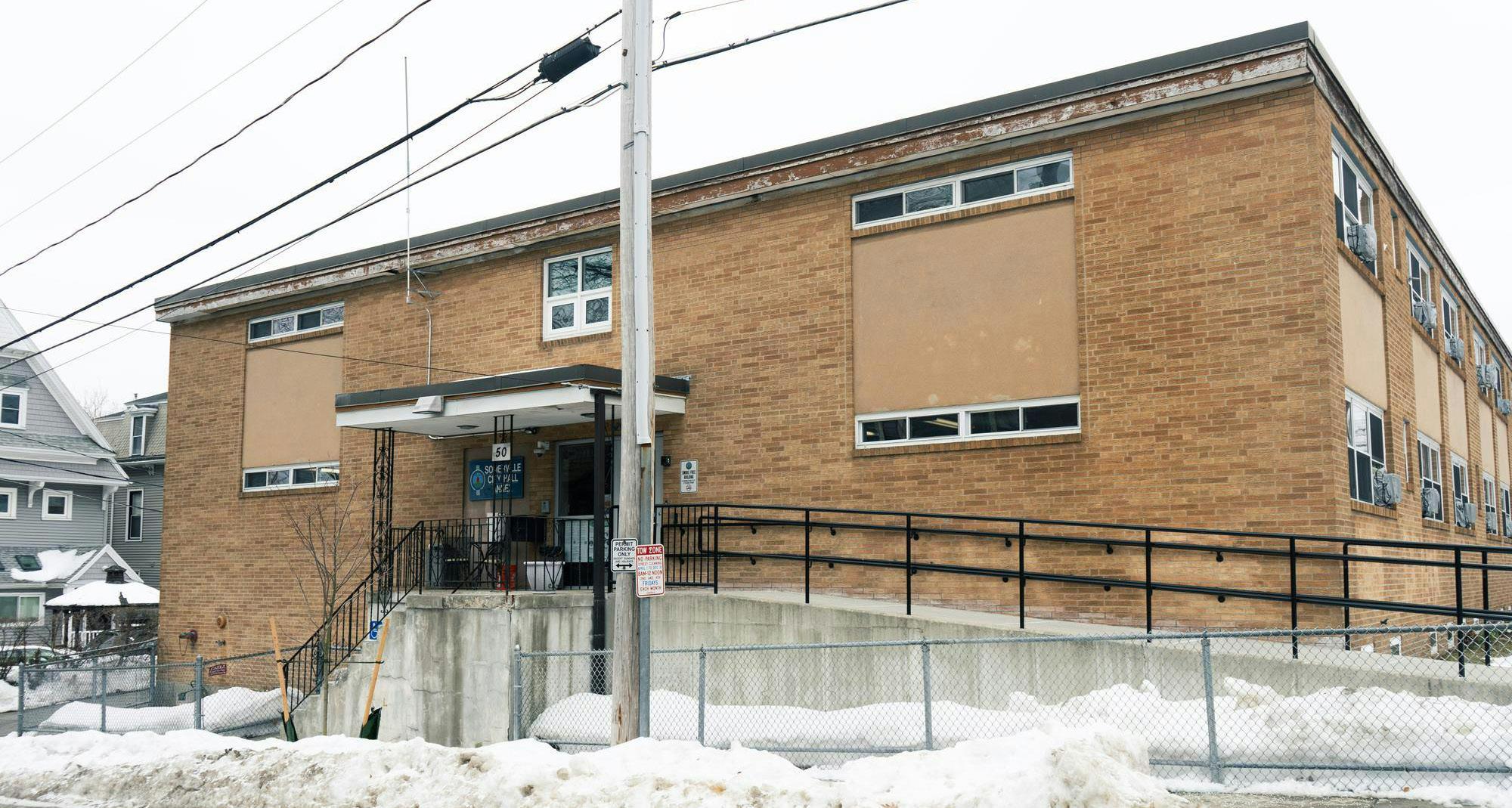
The Somerville Office of Housing Stability has created a survey for residents who have experienced early leasing pressure, which Wilan says is necessary before moving forward with the ordinance. Tufts administrators and officials in the Somerville Housing Department told Wilan that the ordinance cannot be passed based simply on “anecdotal evidence.”
JULIAN GLICKMAN / THE TUFTS DAILY
Erika Uyterhoeven is pictured during her campaign launch outside the Medford/Tufts station on March 2.
Tufts launches faculty pay transparency initiative following Massachusetts transparency law
After Massachusetts Gov. Maura Healey signed “An Act Relative to Salary Range Transparency” into law, Tufts University launched a faculty range transparency initiative and completed a university-wide faculty market analysis — efforts that have drawn mixed reactions from faculty members.
The act, passed in July 2024, required employers with over 25 employees to disclose wage ranges in job postings and provide employees with their positions’ salary ranges upon request by Oct. 29, 2025 in an effort “to increase equity and transparency in pay in the Commonwealth.”
In response, the university’s Office of the Provost and Senior Vice President launched a Faculty Range Transparency initiative in January 2025, joining the existing Faculty Market Analysis initiative established in January 2024.
According to Colleen Ryan, vice provost for faculty, and Melissa Stevenson, assistant provost for faculty affairs, the Faculty Range Transparency initiative was designed to establish formal pay ranges for all positions.
“The university initiated a focused project to establish formal pay ranges for all faculty
positions. Between January and October 2025, the university developed, reviewed, and finalized faculty pay ranges to ensure compliance by the effective date of the law,” Ryan and Stevenson wrote in a joint email to the Daily.
Faculty communication throughout the process was maintained through updates and informational meeting sessions, the administrators wrote.
“The project team responsible for the range transparency initiative provided updates to the deans, executive administrative deans, and the Faculty Senate during the project,” Ryan and Stevenson wrote. “In addition, the provost attended schoolwide faculty meetings to present the university’s faculty pay initiatives, discussing the new Massachusetts transparency law and explaining the methodology used to develop pay ranges.”
The range transparency initiative was joined by a broader Faculty Market Analysis that began in January 2024, which sought to review compensations for full-time faculty who were not covered by a collective bargaining agreement using comparative models.
“The university engaged an external consultant to compare individual faculty salaries to market benchmarks to ensure
we pay faculty competitively as determined by a range of factors including, but not limited to, discipline, experience, performance, and tenure status,” Ryan and Stevenson wrote.
Meetings with university staff, including faculty members and deans, were held regularly, with initial stakeholder conversations and updates shared throughout the process. When the analysis concluded, schoolwide sessions were implemented to “[share] the results of the university-wide market analysis and next steps for the deans to implement any necessary adjustments at their schools,” Ryan and Stevenson wrote.
Following the conclusion of the market analysis, deans reviewed their data within their specific disciplines to inform compensation-related decisions for their school. They then shared details about the new compensation strategy with faculty to encourage feedback and inform individuals of any pay adjustments made.
Ryan and Stevenson emphasized the historic nature of the projects undertaken by the administration. “The university-wide compensation benchmarking effort has been widely recognized as an important
and historic step,” Ryan and Stevenson wrote.
They added that the projects stem from a desire by the university to demonstrate its commitment to faculty and uphold institutional values through transparency and regular communication.
“Regularly reviewing and updating pay range structures ensures market competitiveness, signaling that the institution is committed to its faculty,” they wrote. “Ultimately, the balance is achieved by treating disclosure not as a one-time compliance task but as an ongoing conversation that aligns legal obligations with institutional values, preserving healthy relationships across both faculty and administration.”
In response to these initiatives, faculty leaders have recognized administrative efforts but still have concerns about management.
“Faculty response to the Provost’s Office compensation transparency and market pay analysis has been mixed and, at times, school-specific,” Fair Vassoler, faculty senate president and associate professor at the Cummings School of Veterinary Medicine, wrote in an email to the Daily. “In general, faculty appreciate the intent behind the
process and the recognition that compensation equity matters.”
However, Vassoler noted several areas of frustration regarding “the selection of peer groups, the length of time the analysis has taken,” and “questions about how market comparisons were constructed.”
These sentiments were acknowledged by the administration. “Some faculty have expressed dissatisfaction with aspects of the results, primarily the selection of peer comparator institutions and the ongoing, rising cost-of-living pressures in the Boston area,” Ryan and Stevenson stated.
Looking ahead, Vassoler emphasized faculty visions for university structures rooted in clearer communication and more equitable review.
“Beyond compliance with the new Massachusetts salary transparency law, the Faculty Senate hopes this analysis will lead to clearer compensation structures, more consistent evaluation criteria across schools and a cultural shift toward proactive equity review rather than reactive correction,” Vassoler wrote. “Whether that broader cultural shift occurs will depend on sustained communication, follow-through, and faculty engagement across all schools.”

June Myint Assistant News Editor
STELLA JEONG / THE TUFTS DAILY
The front of Ballou Hall is pictured on Sept. 26, 2025.
Get Souped Up Chill chili
Arghya Thallapragada and Emily O’Hearn
Welcome back, fellow soup enthusiasts — we missed you. What a whirlwind of emotions this week has been! From a balmy 50-degree Saturday to unexpected snow on Tuesday, it is amazing how quickly things can change. But whatever the temperature, one thing stays constant: the comfort produced by a good bowl of soup.
This time of year can certainly make a gal feel restless. Between a perpetual midterm season, the upcoming Ides of March, getting ghosted by jobs and watching the sun set during the first half of your 4:30–5:45 p.m. class, melancholia is not only understandable but seems quite inevitable. Dear
A Jumbo’s Journey
FEATURES
reader, has the recent cold snap got you feeling blue? Did you slip and fall on the ice and need something to warm you up? Are you anxious about the upcoming time change?
If so, you might just need a warm, gigantic bowl of chili. Mmm — even just typing out the word ‘chili’ evokes memories of seasoned vegetables sloshing around our mouths, spoon already reaching for another bite. Chili, in our minds, equals heartiness. It nourishes and provides you with the vigor and encouragement to keep going.
This recipe has been a staple in Emily’s kitchen for the past year — she’s been freezing it in containers of all shapes and sizes (including, for instance, a tragically forgotten yogurt tub recently excavated from the deep, dark corners of the freezer). A few days before we set out to make our soup, she had just finished off the last of her frozen stash, so it was clearly time to replace it.
Recipe
Unlike the humble tomato soup, chili is much more
versatile. Take some beans, a little chili powder, assorted vegetables and a pot, throw it all together and bam — you’ve got yourself a pretty yummy chili. However, we didn’t want to go into this recipe completely on vibes, so we used this recipe as a reference for our soup. Now, remember: Arghya and Emily are both vegetarians, so we used an all-vegetable recipe. Coincidentally, this recipe is also dairy-free if that’s your persuasion. If not, don’t let that dissuade you; read on to see why it might still be worth your time.
The base recipe we used called for onion, bell pepper, carrots and celery. Since we didn’t have the latter two ingredients, we threw in an extra bell pepper to ‘beef up’ the soup — one of the benefits of such a flexible recipe.
After sautéing the vegetables in oil and a bit of salt, we added our spices: garlic, paprika, cumin, chili powder and oregano. Once everything was smelling nice and fragrant, we added (almost) all
of the remaining items: canned diced tomatoes, black beans, vegetable stock (thanks, Better Than Bouillon!) and a bay leaf. Then all we had to do was wait about 30 minutes for everything to simmer. We finished off our soup by salting to taste and adding a splash of red wine vinegar — our personal favorite, though pretty much any kind will do.
Pro tip (because we are obviously soup professionals at this point): Make sure you do not forget the vinegar! It really adds a ‘zing’ to the soup. Trust us — we tried it before and after, and it makes a huge difference!
Reflections
This recipe makes a lot of strides on some of the critiques we had about the tomato soup, particularly in terms of substitution opportunities and the simplicity of kitchenware required to create it.
Arghya Thallapragada is a senior staff writer, having served as the Daily’s editor in chief spring 2025. She is a senior studying engineering psychology, and you can reach her at arghya@tuftsdaily.com.
SBen Rachel
onder: the feeling one gets upon realizing that every other individual has a life as full and real as one’s own, in which they are the central character and others have secondary or insignificant roles.
I found myself on an airplane this past New Year’s Day, only four hours after learning that my grandmother had passed away. I was flying back to my hometown of Chicago following a great New Year’s celebration filled with happiness, joy and hope for the upcoming year.
Learning of her passing was a stark contrast to the
Boston Bookcrawl Sonder at 30,000 feet
Emily Sullivan
published March 3.
We’re back, and this time with a bookstore that is only a stone’s throw away from campus. Sharing a name with its neighborhood, our store for this week is Porter Square Books. No matter if you walk, bike, bus or MBTA, the store is less than 30 minutes away.
Porter Square Books is a classic for me: I brought my family there for Parents Weekend my freshman year, I’ve had to write a report on my experience there for a class during my sophomore year and I also wrote an article about an event they hosted last
emotional high I had been riding. I had been thoroughly enjoying a well-deserved winter break, spending time with family and close friends and was excitedly looking ahead to a semester in Barcelona. I was ready for 2026. Then I got a text from my dad telling me that my grandmother had passed away, that he loved me and to give someone a hug. Four hours later, I was 30,000 feet in the air.
I spent pretty much the entire flight thinking about my grandmother and staring out the window. Whenever I visited her as a young kid, she always prepared a feast and made me eat because I was “too skinny.” She always called me “Dr. Benjamin Song” when she sent me birthday cards each year, hoping that I would one day become a doctor. She didn’t speak very much English, but that didn’t matter. She was my grandmother and I was her grandson.
semester. Porter Square Books is a quintessential bookstore and it is one I’m familiar with. Honestly, it’s shocking I haven’t written about it until now!
They moved into a new location a little over a year ago, switching from one side of Porter Square to the other. The new building is located on Lesley University’s campus. It’s more spacious now, with a clearer split between the cafe and the bookstore. I’m not sure if you can have nostalgia for something so recently gone, but I would be lying if I said I didn’t miss the old Porter Square Books.
When you walk into the store, you’re immediately greeted by the staff highlights table. Close by are the romance, mystery and fantasy sections. Moving deeper into the store, you can find the assorted fiction and nonfiction shelves. I am always a fan of their memoir selection.
During the second half of the flight, there was a sunset. It was one of the most beautiful sunsets I had ever seen. Deep orange bled into red, and colors I didn’t know the names of edged the sun. It was truly beautiful.
Naturally, I thought of it as a sign from my grandmother. I glanced around the plane to see if others were also looking at the sunset. The person next to me stared outside the window with a small smile and a relaxed face, no doubt thinking the sunset was a sign of hope that things would get better in the new year. A young couple holding hands in the row in front of me watched the sunset together, seeing it as a celebration of their newly found love. A small child behind me kept her head buried in her iPad, watching downloaded “Peppa Pig” videos.
We were all looking at the same sunset, but it meant
Arranged around the store are a collection of knickknacks, greeting cards, journals and other fun, pretty things to supplement your book-buying adventure.
Outside of the staff picks, the store does not feel as meticulously curated as others. They have a large space filled with books, but it doesn’t feel crowded. There are notes around the store written by booksellers, adding a wonderful touch that helps it feel more personalized. Yet, you still might have to put the work in to find your next great read. Whether you are looking for a specific title or just want to browse, Porter Square Books could work for you. The cafe inside is a great place to study and grab a bite, if you can manage to snag a seat. It is close enough to campus to be convenient, but far away enough to be a break from Tufts. If you are a Tufts student who
We view chili as a smorgasbord of vegetables with infinite possibilities. In terms of substitution ease, this recipe earned a gold star in our book. While an immersion blender can be nice if you prefer a thicker soup, it’s totally unnecessary. As for taste — well, I mean, it’s chili. And by that we’re saying it was absolutely delicious. Arghya, of course, recommends making it spicier by adding peppers (ghost, perhaps?). But overall, man did it satisfy our craving for something warm, healthy and nourishing. With the cold weather we’ve been having, we 100% recommend chili to warm you right up.
something very different to each of us.
That realization unsettled me at first. I was surrounded by people, yet I felt completely alone. No one on that flight knew what I had just learned. No one knew why I had been staring out the window for hours. To them I was just another passenger flying home after the holidays. It was very isolating to realize that, at the end of the day, my feelings lived in my own mind and heart. No one could understand or feel the way I did.
But soon I began to see it differently. I realized that while my feelings were invisible to everyone on the flight, theirs were invisible to me. And that didn’t mean we were alone, but rather we were only humans.
We can never truly know what someone is carrying. And if that’s true, maybe kindness isn’t optional — maybe it’s necessary.
Emily O’Hearn is an associate staff editor at the Daily. She is a fourth year in the combined degree program studying environmental studies and political science, and you can reach her at eohear01@tufts.edu
If something as life-altering as loss can sit quietly behind a neutral expression, then so can everything else. Someone could always be hiding something under the surface. The person next to you in class. The stranger in line at the coffee shop. The friend who seems distant.
We are all living lives as complex and full as the people sitting beside us. And most of it is invisible.
So the next time you step out of your room, remember that the person walking past you might be carrying something you cannot see.
You never know what a sunset means to someone.
Always,
Ben Rachel
Ben Rachel is a junior studying economics and computer science, and can be reached at benjamin.rachel@tufts.edu.

likes bookstores, Porter Square Books is a definite must-visit. However, as it is a fairly standard indie bookstore, it may not be worth the trek if you are a distance away, unless they have an event planned. I did not leave with a book, but I doubt it will be long before I’m back in Porter Square Books — maybe then I won’t leave empty handed.
GRAPHIC BY JAYLIN CHO
Emily Sullivan is a features writer for the Daily. She is a senior studying clinical psychology and English and can be reached at Emily.Sullivan654577@tufts.edu.
ARTS & POP CULTURE
‘Love Story’ Review: JFK Jr., Carolyn Bessette, the story we keep making up
Sarin Chaimattayompol Staff Writer
“Love Story” (2026) opens outside a nail salon, where swarms of paparazzi wait to catch a glimpse of Carolyn Bessette Kennedy (Sarah Pidgeon). The camera flashes through the window and reflects onto her freshly painted red nails, but the moment the nail technician finishes, Bessette asks for a neutral shade instead. No mundane moment involving Bessette escaped public intrigue, least of all the heated ones.
Bessette and John F. Kennedy Jr.’s (Paul Anthony Kelly) arguments were splashed across magazines while paparazzi camped outside their apartment around the clock. As the season progresses and Bessette grows more entangled with both JFK Jr. and the limelight surrounding him, one begins to see this opening scene as illustrative of a woman being controlled by the public eye, down to the color of her nails.
“Love Story” traces the relationship between JFK Jr. and Bessette, a couple who were
resolutely private about their intimacy — which only made the public push harder for more. When cameras finally caught them in a heated argument in Central Park in 1996, it deepened the obsession and intrigue.
Nowadays, a tantalizing photograph of a celebrity couple’s spat is promptly contextualized in an Instagram reel or on a podcast episode. “Love Story,” by contrast, provides relief, transporting viewers to the analog ‘90s before social media, iPhones, street vloggers and influencers existed. The series drifts into a gauzy, romantic ’90s minimalism and conjures the palette of New York with its classic mustard taxi cabs, high-society Manhattan and the Kennedy mythology.
Pidgeon’s Bessette is an independent, corporate-adjacent woman who smokes the occasional cigarette and gives nothing away. From the very start, Bessette refuses to give JFK Jr. her number, remarking coolly that he knows where to find her. Time and time again, she lets him initiate everything: He tracks down
her workplace, calls repeatedly as she declines to pick up, sends roses she ignores and buys a suit just to earn a brief conversation. What keeps JFK Jr. hooked — the most eligible bachelor and PEOPLE’s 1988 Sexiest Man Alive — is that Bessette refuses to be swept up in his gravity.
The real Bessette was just as withholding, leaving almost nothing behind. She refused interviews and wore the same outfit every day, hoping identical paparazzi photos would eventually bore the press into leaving her alone. Yet they didn’t, and avid watchers are rushing to replicate the look even today. As Pidgeon said in an interview with E! News, Bessette’s insistence on privacy “made it easier for narratives and characterizations to be projected onto her and therefore onto them as a couple.” Tabloids in the ’90s branded her as the “Ice Queen,” a vixen, an opportunist, which were projections that had little to do with the woman Elizabeth Beller describes in “Once Upon a Time: The Captivating Life of Carolyn Bessette-Kennedy” —
one of the show’s main sources of inspiration. Beller depicts her as spunky, vivacious, humorous and quick-witted.
Kelly’s JFK Jr. dons backward Kangol hats, rides his bike through Tribeca, forgets to lock it, plays football in Central Park and forgets to mention that the party he’s invited Bessette to is his sister’s birthday dinner. He is spurof-the-moment and occasionally reckless — and why shouldn’t he be? Though JFK Jr.’s unique masculinity and swagger remain, as always, impossible to fully replicate, Kelly inhabits the spontaneous side of JFK Jr. — a man constitutionally unburdened by consequence, who was not above stripping off his shirt to exercise in Central Park when the tabloids needed to be fed, throwing himself into risky adventures and trusting luck to handle his fate. Bessette had no name, money or myth to live that kind of recklessness. She was Manhattanmade and hardworking, so one could argue that her resistance to his wooing was not out of coyness but an effort to buy time to
decide whether she could survive a life inside his gravity.
It’s worth remembering that “Love Story” is explicitly fiction. The show is an act of imagination built upon the negative space the couple deliberately left behind.
“Love Story” is just another projection among the many tabloids, rumor-mongering labels and descriptions of the couple — this time dressed in Calvin Klein fabric and the nicotine tint of pre-ban Manhattan air — produced by Ryan Murphy. His previous series, “Monster: The Jeffrey Dahmer Story” (2020), drew criticism due to Murphy’s failure to notify the victims’ families of the production. “Love Story” has also received criticism, with JFK Jr.‘s nephew Jack Schlossberg excusing the show for inaccurately portraying his uncle’s life.
“Love Story” is a show that Bessette spent her whole life preventing, yet we’re still at the window, being swept up by the analog ’90s and the mystique of a couple that eludes the public 30 years later.
VIA WIKAMEDIA COMMONS
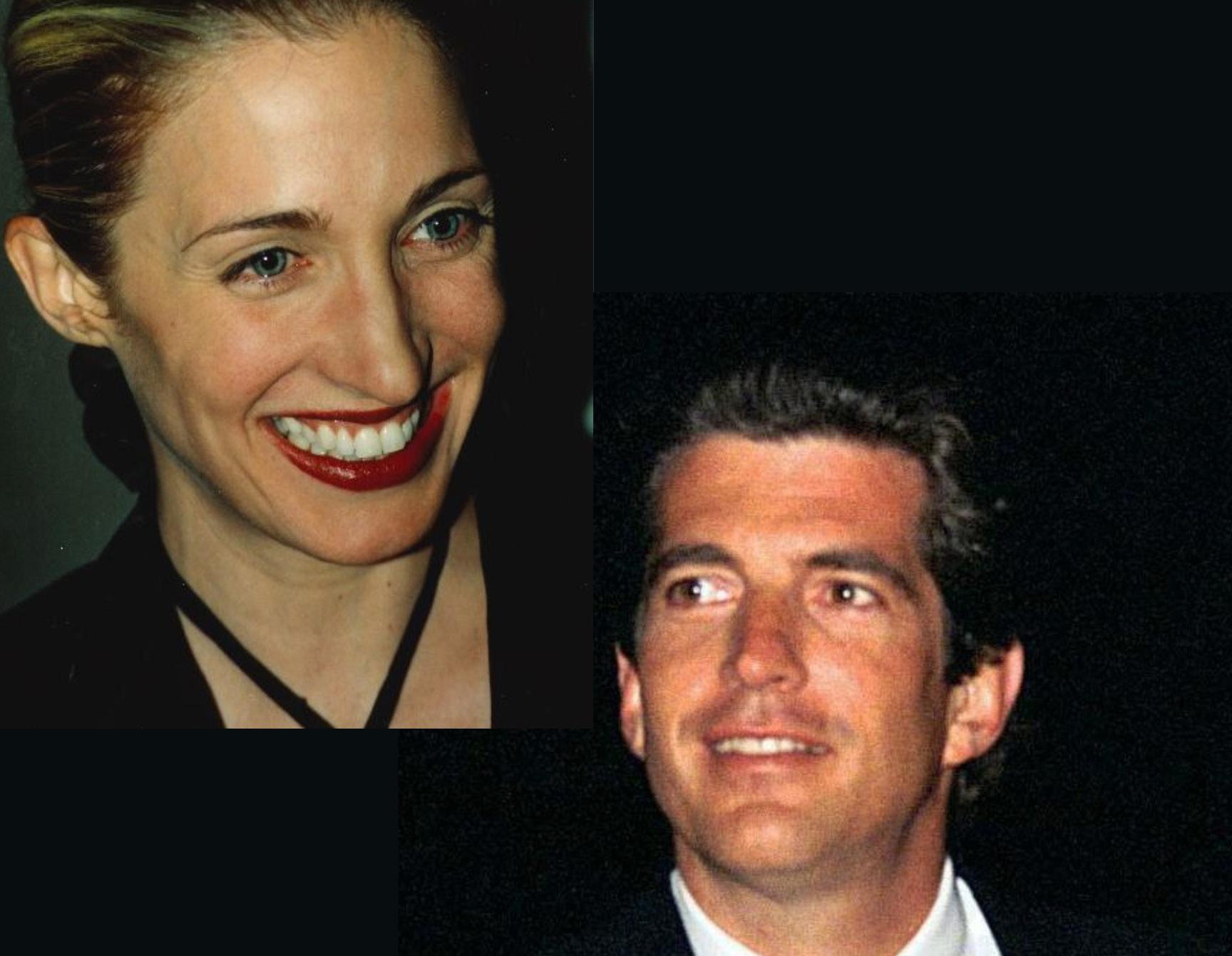
Carolyn Bessette and JFK Jr. are pictured.
In Photos: Blizzard of ‘26 strikes Tufts

Photos by Connor Hines and Christina Jamieson
OPINION
Op-ed: Remembering Katharine Burnett, my Expository Writing professor
Mark Calogero
Kate Burnett has passed. (Well, I only recently found out, and it was five years ago when she departed this world.) She had reached the ripe old age of 94.
She was a tough, older New Englander when I first met her back in the autumn of ’79, with graying hair, a muted kneelength skirt and horn-rimmed glasses. In retrospect, she evoked the actor Anne Bancroft from that era. She was highly educated, having received a master’s degree in literature from Tufts and a doctorate from Harvard. She taught expository writing for four decades at a few of the area’s Ivy League schools.
Kate, as it happened, wrote me a timely recommendation letter that helped me gain admission to University of Washington School
Michaela Loughran Opinion Editor
For both U.S. Olympians and American spectators, the 2026 Olympics were difficult to navigate. Many people were forced to grapple with the question of whether it’s possible to separate feelings of patriotism and pride that might come with supporting U.S. medalists from anger concerning the atrocities of the current administration.
U.S. Olympic freeskier Hunter Hess summed up this tension well in a comment he made recently to the press: “I think it brings up mixed emotions to represent the U.S. right now … just because I’m wearing the flag doesn’t mean I represent everything that’s going on in the U.S.”
A New York Times contributing opinion writer, Esau McCaulley, echoed the latter part of Hess’s statement. He acknowledged the pain and terror gripping the U.S. right now, while still affirming “Team U.S.A. Is Not Team White House.” McCaulley makes a good point: Perhaps Team USA should be seen more as representatives of the people of the U.S., rather than the U.S. government. Even so, it doesn’t help his case that the gold medal-winning U.S. Men’s Hockey Team recently ‘bowed’ to President Donald Trump, accepting his invitation to his State of the Union address. On the same phone call that Trump invited the men’s team to the White House, he made a back-handed, arguably misogynistic remark about having to invite the gold medal-winning women’s team too, joking that he would probably be impeached if he didn’t. In the
of Law in the autumn of ’83, then a top-10 national law school.
I had only recently come across a note from her from ’82, typed on a Tufts stationery pad. The note assured me that a letter I’d requested — the third one I needed to complete my law school application — would be sent along to my undergraduate adviser. Her note to me, composed in perfect ‘Elements of Style’ English, also observed how it’d taken a month for my request to find its way to her desk.
During our semester-long class, she got me, for the first time in my academic life, to reflect on and to defend those ideas I’d put down on the page for her to grade.
Kate did not have a taunting voice in class, in contrast to my first-year law school professor, James Hardisty, who would taunt us with his demeanor and
intellect. Hers was a voice that challenged you, as if to say, “Hey you, now it’s time to speak up in class,” else we late-’70s bright-but-entitled Tufts undergrads would have slid by, as we did in other classes.
She didn’t let us, and I’m glad for that.
Behind those black, hornrimmed glasses that framed soft gray eyes, she might have been shy by nature. But she never let on.
She couldn’t lead with shyness in an expository writing class that endeavored to pry ideas out of us on topics such as Conrad’s “Heart of Darkness” after all.
I was most definitely shy in class at 19 and offered a few views on content I had written only as a result of her prodding. They were never forceful or compelling opinions, but they were my own. And that wasn’t such a bad thing
for a young man who aspired to attend law school one day.
She was likely the first instructor who got me to defend my ideas conveyed through writing. I never had to do that before, and most of the responses of my Tufts engineering professors had been to grade my content as ‘right’ or ‘wrong’ or to locate me in a distribution of exam scores. (I was near the bottom.)
At age 33, upon taking my doctorate from UW in cognitive science — I never did finish law school, but I did receive an outstanding first-year education that featured James Hardisty’s Torts — I learned I had a strong writer’s pedigree. I was the grand-nephew of a famous American journalist.
I wonder if Kate sensed some future potential in my writing and, sensing this, might have
U.S. men’s hockey team bows to Trump
video, other than one voice that can be heard quietly saying “absolutely,” the joke was met with an uproar of laughter from many of the hockey players in the room. It appears that the U.S. Hockey team is just a boys’ club that likes to belittle its female counterparts.
Given the men’s team’s excitement and willingness to play along with Trump’s mockery of women in the video of their call, it’s no surprise that most of them attended the State of the Union address. Notably, 5 players did not: Brock Nelson, Jackson LaCombe, Jake Guentzel, Jake Oettinger and Kyle Connor. None of the five players have publicly mentioned any other reason for this decision than to get ready for their return to NHL play, which was on pause during the Olympics. It is perhaps worth noting, though, that four of those five players were born in, or spent a good part of their upbringing in, Minnesota, the site of the recent immigrant crackdown led by the Trump administration.
Two of the U.S. Men’s Hockey Team’s star players, brothers Jack and Quinn Hughes, were on Good Morning America discussing winning Olympic gold when the State of the Union was brought up. Quinn spoke for himself and his brother, commenting, “We’re excited to go … It’s gonna be special for us.” Evidently, the brothers have no qualms about visiting the residence of one of the most controversial presidents of all time.
Quinn then shifted to discussing the controversy surrounding the men’s and women’s teams, saying, “We’re extremely happy for them.
Obviously, there’s a lot going on on social media surrounding our team and their team, but over the last couple of summers we did a lot of training with them and got to know a lot of those girls really well.” While expressing pride in the women’s team and sharing that they trained together is a nice thought, it doesn’t really suffice as an apology for being complicit while their colleagues were ridiculed.
To make matters worse, Jack Hughes appears to have doubled down on their behavior in comments made while speaking to reporters in Miami. Truly supporting the women’s team entails speaking out against the men mocking them. It also means taking accountability for one’s mistakes instead of calling them “almost nothing.” This, however, takes a level of self-awareness, humility and empathy that might be lost on some of these players.
However, it appears that there is one player whose empathy might
not be lost on: Charlie McAvoy, a defenseman for the Olympic team. He recently spoke out in an interview, commenting, “[I’m] certainly sorry for how we responded to it in that moment. Things just happened really quick there. If you know the men’s team … and how we’ve supported [the women’s team], it’s certainly not reflective of how we feel and look at them and their accomplishments.”
Only a couple of other players have spoken out. The stark majority of the team has yet to give an apology, and I personally am not optimistic we will hear one from anyone else. But if even more of these players would speak out and make similar comments, they would have the potential to shift the perceived image of their organization for the better.
While Hilary Knight, captain of the women’s team, stated in an interview that she found Trump’s joke “distasteful and unfortunate,” she also asserted that explaining Trump’s
commented in a positive way in her letter.
I never did read her letter about me. But during a Friday keg party, I did question our UW law admissions counselor about how important those personal letters were that we’d spent months crafting. He told me they were very important and that mine, in particular, had helped me gain acceptance at UW. I certainly wasn’t going to gain admission based on my meager 3.3 GPA.
I got in and launched my own professional career thanks to her timely letter of support, which remembered me from her writing class.
More than 40 years later, I recall her only on her passing. I am, as it turns out, too late with my letter about Kate Burnett. My remembrance and thanks now stand as long overdue.
behavior is not her responsibility. Rather, she explained that what is her responsibility is “shifting the narrative of this amazing accomplishment that we all did together. And, granted, the men’s team and women’s team did it together.”
While Knight was kind to acknowledge the shared success of both teams, despite receiving few apologies from the men, she also emphasized that “These women are amazing, and whatever is going on should never outshine or minimize their work and our success on the world stage.”
It is unfortunate that all of the controversy has distracted so much from the significance of the women’s victory. But despite the president’s attempt to undermine their success, their victory can still embody a sense of hope for our nation and spectators across the globe — hope for a world where men and women are truly treated as equals.

The Tufts Daily is a nonprofit, independent newspaper, published Monday through Friday during the academic year and distributed free of charge to the Tufts community. The content of letters, advertisements, signed columns, cartoons and graphics does not necessarily reflect the opinion of The Tufts Daily editorial board.
EDITORIALS: Editorials represent the position of The Tufts Daily Editorial Board. Individual editorialists are not necessarily responsible for, or in agreement with, the policies and editorials of The Editorial Board. Editorials are submitted for review to The Tufts Daily Executive Board before publication.
VIEWPOINTS AND COLUMNS: Viewpoints and columns represent the opinions of individual Opinion editors, staff writers, contributing writers and columnists for the Daily’s Opinion section. Positions published in Viewpoints and columns are the opinions of the writers who penned them alone, and do not necessarily represent the opinions of the Daily itself. All material is subject to editorial discretion.
OP-EDS: Op-Eds provide an open forum for campus editorial commentary and are published Monday through Friday. The Daily welcomes submissions from all members of the Tufts community; the opinions expressed in the Op-Ed section do not necessarily represent the opinions of the Daily itself. Opinion articles on campus, national and international issues should be 600 to 1,200
in length and submitted to opinion@tuftsdaily.com. The editors reserve the
appear in the Daily. Authors must submit their telephone numbers and day-of availability
questions.
ADVERTISEMENTS: All advertising copy is subject to the approval of the editor in chief, executive board and business director. Reach out to business@tuftsdaily.com with advertising inquiries.
VIA WIKIMEDIA COMMONS
Marius Holtet of Norway and Patrick Kane of the United States are pictured during the 2010 Winter Olympics.

How the Supreme Court has been dismantling the environmental movement
Monica Reilly Deputy Opinion Editor
President Donald Trump’s enforcement of anti-environmentalist policies is nothing new. He started his second term by removing almost all mentions of climate change from the Environmental Protection Agency’s website, reversing a key ruling on greenhouse gases and most recently, ordering the Department of Defense to purchase electricity from coal plants. There have also been a number of quieter, less flashy actions enacted under this current administration that have flown under the radar. It’s easy to shake our heads when Trump says “drill, baby, drill,” but the actual legislative impacts of this administrative goal can often go ignored.
While the Trump administration has been working to dismantle institutions like the EPA, it’s important to note that the agency was losing power before he even started his second term. The most notable instance is the 2023 Supreme Court case Sackett v. EPA. In this case, the Sackett couple had wetlands on their property, and the EPA ordered that they stop filling in the property and return it to its original state. The EPA claimed that the order fell under its jurisdiction via the Clean Water Act, but once the case reached the Supreme Court, the powers of the Clean Water Act were strictly limited. In its decision, the court ruled that wetlands must fulfill very specific

requirements in order to be protected, and this precedent has completely gutted the act’s authority.
In 2024, Loper Bright Enterprises v. Raimondo reached the Supreme Court. The case centered on a group of commercial fishermen who sued the National Marine Fisheries Service over the service’s attempt to require them to pay for at-sea monitoring programs. While the premise may seem benign, the Supreme Court’s decision actually led to a major overhaul of the Chevron deference precedent — the idea that when a law is vague, courts should defer to federal agencies due to their limited knowledge.
cultural references, amazing visuals and a message of love. What Bad Bunny did was celebrate Puerto Rico, with all of its beauty and struggles. He also showcased an important cultural legacy: the Indigenous Taíno peoples and their survival, which is part of the broader story of Puerto Rican culture.
I,like at least 128 million others, spent Feb. 8 watching Bad Bunny perform in the Super Bowl halftime show. And like most of those 128 million, I loved the performance; it was rich with
The Taíno are a subsect of the Arawak peoples, who originated on the South American continent.
Different Taíno tribes settled all across the Caribbean, especially on islands that today make up the countries and territories of
Supreme Court cases are certainly much less interesting to read about than Trump’s State of the Union address. However, paying attention to the court’s decisions is vital to understanding the state of environmental law today. We can trace a pattern across the past several years of rulings — one that has steadily weakened both the EPA and key environmental legislation. Now, the EPA has less authority to rule on factors destroying our planet, such as pollutants or greenhouse gases. These rulings cleared the way for the Trump administration to undo the past several decades’ worth of environmental science agreements.
Haiti, the Dominican Republic, Cuba, Jamaica and Puerto Rico. These peoples were the first in the region to encounter Christopher Columbus in 1492. Columbus first visited Puerto Rico in 1493, claiming the territory for Spain. Of course, we know what happens after: Spanish colonization, the enslavement of Taíno peoples, the creation of the mestizo class, mass casualties among Indigenous peoples due to disease and more. Spain held Puerto Rico as a colony for over 400 years; it wasn’t until the end of the Spanish-American War in 1898

They also make it harder for environmental groups to bring lawsuits against those harming the environment, making the path forward for advocates very uncertain. When decades of environmental precedent are undone, it’s easy to feel dejected about the state of our legal system. But this doesn’t mean the environmental movement has to halt — it just has to evolve. Many environmental experts have begun to emphasize state legislation, following the examples of states like Massachusetts, which has its own Environmental Policy Act Office and strict legislation that emphasizes environmental protection and damage mitigation. This legislation
that Puerto Rico became a territory of the United States.
But even before Puerto Rico was considered part of the United States, Taíno peoples were thought to be extinct. Intercultural mixing — both with Spanish colonizers and with enslaved Africans brought to the island — made it seem as though Taíno peoples had somehow disappeared. In a traditional American conception of indigeneity, this is true: There is no ‘full-blooded’ Taíno tribe in Puerto Rico. The American government relies on blood quantum requirements, which are designed to deny Indigenous peoples’ culture and identity. But this worldview cannot change the fact that Indigenous peoples and cultures persist.
If you want to talk blood, then we can talk about how over 60% of Puerto Ricans show genetic markers for Indigenous heritage, but I think that line of questioning is a zero-sum game. What really matters is culture, and Taíno culture has survived in the face of 500 years of colonization. One way is through music, and Puerto Rican bomba is a perfect illustration. Before colonization, the Taíno practiced ‘areítos,’ or oral storytelling through music and dance. When enslaved African peoples were brought to Puerto Rico, areítos combined with African drum beats and call-andresponse communication; this is what bomba is today.
or judicial interpretation isn’t inherently partisan, as demonstrated by a ruling from a Montana judge that state agencies violated the right to a clean environment.
We as young people do hold political power, in spite of how it may feel, and that includes voting. With midterm primaries and elections coming up over the next several months, Americans can shake up the current Republican stronghold in Congress. That could mean the difference between environmental legislation state by state or the ability to block Trump’s agenda. We can’t give up hope in the face of recent Supreme Court cases or overturned rulings. We must evolve.
Bad Bunny showcased bomba-style beats and dance through his song “El Apagón” from 2022. The song is a political call to action concerning dangerous power outages in Puerto Rico today. When he performed “El Apagón” at the Super Bowl, he demonstrated just how integral Puerto Rico’s Indigenous history is to the present. Bad Bunny also mentions bomba by name in “DtMF,” which he performed at the end of the show.
Today, the U.S. government refuses to acknowledge the Taíno as an Indigenous group. Even so, over 96,000 Puerto Ricans identified themselves as Indigenous in the 2020 U.S. Census. As Taíno peoples regain political and cultural authority on the island, we must recognize the importance of survival in all forms. Puerto Rico, and Puerto Ricans, are inherently multicultural; that is part of the Taíno legacy. Instead of denying this reality because it doesn’t fit the American definition of Indigeneity (which, to be clear, is outdated, flawed and actively discriminatory), it is our job to learn, to listen and to fight for their recognition.
Sorsha Khitikian is a junior majoring in history, civic studies, psychology and child studies and human development. She can be reached at sorsha.khitikian@tufts. edu.
VIA WIKIMEDIA COMMONS
U.S. Environmental Protection Agency headquarters is pictured.
Through Indigenous Eyes
Sorsha Khitikian
On that Taíno beat
GRAPHIC BY ELISE SAMSON
GUARDIAN: The newborn screening study redefining early detection for rare diseases
Hannah Merritt Contributing Writer
The survival rate in infants with severe combined immunodeficiency, a rare hereditary disease that prevents the body from producing immune cells, is 96% when they receive a bone marrow transplant in their first 3½ months of life. If transplantation is delayed, that number drops to 70%. Without treatment, most children die before their first birthday. This condition is rarely visible at birth and only becomes apparent after a major infection, often outside of the window of opportunity for treatment.
The importance of early intervention and lack of visible presentation of many diseases necessitates newborn screening. However, current screening methods only test for 30–80 conditions — far from the over 10,000 known rare diseases. Dr. Wendy Chung, a clinical and molecular geneticist and chief of pediatrics at Boston Children’s Hospital, came to The Boston Globe’s Rare Disease Summit to discuss her solution to this problem.
While at the Children’s Hospital of NewYork-Presbyterian, part of the Columbia University Medical Center, Dr. Chung founded the GUARDIAN study. GUARDIAN, or Genomic Uniform-screening Against Rare Diseases in All Newborns, can detect up to 450 rare diseases. Even better, it does this with the same heel prick already used for standard newborn screening.
How is this possible, and what differentiates GUARDIAN from other newborn screening? Standard screenings rely on laboratory techniques such as tandem mass spectrometry, immunoassays, enzyme activity assays and hemoglobin analysis. While
powerful, these tests are limited to a handful of conditions such as inborn metabolic errors, congenital hypothyroidism, congenital adrenal hyperplasia, cystic fibrosis and sickle cell anemia.
GUARDIAN takes a new approach: It utilizes whole genome sequencing to detect hundreds of conditions with one test. WGS is a process in which genomic DNA is isolated and broken into pieces. These pieces are then inserted into vectors for stabilization and amplification, after which they are sequenced. A computer stitches together the entire genomic sequence, which can be further analyzed. This method gives scientists the flexibility to easily and rapidly add new conditions as they arise and as new treatments become available.
The importance of GUARDIAN became apparent to a pair of New York parents after the birth of their daughter. When she was born, her parents were offered the chance to be part of the GUARDIAN study. Despite expecting nothing to come of it, they agreed. When their daughter was six weeks old, however, she started to have seizures. GUARDIAN provided answers within weeks, before her doctors finished their own tests. She was diagnosed with CDKL5 deficiency disorder, a rare disease that causes early-onset seizures, low muscle tone and developmental delays. According to her parents, this diagnosis gave them power. They were able to “make changes immediately that were practical and had real implications” for how they took care of her. Following their daughter’s diagnosis, these parents found a neurologist who specialized in CDKL5 deficiency disorder and connected with other families with this condition, people who understood their journey
in a way few others could. Because they participated in GUARDIAN, this family was able to avoid the average “four to five year” rare disease diagnostic time and get a jump start on interventions, experimental therapies and community building.
Since its inception in 2023, GUARDIAN has screened over 20,000 babies. Out of these babies, 3% were diagnosed with a rare disease as a result of GUARDIAN –much higher than the original 1% estimate. This number indicates that estimated rates of rare disease prevalence are being severely underestimated — and that kids are consistently falling between the cracks of our medical system.
GUARDIAN is a pioneer program that makes sure no child gets left behind. As it is a research study, families must actively opt in to have their child screened. Of the families given the option to participate, 74% did, with equal representation across all the communities served by the New York-Presbyterian network. GUARDIAN is primarily helpful because it enables children to access treatment sooner and, in many cases, before a disease has had the chance to cause irreversible damage. Rare disease treatments, though, tend to be exceedingly expensive and clinical trials often time-consuming, inaccessible and far from home. Given this, how can we build systems that increase accessibility to these lifesaving interventions, particularly for historically underserved communities?
Another critical, and often unaddressed, part of the rare disease burden is their toll on patient and caregiver mental health. Compared to the 5.7% of otherwise healthy U.S. adults experiencing depression, 69% of those

with rare diseases report being depressed. Another 82% of rare disease patients report experiencing anxiety — a stark difference from the 19.1% of the general population. Caregivers similarly face significant psychological strain. Although this issue has no cure-all solution, increasing the accessibility of supportive resources is a critical first step. Beyond just genetic counselors, GUARDIAN involves social workers and patient navigators who can work with families during their diagnosis journey. These early support systems, in addition to highly reduced diagnosis times and early access to community and support groups, can reduce the mental, emotional and financial strain of rare disease.
GUARDIAN is in the process of spreading to Boston, where it should be in place by the end of the year. Massachusetts currently uses the New England Screening Program, which only tests for
Redirecting the approach to solving Alzheimer’s Disease
Jamie Song Staff Writer
At least 55 million people are living with dementia worldwide. Among the various forms of dementia, Alzheimer’s disease — a neurodegenerative disorder that is caused by a loss of neurons — is the most common. Alzheimer’s progressively impairs thinking and behavior, eventually leading to serious memory loss and affecting a person’s ability to do everyday tasks. It may begin with mild forgetfulness, but over time, patients experience frequent memory loss and increasing confusion about everyday tasks and their surroundings.
Scientists believe that one major cause of Alzheimer’s is the buildup of amyloid beta plaques in the brain. The brain naturally produces a large protein called amyloid precursor protein, which is normally cut into smaller, soluble and harmless
pieces. However, when APP is cut by beta-site APP-cleaving enzyme 1, it initiates a harmful process that produces amyloid beta. Studies show that BACE1 levels and activity increase by about 30% in patients with Alzheimer’s disease compared to individuals without dementia. The resulting amyloid beta forms sticky clusters that accumulate between neurons, disrupting communication and eventually leading to cell death. As neurons die, the brain begins to shrink: the brain’s ridges — gyri — narrow, and fluid-filled cavities enlarge.
Many studies have focused on developing BACE1 inhibitors. However, previous research at the University of Connecticut found that the depletion of BACE1 had only “partially restored synaptic function,” which suggests that BACE1 may also be required for optimal brain cognition. However, this strategy has proven difficult.
Exploring alternative functions of BACE1 is a focus of the Tufts lab run by Professor Giuseppina Tesco.
“BACE1 is a protein that not only is involved in beta amyloid generation, but also in the processing of other proteins, and they are critical for neuronal function,” she said.
Tesco notes that there are potential side effects that may come with completely inhibiting BACE 1 that are “critical for the neuron to function.”
Therefore, in the Tesco Lab, a team of undergraduate researchers has revealed a different strategy. The lab showed that depletion of Golgi-localized γ-ear-containing ARF binding protein 3 stabilizes BACE1 and increases its activity. This is specifically due to the molecule’s role in our body: GGA3 helps transport BACE1 to lysosomes — the cell’s recycling centers — where it is broken down and destroyed.
about 45 conditions. The movement of GUARDIAN to Boston therefore has the opportunity to massively impact the families involved. Next door to Boston is Cambridge: a large biotechnology hub which holds over 250 biotech companies, with more than 120 in Kendall Square alone. The soon-to-be proximity between treatment incubator and extensive rare disease testing is bound to produce revolutionary results. It is still undetermined which hospitals GUARDIAN will come to, though. Will it begin at largely white, upper-class hospitals like Mass General Brigham, or will it serve underrepresented patients at a safety net hospital like Boston Medical Center? Or will it be able to combine the two, extending its services to anyone willing to participate? Wherever it lands, GUARDIAN promises to redefine how we approach rare disease diagnosis and care.
COURTESY TUFTS UNIVERSITY
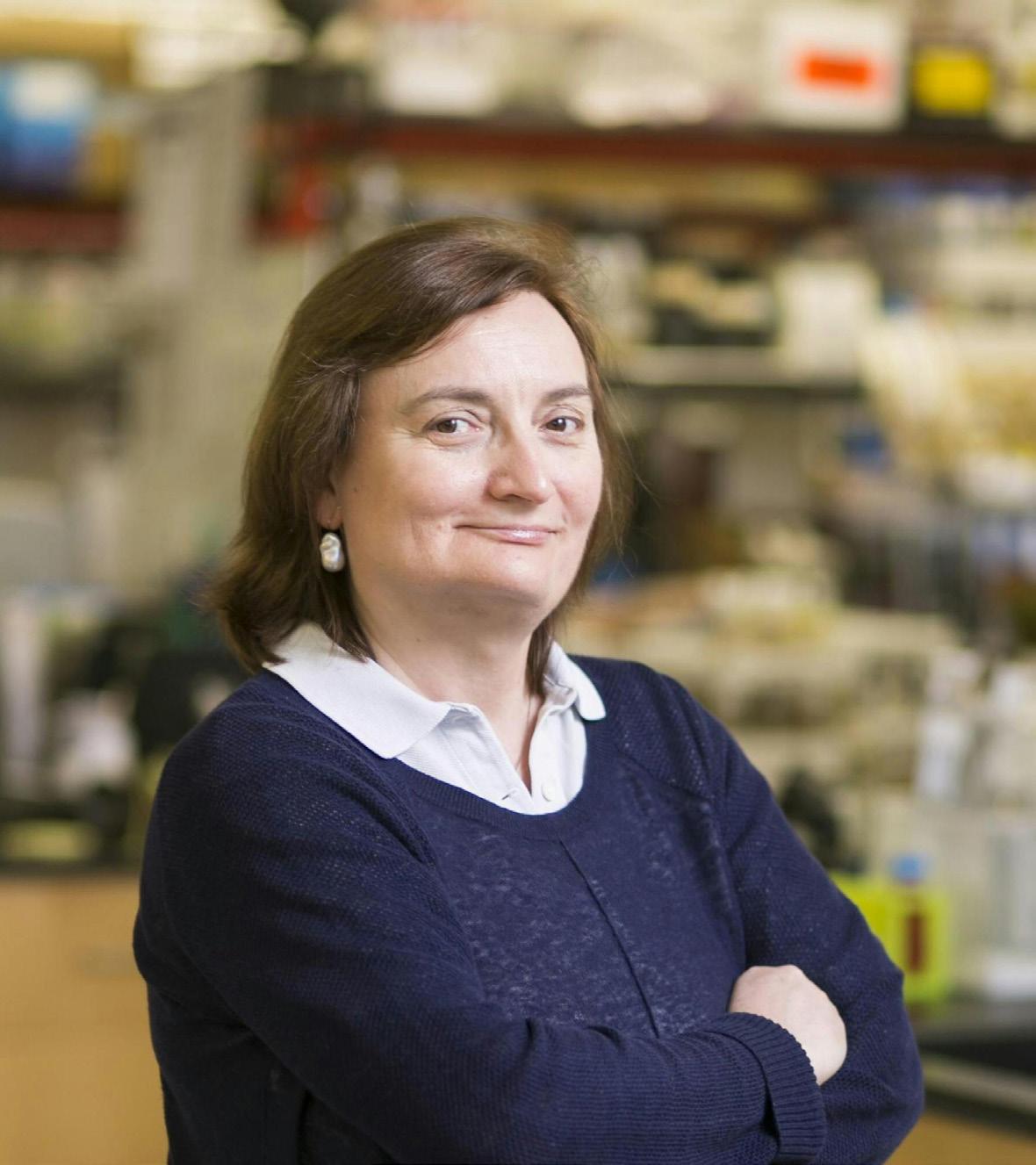
Giuseppina Tesco is pictured.
VIA WIKIMEDIA COMMONS
A newborn baby is pictured.
This process keeps BACE1 levels under control. When GGA3 levels decrease, however, BACE1 accumulates, potentially accelerating amyloid beta production. Rather than fully blocking BACE1, they modulate its levels by preserving or enhancing GGA3 function.
“We don’t want to inhibit BACE[1] at a level that would cause side effects but [instead] modulate BACE[1] activity,” Tesco explained.
Tesco compared the process to controlling a river.
Instead of completely damming the river — which could disrupt essential functions — you slightly redirect its flow. By adjusting the course just enough, you reduce the risk of flooding downstream. Similarly, completely blocking BACE1 could interfere with its normal roles in the brain, including the production of proteins essential for neuronal health. Modulating its activity, rather than shutting it down, may offer a safer therapeutic strategy. Tesco’s research also
explores how preserving GGA3 function could benefit patients beyond Alzheimer’s disease.
“There are conditions in which GGA3 decreases, for example, in stroke or traumatic brain injury,” she noted. Protecting GGA3 in these contexts may help prevent harmful increases in BACE1.
Looking ahead, Tesco is investigating a newly discovered variant in the GGA3 gene. Future research may focus on identifying a subset of Alzheimer’s patients who carry this genetic
variation, with the goal of developing targeted therapies specifically designed to restore GGA3 function in those individuals. Additionally, Tesco’s research expands beyond molecular pathways into patient-specific disease modeling. She emphasized the use of patient-derived, induced pluripotent stem cells, which allow scientists to reprogram adult cells — such as skin or blood cells — into stem cells that can then be transformed into neurons in the laboratory. These lab-grown neurons
provide a powerful tool for studying how Alzheimer’s develops in individual patients, opening the door to more personalized treatment strategies. Tesco also highlighted the importance of three-dimensional cell culture systems, which better replicate the complex environment of the human brain compared to traditional flat cell models. By mimicking Alzheimer’s disease features more accurately in vitro, these advanced models may accelerate the development and testing of future therapies.
Our health is stronger together: Insights from Dr. Wang in ‘The Collective Cure’
Demarie Hao Contributing Writer
Award-winning public health researcher Dr. Monica L. Wang (LA’07) spoke on Feb. 26 at Boston’s Museum of Science, discussing her new book “The Collective Cure: Upstream Solutions for Better Public Health” and the importance of community-centered solutions in healthcare.
Wang is a globally recognized public health leader. She directs research in nutrition, chronic disease prevention and health communication, and aims to implement data-driven health policies and programs to improve health outcomes.
Wang earned a Bachelor of Arts in Child Development and Community Health at Tufts and a Master of Science and a Doctor of Science at the Harvard T.H. Chan School of Public Health.
When Wang began as an undergraduate at Tufts, she was initially on the pre-med track. But that all changed when she took her first introduction to community health class, where then-guest lecturer and now Dean of the Friedman School of Nutrition, Christina Economos, gave a presentation on a study called “Shape Up Somerville.”
This talk changed Wang’s view on what it meant to create healthier populations. Wang had previously seen few examples of successful, community-based interventions despite knowing the environment and neighborhood mattered when it came to health.
“It ignited excitement and passion in me to move from treating health one person at a time to moving it to a system-scale and treating communities and population as a whole,” she said.
Wang grew up in a rent-controlled house in Roslindale, a neighborhood in Boston, while commuting to school in Belmont. The part of Roslindale she lived in was marked by a series of inconveniences and safety hazards: it lacked grocery stores at the time, residents avoided parks at night due to crime and vehicles from the major Washington Street filled the air with exhaust. In stunning contrast, Belmont featured fresh produce in grocery stores, safe bike lanes and plenty of extracurricular activities for children. She
also saw people in Boston suffer from chronic diseases and asthma, while those types of health risks were not seen in her peers from Belmont.
These neighborhood disparities are baked into our systems due to discrimination. The three levels of racism –– internalized, interpersonal and institutionalized –– defined by epidemiologist and physician Dr. Camara Jones, can apply to any kind of discrimination, according to Wang.
Internalized discrimination, where a person believes negative stereotypes about themselves, can lead to self-fulfilling prophecies in health, as they believe that they are destined to have negative health outcomes. They may not ask questions at the doctor or seek treatment for their conditions.
Interpersonal discrimination, where people mistreat someone explicitly, contributes to chronic stress and heightened levels of anxiety and depression.
Institutionalized discrimination refers to policies and norms that are baked into practice, often taken for granted as part of everyday life.
Wang advocates for communities to come together in the face of discriminatory disparities today. She shared her own story of being harassed on the bus and followed home by a group of older boys while she was in middle school. With no cellphone, she went to her neighbor’s home, where her neighbor dried her tears and walked her home.
“Even in the face of structural conditions, or personally mediated, or different kinds of mistreatment between individuals, are there other people who can provide you resources and support you?” This is the question that guides Wang’s work.
This commitment to community-based solutions that Wang advocates for also extends into the healthcare setting. In many Indigenous cultural traditions, it is believed that land can provide almost everything one needs. Eating food such as fresh produce as if it was medicine means that people can rely less on medicine. Health is not an individual concept in these communities –– it is shared and spiritual.
Wang first witnessed this approach when she was invited by an Indigenous clinical social worker to visit their practice outside of Austin, Texas. While

there, Wang had the opportunity to join in a group prayer where people, including herself, spoke of their trauma, so that they could process and move through it in community.
“I came out of that experience and felt like a new person,” she said. “That was probably the most accepted that I had ever felt, having just shared some of my most intimate moments.”
This method of confronting trauma in a collective allows people to not carry their struggles alone. It prevents isolation and decreases the risk of anxiety, depression and suicide.
“The connection between the community, spirituality and physical body is all interconnected,” she said.
When asked about how to build these connections in communities, Wang encouraged people to take small steps.
Community is not about living next to a best friend or parents, but about trusting neighbors in day-to-day life or crisis for things like taking care of mail or shoveling snow.
“Part of changing the environment is creating conditions where people can actually be able to follow doctors’ advice,” Wang said.
Wang is an associate professor at the Boston University School of Public Health and an adjunct associate professor at the Harvard T.H. Chan School of Public Health. Academia allows her to make an impact through her research and teaching the next generation of leaders in the field.
When asked how she stays motivated through this tough time for public health, Wang credited both her belief that public health is a team sport and her students. She mentioned that
public health is a “forward-thinking” sector, and that her students bring fresh ideas every year.
“I see their passion, their commitment, their willingness to be here, even in the midst of challenge, as a testament to how mission-driven public health is, and that’s the heart of the work that we do,” Wang said. “We’re not focused on the health of half of the country or only parts of the world. The commitment to public health is that we care for the wellbeing of everybody.”
Wang emphasized that every single person can make an impact in the world of public health, not just those who pursue these fields professionally.
“There’s many different ways we can contribute to creating a healthier society, and it takes one person to make a ripple, and it takes all of us to make a wave,” she said.
COURTESY MONICA WANG
Dr. Monica Wang is pictured.
Tufts men’s basketball falls to Trinity in the NESCAC semifinals
Lauren Cousino Staff Writer
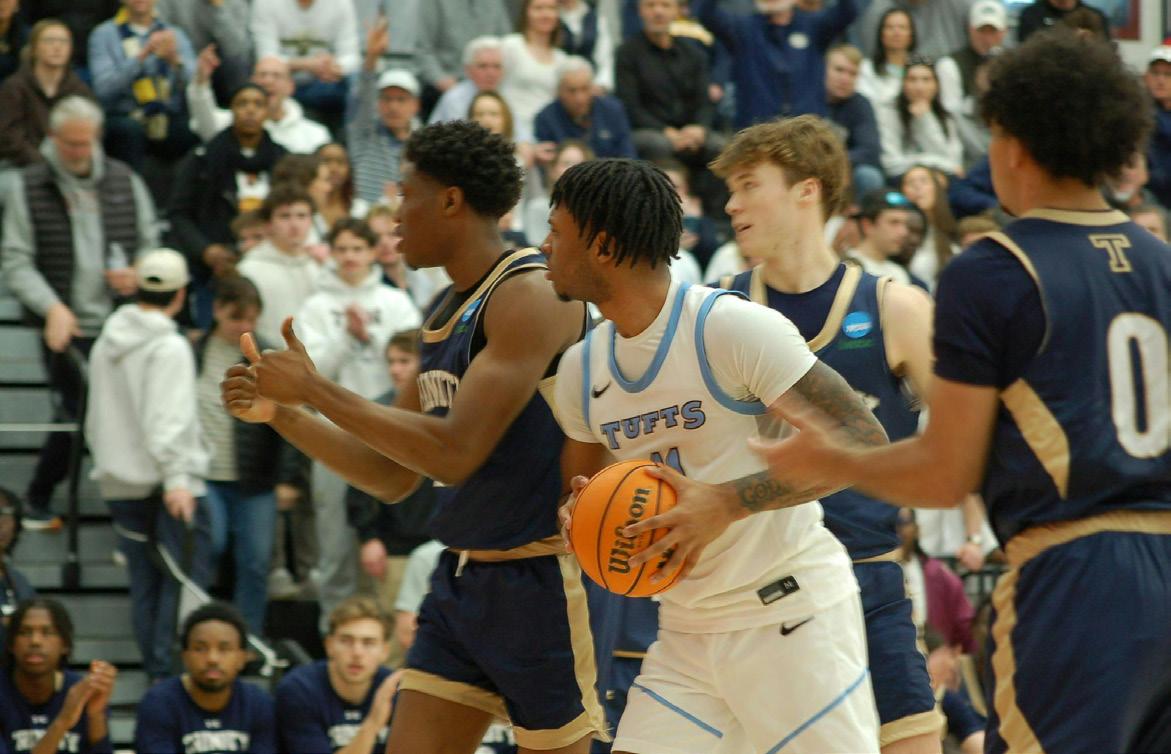
The No. 2 Tufts men’s basketball team faced off against No. 3 Trinity College in the NESCAC semifinals. Missing leading scorer and rebounder senior forward Scott Gyimesi, the Jumbos had to find other ways to adapt. They showed a strong performance but ultimately could not overcome the Bantams’ offense. Despite cutting the deficit to five with less than four minutes remaining, Tufts ultimately lost 80–70.
Tufts had strong individual performances from senior center Joshua Bernstein, who tallied 18 points, eight rebounds and five blocks, while going 8-for-8 from the field. Other notable performances included senior guard James Morakis, who scored 13 points off the bench, and first-year guard Ricardo Nieves, who added 10 points and four rebounds.
After the Jumbos’ first points –– and only lead of the game ––came from three made free throws by junior guard Dylan Reilly, Trinity came out strong, going on a 12–1 run within four minutes to make the score 14–4. It was this hole that Tufts was trying to climb out of for the rest of the game.
Many of Trinity’s points in the first half came from transition looks, attacking after
steals, high-percentage 3-point shooting and strong defensive rebounding. Trinity guard Drew Lazarre led the way in this half with eight quick points that contributed to the Bantams’ lead, including a made three, a jumper inside the arc and a 3-point play. Meanwhile, Tufts struggled to find its offensive rhythm.
Soon after, the Jumbos were able to settle in and respond, initiated by a quick 3-pointer from Nieves off an offensive rebound from junior forward Zion Watt. Solid minutes from Morakis, as well as a quick layin from sophomore forward Robbie Nyamwaya, kept the Jumbos within reach and cut the deficit to four.
The Jumbos continued to show patience on offense, working the ball inside and resulting in balanced scoring including a Bernstein dunk, four made free throws from junior guard Jon Medley, free throws from Watt and two three-pointers from Reilly. Bernstein also had four blocks in the first half, giving the Jumbos greater defensive momentum. Trinity, however, remained solid in their offensive efforts, converting on back-to-back threes with nearly one minute left in the half. A corner 3-pointer from Watt answered Trinity’s surge, making the score 47–38 at halftime. The Bantams’ offense throughout the half was driven by efficient shooting, including six made 3-pointers, shooting at a 54.55% success rate.
To start the second half, Tufts came out more aggressively inside. Two quick layups from Bernstein, first on an entry pass from senior guard Sidney Wooten and then on an inside move and fake, set the tone and reduced the deficit to single digits. An and-one play from Trinity then extended the lead to 13, the largest of the game. Wooten responded by making two free throws after being fouled on a drive, followed by a 3-pointer off quick ball movement and rebounding by the Jumbos.
Tufts’ defensive pressure also ramped up, with fewer clean looks for Trinity and an intense full-court press on made baskets. In spite of Tufts’ efforts, Trinity never conceded a lead smaller than four, continuing to answer with consistent shooting driven by offensive rebounding and longer possessions.
Tufts’ strongest stretch came from the 15-minute to eight-minute mark, when a transition give-andgo from Bernstein to Nieves resulted in a 3-point play. A fastbreak layup by Morakis, a defensive stop and a corner three from Morakis forced Trinity to call a timeout with less than 12 minutes remaining and a 6-point differential.
Tufts’ tight defense forced contested looks, but the Jumbos were unable to capitalize on this momentum because of turnovers. After a lull in scoring, Trinity hit a jumper, which was soon answered
by a floater from Bernstein. After another timeout, a feed from Medley to Bernstein resulted in an easy layup, cutting the margin to four with less than eight minutes remaining.
A crucial transition three from Trinity’s Lazarre counteracted Tufts’ run. A feed from Medley to Nieves in transition, followed by another possession that resulted in a baseline lay-in from Nieves, allowed Tufts to come within five. The comeback was halted by a deep three from Trinity with just over three minutes left in the game.
In the last few minutes of the game, Tufts continued to put forth a strong effort but was forced to foul, resulting in free throws from Trinity that extended the lead. Turnovers and contested threes marked Tufts’ final attempts. The Jumbos were
ultimately unable to mount a final surge, resulting in the 80–70 loss.
“We are disappointed with the result of losing in the NESCAC semifinals to Trinity, but proud of the effort. Especially given the fact that we were without our leading scorer and rebounder, Scott Gyimesi,” head coach Brandon Linton wrote in a message to the Daily.
As the No. 9 Division III team nationally, Tufts received an at-large bid in the NCAA tournament and will host the first and second rounds. Tufts will face Penn State Harrisburg on Friday at Cousens Gymnasium. “We are looking forward to NCAA Tournament play and fortunate to be hosting the [first] and [second] round for the second straight year,” Linton wrote.
Tufts men’s ice hockey loses first round of NESCAC playoffs
Anjali Mishra Staff Writer
Despite being the higher-ranked team, the Tufts men’s ice hockey team entered the quarterfinals of the NESCAC playoffs with some anxiety about its opponent, Williams. Throughout the season, the Jumbos continually struggled to make offensive plays against the Ephs’ defense — especially goalie Harrison Fogel. Of the three games that went into overtime this season, two were against Williams. Moreover, the last three games Tufts played against Williams ended in overtime losses: two this season and one last season.
Despite the tough matchup, hope was still high in the stands, with Jumbo fans excitedly
anticipating the return of injured junior forward Jonathan Horn.
As with most ice hockey games, viewers can expect to see some intense physicality, and this game was no different. Only a little over a minute into the first period, Williams forward Conner Fitzpatrick received a penalty for cross-checking. Starting on the power play, Tufts senior forward Cole Dubicki took three shots on goal but couldn’t convert. While maintaining the puck in the offensive zone for most of the penalty, the Jumbos failed to generate a scoring opportunity.
A little under two minutes after the game returned to even strength, Horn received a penalty for roughing after some tense words were exchanged between the

two teams. Six seconds later, after the faceoff, Williams defenseman Jared Lambright was whistled for interference.
The teams then played 4-on-4 hockey. The Ephs kept possession for most of this time, but the Jumbos’ senior goalie Gus Bylin blocked them out, saving two goals.
As even strength resumed, the next 10 minutes of the first period featured evenly matched competition, with both Fogel and Bylin stopping a flurry of shots. With two minutes left in the period, Tufts sophomore defenseman Jameson Klein cleared the puck out of the defensive zone and passed to Dubicki. Dubicki blazed down the ice with his signature speed, finding his way around an Ephs defenseman to pass to junior forward Trace Norwell in the high slot. Norwell fired the puck past Fogel, making the score 1–0 Jumbos at the end of the period.
At the start of the second period, Williams defenseman Wilson Farrow committed a penalty for tripping right in front of the Tufts bench. However, Tufts did not capitalize on the power play, tallying only two shots on goal.
As soon as the power play finished, Tufts found some momentum by blasting three shots at Fogel, but the Jumbos still came up short. Williams scored seven minutes into the period. Ephs forward Brady Welsch passed the puck to defenseman Connor Berg, who sent it toward the net. Fitzpatrick then lobbed the rebound into the net, tying the game at 1–1.
At this point, the energy in Malden Valley Forum shifted as Tufts lost its lead. The Jumbos’ first line went silent as the Ephs maintained man-to-man coverage on senior forward Max Resnick and junior forward Ethan Ullrick. Tufts struggled to keep possession of the puck, preventing the team from making clean passes.
Five minutes later, the Ephs recreated nearly the same sequence that produced their first goal, taking a 2–1 lead.
Tufts, desperate to make up the deficit, took seven consecutive shots on goal within a minute and 20 seconds, but the attempts were unsuccessful. With five seconds left in the second period, Dubicki took a penalty for hooking, forcing the Jumbos to start the third period at a disadvantage.
Three minutes into the final period, an Eph intercepted the puck from the Jumbos in their defensive zone, leading to another score.
The Jumbos were now down by two. Tufts still had a sliver of hope, though, when Farrow received a penalty for slashing, giving Tufts a 4-on-5 advantage. However, the power play ended with the Jumbos taking only one unsuccessful shot on goal.
It was not looking good for the Jumbos as they continued coming up empty on their shots on goal.
The pressure seemed to get to Tufts when Dubicki took his second penalty of the night for elbowing a Williams player, increasing tension between the two teams. It became
increasingly difficult for the referees to separate the players. Tufts pulled Bylin for an empty net 17 minutes in, but 6-on-5 hockey was still unsuccessful.
In a final attempt, head coach Patrick Norton called a timeout for the Jumbos with a minute and a half left, but Tufts was unable to produce any offensive magic.
The game marked the end of the Jumbos’ season, as well as the last time the seniors would play at Malden Valley Forum.
“The thing I’ll miss most about this group is just having the seniors around,” junior defenseman Sylas Oberting wrote in a message to the Daily. “I remember the first day I showed up to campus, I immediately felt like I was part of a brotherhood, and this class of seniors was instrumental to that.”
While their season may have ended earlier than they hoped, the Jumbos still have a lot to be proud of — something Norton emphasized in a message to the Daily.
“We played the most difficult schedule in all of [Division III] hockey this season, and the most challenging schedule Tufts [men’s ice hockey] has ever played,” Norton wrote. “To have a winning regular-season record, and a winning record against nationally ranked teams this season was outstanding, and we showed great resilience all year whenever we faced adversity. … This group should be extremely proud of that. We will learn from this season and continue to work hard and get better.”
COURTESY TUFTS ATHLETICS Jumbos take on Trinity in NESCAC semifinals.