The Tufts Daily - Thursday, February 26, 2026 (Daily Week)
The Tuf T s Daily
IN NEWS
Class of 2025 Daily alumni discuss first year after graduation
Eli Brigham News Editor
Editor’s note: The Daily’s editorial department acknowledges that this article is premised on a conflict of interest. This article is a special feature for Daily Week and does not represent the Daily’s standard journalistic practices.
news editor, works as a public relations intern for BerlinRosen.
Daily alumni from the Class of 2025 are taking the world by storm, conquering journalism, public relations, politics, education and more.
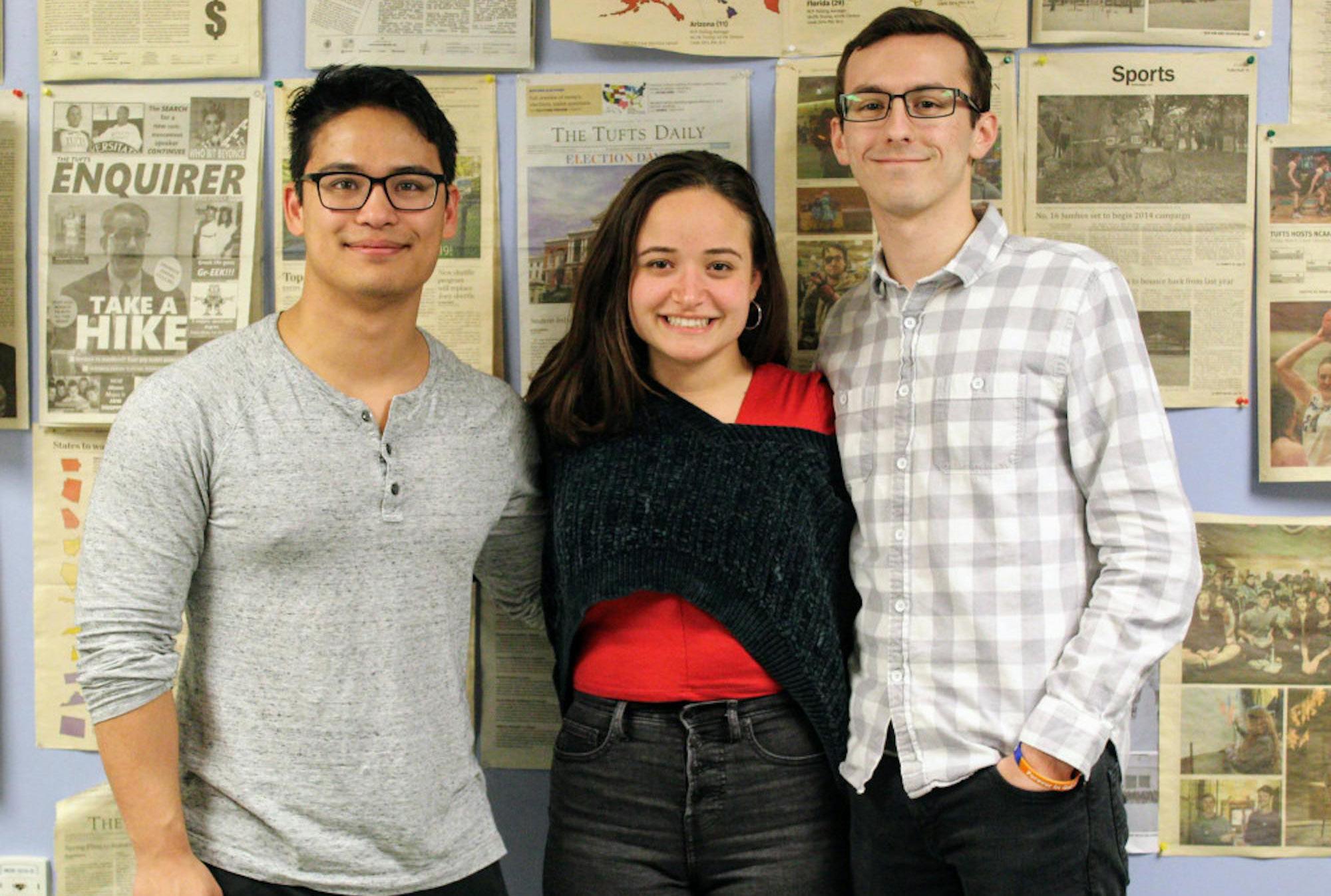
Five of those graduates — Marlee Stout, former alumni liaison and associate editor; Aaron Gruen, former editor in chief; Nate Hall, former managing editor and executive arts editor; Henry Chandonnet, former managing editor and creator of the Tufts Daily Magazine; and Julia Carpi, former associate editor — spoke with the Daily about their first year postgraduation and the influence of their time at the Daily on their early careers.
Many of the alumni are still involved with journalism. Chandonnet is a staff reporter for Business Insider, mostly covering startups and artificial intelligence, while Carpi, who was also the executive audio editor, works as a freelance journalist and mostly covers education for the Cambridge Day.
“I’m writing one to two news stories a day,” Chandonnet said. “For the rest of the day, I have time to work on longer-form projects, mostly features, a little bit of investigations and looking for scoops.”
Other alumni, although not explicitly working in journalism, have applied similar skills to their current jobs. Gruen, who also served as executive
“I think of PR as acting as an intermediary between companies or organizations and the public,” Gruen said. “That can mean anything from monitoring news to pitching events that an organization is taking part in and so I interact with journalism a lot on a daily basis.”
Stout works as a preschool teacher at Lesley Ellis School in Arlington, Mass., while Hall serves as a legislative aide for Massachusetts State Rep. Kenneth Gordon. Hall, who was also the executive fun and games editor, had a crossword published in The New York Times in January through a fellowship he completed with the outlet.
He encouraged current members of the Daily to get out of their comfort zones and try new things.
“I learned that everyone is coming into this with a different skill set, and we’re here to teach each other and to learn from each other,” Hall said. “Because of the encouragement I received from other members of the Daily, I was able to try all these things that you know weren’t even in my wheelhouse.”
Other former members, including Gruen, emphasized the value of networking as a means to help students determine the type of work they wish to pursue later in their lives.
“People are so eager to help out and to pay [it] forward,” Gruen said. “I think that even if you don’t have much interest or you haven’t necessarily considered the career of the person you’re
see ALUMNI, page 3
IN FEATURES
Daily’s aspiring journalists react to the future of the field after job cuts, increasing instability
Katie Galligan Deputy Features
Editor
Editor’s note: The Daily’s editorial department acknowledges that this article is premised on a conflict of interest. This article is a special feature for Daily Week and does not represent the Daily’s standard journalistic practices.
While Tufts does not offer a journalism major or minor, some Daily staff members still plan to use their degrees to pursue careers in media after graduation. But recently, many prospective jobs for these students have been taken off the table.
On Feb. 4, The Washington Post laid off 30% of its staff, including all staff photographers, its books and sports sections and various foreign reporters. These cuts come at a time when publications are struggling to stay financially afloat due to the rise of the internet, a trend away from printed newspapers and a growing distrust of mainstream media.
Despite these negative outlooks, many aspiring journalists are still feeling cautiously optimistic about
entering the workforce, especially with their experiences at the Daily to back them up. Their passion for the field underscores the impact of journalism and provides a positive outlook amid the uncertainty.
“I’ve been very stubborn that I want to do political journalism, and I want to do it the standard way, but I think now I’m more open-minded to exploring different paths,” sophomore Amelia Sammons, a deputy news editor, said. “I’ve definitely expanded my idea of possible careers because this threat does feel very real and very scary.”
A major challenge that news organizations are facing is a lack of stable readership. Matt Murray, executive editor for The Washington Post, shared that the Post’s online search traffic has halved in the last three years. This is due to both the rise of Artificial Intelligence and a growing preference among youth to engage with new forms of media, such as videos and podcasts.
see FUTURE, page 6
From Medford to Madrid: Former managing editor, Samantha Eng, reflects on her experience studying abroad
this museum for free because I’m a student.”
Editor’s note: The Daily’s editorial department acknowledges that this article is premised on a conflict of interest. This article is a special feature for Daily Week and does not represent the Daily’s standard journalistic practices.
Former managing editor and executive news editor Samantha Eng spoke to the Daily about how her semester studying abroad in Madrid is going so far. She is studying there through the Tufts in Madrid program to improve her Spanish and immerse herself in a new culture.
“I’d never been to Madrid before I got here, so it was kind of a leap of faith,” Eng said. “But I love the city.”
“I spend a lot of time just enjoying the city and exploring. There [are] a lot of really great museums in the area, and the weather’s finally nice,” Eng said. “So I’ve been walking around, wandering, trying different restaurants, hanging out with friends.”
Some of her favorite aspects of being abroad are the different cultures she gets to experience and the opportunities to explore the city.
Eng said she wanted to do the Tufts in Madrid program because it’s “more involved” than the external programs in terms of Spanishlanguage immersion.
“Being here is my best effort at actually learning Spanish,” Eng said. “I wanted to force myself to actually try and learn the language while I’m here, which is why I chose the Tufts program.”
She began taking Spanish classes when she got to Tufts so she could communicate with her family members who speak Spanish.
“My mom’s side of the family speaks Spanish, because she was raised in Argentina, in Buenos Aires,” Eng said. “My brother and I didn’t grow up speaking Spanish, but I thought it would be nice to be able to communicate with my other family members in Spanish.”
In addition to taking classes that the Tufts program offers, which are taught entirely in Spanish, she is also enrolled in a class at the University of Madrid called “Intro to Comparative Politics in Europe,” which is taught in English.
“Most of the students in the program are enrolled in the
She has also tried to immerse herself in the Madrid lifestyle in hopes of feeling more like a “real resident” of the city.
“My intention [in] coming here wasn’t just to be a tourist, but to actually try and live the way that people
“I stay with the host family while I’m here, so I don’t stay in dorms or in an apartment,” Eng said. “Everyone that I’ve talked to has had really great experiences with their host families.”
“You can really experience a lot of different cultures, a lot [more easily] than you could in the U.S.,” Eng said. “I live really close to a lot of really amazing, famous art museums. And I could walk 10 minutes … into
University of Madrid, as well as the Tufts program,” she said. “I was curious to see how their campus looks and what everyone’s commute is like. I didn’t want to be too much in my Tufts bubble while I’m here.”
do here,” Eng said. “I commute every day on the Metro, and I’ve tried to build a life here — as much as I can — to feel like a real resident.”
Even while abroad, she keeps herself updated in the Daily’s endeavors, including a new podcast named “The Weekly Recap.”
“I’m really into podcasts because I’m commuting a lot, so I was really excited about ‘The Weekly Recap,’” Eng said.
Eng also expressed excitement about seeing the development of many stories that she has “had [her] eye on for a really long time,” including the recent news of Tufts School of the Museum of Fine Arts professors of the practice ratifying their first union contract after nearly two years of negotiations and the termination of Rümeysa Öztürk’s immigration removal proceedings.
Notably, Eng wrote the Daily’s first articles on both topics in May 2024 and March 2025, respectively.
“It’s really cool to see the stories come through and to keep up with what’s going on,” Eng said.
As a part of the study abroad program, Tufts students can choose to stay in a traditional dorm or with a host family.
Eng lives with a woman named Margarita, an actress whom she calls her “host mom.” She describes her experience living with her as “the most immersive part of the program.”
“While I’m here, I only really speak Spanish, because [Margarita] only really speaks Spanish, and I feel like it’s been really good to practice using the language,” Eng said. “She’s really great about being accommodating to me when we’re having conversations. Because my Spanish isn’t the best, … she’ll speak slower for me. We try to make a point of having real conversations as frequently as we can.”
Eng says that the majority of American college students she has met while studying abroad in Madrid live in dorms as opposed to homestays and end up having a much different experience.
“People really fearmonger about what [living with a host family] would be like, and there’s really not that much to be afraid of,” Eng said. “But I do feel like Tufts has done a good job of pairing us with our host families.”
Shayna Levy News Editor
COURTESY THE TUFTS DAILY
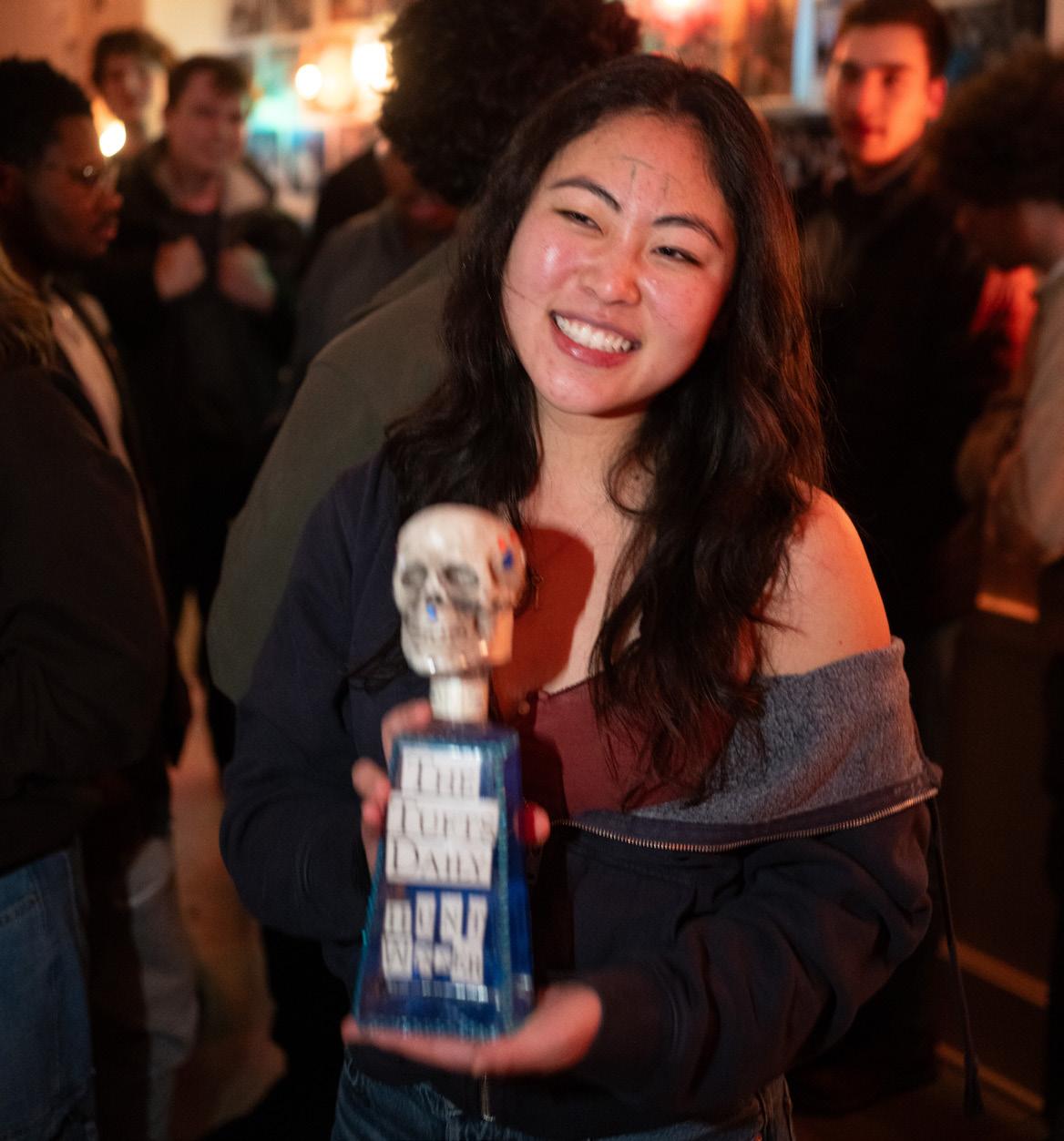
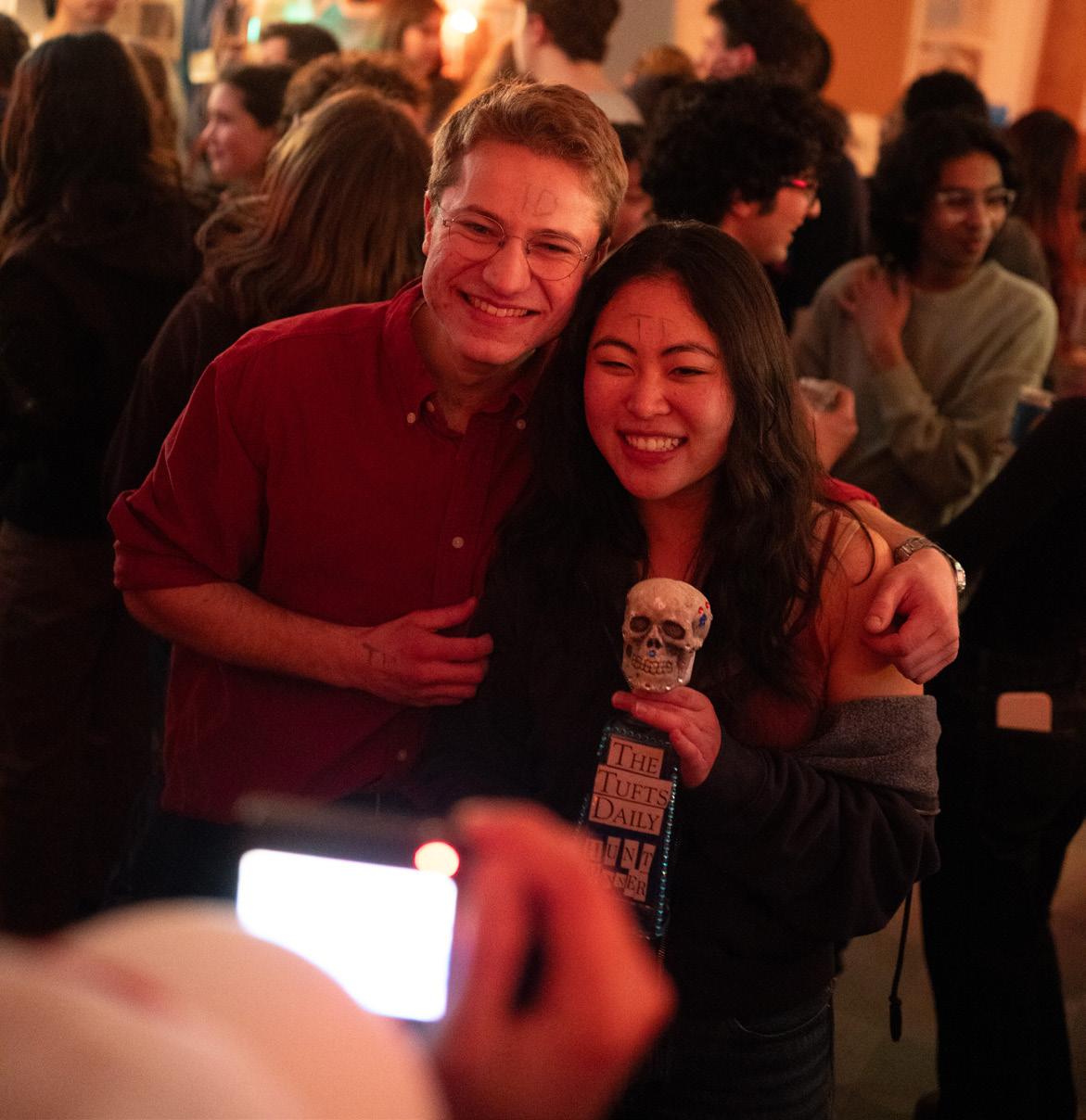
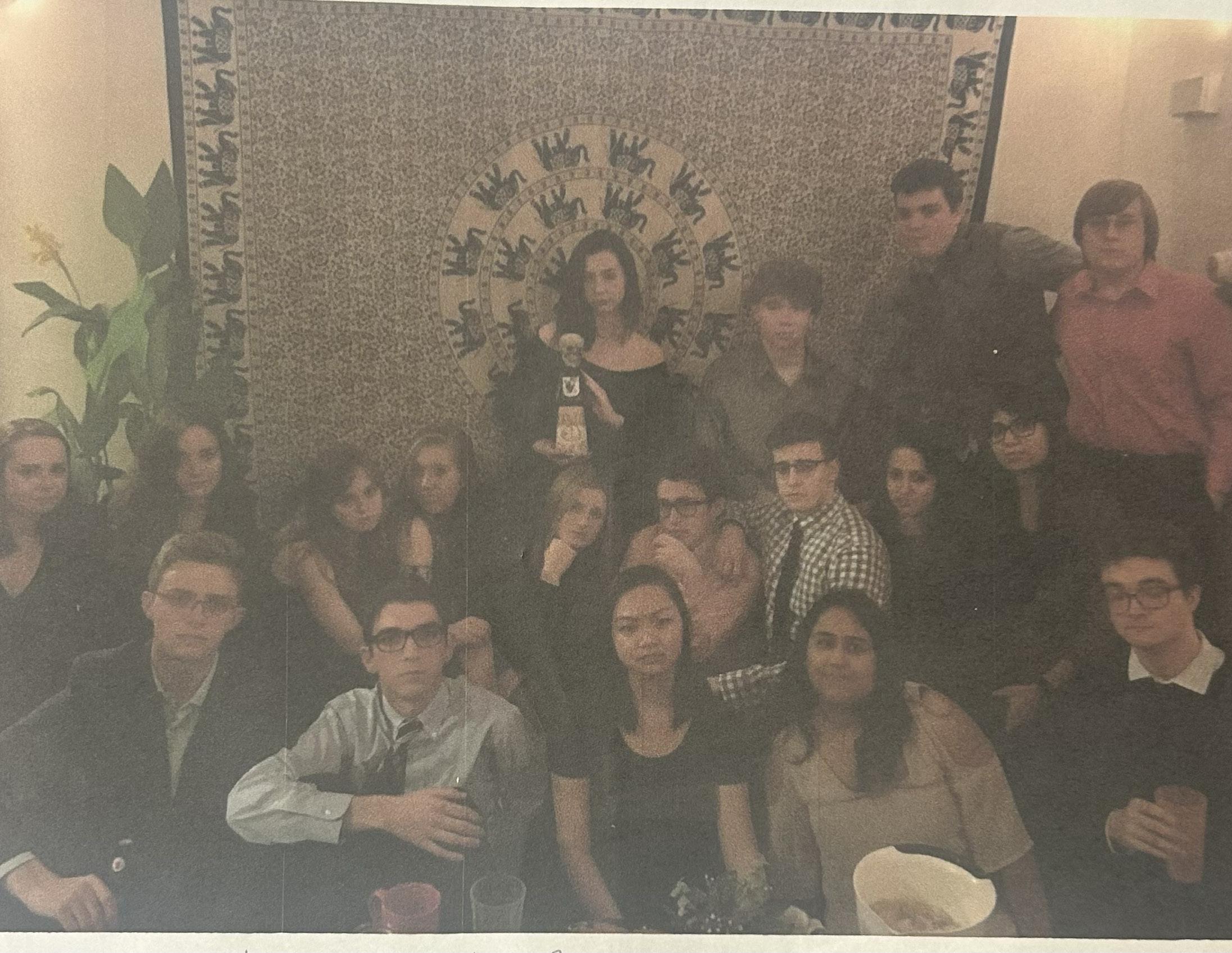
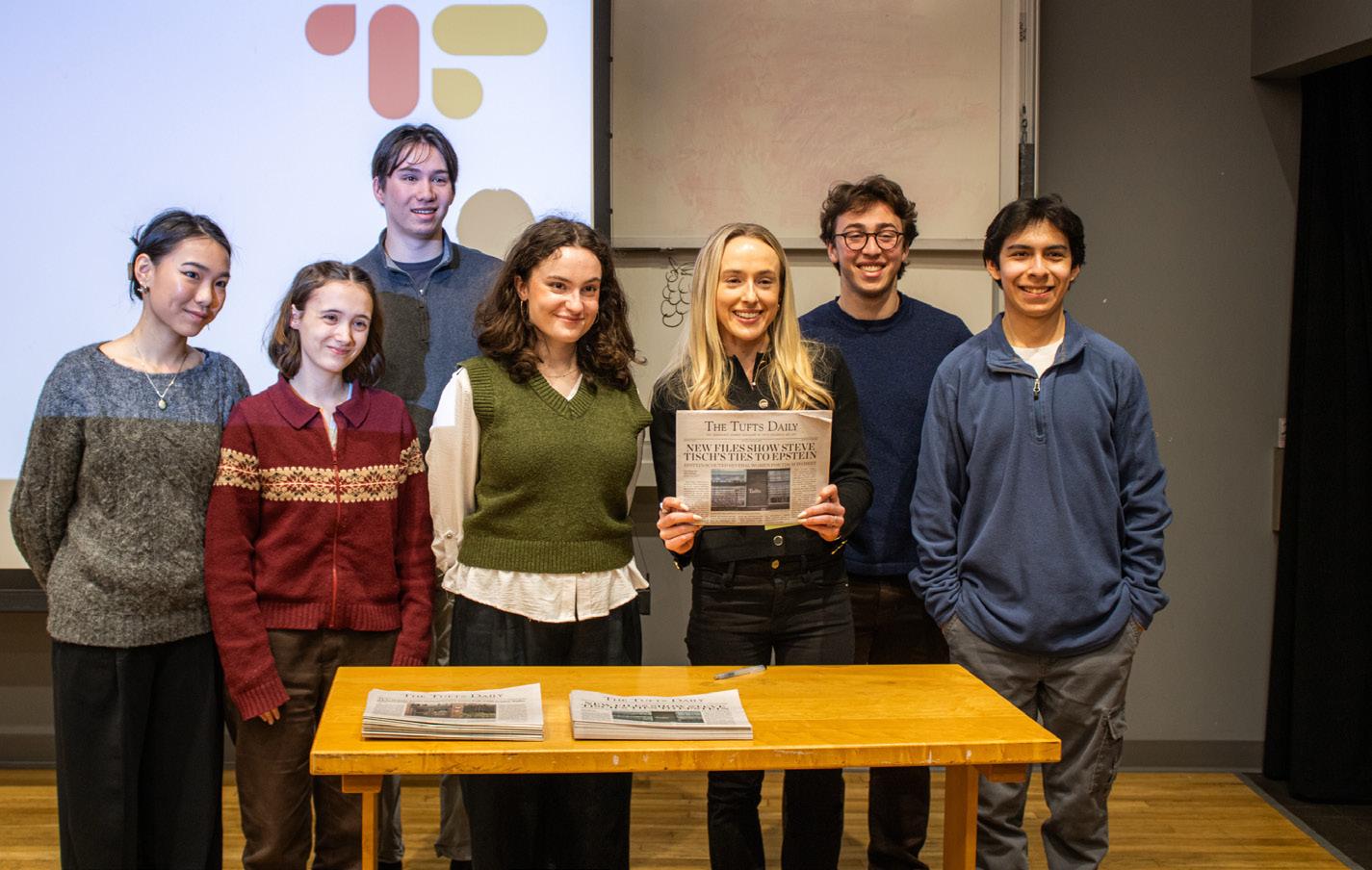
Samantha Eng wins the spring 2025 Daily Hunt.
JOHN MURPHY / THE TUFTS DAILY
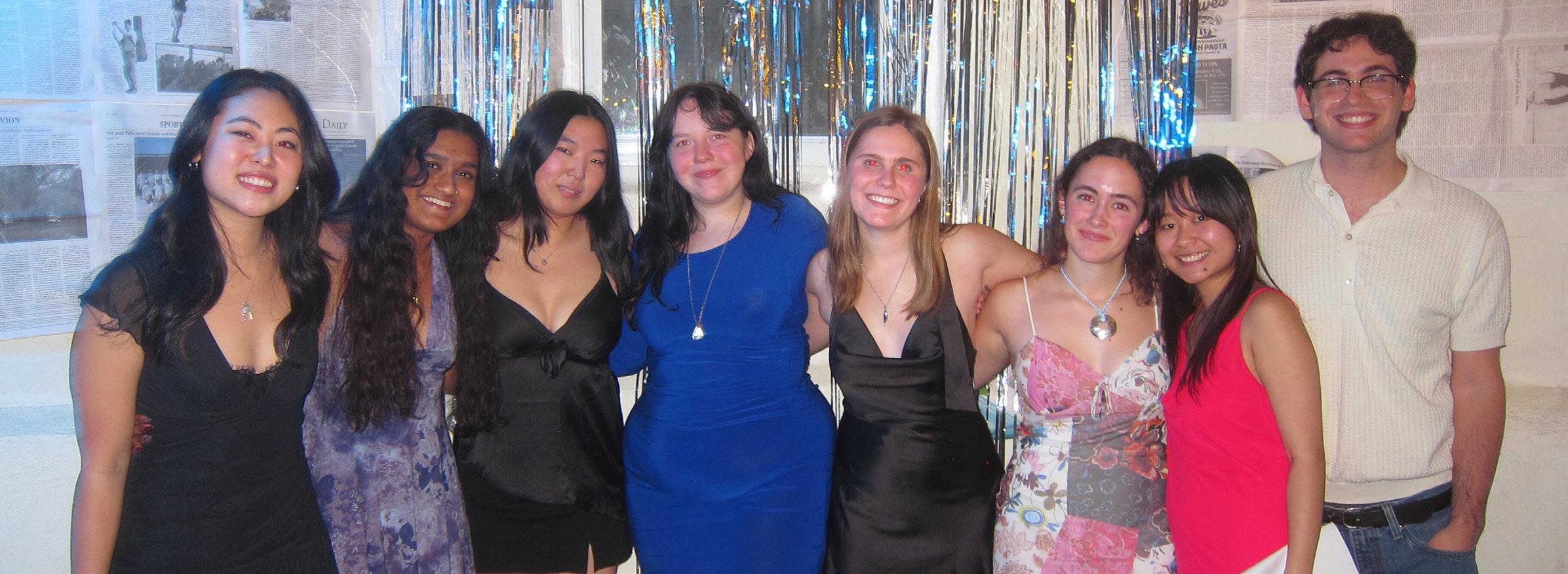
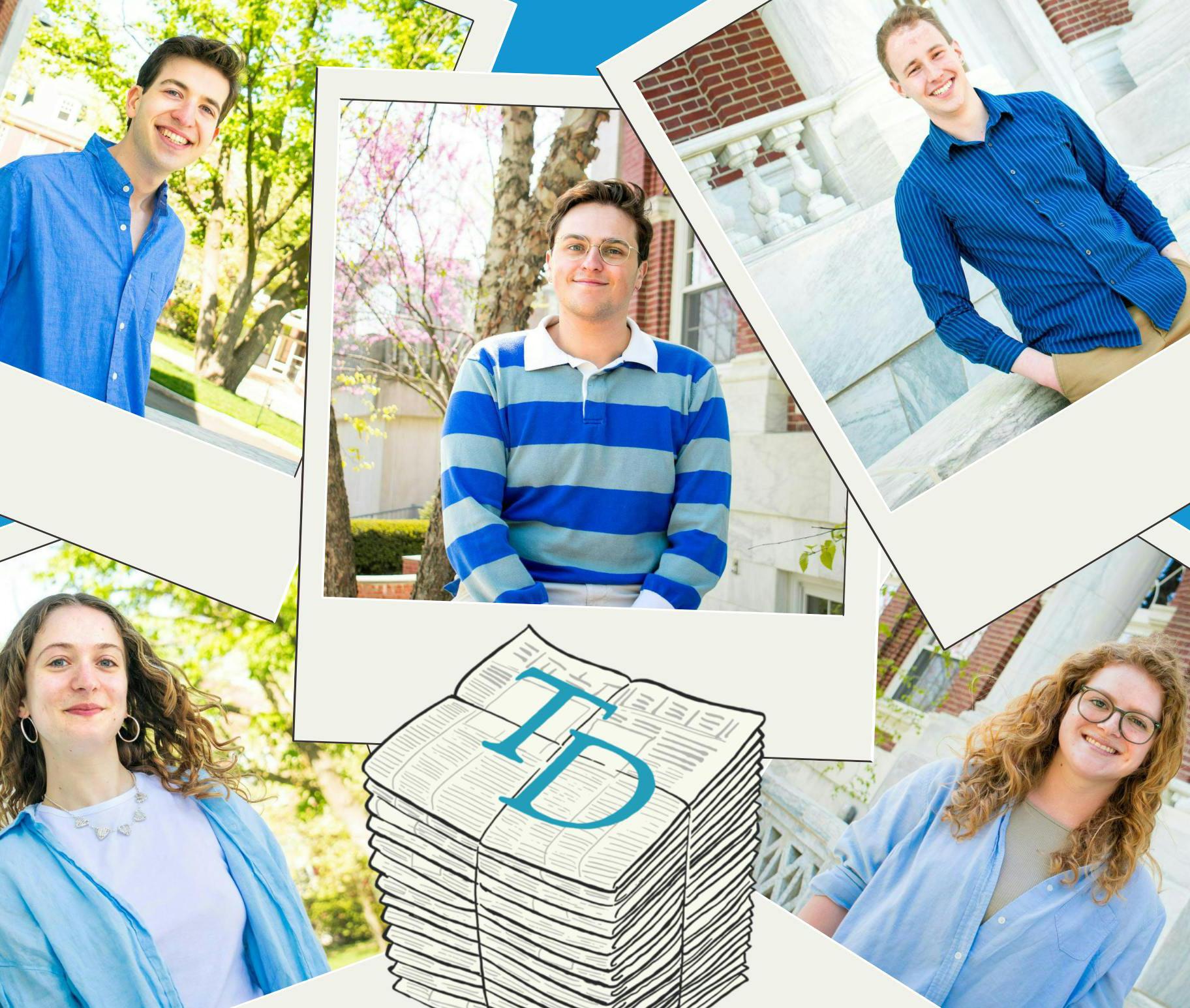
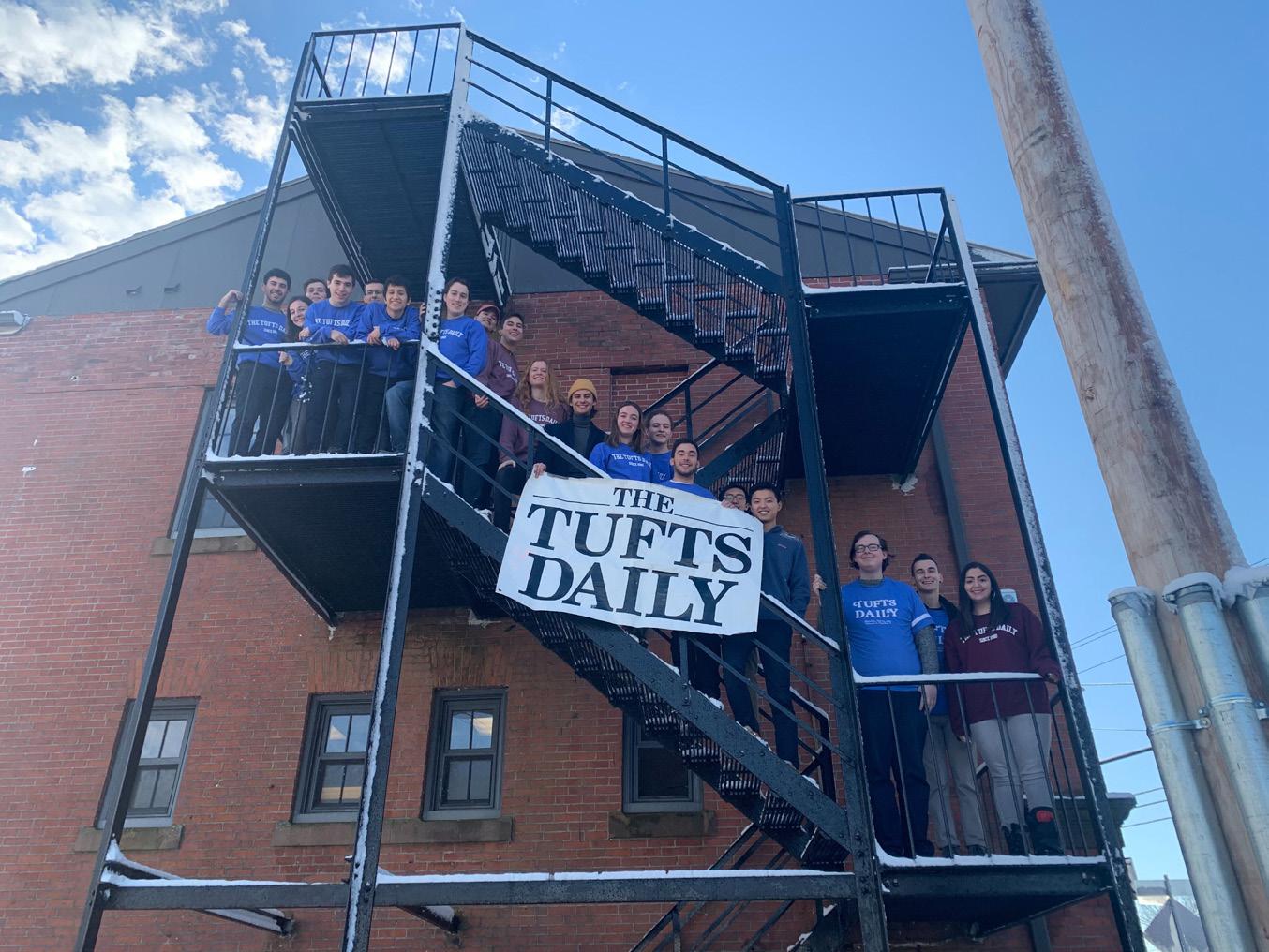
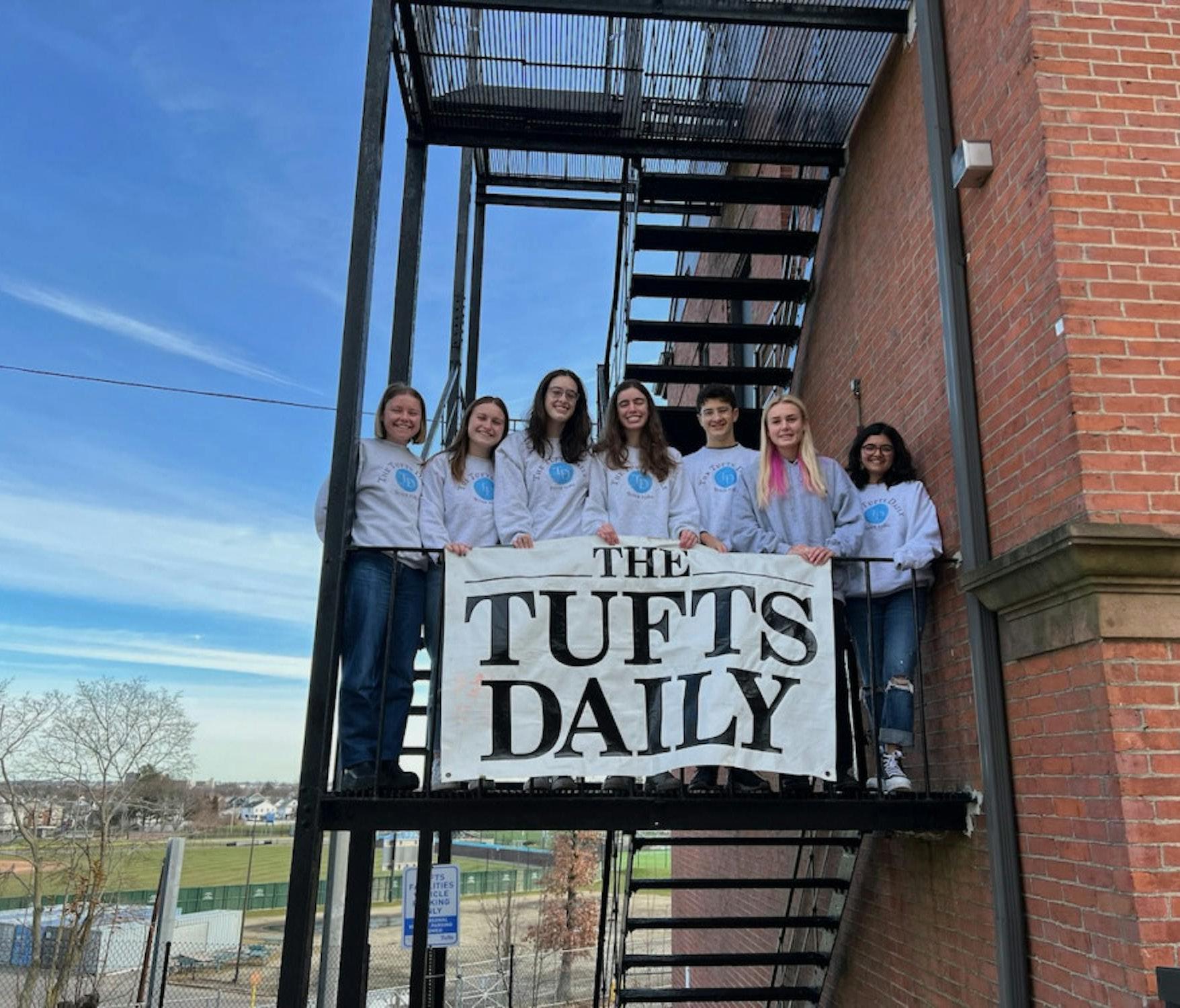
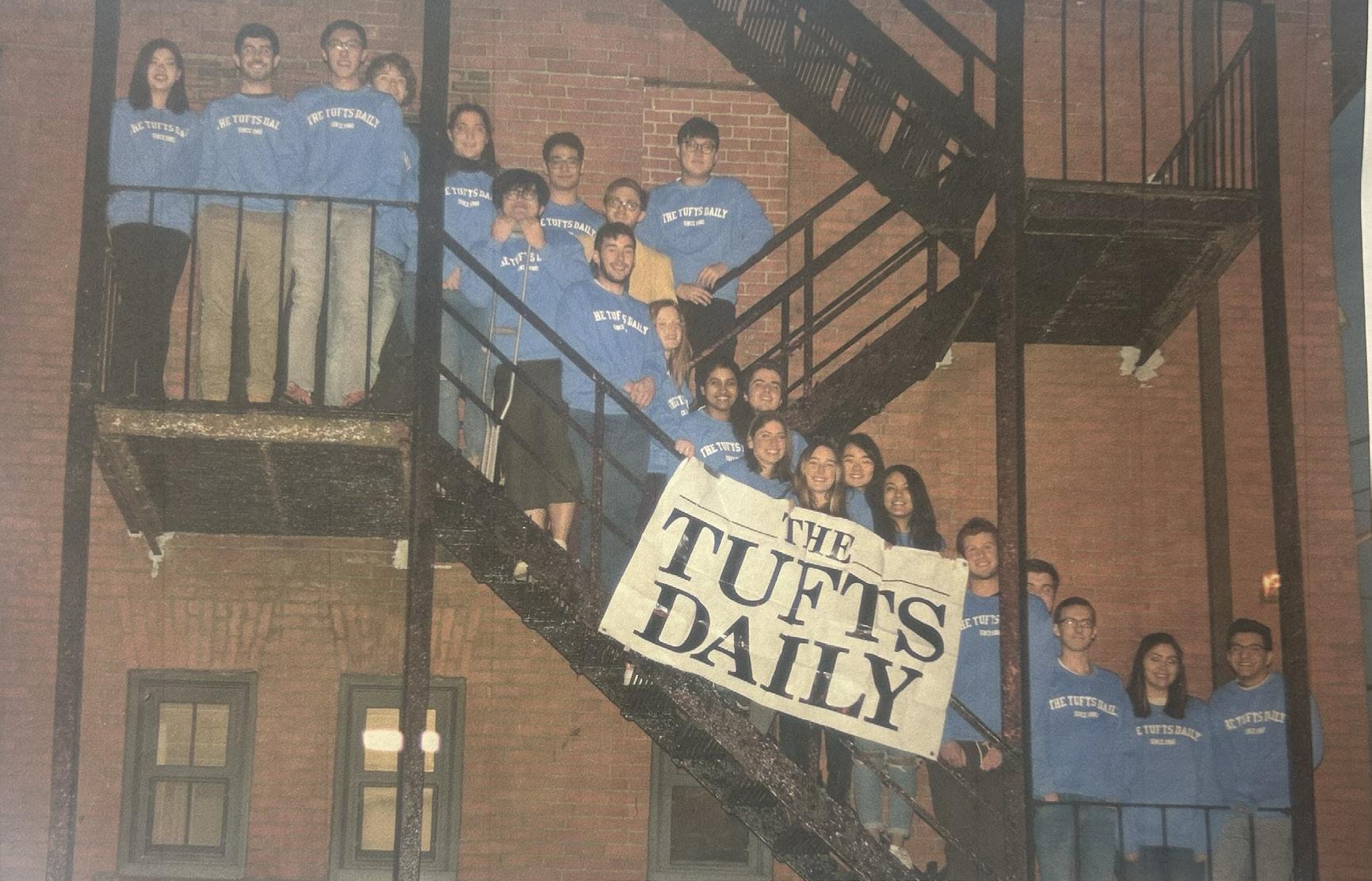
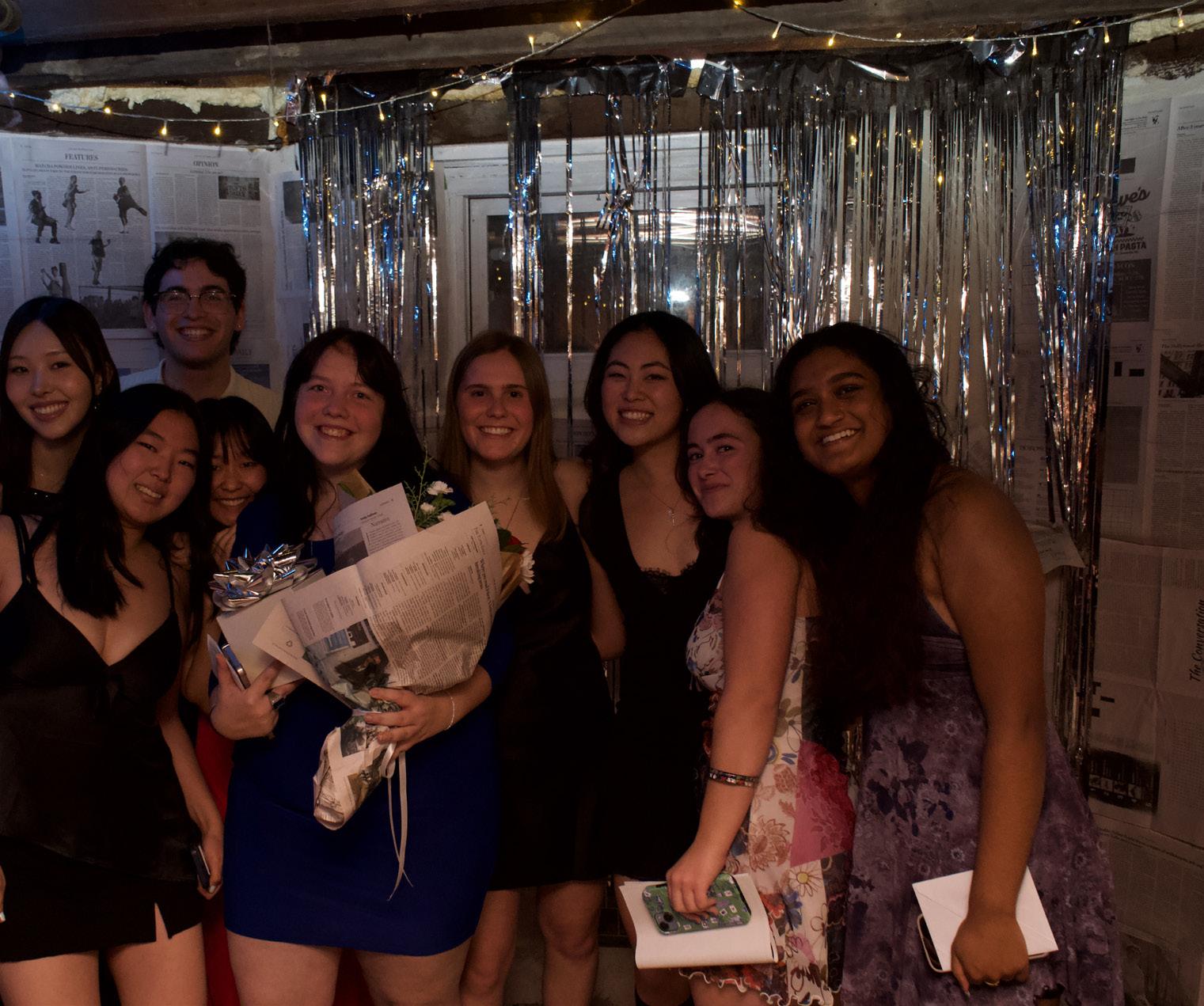
The 92nd Managing Board is pictured.
COURTESY THE TUFTS DAILY
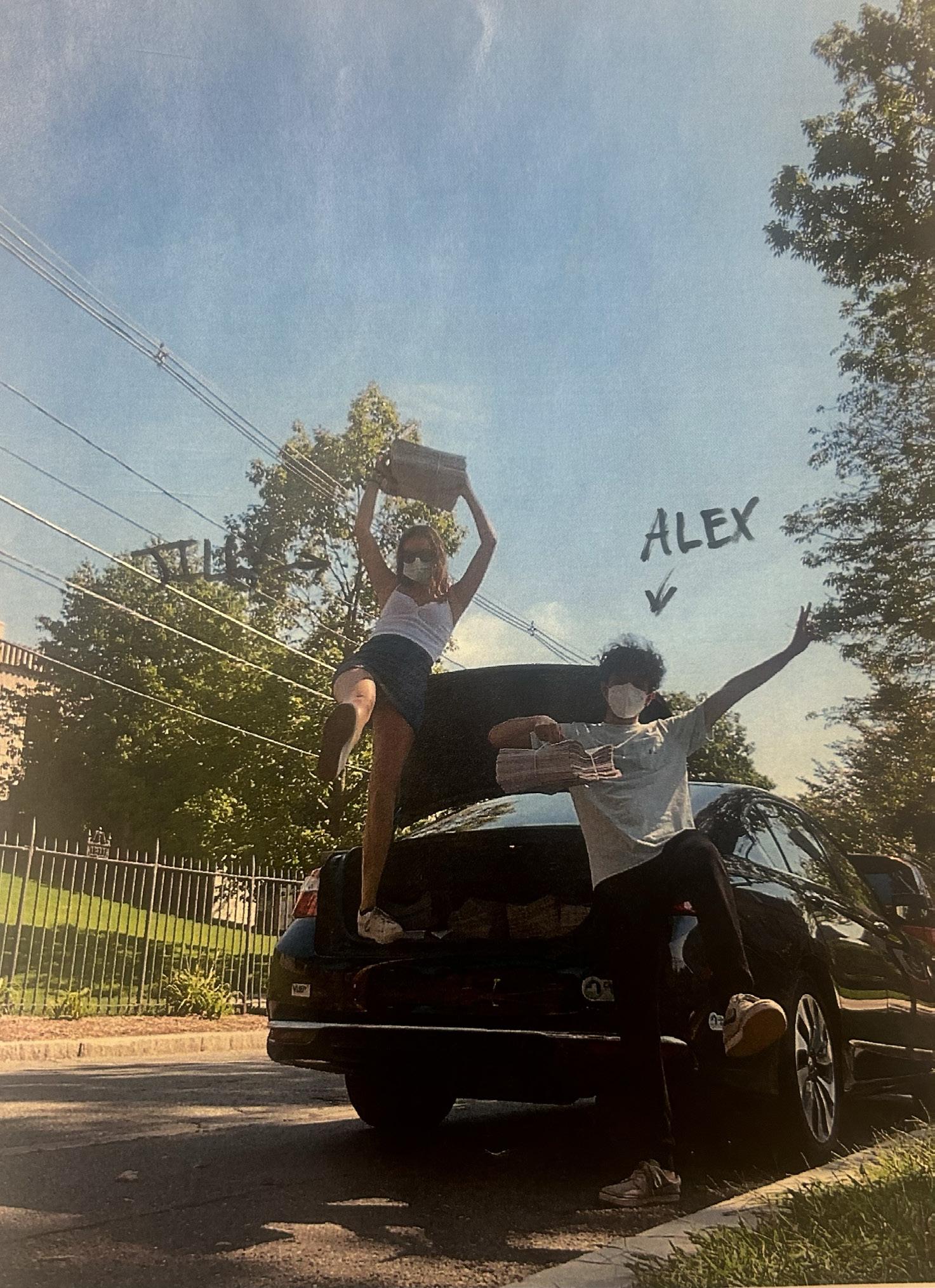
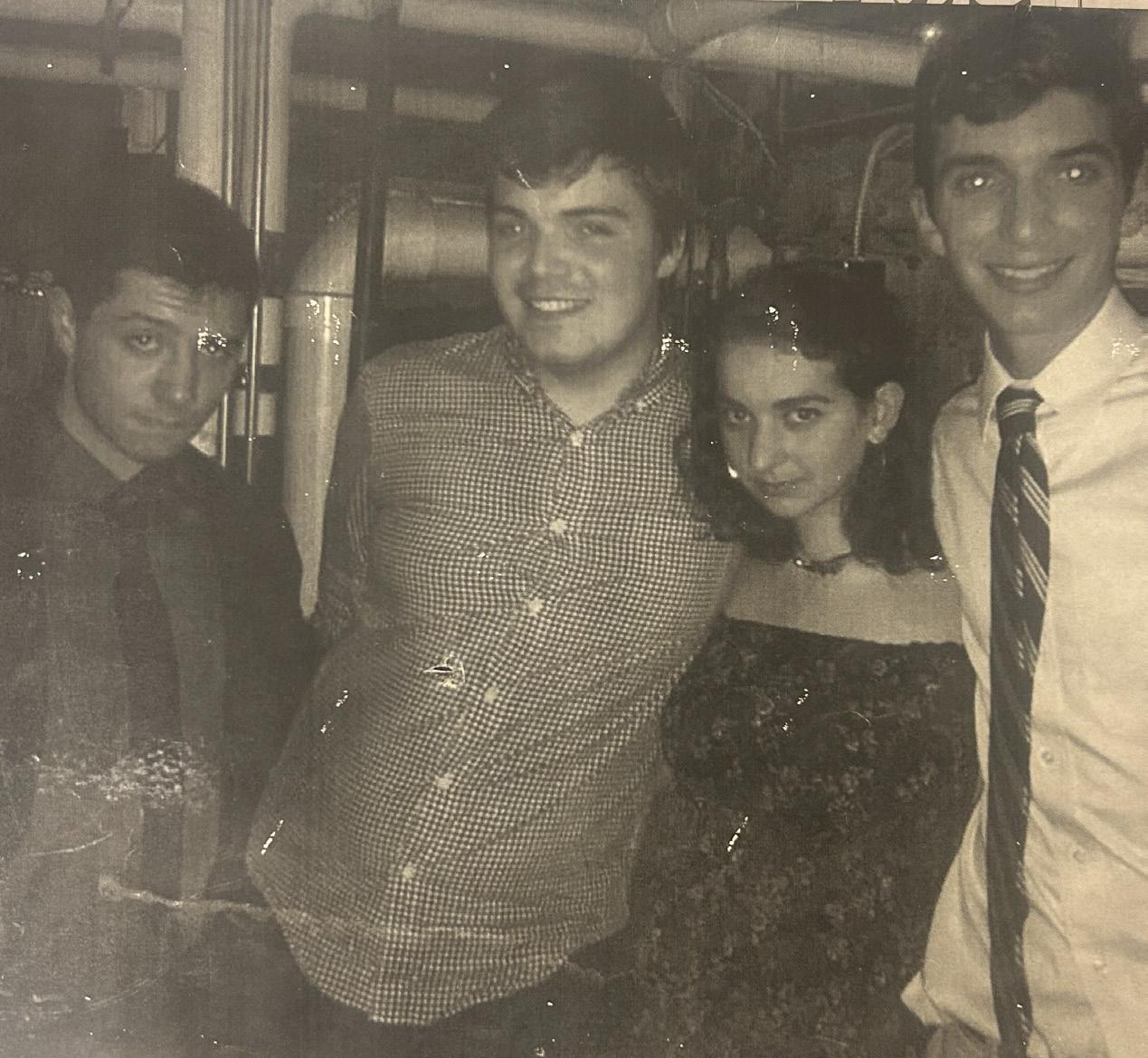
Samantha Eng and Matthew Sage are pictured.
GRAPHIC BY DYLAN FEE
Former managing board editors discuss new ventures
print editions, columns and investigations.
networking with, you never know what they’ll teach you.”
They also spoke about the numerous real-world skills their time at the Daily provided them with.
“What’s kind of surprised me about postgrad is you’re doing so much of the fact-checking yourself as a writer,” Carpi said. “The Daily has an incredibly robust fact-checking system, … and so learning how to do that on an individual level was really helpful.”
“I also learned from the Daily the … ability to be a generalist and the ability to cross news functions,” Chandonnet said. “I started on arts, then I did a little bit of news reporting, then I was editing everything on [Managing Board], then I was editing long-form features for the magazine.”
Former members also contributed to a wide array of initiatives and reporting at the Daily, including special
“I wrote a column called Center Stage, and I highlighted different performing arts groups around Tufts,” Hall said. “That was a really fun experience for me, because I got to learn about these groups, some of which I had never seen before.”
“I think that when you’re working at the Daily, you are exposed to so many different points of view and big personalities and challenges that it kind of forces you to grow a thick skin,” Gruen said. “Now I find that things that would have fazed me before the Daily don’t really make a big impression.”
Carpi also spoke about expanding the Daily and establishing more varied forms of media.
“I was really committed to making multimedia more established within the Daily,” Carpi said. “Video and audio were my little babies, and I found that throughout my time at Tufts, they became a lot more community-driven, a
lot more integrated within the Daily’s culture as a whole, so I’m really proud of that.”
Apart from what they contributed to the Daily, many of the alumni said they missed what the Daily provided for them, saying that its social scene and connections made in the office were invaluable.
“Something about going to an office between 6 p.m. and as late as 4 a.m. deprived me of sleep, but it also baked social time into my calendar,” Gruen said.
“It becomes sort of like a second home. You spend a lot of time in that office, and you make a lot of meaningful connections,” Hall said.
Others concurred, noting that the community the Daily fostered was something they all missed.
“The experience of being in the office every night and getting to chat with people and work together — that’s something that I would say is pretty unique to the Daily,” Hall said. “It’s not something that you find in a regular nine-tofive job.”
VISIT OUR MERCH STORE BY SCANNING BELOW!
Javier Macaya, former Daily business director, discusses election to Tufts Board of Trustees
Editor’s note: The Daily’s editorial department acknowledges that this article is premised on a conflict of interest. This article is a special feature for Daily Week and does not represent the Daily’s standard journalistic practices. The interview with Macaya was conducted in September 2025.
Javier Macaya, an alumnus from the Class of 1991 and former business director for the Daily, was elected to the Tufts Board of Trustees last June, bringing his finance experience and Jumbo pride to the board.
Macaya — an investor and financial advisor currently based in London — started a five-year term in November 2025. He was heavily involved in the Daily, serving as executive business director for two years, an experience that shaped and informed his time at the university.
In an interview with the Daily, he discussed his time at Tufts, his application to be a trustee and his hopes for his board membership.
Although Tufts has changed since Macaya first matriculated in 1987, he still appreciates “the ever improving caliber and diversity of [the] student body, faculty, staff and leadership team.”
In the late 1980s, he was part of the Daily in the years after it became financially independent.
“We did some really exciting things. We started color SAP supplements during my years and my tenure there. Revenue [has] pretty much doubled, or more than doubled,” Macaya said. “Almost 35 years out, what I can say is that I’ve always considered that part of my experience at Tufts to have been the most rewarding. … When I then went out to try to get jobs coming out of Tufts, I got a great deal of mileage out of that experience.”
Since his time as a Tufts undergraduate, Macaya has remained involved in the Tufts community, serving on the Tisch College Board of Advisors, the board of the Initiative for Global Leadership and the International Advisory Board. He has funded internships for Tufts students
and also fundraised for the Jonathan M. Tisch College of Civic Life. He also sent one of his daughters to Tufts.
Macaya said he remained involved with the university out of his personal interest in connecting with and supporting students.
“Tufts offers me an opportunity to remain connected with an elite university and with students that I do not cease to be completely in awe of,” he said.
Macaya views his involvement with the Board of Trustees as a continuation of his longstanding participation in the Tufts community.
His involvement with the board began after a phone call from Elizabeth Amador (A’91), president of the Alumni Council, who asked him to consider applying. He submitted his personal statement, letters of recommendation and application questions and was chosen to be voted on in an alumni election.
His dedication to the university shone through in his application process, as noted by the Alumni Council in a statement to the Daily.
“Javier Macaya epitomizes the ideal candidate for the Board of Trustees,” they wrote. “He was an engaged student; he is a successful businessman, an active and dedicated alumnus, who has long contributed essential counsel to the University, while also investing generously in the next generation of Tufts students.”
Macaya views the role of a trustee as being part of the governing structure of the university, making decisions that affect the entire university.
“I would think that the closest comparison to a trustee, in a corporate environment, would be a board of directors. These are the people that are looking at the issues, not the minutiae,” Macaya said. “They are looking at the broader strategy of the school, resource allocation for the school, how the school confronts the sort of issues that a university must face.”
As part of that effort to support Tufts in whatever way is needed, Macaya said he is excited to learn from his fellow trustees.
“I am entering with the appropriate amount of humility in terms of the accomplishments and contributions I may make, particularly in the early stages of my tenure,” Macaya said. “Indeed, a part of me cannot help but feel that I am ‘going back to school’ and I expect and look forward to learning a great deal from my fellow trustees.”
Macaya noted that, while he does not speak for the entire board, he still thinks the university should do its best to fulfill its responsibility to protect international students.
“I have some sympathy for schools that have been really thrown a curveball, because there have been matters outside of their control that [have] made honoring that promise more challenging,” Macaya said. “No university, Tufts being one of them, is going to, on its own, be able to change that.”
“Like myself, I know that every Tufts alumnus, whether young or old, American or foreign, wants to have ever-growing reasons to be proud of being a Jumbo,” he said.
Carly Hope News Editor
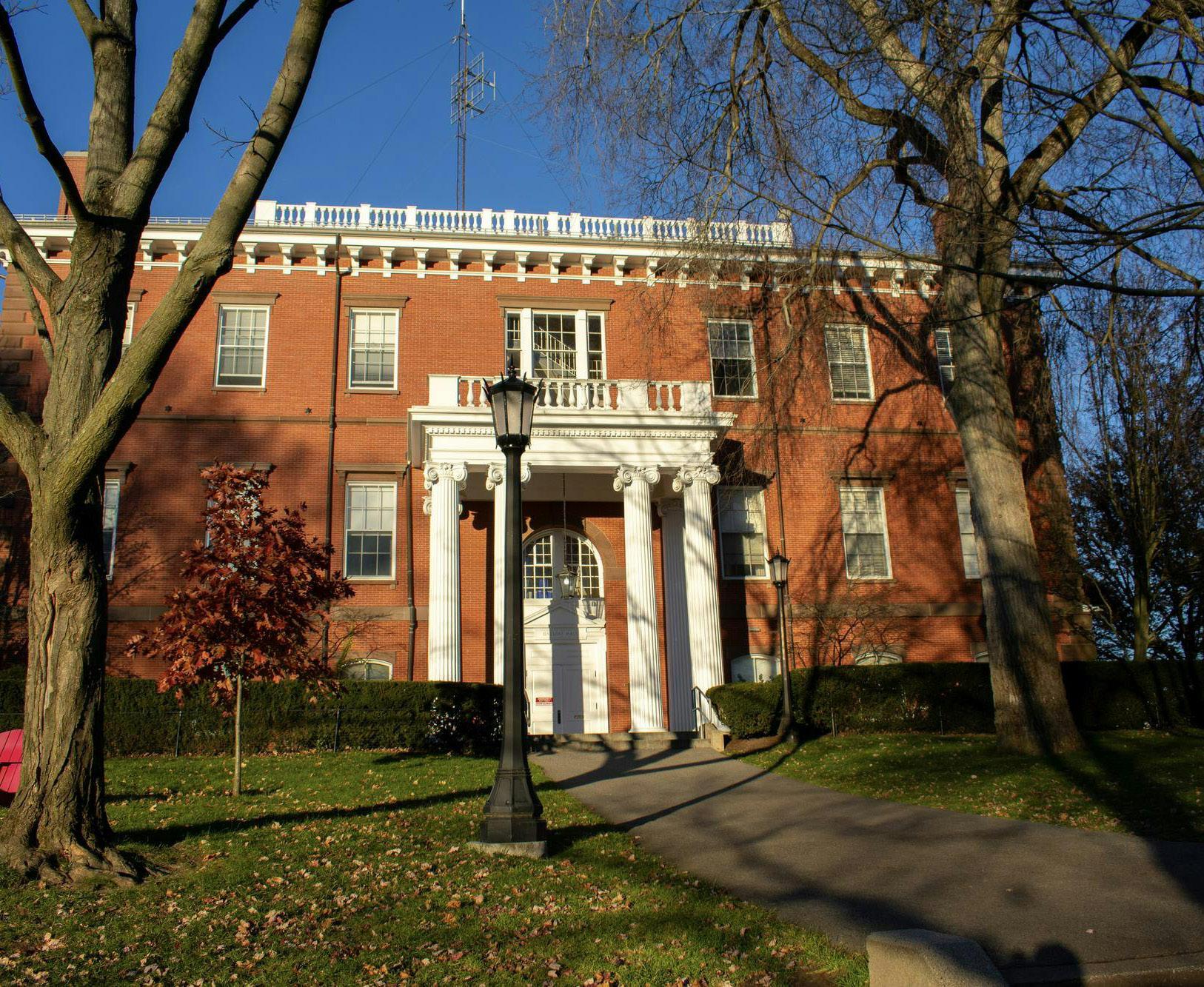
SOPHIA KHAN / THE TUFTS DAILY Ballou Hall is pictured on Nov. 19, 2025.
How the Daily’s news team tackles high-stakes subjects
Editor’s note: The Daily’s editorial department acknowledges that this article is premised on a conflict of interest. This article is a special feature for Daily Week and does not represent the Daily’s standard journalistic practices.
At the heart of journalism are stakes. At the Daily, this often takes the form of stakes for the school, the writer, the subject matter and members of the greater Tufts community. During some of the most tense moments at Tufts and in the world around us, the Daily holds itself to the highest standards of reporting. It prioritizes objectivity and a commitment to providing information for the university community, even when its subject matter may be highly sensitive or controversial.
Yet, in the past year in particular, writers have been faced with tackling difficult topics as current events have begun to hit closer to home. It is one thing to write about domestic or international events that seem far from the reach of stakeholders and administrators at the university. Yet, as Tufts has faced numerous implications of the current Trump administration within the past year — including the detention of now-graduated Ph.D. student Rümeysa Öztürk (AG ’26), Steve Tisch’s (A’71) presence in the Epstein files and threats to university funds — the stakes feel higher than ever and will likely remain so.
community in an accurate and timely manner, given the sensitive nature of the issue and the fact that it became a national headline. Eng emphasized the importance of consistency during the process.
“I [would] triple check everything because I didn’t want anything to be incorrect, but the goal is [to] do that for any article,” Eng said. “That’s why we adhere to the process that we do, because when something happens that’s suddenly high stakes, we treat it the same way we would anything else.”
Shifting to more recent events, the article and subsequent explainer video surrounding the Steve Tisch scandal shared a different kind of sensitivity but was still highly consequential. Current executive news editor and sophomore Julian Glickman elaborated on the process for covering the article, noting that while The Athletic had already covered the story, it was essential that the matter was handled with care given its potential impacts on Tufts’ reputation. However, he had to grapple with his own opinions while producing the piece.
slightly concerned that readers thought he conveyed a similar critical impression while writing the piece.
“In those cases … my reaction is [that] some people don’t realize that news is supposed to be really impartial,” Glickman said. “People think journalism is about taking a stand, and I personally don’t think that’s the case.”
Sophomore Zach Halverstam, executive investigative editor, also recalled having questions surrounding personal beliefs arise while writing. In particular, he noted a piece he wrote last
Yet, writers are often reminded that despite the important work they voluntarily take up to provide information to the larger community, they are still students.
“Rümeysa’s detainment was a big ongoing story that didn’t really wait for my life to go on,” Eng said. She noted the difficulty of balancing a full workload of classes, managing the rest of the news section and dealing with the added pressure of monitoring such a high-profile case.
Halverstam mentioned conflicts of interest when it came to investigative journalism, especially as writers are often active participants in the subjects they are investigating.
“I’ve done some stuff where we’re writing about residential life, and it’s kind of hard to write [about] people that control your housing,” he said.
Despite moments like these, Halverstam emphasized the valuable experiences he has gained from working at the Daily. Similar to Eng, he noted difficulties balancing workload as a full-time student while also often sacrificing other commitments for the publication. However, he has found the work to be rewarding and loves his role as an investigator.
Approaching these topics is never easy, but the Daily’s leadership tries to equip writers with the tools necessary for objectivity in the news section. Junior Samantha Eng served as executive news editor for the spring 2025 semester, during a pivotal moment for the Tufts community regarding national immigration policy. Upon Öztürk’s detainment, the news team grappled with how to provide information to the larger Tufts
It is this commitment, Eng believes, that made her “ready” to handle the reporting of Öztürk’s detention. However, she noted nuances that made the process different from other articles, including the difficulty of obtaining interviews from the larger Somerville community.
Anonymity was prioritized out of concern for safety.
“Rümeysa was also targeted because of an op-ed that she co-authored in the Daily. And so I think people knew that it’s not like the Daily [doesn’t have] visibility,” Eng explained. “[What] you say in our publication could really matter, and it could really be consequential to your safety and your life.”
“[The Tisch family] are donating money to the university … in most cases, for a good cause — building a gym, building a library, scholarships, stuff like that,” Glickman noted. “[Steve Tisch] also hasn’t been convicted of anything [or] charged with any crime. But obviously this is disgusting behavior. So I think there was that balance of, how can we be fair and be forward to get a point across?”
Additionally, as a news writer, sharing information that is intended to be objective can often receive feedback expressing a preference for one side. Glickman recalled seeing Instagram and Facebook comments that heavily criticized Tisch and feeling
year that covered a Tufts visit by Mick Mulvaney, President Donald Trump’s former chief of staff. As a student with opposing views to this speaker, he reflected on how he approached the writing process.
“How am I making sure this is nonpartisan, and [is] just a good article that people in the Tufts community can get?” he said.
Halverstam also received hateful messages after writing both the piece on Mulvaney and one on the NCAA’s new policies regarding transgender athletes.
“I do my best to deal with it. It’s never fun to receive it. But if anything, I’m happy that people are [reading] it,” Halverstam said.
“It’s very exhilarating work, and it’s something [you] don’t get before college,” he said. “The fact that the Daily allows recent high school [graduates] to go in and talk to politicians, do off-the-record interviews and cover these really contentious topics is a great opportunity,” he noted.
Halverstam recalls what first drew him to the investigative section. “I found that it was doing really interesting work where you’re going deep into the Tufts community … [and] having really interesting conversations,” he said. It is this that grounds him in the reporting process.
“This is a really sophisticated operation. … This is real journalism,” Halverstam said.
Sanya Bandekar Assistant Features Editor
DYLAN FEE / THE TUFTS DAILY
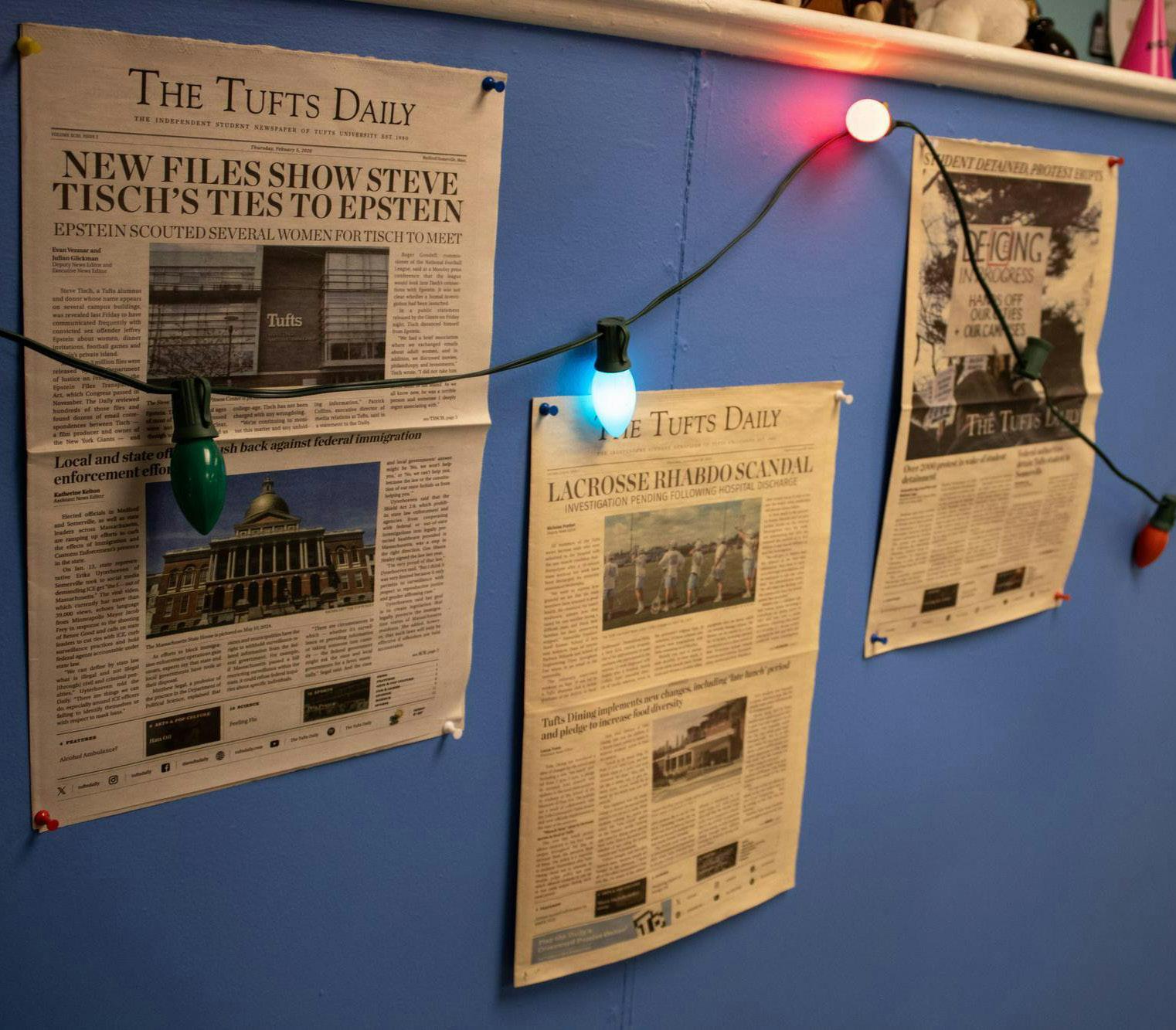
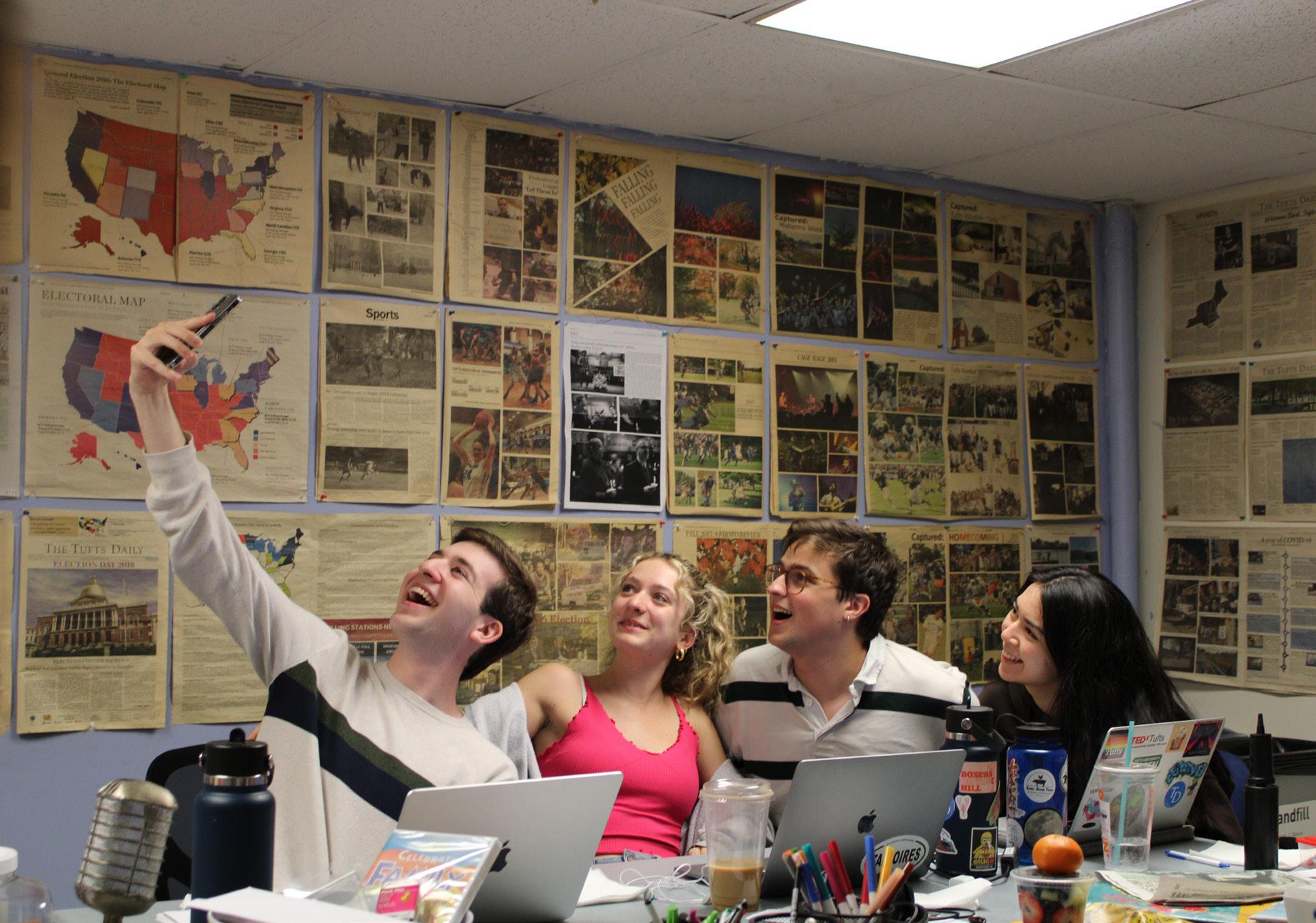
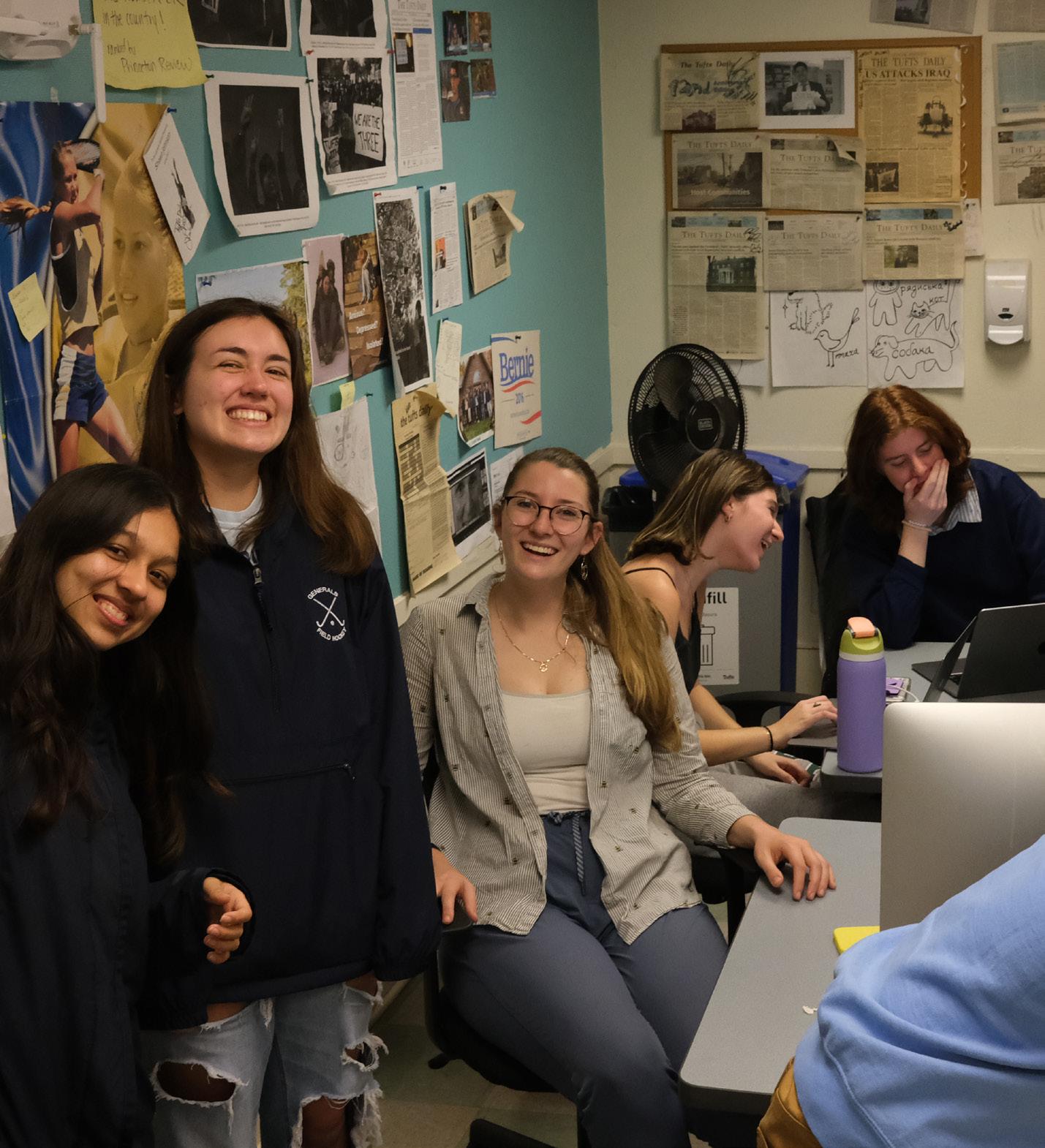
Some high-stakes front pages of the Daily are hung up in the Daily office.
Volatility of journalism job market does not deter Daily staff
These financial challenges are deeply impacting the industry, with over 3,000 journalism jobs cut across the United States and the United Kingdom in 2025 alone. For future journalists, the job market is an intimidating world to enter.
“After reading [about the Washington Post], I called my mom, and I was crying to her on the phone,” Sammons said. “At Tufts, we already live with a lot of pressure because everyone’s super ambitious. I have definitely been feeling a lot of imposter syndrome this semester and worrying about whether a career in journalism is still possible.”
The news market has been struggling in part because Americans’ perceptions of the media are not exactly optimistic. A study by the Pew Research Center found that 49% of Americans believe that journalists are losing influence in society. A Gallup report found that growing political polarization has also created a situation where trust in mass media is at its lowest point in five decades, particularly among Republicans.
Despite these statistics and doubts from extended family members, many students are still hopeful about joining the field during a time of hardship.
“I’ve gotten a lot of [comments saying that] I should just put my dreams on hold for later and get [a job that’s] safe,” senior Dylan Fee, former editor in chief and current executive photo editor, said. “But honestly my response to that is that
with the current state of the world, nothing is super safe and stable, so I might as well just go for the hard thing.”
Traditionally, journalists begin their careers in entry-level positions at local newspapers before working their way up to larger publications. However, since 2005, almost 40% of local newspapers have closed down, including papers based in Medford and Somerville.
“The role of student journalism has changed a little bit because local papers are unfortunately dying out as an institution,” Fee said. “Sometimes even big newsrooms find more credibility in student journalism than they do in local papers.”
The loss of local news is augmented by the rise of generative AI. Many Americans are beginning to receive the majority of their information from AI summaries rather than news articles. Yet, student journalists remain hopeful that AI cannot replace a writer’s voice.
“I tell people I have so much misplaced optimism about getting a job,” senior Shannon Murphy said. “I’m just so sure that I’m gonna get a job because I’m like: ‘No, I am a good journalist. I can write … and AI can’t take journalism jobs.’ … Can AI go and interview all these people and get [an] angle and synthesize it to make it sound human? At this stage, no — and hopefully never.”
With many local news opportunities unavailable, aspiring journalists have found valuable experiences through their time at the Daily. This includes interviewing community members,
editing articles and working collaboratively with other staff.
Murphy has worn many hats at the Daily, including executive social media manager, executive newsletter editor and an editor for the news and arts sections. During her winter internship at Boston.com, she was already prepared for a lot of the work assigned to her because of the skills she learned at the Daily.
“We don’t have a journalism major here at Tufts, so the Daily is the education that you get for journalistic practices,” Murphy said. “That’s really more important than anything you learn from a classroom, because you’re actually doing it. … You are … the newspaper of record for Tufts University and for this area. You’re actively doing the work.”
Murphy emphasized the vital skills she has learned in multimedia production throughout her time at the Daily. All three student journalists explained that jobs often require experience with video and audio as organizations evolve with new media. This semester, the Daily introduced “The Weekly Recap,” a podcast debriefing the written news articles from the previous week as a collaboration between the news and audio sections.
Fee and Sammons both discussed how their experiences in the news section have been particularly valuable. In the past year, the Daily has covered a variety of political topics connected to the university, such as Rümeysa Öztürk’s detainment, lawsuits faced by the university and protests in nearby communities. At the same time, Fee saw
the consequences these events can have for journalists’ voices.
“When I was editor in chief last semester, I really saw [the impact] in our Opinion section,” Fee said. “One of our students was detained for saying her political opinion in our paper, and now I’ve seen a way lower number of [op-ed and opinion articles]. … It’s really hard, because you want people to be able to speak freely … but things are changing every day.”
Many of these recent trends have been rooted in the Trump administration, which has made a series of combative decisions regarding public media. On Feb. 17, CBS did not allow talk show host Stephen Colbert to air his interview with Democratic Senate candidate James Talarico due to threats from the Federal Communications Commission.
Sammons, Murphy and Fee all expressed concerns that important stories are in danger of being left untold.
“It’s a bummer that journalism is suffering, because I think it’s one of the key components of a successful democracy,” Sammons said. “It is important to be able to hold people in power accountable [and] it’s important to keep the public informed.”
With AI advancing every day, the Trump administration’s consistent attacks on the media and the loss of readership of many newspapers, the ability of journalism to fulfill its role as integral to democracy is not looking good. Even with their optimism, each Daily journalist interviewed expressed having
alternative career plans in communications and other fields.
“This summer, I’m trying to look into maybe working with some representatives and getting into politics. I think I could also see myself working in communications for a politician, because that feels a little more stable, but ideally journalism would work out,” Sammons said.
These backup plans do not diminish the hope of prospective journalists. Many believe that AI and mistrust in the media may eventually push audiences back toward the creative voices of the media in the future.
“[Journalism] is swinging in one direction now where people are really untrustworthy of mainstream media,” Fee said. “I’m hoping that means that these smaller publications … will gain more traction, and people will like them more. … That makes me really hopeful, because … there’s such a trust built in local news that doesn’t exist in mainstream media.”
While these pessimistic outlooks for journalists have impacted Daily staff members, they have not dissuaded these aspiring journalists from pursuing their passion. At the same time, their idea of the future is evolving every day along with the news cycle.
“I’m deeply opposed to the idea of working for the purpose of making money. I think it is a privilege to be able to follow your passion as a career,” Sammons said. “I’m realizing maybe my optimism is a little misguided, but also I want to stand by that ideology — [that] you should do what you love.”
DYLAN FEE / THE TUFTS DAILY
What does it take to be the editor in chief of the Daily?
continuity and greater clarity over semesterly turnover.
When asked about his leadership style, Pérez describes himself
Editor’s note: The Daily’s edi torial department acknowledges that this article is premised on a conflict of interest. This article is a special feature for Daily Week and does not represent the Daily’s standard journalistic practices.
What most readers of The Tufts Daily see is only a polished, thoroughly reviewed and fact-checked finished product: the new Daily article in your email, the printed copy in the Tsungming Tu Complex newsstand or a reel on your Instagram feed. What many fail to see is the person (and people) ensuring that everything — from the editorial department to the business sector to the production and distribution of all content — is running smoothly behind the scenes.
Being editor in chief of the Daily is not a role for just anyone. It involves overseeing all parts of the Daily, from the managing board to the executive board to the rest of the contributing staff. It takes a level of commitment, levelheadedness and effective time management that only the most motivated students can achieve. It is at least the equivalent of a part-time job, on top of one’s own studies and extracurriculars. But junior Josué Pérez is handling the responsibilities of editor in chief head-on this semester. What is his secret? I tried to find out.
As expected of an editor in chief, Pérez lives and breathes the Daily. He describes himself as ‘Slacktive,’ constantly receiving and responding to messages on the Daily Slack channel through out the day from various staff members. Section executives ask questions, editors flag potential issues and new ideas for social media reels come in. If he does not get any messages by noon, he starts to get anxious.
But the real work begins at 6 p.m. Four nights a week, you will find Pérez, along with other members of the managing board, in the Daily’s office. There, they complete a final round of editing and ensure everything is ready for publication the next day, usu ally leaving by 10 p.m.
In addition to his day-to-day responsibilities, Pérez also works on larger events. This includes organizing DailyCon, a staffwide training event with a key note speaker, and creating longterm goals that he would like to leave behind after his time as editor in chief. Among them is his goal to establish a clearer sys tem of institutional memory — the documentation of projects, decision processes and other key information — to provide
“He explains the situation. He wants our feedback, especially with controversial or potentially upsetting
subject matters,” Grace Nelson, associate editor of the Daily, said.
“I don’t like doing things just [by] myself, but [prefer to have]
time attendees are often greeted with warm introductions and a playful question written on the board, with prompts such as, “Where are you on the scale from highly chemical Costco chicken to Whole Foods chia seeds?”
As Nelson put it, “He invites the silliness, but keeps it professional. It’s astounding how he’s able to maintain both.”
But Pérez did not arrive at Tufts with aspirations of becoming editor in chief of the Daily. He joined the Daily on a whim with a friend, writing his first article which he described as “bad on all fronts.”
His perspective shifted when he wrote an article that took him to Medford City Hall to interview local officials.
“It felt really cool to just be in City Hall and interview these city officials, one of whom was the mayor,” he said.
That experience led him to apply for a city beat position, covering municipal meetings and local governance. Through his time on the city beat, Pérez came to understand the value of local journalism.
“There’s talk about loss of trust in democracy. People don’t know what to do and a lot of that is just because they don’t know what their councils, their school committees, their mayors are doing,” Pérez said. “Keeping the public informed about what’s going on [at] state and national levels [is] all really important to the overall function of our democracy.”
He added that the Daily plays a crucial role in communicating local news and politics in the Medford and Somerville area, where there is no widely circulated local paper — a role that became especially significant during last fall’s local elections, when he noted that the Daily’s website had thousands more views than average on Election Day.
At times when the responsibilities of an editor in chief become unmotivating, he falls back on what sparked his interest in the Daily in the first place: reporting.
“When there was an update on the legal proceedings for Rümeysa Öztürk’s case, he was in class, and he was writing breaking news on a Google Doc while actively being in class,” Nelson recalled.
It seems that Pérez’s genuine passion for journalism, combined with his collaborative approach, is exactly what it takes to be editor in chief of the Daily.
Sera Kwon Deputy Features Editor
DYLAN FEE / THE TUFTS DAILY
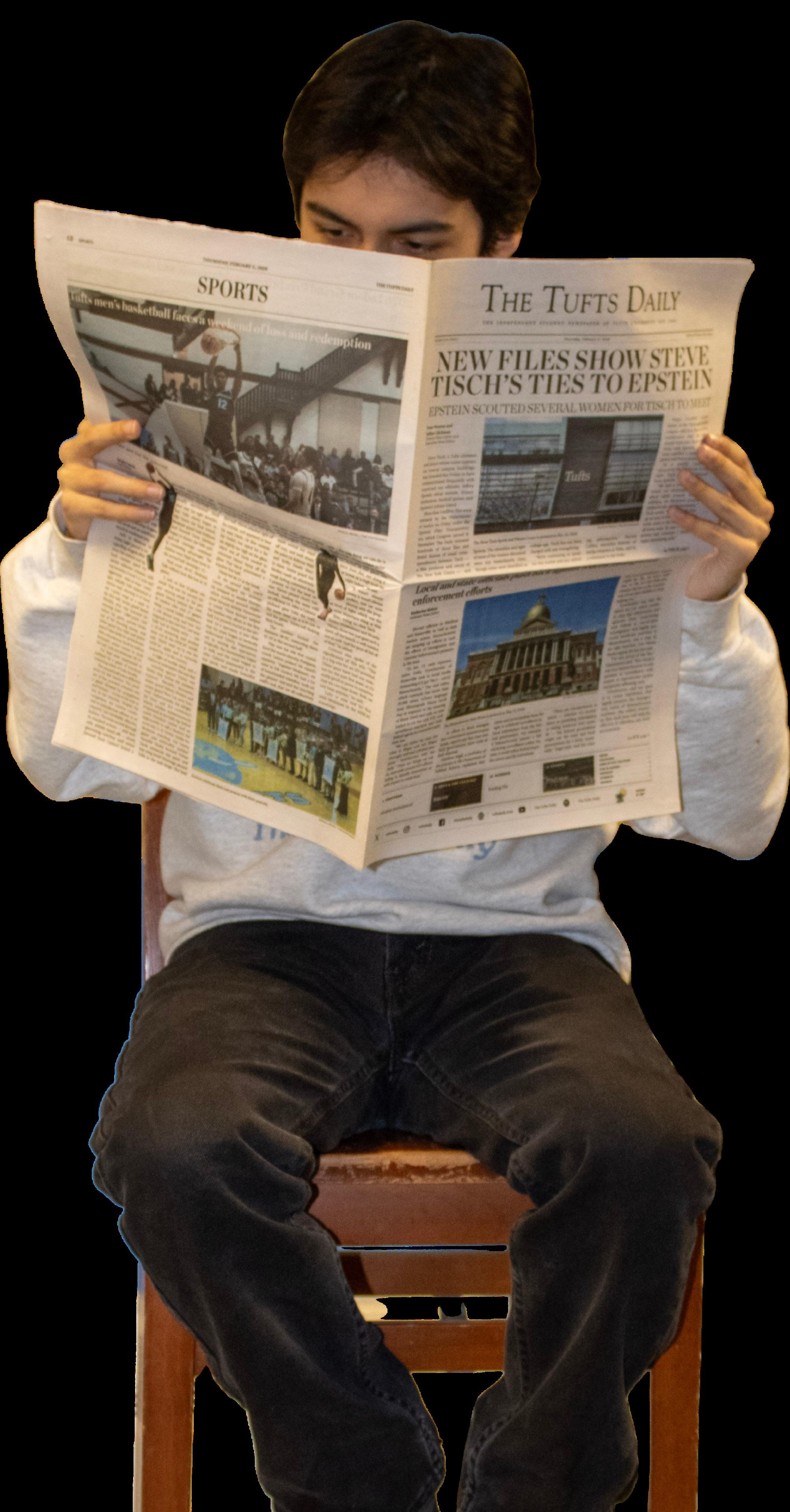
Editor in chief Josué Pérez is pictured reading the Feb. 12 issue of the Daily.
PHOTOS BY: DAILY STAFF PHOTOGRAPHERS THROUGHOUT THE YEARS
FALL 2019
FALL 2023
FALL 2016
FALL 2020
FALL 2021
SPRING 2016
Evan Wang, Sorsha Khitikian and Monica Reilly Executive Opinion Editor and Deputy Opinion Editors
Editor’s note: The Daily’s editorial department acknowledges that this article is premised on a conflict of interest. This article is a special feature for Daily Week and does not represent the Daily’s standard journalistic practices.
We want YOU to join the Opinion section of the Daily. We recognize that writing can be intimidating, especially at a publication like the Daily. So, before we explain all of the reasons why you should join, we first want to tell you how we started writing.
Monica: I came to Tufts with a lot of opinions but didn’t have any proper outlet to express them. It was one thing to discuss politics with my friends on campus, and another to thoroughly delve into my opinions on current events in a meaningful way. I am not a political science or international relations major; prior to joining the Daily, I had few opportunities to explore that side of my interests. Then, I attended a Daily general interest meeting. I watched video clips of Daily alumni and learned about the ways that writing for the newspaper set them up for success in the future. Since I came to Tufts with some experience in journalism, writing for the Daily felt like the next natural step.
Anubhav Sinha Opinion Editor
During my time at Tufts, I’ve developed a hobby of collecting trivia about the quirkier aspects of our school. This has led me to realize that most of us don’t really know much about Tufts outside of the four years we spend here. We get so caught up in the dining halls, problem sets, labs and studios that we forget to stop and ask ourselves: What’s the story behind all of it? So, for Daily Week, I decided to compile some of Tufts’ more entertaining quirks and hidden histories to share with you all.
1. Res Quad’s Dollar Deal
Contrary to common belief, Res Quad takes its name from the reservoir it was built on rather than the residential halls around it. But most surprising is that Tufts bought it for $1 in 1944 after Medford decided that it was too expensive to
OPINION
You should join Opinion!
At the GIM, I learned that writing for Opinion meant you couldn’t write for any of the other sections, such as News or Features. This was initially intimidating, but I honestly believe it has played a key role in how much I have enjoyed my experience with the Daily. The section is close-knit as a result of the aforementioned policy, and I have found it to be a supportive environment for me to explore my interests and form opinions on topics. Writing an article may seem like an arduous process, but you have people helping you every step of the way, from giving you ideas when you pitch, to pointing out grammatical errors during editing. Through the Opinion section, I have learned so much more about the world, both from researching my own arti cles and discussing others. I couldn’t recommend it more.
Sorsha:
The first opinion article I ever wrote was for the intermedi ate journalism class here at Tufts. I took the class because it counted toward both a requirement for a civic studies major and, for some reason, the arts distribution requirement. I spent two weeks writing and editing this article and finally read it aloud to the class. One of my classmates who wrote for the Opinion section at the time encouraged me to publish it and join the
section; I thought about it, but I knew I wouldn’t prioritize writing with all the other things I do on a daily basis.
Then, the Tufts Community Union passed resolutions calling on the university to divest from Israel. Less than 12 hours after the resolutions were passed, the Tufts administration sent an email that essentially rejected what TCU had passed and shut out the student body. I was enraged; former Opinion writer Liam Chalfonte was, too. He published an article
through that article, showed how vital it was to speak up against injustice. I realized then that using my voice was vastly more important than anything else I was doing at the time. I joined Ops that fall and never looked back.
Evan:
I like to joke to my fellow students that Opinion is the best section in the Daily, but when I say that, I really mean it — and here’s why. The thing I remember most starting out in Opinion was when I applied to start my own column: The Death of Education. There I was, a new student, just barely surviving my first year and faced with an opportunity to express my thoughts on a topic that I was passionate about. Immediately, I found support from both my executive editor and the entire section.
GRAPHIC BY EVAN WANG
Tufts’ quirks
maintain. One dollar for prime campus real estate might be the best deal in Tufts history (second to admitting me, of course).
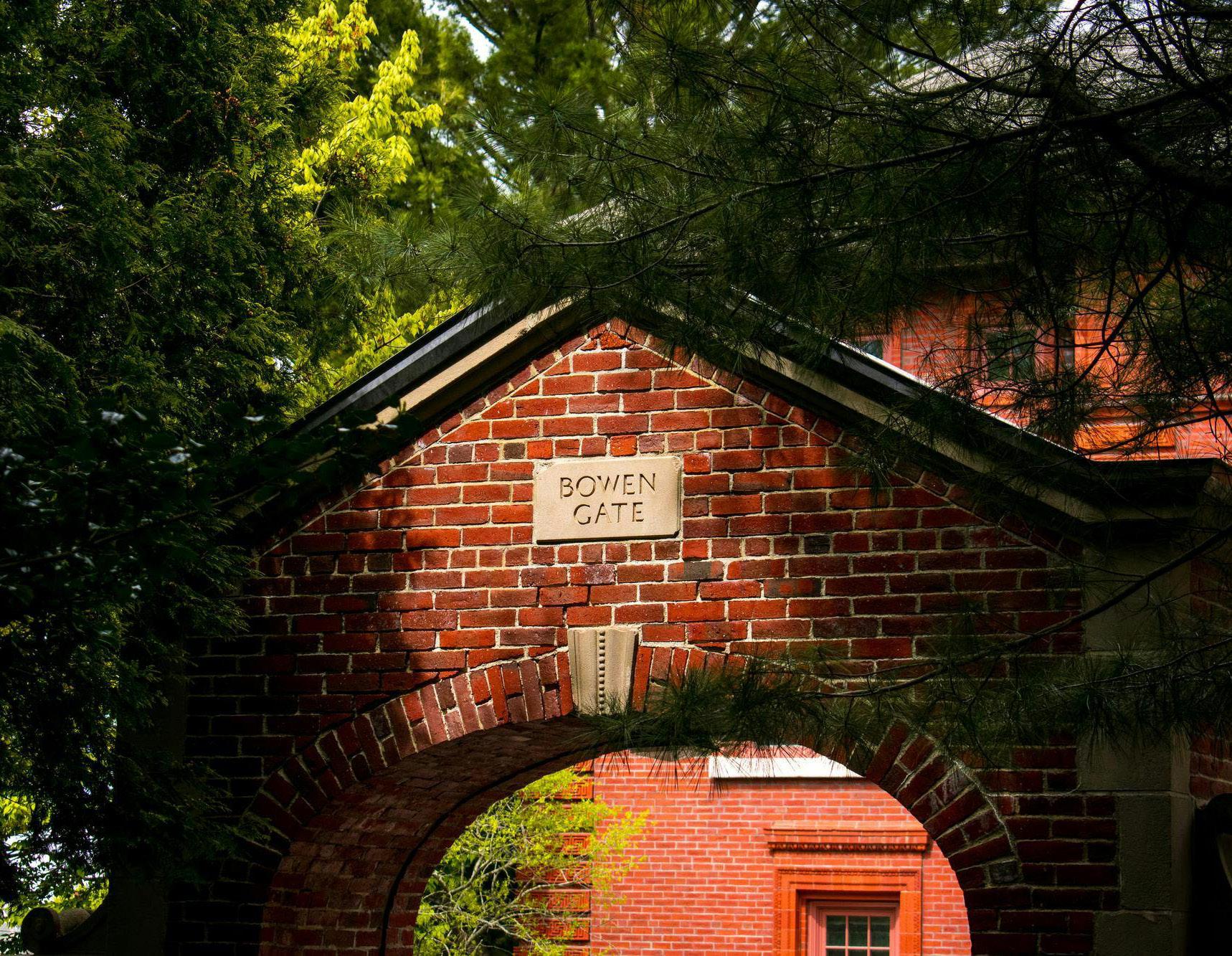
2. Bowen Gate
According to legend (by which I mean the Tufts website), if you kiss someone under Bowen gate, you’ll marry them someday. No peer-reviewed studies have confirmed this yet, though the administration is welcome to fund the research.
3. Hay Bales Mystery Solved
If you have ever wondered why there are bales of hay on President’s Lawn, I’ve got the answer for you: They are there to stop people from getting injured while sledding. Yes, Tufts — home of future doctors, lawyers and engineers — decided that the best way to stop students hurtling down an icy hill was to place some farm equipment at the bottom. Truly a top-10 engineering school moment!
4. The Naked Quad Run
Before the school banned it in 2011, it was traditional for students to strip down and run naked across the Academic Quad before finals in the fall. Nothing says ‘I’m ready for the organic chemistry finals’ like frostbite.
5. Daily Funds
You might assume that The Tufts Daily, as a college newspaper, receives funding from the university, but you’d be wrong. The Tufts Daily is entirely self-financed, operating without a single dollar from the university. It cut ties with the Tufts Community Union back in the ‘80s in order to report on it and the school without conflict of interest. Instead, it covers its costs through ad revenue and donations. Pretty impressive, if you ask me.
And there you have it — five things about Tufts your tour guide definitely didn’t
My fellow writers gave me tips and ideas on how to approach my writing, while my editor, Justin Hong, really brought out the best in me, pushing my writing abilities and ensuring my own voice would be heard. Even now, in my junior year, I continue to find the Opinion section to be full of amazing people. This is a community that has definitely left a distinctive and positive impact on my time at Tufts.
In addition to the support you’ll encounter as a member of the Opinion section, it’s also the place to
hone your writing skills and sharpen your mind. Writing and producing an Opinion piece requires not just technical writing skills but also critical thinking, research experience and most importantly, a willingness to put yourself out there. Whether you want to discuss the nuances of the Dewick menu or the intricacies of international politics, the world is your oyster. Here, your perspectives matter and you have a voice. Join Opinion and put your voice to use!
All together:
Writing for the college newspaper might seem unimportant or frivolous, but learning how to express your opinion is essential. It’s great practice for your academic writing and communication skills. More importantly, we need new voices to speak out now more than ever. You don’t need to write about politics to play an essential role in the Opinion section: We’ve written articles about topics ranging from media suppression to smut and everything in between. Exercising your freedom of speech through the Daily is a healthy practice, and the Opinion section is the perfect place to do so. As a plus, you’ll get to meet the incredibly kind and unique cast of writers we have in our section. If the opportunity to find a friendly community, express your ideas and develop your writing skills interests you, join us at our weekly meetings from 6–7 p.m. on Sundays in the Mayer Campus Center, Room 012!
mention. Whether it’s buying land for pocket change or endorsing marriage by archway, this school has more personality and history than we realize.
I’d encourage everyone to take a moment between classes to look into the history of our fine school to learn more about it, because this list barely scratches the surface. Whether by talking to older staff, going down a Wikipedia rabbit hole or exploring parts of campus you’ve never really visited, there are tons of fun stories waiting to be uncovered.
The Tufts Daily is a nonprofit, independent newspaper, published Monday through Friday during the academic year and distributed free of charge to the Tufts community. The content of letters, advertisements, signed columns, cartoons and graphics does not necessarily reflect the opinion of The Tufts Daily editorial board.
EDITORIALS: Editorials represent the position of The Tufts Daily Editorial Board. Individual editorialists are not necessarily responsible for, or in agreement with, the policies and editorials of The Editorial Board. Editorials are submitted for review to The Tufts Daily Executive Board before publication.
VIEWPOINTS AND COLUMNS: Viewpoints and columns represent the opinions of individual Opinion editors, staff writers, contributing writers and columnists for the Daily’s Opinion section. Positions published in Viewpoints and columns are the opinions of the writers who penned them alone, and do not necessarily represent the opinions of the Daily itself. All material is subject to editorial discretion.
OP-EDS: Op-Eds provide an open forum for campus editorial commentary and are published Monday through Friday. The Daily welcomes submissions from all members of the Tufts community; the opinions expressed in the Op-Ed section do not necessarily represent the opinions of the Daily itself. Opinion articles on campus, national and international issues should be 600 to 1,200 words in length and submitted to opinion@tuftsdaily.com. The editors reserve the right to edit letters for clarity, space and length. All material is subject to editorial discretion and is not guaranteed to appear in the Daily. Authors must submit their telephone numbers and day-of availability for editing questions.
ADVERTISEMENTS: All advertising copy is subject to the approval of the editor in chief, executive board and business director. Reach out to business@tuftsdaily.com with advertising inquiries.
SOPHIA KHAN / THE TUFTS DAILY Bowen Gate shines in the golden hour spring light.
ARTS & POP CULTURE
If you know, you know: Inside Tufts’ ‘Jumbo Jargon’
Maya Godard Staff Writer
Whether you’re on your way to 574, planning for next year’s pumpkining, or about to hit up the Tisch fishbowl, you’re probably surrounded by the communal lingo of the Tufts student body, whether you realize it or not.
Among the tight-knit community of the Tufts bubble, countless abbreviations and acronyms have arisen for campus buildings, staff or phenomena. I’ve lovingly dubbed this vernacular ‘Jumbo Jargon.’
To capture this moment in Tufts linguistics, a Qualtrics survey was shared from Feb. 17 to Feb. 23 on social media, Slack and through personal connections, leading to a total of 158 completed responses.
A quick disclaimer: The generalizability of this data is limited, given it represents only a small fraction of the student body.
The survey began with a series of images of various Tufts academic buildings, dorms and dining locations. Respondents were asked to identify the images using the terms they would use in casual conversation.
First point of interest: Not a single person, when shown a photo of the Joyce Cummings Center, said they would regularly call it by its full name. Instead, the most common nicknames were “JCC” (74%), “Cum Center” (10%) or simply “Cum” (14%). Similarly, Pax et Lox was identified by its full name by only one person, with 97% of others referring to it simply as “Pax.”
There were several name differences that may have been largely generational, namely “Courts”
(68%) vs. “Mods” (26%) for the Court at Professors Row and “SEC” (67%) vs. “TTC” (33%) for the Tsungming Tu Complex. Both split votes reflect the buildings’ respective name changes between 2023 and 2024.
Interestingly, 14% of people referred to the Academic Quad simply as “the Quad.” However, less than 2% referred to the Reservoir Quad the same way, possibly suggesting that the former is a more widely visited or familiar space.
Tufts is also known to be a school of many acronyms; you’ll find yourself hearing more strings of letters than full names here on the Hill. But when we shout out these initials, do we know what we’re really talking about?
Survey respondents were given a list of acronyms and asked to identify what they stood for. If respondents did not know an answer, they could leave a question blank, but many chose to guess — not always correctly, but still representative of that experimental Jumbo spirit.
Some of the most-used university abbreviations were interestingly some of the most unknown or misidentified in the survey. SIS, the site used by all students for course registration, transcript requests and housing information, was correctly identified as “Student Information Systems” by 32% of respondents, but misidentified as “Student Information Services” by a close 25%.
But some of the more student-culture oriented acronyms were more frequently identified correctly, like BNAT (“big name at Tufts”) at 52% and TMC (“Tufts Mountain Club”) at 70%.
Unfortunately for suit-wearing campus icon Professor David John Proctor, his initials — DJP — were the least correctly identified acronym, with only 18% correct responses. Those who have taken a class with Proctor would likely recognize this shorthand email signoff, but it didn’t seem to ring a bell for many others.
However, when shown a photo of another campus leader, President Sunil Kumar, nearly all respondents recognized him. Furthermore, 72% referred to him simply as “Sunil” — how many college students can say they’re on a first-name basis with their university president?
At the end of the survey, respondents mentioned multiple pieces of ‘Jumbo Jargon’ not explicitly asked about in the survey. Several cited a Tufts classic: various plays on the Tufts
mascot name – “Jumbosmash,” “Jumboning,” “Jumbomber.”
There were also multiple respondents who pointed out that SMFA, the acronym for the School of the Museum of Fine Arts, is often pronounced “smifuh” or “smu-fuh,” especially by those studying at the school.
It’s interesting to consider how Tufts lingo has developed and changed over time, even within the past few years.
Five years ago, you would have only heard the Courts referred to as the “Mods” — but since it was renamed, fewer people are familiar with the term.
How long until SEC becomes an obsolete acronym? Or the Jumbomber goes into a file with other myths of Tufts past, right next to the Naked Quad Run and the Wren Creeper?
We can speculate all we want, but what’s most interesting is how this Jumbo Jargon is used now — how it brings together an entire community of students through a shared coded language. However you say them, these shared shorthands — affectionate, awkward and occasionally obscene — are what turn a university into a community.
Now that you’ve finished reading this, you should go refresh yourself with a Cinny Vanilly or TropiKale smoothie. And I’ll leave you with one last thing — however you say it:
Roll ‘Bos! (38%)
Go ‘Bos! (30%)
Go Jumbos! (18%)
‘Sko ‘Bos! (4%)
Trunks Up! (2%)
On the world stage: How Haiti won the Winter Olympics for fashion
Isadora Alexis Staff Writer
Haiti’s Winter Olympics uniform is a puffer set with designer Stella Jean’s signature: flare and bold color. A forest of green vegetation rises from the athletes’ feet, wrapping all around their legs and torsos, contrasting sharply with the bright red figure of a horse at the center. The women’s uniform features this animal on a quilted skirt that balloons out from the wearer’s waist; the same animal sits front and center on the jacket of the men’s uniform. While this horse has a saddle, the rider is noticeably absent.
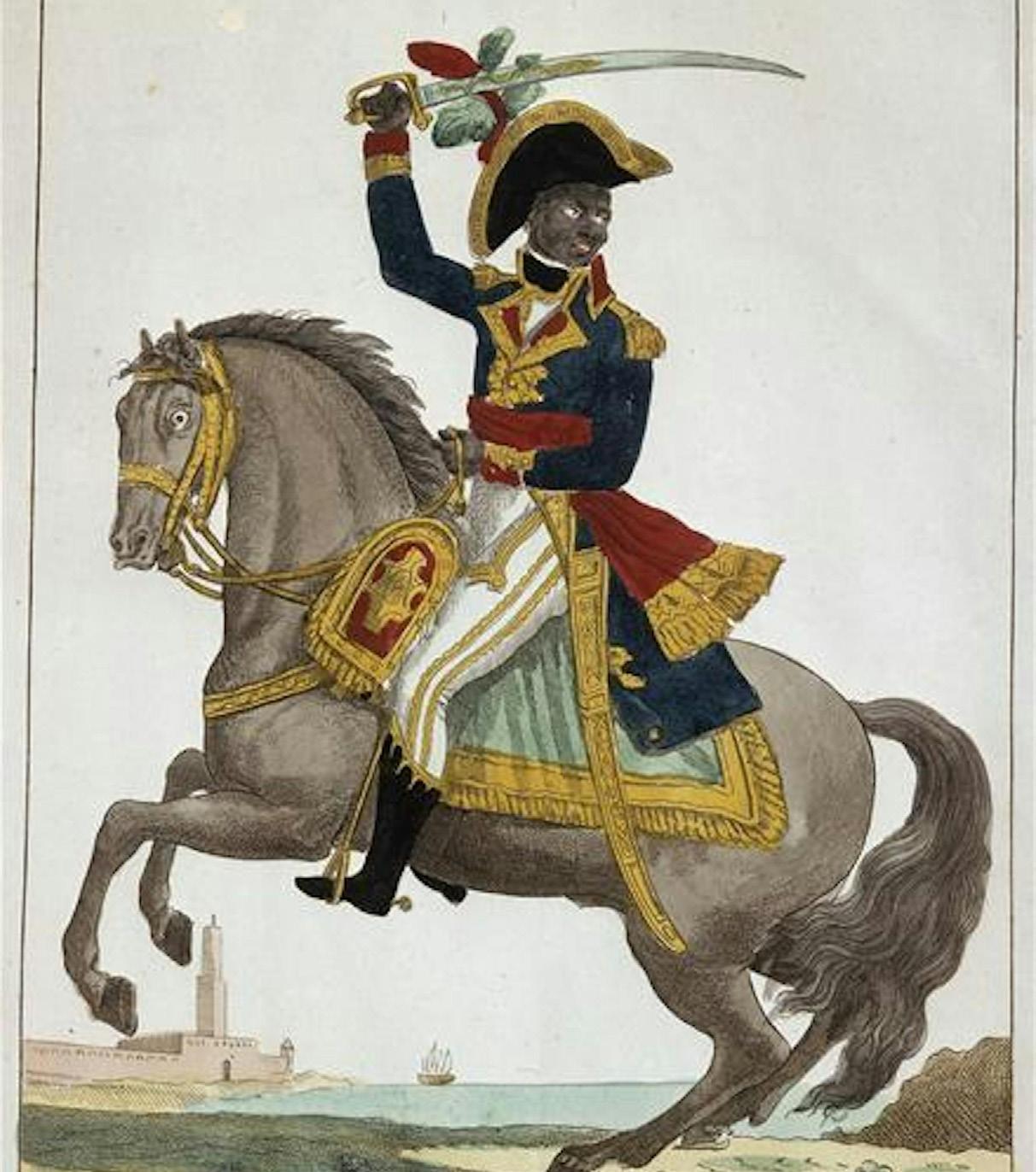
Originally, the uniform, which is based on a painting by Haitian artist Edouard Duval-Carrié, featured the revolutionary leader Toussaint Louverture mounted on a horse and would have had him gracing the Olympic stage as an ode to Haiti’s history and burning national spirit. Louverture led the movement for freedom from French colonial rule so that the enslaved people on the island could govern themselves.
However, on Jan. 4, the International Olympics Committee decided that the
inclusion of the political figure violated a rule against political and religious symbols on uniforms. The uniform was adapted to exclude Louverture but keep the charging horse, and Jean turned the unfortunate situation into something positive, stating in an email to Artnet News, “We did not erase the spirit of the General. ... His absence speaks louder than his presence ever could.”
There are more loaded symbols hidden in the stitches of the uniforms. The women’s green headwrap is a tignon, a reference to the forced practice of enslaved women covering their hair in colonial Saint-Domingue, modern day Haiti. The large pockets on the skirt and pants symbolize Haiti’s merchant culture by referencing the large baskets women used in marketplaces.
Jean committed herself to conveying a message to the world with her design. She wanted Haiti to have equal footing with the rest of the global participants in the Games. She told The Guardian that on the night of the opening ceremony, “Haiti was no longer the poorest nation. That night, we stood with our heads held high, side by side with the giants of the world.”
Haiti’s appearance at the Winter Games is rare: This year is only the second time the country has participated — their other appearance was in 2022. Two male athletes represented Haiti this year: Richardson Viano, an alpine skier, and Stevenson Savart, a cross-country skier. The two, despite growing up abroad, decided to represent their ancestral home and be part of something that has been sparking positive buzz for their country.
Haiti has been embroiled in a political and economic crisis that reached a tipping point in 2021 following the assassination of then-president Jovenel Moïse in his home. What followed almost immediately after was a 7.2 magnitude earthquake and the gradual rise of gang violence, particularly in the capital city, Port-au-Prince. By 2023, 80% of the city was under gang control. The violence has since spread far beyond Port-au-Prince, compounding existing concerns over food insecurity and economic and political instability.
If you were to look up Haiti in the news today, you would likely find dozens of articles about this very topic. Jean, Savart,
year’s
Viano and the entire creative team behind this
uniform wanted to highlight something different in their design — something that reflects their pride in their Haitian heritage
and honors the values of the Haitian Revolution. Something that shows, as Jean stated in an interview with Dazed, that, in spite of the turmoil, “[Haiti] still exists and resists.”
STELLA JEONG / THE TUFTS DAILY Students laugh at the Digital Design Studio welcome desk.
VIA WIKIMEDIA COMMONS Toussaint Louverture is depicted on horseback.
WORD SEARCH
Daily
Shayna
‘Daily Mania’ by Shayna Levy
‘Daily Week’ by Shayna Levy
An ephemeral art
Originally published Feb. 25.
Donald Chapelle, founder and owner of Brilliant Ice Sculpture, made his first foray into the world of ice carving at 18 years old. He was living in a hotel and noticed a large block of ice in the freezer. A waiter told him it was used to make sculptures.
“I would sneak up at night and take a kitchen knife, and I made a sculpture,” Chapelle said. “I hid it behind cases of frozen vegetables.”
What did he make? “45 years ago, swans were all the rage,” he said.
It would be decades until Chapelle officially entered the ice sculpting business. He worked as a chef at Michelin star restaurants in Geneva and Vienna before coming to Boston, where he served as the executive chef for the Museum of Fine Arts for 14 years. After a stint as a corporate executive chef at Whole Foods in southern Florida, he returned to
Boston and started the restaurant concept Brew Moon with six other people. He sold the business in 2001 and began teaching college students.
Chapelle soon realized that life as an educator was not for him.
“I decided … I can’t deal with this,” Chapelle said, “So I started this ice carving business.”
His first studio was in a mill building in Lawrence, Mass. He began with one ice maker and delivered the sculptures in his late father-in-law’s Lincoln Town Car. In his first year, he estimates he made around $17,000. By his fourth year, thanks in part to his marketing strategies, he reached profits around $200,000. Although he still uses Google Ads when he anticipates a slow season, marketing has become less of a priority for Chapelle.
“I don’t want to grow this business,” Chapelle said. “I have enough customers. I don’t really need to reach out.”
Chapelle’s experience as a chef is an asset considering that he often sells to chefs and restaurant managers.
“I speak the language,” Chapelle said.
When working with people who lack culinary experience, including event planners, Chapelle said “nine times out of 10, I know what they need more than they do.”
His experience in the kitchen also helps him incorporate edible or decorative elements into his sculpture, including flower arrangements, fruit or drink ingredients. Currently, he is freezing “five ice makers full of 16 pound salmon” for the Seafood Expo North America. While Chapelle has a competent team, he still sculpts and delivers.
“I do a lot of anatomy stuff [that] the guys can’t do,” Chapelle said, including sculpting a bust of John Quincy Adams for the Quincy President’s Day event.
He enjoys doing deliveries because he can feel “the pulse of every part of the business.”
Although he used to hate long delivery drives, they have become one of his favorite parts of the job as he tries to admire the scenery and “enjoy life.”
Deliveries are not the only opportunity to enjoy life as a sculptor. Chapelle said, “Having a small business like this, that’s niche … allows you some flexibility to have a decent life.” After working long and exhausting hours as a chef, Chapelle says he is “making up for it.” He takes time off for international biking trips with friends and maintains side hustles during slower business periods.
Summer is typically the slower season when, according to Chapelle, most sales come from drink luges, weddings and corporate events.
Winter brings more projects for festivals, including past pieces for First Night Boston.
Chappelle’s larger pieces have ranged from an 18-foot Tom Brady to Michaelangelo sculpting David. Although Chapelle is proud of his large projects, he emphasized that “even some of the small things that we do for weddings are just mind boggling.”
When working for an outdoor festival, “it’s not warm weather or rain that kills it, it’s sun.” Chapelle recalled sculptures he constructed for Gloucester’s So Salty in January. Those built in the shade have endured while those in the sun have not.
Some sculptures are totally ruined within hours. The transience of his pieces doesn’t bother Chapelle.
“I stopped caring, as long as you get a decent photo of it, that’s enough,” he said. “You just got to move on.”
When approached by a client, Chapelle first directs them to his website.
“I’m big on branding. For instance, I have three different swans. If someone wants swan
number two, they’re going to get exactly swan number two,” Chapelle said.
He added that “there’s no artistic license” when it comes to standard designs. For custom designs, Chapelle makes drawings for the client to approve before beginning work. Although some clients can be difficult to work with if they change their minds or try to avoid payment, Chapelle enjoys witnessing people’s reactions to his sculptures.
“You see firsthand how happy we make people,” he said.
After a lifetime of sculpture, Chapelle at times wonders if the craft is going to get passed on. Obstacles including expenses, niche skills and occasionally grueling work cause Chapelle to conclude that “this will be a dead art in 20 years.” While he believes that a “young and ambitious” sculptor “could have quite a good life,” very few people have expressed the interest or ability to carry on the tradition.
“It’s a little sad,” Chapelle said. “It is what it is.”
Sophie is a sohpomore studying international relations and French. Sophie can be reached at sophia.herron@tufts.edu.
COURTESY DONALD CHAPELLE
One of Chapelle’s large pieces, a sculpture of the Boston skyline, is pictured.
Sophie Herron
SCIENCE
New documentary ‘Ending HIV: The Journey to a Vaccine’ premieres at Boston’s Museum of Science
Josie Abramson Contributing Writer
On Feb. 19, “Ending HIV: The Journey to a Vaccine,” a new documentary, premiered at Boston’s Museum of Science. The premiere was preceded by a conversation with Dr. Anthony Fauci and Dr. Larry Corey, who discussed their personal involvement in HIV vaccine efforts, what the future may hold for science and what young people can do to help the cause.
“Ending HIV: The Journey to a Vaccine” discusses the decadelong global fight for an HIV vaccine, focusing on the various forms of collaboration and commitments that drove it.
Fauci is most known by our generation for his spotlight during the COVID-19 pandemic. However, in the world of public health, he is known as one of the nation’s leading experts on infectious diseases, with a big legacy in the HIV/AIDS pandemic.
Corey, the second guest speaker, is the former president and director of the Fred Hutchinson Cancer Center. He is known as a renowned expert in virology, immunology and vaccine development.
Starting from the first reported cases of HIV in 1981
and continuing to the current status of global HIV burden, the documentary showed an expansive perspective on community involvement, clinical studies and infectious disease.
HIV is a complex, shape-shifting virus, making a potential vaccine very difficult to develop. HIV uniquely integrates into the immune system and mutates rapidly to attack the immune system, making it difficult for a vaccine to recognize the virus and create antibodies to fight it –– what vaccines aim to do. The documentary stressed the importance of listening to affected communities and giving them a seat at the table. As public health officials like Fauci learned, effective decision making and awareness campaigns required that scientists meet people where they were. Going to places like gay bars to spread the word about preventive measures and provide opportunities for involvement in the process was integral in fighting the HIV pandemic.
The documentary showed a global perspective, highlighting how different regions of the world have different strains of HIV, known as subtypes or clades, that are identified by letters. For example, southern Africa suffers
mostly from subtype C, while the majority of HIV cases in the United States are subtype B. The documentary framed these subtypes as an added challenge to producing a vaccine, highlighting the need for a vaccine that can protect cells from any strain.
The film emphasized that to produce a comprehensive vaccine, high-income countries must partner with low-income countries, in a mutually beneficial way where the latter can collect data and the former can supply medical interventions. Further, the film stressed that access to medical advances ––such as an HIV vaccine –– is integral because all people deserve medical care regardless of where they are from.
The decades of studies for a vaccine to prevent HIV were discussed chronologically in the latter half of the documentary. Two big medical advancements are antiretroviral medications and pre-exposure prophylaxis. Antiretroviral medications suppress the virus and keep it from reproducing, in turn stopping the disease from progressing. Pre-exposure prophylaxis is a highly effective daily pill or injection for HIV-negative individuals to prevent contracting HIV. However, the cost of this
treatment is huge, limiting the spread of utilization globally.
A big breakthrough emphasized in the film was the discovery of the role that broadly neutralizing antibodies could play in creating a universal HIV vaccine. The Antibody Mediated Prevention trials from 2021, which enrolled over 4,600 volunteers across many continents, demonstrated the feasibility of creating potent antibody combinations that block HIV.
When asked what they hoped the audience would take away from this movie, Corey expressed the importance of the community side of the film, saying, “science is about people.” Fauci built on Corey’s comments about infrastructure, hoping viewers of the documentary see that through decades of experiments, researchers can achieve great innovation such as anti-retroviral drugs.
The documentary emphasized how investment pays off in the world of science. Fauci highlighted how the process of developing an HIV vaccine paved the way for the expedited creation of a COVID-19 vaccine. He listed some of the lessons he took away from his time, addressing both HIV and the COVID-19 virus, such as to
Tufts professor creating assistive technology through AI
Jaylen Daley Contributing Writer
Engineering and social sciences are widely considered to be separate fields of practice. However, all technology we develop has the capacity to shape the society in which it is applied.
This spring semester, Jaylin Herskovitz joined Tufts’ computer science department as a new assistant professor, where she hopes to further integrate social and technical research. Herskovitz’s work revolves around designing personal assistive software using artificial intelligence, motivated by her studies on how blind and visually impaired people use the technology to accomplish specialized daily tasks that typical AI models cannot.
Professor Herskovitz began her journey into computer science in her second year of undergraduate studies at the University of Michigan when she joined a human-computer interaction lab. There, she experimented with programming software oriented around people, which steered her towards her accessibility research today. “I thought all of CS research must be extremely technical, like inventing new algorithms or models … which a lot of it is, but the element of getting to work with people was very interesting
to me,” she said. She pursued doctoral studies in HCI, obtaining her Ph.D. in computer science in August 2025 and beginning her new role as an assistant professor at Tufts last month.
While working towards her Ph.D., Herskovitz studied how blind and visually impaired people utilized AI technology. She argues that these users offer a fruitful means of uncovering new practical applications of the technology. “We have people who are essentially extreme early adopters of this technology and actually using it in much more practical ways than the average person. Even when LLMs started to become more functional, your average person was asking it, ‘tell me a knock, knock joke’ ... and blind people [were] using it to complete tasks of high importance. Them being early adopters can illuminate a lot of what we eventually do.”
In her research, she uncovered techniques of “hacking, switching and combining” that BVI users apply across multiple AI assistive programs to navigate specific tasks in their lives. These techniques inspired her to develop ProgramAlly and AllyExtensions. With ProgramAlly, users can program AI to quickly identify specific pieces of visual information in their environment. AllyExtensions is another app that allows users to program
their own shortcuts to bridge gaps between the accessibility software they rely on.
What sets Herskovitz’s discipline apart from other computer science is the way she applies social science concepts and research in the process of designing and critically analyzing software. “HCI is sort of this conglomeration of … anthropology, psychology, cognitive science, engineering, human factors,” Hershovitz says. Hershovitz wasn’t formally trained in the social sciences. However, she explained that she has intentionally broadened her interdisciplinary perspective. “As I went through my Ph.D., I’ve tried to … expand and learn from those other disciplines more. There are HCI researchers that draw much more deeply than me from social science theories. Actually, a couple years ago, I had one of them tell me, ‘You use theories in your work — you just don’t know they’re there.’”
Using those theories, she refines the purpose and mission behind her assistive technology development. When reflecting on ProgramAlly, she emphasized the importance of interdependence in disability communities.
“People with disabilities are like these domain experts in their own lives and their own ways of doing things, and so
always “expect the unexpected” and understand that “misinformation and disinformation is the enemy of public health.”
Despite having some bias given their profession in the healthcare field, both experts emphasize the huge impact of infectious diseases beyond just the initial moment of infection –– these viruses can spread across multiple organ systems. “I think infectious diseases cause most other diseases,” said Fauci.
The later statements from Fauci and Corey held more political weight, with messages about the U.S. administration’s attitudes towards science. The final question asked the speakers to give the audience one action item to take with them. Fauci responded with one word –– “vote.” This was met with loud applause from the audience.
Altogether, this event provided insights into the progress toward an HIV vaccine and the challenges that we must overcome to succeed. A takeaway from the evening was that it is possible to rid the world of HIV in the future. There is hope for a vaccine that can entirely eliminate the virus globally, but this calls for global attention and collaboration.
my work … looks at how we can help them — not take advantage of that knowledge … but how they can use that knowledge more effectively to build something for themselves,” she said. She added that there are sometimes misconceptions about how BVI people prefer to live. “Sometimes in accessibility work, it’s framed as, ‘we want people to be independent and just be able to do everything on their own.’ And a lot of people with disabilities actually like living in community with other people.”
and she’s working on a project relating to errors in AI and how to help [BVI] people reason about the sources of errors. If they can’t see the input to an AI system … how do they reason about what’s happening, especially when something goes wrong? I’m very excited about that.”
Herskovitz is currently building the Tufts AI, Design and Accessibility Lab and actively seeking new student members. Some of the projects she hopes to mentor students in involve AI hallucinations and developing programs with newer generative models. “I have a student now,
As her lab continues to develop, Herskovitz hopes to further integrate the social science perspectives that have shaped her approach to assistive AI. Her career serves as a testament to the ways social science can deepen engineers’ understanding of the technology they develop.
COURTESY JAYLIN HERSKOVITZ Professor Jaylin Herskovitz is pictured.
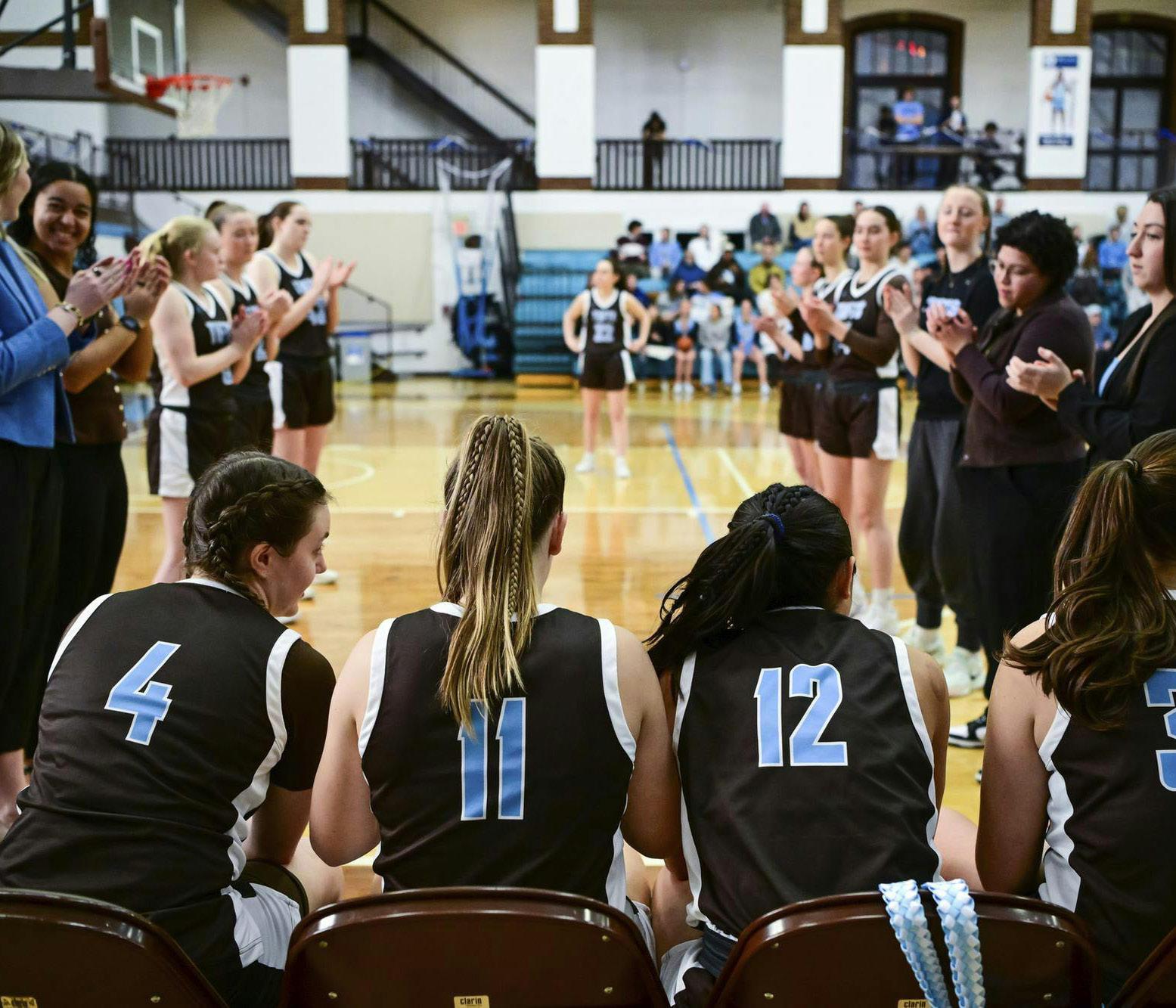
Women’s basketball knocked out of NESCAC tournament in loss to Bowdoin
With a 73–56 loss to the top-seeded Polar Bears in the first round of the NESCAC tournament on Saturday, the Jumbos’ season came to an end.
The Polar Bears got off to a hot start, making two quick layups and recording a steal.
Sophomore guard Claire Kolkhorst put the Jumbos on the board one minute in by drawing a foul and making both free throws. Bowdoin kept the pressure up with another cut to the basket, a fast-break layup and an andone, pushing the score to 11–2 just over two minutes into the first quarter.
Tufts responded with a stop and a 6–0 run of their own. Kolkhorst hit a corner three, senior guard Annie Aspesi scored off a Kolkhorst outof-bounds save and first-year guard Abby Congdon sank two free throws to bring the Jumbos within two points. With three minutes left in the
quarter, junior guard Stella Galanes pulled up just past the free throw line, tying the game at 13–13.
The Polar Bears regained control, however, with a 3-pointer and a block. They went on a 10–2 run to end the quarter ahead 23–15.
Bowdoin carried its momentum into the second quarter, starting with a steal, made free throws and a putback to go up by 12. First-year guard Tessa Lozner scored first for the Jumbos with an andone a minute and a half in. The Polar Bears then got hot from beyond the 3-point line, making three in a row and forcing a timeout. With six minutes left in the quarter, they were up by 18.
The Jumbos moved the ball well out of the timeout, giving it to Lozner for a tough layup. They pushed the pace on offense and put on defensive pressure. The Polar Bears were unable to make a field goal for the remainder of the quarter. After a 7–2 Jumbos run, the half ended 40–27.
Congdon got things started for Tufts in the second half. Sophomore forward Siobhan Stapleton threaded the needle to find Congdon, who laid it in. Tufts, however, struggled to defend Bowdoin’s quick ball movement and offensive rebounding. The Jumbos allowed another 3-point play and allowed second-chance offensive possessions.
Tufts stayed within striking distance by making quality cuts to the basket and drawing fouls. Bowdoin continued to make shots, though, and Tufts couldn’t cut down its deficit.
The Polar Bears shot 50% from three and over 50% from the field in the third quarter, while the Jumbos connected on just one of six 3-point attempts. Tufts struggled from beyond the arc throughout the game, shooting 13.3% compared to its 32% season average.
“Bowdoin is an incredibly disciplined team, so you know they’re going to be executing at a high level for the whole game. I think especially their ability to shoot and move off
the ball was challenging to defend,” Galanes wrote in a message to the Daily.
The Jumbos finished the quarter strong. Senior forward Sarah Crossett recorded a steal and passed ahead to Lozner, who laid it in. On the next possession, Congdon drew a foul driving to the basket and made both free throws. Tufts closed the quarter with an offensive rebound and another made free throw by Lozner, bringing the score to 61–44 with one quarter remaining.
A Bowdoin layup and a Lozner long 2-pointer opened the fourth quarter. Bowdoin continued to make extra passes and got one to fall from way beyond the arc to increase the lead to 21.
The Jumbos responded with excellent defense, forcing the Polar Bears into a late shot-clock attempt. Kolkhorst came down with the rebound and threw a baseball pass to Crossett for the layup. Kolkhorst then quickly stole the ball back to get a bucket of her own with four minutes left.
Congdon later found Crossett, who was fouled and made both free throws to bring the Jumbos to 56 points.
Neither team was able to make another shot. Both teams scored 12 points in the fourth quarter, and the game ended 73–56.
“I think against Bowdoin we really were in the game fighting until the end, which was something we took pride in,” Galanes wrote. “Overall we did a good job competing on both ends of the floor, especially with our ability to turn defense into offense in transition.”
Galanes led the Jumbos with 14 points, followed closely by Lozner with 13. Stapleton led the team in rebounds with five.
The Jumbos ended the season 13–12 overall and 4–6 in conference play.
“I think this season we learned a lot about ourselves as a team and gained valuable experience that we can definitely use in the future to get some of the results that eluded us this year,” Galanes wrote.
Morgan Baudler Staff Writer
COURTESY
Tufts women’s basketball is pictured at their Feb. 15 game against Bates.
What the NBA can learn from its 1980 season
The Tufts Daily was founded in 1980, so an anniversary edition naturally invites a look back at what else was happening in the world at that moment. The 1979–80 NBA season is a great place to start — not just as a historical snapshot, but as a case study in how a league can improve itself.
1980 was a season of change for the NBA. The league was willing to experiment, new stars were reshaping its identity and the regular season felt connected to a bigger story. Looking at that moment now helps clarify what the current NBA is missing. The league has more extraordinary talent than ever, but too much of the regular season feels diluted, fragmented or strategically unserious. If I had to boil the fix down to one idea, it would be this: Take the same boldness the NBA showed in and around 1980 and apply it to today’s problems with serious structural changes.
1980s rule change lesson: Cut the season to 70 games
One of the best examples from that era is the introduction of the 3-point line. The league was willing to make a major change because it believed the game could become more interesting. That decision matters here, even if the issue today is different. The lesson is that the NBA has never improved by treating its format as untouchable.
So the current league should make one similarly bold move and shorten the regular season to 70 games.
I do not mean ‘consider it’ or ‘test a cup tournament and hope fans forget the real issue.’ I mean actually do it. Cut 12 games per team. Across the league, that removes 180 regular-season games from the schedule. That is a real reduction in wear, a real reduction in dead calendar space and a real increase in the value of each game night.
More importantly, it would let the league rebuild the schedule around quality: fewer back-to-backs, more rest between marquee games and more chances for stars to play in the games fans circle on the calendar.
If the argument against this is money, that is fair in the short term. Fewer games mean less inventory. But the NBA’s problem right now is not a lack of inventory — it is dilution. The league already has more than enough games. What it needs is a regular season that feels tighter, sharper and more worth following from start to finish.
1980 reminds us that a league can improve the product by making a dramatic change. This is the dramatic change the NBA should make now.
The pre-tanking lesson: Freeze lottery odds at the trade deadline
The tanking discussion usually gets framed like a morality debate, and I think that is part of why the league keeps struggling with it.
Teams are not tanking because they suddenly forgot how competition works. They tank because, under the right conditions, losing is rational.
Tanking is widely associated with the early 1980s, especially the 1983–84 season, when the draft incentive (Hakeem Olajuwon and Michael Jordan) became so strong that intentionally losing turned into an openly recognizable strategy. The classic example is the Houston Rockets’ finish that year: a team that was 20–26 at midseason closed 9–27, with lineup decisions that looked suspicious even at the time. This was the league discovering what happens when the rules reward losing.
That is why the NBA needs one clear anti-tanking fix, and it should be this: Freeze lottery odds at the trade deadline.
Here is how it would work. On the day of the trade deadline, the standings lock in each non-playoff team’s lottery position and odds. From that point forward, a team gains nothing in the draft by losing more games. It can still miss the playoffs. It can still develop young players. But it no longer gets extra lottery benefit for turning the final six weeks into a surrender operation.
This directly targets the exact stretch of the season that now feels least trustworthy. It also avoids punishing genuine rebuilding. A bad team can still be bad — it just cannot improve its draft position
by getting worse on purpose after the deadline.
This solution is narrow, practical and aimed at the real problem. It does not require the league to read minds. It does not need to prove intent. It simply changes the payoff structure. Once losing after the deadline no longer helps, a lot of the worst late-season behavior disappears on its own.
The lesson from 1980 is not that teams were more virtuous. It is that tanking had not yet been fully baked into the league’s incentives. If the NBA wants more honest basketball in March and April, it has to redesign those incentives.
The Larry Bird-Magic Johnson lesson: Build a weekly national narrative window
The other great lesson from 1980 is more on the cultural side. The arrival of Larry Bird and Magic Johnson gave the league something bigger than just star power. It gave the regular season a story people could follow. Their rivalry helped make games feel like chapters in something, not just isolated events.
That is exactly what the current NBA is missing in its broadcast setup: a consistent way to turn talent into season-long narrative stakes.
The problem is not that fans have too many ways to watch.
The problem is that the experience feels fragmented — different channels, platforms, production styles and rhythms. Even when the
basketball is great, the presentation often makes the league feel disconnected from itself. A league cannot build regular-season urgency if fans are constantly being asked to figure out where the stage is.
So the NBA should make one clear broadcast change: Create one league-wide, national flagship window every week, with a single consistent presentation and season-long storytelling format. The NFL has spent decades proving how powerful that kind of routine can be. Pick one night. Make it the night. Same production identity every week, no matter which media partner carries the game. Same tone, same pacing, same emphasis on why the matchup matters in the larger season. Build pregame segments that track rivalries, playoff races and team arcs over time, so fans who tune in weekly feel like they are following a story rather than dropping into random episodes.
People do not just come back for talent. They come back for rivalries, grudges and season-long stakes. The NBA has the stars, but too often it does not have the drama — and the fragmented broadcast setup only makes that worse. If the league wants the regular season to feel alive, it needs a consistent national stage where storylines can actually build from week to week.
The NBA already has the talent to own the regular season. What it needs now is the structure to make people feel it.
Luke Fredericks
Deputy Sports Editor
VIA WIKIMEDIA COMMONS
Larry Bird (top left), Magic Johnson (bottom left) and Kareem Abdul-Jabbar (right) are pictured in the 1980s.