Dear Class of 2026, friends and family,
Today is the moment that you have all worked so hard for. This is a well-deserved moment of celebration and exaltation. Your leadership, companionship, wisdom, advocacy and artistry have been admirable and exemplary to the Tufts community.
Many of you took pictures with Jumbo during your visits to Tufts as high school students or as freshly-matriculated firstyears on the first day of classes. I hope that today you take one more picture next to Jumbo and compare it with those first-year pictures. Enjoy today and cherish the beauty of the blossomed trees and flowers — all in the company of your family and close friends.
This semester, we covered the graduation of Dr. Rümeysa Öztürk and her return to Turkey over a year after her despicable arrest by Department of Homeland Security agents. Our news team and editorial board have pressed the Tufts administration over its silence on revelations of Steve Tisch’s (A’71) relationship with convicted sex offender Jeffrey Epstein. Tufts has come under fire from the Department of Education for alleged “election influence” and the Department of Defense over perceived ”wokeness.”
Although the professors of the practice at the School of the Museum of Fine Arts at Tufts University ratified their first collective bargaining agreement with the university in February,
tensions between the university and the unions have continued.
Somerville residents welcomed a new mayor and are confronting a decreased budget for the fiscal year 2027. In Medford, city officials have debated numerous lawsuits and are continuing a tense rezoning project.
Liz Landers (LA’13), White House correspondent at PBS News Hour and keynote speaker at DailyCon, our semesterly staff training event, engaged in an eye-opening discussion about her path in journalism and covering the fast-paced Trump presidency.
To the 93rd Executive Board, thank you so much for being dedicated leaders of your respective sections. Personally, thank you for your friendship and feedback. Shoutout to the truly amazing crew of: Aisha, Aneeqa, Annika, Arghya, Dylan F., Eliza, Ellie, Evan, Fiona, Grace L., Israel, Jamie, Jaylin, Julia S., Julian, Keira, Matthew, Maya, Olivia B., Olivia Z., Sam, Shayna, Shoshana, Sorsha, Stella and Zach.
Thank you to all of the past editors in chief that have ever mentored me or given me advice. You are all exemplary EICs, and I am honored to be a part of this starstudded legacy.
Thank you to my managing board for your companionship, diligence and passion. I am so happy with the work we did this semester; I am glad I got to know all of you better.
Grace N., thank you for stepping up to become a managing editor. Your close attention to accuracy and phrasing of our articles greatly elevated their quality. Your bubbly, positive energy brought the managing board together, and I am so grateful for that. I wish you the best of luck in your endeavors post-grad!
Sadie, thank you for your consistent consideration of our readership and of our decisions as a managing board. Both you and Grace were excellent help when it came to internal communications. I am so excited to see you continue being a part of the managing board next semester!
Emily, thank you for keeping me in check with your wit and level-headedness. I have appreciated your intentionality toward the office culture and whiteboard graphs. Your close attention to multimedia has paved the way for future associate editors. I cannot wait to hear about your Copenhagen adventures next spring!
Linda, thank you for your diligence in editing (especially with Wednesday night CE3 edits) and the projects that you took on. You always answered the call to make last-minute corrections, which I am deeply appreciative of. I cannot wait to hear what you do in the near and far future!
Dylan T., thank you for your efficient editing that got us ahead on Wednesday and Thursday nights. I have appreciated your inquiries about sourcing and
phrasing issues that came up in articles. I wish you the best of luck in your Tufts Survivor and Quiz Bowl ventures.
Josh and Angie, I cannot wait to see how you continue your sterling leadership of the Production department. Your passion for creating a cohesive, appealing weekly paper has reminded me of the importance of reading printed articles and ensuring that no mistake slips through. Thank you for your positive attitude on Wednesday nights and insightful feedback for me.
Carol, thank you for your stewardship of the Business department. I am especially grateful for the work you did last fall to ensure the Daily maintained its steady course.
This Daily class of seniors has guided the Daily, and myself, through a lot over the past three years — I will miss you all and encourage you to stay in touch as a new part of our alumni network.
Lastly, thank you, dear reader, for your support of local and student journalism. The Daily has been an important part of the local journalism communities in Medford and Somerville, and its place at Tufts is recognized by so many students, faculty, alumni, parents and Tufts leaders.
I hope that we have gained your trust this year and that we can keep it for years to come.
Pax et Lux, Josué Pérez Editor in Chief, Spring 2026
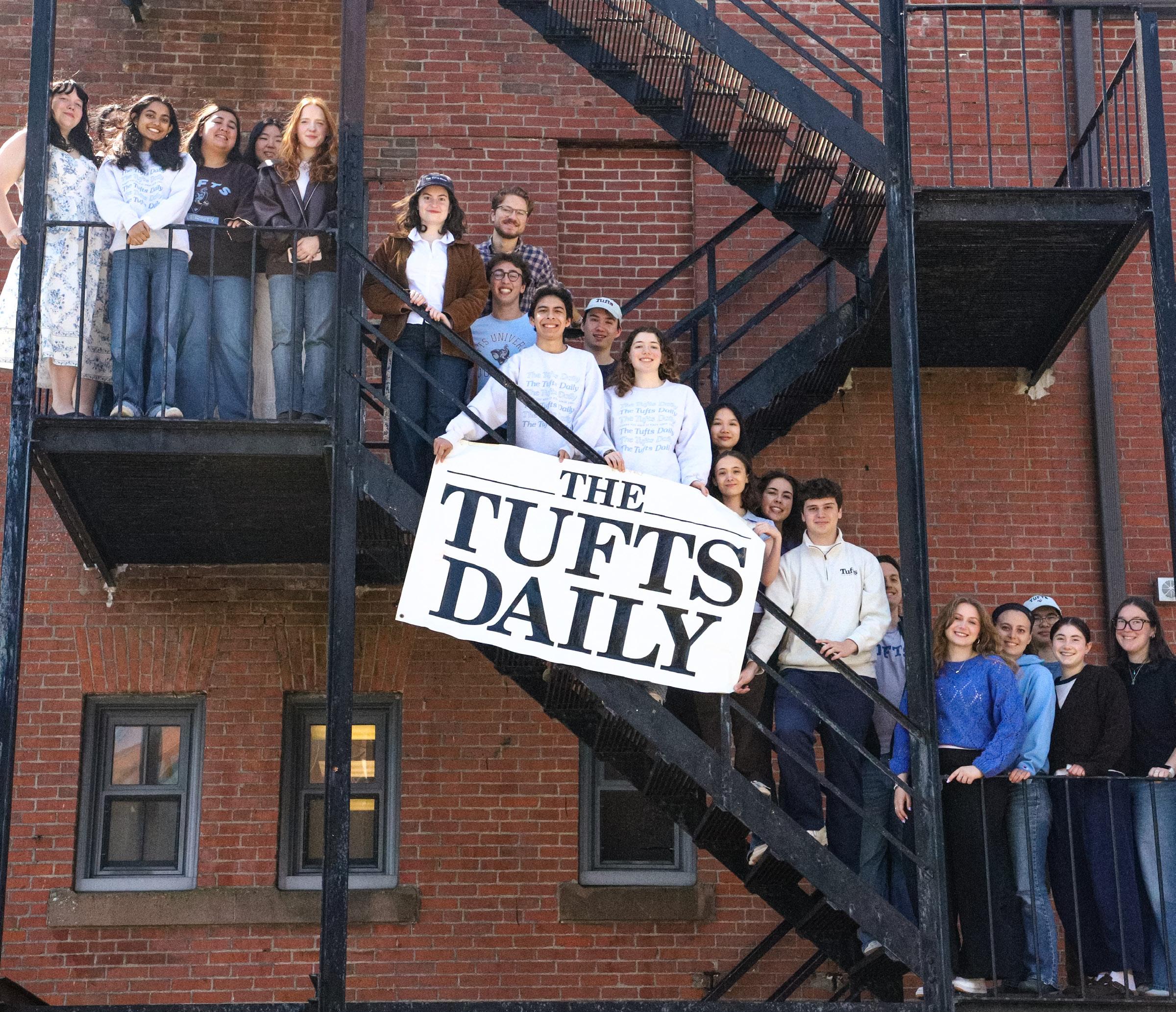
Kumar, finishing his third year as president, sat down with the Daily after another tumultuous year for higher education.
Julian Glickman and Josué Pérez Executive News Editor and Editor in Chief
The Daily sat down with Tufts University President Sunil Kumar to discuss Steve Tisch’s relationship with sex offender Jeffrey Epstein, pressures from the federal government, new initiatives rolled out this semester and the progress of new buildings, among other issues.
This interview has been edited for length and clarity.
The Tufts Daily (TD) : What impact has the Tufts Tuition Pact had? How satisfied have you been with it? In what ways is the university hoping to expand access to the university?
Sunil Kumar (SK) : The reason we rolled out the Tufts Tuition Pact — free tuition for families making less than $150,000 a year — was because we wanted a clean and concise way by which we could signal to families our commitment to expanding economic inclusion in the class, and that we are actually affordable because people can have misconceptions, especially about private universities, that they may not be affordable. … We had a record number of applications this year, so I’m quite happy with how it has turned out. In terms of expansion, when programs like this work well, what they do is they hit against our budget constraints.
Fortunately for us, our alumni, and friends and parents have come through in that we have quite a lot of philanthropy this year, and we hope that we can use that to continue to expand this program. Tufts not only appears to be more affordable, but is actually more affordable.
TD : Are there any updates on federal funding cuts and the university’s efforts to find alternative sources of funding?
SK : The situation remains complicated. We have gotten singed, not burned in the sense that we have had reductions in the number of funded grants as well as the dollar amounts being funded. We continue to advocate for the model itself, which is under stress.
In terms of alternate sources of revenue, our faculty have been very entrepreneurial. They have gotten proposals into foundations, etc., which all help, but they will not fully substitute for the losses of federal funding. The university launched a $75 million Faculty Excellence Endowment Fund. The idea would be that we can support our faculty’s research through endowed funds, which are permanent and therefore are not subject to the same variations that federal funding would be. Now, this is not going to be able to fully substitute for what we may potentially lose on the federal side.
Finally, we continue to advocate, both individually and collectively, both with the administration but also with Congress. As you know, Congress restored much of the cuts that the White House had suggested for research funding, and we’re hoping that Congress will remain a good partner going forward as well.
TD : Federal funding is not the only way the university has come into conflict with the federal government. There
is an investigation into [National Study of Learning, Voting, and Engagement] at the [Jonathan M. Tisch College of Civic Life] and the Department of Defense’s decision to shut down several scholarships at The Fletcher School [of Law and Diplomacy]. Do you have updates on those investigations? How important is it to you to maintain strong relations with the federal government? How do they affect day-to-day operations at the university?
SK : It is, I think, crucial that Tufts serve the nation, period. It does this in conjunction with local, state and federal governments, and those relationships are invaluable if we are to deliver on our mission. I’ll give you an example: The Fletcher School has a long and proud history of having produced leaders for the U.S. military.
It is true that we have lost one program at Fletcher, but we still have many officers from the U.S. military who are studying there, and we are hoping that that will continue. As regards to NSLVE, we asserted that we believe that we have always complied with Family Educational Rights and Privacy Act and the law and made our case. We are in continued communication with them and are hoping for a speedy resolution.
TD : The past year has been difficult for international students at many universities across the country due to pressures from the federal government. What’s your message to international students who may fear for their safety or worry about the risk of speaking publicly, especially now, more than a year since recently graduated Ph.D. student Rümeysa Öztürk was arrested?
SK : Let me first make an unequivocal statement: I believe that international students are an important and critical part of U.S. higher education and that Tufts welcomes them. We believe that our international students belong here, period. I have no doubt about any of those statements.
I myself came to this country on an F-1 visa. I got an H-1B to teach at Stanford and converted it to a green card and eventually was naturalized as a citizen. I have been through the same process that many of our international students have to go through. The process 30 years ago was easier than it is today. There are limits to what we can do, but we will do our utmost to enable students who are qualified and want to study at Tufts to come to Tufts, to enable them to have the full student experience while they’re here and, afterward, should they choose to do so, have a reasonable set of possibilities for staying and getting trained here further or to work here. We would very much like that to continue, and to the extent that the International Center and the university can help, we do our best.
That said, both what the federal government does, as well as other governments — you ran the story about Russia — is, of course, beyond our control. I want to again state that I believe in academic freedom
and lawful, free expression for our students.
TD: This January, a newly released batch of the Epstein files included several notable names. Has the university considered putting out a statement in response to the revelations about Steve Tisch?
SK: First of all, Jeffrey Epstein was a despicable person. Steve Tisch showed a remarkable lack of judgment in associating with him. Tisch himself has admitted this. The university does not condone these actions, period. We have seriously evaluated the situation and we continue to monitor to see if there are further revelations of facts. We have a process with our Board of Trustees. What I want to reassure people who may be mistaking the lack of a formal statement — as an aside, I’m hoping this will substitute for a formal statement — as apathy on our part, nothing could be further from the truth. This has very much been on people’s minds and we are continuing to evaluate this.
TD : What is the decision process for removing a name from a building like the Sackler family name was from the School of Medicine?
SK : There’s first an initial assessment and understanding within the Board of Trustees. Then there is an attempt to compile as many facts as possible, either through an external investigation done by us or by others. Then, finally, there has to be a judgment call. That said, I feel that the comparison to the Sacklers is fraught because the Sackler family and Purdue Pharma, for example, had been sued by multiple attorneys general of multiple states, including Massachusetts, for their role in the opioid crisis. The facts were quite different, and each case has to be evaluated on its own circumstances.
TD : How would you evaluate Tufts’ current negotiating strategy amid labor disputes and ratified collective bargaining agreements?
SK : A university is basically about two sets of people who are committed and who are in close contact with each other: the students, and the faculty and staff who work with them. We approach collective bargaining in good faith and in a way that is consistent with data … on our peers, what others are doing, what our own history has been, etc.
We are balancing something difficult: supporting our people the best we can and stewarding current and future resources of the university, which are more limited than people give credit for. At the end of the day, I think we always walk away with both sides satisfied. I think that is what I’d like to see going forward.
TD : How is the university continuing to respond to the presence of artificial intelligence in classrooms and research?
SK : I think more and more members of the faculty are, both individually and collectively, deciding how they would adopt it in the curriculum. … I want our faculty to experiment and do what they want, but what I want to guard against on the teaching side is an overreliance on AI, which will produce a monochromatic gray among our student body. How can you be excellent if everybody
else turned in the exact same answer as you did? In particular, how will it reflect your own individuality, and how would you grow as a human being, which is part of a liberal arts education? That remains a fear and I’m hoping that we’ll do more.
TD : What thoughts do you have about AI’s implementation in classrooms?
SK : It’s not for me to prescribe, because I am a firm believer that curriculum should be designed bottom up. But that said … not adopting [it] is no longer feasible. Whether you like it or not, it’s out there. To insist that people will write [their homework] with a piece of chalk on a blackboard is actually unfair to the student, because when they go out in the world, AI is going to be everywhere in their jobs and elsewhere, so they have to learn how to use it and yet be better as humans. Now, how does that translate in introductory writing classes? Well, that’s why we have an English department. Let them figure it out. Why should I do that?
TD : The [Tufts Community Union] Senate, over the past year, has passed several resolutions regarding issues such as renaming the psychology building for the late professor Sam Sommers, language offerings and graduation robes. How does the administration determine which resolutions it will adopt? Have you had any concerns with those that have been passed?
SK : We have a very good working relationship with TCU. We’ve had it for the last couple of years; this year has also been excellent. We take all resolutions seriously, because you can’t discount what they are.
When the Sam Sommers resolution came out, I called the Dean of Arts and Sciences [Bárbara Brizuela] and we had a chat — we both knew Sam, it was an incredibly tragic loss. She said, ‘We’re going to remember him with something more permanent than a building.’ There’s a prize, there’s a scholarship. This is not to say the building is off the table, but there’s a process by which buildings are named at the university. But the idea was: What are the ends the students are trying to achieve and is there a way for us to achieve those ends? In this case, it was to honor Sam Sommers, and the university feels there are many ways to do that, and we should continue to explore all of them.
TD : Beyond Pachyderm Place and the new Aquatics Center, are there plans to expand or add campus spaces? Are there spaces you would like to see expanded or added?
SK : There are three sets of space constraints that I would like to relax. … First, there’s not enough recreational space. This is actually a serious problem. In winter, if you go inside Cousens Gym in the back, which is the kind of unprogrammed space, there’s not really much space for people to just kick a soccer ball around.
Second, we don’t have enough spaces for convening. I always have mixed feelings when I walk into the Joyce Cummings Center because it’s great to see the place full but it’s sad to see that
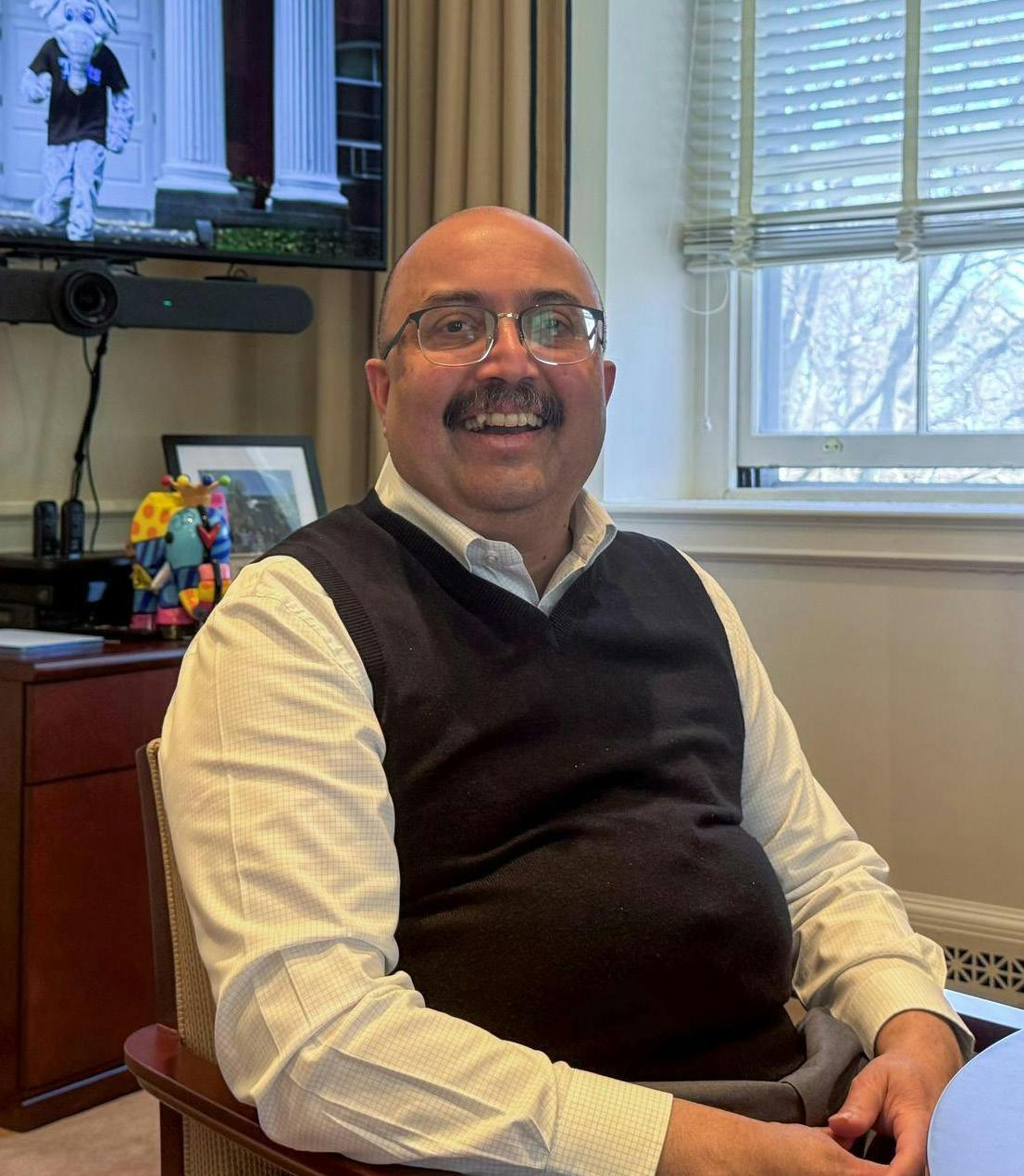
a classroom building is one of the only places where students hang out in the evening. I think the approach has to be more adaptive. We don’t have space to suddenly say we’ll build a giant anything. We are to be sensitive to the community. … For example, Lane Hall will be demolished. The question is whether that space is usable in the future.
The third area is for our science footprint. For example, Pearson, which is our chemistry department, is no longer sufficient to meet the needs of the chemistry department. It’s too old. We built science buildings from time to time, but we built them sufficiently small that they kind of maxed out on day one.
TD: As your third year as president comes to a close, how do you view progress over your tenure? What do you see as the greatest challenges of being a university president? What do you look forward to?
SK : These have not been an easy three years. But that said, I’m very proud, and credit for all of this goes to someone other than me. Tufts Tuition Pact, Pachyderm Place, new degree programs — we’ve managed to make progress. One reason we managed to make progress, which I’m very proud of, is that our alumni, parents and friends have stepped up.
I’m glad that we didn’t go into a defensive crouch, which we easily could have given all that’s happening. I think the faculty and the staff have kept this in perspective. It’s not happening to us uniquely. It’s happening across the sector, and if we sit still for four years, people will regret it in 20. Universities have long half-lives and we can’t afford to sit still.
TD : The role of university president has taken on more pressure in the past
few years. How do you view the role? Is there something that guides you as a university president?
SK : Many times, people think that if you did what they wanted you to do, you’ve done the right thing, otherwise you’ve done the wrong thing. I’m not a Christian, but my favorite line from the Bible is from the Vulgate: Veritas vos liberabit — the truth shall set you free. When in doubt, say it like it is. You have to have a strong moral compass, and you have to care deeply about the institution.
TD : Now for a fun question. Is there a spot on campus that you frequent or one that you would like to spend more time in?
SK : It’s the perfect spot for us: our backyard. … I take videos of what the students are doing on Prez Lawn. They can’t really see me, especially in sum-
mer, once the hedge grows in. In winter, you can. We love sitting there when it’s nice and it’s nice to be around happy people on Prez Lawn.
TD : If you were to take a class or create a class, what would it be, and why?
SK : I’ve been thinking about it, and I might teach this in the future. I’m a probability theorist and statistics is my area so I might teach a class called Data Science Through Sport, using sport statistics to motivate and get people to understand serious data science.
TD : Is there anything else you wanted to add about the year, a message to students?
SK : It’s been a difficult year on many dimensions, but in 20 years’ time, nobody will remember all that. So, enjoy Tufts to the fullest. Don’t let whatever is going on spook you. That’s why I keep telling people, keep calm and eat dosa.
Theo Weller News Editor
The U.S. Department of Education released a new portal on Feb. 11 displaying data on foreign funding of American universities, including Tufts. The data, which includes disclosures of foreign contributions of $250,000 or more, reveals that Tufts receives more foreign funding from Saudi Arabiabased funders than from any other country by a wide margin.
Of the $216 million of foreign funding received by Tufts and reported to the Department of Education, $85 million came from Saudi Arabian-based funders, most of which came directly from the Saudi government. The relationship between Saudi Arabia and Tufts came under fire in 2018 and 2019 following Saudi Arabia’s assassination of Washington Post journalist Jamal Khashoggi, but the university has accepted at least $11 million from Saudi funders since then.
Saudi Arabia’s dominance of Tufts’ foreign funding is largely explained by the country’s sponsorship of Saudi graduate students in the health sciences field. The sponsorship is done by the Saudi Arabian Cultural Mission, which manages the education of Saudi students in the United States.
In the Education Department’s data release, one such contribution is labeled “Facilitate acceptance of Saudi dental graduated in post graduate programs.”
Patrick Collins, Tufts’ executive director of media relations, asserted that no spots in the Tufts University
School of Dental Medicine are reserved for Saudi students, interpreting the quote above as a reference to the facilitation of attendance through sponsorship rather than the facilitation of acceptance.
Tufts’ relationship with Saudi Arabia dates back to 1987, when the Tufts University School of Medicine helped build the country’s healthcare and education system. Following the Sept. 11 attacks, Tufts’ direct involvement in the Saudi health care system decreased, with the relationship shifting to SACM’s sponsorship of medical students.
In the late 2010s, many U.S. universities came under scrutiny for their acceptance of money from Saudi Arabia in the wake of Khashoggi’s death in the Saudi Consulate in Istanbul in October 2018. Since then, Saudi Arabia has continued to have a rocky human rights record. In 2026, watchdog organization Freedom House gave the country a 9/100 global freedom rating. That same report noted at least 356 executions on behalf of the government in 2025, often without due process and for nonlethal charges.
An investigation by the Daily in May 2019 examined Tufts’ relationship with Saudi Arabia. In that article, Collins said that the school was “intensifying [its] review of any potential future donations from Saudi sources in light of our continued concerns over oppression and human rights violations.”
The school still accepts a significant amount of money from the country, however. The university maintains that accepting these funds complies with its ethics.
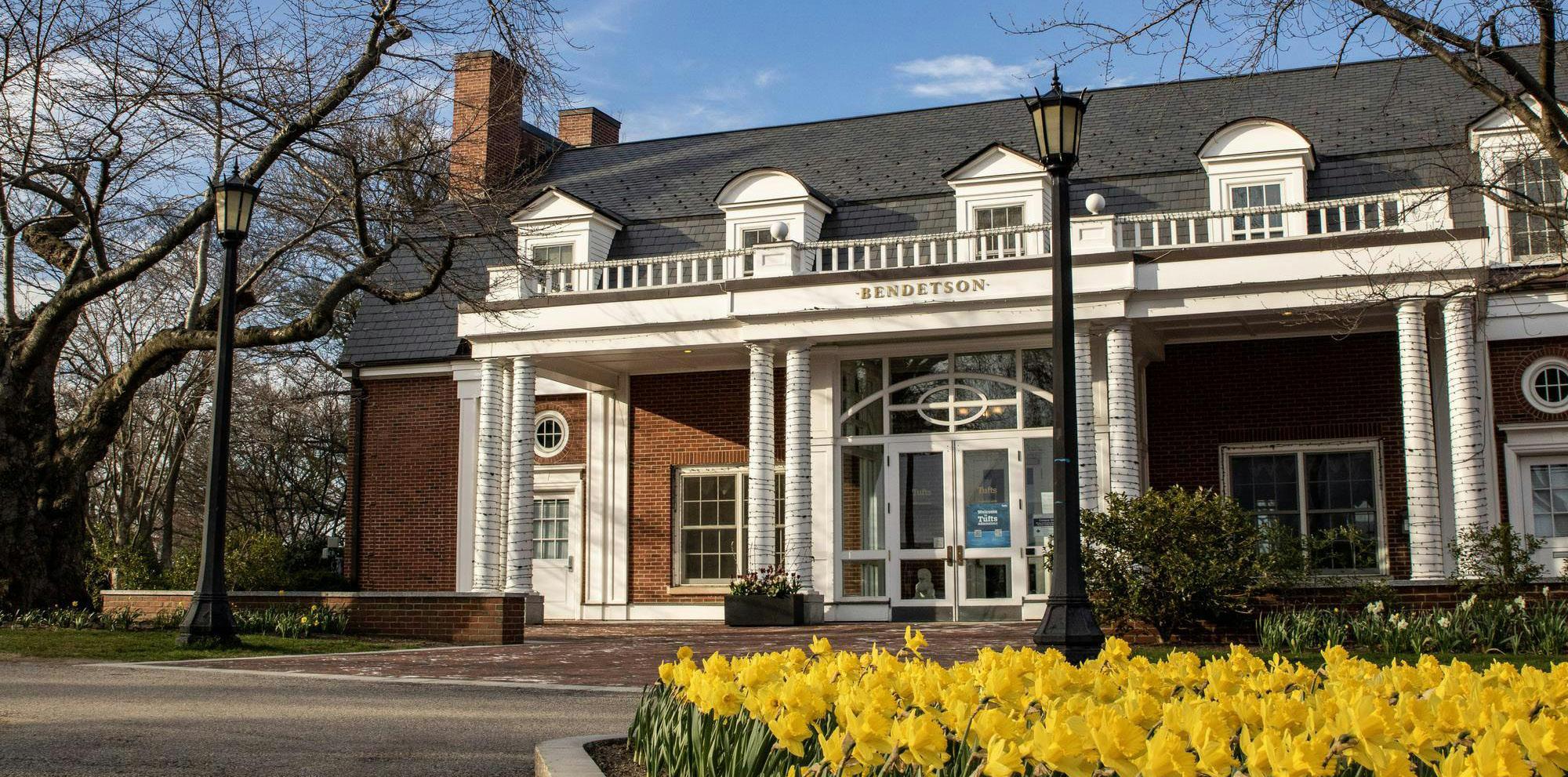
“All awards, sponsored research, gifts and other sources of foreign support are carefully considered for ethical and compliance reasons,” Tom Malone, Tufts vice president of finance, wrote in a statement to the Daily.
In the 2019 article, Richard Dupee, former School of Medicine dean of international affairs, said that politics never came up in meetings with SACM and denied the notion that the program would result in Saudi influence on university political stances.
According to the Education Department’s portal, the next largest foreign funding sources for Tufts are from funders based in Canada, England, Switzerland and India, in that order. Besides financial support for students, many of the contributions released by the Education Department relate to sponsored research.
“Sponsored research benefits universities by providing essential resources — such as equipment, facilities and staffing — that support scholarly discovery and expand the institution’s research capabilities,” Malone said.
The Education Department’s release of data on foreign funding has coincided with recent scrutiny by Congress over money from “countries of concern” received by U.S. institutions and a push by Republican lawmakers to increase transparency surrounding foreign funding.
Recently, on March 12, the Senate’s Health, Education, Labor and Pensions Committee held a hearing on foreign funding of universities. The hearing was used to argue for the DETERRENT Act, which would require universities to disclose all funds received from countries of concern, rather than
only contributions of $250,000 or greater.
The only country of concern that appears in Tufts’ top 10 funders in the Education Department’s portal is China, which ranks 10th among Tufts’ foreign funders, with $4.1 million received. According to Malone, these funds were related to sponsored research and the school is not currently receiving any funding from China. The university explained that foreign research sponsorship is carefully evaluated.
“Our research security program provides functions to review grants and contracts to ensure partnerships align with our institution’s core values of integrity, collaboration and innovation, while also protecting the university community against improper foreign interference, conflicts of commitment and other research security concerns,” Collins said.
Shayna Levy News Editor
As the Tufts Community Union Senate’s year comes to a close, the Daily looked back on a year of budget challenges, new initiatives and institutional changes.
Budget constraints on the Senate have led to significant restrictions on student organizations, from club travel to album recording funds for a capella groups.
A Religious and Philosophical Student Organizations Community Senator seat was created, while the University Chaplaincy launched a separate $50,000 fund for religious student organizations.
The Senate also passed several student-focused initiatives, including a dining feedback survey, a
sports equipment rental program and funding for a participatory budgeting initiative. A survey sent to the full student body, however, revealed that students felt largely unsupported by the Senate.
At its final meeting, the Senate passed a resolution urging Tufts to grant course credit to members of the performance groups, while Treasurer Brendan French was elected president for the 2026-27 academic year in a student-bodywide election.
Graduating seniors in the Senate spoke to the Daily about their highlights and what they took away from this past year.
Outgoing President Dhruv Sampat said he believed the TCU Senate had one of its most productive years.
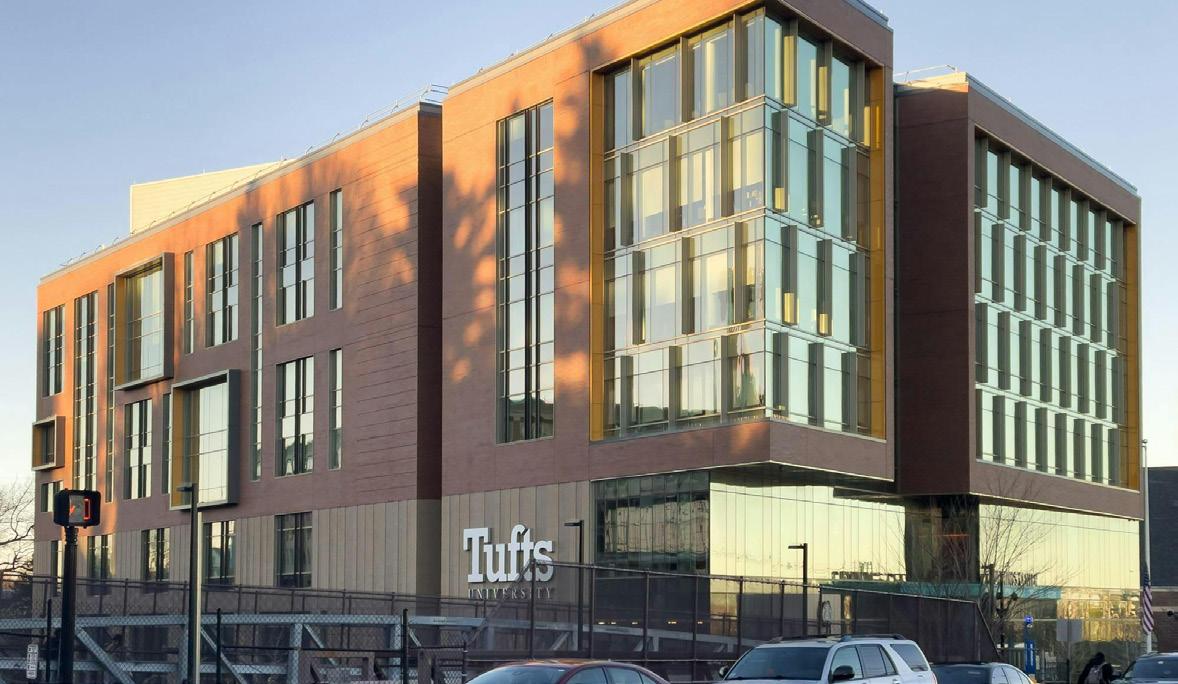
“All of Senate and every senator has been so impressive and has taken so much initiative of their own, and seeing that, I think we’ve had one of the most productive years,” he said. “Big ticket items that were long-term were also addressed — things like increasing the student activities fee, engaging in discussion and dialogue about open syllabi, experiential learning — all of those things were projects that we actively pursued.”
Sampat also discussed progress on projects the Senate worked on over the past year, saying that he viewed the projects as successful in the short, medium and long term.
He mentioned the farmer’s market and the textbook exchange as short-term projects, the campus-wide survey from the Administration & Policy committee as a medium-term project and the push to raise the student activities fee as an example of a longterm project.
Eraste Talla, a class of 2026 senator, brought up the textbook exchange — which included moving the shelf to the Tisch Library — as something he was proudest of this year.
He also echoed Sampat’s sentiment about the Senate’s productivity. “We’ve had so many projects this year,” Talla said. “They were all really, really good.”
Sampat also brought up the Tuition Transparency Town Hall, which was hosted in February and included presentations from several university administrators, as a highlight of the year.
“I think [the town hall] was incredibly exciting, not just because it’s an event that’s a one and done sort of thing, but it started a conversation that is very important for all of us to have,” he said. “It is the first time we were able to get the administration to answer questions directly from students, live.”
Alexander Vang, TCU vice president, said that he was proudest of his commitment to the General Board and the implementation of a project proposal form.
“I made sure that [the committee chairs] felt supported in terms of who to reach out to for admin, how to reach out to them and ensuring they knew how to mentor their committee members as well,” he said.
“The project proposal form implementation this year was an instrumental thing that I spearheaded,” Vang added. “We’ve never had anything like that, at least in my time here on Senate, and I think it was a great starting place to replace the project tracker that we have that no one really filled out.”
Vang also said one of the main things he took away from his time
on the Executive Board was learning how to best support communities at Tufts that he believes are not always the most visible.
“[There are] specific challenges or structural barriers in place as well that first generation college students face that aren’t tied to just financial aspects,” Vang said. “There is a lot more of a social aspect.”
The senators also discussed some of the challenges they felt the Senate faced this year, especially cutting funds for student organizations.
“In my opinion, for both me and the Senate, making informed decisions for clubs with less money was definitely the biggest challenge,” Talla said. “Having to meet the demand with not necessarily the same amount of money was definitely challenging.”
Sampat mentioned issues with consistent engagement as one of the biggest challenges with the Senate.
“It’s consistently a challenge for the TCU to keep the entire body engaged through the full year,” Sampat said. “We had a record number of senators that were suspended and then brought back based on their attendance, and that is something, unfortunately, we had to go through to reinforce the fact that every senator has a duty to the people that voted them in.”
Amelia Sammons Deputy News Editor
Tufts University has been involved in a series of lawsuits this year, ranging from a dispute over cuts to National Institutes of Health funding to allegations from the U.S. Department of Education of “election influence,” to a lawsuit brought on by tenured faculty of the Tufts University School of Medicine.
On Jan. 5, the U.S. Appeals Court made permanent a previous ruling by the lower court prohibiting the NIH from imposing a 15% indirect cost reimbursement rate. Originally filed February 2025, the case opposed the decision to limit reimbursement for NIH-related research.
“The university joined this lawsuit as a plaintiff, along with leading national higher education organizations, 22 states and other research universities, because we believed that the reduction in NIH facilities and administrative costs was not made in accordance with the Administrative Procedure Act and was in violation of the law,” Patrick Collins, executive director of media relations at Tufts, wrote in a statement to the Daily.
He explained that, had the changes to funding been accepted,
the university would have experienced serious cuts that would have adversely impacted research.
Research has been increasingly under attack in the last year, as seen in a second lawsuit the university was involved in regarding the illegal sharing of private student data.
On Feb. 5, the University received a letter from the DOE sharing that the National Study of Learning, Voting and Engagement, or NSLVE, which is housed in the Jonathan M. Tisch College of Civic Life, was suspected of having violated the Family and Education Rights Privacy Act by sharing data with third parties.
That same day, the DOE sent letters to more than 1,000 university presidents warning them to not use the most recent data collected by NSLVE until the investigation was completed.
The University sent out a response on Feb. 20, defending NSLVE’s compliance with FERPA regulations and their continued commitment to civic engagement.
A March 10 statement by the Center for Information and Research on Civic Learning and Engagement about the investigation stated it was still ongoing.
“As Tufts explained in its response to the department, NSLVE
is a longitudinal nonpartisan study, that seeks to understand whether students vote, not who they vote for,” the statement reads.
The statement goes on to say that NSLVE, by design, is in compliance with FERPA as it works with the National Student Clearinghouse, a Virginia-based nonprofit organization, to de-identify student data.
Participation in the study is voluntary and all data that is used is already held by the NSC.
“All data received by Tufts from the Clearinghouse are anonymized, and NSLVE’s reports include only de-identified, aggregated data about overall student voting trends,” the statement reads. “Tufts does not solicit, receive or review any identifying student information and never has access to information about party affiliation or candidate selection.”
On Feb. 25, the NSC notified all participating institutions that it was “terminating its Participation Authorization Form,” which institutions had to sign to opt-in to the study, for NSLVE effective thirty days from the date of notification.
“Tufts has requested a swift review and conclusion to the investigation and looks forward to resolving this matter with the department,” the statement said.
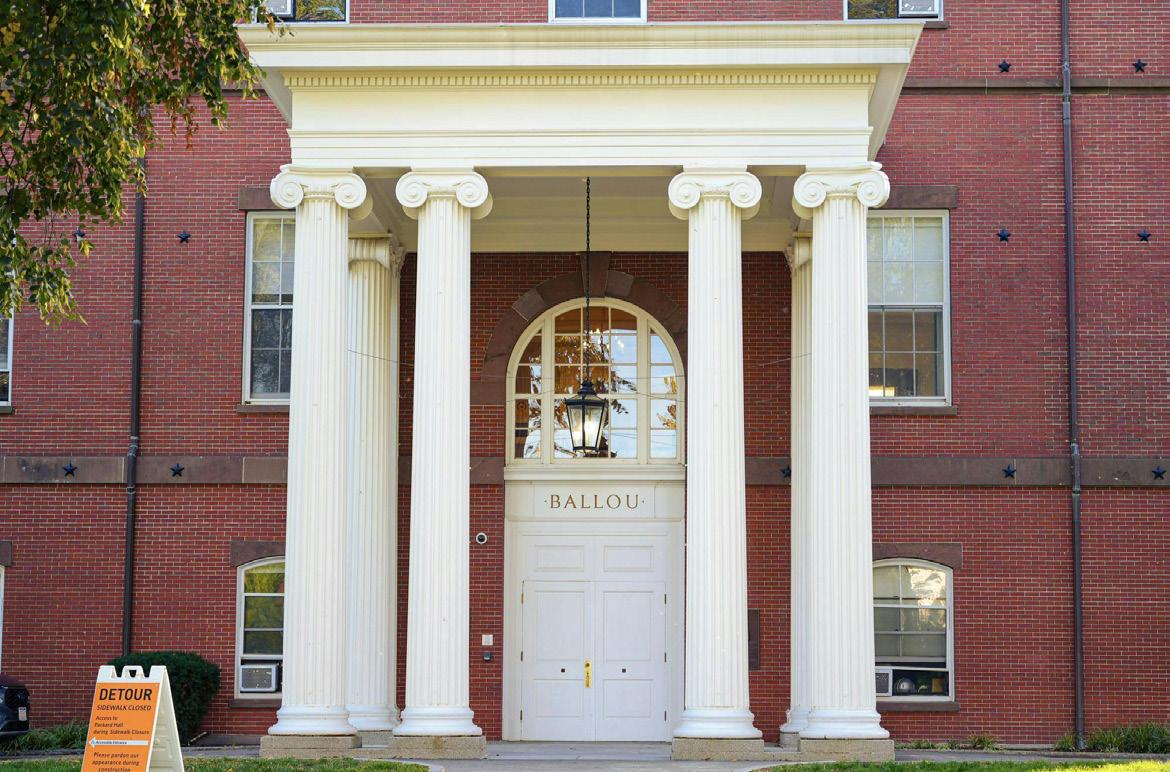
Most recently, in a lawsuit closer to home, a state court ruled in favor of eight Tufts School of Medicine basic science faculty, finding the university in violation of tenure agreements.
After a trial in late January, Justice Hélène Kazanjian found that Tufts’ 2017 and 2019 compensation plans, which required a portion of salary funding through external grants, led to cuts in the salaries and fulltime status of tenured basic science faculty. These conditions were not agreed upon when the faculty initially received tenure.
Kazanjian, in an April 2 ruling, determined that the compensation
plans had violated tenure’s promises of “economic security,” ruling in favor of the eight faculty members and ordering the university to pay nearly $4 million in damages.
The ruling also cited motivations by the university to push older faculty to retirement. Kazanjian referenced emails from Provost Caroline Genco saying that many of the older faculty in her department, including several of the plaintiffs, were “lingering on” and “dead weight.”
“We are considering our options and have no further comment at this time,” Collins said.
Analysis: As SMFA PoPs enter first contract, several Tufts unions allege further issues with administration
Eli Brigham News Editor
Several developments in labor relations have occurred at Tufts over the past semester, including the ratification of a first-ever contract for professors of the practice at the School of the Museum of Fine Arts at Tufts University, while other Tufts-affiliated unions raised grievances and began bargaining for new contracts.
On Feb. 10, SMFA PoPs and the university ratified a collective bargaining agreement after nearly two years of negotiations. This first contract, which will be in effect for five years, features pay raises for all SMFA PoPs as well as new safeguards for international faculty members.
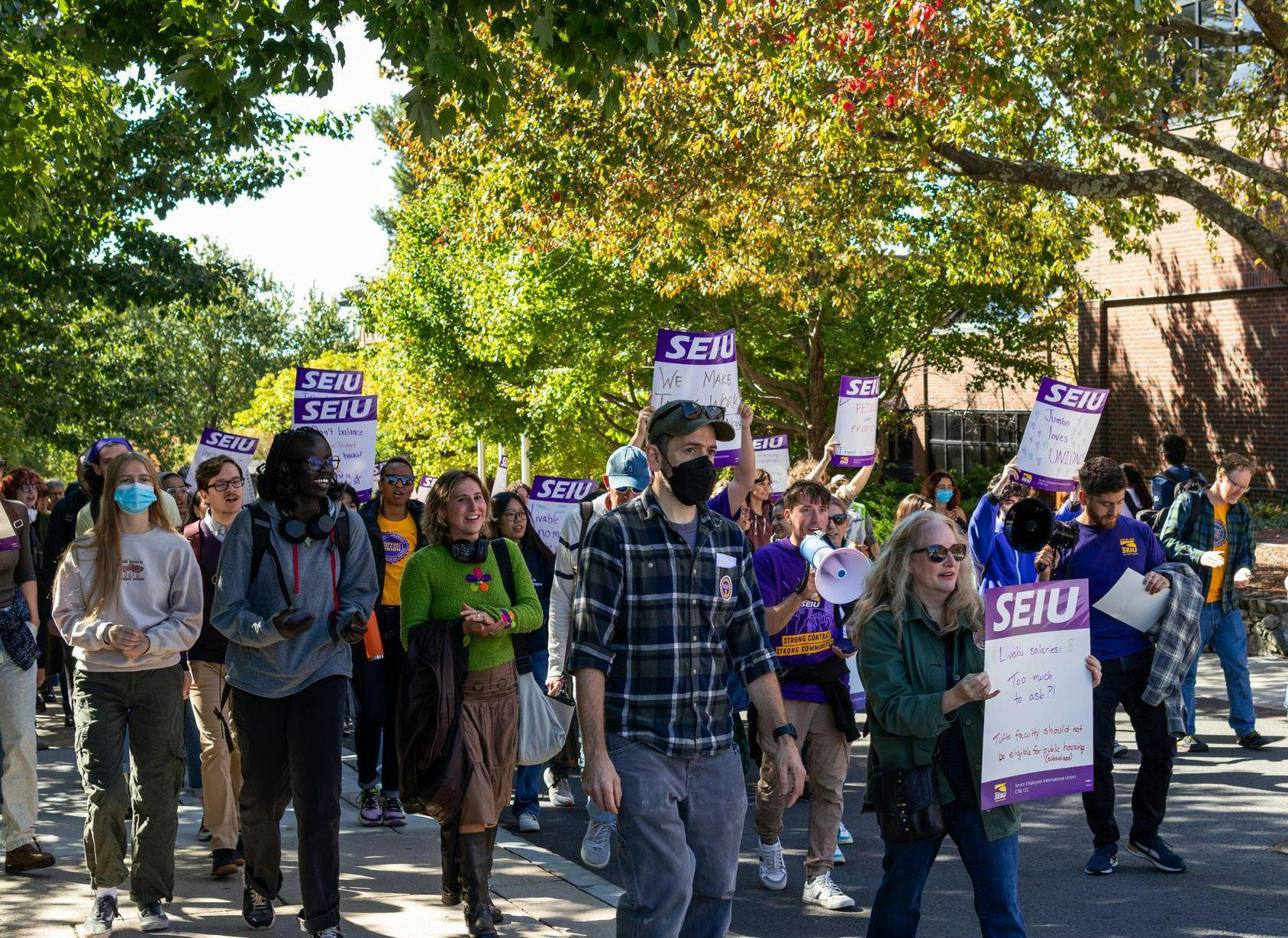
However, lingering issues related to compensation for extra labor remain. In an Instagram post, the union, SEIU Local 509, shared that the SMFA administration rejected
a proposal to provide extra pay to PoPs who participate in additional review boards.
As a result of extended negotiation disagreements, SMFA students signed up for review boards more than two months later than the previous spring semester.
The Tufts Teaching Professors, who ratified their third contract with the university last year after a two-day walkout, also shared upcoming changes to advising in the psychology and biology departments.
On Feb. 20, psychology teaching professors were told that the department would be piloting an ‘embedded advisor’ model for fall 2026 in which a staff member would be responsible for some parts of academic advising. The biology department was informed of this change soon after.
The union argued that this model would force professors in these two departments to “get rid
of” most of their advisees due to a lack of additional pay for extra advising.
Phuong Dinh, an assistant teaching professor in psychology, highlighted communication shortfalls from the university surrounding advising changes.
“It’s not yet clear if new incoming majors will declare a major with a faculty member,” Dinh said. “In theory, we’re not cutting all of our advisees by 2026 but our overpay budget has come down to $0 by fall 2029.”
Patrick Collins, Tufts’ executive director of media relations, explained that the two departments were selected for the pilot due to their size.
“This pilot with the biology and psychology departments … will focus on increasing the number of staff advisors, with the goal of improving the student experience,” Collins wrote in a statement to the Daily. “Every student will still have both a staff advisor and a faculty advisor. Students should see no functional change but will benefit from access to staff advisors with additional bandwidth.”
The Tufts University Graduate Union also shared several updates this semester, including alleged contract violations.
The union noted that supervisors at the Department of Biomedical Engineering denied previously approved paid-time-off requests for student workers. At the same time, the English department delayed or incorrectly administered pay to its workers.
In an April update, the union alleged another potential violation related to the School of
Engineering’s elimination of a substantial number of teaching assistant roles without notifying the union. The union has formed an action committee in case of escalation.
Throughout the semester, Resident Assistants at Tufts faced a delayed reappointment process, which created confusion, but ultimately resulted in no wide-reaching changes to the role.
“The union had reached out to the university, essentially saying, ‘why are you changing things?’ These are things that need to be bargained for,” Geena Kumaran, the president of the RA union, ULTRA, said. ”[The university] ended up backtracking and saying that nothing would be changed prior to bargaining.”
On April 17, the union began bargaining for its second-ever contract. Some of the objectives during bargaining for the union include an increased stipend, JumboCash for laundry, a full meal plan, a microchill unit, air conditioning and continued reemployment, which Kumaran says would streamline the traditional reappointment process.
“Instead of submitting an intent-to-return form, it would be an opt-out form, so you’re automatically contracted for the next year,” Kumaran said.
Starting this summer, the Tufts Facilities Union will also begin bargaining for its next contract with the university. The union is currently distributing a petition that calls for wage increases, reduced healthcare costs and protections for immigrant workers, among other proposals.
In spring 2027, the part-time lecturers will begin bargaining as well. The PTL union includes faculty at both the SMFA and Medford/ Somerville campuses.
John Ros, a PTL from the SMFA, explained that the SMFA administration has been asking lecturers to do labor that is more work than they are compensated for.
Ros noted that SMFA administrators have condensed the four studio departments, which has resulted in fewer department chairs. This reduction of department chairs is being filled by ‘area representatives’ who receive less pay for the same work. Still, representative shortages remain.
“With no chairs, there’s nothing, so I can go months without having a solution,” Ros said. “So that’s a huge issue, and that not only affects my teaching, [but] it obviously affects every student in that classroom.”
Fewer department chairs also means that some faculty are being reviewed by officials from the SMFA administration rather than peers.
Despite issues between some of its unions, Collins reaffirmed Tufts’ commitment to honest engagement with its units.
“Tufts approaches its relationships with all unions in a collegial and good-faith manner, emphasizing dialogue, mutual respect and problem-solving,” Collins wrote. “As we begin successor bargaining with additional units this semester, we remain committed to productive and respectful engagement that supports our employees, financial stewardship and Tufts’ academic mission.”
Dylan Fee Features Editor
Editor’s note: The, 2022–23, 2023–24 and 2024–25 recaps in this article are reprinted from the 2025 Commencement Issue of the Daily, with light edits.
Students returned to campus in the fall 2022 semester without COVID-19 as a major concern for most community members. Mask mandates were nixed, and testing requirements abandoned as students were able to gather without the looming possibility of a school-mandated, multiday isolation.
To that end, the university eliminated the units of modular quarantine housing that, for two years, sat atop the varsity tennis team’s former home, replacing them with an archipelago of first-year housing stock. The modular-style dorms, which accommodate 150 firstyears, were branded as “The Court at Professors Row.” As the university plows forward in its plan to grow enrollment, the Courts remain a standard among other, more traditional first-year living arrangements — but likely only until 2027, when the university is projected to finish construction of a multi-story residence hall on Boston Avenue.
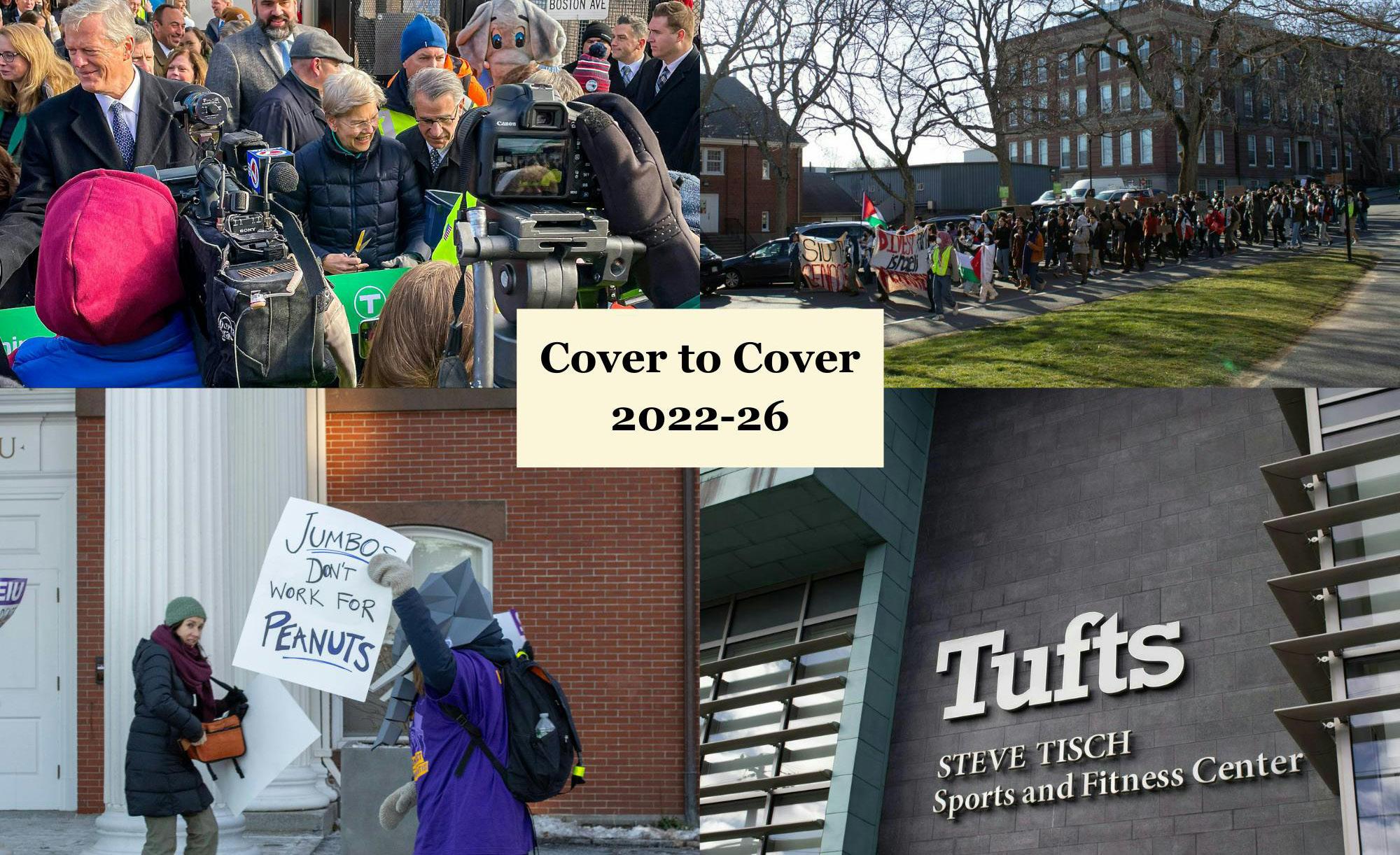
Campus expansion was a major theme during the Class of 2026’s time at Tufts. Following years of construction and myriad delays, the MBTA’s Green Line Extension opened its doors on the final day of classes in December. Dozens of students packed the station before dawn to get a seat on the first train as it rolled toward East Somerville and into downtown Boston. Sens. Elizabeth Warren and Ed Markey, D-Mass. — along with former Massachusetts Gov. Charlie Baker — headlined the station’s long-awaited ribbon-cutting ceremony later that morning, in a celebration largely symbolic of the university’s geographic expansion over the last decade.
Tufts also broke ground on — and later opened — a new baseball field named after Sol Gittleman, former provost and professor emeritus. Renovations began at Eaton Hall, the historic quad-facing academic building that reopened in the spring 2025 semester.
The Class of 2026’s first year was also marked by a string of racist and antisemitic incidents in a pattern that has grown familiar to the community. A club sports team was suspended and faced an investigation by the university after some of its members were allegedly involved in an antisemitic incident at a competition off campus. And in April, racial slurs sent via a chat box on Zoom interrupted a Solomont Speaker Series event with the rapper Dee1. Monaco condemned both incidents and reiterated the university’s commitment to anti-racism and the fight against antisemitism.
Attacks against Tufts’ work to fight racism continued during finals week in the fall, when seven bomb threats were sent to a flurry
of university departments from an unknown emailer over the course of nine days. The threats, listing “anti white racism” as one motivator, prompted evacuations from residence halls, the Mayer Campus Center, Dowling Hall and a spate of academic buildings, pushing finals online.
Tufts’ upper leadership faced criticism after a pair of Daily investigations uncovered a series of high-level departures and a culture in two administrative departments that former staffers described as toxic. The diversity office opened the academic year with a third of its positions empty after two of its chief officers quietly departed in August. Their departures followed a restructuring in the provost’s office — which oversees the university’s diversity work — and an alleged consolidation of administrative power.
The admissions office, too, was reported to be under investigation by an outside law firm following current and former staffer allegations of racist and antisemitic behavior on the part of the dean, JT Duck. The investigation came as the attack on affirmative action reached the Supreme Court and as the university pledged its support for Harvard University and the University of North Carolina in their ongoing legal battle against the group Students for Fair Admissions. Dean James M. Glaser of the School of Arts and Sciences and Kyongbum Lee of the School of Engineering, respectively, later shared that a thorough internal investigation into the Tufts admissions office found no evidence of discrimination by Duck.
Tufts resident assistants announced their intention to unionize in November. After the administration declined to voluntarily recognize the United Labor of Tufts Resident Assistants, RAs voted 99–3 with 72% turnout to form a union. ULTRA engaged in negotiations with the university over the course of the spring semester but would not ink a contract until the following year.
It was another record-breaking year for undergraduate admissions, when Tufts delivered offers to 9.5% of applicants to the Class of 2027, the lowest acceptance rate on record. The pool was historically diverse and represented nearly a 50% spike in applications from 2020, when the Class of 2024 was admitted.
Also in the 2022–23 school year, Kyongbum Lee transitioned from interim dean to dean of the School of Engineering, Scheri Fultineer took the helm of the School of the Museum of Fine Arts at Tufts University and Howard Woolf announced his retirement as Experimental College dean following 40 years in the office.
Spring Fling was headlined by the 2010s pop sensation Flo Rida, who arrived more than an hour late after many students had already left the annual music festival. Flo Rida was preceded on stage by the DJ trio Cheat Codes, TikTok music star Charlie Curtis-Beard and the Tufts student band Fease.
The performances came a day after the Class of 2024’s Arielle Galinsky, the TCU Senate vice president, declared victory in the race for TCU Senate president. She succeeded Jaden Pena (LA’23).
The final weeks of the Class of 2026’s first year were marked by an end to the national COVID-19 emergency — and to the university’s vaccination requirement. The move represented the elimination of the last of Tufts’ major COVID-19 mitigation policies, which defined much of the graduating class’s tenure at Tufts.
At the 2023 Commencement ceremony — Monaco’s last as university president — United Nations Deputy Secretary-General Amina J. Mohammed delivered the keynote address. Mohammed is known for her work fighting climate change.
Monaco passed the presidential baton to Kumar on July 1, 2023. Kumar is Tufts’ 14th president and the first person of color to fill the position. Before coming to Tufts, he served as provost and senior vice president for academic affairs at Johns Hopkins University, following stints at the University of Chicago Booth School of Business and the Stanford University Graduate School of Business.
2023–24
The Class of 2026’s sophomore year began with a flurry of union organizing on campus. Amid contract negotiations with Tufts, the newly unionized undergraduate resident assistants went on strike on first-year move-in day to demand that Tufts pay them a stipend. Weeks later, Tufts agreed to compensate the RAs with 80 meal swipes and a $1,425 stipend each semester.
On Sept. 25, the union voted by an overwhelming majority to sign its inaugural contract with the university. The contract represents the culmination of seven months of negotiations and will be valid for three years.
Tufts Dining workers, represented by the labor union UNITE HERE Local 26, also won a major collective bargaining victory at the start of the school year. In September, they signed a new contract with Tufts guaranteeing them a $9.92 increase to hourly wages to be rolled out over the next four-and-a-half years.
Unionized SMFA part-time lecturers reopened contract negotiations with Tufts in the fall, calling for pay parity with part-time lecturers in the School of Arts and Sciences. SMFA Dean Sheri Fultineer announced in October that those negotiations had concluded, without disclosing the terms.
Graduate student workers in the School of Arts and Sciences also raised their voices to demand higher pay and better benefits. Represented by Service Employees International Union Local 509, the graduate students entered negotiations over — and subsequently signed — their next five-year contract. They staged a walkout at Kumar’s Oct. 6 inauguration ceremony to draw attention to their cause.
The Tufts community reacted with shock and grief to Hamas’ deadly attack on Israeli civilians on Oct. 7. As Israel began a brutal campaign of bombing and ground invasions of Gaza, students staged a series of protests, walkouts, sit-ins and die-ins to call attention to the mass killings of Palestinians.
At one protest outside Ballou Hall on Nov. 17, students alleged that Tufts University Police Department officers physically and verbally harassed them and made them feel unsafe. The protest ended with 18 students facing disciplinary violations and one losing their study abroad privileges for blocking the doors to Ballou in violation of university policy.
Eleven student groups founded the Coalition for Palestinian Liberation at Tufts to call for an immediate ceasefire, now totaling over 40 member organizations. The coalition also demanded that Kumar condemn the genocide in Gaza and that Tufts divest from Israel and end all partnerships with Israeli institutions.
In a series of messages to the university community, Kumar denounced the Hamas-led terrorist attacks, mourned the loss of Palestinian lives in Gaza and condemned all forms of antisemitism and Islamophobia. He affirmed students’ right to protest but cautioned that “disruption cannot take the place of dialogue.”
Pulitzer Prize-winning journalist Jodi Kantor, Massachusetts Attorney General Andrea Campbell and Congressman Maxwell Frost were among the civic life leaders invited to campus for the Jonathan M. Tisch College of Civic Life’s fall Solomont Speaker Series.
Tisch College also welcomed hip-hop artist and activist David Augustine, known as Dee-1, as its inaugural Solomont Artist/Scholarin-Residence. In the spring, Augustine taught a course about the intersection of hip hop and social change.
Dean of the School of Arts and Sciences James M. Glaser announced in December that he would depart Tufts in the summer of 2024 after 33 years. Glaser joined the Department of Political Science in 1991 and had served as dean since 2014.
Pro-Palestinian activism continued into the spring semester as the Israel-Hamas war passed the 100day mark and the death toll mounted. Calls for a ceasefire extended into Tufts’ host communities, with the Somerville and Medford city councils both passing ceasefire resolutions in February.
In March, the TCU Senate passed three resolutions proposed by CPLT calling on Kumar to recognize the genocide in Gaza, for the university to divest from Israeli companies and for it to stop selling Sabra products. A fourth resolution pressing the university to end approval for study abroad programs at universities in Israel did not pass. About 300 students came to the meeting to speak in favor of and against the
resolutions. Afterward, students reported antisemitic, Islamophobic and anti-Arab remarks and actions made by their peers during the meeting.
Less than 12 hours after the vote, Kumar condemned the resolutions and said that Tufts will maintain all of its business and academic relationships with Israeli institutions.
Later in the month, a group of Tufts students participated in the first-ever Jumbo Spring Break — a five-day program with a civic engagement and community service focus. The students volunteered for Habitat for Humanity in Malden and met with Medford Mayor Breanna Lungo-Koehn, among other activities.
Tufts accepted 10% of applicants to the Class of 2028, a slight increase from the year prior. It was the fourth year of Tufts’ six-year test-optional pilot program, and 60% of accepted students submitted test scores. The price for the 2024–25 school year rose again, surpassing $92,000.
On April 8 — one of the first truly sunny and warm days of the spring semester — hundreds of students gathered on President’s Lawn to admire the partial solar eclipse through protective glasses and makeshift pinhole cameras. Many others traveled north to experience totality.
Jordin Sparks headlined Spring Fling on April 20 with openers Tkay Maidza, Iyaz and student band Sunnydaze.
The 2024–25 TCU presidential election was a tight three-way contest between juniors Krystal Mutebi, Joel Omolade and Mikayla Paquette. Omolade was temporarily disqualified from the race by the Elections Commission for alleged campaign misconduct, but the TCU Judiciary quickly reversed the decision and allowed him to resume his campaign. Omolade ultimately won the presidency with 54% of the vote. Fellow Class of 2025 Senator Nessren Ourdyl would serve as vice president.
Tufts students set up a ”Gaza Solidarity Encampment" on the Academic Quad in April, as part of a nationwide surge in pro-Palestinian student activism. Universities around the country drew scrutiny for forcefully cracking down on their protesters and, in many cases, calling in the police to make arrests. Meanwhile, at Tufts, under a no-trespass warning and threats of suspension, the protesters deconstructed their encampment and left voluntarily on May 3. They did not offer a public explanation for why the encampment came down but said they had not negotiated an agreement with the university.
Professors of the practice at SMFA, capping off a year of union activity, began negotiations for a new collective contract with the university on April 24. SMFA’s PoPs are still in contract negotiations with the university.
Senior Saffiyah Coker won the Wendell Phillips Award and addressed the senior class at the Baccalaureate Ceremony on May 18.
Fiona Hill delivered the commencement address on May 19. Hill is the chancellor of Durham University and a former adviser to three U.S. presidents, specializing in Russian and European affairs.
2024–25
Following the Supreme Court’s decision to abolish race-based affirmative action in college admissions, Tufts reported a 6% decline in racial diversity among incoming first-year students.
For the second year in a row, move-in day was interrupted by labor demonstrations. This time, protests were organized by the North Atlantic States Regional Council of Carpenters, which accused Tufts of hiring contractors who exploit construction workers.
The union held smaller-scale protests nearly every day over the course of the semester, with groups of workers holding signs reading “STOP WAGE THEFT” and “SHAME ON TUFTS” outside the JCC. Fulltime lecturers and SMFA PoPs held their own demonstrations as union negotiations with the university continued.
The university updated its protest guidelines in response to the previous semester’s demonstrations over the war in Gaza. Tufts banned overnight protests and chalking on vertical surfaces and restricted the locations where students can demonstrate or put up postings.
Nine Tufts men’s lacrosse players were hospitalized after participating in a workout led by a Navy SEAL and Tufts alumnus. Twelve players on the team were diagnosed with rhabdomyolysis, a potentially life-threatening condition. All players were later discharged after several days. A university-ordered independent investigation of the incident concluded that the leader of the workout lacked the appropriate credentials, recommending “increased communication and vetting of team workout plans” in the future.
Tufts revealed details about its planned Boston Avenue
dormitory, which will house more than 670 juniors and seniors upon completion. The residence hall will consist of apartment-style units with retail space on the ground level. Construction began in April, and the building’s opening is slated for fall 2027.
Students for Justice in Palestine was suspended by the university in early October. The group posted a graphic depicting individuals holding assault rifles and calling for students to “Join the Student Intifada” and “escalate” at a protest scheduled for Oct. 7; the university also cited “ongoing non-compliance” with previous disciplinary actions as a reason for the suspension.
The Science and Engineering Complex was renamed the Tsungming Tu Complex after the university received a gift of over $10 million from Professor Loring Tu from the Department of Mathematics.
Bárbara M. Brizuela was appointed 18th dean of the School of Arts and Sciences in November after serving as interim dean since July 2024. She previously served as dean of the Graduate School of Arts and Sciences beginning in 2022; Ayanna Thomas was later appointed to the role Brizuela left vacant.
Campus was shaken by reports of gunshots in the early hours of Nov. 1. Shots were fired near Pizza Days, an off-campus mainstay for late-night pies.
After years without an on-campus pub, Tufts Dining began operating a “pop-up pub” on Thursday nights in Hotung Café. Students enjoyed a cash bar, snacks and occasional special events like trivia throughout the year.
Following its suspension a month earlier, Tufts SJP announced on Nov. 15 its “formal break and disaffiliation from Tufts University.” The group would have faced suspension through January 2027.
Tufts welcomed several renowned guests, including MSNBC anchor Chris Hayes, who headlined the annual Edward R. Murrow Forum on Issues in Journalism. U.S.
Rep. Seth Moulton, D-Mass., former White House Chief of Staff Mick Mulvaney and author Nic Sheff all spoke as part of Tisch College’s Solomont Speaker Series.
Students returned to classes in Eaton Hall in January following a major two-year renovation. The building, which houses departments such as anthropology, classical studies and sociology, features a new glass facade and a modern interior.
Full-time lecturers in the School of Arts and Sciences staged a twoday walkout in January, marching across campus to demand higher salaries. The Somerville City Council passed a resolution in support of lecturers in their contract negotiations.
On March 25, Rümeysa Öztürk, a Tufts graduate student, was detained by federal authorities. In March 2024, Öztürk co-authored an op-ed in the Daily calling on Kumar to endorse TCU Senate resolutions for the university to recognize genocide in Gaza and divest from Israeli corporations. After co-writing the op-ed, Öztürk’s photo and personal information were posted on Canary Mission, a website that compiles and publishes a database of people it considers anti-Israel or antisemitic. Öztürk was on her way to break her Ramadan fast when she was approached by several plainclothes officers who handcuffed her and led her into an SUV. Öztürk was transported to a detention facility in Louisiana.
Öztürk’s detention quickly made national news and sparked protests across Greater Boston. Just two days after she was arrested, more than 2,000 individuals protested in Somerville’s Powder House Park.
On March 27, Secretary of State Marco Rubio announced that over 300 student visas had been revoked by the State Department. Öztürk, a Fulbright Scholar and valid F-1 visa holder, was not notified that her visa was revoked before being detained.
On April 18, a federal judge ordered Öztürk’s return to Vermont, where she was initially taken before being flown to Louisiana, but the transfer was paused by an appeals
court. Meanwhile, during her time in custody, Öztürk said she experienced dirty and crowded living conditions and suffered multiple asthma attacks, as she was denied adequate access to her medication.
Ballantyne is running for a third term in the November election, and several candidates have also tossed their hats in the ring for her seat. Contenders include city councilors Jake Wilson and Willie Burnley, Jr., as well as local entrepreneur Jason Mackey.
More than 33,400 individuals applied to the undergraduate Class of 2029 ’ about 1,000 fewer than last year.
The cost of attendance will be $96,078 for the 2025–26 school year, a nearly $4,000 increase from this year’s cost. The university attributed the decision to the rising cost of healthcare, renovations and updated cybersecurity, among other reasons. Tufts will continue to meet 100% of students’ demonstrated financial need.
Tinashe headlined Spring Fling on April 26, with openers Quinn XCII and Hot Chelle Rae. Tinashe is known for the viral hit “Nasty,” and previously headlined in 2017.
After 45 days in Immigration and Customs Enforcement custody in Louisiana, a U.S. district judge ordered Öztürk’s release on May 9. Öztürk was released on bail later that day, and returned to Massachusetts. Öztürk and members of her legal team spoke at a Boston press conference on May 10, alongside Sen. Ed Markey, D-Mass., and Rep. Ayanna Pressley, D-Mass.
“I have faith in the American system of justice. This has been [a] very difficult time for me, for my community at Tufts, at Turkey. But I am so grateful for all the support, kindness and care,” Öztürk said.
Ayomide Oloyede won the Wendell Phillips Award and delivered the awddress at the Baccalaureate Ceremony on May 17.
Freeman A. Hrabowski III delivered the commencement
address on the morning of May 18. The mathematician and education leader formerly served as president of the University of Maryland, Baltimore County, for 30 years.
The summer before the Class of 2026’s final year on campus was quite eventful for Tufts’ labor unions. In June, Tufts full-time lecturers in the School of Arts and Sciences received higher wages after ratifying their third contract with the university, ending over a year of negotiations. Meanwhile, the SMFA PoP union filed a labor practice complaint against the university following the removal of department chairs from union membership.
Advancements in Öztürk’s legal proceedings also occurred over the summer, including the confirmation that the Canary Mission website was used as a lead in her detainment, and the movement of her visa status case to Massachusetts. On July 17, Öztürk published a second op-ed in the Daily, detailing her experience in ICE detention.
To start the academic year, Tufts altered its anti-hazing policy, mandating training for all students and publishing annual statistics on the matter, in accordance with the Stop Campus Hazing Act passed by Congress in December 2024.
On Sept. 3, Kumar announced that the university would adopt a stance of institutional pluralism after a year of deliberation. Soon after, the university began painting over the cannon every week in a stated effort to quell student fears of covering political messages — but, in the process, faced student criticism over possible freedom of speech violations.
The Tufts Tuition Pact, which guarantees free tuition for students with annual family incomes under $150,000, was announced on Sept. 9 and was put into effect for the 2026–27 academic year. The 10%
, page 10
with resistance from staff and students in an effort to avoid layoffs.
admitted to the Class of 2030 will be the first incoming class with access to the tuition pact.
The National Institutes of Health’s research funding cuts started hitting Tufts early on this academic year. Professors had to cut back on research while students lost lab positions.
The Center for Expanding Viewpoints in Higher Education was created under the Office of the President in September. The center was opened to mixed reviews from the Tufts community amidst federal attacks on intellectual diversity in higher education.
The Daily revealed that nine C&W custodial workers alleged mistreatment and wrongful terminations by the company.
Tragically, for computer science students looking for that late-night caffeine fix, the Joyce Cummings Center Starbucks closed on Sept. 26 following a company-wide restructuring. The storefront has remained empty and up for lease as of the end of the academic year.
Blakeley Hall reopened at the beginning of the year after renovations converted it into a sophomore dorm. However, by October, residents had reported a series of maintenance issues — including power outages and broken bathrooms — to the university.
In an upset, incumbent Katjana Ballantyne was ousted in the preliminary election for Somerville mayor on Sept. 16. Jake Wilson was elected mayor in November. A divestment question also passed in Somerville during the election.
Several fraternity house basements were closed in fall 2025 due to new university restrictions on Greek life.
On Nov. 21, the Tufts Office of Public Safety sent an advisory to the student body warning them to avoid Soarbody Therapeutics, due to alleged inappropriate conduct by the sports massage therapy business’s owner, Sam Peck. There has been no notable update from the university on the investigation of Peck or Soarbody.
Tufts limited key card access across many of Tufts’ campuses out of an abundance of caution. In January, undergraduate students formed a gun violence prevention group as a chapter of Students Demand Action.
The spring semester started with some of the most snow the Greater Boston area has gotten in almost a decade. Students could be seen bundled up, building snowmen and sledding on President’s Lawn during the several days the university had to cancel classes.
On Jan. 27, an email was sent to the Tufts community about a rise in ICE activity in the area, establishing TUPD as a possible resource for students who encounter ICE officials, though the university did not elaborate further on the reports. Across Medford and Somerville, there have been several protests revolving around ICE’s presence in the area, including at the Hyatt Place in Medford, and Citizens Bank‘s funding of detention centers at the bank’s branches in both cities.
condemnation of Tisch’s judgment in an interview with Kumar.
The Department of Education launched an investigation in early February into whether Tufts’ National Study of Learning, Voting and Engagement study at the Tisch College illegally shared student data with third parties in order to influence elections. Later that month, the Department of Defense cut a scholarship at the Fletcher School amidst a wider effort to root out “wokeness” and “indoctrination” at academic institutions, according to Secretary Pete Hegseth.
After two years of negotiations, SMFA PoPs ratified their first contract with the university, which included raises for all PoPs and more safeguards for international faculty.
Russia declared Tufts and Fletcher as “undesirable organizations” on March 31, due to the university’s support for Ukraine and the LGBTQ+ community, which Russia designated a terrorist organization in 2023. This declaration effectively bans Tufts and its associates from operating in Russia.
In early April, a state court ruled in favor of several Tufts University School of Medicine professors in a lawsuit that determined their tenure was violated in compensation plans by the university. Tufts was ordered to pay over $4 million in damages.
Several notable figures spoke at Tufts through Tisch College programs, including Maryland Gov. Wes Moore and CNN anchor Audie Cornish.
Faculty and students at the SMFA launched the Save the SMFA campaign amid concerns over course cancellations, department consolidations and hiring freezes. Tufts also started the Operating Model Transformation — put in place to restructure the university’s administrative functions — which was met
At the end of the fall 2025 semester, the beloved Fresh at Carmichael Dining Center was closed for several weeks due to mechanical issues.
Uphill residents had to trudge to downhill dining locations in the midst of the chilly fall finals season. Carmichael reopened at the start of the spring semester.
Following the tragic shooting at Brown University in December,
A benefactor of Tufts, Steve Tisch (A’71), notably the namesake of the Steve Tisch Sports and Fitness Center on campus, was implicated several times in the Epstein files in late January. Upon further analysis by the Daily, convicted sex offender Jeffrey Epstein solicited several women for Tisch. The university has not commented on the revelations nor calls for the Tisch name to be removed, save for a brief
Öztürk graduated from Tufts in February with a Ph.D. in Child Studies and Human Development, following the reinstatement of her SEVIS record and the termination of her immigration proceedings in Massachusetts. Ozturk decided, along with her legal team, to return home to Turkey at the end of the year as settlements were reached in all of her pending legal cases.
In March, Tufts announced plans for a new aquatics center on Boston Avenue by fall 2028. On the same street, construction for Pachyderm Place, a new dorm for upperclassmen, has been underway and is on track to be completed by summer 2027.
After her resurgence in pop culture, Zara Larsson was the headliner for 2026’s Spring Fling. GROUPLOVE and student DJ Daniel Cece were the openers for this ‘lush’ event.
TCU elected a new president, rising senior and current treasurer Brendan French, after a year of few resolutions, substantial student organization budget cuts and a tuition transparency town hall.
The 2025–26 year ended the way it began, with the resident assistant and faculty workers’ unions bargaining new contracts seeking higher pay and new protections.
Aaron Gruen, Chloe Courtney Bohl and Robert Kaplan contributed to this article. 2026 continued from page 9
Shayna Levy News Editor
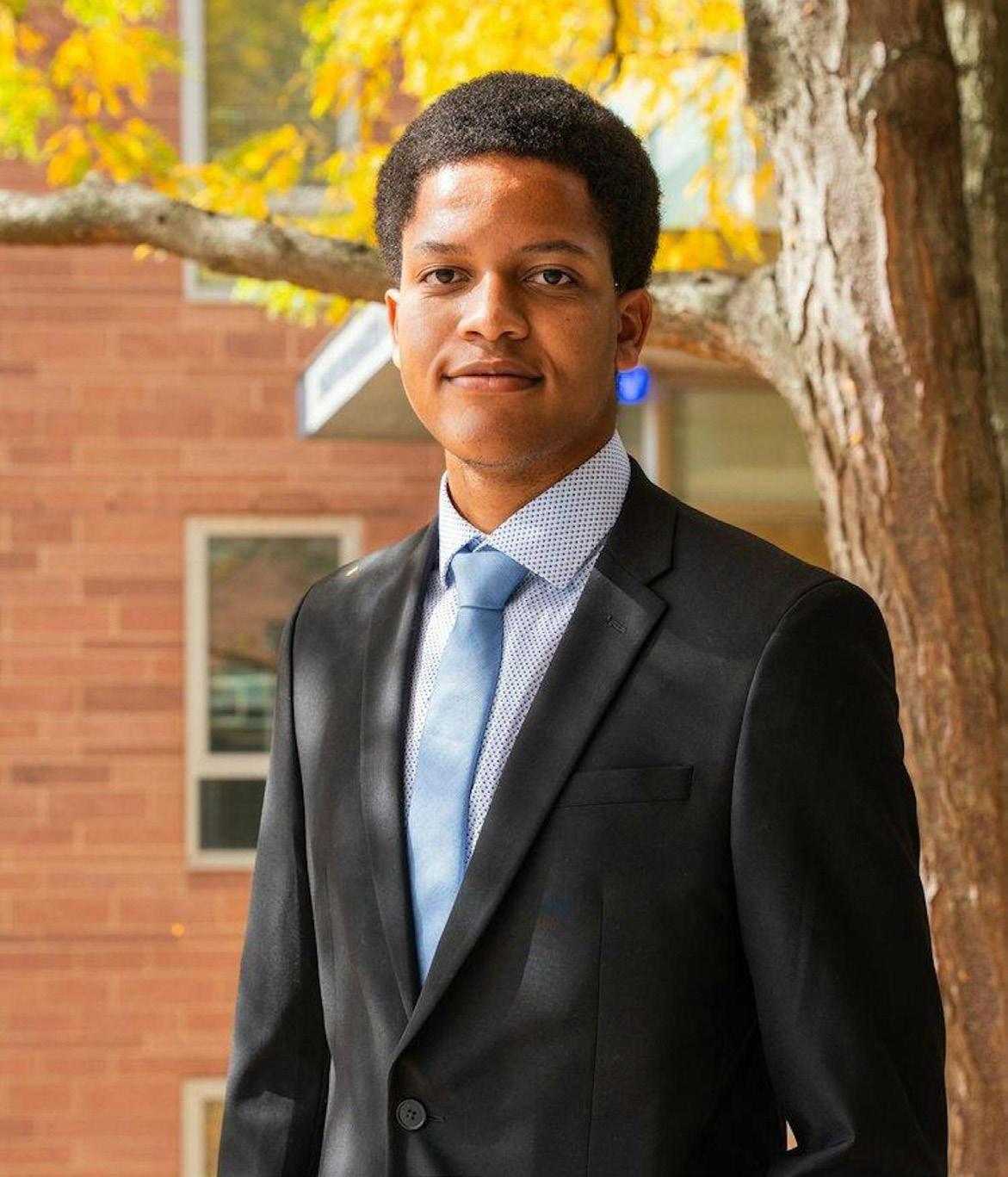
Incoming 2026-27 Tufts Community Union President Brendan French, a rising senior, sat down with the Daily to talk about his priorities for his term, what motivated him to run for president and what he is most looking forward to.
“My top priorities are definitely club focused,” French said. “My hope is to start talking with President [Sunil] Kumar and the deans to see … if there are more players within the university who can help with [club fundraising], whether it’s the president’s office or Student Giving or University Advancement.”
French wants to utilize people within the university who have experience reaching out to alumni donors.
“It’s really trying to put that idea out to the donors, telling them our situation,” he said. “A lot of them were in clubs at some point, and so, if we’re able to explain the decrease or reduction in funding that we have, [we hope] that they would want to start chipping in and start helping out the clubs.”
In addition to finding other sources of club funding, French is hoping to establish a more direct pipeline with the Office of the President to help secure funding for clubs who may be turning towards the office.
“I’m curious if a more established pipeline can be created for clubs, because I know President Kumar is very happy [with], engaged and interested in clubs and their activities,” French said.
A second priority for French is improving outdoor spaces on campus, which would include putting more trash cans outside.
French also wants to explore options for moving TCU Treasury forms online to make it easier for students to submit them.
“Hopefully next year is when something can be done about the annoyance of doing paper forms and students having to come into the office to drop off forms, check back in on forms or to correct forms,” French said. “What we’re going to be doing, hopefully for the next few years … is putting more of the Treasury forms onto [an online platform].”
French also spoke about how his experience as treasurer informed his decision to run for president.
“From the Treasury aspect, I think I have a pretty decent understanding … [of] what most of the clubs do on campus, what their mission statement [is] and what activities they do,” he said. “That just gives [me] great insight into the interests of the student body and what all students are interested in on campus, where there may be a lack of support.”
He expressed what he saw as limitations within the role of
treasurer that he believed could be addressed by being president.
“While being treasurer, I did realize the limitations, just because a lot of the role requires more face time with students, and there isn’t necessarily as much room or time for you to try and set up those meetings with administration to talk about clubs,” French said.
He also said that he missed being involved with other Senate projects outside of the Treasury.
“In general, this year, I did miss a little bit of doing projects outside of the Treasury,” French said. “I’m hoping next year, as president, that I can tap back into that, because that is an aspect that I liked about Senate, and part of why I joined Senate originally.”
French mentioned looking forward to strengthening communication between the Senate and different university departments next year.
“Next year, we’re hoping to set up some more regular and recurring meetings with different departments; for example, dining as well as facilities,” he said. “I think there’s a lot of headway to make there, and a lot of benefit that can come from us being able to communicate to the admin, and then admin being able to communicate to us on a more regular basis.”
French anticipates club funding being one of the biggest challenges next year.
“The biggest challenge is for clubs [to set up] some kind of support system so that [they are] not just relying on the student activities fee for their budget,” French said. “For a big change to happen it takes a while. … I’m just unsure how long [new funding initiatives] would take, and whether that could get on the ground within a year or not.”
Carly Hope News Editor
Former pharmaceutical executive Kenneth Frazier is set to deliver the 2026 commencement address on May 17. A former lawyer turned executive, Frazier has used his time and influence to advocate for health justice and give back to his community. At the ceremony, Frazier hopes to share his experiences, inspire a sense of optimism in his audience and remind them of the importance of perseverance and contributing to society at large.
Born in 1954, Frazier grew up in inner-city Philadelphia, where his father worked as a janitor. As a child, his dream was to become a civil rights lawyer like his greatest inspiration, Thurgood Marshall.
“Marshall inspired me to think of the law as a tool for positive social change and equality for all Americans,” Frazier wrote in a statement to the Daily.
He later pursued his dream, attending The Pennsylvania State University and, eventually, Harvard Law School. After graduating, he worked at the law firm Drinker Biddle & Reath, known for its pro-bono service, before transitioning to serve as general counsel for Merck & Co., one of the largest pharmaceutical companies in the world. He was eventually appointed chairman and then CEO, becoming the first Black American leader of a pharmaceutical company.
“I planned to spend my career in the courtroom fighting against
legal injustices. Dr. Martin Luther King, Jr. once declared ‘Of all the forms of inequality, injustice in healthcare is the most shocking and inhumane.’ Because of my own background, I tried to help people understand the importance of making medicines available to all segments of our community,” Frazier wrote.
After retiring as CEO of Merck & Co. in 2021, Frazier now works as the chairman of health assurance at General Catalyst, a global investment and venture capital company based in Cambridge, Mass. He has been named twice to Time Magazine’s list of the 100 most influential people in the world.
He is currently focused on addressing needs in his hometown of Philadelphia, where he is a founding board member of a privately funded inner city school and a founder of a health center focused on the intersection of nutrition and health.
“I’ve tried to use my platform to address some of these concerns through action, not just through words,” Frazier wrote. “Having been granted a position of influence, I felt the responsibility to remember where I came from and to use my position to benefit others particularly patients waiting and hoping for the next cure.”
Frazier has remained politically outspoken and active throughout his career, and he encourages students to take on that same perspective and give back to their respective communities.
“I think it’s important to realize that, while the media focuses primarily on what’s happening in Washington, DC, we can all make a difference in our local communities and personal spheres of influence,” he wrote.
Frazier has written in the past about the importance of access to health care and the economic justice gap. When asked about criticism of some Americans levy at pharmaceutical companies, denouncing their role in perpetuating higher health care costs, Frazier remarked on the tragedy of inaccessible and unaffordable health care in the U.S. He also maintained that biomedical research is incredibly resource-intensive and requires funding and support.
“I think that the industry has a responsibility, along with other healthcare players, like insurers, to try to do what it can to get these drugs to people who need them,” Frazier wrote. “But at the same time, I also think it’s important to recognize that biomedical research and the quest for new and better therapies is incredibly costly and risky. We need to be able to have enough resources to invest in discovering medicines and vaccines that are not yet available for people who are waiting and hoping for new cures.”
In the midst of times of uncertainty, Frazier hopes to inspire students and encourage them to make the most of their time at university.
In preparation for next year’s club funding, French is hoping to begin talking to the school about fundraising strategies this summer.
“I knew that I really did care about clubs and the future of them at the university, and that, no matter what role I was in, I would still want to try and focus on that,” French said.
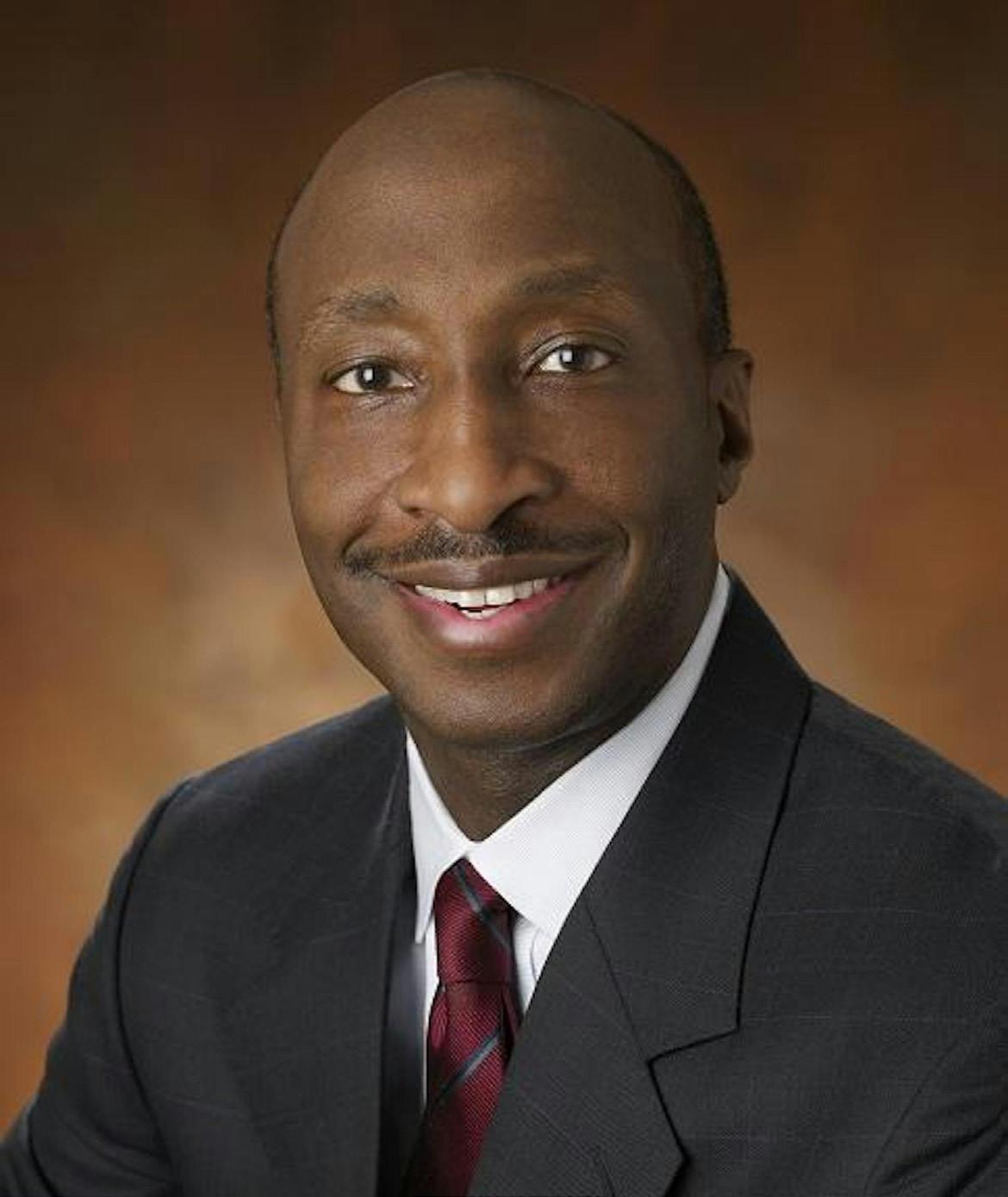
“I also hope that despite current ‘clouds’ in the economy and employment market, that [students] recognize that, in the long term, a Tufts education will be a very valuable credential and resource for them in whatever endeavor they choose,” Frazier wrote.
Married to a Tufts alumna, Frazier said in his statement to the Daily that he is constantly reminded of how special Tufts is as an institution.
Leadership at Tufts is excited to welcome Frazier as a speaker
for the culmination of the Class of 2026’s time at Tufts.
“We’re honored to have Ken Frazier as this year’s commencement speaker. His long and distinguished career as an executive, attorney, and healthcare trailblazer will serve as a great example to this year’s extraordinary graduating class,” Robin Smyton, assistant director of media relations, wrote in a statement to the Daily. “We’re delighted that he has agreed to join us and we look forward to welcoming him on May 17.”
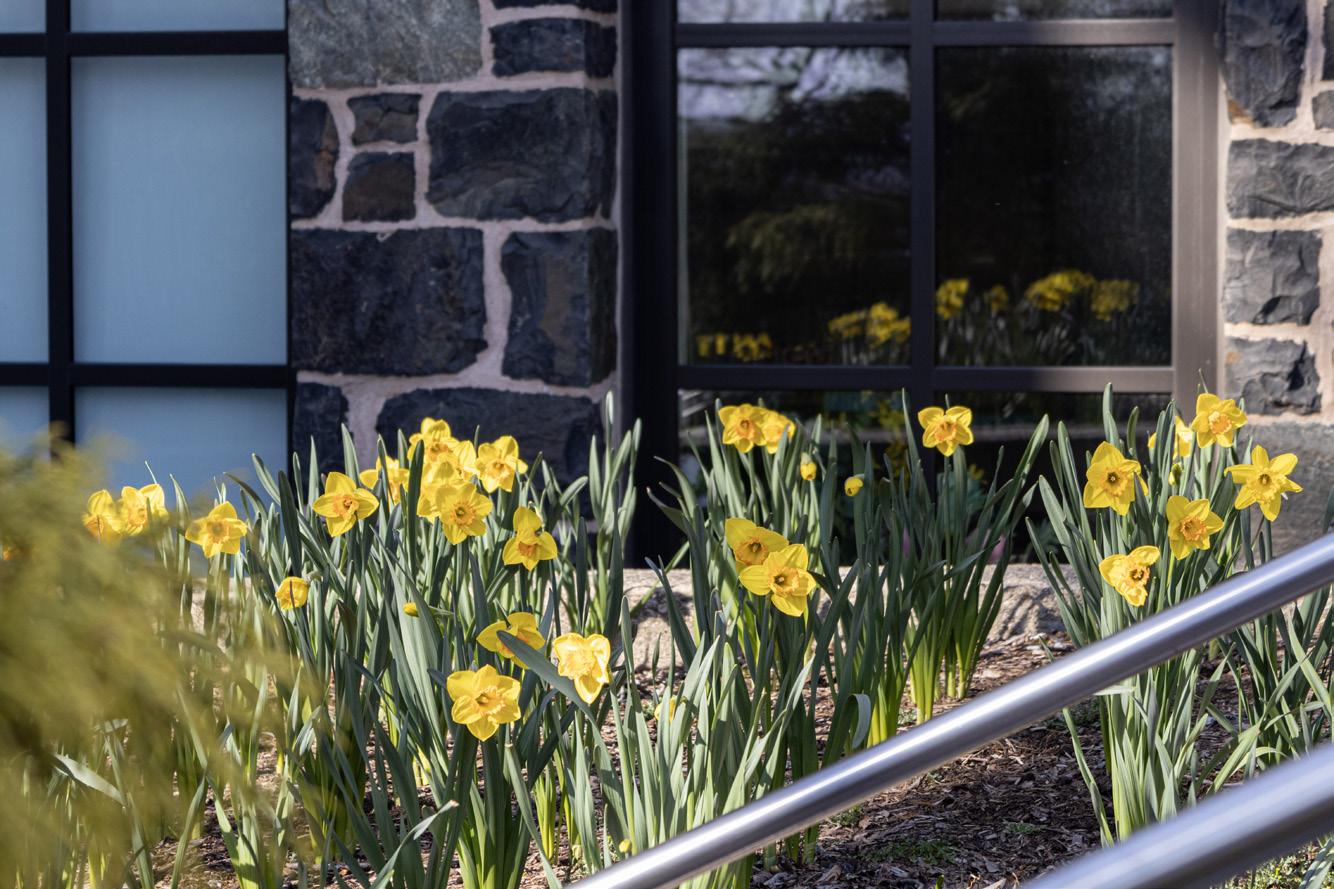
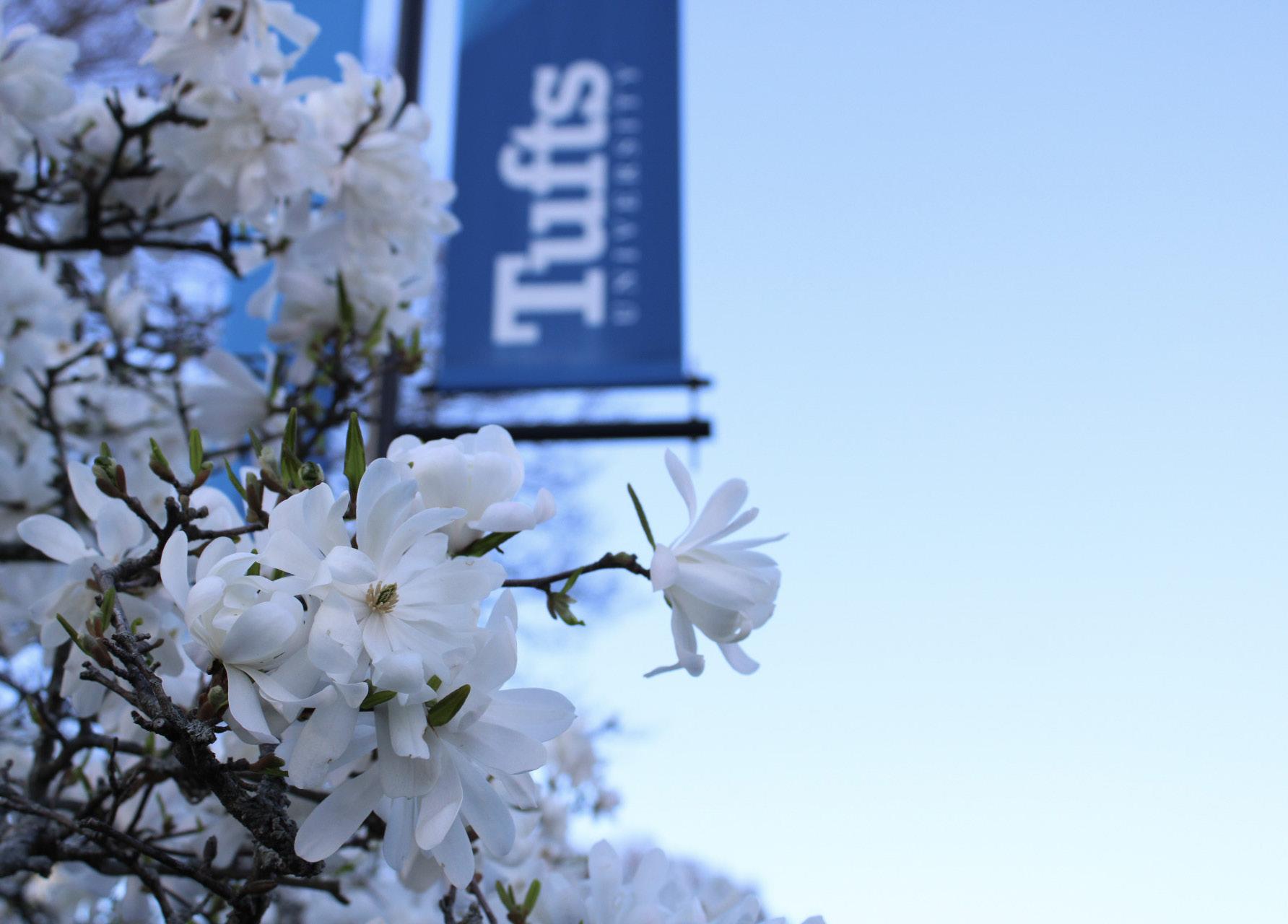
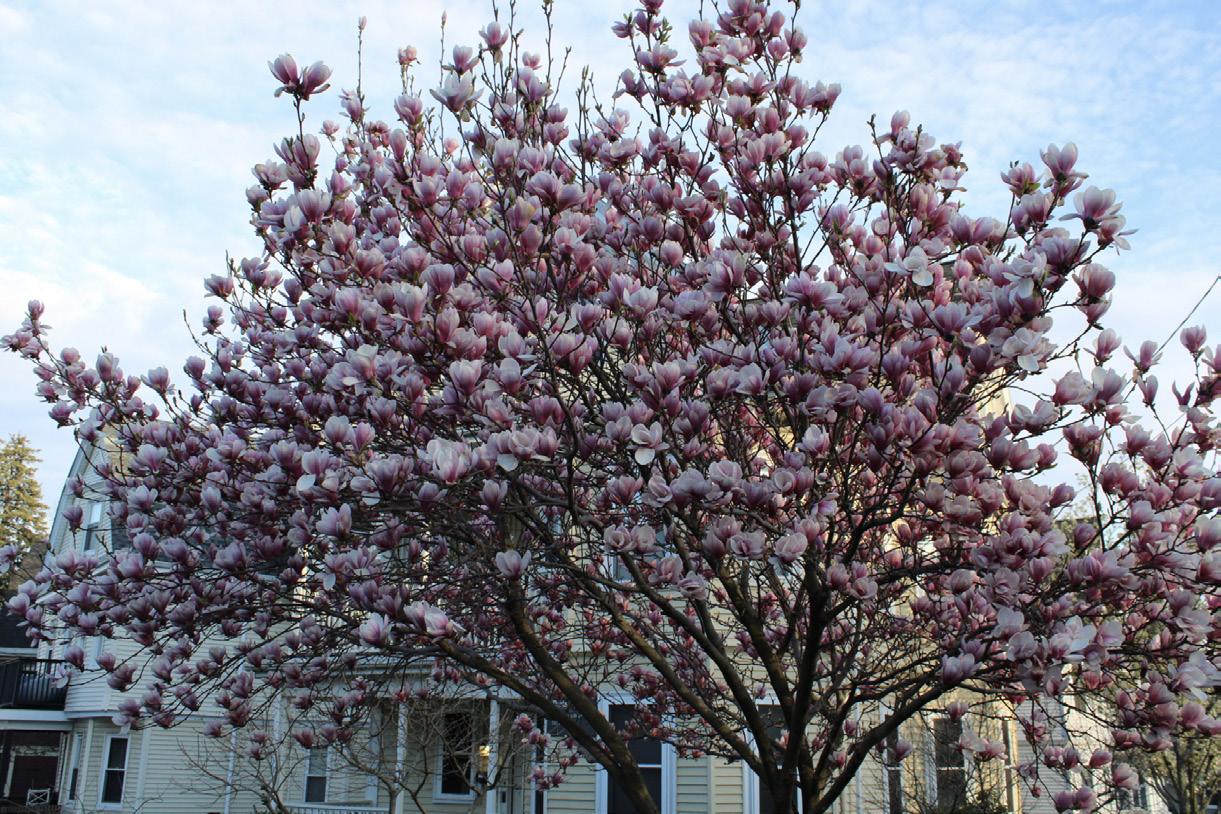
BY ARIANNA HELLMAN

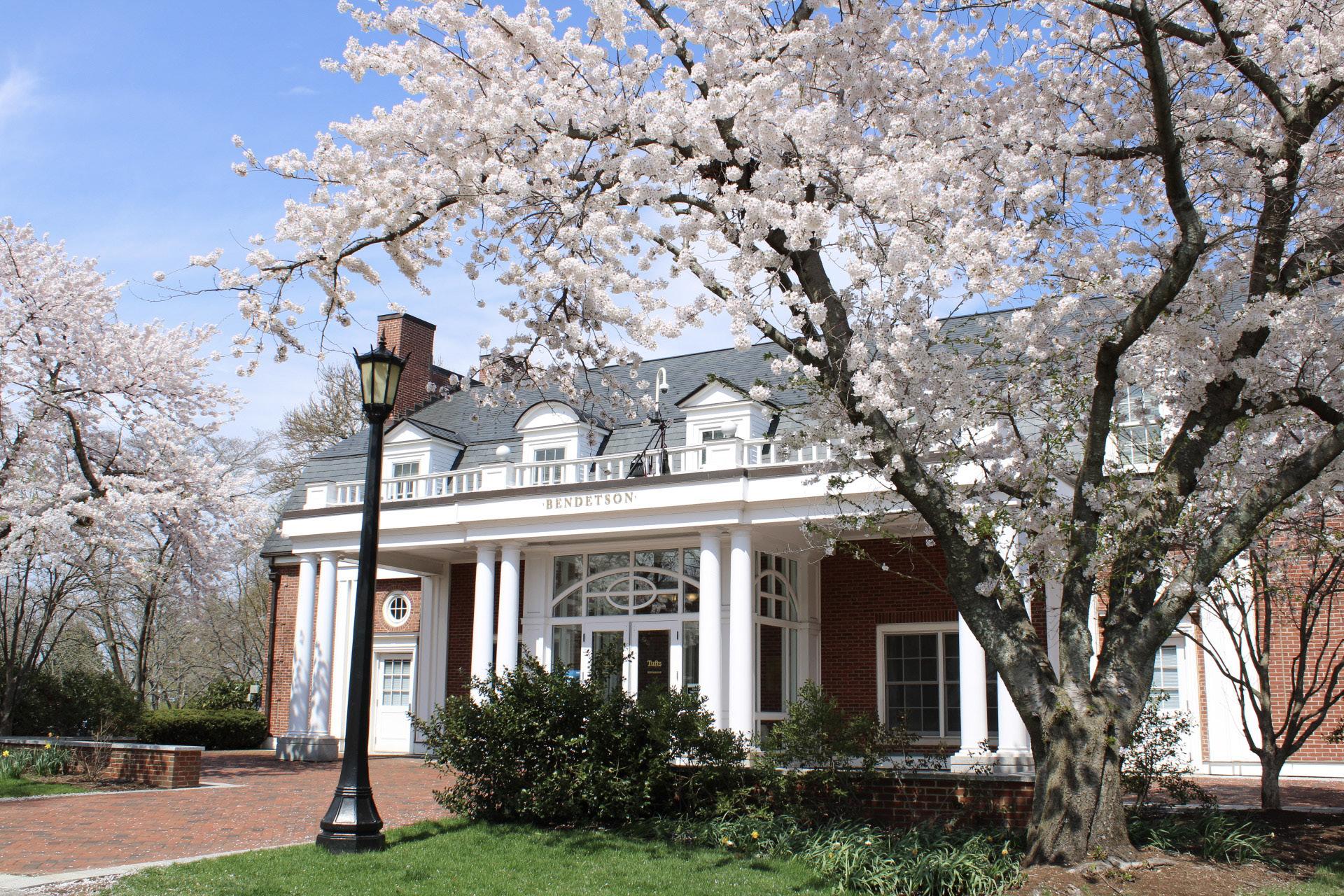


BY DYLAN FEE






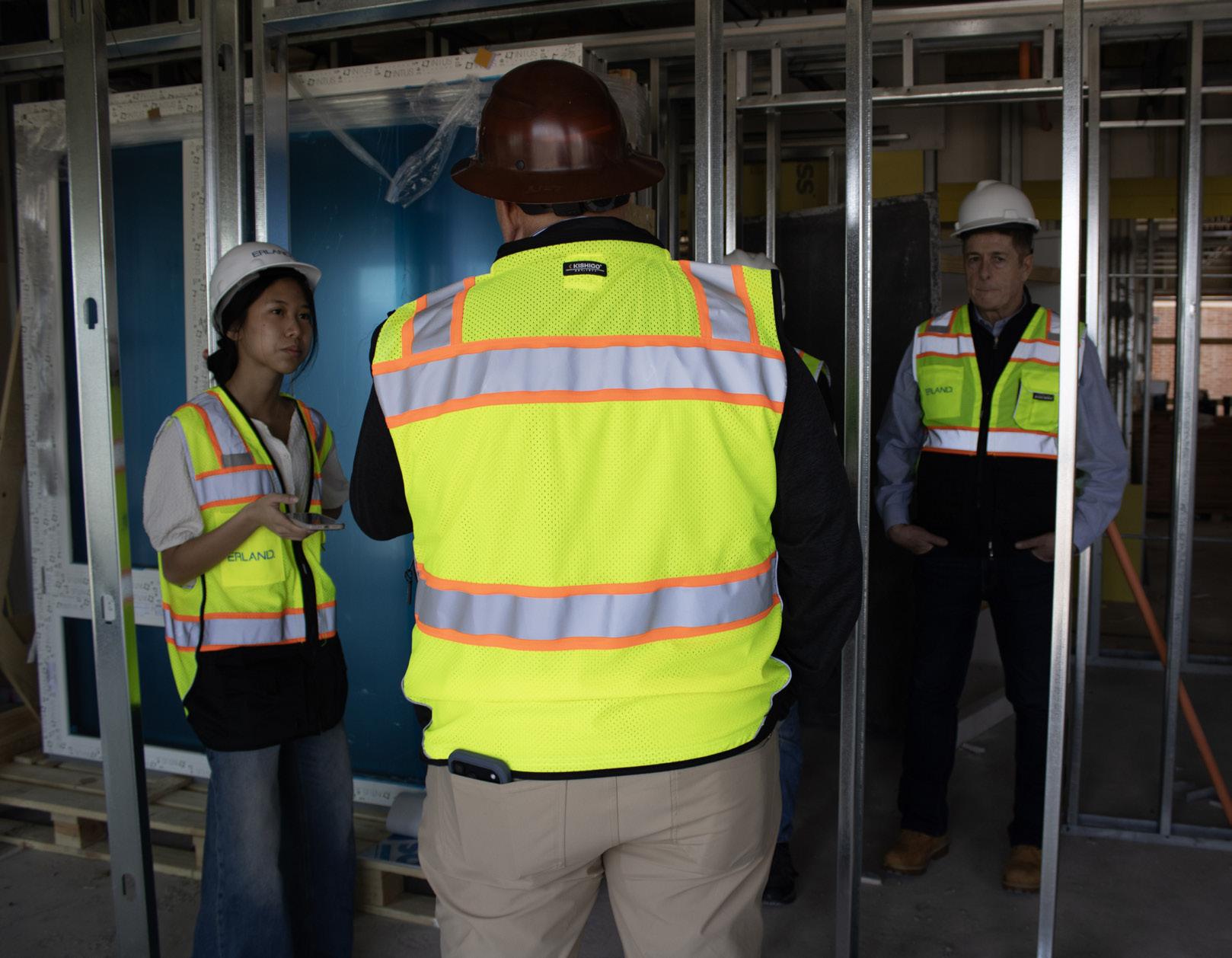


Congratulations, Jack! We are so proud of you, today and always. Love, Mom, Dad, Adam and Sarah



MINALI, TODAY YOU SHINE... TOMORROW YOU SOAR! LOVE MUMMY, DADDY & KIRAN TOO
Anika Parr and Alexandra Tse Deputy News Editor and News Editor
The Daily spoke with Somerville Mayor Jake Wilson on April 22 about new initiatives, his open office and challenges that come with being mayor.
Wilson was inaugurated as mayor on Jan. 3 following his election in November 2025. He defeated incumbent mayor Katjana Ballantyne and then-city councilor-at-large Willie Burnley Jr.
Editor’s note: This interview was edited for length and clarity.
Tufts Daily (TD): What has been your favorite moment in office so far?
Jake Wilson (JW): There have been a lot, honestly, I’m really enjoying the job. So it’s tough for me to pick out just one. … It felt really good signing that executive order around [Immigration and Customs Enforcement] with a bunch of the city council and school committee members there as a display of how united we are as a city.
TD: What is the biggest challenge that you faced in the first 100 days, and how did you manage to overcome it?
JW: The one that jumps out is that first big snowstorm we got, the eighth largest snowfall in recorded history here for Somerville, and it was in our first month. … We were all new in the mayor’s office. And it became clear pretty quickly that the plan that we had, which had never really been tested by a significant snowfall, just was not up to snuff.
I was really happy that the interim [Department of Public Works] Commissioner — now the DPW Commissioner — without any prompting, sent me basically a post-mortem. You know, here’s what went wrong … here’s what
we’re going to do to make sure it doesn’t happen again. And we were much better prepared for the second snow storm.
TD: Since taking office, one of the things you’ve pursued is restructuring the city administration to a cabinet-style system. What motivated that change and what impact of it have you seen so far?
JW: People want to collaborate. It’s about formalizing that and making sure that the structures are placed. That’s what those cabinet meetings really do. Things come up, and then we got 10 people sitting around the table, and we talk about how we’re going to solve it, and it works.
TD: You’ve been holding Thursday night office hours. How have those been going so far?
JW: We want to keep it conversational. We don’t want to be sitting around a conference table. … We’re here to talk to people, to listen to people [and to] try to help people solve problems. A lot of constituent services issues come up, from a water bill to an issue with a neighbor and construction. People love that they can come to City Hall and actually have someone who will listen to their problem. … We can’t solve everything … [but] we’re basically out to see what we can do to make people’s lives better.
TD: In February, you fired former Somerville Arts Council Executive Director Greg Jenkins after nearly 25 years in the role, a decision that surprised a lot of people in the Somerville community. What factors led to that decision and how does it fit into the broader changes in the city’s administration?
JW: I can’t discuss a personal matter, but I’ll say I disagree with the characterization of that move.
We’re looking to always take the arts forward in Somerville. … We’re
adding a cabinet level position for culture and community. … It’s really important that the arts have that seat at the table.
TD: The city is facing a $4.7 million budget reduction for the upcoming fiscal year. How is your administration approaching these cuts, and how are you responding to concerns from residents, especially around schools?
JW: We’ve been very clear [that] schools are the top priority. They’re going to see at least north of a 7% increase. I don’t know of any other community in the state investing at that level in the schools.
We’re trying to address [the cuts] on the revenue side. The easiest and best way to address it is [asking] how can we raise more revenue so we don’t have to make cuts? Then, when we look at cuts, what are the least painful ones we can do — where are the ‘nice to have’ things we can do without.
We’re not talking about cutting educator positions. We’re not looking at student facing positions at all for these cuts.
TD: You’ve been pushing for new approaches to affordable housing. What initiatives have you taken so far, and what impact are you hoping they’ll have?
JW: The old Star Market site, [at] 290 Broadway — work is underway there. I think there’s an official groundbreaking coming up in the next few weeks. … That project, to me, is a model of what we should be doing here in terms of the affordability percentages. It’s 319 new rental units. 136 of those are affordable. 42% by square footage [is] way beyond the 20% inclusion rates required by the ordinance.
The city gave a 20-year tax break, we gave them four and a half million from the Affordable Housing Trust Fund. The state did
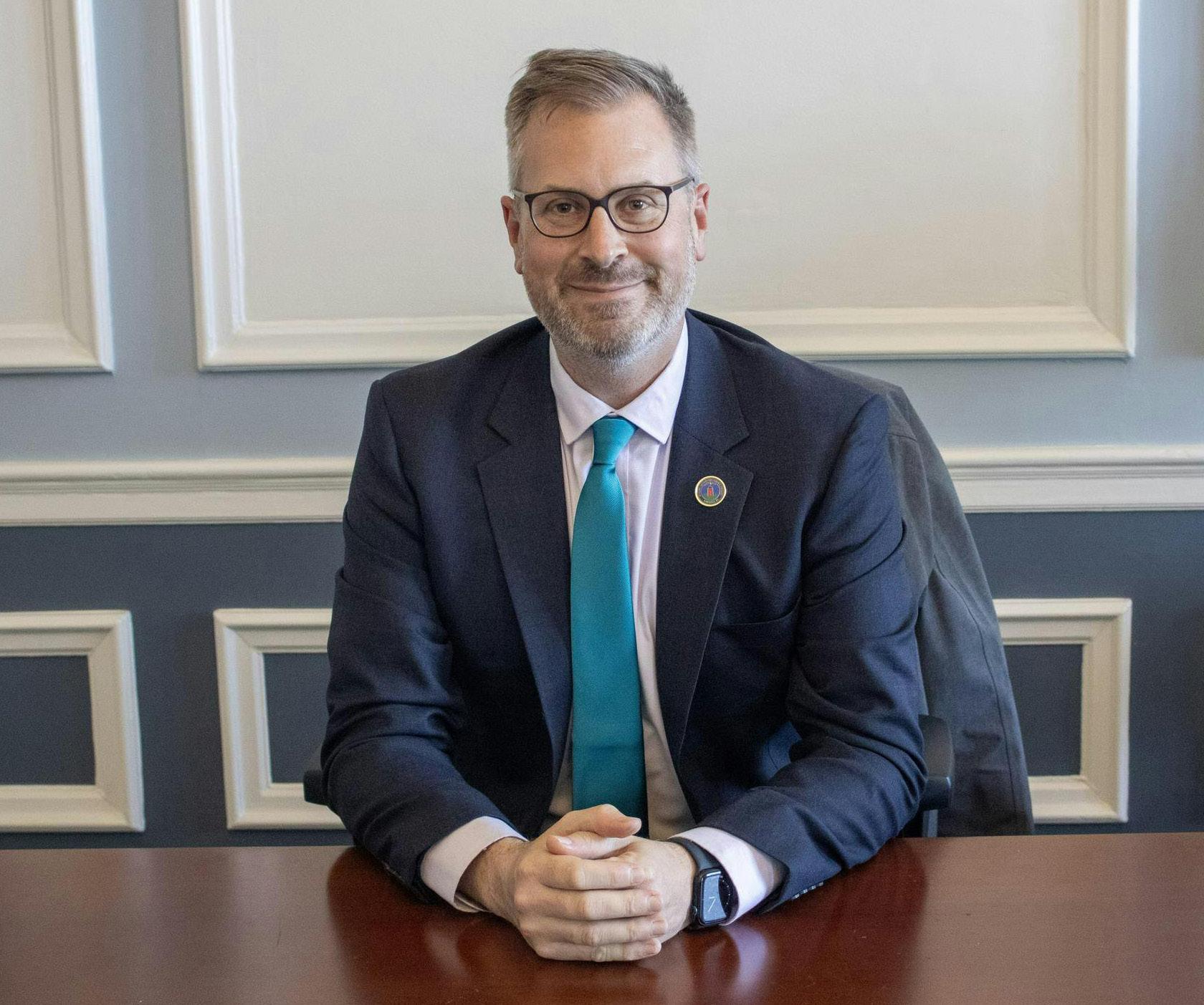
low-income housing tax credits for them and … $2.5 million in MassWorks grants. For a while, it looked like it wasn’t going to happen, but we were able to get the project over the line and now work is underway.
When developers come to me saying, ‘Is there any way to get a break on the 20% inclusionary zoning?’ My response is, ... ‘What if you went way higher on affordability?’ What if we found money to actually make that work ... and build the kind of projects that have broad support?
TD: What initiatives are you currently working on that you think people should look out for in the coming months?
JW: The big thing we’re working on is bringing SomerStat back. It’s the data operation of the city. It’s been used as performance management in the past. We’re thinking more [about] performance measurement — working with the departments and divisions in terms of identifying key
performance indicators. Basically, how do we define success for you through data?
It’s more than just symbolic. We’ll bring it out when we meet with departments and divisions and go through the data with them and look at how things are going and identify areas for improvement.
To me it’s about reflecting reality in data. … How do you get meaningful data, and then, how do you use that to inform decisions?
TD: What progress should Tufts students expect to see when they return in September?
JW: Hopefully you see a Davis Square that feels really robust, vibrant and active. We’re looking to fill Davis Square with really good programming.
[Davis Square] has been having rough times lately. … We want to really push [the square] in a good direction, where Davis becomes a place that people are really flocking back to.
June Myint News Editor
Construction of Tufts’ new residence hall on Boston Avenue is steadily progressing, with project leaders estimating completion by July 2027. Led by developer group Capstone Development Partners and general contractor Erland Construction, the hall aims to ease housing pressures and reshape campus-community boundaries.
The project, presently referred to as Pachyderm Place, is currently in its ‘superstructure’ phase, a critical stage in
construction when a building’s outer shell is formed.
“You basically start with site clearing [and] foundations, and you’re into superstructure,” Dan Bethers, construction manager from Capstone Development Partners, said. “This is the most critical because, during the superstructure, we’re susceptible to the weather.”
Construction progress significantly slowed down during the historically harsh winter, with development proving especially vulnerable to weather conditions.
Erland Construction’s Senior

Project Superintendent Keith Melanson described the manual process of retrieving materials under thick layers of snow.
“We had slabs ready to go. They were then under 20 inches of snow,” Melanson said. “To be able to place that concrete … we have to shovel it off. … Then, we had to truck it all off site so we had access to it.”
Despite these setbacks, construction has regained momentum, with crew members working extended shifts in a coordinated system. Continuously placing wall panels, crews assemble the building in stages as multiple teams work simultaneously in different pods.
“I’ll call it a dance between the two pods,” Melanson said, referring to the collaborative nature of panel installation and concrete placement across the site.
The development consists of two buildings, East and West, that will house more than 660 upperclassmen in apartment-style units. Most units are four-bedroom suites featuring a shared kitchen, common area, two bathrooms and large windows.
Project leaders underscored that the residence hall is both a housing solution for college students and a community-focused initiative.
“Our hope … is that we’ve added something of value to the community,” Bethers said. “It’s going to help alleviate some of the stresses in the neighborhood, with upperclassmen living in the neighborhood where people are trying to live.”
The new residence hall will also incorporate ground-floor retail space, though finalized tenants have not yet been announced.
“We hope the retail will help bring a little life that’s not chaotic, but complements Boston Avenue and the neighborhood,” Bethers said.
Improvements in infrastructure are also a major component of this development as plans for protected bike lanes, new sidewalks and greenery installations are in place.
“We’ve been very cognizant with the coordination and involving those around us to give what we feel is a win-win for everyone to the best of our ability,” Bethers said.
In an interview with the Daily, University President Sunil Kumar cited the project as part of a broader initiative following recent increases in student enrollment.
“Now we are [at] full size, and at this point … we want
to actually build out resources for the students,” Kumar said, emphasizing the new residence hall as part of that effort.
The building is currently named after the term ‘pachyderm,’ used to describe a thickskinned mammal — a nod to both Jumbo the elephant and Bessie the rhino, the respective mascots for both the Medford/Somerville campus and the School of the Museum of Fine Arts at Tufts University campus. However, Kumar acknowledged its unusual origins and potential changes.
“The fact that it takes that one-paragraph explanation suggests there may be a future improvement,” he joked.
Applications for fall 2027 occupancy in the new residence hall will officially open this July, with the option for students to join a VIP list now available. Until its completion next summer, crews will continue to navigate the challenges of developing large-scale construction in a university campus environment.
“A little bit of pain now for something that’s going to be wonderful when we’re finished,” Bethers said.
Editor’s note: The Daily’s editorial department acknowledges that these articles are premised on a conflict of interest. These articles are a special feature for Commencement 2026 that do not represent the Daily’s standard journalistic practices.
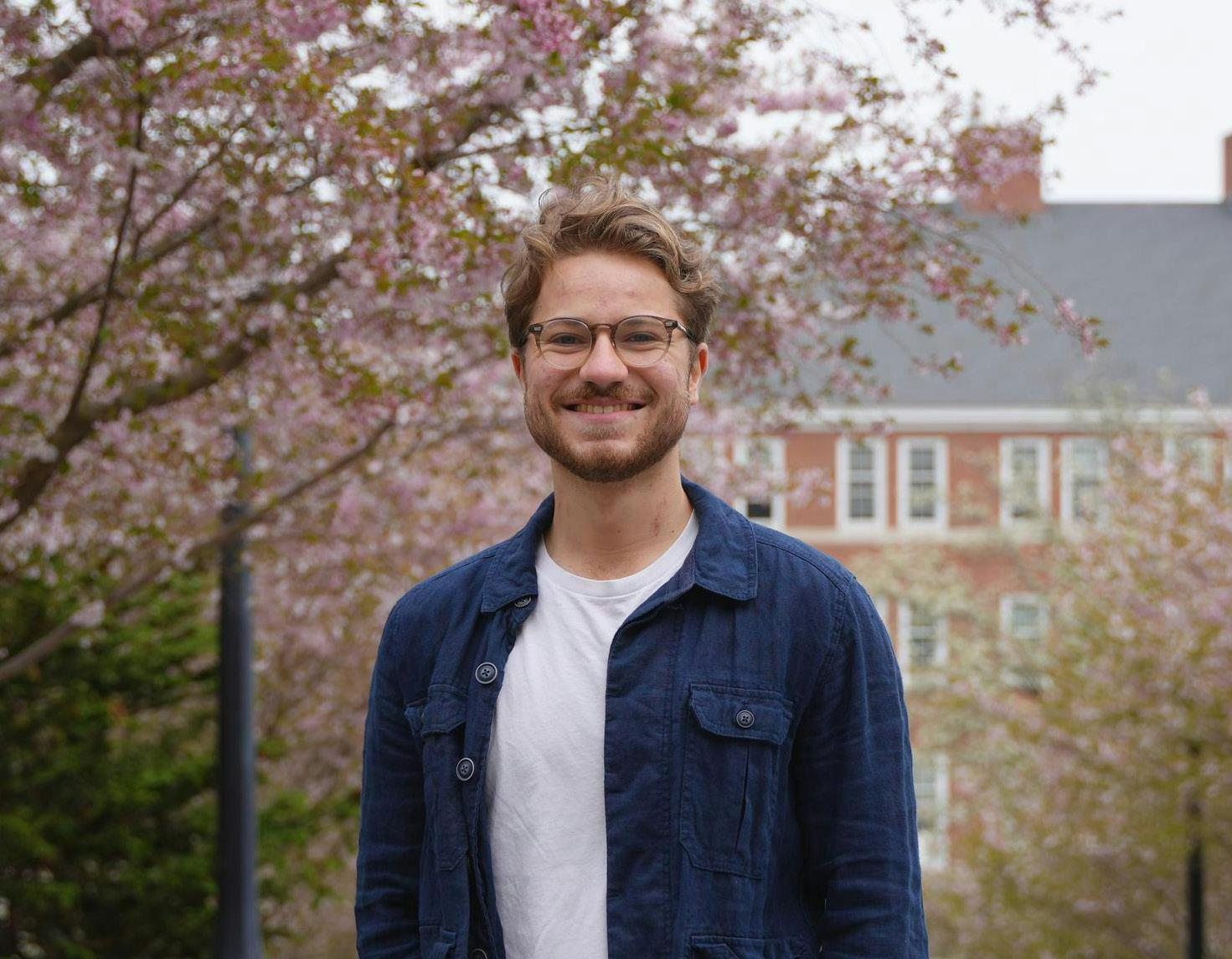
Matthew Sage joined the Daily by accident. But in his eight semesters writing and leading, he grew to be one of its most impactful figures.
Before Tufts, he wrote news articles and served as a photo editor at his high school paper. However, facing burnout and impending college, he decided that journalism was not for him.
Upon matriculating at Tufts, Sage was not interested in joining the Daily, even after attending a general interest meeting with Justin Solis, who joined the Opinion section.
One rainy Sunday, someone in his dorm floor brought Sage to DailyCon, the Daily’s
semesterly training of staff. Then-executive news editor Emily Thompson (LA’24) assigned him an article at the end of that day.
“It was almost a mistake that I joined the Daily,” he said. “I think at every point of that first semester I considered quitting. I was like, ‘Okay, this is going to be my last article.’”
Sage was promoted up the editor ranks by Thompson’s successor, Aaron Gruen (A’25), who had previously congratulated him on his first article about Tufts breaking ground on the Sol Gittleman Park. Sage points to Gruen as an early and continuous mentor.
One story during his second semester got Sage to remain in the Daily — it concerned
a Somerville homeowner who was trying to rent out rooms in his house to Tufts students, but encountered resistance from former Somerville Mayor Katjana Ballantyne’s office.
“It took a while to get that homeowner to want to speak on-the-record with me, and took a lot of talking and careful consideration,” he said. “But I did ultimately, and [I] wrote the story and [it] was one I was proud of. And that homeowner emailed me back a couple weeks later to say that he thought it made a real difference.”
Sage became executive news editor in spring 2024, a semester dominated by a defining story: Campus activism calling for Tufts to divest from Israel, culminating in the “Gaza Solidarity Encampment” during finals period.
“That was very hard, to be covering multiple groups of students who were frustrated with each other,” he said. “A lot of them were my friends, and often they disagreed vehemently with my coverage, and I ended up making a lot of mistakes that semester, most certainly.”
Sage reflected that the semester taught him the value of clear communication, being a more effective teammate and collaborator.
Sage’s educational and attentive leadership as executive news editor yielded passionate news writers and editors,
including myself and former executive news editor and managing editor Samantha Eng.
“He brought back a sense of community to the News section that was kind of lost in the semesters before, at least in my first semester on News,” Eng said. “We started having meetings back in the office. We met every single week, and I got to know the people that I was working with.”
Sage eventually dialed back his commitment to the News section, taking on a position as a managing editor.
“It was nice to get the chance to see the Daily more holistically, as both a community and as a newspaper,” he said.
Although he never fully returned to News, he assisted Eng for the defining story of the spring 2025 semester: the detainment of then-graduate student Dr. Rümeysa Öztürk.
Sage did far more than his news editor title required of him in the initial fallout of Öztürk’s arrest, digesting legal documents and taking additional editing shifts.
“As a reporter, I wanted to take a step back from the Daily, but felt like my experience was needed,” he said, reflecting on his decision to assist with reporting on the Öztürk’s developing proceedings. “[It was] gratifying to be able to provide that experience and to be able to help out in whatever way I could as a reporter.”
For graduating senior Estelle Anderson, journalism has played a significant role in her education. In high school, she was the editor in chief of her school newspaper, so upon matriculating to Tufts, she knew she wanted to join the Daily.
“I knew coming into college that I wanted The Tufts Daily to be … my main extracurricular activity, so I joined pretty much day one,” Anderson said.
Starting out as a news staff writer in the fall of her first year, Anderson wrote pieces on Somerville and Medford politics, quickly being promoted to deputy news editor her sophomore fall. She later became the executive investigative editor that spring and then executive news editor her junior fall before going abroad.
“This past year, I wrote an article for the Tufts Daily Magazine, [have been a] senior news editor and I was social [committee] chair last semester,” Anderson said. “I’ve worn a lot of hats at the Daily and it’s
been a huge part of my experience [at Tufts]. I can’t believe it’s coming to an end. I just have so much love for all the people on the Daily, the organization and all the work that I’ve gotten to do.”
Despite this wide array of roles, Anderson shared that News has always been at the center of her attention.
“News is what I enjoyed the most during high school, and so I knew that I wanted to join the News section of the Daily, just because the style of news writing is just fast paced and very energizing, which I’ve always been drawn to,” she said.
Anderson recounted the experience of writing one of her first articles about a delegation of students and faculty Tufts sent to the United Nations Climate Change Conference and how that shaped her view on the Daily.
“I got to learn about a lot of very cool climate related projects that students in [The Fletcher School] and professors were working on,” Anderson said. “I got to interview Rachel Kyte, who was the dean of the
Fletcher School at the time and an expert on climate change. It was my first high-profile interview for the Daily.”
This experience was one that solidified her decision to continue writing for the Daily’s News section.
Anderson went on to become the executive news editor and learned to manage a team of around 50 people, a skill that she says has helped her outside of the newsroom. She shared an anecdote about an impactful piece she worked on in her time as a member of the executive board.
“I think one of the most meaningful reporting experiences for me was probably spring of 2024, reporting on the encampments and the ongoing protests on campus surrounding the war in Gaza,” she said. “It was a very intense time to be a student journalist. My co-writers and I worked tooth and nail, just trying to be out there as much as possible and give these protesting encampments the most fair and comprehensive coverage that we could. We lost a lot of sleep over it.”
Sage is tied with former editor-in-chief Rachel Liu (A’25) for most executive positions held in the Daily — five: executive news editor, managing editor, website manager, Education Committee chair and executive social media manager.
As social media manager, Sage is proud to have begun a process of modernization and being more intentional about how the Daily uses social media.
“I’m very grateful to have shifted the perspective on social media and alternative platforms within the newsroom, and to get people thinking about the ways that they can reach readers wherever they may be,” he said.
The Daily’s Instagram page now stands at over 10,500 followers — a gain of 1,500 in a single semester under his stewardship.
Sage is looking to continue journalism in some form, whether local, political or in multimedia.
He shared a final reflection about mentorship.
“If you’re around long enough, you’ll receive that mentorship early on, you’ll grow and benefit from it, and then at some point, you’ll realize that you’re the mentor, and you get to help others grow and learn,” he said. “That’s … a very gratifying experience, and something I love about the Daily.”
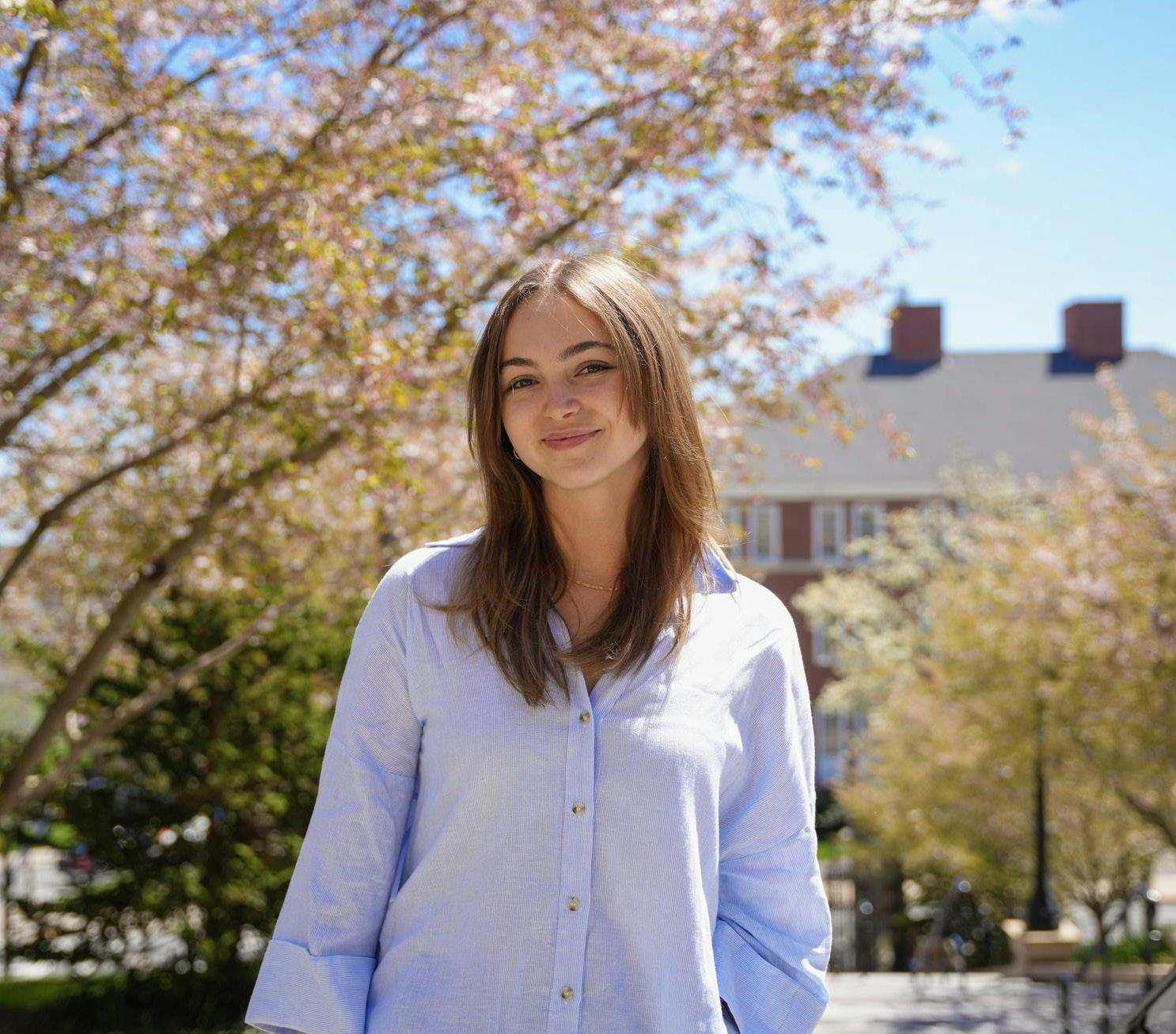
As her time at Tufts and the Daily comes to an end, she imparts a few words of advice to her peers both in the journalism field and fellow Tufts students.
“For incoming Daily writers, I would say, never be afraid to ask for help or support from your [editors] or other more experienced writers on the
Daily. It’s such a collaborative group, everybody wants to help each other,” she said. “Don’t lose the relationships that you build throughout these four years, whether it’s with a professor or a mentor or your friends or your club members. I think relationships are the most important thing in this life.”
Sadie Roraback-Meagher
Managing Editor
Leading the Daily through turbulent political events and profound personal challenges, former Editor in Chief Julieta Grané departs with the lifelong friendships and memories she’s made.
Grané, a graduating senior majoring in biology, will depart the Daily at the end of this semester, having served as an executive opinion editor, a managing editor and editor in chief throughout her time with the paper.
During the summer following her senior year of high school, Grané was diagnosed with lymphoma, forcing her to take a gap year to undergo treatment. Grané was still receiving treatment during her first two years at Tufts, profoundly altering her college experience.
“College is supposed to be [lived] with people and around people. When you’re sick, you have to be away from people. You’re
immunocompromised, [so] you can’t really talk to people,” Grané said.
Grané joined the Daily to provide her a sense of normalcy as she began her journey at Tufts, in order to not feel defined by her illness.
“I joined the Daily because I couldn’t go out so much. I couldn’t do normal college [first-year] things,” Grané said. “The Daily gave me a good home. I had a separate identity that wasn’t … ‘sick person,’ but just, ‘writer.’”
She began her time at the Daily in the Opinion section, where she helped foster a sense of camaraderie amongst writers. Grané cites the Opinion section as her “first community” at Tufts.
“We grew up a section that had historically been very individual … and then it became more of a group of people who thought together, which I really loved,” Grané said. “By the time I was exec, I loved the group that we formed [even more].”
Grané became the executive editor for the Opinion section in fall 2023. Unbeknownst to her, she
Maxwell Shoustal began his time at the Daily as a first-year with a bang: a controversial article for the Opinion section which asserted that Tufts students who wanted to participate in the CIA recruitment process should be allowed to.
“I was kind of excited to write it, because I felt like it was a controversial opinion,” Shoustal said.
“I instantly got an email as soon as it was published from someone who was like, ‘I hate this opinion, you’re wrong.’”
Rather than being dissuaded from writing more pieces, Shoustal explained that this engagement was what made the process of opinion writing so enjoyable, as it meant that students were engaging with his ideas. His approach for opinion writing was about finding an argument that was both interesting and
would be leading the section during one of the most politically turbulent periods in university history.
“Being opinion exec when Oct. 7 happened was busy. I think people had a lot of initial thoughts and opinions and really found a space to express them in the Opinion section, which I appreciate, because it is a forum that encouraged transparency,” she said. “I didn’t always agree with the opinions that we were publishing, but that’s also part of it.”
All the while, Grané was still dealing with the reality of cancer. Grané recalled having to handle the responsibilities of being an executive editor while being hospitalized.
“I distinctly remember editing from the hospital one day because we had production,” she said. “Having cancer was really a challenge.”
Her time on the managing board was also marked by political turmoil on campus in the wake of the Oct. 7 attacks. Grané described how the team aspect of the managing board made it easier to cover particularly
relevant to the Tufts community. These experiences taught him the importance of having “thick skin,” a mentality he brought with him as he transitioned to work on the editorial board.
While on the editorial board, Shoustal and his fellow editorialists also wrote a variety of pieces for the Daily’s special editions like Jumbo Month and Parents & Family Weekend. One such piece included a compilation of letters from the Daily’s editorialists addressed to their parents, which Shoustal described as “well-received.”
After his work as an underclassman for the editorial board and the Opinion section, Shoustal went on to be a managing editor in his junior fall and later joined the Business section in his junior spring. At the beginning of his senior year, he was asked to once again join the managing board, but this time,
tense moments, such as the Tufts Community Union Senate resolutions on Tufts’ ties to Israel.
“It was all very collaborative,” Grané said. “It definitely eased the pressure to be right or to perform that you have everything under control.”
Grané shared that the skills she gained from the Daily have helped her in “every step of the way” as she prepares for post-graduation. After Tufts, Grané plans to go into health law, where she hopes to combine her interests in writing, science and advocacy.
as a business director. In the fall, he shared this role with the current business director, Carol Wu.
“I wasn’t sure if I was going to say yes, just because I didn’t know if I had the time or if I had the experience, but I knew that the paper needed someone to do it,” Shoustal said. “I accepted that opportunity because I thought that it would be the best thing for the paper.”
The new position for Shoustal was not without its stressors.
“When you’re the business director, the worst thing that could happen is that the paper goes bankrupt, and then there’s no more Daily,” Shoustal said. “So I definitely felt a lot of pressure.”
After graduation, Shoustal will continue to work part-time at the Natural History Museum of Los Angeles County; however, he ultimately plans to attend law school. Although his career ambitions are not directly related to his work as
Tufts professors read their Rate My Professor reviews.
When graduating senior Chloe Nacson-Schechter arrived at Tufts, she came in with a game plan: She wanted to join the Daily.
“I knew about the Daily before I came to Tufts,” she said. “I didn’t know what I wanted to do, and it seemed like a really cool thing. So, I joined a bunch of sections.”
Ultimately, it was the Video section that stuck for NacsonSchechter, and although she lacked familiarity with using a camera, she dove in wholeheartedly and quickly gained hands-on experience from mentors like Julia Carpi (LA’25).
“I’ve always been interested in video production, but [I had] never gotten a chance to get my hands on a camera and try it out,” she said. “The Daily made it very accessible for me. [Before the Daily,] I had never touched editing software or really a camera, and then suddenly, I was doing both of those things.”
One early project that she worked on was a video where
“That was really fun to work on. It felt like I planned it from … start to finish. I got all the gear … and did all the editing,” she said. “It turned out really awesome, and I got to talk to people who I wouldn’t have met otherwise … and getting to work on a creative project was really cool. I just liked getting to see something through, and learning all the new technology and editing platforms.”
Her involvement soon became a steady and meaningful part of her routine.
“Every week, those Video section meetings with the same people started to become really important to me, and a really happy part of my week,” she said.
At the end of her first year, she applied to take on a leadership role as executive video editor. In that position, she gained a deeper understanding of the work behind each project.
“People [don’t] understand how much goes into producing a video,
like setting up the cameras and the sound and then making sure you have the right shot,” she said.
“To work on [a] video, you have to be very detail-oriented, [while] also keeping in mind the big picture of how an audience member is [going to] watch this.”
Her journey led her to the Managing Board as an associate editor. Although the transition brought difficulties, she found support in her peers.
“I was a little nervous coming into that semester … but I [received] a lot of support [from] my Managing Board,” she said. “It never really felt like a chore. I was definitely overwhelmed sometimes with the amount of time [I] had to dedicate to the Daily, but it was also something I wanted to do.”
Her academic path evolved alongside her extracurricular involvement.
“Before coming to Tufts, I said I was going to be a history and political science double major,” she said.
“I’m currently a psychology major and minoring in film and media
Outside of the Daily, Grané has been an active part of the Tufts community, having served as a TCU Senator, a teaching assistant for Tufts University Prison Initiative, an intern at the Latinx Center and an Experimental College instructor. Grané emphasized the importance of students taking advantage of the opportunities available to them at Tufts.
“When you have the chance to do and see so many things and meet so many people, you should take [it],” she said.
a student journalist, Shoustal is thankful for the general experience the Daily equipped him with.
“Every time I have an interview, the Daily always comes up,” Shoustal said. “A lot of those skills are the same: the reading and writing, the very critical and rigorous fact checking. … It’s great nourishment, really, to be editing articles, because it’s [a] sustained discipline.”
As he leaves the Daily, Shoustal expresses his gratitude for people he met along the way, especially while he was on the managing board.
“My favorite memory is just all the friends that I met through the Daily,” Shoustal said. “Some of the nights spent in [the office], just joking around even [at] three in the morning, maybe you wouldn’t think that’s a good memory … but I think it speaks to how good of friends we were.”
studies. So it did not go according to plan.”
Her work at the Daily has also helped her develop skills in management, organization and communication.
“When I was on the Managing Board, there [were] just so many things [I needed] to do, and [I needed] to communicate with so many people in order to get these things done,” she said.
The Daily was also very important to her socially, she emphasized. It allowed her to make countless lifelong friends as well as grow as a person.
“Coming into college, I feel I was a completely different person,” she said. “I grew so much.”
With graduation approaching, Nacson-Schechter is still considering her next steps.
“I’m feeling torn between two career paths. I feel this passion for journalism and media and video, [but] I also am passionate about psychology and education,” she said.
Looking to the future, she is keeping an open mind.
“I know it’s all gonna work out,” she said.
Most people who pick up a copy of the Daily don’t read every single word. However, they definitely see every visual. Jaylin Cho has spent three years thinking about the graphics that everyone sees. Originally from Seoul, South Korea, she is graduating this May as an international relations major with a minor in Japanese, and she is leaving the Daily’s Graphics and Production sections fundamentally changed from when she found them.
Cho did not set out to become a central part of the Daily’s visual operation. She joined in her sophomore year, pulled in by a friend who mentioned that the Graphics section needed help. She decided to give it a try and never looked back.
By her junior fall, she had become executive graphics editor, a role she held for two consecutive semesters. Then, she stepped up to assistant production director before
transitioning this spring into the role of an alumni liaison. Each step brought new responsibilities and a sharper understanding of what it actually takes to keep a section running.
One of the more demanding parts of her tenure was building the section itself. Recruiting new members meant reaching beyond the usual channels. Cho made a point of reaching out to students at the School of the Museum of Fine Arts at Tufts, bringing in artists who might not have otherwise thought of the Daily as a space for them to express themselves. The experience reshaped how she thinks about leadership.
“I learned how to communicate effectively with students across different campuses,” Cho wrote in an email to the Daily. “I found that reliability and follow-through are essential when it comes to building engagement and maintaining involvement.”
system as a “point of confusion in this world.”
Graduating senior Sam Pokorny followed her interest in journalism and passion for photography by taking on the role of the Daily’s executive photo editor and later as social committee chair.
A New York City native, Pokorny is pursuing a career in social work and will be working at Boston Children’s Hospital to increase healthcare access and advocate for patients’ needs, helping them navigate the healthcare system. Pokorny described the current healthcare
“I had always liked science, but I didn’t like science in the sense of ‘the mitochondria is the powerhouse of the cell,’” Pokorny said. “I liked understanding how science and health impact people and therefore communities.”
Pokorny has had a longtime interest in community health, specifically during the COVID-19 pandemic where she was impressed by vaccine programs and the promotion of mask-wearing. She was always interested in disease
The results of that work showed up most visibly across two consecutive commencement editions. For both the 2024 and 2025 issues, Cho produced the two-page centerspread graphic. They were the kind of scale that most student illustrators rarely get to see their work reach in print. She still keeps copies of both at home.
“Seeing my work printed at such a large scale was incredibly rewarding,” Cho wrote. “I was very aware that the commencement edition is picked up by many seniors and their families, which made the process feel even more meaningful.”
She stayed in close communication with the managing board throughout, she added, incorporating their feedback so that the final product became something collaborative rather than solitary.
Her favorite memory with the Daily is the Hunt. The Daily’s semesterly scavenger hunt has been a fixture in Cho’s Tufts experience, as she has been present for five of them.
prevention and in reducing healthcare disparities through societal interventions.
For her senior capstone, she worked in a public health research lab at Massachusetts General Hospital focused on improving healthcare delivery for people who might not otherwise receive care, how people view healthcare services and how perceptions of these services can be improved.
Pokorny said she views her work with the Daily as more of a creative outlet than work.
“I loved getting to know people and also getting to know the Tufts community more because I feel like when [I’m] taking photos, I’m going to some random event that I would not have gone to otherwise,” she said.
One of Pokorny’s favorite projects with the Daily was a photo story she created of Read by the River, a campus-wide literacy initiative featuring reading activities in collaboration with local libraries and schools, sponsored by Tufts Hillel.
For the majority of the Hunts, she was among the students moving from station to station, completing activities and solving various clues. This past fall, however, she was on the other side of the event, helping organize the activities and running a station herself. It turned out to be one of her favourite memories at Tufts. It was a small but meaningful inversion of a tradition she had grown to love. After commencement, Cho plans to pursue law school. As for
“I love going to events where we see the Tufts community engage with the Medford/ Somerville community,” she said.
Pokorny said a photography class she took while studying abroad in Copenhagen significantly improved her skills.
“It was a three-hour class once a week and it was, honestly, sometimes, the death of me,” Pokorny said. She said that despite this, it prepared her to join the Daily’s executive board in the fall as an executive photo editor.
Pokorny rejected the idea that quality photography requires fancy equipment — a common notion that she said could intimidate some students from joining the photo section of the Daily.
“To tell [a] story, you don’t need the chunky equipment,” she said. “It’s all about having a good eye for photography.”
She also emphasized that no experience is required to join the Daily’s Photo section.
“I came in with nothing, and here I am,” she said.
graphics, I like drawing, I’m an SMFA student, so it’s a part of what makes me, me.”
Israel Hernandez, the Daily’s executive graphics editor, has devoted much of his yearlong tenure to promoting his section, using his passion for art and appreciation for the Daily to spread the message from the Medford/Somerville campus to the School of the Museum of Fine Arts at Tufts University.
Hernandez, a studio art major at the SMFA and self-described “interdisciplinary artist,” was a latecomer to the Daily, joining in the spring of his junior year. He credits his friend and predecessor, Jaylin Cho, alumni liaison and graduating senior, for convincing him to get involved.
“I joined [the Daily] pretty late [...] and I wasn’t really in the know about a lot of communities here,” he said. “I was intrigued — I like making
As a native of Phoenix, Ariz., Hernandez said his transition to Tufts was initially challenging. Since then, Hernandez has stepped out of his comfort zone and found his footing both academically and socially.
“My first year was pretty tough. … I never really left home ever in my entire life,” he said. “I was struggling to make friends and whatnot, but I decided to stick it out and keep going at it, and I’ve got to say, I’m going to miss being [at] Tufts.”
After joining the graphics section, he became increasingly involved not only in creating graphics but also in building a community within the Daily. He particularly enjoys organizing section bonding events and participating in publication-wide traditions such as the Hunt.
Hernandez noted that the graphics section’s small size led him to bolster recruitment efforts.
“I want the graphics section to thrive … before I have to graduate. On top of the [General Interest Meetings] that we did, I would also go to SMFA classes and tell them about the graphics section at the Daily. I was able to get a couple of students to join,” he said. “It was a nice way to get the word out there, because I feel like a lot of SMFA students don’t actually know about the graphics section.”
Outside of the Daily, Hernandez can be found working on various personal projects, including his charcoal animation entitled “The Meow-Cracker,” an animated short-film of his cat, Luna.
“It’s about a day in the life of my cat, Luna, and how her
what she would tell students just arriving on the Hill, she resists the generic.
“Recognize the importance of communication and connection early on,” she wrote. “In high school, it’s often possible to succeed academically without engaging much with others. In college, building relationships—whether through networking, leadership roles, or community involvement—is a central part of the experience.”
In her role as social chair, Pokorny helped the managing board plan The Hunt, a Daily social event, host executive board bonding sessions and set up coffee chats between new and returning members of the Daily at the start of the semester.
“I make sure that people are getting to know people in the Daily,” she said.
With four years at Tufts behind her, Pokorny described the “this too shall pass” mindset that has brought her success.
“Nothing is truly ever that deep. If I get upset about something … it’s going to pass,” she said.
Pokorny gave final advice for the future.
“The only person who’s claiming [you] can’t do that is the voices in [your] head,” she said. “You have to change your mindset, these things will pass. … Every day is a new day. Every day comes with its own problems. Whatever is a problem now, might not be a problem tomorrow.”
antics resembled a dance or a ballet from the Nutcracker,” he said. “You can actually see it on YouTube right now.”
After graduation, Hernandez says he plans to stay in Boston for another year to continue building his art portfolio. He hopes to eventually work in animation or for a game studio.
“I’m excited to be graduating but I’m also kind of sad because I’ve
really enjoyed my time here,” he said.
As he prepares to graduate, Hernandez’s final piece of advice for Tufts students is to step out of their comfort zones and to take advantage of every opportunity — just like he did with the Daily.
“Cherish your time and don’t be afraid to do anything that you think is scary,” he said. “Seize those opportunities.”
Dylan Fee Features Editor
The four years I’ve spent in college have felt like the longest and shortest of my life, shaping me into the person I am today. One thing I’ll miss most: some of the best people I have had the privilege of calling my friends. And I’m not alone in this sentiment. I sat down with what some could call the closest of friends — roommates that decided to live together through all of undergrad — and walked away from each interview knowing a little more about what it means to be a true ride-or-die.
Graduating seniors Latifa Adan and Jasmine LaMotte clicked instantly, as they discovered — before they moved in together — that they grew up quite close to one another in Massachusetts.
“When I found her Instagram, I was like, ‘Wow, she’s in the town right next to me, and I’ve never seen her before,’” LaMotte said. “It was meant to be.”
As it was for myself and my amazing first-year roommate (even though we’re not a part of the highly exclusive four-year roommates club), graduating seniors Yael Waxman and Kerrera Jackson took a bit longer for their friendship to blossom.
“When we first were roommates, we … ran in similar circles, but we definitely had very distinct lives,” Jackson said. “Throughout the year, we just got closer and closer. … [When] the year ended, I remember leaving our [first-year] room was super emotional.”
Jackson described a moment at the end of their first-year fall when she knew she would be in it with Waxman for the long haul.
“I was at a party at a random house off campus. … It was boring and we were leaving and I was like, ‘I need to take something from this house.’ … I ended up taking two oranges, and I brought them back for Yael because one of her big things … was that she always had like 15 oranges in her backpack,” Jackson said, recalling her thoughts about Waxman and her fruity quirks even when she wasn’t around.
Graduating seniors Donatello Sassaroli and Zahir Bashir, as well as Lev Barnett, Liam O’Hara and Gabe Klaris, also made it as four-year roommates with the additional obstacle of being in triples during their first year. They were actually in neighboring rooms on the fifth floor of Carmichael Hall, and I can let you guess which
group stayed in the trio all four years.
“I remember when I got my roommate assignment, my parents were mad I was in a triple. They were like, ‘We’re paying all this money for a triple?’” Bashir said. “But my roommates seemed chill and … it worked out.”
While roommate assignments for first-years are random, each student fills out a survey detailing what their preferred living situation is. O’Hara was a bit more than surprised when he got put in a triple with Barnett and Klaris.
“It’s kind of funny because I didn’t want to live in a triple, or even a double. I requested a single. … I was pissed,” O’Hara said.
But the room worked out, as the trio decided to do a triple again the following year.
From personal experience, I’m not sure how much those surveys are actually taken into consideration when placing roommates together. I always felt terrible because my roommate was a ‘go to bed and wake up early’ kind of person, whereas I was … not that. Graduating senior Will Bornmann may have not told the whole truth on his survey, according to his fouryear roommate Rory Myers.
“We both put on our roommate intake survey that we were ‘somewhat clean’ … which was true [our first] year,” Myers said.
“And then, I don’t know what happened, man, he just got comfortable. He got complacent. There was a dividing line … and you would see this line of clothes at the exact halfway point between our sides of the room.”
Myers and Bornmann laughed about it, and the two were eager to share quirks they found endearing about one another, including Myers always wiggling his toes when they watch TV and Bornmann’s affection for Dewick peanut butter (for the gains, of course).
“Mr. Rory likes to nap and sleep a lot. I would wake up — I have an Apple Watch, so my alarm … didn’t make any noise — and I would just pick my body up. And Mr. Rory, being the light sleeper he is, wakes up if I don’t even get out of bed,” Bornmann said.
The other sets of roommates were excited to reveal their built-in besties’ idiosyncrasies as well. Adan said she will miss LaMotte’s many “thinking out loud” discussions she would have with herself, and LaMotte loved to have a roommate who could sleep through anything.
Sassaroli pointed out that for the entire time he’s known Bashir, he’s “got one dish in his bag” for his meal prep that smells “quite delectable.”
Waxman gushed about how accommodating Jackson was as a roommate, pointing out a few of her own peculiarities that Jackson would be flexible with.
“Kerrera was just a really good roommate,” Waxman said. “[She] would always make adjustments, like … I would go to bed earlier so she’d be willing to do work in a different room, or … [she would put] a towel down to do her makeup because she would open her caps and it would wake me up.”
O’Hara was self-aware of his little quirks when it came
to settings in his living spaces with Barnett and Klaris.
“I need the volume on an odd number, but preferably a multiple of five,” O’Hara said. “And then my other [quirk] is, I’m the worst about lighting. If there’s any white lights or an overhead light, I’ll freak out.”
“We did have to get creative in the dorm,” Barnett said, noting that they had to utilize string lights and desk lamps as opposed to overhead lighting. Barnett also pointed out an unconventional hygiene habit that Klaris partakes in.
“Gabe showers at extremely late times in the night, which doesn’t bother me,” Barnett said. “It would be like 2 a.m.”
After racking their brains to come up with a quirky characteristic for Barnett, Klaris remarked on his habit of wearing noise-cancelling headphones in common spaces.
“I’ll speak to [Barnett], and I’ll just never get a response,” Klaris said. “I’ve done this for four years, and I will keep trying.”
Sophomore year, my roommate and I had the shared quirk that every time we would be in the room together late afternoon, we would ask each other if we should take a nap rather than do our homework. They were both my most restful and least productive semesters at Tufts.
With different levels of living compatibility and friendship, what’s the secret to living together for all of college? The common consensus was comfortability and that all of these roommate pairs, or trios, simply enjoyed coming home to each other.
“There aren’t many [other] people that I’m this
comfortable with in the world,” Barnett said about Klaris and O’Hara.
“I can wholeheartedly be myself around Jasmine,” Adan said.
“It’s nice to have someone in the house. I’ll come downstairs, and Will’s just on the couch watching some [television],” Myers said. “It’s nice to have someone to talk to at a random part of the day.”
Bornmann thoughtfully added: “We’re just two young, like-minded, handsome individuals that like video games and anime.”
All of these four-year roommates — with the exception of O’Hara and Klaris — will not be living together after graduation. While I haven’t lived with any one person for four years, my house of six has been friends since orientation week, and there’s an uncountable list of things I will miss about them, as these four-year roommates also echoed.
“I will miss my cuddle buddy,” Bashir said. “We will be even further separated.”
“I’m just to-the-moon blessed,” Bornmann said somewhat sarcastically about having Myers as a roommate. “We need to find video games to play [while we’re apart].”
As tears fell on my keyboard finishing my last article of my senior year, reminiscing about the incredible memories I’ve made with all of my roommates and friends during my time here, these roommate stories left me with one inspiring message.
As Waxman beautifully put it: “To be known is to be loved.”
Maia Goldman Assistant Features Editor
The senior honors thesis is an experience many Tufts students look forward to, as it offers an opportunity for in-depth research that can either be interdisciplinary or focused within one field. The thesis serves as a demonstration of students’ commitment to education and — for many — marks the final two semesters of being a Jumbo. From making documentaries about life experiences to producing a paper in a completely different language, senior theses vary tremendously and offer perspectives from many different fields and walks of life.
Ethan Sims
For graduating senior Ethan Sims, putting together a senior thesis became a tribute to his grandmother. Drawing upon his major in film and media studies and minor in Spanish, Sims constructed a documentary about his grandmother who lives with macular degeneration — a disease characterized by the progressive loss of vision and eventual blindness — to shed light on the challenges present in her life. Through outlining the highlights of her day-to-day life, Sims intends to transform a medical condition into a narrative of resilience.
“I hope it sheds some light on what it’s like to be old and lose a sense like that,” Sims said. “[You] get a lot of autonomy taken from you at a time when you’re already losing autonomy just because of old age. … So I just [want to] portray that in an honest way … without … washing over any things that should be brought to light.”
With his newfound knowledge about filmmaking, Sims envisions a path where filmmaking serves as a form of health
advocacy. Through this medium, he hopes to create a sense of community for those suffering in silence, as well as use documentaries as a platform for education and personal motivation.
“I just love telling people’s stories or helping them tell their own story,” Sims said. “[My future goals are] sharing information and making others that deal with [illness] feel less alone, but also for people that don’t have it, so they can better understand what it’s like.”
Kaatje Welsh
Child study and human development major and graduating senior Kaatje Welsh’s thesis draws on how creators of children’s media use various textual, auditory and visual elements to influence children’s imagination and creativity. Using works from authors like Ebony Thomas, she addresses the issue of representation of African Americans in children’s television.
“[Part of the thesis] is focused on how creators of children’s television could use the framework of Afrofuturism to help positively influence Black and Brown children’s imagination [and] creativity,” Welsh said, noting that the lack of Black characters in media could lead to potential self-esteem issues.
Welsh uses her artistic portion to envision a future where children of color don’t perceive themselves as “mythical creatures,” but rather as meaningful members of society. By pitching a children’s television show of her own, Welsh uses personal experience to appeal to multiple different audiences and normalize imaginative media for all children.
“As a little brown girl myself, thinking about the kind of media that I would have wanted to see when I was growing up that I wasn’t able to see, is what I was thinking about with the artistic component,”
Welsh said. “It would follow the storytelling of Afro-Caribbean mythology, [which is] really interesting to me because my mom is Trinidadian.”
Mason Rauch
Another thesis tackling representation is that of graduating senior Mason Rauch, who drew on his biopsychology and French majors to raise awareness about mental health perceptions in France — entirely in French.
As a Massachusetts native and part-time resident of Paris during his junior year, Rauch draws upon the idea of “le bovarysme” — or the idealization of life — that overlaps with contemporary understandings of bipolar disorder to discuss the increasing relevance of mental health from a psychological and psychiatric standpoint. To Rauch, his thesis is not just a paper, but also a narrative of the evolving role of mental health in France.
“Mental health is a really important topic and I think it’s something that we’re increasingly talking more about in society,” Rauch said. “It’s just important to have more resources and literature out there about mental health because … there’s always going to be more to explore … and [it’s] something that’s continually growing and … being talked about more.”
As Rauch noted in his research, the modern world has taken on a “broader sense of what mental health means,” and Rauch leaves his audience with a question to consider in future research related to the field.
Rauch intends to spend his career influencing perceptions of mental health in the medical field. While he isn’t certain he will live full-time in France, he hopes to practice there for at least some period of time.
“My goal is to at least spend some more time in France — I don’t know if that would be as a practicing counselor or psychiatrist,” Rauch said. “But I definitely hope that I can take what I’ve learned from this project and use it theoretically [as] a future psychiatrist or physician.”
Samantha Hirianto
Graduating senior Samantha Hirianto, completing majors in psychology and child study and human development and minors in dance and food systems and nutrition, uses her thesis to explore how usage of AI chatbots influences human loneliness. Hirianto brings diverse perspectives to the issue to shed light on patterns of isolation frequently overlooked by society.
Hirianto found that human vulnerability is often reinforced by AI chatbots, which are designed not to challenge human assumptions or disagree with user prompts. As chatbot use expands, this vulnerability extends beyond adolescents to a wider population.
“These social chatbots kind of feed into your rumination and these negative thoughts,” Hirianto said. “It’s definitely permeated throughout teenagers, but now more so towards adults and these parasocial relationships. And it’s found [that] this whole thing created so much fear.”
Hirianto’s interest in this subject was sparked by a devastating story of a young boy who ended his life after being influenced by a social chatbot. This case evolved into the first lawsuit in a U.S. federal court accusing an AI chatbot of contributing to a user’s death of and raised questions that guided Hirianto’s research on the relationship between mental health and AI use.
“What I want to know [is] whether empirical articles can hold up — do they actually have a correlation?,” Hirianto said. “Where does this all come from? There’s definitely a gap, [and] it’s so frustrating because there’s so little research … happening.”
Hirianto plans to remain in the field of psychology and expand her knowledge of adolescents in relation to digital wellness. She plans to pursue a fifth-year master’s degree in the Eliot-Pearson Department of Child Study & Human Development and is applying for an internship at the Digital Wellness Lab at Boston Children’s Hospital. She plans to remain at Tufts and in the Boston area to gain further experience.
After a year of research, conversations and intellectual immersion, the seniors concluded their theses with defense presentations. With much deliberation underlying these projects, extensive guidance and advice was provided to formulate their projects into ones that would serve them for life. Despite the range of topics and disciplines represented, the four seniors agreed on one key piece of advice for future thesis writers.
“You have to find a topic that pulls you in,” Hirianto said. “It has to be either something urgent, something personal or something that’s just meaningful for you. Because at the end, no matter how much you like that topic, you will get sick of it by the end of the thesis.”
This advice serves as the final takeaway from the Class of 2026 as they prepare for graduation. By grounding their work in urgency and passion, they demonstrate that the senior thesis is ultimately a trial run for navigating the complexities of the real world.
Ella Sanders Staff Writer
May 31: The date that many of the surrounding Medford and Somerville leases end for Tufts students. As seniors prepare for graduation and their move beyond the Hill, the search for housing commences. And the best time to start is now.
Graduating senior Claire Lyse Guitmann is all too familiar with the undergraduate and postgraduate housing market in Boston. Guitmann is a licensed real estate agent in both New Jersey and Massachusetts. She decided to pursue her license after a sports-related injury led her to leave the Tufts softball team.
“I went home to Jersey, made some things happen, got my license [and] closed a couple small rentals. … The rentals I had closed were some of the most impactful that I have ever done,” Guitmann said. “I had helped somebody who had just recently come from Colombia and was trying to find work here. … It had taught me a lot of foundational work that I needed to be able to implement a business plan.”
Guitmann’s father was the one who motivated her to pursue the rental market near Tufts.
“Once I saw how much I enjoyed it and how much I loved it, [during] my junior fall, I decided, ‘I’m going to launch a campaign to start this business,’ which [is] ‘Lease with Claire Lyse,’” Guitmann said. “The business blew up much more than I ever thought it could. I ended up getting an award in my office for Coldwell Banker called the International Sterling Society Award.”
Guitmann recommends that those looking for housing talk with a realtor to learn more about the market, search for roommates early and tour multiple units. She warns that many of the listings on sites like Zillow are used by agents to phish for clients. The benefit of working with a trusted realtor is that they are able to easily verify the accuracy of the listings, but one major misconception is that there are no more broker fees. Guitmann explained that if a group is working with a broker, they are opting in to receive additional help in their search, meaning they will be charged a fee. But if a group were to find a property through a listing agent, then the no broker fee is applicable.
As for desirable neighborhoods in Boston, Guitmann is a fan of the North End, FenwayKenmore and Back Bay.
“I just love the energy. They’re very young, graduating kind of vibe,” Guitmann said. “Regarding pricing, they’re not the cheapest. So the way you can navigate that is either [to] live with roommates to potentially bring down the cost per person. But if you’re looking to live somewhere that’s a little bit more cost-effective, you could look at Mission Hill [and] right in Allston.”
Guitmann graduates this May and will be staying in the area to
continue expanding her business in Boston.
“It’s scary to be graduating, and everyone around me is getting a job, and I’m not doing the same thing. … Having to accept taking that step and believing in myself has been something I’ve been struggling with the last few months because I’m very nervous. But I’m very grateful I have a very supportive family that has my back through all of this,” Guitmann said.
Sophomore Lexi Trifon interns for Guitmann and is helping to expand her business. Trifon first met Guitmann when searching for housing last fall.
“It came about very naturally. It started as a friendship, and then sort of worked its way into a business partnership,” Trifon said. “I’ve been shadowing [Guitmann] — so coming with her on tours and learning from different associates. And it’s been a really great opportunity to apply what I’ve learned at Tufts to a more business-centered field.”
Trifon is the current president of the Tufts Real Estate Society and has used the position to transition the club to be more “experiential focused.” The student organization recently worked with Harvard’s Undergraduate Real Estate Investment Group to establish a Boston undergraduate real estate collegiate network.
This summer, Trifon will intern at a commercial real estate trade association, and in summer 2027 at an investment firm focusing on real estate.
Ranjita Singh-Ortiz is a broker and the owner of Cambridge Premier Realty, managing 10 agents and covering Somerville, Cambridge, Medford, Malden and some parts of Watertown. Singh-Ortiz started her journey in real estate back in 2006 to supplement her income as a student. In 2016, she officially launched her company, Cambridge Premier Realty.
“When I started real estate back in 2006, we were one of the few agencies. … We only advertised on Craigslist. Pricing work was very different. I mean, you could get a one-bedroom apartment for $1,400. You could get a two-bedroom apartment for $1,800. … And now you can’t even get a decent one-bedroom for $2,900,” Singh-Ortiz said.
She explained that the market fluctuates. It was a renter’s market when she started, and then it swung to the landlord’s market or seller’s market. Now, in the past couple of years, it has been swinging back.
“The inventory is so expensive in the area, a lot of people are trying to move out. … They’re willing to go a little bit further to get better value for their money,” Singh-Ortiz said. “It’s shifting the market to lowering the price [with] more inventory, and thus, the renters have more options to pick from.”
Singh-Ortiz also recommends starting the search early. Prices can differ due to fluctuating demands, depending on the month one is looking at. For
students contemplating renting versus buying in the coming years, Singh-Ortiz explains that a major pro of buying is that it builds equity.
“[There are] a lot of opportunities for young people to invest [and] to think about buying. Mostly, I would suggest that if you are able to, invest money in real estate,” Singh-Ortiz said.
“All these areas that we talked about — Cambridge, Somerville, Medford, Malden and Everett — are appraising in value. So even if somebody has to move away, you can always use that as investment property. The rents are growing. The [values] of the properties [are] going up.
… [Besides the down payment,] another very important thing is credit score. If you don’t have [a] good credit score, you will end up paying [a] higher interest rate.”
Jeffrey Zabel is an economics professor at Tufts who recently did a piece on affordable housing on the podcast EconoFact Chats.
“There’s a rent control ballot initiative that’s going to be on the November ballot: Should we have statewide rent control? And so that’s a very contentious issue right now,” Zabel said in an interview with the Daily.
Zabel explains that many economists are against rent control because of the unintended
consequences. For example, lower-income households are not necessarily the ones receiving the rent control. Instead, others are occupying these spaces and refusing to give them up even as their incomes increase, making them no longer eligible.
“There’s a disincentive for landlords to maintain their places if rents are capped. [Additionally,] there’s an incentive then to take them and make them into condos [so] they’re no longer [rentals],” Zabel said.
One solution Zabel points to is providing low-income households with rental vouchers. This would mean qualified renters could find their own units, pay rent equal to 30% of their income and rely on the state or federal government to subsidize the rest. However, landlords could respond by increasing rents due to the induced higher demand for housing.
“[One] problem is that the budget is very limited, so only about 20% of eligible low-income households actually have vouchers,” Zabel said.
“To me, that’s a real problem, and I’m actually looking at doing some research to look at what happens if we were to increase that to 30% or 40% or even 100% of eligible households.”
Some policies that affect the general market include the
MBTA Communities Act, which is intended to encourage towns to densify and develop multi-family housing near public transit stops if possible. Another is Chapter 40B, where towns must have at least 10% of their housing be affordable. If they do not meet this, then developers are allowed to build at a higher density and bypass certain local zoning laws as long as 20–25% of their units are deemed affordable.
Yet, Zabel explains that factors like tariffs are contributing to increased construction costs, making it less profitable for developers to build. Another factor is immigration. A significant number of construction workers are immigrants, and without them to fill those jobs, developers have to pay more for labor.
Ultimately, while the number of jobs continues to attract Boston’s graduates to the area, the high rental prices are causing an increasing number to move away. Zabel explains that other places, like the South, are starting to compete with Boston as they offer diverse job opportunities as well as a lower cost of living.
“It’s something that the policymakers are well aware of around here. … It’s easy to know, [but] it’s hard to do anything about,” Zabel said.
Sanya Bandekar
Assistant Features Editor
Tufts’ Myanmar Student Union has made significant strides since being established just four years ago. Through cultural celebrations, political discussions, lectures and large-scale cross-club events, MSU has found its footing on campus as both a haven for students as well as a club focusing on larger social and environmental justice efforts for those in Myanmar.
On March 28, 2025, a magnitude 7.7 earthquake struck near Mandalay, Myanmar, killing over 5,000 people and leaving more than double injured. According to the U.S. Geological Survey, the environmental disaster had effects felt as far as Bangkok, Thailand, as its shallow depth resulted in intense shaking and damage across the region. The event sent economic shockwaves through the country, as damage costs were estimated at $11 billion USD, around 14% of Myanmar’s GDP, according to the World Bank. With the country’s poverty rate already at 31% prior to the earthquake, hardships only increased with aftereffects, signaling the need for assistance.
Simultaneously, the country’s internal government has made relief efforts particularly difficult, as the State Administration Council — the current ruling military junta — has directed aid toward its own military purposes. According to Human Rights Watch, this struc-
ture has left thousands of citizens devoid of the resources needed for recovery and has made it significantly more difficult for international organizations to intervene by delaying visas, harassing aid workers, taking away supplementary resources and blocking internet access. As a result, Myanmar is still suffering a year later.
Here is where MSU President and rising senior Thang Dopmul, along with his fellow MSU members, stepped in, leaning on their collective identities to help uplift their community. For Dopmul, that community has been a large part of his upbringing.
Dopmul, who immigrated from Myanmar to Tulsa, Okla., described being surrounded by a community from Myanmar in his home state, as well as their unique place within the region.
“For us to be able to live in such a state where it lacks diversity, we’re able to bring that sense of cultural mix, and sense of diversity as well,” Dopmul said. “The fact that we’re a little more well known in [Tulsa] is good representation for us overall.”
Following the 1962 military coup in Myanmar, waves of immigrants traveled to the U.S. as refugees. Tulsa in particular has a large community of immigrants from Myanmar and is home to 7,000–9,000 Zomi, an ethnic group from the mountainous regions of Myanmar. Dopmul can still recall the nuances of his home state that bring him joy.
“I think it’s a perfect mix of both city and country. I love the flat land,
I love the cool breeze, I love the rainy season,” Dopmul said. “Everything about Oklahoma I just think is amazing, but more so than that, it’s the community that I was part of.”
Fast-forward to March 2025, when the news of the earthquake that had happened overnight hit him and the larger Myanmar community, both at home and at Tufts, particularly hard. As soon as the news was shared, Dopmul and his fellow MSU members convened for a meeting over Zoom to discuss what to do. Aid was the top priority; they understood that monetary donations would have the largest impact.
MSU members were quick to discover that a Harvard student from Myanmar had set up a GoFundMe page with considerable connections. MSU decided to collaborate, setting up meetings first with the Harvard student before expanding to other university organizations and professors.
What was once a goal of $10,000 was quickly surpassed, as the single GoFundMe page spread across the country and internationally through family, friends and social media. Now, the relief fund sits at over $92,000.
“The one thing about Burmese people is we’re chronically online for the most part, at least a lot of the younger generation, which I think has some benefits,” Dopmul said. “We were able to reach a lot of the Burmese youth much quicker.”
Given the precarious government situation in Myanmar,
Dopmul emphasized how much of their work was centered around determining where to distribute funds to. He emphasized the importance of donating to trusted organizations, ultimately choosing Better Burma to send money to. This organization has provided food, clean water, baby formula, diapers, medicine, hygiene kits, mosquito nets and more to people in Myanmar.
A year later, MSU continues to advocate for citizens of Myanmar, raising awareness about the ongoing military junta rule, which has carried out operations against civilians. Additionally, MSU seeks to share its culture through on-campus events that involve outreach, speakers and food, which Dopmul described as a large aspect of Myanmar’s culture.
Reflecting on the speed and proactivity of university students in mobilizing support for the cause, Dopmul noted the uniqueness of
the Myanmar community at Tufts and beyond.
“We all love our country, but we don’t love the current state it’s at right now,” he said. “Coming to Boston, when I started interacting more with students who did grow up in [Myanmar] ... I [saw] a lot of their grit and their determination, even given their situation.”
Dopmul described how those students have sought out scholarships and programs to support their education and “live for their future.” As a result, he wasn’t surprised by the quick rally for support in a time of need.
“I think I’ve always acknowledged that Burmese students in general are very passionate or very determined. And I think that comes from the fact that they come from a country that is war-torn, and it’s just their passion. I think it’s very inspiring,” he said.
Annicka Sen Staff Writer
If you’ve been consistently reading the Daily, or even if you’re just knowledgeable enough about campus happenings, you probably know who graduating senior Dhruv Sampat is. As the president of the Tufts Community Union Senate, he’s been featured in the Daily on several occasions and often shows up in other events and coverage.
Every Tufts commencement features the Wendell Phillips Speaker, named after the attorney who advocated for women’s and native peoples’ rights. The speaker is a student in the graduating class who “demonstrates both marked ability as a speaker and a high sense of public responsibility” according to the Tufts University Chaplaincy website. It makes sense that someone like Sampat, who has been a visible part of the Tufts community, ended up in this role.
“It means the world to me,” Sampat said. “I view it as an opportunity to celebrate every single one of my peers that is graduating and the work that we have all done, to better the Tufts community and to better the world. … [It is also an opportunity to] leave people inspired and remind people that this is one of the early examples of a very, very strong community that we have in our life that is never going to leave us.”
The importance of community and its inherent values have always
been important to Sampat, even before he entered Tufts. A key part of deciding where he wanted to study included the overall ethos of a school, but especially how civic-minded its student body was.
“The quality and ideology of my peers was very important to me, not in the sense of having everyone that agrees with you about everything, but having a very civic-minded student body that may be studying very different things,” he said.
Sampat has been involved in student government for all four years he’s been at Tufts, starting out on the TCU Treasury before making the leap to presidency. It is interesting to note, however, that Sampat had no intention of joining the Senate before college.
Throughout his four years, his focus has been on an “open-door” policy: to meet as many students, faculty members and administrators as he could.
What exactly does Sampat do as president? He describes the job as diverse, with roles including setting the year’s agenda for Senate, establishing goals for senators and assisting in relations between the Treasury management and clubs. On what drew him to the Senate in the first place, Sampat touched upon how it connected very well to what he was learning in classes.
“[Senate] was everything that I was studying in my classrooms in a very practical way, allowing me to actually really identify and have the
conversations that are being had on a global stage, on a much more localized stage at Tufts,” he said. “Senate has really shaped who I am as a person and has really helped me find my people at Tufts.”
Sampat’s focus on connecting with people throughout his time at Tufts also reflects in his speech at this year’s commencement ceremony. For him, it’s important that his speech reflects a shared experience, rather than just his own, at Tufts.
“A lot of my inspiration is drawn from the conversations I’ve had with peers over the years, the engagement I’ve made in classes with faculty members, the discussions we have had as a community at large,” he said.
There are still personal touches in his speech that reflect on his own experiences.
“There’s a personal aspect and a personal element to it of my early days in India and a lot of the cultural practices that grounded me during periods of intense conflict and polarization,” he said. “I wanted to share with the community how we’ve all been practicing some of those methods without realizing that we’re doing so, and how we’ve come together to really master being able to find our way back as a community to one another after periods of intense polarization and … intense disagreement.”
Sampat’s process for preparing his speech, which he described as “iterative,” continues to reflect the
collaborative, community-focused nature of his time at Tufts. Sampat has been constantly sharing his drafts with peers and friends, building off their feedback to ensure that the speech shares an experience as accurate as possible to the Tufts community. His preparation also involves physicality and memorization in order to help the speech emphasize the values it represents. He also finds places in the speech where he can put more humorous, lighthearted moments. Overall, it still comes back to making a speech that can relate to as many people as possible.
“It’s not only students; it’s such a big day for parents, for family, for friends, also for faculty members and for administrators,” Sampat said. “It’s really supposed to bring everyone together on that one day and leave everyone feeling good, but also leave everyone feeling like they can all depart from Tufts with one unified learning and goal.”
Sampat will be graduating one day after delivering his speech, and with graduation comes an often-complicated, bittersweet mix of emotions.
“The thing I will miss most is walking into the campus and knowing almost every face there, and being able to say hi to everyone and just talk to friends, talk to colleagues, talk to peers, ask how everyone’s doing,” he said. “In a sense, you also feel very grateful to Tufts for making you feel so safe and comfortable that you feel like
you’re ready to also go out into the real world. And that, I guess, is what the point of college is.”
He hopes that regardless of these feelings, graduation is still a happy, celebratory moment for everyone.
“This speech has also really helped recap … what each year has meant to me, what the challenges that our class as a whole face every year,” Sampat said. “It’s been a lot of thinking about what has bothered this class, what has inspired this class, what has frustrated this class, what has angered this class, what has made this class happy. And that … has also made it easier for me to process the fact that I am graduating, but also makes me happy that there’s always the Class of 2026 and the community that we built here that will have our back.”


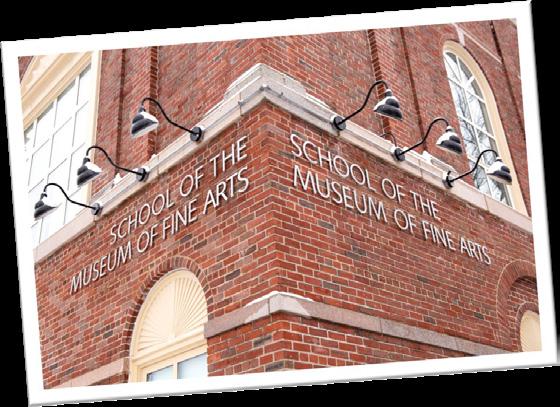
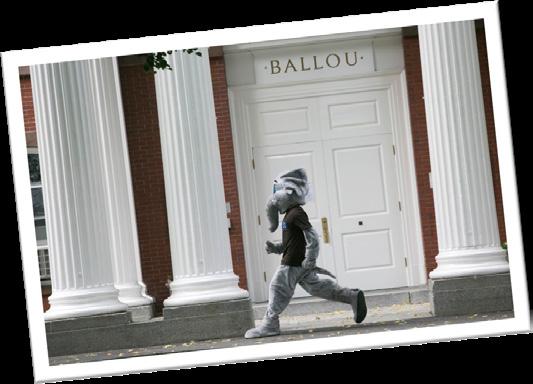

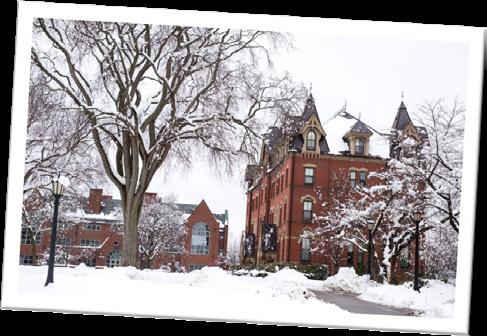

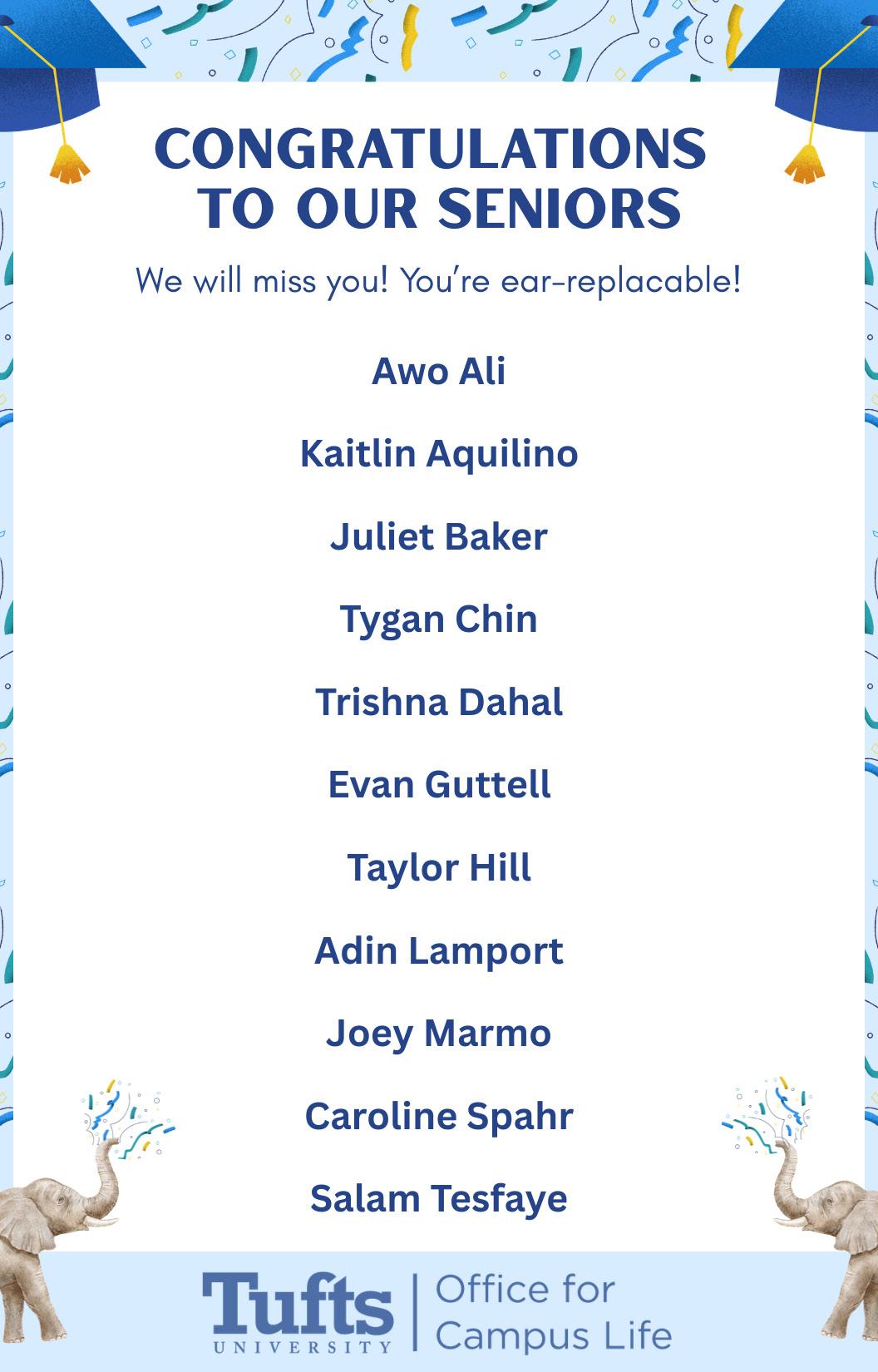
To the fierce, fearless, and unstoppable Arghya! You make us so happy! Chase your big dreams and live the life you imagine! Love, Papa, Mama, Tammu, Bamma, & Kiwi.




Olivia Bye Executive Features Editor
Editor’s Note: Bela Silverman is a former opinion editor for the Daily. She was not involved in the writing or editing of this article.
For many seniors, graduation often signifies the start of endless new experiences — new jobs, different cities, exciting opportunities. For a select few seniors, another, perhaps more unexpected, event is also on the horizon: a wedding.
Graduating senior Taylor Escudero has a busy few months lined up. She graduates in May and starts medical school at the Tufts University School of Medicine in July — but in between, she is getting married.
Escudero and her fiancé, Ian, began dating in eighth grade. He sat behind her in algebra class, and they went to high school together in their small town of Bridgewater, Mass. Although they went to different colleges about an hour apart, they kept their relationship strong — and, during a trip to Paris last spring, solidified their commitment to one another by getting engaged.
Escudero describes the engagement as an exciting development, but not necessarily a surprise.
“We had been talking about it for a little while, and I knew I was going to med school right after college, so it was either we get married right after college or after med school,” she said. “I kind of had the inkling that he was going to propose to me.”
Since then, Escudero has had a busy senior year, juggling both schoolwork and wedding preparations. While she was able to dedicate time last summer to planning, she has also made preparations during the school year, utilizing the winter break to do tasks such as finding a DJ and sending out invitations. In April, Escudero had both her bridal shower and her bachelorette party, all planned by her bridesmaids — a couple of whom are close friends from Tufts.
While Escudero knows that getting engaged as a college student is fairly unconventional for her generation, she is also confident that the decision is right for both her and her fiancé.
“We’ve been there for each other throughout our entire lives. He’s my biggest supporter, and I’m his as well, and I’m very excited to spend the rest of my life with him,” she said. “At first, I was a little bit scared by some of the reactions that I was going to get from people like, ‘Oh, you’re too young to be getting married, you don’t know what you’re doing.’ But I am so happy with my decision and I honestly have never been so sure.”
Graduating senior Bela Silverman is equally certain that marriage is the right next step for her relationship. She and her fiancé, Mason, have been dating since sixth grade after going to their middle school dance together. The two attended school together, kindergarten through 12th grade, in their small hometown of Hellertown, Pa. and grew up living just a few minutes away from each other’s houses. While they did not necessarily plan to go to college in the same city, they ended up only a 15-minute commute by car from one another, with Silverman at Tufts and Mason at Northeastern University.
The two became engaged this past March during a trip to Martha’s Vineyard, a place that holds many special memories for Silverman and her family. While they had discussed marriage beforehand, Silverman described the engagement itself as a surprise.
“I didn’t really know [the proposal] would be in March, I thought it would be [in the] summer,” Silverman said. “But it was a good surprise. It’s a hard thing, because you want to be surprised, and you want to let him do whatever he needs to do to make it a good surprise for you. But you also want to be able to have logistical conversations about what that would look like.”
The proposal came as the two were in the midst of navigating their post-graduation plans. While Silverman is attending graduate school at New York University for climate journalism, her fiancé will be starting a job in Washington, D.C., doing real estate development work. The year and a half apart will be the most distance they have experienced in the past decade — but, Silverman maintains,
at the forefront of their relationship has always been prioritizing what is best for one another.
“We did have a conversation about what that change would be like for us, and what I said to him is, ‘You need to go take the job that you think is going to be the best fit for you.’ It’s his dream job. … And then he said the same thing for me,” she said. “It’s been really good to just have that flexibility and support.”
Similar to Escudero, Silverman emphasized the importance of valuing both her relationship and her own academic and career goals. She does not plan to get married for a couple of years, as she will be focused on attending graduate school and getting her master’s degree first. For Silverman, a key aspect of keeping her relationship strong has been for the two to maintain their own independence, but also be able to come together and support one another.
“I’m not getting married to be a part of someone’s life. I’m getting married so that we can have our own lives, but come together and make it one. And I think that’s kind of the point,” she said. “You don’t need to necessarily sacrifice to be with someone. You also don’t need to take on their hobbies and all of their interests and merge friend groups. You can have your own life and experiences, but come together to tackle challenges.”
Silverman and her fiancé‘s ability to take on life’s challenges as a team is what first made Silverman realize that they may be ready for the next step. The two have lived together in an apartment in Boston every summer since starting college, and Silverman described the summer before
their junior year as a turning point in which she realized their compatibility in navigating daily life together.
“We got a really terrible apartment. Oh my God, it was awful,” Silverman said. “It wasn’t the best neighborhood. We were in Back Bay in Boston, we both were working very time-demanding internships, and it was just a rough summer. But he made it so much easier. He stepped up. We worked it out. We were taking turns with meals and just living daily life. … [It] hit me that, ‘I’d rather take on life challenges with you than without you.’”
For Escudero, a key motivation in choosing to get engaged while still in college is a desire to grow with her fiancé, rather than get married after having her career and finances secured. She noted that while it is increasingly common to get married only after achieving stability in one’s professional life, she felt that following this philosophy within her own relationship would only keep the two of them from taking the next step.
“We want to grow together as people in our marriage, as we navigate our success together, and as we navigate our careers and our lives and our 20’s, and we’re excited to go through it together … as opposed to [figuring] it out individually and then coming together at the end,” she said.
“It’s so much more powerful and so much more impactful … to support each other to the best of our abilities throughout that journey.”
Perhaps not surprisingly, marriage rates among young people have fallen significantly compared to previous generations. According to data from the U.S. Census Bureau, more than 85% of Americans
aged 25–30 were married before 1970. By 2023, that statistic was down to 38%. This shift can be attributed to a number of factors, including significant increases in young people seeking higher education, more equality in career opportunities and less normalization surrounding the institution of marriage.
Evidently, while it may have been out of the ordinary to not be engaged or married as a young adult 50 years ago, now Escudero and Silverman both described having to combat societal pressure not to get engaged young.
“In the 1950s, it used to be very common to get married at the age of 20 … and over time, that age just got older. … I think that is due to waiting until [people] … finish their education to get married,” Silverman said. “In our instance, we’re kind of pushing back against that. … We don’t care that we’re not making all the money in the world right now.”
Silverman agreed, stating that while she often receives questions about topics associated with marriage, such as starting a family, she does not feel the need to engage with those conversations yet.
“Everyone’s like, ‘Before you get engaged, you have to talk about X, Y and Z. If you don’t, you should not get engaged,’” she said. “To me, I think it’s way too young to talk about family. I think it’s way too young to talk about any of that stuff. … That’s just not our timeline, and we’ve had a very different timeline than everyone else. It’s rare to find people who have been dating for a decade as you graduate college, and so we’re doing our own timeline. I don’t want to abide by anyone else’s expectations of what this should look like.”
For the love of journalism: Dylan Fee’s impact on the Daily, on and off the page
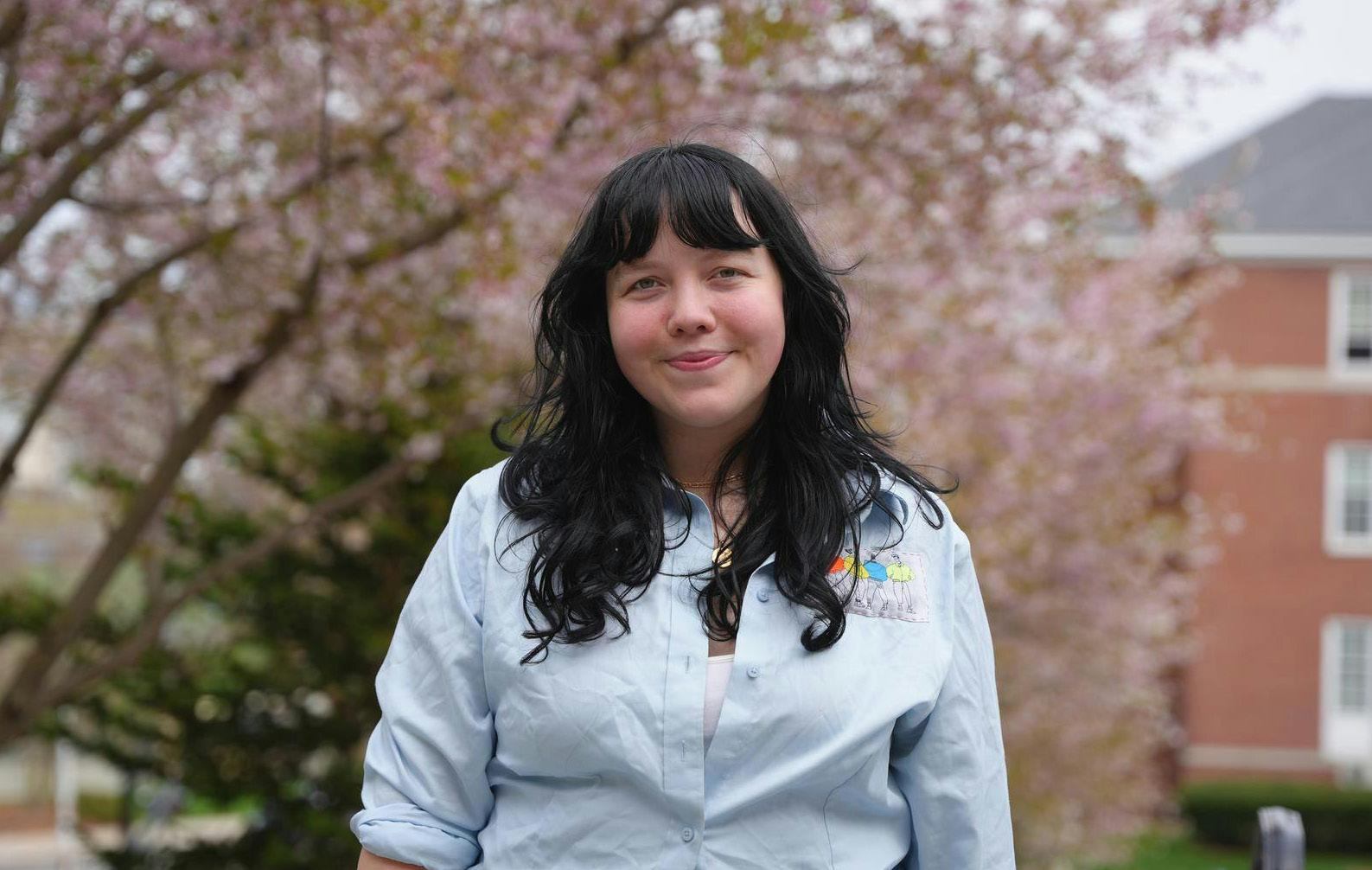
Graduating senior Dylan Fee wasn’t expecting to fall in love with journalism halfway through her time at Tufts. As a math and Latin double-major, Fee clearly demonstrated multifaceted interests, but assumed STEM was where she belonged.
“I didn’t really think I was good at writing at all because I was good at math in high school,” Fee said.
It took a persistent nudge from Matthew Sage, her friend and current Daily executive social media manager, to get her to officially contribute to the publication. After serving as an informal point person for Sage’s own Daily questions, Fee was finally persuaded to officially join the features section as a writer in the spring of her sophomore year.
Once she sat down to write her first piece on campus accessibility, something just clicked.
“I just loved doing that article, and I loved knowing that I could do it. Even though it
kind of got torn to shreds in the editing process, knowing that it was something I could actually do made me fall in love with it,” she said.
That marked the beginning of Fee’s swift ascent up the Daily’s ranks. Fee entered her junior year as an assistant features editor, but when a vacancy opened up, she readily took on the role of deputy editor. During that semester, she balanced heavy editing shifts with a prolific output of 11 articles. Among them was her cheerful column The Daily Drip, where she reviewed every beverage at The Sink, Tufts’ student-run cafe.
For Fee, features was the perfect section to allow her to focus on the human side of stories.
“I was able to connect with my sources and make source-centric stories about people’s experiences,” Fee said. “It really gives a voice to people that don’t necessarily have it or didn’t have an avenue to show it in the first place.”
During that time, Fee produced the article she is most proud of to this day: a pro -
file on David Delvalle, the education and reentry director for the Tufts University Prison Initiative and the first formerly-incarcerated person to be hired by Tufts.
“I loved hearing his story and how passionate he was about going back to school and getting educated. I see him around campus all the time now, and he just seems like he’s thriving, which is amazing,” Fee said.
The article was the first time Fee realized the genuine impact of journalism as a tool to spotlight underrepresented voices and programs.
That sense of responsibility only grew during last year’s coverage of the Rümeysa Öztürk case, which followed the detainment of the then-Tufts graduate student by ICE. Seeing the campus look to the Daily for answers made Fee realize the gravity of the Daily’s work.
“We’re not just a practice journalism publication, but we are a real publication that people look to,” Fee said, noting that the Daily was the primary source of information during the case. “Our writers were the first-hand journalists getting accounts from students, from professors [and] from the university about what was going on.”
Fee went on to describe the importance of student journalism as an independent news source amid growing distrust of national media.
“People are really, rightfully so, mistrusting of big-name papers like [The] New York Times [and The] Washington Post, because there always seems like there’s some sort of agenda. … They have investors
to think about, and they’re trying to please as many people as possible,” Fee said.
In contrast, the Daily operates with a level of independence that Fee believes strengthens the paper’s credibility.
“We’re independently run, so no one’s telling us what to write,” she said. “Everyone is reporting out of a sense of obligation to give news to the Tufts community.”
“The love of journalism is happening because we’re all just volunteering our time,” Fee added. “I think that really makes it more impactful.”
By the spring of 2025, Fee was promoted to the role of executive features editor, and this past fall, she served as editor in chief of the paper.
While her tenure as editor in chief included many accomplishments — including building a stronger multimedia presence for the paper — one of her most profound impacts on the Daily is felt in the office, where Fee brought a notable cultural shift.
“The Daily can be very toxic at the top. The hierarchy is very rigid, and I like to think that I’ve helped contribute to a less toxic space of more productive conversation, more people hearing each other out, more [of] just [a] better community to be in,” Fee said.
For those who don’t know, Fee’s presence in the office feels like a warm hug, bringing in a welcoming energy to all who know her. A few weeks ago, she brought in a homemade cake during a production night to support Sage in his achievement of getting the Daily’s Instagram
account to 10,000 followers. The room was filled with editors laughing over the Daily’s recent April Fools edition whilst indulging in a cake Fee baked and decorated to celebrate this milestone.
Now, in her final semester, Fee primarily focuses her energy in the multimedia sections of the Daily, jumping between her roles as an executive photo editor and video section contributor. But, of course, she stays true to her roots in features, finding time to write an article when she gets the chance. Outside the office, she also leads Action for Sexual Assault Prevention at Tufts, coordinating consent talks and survivor support spaces.
After graduation, Fee hopes to work in human interest journalism; her dream is to one day write for The New Yorker. But no matter where she ends up, Fee will bring the Daily to wherever life takes her next.
“Even if I don’t end up doing journalism as a career, the work that I did and the things I learned about myself while doing the Daily will forever impact me,” Fee said.
And to any who are still unsure of what they want to pursue, Fee’s advice is a reminder that it’s never too late to explore.
“I know people that didn’t find their ‘thing’ until they were seniors, and I know people that are still looking for it. That’s what college is for,” she said. “Changing your major is okay, joining a new club late is okay. Trying new things should always be the goal.”
Graduating senior Arghya Thallapragada sits comfortably on a couch in the Daily office for her senior profile interview — a place that has become a second home for her. She is nostalgic about the late nights spent there copy editing and producing Daily content over the last four years — of course, interspersed with Bananagram games, measurements on the height wall and late-night snacking.
After joining the copy section in her first semester, Thallapragada spent countless hours copy editing in the Daily office, where she began to understand the inner workings of the student paper. She quickly rose up the ranks, from serving on the editorial board to becoming executive copy editor and eventually editor in chief in spring 2025. Thallapragada leaned into each role required of her, and her dedication to the Daily leaves behind a poignant legacy.
After spending countless hours in the Daily office, Thallapragada became an integral part of the Daily’s leadership. In fall 2024, despite coming from a more production-oriented background, Daily members encouraged Thallapragada to run for editor in chief.
After being chosen for the role, Thallapragada approached the position with excitement and intense planning. She entered with goals of boosting the multimedia sections, celebrating the Daily’s 45th birthday and bringing more cohesion across departments.
The editor in chief essentially lives at the Daily office during their semester, often spending late nights there as they coordinate across different sections. Thallapragada joked that, unlike many other juniors, she didn’t study abroad in the spring and instead “went abroad in the Daily office.”
“I didn’t expect how much it would consume my entire
life [and] how much I’d be thinking about it all the time,” Thallapragada said. “In general, I like to take my time and think about decisions really thoroughly … and that’s an asset in some cases … but also because it’s a newspaper, so timeliness is important.”
Throughout her time as editor in chief, Thallapragada emphasized a focus on the work at hand and the individuals who relied on her. She emphasized that the decisions she made as editor in chief extended beyond herself.
“I learned [that] it’s not really about me, it’s about everyone else at the Daily,” Thallapragada said. “The work that writers and editors and artists are doing for the Daily is really important. … It’s not about the editor in chief or the managing board. It’s about all of these people who are giving their everything for the organization.”
This philosophy became incredibly important when the Daily was faced with a crisis: In March 2025, during
Thallapragada’s tenure as editor in chief, Rümeysa Öztürk, a then-Tufts graduate student, was detained by Immigration and Customs Enforcement agents after co-authoring an op-ed published in the Daily. Suddenly, Thallapragada was thrown into legal discussions as the Daily became a national focal point of an unprecedented and unconstitutional event. She expressed the fear she felt upon “seeing a spike” of
website activity coming from Washington, D.C.
The Daily’s coverage of the detainment and its aftermath spanned multiple months, including breaking news stories and op-eds. The abundance of content aligned with the statement made by Thallapragada and her managing board in the wake of the event, which reaffirmed the Daily’s commitment to freedom of the press.
“It’s important to preserve independent journalism. …
I’m really grateful and proud of the students who kept writing,” Thallapragada said. “The way that everyone at the Daily came together is really impressive. … I think it showed [that] the foundation of the Daily is [based on] the First Amendment.”
Thallapragada’s time commitment to the Daily “increased exponentially” after the events. She described a period of 48 hours when she was in the office more than she wasn’t. She recalled one moment shortly after the detainment, when the production team had not planned to produce a print edition but made a last-minute decision at midnight to begin production.
“Production usually starts at 6 p.m. for a paper, but it started at midnight [and] we pulled together a
paper for the next morning,”
Thallapragada said.
The support from the managing board and the alumni council during the aftermath was integral for the Daily’s success. Thallapragada explained how she learned about “giving others grace” and trusting people’s best intentions with the paper.
The high stakes of the moment and the pressure that came with it were impossible to ignore. Still, Thallapragada felt it was important to maintain a calm facade.
“Someone said … ‘You’re just staying so stoic under this crisis.’ I don’t think that was because I was unemotional. I just think it felt like it was important to go about it in a logical manner,”
Thallapragada said. “I’m really proud of the work that the Daily did during that time.”
Looking into the future, Thallapragada will be using her human factors engineering degree to work at a nuclear engineering company in the fall. However, she expressed plans to go to law school in a few years — a choice inspired by her time as editor in chief.
“The Daily has been integral in [the decision to pursue law school]. … When I was editor in chief, looking at the legal side of things, looking at the documents for the case and talking to legal experts — it made me really feel like this work is important,” Thallapragada said.
Thallapragada also reminisced on the numerous funny and delirious moments during her late nights in the office. In one instance, she recalled her mark on the height wall in the office being
purposefully made lower. Another time, she went onto former Production Director Claire Wood’s shoulders to measure their joint height. Despite the office being painted over the summer, the height wall remains — and her mark on it serves as a physical symbol of Thallapragada’s legacy within the organization.
While also being involved with a human factors engineering lab and the Chi Omega sorority, Thallapragada’s dedication to the Daily remains one of her proudest accomplishments at Tufts.
To end her time at the Daily on a lighthearted note, Thallapragada and associate editor Emily O’Hearn brought an inside joke to life this semester with their column “Get Souped Up,” where they documented their journey making and reviewing different
soup recipes. Thallapragada’s favorite of their adventures was the potato leek soup.
Before graduating, Thallapragada left some final words of wisdom for future Daily editors in chief and staff members. She emphasized passion, leaning in and taking on every task with stride and fearlessness.
“Just be unafraid. … The Daily is so unique because it’s an educational tool [and] you don’t need to apply to get in,” Thallapragada said. “Everyone who writes for the Daily is doing this out of sheer love and passion, because this isn’t required of anyone. … [I want to pass on] the importance of leaning into this community, because the more you give to this community, the more you’ll get. [Be] really unafraid to just do whatever you want.”
At the Daily, Grace Nelson was exactly where she was meant to be
Olivia Bye Executive Features Editor
When it comes to her time at the Daily, graduating senior Grace Nelson believes that everything happens for a reason.
This spring, Nelson’s eight semesters at the Daily will come to a close. During this time, she held six different positions — staff writer, assistant features editor, deputy features editor and executive features editor, as well as associate editor and managing editor within the 93rd Managing Board. Although she oversees all sections in her current role as managing editor, Nelson’s heart will always be with Features.
“[In Features], we’re uplifting voices that otherwise wouldn’t be heard on campus, or voices that may not be in mainstream news or relevant current policies but [are] definitely still an important part of campus,” Nelson said.
“We’re shining the light on people who deserve to have their voices heard.”
Nelson’s time at the Daily took several unexpected twists and turns, beginning with her initial plan to join the News section during the fall of her first-year. However, upon attending a general interest meeting and experiencing the contagious energy of the then-executive features editor, Mark Choi (LA’24), Nelson quickly realized that features
was where she was meant to be. When she began writing for the section, she resonated with features pieces’ long-form writing style that allowed for creative freedom and the ability to explore a myriad of topics.
“News has to stay pertinent to the moment. [With] Features, you get to take your time. You get to do what you want. It’s beautiful,” Nelson said.
Nelson’s first couple of articles were profiles, which provided her the opportunity to explore interviewing and journalistic writing. But one of Nelson’s first articles that she truly felt she spearheaded was a piece profiling several Tufts buildings undergoing renovations, inspired by her own first-year housing experience at Blakeley Hall.
Nelson was one of five firstyear students who were housed on the top floor of Blakeley for their first month on campus while three new residential facilities were being built to accommodate the Class of 2026. The building was not an active dorm, did not have a resident assistant and was not being used by other students, crafting a living experience that Nelson described as a “free for all.” During her sophomore year, Nelson was able to draw upon this unique experience to craft a Features story surrounding the ongoing renovations of on-campus buildings
such as Blakeley, Eaton Hall and 123 Packard Ave.
“I felt like I had a niche that the Tufts population didn’t know [about] at the time, and it gave me a good perspective to be able to write about Blakeley as a construction project, because Tufts students were so used to just walking past this building and not knowing what it was,” Nelson said.
After being encouraged by her executive editors throughout the semesters, Nelson became an assistant editor, then a deputy. By the end of her sophomore year, Nelson was approached to be the next executive features editor — a role that she was initially unable to take on, as she would be abroad at the University of Oxford for the entirety of her junior year.
Even so, Nelson continued to demonstrate her commitment to the Daily, taking on an editing shift once a week and publishing a biweekly column, “The Oxford Comma,” that detailed her time abroad. Upon return, Nelson hoped to be executive features editor, but was unsure if she would have the chance.
“I was worried, coming back from Oxford, that perhaps features exec wasn’t in the cards because I had taken a year off,” Nelson said. “Thankfully [then-executive features editor] Dylan [Fee] put her trust into
me, and I was able to be features exec, and that was the best job ever.”
Under Nelson’s leadership, the Features section flourished. One of the biggest highlights of her semester as executive editor was leading the features team to victory during the Daily’s semesterly scavenger hunt. Nelson also recalled how special it was to give out awards to her section at Cocktails, the Daily’s end-of-semester celebration, especially considering the impact of receiving those awards as a new writer.
“When you’re a sophomore and you get an award at Cocktails, it really does mean so much,” Nelson said. “Now it’s harder to remember that feeling, being on the other side of it, because at the end of the day you just get a piece of paper. … [But] people are believing in you, and that means a lot when you’re in that really impressionable stage of your time at the Daily.”
Nelson entered her final semester at the Daily as an associate editor, a role that required her to come into the Daily office twice a week to finalize and schedule articles for publication. However, when positions within the managing board shifted midway through the semester, Nelson stepped up to take on the role of managing editor, which required a greater commitment of four shifts a week.
Although Nelson initially doubted her ability to take on the responsibility of managing editor, she realized upon stepping into the role that it is where she was meant to be.
“I applied for associate editor mainly out of self-doubt. … It just seemed reasonable for me not to want managing editor, because I was like, ‘I’m not gonna be good enough for that much responsibility,’” she said. ”[I’m] super grateful it worked out the way it did, because I love the Daily. I don’t care that some nights we’re [in the office] until 2 a.m., because I’m
really enjoying it. I love working on Wednesdays and seeing the print edition come to life. And I love late nights, and I love the people who make it all happen.” Nelson cites the close-knit Daily community as being at the heart of her love for the newspaper. She and the rest of the managing board often spent time together going on grocery runs, playing Bananagrams and getting frozen yogurt at BerryLine. However, much of their time is spent in the office, preparing articles nightly for publication.
This time spent in the Daily office has provided Nelson with crucial experience and skills — more so, she stated, than her actual classes.
“The Daily has been one of the most important learning experiences and a more hands-on education than any of my classes at Tufts,” Nelson said. “Not that they haven’t been amazing classes. … But there’s something different about being thrown into the deep end and just having to operate in a newsroom made up of students without a faculty advisor. You have so much more responsibility, and it’s a really important learning experience.”
As Nelson graduates from her time at the Daily, she hopes to inspire current and future staff members to take a leap and follow their instincts, even if it may seem daunting or unorthodox. In fact, that is where Nelson believes the true beauty often lies.
“Things always happen for a reason, and that’s definitely what I’ve noticed in my Tufts Daily career,” Nelson said. “I ended up in a managing editor position, and that’s what I wanted to do all along, deep down, I just didn’t know it. … Take a chance on stuff. See what happens. It might not go in the way that you expect, but it happens for a reason. … You’re bound to find some new, weird group on campus, or some interesting fact that puts you on a whole different path.”
Shoshana Daly Executive Science Editor
Journalism was probably the last thing on my radar when I walked through the club fair as a first-year. And for most of my time at Tufts, it stayed that way. My best friend Carmen was super involved in that world, but her involvement was the closest I got to that space.
But at the start of the spring semester of my junior year, Carmen — the then-science executive editor — asked me to write an article. The section was tiny and they needed articles. She thought I might be interested.
I published my first article for the Daily in February 2025,
a highlight on the Scheck Lab in the Tufts chemistry department.
Around that same time, the Trump administration started to roll out deep cuts to scientific research, and I was seeing an increase of health and science misinformation on my social media feeds.
Between current events and my first article, I had a fundamental shift in perspective.
I was protesting for science funding and expressing outrage over misinformation, but then I realized: How can we ask people to trust something that they do not understand?
I was asking people to be outraged about cuts to research because I could see the possible implications,
even if they were decades down the road. Many people did not understand my anger; not because they were incapable of understanding, but because of a mix of our current media landscape and failure to communicate.
No one thing has led to our current situation; it is the result of many factors coming together at a perilous moment in time. Also, blaming one issue over another is not a productive exercise. It keeps us in the past rather than paving a way forward.
Instead, I like to think about the future, about what steps we can take to get out of this mess. What I realized that semester was that, no matter how the cookie crumbles, in every path forward,
science and health communication are critical.
So in the fall of my senior year, I jumped headfirst into the Daily and went into full recruiting mode. And the work paid off. When I joined the section last spring, we had 5 writers. But over the course of the past year, the science section has published 66 articles from over 20 authors.
Do I think that science communication will fix all of our problems? No, absolutely not.
But what I do believe is that helping the general public understand science, medicine and their health is a crucial pillar of how we rebuild trust.
But this is not only a job for journalists. It is a job for researchers. We need to break out of our
The Tufts Department of Biology offers four undergraduate majors — biology, biochemistry, biopsychology and biotechnology — which, combined, account for roughly 12% of all majors completed by Tufts students over the past five years. Biology is the fourth largest major at Tufts, and the biology department has expanded rapidly in recent years, with five new, full-time faculty joining in the 2025–26 academic year alone.
Jess Shi is a biochemistry major and will be attending Harvard School of Dental Medicine next year. One of his favorite memories from his time at Tufts was when he participated in the Civic Biology Fellowship.
“[What] distinguishes the Civic Biology Fellowship from any of the other courses is how much it emphasizes the fact that biology is a science, and science is meant to serve people,” he said.
As part of the Civic Biology Fellowship, Shi worked with the
Boston COVID Recovery Cohort, an National Institutes of Health funded program studying Long COVID and its impact on underrepresented communities in the area. His role included hosting forums where community members spoke about their experiences and challenges with the healthcare system.
“[Dentistry] is an inherently interpersonal career,” Shi said.
”[The Civic Biology Fellowship] has prepared me really well for going out to the community, building relationships and finding ways to rebuild trust.”
Maia Zimmers is a biology and community health double-major who plans on pursuing a career in nursing. Zimmers echoed the community focus that Shi mentioned; furthermore, she praised the lab courses available in the biology degree.
“I’ve taken two advanced lab classes … and I’m really glad I did,” Zimmers said. “I took [Microbiology] Lab and Experiments in Physiology, and both helped my writing and understanding of how to put together scientific literature.”
She said that one of the major’s strengths is that students must read a lot of scientific literature which helps them “learn how to disseminate information.”
Further, lab work for undergraduates reaches far beyond the structured lab courses. Students have the opportunity to conduct independent research for credit and pursue an honors thesis in their senior year.
Dylan Higgins, a biochemistry major, conducted independent research in the Levin Lab, “working primarily with bioelectricity and the self-regulating behavior of bacterial systems.”
Higgins said that they were able to strike a really great balance between instruction, mentorship and independence in their research experience. It was because of this balance that Higgins felt they could really push themself and develop their skill set.
Sevi Mast — another biochemistry major — also pursued independent research during her time at Tufts. Mast has been conducting research in the Mirkin Lab since her sophomore year and
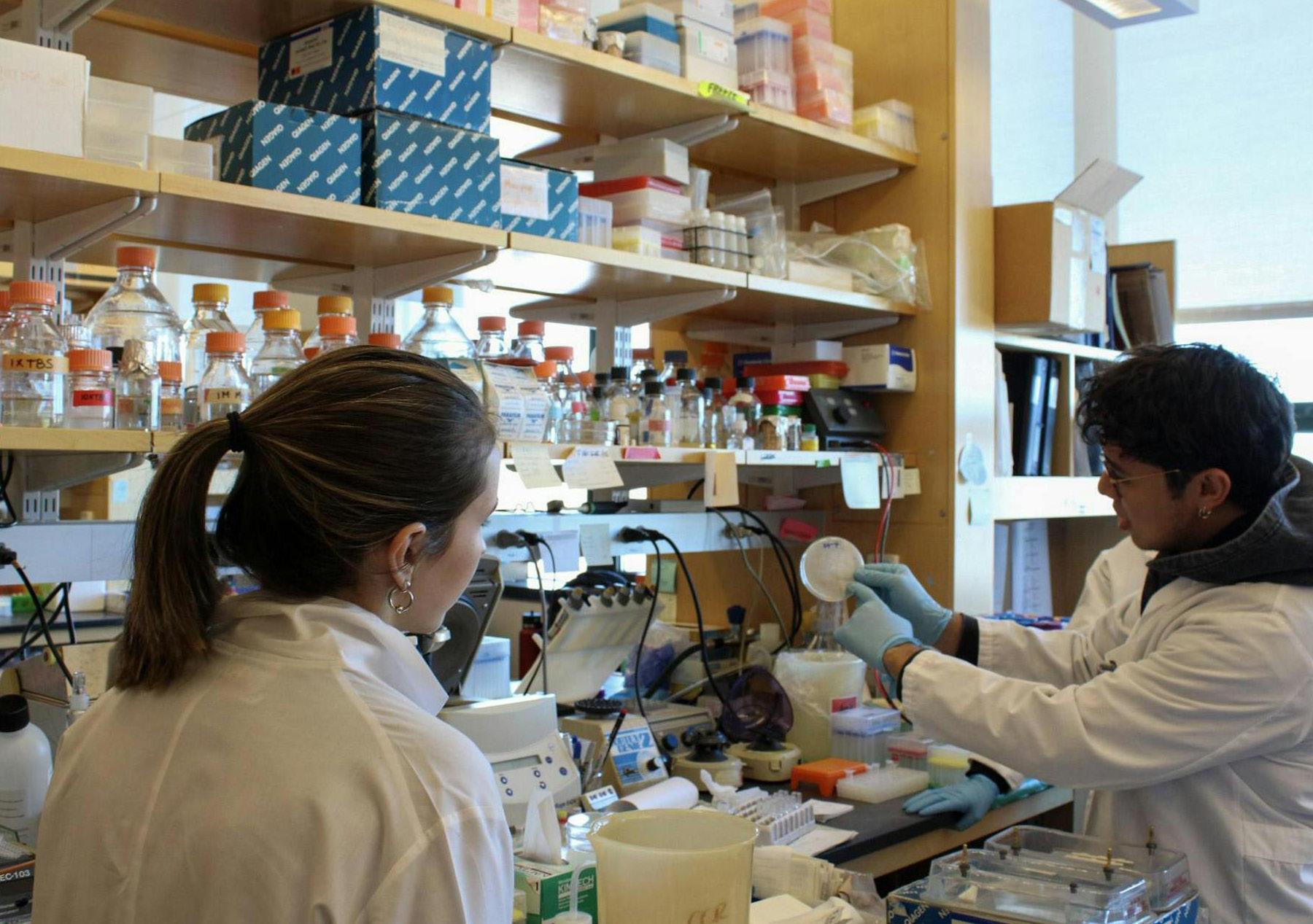
echo chambers and bridge the gap between society and science.
I am so proud of all this section has done and of the amazing reporting from every writer who has published this year. And as we work towards a world in which science is shared rather than gatekept, where trust is rebuilt and where research is seen as a two way street, I hope that the Daily and students across the country and the globe can lead the way.
I am so excited to see where the section goes and how it grows.
Thank you, Tufts Daily.
From,
Shoshana Daly
completed a senior thesis in the lab this year.
Mast said that her work in the Mirkin Lab has made science feel “less theoretical now and more something that I’m practicing in my day-to-day life.” Her research experience made her more familiar with molecular biology techniques and made the field feel less intimidating.
One thing that came up multiple times throughout my conversations was the biology department’s approach to teaching and grading pedagogy. Specifically, Shi, Mast and Higgins all highlighted Molecular Biology as one of their favorite courses in the department.
“[The grading style] allows you to have the flexibility to retest and build on those weak areas,” Shi said, describing his experience in the class.
Taylor Escudero, a biology and community health double-major, will be starting at Tufts University School of Medicine this fall.
Escudero conducts research at the Woman, Mother + Baby Research Institute at Tufts Medical Center.
Escudero said that biology classes at Tufts have both prepared her for the research and inspired her interest in endocrinology and women’s health.
“[We were] learning more about how the human body worked, but also how other animal systems worked,” Escudero said. “I think it’s one of the reasons why I’ve been inspired to also want to pursue [obstetrics] as a physician, because there’s a lot of endocrinology in women’s health.”
Some of the graduating seniors were able to provide feedback for the department.
“Something that I would definitely add would be a course that focuses on how biology or biochemistry integrates with AI,” Shi said.
Mast suggested the addition of a microbiology requirement to the biochemistry major.
Higgins recommended adding mandatory courses in either
statistics or ethics to the biochemistry major. They also suggested the addition of tracks within the broad introductory science classes.
“There are a lot of different overlapping interests within the biology department,” Higgins said. “It might make sense to divide up some of the initial starting points as tracks.”
Escudero serves as an Undergraduate Student Ambassador for the biology department and has been involved in improving the undergraduate experience in the department and revamping the curriculum.
“One thing that we’re actually trying to actively work on right now is adding concentrations,” Escudero said. “Students that feel like they want to be more specialized in their major … being able to take more classes that align with [their] interests and having something on [their] degree to show for it would be really good for the department.”
Each graduating senior offered a piece of advice for future Tufts biology students. Mast recommended that students pursue research as an undergraduate.
“I think a lot of students don’t really realize how many research opportunities there are out there,” Mast said.
Zimmers said the most important thing is to build a relationship with professors early.
“Just going to talk with them and building a relationship will serve you well in the future,” she said.
Shi recommended that students be gentle on themselves during tough times and to feel comfortable with reaching out to their support system.
“It’s really hard, especially with a biochem track,” Shi said. “It can be really easy to be overwhelmed, but my biggest piece of advice would be [to] just take a deep breath at the end of the day. … Taking a breath allows you to shift your perspective a bit and … pave your own pathway towards learning the content and succeeding.”
reflects on four years of
Editor’s note: The Daily’s editorial department acknowledges that this article is premised on a conflict of interest. This article is a special feature for Commencement 2026 that does not represent the Daily’s standard journalistic practices.
Shoshana Daly’s legacy at the Daily is substantial: unleashing the untapped potential of the Science section.
Daly is graduating this spring with a Bachelor of Science in Biochemistry. She served as the executive science editor for the Daily in fall 2025 and spring 2026.
Daly first became involved with the Daily in the spring of her junior year, crediting Carmen Smoak (LA ’25), the previous executive science editor, for getting her to start writing. With only a few articles under her belt, Daly dove headfirst into the role of executive editor the following semester, leveraging her enthusiasm and ideas to grow the small section.
“I’m never in a shortage of ideas, but I needed people,” she said.
Having served as executive editor for two semesters, Daly reflected on the importance of science journalism, remarking that the section is multipurposed. As a news publication, Daly said the Daily seeks to uplift scientific research being conducted by any and all members of the Tufts community.
She also believes that journalism equips writers with the skills needed to communicate science effectively, which are translatable in a variety of STEM careers, including academia, medicine and public health.
“Wherever I go, science communication will be part of that, because I think that’s just inherent in being a good researcher or a good clinician,” she said.
Daly is also graduating as a Laidlaw Scholar, part of a prestigious 18-month program that aims to develop leadership skills in undergraduate students.
Through lab work here at Tufts and a service project abroad in Malawi, Africa, Daly was able to bridge her interests in research and medicine.
“You need the people side in the research, and you need the research in the people side,” Daly said. She went on to reflect on how her experience with Laidlaw solidified her interest in pursuing a joint MD/Ph.D. program after graduation, for which she will be applying in this cycle. In her first summer with the program, Daly conducted biological research in the Hengel Lab at Tufts. Her plan for that summer was to purify two proteins — replication protein A and alternative replication protein A — and study their function and interactions within the cell. Her senior thesis evolved from this original plan, growing to include how these proteins interact with three additional proteins.
The proteins she’s currently investigating are involved in template DNA repair, which is induced to repair double-stranded breaks in DNA. Some of these proteins also interact with proteins involved in reproductive cancer progression, such as the RPA complex. Through understanding their mechanisms and interactions, Daly hopes that these proteins can be used in future research as biomarkers or therapeutic targets to differentiate between cancerous and healthy cells, thus opening up opportunities in the development of cancer treatments.
In her second summer as a Laidlaw Scholar, Daly spent time volunteering in Malawi.
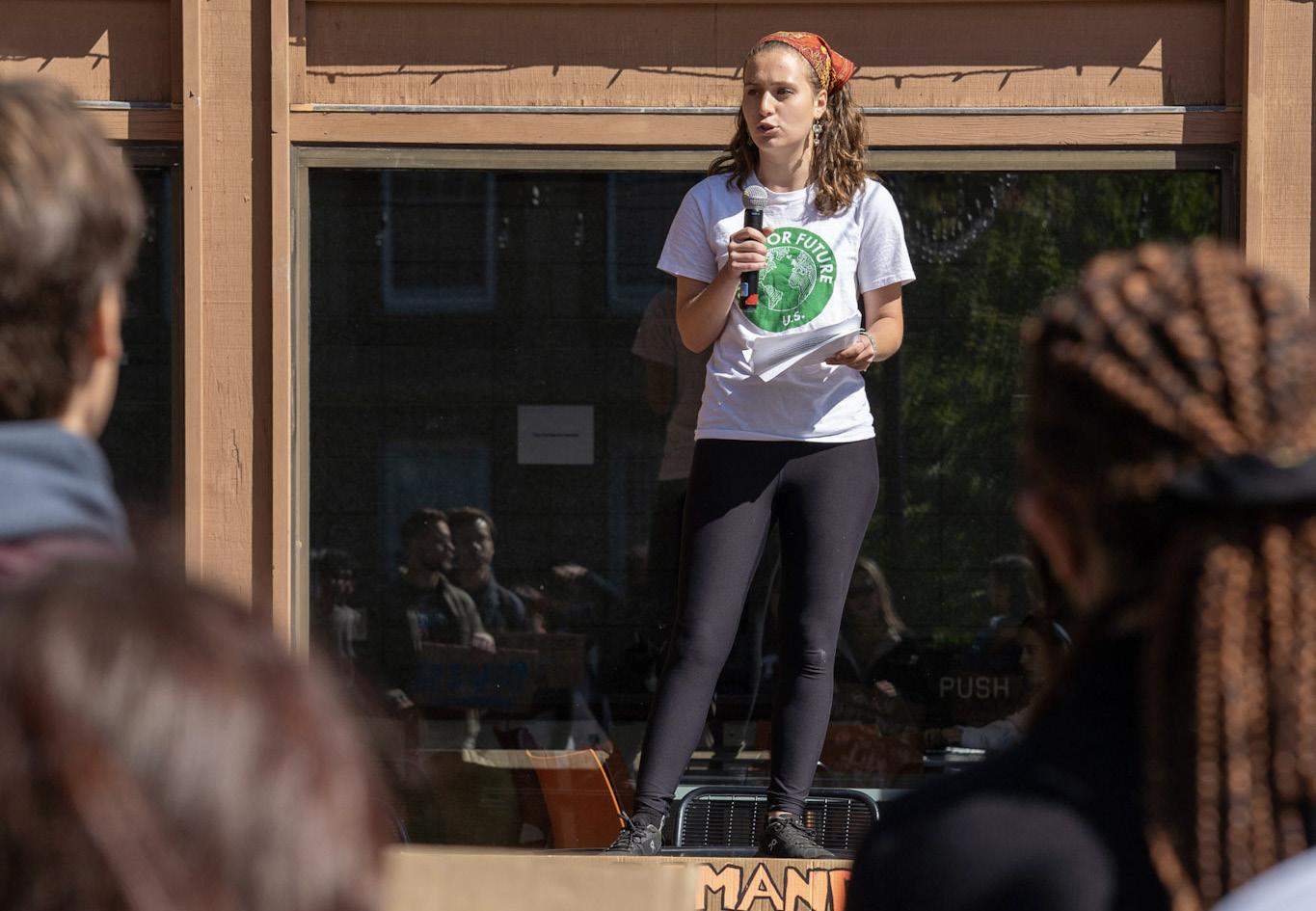
She collaborated with local physicians to implement tuberculosis case detection programs.
Daly worked with the community sputum collection points program, which brings tuberculosis testing and resources to patients in rural areas. The idea of the program is twofold: proximity and active diagnosis in a historically underserved area.
The program had existed previously but died down. Daly was part of the team that worked to relaunch it.
In addition to reviving existing infrastructure, Daly helped design a mixed-methods study to improve the efficacy of these systems. One of the changes made was the addition of a “scorecard” that the program can use to monitor local health or issues with sites through input from community health workers.
Daly’s favorite article she’s written for the Daily was about Dr. George Limwado, a physician she met during her summer in Neno District, Malawi. The article discusses trends of antimicrobial resistance in the region and the future research directions Limwado and his colleagues are pursuing.
All of Daly’s ambitions — from traditional wet-lab research to outcome-driven health surveys — coalesce around her focus on making science and medicine accessible. On the medicine side, she maintains that it’s important to listen to patients and ensure that they’re getting the treatments they deserve. In the laboratory, she believes research should be informed by the cumulative clinical needs of the population.
“Why would you trust science and medicine if you don’t
understand it?” She commented about the importance of science communication.
When asked if she had any advice for underclassmen, Daly recommended attending talks or events in areas that interest them. She said she first met Dr. Sarah Hengel at an event for prospective Ph.D. students, a connection which eventually landed Daly a research position in Hengel’s lab.
She mentioned that it’s also beneficial to attend talks outside of one’s areas of interest, opening up possibilities for interdisciplinarity and inspiration in future projects.
“That’s how you come into opportunities, that’s how you meet people, that’s how you come up with ideas for what you want to be researching,” Daly said.
On top of her already packed schedule, Daly was a four-year member of the Tufts women’s club ultimate frisbee team.
“I think it’s so important to have things that are not stepping stones … to get to somewhere else,” she said. For Daly, frisbee is something she can use to destress and incorporate movement into her day, remaining separate from the demands of schoolwork and research.
Additionally, from living in The Bayit, Tufts’ Jewish Affinity House, to attending meals at Chabad, Daly said she found a home within the Jewish community on campus. From community health research in Africa to actionpacked Ultimate matches, Shoshana Daly has made the most of her four years at Tufts. While her career is still unfolding, she knows for certain that these experiences will lay a strong foundation for her future.
Jaylen Daley Contributing Writer
This spring marks the end of physics Professor Peter Love’s quantum information and quantum computing lab group’s time at Tufts. Starting July, the lab will relocate to the University of Toronto. However, this semester has been anything but boring, as four Ph.D. students are set to defend their theses and receive their doctoral degrees. Over the course of their Ph.D.s, these students used math to develop models that can extract quantum information as effectively as possible and applied them to various circumstances related to scientific computing.
TJ Colvin and Carter Gustin began at Tufts in 2021 and are
among the four graduating doctoral students in the lab.
Gustin defended his thesis in March, which focused on “using quantum computers to extract information about particle physics or nuclear physics” and outlined his work with quantum simulation. Gustin worked to reduce the number of quantum logic gates required to simulate Hamiltonians in quantum field theory with renormalization techniques. One notable result in his work reduces resource estimates from 1028 down to 1014 gates, a promising step toward solving more complicated problems across a broader range of particle physics.
Gustin found himself taking many theoretical physics courses
during his undergraduate studies, which inspired him to pursue quantum computing research.
“I never saw myself as an experimentalist, because the number of theory classes I took was so much larger than the number of experimental classes, so it just felt natural,” Gustin said. “So when I took these quantum mechanics classes, and I realized there are things like quantum field theory that describe quantum mechanics a little bit better, I realized that that’s what I was interested in.”
Colvin will defend his thesis on quantum error correction this August. Quantum error correction addresses the innate instability of quantum mechanical systems.
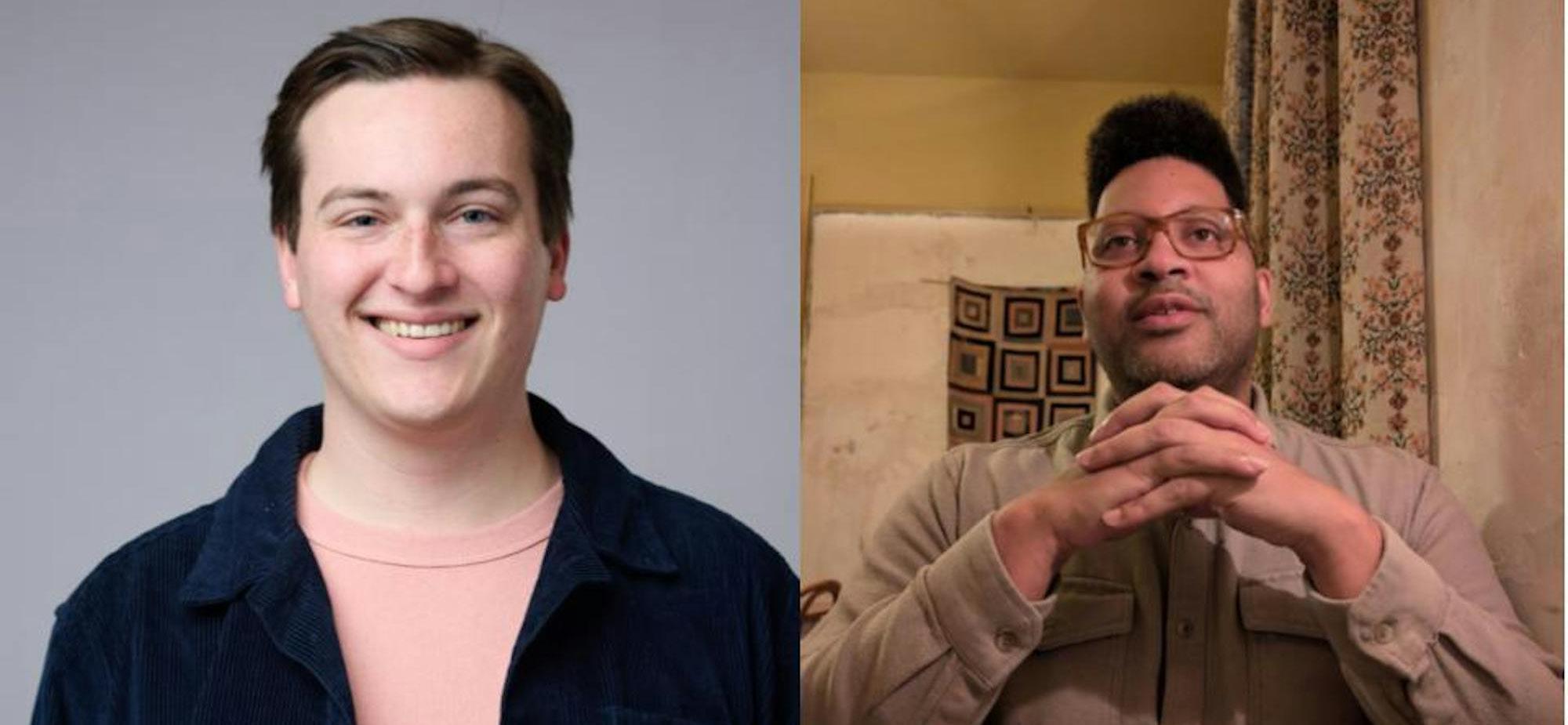
“I’m going to take a nucleus of an atom and I’m going to put information literally inside the nucleus. That’s what we do with a laser and an atom. It’s not hard to imagine that this is not going to go well,” Colvin said.
Using renormalization groups, Colvin helped develop models that arrange quantum bits to protect them from errors.
Before coming to Tufts, Colvin worked as a programmer in the medical industry. While working on medical campuses, Colvin earned a master’s degree in bioinformatics from the University of Arkansas for Medical Sciences and a second master’s degree in physics from Wake Forest University. Ever since starting his master’s degree in physics, Colvin knew he wanted to pursue quantum computing.
“I don’t want to be in a small box, I don’t want to just be a theoretical physicist. And so working in quantum computing — since it’s interdisciplinary — I don’t feel that I’m just this or just that. I really get to sort of do it all,” Colvin said.
Colvin views physics as a tool throughout his experiences in computation and theory. “Physics for me represented this quest for truth when I was really young. ... The way I think about quantum [theory] now and the math that I associate with it is very … utilitarian.” He later remarks on an impactful talk
led by a visiting Fulbright Scholar in medical physics, who developed computational methods to make medical imaging technology more accessible and accurate.
“For me, this is where the magic of computation comes in,” Colvin said. “I don’t need perfect hardware if I have good enough algorithms. This also feeds into accessibility and equity. The world would be a remarkable place if we could spread what we already know.”
Both Colvin and Gustin are slated to graduate in August. While Colvin is interested in continuing in industry, Gustin is prepared to explore all the opportunities that studying quantum computing opens.
“I’m not sure if I want to stay in academia or if I want to go into industry,” Gustin said. He explained that quantum computing has roots in both industry and academia that are worth exploring, and this breadth of opportunities can lead to paralysis.
Gustin also reflected on the community fostered by his peers and advisors within the lab and beyond.
“Motivation is the number one thing in hard work, but it’s also about who you surround yourself with,” he said. “I feel like I did a really good job surrounding myself with people who made me a better scientist. If I didn’t have these people, maybe I would be defending a thesis, but I wouldn’t be defending a thesis I was as proud of as the one I did.”
Merritt Staff Writer
Rachel Riccio, a graduating Ph.D. student in the Romero Lab at the Tufts Department of Biology, tracks birds’ stress through temperature.
Riccio got her Bachelor of Science in Ecology and Evolutionary Biology from DePaul University in 2016. Originally a pre-veterinary student, Riccio has always been interested in animal welfare. After an internship at Lincoln Park Zoo following her junior year, however, she realized she wanted to work in animal research and conservation instead of veterinary medicine. This internship, in which Riccio monitored animal welfare via the ZooMonitor app, taught her how technology is currently being used in animal settings. After subsequent research into ocular herpes, often driven by herpes simplex virus type 1, and work in conservation spaces, Riccio recognized the disparity in technology between animal conservation and human research and medicine.
This realization led Riccio to Michael Romero and his lab, which studies the interplay between stress response and survival in vertebrates. Riccio’s dissertation focused on the continuous monitoring of house sparrows to determine peripheral temperature changes in response to stress. The first part of this process was the development of effective temperature sensors, for which she partnered with engineers at Tufts’ Sonkusale Research Labs.
Once the sensors were developed, Riccio and her team investigated the magnitude and
timing of cooling after stress exposure in a cohort of house sparrows. The continuous monitors the team developed, which demonstrated success on a free-flying bird, allowed them to track temperature while the birds were moving. This work added to results generated by thermal imaging of stationary birds while building a model that more accurately reflects the birds’ natural conditions.
Riccio found that by about 120 seconds after the introduction of a stressor, house sparrows will cool from their baseline temperature of 30 degrees Celsius to 32 degrees Celsius. The extent to which they cool depends on the individual, with three general cooling classes represented: weak, intermediate and strong. After cooling, about 300 to 360 seconds after the initial stress, peripheral temperature overshoots the baseline. The magnitude of the overshoot is also variable.
Next steps for Riccio include investigating this variability by examining whether factors like sex and experimental group impact cooling. She also hopes to monitor birds in their natural environment to determine what actually causes them stress. An understanding of this question could inform whether and how humans should intervene.
“Fine-scale physiology is a gap we are trying to fill,” Riccio said.
She, along with her collaborators Surya Varchasvi Devaraj and Leah Berube from the Sonkusale Research Labs, aims to turn their featherweight devices into a business venture.
Riccio, Devaraj and Berube were selected for the E-Team Program by
VentureWell to aid in this pursuit. This $5,000 grant is awarded to teams for innovative thinking and the use of science and technology to create solutions to unmet challenges. It provides resources, networking opportunities and business training for its awardees — something “scientists don’t always have,” Riccio said.
Outside of this grant, Riccio is applying to post doctoral fellowships to continue her work. She hopes to secure her own funding, develop her own goals and work her way up the ladder to become an independent researcher.
Riccio’s favorite part of the Ph.D. process — and what she found most difficult — was navigating how to approach an experiment that did not go as planned.
“Being able to ... grow and pivot and figure out how to reach the goal, even if it’s not the direct path you thought it would be ... was cool,” Riccio said. “I still accomplished what I set out to, but it was in a little different way and a little different path.”
Her advice to new Ph.D. students is to “keep moving forward.” She encourages them to make use of available resources and ask for help.
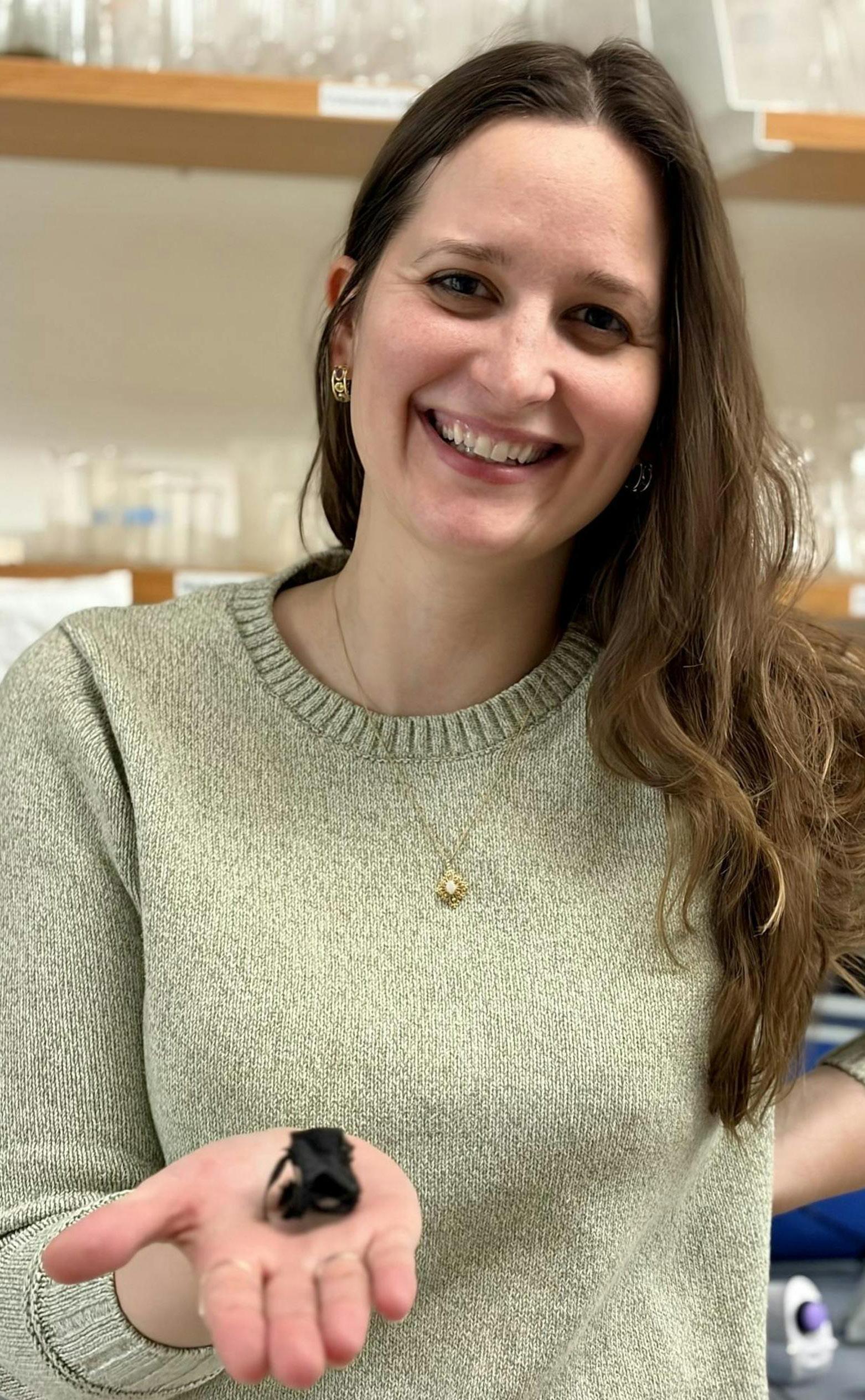
How not using grades is forcing Tufts students to rethink how they learn and deal with confusion.
Essey Tesfai Staff Writer
Diving straight into the foundational courses at Tufts can seem very daunting as a first-year engineering student. Between Chemistry 1, Biology 13 and Physics 11, the transition from high school to college is infamously steep. Physics 11, however, is known for a quirk that has made many students intrigued and terrified over the past two fall semesters: It’s completely ungraded.
Without the traditional pressure of individual and overall grades, it can be difficult to navigate physics. The Daily has previously highlighted the theories and systems of this class but I wanted to bridge the gap between the concept and its practical application.
This portrait of Physics 11 is informed by the experiences of previous students and my own.
One of the biggest shocks that other students and I faced was the large amount of independent work and time outside of class.
Miguel Vasquez-Vega, a graduate student in the physics department and a Physics 11 professor, stresses that Physics 11 is a five-credit course, suggesting a 15-hour workload — six in class and nine outside of class.
When I first heard him say this in class, I struggled to understand the significance of putting that much time and effort into one class. Between the pre-class readings he assigns before every lecture and the problem sets, I saw that I could pour nine or even more hours into physics, but the idea of spending that much time on one class was unheard of in high school. Beyond understanding its significance, it seemed impossible to schedule nine hours outside of class between other classes and commitments.
Daniel Dawit, a rising sophomore studying electrical engineering, also felt this way.
“Because there’s no immediate threat of a bad grade on an exam, it is so easy to push the work off. You have to treat those nine hours like a part-time job and physically schedule them into your calendar,” Dawit wrote in a message to the Daily.
In my opinion, those nine hours are a baseline, and not a max. The best strategy or way to go about it is to over schedule the time you need for problem sets and studying. If you think a certain problem set will take you two hours, schedule three or four and treat it as a non-negotiable.
Another problem many students face is the lack of immediate motivation with grades out of the picture.
“We hope learning is the motivator! I don’t want an engineer/doctor/professional who’s motivated by grades, but one that’s motivated by wanting to solve the problems around them,” Vasquez-Vega wrote in an statement to the Daily.
Because the course is focused on evaluating your understanding on a holistic level, the motivation to learn for the sake of a test or quiz is taken away. Bezawit Gessesse, a rising sophomore studying computer science, emphasized the course’s fast pace.
“At first, the lack of grades just felt disorienting because I didn’t know where I stood,” Gessesse wrote in a message to the Daily. “But I quickly realized that if I didn’t truly grasp the ‘why’ behind an equation during the week we learned it, I couldn’t fake it later. You have to actively understand the material week by week.”
A common way to support students in this class was the check-in quizzes. There were a set of 10 questions given in class to help students assess where they stood in the pacing of the course. Gessesse further noted
that these quizzes “pushed [her] to develop a much deeper level of active learning.”
The question isn’t ‘Am I the best at physics? or ‘Can I solve the overly generalized and niche problems the teacher gives us?’ anymore. Rather, you have to ask, ‘Am I making progress in my physics understanding?’ This stems from a willingness to engage with the problem-solving, trial-and-error process, not a love for word problems.
“You gotta be willing to engage with the hard work it is to think through the questions we give,” Vasquez-Vega wrote. “Learning happens while you do the thing, not while you’re being told the thing.”
There is much more to be said about this class, but regardless of what is mentioned here, you might still struggle as the semester progresses and the class becomes overwhelming. To this, Vasquez-Vega offers the following advice: “Reach out! There are a lot of resources we can connect you to and we want to talk about different ways we can help you find yourself in how to approach learning.”
Mahilet Girma, a rising sophomore studying mechanical engineering, put it beautifully.
“When physics was overwhelming me the most, I learned that the greatest value the upgraded system gave was pure, fruitful collaboration,” Girma wrote in a message to the Daily. “We were not competing against each other or ourselves and the format of the class fostered freely flowing ideas.”
All of the things mentioned here are by no means exclusive to Physics 11 and are heavily applicable in every class you will take in college. However, what makes Physics 11 special is the unique way it teaches these softer skills. While I can’t generalize to every student, I still believe that most, if not all, students have a great deal of value to gain from this class. When asked what he hopes students take away beyond the physics content, Vasquez-Vega’s answer summarizes this idea very well.
“That you learn to learn! And learning comes with feeling comfortable engaging with being confused,” he wrote. Having taken this class last semester, although the ungraded system fades away, your habits don’t. The tenacity to navigate confusion and rely on your peers stays with you and is what helps you become a successful student.
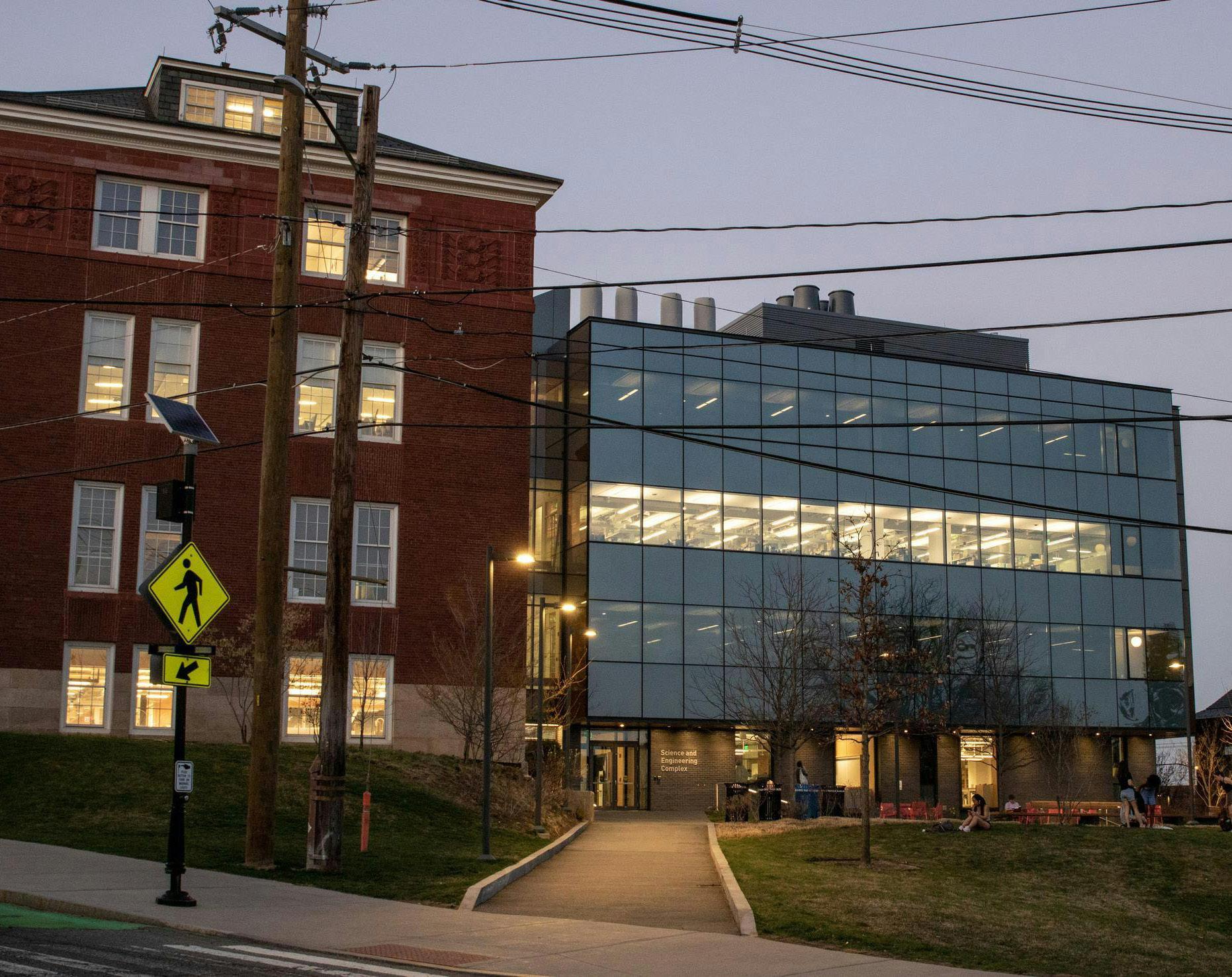
Maya Godard Staff Writer
Editor’s note: The Daily’s editorial department acknowledges that this article is premised on a conflict of interest. This article is a special feature for Commencement 2026 that does not represent the Daily’s standard journalistic practices.
Shannon Murphy and Liam Chalfonte are two Daily graduating seniors whose academic paths paralleled one another and eventually found an intersection in the newsroom — shaping their college experiences, their approaches to writing and the futures they now envision beyond the Hill.
Neither senior initially imagined themselves as English majors. Despite arriving at Tufts with a plan to major in international relations, Murphy instead found herself drawn to writing after taking Creative Writing Journalism with Ravi Shankar during her first semester, inspiring her to join the Daily in the spring of that academic year.
Murphy is now double majoring in English and science, technology, and society, with a minor in film and media studies. She said the combination of majors allowed her to tailor her studies to better reflect her own interests.
“I was never interested in that 18th century literature,” Murphy said. “I was always thinking about the modern applications of an English degree.”
She said that taking STS and English courses simultaneously gave her a good foundation for writing on science and technology and navigating an increasingly technological media landscape.
Chalfonte’s path to the Daily had a bit of a rockier start. He began his college career at Suffolk University, where he initially planned to study political science but quickly felt out of place at the college.
“I filled my schedule with all [political science] classes and I took one English class as a throw-away,”
The Bigger Picture
Goodbyes aren’t the end
Ihave appreciated the opportunity to write about my amateur thoughts and comments on movies in the past year through this column. While stressful at times — thinking about having to watch a new movie to write about or anxiously trying to pick an old movie to revisit — this process has been deeply fulfilling to me. Through writing and revisiting certain scenes, key ideas and motifs from media that have shaped a part of my identity or changed a certain way I think about things, I have learned so much about myself, what I value
Chalfonte said. “At the end of that semester, [a professor] pulled me aside and said, ‘Liam, you need to be an English major. Go do that.’ And so I went, ‘Okay … I’m gonna be an English major. Please be my advisor. I’m transferring. Please write me a letter of [recommendation],’ which she handled very well.”
The transfer process led Chalfonte, of course, here to Tufts. In his first semester, a housemate suggested that Chalfonte come along to the Daily’s fall general interest meeting. The new transfer didn’t know what awaited him at the paper, but over the course of his sophomore fall, Chalfonte said he had found a community on the Hill and a sense of purpose at the Daily.
Now an English major with minors in political science and music, Chalfonte has wrapped up his Tufts academic career by writing a book-long English thesis.
“It’s about a girl named Rachel who, a few days after her 18th birthday, disappears, and in her place, a new version of her, exactly one year younger, appears, and it’s how she and everyone else in life deals with that change,” Chalfonte said.
Murphy commented on Chalfonte’s 190-page thesis, saying it exemplified the narrative style she has come to familiarly associate with Chalfonte’s writing.
“I feel like that’s your thing in writing: It’s normal until some bull s--- happens,” Murphy said.
This teasing jab is just one example of Murphy and Chalfonte’s jokefilled dynamic, brought about by three years of overlapping academic interests and involvement at the Daily that has naturally brought the pair together as friends and work spouses. Their shared circles became central not only to Murphy and Chalfonte’s friendship, but also to their individual development as journalists and leaders.
Over her seven semesters on the Daily, Murphy “wore a lot of hats” — deputy news editor, arts editor, executive newsletter
and the significance that films hold in my life as a pastime.
The first and most obvious thing I’m going to say is this: You should watch more movies. It’s not only that they offer valuable lessons about the world around us or how we come to value our lives, or that seeing stories unfold on screen allows us to confront the moral codes we live by — or reject — in a more tangible way, it’s that they let us understand these things through experiencing firsthand a spectrum of emotions and states of mind.
Films place us in unfamiliar and difficult situations, engaging us visually, auditorily and sensorially. For example, “Paris, Texas” (1984) — a movie I always cite and reference — has taught me so much about the detached pain and grief of love, a kind of sadness that resists expression. The emotional subtlety and visual minimalism of the film showed me how some forms of pain are so immense they end up defying
editor, social media manager — each role shaping her understanding of how a newsroom operates.
Murphy explained that, prior to her time as its executive editor, the newsletter section flew a bit under the radar — recap emails were essentially compiled by only one person. But in the role, Murphy worked to restructure the section, making the process more collaborative and opening it up to a wider range of contributors.
Murphy and Chalfonte also worked together on the Tufts Daily Magazine, of which Chalfonte was the executive editor. He said the magazine was a place for Murphy’s experience as a news writer and his as an opinion writer to come together in long form, exploratory features.
“TD Mag tries to mix hard facts of news with the personal storytelling that ops brings,” Chalfonte said. “Working back and forth to bring both of those sides out with Shannon was really fun.”
In addition to serving as the executive editor of TD Magazine, Chalfonte has contributed avidly as an opinion staff writer and served as a copy editor, executive opinion editor and managing editor. Through these roles, he said, he developed a strong set of management skills that were very formative, but also may have ultimately steered him away from a career in journalism.
He said this was especially solidified during his managing board’s coverage of Rümeysa Öztürk, a story that demanded precision, care and persistence. Chalfonte came out of the semester with a sense of pride for the Daily’s work on Öztürk’s story, but, at the same time, the intensity of that experience helped him realize that a long-term career in journalism might not be the right fit. He now sees himself pursuing work in publishing or teaching.
Chalfonte said his interest in education was especially sparked when he taught an explorations course through Tufts’ Experimental College — a unique opportunity in which
direct articulation. By witnessing the emotional weight these films carry, we come to better understand the very ideas and moral questions they seek to explore.
And there’s something deeply reassuring in knowing there will never be a shortage of films to watch: Whether it’s an undiscovered old classic or a new blockbuster, creativity and storytelling have always existed, and they’re not going anywhere, at least I hope. Bottom line: the watchlist is never-ending, but time is limited. Make the most of it and watch more movies.
If I still haven’t convinced you, movies have always been a way to bring people together. I’ll miss the sleepless movie nights my housemates and I spent on our living room couch on school nights — ignoring our glaring academic responsibilities, then pulling all-nighters to meet our deadlines, all for 120 minutes of being completely hooked on some of the most random but best
current Tufts students can design and teach their own courses to incoming Jumbos. He led 10 first-year students in their first semester at Tufts in a class about speculative fiction.
Murphy, by contrast, remains committed to journalism. Currently freelancing for Boston.com, she plans to continue reporting after graduation. She did acknowledge the common concerns about artificial intelligence encroaching on the field, but remains confident in the enduring value of human storytelling and creativity.
“At this stage, AI cannot replace human writers, I know that,” Murphy said. “I saw a post the other day [that said] ‘AI just gives you the next predicted word … it puts the next good word; a human writer will throw in a word that’s evil.’”
Despite their differing future paths, both agree on the Daily’s lasting impact on their life in college and beyond. Murphy said that, while her journalism courses helped her refine her writing style, the Daily provided something more immediate and transferable: the experience of working on-the-ground in a real newsroom.
horror films and thrillers we’d seen. A late-night trip to the AMC past midnight to catch a visually astonishing masterpiece also makes for a perfect weekend activity, though I have yet to become an AMC Stubs member. I’ve also loved going with friends to The Brattle Theatre in Harvard Square and the Coolidge Corner Theatre, sharing an appreciation for classic films that deserve a modern rewatch. Looking ahead, I’m excited for the chance to finally become a regular at the IFC Center. And finally, the bigger picture. Maybe I am an overthinker, but I’ve always believed there’s something larger to take away from everything. Try to learn something from a film, to draw meaning from it — simply because you can. But don’t overdo it; sometimes movies are just meant to be popcorn and giggles, and that’s okay too! Other times, we let our thoughts settle and linger, and suddenly, a film becomes a lasting source of inspiration.
The two also reflected on some of their favorite pieces over the course of their writing careers at the Daily. Murphy recalled interviewing one of her favorite bands, the Rare Occasions, for a Q&A article. She remembered it as a great learning experience for her in terms of interviewing skills, as well as an exciting moment for her as a fan of the group.
Chalfonte mentioned a piece that he felt had a great response from the Daily’s readers, as well as other journalists, which he referred to as “the wolves article.” The piece, about political polarization (and wolves, of course), garnered attention and praise from other writers and readers of the Daily.
Looking back, both Murphy and Chalfonte describe their time at the Daily as central to their Tufts experience. The paper offered them a space to experiment, to take risks and, perhaps most importantly, to grow alongside one another. Their paths may now diverge post-graduation, but the foundation they built together at the Daily remains a constant point of connection.
As I graduate and move into the next chapter of my life, I want to reiterate the importance of staying true to your interests and passions — and making time for them. I’m no film critic, but through this column, I’ve made the most of an interest that means a great deal to me. This column will no longer be able to serve as the incentive keeping me on track with my watchlist of 520 movies, but I hope work doesn’t take that time away entirely — even if it’s just one film every two or three weeks. No matter how busy life gets, whether with school or work, make time for what you love, in whatever form it takes and whatever form you can. Signing off now, but The Bigger Picture, in spirit, will not end here! With love,
Linda
Linda is a senior majoring in economics and international relations with a minor in philosophy. She can be reached at peixuan. huang@tufts.edu.
Noah Goldstein Deputy Arts Editor
When asked to introduce himself during the interview, Zhu Keyu — a graduating fifth-year combined-degree student majoring in both fine arts and film and media studies — provided a layered answer.
“My English name is Jack, but that’s just a pseudonym. My Chinese name is Zhu Keyu,” he said while reclining in his worn mesh desk chair.
Looking around the room, one would almost be able to tell Zhu’s character without him even saying a word. It’s likely the only place in Medford where one can find a variety box of Chinese Lay’s potato chips, a set of dominoes from Puerto Rico and a fuzzy leopard print jacket all within feet of each other. Yet, despite all the different elements of Zhu’s life that have been collected in
this space, it’s Jack’s room, and Jack may not even truly exist.
Zhu’s true room is more than 7,000 miles away, in the Liangshan Yi Autonomous Prefecture on the Southern border of China’s Sichuan province. He’s been all over the United States — a Jewish summer camp outside of Boston at 13-years-old, a stint at a program in Portland, four years at a high school in Saddle River, N.J. — but none of those places felt quite right.
So when the time came for his senior thesis film, Zhu knew where he had to go: back to the province he grew up in, back to the Mosuo people who surrounded him in his youth.
“I think that this film made me realize that the most personal is the most creative,” Zhu said. “I need to make something that I care about and I have a connection with.”

While definitively personal, the resulting film, titled “Yozhua,” is also the product of Zhu’s extensive research into the mythos of his hometown. Its story follows a young woman named Yozhua, a bar waitress and dancer, as well as a tourist boat worker who searches for her.
As Zhu put it, the method stemmed partially from his fascination with stories where “a person [is] trying to find something, or trying to find another person, but that person never existed.” This technique owes much to director Bi Gan, whose enigmatic, slow cinema is grounded in regional tradition and the ethnic groups of his native Kaili province. The parallel is not lost on Zhu.
“I have such a deep connection with [Bi’s] films,” he said. “The province that he lived in is so similar to the place where I lived — and there’s also the minority. Even though they’re very subtle in his films, they’re always present.”
As far as shooting goes, the plan was loose by design. Zhu recruited Doo Min Bang — a fellow FMS student that he’s known since his first year at Tufts — and the two scraped together what money they could find before setting off for three weeks in Liangshan Yi with little idea of what they’d bring back.
Together, the pair spent their first two weeks in Sichuan more as ethnographers than filmmakers, “figuring it out on the spot.” This time was certainly a mixture of work and pleasure — the time they spent in local temples and museums was likely equaled by hours spent in bars — but for Zhu, every experience was invaluable to the research process.
“There’s different methodologies of how each person works,” he said. “There’s the filmmaker way, where
you have to go through pre-production, production and post, but there’s also a more artistic way, [where] you have to get to know the people and get to know the environment to put yourself in the surroundings.”
Ultimately, “Yozhua” reflects the complexity of life for the region’s native people. Yet even the mythology wasn’t quite what it seemed. Much of it, Zhu discovered, had been shaped for tourist consumption. A painting a friend made for the film — appearing throughout in cryptic, fleeting moments — is itself a reinvention of that myth, albeit a fitting one.
The work is laced with cultural artifacts discovered during the duo’s fieldwork; however, as much as the project is grounded in Zhu’s anthropology, it is also the synthesis of a collaboration between Zhu, Bang and the local Mosuo. Watching the film, it feels as though it could not have been possible without this multiplicity of perspectives.
“Everyone is bringing something into it, and together it builds this shared emotional space,” Zhu wrote in a message to the Daily after the interview. “What I care about most is that the emotion feels kind of transcendent, almost like feeling there is something larger [that] can’t [be] fully put into words.”
That Zhu feels most at home working in an unconventional, cooperative style may well reflect his history as an artist who experimented with many different mediums before defining himself as a filmmaker. His early experiences with artistic expression came from building knock-off Legos and attending a Kumonstyle art school where he learned
classes, one for poetry and one for fiction.
advantage of the opportunity to try new mediums.
Goldstein’s procedure for creating his thesis reflects his general process.
Chinese landscape painting and calligraphy.
When he applied to the School of the Museum of Fine Arts at Tufts University, his portfolio consisted of paintings and illustrations. Zhu had not been shut out from the world of moving pictures by any means — his uncle had given him a broken Canon, sparking an initial interest in photography, and he had become interested in international film after pirating films like “Oldboy” (2003) and “Cold Fish” (2010) online — but it took some time for him to land on film as his chosen form.
“It just took me a lot of time to make [up] my mind and to dedicate all my energy and effort into this one thing,” Zhu said. “I only started doing film seriously last year.”
However recent his devotion to filmic expression may be, it’s immediately evident in watching Zhu’s work that he has the mind of a seasoned artist. He is wholeheartedly devoted to making the personal feel universal, a commitment reflected not only in “Yozhua,” but also in his SMFA thesis, a three-channel video installation centering on a minivan door he salvaged from a scrapyard. Zhu’s father owned a similar minivan when he was a child, and the exhibition is designed to appear as if each spectator is looking out that same window, seeing what he once saw.
Such is the driving impulse of Zhu’s entire artistic practice: to get his audience to see what he sees, think what he thinks and feel what he feels. Perhaps for a long time, his life has lacked a certain honesty: His name is Keyu, but people call him Jack. Yet when he creates, he doesn’t have to tell anyone who he is. He can show them instead.
When Zak Goldstein was around 4-years-old, he built a model solar system out of ping pong balls with his dad. Today, he’s wrapping up his senior thesis at the School of the Museum of Fine Arts at Tufts University.
Although his work has evolved, the notion of art as play continues to guide his process. Goldstein remembers his grandma taking him to a game store in his hometown, where he was inspired to draw videogame characters.
“That infused my work with a sense of fun and vibrance that I still try to continue in today,” Goldstein said. “Enjoying the act of creation is really important to me and my process.”
For Goldstein, art school was a clear choice. “Since the point that I’ve been conscious, I’ve been making art,” Goldstein said. “I really didn’t have anything else that I wanted to pursue.”
Tufts specifically appealed to Goldstein because of the breadth of its curriculum. “I’m really interested in the mixture of the arts and the sciences. And [at] Tufts, in [...] SMFA, I was allowed to really take an interdisciplinary approach to art, and both get an academic background and be able to create art,” Goldstein said.
For example, Goldstein has taken two creative writing
“As I’m writing, I feel like I’m kind of coming up with ideas for art pieces,” Goldstein said. “I feel like, when you get your mind in that headspace, you start generating ideas for other artistic avenues.”
Goldstein’s fiction writing professor, Joseph Hurka, is one of several professors that have influenced him. “He just really was passionate about us being passionate,” Goldstein said.
Goldstein added that students should “take the class based on the professor, not based off the course subject. … A great professor can make an awful class interesting, and an awful professor can absolutely ruin something that you’re passionate about.”
While exploring academic disciplines, Goldstein also explored artistic mediums. “I had a preferred medium coming in, and now I do a little bit of everything,” he said.
His projects included creating an album cover for his vocal professor and an interactive piece for Mary Banas’ course, Type as Image.
“I was really interested in the idea of sticker bombing and graffiti … so we created these little stickers that all responded to the word stop. … And it was up for a couple months or so in the graphic art suite, and you can stick a sticker up on the stop sign,” Goldstein said.
Goldstein encouraged future and current SMFA students to take
“I feel like there’s a lot of room in this world to get stuck in doing the same thing. And there’s nothing wrong with that. But, I feel like if you are given the opportunity to try something new, there’s really a chance there to expand your sights on art,” Goldstein said.
Goldstein hopes that his thesis will encompass the range of his studies.
“The whole idea of the senior thesis project [for me] is to be an unconventional portrait of all of my interests over my college years,” Goldstein said.
His thesis centers around a series of vinyl or 3D-printed figurines, but it doesn’t stop there.
“I’m doing a whole branding and marketing project where I’ve designed posters and boxes and a book,” Goldstein said, adding that he is “a big fan of not just having fun with art, but also making stuff that’s commercial and marketable and sellable.”
Goldstein has always been interested in toy design, especially since high school. Early inspiration for the project include the books “I am Plastic: The Designer Toy Explosion,” and “I am Plastic, Too” by Paul Budnitz, which Goldstein read close to 10 years ago. His coursework at SMFA sealed the deal: “In taking some 3D classes, I was like, ‘Why don’t I do this myself?’”
“I start with a lot of ideation. I never really go into things blind,” Goldstein said. “I have like 10 or 20 pages of sketches somewhere, just kind of figuring out what the art toys would look like.”
After graduation, Goldstein plans to pursue a career in graphic design. His interest in the field “flourished at SMFA” thanks to classes like Triton Mobley’s [En]Coded Type: Computational Craft, Digital Terrains + Motion Designed Space and Chantal Zakari’s artists’ books class.
“I think it’s the media that stresses me out the least. Not that graphic design is easy, but compared to illustration, it’s a little bit less labor intensive,” Goldstein said.
In addition to graphic design, Goldstein is considering a side gig in medical illustration.
“I’ve been really interested in medical illustration since high school. But even then, if we’re talking about planets and scientific illustration, then I’ve been interested since I was 4-years-old,” Goldstein said.
He had the opportunity to explore this interest through an internship at a hospital in Dallas.
“I really loved just getting to try something new, getting to be around a bunch of doctors and [feeling] like I was part of an advancing team,” Goldstein said, although he acknowledged that it was intimidating to be the youngest person at the hospital.
Based on his experiences interning with the hospital and with the Nasher Sculpture Center in Dallas, Goldstein encouraged students to take advantage of opportunities to explore career paths while at college. “You’ve got time,” he said.
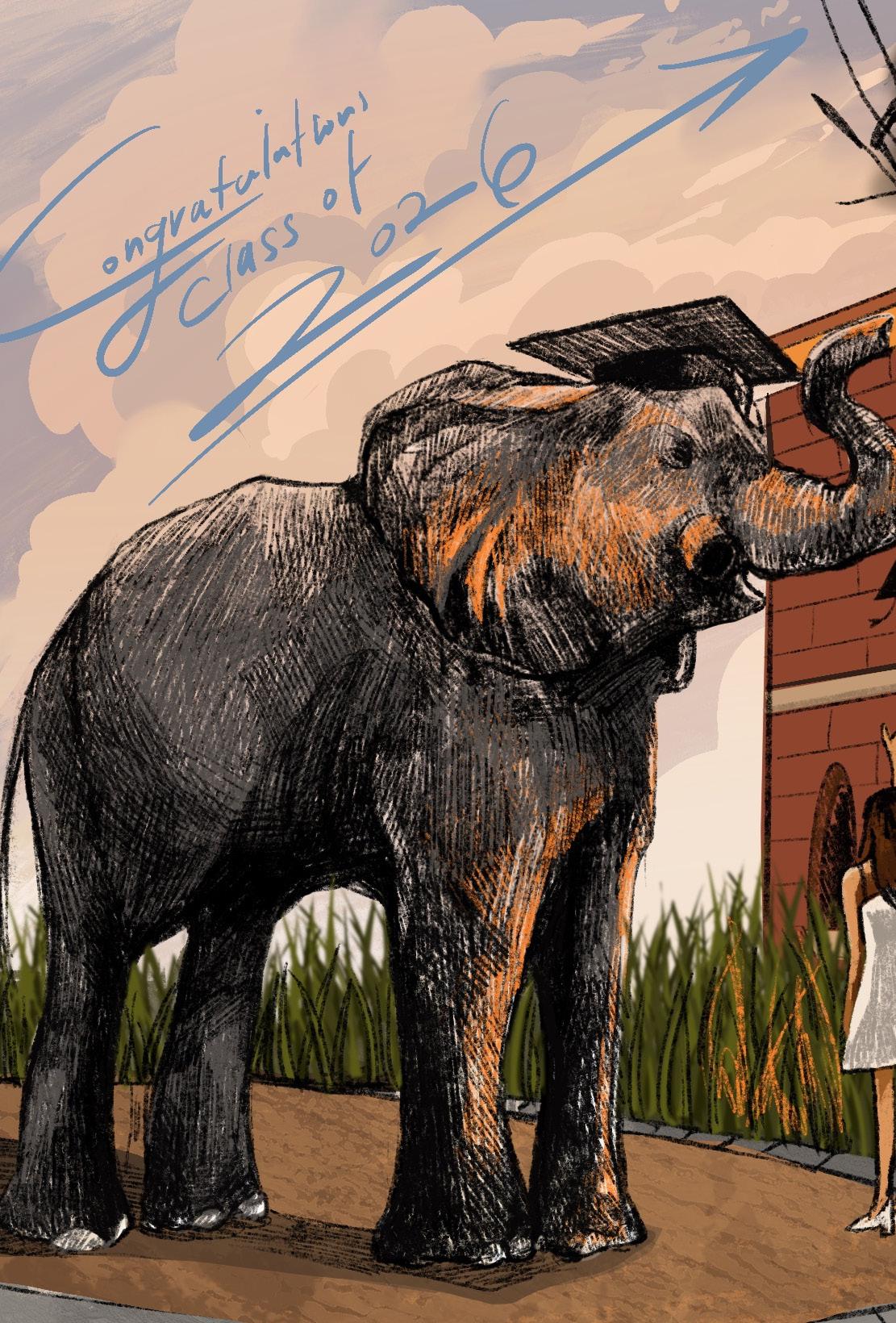
Editor’s note: Katie Spiropoulos is a former deputy news editor for the Daily. Spiropoulos was not involved in the editing or writing of this article.
“How do I take a risk? How do I do something new every single day?” graduating senior Katie Spiropoulos mused, posing questions that are on the mind of every artist — and ones that she herself has intimately wrestled with.
Spiropoulos is double majoring in international relations and theater, dance, and performance studies with a focus on acting. She is, notably, a theater tour de force at Tufts. But her stage career started long before college, back when she was eight years old.
“My parents sent me to an after-school theater camp … and I just kind of fell in love with it,” Spiropoulos said.
Growing up, she did theater in school and performed in a youth theater program run by a professional company in Oklahoma. Her first professional acting experience was playing the voice of Tiny Tim in a production of “A Christmas Carol” her senior year of high school.
Since then, Spiropoulos has been extremely involved in the Tufts theater scene, serving as president of the student-run musical theater group Torn Ticket II. She is also involved with the student-run theater group Pen, Paint, and Pretzels, or 3Ps, and has been doing shows with them since the fall of her first year.
“I really enjoy bouncing between both groups,” Spiropoulos said. “Getting to be part of both communities and help bring them together has been something that’s really important to me.”
Most recently, she acted in 3Ps’ mainstage “Tartuffe” as Elmire and Torn Ticket II's mainstage “The Drowsy Chaperone” as the titular character. In both roles, she was a magnetic performer with a radiant singing voice and a real skill for comedic delivery that made the stage come alive.
“I have honestly been blown away by how much theater there is at Tufts and how much interest there is,” Spiropoulos said. “Torn Ticket [II] and 3Ps alone do five shows a year each, which I feel is crazy. And then we have the department on top of that.”
Among Spiropoulos’ favorites of the many productions she’s been in are “Little Women” — her first at Tufts — and “Oedipus Rex” from last semester, in which she played Jocasta.
But the performance that Spiropoulos is most proud of is that of the Tolstoy seductress Hélène in the department show “The Great Comet” — the production of which was her senior capstone.
Spiropoulos grew in confidence from the experience playing Hélène. “She’s self-identified as a slut,” Spiropoulos said. “I’d never played a character like that.”
Overall, Spiropoulos is very satisfied with the Tufts theater department, describing it as “well-rounded” and “very much a liberal arts experience.”
In particular, Spiropoulos praised the fact that theater majors are required to take technical classes on top of acting.
“I feel like the most important thing in being a theater artist is understanding how every part of a production works,” she said.
Spiropoulos has done prominent work behind the scenes.
For instance, she directed Torn Ticket’s 2025 Orientation show, “Ordinary Days.”

“It was a dream of mine. It really was my baby,” she said of the production.
But Spiropoulos’ college theater education was not confined to the Medford/Somerville campus. In the fall semester of her junior year, she studied at the Eugene O’Neill Theater Center’s National Theater Institute in Connecticut — an intensive and highly lauded theater program.
“It was amazing, truly the hardest thing I’ve ever done,” Spiropoulos said. “It was seven days a week, 12 hours a day, just non-stop theater, which was wonderful, but also draining.”
Her time at the O’Neill made her even more ready and motivated to pursue theater professionally. “It gave me a passion and a drive for acting and theater making … that made it possible to enjoy everything that I did at Tufts more,” she said. “It
changed how I view theater in general.”
As opposed to being just a recreational extracurricular, theater became, in her own words, “my life.”
Because Spiropoulos constantly juggles productions and academic work, her schedule is jam-packed.
But that’s the way she likes it.
“I am one of those people that really enjoys being busy,” she said. “So it’s never really been too much of a mental tax on me.”
Furthermore, Spiropoulos views her IR major and her theater major as being in dialogue with each other — and, in some ways, two sides of the same coin.
“I think that government and diplomacy is literally just glorified theater,” she said. “At the end of the day, when you are working in politics, it’s about understanding people … there’s so much of my theater background that helps me be able to do that
and it’s community service.’ … [It seemed like] just a very nice community of people.”
Graduating senior Ankitha Raman knew coming into college that she wanted to continue playing music. A child of a musical father, she was classically trained in piano throughout her childhood and was involved in music ensembles in school.
“I was just slowly getting to play more things for fun … by artists that I love and just [to] accompany my singing,” she said. “I used to write my own songs sometimes. It was almost like a therapy for me in ways. And so I just wanted to continue that to some extent, and I didn’t necessarily know how to go about that.”
As an engineering student, she wanted to get involved in musicbased extracurriculars that weren’t related to her major, but wasn’t as interested in audition-based groups. She stumbled upon Public Harmony at the Club Fair her firstyear fall.
“There were just a few members with acoustic guitars and some percussion instruments, singing, and it just seemed like a good vibe,” she said. “And when they pitched their whole [concept], they gave me the spiel about, ‘You know, it’s music
She began playing at service concerts with the club in her first year at Tufts.
“Getting to perform, it really improved my performance abilities and my confidence, because the stakes are so low, and they just genuinely enjoy you being there playing for them,” she said.
She particularly enjoyed seeing the impact that the performances had on their audiences at venues like nursing homes, women’s shelters and a pediatric cancer treatment facility. She was inspired to apply to the club’s executive board and became a music director in her sophomore year. As she became more interested in the logistics of the club, she took the position of vice president her junior year, and then president this year.
“[It] has been a great trajectory for me, and I really do love overseeing it,” she said. “We’ve gotten to do a lot of fun things this year that haven’t been done in the past.” Raman and her co-president Abby Johnson, a graduating senior, spearheaded efforts including gathering testimonials from current and past club members, as well
as audience members, a 10-year anniversary alumni banquet and bringing the club to a new venue at the Charlotte and William Bloomberg Medford Public Library.
“I’m sad to be leaving [Public Harmony], because I found it so early on, I was so lucky to have stumbled upon it and it’s definitely defined my entire college extracurricular life,” she said. “So many of the people in Public Harmony are some of my closest friends. … You really build super special connections, and I think that’s one of the most beautiful things and most powerful things about music.”
She and some of these friends she met and bonded with through Public Harmony realized they could all play different instruments, and floated the idea to start a band in the fall of 2024. As a vocalist and bassist — having only started learning to play the bass during the preceding summer for Public Harmony — Raman founded the band cedar, along with Molly Shafer, a graduating senior, and rising juniors Harry Murphy and Ryan McLean in January 2025.
That spring semester, the band played its first Applejam Productions concerts on campus as they refined their sound and style of music.
“It was a good time because junior year so many people are [studying] abroad, and so a lot of my social circle was out traveling the world,” Raman said. “I was like, ‘I need my own new venture, my own new fun thing to be doing,’ and cedar really filled that.”
After spending last summer together in Medford/Somerville and stealing the show performing at a friend’s birthday party, the band began considering playing at The Burren in Davis Square. They went on to play a 90-minute set there in late October.
“It was awesome, and we had almost 100 people come to see us on a Wednesday evening, which was really nice,” Raman said. They returned to The Burren last month, splitting the show with fellow Tufts band Call From Earth.
“It’s a very unique experience because The Burren is a place that I go … quite regularly, and we’re always in the audience watching the band on stage,” Raman said. “So it feels very special and full circle to get to be on the stage and have people watching and supporting.”
This semester the band has focused more on writing. They now have three original songs, which they hope to record and release on an EP.
because we’re all playing a role. We all have a goal.”
After graduation, Spiropoulos aims to keep acting, directing and designing — and perhaps eventually become a theater’s artistic director — though she recognizes that the professional theater landscape she is entering is complicated.
“I would be lying if I said there weren’t some bleak aspects, like anything right now,” she said. She cited the current political attack on the arts as a potential obstacle for others to join, but also said she feels excited to join the industry and the fight against that attack.
“We’re here to stay. The arts are here to stay. You can never silence them,” she said.
Indeed, with a talent like Spiropoulos, the future of performance art looks very bright.
Between the two groups, “it’s definitely made this year very, very music heavy … which is awesome, but it definitely can be a lot,” Raman said.
She expressed gratitude for how these experiences have complemented her coursework and other involvements related to her degree in computer science and biomedical engineering. She acknowledged the challenge of balancing her various commitments, especially her leadership role with Public Harmony, but credited the rest of the club’s executive board.
“I work with such a great group of people, and we have quite a big executive board — there are 13 of us — so everything is able to get done,” she said. “I definitely could not imagine my college life without having both of these outlets.”
Next year, Raman will be pursuing a master’s degree in computer science at Columbia University. She has not thought too much about what music will look like for her in New York, but plans to continue playing on her own and hopes to be able to find opportunities through volunteering or finding like-minded musicians to jam with.
“I will definitely be bringing my acoustic guitar and my bass,” she said.
Sorsha Khitikian Deputy Opinion Editor
Editor’s note: The Daily’s editorial department acknowledges that this article is premised on a conflict of interest. This article is a special feature for Commencement 2026 that does not represent the Daily’s standard journalistic practices.
Graduating senior Linda Huang always knew she wanted to be part of the Daily. From her ‘Why Tufts?’ essay to her first time writing for the Opinion section, she knew she had something to say and an important reason to say it.
Huang started her journalism career in high school, despite the fact that her international high school did not have a student paper. She completed a summer internship at the only English-language magazine in Beijing, China; through her internship, she was able to connect with community members in a meaningful way. Civic engagement is something she cares about deeply, and when looking at colleges, she knew that Tufts and the Daily were perfect avenues for her to continue this side of her passion. When she was accepted in the first round of early decision, she couldn’t wait to arrive on campus.
Joining the Opinion section in the spring her first year felt like an obvious choice for Huang, as opinion writing coincided with her academic interests. Majoring in both international relations and economics, she explored the wide economic disparity of Tufts students, with over 18% of students coming from families in the top 1% of earners, while only 11.8% came from the
bottom 60% in 2017. She is fascinated with socioeconomics and wanted to inform the Tufts community about issues they may never have faced before. In the fall of her junior year, she began her column “Coffee Table Socioeconomics,” which helped motivate her to continue with socioeconomic research and practice communicating economic concepts.
As Huang became more involved with the Daily, she found herself embracing the editing process as a deputy opinion editor. Starting in spring 2025, Huang found that editing opinion articles exercised her ability to bring out other writers’ unique voices. While she still prefers writing over editing, she loved how editing gave her the chance to explore what other people were passionate about, as well as learn about issues she had never been exposed to before. Her work inspired a desire to create a collaborative editing environment. As chair of the editorial board in fall 2025, she made this desire a reality.
Huang then joined the 93rd Managing Board as an associate editor, and that experience has taught her the importance of a strong, like-minded community. In this role, she was constantly challenged; the late hours of Wednesday print production nights left her exhausted, copy editing straight quotes into curly quotes haunted her dreams and she was forced to cut back on her writing, only publishing a column about movies in the Arts section. Even so, she knew that this experience was a way for her to truly see the impact of the work she put in every day. It allowed her to learn
about different Daily sections, as she had only ever been involved in the Opinion section before. Being in the office, attending managing board meetings and running executive board meetings allowed her to bond with new people, forging strong interpersonal connections. If there is anything she wants to take away from the Daily, it is her newfound communication skills. Writing articles forced her to ensure she was persuasive, had sound reasoning for her arguments and structured her writing well. Being able to
edit, especially, is a skill she feels is transferable to future employment. But this article barely touches on all the amazing things Linda was able to learn and accomplish while at Tufts. She was a writing fellow with the the Student Accessibility and Academic Resources Center, also known as the StAAR center, spent time as a teaching assistant in the economics department and was involved with Tufts Sino-U.S. Relations Group Engagement, a student club dedicated to ChinaU.S. relations. She also made sure
to enjoy the unique opportunities available at Tufts, such as dancing with the Tufts Burlesque Troupe for three semesters.
As Huang aptly stated, “The Daily is a really important organization on campus that I’m involved with, and I’ll really miss being able to just hang out with these people.” All that is left to say is that we will miss you all the more. Congratulations on all of your accomplishments at Tufts, Linda, and we cannot wait to watch you thrive.
I first joined the Daily in the spring of my first year at Tufts. I had no idea I would spend the next three years writing for the Daily about everything from flight delay compensation regulations to zoning reform. However, throughout my time writing about economics and policy for the Daily, I always focused on external economic policies and issues. Therefore, as graduation looms, I thought it would be a fun exercise to write my final article for the Daily about economic concepts we encounter in life here at Tufts, starting with optionality.
In economics, optionality can be considered the valuation of flexibility. To increase optionality, one
makes choices to widen future options while keeping current ones. In college, there are two common ways to preserve optionality. The first is to try a wide range of clubs or classes, so as not to eliminate professional paths until one is certain they are uninteresting. The second is to avoid premature commitment, such as through double majoring, to keep pathways in different fields open. The reason an eye on optionality is important in college is that switching fields tends to be much more difficult after college. College provides a relatively low-stakes, unique environment of flexibility. However, there is a trap of pursuing optionality: the sunk cost fallacy. The sunk cost fallacy is the idea that it is hard for us to end things we have invested a lot of time in. This can
manifest in staying in a club one doesn’t enjoy to avoid quitting, sticking with a major one isn’t interested in or staying in friendships or relationships that may not be toxic but are not reciprocal or mutually beneficial. However, while ending commitments or relationships is often understandably framed around loss, it can open up new opportunities as well. For example, perhaps by dropping a few clubs, you get to invest more time in the ones you enjoy. Similarly, perhaps you have fewer friends by ending friendships, but quality matters over quantity. Focusing on the hobbies, academic interests and relationships that truly matter in a place where one is bombarded with classes to take, parties to go to and activities to do is difficult, but it is so often worth it.
Finally, I think it is important to reflect on uncertainty. Tufts continues to grow more expensive with every year that passes. As such, we often choose classes, fields and activities based not on interest alone, but on both interest and practicality. However, we are entering a future with increased uncertainty. A report from Anthropic on the labor market impacts of AI found that there is significant AI exposure in formerly stable and typically profitable fields such as business, finance and computer science. The uncertainty of AI disruption in labor markets means that financial upsides of majors like computer science are no longer guaranteed. This does not mean one should ignore the job market or variation in predicted earnings when choosing a field, but it does mean this
choice should truly be a mix of interest and practicality, rather than just the latter.
At the end of the day, college is a bubble. It is a world within a world, a place where consistent academic routine and vibrant socialization take center stage. It is a place where one’s primary job is to simply learn and explore, and where one’s closest friends are only minutes away. This doesn’t mean that college is easy. This bubble can often be pierced by financial worries, health struggles or other issues from outside the bubble. However, college is something special: a place where dormitory conversations that run into the early hours of the morning and casual run-ins with friends while going about one’s day are common occurrences. Enjoy every second.
The Tufts Daily is a nonprofit, independent newspaper, published Monday through Friday during the academic year and distributed free of charge to the Tufts community. The content of letters, advertisements, signed columns, cartoons and graphics does not necessarily reflect the opinion of The Tufts Daily editorial board.
EDITORIALS: Editorials represent the position of The Tufts Daily Editorial Board. Individual editorialists are not necessarily responsible for, or in agreement with, the policies and editorials of The Editorial Board. Editorials are submitted for review to The Tufts Daily Executive Board before publication.
VIEWPOINTS AND COLUMNS: Viewpoints and columns represent the opinions of individual Opinion editors, staff writers, contributing writers and columnists for the Daily’s Opinion section. Positions published in Viewpoints and columns are the opinions of the writers who penned them alone, and do not necessarily represent the opinions of the Daily itself. All material is subject to editorial discretion.
OP-EDS: Op-Eds provide an open forum for campus editorial commentary and are published Monday through Friday. The Daily welcomes submissions from all members of the Tufts community; the opinions expressed in the Op-Ed section do not necessarily represent the opinions of the Daily itself. Opinion articles on campus, national and international issues should be 600 to 1,200 words in length and submitted to opinion@tuftsdaily.com. The editors reserve the right to edit letters for clarity, space and length. All material is subject to editorial discretion and is not guaranteed to appear in the Daily. Authors must submit their telephone numbers and day-of availability for editing questions.
ADVERTISEMENTS: All advertising copy is subject to the approval of the editor in chief, executive board and business director. Reach out to business@tuftsdaily.com with advertising inquiries.
Dear fellow Jumbos,
In the past, the last editorial piece of the year has reflected on the end of the academic year, hopes for change in the Tufts administration, suggestions for improving the college experience and aspirations for the future. As the semester comes to a close, we’d like to reflect on current events concerning the university.
In terms of housing across campus, resident assistants and facilities workers are just now beginning their bargaining processes. Furthermore, many sophomore housing decisions were delayed. Meanwhile, the construction of a new apartment-style dormitory for upperclassmen on Boston Avenue is well underway and is expected to open in summer 2027.
Conversely, we have a plethora of updates regarding the status of funding across Tufts organizations. The COVID-19 surplus in the budget is beginning to run out, and clubs are facing major cuts for next year. The cuts are more likely to impact sports groups who travel frequently during the year, requiring money for transportation and accommodation. The Tufts University Social Collective has also faced some intense
debate over the budget for two of its major yearly events and ultimately saved the funding for Welcome Week, losing the annual Winter Formal.
On another note, the Department of Defense has limited ties with Tufts. All six fellowships at Tufts for military personnel next year were canceled, including fellowships at seven think tanks such as the Council on Foreign Relations and the Brookings Institution. At the same time, Russia has designated the university an undesirable organization, forbidding anyone affiliated with Tufts and The Fletcher School to conduct research or represent the schools in Russia.
The Department of Education has launched an investigation into Tufts, accusing the university of sharing student data through its National Study of Learning, Voting and Engagement to influence elections. Tufts has also been mentioned in the Epstein files, as the Department of Justice released millions of additional pages in January in which Steve Tisch (A’71), a notable university donor appeared several times.
On a lighter note, the weather this semester has been full of ups and downs. With most snowstorms and holidays falling on the first day of the week, Tufts couldn’t seem
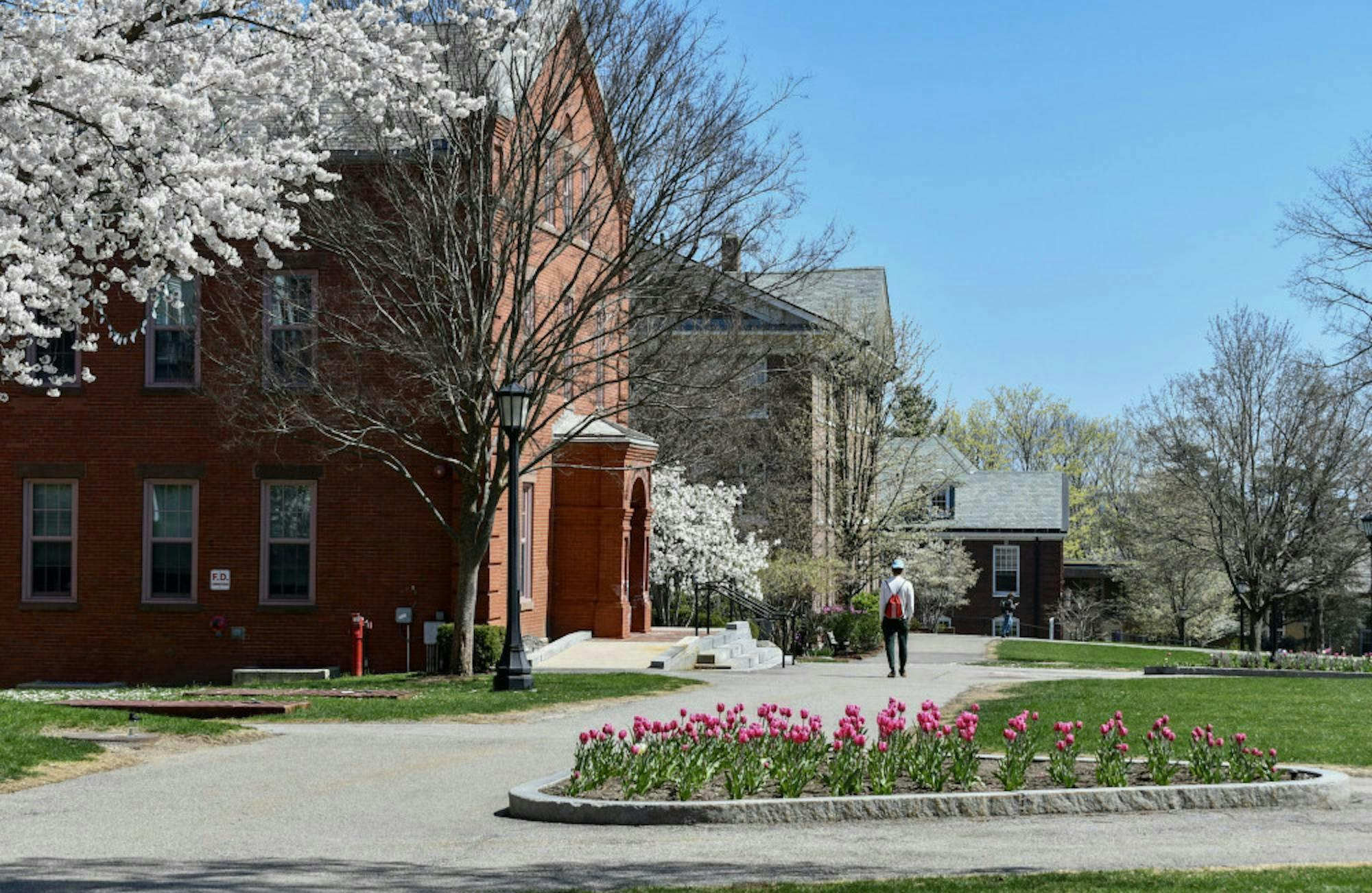
to have a real Monday full of classes this semester! Some classes converted to an asynchronous format, but students stayed occupied by sledding down Prez Lawn and building snowmen across campus.
This semester also welcomed some familiar sights — Fresh at Carmichael Dining Center returned to regular service following several maintenance issues in fall 2025 and private music lessons returned to campus.
Tufts Technology Services announced this semester
that the Student Information System will receive an update by the spring 2027 course registration period for the first time since its founding in 2013.
And how could we forget Spring Fling as we review the 2025–26 academic year?
GROUPLOVE opened for Zara Larsson. Prior to their performances, students grabbed free T-Shirts provided by TUSC and danced to a set by student DJs MC Cece and Jacobccmixes.
As you head home — whether for a vacation with friends
Commencement is a natural time for reflection, to look back on your years at Tufts and anticipate what’s next. Your time on our campuses has been marked by profound change and upheaval, locally, nationally and around the world. Those challenges — and the corresponding opportunities — will continue, new ones will emerge and you are ready.
Civic engagement is embedded in all we do at Tufts, a commitment articulated by University President Sunil Kumar as doing more than our fair share in the world. Whatever your path, we hope that your education here has prepared you with the civic skills, knowledge and values to work together, to think critically, to listen generously, to appreciate complexity and to make change in a world that badly needs it.
As you consider what’s ahead, you may look to some of your fellow alumni for civic inspiration. Consider the winners of this year’s Lyon & Bendheim Citizenship Award: Adam Gardner (LA’95) and Lauren Sullivan (LA’96). Both Tufts alumni, now married, Gardner pursued a music career with the band Guster, while Sullivan embarked on a career of environmental research and stewardship.
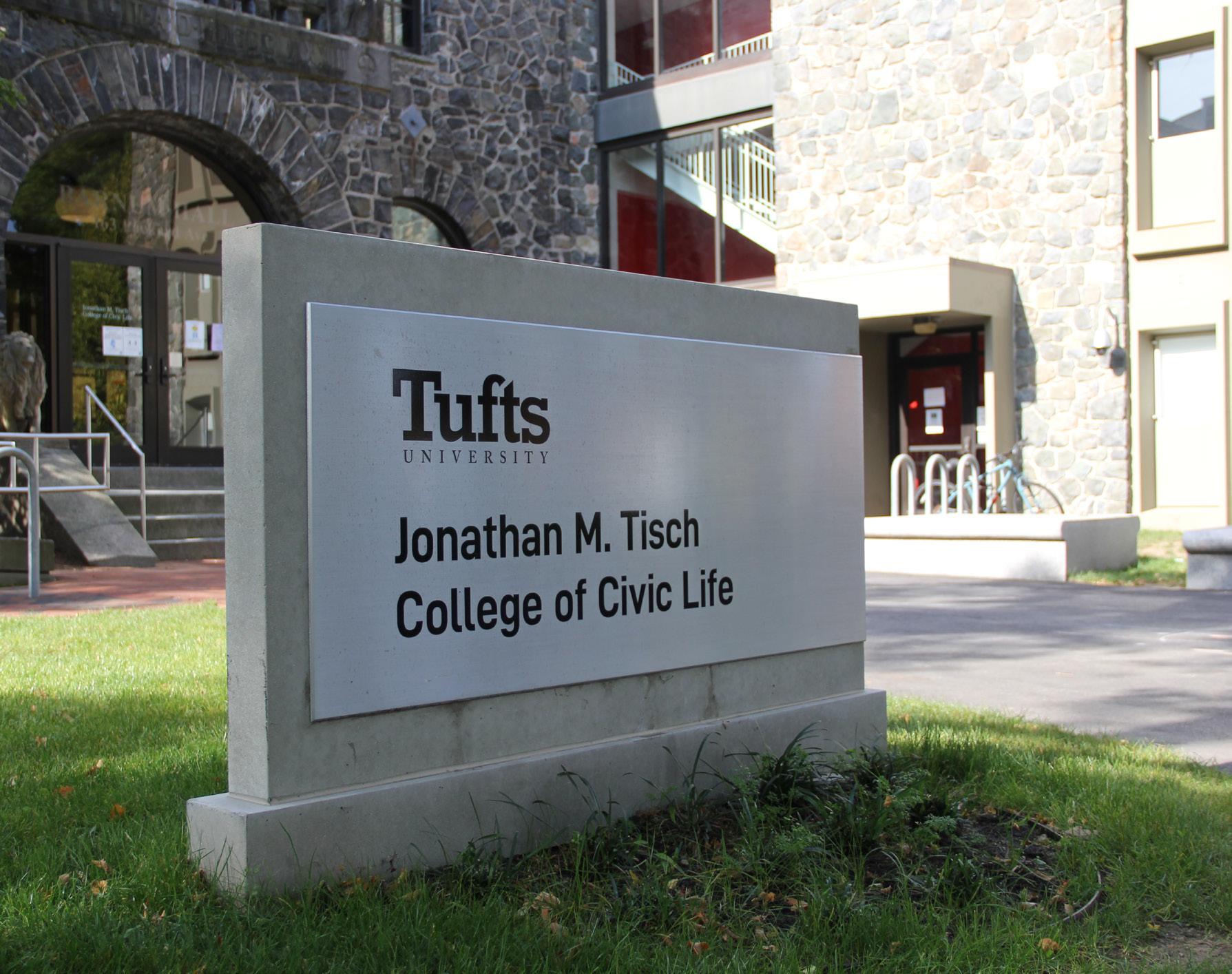
After seeing firsthand the costly environmental footprint of concert tours and festivals, they combined their expertise and their shared desire for social change and founded REVERB in 2004 to create a more sustainable, action-oriented music industry. Over 20 years later, REVERB’s impact, working with artists from The Roots to Billie Eilish to Tyler Childers, has been extraordinary. The organization has raised over $21 million for environmental causes, eliminated 4.5 million plastic bottles, neutralized 420,000 metric tons of CO2e, “greened” over 350 tours and inspired millions of fans to take action.
You might look to Audrey Carver (LA’22), who this semester taught a Medfordbased course on community murals and joined us for a Civic Life Lunch talk. Carver is a Minneapolis-based muralist who approaches art as a way to connect people to their environment and create meaningful community spaces. This winter, as Immigration and Customs Enforcement activity surged in Minnesota, turning deadly and triggering widespread fear and disruption, Audrey was part of a grassroots, neighborhood-based movement that focused on creating art and supporting mutual aid: helping with carpools, picking up medical supplies and delivering
or family or for an internship or job — we hope you have plenty of pictures to remember this year. If you don’t, you can always look through the Daily’s Photo section, which covers everything from the recent Boston Marathon to the No Kings protest to the Great Blizzard of ’26.
Lastly, whether you are an incoming first-year or a graduating senior, keep reading the Daily!
Have a great summer, Jumbos!
The Editorial Board
groceries to families who were too frightened to leave their homes. Taking care of each other and making art together became forms of resistance and resilience.
The point of sharing these stories, and the many others like them, among the Tufts alumni community is twofold: First, as your families can all attest, you never know where life will take you, so be ready and keep an open mind; and second, each of us has our own path to civic impact. For many of you, your civic pathway was developed here at Tufts. For some, it is wellworn, with twists and turns, challenges considered, choices made and views changed. For others, your pathway is more recently forged, by a senior thesis that raised questions you had not previously considered, or through an internship with a community organization that altered your career aspirations.
Wherever you are on your civic journey, whatever degree is conferred today and whatever next steps are before you, this much is clear: Your civic life continues, we are here to support you and we can’t wait to see the change you will make in this world.
Dayna Cunningham is the Pierre and Pamela Omidyar Dean of Tufts University’s Jonathan M. Tisch College of Civic Life.
Monica Reilly Deputy Opinion Editor
Since President Donald Trump’s initial campaign for the 2016 presidential election, anti-immigrant rhetoric has been baked into his promises. His “build the wall” promise took the country by storm, coupled with claims that “illegal aliens” were bringing crime and taking jobs. He even called for a “Muslim Ban,” claiming that a complete denial of entry to anyone from countries with a history of terrorism — akin to the Chinese Exclusion Act of 1882 — would make the United States safer.
Once in office, he largely followed through on his proposed immigration policy. In 2019, refugee admissions were at their lowest since the program began in 1980. He also halted the Deferred Action for Childhood Arrivals program, which was aimed at protecting young children from deportation, for first-time applicants. With all of his undoing of historical U.S. immigration policy, his current attempt at undermining immigrant rights falls right in line.
On the first day of his second term in office, Trump issued Executive Order 14160, which aimed to strip citizenship from children whose parents were not legal citizens at their birth. The order received criticism from across the country, with three different district judges attempting to apply a nationwide injunction to block the order. However, the Supreme Court ruled that district courts could not place nationwide injunctions
on federal policies, favoring class-action lawsuits instead.
Much of the anger was a result of the seemingly clear constitutional violation posed by the executive order. The idea that being born on U.S. soil is all that is needed to be a U.S. citizen is baked into the understanding of our country. Not only that, but the Supreme Court’s ban on nationwide injunctions removed a major check on the executive power by the judicial branch. Essentially, Trump violated the Constitution, and judges were forced to sit by and watch.
In January, it was announced that the Supreme Court would be hearing the case on April 1, further validating the idea that birthright citizenship was up for debate. The federal government’s argument focused on the specific phrasing of the Constitution, specifically the idea that all people born in the United States were citizens, as long as they were under the authority of U.S. law. This modifier would, in theory, exclude those within the United States but not under U.S. jurisdiction. Historically, that exception has applied to situations like children being born to foreign ambassadors, but the recent Supreme Court arguments attempted to twist these words so they applied to the children of immigrant parents.
Using this idea, Solicitor General D. John Sauer argued that “jurisdiction” in this context meant allegiance to the United States. Following this logic, Sauer claimed that one should only receive citizenship if they have
established domicile, or a permanent home within the United States, and the domicile of a child would naturally follow that of their parents. Thus, he argued that a child born to parents without legal citizenship would not have allegiance to the United States, and therefore should not be granted citizenship.
There are many reasons that his argument falls apart,
including the lack of historical precedent. But that’s to be expected. This case, which calls into question a right explicitly stated in the Constitution, was naturally going to be an inherently flawed argument. When it comes to birthright citizenship, there is no room for ambiguity or legal debates, it is a universally agreed-upon truth of being an American.
Undermining ideas such as these is to undermine the foundation of the United States in general. When these basic tenets of American rights are denied to groups like the children of immigrants, it will become easier to undermine more and more rights for more and more citizens. The case won’t be decided until late June, but what the outcome should be is clear.

Olivia Zambrano Deputy Opinion Editor
Many conversations I’ve had with my peers regarding AI use have resulted in ques tions about whether forego ing AI would make any real difference if ‘everyone else’ would be using it anyway. While, unfortunately, they are correct about the sheer amount of students that use AI — a stagger ing 64% — they are misguided in their assumption that one fewer student using AI would not make a positive impact.
College students report using AI for a myriad of reasons, ranging from summarizing lectures to editing their own writing. Students use AI ser vices like ChatGPT and Claude as crutches, leaning on them to complete tasks that, prior to the enormous surge in AI use in late 2022, they would have successfully completed independently. The amount of conversations I’ve overheard or even participated in about

casual AI use is shocking, with skillset that is essential for sim- urban planning will contin - Miss. without an air permit to build a power plant that would power the company’s chatbot. The gas turbines were located near predominantly Black neighborhoods and emitted pollution and known carcinogens, sacrificing the health and safety of Black communities in favor of AI
By suing xAI, the NAACP is seeking to protect the citizens of North Mississippi and Memphis. However, the normalization of casual AI use will ultimately inspire the establishment of more AI data centers, which, if this trend continues, will likely be located in or near already marginalized communities. The normalization of AI use is making students blind to the large-scale impacts of AI. I urge Tufts students to limit their use of artificial intelligence to protect both their academic integrity and the livelihood of marginalized communities already suffering the imposition of AI data centers.

drink
Often the longer, but prettier, route
Casual eatery
Sorry, Didn't Spell Anything...
"At this moment!"
"No kidding!"
State that makes up a third of "DMV"
The morning, abbr.
Anjali Mishra Staff Writer
“If you say ‘we can do hard things,’ we will do hard things.”
The star forward and co-captain of the Tufts field hockey team, graduating senior Hannah Biccard, said she “didn’t have a doubt in [her] mind” that this mindset was what drove Tufts’ women’s field hockey team to win the national championship.
Her time at Tufts was nothing short of impressive.
This champion athlete has been playing field hockey since fifth grade in her home country of South Africa. Sacrificing proximity to her family, Biccard committed her high school years and young adult life in pursuit of education and higher-level field hockey opportunities in the United States.
As a dominant player on the team at The Hotchkiss School, Biccard was given offers to play field hockey at the collegiate level. She wanted to be in a city and to pick a team that looks after each other — Tufts checked those boxes.
In her debut season, Biccard appeared in seven games and played in both NCAA tournaments. Her first career goal was recorded in the NCAA tournament second-round — also the season-ending game — against Messiah University. Biccard remarked that while winning the championship her senior season made it her favorite, she wanted to give recognition to her first-year season. The connections she made, along with the mentorship from the
upperclassmen, made her initial season feel very special.
Biccard started in all 19 games for her sophomore year. Putting up 20 points in the season, she tallied the second most in goals and assists within the team. Impressively, the only hat trick in the entire season from the team was recorded by her against the Hamilton Continentals. With three game winning goals, Biccard delivered a striking breakout season. She played and contributed in all three NCAA tournament games, helping the team reach the second round in 2023.
In her junior season, Biccard was instrumental in guiding her team to the national championship. Coming in third for points, goals and assists, her third year on the team was monumental. She secured four game winning goals — the most on the team. From making NESCAC champions to NCAA runners-up, the Jumbos had a successful season, ending with a 19–3 record.
For Biccard’s senior season, she was named co-captain along with her best friend, graduating senior Gabby Sousa. These women were ready to lead the Jumbos to victory, especially fueled after coming up short of a national championship the previous year. Biccard’s natural leadership is recognized by many.
In an article highlighting Biccard’s nomination for DIII Honda Athlete of the Year, coach Tina Mattera stated that “[Biccard] is extremely hard-working and also very humble. She did her best to lead by example and was
supportive of her teammates. She was selfless and composed under pressure and she earned the respect of the entire team and coaching staff.”
Starting and playing all 22 games, this co-captain was a force. Coming first in goals, with 17, and in points, with 40, by a wide margin, Biccard was by far one of the most dominant players on the field in every game. For example, Biccard put up a career-high five goals against Colby, marking a team history for most goals in one game and third for points in one game. She was named NESCAC Player of the Week on Sept. 15, 2025.
Her hard work all season helped lead the Jumbos to the NCAA tournament. The Jumbos swept the Dean College Bulldogs 11–0 in the NCAA first round, but every round after that was a hard-earned win, with the second round against the Williams Ephs going into double overtime.
“The reason we succeeded last season was because everyone wanted it. The team was there together socially. Everyone wanted it for each other,” Biccard said.
The Tufts field hockey team put their all into each and every game, doing it for the person next to them. Their love for each other paid off on the field: For a second season in a row, the field hockey team made it to the national championship.
The national championship against Johns Hopkins was a battle. Both teams scored one goal in the first period, but no more were scored in regular playing time. The possession went back
and forth between all four periods among both teams, leading the game to overtime.
One minute into overtime, however, Biccard scored the game-winning goal, assisted by graduating senior Camille Clark, making Tufts field hockey national champions. It’s one of those moments that no one on the field hockey team will forget. Winning that championship — and making history — with teammates they loved so much was a highlight for Biccard. The goal brought her season total to 17 — recording fifth in team history — and her career total of 33 ranks her fourth all-time in scoring.
Biccard said that the quote of the season was, “We can do hard things.” She said while “there’s luck involved,” she felt that this mindset of believing in themselves is what pushed them to the win.
Her senior season ended in numerous awards, including NFHCA All-Region II Player of the Year and NFHCA AllAmerican and All-NESCAC First Team recognitions.
It was even more special that she got to do it with her best friend. When asked about her favorite part of being captain, her response was, “Being captain with my co-captain.”
“[In our first] year, we lived next to each other on the third floor of [Hodgdon Hall],” she said. “So it was like having this full circle moment, being captains together. [Winning the national championship] was a great thing to do with my best friend.”
“[Sousa and I] were able to work better together. Sometimes she would voice what I had to say in a better way for an athlete. Pushing people to be better was for sure another favorite part,” Biccard said.
In addition to winning the national championship, another one of Biccard’s favorite memories with the team was a bus ride to Middlebury. The bus had broken down on the drive there, but she said she didn’t want to stop her teammates who were ready to push the bus to Middlebury. The game was tense with the Jumbos almost losing, but they ended up winning. In the past, they had lost to Middlebury, so to win with the chaotic bus ride was a top moment for Biccard.
One has to wonder, what challenges did such a talented player overcome to be where she is now? The greatest roadblock was internal for Biccard: doubting herself. It was what she battled with the most. Over the past four years, she has grown to know, “I am worthy.”
Being an international student made her doubt herself but gave her a greater perspective. “Everything I had been through put me where I [am].”
Having majored in international relations and economics, she will now go on to pursue a Master of Science in Foreign Service at Georgetown University.
Biccard’s leadership and talent have forever made an impact — and history — on the field hockey team, and she will be greatly missed by the Jumbos.

For the Tufts men's tennis team's graduating seniors, Javi Gonzalez, Sacha Maes, Alex Ganchev and Andrej Djokic, the past four years have been defined by a singular pursuit: A national championship that has remained agonizingly out of reach. Three consecutive seasons of heartbreaking near-misses — including an undefeated regular season and a national finals appearance as first-years — have only sharpened the hunger driving this class. Now, with one final month remaining, the four seniors aren’t just playing for a trophy — they’re playing for each other.
Falling in love again
Gonzalez’s relationship with tennis stretches back two decades. The Valencia, Spain native picked up a racket at age two and never put it down. However, by the time he arrived at Tufts, the sport had become more of a burden than a joy. Years of individual competition had taken their toll.
“Tennis is a very individual sport. It puts a lot of tolls in your mind,” Gonzalez said. “When you win, you deserve everything, but when you lose, it’s also all on you. And I was kind of getting burned from that.”
That changed the moment he stepped on campus.
“When I came to Tufts, [I] got introduced to a completely different sport in my opinion, which is playing for a team,” he said. “You take for granted that you’ve got 16 guys cheering for you at every single match. … Sharing the wins is even better than experiencing it yourself, and sharing the losses, it’s a lot better than having to cope with them by yourself.”
The result? “Having the opportunity to be part of it made me fall in love with tennis again,” Gonzalez said.
Gonzalez’s teammates have watched him evolve from a naturally reserved first-year into one of the program’s most vocal leaders.
“He’s always been very emotional, but he definitely managed to calm the storm within his mind and be able to channel that energy into doing the right things, especially on the court,” Ganchev said. “Before, in big moments, he would doubt himself, … whereas now, he’s the person you want in the big moment. He’s always going to bet on himself, he’s going to go for the shot, he’s going to give his 100% and there’s going to be no fear.”
Maes echoed the sentiment: “I’ve just seen over the years how he’s used what he saw as examples — all the people above us that have come and [gone] these past four years. He’s really taken some things from each one, and now you can see how all of that has molded him into a leader,” he said.

After graduation, Gonzalez plans to move to California and leave tennis behind for good.
“I’m selling my rackets as soon as we’re back,” he said. “I think I’ve got one more month of tennis in me. No more.”
“Why not me?”
Ganchev’s path to Tufts is perhaps the most winding of the four. The Plovdiv, Bulgaria native started playing at age five under the guidance of his father, a man who had dreamed of going professional himself.
“My dad, he loves tennis. He wanted to become a professional. He never did. So he was like, ‘Alex, you’ll be playing tennis and you’ll become a professional,’” Ganchev recalled.
By age 15, Ganchev was among the best juniors in Bulgaria. He was sent to Spain to train full-time.
“After grueling preparation, six hours a day, six days a week, for three years, I was absolutely burned out,” he said. “I actually quit when I was 18, about to turn 19, and I didn’t play for a full year.”
He found his way to Tufts through a friend who introduced him to head coach Karl Gregor. Once on campus, surrounded by teammates who wanted the best for him, something shifted.
“I kind of rediscovered the love for the sport, because I was doing it on my own terms,” Ganchev said.
Now, in a full-circle twist, Ganchev plans to pursue professional tennis after graduation as a doubles player alongside Maes. The idea took root last summer, when he traveled with professional players and attended the Grand Slam tournaments.
“I kept having this mentality [of], ‘Why not me?’” he said.
A conversation with Quinn Gleason, currently ranked
No. 48 in the world in WTA doubles, sealed the decision.
“She told me, ‘You have it, what’s required. You should give it a go.’ And that stuck with me, that planted the seed,” Ganchev said.
His resilience hasn’t gone unnoticed. After a spectacular first year, in which he clinched the decisive match against CMS in the NCAA semifinals, Ganchev endured two difficult seasons marked by injuries and mental adversity.
“The most impressive thing for me has been to see how he’s bounced back this senior year,” Maes said. “That journey has really been a testament to his character.”
Gonzalez was more direct: “Every time we go to a match, they put him in. The trust is just there. … He just goes there and wins. … And being able to do that after having gone through such a hard mental phase is what makes it the most impressive.”
The process
If Gonzalez brings the passion and Ganchev the perseverance, Maes provides the blueprint. The New York City native, with roots in Belgium, Luxembourg, France and Russia, started playing at three years old with his father’s side of the family before committing fully to the sport at 12.
His approach this season has been methodical.
“This year, we kind of recognized that some years, [while] we’ve always wanted [the title], we weren’t always putting [in] the right actionable steps day in day out,” Maes said. “We’ve approached this year having the right process, and we know that if we have the right process … and stick to it consistently, day in day out, the outcome should become reality.”
Maes has also been the team’s quiet backbone, a fact his teammates are quick to acknowledge.
“[Maes] was always almost like the mother of the team since [our first] year,” Ganchev said. “He grew into becoming one of the leaders of this team, someone who has the highest standard. He never slacks. [If] he feels good, he’s always there. [If] he feels bad, he’s always there. He doesn’t complain.”
“I don’t think anyone has his same dedication,” Gonzalez added. “[The team is] bigger than yourself. I think [Maes] is probably the embodiment of that. If he’s part of the team and he knows that one decision is right, even though he might not be benefiting directly, he’s gonna take it.”
One memory stands out above the rest. On Senior Day against Bowdoin, with hundreds of fans packed around the outdoor courts, Tufts delivered a commanding performance.
“We swept them seven-zero, which we’ve never done since our class has been here,” Maes said. “The amount of energy we had during that match, and the amount of people that came out … that was definitely up there as one of my best days at Tufts.”
The fourth man
Though Djokic was not present for the interview, his growth over four years was a subject his classmates couldn’t stop talking about.
“The guy could not take anything seriously [in his first] year,” Gonzalez said. “But now, seeing him as a captain … the way he focuses on the court is admirable to say the least. He’s a different person to two years ago. … He’s [a] completely different player, completely different teammate.”
Ganchev pointed to mental toughness as Djokic’s greatest leap.
“He had a tendency to look for bailout shots when it got difficult. He was willing to escape
from a big moment,” Ganchev said. “But now he’s become very tough, because he understands what it means to be out there fighting for your brothers.”
Maes summed it up: “His maturity and willingness to be tougher has not only been evident on the court, but also just as a captain off the court. … He’s been able to understand when is the time for [fun] and when is the time to be a leader and lock in.”
The final set
As graduation approaches, the Class of 2026 is keenly aware of how fleeting their remaining time together has become. Gonzalez captured the bittersweet reality: “We’re very lucky because we just come to school and we get introduced automatically to 17 friends. 17 people are gonna become, realistically, your closest family here. We take it for granted, but that means the world.”
For Ganchev, the legacy is personal.
“10 years from now, it will be the time where I found home away from home,” he said. “When I came here, [to] a different country, they just embraced me. They accepted me the way I was.”
And what would winning the title mean? Ganchev offered perhaps the most complete answer: “Getting it done would mean the world to me, to [the team] and obviously to our parents, who sent us here,” he said. “[Winning] hopefully would give inspiration and motivation for the future generations who will come here.”
Whether or not the championship is won, the legacy of this class is already written in the program they built, the teammates they lifted and the culture they’ll carry past the final points in their collegiate careers.
Scott Gyimesi, a graduating senior, will go down in history as one of the greatest athletes in Tufts men’s basketball — maybe even Tufts Athletics in general. But that is not the only thing he will be remembered for.
First and foremost, Gyimesi is a standout, once-in-a-generation leader. There isn’t anyone in his radius who doesn’t look up to him. Coaches, teammates and viewers alike always highlight his natural allure and confident presence on and off the court.
Jackson Patton (LA’25), who went to high school with Gyimesi, helped recruit him to Tufts. Gyimesi knew right away that Tufts was the place for him. The day after he visited, he committed.
To Gyimesi, there is nothing above hard work. From coming ninth in his club basketball team in high school to being named a 2025–26 National Association of Basketball Coaches Division III All-America First Team honoree, he attributed his success to his willingness to put in the work and the belief in himself.
During his first season as a Jumbo, the forward appeared in 18 games, averaging 6.4 rebounds and 5.3 points per game. Leveled with a 60.9 field goal percentage, Gyimesi made a dominant presence as a first-year.
Scott remarked that during his first year, he was surrounded by an extremely talented senior class.
“I slept on how many leaders I was around [my first] year. We had a good senior class and really good players: Ty [Arnson], Carson [Cohen], Dylan [Thoerner], Theo [Henry], Kris [Bortz]. They showed me what it means to be a leader," he said. Gyimesi had his breakout role with the Jumbos in his second season, starting and playing in all 29 games. He led the Jumbos with 13 points per game and 11 rebounds and was at the top of the NESCAC for field goals. The team made it to the third round of the NCAA tournament bracket where Gyimesi scored five points in the final game against Trinity College.
This marked a record-making season for Gyimesi, placing him eighth in season field goal percentage and fourth in rebounds in Tufts history. He was named the team’s Most Valuable Player for the 2023–24 season and was awarded an All-NESCAC First Team honor for his performance.
In his junior season, he became co-captain with his fellow high school teammate Patton. Valued as a key player after his sophomore performance, Gyimesi did not disappoint, averaging a whopping 15.3 points, 9.9 rebounds and 3.1 assists per game. He had 11 games where he scored a double-double in points and rebounds and had three triple-double games.
Gyimesi was the first NESCAC men’s basketball player of the week during the 2024–25 season. He assisted the Jumbos to make the NESCAC semifinals and the second
round of the NCAA tournament. Although Tufts ultimately lost in overtime against University of Redlands in the NCAA tournament, Gyimesi contributed 11 points and nine rebounds in the game.
He ended the season as a Jostens Trophy Finalist, an AllNESCAC First Team honoree and a D3Hoops All-Region 1 Second Team selection, making this an accomplished season for Gyimesi.
Having come up short in the NCAA tournament in the past two seasons, Gyimesi was prepared and determined to lead his team in his final season.
Despite being Gyimesi’s most impressive season by far, his teammates and head basketball coach Brandon Linton rave even more about the person he is off the field.
The captain led the team with 164 field goals, 15.5 points per game and 9.1 rebounds on average. For those less familiar with basketball, these kinds of statistics are extremely rare. With 68 assists and a 55.0 field goal percentage,
Gyimesi was playing on a different level than the rest.
Gyimesi steered the team to the NCAA tournament, but got injured in the NESCAC tournament against Colby. When he appeared back for the game against Wesleyan, there was a deafening round of applause for him. He did not play the first two NCAA tournament games, but had a little bit of playing time against Trinity College in the quarterfinals. The Jumbos lost in a close game against the Bantams, ending their season.
Despite the unfortunate end, Gyimesi ended his time as a Jumbo quite decorated. Most notably, he was selected as the NESCAC Player of the Year, the NABC Division III Player of the Year and another Jostens Trophy finalist.
Being able to go to Fort Wayne, Ind. to play against Trinity with the team was extremely special to Gyimesi, making his final season his favorite.
Throughout his four years at Tufts, Gyimesi changed his environment for the better.
“[My style] is rooted in a lot of motor and how hard I play. It’s not as shifty or pretty,” he said.
Gymiesi talked about how while he never thought he was the most talented player on the court, through his hard work, he was able to achieve this level of success.
His story shows that, for those who believe in themselves and are willing to put in the work, anything can happen. Going from not being a star player in high school to being Division III player of the year is a sign to learn from the role model that Scott Gyimesi is.
Leaving Tufts, Gyimesi will miss the small stuff the most: “team life, food after practices [and] seeing the guys around.”
Gyimesi has also gotten some takeaways from Linton that he will use as he looks into the future.
“I’ve learned a lot about how he approached relationships with his players on the discipline side,
but also knowing he cares about us. He coaches us hard and well,” Gyimesi said.
Most importantly, Linton taught him how to be a leader, and that leadership requires adjustment to each person.
Beyond basketball, Gyimesi is a Civic Life ambassador, a member of the Tufts Investment Club and part of the Orthodox Christian Fellowship. Keeping academics first, he has made the Dean’s List every semester. With a deep interest in real estate, he co-founded the Tufts Real Estate Group and worked as a real estate development intern in summer 2024.
He will earn a degree in economics, with minors in finance, architectural studies and history. As for his next destination after Tufts, Gyimesi is currently weighing opportunities overseas and job offers — with no shortage of choices.
Gyimesi’s legacy will be felt for decades to come at Tufts — all Jumbos can draw inspiration from his story and his time here.
Anjali Mishra Staff Writer
Graduating senior Joshua Bernstein did not have much time on his hands during college. Both a student athlete and start-up founder, Bernstein managed to balance a schedule most would be stressed to look at.
The star center from Miami is a big reason why the Tufts men’s basketball team has been as dominant as it has been these past four years.
Most would assume that a talented player like Bernstein must have been playing basketball since elementary school, but Bernstein did not start until his sophomore year of high school. He never thought about getting recruited, and his choice in college was influenced by academic merit alone.
“I had no idea Tufts basketball was good. My choice was completely school driven,” he said.
The summer before coming to Tufts, Bernstein played in the JCC Maccabi Games in Israel as an 18U. Afterwards, he was approached by multiple agents, making him realize he could play basketball professionally.
In his first season as a Jumbo, Bernstein played in 23 games and started in one. He came out of the gate as a strong contributor to the team, averaging 5.5 points and 4.4 rebounds per game — even putting up a double-double in points and rebounds during an NCAA tournament game. Despite being a first-year, he led the team in 32 blocks during this season.
Bernstein’s sophomore season included some of his favorite moments on the men’s basketball team. He started in 26 games and played in 28. He increased his overall averages with 8.6 points and 7.4 boards per game. Again, Bernstein led the team with 59 blocks — the most on the team. His 2023–24 season blocks are recorded as seventh most in Tufts history. A standout in the NCAA first round game with 14 points, Bernstein helped lead the Jumbos to victory.
According to Bernstein, his favorite memory during this season was easily the NCAA second round game, which the Jumbos won against New York University. The game happened in New York City, allowing many local Tufts alumni to come watch the game. His favorite part was when the alumni came into the locker room and celebrated with the team. Even talking about it later, the smile he had recounting this memory lit up his face.
Bernstein started all 27 games during his junior season. He averaged 9.4 points and 6.9 boards per game, helping lead the team to the NCAA tournament again. For a third time in a row, he led the team in blocks. His 60 blocks in the 2024–25 season is now recorded as fifth most in Tufts history — one of two athletes to
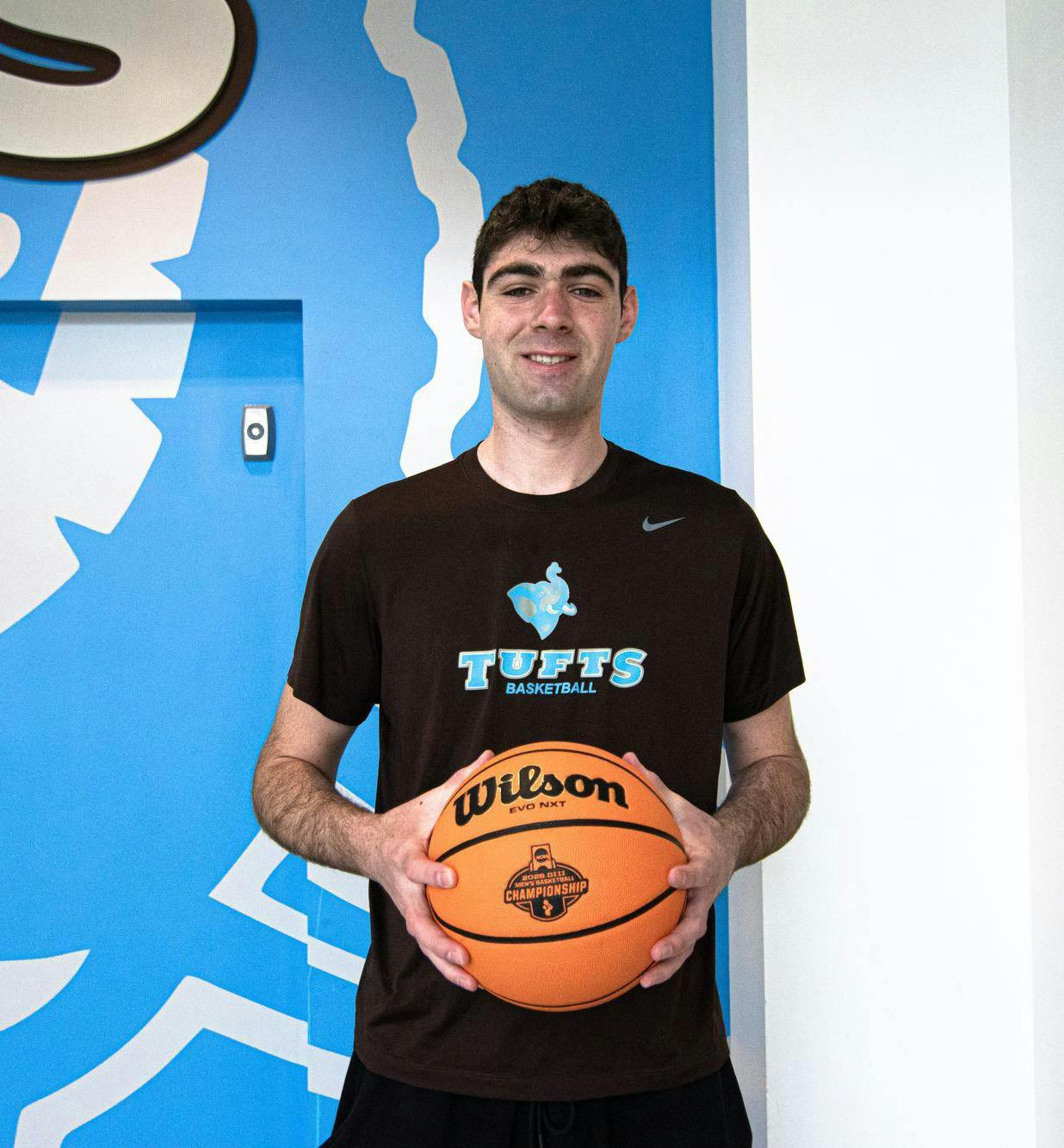
have two seasons in the top 10. During the first round tournament game against Yeshiva University, he earned a season high of 19 rebounds. Tufts made it to the second round of the NCAA tournament during this season — much of this success attributable to Bernstein.
In his senior year, Bernstein started all 29 games with 11.6 points per game on average. With an outstanding performance this season, he led the Jumbos in field goal percentage, total rebounds and blocks, leading him to be given the All-NESCAC Second Team recognition. Bernstein considers the final season his favorite, expressing how going to Fort Wayne, Ind. for the NCAA quarterfinals was very special. Excited that the team reached the quarterfinals this season, Bernstein acknowledged that it was a shame to lose to Trinity College. However, he stated that the loss was “nothing to hold our heads on.” For the last four games of the season, he had the mindset that each game could
be his last. Having a great career and being the part of one of the most successful classes in Tufts history, Bernstein is grateful for the college experience he had at Tufts.
Bernstein remarked that he felt this season was his strongest. When speaking on how his style of playing progressed over the past four years, he answered, “I think it’s just confidence.”
“It hasn’t changed in what I can do. What I actually do [is go] back to the basket post player and [be] a shot blocker. This year, I realized how consistent I could be and [that’s] mostly because the coaches and teammates of the past four years supported you for what you could be,” he said.
His big support has been from head basketball coach Brandon Linton.
“He’s such a good guy. Honestly, it’s hard being a coach handling the team and a team player,” Bernstein said.
Bernstein’s favorite piece of advice from Linton is, “Don’t get too high, don’t get too low.”
In Bernstein’s words, it means:
“When you’re doing well, don’t lose perspective, and don’t get too down when low.”
Bernstein isn’t just a basketball player, however, as he also co-founded a start-up during college. For Bernstein, balancing his business, basketball and academics proved challenging. He felt his mind was always elsewhere.
Bernstein emphasized the importance of not burning out. Prior to his first-year season, the captain told him to be prepared for the grind. Now, Bernstein understands that it really is a grind, and the only way to get through it is consistency.
“At the end of the day, the main thing is the college experience and playing basketball,” he said. “There’s time for everything else. Whatever time it is, be in that moment.”
Looking back on his time here, Bernstein highlights that what he will miss most about Tufts is the people.
“I live in the basketball house. I’ve met the coolest and smartest people [on this team]. I want them at my wedding and
[to meet] my kids when I grow older. I will be staying in touch with them for the rest of my life, honestly,” he said.
Bernstein’s future right now is still up in the air, with many options and opportunities at hand and his entrepreneurial successes preparing him well for the future. In 2025, he won the Montle Prize — awarded to three accomplished student entrepreneurs each year by the Derby Entrepreneurship Center at Tufts. This past April, he sold his company and was awarded $10,000 for “Most Progress in a New Venture.”
The computer science major is still evaluating his options. No longer having to run a business, he is deciding between playing basketball professionally overseas or working a regular nine-to-five.
Not many people can say they have both competed in the NCAA as well as successfully founded — and sold — a start-up by the end of college, but perhaps this is what happens when the rare few use the intersection of talent and ambition to chase their dreams.
Sabrina Dorr Staff Writer
In the midst of wrapping up his Tufts education and earning a Bachelor of Arts in Political Science with an Entrepreneurship minor, graduating senior Max Resnick sat down with the Daily to talk about how his time with Tufts University Athletics has shaped his collegiate career.
“Hockey has shaped who I am, from the day I put skates on to now. It’s provided me with so many different opportunities that I never thought I would experience, and it’s introduced me to more people than I could have imagined,” Resnick said.
For Resnick, ice hockey is more than just a sport — it has been a blessing and a formative road map through life, shaping everything from his extraversion to his discipline. Resnick said some of the greatest gifts the sport has given him are his emotional intelligence and ability to read a room, being both a leader and a teammate when each is called for. These skills transferred into his time as captain.
“When you get named the captain, yes, you’re supposed to look after yourself, but in reality, you’re looking after the 30 other guys on the team,” Resnick said.
Only 25% of college students graduate during a World Cup year. Thus, the Class of 2026 is statistically rare, but what makes these four graduating seniors unique isn’t timing. It’s the question they all hold: How do you celebrate the world’s most unifying sporting event when the world feels anything but unified?
Bernardo Azevedo, Maryem Haque, Isa Reyes and Ella Voorhees all came into my life because of soccer. Azevedo is a close friend with whom I watch Champions League games during class (usually while we’re supposed to be doing something else). Haque, Reyes and Voorhees are all graduating seniors on the club soccer B-team, also called the Brown team. Together, they’ve become a larger part of my life than I ever anticipated. As they prepare to leave Tufts, they’re also preparing for a World Cup summer that feels different from the ones they remember.
The issues aren’t subtle, and they’re specific to the U.S. host. Azevedo went to Foxborough a few weeks ago to watch Brazil play a friendly game. The commuter rail, which usually cost around $20 for a sports game, was $30. For the actual tournament, that price jumps to $80.
“It doesn’t matter who you are or what type of day it is. You need to make sure that everyone’s doing okay … and walking into the rink with a smile on [their] face because in the end, that’s all that matters. It’s what you’re going to remember down the line, not the games and the goals.”
When asked about how his time on the team shaped his collegiate experience, Resnick said, “Tufts hockey, to me, means the world. I wouldn’t be here without Tufts hockey.”
He added that being on the team has transformed him as a person.
“Tufts hockey has shaped me into who I am now, walking in as an 18-year-old and walking out of here as a 22-year-old, I’m a way different person [because of the team],” he said.
Outside of hockey, Resnick credited the school with giving him his best friends and being an incredible college experience overall, in large part due to its proximity to Boston. Throughout the conversation, Resnick circled back to his love for the people around him. Resnick expressed a deep love and gratitude for his community in and outside of Tufts.
Resnick’s teammates shared similar feelings about him. In a message to the Daily, fellow
“It feels like just all around, everywhere is money grabs,” he said. Haque was more direct.
“A lot of people of color, a lot of immigrants are not gonna feel safe to attend,” she said. “People fearing for their safety are going to really minimize the attendance of people who would normally go.”
Reyes compared this to Qatar 2022 and the migrant workers who died building the stadiums.
“My fears about this World Cup aren’t unique to this World Cup. It’s just switched countries.” With ticket prices so high, she said, “The type of people that will be attending these events isn’t the type of people that are gonna care or have much to say about it.”
The graduating seniors’ concerns about Mexico and Canada are different. In Mexico, Azevedo is confident the tournament will have weight. Mexicans love football. In Canada, where the sport is still developing, the question is whether the country can embrace the moment. But in the U.S., the World Cup isn’t even a central topic of conversation. Americans are grappling with far more pressing concerns. Voorhees is optimistic but realistic.
“Hopefully it can be an opportunity for people to be proud, maybe not of the politics in their country, but of the people in their country,” she said. “It’s definitely harder. It’s scary.”
It’s easy to see how much they care because soccer still means something to each of them.
Azevedo remembered the 2018 World Cup in Russia. He would wake up at 7 a.m. to watch matches before school with two friends. That year ended in heartbreak:
graduating senior John Mulvihill shared that his favorite memories of his time with Resnick were “hanging out over the years, so many car rides to the rink, debriefs after our games and so on. It’s been really fun to see him develop as a leader and we’ve all had so much fun together over the years.”
Resnick had a hard time choosing his favorite memory at Tufts, but he fondly reminisced about the post-practice cookouts after particularly grueling weeks, getting to enjoy feelings of accomplishment and pride while relaxing over burgers and drinks.
“Overall [my] favorite memories are just hanging out, spending time with the guys. I know it’s cliché, but it’s definitely true,” he said.
For Resnick, that camaraderie has defined the sport for him since he was a little kid. Striving to win on a team where everybody cares just as much, whether they are a benchwarmer or a starter, was something he said he did not see as much in other sports growing up. The competitive spirit of hockey just goes deeper.
When you ask him about a specific moment during a game, Resnick’s mind goes to victories.
“My favorite win is probably our playoff win against
Brazil lost to Belgium in the quarterfinals. Azevedo didn’t eat again until the next day’s dinner.
Reyes remembered the last World Cup in her family’s living room when Argentina won. Her mom cheers for France, her dad for the underdog, but she said, “When Argentina won, my house was just cheering. I feel like it just brings everybody together in a really special way.”
Haque was 11 in 2014, at summer camp with her brother. She remembered the sticker books, and forcing her dad to drive them to stores to collect stickers. This World Cup, she’ll be with her brothers again, watching the way they always have.
Voorhees remembered the Gothia Cup in Sweden, an international youth tournament with teams from 80 nations. From my own experience there, I know it’s as close as any young player gets to a World Cup. She practiced with a Swedish team whose players barely spoke English.
“We were bonding over something we both loved, and it surpassed the need for language,” she said.
Azevedo explained what makes the World Cup special.
“For every player and everyone involved, they all know this is the biggest tournament they can ever participate in,” he said. “Everybody runs to a corner flag, the whole bench is running, everyone’s celebrating. There’s just that feeling of: This is something very special and big that is happening.”
For the four graduating seniors, something big is happening beyond the World Cup. They’re also stepping into their futures.
Azevedo will watch the group stage in Brazil before returning to move out.
“There’s the whole other part of actually transitioning into fully

[Connecticut] College at home my sophomore year. I think this year, [one that was] a little bit special to me as well was when we beat [State University of New York at] Geneseo, who was seventh at the time, in Tampa for a comeback win from behind. That was a really fun game, and it was at home for me,” Resnick said, being a Tampa native himself.
Resnick asserted that the community hockey builds lasts a lifetime.
“I stay in touch with the kids I was playing with when I was five. It’s a sport and also a family at the same time,” Resnick said. He laughed when asked if he planned to play in a ‘beer league’
in the future, and said he had already started playing with a few players and an assistant coach on Wednesday mornings.
“I know my whole life I’ll be around the game, whether that’s coaching my kids or coaching the local high school team,” Resnick said. “I think I’ll definitely want to give back for the rest of my life, because of all the memories the game gave me. … It’s the greatest game in the world.”
As for the near future, Resnick is off to New York City to work in finance for a private credit shop, where he will be sorely missed by Tufts hockey.

adult life,” he said. “Trying to figure out what kind of career path I want to take.”
Reyes will be moving to the Dominican Republic to teach.
“I’m Mexican, but I don’t really speak Spanish, so I feel like that’s kind of that missing piece in my cultural tie,” she said.
She added that she’ll miss the “pockets of community [she] found” at Tufts: the Arabic department, her housemates and soccer.
“For the first time it really does feel like I do have a lot in the future,” she said.
Haque hopes to work in public health in Massachusetts, promoting the health of marginalized populations. She co-founded the club soccer Brown team with junior Alex Levy her sophomore year with the goal of creating a more inclusive space. As captain, she has watched it grow into something special. She said that she would miss “the people, the soccer team [and] all of [her] close friends” the most.
Voorhees is heading to Minnesota for an internship before starting her master’s degree in transportation engineering at UC
Berkeley. What she’ll carry with her is club soccer.
“I’d have a bad day, but then I’d go to practice and it would turn my day around,” she said. I asked each of them to predict a dark horse and tournament winner in the hopes that they’ll read this again in the near future to see if they were accurate guesses.
Azevedo : Dark Horse: Ecuador and Japan. Winner: France.
Haque : Dark Horse: South Korea. Winner: Spain. Reyes: Dark Horse: Morocco. Winner: France.
Voorhees : Dark Horse: Ireland (if they had qualified). Winner: Argentina. By the time they read this again, they’ll know what the World Cup in North America actually felt like and whether it lived up to the promise or confirmed the fears. Whether it brought people together or pushed them further apart. I sincerely wish them the best.
is a sophomore majoring in international relations. Antonia can be reached at antonia.toro@tufts.edu.
“You’re only given a little spark of madness. You mustn’t lose it.” - Robin Williams