Tufts students face midyear financial aid cuts, miscommunication from administration
Zach Halverstam, Carlos Del Cañal Fernández and Maggie Binda-Dunn
Executive Investigative Editor and Contributing Writers
Over the last six months, the Daily has collected evidence of concerns among the Tufts student body and faculty regarding financial aid. These concerns include continuous midyear cuts, sudden decreases in financial aid packages, a lack of communication between students and administrators and difficulties in the appeal process.
This investigation expands upon a previous article detailing the experiences of Emma Do, a Tufts student who was forced to return home after the entirety of her aid was withdrawn without notice in July 2024. Multiple students have since come forward with similar allegations of sudden funding cuts and reductions despite the critical need for aid.
Tufts’ strict eight-semester academic residency requirement makes it difficult for students to graduate early, increasing the financial burden on those who rely
on aid. At the same time, difficulties with the Tufts Financial Aid Office — often occurring alongside family hardships — have placed additional strain on these students.
These concerns come as the university begins to implement its new Tufts Tuition Pact initiative, which will make tuition free for families making under $150,000 per year with typical assets. While
both the Office of Undergraduate Admissions and the Financial Aid Office have stated the pact will not increase the tuition of students whose household income is above the threshold, some feel that their
needs are being ignored at the expense of the initiative.
Jena Thorne, a senior, had previously taken a two-semester leave for health-related issues. Her family, living in Oakland, Calif., relied on financial aid to make attending the university feasible. Even with the family’s increase in income over this period, rising medical bills during Thorne’s two medical leaves increased financial strain.
However, Thorne said that her aid has continuously been reduced throughout her time at Tufts, hitting zero this fall. Additionally, the Financial Aid Office rejected Thorne’s appeal for financial aid.
“Every year since, I’ve been getting less and less financial aid, which I think is partly due to [the fact that] my family has also had increased income, but not really substantially,” Thorne said. “This past year, they gave me no financial aid at all.”
Thorne decided not to transfer from Tufts despite these issues. Although she had already claimed
Hours cut for Tufts Dining employees at Dewick, student workers fear future changes
Katherine Kelton Assistant News Editor
Tufts Dining has reduced work hours for all student dining employees at Dewick-MacPhie Dining Center following budget cuts, leaving students concerned about future reductions.
An email sent to student dining staff on Feb. 20 informed them that “executive management” had ordered the elimination or reduction of various positions. As a result, some employees saw their hours reduced, with a few lower-hour positions eliminated entirely.
Patti Klos, senior director of Tufts Dining, confirmed the cuts in an email to the Daily, attributing them to a budget overrun identified in the fall.
“To ensure we remained within our allocated budget for the rest of the year, we modified the number of hours available to student employees each week,” Klos wrote.
She described the move as a corrective measure to ensure “fairness and consistency across
locations” and emphasized that student employees remain “an essential part of our team.”
However, affected workers described the changes as sudden and disruptive, adding that they were given little warning. For



students who rely on dining hall wages to cover basic expenses, the rationale for cutting their hours remains unclear.
One worker, who requested anonymity out of fear of retribution, said the cuts have intensified
existing staffing pressures, particularly during peak hours.
“There are days where it’s just so busy that the full-time workers have to focus on setting things up in the kitchen, in the dish room, so they don’t have time … to clean


tables,” they said. “So then it gets just very overwhelming.”
The worker pointed to a perceived contradiction between the university’s budgetary constraints and its recent announcements of major investments.
“Something, for me, that made the whole situation really frustrating was … to constantly see them talk about how we have such generous donations and funding,” they said. “They’re announcing the Tuition Pact and the aquatics center and the new dorm, but also going, ‘Oh, but we don’t have enough money to pay our student workers.’”
The Tufts Tuition Pact — which will make the university tuition-free for students from U.S. families earning less than $150,000 annually — and the new dorm, Pachyderm Place, were announced last year, while the new aquatics center was reported in March.
The financial impact on students has been immediate and personal. The same dining

NICOLE GARAY / THE TUFTS DAILY
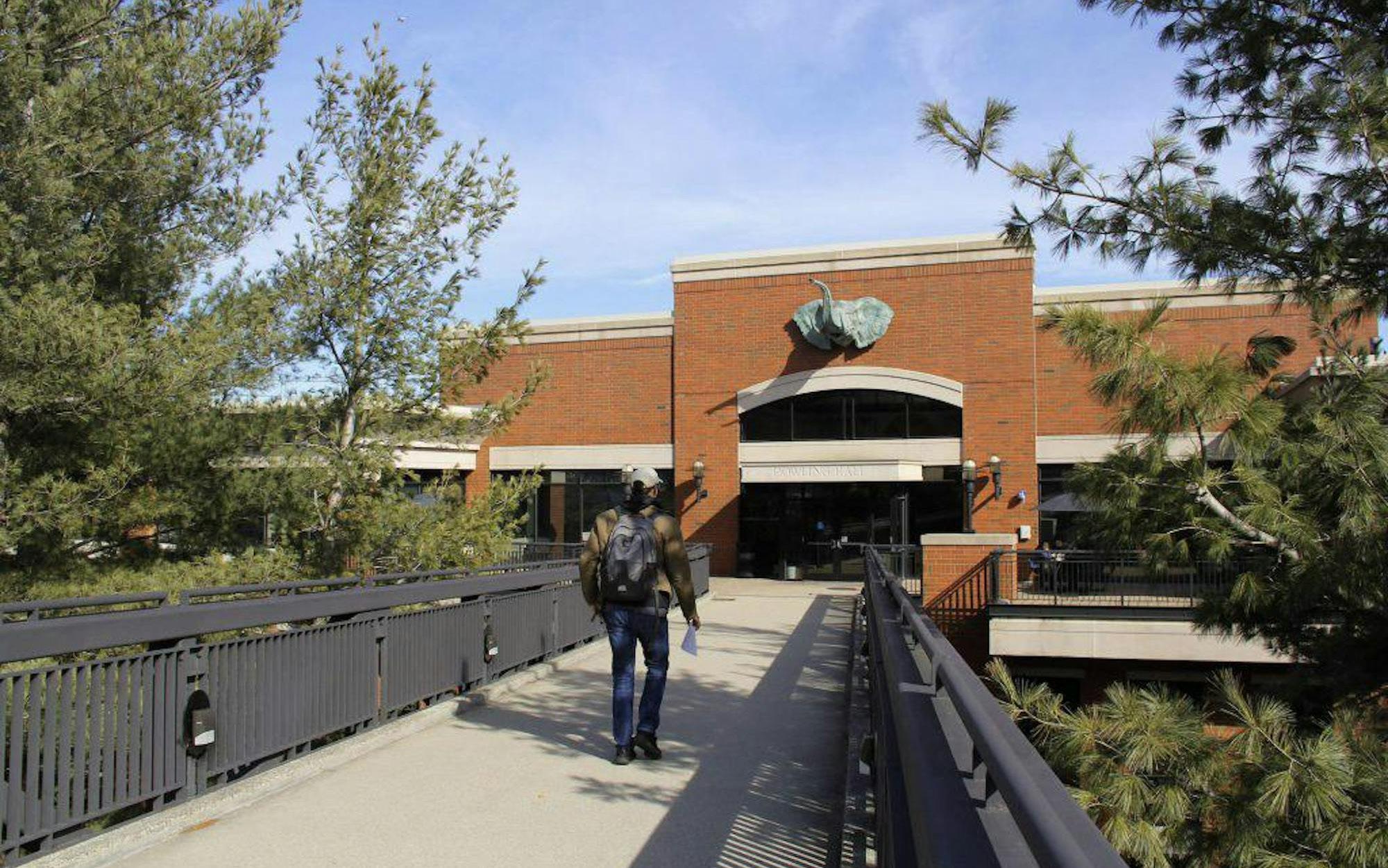
Dowling Hall, the location of the Financial Aid Office, is pictured.
Students and faculty express concerns about financial aid
FINANCIAL AID continued from the front
Josué
The Tufts Daily is the entirely student-run newspaper of record at Tufts University in Medford, Mass. An editorially and financially independent organization, the Daily’s staff of more than 100 covers news, features, arts and sports on Tufts’ four campuses and in its host communities.
Tufts Daily office is
on the colonized land of the Massachusett people and within the territories of the Nipmuc and Wôpanâak (Wampanoag) tribes.
enough credits elsewhere to graduate early, she was not approved for early graduation.
“This past year, we appealed over the summer, and they rejected it. The other piece that’s also hard to swallow is [that] I’ve been in this battle [over] the residency requirement,” Thorne said. “That is a losing battle that I’ve accepted … but it particularly hurts now that I’m denied all of my financial aid.”
Thorne criticized the Financial Aid Office for the manner in which it announced aid cuts.
“What feels predatory about it is [that] this is happening [during] my senior year, and if they had cut my financial aid [earlier], I would have probably transferred for more agency in changing my situation. Paying the tuition is financially — just objectively — a very irresponsible, poor decision for my family,” Thorne said. “I feel completely trapped because I’m a senior — I’m stuck here.”
M.G. Beastrom, a senior, has also experienced multiple major cuts to her aid over her four years at Tufts. Beastrom, who self-funds her education, came to Tufts under the impression that her cost of attendance would be completely covered. However, according to Beastrom, she received multiple unexpected charges on her account that would have made it significantly challenging for her to pay.
Beastrom successfully appealed these extra charges. While holistic aid calculations and additional charges have separate appeal processes, Beastrom said that each time she received sparse and bureaucratic responses from the university.
“I just think it’s ridiculous that you have to get to that point in order to receive the aid in the first place,” she said.
By working off-campus jobs, living on campus through the Greek life organization Alpha Tau Omega and consistently appealing, Beastrom is financially able to finish her education at Tufts. Nevertheless, she lamented how difficult it was to appeal each unexplained charge.
“I just can’t believe how harrowing the process [of appealing] was every single time,” she said.
Given the difficulties she had communicating with the Financial Aid Office, Beastrom expressed frustration that despite the Tufts Tuition Pact, the financial aid application process is largely the same.
“They’re not changing the process,” she said. “It’s still humiliating.”
According to Patrick Collins, executive director of media relations, the university “prioritize[s] meeting the full demonstrated need of our students, ensuring that those who require financial assistance receive the support necessary to attend.”
Beastrom questioned the university’s commitment.
“What they say [is] ‘we meet 100% of demonstrated need.’
But they decide what ‘demonstrated’ is,” she said. “I would appreciate, as someone who receives financial aid, some kind of clarity on how they’re making the decisions.”
In 2022, Michel Darling started their undergraduate education at the School of the Museum of Fine Arts at Tufts University. They received a financial aid package that covered a large portion of the cost of attendance. Their parents — who immigrated to the United States from Ukraine — had their own financial burdens. As a result, Darling funded their education entirely on their own.
According to Darling, their financial aid package was cut in half two years into their degree. Darling was unable to pay the remaining amount of money, having already taken out loans for fees and living expenses. They went through the regular process of appeals but were denied. According to Darling, the financial aid counselor they spoke to claimed that they were “so sorry to hear that” but that their “hands [were] tied.”
Similarly to Do, Darling was eventually forced to leave Tufts before the fall of 2024. They completed two years of college and poured thousands of dollars into their education only to be left with no degree and a financial burden even greater than the one they originally carried.
Darling assumes their aid was cut because they were no longer eligible for a sibling enrollment reduction. Their sister graduated from college, and while she went on to pursue a master’s program, the Tufts Financial Services website states that “graduate students are not included in the number [of siblings] in college calculation for institutional aid purposes.” Consequently, Darling was no longer eligible for the sibling enrollment reduction.
“I think what had happened was [that] my sister graduated … and entered a master’s program,” they said. “When that happened … [the FAFSA system assumed,] ‘Oh, well, this family is only paying for one student’s college, so then they can contribute more to only one dependent instead of two.’”
However, that was not the reality of Darling’s situation, and they were ultimately forced to take on the increased financial burden despite not receiving any financial contributions from their parents.
A solution to this issue could be claiming dependency; however, the process for granting dependency overrides requires students to provide documented proof of special circumstances, such as abuse, abandonment or the institutionalization or incarceration of both parents. This puts students like Darling, who do not fall under these circumstances, in a difficult financial situation.
Consisting of both Tufts professors and student representatives, the Undergraduate Admissions and Financial Aid Committee holds sessions with the Office of Undergraduate Admissions and the Financial Aid Office to discuss university policy.
Aung Paing, an international student from Myanmar, is one of the student representatives on UAFAC. Paing joined the committee with the intention of helping other international students navigate the financial aid process.
According to Paing, UAFAC’s purpose is to discuss potential
issues with both the Office of Undergraduate Admissions and the Financial Aid Office for the upcoming academic year. However, Paing noted his surprise at a lack of activity from UAFAC.
“When I first applied, to be frank and to be honest, I [thought] it would be more active than this,” he said.
Paing explained that the committee, to his knowledge, only meets once at the beginning and once at the end of each semester.
Within the committee, there appears to be a lack of knowledge around the issue of students having their financial aid removed.
“I’m not aware of [the issues],” Professor Natasha Warikoo, one of the faculty representatives on UAFAC, said. “Which is to say that I don’t think it’s come up on our committee.”
Cristian Staii, the faculty chair of UAFAC, did not respond to multiple requests for an interview.
A faculty member at Tufts — who requested anonymity out of fear of retaliation — told the Daily that while UAFAC can raise issues relating to aid, ultimate decisions on aid policy are made by J.T. Duck, the dean of admissions, and Meaghan Hardy Smith, associate dean of financial aid.
The faculty member added that they believe that many of the aid reductions may result from lower funds, affecting both aid and research funding.
While UAFAC does not set financial aid policy, Paing expressed concerns that committee members may not be hearing concerns from students facing issues with financial aid. Ultimately, when students are faced with issues regarding their financial aid package, they can only turn to the appeals process.
Universities’ financial aid process can leave many students confused and frustrated. Tufts is no exception. Another anonymous faculty member familiar with Tufts’ financial aid process confirmed that even for experts within the system, the details can be overwhelming.
“At all colleges, [financial aid] is famously a bit of a mysterious process, and not everybody has eyes on it,” an administrator, who was granted anonymity out of fear of retaliation, said. “The problem for Tufts [is that] it’s a highly-selective school, and it’s a school that commits to meeting the full financial need of all accepted students.”
Currently, the School of Arts and Sciences and the School of Engineering have a need-aware admissions policy, meaning that Tufts considers financial need as a factor during the admissions process in an effort to meet the financial needs of all students. This system differs from ‘need-blind’ admissions, in which financial aid is not taken into account during the application process and is usually offered afterward.
“When you’re applying, if you have financial need, they’re looking at your need in making the decision, and they’re distributing their aid accordingly,” the administrator said.
In comparison with peer institutions, Tufts stands out in its admissions policy of taking
need into account. Other Bostonarea universities, such as Boston College and Harvard University, for example, have need-blind admissions policies.
“I’m sure it’s a goal of Tufts [to be need-blind], but we just don’t have the funding, the endowment, the money,” the administrator said.
The Tufts Community Union Tuition Transparency Town Hall held on Feb. 10 further confirmed the university’s current inability to offer aid to all prospective students.
“We spend a lot of time fundraising and whenever we meet with a donor … they ask us, ‘What do you need money for?’ [and] the number one response is financial aid,” Bárbara Brizuela, dean of the School of Arts and Sciences, said during the town hall.
According to Brizuela, the primary funding for the Tufts Tuition Pact comes from donations as deans seek potential donors to encourage their support of the pact.
The anonymous administrator noted that the pact raises concerns about how the demographic makeup of Tufts students may shift.
“It’s great PR to be saying that,” they said. “Actually, that does nothing. They’re still making admissions decisions based on need.”
In all, the central question lies in Tufts’ capacity to support its student body and help navigate the complexities of the financial aid process.
“We think about [students and their experiences] every day, and there’s a lot of things we want to invest in … to provide you all with the best experience and the best support systems,” Brizuela said.
According to Collins, unlike other institutions, Tufts calculates aid yearly. The Bursar’s Office uses a calculator based on government-verified data like that provided by the FAFSA. Additionally, the Financial Services website provides information on the aid calculation process, and a brochure outlining it is sent to all applicable families with students entering Tufts.
Despite the provided information, students are still confused by aid calculations. Appeals are also limited to one per year unless a parent loses their job. Furthermore, aid decisions are made without initial warning before students can appeal.
In reference to students’ concerns with the residency requirement, Collins stated that the requirement “is independent of financial aid.”
“The university strives to make a Tufts education possible for students from all socioeconomic backgrounds,” Collins wrote. “Tufts is committed to supplementing financial aid with programmatic assistance that helps students succeed. … Our financial aid policies remain focused on maintaining access for students across all income levels and providing aid that reflects each family’s unique financial situation.”
Despite Tufts’ commitment to meeting the financial needs of students, the university has consistently failed to communicate changes in funding, many of which do not reflect the lived experience of those who need it.
Dining cuts attributed to budget overrun
I’ll have to apply somewhere not at Tufts, because it just doesn’t seem reliable.”
worker, who lives on campus with a meal plan, said the cuts could be serious.
“I’m so glad that I am living on campus with a meal plan, because I would not be able to pay rent or eat,” they said. “Now I’m thinking
While the immediate cuts appeared to target Dewick, other dining locations may be affected by similar pressures.
Diego Davila-Gil, a junior student worker in Tufts Catering, a branch of Tufts Dining, said
scheduling was unpredictable in the department.
“I’ve definitely heard about [fewer] hours and additionally strange hours,” Davila-Gil said. “I think that’s a reflection of trying to minimize how they have to pay employees.”
He also noted that management has recently become stricter
about enforcing employee breaks, which he sees as another cost-saving measure.
The university’s broader finances have been under strain. Federal research funding cuts have disrupted labs and student jobs, while Tufts projects fiscal year 2025 spending of $1.27 billion, with 60% going to compensation and benefits.
Klos wrote that the dining department would evaluate student labor needs for next year based on “enrollment, operating hours, and available funding.” She added that the goal is to “maintain the quality and reliability of dining services while being responsible stewards of university resources.”
New 26-bed homeless shelter set to open in Somerville on May 19, following court decision
operating the shelter was part of its religious mission.
The Massachusetts Land Court upheld Somerville’s efforts to create a 26-bed, low-barrier shelter at First Church Somerville on April 6. The new shelter, hosted by the Somerville Homeless Coalition, is set to open on May 19.
Residents filed a lawsuit claiming that the shelter violated local zoning ordinances. However, the court found that the project is protected under the Dover Amendment, a Massachusetts law that limits local regulation over land use for religious purposes, allowing the church to host the shelter.
“First Church entered into the lease with the Coalition in order to fulfill the congregation’s religious mission,” the April 6 ruling reads.
While the lawsuit argued that hosting a shelter was not a religious use of the space, the decision highlighted the church’s nine-month discernment process that led it to pursue the shelter. The process included “consulting scripture and gathering in community to determine what God might be calling the congregation to do.” From this, the church concluded that
“If you go to Scripture, the most important thing throughout all of the Hebrew Bible and all of the New Testament is care for the marginalized,” First Church of Somerville Reverend Jenn Macy said.
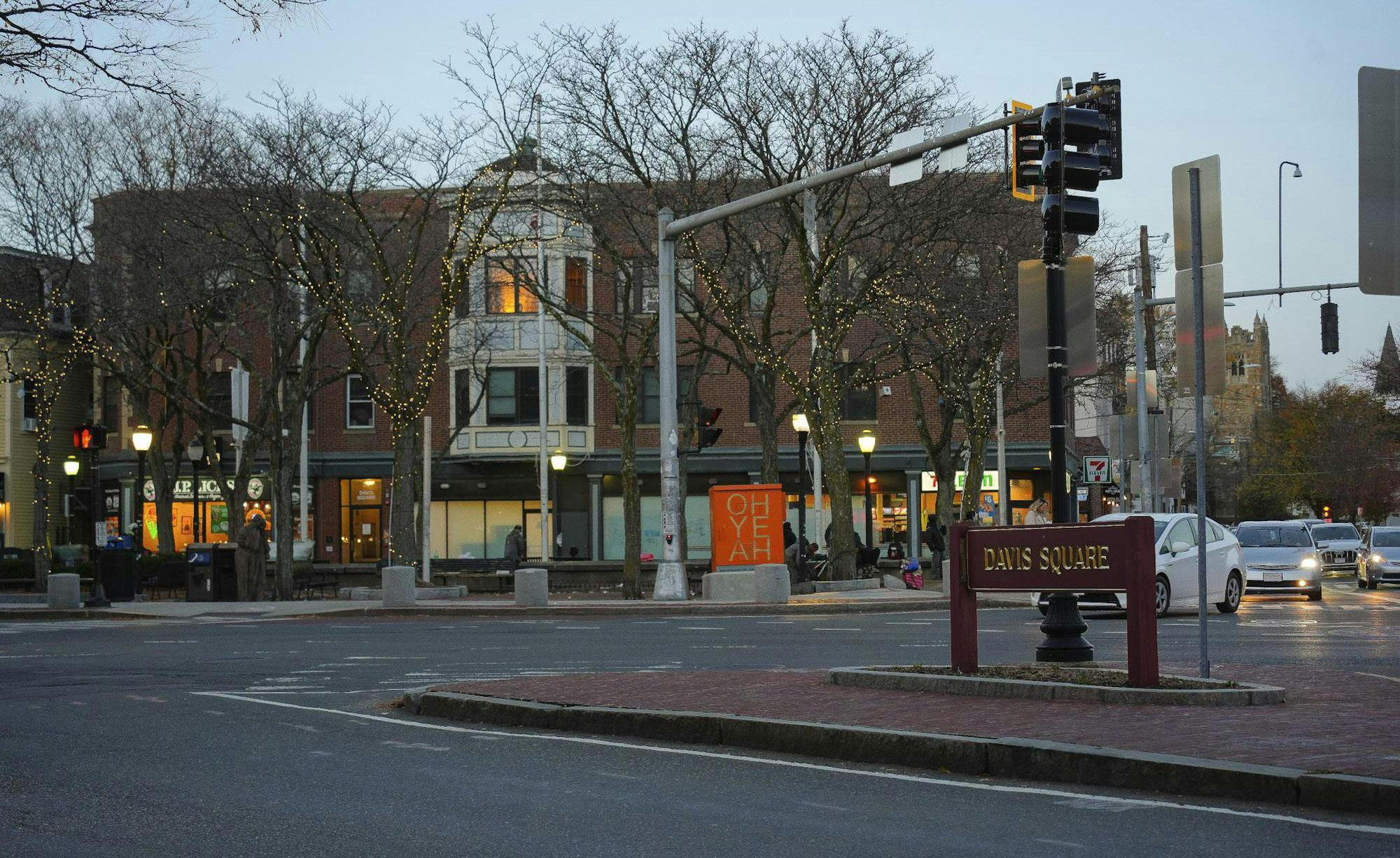
Community leaders and homeless coalition representatives expect the shelter’s opening to reduce the number of people currently sleeping outdoors in Davis Square.
“We have a number of people in Statue Park and Seven Hills Park stuck outside, and there’s a waitlist to get into the Somerville Homeless Coalition shelter as it is now,” Christopher Beland, vice president of the Davis Square Neighborhood Council, explained.
Somerville Homeless Coalition, or SHC, leadership also emphasized how the shelter will benefit the broader community beyond the individuals it serves.
“The goal is obviously to help those individuals that need that service, but a dual goal is to support the community,” Micheal Libby, executive director of SHC, said. “We hope [the shelter] is not
only impactful for each individual that is able to stay in [it], but we also hope it’s impactful for residents, neighbors [and] businesses that have been sharing their struggles.”
Residents Jane Becker and Maren Chiu, who brought the lawsuit, raised concerns about safety, increased rodents, noise and decreased property value associated with placing the shelter in a residential neighborhood. These concerns primarily stem from the shelter being low-barrier.
“Chiu and Becker testified sincerely that the reason they oppose the proposed shelter at First Church is because of its ‘low-barrier’ status,” the decision reads. “They would not oppose First Church’s hosting a shelter for families, elders, or women.”
Because one of SHC’s primary funding sources is the Commonwealth of Massachusetts, its contract with the state requires the shelter to be low-barrier. The Coalition’s existing shelter has been subject to the low-barrier entrance requirements since approximately 2023.
“People who are struggling with addiction should not [need]
to have a certain amount of sobriety in order to be housed,” Macy added in support of the shelter’s low-barrier status. “There is no drug use allowed in the shelter itself, but people who are still in ongoing struggles with substance use still need places to eat and sleep that are safe so that they can get the help that they need.”
To help address concerns, SHC has developed written procedures for operating the proposed shelter, which includes content about client conduct, neighborhood safety, building maintenance and a communication plan in the event that neighbors have an issue with shelter operations.
Macy hopes the ruling in favor of the shelter will encourage other Massachusetts churches to follow suit and take an active role in providing housing for homeless people.
“We had a couple of smaller churches reach out to us when the lawsuit ruling was filed, saying that they had been sued for trying to start homeless shelters over the same issue over the Dover Amendment, but they did not have the resources to fight back,” Macy explained.
“We are excited about what this
ruling might mean for smaller churches.”
While setting a valuable example in the end, the lawsuit came as a surprise to SHC. It was brought by community members who had previously been closely connected to the church. Chiu and Becker both were frustrated that SHC had not involved the community more in the decision to relocate the shelter.
“Neither the Coalition nor First Church reached out to inform the neighbors of the new shelter location until a deal had been consummated and a building permit had been obtained,” the ruling reads, recalling Becker’s testimony.
Despite the concerns, the lawsuit’s delayed resolution may have had more adverse effects on residents than the shelter itself, though this will only become clear over time.
“The [projected] impact on the neighbors that live near the shelter seems to be very small or nonexistent, but the impact [on] so many people sleeping on the street in the neighborhood is huge, and it’s one of the things that people are most upset [about] right now,” Beland said.
Anika Parr Deputy News Editor
STELLA JEONG / THE TUFTS DAILY
Davis Square is pictured on Nov. 14, 2024
FeATureS
What does it take to plan Spring Fling?
This Saturday, the Academic Quad will be full of students decked out in pastels, glitter and knee-high boots as they gear up for Tufts’ biggest event of the year — Spring Fling! With GROUPLOVE opening and Zara Larsson as the headliner, the concert has everyone bursting with excitement. But what goes into planning one of the most anticipated days of the year?
Though Spring Fling was announced on March 5, seniors Quinn Sobieraj and Luke Steiner, Tufts University Social Collective’s live entertainment coordinators, started brainstorming for the event early last summer. Until September, they worked closely with Pretty Polly Productions, which acted as the bridge between TUSC and artist agencies.
One of the first steps in the planning process was establishing the vibe they wanted for the concert. From the beginning, Sobieraj and Steiner were on the same page about their vision for Spring Fling.
“We really prioritized a cohesive concert where there’s an energy buildup, which is something we both wanted,” Steiner said. “We also wanted the general vibe of a fun festival — outdoor, summertime — embodying the Spring Fling energy.”
Early in the process, Steiner and Sobieraj also decided to have only two performers, rather than three, as has been the case in the past. They noted that when the show ran longer, students often got tired. They wanted to prioritize two more impressive names over three smaller ones.
“When we were trying to decide what artists we wanted
A
Jumbo’s Journey Abroad
A post, a picture, a memory
Ben Rachel
Originally published April 21.
Ihave been on a lot of airplanes over these past few months. As someone who has a goal of traveling to as many new places as possible, flying has almost become a weekly routine. This is all very ironic considering that I despise airports and airplanes in general. Let’s just say my time studying abroad has only affirmed my dislike. F--- you, Ryanair.
My time on airplanes is split into three activities: sleeping off a hangover, performatively reading a book or scrolling through old photos on my phone.
to send offers to … we created a spectrum of what we thought the Tufts population looked like and tried to find artists that would be right in the middle so we could reach the broadest audience,” Steiner said.
By early October, Sobieraj and Steiner knew that they wanted GROUPLOVE and Larsson as this year’s performers. However, finalizing a lineup was no easy task. Through the production company, they went through several rounds of emailing and negotiation to secure the lineup.
“There’s a lot of waiting between contracting with the [artists and] them sending offers back,” Steiner said. “There’s a lot of negotiation, and so we ultimately have to make a decision on whether something they sent … is something that we’re comfortable with. … It’s a really lengthy process that takes a long time.”
Curating a concert with enough energy to keep Tufts students excited was Sobieraj and Steiner’s priority.
“We started with [finding] a band … because it felt like it had been a few years since we had [one]. And we thought [GROUPLOVE’s] energy was a really great platform to lead into the hype energy that [Larsson] brings,” Sobieraj said. “With our headliner, we were very focused on catching someone at the right time in their career. We saw that she was getting a little … more attention again, and I think we just struck at the perfect time, because she is completely skyrocketing in her career.”
When the announcement went live, the student body was electric. GROUPLOVE’s upbeat and nostalgic vibe, combined with Larsson’s recent resurgence in popularity, had many students eagerly anticipating the
Browsing through photos is already a dangerous activity; the older I get, the larger my camera roll grows. Pictures that feel recent, events I just attended and moments I just lived, turn out to be years old.
Two weekends ago, I took a late flight to Paris and, instead of sleeping (it was the most uncomfortable flight I’d ever been on), I perused old pictures on my phone. I scrolled through my camera roll a bit and ended up in 2023 — my senior year of high school.
At first, it was fun scrolling through those photos. Seeing my hometown friends and I in that special basement. The library in my school that I spent an outrageous number of hours at. Prom pictures, baseball games, my family — everything! As I scrolled through those pictures, it felt like I was still there as a senior in high school.
When I broke through the trance and remembered I was a rising senior in college, I felt a little bit sad. I missed that period of my life. And then I realized something: Soon, I’ll be scrolling through pictures of this

day. Sophomore Tiger Nguyen’s video announcement on the TUSC Instagram was a major part of building that excitement.
As a graphic designer on TUSC’s marketing team, Nguyen switched gears to take on this larger-scale videography role for Spring Fling toward the end of last semester. Working on the video announcement for over three months, he was closely involved in bringing this year’s Spring Fling to life.
“A lot of it was trial and error; I messed with a bunch of different overlays, a bunch of different effects and saw what stuck,” Nguyen said. “Every transition, every part that I made, I rendered it and then sent a draft to the rest of the Spring Fling marketing team and was like, ‘Hey, what do you guys think of this? What should I change? What should I add?’ The whole process was more collaborative than I would have assumed.”
Sobieraj and Steiner also collaborated closely with Tom Adams, the Tufts director of health promotion, to incorporate harm-reduction measures
exact experience — my semester abroad, these trips and these people — ultimately wishing I could go back.
That realization changed my perspective. My time studying abroad ends this week. The date I have been dreading since I left O’Hare is only a few days away. One thing that I keep thinking about is how I have spent each and every day. I think about how so many moments during this semester, and my life, felt completely ordinary, mundane and routine, but now they feel completely irreplaceable. They are moments I would pay money to be able to relive. Back then, they were just days. Now, they are memories I wish I could step back into. Even now, with only a few days left, things still feel normal. My days still feel like a routine, like this will be my life forever. Currently, my walk to the metro station is mundane. Normal. Systematic. And even though it feels like I will continue to walk that same walk for a long time, it will soon be a memory that I wish I could relive. It’s difficult to recognize
and ensure the event runs smoothly.
“We are redoing some of the language for the harm-reduction lawn signs … we [want to] make sure the messaging that we’re communicating in terms of student safety is something that we feel good about and that a staff member feels good about as well,” Sobieraj said.
While all the exciting elements on the day of the concert — the graffiti wall, snack stations, photo ops, lawn games and giveaways — might seem to be there simply for enjoyment, many of these decisions are guided by considerations of student safety.
“To prioritize health and safety by making the environment more exciting, there’s a lot of things we’re trying to do that help with crowd control by pulling people into fun activities,” Steiner said.
At an event of this scale, environmental impact is also a key consideration. To limit plastic water bottle waste, a new system will be used.
“We’re doing canned water at the concert … and more water
that idea: We’re living in moments that haven’t become memories yet.
As humans, it seems like we rush, normalize and assume there is always more time. But in reality, things come to an end. My study abroad experience, which I have literally thought and dreamed about for years, is coming to an end. And although I knew this was going to be a once-in-a-lifetime experience and it would go by fast, I normalized it.
Unfortunately, this isn’t just about me or about Barcelona, but a way people experience life. Moments become routine. Experiences become normal. We rarely recognize meaningful moments while we are in them. Meaning is often assigned after the fact. Nothing feels like a memory while you’re living in it.
While I can write that going into my last year at Tufts, I will live every moment like it’s my last, that’s probably not going to happen. When I’m back on campus next year, life will once again become a routine. But what I can change is my perspective.
My goal isn’t to escape routine or live every day like it’s my last. That’s
refill stations, and we’re offering reusable [plastic] tumblers that are colorful and fun so that students can have that as a souvenir,” Sobieraj said.
The biggest takeaway Steiner and Sobieraj have from coordinating this event is how challenging and rewarding it is to take on a project that aims to please a population as large as the Tufts student body.
“I’ve never really done something [like this] before, in TUSC or outside of [it], where I’m trying to think of how to make something exciting and fun and safe … for a group of this size,” Steiner said. “It’s really an exercise in how much we can try to understand the Tufts environment.”
“I want students to know that we’re doing everything that we can think of to make this as exciting and positively memorable as possible for them. We want to make everyone feel seen and [for] everyone’s needs to be met, and that we’re predicting those needs the best that we can,” Sobieraj said. “We think this year is going to be very exciting!”
unrealistic. Instead, it’s to be more cognizant. To notice a little more when things are happening, even when they feel ordinary. It’s being aware during walks to classes, latenight conversations and random weekday dinners — the things that will quietly become memories I’ll one day scroll past on my camera roll and wish I could return to.
I don’t think I will suddenly start living differently overnight. But I do think I can start paying attention more while I’m still here, before these memories turn into something I’m looking back at instead of something I am living.
So, I’m just trying to be a bit more present before these experiences become an Instagram post, a picture or a memory.
Relishing Barcelona one last time, Ben Rachel
Ben Rachel is a junior studying economics and computer science. He can be reached at benjamin.rachel@ tufts.edu.
Navya Singh
Assistant Features Editor
JOHN MURPHY / THE TUFTS DAILY
A large crowd is pictured at the 2025 Spring Fling concert.
An Everyday Art Tour Living history
Sophie Herron
Henry Cooke (A’79, AG’84), founder of Historical Costume Services, discovered his passion for history while trying to bolster his college application. Cooke worked throughout high school to pay for college, which didn’t leave him much time for extracurriculars. Because of his interest in history, his school counselor suggested he join a newly-formed minuteman reenactment group.
As the son of a dressmaker, he always had a special knack for sewing, and soon found himself as the group’s costume maker.
“I got involved in living history as a reenactor in this minuteman group … and we needed clothing,” he said. “I don’t have a ton of money, but I know how to sew. So, I sewed for my buddies.”
Cooke continued reenacting as an undergrad at Tufts, where he changed majors from geology to history. He took a course on the American Revolution — coincidentally, during its bicentennial year — and was struck by
ArTS & POP CuLTure
the course’s principal text, “The Minutemen and Their World” by Robert Gross. The book’s focus on “ordinary people interacting with extraordinary events of their times” especially resonated with Cooke, who missed the Vietnam draft by one year.
“It had meaning to me. Still does. It still inspires me,” Cooke said.
After graduating from college, Cooke spent an additional four years at Tufts completing a master’s program in American social history.
“I was having way too much fun studying [and] doing research,” Cooke said.
Despite his education, Cooke struggled to find a job upon graduating.
“I was competing with people with Ph.D.s for entry-level jobs in the history field in museums,” Cooke said.
To make ends meet, he continued tailoring, and his extensive historical education aided his burgeoning career.
“I was making clothing and didn’t realize I was creating a career for myself,” Cooke said.
“I could do everything. I could do research for people on what somebody wore at a certain point in time or what a uniform looked like for a particular regiment in the army, and that made me valuable, that gave me skill sets that other people didn’t have.”
His restoration work began by mending a Civil War-era uniform in the late ’80s. Today, he is responsible for the 1814 U.S. Navy Officer’s Uniforms for the USS Constitution and has worked for the Smithsonian and the Donald W. Reynolds Education Centre at Mount Vernon. For the Mount Vernon project, he collaborated with the sculpture studio, StudioEIS, along with a forensic anthropologist, a historian and sculptors from Madame Tussauds to produce “the most lifelike figures of [George] Washington ever created.”
Cooke also enjoys collaborating with other professional “history geeks.”
“We’re playing with the toys of history, and it’s so cool,” Cooke said. “They’re wonderful people to work with.”
Historical accuracy is critical in Cooke’s work which requires careful attention to materials, cut, fit and consistency among pieces.
“My goal is to make you look like you stepped out of a painting,” Cooke said.
He studies extensively, using tailors’ account books and journals to “get in the heads of the people of the past.”
Cooke embraces every opportunity to study the garments themselves. He described the experience of visiting a local history museum in Robinson, Ill.
“They had a vest mounted low in their display case, and I’m sitting on the floor, and I’m looking up inside it, and all of a sudden I’m aware of a pair of knees next to my head,” Cooke said.
The curator approached him to ask if he was okay, to which Cooke replied, “I’m having a blast.”
Cooke has had the opportunity to handle historical clothing directly, including Washington’s second inaugural suit. He reflected on how lucky he was to have had these opportunities while teaching workshops in historical tailoring.
Cooke said that, for his students, “their whole view of the past [has] a sheet of glass in front of it.” So, he began collecting historical garments to bring to workshops so that people can pick them up and “have that ‘aha!’ moment that I get to have on a regular basis.”
Cooke continues to reenact, with favorite roles including Reverend William Emerson and the farmer and tailor Hopestill Bradley.
“I want to be able to share the story of the past with honesty, the wonderful, messy honesty of the past, and help people understand its complexity,” Cooke said.
Living history interpreters share the past by creating a
narrative where clothing plays an important role.
“We’re telling a story with our whole selves and everything we have about us,” Cooke said. “The visuals of what you’re looking at do a lot to help convey the veracity of that story and make you believable.”
The public engagement component of living history makes it a unique form of education.
“Nobody’s pounding it in your head. You’re just having a blast learning stuff, and before you know it, you suddenly know stuff about history,” Cooke said.
While many living history interpreters of Cooke’s age have retired, he enjoys working with the younger generation.
“And by golly, I’m still learning stuff from them, and that’s what keeps it new and exciting and interesting,” Cooke said. Cooke’s passion for the past is fueled not only by the people he works with today but also by his family’s history.
“[Reenactment is] a way of honoring the people who came before me, who gave me the opportunities that I have today,” he said.
Sophie is a sophomore studying international relations and French. Sophie can be reached at sophia.herron@tufts.edu.

COurTeSY HeNrY COOKe GrAPHIC BY JAMIe SONG

BY DYLAN Fee







Shayna Levy
Late Night At The Daily
Emily: “I had to come out as not a lesbian–”
Caroline: “You’re not a lesbian?”
Shayna Levy

Kitchen
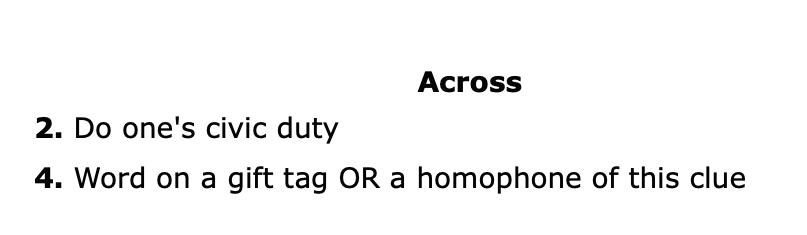
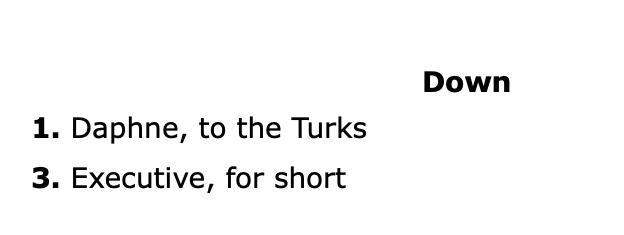
Crossword: All night, all summer



Shayna Levy
Op-ed: What 12 first-years taught us about the university’s role
wrong and just and unjust in American life.
There is a national conversation on the role of the university in American life. Here at Tufts, it revolves around whether universities should have a political agenda, how students should relate to one another and the best way to engage students with the curriculum given the constraints of our times. We are graduating seniors who spent the last semester teaching an Experimental College class on the American presidency to 12 first-years. This experience gave us a view into some of these core and pertinent themes. Here is what we learned.
Our task was to bring the American presidency to life — not just who the presidents were, what they achieved and what their shortcomings were, but also to put the class in their shoes. We wanted our students to grapple with the fundamental issues that make societies succeed, to interrogate what we owe our fellow citizens and to examine the government’s proper role in our lives. We hoped our students would grapple with the weight of these questions and begin to map out answers alongside their peers through rigorous and collaborative study. In short, we sought to use the cases of American presidents as a vehicle for exploring what is good and bad, right and
When we started teaching class this fall, our attitude was markedly different. We saw our job as maximizing the historical facts, political narratives and presidential policy positions our students would take away from the course — how many bills they could explain and how Bush’s Cabinet differed from Clinton’s. While this approach certainly had its pedagogic merits, we came to realize that we needed to find ways to better demonstrate to our students that the material was directly related to them as individuals. Bridging this gap between the historical and the personal would allow our students to fully understand the material and engage with renewed vigor.
We found that a productive way to achieve this goal was to open class with a series of open-ended normative questions, which, after a spirited debate, we would relate to the presidency. To that end, we often asked our students questions aimed at determining what it means to be an American. Is American identity creedal or ethnic? What does it mean for it to be either of those things, and what are the relative benefits of each? How can a president define these boundaries, and how do they keep them porous? The extent to which these students were able to grapple with these perspectives with depth and maturity was
surprising and refreshing. The partisan valence of any position did not stop them from interrogating their true beliefs. This dynamic applied to other questions we asked, such as what we owe to the least of us in society and who owes what to whom.
We did not assign our students an essay on these topics or limit their engagement with them to discussion posts and take-home readings. Every Tuesday night for two and a half hours, our students discussed and debated these topics among their peers face-to-face. We would push back, and they would consistently reconsider their preconceived notions and prejudices, reasoning every step of the way. Our students drew on their accrued knowledge of the presidency, their personal experiences and their independent research (our midterm assignment asked students to research and present on a topic of their choice relating to the presidency) to make thoughtful arguments and counterarguments.
We believe the unique circumstances of an Ex-College class led by two seniors contributed to this positive environment, but that some lessons might be extrapolated for general use. For starters, our class was pass/fail. This allowed students to truly engage with the material without fear of jeopardizing their grade; thus, they were freed to pursue knowledge
for its own sake. Little mistakes would not have significant consequences, and therefore our students could take intellectual risks. Of course, grades are a necessary and important part of the university, but they must be seen as one measurement of education’s ultimate goal, not the end itself. A well-rounded education ought to strive beyond prioritizing merely the factual that standard grading encourages and instead pair an understanding of the world as it is with a deep meditation on the world as it should be. A fuller education pushes students to form normative arguments about the world around them, grounding those arguments in factual, historical knowledge.
Another reason we believe our class was open to learning and comfortable with a diversity of viewpoints was that it consisted of a group of 12 first-years. Our class was among their first experiences at the university. As a result, their views had not yet had time to ossify and did not fall neatly into any mold. They were, perhaps, more receptive to different opinions than older students because their approach to learning was not as narrowed as it may become after declaring a major and deciding on a career path. Furthermore, some of the cohort’s most trenchant political insights were posited by biology or economics majors. To fulfill its mission of
intellectual breadth, the university must recommit itself to encouraging students to explore beyond their major and apply this knowledge to new disciplines.
As we leave Tufts next month, teaching this course will have been our most formative college experience. We learned that the university today must recenter learning for its own sake and involve asking ourselves and each other hard, normative questions. The ramifications of realizing that principle extend beyond the university and can help guide individuals toward an always curious, fulfilled life. We hear these sentiments often from our peers and our professors: that the university and our society at large are missing something fundamental. This experience showed us that change can only happen with meaningful, deliberate engagement.
If universities fail to inculcate this kind of engagement, we risk producing graduates who know a great deal but who believe in very little. Our experience suggests a different path is both possible and preferable. The university ought to steer clear of teaching students what to think, but learning to make value judgments is mission-critical. In the battle for a more thoughtful, kind and civil society, all of us must do our part — and universities can lead the charge.
Op-ed: Invest in our future, vote Brendan French for TCU president
to shape how he approaches his work.
When considering who should serve as Tufts Community Union president, the most important question is simple: Who can you depend on? Brendan French is dependable, well-rounded and consistently willing to do the work that keeps the student government running. He not only has plans, but works to ensure that they happen and keeps his promises.
We first met Brendan at the fall 2023 TCU Senate retreat. Right from the start, he was friendly, outgoing and genuinely eager to understand people, learn more about the Tufts community and how he can support it. That curiosity is informed by his childhood and the perspective he gained from living abroad in China. Over the past three years, he hasn’t lost that mindset. That same curiosity and enthusiasm continue
Since his first month at Tufts, Brendan has been deeply invested in the TCU Senate. While still finding his footing on campus, he ran for Class of 2027 senator and won. He then went on to win an additional two internal elections and became an Allocations Board member and assistant treasurer. Brendan didn’t treat these as titles to hold, but as responsibilities to carry.
“Frenchy is a very dedicated person,” Camila Saporta, a junior, The Ivy co-president and longtime friend of Brendan, said. “Ever since I met him, he has taken his role [on the] Senate as one of great importance, always making sure that every voice is heard, every decision is thoughtful and that he represents the students with integrity, consistency and genuine care.”
He has worked as the assistant treasurer, associate treasurer and now the head treasurer.
In addition to his duties as a class senator and member of the Administration and Policy committee, he balances and communicates with over 350 clubs, along with lengthy weekly meetings and high-pressure budgeting cycles as an ALBO member. He did all of this while keeping up with a demanding pre-med courseload. More than executing his duties and exceeding those expectations, he has consistently stepped beyond the boundaries of his role, both covering for the treasurer and stepping into the TCU historian role midway through his sophomore year when needed. Half of his three years on the Senate have been spent on the executive board, so he truly understands how words turn into action.
Brendan has established himself as someone who leads by example. As Elle Chassin, assistant treasurer and Class of 2029 senator, puts it, “I am always blown away by Brendan’s ability
to think holistically about how to help clubs, his diplomatic and professional way of interacting with senators and the community alike and his innovative way of finding solutions to problems.”
Michael Onysko, former Class of 2027 senator and associate treasurer, echoed this sentiment, saying, “He’s one of the most inspiring people that I know.”
That combination of big-picture thinking and genuine reliability is so rare. It’s also exactly what the role of TCU president demands. Brendan’s commitment extends beyond Senate meetings. He invests in the Tufts community in more than just one way.
“Over the past three years, we’ve walked dogs together through Tufts Animal Aid and volunteered at community events in Somerville,” Mia Shao, a senior and friend of Brendan, said.
He’s also an active member of a club soccer team, Tufts Black Student Union and Tufts
African American Foundations and Roots Organization and volunteers weekly at the Brigham and Women’s Hospital. These commitments reflect a pattern: Brendan shows up for his community, whether or not anyone is watching. And that consistency, more than anything, is what makes him the kind of leader who will follow through.
We urge you to consider voting for Brendan French for TCU Senate president. Invest in our future.
Caroline Spahr served as the TCU historian, services chair and assistant treasurer. Iman Boulouah served as the SWANA community senator and diversity officer. Alexander Vang serves as the TCU vice president.
Contributors were Elle Chassin, assistant treasurer; Michael Onysko, former associate treasurer; Mia Shao, member of Animal Aid; Camila Saporta, co-president of The Ivy.
The Tufts Daily is a nonprofit, independent newspaper, published Monday through Friday during the academic year and distributed free of charge to the Tufts community. The content of letters, advertisements, signed columns, cartoons and graphics does not necessarily reflect the opinion of The Tufts Daily editorial board.
EDITORIALS: Editorials represent the position of The Tufts Daily Editorial Board. Individual editorialists are not necessarily responsible for, or in agreement with, the policies and editorials of The Editorial Board. Editorials are submitted for review to The Tufts Daily Executive Board before publication.
VIEWPOINTS AND COLUMNS: Viewpoints and columns represent the opinions of individual Opinion editors, staff writers, contributing writers and columnists for the Daily’s Opinion section. Positions published in Viewpoints and columns are the opinions of the writers who penned them alone, and do not necessarily represent the opinions of the Daily itself. All material is subject to editorial discretion.
OP-EDS: Op-Eds provide an open forum for campus editorial commentary and are published Monday through Friday. The Daily welcomes submissions from all members of the Tufts community; the opinions expressed in the Op-Ed section do not necessarily represent the opinions of the Daily itself. Opinion articles on campus, national and international issues should be 600 to 1,200 words in length and submitted to opinion@tuftsdaily.com. The editors reserve the right to edit letters for clarity, space and length. All material is subject to editorial discretion and is not guaranteed to appear in the Daily. Authors must submit their telephone numbers and day-of availability for editing questions.
ADVERTISEMENTS: All advertising copy is subject to the approval of the editor in chief, executive board and business director. Reach out to business@tuftsdaily.com with advertising inquiries.
Jacob Ackiron and Asaf Grofman
Caroline Spahr, Alexander Vang and Iman Boulouah
To be blunt, Tufts was not my first choice. If we assign even a modicum of truth to the Tufts stereotypes, this problem was by no means unique to me. Because of this, I came to question my position and my ‘belonging’ here during my first year. I convinced myself I would have been happier elsewhere. This was not so much a ‘grass is always greener elsewhere’ mentality as it was a ‘grass is always yellow here’ mentality. Yet, in my final semester, I say with conviction and candor that I’m truly glad I ended up here. This university isn’t perfect, but it possesses several idiosyncrasies for which I am deeply grateful.
One of our university’s defining traits, to me, is its radical egalitarianism. While many universities restrict practice rooms to music majors via ID swipe, Tufts leaves them open to all, like the biology major who just wants to play the piano without taking a class. We see the same common democratic thread through the Tisch Bikes program, which allows free 24-hour bike and helmet rentals (which even that one small school in Cambridge doesn’t have), as well as the availability of certain classrooms that function as theaters for group movie watching sessions.
Even our library remains open to the public during daytime hours! I understand that not every university can do such a thing, nor am I encouraging
Op-ed:
them to change their policies, but this openness is a quite pleasant feature of our campus. And on the topic of the library, our Mobile Checkout app makes it so much more convenient to borrow materials, a feature less common than one might think.
A few times a year, Tufts hosts carillon concerts. Other universities may have concerts within their chapels or even midnight organ concerts — which are awesome, by the way, and we should do them, too — but Tufts seems rather unique in these typically holiday-based events in which students can sign up and play the carillon at Goddard Chapel!
While on the topic of music, Tufts is quite unique for its Early Music Ensemble, featuring medieval and Renaissance music, one of only a few in the country. We also have terrific Klezmer, Arab Music and Javanese Gamelan Ensembles! These are just some of the many classes that comprise our wonderfully eclectic course catalog: Women of Byzantium, Music, Emotion and Therapy in the Stoic Tradition, Satire in Russian and Czech Literature, etc. You can discern my academic interests from this list, I am sure. Yet, if somehow nothing there satisfies you, you can always take a course through the Experimental College!
This ‘intellectual playfulness’ (a trite but true trait) extends to such groups as the Tufts History Society. Though I am biased as a member, the ability to engage in
An ode to Tufts
fun and relaxed debates about such topics as ‘Which historical figures would we want to teach each subject in a school?’ is extremely fun and, I daresay, Tufts-coded.
If you want to express yourself or your unique interests, painting the cannon is a wonderful campus tradition, too. Alternatively, if you seek something more long-term, you can apply to one of the several language-and-culture themed houses. The added benefit of these is cultural immersion, speaking practice and the ability to meet like-minded people. It really fits our ‘globally-minded’ brand well. You could also join an acapella group: there’s no “Pitch Perfect” (2012) without the Bubs! It’s a great way to literally let your voice shine.
Tufts is really deeply ingrained in the Medford/Somerville community, and it truly is a wonderful place where all can congregate for joyous times and a warm atmosphere. My favorite example is ‘Dogs on Prez Lawn,’ where every Saturday at 10 a.m. (weather permitting), Medford and Somerville community members bring their dogs to Prez Lawn. It’s a wholesome, organic tradition where you can often pet and play with the dogs. I’ve read that other universities have had similar traditions, but ours is more organic, community-oriented and consistent. Similarly, in winter, one can see hundreds of locals (not just students but rather members of the surrounding towns) skiing and sledding down Prez Lawn.
For something more idiosyncratic, even though it’s only once a year, you can take part in the ‘pumpkining’ night. On the night before Halloween, many students will receive a cryptic email containing clues that lead them to a treasure trove of pumpkins. The tradition, after solving another riddle, is to place them in high, climbable spots. The Carmichael Hall spire pumpkin remains the gold standard and probably will for a while.
We also have the Tufts University Social Collective. Free Red Sox or Boston Symphony Orchestra tickets for you and your friends? Bingo and trivia nights with prizes? They do it all and more. It’s quite fun.
Perhaps the most magnanimous way Tufts seeks to help the broader community is through the Tufts University Prison Initiative. It brings faculty and students together for college-in-prison education.
Although other universities have similar initiatives, it’s particularly strong here and reflects the Tufts values of civic engagement, compassion and egalitarianism.
Now, lightning round:
1. Sauna: The pool has a sauna! Now the ‘secret’ is out…
2. The Boston skyline view: It used to be better before they added the glass walls, but going to Tisch Roof (or the Fletcher top floor) and dramatically surveying the landscape and the skyline of Boston truly transports one into a Rückenfigur painting.
3. Late Night at Commons and Hodgdon Food-on-the-Run:
Some universities have far more strict or limited dining options or hours, but not Tufts! Late Nights from 9 p.m. to 12:30 a.m. on Fridays and Saturdays in particular is a very fun Tufts idiosyncrasy.
4. Free ice cream: I debated how to approach this, but I decided to gatekeep it. Let’s just say there is a place somewhere on campus where students are allowed to get free ice cream, popsicles, etc. at all times. Ask around (or email me) and you will discover this eighth wonder of the world.
5. The Museum of Fine Arts: I almost didn’t put this here because I thought a lot of universities have something similar and many Tufts students probably already know about this, but you can get free MFA entrance at any time with your Tufts ID! How lovely!
I cannot speak to everyone’s situation, but I really think that, in most cases, the best course of action is to simply stop waiting for greener grasses elsewhere and to start tending to the beautiful grasses of your current home. And there are so many more amazing offerings unique to Tufts! These are just the ones with which I have the most personal experience.
Go find the ice cream, play the bells, join a unique club, pet the dogs, put a pumpkin somewhere and enjoy everything you can. Tufts won’t hand you a sense of belonging, but it gives you every tool you need to build one. And that is the most precious gift for which one could ever ask.
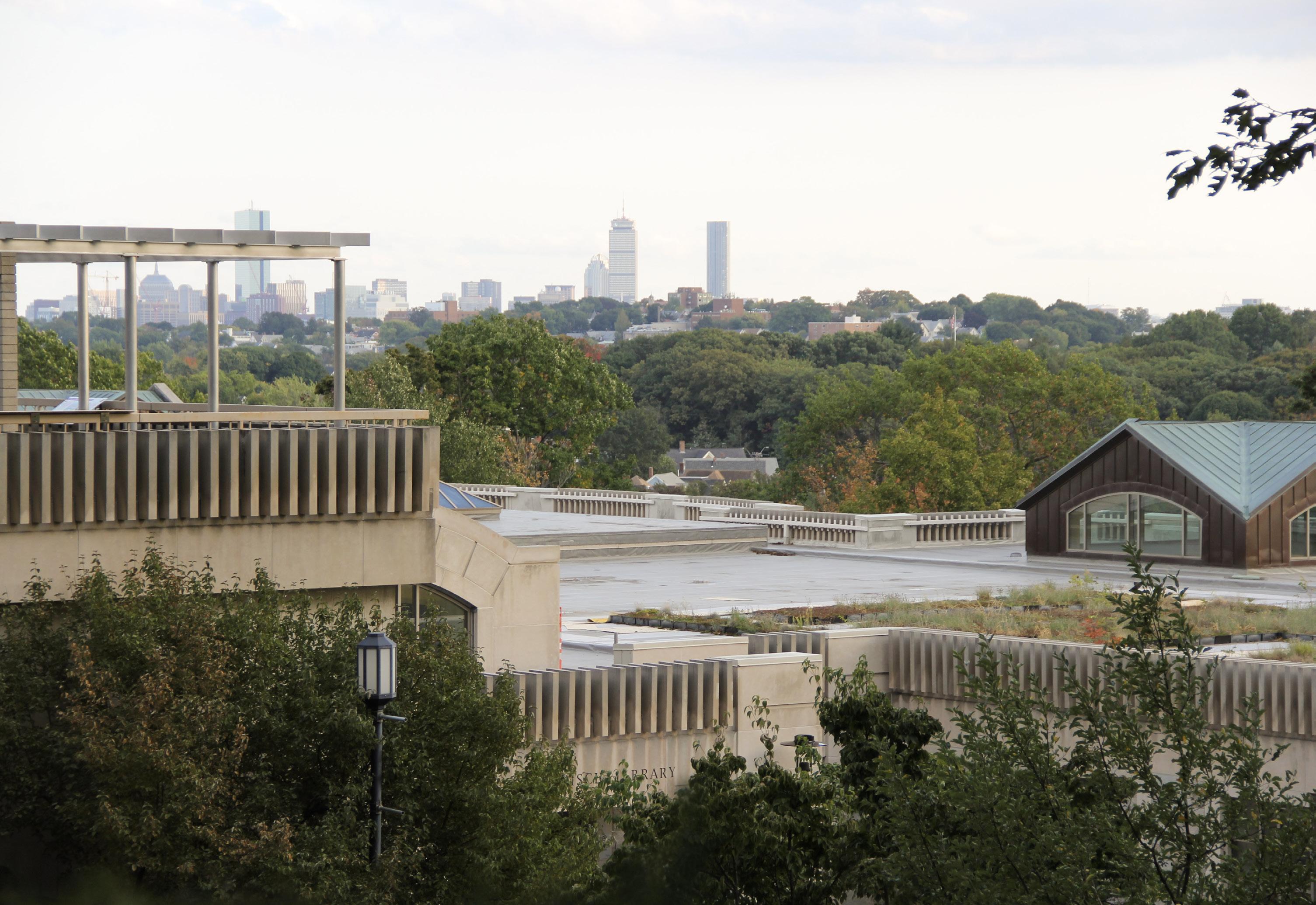
Daniel Bethke
NICOLE GARAY / THE TUFTS DAILY
The view of the Boston skyline from Tufts is pictured on Oct. 12, 2020.
Combating childhood obesity through systemic changes
Elliott Resnick Contributing Writer
In 2009, ChildObesity180 was founded out of the Friedman School of Nutrition Science and Policy at Tufts University as an initiative to combat the trend of childhood obesity in the United States. The organization was formed by current Dean of the Friedman School Christina Economos, Professor Emerita Miriam Nelson and former Chair of the Tufts Board of Trustees Peter Dolan.
Erin Hennessy was another member of the group that founded ChildObesity180 and has since become the organization’s director. Hennessy described ChildObesity180 as “the brainchild of putting the best of business and public health together to do something different.”
The founding of ChildObesity180 was built on one of the first community interventions addressing childhood obesity, led by Economos, called Shape Up Somerville. This took place from 2002 to 2005, with the goal of making small changes in the daily environment of children in Somerville, both during and after school. These changes included adding over 50 bike racks across Somerville and training over 90 teachers to provide a health curriculum to their students.
Meta
By using a range of interventions like these, the founding members of ChildObesity180 gained valuable insight into what worked and what did not.
In its first phase, ChildObesity180 affected the lives of over 12 million children across every state in the United States, fulfilling the lofty goal it set at its founding: to reach 80% of children with an evidence-based intervention to prevent childhood obesity. ChildObesity180 has described its approach as using both science and business innovation.
According to Hennessy, data show it takes about 17 years for a public health trial to have a real impact on people’s lives. ChildObesity180, at its core, is trying to drive this innovation at a faster rate.
Hennessy also leads a $1.3 million National Institutes of Health grant working with New York Road Runners. The goal of the Road Runners, along with the NIH grant, is to improve physical education resources for children in the United States.
Hennessy described a decrease in physical activity as children age, saying that “the trajectory gets really stark as children get older, especially in the later elementary school years and through middle school and high school. The drop-off in sports
participation and physical activity overall is pretty steep.”
Because school and home environments are the two most important in shaping eating and activity habits, the partnership with New York Road Runners has also expanded into developing healthy habits in the home, in addition to schools.
In addition to her Road Runners project, Hennessy leads another program, an $8.5 million award focused on telehealth in the delivery of the U.S. Department of Agriculture’s Special Supplemental Nutrition Program for Women, Infants and Children. WIC supports almost 50% of all infants in the United States and is the second-largest federal nutrition program in the country, behind the Supplemental Nutrition Assistance Program. However, participation in the WIC program has been declining. To receive food vouchers, participants must go to a WIC site to receive nutrition education, which is not accessible for many people. As a result, Hennessy’s team is focused on reducing these barriers by providing this education through video conferencing. Not only does this allow for increased nutrition education, but the states that tested this program saw a positive return on their investment.
knows what’s going on in your brain
Hande Naz Kavas Staff Writer
Meta, which owns Instagram, Facebook and WhatsApp, recently released its scientific neural cognition model, TRIBEv2. Compared to a typical new Instagram update, this model represents a line of neuroscience research that scientists have been developing for decades. Meta is already well known for incorporating addictive algorithms into its social media platforms to predict users’ interests and engagement, in turn improving overall user experience. Its new model, released last month, achieves a highly accurate artificial brain model that shows which parts of the human brain activate in response to different visual, auditory and language stimuli. In simpler terms, scientists have built a copy of the human brain that can show what happens in your brain in response to what you hear, see and process.
To understand the significance of TRIBEv2, it is important to first understand what brain activity means and how it might affect us. The human brain contains different regions responsible for distinct cognitive functions. When these functions are
activated, these regions undergo different changes. These changes are primarily electrical — captured using electroencephalography, a neuroimaging technique — and hemodynamic, which can be measured using functional near-infrared spectroscopy. By analyzing electrical frequencies, observing changes in those frequencies and tracking oxidation levels by monitoring hemoglobin changes in red blood cells through light absorption, researchers gain insight into brain activation. These measurements can provide information about an individual’s emotional state, stress level and concentration. Recent studies have also demonstrated the ability to approximate aspects of inner speech through brain activity. This does not mean that Meta can predict your inner thoughts while you consume media. Because the human brain is highly individualized, the model is a generalization that can, to some extent, track patterns in emotional response and concentration. Most advanced brain-reading studies, such as those on inner speech decoding, focus on improving resolution and accuracy using small subject groups. These models are
ChildObesity180 also works with several coalitions that aim to create lasting effects, ensuring that the changes made by the organization’s interventions do not revert once new systems are introduced. Hennessy said that in areas across the country where ChildObesity180 cannot maintain a permanent intervention, partner groups are vital in sustaining long-term changes.
The childhood obesity prevention field has shifted markedly from trying to change individual behavior to influencing systemic changes.
Hennessy described ChildObesity180’s experience with this shift: “Through a series of different research initiatives that were taken up across the country — one around active living research, another around healthy eating research — we really
started to lean in and understand more about … how the environment shapes what we do.”
As a result of this shift, ChildObesity180 emphasizes systemic change at its core. It is apparent that simply receiving and understanding information about nutrition habits is not enough to effect real change in the trend of childhood obesity. If healthy foods are inaccessible to the public, the knowledge that people receive is insufficient. This is central to ChildObesity180’s work on health equity. Childhood obesity disproportionately affects young Black and Hispanic people, reflecting inequities in access to healthy foods and physical activity, not the choices individuals make. As Hennessy said, “knowledge doesn’t equal behavior change.”
typically trained and validated on limited datasets rather than broadly diverse populations.
The TRIBEv2 study used 1,000 hours of functional near-infrared spectroscopy data from 720 subjects, providing a large dataset for training. By using an artificial neural network, researchers built a highly accurate model. While previous models captured brain activation in response to limited stimulus types (such as only visual or auditory input), TRIBEv2 presents a unified “tri-modal (video, audio and language) foundation model capable of predicting human brain activity in a variety of naturalistic and experimental conditions.” So when you watch a reel, the model can estimate how different regions of your brain activate and predict your cognitive response based on those activation patterns.
TRIBEv2 functions by combining three existing models — Llama-3.2-3B for text, Wav2VecBERT-2.0 for audio and VideoJEPA-2-Giant for video — into a larger system that processes multimodal inputs. This integration creates a model that approximates how the human brain responds to multimedia content. The model’s performance
is evaluated by comparing predicted functional magnetic resonance imaging responses with established benchmarks such as the finite impulse response model, a current standard in the field. The study found that TRIBEv2 demonstrated a “log-linear increase” in performance as more training data was added, with “no plateau,” indicating that the model keeps improving as additional data is incorporated.
Most importantly, Meta has made this research publicly
available. TRIBEv2’s weights, code and interactive demos are available online, allowing anyone to explore and test the model. Just as the introduction of chatbots, which has promised benefits for future medical and technological advancements, this model offers potential benefits. While Meta may use TRIBEv2 to make its applications more addicting, the research also has broader implications for understanding how media affects the user’s cognitive state.
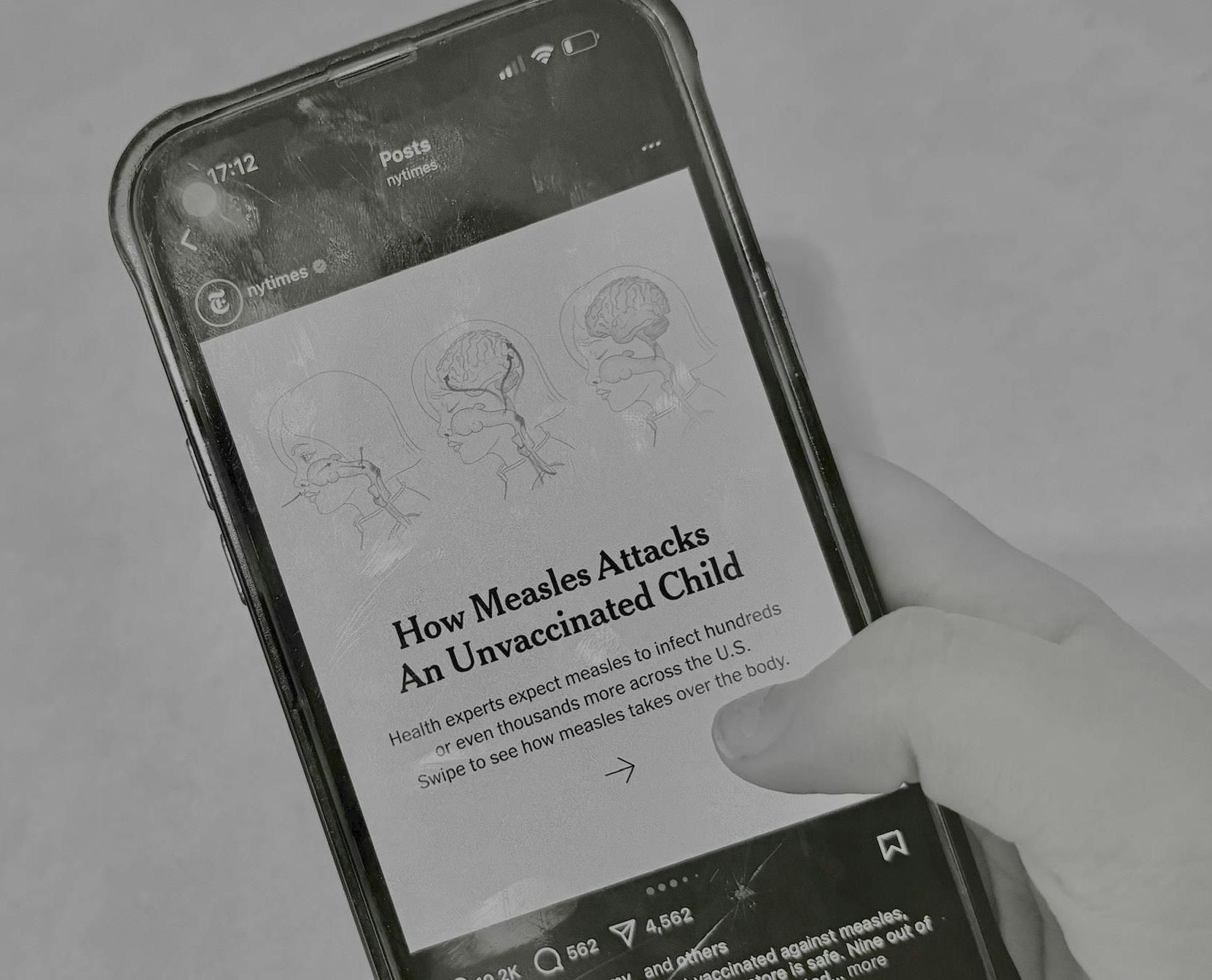
GRETTA GOORNO/THE TUFTS DAILY
A Tufts student scrolls Meta’ s Instagram app.
YENA RYOO / THE TUFTS DAILY
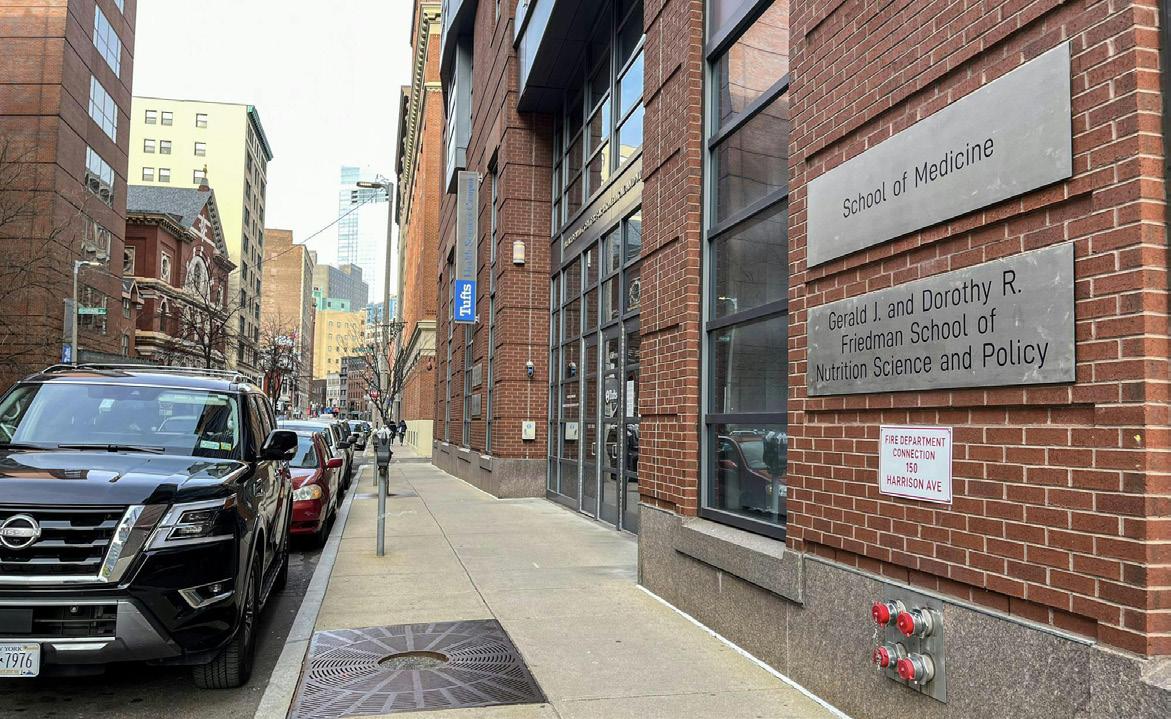
The Gerald J. and Dorothy R. Friedman School of Nutrition Science and Policy is pictured on Feb. 5, 2023.
Jumbos sweep Bobcats, gear up for defining final series
After a tough face-off with Amherst last week, the Tufts baseball team rallied for a series sweep against Bates this past weekend, pushing its record to second-best in the NESCAC.
The Jumbos beat the Bobcats on Friday, 12–2, and in a dou ble-header on Saturday, 6–1 and 8–4, respectively.
For game one, the Jumbos got straight to work, recording two hits in the first inning, but no runs. Tufts sent senior pitch er Cole Donato to the mound, who has recorded a 2.25 ERA in six wins and a loss this season, and it showed in his three hitless innings to start the game.
The Jumbos had standalone hits each inning through the fourth and started a rally in the fifth. Senior second base man Jesse McCollough reached base on a throwing error, then scored on a double from sopho more shortstop James Henshon. Henshon then advanced to third on a wild pitch, before scoring on a sacrifice fly from sophomore right fielder Jack Kamin, putting two runs on the board.
Donato had another three-up, three-down inning in the sixth. To kick off the bottom of the inning, first-year third baseman Tom Pender reached base on a wild pitch and scored on a sacrifice bunt by junior first baseman AJ Lysko.
Bohane pinch hit for junior designated hitter Max Pavlik and promptly sent a ball past the fence in right center, tacking
mound for one of his final starts. Tufts struck first in the second inning, putting up three hits for a run on behalf of sophomore
pitch, then Pender doubled to right field and brought in two more runs.

The Bobcats only put up a run in the bottom of the seventh on a twoout sacrifice fly. Christian ended the day with another stellar line: one earned run, three hits, eight strikeouts and only 23 batters faced in
Yet, the Jumbos were not done for the day, coming right back out to Leahey Field seeking their second three-game sweep of the season. They got to work immediately — leadoff man Henshon reached base yet again on a wild pitch and advanced to third on a single to left center by Kamin. Bannish grounded out but it was enough to bring Henshon home and give them yet
Junior pitcher Michael O’Brien looked promising through the first two innings, while the offense gave Bobcat pitching difficulty, logging two hits, a walk and a stolen base through the third. Bates tied up the game with a run scored on two sin-
McKiernan took it upon himself to bring back the lead, sending a ball to the right field fence on a 0-1 pitch in the fourth, but Bates got to O’Brien, putting up three runs on five hits and ending his outing.
The McCullough-Henshon duo immediately put two runners on base in the fifth so that Kamin could score the former on a sacrifice fly. A fielding error to Whitfield allowed Henshon to round the bases and tie
up the game again, this time at four runs each.
Tufts got their lead back an inning later: McKiernan reached on a hit by pitch and advanced to second on a sacrifice bunt by Lind. A single up the middle by junior designated hitter Caden Abraham brought McKiernan home.
They tacked on another run in a seventh inning rally, giving the Bobcats’ pitching staff difficulty: A walk and two hit-by-pitches pushed runners around the bases. Though they only scored one run, eight batters appeared in the seventh and Tufts left three men on base.
They put up their last two runs in the eighth, with McKiernan intentionally walked and RBIs charged to a sac ground out by Lind and a single to right by Abraham respectively.
Junior pitcher Mitchell Hwang held the Bobcats to four runs, pitching 5.1 innings of two-hit ball and securing his fourth win of the season.
In their last week of the season, Tufts faced Roger Williams University on Wednesday. Tufts will take on Trinity this weekend at Sol Gittleman Park in a series that determines who wins best record in the NESCAC.
“We are really excited about the spot we are in right now. … The winner of the series [on Saturday] gets the one seed on the east side of the NESCAC,” McKiernan wrote in a message to the Daily. “At this point, all of us have worked really hard and this is the fun part where we just get to compete.”
Tufts women’s lacrosse goes on 6–0 run to secure Senior Day victory
pump-faked and buried the ball to tie up the score.
Last Saturday, Tufts took on Hamilton in its last guaranteed home game and celebrated its six seniors. The team’s most recent game was a crucial overtime victory at Wesleyan. Looking to carry this momentum, the Jumbos were eager to get back onto Bello Field.
“Our juniors, sophomores, and [first-years] did an incredible job making us feel so loved and special, and everyone was ready to carry that love onto the field,” senior defender Nicola Donlan wrote in a message to the Daily. “We are a team that really values having fun while we play, so with the mix of celebrating the seniors and our last regular-season game on Bello, vibes were amazing going into the game.”
Tufts won the draw control to open the game. Hamilton’s defense stripped the ball away, brought it down the field and scored within the first two minutes. Hamilton came away with the ball again, leading to its second goal. Tufts responded on its third possession as first-year attacker Eleanor Helm found junior attacker Sophia Claps in the eight-meter. Shortly after, sophomore attacker Anna Mollahan earned a free-position shot, where she passed the ball to senior attacker Allie Zorn, who
The remaining minutes of the quarter showcased both teams’ defense. The Jumbos stifled Hamilton on the ride and applied pressure on the ball carrier no matter where it was on the field. Similarly, the Continentals’ goalkeeper made five saves in the first 15 minutes.
The beginning of the second quarter followed the same defensive pattern. Tufts wreaked havoc on Hamilton’s offensive attempts, thwarting two back-to-back clear attempts and causing turnovers to gain possession. However, the Jumbos’ three shots on goal were saved by Schwarz.
Tufts finally converted its possession when Helm earned a free-position shot and — taking a page out of Mollahan’s book — passed the ball to junior midfielder Schuyler Lloyd, who scored on the doorstep of the goal to take the lead. Hamilton responded five minutes later with a goal of its own. However, before halftime, Helm scored to regain Tufts’ lead.
While the first half was a defensive battle, the second was more offensively focused. Hamilton came out of halftime determined to stay in the game, earning possession off of the draw and taking advantage of a player-up situation to tie the game once again.
Less than a minute later, Zorn replied with a goal of her own, assisted by junior midfielder Grace Hammond, which was followed by another Hamilton goal. Tufts then went on a 4–0 run to bring the score to 9–5 going into the final quarter — the Jumbos’ first multigoal lead of the game.
Hamilton scored its final goal of the game four minutes into the fourth quarter on a free-position opportunity. From that point on, Tufts completely dominated the game with draw controls, relentless defense and determined offense. The Jumbos went on a 6–0 run to finish out the game, with three goals each from Lloyd and Helm, for a 15–6 victory.
“The first half was incredibly tight and proved to be much more of a defensive battle against a gritty Hamilton team,” Donlan wrote. “However, the second half showed that we can put our foot on the gas and battle back hard, converting a lot of our shots in style. This win showed that when we play our game on both sides of the ball, we get the results we strive for.”
The seniors had impressive performances. Zorn had two goals and an assist, and senior midfielder Kate Deehan contributed a goal and was fierce in the draw circle. Senior midfielder Elsa Schutt took the draw for the Jumbos, earning nine draw controls and a goal, while Donlan and senior
defender Annie Aspesi held it down on defense, causing turnovers and grabbing ground balls.
“Aside from the win, I felt the endless love that my grade has for each other and that our team has for one another. It was such a special senior day that I will never forget,” Aspesi added.
After this victory, as well as Wednesday’s win against Bowdoin, Tufts is tied for second in the NESCAC, matching Wesleyan with a 8–2 conference record. Tufts will return to Bello Field this weekend to begin the conference playoffs. Last year, Tufts made it to the NESCAC championship and defeated Wesleyan 13–7.
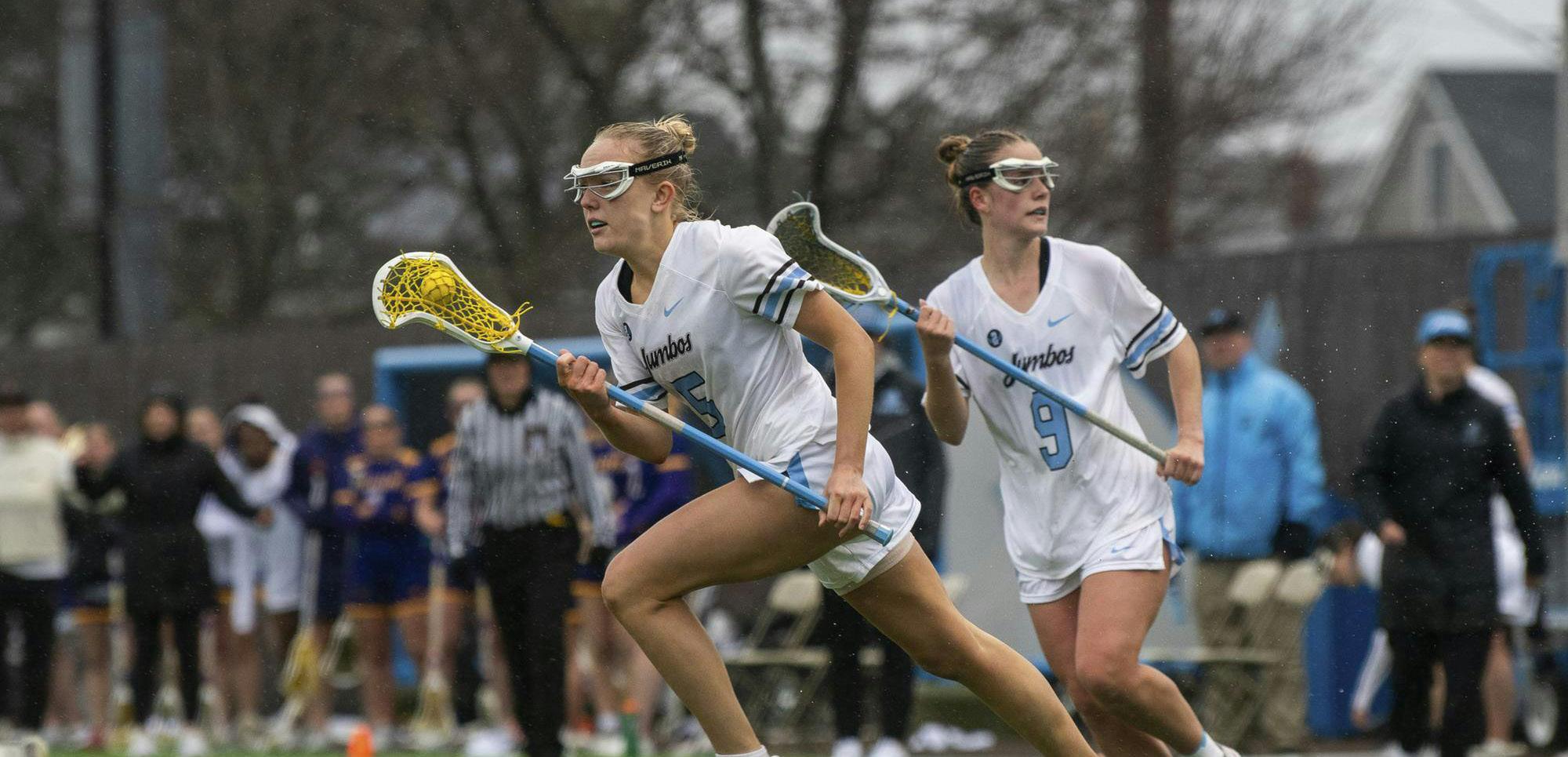
Lauren Baker Staff Writer
COURTESY TUFTS ATHLETICS
Sophomore James Henshon is pictured running the bases in game against MIT.
Leanna DeSousa Staff Writer
COURTESY TUFTS ATHLETICS
Tufts women’s lacrosse is pictured during a game against Williams.