HOUSING
March/April 2026
www.housingspecification.co.uk

![]()
March/April 2026
www.housingspecification.co.uk

Compatible roofing specification you can rely on.
Roofing specification requires clarity, compatibility and confidence, from early design through to delivery.
With Marley’s new and improved online Technical Tools, you can create compatible NBS, Fixing Specifications, Estimates and Integrated Solar designs, all built around complete Marley Roof and Solar systems.
Reassurance, traceability and consistency throughout the project lifecycle.
the QR code or visit marley.co.uk/technicaltools
The Government has rejected several cross-party recommendations to mitigate and reduce housebuilding’s impact on nature and the environment, in its response to a Select Committee report.
The Environmental Audit Committee has published the Government’s response to its report on environmental sustainability and housing growth, which assessed how the Government was balancing its housebuilding agenda with environmental targets.

In its report, the Committee found that measures in the Planning and Infrastructure Act were not enough to allow the Government to meet both its environmental and housebuilding targets, while severe skills shortages in ecology, planning and construction put its housebuilding ambitions at risk. The Committee has reiterated these recommendations in a submission to the Government’s consultation on changes to the National Planning Policy Framework.
The document details the Government’s response to the Committee’s concerns around key policies such as the Nature Restoration Fund, Biodiversity Net Gain, carbon accounting for buildings and skills shortages in ecology, planning and construction. More details follow below. The Chair of the Environmental Audit Committee, Toby Perkins MP, said:
“Growing the economy must go hand in hand with protecting and restoring nature and the environment. I’m therefore pleased to see the Government’s commitment to a ‘win-win’ solution for nature and development, and to Biodiversity Net Gain, a policy that many regard as pioneering.
“But the Committee is concerned that the Government has rejected recommendations which we believe would have increased transparency and given greater confidence about its ability to achieve these twin aims. We are disappointed that the Government has rejected our recommendations to establish ecological resource hubs – a critical element of the skills challenge in planning – and to mandate whole-life carbon assessments.”
The Government also says that it remains committed to the Biodiversity Net Gain policy and wants to make the process simpler for smaller developers. It says its proposals to exempt small sites up to 0.2 hectares will ensure the policy can meet the country’s needs for both housing and nature recovery. It plans to publish an implementation timeline for these plans “shortly”.
Paul Groves Group Editor


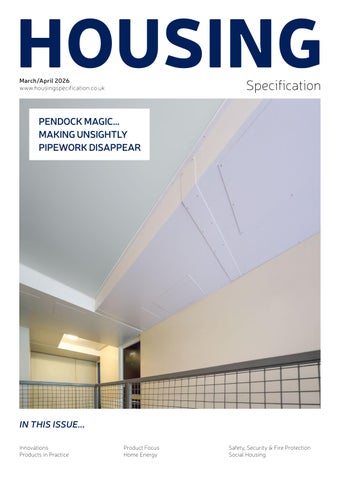
Making unsightly pipework disappear with Pendock and seamlessly integrating building services are essential for reasons of safety, practicality and aesthetics.
For almost four decades Pendock products have been installed in countless social housing projects, and the name is now synonymous with cost effective pipe boxing solutions.
Read the full article on page 16-17 to learn more.


Grosvenor House, Central Park, Telford, TF2 9TW T: 01952 234000 | F: 01952 234003 www.tspmedia.co.uk | E: info@tspmedia.co.uk


The Government is finally driving forward with the launch of the longawaited Future Homes Standard, which includes the rollout of “plug-in” solar panels.
Retailers and manufacturers are working with Government to enable them to be brought to the UK market. Plug-in solar is already widely used by households across Europe, with Germany seeing around half a million new devices plugged in per year. The free solar power can be used directly through a mains socket like any other device, without an installation cost, thereby reducing the amount of electricity taken from the grid and cutting energy bills.
This is alongside new rules implementing the Future Homes Standard, which includes commonsense measures to ensure the majority of new homes are built cheaper to run, with solar panels and clean heating as standard.
Energy Secretary Ed Miliband said:
“The government is determined to fight people’s corner in this crisis, which is why we have acted to prevent unfair practices like price gouging and provided immediate help for the most vulnerable facing spiralling heating oil prices.
“The Iran War has once again shown our drive for clean power is essential for our energy security so we can escape the grip of fossil fuel markets we don’t control. Whether through solar panels fitted as standard on new homes or making it possible for people to purchase plug-in solar in shops, we are determined to roll out clean power so we can give our country energy sovereignty.”
Housing Secretary Steve Reed added: “Building 1.5 million new homes also means building high-quality homes that are cheaper to run and warmer to live in. As we make the switch to clean, homegrown energy, today’s standard is what the future of housing can and

should look like. Not only will these changes protect hardworking families from shocks abroad but will also slash hundreds of pounds off their energy bills every year.”
Future Homes Standard:
• The Future Homes Standard turns the page on over a decade of failure by previous governments. More than a million homes were built with higher bills following the cancellation of the Zero Carbon Homes standard in 2015 - leaving families exposed to the energy price spike after Russia’s invasion of Ukraine.
• Today we are laying the regulations for the Standard and publishing its details.
• It will put energy in the hands of the British people and help cut bills for good, protecting against fossil fuel price spikes like those triggered by the conflict in Iran.
Work will start on building 187 new social and affordable homes in central Brixton as part of an ongoing redevelopment project that has already seen the community theatre Brixton House created.
Once completed the scheme, which is located on underused Council-owned land along Somerleyton Road, will feature 378 new homes in total, including 56 per cent social and affordable homes, a community gym, extra care homes, new community and commercial spaces and big improvements to public areas along the street.
Alongside the new homes and community spaces, the project will deliver significant benefits for the local community, including more than £600,000 in investment for local jobs and skills training, transport improvements, greener streets, new trees, accessible parking and upgrades to nearby parks and play spaces.


The Royal Institute of British Architects (RIBA) has responded to the Government’s consultation on proposed reforms to the National Planning Policy Framework (NPPF), calling for a simpler, faster and more predictable plan-led system with clear and reliable outcomes.
It has also submitted views on the draft Design and Placemaking Planning Practice Guidance (PPG).
If enacted, many of the changes in the NPPF could help create a certainty in the planning system while promoting high standards of placemaking. Linking housebuilding to existing amenities and infrastructure, ensuring a diverse mix of tenures and typologies on larger sites, and taking steps to deliver accessible homes are all integral to creating a cohesive and inclusive built environment.
However, alongside other sector organisations, RIBA has expressed
concern about proposals that would prevent local authorities from going beyond energy efficiency standards set out in the Building Regulations.
Design quality must also be a key consideration, particularly moves to increase density. Without investment in design expertise within local authorities, even the strongest guidance risks being applied inconsistently rather than enabling genuinely well-designed places.
Chris Williamson, RIBA President, said: “This is a critical moment for planning reform. There is much to welcome in the Government’s proposals, particularly the emphasis on strategic planning and linking housing delivery to infrastructure. This should help to create a planning system that is simpler, more efficient, and gives communities and developers greater certainty about outcomes. Design quality must be prioritised if measures to promote greater density are brought
Construction is set to begin on the Mayfield development in Lee, delivering 64 new, high quality affordable homes for local people as part of the Council’s Building for Lewisham housing programme. With the site now demolished, the main contractor,
The Hill Group, will begin works on site with construction expected to complete in early 2028.
Hill is an award-winning housebuilder with a proven track record in delivering highquality, sustainable, affordable homes.

forward. Unlocking much-needed housing delivery around rail stations is a great opportunity, but public spaces must not be an afterthought.
“Real progress on accessibility, through the requirement for local authorities to set out minimum proportions of accessible homes, is also a clear positive.
“However, as we increase housing supply, we cannot weaken environmental ambition. Until national standards are raised, local authorities must be able to go further and faster to drive net zero and help keep household bills low.
“Balancing delivery with quality and sustainability is critical to the future of our built environment. Architects stand ready to help to deliver high-quality homes and places across the country, bringing the design expertise needed to ensure development is well-designed and meets the needs of communities."

Work has started on a transformative scheme which is set to create 122 new homes on vacant land in Southend-on-Sea.
Driven by top 10 UK housebuilder, Keepmoat, and unlocked through a partnership with Homes England, the developer will invest more than £30 million to transform the land adjacent to Prittlewell Camp. With the first homes set to be available in spring, 30 percent will be delivered as affordable housing via a local housing association. All 122 homes will form part of the local council’s wider Fossetts Way project, set to create up to 900 homes.


Recycling and recovery of materials waste management


Sustainable architecture and environmental issues have become rooted in popular culture and the work of building professionals.
Sustainable building means promoting ecological awareness through the image of the building, with its features being related to its relationship with the environment.
Sustainable building means reducing environmental impact and setting energy efficiency as design goals, improving the health, comfort and quality of life of inhabitants, objectives that can be achieved by incorporating appropriate structures and technologies into the building.
TO FIND OUT MORE about Fassa Bortolo and its range of render systems and building products. Visit www.fassabortolo.co.uk or call 01684 218 305

product environmental Footprint assessment


Sustainable building means managing a building that satisfies the needs and demands of its owner, taking into account natural rhythms and resources right from the initial stages of the project, without causing damage or inconvenience to others and the environment, striving to fit harmoniously into the context and thus also thinking about the ability to totally reuse spaces and materials.
Efficiency and circularity are key issues when it comes to sustainability. At Fassa Bortolo we are committed to optimising the use of resources, reducing waste and promoting a circular economy in the building industry. Only through responsible business practices can we create a better future.
UK housebuilding was broadly stable in 2025 but the sector remains vulnerable to economic headwinds, according to fullyear reports from multiple developers and construction product manufacturers. Financial statements published in March indicated modest growth across parts of the sector last year, despite affordability constraints and weaker activity in the second half.
Building materials supplier Forterra reported an 11% year-on-year increase in revenue in its bricks and blocks segment. The growth was supported by new build housing activity and higher domestic brick despatches, which rose by 6% compared with 2024.
The company said market activity was more subdued in the latter half of 2025 and expects modest price rises during 2026.
”UK housebuilders and their supply chains have been resilient in the face of uncertainty, constrained consumer demand and input cost inflation.
Insights from new full-year reports show that annual revenues have largely risen, with businesses adapting to tougher operating conditions,” said BCIS chief economist, Dr David Crosthwaite.
“However, the sector is not taking this stability for granted. After a sluggish few months, dampened by postBudget uncertainty and wet weather, developers and suppliers must now contend with emerging cost risks linked to the conflict in Iran. As noted at the latest meeting of the BCIS TPI Panel, it is still too early to determine the longterm implications, but the outlook could deteriorate if the conflict persists.”
Some product manufacturers reported weaker profitability during 2025. Ibstock’s adjusted earnings before interest, taxes, depreciation and amortisation (EBITDA) were down by 10% on 2024 while Breedon Group’s revenue and underlying EBITDA in Great Britain both fell on the year.

Barking Riverside Limited (BRL) has today secured revised Outline Planning Permission to deliver up to 20,000 homes at Barking Riverside.
The approval at the London Borough of Barking & Dagenham Planning Committee follows the submission of what was the UK’s largest application for a single site in 2024, representing a pivotal moment for the project as it transitions from early delivery into accelerated long-term build-out.
Set within London’s zone 4, Barking Riverside represents one of the most meaningful single-site contributions to
the capital’s housing pipeline. To date, more than 3,000 homes have been completed at Barking Riverside, with hundreds more under construction, creating a neighbourhood of over 7,000 residents.
Once complete, the development will provide over 4,000 Affordable Homes in total, alongside extensive social infrastructure and green space.
The approval marks a significant increase in scale for London’s largest development in single ownership –enabling an uplift from the originally consented 10,800 homes.
Breedon said subdued residential housebuilding, particularly in the second half of the year, as well as the timing of the Autumn Budget contributed to the weaker performance.
Both manufacturers highlighted geopolitical uncertainty as an ongoing concern. Ibstock said it has secured 80% of its energy requirements for the 2026 financial year.
“The timing of the conflict in Iran arrived just as the housing sector appeared to be recovering. Interest rates had fallen, helping to ease mortgage costs for consumers. However, further reductions in Bank Rate in the near term now seem unlikely and renewed upward pressure is a possibility,” Dr Crosthwaite added.
“Businesses will be watching developments in Iran closely. At present there is measured concern, but also a view that disruption to activity and profitability may be limited if tensions stabilise quickly.”


Dan Redfern, Head of Marketing Communications at Marley, says the long-term success of the Warm Homes Plan depends on two key factors: the specification of reliable technologies and a skilled installer base.
The Government’s recently announced Warm Homes Plan represents a significant opportunity to accelerate energy efficiency improvements across the nation’s housing stock - particularly within the social housing sector.
A key feature of the plan is the emphasis on renewable technologies, including solar photovoltaic (PV) systems integrated into domestic roofscapes. For social housing providers seeking measurable improvements in energy efficiency, solar PV offers a proven route to reducing grid reliance while generating clean, low-cost electricity for residents.
While solar PV technology continues to evolve, roofing systems play a fundamental role in ensuring installations are effective and durable. As retrofit activity scales up, specifiers must ensure the products selected are suitable for long term performance across a wide range of existing roof types.
Solar PV installations are most successful when considered as part of a holistic roofing solution rather than as an isolated add-on. Compatibility between roofing materials, mounting systems and the solar PV array is essential to maintaining weatherproofing, structural performance and long-term reliability.
For specifiers, this means taking a systems-based approach to product selection. Choosing integrated solutions can help reduce installation complexity, minimise risk and improve project outcomes.
Marley’s fully roof-integrated solar solution, Marley SolarTile®, has been developed for pitched roof applications and forms part of a broader single-source renewable package that also includes battery storage and inverters.
By integrating solar PV panels within the roofline, systems such as these can deliver strong performance while maintaining the visual appearance of the roofscape - an important consideration for many social housing developments.
Equally important is the assurance that all components within the system have been robustly tested for compatibility and weather resistance, helping support long term reliability and reduce future maintenance requirements.
Addressing the skills challenge
While product specification will be critical, the industry’s ability to deliver retrofit and new build upgrades at the scale required will also depend on workforce capability.


As solar PV becomes an increasingly prominent component of energyefficiency upgrades, manufacturers, specifiers and roofing contractors will all play a role in supporting the sector’s delivery capacity. Upskilling existing professionals while attracting new talent into roofing and renewable installations will be essential.
Training programmes, accreditation schemes and closer collaboration across the supply chain will help ensure installers have the knowledge and confidence to deliver high-quality installations across both retrofit projects and new housing developments.
Marley has launched a new Technical Tools platform, providing housing specifiers with a faster, clearer, and more transparent route to roofing specification.
The new online platform brings together a suite of digital specification tools within a single interface, allowing users to generate fully compliant roofing specifications without the need to navigate multiple systems or repeatedly input project data.


Manufacturers are bringing new products to market that meet rigorous new standards and often exceed criteria to provide future-proofed systems and solutions.
Sapphire has announced that its G30 balcony, when used with or without StubGuard, has officially been certified as a Passive House Component by the Passive House Institute - a significant milestone that reinforces the product’s exceptional thermal and structural performance.
With developers and designers under increasing pressure to deliver low-carbon buildings that meet more stringent energy and envelope-performance standards, balcony connections have come under heightened scrutiny as a critical point of heat loss. The G30’s certification provides thirdparty validation that its design meets the rigorous thermal and structural requirements demanded by Passive House projects and other highperformance residential buildings.
The G30 anchor was Sapphire’s first breakthrough in ultra-rigid balcony connection technology. Engineered with M30 stainless steel studs and a 30mm thermal break zone, the G30 reduces both deflection and thermal transfer while maintaining outstanding structural rigidity. Its efficiency also means fewer anchors are required per balcony, typically just two or three, compared with older systems that could require six or more fixings. This combination of strength, performance and compatibility with lightweight aluminium balconies has made the G30 a trusted choice for highperformance residential construction.


"Receiving this certification marks an important achievement for our team," said Doug Cumming, Head of Pre-Construction and Innovation. "It reflects our commitment to innovation, sustainability, and providing builders with solutions that truly support high-performance, energy-efficient homes. Balcony connections are often overlooked, but they can make a major difference in overall building performance, and we’re proud that the G30 addresses this challenge effectively."
Passive House Component certification is widely recognised as one of the most rigorous quality assurance processes in the built-environment sector.
Products undergo stringent assessment to verify that they meet the Passive House Institute’s demanding standards for energy efficiency, airtightness and elimination of thermal bridging. For balcony connections in particular, reducing thermal bridges is essential, as these weak points can lead to increased heat loss, colder internal surface temperatures, reduced comfort and a heightened risk of condensation or mould.
Passive House criteria require that the temperature factor (fRsi) must not fall below strict limits specific to climate zone - ensuring the internal surface temperature remains high enough to avoid moisture-related issues. The G30’s design enables projects to meet these demanding requirements, supporting buildings that may, in some cases, operate without traditional heating systems.
Continual investment in improvements West Fraser has received new BBA certification, confirming its environmentally-friendly CaberShield Eco is capable of withstanding constant


exposure to the elements for a full sixty days: comfortably delivering extended practical and economic advantages for contractors and developers seeking an edge on the competition.
The latest addition to an already comprehensive portfolio, CaberShield Eco is the greenest option on the market for creating high specification, weatherresistant floors which simultaneously provide a slip resistant, safe working platform, also able to shield the spaces below from rain and snow so that work can proceed while the main roof and the rest of the envelope are made weathertight.
Rigorous evaluation has proved that the inherent performance characteristics of the CaberFloor P5 is boosted by the solvent-free UV-cured, waterproof coating across the upper surface to CaberShield Eco. This means the panels – along with the tongue & grove versions – will withstand high traffic along with the worst of the winter weather during the exposed construction phase.
Together with the boards’ own structure this outstanding resilience is facilitated by an installation process featuring the use of West Fraser‘s CaberFix D4 glue, which is applied to the edges as well as across the joists. In addition, from an environmental perspective, the panels’ specification cuts Scope 3 emissions when compared to melamine protected flooring.
In common with other products in the West Fraser range, CaberShield Eco is produced using timber from responsibly managed forest sources, locking in the CO2 during its lifetime; while architects, builders and other specifiers can further minimise waste through careful project planning and specification decisions.
Rooflights retain certification
Howells Patent Glazing’s Ultraline flat rooflight and double-hipped rooflight have successfully retained PAS 24:2022 certification, reaffirming their compliance with the UK’s most rigorous enhanced security standard.
Awarded by UL Solutions, this accreditation assures specifiers, contractors and installers that these rooflights deliver proven resistance against forced entry and can withstand an opportunistic burglar, meeting the highest security requirements under current building regulations. PAS 24 is the most commonly used standard to demonstrate compliance with
Approved Document Q and is also a core requirement of Secured by Design.
Performance is proven through a series of independent tests. Products are evaluated for both security and weathertightness (BS 6375-1:2009). Methods include a manual attack, mechanical loading and impact tests.
Sales Director for Howells Patent Glazing, Gary Howells, said: “PAS 24 gives us a clear commercial advantage and we are pleased to extend this to our customers. With more than 50 years’ industry experience, we are considered one of the country’s leading manufacturers of aluminium overhead glazing solutions. Customers and specifiers know that our products are fit-for-purpose and trust that they will help deliver compliant, high-quality new build and refurbishment projects.”
The two certified rooflights are proven favourites for residential projects. Demand for the double-hipped rooflight has soared over the past decade as homeowners create spaces better suited to modern living. The aluminium rooflight delivers high-impact daylight for extensions and is supplied direct to trade.
Designed to maximise daylight, Ultraline, meanwhile, gives architects and specifiers the freedom to specify larger expanses of glass. Glass rafters (fins) reinforce each joint without breaking the sightlines. The low-pitch aluminium rooflight is discreet, typically measuring 2.4 metres x 1.2 metres, ideal for three- to four-metre house extensions.
Installers also benefit from a preassembly service. Rooflights under 5 metres x 2 metres can be delivered unglazed and preassembled direct to site in an unmarked vehicle; larger units are supplied in sections. With early morning drop-offs, Ultraline can be installed in a single day.

Concealing unsightly pipework and seamlessly integrating building services are essential for reasons of safety, practicality and aesthetics. For almost four decades Pendock products have been installed in countless social housing projects, and the name is now synonymous with cost effective pipe boxing solutions.

Pendock’s first pre-formed casings were launched in the late 1980s and marked a significant shift in the way social landlords and contractors have approached heating system refurbishment and other building services projects, including fire safety improvement and sprinkler installations.
With the increased use of low carbon heating systems, including heat networks, air source and ground source heat pumps, as well as shared ground loop arrays, Pendock metal boxing is used to conceal external distribution pipework, alongside its original plywood boxing to cover those located within individual flats.

Saving time - saving cost Pendock’s original concept of using pre-formed plywood casings to conceal interior pipework was developed as a solution to help reduce the amount of time spent on-site, along with the associated costs, when boxing in pipework.
Prior to this innovation, the predominant method involved fabricating pipe boxing from timber or MDF sheets, a process entailing careful measuring, cutting, joining, sanding, and painting. This approach was labour-intensive and the higher costs associated with increased time on site was compounded further by the need to repeat the process in every flat during large scale heating system upgrades or refurbishment programmes.
Pendock pre-formed casings help streamline installation procedures. By providing ready-made casings that fitted quickly, the amount of time spent on each project could be shaved down, resulting in substantial cost savings and improved efficiency.
This not only benefits contractors but also assists local authorities deliver heating improvements with reduced disruption to residents.
An independent study focusing on the comparative time and costs to install site fabricated boxing against pre-formed solutions further validated the practical advantages observed in the field. Data showed that installation times were halved compared to traditional methods, leading to a direct reduction in labour costs.
Using an ‘off the shelf’ purpose designed boxing range enables a consistent finish to be achieved in individual flats, even where different profile styles or sizes are installed. This becomes more important where blocks of flats are being refurbished, as each one will have the same continuity of finish, which is much more difficult to accomplish with site made boxing.
Due to the wide ranges of sizes available, the correct profiles can be selected to meet the dimensions needed for the project, so they can fit more closely over the pipework.

This helps minimise the intrusion and visual impact in flats, where skirting level heating pipework or high level fire sprinkler systems are being concealed. In addition, all plywood profiles are pre-finished with a white resin impregnated décor paper, as standard, which removes the need for painting on site, saving even more time and costs, while further improving consistency of finish on a project.
The reduced installation time and improved quality of finish can also help support tenant satisfaction levels by not only reducing disruption during refurbishment programmes, but also helping to achieve more attractive and less obtrusive results.

With the increased use of district heating schemes and low carbon solutions, Pendock’s metal pipe boxing has been specified and installed in a wide range of major projects across the UK in both exterior and interior applications.
Bespoke manufactured to individual project specifications from 2mm aluminium, as standard, metal boxing is available as a three-sided channel profileCHM - for securing to a single flat surface, or as a two-sided 90-degree design - MXM - for fixing to adjacent surfaces, such as interior walls and ceilings.
The durable aluminium construction is not only weather resistant, ideal for exterior pipework and utilities, but also provides protection against accidental damage or vandalism, for both interior and exterior locations. Also, as it is non-combustible, Pendock metal boxing is often specified and used in high rise residential blocks to conceal interior runs of pipework where no sprinkler heads are present, such as communal areas.

While metal boxing provides a core set of advantages and benefits for specific applications, when concealing interior pipework, pre-formed plywood boxing is still the most widely used from the ‘Profiles’ range.

The TK and MX profiles have been available from day one and have consequently are already used and continually specified in countless social housing projects across the UK. Designed primarily for hiding small bore heating system pipework at skirting level, the TK boxing blends into living areas, bedrooms and kitchens. The TK’s shorter leg is set at a 115-degree angle creating a sloping top surface to help prevent its use as a step.
The TKD variant is a 3-sided design for horizontal or vertical for mid-wall use, incorporating the 115-degree angle on both sides. Both the TX and TKD are manufactured from 5mm plywood and prefinished with a white resin impregnated décor paper. The ‘L’ shaped 90-degree profile of the MX make it suitable for boxing in horizontal or vertical pipework in a variety of residential applications, such as heating and mains water, plus larger diameter drainage and waste pipework.
In addition to the wide range of available sizes, the MX’s versatility is increased further as two ‘L’ shaped MX profiles can be joined together in different size configurations to create ‘U’ shaped channel sections. These can be used to conceal interior pipework or building utilities, such as vertical pipe runs or ceiling mounted fire sprinkler pipework.
Manufactured in 5mm or 8mm thicknesses, the MX range is finished with a white resin impregnated décor paper. Both the MX and TK are supported by a range of dedicated accessories, including internal and external corners, stop ends, butt joint covers, and access panels.
Also part of the MX family of ‘L’ shaped boxing are the MXF and MXV boxing profiles. The MXF is the preferred choice of many LA and HA contractors when concealing surface mounted sprinkler pipework in high-rise blocks, while the MXV is designed specifically for covering flexible ducting used in Positive Input Ventilation (PIV) schemes.
The BC’ pre-formed boiler pipe casings, complete the interior casings range which are designed to conceal boiler pipework, valves, filters, and flues while avoiding the time and cost issues associated with site-fabricated boiler boxing.

Pendock’s website hosts a range of information for its diverse product range. Alongside downloadable drawings in PDF and DWG format, there are also NBS specification clauses located in the ‘Tech Info’ section. In addition, Pendock also offers technical support and advice to specifiers by phone and e-mail.
Pendock - Enquiry 9

In the pursuit of sustainable building materials, lime render has emerged as a key player in reducing environmental impact while enhancing the performance and longevity of buildings.

Fassa Bortolo, a leader within the construction materials industry, with over 300 years of experience, has developed a range of high-performance lime renders that combine traditional materials with modern innovation. Fassa’s lime render offers not only superior structural and aesthetic benefits but also significant environmental advantages, making it a vital solution for sustainable construction practices.
Fassa’s lime render is made from carefully selected natural materials, including lime, sand, and other mineral additives. The core ingredient, hydrated lime (calcium hydroxide), is produced through the controlled firing of limestone at relatively low temperatures, which helps to reduce carbon emissions during manufacturing. Once applied, lime render undergoes a natural process called carbonation, where it absorbs carbon dioxide from the atmosphere and hardens into calcium carbonate. This process not only strengthens the material over time but also actively reduces the building’s overall carbon footprint.
A key advantage of Fassa’s lime is its exceptional breathability. Unlike cementbased renders, which can trap moisture and lead to structural damage, lime render allows moisture to pass through walls. This natural permeability prevents dampness and mould, ensuring a healthier environment.
Additionally, the flexibility of lime render allows it to accommodate minor structural movements without cracking, which enhances the longevity of the building’s exterior finish. Lime render stands out for its low environmental impact throughout its lifecycle. The production of lime requires lower firing temperatures than Portland cement, resulting in significantly lower CO2 emissions. More importantly, the carbonation process involved in curing lime render allows the material to reabsorb a substantial portion of the CO2 released during production, effectively contributing to carbon neutrality.
Unlike cement-based products, which are often difficult to recycle and contribute to construction waste, lime render from Fassa is fully recyclable. When a building is demolished, lime render can be crushed and reused as aggregate or allowed to return to the earth without causing environmental harm. This cradle-tocradle lifecycle reduces landfill waste and supports circular economy principles in the construction industry.
Another sustainability benefit of Fassa lime is its contribution to thermal regulation within buildings. By allowing walls to breathe and managing moisture levels, lime render helps maintain stable temperatures. This improved energy efficiency lowers the overall carbon footprint of the
building and contributes to long-term operational savings. Lime render is highly valued in both historic preservation and contemporary construction. In the restoration of heritage buildings, lime render’s compatibility with traditional masonry materials ensures that the original architectural integrity is maintained. Its ability to allow for moisture transfer helps prevent structural degradation, which can occur when modern, impermeable cement renders are used on older buildings.
In modern construction, Fassa’s lime render is increasingly being specified for its aesthetic versatility and environmental benefits. Fassa’s commitment to research and development has resulted in innovative lime render solutions that meet the performance demands of contemporary construction while preserving the environmental benefits associated with traditional lime products.
As the construction industry faces increasing pressure to reduce its environmental impact, the role of sustainable materials like Fassa’s lime render becomes more critical. The combination of low embodied carbon, natural carbonation, and recyclability positions Fassa’s lime render as a leading choice for environmentally conscious building projects. Its ability to balance aesthetic appeal, structural performance, and environmental responsibility makes it a versatile solution for both residential and commercial applications.
Fassa’s commitment to sustainability extends beyond product development. The company continues to invest in environmentally responsible manufacturing processes, renewable energy sources, and research into new materials and techniques. This proactive approach ensures that Fassa Bortolo remains at the forefront of sustainable building innovation.
If you’d like to find out more about Fassa’s lime render products and systems, please call 01684 218305, or email our team at info.fassauk@fassabortolo.com
Fassa Bortolo - Enquiry 10
Wherever pipework needs to be concealed, Vetta pipe boxing provides the perfect finish to a project, inside or out, whether it’s a retrofit fire sprinkler, low carbon district heating upgrade or energy efficient heat pump installation.
For quick, simple and cost effective concealment of interior pipework, our Riva and Versa pre-formed and pre-finished pipe boxing saves time and money on-site, as they can be fitted in half the time of site-fabricated alternatives, and no painting required.
Where exterior services, such as gas supply and distributed heating system pipework need to be concealed and protected, our bespoke manufactured Arma aluminium boxing provides a tough and durable solution.
Whatever the pipe boxing project - we’ve got it covered.
Enquiry 11


New guarantee offers long-term protection
Builders and developers have a new route to long-term protection from issues caused by Japanese Knotweed, bamboo, buddleia and other invasive non-native plants. The Property Care Association Invasive Non-Native Plant Insurance Backed Guarantee covers from the start of remediation and extends beyond the contractor’s trading status. The guarantee is provided by LBB London Belgravia, specialist insurance brokers with extensive experience in property-related risk, specialist remediation works and insurance solutions aligned to lender expectations. PCA Chief Executive, Sarah Garry said: “Our members can now offer long-term protection, which can be crucial in monitoring and treating invasive non-native plant species.”
PCA - Enquiry 12
A staple component in homes
Sheet vinyl floors from IVC Commercial provide social housing with a flooring option that’s suitable for more than just bathrooms and kitchens.
A growing number of social housing providers are stepping beyond regulation to consider the positive impact of providing suitable floor coverings throughout the home. With measurable positive impact on tenants, the move towards provision above current standards suggests a new way of thinking about social housing that places greater emphasis on wellbeing. IVC Commercial sheet vinyl floors can help providers in achieving a better quality of life for tenants affordably.
IVC Commercial - Enquiry 13


Forbo Flooring Systems has unveiled its refreshed Novilon luxury vinyl sheet collection, designed specifically for the housing market.
Combining performance, comfort and sustainability with peace of mind, the range updates further enhance its suitability for busy family homes and light commercial use, with four ranges to choose from. Novilon is an evolution in flooring, representing a collection of beautiful and inspiring floor coverings that complement a range of residential interiors. Offering a wealth and richness of design, as well as a hard-wearing nature and easy maintenance, Novilon is designed for life across all areas of a home.
Forbo Flooring - Enquiry 14
MDF is a staple component in most homes; the panel product has been around since 1966 when West Fraser’s CaberMDF was introduced to the building market.
It can be sawn, drilled, shaped, and routed cleanly with minimum fuss, using hand or machine tools and looks good as the smooth surface of the panels is ideal for painting, veneers, or paper foils. CaberMDF can be an architectural feature, fascia, shelf, fitted unit, wardrobe or kitchen and bathroom doors, drawers and carcasses. West Fraser’s comprehensive five-strong CaberMDF range has been designed to give the specifier options depending on the application.
West Fraser - Enquiry 15

Make communal areas feel just like home

IVC Commercial’s affordable flooring solutions for public areas in social housing deliver durability and homely design. With its Pionieer 70 and Isafe 70 dedicated flooring solutions for public areas in social housing, IVC Commercial helps providers to achieve a high-quality floor that upholds value requirements. The floors prioritise durability, safety and ease of maintenance across a range of welcoming residential designs.
Pionieer 70 is an affordable heavy-duty floor that provides 18dB of impact sound reduction. Bringing improved acoustics to hallways and communal areas, the floor’s 0.70mm wear layer ensures it withstands the high levels of traffic expected in these areas.
IVC Commercial - Enquiry 16
End the postcode lottery with Beauflor
With the recent announcement that the revised Decent Homes Standard for England will not mandate floor coverings in all rooms of social housing, Beauflor addresses the postcode lottery.
Beauflor sheet vinyl floors, many provider concerns around the affordability of flooring – to which the revisions conceded – can be answered, raising the quality of living for tenants and reducing the postcode lottery style provision they face today. It might even help providers end their ‘rip-out’ culture by eliminating hygiene and health and safety worries. Beauflor has a wide range of sheet vinyl floors suitable for social housing.
Beauflor - Enquiry 17

Leading British garage door manufacturer Garador has launched a brand new premium range of front doors.
Portal by Garador front doors have been developed to meet the demands of modern homes. The Portal collection combines contemporary design, advanced security and high thermal performance, offering a complete entrance solution for homeowners and developers alike.
A key differentiator of the Portal range is its extensive customisation. Architects, builders and homeowners can choose from a wide selection of door styles, colours, glazing options and hardware finishes, allowing each door to be tailored to suit both traditional and contemporary properties. This flexibility makes Portal by Garador suitable for a broad range of architectural styles and project requirements.
Security is a core across the entire range, with all Portal doors engineered to meet stringent standards and available with
Sapphire launches free resource centre

Sapphire has announced the launch of its new, free, web-based Resource Centre, developed specifically for architects, specifiers, and design professionals designing balcony systems for residential and mixed-use developments.
The Sapphire Resource Centre brings together all of Sapphire’s digital specification tools, case studies, and technical documentation into one easyto-access online platform.
Designed to simplify and accelerate the design and specification process, it provides access to detailed technical drawings, 3D models, compliance guidance, the latest fire-safety innovations, and a clever 3D Visualiser, which allows users to view and refine balcony configurations in a fully rendered digital environment.
Sapphire - Enquiry 19
Secured by Design accreditation, the official UK police-backed security initiative. Highsecurity multipoint locking systems and reinforced frames are designed to provide robust protection and long-term reliability.
Thermal performance is another standout feature. Using advanced construction techniques and carefully selected materials, Portal doors are designed to help improve energy efficiency and reduce heat loss.
The range includes options that exceed current building regulations and are engineered with future standards in mind, supporting the drive towards more energy-efficient homes.
Garador’s Portal range has also been designed to complement its extensive range of garage doors for co-ordinated styling.
Good indoor air quality is essential. Poor ventilation can lead to mould (and consequent health risks), increased house dust mites (exacerbating allergies and respiratory problems), unpleasant odours and condensation.
Vectaire’s MVHRs extract pollutants and humidity whilst maintaining a constant intake of fresh, filtered air. They are energyefficient, environmentally friendly and economical.

Find out more about Garador’s exceptional doors by talking to your local dealer, builder or merchant or contact Garador’s friendly sales team at 01935 443 700. Visit www.garador.co.uk for more information.
Garador - Enquiry 18

Vectaire’s Cool Breeze and Cool-Aire, are designed to be used with MVHRs. The two sizes of Cool Breeze are effective solutions for mitigating summer overheating. For floor or wall mounting they use the environmentally friendly refrigerant, R290. Needing no external condenser, they determine automatically when cooling is required.
The Cool-Aire, an in-line cooling/heating module, provides an economical, optimal temperature by using an existing water circuit to cool or heat the airflow, making it a versatile solution for yearround comfort in the home. Its slim in-line design allows for easy installation in ceilings, lofts or voids. Models are available with port valves and actuators.
Both the Cool Breeze and Cool-Aire comply with CIBSE TM59 assessments and Building Regulations Approved Document O, are suitable for new-build and retrofit, and deliver superior indoor air quality and comfort.
Vectaire - Enquiry 20
By October 2030, social housing providers in England and Wales must meet an Energy Performance Certificate (EPC) rating of band C or higher. In Scotland, meanwhile, the Energy Efficiency Standard for Social Housing demands that providers must meet EPC band B by December 2032.
Some progress has been made, but thousands of homes still require extensive retrofit works to achieve the higher EPC ratings. Transitioning to low carbon heating solutions is key but this will require solutions that are minimally disruptive and cost-effective. Let’s consider two actionable options.
Many new build social housing developments will be designed from the bottom up to be heated by highly efficient low-carbon technologies like Baxi’s air source heat pump range. However, retrofitting heat pumps into existing homes, while absolutely possible, can be more complex.
If an all-electric solution is required, but moving to a full heat pump solution is not currently considered feasible, efficient electric boilers might provide a more practicable solution. Compact, lightweight and easy to retrofit, they offer a lower capital cost compared with heat pumps and straightforward maintenance and servicing.
The latest models on the market, like Baxi’s Amptec system boiler, are carefully designed to reduce unnecessary external works, with all key heating system components built within the unit for easier siting and minimal disruption. Suitable for radiators and underfloor heating systems, they can also be used in conjunction with a Solar PV battery to help the user with running costs.
Heat networks, a critical pillar in the government’s net zero roadmap, are today used to provide heating and hot water in 1 out of 12 social housing homes . With many existing communal heat networks operating at just 35 to 45% efficiency, there is therefore huge potential to raise performance and EPC ratings in these homes.
A significant regulatory shift is also taking place this year following the appointment of Ofgem to regulate heat networks in Great Britain. Existing heat network operators must register with Ofgem by January 2027 and

Rob Pearse, Residential Business Director at Baxi

comply with the new regulations for consumer protection. Mandatory technical standards, which are currently being consulted on, are expected to be introduced from next year under the Heat Network Technical Assurance Scheme (HNTAS) to ensure minimum performance, efficiency and reliability. Failure to comply could result in significant penalties.
One straightforward solution to improve performance might be to upgrade inefficient existing Heat Interface Units (HIUs) to more efficient BESA 2023 models like Baxi’s AquaHeat HIU. Funding for efficiency improvements is available from the Heat Network Efficiency Scheme (HNES).
Manufacturer support 2030 is less than four years away, so the clock is ticking. For social housing providers, the time to act is now. We look forward to working with you to help you identify the options, plan your pathway and deliver the most suitable and efficient solution for your building types and requirements.
For more information, visit www.baxi.co.uk/professional/ specifiers-and-social-housing.
Baxi - Enquiry 21

The promotion, which runs from 1st March to 31st August 2026, will increase the warranty from 8 years to 10 years on all Clas One boilers purchased and installed during the same time period, at no extra cost. By claiming this offer, installers will be able to give their customers extra reassurance and peace of mind.
Nuaire launches A Guide to Awaab’s Law
Nuaire has published A Guide to Awaab’s Law and the Future of Safe Housing Standards designed to help social housing organisations comply with Awaab’s Law, which came into effect on 27th October 2025.
The legislation was introduced following the tragic death of two-year-old Awaab Ishak in 2020. The new guide clearly explains the requirements to investigate and address damp and mould hazards set out in Awaab’s Law, and the legally enforceable timescales set. It provides a clear overview of the changes, along with practical checklists and tailored ventilation advice to enable social housing providers to comply with the new law.
Nuaire - Enquiry 23

Ariston, the UK’s market leader in hot water, heating and renewables, has introduced a promotion offering an extended warranty for its Clas One combi gas boiler range.
The Clas One combi boiler range houses a XTRATECH® stainless steel heat exchanger and high domestic hot water flow rates. With a 1:7 modulation ratio, it is A-rated for energy efficiency, and is compatible with the Ariston Net app, for convenient remote management and technical support through a smartphone.
Jamie Shaw, National Sales Manager at Ariston commented: “At Ariston, we are always looking for ways to support our installers with technical expertise and heating solutions that are energy efficient without compromising on performance. That’s why we have introduced this promotion which offers a longer warranty at no extra cost.
“Our Clas One combi gas boiler range is known for its reliability, performance and competitive pricing, and this increased warranty will help installers give their customers additional peace of mind, offering their customers the very best when it comes to thermal comfort.”
Installers can claim this promotion by going to https://ariston.gv-sites. com/clasonepromo and entering their details. In order to validate the promotion, the boilers must be registered by the installer via Ariston’s product registration platform, EXPERT.
Ariston - Enquiry 22
Daikin drives decarbonisation and safety forward

Daikin announces the launch of its complete R-290 range, covering capacities from 17 to 2,000 kW across two complementary product families: the EWA(Y)K-CZ monobloc units (17- 85 kW), available in heat pump and cooling-only versions, and the EWYK-QZ modular heat pumps, scalable up to 2,000 kW.
This comprehensive, future proof portfolio covers a wide capacity range and supports the decarbonisation of residential, commercial and industrial applications - driven by the use of the natural refrigerant R 290 (propane) with ultra low GWP, combined with high reliability and a safety driven design. While the EWYK-QZ is available for orders from 1st April, the EWA(Y)K-CZ will be available from mid-May.
The use of propane requires specific attention to safety aspects. Across the entire capacity range from 17 to 2,000 kW, Daikin therefore offers a system-wide package of design solutions for the most important functional areas of the unit, embodied in the Daikin Safety Shield.
A key requirement is an independent 230V power supply for all safety devices, provided by the customer, to ensure proper operation under all conditions – even in emergency situations or in the event of a failure of the unit’s main power supply. This ensures continuous monitoring and activation of the safety systems.
Daikin - Enquiry 24
Taylor Lane Timber Frame has retained STA Gold Assure membership under the enhanced 2025 audit requirements, demonstrating compliance with the most rigorous technical, fire performance and product assurance standard ever applied to UK timber frame.
Last year, the Structural Timber Association introduced a new requirement within the STA Assure audit - Fire Safety Design (Section 7), for members to demonstrate that the structural timber elements they provide meet certain technical criteria relating to fire safety and performance.
To achieve the highest level of membership Section 7 is mandatory, with no partial marks permitted. Taylor Lane passed all five criteria. Success is due in part to the company’s proactive investment in fire testing. Both the Ultimate and Advanced wall systems are supported by fire test evidence to BS EN 1365-1. The two open panel systems are manufactured in line with STA Pattern Book (vol. 1) solutions.

Managing Director of Taylor Lane Timber Frame, Jon Lane, comments:
“Fire safety is critical for the building and maintenance of safe, highperformance homes. As such, it is an important factor in NHBC warranty and for insurance purposes, and so we welcome the STA’s decision to enhance the STA Assure audit.

manufacture and site operations. It highlights Taylor Lane’s commitment to good practice and continuous improvement and reinforces our position as a trusted timber frame supplier. We are particularly proud of this achievement and congratulate everyone involved.”
Taylor Lane’s products, services and operations also comply with the requirements of ISO 9001, Frame Mark, UKCA and PEFC regulations. Taylor Lane is a CHAS accredited contractor and member of the Trussed Rafter Association.
“This is a positive and timely step that raises confidence in timber frame construction and reinforces our industry’s commitment to independently verified performance, quality and assurance. Retaining STA Gold Assure under these conditions is a clear reflection of the high standards we apply every day across design,
The manufacturer is one of only a handful of timber frame companies in the UK to gain NHBC Accepts certification, achieving NHBC Accepts status for its Ultimate and Advanced wall systems. Each innovative panel system also holds LABC and Premier Guarantee system acceptance.
Taylor Lane - Enquiry 25


A proven, scalable solution designed for social housing providers - reducing risk, improving compliance, and delivering ROI.


The HomeLINK Connected Home Solution can help to:


Identify Damp & Mould at the source


Strengthen Compliance & Asset Management


Support Net Zero targets


Improve Fire Safety


Environmental Sensors collect data. The Gateway connects it. HomeLINK turns the data into insights.


A truly reliable wetroom starts from the floor up.
Creating a reliable wetroom requires more than great design - it demands a fully waterproof system that performs from the structure upward.
Marmox’s reworked Showerlay provides a fully waterproof, durable base that keeps floors dry, safe, and comfortable.
With flexible drainage options, improved installation features, and a design built for both modern homes and commercial spaces, it makes creating a highperforming wetroom faster, simpler, and more adaptable than ever.

Redesigned from the ground up, the Marmox Multiboard Showerlay now features a fleece that overhangs by 100mm, making tanking joints between floor and walls faster and more reliable.
Fully trimmable on all sides, each panel can be adjusted on site by up to 100mm, fitting tight or unusual layouts with ease.
The reworked Showerlays continue to offer layout flexibility, with centre or offset positions for point drains and offset options for linear drains—making it easier to plan around room design and drainage requirements.

Tileable Basins and Niche storage solutions are also part of the Multiboard range. Four basin styles offer flexibility— including an Infinity style, linear drain style, push plug style and a shelf version which can be used independently or as an extension piece.
New Niche sizes (1200 x 400mm & 600mm x 300mm) provide integrated storage that is ideal for shower areas.
Together, Marmox Showerlays, Multiboards, Tileable Basins, and Niche options provide a complete toolkit for wetrooms that are fully waterproof, simple to install, and visually clean.
Grates are available in stainless steel, black, white, copper, or gold, allowing the drain to complement the overall wetroom style. A tileable linear option creates a clean, seamless finish that blends effortlessly with floor tiles.
For walls and additional surfaces, Marmox Multiboards provide a lightweight, waterproof, and thermally insulated base that can be tiled, plastered, or rendered. Easy to cut and fit around plumbing or corners, they help reduce condensation, maintain warmth, and work perfectly with underfloor heating.

Whether it’s an ensuite, a luxury wetroom, or a full bathroom renovation, Marmox ensures installations are reliable, practical, and built to last.
For further information: Visit www.marmox.co.uk or contact us on T: 01634 835290 or E: sales@marmox.co.uk
Marmox - Enquiry 27
The introduction of Awaab’s Law in October 2025 has marked a pivotal moment for UK housing. Beyond compliance, it signals a cultural shift: a renewed focus on accountability, preventative design, and healthier living environments.

For landlords, facilities managers, and building managers, Awaab’s Law is both a challenge and an opportunity.
The law requires that health and safety hazards, including mould, are remedied swiftly - within 14 days of reporting in most cases. That means reactive maintenance is no longer enough; a proactive, specification-led approach is essential. Building fabric, ventilation, and moisture control systems must all work together to prevent damp before it develops.
For architects and interior designers, this creates a new design imperative: choosing materials that support longevity, hygiene, and resilience without compromising aesthetic appeal. The specification phase now directly influences compliance and tenant
wellbeing - placing greater importance on the materials used in bathrooms, kitchens, and communal areas, where humidity levels are at their highest.
Specifiers should look carefully at material quality and certification when designing for high-moisture areas. Products should be tested to recognised standards such as BBA certification, demonstrate proven water resistance and mould prevention, and align with building regulations and housing quality standards. Durability, ease of cleaning, and low maintenance requirements are critical factors in ensuring long-term performance. Importantly, materials should provide both robust moisture protection and ease of installation, supporting quick remediation and costeffective upkeep without compromising safety or design intent.
While Awaab’s Law currently applies to social housing landlords, its principles are equally vital for the private rented sector. The government has confirmed plans to extend similar requirements to private landlords through forthcoming legislation.
When it comes to helping prevent mould Fibo panels feature a 100% waterproof surface, a sealed tongueand-groove Aqualock system, and no grout, eliminating the primary source of mould growth. Plus, installation is up to five times faster than tiling, reducing downtime in occupied properties and enabling landlords to meet repair deadlines efficiently. Fibo panels are low maintenance, and easy to clean, ensuring lasting performance in both new builds and refurbishments.
“Construction and design are now about rethinking how we create and maintain homes for healthier living,” says Scott Beattie, Managing Director at Fibo UK. “Specifying materials that actively reduce the risk of mould growth is one of the most effective ways to meet these new standards and safeguard residents’ wellbeing.”
As the industry adapts to Awaab’s Law, forward-thinking professionals will see this as a chance to champion better building practices. Fibo will be supporting architects and landlords navigating the changing regulatory landscape, in creating homes that are safer, cleaner, and designed to last.

