Starr and admin reveal Pomona-CGU partnership details in exclusive interview
Negotiations are underway between Pomona College and Claremont Graduate University (CGU) to pursue a potential partnership. In week, Pomona President Gabrielle Starr and several other college administrators laid out the details.
CGU has been seeking a partner last January, and, on Dec. 13, the unrivaled interest in Pomona.
“We are really excited about being able to provide some stability and support for the entire consortium,” Starr said when asked how this partPomona is not buying CGU nor transferring money to the university, several college administrators clar-
financing and borrowing rates,” said. “We can help them with their returns on their investments.”
Starr said keeping CGU as an independent 7C institution would
on which we all depend stays as close to unchanged as we can get
rangement made between Pomona and CGU “will not impact resources available to support Pomona’s budget.”
support itself, Pomona would absorb and “be ultimately responsible” for all of its debts and assets, according to Starr.
When asked if Pomona would assume ownership of CGU’s land if the university were to close, Starr answered, “all I can say is most likely yes.”
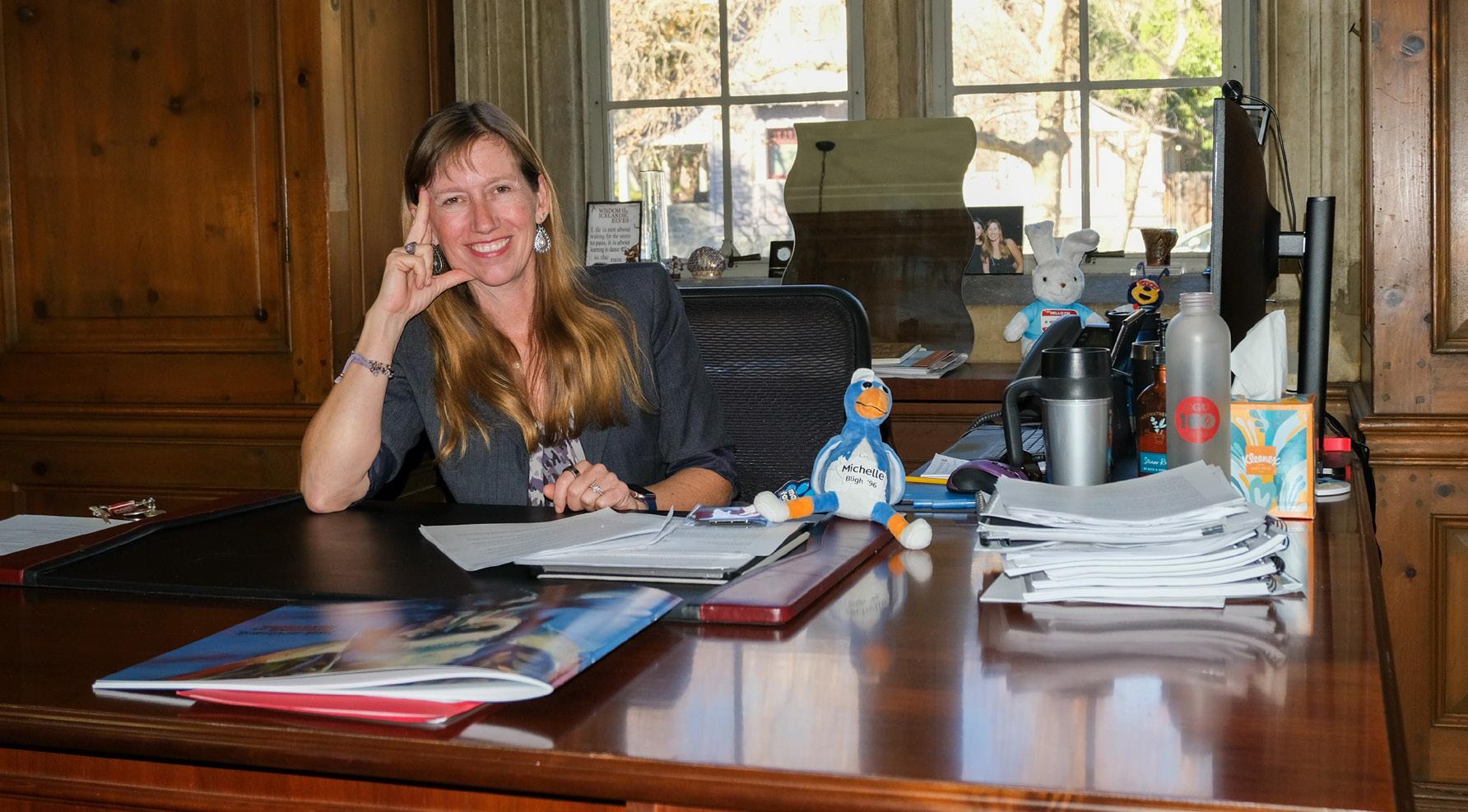
In email correspondence withchelle Bligh said Pomona was “the to partner with.
“We value each other, we share a common history,” she wrote.
“We are both members of the Consortium and understand its importance.”
If a non-Claremont institution were to partner with CGU, it could threaten the structure of the consortium, according to multiple Pomona administrators.
Currently, costs for shared resources like Student Health
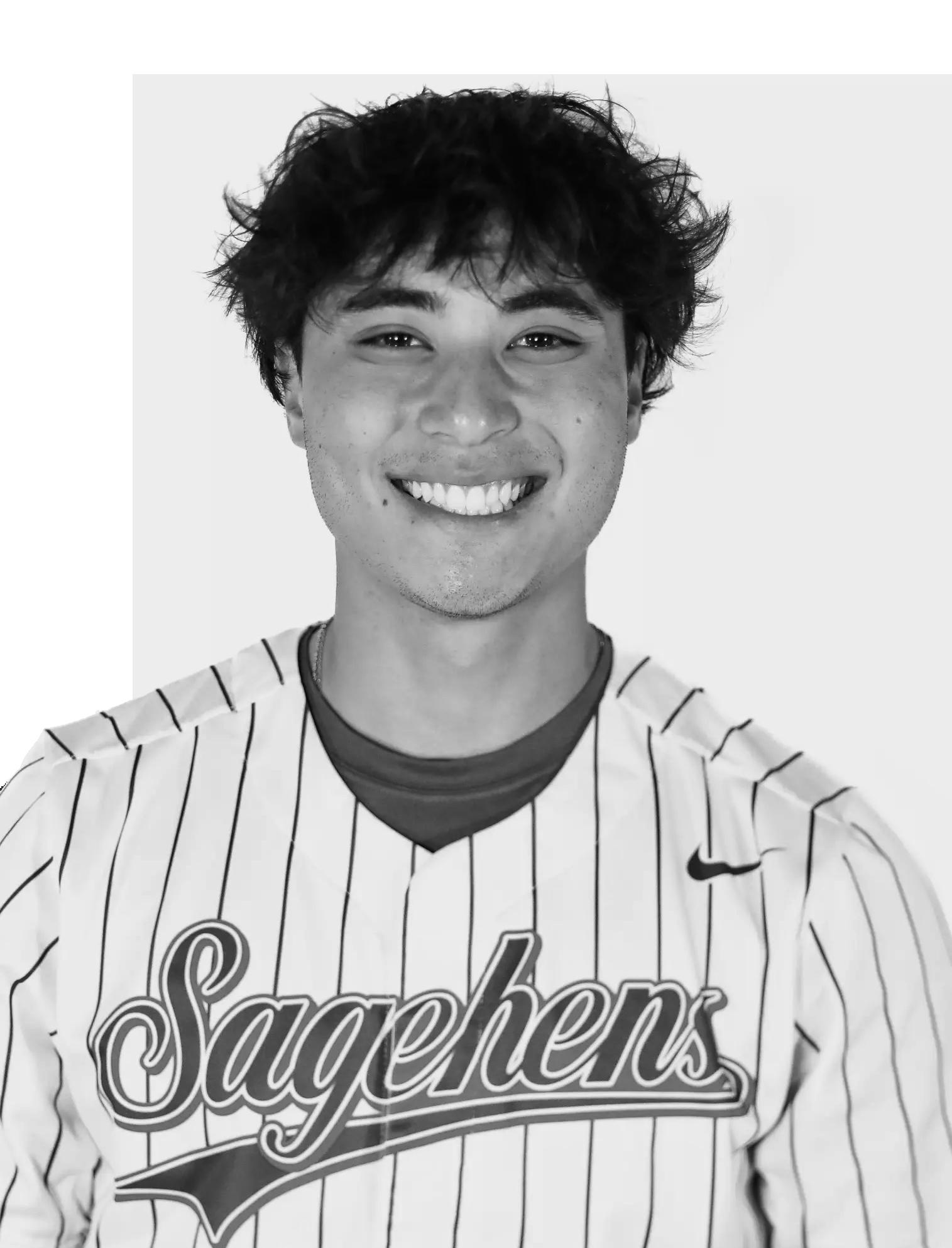
A new semester at the Claremont Colleges brings new leaders to the Claire Welch SC ’27 and Joelle Rureins as the newspaper’s spring 2026 editorial board.
A Sacramento native and premed English and biology double major, Akins steps into the role as editor-in-chief in his sixth semestermester of college as a sports editor, photographer and writer, before diving into opinions editing as a second-year student. He returns to the editorial board after his time as managing editor of arts and culture and opinions last fall, a role Welch has assumed proudly.
Welch was born in Hong Kong and moved to Washington, D.C. after graduating from high school. She is now double-majoring in philosophy and foreign languages, in the spring of her freshman year, moving on to columns the next semester. After spending the second half of her sophomore year abroad, she held the title of arts and culture features editor last fall.
Rudolf, a psychology and writing and rhetoric double major from Seattle, is in her fourth semester semesters deep in the news section, progressing from writer to associate
between the seven schools. If CGU were forced by an external partner to exit the consortium entirely, the six colleges would have to divide the remaining amount.
“Everyone’s cost would go up
But Roth specified that costs
are not split equally among the seven colleges — the two graduate institutions “have a smaller share.”
Still, he said, “nobody wants to pay more for roughly the same services.”
Even if partnering with an outside institution did not push CGU to leave the 7Cs, Pomona Executive
Director of Strategic Innovation KJ Fagan said the presence of an external institution could “pose a risk to the consortium.”ence their decision-making in any
is this spring’s managing editor of news and sports.
been an integral part of their college experience. Akins said he initially joined the paper to expand his social circle beyond passion for student journalism,paper in the sixth grade with his best friend and later running both his high school’s newspaper and literary magazine.
Rudolf was seeking a substantial commitment to a paper that reached a wide audience, so she
“I joined my freshman fall as this giddy news writer who had just started journalism at her high school, and I was like ‘I’m gonna do this in college,’” she said.
freshman year was a more spur of the moment decision. Shemate, and the rest was history.
“[My classmate] had a copy really want to make something,’” Welch said. “I didn’t apply, I just
The trio would not be the leaders they are today without
MAGGIE ZHANG
showed Claremont Police Department Corporal Benjamin Alba tase Rios, leaving him unresponsive. Rios’ family is now seeking answers from Claremont City Council about a missing two minutes and
MAGGIE ZHANG • THE STUDENT LIFE
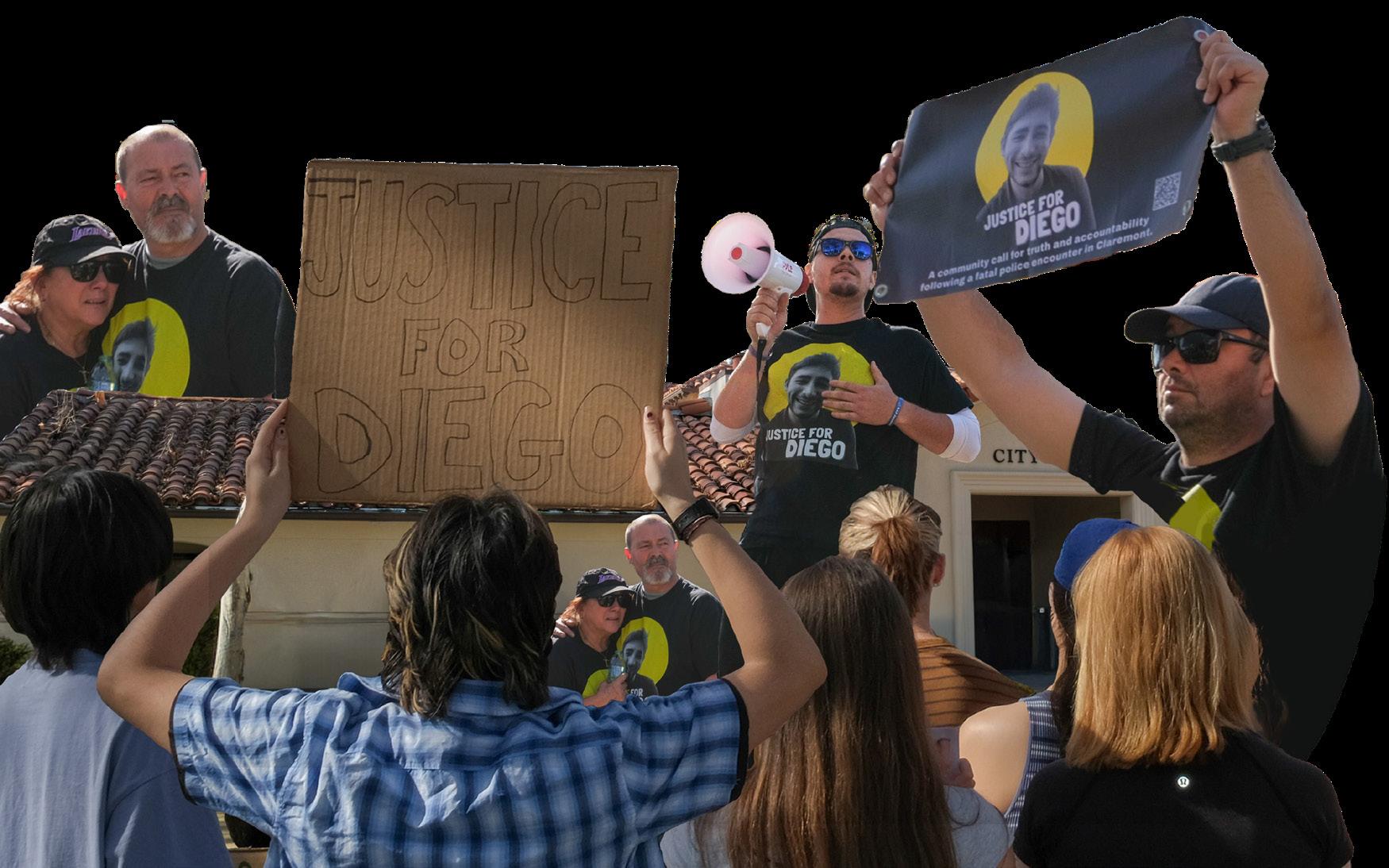
Claremont students and community members attend a rally following the death of Diego Rios in police custody.
Partnership negotiations underway between Pomona College and Claremont Graduate University.
MAGGIE ZHANG • THE STUDENT LIFE
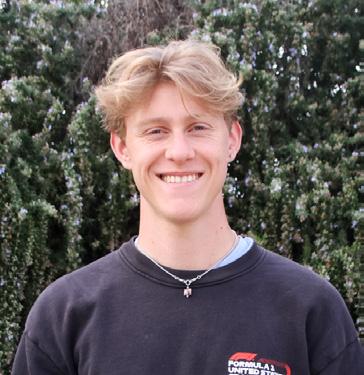
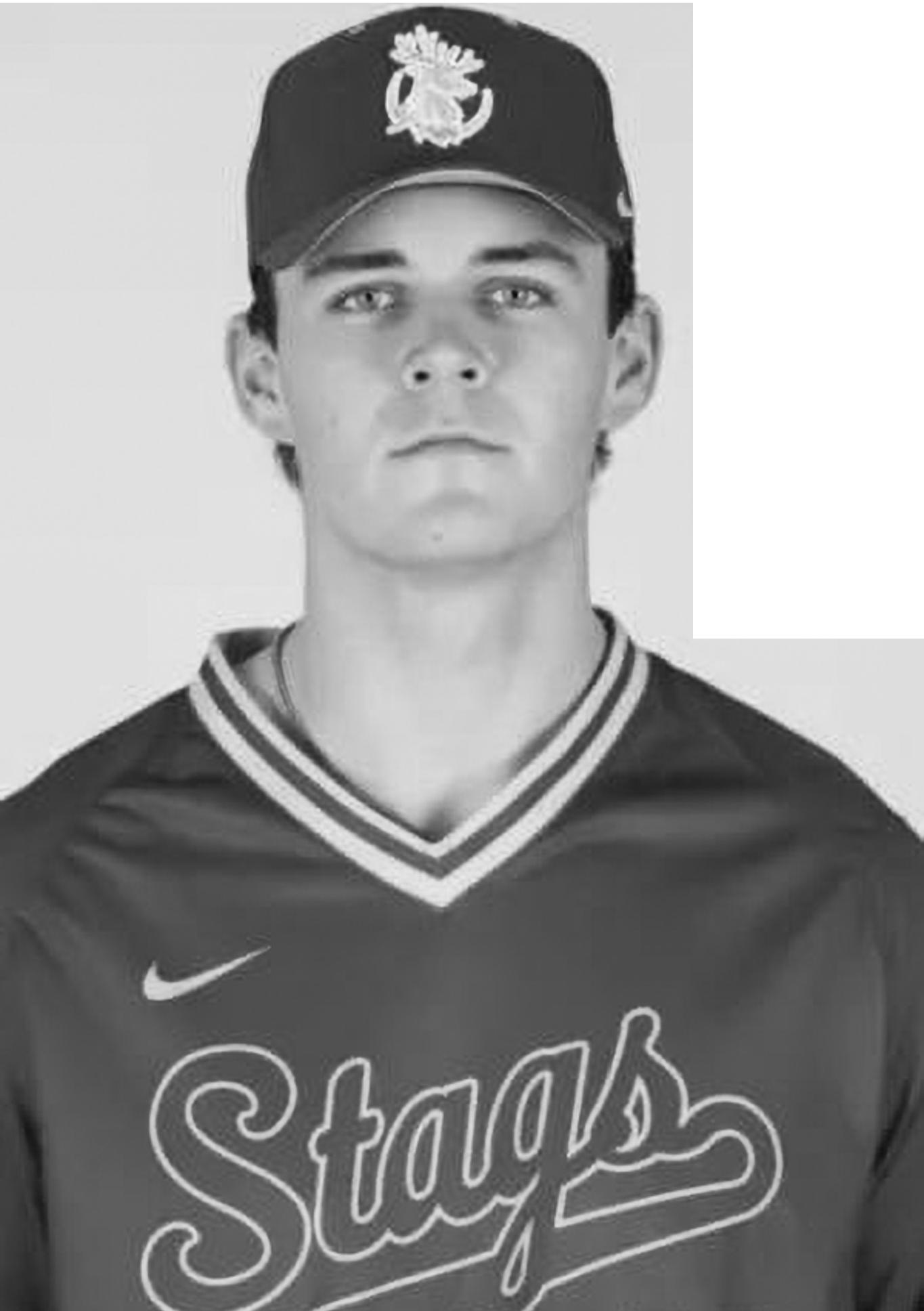
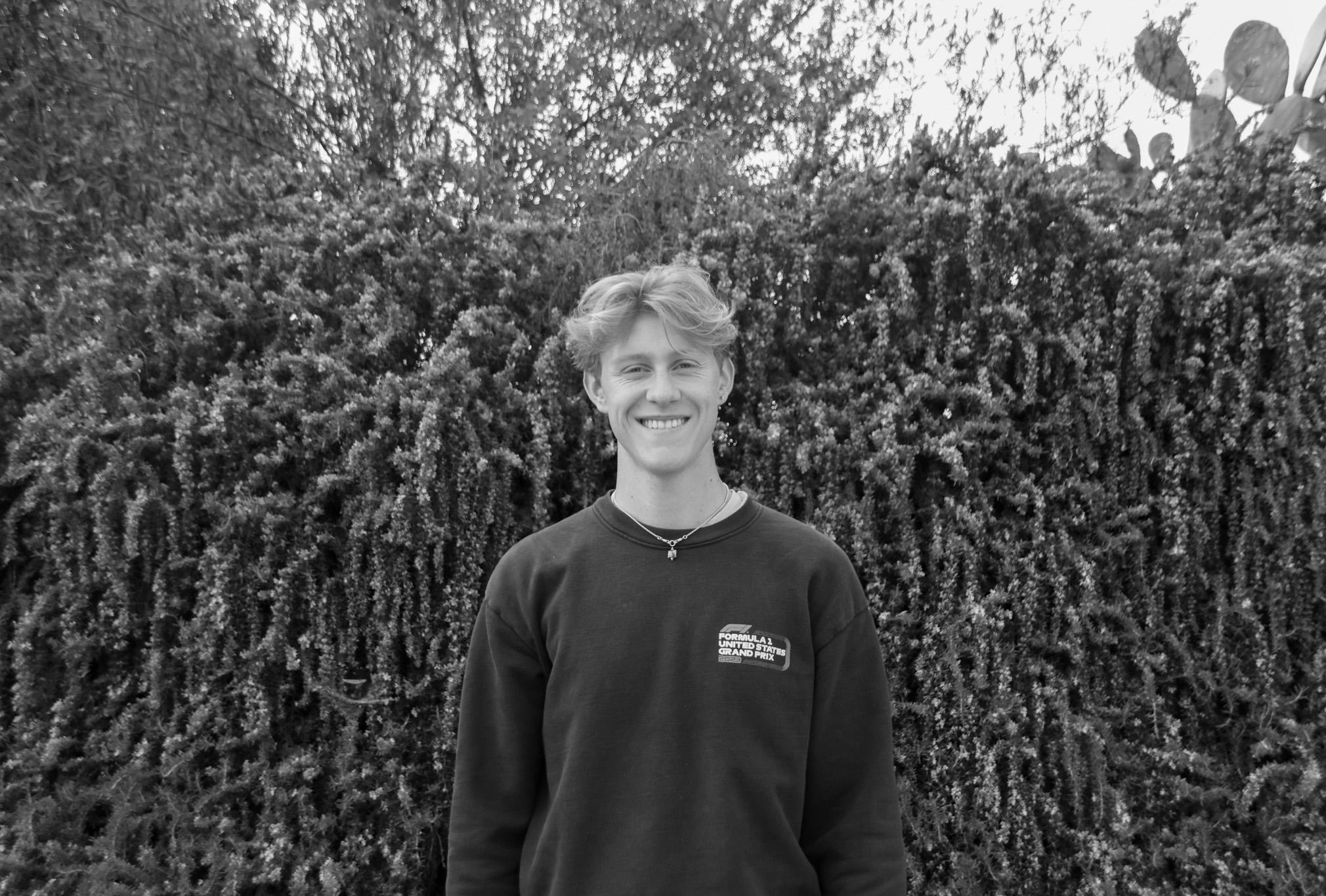
Adam Akins PZ ’27 is TSL’s editor-in-chief this fall, working with managing editors
Claire Welch SC ’27 and Joelle Rudolf SC ’28.
JOELLE RUDOLF
KAHANI MALHOTRA
ILA BELL
PARTNERSHIP: Pomona and CGU admin share insights
Continued from page 1
way,” Fagan said. “It could be an organization that doesn’t have the same mission, doesn’t make the same strategic decisions that the members of the consortium might make.”
Cindy Aragon CGU ’26 has been working on a master’s in history expressed concern about Pomona’s “selfish” reasons for partnering with CGU.
“They’re just doing it because said. “I don’t feel like they have our best interest [at heart].”
She said another institution might have provided more opportunities for the students at CGU, compared to the undergraduate-focused Pomona.
“I haven’t seen or heard anyone excited [about the partnership],” Aragon said.
According to Roth, CGU was engaging with around seven institutions before narrowing in on Pomona. He said that the schools’ historic relationship contributed to CGU’s choice.
“Because we are part of the consortium, we pitched a more collaborative approach during this period of negotiations than maybe other institutions would have,” Roth said.
As CGU and Pomona continue to discuss their potential partnership, Fagan said the process has followed a cooperative approach.
“I don’t think I would describe it as that we are debating
anything,” Fagan said. “We are trying to work together to kind of co-create what this partnership is going to look like.”
The details of proposed improvements still need to be ironed out, but Roth shared that the institutions are considering consolidating certain back-of-house services like human resources
“Instead of having separate services staffed at CGU and at Pomona, there might be some opportunities to do those in a combined way, which could save money on the budget,” Roth said.
Bligh said CGU was “moving diligently” to present its Board of Trustees with a partnership proposal by May.
Starr expressed more uncertainty. “The total timeline is really going to be dictated by a whole range of things, including how much information our board needs to come to a decision, getting decisions made by the Consortium and ultimately, accreditation decisions,” she said. “That timeline is not one that we control.”
Roth said Pomona’s adminiscommunity outreach this spring, hosting town halls, senate discussions and hour-long administrator conversations every other week at Café 47. Fagan said the majority of feedback has been “very positive”
since the administration revealed that non-disclosure agreements from CGU forced them to keep the Pomona community in the dark until December.
Roth said that while they develop long-term plans with CGU, he still wants to focus on the well-being of current Pomona students.
“One thing we’d like to continue to think about and develop is exciting things for current students who are only going to be here a couple more years.”
Overall, Fagan is optimistic about upcoming negotiations.
“There’s going to be a lot of independence of CGU under the proposed structure,” Fagan said. “It really does feel like a great partnership.”
Scripps transitions to keycard-only door access
Over winter break, Scripps College updated on-campus door readers to enable swipe access, prompting student discussion about convenience and security. Under the former system, students accessed residence halls by scanning their student ID card and entering a personalized four-digit PIN.
The change was announced to students via email by Residential
“The previous PIN feature was removed after repeated keypad failures caused delays and access issues in the email.
Students were advised not to enter PINs, as doing so would result in their access being denied.
mation Technology offices were informed of the change in advance, according to Scripps senior communications manager Emily Peters recently updated access control across campus and are preparing for future enhancements across the Claremont Colleges.
While the information was distributed via email, some students change when they returned to campus.
Isabelle Carlsen SC ’29, a Schow Hall resident, said she noticed the update when she tried to enter the building through a back door commonly used by students unloading their belongings.
“I tapped my card and then tried to put the PIN in and it just wasn’t working,” Carlsen said. “I
didn’t know that it was changed.”
Carlsen said she never saw the initial email, as it was easy to overlook.
“When you first read it, the front looks very similar to what they sent us at the beginning of last semester,” she said. “So I just automatically assumed it was going to be the same information.”
described a similar experience returning to campus after winter break. She thought she was locked out when the door did not open after she entered her PIN.
“I really liked the PIN access because it gave us a sense of seif you got someone’s ID, you wouldn’t know their PIN to get in.”
Carlsen said that while she generally feels safe living on cam-
pus, the removal of PIN access has made her feel vulnerable, especially if an ID is lost outside and anyone could use it to enter residence halls.
On the contrary, other students said they do not feel the change
Annabelle Wonder SC ’29, a resident of Rout Hall, said she views the change as an improvement.
“I think the lack of PINs makes so I don’t take issue with it,” she said.
But she acknowledged that the PIN system may put some students at risk. “CMC dorms don’t use PINs and they had some break-ins,” she said, “so I could see it posing a security threat.”
To address safety concerns,
report lost IDs to Campus Safety. If they lose their IDs, they recommend temporarily disable card access.
RALLY: Claremont community protests Diego Rios’ death
Continued from page 1
25 seconds from the body camera footage and an explanation as to why mental health professionals were not called to the scene.
Miriam Akhmetshin SC ’26 attended the rally on Jan. 31 and had participated in past gatherings and City Council meetings for Rios.
“To hear his family, his mother, loss, it’s basically impossible to not feel motivated to act,” Akhmetshin said.
Akhmetshin said Rios’ death is devastating, particularly in the context of recent deaths related to Immigration and Customs Enforcement in the United States.
“The fact that similar preventable deaths are occurring right in our own backyard, that there is no justice and accountability right now and that a lot of Claremont students don’t know about it really motivated me to get involved to the fullest extent,” Akhmetshin said.ed, living in Claremont comes with the responsibility to participate in community action. Chloe Gonzalez SC ‘26 also showed up to support Rios. “I think it’s really easy to just stay on the colleges and not do anything, even though it’s right here. But we have to just be aware of what’s going on,” Gonzalez said.
hoped more students start showing up in support of Rios.
“I just think it’s really important for us as privileged college students to use the privilege that we have to have a voice,” Coombs said.
Rios’ brother, Victor Rios, wasing with a megaphone in front of the crowd, he discussed the body camera footage and pushed for further action by City Council.
“This wasn’t a tragic incident or unfortunate outcome. It was murder,” Victor Rios said. “What the police encountered was not a violent criminal. They encountered a man having a mental breakdown. He was hallucinating. He was ter-
Rios’ friends and family took turns speaking and memorializing him with collective chants of “I ain’t the one,” a phrase used bying Rios against his vehicle in the released footage. The phrase has since been reclaimed by loved ones to represent resistance against police brutality in Claremont.
Several students said they became more aware of Rios’ death after winter break and have since become more involved.
“We started hearing about this wasn’t a lot of awareness of it, because I think it happened sort of at a time when most students were
on break,” Gonzalez said. Akhmetshin hoped the other 5C meetings would support Rios’ family and friends.
“Following up their public comments with support from the community is really meaningful, and we hope we can provide additional support when perhaps City Council is not,” Akhmetshin said.
Victor Rios ended his speech with comments about the Claremont community and the Rios family.
“They messed with the wrong family,” Victor Rios said. “They messed with the wrong community. We’re not going anywhere. We won’t forget.”
Pitzer announces strategic vision for next decade
Pitzer College President Strom Thacker announced the college’s new strategic vision in an email to the student body on Jan. 20, outlininvestments that will be implemented
The plan is driven by four central goals: “catalyzing bold, fearless learning, expanding student access, community-building and growing resources,” according to Pitzer’s website.
Thacker revealed the college’s plan to develop a new strategic vision in the fall of 2024 and emphasized the importance of student and faculty input.
Senate aided in framing and drafting,
According to Vice President andjority of the strategic planning took place during listening sessions withed that in addition to the listening ses-
several students, faculty, Marchant, Thacker and trustees — met every other month over the last year to draft and plan the vision based on listening session data.
Marchant noted the value of gaining real student feedback.
“I liked it because it wasn’t just form and submit it,” he said. “You sit down with a group of people and
sessions led to a lot of the initiatives themselves.”
existing programs and resources, such as the Robert Redford Conser-proving current programs such as the school.
school’s resources and programs may be challenging due to the faculty salary raises this academic year.
Meeting this goal will not impact student education quality or expenses, according to Marchant.
“We’re trying to minimize extra expenses at the college, but none if it impacts the quality of the classroom instruction,” he said.
“And none of it impacts at all the student experience, especially outside of the class environment.”
The college also strives to expand access and diversify its student body, in accordance with their secondary strategic goal stated as “make education accessible to a wider range of socioeconomic backgrounds.” But Charkoudian-Rogers voiced concerns about the college’s institutional capacity.
throughline of this project.
needs more money,” Charkoudian-Rogers said. He said to make education more accessible, the school should lower the amount of students receiving
5Cs with need-aware admissions policies. from community-based discussions and moving on to implementing the plan through administrative changes.ing this strategic vision, Marchant
“Of course, we’ve evolved over the years, but what’s consistent is the fact that this college was founded on these principles, these values,” Marchant said. “The haircuts changed, the music changed, the and go, but those values were literally with us at our founding, even if we didn’t name them like we do now.”
Students, faculty and alumni discuss ICE and civil unrest
dents, faculty and 5C alumni gathered in Claremont McKenna College’s (CMC) Kravis Center for an event hosted by The Open Academy to discuss the mobilization of Immigration and Customs Enforcement (ICE) in
“I do think [these programs are] something that draws a lot of students here,” Charkoudian-Rogers said. “Maybe there could be more programs like that at the school.” However, expanding the Minneapolis, Minnesota. Throughout the 90-minute discussion, participants shared their anxieties about the future of federal law enforcement.
Some participants said that local leaders and activists are not doing enough to stand up to ICE activity in the United States.
Participants also talked about the
recent deaths of Renée Good andneapolis. Alex Bartholomew CM shared his experience witnessing the presence of ICE in his state.
“I remember walking around the city and seeing the community be-
the discussion. “I have friends who work at restaurants that are having to close for certain hours because people are scared to come out.” they were “outraged” by the current political climate in the country. Several participants noted that many people are afraid to speak out against ICE because of controversy and censorship. In response, some commented on the importance of open discourse during times of political turmoil, especially among college students.
“Being at a place like Claremont McKenna College … you have a lot of power,” Bartholomew said.
“You’re also insulated. That helps me feel comfortable [to] speak out and have these types of discussions.” Many professors shared similar sentiments and were pleased to see students involved in tough, critical dialogue on campus.
“I thought it was very interesting and productive,” Ioannis Evrigenis, director of The Open Academy and government professor at CMC, said Evrigenis also said that he hoped to see more young people show up to partake in the discussion. At the conclusion of the event, students expressed their appreciation for the opportunity to discuss the impacts of ICE and immigration, highlighting its importance for the community at the 5Cs. Bartholomew echoed these sentiments, explaining how vital it is to keep conversations surrounding ICE alive.
“I think it’s good to see a group of people talking about what’s going on in Minnesota,” Bartholomew
said. “I have a lot of family who are talking about it all the time and friends who are impacted by it, but, day-to-day, on campus … we don’t hear a lot about what’s going on. together to discuss it … I think it’s Open Academy Program Assis-
and contribute to future discussions, regardless of controversy. This Saturday, The Open Academy will welcome Notre Dame professor and scholar Ascher Kaufman and CMC professor Bou Nassif to lead conver-
Center.
“We’re looking forward to having a lot of good speakers come in and represent a diversity of views,” Parihar said. “We’re looking forward to talking about more controversial things. Hopefully, more people will show up.”
SHIVANI SHARMA • THE STUDENT LIFE
COURTESY: PITZER COLLEGE
MAGGIE ZHANG • THE STUDENT LIFE
Scripps College replaces PIN-enabled door locks with keycard scanners.
Pitzer College announces a new strategic vision for the next five to ten years. 5C community attend Open Academy event on ICE action in Minneapolis.
BIANCA MIRICA
QUINN BOLSTER
NOAH BREWSTER DOMINO MCMILLAN
e D-BOARD: Meet the Spring 2026 TSL leadership
Continued from page 1
the mentorship and inspiration
“I think it was really fascinating to be the Opinions Editor at the height of protest on campus,” Akins said. “I learned a lot about trying to meditate discussion and mediate arguments between people who care … I thought it was really amazing to see that much passion in writing.”
Welch said her editors inspired
orable motivators for Welch. “[She] was so intimidating, but exuded incredible intelligence,” she said. “I also honestly think a lot of my continued dedication to me really well. I’ve learned a lot of ego death in a good way from being edited.”
meet a plethora of new people, just as he had hoped. Welch described Rudolf shared similar sentiments.
“These aren’t super intimidating people,” Rudolf said. “We’re all writing nerds — that’s so fun!” Rudolf’s ascension to managing editor was fueled by her love of the newsroom, which inspired her to assume greater responsibility in said she likes feeling like a “cheerand in shaping its broader goals.
This semester, the trio’s vision each expressed excitement about expanding the Multimedia and
Special Projects desks to create a more interdisciplinary paper with a wider impact. The team also emphasized the importance particular.
the Claremont Colleges,” Welch said, emphasizing how people will be able to look back on prior issues going on at the time.
Akins and Rudolf agreed. “You can see the artifact of how people cared about [past events],” Akins said. “I think that’s a re-
sponsibility of student journalism, generation of people coming into their adulthood.”
Rudolf noted the importance of student journalism in a time when the press is under fire. She said identify oppression — especially regarding institutions that need to be held accountable — and tell stories to address it.
“There’s a lot of things that would go under the radar and left unaddressed if we weren’t there to ask those questions,” she said.
Shift to digital ordering at The Hub raises community concern
Emre Kocer CM ’27 is one of those students. He explained how ordering food ahead of time allows him to grab and go.
Hub installed two self-service kiosks and a mobile ordering system this semester, aiming to speed up service and reduce congestion. Some student customers and Hub employees, however, said the change has already begun to reshape how they interact with one another.
This change comes after the same system was installed at DayBreak Café in the Robert Day Science Center last fall, where it was received well by
Phil Herrera is an assistant general manager for Bon Appétit at CMC, which manages the college’s food services. He said the system was introduced with the goal of “streamlining ordering and reducing wait times during busy meal periods.”
“We’ve heard very positive feedHub, who note the convenience of the new ordering system,” Herrera said.
“ Kocer said. “I can just pre-order it, come, pick it up, done.”
Some students have voiced especially if their orders are more complicated.
kiosks restrict how students can combine items.
“For some reason, on the kiosk also get something from the grill at I use my meal swipe to combine both of those, so I usually still order in person if I can.”
Even if students like Jaffee choose to order in person at the counter, the employee taking the order still has to input it into a kiosk at the counter. According to some Hub employees, this hybrid form of ordering at the
counter can also create inconvenient slowdowns.
Hub employee Dorien Randell thinks the system still needs adjustments.
“There used to be a lot more customization. I feel like they took a lot of that way,” Randell said. “I feel like we’re slower. I feel like we can’t keep up with the amount of the [new] system.”
face-to-face interaction.
“I do miss talking to [students] said. “I used to call you by your name, now you’re just numbers.”
Ananya Mahtani CM ’27 said she used to personally know the baristas at The Hub, and she misses interacting with them since the new system was implemented.
“The whole interaction of talking to the baristas I knew and them knowing my order was kind of awesome,” Mahtani said. “Now we
don’t have that anymore.”
Kocer echoed Mahtani’s sentiment.
“Before you would walk into The Hub and then there’d be somebody waiting at the cashier line,” Kocer said. “It was more interactive. Now I just go on my phone.”
Kocer also said that before these changes were made, he would describe The Hub as a social spot. But now, he said that students are more using the space to do work.
“I think it made everything just said. “Just doing work and using this more like a replenishing place, rather than the social area.”
Mahtani said that although a great sense of community between students is maintained, she worries how the Hub’s atmosphere might shift with less interaction between students and workers.
For Jaffee, she’s mostly con -
“I’m personally of the mind of
whatever the employees think works prefer having student interactionage the cafe, then I think that’s what we should do. If they’ve called for an online system because they just get overwhelmed and it’s hard to manage them, I think that’s what we should do.”
Union leader and Frary cook Rolando Araiza terminated
terminating Frary Dining Hall cook and union leader Rolando “Rolo” Araiza last Thursday after 21 years of employment, months before a new union contract is due in June. Students and workers are campaigning for Arazia to be reinstated under claims that Pomona’s decision was workers unions.
Araiza’s involvement in the workers’ rights movement and organizing Claremont Student Worker Alliance (CSWA) to petition for Araiza’s return to work.
“At a time when our immigrant community members and the workcannot allow this blatant union busting to stand,” the petition read. “Rolo and our community for years, and demand that Rolo be reinstated to his job immediately!”
denied any connection between employment decisions and union orgacomment on Araiza’s termination.
“As a general practice, the college does not comment on the details of individual personnel actions. However, we can assure you that the college does not make employment decisions based on any employees’ support for or against any union or any role or position they may hold in a union,” the email read. “We remain committed to maintaining a fair, respectful, and professional workplace for all Dining Services employees.”
Pomona’s history of workers’ rights disputes, including the termination of 17 undocumented employees in 2011, has led students to further question the motives of Araiza’s termination.
said he believes he was terminated for his role as union leader.
“They’re anti-union,” Araiza said. “Whether they say ‘no, we’re
not,’ I know what it is, and we’re Araiza said he had faced previous issues with promotion, presumably due to his role in the union. Pomona’s decision to terminate him.
reason to try to protest against the union and anything that they try to do,” he said.
of CSWA’s Pomona branch, said the Araiza’s termination.
“This is clearly, to us, a result of Rolo’s role in the union,” Pleucker said.
Pluecker said Araiza plays a key role in supporting the union contract, which will enter renegotiations on June 30.
“Firing him now is no coincidence,” Pluecker said. “They’re trying to weaken the union as much as they can in the build-up to the the fall.”
Araiza believes that even though for the new union contract will continue.
”At the end of the day, we’re still gonna get organized to get ready for contract negotiations,” he said.
I think it makes it even better, because people can unite and actually understand why the college is doing what they’re doing.”
Araiza described Pomona’s decision as heartbreaking, as he has served the college for over 20 years.
“How do I tell my family?” he said. “How do I tell my peers? How do I, you know? I mean I’ve been the bread maker at my house and providing for my house.” He said that although the situation is frustrating, he will continue to push back against the decision and Pomona’s treatment of union workers.
“I’m gonna keep my head up “Because I understand what it is. I understand because I’m a leader, they’re trying to get rid of me, and we’re not gonna have that happen.” CSWA is asking students to sign their petition to reinstate Araiza. Pluecker said. “He’s stood up for students in the past, he’s put himself on the line for students personally in the past, and it is now our duty to work on his behalf.”
Coop Fountain operations in jeopardy with planned demolition of
Plans to tear-down Pomona College’s Oldenborg Center in the 20262027 academic school year could threaten operations at the Coop Fountain, according to student representatives familiar with the situation.
The destruction comes as one step in the college’s Global Pomona initiative, described by Pomona’s website as a “campus-wide commitment to prepare every student to engage meaningfully with an interconnected world.” As part of the initiative, Oldenborg Center — a language-learning research center and residence hall — will be replaced with a new Center for Global Engagement (CGE).
The CGE is meant to serve as a site where community members at Pomona can engage with partners both locally and globally to explore “complex societal issues,” as the college’s website frames it. But one detail in the building’s plans has alarmed students: unlike Oldenborg, the new center will not have an industrial kitchen.
Oldenborg’s industrial kitchen
Oldenborg
currently houses Pomona College Catering, which is responsible for preparing various items for campus events. Without this space, catering services will need to be relocated — potentially to the kitchen that supplies the Coop Fountain, an on-campus cafe open weekdays from 11 a.m. to 11 p.m.
Robert Robinson, assistant vice president of facilities and campus services, says that multiple options for the Coop are under review — including closing the restaurant entirely and replacing it with a food to be made.
“Importantly, there is no predetermined outcome, nor is there an intention to make changes to the Coop Fountain without appropriate consultation and advance communication,” he wrote in an email to Associated Students of Pomona College (ASPC) President Grace
But student representatives who have been in communication with Robinson and other administrative members say that discussion of
Center next academic year
alternatives has been limited, and that they’ve been otherwise left in the dark.
“We want to be a part of brainstorming at least the plan for next year, but it’s just been very vague, non-replies to our specific questions,” said Soren Murphy-Pearson PO ’29, Pomona’s South campus representative and co-chair of the
administration’s approach to the situation indicates a broader issue: wellbeing of students.
“To close the Coop Fountain, even if it was only partially for catering — that is probably one of the most overt things they could do to say that they care more about wellbeing, happiness, enjoyment and access to food,” she said.
ASPC was entirely responsible before they turned it over to the College in 2021. Before that, Pomona Magazine claims that the establishment “almost never turned year alongside the Coop Store. Since the establishment has been steadily
Despite these changes, she explains that there has been a consistent agreement between ASPC and the college to keep the Coop Fountain open and accessible to students — a “memo of understanding” created back when the change of ownership first took place. While the agreement is not legally binding, closing the Coop Fountain would directly violate its terms.
A closure could also violate the shared governance principles that
the college has been drafting for the past year. According to Pomona’s website, these principles are involvement, since the institution is “strongest and most successful when all members of the community have appropriate opportunities to actively participate in College governance.”
But Griffin argues that if the Coop Fountain were to close before administration adequately consultwould be a violation of the very premise of shared governance. in this way, she said, “obviously about future decisions the college might make.”
employee at the Coop Fountain and current member of the Claremont Student Worker Alliance, says the establishment’s closure would hit student employees especially hard. Coop Fountain are part of UNITE -
a closure, they would be protected under the union’s contract with the college, meaning that they would simply be relocated. Student employees, who joined the union last year and have yet to be formally added to the contract, have no such safety net.
“We tend to forget that the students at this school need a living wage as well,” Pluecker said. “Clos-
those of us who need an income to pay to go to this institution.”
He added that closing the Coop Fountain so shortly after student employees joined the union would
since it would weaken the solidarity between student workers and full-
with the union, Pluecker was a key player in its organization among students last academic year when he worked at the Coop Fountain. Many of the other organizers graduated that spring, and he and his coworker returned to campus in the fall as two of the union’s strongest student leaders. That fall, they were also the only two student employees at the cafe who asked for their jobs back and were not rehired, according to Pluecker. Rehiring is not technically guaranteed, but Pluecker says that it’s standard practice; he claims that “inconsequential things that they do else for.”
“Pomona College has a history of taking whatever actions they are able to in order to weaken the union,” of Frary cook Rolando Araiza — one of the “strongest union organizers” at the college — as an example. “Theyever they can.”
Whether or not the Coop Fountain actually does close with the destruction of Oldenborg next year is still to be decided; as of right now, there is no set date for when this decision will be made. In the meantime, Grifworking on a resolution to present to the college. If it passes through ASPC, it could help push Pomona to commit to keeping the Coop Fountain open.
“Student spaces are continually being sidelined in order to prioritize said. “My hope is that, at least at the time being, this will come into public conversation and visibility before any concrete decisions are made.”
ANOUSHKA SAMEER THE STUDENT LIFE
JOSE SAQUIC-CASTRO • THE STUDENT LIFE
ANDREW YUAN • THE STUDENT LIFE
Pomona College faces backlash for firing Frary cook and union leader Rolano Araiza last Thursday.
Pomona College is considering using the Coop Fountain cafe kitchen to house the college’s catering services after the destruction of Oldenborg next year.
The Hub shifted to digital ordering this semester with two new kiosks.
ILA BELL
ANNABELLE INK
CARYS HARDY
‘The Gallery of Hope’ opens at the Clark Humanities Museum
SHANNON BIGELOW
Have you ever thought that the answer to your question lies so far it could be inconceivable? his fantastical ideas into proven calculations is a core tenet of the
which focuses on tracing the evocurated by Anne Dorothy Harley,
of this initiative include archival
Madjid and John Meyers, work to the ties between illustration and
tion in physics brings science and
jid is unique in this way, and he weaves it into his creative pro -
John Meyers, a physicist and professor, has collaborated with showcases a white ladder in a white hollow circle in the center
Decades later, Meyers used this painting as a guide to his research, noting how his artwork suggested gaps in physics long
The
not only to science but to the This blend reinforces the galthat encourages interdisciplin -
CMC’s club fair brings new innovation and engagement to student life
SYDNEY FORSYTE
darted between tables, as posters
other 5Cs hold a single club fair per year, CMC hosts these events at the
provide a unique opportunity for
feeling drawn to the club as a that opportunity to all students, regardless of their level or prior
continuously because they really
students create lesson plans and teach of interest at the club fair, which was
eager to see how our lesson plans are of advocacy work not only helps
was born out of a desire for students and students to represent students here at the 5Cs and also nationwide
you can find this club happily
sion: encouraging interdisciplinary
is an instructive part of the scienfurther work between differently at rigorous colleges, it can be
proofs, I found jarring in a way, This curiosity carried beyond
grew to understand it in a way
ing at it, I learned a lot, and I would love to go back and see
He described hearing about fewer feel like people are spending too
to get to know one another and the club fairs play a vital role in CMC
students who helped install the
ing students to fuse their passions
‘Motwrecked:’ 5C students celebrate another semester of the Motley
SYLVIE SIMMONS
as partygoers dressed as piflooded what is ordinarily a
entryway, snaking through the outdoor dining area down to creatures all waiting their turn
er, is not announced until days before the event, when Motley with inspirational content guiding students toward a
This coveted 5C tradition is known for drawing great
goes into the party planning
easily follow, and one that felt
reached out to Leyva, eager to share that she constructed
for how we want this space to This coincidence was a
slowly trying to change how the
This ongoing Motley tradi
fun and reliable tradition at -
Motley opening event as an unthey gather to dance and get a In preparation for the party, Motley workers created drinks
The specialty drinks are just
planning process offered an
other unique opportunity for gathering and creativity; various
described the dedication that went to the event as her favorite party of the year, Johnson loved its said, referring to an array of bal -
However, Johnson felt that the questions about its feasibility as a
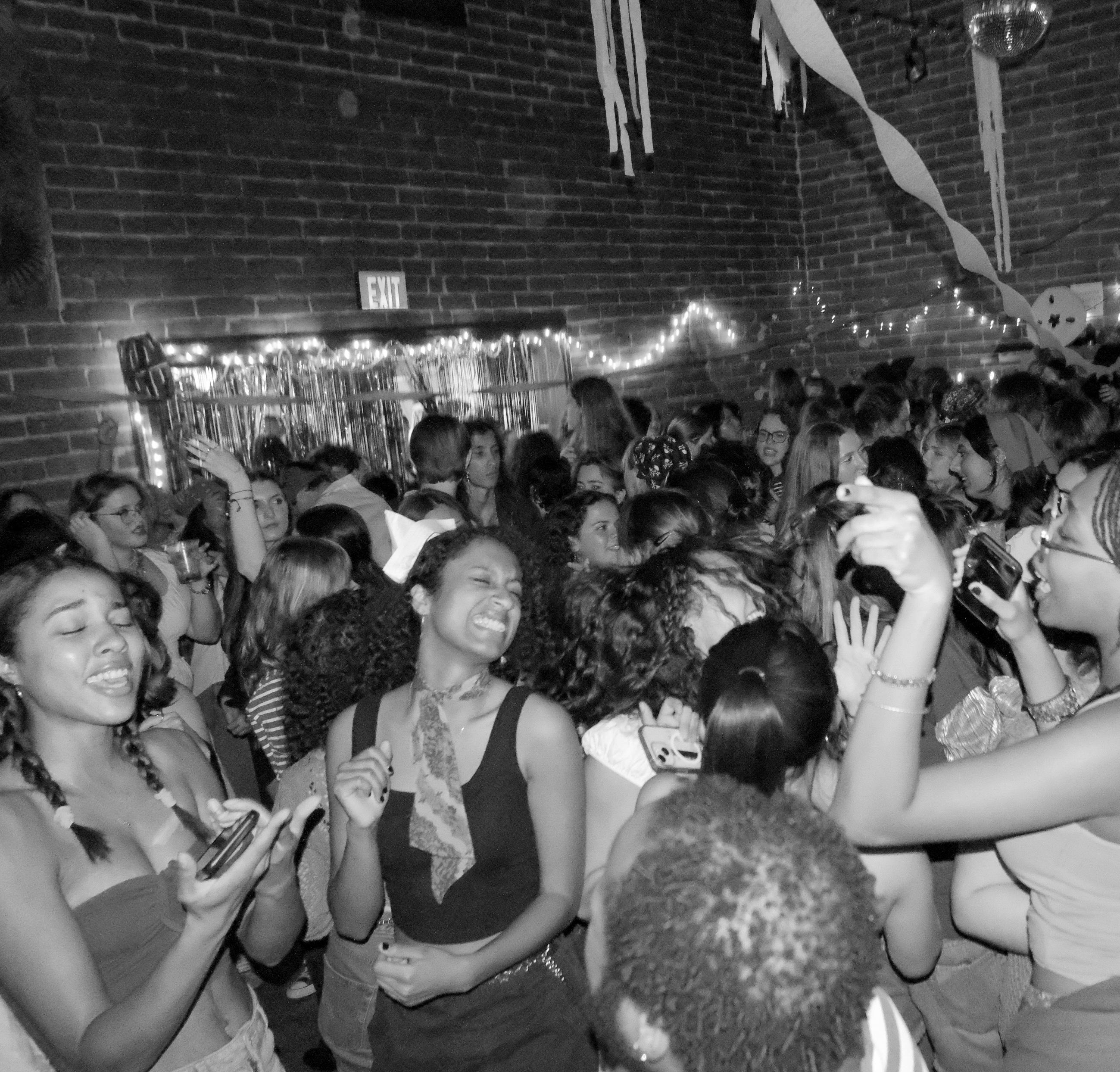
proved, once again, that the Motley is not only a beloved study spot, but also a place for Claredress like lobsters and pirates, and dance their way into the new
ning paid off: Many partygoers
This branch of CMC clubs is
SHIVANI SHARMA • THE STUDENT LIFE
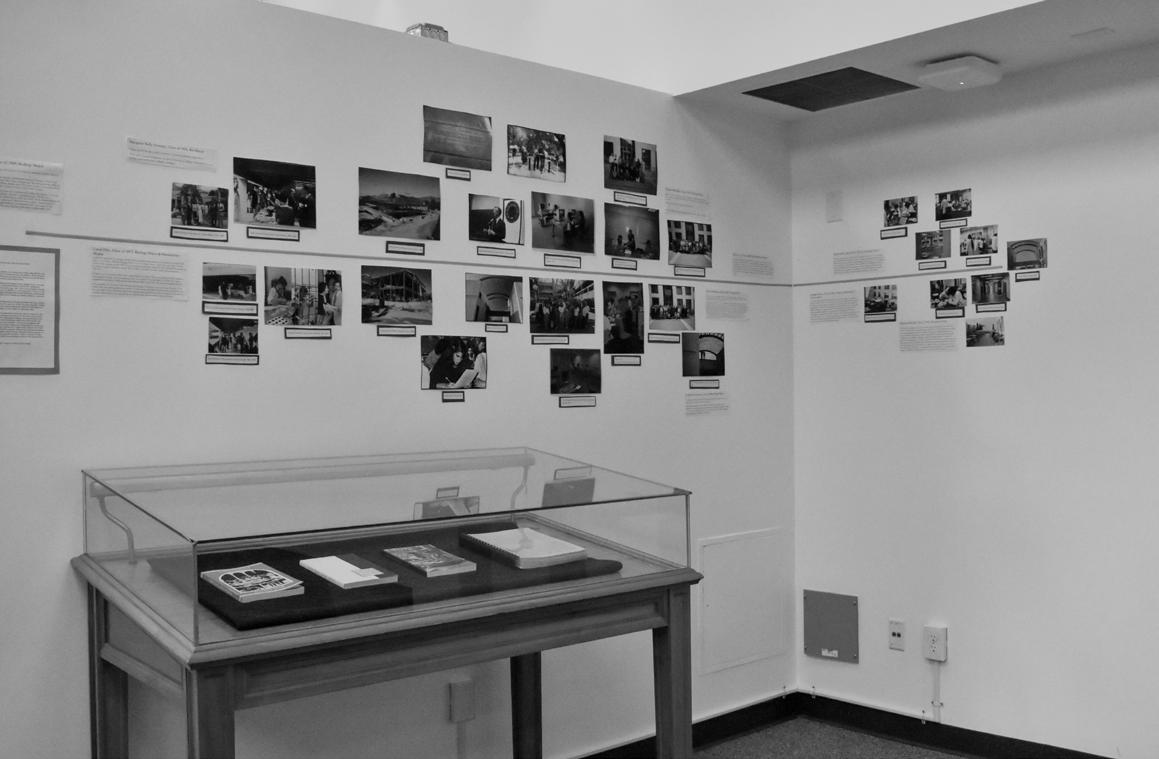
‘Gallery of Hope’ is now on display at the Clark Humanities Museum.
ANDREW YUAN • THE STUDENT LIFE
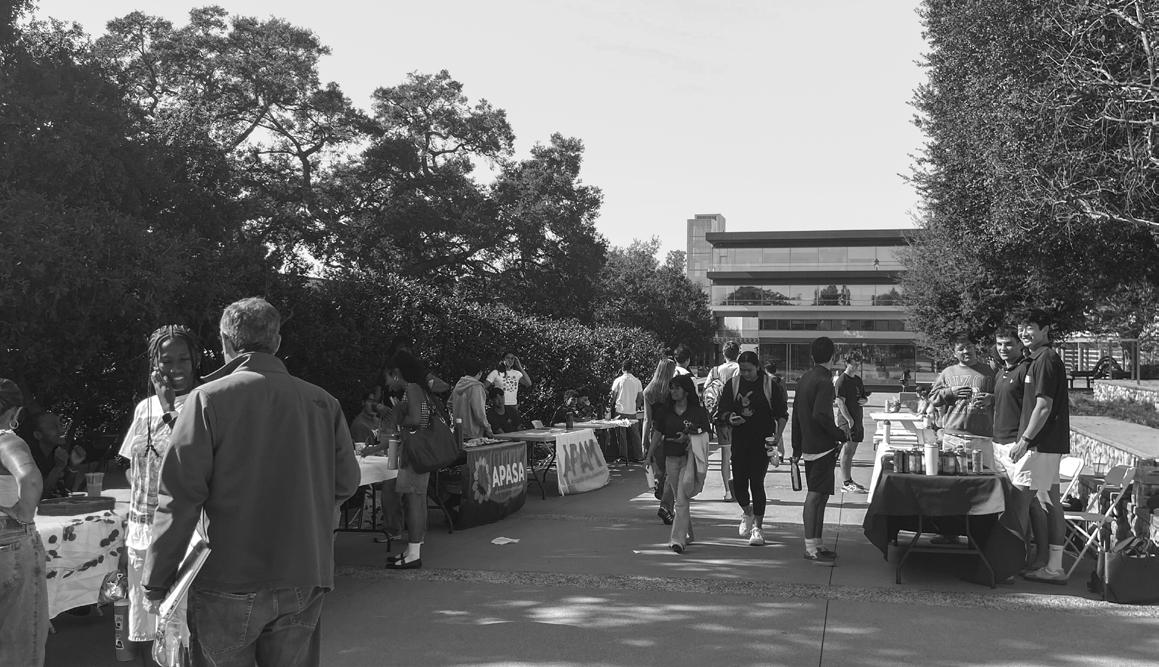
Students gather Sat., Jan. 30, at CMC’s Flamson Plaza for the spring semester club fair, featuring over 30 new and existing organizations.
MAGGIE ZHANG • THE STUDENT LIFE
Loving and losing in the time war
KASSIA ZABESTAKIS
consciousness rooted in all organic a technologically advanced civili-
subtlety, while Red is violent and
Despite their contact being forbidden, they begin leaving each
carious to leave any trace of their
rid their bodies of the need to cry before they strike? Despite this, Red describes a feeling that to her, was
Red put hunger into words even though she has never physically felt
friendship she has known has been
the isolation of its characters, leaving the respective letters for the two
The writing was beautiful and
The love between these characThere were no kisses and no subtle hand brushes, dangerous letters served as the venue for their story
ciate the bond between Red and
hunger in their lives full of lonelihunger to see these characters fall slow buildup full of tension, and
I was constantly intrigued by the of this book confused, wanting to
sibility echoes the relationship at its center: a bond that resists logic and causality Just as the war unfolds beyond full understanding, so does the connection between Red
Professor l isa Auerbach threw away her phone — and lived
thick with the sharp scent of
a refreshingly tangible antidote to
that fades into the feed within hours, like a physical book that requires
a broader precept: participation
thing I think about doing rather than
ters, but felt the book was too short
an interdisciplinary artist, though
current events and to the people In an era where artists are
pager-style device, Auerbach beganing to the news on the gate outside
nitely a book driven by language perhaps that lingering hunger is ALEXANDRA GRUNBAUM
Her work unfolds at its own pace, driven by curiosity rather than a
through, nothing to check and no That insistence on attention
requires the viewer to be close enough to read it and to stay still
actual neighbors walking by with of contact in the physical world, at think about how tiny gestures in our
First, create conditions that allow for your life around the world of digital
sured by visibility and reach, Auer-
sations, create genuine connections
just like the way she engages with
Siena
aspiring writer and creative, survives on endless cycles judgmental stares in place of encourage
Mood Swing auditions: ‘Where my pitches at?’
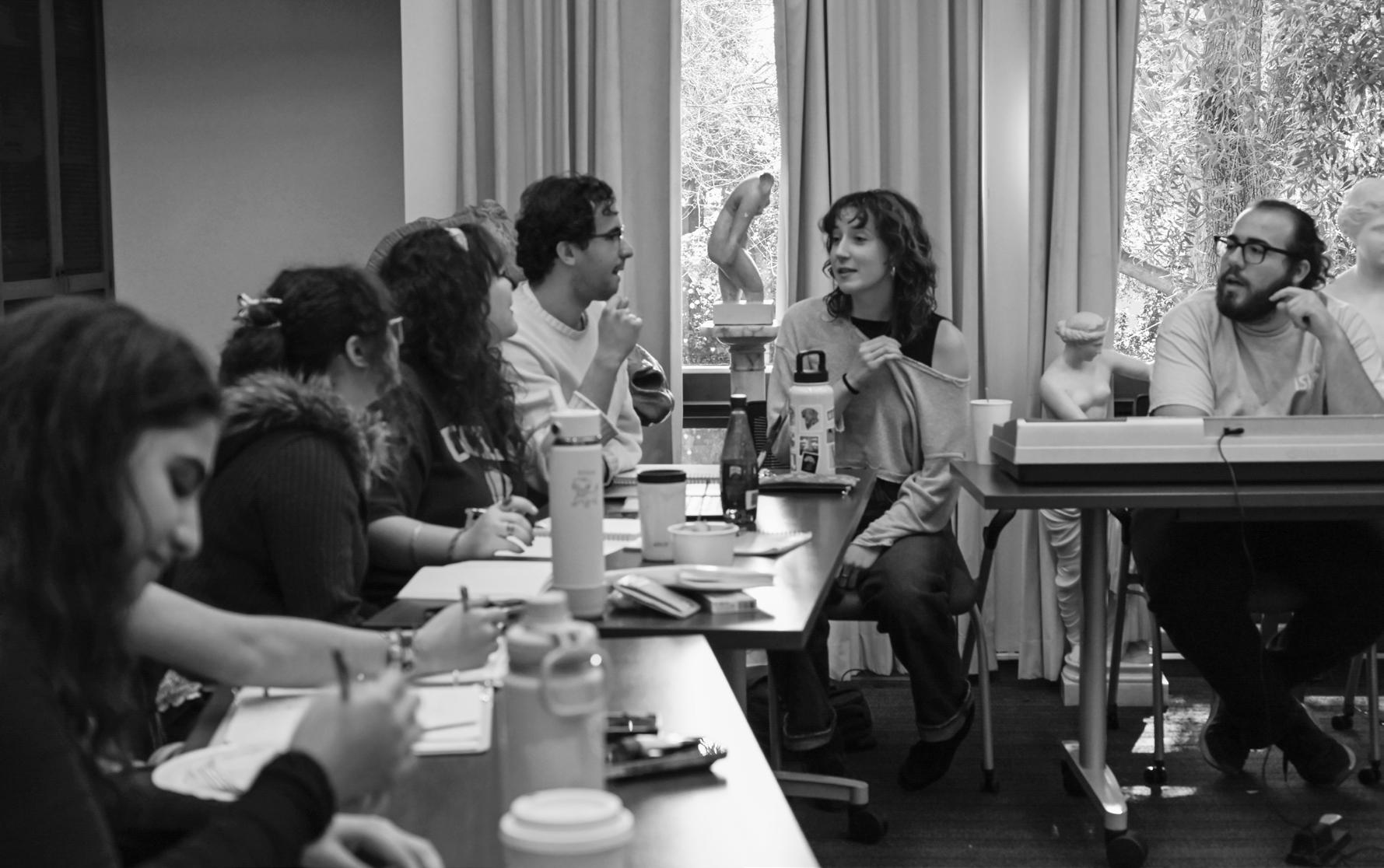
ZHONGYI CHEN • THE STUDENT LIFE Student exchange ideas during this semester’s Mood Swing auditions.
Unlike other colleges, the Cla
of fraternities and sororities, in
needed by auditionees duringiously balanced holding their water bottles, snacks and por
group trying to sing the best you can … because the audition process on both ends is never
to the rushing period held bying consists of events planned by sororities and fraternities,
cappella groups, choosing the right fit requires a conversationated based on their abilities and
tions where people get offers pick which group they get along
After the auditions are over,ate rivalry between groups only
and try to conduct rehearsal as usual and see how long it will
Another tradition involves yellow clothing for another group
To state the obvious, however,personalities, a cappella groups consider other factors: group fit,
The built-in brotherhood is essential to filling the social void is a strong bond of solidarity and -
want to know which one it is and
clubs, with history and prestige an incredibly stressful process
pella heads were setting up the
with great care; before auditions began, they graciously touched
to take hold of everybody as the
ing activities is an annual drunk
in the world are a cappella groups -
lady-dancing to a Mariah Carey
SIENA GIACOMA
Giacoma PZ ’27,
PJ JAMES • THE STUDENT LIFE
Pete’s Picklin’ is a Claremont Farmers Market success
ZOE CHIN
however, the pickles have broken
biweekly stand began as a passion
down Harvard Avenue to host an array of local vendors, artisans
get out of the school bubble where
ket is a nice way to actually interact
professionally crafted and widely -
has passed down the craft of pick-
canning and canning their whole
the network of support with other who regularly participate in the
Do you need help? I will work for build up the business so that I can
and provide opportunities for
been in the Carriage House Antique
ability to sell their pickles outside of be found in seven stores across the and businesses alike illustrates the power that local connections hold for
produce and baked goods, but to connect with your neighbors and
American in Reims: Searching for the Magical Abroad Experience
tantly, having spoken the language presented with the opportunity to everyone has heard the adage that
enchanted scroll, or perhaps specif-
Initially, I thought it was the
ROOTED AND RESTLESS
felt different, but not different had gone to school there? UndoubtI still get these original feelings of study abroad have unfairly dulled we, have all been a bit foolish in out on whether that revelation is
there either, it was just living in a
to a boulangerie, got a quick dinner dude sweating in workout clothes,
stopped at the only open conve-
That all felt, well, incredibly
enjoying what I think is the best city
remembering taiwan one bite at a time
ROCHELLE LU aura of dog days spent in Tai -
International Airport is interna
is currently the only direct Asian -
I was born in Taiwan to Taiwanese in Mainland China, I often felt
trace of the highly distinguishable
All of these facts, together, have
on about how ideal the itinerary
During the flight, a single tray, tucked into a plastic dish
slices crowded into glass bowls,
how I had never been conscious Food is, and has always been,
That slice of guava changedtice how easily food stepped inese identity felt tenuous, I began gave thought to that airborne
Despite our vastly different backgrounds, the parallels be
without asking for fluency or
grandparents, going no-contact Taiwan has begun to feel the
I overlooked how constantly food appeared throughout the belonging when everything else
In Chinese culture, there is a saying: ⺠以⾷為天 do I fully understand how true
This newfound sense of belonging through food, however,
wherever you are? Carrying Taiwan through food sounds
wanese food itself occupies a Chinese friends, it rarely occurs -
ly, but because it feels too particular in its flavors, too bound up in Taiwanese food asks you to know
⼤腸包⼩腸 , sticky rice sausage wrapped in pork intestine; ⽶線 , thin rice noodles sharpened by black vinegar; or ⾁圓 to find those specific flavors in -
cepting the bites of 油饭
the Hoch serves for Friday lunch刈包 , even
guava-inspired reflection, though,series of introspection sparked engendered a deliberate practice 滷⾁飯
OTTO FRITTON
JOSE SAQUIC-CASTRO • THE STUDENT LIFE Photos
FLORIA AUERBACH • THE STUDENT LIFE Illustration
PARKER DEVORE • THE STUDENT LIFE Otto Fritton is studying abroad in R eims, France this semester.
SHIXIAO YU • THE STUDENT LIFE
No one has sex anymore
who responded, I felt as though
students will stagger off to wait in lines, looking to absorb the last
with this article without being dating: the ups and downs of sin eye tag with the chosen one of the evening all night, only to see brunches are breeding grounds for debriefs and re-hashing the not get laid?
app designed for college stu
FILM FEATURES
had truly forgotten how to intercarefully curated profile and a
For the last two decades, acthere has been a decline in the -
uphill battle to get back to the real know how to talk to each other hookups are a casual currency, -
right through the crowd, hoping, hungering for the chance to pick
because we have developed a a crippling fear of ourselves and our own desires? Is it necessarily our fault, or have we lost the ability to entirely connect with each other?
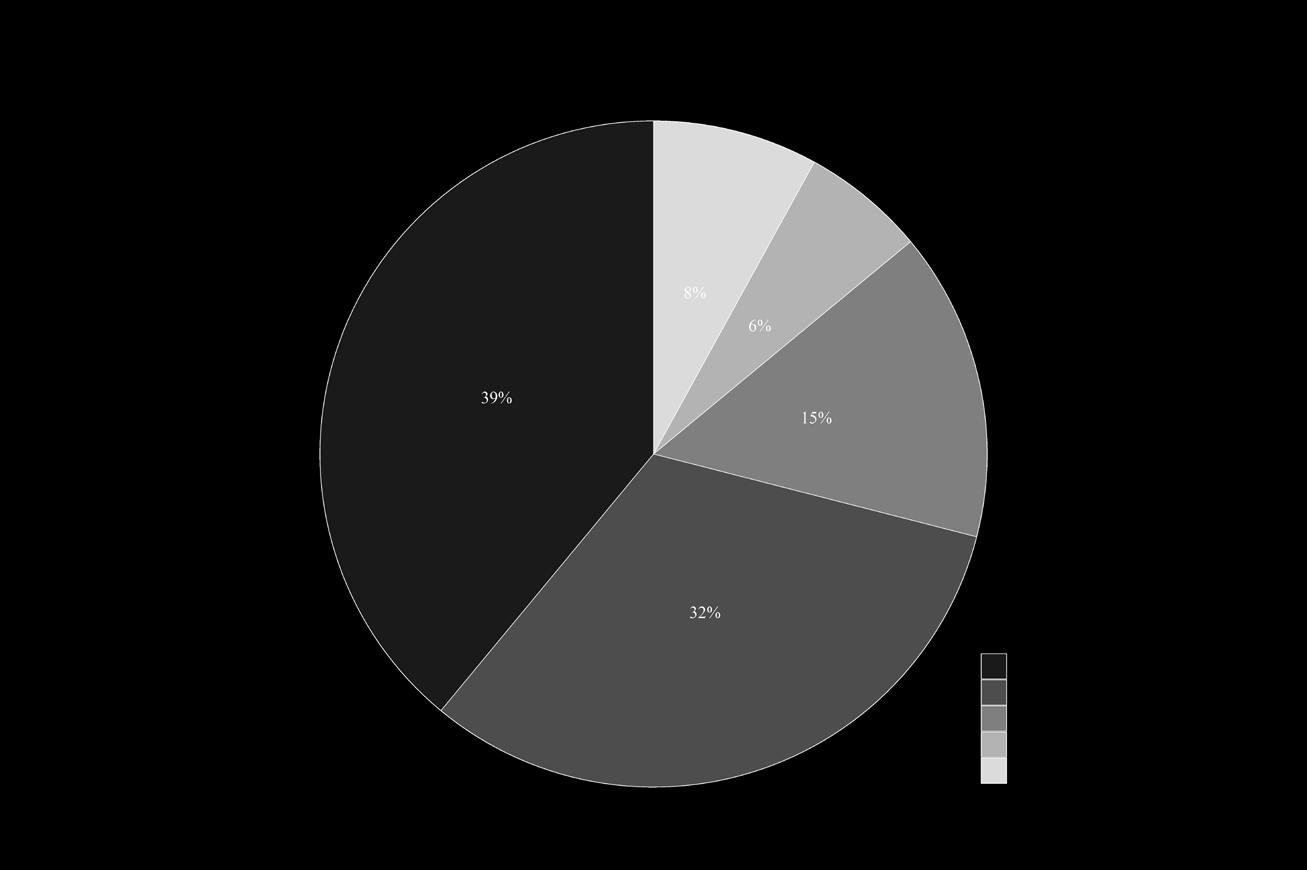
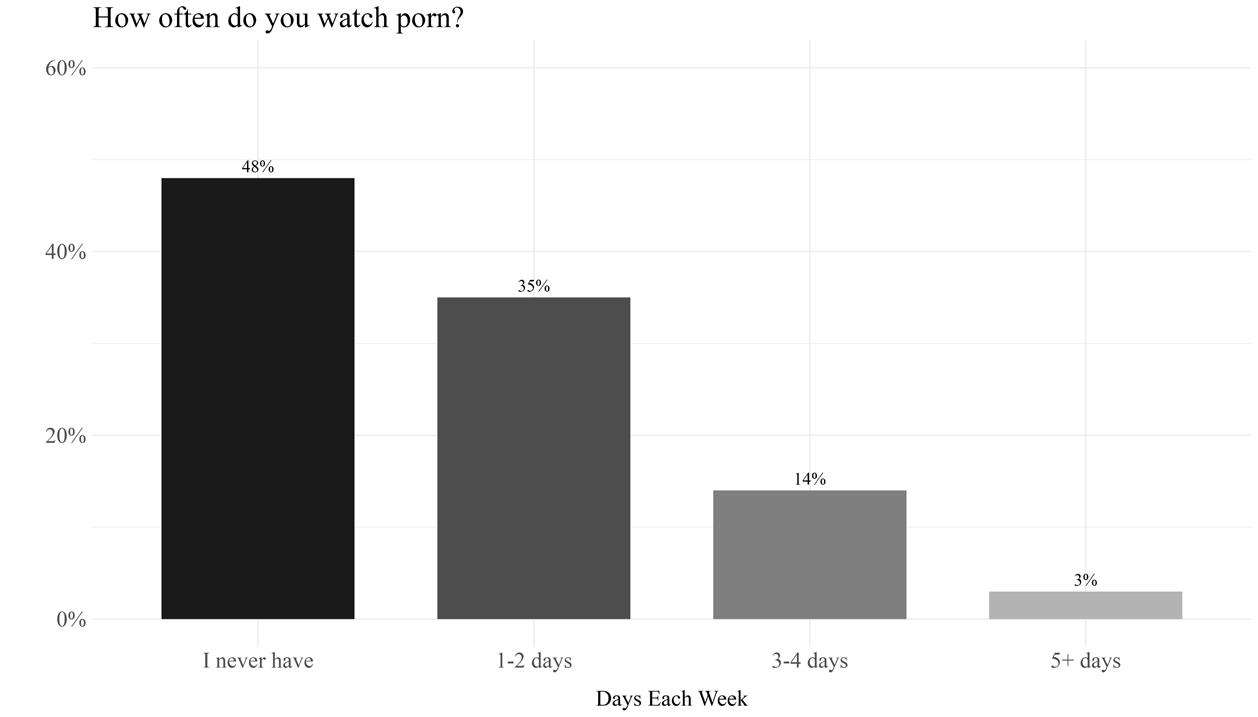
second poll, where I asked how often users watched porn orcount that I would consider low, people would be trying to fill the void of a lack of physical
on a party boat, slicing through the black water under the illu -
is so daunting now that people
In an age where it feels like everyone is on dating apps and casual hook-ups are a cheap, actually interact with each othat a party geared towards other
tinely peeked over his shoulder to see what he was looking at,
was still a guy in the corner, too
A spin on a classic tale that’s out of this
world
There is a well-known Japanese folktale dating all the way back to the Heian period dubbed The Tale
whole life, he and his wife adopt
suitors who wish for her hand in true origins are revealed and she Centuries later, the classic tale
Instead of following an oldtween school and the virtual world shaken when she encounters the as she did in the folktale, but after dealing with potential suitors, she
found this to be a fun and inter-
I found the overall relationspite acting cold and annoyed byhavior is understandable, considering the sudden change thrust
result of this friendship, Iroha learns to loosen up and reconnect
found her to be a very fun char-
without losing the cheerful, op-
to reunite with Iroha, but had to leave her ship, she waited for be created, where she could then
to process everything that was unsure how to feel about it overI still cannot let go of the shock and confusion that I felt when I
future, yet I had no idea it would this does lead to a happy and satisfactory ending, where Iroha the both continue their life as landscape and contrast it with being visually dull, the contrast
architecture design helps draw a contrast between the real and world has a futuristic aesthetic, rooted in traditional Japanese
ining of
of or read the original folktale,
ARIANNA KAPLAN
MEIYA ROLLINS • THE STUDENT LIFE
JOON KIM
ANIME
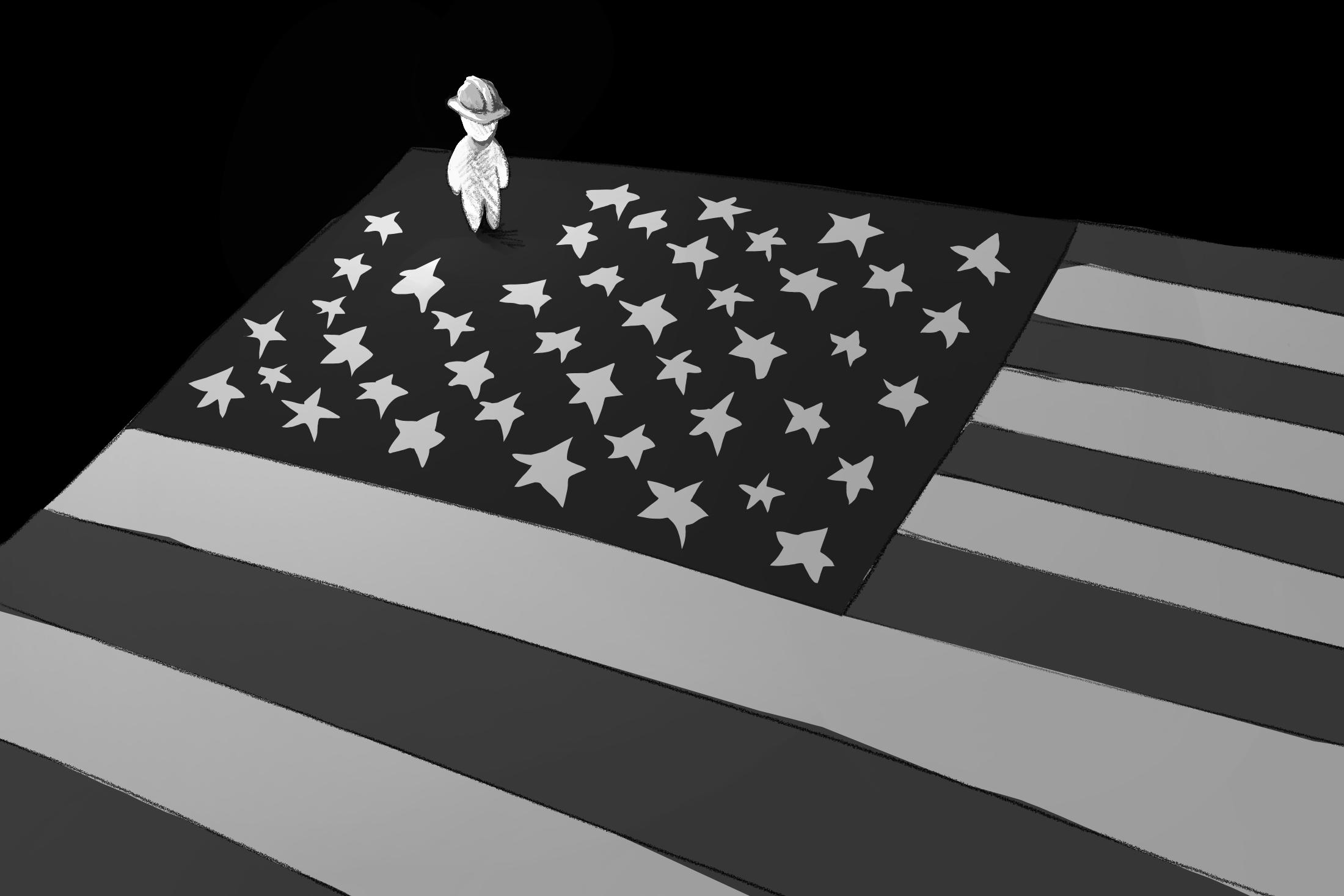
The road to a working-class coalition: understanding conspiracy and unpacking frustration
RAFAEL
HERNANDEZ GUERRERO
West Virginia, 1921: 10,000 armed coal miners rise up against their employers in an attempt to unionize, and Republican President Warren G. Harding reacts by sending in the army. The Battle of Blair Mountain — as this confrontation came to be known — was the largest labor uprising in American history. Until a few years ago, it seemed impossible to imagine that such a revolt could occur again in the United States. But in 2026, it no longer seems so far-fetched. Members of the white working class are once again rallying against elites as a result of dissatisfaction with living and working conditions. This time, though, public opinion has realigned the Republican Party with the white working class, while the Democratic Party has become
associated with the college-educated liberal.
Many white working-class Americans feel disenfranchised by progressive elites, making them especially susceptible to anti-immigrant and racist messaging. Politicians like Trump fuel their economic hardship around the elimination of the most vulnerable group: undocumented immigrants. The white working-class, however, is not a monolith; they are a heterogeneous group with varying levels of class consciousness and prejudice. While progressive factions seek to mobilize the American public, they fail to meaningfully engage the bulk of the white working class, instead painting a harmful caricature of an uneducated underclass not even worth engaging with. The
Democratic elite’s blanket characterization of white working-class individuals as fundamentally racist and anti-immigrant has divisions.
As a result, the white working-class has been driven further to the right, constructing a seemingly intractable obstacle to forming a multi-racial working-class coalition. The white working class’ distrust of Democratic elites has created an environment ripe for conspiracy theories. This distrust has culminated in The Great Replacement Theory, in which liberal elites are said to be encouraging immigration from non-white countries into the United States in order to eventually supplant the white population and purposefully alter the racial makeup of the United States.
No one reading this will dis-
pute that the hard-lined proponents of the Great Replacement Theory carry bias against immigrant and non-white populations, and thus, one might be tempted to throw out the underlying concerns altogether. That being said, one key aspect of this conspiracy theory is supported by virtually all reputable sources on U.S. demographic predictions: According to projections by the U.S. Census, the United States will cease to be a majority-white country by 2045. As racial minorities make up a greater proportion of the populaincrease in all sectors of American society — from politics to economic development. A changing demographic tide has resulted in increased anti-immigrant sentiment; this played a critical role in Donald Trump’s victories in 2016 and 2024. Liberals tend to believe that partisan polarization is due to the white working class’ fundamental hatred of immigrants, rather than ideological opposition to Democratic policy. When you actually study the white working class, however, the problem is not this straightforward. A paper from the journal of Analyses of Social distinct categories of ideological inclinations within the white working-class itself. Yes, some members of the working class position themselves as anti-elite, anti-progressive and anti-immigrant. However, a majority of the white working-class is found to be sympathetic with immigrants and racial minorities while also holding overt anti-elite beliefs. The clear presence of simultaneous anti-elite sentiment alongside acceptance of immigrants and racial minorities speaks to the real possibility of a potential multi-racial progressive coalition in the United States. Working-class whites did not vote for Trump simply because they are “racist” or “stupid”, but
because, to them, he represented a radical departure from decades of elite-dominated politics that destroyed their hopes for upward mobility and financial stability. Over the past few decades, working-class wages have stagnated, making blue-collar work unsustainable. In contrast, the dominance of automation and digital technology in the American economy has led to increasing wages for college-educated workers. The working-class won’t stand for politics that work against their interests. Ever-increasing economic inequality has created an environment ripe for political polarization, and set up the perfect conditions for conspiracy theories
explanations for the disenfranchised working class. As Democrats seem likely to beat Republicans in the upcoming midterm elections, and attitudes toward immigration dramatically improve amongst the general population, it is more important than ever for progressive college students to avoid alienating those shifting away from far-right politics. We need to start building coalitions between progressives and working-class whites. In order to foster a better future, the American working class must unite in the face of attempts by the political elite to carve out factions among us. As college students within a progressive bubble, we must overcome the seemingly intractable yet artificial barriers standing in the way of solidarity. The simplest way to approach this is by continuing to be open-minded about who we build connections with, and — most importantly — avoid buying into sensationalized imaginations of
Rafael Hernandez Guerrero PZ ’29 is “from” a poverty-stricken shanty town known as “Boulder, Colorado” and “he” “lowkirkenuinely” wishes you a fantabulous rest of your “day”.
Our Responsibility to Diego Rios
Diego Rios was a poet, an artist and a musician. His older brother taught him how to play guitar and he used to strum while his best friend Nate, sang along. His friends describe him as peaceful to a fault, a true “free spirit.”
“Diego moved through the world deeply,” his brother Victor Rios said. “He was deeply sensitive, deeply curious and deeply kind.”
Diego Rios was 30 years old when he died on Nov. 28, after Claremont Police Corporal Benjamin Alba put his knee on Rios’ neck, holding him in an illegal carotid chokehold for one minute and 55 seconds, while he pleaded that he couldn’t breathe. Diego Rios was peaceful and cooperative, and died at the hands of a man who serves to “protect.”
The Claremont Police Department (CPD) is being investigated for homicide by the Los Angelesreau. But even after an inexcusable two months of waiting, the Rios family still doesn’t have any answers regarding missing body camera footage or legal accountability for
The violence demonstrated by Claremont Police and the resulting failure of the city to bring this incident to justice with transparency should be a wake-up call for everyone who calls this city home. State-sanctioned violence is notolis; it’s happening in our backyard. Members of the 7Cs have an obligation as part of the broader Claremont community to continue mobilizing and standing in solidarity with the Rios family until they receive the answers and justice they deserve. We must not allow this city to fund violence and inhumanity over com-
passion and self-restraint.
To be clear, there’s no grey area surrounding the circumstances of Diego’s death. In the body camera footage CPD was required to release, you see a man not on drugs, but rather clearly having a mental health crisis. Yet, Claremont Police and bullied Rios as he forced him out of the car.
“You have no choice,” Alba said. “I’m going to fucking tase you, bro.”
Alba tased a nonviolent, fearful Rios. Then tased him again, as Joshua Orona’s bodycam footage provided by the City of Claremont. Each action that ensued could have been replaced with a more peaceful response: The calling of a mental health professional, the releasing of Rios’ handcuffs to maximize breathing, and intervention from use illegal restraint. With his knee on Rios’ neck, Alba repeatedly and forcefully asked Rios to give up his left arm, while an immobilized Rios tried to breathe. Rios died in the hospital that night.
Then the family waited two months for CPD to release the footage, yet as of Feb. 5, two minutes and 25 seconds are still missing from Alba’s body camera footage of Rios’s death. This fact has been blatantly and ridiculously disputed by the Claremont City
timestamp then begins at 15:28:10.
Unfortunately for the city, in Orona’s body camera footage, you can hear what Rios was saying when Alba’s camera went dark. 4 minutes and 49 seconds into the bodycam footage, Rios gasped, “I can’t breathe.” Alba demanded
his other arm. “I can’t breathe,” Rios said again. Alba tased him shortly after.
“It’s no accident that that section is missing,” Victor Rios said. “Until all the footage is released, all the actions are fully reviewed, the city cannot credibly claim transparency.”
-lice brutality predates the recent ICE wave of terror. According to a Facebook post on the Justice For Diego page, the prominent bruises and external markings from the pictures provided to the Rios family suggest he died from positional asphyxia, caused by bodyweight
George Floyd also died from asphyxia when Derek Chauvin used the same illegal chokehold used by Alba. Despite this mounting body of evidence, the Claremont Police Department has remained silent on the status of Corporal Alba, and for all the Rios family knows, Alba could still be an active member of the Claremont Police Force.
Reconsider who the Claremont Police Department — and governments of all levels fueling state-sanctioned violence — serve to “protect.” At one of their rallies, the Rios family held a moment of silence for Renee Good.
“The killings of civilians by the government, whether local police or federal agencies, shock us all,” Victor Rios said. “What kind of society tolerates the use of lethal force without accountability at all?”
Spread the word. Despite the care being cultivated in organizing spaces at the 5Cs and the numerous presence of posters covering each corner of our campus since November, the general lack of attention Rios’ death is getting is alarming. Watch the video of Rios and his
friend Nate singing and playing guitar, found linked to this article at tslnews.com. Even if the CPD doesn’t want us to learn about his death, we still have a responsibility to honor who he was in life. Rios was talented, and he was loved, and acknowledging this on a community scale can bring strength to his cause. Rios’ life mattered. His death was preventable.
“Instead of being met with care, [Diego] was exploited by someone [who] saw a frightened, compliant person and saw this opportunity to be brutal and chose force over compassion. It’s going to be a test of will at the end of the day,” Victor Rios said. “I’m never gonna give up. And I think this would be a good opportunity for the community to show how strong [the students] are, as they’ve shown already, that we’re not gonna let this go, right?”
Show up to the Rios’ rallies on Saturday, Feb. 7, at 12:00 p.m. in front of Claremont City Hall. Bring your friends and tell your professors — hear what Victor Rios and his family have to say about who Rios was in his life. Speak at the City Council meetings on February 10th and 24th
at 6:30 p.m. Use the email template found on the 5C Prison Abolition Linktree to email the city council and prove to them that they cannot feign incompetence or hide behind a distorted reality when the horrible truth is on video for all to see.
“As [he was] my baby brother, it’s the hardest thing to live with,” Victor Rios said. “That I couldn’t protect him from the monsters that day.” We must be here with the Rios family, waiting. His death has shaken the heart of Claremont, iterating that no community is safe from the increasing patterns of state-sanctioned violence across the nation. In this moment, it is critical that we relaw enforcement accountable by showing up at rallies and protesting the disgusting use of brute force on all levels of government. Take action on behalf of anyone who hastality; do it for your neighbors who state-sanction violence and for the Rios family, for Diego.
writer for over a year.
PJ JAMES • THE ST U DENT LIFE
MACY PUCKETT
COURTESY: VICTOR RIOS
Pomona College is obsessed with the word dialogue.
In fact, Pomona partners with the Sustained Dialogue Institute, a third-party organization that hosts workshops aimed at creating “the right setting for open exchanges” across campus. In addition, Pomona engages in the “Bridging the Gap” program every year, which hosts a meeting that facilitates the exchange of ideas between Pomona students and students from Biola University, a conservative Christian university. We Pomona students, especially those who frequently check our email inboxes, are haunted by Gabi Starr and her passion for the word “dialogue.” Clearly, this concept of dialogue plays a role in the way Pomona approaches problem-solving.
Everyone is dialoguing, but who is actually listening?
ALEX BENACH a problem that permeates the 5Cs — for example, Pitzer’s Presidential Initiative on Constructive Dialogue. Take Pomona’s recent engagement in exclusive negotiations with Claremont Graduate University, which many professors and students felt blindsided by. Professors have told me that the Claremont Independent’s breaking news artithey had heard of the decision. It was only retroactively that Pomona administrators decided to host an open forum to garner input.
The 5C administrations must do a better job at cultivating a relationship with their student bodies in which real criticism can be made, while issuing a coinciding promise that tangible action will be taken as a result of that criticism.
— Alex Benach PO ’28
Dialogue, as Pomona sees it, unpacks the major issues facing colleges and allows for civility and respectful exchange of ideas on these issues. Dialogue sessions are hosted to foster conversation and allow all voices to be heard and supposedly listened to. But when was the last time dialogue actually led to something productive?
I have one major concern over the way in which Pomona, and seemingly the 5Cs as a whole, approach dialogue: 5C administrations promote it so that they appear to endorse student discourse, and then proceed to make decisions without this student input in mind. If we are to foster a relationship between the student body and administration in which various inputs are actually welcome, this discourse must be followed by concrete action.
I use Pomona as a case study because it is the school I have the most information about, and its strategy for of the issue at hand. But the oversaturation of dialogue to no purpose is
The space created here was not one where criticism was to be honored. We, students, were expected to heed the rationale of decision-makers and value the opportunity to share student perspectives, even though this gesture was so clearly an afterthought.
The development of Pomona’s Center for Global Engagement is yet another example of administrativedent body. This center will replace Oldenborg Center, which currently hosts lunchtime language tables and houses roughly 140 students. Oldenborg is set to be demolished in June 2026, with the construction of the new center estimated to take two years, opening in fall 2028.
According to an email from three ASPC senators, the destruction of Oldenborg may come with alterations to the Coop Fountain’s and students’ access to the space. Current plans for the new Center for Global Engagement will not include an industrial kitchen, and as a result, Pomona Catering will have to be relocated to the Coop fountain area.
Pomona students have largely been kept out of the decision-making that goes into this change. Many
remain confused, in the dark about what this will mean for the reduction in beds and how this will shift the campus’ culture as it relates to foreign languages, dining and dialogue sessions on the project, it is clear that they have not been sufto students’ fears and uncertainty over residency and culture. Students often make demands of their institution — a necessary component of advocacy on college campuses. But the administration has used dialogue as a crutch to appear as though they are taking action and listening rather than addressing those demands: They refuse to divest from an ongoing genocide, refrain from taking meaningful action to stand up to the Trump administration’s overreach on education or protect vulnerable populations — including international students, students from immigrant families and many more. For example, there has been no communication from Pomona about their plans to implement the SAFE Act, a California law that mandates colleges to alert
community members in the case of on campus, despite the law requiring this plan to be made public by March 1, 2026. The suggestion of dialogue has served as a stand-in for real action.
While the administration and the board of trustees promote dialogue and free exchange of ideas as the best thing in the world, their actual actions are out of touch and completely unaligned with the needs and opinions expressed by the student body. Alexander Hall is locked down, and yet we are somehow supposed to feel as though our input is valued by the administration because Gabi Starr showed up at the performative male contest?
The 5C administrations must do a better job at cultivating a relationship with their student bodies in which real criticism can be made, while issuing a coinciding promise that tangible action will be taken as a result of that criticism.
Meanwhile, as students seek to address the community at large, we can turn to actionable items as opposed to redundant conversation. Get trained in how to protect
neighbors from ICE, participate in mutual aid and attend rallies and protests on issues that matter to you. We have frameworks from which to work. The 5C-wide initiatives to help distribute food during the SNAP of action is in the realm of possibility here at the Claremont Colleges. Dialogue is important; having informed and thoughtful conversations about ongoing issues is necessary for addressing them. But that cannot be the extent of our engagement with the issues. Instead, it should be only the we seek to achieve and the changes we hope to bring forth. While civilized debate and constructive discourse are necessary for a functioning democracy, our college campuses are using dialogue as a facade for action, which upholds a broader sociopolitical system where people learn to expect a lack of responsiveness and meaningful change from their leaders.
D.C., and really, really, really hopes this article does not disqualify him from a
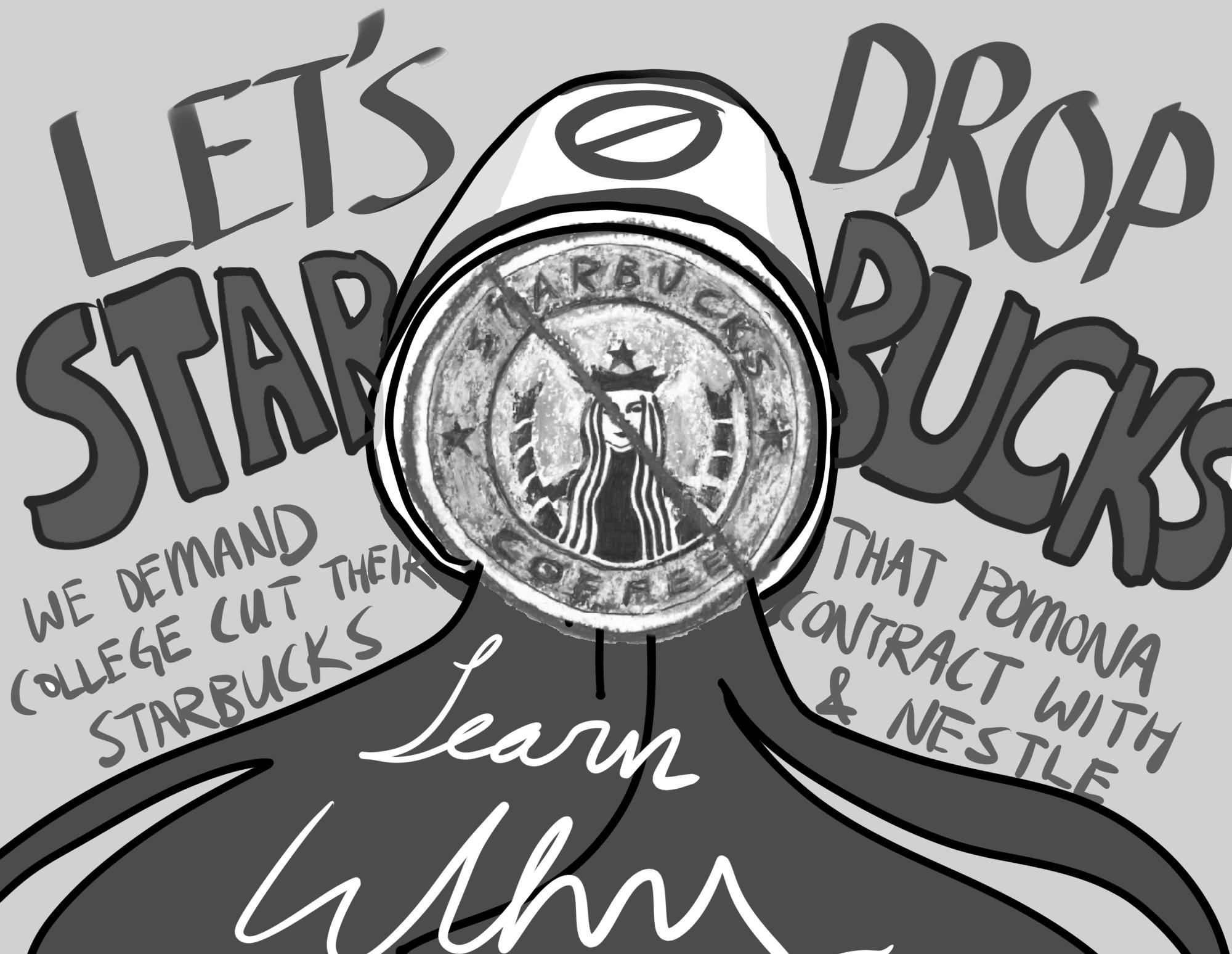
Pomona’s Café 47 is Ready to Brew Something Better than Starbucks & Nestlé
LINA MCROBERTS & THE CLAREMONT STUDENT WORKER ALLIANCE AND STUDENTS AGAINST STARBUCKS CAMPAIGN TEAM
Most mornings this semester, Café 47 stands noticeably quiet. Lines that once stretched past the pastry case have thinned, the reusable cup rack sits untouched and more students crowd the Motley or arrive to class with thermoses still warm from tea steeped over breakfast at Frary. This marks a deliberate shift in student practice: a refusal to participate in a corporate apparatus built on union suppression, retaliatory labor discipline and supply chains shaped by extraction and concentrated control. Last semester, Pomona College entered a contract with Nestlé’s “We Proudly Serve Starbucks” program, despite a 2022 student-wide 47. This decision sidestepped clear guidance from Associated Students of Pomona College (ASPC) members who raised concerns about Starbucks’ political and ethical
record, and advanced without a campus-wide survey, transparency or shared governance. Administrators cited delivery inconsistencies with Peet’s, yet this neither required a pivot to students from the decision. Pomona’s commitments to “ethical behavior” and “community” ring hollow when the college aligns itself with a corporation under national and international scrutiny for ongoing labor abuses.
Starbucks & Nestlé Labor Violations
This contract positions Pomona College as an active participant in — and beneficiary of — a corporation advancing one of the most consequential labor confrontations of our time. Union baristas have launched an open-ended unfair labor practice (ULP) strike — mobilizing over 1,000 workers across more than 40 cities — a movement spanning 12,000 workers at 650 stores into Starbucks Workers United. Judges at the National Labor Relations Board (NLRB) have found more than 400 labor law violations,
with over 600 additional charges still unresolved. Since January of 2025, union baristas have filed more than 125 unfair labor practice charges, documenting retaliaand a pattern of intimidation that an NLRB judge recently described as a “scorched-earth campaign.”
This record positions the compaviolator in modern U.S. history, entangling every contracting institution with the material consequences of its misconduct. Beyond our borders, the global supply chains that serve Starbucks and Nestlé carry a documented record of labor abuses and environmental harm. In Brazil, a federal lawsuit details “slave-like conditions” on farms supplying Starbucks, and alleges the soliciting of underaged labor, twenty-hour workdays, contrived wage deductions and degrading living conditions. In China, labor watchdogs uncovered alleged “ghost farms” supplying Starbucks and Nestlé that rely on child labor, excessive hours, unsafe conditions and informal off-the-books employment to evade oversight.
Across regions, a pattern is clear: An industry seeped in racial capitalism, rooted in extractivism and exhausting transnational labor. This is the corporate landscape Pomona aligns itself with, and the backdrop against which students are choosing to redirect their everyday practices.
CSWA Students Against Starbucks Campaign
Our campaign, the Claremont Student and Worker Alliance (CSWA), is already reshaping Pomona’s campus economy. In a Nov. 14 meeting between CSWA and Bob Robinson, the assistant vice president for facilities & campus services, administrators verbally acknowledged that Café 47 sales have fallen by an estimated 20 to 30 percent — even after expanding hours.
The meeting also laid bare the bureaucratic barriers students face when presenting evidence to the colleges’ strategic demands and interests. Robinson dismissed international labor investigations as “insufficiently tangible,” instead deferring to Nestlé’s Nescafé Plan of “100 percent responbranding claim contradicted by extensive violations on a global scale. At CSWA, our attempts to understand Pomona’s contract with Nestlé met similar resistance. We were told the contract was peripheral and therefore inaccessible, and promised sales and cost data before Thanksgiving in order to evaluate alternatives such as -
ceived nothing. The mechanisms shaping Pomona’s corporate partnerships remain opaque to the students expected to underwrite their consequences.
Even the criterion of “student opposition” was reframed. Robinson called our CSWA petition “biased,” suggesting that naming Starbucks’ union-busting record implied Café 47 workers were not unionized. To be clear: Café 47 workers are represented by UNITE HERE Local 11 precisely because CSWA organized alongside them last spring — a major win for workplace democracy. The issue lies in Pomona’s choice to contract with a corporation facing hundreds of unresolved ULPs, and the material fact that our daily purchases bind our campus
to that corporate apparatus. Administrators also pointed to sustainability initiatives embedded expansion of the Reusables.com program, projected to save over $20,000 a year. But what does it say that a college with a $3 billion endowment is willing to balance $20,000 in projected savings against documented labor abuses, global extraction and its own stated commitments — and call the scale even? Of course, the program has value: reusable cups strengthen a long-standing campus commitment to ecological responsibility and carbon neutrality. But ecological stewardship cannot be severed from labor ethics. Aligning ourselves with a corporate landscape that stretches workers to their limits a latté. The dignity of labor, the integrity of our values and the ethical horizon of our institution cannot be collapsed into a cost-saving metric.
A Cup Half Full
Our CSWA campaign against Starbucks has dramatically reorganized the campus economy, which will continue until Pomona commits the following: a transparent contract with its vendors, broad student representation in the contracting process and the dignity of all workers.
Students across the Claremont Colleges have made their position unmistakable: We refuse to subsidize a corporation built on union suppression, retaliatory discipline and a transnational labor regime to Chiapas to Yunnan.
Until Pomona turns its course, we are calling on students to withhold purchases from Café 47 and redirect patronage elsewhere. Your economic withdrawal directly pressures Pomona College and will force a transition to another vendor. The path forward is clear: stand with students, stand with workers and become an institution that honors its values, centers labor dignity and ethical accountability, as well as aligns itself — publicly and materially — with justice. materially — with justice.
MELINDA QE
JUN KWON
ZACHARY LEBLANC
Running towards hope: Kirk Lord’s journey with PANDAS
ANNE REARDON
JAKE CREELAN
ANJALI RAO • THE STUDENT LIFE
Pomona Pitzer runner Kirk Lordearns CALHope award for PANDAS advocacy