5Cs to switch to 100% renewable electricity
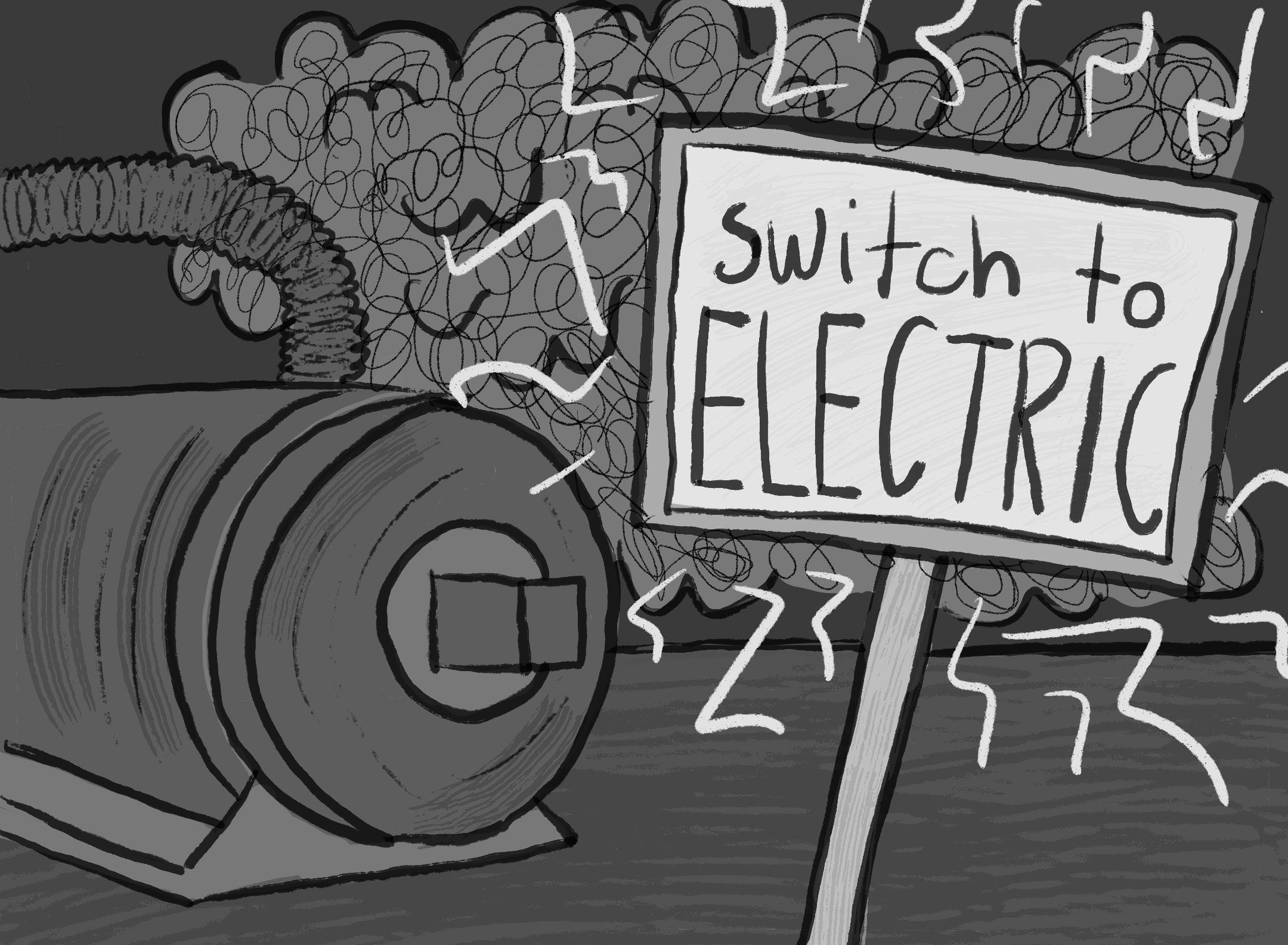
Administrative presidents across the 5Cs announced Friday, April 17, that the colleges will transition to 100% renewable energy by enrolling in the Clean Power Alliance (CPA), following a yearlong 5C Environmental Justice (5CEJ) campaign to phase out fossil fuels.
campaign collected more than 1300 petition signatures since Jan. 2025 in support of a proposal for the colleges to stop purchasing electricity from Southern California Edison (SCE) — an investor-owned utility that primarily relies on fossil fuels — and instead enroll in the CPA, a not-forprofit energy provider that offers 100% renewable energy options. The Claremont Colleges’ Business and Financial Affairs Committee and the consortium-wide presidents’ proposal.
The transition to renewable energy is expected to take about six emissions, including an estimated 30% reduction at Pomona College, according to an email statement

from Pomona College President
“This pivotal development is another powerful example of what is possible when our campus community comes together to turn goals
Starr wrote to the Pomona student body on Saturday.
Under this agreement with CPA, the 5Cs will triple the percentage of renewable electricity used on campus. Through its renewable portfolio — solar, wind, geothermal and hydroelectric — the Clean and is one of the largest providers of 100% renewable energy in the United States.
In an email to The Student Life, Starr underscored how the change in the energy provider across the consortium is a significant step towards achieving Pomona’s goal of carbon neutrality by 2030.
“Sustainability is not an aspiration at Pomona College — it’s core Starr wrote. “For years, students, worked diligently toward ambitious climate goals, driven by a
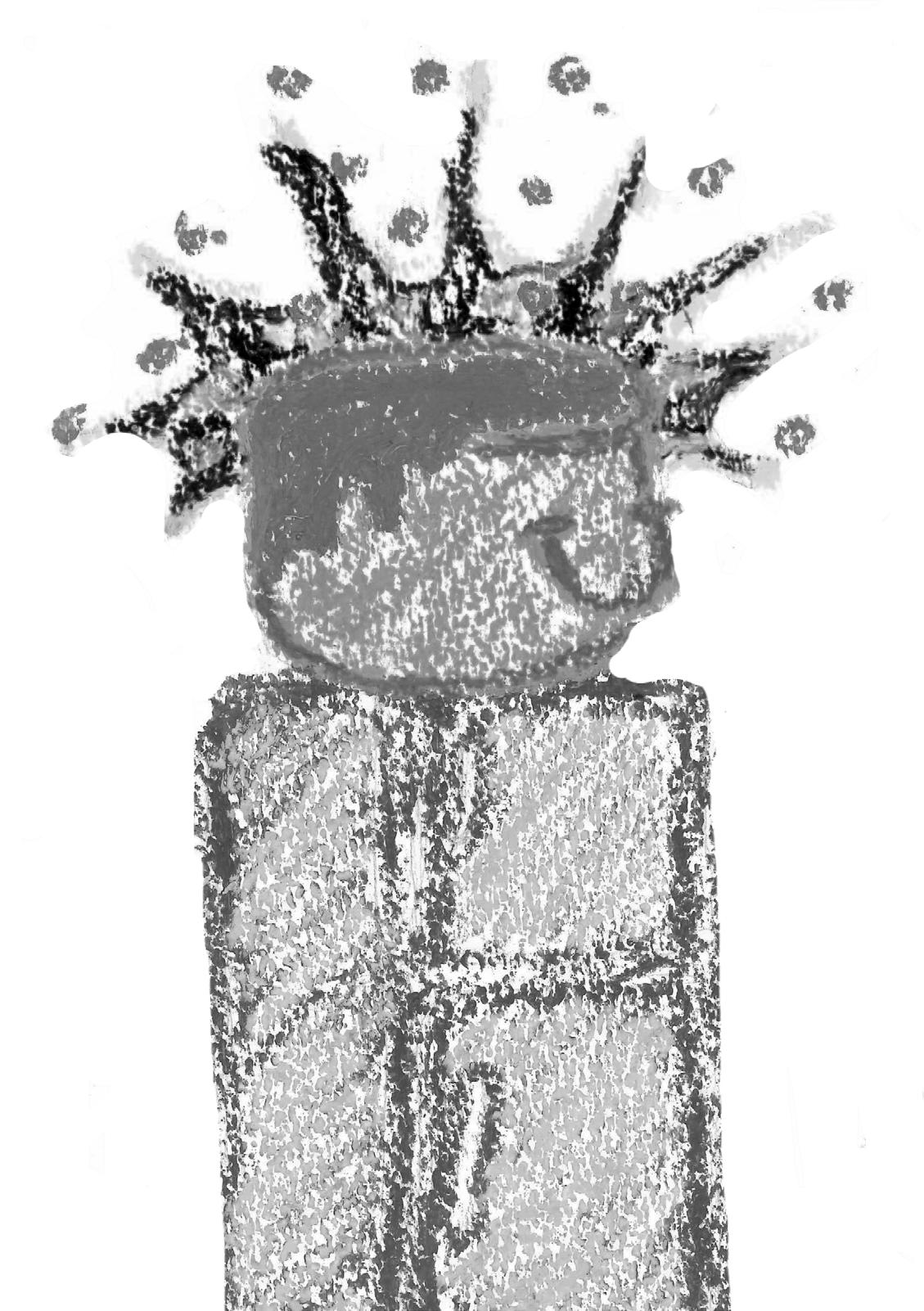
When do words cease to mean anything? What’s the right way to read a book? Liam Riley PO ‘26 addresses this question with the help of an old friend, a green goop and a mystery.
shared conviction that the choices we make today shape the future we
Laura Muna-Landa, Assistant Vice President for Communications of the Claremont Colleges, said the transition is part of a broader con-
energy use in a press release to TSL.
“This transition would mark an important step in advancing The Claremont Colleges’ sustainability and climate goals by increasing renewable energy procurement and
It is time that looksmaxxing is recognized for what it is: a repackaging of radicalism. It mimics ideologies implemented by totalitarian leaders, making self-improvement deeply intertwined with militant obedience,

supporting the broader transition to a a consortium media release. Muna-Landa also noted that the
See ELECTRICITY on page 2
BIANCA MIRICA NOAH BREWSTER
MAGGIE ZHANG • THE STUDENT LIFE
Campaign from 5C Environmental Justice leads Claremont Colleges to transition fully from fossil fuels.
ELECTRICITY: 5Cs to switch to 100% renewables
Continued from page 1 -
ful engagement by students and administrators, including the 5Clighting the role of student advocacy in shaping the outcome.
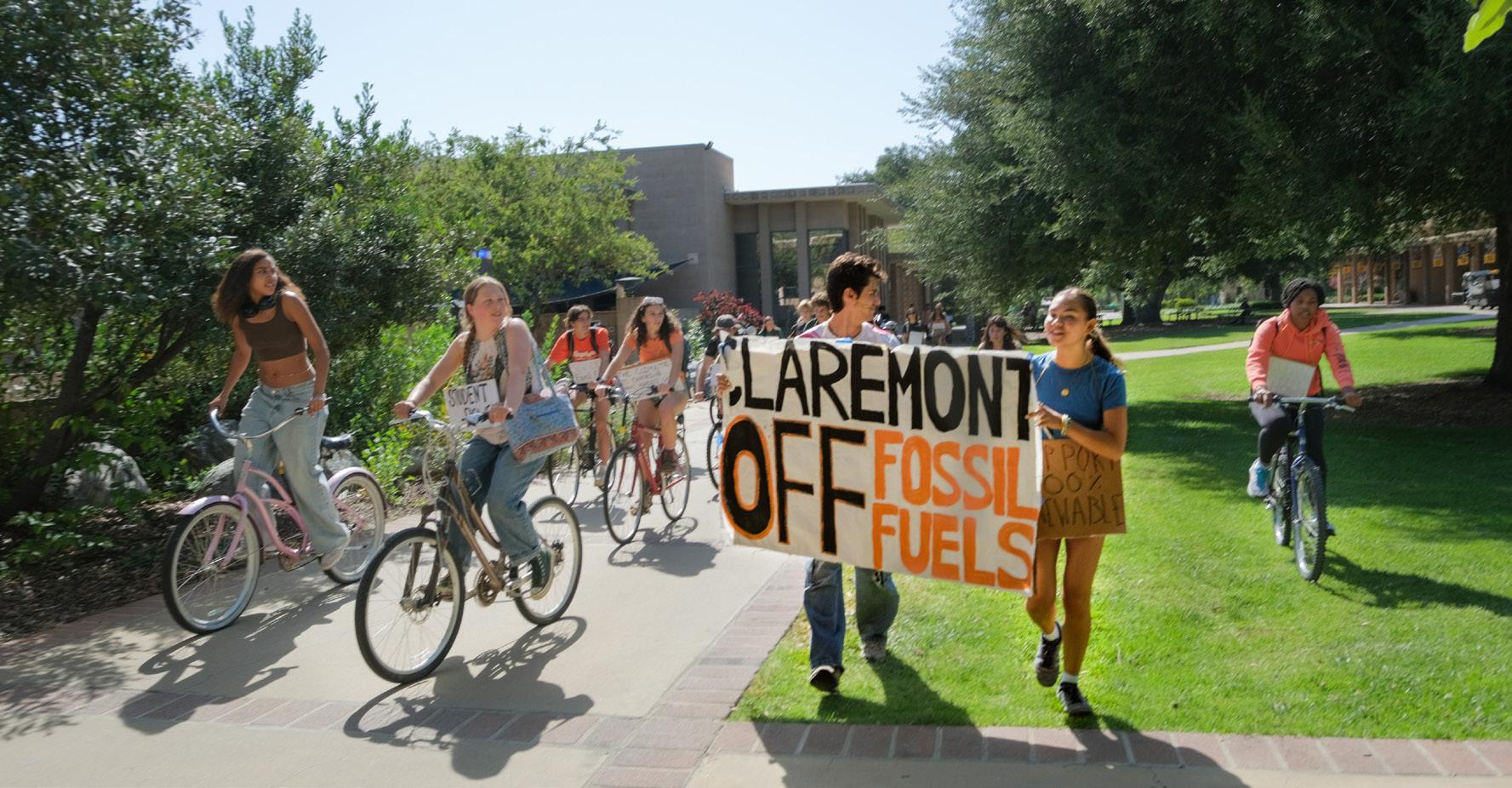
5CEJ representatives mobilized students through events and direct engagement with administrators, culminating in the Riding Rally held on April 17, which began
outside Harvey Mudd College’s and concluded on Marston Quad at Pomona, where they announced their win.
Around 40 students, holding signs and wearing face paint, biked across the campuses. They stopped to deliver petition signatures and thank-you notes to those involved in the decision-making process.
“We wanted something that was
both visible and also applying presa campaign working group leader, said. “The riding rally was sort of
worth of work — the signatures, the Milo Slevin PO ’28, campaign co-founder, framed the renewable energy announcement as the result of sustained pressure from students.
marks a concrete shift in how the colleges demonstrate their commitment to sustainability by taking action that immediately reduces their carbon footprint.
“15 months ago, this wasn’t even to build the case, build the support and put it in front of them until they
Slevin also said the transition
“What it means is 100% of our energy purchasing is coming from is a direct switch. Every time you turn on a light, the electricity comes from renewable sources. That’s a real,
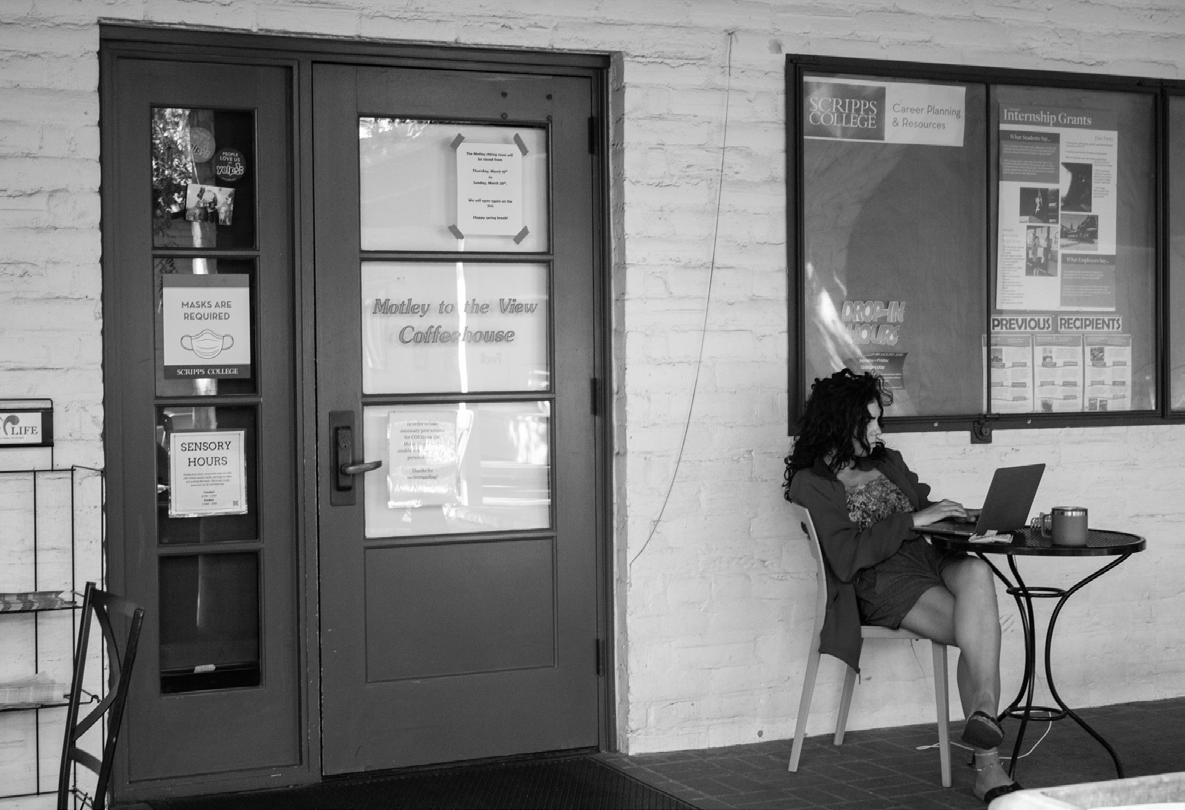
Motley and scripps store close on
The Motley Coffeehouse and Scripps Store were closed on April 17, Scripps College admitted stushortages. While The Motley’s barista bar was nonoperational, its lounge area hosted recurring teach-ins that outlined the workers’ demands and of political organizing.
In light of the recent administrative decision to assign a supervisor — Interim Vice President for Student each organization, 77.6% of Motley voted to strike on Friday, according to each of the business’s student co-heads. As work-study students make up the majority of The Motley’s down business on one of the most lucrative days of the year was not an easy decision.
“We did not take it lightly, and it SC ’26 said. “But we did choose this day in particular because we knew
strike on admitted students day to highlight The Motley’s evolving relationship with the Scripps administration to prospective stuclosed in the past in solidarity with global and local causes.
“I think that there’s clearly a dissonance between what we are trying to say about The Motley
incoming Motley co-head, said.
“And we’re trying to bridge that gap with these teach-ins and with Representatives from both organizations led teach-in presentation sessions at 12:45, 2:30 and 4:15 p.m., they shared three demands for the contract for the supervisory role by May 1; third, a guarantee that they will “no longer be marketed as a
“Without a formal contract outlining the limitations and responsibilities of the role, we’re really up to the discretion of whoever Scripps Alex Meecham SC ’27 said, refer-
we don’t even know if we have a
Faruqui said The Motley’s historic promotion as a fully student-run business is compromised by this ambiguity.
Reed said the event purposefully reflected the campaign’s broader strategy of combining visible student mobilization with direct engagement with decision-makers. that had a say in this and bring them the accumulation of a year’s that they encourage community members to forward to the Scripps dean of students. For students who are not on work-study or don’t feel directly involved with Scripps’ historically student-run businesses, Asgar said it would be “very easy to paint this issue as something that doesn’t
“It’s a disservice to admitted students and to current students to advertise The Motley in any Faruqui said.
Alongside the scheduled teachins, around 20 student workers from the two businesses spoke directly
the recent changes, according to Motley barista lead Emily Weiss SC ’28. Weiss noted that speaking out Store helped convey a message of collaborative support.
“We’re in the same boat, and I think both of our situations can be stronger if we’re showing a united Weiss said.
The Motley and Scripps Store also created a “community action current and prospective students, and support their demands. At workers provide an email template
But she affirmed that imple-
menting a supervisory model at The the entire 5C community, not just Scripps, “because it has to do with
“We ask that everyone really think about this issue and take care to understand the intricacies of it and how we are being rendered powerless by every move that the administration
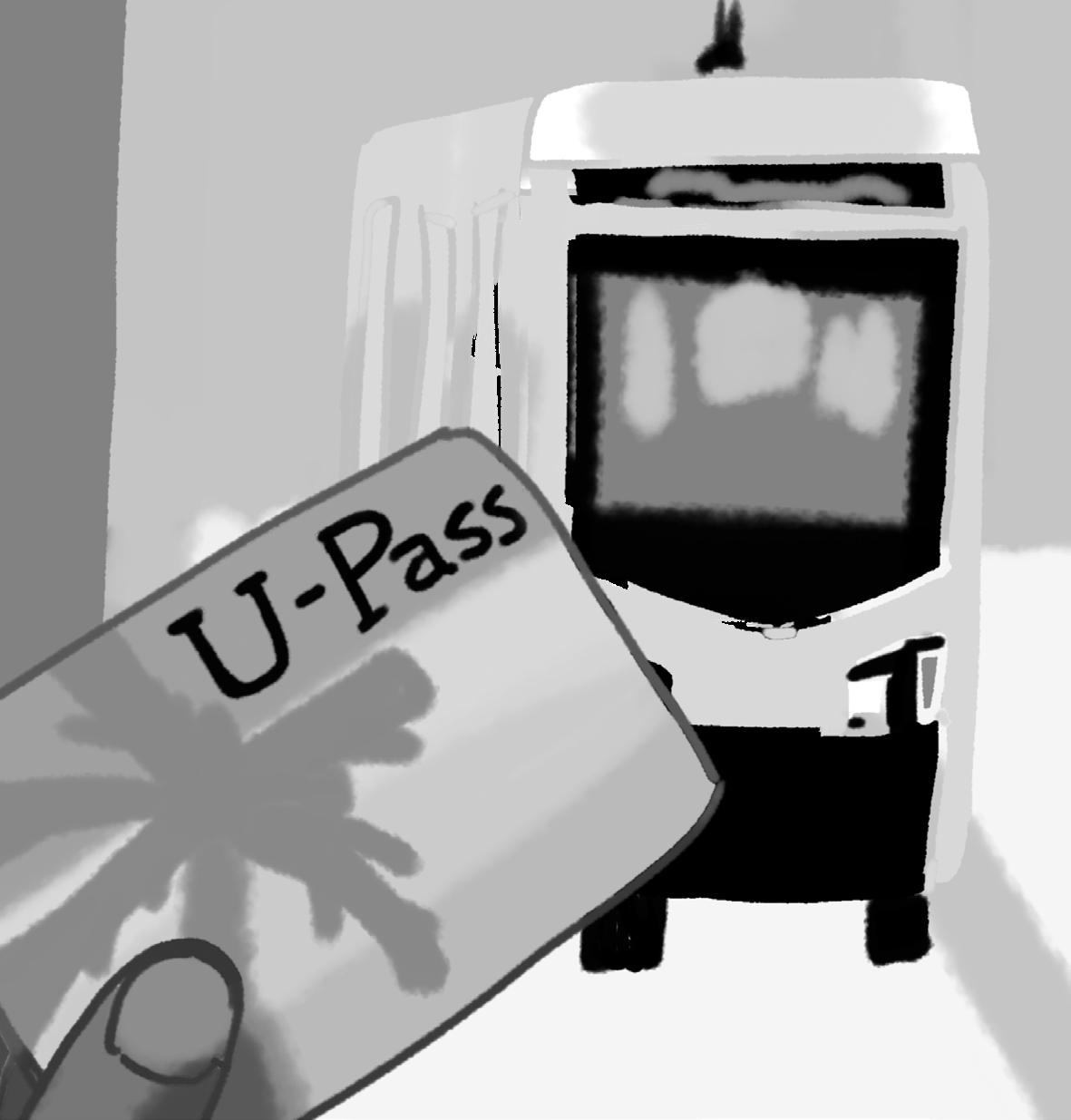
student organizations collaborate to push Metro U-Pass initiative
The 7C Transportation Working Los Angeles Metro’s U-Pass, a reduced-fare transit pass, to the 5Cs. The group said the program would expand student opportunities and reduce car dependency.
The group — composed of students from the Claremont Urbanists, a club for urban planning, and the Associated Students of Pomona College (ASPC) Sustainability colleges to enroll in a pilot plan in which The Claremont Colleges Services (TCCS) would purchase U-Pass from LA Metro to give students who pay a one-time $2 fee unlimited rides across a network of 10 transit agencies.
Sydney Tai PO ’26, ASPC commissioner of facilities and the environment, introduced U-Pass to ASPC last fall. She connected with Jim Lam CM ’28, founder of the Claremont Urbanists, and the working group was born.
“I think increasing transportation accessibility democratizes enables underclassmen who might not have cars on campus to be able
If TCCS were to enroll in U-Pass, it would expand professional opportunities past Claremont, lowering economic barriers to transportation, according to Lam.
“I think it would really help level out the playing field for
The working group launched a survey to gauge student interest at the Claremont Colleges on 757 responses came in on April 17, showing high student interest and modest growth in ridership.
couraged by the level of student interest, saying it was high enough to justify the investment but not so high that costs would exceed the budget. Unlike the Foothill Pass, which costs TCCS $20,000 annually, U-Pass is priced per ride, meaning a sharp increase in student usage could make the program too expensive.
only 1-2 rides per student with U-Pass per week, LA Metro has asked TCCS to pay for 10 student
rides per student per week, bringing the pilot far out of budget for the colleges. The working group said they are in ongoing negotiations with LA Metro to get a new quote for a pilot based on more realistic ridership predictions.
The program would also rethe environment, according to group members.
“LA is famously car-centric. We have a very hostile infrastructure for pedestrians and for [fewer] cars on the road is not just it lessens their traffic, but it is Increased off-campus access could also help students learn more about the greater Inland Empire region, according to working group member Aaron Rogers PO ’26.
“We’re nestled in these nice liberal arts colleges and this nice like it’ll give students the opportunity to get out of that bubble and be able to explore areas that are as the Claremont Colleges.

CARYS HARDY
AVA FLEISHER
JOELLE RUDOLF
SHIXIAO YU • THE STUDENT LIFE
New 7C Transportation Working Group to advocate for increased student metro access.
FLORENCE PUN • THE STUDENT LIFE
The majority of Motley and Scripps Store staf chose to strike Friday, April 17, efectively closing the businesses on Scripps College admitted students day.
CMC and scripps join soCal campaign for stricter gas boiler regulations
Claremont McKenna College and Scripps College passed resolutions this month to support phasing out large industrial gas boilers in Southern California. The schoolslege in showing their support for the cause, whose student governments passed similar resolutions in February and March, respectively.
Jaden Yang PO ’28 and Clarissa Aquino PZ ’26 led the movement for the 5Cs to pass student resolutions on gas boilers. They are 5C Environmental Justice (5CEJ) members and fellows with the Climate Action Campaign, an organization pushing for clean air across California.
The initiative centers around how current gas boilers, most often used for heating, emit nitrous oxides that worsen air quality and contribute to health risks such as asthma and other respiratory problems — issues that Southern California is known for.
Yang said the end goal of the campaign is to convince the South Coast Air Quality Management agency that oversees air quality standards, to phase out the use of medium to large-sized boilers across Southern California, just like they did with small boilers in June 2024. Viable replacements for gas boilers include heat pumps or electrifying gas boilers — replacing them with systems that use electricity rather than burning fossil fuels.
Although CMC and Scripps showed support for stricter regulations on industrial gas boilers, neither college actually has one on its campus — at the 5Cs, Harvey Mudd has one boiler, and Pomona has three.
Still, a show of support from all
5Cs — whether they have boilers or not — is crucial to show without boilers are “ready to be said.
“There [are] a lot of oil and gas lobbyists who are at public comment and telling the board members that colleges and other institutions don’t want to be showing that the people who will with it, and willing to be regulated
On Sunday, April 12, the boiler resolution was presented to Scripps Associated Students (SAS) and passed. Sustainability Chair
Oli Yoo SC ’26 played a key role in collaborating with 5CEJ members to develop and propose the resolution.
“It was pretty intuitive and Yoo said.
Maddie Huq PZ ’28, a member of 5CEJ’s Outreach Working Claremont Colleges rally behind the resolution was heartening to see.
“It’s become more evident that the schools are on the same page
On Monday, the Associated Students of Claremont McKenna College (ASCMC) voted to send a resolution on gas boilers to the student body for a vote. The reof the student body participated in the vote, with 87.6% voting in favor of the resolution, according to an email sent to students that morning.
minutes. Senator Ian Akers CM ’26 said that while he appreciated student advocates’ drive to pass resolutions, they should have spent more time raising awareness about the resolution’s aims prior to the vote.
“If this is something that all of the 5Cs should be caring about, then it’s something that we should be a lot better about educating said. “That’s just not something that I felt happened [with this The advocates’ next hurdle
is securing the support of the Associated Students of Harvey Mudd College (ASHMC) to pass the resolution. Yang said it has because Harvey Mudd’s student government “isn’t that familiar senates at the other 5Cs.
But both Yang and Aquino remain hopeful that ASHMC will also support the initiative.
said. “It’s a good cause to rally behind, and I totally think they are
The duo hopes to get a resolution passed by ASHMC by the end of April, so all 5C student governments can send their resolutions the board’s next meeting on May 1.
“If all the other schools have also passed [the resolution], I see no reason why Mudd shouldn’t
“I’m hoping these resolutions show the board that all of these students from these institutions care about the health of people and the “The students care, and that’s why
Former TCC s employee sentenced to 13 months for embezzling $1 million from 7Cs
On Wednesday, April 22, Steven Anthony Cowles, a former employee of The Claremont Colleges Services (TCCS), was sentenced to 13 months in federal prison after million from the Claremont Colleges this January.
Cowles, former electrical shop supervisor, pleaded guilty to wire fraud in January, according to court documents, and, following his sentence, must restitute the full
At the ASCMC Senate meeting, the resolution was presented, amount.
Over a period of 10 years, Cowles embezzled $1,000,571 through 1,343 unauthorized wire transactions. According to court documents, Cowles usedchasing card provided by TCCS intended for buying parts and supplies for the colleges, to conceal the wire fraud. He created while also linking the P-Card to his personal PayPal account, court documents said.
In January 2024, Cowles committed interstate wire fraud by transferring $1,075.50 from the TCCS P-Card to his personal PayPal account via a server outside of California, according to concealed the fraud by issuing a false invoice to a company listed as “Mitchell Instrument Company
Cowles’ defense team submitted a memorandum to the court on April 8, detailing his life and motivations leading up to the charges.
“Mr. Cowles diverted the funds to sustain a devastating opioid addiction that clouded his judgment, consumed his resourcmemorandum said.
At the peak of his substance abuse disorder, Cowles spent $2,000 per week on pills alone, according to court documents.
TCCS issued a press release to TSL following the fraud in January, stating that TCCSs’ insurance coverage had absorbed most of the Since Cowles’ sentencing, TCCS sent a follow-up press release to TSL, which said that the colleges have taken comprehenand protect the 5Cs going forward.
“This was a serious, long-running abuse of trust that caused sigharm to The Claremont Colleges assistant vice president of communications for TCCS, said. “The
TCCS said they implemented atrols in response to Cowles’ plea in January. Muna-Landa highlighted the colleges’ gratitude toward Federal Bureau of Investigation in pursuing Cowles’ fraud.
“Because this case involved the misuse of institutional resources over a period of years, it wasna-Landa wrote in the April press accountability, stewardship, and the trust placed in our organiza-
Within a documented victim impact statement, TCCS Chief Execthe fraud impacted the colleges not “When an employee engages in a long-running scheme involving unauthorized transactions and false supporting documentation, it undermines confidence in the systems and relationships on which in the statement. “The harm was felt in the disruption to operations, the burden placed on colleagues, and
In his memorandum, Cowles’ defense team described his familial and personal history with substance abuse disorder as well as his sobri-
“Since then, Mr. Cowles has rebuilt himself from the ground up. He has maintained his sobrimemorandum read. “He is an active participant in multiple 12-step fellowships and attends weekly
According to the memorandum, Cowles expressed regret for the fraud and a desire to change.
“Mr. Cowles is devoted to learning from his past mistakes. At his core, he is a man with ‘a good heart, a good soul’ who has endured apounded since this legal process began — his relationship with his children is unraveling, and he is riddled with the shame of what he Cowles’ lawyer declined to comment.
KAHANI
ANDREW YUAN • THE STUDENT
ALEX GRUNBAUM • THE STUDENT LIFE
CMC and Scripps support an initiative to transition SoCal away from polluting gas boilers.
Pomona College to host California
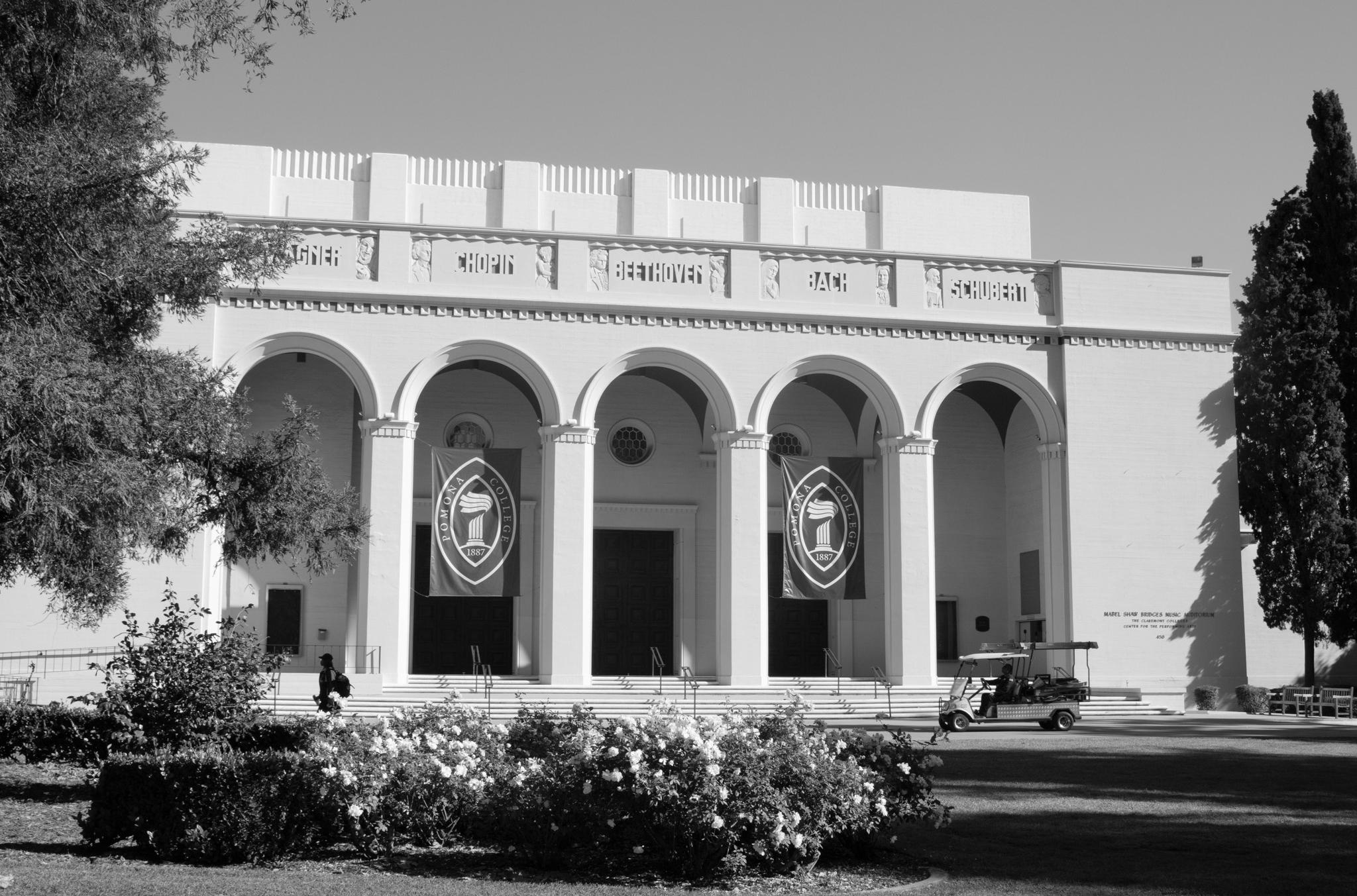
On Tuesday, April 28, Pomona California gubernatorial debates in Bridges Auditorium. 5C students, faculty and administration eagerly anticipate the event, and student political organizations will put on related events such as watch parties and post-debate panels.
at 5:30 p.m., and Pomona politics professor Sara Sadhwani will join CBS California journalists as a debate moderator. According to Pomona’s website, participation in the April debate are Xavier Becerra, Chad Bianco, Steve Hilton, Matt Mahan, Tom Steyer, Tony Thurmond and Antonio Villaraigosa. Invited candidate Katie Porter has yet to accept her invitation.
Based on the primary election in June, the top two candidates, regardless of party, will advance to the general election in November. The gubernatorial candidates are as follows:
Starr has underscored the de -
important, enduring values: civic engagement and active participation in the democratic process. This is Pomona living its mission announcing the event. Only Pomona students were allowed to enter the selective debate in person, but student groups such as the Claremont College’s League of Women Vothost watch parties for others to engage in dialogue surrounding the debate. 5C LWV will host a watch to all 5C students. The organization has prepared voter guides, candidate information and bingo cards for the event, according to Vice President for Community Partnerships for the Claremont Colleges League of Women Voters Lianna Holden PO ’28. CBS
reporters will be at this
a
Choose your candidate
Xavier Becerra
Becerra is the former U.S. Health and Human Services Secretary under Joe Biden and the former his secretary role, he oversaw the country’s coronavirus pandemic response. Becerra has two decades of experience in Congress as a California State Representative and member of many leadership
Katie Porter
A former U.S. representative in Orange County, Porter ran an unsuccessful campaign for US Senate. Porter has faced allegations of harsh treatments of staff and has been met with criticism for threatening to walk out of a TV interview and arguing with her interviewer. She is one of the two women on the ballot; California has never elected a woman governor.
Chad Bianco
Bianco has been the Riverside over 30 years of law enforcement experience. Recently, he faced public criticism because he seized more than 600,000 ballots from a local election and launched an investigation into how the election was run.
Tom Steyer
Steyer is a billionaire entrepreneur from New York who was a 2020 presidential candidate. He is currently facing questions about past investments in coal mining and private prisons which are now being used as ICE detention centers.
Hilton
Hilton is a contributor at Fox News where he works as a conservative commentator. He is a former adviser to conservative
Trump endorsed his campaign in a social media post on April
Tony Thurmond
Thurmond has been the California Superintendent of Public he opposed a policy change that would require school staff to notify parents if they were made aware of a child changing their pronouns or gender identity.
and food to keep students engaged, said Acting President of will hold a panel at Frary of 5C professors who will answer stu-
The current mayor of San Jose,Newsom’s social media presence in a 2025 op-ed, for example. Bay Area tech industry donors andcially supported his campaign.
and
To
Villaraigosa served two terms as the mayor of Los Angeles (20052013) and is a former California Assembly Speaker. He lost to Newsom in the 2018 California
sasha Matthews
The student Life
Crossword: An Easy One
ACROSS
One might be the proverbial last one
Author Umberto
Carpenter)
Avid
Toss in the air
this crossword, I hope) Moody subgenre
Composer Bartók
Sheets of glass
Joint with a cap
It names a distribution of expected and measured counts
ty of this crossword (I hope)
What Clay turned into?
Currency represented by $
maybe
Prevents a home run Cheap out (on)
What many cultures grow in
Literary tribute Mellark
Clubbing animal? 47. India pale ___ 48. literally or metaphorically
51.
tion of one dictator’s demise)
53. It might be copper or hormonal
54. Reign (as a noun or verb)
55. Fate between being hanged and quartered Wading bird with a long, curved beak
63. Japanese sash
64. Food morsel one might compare this crossword to, since it’s so simple
66. Bro’s sib
67. 47 is one of them
68. Totally lost, or where to watch out for 25A Jerry’s victim
70. topic
71. couldn’t name a single member of
Fork segment
3. Short competitor?
4. Assault 5. (To) awe 6.
7. Composer Reynaldo or violinist Hilary 8. Shrek, e.g. Prepares for
10. Bauxite, for aluminum
11. Second of Obama’s nominations to the Supreme Court
12.
13. Winds in “The Arrival of the 18. Argues
22. Peninsula of Panmunjom
24. Bone comprising the ilium, ischium, and pubis
26. Where a tab can’t be opened with ctrl-T 27. Skew 28. ___ vera Ascendant philosophy in
35. Subj. that tests your limits? 36. Whence drop bears fall on tourists 38. “He that is without sin
40. aria with 8
C’s) 41. This surname stands out on a plaque on a bench outside
44. NCAA grouping that paradoxically includes Stanford and Cal 46. Alysa of recent fame Name of an Alaskan island and
Steve
Antonio Villaraigosa
Matt Mahan
watch party to talk to students about the debate.
watch party in the Honnold Mudd Library, with bingo cards
dents’ questions about the election.
prepare for this debate
further elections, students can visit the Elections and Voter Information tab of the California Secretary of State website.
CHLOE KIPARSKY
PJ JAMES • THE STUDENT LIFE
Pomona College to host gubernatorial debate in Big Bridges next week.
Arts & Culture
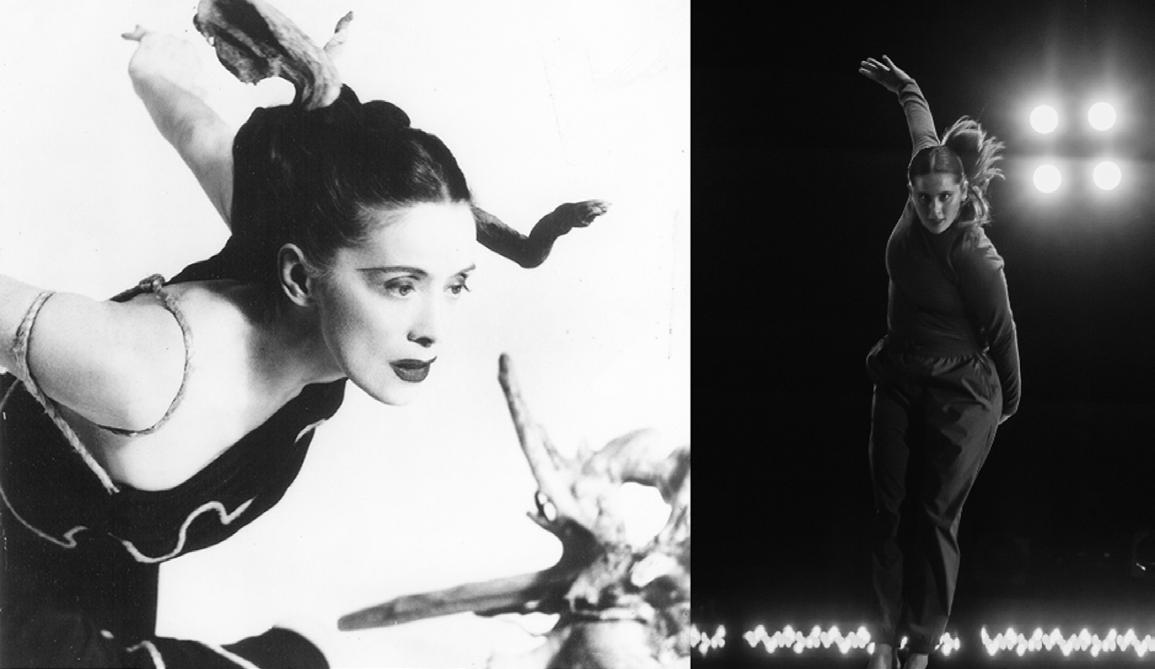
Scripps Dances 2026: A tribute to Martha Graham
SYDNEY FORSYTE
A century after Martha Graham revolutionized modern dance, her legacy was on display at Scripps College’s Garrison Theatre — with a live orchestra performance to commemorate the occasion.
Dancers took to the stage on April 17 and 18, featuring a Graham piece alongside the work of both professional and student choreographers. While Scripps Dances has always been a staple of the Scripps College dance program, this year’s production stood out for its scale and depth of collaboration.
This showcase was partially a tribute to Martha Graham, who is often called the mother of modern dance. Graham is credited with inventing a myriad of ballets, and even developed her own dance technique based on of the twentieth century’s most acclaimed artists, her name lies amongstures, the likes of Picasso, James Joyce and Frank Lloyd Wright.
Due to the magnitude of Graham’s legacy, the artistic directors for this year’s dance show spent many months crafting the perfect performance. Scripps Professor of Dance Kevin Williamson, one of the directors, described the challenges of integrating musicians into a traditionally dance-focused event, explaining that it required additional logistical coordination and the preparation of Garrison Theater’s orchestral pit.
“Planning for the event started the year prior, and this year in particular, even more planning than usual was required as we collaborated with the
Martha Graham Dance Center and the Claremont Concert Orchestra,” Williamson said.
The program began with two of Graham’s acclaimed pieces, “Steps in the Street” and “Prelude to Action.” She premiered these works in her 1936 performance, “Chronicle,” which depicted the tragedy of war in response to the violent persecutions taking place in Germany at the time. This year‘s concert coincided with a dual centennial, celebrating both Scripps College and Graham’s legacy.
“[Scripps College and Martha Graham] share parallel legacies in innovation, artistic excellence and empowerment,” Williamson said.
Scripps Assistant Professor in Dance Abdiel Jacobsen, a former principal dancer with the Martha Graham Dance Company, played a key role in bringing that history into the present production.
“While going through the archives at Denison [Library], we came across photos of modern dance productions from the department’s Graham to a member of our community,” Williamson said. “Abdiel decided it would be a brilliant moment to bring her legacy to the school.”
That vision expanded to include live music, creating an interdisciplinary collaboration between the dance and music departments.
“Director of Orchestra and Professor of Music, David Cubek, was game from the get-go and spent a big part of this semester preparing the musicians to play parts of ‘Chronicle’ by composer Wallingford Riegger,” Williamson said.
The inclusion of live orchestral shift for the concert, placing the work of dancers and musicians together to create a more immersive experience for the audience. It also highlighted the potential for future collaboration between the Dance and Music departments.
Yet, amidst all of the changes, the heart of the show remained the same: student choreography. Junior and senior dance majors were responsible for choreographing facilitating auditions, managing schedules, designing costumes, leading warm-ups and more.
“The concert process is an awesome opportunity for them to explore their own creative curiosities, to hone their composition skills, and experiment with new themes, concepts, music and so on,” Williamson said.
One standout piece was “Departure Dance”, choreographed by Serena Gaylord, PZ ‘26. Gaylord
described how the piece was initially inspired by the book “Before the Coffee Gets Cold” by Toshikazu Kawaguchi, a novel in which the characters go back and forth and of themselves and the people they love.
“As graduation is coming up … this dance has just been a way for me to kind of process the grief and gratitude I feel for this chapter of my life closing and all of the fear and wonder and all that I feel about the next chapter coming up,” Gaylord and they really interpreted the topic of my choreography so beautifully.”
Gaylord’s lyrical piece was complemented by “Just Really Nice” by Lilly Hunter PZ ’27. Hunter described the message behind her piece, which she choreographed to an upbeat mashup of hit songs “Boombastic” by Shaggy and “Oh Yeah” by Yello.
“There’s a lot that can be said through dance, and there’s a lot that
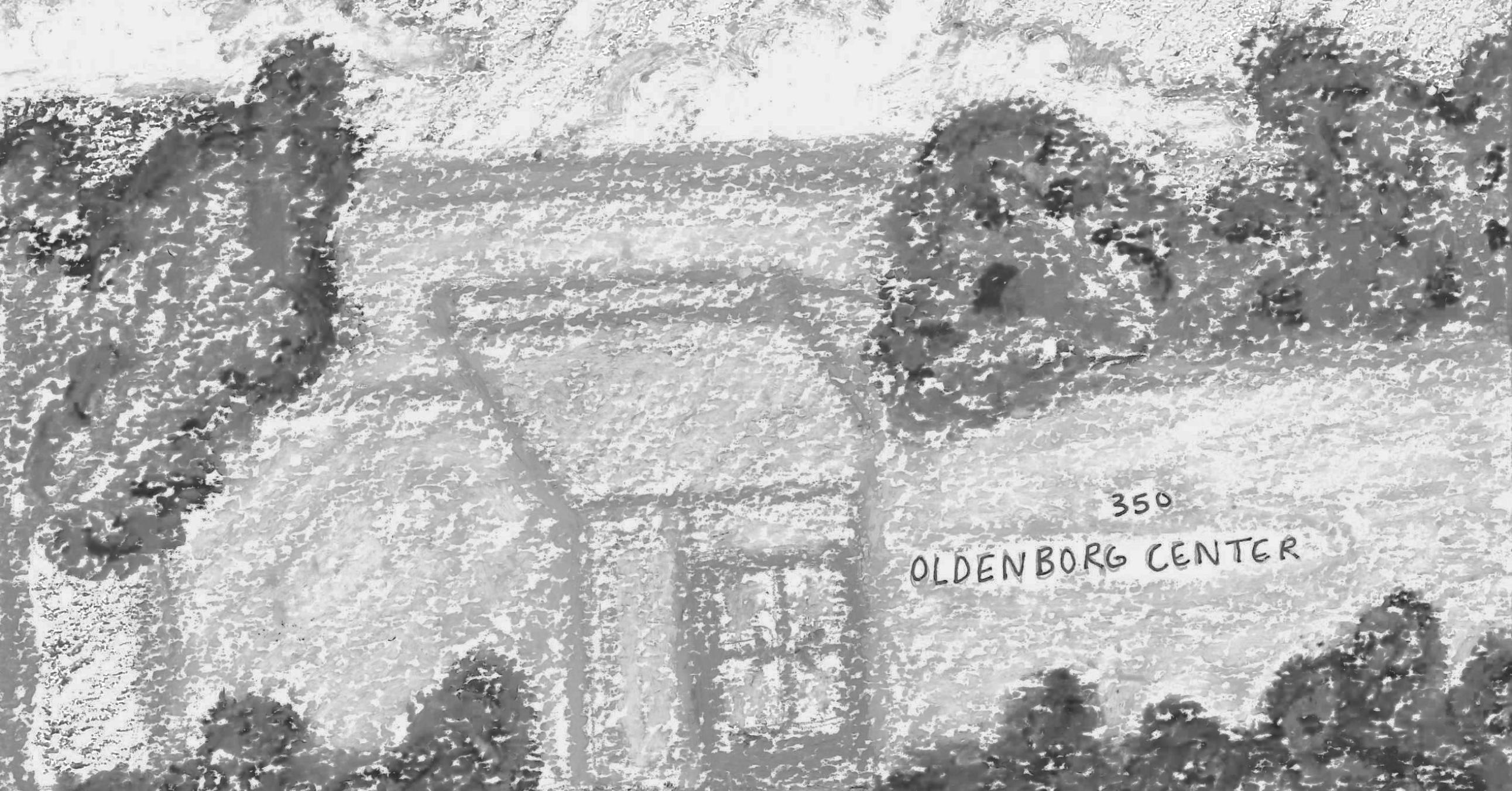
A home in many languages: Remembering Oldenborg
An unexpected conversation unfolds, in Spanish, between aabout their shared love of Spanish rap. This is only one example of the many unique interactions that spontaneously arise every day at Pomona’s Oldenborg Center for Modern Languages and International Relations. At the heart of Oldenborg lunches is an eclectic mix of professors and students — many of whom would never otherwise have the chance to meet — who engage in deep conversation about a wide range of subjects.
While it is predominantly known across campus for its lively lunch hour, Oldenborg is far more than a college dining hall. As the home to over a hundred students and the heart of many foreign language programs at Pomona College, Oldenborg has long held an important role at the Claremont Colleges. a community space is partially why the news of its impending demolition, alongside a $125 million plan to build the Center for Global Engagement (CGE), came as a shock to many students. This hefty undertakstudent housing and means saying goodbye to a 60-year-old institution that has meant so much to so many over the decades.
dents have begun expressing their gratitude for the language center. As an Oldenborg resident, Georgia history of her current home.
“I think that the building itself holds so much history … like with the international theater, there [are] all these photos on the walls of every language resident who has stayed in Oldenborg and worked there,” King said. “So, I think, just as a piece of history, Oldenborg is something that I’ll miss and reminisce on fondly when I’m thinking about my living experience sophomore year.”
Adelina Grotenhuis PO ’28, another second-year student living in Oldenborg, described how that sense of history shapes her connection to Pomona.
“Whenever people ask where I live, I’m like, ‘Oldie’ … because it’s kind of old [and] has a lot of tradition and history,” Grotenhuis said. “I feel very connected to the school because [Oldenborg is] such an iconic part of Pomona.”
While Oldenborg serves as a home for King and Grotenhuis, just two of approximately 130 residents,
it is most widely known for its daily language conversation tables.
Lauren Staples HM ‘28 initially Spanish class, but after experiencing its warm, inclusive environment, came to view it as more than just a requirement.
“I think that Oldenburg represents a place where a lot of students feel like they can be themselves and express a part of their identity that comes with native language, [which] they might not get to express very often,” Staples said.
The process of designing an inviting, non-judgemental space — one that brings together people withcy — can be laden with obstacles. Oldenborg, however, manages to make inclusivity feel natural. Staples spoke about how the tables have
“I always felt welcomed to join any table, even if I wasn’t on the same level of language as those were really understanding and helpful with developing my language skills,” she said.
The kindness Staples described significant insight into the larger Oldenborg community. Oldenborg resident Max Liu PO ’28 echoed this sense of warmth, describing the dorm as especially close-knit.
say, but [Oldenborg has] a safe-haven-ish vibe,” he said. “Oldenborg is still, I [won’t] say majority, but maybe leaning towards international students, and for me, that [feels] a compared to all the other dorms.”
For many, Oldenborg’s communal nature stems from the physical proximity of everything — with living spaces, dining and programming all intertwined. Grotenhuis described the merits of this structure, while also noting concerns about the temporary relocation during construction.
“I think having the dining hall and the dorms where all the language residents live in one place is really nice because it creates a unifying place,” Grotenhuis said. “Whereas next year, with [resident halls] being [at] Lowry, but then Frank [hosting] language tables, it’s not the same. I’ll miss having that one, very unifying space for cultural and language learning on campus.”
Even on relatively small college campuses, students described how this kind of living situation, where everything is centralized, is rare. -
experience.
“I think the other dorms [at Pomona] are just dorms; people do Liu said. “But [at] Oldenborg, a lot of people’s activities are centered here than just living [and] sleeping here.”
The integration of culture and language is what makes Oldenborg distinctive. For King, full cultural immersion is one of the most meaningful parts of living in Oldenborg.
“The cultural moments that all the language residents have are open to all students…if they are [making] origami in the Japanese lounge, then you can go and participate in that activity,” she said. “So there [are] no boundaries between languages and culture; everything is mixed together, which is really nice.”
These small but meaningful events regularly bring people together, emphasizing how the linguistic exchange built into Oldenborg’s structure facilitates cross-cultural connection in a unique way.
“I think language is one of the things that stays with you,” Liu said. “Even if the vocab itself doesn’t, it’s still really [about] connecting to theent experience, [and] you get to talk to people more.”
With Oldenborg’s closure approaching, many students across campus have been discussing the same question: Will the cozy, distinctive presence of Oldenborg disappear along with the building?
Some students are unsure whether Oldenborg’s character can be fully translated into the new building. Grotenhuis voiced her deep appreciation for the building’s idiosyncrasies and her hope that they will be
“I hope that Oldenborg doesn’t lose its character and history, [and that] it doesn’t become like every other building on campus,” she said. “It has a very endearing quality [and] a very warm energy.”
Despite concerns, many students expressed a similar sentiment: Oldenborg may be disappearing physically, but the community it’s created is here to stay. For all the students and Language Residents who have called this building home, the physical demolition does not erase the memories they’ve shared together.
“I think that Oldenborg is very close to a lot of people’s hearts, not just the current students, but all of the people that have lived there and all of the language residents that have come here,” Grotenhuis said. “[For the] people that aren’t even at Pomona anymore, I think Oldenborg is really close to their hearts.”
can be found, resistance that can occur, all of that,” Hunter said. “I think that’s really powerful, but I also think that viewers deserve to escape from the constant demands of living in an oppressive society, and I wanted to allow us to be free from that.”
Williamson emphasized that beyond the technical and artistic elements, the concert plays a significant role in building relationships among all participants. The sense of community that the show generates extended beyond the performance to the audience, who responded with sustained applause across all of the shows. Pieces that paired emotional depth with technical precision drew particularly strong reactions, highlighting the performances’ ability to engage viewers.
Williamson expressed that the organizers hoped the impact of the performance would extend beyond the theater.
“The department hopes audience members connect with the emotions of the dances,” Williamson said. “And that the experience of watching them can be a conduit for their own self-expression and creativity.”
Gaylord expressed her appreciation for the show during a time when entertainment is mainly online, and a similar hope that the audience would leave feeling inspired.
“Not to get on a soapbox here, short-form, curated content, and for hundreds of people to all gather in a room together to purely just witness a live performance unfold is so rare and so special,” Gaylord said. “I hope the audience walks away stoked or stirred up by the performances.”
Student bands breathe life into KSPC prom
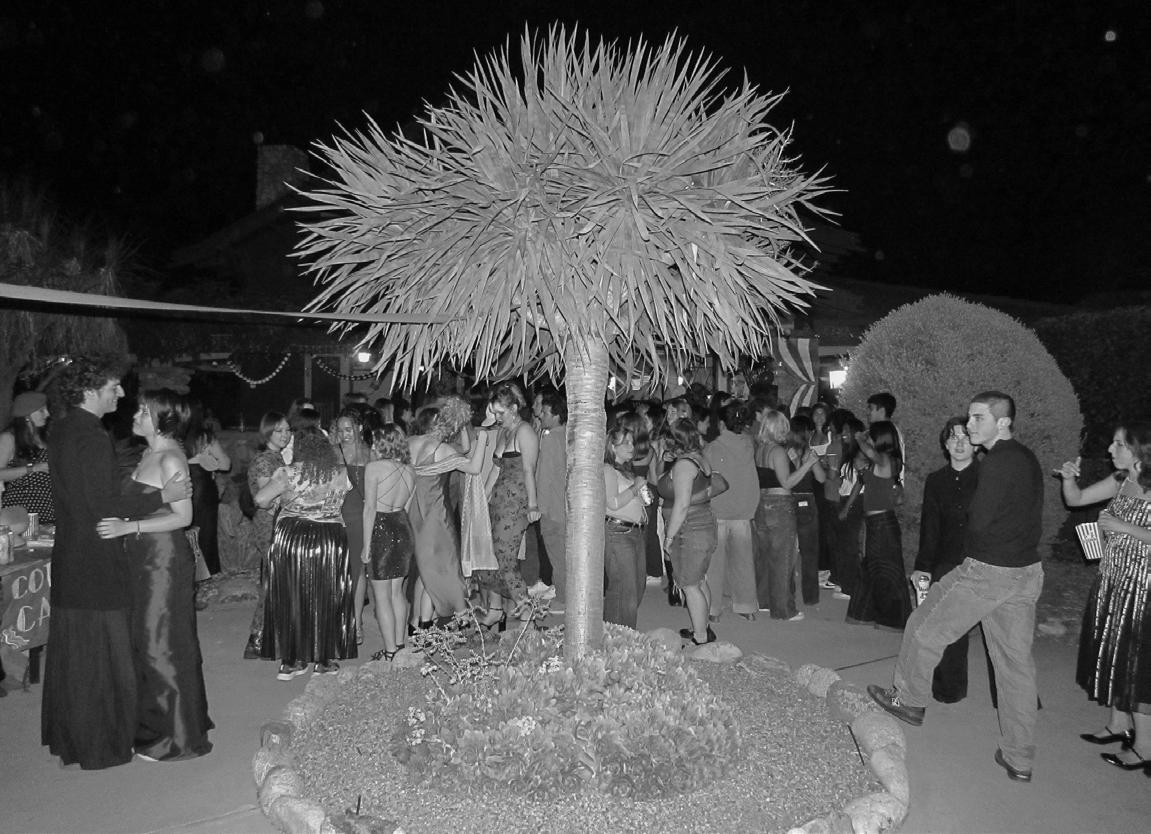
While Radiohead’s “Creep” blasted through the speakers, the crowd belted the lyrics “I don’t belong here” in perfect harmony. Behind them, members of the 5C the air, suspended by dark blue silks.
On Saturday, April 18, KSPC hosted “Centennial Circus” — a prom with a quirky circus-themed 1956, the 5Cs’ broadcasting radio station has grown in more ways than one. This year, they celebrated their 70th anniversary. In addition to rotating hosts each week, they hold many events throughout the semester that bring their listening community together, offering students a space to showcase their
“Our goals with all of our live music events, including [KSPC] Prom, are to provide paid performance opportunities for student artists,” Vera Caldwell PO ’26, a KSPC mentor, said. “[We wanted] to create opportunities for social as people bond over music and self-expression, and to promote alternative and underground music.”
Unlike previous prom events, KSPC chose to solely spotlight student performers this year, with a set list composed entirely of student bands and musicians. One constant element of the annual prom, however, is the eclectic, silly theme. Typically, these themes are based upon two words that do not go together, such as Zombie Aquarium or Apocalypse State Fair.
On April 2, KSPC created an Instagram account, @kspcpromposal, and posted both staged and real promposals to help promote the event. One of the promposal posters read “You would be a clown to say no to KSPC with me” — a not-so-subtle foreshadowing of this year’s circus theme.
In the past, KSPC has struggled prom, but this year’s interactive advertising strategy proved successful.
“We had people who work for KSPC do proposals that were really cute, and I think they were a hit and really helped spread the word,” KSPC production editor Lucy Faulkner PZ ’26 said.
In addition to the circus-themed promposals, KSPC recruited the 5C Circus Club to help curate a 1920s circus vibe. Faulkner spoke to how the club set up its own rigs
for silks — she stressed how amazing it was to see so many 5C student creatives in collaboration.
“They [set it up] by the clock tower, which I think also left room for people to hang out on the grass and spread out,” Faulkner said. “It was just a really good vibe; if you didn’t want to be too close to the music, you could go by [the] Circus club.”
Underneath the string lights and circus-themed decorations, students swayed and bobbed to the bands’ music. Ava Neal SC ’28, a vocalist the sense of nostalgia she felt while on stage and seeing everyone release their inhibitions.
“We were able to feel that innocence and togetherness of high school prom, but with everything on our own terms this time because we’re grownups now-ish,” she said. Beyond the immediate moment, Neal spoke about the importance of her band playing in an environment unique opportunity to play a paid gig. For Neal, it was the perfect note to end on, since some members of their band will be graduating in the spring. This was the band’s last gig together.
“We said yes to [playing at] this event because we’d always wanted to play some sort of house party,” Neal said. “It seemed like a quintessential college band experience. I think we could feel we were going to go [our] separate ways soon, and this was a beautiful way to celebrate our time to-
Many of the student attendees shared a similar sentiment. The prom was a rare moment where students could dance to music typically left out of the classic Green Beach DJ set. of “Visions of Gideon” and “Money Machine” — something that would never be found at any other 5C party. subcultures often don’t find their tastes and interests represented in other events and spaces,” Caldwell
More broadly, the event allowed KSPC’s listener base to come out in person, bringing its network together through a shared love of music. In contrast to the modern tendency to treat listening as a solitary experience, KSPC fosters an environment where music becomes a point of connection.
“We aren’t gatekeep-y — if you’re you feel like you don’t already have extensive knowledge of niche or underground music, but you want to learn more, anyone at KSPC will be thrilled to give you recommendations just because we love music and connecting over music that much,” Caldwell said.
COURTESY: SCRIPPS COLLEGE
ANNABELLE JURUS
KIRA HELLER
COURTESY: KSPC CLAREMONT 88.7FM
Tibetan monks share message of impermanence at Benton Museum
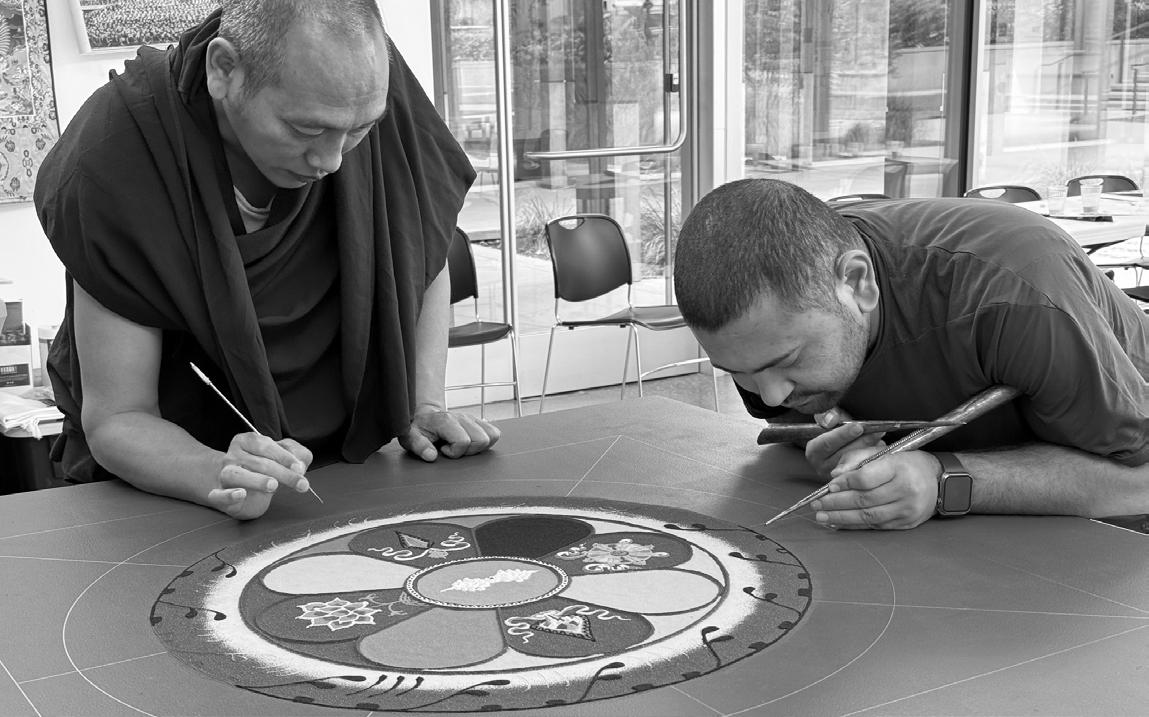
As students stare down the barrel of a busy month — papers, exams, deadlines and tying up loose ends of the school year — it can feel as though there is no time for rest. This can manifest in a chronic, baseline state of stress for students, who are constantly moving from one task to the next, leaving Monks from the Gaden Shartse Monastery in South India visited Pomona College to help remedy this. They highlighted that amidst a chaotic world, there is a desperate, human need to engage in grounding, meditative practices.
From Wednesday, April 15, to Friday, April 17, monks from the historic Gaden Shartse Monastery in India visited Pomona College’s Benton Museum of Art. There, they turned the Benton’s pavilion room into an impromptu shrine room, with an intricately crafted mandala and incense. In the center of the room, they crafted the sand mandala.
The monks’ visit was organized to coincide with one of the museum’s current exhibitions, “The Meditative Object.” Both the exhibition and the event are intended to help people better understand the history and
The monks disassembled the mandala on April 17, while leading open lessons about the dissolution process. Gathered in the pavilion, a captivated audience listened closely to monk Geshe Phuntsho’s closing speeches. Phuntsho told the audience about the significance of the sand other monks, created over three days. of the mandala lies partially in the meditative process of creation — the monks dedicated the work to peace, and placed sand grains slowly and carefully. After Phuntsho’s speech, the monks circled the mandala, preparing to dissolve their work. First, they gallery space with sounds of chanting and instruments. The prayer spanned objects and mudras. As their prayer concluded, the monks carefully swept the mandala away, leaving behind a multi-colored pile of sand.
“You are born empty-handed and you’ll die empty-handed,” Phuntsho said. “Life is impermanent, and we forget that. We sometimes think we’ll live forever. These [meditation] practices help us realize we have only a certain window of time and to appreciate that life is precious.”
The mandala’s creation and dissolution processes were intended to stress impermanence: What takes days to create takes only minutes to
dissolve. Phuntsho elaborated on this idea, explaining how he aims to promote peace, unity and harmony in an increasingly chaotic spreading this message to students and young people.
“Younger students have expressed that the guided meditations were really nice,” Phuntsho said. “People are trying to understand more, because something is lacking inside.”
Attendee Alexander James Matheson-Lieber CM ’27 visited the exhibition throughout the week, partaking in a guided meditation and observing the dissolution process. The guided meditation moved Matheson-Lieber, who and compassion.
“My largest takeaway is to be more conscious and focused in my to be thankful for the people and things around me,” he said.
Matheson-Lieber described how he appreciated the opportunity to partake in mediation during this particularly stressful moment in the academic year. The monks’ guided meditations and reminders to slow down served as a stark contrast to many students’ built-up anxiety stemming from
“The guided meditation happened right after I took a midterm, then I came right here,” Matheson-Lieber said. “The contrast between those two experiences was almost jarring, but it made me realize just how much stress and pressure I’m building into my life. I’m thinking more about myself as a compassionate being, instead of just the normal role of myself as a student,”
Justine Bae Bias, the communications and engagement manager at the Benton, further explained larger exhibition, “The Meditative Object.” The purpose of this exhibition is to explore how objects can Hosting the monks provides a living, participatory example of that idea. The mandala is physical truths.
“All things in life are impermanent, and with the dissolution of the sand mandala, the physical and material are destroyed, but the intention, the wisdom, the meditation for peace remains,” Bae Bias said. “The mandala is a creation of the universe, and while this one in particular was a meditation for peace, there were symbols of study, wisdom and compassion.”
Dislodging popular culture in ‘Interference Patterns’
A long paper trail always followed me as I ran around my father’s store. I grabbed every piece of paper and all the pens
in half, stuck them together and stapled it to create a book. Then, I scribbled away a story on each page. I drew every individual scene, the text bubbles and the characters to create my own comic. I created hundreds of these comics and would show of my creation.
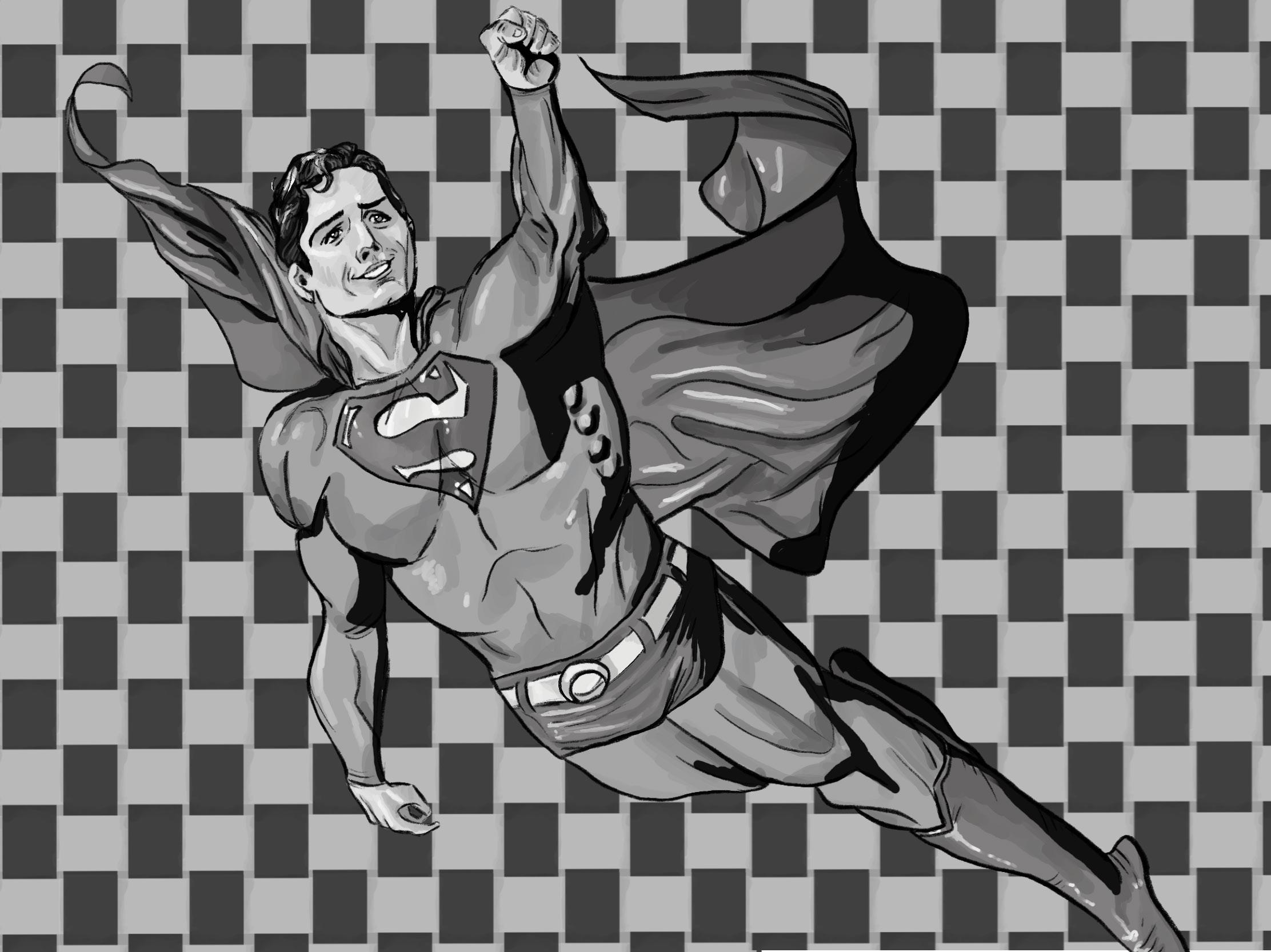
I like to think that my love for comics stems from my father’s love for DC Comics, especially the “Superman” ones. Because of this, I was pleasantly surprised to be confronted by a room full of comics in John Sparagana’s show, “Interferenceum of Art. These images, however, are not the easily readable stories we all know and love. They are completely spliced and mixed, disrupting the text and the images of the comics.
John Sparagana is currently a professor at Rice University and has had exhibits all across the world. He is best known for his very labor-intensive process of splicing and remixing images. He prints many copies of images — whether that be comics, news images, publications or pieces from artworks of well-renowned artists — and slices them into very small pieces that he weaves together.
This technique expands the image and forms a blur-likeable, but we can still decipher what is happening in the image. He takes the image out of its original context, remixes it and puts it up for us to view it in a new way. So, what does it mean that we can still recognize these images?
Sparagana changes the way we interact with the images that constantly circulate in the media. Typically, we view them for a split second and move on, but Sparagana wants us to slow down.
When looking at “Superman Variations,” I couldn’t read the speech bubbles or reconfigure the scenes, but I still saw the reds, blues and yellows of Superman. Because Superman was my father’s favorite character, I knew his backstory and the stories that followed; looking at Sparagana’s piece, however, I started to wonder how Superman came about. Not Superman himself, but rather the process and reasoning behind the character’s creation. What context is Sparagana wanting to take away from this popular comic, and what does he want us to see?
Jerry Siegel and Joe Shuster, both very successful comic artists, created the beloved hero in 1938, when the Great Depression was at its peak and tensions in Europe of Superman was a villain, but not long after, they revised the character to be the hero that we all know and love today.
Siegel’s wife Joanne describes how she would often see Shuster use Siegel as a model to sketch Superman. Siegel’s own experiences also played a role in Superman’s story: The decision to turn Clark Kent into a reporter was inspired by Siegel’s childhood dream of becoming a reporter.
“Superman” was an instant hit because the storylines resonated with so many people. This was not just because of the character design, but also how the pair wrote relatably about current events happening in areas like Ohio, where the two were based. The two were also children of Jewish immigrants, which inspired the decision to make Superman the defender of the hopeless and those who were unjustly mistreated. This theme became especially prominent during World War II, as news of atrocities spread all over the globe.
Siegel and Shuster directly called out Hitler, using comics to depict Superman confronting a weekly newspaper of the SS, Das Schwarz Korps, where they claimed Siegel and Shuster were “brainwashing the children of America.” Yet, the pair did not let this deter them. They continued
to talk about these ongoing issues through their comic, and Superman became the hero the people looked up to in times of dire need for hope, and one we still admire today. Superman, and now many other heroes, make up a huge part of our popular culture. We constantly consume media related to them, whether it’s movies, books, comics, social media or songs. Throughout the history of this character, Superman has been reimagined in many almost seem to detach the character from its history. The way our media ecosystem is designed, everything needs to be eye-catching so that a second. This does not encourage us to do deep dives into subjects, but rather shrinks our attention span. Before I saw this exhibition, Superman. It was not until I saw Sparagana’s work that I wanted to know more.
As I continue to look at Sparagana’s piece, I realize it has already pushed me to slow down. Unlike my for-you page or a typical comic, I’m unable to simply skim the page and move on to the next bite-sized piece of content. It is in part because I cannot read what is going on in I can see Superman throughout the page. Sparagana dislodges “Superman” from its popular culture context and makes us question why he wants us to pause on it. His intricate process of splicing and mixing invites us to create new ways of seeing and thinking. He wants us to see the comic through its explosive focus to this by disrupting elements like the text. By causing us to pause over an icon that’s so prevalent we hardly notice it, Sparagana forces us to think more critically about the context and presentation of the media we consume. Without seeing this work and my curiosity getting the best of me, I would have never known about the remarkable history of Superman.
Meiya Rollins PO ’29 believes, like Michelangelo, that art takes time – most of that time being snack breaks and watching “Good Mythical Morning.”
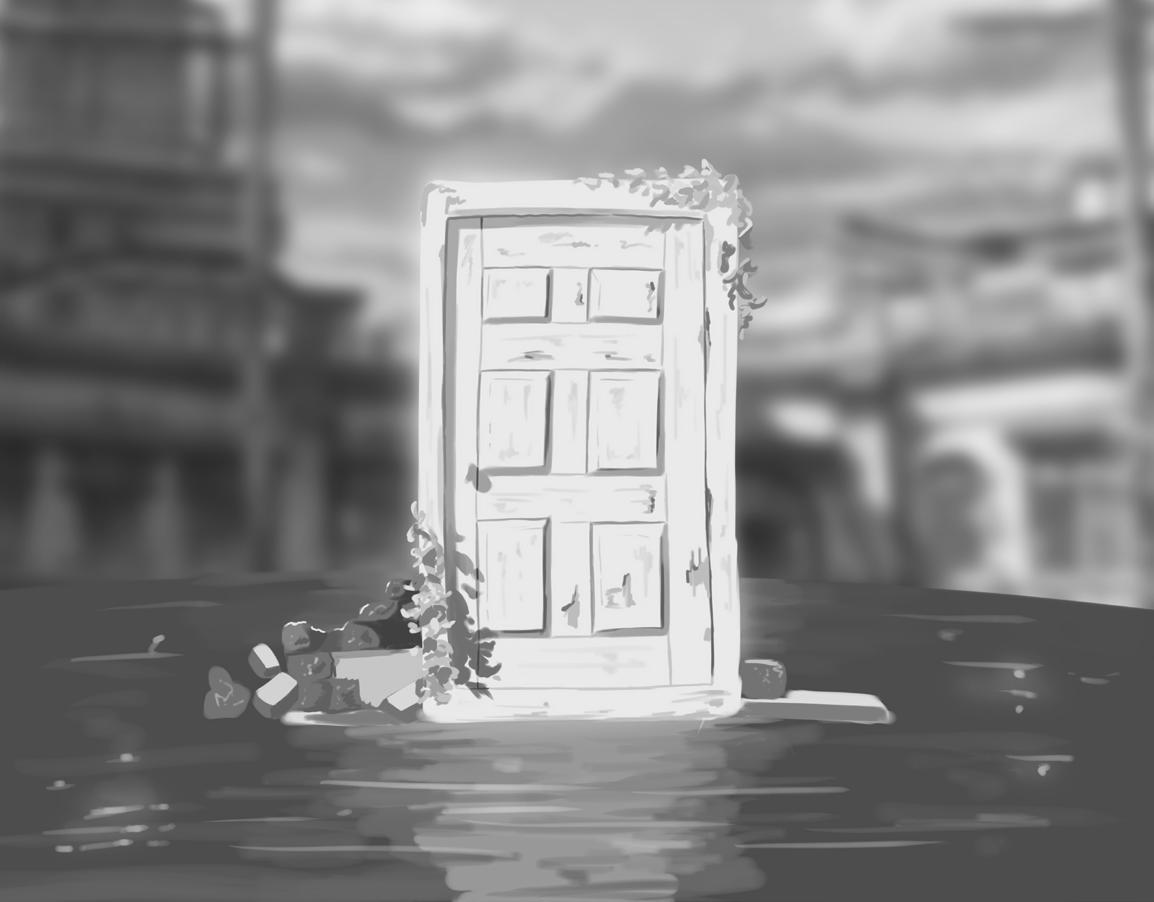
Sealing the door with Suzume
Ever since I saw “Your Name” and “Weathering With You” a few years around to watching “Suzume” next, Makoto Shinkai’s Disaster Trilogy. that truly be?
It’s been two years since, and only watching it. I’m not quite sure why it took me so long to sit down and see the movie, especially since I’ve really wanted to for a while. Perhaps I got distracted by other movies or shows to watch, or it simply dropped down in my list of priorities over time. Howon the horizon, I decided that now look at Shinkai’s third installment in his trilogy. So, after all these years of procrastination, was it worth it?
“Suzume” follows the titular character, a high school girl living with entangled in a high-stakes adventure with an aloof stranger named Souta Munakata. Together, they must travel across Japan to seal mysterious doors that contain a massive supernatural worm threatening to trigger cataclysmic earthquakes throughout the country.
The situation takes an even more bizarre turn when Souta is cursed
and turns into a three-legged chair. While cynical viewers might assume twist, the chair actually serves as the emotional core of the entire movie. Not only is this chair possessed by Souta — the man Suzume eventurelates to Suzume’s childhood, since this chair was built by her mother before her life was taken by a devastating earthquake. This one unassuming chair encapsulates two important people in Suzume’s life, connecting her past to her future. Despite sounding like such a silly concept, I have to give props to the filmmakers for making this idea work.
Beyond her mother and Souta, Suzume also forms bonds with different strangers across Japan, from a girl named Chika in Ehime to her new friend Serizawa in Tokyo. While most of them do not play a major role in the overall story, they are important because they are anchored in their respective locations. They help make each stop in Japan more than just a checkpoint for the protagonists to visit. The stakes are then raised once more when, at each stop, the worm emerges from the door — the audience is gripped, because they wouldn’t want to see these characters fall victim to the disaster the worm could potentially unleash.
selves to prevent them. Even Makoto Shinkai himself seemed to take note of his clichés. He had originally planned to center the movie around a lesbian relationship, because he believed that he had done “everything that [he] possibly could in terms of ‘boy and girl.’” However, this was shot down by his producer.
Personally, I didn’t find these recurring tropes to be as egregious as noticeable, they never truly bothered me because, in the end, the storyline was still well-executed. Having a girl as the main protagonist rather than a boy also helps make “Suzume” stand out from the last two movies.
ence genuinely invested. In the beginning, we see the consequences ofizens are initially unaware of what is truly happening, until the ground shakes hard beneath them and they are struck by collateral damage. The only way to prevent this carnage is to seal the door shut with a chant and a key before the worm comes crashing down onto the ground. Even though the worm is stopped before it can wreak havoc on the city, the fear and tension that arises upon seeing it echoes throughout the movie. The audience has seen what this worm is
Speaking of stakes, the movie -
capable of at the start, and its sheer scale and overwhelming presence do a lot to sell it as a proper threat. For all that it does right, “Suzume” follows many similar story beats from Shinkai’s previous two and a girl as they develop a relationship, with supernatural disasters acting as the major threat to their story. Souta’s transformation into the chair can be seen as a parallel to the body-swapping plot that occurs in “Your Name.” Souta himself even bears many similarities to Hina from “Weathering With You,” since they are both connected to the ongoing
“Suzume” is a beautifully-made film, and I look forward to seeing what Shinkai is working on next. I don’t regret not watching this movie continue this column for longer, but I am happy that I got to use this I made to myself all those years ago. As I close out both this review and my movie revolving around sealing doors for good.
Joon Kim PO ’26 doesn’t have a preference between subs or dubs in anime and would rather stay away from the debate. Sometimes, he will watch the subbed version. Other times, he’s in the mood to watch with a dub.
SHANNON BIGELOW
SYLVIE SIMMONS
COURTESY: BENTON MUSEUM OF ART
JOON KIM
ROY SHIN • THE STUDENT LIFE
MEIYA ROLLINS • THE STUDENT LIFE
MEIYA ROLLINS
ANIME FILM FEATURES
The algorithm ate my boyfriend
Have you ever felt like the person you’re talking to is a bad mashup of TikTok references or whatever else is trending that week? Navigating relationships at a time when it feels like individuality is being threatened makes the dating scene as tough as the current job market.
Siena: I need my partner to be able to connect with me beyond physical intimacy. For me, that is the something and sex that feels like going through the motions. I think this is why I feel like a part of me dies when, immediately after the mechanical act, he rolls over and picks up his phone. That silence replaces potential emotional intimacy with a feed of distraction. An intimate
We’re starting to treat each other like content: something to engage a late-night “You up?” text. Once someone feels like content, I start to lose engagement and I suddenly feel like I’m watching AI fruit Love Island on Instagram Reels.
I have come to a terrible realization: Our social media use is hindering our ability to be emotionally mature. In a climate of six-seven jokes and skibidity toilet memes, I feel like genuine connection is curdling into vacant consumption. We have a word for this now: brainrot. I argue that word might also describe your boyfriend.
Ari: Even though we know social media is bad for us, we still use it, and cover our ears when people say otherwise because we can’t help but continue to engage. I just watched this of short-form media like TikTok. Short-form media is designed to be a “morsel” for our brains, robbing us of feeling full and always leaving us wanting more. The truth is that we’re being manipulated by an algorithm that is designed to make scrolling addictive so that the next best thing is just a swipe away. That same logic starts to shape how we approach people. It doesn’t feel like much of a jump to assume that if we can barely watch
to a relationship.
Siena: I agree with you. Nowadays, you swipe, you match, you lie
next to someone, and that emotional and physical exchange registers the same way a TikTok does: Present for forever. That feeling of emptiness leaves you with the same regret you get after a day of doomscrolling. It reminds me of this one date. Right after, when my friend asked me how it went, I could not remember a single thing we had talked about. It’s the same feeling I get when I close an app absentmindedly and then instinctively reopen it. Clearly, the information wasn’t valuable — or I would have remem-
Does this happen to you? Or is my memory decaying from too many screens? Ari: Honestly no, not really, like, insane.

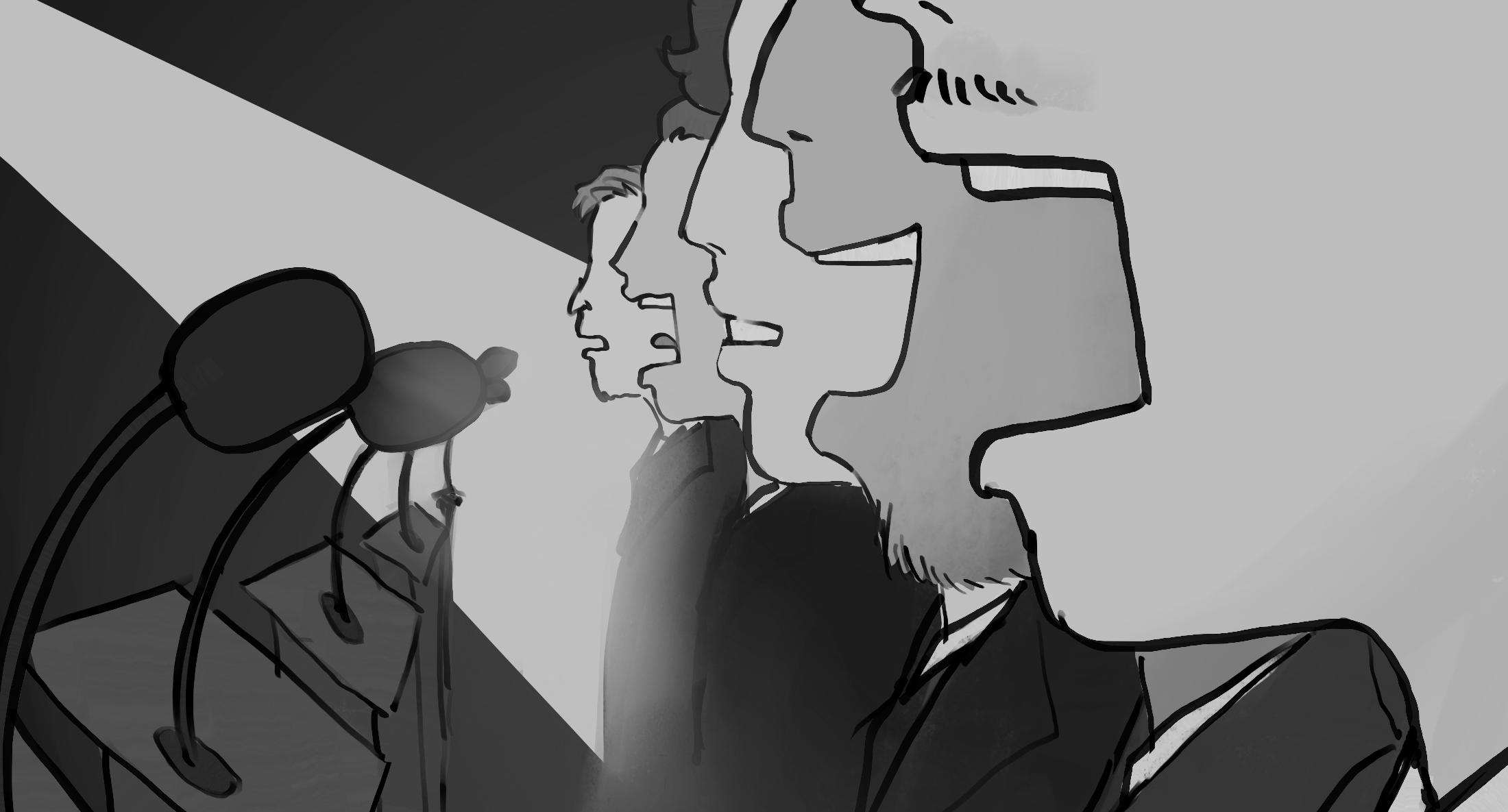
Put down the book and pick up the goop
LIAM RILEY
There was a bubbling cauldron oftonio’s fridge. When I asked him what the goop was, he laughed maniacally, adjusted his glasses and went back to working on his remote-controlled aira Styrofoam block into a tube with a soft plume of carcinogenic smoke into the dorm and sent a singed piece completely covered in chunks of Styrofoam. He frequently terrorized his roommate by blowing bits of shorn fuselage onto his side of the room with an electric jet turbine he had bought for his plane.
Antonio’s desk was cluttered with loose antipsychotics, a handle of Fireball, a gallon of milk to chase that Fireball, an elaborate hookah setup, a pound of Turkish tobacco, a couple of psych textbooks and airplane paraphernalia. His fridge was occupied by the goop, precariously balanced on a hot plate and gushing thick clouds of odorous steam. His bed was piled with books, and the ceiling was lined with pruning black balloons. Taped over his desk was an article from the student newspaper that he had furiously annotated and a spider that he had immolated with a dab torch. His roommate’s side of the room was much cleaner. All his possessions were neatly packed into cardboard boxes under his bed. His room change petition had been accepted earlier that of India tacked over his neatly made bed. His desk was missing for reasons Antonio refused to discuss.
While Antonio’s roommate did not appreciate his feral joie de vivre, I was a safe enough distance away to admire it. I got the clearest picture of where this energy came from and his life philosophy when I asked him if he had read “The Doors of Perception,” Aldous Huxley’s account of taking time. I had lent him the book a couple of months ago and was curious to hear what he thought about it. I was also sick of him stonewalling me on the goop question.
it because he was having trouble sourcing the cacti. I asked him what he was talking about, and he told me I clearly hadn’t understood the book at all. I told him I knew more about the book than him because I maniacal laugh.
I could tell he was gearing up for one of his rants, where he would pace around the room, proposing wild theories connecting studies on collapsing mouse colonies to dating culture, or Haitian folklore to the production of antipsychotic drugs. His favorite thing to do was diagnose his friends andfound mental disorders. He thought Jesus had schizophrenia, Marcus Aurelius had autism and that his suitemate had a deep, Freudian psychosexual urge to worship authority. His basic idea was that there is a correct and an incorrect way to read a book. To correctly read a book, you have to realize that words are not might feel, you have to realize that book, rather than chasing a whalecaline. Once this feeling of jealousy becomes unbearable, you have to
throw the book away and search like mad for something that will satisfy your curiosity.
Only in a horrifying Matrix-esque VR machine would our desire for experience be completely erad(I think this is where he got weird and started talking about porn) and books should merely, in his words, tease you. Entertainment begins to feel perverse and dystopian when it tries to fully replicate and replace elements of the human experience. Books, art, and movies should not pacify you, entertain you or serve as an escape. They should draw you deeper into your own life.
That’s why “The Doors of Perception” is such a brilliant essay. It the psychedelic experience and discusses the inadequacy of language at length. It announces its own impotence incredibly clearly when Huxley says: “Sensations, feelings, insights, fancies — all these are private and, except through symbols and at second hand, incommunicable. We can pool information about experiences, but never the experiences themselves.” The book then stokes the reader’s curiosity with beautifully poetic phrases such as “I was seeing what Adam had seen on the morning of his creation — the miracle, moment by moment, of naked existence.”
The essay celebrates, and owes its existence to, the inadequacy of language and the spirit of exploration: Huxley felt compelled to try mescaline and catalog his experience
Antonio concluded his argument by saying that I was a completely soulless geek for not immediately trying to get my hands on some mescaline to experience the moment of naked existence. He then told me the boiling pot of green slime was full of a mescaline-containing cactus and that he was close to completing
tion process. Sometimes I worried my friendship with Antonio was the result of a perverse desire to study him — to turn him into one of my characters and put him on display like the scorched spider taped to his wall. I told him this, and he told me to go for it, saying that he felt much more like a character blood person. The conversation convinced me that it’s my duty to immortalize Antonio in all his mad crackling genius. I also owe him for completely changing the way I think about books, movies and art my freshman year of college most roundabout way possible, what the giant cauldron of green goop was doing in his dorm room.
I tried my best to heed Antonio’s advice for the next four years of college. I turned an old Dodge into a campervan after reading a book about a man building a cabin and I tried to climb California’s Bums.” Even more importantly, I met people who had a similar lust for life that at times bordered on insanity. One of my best friends decided to build a sauna after reading an article on them. Another one made a run of homemade moonshine after watching a PBS documentary on bootlegging. I write to encourage similar behavior. I hope my abridged inventory of Antonio’s desk makes you want to ransack it for hidden treasure, and my description of airplane construction encourages you to bury your own dorm in a pile of smoking Styrofoam. Just try to refrain from blowing the debris onto your roommate’s bed or implicating yourself in the mysterious disappearance of his desk. Liam Riley PO ’26 thoroughly enjoyed his time at TSL.
My gripe with brainrot’s impact
Humor is so inherently subjective — if all of our humor now comes from the internet, it loses the originality that makes a joke good. Even if the boyfriend probably isn’t all that funny without the crutch of Instagram reels. Without individuality, there’s a limited amount of content to bond over, and no reason for the initial more than surface level.
I’ll get up on my soapbox and say it: There is a collective shift happening in our generation, where it feels like there’s no uniqueness anymore. Siena: I’m not sure that dating insane people will really save you from the brainrot epidemic. Trust man or two (or three), and not a single one has ever made me laugh the way my friends do, because most of their jokes were plagiarized from or related to online media in some way. degradation of originality.
So I agree with you that there’s no desire for uniqueness anymore. Most of the time, I can predict the the joke, because I’ve already seen it 10 times online. I feel like I’m not
encountered before.
Ari: I was once seeing this guy me to shut up, I do.” I thought he was such a character. I was really disappointed when I saw the same joke circulating on Reels a few weeks
later. This collective addiction feels like a problem because bonding over TikTok references cheapens the bond a shared joke is supposed to create. If we’re all so bonded now because we’re in on these shared jokes, how do we determine if we actually get along with someone?
Would it be unrealistic to say that if we want successful relationships, someone who isn’t plugged in, so our relationship won’t be a copy-andpaste of Internet references.
Siena: There’s obviously no getthere’s no way I’m giving up my presence online. I like the connection that social media gives us when used correctly. Seeing fragments of my friends’ lives across the country, all like a special kind of intimacy. I don’t want to lose that.
So I think that the best way to beat relationships is to have interests outside of the Internet. If brainrot is the slow erosion of originality, then the only way out is to spend more time away from your phone and adopt some hobbies or passions to make yourself more interesting.
Siena Giacoma PZ ’27 and Arianna Kaplan SC ’27 are aspiring documentarians of the sexually awkward, which they consider a noble undervalued literary genre. They have consciously chosen the unstable future of rich inner lives and fascinating anecdotes over sensible things like 401(k)s or a basic understanding of Excel.
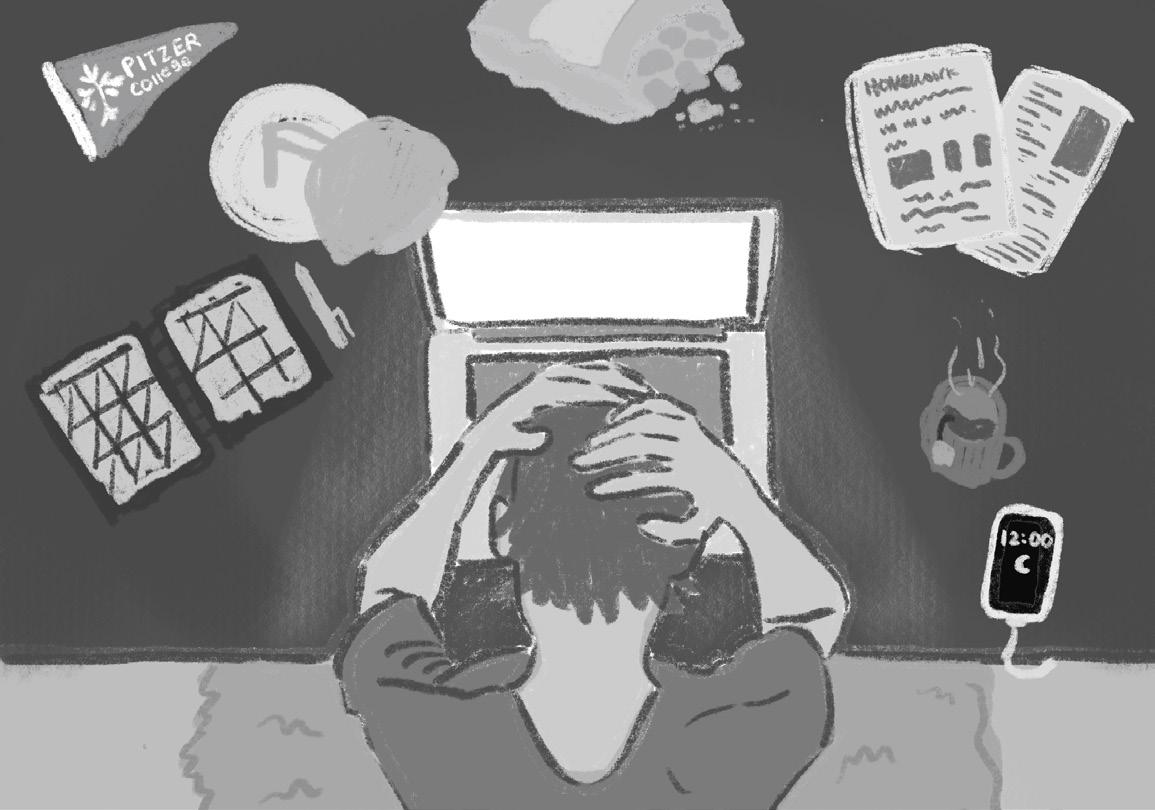
Sometime in early January
–– I don’t remember the date –– I stopped writing. It wasn’t frustrated for the entire month and really didn’t feel like it was going anywhere. When I first started writing consistently in the summer of 2025, it felt as though I was on an exponential curve. I was writing a novel, and though the first like I had rocketed out of the gates, writing north of 85,000 words in a summer and feeling progressive growth while doing so. I wasn’t entirely sure what to do when the growth stopped; it seemed as though I had plateaued, and my writing, though wasn’t going anywhere. My biggest concern was that I felt like I had to try incredibly hard to Eventually, I realized I had harder I tried, the worse it actually got, and the more disenchanted Iintuitive; if you’re lazy and looking for a profession that requires you to try less, look no further. Alas, I didn’t know this at the time. So, I did what most normal people would do. I guess you
It’s important to note that by this time, I was in a crisis. I had and my writing had become so sophisticated and complex that it had completely deviated from the simplistic minimalist prose I sought. It came to a head that January when I was slightly under writing, hadn’t enjoyed it and couldn’t even recognize my work. For a while, I really, really hated writing. A couple of months later, I stumbled upon a short story that brought me back.
In 3,249 words, “Night Surf” follows six teenagers who believe they are immune to a virus that has wiped out the world. Their illusion of security collapses when it is revealed that one of them is infected. This short story is canon to Stephen King’s much lengthier work, “The Stand.” But I don’t really care about “The Stand.” I care about “Night Surf.” Take a look at this passage.
“Fourth of July sparklers for a Fourth that never was, beach towels with a voluptuous girl in a bikini standing amid the names of a hundred famous resort areas, pennants (Souvenir of Anson Beach and Park), balloons, bathing suits. There was a snack bar
up front with a big sign saying TRY OUR CLAM CAKE SPECIAL.”
The whole paragraph is fantastic. It’s a succinct portrayal of urban decay and melancholia, made even more ironic when you understand the virus that wiped out humanity as storefront reads like a time capsule:lets; beachballs; fake vomit; Fourth of July sparklers.
The eerie thing is that everything is alive in this paragraph — except us. There’s no one left to buy any of it. The sign stands out most to me. The world has ended, but the advertisement hasn’t. Amid all the rot, that’s what we have left.
Reading this passage was so incredibly frightening because it was the antithesis of my work at the time. It is accessible. A second-grader could read this. There is nothing linguistically intimidating here; instead, we get plain sentences and ordinary vocabulary.
I read this passage a lot. In fact, it lives in my mind right next to “Ciro,” a novella that I started to write in dragged myself into. “Ciro” had started incredibly strongly, but inThings started to make sense when I put the two side by side.
“Night Surf” made me realize I just wasn’t getting to the point quickly enough. I had been obsessed with the concept of sounding “good,” which entailed rewriting and polishing my sentences until each sparkled. The problem is, not every sentence is allowed to sparkle. If every sentence becomes special, then no sentence is actually special. “Night Surf” works specifically because there is no place for winding prose. Instead, we get sentences that do manual, heavy lifting. They don’t look nice, sure, but they make for a What I’m trying to say is that complexity really doesn’t equate to quality. “Ciro” failed because it was comprised of maximalist junk that kept the story bolted in place. It’s a nice life lesson. We should all get to the point quicker. Say what we mean. well: “Try to leave out the part that readers tend to skip.” So, friends, don’t quit the day job. Maybe just take a vacation. I hear Tahiti’s nice.
M. Schulz’s portrayal of Charlie Brown the perfect example of unrequited love. He wonders if Charlie will ever truly succeed, and suspects that’s exactly the point.
ARIANNA KAPLAN SIENA GIACOMA
ALEXANDRA GRUNBAUM • THE STUDENT LIFE
OTTO FRITTON
ALISON BARRERA • THE STUDENT LIFE
THE WRITING PROCESS
Weigh your options — psychiatric drugs are overprescribed
LIAM RILEY
It’s often the case that an entire belief system is spawned from a single story, experiment or case study. This is certainly the case with the neurochemical model of behavior. While norepinephrine were discovered in chemicals have on human behavior weren’t proven until 1961, when an injection of L-DOPA — a dopamine precursor — drastically reduced a of studies attributing other mental disorders to chemical imbalances followed. Soon, it seemed evident that our behavior, mood and personality were determined by these same chemicals.
While this model has helped treat millions of people, it has also come to restrict our understanding of human behavior and mental health. This restriction has led to a general disregard for basic human needs, a reduction of agency and the overprescription of psychiatric drugs.
-the neurochemical model, as well about human behavior — just as the L-DOPA experiments limited the use of psychoanalysis and helped invent modern psychiatry. The clinical individual whose natural reaction to a toxic home environment is pathologized by the family. Labeling one member of the family as “crazy” deflects blame from the family’s dysfunctional dynamics.
-
enon can serve as a metaphor to describe the neurochemical model’s misapplication. In this case, instead of a toxic family labeling one of its members as mentally unwell, a away from itself by overestimating the prevalence of mental illness. In many cases, societal issues prevent an individual from meeting minimum requirements for well-being, the individual becomes unhappy. This unhappiness is conceptualized

as a chemical imbalance by a psychiatrist and the patient is prescribed psychiatric drugs. I hope this article can paint a realistic — and at times harrowing — picture of this transmutation from individual to patient that has happened in our country, which exhibits an incredibly high per-capita consumption of psychiatric drugs. The reasons for unhappiness in the United States, as they are in any society, are myriad. I would immediately point to the increasing rarity of third places such as libraries or churches, the extensive use of technology and increasing more extensive list of some contemporary American stressors, I would op-ed. Unfortunately, the neurochemical model’s monopoly over the diagnostic process prevents these exterior factors from being appropriately weighed.
The insistence that neurochemical interactions are somehow more fundamental to reality than immediately observable phenomena is beginning to creep into everyday speech. I frequently hear people say “they need a little dopamine hit” when they’re craving dessert. Sometimes impulses much more fundamental to the human experience are conscripted into the service of a neurochemical.
from Pomona College promoting aately cited the fact that music “can trigger the release of dopamine and endorphins.” While this is correct, the statement’s prominence on the flyer suggests that music’s value derives from its ability to modulate statement almost feels sacrilegious, given music’s profound, spiritual the human experience. My aim isn’t
to critique the rhetorical decisions made in the poster, but to explain how pervasive and limiting the neurochemical model of behavior can be.
The use of overly psychiatric language reveals the neurochemical model’s secret ambition to extend its list of diagnostic criteria until we are all patients, reducing an experience that was once spiritual and profound
pills: 5 mg of adderall for dopamine, 30 minutes of sunlight for serotonin production and a short jog for the endorphins.
This devaluing of the humanquently psychiatric interventions result in the elimination of core huof my friend who quit playing the piano after being prescribed an SSRI, stating that all the notes sounded the same on the medication. Many of their emotional and perceptual
studies, nearly 90% of all SSRI users have reported sexual dysfunction. I initially felt compelled to explain why this statistic is so disturbing, and then realized my attempt to do so was just as misguided as the wellness poster’s attempt to explain why music is valuable. Orgasms are good. This fact should be self-evident and does not need to be neurochemical or study.
The administration of psychiatric drugs can sometimes have much Bipolar 1 individuals are misdiagWhen they are prescribed SSRIs, they are liable to experience a manic episode. If their dose is high enough and their case of Bipolar 1 is severe,
these manic episodes can result in hospitalization. Misdiagnosing or misprescribing a patient is incredibly common. I was told by a psychiatrist in college that I needed to be on a mood stabilizer and stay away from drugs that could prompt episodes of mania, such as amphetamines. Ironically, a psychiatrist recommended manage my ADHD symptoms in high school. While it is theoretically possible that I have both ADHD and presence of a mood stabilizer could be potentially disastrous.
This isn’t to suggest that psychiatric drugs aren’t incredibly useful for many people. Psychiatric drugs treating neurodegenerative disorders have added years to people’s lives and my friend credits antipsychotics with saving his life. However, the majority of psychiatric drugs are prescribed to treat anxiety and depressive disorders, which are oftentimes qualitatively different than their more severe counterparts.
My primary issue with the neurochemical model is that it directs that need to be addressed. By placing liable to ignore the environmental conditions leading to our unhappiness or anxiety. If you have been diagnosed with a mental illness or have been advised to pursue medication, I highly suggest you pause for a second. Avert your gaze from the neurochemical world and inspect what is immediately evident to you. your general well-being. Find the items you can reasonably change or eliminate. Understand that there are few things as drastic as chemically lifestyle adjustments accordingly. Liam Riley PO ’26 is trying his best to hopemaxx.
We must recognize the evils of the IDF
JAMES LYON
From a young age, clear examples of individuals whose behavior we should not mimic or tolerate were present both in the classroom and people who use their hands instead of their words or people who don’t follow the golden rule. There is a our society socializes and conditions us, especially our children. We try we want them to become productive members of society who create relationships built on moral values through education, where, as we grow older, we’re exposed to historical examples of what and who not to imitate. These manifestations of evil have become familiar in the history we teach — from Apartheid-era Mussolini and Hitler — to instill clear moral judgments. In doing so, we as to prevent these evils from ever happening again.
tion of Nazis and their sympathizers that it is objectively dangerous and irrational to believe you are racially superior to another person; therefore, individuals who subscribe to these ideologies are dangerous and irrational. On most social media platenvironments, espousing Nazi ideolrightfully so — but remains under the protection of the First Amendment. You can’t be arrested for being a bigot unless you threaten violent action, yet the majority of people and private spaces or have security escort you from their property. This intolerance we have learned from childhood: It instills within us the conviction that Nazism, and comparable ideologies, that we simply should not tolerate the behaviors of those who are associated with them.
incredible violence and hatred that Nazism has inspired since the time of its inception. This truth is easy for us to accept. It’s imperative we face the additional fact, however, that when we compare the barbarity and language of the Nazi regime with that of the current violence perpetrated by the
our already-agreed-upon moral sentiment, we must recognize the similarities between our nations’ arming and funding of the IDF, and the actions of people who supported and funded Nazism.
The language adopted by the IDF echoes language used in Nazi Germany; politicians in both the Nazi and current Israeli governments have used language that frames their targeted groups as subhuman “vermin” that are to be “annihilated.” Before the state of Israel was founder of the revisionist Zionism movement, stated that “preservation of national identity is possible only under conditions where racial purity is preserved, and for that we need a territory of our own in which our people will be the decisive majority.”
Nazi Germany’s Nuremberg Laws of 1935 also use this language of purity, as the nation claimed to be “moved by the understanding that purity of the German Blood is the essential condition for the continued existence of the German People.” Today, the Israeli government, too, massacres in the name of creating an ethnostate. The dehumanization — and thus further extirpation — of Palestinians will continue if we do parallels.
Furthermore, there are many similarities between the way that the Israeli government and the Nazi government systematically perpetuate violence against ethnic minorities. The Israeli parliament passed a bill earlier this year that mandates the execution of PalesIsraeli civilians.
Yet we are unable to apply what we’ve learned in our history classes and recognize these undeniable are paid for with our tax dollars and happening right in front of our own eyes, because we have been led by major institutions and news outlets not to recognize them. The International Holocaust Remembrance contemporary Israeli policy to that of the Nazis” as anti-Semitic, and this the Anti-Defamation League and the U.S. government. This definition draws on the fact that it is morally abhorrent to compare Jewish people to Nazis, who brutally murdered millions during the Holocaust. This is true, and is simply not what is being argued. This argument is not
comparing the Jewish people to to the fact that the IDF and the Nazi regime used similar language and tactics to create ethno-states, and we should not obscure this fact.
Institutional efforts to sanitize the atrocities and minimize media coverage of the genocide have been further compounded by Western media outlets’ self-censorship: a Times in 2024 revealed that editors purposefully instructed journalists not to use the terms “massacre,” “ethnic cleansing” and “genocide,” which incontestably manipulates the public’s perceptions of objective truths. The publication has continued to use passive language when describing Palestinian deaths, while using active language to describe the American public could have been more easily manipulated to maintain apathy, but, in the modern age, we are uniquely positioned to resist these narratives as we directly consume the evidence of these crimes against humanity on our social media feeds.
We are not passive bystanders — our direct involvement, through taxpayer dollars and the military industrial complex, is part of why it is so crucial we see these atrocities for what they are. Last year, the average taxpayer spent $4,049 on
weapons and war, far more than any other program funded by our taxpayer dollars. Of course, we don’t have the power to sign off on every proposed government budget — but we need to recognize that they’re spending it on children of people and their families being uprooted from where they have colonial project of an increasingly despotic government. Israel invaded Lebanon for the third time in the last than 2,000 people and annexing the southern part of the country. Israel hundreds, if not thousands. By many estimates, the death toll in Gaza has surpassed 75,000 people.
We’ve spent decades teaching our children that Nazis were evil, that Apartheid was evil, that there are things a society simply must refuse to tolerate. We’ve built that condeveloped from past experiences that proved that ethnonationalism and racial cleansing are evil. This condemn these atrocities that are occurring now.
Yet, over and over again, that Pomona College signed a resolution with the Anti-Defamation League
openly denied the IDF’s genocide against Palestinians. It’s unequivocallyan environment that is safe for all Jewish students; part of this entails fully addressing any anti-Semitic incidents. that there has been an increase in and institutions since October 2023. At the same time, it is unconscionable for our educational institutions to sign agreements or display tolerance toward organizations that defend the IDF’s ethnic cleansing of Palestinians. Has history not already established that support and proliferation of a genocidal regime is intolerable? ideology and actions reflect past genocidal regimes, we, as a collective society, will be able to recognize our responsibility to hold our institutions to participate in more conscientious partnerships and divest from the genocide. We must reconcile the parallels of this modern genocide with historical examples that we’ve already deemed unacceptable, and bring this newfound understanding into our conception of morality.
James Lyon PZ ’29 needs to scroll on social media less, but will continue to consume short-form content, as he has done since Vine.

Jestermaxx before it’s too late
AUDREY GREEN
KWON
JUN
What does it truly mean to as-outs or more time spent in the sun. But somewhere along the lines, the innocuous nature gets lost.al, comes from the role-playing game Dungeons and Dragons, which urges players to maximize a
men to accentuate facial features in accordance with beauty standards — a sharp jawline, a symmetrical face and vascularity — to help them advance in life, whether that be romantically or professionally.
-
maxxing must be achieved by any facial structure, Braden Eric Peters, Clavicular, has repeatedly hammered his face, fracturing his jaw
en methamphetamine to leanmaxx and help curb his appetite to lower his body fat.
Just as in min-maxing game at the expense of other features such as your well-being. A brainchild of the broader manosphere,provement with the sole intention social status. -
maxxing movement strongly argue against it having any political ties, right extremist ideals through meOnce young men adopt a mindset that pushes for the purification of the body, it becomes easier to Sites and forums at the forefront of this ideology, such as Reddit, dramatically during COVID-19, when students and young adults found themselves socially isolated with nothing else to do. Among these new subscribers was the now infamous Clavicular. Shortly
his university for possession of tesinternet to showcase his aesthetic an online sensation.
existed long before Clavicular, he has greatly contributed to the culture’s resurgence, especially for younger generations. He is unique-
much larger movement.
Clavicular’s palatable messaging serves as an on-ramp to viewing far more harmful content, starting with his early live transitioned to broadcasting an overdose, luring underage girls into public view and hypersexualizing them for the internet to see. Although these manospheric subcultures have varying characteristics, many boil down to one simple claim: Do not trust the system. Encouraging people
high amounts of anabolic-androgenic steroids is a clear indication that subscribers of these groupspersedes that of any professional. deny the existence of this pipe -
and many other pseudoscience health extremist movements.
This strand of the right’s ideology, emphasizing the notion of body, is commonly referred to as Granola Nazism, an all-encompassing term that includes controversies surrounding tradwife culture, vaccines, interracial marriages and organic diets. A rejection of modern medicine and dietary recommendations requires these individuals to outsource their information to
Once they subscribe to one conspiracy, it becomes easier to join many — this is how online extremist echo-chambers are created.
Healthmaxxing is merely an introduction to the manosphere as a whole. In 2025, researchers developed the Digital Subcultural Diffusion Theory, which outlines how extremist views, such as many of those expressed for wider audiences until they become mainstream. especially dangerous is that it urges subscribers to enact these ideologies on their bodies. The concept of self-improvement has way this ideology is practiced and performed every day, and in some ways, the Granola Nazism ideology becomes permanently
a venue of resistance against a system they believe wants to suppress a man’s natural potential.
This ideology that prioritizes rigorous discipline, purity and
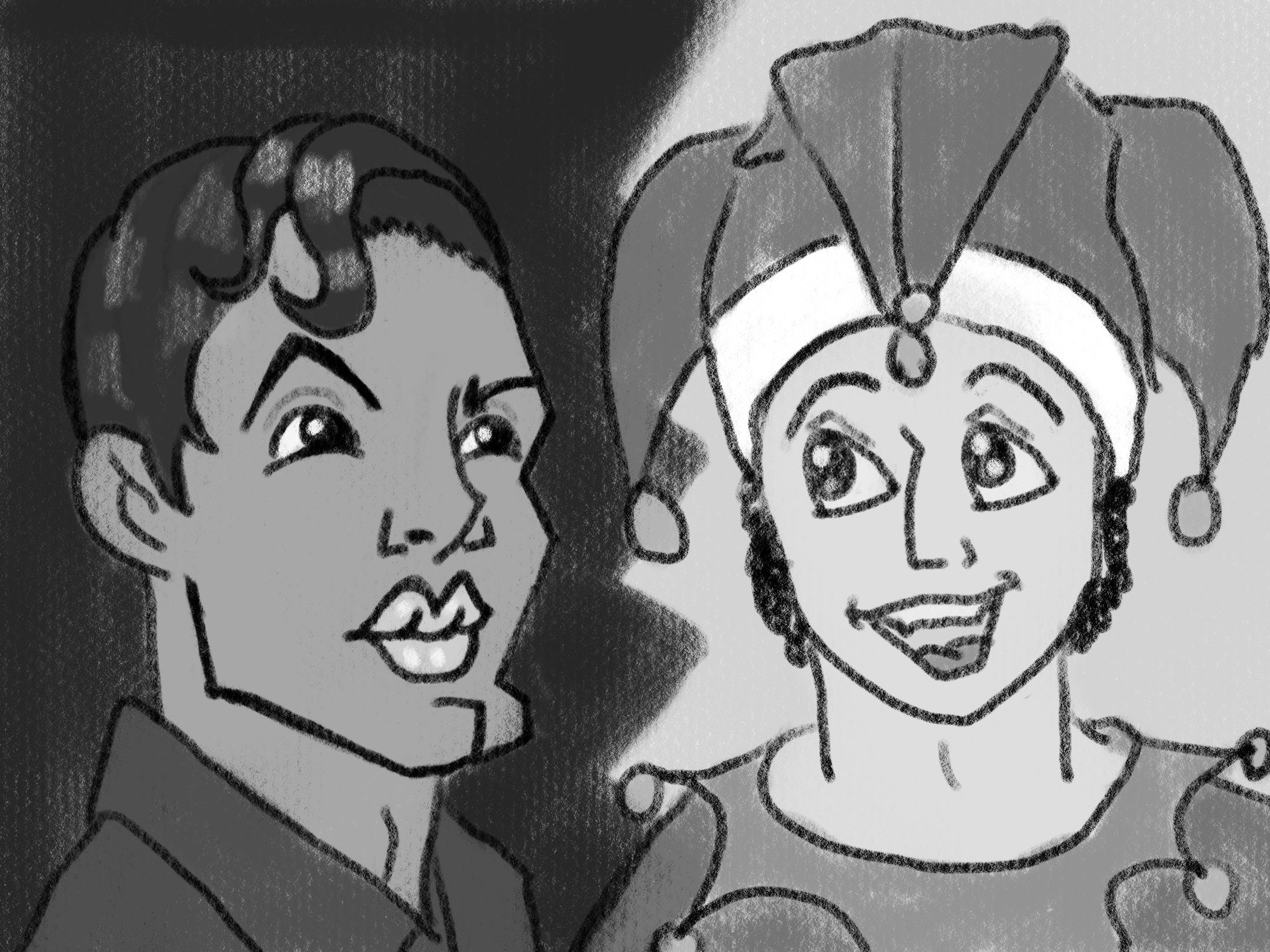
primality is not unique to the 21st century. The language that reverberates within these open forums mimics that of the fascist “New Man.”
Benito Mussolini’s “New Man” was a model citizen — de-
Man” represented, one also had to not. Historically, the “New Man” stood in opposition to modernity and sentimentality and physically resembled heroic, mythologized leaders and Roman statues.
leads to binaries of pure versus impure, optimal versus subopThere is additional messaging that those who do not subscribe to their ideology: jestermaxxers. Jestermaxxers are considered individuals who regularly perform outer appearance, from engaging with women normally to critically
what the “New Man” sought to replace: cowards, liberals, undewoman’s gaze. He was clear that such qualities made a person less disenfranchised the voices of men who were not militant enough.
draw lines was motivated by his belief that hard-core men would under his dictatorship.
We laugh at what often seemsger, ascend, descend, Gigachad, Subhuman — but these are the terms that sort men into a new hierarchy. These terms must exist to establish who is softmaxxing and who is hardmaxxing — who is willing to go all the way regardless of consequence and who will stop short.
Collaborations with far-right groyper Nicholas Fuentes — as well as self-described misogynist Tate — prove that despite Clavicular’s attempt to stay fully such as politics, he inherently draws young, insecure men who are susceptible to the politics of Fuentes and Tate.
The inherently political nature of Clavicular’s messaging in the fact that many of his fans
running to be Florida’s governor.
A young, digitally-savvy rightwing nationalist who virally gained traction in the upcoming gubernatorial race. Though he is currently polling in the low single digits, his emergence is closely tied to the strength of his youth following and his digital
his heavy emphasis on prioritizing college campus visits. Given the interconnectedness of the larger manosphere, it logically follows that Fuentes would endorse a Gen-Z men are the online masses driving the popularity of both of
When these young men become eligible to vote, they will vote in ways that align with the values of that produces elected candidateserences.
country will no longer be polling in the single digits, and voters will line up to support extremists with sharp jawlines and harmful politics. This will happen at an accelerated rate. America is already polarized, with its democratic foundations eroding under two terms of a man who rose to power by exploiting unaddressed grievances of the masses. The normalization of popular culture rhetoric that reinforces purity and extremism should be a blaring alarm for what’s to come in future elections, unless we decide to draw the line and vehemently
Audrey Green SC ’27 is a hopemaxxing Wasian. Jun Kwon PO ’28 is a joymaxxing Korean.
Why aren’t college kids striking anymore?
Following the Kent State Shootings in 1970, four million students in protest. Hundreds of colleges shut down, and the movementsuring the government to end the become far less common today, with the most recent major political when over 100 campuses rallied against the Trump administration’s “assault on higher education.” In the younger generation’s favor, however, the most memorable Columbia College in April of 2024, where the resilience of just a few conversation on the ongoing Gaza genocide, and inspired similar protests at over 180 universities worldwide.
Once again, waves of outrage are rising across the United States today — and rightfully so — due to record-high gas prices averaging $3.30 per gallon nationwide and TSA wait times now exceeding 4.5 hours at several airports. The U.S. economy is in shambles, and many government employees now face devastating payroll cuts due to the fourth government shutdown under President Trump. Yes, these situations are undeniably outrageous
have become so accustomed to consumer culture in the United States that we only demonstrate, or even feel, outrage at these atrocities directly in our daily lives. Our genand our growing egocentrism is partly to blame for our inaction. According to recent studies, egocentrism — the inability to distinguish one’s own perspectives from others’, which leads to an overemphasis of personal opinions, needs and feelings — is on the rise in the United States. With the overconsumption and materialism, it is not surprising that many
Americans have developed a tendency — whether conscious or unconscious — to center their own comfort and routine over everything else. Consequently, it’s easy to continue worrying over our own problems and neglecting our nation’s impact on the rest of the world — that is, until we experience the impact ourselves.
Trump is actively prolonging a war causing mass casualties, and foreshadowing the downfall of our national economy. Yet, sevmost of us remained frozen — it was only when we had to spend stand in line for a bit longer that people stopped exchanging complaints and aggravated sighs and are we going to do about this?” Rising gas prices are a direct result of this war. Trump’ssure of the Strait of Hormuz, and economists fear the closure foreshadows a global recession — with oil and gas prices alreadytaneously, with the pressure the US-Iran war exerts on the global economy, millions of individuals across the world and vulnerableof high energy and food prices. In addition to the economic damage created by the war, air raids have destroyed significant Iranian infrastructure, including water plants, elementary schools and state of utmost desperation. As Trump’s war in Iran — which the European Council on Foreign Relations called a “prolonged war” — wages on, Trump has caused just as much of a disaster at home by prompting yet another complete government shutdown. The shutdown resulted from ongoing budget disputes between Trump and Congress, and it had a ripple effect on SNAP programs for low-income families, devastating millions of Americans who needed these programs. In recent

shutdowns, SNAP funding has been used as negotiatory leverage. Many Americans resented this decision — so why didn’t we bother to do anything? We as citizens have become so steeped in our consumerist culture that we don’t necessarily feel moved to action when Trump is ruining other people’s lives — as long as he is not running ours with long wait times at the airport.
The egocentricism swallowing citizens is the very reason we have
can’t have an actual impact on such a large issue. But, Trump hopes nothing more than for comfort of their homes and hope that things will miraculously get he can do anything and we can’t do anything about it, because if we believe this is the case, he can — and why wouldn’t he if we do
sition where we can choose to ignore or dissociate from these devastating realities, we have a responsibility to act on them. If we are privileged enough not government shutdown immediately, we at the very least have a responsibility to recognize these atrocities before they reach us through comparatively privileged wait times.
Furthermore, as 5C students residing in the “Claremont bubble,” we are not exposed to many have the privilege of living in the security that college life provides, so it becomes especially easy to do anything. We have become so used to our high standard of living that it seems unimaginable when something happens that the bureaucratic system we rely on every day. Now is the time when we
we have seen that simply being frustrated is not enough to drive change. Our inaction has allowed over and over again, and we have to show that we are not willing to tolerate them any longer. Many of us residing in Claremont have a lot less to lose than the average American, and it would be a terrible waste in such a desperate time. With that, I encourage you to participate actively in resistance movements, inform yourselves of the impacts of
If Columbia students had cho-ing no impact, fellow students wouldn’t have rallied nationwide. Personally, I would rather protest and fail than simply do nothing and wonder what could have changed, and I would hope that 5Cs students feel the same.
Olivia Brinkman PO ’29 is from Minneapolis.
OLIVIA BRINKMAN
More than a major: Finding identity and community in the 5Cs’ Chicanx Latinx Department
-
education, was socially isolating,
mediately signed up for CLSA’s New Student Retreat, where students participate in a series of fun activities, like a dance party and a Latine-focused club fair, to meet fellow Latine students. Latine professors took time out of their Saturday to speak to Latine students about their classes and interZimmerman, Martha Gonzalez and
Studies (CLS). This was my first glimpse into the very strong and beautiful community fostered by the Studies Department.
During the Pomona College Posternized professor Zimmerman and Liand wandered over to learn more.
Gonzalez had spent her summer documenting the changes and re-
really touched by how Gonzalez, in a time when many people in the Latine community are paralyzed by fear, was on the ground carrying out pláticas — informal and intimate conversations — documenting Latine spaces before they no longer community and seeing glimpses of
pláticas with multiple students at the 5Cs
three students — two seniors and one freshman — to get a glimpse into the beginning and end of a student’s journey in the CLS major.
“CLS taught me to imagine myself as an actor in change and a driving force for the terms of my community.” — Drea Alonzo
Alonzo came to Pomona thinking they would only major in pol-
a Latine First-Gen student. They found that many of their politics classes focused more on political theory and institutions rather than on the communities they cared about, which led them to also take CLS classes. “To the freshman Latines, take a CLS class while you there eventually, so you might as
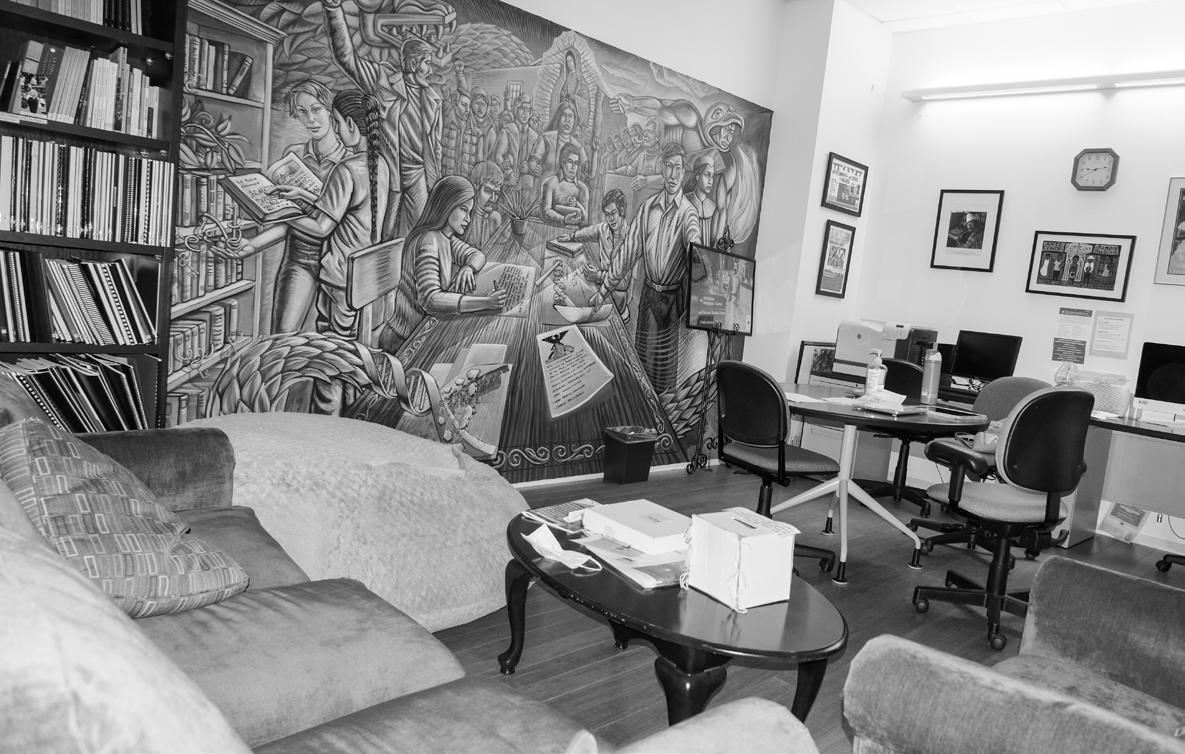
well start while you can still major or minor,” Alonzo said.
professor Zimmerman, which focused on engaging with community organizing and activism. They began mentoring a Latina middle school student, and felt like an older sister to her. Alonzo believes this class taught them that beyond their identity as students, they are also community members. This course
Now a double major in polies, Alonzo’s thesis, “El Poder De Mi Sueño, ” (“The Power of My Dreams”) archives the dreams of Latina immigrants in Salinas Valley, thesis shines a light on her mom and family friends, strong educators and dreamers who have courageously fought for their families and challenged traditional gender roles.
With the support of their CLS professors, Alonzo was awarded a Fulbright grant and will be teaching in South Korea after graduation.
“There’s this misconception that you can’t do much with a CLS major, but you learn how to do interviews, research, platicas — you become a jack of all trades.” -
an interest in sociology and history, and happened upon CLS classes. She didn’t plan on majoring in CLS, but by junior year, when she took a glance at her transcript with several CLS classes, she thought she should She kept taking CLS classes most personal, with a strong, tighther peers were more willing to be vulnerable, as they each approached the class from a place of care and shared the same sense of urgency about the issues the Latine community faces. When crises arise in their community, professors provide the
changed to a recognition of everyconversation.
ing in higher education after she graduates to help foster an inclusive community. She is also consideringportance of Latine students, and herself specifically, taking CLS classes to educate themselves on their own history. She says that even if you are the slightest bit interested, go and take that one CLS class you have had your eye on.
“People do reciprocal projects. Yes, we’re doing research, but we’re trying to understand our communities and give back.” — Philip
Rodas is from LA and intends to he wanted to study sociology as a pre-med student, but taking the Los Angeles with professor Ochoa, pointed him to CLS. class had] more of a historical and communities that form and live within LA,” Rodas said.
Feeling the strong sense of community and wanting to take a class with Ochoa before she went on sabbatical, Rodas then took a CLS research and methods class, an upper-division class for majors, this spring. At Pomona, he felt thatcan-centric, causing him to more strongly identify himself as not only Latino, but Central American. Rodas states that this is why he has chosen to take Central American Migration with professor Zimmerman. has been interviewing his family members and friends who are Central American, looking at how they navigate health and healthcare in Los Angeles. Rodas has also created a resource guide of trusted websites to enroll in medical, federally qualithe area. After graduation, he plans on continuing this research to help his community, whether in grad school or informally.
all recognize themselves as community advocates who hold the power to make change. Reaching their respective communities, they are
understanding their familial history on a more critical and intimate level. As CLS majors, they can act as the researchers and documentarians of their own communities, which have historically gone unseen. CLS is not simply a major; it’s an education that provides students with the tools, methodologies and language to analyze and process histories and identities they may not have been able to identify.
Professor Alcalá, my professor for CLS department has recently received criticism for classroom activism. To impossible to remove activism from studies that are inherently activism.” showed me the importance of Chioften been deemed as “easy to pass”eral education requirement — all four a common misconception. What this assumption fails to recognize is the emotional labor students undertake -
only find a community in affinity groups, but also in the CLS department, which empowers students to be the CLS department is beautifully interwoven with the shared culture who promote social change and safe spaces where, despite not sharing the willing to be vulnerable and to listen. was willing to speak with me, rangingmunities in one form or another, and have engaged in that conversation. There’s an innate sense of community, passion and appreciation that anywhere else. So, please, if you’re who has never taken a CLS course (or an ethnic studies course for that a TSL article — about it.
On the Los Angeles County line
One cannot remain in Claremont for long without sensing the dominance of Mount Baldy over the landscape. From the broad, gently sloping valley below, its rocky peak is visible for miles, only ever obstructed by the clouds that seem to linger around it. From these clouds, the mountain’s distinctly smooth, curved face collects the headwaters of San Antonio Creek, which over eons eroded a path through the foothills, clearing the canyon that provides Claremont with its impressive views of the creek’s source.
A line descends from the peak of Mount Baldy. From the mountaintop, it traces a path no land animal could ever follow, its almost entirely straight
alpine village of Mount Baldy, California. Leaving the wilderness, the line continues unbroken through the urban Pomona Valley, barreling down roads and cleaving through houses as a black willow tree felled at least 160 years ago.
The line dividing the county of Los Angeles from the county of San Bernardino does not bend to the forces of nature; it does not bend to the will of Claremont McKenna College, whose Roberts Campus Sports Bowl straddles the cities of Claremont and Upland. Men have dreamed of rerouting the San Antonio Creek, which meanders nearby; a few have succeeded. But since the Los Angeles County line surveyors, it has been immovable. The City of Claremont and its neighbors creek, nor even to the mountains; they owe it to the line.
Of course, people lived in what is now Claremont for millennia without creating administrative boundaries. But today, their lives depend on mountain itself, practically everything associated with the modern name “Claremont” was created consciously by property owners and governments seeking to reshape the Pomona Valley in their own image. The city’s treelined streets, its lush parks and its nostalgic architecture are all aberrations in Southern California, cultivated at Colleges. This dream of Claremont ends at the city limits. Crossing into a neighboring city, one enters the policies. From its very beginning, this project was a project of line-drawing. Eventually, once Claremont and its neighbors had formed and evolved into suburban centers, these lines communities; that story may be the subject of a future article. But the oldest of these lines were drawn long before anyone could have imagined
a city, by settlers just beginning to familiarize themselves with the abundant open land around them. Some of these boundaries were superseded over time; others would reshape the land around them for centuries to come. Those that came to comprise the Los Angeles County boundary, a boundary which cities across, date to the very origin of private property in the region.
Tongva people had prospered in the sunny, gently sloping landscape of the Pomona Valley for centuries, but there were no property lines in the open grazing lands between their towns. Even their enslavers under the 18th-century Spanish mission system did not divide the land amongst themselves; by and large, place. Even the waters of the Sanriodically altering their course just as the travelers and animals did along the roads that passed through the area on the way towards the coast.pendence, it quickly came under increasing pressure to establish a more permanent presence in the northern, inland territories, which would be conquered by the United States years later. The mission system had already established bases in the region, but for the new land, it would need to incentivize
began creating ranchos in what is now Southern California, granting enormous tracts of this frontier land to private owners who would have to make them useful for agriculture
-duced colonization by drawing thearies in the wide-open Pomona Valley was done with primitive technology but considerable ceremony. When Ygnacio Palomares and Ricardo Véjar received permission the nearby San Gabriel Mission to two square leagues, or about 16 square miles, of land, which would become known as Rancho San José. They set out for the remote area with their families, accompanied by a mission priest, and upon arrival, they searched for recognizable landmarks that could become the corners of the property. To determine whether the area between the corners was equivalent to the two square leagues they had been granted, two men from the party performed a survey on horseback, traveling between the corners with a stake connected to a coiled rope of a known length. Planting the stake at a starting point, one would ride out
with the rope until it ended. Then, they would replant the stake there, between the corners.
the first portion of what would become the Los Angeles county line and the Claremont city limit was determined by a single horseback tree near the western bank of the San Antonio Creek, which Palomares and Véjar’s men marked by leaving a dry, cross-shaped stick between its limbs. From there, the men rode near where Cal Poly Pomona now stands to mark it as another corner. Then, they returned to the banks of the San Antonio Creek, where they with crossed branches several miles upstream of the black willow. These three landmarks formed a triangle which, with later additions, became the legal boundary of Rancho San José.
The following decades were a tumultuous time for Southern California. Conquest by the United States and the subsequent California Gold Rush brought an unpreceand the new government did not strictly abide by its promise to retowns. Titleholders were required to reclaim their holdings with new, more accurate surveys of the increasingly valuable land they had
Across the state, families lost their land and savings — but at the same time, new arrivals grew prosperous and demanded changes to the political geography of the area. Once, all of Southern California had been included in either Los Angeles County or San Diego County; there the region large enough to govern from. But as the area, still overwhelmingly rural and known as the “cow counties,” developed, groups journey to Los Angeles to conduct business increasingly clamored for their own county governments.ed San Bernardino, California, only arrived in Southern California in 1851. By 1853, they were secure church leader, as one of two State Assemblymen from Los Angeles County. Almost immediately, he petitioned to create a new county in the east, centered on San Bernardino and encompassing the various roads that led from the Los Angeles area through the desert towards Arizona and Nevada. The state legislature quickly agreed and set about de-
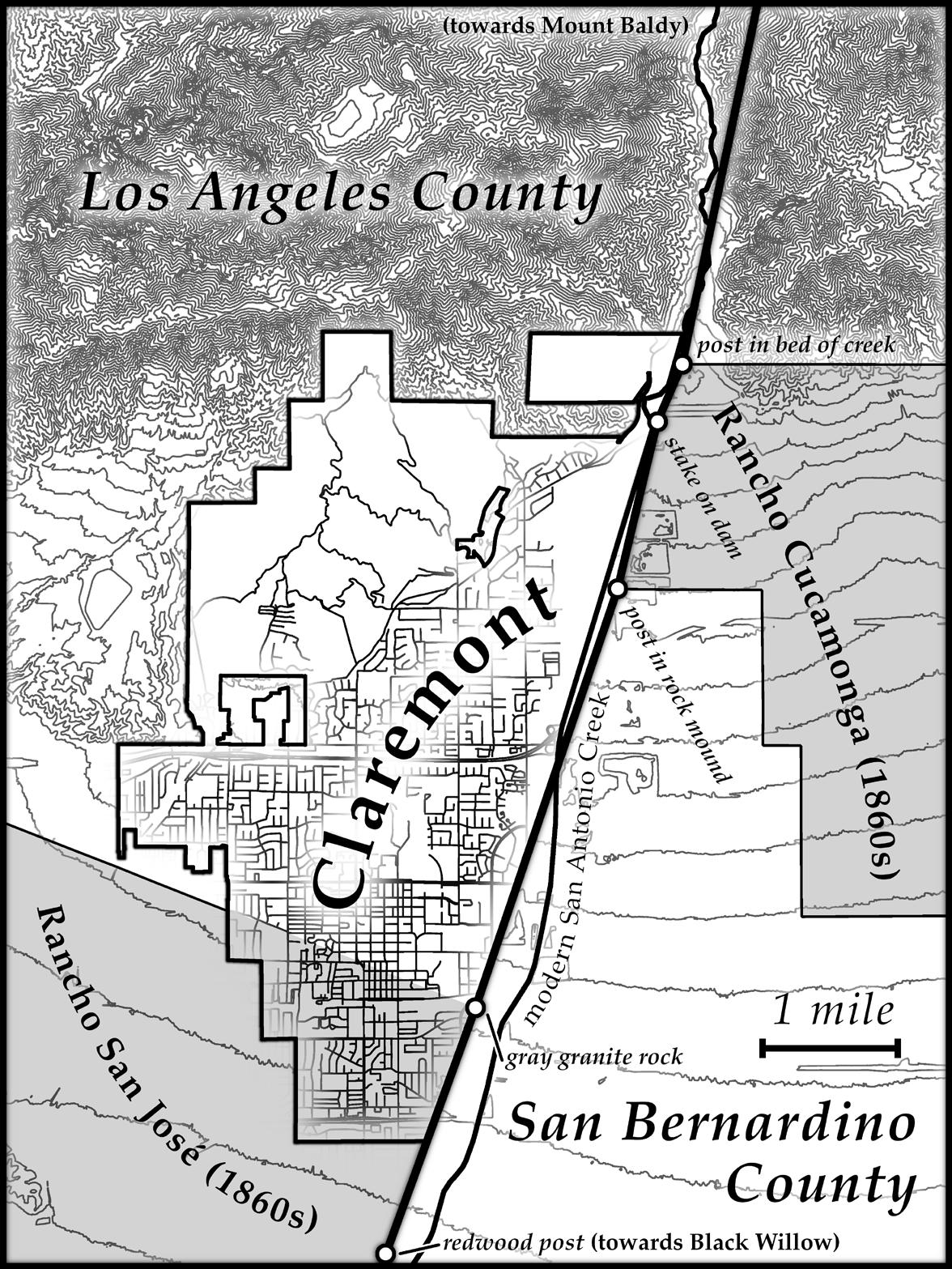
counties.
the area’s geography, they chose to possible — including the boundary of Rancho San José and of the nearby Rancho Cucamonga, which ended on the other side of the San Antonio Creek further north. The boundary would then continue through the hills to Mount Baldy, the highest point in the region, where it would turn directly north into the vast inland desert. Thirteen years later, United Thompson mapped Rancho San José, formally surveying this portion
To the east, the property line still began at a “grey granite rock … in the Arroyo San Antonio at a point varas [Spanish yards] in a direct line from the place designated by as a large rock in the center of water pool agreed upon as the place where
The boundary bent slightly for a sycamore tree and at a “Redwood Post in earth mound” — and it still does to this day, as it does for similar landmarks at the western edge of Rancho Cucamonga further north.
simply drew straight lines between all of these landmarks and Mount Baldy, either ignoring or misinter-
to follow natural geographical features between them. The line dividing the Pomona Valley has not changed misapplied an 1853 law based on lines Today, the county line is difficult to see but easy to feel. Almost immediately east of the Claremont Colleges, as one crosses Claremont Boulevard or Mills Avenue, the landscape dramatically shifts. Within half transforms from a two-lane, shady street to a wide road (renamed to Arrow Route) with unpaved sidewalks and container trucks parked along its shoulder, passing through as newly built commercial and residential developments. While similar changes happen at Claremont’s other boundaries as one grows further from the disproportionately wealthy, white and privileged neighborhoods surrounding the Claremont Colleges, nowhere else were these boundaries cemented long before the city even present such a barrier for collaboration between Claremont and its neighbors.

NICHOLAS STEINMAN
ALISON BARRERA
MAGGIE ZHANG • THE STUDENT LIFE
The CLS department lounge serves as a home for pláticas for Alison Barrera PO ’29
NICHOLAS STEINMAN • THE STUDENT LIFE
CITY LIMITS
My dad has been telling me for years that “they’re done.” I refused to believe him. But Tuesday morning, as I sifted through the news headlines and solemnly scrolled through clips of Steve Kerr’s post-game interviews, Ien State Warriors’ historic dynasty is over.
I feel spoiled to say that I grew up alongside a sports dynasty. The most dominant, ground-breaking team of players to ever represent my hometown in Oakland, and I got to experience it all from beginning to But having this team so closely entangled with my childhood, my daily routine and my relationships
I was six years old when I went to were probably less than 30 bucks, and my dad and I stood in the nosebleeds of Oracle Arena. No one sat down in Oracle, even for a 37-45 Warriors squad who barely scraped through t-shirts, screaming fans and a ruckus that kept the building trembling for two and a half hours straight. My dad picked me up on his shoulders and covered my ears, afraid I’d get too overwhelmed by the commotion. every second of it.
At the time, my dad worked in Palo Alto. He left for work at 8 in the morning and came back around 10 every night, long after my mom the lights. But when I heard the gaTV, I crept downstairs and nestled next to my dad to watch recordings of the game.
This nightly occurrence quickly became part of our routine. When I missed a game, my dad skipped it too, and we’d watch the recording together the next day. My limited time with him was Warriors time, and I loved it.
Growing out of the dynasty

Of course, it’s easy to love a 73-9, for a team where, odds are, if Steph end the night with a win. But for me, an eager, wide-eyed middle-schooler, I think I loved what the Warriors’ consistent and dependable success represented: childlike optimism and naivety, which blinded me from the reality that life is imperfect.
But of course, good things don’t last forever. I grew up, and the Warriors fell out of their prime. I entered high school and my evenings were overtaken with homework. My dad underwent health challenges and relocated to Minnesota for a few months to get treatment. The Warriors left Oakland in a money-grab move for downtown San Francisco and were overtaken by the corporate, tech-bro audience who let the yellow shirts rest on the backs of their seats … which they sat in. the Oakland-based powerhouse that I deeply cherished, I still had faith that they’d remain true to their roots and dominate the NBA for
years to come.
As we adapted to our newfound lives, my dad and I took up texting about the games, replacing our nightly watch parties with sporadic messages.
“They’re done,” my dad texted me after Curry broke his hand in team’s move across the Bay. They had traded Kevin Durant to the Brooklyn Nets earlier that summer after Klay Thompson tore his ACL
“Nope,” I texted back, determined to hold onto this era of unwavering success and my steady outlet for joy.
As they entered a dismal season a 15-50 record — I could physically feel the impact of each loss pulse through my body. I’d sob for hours the disappointment and failure burn in my stomach. I depended on a Warriors win. For me, their success luck, my wishes. Every loss forced me to confront the fact that I couldn’t
on my living room couch, praying for a bucket or following my strict, superstitious rules wasn’t enough. As a result, the last bit of my childhood innocence and hope began to dissipate. When COVID-19 hit, the storm of of hope — I had time, albeit forced, to spend in my house, once again watching the Warriors with my dad. And perhaps through a miracle, they weren’t “done” yet. In what felt like a replay of my youth, my dad and I watched every game of the 2021-22 season together. We witnessed Thompson come back from injury, brick threes, stumble still find himself in game six to and propel the team to the Western in four years. Their unexpected resurgence to take home the 2022 Championship evidence to defend my washed
the Warriors dynasty had shaped me and my childhood. Maybe my emotions surrounding the Warriors’ collapse are just a oneteam for happiness, inspiration and family connection. But for Warriors kids — or for anyone else who grew up supporting a dynasty — witnessing the success of a team we so desperately rooted for reveals something lingering beneath the surface. That was certainly true for me. Every Warriors victory was not just another tally in the win column; it encapsulated the excitement my dad and I shared in our living room, shouting at the screen and trading jerseys for simply hoping for something to go well could be enough. No game was ever over when the prime Warriors squad was on the court, and, therefore, no fantasy or dream of mine could be dispelled if I really wanted it. my dad. He works from home now, and I know he gets lonely. When I texasked about any plans he had for us, he replied: “Warriors!” Conveniently, their second play-in game, which
So, for the first time in years, I found myself engaging in my old nightly ritual: nestled closely next to my dad in our jerseys, screaming at the TV and praying for a Warriors run.
signal a Warriors loss, marking the end of their season and dynasty — glanced over at my dad. His wrinkled face and delicate expression eased my disappointment, grounding me in a mature reality. I didn’t feel the same dejection or misfortune that used to bring me to tears. They were done, and that was it.
The WNBA is in full bloom and roots run closer than you may think
Three weeks ago, I sat on my bed and cried into my palms, shutting my laptop in defeat.
The University of Connecticut’s women’s basketball team was crushed in the Final Four of the NCAA Women’s March Madness I shed tears over a sports game. I used to keep a healthy distance from sports fandom as a whole, but since women’s basketball has gained traction, players like Sarah Strong and Napheesa Collier have had me hooked.
Women’s basketball has experienced rapid growth in recent years, and fans like me have grown alongside it. The WNBA, in the last two years alone, announced several new teams, reached record viewership and established a collective bargaining agreement with the players’ union just last month that will yield historically high salaries. This progress is a product of persistent, for themselves in spaces that have historically excluded them. It is a disservice to the generations of female athletes — and grossly in-
in women’s basketball has withstood the test of time, with one right here in Claremont.
In 1903, women at Pomona College assembled Southern Calin the United States – three years before the men’s team formed.
The team, which would evenwomen’s basketball, navigated uncharted waters — most college women’s basketball teams didn’t form until a few decades later — and leveraged the few resources available to them. Since there weren’t any other college teams in the area to compete against, they played high schools, according to the Pomona College Timeline. Pomona would play 1909 against the University of stage for college-level women’s basketball in the region.
Many critiques of recent progress in women’s basketball are rooted in the idea that the last few years have existed in a vacsources and higher earnings are unprecedented. It’s easy to paint current WNBA players’ goals as unreasonable and abrupt if you discount the centuries-old power structures they have to combat and their predecessors who did so too. Resistance has always been there; it may just be that some people are only now recogheadlines.
Pomona’s original women’s basketball players challenged chauvinism in more ways than one; nothing about playing basketball matched women’s circumscribed roles. Participating in higher education as a woman was far less common at the time, and playing a sport while doing so was even more progressive. Women playing team sports in particular was inherently matriarchal because it excluded what women were conditioned to depend on: men. The court was the one place where they could unfasten the tight grip of patriarchy. Athletes like those on the Potions of femininity that deemed women physically and mentally unsuited for sports. Wearing something other than dresses conventional aesthetics. Additionally, doctors would often tell women and girls that intense exercise would threaten their reproductive health. As women were traditionally defined by their roles as mothers, they were imposed the narrative that competition would make them more masculine and undesirable. They played anyway.
Prior to the USC game before other colleges in the region were ready, Pomona women played against one another in an eight-team intracollegiate
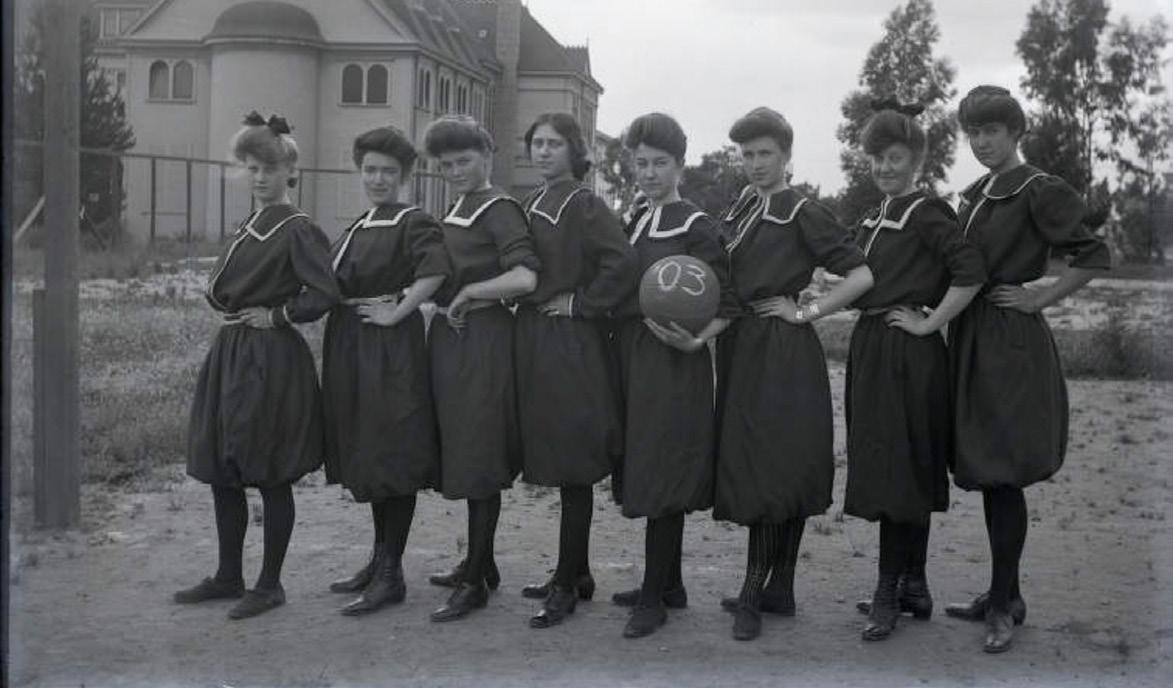
league, as the Pomona College Timeline highlights. Unless each had very few players, the eight teams must have required some serious support and solidarity from women across the colleges. The all-Pomona league might signal that women’s basketball wasn’t a rarity at the college, but instead a thriving movement. This isn’t to say that Pomona was uniquely full of radical feminists, but more so to underscore that countering hegemony sits at the core of women’s basketball. Disrupting the status quo is sewn into the fabric of the sport and cannot be teased out.
among many, Pomona’s original advancement in women’s sports.
Modern triumphs in the WNBA are nothing short of the legacy ofsistance in the face of grave power imbalances. To fully understand and appreciate recent strides players have made, we must make sense of the incremental steps that have allowed them to do so. improved facilities and league expansion are not merely contemporary but enduring; to frame them as anything but would erase over a century’s worth of headway that laid the foundation for the changes we see today.
Athenas end Saghens’ 20 year run as SCIAC water polo champs
ANNA REARDON
On Saturday, April 18, Claremont-Mudd-Scripps (CMS) women’s water polo dethroned PomoChampions. CMS triumphantly cemented its historic season after years this January, and holding strong for a 14-10 win in the SCIAC Championship game. lead until attacker Tatum Dwyer
CM ’28 tied up the score with 16
“It was a huge deal to haveonen SC ’28 said. “She is one of our captains. She was out in the last game.” Quickly after Clark’s goal, however, Mia Amberger PO ’26 tied up the score again at four apiece. This tie remained until the last minute of the second quarter, when Kroonen

scored back-to-back goals to give CMS a lead they kept through the rest of the game.
“This game means so much to our team; we’ve been the runner-up for the last four years in a row,” Kroonen said. “We haven’t won a SCIAC championship since 2006; the season, and we struggled a for our seniors, because they’ve lost this game for the entirety of their career.”
As the third quarter started, attacker Valerie Wraith CM ’27 came in hot with two consecutive goals less than a minute apart. Wraith was named the game’s MVP and contributed four goals to CMS.
“I feel good, but I also feel like Wraith said. “I wouldn’t say that I did anything special that other people didn’t do.”
two goals in the third quarter. Ayva Magna PO ’26, in the last second of a rebound, bringing the score close
at 9-7 CMS. Coming into the fourth quarter, the sprint to the ball. P-P also drew a 5-meter penalty shot for themselves but missed the opportunity. To combat the Hens’ momentum, Jordan LaCour CM ’28 and Isabel Del Villar CM ’26 secured two more goals for CMS at 11-7, building lead to secure the victory. From the bench, CMS’s players chanted “F-U-N” toward the pool to keep their teammates hyped.
“Today, we hit a stride where we want to hype ourselves up,” Kroonen said. “The thing we kept chanting during the game was “F-U-N,” … the team that wins has the most fun. I think that really helped carry us to the win today.”
CMS’s four-point lead with less than four minutes left in the game still proved to be at risk for P-P’s snagging two goals to bring the score to 11-9. However, LaCour and Wraith responded with two more, re-establishing their four-point lead. Katie Hugar PZ ’29 cut the score to 13-10,
tling the score at 14-10 CMS.
“My favorite moment was when goal,” Clark said. “She works really hard, and she’s improved so much even in her first year. I’m really proud of her. “ Postgame, from the pool deck, spectators could hear “You Make My Dreams” by Hall & Oates blasted from the locker room while CMS players sang along to a variety of celebratory music.
“I feel like [this game] is a culmination of years of our team working hard together and supporting each other,” Clark said.
Despite already meeting thrice with CMS leading the series, P-P and CMS will go head-to-head again one more time on Sunday, April 26, at the USA Water Polo Division III Championship, if P-P wins their game on the day before against Macalester College.
“I’m excited to see us have more fun, keep a light touch, and just enjoy playing water polo with each other,” Clark said. “For a lot of our seniors and me, it’s our last time playing next weekend. [I hope to] just make the most of it.”
CHARLOTTE HAHM
AVA FLEISHER
COURTESY: THE CLAREMONT COLLEGES
P J JAMES • THE STUDENT
football match is more than 90 minutes on the pitch. Through his courses, ranging from “The Olympics: History and Politics” to “Soccer and Society: Fascism, Communism and Democracy,” students learn to see sport not just as entertainment, but as a window into the forces shaping the world around them.
-ing scholars on football — or for philistine Americans, “soccer” — and a renowned author of many books, most famously “The Soccer.” He brings an expansive level of experience to his classes, both as a diehard fan of the Tottenham Hotspurs and as a storied academic.
fascination with football and sport in general began where it did for so many fans: at a stadium.
“When we got [to the stadium], I came out, and I looked at the gathering crowd, and I’m in the middle of a PhD in sociology, and the scales fell from my eyes,” agency, performative identities, invented traditions, hidden rules and norms, social occupation of space. This is unbelievable, and every sociological neuron in my brain exploded.”
That moment quickly turned having seen the lack of academic attention surrounding the game, set out to develop an ambitious “atlas of football” with diagrams, bar charts, maps of cities with fan bases and old stadiums in the late 1990s.
“I ended up selling the idea to a big publishing company, and two years later, we published the ‘World Football Yearbook,’” of my training. Once I published that, I quit academia, because at that point, I was now ready to take the next step, which was to write the global history.” that inspired “The Ball is Round” College, helping other students see the same hidden scene behind
the game.
“In my football classes, I always tell that story of the scales falling from my eyes, and I explain how we’re going to put on a whole bunch of different spectacles, anthropological, geographical, historic, and football’s going to look different said. “It’s about giving folks the tools conceptually to tackle this stuff, but also just to help the same scales fall from people’s eyes. I find that once the scales are gone, all the students bring knowledge and skills from many other disciplines they’re studying.”
For Pranav Singhvi CM ’27, this new way of looking at has brought out in his class, “Soccer and Society: Fascism, Communism and Democracy.”
“I’ve started to think football is a political movement,” Singhvi said. “[This class] is starting to make me think about what goes behind the scenes, how parties play out, how the money is involved and how different shareholders or parties benefit from the game.”
That transformation is cenlosophy. He is less concerned with the details of who won what and more focused on giving students tools to think critically. In his classroom, sport becomes a gateway into broader political and economic questions.
“What I hope my students come away with from my courses is not so much the details of who, what, when and why, but a different kind of vision on these 21st century, it’s just really more difficult not to see. The global sports industry is 2% of global I think about is how to think about the interconnections between the wider world.”
ing influence of money in the like the International Federation of Association Football (FIFA), as something that detracts from the experience, even though it has become part of modern football. Phillipe Krasnov PO ’29 felt this exact barrier when trying

to buy tickets for the upcoming World Cup.
“At the end of the day, I think it is really disheartening
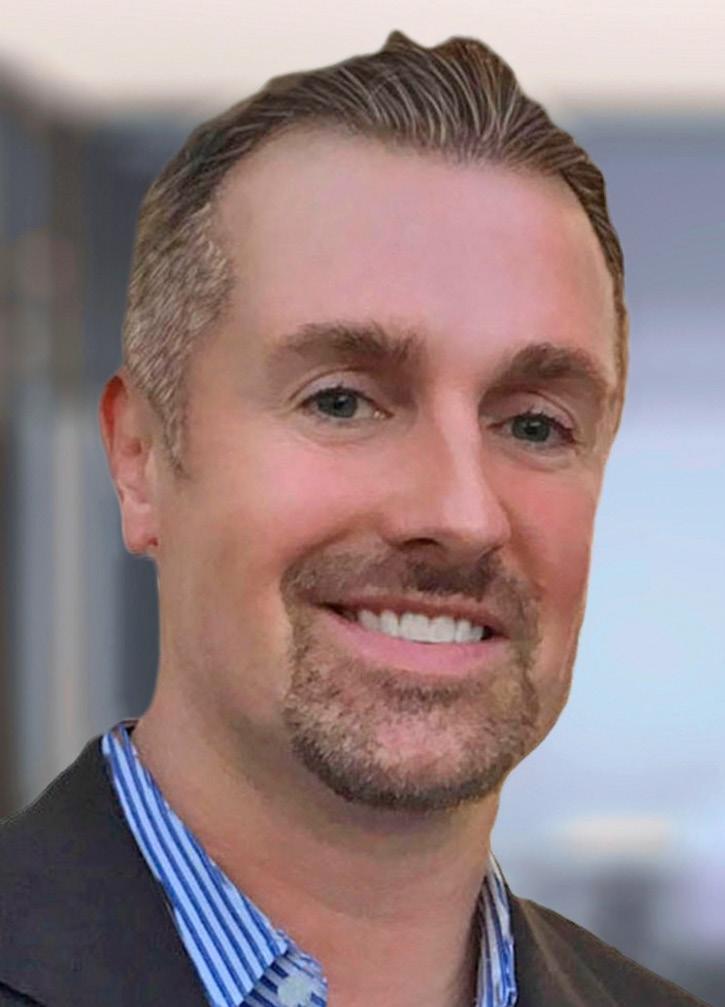

Pitzer Summer Session