Scripps anticipates housing shortage next spring due to record fall abroad applicants
Scripps College is anticipating housing shortages next year after receiving record numbers of study abroad applications for the fall semester, leaving many Scripps students concerned about spring semester dorm availability.
Scripps’ office of Study Abroad
a notice on Feb. 24 to students planning to go abroad in the fall, encouraging them to consider going abroad in the spring due to potential issues.
“A substantial imbalance between fall and spring numbers can lead to challenges on campus, including access to classes, housing placement, and more overcrowding in the dining hall during peak periods, among other issues,” the email said.
students to consider changing semesters, citing uncertainty about major declarations, limitations on international travel during visa processing and health and wellness concerns along with worries about housing placement.
not require students to change semesters, they strongly encouraged students to reconsider.
“Students have options — they can choose to be flexible about
5CEJ
their housing when they return, or switch to spring if they are not willing to consider the options that are available when they Barker said in an email to TSL.
Simone Pradhan SC ’28 is studying abroad next fall and said she is concerned about securing on-campus housing when she returns in the spring.
“All my friends are going in the fall, and I don’t want to not see any of them for a year,” she said. “That’s the biggest reason I am not changing [to the spring,ing everyone to change.”
turned from studying abroad this semester and echoed Pradhan’s comment that aligning study abroad plans with friends may contribute to the imbalance of students going abroad in one semester.
Gutmann also said that studying abroad in the spring and returning to campus for their senior year can feel like an abrupt transition for students, noting that this may contribute to the rising trend of fall applicants. She said this shift may contribute to a more stressful spring housing selection for
Field Day draws student support for renewable energy switch at the 5Cs
After garnering student support and attention at its far-reachingleges’ Business and Financial Af5 to lobby for a consortium-wide transition to renewable energy College’s student body voted that night to support the campaign.
The renewable energy “Claremont OFF Fossil Fuels” campaign,leges to stop purchasing electricity that relies heavily on fossil fuels, and instead enroll in the Clean
offers 100 percent renewable energy options.
dent body — more than 200 students — voted on the renewable energy transition in an online referendum on Thursday, with over 90 percent supporting the resolution that the Associatedna College Senate previously to increase student engagement, campaign advocates have also sought approval from 7C man-
See FIELD DAY on page 3 See HOUSING on page 2
Siena Giacoma PZ ’27 and Arianna Kaplan SC ’27 want you to know that you can’t resent women and expect good sex. From the manosphere to real-life dating dynamics, they’re unpacking the uncomfortrespect.
Potential housing shortage at Scripps worries students and staf
BIANCA MIRICA KAHANI MALHOTRA
MAGGIE ZHANG • THE STUDENT LIFE
5CEJ continues eforts to lobby for consortium-wide transition to renewable energy sources.
ILA BELL CARYS HARDY
HOUSING: Lopsided study abroad applications risk dorm shortage
Continued from page 1
students and a higher likelihood of being placed in off-campus housing at the Claremont Colle -
“I think housing is just inherently stressful, and there seems to be less and less housing on campus, aka more and more students who need housing, and obviously the amount of room isn’t increasing,” she said. “[This] is causing a lot of people to end up at CCA, which I think is stressful.”
Pradhan said she had initially planned to live in a suite her junior year; however, she now feels living on campus may be unlikely.
“It feels really ambitious right now to even hope for a suite,” she said. “I just really want to be on campus. I don’t want to be in CCA.”
Gutmann noted that many of her friends faced housing troubles upon return.
“It was definitely tricky. I think the Scrippsies who went abroad in the spring had a great time with housing selection and could essentially live wherever they wanted,” she said. “And then coming back, I know a lot of people either got put at CCA or have been forced to have random roommates.”
plans to study abroad next fall, said she is worried about housing, course registration and how busy campus spaces could be.
“If there are that many more people, it’s going to be so hard to get the classes that I need for my major,” she said. “But also just day to day, like in the dining halls, things [could] just feel very crowded.”
Pradhan, like other students, hopes for more communication about a potential housing shortage before leaving for her semester abroad.
“I don’t want to be in the dark regarding housing,” she said. “I kind of want to figure it out before I go abroad because I don’t want to have to be thinking about that and stressed about that while I’m in a different country.”
Cole said she thinks more also help offset the semester-to-se-
mester imbalance.
“I think if they were more transparent about the actual number of people that they have trying to go in the fall compared to spring, then that would be helpful in maybe convincing people,” Cole said.
not anticipate similar housing issues, Pomona College and Claretheir own housing challenges.
expects an influx of students
studying abroad in the fall, as has been the case for the past 20 years. She said this is largely due to athletes who must be on campus in the spring, those with major requirements that are only offered in the spring and stugraduation commencement.
“To manage this expected imbalance, we tend to keep empty rooms in [the] fall semester and notify students returning for spring that, while we make every housing, their preferred room or building may not be available,”
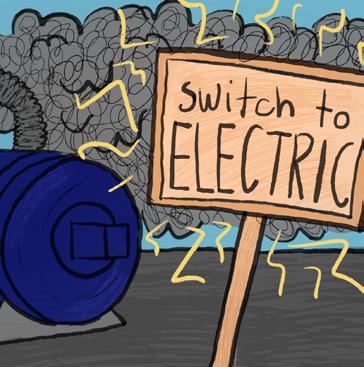
Boilers Begone! A sPC and Pitzer senate support stricter gas boiler regulations
ate passed a resolution to support phasing out large industrial gas boilers in Southern California, including at Pomona College andciated Students of Pomona College
If the regulatory agency South
tain regulations, as the resolutions would have to replace their gas boilers with electric options based on a phase-out plan.
Industrial gas boilers burn natural gas to heat water for a variety of purposes, including hot water and lab uses at colleges and universities. California has the highest number of these boilers of any state.
’28 and Clarissa Aquino PZ ’26 worked with other club members and Climate Action Campaign -
region’s emissions — to draft and present the resolutions to their respective schools’ student senates.
The resolutions specifically manages air quality of 17.5 million people across Los Angeles, Orange, San Bernardino and Riverside Counties — in amending two rules — 1146 and 1146.1 — to phase out large boilers and replace them with electric boilers and HVAC systems.
These rules regulate nitrogen oxide emissions from both small and industrial gas boilers, so amending them to implement phase-out plans would decrease emissions.
Industrial gas boilers are responsible for one third of California’s manufacturing emissions, including pollutants nitrogen oxide and methane. The 5Cs house four of these industrial gas boilers, with one at Pomona and de Castro broke down the importance of this issue into two main categories: public health
and climate change.
tion, 47 percent of California’s industrial boilers are located in
taged communities compared to a national average of 40 percent.
on people living in these areas.
“These boilers [are]... invisincome and communities of “And that’s because of nitrogen oxide emissions, which are often responsible for lung cancer, asthma, and respiratory illnesses that, over time, lead to the deaths of people.”
tive, shared a similar sentiment about the impact of air pollutants on her community.
“It matters to me because this is my home, and this is the air that we breathe,” she said.
“Growing up, I had a few respiratory issues. I had bronchitis now has really bad pre-asthma.”
be available, and the ability to select a preferred roommate for a double may not be available.
Similarly, Pomona may face housing issues impacted by the demolition of the Oldenborg where students studying foreign languages are housed.
Despite this, Director of Camsaid that once Pomona has conto better gauge the impact on housing.
“Study away does directly impact housing occupancy,
regardless of the institution,” Scacco said.
Scripps College guarantees housing for full-time students for up to eight semesters. Carmen Brown, assistant dean and director of campus life, said they do not anticipate a change to the housing guarantee at this time. Brown advises students to pay their housing next year.
“Students who wish to live in College housing should participate in the housing selection process and complete all required steps by the published deadlines,” she said.
amendments could improve some of the public health issues facing Southern California communities.
“In fact, if we were to pass projects we would save 3,000 lives over the course of several years, as well as $47 billion in Castro said.
Ongoing climate concerns from gas boiler emissions could be managed by the amendment of these rules.
“Together, the thousands of facilities that would be impacted by this rule [1146 and 1146.1] represent one third of California’s industrial emissions,” Soucan electrify those facilities and those boilers, even over time, it California’s emissions.”
Gas lobbyists have pushed hard to prevent these rules fromslaught of AI generated emails contributed to preventing stronger regulations against smaller gas powered heating units from being passed.
Opponents of stricter regulations cite the high upfront costs of electric options and potential pressure on the power grid in the region.
been working with other colleges and universities in addition to region including USC, UCLA
and California State Long Beach, hoping to combat the pro-gas agenda with student voices.itate similar support for the resolution from students at Scrippsported the idea of a similar reso-
“I don’t know why they wouldn’t [switch to electric] if it’s more economical,” Webster said. “But the thing is [with] the initial upfront cost, they have so much money, there’s no reason not to do it if it’s an investment in the long run.”
A Pomona College spokesperson said in an email to TSL that, at this time, the College does not plan to switch to a fully electric HVAC system due to “reliability and operational challenges”, and plans to monitor changes to “FCS [Facilities and Campus Services] and Sustainability [Ofvendor in response to evolving continue to examine and evaluate projects that align with these requirements while meeting the College’s operational needs,” the email read.
Drafting revisions to the will be taking place over the next year, with a vote on rules 1146 and 1146.1 likely to take place at the end of the year. respond to a request for comment.
QUINN BOLSTER
MEIYA ROLLINS • THE STUDENT LIFE Pomona and Pitzer student governments support stricter regulations on greenhouse gas emitting boilers.
JESSICA LEVIN • THE STUDENT LIFE
EVELYN HAO • THE STUDENT LIFE
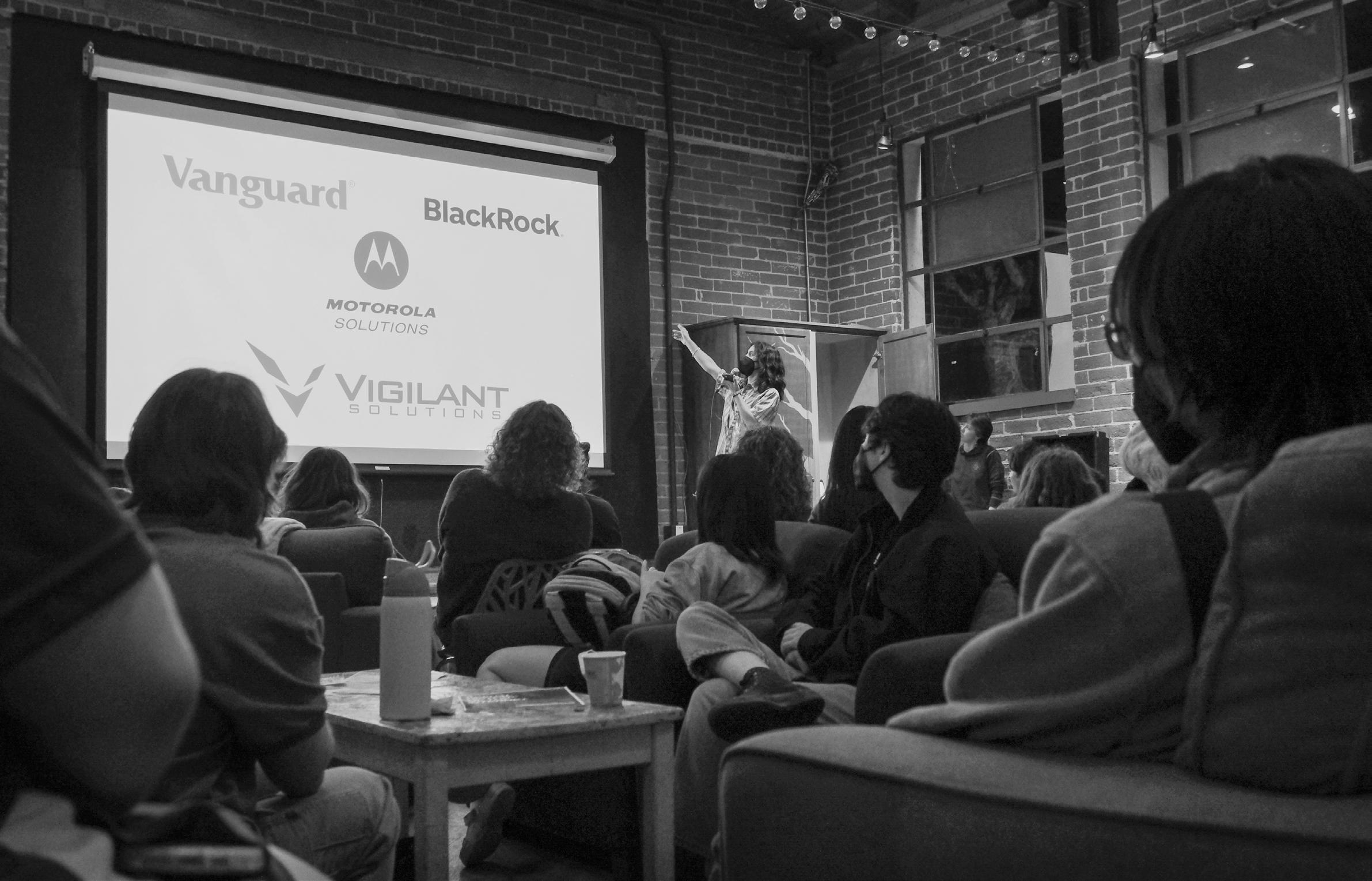
5C Critical Mass’s surveillance teach-in raises concerns about Claremont Police Department camera use
house on Feb. 27 to attend
“Watching the Watchers,” which discussed the use of Claremont’s License Plate Reading Cameras in the wake of increased surveillance and immigration crackdowns.
intersection of science and social justice on campus, hosted the event to inform students on the impact of local surveillance efforts.
erts PO ’27 and Claudio Castillo PO ’26, along with members
what type of license-plate
reading cameras the Claremont
how surveillance methods like these are used by law enforcement agencies across the country for immigration enforcement, and brought attention to the city’s lack of transparency around this practice to its cit -
an anti-surveillance campaign arose among a group of studentstion last summer, and came to life when they had their first meeting this year. She said she was surprised at the event’s large turnout. “I think part of the reason for why it was so popular is because something like surveillance is not just something that affects
in an interview with TSL. “I think maybe the fact that we’re like adaunting. But the fact is that no matter who you are, you are being surveilled.”
According to the presenters, Automatic License Plate Reader CPD employ, use cameras and software to automatically capture, plate information. They said that ALPRs have previously been used to surveil protestors, activists and people getting abortions, as well as for racial profiling. At the teach-in, Chow brought up an example of law enforcement using ALPRs to track a woman driving to get an abortion.
The speakers pointed out that CPD could use ALPRs, which were introduced to the city in
2011, during any criminal investigation or routine patrol and does not need reasonable suspicion or probable cause to do so, according to the CPD website. According to the Critical least 29 cameras as of 2019, with 10 along Foothill Boulevard.
“It’s not some far off idea, surveillance is happening in
“If you have a car, you’re being surveilled. If you borrow your friend’s car, you’re being surveilled. And not only that, but your data is being sent to these data centers, which are operated Vanguard and police departments who can track you.”
The city’s website states that the data ALPRs collects may be shared with other law enforcement agencies confidentially,
but would not be shared or open to the public for review.
Friday’s speakers also noted that Claremont does not have a live transparency portal — which allows residents to access information about what their city’s ALPRs are being used for — for its cameras.
Ontario all have transparency portals through their partnership with Flock Safety, a surveillance company that has frequently been associated with cooperating with prohibiting the use of ALPRs for immigration enforcement. According to the presenters, Claremont uses cameras from Vigilant Solutions, a corporation similar to Flock.
Talk attendee Sam Fischer PZ
explain the technology behind the cameras conducting surveillance in Claremont.
“I just really appreciated that because I think as students, it’s a great way to use our ability here on campus and our resources.” Fischer said.
In their presentation, Criticalments in Richmond, Cambridge movements at Cal Poly San Luis Obispo that have successfully launched a petition to remove Flock Cameras from campus. hopes to make a city-wide change.
“The goal is to get ALPR cameras out of Claremont via student opposition to Claremont City that would look like, in a more campaign-oriented way, is definitely having a petition to show, you know, students oppose what you are doing.” Fischer said he was excited to hear that other groups had been previously successful.
“I am very concerned, but I think I also am feeling really hopeful that there is work being done to counter this, and I’m really excited to hear more about Fischer said. “I really believe that they can do it.”
FI e LD DAY: 5CeJ rallies for clean energy transition
Continued from page 1
In December, they met with the present concrete transition ideas. was reviewed in a meeting withnancial leadership from across the colleges — and club leadership. The review represented a critical stage in the decision-making process, as switching to CPA is financially viable.
Though BFAC’s decision is still pending, if approved, the proposal will advance to a consortium-widesideration.
The renewable energy resolutions involve all of the Claremont Colleges except Keck Graduate Institute, which already purchased
electricity from the CPA alongside the rest of the city due to its location on the other side of the Claremont Village.
According to “Claremont OFF Fossil Fuels” campaign co-foundother colleges opted out of joining CPA when the rest of Claremont opted in three years ago, instead deciding to continue purchasing rates. “It’s really due to cost at the end of the day,” Slevin said. they didn’t want to make a financial investment in renewable energy despite their commitments to switching to clean energy and to carbon neutrality.”
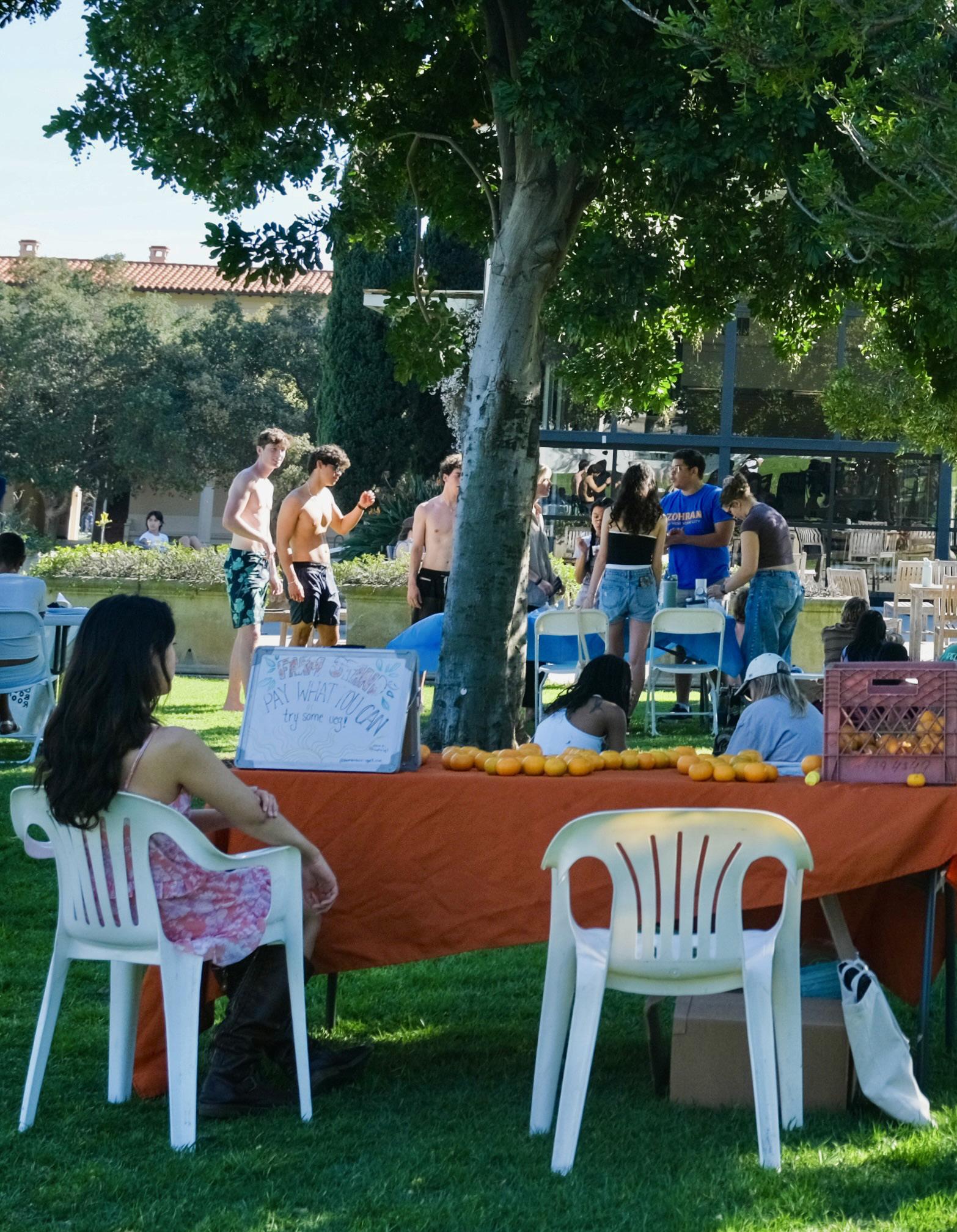
Pomona’s Walker Beach, Slevin said the main goal of the event
was to raise awareness ahead of Thursday night’s review.
“A lot of the decisions that our administrators make are based on how much students care and how much students are invested,” Slevin said. “We really want as many students as possible to be invested in this important decision.”
The event connected 15 environmental and political clubs the consortium including 5C Democrats, 5C Plant-based miscampaign and build community in an afternoon of music, lawn games and outreach.
Hope Dragseth SC ’28, thepaign’s working group, said the event showcased sustained stu-
dent interest, as their proposal advances through the institutional review process.
“We got over 1,000 signatures for people saying they wanted to switch over to CPA,” Dragseth said. “We wanted to make sure people didn’t forget that our campaign is still here.”
group with Slevin, said theirtween the Colleges’ commitment to environmental justice and the actual steps taken towards the mission.
state carbon neutrality goals on their websites, while Harvey impact on the environment” and reducing carbon emissions.
“Currently, we purchase elecfeel that that aligns with the values of the colleges,” Reed said. According to Reed, the proposed switch would not require changes to campus infrastructure but rather a shift in the allocation of institutional funds. the campaign as an issue of institutional accountability.
5C Democrats President David switch is about whether administrators are responsive to student concerns.
“If we are able to actually get these schools to listen to us and respond to the students who pay I think that’s invaluable,” Taylor said. “This is absolutely worth
Citywide license plate reading cameras prompt concern at 5Cs.
MACY PUCKETT
MAGGIE ZHANG • THE STUDENT LIFE
scripps biannual olive harvest postponed due to lack of rainfall
Despite its biyearly schedule, the Scripps College olive harvest tradition was postponed last fall due to less rainfall, according to Scripps’ Landscape Operations
The olive harvest tradition began in 2012 after Core II students proposed the idea of harvesting the olive trees lining the school’s Humanities Building rather than spraying them with chemicals to prevent fruit production.
On the day of each harvest, 5C students, faculty and Claremont community members gather together on campus to pick and sort olives that will later be turned into
A
Scripps’ award-winning olive oil. The olives are then driven to a local mill and processed into oil within 24 hours of being picked.
Prior to the harvest, Scripps hosts a design contest that welcomes Scripps student and alumni art submissions to become the Previous harvests took place in 2012, 2013, 2015 and 2016, but paused in 2014 and for another two years in 2017 and 2018 due to drought and the previous or-
In an email to TSL, Salas said that she revived the Olive harvest tradition in 2019 and also hosted it in 2021 and 2023. However, dry weather continued to pose a
challenge last fall, disrupting the biyearly schedule.
harvest for fall of 2025, however, our trees didn’t produce enough olives due to [a] lack of winter rain,” Salas wrote.
whether or not there will be an olive harvest by observing the trees throughout the year and anticipating their fruit yield.
“I begin observing flower development in early spring and monitor the trees throughout the summer. If there is a healthy amount of fruit development, we begin planning for a harvest,” she wrote. Sophia Heffner SC ’26 at -
sCMC inaugural meal packing event yields 16,000 meals for charity
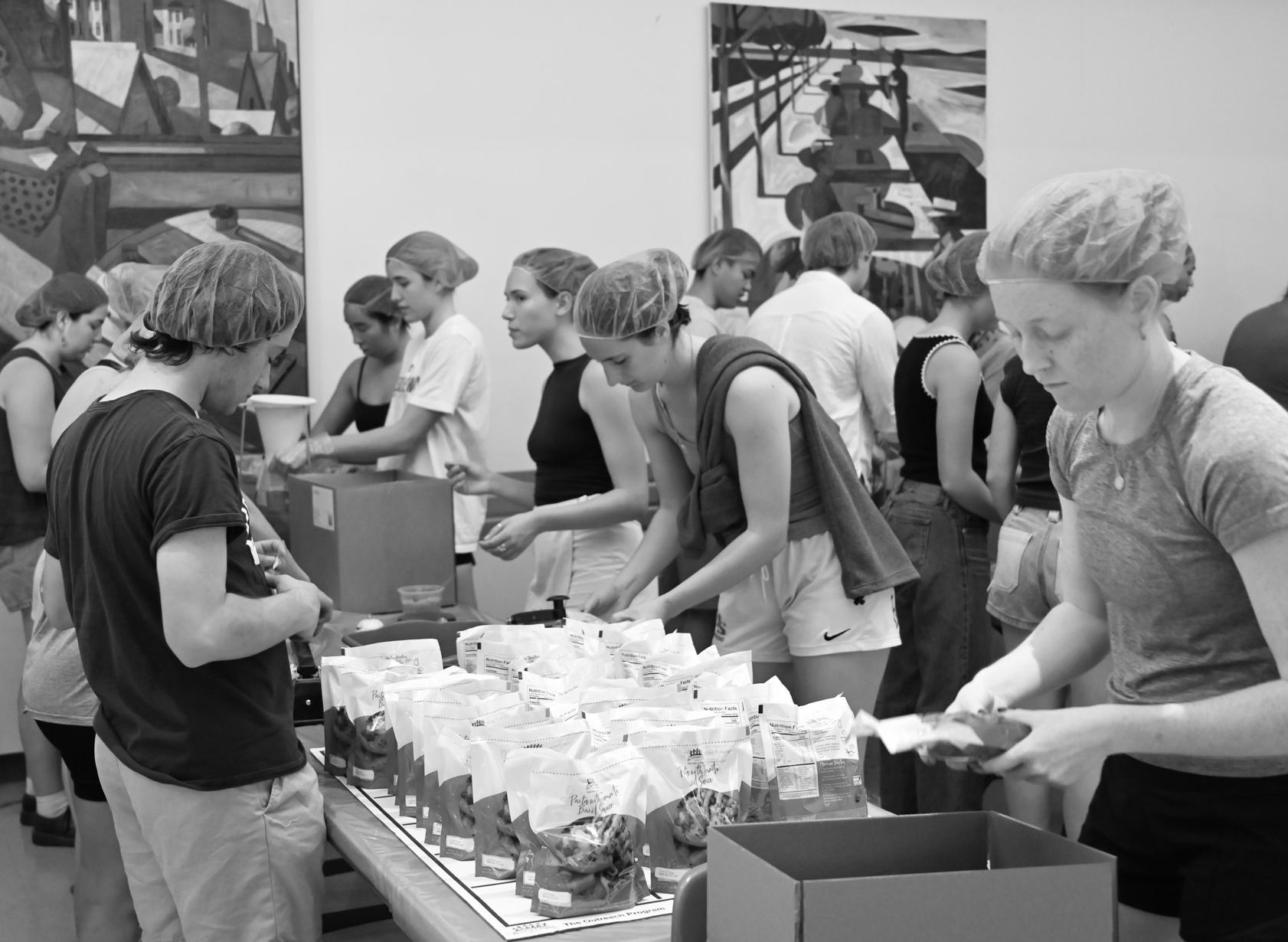
Last Friday, 85 students and faculty members volunteered to package more than 16,000 meals for the Pomona Valley Food Bank in an event hosted by Associatednity service committee chair, academic affairs committee chair, of providing 20,000 meals to the Pomona Valley Food Bank. community and for volunteers to enjoy themselves while packing nutritious meals for those who face food insecurity.
“I want everyone to have a event. “We have over 100 people signed up. We need lots of people for this to happen. If people come, that’s the main thing.” out to the Outreach Program of California to host their first Hodge explained that the event needed careful planning for it to succeed.
“We do lots of events to encourage student [and] faculty bonding outside of the classroom
and continue learning conversations in our community,” Hodge said. “This year, I thought about doing something bigger.” event expecting to prepare thousands of meals in four hours.
“We received the shipment yesterday … it’s definitely a lotthing runs smoothly … it should be feasible.”
Over two shifts, volunteers prepared hundreds of meal packages against a background of bright pop music and lively These packages translated into thousands of nutritious meals distributed to support Pomona residents who experience food insecurity.
in the meal packaging event and said events like these help local communities around the 5Cs.
“I would love to see more events like this,” Tevis said. “I think it’s a great reminder of how fortunate we are to attend a school with so many resources, and it’s especially meaningful to see students use those resources to support communities beyond our campus.”
teered to package food and expressed she was happy to meet other 5C students and have fun helping the community.
“While we were working, people were chatting and having fun, which made the whole process feel very communal,” Turk said. “I had a great time helping out for a good cause.”
volunteered and expressed a sense of pride regarding the event.
“It was great to see so many students, faculty and staff working together on this,” Ke
tels said. “The energy was high, and it was just so fun to have this chance to contribute to an important cause as a team.”
their goal, Hodge considered the event a success and looks forward to hosting it again. meal packing on campus and to potentially make the event an annual tradition.
“This was honestly a great test run for such a large event that has never happened before,” he said. “Perhaps if [we] expanded to other campuses … the event could even be larger than this year.”
Salas also values the community-building aspect of this tradition.
“While our award-winning olive oil is the end product, the best part of this tradition is the harvest day when everyone comes together to gather olives, chat with friends, and make new ties,” she wrote.
According to Salas, their big -
“The grounds department facilitates everything and is very active during the event, but we need as many hands as possible,” she wrote. “High participation equals more olives, and that’s what we need to produce a high number
Scripps Associated Students Restudents would be more likely to promoted it more directly and engaged with students more.
“In the future, if they have promote it more, they could have a student be more involved in the process,” she said.
tended the harvest in 2023. She checked in, received gloves and saw olive branches laid out everywhere. The facilities team had set them out on tarps in preparation for the event. She said there were about 10 harvesting stations around campus. After pulling they sorted the olives into piles them into a truck.
Her harvesting group included a family of community members from Rancho Cucamonga whose kids have grown up participating in this olive harvest.
“I always like having a chance to talk to community members at
tasted the olive oil, but both expressed interest in a taste-testing event. They also both shared an interest in connecting the event with other edible plants around Scripps campus, like kumquats and lemons.
“I think just in general there isn’t too much education about the and the fact that it is technically an edible campus, and that’s a rare Salas hopes the conditions will be right for the olive harvest tradition to continue in the fall of 2026.
“Given the generous amount of rain we’ve had this winter, I am cautiously optimistic we will have enough fruit for [the] fall harvest in 2026. That will be very timely and special as it will be the college’s centennial celebration,” she said.
NOAH BREWSTER
Students packed thousands of meals for Pomona Valley Food Bank over the weekend.
ZHONGYI CHEN • THE STUDENT LIFE
FLORIA AUERBA CH • T H E STUDENT LIFE
CHLOE KIPARSKY
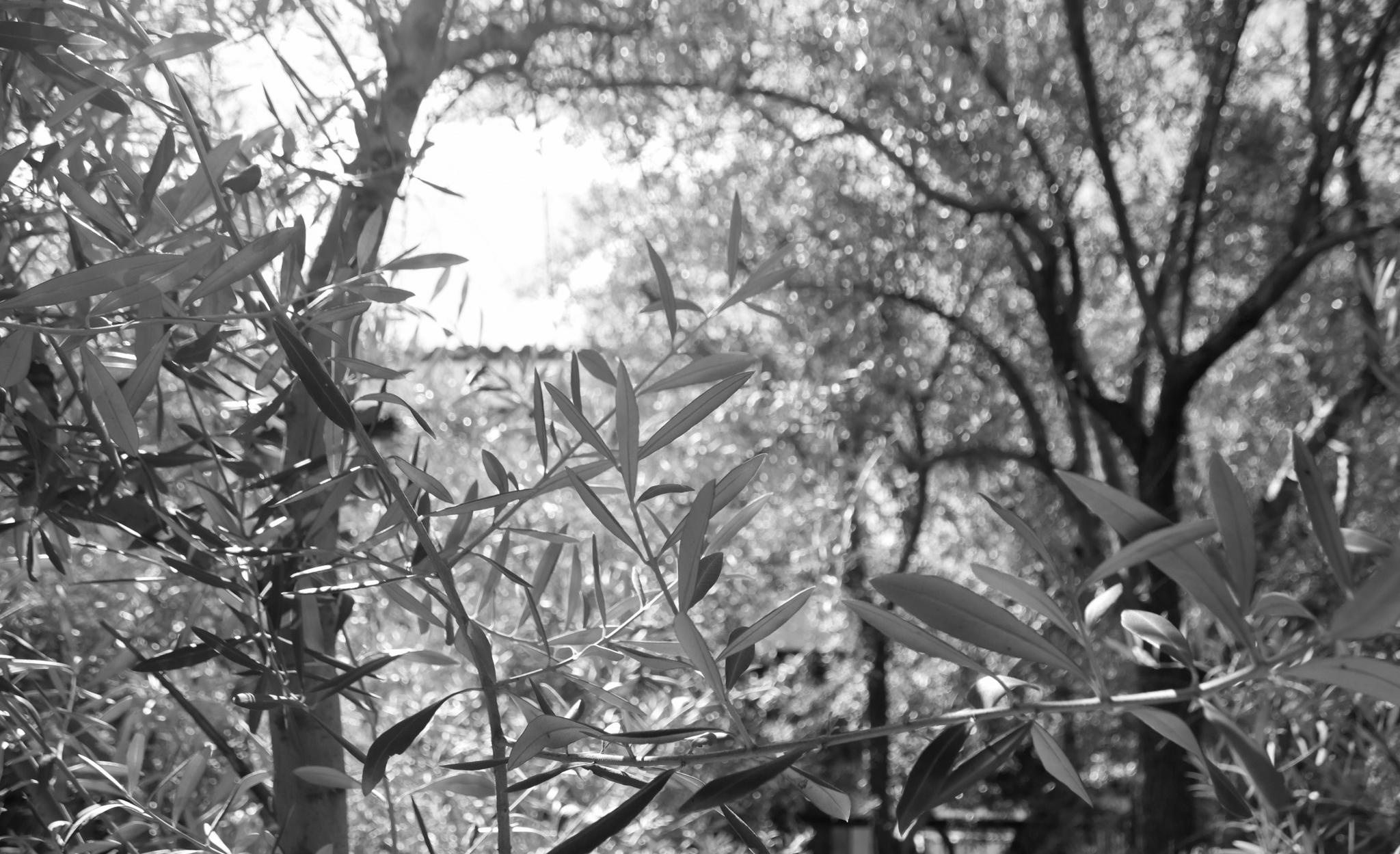
The Scripps College Olive Harvest was postponed last fall due to a lack of rainfall.
ANJALI RAO • THE STUDENT LIFE
Hindu holiday turned darty: Spreading color
KIRA HELLER
t-shirt looked like it had been
ly-celebrated holiday, many recent years, this celebration hasattend regardless of their lack envisioned the afternoon as a
who celebrate the holiday and it’s
fectly recreate every traditional with the CMC administration to
“Since we knew it was going to be a darty, we had to get evCMC in terms of having alcohol,
draw of this event was the Bolly-
that marked this celebration as what the act of color throwing
ever, for the latter, the event chance to share this day with
cases one of the many strengths of
like it’s hard to be there and have
Benton Museum’s new ‘Interference Patterns’ exhibit reimagines photography
Located at the intersection that the Claremont village, the Benton
gathered together to take in John works, and the crowd observed
nized by Benton director Victoria
and works that reflect the history
hibition was organized by Solveig
incredible, like none of the other
ically his ability to combine how different intersections of
clarinet — acting in tandem with
Olivia Lafferty took note of viewers to view them from dif -
his body of work is a desire to
teenage years and a more recent
elements of flesh, and it’s a lot more distorted than his other
sitions to make a new arrangeinterference that folded into the the chaoticness and the collage
he knew what he was going for, and he inserted different ideas in highlights the connection beattendees’ and Benton staff reac -
Last Friday afternoon, Claremont Mckenna’s Green Beach -
IRKAA MEHROTRA
SYLVIE SIMMONS
JOSE SAQUIC-CASTRO • THE STUDENT LIFE
Collages by John Sparagana adorn the walls of the Benton Museum of Art’s “Interference Patterns” exhibit, which opened Feb. 28.
MAGGIE ZHANG • THE STUDENT LIFE
Friends smile as they playfully spray each other with colored powder at APASA’s Holi event at Green Beach, Feb. 27.
Dry Cleaning share their ‘Secret Love’ for the uncertainty of today
ANDREA MILOSHEVSKA
chords in indie rock have broken the
Dry Cleaning’s new record is not
is their commitment to originality
ters within the narratives in nearly with emotional intimacy in “Thedesigner convincing the listener of-
One noticeable thread tying the-
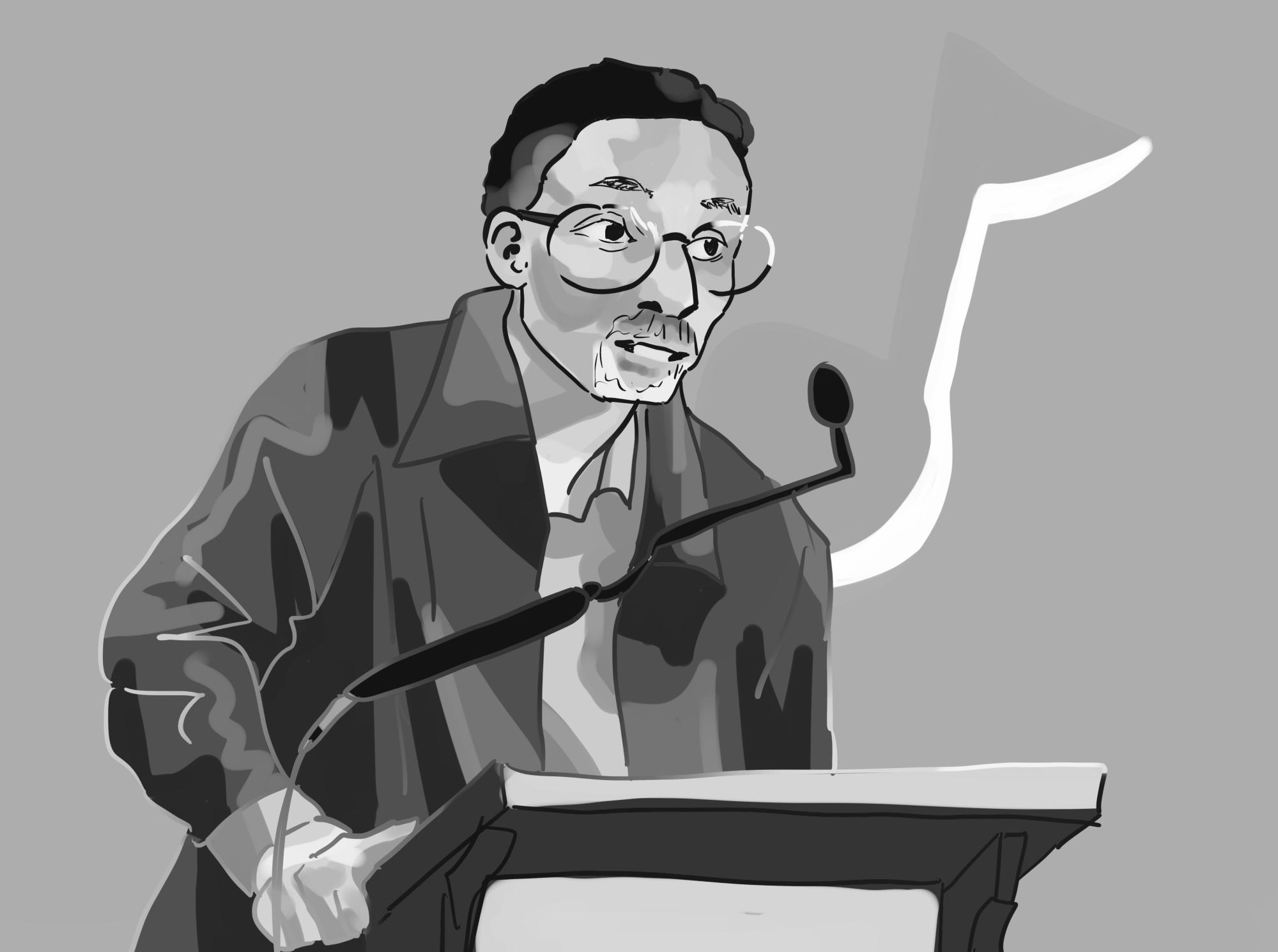
robin D.G. Kelley discusses the rhetoric of music in incarceration and abolition
tars and eerie melodies, while others -
meaning behind certain lines for any-
to be a woman if she hates cleaning for more time, balanced with the life are magnified to a level ofmelodies, and Shaw’s rare melodic
Beneath all the lamentations for
Andrea Miloshevska PO ’28 is from North Macedonia. She really likes the British Isles’ post-punk scenes.
teacher — has been fighting to
the talk’s content and engaging at-
that these more familiar songs are
genealogy of abolition in the history
system that is so backwards and
to and the artists that we choose to
that we call abolitionist, like how
Finding yourself in means to an end
ROLLINS animals that strangely reminded
standards of traditional ceramic art,
had been my voice for so long that
homage to her grandmother, her art animals in second-hand stores,
a way to navigate that challenge
Before coming to college, some-
also being incredibly shy felt
instantly realize that my love for art
combined the animals was comcome easily to me, and that having
MEIYA ROLLINS • THE STUDENT LIFE
CORINA YI
SHIXIAO YU • THE STUDENT LIFE
MEIYA
MEIYA ROLLINS • THE STUDENT LIFE
THE DAILY PALETTE
him to move to Thailand, where he
and teaching meditation for over
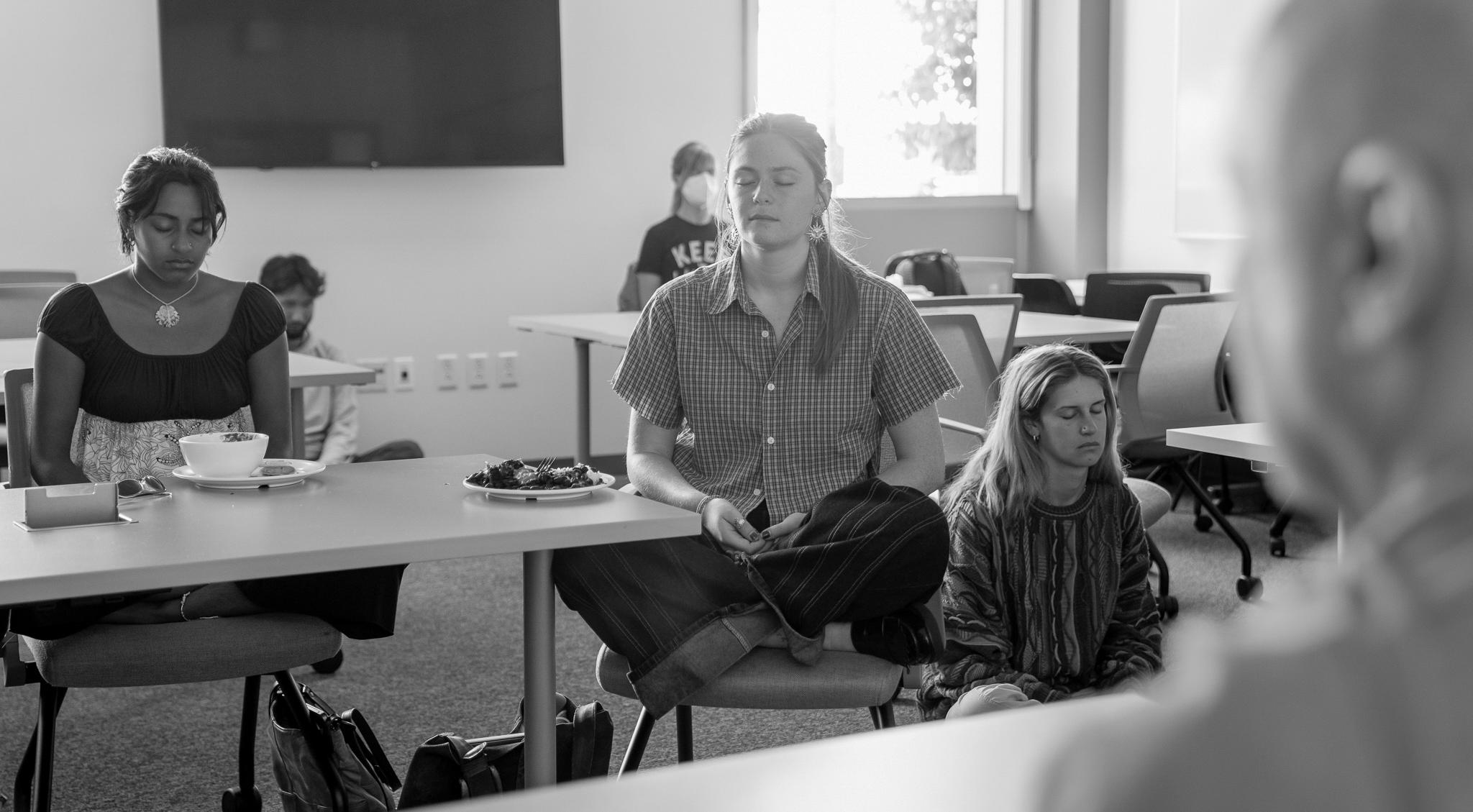
gether with the lights dimmed, theyof its own, transforming a traditionalScience Center for the weekly Mind the Dhammakaya tradition — led a
Thanissaro, originally from the
INSCRIPTIONS
told me not to look into the void don’t know why he bothered to tell
ing services at the monastery that Thanissaro belongs to, the Dham-
sations with Thanissaro was some-
rich that he wanted to share it with
described how, even as a lifelong
there are three levels of knowing —
within the second realm, the level of
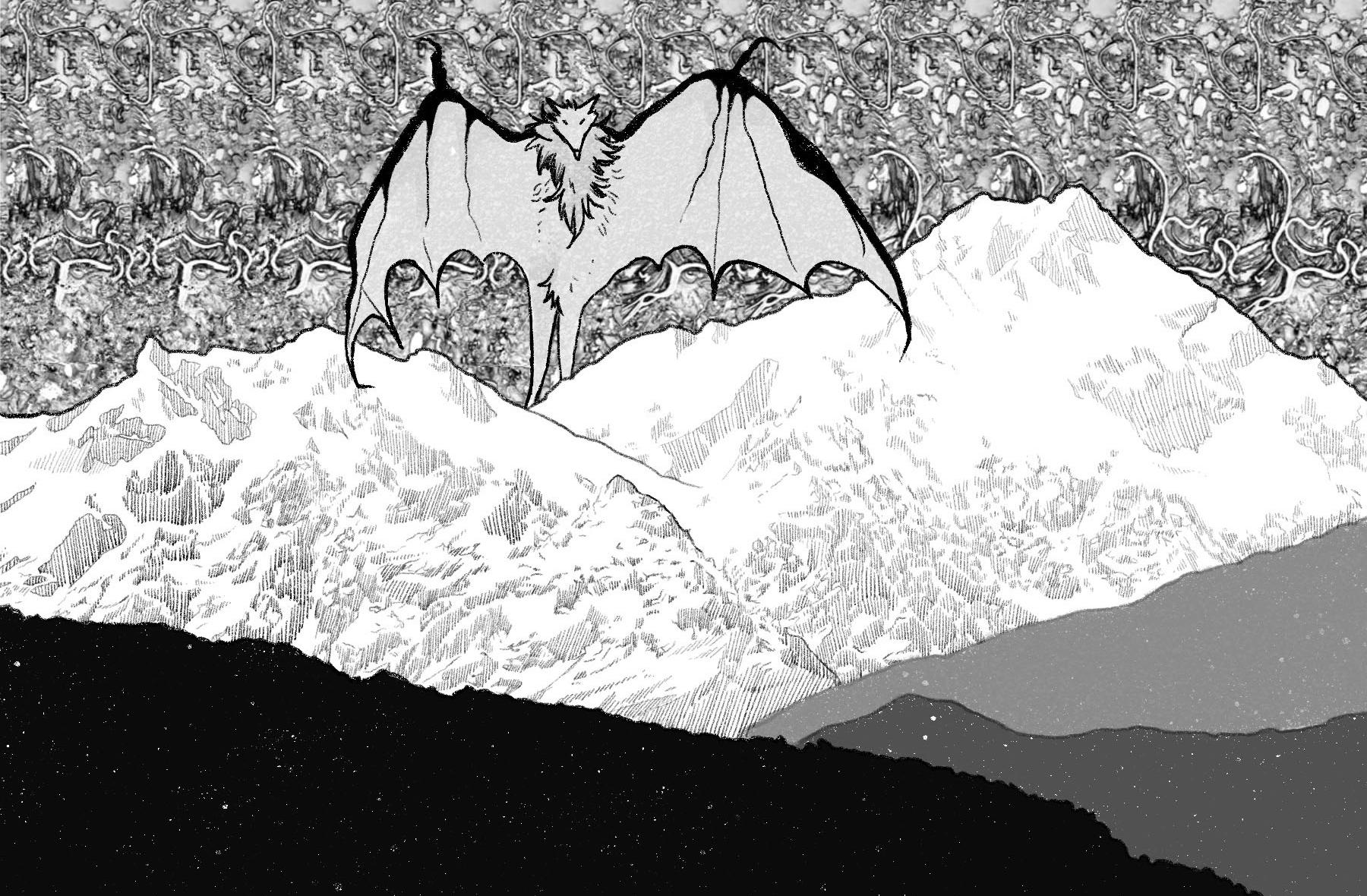
“The wind whirls, desolate ofgenating night — Giant bat shadows and rambles incoherently for most of of what’s hidden in the static after he will be forever, and all the worrisome
meaning emerges from the indeci-
there is often an even balance of Over the two years, Thanissaro
‘Desolation Angels’ and maya
take things in and internalize them
noes that ricochet and these like weird
breathing became labored, his face
trail folded into another dimension, darkness had bent my brain, and the real trial was making it back
them harder, they dissolved back from the lake with all the boats and lichen, snow and grime clinging across the valley became linehand-carved, rather than cleaved into a tangle of grooves and facets writing on rocks, which took longer of maya, where fanged beasts
was identical to a wooden icon of Christ that my mom had gotten a woman, and the ridges of the
The same goes for the golden glowrial golden ash dancing beneath his
reader to strain harder against his
Liam Riley PO ’26 is from East Tennessee. He likes giving book recommendations, the outdoors and shenanigans.
CLAIRE WELCH
AUDREY GREEN
LIAM RILEY
FLORIA AUERBACH • THE STUDENT LIFE
COURTESY: DHAMMAKAYA MEDITATION CENTER
Students close their eyes and meditate as they listen to Venerable Dr. Nicholas Thanissaro, a Dhammayaka Buddhist monk, give a talk in the Nucleus Science Center.
Men who date but hate women
It’s Trump’s online circus and we’re all just living in it
OLIVIA BRINKMAN twisted thought that crosses his mind on government social media platforms — from a racist video featuring Barack and Michelle Obama’s faces photoshopped on the bodies of apes to AI-generated images of him dressed in a black toga holding red lightsabers in
Everyone take out your phones: The White House just dropped an AI-generated Time Magazine cover depicting Trump as the king of our nation, a video titled “ASMR: Illegal Alien Deportation Flight” and another transphobic meme — just for good measure. I wish I were exaggerating, but this is actual content platforms of the White House, which are supposed to represent the United States and its people.
The digital footprint that an individual, organization or even a country maintains is more sigmedia accounts of our public offices have unofficially become our nation’s main tool for government-constituent communication, and each childish post cements a stereotype of American stupidity and toxic patriotism into the global psyche.
As a result of all of Trump’s actions, the United States is no longer perceived with the legitimacy it once was. We can no longer take for granted our position at the top of the world order. As Americans, we are watching our window of tolerance for the actions of our government expand in real time, normalizing nonsensical and hateful behavior. We must not let Trump’s social media rampages distract us from the real harm his actions are causing abroad. If AI-generated images of Trump dressed as the pope, cartoon deportation memes and doctored photos of Nekima Levy Armstrong are representative of the American people, I must not be an American. President Trump posts every
order to provoke liberals, emphasizing Trump’s unchecked power. His behavior is doing a disservice to America’s public image and to the American people. Such tomfoolery prevails under our GOP-dominated government, despite the fact that they have been hardlined image-sticklers in the past. When President Barack Obama appeared in a tan suit during a press conference in 2014, “Tan Suitgate” was born, resulting in outrage and retaliation from the Republican Party.
A president wearing a tan suit?
How atrocious! They would never tolerate such nonsense!
Trump’s AI-generated propaganda posts to be completely acceptable. While the Republican Party passionately defended our national image in the past, when Trump monopolizes our national social media pages with hateful and unprofessional content, they stand by — even espousing his rhetoric — as he drags our nation further and further into the depths of international disdain. If Republicans have used clothing as a measure of leadership competence, why are Trump’s actions not garnering the same outrage?
President Trump’s recent actions are just as careless as his
his presidency, Trump has taken control of Venezuelan oil exports, resulting in skyrocketing infant mortality rates in Cuba. He has threatened to dismantle our trade systems with Canada, imposedtionships with our NATO allies. Beyond economic policy, he has initiated an already bloody war with Iran, killing 168 people in a strike on a girls’ school.
As a direct result of our president’s erratic behavior, the US is losing the respect and trust of other nations at an alarming rate. President Ursula von der Leyen of the European Commission described Trump’s tariffs as a “major blow to the world economy,” Italian Prime Minister Giorgia Meloni referred to Trump’s refusal to cooperate with other countries of NATO as unacceptable and Bolivian president Luis Acre criticized the Trump administration for its “obsessive zeal” which would certainly lead to excessive “pain and death” internationally. Approval rates for President Trump are abysmal internationally. A survey conducted by Pew Research Center revealed that 19 out of 24 major countries confidence in Donald Trump’s leadership or his direction for the US.
Trump pushes AI slop and incendiary rants domestically to distract us from the havoc he wreaks in the name of our nation. Our reactive outrage is a distraction — instead of understanding the impact of his actions abroad, we spend our time feeding into the resulting media circus. We remain stagnant, unaware of the
real consequences of his carelessness.
It is dreadful to think our nation’s image has been reduced to Trump’s internet rampages, but even more dreadful to know the scale of the global impact of his political actions. We cannot allow ourselves to be distracted by these sensationalized spectacles. Instead, we have a responsibility to recognize the pain and destruction that he wants us to overlook.
The only way to regain touch with reality is to remove ourselves from the constant barrage of misinformation and distraction.
Seeking outside media can help us understand the extent of his damage. Associated Press and Reuters are two international news platforms that every student should begin to explore.
Nexus Uni and PressReader also international media content ac-
cessible to students like ourselves. These platforms deliver timely and factual content from writers around the world, helping us maintain well-rounded perspectives in a time when our media cycle remains dominated by his antics.
As Trump’s craziness dominates our internal news cycles, we’ve become caught up thinking about how Trump is ruining our country, but we don’t stop to think of the the world. We may not be able to take the controller out of his hands, but we can avoid the isolationism he is dragging us into.
Olivia Brinkman PO ‘29 was inspired
What’s orange, red and brought to you by SoCal gas companies? A Claremont sunset, of course! While I appreciate a vibrant sunset as much as the next person, they serve as a striking reminder of our region’s poor air quality. Los Angeles is infamous for its photochemical the only American city on AQI’s list of the most polluted cities. Behind the manicured lawns and lush trees, the 5Cs have a dirty industrial gas boilers that release harmful gases into the atmosphere, worsening our air quality. While we do not have the power to remove at our institutions and beyond by applying pressure on our regulators. To do so, we are calling on you to help us pass resolutions at the 5Cs that put pressure on our local government agencies to pass zero-emissions policies. The air we breathe in Claremont is under the jurisdiction of the South Coast Air Quality Management District (SCAQMD), which oversees air quality regulations for over 17 million residents of Los Angeles, San Bernardino, Orange and Riverside counties. Currently, the SCAQMD is updating two rules that would regulate industrial gas boilers and phase them out in favor of electric boilers and heat pumps. Gas boilers, which heat large volumes of water, burn natural gas to power much of California’s manufacturing industry. In the United
LEAH GLASSER States, gas boilers are responsible for six percent of industrial nitrogen oxide (NOx) emissions dioxide emissions, contributing to global climate change and local air pollution. Poor air quality is associated with negative health impacts such as asthma, heart disease, dementia and premature death. These boilers also pose an issue of environmental injustice as nearly half of them are located in federally recognized disadvantaged communities, disproportionately affecting low-income people of color.
In June of 2025, the SCAQMD board voted 7-5 against regulations that would have increased the price of residential gas boilers.sure on locals as their rationale, while supporters stated that these rules are necessary to redress poor air quality in the region. Preventing economic burden on residents is an important consideration, but it should not be viewed separately from or above public health costs. The board’s vote maintained the fossil fuel-driven status quo when they had the opportunity to push for renewable energy alternatives. However, in 2024, SCAQMD updated Rule 1146.2, changing NOx emissions standards for small industrial boilers. The set zero-emissions standards by the SCAQMD, and will reduce NOx emissions and their public health impacts. Now, the board has the opportunity to follow
suit and pass more progressive regulations by amending rules 1146 and 1146.1, passing similar rules for large industrial boilers.
The 5Cs are a part of the problem, as we house one industrial boiler at Harvey Mudd and three at Pomona. If the more progressive versions of 1146 and 1146.1 these boilers will be replaced at the end of their natural lifespans with already existing zero-emissions alternatives like heat pumps or electric boilers.
Student commitment against fossil fuel usage can help to counteract gas companies’ strong lobbying against the rules. We must advocate for clean air for ourselves, the members of our neighboring communities and future 7C students. One way we can do this is by passing resolutions at the Colleges. Resolutions in favor of the proposed rules would show the SCAQMD board that the bodies that they govern are in support of zero-emissions regulations, which could create the necessary pressure for these rules to pass. Our colleges opted out of 100 percent renewable energy back in 2022, but as students, we have the opportunity to align ourselves a just transition away from fossil fuels. Under the jurisdiction of the SCAQMD, the Colleges will have to abide by the standards set forth in the updated versions of rules 1146 and 1146.1. Now is our chance to make our voices
heard by advancing local air quality regulations and ensuring a future with cleaner air.
The 5C Environmental Justice (5CEJ) outreach working group has mobilized to pass resolutions at the 5Cs in support of these decarbonization rules. This Senate unanimously voted to pass one such resolution, following the passage of a similar resolution by Associated Students of Pomona College (ASPC) on Feb. 20. We are now aiming to pass resolutions at CMC, Mudd and Scripps and are seeking the support of any students at these schools who have experience navigating student government or passing resolutions. While the amendment to rule 1146.2 was a step in the right
Letter to the Editor
direction towards a future with cleaner air, the outcome of the vote in June of last year shows we have a long way to go in prioritizing public and environmental health and shifting away from our reliance on fossil fuels.
If you are interested in helping pass resolutions supporting clean involved with the campaign more generally, reach out to 5cenvirojustice@gmail.com. To stay updated with this campaign and future engagement with local environmental justice issues, follow @sdclimateaction and @5cenvirojustice on Instagram.
Conservative students face harassment; The Student Life makes it worse.
Conservative students at the 5Cs are facing intimidation and threats, and The Student Life has repeatedly chosen to downplay, ignore, or distort that reality. On September 11th, 2025, at a memorial honoring the murdered Charlie Kirk, a student interrupted the service to antagonize the individuals who were mourning. This was not a debate but harassment at a vigil. The disruption escalated to the point that the student had to be escorted away. Security had been arranged in advance because organizers anticipated aggression. In the aftermath, anonymous Fizz posts circulated online stating that conservative students should include “First and last names of the people at the Charlie Kirk vigil?”, “Does anyone know if they left the poster there so I can vandalize it?”, and “GET A BETTER PIC I WANT THEIR FACES”. Several images of participants at the vigil were spread with accompanying comments like “Clearest face” and “Tell me where
These were not political critiques, they were explicit calls for violence
This is not new in any capacity. After
ed, “We jugging the republicans after club fair”. Jugging refers to a criminal act wherein perpetrators observe individuals withdrawing money from their bank and subsequently follow them to steal the cash.
Following a Turning Point USA tabling event on September 25th, 2025, students in TPUSA were threatened. In response to the event, one user posted, “The american way (allegedly): THE ONLY GOOD FASCIST … IS A DEAD ONE” — a slogan which has become increasingly popular in anti-ICE demonstrations. Another student posted, “I think everyone should shoot their shot more” a commenter followed up with, “at the TPUSA kids?” One user directly reached out to me on Instagram, asking, “Have you ever been raped? Maybe you should be.”
Peaceful students on a college campus were experiencing threatsticipated that these events would be considered shocking and would be covered by The Student Life newspaper.
However, this was not the case.
The Student Life’s coverage of the Charlie Kirk vigil presented the disruption and harassment by an agitator as being instigated by a mourner. The article included
quotes from other hecklers suggesting that the agitator’s removal was the club silencing free speech on campus. This event was a memorial for a murdered father, not a venue for debate, but nevertheless protestors were permitted. Only one student was removed because their disruption was such that the event was unable to continue with their presence and several club members were concerned that their continued presence would escalate into physical confrontation. The Student Life misrepresented these events in such a way that readers of the article are likely to conclude that the students at a vigil for a victim of political assassination were to blame for the situation. By contrast, an article published in The Claremont Independent, “Students Hold Vigil for Charlie Kirk Despite Disruption and Online Harassment”, acknowledged both the threats on Fizz and fairly represented the event disruptions. The harassment of students after the TPUSA tabling event on September 25th, 2025 was not covered by The Student Life at all.
At a TPUSA tabling event on February 26th, 2026 student reporters, including a reporter from the TSL, asked members of the club for interviews. These students gave extensive statements. In The Stu-
dent Life’s article about the event, it published that club members “declined to comment.” This is a lie. Club members spoke on the record, answered questions, and shared their positions to several student reporters. At least one club member spoke to the reporter from The Student Life. As a tabler at the event, I watched my friends speak to various reporters. I made comments to reporters myself. The only request made by club members to reporters was that club members’ last names not be published. This is a reasonable precaution in light of documented harassment and threats. Furthermore, while TPUSA student leaders cannot currently make statements on behalf of the organization, members can provide personal perspective. The Student Life presented the inability of students to speak on behalf of the organization as an inability for some students to comment and presented requests for anonymity as refusal by other students to comment. The Student Life’s misrepresentation of club members is not a minor editorial oversight. When students speak and are then publicly described as having refused is misrepresented. Meanwhile, the article included quotes from other students labeling the organization
“white supremacist” and “fascist.” responses and the threats they face is not neutral reporting, it is narrative framing. Journalism carries ethical obligations: to seek truth and report it, to minimize harm, and to present subjects accurately. If a student publication is willing to publish accusations that fellow students are “fascists,” it bears a responsibility to accurately represent those students’ responses and to contextualize the hostility they face. Minimizing harm does not mean protecting one ideological narrative while exposing another group of students to heightened risk. Failing to report on the threats and aggression conservative students face calls into question the integrity of The Student Life. Misrepresenting events is malpractice. Conservative students should not have to choose between participating in public events and protecting themselves from threats, nor should they have to worry that the student newspaper will misrepresent them. The Student Life and other college newspapers need to ask themselves whether some students are treated as full members of the academic community or as acceptable targets.
MEIYA R OLLINS • T H E STUDENT LIFE
Sic Semper Tyrannis: No quarter for despots
GABRIEL KHULY other nation ruled by enemies of freedom. Among those, of course, is Cuba, the country my family had ago, whose people yearn for the same freedom and hope we are blessed to enjoy today here in the United States.
I grew up in the shadow of the Cuban regime, in Miami-Dade County, Florida, where around half of the population is Cuban American, myself included. My family members are refugees who werenist revolution and the persecution, oppression and starvation that followed. This situation is not unique for someone from South Florida.
So, when I woke up on the morning of Jan. 3, 2026, and saw the news that U.S. forces had captured Nicólas Maduro, I was ecstatic, knowing that the twin regime of the dictatorship that murdered knowing that Cuba will soon get the same. In a Forum article I wrote back in October, I directly advocated for American intervention to overthrow Maduro, and now, it has occurred. Yet my joy was nothing compared to that of my Venezuelan friends. Likewise, when I saw on Feb. 28 that we had killed Ayatollah Khamenei, I was overjoyed that we biggest terrorist, responsible for unleashing terror throughout the world and the deaths of countless innocent civilians, including many Americans. But, yet again, my joy was nothing compared to that of my Persian friends.
The operations in Venezuela and Iran represent tremendous military and moral successes. Objections that cite international law ring hollow — the so-called leaders of these countries were terrorists and thugs with illegitimate and dictatorial claims to leadership. In fact, Maduro hasn’t even been recognized as the legitimate President of Venezuela since 2019. Through these actions, the United States has given the Venezuelan and Iranian peoples something that they haven’t had in a long time: hope. Now, there is hope that tomorrow might hold a brighter future, that there is more to life than misery. That must be celebrated and replicated in every
Doral, the heart of the Venezuelan-American community in Miami, was overjoyed at the news of Maduro’s capture. Venezuela was once the richest country in South America and one of the richest in the world, but 25 years of economic mismanagement on the part of Hugo Chávez and Nicolás Maduro have resulted in 8 million people — a third of all Venezucausing the largest refugee crisis in the world. Unlike almost any other refugee crisis, there is no war that has caused this. It is a crisis caused and exacerbated solely by the government. What the United States has done is dethrone a tyrant responsible for the destruction of his country and the death of countless people through starvation and political oppression. Anyone with reservations or opposition to American actions should bother to see what actual Venezuelans think. I promise you, very few are upset with us.
In Iran, the Islamic Republic has also terrorized its citizens for 47 years. The assassination of Ayatollah Khamenei — as well as many other high-ranking government bold and dramatic shift in American policy towards the regime, one that is necessary and long overdue. The demonstrations that erupted throughout the country and have consumed it over the last two months represent the largest wave of protests against the rule of the mullahs since the birth of the Islamic Republic half a century ago. With American support, Iranians have been given the opportunity to take back their country. In addition to bringing an end
of the Shi’ite clerics ruling Iran would also do immense good beyond the borders of Iran. The Axis of Resistance — the name the Islamic regime uses to refer to itself and its proxies throughout the Middle East — has caused region. Groups like Hamas, Hezbollah and the Houthis, to name the most notable members, have killed scores of innocent civilians and bear much of the responsibility for the endless conflict in the Middle East in recent years. While cutting the head off the snake would not immediately lead to peace, it would, in the long run, save the lives of many people and allow for a real future for the region.
If one genuinely believes in the words of Dr. King that “Injustice anywhere is a threat to justice everywhere,” then the assassination of Khamenei and the deposition of the Islamic theocracy is one of the most morally good and necessary actions in recent memory.
All signs seem to indicate that Cuba, a country very near and dear to my heart, is the next domino to fall. The perception of Fidel Castro and Che Guevara as liberators is a men, along with Raúl Castro, Miguel Díaz-Canel and the rest of the regime, must be stated plainly: They were murderers, terrorists and thugs. I have family members who were murdered and executed at their hands, family members that I never got to know. 30 years ago, on Feb. 24, 1996, my great-uncle, Armando Alejandre, Jr. — an American citizen who voluntarily joined the Marines at the age of 18 and fought in Vietnam — was murdered, along with 3 others, on the explicit and premeditated orders of Raúl Castro. The unarmed civilian aircraft they were Cuban airspace. Their killers — the leaders of the communist regime — have not been brought to justice. Today, the Cuban regime is at
its weakest. Thus far, the Trump administration has rightfullyland. It must be noted that the actual citizens of Cuba do not have electricity, regardless of what the United States does. All Trump has done is rob the tyrants of their own electricity and let them taste what they have wrought upon their people. Condemnations on the part of the United Nations are the words of men who are, at best, feckless cowards. Regime change must be the goal. The Cuban
to the universal principles upon which our nation is founded that governments derive their “just powers from the consent of the governed.” So long as communists remain in charge of Cuba, she has no future but despair, starvation and poverty.
my life where I can genuinely say that I believe I will be able to go to the country where my mother was born. As long as I can remember, an end to the dictatorship has al-
changed on Jan. 3, 2026. The day of Maduro’s arrest should mark a sustained end to a policy of tolerating tyrants, birthing a new trend of intolerance for tyranny abroad. Just as Maduro was removed from power, just as Khamenei was reduced to a pile of ashes, so must Díaz-Canel and every other tyrant. The Axis of Evil centered in Moscow and Beijing has to be brought down. Every dictator should feel threatened. If one has the power to do good, one must. We have the power to liberate people from tyranny, and that is what we must do, within the realm of realism and prudence. What happened to Maduro and Khamenei should send a message to the despots of the world: The United States of America will do everything in its power to remove them from power. Opposing tyranny is not enough if you do not actively seek to destroy it. Anything less is an act of moral cowardice.
We’re not discussing February’s shootings. That has to change.
February was a month of silent violence. On the 11th, an 18-yearold gunman fatally shot nine people, including herself and her 11-year-old brother, in Tumbler Ridge, Canada. On the 13th, two teenagers were killed in a South Carolina State University housing complex. On the 15th, a gunman killed three people, including herself and her teenage son, at a high school hockey game in Rhode Island.
As of writing this, I have not heard a single friend or peer mention any of these tragedies. When I texted five random friends a list of questions about the events, none had heard of any of the shootings, nor could they describe any incidents of mass violence in the past month. For me, the pain of learning about these events was compounded by this silence. We should all be alarmed by the silence that is the product and result of this information vacuum. We cannot heal without discussing what has occurred.
Once, school-related shootings captured national attention. One of these first such events was Columbine, which occurred in April 1999, on my mom’s twenty-seventh birthday. On a recent call, she told me how, for weeks afterwards, she and her friends were “consumed” with discussing and researching the event.
“At the time, there was a sense
that it was a crazy one-off incident,” she said. “Everybody was trying to get their angle on [what] went wrong so that it never happens again.”
More people died in this February’s four-day stretch than in the Columbine shooting. Yet when I mention these recent events, people’s eyes glaze over and their interest falters. Not only do many students not follow current events, but they also don’t want to hear them discussed.
Gen Z seems to find a certain masochism in opening one’s ears and hearts to the violence of the monthly news cycle. This is partially caused by the difficulty of keeping up in a media landscape oversaturated with negativity. However, it has also been shown that young adults are the least likely generation to read the news, and much of the news we do follow centers on sports and entertainment, rather than the depressing fields of business, economics and national news. We all know shootings are increasingly common and unlikely to go away, the thought runs, so what else is there to say?
I understand this reaction. After Columbine, people thought change was possible. Now, school-related shootings are a fact of life. Apathy is a loaded term, implying a lack of empathy, yet it is also used as an effective and common coping mech -
anism. In modern psychological terms, apathy acts as “a protective numbness that can develop when life feels overwhelming or when we’ve experienced repeated disappointments.” I would entertain the idea of positive apathy if my friends who had never heard of Tumbler Ridge Secondary School, South Carolina State University and North Smithfield High School were living with blissful equanimity. But as surveys of youth mental health show, this isn’t the case. Because I read the news, I know the names and ages of the victims and perpetrators, and the clues being uncovered, too late, as to what went wrong. While this is upsetting, it is a horror I can name, comprehend and confront. I imagine that people who shut out these events to preempt pain are living in a state of equal hopelessness and confusion, only without understanding why.
This confusion creates a false sense of security when no community is entirely protected. The stock figure of a school shooter is a white, straight, conservative, cisgender Southerner, yet February revealed a more complicated truth. While the role of gun laws and cultural factors in mass shootings cannot be overstated, we should not feel detached as students in liberal California: Two of last month’s shootings were carried out by trans wom -
en in Rhode Island and British Columbia, respectively — identities and regions that break the cultural narrative around school shooters.
It is scary to confront our own vulnerability, especially when college is meant to be a sacrosanct place. However, if we avoid discussing these incidents of violence, we will not be emotionally equipped should a similar event occur in our community.
All this reinforces the need to begin a campus dialogue sooner, rather than later. Sequestered in our solitary realities, we cannot properly grieve shootings, nor outrun the fear of suffering that makes us avoid depressing news. Silence merely fuels the isolation that created our present culture of loneliness, radicalism and violence.
After Columbine, my mom healed by talking. At the time, she taught deaf children who could not communicate with their families about the events on television. She and her students spoke to grief counselors, created art and wrote letters to the victims’ families. Perhaps most importantly, they spoke to one another. Conversation helped them find strength and community in an event designed
to create fear and isolation. Of course, it is difficult to argue for individual action when the problem is societal. Columbine occurred when most people got their media from the same trusted sources, and the event’s recognition as a national tragedy enabled people to make time for conversation in their hectic lives. For lasting change, we must work to rebuild faith in mainstream media, restrict gun access as much as possible and address our growing mental health epidemic. For today, however, it is enough to spend five minutes checking in with someone we know — asking how they are doing, educating them on the events, if appropriate, and giving and receiving whatever support is possible.
School shootings are a depressing and growing reality, a reality that decades ago felt preventable and now no longer does. Yet we have all coped with many such situations before, and together, we have the skills and strength to cope again. For better or worse, we are experienced at grieving these tragedies. Let us not grow experienced in having these incidents fail to register as tragedies at all.
JESSY WALLACH
trust in baseball: Summer is almost here
ZACHARY LEBLANC
The crack of a bat pierces the air. A fan next to you spills their beer, reaching to catch a foul ball. You feel the hot sun on your back as you look across the sprawling green on a warm summer day. Baseball is a beautiful game, defined by the absence of a time constraint and its status as the sport of the summertime. That’s why, on a dreary day in February, there’s nothing better than opening up my Twitter (or X if you are an Elon stan) feed and seeing MLB’s announcement that the Red Sox pitchers and catchers reported to spring training sites — “Baseball is so back.”
Where seasons are present in the United States, like my home of New England, Punxsutawney Phil and his famous walk on Feb. 2 dictates the onset of spring for many people. Phil is cute, traditional and annoyingly pessimistic. Baseball, on the other hand, serves its role in the sports calendar admirably. Football announces the fall alongside beautiful foliage; basketball and hockey introduce the winter ahead; and baseball gives hope that warmth and light will return.
When I moved out to Southern California for school, I left the seasons and my teams behind. While I will never claim to miss the seasonal depression that comes with the eternal slush, darkness at 4 p.m. and bone-chilling cold back home, there is something satisfying about coming out of wintertime. Here, with the unrelenting desert climate, it is only through my connection to the Red Sox, and baseball in general, that I am reminded that the seasons are changing and summer is on the horizon.
Baseball keeps my seasonal clock consistent even as the weather never changes. Phil, seeing his shadow, brings back dark memories of wintertime and makes it feel like midterms season will last another six weeks. That’s just too much of a gamble to be something to look forward to. In contrast, I know I’ll for sure see my favorite players walking out for their first at bat of the spring.
When Roman Anthony steps up to the plate in sunny Fort Meyers, my heart warms. All of a sudden, the weight of winter is lifted from my shoulders. I can picture
the Green Monster in left field. I can smell the peanuts in the seat next to me, and I can feel the sun I’ve missed, beating down on my face. But more than that, home doesn’t feel so far away. My phone blows up with texts from my high school friends every time a Red Sox player blasts a home run or makes a spectacular pitch. I can see the rest of what summer break brings: sitting on the beach with friends, working a job that pays more than $16.90 an hour and just feeling the relaxed vibe.
Knowing my time back home isn’t so far away means more than just seeing friends and watching baseball. I don’t go home for spring break, and many of my friends from the
East Coast don’t either. It comes down to the fact that traveling with our friends — valuable college experiences — and going home is just way too much travel for a week. That means that I rely on America’s Pastime on television to know that the wait to hug my mom and pet my dog is nearly over. Even for my friends and peers who have never seen the seasons change and whose family is just a short drive away, baseball has something to offer. The sport itself has such a happy summer feel. At Pomona, I get to watch my friends on the team crank country music, chew on sunflower seeds and score seventy runs in a weekend series — the P-P baseball team’s offense
is unreal with two Division III batters of the week already this season. The sport, as technical and stressful as it is, exudes a chill vibe. Football is violent; basketball and lacrosse are played at a rampant pace; baseball games move as they see fit, allowing spectators to take in three-plus hours of glorious sunshine alongside the game they love.
All of us at the Claremont Colleges can all appreciate a light at the end of the tunnel during this peak midterm season. Those hours in Honnold-Mudd Library add up quickly, so knowing the academics will let up eventually is a breath of fresh air. The next time you feel like telling your friend baseball
is boring, or walking right by Alumni Field or the soon-tobe-built CMS Field, pause for a minute and appreciate all the sport represents. Phil is unreliable — he may very well tell you winter is going to last longer. Take a minute to appreciate baseball, appreciate the distinct season changes most of the country experiences, and appreciate that, as hard as classes and life may be in February, we are just a few spring training and World Baseball Classic games away from being free.
Zachary LeBlanc PO ’28, a football player at Pomona College, is a self-proclaimed Masshole with a master’s degree in sports nerdism and Boston fandom.
Swim-flation hits the 5Cs
LISBON ZEIGLER
At the 2026 SCIAC Swim and Dive Championships from Feb. 18 to 22, four out of the 10 relay meet records were broken, and three individual event records were broken.
So, was this just a uniquely good year for SCIAC swimming, or could this be the beginning of a Division III-wide shift?
“My swim coach calls this swim-flation,” swimmer Revere Schmidt CM ’27 said.
going toppling of records and milestones previously considered untouchable as Division I-levelgrams due to legislative changes that required the former to reduce roster sizes.
In June 2025, the House v. DI colleges could share revenue with athletes as backpay for name, image and likeness. Part of the of limiting scholarship money per sport, each team would have and diving programs, this reduced rosters with 40 or more athletes — including a considerable number of walk-ons — to a maximum of 30 spots.
In Southern California alone, some programs are being outright eliminated. Over the last two years, the slashing of both men’s and women’s swim and dive programs at Cal Poly San Luis Obispo and California Baptist, and the women’s program at Loyola Marymount, displaced around 180 athletes.
“The fact that DI teams are getting cut frequently is encouraging a lot of kids from my high school that I know who would go to a program like Cal Poly SLO to turn to DIII conferences like NESCAC or SCIAC instead,” swimmer Nate Levy PO ’27 said. “Overall, the pool of recruits is going to grow, and our [DIII] coaches are going to have a wider variety of recruits to choose from.”
This trend not only displaces current DI athletes but also creates uncertainty for prospective college swimmers who would previously have been DI recruits and must now consider Division II or DIII alternatives.
cut, people are scared to get cut, so they go DIII since they know they
won’t get cut,” swimmer Abby Raclaw PO ’27 said. That was evident last week at the SCIAC championships, especially in the relays that showcased a team’s depth, rather than just the isolated talent of an individual swimmer.
increase in speed, not only in our team but also in DIII as a whole,” Schmidt, who finished fifth at the women’s 1650-yard freestyle in the SCIAC championships behind two freshmen, said.
Three freshmen won individual titles at the 2023 SCIAC championships, a number about average over the previous decade. This year, seven did.
“Our team as a whole is a lot stronger,” Raclaw said. “We’ve had really fast people in the past, but now the depth of the team is what’s most impressive. It’s not
like there are just a few fast DIII swimmers. Now there are tons of fast teams with lots of depth, top Individually, this means athletes who have historically been at the top of their event are missing the mark. They are not only struggling to win titles but within their teams, resulting in tough competition for A relays in certain events. It is now more even harder to qualify for nationals and even more so to become an All-American.
“Coming [into P-P], it took 55.8 seconds to win the 100 breaststroke, but in the past two years it’s taken well under 55,” Levy said. “Because breaststroke has a lot to do with strength, stronger [swimmers] who would usually go DI are coming in and
making the conference a lot faster.”
This increased depth also changes the composition of the freestyle has been significantly affected by changes over recent seasons.
Three years ago, no freshmen the men’s 500 freestyle at the SCIAC championships; this year, six did, and Pierce McShane CM ’29 won it by less than a second ahead of Quinn Delaney PO ’29.
“Since there is more depth in certain events, now sometimes you with less competition,” Schmidt said. “I’ve been swimming the 200 breaststroke instead of [the] 500 more competitive.”
Switching to a less-impacted event gives swimmers a better chance to win and has the potential
to maximize their team’s overall score, which is calculated by accumulating points from all swimmers.
As the quality of DIII recruiting classes rises, the top DIII times are becoming more comparable to mid-level DI, especially in relays.
“The faster your team gets, the more people want to come,” Raclaw said. “So, every year our recruiting class gets faster.”
This is just the start of ‘swim-flation.’ If there are alacademic year after the settlement that restructured collegiate swim and dive, the future of DIII swimming in even five years’
“These changes are going to continue and accelerate,” Levy said.
MELINDA QERUSHI • THE STUDENT LIFE
Athenas soar past Sagehens in SCIAC semis
TALBOTT CHESLEY
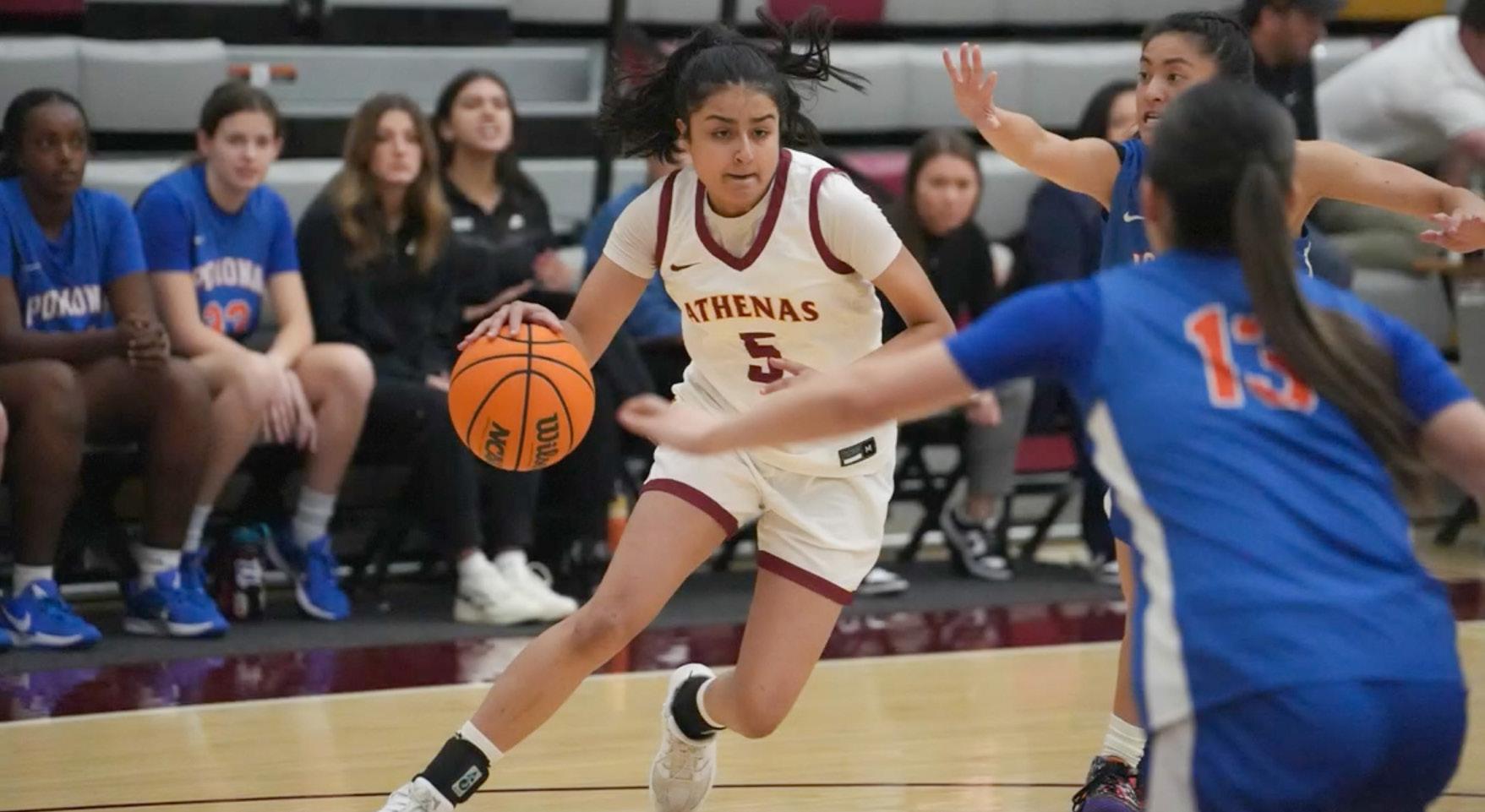
In a hard-fought contest on Feb. 26, second seeded Claremont-Mudd-Scripps women’s basketball team claimed a 59-54 victory over SCIAC and Sixth Street rival Pomona-Pitzer.
Both teams came into the playoffs with high expectations, as second-seed CMS (19-7) sought to make a deep push and avenge its two regular-season losses.
For third-seeded P-P (16-10), the game was a chance to once again vanquish a Sixth Street rival hungry for revenge.
The first quarter of the game was a back-and-forth affair, with the Sagehens and Athenas trading baskets to open the action. Tanya Ghai HM ’27 and Haylie Wang CM ’28 led the way for the Athenas, while Katie Resendiz CM ’26 anchored with her rebounding and a few basket contributions.
For the Sagehens, Jadyn Lee PO ’27 got off to a hot start, ending the quarter with eight of P-P’s 17 points. Sofia Robel PZ ’29 and Emily Lee PZ ’26 also chipped in to give the Sagehens a two-point lead entering the second quarter.
The second opened with a barrage by the Hens, as Jadyn Lee PO ’27 and Abby Homan PO ’27 led the team in a 16-0 scoring run to begin the quarter. Caleigh Edwards CG ’26 reoriented her team with a layup to start an Athena’s 7-0 run, but P-P still concluded the half up 34-24.
Reflecting on her team’s firsthalf performance, Edwards was unfazed by P-P’s sizable halftime advantage.
“The third quarter is super important, and being down isn’t a new position for us,” she said. “We’ve been at that disadvantage many times, and there are 20 minutes left. Let’s go out there and let’s do what we ought to do.”
Accordingly, the Athenas responded with a monstrous quarter of their own. Led by Ghai and Edwards, CMS charged back and eventually retook the lead late
in the third. For the Sagehens, Jadyn Lee and Sara Chicco PO ’28 scored the Sagehens’ only six points of the quarter as the Athenas entered the 4th leading by two.
Homan and her teammates were well aware of the challenge that lay in the final quarter, as well as the stakes at hand.
“We went into that game knowing that it was going to be a tough game,” Homan said.
“It’s always a battle to the end of close games, but this was a rivalry game too, and [both teams] were giving everything until the end.”
The fourth quarter proved a heart-pounding watch for fans of both teams. Despite CMS holding the lead for most of the quarter, P-P kept it close, led by
the heroics of Jadyn Lee, with Robel and Emily Lee chipping in.
However, CMS never trailed again, as an all-around team effort capped by two free throws by Edwards sealed the victory for the Athenas. Edwards ended the game with 18 points — one of four Athenas in double figures — while Jadyn Lee’s 23 points led all scorers.
Edwards felt the win was both cathartic and reassuring, given the challenges that lay ahead in the SCIAC final and in the NCAA tournament. This year marks CMS’s return to the tournament for the first time since their second-round loss in the 2016-17 season.
“We’re playing our best basketball right now,” Edwards
said.“That’s what you want to be doing, and need to be doing at this point of the season. I love this team so much, and I’m ready to see what we can do.”
For Jadyn Lee, the close loss is a testament to the ebbs and flows of competition; though the season didn’t end on a high note, this defeat only strengthened the Sagehens’ resolve to come back stronger.
“[SCIAC teams] all share a passion for the game and we respect them for that,” Jadyn Lee said. “This loss was a learning moment for us, and it will also 100 percent motivate us for next year. We won’t let it get us too down, and we’ll be ready to get on the grind and keep working next fall.”
Despite the Sagehens’ season
coming to a close with the SCIAC receiving just one bid to the NCAA tournament, Coach Alaina Woo PO ’17 was named the SCIAC Coach of the Year, cementing her and the program’s place near the top of the SCIAC for years to come. Following their rivalry victory in the semifinals, the Athenas advanced to the SCIAC final, where they defeated Cal Lutheran on Feb. 28. The win marked the first SCIAC tournament title since 2017, the final win of CMS’s historic four-peat from 2013 to 2017. With this win under their belt, CMS will travel to Abilene, Texas, to take on the Whitman College Blues in the first round of the NCAA tournament on March 6.
t he Claremont Foxes are winning in Division I rugby — Are we paying attention?
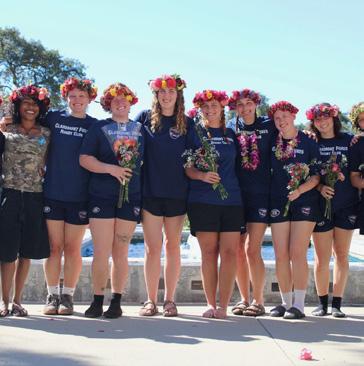
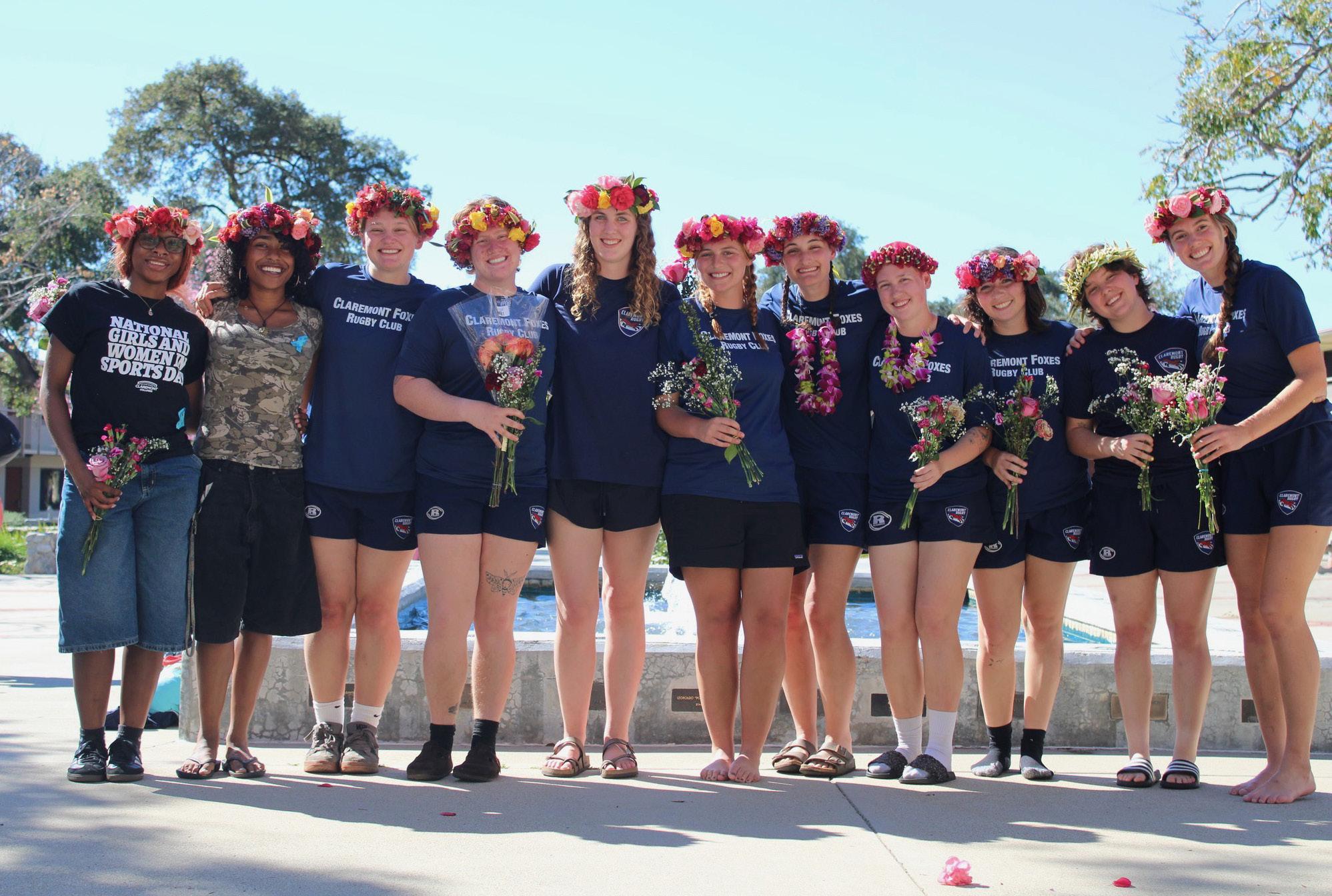
The Claremont Foxes — the 5C women’s rugby team — are one of the most successful Division I programs across the campuses. Yet, as a non-varsity club team, they often triumph without the institutional spotlight afforded to other varsity teams, making their sustained success all the more striking.
On Feb. 28, the Foxes secured their spot at the College Rugby Association of America (CRAA) Championship Weekend in a home game against UC the Foxes remain undefeated in their league games, placing them at the Rugby Conference (PDRC) — a record-breaking season performance.
In 2023, the Foxes moved from Division II to Division I of PDRC following two consecutive National Championships. The veterans of the 2023-2024 season left a lasting legacy that subsequent captains have continued to carry.
“Although I can only speak to the past year, it’s very clear, having been on the team for this time, that everything we have achieved now has been years,” winger Rocky Ortiz CM ’28, who scored a hat-trick in Saturday’s game, said.la Hannum SC ’26 — who recently declared for the women’s elite rugby draft — was a member of the team during the shift in leadership and has since contributed greatly to the program’s ongoing growth.
The team’s competitiveness often
overshadows the realities of a 5C club team — the team does not recruit, consists of many novices and does not cut returning players.
In fact, only three players came to the Claremont Colleges with prior rugby experience.
“Our team consists of high school wrestlers, paddlers, swimmers, lacrosse players, water polo players, skiers, gymnasts, dancers, soccer players, hockey players and
people who haven’t even played ’29 said.
This truth is a testament to the team’s ethos. Alongside the work of their dedicated coaches, the team places utmost importance on peer mentorship as a means of growth. This mission is backed by praxis, seen in the team’s response to a ban on transgender athletes competing in the women’s division by USA
Rugby.
“In light of USA Rugby’s decision to adopt anti-transgender regthat we are a space for everyone,” read the team’s instagram. “Our team is inclusive and accepting of all athletes, and we will continue to build that community here in Claremont. We encourage all teams, men’s and women’s, to do the same.”
The Foxes’ commitment to building a supportive and inclusive community to support their team proved fruitful this season, as they have succeeded in defeating rivals from substantially larger programs.
Many of the other top teams in the PDRC, such as Grand Canyon University, which is ranked two points behind Claremont, operate with the advantages that come with being a well-funded varsity program — formal recruitment pipelines andrienced high school players. While there may be a resourcetion. Their status within Division I rugby is sustained largely by player
“We are not a varsity team. The had that kind of funding, believe me,” Hannum said. “Our president [Hannah Maycock CM ’26], probably, puts in about 15 hours [a week]
outside of practice into making sure this team runs. If we weren’t a club doing, [we] would just be athletes.” Maycock, alongside other members of the leadership committee, pours their heart into the team. Ortiz said that, like many club sports, the Foxes must jump through additional hoops just to stay competitive. In the presence of many well-established programs across the campuses, club sports and their basic needs are often treated as an institutional afterthought.
With regionals on the horizon,
practices a week are sometimes relocated minutes before the designated start time, placing the team on pitchmultiple occasions, the Foxes turn to practicing contact and line-outs on an indoor basketball court.
“It can feel like a hindrance at times, but it also makes us so grateful for each opportunity we have and for
sure this team can compete at such a high level,” Hannum said.
It may seem counterintuitive that a sport with sanctioned collisions brings about this kind of tenderness, but without it, the team would not be nearly as triumphant as it is today.
“The rugby here is so close to my a CMC freshman, I didn’t feel super comfortable on campus as a woman of color from a big city, who is also gay,” Ortiz said. “For me, [it was about] community and having people that
At its core, the team is built upon this intention, accountability and adoration for each other. Every day, players come ready to spend hours teaching rookies the fundamentals of a sport that is highly dangerous if not played properly. In turn, every player absorbs the bruises, the travel costs and that administrative labor that sustains the program.
tional and intellectual labor invisible to outsiders. No formal acknowledgement can encompass the sheer amount of work that goes on behind the scenes.
“It would be really nice to get a from the student body, but from the schools themselves,” Ortiz said.
“We have had the privilege of representing the 5Cs on a national stage and a D1 stage; we just wish there was a bitstanding [this].”
AUDREY GREEN
COURTESY: STACEY VIVEROS AND JOEY VIVEROS
The Claremont Foxes’ senior day celebration marks a historic regular season