
BIANCA MIRICA • THE
Over 500 students and Claremont community members

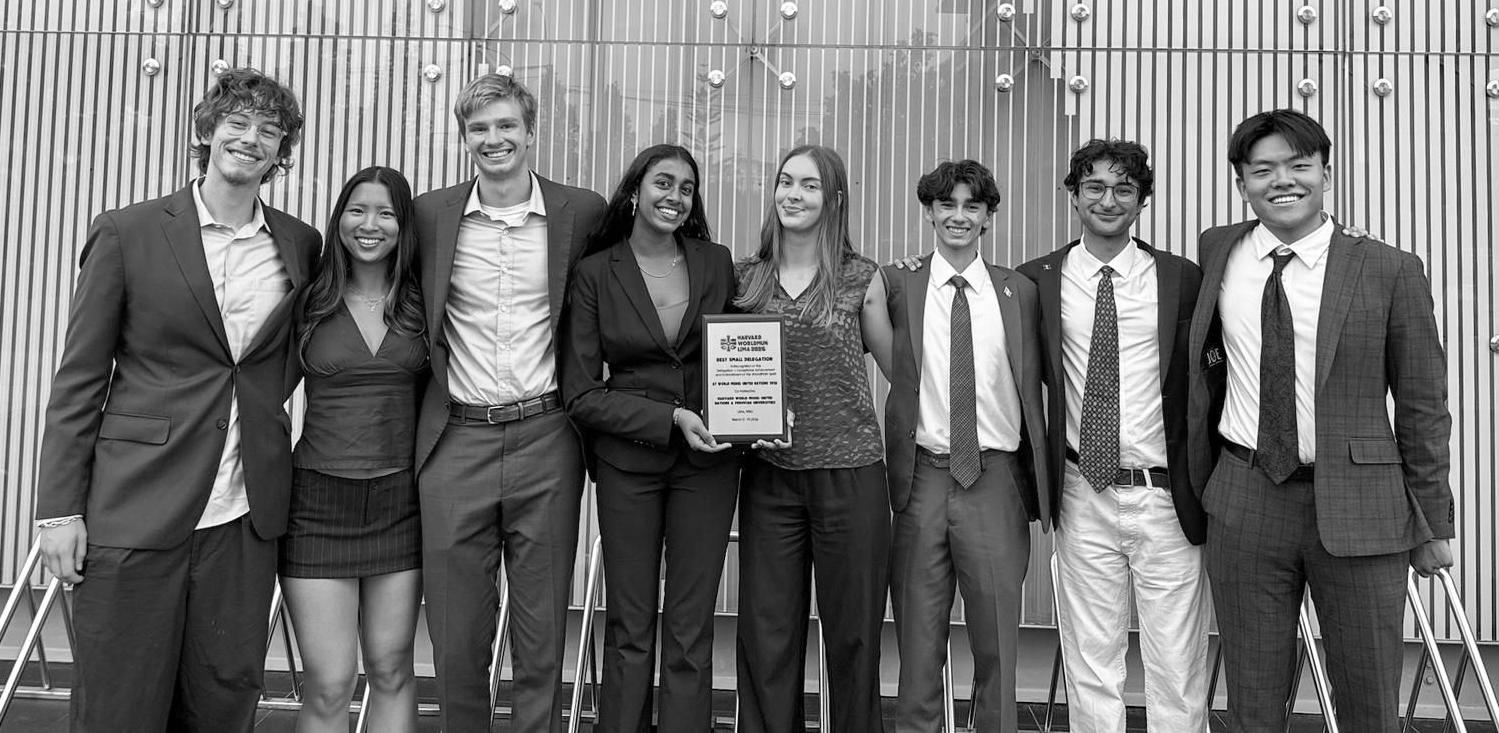
CMCMUN wins seventh global championship, credits team culture for success
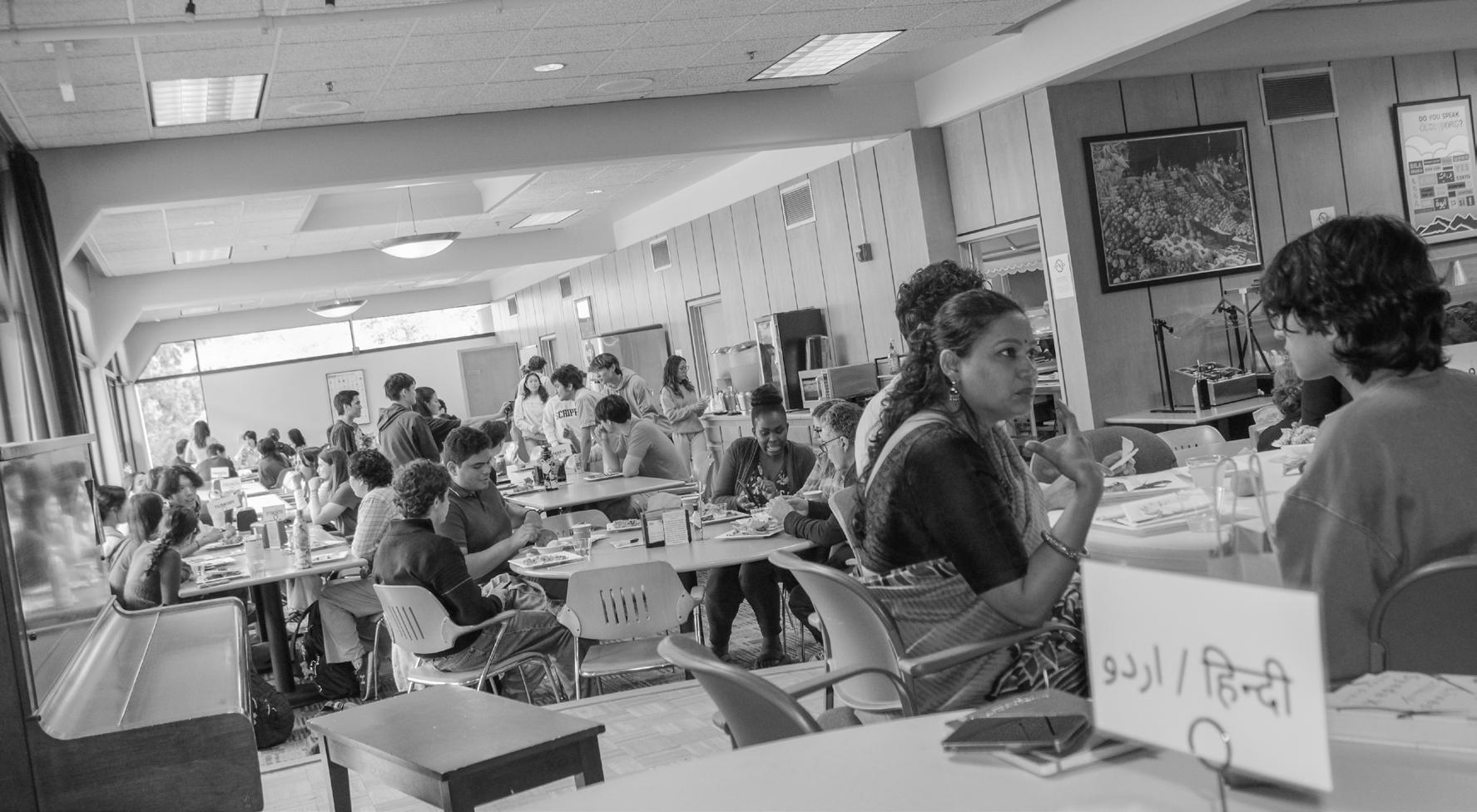
Oldenborg demolition and investment in new Center for Global Engagement causes concern for Pomona students’ fall housing

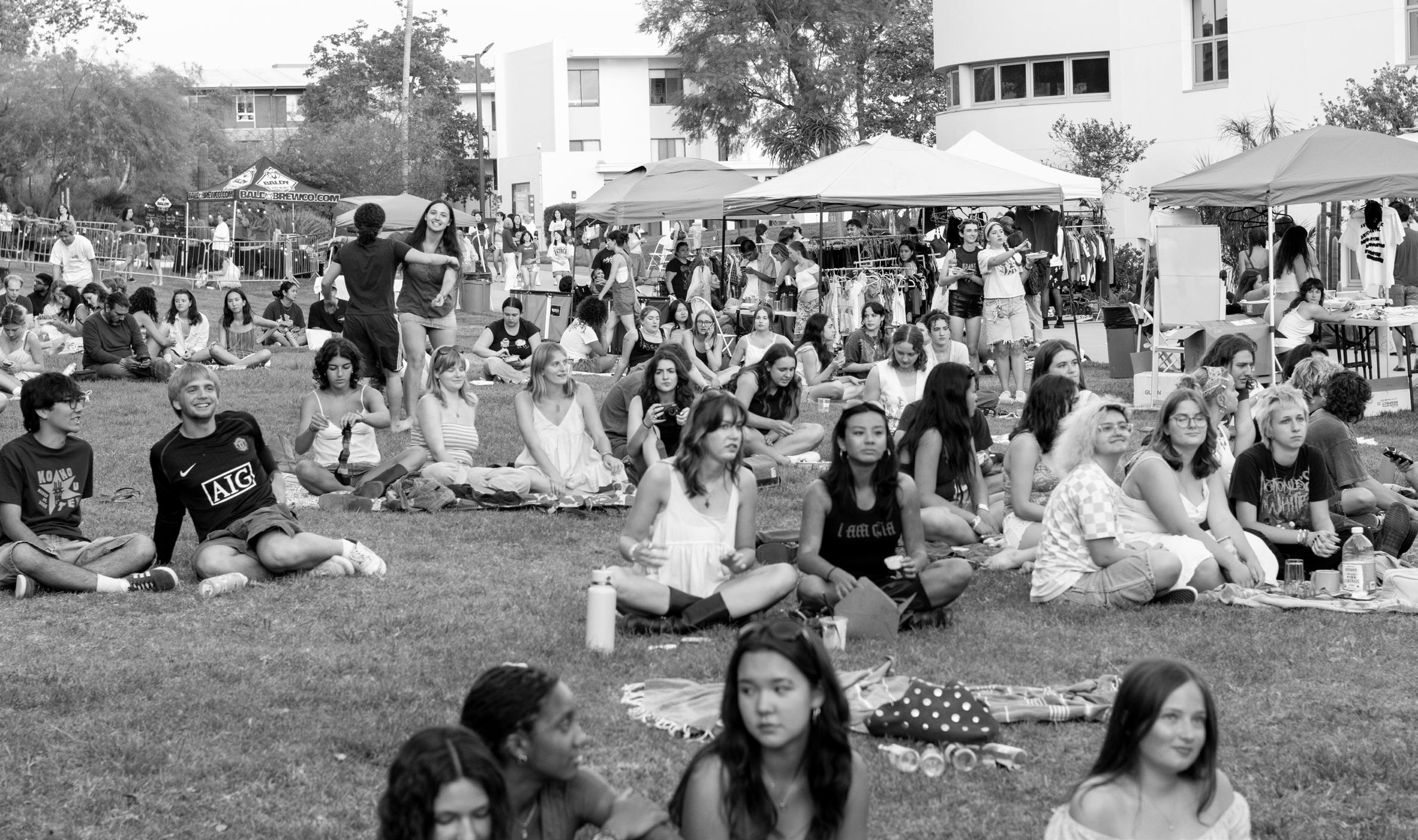
That rush of excitement and jolt of emotion that courses through your body when you lock eyes with the lead singer — or pause your dancing to take in a crowd of strangers singing together — is a feeling unique to live performances.
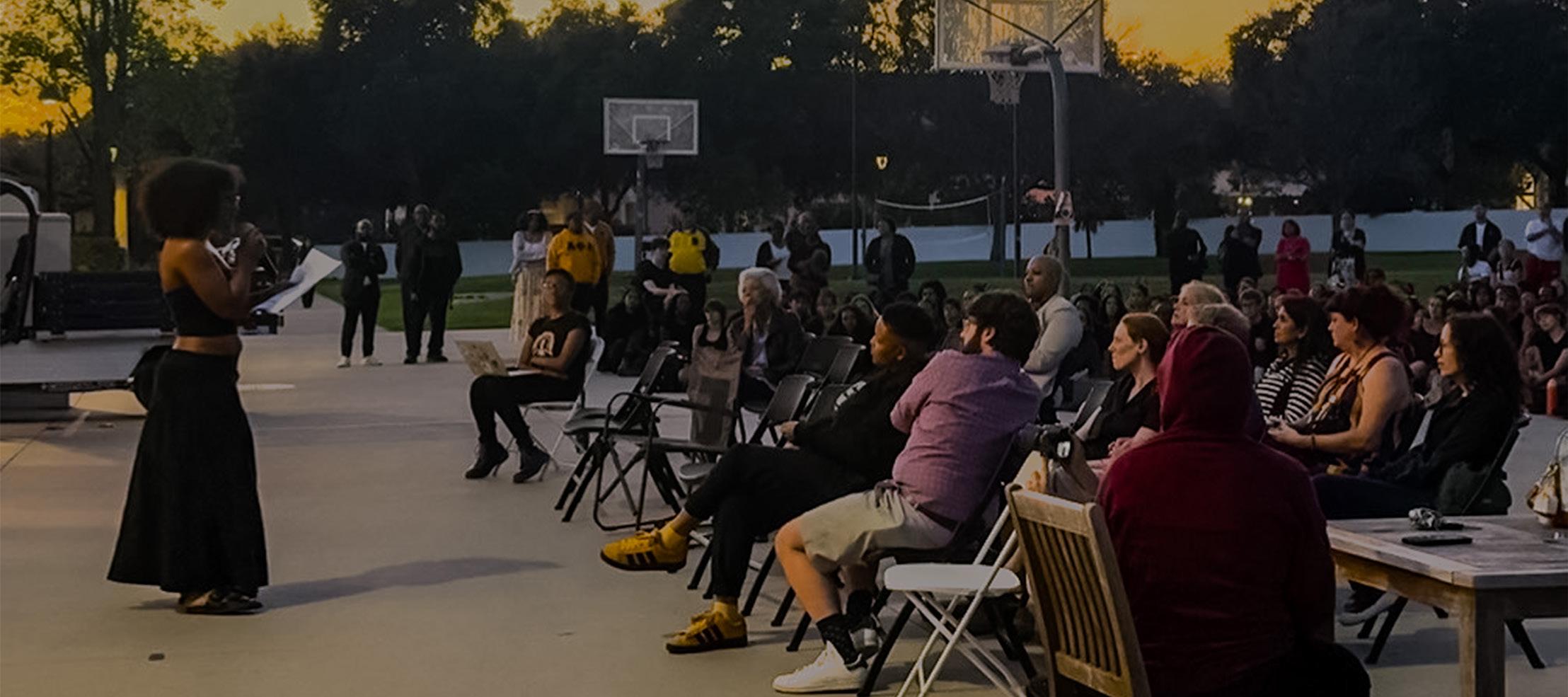
& Arts Festival, an annual student-led tradition dating back to the 1970s, rep.m. to 1 a.m., organizers transformed a 10-hour celebration of music, commerchandise.
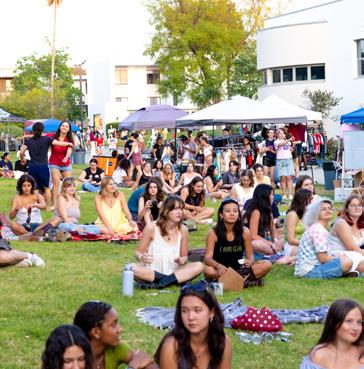
From the open-air lawn where students and guests chatted and danced together, to catering by the organizers took great care to cultivate an inclusive, welcoming environment.
some sort of community experience
tion has remained alive and well since students more than just the typical experience — drinking and dancing nightlife events provide.
said, referring to the highly anticipated but ultimately disappointing com-
Despite the letdown, students still celebrated, and so on that day, this yearly celebration of music and community was born.
the featured artists and festival opener, walked onto the stage, looking down at a crowd of students strewn across the grassy lawn. As she kicked to grow, and students stood up and original songs and covers. took the stage, including The G outside artists, such as Peter Harper,By 10 p.m., the atmosphere had
shifted entirely. As the sky darkcolorful picnic blankets slowly made their way to the front of the lawn. The calm swaying from side to side quickly turned into a typical mosh scene, with people crammed together, dancing and singing into the early hours of the next day.houtek have varied throughout the a deliberate choice to return the spotlight to student bands. there, and we got auditions from student musicians and bands
student bands [in addition to my to come and see them play, andother opportunity to play at a music
These student performers set the tone for the festival, as their creativity and passion for playing carried live music became something that
was felt as much as it was heard.
that and spreading that energy [that -
music, noting that the experience served to bring the community together in new ways.
way to share emotion and a great
tance of live music lies in seeing the humanity of the performers themselves. Brock emphasized that being present — with both the music and the person creating it — makes for a more powerful listening experience.said. “That makes it all the morerience you can have in the present.
presently in front of you is really
That sense of presence points to
a sharp contrast in how most people consume music today. Before the rise of streaming platforms and personal devices, live engagementer in restaurants, living rooms or informal sing-alongs, music was something shared in real time with performers and listeners. platforms like Spotify and Applecreasingly become a solitary activity. At its core, many feel that both playing and listening to music is about connection with others outside of yourself; Straus expressed that live performance is a space where that intimacy can be reclaimed.
to curate their work, and where [the with the music. As much as the
can feel overwhelming at times, it has prompted a growing collective desire to keep traditions alive and think critically about how to carve out these spaces in a digital world. For many, live performance spaces like value of shared human experiences.
sizing the human experience, whether
As technology becomes increasingly addictive, many are starting to break free from this scroll-induced spell and appreciate the moments when we can put down our phones and live in the present. Straus described live music as one of the few environments where wanting to be present still feels natural.
to be able to look at something in front of you and feel your feet on the grass, on the mounds and feel the sonic experience of instruments and speak-
BIANCA MIRICA
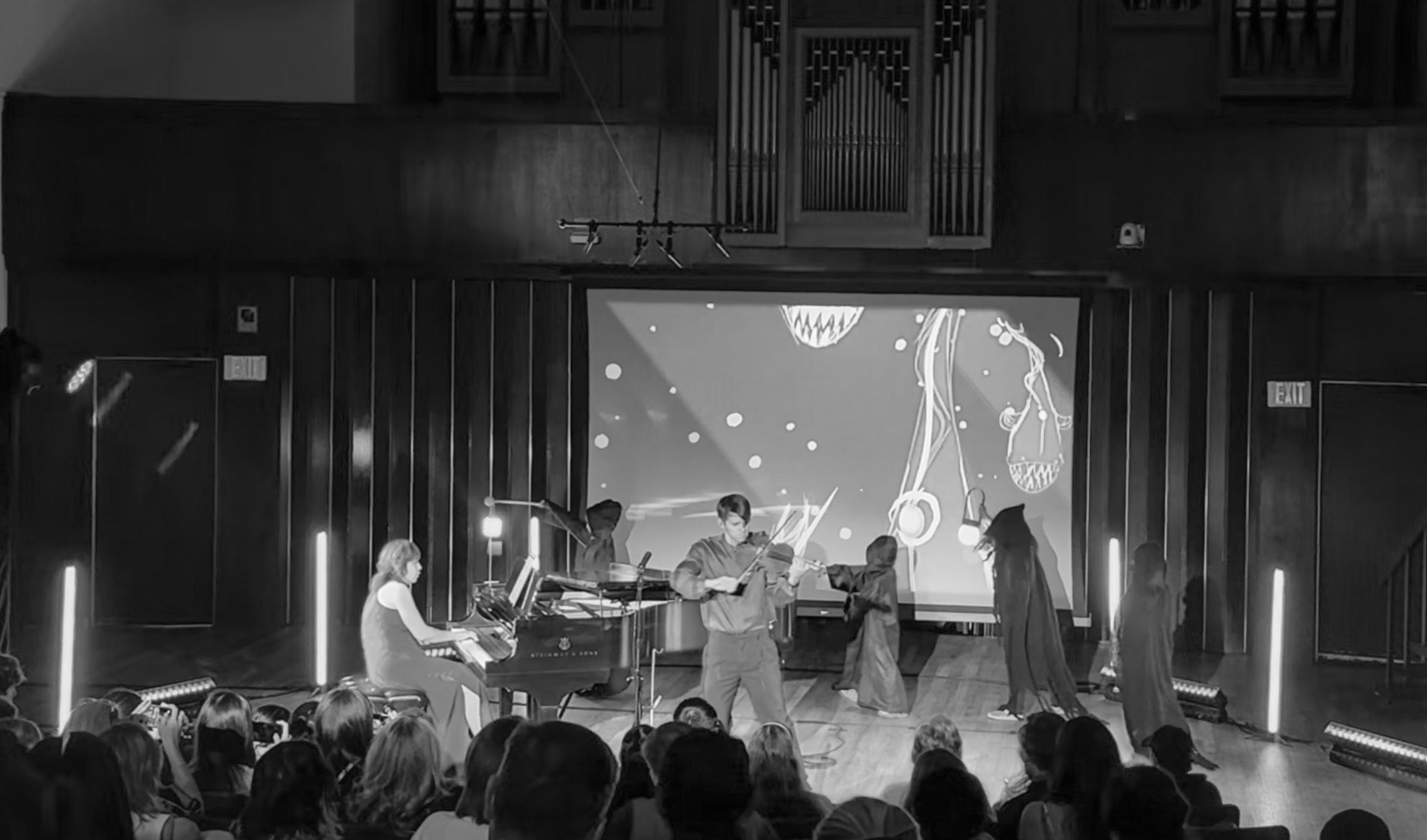
Hall, violin notes accompanied lively animations of coral reefs and fish moving in and out of view.
media concert was built around an -
people. performance designed to raise awareness and funds for ocean conservation. The program combines live violin and piano performances with oceanthemed animations designed by Together, the blend of music and visuals transformed a charity event for marine life and environmental change into a live, immersive experience.
Pomona Politics and Asian Studies Department, brought this concert to the college to highlight how coral reef art and performance. This project also serves as a fundraising initiative for to protecting and studying a uniquely of Tela, Honduras — one of the few reendangered corals continue to thrive.
“This reef has a lot of the markers that are killing corals elsewhere in -
corals are doing extremely well, someronmental crisis at the heart of this partners with scientists to investigate how certain reefs have remained resilient in the face of this extinction. Their researchers have established a marine biology lab and coral biobank to support studies and long-term
als in tanks, protected and monitored, so we can preserve them for future Duong explained that if proven
resilient, these corals could play a role beyond Honduras, pointing to to increase their tolerance to heat and pollution.
so hard to protect. The show is strucon coral reef ecosystems, beginninging through species such as clownthe second shifts toward deeper ocean environments, incorporating phenomena like bioluminescence and electroreception. On stage, these animated ideas unfolded alongside an orchestral performance, with deliberate transitions between compositions. pieces to introduce each species or process, grounding the performance slowly unraveled, mirroring the breakdown of coral systems under prolonged temperature stress.
“So that almost anyone can feel something right away, even if they in a space and experiencing this
Following the performance, a assistant professor of biological sciBiology at the University of Southemerita associate professor of biolo-
Throughout the panel, speakers highlighted the real-world impacts
marine species, are among the most threatened ecosystems globally. by increased atmospheric carbon dioxide, cause coral bleaching, weakening reefs and reducing their ability to recover from additional stressors such as pollution and storm damage.
“Temperature is by far and away
the biggest threat to marine sys-tained heat stress as the main driver behind coral reef decline.
As climate-driven warming indown, leading to biodiversity loss and ecological instability. The onthe species and coastal communities aims to highlight the consequencesmate change, you can see that coral said. “So whatever the reason is, you should be doing something to
He added that this responsibility extends beyond individuals to the institutions that shape environmental policy, funding and publicucation institutions to take visible, concrete positions on environmental issues, rather than avoiding them out of caution or a sense of institutional neutrality.
institutions should play in actively supporting environmental issues.
Yet, even when institutions publicly support ocean protection, people continue to engage in behaviors that Berwald, co-founder and president of understanding the impacts of coral loss and taking measures in response.
“Data is just not enough. And
it bridges that gap between what our intellect can understand and what our
recognize the importance of coral reef preservation, appealing to people by -
immersion. But the performance does not end with awareness; it addresses what comes next — individual action.
“Show up and try to be a voice for
AVA MONAHAN human translators, reducing costs are intended to make translation worry that translation work is being undercut and devalued.
-dred Years of Solitude. These books represent a minute portion of the literature that has been global literary culture. Translation enables us to glimpse the shimmering fascination of variety, diversity and linguistic power, greatly broadening the range of literature available to us. and retelling stories. Translation is also another mode of authorship. A true literary translation is sensitive and stylish, a finespun work of mastery that often requires years of dedication and skill. And it because different translators have their own style and often their own intentions for the text. There is no each time it is transferred from one language to another, the translator must make compromises with vocabulary, meter, meaning and pace.
the landscape of translation is changhas presented a complex and fascinata notoriously subtle and multi-layered endeavour — something seemingly requiring a certain human touch. the process?
ate drafts, which are then edited by
accelerated process and save time byers assert that the time-consuming drawback. Despite the relatively information causes translators to spend more time correcting these suspicion. Sean Bye, for example, a translator and executive director of Association, argues, “very often
a problem with language representation. Because of the imbalance in models across languages, the quality of their translation outputs varies as champion its potential to elevate minority voices, but there are also concerns about less nuanced translations being produced in less-represented languages. How is this representation actually going to be
And how is the replacement of miway progressive or uplifting? concern when translating across all languages, even those that are
“A bad translation is worse than block the way to a good translation translation is available, the push fortranslations of underrepresented languages will likely emerge, inhibiting human translators from creating Additionally, many translators raise the questions of ethics and pur-
“give the appearance that translation is instant, which devalues my labor,
The devaluation of the art of translation is what is really at stake. Automating the initial process often
reduces professional translators to a replacement for human translators, many translators still raise concerns about machine translators taking over such a delicate operation and misrepresenting the time and dedication required to produce a literary translation. Post-editing is also lower-paid than translation, and translators who have been relegated less for an at times more challenging task. Translation jobs are becoming more scarce because of competition of Authors revealed that over a third of translators reported losing their likely grown since. Similarly, around income decreased due to the intro-cess. Translators are also concerned

entry-level jobs, since many professional translators are being relegated to editing positions that still require a more advanced level of expertise. So is human translation dying out? -
the literary translation industry, and But the process of sharing stories across languages is so fundamental hard to believe that it could ever be fully replaced.
The love that readers have for language is a crucial part of its dissemination; we delight in its “incredible rather recreate, the nuanced linguisticman touch is still necessary for that connection.
es a more sophisticated level of production, will human translators put away their pens and shelve theirzotti beautifully expresses his love
Both translators and readers share this love of discovery, and a love of connection that we feel in the creation of the story to its most recent permucreativity to the latest reader of their creation. The process of translation is an art in itself that has inherent valueof creating, but it can never drive the creation.
‘Art in the Age of AI’ with professors Virginie Duzer, Mark Allen and Dustin Stokes
CORINA YI a presentation on how generative AI learns. He described generative AI as a “black box” process with predictive inputs and outputs that people often cannot directly explain.
“The discussion between [AI and] what is going on [in] the humanities has not happened often because people are scared,” Mark Allen, art chair and professor at Pomona College, said. “I think AI is a giant cultural disaster, but I think it’s great for art.”
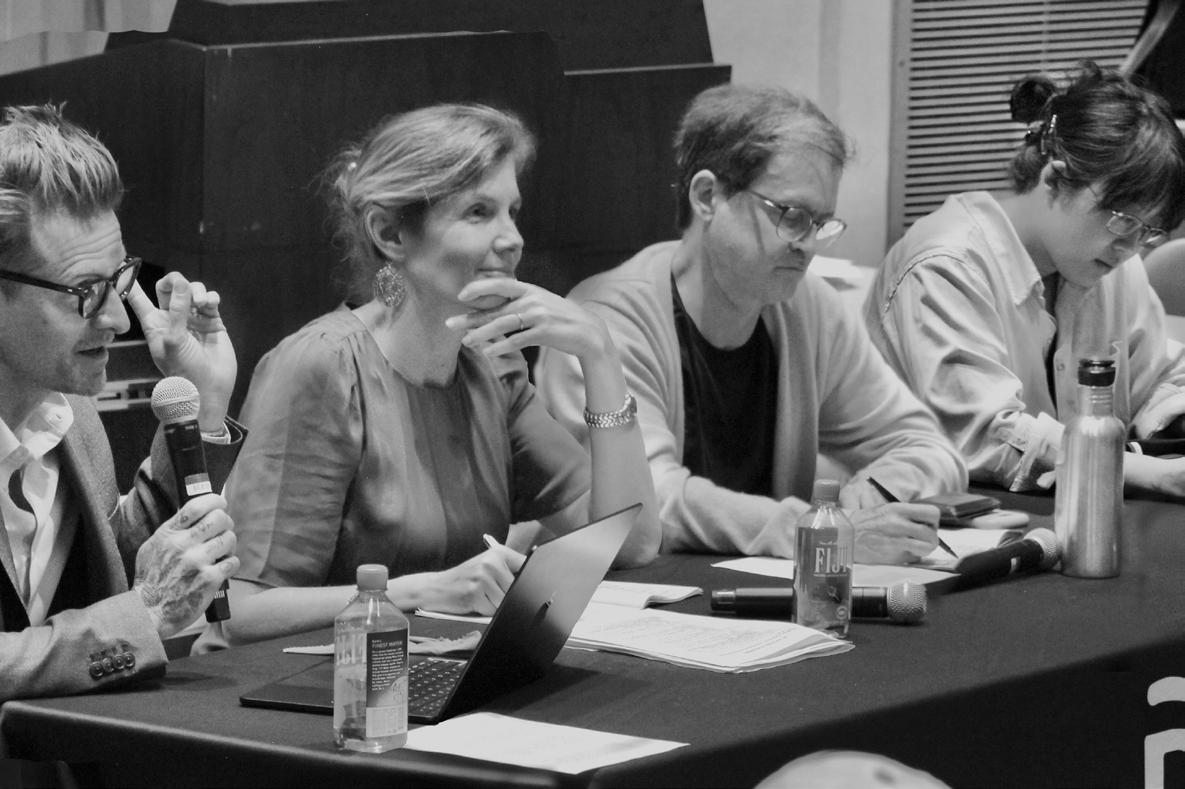
On March 23, over 60 students and faculty members gathered at Claremont McKenna College’s Bauer Center to attend the “Art in the Age of AI” talk, organized by the 5C Artists’ Coalition (5C ArtCo) and the Pomona Student Union (PSU). The talk brought together Pomona professor Virginie Duzer of Romance Languages and Chair of Art Allen, as well as LMU Munich professor Dustin Stokes, to discuss the theoretical dimensions of the relationship between
As a philosopher specializing in cognitive science, Stokes began with
“[AI systems] have to learn language, and they learn language … by being exposed to tons of data and then making random adjustments to their parameters. And suddenly you get the emergence of sensitivityphonic terms or linguistic relations,” Stokes said.
After this presentation, ArtCo co-president Maggie Zhang PO ’26 read aloud a variety of questions for the panel members to answer. Zhang’s questions ranged from public anxieties about AI to debatesstanding of authentic art.
“How can we address concerns about authenticity and meaning of art without relying on essentialist
ideas about what counts as human?” Zhang said. “And does AI threaten the ontological status of art?”
Duzer — a professor of Romance Languages — drew parallels between these current anxieties and those sparked by the introduction of photography in the 19th century. She noted that while she did not necessarily consider AI and photography analogies, the comparison is useful for framing the question of what the public considers potentially dangerous and how to address it.
“I want us to go back to the beginning in the French literature of photography. [Charles] Baudelaire most famous in the French canon to say that photography was dangerous,” Duzer said.
Stokes, from a philosophical lens, replied to the question by drawing a distinction concerning agency in creative endeavors.
“I think when you identify someone as creative, you’re praising them in a way that implies that they’re responsible for doing something,” Stokes said. “[Creativity is] anchored in the agency or autonomy of the creator.”
Zhang pressed against Stokes’ point: “I feel like if the question focuses on agency, though, then the question is [only] about the artist … and it’s not about the art.”
She followed up with a question about the relationship between art, the artist, and the context in which it is created.
“Why does context matter for artistic meaning and aesthetic experience, and does Al lack it in a meaningful sense?” Zhang asked.
Allen, as an artist, emphasized
the relational nature of art in his response.
“It’s helpful to not think of art as something which solely exists in the object, but the interaction between the object, the context in which it’s made, and the context in which it’s talked about,” Allen said. “Can art be a banana taped on a wall? Can art be an empty room with the wind blowing through it?”
In response, Stokes asserted that terms of aesthetics, because individual aesthetic experience is subjective. It’s impossible for an object to be objectively “aesthetically” pleasing, and so the way that we judge ‘what terms of aesthetic experience.
“You can have an aesthetic experience of almost anything: a sunset, a pizza, a good curry, a motorcycle, a Taylor Swift song,” Stokes said. “You can [even] have aesthetic experiences of AI products … That isn’t necessarily to say that you count it as art.”
Stokes’ comment sparked a debate among panelists about what aesthetic experience entails.
“I don’t like the [idea that one can have an] aesthetic experience of pizza … I would argue very contrary to that… I think that it’s important to think about art history.” Duzer said. Duzer then passed out prints of Vermeer’s painting, “Girl with a Pearl Earring,” to the audience. She invited attendees to consider the focusing on their initial reactions to the piece.
“You don’t know anything about [the girl],” Duzer said. “There’s this moment where you are really lost in
the pearl earring, and you’re staying there a long time. [It’s] aesthetically pleasing … [even] without context. [But] when you know where it was painted, when you know who she was … what this real earring meant … all these things [deepen the] aesthetic experience … we should feel… in front of an AI picture … something [to] be lacking.”
Zhang described the talk as an opportunity for audience members to recognize that seemingly unprecedented fears and skepticism about AI actually take on striking historical similarities to earlier anxieties about art.
“We wanted the panel to function as a discussion that moved beyond the simple narrative that ‘AI art isn’t real art’ or that the work that humans do will always be better,” Zhang said. “That’s not to say we want to be naive or excessively optimistic about AI. But it involves an existential confrontation with what we do, why we do it, and how we may continue to do it in the future.”
The talk closed with a Q&A session open to the audience, during which the panelists addressed questions. Attendee Chloe Kiparsky SC ’29 expressed her appreciation for the talk as a uniquely interdisciplinary conversation on AI.
“I appreciated that all three of them said. “I think that [AI] is one of the most relevant and talked about things in the world … [it’s] something that’s of society.”
In addition to serving as co-president of the 5C Artists’ Coalition, Maggie Zhang PO ’26 is a photo editor at TSL.
abroad when your roommate is brutally murdered in your shared home. Now, in a period of shock and grief, you are placed under a microscope, analyzed and monitored by both the foreign police and press at every turn.
that your immediate reactions to the murder at a time of uncontrolled, unprecedented chaos are being used this crime.
Garrison Theater for a discussion justice system, resilience and reclaiming her identity in the face of a now infamous tragedy. The conversation-
invited to moderate the talk after her story.
resilient, come back from a tragic situation and readjust to day-to-day life
lot in common and it was very easy to The event was completely sold out, and there were many non-student
tion. She recently wrote a book inceiving signed copies of it following the event.
night that thrust her into an interthat spiraled into a series of highly publicised events, all of which began abroad and stretched over a decade.
bedroom. Almost immediately, theplained, her murder case was tied to sexist, anti-American stereotypes.
guilty immediately because she part of a larger satanic, sex-crazed ritual.
liberation or room for proof of her had decided she was going down for the crime. During the trial and her time spent in prison her story spread, and she became a nationwide villain and an international sensation. believe her to be guilty because of the American girl archetype that

the police and newspapers often perpetuated. As the story developed
Additionally, investigators fabricated a detailed, extravagant story of as a hyper sexual sociopath.
The media put forth a narrative of two young women who hated one another and were in constant narrative gained and deeply disappointed in how appealing it was to consumers.
Despite the fact that prosecutors spread these egregious, consequenexhibit a radical empathy for them.ed relationship she built with her prosecutor many years later. This relationship is largely a result of thederstand those who misjudged her as people who made mistakes, rather hopes that they can understand her for who she really is.
not immediately move to blame the people or system that wrongfully
emotional appeal to the importance of that the conspiracy theories and scandals that have surrounded the case for years have overshadowed the pure -
of her to not only be able to talk about her, but also how sad it was that there
Towards the end of the convershe would give to college students. She jokingly recommended studying abroad before taking a long moment began to respond, her voice was full of emotion. She advised students and life experience, to be ready for unex— such as four years spent wrongfully convicted in a foreign prison system — there is a path forward.
gruesome details about the murder hearing such a story of resilience and reclaiming from the very person who
on the humanity of victims and the power of moving forward, even after unimaginable injustice.
ANDREA MILOSHEVSKA
Despite being a founding member -
After graduating from art school, she moved to New York and got involved in the avant-garde music scene. A year later, she met her bandmates-to-be, picked up the bass, and formed Sonic Youth. Their focus on creating meaning through noise and disorder, rather than harmony and structure, is especially striking in their early records; this is what makes Gordon more of an artist than a musician.
the photograph of her wearing a t-shirt with the slogan “Girls invented punk
ly-complicated lines and lyrics like a towards big names in the music in-
tutorials and jamming with my dad. her knowledge. Her performances are driven by her emotions and enthusiasm for music as a multifaceted art form, which makes her impact on alternative music irrefutable.
herself from making music under the umbrella of rock. Now, at the ageous shifts in both the popular and underground art scenes throughout
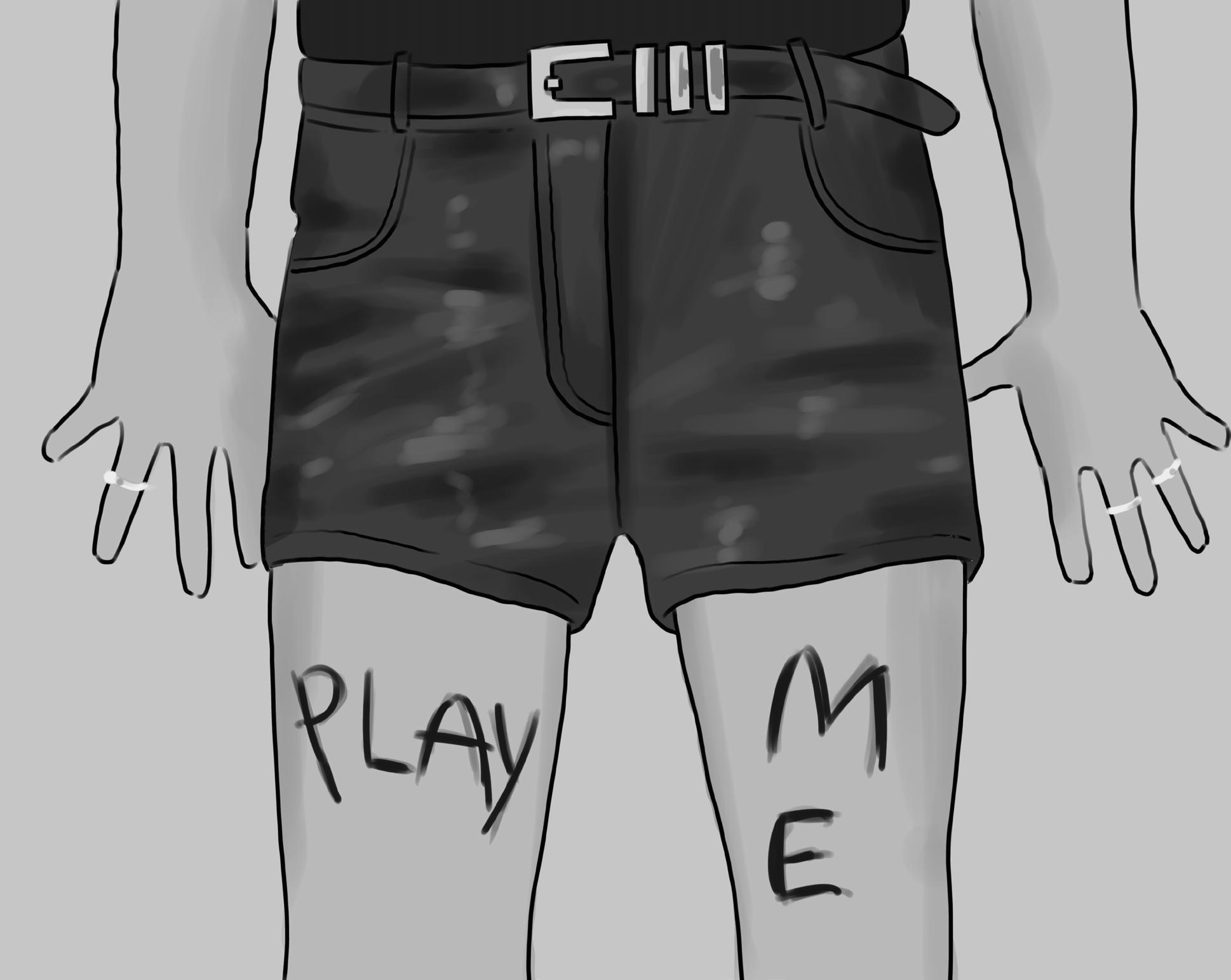
from which the album draws its name is an abstract piece, a swirl of red and blue covered in smartphone-shaped holes in the canvas. The album is in direct conversation with this painting. Through its unexpected sonic chaos, the album offers reflections from an ex-rock star grappling with the sudden impacts of technology on art. The genres and themes in her third Gordon blends industrial dub and rap under snappy lyrics about the internet, Trump, hustle culture, and feminism. The signature sound we get in her albums is indebted to her produced albums for artists ranging
Yves Tumor.
with a juicy saxophone riff that the lyrics, which include the titles of stereotypical Spotify playlists pieced
commentary on the Spotification of music.
openly criticized streaming platforms for their cultivation of con-
home from work and putting on a certain playlist, it is advertising the illusion of what this mood is her — streaming platforms have curtailed our ability to appreciate an
album in its totality and encouraged us to treat music as background life. Perhaps it is unfair to label this track as milder than the rest, since the lyrics are much more biting than sounds like a generic jazz rap groove
erated playlist for constructing a down on the irony. away from adding industrial trap satirical lyrics. A handful of tracks combine these two elements seamdrum groove played by Dave Grohl,
of the line “Busy bee, making monresembling a milder version of early Death Grips.
However, other songs feel un-
en by cheap and repetitive beats that could be found on a Soundcloud-rap with more complex-sounding songs, like the shoegaze and synth-heavy melodically inconsistent.
On a similarly sour note, Goran extent that robs the lyrics of their and although Gordon rhymes well
heavy beat. The joke is understood, the song remains empty. -
equally experimental and dissonant satisfy. Perhaps the shorter format of album, as nearly every song is two minutes long and often feels purposeprove that she is able to experiment with new sounds while remaining bold and provocative, a quality that she failed to replicate in her newest record.
doxy is a tribute to her long-lasting underground music and her refusal to and decided to release an industrial trap album. Despite my criticism of future projects.
Andrea Miloshevska PO ’28 is from Skopje, North Macedonia. She also hopes to be making industrial trap when she is 72.
ARIANNA KAPLAN SIENA GIACOMA
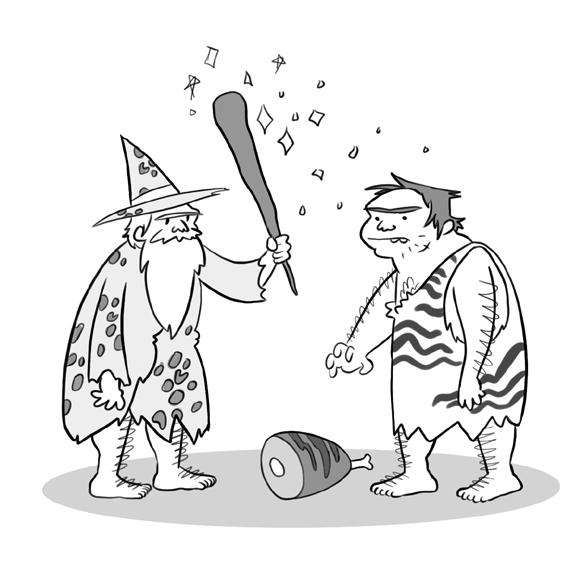
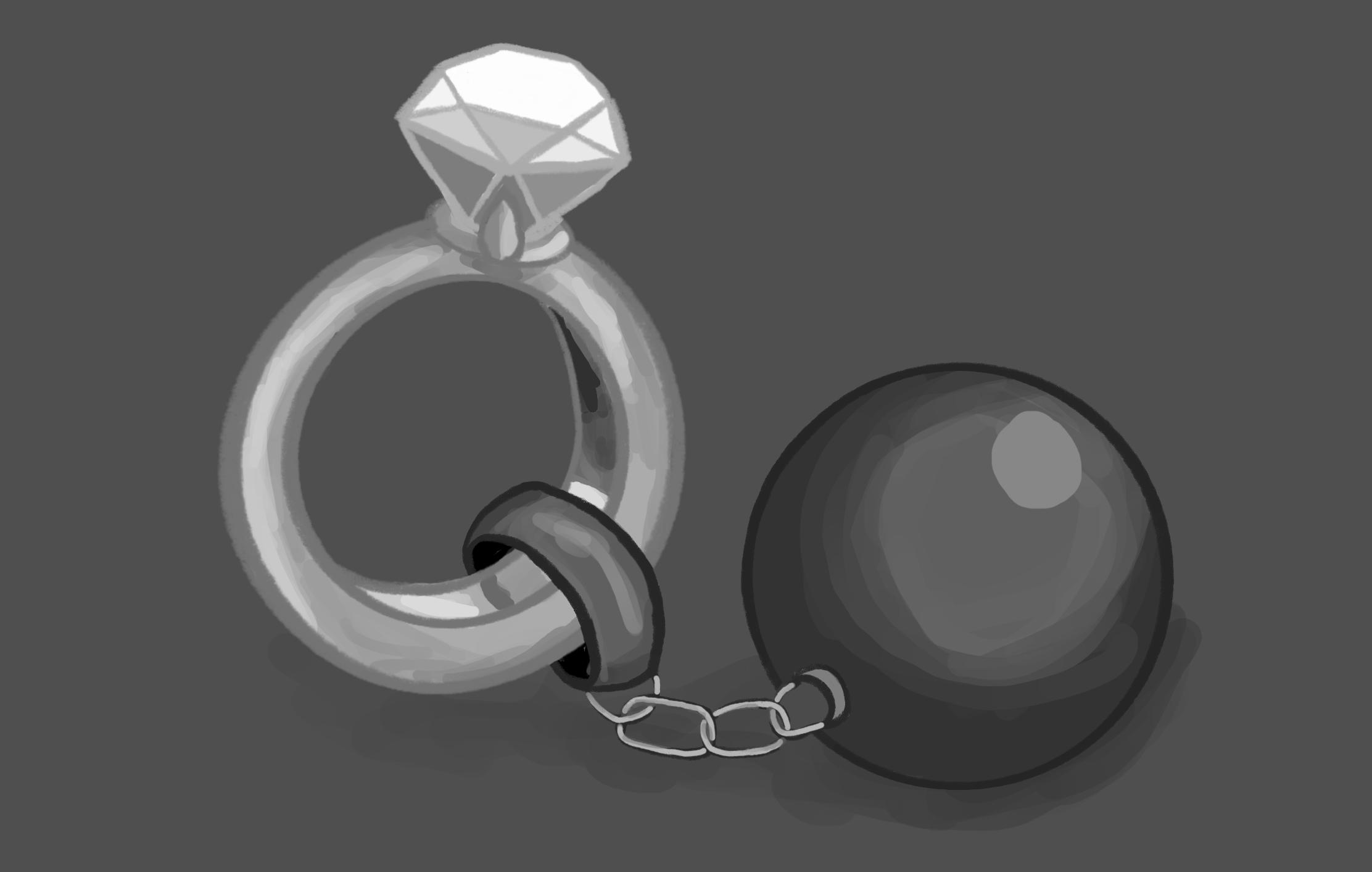
Have you ever been essentially dating someone, but then you have one conversation about expectations be fear of commitment.
excitable and horny college students all smashed together in the square down when the next best thing is right around the corner. But when someone wants something more casual and others want something more serious, about commitment.
Siena: Sometimes, my best friend jokingly refers to me as an aspiring desire for a white picket fence and trad wives like Nara Smith and the eva stigma has been placed on women like myself who desire that type of life. Because these extreme examples dominate the conversation, they makety, family, a nice home — seem radical
The thing that my previous partners never understood about me is
if that person is my person until we again and again, but it still scares people away because they assume that dating me comes with an immeclarity make people uncomfortable? so frightening?
Ari: the opposite end of the commitment
spectrum. At this moment in my life,
person, and wanting way less than myself through my relationships,
from one person at my age seems
Siena: A big part of me desires to be casual, but the simple truth experience becomes something to
was deeply validating, because wrong with me.
pretend that something casual is enough when it always leaves me
feeling empty after. Ari: too with sucky guys, but in my
experience pleasure. To be clear, a to cut it for me either. But as long as is absolutely achievable for me in casual situations.
bels to circumvent the idea of being
admit how you feel about each other because the next best thing might just come along? So to maintain fun and casual
allow my relationships to simply served their purpose, whether it be single. That can get messy when labels usually just overcomplicate a
Siena: dating term and category meant to simplify things ends up doing the exact opposite by confusing, misleading and keeping people trapped want keeps me from wandering into invented just to avoid having hon-
The thing about that limbo is that the comfort of connection without the responsibility of commitment, while the other is left trying to interpret mixed signals and call it enough. of a label, but being in emotional clarity so blinding it leaves no room in a world of half-measures and want someone who can do the same.
Ari:bel-less limbo often leads to uncomstill see the value in that in-between approached by this gorgeous guy in
vision for the future is sweet but neither of us are really wrong. Siena: for commitment and maybe end up in a premature marital engagement risk miscommunication. At the end of to label it or not.
Siena Giacoma PZ ’27 and Arianna Kaplan SC ’27 are aspiring documentarians of the sexually awkward, which they consider a noble and vastly undervalued literary genre. They have consciously chosen the unstable but vibrant path of lives and fascinating anecdotes over sensible things like 401(k)s or a basic understanding of Excel.
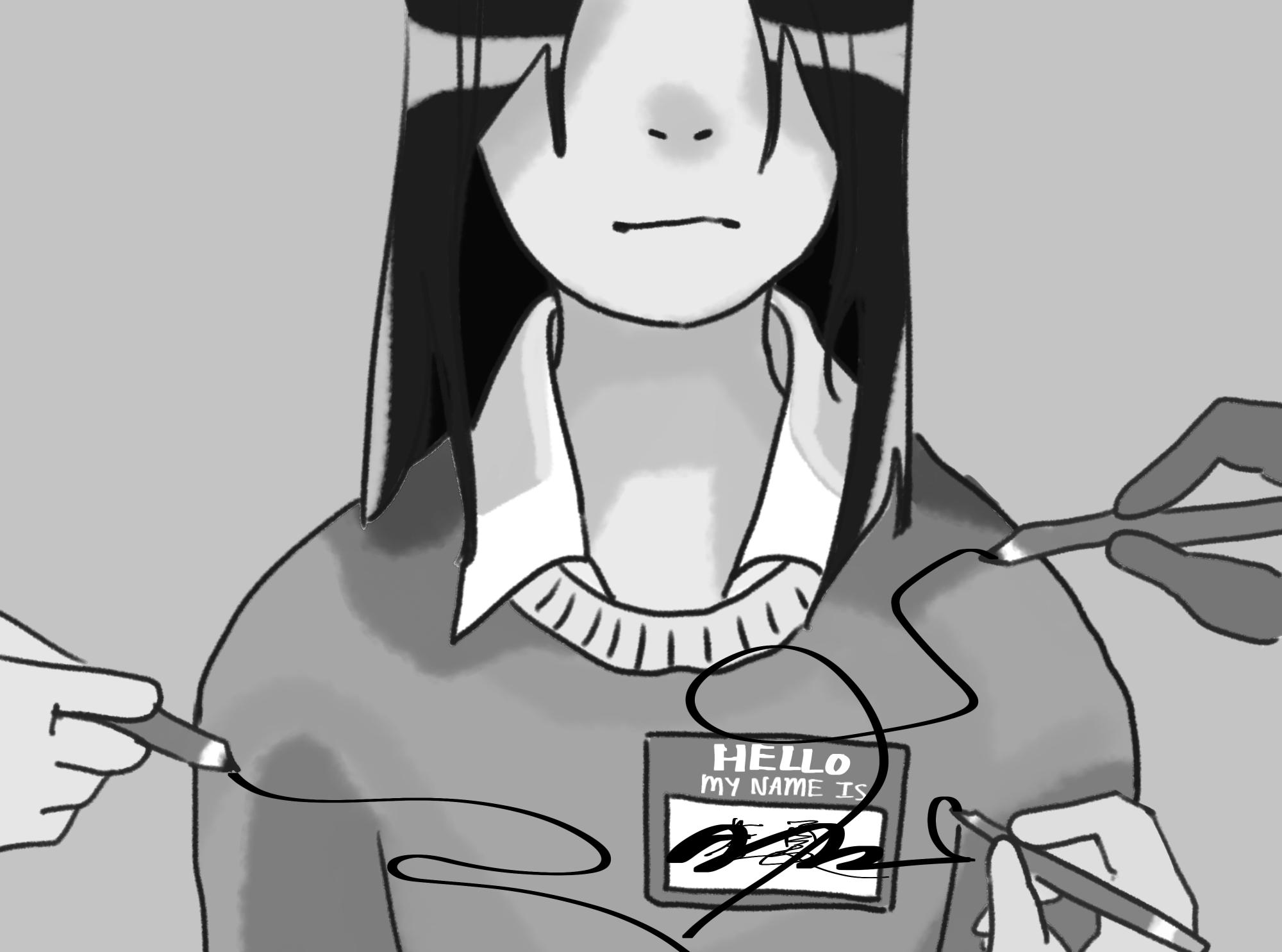
Sitting in the kitchen and kicking my feet in the high chair, I was taught from a young age about my Chinese name: 若夏. Its literal meaning is “like the summer.” My family gave me the name with the hope that I would always embody the bright energy of summer.
But by the time I learned how to say my name in Chinese, I had already been assigned another one. In preschool, my English teacher quarterly personal evaluation for me to take home. My parents crowded over the sheet of paper, buzzing. It turned out she had deemed the romanized version of my Chinese name, “Ruosia,” unusable in an English classroom setting.
“You need to provide her with a proper English name, or it will be hard for her to participate in class,” she wrote. “For now, I will call her Rosa.”
A couple of years ago, I dug through the folder where my parents
keep my old school documents and found the evaluation sheet again. Looking back at it — along with a couple of others, in which this teacher continued the evaluations with my “new name” — I felt an immediate sense of disgust. Who was she to lecture a child’s family for not naming her in English when they had no reason to? Why not use her legal name, the original form of her name in her mother tongue? Even a romanized version of one’s ethnic name wasn’t enough; it had to be anglicized so it was “actually” English. Thankfully, my parents realized that my teacher’s decision to name me was a massive overstep. My father sat me down and presented a few other “R” names, in hopes of preserving the sound of my Chinese name. I don’t know how “Rochelle” made it into the lineup, but it stuck out to me instantly and I showed my interest. It turned out to be an almost perfect phonetic echo of “Ruosia,” but retained none of Ruosia’s
meaning. A Google search revealed that “Rochelle” means “little rock” in French. Of course, what that teacher did would be considered unethical and problematic today — especially in a place like the United States, a melting pot of cultures — but it was sadly far more normalized in China. Nevertheless, it is unjust to erase a student’s ethnic roots and forcibly anglicize their name. This act resonates with broader, more violent histories of erasing cultural identities. During British colonialnames, would shorten, simplify or alter them altogether. This is undeniably wrong.
Ironically, this turned out to be a lose-lose situation. Not only was I pressured to choose an English name for myself, I would also receive odd comments for having one. When I started college, I realized that I was registered under my legal name in all the administrative systems, but I still decided
to go by “Rochelle” in everyday conversation. Having utilized it for practically all my life by then, it felt more than natural to introduce myself this way. -
versation with a student who had kept their original Chinese name, I was met with an unexpected edge of hostility. “Why did you change your name anyway? Is your Chinese name too embarrassing for you?”
I was taken aback. I wasn’t ashamed of my ethnicity, but in that moment, I became aware of how easily it could be read that way. Afterward, I became increasingly aware of how I used my names. In to change the name tag on my door to my English name, but this year, I kept my Chinese name. I started signing emails with it, feeling ashamed of the impulse to include my English name in everything. What I’ve just begun to realize is that this was the other end of the spectrum of name-policing. My
embarrassment at using my English name was a consequence of another form of judgment. Instead of questioning the system that made these why are we so quick to question the people navigating it?
Names are treated as markers of authenticity, but it seems that authenticity itself is constantly policed. Some people are punished for refusing to change their names, while others are judged for changing them. And this instinct is not limited to language or ethnicity. Across very pattern. Transgender people, for example, are often asked to defend the names they have chosen for themselves — names that may be deeply tied to their own senses of survival and self-recognition. The questions forced on them are similar: rarely simply ‘what is your name,’ but rather ‘why should I accept it?’ Who gets to change their name without being questioned, and who gets scrutinized no matter what they choose? When people ask for your name, they want it to be legible to them. The debate over names seems to often miss the point: It’s not about whether keeping an “original” name is more authentic or whether changing it is a form of loss. There kinds of scrutiny, applied unevenly depending on who you are and who is listening.
Today, although “Rochelle” is a name four-year-old me chose on a whim in response to pressure from an instructor, it means a lot to me due to how long I’ve had it. Despite the lack of a “real” meaning on its own, it is important to remember that it is a transliteration of 若夏, which carries the true meaning of the name I was incandescent.
The expectation that a single name can fully capture who someone is isgular, and for those of us shaped by multiple cultures, it was never meant to be. The double standards imposed upon those with multiple names expose the flaws of a system that demands coherence in a world where we are each uniquely multifaceted. of being called Rochelle and a lifetime of being called 若夏, I can finally view my names, and by extension my identities, as something I’m able to reconcile while remaining whole. Ruosia (Rochelle) Lu SC ’28 is from Shanghai, China and Kaohsiung, Taiwan. In honor of linguistic diversity on camissue of Graft — the Multilingual Review of Claremont.
In issue five, TSL published an opinion piece titled “We’re not discussing February’s shootings. That has to change.” While the article rightfully addresses the normalization of gun violence, it risks misrepresenting a marginalized population — trans women. In the modern media landscape, our society is complicit in the spread of both harmful dogwhistles and disinformation about transgender people in everyday discourse. A dogwhistle refers to subtly coded language that would seem neutral at first glance but is meant to signal a hidden message or viewpoint to a specific audience. In the context of trans rights, anti-trans dogwhistles are meant to signal transphobia to both trans people and transphobic people; the coded language allows the words to have this effect without stoking outrage from others who would normally scrutinize bigoted messaging.
For instance, when people use the phrase “protecting women” while discussing bathrooms or sports, it may not initially seem obvious that this is a transphobic dogwhistle. What that phrase communicates, however, is that cisgender women must be “protected” from trans women. Furthermore, the term “gender exploratory therapy” has developed as an alternate phrase to inconspicuously promote conversion therapy, which is widely condemned as torture. More recently, a myth framing trans people as the majority of school shooters has run rampant among conservative circles.
In the aforementioned opinion piece, the author writes, “The stock figure of a school shooter is a white, straight, conservative, cisgender Southerner, yet February reveals a more complicated truth … Two of the last month’s shootings were carried out by trans women.” The author claims that us students in “liberal California” may feel invulnerable to the present threat of shootings because of the demographics of the 5C population.
Despite this, last year’s swatting incident reminded us how quickly our bubble can burst. This “stock figure” of a school shooter that the author presents does not falsely shield us from the reality of gun violence in the United States, as the author claimed in her piece. Instead, framing rare incidents involving trans women as a “more complicated truth” heedlessly functions as its own dogwhistle, echoing the tone of popular conservative myths about the disproportionate violence supposedly perpetrated by trans individuals.
To put the author’s quote into context, transgender individuals
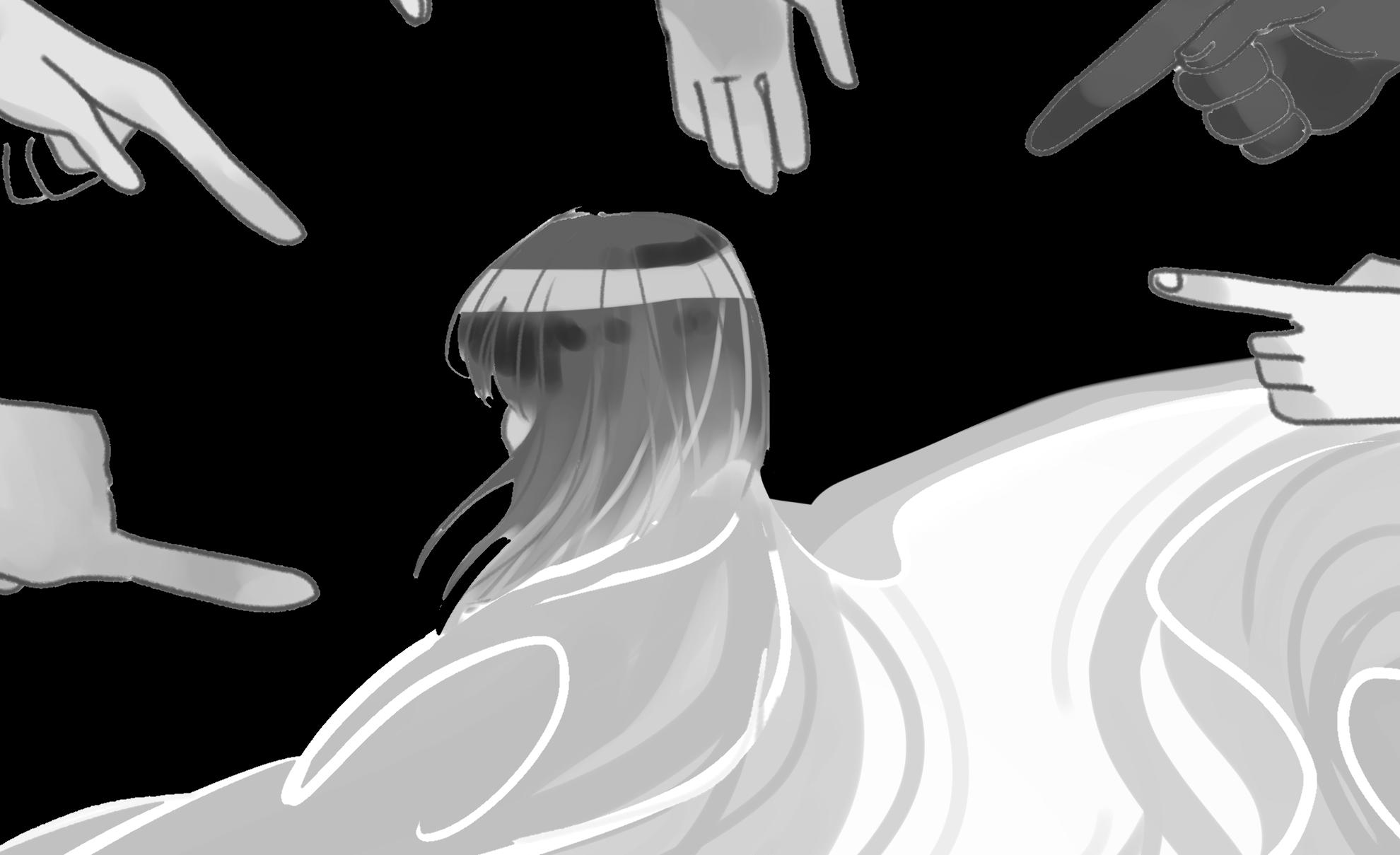
make up 1.6 percent of the U.S. adult population, yet as of 2025, they were attributed to only 0.1 percent to 0.5 percent of American mass shootings, while 98 percent were committed by cisgender men. In other words, transgender people actually commit disproportionately fewer mass shootings. I don’t mean to say that the author intentionally misrepresented trans people. Instead, the problem lies in a failure to recognize far-right dogwhistles concerning marginalized communities, which leads people, like the author, to unintentionally legitimize those messages in public spaces. When misinformation appears on fringe podcasts or anonymous forums, many of us instinctively recognize it as unreliable. However, the danger arises when the same narratives are repeated — perhaps unintentionally — in mainstream commentary, classrooms or opinion pieces. In these spaces, claims gain legitimacy not because they are accurate, but because they are presented by trusted personalities and sources as reasonable contributions to debate. But, when certain rhetoric or messaging tiptoes into accepted discourse, it threatens to subconsciously bypass our critical lens and change how we think about different issues. While these narratives contribute to a growing intolerance
against the trans community, they don’t stop there. Instead, they evolve into public, carceral, legally excused violence, and the emergence of legislative bills, passed laws and executive mandates which flatten civil rights and marginalize trans people.
For example, after Trump’s 2025 reinauguration, one of his first executive orders banned transgender people from the military. Last December, the Department of Justice — in line with Trump’s slew of executive orders — instructed inspectors to stop using standards designed to protect LGBTQIA+ people from sexual violence to evaluate prisons. Last month, the Bureau of Federal Prisons also implemented a policy denying incarcerated individuals access to hormone replacement therapy and social transition. Then, there is Kansas’ newly passed law, which invalidated all transgender residents’ IDs — even of those who had never changed their gender marker — and let cis people sue any trans person they found in the restroom for at least $1,000 in damages. The ongoing development of anti-trans policies intended to erase trans people from society positions the United States to meet sufficient conditions for fulfilling certain stages of genocide such as discrimination, dehumanization and persecution, according to widely used genocide frameworks such as
Gregory Stanton’s model.
When talking with fellow students, I have been struck by how many are unaware not only of these policies, but also of the rhetorical patterns shaping conservative discourse on trans people — a disconnect that signifies apathy toward harmful commentary. This lack of awareness is not benign. When people struggle to spot hateful tropes, especially in seemingly good-faith contexts or popular media sources, they also fail to connect these narratives to broader implications such as the risk of genocide or state-sponsored violence. This inability or unwillingness to recognize farright dogwhistles leaves people primed to accept repackaged rhetoric as fact, giving a green light to the current regime as they escalate their maltreatment of the trans community on a national scale.
Conversations addressing sensitive topics involving or centering transgender people carry real, extreme stakes for how they’re perceived and regarded by law. While the author of the op-ed intended to find a link between school shooting discourse and the article’s audience — California liberal arts students — the piece unfortunately fell short of accurate and responsible representation. As political narratives become more vicious and aim to prey on the unaware, it is no longer
acceptable for us students — authors and readers, to be silent or ignorant about the narratives and legislative wars that trans people face. It’s true that examining media and rhetoric with a critical lens and corroborating statements we hear or read with evidence will not end the scapegoating of marginalized communities on its own. But, it is negligent to navigate life as though mainstream or academic sources are devoid of harmful narratives, and we must make an attempt to be better informed and more aware of sly messaging or biases in the media and discourse that we engage with. When trans people are being targeted by the government and the broader American conservative movement, silence and negligence come off as tacit acceptance, and the unintentional perpetuation of anti-trans narratives leads to the normalization of bigoted ideas. In light of this, I urge you: Become familiar with tropes and dogwhistles weaponized in the pursuit of radical political agendas, and then combat them. If we continue to let deceptive and harmful narratives pass without scrutiny, then we are no longer bystanders to their consequences — we are participants in them.
Aria Wang PO ’27 is currently devising strategies to use the women’s bathroom twice in Idaho without being sentenced to five years in prison (after H.B. 752 takes effect on July 1, 2026).
Disclaimer: The views presented are those of the author himself and do not Department of War or the United States Marine Corps.
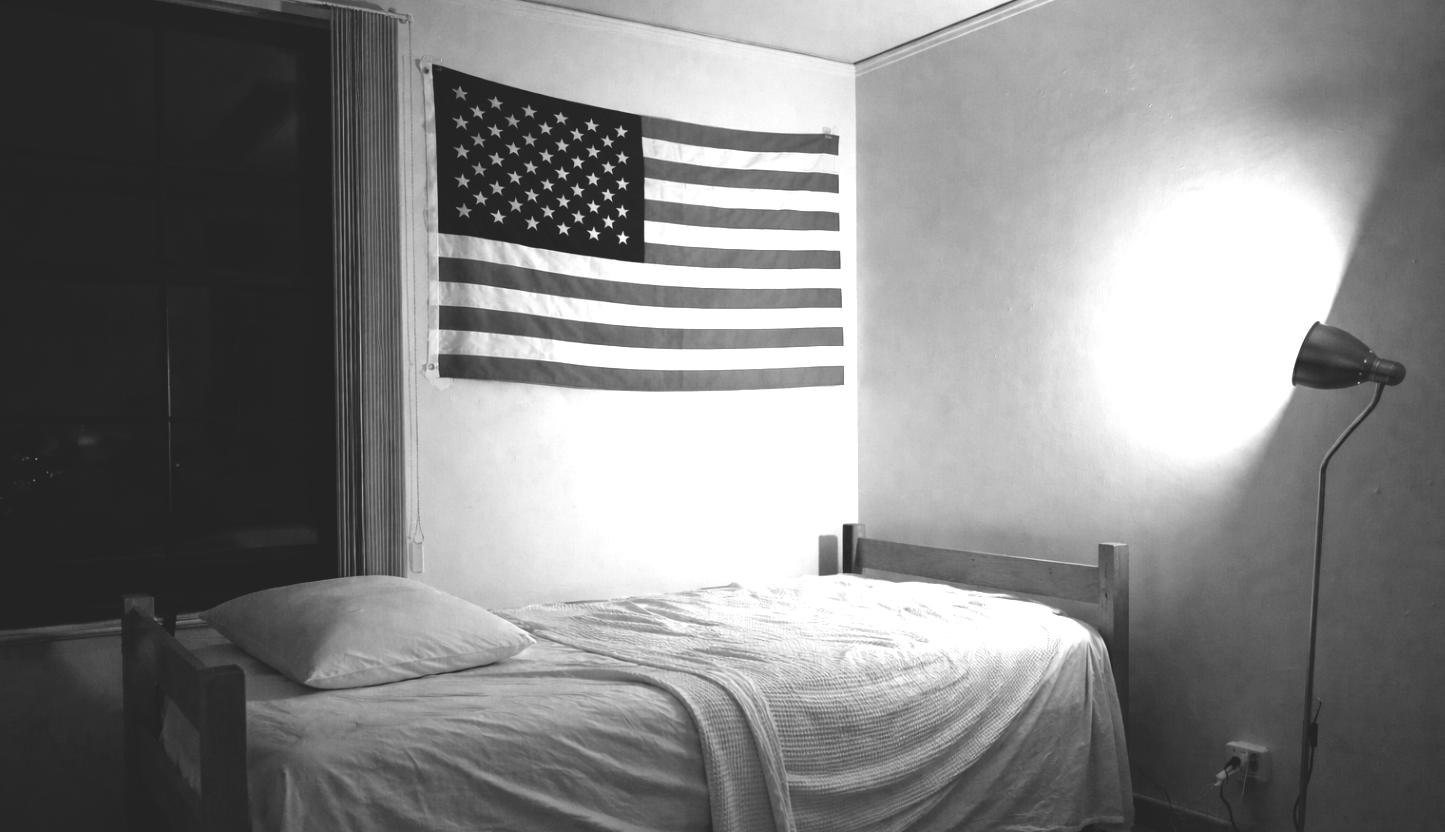
As a student of politics here at Pomona, there are many insights and takeaways from lectures, classes, research assignments, etc. But the largest is simple: The world is a mess. I, like many other Americans, am tired of our nation being pushed around in recent years. Whether this be by outlaw foreign regimes abroad or academics at home who have lostnot represent who we are as a nation. America was not built by a people who apologized for its existence. It was built by people who believed
Coming from an Iranian family and having visited Iran before, I can good, decent people of a nation do know to be right. During the Islamic Revolution, Islamic fanatics and their supporters overran Iran’s government. When I ask many older Iranians how they allowed this to happen, they
I do not believe our nation can returns to the center of world politics, my position is clear: America must against those who seek to harm us retreat that threatens to hollow out our nation from within. For that reason, among other convictions, I applied and was selected to in Quantico, Virginia this summer, where I will begin training to earn the honor of leading Marines and com-
under the leadership of Captain Fran-
Jose Rivera spoke to us. He served up close, and he saw what our enemies do. While we held the plank, he told us to look up. In front of us were young people playing baseball. Their families stood nearby, laughing. Relaxing. Living normal lives. Then he asked us: “Are they training for war?”
No, they’re not. Nonetheless, our enemies get a vote. Whether we prefer peace or not, they have a say in whether that peace holds. While we sit idly in the face of internationalnize, and they prepare to harm us. During the Cold War, our primary a rivaling political vision. Unlike today do not compete with America through a rival governing vision. They resort to terror, destabilization,
objective: To ensure the survival of their Islamic state in Iran. And yet, in the face of this threat, many on our campuses now treat even the recognition that America has legitimate
interests of its own as taboo.
This is dangerous because, whether we like it or not, the world still depends on America to think outside of its borders. For millions, we are more than a shining city on a last hope for strength, stability and guidance when their own governments fail them. We are a nation of nation that stands up for itself, that is what is right. This is who we are as Americans. This is the responsibility we inherit. Now, on the other side of the world, the Islamic regime in Iran has massacred tens of thousands of its own people in weeks this January, and strangled international econothe Hormuz. They continue to act with open hostility toward the prospect of peace, constantly chanting “Marg bar Amrika” (translated from Persian as “Death to America.”)
At the very conception of their state, they took Americans hostage at our embassy in Tehran and enforced religious fanaticism that has led my parents and millions
responsible for the deaths of more than 600 Americans in the last decade, and have recently launched missiles that have taken the lives of more than 13 Americans. We are not being given the choice between peace and war, but whether we aggression continues to advance or They are emboldened to continue their aggression as they bet on since their conception in 1979. The Iranian regime’s success relies on Americans becoming too guilty to defend others, too comfortable to sacrifice and too confused to tell and oppressed. They wager that Americans will submit to negative rhetoric surrounding intervention and march out in our streets demanding our military withdraw an Iranian victory. In short, they bet that America will let itself be pushed around by its own internal ideological divisions. This July, our nation will mark 250 years of refusing to be pushed
continental reckoning that established self-rule, the world would do well has repeatedly demonstrated both and win when our freedom is challenged. From the farmers who bravely stood their ground at Lexington and occupied a quarter of Berlin in 1946, to the Marines who liberated Baghdad in 2003, Americans have continuouslybility inherent to what global power means. This power has never been incidental and has always depended on more than arms alone. It depends on us being willing to believe America’s cause is worth supporting, worth advancing and ultimately worth they should understand that not only does America still possess the will to respond, but the national character required to endure hardship and act with purpose.
Today, despite the internet blackout, I hear from family members abroad that Iranians continue to cheer each American bomb that lands on Islamic Regime facilities. Millions of Iranians, as well as Venezuelans, Cubans and an entire world still trapped under the remaining strongholds of tyranny depend on Americans to live up to their legacy as the “Arsenal of Freedom.” As Americans, this is what the moment requires of us.
Writing this, I am not sure what the future holds for our nation or the world. But what I know is this: The moment will not wait. The threats we face are increasingly growing and real, and ignoring them will not make them she stands alone, must be ready. We must recover our will to confront the burdens ahead of us. And should these burdens grow heavier, and the circle of allies grow thinner, the duty to carry on will remain. That is what leadership demands. When that moment comes, I plan to answer it. America.
LEILI KAMALI
after the revolution, my dad sold contraband Pink Floyd and Prince records to kids in his neighborhood. When alcohol was declared haram, my uncles brewed beer in their basements. When mixed-gender dancing and mingling were prohibited, young Iranians held their parties and blasted while knowing they could be arrested at any moment for these so-called “crimes against the state.”
Five weeks ago, when bombs started raining down on Tehran, President Trump spoke directly to the Iranian people: “The hour of your freedom is at hand … All I want is freedom for the people,” he told the Washington Post. This statement, from a leader who has compared his own people to terrorists for protesting his unlawful abuses of power, would be almost laughable if it were not so devastating.
“This will be probably your only chance for generations,” Trump declared. There was no referendum, no vote, no public forum. And yet, the Iranian people are forced to live a worthwhile path to liberation.
When I think of Iranians, I think of rule-breakers and protestors; I think of bold, capable practitioners of civil disobedience who have been carving out space for their own freedom for decades. Violent intervention in the
name of freedom will not bring democracy. It will destroy the Iran we critical infrastructure and world most long-lasting destruction goes beyond what can be physically rebuilt: By bombing Iran, Trump is destroying and devaluing a dethat Iranians have been growing all by themselves.
My father left Iran in 1982 at 19, when euphoria in the wake of the revolution curdled into intense social and political repression by the new Islamic Republic. Like many Iranian families, mine carries the memory of repression under two distinctly different governments.
My maternal grandfather was imand other relatives were forced to feared secret police force. I do not view Iran’s past through a romanticized lens of nostalgia, nor do I view the desire for a democratic, secular Iran is deeply personal.
own relatives and a loud coalition of the only way. That whatever casualties may come along with the destruction of the regime will be worth it in the end. To me, statements like these are more than just tone deaf or
transitions are clear on this point. Political scientist Barbara Geddes’ research reveals that since World War II, less than a quarter of authoritarian transitions have led to democracy. When regimes collapse likelihood of a democratic transition is even slimmer. Even the Hoover Institution, an organization that rarely takes anti-interventionist stances, concedes that American intervention as a means for democratization has only worked twice: in post-war Germany and Japan. These cases were specific to the conditions under which our intervention occurred, and are not likely to be duplicated today. Iranians don’t need Americans to teach them what democracy looks like. They have been organizing themselves against state surveillance and violent crackdown, at great personal risk, for longer than
tion. The 2009 Green Movement brought over three million Iranians into the streets demanding democratic reform. Without face coverings or personal protection, Iranians showed up en masse to protest the regime. In the years that followed,
of hijab laws by young Iranians and the broader loosening of social restrictions and norms which pushed
the more progressive policy even within the Iranian government. Then came the 2022 Woman, Life, Freedom movement, triggered by the death of Mahsa Amini at the hands of the Morality Police.
Location and Event Data Project, protests erupted in over 210 locathan any prior round of unrest. The protests drew together university students, working-class Iranians, Kurdish communities and residents of Tehran’s wealthiest neighborhoods. It was the most geographically widespread and sustained round of anti-government demonstrations since ACLED began collecting data in 2016. By the end of that year, the regime had partially retreated: morality police activities were visibly curtailed, and women began appearing in public without law. The movement had no formal leadership and no coordinating body, but it was winning ground anyway.
What American politicians have never bothered to understand is something Iranian scholars have documented for years. In Iran, actions that would not be considered political anywhere else are necessarily political. Because the state regulates morality and behavior, any deviation from the imposed social order is an inherent form of

dissent. Anthropologist Pardis Mahdavi documents young Iranians who understood this intuitively.
“By not adhering to Islamic laws on dress, comportment, modesty, and male-female fraternization,” she wrote, “young people are rejecting the notion of being Islamic subjects.” When teenagers hold a mixed-gender party or dance in the street, they are threatening the ideological foundation the Islamic state relies upon to function. “The more we party, the more we laj [or playfully rebel] … the more progress we make,” one young woman told Mahdavi.
Trumpian tweets about bringing freedom to the region ignore Iranians as autonomous people who have been working to enlarge the window of tolerance for democratic life in their country for decades. This is how democratic political culture actually gets built. Not through strongman military tactics, but through decades that slowly erodes the legitimacy of the state and seeps into the fundamental culture of a nation. The Iranian people have been revolting for decades. This just isn’t the kind of revolution Americans know how to recognize.
This may not be the quick and satisfying answer people around the world are eager to hear. It is heartbreaking to know that my people have suffered under this regime, struggle to survive through this war only undo progress made towards livability and liberation.
We as Americans are poorly positioned to be advocating for war. We don’t know what it is to feel the ground shake beneath our feet from the impact. We don’t know what it is to have our homes and schools or watch as black rain washes over our cities. We do not know what it is to fear for our lives in the way we have forced millions around the world to fear for theirs.
Bombs do nothing to help build democracy. They give the regime exactly what it needs to continue the suppression of its people: an external enemy to rally against, a population too busy surviving to revolt and a civil society too fragmented to coalesce. Democracy will never be a military outcome granted by an external force. It will always be a result of in the streets, at parties or in basements, is for Iranians and Iranians alone to decide.
on the phone while writing. He told her familiar: ; the dawn].
was having lunch in a crowded cafeteria and had to watch as a gunman executed victims one by one, includher purse to grab her revolver, only
RUTHERFORD to the game. Gun rights are women’s rights because they provide a means for women to defend themselves in a world of physical inequality. I might be able to throw a man in judo while under strict guidelines, but out on the street, there’s no gi to grip, and he may have a punch that I can’t defend against.
Texas gun laws. In her testimony, she later wrote, “The only thing the gun laws did that day was prevent good people from protecting themselves.”
If Hupp had been armed, she might have been able to stop George Hennard, who murdered twenty-three people. In cases like hers, it’s easy to see how a gun could be necessary to defend against an armed assailant. However, living in Claremont, California, we rarely think about needing a gun on college campuses. Locked dorms, campus security and tight-knit communities make us feel safe. But that safety won’t extend beyond graduation. Outside the shelter of a college campus, Hupp needed protection and didn’t have it. While anyone could have been in her position, her experience highlights the necessity of access to and trainhave drastically changed the situation. Without one, Hupp could do nothing but try to escape.
While anyone may need a gun to protect themselves after undergraduate life, women are especially in need of such protection because of our physical weakness when compared to men. Men are, on average, physically stronger than women. Biological differences in muscle mass, bone density and testosterone levels consistently result in greater strength among men. Research shows that even untrained men are stronger than athletically trained women. As a wrestler and judoka, I’ve had a lot of experience with these wins against boys, almost every male in my same weight class has been stronger than me. Competing against men in wresstakes are much higher in the real world, where there aren’t any rules
Women need access to guns to with physically stronger assailants.
Consider the 57-year-old woman living in Cape Girardeau, Missouri, who was raped by Ronnie Preyer in October 2008. When second time, she used a 12-gauge shotgun to kill him in self-defense.
Take Melinda Herman, a Georgian wife and mother who protected her nine-year-old twins while her husband was at work, when Paul an extensive criminal history, broke shot him, saving her life and the Richmond, California, eighty-fourcaliber revolver when an intruder
A gun neutralizes physicalters is not size, but the ability to act. There are numerous accounts of women of all ages protecting themselves, their children and their homes through the use of guns. Without a gun, these stories couldout a weapon, women are forced to rely on physical strength they do not have; with a gun, they gain the immediate and equal capacity to defend themselves.
Many advocates for gun control believe that more guns inherently increase crime, suggesting that increasing gun ownership among women would be associated with more overall crime. However, there is little evidence to suggest that this would be the case. Women are to commit violent crimes overall. Men commit roughly 75-80 percent of violent crime and about 88-90
percent of homicides. Furthermore, the “guns cause crime” view ignores evidence that often preventing crimes before they escalate. The Centers for Disease Control and Prevention reported that defensive use of guns is at criminals, and an estimated 500,000 to more than 3 million defensive gun uses occur annually. Defensive or simply brandishing, can deter
most likely to use guns. Gun control advocates also often argue that if no one had guns, violence during crime would decrease and women would be safer. However, this ignores the reality that certain types of violent crime can worsen in countries with strict gun control. Burglars in the United
occupied homes than burglars in the United Kingdom. Research suggests that this is largely due to fear of encountering an armed resident. In the United occur when people are home, while in England and Wales, this number is 59 percent. Removing guns does not remove violence, and even in countries where guns are strictly regulated, women remain disproportionately victims of physical and sexual violence. Removing guns eliminates one of the few tools violence. Ultimately, guns provide women with a practical and immediate means of self-defense against
reduce the likelihood of victimization. Women are statistically less likely to commit violence and
responsibly for protection.
With 52 percent of women in the percent of women working in the labor force, women are exercising their independence in an age of increased equality. Thus, being able to protect oneself through self-defense is a condition for equality. As many women at the 7Cs prepare for their careers in the outside world, they must consider how to protect their homes and livelihoods from threats. As Andrea Dworkin wrote, “women have the and I neither want to be victimized by men or subordinate myself to men for protection. Feminism must include the right to self-defense, and that means supporting women’s the right to protect herself from imminent danger.
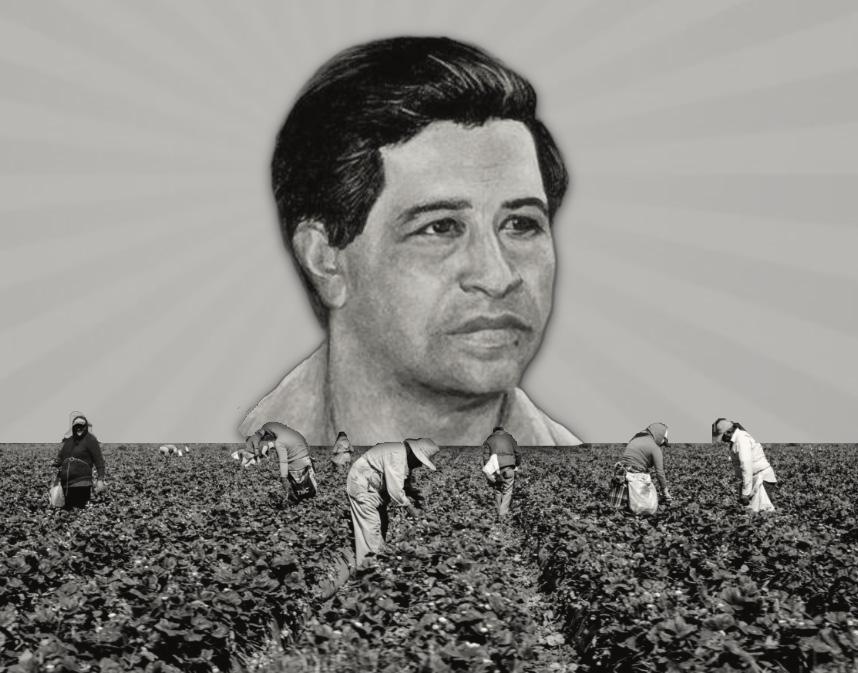
I used to think that every movement needed a hero — Martin Luther King Jr., marching for civil rights, Gandhi trampling British colonialism, Angeles public school curriculum granted Cesar Chavez a similar role in the canon of great men. He was the humble saint of the Farmworkers’ Movement, a mighty mobilizer who achieved fair wages for California grape growers and whose 25-day fast for nonviolence made history.
When the New York Times published an investigation that found that Chavez sexually abused young girls and his United Farm Workers (UFW) co-founder, Dolores Huerta, I felt betrayed. I had grown up believing wholeheartedly in Chavez’s superschool each morning, I would pass by a massive mural of his smiling face.
These allegations have prompted placing male icons at the forefront of history, so I turned to Claremont community members with connections to the Farmworkers’ Movement for guidance. What I learned led me to realize that movements should be commemorated for their collective contributions, not their individual leaders.
88-year-old friend Rev. Gene Boutilier, a Pilgrim Place resident and minister who worked for UFW in the 1960s. Boutilier babysat for both Chavez and Huerta.
When we discussed Huerta’s March 18 statement, in which she revealed that Chavez had raped her twice and that both assaults resulted in pregnancy, Boutilier told me he
“I certainly knew about Dolores’ extra kids,” he said. “[But] I thought it was, quote, ‘just’ adultery. Isn’t that an odd thing for a preacher to say? I didn’t know it was rape.”
In her statement, Huerta said she had kept both the rape and the resulting children a secret because she “didn’t want to hurt the farm worker movement [she] had spent [her] life many ways, Chavez represented the movement as a whole. Compromising his reputation could mean compromising the UFW’s credibility. When I emailed Boutilier after the interview to ask if other organizers knew of Chavez and Huerta’s children, Boutilier answered, “It’s hard to say because people would be hesitant to talk about this, but my guess is that adult mem-
bers of the leadership families were certainly aware.”
While Boutilier was deeply disturbed by the allegations of sexual abuse, he was not surprised.
“When you create the myth of a dynamic that is liable to be dangerous.”
According to Boutilier, the union’s commitment to maintaining Chavez’s reputation was “cultic”, a perception echoed by the New York Times article, which found that union members discouraged the women and girls whom Chavez abused from speaking out in order to preserve Chavez’s public persona. Boutilier also characterized Chavez’s leadership as egotistical; Chavez often purged people from the union in order to mitigate his own paranoia and minimize the contributions of the movement’s other key players. Boutilier’s friend and fellow minister Chris Hartmire, the union and bringing much of the religious support that it had.”
Thus, even before the allegations came out, Boutilier did not celebrate Cesar Chavez Day. He “hated the performance [by leaders] to lionize him” because it underplayed the contributions of others in the movement. This performance extended beyond the actual holiday. “An example is in the United Church hymnal, there’s a famous prayer [Hartmine] wrote it.”
Similarly, Professor Tomás F. Summers Sandoval, professor of history and Chicana/o Latina/o studies at Pomona College, has long been opposed to Cesar Chavez Day.
“When they were making this a holiday in the state of California,sentatives telling them not to and explaining why I was against it.” He said.
In Summers Sandoval’s class, United States, which centers on the UFW movement, I learned about how Chavez and the UFW were often violent and hostile toward undocumented immigrants. Summers Sandoval noted that, as a historian, he is constantly skeptical of “movements making the great result of many people’s dedication. His instructional goal is to minimize Chavez’s prominence in the Farmworkers’ Movement, “except as
people to it.”
When I asked Summers Sandoval how he would adapt his teaching to account for the allegations, he said, “There’s nothing I’m going to do with the exception of adding [the sexual abuse allegations], because I’m very about dismantling that idea of leadership to begin with.”
Daniel Penaloza CM ’26, president of the Claremont Colleges Students for Farmworkers, which was that prior to the sexual abuse allegations, “there already wasn’t this very high praise of Cesar Chavez within [the] club,” as many club members were aware of how Chavez formed a private Border Patrol to deter undocumented immigrants.
Penaloza was surprised at how quickly the UFW denounced Chavez once the allegations came to light, especially because of his previous experiences with UFW leadership. In 2023, UFW president Teresa Romero gave a presentation talk, Penaloza said that when a student asked Romero how the UFW the legacy of Cesar Chavez, she was hesitant to respond.
He believes that the rate at which organizations have made statements or rejected Cesar Chavez Day breaks a cycle of unwavering admiration. “Predominantly, the view has been that, even though Cesar Chavez has done these problematic things, he’s still a leader, we should still respect him.”
in the U.S. class, Summers Sando-
to cults of personality, how we love to elevate heroes, and are quick to tear them down when we realize we were wrong. Summers Sandoaction.” Since the allegations were released, Los Angeles has made a concerted effort to paint over Chavez-related artwork, take down statues, and rename Cesar Chavez Boulevard. While these acts are well-inten-ine why we elevate male leaders to superhuman status and how we can reframe movements to prevent this kind of lionization from happening again. “At the end of the day,” Summers Sandoval remarked, “are we all that more skilled about talking about
power and sex inside workplaces or society? And does ripping down a statue move us anywhere?”
Penaloza expressed similar concerns. “I also saw a lot online about people suggesting we replace Cesar Chavez’s name with Dolores Huerta on signs and murals and things like that. But I feel like that didn’t really capture the issue with holding one of movements is that they’re created by the people, for the people.”
The Farmworkers’ Movement was an undeniable beacon of hope for laborers everywhere. At the same time, and pedophile, Chavez, raises the wider issue of the impacts of elevating calendar, March 31 is now Farmworkers Day. Instead of simply acknowledging the necessity of this change, it is our job to reckon with the repercussions of lionizing individual men and disregarding collectivity. My discussions with members of the Claremont community have shaped my belief that movements don’t need a single face. It’s time to stop making heroes and start celebrating the collaboration necessary to make lasting progress.
meets in Walker Lounge to plan the next issue, from a news story on the Black Student Union Town Hall to perspectives on the U.S. war with Iran. TSL is quick to cover current events affecting diverse populations, but if you feels a lot less diverse than a 5C dining hall. Though most students talk about important issues over dinner, not all students feel TSL is the right place to share their opinions. In the spring of 2021, TSL created two paid senior staff positions for
Diversity and Inclusion Editors and report.
The Diversity and Inclusion seInstead, TSL now has a diversity, equity and inclusion (DEI) commitcurrently composed only of senior only are none of the members of but none of the TSL’s twenty seven
This article’s demographic data kind since the fall of 2023. 61 out of the survey.
The lack of diversity in TSL isn’t just visible in demographics data; is shaped by unique student perspectives whose writing determines is interviewed and how stories are portrayed. The composition of TSL influences the broader campus climate, leading to an incomplete understanding and representation of the diversity of our student body. When limited views or voices are highlighted, many students will feel less inclined to share theirs.
Lack of racial diversity isn’t exclusive to TSL, but is characteristic of journalism as a whole; white people make up 61 percent of the U.S. population, but 76 percent of journalists. Yet student newspapers like TSL, which have a lower barrier of entry compared to professional publications, have the opportunity support for journalists of color. gender diversity than the average newsroom; Though women make up 46 percent of journalists in the United States, they make up the However, upon closer examination, of the small number of men who are in TSL, the majority of them are of TSL writers by a large margin, men are nearly half of TSL’s senior
to accept pitches from writers, make coverage as a whole. In recent years, a nationwide decline in print journalism and increasing administrative censure of student voices, among other shifts in the political climate, have contributed to the shrinking number of publications at the Claremont Colleges and other universities. In this process, the consortium community
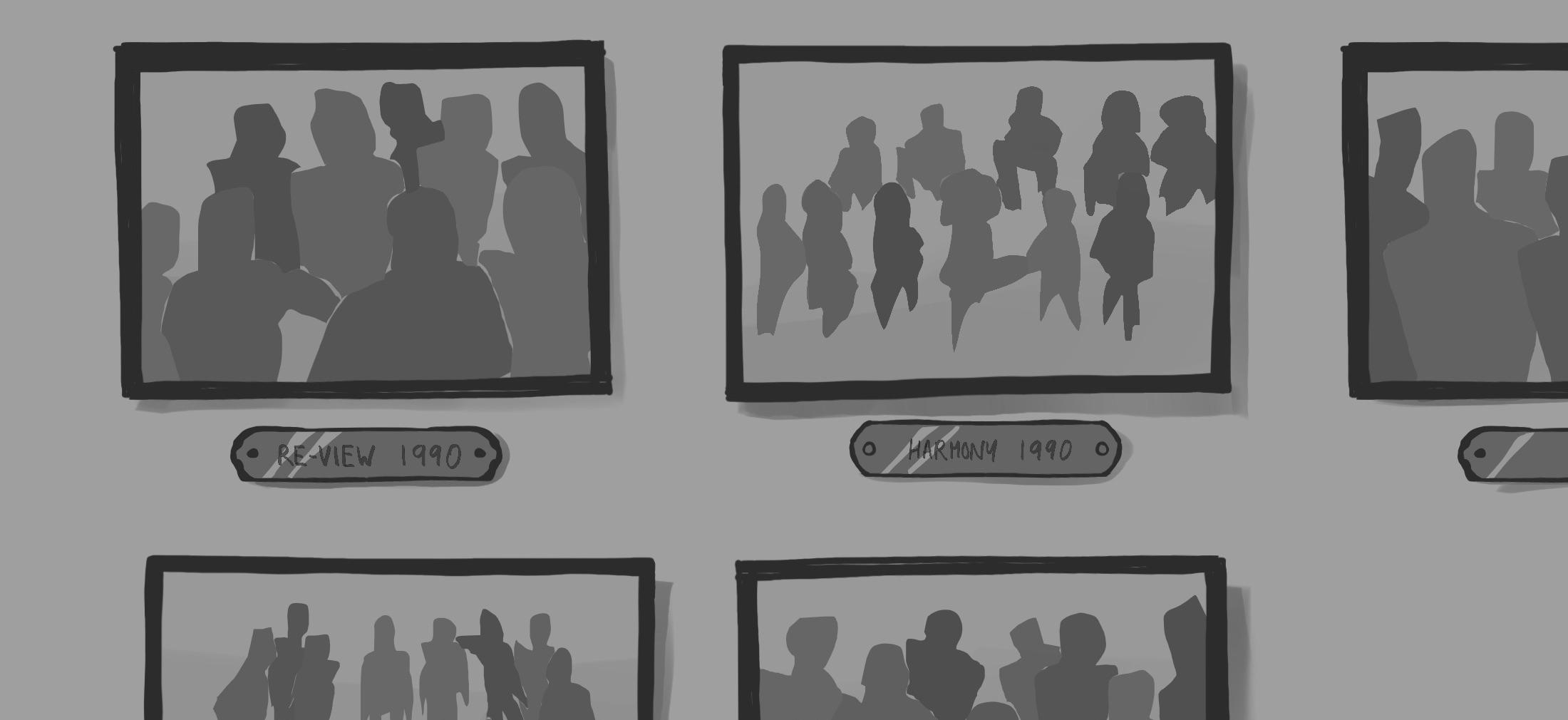
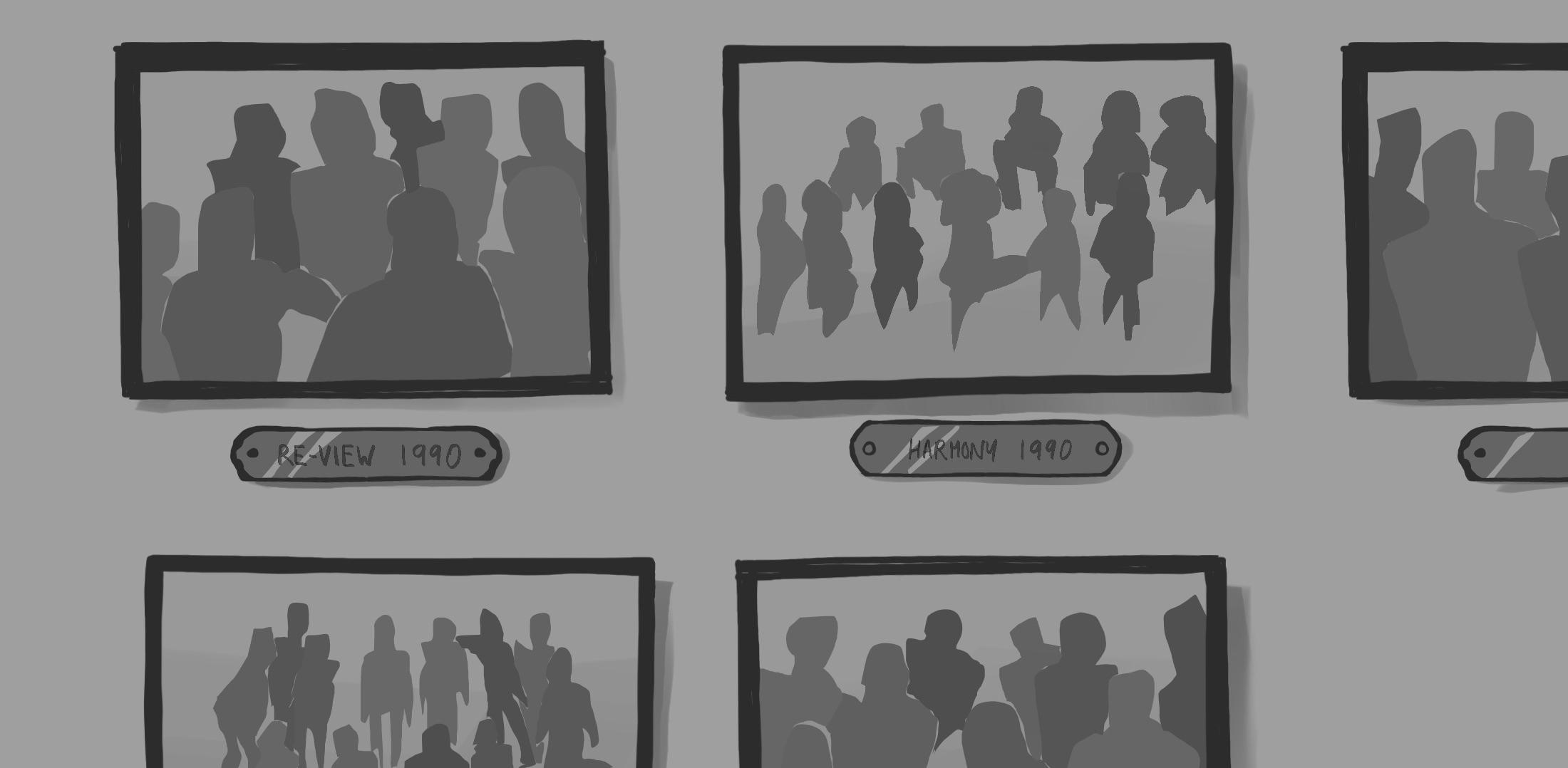
of voices that tell the stories and create the historical record of the 5Cs. However, it’s important to recognize that marginalized students have historically shaped 5C journalism. Previous student newspapers at the 5Cs have centered on diversity, namely the feminist newspaper the Re-View and the multicultural newspaper Harmony. Both papers began and ended within the 1990s, though the Re-View continued magazine. In the Re-View, whose purpose was to “create a forum for the expression of feminism in diverse forms,” students addressed issues from fraternities to abortion rights of the Re-View was its non-hierarparticipated in all aspects of proiteration, founded by students at Pomona College, served as a homegressive viewpoints of the Re-View. Harmony, which was sponsored and composed mainly of students of color, was founded to “serve as a vehicle for constructive dialogue within the diverse Claremont community.” Each issue of Harmony focused on multicultural responses to topics like feminism, racism on campus and the ongoing Gulf War. An editor in chief of Harmony dethose who insist on glossing over the perspectives and rights of people of color.” Harmony emphasized that participation in student journalism is an extension of political participation.
less racially diverse than “Harstudents who were represented in
still present on campus, yet absent in the TSL newsroom. Where should student journalism at the Claremont College go from here?
Inclusivity must go beyond accepting every application to TSL, which is how the paper currently operates. Instead, TSL must intentionally encourage students from communities present on campus but underrepresented in the consortium’s paper of record to apply — and not only for writing positions, but also for seniorresented” extends beyond race and gender; right now, Pomona College, only Mudders involved at the time of publication are crossword creators. Pomona, which funds TSL and describes diversity as “crucial to [its] educational mission,” must also recognize that how students at TSL-
sition, non-managing editors are paid 1.5 to 4.25 hours per week regardless of how many hours are worked. In contrast, the student newspaper at Wesleyan, a peer liberal arts college, has a fund which allows the paper to income students of color.
If working for the TSL was seen as a desirable job, rather than just an interesting extracurricular, a wider variety of students would be able to contribute. Thus, creating a more diverse TSL also requires administration at the 5Cs to fund a more diverse TSL. TSL’s diversity problem is a work in progress, but we want you to be part of the progress. Next time you complain to your friends during dinner or wonder why a topic important to you is never discussed, please consider sharing your thoughts with the wider campus via TSL or reaching out to our publication
or
JUN KWON
After Ryan Long PO ’21 was drafted to the Baltimore Orioles organization in 2021, he ascended the ranks of professional baseball, baseball alumnus to reach the Triple-A level. With this ascendence came the honor of representing Great Britain across two World Baseball Classics (WBC).
In an exclusive interview with The Student Life, Long spoke about his life and baseball trajectory since 2023, from striking out two-time allstar Randy Arozarena at the WBC to inching closer toward a position on an MLB roster.
This conversation has been lightly condensed and edited for clarity.
The Student Life: It’s been three Student Life. Since then, a lot has happened. Tell me about your career and life since then, from things that may have changed to new things you learned about yourself and baseball.
Ryan Long: Since 2023, when the last World Baseball Classic was held, I’ve moved up a few levels. I’ve been playing minor league baseball ever since. I’ve generally been in Double-A since then. Had a couple of stints up in Triple-A with the Norfolk Tides, under the Baltimore Orioles. But again, I’ve generally been in Double-A in Maryland with the Chesapeake Baysox.
In terms of my overall baseball career, there have been ups and downs, but I’ve developed a lot as a pitcher. This past year, I started transitioning from a starter to a reliever. I continued that into this year, and now I’m a full-time reliever, which has been an interesting change, but I think, generally, a good one.
active member of the Major League Baseball Players Association. I’m one of four minor league executive board members. I’ve been very involved in that for the past three years. I think the work I do for that, and my role in that, is a big part of my baseball self.
TSL: I’ll get into the WBC, because it’s very timely and just ended. This was your second appearance, and you again representmore about that second experiencesented Great Britain. Did anything change, including maybe some of the nerves, excitement or even goals second time?
RL: The first time, everything
was really eye-opening for me. It bunch of guys I had never met Britain had ever played in the World Baseball Classic. So, it was all really new to all of us, including me. For me, on the pitching side, I went into it really wide-eyed, and I had a great experience. But again, I was a low-A pitcher at that time, and everything felt so big. All the
in a sense. First, on an individ-
pitcher. I went into it a lot more confident, knowing that I can belong on a stage like that. It was also now the second time I played
We had higher expectations for ourselves this year. We knew we a lot of those guys last time. So while we ended up with the same record as in 2023, I think our team we were stronger. We played all four games really competitively. We held three really, really good teams fairly close in games for a same record, I think our overall for the next WBC, and I think we’re well set up going into that, as well as other international tournaments this year and next. TSL: I want to ask you about
one of those games; it’s versus Mexico. It was quite a close game until the late innings, and you also held a scoreless inning yourself, striking out some stars from the MLB. I want to know what your emotions were, the pressures you felt while warming up and how you calmed yourself to have a poised inning.
RL: I’ll start broadly. I think the World Baseball Classic is such a great event. It showcases the best of baseball, brings tons of amazing fans from all these countries, and shows how baseball is played the globe.
That game against Mexico was loud; it wasn’t a full stadium, but you know, the Mexico fans are loud and in force. And [there was] a really great following of Great Britain fans, too. You know, frankly, I don’t think I did a great job before the game or before going in up. I threw the hardest pitch I’ve pitch — and it was about three feet over the catcher’s head. It was nowhere near where I wanted to go.
at the start, but I was able to trust It’s probably my best pitch. And, my fastball, I was throwing it hard but wasn’t locating it exactly how I and really just started trusting it and it ended up working out. I got Randy Arozarena out on a 3-2
went, “Okay, I’m really in control of this inning now and I can get out of it.”
TSL: Let’s pivot to life in Double-A and Triple-A over the past two years, but specifically this past year, 2025, [where] you did quite well in your appearances. You made a lot of them, your ERA went down by a full point from 2024. I’m just really curious to know what your season looks like in 2026: whether you’re looking to break into Triple-A and get a few more appearances, or if most things will look the same for you.
RL: Last year, overall, felt like it was a solid year. There were ups and downs. I felt like I started out really strong, but then I had a couple of months when things just weren’t going well. I wasn’t pitching my best; just wasn’t having the success I wanted. But I was able to turn that around throughout the middle part of the season, and I ended up with a fairly strong season in some respects.
This year, I’m starting the year back out of Double-A with the Chesapeake Baysox. My main goal for the start of the season is to make it to Triple-A and stay there, since I had a couple of appearances there in the past two seasons. Buted and make it there, hopefully as soon as possible. That’s where my head is at right now. I want to hopefully push for a major league roster spot this year. Our team [Baltimore Orioles] is really good, and it’s going to be really hard, but that’s my goal.
Triple-A. There’s a lot of uncertainty that goes into a major league and a minor league season. A lot depends on injuries and the success of the major league team, but that’s generally where my head is at right now.
TSL: Lastly, a question that remains is your ultimate goal, and you hinted that it’s reaching the MLB. How have you grown into achieving that goal? How close do you think make a maybe safe prediction, I would love to know when you’re gauging for that milestone to be achieved.
RL: I will say, before that, I have multiple goals in life. [The MLB] is my baseball goal, right? As a minor league baseball player, your goal is to make the major leagues. And that’s been the goal this whole time. It feels closer now than it has in the past. My goal, it might be ambitious, but it’s [to make it] this year. How plausible that is, I’m not sure. There are many factors beyond my control. There are things that could go my way or could go against me. All I can control is pitching as well as I can, and keep making improvements on myself as a pitcher, keep really commanding my arsenal
I think if I’m able to do that, I’ll put myself in a good position.
But I have other goals outside of life, like whenever I’m done with law school. That’s a life goal I have. Even if I have a long baseball career, I still have time afterward to pursue another career.

On March 28, the Pitzer basketball court buzzed as students gathered to watch the third annual Dean Chris Classic (DCC). The 4v4 streetball tournament, hosted by the LAC Tournament and Event Planning Supervisor, was an opportunity for 5C students and faculty to celebrate basketball and bond as a community. Students danced to blaring EDM and pop commentary, elevating the competitive spirit around the court.
“[The DCC] was really fun,” organizing committee member Sam O’Dowd PZ ’29 said. “I was really happy to see the whole community come out here supporting basketball.”
The DCC drew inspiration from the physical education course “Dean Chris’s Thursday Night Basketball,” which was started nearly 25 years ago at Harvey Mudd by Chris Sundberg, the Associate Dean of Students and the Director of Campus Life at Harvey Mudd. To his students, Sundberg is known simply as “DC.” Two alums of the class, Bryce Bailey HM ’25 and Charlie Morris PZ ’25 CG ’26, used their experience in the class to found the DCC in 2024.
The basketball tournament features a 4v4, 16-team, single-elimination bracket, alongside fan events such as the 3-point contest, half-court shot challenge, dunk contest, a new “king of the court” an accompanying beach volleyball tournament. In past iterations, the DCC was hosted at the indoor courts of the Mudd Linde Activities Center (LAC), but this year’s outdoor courts to open the event to more 5C students.
“Charlie really wanted to make it big this year. We really wanted to make it a 5C event,” O’Dowd said, after watching the games unfold on the courts. “And I think it really ended up like that. The games have
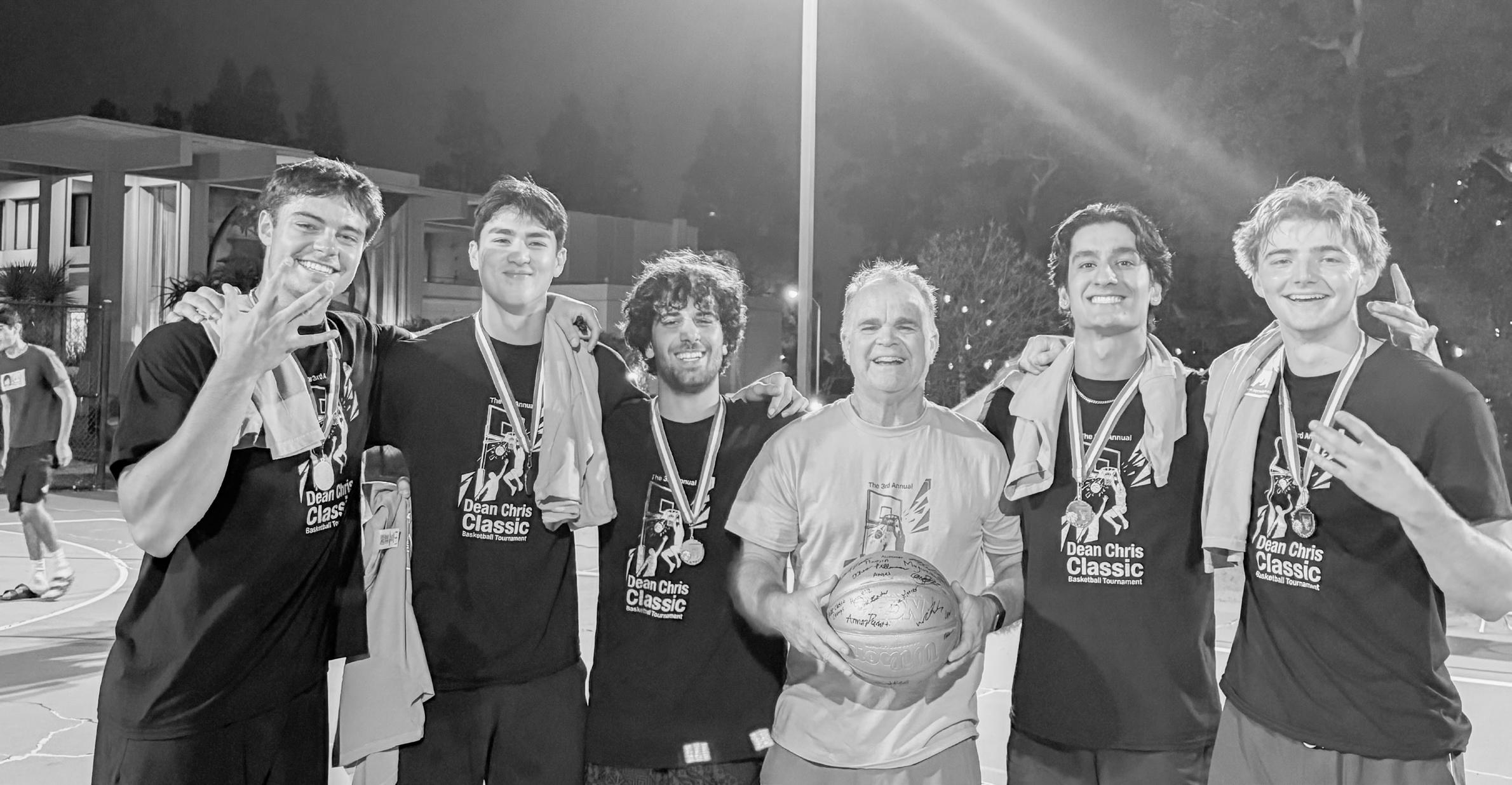
been over for a while, and we still have like 50 people out here just hanging out having a good time.”
Will Householter CM ’27, a returning player, believed this year’s big turnout boosted energy on the court and throughout games, particularly in the championship.
“I thought it was fun. I thought [the championship] was a super competitive game, similar to the feeling of the PP-CMS rivalry,” Householter said. “Even though [DCC] is not like a big athletic event, the energy was just as good, with people talking shit back and forth and it being super physical.”
The inclusion of a new beach volleyball tournament was a great success, according to Sundberg. “This year [Morris] incorporated a volleyball tournament,
which was well done,” Sundberg said. “I think that even the fun factor was higher overall when I watched it a bit. They really had fun, and we just kind of did that on a whim, [even though] we just weren’t sure how that was gonna work out.”
A second-chance tournament was also added to give early-eliminated teams another opportunity to compete. The winner of this conciliation tournament would earn a chance to play the Dean Chris Faculty Team before the main championship game.
“In last year’s DCC, there was quite a bit of controversy surrounding early exits, fouling without consequence and the bleeding of the clock in late game scenarios,” Morris said. “Dean Chris came up with the incred-
Chance Showdown’ at Harvey Mudd’s LAC, where teams who are eliminated early on could into the spotlight against Dean Chris’ legendary faculty team.”
For those like O’Dowd, this tournament not only brought 5C students closer together through sports but also improved the faculty-student relationship.
“[sundberg] is out here hanging out with people all the time,” to have people like Dean Chris in our community, as adults, who are showing us how to be really good people in the future while still having fun and playing basketball.”
Morris echoed the foundational role Sundberg plays within the Dean’s impressive performance. “Dean Chris’ game-winning
3-pointer in the faculty championship game was poetic,” Morris said. “Anyone who knows DC and facilitating, but when it came down to game point, he had to Absolutely insane.”
Looking back on the tournament’s evolution from its humble beginnings as a Thursday night campus-wide event, Morris said the DCC holds “a special place in [his] heart as a graduating senior.”
“While a few hiccups were always expected, this year’s tournament felt like the culmination of years of experimentation and refinement, from the planning and structure to the execution and said. “Everything came together with just the right amount of chaos.”
As the sun slipped behind the San Gabriel Mountains on March 31, the stadium lights at LoanMart Field, home of the Los Angeles and the Pomona-Pitzer Sagehens for a rare exhibition game between a Division III college and a Single-A Sagehens outlasted the Quakes, holding on for a 6-5 win in a scrim-traditionally, with each team’s pitchers facing their own lineplayed behind the Quakes pitchers and vice versa, allowing the teams to see new situations on the dia-
Mike Lindskog, newly appointAngels organization made a speaffiliated with the Angels after needed exhibition games to prepare colleges willing to play, and Pomona-Pitzer was one of the programstonight was a special opportunity
Sagehen baseball rarely gets the chance to warm up in clubhouses, that excitement by describing the “Everyone was having a great time, getting fed and treated like surreal walking into a stadium
“Getting fed in the clubhouse beforehand really made it feel like a real game day,” Gonzaga
inning feeling the pressure of the bright lights adding to the nerves, game got underway; however, the spurred by excellent defensive off the bench with no warmup erased a runner and prevented the Quakes from expanding their
Sagehen reliever threw an inside pitch, inducing a hard swing from
echoed off the infield dirt, and players, coaches and a few fans in
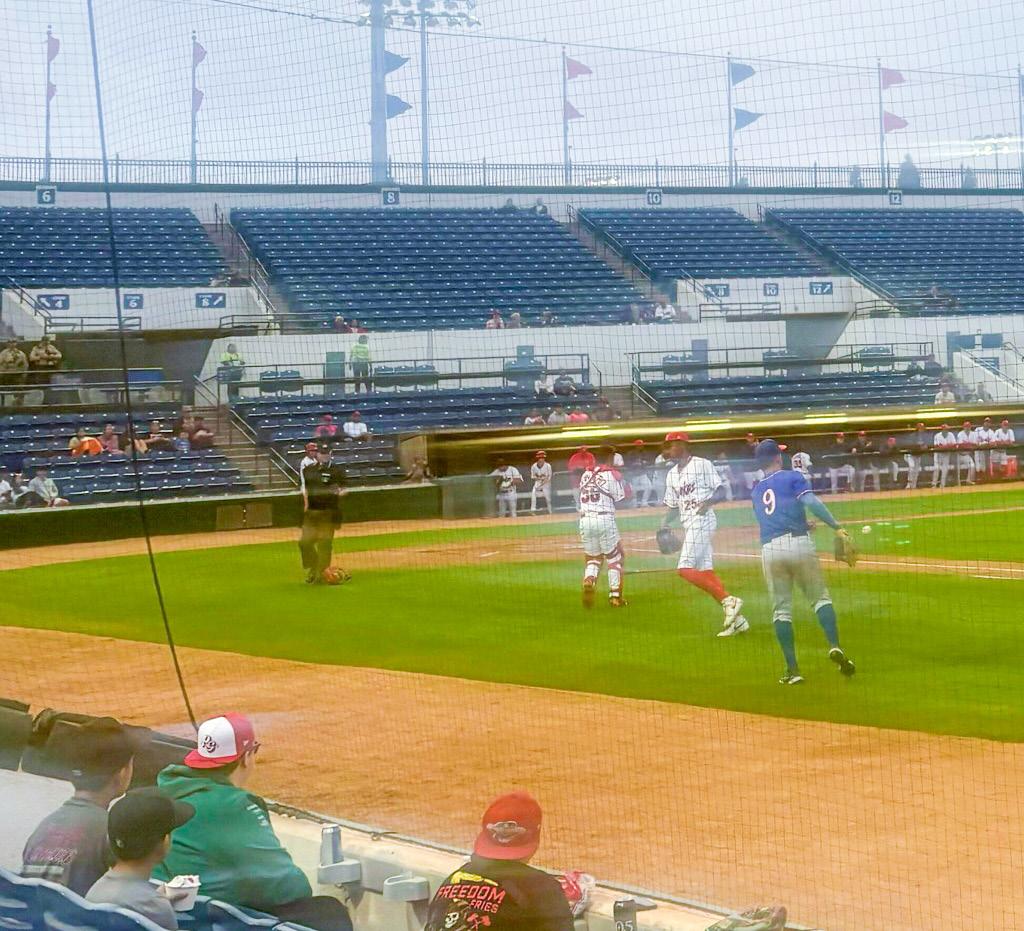
a bat break like that just made the whole thing feel more like a real
For the Sagehens, playing against a team of professionals against a globally diverse group of players, venturing from very
Linskog explained that the many young players who aspire to high school, college and countries like Mexico, Venezuela, the Do-
right, they’re in Anaheim in a few back-and-forth contest before the Sagehens finally pulled ahead, behind sharp defense and timely Hens sprinted across the Quakes’
Given that the game was an exhibition, it was not defined by intense competition; rather, both teams understood it as an opportunity to improve and train
the night proved the Sagehens were
“It showed that we can compete with players at the next level,” Gold with anyone, and that’s something we’re going to carry beyond this
series on April 3-4, and will return
mont-Mudd-Scripps for their Sixth

fectionately dubbed March Madness
Fans can always expect the unexAmerica keeps one eye on the bracket, the next buzzer-beater or the next has kept fans on their toes in a truly been a powerful reminder of why March Madness occupies a category or expanded formats in other leaguesaged to replicate the excitement that opened with some of the most thrilling and unpredictable basketball lack of traditional mid-major upsets, March Madness has felt so special, however, it helps to examine a single moment in the Elite Eight a teammate, got it back and drained

seconds left, capping a remarkable
the top overall seed, Duke, and their player of the year candidate, Mullins had missed his previous
measure of basketball logic, the game
leading by 15 points or more at same situation across the program’sber beside that record will take a of what makes March the best month
Arizona’s bruising lineup bulldozed an Arkansas team with a legendary
March Madness is beautiful when than winners and losers, the tournament produces remarkable stories that add up to represent something bigger
Elite Eight and send Duke to the Final Four, the Huskies got their revenge in a bound for Indianapolis for the third time in four seasons, with head coach Dan Hurley chasing something that
It would be tempting to suggest that the tournament got “lucky” this demonstrated is that March Madness is most compelling when genuine, consequence-laden single-elimination basketball is allowed to operate withgame or a seven-game series where favored teams reliably come out onpressed into forty minutes, decided sometimes by a single stolen pass and

correctly predicted, including yours not outlast Illinois in the Sweet SixIllinois and Arizona also both -
gan delivered what may have been one of the most dominant Elite Eight performances of the modern era, a
the early game, and Michigan takes on Arizona in a heavyweight bout of proven they have legitimate claims to