After the 5Cs released admissions decisions for the Class of 2030 last month, many incoming first-years have voiced that test-optional policies played a key role in their applications. While all the colleges are currently test-optional, Claremont McKenna College confirms it will reinstate test-mandatory applications in Fall 2028.
Pitzer adopted a test-free policy in 2021, which prohibited students from submitting test scores for the 2022 to 2025 admission cycles. Prior to 2021, Pitzer was the only 5C to have a test-optional policy for applicants, which they adopted in 2003. In response to the COVID-19 pandemic in 2020, however, the other 5Cs instituted test-optional policies, citing limited access to testing facilities and broader concerns about equity in the admissions process as primary reasons for the change. Both Scripps’ and Pomona’s test-optional policies are now permanent, but Harvey Mudd’s test-optional policy and Pitzer’s test-free policy may change for future application cycles.
Claremont McKenna will extend its test-optional policy through the all 2027 application cycle, according to an email statement from Vice President for Admission and Financial Aid Jennifer Sandoval-Dancs. She said this will give current high school sophomores time to prepare for standardized tests such as the PSAT and PreACT, but the college will require applicants to submit scores for admission consideration starting in the fall 2028 cycle.
“The decision to reintroduce standardized tests as a requirement for Claremont McKenna College admissions was made with input from the Faculty Admission and Financial Aid Committee (AFAC) and the Board of Trustees Admissions and Financial Aid subcommittee,” Sandoval-Dancs said. “In a highly nuanced process, scores are among many factors that help CMC attract, admit and enroll students whose intellect, interests, leadership, and professional aspirations align with the College’s mission and values.”
Sandoval-Dancs underlined how requiring test scores for all applicants will help the admis -
sion office evaluate applicants consistently within a deeply holistic, context-based framework, as applicants are neither rejected nor accepted solely on the basis of test scores.
For some students, test-optional policies have reshaped their view on access to a college education.
David Simionca CM ’30, a student from Romania, said his decision to apply was primarily driven by academic interest rather than testing policy. He pointed to faculty research as a key influence, recalling that he encountered CMC professor Shanna Rose’s work while conducting research for a high school essay.
“This somehow determined me to look more into Claremont McKenna College, ultimately ranking it as my first choice,” he said.
Simionca said he was ecstatic when he received his acceptance letter last month.
“It was 4:00 in the morning, I just opened it and I ran to my mom. I called my family. They
Scripps appoints administrative supervisor to Motley; structure is threatened
MAGGIE ZHANG
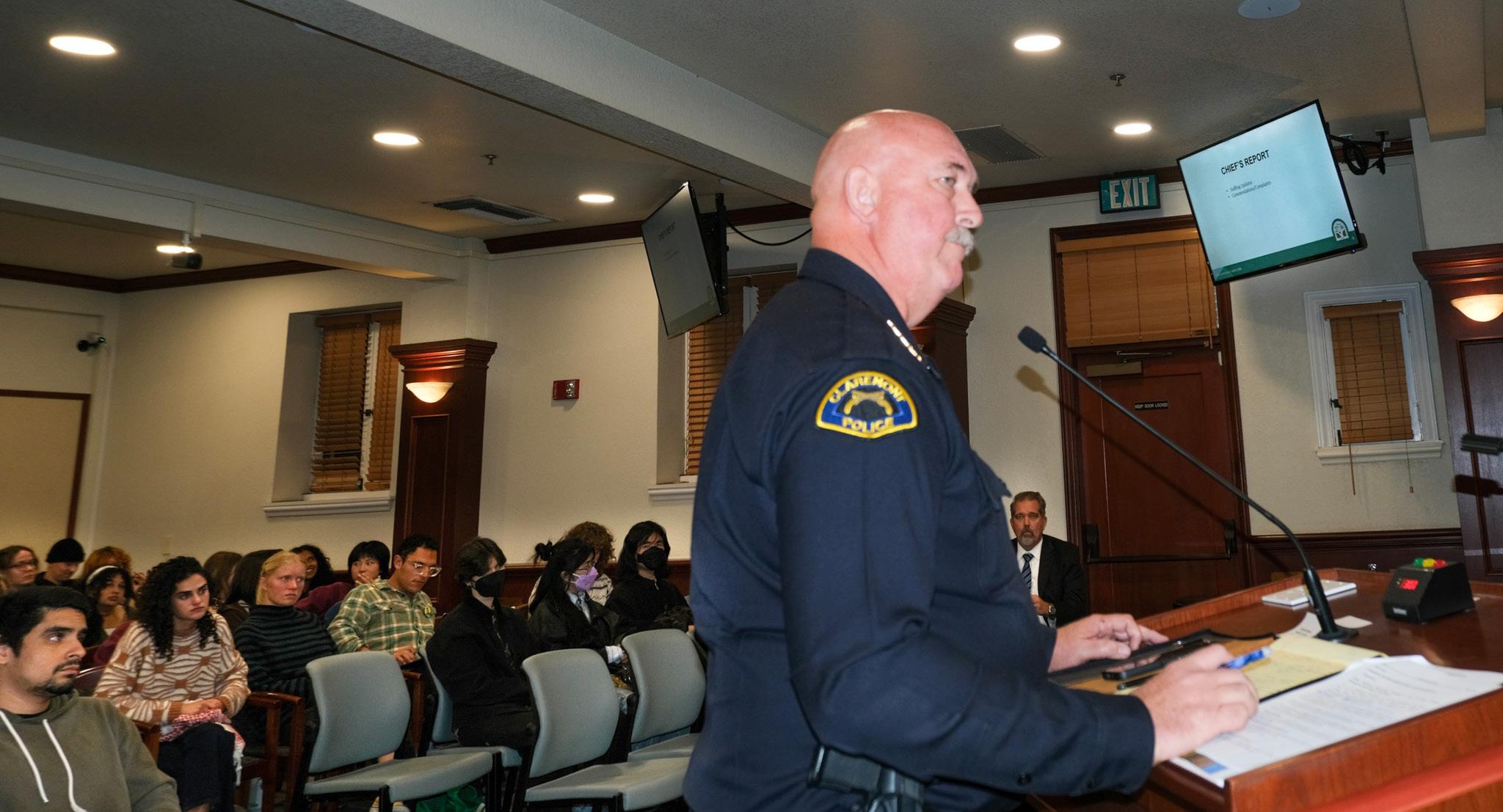
Claremont community members demanded clarity and accountability for Diego Rios at the Police Commission meeting last Thursday.
AVA FLEISHER JOELLE RUDOLF
BIANCA MIRICA
ANNA HORNE • THE STUDENT LIFE
CASSIE SUNDBERG • THE STUDENT LIFE
Scripps appoints administrative supervisor to The Motley Coffeehouse, potentially threatening the entirely student-run business model.
QUINN BOLSTER
DIEGO RIOS: Students attend police commission meeting
Continued from page 1
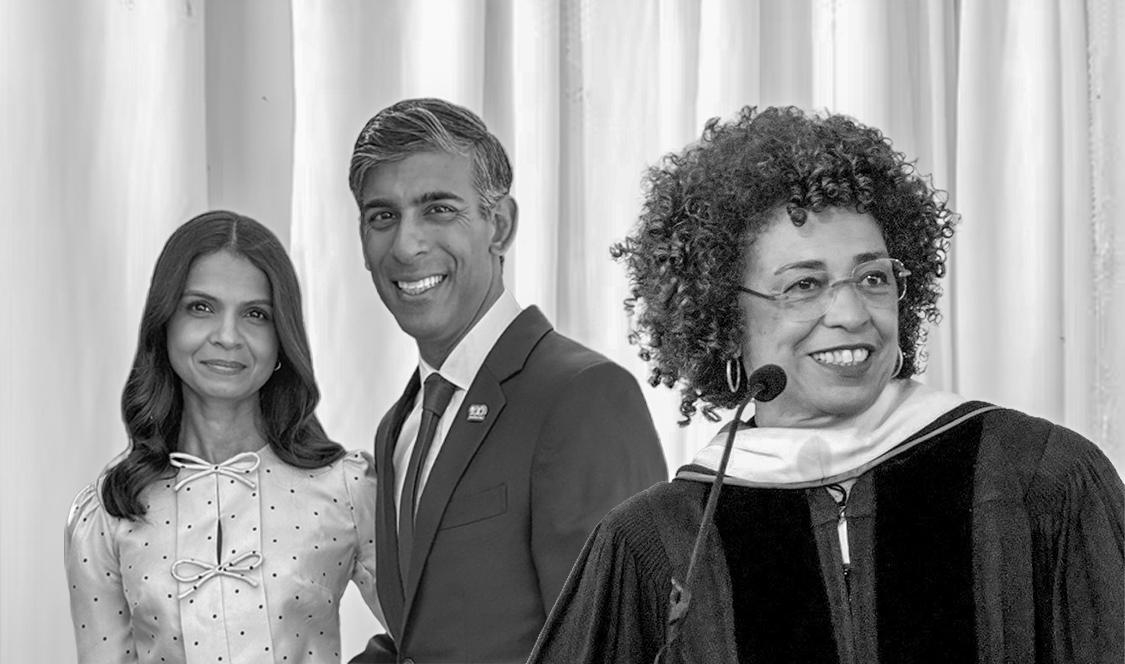
Activist Angela Davis and former UK PM Rishi sunak to speak at 5C commencements
got really excited because I got a scholarship,” he said.
Simionca did not submit SAT scores and said that access to standardized-testing centers is limited for international students. He said that not having to submit test scores likely makes applying to college easier for those facing similar constraints.
A study from Harvard’s Opportunity Insights, which contributes to a growing body of research that questions the role of standardized testing in admissions, found that students from the top 1% of income earners are 13 times more likely to achieve top SAT scores than students from low-income backgrounds, highlighting how test performance is shaped by access to resources rather than intellectual ability alone.
This dynamic was reflected in Julia Savage’s CM ’30 application experience. Having applied without submitting test scores, she said she initially questioned how her application would be evaluated.
“I thought that because I didn’t submit my scores, I wouldn’t have gotten in,” she said, adding that her acceptance suggested a broader review process in which
“our extracurriculars, our involvement in the community are much more important than a standardized test.” Similarly, Hope Moronay PO ’30 said she liked Pomona’s small class sizes and campus environment, and chose not to submit ACT scores as part of her application.
“Having that option to not have who I am reflected through simply a test score was beneficial,” Moronay said. While some studies, including research supported by The College Board, have found that SAT scores provide significant predictive power for estimating first-year GPAs, other studies reveal that high school coursework and grades are often stronger predictors of college performance than test scores, especially when considering differences in access to preparation and testing conditions.
Other students described similar pathways to the 5Cs — ones influenced by personal experience and strong academic performance at the colleges — emphasizing that factors beyond standardized testing also played a central role in their application and enrollment decisions.
Sophia Lu PZ ’30 said she first learned about Pitzer from family friends and later visited the campus, which helped her decide to apply. Her interest in a smaller, discussion-based academic setting shaped her approach to the admissions process, placing more emphasis on campus culture and academic
experience than on standardized testing. Sandoval-Dancs assured that test scores are only a fraction of what is considered in each application, and reviewing scores will help contribute to a holistic review process.
“Requiring test scores for all applicants helps us evaluate
them consistently within a deeply holistic, context-based framework,” Sandoval-Dancs wrote. Claremont McKenna remains the only 5C that has confirmed a return to mandatory-testing. Pitzer and Harvey Mudd are yet to release testing updates for future cycles and did not respond to TSL for comment.
Percent of enrolled CMC students submitting ACT and sAT scores
Source: The Common Data Set
KAHANI MALHOTRA
COURTESY: CLAREMONT MCKENNA COLLEGE AND PITZER COLLEGE
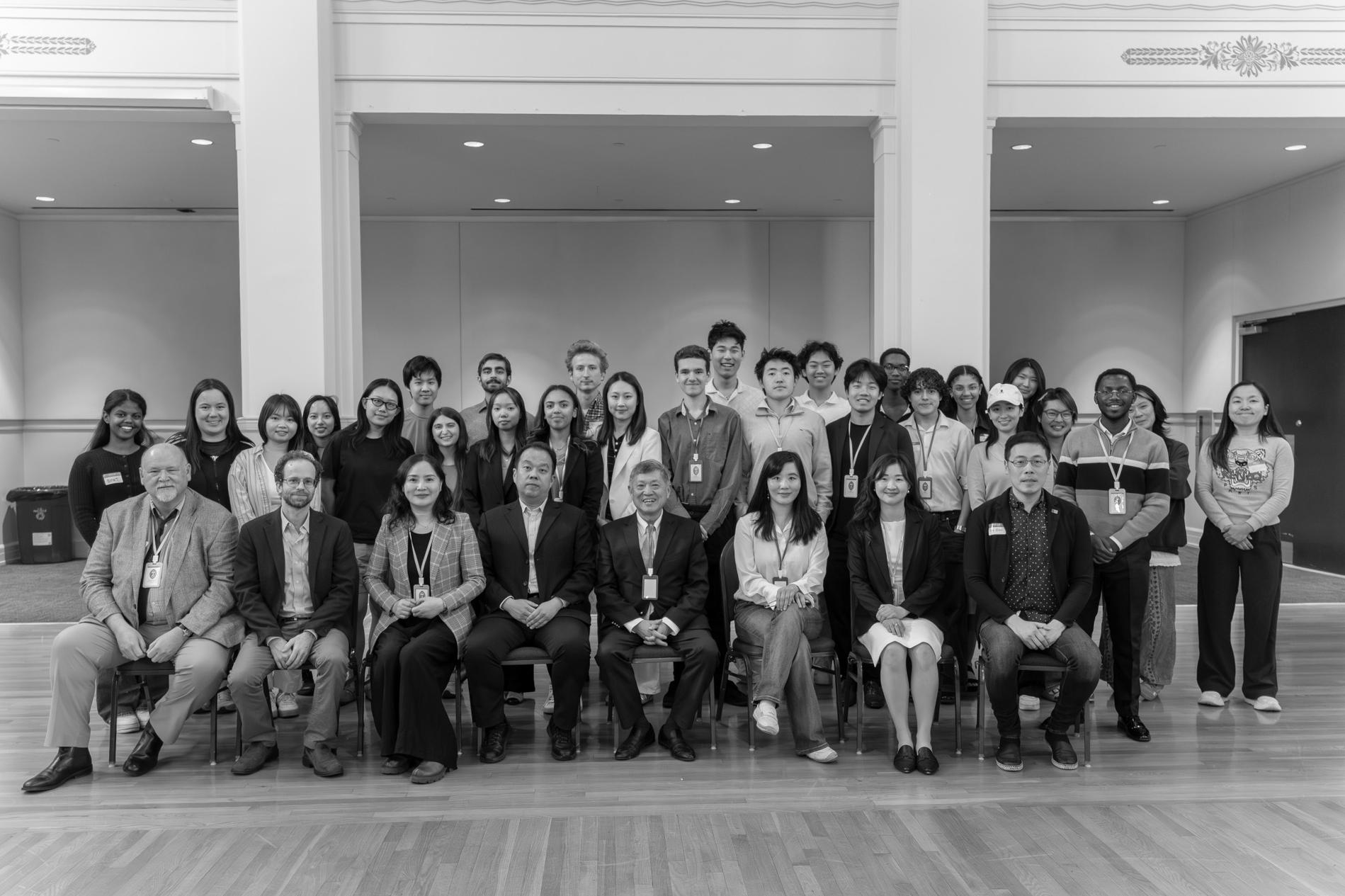
PACIFIC’s 2026 conference explores the future of U.S.-China relations
“When people meet, exchange ideas, challenge one another respectcreate the conditions for trust,” Pierre Englebert, Pomona College’s international relations and politics professor, said. “Trust, however gradual and imperfect, is what makes cooperation possible.”
On Saturday, Apr. 4, the Pomona America China Initiative for International Cooperation (PACIFIC), one of the Center for Global Engagement’s pilot programs, held its 2026 conference. The conference invited professors from colleges in both the United States and China to discuss the current state and future of U.S.-China relations. The conference lasted from 9 a.m. to 4 p.m., with speakers presenting in Edmunds Ballroom and the surrounding classrooms. The theme was “Fostering Connections For a
Due to external territorial disputes, the rocky relationship between China and Taiwan, and the growing power of both countries, U.S.-China relations have been unsteady in recent years.
The conference created a unique opportunity for a multitude of scholars to share their research on this topic, with each professor giving an individual presentation of their specialized research.
In past years, Pomona has lacked a space dedicated to China within the International Relations (IR) department and wider community. Recognizing this limitation, members of PACIFIC decided to create a space where such discussions could be held.
The conference began with openpresident, Tania Rachidi PO ’27, who was followed by Kara Godwin, Pomona’s assistant vice president concluded with a short talk given by Pomona professor and PACIFIC’s advisor, Pierre Englebert.
Each speaker stressed the need for open-minded, active conversation alongside people-to-people connection, in this time of transformation and broader global political tension.
“This group is growing a deeply enduring idea that meaningful
progress in international relations, on institutions and policies, but on people,” Englebert said. “[Progress depends] on [people’s] ability to listen to questions and connect across University of Denver professor of Chinese politics and foreign policy Suisheng Zhao was the keynote speaker, presenting “The US-China Great Power Rivalry: From Trump 1.0 to Trump 2.0.”
He spoke passionately about the power rivalry between the United States and China during Trump’s role of Trump’s mantra — “speak
dominating force in global politics. Zhao explained how this rhetoric exacerbated the growing new Cold War between the United States and China, an issue that continued through Biden’s presidency as well. When Trump resumed his presidency in his second term, however, he shifted the tone of his international policies to be more cooperative, taking a less aggressive stance towards
China. Zhao ended by voicing his concerns about the current state of U.S.-China relations.
“President Trump and President Xi Jinping have worked together and navigated [and stabilized] the relationship in the last year,” Zhao said. “But whether this stability will endure depends on how the leaders of both sides continue this type of navigation with allegiance, political wisdom [and] the strategy to respond to international change.”
Participants could then choose Zhao’s presentation: “Beyond the New Cold War” by Fudan University’s Institute of International Studies professor Minghao Zhao, or “A VilPomona College assistant professor of Asian languages and literatures Yanshuo Zhang.
Even during the mid-break for lunch, the discussion did not stop. Students brought conversations with others over catered Chinese food. Between mouthfuls of mapo tofu and xiao long bao, students created new avenues for discourse.
“[During] lunch, I saw people … tables,” Rachidi said. “Everything was going [smoothly]. I think this was my favorite moment.”
After lunch, Tsinghua University’s professor Kaiping Zhang presented her research on “New Media Dynamics in U.S.-China Relations.”
In her talk, she discussed how the media has exacerbated tensions between the United States and China.
Her research included how a growing narrative of “humiliation, pride and sense of national security” has shaped China’s national identity. China has introduced several policies to reinstate a sense of domestic power against looming international threats.
After another series of talks and a quick tea break, the conference resumed with its last event of the day: a panel discussion moderated by Claremont McKenna College professor Terril Jones. The theme was “Bridging the Gap: What Was Missed, What Comes Next in U.S.-China Relations?” and the panelists included professors Yanshuo
Zhang of Pomona, Kaiping Zhang and Michael Davidson of UC San Diego.
“[The] highlight was definitely the panel [and] how we can hear perspectives of how cooperation can work between the U.S. and China
PACIFIC logistics leader Leo Liu PO ’28 said. “[They] all said they’re hopeful for the future if both sides can listen and understand each other. I really learned a lot from the panel and how important it is for us to hold this conference, [bringing] people together
open-mindedness and empathy in these kinds of complex conversations is rare in the current political climate. PACIFIC treasurer Jack Wang PO ’28 explained that connecting on a level separate from politics can help create a comfortable, welcoming environment — one that is critical to productive conversations.
“[The] one thing that the speakers, the team and professors kept repeating was [the importance of] people-to-people connections,” Wang said. “[Meeting] beforehand in a just be ourselves, talk to each other, and get to know each other makes conversation a lot [smoother].”
All speakers stayed near Pomona’sperience life on a college campus and personally connect with the community they came to educate — a crucial tool to achieve successful communi-
“[It’s] not just like they’re coming here for a job, it’s also that they’re becoming more integrated into the community,” PACIFIC board member Sarah Owosina PO ’29 said.
Currently, PACIFIC believes that open dialogue concerning U.S.-China relations starts by building trust with Chinese institutions. In the future, they hope to continue holding these conferences and potentially invite students alongside professors from China and vice versa to maintain these important conversations and people-to-people connections.
“I think these types of connections, people-to-people exchanges, [are] really the vision of PACIFIC,” Rachidi said. “This is what we want to expand and have in the future.”
Does it matter that Sex and the City fails the Bechdel test?
ARIANNA KAPLAN
The sleepy monotony of a Claremont Wednesday afternoon was shaken last week when the one and only Sarah Jessica Parker paid us a surprise visit while touring the Scripps campus with her daughter. She was, even got to shake her hand, can you wearing bug-eyed sunglasses. As a long-time “Sex and the City” watcher and columnist, I, like anyone else with half a brain, was appropriately gagged. Parker played Carrie Bradshaw on the groundbreaking HBO comedy-drama series “Sex and the City,” a worldwide phenomenon and my favorite comfort show. Even if you’re like me and didn’t grow up with a television, you probably know about “Sex and the City.” Even if you don’t think you do, you’ve probably heard a reference to it at some point.
geist of the 90s and the early 2000s, and Carrie was the fashion icon of that period. After she made an New Yorkers decided they couldn’t be caught dead with a piece of fabric-wrapped elastic around their wrist for two whole decades. While Carrie’s fashion and cultural iconography are unanimously agreed upon, something that remains up for debate is the show’s status as a feminist piece of media. Can we call this show, centered around the lives of four female friends in Manhattan, a piece of feminist media? Further, does this
For starters, the show was a rare instance of successful Western media from the 90s to 2000s that captured four women who had professional lives and engaged in candid — if not graphic — conversations about sex and relationships. Because of this, it became a torchbearer of third-wave feminism: It emphasized sexual liberation, individual agency and
reclamation of femininity. It served as the feminine equivalent of “The Sopranos,” presenting characters who were as unlikeable and complicated as they were endearing.
However, to the question of ‘Is the show feminist today?’ the answer is less clear. First, the issue of the character’s likability: No one likes Carrie. She is arguably more of an anti-hero than she is a typical protagonist. She lies, she cheats, she steals. She has an affair with her the best relationship she has found on the show to engage in secret hotel-room trysts with a married man. But it’s not just Carrie who’s unlikable. For all of the show’s moral victories, there are equally as many moments of unapologetic selfishness, and rarely do any of the group’s conversations pass the Bechdel test. The plots of the show revolve around dating and the endless search for the one.
However, these characters do not have to be likable to be feminist icons. While the viewer may be frustrated by some of the characters’ decisions, the very point is that the women have the right to make these terrible decisions. “Sex and the City” was released in the mid 90s, when the representation of women in to limited roles and stereotypical characters. Female characters with agency and well-rounded personalities were overshadowed by their male counterparts, perpetuating the notion that women were less capable Today, the show might fail to meet the criteria of fourth-wave feminist media, which emphasizes intersectionality, anti-capitalism and de-centering the desire for male validation. The women are white, wealthy and — besides Samantha’s brief lesbian relationship and Charbisexuality — heterosexual. Their apartments are all glamorous, their
friends and lovers are predominantly white, and Carrie is famously shocked when she realizes that she she’s spent $40,000 on shoes.
I believe that “Sex and the City” is a feminist show, even though I wouldn’t say that it succeeds in However, I don’t think that the main goal of the show was to champion feminist ideals. Our desire for every feminist role models proves that we don’t have enough shows about women.
In the same way that a show about men isn’t expected to exclusively discuss men’s social advancement in society, the same burden shouldn’t be applied to a show boasting a predominantly female cast and audience. Though the women are concerned with dating, this doesn’t mean that they have to serve as role models for all other women.
They are allowed to simply be. Trying to box them into any other category is needless and limiting.
“Sex and the City” has become such a cultural touchstone because there was a gap in the market for female connectivity. The message of the show is that while romantic partners come and go, sisterhood is the one true constant.
“I’m a Carrie,” is what I would have said to Ms. Sarah Jessica Parker if I had been lucky enough to meet her that fateful Wednesday. Thank you for creating a character who is unapologetically imperfect. I didn’t get the chance to say any of that, but I did wear a pair of outrageously large sunglasses today.
Arianna Kaplan SC ’27 is very concerned with college social dynamics, our weird philosophy. She will tell you, without fail, that she studied abroad in Paris. Please, please, please ask her about it.
KATE YOO
THE FEMININE MYSTIQUE
FLORIA AUERBACH •
COURTESY: TERESA CHANG
Lights dimmed as students shifton the colorful opening frames of “Lakay.” Produced by CalArts and dithemes surrounding Haitian culture, diaspora and home.
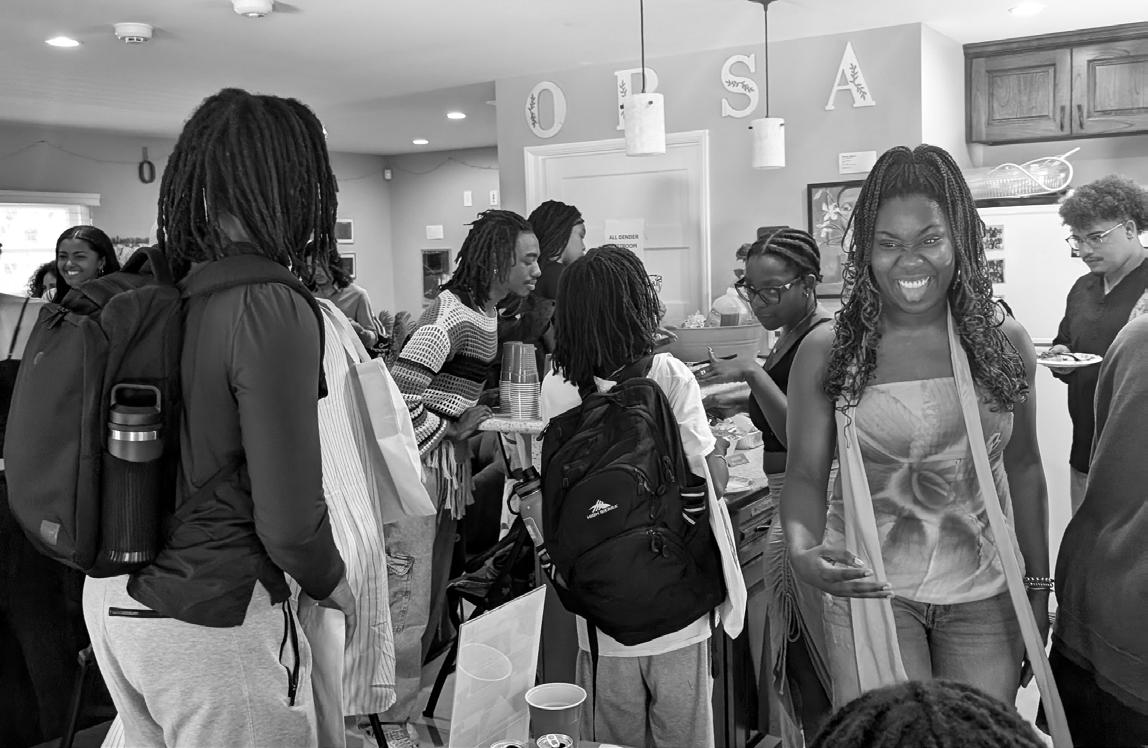
On April 4, Pomona College’s Ofhosted the Caribbean Film Fest Short Film Showcase at Claremont McKenna College’s McKenna Auditorium from 2 to 4 p.m. The screening, part of a two-week-long festival organized in collaboration with student groups Latin American Club (BLACC), the Pomona Black Student Union (BSU) (CLSA), featured a curated lineup of and its diaspora. Now in its third year, the showcase drew in approximately
The festival was established in 2023 in response to the lack of student-run organizations showcasing Caribbean culture.
“We noticed that there was kind Caribbean students,” co-founder of the Caribbean Film Festival, Isaiah Dawson PO ’26, said. “I think it’s really important that you can see yourself you can understand and relate to the experiences.”
As one of the organizers, Dawson explained that they aimed to expand this year’s festival from a one-week program to two weeks of events to increase accessibility. Rather than positioning the showcase as a space only for those who identify with Caribbean culture, they designed it as an event centered on community identity could participate and learn more about Caribbean traditions. Through this accessible format, OBSA strived to make Caribbean-focused programming a visible and recurring part of campus life.
anybody who’s interested in learning about Caribbean culture,” Dawson are a part of it and just want some kind of space for it.”
“Lakay,” which grounded the show(2021),” a Puerto Rican short that explores teenage relationships through humor. From there, “Niña Linda” followed a young Dominican American as she navigated her identity and
THE DAILY PALETTE
relationship with religion across cultural boundaries, highlighting the lived realities of diaspora.cally and thematically: from “Jamaica No Ja Makai,” an anime-inspired cartoon, to ”Jab Jab,” which highlighted Grenadian Carnival practices. The program culminated with a documentary segment on “playing mas” — a prominent part of Trinidad and Tobago’s annual Carnival, where festival-goers dress in elaborate, colorful costumes and dance through the streets from sunup to sundown.
gins and meaning to the forefront, portraying it as a practice rooted in identity and collective expression.posed to show the diversity of the Caribbean beyond what people here usually understand,” dean and director of OBSA, Lydia Middleton, said. “There’s always that association with carnival or a vacation destination, but there’s a lot of rich history and culture, much of it connected to colonization and enslavement.”
For Middleton, that goal extends beyond representation alone, as the screening aimed totural backgrounds. Working with groups like CLSA and Pomona BSU, organizers were able to reach students who may not have initially sought out Caribbean-focused programming.
With that broader audience in mind, they privileged stories grounded in everyday life, humor and celebration. Rather than reinforcing familiar images of the Caribbean, the lineup deliberately moved across histories and cultural customs that are often left out of mainstream media.
to be more joyous,” co-founder of Caribbean Film Festival Se’maj
slavery or discrimination, but we wanted students to come and see their culture represented properly, in a great way.”
migration, religion and cultural inheritance, alongside moments of intimacy, creating a fuller picture of Caribbean identity and deepening the audience’s understanding of experiences that are often reduced to cultural stereotypes. -
said. “When someone says they’re going to play mas, I understand what they mean.”
ANIMATED
FILM FEATURES
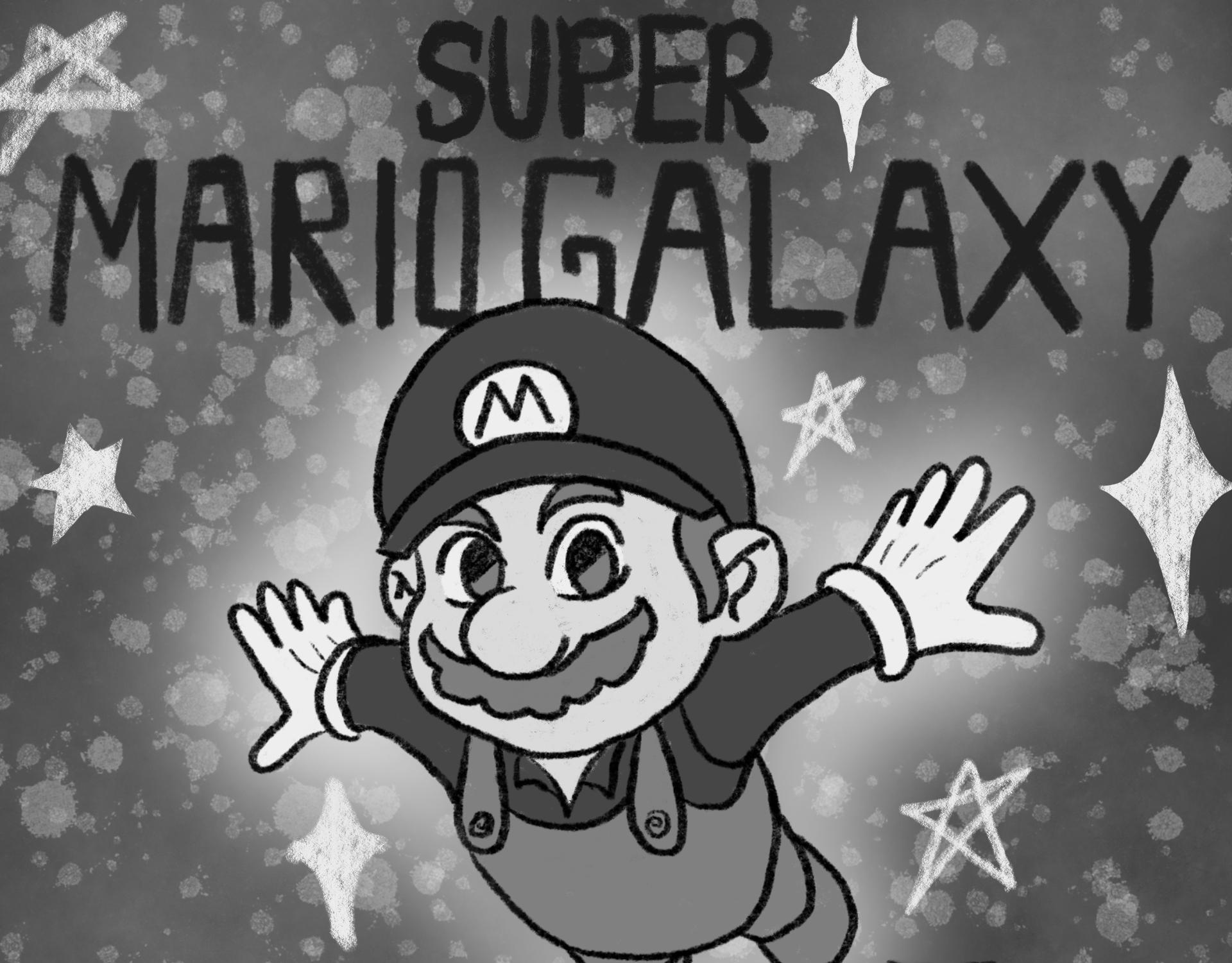
‘The Super Mario Galaxy Movie’ not the smoothest launch
This review contains spoilers for “The Super Mario Galaxy Movie,” which just released in theatres. Proceed with caution if you plan to
While this is a departure from “The Super Mario Galaxy Movie” has been on my radar ever since it hoping that the sequel would be
In a few ways, “The Super Mario Galaxy Movie” has improved from the original, but it unfortunately predecessor.
One of my biggest issues with thecensed music in certain scenes rather than pieces from Brian Tyler’s original soundtrack. It felt distracting and out of place in most instances, with the decision to play “Take On Me” during one scene feeling particularly considering Tyler’s soundtrack was many of the iconic tunes from the Super Mario video games.
Thankfully, the sequel lets Tyler’s music shine throughout the entire movie, with only a few instances of licensed music that feel much more tasteful this time around. Just like the original soundtrack, Brian with callbacks to many Super Mario video games, drawing more inspiration from the highly lauded original “Super Mario Galaxy” subseries. I also appreciated the movie’s creative visuals and how they incorporate characters from across the extended Mario universe. Wart, Bros 2” as the game’s final boss, was a much-appreciated recipient of this treatment. Although he is a very minor character in the original games, Wart is reintroduced in this movie as the sleazy manager of a casino shaped like a massive
question mark. Even though his role is ultimately minimal, I found his presence to be quite memorable an otherwise obscure character and spun him into something new.
In general, I give the movie a lot of credit for how much it openly embraces its video game origins. the sheer agility of these characters, with them running, jumping and using power-ups to navigate their way through elaborate obstacle courses in a way that emulates the original platform-style gameplay. seem outright ashamed of their source material, “The Super Mario Galaxy Movie” wears it on its sleeve. more ambitious in its storyline, even if it is still relatively simple. There are certain characters with interesting backstories, but their potential often ends up going nowhere. For examin this movie: He begins forming a bond with the Mario Bros, yet still falls back to his evil ways because of his son, Bowser Jr. In a similar way, the movie establishes a familial connection between Princess Peach and the newly introduced — at leasttional core, considering Peach has mentioned not knowing anything about her familial origins before coming to the Mushroom Kingdom. Unfortunately, these elements came to a close. There is only one scene in which Bowser is forced to decide whether to assist his son in taking out the Mario Bros or to spare them. The familial connection between Peach and Rosalina feels shallow, as Rosalina hardly receives any screentime. Her biggest appearances are at the beginning and the end, with only a few scenes featuring her showing up in the middle. Therein lies the inherent problem that I — as well as many others —
series in general. These movies are and cameos from the video games, with Illumination and Nintendo intending for the audience to take are there a plethora of references from the Super Mario games, but there are even characters from other Nintendo franchises, including Fox McCloud from the Star Fox series. Yet underneath all these references and easter eggs lies a story barely managing to hold itself together. Many scenes and plot points hardly get an opportunity movie is too excited to move on and throw another set of references at you. These movies embrace their video game origins, yet struggle to accept that they’re set in an entirely new medium. It could be said that this isn’t meant to be a particularly profound movie. Does a lack of a gripping viewers — especially children — are entertained by it? I am definitely not expecting anything Oscar-worthy from these movies, but I believe that it is still possible for a story to be engaging while remaining simple. I’d rather have the references complement a meaty plot than have them just beout the movie at the expense of any plot at all. I certainly had a fun time watching “The Super Mario Galaxy criticisms online to be overly exaggerated. Yet, if the following entries continue to share the same middling quality, I’m not sure if I can remain excited for the movies, even as a Nintendo fan.
Joon Kim PO ’26 has been a fan of Nintendo games ever since he was a child, with his favorite franchises being Mario Kart, Kirby and Fire Emblem. In particular, he is looking forward to the upcoming Tomodachi Life: Living the Dream.
The lasting effects of “Atomic Dragons”
MEIYA ROLLINS atomic bomb. Near the end, she comes to understand her father’s choices and also grapples with the choices she has made as a result of his legacy.
Galleries captures the way intense feelings about the Cold War continue to ricochet across generations.
The exhibition features artwork from members of SWANS (Slow War Against the Nuclear State). Formed in 2022, SWANS is an intergenerational collective that uses art and other mediums to protest nuclear proliferation and support as a whole has the collaborative aim of disrupting dominant narratives that claim the threat of nuclear weapons is a concern of the past.
I visited the exhibition as a part of the Contemporary Curatorial Practice course taught by Professor and readings were informative, but did little to prepare me for gallery, where I was immediately confronted by so many stories. One artist who instantly captured me and professor. Her work centers around her estranged relationship with her father, an early nuclear physicist who worked on the Manradiation-induced cancer around
We had read her article, “My Father, the Atomic Bomb,” before we entered the exhibition. She discussed in the article what her life — and the lives of many others — could have been like if her father had not worked on the
work “The Milk Pathway” uses this history has had on her and many others. The piece features glass bottles of milk standing up in what looks like a 40s era of cows and people of milk. During the Cold War, radioactive fallout would land on the grass eaten by cows near nuclear testing sites, which would make its way into their milk. Children who drank this milk were at high risk of developing thyroid
-
phasizing their outsized impact. This piece additionally features a screen next to the sculpture. On this screen, Dancoff describes her personal experience with thyroid disease. The way she talks about her symptoms and the impact they have had on her daily life is devastating to hear.
line between art and artist: Her testimony becomes a crucial part of experiencing the artwork. Factor,” left me with a very heavy feeling that I still cannot shake. archive, ranging from a box ofther and J. Robert Oppenheimer.
Reading the letters between Sidney Dancoff and J. Robert Oppenheimer is a chilling experience. Sidney Dancoff’s letter shows how completely he admired Oppenheimer and the project. He describes how Oppenheimer had been such an immany and minimizes the impact of his own radiation symptoms, even characterizing them as a distraction that took him away
feelings of intimacy and common humanity that arise while looking at this piece. Oppenheimer’s response letter is typed and relatively short
that they just come with the job, and he claims that he had been feeling distracted himself. These into their relationship with each other and their work — work that killed them slowly, and destroyed the lives of many across the world. Next to the letters, Dancoff places a box of crayons that she threw at Oppenheimer’s head when he came to visit her father in treatment. The box of crayons represents her anger at Oppenheimer, whom she felt was responsible for her father slipping away. Looking at the exhibit, a mish-mash of objects transformed into living testimony, it felt like
I was invading a private moment between Dancoff, Oppenheimer and her father.
Of all the objects in this piece, the drawing placed behind the box of crayons elicited the most visceral in her article, the last memory she has of her father’s face is from a dream she had when she was only eight years old. Her drawing depicts an internal image of her father, which stands in contrast to it. This juxtaposition is not something you would typically see in an archive at a library or museum. Its casual nature is part of what makes it feel so much more special: It tells the story of a girl and her father, while simultaneously illustrating the tensions at the heart of a worldwide nuclear arms race.
Atomic Dragons presents these stories not just as fragments of the past, but as events that continue to work and the work of many other artists in this exhibition humanize
Although this exhibition is coming to a close, it’s important we continue the conversations about the impacts of nuclear warfare that Atomic Habits created space for. We must continue to listen to these stories and work to truly understand them: Without doing so, we risk repeating previous mistakes that will continue to ripple through future generations.
Meiya Rollins PO ’29 believes, like Michelangelo, that art takes time – most of that time being snack breaks and watching “Good Mythical Morning.”
BIANCA MIRICA
JOON KIM
ALEXANDRA GRUNBAUM • THE STUDENT LIFE
MEIYA ROLLINS • THE STUDENT LIFE
COURTESY: OFFICE OF BLACK STUDENT AFFAIRS
laura K. Field sheds light on belief systems within MAGA
“There is a clear seductiveness behind the thinking of the MAGA New Right that draws young people to the extremist cause,” Laura K. Field said.
Last Tuesday afternoon, April 8, Field delved into her new book, “Furious Minds: The Making of the MAGA New Right,” before an audience of students, faculty and Claremont community members. Field took to the podium in Hahn Hall at Pomona College, providing frameworks for understanding the evolution of conservative politics and the role MAGA plays in our current political landscape.
While political issues are often widely discussed at the Claremont Colleges, Field’s words breathe new life into many ongoing conversations. In her talk, she recounted the factors that contributed to her interest in the dawn of MAGA, her long-standing relationship with and her gradual shift away.
“[I am a] mole in MAGA’s midst, where I am from the MAGA world but slightly outside of it,” Field said.
By being involved in the inner workings of the far right, she was able to understand and develop theories about how numerous political groups coalesced into the MAGA movement.
“As I was writing an outline for a book, it soon became clear that the New Right was going to be a lasting influence,” Field said. “So that’s when I decided to write a proposal and try to get a contract with this particular book.”
MAGA New Right is a new entity in
itself, separated from the traditional conservative guard. While Reaganist concepts like free-market economics are lauded by fusionists, the New MAGA movement is staunchly focused on “America First,” which is used to bolster nationalist economic theory.
Field’s talk depicted how the rise of Trumpism facilitated disparate groups like National conservatives, post-liberals and Claremonsters to unite under the New Right.
“I am not a canary in a coal mine,” she said. “But it is important to recognize the extremeness is happening.”
When the floor opened for
questions, many students probed what Field had not touched upon directly: the rise of the MAGA-Right on college campuses through the creation of clubs and social media content.
“It would be hard to be online today and not be impacted and Bronze Age Pervert or some of quite a bit more extreme,” Field said. “I would imagine a lot of young people have a kind of immunity to a lot of this.”
Student attendees assented, speaking to the influx of MAGA-Right figureheads, particularly on social media, and how this has contributed greatly to the
ideology’s popularization.
“I have listened to a lot of podcasts recently about how young adults descend into the far right from their YouTube algorithms,” “So, I’ve always been interested in the cultural aspect and digital side of it.”
What is unique to these circles is their extremism. There has always been discourse online, from Facebook to TikTok. However, Field draws attention to the fact that recently, extremist groups have been promoting the reinstatement of traditional and “quintessential” American values. Field stated that this extremist rhetoric poses a danger to plu -
ralism and to progress, a problem culture by espousing misogynistic ideas under the guise of traditional values.
Many students resonated with this idea, drawing parallels to difemploying these same rhetorical strategies.
“I feel like there’s been strong rhetoric about the nuclear family and this American dream that must be chased, which could be a contributing social factor to why there’s a Daniel Wu CM ’27 said.
Wu described how supporters of such influencers seem to be increasing, even among people he did not suspect. Often, this group appears larger than it is because of supporters’ outspokenness on social recounted discovering that people he grew up with were turning into Andrew Tate supporters online.
“I grew up with a lot of people who turned out to be Andrew Tate supporters,” Daniel Wu CM ’27 said. “I don’t really keep in touch, but I see them through different media.”
Many students reported that they often find themselves deep diving into these MAGA-Right rabbit holes online, conducting a kind of vigilante research. However, in terms of understanding the roots of are merely scraping the surface. Field’s talk exposed the intricacies behind the formation of the New Right, emphasizing the need to truly understand its origins in order to combat extremist policies.
Sakaguchi Ango and ‘Discourse on Decadence’
“It is not because we lost the war that we grow decadent. We fall because we are human; it is only because we live that we fall.”
This is perhaps one of the most famous quotes from Sakaguchi Ango’s “Discourse on Decadence.” As someone who experienced both the revolutionary Meiji period and the post-World War II Showa era, Sakaguchi is one of the most interesting writers in postwar Japan. His life, perspective and work all circulate various dramatic dualities in Japan unique to this time: prosperity and oppression, liberalism and imperialism, individuality and national polity.
Why would we, as humans, fall to the ideas of fascism, imperialism and various other extreme ideologies? Why would the Japanese commit atrocities such as the Rape of Nanking? These are questions pondered by countless intellectuals after World War II and, frankly, throughout history. In his work, Sakaguchi pivots away from an economic or social point of view, instead delving deeper into how human nature allows for these dark periods of history. He claims that such atrocities are the result of the improper relationship that humans have with decadence.
-
chi, is not necessarily tied to the typical excess, corruption or degeneration we associate with the word. It is simply embracing human nature in a way that is not yet, and perhaps never by the moral standards of any given historical moment. Decadence, in this sense, is a complete disregard of these standards.
Why do these moral standards
For Sakaguchi, it is because we are afraid of complete decadence. Because we fear our true selves, we invented the restraining tool of morality. We created political systems driven by invented ideologies, like national-
ism and “Gemeinschaft” in Japan, because we fear that complete decadence would bring isolation. Without a collective understanding of morality, we would each be isolated, forced to accept our individuality without guidance or support from one another.
Sakaguchi often uses the analogy of Japanese women mourning for their deceased husbands within a Confucian moral framework to describe the relationship between decadence and the ethical world. Even if their husband is dead, the mourning ritual will still keep women operating within the old family structure — a form of being that people created to ensure stability. Yet, after years and years of mourning, the act of mourning itself will undoubtedly become less ritualized and formal, and thus the women will slowly gain spouse. It is not because society has changed dramatically, but because the mourner’s emotional state has improved and they have stopped ruminating on their loss — humans are born not to strictly follow these Confucian moral doctrines and rigid of emotions.
The same applies for bushido — Japanese soldiers, to perpetuate the samurai spirit, would kill themselves or commit “kamikaze” when they was inevitable. But is an act of decsuicide after their defeat — truly a decaying act? Will bushido and even the emperor himself — the tools and symbols invented to check and balance the natural tendency of decadence — work all the time?
From Sakaguchi’s perspective, Confucian female ethics, bushido and the emperor are nothing but foam-like projections. They are foam-like because they can never truly restrict humans’ wishes of refusing to commit bushido or remarrying — these acts of “deca-
ethics. Even if people can stab a virgin to death to save her virginity or institute discipline to force women to stay loyal to their deceased husbands, there will always be soldiers who escaped from kamikaze and women getting remarried. Even though the moral standards of our world have a strong hold on our behavior, eventually, as in each of these scenarios, decadence will resurface, and our underlying individuality can push us to break free from blindly following those standards. But all of these structures still exist because humans are too cowardly to embrace complete moral decadence. These systems are also so entrenched in society that it is almost impossible to exist outside of them. We think repeatedly of our future, love and shame whenever we make decisions because we are socialized
to be moral beings. We either follow old, traditional ideologies or invent a new one — bushido for the Warring States period and Japanism, national polity and East Asia Co-Prosperity salvation through a universally agreed ideology or politics. But can we, after being completely molded and shaped by such a contrived system, still be considered human, with a humane soul? Can those people who blindly surrender themselves to the immense, great power of certain moral discipline be considered to live in their individuality and unique history? Thus, Sakaguchi wrote that “perhaps the emperor too is no more than an illusion, and the emperor’s true history begins from the point where he becomes an ordinary human.” Only when the emperor retreats from his responsibility as
a symbol of moral order and an ultimate representation of divinity can he become a human with humanity. This newfound decadence allows the emperor to understand, for example, systematic oppression in the Japanese political hierarchy as oppression rathnational polity. Through the decadence of isolation, through thinking outside of the moral constraints our societies enforce on us, he is able to see that these are only systems, not objective truths. It is only when we decide to face our nature and embrace our decadence — our will to pursue our individuality and desires that might seem incompatible with a moral order — that we can truly become humans. Leslie Tong PO ’29 is from California. She currently trying her best to get a driver’s license ASAP.
LESLIE (QINYI) TONG
IRIKAA MEHROTRA
Courtesy: Jonathan Hernandez
BIANCA MIRICA • THE STUDENT LIFE
What Fred Hampton can teach us about coalition-building
RAFAEL
HERNANDEZ GUERRERO
In 1969 something extraordinary happened in Chicago. Under the leadership of Fred Hampton, the Illinois Chapter of the Black Panther Party formed a coalition with the Young Patriots Organization, a group composed of poor white people from Appalachia, and the Young Lords Organization, a Puerto Rican movement. The Rainbow Coalition, as this alliance came the largest three racial groups in the United States for the common goal of improving their material conditions. The coalition founded free breakfast programmes, health clinics, transportation services and a variety of other community-led efforts. Their success attracted the attention of the FBI, and Fred Hampton was ultimately assassinated by Philadelphia police in his home later that same year.
Hampton’s coalition succeeded because its members recognized what divided them was less powerful than what united them: shared material conditions, shared exploitation and shared need. We are students attending elite — and wealthy — institutions at a unique position in our lives where we are part of a diverse community ofent backgrounds. While there is present at the 5Cs, we are facilitated and united by our shared life on campus. Campuses are therefore an organizing asset — one of the few remaining spaces where people across backgrounds encounter one another before economic sorting takes its hold. The question is now whether we use that critical window to build upon solidarity movements of the past, or squander it by studying these movements without recognizing how valuable they are to our mod-
Throughout American history, coalition building has increased our civil liberties — not in spite of our divisions, but precisely as a
result of class-oriented collective struggle. At our country’s founding, only a small portion of the American population could even century, the ideals of Jacksonian Democracy relaxed property could vote, not just the wealthiest. After the Civil War, the 15th Amendment expanded the franchise to Black men. In 1913, the 17th Amendment allowed for the direct election of senators by the citizens of the states, and six years later, the 19th Amendment expanded the franchise to women. Decades later, the Civil Rights the 15th Amendment. The pluralistic nature of American society is evident in these events, but the struggles of racial minorities and women are inextricably intertwined with class. It is clear that class struggle is written in blood in the American constitution. America’s enduring history of pluralism, unfortunately, serves as an obstacle to the goal of forming a united working class front. The interests of the working class are split across numerous lines — racial, cultural or otherwise. The this coalition is inextricably tied to what makes cross-class coalitions so powerful. Unity becomes strength when individuals who at surface level do not share anything in common are able to see together to enact change. It is in the best interest of the rich and powerful that we do not form these diverse coalitions, despite our pluralistic society. Throughout history, leaders have both explicitly stated and implied that their power is a condition of our division. President Lyndon B. Johnson once said: “If you can convince the lowest white man he’s better than the best colored man, he won’t notice you’re picking his pocket.” The head of the American political elite of Johnson’s time saw how seemingly organic divisions were in reality
a result of centuries of manufactured hatred for fellow humans. This divide between groups is not random or natural — it is made evident by Johnson himself that elites are incentivised to manufacture these divisions in order to prevent the working class from gaining political and economic power through coalitions.
Fred Hampton’s Rainbow Coalition elucidates the power that comes with overcoming these manufactured divisions. Originally the Black Panthers were exclusively focused on Black Americans and often labeled as hung up on a dislike of all white Americans — including the poor. Fred Hampton had to steer the movement toward a more inclusive class consciousness in order for the Rainbow Coalition to be
Realistically, the only thing change is to organize around concrete ideals of economic justice
and solidarity that are inclusive to all members of the working class. This may sound like a vague idea, but as college students, the best we can do is form community and bond with those who share our underlying goals. Whether bonding looks like identity based organization on campus or working with groups social causes in our community, it’s important we take advantage of the opportunities for class-solidarity that this environment can give us. The nature of these activities shines a light on the dif-
It is easy to be part of a group that much harder to join a struggle that seems far removed from the intricacies of your own personal hardships. We must, however, try to recognize that everyone else’s journey is intrinsically linked with our own.
It may seem hopeless in our current political climate and difwe coalesce. The elites seem to be able to tip the scale in favor of their preferred candidates at the federal level, and evidence of elite people interfering with government seems to be coming out every day. This does not have to be the casenition, a mass movement begins at the bottom. If we are to challenge the elites, organization starts at the smallest scale. In reaction to a mistrust of the democratic process at the federal level, we must involve ourselves in a politics in which we can have immediate impact — starting at the politics at the local level. Fred Hampton was not a professional politician, yet he was able to forge a multi-racial working class coalition to serve people in his own community.
Rafael Hernandez Guerrero PZ ’29 is tired.
In an era of disorder, our cities are still too perfect
NICHOLAS STEINMAN in boxy drawings and enormous,
The cranes were still up when I first started exploring Downtown Los Angeles in 2022, physical vestiges of the wave of construction that ended abruptly with the onset of the COVID-19 pandemic in 2020. These ghosts of a more optimistic time gazed down at me as I walked unknowingly through the emptied streets below.
I remember passing by Oceanwide Plaza — the infamous, unfinished skyscraper development across the street from the Crypto.com Arena — expectantly admiring the orderly rows of clean glass windows ascending into the cloudy sky. Materials and vehicles were posed around the site as if workers had left for the day just hours before: Surely, these three enormous towers forming the tallest residential development in Los Angeles history would soon provide sorely needed housing for thousands of people. However, in November 2022, years, the cranes were taken away.
Oceanwide Plaza’s transformatowers” wasn’t gradual; it happened almost overnight. The huge, highly visible construction site was in legal limbo; the insolvent Chinese develto secure the site. Within days of thetunity, three 40-story towers’ worth of windows were entirely covered
move the vandalism; the equipment
municipal acceptance of Downtown’s decay. Oceanwide Plaza needs to be completed. Yet when the develop-ruary, I was surprised by my mixed finishing Oceanwide Plaza will turn a concrete husk into necessary housing. But even so, I worry that completing Oceanwide Plaza will destroy as much public space as it creates. What is now an infamous monument to Los Angeles’s street culture and the broken dreams of its downtown will become identical to the other glass skyscrapers around it: The elephant in the room, once insisting on being recognized, will blend into the skyline’s squeakyclean, mirrored wall.
Oceanwide Plaza became a cultural phenomenon because it lent symbolic space to the people who have been squeezed out of cities — not just by their high rents but also by their inhumanity. To address housing and economic development in Los Angeles, we must push for serious changes to the city’s culture and policies in order to make public space a real priority. Like urban America overall,
Downtown LA has few public parks and few benches. Its wide roads are full of cars, its desolate sidewalks scatter those who might wish to linger. Its streets were once lined with small buildings of varying uses and styles. Now, too many streets are split between surface parking lots and planned developments spanning full city blocks.
But just as we must complete Oceanwide Plaza, we must also reject this false choice between infrastructural progress and humanity in our cities. These two things can coexist; the only way to build livable all of us a slice. If we fail to do so, the lack of housing will cause rising rents, and we will destroy what makes our cities unique, displacing millions of lower-income residents in the process. We mustn’t continue over-planning and over-optimizing be the only places we can identify with in our downtowns.
It seems no coincidence that the period of greatest economic inequality in American history has translated into bland, lifeless development in our cities. Many of Los Angeles’s most trendy and desirable ‘urban’ neighborhoods replicate or are built upon the very urban spontaneity which they too often destroy, such as the various “Arts Districts” which occupy formerly industrial areas with chain art galleries and bars, standardizing what was supposed
to fuel a serendipitous formation of creativity and connection in urban areas nationwide.
Many neighborhoods where this cycle has been repeated are those that have priced out and pushed away established lower-income communities so that the results of decades of economic segregation and underinvestment can become and “authentic” feel for the young who has been to Highland Park, Silver Lake or Echo Park has seen it has much to do with the ongoing displacement of many LA renters and small businesses by high rents, urban public space.
Today, most of LA’s commercial districts feel like the floundering shopping malls they once competed with. This is a consequence of hostile infrastructure and policies meant to keep homeless people from living in cities by erasing places for them to stay, and the city surrendering to risk-averse property managers who repaint once-colorful apartment buildings in “fashionable” shades of gray.
When parks have been replaced by “private public spaces,” and the only places left to hang out after dark are chain restaurants’ outdoor seating. This conformity, born of comes to bind all of us. We are left to cry for help in our own ways, be it through vandalism or the donning of peculiar hats in the name of making space for ourselves.
We see these same problems closer to home as well. I may be biased like at my own school, Claremont McKenna College, as well as at the other Claremont Colleges in various ways, we have lost some of the community that our campuses once cultivated due to facilities becoming more upscale.
Looking at old photos, I can’t help but notice how many quaint lawns were replaced by concrete as CMC renovated its landscaping, and how many ugly courtyards were
replaced by the grand approach to the Kravis Center when it replaced CMC’s smaller and confusingly
These initiatives were an opening up of space, but resulted in a collapsing of it at the same time. I still sometimes hear old-timers’ laments about how many more people would hang out in the fountain outside the Hub before it was renovated several years ago, even though the current design was purposely designed by architects to be easy to navigate on foot. Where have we gone wrong?
People love neighborhoods with inconveniences and eyesores because, actually more livable and more relatable. These neighborhoods don’t get built anymore; they only appear when our social fabric breaks down in accidental masterpieces like the But it’s not because we don’t know how to build them — if we reform our byzantine municipal regulations to to build more varied buildings again, and if we move past our misguided areas, we can once again build the progress we need in our cities without just take some imagination and some optimism, which American cities have sorely lacked in the lean, zero-sum days since the pandemic.
In any case, it seems I lamented the consequences of this particular mistake too soon. While I was working on this article, the City of Los Angeles moved to delay approval of the sale of Oceanwide Plaza, citing continued uncertainty about the ability of the new developers to repay debts and obligations. Rumor has it that another potential buyer has come out of the woodwork to contest the deal. Either way, it seems that Los Angeles won’t be too perfect any time soon.
Nicholas Steinman CM ’28 wears fedoras as a metaphor for the decline of America’s ability to dream of great cities for everyone. Those intrigued by this should contact nsteinman28@cmc.edu to learn more about Claremont Students for Abundance.
Akshay’s Crossword: Happy Easter
25. Locomote with timidity
26. “I’ll buy ____, Pat.”
27. Seat of Pitkin County, Colorado
28. Common second movement marker
29. Activist accosted on a bus
30. Showbiz foursomes
31. Site that might have a chalk outline
32. Removes the center of, as a fruit
33. Component of some trails
38. Sicilian syndicates
41. Region of southern Iran that lends its name to an endonym
44. Ciudad de la ___
45. Metric relative of minuets and sarabandes
49. Activist accosted on a bus
50. Unappealing tennis sound
52. Askew
53. Give up
54. Applies
55. Wildebeests
56. Pest, from
Khufu is buried
Moment referred to by “Portillo moment”
Honda’s luxury division
Obtains
67. It might last a beat
68. Tops
69. e.g.
empowerment in political grief
In this country, we live to produce in order to earn the right to consume. Any external meaning that our work who seem not to care if we live or die, prioritizing the monetization of our health, cognition, passion, sociality and happiness serving the counsel
Big-AI is taking our water; the ultra-processed food industry is purposefully fostering chemical addiction; big social media conglomerates knowingly use predatory algorithms to maintain chronic user engagement, causing widespread anxiety, depression and emotional numbness; our government representatives invest in defense contractors while voting to intensify war in order to extract primary schools are forced to make branded curriculum deals with corporations, while governmentsing. The list of injustice goes on. The gradual, increasingly severe onset of contemporary dystopia leaves us with a nasty comorbidity of Boiling political distrust, fear and grief. We have no reason to trust anything beyond our individuality, no reason to hear any organization out or trust that any institution has good faith. What I mean to say is, we have a right to complain about everything. But, as an aspiring political scientist with an enduring sense of hope for the day when we will all come to our civic senses, I am worried that recent popular indulgence in political wallowing will do nothing to rectify societal ills or ameliorate this predatory world. In its abundance, our political grief is often massively unconstructive and misplaced, directing critical thought away from true evils and depleting the credibility and potency of popular criticism. Rather than wielding directionless anger, this politically minded generfrustration and grief into tangible causes. If we recognize that emotional self-discipline is an important facet of political engagement, we can soothe paths of resistance.
Last fall, I spent time with a friend who was experiencing a lot of grief abroad already seemed impossible
to reconcile with the rhythms of everyday life. Then, the whole to the death of Charlie Kirk. Their state-sponsored proliferation of radical and hateful rhetoric , but the way it echoed on our own campus. Suddenly, the presence of far-right students in our liberal arts atmosphere was undeniable, and the ideological dissonance felt distressing. The breaking point came when beside a member of Turning Point Claremont. It wasn’t just who their this action signaled in that moment. My friend went to bed crying gather, conservative discourse felt like an existential threat to social progress at this time, crowding out the language of empathy and peace with rhetoric that is harsher, Our peers’ apparent promotion of Kirk’s rhetoric felt hostile to the moral ground that social-activists have been building for decades, and the tolerance my friends’ pal had for feeling of brutal disappointment in the face of ideological betrayal. I felt some internal dissonance seeing my friend struggle with grief. I wanted to be consoling, but the Political Studies major in me couldn’t let go of the fact that this grief felt heavily unproductive and almost masochistic. Their fear seemed immobilizing, when I wanted them to feel empowered by their remarkable sense of empathy and conviction. I feel that our own wellbeing and the causes that we care about require us to be less reactive and more intentional with our grief. Likely, we’ve all felt similar devastation about things near and dear to our hearts. In the face of debate over what many of us consider basic human rights, opposition feels menacing and even existential. You should’ve seen the way I cried on the toilet when a gay marriage case landed in the hands of our majority-conservative Supreme Court last year. I could bullshit and tell you to stop crying and go to the grassroots, but I won’t. Odds are, if you’re reading this, you already know that you should be “mobilizing,” and that it never feels like enough. We have a right to feel overwhelmed in every
waking moment by forces larger than ourselves that do not listen, even when we plead.
I don’t mean to pull a Richard Nixon and accuse your disjointed, human emotion of being the root cause of the rise of illiberalism. But still, we have a responsibility to ourselves and the progress we want to see in this nation to be resilient in the face of disappointment, to compose ourselves for the sake of organization and lead lives of joy as a mode of resistance.
Depleting people’s ability to feel joy is a tool that’s been used to oppress and marginalize people throughout history, and that’s exactly what is happening to Americans right now. Political overwhelm is being weaponized by the right. But, in the words of Representative Alexandria Ocasio-Cortez, it’s important to maintain and exercise the right to cultivate joy: “In fact, you need to.” Joy as resistance has taken physical, relational and emotional forms throughout history, sustaining communities through injustice and empowering them to endure
survival under colonialism, to Black resilience under segregation, to derepression in Iran, joy has persisted — not just as survival, but as a force that creates culture, collective memory and foundations for future change. We need joy and hope in a system designed to exhaust and Take, for example, Chris Smalls’ ability to unionize against Amazon, the second largest company in the world, even in the face of exploitative working conditions, the company’s million-dollar labor consultation and the loss of his job. Or Stacey Abrams’ ability to launch the New Georgia Project, which mobilized enough young non-Black voters to turn Georgia blue in the 2020 presidential election for the Grief is human, but to make a act beyond it. Sure, my idols organize at the grassroots level, but we all have a role to play even if orgamean producing critical art, taking care of yourself as a form of resis-
our sickness and exhaustion, or honespecially when it has been made inconvenient to do so. You don’t need perfect revolutionary. Rather, I want you to think about how you live in opposition. What’s your method? Most importantly, is it empowering or immobilizing?
Many of us grew up being told to honor our feelings by expressing them, but in this increasingly life-or-death political context, your benchmark for productive grief and resistance must be empowerment. Cry if you have to, but you must go beyond that. It’s frustrating, because I do believe that we deserve to live under leaders who see our grief, respect our grief
CELESTE CARIKER
VIVIAN FAN
Coming to Pomona College,
NICHOLAS STEINMAN
MEIYA
MAGGIE ZHANG
JESSICA
CMS men’s tennis sweeps Cal Lutheran, remains nation’s best
CMS men’s tennis took to the Cal Lutheran. In resounding fashion, the Stags swept Cal Lutheran the league and rewarding months experience and dedication.
The win moved them to 22-1 on atop the Southern California Intercollegiate Athletic Conference (SCIAC), looking to build upon the program’s 31 championship wins. living up to their standing at the top
eager to step on the court, and came out firing,” No. 1 singles Warren at the end.”
moment posed a serious threat to their commanding win.
The three doubles duos won secure the opening points. Five of the six singles matches were won in straight sets, including the shutout performances from Pham and No.
“We [needed] to make sure to step on the gas throughout the entire match, and not let up,” Pham said.
To begin the season, the Stags won the Intercollegiate Tennis Association (ITA) Indoor Team National Championship earlier in
up with wins over top-10 UChicago coming against No. 2 Tufts.
Advik Mareedu, HM ’26 explained that their success stems from a strong sense of mutual com-
within the team.
letting each other know when someone’s out of place, or someone’s not sticking to that standard,”
Kim CM ’27 noted his appreciation for the upperclassmen who have stepped up as mentors.
lence on the tennis court,” Kim said.
after we’ve had a long weekend
In addition to mentorship from upperclassmen, Kim credits the team’s inter-generational support for CMS’s continued success.
“You look at our alumni event,
“We had seven generations of Stags tennis show up to our alumni event
show how much people care about the team, even being so far moved and reconnect.”
Amid the success, head coachence in the program, guiding each of his rosters through 21 seasons at CMS to achieve the best results.
“Sometimes I feel like we put-
team is making great progress … This is supposed to be fun, and it is fun.”
As the team balances fun and competition, the standards have not slipped in the pursuit of susthe court.
another,” Settles said. “The real -
how to do that. That’s a lot to expect practicing it.”
for the team. The word translates to endurance and steadfastness, and the team aims to promote these qualities work.
a national title, the team makes no plans to stop, and the sweep against Cal Lutheran was a testament to that goal.
dominant showing in the SCIAC, the on April 10 at 10 a.m. against Hope
College at 3 p.m.
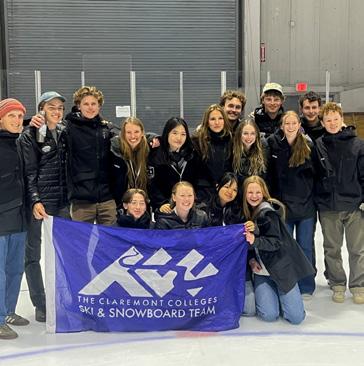
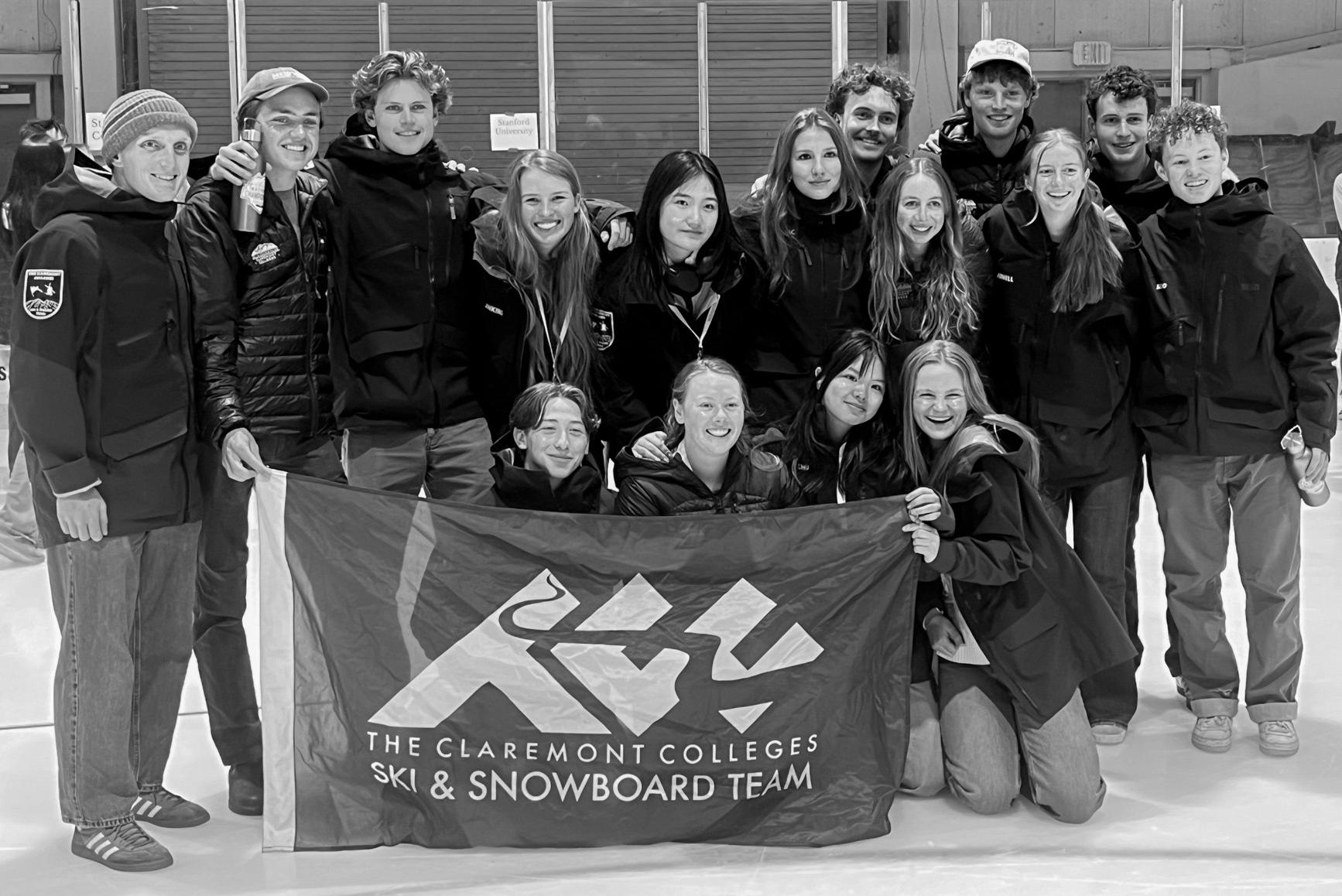
Over spring break, the 5C Ski and Snowboard Team brought home two trophies from the U.S. Collegiate Ski and Snowboard National Championships that took place at Lake Placid, New York. On March 19, the women’s March 21, the women’s team placed third overall for freeski.
The ski and snowboard team the United States Collegiate Ski and Snowboard Association Southwest League. This league contains schools from Southern California, Arizona and Nevada.
Next, the team went to regionals, -
top three placing teams at regionals receive an invitation to nationals. Both the men’s and women’s alpine teams placed second, booking their trips to Lake Placid.
-do great,” captain Asher Wolf PZ ’28 said. “Lanie Pidwell [PZ ’27] has been doing great; she’s one of our best free-
Team captains praised newcomers even learning to ski. The team developed a culture that emphasizes pushing all of its riders to keep improving regardless of experience level.
“What makes me most proud as atain Will Sedo HM ’26 said. “Skiing
able to support each other as a team and create that positive environment
Leila Jahic SC ’28, captain-elect for the 2026-2027 season, qualified for the tournament and was a part of the
training, Jahic had been working on tricks like the 180, boxes and rails. said. “I used to be on a big mountain team, which is more traditional. Park season learning some tricks, and
As a future captain, Jahic plans to use a PVC rail to practice in the off-season. Since there won’t be much more snow to practice on, she
plans to set up the PVC on Mudd Field and make it accessible to other teammates.
“Our captains [are also students], Jahic said. “It’s kind of shocking to and their own home mountain.
We’re self-organizers.”
Because of the tight turnaround between the regionals and nation-
The team also had to make a
quick adjustment to weather conditions. Because the team practices close to campus and is well-versed in West Coast skiing conditions, which to adjust to the East Coast’s icier conditions upon arriving at nationals. “One of the things that keeps ski
interesting sport for me.”
After spending the last three seasons as a team captain, managing the challenges of running a ski team insistent access to on-mountain training, Sedo is excited to see how the captains who follow him lead the team to even higher levels.
“I think as we grow into more of an established presence on campus, it’s going to be awesome to see what
team ahead and can’t wait to see all the growth and what’s next.”
ANNE REARDON
COURTESY: CLAREMONT SKI & SNOWBOARD TEAM
JOSEPHINE CHLOE MILIOTO
Anirudh Reddy HM ’26 prepares to slice the tennis ball back across the net.
As a prospective college golfer deciding where to apply, high-ac
ademic Division III schools like
After many conversations with my parents, however, I decided
would have needed an extra year or two to emotionally mature
There is a common misconception that collegiate athletics particularly at top programs, hold their athletes to standards simi-
When I visited DIII schools during recruitment, players and coaches emphasized how reduced hol
sessions a day and weekends spent traveling are just a few of the expectations that come with
At schools where athletes routinely turn down DI opportunities
towards its own athletes tells a one-dimensional, the 5C community needs to try showing up for dedication can turn skeptics into stands, we create a deeper sense Unfortunately, the Claremont
KATIE FULLERTON
Colleges’ games often have low attendance — especially for women’s sports — despite the dedication these students pour Beyond the athletes themselves, sports games are simply
out an energizing and competicomplain that 5C games aren’t as exciting as those at DI schools,
top of the top DI schools and
energy is what makes athletics fun for everyone, and right now,
One of the primary ways that school spirit is fostered is through the relationships
gest events of the year revolve Students turn out to watch peo -
connection college fans feel when we know people on our team and the opposition stirs up
hours of practice, training and feelings of frustration can getrience, I went through countless
course, loving golf and who I and unrealistic expectations many athletes set for themselves dynamics with their sport, and it is during these times of stress and pressure that athletes need
ing years of training; it means distancing yourself from your
In athletics, encouragement is often just as important asity, it is imperative that we take steps to show we care as theyencouragement often manifests through game attendance, when
When CMS and P-P are at the top of the DIII rankings, it represents our schools as a student-athletes, elevates the prestige of our degrees and puts
men’s water polo won the 2025 national championship, and so did P-P and CMS women’s golf teams
There is a surplus of amazing athletes at the consortium, and students are missing out on a front row seat to excellence, comletes who dedicate themselves to upholding that standard deserve a community that recognizes their Ansley Kang SC ’29 chose golf as her sport because it (usually) doesn’t require any running
Tennis and antiperfectionism
My high school history teacher used to livestream tennis matches in hair and let out a heavy sigh at every look even more distressed than the
many viewers, tennis is more stressTennis may have the cutest all sports, with pleated skirts and
the four Grand Slams, even enforces an all-white dress code to presentcrisp whites and cute hats, many
Serena Williams, a four-time Olympic gold medalist and 23-time Grand Slam singles champion,
after losing a game, was docked a point and then an entire game for
Slam victory and the then 36-yearold Williams never won another
nearly tore her hair out watching
the couch, that kind of emotional feel every code violation and missed
haps paradoxically, the sport feels more intense to watch than to play rackets are focused, while audience
At the courts in Claremont, howKatia Kriakova SC ’28 picked up a racket in January after reading
she could at least try a Thursdaypecting chaos and a steep learning
“I always leave feeling refreshed made a new very close friend, and
where so much of your worth feels outlet where mistakes are not just
Kriakova’s experience with tennis does not include the distress she sometimes feels watching one holding the racket, the same shanks that would make her wince
na-Pitzer tennis player, however, plays at a much more competitive
older sister while his dad coachedsion III player with years of matches tennis matches are won as a team; yet, in reality, when he steps onto
ing out there alone when you can’t
across the net, knowing that if you lose, you’re not just disappointed in yourself, you’re also hurting the Chulani stresses that in soccer
“My favorite thing is when you’re on the court and the entire team is invested and goes crazy after every
Paul Melendres HM ’28 chose to
and practice hours his future held in store, he dropped soccer, opting for a
class with Pomona-Pitzer’s women’s
“In tennis, knowing you will make mistakes, you must refuse to let them overwhelm you,” said Melen-
tennis at a less competitive level teaches him to let go of the pressure
practice showing up, failing and tryhas made me more willing to take risks in other parts of my life,” Me-
As Melendres learns to push himself physically on the court, staying one of the most rewarding parts of
While tennis asks the terrifying
clinic where failure is funny, a college lineup where teammates show