ASHMC president-elect accused of racism and transphobia, prompting potential recall
On March 5, Joshua Tanksley HM ’27 and Morgan Pulling HM ’27 shared a petition with the Associated Students of Harvey Mudd College (ASHMC) advocating for the recall of ASHMC President-elect Tessa Han HM ’27 on the grounds of racism and transphobia.
Yesterday, on March 10, Tanksley and Han presented their perspectives on the case in the Hoch-Shanahan Dining Commons Aviation Room. During the speeches, ASHMC sent an email to the Mudd student body, notifying them that they would have until March 17 to vote on whether to recall the election results. If the vote is afelections.
Han, current Drinkward residence hall president, was elected ASHMC president over two weeks ago alongside running mate Senate Chair-elect Alexa Rosenberg HM ’27, the current president of Case residence hall. Tanksley and Pulling, who unsuccessfully ran for ASHMC president and senate chair last spring, ran against the two in this year’s election.
During last spring’s election, Han commented on the leadership capabilities of Tanksley and Pulling compared to Aditi Bonthu HM ’26 and Simone Yang HM ’26, the current ASHMC president and senate chair. In a conversation with a friend, Han criticized her friend’s decision to vote for Tanksley and Pulling over Bonthu and Yang.
Han’s criticism involved a com-
ment about Tanksley and Pulling being Black. After the conversation, the friend shared Han’s comment with Tanksley and Pulling.
According to Tanksley’s petition to the ASHMC executive board, Han asked her friend: “Who would you rather vote for:
had made a comment along these lines.
“It can be interpreted as I think Black people aren’t qualified,” Han said in an interview with TSL on March 10. “My question is more about fundamental identity
And I understand that can be interpreted wrongly, though.”
Han also said that she reached out and apologized last spring. and Pulling] in real life” and said, “When that failed, I believe I sent an email where I apologized for it.”
Han then organized a meeting with Tanksley and Pulling to discuss the situation. In their
petition, Tanksley and Pulling described details of this meeting: Han defended herself by explaining that there was context, and that she had made the original comment to her friend because the situation had
7C Minjung hosts debut teach-in of ‘Korean Liberation, Palestinian Self-Determination’ series
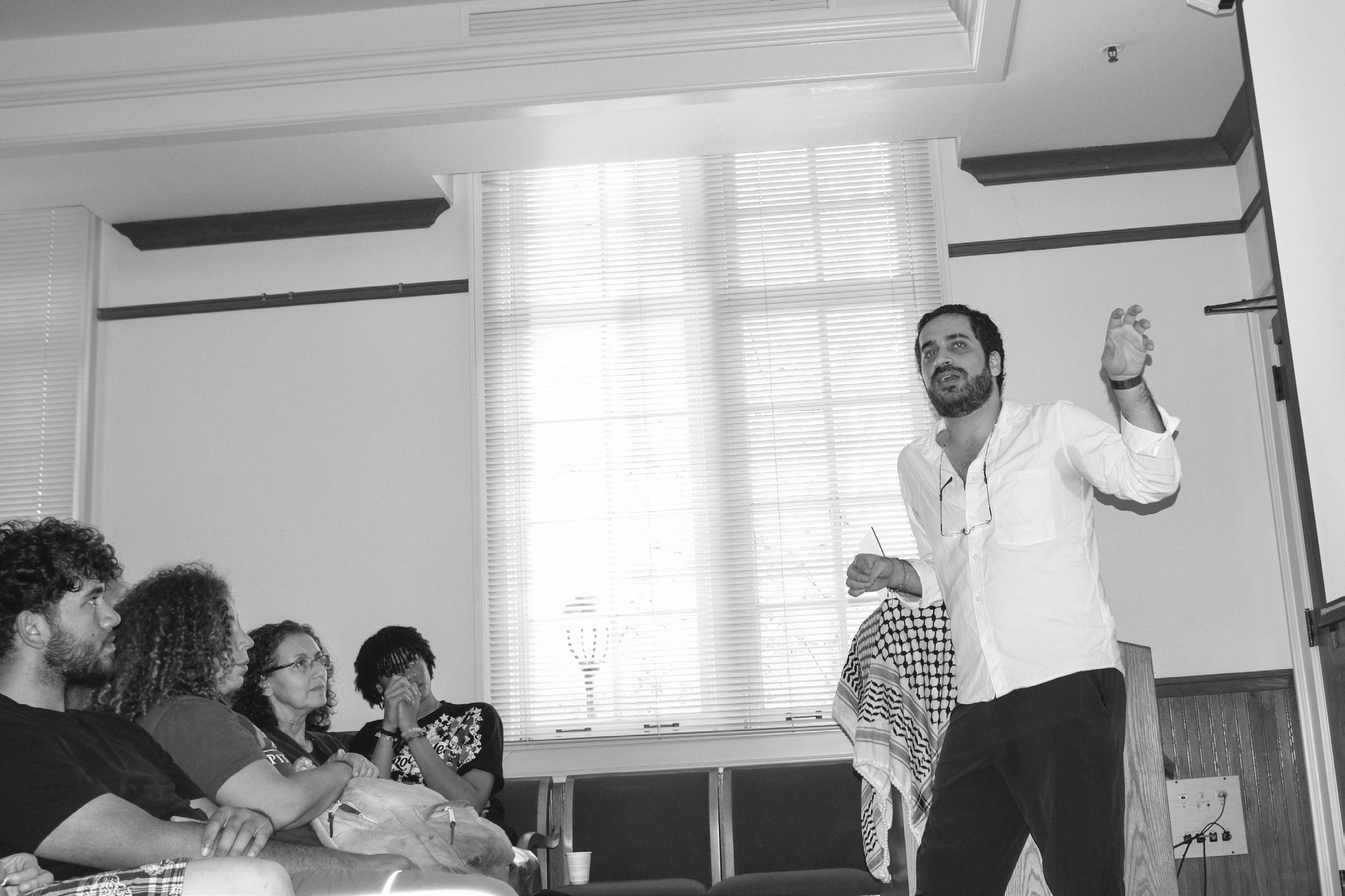
7C Minjung hosted its first event of a three-part educational series titled “Korean Liberation, Palestinian Self-Determination” atday: a teach-in that put the history in conversation with current movements for Palestinian rights.
7C Minjung — a leftist Korean and Korean American student-led organization — formed this spring to provide a space on campus to amplify Korean history, identity and liberation.
“[We’re] organizing broadly to uplift the Korean history and Korean tradition of revolutionary struggle against imperialism, against colonialism, against capitalist exploitation and against patriarchy,” club leader Robinson Lee PZ ’26 said.
The first teach-in introduced these goals and provided a brief history of Korean resistance and organizing by exemplifying the Koreans fought for independence from violent Japanese colonial ruleees and organizers. The speakers
compared and contrasted Korean and Palestinian resistance, framing the histories of the two countries in the context of mod-
The speakers provided information about both the division of Korea and the United Nations Partition of Palestine, and focused on the imperial role the United States played in both conflicts. Lee studied abroad in South Korea last year and pro-Palestine protests in Seoul to highlight Korean solidarity with Palestine.
“We think that part of [Korean solidarity with Palestine] is asserting much more direct solidarity with Muslim students on these campuses who have experienced islamophobia,” Lee said.
Some students expressed that they were apprehensive about publicly identifying with pro-Palestine organizing in the wake of Pomona College’s 2024 suspension of student protesters, and the Council on American-Islamic Relations’ designation of Pomona as a “hostile campus.”
“I know many students particularly feel like, after the fall of
On March 6, the Hive opened its doors for another Tiny Patio Concert, featuring four acts composed of both student performers and bands. Hosted by the Hive’s Soundbox, a professional recording space, the show sought to highlight student talent.
2024, in October, Pomona unilaterally suspended students without due process,” Lee said. “There are so many students who feel like, for instance, that they don’t want to be public about their associations with this group or that group.”
nadhar SC ’27 said that she values opportunities to learn about and discuss political topics on campus — such as Palestinian self-determination — that might otherwise be minimized by administration and campus culture at predominantly white institutions.
“Especially in an area like Claremont where it’s very white, I feel like a lot of [these conversations] would go very unnoticed and kind of swept under the rug,” Manadhar said.
Manadhar also said she appreciated that students were hosting events like this since busy academic and social lives
formed about issues she cares about.
Scripps celebrates National Women’s Colleges Day amid gender-targeted policy threats under Trump
Last week, Scripps College celebrated the second annual National Women’s Colleges and Universities Day at its weekly Wednesday tea. In the wake oftions and budget cuts targeting women’s research initiatives, many students and faculty members stressed the timely importance of celebrating women’s colleges. National Women’s Colleges celebrated in 2025 after the Women’s College Coalition (WCC), an organization of around 30 women’s colleges and universities in the United States and Canada, lobbied Congress to recognize
the contributions of women’s higher education institutions. Scripps remains one of the few women’s colleges and universities in the United States after many have become coeducational or closed in the last 70 years.
college in the WCC agreed to host an event in honor of the day. Scripps’ Laspa Center for Leadership — which aims to promote inclusive gender equity through experiential learning and professional development — was responsible for organizing this year’s weekly tea at Seal Court. The event’s organizers rotate organizations on campus, allowing
JOELLE RUDOLF
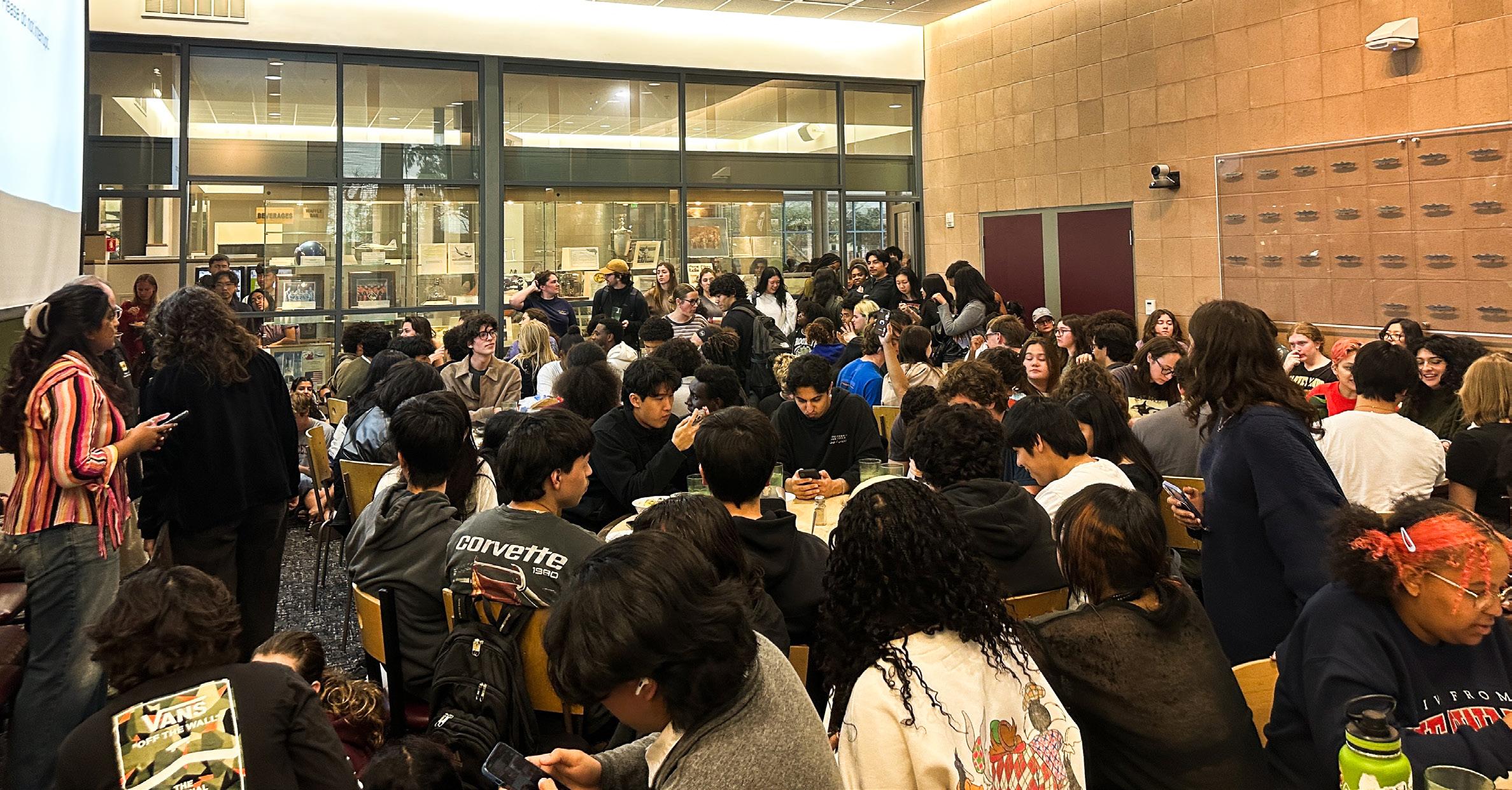
Harvey Mudd College students pile in the Hoch-Shanahan Dining Commons Aviation room to hear presentations from president-elect Tessa Han HM ’27 and petitioner Joshua Tanksley HM ’27.
CARYS HARDY
QUINN BOLSTER
CARYS HARDY • THE STUDENT LIFE
PJ JAMES • THE STUDENT LIFE
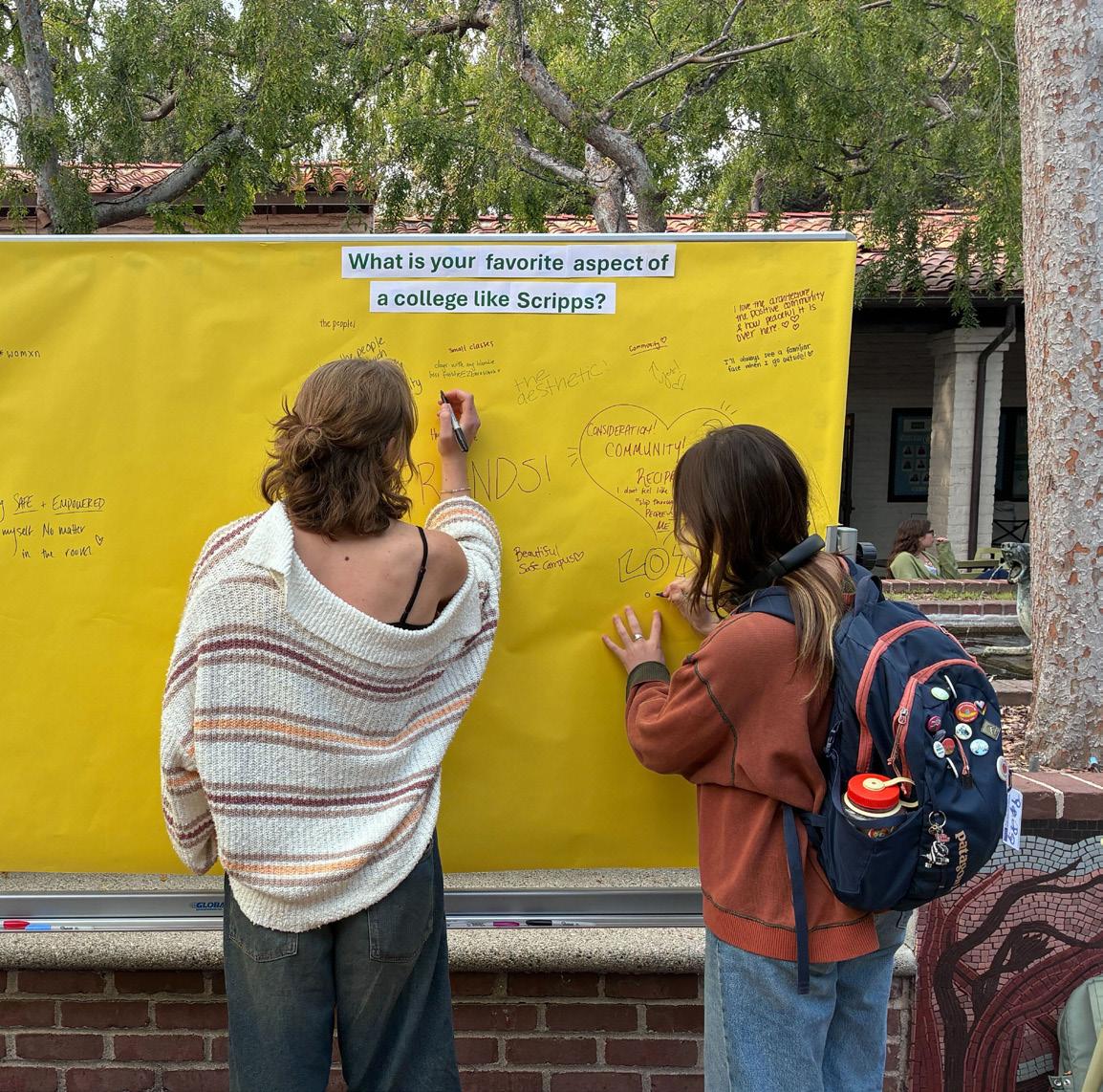
Scripps students celebrate Women’s Colleges and Universities Day by sharing gratitude for their experience attending a women’s college.
JOELLE RUDOLF
Continued from page 1
said that Han had proposed that both Tanksley and Pulling “were upset because [they] were Black.” According to Han, after last Thursday’s ASHMC meeting, the executive board sent out meeting minutes to the entire school, which mistakenly included closed-session notes detailing Tanksley’s petition. According to these mistakenly engage in a hypothetical to absolve herself” during her aforementioned meeting with Tanksley and Pulling.
These notes reference Tanksley and Pulling’s petition statement, where they allege that in this discussion last spring, Han said: had instead asked, ‘Who would you or someone trans?’”
Han acknowledged that she had made an equivalent comment, but told TSL, “I do not think I said it in that context, nor did I say it in an accusatory way, nor did I say it with the same intent as I said the Black Han said that she “will admit very explicitly” that her comment about Black people was “to make ation.” She said her comment about Trans people was a way to “work through these thoughts and ac -
RECALL: Students criticize ASHMC president-elect
knowledge that it would be wrong for any identity [to take precedent
“It was not meant in a problematic or accusatory or personal
Tanksley expressed that when he and Pulling met with Han, she doubled down on her position and said that “there was context that [Tanksley and Pulling] didn’t understand, that her emotions would absolve her.”
“Every attempt to apologize
Not once did she convey that she Not once did she acknowledge that her statement was racist,”
Tanksley said in his petition.
“She was barely able to call it insensitive, and even that she was reluctant to admit.”
Han and Rosenberg voiced their frustration with the unintended publicity of the petition and confidential meeting notes because both “contained language [they] felt was inaccurate” and prompted “cyberbullying” on network platform.
“It felt like a very strong oversight that has had very meaningful consequences,” Han said to TSL. Rosenberg added that these statements “have not been corrected.”
At 6:15 p.m. on March 10, around 100 students packed Hoch Shanahan’s Aviation Room, with over 50 spilling out the door to form a crowd outside. Once all the chairs were brought in from the dining area and students stood
“I was there at 5:20, and it was Isaiah Jeter HM ’26, Black Lives at Mudd (BLAM) member and North Residence Hall president, said in an interview.
Due to high interest, a Zoom was created for those who could shared that the 6:15 p.m. meeting time had been decided without consulting her or Han. She was “support Tessa” due to a class
Many students, including Han and Rosenberg, have shared dissatisfaction with the way the forum discussion was organized. In an interview with TSL, ASHMC social chair Sheridon Dorsey HM ’26 expressed concern about the location and timing of the speeches.
in an interview after the forum.
“So hypothetically, the entire school should have been able to impossible for that many people
The event began promptly with both Bonthu and Yang introducing the forum as adhering to Article VII, Section 3b of the ASHMC constitution. Each candidate was allowed to present a 250-word statement to the crowd without follow-up questions or comments.
Tanksley stood at the front of of the events and urging the Mudd student body to rethink who they wanted as their president.
“Do you want to be represented by a student who makes prejudiced comments in private? Who is incapable of accepting her actions? Who was unwilling to apologize? Who tried to justify prejudice?” Tanksley said, concluding his brief speech. “Tell me, how many of you will justify this behavior as well?”
To this question, the crowd fell silent. After Tanksley broke the quiet with a “thank you,” the room erupted in applause and claps echoed out the door.
actions and outlined her commitment to change.
[Han]’s statement because I think a lot of people assumed she was going to deny some of it, deny what was said,” Dorsey said. “So was taking accountability, and she did apologize.”
people clapped,” Dorsey said. “It was very noticeable that everyone was there to support Josh [Tanksley].”
During her interview with TSL, Han said that she was “sorry that these words have had this sort of impact on people.” She added that while “people have described it as cancel culture, I’m not sure I would entirely agree, but I do think it’s right now.”
Han reiterated that her refusal to immediately step down does not indicate that she is “trying to hold onto [her] position with all [she] can.”
“I would like to uphold the processes that the Mudd community before us has implemented and go through with these processes that let the people ultimately make the decision,” she said.
“It came across like the school was trying to limit access to this, which, hypothetically, the entire school is voting on,” Dorsey said mission.”
During Han’s speech that followed, she acknowledged her
This is a developing story, and will continue to be updated.
T e A Ce L e BRATION: scripps honors women’s Colleges and
Continued from page 1
community members to socialize over food and tea.
At last week’s special tea event, there was a poster where students could write about their experience at a historically women’s college. Students also played a game in which they rolled a die with the names of notable women’s college alums and guessed which institution they
“Our interns identified many women leaders who had graduated from women’s colleges,” Laspa Director Gretchen Maldonado said. “We wanted something that could be fun to keep the environment light, but also honor our mission.”
Under the current Trump administration, women’s colleges have faced new challenges, including policy changes as well as directives that target transgender people, shift Title IX regulations and cut budgets for DEI initiatives. The administration
sex as a binary — male and female — restricting sex-segregated spaces women’s colleges that admit transgender and non-binary students, these actions create uncertainty about admissions policies, campus housing and eligibility for federal funding.
Amid these recent challenges, Laspa intern Geeta Karlcut SC’26 noted the importance of acknowledging the struggles of women and gender-diverse people in education.
“In this political climate where a lot of things like race and gender are being very politicized, it’s so important to honor and acknowledge all the struggles that women and other gender diverse people have been going through,” Karlcut said. “[Wetion to it and highlight and celebrate the people that have made such big impacts in our communities.”
not overly concerned about Scripps being targeted, as it is a predomi-
nantly white institution. about women’s spaces being targeted,” she said. “But considering that Scripps is a predominantly white space, I just don’t feel like [the Trump administration] is as likely to go after it, as opposed to other schools that are more diverse.”
LASPA intern Sadia Yasmin SC ’28, on the other hand, echoed Karlcut, saying that celebration could be a pathway to resistance andder-diverse spaces in education.
Universities Day
“Celebrate [to] inspire others to take risks in their life, go [get an] education, make an impact Yasmin said.
Maldonado said colleges in the WCC are acting with caution, aiming to avoid political scrutiny without compromising student experience.
“I think that every WCC [member], including [Scripps], is paying discussed and what’s being done,” Maldonado said. “We are being as careful as possible to continue our
Other colleges have recently felt the impact of budget cuts and policy changes. Last year, historically women’s colleges like Mount Holyoke College saw a series of abrupt grant terminations targeting women’s research initiatives deemed nonscientific, such as maternal health, gender equity and women’s leadership in STEM.
Last year, conservative legal a complaint with the Office of Civil Rights stating that Smith College’s policy to admit transgender
women violated Title IX by allowing programs and spaces.
Celebrating Scripps as a historically women’s college and a gender inclusive space, Maldonado said, was incorporated into the existing tea event to encourage people from “Tea is a very well attended event — it has kind of a relaxed air over [the 5Cs],” Maldonado said. “So it was the best way to engage with the most people in the middle of the day.”
Number of women's colleges in the U.S. from 1960 to 2021
Source: Rivasplata, Alexandra Isabelle, “The Economic and Social Decline of Women’s Colleges Across the United States”
JESSICA LEVIN • THE STUDENT LIFE
(2022).
KOREAN LIBERATION: 7C Minjung hosts three-part series
Continued from page 1
“I very easily found myself doomscrolling a lot on social media, with everything that’s going on right now,” Manadhar said. “But it’s nice to come to events like these and see there are other people who are interested in learning about this or are currently working with other people on this and trying to spread more awareness.”
Despite not having prior knowl-
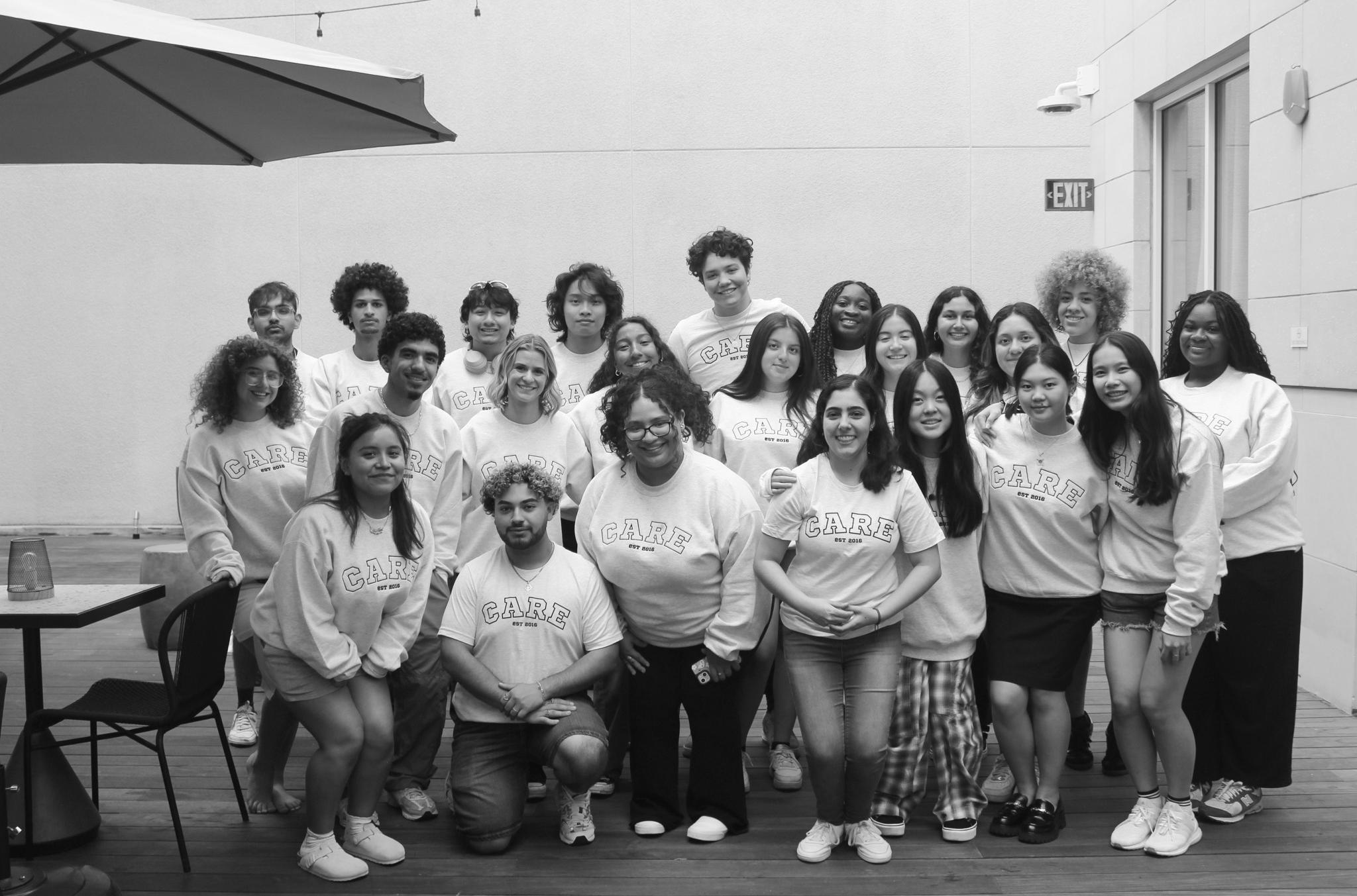
Claremont McKenna College’s Civility, Access, Resource and Expression (CARE) Center celebrated its 10-year anniversary on March 4. Students and faculty spoke to CARE’s impact on campus amid threats to diversity, equity and inclusion (DEI) initiatives from the Trump administration.
At the time of the center’s founding in 2016, students have demanded that the college do more to include students of color and address their concerns.
“Students pushed for a center to engage in dialogue … challenging the campuses to increase resources for systemic barriers,”
Vince Greer, CMC assistant vice president for dialogue and diversity, said. Since then, the CARE Center has worked to address systemic barriers within education and create a space for open conversations about politics, social issues and varying identities.
Recent federal criticisms of DEI programs as “wasteful spending,” policy changes from the U.S. Department of Education and funding cuts have increased scrutiny of DEI initiatives in higher education. These cuts have reignited debates about how colleges should address issues of free speech and identity on campus.
To Greer, the current political climate makes the CARE center and its mission “more important [now] than ever.”
“There’s just a willingness to retreat and not have those challenging discussions,” he said. “The CARE Center is critical to equip our students, to normalize having these discussions, to practice increased level[s] of understanding and awareness building.”
Nour Qarmout CM ’29 said the center also provides a supportive outlet to help students sort out their thoughts in response to overwhelming political news. the space to talk about these [political] things that maybe aren’t part
edge about the history of Koreanlearn and engage in conversation because the information was accessible.
“[The teach-in] felt very open for someone who didn’t have any experience with the topics,” history student. I study physics. So, I am not familiar with a lot
like my primary way of learning about things like this.”
7C Minjung is made up of primarily Korean and Korean American students across the consortium, but Lee said others with a strong connection to Korean identity and history are welcome to contribute. In the future, 7C Minjung hopes to inspire student activism in students of all backgrounds after college.
“My main goal is to really
impress on people that your time in college isn’t the end of any sort of activist organizing,” Lee said. Minjung hopes to host at least one more event this semester, beyond the teach-in series. According to Lee, the future of the club to maintain their current goals of fostering meaningful political conversations amid educational censorship.
“We’ve always had to assert
CMC’s CAR e Center celebrates 10 years of constructive dialogue
this moment, when just bringing up the issue of Palestinian human rights gets so much state and school punishment.”
The next events in the series feature a guest panel with Student Coalition for Palestine on March 27 and “Jeju Lives!,” a teach-in and celebration of the Jeju Uprising on April 3, each hosted at The Motley.
of [the] curriculum,” Qarmout said. “[CARE] is where all the uncomfortable conversations can happen in a place of comfort.” Qarmout is one of the cen -
of students selected through an application process who are trained to facilitate constructive dialogue across campus. Each fellow is required to host at least one event through the center. Recently organized programs have included various discussions on the implications of dismantling DEI, navigating U.S. politics as an international student and how AI should be viewed in relation to humans.
CMC students are also welcome to host events of their own through the center. Cerena Karmaliani CM ‘29 said she felt isolated following ICE violence and shootings in her hometown of Minneapolis and coordinated with CARE to create a fireside chat event to allow students to open up about violence in Minnesota.
“It didn’t feel like there was a lot of acknowledgement [of violence by ICE] on campus, to be honest,” Karmaliani said.
Karmaliani said CARE provided guidance on leading the conversation through constructive dialogue training
and helped advertise the event beyond her immediate circle of friends.
“The CARE Center was super helpful in giving me support and resources,” Karmaliani said.
By facilitating student-led discussions on polarizing topics, the center equips students to engage in critical dialogue that doesn’t feel accessible in other on-campus spaces, according to CARE Center student manager
allowed her and her peers to navigate difficult conversations about politics and identity.
“CARE has been a space, for
me, of resistance, a space where we’re able to be open and talk about things that institutionally might be censored,” she said.
As the CARE Center enters its second decade at CMC, Greer said its mission of encouraging dialogue across differences remains central to the campus community.
“It would be easier for us to just say ‘We’re not going to touch that. That’s too controversial or too taboo,’” Greer said. “CARE is pushing and challenging our community very thoughtfully to learn to better understand one another and immerse ourselves in challenging conversations that will only help to mold us.”
Pomona College names democracy and human rights leaders as commencement speakers
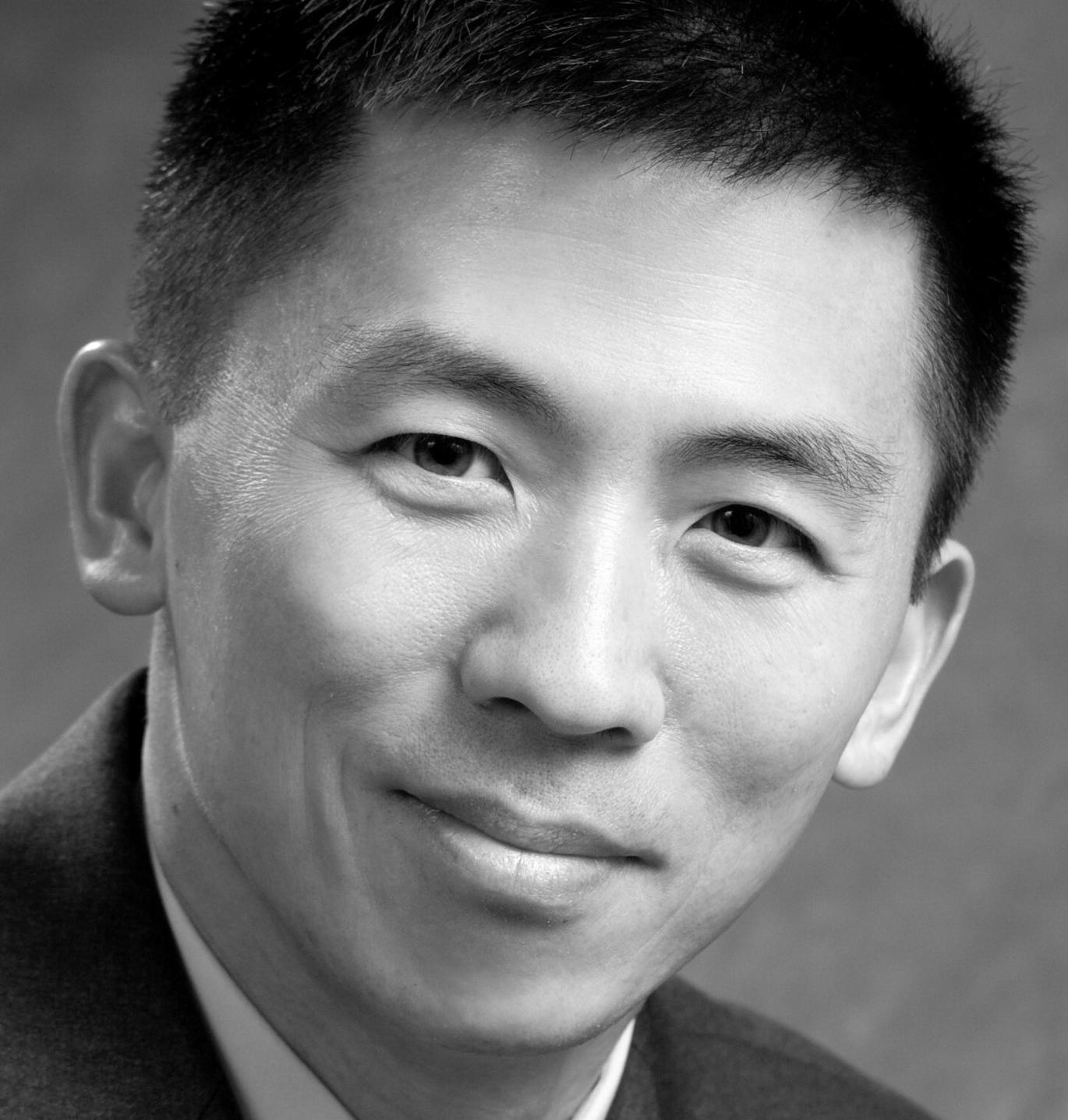
Pomona College announced last month that California Supreme Court Associate Justice Goodwin Liu, humanitarian Jane Olson and ’95 would speak at the college’s commencement ceremony on May 17 on Marston Quad. During the ceremony, the speakers will receive honorary doctorates recognizing their contributions to law, human rights and democratic governance. The speakers were selected by the Board of Trustees’ up of three Pomona professors.
Liu previously served as a professor and associate dean at the UC Berkeley School of Law and is known for his expertise in constitutional law, education policy and diversity in the legal profession. Olson is the former chair of the International Board of Trustees of the Eaton Professor of Government and director of the Minda de Gunzburg Center for European Studies at Harvard University.
Pomona President Gabrielle Starr said the selection of speakerslege’s mission.
“[The speakers] have demonstrated a commitment to values that resonate deeply with our educational mission, including civic engagement, community building and the public good,“ Starr said in a statement to TSL.
icy analysis major, said she appreciates the selected speakers because of the ideals they represent.
“I think the message to the you care about democracy, human rights or political change, you eventually have to decide where you said. “Pomona is sending students
actually did.”
Pomona politics professor speakers’ work is important in combating threats to democracy and human rights.
“Professor Ziblatt and Ms. Olson have made major contributions to the defense of democracy and human rights through their scholarship and activism,” BoTSL. “An independent judiciary is also a critical component of a healthy democracy, and it has been under assault since January 2025. Justice Liu’s participation is
Ziblatt’s co-authored books “How Democracies Die” and “Tyranny of the Minority” have heavily influenced how people around the world view democratic backsliding, Pomona politics professor Erica Dobbs wrote in an email to TSL.
bodies the values Pomona seeks to instill in its graduates and hopes they are inspired by his work.
“I hope all of our graduates consider the importance of bearing their added riches to the critical task of active, engaged citizenship — particularly in this moment when democratic institutions at home and abroad are under enormous strain,” Dobbs wrote.
-
sive work in democracy echoes students’ worries about current democratic backsliding.
“The conversations happening at Pomona right now are grounded in real concern,” she said. “Students are worried about the safety of undocumented community members amidst ongoing ICE raids, anxious about what the federal government’s targeting of universities means for academic how to respond to all of it in ways
that feel meaningful.”
Dobbs notes how Pomona graduates must grapple with the mission statement that brands the College’s gates: “they only are loyal to this college who departing bear their added riches in trust for
mankind.”
democracy are shaping the ways graduating seniors seek to embrace Pomona’s values and ‘bear their added riches’ for future generations.
“Hearing from people who have stayed engaged with the same issues over long careers through courts, advocacy and scholarship with at graduation.”
BIANCA MIRICA
REANNA MOHLER
COURTESY: CLAREMONT MCKENNA COLLEGE
Introducing Harvey Mudd r acing, the 5Cs’ first Formula s A e team
Racecars are notoriously secretive machines for a reason: Victory often hinges less on the engine or driver than on the design itself.
Each season, many teams in the Formula Society of Automotive Engineers (FSAE) build upon and modify their preexisting designs to produce a competitive, race-worthy car. Top teams within the FSAE competition have been doing so for over 30 years.
Formula SAE is a part of SAE International, which hosts annual collegiate competitions. Student engineers work in teams to design and build a formula-style car in preparation for a race against other FSAE teams.
Despite being a leading institution for mechanical engineering, Harvey Mudd College’s road to competing in the FSAE has just begun with Harvey Mudd Racing.
“Most top engineering colleges have a Formula SAE team, and our college didn’t have one, so starting one at these colleges is a huge deal,” mechanical subteam lead Max Conine HM ’28 said.
President Audrey Gruian HM ’26 founded the club in 2025 after talking with her high school friends, most of whom had gone to college and joined their respective racing teams.
She eventually brought the idea of starting one of her own to her friends on campus.
“[As] I started listing all the reasons why it wouldn’t work — we are a small school, we don’t have space, our students are so busy, we are never going to make this happen … the more I tried to tell [my friend] why it wouldn’t work, the more I realised how much I wanted to make it happen,” Gruian said. this project, but she is the only one who has been able to bring the idea to fruition. So, Harvey Mudd Racing was born.
Right now, the team is actively constructing the car in The Makerspace. The alluring skeleton of the car, tucked away in a corner of Mudd’s creative facility, has routinely drawn more people into the project and onto the team. After familiarizing themselves with the limitations and dimensional requirements for a formula-style car, the team began construction entirely from scratch. Currently, they are welding the chassis, the foundational frame connecting the engine and suspension; eventually, there will be a recycled motorcycle engine placed inside. The chassis recently departed CAD software and became three-difor the team.
Starting a racing team and building an FSAE car is a tall order, but doing so at a small school with limited funds made this project even more challenging. Ultimately, Gruian and the team learned to use the comparatively small 5C community to their advantage. Gruian secured faculty support for the club and built an agreement
with The Makerspace at Mudd, giving them a place to store all their materials.
“The biggest obstacles that we foresaw going into this were space constraints, second was money — it’s very expensive,” Gruian said.
Building the race car required the club to begin work beyond the workshop, negotiating funding with the Mudd administration. In many ways, the club has pushed both engineering boundaries and institutional ones.
Given that this club’s operating costs are much greater than other clubs’ budgets, the money they received through internal grants and the Associated Students of Harvey
Thus, they had to make the case to Mudd for permission to pursue external scholarships.
After many meetings and negotiations, they are now able to receive external sponsorship for their club, which is something that — to their knowledge — no other Mudd club has been able to do.
“There’s really no precedent for
how Harvey Mudd clubs go about [working with outside sponsors],”
“So it’s kind of exciting because we to people and be like, ‘Hey, we’re doing something really cool, you should help us.’”
Another way Harvey Mudd Racing pushes the envelope is by extending club applications to all 5C students; they are one of the few Mudd clubs that welcome students from other colleges.
These radical departures from the standard structure of Mudd ambitious student-led projects can operate at the 5Cs.
Behind the scenes, the non-technical side also works hard to keep the team operating. Managing sponsorships, marketing and club-related business all fall under their jurisdiction, which allows the technical team to focus on building the car.
represents the business side of the team. They help the club access external sponsorship and build re-
lationships beyond the colleges.
“It’s really just awesome to create connections with all of the racing community out there, including a ton of Harvey Mudd alumni who got involved after college in mechanical leadership or just the racing world,” people together over a car is really awesome.”
Once a week, both the technical and non-technical sides of the team meet to provide updates, ensuring all parts of the project are accessible and keeping everyone involved. This allows members to stay up to date on the status of both the car and the business operations, contributing to the club’s collaborative nature.
As the car comes together, the club simultaneously builds towards its goal to compete in the 2027 FSAE race, one part at a time. Harvey Mudd Racing is steadfastly working to see those they’ll be one step closer to answering
“How many times do you get to build a race car?”
‘Never mind, Gaza’: Yahya Ashour’s poetry in the face of exile
“Between news, between new landmines, shrapnel texts, I have to wait to check if they’re still alive, and professor Yahya Ashour said of his family back in Gaza.
On Wednesday, March 11, stuThompson Room at Pomona College’s Crookshank Hall to listen to PalestinYahya Ashour read a selection of his poems. Alongside stand-alone poems, he shared several excerpts from his e-book and manuscript, “A Gaza of Siege & Genocide.”
Ashour is an award-winning poet and writer, an honorary fellow in writing at the University of Iowa and the recipient of multiple scholarships and fellowships. He has also presented his work at over 50 U.S. organizations and universities.
Since he was forced into exile by Israel’s intensified military assault on Gaza in 2023, Ashour has made a mark in Gazan literature as a powerful storyteller of resistance and identity.
Pomona English Professor Prageeta Sharma, one of the event organizers, introduction. She described Ashour as an incredible poet with an ability to call upon readers and their passivity toward violence — someone who carries with him a responsibility to continue sharing stories from Gaza.
“The speaker [Ashour] appears split between two positions, one half experiencing grief and displacement, the other witnessing it from afar in exile,” Sharma said. “In this way, the mirror marks a boundary between experience and observation, creating a distance within the self where the speaker is both participant in and witness to his own pain.”
“Seashells,” to an excerpt of his last poem, “At Lake Michigan,” Ashour traced his experiences of exile and displacement, from his life in Gaza to his life in the United States.
leaned in, struck by his sharp lyric address, openness, vulnerability and ability to move the room.
expressed not only her general love her to engage with words in real time,
and displacement
but also her special appreciation for the progression of readings and the ways Ashour staged the narrative to convey ideas of homeland and exile.
“I was curious about the order in which [Ashour] arranged the poems because I feel like they started in a distant, then almost felt like [the poems] narrowed in until they were kind of drilling into me, ” Weber said. “[Toward the end] the poems felt like they were more addressed, perhaps, to the people in the room.”
During the Q&A, an attendee asked a question about the act of translation — from Arabic to English — in Ashour’s writing and how it informs his craft.
“What does that mean to you to have these atrocities taking place against [people who speak Arabic], taking place essentially in Arabic,
and having to communicate it in English?” the student asked. the complexities of language and bilingualism in his work. He described the act of translation as central to his work as a poet. Yet he also acknowledged the limitations of translation, explaining that words from one language cannot fully capture the nuances and feelings of another.
“I really, really love my Arabic language. I really miss it. I think it’s one of the greatest things that I’m … losing right now,” Ashour said. “I feel like my emotions, whether positive or negative, are very strong in Arabic … In English, you can only try — you can only wish that someone [sees] the anger and someone [sees] the humor or someone [sees] the love or belonging, the loss.”
ings and discussions, sharing their thoughts on the role of art and poetry in social change. Lina McRoberts PO ’27 described how poetry acts as a foundational step in creating tangible change.
hearts and minds of those involved before it can occur in a more material context, and I think [poetry] has the ability to do that,” McRoberts said.
In addition to teaching and writ-gether “The Gaza Folio,” an anthology of poetry and prose by Gazan writers from around the world.
“It’s really wonderful, but at the same time, it’s a very heartbreaking process,” Ashour said. “Every time I go back to that folio, a lot of intense feelings come to me, and it’s a very hard process.” The talk closed with a promotion
of Ashour’s book, along with ways to support the Grassroots Gaza initiative and a Gazan student writer support group led by Ashour.
Ashour’s poetry is both his way of grappling with personal tragedy and standing up for Gazans in the face of devastation. Students expressed that creative processes such as these are a means of reconciliation and a means of compelling people to act.
“[Poetry and art] play a crucial role in revolutionary struggle because it helps sustain the imaginative and affective conditions necessary for collective resistance … Art is part of the human experience — how can one not make art in the face of tragedy?” McRoberts said.
Another talk and reading with Ashour will take place on Wednesday, Benson Auditorium.
KATE YOO
AUDREY GREEN
CORINA YI
MAGGIE ZHANG • THE STUDENT LIFE
On March 11, students gathered for a talk with Pitzer visiting professor Yahya Ashour, as he shared excerpts from his manuscript “A Gaza of Siege & Genocide.”
Courtesy: Harvey Mudd Racing Team
In The Makerspace, students from Harvey Mudd’s newly formed Racing Team work to put together the frame of their car.
SASHA MATTHEWS • THE STUDENT LIFE Dave Wizard
the Hive’s soundbox team showcases student talent in their spring tiny Patio Concert
SYLVIE SIMMONS SYDNEY FORSYTE
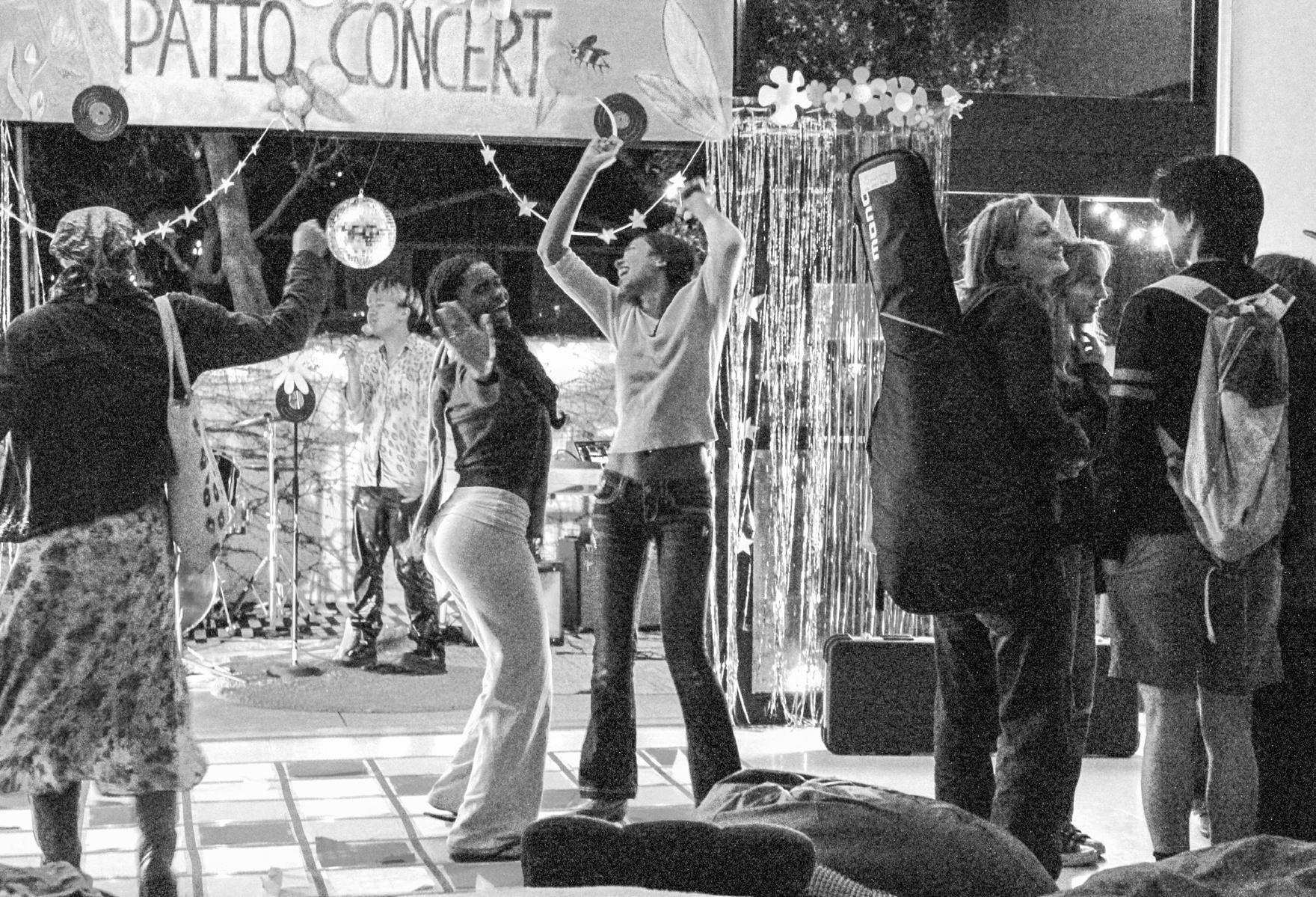
fell over the beanbag and couch-covered patio as the lights began to dim and the crowd fell silent. Under the rows of string lights and sparkling streamers, student band Coast stepped onto the stage for their debut.
On March 6, the Hive opened its doors for its ninth Tiny Patio Concert — a Claremont spin on NPR’s Tiny Desk concert series. The show was hosted by The Soundbox, the Hive’s professional recording space, and featured four performances highlighting the scope of student talent across the 5Cs.
The concert venue itself show-ity. An intricately painted banner and disco ball hung above a colorful dance atmosphere.
“I’ve been to a few Hive concerts in the past,” Jessica Martinez PZ ’28 said. “I felt like this one was a lot more upbeat.”
One stand-out act was Coast, a recently formed band featuring Cerbin PO ’26 and Siraj Saker PZ ’27 only started playing together last fall. This semester, they decided to try to new band members: vocalist Alina Shah PZ ’28, keyboardist Noah Ginsberg PZ ’29 and bassist Orion Roven HM ’27.
“We kind of all loved jamming together, and we kind of spent the end of last semester and the beginning of [this] semester … just having fun,” Shah said. “But then we realized this actually sounds really good. And then we decided that we just wanted to perform for other people.”
The group came up with the name Coast after a bit of deliberation. Saker was in favor of a food-themed name, like “French Toast,” while Cerbin described wanting to name the group “The Coasters” to sound more indie rock. Ultimately, Shah’s pick won during their team vote a few days before the Tiny Patio concert.
At the concert, the group played
Beatles, “Gravity” by John Mayer, “Sunday Morning” by Maroon 5, “Valerie” by Amy Winehouse and “All I Need” by Olivia Dean. Cerbin described how the group chose “Come Together” as their opening number for its classic, big-rock sound, which they felt would be a great introduction. The Soundbox allowed the band’s plans to come to fruition, and now they hope to move beyond covers and to start playing their own music.
“I think that right now [we] are doing a lot of covers,” Shah said. “I know that Ben is a really talented songwriter as well. He really wants to do original songs that he has
Cerbin was primarily a singer-songwriter before starting the band, so he expressed interest in writing some originals as well.
“Even though we’re probably going to transition to playing more originals, I always love [it] when artists that you’ll see in an actual will play a cover,” Cerbin said. “So I think even if we’re transitioning to playing originals, it’ll be nice to work in a cover like that [for] actual gigs.”
The group plans to play for a concert this semester. Still, they noted that the small, cozy atmosphere of the Hive encouraged both audience engagement during the performance and conversations about their music afterwards, giving them a chance to showcase the band’s distinctive presence and sound.
“I think like, you really get a feel for how an audience is responding to you in those moments, like in ‘Gravity’, where [we] kind of paused, and then we all came back in, and then everybody is either cheering or they’re not,” Cerbin the vibe that everybody enjoyed it. we’re very thankful for.“
The concert highlighted the Hive’s commitment to sponsoring student creativity. As a hub of innovation, the space served as a great sounding board for several student groups and individual per-
formers to experience playing live in front of an inclusive and excited audience.
“It’s a space you can always come to create,” Soundbox employee Pherell Washington PO ’29 said.
“This is the Soundbox’s big thing,” Washington said. “Our goal was to create a space where people could come and build community. We’re just carrying on that tradition.”
Hive director and Harvey Mudd Engineering Professor Fred Leichter worked with students to develop The Soundbox and the Tiny Patio Concert series. Leichter brought up Ivana Akotowaa Ofori PO ’20 and Brian Bishop PO ’22, concert three years ago.
Ofori, a spoken-word artist, initially pushed for a recording space at the Hive. When Bishop accumulated a large audience while performing at the Smith Campus Center, Leichter recognized the need for a community-focused venue on campus.
“We thought, ‘it’s kind of big, and people feel lost,’” Leichter said. “‘Let’s have a more intimate here.”
The long-term collaboration between students and faculty is largely what allowed the show to be so lively. Leichter remarked onicated to organizing the concert series.
“I created the small patio, and they did the rest,” Leichter said.enced designers kind of took over and dreamed up this thing.”
He noted that the Soundbox and Tiny Patio Concert, along with the Hive, serve to encourage rising artists by providing a space to learn, record and perform in a supportive environment.
“We have an entrepreneurial mindset, and we have a recording studio,” Leichter said. “We like to encourage artists to have this be a as a group, and to have them record and be professionals.”
No act too small: The power of the
Mutual Aid Bash
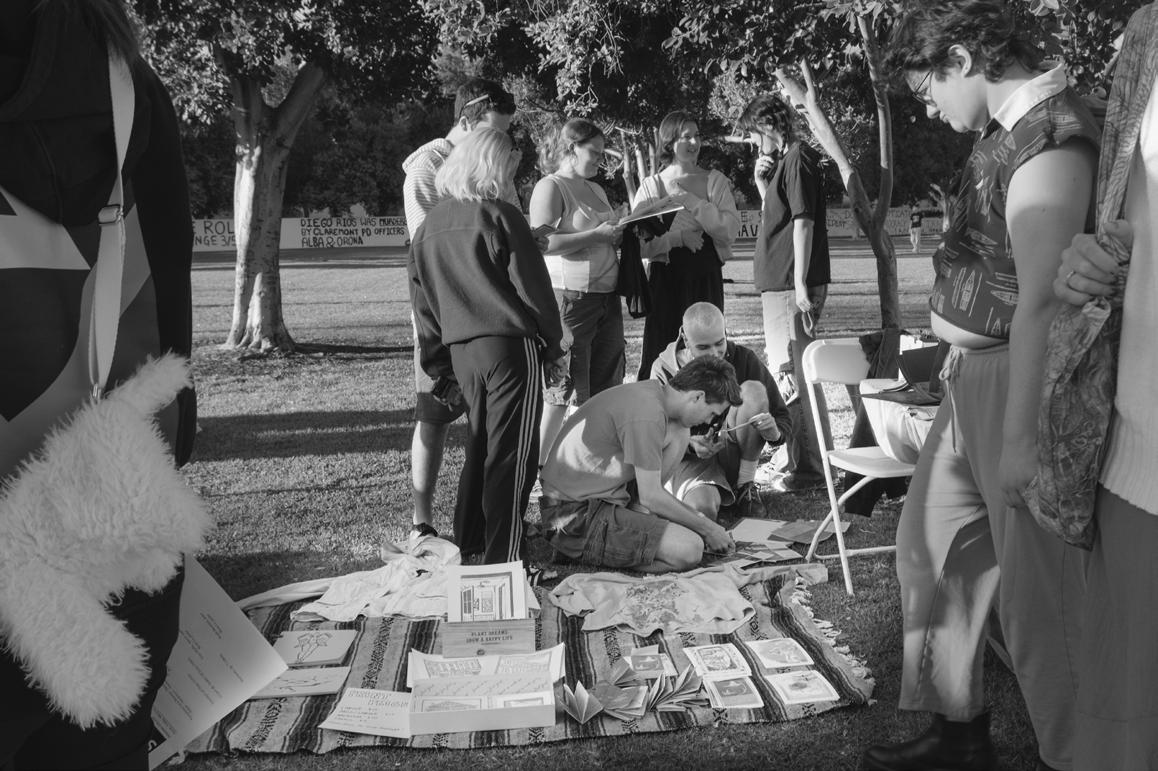
On Friday, March 6, students gathered on Walker Beach for the Mutual Aid Bash, featuring vendors raising funds for local community-based organizations. This event was co-hosted bynizations: the Pomona Events Committee; First Generation and Low-Income Students Scholars (FLI Scholars); Improving Dreams, Equality, Access, and Success at the Claremont Colleges (IDEAS); Kasama Filipinx American Student Association and the FLI Mentor Program.
Many organizers spoke to the value of bringing together this coalition of organizations, united in their commitment to provide opportunities to 5C students to
“You think you are in a bubble, suburban fantasy, but in reality, there are ICE kidnappings everywhere,” event co-organizer and Kasama co-president Zeean groups, we get a lot of funding, and the 5Cs have a lot of money … How can we ensure students can access and donate money for aid?”
These student clubs pooled the money from the bash to doorganizations such as the Pomona Economic Opportunity Center (PEOC), 909 Mutual Aid, We Keep Us Safe Rancho Cucamonga and many more. In addition to raising funds, many of the vendors provided resources to raise awareness about prominent issues.
“What makes us unique as a vendor is that we not only can donate whatever funds are raised from this bash, but also connect students to resources, along with encouraging them to volunteer,” PEOC volunteer Rose Rivero said. “We sold ‘FUCK ICE’ merchandise and keychains with funds going towards those than that, we were an educationalcerning risk training on how to identify ICE vehicles, knowing your rights and more.”
Alongside these external organizations, students were able to donate to fundraisers supporting deportees, providing legal fees for families and many other uses. to browse through the vendors’ tacos, aguas frescas and trinkets.
To look a gift horse in the mouth
KIM with the haunting knowledge that there will always be one person that she will never surpass.
While many only associate horse racing with gambling, the sport has generated stories of triumph, rivalries and even tragedy throughout its rich history, especially in Japan. Many racehorses have continued to be celebrated long after their prime. Now, their stories are being retold, shown in a brand-new light as these legendary horses enter the racecourse again as … anthropomorphic horse-girls?
This is the premise of “Umamultimedia franchise created by Cygames. Primarily a mobile game, this has branched out into other mediums, including a full-blown animated feature. Originally released exclusively in Japan back in 2024,released in the West in select theatres.
Based on the 2001 Japanese Classic Races, the movie follows Jungle Pocket, an up-and-coming horse-girl who aims to become one of the best racers, a task that proves to be morerious and eccentric Agnes Tachyon ends up beating her in an upset, sparking an intense rivalry between her and Pocket.
The story takes an interesting turn when, seemingly unprompted, Tachyon announces her retirement after only a few races. This gives left without a rival against whom she can prove herself. Any victory she achieves afterwards becomes hollow
This conflict is part of what makes Jungle Pocket such an interesting protagonist. While aspiring to become one of the best is not a unique goal, the emotional element of this struggle is. This insecurity physically manifests as a shadow of herself that literally holds her back. Through this image, it becomes hard not to sympathize with her dilemma.
Her character gains even more depth through her relationship with Fuji Kiseki, her mentor and idol. While Kiseki had retired by the time Pocket started racing, she becomes a strong supporter of Pocket’s ambitions, even donning race in order to help Pocket get back on her feet. Despite not being marketed as part of the main cast, Fuji Kiseki is undoubtedly one of the most important characters in
Another standout character is Agnes Tachyon, Jungle Pocket’s main rival. While initially presented as an unstoppable force who leaves her opponents in the dust, the movie shows that she has her own struggles to endure. Despite her seemingly invincible reputation, she is held back by her fragile legs. Unlike Pocket, she lacks the support that could have ensured a long career in racing, making her a tragic irony, where most characters don’t
know about her inner turmoil, she’s going through. Behind her seemingly invincible reputation is someone held back by her limits, especially with her fragile legs. Tachyon’s choice to retire and her subsequent deterioration become understandable in this new light, yet we can see how this only leads to her further deterioration. race on-screen becomes satisfying not only for Pocket, but for Tachyon as well, since it’s what inspires Tachyon to race again. Much like how she drove Pocket to prove herself, Pocket drives Tachyon to give racing another shot. Visually, the movie knocks it
out of the park, especially during the racing sequences. For a sport as all the stops to make each bout feel as exhilarating as possible. From the strained, determined faces on the racers to the varying shots shown in 3D, there’s not a dull race. The sound design also plays a big role, especially when Tachyon breaks through her limits, sending an audible electric shock echoing throughout the theater. Sadly, however, the movieout making some major fumbles. its struggle to develop some of its supporting cast. I’ve neglected to mention the other two main char-
The idea for the Bash initially came to Firmeza when she noticed that, although many 5C students cared deeply about these causes, donating often becomes an afterthought while managing busy schedules.
“I thought it would be cool to bring in community vendors and be that source of direct aid,” Firmeza said. “The organizations we picked are local to the Inland Empire. A lot of us came in here thinking about Claremont’s positionality and where we are situated locally … With this Mutual Aid Bash, money goes directly to families and individuals.”
The bash organizers recognized how much money circulates between their respective clubs and the schools, and how it could be repurposed for events such as these. Every step of the planning process was designed to connect the shared interests and talents of 5C students to these causes.
“For us, we want to redirect and distribute funds, especially [when] a lot of us want to encourage students to understand that they can play an impactful role,” Firmeza said.
In addition to raising awareness and funds, the Bash sought to create a day of fun with an exciting lineup of vendors. Co-organizer Hanna de la Rosa Rosales PO ’26, the head mentor of IDEAS, emphasized the importance of combining skills.
“Along with local bakeries contributing, there were treasured family recipes that were brought to us, which was such an honor to de la Rosa Rosales said. “Lots of friends said, ‘Hey, I want to do art shops too,’ or even art major seniors wanted to showcase their art. What made me really happy was that everyone was interested in aid.”
Evidently, the Bash demonstrated how eager students are to contribute to community organizingportunity. Due to the day’s success, the organizers stressed that this was not a one-time event. De la Rosa Rosales feels that she, alongside all 5C students, bears a responsibility to research the mutual aid organizations and educate herself about what is happening beyond our insulated college bubble.
“It feels overwhelming to hear such horrendous acts,” de la Rosa Rosales said. “Our students deserve to feel like they can help. All of ourtimately pooled our energy together to collaborate. This collaboration was the result of a lot of hard work, but it was extremely rewarding, showing that anyone can do it.”
and Dantsu Flame. This is because, unlike the Tachyoon and Pocket, to be one of Tachyon’s best friends, yet she doesn’t do much apart from partaking in a few races and scowling at Tachyon. Dantsu Flame acts as one of Pocket’s friends, yet feels just as disconnected from the main plot. What’s sad about these two’s general lack of presence is that they have interesting conflicts of their her own injured body, but also wishes to catch up with a mysterious imaginary friend that tags along with herself feeling inadequate among other talented racers and wishes to shine in the spotlight for once. These confuse newcomers unfamiliar with her character in other Umamusume media.
“Beginning of a New Era” does many things right and will leave a good impression on many viewers. prevents it from being a truly “uma-comers may need more context to truly appreciate this world and story.
Joon Kim PO ’26 doesn’t have a preference between subs or dubs in anime and would rather stay away from the debate. Sometimes, he will watch the subbed version. Other times, he’s in the mood to watch with a dub.
IRIKAA MEHROTRA
MAGGIE ZHANG • THE STUDENT LIFE
ISABELLA LEYTON • THE STUDENT LIFE
JOON
MELINDA QERUSHI • THE STUDENT LIFE
ANIME FILM FEATURES
New 5C band “Coast” debuts at the Hive’s first Tiny Patio concert of the spring; students laugh and dance to the music.
On March 6, students gathered on Walker Beach for the Mutual Aid Bash.
Nagai Kafu, virginity and desire
Lycoris radiata, or red spider lily, is a beautiful symbol of hell in East Asian civilizations. The famous 20th-century Japanese writer Nagai Kafu titled his first published work “Jigoku no Hana,” or “The Flower of Hell.”
The story, which explores the duality of suffering and sacredness, is a perfect representation of the lycoris radiata. The beauty that exists amidst the terror of the novel is just as striking and paradoxical as a flower growing in hell.
The novel recounts the story of a young female tutor, Sonoko, finding a job at a rich yet infamous household. The bad reputation of her workplace rings true: After being hired, Sonoko experiences a deceitful situationship, a violent rape and the suicide of her employer. In the face of this adversity, she gains a newfound
courage. She decides to reconcile with her distant mother, face her past without resentment and embrace her real salvation. She becomes a flower blossom in the hell of the human world, unswayed by all phenomena, emotions and desires.
How did Sonoko become the flower of hell?
Initially, Sonoko’s recognition of herself was similar to that of a moon covered by clouds, ambiguous and vague. Her strong emotions toward her situationship were nothing but a desire for erotic love motivated by hormones, a need for attachment and an inability to satisfy her lust. Sonoko is enslaved by her own desire but doesn’t allow herself to act on it — she allows herself to be controlled by this need and embraces a romance that only brings her sorrow and regret.
On one occasion, Sonoko
reminisces about two men whose proposals she turned down. She rejected them because she did not love them; yet, she savoured the unnamed and untraceable pride of someone choosing to dedicate themselves fully to her. She indulges this ephemeral desire by letting lust dominate her imagination.
Sonoko, before the world revealed its violence to her, remained a slave to physical and psychological desires. Just as she begins to fully indulge this illusion, she is sexually assaulted.
But how does this act of rape — this calamity — allow Sanoko to escape this mental prison?
This violent act destroys Sanoko’s framework for understanding the world: Her rape breaks down all conceptions of societally constructed moral values, allowing her to recognize her own desires and disengage
from her previous fantasies.
In a patriarchal society, the constructed idea of virginity holds a central prominence. Although it is a concept usually applied to women, it is predominantly men who hold the power to determine a woman’s purity. It is an idea that forces women to surrender under the male gaze, to accept her natural, naked body as an object of others’ judgement; it is an idea that indulges men to face their lustful nature, to look at their own sexual arousal without pretense. Virginity, hence, is a construct that serves men, and provides women with no ability to resist nor protect themselves through physical means.
Thus, for Sonoko, the loss of virginity through violent means is paradoxically an enlightening experience. She realizes the voidness of societally imposed moral restrictions and the need
to face herself. To confront her real desires instead of the one wrapped with virginity or morality that had reduced her to an ornamental figure. She realizes that social restrictions — misrepresented as morality — are deceitful and meaningless; they are a check created to suppress the natural, whole-hearted feeling of sex. Such a suppression, she realizes, had created a new form of desire that forced her to overly fantasize about the two men she rejected in the past for only a temporary sense of pride. Although different from her previous desire, Sonoko’s new, liberated physical nature is hellish in its own sense: Her transformation strips away her own humanity, making her the one possessed by human’s original animalistic and lustful nature.
Thus, Sonoko is special. By seeing through humankind’s conventions about what desire should be, Sonoko reveals that she is not the muddy soil or rotten fertilizer — she is the flower blossom in the hell of the human world.
Nevertheless, the book itself, for the female audience especially, has an obvious and disgusting weakness: A male author tried to define the idea of virginity for women. And unfortunately, Nagai Kafu failed to accomplish this goal without any biases. He was born, raised and grew up in a patriarchal society that benefits him. He was never a recipient of this kind of sexual violence. Thus, it was natural for him to stand from a superior perspective to imagine how the corruption of morality and desire enlightened everyone, including its victims. Yet, because Nagai Kafu was never the victim, his imagination could never create the real, authentic female victim’s perspective on this involuntary “salvation.” Sonoko, this so-called flower of hell, is just a facsimile of an idea of flourishing in hell, leaving our protagonist adrift in an uncertain and contrived salvation.
Leslie Tong PO ’29 loves films and history. She didn’t win anything from the performative male contest but still claimed to be the most performative female in her year just by her passion for matcha and classical CDs.
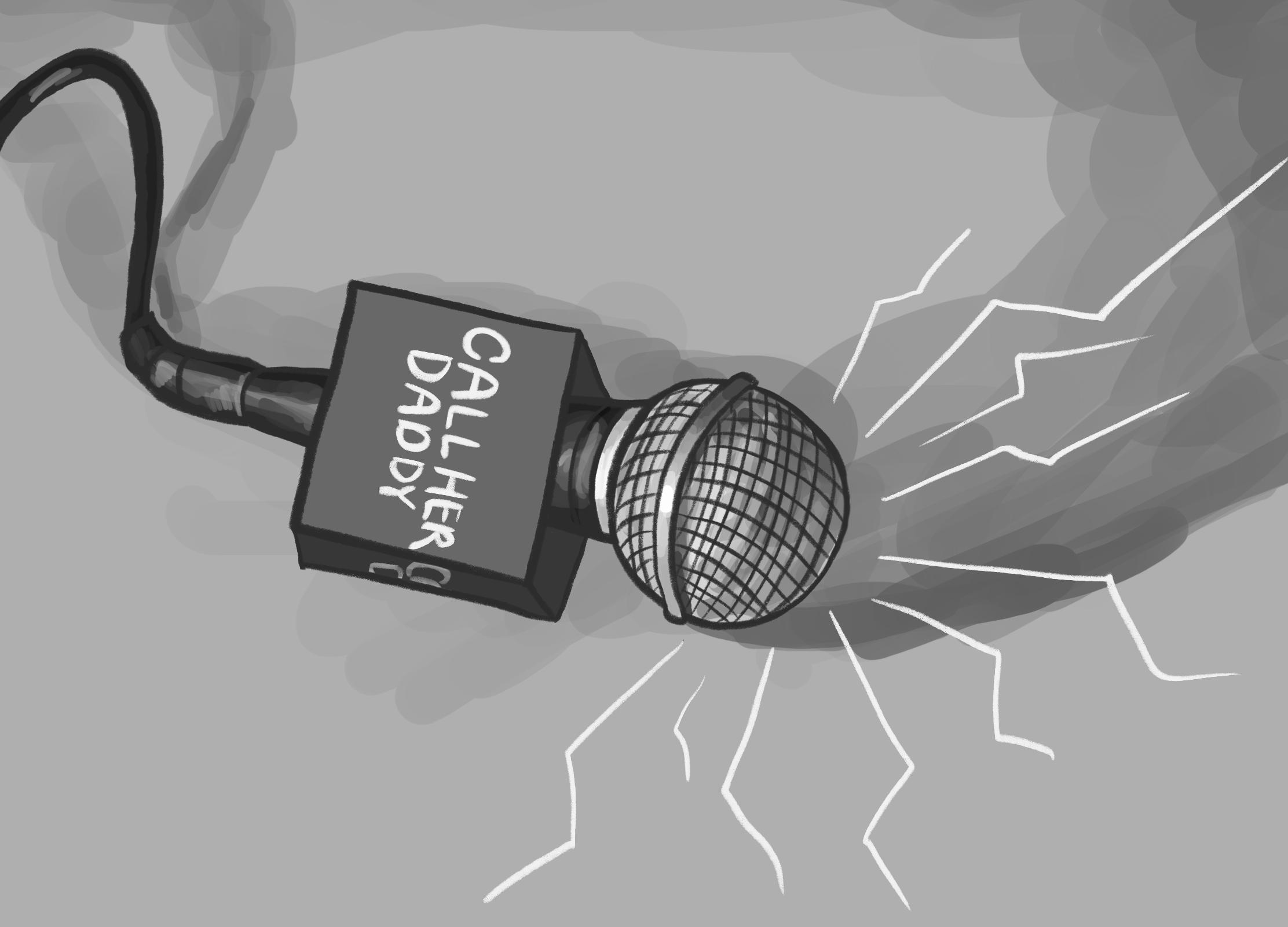
‘Call Her Daddy’ did irreparable damage to my brain
It’s my junior year of high school, and I’ve just been broken up with. I’m taking out my rage on the stairepisode two of “Call Her Daddy” accompanying every stomp.
I’m falling down a rabbit hole of heartbreak, co-hosts Alex Cooper pick up the pieces of my ego. I want to be part of their infamous “Daddy Gang,” and my newfound big sisters are teaching me to game men in the same way that men game us. It’s very binary. While my steps up the never-ending staircase don’t falter, I feel an uncomfortable shift in how I understand myself and feminism.
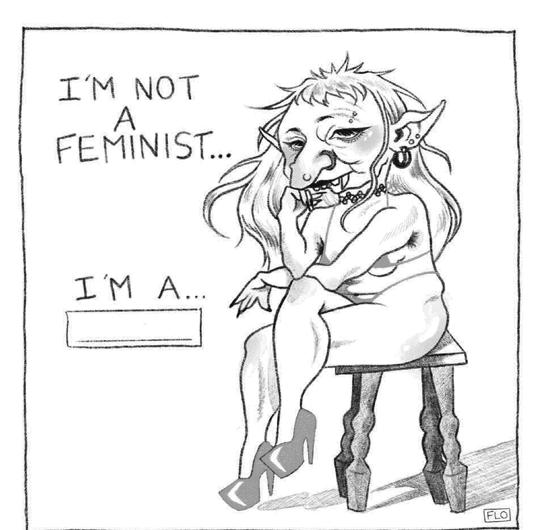
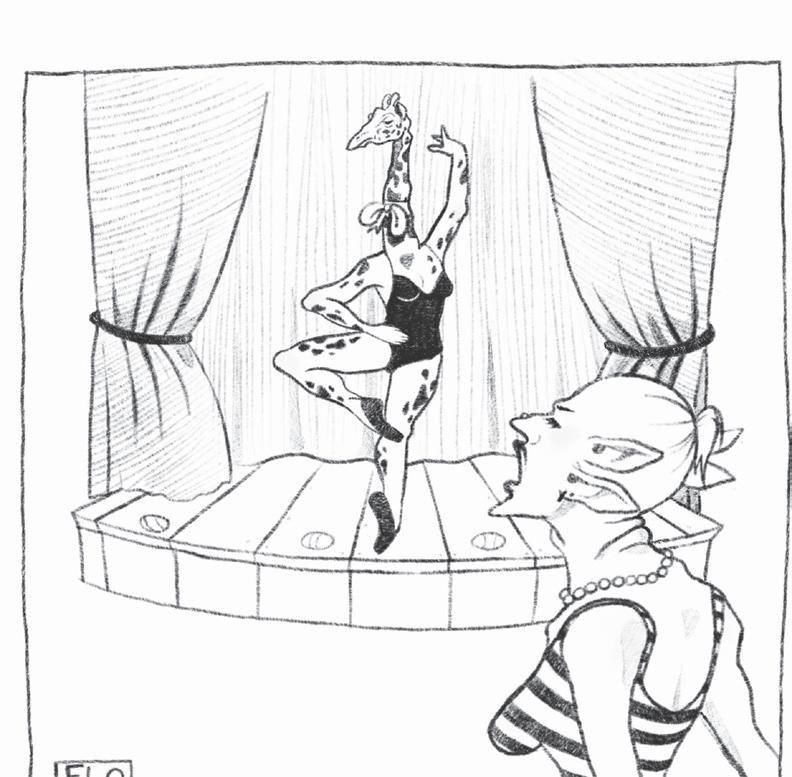
From 2018 onwards, Alex Coowomen’s locker-room talk with episodes on dating — albeit mostly sex — tips, amusing anecdotes and audience Q&As. I discovered “Call Her Daddy” in 2022. I was late to the game, chronologically speaking, but online enough — thank you, COVID-19 — to watch the fourth wave of feminism unfold across social platforms at the same time the podcast gained popularity among my peers. I considered the two to be somewhat related: Alex the door to a world of transparency, where women could talk about sex — not just having it, but enjoying it — in a way that I remembered as being reserved exclusively for men. Is “Call Her Daddy” objectively good or bad? I don’t know, I’m biased towards good. But to the question: Is it feminist? Teenage me thought so. Today, I think there’s more room for debate. The fourth wave of feminism, which began around the early 2010s, is characterized by digital activism and creating space for women to talk about social issues. For their time, producing sexual how-to episodes geared towards an audience of women on a male-centric platform like Barstool Sports was revolutionary. If you’ve ever listened to some of their most infamous episodes — Episode 3, “The Gluck Gluck 9000,” or Episode 5, “Fine Dining: An Eating Out Special,” featuring the Cooch Gobbler Combo, iykyk — you’ll understand strides towards normalizing the pursuit of the female orgasm. However, with great power comes great responsibility. The decidedly anti-feminist aspect comes in the pair’s hierarchical relationship to men; more specifically, how they instruct women to view themselves through men’s eyes and adjust their expectations
accordingly. In their second episode, “If you’re a 5 or 6, Die for that D*ck,” Cooper and Franklyn lay out a ranking system for how men treat women. On a scale of 1 to 10, girls who rank higher in
like a pornstar, ‘cum on the face and make it fucking rain, baby.’” Alex responds: “Or, if you’re a 9 or a 10, a guy knows that he’s got to roll out the red fucking carpet … because he knows you’re not just going to spread your legs and be like ‘here we go, baby let’s do that damn thing.’” If you’re a 5 or a 6, congrats, — but with a paper bag over your head. Is this empowering? I’m not so sure that these messages traditional gender roles and promoting inclusivity that define fourth-wave feminism.
“Call Her Daddy” is funny, particularly in those outstandI don’t necessarily believe that
you need to engage with feminist material all the time or avoid anything anti-feminist to call yourself a champion of equality.
The podcast is an interesting snapshot of both Gen Z’s oftenfusing moment in the history of feminism. Women have always been asked to succeed in a system set up against them. Alex that would allow women to beat the men at their own convoluted game. Through encouraging women to participate in this system, the hosts risk taking regressive steps towards traditional gender roles — namely, championing sex tips and calling it equality. Cooper is aware that some of the ideas she shared could potentially be harmful. In a 2024 interview with The Hollywood Reporter,, she reflects on her podcast experience. When asked, “You have put a lot out there. What’s something you’ve said that you wish you could take back?” Cooper makes clear that
her intention was never to harm:
“Like any creator, you’re going to say some dumb shit. I don’t know if I’d take anything back … I’ve done episodes where I’m like, ‘You guys, remember when I used to say that this is how you should react to a man? I actually don’t agree anymore and propose this instead.’” I think “Call Her Daddy’s” man-centered rhetoric causes harm. The show focuses on how to “game” men — rationalizing Alex as a kind of counter-terrorism mechanism. They seem to say, “They’re doing it to us, so let’s do it back.” But it isn’t realistic, or healthy, to play the game. Said game is explained in Episode 29, “Why They Won’t F*ck You.” If your goal is more than a hookup — Episode 30 “Sex Toys & How to Not Catch Feelings” — or you want to form a healthy relationship — Episode 1 “Sext Me So I Know It’s Real” — the show might not provide the best advice. My point isn’t to bash “Call
Her Daddy.” The pair acted as role models for me. But it’s important to remember that just because the game exists, it doesn’t mean you have to play it. On the path to de-center men, it would seem like a rational step to unsubscribe from “Call Her Daddy.” I can’t bring myself to do so, but I also refuse to rank myself on a scale of 1 to 10. I refuse to worry about how the hypothetical man I may or may not be trying to screw is going to perceive me, or adjust my behavior for him. If you’re looking for a fun podcast to get you in the mood or to pick up some sex tips, “Call Her Daddy” is a good bet. But don’t let the opinions of two women who exist in a man-centered vacuum tell you how to make yourself more or less of a feminist.
Arianna Kaplan SC ’27 is very concerned with college social dynamics, our weird nightlife scene, creative tell you, without fail, that she studied abroad in Paris. Please, please, please ask her about it.
LESLIE TONG
ARIANNA KAPLAN
MEIYA ROLLINS • THE STUDENT LIFE
MEIYA ROLLINS • THE STUDENT LIFE
THE FEMININE MYSTIQUE
Akshay’s Crossword: Repeat
free, and everywhere he is in chains”
14. Fin
21. Largest newspaper in Maryland
23.
25. El país donde que estoy
26. ____ball
27.
29. “Free” position in volleyball and soccer
30. Playwright of “Huis clos”
36. White part of a Taoist symbol
37. Unique
38. Strong current opposing the surface
39. 0%
46. Titular adjective of a symphony by Strauss
47. Singer Richie
49. A rhyming clue helps you deduce That the answer’s Dr. ____
50. Inexpensive Japanese chain
52. Levels
55. Squandered
56. The Euro replaced it in Italy
58. Source of radiation eight minutes away from us
59. Arlington
60. Like 91% of China
61. Star Trek series before Deep Space Nine
Claremont
35. Target of a tympanoplasty
36. “I can’t quite hear you”... or a hint to the two pairs of circles in this puzzle
40. ___ Arbor 41. Permit
42. Captain in a Jules Verne novel
43. Neighbor Flanders 44. Don’t do this in pen 45. Without a key center 48. 51. Used another match, maybe
Worry 54. Competent
57. Hawaiian staple
58. MTG yelled during one of Biden’s 59. Uncultured anti-intellectual
62. Some, in 25D
63. Someone who might be
‘Yoga Play’ provides commentary on the wellness industry
If you found yourself at the southeast end of Pomona’s campus this weekend, you may have heard laughter echoing from the Seaver Theatre Complex. The sounds were flowing from the crowd, which had gathered together to watch a senior thesis performance.
The Pomona College Theatre Department’s production of the “Yoga Play,” originally written by Dipika Guha, ran from Thursday, March 5, to Sunday, March 8.
“Yoga Play” is a biting satirical comedy that focuses on the dynamics at the intersection of wellness culture and capitalism.
The play, directed by Pomona theatre professor Lina Patel, follows recently appointed CEO Joan, played by Phebe Mason PO ’26, as she attempts to save athleisure company Jojomon from a PR crisis. Together with CFO Raj, played by Annsh Kapoor PO ’26, and COO Fred, played by Chris Chow PO ’26, she must learn to manage not just the company, but her own anxiety. Throughout the play, Joan, Raj and Fred embark on parallel emotional journeys. Against a backdrop of corporate absurdity, they all strive to discover what
they truly want and how to pursue it in a world that encourages everyone to put on a front.
For Joan, this means working through her anxiety and panic attacks; for Raj, this means overcoming the apathy instilled in him by the corporate world; for Fred, this means reconciling his past in Singapore with the new life he’s built in America. Along the way, they encounter overenthusiastic employee Nooyi, played by Caoilainn Christensen PO ’28, idealistic yoga instructor Romola, played by Fabi Parés Gutiérrez PO ’28 and the mysterious Guruji, played by Eli Hamre PO ’27.
“Yoga Play” serves as the — for three of its six cast members, making this production an involved. Mason, Kapoor and Chow all chose to perform in this play as the culmination of their acting studies, combining the performance with a written major requirements.
Kapoor, who plays Raj, discussed his decision to be in this play for his thesis.
“I suggested ‘Yoga Play’ because I love the play, and I think
it’s such a funny play,” he said.
“It’s so relevant and so fast-paced and so witty at the same time. I just thought it was a great play to do as a thesis.”
The show also provided an opportunity for representation; Kapoor was able to play a South Asian character, something he had not gotten the chance to do before, and Chow also felt a strong connection to his character.
“I’m originally from Hong Kong,” Chow said. “I was born and raised there, so I feel like I have a very international perspective. Fred is an immigrant from Singapore who has only lived in the U.S. for like four years, and he has lived in Singapore his whole life, and so I felt like there was a huge connection there.”
Choosing to be part of this show was one thing; the rehearsal process was another. After auditions and casting, the “Yoga Play” team hit the ground running. They only had four weeks to rehearse, so they couldn’t waste any time — but that didn’t
The cast found the rehearsal process to be fast-paced and adventurous, and appreciated
the creative and comedic risks they were allowed to take while developing the show.
“The rehearsal process was great,” Mason said. “It just felt very collaborative, like we were all there helping each other and working on it together; it wasn’t a top-down approach in any way.”
“Yoga Play” weaves sentimental moments together with hilargrounded in the corporate world of Jojomon. To do this, the actors had to dive into their characters.
“I would say the most fun part was creating Jojomon and making it feel really alive, like it’s a company,” Chow said. “We played with a lot of dynamics between Phebe, Annsh and me.
We did a lot of thinking about our backstories and how we got here, like, why do we need this job, and things like that. Building the world was really fun.”
The show also featured many moving parts and technological touches, with several scenes featuring a voice call between onstage
livestreamed speech to all of Jojomon’s customer base — or “family,” as they say in the company — features a video call projected onto the stage.
Both Kapoor and Mason found this scene particularly difficult due to the projected video call, as they were unable to see each other, making the scene’s success reliant on the actors’ precise timing. moments, the cast and crew came together to create something larger than themselves.
“I think when you’re working on theater with a group of people,” Chow said. “It’s really about sacrithis thing you’re creating that’s so sacred and beautiful.”
“Yoga Play” provided a tender farewell for the show’s three seniors, who commented on the impact of theater on their college experience.
“I feel like my four years in the Pomona Theater Department made me not just a better artist, but a better human being,” Kapoor said.
It is never easy to leave such a meaningful community behind, but the lessons they’ve learned and the connections they’ve made will stay with them long after graduation.
“I think it’s shown me how important the people around you are in determining your growth as an artist,” Mason said. “The experiences I’ve had in the Claremont theater department have been made by the people I’ve done it with.”
PHOEBE FOGEL
JOSE
With no end in sight, intervention is devastating
KWON
JUN
Last Friday, I opened The Student Life to an article celebrating U.S. intervention in Venezuela and Iran and advocating for the invasion of Cuba. The piece twisted Martin Luther King Jr.’s words into justification for the recent carpet bombings of Iran, and cited the notoriously well-trusted White House press room to claim that such an invasion was in the best interest of the Iranians on the ground.
To be fully transparent, even my own thoughts on these invaa conversation shared with my
to nail Jell-O on the wall.” Such why I disagree with the op-ed.
To begin, a core tenet of the interventionist argument replaces humanitarian safeguards with the demands and emotions of American diasporic communities.
-
joyed,” then cites an article from Trump-compromised CBS with only three Floridian interviewees,people for the entire Venezuelan diaspora in the United States. Diasporic communities have complex relationships to their homelands, but one thing is incredibly clear — discourse within diasporic communities does not unconditionally override the voices on the ground.
Additionally, the argument’s logic reduces non-Western countries to similar anomalies of autocracy rather than treating them as independent systems with complex peoples and ideas. Venezuela’s population is near 30 million; Iran’s is over 90 million.mon between Venezuela and Iran. Their leaders may have shared a place on American watchlists, but interventionist analysis often fails instead placing them under the shared label: oil-rich tyranny.
Venezuela was ruled by left-populist nationalists who
on oil. On the other hand, Iran has been a dual system from the outset. It has both elected and unelected officials, and senior clerics conauthority. Councils and experts are decentralized, and the Islamic Revolutionary Guard Corps has a mosaic defense doctrine that divides defense capabilities into
itation impossible. The crisis faced by the Amer-
edgment of such differences. Decapitation in Iran was never as it did in Venezuela, and the operation in Tehran was not an overnight bomb-and-grab as in Caracas. The fact that the newly appointed Ayatollah Mojtaba Khamenei — the son of the former Ayatollah — pushes a more hardlined and vengeful stance toward America proves that this failed miserably.
Donald Trump’s directionlessen the lives of seven American soldiers. Outlets report over 1,300 dead civilians in Iran and 140 American service members wounded. With these mass casuresult of US bombs, it is ridiculous to expect that Iranians on the ground would wholeheartedly accept that the invasion is an country.
Over those corpses, more than $750 million in taxpayer funds are expended daily, with just the in munitions alone. Since the operation’s objective clearly wasn’t
no clear answer as of today, and In the article, these operations
For me, the most convincing hand accounts indicating thatican intervention. That proof, evidence, just an assertion that Venezuelans and Iranians have is more to life than misery.”
Any form of political hope and resistance is only possible when your most pressing daily worries aren’t survival. An operations as morally upright and relieving of misery when primary school is disgraceful and genuinely argued in poor taste.
Even without ongoing war in Venezuela, there is no clear sign that interim president of Venezuela Delcy Rodríguez has made progress in addressing the underlying issues — from deeply entrenched authoritarian structures to incredibly high
purported to fix. All of which must be done without major American guidance, as they will be fighting a war in Iran and planning another in Cuba.
and certainly no end in sight for either of these interventionist projects. It is generally agreed that the leadership of both Nicolás Maduro and Ali Khamenei has been detrimental to their respective nations. The debate was never over whether these two were oppressive leaders; it was always about the ethics of American intervention to resolve it. These two leaders are justifiably guilty of state mismanagement. But to use this fact as justification for the argument that we must put American boots on the ground, and in doing so, put vulnerable Venezuelan and logic requires far more analysis, along with proof that American intervention would dramatically improve the status quo in these countries — proof that did not exist in the article nor federal political rhetoric. That leads me to Cuba. Although I do not downplay the lived experiences of the author and his family in their emigration from Cuba, using Venezuela and Iran as Exhibits A and B to justify an invasion of Cuba is a false equivalence.
the invasion will happen. I’m it to accurately predict Trump’s
History, however, has shown that regime change is an unrealistic goal. There has been no
dethroning their corrupt leaders.
Even in those instances, such dethronings allow deaths to be framed as martyrdom, and structured bureaucracies easily replace their leaders — as we’ve already seen in Iran.
In fact, here is a list of just some of the unsuccessful American interventions in the past 70 years alone: Guatemala in 1954,
in 2001, Iraq in 2003, Libya in 2011 and Syria (again) in 2011.
Two common denominators underlie these events: ambitious objectives with no realistic longterm planning for the post-war order, and a deep misreading of local politics and popular legitimacy.
Some things simply don’t change. As of now, there are no the Venezuelans or Iranians for regime change, and there surely isn’t a blueprint presented to Americans who pay for such
The same goes for Cuba. Trump claimed that a Cuban in-over,” but that it could also not be friendly. In Trump’s words,
But under the author’s logic,light polling data that indicated mediocre-at-best support for American regime change in Ven-
ezuela — unfortunately for him, Cubans on the ground feel exactly the opposite. A journalist for The and a glaring majority of interviewees opposed American meaUS intrusions.”Amid US-induced more Cubans argue that intervention could trigger further entrenched polarization and civil warfare. In that case, would his morals demand that Trump override local sentiment to squash the dictators, the most fundamental flaw in argumentation for any invasion. When should we determine that toppling a single leader of a tyranny is worth the casualties of localsions of Americans with immense privilege override those who will feel the implications of the intervention much more intensely. Would I rather envision a life
demanding that a planless United States withdraw its troops in regions where both local civilians and American citizens are dying daily is irrational name-calling. Jun Kwon PO ’28 is an immigrant who believes patriotism is like friendship. Good friends keep it real with one another and hold each other accountable — to be patriotic is to acknowledge a friend’s wrongdoing and correct it because you love them, no matter how uncomfortable the conversation may be.
The war on trans rights is more than a ‘culture war’
passed House Bill 2, legislation that that transgender people use the bathroom that matches their sex assigned at birth. While this controversial law was repealed in 2017,opment in America’s war against trans people.
Prevalent violence and discrimination against transgender Americans has continually reared its ugly head throughout this nation’s history — a hatred steming from the colonial treatment of indigenous understandings of gender and the genocide perpetrated against native people since the founding of our country. This marginalization has evolved alongside our society, with powerful institutions and leaders abusing this country’s bureaucratic defects to adopt rules and laws meant to forbid trans existence.
ALEX BENACH Despite this, trans people have overcome challenges and made extensive progress since the late 1900s: In recent decades, trans people gained access to gender reassignment treatments, the abildocuments to match their lived identities and reached greater cultural acceptance. It seemed trans people, and while there was our society was progressing on the progress and societal acceptance switch, a political realignment ortile, persecutory era is the product the American right to erase trans to rid our society of pluralism, with trans people acting as one of the Christian, cis-hetero, ethnonationalist crusade. This persecution
hensive organizing and resistance to prevent the situation’s further devolution. Recently, the state of Kansas the state informing them that their driver’s licenses were no longer valid, and they would have to get new licenses that match their sex assigned at birth. Furthermore, President Trump enacted a similar from Gender Ideology Extremism and Restoring Biological Truth to the Federal Government” executive order in 2025, which forced transgender people to receive passports that match their sex assigned at birth. Overall, 2025 was a uniquely dangerous year for trans people, with over 1,000 anti-trans bills being introduced nationwide.
This problem is much bigger than the Trump administration, as state legislatures continue to endorse anti-trans laws, and Congress crafts legislation vilifying and targeting trans communities.
been a stronghold for the conservative movement in the United States. This latest iteration is another coorprogress made for trans rights in the United States. It is not a stretch to say that conditions have deteriorated for trans people — currently, their access to medical care, protection from discrimination and legal We as a nation have abandoned trans people, leaving them vulnerable to the ongoing persecution they face. Our inaction has allowed theinate the sphere of discourse and mobilize against trans people by wrongfully shaping their narratives and legal realities. We mustoritize the defense of trans people in our political action.
just a few malignant figures in power at this moment. Rather, it indicates an ongoing systemic destruction of trans rights in America.
Trans people have not become victims by accident: Far-right actors’ selection and villainization of trans communities serves as a scapegoat for longstanding American tendencies of hostility toward those who
of pluralism through the purging of marginalized identities. Trans people are facing abuse right now as a litmus test of what our society will accept. Conservatives have found that they are able to exploit the ubiquity of cultural transphobia and queer hate in our world, Niemöllerean nightmare.
trans people seriously right now, because we have seen this play out before. Too often, queer people areoften followed by or coincide with
Our case is particularly concern-federal level, or one state’s regime. of our political society and modern cultural discourse, and is being carried out across the nation. It is not administration departs the White House, and it is not something that win the midterms this year. The fact that trans rights have regressed so rapidly signals a deep cultural depravity — in standing by, we are allowing a vulnerable community to face harassment and bigotry at a systemic level. If we are to move forward in building a humane society, it is time are innocuous or any less grave thanognizing the ways in which trans people need our help and protecting our community members. Diversity should never be the target of political whims, as coexistence with those
It was trans people who began United States, in a moment that people. It is time that we return this favor — not only because trans people are valued members of our community, but also in recognition of their contributions to our history. members and get involved withpand legal recognition and promote social acceptance. This is yet another is precisely because of the level of
PJ JAMES
Ozempic (and the death of body positivity) is screwing amputees
In 2024, I noticed something strange on r/antidiet: a post about someone’s weight loss on Ozempic. The subreddit r/antidiet was created and encourage members to accept their bodies, but here I found a post advocating for a medical intervention to lose weight. The post follows the typical script of body positivity messaging: Ozempic had helped the user accept their body more, and she felt happier than she ever had. And yet, I immediately recognized that I came to this subreddit for mental health support related to body image bodypositivity helped me feel that Isures I had in the past to lose weight. But with this post, I started wonder-
GRACE RUTHERFORD ing whether this miracle drug could to drop below that particular goal started to notice them everywhere. I saw a post calling GLP-1s empowering. On r/bodypositivity, I saw a post comparing Ozempic to Wegovy. Comments on GLP-1 posts across forums and hashtags were overwhelmingly positive; only a few questioned whether GLP-1s belonged in the discussion.
ing and redirecting every conversation away from body acceptance to body improvement. People are
As time went on and I watched
Megan Trainor and Rebel Wilson lost substantial weight, I began to see people online lauding the death of body positivity. I remember combody positivity was a movement that promoted unhealthy lifestyles, people healthier and women hotnumber of plus-size models by 70 percent. All around me, the decline of body positivity was seen as a win for America.
the mirror and feeling uneasy; I had I wondered for a moment: Was this just get on Ozempic. I could post
progress pictures and tell everyone how happy I am, and everyone would tell me how beautiful I was.
For Christmas, I was at my parents’ house in Rhode Island. In the process of trying to buy Wegovy something that made me pause. My military friends down the hall; in the war in Afghanistan, his friend had earned a Purple Heart, which he -
his friend if he had seen anything about a new style of prosthetic on a veteran forum. His friend replied, posts are about Ozempic.”
he meant by that comment. He told me — rather innocuously — that when you retire from the military, fat,” which explains why the forums are dominated by discussions about Ozempic. His explanation was reasonable enough, but it made me wonder again if something is lost with the death of online body positivity. I began to do some research.
I started browsing general body positivity forums, not limited to after post on Reddit, Instagram and
for advice on acne scars, baldness and cerebral palsy, but it was all buried under a mountain of Ozempic.about dwarfism, I saw a fierce Human Growth Hormone therapy normal.” This seemed unusual, but I wasn’t sure. So I decided to reach out to a friend of mine. At age 21, he had shaved his head in response
if his decision was informed by any advice found online. He told me thatmore, because in the last two years, it had gone from advice about existing as a bald man to advice about saving these spaces are not what they used to be.
These online forums are losing the values of positivity and acceptance they once promoted. Let Ozempic serve as a warning — online forums increasingly reward insecurity andversation should center on something far more valuable: supporting each other’s mental health rather than
There are two ways to tell the story of GLP-1 drugs. In one story, they are extended story, GLP-1s are ending body positivity. As fat acceptance declines, spaces where people with all left with no community. Meanwhile, bodies are becoming more common, and people with eating disorders are trying to use these drugs to worsen their conditions. All the while, Ozempic is screwing everyone from young men going bald to amputees. We need spaces for body positivity, which isn’t necessarily just a movement about obesity, but rather I encourage everyone who reads promote body positivity. Above all, I -
Grace Rutherford ‘28 doesn’t go on Reddit anymore.
Feminism does not start and end in the West
SHI perspective: The recognition that women’s lives are shaped by forces that do not stop at national borders only sees one correct answer to liberation will exclude most of the world’s women.
In a gender and women’s studies women from the Global South who leave their families to clean other people’s homes across the world. It was one of my favorite readings all semester. But when we started than I had.
My classmates described their households as relatively equal, called uneven domestic labor distribution inwife” is basically a privilege nowadays because they have the choice to read about women who cross oceans not because they chose to, but because the alternative was worse. Nobody bothered to connect the discussion to the stories we had just read, so I said it myself: Not everyone has the privilege of choice. For most women in this world, the options are to stay home without pay or leave home to become someone else’s underpaid servant.
This was not a one-time thing. I’ve encountered it across campuses, and international friends have described similar experiences. In our classes, women from the Global South get read and sympathized with; then, when the conversation begins, they are left behind. Their stories become
We leave class, and the awareness of experiences beyond our own fades.
The disappearance points to something structural. Feminist discourse at
Understanding the person you are reading about and seeing her within her own context is whatable, and is something we have
Without this practice, feminism becomes an empty conversation about liberation that only a fraction of the world’s women can hear themselves in.
empathy. Rather, it is that they did not notice the gap in their own understanding — they failed to realize that other women could have experiences of oppression
own. Growing up in a particular environment naturally shapes your perspective, but that does not mean it has to be your only perspective. We had the material right in front of us and still, the women we had just read about disappeared as the discussion began. Coming from the Global South myself, I experience feminism very
sation than an identity. Feminism implies something disruptive and unwelcome, something worth insulting someone over. Finding
that commitment genuinely meant being a feminist for reputation. When I follow news about feminist movements in Iran, I feel something that I rarely feel in classrooms here. Not because our experiences are identical, but because women from the Global South share something with each other that cuts across cast as those who need saving and those who are behind. That shared position is structural, and it is exactly what gets lost in feminist studies at the 5Cs. Within the transnational frame-
stood in isolation from global systems of power because these forces shape women’s lives differently across locations and histories. This Western feminist discourse thatversally applicable or insists that
There is no single valid or correct way to be a liberated woman. The -
ability to see themselves as experts of their own experiences. Without genuinely engaging with the lived experiences of women
that celebrates empowerment in thetion of the world’s women whose lives happen to resemble the model of liberation that Western feminism
already imagines, while leaving those who do not fit that model behind. What gets lost is not just academic complexity; it is accountability. Feminist politics in places global powers and contexts, because eventually escape these campuses as we leave them and enter the real world.
At the 5Cs, accountability can begin in the classroom. When you read about women from the Global South, or any women who have experiences different from your where she is coming from — not to compare her life to your own, but to let her reality be unfamiliar and recognize the difference without rushing to explain it. When a con-
versation turns to women’s experiences, correct your instinct to reach fortions. When someone in the room be a woman in a place you have never been, engage with her experiences: These female experiences belongis important to the feminist challenge as a whole.
The next time a woman in the — what she is describing is not an exception to feminist discourse, but a part of it.
Catarina Shi SC ’29 is very grateful to no longer be in high school.
Pomona College has a racism problem
Last month, a white junior on the who called him out over his use of the N-word — which he repeatedlyhemian Rhapsody.” He did not miss a single minute of game time for the remainder of the season.
An Asian first-year student on the P-P Men’s golf team continues to use the slur, even after repeated reprimands from his teammates. He, too, remains on the team.
A white member of the P-P’s men’s tennis team; multiple members of the P-P men’s swim team. No consequences.
an email to the student body on Tuesday, March 10, the administration mentioned a host of similar racially charged incidents including a professor’s repeated use of thedent Union (BSU) members being
dents in our community.” Despite the subject line, the problems were Pomona College has a racism problem. Let’s call it what it is. For a school that has been around for over a century, Pomona’s reactionary protocol to overt racism on campus is laughable. What does accountability mean when the administrative response to racial slurs is an
primary institutional reaction is bias there are no incentives to change. To live up to the ethical standards it espouses, Pomona College has an obligation to deliberately combat racism with concrete sanctions.
incidents” is conveniently supported by California’s Leonard Law, which protects hateful speech as students’ free expression under the First Amendment within the state’sized threats” to groups of people are permissible.
even if speech is protected with the Leonard Law, it may not be
ues as a supportive and inclusive campus community.” Yet, Pomona has willfully ignored numerous recent opportunities to discourage their purported values. We can name a handful of racist incidents on campus, yet not a single sanction was given.
Substantial disciplinary punishment is replaced by Title IX training sessions — which student and fluffy one-on-one dialogues. Pomona’s Bias Incident report teamas-related incidents” as ensuring that can be reported.” Another clause
reminds students faced with racists
how they feel and telling victims what to feel.
Pomona’s inaction forces students to constantly face racist apologists on campus, in dining halls and on the court, their enrollment unaffected and game time uninterrupted. Rather than administering true consequences, accountability at Pomona -
students are referred to counseling, the chaplaincy and a host of bureauand supporting.” Discipline, it seems, is optional, so long as stuIncident Response Form.ble for healing themselves of the au-
Pomona is complicit. For a school should expect the same standards to apply to students’ conduct. Twenthe weight of their words. We are old enough to vote, old enough to lead organizations, old enough to represent this institution. Racial epithets do not slip out. Our school is not too progressive to call a red line a red line.
Discipline is not merely punishment: It is the declaration and enforcement of our core values. It tells a community what will be tolerated and what will not.
Pomona College, we demand you do more. If this institution will not act it should at least act to preserve the ideals of the liberal arts education it claims to embody. As an educational institution, it is your job to challenge the mind, not to coddle the comfortable and provide racists with a quiet, manicured quad on which to stroll. Dialogue is not enough. Freedom of expression comes with responsibilhold students to the high standards expected of them in every other facet of campus life. This can begin in the classroom by requiring all students to complete a general education requirement in racial or ethnic studies.
Students — silence is complicity. Call out your peers. Athletes, hold your teammates accountable. Call the weight your words carry, so act accordingly.
A school that continues to tout its diversity and inclusion ought to live up to it.
Kaitlyn Ulalisa PO ’27 is experiencing moment and the climate of her midwestern high school.
Mujeebat Gbolahan PO ’27 has a deep love for Pomona College, which is exactly what drives her desire to see it grow and change.
CATARINA
S H IXIAO
MEIYA R OLLINS• T H E STUDENT LIFE
KAITLYN ULALISA MUJEEBAT GBOLAHAN
Saving water is a key sustainability initiative at the Claremont Colleges. But where does our water come from? Part of our water is imported, but part of the answer is right below us. The Claremont Colleges are located above an aquifer, a layerwater. Two active wells — one on Pomona College’s North Campus, by Dialynas and Sontag halls, and one north of Baseline Road in Upland — extract that water.
Those two wells are why Pomona is the sole member of the Claremont Colleges to have rights to the Claremont area’s groundwater — called the Six Basins Area. According to Alexis Reyes, Pomona’s sustainability director, the college’s water rights mean that it owns about 1.85 percent of the water determined safe to extract each year from the Six Basins.
The wells allow Pomona to pay less for its water, and even occasionPomona has leased its two wells to the Golden State Water Company (GSWC). As part of the agreement, GSWC allows Pomona to purchase water at a below-market price.
Though the wells alone produce -
percent of the water purchased from GSWC is local groundwater. The from Northern California, which has much higher energy costs than its locally sourced alternative.
Based on data obtained from the water bill would have been twice as -
billed — if it were to pay GWSC’s typical commercial rate. The Sushow much GWSC pays Pomona to lease its wells; still, the net amount Pomona spends on water is certainly policy analysis thesis analyzing water policies at Pomona College found that the agreement has historically
Because of its beneficial water rights, Pomona did not prioritize reducing water usage until droughts in time in 25 years, Pomona’s water rights uniquely situate the school to double down on sustainability
Understanding the importance of Pomona’s water rights requires an understanding of the history of the land on which it was built.
According to Char Miller, Pomona College’s W.M. Keck professor of environmental analysis and history, there were roughly four phases of land and water management in Cla-va/Kizh people; second, by Spanish colonizers; third, by the Mexicans, who developed the rancho system and fourth, by the Americans, who
When a hundred or so acres were included appropriative rights for water.
“The way we [historically] think about water rights in California is
not to the indigenous people.
Because of these rights, Pomona was able to build a water system, including wells. According to Ben Lewis, president of the Pomona Valley Protective Association, the college was a mutual water company even before the city of Claremont
The Six Basins Area, which Pomona’s wells are a part of, was like many basins in Southern California at the time, there was no limit to how much water producers could pump. Nearby Chino Basin was pumped to the point that the ground subsided, leaving the area
“There were people who were just pumping [water] to beat the band,” said Lewis.
Suspecting that the Six Basins Area was being overpumped, GSWC, one of the main water proagainst all pumpers in the basin.
“Before [the adjudication], if you had any land above the groundwater basin, you could drill a well and pump water from it,” Carolina Sanchez, the administrator and technical consultant of the Six Basins Watermaster, said After the adjudication, only a set group, including Pomona, which by that time had contracted its wells out to GSWC, had water rights. The adjudication also led to the establishment of the Six Basinssible for managing and preserving the Six Basins.
As Pomona still had water rights and a discounted rate for water, the water purchases; Pomona used
of that water was directed toward Pomona’s former “Campus in A Garden” landscaping, which used many non-native, ornamental plants like azaleas and ivy to make the West Coast campus look more like an East Coast one. Intensive watering meant that Marston Quad
was often too wet to sit on.
Pomona has since reduced its water usage, thanks to student and faculty-led advocacy for turf removal and drought-tolerant landscaping. These initiatives, implemented by Grounds and Facilities & Campus Services, were accelerated when the state of California required Pomona to drastically reduce its water usage during the college also adopted SAVE, a sustainability plan which sets targets for reducing water use, energy percent. According to Reyes, Pomofocus on expanding building-level submeters for more accurate water usage measurements. Students have been actively identifying turf removal opportunities and advocating for the usage of California native plants.
Pomona’s wells continue to play an important role in the Claremont area. According to Sanchez, because there is now frequent rainfall, the Six Basins Watermaster is planning to allow more water to be pumped from the basins. This will decrease demand for importing water, which is energy intensive. Like many resources, water is most reliable and sourced.
Understanding Pomona’s approach to water can also inform other sustainability efforts. Student-led approaches that focus on both utilizing local resources and minimizing resource usage are student water-saving initiatives was crucial when Pomona had to quickly reduce water usage during a drought. A similar framework
can be applied to other sustainabil-
Water sustainability at Pomona began with students, and students at the Claremont Colleges continue to play a crucial role in advocating for and enacting sustainability, from 5C Environmental Justice’s current Claprograms like the student liaison-led EcoReps.
A message from the Editorial Board
At The Student Life, we have a well-established set of guidelines and procedures that determine if a source can be granted anonymity. This policy is listed on our website under the “Ethics” subheading and is aligned with the Society of Professional Journalists (SPJ) Code of Ethics.
author challenged The Student Life’s editorial decisions surrounding anonymity, referencing our recent reporting on a Turning Point USA event. We wrote that club members “declined to comment,” but the article has since been corrected to state that they “declined to comment on the record.” TSL regrets this lack of
This editorial board aims to clearly delineate The Student Life’s anonymity policy and illuminate both the journalistic precedent behind limiting anonymous sources and our case-by-case decision-making process.
Our policy lays out three clear criteria: “The editor-in-chief may grant a source anonymity if 1) the information given is not an opinion or speculation, and is vital to the story, 2) the source can provide important information that cannot be obtained elsewhere and would put them at serious risk of harm if it were is in a position to provide reliable, accurate information.”
With this policy in mind, we evaluate anonymity on an individual basis, as each editorial board faces different challenges and campus climates. This process applies to all
potential sources. Our guidelines are not arbitrary: As the SPJ states, “a news organization puts its credibility on the line when it does not name sources.” At The Student Life, we have a clear mission to serve the Claremont Colleges community — in doing so, we work to “seek truth and report it, minimize harm, act independently and be accountable and transparent.” Granting anonymity, even partially, in situations where the comments they provide represent “an opinion or speculation” threatens the trust between The Student Life and the community we serve, and damages our credibility as an objective news source.
-
cally opinionated speech obscures the actions occurring on campus and confers accountability to our publication. Anonymous sources are valuable and a necessary part of journalism’s history, and the high standards required to grant anonymity are what give these voices the ability to hold power accountable.
The promise of anonymity emboldens people to act and speak recklessly, and as a trusted publication, we cannot protect nor take accountability for opinionated speech purported by sources. As a result, we cannot rely on anonymous message platforms like Fizz to serve as a voice in our news pieces; these users have no accountability, cannot be traced and are boosted by algorithmic factors. We do not look to this source for news gathering.
Determining whether explicit attribution would render a source “at serious risk of harm” is a complex process that we approach very seriously. In a time digital footprint, and others fear retribution for public statements, it is often understandable that individuals do not want their full names printed alongside their opinions. In these cases, however, our policy is clear: Even when there is a serious risk of harm in publishing one’s full name, if the information given is opinionated rather than purely factual, The Student Life will not publish the statement anonymously. If someone states their opinion in a public forum, we encourage them to go on the record with this opinion. We strive to both uphold our ethical policies and be a forum for campus dialogue. We encourage students who feel comfortable to go on the record with their thoughts. If you are willing, able and passionate, speak to reporters on campus. Go on the record with your opinion and perspeca guest Op-Ed or send us an email We aim to publish a diverse array of voices and opinions, and to do so, we ask that the 5C community speak their mind publicly. If you have questions or concerns regarding TSL’s ethical code or anonymity policies, please reach out to us and we will respond promptly.
Aamanya Sejpal & Vivian Fan: Why should Pomona College be weirder?
Jody Valentine
Assistant Professor of Classics at Pomona College:
For me, the magic of a small liberal arts college is that it doesn’tactional [model]. But when we try to box ourselves into that model, saying, “You’ll be great! Come to Pomona, and you’ll be able to achieve all these individualistic, capitalistic sorts of goals,” we dilute our real power. Our real power is the power of the weird, the power to imagine time as something that cannot be wasted, because it’s not something that has a monetary value — it’s
yours. A task takes the time it takes because that’s the time a task takes. If you’re immersed in something, and you’re growing as a person and learning what you love — an ethical love, not just a passionate love, but a passion grounded in your values — and when you’re working towards that, and you start to see accomplishments happening around that, and and grow — that’s the magic of our possibility. But the less weird we get, the farther we will get from what’s actually special, or possible here.
VIVIAN FAN
MAGGIE ZHANG • THE STUDENT LIFE
Pomona’s wells predate the city of Claremont; now they ofer new horizons for sustainability.
“First in Time, First in Right” Six Basins Adjudication & The Future of Pomona’s Water Rights
JESSICA LEVIN • THE STUDENT LIFE
AAMANYA SEJPAL • THE STUDENT LIFE
Tentative WNBA CBA offers newfound equity, but it is not enough
The Women’s National Basketball Association’s (WNBA) players live in a strange paradox. They are among the best athletes in the world, performing on national television and representing their sport globally. afterthought compared to their male counterparts in the NBA. change.
Negotiations over a new collective bargaining agreement (CBA) between the WNBA and the Women’s National Basketball Player’s Association (WNBPA) could become one of the most consequential labor deals in the history of women’s sports. The negotiations have yet to culminate in disagreements over league revenue sharing amongst teams and players. Still, the very fact that the talks have advanced this far signals a new era. WNBA players now have more leverage, stemming from the league’s
increase in popularity, to demand a much larger share of the revenue de-
To understand why this negolook at salaries. In 2025, the average WNBA salary was about $102,249, with the highest base salaries capped at $249,244. Rookie players earned even less, with the lowest base salary
Compare that to the NBA, where the average player salary is roughly $13 million per year.
This disparity is ridiculous. The average NBA player earns over 100 times more than the average WNBA player. An NBA player can earn in a few days what many WNBA athletes make over the course of an entire season.
The disparity is not explained by the league’s popularity. Despite the wage gap to low viewership, the emergence of stars like Caitlin Clark has buoyed WNBA ratings to post season averages of 1.33 million,
almost 85 percent of the NBA’s total. restrictions the league imposes on teams. WNBA teams operate under a salary cap of about $1.5 million, meaning an entire roster costs less than what most individual NBA bench players make annually.
has forced many WNBA players overseas in Europe or Asia to supplement their income. For elite athletes competing at the highest level of professional basketball, simply earning a stable living requires leaving their home country for half the year.
The new CBA negotiations aim to fundamentally reshape that system.
Under proposals currently being discussed, the WNBA salary cap could increase fourfold, from $1.5
At the same time, the average player salary could rise tenfold to more than $500,000, while the league’s maximum salary could
potentially reach $1.3 million with revenue sharing. If player demands were fully implemented, these changes would represent one of the largest salary increases ever seen in professional sports labor negotiations. More importantly, they would move the WNBA closer to a system in which player compensation grows alongside league revenue. This is similar to the structure used in the NBA, where player empowerment is paramount in the modern era of free agency and load management.
Currently, WNBA players receive only about 9.3 percent of their league’s basketball-related revenue, while NBA players receive roughly 49 to 51 percent of league revenue through their own collective bargaining agreement. The WNBA continues to refuse to increase this percentage, despite concessions to almost all of the other WNBPA demands.
This imbalance also explains why the CBA negotiations have become
so contentious. Players are not simply asking for higher salaries; they are asking to reassemble the entire league structure around a system that ties those salaries to the long-term growth of the league itself, a right that NBA players earned over 40 years ago. The WNBA has reached record audiences, with 54 million viewers tuning in to WNBA games during the to its highest level in more than two decades. The league recently secured a $2.2 billion media rights deal beginprevious broadcast agreements. In other words, the business of women’s basketball is expanding rapidly. The issue now centers around from that growth should be distributed.
To benefit from this newfound
if it means a players’ strike, which an overwhelming 98 percent of voting players voted to authorize a strike. It is about more than simply income at this point.
The WNBA is entering a new era. Superstars like Clark and Angel Reese around the globe, who increasingly tune in to their games along with those of the 11 other teams whose arenas sell out more and more each year.
Thus, urging players to accept a CBA that simply increases salaries alone is not enough. If the league keeps growing, those salaries will revenue sharing — something that all the women who came before them fought.
The new CBA is a huge step, but in order for WNBA players to fully exercise the agency they have long deserved, they need to continue to hold strong and demand the revenue sharing they have earned. WNBA players and those to come should successes of a league they create.
Seminars and scoreboards: economics of sports
Few economics classes are as popular as Economics of Sports at Pomona College. This spring, Professor Marisa Cameron, an avid football fan, is teaching two sections of the upper-division elective. From using data analytics to calculate player value to teaching the history of free agency, Cameron aims to use sports as an accessible gateway to the world of economics.
interesting topic that has a ton of economic principles behind them,” Cameron said. “The nice part about the economics of sports in general is that, essentially, it’s deceptively a data analytics and micro course disguised under the topic of sports.”
Drawn in by the course title and description, Tara Kamshad PO ’28 expressed her appreciation of how Cameron seamlessly integrates economics principles into discussions of sports.
“Sometimes, I don’t even realize that we’re talking about really cool woven into something as awesome as sports,” Kamshad said. “Understanding the actual economics behind sports has been a great balance of being fun and everyone being engaged.”
An important part of understanding these concepts is incorporating data analytics tools like Excel and R.lytics aspect has been really helpful both in his understanding of the class so far and in building tools for the future beyond college, which Professor Cameron emphasized.
“One of the things [Cameron] mentioned early on is that she wants the class to help prep for the workplace,” Sobota said. “She’s emphasized learning Excel, which has been very helpful
Such emphasis on data analyticsect-based quantitative learning. For Kamshad, opportunities to apply data rare, making the course’s structure particularly exciting. Rather than focusing solely on theoretical concepts,
the class centers around real-world application, allowing students to demonstrate their concrete skills through classwork.
“One of my biggest critiques of Pomona in general is that a lotect-based,” Kamshad said. “Even in computer science, I don’t have the biggest portfolio. I feel like in in that area. I’ve done a lot of Excel
that I’ve been able to do and apply what we’ve learned in the class to a
Baseball executives, using data to evaluate players’ performance and contributions to winning. For many, into the statistics behind the game, and their business potential.
“I thought I knew all I needed to know about Moneyball, having seen the movie, but through learning about the behind-the-scenes of sports, I’ve realized there’s a lot more to it than I originally thought,” Max Goodman PO ’28 said. “Professor it fun and interesting.”
As the students themselves learn about new aspects of sports, Cameron is also gaining new perspectives on sports and the business behind them. A large percentage of the class are athletes and sports lovers who offer unique perspectives during class discussion, whether from their own sports from the stands.
“Because there are so many student athletes in the class, we get to talk about how far data science gets us, and the role of psychology and cognitive ability,” Cameron said. “I them as well. I’ll present the theory, and then they have additional context that they want to provide.” Those discussions often extend
broader structures that shape modern athletics. One of the core topics that has been stressed is the depth of the business behind the game, centered on sports as an entertainment product, Goodman explained.
“The overarching theme so far has been about competitive balance — how do they keep sports interesting so people keep watching?” Goodman said.
For Cameron, that unpredictability is what makes sports an
interesting application of economics. Unlike many traditional industries rely on uncertainty as a feature of the product itself. The value of sports tension and possibility that anything could happen.
“At the end of the day, [sports are] a form of entertainment,” Cameron the outcome is always unknown. You want to go into any game and have no idea who could win. That’s
the unique part about most sports. That’s the beauty of competitive balance and what makes the product itself unique.”
This idea of competitive balance lies at the heart of sports economics.ing systems, salary caps and more to preserve that uncertainty. By examining such behavior, students in the class see how microeconomic theories play out in the world of entertainment, using sports as a lens to see how these concepts come to life.
JAKE CREELAN
SHIXIAO YU • THE STUDENT LIFE
TALBOTT CHESLEY
PJ JAMES • THE STUDENT LIFE ADAM
CLAIRE WELCH, JOELLE RUDOLF,
With a high wind watch in effect, Pomona-Pitzer (P-P) and Claremont-Mudd-Scripps (CMS) women’s lacrosse teams took to of Sixth Street lacrosse on March
— pulled out a late 10-8 win on the backs of big first-year performances from Piper Higgins PO ’29 and Madeleine Trapp PO ’29. The Athenas gave their rivals a run for the end of the third quarter.
The teams traded goals early, leaving the Sagehens up 3-2 at the end of the first quarter. CMS’s
with four saves in the first quarter, well-earning her first start in a Sixth Street game.
“I’ve always wanted to start a rivalry game, and obviously win,” Johnston said in a post-game interview. “We didn’t come out with a win this time, but knowing that we’re going to come out with a win next time is what motivates me.”
The second quarter saw the Athenas go down 5-3 before quickly scoring three goals in two they held for the remaining seven minutes of the half.
“At the halftime talk, we all came together, and we echoed that we believed in ourselves and we believed in each other,” Sagehen captain and SCIAC Defensive Player of the Week Shelby Stanton shift comes from our mentality and the energy that we’re giving to each other, and I think that was really felt and really internalized by everyone.
Out of halftime, the Athenas
to go in the third quarter. But from there, it was all Sagehens, with Higgins scoring three of her game-leading four goals in the third quarter. With the help of a
goal from Catherine Faucette PO ’29 with 1:30 to go in the quarter, P-P overcame struggles with ball security to take a one-goal lead into the final frame.
“It definitely wasn’t a game without mistakes,” Higgins said. “Especially for me, I made [many] mistakes. But a big thing next play. That’s what we all had to do today, because they were a tough team — one of the toughest we faced. A Callie Cross PZ ’28 goal in the fourth quarter sealed the game for the Sagehens, whose defense held strong against the
CMS attack thanks to 13 caused turnovers (CT) — led by Stan50 percent save rate from goalies
“Our energy was to have a CT on every play that we could, and we wanted to pressure out with intensity and with composure and have a fire under our feet today,” Stanton said.
For Stanton and the other P-P seniors, the win keeps them undefeated in Sixth Street games and marks the Sagehens’ 15th consecutive win in the series
dating back to 2020. Nonetheless, both teams are aware of the competitive nature of rivalry games and the value of every play.
Higgins said. “We won today. But next game, we’re going to treat it the same, as if it’s still 0-0. We’re not going to let this get to us.” For Johnston, playing a top15 team in the country as close as they did proves that this year’s CMS team has what it takes not only to beat the Sagehens but to make a real run. She described it as the best team she
had been a part of during her time with CMS lacrosse.
“Obviously [P-P] is a great team,” Johnston said. “They rank 12th nationally, but knowing that that game really could have gone either way, and I think we made a lot more mistakes at the end … motivates me to know that we’re going to get it done next time.” P-P and CMS will rematch on April 22, and possibly a third time, which would mark the seventh straight Sixth Street matchup in the SCIAC championship game. First, both teams will host Colorado College, with P-P on March 13 and CMS on March 15.
Will Polishuk PO ’28 polishes skills and fortifes will to earn SCIAC pitcher of the Week
RHP Will Polishuk PO ’28 of Pomona-Pitzer (P-P) baseball was named last week’s SCIAC Pitcher of the Week after his standout peragainst the Redland Bulldogs on
even realize that was a possibility, but I found out during practice on Tuesday, and obviously I was excited.”
only two hits and two runs. Paired with his undefeated 3-0 pitching record, he has shown marked improvement since his freshman season. After a season in which he made six run average (ERA), Polishuk has rebounded with a 3.54 ERA and 30
… I had opportunities to pitch, and didn’t really make the most out of them,” Polishuk said. “My command wasn’t very good, and I was walking a lot of guys. Thankfully, [this year] it hasn’t really been an issue at all, and I think that’s due to all the work energy working on that.”
According to fellow RHP Max pitcher of the week recipient this year himself — Polishuk’s work ethic has set an example for the rest of the squad and allowed him to match his talent with high-end production this season.
“He’s one of the leaders on the
team who shows people how much output you can have by working hard and perfecting your craft,”
he’s starting game one on Saturdays, and he’s been a great pitcher for us this year. He doesn’t look like he plans on slowing down anytime soon.”
Pitching coach Jason Staub, with whom Polishuk works the closest, credited Polishuk’s inquisitive na-
ture, on top of his relentless work ethic, for his steady growth.
and the last people to leave [from] Staub said. “He’ll always come to the weight room and either do some mobility, some arm strengthening or extra work on his own. On the
come in and have private meetings
and ask how he can elevate his game to a higher level.”
Though Staub holds Polishuk’s growth-oriented mindset in high regard, he also noted that it can be a double-edged sword.
“I know there was a period last out how to kind of simplify the game for himself, because I know he’s a guy who’s very analytical,” Staub said. “And that’s a huge plus in his personality, but sometimes when guys become too consumed by that, it overwhelms them.”
This season, Polishuk has successfully leveraged his methodical approach to make his game smoother and more consistent. He added meditation to his pre-game warm-ups to get into a competitive mindset.
“I sit there and for a few minutes, close my eyes, take some breaths and say some things to myself to positively encourage me and get me ready for the game,” Polishuk said. “That’s really helped the game and be calm, cool and collected to go out there and trust that everything I’ve done in the past will help me produce.”
Staub highlighted Polishuk’s his pitching motion to emphasize rhythm and minimize overthink-
ing.
“He found a way to really simplify things by a ‘123 method,’ where he’ll lift his leg and count to one, bring his leg down and count to two and then he’ll throw the ball and count three out loud,” Staub said. “And by doing athleticism and strength take over.”
ing a supportive environment among his teammates. Though Polishuk is still a sophomore, Brunngraber noted that he is already carving out a role as a team leader.
“He’s one of the hardest working players on our team, always helping other people out too,” Brunngraber said. “It’s a contagious thing, where not only is he always in the weight room, but he’s also encouraging
had its ups and downs, Polishuk maintained that he has never hesitated to put in the hard work for the sport he loves. things I’ve always wanted to do with my life,” Polishuk said. “Especially now, because our team is such a close there and produce for them so we can win as many games as possible, and have the most fun as possible.”
ZACH LEBLANC
IMOGEN JENKYN • THE STUDENT LIFE Sagehens ofense celebrates together after a goal in 10-8 win over Athenas.