Starbucks. The Claremont Student this fight and has made recentated stores on campus to terminate their contracts with the supplier. Their latest action was delivering a petition with over 570 signatures to the Pomona College administration.
SWU announced their strike, which is open-ended, in an Instagram post last Thursday.
“It has been nearly a year since of our union contracts,” SWU’s caption read. “The company knows where we stand: we need an end to union-busting. Instead, Starbucks is fighting US, their workers. That’s why union baristas voted 92 percent to authorize this open-ended strike.”
CSWA representative Lina McRoberts PO ’27 told TSL that the group is supporting the strike in three main ways: communication, organization and pressure.
Regarding communication, CSWA is in constant contact with National Students Against Starbucks organizers via calls and
“These have helped us understand the scale of the strike, the hundreds of unfair labor practices Starbucks is charged with and the exact way that students can support workers on the ground,” McRoberts said. “We’ve been relaying those updates to Po -
‘We don’t believe that bodies are inherently sexual’: Pitzer students campaign
Cleary and Mitchell acknowledged two primary concerns regarding toplessness at the pool: some people may be uncomfortable around topless people of all genders and professors’ children may be in the area. This is why their resolution limits toplessness from 11 a.m. to 3 p.m. on Saturdays.
“We can tell professors and com-less hours are for the students only,” Micthell said.
of student advocacy for weakened regulations on clothing and swimwear. In March 2014, student senator Harry Johnson PZ ’14 introduced a resolution that would allow for students to wear less clothing on campus.
This bill, like topless pool hours
plan, included conditions to address concerns like the presence of minors or prospective families; nudity would be restricted during daytime hours and only to certain areas of campus.
Johnson told TSL in 2014 that the bill would clarify Pitzer’s ambiguous policy around nudity on campus, which Mitchell and with Pitzer’s current policy at the pool.
Johnson and others who supported the bill also told TSL at the time that bodies didn’t always need to be sexualized and that the bill would address issues like body image and gender identity. There is no record of this bill being passed.
students and explaining why baristas are striking and what it means to not cross the picket line.”
According to SWU’s website, an Administrative Law Judge for the National Labor Relations Board found that Starbucks
a
violations. Alongside communication with national organizers, CSWA’s petition has been a primary vehicle for their recent organizing against Starbucks. The group, alongside other ac -
Claremont has long been synonymous with higher education. As the “city of trees and PhDs,” the tiny town on the border of Los Angeles County and the Inland Empire has been have called it home since their founding in 1887.
Over 40 percent of Claremont residents hold doctoral degrees, and another 8,000 students are working towards degrees of their own in the city of just over 36,000.
As another school year nears its halfway point, TSL has spoken with various stakeholders instand the impact students and faculty at the 5Cs have on the local economy.
The Claremont village is a cozy downtown with various boutiques, gift shops and restau-cording to the Claremont Village that partners with and promotes local businesses, there are 115 businesses in the village.
Among these is the Claremont Village Eatery, a popular
restaurant just a short distance from the colleges that has seen significant business from students and visiting families since its opening in 2019. The owners, sisters Janell and Jolene Henry, also own Bert & Rocky’s, an ice cream store a couple blocks away.
Manager Desi Sullivan said that customers are a mix of both locals and those from the 5Cs.
“Just recently, we’ve made friends with some faculty at the colleges for some catering orders,” Sullivan said. “We do catering for whatever lunch meetings they may have or events they have going on over there.”
The village’s proximity to the to local businesses, though it also poses unique challenges. Sullivan, for example, explained that she’s seen the number of customers decline when school wasn’t in session.
nitely died down a little bit, just because we know students are going back home with their families and everyone’s just out vacationing,” Sullivan said.
Katie Daniel, co-owner of the Grove Clothing and Grove Home stores, agreed that the school breaks tend to be slower for busi-
nesses, with a notable lack of foot traffic throughout the village in summer months.
of the college students and, not even just the students, but everyone that goes along with that too,” Daniel said. “All the employees and teachers and everything.”
A 2016 study from the Claremont Colleges quantified the student impacts brought to the Claremont community, with over $38 million spent by students within Claremont and another $35 million spent in neighboring Upland in the 2016-17 academic year alone. In all, the study estimates that student spending supported 494 jobs and $13.6 million in personal income at local businesses. Beyond their personal spending, students at the Claremont Colleges bring with them thousands of visitors each year. In 2016-17, visitors spent $4.1 million in Claremont, with local hotels generating around $2.5 million in room revenue. The Claremont Colleges employees, meanwhile, spent upwards of $38 million in Claremont. The Claremont Colleges-related spending can leave local businesses
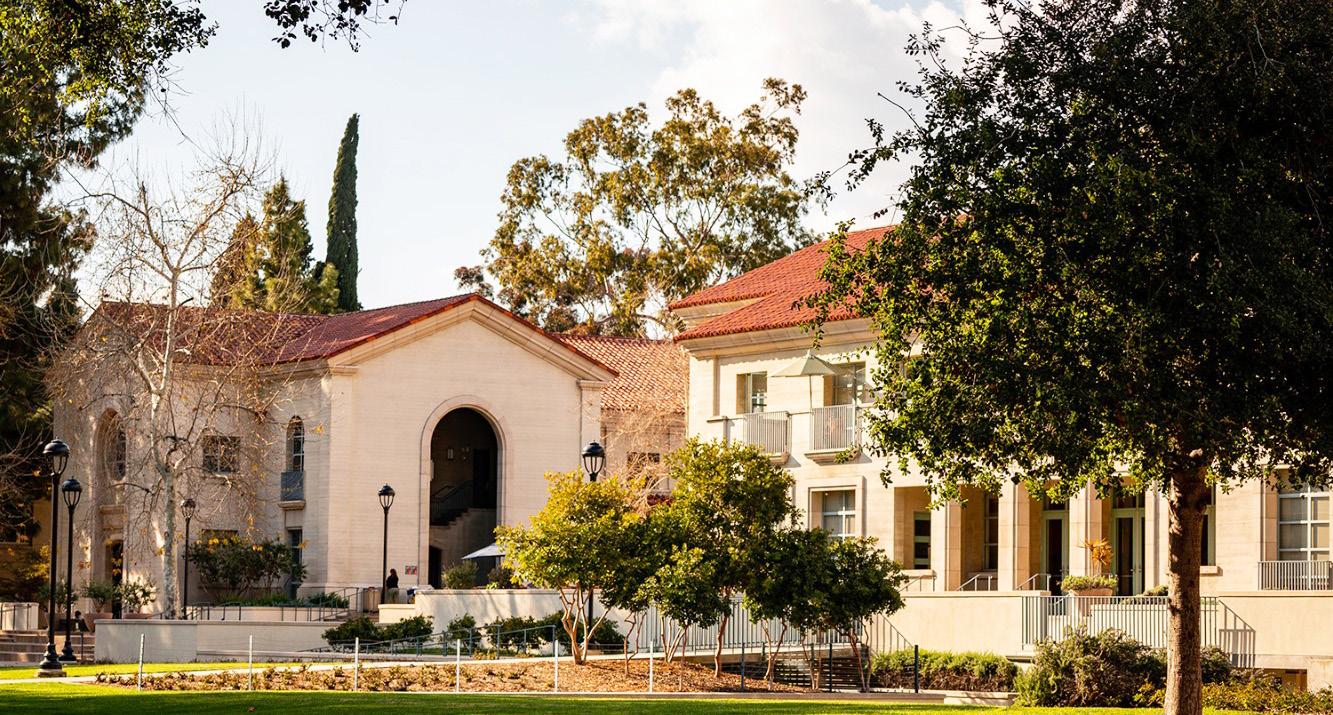
COURTESY: POMONA COLLEGE
mona
tivism-based groups on campus, hosted
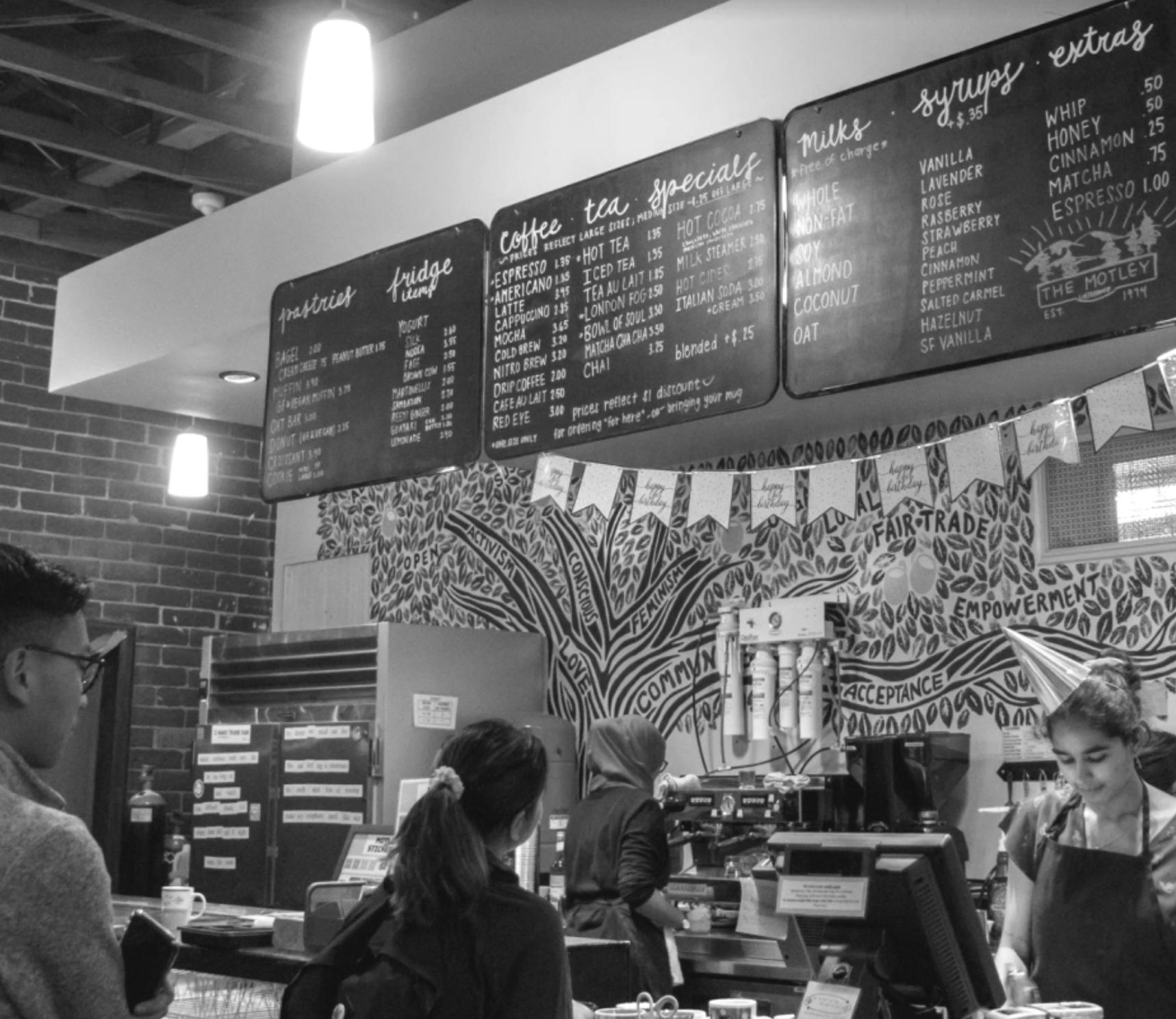
teach-in last month at the Motley Coffeehouse explaining why community members should sign the petition and support
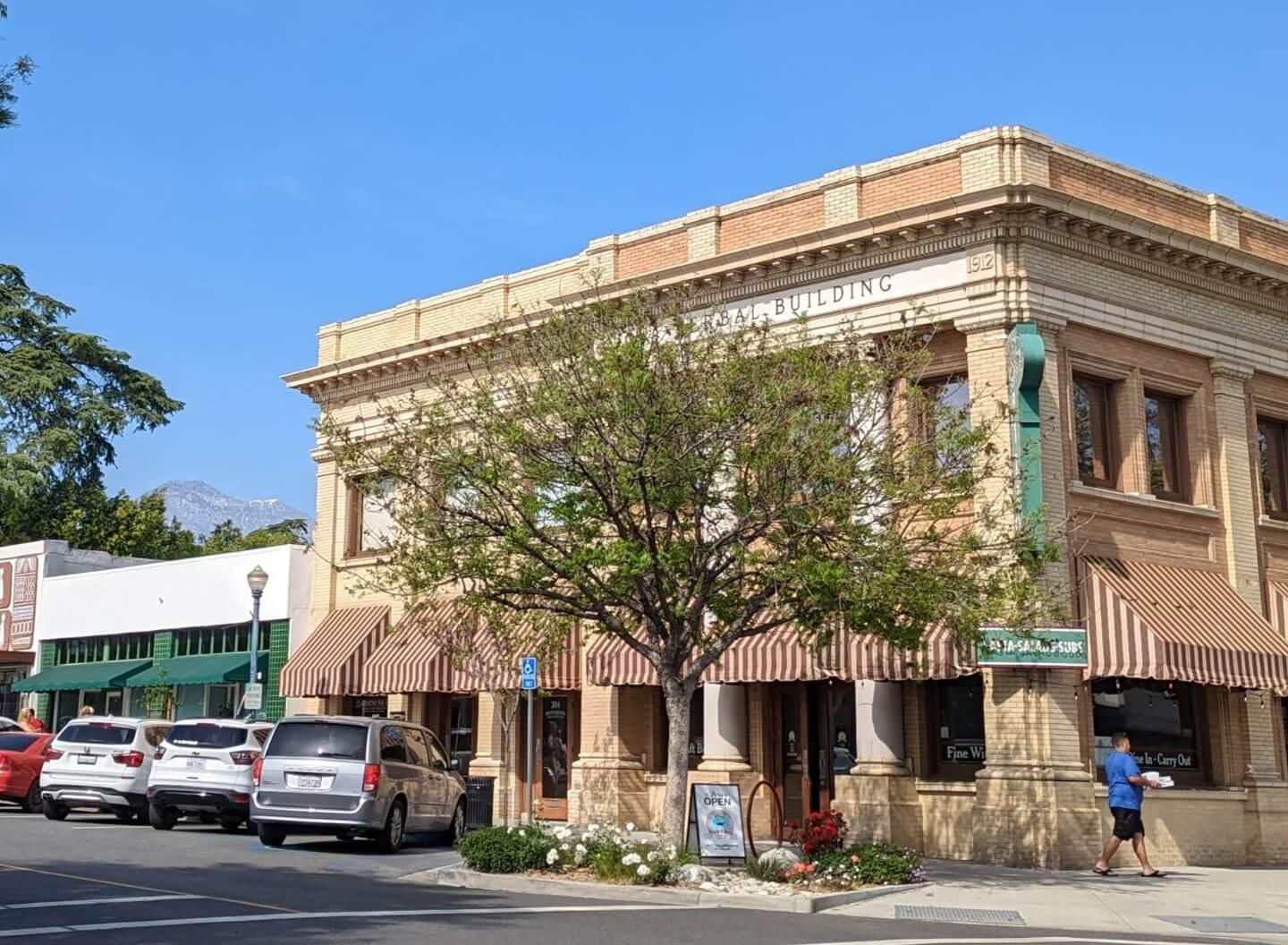
COURTESY: CITY OF CLAREMONT
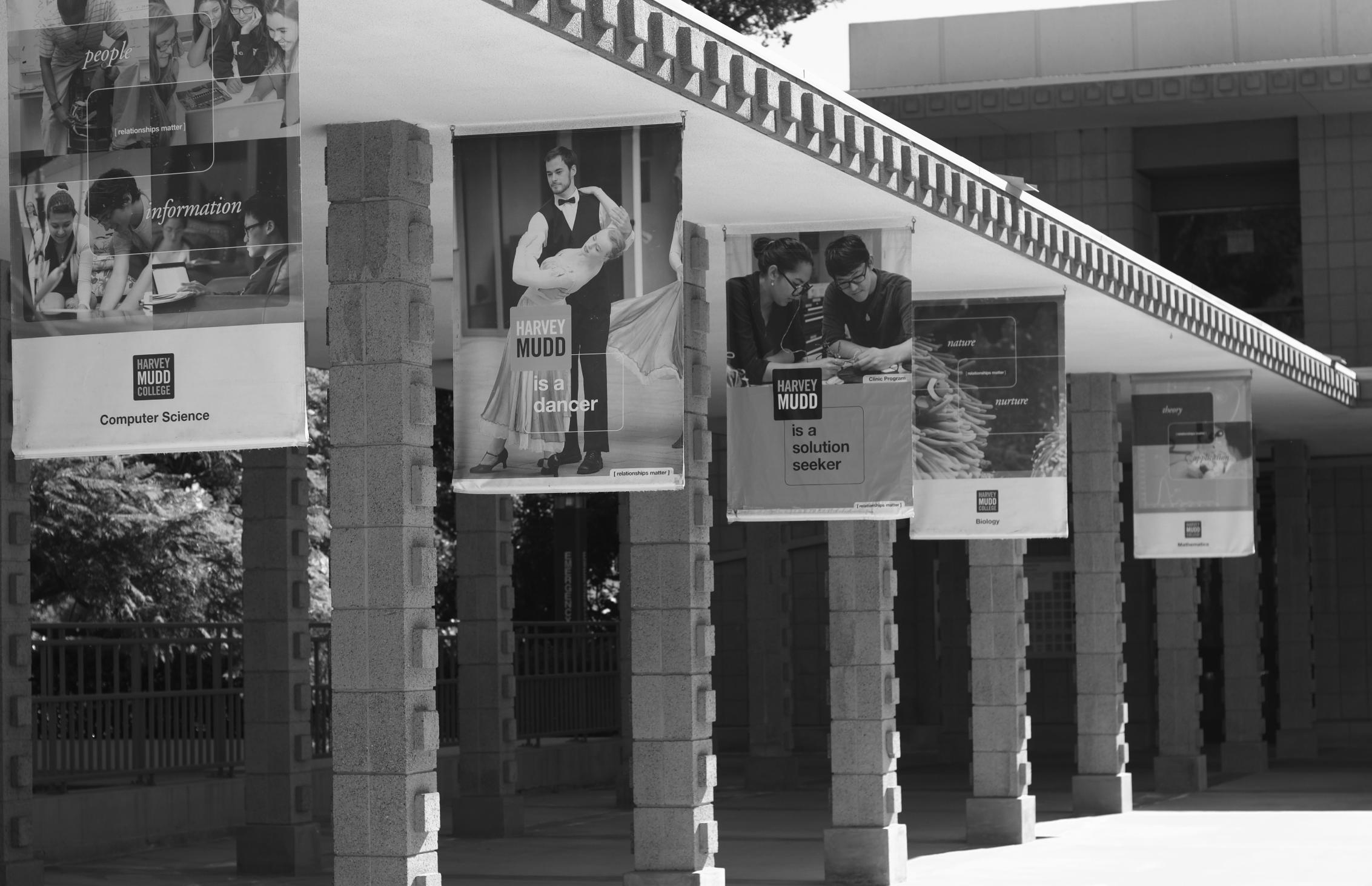
The 5Cs and the Claremont Village maintain a tight knit relationship.
MEGHAN BOBROWSKY • THE STUDENT LIFE
Three Pitzer College students presented a resolution for topless pool hours during a Pitzer Student Senate Open Forum on Nov. 9.
MADELEINE FARR
JOELLE RUDOLF
PATRICK MCDOWELL CHARLOTTE RENNER
STARBUCKS: CSWA joins national boycott
Continued from page 1
boycotts and strikes targeting Starbucks and Nestle.
According to a video shared with TSL, CSWA approached the Pomona administration “in favor of shared governance.”
“We believe that we can advance shared governance by passing this petition forward with [Pomona Assistant Vice President of Facilities Bob Robinson],” one CSWA representative said upon delivering the petition. “We think that he would really appreciate the sentiments of students that are expressed, and we believe it is in his realm of responsibility to consider the students’ voices in the decision making processes for
our future contracts.” Pomona introduced their 2025-26 Shared Governance Initiative and accompanying task force last spring. According to the initiative’s “Purpose and Goals” section on Pomona’s website, it aims to “examine the current state of shared governance at the College, identify areas for improved clarity, communication and collaboration and develop recommendations to support a more transparent and inclusive governance culture.”
Beyond organizing the petition, McRoberts said that they are coordinating with ASPC’s Pomona and Nestle’s contract, as well as to cultivate as much
transparency around it as possible. Furthermore, CSWA is applying institutional pressure, most recently by meeting with Robinson on Nov. 14 following their deliverance of the petition earlier in the month.
“We requested contract information and we advocated for an ethical, sustainable alternative vendor,” she said. “By doing this, we make it clear that Pomona students refuse to normalize union busting alongside a handful of other things, but
According to McRoberts, administrative representatives told CSWA that Café 47 sales are down “20-30 percent” despite extending operating hours past
4 p.m., which allegedly had not been done prior in the cafe’s history. One Café 47 worker also afarticle last month that business has slowed since students began
“Starbucks is a massive corcial and legal power,” McRoberts said. “So building enough pressure to meaningfully challenge a brand takes a lot of sustained organizing.”
In a statement emailed to TSL, a Pomona correspondent wrote that the college “fully supports the rights of employees — on our campus and elsewhere — to organize, collectively bargain, and
advocate for improved working conditions.”
According to the email, dining and cafe employees at Pomona are unionized, “and the college is committed to maintaining a respectful, collaborative relationship that ensures fair wages, work environment.”
that Pomona “does not operate a corporate Starbucks on campus.”
“Café 47 uses Starbucks-branded products supplied through Nestle Professional as part of the separate from Starbucks’ company-operated retail locations impacted by the ongoing national strike,” the statement read.
PETITION: Pitzer students campaign for topless pool hours
Continued from page 1
For Mitchell, Cleary and Evans, their proposal is about much more than toplessness.
“From what I understand, it used to be kind of a nudist campus and in general we think those values stem from some sort of hippie ties,” Cleary said. Mitchell said that upperclassmen and professors told her there used to be many more topless and barefoot people on campus.
“Before COVID, this campus had so many more traditions and there was just a huge emphasis on community and culture,” Mitchell said.
A TSL article from September 2023 highlights several students who took part in this culture by
going barefoot. Over half a decade earlier, an article in Time magazineformal” where “barefoot girls pad into class.” Cleary and Micthell said their proposal is a part of a larger they say has largely been lost. Ava Salam SC ’28, another student in Kim’s class, expressed her support for topless pool hours
“I think that topless hours … help to release stigma about people’s bodies and clothing and it’ll make everyone more comfortable,” she said. “If you don’t agree with it then you don’t have to be there.”
Grace Wild SC ’28, while not in the class, said she’d like to see a sim-
ilar policy implemented at Scripps.
“I don’t think that women’s bodies should be regulated at a historically women’s college,” Wild said. “Especially when men and people who don’t identify as women can have their tops off, that’s a double standard.”
Pitzer was also founded as a women’s college and became coeducational in 1970.
Scripps’ current swimwear policy for their pool at Tiernan Field House says that female-identifying patrons “are required to wear swimwear that covers their chest.”
In fall 2023, a group of Scripps students challenged this rule in their campaign, “Topless at Tiernan.” According to their Instagram account, the movement aimed to
desexualize breasts and stop the policing of people’s bodies. On Fridays during existing Scripps-only hours, students planned to go topless. In one instance, according to an op-ed in The Scripps Voice in October 2023, administrators told topless students to cover their breasts, but this only motivated more studentsscribed Scripps’ swimwear policy as “anti-woman,” and “hypocritical,” given Scripps is an historically women’s college and has annual traditions like Naked Brunch for seniors. Deborah Gisvold, assistant dean and director of Tiernan Field House, said in a statement to TSL that at the time she asked students to adhere to their swimwear policy and would do the same today in accordance with
their current policy.
“Our policy is designed to maintain a space that is comfortable and inclusive for all,” she said.
The group of Pitzer students expects Student Senate to pass their resolution, but remains skeptical about the administration’s response.
“I think the administration might as a resolution in our student handbook,” Mitchell said.
Cleary said that even if the administration doesn’t accept their proposal and the rules can’t be revised right now, they still believe the culture can be changed.
At the end of their interview with TSL, Cleary and Micthell said they wanted readers to hear one more thing, said in unison: “Free the nips!”
eCONOMY: The 7Cs’ impact on local businesses
Continued from page 1
that don’t adjust to the ebbs and students and faculty are away.
To combat that, Sullivan emphasized the value of their local customers who keep them busy even when students are away.
Daniel said that they have expanded social media marketing operations to bridge the gaps that would otherwise be present with the village.
She also explained that the Grove’s location on the western side of the Village has an impact on the
businesses closer to the colleges, saying that many students don’t discover their business until their later years in school.
That is something the Clarea 5C student-led marketing organization, has sought to change via partnerships with local businesses.
“I think it’s just like a lot of awareness,” CMG President Chloe Ross CM ’26 said. “Just because there’s so much in the village and around — people don’t even know what there is. discounts, and no one knows about it.”
To raise awareness, CMG has
partnered with multiple businesses in the village, offering on-campus pop-up shops, social media marketing and beyond. Partnerships include promotion of 5C students can vote for their schools by purchasing certain
discounts and rewards for Daddy Ji, a local Indian restaurant.
CMG’s methods have proven successful, with a recent CMGled initiative with Nobibi, a local ice cream shop, showing a 28.14 percent sales increase, according to internal sales reports shared with TSL.
Although CMG assists in ini-
tiatives outside the 5Cs and with businesses outside Claremont, Ross said that local partnerships are some of her favorites to work on.
“I’d say my favorite projects are the ones that are focused on the 5Cs, because I think that’s where, one, we can see the most impact, and two, it’s most fun for the associates to work on,” Ross said.
Numerous other businesses within the village also offer student discounts to encourage students at the 5Cs to stop by.
The Eatery is one of the businesses doing just that, in hopes it brings more students in.
“We are trying to get our name
out there for students more,” Sullivan said. “We have seen quite a few students trickling in. Now, more than ever.”
Daniel emphasized the importance of students supporting local businesses, noting that their business uplifts the broader community.
“We are employing people within our communities, we purchase a lot of our products from businesses that are also small businesses, local businesses, businesses that are sustainably produced or women-owned and have great values,” she said. “I think that the college students being involved in that and supporting us is just giving right back to their own community, so we
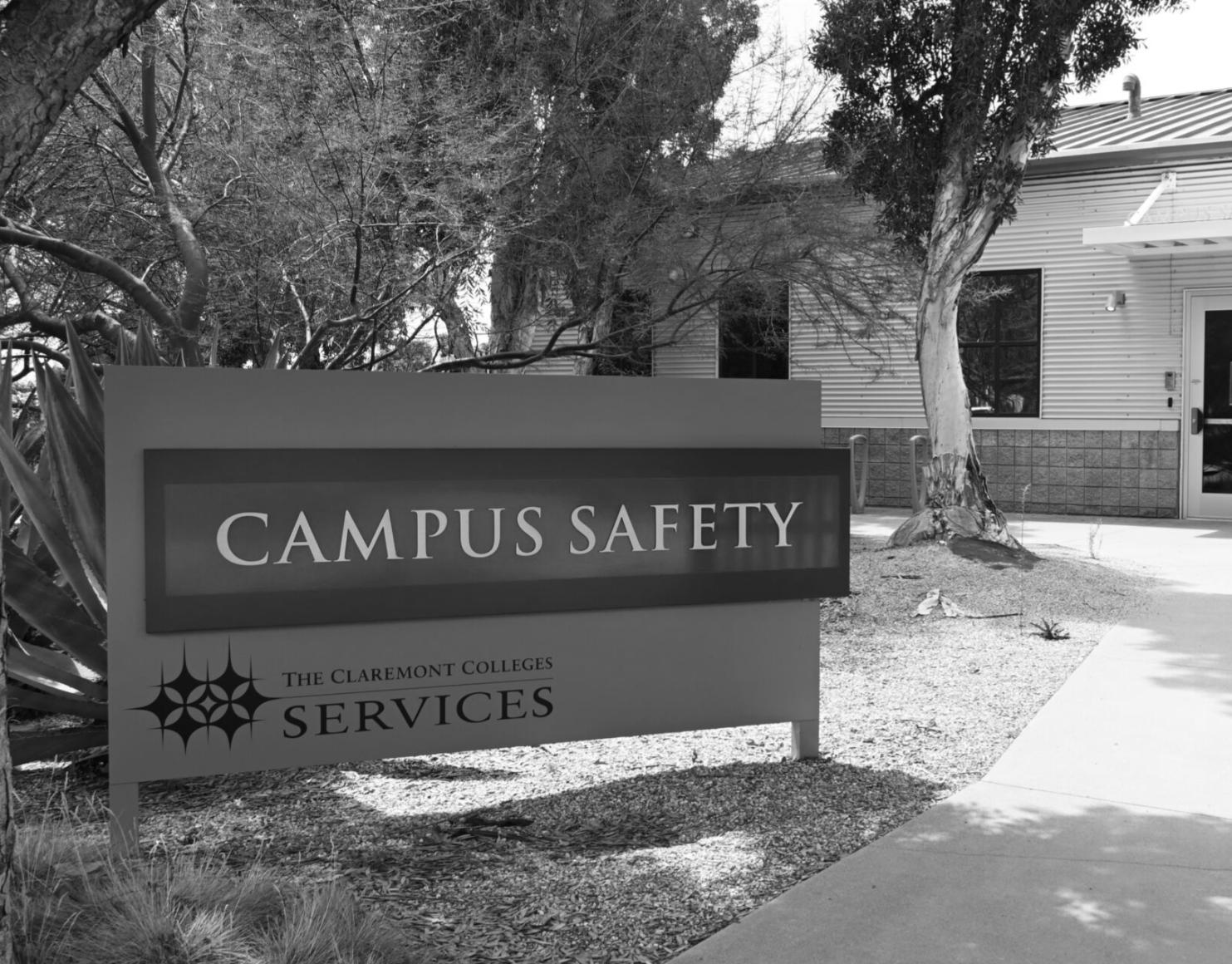
The Claremont Colleges Services hosts public forums as Campus Safety director search continues
The Claremont Colleges Serpresentations in early November for its Director of Campus Safetylined their philosophies on campus safety and community engagement to members of the seven-college community.
Each finalist participated in a “TCC Community Presentation & Open Forum” held from 1 p.m. to 2:10 p.m. in the Founders Room of the Honnold-Mudd Library.
Candidate A presented on Friday, Nov. 7; Candidate B on Wednesday, Nov. 12; and Candidate C on Friday, Nov. 14. The information about the candidates or details of their professional backgrounds, focusing instead on the opportunity for community members to hear from them directly.
These forums allowed students, faculty and staff to hear directly from candidates about their approach to campus safety and community engagement, as outlined in the public event materials.
The search is particularly sigCampus Safety shapes daily interactions between students and the Campus Safety department. The director oversees operational policies, training expectations and the department’s approach to responding to incidents — meaning that philosophies presented in these forums could translate into future practices affecting every student on campus.
The forums’ open format allowed attendees to observe the candidates’ communication styles, priorities and interpretations of campus safety, though TCCS did not indicate whether community
feedback would play a formal role in the search.
“We are not addressing questions related to the search process, including questions about candidates, evaluations, or hiring deliberations,” Assistant Vice President for Communications & Community Relations Laura Muna-Landa wrote in a Nov. 18 statement to TSL. “These areas procedures.”
She added that the search remains ongoing and that TCCS decision has been made.
For students and employees across the consortium, the director’s approach to safety, engagement and communication will play a major role in shaping campus climate. The forums remain the clearest window into what that leadership could look like moving forward.
COURTESY: THE CLAREMONT COLLEGES SERVICES
The Claremont Colleges Services (TCCS) held a series of public presentations in early November for its Director of Campus Safety opening.
BIANCA MIRICA
WORLD NEWS
Nov. 17
• Federal Emergency Management Agency’s acting chief David Richardson steps down, replaced by Karen Evans
UN passes United Statesbacked Gaza resolution to establish an international stabilization force and a transitional administration in Gaza
Nov. 18
• President Trump welcomes Saudi Crown Prince Mohammed bin Salman to the White House to discuss defense and technology deals, and defends the prince’s role in Khashoggi’s murder
• A federal court in Texas blocks redistricting after a civil rights group sued for racial gerrymandering; the decision was 2-1, with U.S. District Judge opinion. This case will most likely be appealed and end up in the Supreme Court
• House passes bill demanding the release of remaining Epstein files with an overwhelming 427-1 vote. The bill moved on to the Senate, where it passed unanimously
The Trump administration removes many of the Department of Education’s core responsibilities, shifting them to other government agencies; for example, K-12 and college education programs are moved to the Department of Labor, Native American education is moved to the Department of Interior, foreign languages programs are handed to the State Department, etc.
Nov. 19
• President Trump signs the Epstein Files Transparency Act, but it is not guaranteed
New decorations policy for The Motley
After a year of discussions regarding the future of decorations at Scripps College’s Mot-
the Scripps administration, according to Motley co-head Laila Hannum SC ’26.
Hannum said the policy contains language dictating that anything posing a “legal risk” to the college will not be allowed on the walls of The Motley. When approved, the decora -
“We found out that there wasn’t really a choice of whether or not to accept the policy, like we had to accept the policy to move forward,” Hannum said. “But I will say, there has been substantial work that has been put in over the past year into editing this policy.”
On Oct. 31, The Motley held three administrative representatives — Interim Assistant Vice President for Student Affairs Stacey Miller, IDEA Initiative co-chair Denise Nelson Nash and IDEA graduate fellow Francesca Simmons — to clarify the policy. According to Hannum, the administration did not specify what constitutes a “legal risk,” but many conversations in the Oct. 31 meeting centeredministration shut down the The Motley’s refusal to remove reopened without decorations in Nov. 2024 after a month-long closure, and again with blank walls this fall while decoration negotiations continued.
“They did say that the Palrisk,” Hannum said. “They said I believe the words they used were that ‘they would back us on it.’ And then when [we] said they ‘would have to get back to us on that.’” Hannum has been at the forefront of negotiations with the Scripps administration, and runs The Motley’s Policy Writ-
meets bi-weekly and consists of 13 baristas and managers. Hannum said she believes 13 versions of the decorations policy were negotiated back and Scripps administration last
not been able to make substantial changes to the decoration policy because “that was not necessarily an option this semester.”
Instead, Hannum said the “how do we want to move forward, given that these are the edits administration has told us we have to make?”
In an all-staff poll, Motley baristas voted against implementing a free speech wall, which, according to Hannum, was something initially proposed by the administration.
Hannum also spoke to the balance of voices represented in the most recent version of the decorations policy.
“I’d say 30% Motley language, 70% administrative language,” Hannum said. “And that is because of the fact that they [administration] think The Motley is a legal risk, and this policy, in their eyes, seeks to protect them.”
Zoe Isabelle SC ’29, new barista and member of the policy writthe negotiation efforts was a personal decision.
“I came into Scripps and I
started working at The Motley with an interest already in everything that was happening with The [Motley’s] shutdown and opening up again,” she said.
The policy writing committee’s main goal, according to Isabelle, was to preserve aspects of The Motley’s mission statement.
“That was a very central part of the conversation the entire time … how are we going to negotiate this policy in a way that feels true to what The Motley has always been?” Isabelle said. “I would say that everyone, including myself, has had a voice, and I think has been part of decisions that hopefully accommodate the needs and desires of as many people as possible.”
Even with blank walls, Hannum said The Motley is continuing to uphold its mission by hosting events, student groups, the “liberation library” and “the way our baristas carry themselves on the day-to-day.”
Hannum said the 5C community can anticipate physical changes in The Motley once the decorations policy is passed.
“I will say that our team is
talking about what we want decorations to look like once the policy is approved,” Hannum said.
While decorations were a focal point at the Oct. 31 meeting, Hannum said the administrative representatives brought up the possibility of restrictions extending to the events held at The Motley.
“There were conversations about the Trump administration being on Scripps College in terms of the OCR complaint,” Hannum said.
Scripps College is currently under investigation for antisemitism by the U.S. Department of EducaHannum said the administration is aware that “increased eyes are on The Motley in terms of events.” The Scripps administration declined to interview with TSL regarding this issue.
“Dr. Sha and Dr. Miller don’t have additional comments, but appreciate your interest and remaindents to foster welcoming spaces across campus,” Scripps Senior Communications Manager Emily Peters wrote in an email on the administration’s behalf.
7C Chaplaincy under review, students speak out
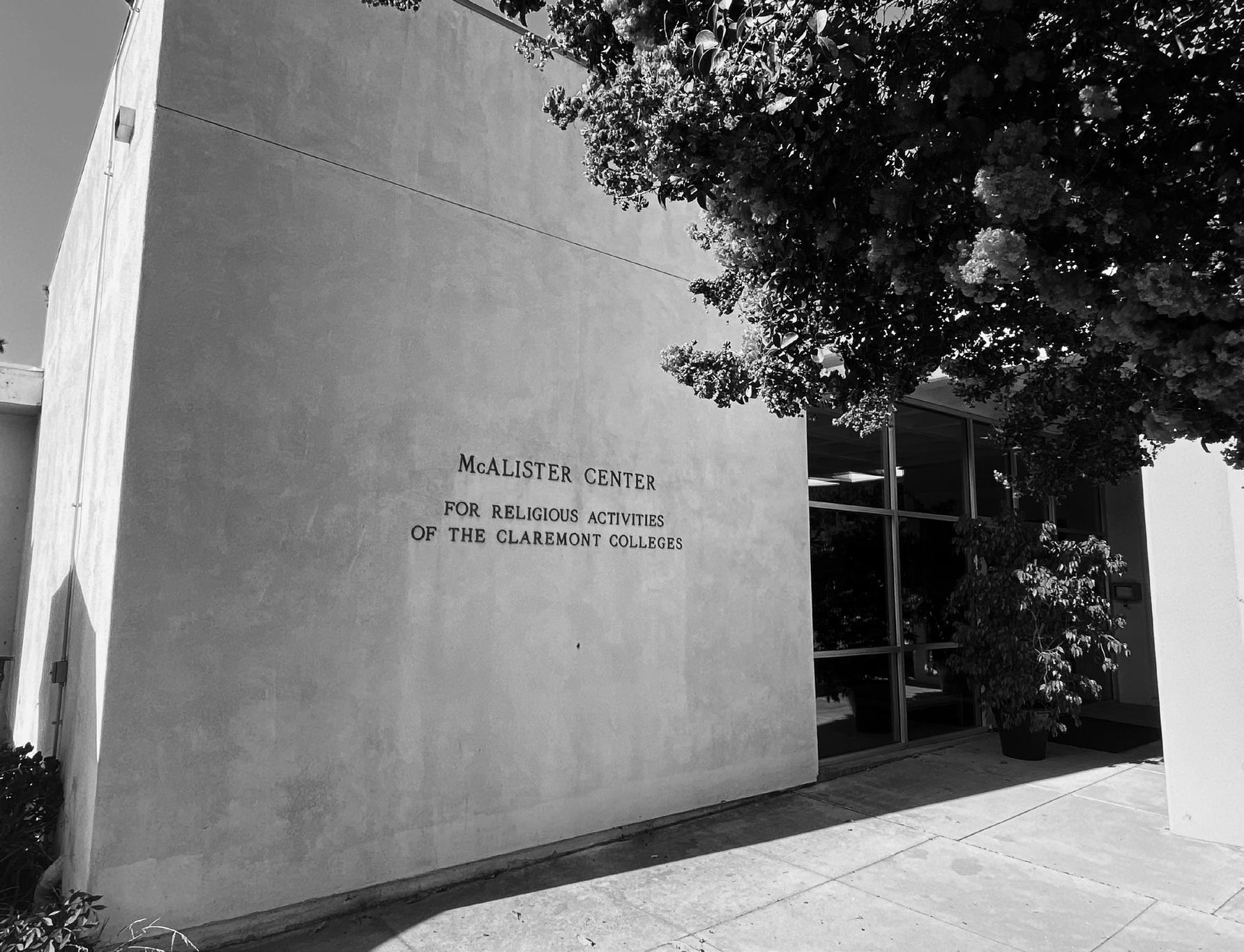
Trays of Italian food and a roarwho provided their feedback on the Claremont Colleges Chaplaincy at the McAlister Center on Tuesday, Nov. 18.
The student session was part of an external review of Religious and Spiritual Life requested by 7C presidents in March, after Father Joe Fenton’s contentious departure from the Catholic chaplaincy position last October and The ClaCatholic chaplaincy.
Students were asked to provide input on how The Claremont Colreligious life at the 7Cs. They came on behalf of organizations including the 5C InterVarsity Christian Fellowship, Catholic Student As-
sociation, Claremont Christian Fellowship, Hillel and Chabad. Keck Graduate Institute were represented.
Lucas Lemos HM ’26 was one said there was a “mercenary-likecating for their religious groups and interests due to TCCS’ proposal last year to combine both the Catholic and Protestant chaplaincies into a single Christian chaplaincy, thus leaving a position open to establish a new Dharmic or humanist chaplaincy.
“The tone has been set by TCCS, that’s like, ‘We’re going to try and cut one of you — who’s on the chopping block?’” Lemos said.
But students did commend TCCS on cultivating an environ-nity around faith. Ava Neal SC ’28
is an Interfaith Student Assistant a Buddhist. She was heartened to hear the positive feedback.
“It made me really happy to hear that students from various groups found it to be such a safe space,” she said. “The way that it’s so utilized by people from all the front desk. Hearing people rave about the chaplains and the space in that way was really nice.”
Neal said all of her spiritual guidance prior to coming to the 5Cs was through books, online teachers and occasional retreats. So when she arrived at the colleges, she was excited to have thediately embrace her and be eager to hear about her religious beliefs.
Despite there not being a spe-
ed the interfaith nature of the chaplaincy and how Protestant chaplain Rev. Dr. Joel Daniels also serves the Buddhist community.
“All of their job titles are interfaith chaplains, and I think that’s a really cool approach, and for me, that works,” she said. “I do feel more represented than ever.”
Students also said TCCS was not the most front-facing or visible organization on campus. In response, Neal said she hopes to Chaplains and student organizations can share their events.
Professor of Mathematics at Claremont McKenna College Lenny Fukshansky is a co-chair of the Claremont Colleges. Last year, CORA criticized TCCS for not involving them in discussions about restructuring the Chaplaincy.
TCCS responded in a March press release, saying CORA does not have “oversight” or “purview” over any such changes in the Chaplaincy. Fukshansky said CORA never claimed to have that authority.
“We don’t pretend to make decisions,” he said. “However, we do feel that we have something to contribute, and at least in the past, we have always been consulted.”
But Fukshansky did emphasize the experience of CORA’s members with previous chaplaincy reviews and structural changes, with members including medieval studies professor Kenneth Baxter Wolf, who chaired the last chaplaincy review in 2015.
He hopes TCCS starts involving CORA more to consult on chaplaincy issues.
“I would greatly appreciate the TCCS administration recognizing the importance and the institutional knowledge that CORA carries, and collaborating with CORA more closely than has happened,” he said.
At the student session, multiinstate permanent Catholic and Jewish chaplains. Rev. Fr. Vitus Mbamalu has been serving as interim Catholic chaplain since
October of this year. Rabbi Salomon Gruenwald also began his service this fall.
One student noted that while religious student organizations are strong at the 7Cs, even the most passionate student leaders end up graduating and cycling out, whereconstant support.
One major complaint from students was TCCS’ alleged mistreatoversee and support religious student organizations at the 7Cs, citing how they do not have swipe access at the McAlister Center and cannot get discounted meals with students at the dining halls.
Fukshansky expressed similar sentiments, stating that Religiousond-class citizen status when it comes to access to campus” and the ability to provide service in an
Lemos said that despite an “eggshell-like” atmosphere, which led to students not being fully comfortwith TCCS, a broad consensus was reached around the issue of TCCS to grant them swipe access and discounted meals.
External reviewers Dr. Vanessa Gomez Brake and Fr. Albert Duggan guided the student session in person. Rev. Janet Cooper Nelson is also part of the review board, but Fukshansky said the reviewers hosted two similar sessions with facat the 7Cs, with a third scheduled to happen on Friday over Zoom. He also noted that they did not schedule time to meet with CORA individually.
The overall review will focus on “the organizational structure of Religious and Spiritual Life, interfaith services and programming, and according to TCCS communications officer Laura-Muna Landa in an October press release to TSL. Fr. Duggan said during the session that the reviewers aim toidents by December.
MORGAN ALBRECHT • THE STUDENT LIFE
ANNA HORNE • THE STUDENT LIFE
at the McAlister Center on Tuesday, Nov. 18.
After a year of discussions regarding the future of decorations at Scripps College’s Motley Cofeehouse, a new policy is currently being finalized by the Scripps administration.
KAHANI MALHOTRA
MACY PUCKETT JOELLE RUDOLF
SageMUN, the conference where high school students make diplomacy feel alive at Pomona College
BIANCA MIRICA
Pomona College is used to weekend visitors –– prospective students, parents and even the occasional yearbook photo shoots. None of them, however, can quite compare to the energy that’s created when 200 teenagers show up on campus dressed like ambassadors, ready to debate international law.
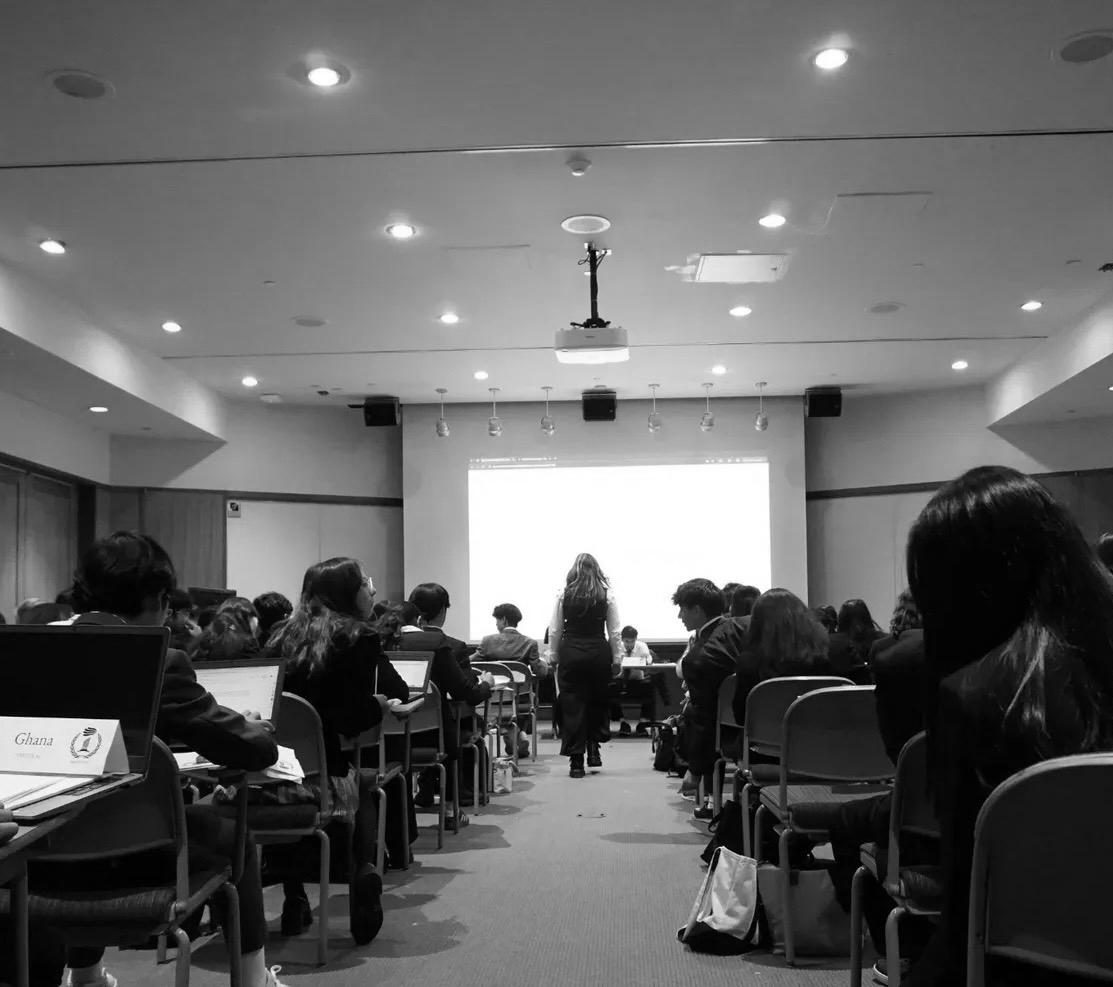
This year, the Pomona College Model United Nations (PCMUN) club hosted SageMUN, giving new life to Model UN at the 5Cs. On Oct. 4, high school delegations from across Southern California convened at the 5Cs for a crash course in diplomacy, policy and college life. For one day, ordinary classrooms were transformed into diplomatic battlegrounds, and high school students became world leaders.
In these simulations, students represent countries as they work together in committees to solve past and present global crises. The PCMUN team believes that conducting these mock sessions of international diplomacy can foster greater cultural understanding, political respect and global awareness.
Previously, SageMUN had an entirely different structure: The conference welcomed fewer delegations and was more focused on college students. This year, however, Secretary General Gabriel Dalton PO ’26 and his team worked hard to reshape the event.
“We’ve kind of grown and fostered this thing into something it really wasn’t before. So I think we feel something weirdly enough, a kind of personal attachment to it,” Dalton said.
Secretary General Akshay Seetharam HM ’27 explained that he first stepped into the SageMUN scene in Spring 2024, when it was still a college-level event.
“It was beset by quite a bit of chaos,” Seetharam said. “One committee had to be entirely canceled due to drops, and we had to put PCMUN members into committees to make up for drops.”
After that tumultuous weekend, the PCMUN team decided they needed to take a step back to re-evaluate. Since its founding in 2013, the club has weathered staffing problems and the COVID pandemic, which culminated in years of low turnout and organizational chaos.
The team slowly concluded that the multi-day college-level format was no longer sustainable.
High school teams, on the other hand, were eager and local, looking for something smaller than the big settings at UCLA or USC.
Together, Seetharam and Dalton decided to build the conference from scratch. With zero contacts, they cold-called high schools, emailed outdated lists and pieced together committees while writing their own background guides. They reshaped SageMUN into a one-day, beginner-friendly event, giving the conference a new identity.
“Because we’re a smaller conference, we’ve kind of positioned ourselves to be a little more beginner-friendly,” Dalton said. “For a lot of kids, it’s actually the very first MUN conference.”
This openness is reflected in the committee chairs: PCMUN members who are responsible for managing the committees by gently guiding newcomers through each step. Each committee chair approaches their work with openness, taking care to treat confusion not as failure but as part of the natural process of learning parliamentary procedure. Fumbling a motion is not a catastrophe — it’s a right of passage.
At the same time, the Pomo -
na campus itself became part of SageMUN’s draw. Dalton explained his surprise when visiting high school teachers, acting as advisors to their students, insisted on taking their delegation to a dining hall so students could experience that slice of college life.
Many organizers also felt the impact of this shift in marketing SageMUN as an opportunity for high school students. For Diana Braghis PO ’26 — a veteran PCMUN member and chair of this year’s Succession Crisis Committee, the change was almost unbelievable.
Seeing high schoolers spread across campus, scribbling notes on steps outside classrooms or rushing between committees, changed everything. The number of attendees more than doubled in one year — in 2024 there were 85, whereas this year PCMUN welcomed 170 students.
“I said, ‘oh wow,’ SageMUN has reached the level of a real conference,” Braghis said. “This is why we do it.”
As chair of the Succession Crisis Committee, Braghis runs a special type of Model UN event: Instead of focusing on a single topic, it runs on two simultaneous tracks that keep delegates constantly balancing
strategy and diplomacy. As their conference has pivoted to target younger, less experienced MUNers, Braghis and her crisis staff have learned to provide
more guidance, aware that most students are going through this process for the first time.
“We kept asking: do you have questions, how can we help you, do you need any explanations?” Braghis said. “We walked them through how to do Model UN, but also how to do Model UN in the Crisis style during the conference itself.”
After a full day of crisis committees, delegate speeches, dining hall visits and more, Seetharam and Dalton described the rewarding feeling of stepping into the closing ceremonies, knowing that their hard work had paid off. As the sun set on Pomona College’s campus, the Rose Hills Theater at Pomona College was filled with delegates, the room swelling with chatter, nervous whispers and the steady thrum of anticipation.
Unexpected, a little unhinged, and fully committed — this energy carried straight into the final minutes of the conference. And for the ending, there was noise, chaos and extreme joy.
“Some of the kids were literally screaming,” Dalton said. When he tossed out a casual “see you in 2026?” the room erupted. It was a moment of pure affirmation: this was no longer a fragile experiment. What began as an uncertain project has quickly become a landmark event in the history of PCMUN.
Two is better than one: The co-presidency behind Harvey Mudd’s
Unlike the other 5Cs, Harvey Mudd College has long organized its class presidencies in pairs. This year, Swetha Madhanrajan HM ‘29 and Jimin Bang HM ’29 — colloquially known as “SWIM,” a quirky mix into the role together.
Through steady check-ins, latenight planning and an easy rapport with the people around them, Madown vision of what the co-presidency looks like.
The duo described how their partnership began with an entirely earnest intention: meeting all the
“We saw the election as an opportunity to get closer to the class of 2029, as we knew we would in-
evitably meet more people as we campaigned,” Madhanrajan said.
“Our primary goal wasn’t to win, it was to strengthen our bonds with our fellow Mudders, who we’ll be with for the next four years.” This energy and commitment to get to know their class hasn’t gone unnoticed. Charlotte Wong HM ’29 described how Madhanrajan and Bang’s campaign felt less like a bureaucratic procedure and more like two friends wandering around the Mudd dorms spreading good vibes.
know everyone, Jim and Swetha community together,” Wong said.
“Every time I walk with them, we end up talking to new people. They’re constantly waving or saying hi or asking someone’s name.”
Kimberly Liang HM ’29 remembers their campaign for a similar reason: its sincerity.
“They told me they wanted to be presidents so they could get to see them trying to talk to new people,” Liang said. “It shows me that they would be collaborative and empathetic as presidents.”
presidency leaned heavily into presence — showing up, checking in and being the kind of people others naturally gravitate toward. That instinct to connect with individuals became a hallmark of their co-presidency long before either of them ever stepped into the role. the leadership puzzle, he’ll point you to an unexpected source.
“Buzzfeed calls me a ‘Commit-
class of ’29
ted Leader,’” Bang said. “[The quiz to you for your loyalty, and you don’t disappoint.’ Buzzfeed might be on crack.”
Despite the inherent comedy of Bang’s Buzzfeed reference, thisinitiatives this fall.
Riham Shahid HM ’29 points out that while the duo jokes constantly, they also dig deeply into campus governance. She watched them pore through the history of Associated Students of Harvey Mudd College (ASHMC), trying traditions.
represent the class of 2029, and go through ASHMC history to bring Mudd traditions back,” Shahid said.
In addition to focusing on reviving traditions of the past, Madhanrajan and Bang are focused on looking to the future. One issue they’ve highlighted is some of the stereotypes they’ve encountered across the 5C campuses about Mudd students.
“One common misconception I’ve seen people at the 5Cs hold was that Mudders were distant and “I think more conversations with this narrative. Get the Mudders out into the wild — Zelda style.”
Madhanrajan approaches the same perception with slightly less Nintendo imagery, but the same underlying goal. Their administration, she explained, wants to work with the other 5C class presidents to host more intercollegiate events. Her goal is to dispel these rumors about Mudd students by showing the larger consortium community
Many of these stereotypes center around the rigorous workload and core program of Mudd
students. Manhanrajan and Bang acknowledge that their school is a normal day — apocalyptic during midterm season — yet the two insist that academic pressure doesn’t eclipse community life.
“Although Mudders have an incredible work ethic, we also know how to have fun,” Madhanrajan said.
Both she and Bang came from competitive high schools, so navigating high expectations isn’t new to them. Finding the balance between moments of joy and the grind, however, is something they are constantly striving for themselves and their classmates.
“We won’t let the intense academics take away from our ability to host events,” Bang said. “We will make sure our events are separate from the academic stressors students may face. Work hard, play hard.” Blending their official responsibilities with a profound care for their friends, both presidents rely on grounding habits that keep them sane.
“I love my room,” Bang said. “But I’m partial to doomscrolling course. Before Mudd, when I had something called ‘free-time,’ I used to bask in the sunlight and read books.”
On the other hand, Madhanrajan’s grounding space is a bit more hands-on.
“I work as a makerspace stew-
spontaneously with my friends and playing Minecraft while judging modded players.”
It’s these small glimpses into sleep schedules, makerspace projects and doomscrolling rituals that reveal why their co-presidency works. They don’t lead as perfect, polished representatives. They lead as real something fun.
BIANCA MIRICA
EMMA JENSEN • THE STUDENT LIFE
Swetha M adhanrajan H M ’29 amd Jimin
COURTESY: SAGEMUN
The Pomona College M odel United Nations club hosted their Sage M UN conference in O ctober.
SASHA MATTHEWS • THE STUDENT LIFE Divorce Wizard, Wizards Wizard Weekly
Finding connection through J Dilla’s ‘Donuts’
I was 14 during the summer of 2021, when I went to stay with my which is such a ridiculous title that I tend to completely ignore it. They feel like cousins to me, even with the 25-year age gap that makes them more like fun aunts and uncles. In my time there, I learned what it was like to live in the heart of a metropolitan city, taking in all the unique sights and those sounds was the steady rotation of the albums they loved.
My aunt’s apartment was narrow and quiet, incense omnipresentlyternoon, I wandered through the hallway and stopped in front of a framed image that I hadn’t yet stopped to take a longer look at. It was a record cover that hung like art: “J Dilla Donuts.” The colors were faded and the man on the cover wore his hat over his eyes, but was still smiling back at me.
I planned to ask her about it, but she was busy cooking, so I went back to the pullout bed I was sleeping on and typed “J Dilla Donuts” into my phone. That search became a deep, deep rabbit hole of articles, documentaries, interviews and Reddit threads. I quickly learned that Dilla was a Detroit producer, which explained the Tigers hat on the album cover. He shaped the sound of hip-hop without ever needing the spotlight, as “Donuts” is strictly instrumental save for some old vocals he samples. He made knew his time was short and waning,ing with life.
When I listened to “Donuts” for a new part of my brain. The track that was “Time: Donut of the Heart.” It starts with a warm, rising melody Is Think of You,” and vocals from multiple “Sweet” Charles Sherell’s songs sprinkled throughout. Hearing Dilla reshape that sound decades later reminded me of a time I never lived, like I was borrowing nostalgia from people I never met. My aunt heard me listening to it one morning as I was making my bed and exchanged a knowing glance. In this moment, sampling pulled us closer because we had a language to talk about our shared love for music.
What I didn’t expect was how familiar “Donuts” would sound in the context of the music I love today. The the Show,” plays out like the curtain has just closed, but suddenly, it opens
time I listen to it, I hear Boldy James rapping over the beat without changing a thing, or the Alchemist loop. They are part of a loose circle of modern rappers and producers sometimes grouped under the Griselda umbrella, known for sample-heavy beats. Once I could recognize Dilla, it became apparent how much of modern rap traces back to him. The way their beats sit still instead of building outward feels like a direct inheritance and a quiet conversation with the past. My aunt and uncle became part of that conversation for me without meaning to. Once I got hooked on “Donuts,” I wouldn’t shut up about it, and they were more than happy to entertain my amusement. It sounds small, but talking about music with them became its own routine. It gave us a place to meet that didn’t depend on age or what stage of life any of us were in.covery. I would play them whatever I was into at fourteen, usually some producer I thought no one else had heard of, and they would send me back down the hallway to the record shelf with a new name to look up. “Donuts” was just the starting point. A summer later, when I went through my sent me Bon Iver’s “For Emma, Forever Ago” and James Blake’s “Overgrown.” They became my rainy-day albums, the ones I still play quietly at night when everything feels heavier than it should. Even now, we text each other songs a couple of times a week. I try to put him onto whatever I’m listening to, and he makes sure I don’t miss the generation of music that shaped him. Music became our common ground and a way for us to stay close.
Remembering sounds and paying homage is a key element of sampling, too. It lets a pubescent teen hear soul records from the seventies and feel something real and familiar, without needing to It honors the original artist and provides them with a new audience that wouldn’t have found them otherwise. When Madlib chops a sixties Brazilian jazz recordple, he’s paying respect to music history and giving it life for a new generation.
Sometimes I still think about that framed record in her hallway. It was a doorway into the music walk through it is part of what brought us closer; a reminder that who will carry that time in history forward. Sampling blurs the lines between generations and can holdpending on who hears it. What was nostalgia for her became discovery for me, and somehow both experi-
My confusing journey through pop with Charli xcx
PARKER DEVORE
Charli xcx’s “party 4 u” is having a serious moment. Peaking in popularity between June 8-14 and gaining hundreds of millions of streams, the track that previously languished in relative obscurity seemed to be at the forefront of Charli’s new wave of fans’ minds. But as the high tide of “BRAT” raises all boats, I don’t think many understand what made it, and subsequently “BRAT,” so good, and that it had to do with one man’s funny haircut.
have always (ok, not always, but for a long time) been into Charli xcx. I know, so unique, wow. Charli xcx? Who’s that, some underground future superstar? Fuck you, dick!
We can like the same things. Anyhoo, I have always been captivated above all else by her unique sound — or nearly unique, I’ll get back to it later.
But broadly, EDM and pop seem to be things I am hardwired to love. There are toddler videos of me dancing to, at the time, my favorite song, the Black Eyed Peas’ “Imma Be.” In the ensuing 15 or so years, not much has changed. Now, I listen to “Meet Me Halftime for the freaks of my youth.
My real awakening came later while driving home from chess club in 4th and 5th grade in the backseat of my mom’s hand-medown Honda. We would jam out hard to mainstream pop radio while I poked the holes in the perforated pleather with the blue pens that were always leaking on her legal pads. These times with before I was up and got home well other reasons. But the soundtrack was certainly a huge factor. Love you, Mom.
My mom’s energetic beats carried her from place to place and intoxicated by their secondhand smoke.
Being an energetic tween with all kinds of internet access, it was impossible not to be a pop fan in that era, and it was equally hard to miss what was happening in the underworld of EDM. Lady Gaga’s Lucky” and of course, Charli’s feature on “I Love It,” coming through the Honda’s speakers, buoyed me homeward on gentle waves of high spirits. I chased the dragon whenever I could, piping the extremes of Skrillex, TheFatRat and Nightcore through the wires the music wash over me like a tsunami as I lay stunned and prostrate on my twin bed.
But middle school came, and along with it, usual suspects like Drake, Kanye and Juice WRLD. Pop began to dull and leaden, and the spiral didn’t stop. COVID knocked my taste senseless and, for a while, I wandered in the walls of my cavelike bedroom as I listened to (shudder) internet music, from Drain Gang to Food House, late into the night. Was this
I had to go back out in search of the Platonic Forms. And as it would 16th birthday, Charli and I began a new era. With the release of her album “how i’m feeling now,” like some poor turn-of-the-century schizophrenic, “visions” produced an electroconvulsive shock therapy in me. All of a sudden, pop was cool again. Alloying songwriting of the established mainstream with the exciting innovation of the online hyperpop scene I was mixed up in (youth!), the album seemed like a crystallization of a pure alchemical pop, transforming genre into gold. With only a single feature, each track seemed to leave us alone to mourn isolated ourselves at home. Her piercing solo deliveries cut through the track’s space, but vocals came second. Set in an otherworldly arctic soundscape, instrumentals dripped pink diamond tears that in the background. This alien, superhuman production had to come from somewhere, so I began to retrace its steps. It became clear that the mastermind behind the album that changed everything for me was notable for more than his haircut. He produced and collaborated with Lady Gaga, Beyonce and SOPHIE; produced, in part or whole, nearly every Charli xcx project since “Boom Clap;” Founded the London-based PC Music label in 2013, which was of the 2010’s,” impacting artists from Skrillex to Madonna. In the past year alone, he remixed BRAT, won a Grammy and DJ’ed Charli’s wedding. Yet you still don’t know who I’m talking about. A.G. Cook was operating right under my nose too, dear reader. First meeting in 2014, Charli described Cook in a co-interview as “a mysbut the two soon clicked. In 2016, Atlantic over the alternative sound of “Boom Clap,” Cook stepped in. As Charli’s creative director, “It was the beginning of the true Charli,” noted Cook.
Like you invariably will after reading this zinger, I began to listen to Cook through the lens of my love comprising a stunning 49 tracks across seven themed discs, was my me. For years I idolized Charli as a peerless pop genius, but with just many of the hallmarks of Charli’s “unique” style came from her collaboration with Cook. Yet outside of the overbearing eye of stardom, his work can go boldly farther still. There are so many artists who live in the backgrounds of their more for Pollock. If we wish to really unmust recognize the former. A.G. Cook is inseparable from the work of Charli xcx, and in a post-BRAT world, inseparable from pop as a whole. His relative, perhaps deliberate, anonymity lets him push boundaries that others can’t, shaping the undercurrents of music. But we need to exhume him to see exactly how, for to not know him is to not know pop. Cook’s art, by choice or otherwise, represents a vestige of culture I call the mainstream fringe: Culture that most are familiar with, but few are completely aware of. These sub-basements and wells make up the catacombs that feed the visible landscape of our culture. We can imagine Cook’s subterrain as his chosen home partially because of his Friar Tuck haircut and his Moleman spectacles. But taking a geologic survey of his and of pop.
Without pushing the boundaries of pop for nearly a decade, Cook and Charli would have never been able to achieve such mainstream success with duo’s next projects will still sound dissimilar to most pop, BRAT included, but they will likely never be far from So if you want to understand Charli, you need to be able to spot the man comfortable in her shadow. Parker DeVore PZ ’27 is from the mean -
What if my blind spots are bigger than I realize?
ROCHELLE LU
As a teenager, I was convinced that I was politically aware, or at least aware enough. Beyond growing up in Mainland China and attending a K-12 international institution that followed the same regulations as local schools, I also carried the foundation of my family’s Taiwanese roots and the teachings of an American curriculum. Coupled with my early habit of using VPNs to slip past the Great Firewall, I felt as though I could see infinitely more than the world around me offered. But it seemed that I mistook access for understanding and perspective for breadth. The issues I thought made me aware were simply the ones that raised me. I learned about misogyny from the whispered rumors of a shared file where male classmates ranked girls by attractiveness. I learned more from a statistics teacher who casually dropped pedophilic, sexist comments. My understanding was reinforced when queer classmates were openly discriminated against — especially when the student council unanimously banned same-sex couples from formals.
By the time I moved to the United States alone, stepping onto the crumbly LAX pavement, I thought I carried a suitcase full of nuance. I believed
my identities — Taiwanese, Chinese, queer and female — intersected into a worldview I assumed was broad enough on its own. And in some ways, at Scripps College, that felt true. I spent my first few semesters translating my life to peers who had no frame of reference for where I came from. Once again, my activism took the shape of survival — realizing what it meant to be Asian in America and noticing how it was to be an international student within a predominantly white institution. My queerness seemed to conform at my women’s college — but was accentuated by its intersection with my race.
But now, closing in on the end of my third semester, I’m beginning to feel the contours of my own political and cultural ignorance — sharp, surprising and often embarrassing. At the Claremont Colleges, people talk about global affairs between bites of dining hall pasta with a fluency I can’t fake. Maybe it’s because America calls itself a melting pot while China is monoethnic. Maybe it’s because the news here spills from every surface and screen without the kind of censorship that exists at home. Whatever the reason, I find myself chewing slower whenever the conversation moves beyond my lived experience. I fall silent out of the sudden awareness of how
little I know. These moments arrive everywhere.
When I watch people across this country — young and old alike — take to the streets to protest immigration systems that decide whether a family stays together or gets torn apart, my own frustrations suddenly feel both comparable and impossibly different. The recent and ongoing attempts to reshape international students’ statuses for nonsensical reasons made my own life feel precarious in ways I had never imagined before. I wanted to join the people whose futures were also being held hostage by commanding decisions, but I couldn’t, feelings of powerlessness paralyzing my resolve. When mixed-race friends describe feeling pulled between cultures, I feel my privilege of being able to live comfortably in my own skin. Or when students of faith share the exhaustion of constantly negotiating identity, belief and community — the dietary restrictions and the holidays that go unacknowledged — I feel my privilege of being free from religious obligations as an atheist, with my upbringing giving me space for this freedom. There’s also when Indigenous professors speak about the land beneath our feet, delivering histories I only learned after arriving here. I repeatedly feel dull aches at
how much I had never been taught to see.
Even within the international student community, I recognize that being part of a large Chinese population gives me a kind of cultural safety — the comfort of hearing my language in the streets on my way to class or not having to explain every traditional festival or food — that students from less-represented countries don’t always get.
All of these moments trace the peripheries of my understanding. There are so many more stories I won’t name explicitly, for my own safety and others’. But they exist, and they drift through classrooms, friendships, sidewalks, shaping the air we breathe, whether it’s spoken aloud or not.
Naming my ignorance feels only like a beginning.
I’m learning that caring about the world means actively holding myself open, resisting the instinct to speak first and recognizing that there’s so much more to learn away from home. Being politically and culturally aware is about having the humility to sit in the quiet, to expand the borders of what you know slowly, thoughtfully. I’m hoping to stretch beyond the safety of my own experiences, to learn from histories that never touched my childhood, to understand issues that don’t map neatly
onto my identity. So I’m offering an invitation to the students carrying stories I’ve never lived and feelings too heavy or too dangerous to say out loud. To those navigating identities I don’t yet understand: Speak your truth. Our campuses need your voice. And I want to learn from you, even if I’m still figuring out where the first page of that learning begins.
NERGIS ALBOSHEBAH • THE STUDENT LIFE
SINAN WALJI
NERGIS ALBOSHEBAH • THE STUDENT LIFE
ANANYA VINAY
Weaving his way through the maze of dressing rooms in Bridges Auditorium, Claremont Shades
President Harold Fuson PZ ’26 stopped periodically to check in with of their last-minute preparations. For each group, the moments before the Southern California Acapella Music Festival (SCAMFest) stretch on for hours — between vocal warmups, hair and makeup, last-minute choreo changes and more, the buildup feels endless.
For Fuson, however, organizing the event means overseeing every element of its production, from booking the venue back during the summer months to ensuring each group has the correct number of mics and knows when they go on stage.
“It’s such a special night for so many people,” Fuson said. “To be able to put that event on and be a
part of making it as special as it is is super cool and something we take a lot of pride in.”
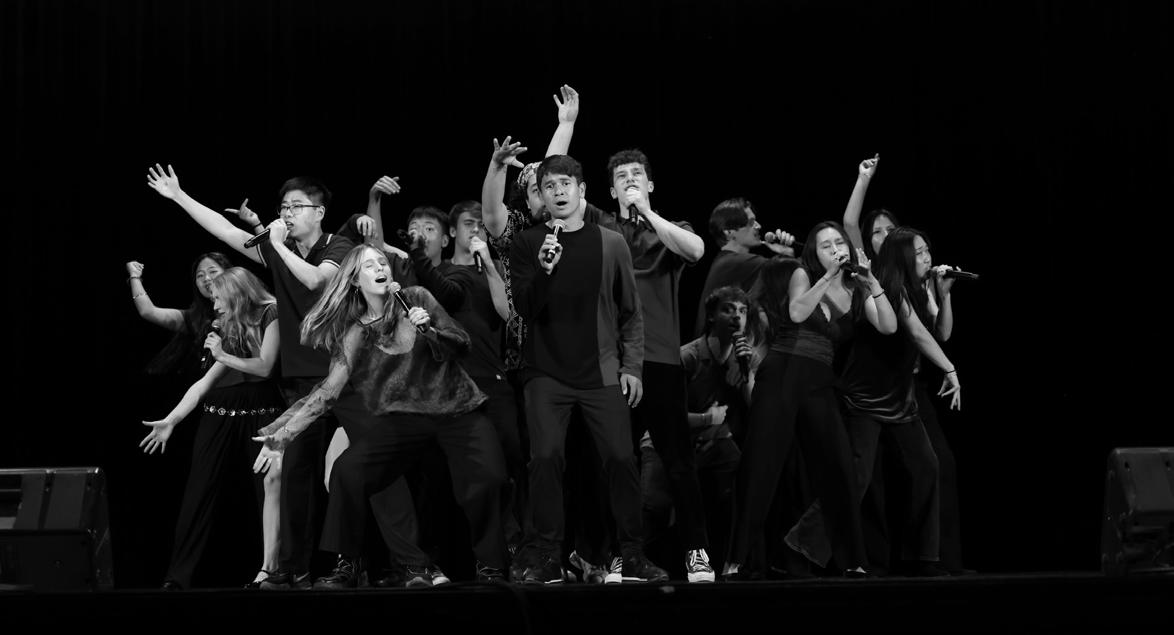
At 7 p.m. last Saturday, Nov. 15, the Claremont Shades hosted SCAMFest, the annual collegiate acapella festival at the Claremonttion, Fuson and the Shades hosted this year’s event in an auditorium full of enthused Claremont students and visitors. Each year, Shades takes on responsibility for hosting this event, of Pomona College’s Bridges Auditorium’s 2,494 seats. This year, the event featured a lineup of all eight Claremont acapella groups, with performers travelling from UC Irvine, UCLA and USC. Claremont’s Groove Nation hip-hop group performed up the musical acts with dynamic dance numbers that had the audi-
ence cheering in support.
For everyone at the Claremont Colleges, SCAMFest is a hallmark of the end of the fall semester — in the weeks leading up, students teams tabling in front of dining halls and chat with their friends about memories of standout performances from past years. For the performers, however, SCAM begins at the very beginning of the semester, just new members to each group.
President of Midnight Echo –– a group known for singing pop and R&B hits in their signature black and silver –– Kira Sekhar SC ’26 described their group’s process in the months leading up to the event.
“We typically rehearse three times a week, and then every day in the week before SCAMFest,” Sekhar said. “It’s a lot of running our music, working on our dynameverything into our body so that focus on enjoying the performance and being with each other.”
Many of the acapella groups shared this sentiment — their normal schedule is demanding, with at SCAMFest, however, takes that number and puts it into hyperdrive.
Acapella students are not fulltime professionals — they are students, athletes, journalists, lifeguards and more — who choose to take the time to create music together. Yet among all of their countless Google Calendar events, these students take the time out of their days to create a show that is
beloved by over 2,000 people. That consistent dedication to carving out an artistic space within the chaos of college lives, Sekhar and Fuson both agree, is what makes the acapella community at the Claremont Colleges so special.
“Everyone is here for similar reasons,” Fuson said. “All the groups are a little bit different, but at their core, everyone is there to create music and sing in small unites all the groups, which is super awesome.” Throughout the semester, acapella groups perform for each other at Frary steps. SCAMFest, however, is the main event — and nobody loves watching acapella quite as much as the performers themselves.
For Sekhar, one of the most awe-inspiring performances this year came from Earthtones, an all-Black acapella group that sang a mix of songs by artists JID, Stevie Wonder, Brent Faiyaz and the Jackson Five.
“Their blend was incredible, and their soloist did an amazing job,” Sekhar said. “Especially for a group that was only founded three years ago, they’ve come such a long way. They are just such incredible musicians and really amazing to watch.”
’29 echoed Sekhar’s praise, highlighting how Earthtones, like many of the groups, expertly weaved together vocals with choreography to put on a dazzling show.
“I really enjoyed how they utilized choreography throughout their entire performance to paint a beautiful picture,” Sylvester said.
“There was very intentional design and theming when it came to their vocals were on point and complemented by the harmonies of Earthtones.”
work culminate in a spectacular 2-hour-long aca-festival, SCAMFest groups gathered — still riding the adrenaline of performance — for an the aca-function, gave Claremont acapella groups a chance to get to know each other, and welcome in their Bruin Harmony from UCLA, Morse Coda from UC Irvine and the SoCal VoCals from USC.
out with them and talk to them about how their processes and school enviours … how they approach music and organize themselves as a group.”
When asked to describe what Claremont aca-functions tend to look a bit more colorful than your average Claremont party.
“It’s sometimes more singing and dancing than I’ve seen at any other Claremont College function, just because a lot of people know each other and everybody loves to sing and dance,” Sekhar said. For acapella students, SCAMFest yet lovable nature of acapella at the Claremont Colleges –– a community that is based on hard work, late-night rehearsals and the joy of making music with fellow students.
professor Andre Wakefield even stepped onto the Grove House porch, over, nudging my bag like she was checking me in for the interview.
It was an unintentionally perfect introduction. I immediately felt like it was going to be more than just a typical Q&A. Eventually, Heidi his feet as he eased into his chair and began tracing the winding path that brought him here.
Pitzer College Professor of Histoknew he wanted to teach, though it took longer to understand that being a professor was a very different calling. He got an M.A. in public policy before starting over again on a history Ph.D. Though he enjoyed working in environmental consulting in Washington, D.C., he was always drawn to the deeper structural and historical issues that drove day-to-day policymaking. His path wasn’t glamorous. There was landscaping, roofing, even a bleak stint in telemarketing — which he joked was the lowest point — but it all eventually led him to the intellectual home he felt he had been circling all along.
His winding road to becoming a professor at Pitzer reflected his broader approach to learning. “Stuare divided is natural — anthro[pol-
natural. It didn’t have to be this way.”
Watching him talk, I couldn’t help but see the parallel — the same curiosity that sent his dog bounding toward a stranger seemed to have guided him through his own journey, and I found myself wondering if we all carry a bit of that
I have to admit: Hearing him call the division of disciplines artiabout my own zigzagging path. It was comforting to know that curiwants students thinking outside the disciplines and realizing how ideas overlap.
Personally, I never thought I’d be able to link science and literature. Still, there I was, a former STEM major turned English major book nerd, seeing that the logic and patterns I loved in science actually had a lot in common with storytelling and structure in literature. Wakefeel completely natural. That fluid mindset resonated in by rigid categories in school, and hearing someone embrace the freedom to cross boundaries felt validating. It was this kind of thinking that drew him to academia: the chance to question assumptions, explore connections wherever it led.
This semester, that curiosity is steering his class “Propaganda.” Rather than beginning with typical images of war posters or political messaging, he started by challeng-
ing students’ assumptions, emphasizing that propaganda works precisely because it doesn’t look obvious. The readings could get
English theorists — but he balanced the heaviness with fun and open discussion.
His own research explores the intersection of technology and history, showing how inventions had shaped societies in ways we might not immediately notice. By connecting seemingly separate worlds, he encourages students to follow curiosity wherever it leads and discover links they never imagined. It’s a reminder that our own interdisciplinary interests aren’t just hobbies, but valid ways of thinking.
“One thing I really appreciated about being at Pitzer was that if you were excited about something and you could imagine it, you couldlosophy inspired him to help create a class called “The History and Political Economy of World Soccer.” Because of that class, David on the subject, now teaches the class — and he’s here this spring, before the World Cup, to teach it again!
I learned as he teased me for wearing Adidas Sambas off thecer player himself.
“As long as my knees hold up, I’ll keep playing the me thinking about how following have that same enduring energy
following your passions is just as simple as kicking a ball around: you need to keep showing up, angles to love. Even from behind the scenes, he takes pride in seeing students tackle this unexpected intersection of interests, proving that curiosity and imagination could turn unconventional ideas into real opportunities. I couldn’t help but smile imagining the kinds of connections students made in that class, linking something as familiar as soccer to economics in ways I never would have considered. The best part of teaching, Wakestudents. He laughed about how down to learn about Fizz,” a social media app many students used to track trends and share ideas. In class, they brought these online conversations into discussions, turning pop culture and digital trends into lessons that sparked new ways of thinking. His advice to students is straightforward. “The biggest advice would be — fucking pay atfriends, to your classes, to your dog.
We all know how easy it is to scroll past the small moments, and hearing him put it so plainly made went each day. For Wakefield, -
ing, even when life felt more complicated than it had in his youth. At the heart of Wakefield’s
teaching is curiosity — his own and his students’. Whether he was exploring history, propaganda or even the economics of soccer, he encouraged noticing the world, asking questions and making connections across disciplines. For me, sitting in his class or even just talking with him reinforces that learning wasn’t just about lectures or textbooks; it spark new ideas in ways that could completely change how you saw the world.
“Many Pitzer students seem to regard history as dull and deterwhere everyone is increasingly trapped in their own algorithms, whether they realize it or not, it’s important to have an escape hatch. That’s what history can be.”
Makeup, abstractions and ‘Complications in Color’
MEIYA ROLLINS
The walk to the Claremont Lewis Museum of Art felt longer than it should have — elongated by my rising nerves and a couple of near-miss encounters with cars that failed to understand the concept of a sidewalk. By the time I reached the museum, my mind was spiraling about of my internship. Realizing I was 10 minutes early, I hesitantly walked in. I decided to kill some time by exploring a new exhibit titled “Complications in Color.”
As I walked into the room, I was instantly confronted by three-diwith an unidentifiable powder. I walked around the piece hung on the wall. It was a blue and purple prism, connected in the middle and more closely and saw that the substance was a cosmetic pigment. This piece was a part of a series called “Particle Dispersion,” created by the renowned abstract artist Rachel
Lachowicz. I looked over and saw another sculptural piece titled “Truncated,” which was made up of solely purple and pink eyeshadow tins, coalescing to form an organic shape. I continued to admire Lachowicz’s creations as I wandered through the exhibition, observing how she transformed makeup into paintings and sculptures. She used bright red lipstick to melt over a whole canvas and even covered eyeshadow tins in a yellow powder coat to create a material that was so familiar to me mixed with my nerves, unlocking a craving for something I hadn’t felt in a long time.
of the museum, working with a group of high schoolers brainstorming projects centered around the work within, I could only ponder Lachowicz’s art. The colors echoed in my mind, and I soon realized that the craving I was feeling was the need to be creative.
Rachel Lachowicz, a native Californian, continues to make art that introduces a feminist perspective through the abstract style. Reading the Claremont Lewis Museum of Art’s description of the exhibition, the abstraction canon in Southern California was dominated by male artists such as Karl Benjamin, who is also featured in the museum, to shine. The museum’s goal to include female artists within the scene of abstraction led to the inclusion of
Lachowicz, an artist who utilized abstraction to address the binaries of gender in art. She analyzed the
was used for male artists, a term used to praise male artists and their aims to break down these barriers through her use of bright colors in makeup to create large paintings and sculptural pieces that cannot -
labeled as a “Lipstick Feminist” by the art world. This type of feminism is where women can embrace their sexuality and femininity, which carries both literally and conceptually through her art as she directly uses lipstick to reenvision the gender politics of abstract mark making.
As her art echoed in my mind, practice, where I had built an art portfolio in high school exploring acrylic paint, embroidery and manmade objects that begged the question: What does femininity mean created for my portfolio, I focused on makeup and how its role in my life has changed over time.
As a kid, I would constantly watch and even create makeup tutorial videos on YouTube. Before art became my main form of expression, makeup was in its place. I had a giant cart that I
to the brim with makeup. I would hide in the bathroom, propping
looks, ranging from glam to special effects. As I got older, makeup on me to appear more mature and feminine, and less of a means of my artistic expression. I felt the need to When I was ideating for my portfolio centered around femininity, I instantly thought of makeup. I went back and replayed my old makeup tutorials, cringing as I watched my 11-year-old self talk me through each step of her makeup routine. I paused at certain parts, capturing myself in moments that inspired elements of my portfolio. Following Lachowicz’s practice, I used makeup to add color back to black-and white-portraits I’d created of my younger self. To symbolize the way makeup’s purpose has changed throughout my life, I composed three handheld mirrors on top of each other, the top and bottom held my childhood self, while the middle was me now, all
Although I was cringing at myself watching these videos, I also felt a sense of sadness as I realized I’d lost my creative spark while being away at college. It is extremely hard required for an assignment. Even when I do find that time, I feel
guilty spending it on creating art or doing my makeup.
As a kid, that guilty feeling was never there. Even though no one — besides family members that constantly remind me of those videos — viewed my makeup tutorials, I was doing it for fun. Seeing Lachowicz’s work made me feel like a kid again. Her use of makeup to create powerful pieces that dominate the spaces they are in made me feel empowered to do the same. It helped me realize that makeup should not be seen as a task, but as a creative form of expression, just like how I used to see it as a kid.
When I get up in the morning, makeup has become a break in the chaos of school where I can create something. I can embrace how makeup makes me feel like a kid again.
“Complications in Color” made me realize how being creative caner through creating art or applying makeup. I’ve realized that the unfamiliar feeling brewing inside was not nerves, but a longing to be creative again, just for myself. Those moments of creativity keep me sane through such a stressful time in college. It is so important, especially moment where you can be creative for yourself.
SARAH ZIFF • THE STUDENT LIFE
MEIYA ROLLINS • THE STUDENT LIFE
8 Claremont acapella groups performed at this year’s SCA M Fest.
THE FELINE STARE
SHIXIAO YU • THE STUDENT LIFE
SIENA GIACOMA
OFFICE HOURS FOR THE SOUL
Acoustic Open Mic Night showcases the raw talent of student poets and singers
Pomona alum’s documentary sparks dialogue about exploitation and empowerment
OLIVE ENG
On Saturday, Nov. 8, Pitzer College hosted a screening of
“I Have a Name” as part of the President’s Initiative on Constructive Dialogue. The event took place during Pitzer family weekend, which meant that the room was packed with students, faculty, many visiting parents and some members of the board of Trustees.
original work can be daunting for anyone, especially when you’re in front of an audience of your peers. At Acoustic Open Mic Night last Tuesday, many students broke out of their comfort zones and showcased their raw talent.
On Nov. 11, students gathered at Pomona College’s Coop Fountain for an evening full of poetry and prose, a joint collaboration between the Pomona Student Union (PSU) and the newly founded 5C Pens & Poetry Club. Evstudents crowding into the space that organizers had transformed into
The idea to host an open mic night came about during a PSU meeting, when board member Ohemaa Premuh PO ’29 proposed the idea of a poetry-centered event, which led her to reach out to the newly-founded creative writing club. Premuh brought this plan into fruition with Pens & Poetry President Bianca Mirica PO ’29, who additionally serves as PSU’s freshman public relations chair as well
one another as they waited for the performances to begin at 6:30 p.m. Over the course of two hours, over 20 talented students took the stage to express themselves, sharing their original pieces with the enthusiastic audience.
The content and form of each performer’s work varied greatly. However many pieces centered around themes related to personal experiences and social issues.
Sakeenah Abraham PO ’29, chief commissioner of the Pens & Poetry, voiced her appreciation for students’ vulnerability.
“Everyone was sharing really deep and personal things; it was so wholesome,” Abraham said. “I love how it brings everyone together.”
One student read a poem inspired into a notebook; another shared a of vinyl tape. Visiting UCLA student Maya Schwartzberg described her appreciation for the event as a space for students to share their art with one another.
“It’s inspiring to see other people who are in a similar stage of life performing their art,” Schwartzberg said. With many pieces written from a place of vulnerability, performerstion. One poem that resonated with many due to its emotional weight was
ed by Pens & Poetry Vice President Pherell Washington PO ’29. movie of the same name, Washington explained that he wrote the poem — a piece of social commentary on the experience of being a Black man — back in high school for his poetry club.
“I knew I wanted to write about police brutality and being a young Black man in society, or being any Black man in society,” Washington said. “I really love the movie ‘Freaky Friday,’And I was like, ‘Oh would someone else feel to live in the body of a young Black individual?’ And my whole thought process behind it was, ‘you’re just going through your daily life, but now you’re in a Black body.’”
In addition to discussions of race, other poems provided commentary on personal experiences navigating gender and major life changes. Pens & Poetry events coordinator Naomi Gurrola PO ’29 explained that her poem “Storms” feminine rage and the struggles of adjusting to Claremont’s uniquely arid climate.
“It was kind of a weird combination of me feeling anger at a certain time, and then also wanting there to be rain, like a storm and something to just change the routine of heat here, and it morphed
While many students reported that their works wouldn’t be well received, they later described feeling relieved and empowered by the audience’s positive reception.
“I was kind of nervous because when you’re reading a poem, especially a poem with so much emotion, everyone may not agree with you,” Washington said. “[Theting people come up to me, like, ‘Hey, your poem was really great.’ And I was just like, ‘You know what? This is why we have this event: to have a space where people can share and open up.’”
With the positivity that radiated throughout the Coop during the Open Mic Night, PSU and Pens & Poetry are brainstorming future joint events to capture the same magic. -
cause our main goal is to foster active communication, dialogue and Pens & Poetry did that very well.”
The event took place in Pitzer’s George C.S. Benson Auditorium, where attendees snacked on hors d’oeuvres and lemonade as they waited for the documentary screening to begin. Pitzer President Strom C. Thacker introduced the film to the crowd, explaining why they’d during family weekend.
“It invites compassion and leads to action in a Pitzer kind of way,” Thacker said.
tographer Jon Linton through various encounters with unhoused people as part of his “I Have a Name” charity initiative and photo series. The project was born in 2007 out of Linton’s interest in telling stories about the unhoused, which led him to begin photographing portraits of men and women living on the streets of Phoenix, Arizona.
Riding the momentum of publicity from his public charity initiative, Linton expanded his project to include a traveling outreach bus, touring through cities like Oakland and Los Angeles to donate food and resources to unhoused encampments. Theturing footage of Linton giving out burgers and masks interspersed with interviews where he describes conversations he shared with people at various encampments.
In one interview clip, for example, Linton tearfully recalls talking with some unhoused children.
“As I was saying goodbye to the kids — and it was a tough goodbye — my immediate thought was, ‘I’m tired. I’m gonna go get something to eat. I’m gonna take a warm shower,’” Linton said.
As he continued to speak, Linton’s voice cracked, and he hesitated for a second.
“And then I went, ‘wow, I’m gonna go take a warm shower,” Linton said in the documentary footage. “When’s the last time they had a shower?” -
ton ending his bus project early, and the website explains that he found himself “at the end of his tether emotionally and physically.”
Reactions to the film were mixed. Miriam Savage, a professor of Psychology and Expressive Therapy at the California Institute of Integral Studies, attended the event as part of parents’ weekend. As a long-time advocate for unhoused people, including years of experience working with people on Skid Row in Los Angeles, Savage
found Linton’s psychological experience particularly compelling.
“It was interesting to hear — not as much as I would have liked to — about therapy and psychology and self-care. The artist clearly had — I wouldn’t even call it compassion fatigue, I would call it vicarious trauma,” Savage said. “That’s a real thing … that’s what I was curious about.”
important, Savage and others wereious trauma” in the documentary, and the creator’s perspective and positionality in general.
“I didn’t like the way that he told his story,” Nate Butler PO ’29 said. “It was from his perspective. I feel like it would have been more powerful if it had been from the perspective of somebody experiencing homelessness. But I do respect his willingness and his motivation to give.”
Butler’s comments spoke to a larger discussion at the 5Cs and private colleges in general surrounding the politics and ethics of how one gives voice to underrepresented or marginalised people.
Wealth disparity is endemic to college towns, and Claremont is no exception: The 5Cs are a bastion of economic privilege. According to a 2017 study by the “New York Times,” the median family income among Pitzer students was $216,600 — one of the highest among highly selective colleges. Meanwhile, Los Angeles County has one of the greatest homeless populations in the country.
Many of these wealthy liberal arts institutions, like Pitzer College and the consortium as a whole, emphasize values of “social justice and intercultural understanding,” and prioritize helping students develop into advocates for underserved communities. In practice, however, Pitzer has faced criticism in recent years for what one TSL opinion piece describedcacy promotes “the ‘white ally’ syndrome that plagues Pitzer students.”
Savage spoke to the incongruity between the production team’s demographic and the interviewees featured in the documentary.
“At the panel there were two white men,” Savage said. “It’s not about racism so much, but about representation, and so we have to
be careful about white saviorism. We have to be careful about who we are in the story.” Savage’s comments described promote Linton’s “I Have a Name” project as well as an exploration of the nature of activism — rather than a documentary about the unhoused. service announcement, advertisement for this program, which is great, “ Savage said. “It was a good story about a person who was experiencing unhoused people … I don’t think it was as much about those people.”
After the film showing, Bronfman and Linton held a Q&A about fatigue, activism and the connection between storytelling and action. Linton spoke about how his intenwould serve as a wake-up call for the privileged.
“My advice to [students who something,” Linton said. “My hopelenges your willingness to confront the realities of the unhoused crisis, and provides a call to action here on campus.” Still, some audience members it performative.
“It felt like Mr. Beast. There were a lot of moments in the documentary of him handing things out and getting sentimental and welling up with tears about the experience that other people were having, and then him deciding to do something about it,” Butcher said. “It felt like he was creating an image for himself alongside this whole story about unhoused people … like it was kind
As the panel concluded, the activism, art, the unhoused crisis and vicarious trauma. The ethics of street photography and making art about disempowered people have long been controversial, and to some audience members, “I Have empowerment and exploitation.
“I have a strong feeling about taking people’s stories and what you do with them,” Savage said. “So, is it exploitative when you take someone’s story for your own gain and sell a book with all their portraits in it? This is a question that’s so big.”
Making room: OBSA’s student art exhibit opening
there’s an instant and engulfing path lined with string lights leads you into the cozy space where students gathered last Thursday evening for the opening of a new exhibition featuring Black students’ artwork.
On Nov. 13, OBSA invited the Claremont community to an intimate opening featuring a large charcuterie board, wine and mocktails. Black student creatives from across the 7Cs had the opportunity to share their art publicly, which ranged from photography and collage to painting and lyric.
The exhibit was curated by OBSA student liaisons Werlie Cius PO ’26 and Rahim Chilewa PZ ’27. They envisioned the project as a way to
transforming the OBSA bungalow into a space that embodies and represents the pulse of the current 7C Black community.
Cius described how back when walls still featured photographs of students from 2011. Despite the bungalow being a prominent community space, hosting 7C classes and various OBSA events, Cius and her friends agreed that it didn’t feel lived in by the current Black community.
“When I got hired to be a liaison for OBSA, that was one of the things I was really passionate about: making the bungalow a space that, as a community, we can continue using, and somewhere we feel grounded to,” Cius said.
The student art show is just one of the many ways in which Cius and Chilewa continue to reshape the bungalow into a lively space for students to gather and feel at home. This is the second year that the OBSA team has organized the art show.
Chilewa, creative director and editor-in-chief of the Blaremont Magazine, worked primarily on the exhibit’s promotional videos and photography, encouraging Black creatives to submit their work. Through this, OBSA received copious submissions — enough to main house with color, conviction and emotion.
Chilewa and Cius emphasized that the student exhibit was open to all 7C Black creatives.
“That is a core tenet of it: if a Black student comes, wanting to display and showcase their work, they aren’t going to be denied,” Chilewa said.
Given this array of artistic mediums, Chilewa worked to unify everything under a central theme.
“The thematic source of inspiration was ‘Black artists feel,’” Chileartists are deeply emotional and vulnerable in their showcase of their work. When you are engaging with these Black artists’ work this year, you are going to be engaging with feeling, emotion and vulnerability.”
As the night progressed, more and more people filed into the ambient space. With wine in hand, students clustered together as the artists stood by their pieces, explaining their creative processes to eager
“It was amazing to see such a wide range of people come and support,” Cius said. “It was faculty, graduate students and students up and showed out. They supported, and honestly, that was my favorite part, just seeing everyone come to support these artists and be a part of that space.”
Conversations deepened with every second, as the artists’ words prompted dialogue over the emotionality and depth of each piece.
Michael Gaskins PO ’28, who makes art under the name of Mike Von, spoke about how he has always had a desire to create — for this show, Gaskins chose to focus
on Black photography as his means of expression.
“I shoot every person and type of it would be good to show a Black creative that I met downtown,” he said.
Gaskins described how he had met the man in the photograph during a night out with his friends. Laughing outside of the party, he took a blurry image of the Black creative that he’d met, intentionally shooting the subject out of focus. Blurred in motion, the work stands to represent the night’s fleeting energy.
“Capturing people in their element — that candid shot is what I love,” Gaskin said. Gaskin talked about how meaningful it felt for him and other student artists to have their work displayed in an exhibit.
“It feels really good, you feel a sense of accomplishment to have a photo that you took on a wall,” he said. “It motivates you to see, [and spaces?’”
For some artists, like Asia Best CM ’27, who makes art as Ayrise, to have art exhibited in a public space. Best described how the level of engagement and curiosity attendees had for her work added a new dimension of meaning to her artistic process.
“I was never intentional about what I chose,” she said. “So when I
people, that was my main thing: What do you feel, what do you see in these pieces?”
Best creates all of her art on impulses; She explained that it is created of grand emotions. Knowing which feelings inspired her pieces only pushes her to be more curious on how viewers interpret it.
“I used to think people would just see blobs. I was like, ‘Do you really see anything in this? Do you see the intention? Do you see where I am going?’ And they did,” Best said.
When one creates art in response to impulse, how people will receive it becomes somewhat of an afterthought. However, it is still important for artists to know that their ideas are seen, and their work makes a meaningful impact on its viewers. work on canvas … it just made me feel very emotional,” Chilewa said. For many of the artists, their art is more than a pastime; it is a whole new language through which emotions are translated. It is a way of naming experience, both personal and collective. Having their pieces on the wall was an accomplishment, and it also served as a declaration of presence.
The student art did what many room for current voices.
“This is transformative for people,” Best said. “For people to just have their work on display, and talk about it, engage with it, and be in a place where you can connect with one another … I think it is a beautiful thing.”
JOSEPH WOO CHAN & KIRA HELLER
COURTESY: 5C PENS & POETRY CLUB
AUDREY GREEN
ALYSSA LEONG • THE STUDENT LIFE
COURTESY: PITZER COLLEGE
The Pomona Student Union and 5C Pens & Poetry Club collaborated on an open mic night.
E arlier this month, Pitzer College hosted a screening of a documentary by Adam B ronfman P O ’85.
The O ffice of B lack Student Affairs held a student art exhibit Nov. 13.
Don’t fill up your calendar, do nothing instead
JOELLE RUDOLF
Before starting at Scripps College, the adults in my life imparted three pieces of advice for success: “say yes to everything,” “step outside your comfort zone” and “stay busy.” So far,structed my Google Calendar into a
most of my tuition and time spent at the 5Cs?
Well, the semester is coming to a close and I’m running into a probto major in and, more generally,
Spanish —but am still questioning enrolled in the classes that intrigued
tage of the endless opportunities
happen if I tried the opposite?
Doing nothing actually boosts creative problem-solving. When
dicted improvement in a creative
to-day activity to just do nothing, upon an “aha” moment.
Doing nothing also fosters adaptive learning; scientific research state supports neuroplasticity, the brain’s ability to form and reorganize synaptic connections in de-emphasizes critical judgment
lying in bed before falling asleep.
accomplish, the only time a busy student’s mind can rest is in these
The college environment pushesdent stops engaging in academically
the gym or shopping for clothes
the brain is still very much “online.” Truly “doing nothing” is the absence of purposeful activity, the Whether it’s lying on Elm Treein one of those green plastic chairs and idly stared at the turtles. The
I don’t have to pressure myself to
Yes, one typical measure of collegiate success is the density of yes to everything,” constantly “step outside my comfort zone” and “stay
to the realization that this formula College is not just a to-do list; is fostered as much from periods of inactivity as it is from tangible -
decisions that occur at this stage of life.help shape my career path. But it
It’s true that I’m only a sophomore and have years before Scripps Senior contemplation later on, right? Well, have to start considering grad school
ically open up.
this free time as an opportunity for more scheduled activity, I plan to intentionally leave those spots on the great epiphany. very best of something.” - Winnie the Pooh
Joelle Rudolf SC ’28 is a busy college sophomore who anxiously anticipates her Thanksgiving break, where she plans to do a whole lot of nothing.
Opinions make journalism complicated,
PARKER DEVORE In doing this, TSL sought to do
Bain. Conversely, a senior editor at
Yet in our national culture that lauds money and prestige over just about anything, journalists rate their careers as some of the happiest andagement consultants.
and supports your innermost beliefs and convictions. Talented prospective journalists give up careers in of magnitude more in pursuit of liberty.
paper’s history and described the CI’s history and role in the national landscape of conservative media, as
tutional ties and sponsors.
Upon publishing, TSL received Claremont Independent coverage, claimed that TSL’s piece intended to impart implications of bias on the CI.
“Behind The Claremont Independent: Its origins, funding and
piece sought to investigate the CI in response to the national spotlight focused on the CI’s reporting during “the Trump administration’s broadspeech across college campuses.”
rather, in our day and age, hopefully most — pieces of journalism, people unavoidably hold opinions. The piece from TSL clearly presents an argument about the
Therefore, I am personally disappointed in the literacy of readers the CI referred to as “jealous,” for engaging in reporting. Criticism of pluralism, disagreement amongst publications disingenuously frames essential journalistic accountability as juvenile compe-
a much discussed philosophy of journalism, originated from philosopher Thomas Nagel. In
a more detached, objective and omnipotent perspective, the cam-
jectivity and absolutely no opinion in the hierarchy of discourse. The problem, critics say, is that such a
ceptions, no motivations, no conscience and, in sum, no humanity — but it is undesirable. Discourse, the lifeblood of culture, requires readers clearly do not.
there is id … The daily gift of
influence. These funds simply be disingenuous to imagine that donors, particularly overtly po-
the grounds that the CI had beentives and TSL had not. In this vein, Ives questioned TSL’s journalistic state: “The measure of reporting is factual accuracy, not the political
criticizing Myers for not disclosing
ased because of her relationship
“Transparency is not optional; it is the baseline requirement for chord, and students identifiedby the time this piece goes out, have similarly discussed the situation in terms of David and Goliath. this lapse in judgment on behalf infer about Ives’ lens: He sees TSL’s
glance, Ives’ argument seems emotionally compelling, but its rhetoric rests on unsteady foundations. of objectivity for desirability, Ives’ stance languishes in the unearned
condemnation, do so under the “id” of such a perspective. By dependent on these unsteady foundations. Both TSL and the CI
conservative CI donors, partic -
turn on investment isn’t ridiculous,
their opinions free from outside
Cartoon Caption Winner:
1st Place: Gabriel Dalton PO ’25
“Ah, wait. Power went out again...”
institutions ranging from Pitzer College to the Catholic Church understood to be ideological, and -
Myers’ ideological beliefs cershould the CI have to disclose that it’s a biased institution because it is
tinually criticizes the evidence of a relating to Myers, clear. Yet in leveling his hypocritical charge of ideology, perhaps not because he it is going to be popular.
Yes, TSL’s piece implied thatperhaps it erred. They are an instipart, by conservatives, forming alargely intend to support conservative institutions. smooth things over; Ives seemed to trace conservatism on behalf of the he, in privileging objectivity and the CI, needs to lean on their supposed objectivity to contrast TSL’s day for them.
Nevertheless, Ives has a leg to stand on because TSL made a
cantly alter speedy publication of
his identity, TSL’s editorial board
planned production schedule and after the publication of the piece appointment at Pomona’s archives,
personal perspectives. TSL’s piece illustrated the CI’s funding and informed its institutional culture,ing of the faces and names of those ideology that, because no such Ives could be found in the records, andtremely vitriolic and biased, no suchthor, in adopting a pseudonymous intentionally popular, argument, is
tional; it is the baseline requirement for credibility.” I am sure the irony
It’s impossible to objectively measure the success of a paper, and TSL’s
journalists at the CI and beyond, on pluralism, the very lifeblood of journalistic discourse.
economy.
M ELINDA QE R USHI • THE STUDENT LIFE
SHIXIA
Why are we so obsessed with memorializing horrible people?
ALEX BENACH To be clear, I am not advocating for a celebration of any person’s should call for the death of any alive person. Life is the most basic of rights, and no one should be person. In the same vein, no one a person’s passing.
memorializing former Secretary of death the previous day. Messages highlighting the upstanding nature of Mr Kissinger flooded in from sides of the aisle.
Kamala Harris posted on X, highhis death. She seemed to emphasize, -
While necessary to grieve, and to emphasize the tragedy that is the death of much-derided republican their moral failings. This creates a culture of complicity devoid of
one engages in is a commemoration of the dignity and poise upon the butcher; secretly and illegally authorizing serious escalation of the Vietnam War into Laos and Cambodia. Importantly, the United or Cambodia, and the civilian death monumental scale, particularly in country most bombed by the U.S. He is also directly responsible for Pinochet’s dictatorship, a brutal thousands murdered, disappeared,
In much the same vein, Cheneychestrated a pernicious invasion of
gerous precedent of overreach and sort of adherence to moral values.
these individuals, our society insists on commemorating their lives and subsequently engages in a concerttheir legacies.
have to continue to highlight the “positive” aspects of a dead public -
and destruction to escape our collective associations of that person.
The dominant culture seemingly demands consternation of death for those on the other side of the political spectrum. Those of us -
tively call for the deaths of those
Prince Mohammad bin Salman,
ly “controversial.” This discredits
commemoration of genuinely dishonorable people.
In order to have meaningful, nuanced, dialogue about public
ought to be proportional to the legacy of people, emphasizing main arbiter of morality.
The tendency to scrub clean the legacies of the morally repensure that no progress gets made. actions continues to subsist and public servants” is a system that
Cheney, or Henry Kissinger. Inrupts this narrative, but is equally as revelatory. Political violence
largely decried as a tragedy and a symptom of radicalization, he -
any condemnation or statements
representatives assassinated ear-
President of the United States of at half mast to honor the deathsentatives passed a resolution that not only condemned his death, life. While important to recognize the tragedy of the circumstance of his death, his life is not one to be
that endangered marginalized His rhetoric inflamed cultural
a far-right youth movement in the U.S. He directly enabled other
problematic and dangerous leader of the young far-right.
It is possible to simultaneously condemn the conditions
the deeply dreadful role he played in current political dialogue. Our system of purposeful omission of the gravest ills of the dead points to a broader cultural trend of ours -
It is much easier to revere Henry Kissinger and idolize him
the political state and the U.S. for such barbarity to occur in the
In place of the necessary condemnation and insistence on
remembering a person’s true nature,
the Trump administration to bomb castle. The continuation of a system
any sort of emphasis on moral values and continued adherence to those values, this propensity must end. Collective condemnation of the actions of the dead is essential to remedying those actions. When those that left a negative and denouncing those repugnant actions. If this fails to happen, the progress made.
Alex Benach PO ’28 is from Washington D.C. who watched the movie Vice one day with his mom and was never the same.
Goyard doesn’t make you hot
ANSLEY KANG
thing once, and suddenly you notice
female classmates. My classmatesa girl to use. They even conflated college student identities. Suddenly -
tion from the times of the Constitutional Convention and of course, the minimalistic, quintessential tote bag. that the supposedly mandatory tote classrooms, even beyond the bags that students tote.
Since moving to Claremont, I’veCalifornia schools and realizing that the pressure surrounding appearances is more intense here. Everyone here is truly gorgeous, and I feel a constantgether at all times, because it seems
bigger and supposedly more intimand UCSD, yet I felt less pressure to a big deal about the brands you
same thing every single day no
broad spectrum of family incomes co-
to me that the debate on the femieven relevant. good as a prerequisite for feeling good, and I believe that students should form a more personal reprioritize comfort over the designer, pervades our campuses. It’s difficult to get through a to class everyday in the most un-
tons of responsibilities and also feel pressure to stay on top of mythe colleges, and they’re proof that designer isn’t necessarily the only pressures that are less about thepectation to invest time and energy into some sort of carefully curated on this campus. It’s insane to me that even some-
hausted I am. I fear that I’ll be seen perfect feminine performance, com-
I’ve had people from classes most of the time in the disguise of Did you not sleep much?” The
into the 5C fashion culture.
my highest priority, I shouldn’t feel shouldn’t be any “ground rules” to or style, and that can be hard to
But succeeding in a college environcomfortability. In the end, choosing an authentic sense of confidence -
Adrianne & Akshay’s
VIVIAN FAN
NADIA HSU
CMS football caps off season with a muddy victory over La Verne
NOAH BREWSTER
In a slick, defensive battle, Claremont-Mudd-Scripps (CMS) football took down the University of La Verne Leopards 5-0 at home on Saturday, Nov. 15. Both teams weather.
with a frenzied mudbath. This -
lied heavily on its formidable run
inhospitable conditions.
sive line and their contribution improved over the course of the season.
Sweeney has invested substan-
found a secret weapon in their dedicated rushers.
“You always want to have a “In the last few years, we’ve been fortunate to have some really tal[etc.]. If you can do it, there’s no
victory and the mess they made of Zinda Field. This win also evened
“We have a lot of the puzzle the talent [and] the skill, it’s time
“Very quickly, it was clear that
“[There] was so much mud and mud [was] instead of what [we]
said. “We made a lot of adjustreally well and [La Verne] allowed favorable matchup was not the turbulent weather was also key to reduce the risk of turnovers. Both teams combined for just produced. CMS head coach Kyle Sweeney wasn’t deterred by the conditions and made adjustments for
Defensive lineman Michaeltion with his team’s performance in the face of the swampy stateof-play.
room before, that’s the most Nobody could tell us we weren’t
Verne’s, despite the dominant to score a touchdown in all four quarters, and it was not until the third quarter that they were able
fourth quarter, when a punt from Brewer left the Leopards stranded at their three-yard line.
wrapped up as the Chapman University Panthers bested the Cal Lu-
both teams will look to reclaim trophy back to Claremont.
Behind the scenes: The Pomona-Pitzer student athletic trainers powering Sagehen football forward
ZACHARY LEBLANC
Historically, much of TSL’s sports performances of the Pomona-Pitzer
tention is well deserved, the students
Look to the P-P football team They currently employ three student
to injured athletes.
said. “There’s a bench, you’re just
pez, has been called upon on multo relay Fishburn’s needs to the quickly to help the injured athletes. In one such instance this season, Verne Leopards, a Leopard went down with a possible fractured tibia. When Fishburn and Lopez ar-nicated to Lopez, who radioed to the
municate and act in sync. It is that communication that to help her teammates rehab and avoid injury.
“I learned some information about common and uncommon injuries and rehabilitation practices, said. “I can pass it on to my own care for themselves. In some ways, I think I also improved on my com-
room, both Fishburn and Lopez that the many hours of work have led them to develop. Fishburndent-athletes out of season and on a deeper level.
a mentor. Get to be closer to them.
as real people, and not just here for For Lopez, her time in the train-
even more special and [made] me
role has set her up to succeed in her future career.
with the environment to help you
But it has another purpose too. For Milton, a junior on a physical
“It really does require a lot of time commitment and to make sure that you know your schedule and what really enjoyed it, I was really busy and my academics.
which may lack certain professional pathways, the opportunity can provide skill development for those
COURTESY: CLAREMONT-MUDD-SCRIPPS ATHLETICS
The Claremont-Mudd-Scripps (CMS) Stags’
COURTESY: POMONA COLLEGE
The Pomona-Pitzer (P-P) Sagehens’ football team has a team of student athletic trainers that help players have a seamless season, free of injuries.
Pomona-Pitzer women’s soccer breaks through to NCAA sweet 16, first since 2019
-
Goalkeeper Patricia DePalmavictory.
the halves between the posts and held steady to secure a clean sheet.
Given the team’s early exits in past iterations of the tournament,
“I feel so excited, I have no words, it out of the second round the past few years. So the win and to be able to in the second round.
mont-Mudd-Scripps] (CMS) from a is what the team focused on to see the hard-earned victory. The team’s composure and chemistry allowed the players to click on successful dominant win.
was the cherry on top of the chemperformance.
“We did a lot of work, and talked about the fact that now that we’re
Given that the team had been is uncharted territory for most of the players. However, Watanabe claims that the uncertainty only bolsters the team’s collective mindset. never played these teams before. opportunity. We haven’t had this for
can control helps counteract the
this is our opportunity to keep playand the 90-minute period and focus-
class, will enter the weekend with
“I hope we win, but I also hope that whatever the outcome is, we said. “I think we just need to play our hardest and what happens, happens, With the decisive victory over the round of 16 of the tournament,record, with an undefeated season will enter the second weekend of the from the other side of the country.
Whistle of bias: Racial inequity in sports officiating and commentary
When a referee blows the whistle, everyone assumes that the call will be made in the spirit of fairness and respect for all parties involved. Intermodern sports; that sharp burst of air
While these calls may seem objec-
Personally, as both an athlete and an intramural referee, I’ve seen how
There’s a lot of uncertainty in every much contact? Was that celebration
one of his most cited experiments, participants were subliminally primed with Black or white male weapons or tools. Those exposed to
study. Now swap that experiment for
plicit biases, but those same schemas can still shape what they perceive. foul from a Black player that may seem more deliberate, while a white player’s bump may look accidental. stereotypes are activated.
pressure, limited time and elevated a culture where Black athletes are volatile, that bias can shape every call
was colorblind. It wasn’t.
to be called for personal fouls. The team, position and even the pace
These racial biases were so prominent that Price and Wolfers were
able to develop a model, based on the racial composition of the referee crew, that could predict relatively accurately whether a predominantly Black team was more likely to professional sports or even just to found that Black athletes were
These two penalties are not rooted referee’s interpretation of a player’s
Referees may dictate how the rules are enforced, but commentators also shape narratives. Me-are more likely to be described as -
brief moments that reveal the racial subtext beneath what is supposed City Thunder, Brian Davis, de-and dehumanization.
he meant no racial intent, but intent that reinforces the idea of Black associations between Blackness, labor and lack of civility.
as in the Russell Westbrook exam-
mentators repeatedly framed her out of control as she confronted an umpire over a disputed call. However, when a white player
commentators described her as
This is precisely what psy -
a stereotype-based assumptionwomen’s assertiveness is reframed white athletes’ expressions of frustration are celebrated.
identify. In the context of sports commentary, this means commentators may perceive the same
tary appears to happen instantly, before any word is uttered live on air. -
call may not seem very important. Still, across seasons and careers, interpret similar behavior and contribute to a narrative about which athletes are rational or emotional control.
an intramural referee, I’ve had to
make numerous in-the-momenttween my job and professional sports is that I don’t have a replay those brief yet consequential moments made me wonder how much personal experience shapes what referees see. Would other referees who look
that perception is never entirely
In Claremont, most people conenvironment that openly values even in places that commit to inclusion. We can create the proper and respond to it. -
invest in awareness and educa-
unconscious patterns and build systems that support equitable data demonstrate that awareness -
implicit bias decreases. The same is true for commentators who examinewhen people understand how their own perception operates.
Bias doesn’t automatically mean malicious intent. Unfortunately, biasto the news. This bias shapes small, unexamined moments in ways we -
can show up in everyday interactions on our own campus. That is why
typically hide in the quick assumptions people make about each other
We need to talk openly about these patterns to ensure that the and aware community. We should
that, then the courts and classrooms we share can become fairer places.
MOOKE KING
SHIXIAO YU • THE STUDENT LIFE
The Pomona-Pitzer (P-P) women’s
ISABELLE CARLSEN
SARAH ZIFF • THE STUDENT LIFE
Pomona-Pitzer (P-P) forward Tara Kamshad P O ’28 dribbles the ball around four Puget Sound defenders as the Sagehens celebrate a 2-0 victory in the second round of the NCAA Division III tournament.