5C community members have and in neighboring communities,
in collaboration with the Pomona Community Fridge at Lopez Urban
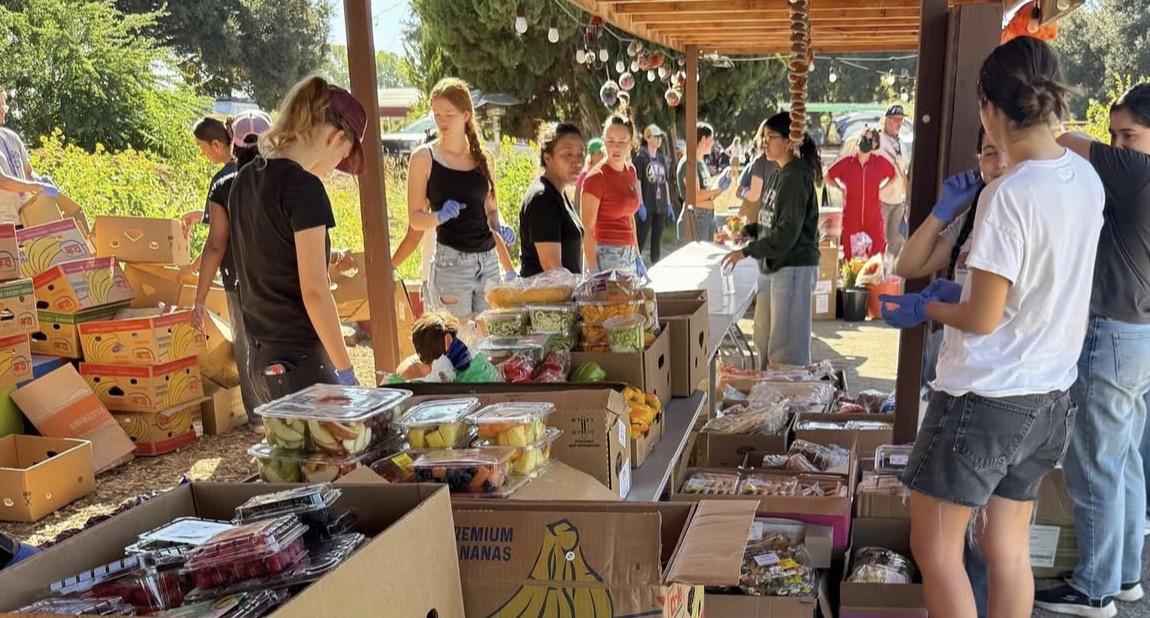
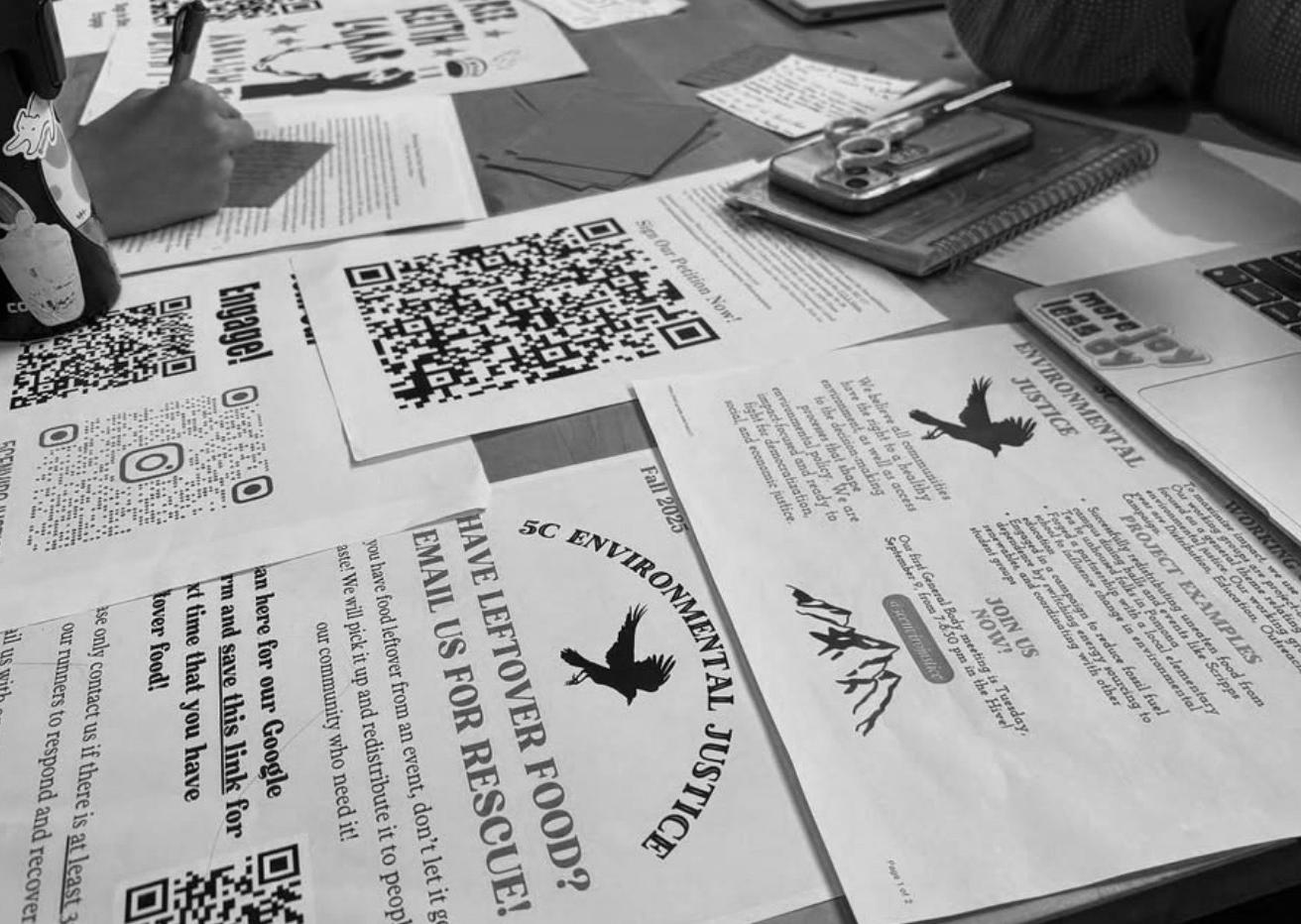
On Nov. 9, students across the 5Cs participated in the Food
to serve the low-income, unhoused and immigrant communities in Pomona.tional student advisor and co-head and conducting these weekly districommunity members.who show interest and our sign-ups
Kyles said she hopes the collaboration with the Claremont Colleges -
which began on Nov. 1.
vital in addressing basic needs and mental health in the community,”
President Donald Trump signed Nov. 12 ending the United States’ longest government shutdown, meaning that SNAP payments are now set to resume as normal. How-
Students campaign for Scripps to provide free menstrual products Professor Edray Goins
Scripps College administration to across campus. Student organizations such as Scripps Advocates have been
eral years.
Harvey Mudd College, Pitzer College and Pomona College provide while Claremont McKenna College contributes to student organizations Scripps’ central health service hubs,
An anonymous survey was sent to Scripps students on Monday, Nov. 10, via the Scripps Associated Studentsstrual products on campus.
The survey said that the Scripps administration has declined multiple requests to take over supplying these products.
Tess Frazer SC ’26 said that the student group provides menstrual but providing products across the
campus is beyond their scope and believes the school should provide these products.
“I really think it’s embarrassing that a historically women’s college students and provide all these rebasic need,” Frazer said.
state universities and community colleges to adequately stock menstrual products in all restrooms.
The Menstrual Equality Act does not apply to private universities such as the Claremont Colleges; however, it encourages private institutions to act in accordance with the legislation.
Sally Gaskell SC ’27, another menstrual products, said that she hopes to see Scripps take on this student group to provide products.
“This isn’t just about convenience; it’s about ensuring that a basic health need,” Gaskell said. Frazer said that Scripps Ad-
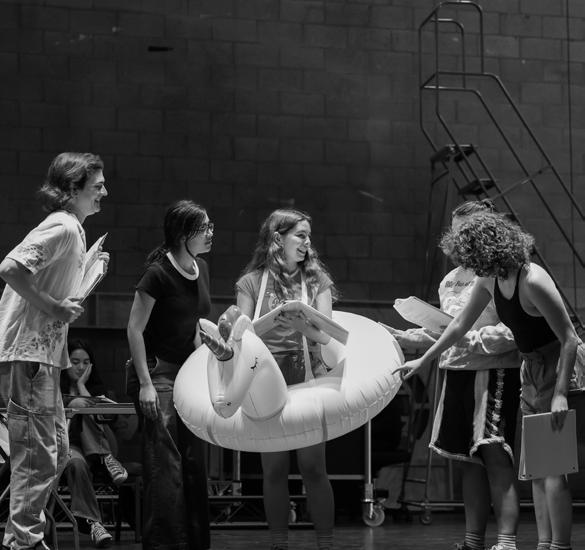
Through outlandish rehearsals, the cast and crew took Shakespeare’s beloved “A Midsummer Night’s Dream” and made it uniquely their New York accents.
menstrual products in the hopes that the school would eventually take on the initiative.
“That was supposed to be a band-aid while we tried to build the school to do it,” Frazer said. Yet, no change occurred.
menstrual product access are notcates as a group; students such as Frazer and Gaskell are working independently across campus to ignite change.
“While we’re happy to do it in the short term, we want to create solutions that can continue on and not, not be dependent on us, a student group that is really commit-
Miriam Akhmetshin SC ’26, and another student heading the campaign, said that almost all historically women’s colleges across the country provide this resource.
“It is incredibly disconcertingstitutions and other 5Cs,” she said.
Akhmetshin said that within
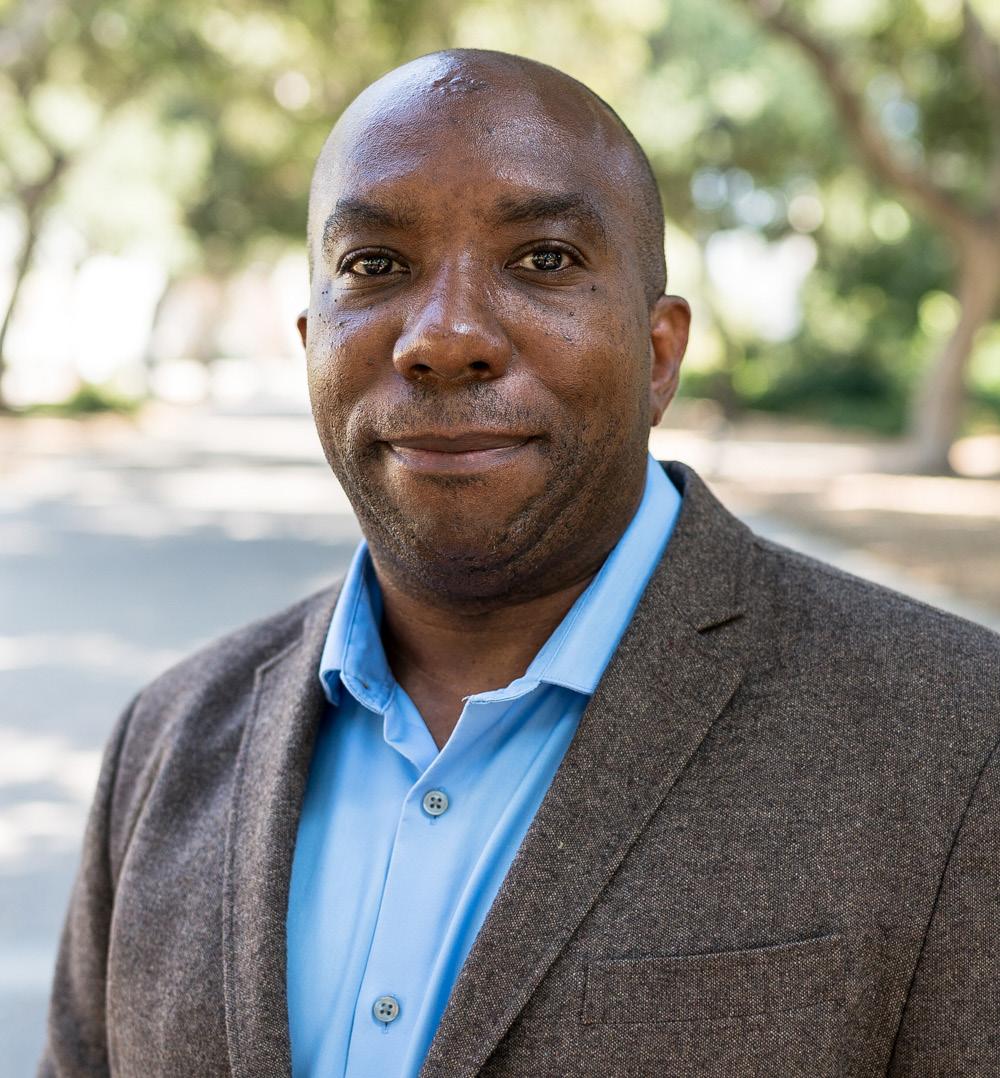
tistics Edray Herber Goins has been elected to lead the Mathematical the country’s largest collegiate mathematics society.
The MAA announced that Goins on July 1, 2026, becoming the 110-year-old organization. He will serve one year as president-elect, then a two-year term as President beginning July 1, 2027. Founded in 1915, the MAA comprises over 25,000 members and $10 million. The organization supports mathematics education and
scholarship through its publica-al development programs and mission to “advance the underits impact on our world” has resonated deeply with Goins throughout his career.
“This is a vision that I wholeheartedly believe in,” Goins said in a statement sent to TSL. a liberal arts college.”
A number theorist by training, Goins joined the Pomona a decade at Purdue University. Since then, he has become a
BIANCA MIRICA
COURTESY: POMONA COMMUNITY FRIDGE
Justice Community Service Day held by -
Farm. Students worked to unload the Pomona Community Fridge’s pantry.
Madeline Gonzalez Stoermer,
she said.
NERGIS ALBOSHEBAH • THE STUDENT LIFE Students are campaigning for the Scripps College administration to provide and fund broader access to free menstrual products in bathrooms across campus.
COURTESY: POMONA COLLEGE Edray Herber Goins, professor of mathematics at Pomona College, has been elected to lead the Mathematical Association of America (MAA), the country’s largest collegiate mathematics society.
ILA BELL
Continued from page 1
uate research, mentorship and representation in STEM.
National Science Foundation that brings together undergraduates and graduate mentors in collaborative research projects.ture series, which showcases the interdisciplinary relevance and through annual public talks.
standing commitment to improving diversity and inclusion in mathematics. In recent interviews and articles, Goins has spoken candidly about thematicians in academia and the in doctoral programs. He was -
ticians,” which highlighted the systemic challenges and accom-
Goins emphasized that the Claremont Colleges have long held ties
rad Aguilar, who currently chairs the Section. Goins acknowledged the position the country, though he said that will not diminish his commitment to working closely with students at the Claremont Colleges.
“I won’t reduce my time working with students at the Claremont Col-
country to represent the MAA at various events,” he said.
He added that his goal in this role is to continue bringing visibility to both mathematics as a discipline and to the Claremont Colleges on the national stage.
Math & Stats Department began the mathematics and statistics connect with other disciplines,” Goins said. “In my new role, I hope to continue the MAA membership and I hope to
to just come together and be in community with each other.”
across the 5Cs gathered at the Mot-
groups tabled and presented about how they mobilize to address topicsty, homelessness, environmental justice issues and organizing at the 5Cs.
5C Environmental Justice, Milo events that took place on Nov. 7 mobilization. Nevertheless, Slevin Hour was unique in its emphasis on local community, not necessarily bigger campuses might have been addressing.
could we just be in community with each other as civically engaged people, as people who are both
and this was really a good chance
at the 5Cs.
at the 5Cs and sometimes it can
said. “So I think the point was tople who have, like a whole bunch
tion is and how they could get more involved in that.”
organizers asked each organization to make their own slides and come to the event with an teach-in or promoting submission to a zine.
Slevin said he hoped that on campus.
continue to bring a national presthe national stage.”
bridging the traditional divide between math researchers and educators, two groups he says challenges. With many academic enrollment in math majors to
search and teaching communities in mathematics.
This concept and the inclusive vision behind it have resonated strongly within the 5C community, where Goins’ election has been met with widespread pride colleagues alike.
Filiana Kostopoulou PO ’25, a math liaison at Pomona, rea mentor and leader within the department.
a great mentor and resource to many students regarding opportunities inside and outside the -
dence that Goins would carry those same values into his presidency, just as he does daily at Pomona.
“As a math liaison, I am incred-
strengthening these values every day in our department, and who I am sure is going to do the same as MAA president,” she said.
great honor.
plished mathematician with a deep commitment to service, mentoring and broadening participation in mathematics,” Karaali said. “He is a nationally recognized advorepresentation, and his work has already had a tangible impact on junior colleagues.” Karaali added that Goins’ election underscores the department’s strong presence in national mathematical circles.
“Among our ranks are several colleagues who have served ongram committees and national -
Women in Mathematics,” she said, adding that Goins previously 2015 to 2020. enhances Pomona’s visibility in she said.
Goins’ recognition. She emphasized that his leadership serves demonstrating what it means to approach mathematics with dedication, ethical commitment and a
For students, colleagues and the wider mathematical community, Goins’ election is a beyond-impressive achievement that rementorship, public service and a deep commitment to academic
Grant Program about a month ago.
While some Claremont business owners and 5C students view Clapolice department have advised surroundings while in public.imbursement to businesses that “to prevent or mitigate” vandalism or burglary, deputy city manager Katie Wand wrote in an email to TSL. The city can provide up to third-party vendor.
In an interview with TSL, Wand City Council member who had
cial burglary. Last October, Claremont Mayor
businesses could then start applying
tions have come in.
“There honestly haven’t been that many,” Wand said. “I think there’s been two complete applications
The businesses that have received
Joey Nuno Medeiros, owner-opburglaries or at least increase the to enter so the police can arrive.
“We’ve been open 21 years and we’ve probably been broken into
have had to learn how to protect behavior in these smash and grab incidents. While some have entered through the door, he said, others have broken windows to come in.
“We’ve done what we can, especially through this grant proMedeiros said.
process” that involved making sure the vendor they used was approved by the city.
bolster security and do whatever Medeiros said.
enced a smash and grab robbery guard and install new protective glass. When the robbers returnedcouple times with the hammer,that the deterrence and the secu-
tive was necessary in Claremont, but that he didn’t apply given that it covered things he had already implemented. business being burglarized every -
burglaries occur in the community.
“The event was not as much building a strong community on our campuses and a community empowered to enact change,” big goal, and I think we really succeeded at that.”
event was a great way to connect students with clubs that make tangible impacts.
energy supporting people on both local and global levels, and I really loved hearing about their is an essential time to highlight student activism, and I hope we’re
Slevin said that they chose to have the event at the Motley given its central location and unique role on campus.
campus where students actually hold power over the space that we inhabit, and we make decisions,”ment like the 5Cs, where so much ‘community’ is curated by this institutional branding, I think the
Allbritton said she walkedture. “I just love events where people are coming together and building community, and I’m clubs collaborate,” Allbrittonmunity as organizing is always stronger when you know people.”
event included the Encampment Support Network, Claremont Student & Worker Alliance, 5C Environmental Justice, 5C Prison Abolition Collective, Inland Empire Support Network, People’s Fund, Mudders Making an Ethical World, Justice in Palestine, Nobody Failska Alliance, 5C Critical Mass and Clean Air Claremont.
Lantz said that jewelry busibut that he thinks Claremont was has also worked hard to keep Euro
any burglaries and they’ve all occurred in earlier years instead. Wand commented on publictown Claremont. “I think that people should
tion when they’re out in public,” she said. A recent Claremont Courier decline in commercial burglar -
glaries, the most common method or side door, which was reportedwindows were reported in about burglaries. Wand said she was unable to speak to other programs that other than windows.
“It’s a very individual thing
the Claremont Police Departmentcers are deployed to commercial districts. “When students or community
members are walking within the downtown Village, we encourage them to walk in groups and remain
the Claremont Police Department immediately.” According to the statement, the CPD works closely with the City Council and local businesses. They security doors and screens can help to mitigate commercial burglary and vandalism. Wand said she anticipates the city will receive more related to commercial burglaries and and the Police Department believe reducing crime within our business district,” she said.
COURTESY: 5C CRITICAL MASS
COURTESY: CITY OF CLAREMONT
Student organizations from across the 5Cs gathered at the Motley Cofeehouse on Friday, Nov. 7 for the first 5C “Leftist Cofee Hour.”
In recent months, some local businesses fearing break-ins have received funding from the city for shatter-proof window films through the Storefront Vandalism Prevention Business Grant Program.
MACY PUCKETT
AVA FLEISHER
MACY PUCKETT
WORLD NEWS
Nov. 7
• attorneys and permanently blocks National Guard deprotests
Nov. 8
• The Supreme Court temporarJackson’s court order, one that would require the Trump
Nov. 9
• passes an advance measure to end the government shut-ocrats ultimately signed on
Nov. 10
• The Supreme Court declines court case
• The government shutdown
longest shutdown the nation
Nov. 12
• The House Oversight Com
ing email chains implicating President Trump
• The Olympic Games release
athletes than male athletes
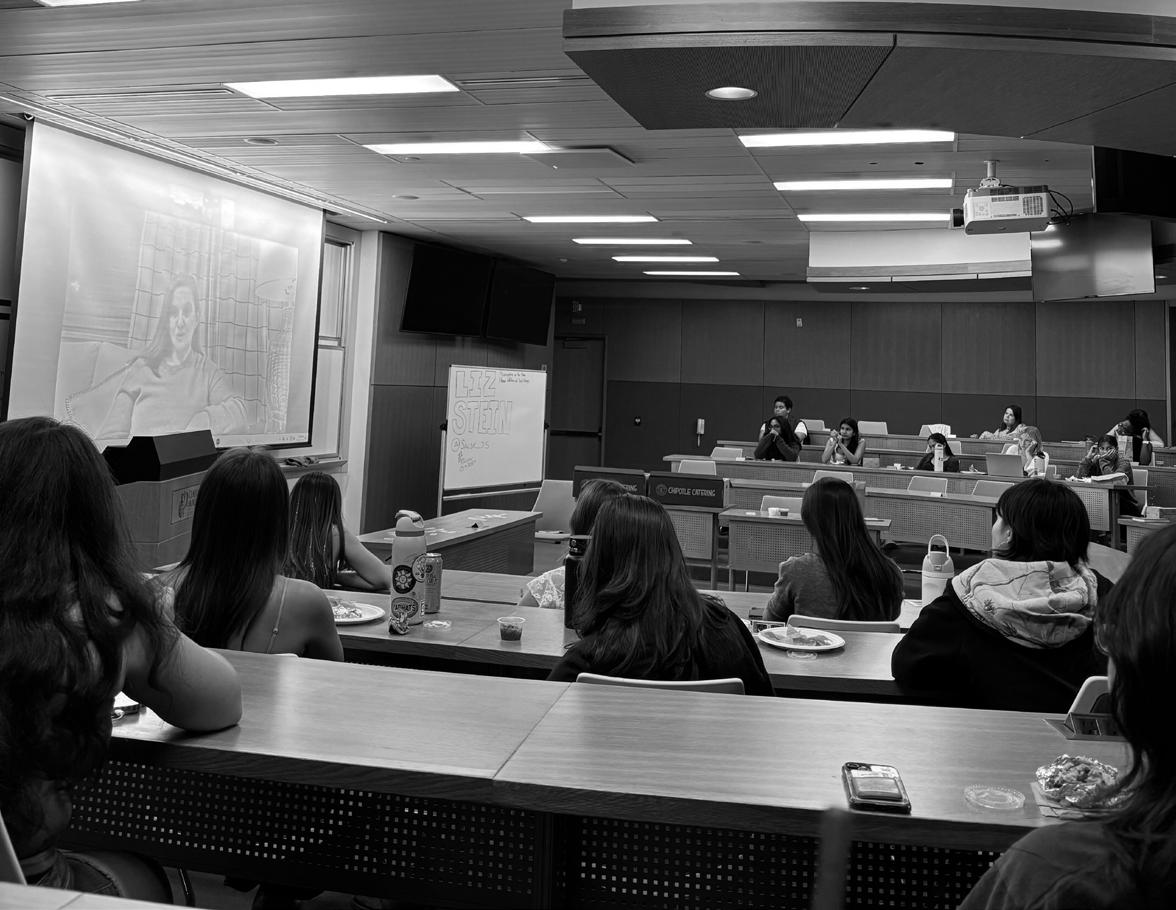
advocate, educator, speaker anding, spoke to 5C students over organized by the Students Against (SACSE), a 5C organization based through the Claremont McKenna
violence. According to Vivienne Arndt was important to the group thates that have gained mainstream media coverage, including those “Diddy” Combs. Stein recently spoke in Washington, D.C. about what it would mean to survivors to have the
something that President Donald Trump had promised to do during through on.
Having Stein speak at the 5Cs
zation, especially since she’s been and we thought that she would be such a valuable voice to bring to our campus,” Arndt said. She added that in initial conversations with Stein at the event, Stein emphasized how important it is to reach college-age students beyond those who are already adAccording to Stein, there are a like, and these misconceptions are speaking to students, she acknowledged that she didn’t understand -
“I had all these misconceptions about who it happened
to and what it looked like, so it
were telling me that it happened, but they weren’t telling me what it was. I was shocked to learn how it does not discriminate against class or race or socioeconomic status, it can legitimately happen to anyone and it happens in ways that you just
For Annabelle Wonder SC ’29,
“It counteracts the narrative put
is someone who has monetary power over you, emotional power over you. They’re usually someone you know and Liz was even talking
For Miriam Akhmetshin SC ’26,
cording to Stein, the public isn’t well versed in how traumatic events can discredit survivors and label them as unreliable witnesses.
“Even within the topics Advocates more commonly works with,
with these topics,” Akhmetshin said.
During the event, Stein emphaand how it can serve as a catalyst
being politicized right now,” Stein said. “It is not a political issue. I think that people are not unproblem is. They are hearing sound
disbelieved.”
When asked what students
causes. “Find out what’s going on in that you can show up,” Stein said. Are there representatives you can
Claremont, because I know we’re a very active conglomerate,” Wonder said. “Our schools have people that want to go into law, that want to advocate, that want to do all this world. We need to understand the in that conversation.”
Claremont, CA 91711
Monday-Friday 9 a.m. to 5 p.m.
Scripps Advocates
Pomona Advocates 24/7 Hotline
CMC Advocates 24/7 Hotline (909) 616-5556
SNAP FREEZE: 5C students organize food
Continued from page 1
distribution working group repreJustice club, which has been working to increase distribution both on and “With SNAP cuts, we ramped building,” Thibodeau said.
5C Environmental Justice part-
school events and deliver it to the area three times a week.
resources, and I think that we have both a responsibility and the ability to really support our neighbors and our community members,”
Thibodeau said.
Thibodeau is also working to ensure 5C students on SNAP distributions on campus, including
The talk came three days prior documents to the public regarding included communications about President Trump that allege he spent time in Epstein’s house with schools to be making sure there is
The initiative on campus hasmona by 5C Environmental Justice. Thibodeau has been in contact with Thibodeau said. “I’ve been working
Gonzalez Stoermer said that sheaid that are working together to
The Pomona Communityles Community Fridge Network,
“It is our hope that we can large distribution days,” Kyles said. organization; however, in June, when a change in leadership ocas co-coordinators. “The changeover happened as could not leave their homes or
inability to work,” Kyles said.“With the support, resources and guidancebutions.”
Kyles said that it is the collaboration with community members and possible and keeps an essential piece the community bodega, the susteprogramming and education, and volunteers who genuinely care about Urban Farm a much needed and cherished place,” she said.
Continued from page 1
ucts, not student groups.
nan Field House, and Stacey Miller,spondence with TSL that Scripps provides menstrual products in locations such as the Tiernan wellness room and restrooms, the Scripps Student Union, TCCS Health Education Outreach, Honnold Mudd Library and the Scripps Store. “Scripps, especially its health and -
ing groups/departments, recognizesgiene products and wants to ensure that people have access to this very basic need,” they wrote. Miller and Gisvold said that while other locations contain vending machines that require payment. such as those located in Tiernan, we so limited resources reach those who need them due to hardship, circumstance/emergency,” the statement read. Akhmetshin said that this issue
Corrections: Issue 7 & 8
schools utilize multiple campuses daily.
though all are doing better than Scripps,” she said. Gaskell said that the responsibilto students should be considered by administration with attention and care.
that their needs are being recogshe said.
Aashita Singh SC ’29 said she has
rooms in the humanities building
In Issue 7, an article on Scripps Advocates strengthening ties across the 5Cs included three errors.
and in other classroom areas. Considering Scripps is a historically women’s college, Singh said that they believe the administration should make menstrual products more readily available.
people that need menstrual products, you’re going to have to make that a priority,” Singh said. Singh said that she and many campus.
unacceptable,” they said.
Gaskell said that she hopes to see more administrative transparency responsibility to the school were declined by administration. and hearing about student need, and distributing products throughout campus,” Akhmetshin said. In creating this campaign, students -
Gaskell said.
COURTESY: VIVIENNE ARNDT Liz Stein, an anti-trafcking advocate, educator, speaker and survivor of Jefrey Epstein and Ghislaine Maxwell’s sex trafcking, spoke to 5C students over Zoom on Nov. 10.
ALI MERZ
The EmPOWER Center
2026 Grammy nominations — surprises, snubs and reactions
On Nov. 7, The Recording Academy released its nominations for the 68th annual Grammy Awards, sparking reactions of awe, disdain and excitement in anticipation of the awards ceremony on Feb. 1, 2026.
As I begin my review of the nominations, to avoid possible confusion, it is worth noting that the awards for Record of the Year and Song of the Year are two different categories. While Record of the Year honors recordings that represent an “overall achievement”’” with special regard to performance, production and engineering, Song of the Year is specifically concerned with songwriting and lyrics.
Starting with one of two of the most important categories, the Record of the Year nominees are:
“DtMF”(Bad Bunny), “Manchild” (Sabrina Carpenter), “Abracadabra” (Lady Gaga) “Anxiety” (Doechii), “WILDFLOWER” (Billie Eilish), “luther” (Kendrick Lamar featuring SZA), “APT” (Rosé featuring Bruno Mars) and “The Subway” (Chappell Roan).
The Song of the Year category has the same contenders, only exchanging “The Subway” for “Golden” by the fictional band HUNTR/X from Netflix’s mostwatched animated film ever, “KPop Demon Hunters.” Funny twist there. The fact that a band that does not even exist in real life was nominated for Song of the Year excellently captures the cultural landscape we live in during this digital era, where boundaries between what’s real and imaginary are blurry.
Nominated for both Record and Song of the Year, Billie Eilish’s “Wildflower” feels more like a nod to her fans who felt she was robbed in last year’s Grammy ceremony, after receiving no awards for her masterpiece album “Hit Me Hard and Soft.”
However, despite the song’s soul-stirring composition and the artist’s poignant vocals, I doubt anyone would consider “Wildflower” to have been the “Song of 2025.” Although it was released as a single within the eligibility period, it did not reach any higher position in the charts than #17 on the U.S. Billboard Hot 10 when it was released last year and is not representative of this year’s musical landscape.
Conversely, “Luther,” by Kendrick Lamar featuring SZA, was arguably one of the best songs released during the eligibility period. It’s well-crafted, sonically and emotionally compelling and a symbiotic collaboration between the two artists. It deserves to take home a statue, especially Record of the Year, for its professional blend of classical and contemporary sounds and the creative sampling of Luther Vandross and Cheryl Lynn’s “If This World Were Mine.” For its vulnerable lyrics, I would award Bad Bunny’s “DtMF” Song of the Year, making “DtMF” the first Spanish-language song ever to win this category.
Moving on, I have issues with the single “Abracadabra” truly deserving Record and Song of the Year. No one will remember “Abracadabra” as part of this year’s highlights. The song added another powerful dance track to Lady Gaga’s repertoire instead of offering a distinctive artistic statement. Additionally, as another refutable nominee, “Anxiety” by Doechii feels more like a remix of Gotye’s 2011 “Somebody That I Used To Know” more than a sample with its hackneyed lyrics. Here comes my biggest grudge with the announcements: how in the world was “Anxiety” nominated over Sombr’s “Back to Friends?” “Back to Friends” broke records as a chart-topping alternative rock track, and it was written and produced solely by him. It’s insane to me that his only nomination was for Best New Artist.
This category awards artists who made a “breakthrough into the public consciousness and notably impacted the musical landscape.” Although Sombr unquestionably deserved to appear as a nominee, this doesn’t feel enough —– at the very least, he should have earned nominations for Best Alternative Music Performance or Album.
This striking absence is reminiscent of Benson Boone only appearing in the “Best New Artist” category last year, despite having the most-streamed song of the year, “Beautiful Things.”
A similar case occurs with the Billboard’s #1 Global Song of the Summer, the ballad “Ordinary” by Alex Warren, failed to earn nominations in any category.
However, at least both Sombr and Warren had better luck than Raven Lenae. Despite achieving fifth#5 on the Billboard Hot 100 with her hit “Love Me Not,” Lenae was not even nominated for Best New Artist. I don’t get how “Love Me Not” is on neither the Song or Record of the Year list, being no worse than most nominees. Even so, was it really that difficult to nominate her in any R&B category?
The Album of the Year nominees are: “Mayhem” (Lady Gaga), “DeBÎ TiRaR MáS FOToS” (Bad Bunny), “Swag” (Justin Bieber), “Man’s Best Friend” (Sabrina Carpenter), “GNX” (Kendrick Lamar), and the barely known “Chromakopia” (Ty -
ler, The Creator), “Let God Sort Em Out” (Clipse, Pusha T & Malice) and “Mutt” (Leon Thomas).
One of the big surprises was Tate McRae’s lack of nominations: her only nomination was for Dance Pop Recording for her song “Just Keep Watching” from the “F1: The Movie” soundtrack. There were no nominations for ““So Close To What”” or any of its singles.
Earlier this year, I expressed that I did not hope for McRae’s “Sports Car” to win any Grammys, and it’s fair that the song wasn’t nominated. However, the album’s cohesiveness and overall production made “So Close To What” worthy of at least earning a nomination for Best Pop Vocal Album.
The fact that she did not have any other nominations may have been a misstep from her team, who should have promoted “Just Keep Watching” for Record of the Year, which would have stood better chances, especially after earning MTV’s Song of the Summer at the VMAs, and for its superior lyrics compared to “Sports Car.”
PinkPantheress’ “Illegal” was also nominated for Best Dance Pop Recording. It is great to see the Academy honoring PinkPantheress’ single and mixtape “Fancy That” for Best Dance/Electronic Album.
The Weeknd wasn’t nominated this year for his album “Hurry Up Tomorrow,” and maybe it didn’t deserve to be. It may strike some as a surprise after last year’s “reconciliation” with the Academy, but the album’s merit lies more in being The Weeknd’s eulogy to rest in peace than in highlighting him creatively or commercially.
However, the album’s lead single, “Timeless,” featuring Playboy Carti, was not nominated for Record of the Year, Best Pop Duo/Group Performance or any R&B categories. Though this doesn’t strike me as unfair, The Weeknd shared his opinions of the validity of nominations back in 2020, claiming: “The Grammys remain corrupt. You owe me, my fans and the industry transparency.” Despite changes in the voting process and his unexpected re-engagement with the Academy last year, maybe he was right all along. In any case, even if the most prominent songs of a certain year are missing, the awards will still be widely considered the most esteemed in music. Overall, we have an interesting list of current nominees, filled with original rap and Latin music entries, and I’m looking forward to watching what artists finally take gramophones home.
Tomy Helman PO ’28 is a music columnist from Argentina, interested in media, culture and politics. His Duolingo streak is over 1700 days.
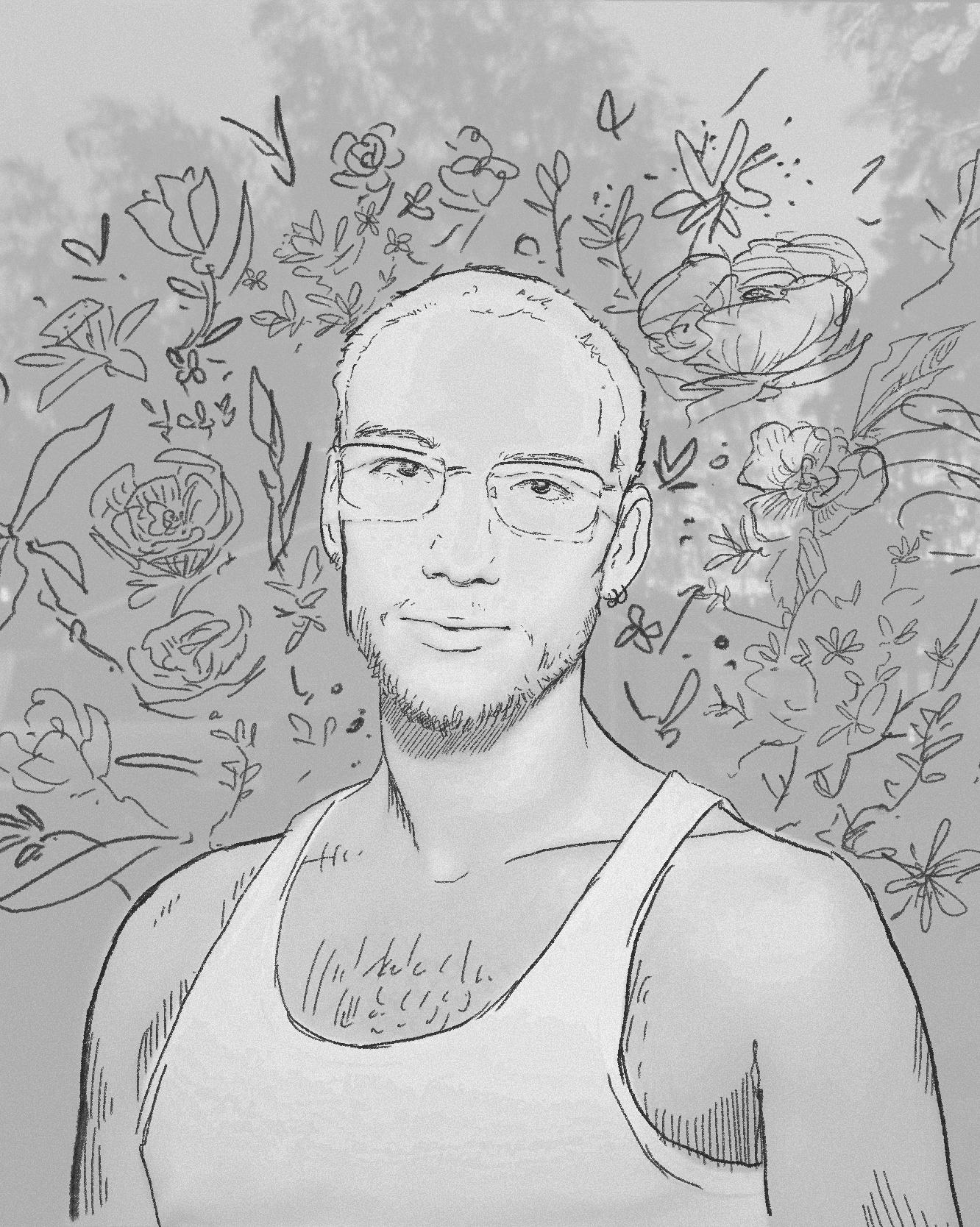
Sketches of the people who make up my life
ALISON BARRERA
In the real world, we might be strangers now — once close friends or friends in passing — but in my dreams, we still hangout like nothing ever changed. Last night, I saw someone who I haven’t spoken to in six years. I didn’t run into them at the grocery store or at the gym, I ran into them at an airport built up in my imagination. This airport had floors that were a blue-gray patterned carpet tile with stripes. The AC was blasting and I felt the hairs on my arm prick up. I was standing at my gate and I felt isolated. I was scared. Despite being surrounded by my friends, there was something scary about change. Change that felt imminent. But as this fear creeped up on me, childhood faces began to pop up, and my fear dissolved into joy. It was as if the universe had heard my small calling for borrowed minutes of the past.
I was pleasantly surprised to see my old friends and familiar faces from fifth grade at the gate across from me. In an attempt to capture my feelings, I quickly jotted down anything I could recall in my notes app on Aug. 4, 2021.
“His face lit up. He was so, so happy to see me. And I was so happy to see all of them.”
Even though this note is over four years old, I still remember how I felt. I was happy to have been remembered. To have been seen. To have been a part of someone’s story. But what I think caught me off guard — and surrounded me with a sense of safety — was the reminder of who I used to be when we were friends.
I was one of many in the crowd of five-foot-fifth graders who were playing bay-blade, watching Attack on Titan and drinking an abundance of milk cartons during lunch.
In these memories I find nostalgia in our innocence, in growing up and figuring out who we were. Whether it was in our school plays, acting, dancing, painting sets or in choir, we were all figuring out our passions, and in a lot of ways who we wanted to be for the rest of our lives.
Among all of this, in recalling our excitement and fear and hope, I couldn’t help but see pieces of who they were in the present-me.
And I guess that made me think about a quote my friend Dina told me. I’m sure it got a lot of traction on TikTok or Instagram, so there’s a good chance you’ve heard it before. It says something along the lines of:
“We are a mosaic of everyone we’ve ever loved.”
The quote, in a very poetic
way, sums up the idea that people whom you’ve loved — whom you’ve chosen to spend your waking moments with — make up the person you are. And we know this is true, right? I know my little dibujitos of roses come from 10-year-old me watching my dad sketch on invoices when I went to work with him. I know the way I twirl my hair comes from my mom.
Aside from family, I don’t think we give this quote enough weight when we consider the constants in our life. Whether it’s the barista at your coffee shop who knows your order, the same peer you make small talk with at lunch before grabbing a bite or the receptionist at the front desk who greets you every morning.
These people play an important role in our lives. They witness us in the awkward-in-between moments. The moments where we’re still figuring ourselves out. Most of the time, it takes losing that environment — moving away from a community — to realize how much they mattered. And that’s what my dream told me. These familiar faces that I saw at the airport — whether we had been acquaintances or close friends — belonged to a version of me I thought I outgrew. The chubby 10-year-old girl with an extreme side part and a notebook full of anime drawings who sat at the cobalt-blue lunch table everyday for fifth-grade lunch. The girl who was so excited for what the world had to hold — for what she could create. She still lives on, even after stretch marks and acne and a non-existent growth spurt. So these dreams act as a remembrance of her awkward-in-between moments and those of her surrounding her. And maybe that’s the comforting part. Even when relationships end, whether we’re leaving schools, moving cities or countries, the pieces of everyone we’ve met don’t get left, scattered everywhere. They arrange themselves into a masterpiece of who we are. And this mosaic keeps building on. Building a version of you that has pieces of everyone you’ve ever loved.
Alison Barrera PO ’29 has an obsession with drawing things on her face. Something about face paint on a random day with water-activated eyeliner brings her joy like never before. Flowers, stars, hearts, even dots. Even though she painted it on, she still forgets she’s wearing it.
Social media malignance: Why do I keep stalking my own Instagram page?
“Guys, I made my Instagram casual, and it’s so freeing” is the biggest lie I’ve ever told. With copious unfinished assignments sitting in front of me amid a looming middle-of-thenight deadline, I reach for my obnoxiously broken iPhone 14… I open Instagram, my philtrum already moist from the incessant toddler-esque lipping of my septum ring. As I tap on my own profile, I realize that I am literally ignoring my friends’ content to stare at my own feed, swiping through my own posts for the 32nd time since I originally posted them. My Instagram is casual in the sense that I post far too much and my standards for what is postable have become far too low. Yet, my need to post basically every maniacally saturated, miraculously in-focus photo I manage to take is anything but casual –– it is intensely deep and committed.
My obsession with self-projection on my Instagram page stems from a desire to be seen and known in my preferred way, a desire that is not conducive to any of the true social joys in life. I have to grapple with the fact that I am lost without my digital emo-flagging and neo-butch-mogging. The stimulation I find in obsessively staring at my own photos is probably similar to that found
by babies when they watch Cocomelon. If you did a PET scan on my brain as I scroll, it would reveal a red more severe than the communist-pride colored (PRODUCT)RED iPhone I hold in my hand at all times. Why do I do this? Perhaps it is because the photos curated by my underground yet deeply culturally influential alter-ego, @celestecariker, exude an excessive heat comparable to that of the climate crisis. For as winter approaches and my singular pair of frail crotch-snagged jeans make their seasonal comeback, everyone must be able to figure out that I, very awesomely, have a knee tattoo when they inevitably stalk my Instagram page and click through to the 39th picture on my “me” highlight.
I am quick to assume, because of my own lived experience, that the true cause of this compulsive relationship is a more neurotic and malignant personal fault that I am unwilling to confront. I am possibly the worst influence when it comes to the actual praxis of foregoing my social media presence. But I am not a narcissistic person. In fact I’d rather go completely unnoticed in a room, and I have trouble feeling comfortable in situations where other people are acknowledging something positive about me. Yet, the way I use Instagram
is one of the most narcissistic things ever.
I think the real problem is not my personal narcissism, but rather that we have all been deceived into thinking that the internet gives us an opportunity to control how we are perceived by others. In reality, this is completely contrary to the human condition.
Instagram, as a disembodied form of self-expression, gives us the opportunity to present ideals. Seemingly, we have all become personal propagandists, hyperfixated on a presentation of ourselves that holds little substance. Personally, I was never the type of person to curate a social media personality. I didn’t even have social media up until the COVID-19 pandemic essentially mandated it in order to supplement social interaction. As the world politically disintegrates and systemic ills become ever more frustrating, our generation must detach from the faux identities that we have built on the web in favor of finding true, messy connections that emotionally recharge us.
In thinking about past experiences where I knew someone’s Instagram before I knew them, or got to know someone and then connected with them through the app later on, it became clear to me that no one’s ever truly swayed me with their
social media presence. I’ve come to realize that the things that I tend to fall in love with about people are the things left off Instagram. A person’s profile fails to tell you what they spend the most time contemplating, who they care about most in this world or how charming they can be. And, unfortunately, when people do share these things on the web, we have been socialized to find it cringe-worthy or “too much” for the shallow social media culture that we’ve curated. We have become obsessed with presenting only a surface-level perspective of ourselves left for anyone and their mom to make half-baked judgments about who we are. Why are we increasingly resistant to being known by others in a more meaningful way?
This outlet we’ve grown up with that allows us to present a “perfect” version of ourselves seems to have trained us to be profusely apologetic about the less-polished qualities that allow us to be known by others. The modern realm of social media has morphed into this strange narcissistic digital microcosm, where anxiety-induced vanity takes precedence despite holding no relevance in the physical world. We suppress our desire to be known because of this internal -
ized neurosis that comes from the incessant curation of our perfect digital personalities. At the end of the day, I will always love Instagram. It does make me feel more connected to a lot of people, especially as a college student who has loved ones to keep in touch with across the world. But I think this recognition of the negative way in which social media trains us should serve as a reminder in the back of our minds to live in the physical world more unapologetically. In my recent development to become okay with and even proud of my quirks, I’ve felt a lot more known in a way that grounds me in my existence when I need it the most.
Celeste Cariker PZ ’28 loves Instagram and friendship even more so and promises she isn’t as crazy as her verbiage may suggest in this article.
TOMY HELMAN
CELESTE CARIKER
SHIXIAO YU • THE STUDENT LIFE
NERGIS ALBOSHEBAH • THE STUDENT LIFE
CMC first-year class president Zoey Marzo finds meaning in every hello
you accept this position?’ And I was like, ‘Oh my goodness, yes.’”
by her friends, magazine clippings and glue sticks, Marzo described how the chaos of the moment is precisely what made it so memorable.
“I was just in so much shock,”
she said. “But I truly felt the depth of having this community behind me.”
she was thinking of running, her new friends didn’t hesitate to social media posts, spread the word to their classmates and
a solo one.
“It was super rewarding to see that these people who had basically just met me were so accepting of me to be representa-
to campaign for Claremont McKenna College’s first-year class president, Zoey Marzo CM ’29 was cutting out words like ‘success’ and ‘happiness,’ when the call came.
“I genuinely think I manifested [these words] on the paper, I got She’s like, ‘Hi Zoey, you won. Do
she said. For Sora Sohn CM ’29, the and community builder, it felt natural to support Marzo’s candidacy.
pable of leadership,” Sohn said.
“She’s strategic, well-spoken and has a strong sense of humor to
Long before we came up with the ‘it girl’ phrase, the internet had the ultimate older sister of our generation: posting YouTube vlogs where clothes, drink too much cold brew at 17 was actually normal.
The fashion icon and Met Gala regular Emma Chamberlain didn’t start out trying to be any of those things. She was simply a teenager
never clean and her closet was always
Marzo attributed much of her successful campaign to her friends and peers. She has decided to prioritize community support and connectivity in herdent: the First-Year Frat, a CMC
“Everyone was talking to people they never would have, and being able to help build that, along with my cabinet and all the other people that helped, was just
Sohn isn’t the only person who’s thrown their enthusiastic support behind Marzo –– everyone on CMC’s campus has at least one Marzo story.
Maybe she stopped you outside The Hub to ask about your economics midterm. Perhaps she pulled you into a conversation at Collins Dining Hall over lunch, or waved from across Flamson Plaza, calling your name before you even noticed her.
“I have to work time into my schedule for like an extra 10 minutes of my walk to class,” Marzo said. “Knowing that I’m going to bump into someone that I can’t stop talking to.”
Marzo moves through campus like she’s tuned to its frequency. Mirroring the quick, conver -
sational energy of the people
she represents, she’s never still, always orbiting others. It’s that same pulse that pulled her to this campus because it matched her own rhythm of constant motion and connection.
“Zoey represents the personality of the CMC Class of 2029 through her drive, her goals and her ability to bring people together,” Sohn said. “She feels like a leader who can touch ground on all topics and interests.”
To address the ideas and concerns of each one of her classmates, one of Marzo’s priorities
With every new first-year is formed. It is, however, up to the current president to envision the individual roles and recruit members.
Instead of initially assigning deliberately chose to let each member of her cabinet exercise agency and creativity in shaping their team’s mission.
can have that initial step,” she said, “but they have to have all these other people backing them, helping and supporting and
e mma Chamberlain, the anti-influencer who influenced everything
created something raw enough to feel private in a public space. I started watching Emma Chamberlain in middle school, when I didn’t really know what to do with all the hours I spent online.
LA, sometimes hanging out in San Francisco, laughing at things that weren’t really funny but felt true anyway. Nothing about her life what mine could be if I just had the nerve to record it.
The thrift stores, the caffeine highs, the blurry friendships — it all felt like a version of girlhood that it was. That’s what kept me watching. Not the plot, not the people around her. Just the sense that she the way we all were. Her unique fashion sense was a plus, too.
Though her YouTube channel was created in 2016, when Chamberlain felt dissatisfied with her high school life, it wasn’t until a year later — when she posted a ‘Dollar Tree Store haul’ that went viral overnight — that she became more than just another teen tryingtered, perfected content we saw in the early 2010s, Emma was chaotic, awkward and refreshingly unpolished. Chamberlain succeeded in making people feel comfortable online — something that was extremely rare at the time.
Emma’s honesty drove her popularity. Not performative vulnerability or curated relatability, but ac-
made content out of not having it together. Watching Emma didn’t feel like being taught something or being sold something. It felt like talking to a friend who validated my feelings, understood what I was going through and made me
That kind of honesty is hard to fake and even harder to scale. But Emma never tried to optimize her personality for the algorithm. She built trust instead. She earned her fans’ loyalty by showing up exactly as she was. Her videos had this twitchy rhythm that mirrored the inner monologue of an overstimulated teenager. Every zoom-in, every awkward pause felt like a signal to viewers that she was actually like them, not just pretending to be. Within months, she gained hundreds of thousands of subscribers. By mid-2019, at just 18 years old, Emma’s channel had exploded to over eight million subscribers in under two years, making it one of the fastest-growing in the United States What followed was the wave of collabs with other major YouTubers, most notably the Dolan Twins and James Charles, with whom she created “the Sister Squad.” This friend group only accelerated her reach.
Even in that group, Chamberlain stood out. You’d see her making fun of herself, not being afraid to show the world she wasn’t perfect. It was an ideal match for a generation that was collectively tired of pretending. She was, in essence, the anti-brand who became a brand. Somewhere along the way, Chamberlain stopped being just a YouTuber and became a blueprint not just for how to edit, dress or talk to a camera, but for how to exist on the internet without disappearing into it. And she got and the face of Cartier. In the span of two years, Emma Chamberlain had transformed from an ordinary teen vlogger into the poster child of Today, she has inarguably become a taste-maker for Gen Z style and internet culture. Early on, fansly cool fashion sense. She’d appear jeans, oversized teddy-bear jackets, scrunchies and funky sunglasses, sparking viral trends around each item. In fact, many staple looks of the late-2010s teen scene trace credited as “the original VSCO girl” for popularizing that casual, 90s-inspired aesthetic before it went mainstream. Emma didn’t just wear clothes, she made people care about the story behind them.
bringing in new ideas.”
This perspective also extends of how collaboration takes place within her team.
“At the end of the day, the best way to communicate with people is in person,” she said. “We meet every week and I hear ideas and concerns that never would have occurred to me, but that our general class is coming up with.” include the perspective of every member of her class have deeply resonated with many of her peers, ’29.
“She’s always open to people’s ideas and asking for feedback,” Shamia said. “You can tell she really cares about representing everyone’s ideas, not just her own. I love that her cabinet includes so many much she values collaboration.”
Marzo insists that it’s really thenesses this vibrant energy.
“We’re excited for everything,” Marzo said. “Academics, sports, socially and emotionally. We’re hungry for all of it.” Her job, as she sees it, is to keep that energy alive. To turn the hunger for belonging into a true sentiment of home at CMC.
Yet, the most compelling part of Emma Chamberlain’s rise isn’t just how massive her following is –– it’s how unusually loyal and emotionally invested her fans are. This wasn’t the typical influencer-fan relationship built on envy or aspiration. Emma’s followers didn’t want her lifestyle so much as they wanted to feel like they were living alongside her. Her fandom is built on a sense of proximity, of growing up together. Watching Emma wasn’t about being wowed by her — it was about being seen by her, even when she didn’t know you existed. That’s what makes her fanbase stick. They weren’t just watching to made people feel like they had to be to be worth something. That kind of emotional connection builds a fandom that doesn’t fade when trends do. In the end, in a world that keeps asking us to be filtered and sure of ourselves, Emma Chamberlain reminded us that it’s okay to just be figuring it out. And really, what’s
Bianca Mirica PO ’29 believes in three novels like sacred objects, gangster movies like moral philosophy, and suspects her bookshelf is one bad purchase away from collapse.
A 50-year quest towards gravitational waves with Nobel Laureate Kip Thorne
ANANYA VINAY
Before he helped Christopher Nolan visualize black holes on the silver screen, Kip Thorne was already living -
tions to describe the universe itself.
On Nov. 2, the Nobel Laureate took the stage at Harvey Mudd College’s Galileo Auditorium to recount his 50 year odyssey of making gravitational wave astronomy a reality. Thorne’s work blurs the line between science and imagination –– as a physicist, he has done everything from establishing the Laser Interferometer Gravitational Wave Observatory (LIGO) to helping Christopher Nolan make “Interstellar” one of the most scientifically accurate movies of all time.
In 2017, Thorne received the Nobel Prize in Physics for his work with the direct observation of gravitationalviously taught at Caltech, and has authored various books that have inspired generations of aspiring physicists, such as “The Science of Interstellar” and “Black Holes and Time Warps.”
The audience, which was composed primarily of physics students and scientists across the 5Cs, brought along their editions of Thorne’s “Gravitation” textbook to be autographed. For many, this event was a chance to meet a personal hero and put a face to the name that they’ve studied in class.
“When you’re in lectures, you things came about, but you hear the after-the-fact version after we’ve figured out how to tell the story,” attendee Mithra Karamchedu HM ‘26 said. “It’s really cool to hear it from
the source.”
Thorne’s talk, titled “My Half Century Quest, with a Thousand Colleagues, to Create Gravitational Wave Astronomy,” is part of Harvey Mudd’s 2025 Bruce J. Nelson Distinguished Speaker Series. Thorne is one of two speakers invited to campus this fall as part of the series’ mission to explore innovation at the intersection of STEM, space and human possibility. In September, the series hosted astronaut Jose Hernandez.
The organizers, Daniel Tamayo, physics professor at Harvey Mudd, on what an amazing stroke of luck it was to host Thorne as a speaker. They underscored how Thorne’sof long-term work.
“To put it mildly, measuring gravitational waves is such a big accomplishment in the physics world, especially when it comes to measuring it in space,” Tsai said. “I hope the audience is inspired that you can really do ultimately anything and have these grandiose projects, whether it be a movie or pioneering misunderstood.”
Thorne began his exploration of gravitational waves as a graduate student at Princeton University in 1962, where he studied the warping of space and time in general with physics began long before that, when he was just a curious teenager.
“I fell in love with astronomy and I learned from this book by George Gamow that there are laws of physics that control the universe,” Thorne said. “That among the laws of phys-
ics are these [places] where gravity arises from a curvature of space time, or walking in space time. And that whole idea was just so neat.”
At the beginning of his talk, Thorne attempted to explain the concept of a black hole through an analogy of a blind ant crawling down a warped rubber sheet. When the rubber sheet is bent very out of shape, it creates another dimension where general relativity fails and time slows down.
Inspired by this concept, Thorne’stional wave astronomy, similar to Galileo Galilei’s discovery of electromagnetic astronomy.
Gravitational waves astronomy allows us to discover more about the early universe and detect signals from black holes, supernovas and neutron stars. In order to do this, Thorne and his colleagues had to drastically innovate existing interinstrument that measures waves.
However, this process was long and fraught. At a crossroads, Thorne decided to fully commit to his vision and began basic research in 1976.
Before Thorne’s scholarship, the technology was not sensitive enough to detect anything about the dark universe. After years of research, he and his colleagues successfully made the interferometer a million times more accurate.
Throughout the event, Thorne underscored the value of collabo-
sizing that without his “thousand” partners, the project never would Caroline Sorrels HM ’26 appreciated Thorne’s focus on collaboration.
and involved so many scientists all over the world,” Sorrels said. “It helps you see a real life example of how collaboration can bring about really big changes and really big discoveries.”
In his descriptions of their team’s collaborative effort, Thorne explained how they continuously encountered the forever-challenge of scientific research: acquiring funding.
Thorne and his team did years of scientific advocacy and even million dollars to build two advanced interferometers with over 100,000 data channels. This amount of federal funding for a single project is unheard of.
As he described the complex politics of project leadership, many members of the audience laughed at the relatability of this circumstance.ticularly struck by the scale of the project, and appreciated the value of scientific communication that Thorne emphasized.
“Scientific communication to the public is especially important for large-scale fundamental science projects,” Ye said. “Only by helpingcance can these projects continue to receive funding and support.” Thorne first envisioned this project in the 1960s. 50 years later, on Sept. 14, 2015, he and his team detected gravitational waves for the discovery was a product of not onlyical advocacy, but also international collaboration from 1,000 scientists across 16 countries. This discovery also proved the existence of black
holes. By detecting the gravitational waves created by the collision of two black holes, Thorne provided truth to verify centuries of theories proposing their existence..
Since the initial detection, LIGO has recorded over 300 gravitational waves –– including black holes and neutron stars –– and dramatically expanded our understanding of the universe’s most violent phenomena. Towards the end of his talk, Thorne emphasized that there were many moments of doubt throughout this half-century of research. Ultimately, through his persistent and collaborative efforts, his youthful passion for the laws that govern the universe
“[My research partner] Rai Weiss had this feeling of guilt, that he had convinced a huge number of young had still] not [seen] any gravity waves. We spent a billion dollars in taxpayer money,” Thorne said. “So [there was this] sense of profound relief [in 2015]. The younger generation of people who were really essential to pulling it Thorne’s marathon journey to discovering gravitational waves was met with a resounding standing ovation.
BIANCA MIRICA
COURTESY: ZOEY MARZO
COURTESY: KEVIN YE Nobel Laureate Kip Thorne spoke at Harvey M udd College.
BIANCA MIRICA
NERGIS ALBOSHEBAH • THE STUDENT LIFE
Zoey M arzo is Claremont M cKenna College’s first-year class president.
The pursuit of love is embedded in human nature. Although projection of our own desires, we still wish to embrace it as a vulnerable emotion.
We wonder, can love truly be perfect by crossing the restraints of time and life? The laughter during a date, the whisper before bed, the vows in weddings — can the emotion constructed by moments remain unchangeable for eternity?
Junichiro Tanizaki frequently makes me ponder the unique existence of love. His most famous Ai” (A Fool’s Love). A man, wishing to raise an ideal version of his wife, scams a young girl, Naomi, into living with him. However, he gradually becomes the puppet of this femme fatale — jealous of her one-nighters, resentful of her extravagant spending, but so obsessed that he can never live without her teasing and accompaniment.
While reading “Naomi,” I wondered if this was an accurate display of love. Can love truly be established not from emotional connection but lust, possession and vanity? Their unconventional and yet their love is undeniable — a relationship strong enough nature and life.
Another work by Tanizaki,
Pitzer
Shunkin,” seems to construct a similarly bizarre relationship to elaborate on such a perspective on love. It paints a story between Shunkin, a blind musical genius, and Sasuke — Shunkin’s servant, student and lover.
Shunkin’s arrogance and wrath weirdly commit Sasuke as her loyal follower, but also attract violence and revengeures Shunkin, Sasuke chooses to blind himself in order to forever preserve the perfect image of Shunkin in his mind.
At the end of the story, when Shunkin is coming to terms withstrates a strong objection to letting Sasuke see her face.
Why did Shunkin do the exact opposite of what we usually do?
Why did she exclude Sasuke — the only one she could cling to and trust — to care for her?
If readers look back on Shunkin’s life, perhaps such a understand. Sasuke had served as Shunkin’s servant since he was only nine years old. He became her devoted student in music and, most importantly, cared depression as her ardent lover.
In Shunkin’s eyes, Sasuke represents a symbol of respect and admiration that helps build her pride. Sasuke alone constructs the world Shunkin lives in — a stage where she can freely express her talent, bad temper and
Connect
debuts as Pitzer’s first ever tech club
COURTESY: PITZER CONNECT
The challenges of adjusting to already overwhelming –– navigating across other colleges in the consortium stressful.
Pitzer Connect made history this semester by debuting as Pitzer Colmission of bringing together everyone with any level of interest and experi-
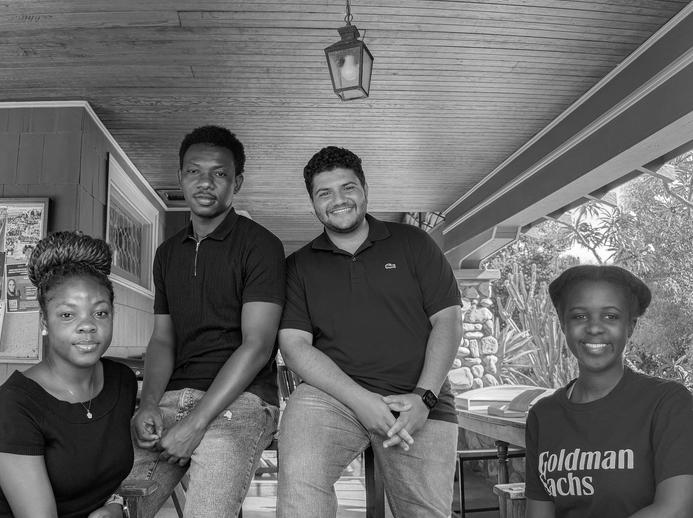
On Friday, Nov. 7, Pitzer Connect year students who are interested in studying computer science and data science. Since Pitzer does not directly do so through other 5C campuses, such as Harvey Mudd College and Claremont McKenna College.
students majoring off-campus in computer science or data science, who now make up the club’s executive team: President Omar Mnfy PZ ’27, Vice President Frederica Aboagye PZ ’28, Cephas Asamoah PZ ’28, Yaw Acquah PZ ’28 and Amen Ikamba PZ ’27. Mnfy described how, when he and his fellow executive team members at the other campuses, they initially struggled to understand how to navigate that process.
“I’m a junior right now, and I’m studying computer science at Harvey Mudd, and there is some nuance to the process, especially as a non-Harvey Mudd student,” Mnfy said. “When I was a freshman, I didn’t know much about the process, and much of it seemed a bit complicated for me.”
This year, pre-registration for spring semester classes at the consortium began on Nov. 11. The founders decided to host this event the week before, providing prospective computer science and data science students with pre-emptive peer guidance on how to organize their course schedules to ensure future success.
To explain the process, the executive team compiled slides that break everything down into easy-to-followdance could understand what it will be like for them and how they can strategically plan their course loads. A variety of Pitzer students majoring off-campus also attended, sharing their experiences and answering any questions.
“[Prospective computer science and data science majors] shouldn’t be wondering what they should do or feel confused about what they are doing,” Asamoah said. “With Pitzer Connect, we serve as a guide to them … teaching them what decisions to make, what classes to take and what
the emotions she conceals. Shunkin has lived in such a stage for too long: She yells at others, bullies Sasuke and thinks of herself as the true master of everyone.
However, suppose Sasuke retracted his tolerance and no In that case, Shunkin would beable to reconcile with her blind-
So she refuses to listen and truly see Sasuke, whose words might, at any second, ruin the respect and admiration that serves as the foundation of Shunkin’s life and personhood. She does not want the pity, which could easily come from any common person, to come out of Sasuke’s mouth — it would destroy her.
If Sasuke were to pity her, he would reduce her to a melancholy woman who stressespearance and past. In this way,
him not as her lover, but as a living representation of devotion
One might consider Shunkin’s logic selfish. But isn’t Sasuke, who blinded himself to preserve the perfect image of Shunkin,
When Sasuke told Shunkin that he had blinded himself, Shunkin “said simply, ‘Is that true, Sasuke?’, and for a long time remained lost in thought.”
But Sasuke can grasp “happiness as those few minutes passed in silence.”
Where does this happiness come from? Perhaps the answer was layered in Shunkin’s silence. There is, apparently, the shocking acceptance of Sasuke’s commitment to her. But such a love is unbearable in reality: He will no longer be able to take he has to learn how to live as a blind man. Yet such concerns are neglected by Sasuke’s fascination that he is now living in the world where Shunkin lives.
In essence, Shunkin is an imaginary possession for Sasuke. Her silence, thus, tells the reader that she realizes this. That her dominance in the relationship is, at best, illusory.
When Sasuke blinds himself, it is not because Shunkin is asit is the imaginary image of the perfect Shunkin that drives Sasuke to do so. Sasuke idealizes Shunkin’s beauty, musical skills and sadistic temper, but doesn’t see her as a complete person.
Shunkin eventually realizes that she is an altar for Sasuke tosuit and desire. He is using her, in a way, just as she uses him — as a projection of pride that sustains her to live as a musician, a teacher and a person.
Is this love? If we regard love and devotion, the relationship
these criteria. If we think of love as a symbiotic relationship, that can certainly summarize this relationship as well. The only question remaining about their love, thus, is the innate morality that made us and void imagination that construct some kind of love, suggested by Tanizaki. Despite its deformed plot and shocking characterizations, such as the apparent pleasure Sasuke receives from pain, Tanizaki did succeed in illuminating a love story that changed my perception of love: one formed when you can stop viewing your lover as a person. And thanks to Tanizaki, these elements are, perhaps, part of the perfect love we are looking for. Leslie Tong PO ’29 is from California. She recently reaffirms her love for Ravel and keeps listening to his Piano
Behind the curtain of ‘A Midsummer Night’s Dream’
When you think of Shakespearean drama, you probably think of
In addition to providing guidance to prospective computer science and data science majors, the club’s leaders are aiming to build a space where people interested in various aspects of working in with each other. This includes students who may not have much but have a lot of curiosity or pas-
“I’m just so glad there’s a club like this where people are able to share the great ideas that they have without having to [think] ‘I need achieve this,’” Aboagye said. “And then they are able to come here and feel like, ‘oh, even though I don’t have a tech background, I have an idea that my tech friend or my tech buddy can implement for the future.’”
According to the executive team, they chose to name the space “Pitzer Connect” to reflect this collaborative mission.
“It’s not called ‘Pitzer Tech Club,’” Mnfy said. “It’s not called ‘Tech Nerds’ or whatever. It’s not called ‘Coding.’ It’s ‘Connect.’ And the reason is [because] it’s to connect folks, whether they have a tech background [or] no tech background … just people who are interested [in tech], whether that be for careers, ideas, building projects or just [being in] a tech community.”
The executive team’s efforts have already made a demonstrable impact on members of the Pitzer student body. Attendee Isalena Amador PZ ’29 explained how she was always interested in majoring in computer science but was unsure about how to do so as a Pitzer student. As a result, she initially felt discouraged in pursuing this aspiration.
“Coming to Pitzer, I thought that I wouldn’t be able to pursue [computer science] anymore, or I knew there was a possibility, but I wasn’t sure how I’d be able to do it,” Amador said. “And so I’ve been taking more classes in other came [to this event] just to see what the possibilities of me being able to pursue that passion would be.”
Despite this initial setback, Amador described how hearing the experiences of students currently majoring in the field has follow in their footsteps.
“The courses I have to take, [like] calculus, and linear algebra and all these other classes actually sound fun to me,” Amador said. “I think if I didn’t come to this [event], I’d be like, ‘oh, I have to take all these math courses.’ But I think just seeing the community here makes me very enthusiastic to get back into STEM and [take] math classes.”
Having already made their mark in the Pitzer community, the Pitzer Connect executive team is planning ahead for the future.
“I’m just super excited to see where the club is going,” Aboagye said. “I really, really hope that we’re able to get where we want to be … [that] Pitzer Connect becomes the next big thing here at the 5Cs.”
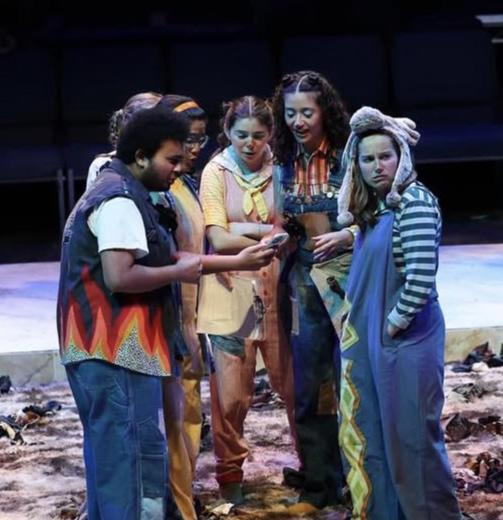
This semester’s 5C production of “A Midsummer Night’s Dream” is a modern, whimsical twist on theconventional props, experimental accents, cross-dressing and other eclectic additions.
This fall, the Pomona College Department of Theatre — which to put on a production of “A Midsummer Night’s Dream,” directed by Pomona theatre lecturer Tim Giles, as one of this semester’s two major shows. The other, existential slasher-comedy “Hookman,” premiered on Oct. 2 at Pomona’s Allen Theatre.
Although many students will only get to experience the final polished product and the jokes that survived, TSL had the opportunity to get exclusive, behind-the-scenes a large-scale, innovative interpretation of Shakespeare’s classic play.
Through interviews and photography, we documented this process from inception to the debut — this piece serves as an opportunity for readers and audience members to take a look behind the curtain at the creative chaos that is “A Midsummer Night’s Dream.”
The actors believe that this Shakespearean play has, in a way, always relied on its cast. As a playwithin-a-play, it naturally acts as a canvas for actors to tap into improvisation and experimentation.
The performance opens with a romantic entanglement between four young Athenians. The mayfollow one another into an enchanted forest. Within the forest, they get caught in the middle of a dispute amongst fairies, suddenly facing mistaken love potions and confusion. Back in Athens, there is a group of unseasoned actors preparing for a play of their own to be shown at a wedding.
For the production’s 19-person cast, these rehearsals were a continuous act of creation. The moments where cast members reached far beyond the script and into the depths of artistic improv.
In this way, the show evolved during each rehearsal, as new jokes were integrated from nothing but the actor’s impulses or intent to make a friend laugh. In this way, the show was half-devised and heavily relied on improvisation.
Many cast members described how the creative process of this production was anything but conventional.
“[Tim Giles, the director,] had us do a run-through on our second rehearsal, but we hadn’t blocked a single thing,” Mabel Weismann SC ’28, who plays Snug the Joiner, said. “We had no idea where the show was going to go, but he wanted to see it on its feet and see what our instincts were.”
Of course, there could not be chaos without routine.
Each rehearsal began with procedure warmups. They were actors to loosen their inhibitions
and surrender to the carefree spirit of improvisation.
Jensen Goldman SC ’26, who plays Hippolyta, recounted a particularly memorable warmup.
“We were playing this game, which is like Red Light, Green Light, but you’re competing with each toy,” Goldman said. “It took so long because we were all really into it. It was super intense, we were yelling at each other and pushing to get this
For many actors, warmups were one of their favorite aspects of these nights. In the absence of precarious lighting cues and blocking, these unscripted moments gave the large cast an opportunity to be silly together and build camaraderie.
“LINE?”
Just three weeks before opening the script as a crutch, actors surrendered to the theatrics and the chaos that ensues when lines are not fully memorized.
“[At this point] everyone’s calling ‘line?’ a lot and everyone’s kind of stumbling over themselves,” Goldman said. “But I think the point, where no one really knows exactly what’s going on, is one of the besturing out things about the show and your character.”
Student actors spoke about how, urged them to let loose and give in to absurdity in a way that felt almost inevitable.
“Something fun that people don’t always grasp is how it’s not even possible to embarrass yourself because you are all in this boat together,” Goldman said.
The week before tech week, thetration and amusement, as everyone worked to be on the same page. their characters and movement, while the potential for an entirely new idea always remained open.
Still, every night looked com-
Anything that the cast suggested, no matter how outrageous, was enthusiastically received by their director.
“We find ways to make these [ideas] material, which has been something really great,” Molly Grace PO ’28, who plays Oberon, said. “It feels welcoming. I’ll be like ‘oh it’d be funny if I hit somebody hammer.” For Jordan Becknell SC ’26, who plays Puck– one of Shakespeare’s most prominent mischief makers–the most rewarding part of the production was that her character went through so many iterations.
Upon watching a Shakespeare play, some may believe that his dependable characters and their actions are set in stone by their fame. In contrast, Becknell spoke to how Puck’s on-stage characterization allowed her to indulge in a mischievous nature and child-like wonder could spin out in any direction. One rehearsal, he’s orbiting Oberon,
“There was a version of me [Puck] in the last scene that was a New Yorker,” Becknell said. “There the fairy, into the child.”
A week’s passing was suddenly made apparent through glued feathers and electric blue eyeshadow, marking the presence of tech week. Instead of running around and tying up loose ends, Stage Manager Mia Giggs-Yew SC ’26 was stationed in the audience, calling cues into a headset. Under the eyes of a handful of students and supportive professors, actors took to the stage with newfound focus.
As each actor slipped into their costumes, jokes and gestures that had seemed bizarre weeks ago suddenly felt natural.
Dress rehearsals reveal something materialized.
“There’s something magical about putting on a costume and feeling completely in character,” Kevin Angel PO ’27, who plays Titania, the queen of fairies, said. “The moment I put on that dress, I thought, ‘Titania wants to be very technical with all the new added elements such as sound, lighting and cues, but there’s this wonderful into this character.”
This feeling was shared across the stage. As the lights warmed the set, scenes that had only existed in fragments suddenly began to weave together.
As the actors darted across the stage, reciting their lines like it was second nature and swiveling set pieces during scene changes, it would have been easy to forget about the nights rehearsals.
The production is a mosaic of these moments, where the cast learned to of their personality. The cast embraces spontaneity and experimentation, making the audience a part of every performance.
“My blazer made me look like a Dorito, but it made us look more clownish,” Kira Barker SC ’26, who plays Hermia, one of the Athenian lovers, said. ”Before, I was taking my character pretty seriously, and then once we had all of the clownish makeup on, I was like ‘Oh, I can really be playful cause these aren’t normal characters.’” one simple message for the audience:
“Do not laugh at us unless you want to,” she said. “Don’t laugh unless we’ve earned it. Do not give us those pity laughs.”
The show will run from Thursday, Nov. 13 to Sunday, Nov. 16. Tickets can be purchased from the Pomona theatre department’s website. Check out tsl.news for additional photos.
JOSEPH WOO CHAN
LESLIE TONG
SHIXIAO YU • THE STUDENT
SARAH ZIFF • THE STUDENT LIFE
AUDREY GREEN
Pitzer Connect debuted as Pitzer College’s first technology club.
It’s time to start enjoying your coffee without a side of homework
It all started when I walked into Coft Coffee House in Chino Hills. I was waiting for some old friends, hoping to catch up and chat before their classes began in late August. I ordered my coconut matcha and sat down, but something felt wrong. I looked around me and saw that everyone was working. Students had their textbooks and highlighters out, had their unreasonably complicated spreadsheets plastered on their unreasonably huge laptops. But I had no backpack. I began to silently freak out: I felt naked. My friends soon arrived, but self-conscious. Everyone at this café
ANSLEY KANG done. But why did I feel guilty about this? When you think about it, cafés are a prime, low-key spot to catch up with friends in a chill atmosphere. But cafés have devolved with our society’s “lock in” culture that has consumed our generation. For the past few years, cafés have been a spot my mind immediately goes to when I think of the place to get work done. However, it wasn’t always like that. If we want to get historical, the Enlightenment was the era in which the concept of the café to exchange ideas and have debates about whatever they liked to talk about in the 18th century. We don’t carry around canes and top hats anymore, but up until the past few years, cafés were still a place to socialize and get involved with
local events and communities. Cafés are no strangers to people trying to get work done, but I miss the sense of invitation to interact with other humans that old café culture used to give me. At the 5Cs, it feels as if everyone is obsessed with productivity. If I startup under my belt, I must be lazy. To furnish this end, cafés are being converted into spaces of work en masse.
grand fog of life that socialization and human interaction is equally as important as hard work. The concept of downtime is disappearing, and places that weren’t meant for work are turning into places that are strictly for work, nourishing our workaholic, burnt-out brains. However, nothing could be more against the original purpose of a café. In the aftermath of COVID’s intense shift towards the digital world, office culture took a turn. Workers were unhappy to give up their newfound work-from-wherever autonomy, and Zoom seemed to be able to replace nearly any in took hold, many places both in and downtowns of many American cities that hosted a majority of offices, and dilapidated downtowns has pushed people towards working
at third spaces like cafés, but since this push, cafés have surrendered their essence in prioritization of the workaholic patronage that has proven to provide reliable business from open to close. There are no longer banquet-style tables for everyone to sit at, and interior layouts have become much more individual in order to maximise focus and productivity. The spaces are packed with as many chairs and tables as possible, while walls. It only takes a simple physical change to make cafés more friendly to socialization once again. The Motley’s stage, for example, is perfect for mingling, guest speakers and live performances. But beyond the need to revitalize cozy café atmospheres, our mindset needs to change when it comes to work and productivity.
The golden age of the café worldCOVID-19, or even at the end of the Enlightenment. Other parts of the world, like Korea and Japan, still have an intense café culture, with options ranging from cafés for even cafés designated for people to study at, literally called study cafés. I don’t feel pressured to work in most Korean cafés.
Much the same is true in places like France without specialized cafés. If every café in America took cues from abroad, and made some time to host small bands or community
events, I think we would all feel more connected and rested.
Cafés can be very good spaces to do work, and the change of environment does help me be more productive when I do decide to go to one for homework. But I think that the value of socialization has been stripped from cafés, and that gives us one fewer place to connect with others face to face.
Social interaction boosts our ability to be more productive when we do need to lock in, and it reminds us that rest and connection is essential to growth. There is a pressure in our society to be the most accomplished person in the world. Furthermore, there is a belief that in order to makething, namely social interaction, to become the next Mark Zuckerberg. But social interaction is something that is undoubtedly essential to success.
Having more opportunities and spaces to interact with others at cafés helps rewire our brain to think about these environments as places that can be both productive and fun places where we can focus but also recharge in order to become even time you’re in a café, be the change we ought to see in the world, push some tables together, and let yourself savor a matcha with friends.
Ansley Kang, SC ‘29 lowkey feels guilty every time she abandons her coconut
We need a serious, caring approach to sexual health
LEVINSON ganization survey of youth in Europe, central Asia and Canada. Sexual health is so important, and it’s too often treated with inaccurate sensationalism and irresponsible punditry. Sex sells, sure — but we deserve a serious, caring approach to sexual health.
In recent weeks, TSL has published opinion pieces bemoaning a lack of condom use by Generation Z and advocating for Gen Z to bring back blood oaths. While it’s clear that the author of these pieces is genuinely concerned for the well-being of our generation, both pieces had serious problems, lacking reliable sources and often glossing over sexual health issues of serious importance. As a student who has spent more than five years advising and participating in sexual health research, I want to take the opportunity to share some information about sexual wellbeing — condoms, blood play and everything in between.
It’s true, as the article on condom use notes, that in recent years more than half of reported cases of the STIs, chlamydia, gonorrhea and syphilis in the United States have been among youth aged 1524. But even for this statistic, like almost all other factual claims in the article, the author fails to provide reliable evidence — instead citing other opinion pieces and even unedited blogs.
The peer-reviewed medical sources that are cited don’t actually support the author’s claims about AIDS, contraception or condoms. The article doesn’t even cite a source to back up its central claim that young people are using condoms less frequently! Evidence is out there, including a widely reported 2022 World Health Or -
TSL’s writers and editors should do better. Rather than playing fast and loose with the evidence to make dubious arguments, we need to equip ourselves and our peers with all of the tools for sexual wellbeing and the education necessary to manage risk in choosing how and when to use them. If we’re able to do this, our sexual health and pleasure will both be better as a result. Maybe our blood oaths will, too.
So let’s look at the research.
The reality is that blaming this sexual health crisis on Gen Z not using condoms enough ignores much of the picture. Health care services are inequitably distribLaws governing young people’s access to testing, treatment and prevention services for HIV and STIs are inconsistent and changing — falling under attack by care. And sex education is in bad shape and actively being undermined, with the national advocacy organization SIECUS
“A” grade for their sex education policies. It is absolutely still worth reminding college students to
use condoms as a way to directly protect ourselves and our lovers. But condom use is a means to an end, not a goal in itself. The goal is sexual health. That means minimizing the transmission of HIV and STIs while maximizing testing and treatment. It means reducing unwanted pregnancy, and maximizing access to reproductive healthcare. And it means all kinds of other things — inclusive and comprehensive education about sex and healthy relationships, realistic and honesting care, etc. Condoms are one tool among many. What are some other tools to make sex as safe and pleasurable as possible? Getting tested regularly for HIV and STIs and sharing recent test results with past and future sexual partners is critically important — free or inexpensive testing is available through Student Health Services (SHS) and at Planned Parenthood in Glendora, accessible by bus. Medications like pre-exposure prophylaxis (PrEP) — taken regularly or before sex — and post-exposure prophylaxis (PEP) — taken after sex — can drastically reduce the risk of HIV infection. DoxyPEP, a dose of antibiotics taken after sex, can do the same for STI infection in emergencies. All three options are available through SHS, Planned Parenthood and the online platform Freddie. Birth control pills and emergency contraception or
“Plan B” are available through SHS, and medication abortion or “Plan C” is available through Planned Parenthood and online platform Aid Access. Alongside condoms, other physical barriers like dental dams and gloves can help prevent STIs by blocking fluid transmission and skin contact in people with all types of bodies and genitalia. All of these are available for free at Health Education Outreach and many other locations across the Claremont Colleges. Where a condom-focused approach might discourage these other tools in the name of encouraging condom use over all else, history shows us a better way. When the HIV/AIDS epidemic devastated the LGBTQIA+ community in the 1980s, community groups advocated for condom use alongside other methods of making sex safer — at the time, this mostly meant having sex inmission. Today we have more tools than ever, and we can follow the example of this lifesaving work by using the whole range of them in our pursuit of safer and more pleasurable sex.
Speaking of bodily fluids, let’s address the blood thing. It is hypocritical to say that condoms are the best and only way to be safe from HIV and STIs, then turn around the next week and argue for the ritual exchange of blood. But just like condomless sex, exchange of blood does
happen, whether accidentally or for ritual or sexual purposes. Aspiring bloodplayers — just like everyone else — should seek testing for STIs and other bloodborne diseases as necessary. And just like everyone else, they should focus on communication, consent and risk management in their practices. When we achieve our goals of sexual health and wellbeing, we won’t know it because of a statistic telling us how many people are wearing condoms. We’ll know it from the dropping rates of HIV infections, STIs and unwanted pregnancies. We’ll know it because our sex and our relationships will be safer, happier and more pleasurable.
Ezra Levinson PZ ’27 takes daily PrEP and gets tested regularly for HIV and STIs. She isn’t going to tell TSL what she has or hasn’t done with blood.
Do you love sneaking into Malott? i have a better alternative
Compared to all the other 5Cs,cantly more for their meals: At Pomona College, on-campus students pay $4,764 a semester for unlimited meals. Even Scripps’ lowest on campus meal plan, 12 meals a week, comes in at $4,827. Meanwhile 16 meals a week is $4,971 a semester at Pitzer College, $4,870 a semester at Harvey Mudd College and $5,171 at Scripps. Claremont McKenna College highest meal plan of 19 meals a week is cheaper than Scripps’ 16 meals a week plan at $5,135 a semester.
Due to these comparatively high meal plan prices, many Scripps students have adopted the practice of
Its extensive outdoor seating options and used dish trays outside both eneasy for students to do so — you just grab a used plate from the tray and walk in like you own the place. plates located inside the dining hall, this has become a widely accepted swipe-free. I too downgraded my meal plan to two meals less than I plan on eating this semester to save plenty of other friends who have done the same. However, it has recently become clear that pressure is being put on workers to crack down on students
causing Scripps to lose money.
Interactions with the cashiers have become a lot more tense during my current third year in comparison workers calling out students for not swiping in this semester, and friends have agreed that there is a growing
followed my friend and yelled at her for walking in with a plate and not swiping, although she had earlier. Later, a worker called out another student and glared at my friend, mentioning that “so many people have not been swiping in” and not believing her when she said she already had.
It can be easy to blame workers, but the financial pressure clearly weighs on students. If Scripps had a cheaper meal plan, students and more trusting environment. But this can only happen if we respect dining hall workers.
Our relationships with Malott workers are more important than we might think. These interactions only occur during meal times, but
States education system is built on an outdated and deceptive meritocratic ideology that instills the belief in American children from a young age that with hard work, you will succeed. Through this meritocratic lens, us Scripps students who are completing a four-year degree are subconsciously socially conditioned
to see ourselves as more successful than these dining hall workers. While it might seem like we are at odds with each other, students of trying to succeed in this faulty meritocracy. At the end of the day, a shared sense of solidarity and trust would encourage all of us to keep going while supporting each other.serving of our respect than anyone else and we can start by respecting that they have a job to do too. These new worker attitudes are understandable, coming from the internal workings of a dining hall that has ingredients to buy and workers to pay. With the used dish tray outside both entrances, there are simply too many moving parts for workers at the cashier to keep track of. Students need to eat and have budgets to consider, while the dining hall needs to There is a solution that serves both parties: cheaper meal plans. The other Claremont Colleges’ dineven having more food stations, while having cheaper meal plans. The answer to reducing meal costs lies in changing the rules of swiping into the dining halls. The other Claremont College dining halls have indoor seating, so students have to swipe in every time they enter and usually stay in the building for the entire meal period. and re-enter the building at a much higher frequency than other dining halls, due to over half of its seating
options being outside. It makes sense that it might feel tedious to make everyone swipe every single time, but it’s clear that the current system has led to a vicious cycle of students sneaking in which leads to the dining hall losingtudes. The status quo is unsustainable. In order to put an end to this cycle, into the dining hall every time they re-enter. Students can reswipe during the same meal period, so even if they are clearing their plates or getting more food, it wouldn’t count as a new swipe. With the number of people sneakhall would lose less money and should consequently be able to lower the price of the meal plan. We’ve seen this model work at the other Claremont Colleges — especially Pomona, where students have unlimited access to din-
And as a result of this swiping model, student worker relations would be improved with newfound trust. With this new policy, there would everyone and we could foster a more trusting dining space. Implementing these reforms would be our way of telling each other that we know how hard making a living can be, yet we’re still rooting for each other and have each others’ best interests in mind. Nicole Teh SC ’27 wrote this policy proposal for class then realized she could send it to admin. She wants feedback on it before doing so.
EZRA
ALISON BARRERA • THE STUDENT LIFE
NERGIS ALBOSHEBAH • THE STUDENT LIFE
NICOLE TEH
Life is a fedora: why I wear fedoras, and why you should too
NICHOLAS STEINMAN
Among the biggest changes I went through as I transferred to Claremont McKenna College this year was adjusting to the school’s much-lauded culture of free ander institutions (which is to say, all of them), scholars at CMC congeal around conversations of radical openness and plurality without suDiscovering this can be uncomfortable for newcomers, who must be brought to reexamine the beliefs they clung to while growing up in the sti-
My own initiation came when a classmate suggested that I give up the part of my identity that I hold dearest — my fedoras — lest he be embarrassed to be seen with me. It was then that my journey began in earnest. To respect myself, I needed to understand myself. I needed to understand the fedora.
I’ve been wearing fedoras dailyrently, I own six, not counting my top hat. I buy most of them secondhand
perhaps it was some kind of cry for by friends who would wear oldtimey hats in costumes or as a joke. I was not aware of the stereotypes about fedora-wearers, which, as a rather online, autistic white man, ways. I was, however, aware that I looked suave wearing one. the heart to tell me what I had done, it was too late. I was already destined
to be a lone champion of the beleaguered hat. The fedora had chosen me — and over time, I’ve accepted it as a part of myself. It makes my days subtly brighter in countless and compliments from bemused passers-by to the immense satisday. The fedora has taught me that it’s okay to try out unusual interests and styles and to cling to things that help us be ourselves, even if they
At times, I wonder whether people slot me into a stereotype more because I wear such a maligned most people have never heard of or fedora-wearing Reddit neckbeard. care. I wear fedoras. -
son not to wear fedoras, other than their unfashionableness. For a low price, they last me years and can be surprisingly water-resistant and durable while still providing shade and glare protection on a hot day. Even a small collection can match
Perhaps not everyone should wear fedoras daily. But the fact that almost no one at the 7Cs ever wears fedoras at all undeniably points to a deeper rot in our institutions’ cultures — and our society as a whole. It’s not like it can’t have occurred to anyone here to don the fedora. People ask to take pictures with them on. Nor, by any means, are fedoras prohibitively expensive or
anyone who will listen.
No. What stops 7C students from picking up fedoras of their own must be fear, the kind of unspeakable fear that we almost never notice because it acts as a kind of mind that we lay down to shield ourselves from fully grasping our profound alienation from our closest friends — that which might be disguised as fear of embarrassment or rejection but which in reality represents our rejection of ourselves, like a self-hatred so deep that we deny ourselves even the prospect of genuine self-expression in wretched, primal terror — terror that we will recoil in disgust when we look in the mirror at night, like a parent rejecting a child, for we have cannibalized every shred of the life our ancestors gave us in our relentoutside world that we can never truly touch. We deny ourselves the fedora.
All seven Claremont Colleges are in some way designed to challenge us to reach beyond these boundaries. Yet something about this place also feels uniquely overwhelming, contributing to this self-denial.
I was grateful to be able to come here as a transfer student, and really, I’d wanted to be here all changed me. The boredom I felt at hikes. Sometimes I’d just lie down on the National Mall for a long time, looking around. Sometimes I hardly talked to anyone outside of
SCAN QR CODE
CAPTION:
what I had intended, but as my time there drew to a close, I was happy. Here, by contrast, there’s always something I want to be doing, and I feel like I’m constantly striving to catch up to my peers. It seems most Claremont students feel this way to some extent, and I worry that this pressure contributes to the struggles that we all experience as young
In this way, even as the bubbling, bustling environment of our colleges stimulates us intellectually, challenges us culturally and propels us professionally, it also pushes don’t always notice, adding up into
The place just didn’t hold that kind of sway over my identity. But I want to succeed here so badly that at times this semester I’ve almost considered it. On the night of the Harvey Mudd College Paint Party, I spentof a white fedora. Finding none, I made the difficult decision to -
Without a fedora, I felt invisible. Nobody seemed to notice in years, I felt like the 5’4 man I
am, being trampled over by giants unaware of my existence. On the way back, I donned the grey fedora acquaintances from CMC recognized me in the dark and asked about my night — and about the fedora. I began to wonder whether I had become dependent on my unusual choice of headwear. Did anyone truly know me, or were they merely acquainted with the object on my head? What would I be without my fedora?
The fedora is a microcosm of a greater issue. One of life’s great imponderable questions is why anyone should keep living if we will all
will be such a drop in the bucket, had we never been born. Even if we acquire great wealth or fame, we are all interchangeable in the face of the vastness of time. However much we believe that our next leadership position, leading to our next internship, leading to our next job, leading to our next grand opportunity, will set us apart, it won’t. This doesn’t bother me much. I am unique. I wear fedoras.
Nicholas Steinman CM ’28 is very special.
The anonymity epidemic rages on
MADELEINE FARR
My TSL coworkers and my friends have heard me say many times: there is an anonymity epidemic at the Claremont Colleges. By this, I mean that students are unreasonably — yes, unreasonably — afraid of providing publications with their own thoughts, opinions and experiences on the record.
too. But people are no longer only inflammatory exposés or political analyses — they’re afraid of putting their name out there at all. However, those of us who still retain a relatively great degree of privilege have a responsibility to exercise our own free speech. Historically, the press has played a crucial role in checking government missteps and holding power to account. There is no more critical time for this than now. Thus, I beg of you: please give that ten minute interview — to me, to TSL, to the Claremont Independent if you must — and put your name on it. I’m intimately familiar with over time. Quick LinkedIn review
I edit for TSL’s news section, anazine and the Outback Newsprint Magazine. I have also reported for multiple other publications both in Claremont and back home in New York. I’ve conducted hundreds
of interviews in my years as an aspiring journalist, and no other moment has compared to the present regarding anonymity requests. People do not want to have their name on any – and I mean any – article.
Interview topics that students have requested anonymity for include, but are not limited to, the Biles’ visit to Scripps, the Robert Day Science Center’s launch ceremony and No Kings Day. Sure, No Kings Day is political, but hardly radical. Donald Trump will not arrest you if you hold up a sarcastic sign at a liberal several of the world’s elite.
The other examples, like scooters and Simone Biles, are even more tenuously risky. Therein may be just as much your right as claiming the First Amendment, but if we don’t feel comfortable sharing our thoughts on such unthreatening topics, how can we possibly expect to maintain dialogue about important systemic issues?
Many people have incredibly valid reasons to request anonymity or protect their identity. The Trump administration is threatening free speech in increasingly overt ways. Students are being deprotedfor inane reasons, from exercising their First Amendment rights to protest to co-writing an opinion piece criticizing their college administration’s response to
Cartoon Caption Winners:
This is all on top of their rampant escalation of ICE operations, which the administration proudly admits are carried out using country are afraid of leaving the house or leaving without their passport, or even speaking Spana local paper is, in cases like these, indubitably out of the question.
But in order for reporters to do their job in representing the communities they write about, we have to talk to people. At TSL, for example, we require a minimum of three interviewees to six. Other publications I’ve worked at employ similar practices. This helps us paint a fair, comprehensive and accurate picture that ideally conveys a multitude of perspectives on a topic. And interviews take interviewees.
The fourth estate is essential to democratic stability and holding powers to account. Without newspapers, people across the world would not have known about Watergate, the Pentagon Papers or systemic abuse in the Catholic Church. The government has consistently demonstrated that they are not willing to tell us everything we need to know to make informed decisions and uphold our civic duties — this has never been more true than right now. Thus, the press occupies an essential role in our democratic landscape.
1st Place: Gabriel Dalton PO ‘25
“Our ornithology prof is eating us alive bro...”
2nd Place: Akshay Seetharam SC’27
“Why did the hairless monkey’s blood make this pattern?”
It is incredibly difficult to report effectively in an environment that discourages open dialogue. Do not mistake me for a Republican with a victim card who thinks they’ll get shot for supporting fiscal conservatism in a class at Claremont McKenna College. However, the omnipresent fear, likely exacerbated one’s name to any words that are not meticulously planned and thought out is a recipe for disaster and is itself dangerous.
But to those of us who still have reason to believe that we possess a modicum of free speech — and yes, things are bad, but most of us do — it is imperative that we continue using our voices. and they mean more to readers
There are people all around the world and indeed in this country whothat are repressed far more than we, the collective Claremont the-record interview to the girl you took an econ class with once for her student newspaper might not seem important, but it’s a step in the right direction.
I would be remiss to not acknowledge that I am writing this regards to retaliation by any Claremont College administration or Trump starts targeting rich white
girls who occasionally report on politics at their tiny liberal arts consortium, I’m safe. Furthermore, it’s true that I have people to go on the record and talk to me as a reporter. It’s my job. I also know that many reporters are, at worst, inconsiderate, aggressive and rude. I can’t do much more than say that all of these things are true — whether I like it or not — and that I am also imploring you to listen to me regardless. However, because of, not despite, the present administration’s should be excited at the opportunity to defy Trump’s agenda of fear and use their voice. You might not change the world, and let’s face it, you probably will be subjected to 30 minutes of questions about shit no one cares about to write an article that no one will read. Nevertheless, your personal conits best, is a voice for the voiceless. Hate the press all you want – just talk to them. Curse them out, if you want to. Just be strong in your convictions and do it on the record. Doing so lays the foundation for the discourse that is the lifeblood of democracy.
Madeleine Farr PZ ‘27 was born and raised in New York City. She loves she herself falls short: To err is human; to forgive is divine.
SHIXIAO YU • THE STUDENT LIFE
ROY SHIN • THE STUDENT LIFE
PJ JAMES • THE STUDENT LIFE
Adrianne & Akshay’s Crossword: Obstruction
“I’m interested.”
Ten years of ‘yes, you can’: How the Hive
creativity across the 5Cs
If you step into the Rick and Susan Sontag Center for Collaborative Creativity (the Hive) on a bright that feels distinct from any other space at the 5Cs. building something from scratch. over the sound of fabric being cut. A new podcast episode drifts out of the Soundbox studio. A few steps for a friend’s game; another group is bending discarded silverware into handmade rings. Perhaps there’s a club meeting in Studio 1 or a class in Studio 2. buzzes with creative activity. Though located on Pomona Col
eryone in the 5C community. Any writer or entrepreneur — can drop from woodworking to audio reserve the Hive’s broader ethos of “help[ing] students increase their creative capacity and practice transform[ing] the way liberal arts education is delivered.” alive. It began as part of Pomona’sity and innovation across campus. Then-President David Oxtoby and a small group of faculty drafted an initiative exploring what might happen if the Claremont Colleges shared a space dedicated entirely toration. That’s how the Hive started.
The space opened in 2015 after a $25 million gift from Rick Sontag HM ’64 and Susan Sontag PO ’64. What had formerly been the Seeley G. Mudd Science Library was supplies and corners turned into beanbag nooks.
ative spirit through a shared home. could collaborate across disciplines and experience hands-on education outside the traditional classroom.
“The Hive began as an exper-
“We wanted a place where students they could learn by doing and not be afraid to fail.”
This unique space unfolded into
wart of the Claremont Colleges Leichter looked back not only at shaped by it.
“What stands out to me most is the kinds of things that students have gone on to do now that we inspiring work as students and
healthcare designers to social inthe Hive was built to do: create confident problem-solvers who lead with empathy.
“Our mission is to be a space that fosters creativity and collabthink of that on three levels.” in and make something. Stu -
collaborating. This collaboration then extends to the second level: the rhythm of workshops and community
“The range is from making a ring out of a piece of silverware to hearing from an entrepreneur about how they did their startup Leichter said.
The Hive’s programming spans the spectrum of curiosity. From Tiny Patio Concerts to startup salons and printmaking something new every time and see what happens when they do it together. This same principle defines the third level of the Hive’s mission: the academic -
“We teach classes in husaid. “It’s actually a Harvey Mudd
ects for real-world organizations or causes and trying to make a thing and put it into the world and see how it works.”
Through Hive-led courses designed new forms of civic participation with the League of to support communities after disasters and reimagined urban design concepts for Los Angeles parks. Each of these initiatives begins the same way — with empathy.
The Hive’s approach to creativity doesn’t tell you what to do. It
many signs hanging around the building read.
“You will also see around the
we say anything else.” the center of the Hive’s philossometimes fail. And that’s perfectly normal.
“The philosophy of giving people permission to fail is also get into these schools by failing very often. But that doesn’t mean you won’t learn even more if you give yourself permission to fail.”
He distilled the Hive’s decadeativity and action.”
“Failure is not a dead end. Fail-
that you can try things that seem
That same sense of possibility that he described — the invitation to say “yes” — lives most clearly and stay. One of them is Salina discovered the Hive late in her college career.
“I didn’t know about the Hive Pomona students.”
That changed after she enrolled in an introductory course in by Design Activism with professor Albert Park.
a great study spot. It was really
Muñoz spends her days shaping how students and faculty through The Buzz newsletter and the Hive’s social media. The she realizes how much existed beneath the surface. -
ized we have this great catalog said. “5C professors teach classes here. We have student creativity provide grant money. We’re focusing a lot on ways to transform student creativity into innovative reality or startups.”
These programs span disciplines and formats: from courses like Design Activism and Global
of Numbers and Community-Engaged Planning for a More Just Public Realm. Others take shapeproduct strategy for early-stage social ventures. Each opportunity gives students the structure and backing to turn their ideas into something real.
The Hive’s impact lies in how it changes students’ perceptions of creativity. She has watched people walk in with no art or design background and walk out surprised at what they can do.
“Sometimes students stay for a class and they change career pathThe accessible structure ofings makes experimentation feel possible — even for those who thought it wasn’t for them.
“Students may feel like there’s she said. “What you thought you a two-hour workshop. It’s that
It’s this openness that keeps the Hive alive. The idea that creativity belongs to everyone is visible in the stories of students changed by the space.
One of them is Sophia Wu PO -
through music and quickly found a second home.
“I’m very passionate about
trained at the Hive on how to use the soundbox. It felt like a really why I really wanted to be there.” She describes the Hive as a overlap. Its mix of studios — the and Soundbox — makes the Hive a vibrant and resourceful place for anyone interested in creativity.
comes something more profound. “A lot of people found their they may not have found communiknow other people.” This community-oriented atmosphere captures what makes the academic spaces on campus. and open in general by the nature and relaxing to whoever wants to be there.”
Hive still hums with that same and starting again. In a world that offers something rarer: a space begins the possibility of something new.
BIANCA MIRICA
Miriam Akhmetshin always delivers
If you’ve been to the Russian Tea Miriam Akhmetshin SC ’26 running a Kahoot or cookie-decorating.
Akhmetshin always delivers on her events –– and she can also help deliver your baby. -
ed her training as a full spectrum doula and a postpartum doula. A doula is a non-medical birth worker during or after a person’s birth. for pain management during labor. interested in this line of work when worst maternal health disparities in the country.
She told me that while not all students pursue the doula paththat often comes up in her conversations at Scripps.
“Not everyone knows what
Akhmetshin said. She explained that Scripps students are already “invested in women’s health” and often consume content where doulas are discussed.
work with Medicaid clients.
“I got into this from a public for other people and being in serthat training as a doula was the next step.”
Being particularly aware of childbirth up to three times as much as white women –– she focuses on giving care based on “radical inclusion” and “cultural humility.”
“Doulas frequently help empower the birthing people to speak Akhmetshin also empowers people to speak out as a co-head of Scripps sexual violence survivors.
“It is by far the most meaningful she said.
tabled at Halloween parties with Ketamine test strips and handed out drink covers at an event encouraging safe partying.
Before discovering public pursuing a career in consulting or investment banking.
to connect the two in her ecoOregon State’s Medicaid coverage
of doulas. “Though I individually believe important to also be able to talk she said.
Akhmetshin is working on a separate thesis about the work largest ethnic minority in Russia.
all multifaceted people with a -
part of her identity that she values deeply. As a liaison for the Pomoto highlight “the multiplicity of the geographical regions covered Akhmetshin organizes the
celebrates the publication of the Russian and Eastern European and Professor Larissa Rudova’s
orate spread of food and drinks –– including traditional Russian candies that can’t be found elsewhere. people together through food.
ten featuring her famous spinach artichoke dip made with Greek made with duck eggs. people’s barriers and makes people more comfortable interacting she said.
Eat, drink, move: Nutritional biology students on the science and culture behind our health
essential to our survival. As food is engrained in so many aspects of food creates sociological divides. values food and our bodies has resulted in nearly 1 in 10 Americans suffering from eating disorders throughout our lives. While nourishing and caring for ourselves can honestly to our bodies and find
one that should be possible for everyone regardless of personal characteristics or socioeconomic status.
183: Nutritional Biology have what they have learned about well-being of their fellow students. We hope that you will read become a healthier version of yourself. If you struggle with
are many resources on campus that you are not alone. Read more online
As a member of the Muslim of food in creating community comes to light for Akhmetshin month here in Claremont.” She especially appreciates the annual interfaith iftar in Edmunds Ballroom.
“It’s a really great opportunity for people who aren’t Muslim topeople don’t know that we’re Akhmetshin was also able to use her interests in food and comspent working with the Afghan refugee community in Northern Virginia. She hosted programming including a family nutrition event and a women’s empowerment night.
She told me that a common
language. “Even to native English
One of the things Akhmetshin did in response was distribute fact sheets about maternal nutrition in English as well as translations into Dari.
Concern over accessibility is also something that fuels Akhmetshin’s passion for art. She recognizes that art is often seen as elitist and “un-understandable.”
One of her favorite things to do is bring her friends who don’t like thinking exercises to “build their with art.” She told me she always succeeds in changing their minds.
From a delivery room to a mu-empower the people around her.
In memoriam: Sean Ahearn
COURTESY: MIRIAM AKHMETSHIN
These 5C dining staff bleed
blue: A Dodgers victory and the fans behind it
JUN KWON
A walk-of home run from Freddie Freeman in the 18th inning, a miraculous pitching performance from Yoshinobu Yamamoto and a Miguel Rojas legacy game in the finale of the 2025 World Series brought the Commissioner’s Trophy to the Los Angeles Ravines for the second consecutive year.
Behind a payroll of nearly $350 million and more than 40 players on the roster, countless fans flled the 56,000 seats of Dodger Stadium. The freworks went of immediately afer the fnal out and crowds took to the streets of LA, with an incredible turnout for the trophy parade shortly afer.
Being one of the 56,000 in the sea of blue for multiple games this season, it has been impossible to forget the memories of Dodgers baseball echoed through my family, friendships and schools growing up in LA County.
This experience isn’t unique to me, however. It’s common for most graduates of the LA Unifed School District, most adults working fulltime in Downtown and even for the staf who work at the 5Cs.
In an environment as diverse as the Claremont Colleges, where students come from all corners of the United States and beyond, keeping up with the Dodgers is no easy task. We are surrounded by students and fans from the Bay Area and New York, and rivalry banter dominates most of the dialogue about LA baseball.
In a search for a network of like-minded Dodgers fans, I found myself watching all 18 innings of Game 4 of the World Series at the Coop Fountain with Efren Zamora.
Zamora comes from Riverside, California, and is a PM cook at the Coop, serving 5C students with dining options through late evenings at Pomona College. As I sat directly in front of the TV for Game 4, I noticed Zamora peeking his head back and forth to check the score between orders. For him, that excitement has lingered for over 30 years.
“I started in the early ’90s,” Zamora said. “I’m gonna date myself around ’92 or ’93 — my older cousin — he was a big baseball fan, so watching him be a Dodgers fan, that’s how I became a Dodgers fan.”
He had just missed the Dodgers lifting the trophy in 1988, so the fandom was built purely on passion, not success. As an LA native, Zamora believes that the three World Series wins in the past fve years made the Dodgers’ dynasty as one of the best teams to ever do it.
“These last two World Series [wins] just solidify that the Dodgers are the best team right now,” Zamora said. “It feels good being a Dodgers fan now, being at the age I am, where I can actually go to games whenever I want and see them live, and then just see them win … it feels good, man.”
While Zamora and I witnessed Freeman’s walk-of solo home run in the 18th inning from the Coop, his co-worker, Adrian Mila, had fnished his shif hours earlier to atend the game in person.
Mila is from Pomona, California, and has worked as a stockworker at the Coop for the past four years. He is a sophomore at the University of La Verne and utilizes the Undergraduate Tuition Aid initiative for all full-time Pomona employees.
His love for the Dodgers dates back to a decade ago, when he and his dad went on a work trip.
“I’ve been a [Dodgers] fan since I was a kid when I went on a work trip with my dad,” Mila said. “We went to Dodger Stadium, so that’s when I became a fan … I got back into it in 2013 or 2014, so I started going to playof games. I saw all the Kershaw
implosions in the playofs … I’ve seen a lot of unfortunate Dodgers losses.”
The 18-inning batle in LA this year was the second-longest World Series game in history, at six hours and 39 minutes, and ended at 11:50 p.m. This was not Mila’s frst World Series game, however — he also witnessed Yamamoto’s win in Game 2 of the 2024 World Series, when the Dodgers defeated the Yankees to take a 2-0 lead. He was determined to experience the atmosphere live afer Freeman’s walk-of grand slam in the 11th inning of Game 1.
“Afer I saw the Freeman walkof on my TV at home, I was like, ‘I’m going to the second game no mater what.’ So I did,” Mila said.
“Then I went to Game 3 this year and I saw Tyler Glasnow pitch. Didn’t have a good start, but the team backed him up in the end. It just took literally forever. I sat down with my food and never got up. I stood there for the rest of the game, then I went home and to work the next day.”
Perhaps Mila is a good-luck charm, as the Dodgers are undefeated in the World Series with him in atendance.
For many who were unable to experience the games live, students and staf enjoyed the World Series games on TV in the comfort of their dining halls like Hoch, McConnell and Frary. At Pitzer College, Miguel Menjivar, the General Manager of McConnell Dining Hall, is known around campus for broadcasting sports events throughout the week.
Menjivar was born in LA but was raised in Mexico until 1988, when he returned to his birthplace.
Remarkably, the year of his return was when the Dodgers, led by the stardom of Fernando Valenzuela and Kirk Gibson, lifed the World Series trophy that October.
His frst memories of the Dodgers were of the team’s immediate success, introduced to him by his LA-native grandmother. Despite the Dodgers waiting 32 years afer 1988 for another World Series win, Menjivar has been a persistent fan through thick and thin.
“There was always something that [the Dodgers] did to keep you in it,” Menjivar said. “I never really got too down, other than 2017. That was the worst year, because I think that’s the best team we’ve had until this year. So that was frustrating, but there was always something to cheer about, always something to be happy about.”
Having spent his undergraduate years at San Francisco State
University and worked with the San Francisco Giants as an on-feld security guard at Oracle Park, Menjivar understands the role that sports can play in bringing people together.
McConnell, for example, hosts the Champions League table on Tuesdays and Wednesdays, and ofen hosts primetime basketball and football whenever games are on. That experience not only brings 5C students to a table, but creates that extra layer of community that wouldn’t exist without Menjivar and McConnell’s TV.
“It’s great because you get to know people,” Menjivar said. “There are people who come in here who are big Dodgers fans, and they talk about the game. ’Did you see that? How could they do that?’ It just gives you a community something to talk about, you know? That’s why sports are so great, bringing people together … that’s what I love.”
Mila felt the same way about the Dodgers’ recent success, and more specifcally, the role that the team has played in his life.
“Everybody likes to cheer for [sports], especially when they’re going through hard times, like Game 7 was nuts,” Mila said. “So I think sports are like a distraction in some way from the realities of life. Everybody goes through their own struggles. It gives people a rallying point through the good and the bad.”
In Claremont, that unity through sports is apparent. Sixth Street Rivalries pack the stands, dorms burst into exclamations during big playoff games and the Pomona Events Committee even subsidizes multiple sporting events annually. Zamora’s four years at Pomona have been defned by a strong sense of that community, bonded through sports.
“You see a lot of students with Dodgers’ jerseys or shirts, so I interact with them,” Zamora said. “That’s a cool thing about working with the Coop, that interaction I have with students, I still have students that graduated already last year, two years ago, that text me.”
Zamora, Mila and Menjivar all understand the positive impact that sports can have in creating a valuable community. Whether acknowledging Zamora’s Dodgers pin or engaging in friendly rivalry banter with Menjivar, two things are clear: sports make Claremont better and that excitement for Dodgers baseball is like no other.
CMS volleyball takes down P-P, securing second seed in SCIAC tournament
In the season’s sequel of the Sixth Street Rivalry, Claremont-Mudd-Scripps (CMS) women’s volleyball took down Pomona-Pitzer (P-P) 3-0 on Nov. 7, sweeping the Sagehens on the season and securing the No. 2 seed in the SCIAC tournament.
Before the match began, Roberts Gymnasium was already flled with emotion, as the Athenas gathered to honor their two graduating seniors: Shelby Mcllroy CM ’26 and Brooke McKee CM ’26. Whether or not it was the celebration of their two seniors that fueled the Athenas that night, their play was intense and gritty throughout.
Both teams started the frst set eager to take the lead, and the score was close until CMS began to pull away midway through. The Athenas broke away at 15-10, the largest lead up until that point in the frst set.
The Athenas kept this momentum going and won the frst set 25-18. Outside hiter McKee, who notched 13 kills and 11 digs, highlighted the heightened motivation that she and the Athenas felt leading up to the game, despite having already qualifed for the SCIAC tournament.
“It’s always fun to beat P-P,” McKee said. “I think we’re always a litle bit more on edge when it’s P-P, just because we want to win the Sixth Street Rivalry game. They were also really locked in on this game, so we had to fght hard to fnish second [in conference].”
And fght hard they did, in large part thanks to McKee’s performance. Her 13 kills on 32 atempts brought her to 389 kills on the season, 11 shy of becoming the seventh player in CMS history to record 400 kills in one season.
McKee and the Athenas continued to deliver with high energy and execution in both the second and third sets, taking them 25-19 and 25-16, respectively, to win the match 3-0.
CMS head coach Kurt Vlasich emphasized the importance of his team’s levelheadedness in their victory against P-P.
“When you’re heading into the playoffs, you don’t want a bump in the road,” Vlasich said. “When there are some tiebreakers in the top half of the conference, [you] want to control the things that [you] can control, and not put [your] fate in somebody else’s hands.”
The Athenas will host the semifnal matchup in the SCIAC tournament afer clinching
the No. 2 seed.
For the Hens, Friday’s game was a refection of a season that they would like to learn from and put behind them. This season marks the frst time since 2021 that they have not qualified for the SCIAC tournament.
Despite their overall fnal record of 10-16, P-P head coach Valerie Townsend praised the improvements her team made throughout the season.
“The results aren’t for lack of trying,” Townsend said. “We’ve had moments of brilliance and moments of ‘what’s going on’ … but in the end, we just need to pull it of and be consistent about it.”
The Athenas have limited time left to play with McKee, their season leader in kills and service aces. With Friday being her last regular-season conference game, McKee expressed how the victory was bitersweet.
“I’m a litle bit sad about it, but since our season’s not over, I think I can push through the sadness,” McKee said.
Despite her role as a leader on the team, McKee is confdent in the Athenas’ young talent.
“We have a lot of younger girls on the team, and I think today’s victory is a great confdence booster for our team,” McKee said. “I am really proud of my teammates.”
On the Sagehens’ side, they ended the season honoring fve seniors at their Senior Night against Cal Lutheran on Nov. 8. Townsend focused on what such a night meant for her senior players.
“They’ve all been big contributors,” Townsend said. “[Senior night] will be an emotional night for them. Not making it to the postseason for the frst time is not ideal, but I know they will give it their all.”
The game against Cal Lutheran, which ended in a 1-3 loss, was the last time Paige Mountanos PO ’26, seasonal leader in kills; Tene Ariyo PO ’26, second in kills; Savanna Cespedes PO ’26, leader in assists; Natalie Potter PZ ’26, leader in blocks, and Hanna Chen PZ ‘26, defensive specialist, took the court for the Sagehens.
The CMS seniors, however, still have some important matches to play.
With the Sixth Street victory in the bag, the Athenas have shifed their focus to the postseason. They advanced to the fnal four of the SCIAC playofs in each of the past four seasons, and won the tournament each of those years except in 2024, when they lost to La Verne in the fnal.
On Thursday, Nov. 13, the Athenas swept the Whitier College Poets in the first round of the playofs. They will move forward to the SCIAC championships on Saturday, Nov. 15, where they will face a La Verne squad that has just one loss this season.
JUN KWON • THE STUDENT LIFE
The Los Angeles Dodgers won the World Series for the third time in five years. Nearly 35 miles away from the stadium, stories from Dodgers fans are heard around the Claremont Colleges.
Kick it with the Pears and Claremont FC – club soccer at the 5Cs
NOAH BREWSTER
On Sunday, Nov. 9, the 5C men’s club soccer team secured a lopsided 10-0 victory over Cal State Channel Islands, allowing onlookers to see what the Pears have been cooking up in the ofseason.
“We’re really happy that we [executed] what we’ve been working on,” Claremont Pears’ head coach Jaha Sibanda said. “It’s a good group of kids we have this semester. They’ve been puting in the work in practice, and to get a win the way we did today, convincingly … I call it a professional job.” At the beginning of the game, the Pears’ forwards scored quickly, establishing a solid lead with several goals before the end of the frst half. Throughout the rest of the match, the Pears held the majority of possession, making it difcult for the Dolphins to muster a counteratack.
This advantage proved decisive as the Dolphins failed to score. On the other side of the feld, the Pears roster rotated through positions and took multiple shots on goal with ease.
This was the Claremont Pears’ frst victory in the two games they have played thus far in their season. Given that they drew 1-1 in the previous game, this game set the stage for the Pears to test their adjustments.
The team has been training diligently, working with new players in the ofseason, including many frst-years looking to get their cleats dirty. As a new member of the team scoring his debut goal in this game, Cyrus Hnasko PO ’29, found confidence thanks to the warm reception he got from his teammates.
“I’m feeling great … it was my frst game with the team,” Hnasko said. “It was a blast [being] out there today. We worked a lot on our formation, our skills [and] other things in practice.
But, at the end of the day, the thing I enjoyed most was that we had fun.”
Going into the 2025 club season, Sibanda made it his intention to give all his players time to determine their place on the team. Even nearing the end of the match, Sibanda wanted to rotate the newcomers to get fresh legs on the feld, which paid of.
“That’s the whole point,” Sibanda
said. “We want everyone who comes here to get a return on the time they put in. So, these guys that you see playing today, it means they show up to practice on a consistent basis.”
The Pears were not the only Claremont club soccer team to draw support on Sunday, though.
A few hours afer the Pears’ victory, Claremont FC, the 5C women’s club soccer team, played a competitive 90 minutes against Cal Poly Pomona, but ultimately came up short by one goal.
Claremont FC scored frst in the half, setting a high tempo with pressure on Cal Poly.
The game remained tied through the half. At the start of the second, though, a swif goal gave the Broncos a 2-1 lead at the start of the half,
which lasted until the fnal whistle.
Despite the loss, the team is not discouraged, according to Ansley Washburn SC ’26.
“It’s frustrating, on one hand,” Washburn said. “Our last few games have not gone the way we wanted [them] to go. But, to be honest, I’m feeling prety good. I feel [that] the second half was our best half that we’ve played all season.”
As the Claremont Pears are continuing to practice and prepare for the next stretch, Claremont FC is nearing the end of its fall season. Washburn and her teammates are now focusing on seizing the remaining opportunities to add to their win column before the winter break.
“We have one more game, and potentially another scrimmage before the [fall] season ends,” Washburn
said. “So, we’re looking forward to that.”
Both 5C soccer clubs took many shots on goal and put up strong defensive eforts, despite only one team having the win to show for it. Although each team is at a diferent point in their seasons, both are vying to improve and make the most of each remaining match.
The Pears expressed excitement about the possibilities that lie ahead for the fall season and the upcoming spring, while praising the progress the team has made thus far.
“We’re looking forward to growing together,” Hnasko said. “Each day we practice and each day we spend time together as a team, we’re getting beter as friends, but also [as] teammates … that’s what I am most excited for. To see our growth over
the season, from day one tryouts until now, is remarkable.” Claremont FC sang a similar tune, looking to take stock afer a tough loss and improve from the lessons learned.
“We’re technically an all-year sport,” Washburn said. “We like to take what we learned in the fall and do really well in the spring. We end our [spring] season in May with a tournament every year, so that’s the big culmination.” 5C club soccer is far from over, as both the Claremont Pears and Claremont FC pick up again next Saturday, Nov. 15. The Claremont Pears will take on Cal State Fullerton at 2 p.m. at Parents Field, and Claremont FC will head to Pomona for a rematch with the Cal Poly Pomona Broncos at the same time.
P-P women’s soccer falls to Cal Lutheran in SCIAC finals, looks to NCAA tournament
JACK HE
In a clash between the two titans of SCIAC women’s soccer on Saturday, Nov. 9, second-seed Cal Lutheran toppled top-seed Pomona-Pitzer (P-P) 2-1 to snatch the SCIAC Championship title. A sunny, cloudless day set the backdrop for the showdown, the carefree conditions almost masking the massive stakes for both teams.
Coming into the game, the Sagehens were undefeated with a record of 14-0-3, meaning victory in this championship would cap off a historic season and match their undefeated SCIAC title run in 2023. For the Cal Lutheran Regals, who also boasted a strong record of 14-3-2 before the match, a win would have avenged their 2-1 loss to the Sagehens earlier in the season, where they conceded two goals in the last 10 minutes to lose an early lead.
The game also determined the automatic entry into the NCAA Division III tournament, guaranteeing the winner of the SCIAC playofs a spot. However, despite losing in the fnal versus Claremont-Mudd-Scripps (CMS) last year, P-P found themselves still hosting the first round of the tournament due to a strong regular-season record.
The game started relatively level with both teams trading of-
fensive and defensive roles, but a long cross in the 18th minute from Imogen Jenkyn PO ’28 found its way past the goalkeeper to put the Sagehens up 1-0.
The Hens’ jubilation didn’t last long, however, as Cal Lutheran capitalized on a cross into the middle and scored an equalizer just minutes later.
“We tried to move on in the next play [afer the goal], because you can’t change that piece of the game,” P-P head coach Jennifer Scanlon said. “I think the rest of that half we were still a litle bit shell-shocked.”
With the game tied at 1-1, Cal Lutheran used the momentum from their last goal to up the ante and reverse the scoreline, converting from a set-piece opportunity in the 27th minute.
The Sagehens fought hard to regain lost ground and chase the equalizer, with shots from captain Hannah Hong PO ’26 and Anjali Nuggehalli PO ’26, but ultimately ended the frst half still down a goal.
“Going into the [second] half down two to one, we had a lot of belief in our team and belief that we’re gonna come back and even the score line,” midfelder Ava Watanabe PO ’27 said. “If they’re gonna sit back, then we want to keep the ball possessed, play around them.”
The atacking efort from the
Sagehens was certainly robust in the second half. Kendrick Dahlin PO ’26, Sabina Rajalingam PO ’29 and Jenkyn took shots in the 50th, 55th and 56th minute marks, respectively, but were ultimately unable to penetrate the Regals’ defense.
“I think you could just tell that we were connecting more,” defender Vivian Rojas Collins PO ’27 said. “We had more chances on the net. I don’t know if [Cal Lutheran] really challenged us with many shots in the second half.”
As the fnal whistle blew, the score remained unchanged at 2-1 for Cal Lutheran, a testament to the disciplined defense displayed on both ends in the second half.
The Sagehens tallied 13 total shots and six shots on goal compared to the Regals’ three shot atempts.
“I thought we put together a great 90 minutes overall,” Scanlon said. “That was one of our best games of the year. Credit to Cal Lu for, again, maximizing their opportunities and then playing just great, hard defense. They bent, they bent, but did not break. And they had enough to do what they needed to do to get the win.”
Refecting on the game, Watanabe shared her frustration at the tough loss but believed it would serve as motivation for what was to come next.
“[I feel] a little frustrated [because] we had a lot of good opportunities and when we were playing our game, we were geting in,” Watanabe said. “It’s a tough loss. Sometimes the scoreboard doesn’t refect how we played, but Monday, the [NCAA tournament] bracket gets released, so [we’re] just geting ready for what’s coming next in the postseason.”
Though the SCIAC victory is the only guarantee of making the NCAA bracket, Scanlon was confdent that the team had done enough to merit its spot in the tournament.
“The only way to guarantee geting into the NCAA [tournament] is to win this game,” Scanlon said. “But I feel confdent that we’re going to get a bid, because we’ve earned it from our body of work this season. There are 64 teams that get to keep playing, and I think we’ll be one of them. And maybe this [loss] just kind of gives us that extra litle fuel and burn to get afer it and make something happen in the NCAA tournament.”
The Sagehens were placed on the NCAA brackets shortly afer the defeat and will host the frst two rounds at the all-turf South Athletic Field instead of their usual grass feld.
“The playing surface is diferent, so it’s a lot faster,” Hong said. “The ball moves a lot quicker on
the turf, which I personally really enjoy and I think it makes us look beter on the feld when we’re passing and playing a lot faster. A lot of people on our team do really enjoy playing on the turf, so hopefully we can use that to our advantage.”
The Hens will kick of the frst round on Nov. 15 against St. Joseph’s University Long Island.
“We’ve never played them before, so it’s going to be really interesting,” Hong said. “They have a good record and we know that they are also ranked nationally. We’re going to keep playing our game, keep playing our style and hopefully bring out a win.”
Should the Hens be victorious, they will play the winner between the University of Puget Sound and a familiar rival, CMS, on Nov. 16. The Hens have never made it past the frst weekend in any of the past four iterations of the tournament.
In those four years, three defeats have come at the hands of Trinity University in Texas, all in penalty kick shootouts.
“It’s kind of like a spell that we’re under and we’re trying to break it this year,” Hong said. “These could be some of our last games, so just really give it everything we’ve got. That’s kind of the energy I’ve been going into every single game and I’ve been really trying to push myself, as well as my other teammates, to do the same, to really play for the team, not just yourself.”
SARAH ZIFF • THE STUDENT LIFE
Kendrick Dahlin PO ’26 and Hannah Hong PO ’26 celebrate a Sagehen goal during the final of the SCIAC tournament.
COURTESY: CLAREMONT MEN’S CLUB SOCCER
Claremont club soccer is back, and both the Pears and Claremont FC played games on November 9th. The Pears defeated Cal State Channel Islands in a dominating fashion with a 10-0 scoreline, whereas Claremont FC fell to Cal Poly Pomona in a 2-1 defeat.