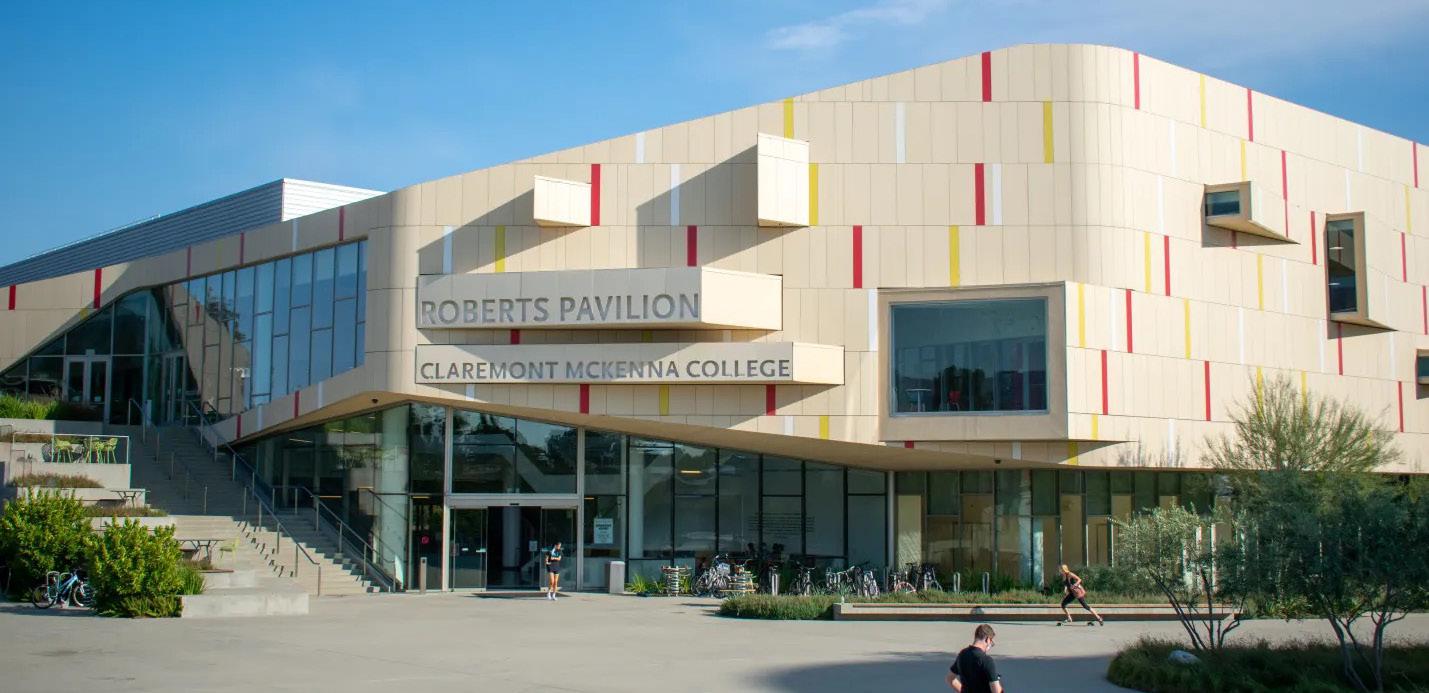
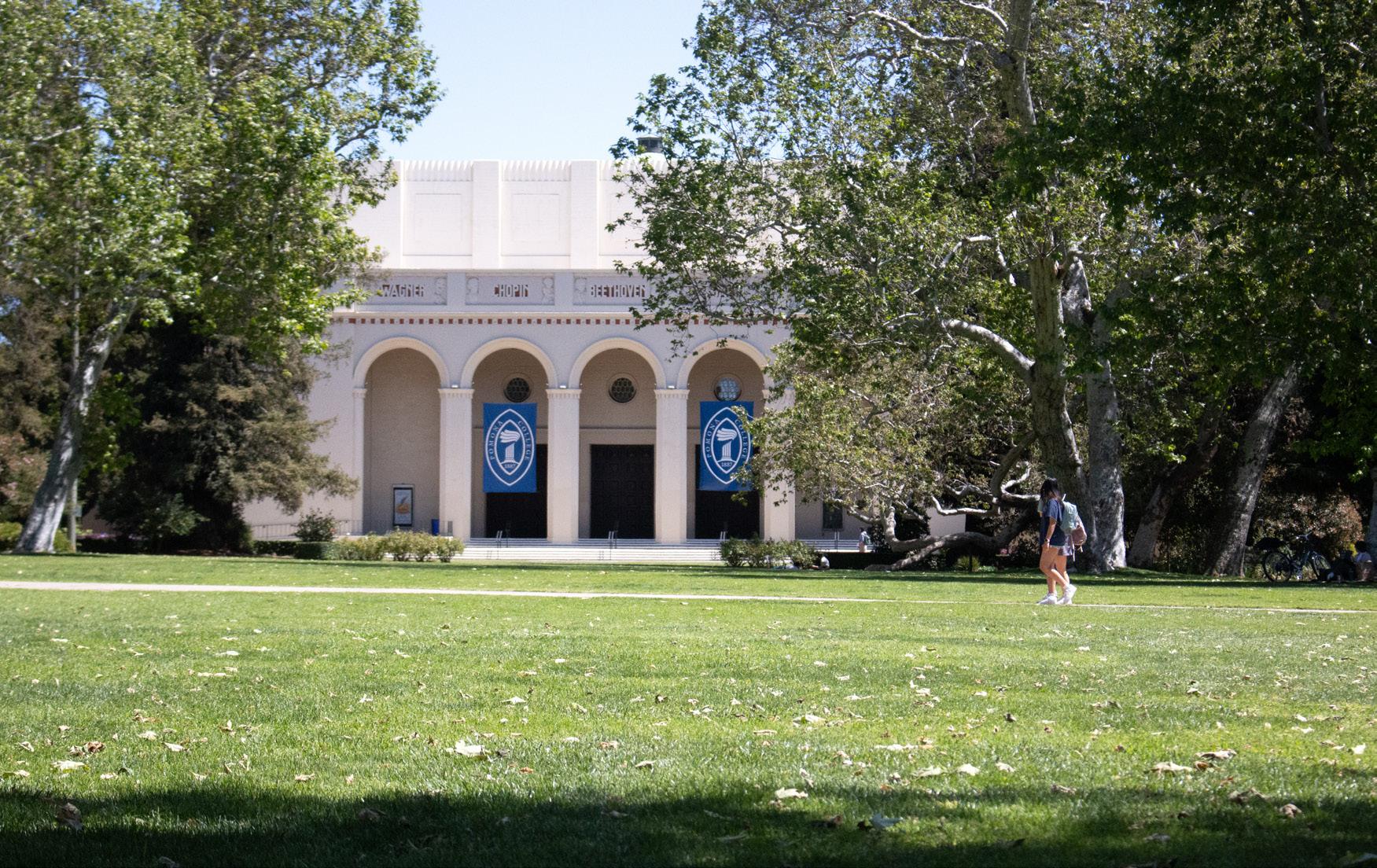
ANDREW YUAN • THE STUDENT LIFE The Associated Students of Pomona College (ASPC) conducted an audit in collaboration with Accessibility Resource Services (ARS) evaluating accessibility around campus on Oct. 20 and 22.
ANDREW YUAN • THE STUDENT LIFE
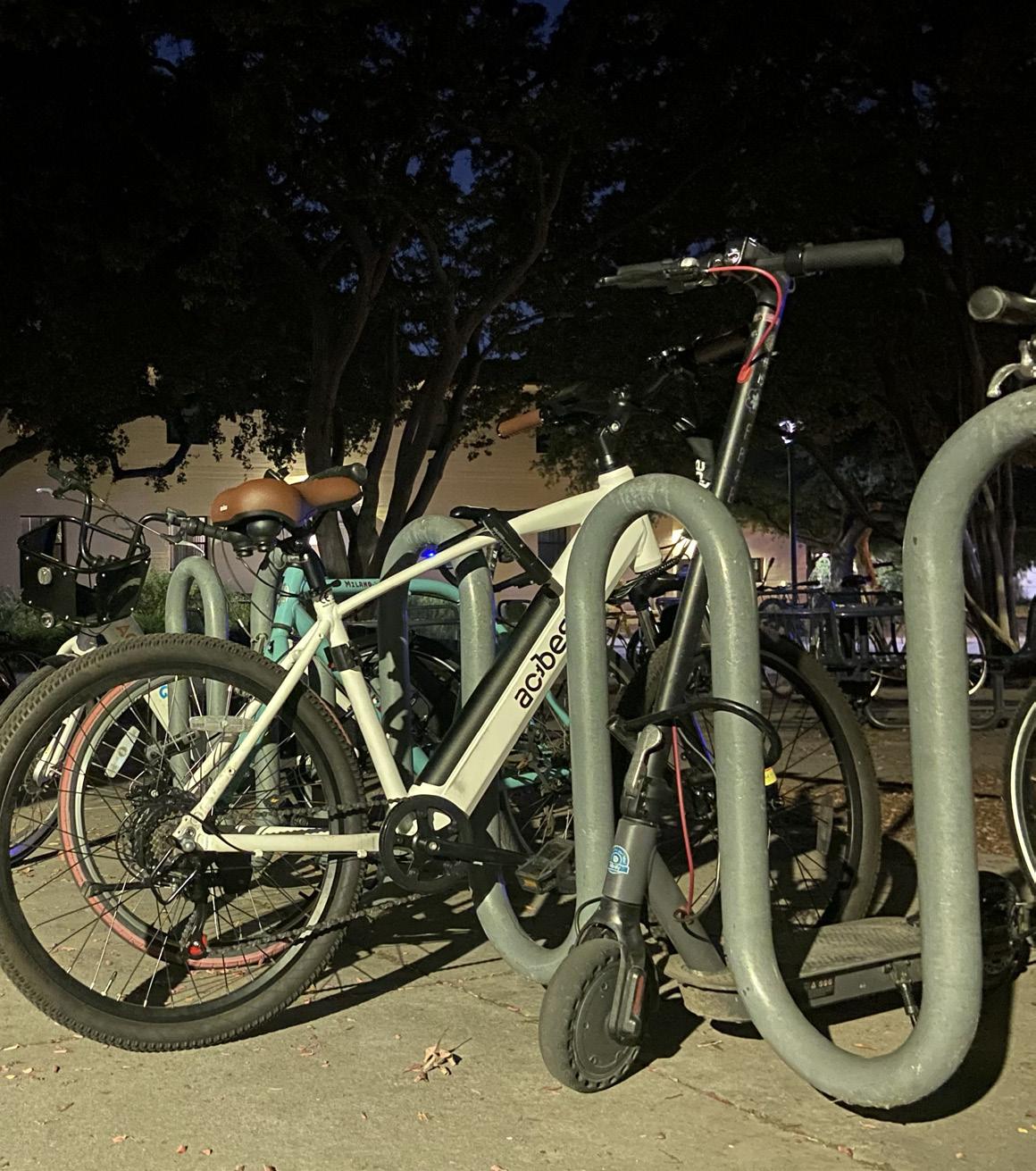
There have been 14 reports of electric scooter thefts filed across the Claremont Colleges in just over two months, according to an email statement from The Claremont Colleges Services.
JUN KWON
Pomona College bans two 5C students from campus following Oct. 7 memorial disturbance
PATRICK MCDOWELL
CHARLOTTE RENNER
Pomona’s campus as part of an ongoing investigation into a recent
cording to a statement from the
anonymous statement that was sent
tiated an interim campus ban for She added that the anony -
the statement. that ensures our campuses are free of the kind of targeted harassment we witnessed on
Continued from page 1
Max Zonana PO ’26 is purrights advocacy and has had with Pomona’s approach to
biggest concern.
at Pomona.
more of the student body into the conversation.
ceremony in May to receive her
Scripps community.
have worked with our consorvery excited when she saw the her to campus.
at a Scripps Presents event this October.
strength as both a gymnast and -
don’t have that voice and who -
Scripps senior communica
and it be your choice when you bring the Scripps community together.
is unfair since Pomona is a resiZonana said.
trapped in basements and secturn off after a certain time. he had to wait for them to turn
ing up a conversation around
which Pomona’s spokesperson
THeFTS: The 5Cs respond to scooter thefts and tampering incidents
Continued from page 1
of each scooter.
activity near bike or scooter
In addition to increasing
In the event of broader safety updates and prevention tips. open-campus structure has made these incidents more
interconnected space remains a
a scooter that might disappear the next day is something I repurchase after the theft.
doesn’t have a camera pointing at
they target spots without cameras
response.
tion remains the most effective strategy and continues to assess campus safety needs based on discussions expand across the
ministrators are focusing on how experience.
comment.
COURTESY: SCRIPPS COLLEGE
Scripps College is honoring Olympic gymnast Simone Biles with the Ellen Browning Scripps Medal, the college’s highest honor.
KAHANI MALHOTRA
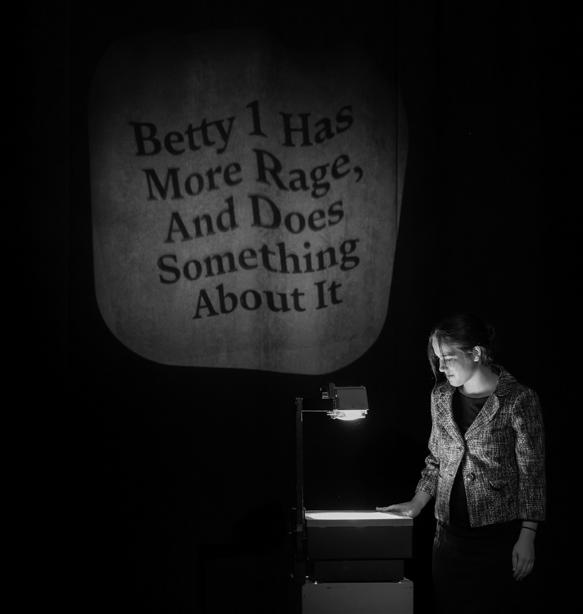
Betty Who? “Collective r age: A Play in 5 Betties” showcases the complexity of femininity and identity
Is there a right way to be a woman? to answer this, diving into the complexities that come with navigating one’s femininity. In “Collective Rage: womanhood and queerness.
Premiering on the night of Halloween to Nov. 2, the play had audiences giggling at the aloof personalities of the broader stereotypes and ideas about femininity that each character represents. Originally written by American playwright Jen Silverman, the 5C production was held at the large studio of Pomona College’s Seaver Theatre Complex and directed by Dew Tienwadee Tungkaplin PZ ’27. The performance tells the stories of -
resent distinct visions of femininity: struggles with anger, yet another represses her feelings by doing manual labor. As the playbook describes, these
the intersection of anger, sex and Tungkaplin explained that they chose to direct this play because of its particular focus on female rage and the power dynamics of modern femininity.
Tungkaplin said. “In assigned female bodies or those socialized to be women, there’s a lot of tendency to formulate rage with anger and oppression. I think a lot about who holds the power to allow us to have
PO ’29, is a spontaneous dreamer who quits her job to direct a play, pulling the other Bettys into her vision. Her childhood best friend, PO ’26 — hides unspoken feelings her truck when those emotions be-
Delilah McGrail PO ’29, is a wealthy Upper East Side housewife whose carefully maintained composure begins to crack as she reconnects with by Caoilainn Christensen PO ’27, also an Upper East Side housewife, confronts the quiet pain of feeling invisible. As the story unfolds, each
fears and longings they’ve tried to outrun.
Christensen reflected on her character’s evolution and how it resonated with her. She hoped that her performance would allow the audience to appreciate the value of whimsy at any age and realize that there’s no time limit on personal growth.
“I ended up relating a lot more undergoes an internal awakeningininity and sexuality, and self-acceptance that reminds me a lot of my personal growth over the last
Attendee Peter Zhang PO ’29 explained how this realization about personal growth has pushed him to consider ways that he can apply these lessons to his interactions with others.
“The show itself was very real, and it helped me realize that I should said. “I should learn about how others learn and communicate, and this is a really good way to help one grow
In addition to the issue of invisibility, the show illustrates the
SAS & PEC deliver a Halloween with renewed spirit
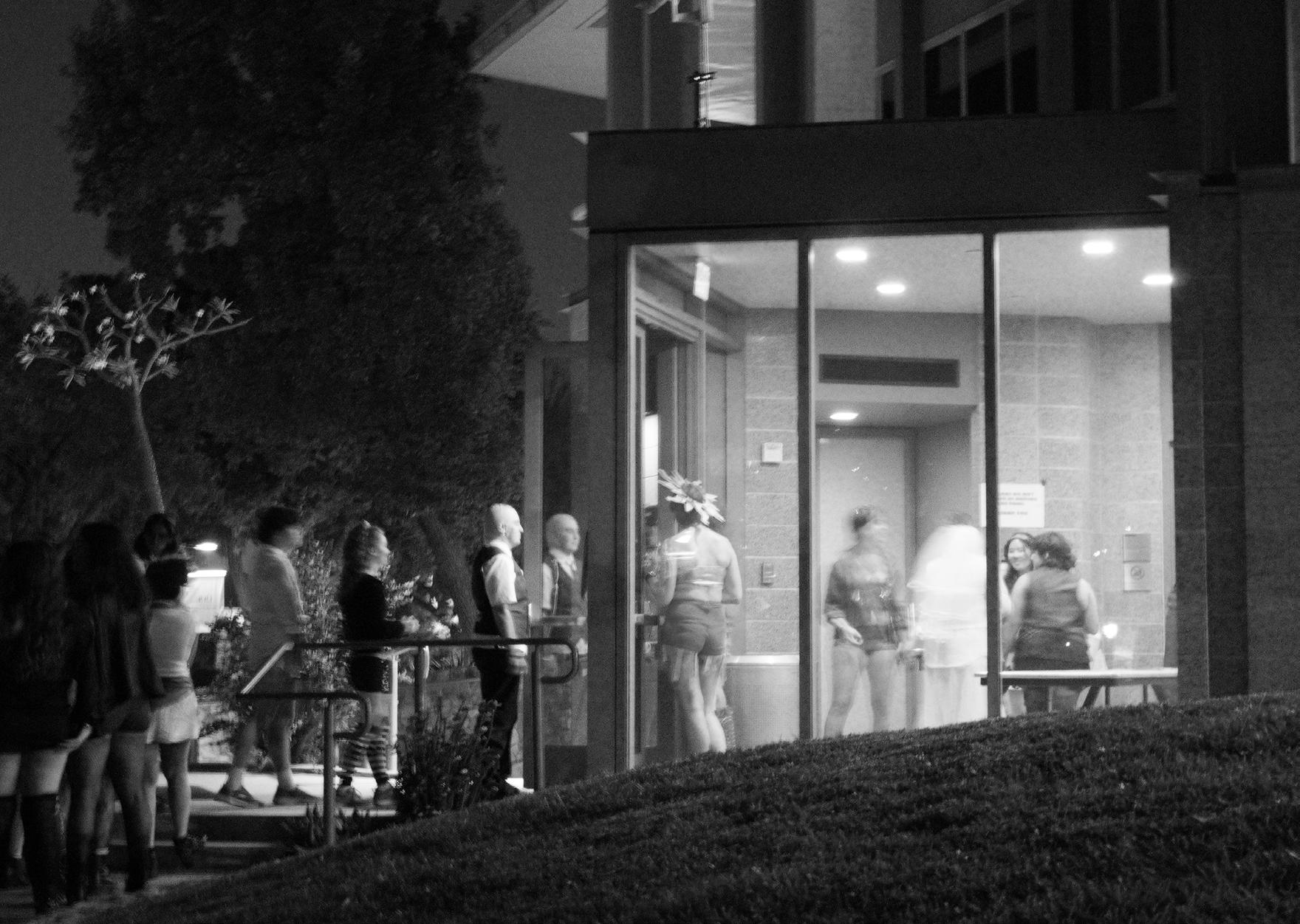
With arms linked, an array of characters lined Columbia Avenue last Friday night: cowboys, Carmy Berzattos and Waldos in red and white striped tee shirts swapped compliments as they waited to enter this year’s 5C Halloween night event.
For many Claremont students, Halloween falls in the middle of midterms; It serves as a one-night break or a reward that follows from a sleepless week of studying.
This year, students looked to Scripps Associated Students (SAS) with expectant eyes to deliver this perfect night. This Halloween, the cross-school collaboration brought a new life to the campus-wide tradition.
“This party was special because Scripps Halloween has become an institutionalized tradition, and we wanted to do it justice while also making it Cantwell SC ’28 and Avni Kalia SC ’28, SAS 5C Event Co-chairs, said.
“After meeting with all of the other amazing event chairs across campuses, we decided that it would be the perfect opportunity to collaborate with Chris Hussey, [PO ’26, Associated Student of Pomona’s (ASPC) Commissioner of Campus Events], to bring back the spirit of a consortium and honor Harwood Halloween’s Cantwell and Kalia.
Although Halloween remains a steady tradition at the 5Cs, in terms of community and celebration the venues and host schools are always evolving. This excitement, shared tempered by caution and strategy.
After Halloween was shut down in 2022, certain students and administration held their breath in anticipation of the possibility of another shutdown or something else going awry.
This shutdown has come to be a nod to January 6th, 2021, when the Capitol was raided. In giving this day such an egregious name, the memory of 200 students busting down the metal barricades has endured in the collective mind of the student body.
To this day, students continue to speculate and dramatise stories about past Halloweens-gone-awry in Claremont. Many seniors who were in such as Maren Fossum-Wernick SC ’26, explained that even for them it’s
events of the shutdown and gossip that has since circulated.
“Rumors started spreading about to remove people from the party grounds — I have no idea whether said. “People were turned away and the line was really long. At some point, a group of people stormed the gate to get into the party, and that’s
As these stories become myths, they begin to overshadow the realiof students to rebuild trust and reinstate a widely loved tradition. At the 5Cs, Halloween is not a free-for-all; it is a carefully planned event supported by the student government’s diligent students.
Rebecca Yao SC ’26, executive vice president of SAS, was also a of the shutdown.
this and [my] freshmen year, when it was right after COVID, everyone was excited to go out, so that party was shut down obviously, very maybe things we could have done to avoid that, but we also had a capacity limit. The lines were taking a really long time; they went literally down to CMC, people had fake printed wristbands and then [campus security] was really cracking
For SAS, this event served as a more wristbands and account for larger crowds. These changes have allowed them to develop better relationships with both school administration and the student body.
“After they did a very successful Baywatch [party], it seemed like they had a lot of trust between [SAS] said.
Yao also pointed out how SASent itself as the face of this party, rather than campus security, which helps in building trust with the wider student body.
“We are mostly there as students to be the ones checking wristbands, Yao said. “[Campus security] is there for support genuinely because we don’t want them to be the bouncers and to be managing it. We want people to see a friendly face when Yao expressed that students
struggles of being gender nonconforming in a heteronormative world boxing coach fresh out of rehab who uses she and they pronouns. Bella to understand their gender identity by embodying predominantly masculine traits.
“She’s gender queer, and that’s a said. “In the beginning, she’s kind of trying to put on this persona [being] super masculine. And like, ‘I can do this.’ Maybe she acts dumb at times purposefully, but in actuality, it’s much deeper than that, and she’s having trouble with her gender itself and is trying to understand what
Throughout the play, the Bettys’ individual fears and desires simmer, culminating in a dinner party where it all comes to a head. In one particularly hilarious and somewhat nonsensical song about self-discovery, demonstrating the growth of her confidence after was met with laughter, nodding and a strong round of applause from the audience.
own ways, the production team hoped that audiences can take a page from them and learn to practice self-love their own characters in the play, sometimes we might not like the parts of ourselves we ‘perform,’ or the descriptions of ourselves from other people’s perspectives … either because this version isn’t genuine to our true self,
Chen PO ’28 said.
Spotlighting local artists’ voices at the Benton’s second annual ‘Over Here Zine Fest’
CORINA YI
don’t always know what is going on behind the scenes and the work often do to build trust with the administration, so that students have such as this Halloween.
Students often don’t realize that while they are doing each other’s Halloween makeup or watching a scary movie before a night out, SAS and PEC are running around
“Probably four hours before
’29, a PEC Member, said. “So that was really stressful. It’s very hectic behind the scenes and I almost feel like a lot of the time [people] are like, ‘who’s in charge of the party?’ [They think that] the party
spent weeks troubleshooting and negotiating, stepping into the crowd felt like a sigh of relief. Months of planning revealed themselves through the smiles on students’ faces as Columbia Street erupted with music.
Laser beams slid across the bobbing heads. Behind the mosh from dancing, and students mingled around a table stacked high with Domino’s pizzas.
As heat radiated from the dance floor, warming the cool Californian night — class friends were reunited, strangers belted song lyrics and costume doubles found each other.
“I think if the music’s good, and the bodies are moving, and there are a lot of them, that’s really The night felt special for underclassmen, marking the beginning of new college traditions for Halloween. For upperclassmen, it felt like another return to the spirited night they love so much.
Collectively, Halloween stands as a rare pause in continual work, where midterms give way to togetherness and a sense of wider community across the 5Cs.
“To get to stand at the back of the crowd and just watch everyone sharing the joy — it feels so are memories being made, and knowing I have a role in bringing people together to make them is
“Every time I’m at a zine fest or an art book fair, it kind of feels like being in a protest,” Samuel Signer said. “Almost like a religious experience.” Standing behind his exhibition table, Signer gestured toward the vast array of art he brought to exhibit at last Saturday’s “Over Here Zine Fest” — photojournalism prints, a zine made of transparent paper that folds into a pyramid and even a mini meme collection of texts and social media posts about Dubai chocolate. Signer, one of over 40 independent exhibitors, described the zine fest as an opportunity for local artists to express themselves freely amid shifting political climates.
Co-hosted by Pomona College’s Benton Museum of Art and Curious Publishing, the annual zine fest took place on Saturday, Nov. 1, in the Benton courtyard. As attendees trickled into the courtyard, they a local catering coffee stand were almost as creative as the art showcased.
From zines — both handdrawn and printed — to small crafts like stickers and pins, the event celebrated a diverse range of artistic styles, including abstract impressionist images and black-and-white street photography.
“This [is a] communitycentered event that gives a platform for a lot of these creatives in the Inland Empire, and these individuals are selfpublishing,” Justine Bae Bias, the communication and engagement manager at the Benton, said. “We do this because we are building a community, not just with patrons who are coming to see our exhibitions and participate, but we’re also creating a community with creatives and artists in our local area.”
Attendee Sage Santomenna PO ’26 reaffirmed Bias’ sentiments and expressed his appreciation for access to events like the zine fest as a college student.
“I think that one of the regardless of what you study, is that there’s this incredible set of opportunities that kind of present themselves to engage in art, to engage with local creatives, that happens to be very convenient for you by virtue of going to the colleges,” Santomenna said.
Curious Publishing has worked with the Benton and the 5Cs for several years to bring together independent artists and creatives through zine fests, artist talks and various other events. As a 100 percent artisteditor-in-chief Rebecca Ustrell and her team aim to celebrate the
rich diaspora of the Inland Empire, womxn, BIPOC and queer artists. Ustrell and her husband Signer — who, in addition to exhibiting, also works as a production assistant at Curious Publishing — spoke to the tangible impact of giving marginalized people a public platform to explore their artistic expression.
“I think it’s really powerful just to show how many people are using art to just speak their own voice, speak their own truth, give power to narratives that are otherwise very much marginalized by more traditional formats and institutions,” Signer said.
Another exhibitor at the event, Mia Bruce, reiterated Signer’s outlet amid political turmoil. On her website, she describes her art as a means of capturing moments and emotions without censorship.
Attendees were drawn to her colorfully abstract art that blended way. Bruce displayed several of her chaotic art, including her newest collection, “Waiting for Eternity’s Light to Shine on my Face.” Bruce, like the majority of exhibitors, hails from the Inland Empire. This element of locality is giving the exhibition an intimate, resonant feeling. Santomenna, like many attendees, felt moved by the way exhibitor Domenico Foschi’s photographs highlighted the contradictions that come with living in this region.
“I thought [Foschi] had a good eye for Southern California … both as this agricultural hub in the Central Valley and as this arid desert where I would argue we aren’t supposed to be.”
The diversity of the kinds of artwork and artists is what Signer described as one of his favorite aspects of attending and exhibiting at zine fests. Exhibitors included local educators, past art students and veteran artists; This diversity of experience and content gave attendees a wide range of artwork to engage with.
“There’s something for everyone, which is the beautiful part about [zine exhibitions], because there’s there’s those for people who want to go deep,” Signer said. “That’s the wonderful part about zines. The zine, you can argue, is anything.”
MAGGIE ZHANG • THE STUDENT LIFE
AUDREY GREEN
SARAH ZIFF • THE STUDENT LIFE
JOSEPH WOO CHAN & ANANYA VINAY
Scripps Associated Students and Pomona E vents Committee teamed up to host a Halloween party.
Pomona College produced a play on the complexities of femininity.
Stuck in LA with “Invisible Cities”
LIAM RILEY
Angeles watching TV when my sister told me she felt like she was about to get run over by a car.
We had spent the day unsuccessfully navigating LA. Some guy told me to go fuck myself after holding up a turn lane on my bike for two lights. We drove to the wrong deli to meet my sister’s friend from college and her dog the middle of almost every crosswalk we passed. We had set out with the goal of buying a U-lock, visiting the beach, taking my sister’s dog on a walk and catching up with her friend from college.
We returned having spent
for us to accomplish them, we both had the same question at the end of the day: Are we idiots?
After a brief debate, we concluded that we weren’t idiots and said that it was LA’s fault. We immediately began constructing an imaginary LA where we weren’t an overpass can magically tear through your house, separating your kitchen from your bedroom with two hundred feet of cement.
ing for inspiration. “Invisibletionalized conversation between Marco Polo and Kublai Khan, where Polo describes cities within Khan’s empire. Polo’s ability to capture the bizarre dream logic of these cities in prose is remarkable:
“Nothing exists or happens in the one Valdrada that the other Valdrada does not repeat, because the city was so constructed that its every point would be Valdrada down in the water conabove the lake, but also the rooms the perspective of the halls, the What’s more fascinating than the cities themselves are how their imagined inhabitants respond to their environment: “Valdrada’s inhabitants know that each of their actions is, at once, that action and its mirror image, which possesses the special dignity of images, and this awareness prevents them from succumbing for a single moment
People then construct their cities around these responses, and a never-ending loop is created with both parties molding until the two are indistinguishable from each other. Calvino makes
this fact glaringly obvious by
crafting elaborate magical cities that are constantly in dialogue with their inhabitants. Despite their strangeness, these cities remind you of somewhere you’ve been, or someone you’ve met or someone you used to know who completely changed after moving to a new city. We decided that LA was organized around the highway’s imminent domain and that — because the highway has a mind of its own — every building and road was constantly scrambling to avoid it. Everyone is conwhoever or whatever they’ve Everyone is always in the wrong lane or at the wrong deli because sides every second of every day.
Because everyone’s in the wrong place, everyone is there at the wrong time. Everyone’s friends are always an hour late. Everyone invites you to move in with them after a date or leaves you languishing in their DMs for a month before they ask you out for a drink. Like the Valdradan inhabitants who never succumb to forgetfulness, this structure encourages Angelenos to do the exact opposite. They become notoriously late and forgetful.
Everyone in LA wants to leave, to untangle themselves from the bloodthirsty skein of cement, wrenching themselves free, escaping over the mountains. LA is abhorrent to those that can untangle the mess. Anyone who could systemize the shifting mess of the city is smart enough to leave after a couple of years. LA itself has become a monument to defeat. Hollywood is notoriously difficult to break into and LA warning people not to come is a songwriting trope. is all about leaving the city deI think Guy Clarke was being literal when he wrote “if I could because his exit was obfuscated by six lanes of thick, idiotic LA We started talking about how everyone’s brains had to be just scrambled as the cities they live in. She told me I had become a space cadet since living in sleepy Claremont, where very little happens after 9 p.m. and my morning commute is a leisurely stroll across campus.
She told me I’d go complete-
ly nuts if I kept going on long hikes in the desert by myself and spending long hours in the library working on my thesis. I countered, saying her brain was probably morphing into some mutant reflection of LA if she kept it up, she’d be too neurotic to Despite how comically exaggerated our claims were, there was a genuine concern for how both of our environments are amplifying certain personality traits that could become limitromantic notions about a life of travel, but in a lot of cases it can feel like perpetually wading movement has become standard for ambitious 20-something year olds. My sister has moved from Tennessee to Michigan to Texas, and now, maybe to California in the span of a couple years.
Investing in community or relationships in a place you don’t plan on staying for too long can be incredibly difficult. We rob these places of their permanence, making them branches of the horrifyingly inescapable six lane highway. Given how much she’s constantly moving about, it makes sense that she constantly feels like she’s in the middle of a crosswalk and she needs to get
out of someone’s way.
I think instead we should all take a page from my sister’s dog’s we like and lay down in the middle of it, even if it happens to be a crowded intersection. We should plant our feet in the middle of a crosswalk and say “fuck you, I’mging us around and whatever cars happen to be honking at us. This insistence in staying put will allow us to invest in wherever we happen to be, which will make it feel more like a home than an Airbnb or a highway. Imagining the inhabitants of Valdrada whose habit is so radition of their city makes us realize how profoundly spaces rewire us psychologically. Calvino asks us to imagine our surrounding community as a mirror to our mind. Realizing that your psyche and surroundings are always in step with each other is an incredibly motivating feeling because any kind of positive change in one will result in positive change in the other.
Liam Riley PO ’26 is from East Tennessee. He likes giving book recommendations, the outdoors and shenanigans. Reach out to him if you want to help build an underground sauna in his buddy’s backyard.
‘The Rocky Horror Picture Show’ returns for a night of queer celebration
ELLEN CHAPMAN
A stream of sequined, fishnet-clad, costumed students ea-
time 5C productions of “The Rocky The diverse crowd — which whose foreheads were branded with a red-lipsticked V — buzzed with joy as they took their coveted seats and prepared for an exciting, gender-bending celebration of queerness.
“It’s so androgynous and it’s inspiring to see that level of ambi-syn Sweeney SC ’26 said. “Every time I’ve seen it, it’s inspired me in some way to explore deeper into my gender identity. It’s queer and Following a brief pre-show caveat establishing a respectful relationship between the cast and audience, the lights were dimmed and the famous song “Science emerging from their seats in the audience to perform a striptease as the opening credits rolled on screen and the crowd cheered them on.
Upon its premiere in 1975, the this, the musical was resurrected by a fervent fan base who established it as a true cult classic. Today, the show is typically staged around Halloween due to its horror elements and emphasis on costumes. It’s become a beloved annual event on college campuses and in small cinemas around the world, with varying degrees of theatricality.
The musical follows a couple, Janet and Brad, who find themselves trapped in the mansion of the eccentric, self described “transveshis quirky cast of characters. The story explores sexuality and gender through dance and song to a world that breaks free from normativity. In these unorthodox perfor -
mances, there is a long-standing tradition of audiences yelling out commentary, such as labeling the characters of Janet and Bradly. The show is shadow casted, on screen and simultaneously acted out by a cast who lip-sync the lines and lyrics.
medium than what I was used to, viewer Destiny Osemwengie PO ’28 said.
Rocky Horror was revived at the 5Cs in 2022, following a years-long hiatus. TSL’s coverage of the performance’s resurgence led TSL’s editor-in-chief, Jada Shavers SC ’26, to have the chance in 2022 to interview the lead mar-
O’Brien, and the president of the original fan club, Sal Piro.
This year, there were two per-
there were many new additions, some actors like Spencer Stoller SC ’27, who played Frank N. Furter in the first show, were excited to continue the tradition after performing in many past productions.
“I really love the unapologetic celebration of queerness that “There’s so much gender bending don’t really see that often in any
This year’s show looked a little different as the director dropped out at the last minute. Cast members described this
shift as abrupt, explaining that it heightened the stress of preparing the show. Ultimately, the cast and crew embraced this challenge and welcomed the bonding experience it provided.
“I think it’s a really incredibleshow, I’ve been able to become really good friends and make these really profound and lasting connections [which] really speaks to what I feel like the show is community of people who are like you and who are into these weird,
The production was also unsupported by a budget, leading the cast to bring in their own costumes and assist one another with makeup, which added to the show’s overall crafty, homemade
vibe. The group spent a short two months preparing for the performances, switching between the two casts and adapting rehearsals to accommodate one another’s busy schedules.
Additionally, the 5C Spotlight club assisted with lighting and technical elements. Production stage, jumping in when needed and dedicating their unrewarded time to creating a successful show.
“My favorite part of the show is hearing the audience yell out the call-outs during the show while I’m backstage because even though I cannot see them, it makes me feeland costumes and prop manager, said.
Korneffel bolstered the show by hiding prop bags beneath some of the seats. At various points throughout the show, viewers were asked to throw playing cards behind them or strap a paper party hat to their heads, both of which were hidden in the reimagined paper-sandwich bags.
“I love how it’s interactive; it’s a fun way to kind of explore creatively with both your peers Sweeney said.
“It’s just a very community-based artistic outlet,
The show not only fostered feelings of community amongst the audience, but also within the cast, who cited the foundation of community as one of their strongest reasons for joining the production. Multiple members touched on the show’s ability to bring together students who would not otherwise overlap. The show’s weirdness has created an international community of fans who bond over their love for queer expression and its bizarre portrayal within the story.
“I hope that people seeing it second time, seeing it for the hundredth time, can still take away those aspects of queer joy that I Stoller said.
SASHA MATTHEWS • THE STUDENT LIFE
Wizagons, Wizards Wizard Weekly
NERGIS ALBOSHEBAH • THE STUDENT LIFE
Pitzer’s Amanda Lagji teaches about finding purpose in the unexpected
Amanda Lagji thought she had courtroom, success. However, one impulsive decision to study abroad flipped her plans upside down. Immersed in new cultures and stories, she instantly fell in love with literature instead of legal codes. Today, she is associate professor of English and World Literature at Pitzer College — concrete proof that one spontaneous choice can rewrite an entire life.
Lagji thought her road would eventually lead to law school. That’s humanities, and then become a lawyer after undergrad.
All was going as planned until she studied abroad in England her junior year. Removing herself from her usual extracurriculars, she used her newfound free time to dive into books. The more she read, the more she realized her love for literature was profound and perhaps something worth pursuing. What began as a year away from home became a complete reorientation of her purpose that led her to graduate school.
If you’re looking for a sign to study abroad, this might just be it.
The prospect of studying abroad has been on the front of my mind lately. As a transfer student, I will not have the time to study abroad and still graduate on time, but I find myself increasingly jealous of my peers in France and Italy who
spend their evenings strolling the streets of Europe, drinking wine and wearing kitten heels. It seems, in these adventures, that my friends are learning about themselves in ways I can’t. There’s a freedom in being lost somewhere unfamiliar, in realizing that no one knows who you are and that you can be anyone.
I am so desperate for that “ah ha” moment that Lagji had while living in England. I want to devote my time to reading, discovering, never leaving my apartment without a chic transplant. In that discomfort, I direction pointing me towards my true passion. Maybe that’s writing — or maybe it’s not. Either way, if I’ve learned anything from Lagji thus far, it’s that getting out of your comfort zone sometimes brings to the surface things that have been long buried.
Though she didn’t always think her path would lead to teaching, Lagji is excited to be here at Pitzer.
The year abroad led to another couple of months in Africa working for a publishing company, Lagji found herself reading as much South African literature as she could. Here, she became a postcolonial scholar, bringing those experiences with her to Pitzer. This semester, she’s teaching the coursesLiterary theory, a world literature survey called Bad exciting class is upcoming.
When love blows up in your face
This column contains spoilers for proceed with caution if you are interested in watching it anytime soon. Imagine meeting someone and falling in love with them. They seem to reciprocate the same feelings towards you, however, just when everything seems to be going right,tually out to kill you. How would you react? How would you look back on your past experiences with this person? Would you view them emotion?
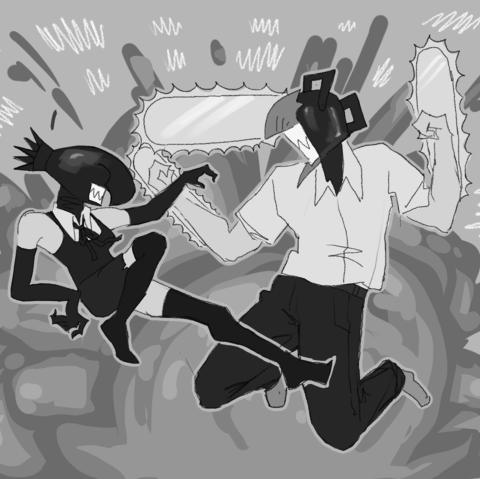
“Chainsaw Man: The Moviea devil hunter who comes across a girl named Reze, falling in love with her once she reveals her true colors. actually haven’t seen the “Chainsaw manga in its entirety. I do know the basic premise and have seen a few clips and panels, but I haven’t found the time to truly sit down and fully go through it. While I didn’t go into this movie completely blind, I was not already invested in the series. With that being said, I didn’t have that much trouble following the storyline as the movie seems to be very self-contained, despite being a direct sequel to the anime’s that you will need to come into this with some prior knowledge of movie does not stop to explain its world or characters.
The main things you will need toings created from humanity’s fears, the Public Safety Devil Hunters Denji is the series’s main protagonist who merged with the Chainsaw Devil, becoming the titular Chainsaw Man.
Denj’s story arc centers around his challenging romantic life. We are following his mission to court a forbidden love: The movie begins with Denji going on a movie marathon date with his boss Makima –– which is off-putting, but it is explored much more heavily in the general series –– and then goes into his eventual feelings for Reze, despite already having his heart set on Makima. In spite of his shallow motilikeable protagonist. It is hard notcially with the amount of times he gets beaten down throughout the movie. Even after Reze betrays him, brutally injures him multiple times, spends the entire climax trying to kill him and eventually admits to lying about her feelings towards him, Denji’s infatuation with Reze barely wavers. I’m still unsure whether this is a testament to his kind nature or his sheer desperation to be with a We’ve all been there, right?
As for Reze, I think that she makes a very strong impression, just for this movie. Her upbeat and cheerful nature at the start serves
Pitzer has the incredible opportunity, Scholars in Residence — you get to design a class around your research and truly integrate student input. Lagji is trying to she’s got two chapters drafted, and will be reading alongside students in preparation to write the third. Lagji is planning a class built on co-learning and discovery called Counterinsurgency and is excited to integrate student feedback from the class into her work to craft the next sections of her novel.
“It’s like a perfect condensation of all the things that make us Pitzer,” Lagji said.
Reading novels alongside philosophy, political studies and even military manuals, students will explore how ideas about counterinsurgency show up in literature and shape the way we think about power. Though a mix that sounds intense on paper, Lagji makes it feel like a lively conversation about how literature
So, what exactly is insurgency?
Simply put, it’s a revolt against power, a theme that pops up everywhere from classic novels to today’s headlines. The class gives students a chance to connect what they read to the world around them and to see how books can help make sense of modern movements and debates.
“I pitched the syllabus in the spring, and that was the risk, right?,”
STUCK IN THE MARGINS
climax, where she becomes a legitimate threat capable of mass destruction and transforms into the Bomb Devil.
Even though I already knew about her devil form beforehand, I felt that the movie did a good job foreshadowing it. Some are obvious, such as when she suddenly reveals her fighting capabilities during a random encounter with an assassin. Others are more subtle, for example, her having a grenade pin on her neck, eerily similar to the chord on Denji’s chest which allows him to become the Chainsaw Man.
The twist regarding her true intentions with Denji also caught suddenly and brutally, with her him with a knife. It even made me question how he was going to get out of this situation considering how close to death he seemed to be.
Though I did enjoy Reze as a character, one of my problems with the movie was that it felt as though we didn’t get to know her too well. I understand that she is meant to be a bit of a mysterious got to know at least a bit more regarding her backstory. We still don’t know how exactly she became the Bomb Devil, or why she was set on killing Denji and stealing his heart. The most we get is near the end when a man explains that she was one of many children that were experimented on by the Soviet Union.
Lastly, the movie is rated R and it definitely earned it. In line with the general series, the movie is extremely violent, with multiple minor characters being killed in bloody ways. If you’re on the more squeamish side, then this movie and series might be a hard pass for you.
Even though I can hardly call fan, I found myself enjoying this movie a lot. It is an action-packed thrill ride that still manages to have a compelling story in its core while not relying on the audience having watched the or have cursory knowledge on a worthwhile watch.
Joon Kim PO ’26 doesn’t have a preference between subs or dubs in anime and would rather stay away from the debate. Sometimes, he will watch the subbed version. Other times, he’s in the mood to watch with a dub.
Lagji said. “It might be a little bit too timely, but students appreciate the opportunity to talk about the things already on their minds.”
As Lagji’s research can often
running every morning and raising two daughters. She jokes that having a one-year-old and a four-year-old is her main hobby at this point, and that doing things to create memories for their childhood is her top priority.
“The things I study are heavy,” Lagji said.“I think having an abrupt shift to childhood magic and trust and exploration is really important. I wish some of the adults with more power would spend more time with kids and learn from them.”
That childhood magic she strives to create for her daughters is something I think can resonate with us all. It’s fun to be a kid again; go apple picking and play dress up.
Perhaps growing up doesn’t mean abandoning that wonder, it just means learning to hold it alongside everything else. Lagji into complex, often heavy subjects, while still making space for curiosity, creativity and play. It’s that same blend of depth and lightness that makes her teaching so inspiring.
When looking back on the decision to study abroad that eventually set her on the path to teaching, Lagji urges students to “embrace the stretch that happens
in college,” hoping students will envision themselves studying in countries like Africa, Asia and South America.
Her journey reminds us that college is the time to make bold, risky (within reason) decisions that get us out of our comfort zones. Without that spontaneous decision to study in England, Lagji might have never become a teacher, dove into those novels or wanted to write books herself. Her story serves as a reminder that sometimes our best choices don’t feel safe at all.
“Do the things you’re a little bit nervous or afraid of,” Lagji said. “Some of them will change your life.” Siena Giacoma PZ ’27 survives on endless
row.” Her cat, Olive, remains skeptical, offering judgmental stares in place of encouragement.
Chaos in the Mecca
My visit to Howard University Homecoming, the annual week-long celebration that draws students, alumni, D.C. locals and Black Americans from across the country to “the Mecca,” has provand family. Typically, I resort to a general “I had a blast,” but, digging deeper, I felt overcome by an energy, or spirit, much grander than I’m used to and in many ways foreign, so I took to journaling between the weekend’s festivities.
Coming from the small liberal arts bubble of Pomona College and, before that, a tiny private school, the idea of being completely immersed in a collegiate Black environment was novel and extremely exciting. Whatever reservations I might’ve had subconsciously dissolved immediately upon arrival, as I became surrounded by Blackness in all shades and iterations.
At Pomona, I’ve grown accustomed to a certain social dance — a careful identity calibration that many students of color navigateic credibility and try-hard, social and “overdoing it.” In short, I’ve learned to modulate myself and be hyper-aware of how I’m being perbetween being seen as genuine and dismissed as “loofy” or fake. At Howard, students possessed a freedom in their stride that suggested a lack of this burden. The ease, the lack of tension, helped me realize how exhausting it is to always be performing and has pushed me to embrace a less manicured version of myself.
What struck me most wasn’t just the celebration itself, but how Blackness persisted and thrived despite everything working against it. The “radical realness” I felt that weekend emerged through contradictions — joy existing alongside surveillance, community and the energy of it all persisting uncontainable even as the outside world tried to frame it.
I don’t mean to suggest that all moments at HBCUs like Howard are like this, nor do I claim expertise after one weekend. I merely wish to share the brilliance of an environment that often inspires surface-level preconceived notions — as it did, even from myself.
A narrow lens is used in capturing historically Black institutions.
“Violent D.C. weekend after 12 shot, including child and several near Howard University.” Yes, a shooting did occur near the University during my stay there, but I wasn’t aware of it until hours after the fact when concerned friends reached out to me.
I began to think about how my friends from Claremont would interpret my Homecoming experience. Suddenly, a moment of Black celebration was minimized, reduced to violence. Suddenly, my weekend in DC became risky, rather than transformative, with violence and Blackness, once more, positioned as synonymous.
It didn’t take long to notice the
or at least on Florida Avenue, a street parallel to Howard’s campus. Take this note in my journal, for example, or for whiteness. Maybe they’re one and the same…”
Just a couple of blocks from
shops, taverns and animal hospitals frequented by residents living in majority-white high rises. I stayed in one of these buildings with friends — two Howard students who were among the few Black residents in the entire complex. It was really interesting to have a recurring character from the weekend be a white neighbor who seemed to oscillate between whiteness and perceived “Blackness.” I almost consider it a living and breathing manifestation of the corruptiveness of gentrification. Living beside a Black community, he can benefit from lower rent costs and modern a community on one side of Florida Avenue one night, just to cross the street for a “coco realness” latte from a white-owned establishment the next morning.
the surplus of police present on campus. I wasn’t accustomed to the hyper-surveillance of three cop cars at every street corner. It felt like a cognitive dissonance, remaining prideful and radiant under constant monitoring — and still, Homecoming-goers succeeded, as I was swept into unbothered dance halls and street crowds. What struck me that weekend was Blackness insisting on itself.lance or narrow media framings, but through them. Each gathering, dance and moment felt like a minor act of resistance and reclamation.
The students and alumni at Howard radiate a cultural force that refuses to be surveilled into submission, exuding a “radical realness” that seems to emerge through each limitation. This is what I suspect created that poignant sensation of HERE and NOW, which no outside lens could reduce.
Zena Almeida-Warwin PO ’28 is from Brooklyn, New York. She’s looking
Florida Avenue, Divided by Zena Almeida-Warwin FLORIDA AVENUE is divided into two sides.
One for you: Whole Foods, Coffee Roasters, animal hospital, the mural of a mother golden above the Wet Dog Tavern that seems to say don’t worry babies, I’ll protect you from them.
One for them: walking to class, walking to party, walking but not living— They from Howard can only Ave.
FLORIDA AVENUE COPS are divided into two kinds.
One for you: hungry eyes, tight hamstrings, sitting but scarcely resting— they’re focused (don’t worry)
One for them : leaning on car finding any way to say don’t worry, I’m not like the others FLORIDA AVENUE RESIDENTS are divided into two demeanors.
One like you: frequents the Wet Dog Tavern, jumps seeing them exit the elevator, but staying put, staking claim (don’t worry) them: night, hood-tongue slipping on and white vernacular by morning— owns the Wet Dog Tavern, the street just to cross back over by sunrise. Ironic, because we were here preceded only by another them The message is perfectly clear— They can’t live here They from Howard belong on the other side of FLORIDA AVENUE.
JOON KIM
PJ JAMES • THE STUDENT LIFE
SIENA GIACOMA
SHIXIAO YU • THE STUDENT LIFE
ALISON BARRERA
ZENA ALMEIDA-WARWIN
Before rebuilding Gaza, the world must confront who destroyed it
LEILI KAMALI
One morning in February, I opened Instagram to find my feed clogged by reposts of a grotesque AI-generated video of “Trump Gaza.” The clip, created by Israeli entrepreneur Solo Avital and director Ariel Vromen and shared by President Trump’s own social media accounts, begins with scenes of families walking barefoot through rubble and toppled apartment blocks. Then, the scene transforms with a flourish into coastlines dotted with skyscrapers and beach clubs, beautiful women dressed in belly-dancing get-ups, and golden balloons of President Trump carried by Palestinian children.
Beyond the glaring irony of creating digitally generated scenes of the already well-documented destruction of Gaza — which our own government has funded — the clip reduces the lived reality of Palestinians into a surreal spectacle. One which suggests we must turn to Donald Trump to save a
population of Arabs from their way of life through economic redevelopment and colonial guardianship. Since then, President Trump’s Gaza Reconstruction, Economic Acceleration and Transformation (GREAT) plan has shifted global attention away from violated ceasefire terms and rubble to construction and “revitalization” plans. “Trump Gaza” imagines luxury resorts rising from ruins, even as thousands of displaced people remain under tents. There is a fundamental obscenity in this rush to rebuild: Israel has not been held accountable for the devastation that makes rebuilding necessary in the first place.
Legal accountability is the moral prerequisite to reconstruction; before rebuilding begins, international rulings must be enforced. In January 2024, the International Court of Justice ordered Israel to take all measures within its power to prevent acts of genocide in Gaza and to
enable humanitarian access. The UN Human Rights Council has since called for an immediate ceasefire, protection of civilians and accountability for violations of international law. Under any prospect of “rebuilding,” it should be considered essential for the international community to conduct an independent environmental damage assessment, not only for measuring the scope of destruction but also for ensuring justice. It would document the ecological crimes committed against Gaza’s land and people, transforming environmental data into evidence that can hold both states involved in the conflict and developers accountable to proper reparations. Without this reckoning, reconstruction efforts risk sanitizing the violence that necessitated them, turning ecological devastation into a business opportunity.
Israel’s war on Gaza has generated a carbon footprint larger than that of entire nations. The environmental wreckage — poisoned water, scorched farmland, collapsed sewage systems — will scar the region for decades, not even considering the dozens of violations ordered by Israeli Prime Minister Benjamin Netanyahu this week. Over 95 percent of Gaza’s farmlands are unusable and over 70,000 people have been killed. Around 30 percent of greenhouse gases generated during the conflict have come from the U.S. sending 50,000 tons of weapons and military supplies to Israel. Instead of reckoning with this ecocide, world leaders and corporations are already circling like vultures around the promise of new development contracts and coastal real estate.
Trump’s proposed plan to rebuild Gaza envisions transforming the enclave into a luxury “Riviera of the Middle East,” instilling “pro-American regional architecture” and offering a payment of $5,000 to each Palestinian who “voluntarily” leaves.
This plan positions foreign actors to become arbiters of urban life and economic development in a reimagined Palestine, granting access to investment opportunities and local energy and mineral resources. Deeply
reminiscent of colonial paternalism of the 1800s, this plan neglects to recognize the ethical and environmental complications of attempting to “remake” a city without including its people, and without questioning why we have to rebuild in the first place.
The environmental footprint of the proposed reconstruction is staggering. Massive rebuilding projects promising the construction of skyscrapers, luxury resorts and urban infrastructure further increase emissions by an estimated 31 million tons of carbon dioxide, which Trump’s plan does not acknowledge. This plan will produce enormous amounts of waste while straining water and energy systems already depleted and ravaged by bombings: Desalination plants destroyed by bombings have left much of Gaza’s groundwater undrinkable, and debris from bombings has contaminated soil once used for local agriculture.
Gaza is one of the most densely populated places on Earth, with over two million residents packed into 141 square miles of land, a direct result of decades of displacement, blockade and systematic confinement by the Israeli military. The so-called “Gaza Riviera Plan” ignores these demographic and humanitarian realities, recasting the destruction as an opportunity for profit, ensuring Israeli access “into Gulf supply chains” while effectively “sidelining Palestinian rights and sovereignty.”
In practice, this is a capitalist mode of ethnic cleansing, one that seeks to erase a living population through redevelopment schemes in the aftermath of direct warfare. By flattening neighborhoods, relocating residents and prioritizing investor-led projects, the plan reduces the lives of Gazans to obstacles in a profit-driven fantasy. This scheme will only further entrench social instability and deepen an ongoing humanitarian crisis.
The process of mending the scars of war must address the harm done to the land and its people before it can be used for profiteering. Post-conflict environmental reparations have
been applied before, most notably when the UN Compensation Commission required Iraq to pay for environmental damage caused during the Gulf War. The same principle should apply here. Any genuine effort to rebuild Gaza must reject the extractive neo-colonial model now being advanced by the very powers profiting from its destruction. Yet, recent US-backed proposals such as GREAT envision Gaza not as a territory with people and rights, but as a logistical resource within the India-Middle East-Europe Economic Corridor (IMEC). The IMEC links the economic interests of many powers together while erasing Palestinian sovereignty. From soil contamination to pulverized concrete laced with heavy metals rendering most farmland unusable, it is clear that Gaza’s ecological devastation is a purposeful product of the political state that destroyed it.
Allowing anti-environmental actors like Donald Trump and Mohammad Bin Salman to direct Gaza’s reconstruction would be a moral absurdity, inviting the very forces complicit in bombardment, blockade and environmental destruction to profit from their own mess. Rebuilding cannot be entrusted to those who have treated Gaza’s people and environment as expendable.
To allow those responsible for Gaza’s annihilation to lead its “revitalization” is a grotesque insult to the people who have survived bombardment, starvation and displacement, as well as to those who have been systematically slaughtered by it. It is a profound conflict of interest to let the warmongers and profiteers of destruction recast themselves as architects of peace. Any reconstruction plan that centers its interests threatens to permanently erase Gaza’s people under the guise of modernization. Rebuilding must be led by the people of Gaza, not those who stand to gain from their continued erasure.
Leili Kamali PO ’29 is a first-year at Pomona. She recommends you read “Perfect Victims” by Mohammed ElKurd, “Things You May Find Hidden in My Ear” by Mosab Abu Toha and “A Very Short History of the Israel-Palestine Conflict” by Ilan Pappé.
AI can take the credit for this new cultural normalization of cheating
ANSLEY KANG for assisting humans. But as AI has grown more advanced and more parties have gotten their hands on the technology, its purpose seems to have shifted. Of course there has always been a but I do believe that the original intention with ChatGPT was never to make humans stupider or more dishonest. I can’t say the same thing about the recent AI startup scene, which seemingly advocates for constant academic dishonesty and rampant usage of shortcuts in place of honest work.
San Francisco: The land of unreasonably steep hills, delicious yet overpriced matcha lattes and AI tech startups. San Francisco wouldn’t be the same without the tech bros all up in your face trying to convince you how their AI startup will be “the one” to change the world. The only problem is that somehow, all the tech bros managed to think of the same, “genius” idea. If they all banded together with their “original” ideas, we would turn into a tech dominated utopia with a bunch of nerds running around, bringing all of us unwillingly into participation, perhaps with at-birth brain chip implants.
Following the release of the beloved ChatGPT, there’s been a surge in AI startups this past couple of years. I can’t seem to escape the “I uploaded my notes into TurboLearnAI” ads on every TikTok that claims to be a “study hack” video — they are everywhere. Cluely AI’s CEO, Roy Lee, shows up in my dreams talking about the rave that he threw. I can’t tell you how many times a TikTok has genuinely piqued my interest by promising to talk about training good study habits and then immediately disappointed me with the presentation of a conveniently monetized, subscription-based AI “study solution.”
The general consensus when ChatGPT came out was that it had the potential to be a powerful tool
Our world is turning into one that values efficiency over creativity, leaving traits that are inherently human to be seen as dead weight. This developing AI culture has socialized us to no longer celebrate essential traits like hard work and perseverance.
Cluley AI is one of the more popular recent AI startups that strategy is very Gen Z-esque, and their AI brand is all about cheating, even on live interviews. At the time of the Cluely launch, Lee posted on X: “Cluely is out. Cheat on everything.” The Cluely website states that Cluely helps users answer questions and objections in real-time during calls, a step up from other AI meeting assistants who create meeting summaries afterwards, in the name of helping users “perform better during high-stakes conversations.” Their business model shamelessly ap -
performance anxiety, while undermining the functionality of competitive interviews, which are authentic self under pressure from interviewers.
I am sick and tired of these AI startups telling me that I will fail all of my classes and have all of my applications rejected without a robot telling me what to do. We have reached a point where the widespread advertisement of “the future of AI” is normalizing not only being okay with cheating,
necessary in order to succeed in our ever-demanding world.
It’s wild that we’ve reached a point in our acceptance and even worship of AI where the promotion of dishonesty is seen as an inescapable condition of modern life. Even in higher education, AI is encouraged. When a professor tells me it’s okay to take ideas from an AI brainstorm when doing my assignments, do they value the work I can create on my own? Or will my own, authentic brainstorming be thrown into the pile with the rest of the AI brainstormed muck?
Now, every AI ad campaign echoes the same message: You are not good enough to succeed without AI and you are not capable of thinking, creating or solving problems on your own. Laziness is being repackaged by these skills that make us all individually human — the skills that show up in interviews, coffee chats and thoughtful, handwritten work — are being forfeited and devalued.
I’m not saying that we all have to revert back to writing with charcoal in a room lit by wax candles, but we must reinstate the original, main purpose of AI development, before business-leader gluttony got a hold
of the narrative. AI wasn’t created to feed you simple-minded interview answers, nor was it created for you to cheap-out on your life. The original hope for AI was that it would help us make imperative medical breakthroughs or solve world crises. Now, it’s causing a crisis of its own, erasing the application of individualistic traits that make you distinctive and appealing throughout your work and your education. We must maintain our individuality and recognize that we are in fact capable of thinking on our own. The human aspect of our work is what gives it the most substance. Applying ourselves and letting ourselves make mistakes is what trains us to be more compassionate, knowledgeable and resilient people. If you feel that you cannot dogertips, consider doing something where you feel your own passion and creativity naturally coming face from the tech bros yelling passion in your life that you are willing to work for.
Ansley Kang, SC ’29 had to ask ChatGPT what her favorite color was for an interview. Apparently it’s blue?
M EIYA RO LLINS • THE STUDENT LIFE
What Democrats can learn from Mexico’s governing party
In my view, the Democratic Party is simply the lesser evil in a two party system that serves only the interests of the rich. However, as a person with dual loyalties, it is in my interest to know what is happening in the country of my birth: Mexico. Therefore, when I started hearing positive comments about Mexico’s new Democrat president, Claudia Sheinbaum, coming from my fellow Latinos here in the United States, I began wondering what she truly represented.
The Movimiento de Regeneración Nacional (Morena), or the National Regeneration Movement, is a Mexican political party founded in 2011 by Andrés Manuel López Obrador (AMLO). Morena came to power in the 2018 federal elections, and its mandate was reaffirmed by an overwhelming majority in last year’s elections when Claudia Sheinbaum was elected president. The working class vote, recently one of the most difficult for American liberals to reach, played a pivotal role for the campaign: Morena successfully captured the working-class vote by adopting predistributive policies. Predistributive policies reorient benefits from the gains of the market by increasing pretax income and guarantees for working people. Today, neoliberal policies have led to an increasing concentration of economic power in the hands of a small elite. The solution proposed by many affluent, college-educated progressives is to tax the rich, or to redistribute. But this slogan alone does not capture the wishes of the working class, who are tired of living undignified lives in an economy that does not pay them what they deserve for their hard work. To imitate Morena, and truly serve the working class that liberals claim to care about, the United States needs dramatic reorganization of its market economy through predistributive measures such as raising the federal minimum wage, empowering labor and guaranteeing federal jobs.
The Democratic Party should adopt predistributive policies instead of redistributive ones. Predistributive policies address the fundamental causes of economic inequality, whereas redistributive policies merely serve as band-aid solutions. At the same time, predistribution tends to be favored by less educated working-class individuals, who once made up the core of the Democratic base but have since shifted toward the Republican Party.
Mexico’s Morena Party offers a repeatable example of a political movement that has successfully implemented predistributive policies and consequently obtained enormous popular support. Therefore, if the Democrats were to adopt similar policies, they would not only become a more popular party but also improve the material conditions of the American
working class. So don’t cling to classic liberal by-lines and support Democrat’s best path forward.
Morena rose to power with the promise of addressing the enormous inequality that resulted from the neoliberal policies of the 1990s. In efforts to make Mexico’s industry internationally competitive, previous governments have kept the minimum wage frozen for nearly 30 years, at roughly $5.25 a day.
During his term, AMLO more than doubled the minimum wage and has increased wages of 8.4 million workers. The impacts of this policy have been astounding to say the least. 4.1 million Mexicans have been lifted out of poverty directly as a result of the increase in the minimum wage, while 10 million in total as a result of broader policies.
Mexican business owners warned the hike in minimum wage would result in high inflation and unemployment, but that never came to pass. As a result of the labor market’s extreme concentration, predistribution has not led to higher unemployment.
Claudia Sheinbaum, AMLO’s successor, won with 60 percent of the vote and has maintained approval ratings of around 60
points, meaning that roughly 80 percent of the population supports her. By contrast, 64 percent of Americans currently view the Democratic Party unfavorably.
The underlying reasons Western and Northern European countries tend to be more equal than the United States lie not in redistribution through taxation but in the structure of their markets, where unions and cooperatives are stronger, meaning predistribution plays a larger role in these economies.
In 2024 the Democrats’ only managed to obtain 42 percent of voters without a college degree compared to Morena which won 66 percent of the same demographic in Mexico. But this isn’t just due to its efficacy: A separate study has illustrated that Americans with a college education tend to favor redistribution, while less educated Americans tend to favor predistribution. As the authors of this paper explain, during the New Deal era, the Democratic base consisted largely of less educated, working-class voters, but that began to change in the late 1970s as this demographic shifted toward the Republican Party.
This realignment can be explained by the Democratic Party’s evolving economic
platform, which began moving away from predistribution when the centrist New Democrats became the dominant faction.
These New Democrats often came from upper-middleclass, Ivy League-educated backgrounds and redefined the party’s priorities. In my view, the Democrats could reclaim much of the workingclass vote if they embraced policies that genuinely resonate with working-class interests.
At present, the Democrats are not a left-wing party in any sense of the label, since their strongest faction remains the New Democrats.
Many Mexican leftists have rightly pointed out that Morena is still deeply intertwined with segments of the Mexican elite, such as the military.
Nevertheless, Morena has implemented policies consistent with its left-wing label. The same cannot be said of the Democratic Party in the United States.
Progressives in the United States should not necessarily adopt predistributive policies in the exact same manner as Morena, since labor markets in Mexico are unique. Nonetheless, the popularity of predistribution is noteworthy.
The American working class clamors for change. Our current economic system works
for the rich, while the working class laborers toil their health away. The liberals attempt to rile working people by promising to take away a few gold coins from the coffers of the rich and give them to their rightful owners. The workers, however, know that the rich will never accept such a direct assault on their fortunes, so they demand a readjustment of the system in order to guide the market gains into working hands. Predistribution is about creating a just market that provides for the ones that make it run: the workers.
The old dog of the American Democratic party clearly needs to learn new tricks. The working class that it supposedly defends is fleeing to the Republicans, not out of insanity but desperation, as voters have seen through the boiler-plate promises to “tax the rich.” To make good on its promises, and recapture the imaginations and support of the workers that power our economy, we as American Democrats need to follow the lead of Morena and accept that predistributive policies are the way forward.
Rafael Hernandez Guerrero, PZ ’29 is from El Refugio, San Luis Potosí, México and immigrated to Boulder, Colorado as a child. He doesn’t really know what’s going on and hopes you do.
RAFAEL HERNANDEZ GUERRERO
Tranquil by design: A history of Scripps architecture and culture
to endow a new, adjoining wom-
tively educate its female students.
Visitors to Scripps College are often struck by the beauty and peacefulness of the school’s campus and dorms. Nestled between walls, gates and gardens, Scripps dorms encourage students to relax in their many communal spaces — browsing rooms, living rooms, kitchens and interior courtyards.
This impression of utter tranquility isn’t an accident. From the college’s founding, Scripps dorms were built to feel like houses, protecting and enclosing students. The wider campus, too, was built on this sense of enclosure.
In her book “Alma Mater,” historian and past Scripps professor Helwas planned as “a great courtyard, facing inward,” with buildings and walls forming a border against the outside world.
Walking on campus, you might pass through layers of archways, doors and gates. Each barrier creates a web of interlocking interior spaces within the campus, with the dorms and their inner courtyards nestled at the center. In comparison to Scripps, the other 5Cs are much more spread-out, with recreational public spaces outside of residential buildings.
“Scripps is ‘enclosed’ based on a Spanish Mission Style, like a modern monastic community for women,” according to George Gorse, Viola Horton professor of Art and professor of Art History at Pomona College.
These architectural choices shape dorm culture and social life at Scripps to this day.
Scripps was founded as a foil to the co-ed Pomona College. As Pomona began to grow and more women enrolled, James A. Blaisdell persuaded Ellen Browning Scripps
A women’s education needed women’s architecture.
When lead architect Gordon Kaufman and the founding Scripps administration were drafting the college’s architectural plan, they started with residential buildings.
“Academic structures and the library could come later; but young women needed the supervision and the common life of said.
Scripps’ residence halls were originally designed to make theirdents feel at home — literally.
School governors wanted to “protect the femininity of young buildings that look like houses,”
According to a 1926 memorandum for the campus’ building committee, each residence hall was designed to have “the appearance and atmosphere of a beautiful home.”
Like houses, Scripps’ residence halls were meant to protect its stuand safety from the outside with public spaces inside.
A Scripps College Bulletin from 1964 notes that “the resident halls, with their charm of atmosphere and appointments, suggest a fortunate association of home.”
“Most of these women in the 1920s and 1930s were coming from Pasadena, well-protected upper-middle class,” Bruce Coats, professor emeritus of Art History at Scripps and co-author of “Guide to the Scripps College Campus,” said. “They had chosen they might not have wanted to be
in these big dorms.”
The enclosed domesticity of Scripps’ dorms was in part an
In “Engendering the Institution,” Nancy Ware writes that “the grandly domestic scale of [Scripps’] resident halls, the walled campus, the elaborate sequence of interior spaces, the inward facing buildings, the diagonal axis that relates the campus to Pomona College are ways that gender is inscribed on the space.”
Residence halls, built in the California-local Spanish Mission Style, were comprised of single dormitory rooms surrounding central communal living rooms, residential dining halls and interior courtyards.
This conception of women’s privacy also regulated the social and public lives of students. Safety and domesticity also meant supervision and surveillance.
Each dorm had a single front entrance with a reception desk where students checked in and a faculty “house mother” that lived in the building. House mothers were present until around the 1950s, according to Coats.
“[The single-entry reception and house mothers] sort of set up the surveillance slash safety aspect of these enclosed dorms,” Coats said.
Although house mothers aren’t around anymore, two Scripps Residential Life faculty, called Area Coordinators, currently live on campus, according to the 2024-2025 Scripps Guide to Student Life.
The embedding of surveillance into residence halls stemmed in part from early-20th-century fears about the dangers of close relationships between women. Flourishing communal spaces
within dorms served to steer students away from not only the outside world but also from their private living quarters and into the visibility of common rooms.
“The existing women’s colleges and the new ones of the war years feared close female relationships,” Horowitz wrote. “Thus in plan dormitories, the women’s colleges chose forms designed to strain expressions of female friendship which could not be monitored. Small, cell-like rooms hardly invited intimacy. In the 1920s, planning aimed to move socializing from the upstairs bedrooms and parlors downstairs to the public rooms.”
Current Scripps student Elise McDonald SC ’28 spoke about how these engineered public spac-
“It’s really easy to eavesdrop at Scripps,” McDonald said. “All the places that people would go to have private conversations are eavesdroppable. i.e. Star Court, Toll Secret Garden, the student garden, even Seal Court if you’re dumb enough to say anything there. The only place you’re free of surveillance is the lawn and I think that’s why so many people choose to gather there.”
The movement of students into these spaces also incorporated them into the larger group, providing community but also a lack of privacy.
Continue reading online
hand accounts and administra
To the editors, Your article on the Claremont Independent reads less as journalism than as resentment. The Independent has accomplished what TSL has not: it has broken stories, documented misconduct and drawn national attention. Rather than engage with that record, you devoted an entire feature to implying that its success must be illegitimate. The tone is unmistakably jealous, the product of a publication whose relevance, put charitably, now excampus circle. You provide no evidence that The Independent has published false information. Your central claim is that conservative outlets have reposted its work, and from that you infer bias. That inference is false. The measure of reporting is factual accuracy, not the political identity of those who share it. You also avoided the substance of The Independent’s reporting.
tive failures it exposed are all public record. You ignored them, preferring
a campus that claims to value critical thinking. This piece will remain part of your professional record. It is searchable and permanent, and future editors, employers and readers will see it for what it is. You may to impress will not respect the work you have produced. Sincerely,
MALIN MOELLER
NADIA HSU
MAGGIE ZHANG • THE STUDENT LIFE
Tessa Han HM ’27
1ST PLACE
Annie Voss PZ ’26
Annie Wion PZ ’26
8TH PLACE
Beyond the blocks: The culture driving Pomona-Pitzer swim and dive’s success
IMOGEN JENKYN
already alive, even before sunrise. and music blend together in the easy be back. It’s 6 a.m., and while most of day. For them, early mornings in the chilly Claremont air are just the start. By the afternoon, they’ll be back again
The Hens swim and dive team is back for the start of the season, chasing another year of dominance built SCIAC Athletes of the Year, the Sagehens recognize that their real strength that fuels it and the work ethic that en-
focused not just on themselves but we can all succeed and be the best weekend meets, the athletes carry aP-P swim and dive is a dynasty built on consistency and community. men’s squad is hungrier than ever to break through.
The team’s veterans say that these allows the Sagehens to go the extra
ourselves on our energy, cheering Workouts hum with a mix of com-
encouragement across the lanes. to finish drills with a struggling
them. You make sure everyone’s doing as well as they can and hav-
Still, the Sagehens know that a get them to where they want to alive and bring home another chamthe kind of grind that turns team
teams. For the P-P men’s swim and dive, the goal is clear: break a six-year Sagehens haven’t won the SCIACclaimed every title since. high for the 2025-26 team to unlock talented freshman class has already In just a few weeks of training,siasm has given the men’s team aton of energy and excitement into everyone races the clock to beat their -
you’re tired, you want to match
The excitement runs both ways. are just as determined to raise the standard.
reset. The blend of youthful energy know what it takes to contend has the men’s team ready to chase a title that has been just out of reach.
On the women’s side, the out-
shake the Hens, it just fuels their
we’ve worked hard enough to have
swimmer, says the women know
ing every meet. It’s exciting to seenance, the women know the feeling swimming under the bright lights at Nationals and they can already taste that moment again this year.
Looking ahead, the rivalry with CMS looms large. The two teams’ hundred yards of concrete, which makes every head-to-head meet are still months away. While antici-ognize that their biggest challenge is staying focused on the day-to-day work that will lead them there.
ing factor, but our biggest focus is That commitment to steady im-
moment is what builds the bigger
This one-day-at-a-time mindset even as the season stretches from earthrough March’s NCAA Division III Nationals.
dawn alarms, weekend meets and season one of the longest in Sagehen training and class schedules that leave
P-P has started its season strong, with the women’s team standing won all three of their meets. Meanmeets, earning a 1-1 record. With a legacy of titles, a deck buzzing with energy and 60 swimmers ready to go, P-P swim and dive enters the 2025 season with its sights set on SCIACs and Nationals.
Chasing the ghosts of Mourinho’s Chelsea: Arsenal’s impossible task
OTTO FRITTON
In the 2004-05 season, José Mourinho’s Chelsea conceded just 15 goals across 38 games en route to the Premier League title. Anchored by John Terry, Ricardo Carvalho and sheets, the record in a single Premier League season, and allowed only six goals away from home.
Coasting to the league title with
to believe those defensive numbers would never again be touched.
Fast forward two decades, and itmier League, having conceded just three goals in 10 Premier League games. On the back of seven consecutive clean sheets, they didn’t allow a single goal in October — not just in the Premier League, but across all
If we run some calculations — now, I know math just as much
11.4 goals this season, which would David Raya how many shots he
faced in the Premier League this
He might as well have worked from home. So, the grand question: Can they actually do it? Well, the jury’s still out, but I believe they’ve
— a metric measuring shot quality after it leaves the boot. But since
Arsenal have actually conceded. Arsenal’s first real blemish came on Aug. 31 in a 1-0 loss to
However, even this might be conin the game, Arsenal conceded a free kick, from which Dominik the world.
do you know what? That free-kick
aside, Arsenal have conceded just the second of which came at the hands of Scandinavian striker Erling Haaland in a 1-1 draw with Eight minutes into the game, Declan Rice and Mikel Merino
the counter. The best striker in the world wasn’t going to miss from there.
mon goal to concede. However, if we look closer, we can see Arsenal shot themselves in the foot with a
the ball on the left wing, while Le-
role of a traditional fullback and isn’t at fault for the goal here. The issue comes when the ball is lost,
Rice, Merino and Martín Zubimendi are all bunched together, as City advances the ball. Center stranded six yards behind Haaclose to recover. Against Manchester City, that worth remembering as the season conceded came one week later, oncastle. Striker Nick Woltemade
relatively easily — and some believe it shouldn’t have counted at
all. I’m not here to argue the foul; it concedes one like that eventually. So, all things considered, will they beat Chelsea’s record? Honestly, I couldn’t say. They’ve got all the tools to do it. William Saliba and in the world. Right-back Jurrien after his return from injury, almost unbeatable in one-on-one defending scenarios. Raya is a world-classever he wants.
Myles Lewis-Skelly, Ben White,other Premier League defenses. Even still, I’m not convinced Arsenal will win the league when all is said and done, it feels like a gargantuan task to maintain this form over an entire season whenally, Arsenal have the mental task the back of their minds every single game. It seems hard to fathom that they will do it, because to beat ChelAnd I’m not sure they will be. At the same time, though, why not dream? The last time Arsenal won the Premier League was in 2003-04, when Thierry Henry andrecord of 26 wins and 12 draws, becoming the only Premier League losing a game. Oh, and also, they won the league at White Heart Lane, home to their rivals, Tottenham years. Arsenal have lost, struggled and consistently failed to return
is the best Arsenal side since that ’03-04 season. So, let’s go win the league. And why not break some records while we are at it?
COURTESY: POMONA-PITZER ATHLETICS
Pomona-Pitzer (P-P) swim and dive teams are ready to begin the season with ambitious goals to achieve conference success, exemplified by a culture of teamwork and grit.
P-P men’s and CMS women’s cross-country secure SCIAC championship
NOAH BREWSTER
On Saturday, Nov. 1, the Cross Claremont turned into a Sixth Street
tles, while the CMS men and P-P wom-
tion in Southern California.
As the sun rose over Strehle track, the stage was set for a riveting day of distance running, beginning with the men’s 8-kilometer race.
On his home course, Jack Stein PO
24:33.5 was the second fastest time by a Sagehen ever and the third fastest in the event.
seconds of each other.
Stein commented on his team’s have limited their roster. into the race — three guys who are going to be a day where we had to rely
P-P cross-country head coach Emma DeLira was also delighted with the team’s shift in focus toward the -
The P-P men’s team had a domi-The CMS Stags weren’t far behind,
commented on how this fuels a highly motivating rivalry between the two squads.
history of the battles between us
rivalry. In a role-reversal from the men’s race, it was the CMS Athenas who the Sagehens close behind, led by in the 6-kilometer run. Four other
Wexler HM ’26 and Sadie Drucker SC ’27.
The Athenas are no strangers toing their 15th SCIAC title in a row.
having recently recovered from an injury.
able to come back from that and
on Saturday, as neither men’s nor second — a result seldom seen in college cross-country, let alone
After the races, Stein was able to reflect on what running has meant to him and what it will continue to mean to him in the
you can do it your whole life and
team’s success on the course, but the culture behind it isn’t always
ive environment that has carried the next.
We have many team traditions
P-P water polo keeps perfect record alive with overtime win against CMS
RUGAMBA
IVAN
On Wednesday, Oct. 29, all eyes were turned to Hadelman Pool,
teams entered the game tied for
In the end, the Sagehens left with their untarnished record intact, defeating the Stags in a thrilling 10-9 overtime win to of the season.
Both teams entered the water eager to make a statement, looking
Finding the back of the net would not be easy.
Nearly halfway through the score of the game with a shot from Nick Kennedy CM ’27. However, only 12 seconds later, their lead was quickly erased by the Sagehens thanks to a goal from Zach
It was not the last CMS would see of Whitfield, who notched a hat trick in the game, but the Stags fought to regain the lead in
holding the Stags to one goal and
his team’s momentum early on in the game.
Whitfield’s goal from distance more than two minutes left on theadding to his four goals on the night, but it was not enough to overcome the
a really good team and they showed -
Our shot selection just wasn’t where The Stags’ shots were also in large
their lefties were a big threat — they and not let them get comfortable. I
Head coach Alex Rodriguez of P-P commended his team’s effort in securing the hard-fought victory,
out of you. We’re still a young team, and we’ve got a lot to learn. We can’t
Marsyla said.
Both teams will next run at the NCAA DIII Cross Country Westremont, California, on Saturday, their season.
guys. Once I make those saves, it quickly in the second quarter, with both teams seeing the back of the once again, P-P was quick to react with a 6-5 lead.
The second half includedgh Flanders PO ’28, who were the with four goals. The Sagehens finished the third quarter with an 8-7 lead, but were unable to net a goal in the fourth, allowing the Stags to end of regulation.
Although P-P hadn’t scored since the third quarter, they started overtime with renewed energy
field, who notched three goals — stressed that during scoring
coach gave us clear instructions toing us well and we saw that in the fourth quarter because we did not distance. I am glad it went in. It
on his calendar, Rodriguez was clear on the Sagehens’ season objectives.ally win something, and that’s what said. Whitfield agreed that staying which they managed to do against the
had to work hard both in defense and us bounce back in overtime. It’s some-
While the Sagehens continue to build from their win against CMS, victory meant for him and his team.
shows how hard both sides fought,fully, this gives us confidence to -
29, P-P has stayed on track and undefeated with a 10-0 SCIAC record, including victories against La Verne West. CMS has followed suit, securto 8-1 in the conference.
Panthers, who beat P-P in the SCIAC tournament last year. The Stags will host the Panthers on Nov. 8, while the Sagehens will travel on Nov. 12.
COURTESY: CLAREMONT-MUDD-SCRIPPS ATHLETICS
Goalkeeper Greg Moore PO ’27 makes an acrobatic save as Pomona-Pitzer (PP) men’s water polo defeat Claremont-Mudd-Scripps (CMS) in overtime thriller.
COURTESY: ALENA SHARP
The Pomona-Pitzer (P-P) men’s and the Claremont-Mudd-Scripps (CMS) women’s teams both claimed first place at the SCIAC cross-country championships.