Claims of academic censorship levied against The Claremont Discourse Lecture Series following speaker withdrawal
PATRICK MCDOWELL
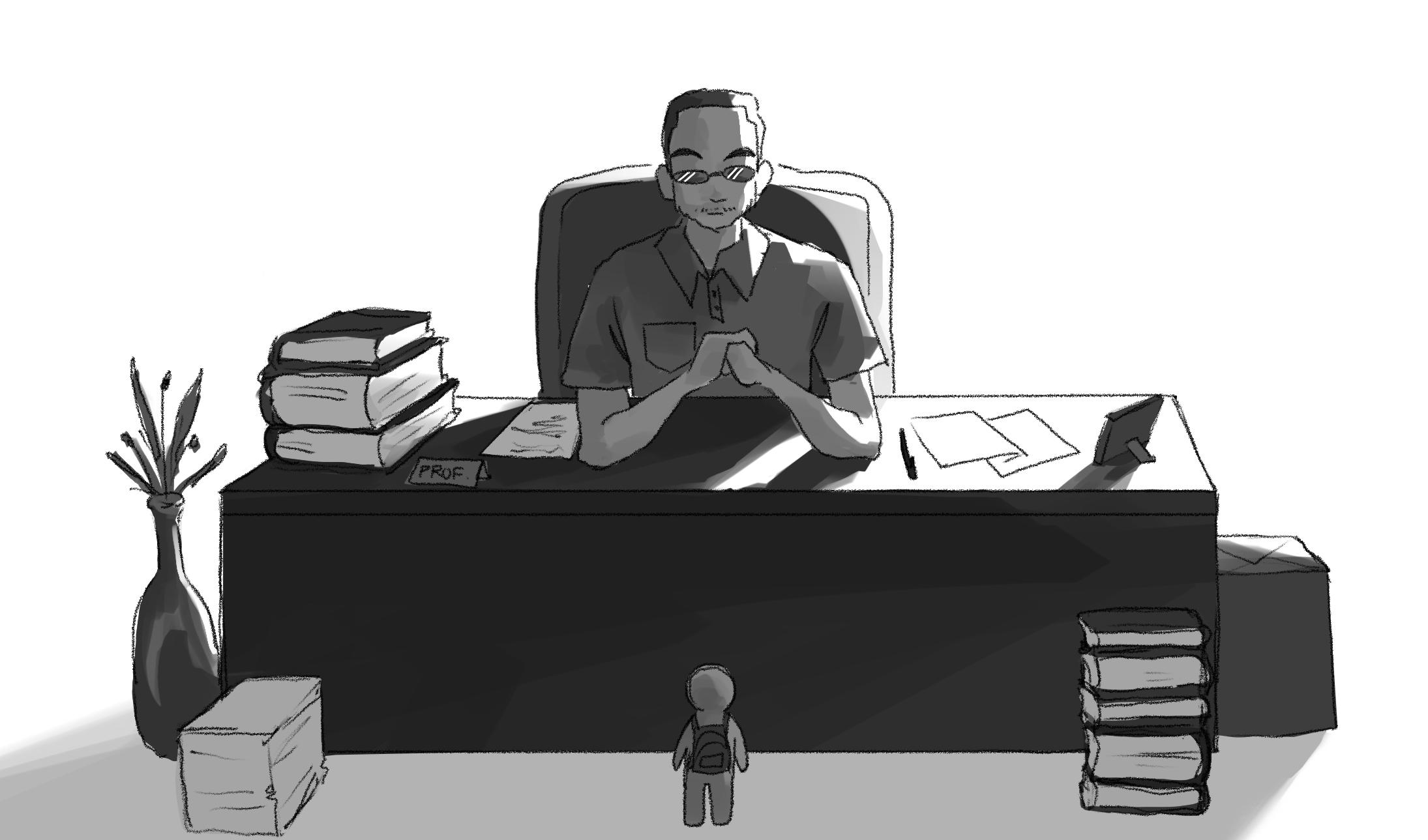
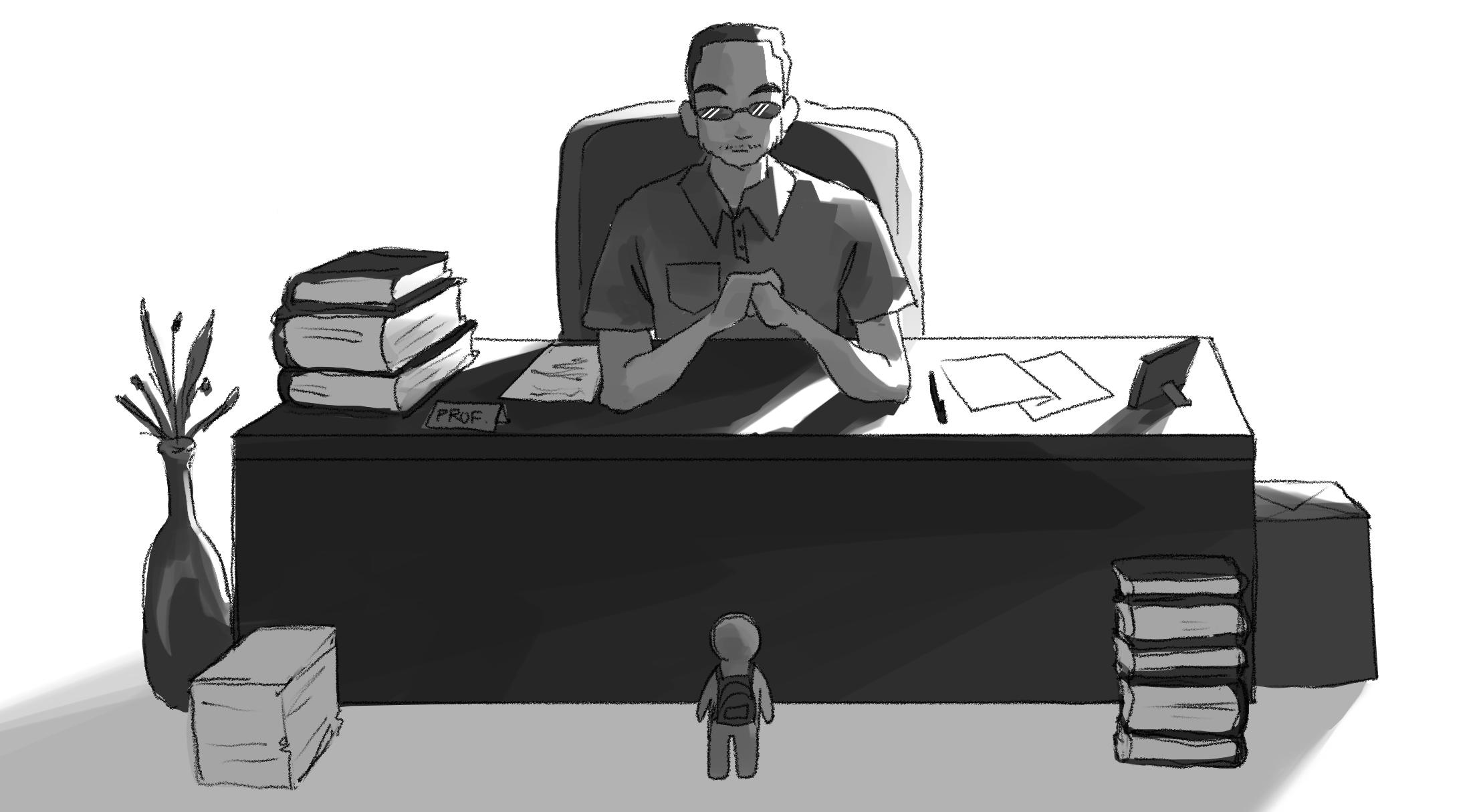
Professor Bilal Nasir of Pomona College withdrew from a planned lecture with The Claremont Discourse Lecture Series (TCDLS) hosted by the Claremont Colleges library this fall, following claims of academic censorship levied by Nasir against the library regarding revisions to his title and abstract.
Nasir, a professor of Asian American Studies at Pomona and a 2025 Wig Distinguished Professor Award recipient, was scheduled to give the talk Oct. 23, 2025, on his upcoming book, “The War Within: Race, Religion, and Rebellion in Muslim Los Angeles,” which addresses Los Angeles as “a crucial site of global American warfare” through the surveillance of Muslim Americans.
The Middle East Studies Association (MESA), a national organization that recently released a letter condemning TCDLS’ alleged censorship, released part of Nasir’s most recent abstract submitted Aug. 12. The updated abstract read: “Through an analysis of immigration policies emerging from the LA 8 case, Middle East foreign policy under the Reagan administration, and the deadly exchange between the Los Angeles Police Department (LAPD) and the Israel Defense Force (IDF) and Mossad leading up to the 1984 Olympics, this talk documents how a rising global Los Angeles wasbut also Zionism and anti-Palestinian and anti-Muslim racisms.”
TCDLS’ revisions of the abstract removed any mention of the IDF, Mossad, Zionism, anti-Palestinian
and anti-Muslim, instead replacing them with terms such as “international forces” and “global and local dynamics,” according to the letter from MESA. Nasir said he had initially submitted an abstract last fall, which
estine, which was approved by TCDLS. Referencing their revisions to his most recent abstract and title submission, Nasir said that universities have recently become more willing to acknowledge Islamophobia, but that acknowledgement often fails to consider
Palestinians. “I think it was a clear example of what we call the Palestine exception, which is this notion that discourse and dialogue are promoted insofar as it does not engage with particular topics, most notably, in this case, the issue of
Palestine,” Nasir said. “The moment Palestine came into the equation was the moment that this was now seen as an issue that would not be accommodating to its diverse audiences.”
5C community responds to Noem v. Vasquez Perdomo, new ICE ruling
The Sept. 8 Supreme Court Noem v. Vasquez Perdomo decision ruled to overturn a Los Angeles ban on immigration stops based on perceived race, ethnicity, language and place of employment, sparking discourse among 5C community members.
The ruling lifted a July 2024 order by a U.S. District Court in California and the 9th Circuit Court of Appeals that barred roving patrols and subsequent discriminatory immigration stops by ICE.
While supporters argue that the decision was necessary to en-
many have criticized the decision, arguing that immigration stops on grounds of “reasonable sus -
These grounds include a person speaking Spanish, having an accent or existing in a place of work that ICE may deem “suspicious.”
Heather Williams, a politics professor at Pomona College who specializes in Latin American politics and U.S.-Mexico borderlands, said she was shocked by the decision.
“In the environment we’re living in, with a lack of clarity about the Fourth Amendment, and the really aggressive patrols that have been occurring in Los
ARTS & CULTURE
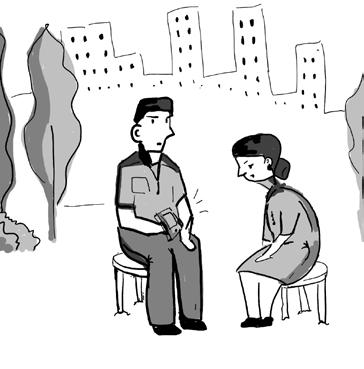
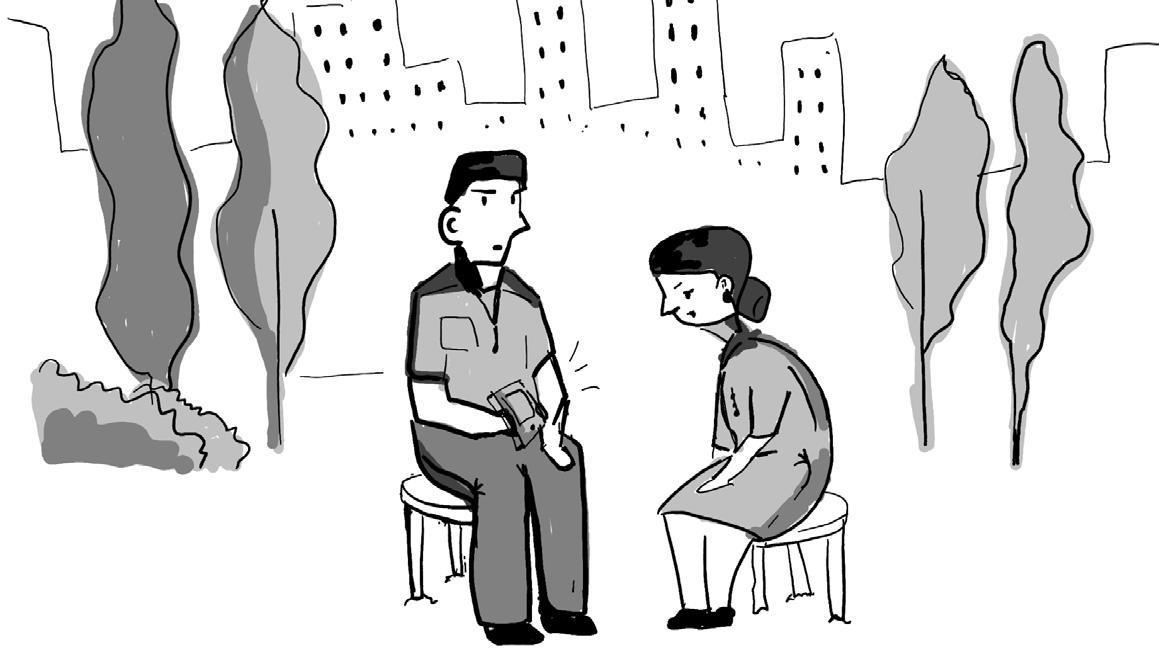
Tom Cat returns with another possibly anecdote that we can all relate to. Standing in the pouring rain, boombox blasting outside the window, dramatic-level notes-app sharing on a quiet Pomona bench, Tom Cat revealed their feelings for their close friend Emile.
Angeles, I thought that the Supreme Court would let the temporary restraining order remain in place,” Williams said.
Julia Morris, a professor of politics at Scripps, who specializes in migration, humanitarianism and border work, shared similar views.
“I think it has hugely devastating implications for local communities, for individuals in the LA and SoCal area, in that people can be picked up solely based on their appearance,” Morris said. “Half the popula-
Suspected theft at Pitzer Student Garden: Two chickens displaced, one remains missing
On Tuesday morning, Pitzer Student Garden co-managers Elias Gradinger PZ ’26 and Mia Teicher PZ ’27 were bombarded with messages reporting a disturbance at the chicken coup. Two chickens were presumably stolen; one remains missing.
“I was in class doing a group project and I got a text, and it was a photo of our chicken Cat with her claws stuck in the piano at the Grove House,” Teicher said. “I started spamming the [Student Garden] group chat. I was like, ‘What? What is going on?’”
According to Gradinger, a confused dad discovered Cat
during a Pitzer campus tour that morning. With the chicken’s toes wedged in between the keys and her feces scattered around, “it wasn’t the most clean scene,” he said. Gradinger assumed the chicken was trapped there overnight and suspected foul play.
“A lot of our chickens have some mobility issues, and so she had gotten stuck there, and it’s likely that she couldn’t have put herself up there, although, who knows,” he said.
Teicher echoed Gradinger’s suspicion, explaining how the garden’s sizable team of student volunteers habitually updates the
JOELLE RUDOLF
Two Pitzer Student Garden chickens were found displaced from their coop on Tuesday morning; one chicken remains missing.
MAGGIE ZHANG • THE STUDENT LIFE
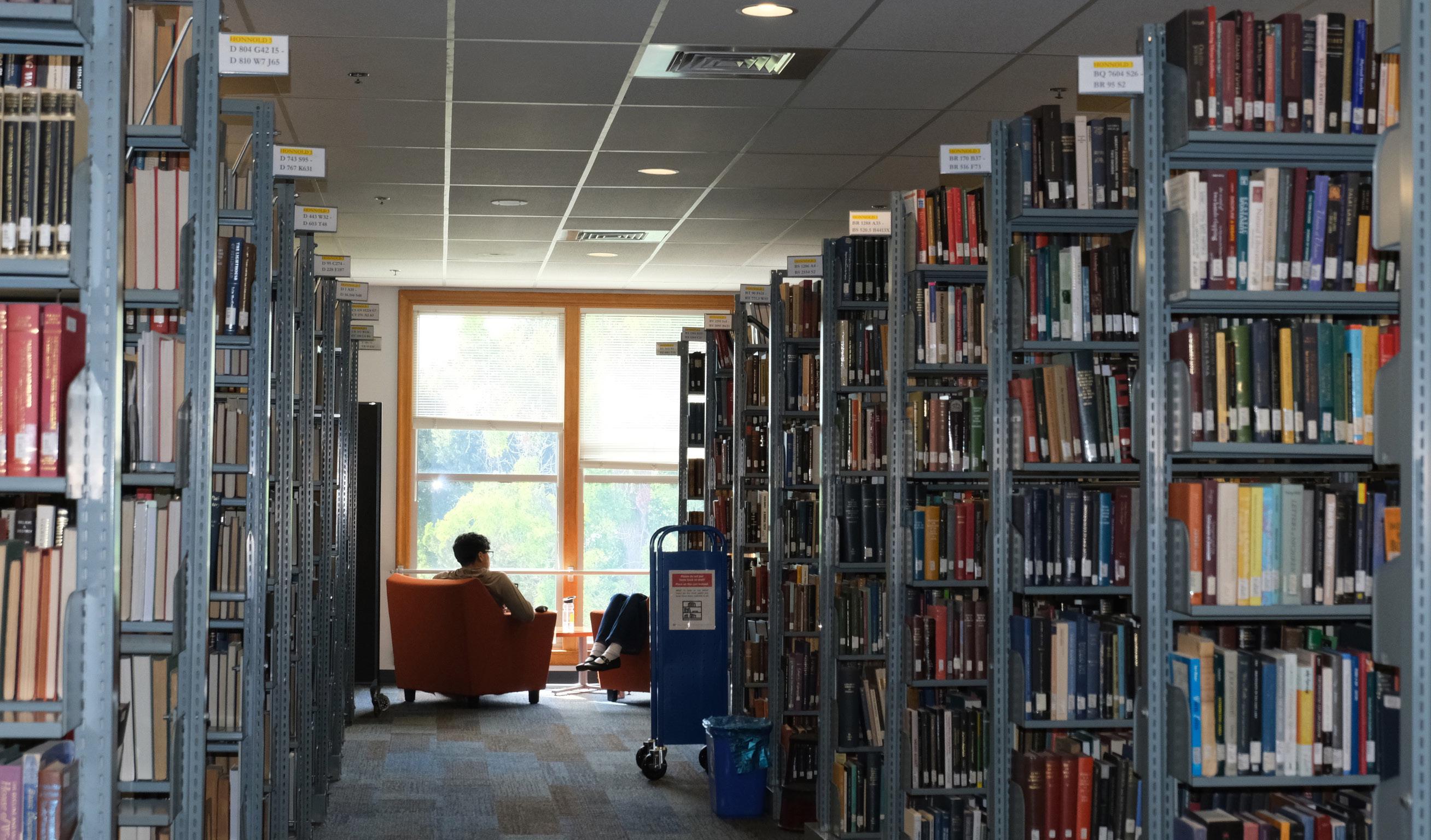
Pomona College Professor Bilal Nasir withdrew from a planned lecture with The Claremont Discourse Lecture Series hosted by the Claremont Colleges library this fall, following his claims of academic censorship levied against the library’s revision of his title and abstract.
NERGIS ALBOSHEBAH • THE STUDENT LIFE
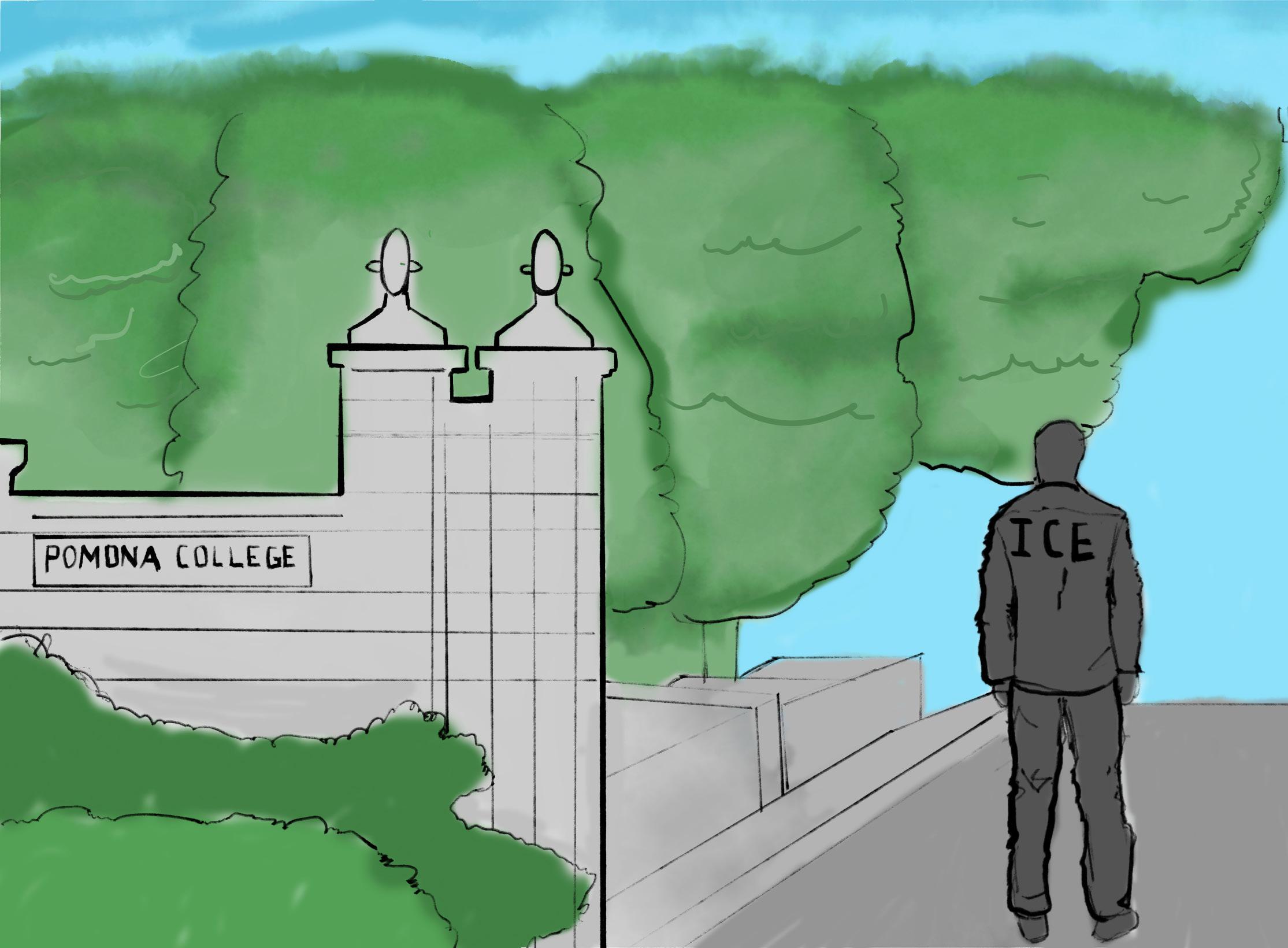
A Supreme Court decision overturned a Los Angeles ban on immigration stops based on perceived race, ethnicity, language and place of employment on Sept. 8.
TCDLS CONTROVERSY: Pomona professor pulls talk over censorship concerns
Continued from page 1
The Claremont Colleges claimed these efforts were done for “promotional purposes” in a statement shared in email correspondence with TSL.
“That was a red flag for me,” Nasir said. “I was not asked. I was given a title, and I was given an abstract that [was] presented to me as [an] alternative. That is a complete and utter overreach when it comes to academic integrity. I have never had someone actually change and revise my words without asking
permission, or without even a conversation.”
In the same statement from the colleges, they said revisions made requirements, and were never intended to alter his academic content or restrict his scholarly perspective.”
The colleges claimed they have reached out to Professor Nasir to reiterate that censorship of his academic work was not their intent.
MESA later published a response sent to them by the library, which read, “conversations are
underway with Professor Nasir to arrive at a resolution.”
Nasir contested the claims made in that letter.
“There is no active communication, there is no dialogue, there is no conversation happening, so I’m not sure what it is that they’re referring to,” he said.
He noted that the latest communication with TCDLS was centered around alternative titles, both of which he says do not honor the original title.
Nasir said he took issue with their inclusion of the words
“pro-Palestine activism,” which he claims changes the meaning of the content, shifting the focus away from Palestine as a discourse, movement and people and towards pro-Palestine activists as political actors.
“If we don’t stand up now when it comes to the question of Palestine, it’s going to only accelerate further, and they’re going they see as not appropriate to be talked about, and that could be of historical reasons,” Nasir said.
The Claremont Discourse Lecture series will be paused as of Oct. 1, community concerns. They hope the series will resume as it seeks to continue fostering dialogue and freeremont Colleges’ values, according to the colleges’ statement.
Pomona College will host Nasir’s talk without edits to its title or abstract in the Frank Blue Room on Tuesday, March 10, 2026.
MESA did not respond to requests for comment in time for publication.
SCOTUS RULING: 5Cs react to decision allowing discriminatory stops
Continued from page 1
tion of our region potentially meets the government’s criteria.”
Anna Mone SC ’28 said her initial reaction to the decision was fear and anxiety for her friends and community members, whom she knew would be impacted most.
“I think overall, I see it as a huge regression in equal rights and equal protection under the law,” Mone said.
In recent months, the Supreme Court has increasingly used the emergency docket to issue rulings without oral arguments or full “shadow docket,” as was the case in the Noem v. Vasquez Perdomo
ruling. Mone said that with the constant updates about the judicial branch, she hopes people are aware of this new decision.
“It’s hard to keep up and to stay aware of everything that’s changing, and so I really hope that the wider community is made aware of this new update so they know how to best protect themselves moving forward,” she said.
Williams added that she believes this ruling may increase the possibility of other vulnerable communities having their Fourth Amendment rights — prohibiting unreasonable searches and seizures — stripped.
Within the ruling, reasonable suspicion is used as a legal cause for ICE to search and question people. The vague and subjective emphasis on reasonable suspicion over probable cause, according to Morris, allows for
“It just grants roving patrols the license to go to any places where they suspect that someone might be undocumented in hugely discriminatory and stereotyped ways,” she said, adding that the decision is very concerning for the safety of students and
Similarly, Williams said that as a professor during this time, she found it impacting the way she
thinks and goes about teaching in a way she said she has never experienced before.
“I think very carefully in class about some of the materials that I present, because I don’t know whether students who are vulnerable might be seen reading or even discussing something that is now considered to be criminalizing,” Williams said.
“I’ve never had to self-censor in that way in my life,” she said.
Mone said that she thinks it is important that the Claremont Colleges continue to support the surrounding communities, which will be especially impacted.
“I know there are members of our community whose mobility
and security are being threatened by this decision, and I think it’s important to remain in contact and in support of the wider comto feel this decision, “ she said.
The Noem v. Vasquez Perdomo decision is a non-final, emergency ruling. Morris said that she hopes that there will be enough pushback from activists and organizations to overturn the ruling.
“My hope is that people will be able to stand up and advocate and be able to come together in solidarity to provide support and protection for folks across the Claremont Colleges and the region more broadly,” she said.
CMC’s Robert Day sciences Center opens nearly four years after breaking ground
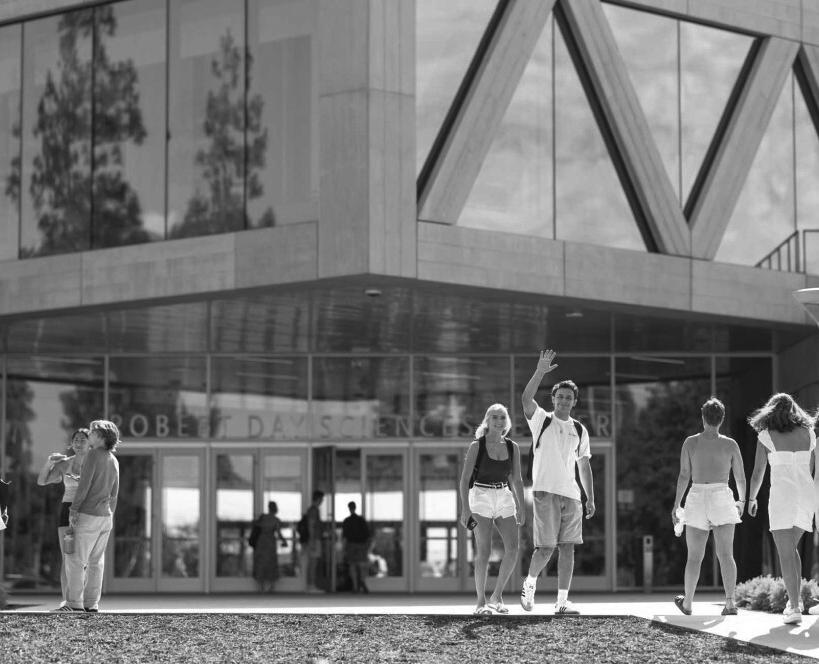
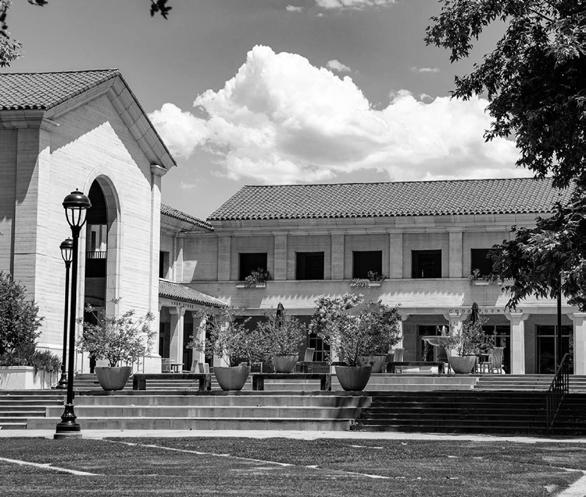
This fall, the Robert Day Sciences Center (RDSC) at Claremont opened after beginning construction nearly four years ago. The RDSC is home to CMC’s Kravis Department of Integrated Sciences (KDIS) and the new DayBreak Café.
RDSC’s opening follows the creation of the integrated sciences major at CMC within KDIS, which to the class of 2028 onwards. The major is a consolidation of multiple disciplines, with the option to specialize in three thematic areas: health, brain and planet. Students then “take a combination of courses suited to their interests,” according to CMC’s academic catalog.
CMC announced their decision to withdraw from the joint science program, the W. M. Keck Science Department, in October 2018. This left Scripps College and Pitzer College as the remaining joint owners of Keck, while CMC created KDIS. Now, CMC students who wish to pursue a specific science-related field rather than the interdisciplinary major must Keck, to do so.
According to a press release issued by CMC on Sept. 22, KDIS’s faculty is made up of professors from multiple fields, including engineering, physics and data science, who “transcend disciplinary boundaries.” The
department currently has 18 faculty members, with seven more to come. Lielle Goland SC ’28 is pursuing sciences and learned about RDCS prior to attending the Claremont Colleges.
“Everyone knew [RDCS] was coming,” Goland said. “I was more focused on the [integrated sciences] program.”
Although she said she enjoys spending time at RDSC, she didn’t cite it as her reason for pursuing a
”I just knew I wanted to do computational biology, and I liked that within integrated sciences, those two were already integrated, no pun intended,” Goland said.
Danah Plair CM ’28, who plans to major in integrated sciences either as a dual or stand-alone her senior year of high school.
“It was always just kind of this looming thing where, ‘oh, we don’t know when it’s ever gonna be done,’ but I was definitely very excited to have a new space to explore and study,” Plair said. Plair feels that the KDIS and RDCS are helping students like her who are interested in STEMshe thinks the program and center will encourage interdisciplinary growth.
“I’ll be able to have a broader understanding of science and computer science as a whole,”
Corrections for Issue 2
In Issue 2, a non-updated version of the opinion, “Metro Rail is expanding near the 7Cs, yet students just lost free access,” was printed. This has been updated online. Another article about the Friday Noon Concert miscredto Audrey Dunne. Additionally, the article incorrectly has been corrected to “almost 200.” TSL regrets these errors.
Plair said.
Taking just one class at RDSC this semester and expecting to take more in the future, Plair said she appreciates spending time in the new building. “The location is very fresh me more excited to come to class when I know I’m doing it here,” she said.
Architects at Bjarke Ingels Group (BIG) designed RDSC, which, according to the Sept. 22 project in the Los Angeles area.”
Goland, who has classes in the she also visits on the weekends because of the “really awesome study spaces.” Plair echoed this sentiment, highlighting the Quantum Library and outdoor seating with views of the mountains as some of her favorite study spots.
The opening of the DayBreak Café, which operates under the same ownership of The Hub and Collins Dining Hall, also coincides with RDSC’s opening. Located on the café runs on virtual kiosks and mobile ordering, intended to speed up the ordering process for students.
Phil Herrera, an assistant general manager for Bon Appétit at CMC, described the menu as “a little more fresh” than The Hub, or “brain food,” as he calls it. This includes acai bowls, boba, salads and fresh sandwiches. DayBreak electric cooking and warming availability, healthier foods like additive-free breads and a more geographically diverse menu.
“We were very conscious about creating a menu that was going to be very sleek and clean and modern,” Herrera said, in
addition to mentioning the larger kitchen and facilities that allow them to branch out in what they Herrera and his colleagues faced the challenge of planning for DayBreak while RDSC was still under construction, meaning they didn’t know exactly what their space would look like.
“I’m really proud of our management team as a whole,” he said. “I think that the only way because we put our heads together and worked as a team.”
Goland and Plair have both visited DayBreak and liked the food they tried so far. Although they said RDSC can be far away from other academic buildings, they appreciate DayBreak since there aren’t many other food options nearby.
CMC declined to participate in interviews and did not release a
Continued from page 1 managers and would have immediately reported any problems.
“I knew that right away it didn’t have anything to do with something predictable, like sometimes things seem out of the ordinary in the garden, but they aren’t, because we have such a large amount of people involved,” Teicher said.
Since her traumatic night away from home, Gradinger and Teicher noticed changes in Cat’s behavior, on the greater coop community.
“Yesterday [Tuesday], she was attacking all of our other chickens just because she was really stressed out and she’s also been limping a lot, a lot worse than she normally does,” Gradinger said. “We don’t want to have that stress be present in our coop.”
It was after safely returning Cat to the coop on Tuesday morning that Gradinger realized only four out of the usual five chickens were accounted for. Stripey, the garden’s “most cuddly” and frequently photographed “leader of the chicken crew,” was nowhere to be found.
Beyond her lovable nature, Teicher and Gradinger said Stripey’s disappearance was especially concerning, considering her health
complications.
“Both Cat and Stripey have a degenerative disease that impairs their movement,” Teicher said. “I like to compare it to arthritis for chickens. They’re just not very dexterous on their feet — they limp.”
These chickens require special care and attention, and routine medication — as well as apple cider vinegar in Stripey’s case.
“Knowing a chicken isn’t getting that care, it’s not a great situation for them in particular,” Teicher said.
Gradinger added that Stripey’s limp makes her especially susceptible to predator attacks. “She’s just an easy target,” he said.
On Tuesday, Pitzer College Student Senate President Ella Hale PZ ’26 sent out an email promising “no repercussions” for the responsible party if the chicken is returned.
“We simply want our chicken brought back so that our small
The ongoing search for the missing chicken has stirred up the 5C community, with Campus Safety and concerned students alike taking interest in the case.
A photo of Stripey blew up on
through dining hall conversation and Teicher said her freshman friends have responded diligently with a “we ride at dawn” mentality.
“Sharing a goal is a really awesome way to feel connected to your community,” Teicher said. missing chicken, but it is.”
Teicher also highlighted the Pitzer Student Garden’s important role in the Claremont Colleges as a place where community members can “come together over shared values of stewardship.” She explained how even something seemingly essential to the garden’s function and the community in general.
“The chickens are an integral part of this closed-loop, hyperlocal food system we’ve created on campus,” Teicher said. “They produce eggs that go to the Grove House Student Run Cafe and then we take the compost back from them — including the eggshells — and we compost that. The chickens go and they scratch up that compost, and then it’s sprinkled into the garden beds and fertilizes the soil that then grows the next round of greens that goes to the Grove House along with the eggs. Every part
of the system is dependent on one another.”
For now, Stripey is still missing with no conclusive leads on her whereabouts. Moving forward, the Pitzer Student Garden plans to ensure their chicken coop is locked at night, but wants to reiterate that the garden will forever prioritize its community accessibility.
“The security change will be just in padlocks on the coop itself, but the garden will still be open 24 hours a day to anybody who wants to come through,” Teicher said. “What’s super important to us is that the garden is open to everybody at all times. And that means everybody; nobody is not allowed to be in the garden. You just won’t be able to get into the chicken coop when it’s dark out, which, you know, might be a good thing.”
To the 5C student body, Teicher and Gradinger wanted to emphasize how Claremont’s community is made up of living creatures big and small.
“Don’t cause harm, because you will be harming everybody else inadvertently,” Teicher said. “Like, that’s what happens when you’re in such a tight-knit community.”
Pomona alumna Marjorie E. Belknap ’47 leaves $8.6 million to the college
Pomona College alumna Dr. Marjorie E. Belknap ’47, whose career as a physician and elder-care advocate spanned decades, recently awarded her alma mater an $8.6 million bequest.
Announced Sept. 2, the gift will establish scholarships to expand access to a Pomona education for stated that the donation reflects Belknap’s revolutionary career in medicine as well as her enduring connection to the institution.
In the early 1950s, when fewcine, Belknap broke barriers to be-
come a physician. She credited Pomona with laying the foundation for that path, often describing the college as the place that launched her lifelong commitment to service and advocacy.
“Marjorie blazed new trails at Pomona as a student in the 1940s, an experience that inspired her later,” President Starr said in email correspondence with TSL.
Marjorie chose to contribute to student scholarships — a foundational priority because it brings a Pomona education within reach for so many more, irrespective of their background. We thank Mar-
jorie for her visionary gift, as we hold her in our hearts and in our memories.”
At Pomona, Belknap majored in biology with a pre-medical focus during World War II. As she later recalled, at this time the campus felt “like a women’s college,” since the majority of male students were away in military service.
Belknap devoted herself to the study of medicine, but the opportunity to pursue a medical degree was extremely rare for women during her time as a student. Nevertheless, through a special Pomona–Stanford partnership, she gained guaranteed admission to Stanford Medical School, where
as the only woman in her 1950 graduating class.
In 1956, Belknap opened one by a woman physician in Marin County, California. She also worked at Ross Hospital and with the Marin County Health Department. In 2014, she was honored for her outstanding service by the Marin County Board of Supervisors, which highlighted her lifelong dedication to patient care and community health. Belknap, who died in Decemensures future students will have access to new opportunities.
WORLD NEWS
Early last week
Following an executive order from March, the president continues the removal of all mentions of slavery, indigenous dispossession and related topics from national parks
September 17th
• ABC suspended Jimmy Kimmel following his comments on the alleged shooter in Charlie Kirk’s assassination, then reinstated him (Sept. 23); to refuse to air his return
•dent Trump holding a bitcoin was installed outside the Capitol by cryptocurrency investors
September 18th
• U.S. District Judge Maxine Chesney issued a temporary restraining order, blocking Trump from using Supplemental Nutrition Assistance illegal immigrants
September 19th
• California Governor signed legislation to extend the Capand-Invest program through 2045
• The Pentagon announced new policy requiring reporters to sign a pledge; the pledge mandates that they do not report on any subject not explicitly approved, inmaterials
September 20th
• President Trump posted a Pam Bondi on Truth Social, urging her to prosecute James Comey, Adam Schiff and Letitia James
September 22nd
• President Trump signed executive order designating Antifa a terrorist organization
• President Trump and his Secretary of Health claimed Tylenol during pregnancy causes autism
• NVIDIA agreed to invest upcenters
Two North College Avenue car crashes involving 7C students occurred this past week
Two separate collisions involving 7C students occurred in the same week on North College Avenue. collided with a Scripps student on North College and Harrison Avenue before noon Monday, Sept. 15.
The student was entering the crosswalk on a skateboard on Harrison Avenue when they were hit, according to a statement from The Claremont Colleges Services spokesperson Laura Muna-Landa to TSL. The student reported being able to walk to a nearby building after the collision to request medical assistance.
“The student was not wearing a scrapes and bruises,” Muna-Landa said. A statement to TSL from Claremont Police Department spokesperson Bevin Handel said the student legs.”
around noon, Campus Safety called the Claremont Police Department at 12:04 p.m., who arrived “within minutes” to investigate, according to the CCS statement.
CPD then contacted the Los Angeles County Fire Department, who sent three units to respond.
An ambulance was also present at the scene.
After receiving medical aid from LACFD, the student was taken to Pomona Valley Hospital for further evaluation. They are expected to “fully recover from non-life-threatening injuries,” according to the CCS statement.
After the accident, a report was taken and statements were given from both the driver of the car and the pedestrian, according to Handel.
CPD’s investigation ultimately concluded that the pedestrian failed to care for their safety.
“The pedestrian indicated they slowed before entering the intersection, but was not sure of their rate of speed or the vehicle,” Handel wrote. Scripps College did not respond to requests for comment.
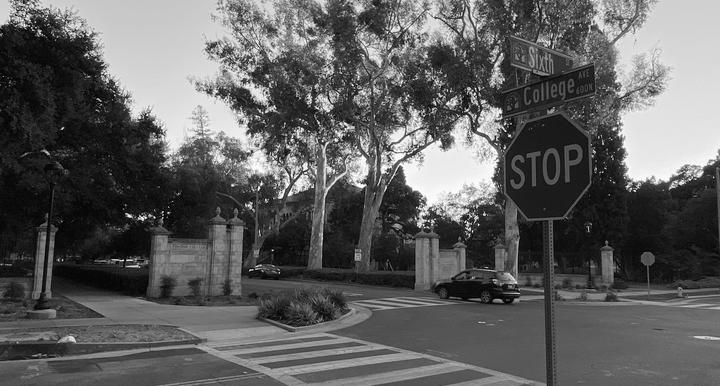
Another collision involving a 7C student occurred this Monday, Sept. 22, at the intersection of North College and Fourth Street, according to CPD.
A male student on an electric scooter collided with an SUV at around 4 p.m. earlier this week, according to a CPD statement.
“The
direct calls from 7C students who report crimes and other issues.
“Campus Safety does not make arrests, issue tickets or take police/
TOMMY MATHEIS • THE STUDENT LIFE
The SUV driver asked the student whether they needed medical assistance, which they declined. An hour later, the pedestrian reported the incident to Campus Safety.
pedestrian did not have information on the vehicle or driver,” Handel wrote.
Handel stated that CPD responds to calls from Campus Safety, as well as
number of times CPD responds to incidents at the Claremont the year,” Handel wrote.
BIANCA MIRICA
KAHANI MALHOTRA
Audited private gifts and grants to Pomona College, FY2015–FY2024 (reported in millions).
ANDREW YUAN • THE STUDENT LIFE
Two separate collisions involving 7C students occurred in the same week on North College Avenue.
Community and art at Walker Beach’s Mom Said Flea
If there’s one thing 5C students love, it’s spending a Saturday afternoon strolling around Walker Beach with their friends, browsing through piles of vintage clothing, handmade jewelry and irresistible baked goods. On Saturday, Sept. 20, this year’s first flea market offered 5C students a welcome study break during the onset of midterm season.
Speakers played upbeat music as hundreds of students wandered around over 60 vendors’ tables set up across the grass, stopping to browse when something particular caught their eye. Vendors, both students and local business owners, sold everything from thrifted bags and vintage clothes to organic juice and henna tattoos.
While a flea market is held every month at Walker Beach with solely student vendors, this event stood out in size and scope due to its collaboration with the organisation Mom Said Have Fun (MSHF). MSHF is a creative business that helps build community through promoting vintage resale. They organize flea markets, estate sales and popups that encourage creativity in communities and colleges nationwide. Most recently they hosted events at Cornell University and the University of Southern California.
Roughly two years ago, organizers Sebastian Alvarez, Gary Phan, Danny Lokko and Danh Tran started Mom Said Have Fun while at college together. The founders envisioned their business as a way of building something lasting. They began with pop-ups at Cornell, where Alvarez, Phan, and Lokko attended, and kept going from there.
“The name [Mom Said Have Fun] is a playful reminder that life is short, and even when you are building something serious, you should never forget to enjoy yourself. Our moms are amazing role models; they teach us to work hard, be kind, and have fun along the way,” Alvarez said.
“Our mission is to create spaces where people can feel good, connect with friends and celebrate creativity.”
Attendee Dylan Zulueta PO ’27 raised the idea that flea markets could offer students a new perspective on consumerism. She appreciated some of the stalls’ efforts to donate funds to community organizations and those in need, such as the mu -
tual aid matcha stand. Zulueta also noted that supporting your friends’ small businesses feels like a more rewarding form of shopping.
“I think it’s a really fun way to do consumerism in a more personal way. You get to shop [for] clothes and jewelry, but it’s even more fun than normal because you could be supporting your classmates or friends,” Zulueta said. Student and local vendors showcased creativity and skill in a variety of handmade crafts at their stalls. For example, Mayerly Gomez, a Spanish Language Resident at Claremont McKenna College, and Yeylin Mendoza Esquivel PO ’27 sold colorful crocheted animals, including bees, cats and octopi. Other stalls showcased vendors’ culinary talents. Stephanie Li PZ ’28 combined her passion of baking with her love of Matcha at her stall “Macarons and Matcha.” Li described how she was inspired to sell macarons by a bakery in her hometown. In designing her stall, she added pink and white accents as an
homage to the aesthetics of her hometown bakery.
“Ever since I was a kid, I loved looking at the beautiful displays [of macarons] in this [bakery],” Li said. “One thing I didn’t like about [the macarons] was that they were too small, too sweet and too hard. When I finally learned to bake, I decided to make macarons that were bigger and less sweet.”
For student artists and entrepreneurs, Walker Beach flea markets offer students a valuable opportunity to showcase their small businesses. Noa Baghdassarian PZ ’28 was one of dozens of jewelry sellers at the market. She shared that these events help her expand the small business she started last December, Jewels by Aurevine.
Baghdassarian’s display table drew crowds of enthusiastic customers, eager to browse through her intricate, colorful necklaces, adjustable flower rings and beaded bracelets. While she originally began making jewelry at the age of 10, Baghdassarian recently rediscovered the hobby after getting
a jewelry-making kit for her 19th birthday. “I try to make something for everyone. Personally, I like gold jewelry, and I’m kind of a dainty feminine jewelry kind of girl, [especially] flowers,” Baghdassarian said. While flea markets at the 5Cs do not typically feature local vendors, part of what makes MSHF so special is that it brought in small businesses from the Claremont community.
One of these local vendors, Kamal Virdi, has been doing mobile brows and lashes for several years, and recently expanded to henna tattoos.
“I feel like stencils offer a different variety,” Virdi said. “You can get something fun and have it be gone in a week and you don’t have to commit to it.”
From Baghdassarian’s jewelry to Virdi’s fresh take on stenciled henna tattoos, many students were refreshingly surprised by the range of vendors.
Attendee Leo Yu CM ’26 was excited to find a variety of things that caught his eye.
”It’s really impressive. There
are a lot of resellers and merchants from the community that are really nice quality.” Yu said. Of all the 60-something vendors laid out across the lawn, Mulan Pan PO ’27’s pet paintings stood out for their unique artistic style. Pan began painting pets over the summer and decided to continue with her new hobby. She shared that the flea market was a chance for her to engage with the larger artistic scene at the 5Cs.
”Over the summer, I was doing a lot of pet drawings for friends, of my own cat and dog, and there was a local farmer’s market. I realized that I really liked being able to draw people’s pets, get tons of cute animal photos, and capture a bit of their life,” Pan said.
Amidst digging through piles of clothing, perusing hand-printed posters and receiving a tarot card reading, students took part in a larger effort to build community amongst 5C students. The flea market highlights the amalgamation of passions and skills present in the Claremont community, where students can unwind, foster friendships and embrace the local art scene.
Devotion, a pinch of mystery and sold-out The Weeknd shows
The glow of my laptop illuminated my features perfectly, exhaustion written under my eyes, hands furiously typing in my card details into the checkout box. There I was, adrenaline pumping through my veins at 6 a.m., as my roommate’s alarm started ringing. It didn’t distract me, no, not at all. I was determined to win the greatest modern battle known to mankind: The Ticketmaster War. My breath came shallow, my
“I can do this,” I whispered, a mantra against the spinning wheel of doom, as show after show blinked
came immediately: Your order has been registered. Only then did I exhale. I had survived! I had won!
I should’ve collapsed into sleep, but instead I sat there grinning in the glow of my inbox. I wasn’t just going to see The Weeknd — I had won entry into an experience that thousands of other fans were
Abel Tesfaye (The Weeknd, for those who are uneducated) appeared in 2011 as a faceless voice uploaded to YouTube: aching falsetto, woozy beats and lyrics steeped in lust and loneliness. There was nothing, no explanation — just music that felt like it had bled out of the night. That anonymity was the spark. To be XO (the name for our fandom) in those early years was to be in on a secret. Sitting there in the morning hours, my body still shaking, a certain question arose in my mind: How does this happen? How does a voice coming through your headphones turn into something you’re and your card limit for? When
does listening slip into devotion?
This is the heart of fandom. At its simplest, fandom is a community of devotion — people united not just by taste but by ritual, by language and by how an artist’s work weaves itself into their daily lives. It’s more than listening to songs or watching shows; it’s forming an identity around them.
Sociologists describe fandoms as “affective publics,” groups built on shared emotion that ripple outward into collective action. Psychologists call it parasocial intimacy: a one-sided but deeply felt relationship we develop with artists who seem to speak directly to us. But to fans, it doesn’t feel like theory — it feels like home.
Fandom is what turns music from sound into experience. It’s the reason people camped outside stadiums before The Weeknd’s concerts or refreshed Ticketmaster until their hands shook. It’s about belonging. The anticipation of seeing my favorite artist, the thrill of the live show and the suspense of waiting for intense emotions.
Biochemically, these moments light up the brain’s reward centers. The surge of pure joy and relief I felt when I saw “order
my system. Researchers note that this kind of positive reinforcement loop encourages us to dive even deeper into our fandom. No wonder we keep lining up (virtually or in person) for more. Every album release, every surprise announcement or ticket drop, becomes another chance for that
Still, there’s a deeper meaning to the term fandom. They are born because art refuses to remain silent inside us, instead
demanding to be echoed, carried and shared. A song breaks something open in your chest, and almost instinctively you search for others who felt that same shiver, who heard their own lives refracted in the lyric. That is the spark. Fandom doesn’t begin under stadium lights — it begins in solitude, when a private feeling grows too vast to be held by one person alone.
From there, fandom gathers shape, ritual and language: listening to the artist’s entire discography until you memorize every lyric, buying limited edition merch items and trying to understand the symbolism woven into every project. The artist strikes the match, but it is
The Weeknd’s fans don’t just consume music; we enter a world where nothing is fully explained. That’s the genius of this fandom: intimacy born out of distance. Abel doesn’t hand us neat answers. Instead, he leaves space for us to build meaning, and through that act of co-creation, we form an unshakeable bond. The passion and engagement blend into something magical. There’s a distinctive electricity in the air at a live show, a kind of communal euphoria that’s impossible to describe — thousands of voices singing the chorus to “After Hours” in unison, or an entire stadium erupting when The Weeknd says, “This is for the OG XO fans.” In those moments, every individual in the crowd is part of one body, moving as if it shared a single pulse. The barriers between strangers fall away; you lock eyes with someone you’ve never met and scream the lyrics together. Social barriers were nonexistent
NERGIS ALBOSHEBAH • THE STUDENT LIFE
because a sense of belonging among everyone existed. I wasn’t a stranger — I was a part of it. I screamed until my voice broke, sang lyrics I had memorized, and when my eyes caught someone else’s across the pit, it wasn’t awkward. It was recognition. For a few hours, loneliness had no grip. That’s what fandom does — it dissolves the edges of isolation. It takes the private intensity of listening alone in your room arena. It’s not about escape; it’s don’t take you out of yourself; they drop you deeper into who you are in a room full of others who are doing the same. You come away altered, not because you discovered the artist, but because you discovered yourself refracted in a thousand other bodies. When The Weeknd sings about the hollow glow of nightlife, the emptiness in desire, you feel less haunted by your own shadows. The fandom is born in
that moment — when recognition demands witness.
And so fandom isn’t just devotion to an artist — it’s a survival mechanism. It’s how we metabolize the feelings that otherwise stay stuck, how we move them from the inside out. It’s messy and irrational — why else would anyone stay up for a chance at a ticket? But in the end, that irrationality is the point. It’s proof that we still hunger for connection strong enough to drag us out of sleep, out of solitude, out of ourselves.
In the quiet after the last encore, I think about that 6 a.m. glow, my exhaustion and my desperation — and it all makes sense. I wasn’t chasing a concert. I was chasing being impossibly alive.
Bianca Mirica PO ’29 believes in three
ANANYA VINAY
TERESA CHANG • THE STUDENT LIFE
each.
BIANCA MIRICA
Nurturing creativity with Professor Armendinger
Armendinger eventually
tice and community engagement.
ative inspiration anywhere from a checkout line at a co-op grocery a lifetime of producing his own poetry, Armendinger learned acreativity. For even the weariest of poets out there, the advice he has newest masterpiece.
working there, which is very sad,” Armendinger said. out to Armendinger is the Olderposed teaching this poetry workArmendinger said. “There was funding for it for a year, which was awesome. Then there was no more committed that they wanted to
While running the poetry work-cery, a worker-owned co-op in San Francisco. Though Armendinger healthcare and additional cash, the grocery store served as a nurand writers who worked there.for his own creativity and teaching competitive universities shy away assumption that small scale opporsuccess. Armendinger challenges how the smallest roles and sidetistic vision. He demonstrates that creative growth doesn’t always come from prestigious platforms, in, transforming the ordinary into
the rest is history.”
lege, Armendinger has instituted a playful, physical and sometimes a little daring approach. He poetry, composing in his head he encountered. He walked near homelessness, using poetry to things that my students do,” to respond thoughtfully to what they create, try to create containin ways they might not otherwise and introduce them to writers important to me or might help them discover other parts of themselves as writers.”
His search for creative inspiration is rooted in movement and
traditional idea that writing has suggests that creativity can thrive when we open ourselves to the world around us.
and his early teachers for cultivating creativity. He recalls a sort -
pictures. Armendinger rememreality through poetry, a novel and inspirational sensation. practice over perfection, a philosand revolutionary in a world
“Show up,” Armendinger said. “Work those muscles to play with language, to stretch what it’s
that the more one does things, around them.
makes me wonder: in such a ourselves to slow down? May-
phones for a walk, listening carefully to the hum of a street or allowing silence to stretch a -
argue that inspiration isn’t hidpast, and that slowing down is act of writing, even when it feels mundane, is training the mind
ration isn’t a rare commodity;
ness, patience and persistence, rewarding those who keep their hands and minds active. When asked what advice he laughed heartily.
said. “Something that feels aimless and meandering right now will lead you somewhere meaningful eventually. There is no perfect decision. Just start doing something, and you will make something out of it. Take still taking chances, still showing up and still discovering new ways to connect students, strangers and even himself to poetry.
people’s creativity.” And if that isn’t an inspiring way to live, it’s hard to know what is.
Confessions of a Tom Cat
In the last column I wrote before the end of the semester, I was heavily contemplating whether or not I should confess my romantic one hand, if things worked out, we would have the perfect amount of face-to-face time together before summer break.. Then, we could spend the summer months making sure we still liked each other after some time apart. On the other hand, maybe I would confess, he would be disgusted, tell everyone he knows that I tried to hit him up, and since we live together (suitecest …) everything would be awkward and I wouldn’t be able to enter the common room for the next month.
However, after lots of conversations with my friends, a few Substack posts and a detailed pros and cons list, I decided that I would be more miserable not telling him than if I did. I attempted one night when we were both conveniently walking back from the gym at the same time, but of course, there were people walking three feet in front of us. I made the conscious decision not to bring anything up, delaying my master plan. That next afternoon, he walked me to my class, and I stopped him before I went in. I told him I had something to tell him, but I freaked out (as you do) and came up with some bullshit response instead. Discouraged, I was just about to give up, pack it in and let it go, but then I thought about how I had a lot of things happening in the next few weeks. I knew that if I didn’t do it today, I never would. In a lasthim one last time and asked him to meet. At about midnight on April 15th, we met outside at a park bench and sat down. The perfect scene for my epic confession.
For some reason, even though what I wanted to say was on the tip of my tongue, I was paralyzed.
We sat in that weirdly awkward state, where, no matter what I did, I couldn’t get the words out of my mouth. That not-so-blissful, mostly silence was occasionally interrupted by me asking some random questions to make me less nervous.
About 50 minutes into our awesome silence session, he tells me that he knows how I write my thoughts in my notes app and
I daydreamed about me dramatically reading my confession letter while fireworks went off in the background, jazz music playing faintly from a distance, maybe even an audience clapping. In another version, it’s pouring rain, yet there is not a single umbrella in
sight, and I shout my confession into the storm while he grabs my face and kisses me like a movie scene. Instead, at the hour mark, we return to reality, with me asking him, “Would it be super lame if I handed you my phone and let you read what I wrote instead?”
And that’s how the confession happened. I put the phone face down between us. He reads. Complete silence. He takes a breath, looks me dead in the eyes and says, “Thank you for telling me.” Quite the climax. At this point, even though I should of the Earth, I felt strangely happy. I know that anything that follows “thank you for telling me” is not what I hoped for, but for one reason or another, I don’t feel like hurling myself into the void. Instead, the weight is tell my friends over Sunday morning Scripps brunch. He continues to tell me that I’m his favorite person he met that semester and that he enjoys hanging out with me, but he’s “not looking for anything serious right now.” I said, “Awesome,” which was my own way of saying, “thank you for being honest, I’m disappointed, but relieved that the air was cleared.”
We went back inside and talked a little more. The next day, after sitting with our thoughts for a bit, we asked each other questions about the whole situation. It can be awkward sometimes, but other times it’s easy. He was patient, kind and he remembered small details that made me feel seen. The strangest part was how normal everything felt. Ironically, after all that, nothing cinematically profound happened. There was no kiss, no passionate love confession in the rain, no “you don’t know how long I’ve been waiting for this.” He didn’t even really give me a reason to move on. He simply gave me the truth. Either way, I wanted to share the fun (and extremely embarrassing) story anyway. Because at the end of the day, I learned that telling someone the truth doesn’t always ruin things. Sometimes it just makes for a “silly thing that happened that one time.” And maybe that’s the big lesson I learned. I still like to tell this story at Sunday brunch. It’s a little embarrassing, very vulnerable and a lot human. It sometimes makes me want to scrape out my eyes and eardrums with one of those really wide Frary spoons, but it also makes all of my friends spin around with glee and anticipation. So I persist.
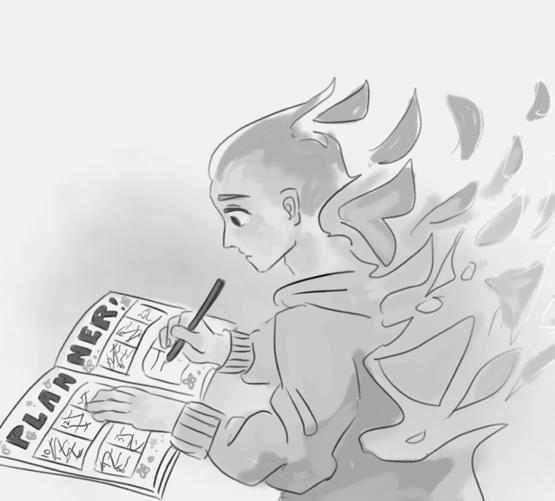
Navigating between policy and community within ASPC’s first-year elections
On any given day, they don’t stand out. A student rushing across Marston the crowd with the urgency of someone late. They look like anyone else — caught in the rhythm of deadlines, dining halls and the lively hum of campus life. And yet, this fall, two ofna’s newest elected freshmen repreand South Campus Representative. Transforming the passing convercoursework, frustrations with dining, into policies is no small charge, and voices shape now rests with them in
life. As the elections commissioner attions, highlighting their importanceis an opinion writer for TSL.
“[Candidates] are, in a way, thrust
and deadlines. The newly elected representatives sat down with TSL to in student government.
First-Year Class President
president, a position he initially pursued with hesitation.
out there too much, and it didn’t make sense to run for a position the time],” Hadi said. After encouragement from friends in the Lyon dorm, however, Hadi decided to give it a try. Hailing from Cherry Hill, New
nomics and psychological science. A month into the semester, Hadi hasting with friends on the Sontag roof content in the TSL newsroom. wasn’t new for Hadi. His openness he carried through high school, where stepping outside his comfort
“Whether it was dressing up like and leading the student section or standing up for my school district
year students feel welcome. found ‘your people’ or you don’t should feel like you’re surrounded and welcomed,” Hadi said.
Often, first-year election campaigns focus on cultivating an enon the key issues raised during the election, Election Commissioner of a strong platform dedicated to cultivating a welcoming community within the freshman class.
“This is a crucial time for forging
tunities for the class to get to know one another.”
Hadi has already connected with planning events, focusing less on parties and more on simple gather-
South Campus Representative
gets, fundraising and working in a credits his father for his compassion and determination.
how he approaches the Senate. areas to make sure South Campus is the opportunity to come in with new our community.” When he’s not working on policy, Lounge inventing new South Campus traditions.
life sweeter in more ways than one. Soren wants to introduce a mid-
over food from lunch and sold it to -
for free if they need it late at night
“Euchre mac and cheese parties dorms every week,” he said. “We play the Euchre card game while eating Anne’s mac and cheese. Only allowed on South Campus.”
Canvas deadlines and late-night Coop runs — politics is happening all the time.
BIANCA MIRICA
DANIELLE LAM • THE STUDENT LIFE
TOM CAT
PJ JAMES • THE STUDENT LIFE
SIENA GIACOMA
COURTESY: POMONA COLLEGE
Arts
Neon signs and secret notes
other ran deep.
Malinda Lo’s “Last Night at who has lived in Chinatown her whole life and is unaware of the world outside it. Her senior year to Lily’s life, things she never -
white girl at school named Kath and sneaking out late at night to cigarettes. She isn’t acting like the “good Chinese girl” her mother
Lily and Kath get put in a group together for a class, and a connecThey are the only girls in the advanced math class. Lily listens admires Lily’s dreams of going to space. They share shy conversations at school until, eventually, Kath introduces Lily to the TeleWatching Kath and Lily’s romance grow felt so innocent and for Kath was so heartwarming.
Kath gave Lily the science magapassed secret notes through their her feelings in the dark and unfamiliar streets of the city.
the glimpses into their friendship showed that their love for each
clear Shirley wasn’t a very good friend. She’s always the one calling the shots and disregards Lily’s feelings. Often, she’d string an unwilling Lily along, What irked me most was seeing Shirley so disgusted at Shirley to comfort her distressed friend. My disappointment was
Lily. Returning to Lily, it was enthralling yet painful to worlds. The author, Lo, does an world containing Chinatown, Lily’s family, and all she’s evericating world where girls can girls. The former is familiar and living a lie — something Lily opens the door to so many pos“China doll” and “oriental.”
accepted, always marked as the space or the only gay girl in a Chinese space.
ley and Lily’s parents find out
is furious, and Lily ends up sleeping on someone’s couch
her — scared for her to lose
girls slowly fall in love until, at the end, they are ripped
er — an upsettingly common trope. Lily is forced to move happily surprised to see them reunited a year later. Despite the time that has passed, their
from other characters’ perspecmom, dad and aunt’s points
veloped characters. We see her parents meeting, as well as her dad moving from California to
spend enough time with their characters to understand their perspectives.
never actually committed to one. “Last Night at the Teleplacing me directly into Chiinfusing historical fiction into
characters involved — something rare for me in romance novels. Malinda Lo gave us tragic, a history that refuses to refuses to disappear. For those your time!
Crafternoon event offers a look into the Pitzer Student Garden
Do you have special aspirations to imprint the shape of a kumquat on your newest pair of thrifted cargo pants?
Look no further, because the Pitzer Student Garden has just the event for you.
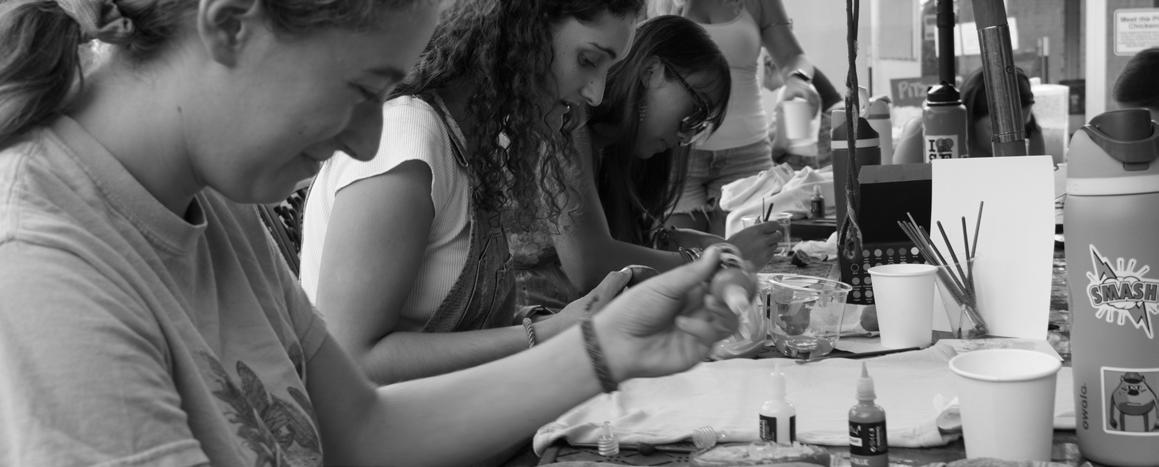
Last Friday, Sept. 18, the Garden was humming with vitality as students gathered to create prints with the Garden’s own fruit. Chatting over limeade and popsicles, attendees covered cardstock and old clothing with organic shapes derived from bisected kumquats, figs and limes at the Garden’s semester. Students basked in the Garden’s creative, relaxed energy, wandering around and chatting with one another as they crafted. Many said they were drawn to the event by the unique and sustainable fruit-printing technique.
One attendee, Penny Messenger SC ’29, explained that she had been making a scrapbook collage and wanted to add to it by putting in some fun, eccentric prints. Once she arrived, she was impressed by the warmth of the community.
“I like how everyone is taking time out of the day to do something not related to school and to be mindful. It’s a really nice community, ” Messenger said. Outside of “Crafternoon” events, the Pitzer Student Garden has a large presence on campus. Founded in 1994, the garden spans about 12,000 square feet and is tucked just behind Pitzer’s Mead Residence Hall.
Situated directly next to Pitzer’s beloved Grove House, the Garden has long had a symbiotic relationship with its neighbor. The Garden provides fruits, vegetables and eggs to Pitzer’s student-run cafe located within the Grove House. In return, the cafe sends its compost back to the Garden, where it is turned into soil for the plants and hens.
Outside of this symbiosis, the Student Garden and the Grove House frequently collaborate on larger-scale events. Throughout the fall semester, they host open houses and concerts, drawing in crowds from all over the 5Cs. Every spring, they host Citrus Fest, of citrus treats, hands-on garland crafting, printmaking and guided tours of the Garden’s operations.
Three student managers work to oversee Garden operations, managing the numerous 5C students who tend to the plant beds three times a week during what the Garden dubs “Power Hours.” Additionally, 14 trained students, dubbed “Chicken Tenders,” care
When volunteers aren’t busy stringing together citrus garlands, collecting the chickens’ eggs or dancing through the plant beds, cultivating the Garden’s ecosystem. One of the three Robert Red-
ford Conservancy Student Garden Managers, Mia Teicher PZ ’27, sat down with TSL to discuss all the behind-the-scenes work that goes into the Pitzer Student Garden.
“The way I like to conceptualize the Garden is as an educational community hub for people to connect to a hyperlocal food system, get their hands dirty, learn through collaboration and connect over shared values of cultivation, stewardship and knowledge sharing,” Teicher said.
What the Garden lacks in size, it makes up for in creativity and intention — each student volunteer brings together they practice regenerative agriculture, drawing inspiration from everything from GE biology classes to Indigenous knowledge.
“It’s really fun to have people come into the Garden who have these interests and super niche agricultural practices,” Teicher said. “I heard that planting this plant will keep away the pests from this [other] plant. I was like wow, that’s an incredible thing to know — let’s test it out!”
This semester, the student managers are pioneering a new initiative in the community Garden: “rent-a-bed.”
folks are welcome to take control of a plant bed for free and cultivate anything they want within it. The managers described this program as a big experiment, but also as an open environment for people from across the 5C community and beyond to think critically about their food systems.
“I like to think of small-scale agriculture as resistance,” Teicher said. “We’re never going to feed the world with small-scale regenerative agriculture, but spaces like this that also serve as community spaces for people to come make art — to me, that feels important right now, to have these spaces where you are going against these dominant economic models that are destructive.”
Many students find themselves becoming Pitzer Student Garden eneach week. As a self-described aspiring gardener, Daniel Sanchez PZ ’29 has appreciated the energy that all the volunteers bring to each event they host.
“It’s the pleasure and happiness that people have when they’re here,” to have a certain vibe — they’re here because they want to be here. They’re just naturally happier.”
Strolling through the Garden on a tranquil Friday afternoon, it’s not only the plants that look regenerated — students, faculty and local Claremont gardening-enthusiasts chat and laugh together as they craft. As vibrant as the Garden community already is, Teicher stressed that they are always looking to welcome more volunteers to the team.
“We love as many people here as possible,” Teicher said. “We just want people to get involved. It’s a space for everybody — come pick the fruit!” Students can find weekly volunteer hours on the Pitzer Student Garden’s Instagram, @pitzerstudentgarden.
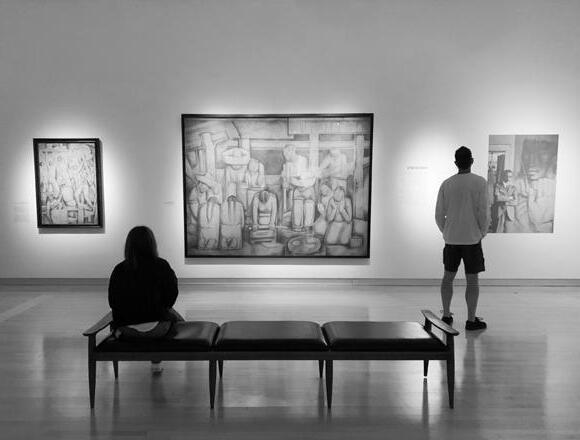
Williamson Gallery exhibit illuminates political history of Mexican muralist Alfredo Ramos Martínez
million people, many of whom were
HSU
NADIA
Tucked away inside the gates of Scripps College’s Margaret Fowler -
women are set against a serene rural
works: decorative, folkloric and largely apolitical.
Scripps’ Ruth Chandler Williamson
Williamson for the show’s opening, spilling out into the gallery’s courtyard rancheras music.
Stern Fine Arts, an art gallery in West Hollywood that represents Ramos
eight years researching the artist and working on a catalog raisonné — a comprehensive, annotated list — of his works. The show is divided into four
a show that spoke to something she was seeing in the work, which was a
racial violence and war,” Williamson
drawings and paintings, the walls of the gallery are also printed with The thread of his personal history carries through each section, as do
is a collection of recently discovered works that illuminate the artist’s polit“My purpose here was to recast the legacy of the artist as much as possiactually a lot more political than is normally thought, and a lot more muralists.”
Angeles — the cities in which he lived and worked.
section, the monumental “Mural Concept Study (Los Tortilleros/The men and women making tortillas.
preciated how the drawings spoke to “unity, community, solidarity and work, and what goes into work, what goes into creation. You know, the creation of communities and cities…those workers creating a skyscraper, the ladies making tortillas up and holding each other.” as a collective they create,” Leonor continued.
the Los Angeles Times. The Times, according to the campaign of mass deportation use of the newspaper was a pointed confrontation of the program, which targeted and displaced around two
tation as several of his outspoken contemporaries. “There was … a desire to set [Rafor these more politically vociferous The Williamson’s reappraisal years later, comes in the wake of a Angeles area.
in the spring and intensified in June, sparking protests across Los Angeles. Curtis spoke to the “eerie echoes, at the time that we were creating right now.”
volved “looking at the relationship for the colleges and for the citrus history.”
and the moment that they arose out
mas” prompts students to take anothand to consider the histories that they
BOWEN XU • THE STUDENT LIFE
OLIVE ENG
MEIYA ROLLINS • THE STUDENT LIFE
KASSIA ZABETAKIS
On Sept. 18, community members gathered for a “Crafternoon” event.
NADIA HSU • THE STUDENT LIFE T his fall, the R uth Chandler Williamson Gallery unveils a new exhibit.
‘The
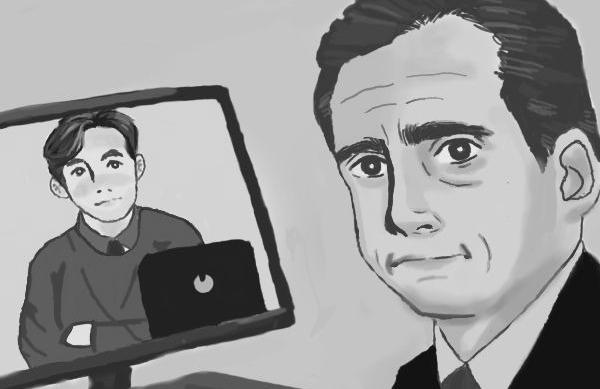
Paper’ is good, but ‘The Office’ remains untouchable
Making a successful spin-off of “The Office” is a seemingly This year, loyal fans eagerly which premiered on Sept. 4, andwhile comparison. The show takes place within the same fictional universe and follows the produc-
decessor. There are long, emotiveward silences that serve as punch lines, sudden pans and moments with no particular significance shared amongst total strangers, has ripened into familiarity. Amidst wildly stimulating television with dystopian futures,glomerates and sprees of murders,ue to capture our hearts —and represent something much more
intimate.
eration. We grew to love the characters, overcoming the show’s wall of irony to understand them
ceives her pregnancy test and we are far too emotionally invested relationship of Jim and Dwight.
chael as a character. As someone who initially made me roll my eyes with his off-putting and ignorantly misogynistic remarks, he suddenly meant so much his slapstick humor and inheralso perpetually lonely. We can all resonate with Michael’s feelings of isolation, coupled with America always seems to evoke. an unwavering supporter of of her paintings depicting their
a human slowly crept into view.
already learned too much that grounds them within the realm characters seem too scripted and polished — it’s simply unrealistic
folding workplace personalities. sweetly mundane charm, it has develop its characters into ful -
knew that as a highly anticipated show, they have something to prove. From the start, there’s an risk facing accusations of having two-dimensional characters. However, this comes at a cost. They have already lost a key element of comical regularity, and the slapstick humor falls too closely in line with other mainstream television series.
We all have throw-away days — hours on hours of classes,
of school, the moments that stick small and insignificant — an random person in my class, the through a classroom. “characters” of my mundane
of a person in passing. Just like our understanding of characters
Similarly, the managing edtime, who she truly is will hope
sion. All of a sudden, one day, we once despised. it’ll have captured the essence ofunderstand the passing characters in our lives. not only through each individual through the lingering romantic relationships that had all of our eyes the artistic and comedic value of one of my favorite television couending. They represent, with much represent the kind of love that
on a crush whose mutuality is prolonged uncertainty of love that conceal. This romance is not portrayed through shouted gestures and lingering smiles, the incidental apparent reason.
and for what follows these mohowever, the parallel couple Ned and Mare share their first kiss completely lost its element of thefor me. Although still engaging, it simply doesn’t resonate. the truth is — there’s something of normalcy pale in comparison
heights, it’s going to have to slow
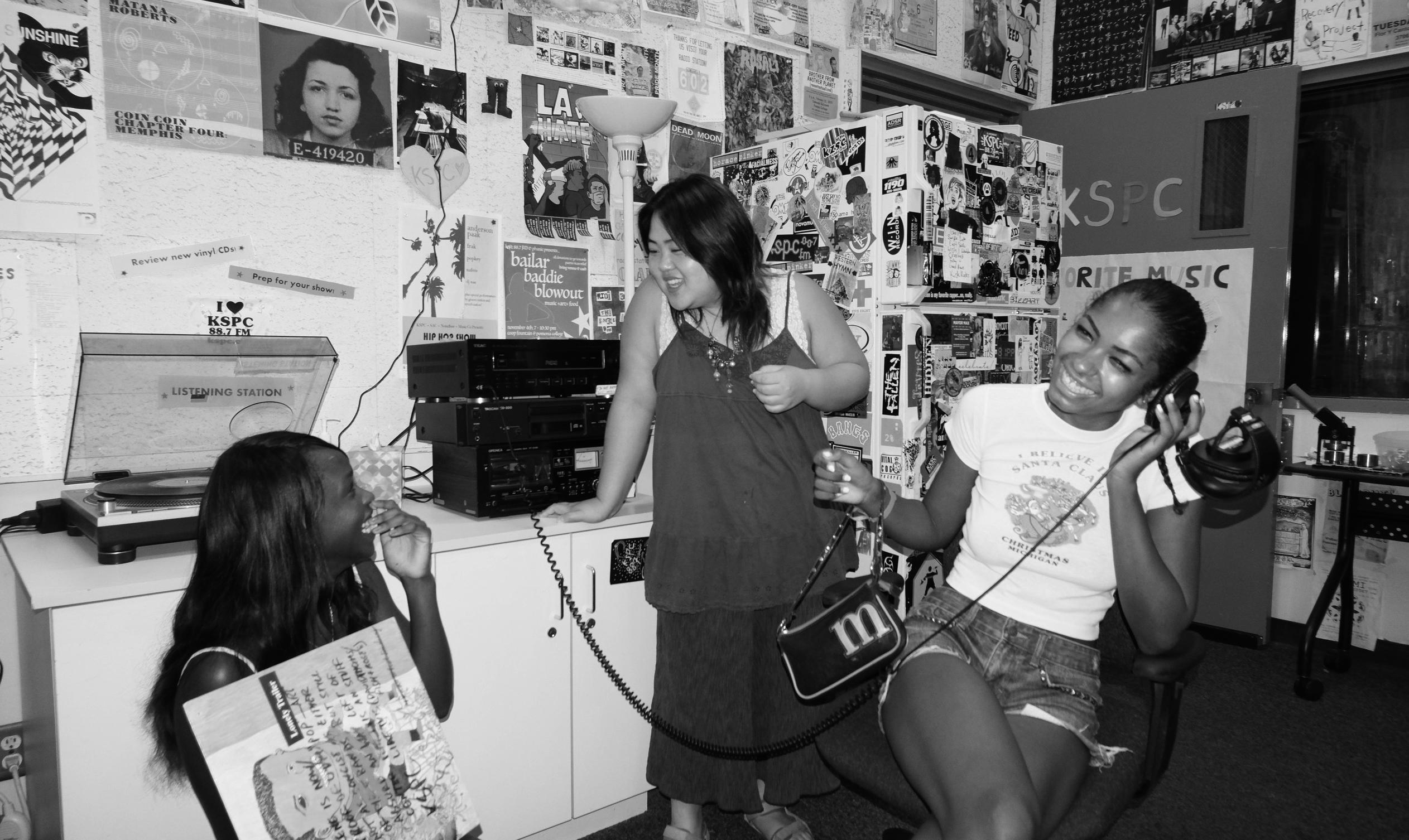
Step into the studio: KSPC welcomes underrepresented voices with BIPOC mixer
feel the souls of people who really cool feeling.”
Every day, students walk the same sticker plastered across Claremont.” From the memoradio station has always had an first of many events they plan to host this semester to further their volunteers filtered in and out of the radio station for an afternoon of music and conversation. Stepping down into the radio
posters of varying shapes and the walls. Moving through the of windows that connect different chaotic yet comforting, its walls screaming at you in a somehow soothing way.
-always wanted to check it out,
vinyl records as she chatted withcited to discover the space for the first time.
— there’s so much life here, and like such a mesh of so many dif -
part of a larger string of efforts community into the student radio scene. Throughout the
and different affinity groups hosted a marathon of movies
has stepped up to the role. As the newest outreach director many of Choe’s past events as she works to connect with moredition to continuing the movie
marathon and other events with with a wide range of other af-
ment is uplifting underrepresented artists, and we feel strongly that [our staff] here
in more volunteers in general, volunteers.”
aims to serve the whole of theTra and Choe stressed that theirtation in the radio community statement and purpose.
this event to get more people of color out,” Tra said. “There’stion], that means you only go to affinity groups to feel a certain in a way that is very isolating as there are other spaces for you to go.”pus serves as a point of connection for different communities across Claremont. Almost all of the staff, from DJs to student teachers, are volunteers. Choe curate a welcoming environment for everyone, including the alumni and local Claremont folks who come in regularly to do shows.the eclectic, perfect chaos of the station’s decorations. After lasttinian flag displayed at the Motley Coffeehouse, many students of retaining spaces on campus where students have creative control over what goes up on the walls, as well as what’s on air. spaces and give them to students in and of itself is a form of resistance,” Choe said. “Especially censored.”
stations, characterising government funding for local media as unnecessary and outdated. With uncertain, Choe reflected on the and institutional supervision.
eral decisions, it’s very important same time, we have this space … There are [times] where the institution needs something from want to do as a station.” As political tensions continue volunteers like Choe and Tra are increasingly aware of the importance of keeping the station’s spirit alive.
where people of color feel welChoe said.
YOUSIF LOAE NAJAT & CLAIRE WELCH
MAGGIE ZHANG • THE STUDENT LIFE
AUDREY GREEN
AMRITHASAI GUSSENHOVEN • THE STUDENT LIFE
In 1999, at the premiere of her bared her unshaven armpits — and kinds of vicious comments about her “unkempt” nature.
Today this seems ridiculous. The tide of body hair has progressively turned, especially among young liberal communities. At thedom and feminism windfall hasn’t
Marginalized groups, particu-munities, enduringly face stronger body hair prejudice, while white, cis women declare victory. It’s up to us, in our present moment of anywhere, acceptable for anyone. display, a shaved armpit was truly scandalous. Beauty standards for much of the modern era have emphasized the necessity of hairlessness for women. Women were, and still are, encouraged to shave their legs, armpits and any part of their body where hair naturally grows. Since the early 20th century, lack of hair has become synonymous with the ideal body and was essential for women in particular.
This was by no doubt a product of the capitalist patriarchy which purposefully produced an image of women designed to suit men’s desires in order to sell women the necessary products to maintain this image. For example, in 1915,
It all started when I came across a clip from Fox News. They aired a segment where an anchor from New York was sent into the “progressive hellscape” of Seattle to speak with residents about the city’s alleged increase in crime rates.
The studio’s introduction to the clip laments residents who “mocked” Fox’s assertions about the city “spiraling out of control.” The casters at Fox weren’t stupid: Despite online commenters praising the seeming lampooning of a ridiculous narrative, Fox was winning. In weaponizing ideological buzzwords, Fox was able to frame the interviewees in dissent with their narrative as ignorant. Suddenly, people who literallyble of giving testimony regarding the state of crime in their own city, simply because they were labeled as Democrats. Both sides here could have shed some light on the complex issue of crime in de-policed and Republicans both think the other is just plain stupid and therefore used the opportunity to wage an ideological “I-know-you-are-butwhat-am-I” war instead.
In our hopelessly partisan world, the compulsive assignment of ideological labels to people, regions and social movements has completely destroyed the possibility for productive discourse, politically hobbling the country’s constituency to focus on the meat of American politics: real societal issues and policy solutions. Democrats, supposedly on the side of speaking truth to power andpublicans who purport to uphold traditional societal roles. Amidst this distraction, these solutions become further out of reach as wealth
Do you make plans with someone knowing that you will wind up making up an excuse to get out of knowing you will inevitably have to ditch your other obligation when be at your friend’s party with the intention deep down in your heart minute because you’re worried you
I know, I’ve been there too. Afterone around you is doing it too. It has become so ingrained in the rhythm of our social norms that we’ve built hold each other accountable: When you ditch friend one, friend two is waiting there unjudgmentally for you. They get it — sometimes, you just have to #protectyourpeace.
But this flakiness epidemic is representative of how individualism and insecurity is ruining our generation’s chances at real how to be considerate. People have People have forgotten how to care — and that is going to be our downfall.
we are scared. The prospect of a new connection will always be appealing to our human nature, but a new connection also means being vulnerable with someone.
new friendship means we risk failure, thereby facing the omnipresent
Who is allowed to shave?
was part of a larger push by shaving companies to portray body hair as masculine and unhygienic. This narrative remained part of the dominant culture for much of the 20th and early 21st centuries. Especially for those of previous generations, an emphasis on shaving and keeping a hairless body has remained entrenched.
In recent years, young people have defied this norm. A 2016 study found that one in four women under 25 do not shave their armpits, a figure that is likely higher now in 2025.
For Gen Z, this is not shocking. I personally know many women who choose not to shave their body hair, and on any given day on a college campus, one can see this trend in full force.
Even as the culture becomes more accepting of women sporting bewhiskered bodies, it seems that acceptance and permission have largely been extended to white and feminine-presenting women somewhat exclusively — women who otherwise fall beauty standard. I am not criticizing these women; they have a fundamental right to choose not to shave, and our culture should and must allow for that choice.
inist ideas, not shaving must be allowed for all gender identities.
Body hair plays a role in one’s gender expression, but unfortu-
nately, it carries racial and classist connotations. In a study conducted by Breanne Fahs, women of color and working-class women report feeling a greater sense of social pressure when it comes to how they keep their body hair. Due to factors like textural an existing political and social culture that already marginalizes women of color and turns a blind eye to their discrimination, the feeling of pressure to shave one’s body hair is felt much stronger in certain communities.
This is shown if one examines the history of body hair removal: hair removal popularity has shot up multiple times over the course of American history, and these spikes in popularity notably coincide with waves of non-white
Further, hair discrimination has been a fundamental aspect of American discrimination towards Black women, dating back to the forced adoption of grooming and hair removal that began during the era of chattel slavery. This mode of regulation has remained a prominent part of American culture’s mistreatment and marginalization of Black women. It is in those communities that the culture of acceptance for female body hair has not been fully extended. Race is a fundamental determinant of how a woman with body hair is perceived. This feminist movement, as women
any perceived social, political, economic or cultural gains. with shaving because it is almost exclusively us who have the power to force a shift. It is our day-today interactions with one another that give people the comfort — or lack thereof — to sport body hair if they so please. It is our collective perception and acceptance of this phenomenon that will grant more and more people the space not to shave.
To align ourselves with valuesvidual’s right to authentic self-expression, we have an obligation to let people do whatever they want when it comes to body hair.
Still, we have a responsibility to ensure that the developing societal reclamation of bodivoices and discomforts of those who are most marginalized by stigma around body hair are the voices that should inform broader action.
non-ideological revolution, now.
and power become increasingly concentrated amongst American elites and the average American becomes progressively disadvantaged. There has never been a moment in American history when common ground and unite for the
We do not have time for partisan tit-for-tat when the very base of American democracy is threatened. Current discourse promotes an intense, draconian misconstruction of generally non-radical political goals, when regular people just want the world
A non-ideological revolution, now.
ideological spectrum problematic. The two-dimensional spectrum we base the entire country’s operations on is incompatible with effective discourse. Society is anything but two-dimensional. These labels dehumanize the people that use them, erasing human of a rigid, recognizable agenda.
But, you may say, “Why, these labels don’t apply to me! I’m no dirty liberal, I actually identify as an anarcho-syndicalist!” This type of political identity specialization is exactly the problem — our passion for labels sows the seeds for an ever-developing “us versus them” society.
The cultural atomization of the party line into the political spectrum is just a fun way of sowing division across and within party lines. This factionalization results in a political groupthink phenomenon. People get far too caught up in what it means to be a good representative of their tribe,
and ultimately advocate against themselves in terms of policy in the name of their ideology. Once you decide your position, your distaste for dissenting reasoning, effectively making ideological subscription the least productive thing you could do as an ever-learning-and-changing being.
sional political format, people are not encouraged to consider alternatives beyond what their
In fact, the design of the two-party system political spectrum rewards the radicalization of political candidates and fails to serve the needs of the general public. Primary elections have come to be dominated by increasingly ideological and partisan candidates because they gain greater traction among the activist-type voters who are more likely to participate in initial primary elections than the average voter.
Moderate candidates who might represent the majority of citizens are systematically disResulting congressional legislatures produce mass dissatisfaction among voters, yet individual
members see record-high reelection rates.
sociopolitical sphere has made so many missteps that it feels as though salvation in this realm is far gone. We must engage in a mass movement for the reformation of political thought. Abandoning ideological labels would allow us to shed the predetermined judgments we have about other people based on how they identify. It might help us learn to recognize the fact that oppress ours.
With that recognition, we need to find basic common values for all. We have the power to rebuild moral law without devaluing other people’s wants, needs and perspectives. As the country’s population grows, we have to radically accept that no one strict moral code can be impressed upon the entire nation.
loneliness of the human condition: that awkwardness depletes me of my precious energy that could be used for something else, like maybe doing work — what capitalism tells us is the most valuable person makes me feel even more misunderstood than before I ever
convince ourselves that maybe time with ourselves, because we know we will never let ourselves down, and of course, it’s easier. we just want to do something else, and because we don’t consider our impact on others: Yesterday I thought I would want to have lunch with friends, but right nowmorrow; my academic goals, and therefore my individuality, come first. Life is short, and human beings are, after all, self-interested. While backing out on something here and there when something serious comes up is understandable, repeatedly not showing up for the people in your life, even in trivial instances, shows them that they can’t rely on you. The daily praxis of care is the foundation of a relationship, and your
that they might need it the most. Framing friendships as emotional labor denotes them as barriers to our “success” instead of pivotal to our wellbeing, upholding the
competitive scarcity-based mentality that capitalism wants us to embrace.
At this moment in history, we need to rely on each other. It is a as it sounds. We have become too scared to be wholeheartedly vulnercaught up in our individual goals to notice that people are dying. People are disappearing into government funded detention facilities. You genuinely never know when you stripped from people simply because of their identity and health is a privilege more than ever.
The reciprocity of community can be life saving; one small “saccan mean them saving your life in the future. The communities that we build from being reliable friends and comrades give us the resilience justice that we dream about. The Civil Rights Movement, Occupy are just a few of the grassroots movements founded on community engagement. It isn’t completely our fault — individualism has been deeply ingrained in American ideology tracing back to our colonial histories on the frontier. White Americans started as self-reliant cowboys ideology of God-given entitlement States’s rise as a global superpower, it is inevitable that Americans are going to associate self-determina-
We are in a position in which we get to decide the norms, especially on campus when the bulk of connection and norm-building is done by each other. In this regard, we have a collective responsibility to all women, and those of non-conforming identities — especially people of color — to work harder at deconstructing patterns and systems that do not grant liberation and control over self-expression. We can do this easily. Push back on older generations when they criticize those who choose not to shave. Learn about and confront the racist history that permeates not only in the shaving industry, but the broader beauty industry as a whole. An acceptance of a person’s right to choose whether or not they shave is representative of a broader culture of acceptance towards authentic individualism, a facet we should all strive for.
Alex Benach PO ’28 is from Washington, D.C. and really hates shaving their knees.
In our current predicament, I worry that we will never again hear soothing and unifying concessions being made between party lines, like we saw in the election of 1960, for example. should have left in the 1900s, the humane underbelly of politics should not have gone out of fashion. We must re-value the act of compromise. Especially in the current political sphere, where a majority of polarization is based upon valto insert their personal values into legislation that governs all. I encourage you to stop yourself from aligning with platforms that aim to institutionally force their ideological ideals onto your fellow Americans.
tion with success in the modern world. It’s how White Americans have acted for generations and continue to amass their power today.
Similarly, it is getting easier and easier to stay in our comfort zones. We can have anything we want at our fingertips (Amazon Prime Same Day shipping) and don’t have to take on the terror of small talk with a cashier (contactless grocery stores). With the creation of Google Duplex, an AI assistant is able to call places to make reservations meaning that we no longer have to talk on the phone. We can basking in the privilege of Google’s self-driving cars.
The country’s rapid industrialization gives us more and more time to focus on maximizing our productivity and succeeding in our capitalist economy. We don’t have to face our insecurities that surface with social interaction. We don’t seem to need other people anymore.
But, we can’t forget that the economic success pushed by industrialization and capitalism means nothing if we don’t survive through it — something that can only happen if we show up for each other and retain our collective solidarity.
Capitalism relies on us suppressing our care for each other and only looking out for ourselves; it forces us to use resources that fund billionaires who shamelessly wouldn’t care if we died instead. It relies on making us averse to any sort of inconvenience to the point that we forget how to make sacri-
As a nation, we must realize that there is no overarching “wicked issues” mandate that doesn’t oppress one group or another. Freedom for one set of values mandates freedom for all; otherwise we put discrimination into legal practice. Rather, we need to focus ontion, without advocating against others. If that means crossing party lines or forgoing your subscription to your favorite party’s manifesto, so be it. Before you vote or issue grievances to your representatives, make sure to ground yourself in the freedom-oriented principles of the First Amendment as a representative democratic nation thus far. towards recognizing a future in which we can hold the government accountable and start seeing a legislature that acts in accordance with the needs of the people is found in a mass renunciation of ideology. Does it scare you, the idea reluctance to let go show that we have been conditioned to believe far too much. Imagine a political realm where people advocate under the guise of issues, not factions.
We are all living in this country with needs going unmet. We all want to see progress. We do not need to be enemies. “The revolution will not be televised,” it starts in your mind. Shed your ideology, it’s paralyzing you.
Celeste Cariker PZ ’28 for President 2048.
sets us up to neglect our loved ones in times of need.
Even if you don’t know how much your presence is actually wanted, erring on the side of causigned up for is an active resistance of individualism: A value that the capitalist model needs to make space for. You are proving to the people around you that they can count on you.
There is so much collective power in community, and that starts with simply being a good friend; this means sticking to something you agreed to and agreeing to things you might not always want to do, but will still do as an act of love and reciprocity.
Nothing changes if nothing changes. Show up to your friends’ parties.
life.
ALEX BENACH
CELESTE CARIKER
NICOLE TEH
Nicole Teh SC ’27 is from Hong Kong and has lived in Southern California for six years. To her, friendship and love are the meaning of
SHIXIAO
STEINMAN
NICHOLAS
Senate will reconvene from a short recess with less than two days remaining until they hit a midnightens to halve both essential governat large. Only days ago, President Trump suddenly cancelled a meeting with Democratic leaders in Congress, signaling his refusal to negotiate in order to pass another budget extension — and now, he’s threatening to permanently fire many government employees if his opponents don’t give in.
In the face of this Republican recklessness, Democrats cannot backular healthcare subsidies, reverse the calamitous Medicaid cuts resulting from the “Big, Beautiful Bill” and protect Congress’s constitutional authority to set the budget.
With the news full of stories of political violence and democratic backsliding, the economy already teetering and the Democratic and Republican parties alike being as unpopular as they’ve been in years, the addition of a government Act (ACA) subsidies may seem pointless, or even counterproductive, for opponents of the Trump administration. But Trump’s actions threaten to undermine not just the political foundations of our democracy, but the economic foundations of millions of Americans’ lives. Opposing members of Congress have a responsibility to use this rare moment of leverage to substantively oppose these unpopular overreaches and keep costs down for Americans, even if Republicans’ refusal to negotiate leads to a government shutdown.
The federal government has long had an appropriations process in which Congress approved a budget But, only in the 1980s was it deemed illegal for government agencies to continue their non-essential functions during gaps when the previous year’s spending bill expired without agreement over a new one. Since then, government shutdowns times of partisan division between Democrats and Republicans over government spending, suspending most functions of the many federal departments and causing hundreds of thousands of employees to go without pay.
Government shutdowns do billions of dollars in damage to the economy and disrupt essential services for the nation’s most vulnerable citizens. They are a of government, and it would probably be best for everyone if current spending levels were simply continued automatically when Congress couldn’t pass a new budget in time. -
es still pushing Democrats and Republicans to work together is the fact that leaders who are too intransigent in budget negotiations will be blamed for devastating government shutdowns and lose political support. Since passing more seats than either party has
major concessions in order to get a funding agreement passed.
It isn’t always clear who will be blamed for a government shutdown. In 2013, Republicans were disproportionately held responsible for an unpopular government to block any budget bill that didn’t defund the ACA, which was only
mately, Republicans’ negotiating infighting between moderates and hardliners, and a multi-year budget deal was agreed to which reduced Republicans’ demanded spending cuts and left the ACA intact.
In the 2019 government shutdown, it was congressional Democrats who refused to pass funding for an administration priority after President Donald Trump demanded the inclusion of border wall funding in the new budget. Even though this time they controlled Democrats blocking their priorities, Republicans were once again widely blamed for the shutdown as their internal disagreements spilled increasingly into public view. President Trump eventually conceded that Congress would not fund his border wall, signed a wall-free funding bill ending the funding to barrier construction by unilaterally declaring a national emergency instead.
Yet Republicans actually gained
tives in the next elections following both of these government shutdowns. It seems that the results of government shutdowns do not easily override the broader feelings of the electorate about the direction of the country and the incumbent party, though government shutdowns, even if unsuccessful, can raise awareness of a party’s priorities.
Currently, the Democrats’ primary demand is for Republicans to extend the increased ACA subsidies — ones that form a key part healthcare legacy — past their expiration at the end of the year.
While the ACA was famously unpopular when Republicans shut down the government over demands to defund it in 2013, many Republican voters now relycult economic times, this tension has created division in the GOP and made further healthcare reform one of the Democrats’ most consistently popular policies. Meanwhile, Trump and his allies have lost credibility through their reckless spending cuts, priming Democrats to blame them if he indeed uses a shutdown to pursue
Republicans currently have very narrow majorities in both houses of Congress and have for years regularly relied on the support of Democrats to pass essential legislation that too many of their hardliners oppose on anti-spending ideological grounds. Already, Republicans have begun publicly blaming each other for their scattered messaging in the face of popular Democratic demands.
Meanwhile, experts believe that, if ACA subsidies aren’t extended by November 1st, the over 24 million average Americans enrolled in the program may see increases in health insurance premiums of up to 75 percent, making healthcare more expensive for everyone in the long run. For Democrats not to use their leverAmericans’ healthcare and protect Congress’s constitutional mandate would be practically and politically irresponsible. Since the beginning of the Trump administration, Democrats have largely allowed Republicans to keep the discussion firmly centered on themselves in the media, who have been
following something of an all-publicity-is-good-publicity approach.
While America’s descent into fascism absolutely deserves all the attention it is getting and more, Democratic representatives in Congress should not worry that they are detracting from it by continuing constituents rely on. While opponents of the Trump administration should never make the GOP’s callous old mistake of openly angling for a government shutdown to disrupt essential services, they mustn’t go along with Republican obstruction of common-sense priorities in the service of an outdated sense of legislative “normalcy,” either. Democrats can’t back down — they need to stay tough in negotiations and obtain the 2026 electorate as a substantive, common-sense victory, or at least show voters they are trying.
Nicholas Steinman CM ’28 is a transfer student who writes articles imploring others to call members of Congress BusFest 2025 and TrainFest 2025 on back-to-back weekends to call representatives himself.
Your phone isn’t the problem with your phone
In the mornings when I wake up — of course without leaving bed like a true sloven — I nearly always grab my phone from its resting place (two feet from my somnolent to scroll. Bring on the bedsores. I guess this is my version of starting my nightstand. Yet it feels good: of the dog, because you were up till one in the morning on your phone
I, like many people, am not a big fan of my phone, and particularly the unfortunate grip it has over my psyche. Although it helps with some things, as this article was originally written entirely as a stream-ofconsciousness in my notes app, I mostly have found it, and nearly everything I do with it, an insipid waste of time. Many other people is so insidious.
Many of society’s bravest social commentators speak on this and boldly report that our generation is essentially cooked. iPad-kidism has forever ruined not only our collective happiness, mental health in general, career prospects, natural curiosity, lust for life, fertility and virility, attention span, media literacy and whatever else we might have hoped to so much time on-screen from such a young age, we can’t escape the habit. Is the phone destined to generation’s relationship with but slipping into old ways every
The thing that separates us phone addicts from those who can go without is the docile digital exclusive content. The uniform enshittification of all digital content means that phones are not a nice place to be anymore. Apps went from pastiches to forgeries. So don’t kill the part
of you that slops, kill the part of you that builds the trough and re-specialize your phone.
So many older people in our lives see their phones not as this twisted yet inextricable 50-Shadesthing they keep in their pocket and forget about till they need it, like their reading glasses.
My mom has no false pretenses she has her gripes with it, namely the fact that she is culpable for emails missed while away from despite a daily habit of New York Times (NYT) Connections, plenty of texting and a few reels here or there — just like you or I — no ill will is held towards it, and even some warmth. While some adults are surely DI reels gooners, plenty enjoy a non-adversarial relationship with their phones. Sure, those older than us remember the times without a phone, oftentimes with a wince. This additional perspective — along with the memories of losing
paper maps, eating at terrible restaurants and missing timesensitive information — is enough to partially sober them to the also remember the time when “phone things” — services and platforms that we now associate with apps like Facebook — were just websites: things that stayed with the immovable object that was your family’s monstrous home PC, not following you to the bathroom or the driver’s seat. Their separation of phone and computer activities disallows the possibility of our generation’s umbilical connection.
I know, I said in the mornings I like to look at my phone, but at this point, it’s just a depressing display of muscle memory: The phone as I knew it is gone. In my aim of looking at it less — which has in some ways worked — I that really is worth all the hostility greeted with is the greyscale screen, the time limits, the loud absence of Instagram, TikTok, X (formerly Twitter), anything really entertaining. I can play Wordle but I have a hard time telling what is green and what is yellow through the self-imposed greyscale filter. My phone is like what pornography is to sex: A depressing simulacra of an entertainment medium that only produces feelings of guilt, shame and desire for the real thing. But I still look at it, because, like, it’s my phone. But I don’t hate my phone because it is inherently bad, greyscale and all; I hate my phone because it is full of hateful things. And no sacred cow is spared: It sometimes feels as if even the NYT app is ragebait. Some of the stories, the ones that can be most easily found in print editions, are great in digital form, and many benefit from the inclusion of videos.
Times is literally promoting stories on the app entitled “the unhealthy part of the fries isn’t the oil” — cowardice to change the headline of — or writing how the best way plunge or do crunches every time you want to look at it, imagine mobile games, Youtube Shorts and Instagram Reels have become.
These apps have diluted the user experience of valuable services, because it is what you are supposed to do on a phone: Make it a mobile slot/slop machine.
But so many things exist outside of phoneland that are on there. You can watch Netflix or look at Instagram more efficiently on print. The phone shouldn’t be an everything device; it is a jack-ofall-trades yet a master of none. We should use our phone, like the geezers in our lives, for the things that it has comparative advantages in.
I don’t think that we should all get rid of our phones and use the free time for raw milk drinkage, the-month. Improving your phone represents choice rather than chore. become a metaphor for being a more interesting, more successful, more disciplined and more attractive person, but it’s simpler than that. You don’t need to do any stupid bullshit like get an iPod and wired headphones to listen to music; your phone can play music. You don’t need to carry around your on the Metro; the Kindle app is your audiobook if you want it to. cold turkey to show everyone off your phone. You can use the better (reel-less) version of it on your laptop.
Your phone does not need to addictive device. There is nothing intrinsically wrong with it. It’s just that a lot of the content that’s made in other mediums. You wouldn’t ask Rembrandt to paint you a painting loves a big ass painting. Doing so degrades the value of his work. The same can be said for a lot of things. It’s not your imagination. Lots of things are worse when they are on your phone. The good news is that you don’t have to look at them there. Parker DeVore PZ ’27 writes about his phone and its apps so much because he has no other relatable hobbies. He would write about his
PARKER DEVORE
M ELINDA QE
Two uniforms, one goal: 5C Cheer Team starts new wave of school spirit
As the stands roar and whistles blow, fans yell out for their respective schools, drowning out the opposing student section during a Sixth Street game. For years, the energy between the rivals has been undeniable, yet one thing has been missing: a 5C cheer team.
This year, Regan Cooper PO ’29 and Adelina Grotenhuis PO
’28 are paving the way to ignite the Claremont sports scene.
Both Cooper and Grotenhuis have long had a passion for cheer. Now, at Claremont, they aim to bring their past positive experiences in the sport to students through the launch of the 5C Cheer Team.
“I started cheer in middle school and did it throughout high school,” Grotenhuis said.
“I really enjoyed cheering at
Sagehens football lose 3-21 in home opener against Lewis and Clark
On Sept. 20, the Pomona-Pitzer (P-P) Sagehens lost 21-3 to the Lewis and Clark College Pioneers in a hardfought home opener.
The energy in the stadium was the stands under the summer sun. The Pioneers’ supporters were proud and booming, slinging noisemakers in the air, while the home crowd belted a roar of cheers as the Sagehens stormed
Though the Sagehens quickly found a rhythm on offense, with Grady Russo PZ ’27 throwing for 242 yards and 29 completions, they were not able to punch in a touchdown this time around.
Compared to their previous game against Willamette University, where they tallied 205 yards of gain on 33 attempts, the Hens’ running game against the Pioneers trailed noticeably as they only rushed for 30 yards of gain on 22 attempts. With eight sacks on Russo and an interception, the Pioneers’ defense pressured the Hens’ every snap. Despite the defensive pressure, the Hens still found opportunities through the air. With 10 of the Sagehens’ receivers breaking a total of 248 yards, Russo found time to get the ball special teams, Jackson Irons PO ’28 and Broghan Daley PO ’28 returned notching more yards for the Hens’ receiving corps.
A new member of Sagehen football and a transfer from Saddleback Colgame plan going into the matchup.
“We have weapons on all sides of the ball,” Daley said. “Running backs [and] receivers … but we gameplanned it for Grady to make some small, quick passes to get in our receivers’ hands as fast as possible.”
Although the Hens produced more yards in the air, the Pioneers ran for over three times as many yards with only nine more attempts.
The Sagehens’ defense kept in stride with the Pioneers, ending the game with 36 solo tackles, 56 team tackles and two sacks — a solid defensive performance that was over-
The Pioneers also had a potent defensive performance that proved to be a challenge for the Hens. Besides the seven sacks and untimely interception from Lewis and Clark in the third quarter, the Pioneers also secured 44 solo tackles and 56 team tackles.
The Sagehens are learning to adjust where it matters most, with the team captains already rallying for their teammates’ morale. Defensive captain Jake Sugawara PO ’26 expressed that he and the team are taking on the challenges of recovery and readjustment, seeing adversity as a natural symptom of striving for greatness.
“We got punched in the mouth … [but] the guys … we’re a tightknit group,” Sugawara said.ery down. Good teams deal with adversity, but what separates the great teams from the average ones is how they respond to it.”
The 5Cs are getting ready for the annual Sixth Street rivalry game on Saturday, Sept. 27, at Merritt Field. With the weight of tradition for both the Sagehens and Stags, there’s much at stake for the morale and bragging rights of each team.
Coach Michale Spicer, special teams coordinator and defensive line coach for P-P, is approaching the rivalry game as any other, not letting the hype of the rivalry
“We’re doing it [the way] we would normally … watch film [and] see how we can attack ‘em,” Spicer said. “It’s a rivalry game, so to the outside world, the imbut to us [they’re] just another opponent.”
Sugawara expressed confidence about the corrections the Hens are already making during practice after their loss to the Pioneers.
“For the defense, moving forward for the rest of the season, Sugawara said. “But now we know what we need to work on.” about what the Sagehens are doing to improve before the rivalry matchup this week.
“If I were to point out one thing, physicality-wise, on blocking, Lewis and Clark won it,” Daley said. “This week, we have hungry to beat the crap out of CMS.”
The Stags have triumphed over the Hens in their past two matchups, with P-P’s last victory being on Nov. 12, 2022. The Sagehens are eager to end their title drought and loss against Lewis and Clark.
the games and doing assemblies, and I now work for UCA [Universal Cheerleaders Association]. I’m really happy that now I get to give back to the community and sport.”
According to Grotenhuis, in addition to appearances at student events across the 5Cs, such as admitted students day, the team has its sights set on the most competitive sporting events of the year.
“We really want to focus on raising school spirit, so definitely cheering at games, trying to get more people to come support our sports,” Grotenhuis said. “In our divisions, we win championships, so there’s no reason that we shouldn’t be supporting them.”
Prospective members of the cheer team also stressed the importance of the team’s community and inclusivity.
Kate Schitzgebel SC ’29 expressed her excitement about the group’s openness.
“For the other dance team [5C Dance Company], I feel like it’s mostly really competitive and the auditions can be really scary for people, so I think having an open cheer team is a great idea for people who are scared of auditions or just want to get into dance in general,” Schitzgebel said.
To Grotenhuis, inclusivity is what she hopes defines the team culture.
“I know that cheerleading can be traditionally seen as something exclusive, but we really want to open it to everyone and give everyone an opportunity to have a bunch of fun,” Grotenhuis said. “So we’re looking to be really inclusive and to build a supportive community.”
With two founding captains and nearly 40 members who indicated interest in joining the team, the first stage of recruitment has already begun, with representation across the 5Cs.
“Our vision is to have two different uniforms, one for [Claremont-Mudd-Scripps (CMS)] and one for Pomona-Pitzer (P-P),” Cooper said. “That way, we could save money and be more efficient by cheering at the home games and alternating between sports and schools.”
For them, the distinction is not just additional logistics, but the continuation of a mission to represent the fostering bond between P-P and CMS.
“We felt that Pomona-Pitzer was lacking in school spirit, though in the past, there’s been a lot of unity between Pomona-Pitzer and CMS,”
Cooper said. “But right now, it’s not as unified and spirited. We hope to bring more people out to the games in general to get the community together out of their individual campuses and join forces.”
The challenge now is to find the institutional support to make those ideas a reality, starting with outreach for membership and training, as well as additional funding for team practices and equipment.
“We’ve been getting the word out in different ways, and from there, we’re really hoping to secure funding from the schools,” Grotenhuis said. “We’re mainly looking into the admissions and marketing departments to try to get funding there. And once we have the people and we have the funding, we can go from there.”
Despite these initial hurdles, the team is well on their way to start up the club as soon as next semester. For the founders, cheer aligns perfectly with the core values of the 5Cs.
“To me, cheer means a lot of things,” Grotenhuis said. “It’s a sport, it’s a community, but at the end of it all, it’s a chance to support the people around you.”
The team hopes to start practice soon, working toward cheering in games and at events at the start of the next semester.
Baila, Vini: Is it all too much, too soon for the Madrid star?
LAVANYA ADITI PURI
As an FC Barcelona fan, watching the documentary “Baila, Vini” (Portuguese for “Dance, Vini”) about Real Madrid’s forward, Vinicius Jr., initially felt a little treasonous. However, with the Champions League kicking off and Vini boycotting the Ballon d’Or, I thought it was a good opportunity to conduct some reconnaissance about the competition.
Also, who can resist a good hatewatch?
On paper, Vini’s career is stellar: debuting at only 16 for one of Brazil’s most popular football clubs, Flamengo, and getting poached by Madrid just three weeks later. His beginnings indicated the makings of greatness.
The documentary does a fine job of conveying the excitement and gratification of this period, specifically by incorporating his mother’s commentary. Hailing from a favela near Rio de Janeiro, his ascension to Flamengo is compelling: from teaching himself to dribble through YouTube to staying at the team’s local branch in São Gonçalo day and night to perfect his craft.
In earlier footage from his junior games, Vini begins to develop his trademark flair on the pitch, with the cherry on top being his signature dance celebrations after a goal. The nickname “Vini Malvadeza (wicked Vini)” was given to him during his Flamengo years, due to his tendency to let all his emotions show on the field, including his infamous frustration.
The pre-La Liga (Spain’s top league) period of the documentary is the best part, as it offers some insight into the star’s upbringing. It highlights that Vini was not unknown before Madrid. In fact, his breakthrough into Europe was inevitable, but looking back, its magnitude was not fully appreciated.
Madrid picked him up in a transfer saga when they outbid Manchester United a year before his 18th birthday for $50.8 million, the second-highest transfer fee in the Brazilian league behind Neymar. It is fitting, then, that Neymar is one of the voices that broaches the topic of Vini’s initial hurdles at Madrid.
Then-manager Julen Lopetegui noticed Vini’s slower, Brazilian style of play, deeming him not yet ready for La Liga’s faster pace. Consequently, he was kept in the reserve team or on the bench without consistent minutes. However, Vini thrived under the subsequent manager, Santiago Solari, who is credited with being the first Madrid manager to trust him with regular playing minutes.
After being given his chance, Benzema aptly chimes in, dubbing Vini as a “little brother” and highlight -
ing their impressive attacking partnership in the 2021-2022 season. Vini’s form continues to improve, and we are treated to select highlights from the 2023-2024 season, where he was arguably at his best.
On top of his uncertain place on the pitch, during the 2023-24 season, Vini was subjected to deplorable attacks of racism in an away match against Valencia. The incident shook the world, and the documentary does not sugarcoat the impact it had on Vini and his family.
Instead of staying quiet, Vini took a firm stance against racism in an act that united the footballing world. His decision to hold his perpetrators accountable to the highest standard by publicly condemning them on both social media and in press conferences, while also pursuing criminal charges, has set a precedent for future footballers.
The montage showing the outpouring of support he received for his efforts against racism was particularly inspiring. Therefore, as a football fan, I applaud and respect his efforts to combat hateful crowds.
I will admit, I am still a Barcelona fan. And this is still a hatewatch.
The documentary itself falls flat in terms of pacing. Narratives are fragmented and messy, and after every few frames, viewers aren’t quite sure what event comes next. Each segment of his career feels disconnected from the next, more like a part of a YouTube mini-series than a continuous documentary.
Aside from the highlights of the match versus Valencia, the in-game content feels shallow. I had to force myself to draw from my own memory of early Madrid matches to sympathize with his adjustment issues, which seemed to be blown out of proportion to give him talking points for the storyline.
The documentary did very little to reveal the person behind the footballer. Fundamentally,
Vini is an unlikeable player. His behavioral issues are the stuff of legend, with even Kylian Mbappe recently covering his mouth at a match against Real Oviedo to avoid him being sent off. Instead of taking an introspective approach, his PR team seems to further glorify his ego. He’s compared to Larry Bird and these moments are framed as him trying to “get into players’ heads.”
The comparison is laughable, even for Madrid fans who are now used to his meltdowns. The documentary feels like a hastily assembled part of his PR campaign, with criticisms coming from all sides about its poor production.
To summarize the documentary in one word, it’s unnecessary. Granted, Vini’s career is exceptional, but we have yet to witness it reach its midpoint, let alone its end, and this is evident. The footballer is only 25, and hence, the documentary stretches out his first years and plays them out agonizingly slowly. Having only played for two clubs thus far does not help his case.
This documentary is part of a larger, perhaps undeserved wave of hype surrounding Vini, and as it dies down, the truth is laid bare for all to see.
Unlike fellow Brazilian Rodrygo, Vini has shown himself to be an inflexible and egotistical part of Madrid that prioritises individuality over the team, a valid criticism that’s followed him from his Flamengo days. With Xabi Alonso’s takeover of Real Madrid and Kylian Mbappe headlining the new squad, Alonso has made one thing clear: He has no qualms with benching Vini when necessary. Under these circumstances, Vini is no longer dancing and instead faces a career-defining question: to adapt or get sacked.
Lavanya Aditi Puri CM ’29 enjoys
JAKE CREELAN
NOAH BREWSTER
SHIXIAO YU • THE STUDENT LIFE
COURTESY:
Broghan
COURTESY: THE CLAREMONT COLLEGES DIGITAL LIBRARY
Regan Cooper PO ‘29 and Adelina Grotenhuis PO ’28 are leading the charge to re-ignite the 5C cheer team.
Generations collide as P-P women’s soccer celebrates its 40th anniversary
On Sunday, Sept. 21, years of grit, goals and glory came full circle as the Pomona-Pitzer (P-P) women’s soccer team held an alumni celebration to honor the 40th anniversary of the program. The game symbolized eforts that have gone into building the P-P women’s soccer program by both coaches and players, and how far women’s sports have come in Claremont since the program began as a 5C club team in 1985.
The game, which consisted of graduates from as far back as 2016, ended in a golden goal from Ciannah Correa PO ’22.
Taylor Marshall PZ ’25 said Sunday’s game ofered her a chance to refect on the program’s lasting influence. Marshall emphasized how proud she felt for both her teammates and the generational legacy of women’s sports that the alumni game showcased.
“It just reminds me of how much bigger this program is than ourselves, and it reminds me how far women’s sports have come,” Marshall said. “When we come back [as alumni], we’re also laying the foundation for women in sports.”
Jen Scanlon, head coach of the program since 2003, discussed how the alumni game was a meaningful measurement of how much P-P women’s soccer has evolved since its inception.
“We’re really in a good place that we have people from those eras who have stayed connected to the program and who were here last night to be able to tell the story of those early years and the origin story behind this program,” Scanlon said.
Moreover, the alumni game helped demonstrate the special and lifelong community that P-P women’s soccer fosters.
“[The program] just keeps getting better and better,” Scanlon said. “We’ve built a really strong culture and community around what it means to be a part of this team, taking responsibility and the benefts that you get out of it and this weekend was just a great way to spotlight all that and for everybody to experience it.”
Naomi Meurice PO ’23 also praised the program and the harmony it has built amongst past and present players, which was strongly felt at the Sagehens’ 1-1 tie against
Occidental College on Saturday, Sept. 20.
“We have a bunch of people who came just for yesterday and throughout this morning,” Meurice said. “So I think it’s just a testament to the program that Coach has built and the players that she’s brought in. People really love Pomona-Pitzer soccer, and it’s so great that people also love coming back and celebrating all of that.”
Jamie Keresger PO ’17 agreed with Meurice about the strength and support from the alumni community and how, even afer coming back and watching, she fnds the P-P women’s soccer program and culture to be just as vibrant as when she lef it.
“It feels so special to be part of a program that people value for years afer graduating,” Keresger said. “And, I think the energy watching [the current team] play yesterday, it feels very much the
same on the field and also off the feld, just like, as a group of teammates. I’m super grateful to be part of it, and defnitely plan to keep coming back to future events like this.”
For Keresger and other former players, the game was not the only highlight of the weekend.
At the anniversary dinner held over the weekend, alumni were able to witness some of their old traditions still standing strong, even with an entirely different team from previous years.
“Every year our team is changing,” Meurice said. “There are seniors graduating and freshmen coming in, and I think it was really awesome to see that a lot of our traditions are still standing today.”
This sense of continuity and community that was prevalent throughout the alumni festivities reminded Avery Izzo PO ’28 that P-P women’s soccer is more than just a sports program. For her, the
Athletes
Riley Capuano CM ’26 placed second overall in Division III Pre-Nationals in South Carolina on Saturday, Sept. 20. With her 6K outing of 21:56.5, she helped Claremont-Mudd-Scripps (CMS) dominate the feld and take frst place overall. SCIAC recognized her strong start by awarding her the Athlete of the Week for the second time this season. Her frst race of the year at the Coyote Invitational was just as strong — a frst-place fnish in the 5K, clocking in at 17:53.3. These accolades are not new for Capuano, however, as she returns to Claremont for her fnal season as a twotime All-American, NCAA West Regional Champion and SCIAC Athlete of the Year. She comes from Los Altos, CA, and atended Los Altos High School, where she competed in cross country and track and feld. There, she was awarded the Senior Athlete of the Year and guided her team to a league championship. Capuano and the CMS Athenas will return to the track on Sept. 27 for the UC Riverside Invitational.
weekend highlighted how the program creates lasting friendships.
“It’s much bigger than soccer,” Izzo said. “It’s a family, and it really helps you grow a lot as a person to be a part of something bigger than yourself.”
Scanlon also noted how, through values she has instilled in the team and events like the alumni game, the program has become even more tight-knit.
“Strive together, become beter and wolf pack…those are [the values] any alum for the last 10 years is going to be familiar with, especially as we build our culture and foundation,” Scanlon said. “This is a special, special place, you work hard and you get the opportunity to be here, you’re going to have a great experience that’s going to make an impact on your life.”
For Marshall, the commitment to growing as a player and improving for her team stems from the desire to build a stronger program
and create opportunities for the next generation, something which she has seen in previous years.
“It’s kind of a ‘pay it forward’ thing and I think what we’re doing here as student athletes is really important,” Marshall said.
For Marshall, Izzo and the 2025 squad, “paying it forward” is maximizing their potential for this season.
“We want that SCIAC Championship and we want to go really far in the tournament, at least in our years here,” Izzo said.
And while this year’s team has its sights set on some lofy postseason goals, the traditions and passion present at last weekend’s alumni celebrations are what continue to inspire the program.
“There really is nothing like this,” Meurice said. “The atmosphere and the environment here is just so fun… you still get the same butterflies and excitement to be here and to be playing with all these wonderful people.”
Aidan MacLennan PO ’27 saw the back of the net twice against the Occidental College Tigers on Saturday, Sept. 20, when leading the Sagehens men’s soccer team to a 2-1 victory. This performance was followed by another 2-1 victory vs. the Claremont-Mudd-Scripps Stags in the Sixth Street derby on Wednesday, Sept. 24. MacLennan has started in all eight games so far this season and has contributed fve goals on 16 shots to guide the team’s strong record of 6-0-2. Midst the record-breaking season, MacLennan is the team’s leading scorer and has logged 618 minutes. His breakout comes as a striking shif from his previous years with the team — he has contributed to more goals in his frst eight games as a junior than he did in his freshman and sophomore years combined. Hailing from Bend, Oregon, he atended Summit High School, where he excelled in tennis and soccer. He earned the 2023 District Player of the Year award and frst-team all-state selections for both sports. MacLennan and the Sagehens head back into action on Sept. 27th vs. the Caltech Beavers at the Pomona-Pitzer Soccer Field.
September 26th
Friday, September 26th Volleyball vs. Caltech Saturday, September 27th
Volleyball @ La Verne Football vs. CMS Sunday, September 28th
Golf vs. UW Whitewater Fall Invite Women’s Soccer vs. R edlands
ISABELLE CARLSEN
On Sept. 21, Pomona-Pitzer women’s soccer united with alumni in celebration of the program’s 40th anniversary.