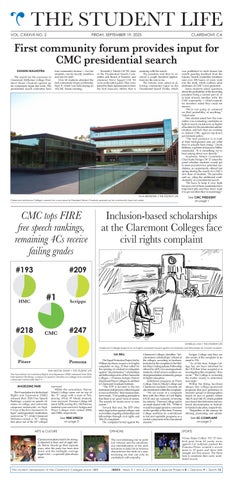
First community forum provides input for CMC presidential search
KAHANI MALHOTRA
The search for the successor tofor community input last week. The presidential search committee held
students, one for faculty members Over 60 students attended the Sept. 8, which was held during an
mittee and Board of Trustees, and were on the Q&A panel. They were joined by three representatives from the firm Isaacson, Miller, that is
assisting with the search. The panelists said they’ve received a couple hundred applications for the role so far. The forums were aimed at allowing community input on the
was published in draft format last month pending feedback from the forums. Search committee members said over 200 hours of work went into the draft, which outlines ideal
Some students asked questions about the probability of the incoming president being a current part of, or at least already familiar with, thetee members stated they could not answer.
“We’re not going to comment on [the] probability of anything,” Valach said.
One student asked how the committee was evaluating candidates in light of recent crackdowns on higher education by the presidential administration, and how they are working government policy.
“The best predictor is to look at their background and see what they’ve actually been doing,” David Belshaw, a partner at Isaacson, Miller, responded. “It is something we’ve been asking about very directly.” panel whether students would get to meet and interview potential cannew dean of students. The panelistsdentiality of a presidential search.
“We have to keep it very tight because a lot of these candidates have important jobs and they don’t want it to get out [that they’re searching],”
The Equal Protection Project, led by William Jacobson, issued a civil rights the opening of a federal investigation against “discriminatory” scholarships
The Foundation for Individual Rights and Expression (FIRE) released their 2026 Free Speech Rankings, a report on speech climates on college and university campuses nationwide, on Sept.leges’ undergraduate institutions McKenna earned a “B-”, taking
students were surveyed. Scripps and and 218th, respectively.
See FREE
“The EPP is devoted to the fair treatment of all persons without regard to race or ethnicity,” their mission statement reads. “Our guiding principle is that there is no ‘good’ form of racism. The remedy for racism never is more racism.” Toward that end, the EPP often takes legal action against colleges and universities, targeting scholarships and fellowships through civil rights and Title IX complaints. The complaint levied against the surveyed.
the colleges, according to Jacobson. Included in the complaint is the Mellon Mays Undergraduate Fellowship students, which aims to address underrepresentation of minority groups in higher education. Additional programs at Pitzer also mentioned within the complaint.
“We are aware of a complaint an email shared with TSL. “While it would be inappropriate to comment to fair and equitable programs as a central component of its educational mission.”
also aware of the complaint in an email
lege has not been informed by investigating this complaint,” they the matter closely to determine next steps.” Within the filing, Jacobson alleges that college-sponsored programs that give preference to minority groups or demographics based on race or gender violate Title IV and Title VI, which prohibit race-based discrimination and sexbased discrimination in federally-funded education, respectively.
“Regardless of the reasons for -
The Foundation for Individual Rights and Expression (FIRE) released their 2026 Free Speech Rankings, a report on speech climates on college and university campuses nationwide Sept. 9.
TALIA BERNSTEIN • THE STUDENT LIFE
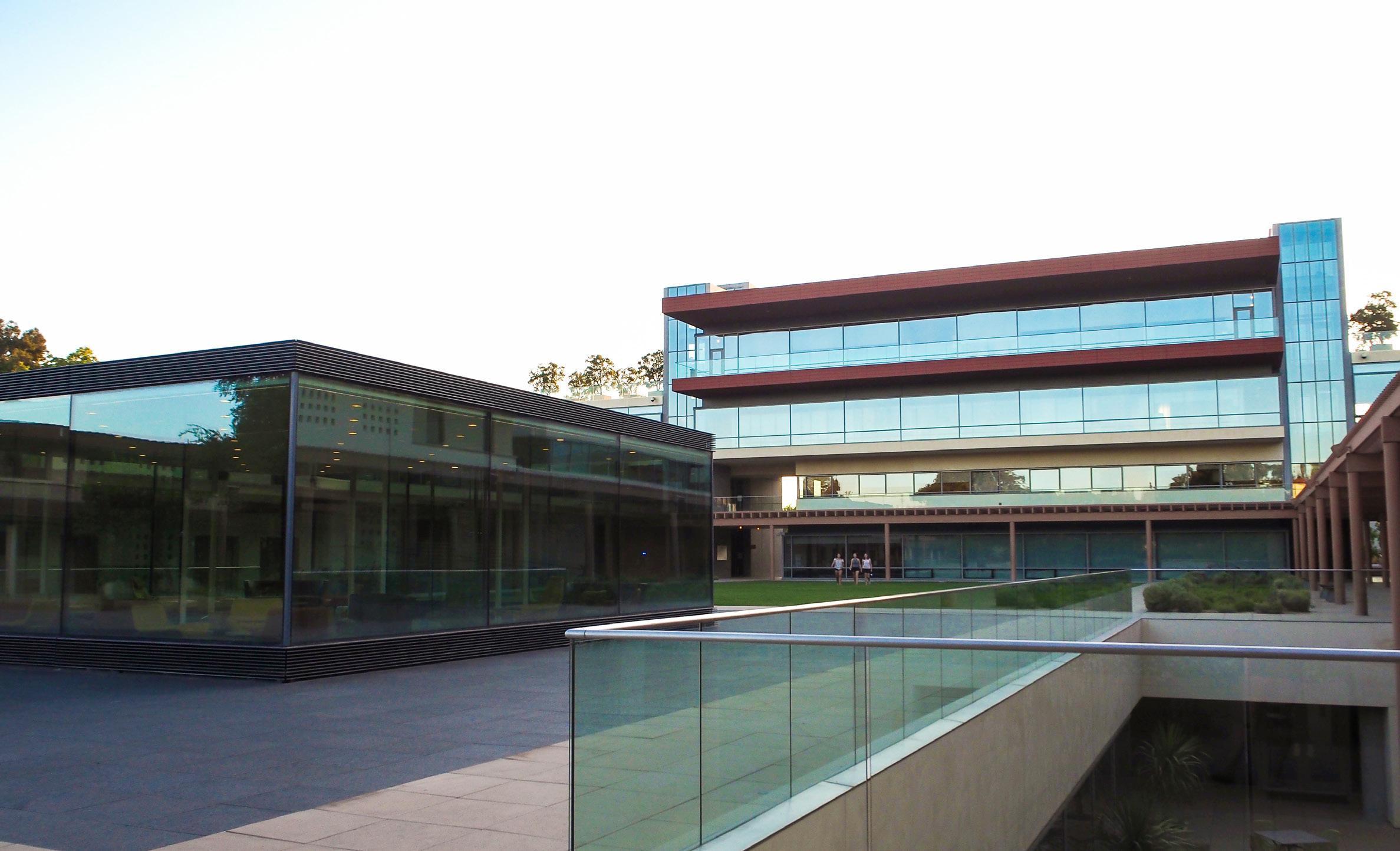
Claremont McKenna College’s search for a successor to President Hiram Chodosh opened up for community input last week.
DANIELLE LAM • THE STUDENT LIFE
Claremont Colleges respond to civil rights complaint issued against scholarships and fellowships for minority students.
to TSL.
CMC PRESIDENT: Community forum held in CMC presidential search
Continued from page 1
Valach said.
Belshaw said most presidential searches conducted by Isaacson, candidates are attempting to raise donations at their current institutions and word gets out that they’re in the job market, donors may withhold their donations.
“We don’t want to hurt other institutions,” Belshaw said.
Jaime Morgan, a managing asso-
ciate at Isaacson, Miller, said that candidates respond to a call-out -
ing to Morgan, have been women.
“The response has been strong from the right people, who under-
Multiple students emphasized the importance that candidates un-
from its emphasis on pre-professional preparation to its “work hard, play hard” mindset. Panelists
“If they don’t get it quick, they’re out,” Belshaw said.
Eggert said the same qualities four decades ago were mirrored by current students in expressing what they hoped for their college’s future.
“What you’re saying is what we experienced from the time we were undergrads ‘til now, and what we hope will be strong when you guys
addressing students.sentatives from Isaacson, Miller said the conversation with students was particularly enlightening.
“This is the most remarkable group [of students] we’ve seen, both in numbers … and in substance,” Belshaw said. “You’ve really impacted our thinking in how we measure our candidates.”
opportunity for students to provide
input, and hopes the committee will continue seeking out their perspectives.
“There are over one thousand show up to this presidential search committee meeting who I’m certain still have opinions on what they’re looking for from our next president,” he said. “The search committee should continue to look for additional ways to get student input.” to have a new president in place by July 1, 2026.
The Motley celebrates its reopening amidst uncertainty over decoration policy
as students flocked towards the rush followed their annual opening party on Friday, Sept. 12, with the theme of “Motgun Wedding.”
The Motley reopened after a tumultuous last year, when the Scripps administration ordered an unprecedented closure for over a comply with the school’s demands for the removal of their Palestinian November without any decorations. It still remains undecorated while the managers continue conversations with the Scripps administration to develop a new policy.
many committees that baristas are a get decorations back in the shop.
“We are working just as hard to get that [decor] policy approved, and
with the Motley advisor, Interim Assistant Vice President for Student
“Stacey’s new this year, and we’ve had a really positive relationship with her so far,” Makhanov said.
said she is proud that the Motley is able to negotiate with the Scripps administration for a solution that Motley community kind of be on the same page about who we want to be and what we want to stand for,” Kumar said. policy around decoration approved is a lengthy process, which is why it transitioned into this semester.
“It’s a continuous dialogue with the administration, so a back and forth of our suggestions here, their suggestions, and then working to meet a compromise between the The Motley also opens with an
unprecedentedly large application Makhanov, the Motley manager for the fall semester. They last year’s graduating class.
According to Makhanov, the hour weeks during hiring to open said it was the largest application cycle she has seen since starting at the Motley her freshman year,
“I feel like we hired the right that’s nice because we put so much what applications to accept. It feels rewarding.”
According to the co-heads, all
the most exciting part of reopening.
“They’re so excited to be working here, and I’ve just had really positive interactions with
all of them, so that’s been really really proud of our manager team already for the work we put in opening. I think it was one of the most successful openings we’ve had, and I’m excited to see what projects we take on next.”
Kumar said she was inspired to apply after visiting during admitted students day. She is most excited about forming connections with people through working at the Motley.
“I was like ‘this is definitely just something I want to be a part of: great vibes [and a] great community,’” she said. “And it seemed like a great workplace.” According to the co-heads, customers can also expect new changes to the Motley menu this year, including new pastries, the reappearance of authentic Thai tea and an elevated espresso due to the reprogramming of the espresso Motley hopes to plan a lot more parties this year.
The opening party celebration on Friday included a performance
from “Elvis,” a Motley barista, and a mock “wedding” of two managers voted almost unanimously in favor of the theme based on a shotgun wedding.
“Our community engagement and networking managers put so this event,” Makhanov said. “We really are a student-run business, and we do everything we do for students, so obviously it would be nothing without students showing up.”
According to Makhanov, the opening party was so packed that percent of the people to leave the Motley due to capacity restrictions.
“We put in a lot of time and love into this place, so we definitely appreciate when it’s shown back,”
students between 8 a.m. and 8 p.m. Monday through Friday, from 11 a.m. to 8 p.m. on Saturday and from 11 a.m. to 6:30 p.m. on Sunday. not respond for a statement before publishing.
MACY PUCKETT
MAGGIE ZHANG • THE STUDENT LIFE
The Motley opened this semester with their “Motgun Wedding” last Friday before its ofcial opening Monday, Sept. 15.
Robert Redford, actor and Pitzer sustainability conservancy namesake, dies at 89
Robert Redford, acclaimed for and the Sundance Kid” and “All The President’s Men,” in addition to his Oscar-winning directing of “Ordinary People,” died Tuesday, Sept. 16, at the age of 89. Alongside his successful cinematic career, Redford prioritized political
advocacy and greatly impacted environmental sustainability ini-
Redford served as Pitzer’s “special adviser” on environmental matters. In 2012, the college established its sustainability conservancy and honored Redford in its name. Devoted to socio-ecological justice and sustainability, the Robert Redford
student research opportunities, supports community engagement and encourages environmental advocacy.
Redford also helped announce Pitzer’s breakthrough fossil fuel college then pioneered fossil fuel stock divestment for all private
ifornia.
In 2016, President Barack Obama awarded Redford the Presidential Medal of Freedom for his accomplishments as an actor and activist.dened” by Redford’s passing. to bear his name and continue his legacy” in all that they do.
FREE SPEECH: FIRE releases free speech rankings for 5Cs
Continued from page 1
led in the rankings; the college alsotion to do so twice.
The report was developed using across the country, surveyed via the
is a failing grade in a college course,”
surveyed got an F for their speech climate, while only 11 schools received a
The survey was divided into seven main components, from “Tol-
Continued from page 1
istering such discriminatory scholarships and programs, they are violating Title VI by doing so,” the complaint reads.
to open an investigation against the -
schools.
Jacobson has become known for filing complaints against programs allegedly violating Title IV and Title VI since he founded the Equal Protection Project in 2023, in addition to his active contributions to conservative organi-
Speakers” to “Administrative Support.” Questions included asking students how comfortable they felt expressing views or disagreements in various contexts, from class discussions to social media posts, and how clear it was to them that their college administrators protect free speech on campus.
stood out based on these criteria, in part because it is one of a small per-
These institutional principles are used to convey a commitment to free speech. Furthermore, 66 percent it is “very” or “extremely” clear that the administration protects free speech. In addition to their annual re-
zations such as the Federalist Society. According to their website, the Equal Protection Project has filed against various universities across the United States and has targeted over 200 programs and scholarships for discrimination against non-minority groups.
Jacobson said in an email to complaint was to initiate a change in language of the scholarships andtended for minority groups.
“We hope that the leadership of remove discriminatory standards
ports compiled using these components, FIRE also maintains their “Spotlight Database,” an ongoing speech code rating system attributing “red,” “yellow” and “green” lights to institutions of higher education based on their speech climates.
puses received a yellow light.
FIRE gives ratings to individual policies and then assesses the college as a whole. Some policies are shared by received a green light) or the poster and banner approval policy (which received a yellow light).
have also, over time, developed their
without need for U.S. Department of Education enforcement proceedings,” Jacobson wrote.
Some additional programs mentioned in the complaint include the in Africana Studies at Pitzer; the Scholarship at Pitzer; the Women’s Inclusion in Science, Technology Enthe Susan Soloranzo Minority Stumultitude of other programs for underrepresented communities. rights complaints against colleges
own policies in addition to the standardized, consortium-wide ones. For example, Scripps’ “Biascy received a yellow light, as did
Of the five undergraduate responded to TSL’s request for comment.
“Scripps continues to rigorously adhere to the tenets of academic freedom and our community’s rights to express their views,”ager Emily Peters wrote in email correspondence with TSL. “This is essential to sustaining an environment where students, faculty, each other.”
for his program’s goals.
“It gives us a chance to educate the administrations and the public, including students, as to the legal standards applicable to nondiscrimination, while also applying legal pressure on institutions to comply with the law,” he wrote in email correspondence with TSL. the potential of scholarships being revoked due to this complaint is scary and saddening.
“I think it could make students of color and women feel like they don’t have a home here,” Johnson said.
The colleges at this time have not indicated whether a federal investigation will change the scholarships students.
uate University did not respond to requests for comment at the time of publication.
“I hope that the school stands with its students and its true mission of diversity,” she said. She added that she thinks that the targeting of scholarships may be harmful to many members of the confused as to the purpose and intent behind such complaints.
COURTESY: PITZER COLLEGE
JOELLE RUDOLF
Actor and environmental advocate Robert Redford died on Sept. 16; his legacy at Pitzer College lives on through the sustainability conservancy established in his name.
Friday Noon Concert s eries: A weekly pause for art
KIRA HELLER
ures dressed in black promptly rose the crowded aisles and approached
Lyman Hall. This performance was a part of between the music departments at Friday concert features professional open to the public, which contributes
a sanctuary amidst the chaos of “[The] audience was comprised with TSL. “But music was able to
and she also teaches applied piano
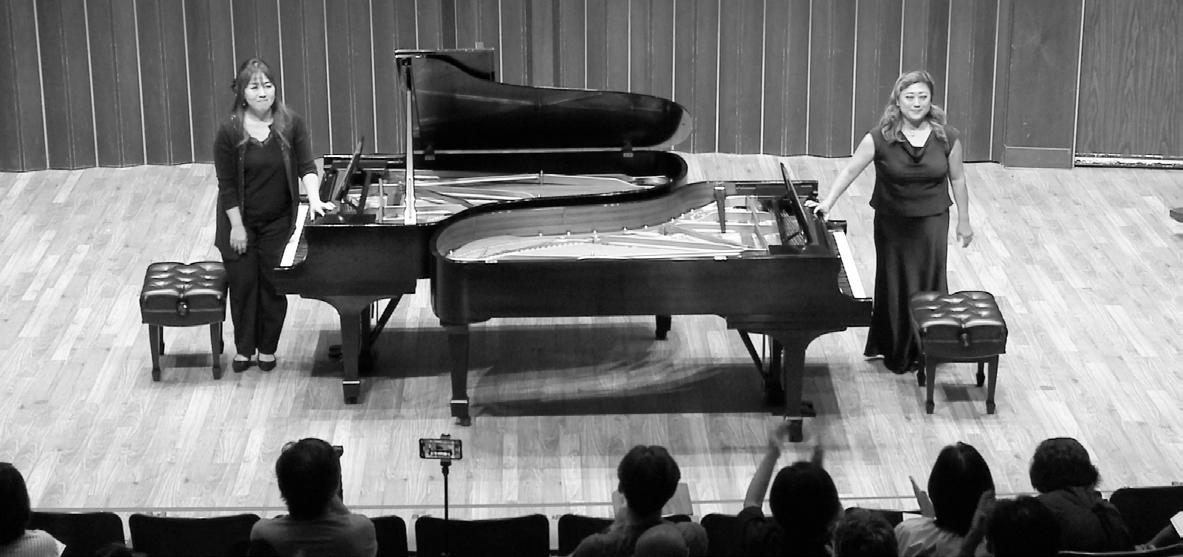
spots at the parallel pianos on the
He Will Sink
member of the male species.
stance was an immensely frus-
bass, drumset. My date is a perfectly kind, handsome and respectable until my mind drifts to him, whom I summer after your first year can of wellness, enrichment or mental clarity that prepares students for
mer of my life also happened to be
to those merely months older than
time. As such, I forbade myself from unreliable as a human, male, twenNaturally, the former me was someone I desired who I knew I
As the summer came to an end,microcosm of him. It only worsened when I returned to my home, to my of his absence.
shallow situationship uproot my life in this way?
I would chronicle each minor would detail our connection, my friendships, my other liaisons, my -
missed opportunity. It certainly
Aside from my frankly brilliant introspection, what the sub-
said can be a million times more
it, be the catalyst for my maturity. psychosocial terms, is the only So, I hope you can support me This reflection marks the last
will, in fact, sink, and henceforth I shall solely write about tasteful,
fanfare, the duo started to play.
and playful, with the two pianists -
the listener to really sit back and feel
hesitation in the audience. To clap or
“Generally, for classical music, Muskowski, the tradition is to not
watched the sets in awe. She was perform perfectly in sync on two “How do you perform with Marra said.
adapted for other instruments. This somber, emotional piece builds in at the end.
all those slow notes rather than the
three four-hand selections from
playfulness.
listened intently to the performance that she and many others had
scenes and what draws audiences in.
“It allows me to escape into a world
and a teacher, she often stresses thetions.
to think of what it is that you want to
support members of their community and to draw inspiration — whether to their own.
TSL. “I hope the audience can hear
A path to the stars: Jose Hernandez’s story of resilience and adaptability
trash
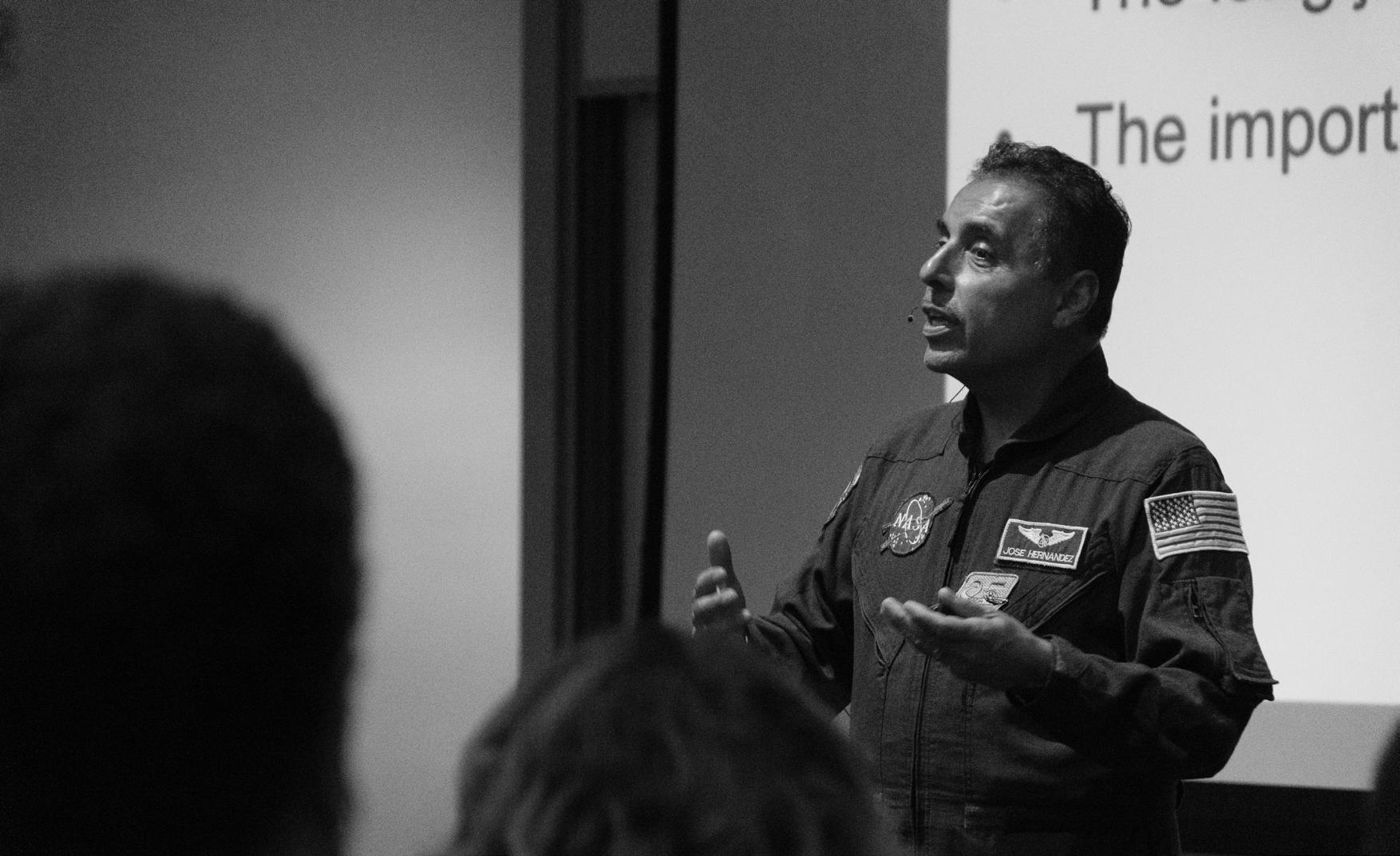
Hernandez said. of a full auditorium, Hernandez
worker, astronaut Jose Hernan-
His story is now the basis for
son Series to share his recipe forspire them to reach for their own three speakers each year to open issues and their social, economic the Impossible: Journeys across
This constant relocation
After this pep talk, Hernandez candidate.
particularly surprised by how hard Hernandez worked to become an astronaut.
This non-linear trajectory is a dreams do not always come in
predicament (my use of the past tense if this impasse was the result of
Zena Almeida-Warwin PO ‘28 is from Brooklyn, New York. Her summer of dreams — and nightmares — took place amidst the gorgeous city of Rio de Janeiro, Brazil. He, I mean it … was a sight for sore eyes. See her original poem in the online edition of this issue.
enthusiasm in outer space within “In the late 90s, [enthusiasm
to connect to this industry and Tsai said Hernandez presented students with the formula that has
to become an astronaut after as the astronaut bounded across
ience, a skill that shaped the rest about their positionality and embrace their identity and backashamed and I should be proud of
nandez repeatedly stressed the decades of setbacks he endured in order to become the astronaut he is rejection after rejection. He spent laser that would knock out nuclear missiles, only for the project to be crumbled.
After 10 years of relentless
stopped him. She found a rejection letter Hernandez tossed in the
system for early breast cancer despace, Hernandez considers this the accomplishment that he is most proud of.
he paused for a moment before to realize that borders are human-made concepts that are de-
and reminded him that she
COURTESY: TERESA CHANG
ANANYA VINAY
COURTESY: AUDREY DUNNE
Astronaut Jose Hernandez kicked off the annual Nelson Lecture Series at Harvey M udd.
MELINDA QERUSHI • THE STUDENT LIFE
ZENA ALMEIDA-WARWIN
STUCK IN THE MARGINS
Kyungmi Kim and Jennie Jung perform for an audience in Lyman Hall.
Sex, disciplines and society of ‘Salò’
Duke (which also happened to be
earned a permanent place on many watched it because of its notoriousin your adolescence, where you those dubious random websites.
countless symbols that I had to use my brain to process. There is a ref-The four libertines, who presum-
For those who wish to see infathem with Dante. For commonnately, I did. For the one hour and
The audience, suddenly, was like God in the world as the four lib-
haps more like an unbridled beast dominated by the unspeakable deeply stewed within.
necessarily uncomfortable because I could not take any blood or naked bodies. I felt uncomfortable in the sense that I was
history? Because we, the audi -
There is one scene that shone four libertines take turns torturthe audience watches this scene
Salò could theoretically produce.
ideas that are actually part of -
of human nature, why are these place? Did Homo Sapiens see
bility between our nature and our acceptance of it?
In my case, it is because of my morality that I feel shame in
demned by 90 percent of people in the world. It is the precise morality that that made me resent the autocratit is also the precise morality that and, later, responsibility imposed by society.
den secretly indoctrinates us with the mechanics of our body and murder anyone for a prominent
morality. Therefore, we, the audience,present warden who internalized
it represented — the possibility
in a society. which you can certainly tell just byenced by Michel Foucault to write this column. If you can stomach you should watch it as well (you
history. She didn’t win anything from the performative male contest but still claimed to be the most performative female in her year just by her passion for matcha and classical CDs. ROOTED AND RESTLESS
Sleepwalking through stigma
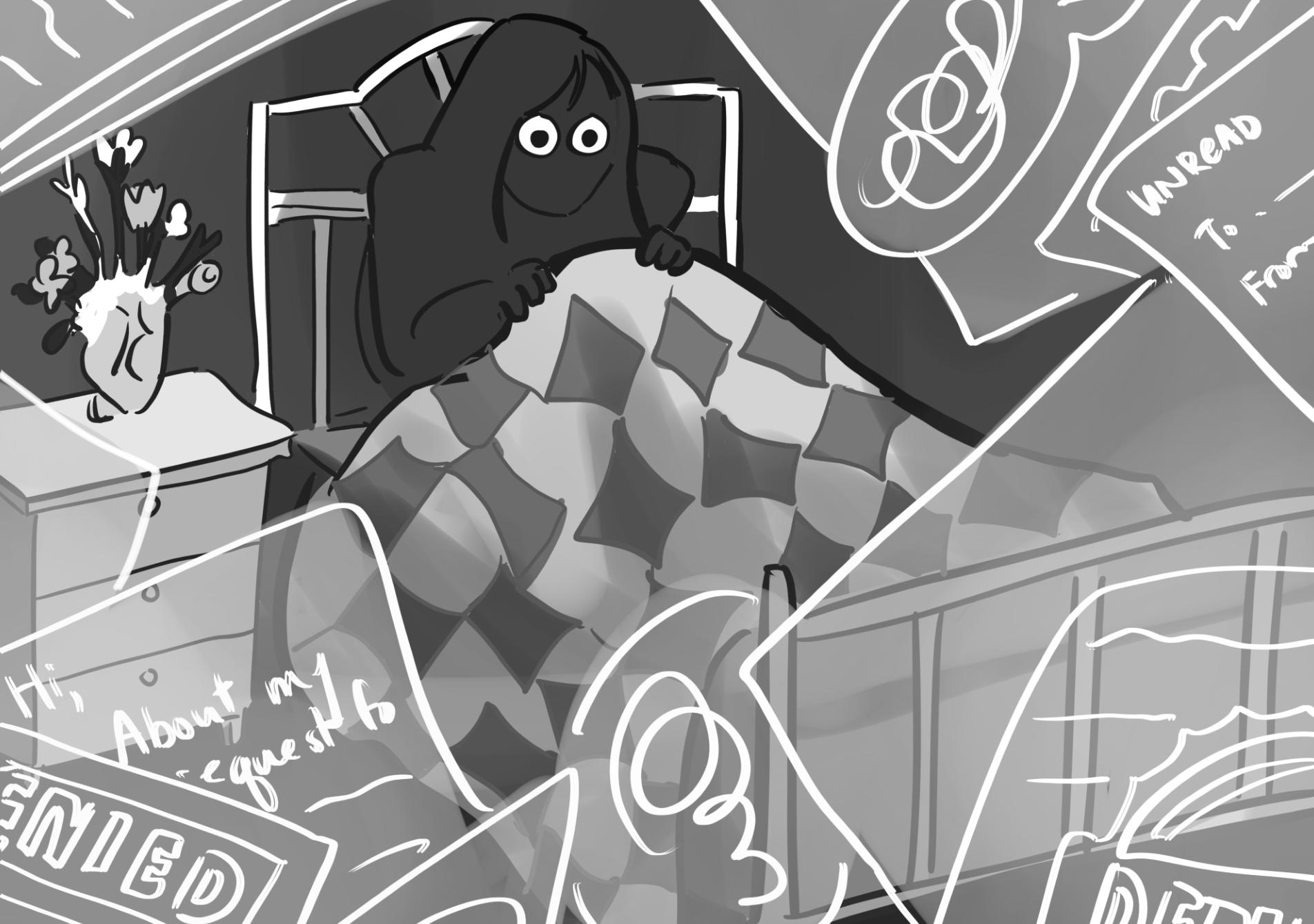
Sleep has been uneasy for me since adolescence. Some nights it refused to arrive; other nights it lingered only lightly, leaving the morning indistinguishable from the night before. When it did come, it sometimes pinned me down in paralysis, visions and noises crowding the edges of the room, leaving me struggling to rise as though pulling myself from quicksand. Insomnia, later linked to dysthymia, shaped the rhythm of my teenage years and followed me across the ocean when I came to the United States.
Back home in China, these struggles were brushed aside as stress or a passing phase. Mental health was rarely spoken of directly; when it was, the tone was often colored by apathy or discomfort. Studies show that in Chinese cultural contexts, emotional symptoms are often suppressed or expressed in physical terms instead, since openly talking about depression or anxiety carries strong stigma.
Arriving at college, it seemed at at Scripps, conversations often carried our first classes, I observed peers bantering about how everyone was in therapy or on antidepressants.
“Stigma is not really there anymore,” they asserted, everyone nodding in unison. I was stunned — the casualness felt disorienting and inconsiderate, especially in a space that was among the least diverse on the campuses (Scripps is about 54 percent white, with international students making up only 4 percent of the student body).
courage to share my own experiences growing up, the energy in the room shifted. My words thickened the air;
couldn’t escape. It wasn’t the blunt denial I had grown up with that forbade me from touching on the topic at all, and I was not reprimanded for speaking up.
But if mental health stigma is truly “already” gone, why did no one respond to me? Why didn’t anyone try to address the contrasting perspective I had brought up?
Indeed, this seemed to be a — tied to a lack of knowledge on international perspectives and the discomfort that arises when culturaltives of progress. This new kind of stigma soon moved from cultural to structural. placed in a triple, a setting that quickly unraveled whatever fragile rest I could manage. Prior to arriving, the notion of formal accommodations — whether for housing or coursework — was not something widely available whatsoever.
Thus, the idea of requesting special arrangements was com-
pletely uncharted territory I couldn’t fathom actualizing. By September of last year, my sleeplessness was compounding under the constant disruptions of sharing a room.
Lacking access to a U.S. psychiatrist and burdened by enduring stigma and uncertainty over student insurance, I became hesitant to seek soon as they appeared.
I wasn’t able to achieve relief year, my accommodation request for a single — backed by a medical note about migraines from my non-psychiatric doctor — was rejected, and the only real option left was to apply for the Wellness housing, which almost always guaranteed a single for sophomores and beyond. Though the process wasn’t easy, through a compelling application, I was one of the lucky few who were accepted into Wellness with a
single. Relief coupled with the knot deepening in my stomach: This was not a true recognition of need but more like winning the lottery. The single wasn’t coming because my true condition was considered, but because I happened to get through a competitive process. I felt unseen in a myriad of manners, by both everyone I knew back home and all that I’ve come to know abroad at college. In therapy, there was the issue of cultural mismatch. When I mentioned my sleep issues with my then-therapist — white, American and clearly unfamiliar with how my struggles tied into the intricacies of my identity and culture as an intermy concerns and suggested I focus on “sleep hygiene.” It was clear that she’d forgotten everything I had already explained: how I’ve had insomnia prior to liv-
ing in a triple, the cultural dissonance at college and the fragile familial relations I was carefully tending to overseas.
I was exhausted. So, back in Taiwan this summer, bracing myself and mustering all the courage I had within take me to a psychiatrist. I framed it in practical terms: It would be covered under national health insurance, no extra burden on you … They were wary, but they didn’t resist this time, as it’s indeed been years.
-
sleeve, I described the years of shallow sleep and endless nights I endured, feeling a sense of relief I hadn’t before. a diagnosis and medication in hand, of circling around it.
When I came back to Scripps at the end of the summer, I moved into my more than 24 hours of travel, I fell asleep without much trouble. But bewith unease: I couldn’t stop thinking about how easily things could have timeline, if the application hadn’t gone through, if I hadn’t pushed so hard at home, where would I be now?
Those thoughts continue to linger in my mind at times. Not just about sleep itself, but about how precarious mental health care feels, both back home and abroad as an international student. Just how much depends on luck, timing, or fighting for accessibility with more persistence than some peers. Sleep, for me, is really about whether the systems around me can make space for it. In that way, my story is also part of the larger reality of international students navigating care across cultures and institutions, all of us sleepwalking through stigma.
Rochelle Lu SC ’28 is from Shanghai,
LESLIE TONG
ROCHELLE LU
SHIXIAO YU • THE STUDENT LIFE
too are one of the libertines who
China, and Kaohsiung, Taiwan. On
of
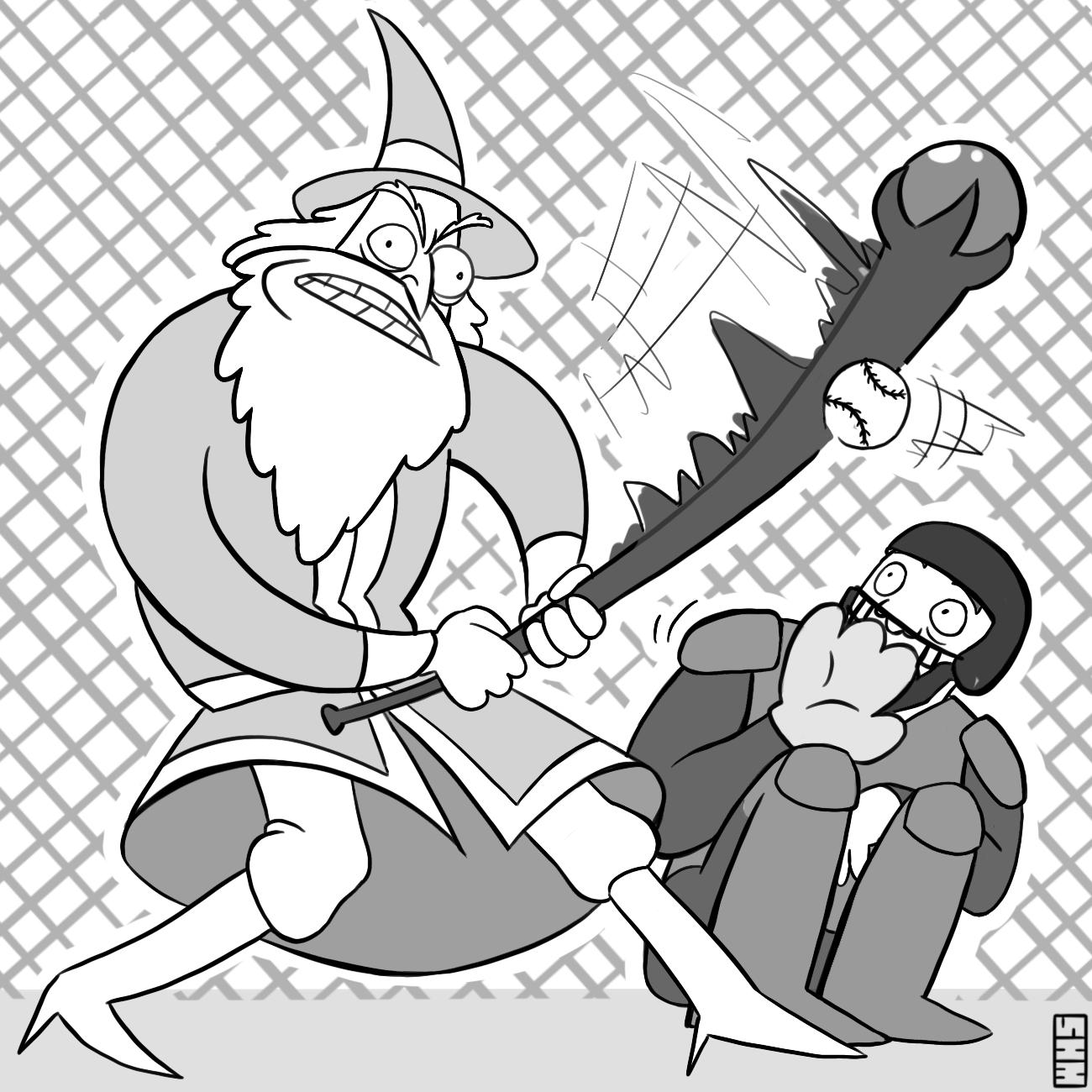
SASHA MATTHEWS • THE STUDENT LIFE Wizard of the Diamond R ealm, Wizard Weekly.
SHIXIAO YU • THE STUDENT LIFE
COURTESY: JEFF MCLANE
a bordello, a house that has brothel on the windowsill. There is a bowl
Decorated rake-shaped hair orna-
my art history classes and some I especially familiar. I stared at the piece, which felt so intimate to me:, the
The piece is a renowned ukiyo-e woodblock print, a Japanese art form world or urban life, that depicts life in
place. This procession is part of thepartake in rituals centered around
scarce by the intense competition of
from hundreds of miles away from home, I feel like this competition sometimes boils down to pure luck,
chance. If only the Torinomachi Fesluck I need to triumph in this brand new world far away from home.
artifact from my childhood bedroom on display.
the piece. The artist places the distance, in a home made of crisp di-
the cat that is perched on the win-
That cat is what draws me into
The streetlight sermon of Venna’s sax
outside world. He does not put the includes the mundane of the bordeldesire for freedom. He aims for us
to the mountain, to the sunset, and time, before I closed the door to my
I left two cats behind at home
Keanu — no, not named after Keanu named after the most iconic show all day and show thousands of pictures like the crazy cat lady that I am, but I will spare you the pleasure. My cats are both indoor and outdoor cats, and I would often watch them enjoy both of their worlds.
I admired them as they adjusted so easily between both worlds, and
Claremont
all featured at the Benton. There is for us to feel our human presence in windowsill.
presence to the power of the natural world, to point out that there is so much more than just a domestic life. I proposed: Am I a cat? Is that thethis piece?
be for us. For me, those two worlds
to realize that it may always feel that way. I may always be the cat that sits stability between the domestic and the outside world.
Meiya Rollins PO ’29 believes, like Michelangelo, that art takes time – most of that time being snack breaks and watching “Good Mythical Morning.”
students in curation: ‘An Unruly Assembly’
OLIVE ENG
debuts at the Benton
description packed with historical con-
of these artists passed been a hub of Black British jazz talent.
London itself.
The album itself feels like a se-
and computer-drawn artworks,
jects and processes, the prints
empty instrumental.
music that places just as much can sink into.
endless mutations. Its power was feels less like a side note and more
it breathe in the same spaces I do. treated as classical music — some-ed jazz like a sample pack — somethe stratosphere. It feels closer to
think either is correct, but only one outside the academy can touch.
an artifact of the past, but some-hear this year, nor does it want to that jazz can still be the soundtrack your life.
Sinan
emphasizes the continued reletwentieth-century computer art and animation.
a series of early-twentieth-century as a means of mass communication
and Benton enthusiasts are able to Lobis was initially inspired to
specialists to assess their collection,
preciate anew how special it is. And
laboration with curatorial assistants
label — it seemed they need to not be
because all of the pieces are incrediwalls.
the semester and ultimately selected
bers of the seminar, and includes and history of the medium. spoke about how much deliberation this fall.
with certain patterns we noticed,
a brief description of the course. each print is accompanied by a short
other hand, by lesser-known artist So-sation with these lesser-known artists, between the famous and the obscure. scholarship on those [lesser known] Lobis also emphasized the ano-
information.
she said.
compilation of all these different just incredible, how detailed they were and sharpness to intricacy and size,
MEIYA ROLLINS
Walji PO ’28 has made peace with the fact that Blonde might be the He wonders if Frank is laughing. He almost hopes he is.
SINAN WALJI
PJ JAMES • THE STUDENT LIFE
ollins PO ’29 reflects on the “Art After Hours” event at the B enton
useum of Art, which is open to the public every T hursday evening.
The Benton Museum debuts new exhibit, “An Unruly Assembly.”
JAZZ THAT BREATHES
Where the night ends: Moments shared at the Claremont Colleges’ after-hour spots
atmosphere, complete with ice cream sandwiches, nine-inch darkly lit space creates a far less Students shared that, in contrast
party has been shut down and the sporadic plan always arises. was no different. Lines spilled
As the speakers died down at Green Beach, friends dressed in white-lie tee shirts, cowboy boots, swimsuits and other miscellaneous
The Hub.
post-function destination for many students.
collapse onto couches and cluster
room. The pool table is always shot — successful or not — comes Some students commented that the
from anywhere, but multiple timesple I know from other campuses at close friends with people there
funny snippets from their day, complain about professors and
“[There are usually] no more stressed out computer science majors, the perpetual library
warm pizza. Like many students from across the campuses, Moore has her dorm. sort of hot food, so sometimes if
that form a semi-circle around said. Now in her junior year,
“If I stay in the Shakedown people need to applaud Tinker -
Earthtones bring harmony and legacy to the Frary steps
shift seats just in time for the
50 watched from the steps. They passersby slowed to listen.
tacos and horchata. In the years on the chalkboard wall that has
students opt to take a short study sessions.
lawn chairs and wooden bench-
from campus, students often feel that the distance soothes them a brief respite from dearound the campuses and intories of memories. From froyo to pool tables, from drunk men
technical polish and the emotional
the last notes faded. Friends of the from the steps, and some students
dinner fresh in hand.
weeks of arduous rehearsal.
warm-ups and focus on dynamics, tonality and musicality. Then we sometimes for hours, sometimes
tradition.
joined in.
the street.
the
subway, Dioubate found an all-Black
That moment of connection sparked others on classical or comedic styles -
and for the space they create for Black
That distinct presence is clear tothe music is inseparable from thetribute to the idea of art as both a “In a predominantly white institution, The concert, timed just before theformance and more like a statement. community.
Anand Patwardhan on activism through filmmaking
CORINA YI
illuminated projection of the short anti-caste resistance.
as attendees trickled in and took their seats.
lyric address by the Dalits — a term that represents the lowest stratum of
Indian society.
who wrote the lyrics and performed.
5000 years of caste oppression, but -
the idea because the Hindus always by the outsiders who then became
“I think the musicality of the musical aspect of the poetry that he
that he had not initially planned -
said. “It happened kind of accidentally [because of] the work I was
discussion panel opened up thattion. They discussed the powerful as poets rooted in their Indian poet to connect with other South
about reinscription and structure
The panel was followed by a -
about his family history and politnational history and culture.
personal and intimate moments his mother.
it that was maybe useful to the rest
opportunity for students to learn about the history and culture inti-
with Indian history and culture, so I feel like I just learned so much from that with just, like, this short
COURTESY: LESLIE FUENTES
On Sept. 11, Anand Patwardhan spoke to a crowd of people outside the B enton M useum.
trail of the music, the harmonies… and she realised that the music was
MAGGIE ZHANG • THE STUDENT LIFE
ADAM AKINS • THE STUDENT LIFE
AUDREY GREEN
MARIA HERNANDEZ Earthtones group members perform for crowd on T hursday.
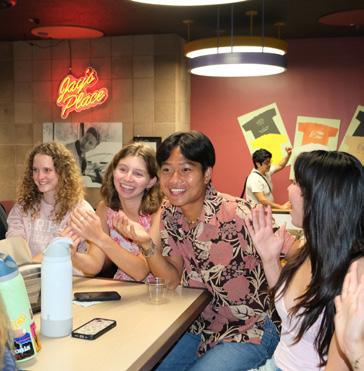
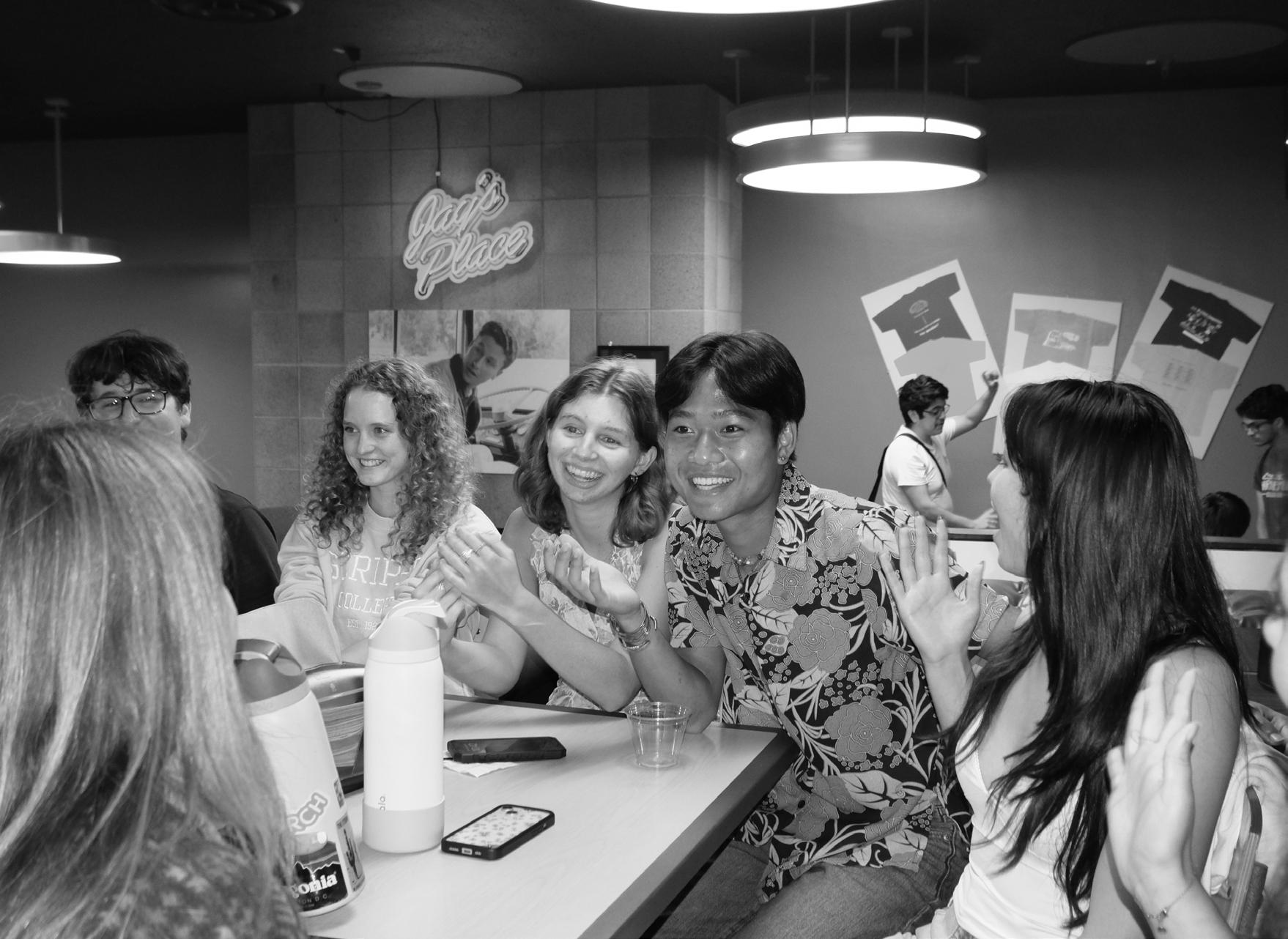
Students gather around a table at Jay’s Place on the Harvey M udd campus, enjoying a late-night chat.
ANSLEY KANG
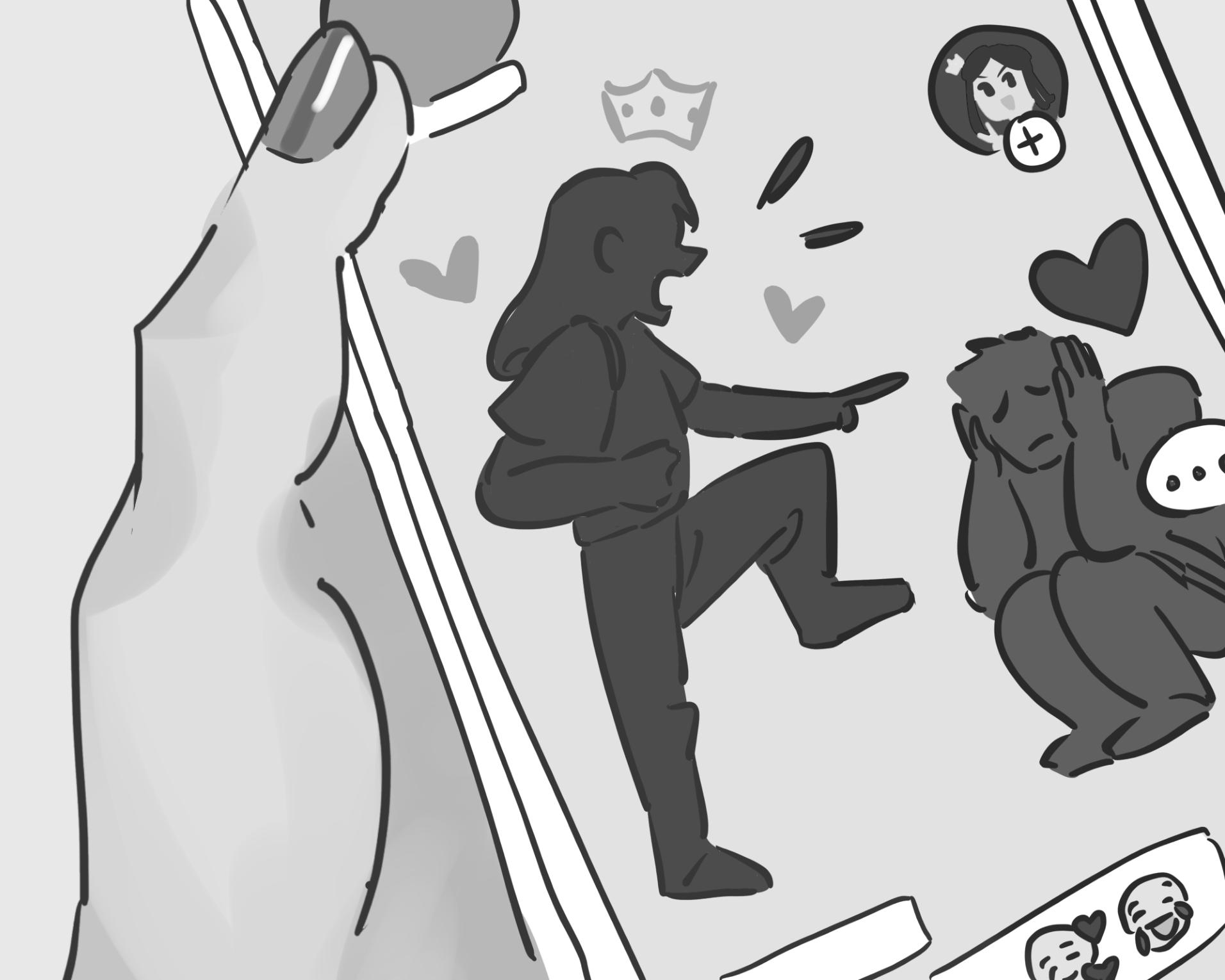
I recently redownloaded TikTok after being on a cleanse for a few months. TikTok requires vigilance. Especially with new trends, you have to take some bad with good: think cinnamon challenge. One of scrolling spree delivered the curious “ihatemybf” trend. Social media has — without a doubt — changed the way that Gen Z views relationships. Even if you don’t mention dating app culture, contemporary relationship dialogue is nearly impossible to translate without a PhD in being on your phone. AITA for misunderstanding the rizz vs ick dialectic? What about for love-bombing a situationship in the talking stage? Initially, this trend gave me a good laugh. Ihatemybf is, on the surface, absurd; just another bit of oxymoronic TikTok-speak I was out of touch with. However, upon closer inspection, my curiosity turned to confusion, which soon turned to alarm.
While our generation’s dating culture is only growing more confusing,
Why date what you hate?
progress is being made in furthering independence, particularly for women. Independence is vital to ensure we don’t have to worry about being yellow-wallpapered, but the ihatemybf trend almost takes us a step too far. Independence is one thing, but its normalization of refusing to communicate after minor inconveniences is another. Self-respect is important, but the trend’s rebranding it as “feminism,” along with biphobia disguised as self-expression is unacceptable. Obviously, you don’t need to be kissing the ground upon which your boyfriend walks just because he exists. But if standards are set straight, then we should also be willing to dump the qualities of a partner that you need, and continues to not meet after genuine conversations. Hating your boyfriend for clout doesn’t make you a quirky girlboss. It just makes you immature. Seemingly every ihatemybfile” girlfriend who hits her “big and strong” boyfriend. These two
contrasting characters are used to imply that this scenario would “obviously” never play out in real life. This reinforces an unfortunate belief — one that many chronically online TikTok users tend to have — that domestic violence against men doesn’t exist. In reality, around one in three men experience some sort of abuse by an intimate partner in their lifetime. People posting to this hashtag jokingly threaten to beat their boyfriend because they it’s videos like these that contribute to the shameful silence and stigma that often surrounds men who are victims of domestic abuse.
Another problematic trope is the bisexual girl who hates her boyfriend. For bisexual women, this trend doesn’t just become a space to vent frustrations about relationships with men; it becomes a competitive space where they have to hate their boyfriends in Bisexual women are often accused of being imposters in the LGBTQ community or worse, especially if they, as they have all rights to do,
date men. This trend feeds into biphobic notions that women who prefer, or even date men at all, are less valid than women who prefer the same gender. Hating your boyfriends isn’t the only way to make you “actually” bisexual. Bisexual women who have a preference for men are just as authentic as those who prefer women, but it seems like the ihatemybf trend has created an environment where bisexuality is only legitimate for women who have a stronger preference for women.
Maybe the entire ihatemybf trend is just a joke that I’m taking too seriously, but creating an acceptable way to make lighthearted jokes about topics as serious as biphobia and even domestic violence trends aren’t meant to dictate our relationships in real life; Of course, the exchange of ideas relating to relationships has had an impact on our generation as a whole, but fulfillment crafting an organic connection with someone instead of following @relationshipguide-
howto on TikTok, who is most likely a middle schooler using the internet Sure, boyfriends tend to play and can have selective hearing at times. But at the end of the day, an intimate partner is someone who you should have mutual respect, care and kindness for, not someone to joke about in ways that undermines trauma not just potentially for them, but for millions of other survivors of abuse. If you came to me with a long list of reasons why you hate your boyfriend, I would tell you to just break up with him. Having respect to walk away from a relationship that might not be the most sustainable is not only the best for yourself, but also for your boyfriend who breathes too loudly in your direction.
Ansley Kang SC ’29 has sworn to herself that she will be more productive and do her work instead of doomscrolling on TikTok for hours. She still doesn’t have the strength to delete Instagram, because spending an hour to figure out what music to put over a story is one of the true joys of life.
Our empathy drought in a time where it’s most needed
ALEX BENACH
Hannah Arendt once wrote, “The death of human empathy is one of the earliest and most telling signs of a culture about to fall into barbarism.” As political assassinations shape the sociopolitical sphere, as military occupations of our cities continue to expand and to have lost our ability to react in a compassionate and action-oriented manner.
According to The 2025 Compassion Report, only a third of Americans report feeling compassion for all groups of people. This felt increase in global tragedy, such as the ongoing genocide in Gaza, as well as a continued brutalization of marginalized peoples across America, such a widespread lack of empathy is condemnable and dystopian. Surely we as humans, as emotional agents, should be able to maintain the ability to meaningfully recognize the deep sadness that permeates the modern moment, even if it feels impossible to change the present circumstance.
Yet we are becoming desensitized, disengaged and unconcerned with the terror that surrounds us. of further disappointments in the realm of collective care. When we no longer feel a responsibility for one another, it becomes much easier to tune out collective hardships.
As a society, we have shirked our shared duty to indiscriminately out in favor of the oppressed. In doing so, we have cultivated a culture
SHIXIAO
Akshay’s Crossword: Ethical Deviations
decision stems from an apathetic and downright cruel American culture that treats the extension of empathy as though it requires you to move mountains. We have proven to be completely ineffective at extending even the slightest form of care for those that are terrorized in this modern world. Instead, we actively engage in, condone and exist alongside that terror.
Political assassinations have characterized much of this year. The assassinations of Charlie Kirk, Melissa Hortman and Mark Hortman are a few such examples. These assassinations are representative of a deeply broken society, and the debates on social media that follow these events do nothing violence.
Further,
2025 has seen an
home, a shooting at the Centers for Disease Control headquarters and a carbombing at a Planned Parenthood facility, to name a indicative of a world in which people can think of nothing else but to take up arms and violentent political ideology than them. The embrace of violence by everyday Americans across the country coincides with the heightened militarization of daily life in America. A stark rise in violence and the normalization and advocacy for violence is not unforeseeable when you recognize that we live in a “civilization” in which politicians sign bombs that are used to murder civilians, feeding migrants to alligators, a Fox news host publicly advocates for the killing of the unhoused bombing of peace activists.
As the modern moment turns increasingly violent, it is a violent act to sit on the sidelines, to continue to participate business-as-usual in this world that is in chaotic decay. When we turn away from watching this unfold, when we scroll past videos of apartment buildings in Gaza being leveled, when we turn a blind eye to ICE agents abducting people in plain sight, we participate in and exercise a unique kind of violence. We are all at fault for this, myselfcult to resist the strong urge to ignore, or at least avoid processing, images and depictions of the current brutality. But, that is precisely why we must digest this. We have a responsibility to engage with widespread brutality, whether through news channels and social media, or reporting it ourselves when it arrives at our doorsteps.
To do otherwise, permits the continuance and expansion of it. Being forced to confront this aspect of modern life will motivate a level of action against it that is Authoritarian militarization depends on emotionally crippling us. It depends on the gamble made by leaders that we would rather continue to engage in our daily habits than confront the hatred and onslaught all around us. We cannot, for our sake and for the sake of those who are currently at risk, prove leaders right in our complacency. It is paramount that we seriously contend with violence we see on our screens and realize that it is not just a backdrop of noise. It is someone’s life, their family, their health, their place of worship, their home being affected. When we consciously work to acknowledge and deeply consider that fact, it becomes
ongoing events. When you put work into feeling empathy for the people you see being terrorized, suddenly the world feels a whole lot more distressing and unignorable. Political assassinations, livestreamed genocides, forced deportations and all other ways in which violence cultivates do not have to become the modern norm. We can counter the violence in this
and work towards something more peaceful and less destructive.
and
The
From ‘TikTok’ to ‘Freedom’: Kesha’s powerful comeback
LIVIA MAYFIELD
When people hear the name Kesha, they often think of the early 2000s pop star icon with a dollar sign in her name. They remember her greatest hits, “TiK ToK,” “Cannibal” and “Die Young.” They remember her classic look: blue hair extensions, bold makeup and lots and lots of jewelry. But they never think of today’s Kesha: the Kesha that escaped her abusive producer, came back to the music industry, re-emerged as a queer icon and is now releasing songs that top the charts.
Pop fans need to rise in support of the Kesha comeback. It is our responsibility as responsible consumers to uplift positive, socially conscious voices in the media. For too long, we have been giving the wrong people the largest platforms.
I understand why old Kesha gets from 2010 are undeniable dance party commandments, even 15 years later. However, we need to bring dare I say, improved Kesha — artists who speak from the heart and stand by their morals, like Kesha, who sings about being “a motherfuckingtards get you down.
Present-day Kesha faded into the background of the music industry amidst mental health struggles and a legal battle with her producer, Dr. Luke. In 2014, Kesha sued Dr. and went public about her mental health struggles and eating disorder caused by Dr. Luke’s treatment of her. He countersued for defamation, which kept them trapped in a legal entanglement until the counter-suit’s charge was dropped in 2023, preventing Kesha from touring for nearly a decade. Meanwhile, she was contractually obligated to continue releasing music under Dr. Luke’s record label, “Kemosabe.”
During and after the lawsuit, Kesha’s music evolved. She intentionally moved away from the upbeat and rebellious electro-pop that characterized her junior popstardom, to more personal, mature and shift genres, as it was a declaration of her resilience and a message of hope released during a period of active litigation.
Her four most recent albums: “Rainbow” (2017), “High Road”
(2020), “Gag Order” (2023) and “. (Period)” (2025) issue listeners for your freedom and take back what’s yours. She announced the release of her album “Gag Order” in 2023 and the coinciding “Only Love Tour” to celebrate the end of her contract with Dr. Luke and her transition to industry freedom. reclamation of her career; this was personal and complex emotions, reflecting her anger, frustration and subsequent soul-searching inspired by the complexities ofmances, she included songs from all eras of her career, hosted drag artists and exuded pure joy. Kesha’s most recent album “.
she was able to release free of her after meeting the obligations and founding Kesha Records, a record
a new platform for musicians, prioritizing safety, accountability and fair compensation.
Her tour following the release of the album, “The Tits Out Tour,” saw the celebration of Kesha’s continued freedom and return to success, featuring remastered versions of songs originally released under the guise of Dr. Luke, topping Billboard charts. As a “The Tits Out Tour” at-
dled passion for her music and fans is overwhelming. She began the show by holding a bloody mannequin head replica of her past self while singing her famous song “TiK ToK,” eventually discarding the head as a cleansing ritual, marking her new era of freedom. At another point, she rode on the shoulders of one of her dancers, walking around the stadium hug-ating an intimate connection. She danced across the stage for several hours, performing remastered ren-
ditions of old songs remixed with The re-emergence of Kesha is now. The mainstream at its current state is noticeably overcrowded by unrelatable stars that self-promotion and possess loose conceptions of morality. We need to bring Kesha back into the mainstream not only because her newest albums are beautiful compositions, but because she is someone that we can stand for politically.
Kesha uses her platform to talk about important issues, supporting self-love and social justice. She fearlessly advocates for mental health awareness and the LGBTQ+ community at her concerts and in the media.
As consumers of media, theties empowers the platforms that they host. One relevant example paid to Katy Perry’s 2024 album promotion and release despite the fact that she willingly collaborated
5Cs should fund metro passes
with Dr. Luke, an alleged rapist, in its production. We have the power to prevent apologists from having an audience.
with ups and downs, but ultimately, she used her music and voice to get through hard times, and I encourage how many times I listen to her muand reflection. If you have ever needed a song to scream in the car after a bad day, or one to lift you up when the world feels heavy, Kesha At the end of the day, Kesha is someone to trust with the spotlight, and I am proud of her. In the wonderful and wise words of Kesha, “Fuck P. Diddy.”
ville, KY and likes Kesha more than she likes KFC.
We all should count ourselves lucky to study at such a well-situated campus. Claremont is a tight-knit, great weather, world-class amenities and a quaint, small-town feel while of an exceptionally diversified economic hub and vibrant center of global culture.
However, one thing those new to the area might have a tough time adapting to is transportation. Even with a car, navigating Southern California can be daunting, expensive and time consuming. And while several highly useful bus and rail links to areas near and far border the 7Cs, our schools often do the bare minimum to promote them and make them accessible and convenient to students.
This fall marks two key changes for public transportation around the 7Cs. First, the latest extension of LA Metro’s A Line will open today at noon, connecting the current end of the line at APU / Citrus College Station in Azusa to the existing Pomona - North Metrolink station near Claremont.
At the same time, however, pubmore expensive for 7Cs students. This summer, Metrolink’s Student Adventure Pass pilot program expired, ending free rides on the express Southern California regional rail network and many connecting bus services. Now, 7Cs students must purchase TAP fare cards or tickets to travel across the region car-free, with the sole exception of the free fares on Foothill Transit’s bus services across the San Gabriel Pass partnership. This sets us apart from other premier institutions in the region like USC and UCLA which participate in LA Metro’s much more useful U-Pass program – and for little or no added cost, The Claremont Colleges Services (TCCS) could join them and again provide us with free transit access across Los Angeles County. For too long, our administrators have evidently assumed that this service is unnecessary because of our suburban location, but the sprawl of our area actually makes it even more essential for the 7Cs to support public transportation for students.
When Foothill Transit first offered Class Pass partnerships to local schools like Cal Poly Pomona
it was a great deal, as few public free fares to college students. Since then, however, many more transit agencies and schools have realized to students.
For the past few years, students and youths across Greater Los Angeles, regardless of where they go to school, have enjoyed free fares on regional rail and connecting buses through Metrolink’s Student Adventure Pass pilot program.
Metrolink, a Southern California agency separate from LA Metro that was established to focus on “commuter rail” trains such as those that blast their way through Claremont several times a day, started the program in order to boost ridership post-pandemic.
Free fares for students were a huge hit: in less than a year, student ridership doubled to make up 25% of Metrolink’s total boardings. Unfortunately, however, the huge state budget surpluses which funded the Student Adventure Pass program have since dried up, ending 7C students’ free access to not only Metrolink trains to Downtown LA and San Bernardino but all of the other rail and non-Foothill Transit bus lines that connected with the Metrolink network.
Fortunately, LA Metro, the bus a comprehensive free fare program of its own called U-Pass. Through U-Pass, students at participating colleges and universities across LA County have free access to Metro Rail and all the county’s major bus operators, including Foothill Transit. While U-Pass does not provide free rides on larger Metrolink trains, it still provides compelling service to the region, especially with today’s grand opening of several nearby Metro Rail stations. From today, Metro A Line trains will run up to every 8 minutes along a 57.6-mile route between Pomona and Downtown Long Beach. Despite taking a less direct route, A Line trains will take only four minutes longer to travel between Pomona-North and Downtown LA’s Union Station than Metrolink trains do, and they’ll run later at night and far more frequently. The A Line also stops at destinations like Pasadena and many parts of Downtown LA, and it provides connections via the growing Metro Rail system to Expo Park, Koreatown, Culver City, Santa Monica, Hollywood, the San Fernando Valley and, by the end of the year, the
terminals of LAX and the outskirts of Beverly Hills, with much more soon to come. While Pomona North Station, the new end of the A Line, is not within walking distance of Claremont (and the planned extension of the line to Claremont Station is still a few years away), students will be able to use multiple frequent Foothill Transit buses to connect free of charge between the station and various bus stops near all of the 7Cs.
Of course, though U-Pass would provide 7Cs students much Class Pass does, there would be some cost for TCCS to switch to recent examples of multiple other schools joining U-Pass suggest that making this change would be very
In 2023, UCLA students passed a referendum to join the U-Pass program by increasing the school’s transportation fee by $3.30 per student per quarter (i.e. $9.90 per academic year). UCLA Transportation intended to subsidize around one third of the cost of the program in addition to these fees, but they were so blown away by the usage of U-Pass by students that they have had to propose
modestly increasing fees to $6.80 per quarter in order to extend the program to 2030.
U-Pass works by charging schools a discounted rate of $0.75 per student trip. However, the 7Cs are already paying at least $0.60 per boarding to Foothill Transit for the Class Pass program (the most recent data on this was from 2014, so the fee may well have increased to around 75 cents by now anyway). This suggests that by far the greatest, if not the only, cost to the 7Cs to switch to U-Pass would be from students making more transit trips, rather than from each trip costing the 7Cs more. or ten dollars more per student per year would be worth it for our wealthy institutions, which have already raised tuition by historic access to free, environmentally friendly transportation across our county, just as we would surely cheer more students making use of the existing Class Pass program even if it required TCCS to pay Foothill Transit more for the program or even resulted in a few dollars in extra fees. There are a few other issues for TCCS to consider in making the switch. By far most imporand faculty in addition to students, while U-Pass would not. However, it’s unlikely that adopting U-Pass for students would prevent the 7Cs to employees. And while switching to U-Pass wouldn’t quite return all the Metrolink pilot program did, particularly since it wouldn’t cover most transportation in neighboring San Bernardino County, it is still a vital service to students. With the new Foothill Extension of the Metro A Line revolutionizing public transportation in the surrounding area, there’s never been a better time to think big about expanding transit access on campus. TCCS must move beyond its outdated, car-oriented thinking about student needs and take the responsible step of moving to provide U-Pass access for students as soon as possible.
NICHOLAS STEINMAN
Micronutritively Yours
JaQ Lai on Eating, Readi ng and Invitation
ILA ASSEGAF
One of the frst things I noticed about JaQ Lai PO ’26 is that he likes to drink water out of a peanut buter jar. He’s one of the many characters in Claremont who catches eyes and comes up in conversation. Multiple friends of mine have commented on his always-exposed, sandalclad toes, and you might’ve seen him around campus dancing on his skateboard or playing in an experimental music group.
When I sat down to interview him recently at Pearsons Hall, both of our favorite study spot, I fnally got some explanations behind my first impressions. Since sandals aren’t uncommon in California, he told me that people probably notice his because “I present myself and dress in a certain way that gives people an ‘I’m-not-wearing-shoesenergy.’”As for the unusual water bottle, his old roommate loves Laura Scudder’s peanut buter, and the two of them would ofen re-use the jars as containers and drinking vessels.
This peanut butter ritual is in character considering Lai’s fascination with food, which for him plays an important role in how we relate to ourselves, the world and each other.
This interest guided him when he, originally from Hong Kong, arrived at Pomona College. He took his frst-year seminar on the biological and cultural history of food, followed byand additional history classes on food and environment in Asia-Pacifc, eating under totalitarian Europe and Chinese culinary history. Afer all of these classes, hI had no idea that so many food-centered classes existed,
and was amazed by his dedication; he even considered building his own “Food Studies” major.
Lai’s interest in interpersonal connection goes beyond academic contexts. Take his well-loved mailing list, a tradition he continued from his friend Emilio Esquivel Marquez PO ’25. His mass emails (the latest addressed “Hello Fruits and Vegetables”) broadcast upcoming events, whether it be a Religious Studies seminar series or a concert in LA he’s planning on going to with friends.
The list is just one way he practices what he calls “unconditional invitation,” how he tries to move away from an “ingroup” mentality or concern over “cultural capital” that can still be found at the 5Cs.
Last weekend, I received a mysterious text from him: “moon parliament farm now.”
I was puzzled, but couldn’t investigate further at the time. He told me later that he was using the full moon as a chance to get his friends together at a place he loves, the Pomona farm, and bake them cookies.
“I picked the word parliament because I was tired of the word ‘gathering,’ which I was overusing,” Lai said.
He also chose the word because of “Parliament of Fowls,” a poem by Geofrey Chaucer that we both read for an English class called “The Beyond of Language” last semester.
“We can be like litle birds, too. And I think it’s just a beautiful word,” he continued.
Lai said that he wouldn’t have put all this energy into community
if he had always felt a secure sense of belonging. When he frst got to Pomona, he kept trying to ascertain: “Is this my group? Are they asking the same questions as me?”
Without this “unstable beginning,” he wouldn’t have felt so much gratitude following small moments of invitation, whether it be people starting conversation in lounges or referring back to his points in classes. This gratitude, he said, is essential to his eforts now.
“I had a really nervous experience when I started college, trying to figure out what I’m all about.” He then clarifed, “I haven’t fgured out what I’m all about, it’s just the way I think about it has changed.”
His path to his major, Religious Studies, followed a similar process of rethinking. Lai described stumbling upon the department halfway through his time at Pomona.
“Looking back, a lot of the themes that were interesting to me in school up to that point were religious, I just didn’t necessarily think of them primarily in that way,” Lai said.
I don’t ofen meet people with this line of thinking, or at least those that are this conscious of it. He showed me that what we thought we knew can always be interpreted anew, and that this can be transformative. It’s like what Chaucer wrote in “Parliament of Fowls”: “And out of olde books, in good faith, / Cometh al this newe science that men lere.”
I admire Lai not just for thinking about the same things in diferent ways, but also diferent things in the same way. He explained how
his interest in food has shifed to a broader interest in sensation and language, but that this is a reroute instead of a change in destination.
There’s a long precedent of comparing the experience of reading to that of eating, he told me. Take medieval Christian monastic texts, like those by theologian Hugh of Saint Victor, where reading is described with the Latin “ruminatio” (to chew the cud) as if it’s a digestive process. For Lai, it comes down to “internalization,” where the words or food “become a part of you, but at its deepest is inaccessible.”
inaccessible.
He’s exploring this idea of internalization for his thesis about Chaucer’s “Book of the Duchess.”
Looking back, a lot of the themes that were interesting to me in school up to that point were religious, I just didn’t necessarily think of them primarily in that way.
JaQ Lai Pomona College ’26
The more I talked to Lai, the more I saw his eagerness to draw connections between everything he cares about, whether through writing essays about monasticism or hosting moon-watching parliaments with friends. Even his name has latent connections within it. When his dad lef East Timor for Australia, he shortened his name, Ni Quiaque, to just “NiQ,” leaving the Q capital to indicate the start of the second character. He named his son JaQ (pronounced like Jack) to match. Although JaQ isn’t short for anything, the capital Q ties him to his dad’s story, and to an invisible second name. It’s sort of like what he was telling me before: something that’s a part of him but
Though you might not immediately guess that the topic falls under Religious Studies, he said it’s “standard to be non-standard” in that department. My interview with Lai was prompted partly because he seemed “non-standard” in some ways. The further our conversation went, though, the more he made me question this. For instance, though it seems unusual to spend so much time thinking about food, he told me that he started caring about it because it was how he experienced nostalgia for home.
“In a surface level way, I think [this nostalgia] is prety common, I don’t think I experience it diferently from anyone else,” he said.
Perhaps Lai isn’t actually more unconventional than anyone else. Then again, I couldn’t think of many people who would sign of an email with “Micronutritively Yours.”
If you’ve reached the end of this, you’re unconditionally invited to the Religious Studies Snack & Study sessions in the Pearsons library, hosted by Lai and the other liaisons every other Thursday. Don’t be troubled by the solitude that studying seems to impose––food and gratitude can bring us together.
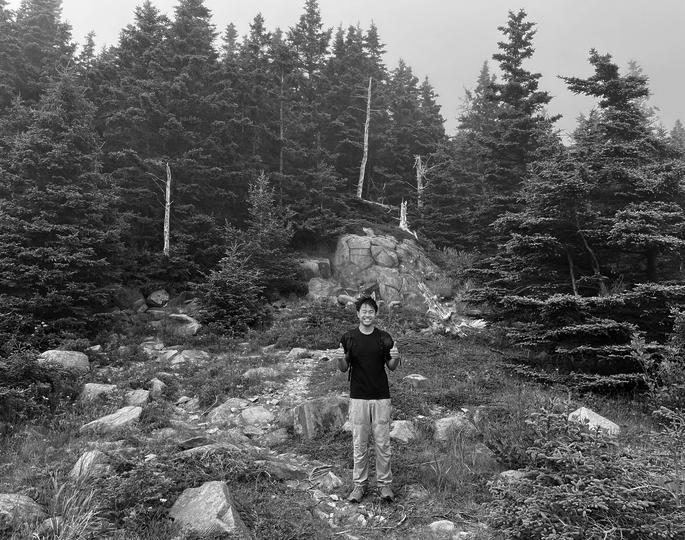
From drinking water from a peanut butter jar to playing in an experimental music group, JaQ Lai has various niche traits that make him stand out across the 5C campuses. In his free time, Lai also spends time doing various activities such as hiking outdoors. Here, he poses and smiles for the camera.
Sports or Piracy? The dilemma of live sports viewership in the modern age of streaming
Have you ever gathered with your friends to watch a football game on a Sunday afternoon? You wait patiently for one of them to log into their Amazon Prime account. But, unfortunately, Amazon Prime does not stream Sunday games for the NFL. So you search for the next best option: Hulu.
But as soon as you click on the game’s headline, Hulu tells you that you need the Hulu + Live TV package to watch the game, which costs $82.99 a month. And so, the hunt for the next best option continues…
Eventually, you may wind up asking yourself, “Why don’t I just look for a pirated stream online?”
So again, the crew finally lands on one of the most popular options known to sports fans across the internet: Streameast.
But Streameast, the illegal sports streaming service, was officially shut down on Sept. 3. The
legal action against Streameast originates from the Alliance for Creativity and Entertainment (ACE), a prominent organization dedicated to combating digital piracy.
Reports claimed that local authorities and ACE had finally succeeded in removing over 80 domains used for disseminating pirated streaming content — a substantial win for broadcasting corporations in the ongoing crusade against piracy.
Entertainment corporations that have entered this coalition are among the largest and most powerful in the world: Amazon, Disney, Fox, HBO, Hulu and many others.
Ed McCarthy, the COO of DAZN Group — a British live streaming conglomerate — said that the legal seizure of Streameast is a “major victory.”
He explained that Streameast was responsible for “siphon[ing] value from sports at every lev-
el,” while putting fans at risk of scams and cyber-attacks.
The most adamant defenders of intellectual property rights for sports streaming are corporate entities and investors who have significant stakes in the success of these ventures. On the other side are the common sports fans who are openly dissatisfied with the recent shutdown.
If you’re a modern sports fan, you know the pain that comes with trying to follow your favorite teams. As subscription costs rise, many fans are turning to piracy to watch their favorite teams play.
According to Teddy Ricketson of “The Sporting News,” fans are devastated by the recent shutdown of Streameast. The website hosted streams of games ranging from the NFL, MLB, NBA and NHL. With such a broad variety of games being freely broadcast online, many fans were pleased with the ease
of access and lack of financial gatekeeping. Therefore, several popular sports commentators and internet personalities are speaking out against Streameast’s seizure.
Instagram commentator Evan Hand hailed Streameast as the “beautiful, sweet prince of the internet.” In a bit of hyperbole, he said that Streameast was a website that had saved millions of lives over the past year.
This may not be the end of Streameast. Ricketson notes that since the legal proceedings are still developing, the popular free sports provider may only be sidelined for the foreseeable future.
With claims of billions of dollars in revenue lost to Streameast sports piracy, and the army of corporations that hold all of the IP rights for these games, companies have every incentive and technically every legal right to deliver the mortal blow to Streameast.
What does this mean for sports fans? Well, it is uncertain.
What we do know is that fans don’t want to pay high prices across multiple subscriptions to follow their favorite teams.
Access to entertainment media is indeed more accessible now than it ever has been.
Streaming technology dominates the entertainment industry as the most popular mode of consumption — accessible to just about anyone with a phone and an email address. But that doesn’t mean consumers aren’t being yanked.
Other popular streaming providers, like Paramount, Hulu and Peacock do not give complete access to the NFL for a standard subscription — like many other leagues and conferences.
To get all-inclusive access to NFL streaming on these platforms, customers are given the option to spend from two to 10 times the price, with NFL Sunday Ticket recently raising prices for the 2025 season — $449
as of today.
Not to mention that even the most affordable streaming options, like FloSports, will cost consumers $29.99/month. Yet with limited selections for each service, fans are forced to hop around various subscription services to follow their favorite teams.
Considering that the average rent for Americans is $1,372, most consumers will likely struggle to foot a bill that costs half of their monthly rent to watch sports, hence the shift toward piracy networks.
People should not have to pour out their last pennies to watch sports, but we also should not rely on piracy.
Some broadcast companies are learning that consumers desire more complete sports packages — even for a higher price — rather than the fragmented mess of subscriptions that is necessary to follow any team in any sport nowadays. It is also important for fans to understand that consumption of pirated content hurts their favorite team’s bottom line and their favorite athletes’ pockets.
But, on the other hand, streaming companies must realize that their hard bargaining and penny-pinching are creating a large market for pirating.
The majority of the blame for both the rampant piracy and the frustration of fans rests on the side of the streaming companies. They have the power to establish fair prices for consumers. If streaming packages were reasonably priced and more complete, many of the fans who turn to piracy would not need to anymore.
For next Sunday’s game — let’s vote with our wallets — where you choose to watch sports matters.
Noah Brewster PO ’28 is from Kingwood, Texas, intending to pursue either a degree in English literature or neuroscience. He is a faithful New York Giants fan and an avid pizza lover. He is currently covering the 2025 season for Pomona-Pitzer football.
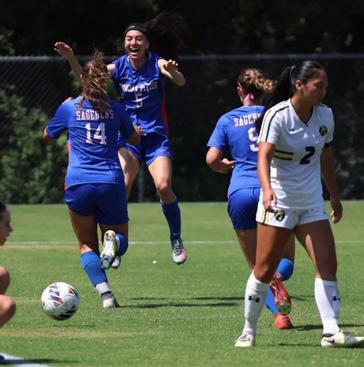
As most students are adjusting to life back on campus, Pomona-Pitzer (P-P) women’s soccer wasted no time getting right back to its winning ways. With four shutouts in their 5-0 record, they boast a clinical offense with seven goal scorers combining for ten goals scored and a fierce defensive line that has conceded just one goal in five games.
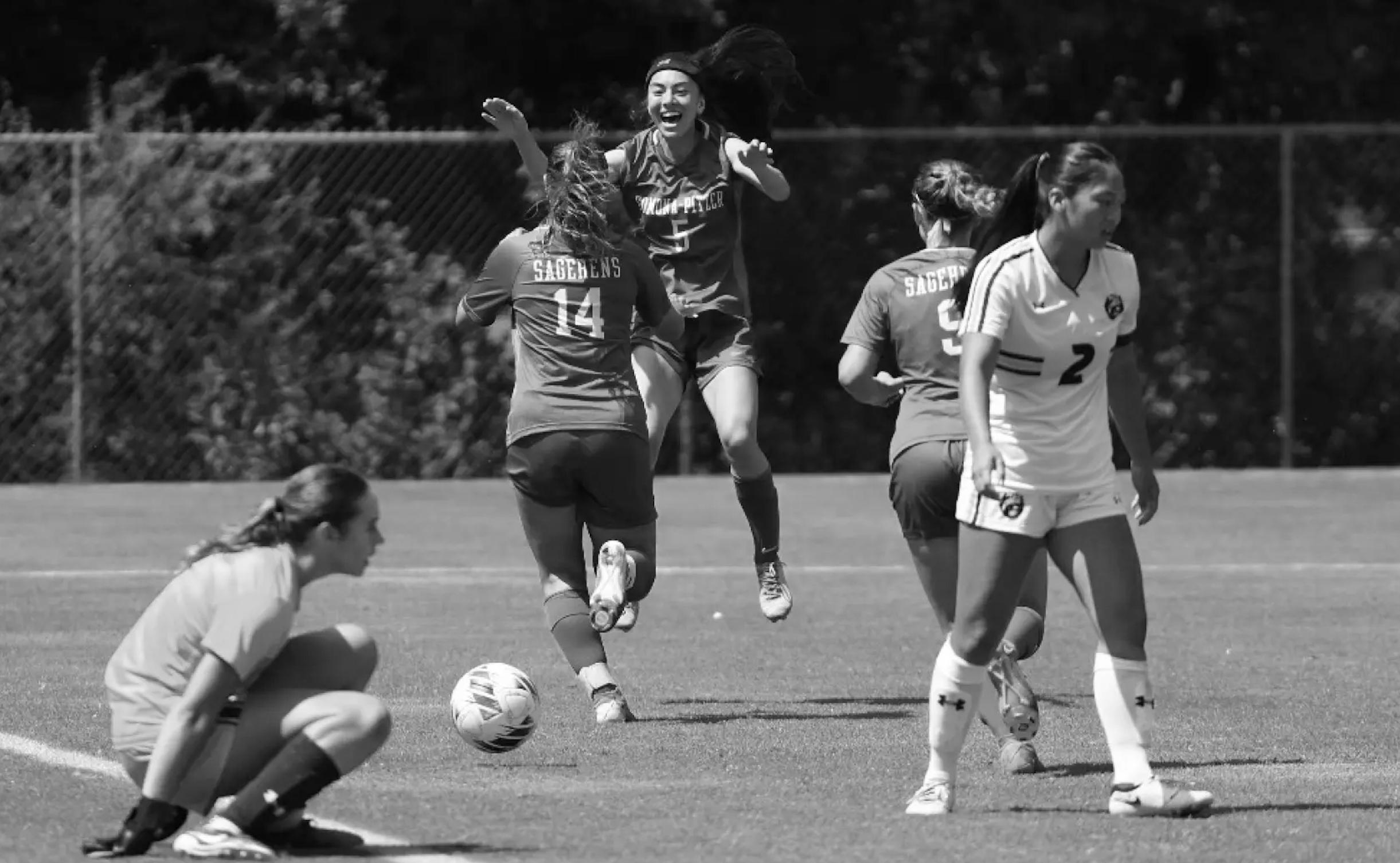
The Sagehens soccer team picked up where it left off last year, eyeing its seventh regular-season SCIAC title in a row. They have started their season strong with five consecutive wins, including a last-minute 2-1 comeback victory over Cal Lutheran on Wednesday, Sept. 17.
Led by senior Hannah Hong PO ’26, an All-American and returning SCIAC Offensive Player of the Year with four goal contributions this season, P-P has outshot its opponents 74-44.
One of the biggest X-factors in the team’s winning start has been their defense, according to captain and goalkeeper Hadley Johnson PO ’26.
“We’ve had an opportunity to have a lot of different players in both the goalkeeper position and in the back line as well,” Johnson said. “I think having that kind of trust in each other and our communication and ability to know that everyone’s gonna do a great job has been fantastic.”
The Sagehen back four has already been recognized as a force to be reckoned with, as Vivian Rojas Collins PO ’27 was named SCIAC Defensive Player of the Week for the second consecutive week. Rojas Collins also scored the long-range free kick to tie the game at 1-1 against Cal Lutheran.
In addition to the defense, the team’s intensity in their preseason preparation has played a large part in the team’s success to date, according to Ally Hsieh PO ’29.
“We always try to keep a gamelike intensity during practice and even during lifts, just staying focused and taking it seriously,” Hsieh said.
Last season, the Hens finished 15-2-4 overall and outscored their opponents 37-6 in their sixth consecutive regular season SCIAC title run.
Although the goals for the team remain the same, fans may notice some differences in this
year’s squad. The current roster for the season features a freshman class of 10, accounting for almost one-third of the entire team following the departure of nine seniors from the previous year. With this new wave of freshmen, building chemistry has been one of the main goals since the start of the season, led by upperclassmen such as Johnson.
“There’s an opportunity to set a new team culture and a new standard,” Johnson said. “Obviously, it can sometimes be a challenge just having players who are coming into their first season on our team, but also their first year of college. Transitioning is always tough, but it’s really been exciting this year. Everyone fits in really well, and the team is looking great.”
The close-knit community has helped the freshmen learn from the upperclassmen who have played in high-stakes games during their time with
P-P.
“All of [the upperclassmen] to me are my role models,” Hsieh said. “I look up to each and every one of them, and they’re all really supportive.” With this new opportunity came new talent, which captains like Hong were excited to see on the field.
“Obviously, it’s a huge adjustment going into the season, because we lost such a big class, and now we have a big class coming in, but I think we have a lot of talent on our plate,” Hong said. “The freshmen look great from the start of pre-season.”
The Hens have no plans to slow down after their hot start and have set their sights on further postseason success. According to Hong, they hope to bring the momentum from their regular-season success into the playoffs.
“I think we’ve done great in season, and we’ve won so many games, but we’ve always kind of
had our season cut short in the NCAA playoffs,” Hong said.
“This year, we want to break that spell, get out of that and hopefully make it to the next round.”
The Sagehens fell short in their previous NCAA tournament appearances, exiting in the second round in each of the past four years. Of those four, three came at the hands of their kryptonite, Trinity University, and all were penalty defeats. Johnson hopes to set the team’s sights high on another SCIAC title and trip to the NCAA tournament.
“It’s definitely a standard we set at the beginning of the year,” Johnson said. “One of our mottos is chasing championships. And so the SCIAC goes along with that, as well as the tournament.”
With these goals in mind, leaders like Hong and the team are more than ready to meet the high standard they set for them-
selves, built through preparation in practices thus far.
“Since we’re such a new group of players, there’s a lot of change,” Hong said. “But I think during these practices, we’ve been really just getting used to playing with each other and playing with new people. We’re at a point in the season now where we’ve kind of built that chemistry and we’re ready to show people the talent that we have on our team.”
With a squad hungry for goals and trophies, fans can expect another exciting season from the Hens, led by Hong and Johnson, with a fresh new roster to help them on their championship run. Following a late-breaking victory with the game-winning goal scored in the last minute of the game, P-P’s SCIAC title race is afoot early, and the Sagehens march on with a 5-0-0 record. They’ll look to continue the hot streak versus Occidental College on Saturday, Sept. 20, at Pomona-Pitzer Soccer Stadium.
JAKE CREELAN
NOAH BREWSTER
NERGIS ALBOSHEBAH • THE STUDENT LIFE
P-P football: Can the returning SCIAC champs recreate
the magic?
a big impact in practice.”
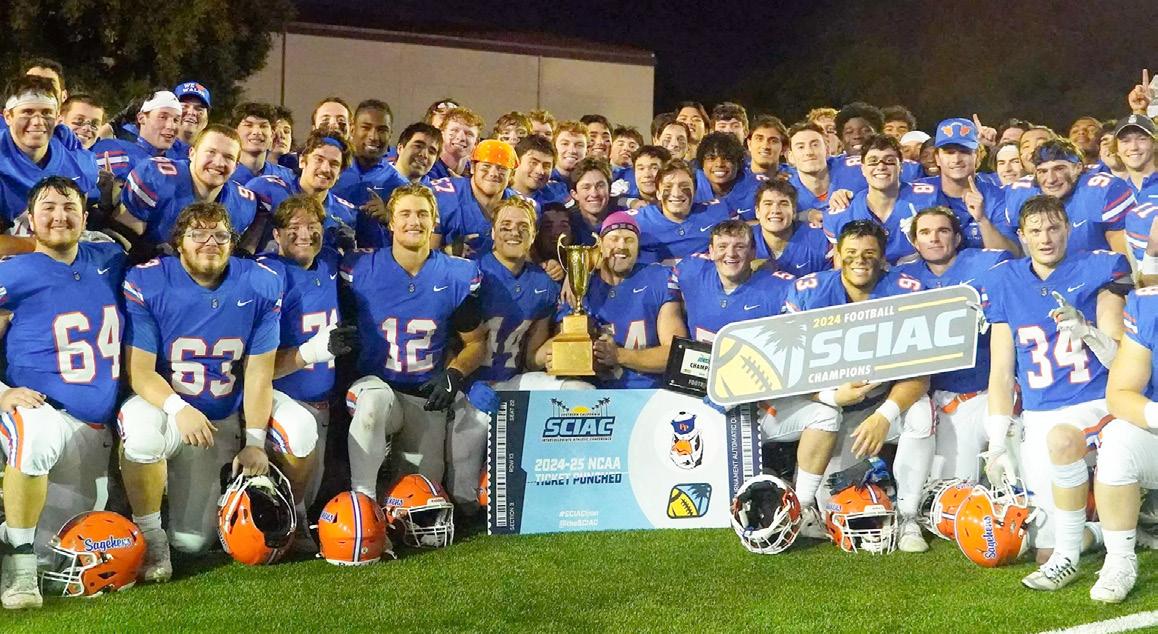
The Pomona-Pitzer (P-P) Sagehens ended the 2024 football season on a high note as SCIAC champions, securing an upset victory over the Chapman Panthers. While the pre-season SCIAC poll projects Chapman to oust P-P in the 2025 championship, the Sagehens have no intention of letting of the gas.
After securing last season’s SCIAC championship, the Sagehens were granted a playof berth in the NCAA Tournament, where they came up short in the first round against Whitworth University.
The two SCIAC divisions, Surf and Sun, which were created after the 2022 season, have now been reshuffed. Last year’s fnalists, Chapman and P-P, will both play in the Surf division this upcoming fall.
Many key players from that championship win, including last season’s SCIAC Ofensive Athlete of the Year Quinten Wimmer, have now graduated.
With the revised divisions, as well as new expectations and an extensive roster overhaul, the Sagehens have been taking the past month to reorganize, strategize and adapt with a new squad of their own.
Even with a new rotation of incoming underclassmen, it is undeniable that the outgoing seniors will be missed; and with their departure comes new challenges for the Sagehens, as ofensive captain Michael Ryan PO ’25 noted.
“We had a couple of very impactful players on our team [who] have graduated,” Ryan said. “Some playmakers that are no longer with us…[on] both sides.”
This transition hasn’t shaken the Sagehens’ spirits, though, as Ryan has seen many new players step up to fll the roles left by those who graduated.
“The challenge is [fguring out] who’s going to be the next guy up,” Ryan said. “The best part is, guys are already stepping up. We’re spreading it out to a lot of new guys who are trying to prove themselves as playmakers.”
Other veterans and upperclassmen have also expressed confdence in the team’s new additions. Ofensive captain Grady Russo PZ ’27 spoke about the team’s young core and their developing chemistry on and of the feld with optimism.
“It’s getting better and better… seeing the freshman getting in there,” Russo said. “A lot of them are making a big impact…even if they’re not playing [in games], they’re making
Not only is winning games a priority for the Sagehens, but so too is maintaining the bonds between players that have brought them to the past two SCIAC championship games.
“We are all super close,” Russo said. “We all want to keep playing football. The longer we can play football, the more time we can spend together. This team hasn’t won an NCAA playof game… that’s our main goal this year.”
These goals are especially salient for those veterans who played in both championship games the past two years.
Defensive captain Jake Sugawara PO ’26 commented on the guiding principles that have recently brought P-P football to two conference championship wins and a national playof berth.
“What really matters [are] the guys on the team…the guys in the building, the guys in the locker room,” Sugawara said. “We know our expectations. The outside noise, the preseason rankings…it doesn’t really matter to us. We just want to go out there and play our football that we’ve been playing the past few years, and we’ll be alright.”
The initiative to mentor future leaders and playmakers defnes the heart of P-P football.
As mentioned by Sugawara and the other captains on the team, excellence on and of the feld is key to setting the right example for next season’s leaders.
“These younger guys look up to you, whether you realize it or not, and so, everything you do as an upperclassman…the younger people will follow,” Sugawara said. “Culture starts from the top down.”
Russo also refected on his role in leadership and what it means to leave a meaningful impact as a captain and quarterback on the team culture.
“I want to leave a legacy of excellence,” Russo said. “I want guys to [join] this team and see that [we] do the right things, on and of the feld.”
The P-P Sagehens opened the 2025 season with a decisive 41-17 win over Willamette University on an away trip to Salem, Oregon. Their home-opener will be on Sept. 20 as the Hens take on Lewis and Clark College at Merritt Field. SCIAC action will take place at home the following weekend in an early Sixth Street rivalry match.
CMS football: Can the underdogs claim the crown?
IVAN RUGAMBA
Last year, the Claremont-Mudd-Scripps (CMS) football team finished with eight wins — a program record — for the second consecutive season, as well as a third-place finish in SCIAC. While it was a record-tying season, the Stags aren’t eager to relive their 7-9 loss to Chapman in the Surf Division Championship.
The Stags will now play in the other SCIAC football division, the Sun Division, separate from Chapman and 2024 SCIAC champions Pomona-Pitzer (P-P). Beyond the shift in league alignment, however, the team lost crucial experience with the departure of 21 seniors, including quarterback Walter Kuhlenkamp CM ’25.
To people outside the team, this might appear as a tough setback. But offensive captain and tight end Roman Ramirez CM ’26 remains positive that this year’s team can handle it.
“When there’s that big of a change, people are scared,” Ramirez said. “But when it came to our team, I think the guys were more excited than scared.”
Although this season marks a big shift for the Stags, Ramirez highlighted that some things haven’t changed, like the captains’ role as mentors for the rest of the team, which stems from the guidance this year’s seniors were given when they were underclassmen.
“As someone who’s now stepping into mentorship, I really reflect back on what worked from the previous years and what I learned from [previous seniors],” Ramirez
said. “Little things … like knowing that the guys on the team are always going to be there for you.”
Head coach Kyle Sweeney emphasized how this mentorship, coupled with the excitement for the season, has led to more competition for starting spots on the team.
“It’s an opportunity for guys that were probably good enough to play before, but were just behind somebody that was older and more experienced,” Sweeney said. The Stags also lost some key players on the other side of the ball. Defensive captain and linebacker Gabe Gangi-Saroukhanioff CM ’26 expressed his feelings about the defense’s shift into the new season.
“[The seniors] were all playing for three to four years,” Gangi-Saroukhanioff said. “So, the guys underneath them didn’t ever get the opportunity to go out on the field and build the confidence to play.”
As a captain, Gangi-Saroukhanioff has been inspiring confidence in his teammates since the spring.
“I was telling some of these guys who are stepping up into these roles, ‘You’re not here to be those guys. You’re here to be better. You have to have that mentality to want to do that, and if you don’t, then you’re going to fall short,’” Gangi-Saroukhanioff said.
Gangi-Saroukhanioff mentioned that this season was a great opportunity for the Stags to apply this competitive mentality and improve upon last year’s efforts.
“Change is inevitable and could be a good [or] bad thing, depending on how you take it,” Gangi-Saroukhanioff said. “I
think we’re in a unique position right now where we have a lot of potential to increase our upward trajectory higher than it’s ever been, and it’s due to this change.” Sweeney echoed his captains’ excitement and optimism, stressing that the goals for the new season remain unchanged.
“I think the goals are still the same,” Sweeney said. “The goals are still for us to be the best that we can be, and we want to win a conference championship.”
While transitioning into a new year always provides its share of challenges, the CMS coaching staff has always ensured that the team is stable for the long term. While starters do see the most time on the field, this doesn’t prohibit others from getting a chance to play as well.
“I don’t think there was anyone on the roster that didn’t play at all last year,” Sweeney said. “We’re always trying to develop the younger guys. Even though you might not be a starter, you still have to get better because your day will come.”
With their first victory in the books against Lake Forest College on Sept. 7, Ramirez and Gangi-Saroukhanioff expressed their motivation for what’s to come as they enter the new season.
“A lot of people were doubting us, but I think we showed it last Saturday: that we are the same team, if not better; we have just as much talent as we did, if not more,” Ramirez said.
The Stags are back in action this Saturday, Sept. 20, at George Fox University before their first SCIAC game against rivals P-P on Saturday, Sept. 27. They will look to further showcase their new squad and keep their early momentum going.
NOAH BREWSTER
Claremont-Mudd-Scripps football has tied its record for most games won in a season, eight, for the past two seasons.