Council on American-Islamic Relations designates Pomona ‘hostile campus’
The Council on American-Islamic Relations (CAIR) designated Pomona College as a “hostile camthat evaluates Islamophobia and free speech on college campuses.
From 2024 to 2025, CAIR, the largest Muslim civil rights and advocacy organization in the United States, ranked 51 universities as “unhostile,” “under watch” or “hostile.”
Out of the 51 colleges ranked by CAIR, Pomona is among the 45 According to CAIR-LA’s Legaltion of “hostile” means the institution’s actions make its students feel unsafe, targeted or discriminated against.
Shabaik said in an interview with TSL that Pomona’s public dismissal of student calls for divestment from Israel, the Title VI investigation for alleged anti-Palestinian bias launched in 2024 and the crackdown on student protests were among the several factors leading to CAIR’s decision. Its full report also cites President Gabrielle Starr’s suspension of 12 students and specifies “escalated” police force wielded against protesters.
“Many colleges even advertise their history of protest … sending the militarized police to crack down on the students sends a Shabaik said. “It sends a message that your speech is not going to be tolerated, particularly when it comes to pro-Palestinian speech.
Chau Vu ’26 becomes
Chau Vu PO ’26 was named one of eight North American recipients of the 2026 Computing Research Association Outstanding Undergraduate Researcher Award last month for her research in Human-Computer Interaction (HCI).
student to receive the distinction and the sole awardee from a liberal arts college this year. The highest honor in computing research for undergraduate students, the award recognizes technological advancements that create positive change.
She worked with Alexandra Papoutsaki, associate professor of computer science at Pomona to study personal informatics and tracking technologies and with Jingyi Li, assistant professor of computer science at Pomona, on developing creativity support tools. Their research began through the Computing Research Association’s inaugural
found that apps intended to track babies’ long-term development are instead used to manage daily responsibilities and goals.
ture of how families really use tracking technology and help designers fast-paced, day-to-day realities of caring for a newborn.
“In addition to highlighting Chau’s talent and dedication in her field, this award exemplifies Pomona’s strong, long-standing support for undergraduate research in STEM, made possible by enthusiastic faculty mentorship and College funding for student research and conference travel,” Stephen V. Marks, associate dean of the college
See AWARD on page 2
ARTS & CULTURE
Jessy Wallach PO ’29 writes about Leonard Cohen’s “Leaving Mt. Baldy” and her experience at the Claremont Colleges. She draws striking comparisons between Cohen’s stay at the Mount Baldy Zen Center and the promised utopia of college.
And that if you decide to engage in any type of speech similar to this again, in the future, there are going to be militarized police ready to shut down your speech activity.” In a statement to TSL, a Pomona College spokesperson -
ment to confronting all forms of hatred, including Islamophobia, antisemitism, racism and other kinds of bias.
“The college regularly hosts and supports programming related to Muslim life, Islamophobia, and Palestinian experiences, alongside student-organized re-
ligious observances and interfaith gatherings,” the Pomona spokesperson wrote. “Pomona students are encouraged to engage openly with a wide range of speakers and perspectives.”
The Laemmle Claremont 5 theater closed its doors after 18 years of operation in the village on Jan. 28, and is set to reopen in May under new ownership of Regency Theatres.
The family-owned theater — tucked inside the village plaza and beloved by residents and students for its discounted ticket prices and pandemic, nearly closing in 2023.
lenges, Greg Laemmle, the owner and operator of Laemmle’s six theaters, put the Claremont location up for sale in 2019 and again in 2020, but both times, negotiations eventually fell through.
According to a blog post from Laemmle, the theater was not on the market when they were approached by Regency in Nov. 2025. However, after being apgency, Laemmle thought a change in ownership made the most sense following years of low ticket sales.
“While we saw encouraging energy around special events and programs aimed at students and younger audiences, overall pandemic] to a level that wouldcially sustainable,” the post read. Regency Theatres — a medium sized theater chain in California, Arizona and Hawaii — will continue to screen movies after completing renovations
ZHONGYI CHEN •
MAGGIE ZHANG • THE STUDENT LIFE
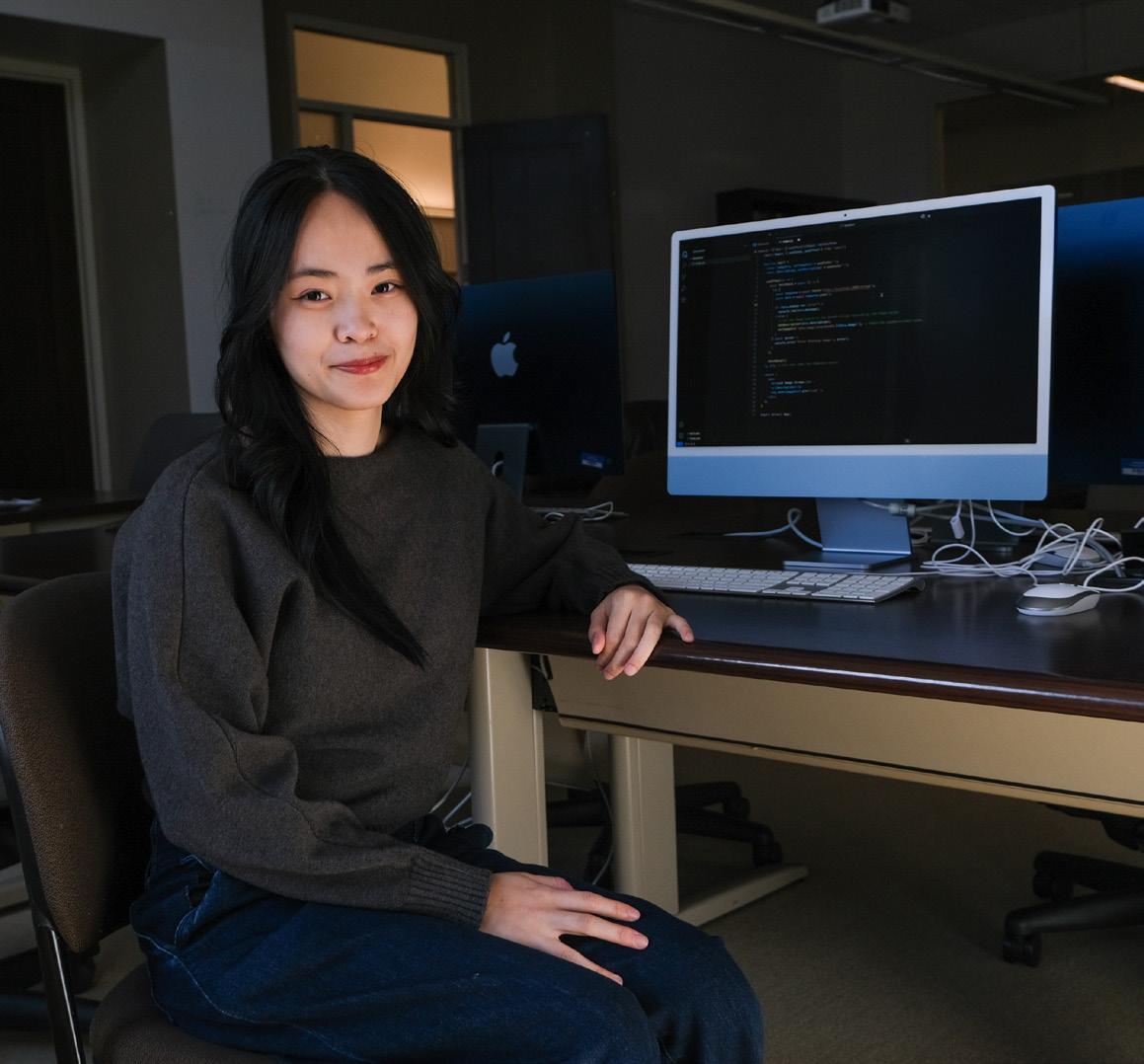
Chau Vu PO ’26 became the first Pomona College student in history to receive the Computing Research Association Outstanding Undergraduate Researcher Award.
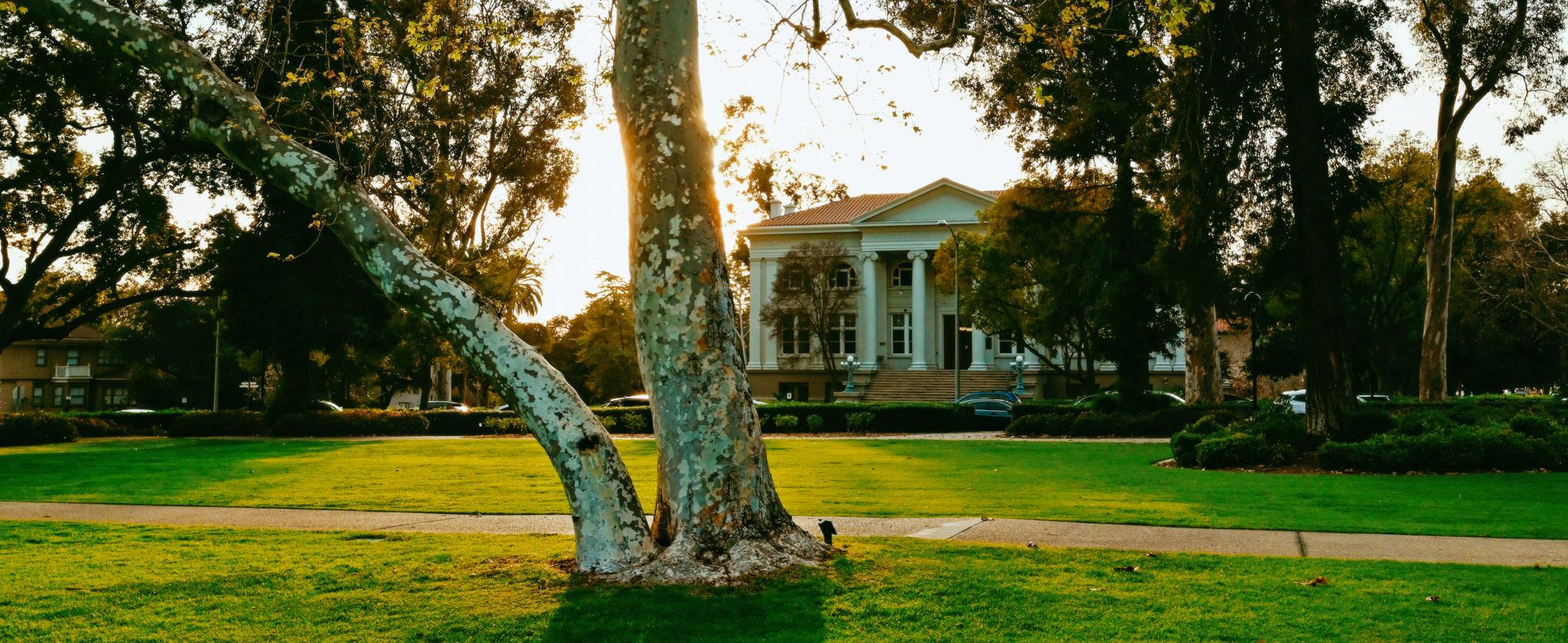
Pomona was designated a ‘hostile campus’ by the Council on American-Islamic Relations
SHIVANI SHARMA • THE STUDENT LIFE
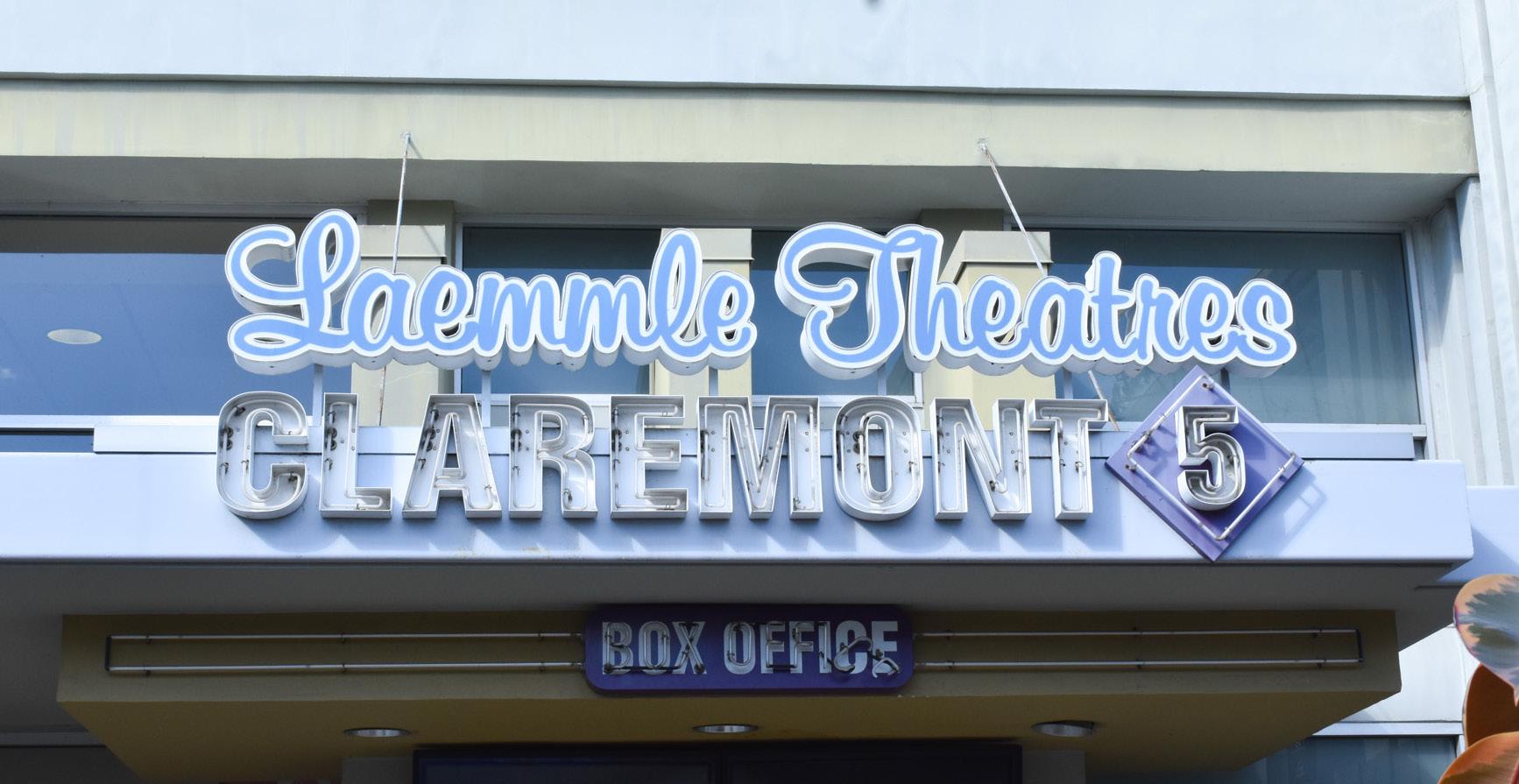
The Laemmle Claremont 5 theater in the village was bought by Regency Theaters.
MACY PUCKETT
BIANCA MIRICA
QUINN BOLSTER CHARLOTTE HAHM
Continued from page 1
In an email to Pomona’s student body, Starr announced a resolution VI complaint received by the U.S. for Civil Rights, which alleged that Jewish students were experiencing antisemitism on campus.
“It is my hope that the steps we are committing to will also identify and address other kinds of shared ancestry discrimination. Hatred takes many forms, and understanding its complexities is key to confronting it,” Starr wrote.
Shabaik, however, said CAIR is concerned about the resolution’s potential impact on students’ freedoms.
“We’re concerned about the paand what it means again, for a further crackdown on speech that favors Palestinian or talks about Palestinian human rights and human dignity,” Shabaik said. “It seems may lead to further cracking down on speech and expression when it comes to this arena.”
According to the college’s statement, most demonstrations on Pomona’s campus have taken place in accordance with the college’s policy and proceeded without incident.
“No one participating in such protests, regardless of their political or ideological convictions, has been sanctioned,” the spokesperson wrote. “But when actions move outside of those policies — such as entering restricted spaces or
Continued from page 1
and Elden Smith professor of economics, wrote in a statement to TSL.
Vu, a computer science major, acknowledged the myth that it is harder to do research at liberal arts colleges. However, she said the accessible one-on-one mentorship and student-centered resources available at a liberal arts college were imperative to expanding her research.
“I could only do that because I’m here at Pomona,” Vu said. “The small and everyone is nice and supportive. That’s the only reason why She came to Pomona intending
disrupting essential operations
— the College has a responsibility to respond in ways that prioritize safety and access for all members of our campus community.”
According to Shabaik, CAIR hopes to inform students about what is happening across the country and empower them to continue their advocacy on college campuses. Shabaik said for both current and prospective students.
have to really consider whether or not they feel like they would be going to a campus environment that would welcome them … that would protect their advocacy on issues that they may feel important to their lives,” Shabaik said. “And particularly for Palestinian Muslim American students, going to a situation where you are not going to be protected by your school, where you are actively being harmed by your school.”
Shabaik said Pomona’s actions was seeing in colleges and universities across the nation under the Trump administration.
“We’re always hopeful that universities can learn from prior mistakes and to improve and to implement policies and procedures that include situations rather than make them worse,” Shabaik said. “I think there’s still a ton of work to be done … but that’s why it’s important for students to continue to advocate for those improved policies … all students.”
to study computer science, and her aspirations quickly zeroed in on HCI, which she described as a way to study technology that focuses
“In Human-Computer InteracIs the thing that we’re building actually helping people?” she said. people through technology, Vu said that reaching out to her comyear student marked the start of her research career.
She emphasized the dual commitment to teaching and research among Pomona faculty.
“People know that professors at Pomona enjoy teaching and that’s
why they’re here,” Vu said. “But they’re also very passionate about doing research with students. So it’s a complement of both.” her teaching assistant, described the college as uniquely positioned to support HCI research. She noted students from a variety of backgrounds and that Pomona’s small, close-knit community enables them to become productive researchers early on in their college careers.. Their research together on apps for infant development and care was accepted to the Association for Computing Machinery’s Conference on Human Factors in
Computing Systems (CHI 2025) last year, where it received an Honorable Mention Award, placsubmissions. Vu presented the work in Yokohama, Japan. For Vu, this experience, along with the CRA Award, demonstrated that meaningful research can to both her technical skills and her breadth of education.
“Because I’m at Pomona, I have the opportunity to exercise my skills as both an academic and a programmer,” Vu said. “It’s the balance between deep thinking and building.”
Administrators said the college
purposefully built this immersive environment for undergraduate students.
“We strive to provide undergraduate students access to opportunities for which many students elsewhere have to wait until graduate school,” Brent Carbajal, interim and dean of the college, wrote in a statement to TSL.
The CRA award has also reshaped how Vu views her future, and she said the recognition signals something larger.
“It means that the work that I’ve done reached a broader audience. It makes me very happy that people are aware that we should ask these critical questions,” she said.
LA e MML e: Theater closes, ownership changes
Continued from page 1
Bulletin.
Regency is set to reopen the theater in May, after adding reclining seats, tables and more food options to the space.
Still, many 5C students were stunned by the sudden ownership change and closure.
Jenna McComas CM ’28 said she screenings on Tuesdays with her day $7 tickets. She noted the change
in ownership may lower student
“It was very nice to not have to pay $20 to go see a movie,” McComas said. “I don’t think that college students would be as likely to go as often if they’re paying a crazy amount to go see a movie.”
Jordan Becknell SC ’27, co-chair of publicity for the 5C’s 5x5 Films Club, also shared her appreciation going more before it closed.
“I always had a lot of love in my heart for it, and it made me really happy that we had a
semi-independent theater in the area,” Becknell said.
Becknell’s Co-Chair of Publicity for 5x5 Films Club, Shuta Okuakai PZ ’27, highlighted theings with friends or strangers. While under renovation, students will be deprived of an important third space.
“I feel like collective viewing experiences are so meaningful the same moment, same movie, same space, same emotions with someone that you don’t know,”
Becknell said.
The Laemmle also partnered with local organizations to host -
worked closely with Laemmle to host unique screenings and Q&As with directors and actors — said he hoped the Regency would continwith his organization.
without the Claremont Laemmle 5,” Callaci said in an email to TSL.
Opera] as a means to help save the theater, to do our part.”
Wren Hartford SC ’28 said one of the biggest draws to the Laemmle was its locally-focused, intimate change under new ownership.
“What’s so special about small movies is the family-like atmosphere, and big chains lack that warmth,” Hartford said. “I’m hoping that Regency can retain the Laemmle’s community-centered, homey feel that’s so endearing, and is what ultimately drew people to it.”
One ton of food — equivalent to 2,000 full plates — was dumped by diners at Claremont McKenna month, according to the college. The statistic comes as Collins enters its second semester of frontof-house composting, an effort spearheaded by the dining hall and student sustainability groups.
Alongside the plate waste, Collins saw nearly 750 pounds of compost through kitchen scraps, leading to a total of nearly two tons that were ultimately composted, according to the Roberts Environmental Center.
The composting effort came about in collaboration with the EcoReps, a student group that promotes sustainable practices on campus.
EcoRep Francesca Rossi CM ’27 played a key role in instating this system of composting at Collins. For her, the thousands of pounds of wasted food at the dining hall last month was a shocking number.
kind of jarring to imagine how that would translate to full months and semesters.”
Philip Herrera, assistant general said that the waste-management process from the dining hall is a collaboration between Bon Appétit, the City of Claremont.
“We compost as much as possi-
ble, pre-consumer and post-consumer, using the city-provided compost cans … which are then picked up by the City of Claremont waste management services,” Herrera wrote in a statement to TSL.
He said Collins has been in close collaboration with both the EcoReps and the CMC sustainability committee to raise awareness about reducing plate waste. He wrote that both student groups are “very much involved with the sustainability practices of the dining hall.”
EcoRep Carol Hutchinson CM ’26 wrote in a statement to TSL that while the sustainability group’s other initiatives have enacted small changes to dorm life and culture, the composting initiative felt more “concrete.”
Hutchinson also wrote that since Collins was the last dining hall at the 5Cs to have diners sort their food scraps into landfill and compost bins, the EcoReps helped combat perceptions of how the college prioritizes sustainability.
“We wanted to take initiative to combat the perception that CMC is not as environmentally conscious as some of the other 5Cs,” Hutchinson wrote. But she explained that not only is the amount of food waste “a big problem,” but composting is still not completely efficient since many students mix up thepost moot,” she wrote.
Angeline Hu CM ’28 said the labeling of the
“With
She noted that standardizing the bins would be “a low -
son wrote that the system is muchability and dining hall workers, who no longer have to manually scrape hundreds of plates daily.
“It makes their jobs easier,” she wrote. “If we all do small actions individually, there is a
The composting metrics from January were put on a poster in Collins this week, opposite the composting bins in the dining hall, alongside statistics on
utensil usage. Elise Chin CM ’28 approved of the change.
“It’s good in informing studentsing,” she said. “I think students will be more conscientious.” Rossi said she hopes future EcoRep initiatives continue to raise awareness and education about sustainability on campus.
“If we can get our classmates and peers more aware of how their actions may or may not be sustainable, then I think that’s a win.”
bins contributes to confusion, since one side of the conveyor belt has the compost bin on the right, while the other has the compost bin on the left.
the other dining halls, we’re all Pavlov-ed into assuming the compost is on the right,” Hu said.
JOSE SAQUIC-CASTRO THE STUDENT LIFE EcoReps propel Collins Dining Hall into its second semester of front-of-house composting.
REANNA MOHLER KAHANI MALHOTRA
JESSICA LEVIN • THE STUDENT LIFE
KSPC celebrates 70 years of FM radio
CORINA YI
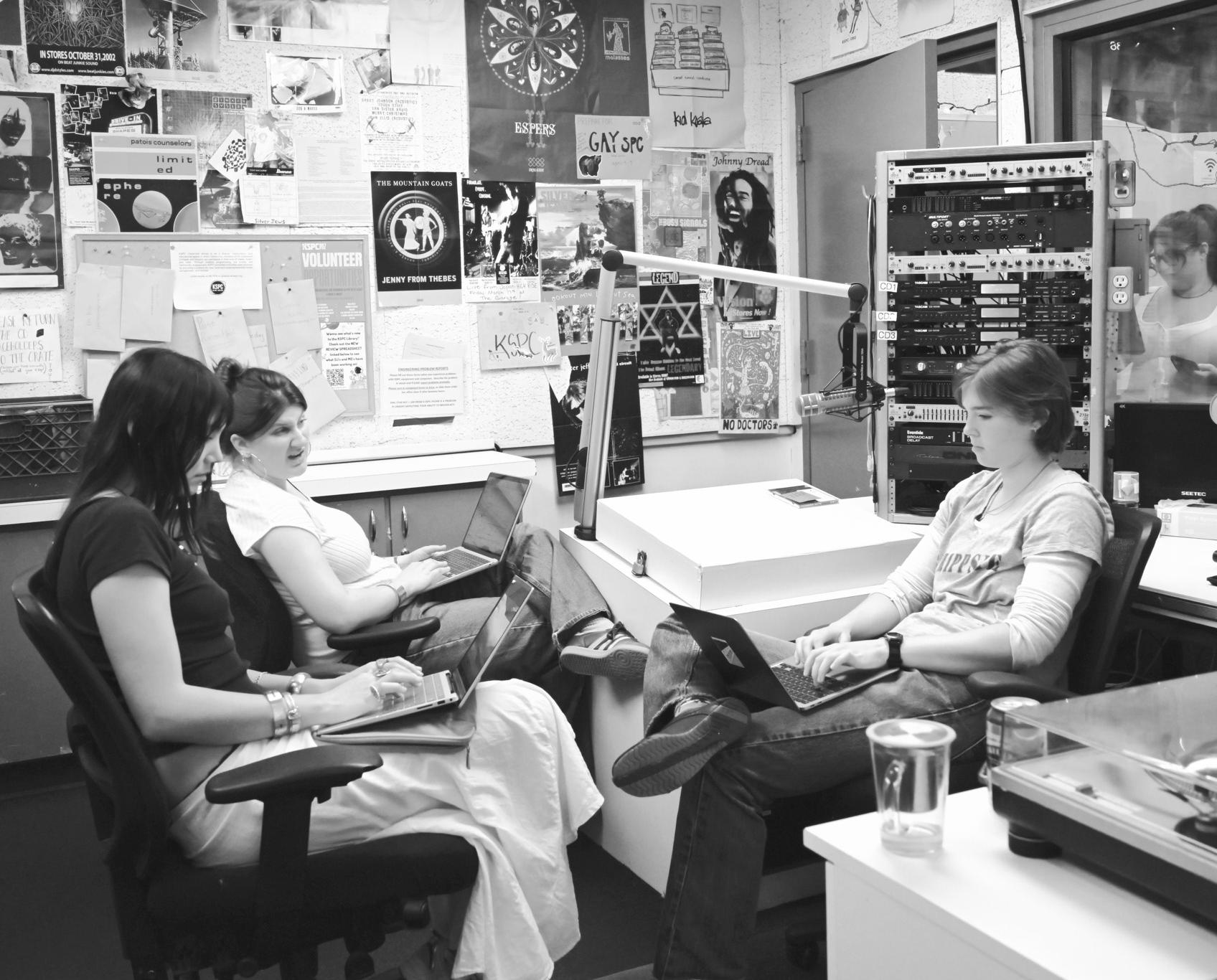
Stacks of eclectic CDs and vinyls, ranging from classic jazz to global indie rock, spill into every corner of the studio shelves. On the walls, colorful merch, certificates and posters reflect a warm lived-in history of local, student-centered music at the 5Cs.
In the basement of the Thatcher Music Building lies KSPC’s studio. Beneath the building’s beige walls, staff members can be found reviewing lyrics before they go on air, volunteers training to become DJs and people conversing about their classes and music tastes — the room is alive.
For decades, KSPC has provided a space for students to come together and celebrate music across genres, styles, cultures and eras.
On Thursday, Feb. 12, KSPC hosted an open house at their studio — which included sweet treats and tours of the studio space — celebrating 70 years of FM broadcasting on 88.7 and 25 years of online streaming. KSPC, founded in 1956, is a 24/7 independent student-run radio station at the 5Cs, with a mission to provide a platform for new, local and underrepresented voices.
KSPC celebrated their anniversary by reflecting on key milestones throughout their 70-year history, noting adaptability and community as key drivers of the radio station’s continued popularity and relevance. Even now, amid an era of rapid digitization when almost everything can be found online, KSPC remains an integral part of the 5C community.
“Across 70 years, [we were] originally a Pomona-only station, and so I love that KSPC is across the 5Cs [now] and that we get students from every college involved,” SC ’26, a music director and DJ at KSPC, said. “And I think
that’s really special, just like the way that the consortium is special on its own.”
For many students, KSPC is a low-stakes way to train in a studio and eventually become an on-air DJ with their own show.
For others, it provides an opportunity to engage with music at the 5Cs from behind the scenes, assisting with sound tech, event planning, merch development, fundraising and more.
“We love [having] people just starting out,” Vera Caldwell PO ’26, a KSPC mentor and director, said. “We want it to be sort of a welcoming open space of learning, where we don’t want to be gatekeeping in any way, because so much of the music world is, and that’s a problem.”
Bianca Withers SC ’28, a new volunteer at KSPC this semester, expressed appreciation for the radio station as an outlet for discovering new music outside her usual taste. She described KSPC as a unique space that allows students to discover genres and records that streaming platforms like Spotify or larger radio stations might not offer.
“I feel like with streaming services, especially, it just keeps pushing a sort of algorithm that is tailored to you. It just feeds you the same thing that you like to hear, and that often can be quite limiting,” Withers said. “And so that’s why I like radio in KSPC, where you kind of let music find you instead of you boxing yourself into your algorithm on your streaming service.”
Unlike streaming services, KSPC strives to preserve authenticity in everything they do. One way they do this is through community messages, which are read from cards or pre-recorded and played on-air during breaks.
These messages include information about organizations that support marginalized community members, cultural events and political issues — such as spreading awareness about ICE and resources for undocumented immigrants.
Additionally, with the growing presence of AI-generated music and art in the industry, KSPC staff have expressed their intention to continue leading with human-centered music.
“We’re going to make a statement pretty soon, on social media [about our stance on AI-generated music], and that was preempted by Bandcamp’s statement that they did about two weeks ago about wanting to uplift and boost human-made music,” KSPC administrative associate and DJ diA hakinna said. “We don’t support AI-generated music or AI-generated anything.” Ultimately, KSPC strives to uphold the values of creative expression and authenticity while reaching a wider audience and continuing to make its mark on campus life.
“I think another one of my favorite things about the station that a lot of other college radio stations have given up on is our physical media library, and at other college radio stations, you might just be asked to plug into your computer to their sound system and play off Spotify, but we do not do that,” Bagley said. “We own all of our music.”
In addition to sustaining their radio station, KSPC helps organize popular 5C events such as the semi-annual art and music mart, which most recently took place on Feb. 5.
BETTY brings four decades of queer
Inside the Annual International Festival
As an international student, homesickness never truly leaves you alone. It may creep in when you’re asked where you’re from, when telling your friends how longes your peers make go right over your head.
of Roberts Pavilion at Claremont McKenna College, “The World Meets at 7Cs” created a space for international students to come together and celebrate their countries and regions under one roof. With home-cooked pastries, lively music and student-run booths representing over 30 countries, students were able to connect to one another through their shared experiences and alleviate that homesick feeling.
The event was hosted by the International Student Community Programming Council, which aimed to immerse the Claremont Colleges students in the international scene through an exciting afternoon of multiculturalism.
Taivna Mills, the assistant dean of students for International Student Services and Academic Support at CMC, highlighted that international communities deserve recognition, especially in light of recent events.
“It was our hope that the event would provide another opportunity for the international community to connect to one another, and to provide reassurance to our international students and immigrant communities that they are seen, valued and supported,” Mills said. “We are so grateful that so many students shared their culture, talents and hearts with us during this event.”
Throughout the event-planning process, organizers were cognisant of and motivated by recent turmoil regarding international students’ visa status in the United States, and a general rise in xenophobic discrimination. Mills also noted that while a single event isn’t enough to counter the prejudices international students face, these initiatives are essential to creating an increasingly inclusive environment.
“We hope that highlighting and celebrating our students at the festival helps counteract some of the negative actions and narratives that we have seen and experienced,” Mills said. “We recognize that one event is not enough.”
The venue proved to be exactly this: A space where students walked past displays, traditional tables, eager to embrace diversity
beyond the pastries dusted with sugar and the carefully arranged trays of dolma. The festival fostered a lively atmosphere of international conversation and community, and allowed students to showcase their cultural food and traditions with the student body.
For Mai Höglund, PO ’28, who represented Finland, preparing the booth felt very rewarding.
“It was good fun,” Höglund said. and making it with my friends and being able to share Finnish culture.”ibility for international students and allowed others in the 5C community their home.
“I’m very proud of my country,” Höglund said. “I think it’s a nice time to be able to see just how many people the 7Cs. You don’t always realize there are so many people from all over the world. It’s a great way to see that.”
At the Armenian booth, Kalia Manayan PO ’28 described a similar large Armenian community at home, she noted how meaningful it was to see her identity represented publicly on campus.
“The diversity and even just the coming together on campus and among the students are important,” Manayan said.
While cultural pride and community were central themes, both Höglund and Manayan shed light on an agreement made amongst students: Food draws people in.
“I feel like it’s the most obvious,” Manayan said. “Everyone’s been talking about what foods to bring. I think that’s the best part. Sharing cultural foods.”
Even from the perspective of students born in the United States, such events are crucial in promoting diversity. Sakeenah Abraham PO ’29 was on site and expressed her appreciation for the fair, suggesting it be held biannually so international communities receive greater exposure.
“I got to mingle with a bunch of learn a lot about the international community that we’re building here,” Abraham said.
the kind of community students are actively shaping together, one built not only on shared spaces but on shared cultures.
baklava, empanadas, lumpia and jollof rice, what remained was something enduring: the fact that international students are not peripheral to campus life. They are central to it.
feminist power to Scripps
“I hope that they see that it can be fun and feminist and cathartic to see women who have been together for this long,” BETTY member Elizabeth Ziff said in an interview with TSL. “I would have loved to have seen that when I was going to college.”
In creating visibility they once lacked, the band has become a pillar of queer media. This impact has extended beyond their songs into the various projects they became involved in.
BETTY’s discography spans 11 albums and has appeared in countless television series. Notably, BETTY wrote the theme song for a series titled “The L Word” and performed live in numerousTY through this series.
“I’ve been listening to BETTY for a while,” student attendee Frances Currie SC ’26 said. “I’m a really big fan of ‘The L Word,’ so I loved it when they played [the] theme song. That was super fun to hear.”
ture thrives. For students, BETTY’s to meet the artists behind a cultural touchstone. The band’s work on “The L Word” resonated not only as entertainment but as a living example of queer women leading in media and music.
“I think of Scripps as a queer place and a place where queer culture is celebrated,” Bagley said. “I think BETTY does that, and I was happy to see them there.” Since the band’s origin, they have sustained their commitment to justice for women, girls and queer people. In 2014, BETTY founded The BETTY Effect, a of music and performance to empower marginalized individuals across the globe. Currently, they serve as Arts Envoys for the U.S. Department of State.
Four decades of music, friendship and activism culminated in a
afternoon performance on
Green Lawn. On Sunday, Feb. 15,
the
all-woman band BETTY for
BETTY is composed of three women: Alyson Palmer is a vocalist who also plays the bass and guitar, cover vocals, guitar, electronic programming and even cello between them. The trio celebrated their 40-year
ZOE CHIN anniversary in Claremont, a city far from where they were first founded in 1986. Washington, D.C. The concert kicked off with songs from BETTY’s new album, “EAT,” which was released in Sept. 2024. New tracks like “Flow” and “Big Size Love” paired seamlessly with BETTY classics like “Did You Tell Her.”
To mix it up, the band also sang a cappella and alternated lines in spoken word, illustrating the intuitive connection that comes from decades of making music together. The performance cul -
minated in a standing ovation from guests.
“I think it’s really commendable to be going for 40 years and still be making new and relevant music, not just playing the hits, so Bagley SC ’26 said. Seeing the fruits of BETTY’s enduring career firsthand was inspiring for many. In an industry often steeped in ageism and misogyny, watching older queer a powerful model of what longterm collaboration, creativity and authenticity can look like.
“The L Word” fans exist in all corners of the globe, which is something that BETTY members are not only aware of, but deeply proud of.
“We have played all over the were, people were singing ‘The L Word’ theme song who necessarily didn’t speak English,” Palmer said. “It’s really exciting that it’s become an anthem to so many women who feel the same way we do.” Scripps has long been recognized as a space where queer cul-
BETTY’s lasting impact traces back to their music’s timeless messaging. New songs like “What The World Needs Now is Love” students facing political and social turmoil in mind. That turmoil can be isolating, but BETTY serves as a blueprint for budding activists.
“I truly believe that we need to, as soon as possible, absolutely destroy the patriarchy,” Palmer said. “We need to connect in every single way to have the power to do this huge, huge thing that we’re going to need to do — to put not only our nation, but the world on the right path. What’s really exciting to me is to see girls who have the at their age.”
BIANCA MIRICA
MAGGIE ZHANG • THE STUDENT LIFE
ZHONGYI CHEN • THE STUDENT LIFE
fervent
Bowling
Scripps Presents hosted
queer
Scripps’s family weekend.
ZOE CHIN • THE STUDENT LIFE
On Sunday, Feb. 15, Scripps Presents hosted BE TT Y on Scripps B owling Green
KSPC E ditorial B oard hanging out in KSPC studio
Haitian cooking is a labor of love
IRIKAA MEHROTRA laboration. Debates quickly emerged concerning the proper way to cook each cultural dish — one student even Facetimed a family member steps just right.
Dorm cooking is not for the weak. The kitchen is often chaotic, and when you reach in to get a spatula, you might end up with a whisk people who share the same love of cooking, the chaotic scene can often become a cherished memory.
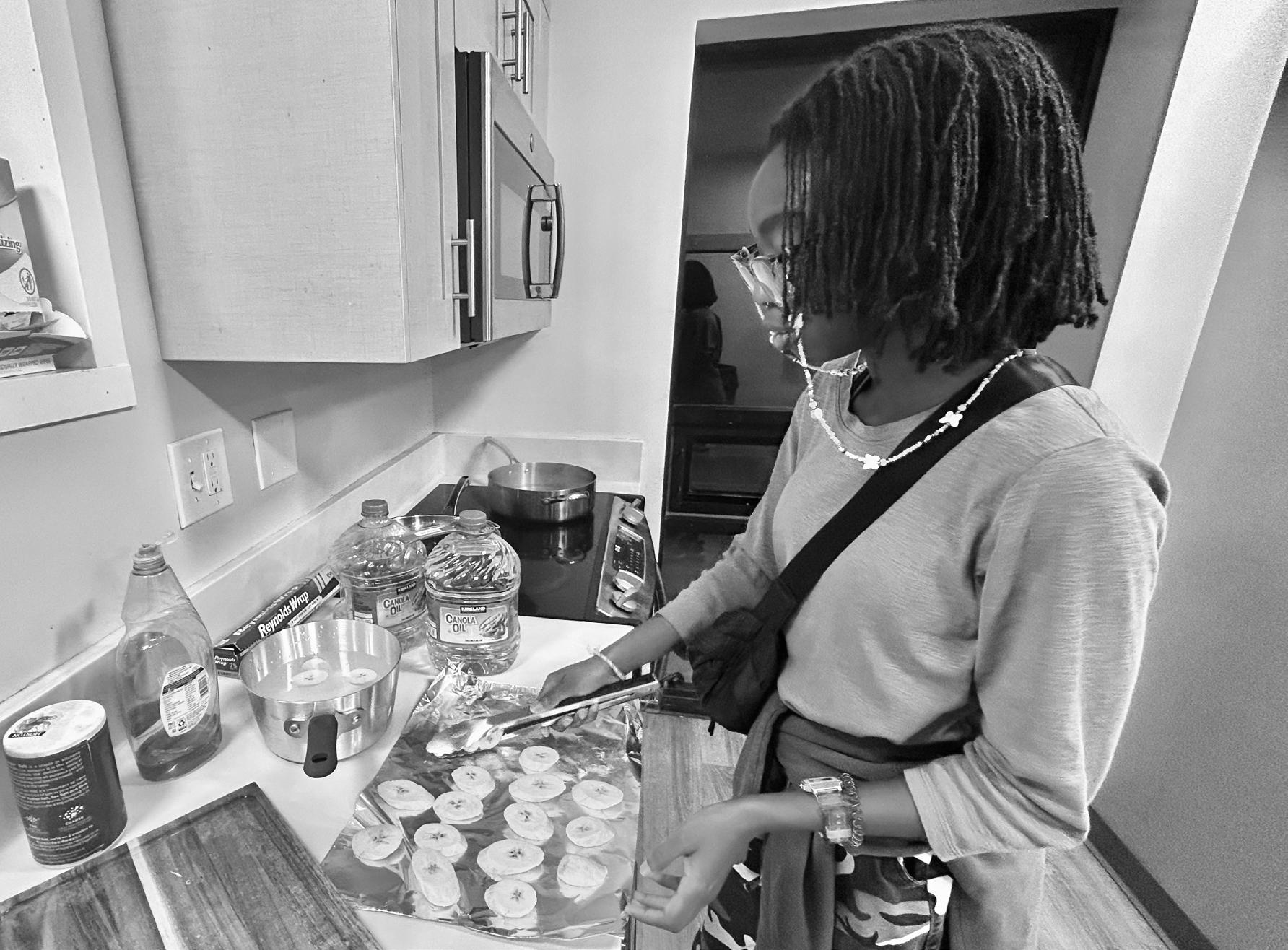
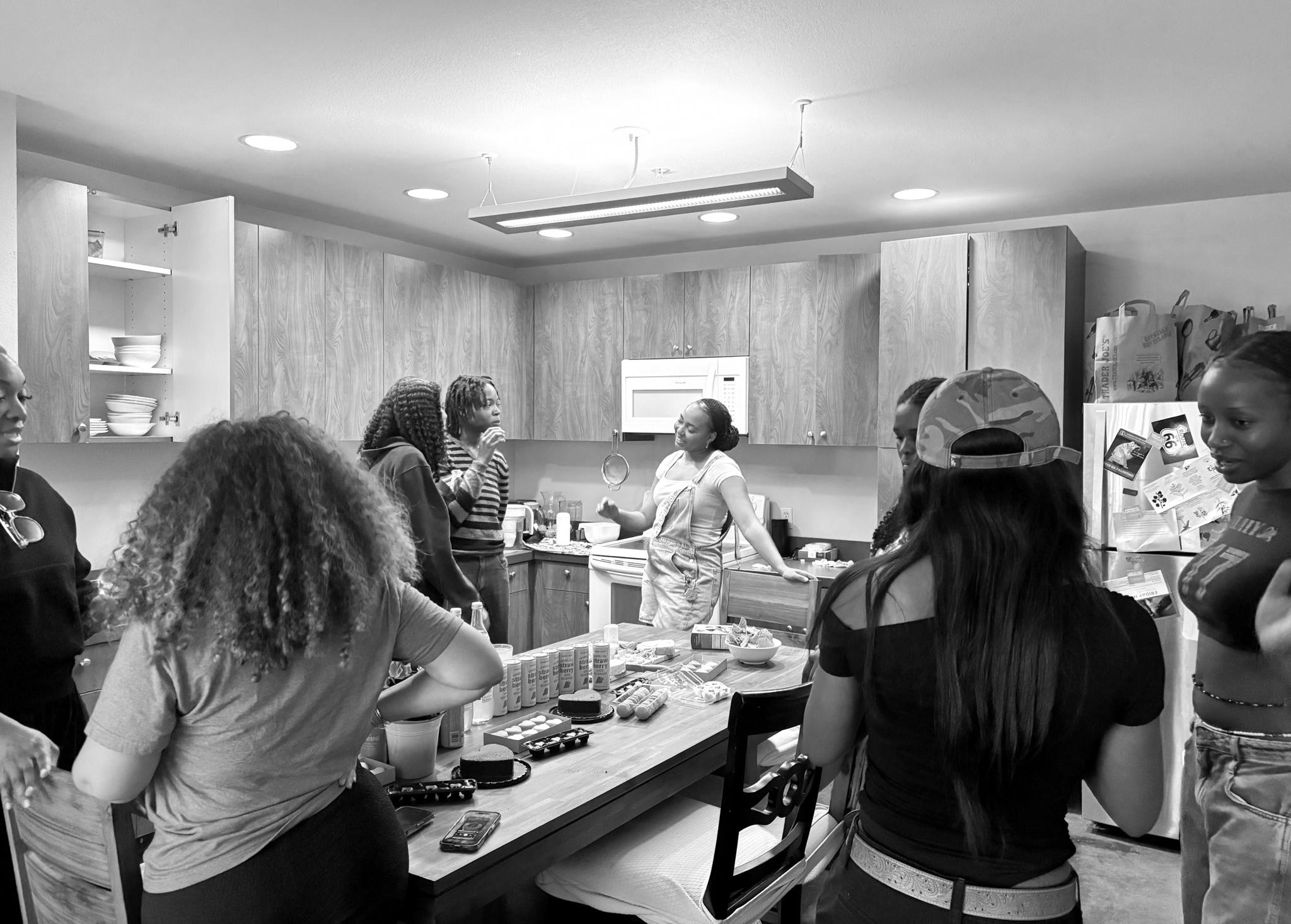
At 7 p.m. last Wednesday, Feb. 11, the Black Latin American and Caribbean Club (B.L.A.C.C.) came together to cook Haitian food. With kitchen, students gathered to craft a traditional Haitian meal consisting of poul fri (Haitian fried chicken), bannann peze (fried and smashed plantains) and pikliz (pickled cabbage).
For many college students, away from their favorite homecooked dishes, dorm cooking is a ritual that brings their community together and establishes a feeling of belonging. The bones of cooking are sharing customs, memories and most importantly, recipes.
“Food is about learning a person,”
B.L.A.C.C. president Madi Thomas PO ’26 said. “The conversations one has show how you can put a person on a plate. It reallybinations you never had before. In that way, cooking gives rise to community.”
As the cooking began, light-hearted competition ensued. Students danced around the kitchplates of ingredients as they chatted with one another. Shoulder to shoulder, attendees disregarded the kitchen’s cramped quarters, embracing the inevitability of col-
OFFICE HOURS FOR THE SOUL
For many, the communal, casual cooking class mirrored the memories spent hanging out in the kitchen with family members. In channeling aspects of their family throughout the night of cooking, students managed to keep homesickness at bay.
“This event, to me, is less so about the food and more so about the fact that all of us had some form of experience with growing up in a Caribbean household,”
B.L.A.C.C. member Nathaniel Wisdom PO ’26 said. “With events like this, friends will step up and take more of a cooking role. This mirrors the Caribbean household with the same dynamic of recreating home at college through the medium of cooking.”
Haitian food, in particular, is often hard to come by in the Claremont area. One student claimed that you had to drive more than 30 nearest Haitian restaurant.
As club member Amid Louis PO ’26 described, the sparsity of Haitian food meant that the event was an opportunity not only to get together and cook with friends, but also to share his family’s cuisine. Louis reiterated that food often acts as a small nod to home; however, with its inaccessibility, this opportunity meant that much more.
“Growing up, I only ever ate Haitian food,” Louis said. “Like,
for example, one of my favorites was cereal being a supper food as opposed to breakfast. I would eat cereal at night because Haitians put sugar and salt in cereal. Trust me, if you do it correctly, it tastes so sweet with the sugar enhanced through the salt. At the end of the day, Haitian food is part of my culture. Already, the smell of oil feels like home. All the people around me, the smells, the sound of Creole Caribbean language.”
Although many of the event’s
can and Caribbean families, cooking Haitian food allowed them to build cross-cultural bridges and bond over shared experiences.
“I think Haitian food is an underappreciated cuisine in general,” Wisdom said. “Personally, I haven’t had Haitian food, which is interesting because Jamaica is a next-door neighbor. There is all of Caribbean islands. But this inherent friction can be diluted by the fact that — oh, we are all cooking the same things together.” Cooking bypasses initial tensions, turning strangers into collaborators through the simple act of preparing food together. Rather than the small talk that students are all too familiar with, B.L.A.C.C. cultivated a unique atmosphere shaped by the comfort of familial memories. What came at the end of the night was a true labor of love, reflective of everyone who participated.
Professor Belinda Tang on pivoting
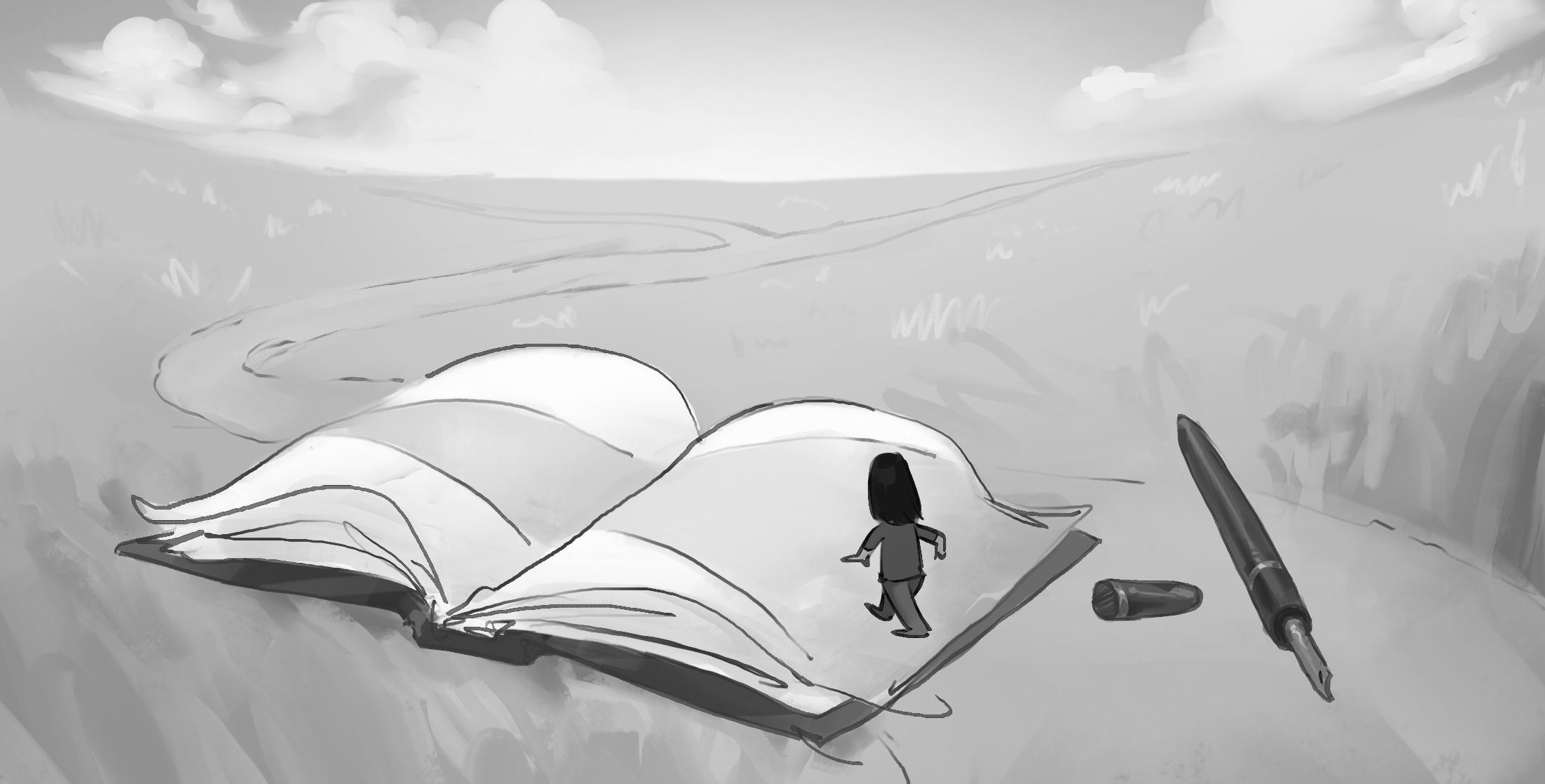
If you had told me three years ago that I would study creative writing in college, I would have laughed in your face. Seriously — a belly laugh — because to my core I believed that I would become a veterinarian one day. What happened to that animal-lovingistry and then realized she’s content owning pets, not operating on them.
A lot of professors I’ve interviewed for this column have told me that their path was non-linear, so I can’t say I was surprised when Claremont McKenna College’s professor of literature Belinda Tang told me something similar. However, there was something It felt more personal because Tang models the type of writer and educator I hope to be someday. Tang began her academic career as an economics major, but changed her mind after a single creative writing course in her last semester. “Taking that class was the reason why I became a writer,” she said. “So working with undergrads and being able to teach
After that fateful class, Tang went on to grad school for writing, a decision that solidified her choice to become a writer. “I’ve never been around so many people that love to write and were thinking exactly about the same questions I was … It was just fun, even outside of classes,” she said. Hearing that, I felt something uncomfortably familiar. I know what it is to move through a life that looks impressive on paper but feels hollow in your own hands. I know what it is
like to choose the “smart” path. Tang found her clarity in a classroom full of writers; I found mine in the middle of a campus I suddenly didn’t recognize as mine.
I, like Tang, began in a pre-proparticularly bad semester, while I lugged my bag of chemistry lab supplies across the Santa Monica Community College campus, I woke up from what felt like a dream. I looked around at my life and realized that it wasn’t my own. After that, I did the scariest thing I’ve ever done in my life: Pivot. And so, I fearfully opened the transfer application — a decision that changed my life. At Pitzer College, I feel this amazing energy when I’m juggling my own projects,
lost in workshops and late-night writing sessions. Tang’s enthusiasm when talking about her path to writing captured that thrill: The joy of discovering that there are people out there thinking about the same things you are, struggling through the same questions and celebrating the same sort of victories.
I asked what Tang does when she’s not writing (which is often a dead-end question for writers), but turns out we share a hobby. “I love knitting and go into the knitting zone,” Tang shared. I laughed and “Sailor Slippers” because, obviously, I’m on KnitTok.
for the Soul fashion, I asked what advice Tang would give her college-age self: “Decisions like grad school aren’t as pressured as they feel at the time … nothing will happen if you very soon,” she said. I’ve felt that imagined pressure firsthand, staring at my portfolio of short stories, wondering if I’m making the “right” choice. Tang reminded me that it’s okay to take your time, to explore and let your path unfold naturally. Our talk reto your passions rarely looks like a straight line.
If there is a pattern emerging from all these interviews, it’s this: The people who end up somewhere
Lessons from the Blue Sisters
meaningful allowed themselves to wander. They asked a million questions. They trusted that curiosity would be their compass.
Tang told me, “I’d encourage people to learn to sit through all the uncomfortable parts of writing.”
Though she framed it around the craft rule for adulthood. The professors I’ve interviewed didn’t have certainty; they had persistence. The key isn’t clarity from the start, but the discipline to keep showing up even when the outcome isn’t clear yet. The straight line I imagined for
go of it has been disorienting, but it has also been clarifying. I’m learning that passion is less about a lightning-bolt shock of inspiration and more about noticing what consistently pulls you back in.
There is something profoundly comforting about watching someone successful do exactly what you dream of doing and realizing they once stood where you stand now — unsure, questioning, mid-pivot. Seeing Tang build a life out of writing and teaching feels like proof that the path I chose isn’t naive or reckless — it’s possible. More than that, it feels like reassurance. If she found her way by following what lit her up, maybe I can too.
Siena Giacoma PZ ’27, aspiring writer and creative, survives on endless cycles
judgmental stares in place of encourage
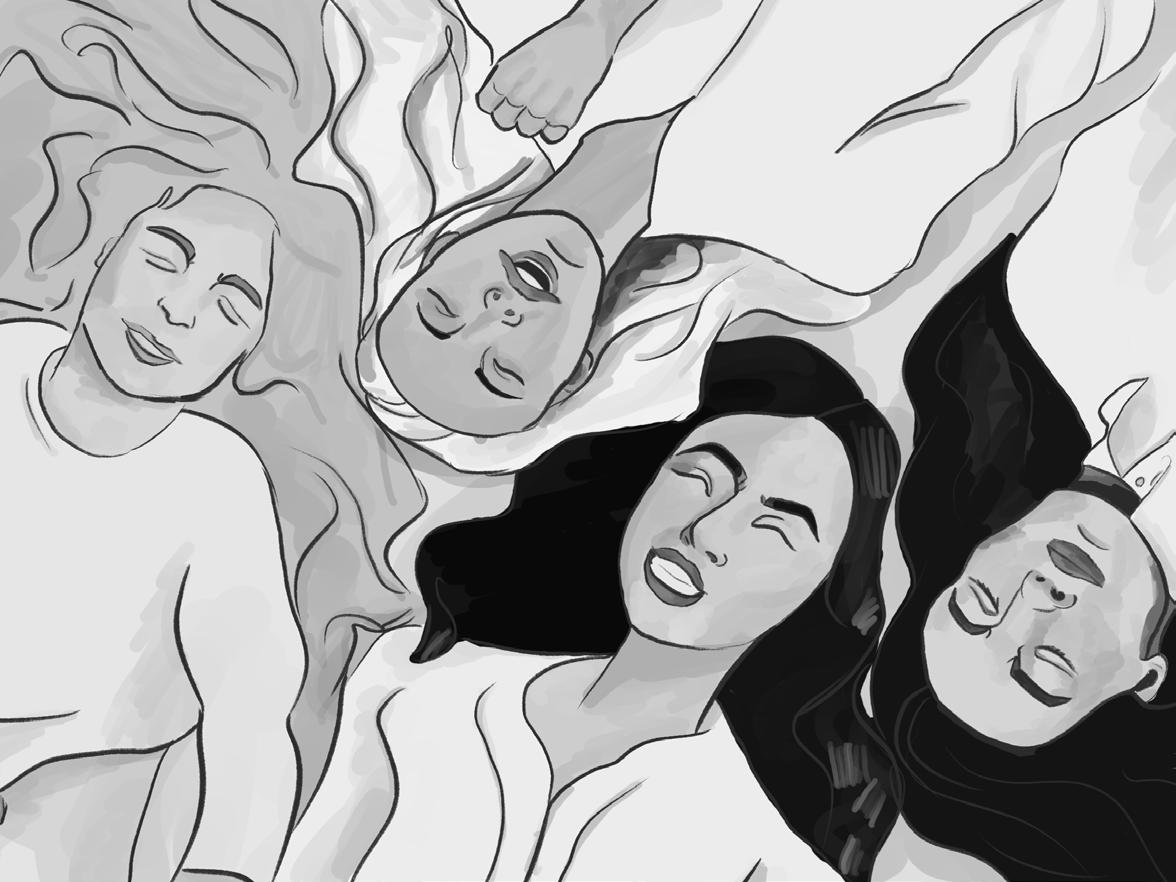
For this issue, I went somewhere and couples and picked up a book that instead taught me about family, grief and sisterhood. Though it is no rom-com, “Blue Sisters” is nonetheless a book about love — a type of love that warms my heart more than most romance novels I have read.
Coco Mellors’ “Blue Sisters” is about the four Blue sisters, as you may have guessed from the title. Avery, the eldest, appears to have her life completely together. She is a lawyer, almost ten years sober and lives happily with her wifedon. However, under the surface, she’s extremely self-destructive: She has developed a tendency for kleptomania in high-end stores and ways that I will not spoil. Bonnie, the second-child, is a champion boxer. She is a lion in the swift on her feet. Unexpectedly, she is the gentlest of the sisters. Lucky is the youngest, the baby of the family. She leaves high school early to pursue a career in modeling, which quickly comes to an end. She passes her days in a haze of alcohol that are a blur of parties, drugs and the same numbing routines. Last but not least is Nicky, their late sister, who had passed a year earlier. “There is nothing wrong with wanting to be normal,” Nicky
often told her sisters. She had been in a sorority in college, later becoming a teacher and dreaming of one day becoming a mother. She had also struggled with chronic endometriosis — stuck in a cycle of pain and reliance on painkillers, her suicide and its landslide of repercussions form the central tension of the novel. I dove into “Blue Sisters” expecting to feel drawn to one sister. Yet, I found myself resonating with and loving all of them. As I read, I kept asking myself who was becoming my favorite, until I got to the end of the book and realized I never found an answer. Even with felt that I understood each sister. and instead of picking a side, I would just hope they would make in the wrong at times. But I could also understand why they did impressive that Mellors was able to write these three incredibly help but love.
For all their differences, the Blue sisters have one thing in common: They escape. They have run to different corners of the world, all far away from the site of Nicky’s death — Bonnie in LA, Avery in London and Lucky in France. They avoid one another, as each sister is a painful reminder of the one they lost. This book makes me believe
that I will never understand the bond between sisters. I have never cried to my sister while she hugs me. I have never yelled at my sister for stealing my clothes without asking. I have never washed my sister and put her to bed because she was not conscious enough to do so herself. Still, reading this book felt like standing just at the edge of that intimacy. I learned something about this bond and how it holds both tenderness and hurt at the same time.
I would like to say my friendships have let me peek into sisterhood, but as Mellors wrote, “a sister is not a friend.” You choose your friends, while you are part of your sisters from the very beacross countries and try to build separate lives, that bond does not loosen; it stretches beneath the distance like a shared root, invisible yet impossible to sever.
Maybe I could not pick a favorite character because I do not know what it’s like to be any of them. I am surely not a bossy eldest sister who practically raised her younger siblings and sets impossible expectations for them. I am not a stoic middle sister who keeps chaotic and charismatic youngest sister who treats the world like her playground, often leaving the mess for others to clean up. Yet, I was able to see a piece of myself in each one of them.
its cliché moments, but that was not something that bothered me. I believe that in hard times, we need some clichés. I found “Blue Sisters” very heartwarming and sad. Although Nicky dies before the book begins, I shed some tears reading Bonnie, Lucky and Avery recount their memories with her. I loved seeing them learn to navigate life in a new way without Nicky. The Blue sisters had always moved through life as four, but by the end, they were learning how to Reading “Blue Sisters” reminded me that family is not meant to be easy or perfect. Each sister
and yet their love for one another — messy, painful and beautiful — shines through. Even though I do not have sisters of my own, Mellors’ story allowed me to step into their world, to feel the weight of grief, the push and pull of responsibility and the loyalty that holds them together. I think this book is ultimately about understanding the many forms that love can take, and the ways family shapes us, whether we know it or not.
JOSE SAQUIC-CASTRO • THE STUDENT LIFE
On Wednesday, Feb. 11, students gathered to make bannann peze and other Haitian dishes at Walker Hall.
SIENA GIACOMA
PJ JAMES • THE STUDENT LIFE
KASSIA ZABETAKIS
MEIYA ROLLINS • THE STUDENT LIFE
Pitzer’s ‘Black Love’ panel discusses the many forms love can take
In the cozy living room of Fély Catan — Pitzer faculty-in-residence and professor of modern languages, literatures and cultures — students and faculty gathered to discuss love, in all its beautiful complexity.
This past Thursday, Feb. 12, Catan, in conjunction with the Office of Black Student Affairs (OBSA), hosted the panel, “Black Love,” in celebration of Black History Month.
The conversation that unfolded over the next three hours extended far beyond typical Valentine’s Day sentimentality, focusing on Black love as something intricate, communal and deeply intertwined with identity.
“I was thinking in February we celebrate two things, right: Valentine’s Day, but it’s very important also that we honor Black History Month,” Catan said. “So
I just thought about combining these two events to create the title Black Love.”
by Pitzer professor Marilyn Grell-Brisk, Scripps professor Westenley Alcenat and the dean and director of the OBSA, Lydia Middleton. Both Catan and students described the importance of having a wide range of interfresh perspectives to the table.
“I really wanted to have them both with me, because I wanted this conversation to be anti-generational,” Catan said. “And it was great because, depending, of course, on the stage you are intitudes towards love or relationships or friendship or anything.”
Middleton kicked off the discussion by talking about how having her daughter changed her perspective on love. Becoming a parent showed her the
importance of seeing love as a celebration of one’s autonomy and individuality.
“When I had her, I realized that she’s allowed to be her own person, she’s allowed to disagree with me, she’s allowed to be angry with me,” Middleton said. “And I’m bringing this back to love because loving her means that I put a lot of my own emotional responses [aside].”
ton’s experiences, noting how their similar age and gender give them a similar perspective on self-love. Catan expressed how both felt they had to grow into love, rather than taking it for granted as some college students do now.
“Because we’re women, you know, older than college students present in the room, wean said. “We have the distance looking back, and for us, love
now is much more about the love of our community, your family and again, the self-love that we have for ourselves. ”
Middleton’s reflection on motherhood and how one can nurture love gave way to a more pointed critique of romantic dynamics: If self-love is so important, how can it be preserved within relationships and bal -
Many alluded to the fact that this act of preservation comes boundaries with your partner. Specifically, Middleton spoke about her experience in heterosexual relationships and how she has struggled to strike a balance between self-preservation and compromise.
“From my experience, men center themselves,” Middleton said. “Straight men [whom] I’ve encountered will center themselves in all scenarios. Navigat -
ing that is hard because it’s like, ‘Well, why can’t you care about me as much as you care about centering yourself, and then I’m
Middleton also noted that there were only two men — one studentees. For some, the low turnout was a jarring symbol of men’s lack of engagement in conversations about relationships and emotional availability.
Expanding beyond interpersonal relationships, Alcenat linked the idea of being proud of one’s Blackness to self-love, arguing that a sense of identity is also important in maintaining one’s interpersonal relationships.
“It has been a very contentious moment being Haitian American, of what I love about being in my late-30s is I now feel super comfortable in my skin,” Alcenat said.
He brought up how President Trump and Vice President J.D. Vance’s baseless comments in September 2024 that Haitian immigrants were eating their pets his sense of pride and love for his own identity. As similar examples of blatant racism are perpetuated, continue to hold unwavering love for themselves and their identity.
“It has not phased me that much. Whatever it is, the sense of insecurity or inferiority, of what this is meant to do does not exist,” Alcenat said.
He explained that his view on the importance of self-love was heavily tied to the ideals of the Haitian Revolution in 1791.
Grell-Brisk and several students shared this sentiment, noting that it made them think more
“How we understand and live our lives with that is very radical,” Grell-Brisk said. “Like, how do you actively live that sort of radical love where it isn’t bounded by a particular notion of what Black love, or whatever it is. To love rad-
overtime, yet the participants still felt there was more left unsaid. From stories of motherhood and partnership to stories of cultural ownership, the deeper conversation revealed that there is no single
Desire and its ulterior revelation in ‘Futon’
LESLIE QINYI
“Lust, sorrow, and despair suddenly assailed Tokio’s heart. He laid out the futon, covered himself with the comforter, buried his face in the cold, dirty velvet collar, and cried.”
This is the ending of “Futon” (orma in 1907. Yet, it is the beginning of what came to be known as the Japanese I-novel, a genre that delved deeply into an author’s semi-autobiographical confessions. “Futon” is inspired by Katai Tayama’s own his student.
This novel tells the story of a middle-aged novelist, Tokio Takenaka, and his student, Yoshiko Yokoyama. Tokio was in a loveless marriage and fantasizing about younger womenshiko, who was inspired by Tokio’s novel and wished to become his disciple. Yoshiko was so similar to Tokio’s fantasy woman that he persuaded her to move to Tokyo to study with him.
However, Yoshiko soon falls in love with a young man named Tanaka. Enraged by Yoshiko’s choice, Tokio told Yoshiko’s parents about her relationship and sent her back home, where her parents would undoubtedly punish her. At the time, having a young daughter in an unarranged relationship was deeply shameful.
In the end, Tokio is tortured by his memory of Yoshiko, sinking himself into the fragrance Yoshiko left on the comforter. All that remains of Yoshiko is her scent — the sweet fragrance of youth and desire that could fade at any moment, but for now resides in the comforter that can no longer comfort him.
page novel, I was speechless. Not only was I stunned by the plot itself, rising within my heart. It felt like the realization that the blossoms withered in autumn will not return, or that the youth you wasted playing the video game Valorant will not come back. It is the melancholy of hugging a disappearing shadow that you love, despite its emptiness.
Tokio’s love for Yoshiko is much like this embrace of the shadow. His love refers to something that is, in a way, illusory. Yoshiko, while real, exists within Tokio’s mind as the embodiment of his fantasies — a young, manipulate and full of admiration for him and his work. But what does love’s object have
brought Yoshiko from her hometo live, tirelessly taught her modern philosophy and helped her become an independent woman.
Yet this love is also completely as paradoxical that this love can exist, at once both deeply sincere and
In my opinion, many forms of love are like this; they encompass contradictory emotions, resisting binary categorizations of good and bad.
It is the love I have for Gacha games and my friends have for Valorant; it is the love we have for spend hours, days or even years loving them. But unlike human interactions, we do not expect any forms of resistance from them,
as we believe they exist with the purpose of serving us. They are, at most, a quick and immediate substitute for the pleasure I seek when dissatisfaction (like tedious homework) appears in my life. It is a form of love — just one without much substance, like a shadow.
For Tokio, Yoshiko is an object rather than a real person. Her ap-
he is a lustful yet cowardly man who both cannot escape his responsibility as a father and a husband and is unwilling to face the public shame of divorce. He imprisons himself in a jail of his own humiliation and guilt, pleasure and fantasy — all of which emerged from his own sexual desire for Yoshiko. Yet, facing her resistance — a resistance from someone he views as an object — Tokio spills his rage and sorrow onto Yoshiko by sending her back to her hometown.
used in the novel. It is not an exemplary one, but will remain in my mind forever: “The electric light spread across the carriage, making Yoshiko’s white face appear almost like a relief sculpture.”
Tayama’s language evokes the sculptor’s perverted desire to create life from marble. Even though Bernini could carve the half-lidded eyes, the opening lips and the wrinkled robe, he could not revive St. Teresa from the vanished ecstamight be, for Tokio, she is only a relief sculpture. Tokio carves Yoshiko with his guidance and care long enough that he believes she is an object that he owns.
He is genuine in adoring her beauty and obedience but is incapable of accepting her as a real woman. He is unable to accept her love for someone else – outraged by his own inability to control the object of his secret lust.
So what is the point of sharing this author shame himself further after utilize personal experience to explore
Imagine a person in our time, or even in this precise moment, opening this book and starting to read it. Will they treat it as a disgusting novel, a tragedy or even an account of their own life — a similar narration of their
This infinite range of reactions speaks to the essence of the I-novel. author wants the reader to have because the story belongs primarily to its creator. If the story prompts the reader to cry on their comforter and think of their past, that births another I-novel.
SYDNEY FORSYTE
SYDNEY FORSYTE • THE STUDENT LIFE
On Thursday, Feb. 12, students and professores gathered for a “Black Love”
TONG
THE POEM OF ECSTASY
Generally, Leonard Cohen fans don’t associate the musician with palm trees and swim trunks. Cohen’s songs, including “Suzanne” and “Hallelujah,” are riddled with spiritual torment, passion and political cynicism. So when I recently picked up “The Flame,” a posthumous collection of Cohen’s late-life poems, lyrics and musings, I was struck by how grounded the work was in the landscape of Southern California.
I was especially surprised to see mentions of Mount Baldy. I learned and mental health issues on tour, Cohen retreated to the Mount Baldy Zen Center in search of spiritual education. He stayed for the next Rinzai Buddhist Monk.
My favorite piece about this period is the 2006 “Leaving Mt. Baldy.” In this work, Cohen sets aside his bohemian persona and adopts the role of the student. The poem is both a coda to his time at the Zen Center and with seeking knowledge in esteemed institutions.
For reference, “Jikan” refers to Cohen’s Dharma name in the last line.
I was startled by how much I Pomona College and Cohen’s pursuit of spiritual fulfillment. Platitudes abound about college that often take on quasi-spiritual tones. These years are “the best time of our lives,” when we can “learn to think” and “discover ourselves.”
Entering college in August, I felt that I was ascending the mountain. When searching for schools, I knew I wanted to study English at a West to Pomona early decision, in part because it promised the best environment for meeting these metrics. It was disappointing to discover that relocating 400 miles down the coast did not fundamentally alter me or my surroundings. I did not transform into a genius, discover new talents or solve the unanswerable riddle, “Just what do you plan to do with a degreeized monastic lifestyle. Relocating his life, dressing oddly, studying and not similar to the college experience. Eventually, he realizes that his fantasy of a transformative learning experience untouched by everyday life is not achievable — at least not for him.
Lessons from Mount Baldy
even after his return to the outside world, Cohen feels judged by real or imagined practitioners of his abandoned lifestyle. These people “begin to ask [] angry questions / about the Ultimate Reality.” They believe there is one correct way for Cohen to live his life and that he is abandoning it.
My “practitioners” take the form of inner critics, who assure me that the ideal education is life-altering and unmistakable. Am I wrong to study English, a messy discipline deeply rooted in human experiences and the limits of articulating something practical, like Economics
Partly, these doubts arise from the naivete of buying into college hype, and certainly, they are premature. Cohen studied on Mount
to Los Angeles; I’ve lived in Claremont for seven months.
Colleges manufacture part of this unattainable ideal of higher education before students even set foot on campus. The college admissions market teaches us to view institutions as shining utopias. Each college will introduce you to the best opportunities, the best people, the best you. This is, of course, a marketing scheme, and it is highly successful. Yet often, colleges are like overeager authors, who describe their scenes with
ers’ imaginations. This is especially true of the Claremont Consortium, which prides itself on its elitism and ability to offer unique academic experiences. The Pomona College website, for example, promises “a close-knit and diverse community” with “an unparalleled environment for intellectual development and personal growth” and “an educational experience second to none.”
These promises may be true, but like any sales pitch, they’re overhyped. College is great. It is also
often boring and sometimes stressful and — prepare to gasp — after a single semester, it has not given me a clear direction in life. What my value of unburdening myself of expectations for how learning should be and instead embracing what it is.
When Cohen leaves the Zen Center, his heart cries out to thank him. His description of “the stream of cars / on the Santa Monica Freeway” follows the same pastoral tone as the opening scene upon the mountain. After years of scouring meaning from mountaintops and hallowed institutions, he at last
“Leaving Mt. Baldy” is liberating, yet staid; joyful, yet familiar. It does not overwrite itself, yet with sparse phrasing, tells readers that education does not have to be transcendent to be worthwhile, and that often, the best learning is mundane.
I come down from the mountain after many years of study and rigorous practice. I left my robes hanging on a peg in the old cabin where I had sat so long and slept so little.
I had no gift for Spiritual Matters.
“Thank you Beloved,” I heard a heart cry out as I entered the stream of cars on the Santa Monica Freeway, westbound for L.A.
A number of people (some of them practitioners) have begun to ask me angry questions about the Ultimate Reality. I suppose they don’t like to see old Jikan smoking.
Parasocially in love with s abrina Carpenter
ARIANNA KAPLAN
bit in love with Sabrina Carpenter. Maya Hart, the character that Carpenter played on the Disney sitcom “Girl Meets World.”
I wasn’t in love romantically; I was obsessed with her character and wanted to be just like her. Maya represented everything that I wanted to be. I had recently moved to the New York City area, and through her eyes, I was able to fall in love with my new city. She was witty, someone who path. I was an angsty thirteen-yearold whose mother had passed away a few years prior, and I hadn’t yet found my place at my new school. I wouldn’t go as far as to say that was my friend, but I saw myself in her when I was desperate for companionship.
When I found out that Carpenter was topping the US Billboard 200, child star could now represent a global-pop-sex-symbol. Carpenter was still, in my mind, synonymous with Maya. When her global number-one singles “Espresso” and “Please Please Please” started circulating on the internet, I gnashed my teeth. How dare this celebrity, my old Clearly, my relationship with Sabrina Carpenter was a parasocial one. Parasocial relationships are one-sided relationships where one person extends emotional energy while the other party (the persona) is completely unaware of the other’s existence. For girls navigating the perils of middle school, parasocial “friendship” and help them address their own budding autonomy.
Maya Hart was that for me. I was a lonely thirteen-year-old, watching pirated episodes of “Girl Meets World” after school, hiding under my desk with my laptop as though I were guilty of something. I picked up my sense of humor from the show, to be. I loved the messy love triangle between Riley, Lucas and Maya. I found Riley — the straightforward, adored Maya in all her chaos.
The relationship between adolescent girls and their chosen com-
panions is intense. As a teen, I wasn’t interested in romance: I was searching for companionship and female role models. Trading smiles with female classmates, asking each other with our eyes: Do you want
Often, I would experience an all-consuming rush of love for this near-stranger. My friends’ moms were the most frequent victims of these sensations. I often liked my friends’ moms more than I liked my friends themselves. All I wanted connection which is easily traceable back to the passing of my own mother some years prior. Maya of the same age, roughly, but she seemed so wise. I was struck by her maturity, something I had failed to
and moved on with my life. High school began, and it would have been social suicide to admit to anyone that I had just recently devoured a kid’s show. Carpenter faded from my mind, and until I about her entirely.
aback. A celebrity changing is the consistent image of the person that we fell in love with. I felt betrayal when I realized that Sabrina Carpenter and Maya Hart were not the same person, and my comfort character was just that: a character. It was painful to realize that this person, who had meant so much to me just a few years prior, could go behind my back and grow up, just as I had.
I recently watched a “Girl Meets World” highlight reel on YouTube, and it seemed joltingly juvenile. Carpenter looked so young, and the jokes that I remembered as hilarious weren’t all that funny. In the wake of its termination, a slew of criticisms came out against the show. Millennials argued that the show was not as good as its precursor, “Boy Meets World.”
Others felt that the writers had
the limited script.
Just like that, I had grown out of my relationship. Like a breakup, perhaps, I had to let the idea of the person go. I had to accept Carpenter as a global pop superstar, not a Disney child star. This process was jarring, but it happens all the time — people often
grow out of parasocial relationships.
Adolescent girls grow into women and these one-sided bonds collapse; we become more aware of who we are and grow into ourselves without the crutch of a parasocial friend. I still like Sabrina Carpenter. I think her songs are catchy, and I can respect the empire she’s built for herself. I wouldn’t call myself an avid fan but the sense of betrayal is gone. Seeing her old “Girl Meets World” episodes is now more jarring than seeing her as she exists now. Maybe I’ve found myself a new role model, or maybe I’m just all grown up.
Arianna Kaplan SC ’27 is very con
THE FEMININE MYSTIQUE
MEIYA ROLLINS • THE STUDENT LIFE
JESSY WALLACH
MELINDA QERUSHI • THE STUDENT LIFE
We don’t need to go to Bentham’s Prison — we have panopticons at home
In 1791, Jeremy Bentham conceptualized the panopticon as a mode of prison design: A circular design with cells around a central tower, allowing the warden to observe inmates at all times. Then, in 1973, Michel Foucault applied this concept to the political world, arguing that the state could enact constant surveillance on its citizens as a means of social control. Here at the Claremont Colleges, our academic institutions take on the role of the state, surveilling their students to police behavior and heighten fear of dissent under the guise of safety concerns. Now I know it sounds absurd to compare 5C administration to a surveillance state, but the concerns exist and ought to be addressed. As a result of this surveillance, the comfort of students in expressing dissent is limited, all the while true security concerns go unaddressed. The campus’ surveillance exists through basic measures, such as security cameras and tightened demonstration policies.
ALEX BENACH But it manifests more insidiously, too, with Pomona College administrators utilizing ID swipe card data and WiFi tracking to locate students at any given time and inform disciplinary action.
In the spring of 2024, Pomona updated their safety protocols to restrict students in response to protests against Pomona’s investment in corporations complicit in the Israeli genocidal campaign. The implementation of ID card swipe access to academic buildings the following fall enabled Pomona, and presumably the other 5Cs, to have continuous access to information on students’ movements, data they utilize to their advantage.
For instance, I personally know someone who has received an email from Housing and Residence Life that began, “Based on your ID card activity, we know you are on campus.” Aside from being seriously weird, the fact that you are unable to exist privately on campus should be a cause for concern. Students are not adequately warned that
Pomona will have access to this type of information upon entry to the institution.
Despite the fact that these security measures are put in place in the name of student safety, the campus still faces unauthorized individuals gaining access to private student spaces, a problem they have yet to meaningfully address. Lyon Hall has had repeated instances of intruders entering the dormitory and exposing themselves to students. Somehow, we know where students are at all times, but still cannot adequately protect them. have been hired, and more security cameras have been installed around the campuses. These measures were taken at the same time protest encampments were disallowed, not after break-ins or incidents of indecent exposure, making it hard to feel that these changes were geared towards student protection.
This surveillance is not something we can opt out of; it follows us in the backdrop of any given
moment we are on campus. For instance, we are obligated to use campus WiFi to complete assignments on Canvas and respond to endless emails, but at the expense of Pomona’s ability to pinpoint our location at any given time.
The fact that the increase in se-
College campuses have long existed as hubs of student expression and activism and Pomona’s attempt to diminish that through increased surveillance disguised as security is reprehensible.
— Alex Benach PO ’28
curity personnel has had no impact on crime on campus — such as the continued prevalence of bike theft — suggests that these increased security precautions are not truly aimed at reducing crime; rather, they are part of this surveillance apparatus.
These developments have led to an aggravated surge in student tracking over the last couple of years, which curtails student participation in broader political movements, particularly those that the colleges view as opposed to their interests. Take Pomona’s response to the occupation at Carnegie Hall, where the admin-
pants in the demonstration, and even banned a member of the student press covering the protest.
It is painfully obvious that Pomona’s, and the 5Cs’ more generally, approach to safety is more concerned with policing and punishing student activity than it is with actually creating a safe campus environment.
Whether it is their announcement of heightened restrictions on demonstrations in the Resolution Agreement with the Anti-Defamation League and the Louis D. Brandeis Center for Human Rights Under Law or their previous arrest of students
engaged in protest at Alexander Hall, Pomona has cultivated a culture intent on restricting student behavior.
This is not how things should be, and it certainly doesn’t have to be this way. College campuses have long existed as hubs of student expression and activism and through increased surveillance disguised as security is reprehensible.
Pomona has a responsibility to ensure students feel not only safe, but also protected by their institution. Especially in a time in which increased tracking exists from the state and immigration enforcement agencies, our liberal arts college should not also engage in these Machiavellian tactics of watching. For our institutions to engage in this tyrannical monitoring is entirely antithetical to the cooperative and collaborative ethos that a liberal arts college ought to espouse.
We have a responsibility here as students, too. Students have participated in this tracking of one another, with some insidiously capturing and sharing photos of protestors that the administration used to identify individuals during divestment protests. We have a responsibility to condemn this behavior and work to dismantle it by being more cautious in the way that we document each other’s actions and whereabouts, purposefully disengaging from surveillance Pomona and the other 5C administrations must seriously re-evaluate their safety policies and rein in the tracking and observation of their students. Their insistence on this surveillance has not made our campuses safer; it has only put students’ safety and education at risk while creating discomfort and disconnect between the administration and the students. I do not believe the recent security practices serve anyjob at adhering to morally decent practices when it comes to student discipline and safety.
Alex Benach PO ’28 is from Washington, D.C. and tries to wear cute watched.
When you travel, don’t start with English
SHI comfort zone and find ways to communicate with others without expecting them to speak English.
Approximately 1.5 billion people speak English, making it the most spoken language across the globe. one person who speaks English by this would only hold true if the geographic distribution of languages were perfectly randomized, which it obviously is not. Why, then, do people continue to travel to non-English speaking countries and expect the locals they encounter to speak English?
Growing up in China, English education was constantly emphasized due to the language’s status as a global lingua franca for business, science and technology. Despite the fact that Mandarin has the most native speakers in the world, the emphasis the education system believe that in most technologically advanced countries, English would be universal.
But the more I traveled, the more I realized how wrong I was. It became clear that access to English is unequal — shaped by generation, education and geography. My personal experiences have made me more critical of the tendency to treat English as the default when we travel. The assumption that everyone can speak English is quite inaccurate, impractical for travelers and locals alike, and even disrespectful at times. Prioritizing our own linguistic comfort without considering who is in front of us can be dismissive. Simply put: When you travel, step outside your
I used to be guilty of this as well. When I traveled to Japan as a middle schooler, I decided to take on the role of translator for my family. After years of being drilled in school, memorizing English vocabulary lists and taking auditory quizzes, surely it was time for all in my little, 11-year-old brainwashed mind, “Everyone speaks English nowadays,” as if that was an undeniable characteristic of any modern society.
Trying to order tonkotsu ramen for my family by speaking English did not work at all, and my dream of flexing my newly acquired language skills was dampened instantly. Without a common language, the waiter, my family and I quickly switched to a mix of gestures, pointing and awkward smiles.
I’ve been on the other side of this exchange, too. Last summer, my friend and I were sitting at an open-air bar in Shanghai, and at some point, I got up to return her portable charger at the kiosk nearby. A young Asian guy approached me, asking me how to return the charger in English. I having someone speak to me in English on some random street in Shanghai. I felt relieved that the 10 years I spent studying English had kicked in at that moment. But what if it hadn’t? I’d probably still be replaying that moment in bed five years later, cringing at my own helpless silence. The idea of English as a global language is actually quite a recent development. For many people, especially older generations, learning English was never a given. My parents are a prime example; they grew up in the 1970s, a time when English education was far from universal in China. Although the country gradually began encouraging people to learn English to keep up with the world, resources were limited. There simply and access to language education depended heavily on where you lived. Many people never had the chance to learn it in a meaningful
It’s true that younger generations like mine have greater access to resources for language learning, since every kid in China receives public education that requires them to learn English. However, learning English through textbooks does not totally translate to situations where you have to speak English with native speakers. Even within China, language access varies greatly from region to region, and it would be unfair to generalize my experience to all of Asia and certainly to the rest of the world. But my point is not to argue that people should never when traveling. Instead, I want to criticize why English is treated as Part of the answer lies in the history of globalization itself. The contemporary global system did not emerge on equal terms. Rather, it grew out of a colonial legacy. Empires with economic, political and cultural power spread their -
the British Empire’s colonial era and later through the United States during the Red Scare, became deeply embedded in the fundamental structures of international business, education it feel natural and even logical to treat English as the global language. But what feels natural for English speakers produces an experience that can be negative for everyone else. The modern expectation that everyone will speak English quietly places the burden of communication on residents of linguistically diverse areas, treating them as the ones who must adapt. For locals in other countries, not being able to respond in English carries the implication that they are less worldly or somehow intellectually behind, reinforcing a global linguistic hierarchy. Inas superior to everything else treated as secondary. At a time when languages are dying at
an unprecedented level, the consequences of treating English as the default go far beyond a brief moment of awkwardness. Fortunately, it is surprisingly easy to push back against this hierarchy of languages when traveling, even if you only speak English. Trust me, the language of gestures, pointing and awkward smiles is by far my favorite language of all time. Choosing to communicate in this way can feel more respectful, because it shows that you are making the other person should. It takes away the quiet pressure on local people to perform in a language using. In those small, often slightly clumsy exchanges, you laugh, you repeat, you try again and somehow, genuine than a smooth conversation in perfect English.
Catarina Shi SC ’29 is from Hangzhou, watching the Super Bowl Halftime Show, without a lick of Spanish.
CATARINA
Maybe we should do our readings
NICHOLAS STEINMAN
Did you do the readings? I didn’t, and today I had to reckon with it.
For weeks, I’d been meaning to read Plato’s “Republic” before my midterm, but weeks came and went; now, as I hurried to the classroom where three in-class essays awaited me, I wondered how I got myself into this situation.
I’ve been a government student at Claremont McKenna College for a bit over six months now, and I was kind of expecting somebody to tell me what I’m supposed to be doing here by this point. With the number of potentially important events and to feel very busy even on days when I my classes feel more like background noise than the whole reason I’m going to college — and I know I’m not the only one who feels this way, because that would be really embarrassing.
The Claremont Consortium’s unique take on the small liberal arts college model allows students to explore many interests and gives rise to uniquely constructive discussions. But we seem scared to honestly discuss how this impacts the rigor of many of its core academic programs.
putting pre-professional activities ahead of academics, especially when it’s so easy to get by without doing things like assigned readings. Even normalization of ignoring stated exstrike us as an alarming debasement of higher education.
In any case, today I was in luck: though I had ignored an entire book’s worth of readings for a month, I had read sections of the “Republic” before, and my professor’s lectures had more than covered everything questions on the midterm, I knew there had been no reason to worry about reviewing more than a couple of pages of the book. After the test, I caught up with some classmates who had read even less than I had. They, too, were sure that simply listening to the lectures had given them plenty of information to write satisfactory essays. This is one of the main excuses I make for not doing my readings — if my professors have already resigned themselves to students not reading the texts they assign and having to explain all of their relevant details themselves, I feel doing the readings on my own makes class time redundant.
of my readings instead of simply skimming them at the last minute, I would be learning much more. But if everyone else has found something I should keep up and do the same. After my exam, I had a dilemma:
I hadn’t done my cultural studies readings, but I had long ago signed up for an Athenaeum lunch, forfeiting my meal swipe. I hesitated, but the thought of Swiss Miss hot chocolate was too enticing; the readings could wait.
sor who was swapping anecdotes with students about the dangers of requiring generative AI use for ef-fessor argued that while generative AI tools could increase productivity for experienced professionals, these types of mandates might prevent those just beginning their careers from ever developing a deep uneventually lead to a “transferring of competency” from humans to machines. I don’t use generative AI myself, preferring to try and fail to skim than to delegate my skimming to someone or something else, but I sympathize with those who do. Many of my peers who do their readings feel bad about using AI to assist them. But they are ultimately victims of the same as young professionals — after all, undergraduates are increasingly seen not as students but instead as professionals in waiting.
Many of the most successful
government majors I know juggle jobs and student organizations while attending presentations, roundtables or networking events almost daily. If students actually met the colleges’ stated standards for academic engagement, these opportunities would not be nearly as accessible. In theory, CMC expects students to spend between 2 and 3 hours studying outside of class for each hour that they spend in class. That would mean students spent about 40 hours per week on classes and schoolwork on average, far exceeding the daily reality for the vast majority of 5C students in most majors. I suspect that, if students actually met these standards, they would not leave the 5Cs nearly as competitive in a modern job market which generally does not concern itself with raw academic talent — or even literacy. But even if our current system does make our 5C degrees competitive, our forsaking of the academic effort which they claim to represent calls into question whether we actually value a 5C education. When we list our academic credentials, many of our claims to have grappled with texts or struggled with ideas will be empty; in reality, we will have delegated the work, not just to AI or to online services but often to our
professors themselves. I can’t remember the last time one of my professors seriously forced me or my class to struggle through complex and lengthy texts on our own. In many introductory or even advanced courses, we seem to have made a silent pact that it isn’t worth our time. But I worry that replacing independent readings with discussion alone — as Plato’s works such as the “Republic” famously model — would starve us in the long term of the resources necessary for independent, constructive leadership. After all, for a book about the proper education of leaders, Plato’s “Republic” doesn’t make much mention of books. Socrates, his main character, disapproved of writing as a medium for serious learning, preferring interactive, digestible in-person conversations — or Socratic seminars — like those typical of humanities classes at the 5Cs. These discussions can be easy and even fun to contribute to, but if we haven’t built comprehension add anything original. College is supposed to teach us to generate thoughts both grounded and critical — grounded in facts and arguments beyond our immediate surroundings, but critical of unquestioningly accepting others’ assumptions. In
a world without readings, we seem doomed to generate ideas that are one or the other, but never both. instead of completing my readings, Philip Wallach, senior fellow at the American Enterprise Institute, lamented the diminished role of an existential threat to American democracy. He claims one of the causes is that while members of Congress were once encouraged to build a reputation through detail-oriented legislative work, now they seem to on social media are the best way to ‘doing the readings;’ there is no need for grounded, critical thought when informed leadership is no longer the way to get ahead. I can’t help but wonder if future generations of our elected leaders will read books at all. If they don’t, what need will there be for liberal arts colleges?
laptop in class, another of my political science professors asked, “Who did the readings today?” For a few silent moments, he peered at 15 blank faces. He answered his own question: “Nevermind.”
Nicholas Steinman CM ’28 got an A-.
Enter
“That so?”
“I’d think twice about that”
The word for C in “P is for Pterodactyl: The Worst Alphabet Book Ever”
Stags basketball shoots their shot, wins
Valentine’s Day Sixth Street showdown
ANNE REARDON
On Feb. 14, the Claremont-Mudd-Scripps men’s basketball team claimed a 76-62 victory over Pomona-Pitzer, reinforcing their win from earlier this season and retaining the Sixth Street title.
-The rematch started on even footing, with the Sagehens bringing the game to 19 points apiece with 8
However, CMS pulled away in 3-pointer expanded their lead to 5, the Stags scored four unanswered baskets from guard William Householter CM ’27, guard Brady Karich CM ’28, center Cahal Connolly CM ’26 and forward Joey Kennedy CM ’27.
Kennedy grabbed 17 points and was subsequently honored as SCIConnolly scored a team-high 20 points, followed by Householter scoring 14 and Karich finishing with a team-high 7 assists.
CMS closed the half with a 4331 lead. 5C Dance Company took the court for the Valentine’s Day halftime show for both the men’s and women’s games.
“It was really nice to support our community on a day about love and to bring positivity to the court,” dancer Becca Rogers PZ ’28 said.
While CMS’s lead at halftime could be credited to its exciting
“Our defense just clicked today, from the perimeter all the way down to the post,” center Michael O’Brien HM ’27 said. “We were able to guard quite well. We had a good amount of forced turnovers.”
Despite a consolation 3-pointer PZ ’28, the Stags held onto the lead score of 76-62.
“I’m most proud that my team never quit,” P-P team captain Kyle Jasper PZ ’26 said. “We had an injury, and it’s really tough to see one of your guys go down and not be able to come back and play … We
didn’t go our way, I’m proud of forth in the game.”
Though the Stags were comcurrently occupy the top spot in priority to keep their mind and eyes on the game at hand.
“We did a good job staying together, we didn’t get too high headed,” Karich said. “I think that’s a strength of ours [that] we can continue throughout the rest of the season.”
Jasper acknowledged that while the glory goes to the players
in the Sixth Street Rivalry Game, they play for all the alumni before them and the legacy of the teams ahead. The support the players get from everyone around them drives their success.
“It’s not just the guys out there on the court that contribute to this team, it’s also the guys who work said. “I’m always looking at the opportunities in games, but [still know] that those guys are a very key part of our success. It’s fully a team sport.”
Jasper noted that many of the Sagehens’ seniors from last year were key players, and this year
the P-P team had to transition to a younger rotation, with freshmen and sophomores stepping into those roles. While this year’s Sixth Street games did not go in the Sagehens favor, the experience itself should help prepare the returning underclassmen for future iterations of Claremont’s heated rivalry.
“Everyone has to mesh together to be successful,” Jasper said. “The guys are realizing the importance of playing together and playing with each other. I’m happy to say that I can keep my team brought, and I’m excited to see how we can improve in the coming years from this game.”ebrated Senior Night at Voekel on Feb. 18, falling short with a scoreline of 71-99. They look to on Feb. 21, despite being mathecontention. Despite a 69-91 loss to Redlands to end the regular season on Feb. 18, the Stags posted their winningest season since 2012. This performance helped clinch a bidday, Feb. 27.
Eileen Gu and the double standard toward China
JUN KWON
Born and raised in San Francisco, California, professional skier Eileen Gu competed in the 2022 Winter Olympics in Beijing at age 18. In her Olympic debut, she won two gold medals and a silver in big air, halfpipe and slopestyle. This past month, she’s done much the same at the 2026 Milano-Cortina Olympic Winter Games, earning silver in both big air scheduled for Feb. 21. enrolled at Stanford University, her upbringing likely does not deviate United States.
That similarity is precisely what over which nation Gu should represent in the Olympics.
announced her decision to represent the People’s Republic of China and with her statement, she said she hoped to “inspire millions” in her mother’s home country.
However, her prodigious success has consistently been followed by — they claim she has an obligation to represent the country that provided the background to her upbringing, arguing that not doing so would be considered an act of betrayal.
political incompetencies of the People’s Republic of China, and defend representing them despite documented human rights abuses.
Such discourse continues to escalate today.
Conservative human rights activFreedom was one of the more prominent voices to speak up, alleging
that athletes are quick to protest against human rights issues around the world, until it comes to China’s violations.
Eventually, even Vice President JD Vance joined in to question Gu’s allegiance to the United States.
“I certainly think that somebody who grew up in the United States of education system, from the freedoms and liberties that make this country a great place, I would hope that they want to compete with the told Fox News.
The conservative case against Gu’s participation in China’s ski couple of reasons.
For starters, Gu’s transition is rare, but not unheard of. In fact, events as Gu, representing Great Britain and in serious contention for a medal.
Despite being born in Boston, citizenship, thereby qualifying her for representation.
being the No. 4-ranked skier in the weekend, reveal clear discrepancies in public outcry.
the press?
The answer is honestly quite simrepresents the United Kingdom. Gu’s decision makes sense. Shedarin and visited Beijing every sum-
mer growing up. She understands racism and even pledged that she wanted to “forge friendships between nations.”
top-ranked university in the US. She was the fourth-highest-paid athlete in 2025, earning $23.1 million. In fact, much of that was through the highs of US-embraced free-market capitalism, which allowed her to add multi-million-dollar endorsements to her $100k base salary. In all respects, this would be
a story praised by even the most conservative critics. Self-made wealth and merit-based success are regarded for generations under the guise of the model minority myth, and Gu is no exception.
new-era Cold War politics, where a war is being fought on the Other. In discussions like this, it is crucial to acknowledge China’s involvement in documented human rights abuses and undemocratic acts of repression. Condemning the Chinese government’s actions is reasonable. However, that discussion about China often crosses the line into legitimate sinophobia rather than just criticism, including rhetoric that clearly links the current government with the Chinese people, who are portrayed as violent and closely tied to espionage. However, when critics cast athletes as government spokespeople, it’s easy to subconsciously transfer the government’s negative associations to its individuals, and in this case, Gu. In that sense, we must as politically charged, where writersture as the start of a “superpower rivalry.” Gu’s role in furthering the mission for equitable access and her
undeniable stature in women’s sports are overlooked, whereas conservatives bite on every opportunity to call her an “asset of the Chinese Communist Party.” It is undoubtedly clear that contempt comes from orientalist psychologies, not one of genuine concern for said victims of repression. Can fans express discomfort in Gu’s unwillingness to speak up politically about anything, including the must also come with an uncomfortand the British, too, should require such an intensive political vetting before representing their respective There are clearly moral ambiguities in Gu’s decision to remain silent on the crimes committed by the Chinese government. On that note,dress such moral ambiguities during a time of political turmoil, especially both China and the United States for denying the right to freedom over the Until such double standards are removed, however, we must live with empire
IMOGEN JENKYN • THE STUDENT LIFE
Cahal Connolly CM ’26 and Charlie Hutchison PO ’28 jump for loose ball in Stags win on Feb. 14
PJ JAMES • THE STUDENT LIFE
reloaded, the Claremont Cougars are ready to compete
range. The Claremont Cougars, the 5C men’s club lacrosse team, embodies that word. From seasoned veterans to novices picking up a lacrosse stick diversity of skill levels, united by a desire to win.
Founded in 1958, the Cougars make up the oldest continuous collegiate lacrosse program in California, playing in the Division III Southwestlacrosse teams, the Cougars maintain a level of commitment and competition similar to that of varsity teams
City College, the team looks to make a deep run into the postseason. With the most rookies in recent memory, the Cougars hope to capitalize on the arrival of new talent under the leadership of a small four-person senior class.
“Twenty rookies is unheard of. I think it is the largest in Cougars history,” captain Ryder Jones CM ’26 said. “They bring a lot of talent to the team. It gives us a really good opportunity to develop these guys.”
While their competitive season has only just begun, the team has been hard at work since the start of the school year, tirelessly recruiting new players and preparing to build out their team for the season ahead.
“In the fall, we’re trying to bring in freshmen to not necessarily replace the graduated seniors but really build up the team,” Jonathan Hernandez we start with practices twice a week, usually Monday and Tuesday, and then we have a big scrimmage at the end of the fall semester against a few other schools.” During the spring season, the
Cougars usually play one game per week in addition to three practices. In their season opener, the Cougars’ win over last year’s champions, Moorpark College. for us because [Moorpark is] the defending conference champion,” knew that it was going to be a tough game going into it, so everyone was ready to perform at their best.”
The team quickly found themselves down 2-6 after the first quarter, a worrisome start against the tough Moorpark squad. They rallied to even the score by the end a halftime speech from the coaches, the team’s energy bounced back in
the second half.
“We had a lot of people who we were doing throughout the fall,”
comfortable throwing, tossing and played a key role in this [win].”
Communication and repetition
For Jones, the support from the entire Cougar family was apparent as soon as he stepped on campus.
“I remember checking in on moving day, and the check-in person told me John Faranda [faculty advisor] was looking for me,” Jones said. “He instantly welcomed me in and introduced me to the guys,
[some of whom] have become [my] lifelong friends.”
This large incoming class of rookies gives ample opportunity forcording to Hernandez, the rookies radiate new energy and excitement, reminding him of his own lacrosse journey.
“I see a real drive from a lot of our players, especially our newer players,” Hernandez said. “They are
The team hopes to continue building its spirit and fighting through games, with its next contest coming up against Cal State Fullerton on Saturday, Feb. 20. “We’re feeling pretty confi -
dent,” Wysk said. “We’ve done well against them in the past, but as Coach said, Moorpark was conones who took that one home. So we still need to obviously bring our sure that we guarantee that win.”
The team enters a competitive stretch of the season with a trip toly March, to face a competitive list of keep improving and learning while their freshman class adjusts to the collegiate game, and to maintain
When asked to describe this year’s team in just one word, Wysk did not hesitate. “Fighters.”
Gibson Hall’s fantasy football league is no punishment, all prize
AUDREY GREEN
Forget crafting, game nights and Josh Marx PO ’28 built a community through his dorm-wide fantasy football league. By taking this tradition and leagues serve a greater purpose than a vehicle for public humiliation. fans, Marx has played in a fantasy football league every year since middle school. Despite not being part of a football-watching family, the fantasy league infrastructure has become a ritual for him. Beyond opportunities to bond with peers over friendly rivalries.
Gibson Hall’s league was no over a third of the residents. With 12 members, he had reached what many consider to be the sweet spot for peak competition.
“I have played fantasy football for a lot of my life, and it felt like a great way to build community,” Marx said. “People don’t need to show up all the time. They can run it from their phone. People could keep something competitive and fun going on in the dorm community without necessarily having an obligation.”
tionally create stakes with theatrical punishments or buy-ins, Marx’s league chose a more inclusive approach. The league’s winner received $15 in Flex, and no one was required to contribute money.
For some longtime football fans, like Pomona-Pitzer wide receiver Jackson Irons PO ’28, participating in this league provided a break from other, more intense leagues, free from outstanding pressure.
not enough, some fantasy football leagues require an agreed-upon punishment like chugging milk while running a mile, or spending 30 days replicating cringeworthy TikTok trends.
to the sport, joining these kinds of low-stakes leagues gives them a taste of the thrilling game of football. Unless someone is willing to face the consequences that come with inexperience, the inner workings of fantasy leagues often remain a mystery.
“[This league] allowed people like me who are new to fantasy football to participate without fear of humiliation,” participant Is Wilhelm PO ’28 said. “Fantasy football was a the leagues were exclusive and had really bad punishments.”
The broader question still releagues their allure and longevity?
Marx’s answer speaks to the its members can remain the same for years, even when hobbies, homes and schools change.
“We obviously have all gone to college and left a group of friends,” Marx said, referring to his league from home.cial that my group of friends from middle school still has this community.”
His memories of the league, however silly and fleeting, helped to sustain something larger. Perhaps leagues endure partly because they hold versions of middle school selves in place.
and his roommate spent Sunday games sending taunting messages back and forth.
“The most memorable moment [of the season] would be in the championship when I played my roommate,” Irons said. “He and I were talking trash all week leading up to it.”
Irons, the winner of the Gibson league, reminisced that his win was exceptionally rewarding because his roommate had been so
In many leagues, such exchanges only bring players closer together.
“I have played fantasy football for a lot of my life, and it felt like a great way to build community. People don’t need to show up all the time. They can run it from their phone.
People could keep something competitive and fun going on in the dorm community without necessarily having an obligation.”
both Marx and Irons acknowledge that fantasy football’s competitive nature is a core tenet of its continued popularity. Fantasy football can be enjoyed by many, but most longstanding leagues balance camaraderie with extremity.
Josh Marx, PO ‘28
“When you have a stake in the teams, you’re playing for money — you just want to beat your friends,” Marx said. “Or if there is a punishment, it makes [watching sports] more exciting.”
Irons expressed that well-intentioned “trash talk” is inherent to fantasy football. High stakes almost invite it. This element even carried over to the Gibson league, where he
“I remember watching that play and immediately receiving a text from my roommate simply saying ‘bro,’” Irons said. “I responded with a crying-laughing emoji and a GIF of Bijan [Robinson] dancing.”
With the possibility of a large inheritance, or conversely, leaving the season with a bald head, one cannot just be a passive participant.
“You can choose how much of a nerd you want to be,” Marx said.
Being part of a high-stakes league — which is the majority — means learning to embrace obsession.
This elevated extremity and socially-mandated vulnerability seem to serve a larger purpose. What ultimately comes from these leagues is a deepened connection.
“We are already talking about next year, when I will be abroad in the fall,” Marx said. “We won’t see each other for a year, necessarily, but we’ll still have this [league] to keep in touch.”