CSWA celebrates former employee Adan Campos’ rehiring agreement with Pitzer
JOELLE RUDOLF & MADELEINE FARR
Last week, following a monthslong effort led by the 5C Student and Worker Alliance (CSWA), Pitzer College formally agreed to rehire Adan Campos for
the next available entry-level position. On Feb. 26, CSWA posted an orange background with the words “Rehire Adan update: WE WON” on their Instagram. Campos worked at McConnell Bistro, Pitzer’s dining hall, for nine years. He was fired by Bon Appétit, the college’s dining
management agency, while his DACA work authorization was being renewed. According to Claremont Undercurrents, Campos’ status expired in December 2023, and the renewal process took longer than anticipated; Bon Appétit fired Campos in February 2024, just one month before his process would be complete.
Since then, CSWA has fought to have Pitzer reverse his termination. The group’s efforts began in the summer of 2024 when over 70
Pitzer workers signed a petition asking that Campos be offered a fair chance to be rehired. With the support of some CSWA students still in the area, the employees delegated the petition to Pitzer Human Resources.
CSWA member Kai Chen PO ’26, present at this delegation, said their attendance sparked controversy with Pitzer Human Resources.
“Me and my friend, we’re just standing there, we’re not saying anything — that’s not our job during this delegation specifically — but Pitzer HR notices us and they’re like, ‘We love your support but students can’t represent the union. [The] union needs to represent the workers,’” Chen said.
Having their presence acknowledged last summer was a “turning point” for Chen and their future in CSWA’s fight. They said that one peer pointed out that student presence was meaningful, given that HR attempted to discourage it.
Conveying a similar sentiment, Pitzer Vice President and Chief Operating Officer and Treasurer Laura Schaefer wrote in a recent statement to TSL: “While we understand the desire for members of the community to become involved in these situations, the dining and service employees at Pitzer College are represented by UNITE HERE.”
Students might not be directly associated with UNITE HERE, the union representing Pitzer dining workers, but they did receive news about Campos’ situation last month. One year after his termination and five delegations later, on Feb. 12, Campos called CSWA to tell
See CAMPOS on page 2
CGU kicks off 100th anniversary celebrations
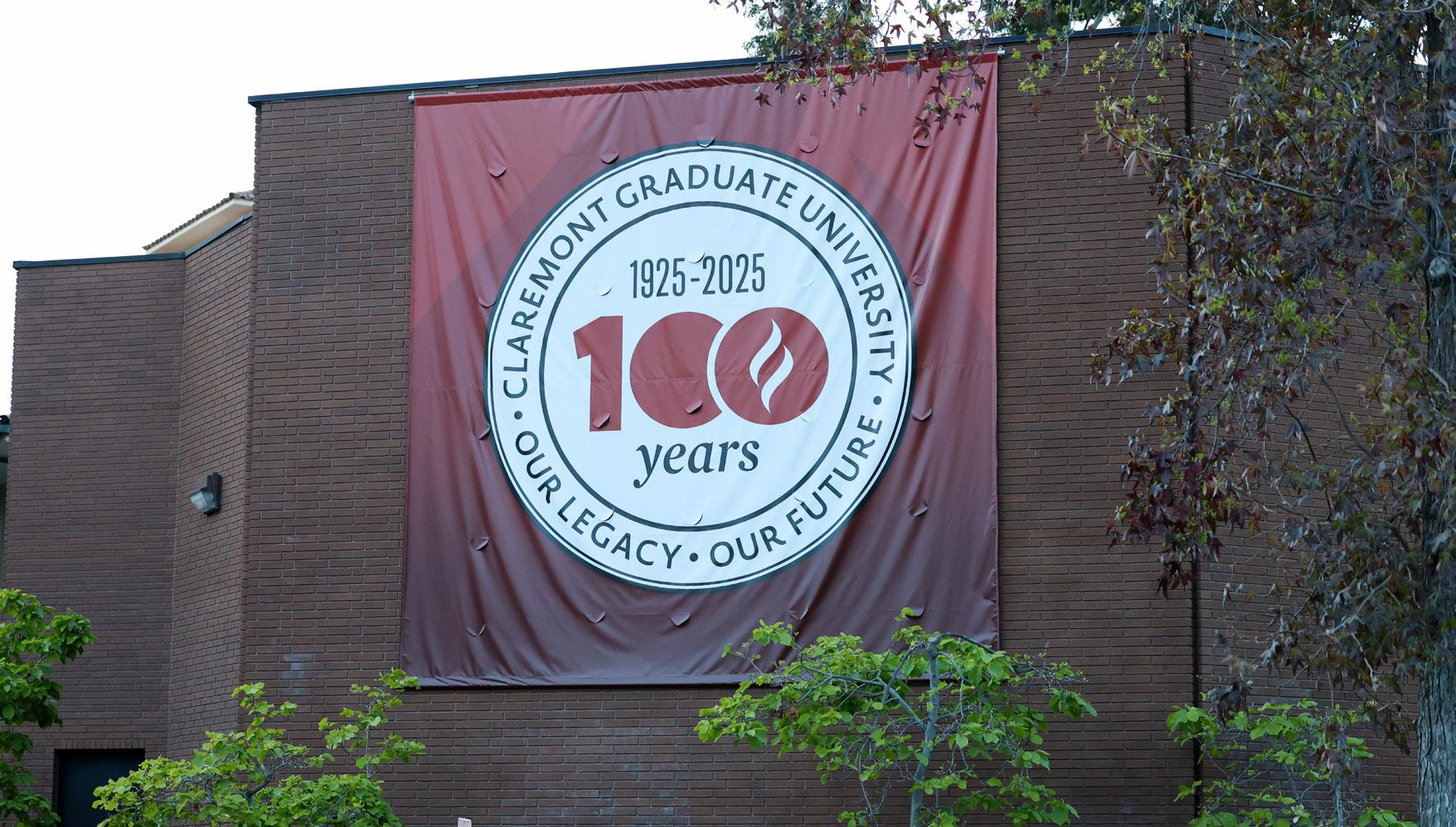
This year marks Claremont Graduate University’s (CGU’s) 100th anniversary since becoming an independent institution in 1925, and the university is celebrating with a yearlong series of events to honor its legacy.
“The 100-year history is a big celebration of not just CGU but
the community of Claremont,” Alegria Martinez, social media specialist at the CGU Office of Advancement, said. The university, previously known as the Claremont Colleges, was created in the 1890s by Pomona College founder
James A. Blaisdell. According to Martinez, Blaisdell initially established the university so that students could have a place to further their education after obtaining their
See CGU on page 3
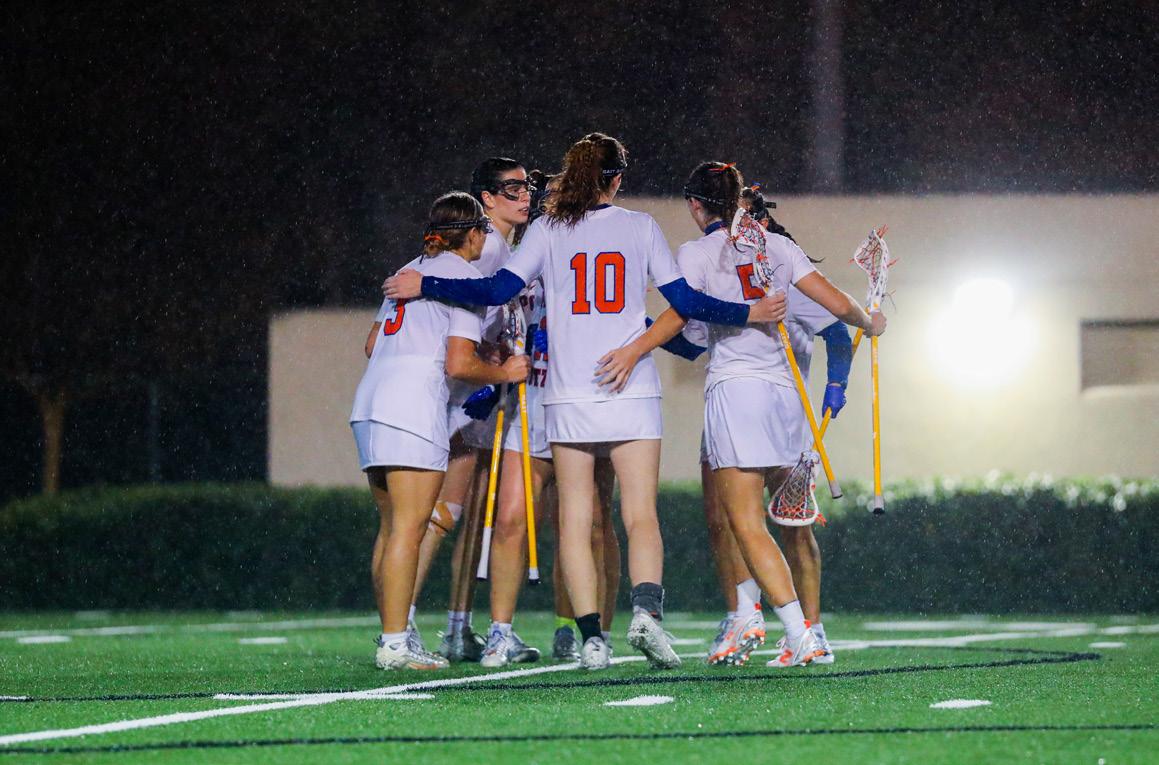
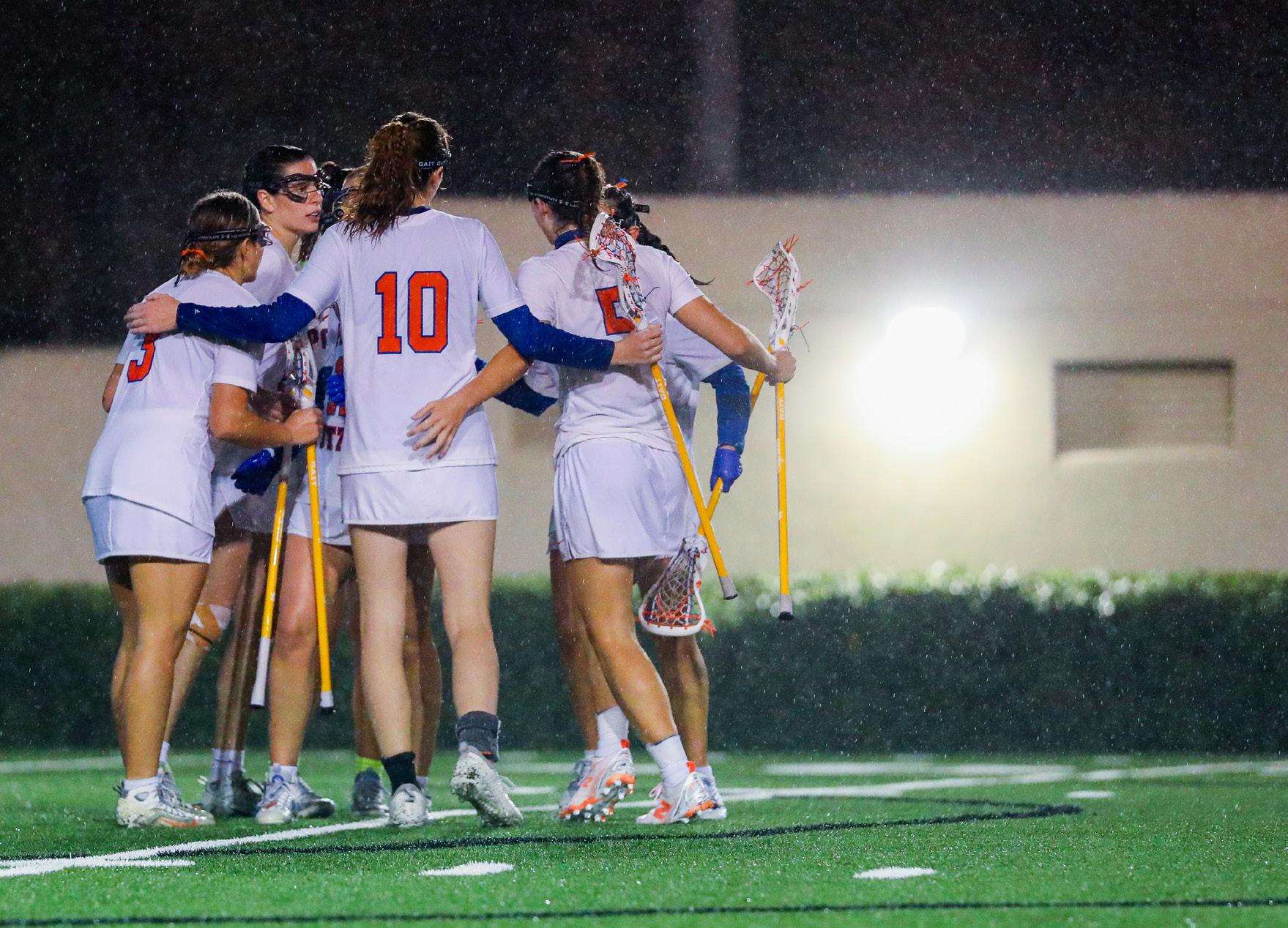
Another Sixth Street women’s lacrosse battle is in the books and the No. 10 Sagehens continue to reign supreme. Since the 2020 season, the Pomona-Pitzer (P-P) Sagehens have won 12 straight games against the Claremont-Mudd-Scripps (CMS) Athenas. The most recent contest on Wednesday, March 5, which came down to the final seconds, ended in an eventual overtime goal from Chloe Denhart PO ’27 to give the Sagehens a 12 to 11 victory. The match was tied at 10 different points, with CMS’s 4 to 2 lead early in the second quarter being the only instance of a multiple-goal advantage all night. Though P-P would take their first lead of the game late in the third
claremont
Pomona-Pitzer (P-P) lacrosse huddles during their rainy 12-11 victory over claremont-Mudd-Scripps (cMS)—their
SID GOLDFADER-DUFTY • ThE STUDENT LIFE
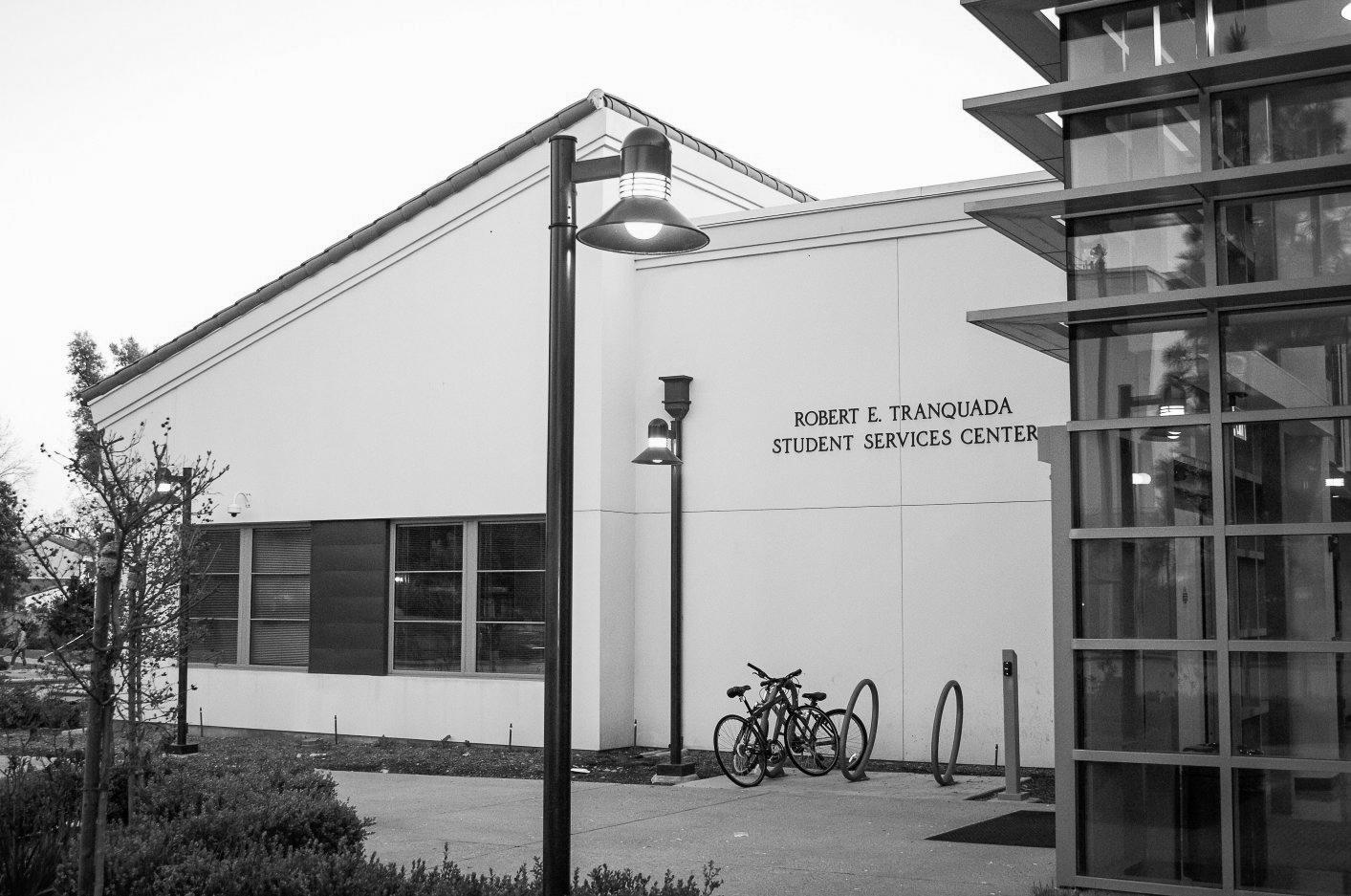
Pitzer College agreed to rehire former McConnell Bistro employee Adan Campos after a months-long fight from the Claremont Student Worker Alliance.
Pitzer rehires Adan Campos after months of effort
them that Pitzer had offered him an agreement. The move came days after CSWA disrupted a Board of Trustees meeting to demand Campos’ rehiring.
“Pitzer has been and will continue to be supportive of our unionized workers’ rights,” Schaefer wrote in the same statement to TSL.
Jack Weidner PO ’25, a CSWA steerer — a term the organization uses for its co-leaders — commented on what he described as the administration’s lack of clarity in its communications.
“With these sorts of campaigns, you never really quite know where Pitzer is at … that vagueness is intentional,” Weidner said.
He further described how even though Pitzer’s position has been unpredictable, CSWA was still able to persevere until success.
“We did what we know works, which is to show up and to put pressure on them and to say that the community is not okay with this,” Weidner said. “They ultimately listened to that, which is awesome, so I guess we can’t always predict the timeline on which they’re gonna listen to that, but that strategy has worked in the past.”
CSWA celebrated their win during an afternoon party at Pitzer’s Grove House on Thursday, March 6, offering snacks and featuring speeches from those involved.
“I’m really glad that it all came together, and I’m just really happy that Pitzer finally caved,” Weidner said. “At a time when so much else is really depressing and out of our control, it feels really good to be able to do our best to do right by our community members.”
Women In Global Security program hosts Amnesty International’s Carolyn Nash CAMPOS:
On Feb. 28, Carolyn Nash, Asia advocacy director at Amnesty International USA, discussed human rights advocacy within the evolving foreign policy landscape. The event was hosted by Pomona’s Women in Global Security (WIGS) program, led and organized by politics professor Tom Le and his fellows, Trinity Tai PO ’26 and Jonna Sobbeloff-Gittes PO ’25.
Nash has lived and worked in multiple countries — including Indonesia, Uganda and Myanmar — overseeing human rights and governance programs. She now advocates for foreign policies that improve human rights in Asia on behalf of Amnesty International, a grassroots organization that aims to expose human rights abuses and to pressure those in power to stop them.
During the talk, Nash said that human rights advocacy is about changing laws, policies and practices.
“It’s not educating for the sake of educating and it’s not changing hearts and minds,” she said. According to Nash, Amnesty International publishes reports that uncover human rights abuses and gives broad recommendations to those in power to enact change. However, when speaking before decision-makers like the U.S. government, Nash said that she focuses mainly on using “actionable” recommendations rather than on explaining human rights abuses.
“The people that you are talking to in those rooms, those decision makers, almost always know about the terrible thing that you’re telling them is happening,” she said.
Nash added that she often urges ambassadors or other decision-makers to go to places where they know or suspect human rights abuses are taking place.
“It’s a way of signaling to the [foreign] government that the U.S. is paying attention to the fact that something has happened there,” Nash said.
She also discussed how the fields of human rights and foreign policy are changing, especially now that Donald Trump’s second term of presidency has begun,
Flu outbreak hits 5Cs; experts warn about vaccine challenges
A flu outbreak in the 5Cs last month led to 37 reported cases among students, with the virus’ spread provoking concern among some Claremont community experts over vaccine access and recent changes in federal health policies.
The initial case was reported on Jan. 29, with the outbreak peaking in early February,” The Claremont Colleges Services (TCCS) said in a press release to TSL. “The highest number of positive tests occurred the week of Feb. 3-7.”
Since Aug. 1, Student Health Services (SHS) has conducted 252 flu tests for students, with 48 yielding positive results for influenza A and one for influenza B, compared to last year’s 265 student tests yielding 50 positive results.
While TCCS confirmed that the flu was milder this year, the 5C Ski & Snowboard Team was hit with several cases last month following their first competition of the season. It was raining for a majority
of the competition — a “miserable” weather experience, according to competitor Zach Roerden CM ’27 — with the final day of competing ultimately being canceled due to the weather.
After arriving back on campus, Roerden began experiencing flu symptoms.
“I was actually the first person to text in the group chat [about the flu],” Roerden said. “I said, ‘does anyone else feel like crap right now?’ and immediately three people texted back.”
Roerden said that around eight members of the team later confirmed testing positive for the flu.
“This was probably the worst illness I’ve gotten in the last five years,” Roerden said. “I have a pretty strong immune system, I grew up on a farm … this is the first time I was sick in a while, and it was really bad.” He recalled symptoms like severe exhaustion, muscle aches, headaches, nasal drip, stomach aches and nausea.
After visiting SHS, Roerden said a nurse informed him that the main
medicine they provide to combat influenza A, Tamiflu, was out of stock because of the high volume of cases in the previous week. When the nurse tried to call in the prescription at the nearby Hendricks Pharmacy, they told her that they were also out.
Lily Waldman SC ’26, a 5C Ski & Snowboard Team captain, affirmed that the team did not contract the flu during the competition but rather brought it with them on the trip.
“People on our team got [the flu] at school,” Waldman said. “The unfortunate thing is that the 5Cs as a whole are not really keeping up on their vaccination requirements.” Three competitors ended up missing the team’s second competition of the season due to the flu but were able to get waivers and still compete at regionals.
“In the past, it really hasn’t been much of a problem at all,” Waldman said. “Of course, the flu is a little bit more serious, especially this year with antivax sentiments floating around the nation.”
Robert F. Kennedy Jr., who President Donald Trump recently ap-
pointed as U.S. Secretary of Health and Human Services, previously denied the efficacy of vaccines. Dean of Research at Keck Graduate Institute and vaccine researcher Larry Grill spoke on the health consequences that have already resulted from the change in administration, pointing towards the spread of illnesses besides the flu.
“We have a vaccine denier as the head of our health services in the United States,” Grill said. “So now we’re getting what shouldn’t happen: a pretty big measles outbreak, including deaths.”
Pomona biology professor Sharon Stranford commented on how an FDA meeting aimed at preparing next season’s vaccines and a CDC meeting on immunization protocols were both recently canceled.
She outlined the flu vaccine production timeline, which includes analyzing circulating strains, predicting which are going to dominate in the next season and manufacturing the vaccines.
“They have a very strict six-month clock: if you don’t start now, you’re not going to be ready [by September],” she said. “I just really hope next year that we’re not hit particularly hard given the delays in vaccine preparation.”
Roerden said that despite getting the vaccine, which has an estimated 42 percent efficacy, he still contracted the flu.
“I just hope it never happens again,” Roerden said. “I would never wish it upon my worst enemy.”
Stranford also mentioned an uptick in sickness-related absences and prevention protocols among students and faculty at the 7Cs.
“I’ve been hearing a lot more about absences,” Stranford said. “Even among faculty — we had a big symposium, and there were quite a few people who couldn’t be there because they had contracted something. There were many people who were putting masks on.”
Grill concluded with a statement to students, faculty and staff at the 7Cs regarding the flu.
“Easiest way to stop the flu is to get vaccinated,” Grill said. “If you get the flu, at least wear a mask if you’re going to go around other people, because that at least will stop most of the droplets — if you wear it properly, of course.”
saying that Americans have become disillusioned with many federal organizations.
“I very strongly feel that the dismantling of USAID is easier because of this, that the sidelining of the State Department, the sidelining of U.S. diplomacy that we’re seeing right now is easier because of this,” Nash said, referring to Trump and Elon Musk’s federal budget slashing.
With recent decisions to reduce foreign aid and what Nash
described as a decreasing emphasis on human rights, she said that she does not believe other nations will step in to supplement the aid that the U.S. has long provided.
Although Tai and Sobeloff-Gittes said they thought Nash’s outlook regarding the Trump administration and the future of human rights wasn’t optimistic, they appreciated her perspective.
“I thought it was really in -
teresting to get that perspective from someone whose whole career has been advocating for human rights and now works in DC and is seeing these massive changes firsthand,” Sobeloff-Gittes said.
Elaborating on her talk at Pomona, Nash gave an interview to TSL in which she said that young people who wish to mobilize for human rights issues are often not given the right voice or space to do so.
“I do not think that in this country in general — and in most countries — we give young people the voice that they are capable of having in shaping the world that they live in,” Nash said. “I think that creates a sense of distrust because people who are engaged and thoughtful and about to start their lives as adults are not able to shape the contours of the world that they have to go into in the ways that they should be able to shape the world.”
AVA FLEISHER
cOURTESY: AMNESTY
carolyn
KAHANI MALHOTRA
JOJO SANDERS • ThE STUDENT LIFE
The 5C community is still recovering from an intense flu season, raising concerns among some students and community experts.
CGU: University celebrates 100 years as an independent institution
continued from page 1
undergraduate degrees.
At the time, though, CGU wasn’t just a graduate school; it was also in charge of administering the consortium’s shared services, such as the library.
Over time, the school hired its own faculty, establishing itself as an independent institution in October 1925.
100 years later, on March 1, the centennial festivities began with a spring celebration on CGU’s campus. The event featured live music performances, new CGU merchandise, an art gallery and exhibitions that showcased the interdisciplinary
nature of a CGU education.
The celebration included a “Legacy Talk,” in which one of CGU’s history professors and other community members discussed the university’s past.
Smriti Nambudiri CG ’25, a graduate assistant for international admissions at CGU, said the event allowed many alumni to reconnect with former classmates, meet current students and return to campus for the first time in years.
To commemorate its progress, CGU has also developed a webpage dedicated to recording its history titled “CGU 100: Our Origin Story.” The multimedia page aims to tell CGU’s
history through text and imagery, making up what they call “chapters.” Three are already out and according to Martinez, more are coming soon.
The university is also bringing its celebration to social media, highlighting its history and alumni using #CGU100 and sharing parts of the community, such as a couple who met at Claremont McKenna College before continuing their education together at CGU decades ago.
The CGU 100 page also features a community forum where alumni, students, faculty and staff can submit their most meaningful CGU memory and
a photo to go on a story wall. The website states, “The CGU story is best told through the lens of our vibrant community. From groundbreaking research to transformative mentorships, from lifelong friendships to life-changing initiatives — every journey here has contributed to our century of advancing knowledge.” Martinez said that many notable community members will participate throughout the yearlong celebration, including Betty Hagelbarger, namesake of the on-campus café Hagelbarger’s, and representatives from the Claremont Chamber of Commerce.
Nambudiri emphasized the importance of celebrating CGU’s accomplishments.
“It’s a good way to kind of form more of a community, especially because it is a huge benchmark,” she said.
The university has a lineup of upcoming celebrations and events in the next year, with one of the more notable ones being their “Fall Centennial Celebration Week,” which takes place during CGU’s official birthday month from Oct. 11-18.
“The festivities are a great reason to come together as a community and celebrate a longstanding legacy,” Nambudiri said.
‘Student Journalism: Informing or Influencing’: Editors debate the role of campus media at the 5Cs
During claremont McKenna college’s Open Academy Salon on March 1,
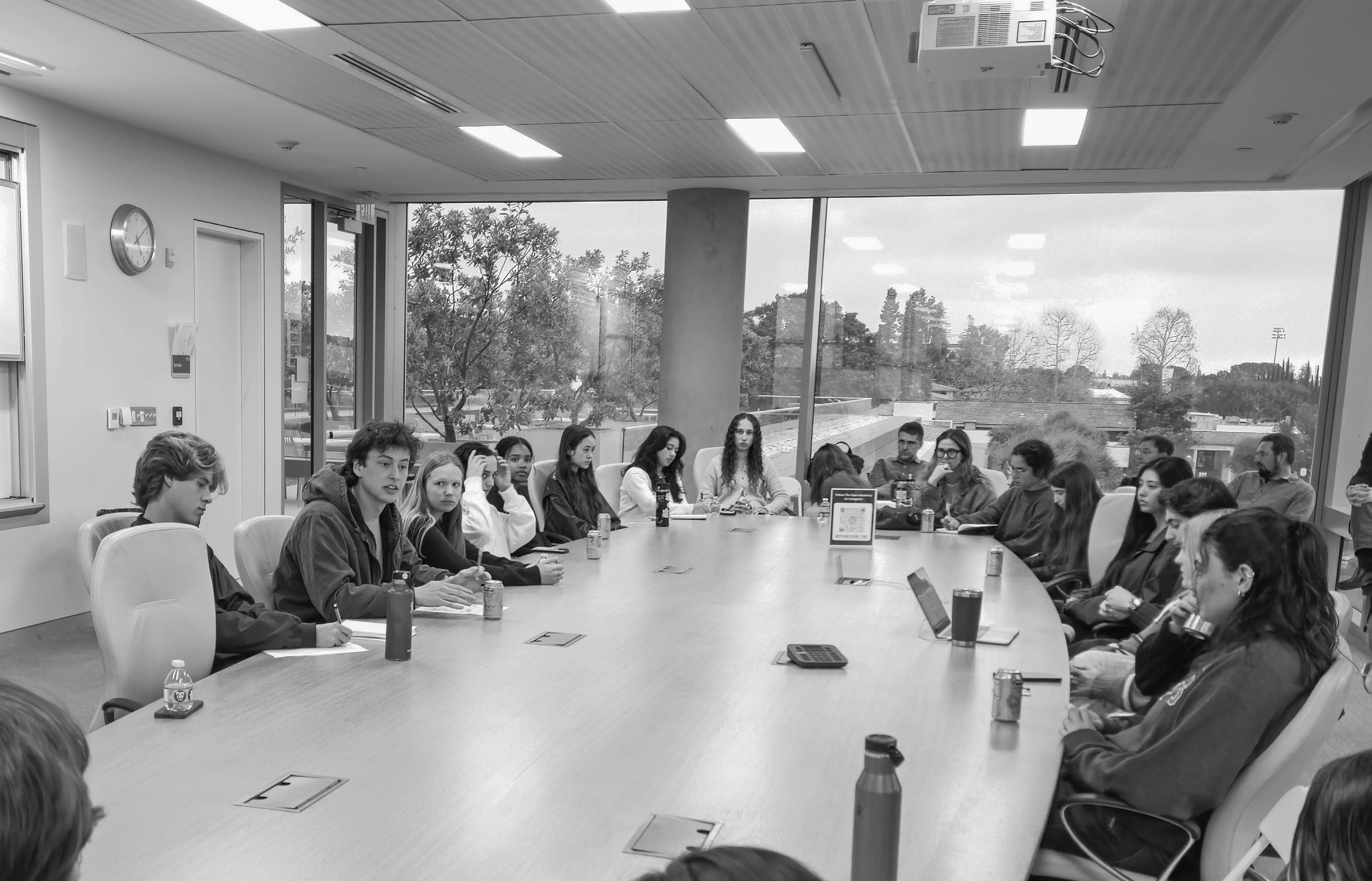
Editors-in-chief from two prominent 5C news publications, The Claremont Independent (CI) and The Student Life (TSL), discussed student journalism’s role in the contemporary political landscape at Claremont McKenna College’s most recent Open Academy salon last Saturday. The discussion, titled “The Role of Student Journalism: Informing or Influencing?” took place at CMC’s Kravis Center. The event was part of CMC’s larger Open Academy program, created to help overcome ideological divisions to solve challenging problems, with core commitments to freedom of expression, viewpoint diversity and constructive dialogue.
At Saturday’s salon, attendees debated the role of bias, funding and external influences in campus media and culture. Kendall White PO ’27 — who writes for both publications — moderated the talk, which featured Charlie Hatcher CM ’25, editor-in-chief of the CI and June Hsu PO ’25, editor-in-chief of TSL.
Following White’s brief introduction to the editors and the event, Hatcher and Hsu each delivered their opening statements, detailing the structure, work environment and unique purpose of their respective publications.
Hatcher said that the CI, founded in 1997, is a digitallybased publication that covers issues directly related to the Claremont Colleges. He added that the publication is independently funded, mostly through alumni donations, and
focuses its coverage on freedom of speech and administrative overreach.
“Most of our story selection is guided by a shared vision among our staff about how the colleges can be better colleges, and very often that involves defending tradition,” he said. “It is still a misconception to think of the CI as a strictly conservative organization.”
Hatcher added that the CI has staff members falling across the political spectrum and that its editorial board is welcome to publish more liberal opinions; however, he also highlighted the CI’s roots in conservatism.
“Conservatives are often birthed in reaction to other ideologies run wild,” he said.
“If you look back at the very first CI issue published in 1997, the front page headlines read ‘Free Thought is Back.’ So even back then, people on campus cherished an old value and saw it as threatened by new developments made.”
Over a century earlier, in 1889 — and just two years after Pomona was established — TSL was founded. It stands as the oldest student newspaper in Southern California.
Hsu said that TSL, published both in print and online, features four sections: News, Arts & Culture, Sports and Opinions. TSL embraces the journalistic practice of “Do No Harm” — famously recorded in the Society of Professional Journalists’ ethics code — as well as other traditional journalistic standards, like AP style. She added that while some
of the student publications at the 5Cs have a specific lens or focus, TSL aims to produce neutral, unbiased coverage of the events and issues most relevant to students.
“I think there is room for absolutely every single one of those papers at the 5Cs,” Hsu said. “I think The Student Life’s position in all of this is that it encompasses all the 5Cs, it’s on that print cycle and we have a very good position between administration and students.”
In the wake of demonstrations such as the Oct. 7, 2024, protest at Carnegie Hall last semester — which resulted in dozens of students being banned from Pomona’s campus — both editors said their papers exercised caution in word choice and shared some policies that they followed in covering the protests.
with a couple of words that might have heavy connotations.
“We felt pretty confident in our word choices,” Hatcher said, adding that one particularly relevant language controversy occurred when writers were discussing whether to call a protest “pro-Palestine” or “antiIsrael.”
Despite facing some challenges that are impacting all newspapers across the country, it seems to me that journalism is alive and well at the 5cs … and serving the role that it should.
Zachary Iler CM ’ 28
“We do have a policy of our news writers not participating in protests, which is general newsroom policy,” Hsu said. “It was such an unprecedented time, and it was a learning process with things you wouldn’t even think of, like, ‘what word are we going to use to describe this?’”
Hatcher referenced criticisms of the CI, noting that the entire tone of a story can be changed
Corrections
“We largely switched to antiIsrael just because we’ve seen the tenor of the protests and we’re going through that process of trying to fit in what we’ve witnessed to these phrases that are imperfect, but we’re doing the best we can,” he said. TSL and the CI also talked about how they needed to grapple with whether to use students’ names in their pieces, something that they said could put students at risk of retaliation from administration or other students.
“We haven’t named a student in our paper in years because we think that we’re college students, we’re young, we’re publishing digitally, it’s going to be around,” Hatcher said. “There are plenty of things we take issue with on campus and we don’t want that following students around.”
TSL takes a different approach to anonymity. Hsu said that
it’s provided on a case-by-case basis, and that each editor-inchief must ultimately decide whether publishing a piece with anonymous sources will help or harm the community. She added that the publication only allows anonymous sources to provide facts, not opinions.
In response to an attendee’s question about student journalism’s role amid a decline in traditional journalism, Hatcher said that student publications serve an integral role as higher education institutions are “largely in pretty dire stakes right now.”
“It’s weird to think of undergraduates as on the frontlines of this particular political fight of suppression in the media,” he said.
Hsu also discussed how social media, another threat to traditional print journalism, enables the spread of misinformation and subsequent distrust in traditional media.
“Social media, especially on platforms where people can claim journalism and people can absorb that content without factchecking, is super dangerous,” she said. “It’s really interesting to see the lack of trust in the 5Cs, which is exponentially worse in legacy media.”
Event attendee Zachary Iler CM ’ 28 said that he believed student journalism to be a crucial part of college campuses that should be kept alive.
“Despite facing some challenges that are impacting all newspapers across the country, it seems to me that journalism is alive and well at the 5Cs … and serving the role that it should,” Iler said.
CHLOE ESHAGH
cOURTESY: ALEJANDRO VILLEGAS
Form meets the function
Although some of CMC’s more snazzy soirees warrant a more glamorous outfit, for the majority of 5C functions, there is a standard uniform that I am tired of. As someone who often dons the exact same articles of clothing to parties, I believe that we, young, vibrant beacons of the future, can do better.
I want to be the devil’s advocate for all of us and acknowledge that an outfit to go get drunk on Green Beach with your friends is a hard thing to construct. How exactly will one ensemble get me from the pregame through the freezing night and into the midst of a sweaty Saharan mosh pit? I need something that can adapt to a range of temperatures, is durable and danceable, unique, novel and most importantly, stylishly intoxicating.
Well, I am here to offer up ideas for adding some form to the function.
Footwear is the apex at which form and function intersect. It is the peak of styles’ Everest. And when it comes to party wear, it is probably the most important factor to consider before stumbling into the shindig. If you, like me, are looking to shred up the floor to some 2000s throwback anthems, then a sneaker is the only acceptable shoe choice.
Recently, I have opted for my less worn but equally comfortable black sambas and have made a revolutionary scientific discovery: A black shoe does not get as dirty as a white shoe. Therefore, I strongly urge those of you looking to drown in the deep end of the mosh pit to opt for an old pair of dancing kicks in a darker shade. The mud and grime that will inevitably paint your frat
chOY • ThE STUDENT LIFE
shoes after a night of debauchery is a lot less impactful on a black pair.
Now, if you’re rocking up to an event that is far more civil than any wristbanded affair I have attended at this consortium (with the strangest party culture of any American campus, I may add), your choice of footwear is paramount to your look. I suggest you dust off the coolest pair of trainers you own, a black boot or if you’re feeling fancy, a delightful little kitten heel.
Second only to footwear, a key factor influencing my style selections is mother nature herself, and more specifically, the arctic nighttime temperatures she’s been dishing up. After all, an alcohol blanket does not always insulate well enough when trotting to any on-campus gathering. As a Scrippsie who finds herself more often than not sprinting off campus
for a Claremont event, I end up wearing a jacket of goose-bumps. So, instead, I suggest that we all opt for real jackets, and I, for one, am partial to an oversized leather or denim to contrast a saucy little top and, if you’re feeling brave, a miniskirt.
As far as tops for the groovin’ girlies are concerned, I suggest we abandon the crop top and select a more sophisticated way to show some skin because, let’s be real, not even a blizzard could get most of us to cover up. I have seen a recent explosion of one-shoulder, halter and off-the-shoulder tops, and I am personally a big fan. From Zara to H&M to Cotton On, a simple top with an intriguing neckline or sleeve is never a miss. A stylish extension of this is the slinky backless top — double points if it’s in a silky or satin fabric. Another way to add a minor amount of warmth to a showy outfit is a mesh moment, which is especially intriguing when in a lacey fabric and paired with a cute bra. I know I’m attempting to advocate for warmth, but not at the sacrifice of style, and I fear that all too often, we forget about more than half our look by haphazardly tossing on some jeans still reeking of last week’s beer ball losses. So, humble reader, I present to you: the miniskirt. Whether a denim or simple black, this bottom option is a lovely way to shake up the vibe. I highly recommend Abercrombie’s skorts as they keep you covered and able to dance. Pair with a knee-high boot or big jacket for some warmth and you’re ready to rock and roll.
If the mini is too mini, then I suggest the polar opposite: a loose denim. Low-rise baggy jeans and a tiny top are a staple silhouette that is not only comfortable but also breathable and therefore perfect for a night of dancing, Claremont crawling and/or eating fries at the Hub. Black, gray or a dark wash are the color schemes that make this a nighttime look.
I have had it with getting hit by a stiff arm or shoved into my friends by the sweaty back of a brick-like man, and I think that restricting clothing is the main culprit. I believe that if a man’s outfit is loose and relaxed, the transitive property applies. His dance moves, too, will loosen up, and all of us will be safe from getting a bicep to the face or trampled whilst attempting to tear up the floor to Rihanna’s “Wild Ones.”
I and practically every other girl
at universities across this fine country have become all too reliant on the classic “jeans and a going-out top.” As for the men, I am very much over the t-shirt and chino pants look. For the men of these schools, I suggest your closets and credit cards take a hop across the ocean to one of our former British colony besties: Australia. There, the button-down and loose pants are a staple party look that I believe these schools should adopt. Whether you opt for a Jacob-Elordi-in-“Saltburn” loose linen long sleeve or a more casual open camp collar, a button-up is a great way to look sophisticated and stay cool. When looking for pants, straight leg or looser is your best bet. A dark denim, cool cargo, constructed carpenter pants or chill chino are all splendid options. The breathability of these styles is the marriage of design and durability, an investment you surely won’t regret.
Accessories are a great way to make a look more party than practical. However, there is a time and place for certain outfit enhancers. Sunglasses should be reserved for sunny days and not CMC’s party quad at 1 a.m. on a Saturday. The same applies to hats. I love a good baseball cap. However, I fear that certain subsects of my peers have become far too reliant on the hat to cover up their undone mop of hair. Buy some shampoo and hair gel and ditch the hat. Dancing does not groove well with impractical and — dare I say — unnecessary accessories.
Nothing says it’s time to party quite like a disco ball, so why reserve the sparkles and sequins for NYE?
While we’re pulling from the glamour lookbook, why not spice up a simple black look with some chunky jewelry?
All black is my standard uniform, but to avoid looking like a thief in the night, I like to pop on a good bracelet and chunky hoop earring, thereby taking my look from robber to refined. After all, a little sparkle never hurt anyone, and as Marilyn Monroe preaches, “Diamonds are a girl’s best friend.” As always, take it or leave it. And remember, any path in life can be a runway (yes, even the long walk to senior apartments). I hope to see you all strutting your way across these campuses to the function in a chic new outfit this weekend! Stay warm, stay safe and stay stylish!
Ellen Chapman SC ’27 was born in Germany and currently calls Swarthmore, PA home … GO BIRDS!! She loves skiing, traveling, chocolate, reading, procrastinating and quad-shot almond milk lattes!
Homayoun sakhi and salar Nader bring the Afghan rubab and tabla to Pomona
GEORGIA ALFORD & AMELIA BERTSCH
“You see these old traditions that are being forgotten,” concertgoer Bardia Mizani CM ’28 said. “To see someone that’s young and is keeping a tradition alive, it just made me really happy, honestly.”
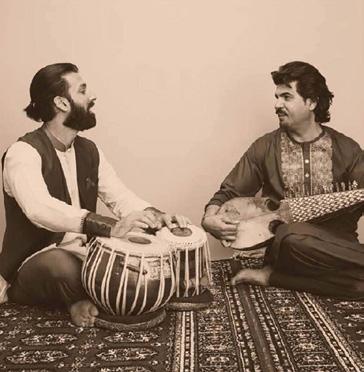
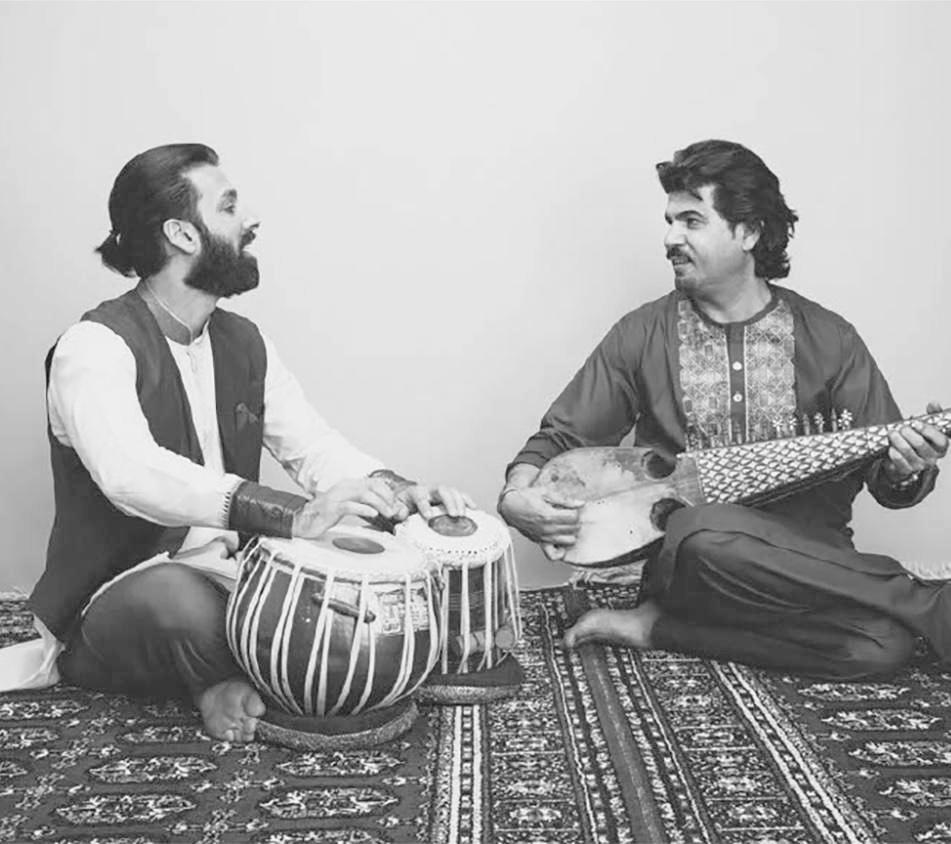
On March 5, students and music enthusiasts lined the wooden pews of Pomona College’s Bridges Hall of Music for a performance of South and Central Asian folk music. Musicians Homayoun Sakhi and Salar Nader, masters of the Afghan rubab and tabla, respectively, sat cross-legged on a carpeted platform under the stage lights.
The rubab is a twenty-onestringed lute-like instrument. The Taliban’s complete ban on music has made it nearly impossible to practice the rubab in Afghanistan, where it remains the country’s national instrument, according to Nader.
“Music about Afghanistan is like completely a question mark these days,” he said.
Pomona music professors C. Joti Rockwell and Arash Khazeni, of the music and history departments, respectively, helped organize the concert. Rockwell also hosted Sakhi and Nader in his music theory courses.
“We’ve collaborated before between departments, so this was another opportunity to do that,” Rockwell said. “[Khanezi] mentioned these musicians to me and the prospect of having them here for a concert and a residency, and we were delighted to do it.”
The week before the concert, Nadar and Sakhi hosted master classes for Pomona music students. Students were invited to learn from the visiting musicians by improvising with them and marrying the sounds of their instruments.
“Holding a nylon string guitar today alongside the rubab, there’s quite a contrast, but it was cool to be able to put them together in some way,” Noah Strauss PZ ’26 said. “There’s so much to understand about the lineage of this music.” Just before beginning, Nader delicately dusted a light covering of chalk over his hands before playing his three tabla hand drums, which were made from metal with goat skin stretched across the top. The drums can handle up to one thousand pounds of pressure and produce a wide range of deep echoes, depending on how Nader strikes them. The practice of playing the tabla, according to Nader, is incredibly physically demanding.
tabla sometimes taking a central role in the evening celebration.
The two musicians explained that performances in Afghanistan often last through the night until the early morning.
Sakhi and Nader have been performing the rubab and tabla in a concert series at American universities. The duo’s fame is certainly large in their genre, both men being classically trained through the traditional ustad-shagird apprenticeship in their respective instruments.
Nader described how music is often played after breaking fast during the Holy Month of Ramadan, with the rubab and
Nader’s mentor, Ustad Zakir Hussain, was the first man to introduce Indian classical music to a global audience. He is revered
as one of the greatest percussionists in the world and won three Grammy awards in 2024. Born in a musical family, Sakhi apprenticed with his father, Ustad Ghulam Sakhi. The duo uses their distinct instruments to combine classical compositions with improvisation, always paying homage to both cultural influences in their concerts.
“Our mentors’ music is always alive and we’re out here representing as best as we can,” Nader said.
Sakhi began the performance on his rubab. Nader shortly joined Sakhi on the tabla, riffing
off the melody of the rubab after waiting to see what Sakhi chose to play.
“Watching the interplay between them, the way they would bounce off each other and vibe off each other… the energy between them was super cool,” audience member Elias Pluecker PO ’28 said.
Sakhi and Nader periodically increased the tempo, their hands moving frantically faster and faster across their instruments. The rhythm quickened until the two musicians abruptly stopped playing, lifting their hands from the instruments as the concert hall filled with applause.
“I grew up with my dad and my dad’s friends playing tabla in the house. I think my favorite part [of Sakhi and Nader’s concert] was the large buildups when they would create a lot of tension and end with a big bang,” audience member Sinan Walji PO ’28 said. “I remember being kind of jawdropped when I saw that as when I was a kid, so it was kind of [like my] memories.”
Sakhi and Nader tried to give the audience a complete picture of the cultural influences at play, describing the Central Asian roots of the Pashto song they ended on as “Central-Asian hillbilly” and highlighting classical Indian ragas and talas.
The audience became a part of the concert, clapping along as the music swelled.
“We ask you to clap along into the room,” Nader said. “Find that feeling of ecstasy, I hope.” Sakhi and Nader have set out to spread the music of the rubab and tabla to college campuses.
Of her favorite part of the performance, concert-goer Somya Singh PO ’28 said, “I’d say the way the audience kind of could get involved with the music and engage with it.”
Sakhi and Nader’s concert combined traditional instruments with a new audience. The joy and life the pair brought to their music seemed to follow audience members beyond the walls of Bridges Music Hall.
EMMA
ELLEN CHAPMAN
World-renowned
musicians homayoun Sakhi and Salar Nader brought the music of Afghanistan and South Asia
to Pomona college’s Bridges hall of Music on March 5.
“Laughing Matters” brings Jeff Wright and Joey Avery to Scripps
GRACE VALASHINAS
Scripps College’s Garrison Theater was full of energy as hundreds of 5C students and Claremont residents filtered in to watch an evening of stand-up performances. Comedians Jeff Wright and Joey Avery visited campus on Feb. 27 to perform as part of Scripps Presents’ “Laughing Matters” series.
“Laughing Matters” has brought several other comedians to campus, most recently Janelle James, who stars in Abbott Elementary. The series is an opportunity for students and Claremont community members to see standup performances without leaving Claremont.
“Usually you would have to travel to LA for something like this, so I think that having something on campus just made it more accessible,” audience member Geeta Karlcut SC ’26 said.
Also invited to the event was Wally Baram, stand-up comedian, actress and writer; however, Baram was unable to attend due to illness.
Wright, who has done stand-up performances across the country and written for “Late Night with Seth Meyers” since 2020, kicked off the night. He told lively stories full of colorful details about his childhood in Florida, the quirks of living in New York City and the challenges of having a positive demeanor.
“I’ve been told that I’ve got a smiley face and I’m a smiley person,” Wright said. “But the smile is why I couldn’t become a doctor. Because you can’t give bad news when your default face is a smile.”
Wright laughed with the audience throughout the night, especially while doing crowd work.
rEVErB
He lightheartedly poked fun at the demographics of the room with quips like “It’s good to see your white faces,” and “Some of y’all are old, y’all know what y’all look like.”
As the second half of the event began, Avery built off Wright’s good-natured banter from the very beginning of his set.
“Where the fuck are we, dude? I’m very confused,” Avery said. “How many colleges do you have? You’re only supposed to have one, dude. Has anyone told you that?”
Avery, who often headlines comedy clubs, has been featured on Comedy Central and hosts his own podcast called “The Joey Show.” He first discussed topics like dating and technology before beginning some crowd work. He called on several different students in the audience, asking them about their majors, the stereotypes of their respective schools and their college’s mascots.
Upon learning that Sagehens are the Pomona-Pitzer mascot, Avery joked, “We’re a town made of 95 schools and colleges. We don’t want to get too aggressive. We just want a nice calm bird so that our football team spends their time reading.”
Although the friendly teasing of the Claremont community was received with laughter, later material in Avery’s set left many attendees quiet or unsure of how to react. Several jokes seemed to not fully resonate with the audience, and tension was sometimes palpable in the theater.
“There were quite a few comments that feel misogynistic at heart,” Karlcut said.
While joking about Scripps, Avery said, “So you have a whole
Tate McRae’s
college for women and you study women at that college? Okay, alright, that sounds cool. So I’m not allowed. I can’t learn about ladies. Everyone in the crowd is like, where the fuck is he going with this?”
“I’m not allowed to go to the women’s college — where the hell am I supposed to learn?” he continued, laughing.
Bridget Kilpatrick SC ’26 also expressed concerns over misogyny in Avery’s set. She brought up the importance of comedians being aware of the space and community that they’re performing to, particularly in terms of making jokes about women that could be considered derogatory while at a historically women’s college like Scripps.
“I think it’s also kind of knowing your audience,” she said.
Karlcut added, “If you’re going to a Scripps Presents event, maybe not making misogynistic comments would be in your best interest.”
This is not the first time that a professional stand-up comedian was met with criticism during a “Laughing Matters” event. Just two years ago, comedian Mo Amer received considerable negative attention from the 5C community after a performance at Scripps wherein he used the N-word and mocked Asian accents.
While there were some poorly received moments throughout the night, it proved to be an opportunity for students to engage with comedy.
Some helpful words of wisdom from Avery helped end the night.
“Have fun. Get fucked up. Get fucked up,” he said. “Study, as well.“
‘So Close To What’ and hypersexualization in the music industry
“Oh my guy / You don’t wanna waste my time / Let’s go ride,” sings Canadian pop artist Tate McRae in her third single “Sports car” from her highly anticipated album “So Close To What.” Released on Feb. 21, the album became the 21-yearold artist’s biggest debut to date and marked a complete departure from her previous style, making her the most-streamed artist in the United States this week.
I don’t want to waste your time either, so let’s go ride before I start ranting.
I’ve connected with McRae since her first EP, “all the things I never said,” which she released in 2020. I can’t even describe my reaction after listening to it — I never imagined that five songs and 15 minutes could convey so much. Every track captured her experience as a teenager struggling with friendships and love. Although its main single, “tear myself apart,” was written by Billie Eilish and Finneas, I can’t picture anyone but McRae singing it. It’s the best EP I’ve ever heard. This is the
Tate that I connected with.
McRae’s artistic journey began when she started uploading self-written songs to YouTube in 2017. Her first upload, “One Day,” went viral and led her to sign with RCA Records two years later. “I think about a hundred thoughts and you are ninety-nine / I’ve understood that you’ll never be mine / and that’s fine, I’m just breaking inside,” she expressed in a raw voice. Songs like “dear ex best friend” and “dear parents ...” deeply reflected her personal experiences, feelings and fears. This is why I became an avid fan of her music.
Before “So Close To What,”
McRae’s breakout came with “Think Later,” her sophomore album, which featured hits like “greedy” and “exes.” Though marketed as sexier and more empowering than her earlier works, the album ultimately explored her ongoing struggle with toxic relationships. The album still reflected the authenticity of McRae’s YouTube days when she didn’t need any songwriters or daring
costumes. She was still Tate.
Last September, after the release of “It’s ok I’m ok,” the first single on “So Close to What,” it became clear that this new era in her career was leaning towards the style of the single “exes” in “Think Later.” While the track succeeded in her goal of creating danceable songs, the music video and artwork prioritized a hypersexualized image over her vocal and performance talents.
“2 hands” followed as the second single, marking the biggest shift in McRae’s career. For the first time, she explicitly sang about intimacy: “I want ‘em all to see / You look good on top of me” “We don’t gotta live out of hotels / We could do it in my room all day.”
In the music video, McRae pours a carton of milk over her face just before appearing atop a McLaren with sports car drivers touching her entire body. Is this a porno intended to feed some kind of male fantasy?
While catchy and innovative compared to her earlier works, the song doesn’t reflect the singer who
once poured her emotions into powerful melodies with relatable lyrics. This isn’t Tate. If Olivia Rodrigo is the angsty teenager, Chappell Roan is the drag rebel, and Sabrina Carpenter is the mischievous and sarcastic one, then McRae supposedly needed to fill the missing role in today’s music scene to stand out: the sexual icon performer, or essentially, the Britney Spears of the 2020s.
Although she called the comparisons to Spears flattering and scary at the 2024 VMA’s award ceremony, she was dressed exactly like Spears at the 2001 VMAs. She was marketed as Britney 2.0.
When “Sports car” dropped as the third single, I knew we’d lost Tate forever. She admitted it on social media: ‘I didn’t write this [song], Tatiana did’ — Tatiana is the name she gave to her “alter ego.”
Using her sexual alter ego to justify her transformation into a performer who isn’t allowed to sing, but rather murmurs mediocre lyrics over synthetic beats, doesn’t feel convincing.
Unsurprisingly, “Sports car”
has become the album’s most popular track. I love her, but I’d be disappointed if her first Grammy nomination goes for this song. “I think you know what this is,” she sang — and yes, we certainly do. When an artist claims to be discovering their sound, it usually means they’re being pushed by their label’s marketing demands, not reinventing themselves. Unfortunately, in the male-dominated music industry, hypersexualizing female artists is a common strategy.
Having followed Tate since the very beginning, I find it hard to believe creating a whole album on the concept of getting laid every day was where she found the best of her artistry.
“Did my purple lace bra catch your attention? / The look in your eye made me question,” McRae sang in the album track “Purple lace bra.” Addressing backlash for appearing seminude in the music video for “It’s ok I’m ok,” McRae said in a conversation with Apple Music that “Purple lace bra” felt like a conversation between her and the media: “You’re seeing these videos of me dancing and you’re not listening to me as a songwriter, which is the most important part for me — that’s my soul.”
The issue isn’t her outfits or moves — those shouldn’t be criticized in the first place — it’s McRae’s shift in music to fit commercial demands. What’s missing in this album is her soulful songwriting and authentic voice. However, sonically, this album is arguably her most cohesive, addictive and enjoyable yet.
Despite the album’s overall superficiality, a few tracks preserve her signature voice and style. “Revolving Door” — the fourth single and, in my opinion, the album’s best song— is a great example of her remaining true to her genuine abilities. The song is a more mature version of “run for the hills” from “Think Later” and revisits themes of attachment and insecurity. In the track, she candidly admits, “I’m more hurt than I would admit / I’m supposed to be an adult, but fuck it, I need a minute.”
Tate could have evolved beyond her previous work — if that’s what she really wanted — without being reduced to a sexual icon. She is a great lyricist, vocalist and performer, but I can barely find her in “So Close to What.”
Tomy Helman PO ’28 is a music columnist from Florida, Argentina. He’s interested in culture and politics and currently speaks Spanish, English, French, Indonesian and Italian.
TOMY HELMAN
ShIXIAO YU
LESLIE AhUATZI • ThE STUDENT LIFE
On Thursday, Feb. 27, comedians Jeff Wright and Joey Avery performed stand-up sets at Garrison Theater as a part of Scripps Presents’ “Laughing Matters” series.
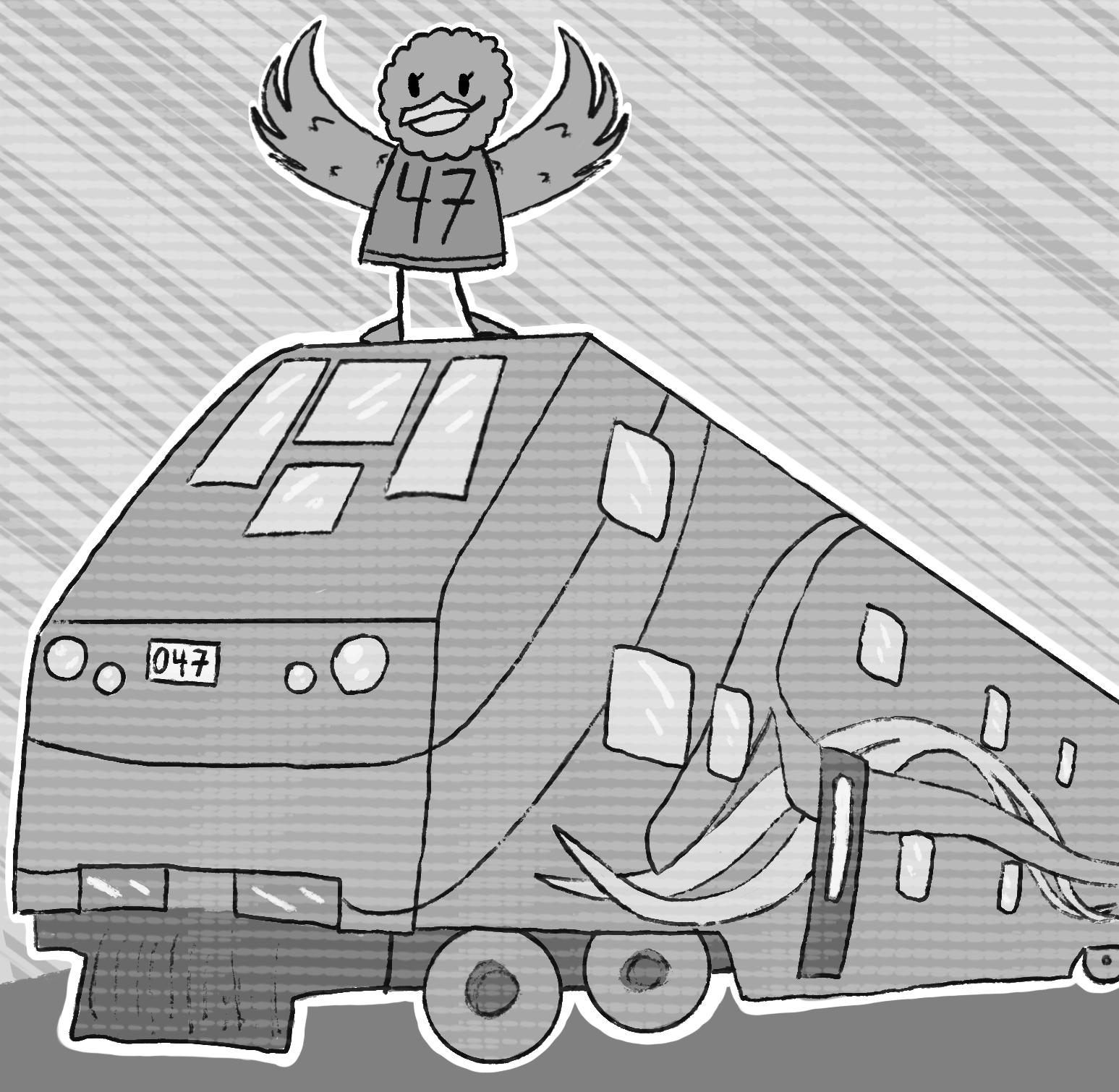
An ode to the Metrolink train
ANNA RIPPER NAIGEBORIN
Last week, in the middle of the night, a loud noise startled me awake.
For a few seconds, I laid motionless on my bed, trying to understand what had woken me up. Did my neighbors make some noise? Did I have a nightmare?
My theories were interrupted by the buzz of a horn, followed by the ring of a bell. The sound was familiar but much louder than usual. As I looked over to my open window, I realized the Metrolink train had woken me up.
After that night, I thought about the train constantly. I got the feeling that the train got louder and that it was passing through Claremont more often than before.
I knew, though, that it was a deceitful feeling: the volume of the train’s horn and its schedule probably hadn’t changed. Most likely, I had been more aware of the train out of annoyance for being harshly woken up by it.
My awareness was unexpected, as I hadn’t thought about the train since coming to Pomona last year. So I asked myself another question: Why had I stopped noticing this blaring fixture in my life?
When I first moved into my dorm in Pomona’s South Campus, my family and I were surprised by the loud horn of the train. It was at that moment that we learned about the existence of a Metrolink station a mere three blocks away from my dorm.
“It’s a good thing,” my dad told me. “You’ll be able to visit many places.”
My sister, on the other hand, seemed wary. “It’s so loud,” she kept repeating in awe. In the beginning, I echoed my sister’s view. When we had the heatwave back in September, I had to keep my fan on and my window open to cope with my AC-less room. Sitting in my unbearably hot dorm, looking out at an orange-colored sky caused by the wildfires, the amplified Metrolink horn sounded like those seven biblical trumpets that precede the
apocalypse.
Gradually, as the weather got a little cooler, my sympathy towards the train began to increase. The sound became familiar and no longer seemed to surprise me; it had become a part of my routine.
“The come and go of the train lulls me,” I told my dad in a video call, surprising both of us. “Maybe it’s because repetition relaxes me … I’m not so sure.”
So, as I started to settle down in Claremont and establish a routine, the chaos of novelty seemed to stabilize and subside. Soon, the
(Dis)Connection in Music: Simon Reynolds on the history and anthropology of music festivals
ANANYA VINAY
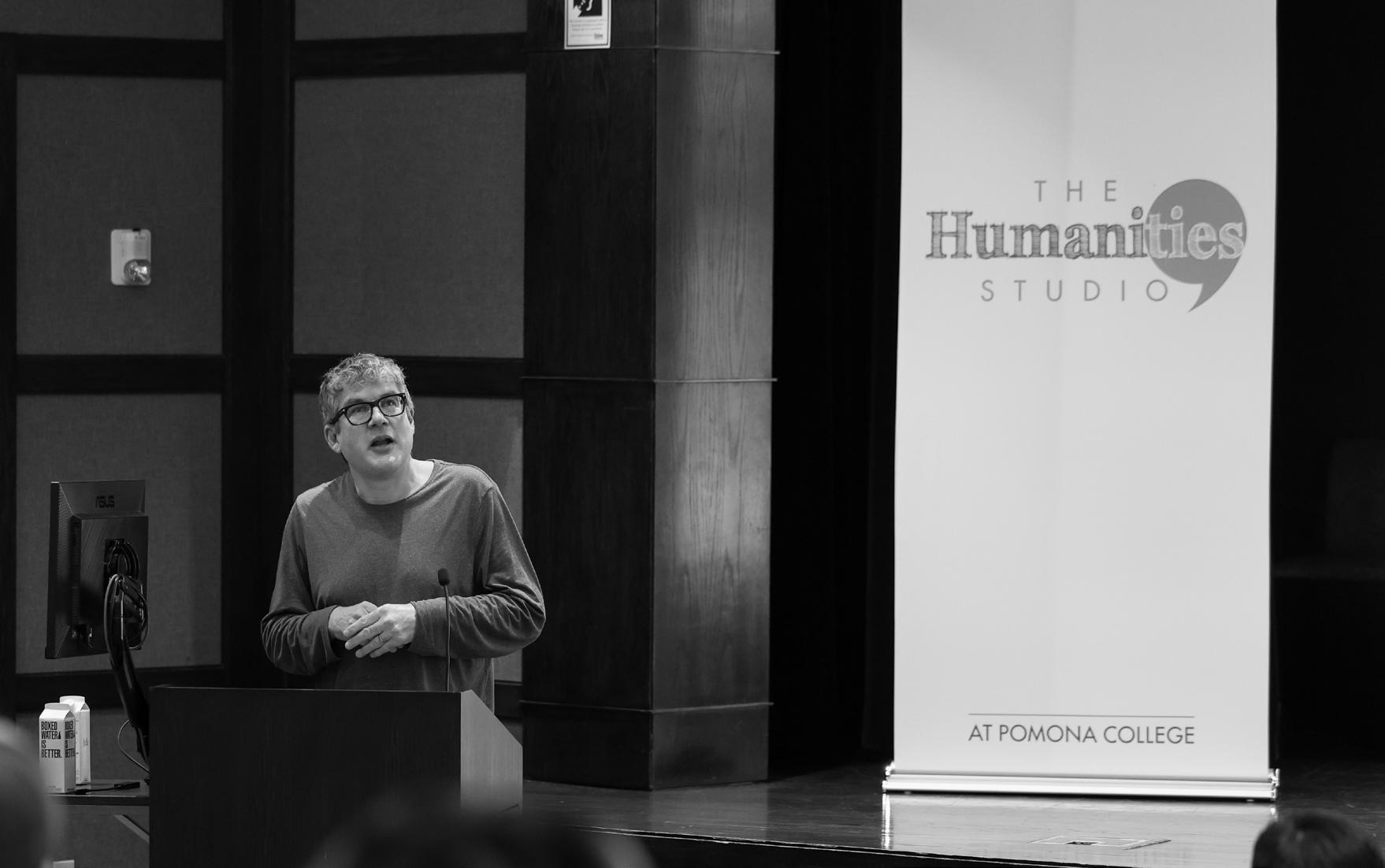
“A great [dance] club is one that forces you into deep physical proximity with other people and things that you would normally detest in real life,” Simon Reynolds, a music critic and historian, said. “Your sense of separateness from other people dissolves. The experience on the dance floor is a communism of one emotion, euphoria.”
On March 6, Reynolds spoke about the intricacies of connection at music festivals and raves for the latest lecture in the Humanities Studio’s Connections series.
A well-known critic of British popular music, Reynolds has contributed to publications including Spin, Rolling Stone and The New York Times, among others. He has also written several books, most recently “Futuromania: Electronic Dreams, Desiring Machines, and Tomorrow’s Music Today.”
Kevin Dettmar, W.M. Keck professor of English and director of the Humanities Studio, explained that Reynolds’ writing provides a unique, accessible perspective on music criticism, which is especially relevant to the theme of connection.
“[His writing is able to describe] what it felt like to hear a piece of music or to be in a space and hear music for the first time,” Dettmar said. “Instead of [music] being this abstract aesthetic object, it’s something that people incorporate into their lives and use to form relationships and understand the world.”
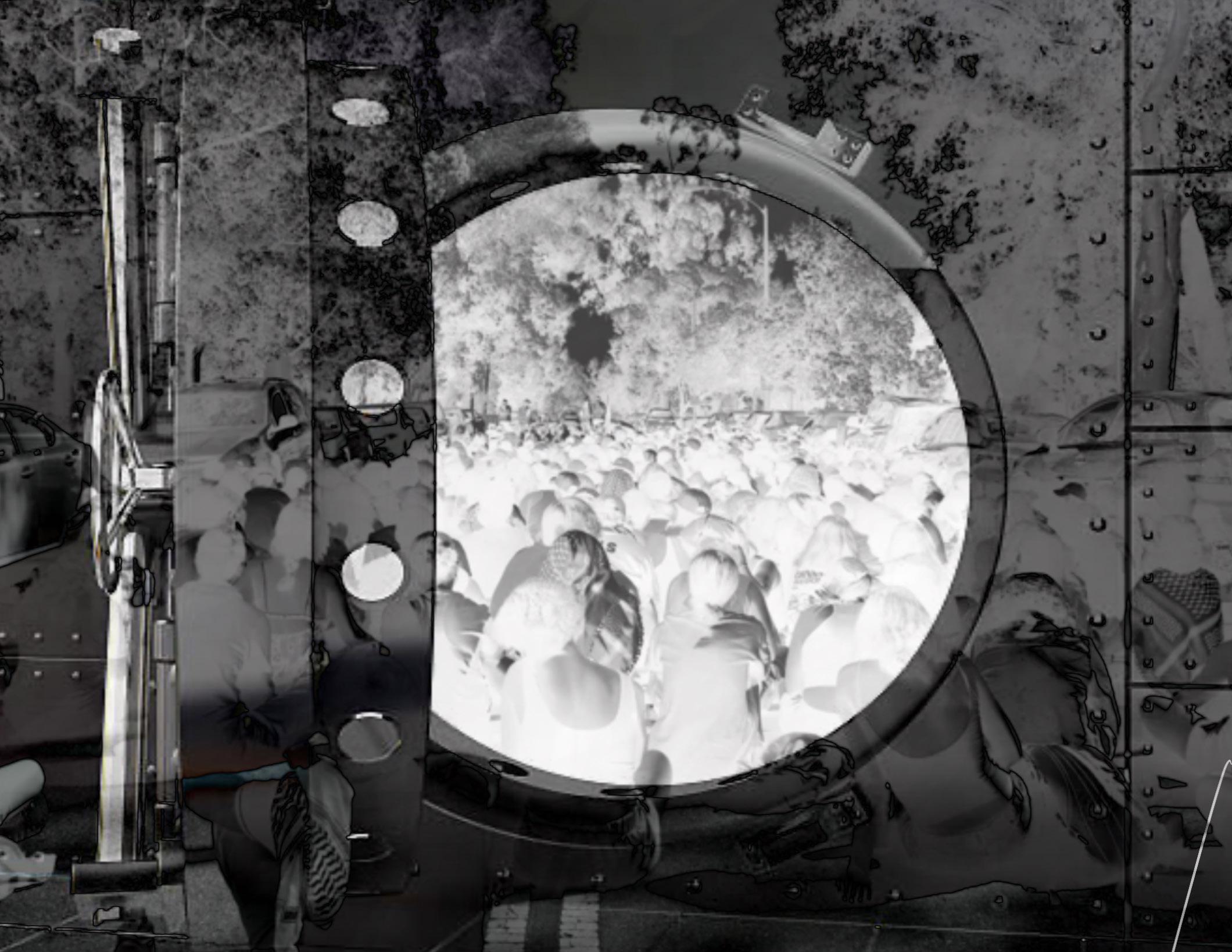
Reynolds described opposing views on ecstatic concert crowds as either liberatory and freeing versus promoting mob mentality.
He illustrated this point through a 1976 photograph, titled “‘Jesus’ Amongst Fans,” of the Great British
Music Festival. In the photo, one fan, now known to be a music messiah named William Gillette, appears thoroughly intoxicated by the music, while the crowd around him seems dejected and disengaged.
“[Gillette] represents a certain idea of rock music [with] a whole crowd of people in this state of mass ecstasy,” Reynolds said. “In the 70s, when bands were starting to play arenas and stadiums, a lot of rock critics were very suspicious of that and would often say that the vibe was like a Nuremberg rally … large assemblies of people intoxicated by a leader.”
In the 1970s funk scene, DJs would encourage chaotic, unruly behavior by doing dance moves that the crowd would then echo, creating a sense of mass identity.
Attendee Friederike von Schwerin-High, professor of German and Russian at Pomona, enjoyed how Reynolds provided an integrated perspective on alternative music scenes over time.
“I thought it was fascinating that some [scenes] are so successful and others are so utterly unsuccessful,” von Schwerin-High said. “Apparently no one can control how they’re going to go.”
Reynolds used the funk scene to illustrate elective tribalism, where individuals choose to participate in music scenes with extreme fervor, as if part of a micronation or movement.
“The tribe comes into existence in particular places, clubs, raves, record shops,” Reynolds said. “It’s kind of postmodern … You’re dipping in and out of this identity constantly.”
This ecstatic experience of raves and clubs demonstrates Zone 1 of the zone theory of live music, a concept proposed by anthropologist
Wendy Fonarow. Zone 1 is the closest experience to that of a mosh pit, with high crowding, an expectation of dancing and sometimes an altered state of consciousness.
Zone 2 is more focused on the music itself with less physical responses, while Zone 3 has limited emphasis on appreciating the music itself — music industry professionals discussing record deals, for example.
Reynolds presented a historical, almost anthropological, view on the cultural significance of alternative dance music and raves, reminding us of the power of music to simultaneously connect and divide us.
Attendee Jason Alperin PO ’28 appreciated the diversity of the music discussed as well as Reynolds’ interdisciplinary perspective.
“I didn’t expect the range of different musical sources,” Alperin said. “I thought it was really interesting, the way he applies humanities and philosophy thinking to popular music.”
Throughout the lecture, Reynolds sprinkled in anecdotes related to his experiences at music festivals and raves as both a critic and participant. In one particularly funny story, he went to critique a rave and took ecstasy. While in this state, he passed around his notepad asking for a collective review, only to find indecipherable scribbles.
“It’s a weird double consciousness kind of thing … If you go to review something, you have to constantly be stepping outside the experience,” Reynolds said. “Once you’ve gone down the path of being a critic, it’s hard to turn it off.” Ironically, due to technical difficulties, the lecture lacked any music.
train became a part of my college life and faded into the monotony of my days. But while last semester I was so busy just surviving the changes in my life, this semester I could finally breathe and think about the life I was living. The extra time for reflection, however, made me hyper-aware of the perfect city I was in.
Last week, I was walking to the library, with Big Bridges on my right and Marston Quad on my left. Some people were sitting on the grass, talking, sunbathing and reading. It was a perfect sunny day in California. But for some reason, I felt weird. When I looked up to the sky, it was completely blue and bright, not a cloud in sight. It felt … artificial. And so did the mountains up north. Still distant yet so close, those clearly traced mountains felt like a painting. It was like I was in the “The Truman Show”: The scenery was a perfect, well-constructed bubble. I then heard the leaves fall to the ground and rustle ever so slightly due to a breeze. When was the last time I’d heard the rustle of leaves?
My home city in Brazil is populated by more than 11.45 million people. There were people everywhere, traffic all around; noise followed me wherever I went.
This was fake. Claremont, small and gentrified, was fake. I felt detached from this strange, quiet town. At the same time, I felt trapped in it. Why was everything so perfect and peaceful? How
could I get out of here?
Suddenly, I heard it. That piercing, two-toned, high and low blare; a throat singer from the depths of hell. That long horn, followed by a steady and delicate — yet nonetheless somber — “ding-ding-ding.” If a church’s bell invites you in, this one screams at you to scram. There came the Metrolink train, running over my neurosis in its usual abrasive style. The monotony surrounding me –– which included the train –– was ironically destroyed by the train itself, similar to my abrupt awakening a few nights prior.
Never had I been so relieved to hear that awful noise. The train killed two birds with one stone: it showed me that there is, indeed, imperfection in Claremont, and it reminded me that I can escape this lovely, uncanny town. While I’ll continue to be annoyed at the Metrolink train — especially when it wakes me up in the middle of the night — I’ll continue to find some comfort in its obnoxious presence. An eternal contradiction, it keeps me on my toes and, at the same time, relaxes me. It makes me feel grounded, yet it can take me away. The Metrolink train can’t take me back home, but it can still show me new sceneries and perspectives. And finding a home in what’s yet to be known — what a beautiful thing that will be.
Anna Ripper Naigeborin PO ‘28 is from São Paulo, Brazil. Whenever she reads a book on the Metrolink, she feels like Celine from the “Before Trilogy” about to be approached by Jesse.
Why spring break is yours to define
This weekend will mark the leadup to something students await every spring semester: the infamous spring break trip.
Maybe you’re one of the hundreds of 5C students currently envisioning your plan to tan and sip cocktails at an all-inclusive resort in Cabo next week. Or you’re throwing on your winter jacket and indulging in the après-ski nightlife of Mammoth. Whatever your plans may consist of, the reality is that most students at the 5Cs have an idea of how to enjoy this coming week — and oftentimes, it’s an expensive one involving a large friend group. If the plots of movies and TV shows are any indication, raging college spring break trips have been around for decades. With the rise of social media, the pressure to participate in one of these gloriously untamed spring break weeks has only gotten worse. There’s almost an unspoken expectation that anyone who is “fun” will have crazy stories to corroborate it. However, for many students, a spring break trip isn’t feasible or even desirable. Apart from the obvious monetary concerns, there are so many other potential reasons why students may choose not to go on spring break this year. For some, it may be the realization that a mental break from college is much needed, and the best remedy for that is resting at home for the week. Others may have hometown friends they’re planning to reunite with or pets they miss. Personally, I can’t wait to snuggle up on the couch with my dog and read for a week straight without school assignments looming over my head. That being said, if you are struggling with your decision to not go on a spring break trip, these are the tips I suggest you keep in mind.
First tip: Prepare for the potential of FOMO (fear of missing out). Your besties and peers will definitely be posting the highlights of their trips, painting them as one of the best weeks of their lives. When the
overwhelming amount of spring break photos begin popping up on social media, you may worry that you’re the only odd one out at home or even wonder if you are somehow approaching college “wrong.”
Fortunately, despite what social media may show, the genuinely perfect spring break trip will be few and far between: There are so many other students who are in the exact same boat as you. Remember that social media glamorizes everything. My advice: Turn off Instagram for the week and focus on having fun at home, on campus or wherever you may be.
Second tip: Find something new and exciting. Maybe while you’re home, you decide to go explore a nearby town or city you’ve never been to or pick up a fresh hobby. Finding interesting ways to divert your attention will make it easier to not compare your spring break to others’. Just because you’re at home or on campus doesn’t mean you can’t still be entertained!
Third tip: Use this week to your advantage and take a pause. Considering the final stretch of school post-break will be inundated with midterms and then finals, it may be a good idea for you to head back home and rest for a week.
Going home doesn’t mean that you’re lamer than any other college kid or that you’re not going about college the correct way — it simply means that every person has different circumstances and definitions of fun. As long as you’re choosing to spend your time in a way that makes you happy, you are utilizing spring break and college in the best way.
No matter what your spring break plans are, you must be careful not to put too many expectations on each other. If you’re heading off on an adventure with friends this week, revel in their company. If you’re flying or driving home, enjoy the comforts of being back where you grew up. The coexistent excitement and stress of school will be knocking on our doors sooner than we know it, so we should take this week to relax.
Norah Mannle CM ’27 hails from the suburbs of Washington, D.C. In her free time, she enjoys long walks, critiquing new coffee shops and skiing.
ALEXANDrA GrUNBAUM • ThE STUDENT LIFE
SArAh ZIFF • ThE STUDENT LIFE
NORAH MANNLE
SchOOL SUrVIVAL GUIDE
Popular culture needs Wendy Williams
For 13 years, “The Wendy Williams Show” dominated popular culture commentary, with a new episode released every weekday. During her “Hot Topics” segment, Williams covered tabloid headlines, celebrity news and current issues. She was a shock-jock known to voice her personal opinions and address celebrities directly, giving them brutally honest and grossly comical advice.
Since production of “The Wendy Williams Show” ended in 2021 due to Williams’ health concerns, popular culture discourse has spun out of control. The internet has turned into an echo chamber sanctuary for complainers, whiners, crybabies, snivellers and groaners to relentlessly criticize the lives of celebrities whilst avoiding getting out of bed and having to face the cold, hard world.
As a popular culture commentator, Wendy Williams effectively represented and acknowledged judgemental thoughts and personal qualms that everyday people have about others. She also introduced new things to hate on the very next day, which provided regularly scheduled cultural cycling. (Woop woop!)
Yet, without Williams, we are stuck in a cycle, unable to refresh topics or make any original commentary. Think about it: How many times within the past six months have you seen someone complain about something slightly unsavory that Chappell Roan may have done on TikTok, Twitter or Threads? The answer is undoubtedly high.
It’s aggravating going on the internet in an attempt to wind down or have fun, and being bombarded with the same thing over and over again, especially when the discourse becomes not just repetitive but also hateful. We need to return to the era where there was a sense
of lightheartedness in popular culture gossip rather than malice. Without Williams, people feel that their opinions on celebrities are unrepresented, which ultimately encourages everyone to be their own Williams on the internet. Tons of Joe-Schmoes go on the web and post what they think, and then the rest of us are left with social media feeds flooded with unbearably negative commentary.
While writing this, I opened my Instagram explore page to see a photo of Timotheé Chalamet posing with Florence Pugh at an event for “Dune: Part Two.” The comments are as follows: “I don’t get why he is with Kylie Jenner,” “I’’m so tired of seeing Timotheé Chalamet; does anyone else feel this way?” and “So why TF is he with old poker face Kylie Jenner … so weird.”
The world of popular culture has spoken: Chalamet’s relationship with Kylie Jenner is not popular. Yet, we do not need over 500 people in the comment section reiterating the same thing over and over, with a variety of grammar errors so bad it’s almost impressive.
Society needs a Wendy Williams, someone who is recognized as the Queen Hater, so that all the little haters can worship the condensed hate-gospel for the day and move on.
With the reinstatement of our Queen, there would be newfound space on the internet for commentary on more important issues. If we remain hypnotized by the digital invasion of the privacy of models, actors and singers, whom we give unreasonable and dangerous levels of attention to, maybe we would actually pay attention to the world around us. Maybe we could take another step towards being a universally well-informed society.
On another important note,
there has been groundbreaking popular culture drama since “The Wendy Williams Show” went off-air and we have been deprived of Williams’ coverage. We haven’t gotten to hear what she thinks about the Diddy allegations, Katy Perry working with Dr. Luke after the Kesha trials or the conspiracy theories claiming that Beyonce is a serial killer.
I wish that I knew #WhatWouldWendyDo?
I acknowledge the fact that for many, Wendy Williams came off as abrasive, rude, overly audacious and problematic. But the National Radio Hall of Fame inductee had a job that served a purpose and she did it well. No matter anyone’s moral qualms with the national projection of celebrity criticism for entertainment, no one will ever be able to convince all the gossip-lovers in the world to suddenly shut up. In the present day, four years after the discontinuation of “The Wendy Williams Show,” it has become clear that the show did not serve as enablement for haters but instead soothed them.
People will butt in and criticize with or without Williams, but she helped everyone move on to something fresh and stop beating dead horses. Let the popular culture fanatics have their Queen, and let us be free of the vicious and repetitive cycle that has recently characterized popular culture. There’s a reason she never let anyone touch her microphone … No one can hate like she can.
#FreeWendy
Celeste Cariker PZ ’28 is from San Juan Capistrano, CA. She intends to major in political studies and has special interests in social justice and law. In her free time, she plays guitar, lifts weights and listens to music.
Social media is ruining our relationship with the gym
Every day, we hop on our phones and peer through perfectly curated windows into strangers’ lives, receiving one perception of a creator’s life and comparing our own lives to what they say life should look like. Then you resent yourself: I should be eating 10k calories. I should be working out eight days a week. I should do all this bullshit to my body.
In recent months, the trend of “looksmaxxing” has conquered social media. An influx of teenagers and young adults have flocked to the dumbbells. Adolescent athletes, previously determined to boost performance, now spend days and nights at the gym perfecting their looks instead of their performance. My story aligns with this typical gym-goer. I admit that my decisions, from my fashion to my everyday activities, are heavily influenced by social media. I began going to the gym regularly during the summer and attempted to “glow up” before the start of my freshman year. I hopped on creatine, a compound that helps boost performance and accelerate muscle growth, and hit the gym five days a week. I said no to hanging out with friends, fearing it would hinder my gym progress. I began comparing my efforts to those around me — I wanted to “catch up” with my friends who had been lifting much longer than I had. The pressure became inescapable as my social media feed began to populate with these looksmaxxing fitness influencers. I was constantly given unrealistic rubrics to compare against, causing me to develop body dysmorphia.
This online content infects viewers with body dysmorphia, causing them to constantly compare themselves to people they view online, twisting their perception of beauty and the visual markers of health. The resulting gym climate traps young men into destructive cycles, where aesthetics become inextricably linked to self-worth.
The desire to improve one’s physique isn’t new; it has existed long before the rise of “looksmaxxing.” Obsession has become the norm, and social media is flooded with videos chastising viewers for not grinding relentlessly as if self-
worth is measured by how much pain or exhaustion one can endure.
This disordered pattern of thinking poses a threat to mental health, potentially leading to feelings of depression and low self-esteem. Fitness influencers who look like “Greek gods” who flex their bulging biceps, concrete abs and rock-hard pecs also sometimes suffer from similar disorders. This culture is incredibly toxic, which can be harmful to beginners starting out in the gym.
Social media is transmitting a fitness lifestyle that isn’t sustainable, instilling body dysmorphia among a young and impressionable generation of gym-goers. The gym becomes the center of their lifestyle. When one scrolls through Instagram, TikTok or any fitness influencer’s page, they are greeted with endless media of shredded — and inevitably edited — physiques.
This constant exposure to idealized bodies sends a dangerous message: if you don’t look like this, you’re not doing enough. If your body doesn’t resemble theirs, you could always be doing more. It doesn’t help that most influencers are using their social media platforms to market their products, implying to viewers that with the purchase of a specific powder, they can achieve a similar physique. The hard pill to swallow is that one’s body is unique and will not look identical to those online, and that’s okay. Going to the gym should be an activity that helps you grow healthier and more confident. Comparing yourself to others will lead to a dead end. The solution? Discover what motivates your gym visits. Is it to look chiseled? Does skipping a workout fill you with guilt? If you find yourself consumed by these feelings, finding it harder to set realistic goals and enjoy progress, take a break from viewing fitness content on social media. Notice how your mindset shifts when you’re not bombarded with unrealistic standards. Create goals that are more meaningful and measurable, such as increasing strength or endurance.
The gym is a place for personal growth and confidence. You are worth more than the number on the scale at your feet, the weight you can bench and the figure you see in front of the mirror.
Vir Patwardhan PZ ’28 is from the Bay Area. When he’s not at the gym, he discovers solace in playing classics on his acoustic guitar, writing romantic poetry and binge-watching Netflix shows.
Confronting food anxiety at the 5Cs
SARAH RUSSO
CW: Disorderd eating
Frank Dining Hall has yet to top the lunch for Pomona College’s first-year move-in. A chocolate fountain, massive charcuterie spreads and excellent entrees. Every type of food, in seemingly unlimited amounts.
When I sat down for that first meal, I ignored the anxiety spreading through my body, chalking it up to my urge to cry at the thought of saying goodbye to my family or perhaps the sweltering heat.
But this feeling did not go away at the next meal. Or the next one. Or the following week.
The thought of dining halls became suffocating. The prospect of a meal, which is supposed to be a break to see friends, filled me with overwhelming anxiety, pushing me back into my dorm. Everyone else’s plate around me always seemed perfectly curated, while I hesitated over what to pick, terrified of drawing attention to myself. Should I grab dessert because everyone else did? Was it weird if I went back for seconds?
If I take this, will others judge me?
The weight of endless options grew heavy. I spent increasing amounts of time agonizing over the 5C Menu app, trying to balance what I wanted to eat with what I thought others would not notice me eating, all while simultaneously trying to get the most out of the amazing access to food we do have. I spiraled every time food entered my mind: Should I eat now or wait
until later in the day? Should I say yes to a late-night snack run when I’m not even that hungry? At home, meals were predictable, structured — now, there were no rules. It felt like too much freedom and not enough control. A silent pressure to make the “right” choice slowly consumed me, and I felt myself slowly slipping into a disordered eating mindset I have for so long fought to get out of.
For many first-years — or really any student — the freedom of seemingly unlimited dining is not as simple as it sounds. It is often difficult to transition from small, intimate meals with trusted family and close friends to dining halls packed with strang-
ers and constant exposure to the social dynamics of eating. This can complicate our relationship with meals, especially for those with a history of disordered eating.
The paradox of college dining is that unlimited options, rather than feeling freeing, can become a source of constant stress. Food is available most hours of the day — and with it, a relentless need to decide. This abundance can feel like a minefield even for those without a history of disordered eating, food anxiety or food scarcity. The ability to eat whatever, whenever can make it harder to tune into hunger cues.
Worse, there is an unspoken expectation that you should be
grateful for this access, leaving little room to discuss how it can be overwhelming. The pressure I feel is not just about eating, but performing normalcy around food — to look like I have it all together, even when every choice feels fraught.
The Claremont Colleges offer resources, and great ones, too.
This past week, MCAPS and the Claremont Colleges dietician organized various events encouraging positive food and body relationships. You can schedule sessions with a registered dietitian through Monsour Counseling and Psychological Services, who can provide guidance on eating habits and nutrition. Pitzer’s Strive2Thrive offers peer support and wellness education and the Eating Disorder Task Force connects students with additional resources and advocacy. Beyond these formal services, Residential Advisors can also direct students to appropriate support.
However, the efficacy of institutional resources is limited without a cultural shift — one that moves away from framing food anxiety as an individual weakness and instead recognizes it as a collective responsibility. Despite how common these feelings are, conversations about them remain rare among students. Food anxiety undoubtedly remains a taboo subject, and, admittedly, for good reason. No one wants to inadvertently trigger someone else to relapse into harmful habits or contribute more to stress around food.
I initially feared that discussing food in any context would project my problems onto others, making them feel the need to worry about their meals in the same way I constantly did. But when I brought it up with some of my closest friends, I realized it was not just a me problem. All of them were insanely supportive, and many expressed similar anxieties, even months into the school year. This is not a mountain one can quickly climb over alone.
Small actions, like checking in with friends, being mindful of how we talk about food and bodies and creating judgment-free environments, can ease the pressure many feel. When we share our experiences, it reduces personal isolation and signals to others that they shouldn’t shame themselves for these feelings.
I recognize that opening up about food struggles is not easy — I would shut myself in my dorm at lunch to avoid it. It can feel vulnerable, even risky, to admit that you’re struggling in a culture that often prizes independence.
But those conversations matter. Being honest with a friend or reaching out for support can be the first step toward feeling less alone.
And if it is any consolation, despite the constant anxiety that others were judging me, I have never looked at someone else’s food choices and thought anything of it.
VIR PATWARDHAN
CELESTE CARIKER
Sarah Russo PO ’28 is a PPE major. She loves going to the gym with friends, listening to Tyler Childers and spending her free time in the village.
This semester has been strange. On Jan. 20, Donald Trump was sworn in as the 47th President of the United States, then classes began the next day. Since, Trump has signed upwards of 81 executive orders undermining civil liberties such as Diversity Equity and Inclusion (DEI), immigration, transgender rights and more. He, along with Elon Musk as his attack dog, has overhauled the federal government, terminating thousands of jobs.
Resistance has been limited to a few court-ordered halts. Trump’s far-right, authoritarian agenda appears poised to continue unchecked, causing feelings of resignation and hopelessness to dominate. Trump’s flurry of action — a drive towards right-wing illiberalism — provides no singular, defining event to protest. This lack of focus makes it difficult for the public to rally.
Historically, college protests have been pivotal in shaping public opinion. During the Vietnam War, college protests played a key role in turning the public against the conflict. During the Iraq War, student-led movements were at the forefront of the opposition. The Black Lives Matter (BLM) movement brought police brutality to the forefront of national and global consciousness and shifted policy windows.
Recently, Claremont Student Workers Alliance (CSWA) led a successful campaign to rehire Adan Campos, a worker at Pitzer’s McConnell Dining Hall. Effective organizing can occur, even in the face of repression.
There’s been a notable lack of protest on national events, even as DEI programs face threats and vulnerable students are at risk. This must change. As college students, there is a permanent spotlight on our
campus activity. Given our unique position of visibility and influence, we have a duty to voice opposition to destructive national policies and bring attention to injustices.
In the past, there existed a belief that public demonstration could sway government action. Today, this belief has gradually eroded. But protests are not just about their immediate results; they represent a refusal to accept the status quo.
In the past year, Pomona College arrested 20 student protestors who occupied Alexander Hall, suspended student protestors who
occupied and vandalized Carnegie Hall and increased campus security presence and surveillance. The recent directive from Trump to cut funding to schools that “allow illegal protests” compounds the inherent risks of protest.
While federal repression and administrative pushback are real concerns, they cannot justify inaction. Protests have always been dangerous. When we commit to fighting for change, we recognize that the possibility of retribution is an unavoidable part of the process — not a reason to stay silent.
Instead of backing away, we must build collective support systems to mitigate harm, as past movements have done. If we want change, we must fight for it ourselves. Collective action is the power we have, the strength those in power would love if we would forget. As basic as that sounds, one of the simplest and most effective ways we can resist authoritarianism is by building connections and being there for one another. The state will not protect us, so we must protect ourselves.
This isn’t meant to shame anyone. I, too, am guilty of the sin of inaction. I write this not to call out peers but to articulate this problem and highlight how we can, and must, do better. Trump’s policies are unpopular and contrary to our values. We ought to remind him, and ourselves, of that fact.
Given the danger of protest, those of us with privilege — documented students, white students, students who pay full tuition — must step up. Too often, the burden falls on those most vulnerable, perpetuating a cycle that further discourages protest. So, what tangible action can we take?
We must organize. Mutual aid, advocacy, volunteering and creating safe spaces outside of the government are essential. It is not radical to imagine centers dedicated to education, abortion and contraceptive access and food distribution completely independent of the government. Nobody Fails at Scripps and the People’s Fund are just a few examples of what’s possible.
In the broader L.A. and Inland Empire areas, organizations such as the Mutual Aid LA Network, L.A. Food not Bombs and the Riverside Mutual Aid Network are doing vital work. Mutual Aid Hub is a great resource for finding ways to get involved. Building safe and reliable networks of support in our communities is essential.
This is not a manifesto. Rather, it is a necessary response to the lack of action across the 5Cs. I implore us all to disrupt more, to protest more. It will be challenging with the prospect of federal repression, administrative pushback and surveillance, but it must be done.
Alex Benach PO ’28 is from Washington D.C. and is that one friend who’s too woke.
ALEX BENACH
The pains of season-ending injuries for P-P athletes
JOSH GEHRING
What’s the hardest part about playing a sport? For many Pomona-Pitzer (P-P) athletes, it’s not lifting, running or losing. It’s the opposite: not playing at all. TSL talked to some of these athletes across various sports who were forced to hang up their jerseys after season-ending injuries.
During summer training before his sophomore year, baseball player Matt Eichner PO ’26 felt his back suddenly give out during a routine session in the weight room.
“I was lifting weights, warming up for deadlift and felt a pop in my back,” Eichner said. “I kind of knew I was done.”
For Julianne Louie PO ’26, lacrosse practice became a constant source of concussions.
“I had gotten two already, and then getting another one just made my head way too sensitive,” Louie said. “It just came to the point where I would get a concussion if a ball glazed my helmet or something.”
Owen Kobett PO ’25 was out on a run, gearing up for the track season, when disaster struck.
“It just all came on at once, my shin just began really hurting,” Kobett said.
Despite each student’s individual challenges, Eichner, Louie and Kobett share a similar experience: Their injuries presented them with unique opportunities to reflect on their time playing.
For Eichner, hanging up the glove meant giving up on a lifelong dream to play college ball — a dream that heavily influenced his decision to commit to Pomona.
“In high school, that was kind of the whole goal,” Eichner said. “It was something that was part of my life for so long, and it was part of the reason why I came here. I could have gone other places if I just wanted to go to school.”
After receiving lower back surgery for a slipped disc, Eichner’s back never fully healed. When he returned to campus in the fall of his junior year, he had missed a whole year of playing, and the decision to quit felt inevitable.
“I was tired of playing not
to get hurt,” Eichner said. “I knew at that point it was the right decision.”
For Louie, continuing to play lacrosse threatened both her physical and cognitive health. After ten years of playing, the risk of concussion became too great.
“[Concussions] definitely made school work a lot more difficult because of constant headaches, light sensitivity, noise sensitivity, memory issues, stuff like that,” Louie said. “So after the fourth time recovering from one, it just wasn’t worth it to me for the pain that it was causing.”
Unlike Eichner and Louie, Kobett sees a future in running once his injury heals. However, recovering from stress reactions in his shins will likely
cost him his final track season at Pomona-Pitzer.
“I’ve dealt with pain during a run before,” Kobett said. “So, I was thinking, ‘Oh, maybe this isn’t that big of a deal.’ But then the doctor said two to three months, so that was when I was like, ‘Oh wow, okay, I might not be around at all this season.’”
For all three athletes, deciding to give up college sports has helped remind them what made their sport so special in the first place.
“I remember the competition and stuff, but I also remember the feeling of just running,” Kobett said. “It’s such a euphoric feeling.”
“I was a pitcher and an outfielder,” Eichner said. “During the season, you’re
out there at 2 p.m., and you’re there till 6 p.m. And then you go hit the weight room — I love being with the guys every second of it.”
“I really miss contributing to a win and sharing a win with the team,” Louie said. “I just miss the feeling of succeeding athletically.”
But losing their sport doesn’t mean they’ve lost their team. Eichner explained how he manages to stay connected with teammates off the field.
“I work broadcast commentating for the guys, so I try to be around them as much as I can be, but it’s definitely harder,” Eichner said.
Louie also stays connected to the team, even working out with them in ways that don’t risk injury.
“My coach was really great in keeping me included,” Louie said. “I’m still lifting with them, I still see them for meals, and I’m welcome to sit in at practice, so I’ve definitely tried to keep at least the social aspect of lacrosse in my life. Even just watching it is better than not.”
Despite not being able to run, Kobett similarly finds a new purpose in helping his teammates succeed.
“I always show up to practice,” Kobett said. “I’m still trying to make an impact on the team. As long as I can be there and feel like I helped other people reach their potential, then it won’t feel as bad when it’s over, and I didn’t race.”
Stepping back from their sports has also allowed these athletes to pursue new goals. As a math major, Eichner finds more time to engage with academics without the stress of constant back pain.
“I’ve been able to focus a lot on [statistics] research,” Eichner said. “And physically, my injury is better. I don’t wake up with nerve pain anymore.”
Louie has learned to enjoy all the free time she has without the commitment of lacrosse practice.
“It’s definitely made me appreciate how much more time I have to go hang out with friends or just relax,” Louie said. “I didn’t [used to] have as much time to sit and enjoy myself.”
Despite the new opportunities and reflection that stepping away from sports can bring, the process is difficult for these athletes. Kobett warned about the dangers of overthinking while injured.
“If you really enjoy the sport, it can be difficult on your mental health,” Kobett said. “The reflection is important, but sometimes you need to step back from constantly thinking about it — you don’t want to obsess over it.”
For Eichner, taking that step back is hard, especially as an athlete at the 5Cs.
“At a [school] like this, people are playing for the love of it,” Eichner said. “You’re not getting any money to play here. So, you’re playing because you love the sport. And I think when it’s taken away from you, it’s like you’re losing something you love.”
Gyms with Jun: Episode Four
On this episode of Gyms with Jun, Jun Kwon takes on Harvey Mudd College’s Linde Activities Center (LAC). The LAC meets some tough competition, facing off against the two flagship gyms — the CARW and Roberts Pavilion— and the surprisingly strong underdog, Pitzer College’s Gold Student Center. Similar to Pitzer College’s gym, the LAC was not difficult to enter, even as a non-CMS student. While I did have to swipe my ID –– something not required at Pitzer –– they didn’t stop me, and there was no line of questioning from the front desk workers.
The gym itself was certainly not the shiniest, fanciest facility I’ve ever been inside. All the equipment was placed in one small room, and most of it was arranged very close together. The four treadmills were almost touching each other.
As for the weight machines, they were equally crammed into a small space, with little room for walking around in between. The benches on the free weights were quite close to each other, too. Though I did talk down on Pitzer’s GSC for its space constraints, I was saddened to find that the LAC was an even further step down.
The quality of the equipment was also a letdown compared to the three gyms previously reviewed. The machines were quite old, the seats and benches were worn down and the weights were slightly rusty.
Despite the visible wear and tear on the equipment, it was a pleasant surprise to see three barbell racks for the bench press and squats, especially because everything else in the gym seemed rather small-scale.
I visited during dinner time on a weekend, which I would consider the gym’s downtime. The gym was completely empty with one front desk employee, but I can see the space eventually getting quite crowded and busy simply because of its size.
The rest of the facility outside of the gym room itself, however, was a decent surprise. The lobby had a couple of couches, pool tables, ping-pong tables and an air hockey table.
Across from the gym, there was an aerobics room. I initially thought the main gym space had very few cardio machines, with
one elliptical and four treadmills, but the aerobics room made it up with several other cardio machines around the wall. It hosts bikes, more ellipticals and some space for stretching and agility workouts.
With yoga mats, jump ropes and rollers available to borrow, students can use the aerobics room’s spacious setting to finish their workout with some stretching or light cardio. There’s also a punching bag in the middle of the room for any aspiring boxers. My favorite part of the first floor of the LAC was its shiny gymnasium. It has a full-sized, brightly-lit basketball and volleyball court with CMS-branded floors. Compared to the rest of the gym’s rather old-looking facilities, the gymnasium was a pleasant surprise. Unfortunately, the second
floor did not contain much that was fitness-related. However, it was pretty cool to see lounges and meeting rooms upstairs, including a computer lab and a game room. At the computer lab, students gathered to get some work done, while the game room seemed to be decorated with couches and fairy lights for students to relax comfortably. Students can definitely go there for a quick nap or even a study session with a group of friends. The LAC also hosts tournament-style competitions and events. It notably hosted the annual Dean Chris Classic basketball tournament and has upcoming events for spikeball, volleyball and ping-pong.
Translated into numerical scores, my review is as follows:
Quality of the facility: 5/10.
I wasn’t a fan of the space. The equipment is definitely older and more worn out than that of the other gyms, and it was all crammed together. There weren’t any particular stand-out qualities about the workout space itself, but I was a big fan of the basketball gymnasium.
Amenities: 6.5/10. On top of the gym, I was pretty impressed by the recreational space on the first and second floors. It had nice ping pong and pool tables, plus a computer lab and gaming room that students could utilize even without working out.
Size: 4/10. The gym itself was not very big, and the workout space was the smallest out of all four gyms reviewed so far. I do think it deserves some credit for having the full-sized gymnasium, but that is not saying much.
Non-exercise-related value: 8/10. I think the facilities are actually quite great for getting some work done or getting a power nap in. This might be the one gym where you can truly get some studying done before the midterm, and do it out of free will, because the computer lab is that nice. The Linde Activities Center at Harvey Mudd College is fourth, with an average score of 5.87 out of 10. Next week, we’ll conclude the series with a review of the gym at Scripps College.
Jun Kwon PO ’28 is glad he started the ‘Gyms with Jun’ series as it keeps him accountable and forces him into a workout for the TSL articles. However, despite pretending to be a fitness and gym enthusiast, it’s really difficult to hide his dislike for the 23-minute walk from Pomona’s south campus to Harvey Mudd’s gym.
SaSha MaTThEWS • ThE STUDENT LIFE
JUN KWON
cOUrTESY: harVEY MUDD cOLLEGE
Jun Kwon PO ‘28 critiques harvey Mudd college’s Linde activities center (Lac) in his penultimate review of the 5c gyms.
LACROSSE: Sixth Street matchup ends with overtime Sagehen victory
continued from page 1
quarter, it seemed like the Athenas were about to outlast their No. 10 rival with 20 seconds to go in regulation.
It was then that the ball ended up in the possession of River Buechner PO ’26, the same player who scored the game-tying goal with only eight seconds remaining in last year’s overtime victory for the Sagehens.
“I feel in a game where everything hasn’t necessarily gone right for me, this is something I can do; something I’m good at,” Buechener said.
Buchener’s goal with 18.5 seconds on the clock sent the game into overtime and Denhart got the ball 20 seconds into the period. Rhyan Goozh PO ’27 checked Summer Matsik CM ’28, forcing a turnover, picking up the ground ball and throwing it in Denhart’s direction. While she could not corral in the pass, Denhart was able to scoop the ball off the turf and run through a swarm of Athena defenders all the way to the net. As she sent a shot toward the cage, she was tripped from behind.
The shot was saved by Holly Shankle CM ’25, but a whistle for the trip gave Denhart a free position shot. After six steps in, Denhart twisted her stick back and sent the ball over Shankle’s shoulder for the game-winner.
Denhart explained how she stopped thinking and let instinct and ability take over.
“I see a goal open and there’s not much time left so I just went to goal,” Denhart said.
Denhart sprinted to the sidelines,
where she was met in celebration by all of her teammates. The win moved the Sagehens into first place in SCIAC and to 5-0 overall this season. With the loss, the Athenas dropped to 3-3 overall and second in the league.
Top scorers on the day included Grace Minturn CM ’26 and Kaia Scott CM ’28 for the Athenas, who each contributed three goals and an assist.
For the Sagehens, Buechner and captain Shoshi Henderson PO ’25 each had a pair of goals and assists, and Callie Cross PZ ’28 led the team with three goals.
Denhart emphasized that while the offensive accomplishments are often celebrated, it was the defense that propelled the Sagehens.
“Defense wins games, always,” Denhart said. “Our defense played really strong. And despite bumps in the road, we were working really hard the whole time.”
In net for the Athenas, Shankle went 14 to 26 on saves and kept her team in the game late, shutting the Sagehens down on the doorstep time and time again. But the defensive power of the Hens helped get them the win. Goozh and Denhart forced four turnovers apiece and Izzy Sabatino PO ’26 forced three more.
For the Sagehen seniors, the game also propelled their record against their Sixth Street rivals to 11-0. Captain Hannah Gough PO ’25 explained how this meant a lot not only for her class but for the program in general.
“Rivalry games always have a special energy and feel; it’s the games [where] the most people come out
to watch so we definitely play our hearts out and give it everything we have,” Gough said. “For the senior class to have never lost to CMS is just so hype and brings a lot of energy to the program.”
Despite this dominant record for P-P, the last four seasons have still featured three overtime battles between the two squads. According to Gough, the frequent face-offs meant CMS has had the chance to closely study the Sagehens’ style of play.
“That makes it harder to keep beating them,” Gough said.
Buechner credited her team for being able to pull through in all the close games.
“The energy for those games is always crazy and it does end up coming down to the wire probably more than I would like it to,” Buechner said. “But at the end of the day, I’ve never seen a team rally so hard.”
The Sagehen crowd, filling in right before halftime, supported their classmates despite the rain. Their efforts did not go unnoticed by Gough.
“Just a huge shout-out to the fans who came and stood in the rain for parts or all of the game — we appreciate you so much,” Gough said.
The Sagehens and Athenas both continue SCIAC play in their next games. P-P returns to action at home on Friday, March 7, against Occidental College, while CMS will travel to Whitter College on Saturday, March 8.
Spikes on, feathers ruffled: Sagehens, Stags and Athenas attack the SCIAC Quad
On Saturday, March 1, Sixth Street rivals Claremont-Mudd-Scripps (CMS) and Pomona-Pitzer (P-P) took on the first SCIAC Quad Cup Qualifier in dominant fashion. In mild weather, multiple school and personal records were shattered, with athletes on both sides seeing great results. Though both teams experienced success, CMS ultimately placed first in the event, doubling P-P’s points tally.
For CMS, Josie Jett CM ’27 led the way for the women’s team with three event wins in the 100-meter, 100-meter hurdle and 200-meter. She set a personal best in the 200-meter, as well as the 100-meter hurdle, which broke the all-time school record with a time of 14:30.
“This season [has] been really good,” Jett said. “I feel like just putting in the work during practice during the week, it pays off at meets.”
Finishing second to Jett in the 200-meter was Kat Kirkpatrick PO ’25, who broke the Sagehens’ alltime record for the event. Additionally, for the P-P women, the 4 x 100 and 4 x 400 teams continued their dominance, with the 4 x 400 team looking to win its fourth straight SCIAC title this year. A member of both relay squads, Olivie Reichle PO ’25, emphasized the work her team has been putting in during the week.
“We have a really strong 400 group that comes out every day; they’re putting in the work, doing the hard workouts, getting those good times down in practice,” Reichle said. “That really transfers over to the relays and the open events. Here at the meet, we stick together pretty strong.”
On the men’s side, All-American Cam Hatler PO ’25 led the way once again for the Sagehens, outpacing the field in the men’s 5000-meter by over eight seconds. John Bard PZ ’26 won the 800-meter and was a part of the second-place 4 x 100 team. In the
field events, William Marquart PO ’26 won the shot put with a personal best of 14.9 meters. Marquart spoke about how, despite the day going well, there is always more work to do.
“No matter how good you think you are, there’s so much more to do,” Marquart said. “I think today, things were feeling right. The body was just moving well. It just felt like it was going to be a good day, and it was.”
For the Stags, Jonathan Holcombe HM ’27 took wins in both the triple and long jump as the Stags’ lone double individual winner. On the track, Colin Scanlon CM ’25 took home the 400-meter and finished fourth in the 200-meter while setting personal bests in both races. He also anchored the winning 4 x 400 team. Scanlon said that beating his best times is not just something that happens — it takes continuous work.
“It all starts in the preseason workouts,” Scanlon said. “Track is nearly a full year commitment, the way you’re working at it through lifts and early practices and everything.” Scanlon and Reichle both expressed their excitement for the bond that the Sagehens, Stags and Athenas have curated early this year.
“We’re really cheering each other on in every event, trying to show love for everybody,” Reichle said. “Get to those throws, events, the jumps events, distance sprints — really making sure we’re showing up for each other.”
Scanlon saw the senior leadership and the friendships on the team as the foundation of CMS’s success.
“Huge shoutout to all my senior teammates because the biggest thing I think it comes down to is culture,” Scanlon said. “You gotta like the people you’re with, and you gotta inspire the people you’re with — not just by how you perform, but how you treat them and the relationships you build.”
CMS and P-P will next both see runners at the Occidental Distance Carnival on March 8. After placing first and second on Saturday, they will both attend the second SCIAC Quad Cup Qualifier. Further down the line, the SCIAC Championships looms large, which will take place in late April.
THE STUDENT LIFE
cOUrTESY: POMONa-PITZEr aThLETIcS
Pomona-Pitzer (P-P) lacrosse huddles during their
(cMS)—their 12th straight rivalry win since 2020.
EVELYN harrINGTON • ThE STUDENT LIFE
The athenas and Sagehens race down the track at the ScIac Quad cup Qualifier.