



















© The South Florida Community Voice Magazine. All rights reserved. Reproduction in printed or digital form in whole or in part in any form without prior written permission is prohibited. The publisher reserves all right to edit all articles for clarity, space and editorial sensitivities. Submissions cannot be returned to sender. The South Florida Weekly Magazine is not responsible for the cash flow of any advertised product or service that appears in these pages. The South Florida Community Voice Magazine assumes no responsibility for the content of articles or advertisements in this publication, nor for the content of books that are referred to or excerpted herein.
Community Voice magazine is not responsible for the Kashrut or services provided by the advertisements. It is up to the consumer to verify the information.

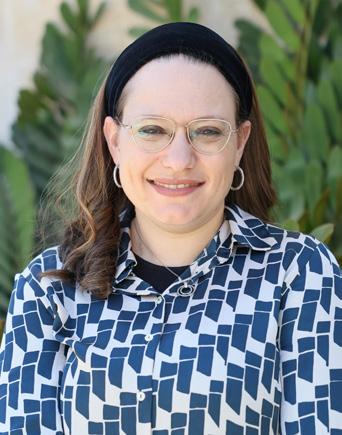
By Sivan Rahav Meir
How should we prepare for Shavuot, the holiday of receiving the Torah? In my opinion, it’s by taking on something daily. A fixed daily learning session, long or short, alone or with a study partner. The main thing is consistency.
A few years ago, my husband Yedidya’s daily learning became part of the rhythm of our home. Every morning he learns Daf Yomi — one page of Gemara a day. I interviewed him about it on Zoom in honor of Shavuot, but maybe I’m the one who should have been interviewed, about what it looks like from the side, because it changes everything. Truly. Half an hour of daily learning affects the entire day, for everyone in the home.
Taking his lead, I began a daily learning session of my own, called Chit”at, which stands for Chumash, Tehillim, Tanya. It takes just a few minutes every morning, but I discovered a secret: If you learn the daily portion of the parshah each day, you complete the entire Torah once a year. If you say a few chapters of Tehillim each day, you complete the entire Book of Tehillim every month. And if you read one paragraph of Tanya each day, you finish it once a year.
I never imagined all of this could fit into my lifestyle and schedule. There is only one explanation: making it daily.
On Shavuot, when we receive
the Torah anew, we are told to take on one small commitment, one good practical resolution. My recommendation for the holiday of receiving the Torah is to take on something daily. It’s all about commitment and consistency.
What Is the Last Verse in Tanach?
That is the question Emanuel Silberman, head of the Jerusalem Municipality’s Department of Education asked at the opening of the Bible Quiz for elementary schools in the city.
“Even small children know the first verse of the Torah by heart,” he noted. “ ‘ In the beginning, God created the heavens and the earth.’ But what is the last verse? Who knows that by heart?”
Thousands of years after the verse that describes the creation of the world, we arrive at this verse, at the end of the second book of Divrei Hayamim (Chronicles): “Thus said Cyrus,
king of Persia: All the kingdoms of the earth Hashem, God of the heavens, has given me, and He has charged me to build Him a House in Jerusalem, which is in Judah. Whoever is among you of all His people, Hashem his God is with him, and let him go up.”
Fascinating. The Torah begins with the most universal and global message: God created the world. But it ends with the most Jewish, national, and personal story: that same God, who gave King Cyrus dominion over all the kingdoms of the world, wants one House in Jerusalem, and wants us, with God’s help, to go up there.
The final word of Tanach is: “Veya’al,” let him go up. May we never stop rising and elevating ourselves, even when we are already here in the Land.
Most of us are not great Torah scholars, and we certainly do not know the entire Torah. The following story explains the significance of our own small, personal Torah study.
A great rabbi once came to a yeshivah of outstanding students and wanted to know who the best student was. He entered the beit midrash and said he had a serious Torah question, a very complex sugya that only a genius could solve. For a long time, everyone tried to answer the question, but no one succeeded. Disappointed, the rabbi left. All the students went back to their pursuits,
except for one young man who ran outside and chased after the rabbi’s wagon.
“Wait,” the student said. “What was the answer to the Rav’s question?”
The rabbi said to him: “You are the one I was looking for. The main thing is not the knowledge. It is the desire to know.”
This story is true in so many areas of life, and certainly when it comes to Torah learning. The main thing is the heart, the aspiration, the thirst, the spark.
The Great Secret
Rabbi Moshe Chaim Luzzatto, the Ramchal, whose yahrzeit we marked last week, was a rabbi, kabbalist, and poet. Some 300 years ago, in his classic work Mesillat Yesharim, he wrote:
“I will tell you a great secret: Each person receives his portion in Torah, and Mount Sinai is not complete until each person comes into the world and reveals his portion. If so, when someone comes into the world and does not strive in Torah to reveal his portion, how can the Torah be complete?”
There is a “scoop” being revealed here: Every person has his or her own portion in Torah. Each individual has their own connection, their own learning, their own personal and unique point of contact with the eternal Torah. You cannot copy someone else’s homework. You cannot be satisfied with the fact that other people are learning Torah. Each person must add his or her own
fingerprint, their one-time light. Hundreds of thousands will take part in Tikun Leil Shavuot and learn all night. But each person can also simply stretch out a hand, take a book down from the shelf, read, and discover the great secret.
On Shavuot morning, this Friday morning, it is customary to bring even young children to shul to hear the reading of the Ten Commandments. In Chabad, the Ten Commandments are read at different times in playgrounds, parks, and other places.
I only noticed lately one word that appears most often in this foundational text, which became a basis of world civilization. The word is “lo.” Do not. It appears there thirteen times, more than the number of commandments. Do not murder. Do not steal. Do not commit adultery. Do not covet. Do not make for yourself an idol or any image. Do not do any work on Shabbat. And more.
This is not a charter of human rights, but a charter of human obligations. Not what I deserve, but what I owe another person. The foundation of human existence is boundaries. It is what we do not do.
It seems to me that this message is very relevant to our times, to an era that is becoming increasingly boundaryless. In the liberal world, it sometimes feels as if every advertisement, series, and campaign is broadcasting the exact opposite: Commit adultery! Covet! Make yourself an idol!
Shavuot is an opportunity to remember Mount Sinai, and the simple words “Do not.”
Already in the Middle Ages, there are records of eating honey and milk on the holiday, foods that hint to the sweetness and pleasantness of Torah. In Shir HaShirim it says, “Honey and milk are under your tongue,” and Eretz Yisrael is described as “a land flowing with milk and honey.”
It is not a halachah to eat cheesecake on the holiday, but it is certainly an important custom. Other beautiful customs are to decorate homes and synagogues with greenery and to hold bikurim ceremonies, in memory of the pilgrimage to the Beit HaMikdash with the first fruits. So what is the mitzvah of Shavuot?
It is worth noticing that in this way Shavuot is different from Pesach and Sukkot, the other two holidays that make up the Three Festivals. On Pesach, matzah is the star of the holiday. On Sukkot, the sukkah is the heart of the holiday. What is the tangible mitzvah of Shavuot?
There is no such mitzvah. Our commentators explain that the essence of Shavuot is simply to connect to the giving of the Torah. Without matzah and without a sukkah. Deep in the heart.

By Malka Kownat, Director of Government Programs Teach Florida
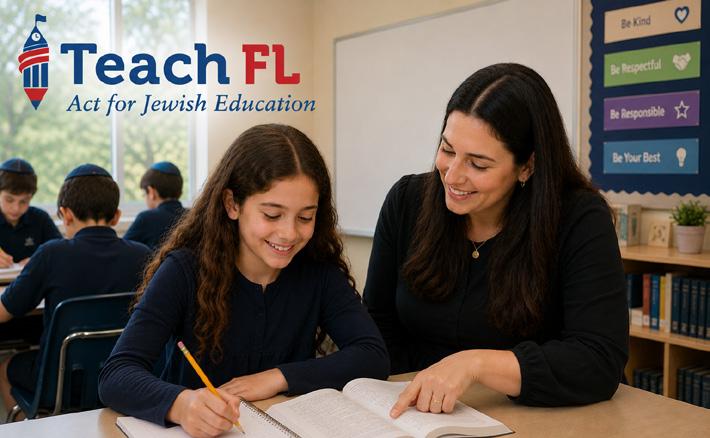
For years, families of private school students in Florida had very limited access to special education services. Under the IDEA federal program these children were entitled to a free evaluation and support services through their local school district. However, even when children clearly needed support, many districts only offered reading or math services. The evaluation process was often complicated and slow, causing many parents to feel overwhelmed and give up. As a result, children who needed services were left without the help they needed. That is now beginning to change.
Through strong advocacy by Teach Florida’s Services for All program, the organization closely monitored district practices and uncovered serious issues, including barriers in the evaluation process and the misuse of funds meant for special education services for private school students. After filing complaints at both the state and federal levels, the Florida Department of Education required the district to return millions of dollars that had not been properly used.
With those funds restored and greater accountability in place, services have expanded in a meaningful way. Today, students can access a broader range of support, including:
• Reading and Math (K–12)
• Counseling (PreK–12)
• Pre-academic skills (PK3–
PK4)
• Speech and Language Services (PreK–12)
• Occupational and Physical Therapy (PreK–12)
• Paraprofessional support for qualifying schools
Policy changes matter. But they only mean something when they reach a child.
Miriam is nine years old. For most of her life, reading felt like something that happened to other kids. Her confidence faded a little more each day as she struggled to keep pace with her peers, despite her best efforts. Her family spent years trying to get her the right support. With our help, she was eventually found eligible for services through Broward County. When they relocated and her case moved to Miami-Dade, we stayed with them, pushing through delays, escalating when necessary, making sure that what was promised was actually delivered. By January
2026, Miriam was receiving speech and language therapy.
A few weeks later, her teacher told me she had raised her hand and volunteered to read out loud in class. For many children, that is a small moment. For Miriam, it was everything.
Her story is one of many. There are children across South Florida whose families don’t yet know that help is available, that their child may qualify for free services regardless of where they go to school. These services exist. What families often need is someone to walk them through the process and stay with them until the support is actually in place.
There are many more children out there who are ready for their moment. We are here to help them find it. When we unlock these services, we aren’t just changing a landscape, we are changing a life.
**The student’s name has been changed to protect her privacy.



As I walked out of my garage early one morning, I was greeted by a beautiful day. The sun was shining, the birds were chirping… and that’s about as far as I got. I started listening to the birds’ chirps. One was incessant and insistent, as if he was telling his fine feathered friends the latest news. I realized that was probably exactly what was happening, as Chazal tell us that the birds know what’s going on and if we understood them, we could find out too.
In fact, Shlomo HaMelech knew the language of the birds. I told myself at that moment, that I needed him there to let me know what they were saying. Of course, there are stories in the Midrash where that didn’t work out too well, and someone who knew what they were saying tried to avoid problems, so eventually Hashem had to make them worse and worse because the man wasn’t getting the message to do Teshuva.
But this was only my first thought. My second thought related to an interesting story that happened to me several years ago, and I don’t really know the “end” of it. So let me share what I know.
I was invited by a local politician, NY State Senator Bill Weber, to come to Albany and deliver the opening invocation of a Senate session. This is a practice begun long ago, as America is, after all, “one nation, under G-d,” and though politicians of late often seem to deride the idea of the religious and spiritual, there are still many people of faith in the world. Opening a session of legis-
By Rabbi Jonathan Gewirtz
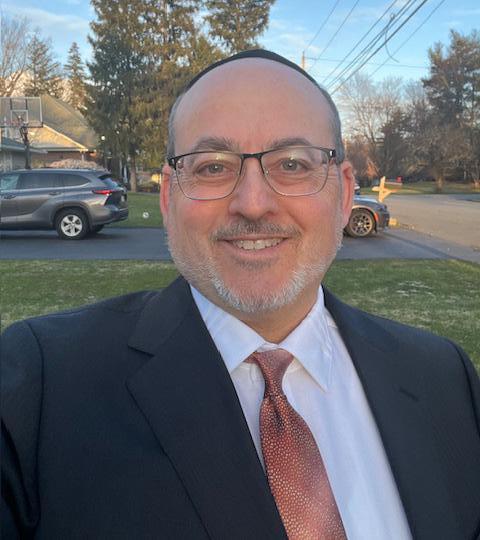
lation or discussion with a prayer is a wonderful practice, and that’s what I was asked to do. It sets the tone for the event and hopefully awakens Hashem’s mercy to guide them in their rulings.
I arrived at the NY Senate chamber perhaps an hour before I was scheduled to speak, and couldn’t help but marvel at its architectural beauty. This detailed and strikingly marvelous backdrop
was likely intended to inspire its occupants to lofty ideals. As the chamber began to fill up, some people were noticeably late in arriving. It seemed to work along party lines, with one side mostly present timely, and the other side mostly walking in late.
As we waited for people to arrive, I spoke with various state senators. After speaking with them for perhaps thirty minutes, one of them saw a friend and colleague enter the room, as he was visiting the chamber that day, and went over to speak to him. When he came back, he was smiling. They had reminisced and caught up since the last time they’d met. He then proceeded to tell us how the two of them had a little game they played. When one was going to give a public address, the other would give him a challenge word to insert into his speech. When the other one heard the word used, he

chuckled, and if the speaker couldn’t find a way to include it, he would get ribbed about it.
Suddenly, he turned to me and said, “SPARROWS! You have to use the word sparrows in your invocation.” Now, I had written my speech down already, and for some odd reason - maybe because I was speaking to a group of legislators, not ornithologists - it didn’t include the word sparrows. A few moments later, enough members had assembled and I began my invocation.
I began to speak about Shlomo HaMelech, the wisest of all men, and how he asked Hashem to grant him wisdom to judge the Jewish people. I thought it a fitting comparison for the legislators, and an appropriate prayer, that they, too, be guided by Hashem. However, when I wished to underscore how wise Shlomo was, I mentioned, “He was so wise he could speak to the birds… the robins; the sparrows…” I caught a glimpse of the senator who’d challenged me and he was grinning ear-to-ear in glee. Afterwards, he pumped my hand and told Bill Weber how great he thought I’d spoken.
I may not have been able to understand the birds, but I was able to be creative in using the tools I did have at my disposal to satisfy this fellow’s request. I don’t know if at some point in the future he was positively-disposed towards a Jewish constituent because of my performance that day, or if it will bear fruit later on, but I know that the language of “the birds” shows wisdom. What kind of wisdom? That of knowing everything Hashem gives us can be put to good use, and should be.
Nothing is for no reason, and I’m sure my taking notice of the birds chirping with so much energy was intended to motivate me. Maybe to write this column, and maybe so that one of my readers would read these words and be motivated for something else. Who knows? I guess maybe the birds, and of course, Hashem. For now, though, it’s a mystery to me - but one I probably shouldn’t keep quiet about.


What began as a struggling Brooklyn business in the late 1990s has grown into one of the most recognized names in the olam hatalleisim v’hatzitzis — the world of talleisim and tzitzis.
Today, Keter operates stores throughout New York, New Jersey, and now South Florida, bringing a level of selection, accessibility, and customer experience that many in Miami’s frum community say simply did not exist before.
But according to its owner, none of it originally started with a grand business plan.
“I actually had other businesses at the time — and I still do,” he says with a smile. “Keter started almost by accident.”
Back in 1997, he was walking through Brooklyn one Friday afternoon when he noticed a close friend standing outside looking visibly distressed.
“I asked him what was wrong,” he recalls. “He told me the business was struggling. He had a partner he needed to buy out, and things were falling apart.”
That business was Keter.
“We sat down that Sunday,” he says. “He explained the situation — he needed capital, the business needed help, and the whole talleisim industry was going through challenges. I decided to help him, and I became a partner.”
Not long afterward, another
By South Florida Community Voice


opportunity emerged in Israel.
“The supplier in Israel, Mishkan HaTcheiles, was also going bankrupt,” he explains. “So I bought half of that company too.”
Today, Mishkan HaTcheiles remains one of the largest manufacturers of talleisim and tzitzis in the world, with dozens of stores throughout Israel and a major manufacturing operation in Be’er Sheva.
“At one point they had 35 stores,” he says. “Not just selling to America, but throughout Israel as well.”
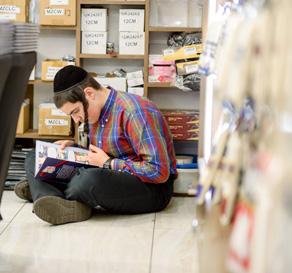
Like many industries, the world of tzitzis manufacturing changed dramatically after COVID and the war in Israel.
“COVID created enormous shortages,” he explains. “Factories couldn’t function, workers were unavailable, shipping was delayed — and then the war made things even harder.”
Despite the challenges, Keter continued investing heavily in both manufacturing quality and

halachic standards.
“The beged — the garment — may come from overseas,” he explains, “but the tzitzis themselves, the keshirah, the tying, all of that still has to be done lishmah by Yidden.”
That work now takes place primarily in Arad.
“We specifically chose Arad because people needed parnassah there,” he says. “There are families sitting and tying tzitzis by hand. Every string, every knot, every twist has halachic significance.”
Each garment is carefully sealed and tracked with hologram verification labels to prevent counterfeiting.
“It’s not simple work,” he says. “Every step has halachic requirements. The strings have to be tied l’shem mitzvas tzitzis. You can’t just automate it.”
Within the frum world, there are countless minhagim and preferences surrounding tzitzis and talleisim.
“There are people who only wear wool,” he says. “Others wear cotton. Some wear pesil techeiles, some don’t. Everyone follows their Rav.”
Keter’s goal, he says, is not to push one approach, but to provide for every type of customer and every kehilla.
“What makes Keter different is the selection,” he explains. “Since we are manufacturers, the variety is enormous. You won’t find this anywhere else.”
The stores carry all types of tzitzis and talleisim for every segment of the Jewish community — Ashkenazi, Chassidish, Chabad, Litvish, Sephardic, and more.
“Any variation someone needs, we try to have,” he says. “Wool, cotton, polycotton, undershirts, sports


styles — whatever the customer is looking for.”
The same philosophy extends to talleisim, tefillin bags, and related products.
And according to him, that’s especially important in South Florida.
“Until now, there really wasn’t a Judaica store in Miami that provided for all the needs of the community,” he says.
One of the store’s biggest breakthroughs, he says, is actually the seforim department.
“For Miami residents, this changes everything,” he explains. “Until now, people had two choices — either order a sefer online and pay shipping, or wait until they visited New York and hope they

found what they were looking for.”
Now, he says, customers can simply walk into the store and browse newly released seforim, ask for specific titles, and explore a constantly updated inventory.
“Everything is finally within reach,” he says.

Pricing is another area where Keter believes it can make a major impact.
“Because we manufacture many of our own products, our prices are very competitive,” he explains. “But even on products we don’t manufacture, our purchasing















power is tremendous.”
With nine stores across multiple states, suppliers are forced to offer stronger pricing — savings that he says are passed directly to customers.
“That’s especially important in Miami,” he says. “Without much competition, prices here were historically very high.”
Beyond the products themselves, Keter places heavy emphasis on the overall shopping experience.
“All of our stores are spacious, organized, and beautiful,” he says. “We invest heavily in the appearance and feel of the stores.”
The goal, he explains, is to create an upscale and welcoming environment that feels comfortable for customers and families alike.
“Customer service is our top priority,” he says. “All of our salespeople are trained for this.” He smiles. “With us, the customer feels like a king.”
Despite the company’s growth, he still speaks


about Keter less like a corporation and more like a communal responsibility.
“There’s business,” he says, “and then there’s Klal Yisrael.”
That balance, he explains, shapes many of his decisions.
“At the end of the day, this isn’t just another product,” he says. “A person buying tzitzis is doing a mitzvah.”
He then shares a thought rooted in the parsha and the concept of lishmah.
“When someone makes tzitzis properly, with the right kavana, there can’t be ulterior motives,” he says. “You’re helping another Yid fulfill a mitzvah. That has to remain the center.”
Today, as the new Miami location continues attracting customers from across South Florida, he believes the response confirms what he long suspected.
Whether
or

“People here were waiting for something like this,” he says.
And for many Miami residents, Keter is no longer just another Judaica store.
It’s become a long-awaited resource for the community.


























The excitement in the dorm was already building days before Shavuos. Every bochur had his own plans for the big night. One bochur proudly announced he was preparing twelve cups of coffee. Another claimed he already slept “extra hours” all week to prepare.
And then there was Aryeh. Aryeh took Shavuos night very seriously. He carefully organized his entire seder lemud weeks in advance. Gemara, some Reshonim, a late-night Rambam, and before Shacharis — a powerful Mussar seder to finish off the night.
There was only one problem
Aryeh knew himself very well. By approximately 1:17 AM, his brain usually began shutting down like an old air conditioner. So, on Erev Shavuos he called his mother. “Ma, can you please bring me caffeine pills to the dorm before Yom Tov?” A short while later, Mrs. Klein arrived carrying a small bag. Aryeh hurried upstairs to his room proudly holding his “secret weapon.”
The Tumlt
His roommate looked up. “Ooooh,” he said dramatically. “Did your mother bring something good?” Aryeh smiled. “Nope. All I need are these caffeine pills and I’m good for the whole night.” His roommate suddenly froze. “Wait, when are you planning on taking them?”
Aryeh shrugged. “Whenever I start getting tired.” his roommate stared at him. “But that’s on Yom Tov.”
“So?”
“You can’t take medicine on Shabbos or Yom Tov!”
Within moments, the entire dorm room became a full-scale halachic conference.
One bochur claimed all pills are assur. Another insisted vitamins are mutar. A third confidently announced that coffee is definitely stronger anyway. A fourth bochur, declared: “It probably depends if it tastes bad.”
Aryeh looked miserable. “What am I supposed to do now? There’s no way I’m staying up without these. My whole Shavuos is ruined!”
The Eitzah
Suddenly one bochur sat up excitedly.
“I have an idea.” “What?”
“Call the Refuah B’Halacha Center!”
Immediately, the entire room became energized.
“Yes! Put it on speaker!”
“Ask if iced coffee is medicine too!”
“Ask what bracha do you make cheesecake!”
Aryeh dialed the hotline, and within moments a Rav answered.
After hearing the question, the Rav explained:
The Background
“Chazal prohibited taking medicine on Shabbos and Yom Tov because in earlier times medicines were commonly produced by grinding herbs with a mortar and pestle. Grinding is the melacha of Tuchen, so Chazal made a gezeirah against taking medicines because
someone might come to grind herbs.”
The bochurim listened carefully.
Aryeh asked nervously:
“So, if someone is sick, he can’t take medicine?”
“Not exactly,” replied the Rav.
“The gezeirah was only made for a specific level of discomfort called a Maichush — a light ailment. For example, a mild headache where the person is uncomfortable but still functioning normally.” But someone who is genuinely ill, or whose pain significantly affects his functioning, may take medicine.”
The room became quiet.
Aryeh thought for a moment.
“So, I’m not sick at all. I’m healthy. I just want energy. Does that mean I can’t take the caffeine pills?”
The Rav answered: “Actually, the gezeirah was made only on someone experiencing a minor ailment. But a healthy person taking something not for illness is not included in the decree.”
“And in your case,” the Rav continued, “Rav Shlomo Zalman Auerbach zt”l writes in Shulchan Shlomo (chelek 3, pages 131 and 134) that there is no concern with caffeine pills because they are not considered medicine at all, since they are not intended to cure illness.”
Geshmak!
The room erupted.
“I told you!”
“Bring me two!”
“Now ask about energy drinks!”
Aryeh thanked the Rav warmly.
After hanging up, he leaned back in relief.

What would Shavuos have looked like if he couldn’t stay up and learn with a real bren?
That night, the beis medrash was alive with Torah.
Some bochurim learned loudly. Some quietly reviewed their notes.
Some drank coffee.
Some ate cheesecake.
And somewhere around 3:00 AM, Aryeh smiled as he turned another page of Gemara completely awake.
Aryeh learned a great lesson, that even something as simple as a caffeine pill can become a meaningful Torah discussion.

At the Refuah B’Halacha Center, we are here to provide guidance for real-life challenges, big and small. Whether it’s a question about Shabbos, kashrus, or navigating difficult personal situations, our experienced Rabbunim are ready to listen and advise.
If you ever find yourself wondering about a medical halacha question — big or small, serious or just something that’s been on your mind — remember that you don’t have to figure it out alone. The Refuah B’Halacha Center is here to help, with experienced rabbanim available to guide you through even the most sensitive or confusing situations.

Our Rabbanim;
R’ Yaakov Forchheimer shlit”a
R’ Noach Isaac Oelbuam shlit”a
R’ Shmuel Fuerst shlit”a
R’ Uri Deutch shlit”a
R’ Micha Cohen shlit”a
R’ Moshe Zev Feldman shlit”a
R’ Baruch Hirshfeld shlit”a
R’ Daniel Neustadt shlit”a
R’ Avrohom Yaged shlit”a
We specialize in
Mental health
Shabbos
Treatment issues
Hospital stays
Fertility
Kashrus
We are here Sunday through Friday 8:00 am till 10:00 pm and erev Shabbos 10 minutes before candle lighting.
Refuah B’Halacha Hotline: 732 755 0851 or email us at www.refuahbhalacha.org



S: 10AM - 4PM
M-TH: 9:30AM - 7PM F: 9:30AM - 2PM




On Wednesday, May 13, the inaugural Florida Chesed Summit brought together more than 28 South Florida organizations, along with dedicated community leaders, advocates, and changemakers, for a powerful morning focused on one shared goal: strengthening support for those in need.
Hosted by Healing Hearts at its newly opened center in Hollywood, the Summit marked a firstof-its-kind gathering for many of the region’s chesed and bikur cholim organizations. While countless groups work tirelessly each day, the event created a unique opportunity for organizations to gather under one roof, build meaningful relationships, exchange ideas, and gain a broader understanding of the extensive network of support available throughout the community.
Representatives from each organization shared the vital work they do to support South Florida’s growing community, offering a broad range of services throughout Miami-Dade, Broward, and Palm Beach Counties, including medical advocacy, crisis response, mental health support, transportation assistance, food programs, emergency services, financial guidance, family support, and bikur cholim initiatives.
Following opening remarks from Rabbi Yochanon Klein, Director of Healing Hearts, featured speakers included Rabbi Moshe Matz, Executive Director of Agudath Israel’s Florida Office; Rabbi Moshe Schreck, Rav of Heichal HaTorah in Hollywood; and Dr. Eitan Turk,
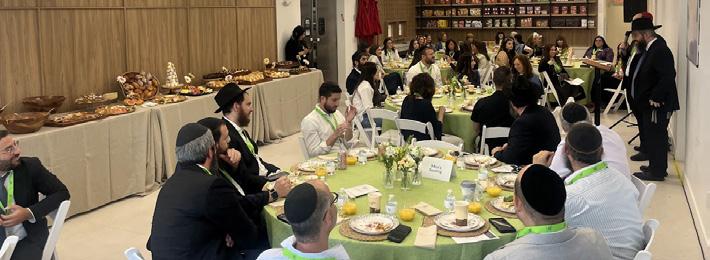
PhD, LCSW, Southeast Crisis Team Leader for Chai Lifeline. Each offered a unique perspective on the growing world of chesed and communal responsibility, and the importance of balancing Klal work with self-care.
Rabbi Schreck poignantly emphasized how chesed is something deeply rooted within every Yid — an inheritance from Avraham Avinu and part of the very fabric of who we are. Chesed, he explained, is not simply a trait to develop, but something naturally embedded within the Jewish soul, offering a strong sense of chizuk to everyone in attendance.
For many in attendance, the Summit highlighted just how much South Florida’s chesed infrastructure has grown in recent years. As one participant shared afterward, “Having everyone together in the same room was incredibly powerful. It really opened my eyes to how much our community has grown and how many resources truly exist here.”
Beyond the formal program and networking opportunities, there was also a deeper recognition shared throughout the room: many of the participants who now lead and support chesed organiza-
tions have themselves once relied on the very services represented at the Summit. It served as a powerful reminder not only of the growing need within the community, but also of the extraordinary cycle of support that continues to strengthen South Florida’s chesed network.
A special thank you to Gabriella Mendlowitz and Sarah Gabrielle for beautifully coordinating the food and décor, and to Elyana Gold (“DJ Elyana”) for providing the sound system and helping create such a warm and welcoming atmosphere.
The Summit was generouasly sponsored by Faith Healthcare, whose support helped make the event possible. Faith Healthcare provides private nursing services, insurance-funded therapy, skilled nursing, and assists seniors with Medicaid Waiver enrollment at no cost to families.
Participating Organizations: ATime • Bikur Cholim of Hollywood • Bikur Cholim of Miami Beach • Bikur Cholim of North Miami Beach • Bikur Cholim of Safra Synagogue • BINA • Bonei Olam • Chabad Chaplaincy • Chai Lifeline • Dovid Gold Foundation • Florida Chesed Network • Florida Ozer Center • Goodman JFS • Hatzalah South Florida • Healing Hearts • JGifts • Links • PUAH • Reb Shayala’s Kitchen • Relief • Sharsheret • The FUN Club • Tikvaseinu • Tomchei Shabbos • United Jewish Generations • Yachad • Yesod Haolam

Yeshiva University stands as a powerful example of how education can inspire purpose, strengthen communities and transform the future.
Yeshiva University stands as a powerful example of how education can inspire purpose, strengthen communities and transform the future.
Yeshiva University stands as a powerful example of how education can inspire purpose, strengthen communities and transform the future. I AM
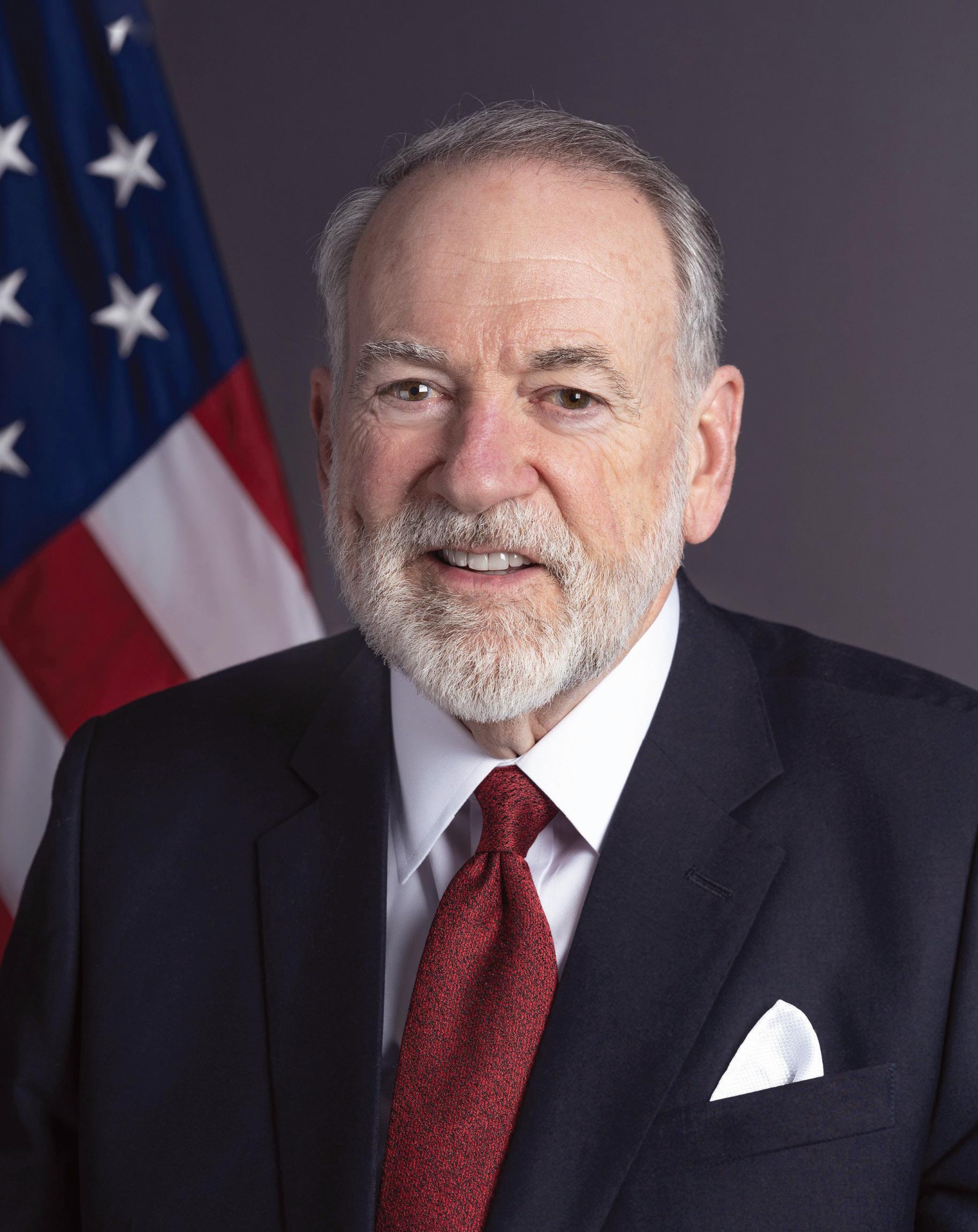
Ambassador Mike Huckabee
Ambassador Mike Huckabee
Ambassador Mike Huckabee 2026 Commencement Speaker and Presidential Medallion Recipient
2026 Commencement Speaker and Presidential Medallion Recipient
2026 Commencement Speaker and Presidential Medallion Recipient
By advancing our academic excellence and providing a values-based education, Yeshiva University is preparing the next generation of leaders for both personal and professional success poised to transform their communities and the world around them. Your support will help us meet evolving needs and propel us into our next great era.
By advancing our academic excellence and providing a values-based education, Yeshiva University is preparing the next generation of leaders for both personal and professional success poised to transform their communities and the world around them. Your support will help us meet evolving needs and propel us into our next great era.
By advancing our academic excellence and providing a values-based education, Yeshiva University is preparing the next generation of leaders for both personal and professional success poised to transform their communities and the world around them. Your support will help us meet evolving needs and propel us into our next great era.

GIVE TODAY AT YU.EDU/GIVE
GIVE TODAY AT YU.EDU/GIVE
GIVE TODAY AT YU.EDU/GIVE
The family across the street looks fine. The kids are in school. Their clothes are stylish. The Shabbos table is set. They show up. They smile.
They also owe $60,000 in credit card debt at 23% interest, paying $1,750 every month, and they have not told a soul.
This is the kind of quiet crisis Shalom Goodman left a career to confront. In 2023, two days before Pesach, Goodman, then an SEO editor at The Wall Street Journal, learned that a Jewish family did not have meat and potatoes for the Seder. He posted a WhatsApp status. Within 15 minutes, he raised $5,000. He sent the cash to the grateful family. His friend, now his co-founder, told him: “That was amazing. Is that it? You need to expand this.” That sentence became Collective Kindness.
Kosher Debt Help was born from a problem Goodman and his team kept running into: families walking in with credit card debt and they had nowhere reliable to refer them to. The commercial debt relief industry runs on commissions and product sales. Some people promising relief are crooks. Others are honest, but their goals don’t always align with the needs of the client. Goodman and his partner knew the community deserved better. So they built it, alongside lead debt expert Mordy Richler, who brings personal experience to the work; he was once $250,000 in debt himself and
navigated his own recovery before joining the team.
Unlike the for-profit outfits in the debt industry, Kosher Debt Help is donor-subsidized. Each family pays a small contribution toward a service that costs the organization $350 to deliver. The debt expert recommends what fits the family, not what pays the expert.
Also, the debt experts do not tout special relationships with the bank or even do anything themselves for the client. Instead, they analyze each client’s unique situation, lay out their option, and hold the client’s hands while they implement the plan chosen.
In just over eight months, more than 560 families have come through the KDH pipeline.
Clients come from everywhere. Brooklyn to Boca Raton, Boston to Beverly Hills, Palm Beach down to Plantation. South Florida is one of Collective Kindness’ seven active local chapters, and it is actively expanding. The average family walks in owing over $60,000 at a rate above 23%. Some carry more than $100,000. Under the program, average rates drop from 23.5% at intake to 1.4%, saving the community more than $1.3 million in projected interest.
As they wade through a sea of debt, Richler and his team confirm that the Jewish data lands inside a national crisis. American consumers were assessed $160 billion in credit card interest in
2024 alone, up from $105 billion just two years earlier, according to the Consumer Financial Protection Bureau. Total American credit card debt crossed $1.3 trillion in 2026, the highest level ever recorded.
“Families will talk openly about high tuition and soaring grocery bills,” Goodman said. “Almost no one will admit they are buried in credit card debt. The shame keeps them silent, and the silence means that no one is showing them the way out. That is the cycle we are breaking.”
“We see this crisis in our coaching work every day: hardworking Jewish families buried in credit card debt at rates they cannot pay down,” said Stacey Zrihen, a Certified Financial Planner and Senior Director of Coaching at the Orthodox Union’s Living Smarter Jewish. “Cutting interest rates from 23.5% to 1.4% is not a marketing claim, it is what structured debt recovery looks like when families get the right team in the room. Education and lending matter, but families also need a team that walks them all the way through.”
“A short-term check eases today’s pain while doing little to solve tomorrow’s problem,” Goodman said. “These families do not need to be rescued. They need a plan, the right advice, and someone willing to walk through it with them.” To

Donor-funded. No commissions. One agenda: get Jewish families out of debt. We've helped 560+ families in 8 months. Average APR cut from 24% to under 2%. We’re official partners of the OU’s Living Smarter Jewish

On the sandy frontier near Israel’s borders with Gaza and Egypt, a quiet but powerful story has been unfolding for nearly two decades — a story of displacement, rebuilding, loss, heroism, and unwavering faith.
For the residents of Shlomit and the surrounding Halutza communities, October 7 was not the beginning of their story. It was another chapter in a mission that began long before, when families uprooted from Gush Katif chose not to disappear, but to rebuild.
Much of that rebuilding, community development, and longterm support over the years has been done in partnership with Jewish National Fund-USA, which has worked closely with the communities of the Halutza region since their earliest days.
We sat down with Yedidya Harush, Jewish National Fund-USA Halutza Liaison for Negev Community Development, for a deeply emotional conversation about the legacy of Gush Katif, the horrors of October 7, and why, despite everything, the people of Shlomit chose to return home stronger than ever.
“The Entire Community Began With Families From Gush Katif”
“My name is Yedidya Harush,” he begins. “I’m a resident and part of the leadership of the Halutza communities on the borders with Egypt and Gaza. I’ve been involved since 2011.”
The story of Shlomit cannot be understood without understanding


Gush Katif.
Following Israel’s 2005 disengagement from Gaza, thousands of Jewish residents were forced to leave the communities they had spent years building. Entire neighborhoods vanished almost overnight.
For Harush, it was personal.
“It was actually my 17th birthday when Ariel Sharon announced the disengagement,” he recalls. “My family had just finished renovating our dream home. We only got to live there for two months before we had to leave.”
His family lived in southern Gush Katif, near Rafah.
“The Halutza communities were essentially built as a continuation of Gush Katif,” he explains. “The first fifteen families who came here were evacuated families from Gush Katif who decided they still wanted to help build the South and continue Ben-Gurion’s vision.”
What began as a small group of determined families slowly turned into multiple thriving communities in one of Israel’s most remote and strategically sensitive regions.
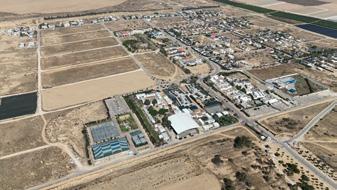
“There was nothing here in the beginning,” Harush says. “No in-
frastructure. No services. Just sand and a mission.”
Jewish National Fund-USA became one of the organizations most closely involved in helping the communities grow and develop over the years, partnering with local leadership on long-term projects and infrastructure throughout the Halutza region.
That mission was not only ideological. It was strategic.
“The presence of communities here helps secure the border,” Harush explains. “There were constant issues with smuggling through the Egyptian border — weapons, drugs, and other threats. Building strong communities here became part of protecting the region.”
Over the years, residents learned to live with isolation, security concerns, and the emotional burden of raising children under constant threat.
But nothing could prepare them for what happened on October 7.
“Nobody Imagined This Scale”
“We’re only about two and a half miles from the border,” Harush says.
Like many Israelis living near Gaza, residents understood there was always risk.
“In theory, everyone thought some kind of infiltration could happen,” he says. “But nobody imagined anything like this.”
The attack unfolded with terrifying speed.
“The army’s worst-case scenario had been maybe twenty terrorists entering a community,” he explains. “Here we faced thousands.”
According to Harush, more than 6,000 terrorists and approximately 3,000 rockets overwhelmed south-


ern Israel within the first hours of the attack.
Missiles exploded dangerously close to homes throughout the region.
Then came a desperate call from the nearby community of Pri Gan.
“Terrorists were trying to enter the community, and they needed immediate help.”
What happened next became one of the defining moments in Shlomit’s history.
“Our emergency response team made a heroic decision,” Harush says. “They left our own community and drove to defend Pri Gan.”
The battle lasted nearly two hours.
“There were very few of our people against many terrorists,” he says. “But they managed to push them back and save the entire community.”
The victory came with heartbreaking loss.
“Out of eighty-five families in our community at the time, four heroes were killed and four more were injured.”
In percentage terms, the impact was staggering.
“That’s nearly ten percent of the community,” he says.
For a small town, the grief touched virtually every family.
“We Knew We Had To Stay Together”
The following morning, October 8, the IDF ordered the evacuation of the area.
Almost immediately, the community leadership gathered to discuss what came next.
“One thing became clear right away,” Harush says. “We could not allow the community to scatter.”
He points to lessons learned from earlier conflicts.






“After the 2014 war, some communities evacuated family by family into different hotels and cities,” he explains. “In the end, many of those communities never truly recovered together.”
The leadership feared the same outcome.
“We understood that if we separated, people might never come back,” he says.
In the middle of national chaos, Harush reached out directly to the CEO of Jewish National FundUSA.
“I called the CEO of Jewish National Fund-USA and explained the situation,” he recalls. “Within minutes, they were already working to help us.”
An initial solution was found in the Arava region, but the community requested something closer to
Jerusalem.
“Our fallen heroes were being buried near Jerusalem, and their families were sitting shiva there,” Harush explains. “We wanted to stay close.”
Soon afterward, Jewish National Fund-USA helped arrange housing for the entire community in Gush Etzion, ensuring the residents could remain together during one of the most traumatic moments in their history.
Within hours, the evacuation began.


“We left together as one convoy,” he says.
Later, the entire community relocated together to the Kramim Hotel, where they remained for six months — another effort heavily supported through Jewish National Fund-USA and its network of partners and supporters.
“People Were Just Sitting And Crying”
The first weeks after evacuation were emotionally devastating.
“People were broken,” Harush says. “Men, women, children — everyone was sitting and crying.”
He quickly realized the community needed structure and purpose.
“I started assigning responsibilities and tasks,” he explains. “People needed to stay active. They needed to feel they still had meaning and

responsibility.”
Soon afterward, many of the men — including Harush himself — entered reserve duty and fought in Gaza.
“I was barely at the hotel after the first few weeks,” he says. “Most of us were serving.”
Despite the trauma, the decision to remain to gether proved critical.
“It helped preserve the soul of the community,” he says.
Harush credits much of the community’s ability to stay unified during evacuation to the support sys tem and coordination made possible through Jewish National Fund-USA.
“We Came Back Proud”
After six months, Shlomit made another extraor dinary decision: to return home.
“At the time, most evacuated communities still didn’t feel ready,” Harush says. “But we believed re turning was the healthiest thing for our families.”
The decision was made only after extensive con sultations with the IDF and after receiving agree ment from the widows of the fallen heroes.
“It was incredibly emotional,” he says.
When the community evacuated in October, resi dents left devastated and broken.
“When we returned, we decided we would come back differently,” he explains. “We came back proud ly.”
Residents drove together in a long convoy filled with Israeli flags.
“There were tears everywhere,” he recalls. “But there was also pride.”
Before anyone even entered their homes, the com munity stopped at the site of a future daycare center.
“There, together with Jewish National Fund-USA, we laid the cornerstone for a brand-new daycare building.”
The symbolism mattered deeply.
“We wanted to send a message,” Harush says. “Our answer to terror is more life.”
The daycare center became one of many rebuild ing and growth projects completed in partnership with Jewish National Fund-USA as the community worked not only to recover, but to expand.
He pauses before adding:
“You can break our homes. You can break our hearts. But you cannot break our spirit.”



“Today There Isn’t One Empty Home”
Incredibly, the story did not end with survival.
It became a story of growth.
“Since October 7, we’ve seen tremendous interest from families wanting to join the community,” Harush says.
Today, there are no available homes in Shlomit.
“A lot of people heard the story of the community and said, ‘We want to be part of something like this.’”
Construction continues throughout the area as new families prepare to move in.
Just days before traveling to Boca Raton for Jewish National Fund-USA events in partnership with Boca Raton Synagogue, Ha-
Care you can trust.
rush attended another historic milestone: the inauguration of Shlomit’s first permanent synagogue.
“We dedicated it in memory of the four heroes we lost,” he says.
Support for the synagogue project came from around the world — particularly from supporters in the United States through Jewish National Fund-USA.
Family”
Over the years, Harush has built close relationships with Jewish communities throughout South Florida, especially in Boca Raton through Jewish National Fund-USA programming and events.
“The relationship feels like family,” he says warmly.

He describes the community as deeply supportive, caring, and personally invested in the future of Israel’s South.
“These are not just donors,” he says. “These are partners.”
As the conversation comes to a close, Harush reflects on the unlikely journey from the destruction of Gush Katif to the rebuilding of Shlomit.
For many communities, displacement could have been the end.
For Shlomit, it became the beginning of something even stronger.
“Without the support of Jewish National Fund-USA and these incredible friends who became family,” he says, “we would never have been able to build what we built.”












Blintzes are like thin rolled pancakes. They are usually filled with sweet cheese, potatoes, or fruit and then lightly fried until golden.
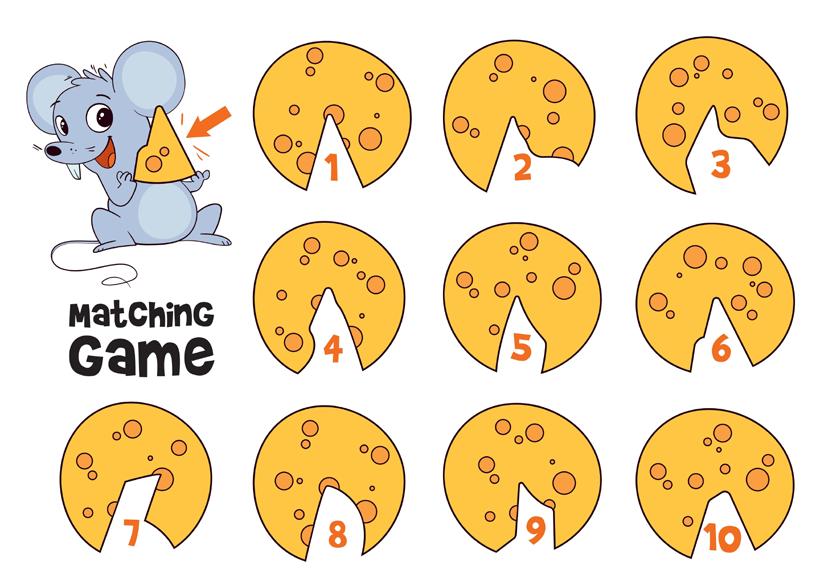
Cheesecake is over 4,000 years old. Historians believe the first cheesecake was made in ancient Greece long before refrigerators existed!
Blintzes are especially popular on Shavuot. Many Jewish families eat dairy foods like blintzes and cheesecake during the holiday.
The world’s largest cheesecake weighed over 15,000 pounds.That’s heavier than some elephants!
Traditional blintzes are made very thin on purpose. The thin crepe-like layer helps wrap the filling tightly without tearing.
Many Jewish bakeries have their

own secret cheesecake recipe. Some families and bakeries have been using the same recipe for generations!
Some cheesecakes are baked — and some are not. No-bake cheesecakes use the refrigerator to firm up instead of the oven.
Blintzes can be sweet or savory. Some are filled with strawberries and cheese, while others have mushrooms, potatoes, or spinach.
Cream cheese was invented by accident. A dairyman in New York was trying to copy a French cheese when he accidentally created cream cheese instead.
In many Jewish homes, cheesecake and blintzes are part of special Shavuot traditions. Families often serve them at holiday meals, kiddushes, and late-night learning events.
did that piece of cheese come from?

By Jamie Geller
Ingredients
• 2¼ teaspoons active dry yeast
• ⅓ cup warm water
• 1 egg
• ½ teaspoon orange zest
• 2 tablespoons sugar
• ⅛ teaspoon salt
• ⅛ teaspoon vanilla
• 2 tablespoons butter softened
• 1¾ cups flour
• 13 oz. Nutella
• ⅓ cup semi-sweet chocolate chips
• 3 tablespoons water
• 3 tablespoons sugar
1. Open a large zip-top bag and place it on the counter. Add the yeast, water, egg, orange zest, sugar, salt, vanilla and butter. Close the bag and squeeze to mix thoroughly.
2. Open the bag and add the flour. Squeeze and knead until the dough is a somewhat even consistency. Place the bag in a bowl of warm water to rise for 1 hour.

3. Remove the dough and place on a well-floured surface. Roll out the dough into a large rectangle.
4. Spread nutella on the dough, avoiding 1 inch around the edges. Sprinkle the chocolate chips evenly.
5. Starting from one of the long edges of the dough, roll up the dough into a rope. Cut the dough in half down the middle of the rope. Place one strand on top of the other to create a large X, then twist the remaining ends.
6. Place in a greased 8-inch loaf pan, cover and place in a warm part of the kitchen to rise for one hour or until doubled in size.
7. Preheat the oven to 350f / 175c. 8. Bake for 40 minutes.
9. Remove the babka from the oven then place a small sauce pan on medium heat. Add the water and sugar then bring to a simmer. Once sugar is dissolved, brush the syrup on top of the babka.
Jamie Geller is the Chief Media and Marketing Officer at Aish. She is also a bestselling cookbook author, celebrity chef, television producer, and businesswoman. She’s the author of eight cookbooks and the founder of Kosher Media Network.



































By Glen R. Golish
Jewish tradition teaches us to think long term. We plant trees whose shade we may never personally sit under. We prepare not only for ourselves but for our children and grandchildren, l’dor v’dor from generation to generation.
The same mindset applies to financial planning.
The families who successfully preserve wealth across decades are rarely the ones chasing the highest returns or reacting emotionally to every market headline. More often, they are the families who plan intentionally, diversify wisely and focus on structure as much as growth.
One of the most common mistakes in financial planning is believing diversification simply means owning multiple stocks or mutual funds.
True diversification goes deeper.
A portfolio that is entirely tied to the market may still move in the same direction during periods of economic stress. Many families learned this during major downturns when investments that appeared diversified suddenly declined together.
Strong planning often involves building multiple layers within a financial strategy:
• Market based investments for

long term growth
• Stable income strategies for predictability
• Liquidity reserves for flexibility
• Insurance solutions to protect family and legacy
Each piece serves a different purpose. Together, they create balance.
Jewish life is built around preparation. We prepare before Shabbat, before Yom Tov and before every major transition. Retirement deserves the same mindset.
One of the biggest risks retirees face is not simply market vol-
atility but timing. A significant market decline early in retirement while simultaneously withdrawing income can permanently damage a portfolio’s long term sustainability.
This is why many families today are moving toward “bucket style” planning. Certain assets are positioned to provide stable predictable income for core living expenses while other investments remain allocated for long term growth and future generations.
The goal is not just growth. It is sustainability.
Taxes are one of the greatest yet most overlooked threats to generational wealth.
Large retirement accounts such as IRAs and 401(k)s may eventually pass significant tax burdens onto heirs. Without proper planning, children inheriting these accounts during their peak earning years may lose a substantial percentage to taxation.
At G Wealth Strategies, we often help families coordinate strategies designed to improve long term efficiency. This may include Roth conversions, charitable planning, life insurance structures or more intentional withdrawal strategies during retirement.
Good planning is not about
avoiding responsibility. It is about avoiding unnecessary erosion.
In Jewish thought, bal tashchit teaches us not to waste resources unnecessarily. Allowing avoidable taxes or inefficient planning to diminish a family legacy can undermine years of hard work and disciplined decision making.
Building wealth is important. Preserving it is even more important.
The strongest financial plans are not built around one product or one investment. They are built around coordination, clarity and long term intentionality.
Because ultimately, true wealth is not measured only by account balances.
It is measured by the security we provide, the opportunities we create for future generations and the legacy that remains long after we are gone.
About the Author:
Glen R. Golish is the Founder and CEO of G Wealth Strategies and a Forbes-recognized Top Financial Security Professional. He works closely with families on comprehensive financial and estate planning, including cross-border considerations for those navigating U.S. and Israeli planning needs.
Important Disclaimer:
Please seek qualified legal and tax advice before implementing any planning strategies, in conjunction with guidance from G Wealth Strategies.
Contact Information:
3010 N. Military Trail, Suite 318, Boca Raton, FL 33431
Office: 561-869-4600 | Cell: 561-239-9400 | www.gwealthstrategies.com
Investment Advisory Contact: Yosef Benson yosef@gwealthstrategies.com, 786-376-3548
Property & Casualty Insurance Contact Rafi Benzaquen rafi@gwealthstrategies.com, 516-476-6742
I’ve always found something profoundly powerful about the days after Pesach, leading up to Shavuos. It was very deliberate and calculated that the Jews didn’t go directly from the Exodus to Har Sinai. It took time. But more so, it was one day at a time. It was forty-nine separate days - each one an opportunity for refinement, discipline, and growth. It was not merely a countdown. It was a build-up. A process of becoming. Before we could receive the Torah, we had to prepare ourselves for it. Because a fundamental principle of life is that bigger blessings often require broader shoulders.
I am reminded of a client that I worked with last year that could help better describe what I mean. He was living with his wife and three children in a small apartment that they had more than outgrown years before. He was literally and figuratively feeling squeezed by his circumstances, and desperate to create something better for his family. Like many people, he felt stuck between two imperfect choices. He could buy an existing home in a less desirable neighborhood, compromising on quality, location, and long-term satisfaction, or he could do something far more intimidating: purchase land, build from the ground up, and push himself financially, mentally, and logistically further than he ever had before.
To most people, the traditional route would seem obvious. Less complexity. Less risk. Less stress. But after spending time with him, understanding his outlook, his
By Shmuel Shayowitz
willingness to learn, and his comfort with challenge, it became clear that he wouldn’t be satisfied with the worser option, even if it was easier and safer. I realized he was highly organized and was willing to put in an effort no matter what it took. He was willing to micromanage, to budget carefully, to track every dollar, and to work hand-in-hand with a relatively new contractor. He wasn’t looking for an easier option, he was looking for a better one. So I encouraged him to build. And that decision changed far more than his address.
Was it overwhelming? Absolutely. There were setbacks, cost pressures, difficult decisions, and moments of uncertainty. But that process forced him to grow. He became sharper with money. More strategic with expenses. More patient with timing. More methodical in dealing with others. He learned how to stretch dollars, maximize value, build equity, and create something custom that would have otherwise been financially out of reach. In the end, he didn’t just build a beautiful home - he got more, and became more. Without divulging too much as to protect his identity, the experience encouraged him to open a side business, which is proving to be extremely successful thus far. That’s the hidden power behind these days of Sefiras HaOmer and personal growth. Too many people pray for larger opportunities without preparing for the responsibility that comes with them. They want wealth, but without sacrifice.
They crave success, without discipline. Bigger homes, but not better habits. True growth demands that you first become more before you receive more.
Financially, that means getting organized before you scale. Tracking spending before seeking new income. Learning leverage before taking on debt. Building systems before chasing bigger investments. Sometimes, maximizing wealth is not about making more money immediately, but about becoming more disciplined with the money and opportunities already in front of you. Growth may mean buying strategically instead of emotionally. Building instead of settling. Delaying gratification in order to create lasting value. Shavuos reminds us that transformation is a process. Wealth works the same way. The people who build lasting success are rarely the ones who choose the easiest path. They are the ones who allowed challenge to refine them, pressure to sharpen them, and discipline to expand them.
Shmuel Shayowitz (NMLS#19871) is a highly regarded Real Estate & Finance Executive, Writer, Speaker, Coach, and Advisor. He is President and Chief Lending Officer of Approved Funding, a privately held national mortgage banker and direct lender that has facilitated over $3 billion in mortgage funding. Shmuel has over twenty years of industry experience and holds numerous licenses and accreditations, including certified mortgage underwriter, licensed real estate agent, residential review appraiser, and accredited investor, to name a few. Shmuel has successfully navigated through many changing markets and business landscapes, making his market insights and experience well-coveted within the real estate industry. He can be reached via email at Shmuel@ approvedfunding.com.





































Sunday to Thursday: 12pm - 10pm Friday: 11am - 3:30pm OPENING HOURS Scan the code to order!












United Refuah HealthShare was created to meet the need for affordable healthcare built around the values and sensitivities of Torah life. As the first Jewish HealthShare, it gives Klal Yisroel a healthcare option that doesn’t compromise the principles that shape our lives and faith.