









MONDAY, MARCH 16, 2026 8:00 AM - 3:00 PM











































Volunteers


© The South Florida Community Voice Magazine. All rights reserved. Reproduction in printed or digital form in whole or in part in any form without prior written permission is prohibited. The publisher reserves all right to edit all articles for clarity, space and editorial sensitivities. Submissions cannot be returned to sender. The South Florida Weekly Magazine is not responsible for the cash flow of any advertised product or service that appears in these pages. The South Florida Community Voice Magazine assumes no responsibility for the content of articles or advertisements in this publication, nor for the content of books that are referred to or excerpted herein.
Community Voice magazine is not responsible for the Kashrut or services provided by the advertisements. It is up to the consumer to verify the information.



A
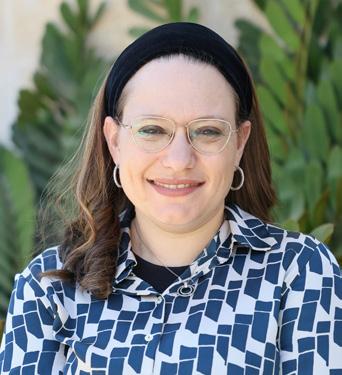
By Sivan Rahav Meir
Last Shabbat I was in the street when the siren sounded. As everyone rushed to find shelter, I heard a little girl ask her mother: “Mom, does this mean that Purim is canceled?” While she was running, her mother replied: “Not at all! Even with the challenges and difficulties, this year we’ll have an even happier Purim!”
I don’t know who that clever mother was, but she was right. Purim wasn’t canceled; it was unfolding in front of our eyes. Purim is the holiday that demonstrates that the Jewish nation is eternal. Thank God, no one is able to destroy us — not Haman, not Hitler, and not Khameini. Whoever else dreams of doing so will ultimately be destroyed. And when confronted with danger and distress, the Jewish people reclaim their identity, take action, and become even stronger—in those historic days of Purim and today.
How Is the Trash Can of History Doing?
It happened just after Simchat Torah, at the temporary school that opened in Jerusalem for hundreds of children evacuated from the Gaza border communities.
“What gives you strength these days?” I asked them.
The answers came quickly: parents and family. Friends. Faith. Torah. The IDF. The unity of the people. The volunteers who show up. Music that carries them through difficult hours.
And then a blond 14-year-old boy, Matania Tzur-Arieh from Kfar Maimon, raised his hand and said: “The trash can of history.”
I asked him to explain.
“I look at our long history,” he said, “and at who has been thrown into its trash can over the generations. If we lift the lid, we’ll see inside Adolf Hitler, Vladimir Lenin, Joseph Stalin, Osama bin Laden, Saddam Hussein, Amalek, Antiochus, Nebuchadnezzar, Titus, Haman, Achashverosh, Pharaoh… all the wicked are there. The whole gang.
“Today, they’re irrelevant. The world moves forward. There’s a plan. Evil is not here to stay. It’s temporary. The Jewish people are small, but eternal and strong. In the struggle between light and darkness, the place of Yahya Sinwar and Hassan Nasrallah is there too, in the trash can. Hamas, Hezbollah, and Iran — they will all end up in the same place. Soon.”
I find myself returning to that moment whenever more villains
join history’s refuse pile, especially over these past two and a half years.
Intellectually, of course, I always knew this. But suddenly, that day, I felt it in my heart as well.
Fourteen-year-old Matania, with his gentle smile, interpreted reality for me better than any seasoned commentator could.
Last week, in the large hall at the Jerusalem offices of Nefesh B’Nefesh, I attended a festive ceremony marking the completion of Nach, the Nevi’im and Ketuvim, for hundreds of American women who came to Israel with a delegation organized by the Orthodox Union.
Most of us know the “T” of Tanach well: Torah. These are the stories of our childhood: Creation, Noach, Yetziyat Mitzrayim. The weekly parashah. The steady rhythm of Jewish life. But what about the rest, the Nevi’im and Ketuvim? Nineteen books: Yehoshua, Shoftim, Melachim, Yeshayahu, Amos, Tehilim, Mishlei, Shir HaShirim, and more.
“A Jew can live to 120,” Rebbetzin Dr. Adina Shmidman said from the stage, “and still not know entire chapters of Tanach. That’s why we launched the Daily Nach project. One chapter a day. In about two years, you finish.”
I looked around the room with a touch of envy. Two years ago, these women opened perek aleph of Yehoshua. Day after day, they continued and now they were here. The

learning had become part of who they are.
A twelve-year-old girl in New York completed Nach in honor of her bat mitzvah. A ninety-fouryear-old woman from Memphis said she wants her tombstone to read: “She completed the Prophets and the Writings.”
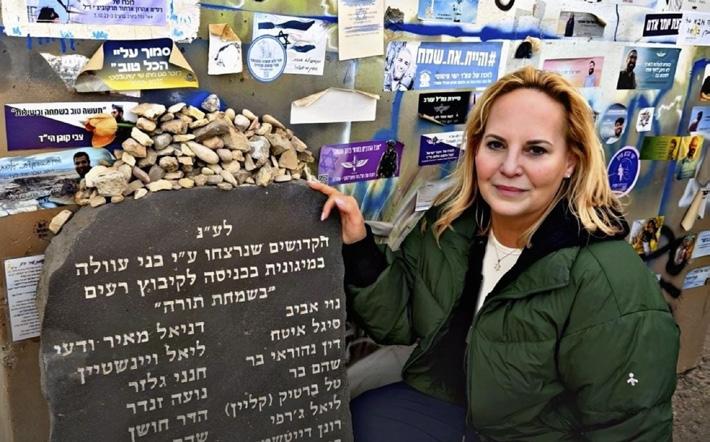
Tehila Blech of New York has traveled to Israel on five solidarity missions since the war began. This week she marked her completion of Nach at the Nova site. She dedicated her two years of study to the memory of Hadar Hoshen, who was murdered there, and formed a deep bond with the family.
Dr. Shmidman read the final verse of Tanach, from Divrei HaYamim II. We all know the Torah’s first word: Bereishit — “In the beginning.” The final word is: Veya’al — “And let him go up.” It speaks of ascending to Jerusalem, to the Holy Temple.
And then it became clear that the Shmidman family was making their own “Veya’al.” With emotion, she and her husband announced they are making Aliyah to Israel.
When I rose to speak, I told them that through their daily study of Nach they are holding the secret formula: Connection to identity and roots, together with the power of consistency; an anchor in an age of endless distraction.
Artificial intelligence can summarize the entire Bible in seconds. It can produce presentations, podcasts, translations into any language. It can do almost everything for us. But there’s one thing it can’t do and that is to truly learn Torah. To toil. To invest. To persevere. And then to come to Jerusalem and celebrate.
I asked them to return to Amer-
ica as ambassadors. Not to give up so quickly on millions of brothers and sisters. Not to leave behind a single disconnected Jew who may not even know what Nach is. To widen the circle, and for each of us to create our own “Veya’al.”
To rise a little higher and connect a little deeper.
Parashat Ki Tisa: On the Virtue of Being Slow
It is told that a certain rabbi was once asked what he thought of the French Revolution. “It’s too early to know,” he replied. “Only about two hundred years have passed.”
In our rapid and restless age, this week’s Torah portion offers an important reminder: The Jewish people wait for Moshe Rabbeinu at the foot of Har Sinai, but after about 40 days they lose patience. They cannot bear to wait for the Ten Commandments, and so they rush to create a counterfeit substitute, the Golden Calf. At the root of the sin of the calf lies that very impatience, that urge to have everything here and now.
Rabbi Yaakov Galinsky used to say that even in our own time,
sometimes “Moshe Rabbeinu is late.” Torah is not always the fastest, most immediately accessible option. Eternal, ancient, and profound values do not always move at the pace of the daily highway. Moshe Rabbeinu is not always the wittiest or most up-to-date voice; he offers no glittering magic solutions. And unlike the Golden Calf, he does not present something tangible and shiny, but demands that the people embark on a long spiritual process.
To this day, Rabbi Galinsky explained, the Jewish people have absorbed criticism for not “keeping up with the times,” for failing to adapt quickly to whatever society demands at that moment. And each of us, on a personal level, can read this portion and ask: Where in our own lives might impatience lead us to choose a Golden Calf instead of the Ten Commandments—a temporary and false solution instead of the long and faithful path?

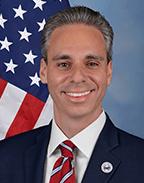
As I share this month’s column, I do so with a full heart— because it will be my last you’ll read while I am Mayor.
Serving the residents of Boca Raton has been the honor of a lifetime. From the residents who devote so much to helping neighbors, to the businesses that drive our booming economy, to the dedicated City staff and community volunteers who give so much of themselves—every step of this journey has been meaningful.
Over the years, we have celebrated milestones, including a banner Centennial year in 2025, and worked side by side to keep Boca Raton one of the most desirable places to live, work, and raise a family.
Public service is a sacred trust, and I am deeply grateful for the faith you have placed in me to contribute to our community. The relationships forged, the partnerships built, and the progress we achieved - togetherwill stay with me always.
While we have much to be proud of, I would like to start by highlighting our public safety record.
At the bedrock of any great city is public safety. Low crime rates are not accidental—they are the result of strong leadership, smart policy, and the unwavering dedication of our first responders. In Boca Raton, we have made public safety a top priority, because safe neighborhoods are the foundation upon which everything else
By Scott Singer
is built--- thriving businesses, strong property values, vibrant parks, and a true sense of community. When residents feel safe, opportunity flourishes.
Since I took office as mayor in 2018, our already low crime rates have continued to drop by more than 25 percent. In 2025, our Police Services Department became the first agency in the state among hundreds undergoing accreditation to achieve Excelsior status for the sixth time.
Our police department is not the only department achieving national acclaim. Our Fire Rescue Department once again achieved the ISO Class 1 rating, the highest rating awarded in the U.S. Our first responders answered more than 55,000 calls for service in 2025.
I am especially grateful to our police officers, firefighters, and emergency personnel who serve with professionalism and integri-
ty every day. Their commitment ensures that Boca Raton remains not only beautiful and prosperous, but secure.
Our safe city attracts investment. We are the economic engine of Palm Beach County, attracting hundreds of high paying jobs for both startups and large companies.
During my service, our economic development efforts have attracted thousands of new, high-paying jobs. This year, we are already securing more jobs with news that D-Wave, a quantum computing company, is leaving Silicon Valley for our Boca Raton Innovation Campus and bringing in 100 high-paying jobs. Concorde Holdings, Inc. will bring another 30 jobs with its forthcoming corporate headquarters relocation.
While many cities across the nation are struggling to fill downtown office space, we are getting ready to welcome more Class-A office space. We recently celebrated the groundbreaking of The Aletto at Sanborn Square, a project that represents vision, investment, and confidence in the future of our city. Innovators, job creators, and economic leaders know Boca is the place to be. Strong leasing data and job reports continue to prove it.
In addition to our strong safety record, our low tax rates also attract job creators and innovators.
As DOGE efforts continue at
the federal and state levels as agencies look to cut waste, we can again take heart that we have continued steady decreases of our millage rate. Our residents pay the lowest property tax rates of any full-service city in the state. We want more money to remain in the pockets of our hardworking taxpaying families.
We continue to have the highest property valuation of any city in the county. As our federal government combated two shutdowns, we have balanced our budget, lowered our tax rate, invested tens of millions of dollars in our infrastructure, maintained healthy reserves, and retained our coveted Triple A bond rating.
As my tenure as mayor comes to an end, I am proud to have championed efforts to make life better for our residents: new and expanded public schools, new waterfront parks and expanded recreation, the Brightline high-speed rail station, a more efficient and responsive convenient city, and so much more.
Together, we strengthened our economy, invested in infrastructure, enhanced public safety, and preserved the exceptional quality of life that defines our community.
Even though I term out in March, I am eager to continue serving as I am now running for United States Congress to work for this great community where I grew up and where we are raising our family. Please continue to reach out @ScottSingerUSA. Even as this role ends, my love for Boca Raton and helping others will continue. Thank you beyond words for the opportunity to work for you.


By Dr. Chaim Y. Botwinick
Intellectual Curiosity is defined as our ability and motivation to explore, learn and understand new concepts, ideas and thoughts inspired by our ability to ask why and how questions instead of accepting facts or notions at face-value.
One of the most cherished and valuable gifts we possess as human beings is our capacity and ability to think, conceptualize, inquire, question and explore.
These characteristics actually define who we are, what we value and the reasons we value.
From an educational perspective, “intellectual curiosity” motivates and drives our ability to learn deeper and richer, to problem-solve complex questions and concepts, to explore and answer questions that are hidden below the surface, and to engage in continuous and perpetual intellectual exploration.
One of the clearest examples of intellectual curiosity in our Jewish day school system today, is the manner in which we learn, teach and study Gemarah (the Talmud).
As an example, when one studies or learns Gemarah properly, we are challenged and forced to encounter an entire universe of intel-
lectual constructs and exploration as well as a higher order logical thinking.
The study of Talmud not only sharpens our cognitive abilities and capacity to imagine, reflect, think and draw logical conclusions, but it also helps us to engage in deeper and richer understanding and inquiry.
This level of thinking has profound implications for how we teach, what we teach and, the resources we require in order to teach. In fact, intellectual curiosity can be considered to be the very foundation and bedrock of chinuch and our educational system. To be sure, I cannot imagine teaching Talmud in the absence of a conscious effort to engage students in their intellectual curiosity.
In its absence, our transmission of information and Talmudic knowledge becomes somewhat mundane, flat and devoid of rich value, meaning or deep significance.
I recently heard a well-known and respected professor from Harvard Law School posit that many of his law students who were exposed to Talmud study prior to attending Harvard, exhibited a far more advanced level of complex higher order thinking and intellectual curiosity than other students.
Although this perception may not necessarily be the result of a controlled lab experiment, his perception is based on a successful
teaching career and many years in the classroom as a law professor. It has also been shared by many educators and colleagues in the field.
The theory behind this fascinating perception is that Talmudic discourse has the potential to sharpen mental acuity and our ability to think out of the traditional box through logic, inference and intellectual curiosity.
It goes without saying that learning Torah lishman, (Torah for its own value/sake), fulfills a tremendous mitzvah and has a remarkably significant value, thereby emphasizing the intrinsic and pure desire and motivation to engage in Torah text study.
There are many educators, scholars and rabbinic leaders who posit that the mitzvah of learning Torah, even in the absence of deeper higher order thinking is paramount. And, there are others who firmly believe that limud Torah in the absence of intellectual curiosity may somewhat short-change, or minimize and compromise the teaching/learning process and potential for student and learners to engage in higher order thinking.
As an educator and former high school teacher, I have also witnessed a remarkable correlation between those students who excelled in Talmud study and their ability to engage in higher order thinking and intellectual curiosity.
At the end of the day, it is important to acknowledge that not all

learners or students have the ability or capacity to engage in higher order thinking or have the ability to push the boundaries of intellectual curiosity. For these students, the mitzvah of Torah lishma alone suffices and it is an endeavor which tremendously honored and respected in our community,
The Impact of AI Technology on Intellectual Curiosity
I can vividly recall when Google was introduced in 1996 as a prototype.
As students, we all gravitated like magnets to this platform in order to help guide us in our learning, research and respective school assignments. It revolutionized learning and gave birth to a new world which made school homework and school assignments easier and less cumbersome. And. maybe even less challenging for others.
Little did we know or realize that as students, over a period of time, we were slowly becoming more reliant and dependent upon computer search engines for problem-solving than we were on our own intellectual curiosity, or our ability to conceptualize and problem -solve independently.
As a close colleague once commented, relying totally on technol-

ogy is as if our brains were transferred to a machine which freed us from trying to think or problem solve for ourselves. Not a very pretty picture or outlook for the future of intellectual pursuit.
It is important to note that chinuch in the absence of instinctual or intellectual curiosity can be viewed by many as a “utilitarian tool” used only for material gain or to follow a script, rather than as a means to explore deeper. It is also viewed as “disposable knowledge” useful for immediate tasks and not necessarily for independent or lifelong learning.
Friends, more often than not, the act of teaching and engaging in intellectual curiosity is taken for granted. This is a mistake and

often puts our students at a disadvantage.
By the same token, not all students possess the ability or capacity to engage in intellectual curiosity. This reality does not at all suggest that these students have any less ability to understand, learn or comprehend. It just suggests that the student is not a higher order thinker. Plain and simple.
Teaching a student intellectual curiosity is an amazing skill which our schools should address, In fact, there are a variety of professional development opportunities and programs which teachers and educational administrators can avail themselves in order to learn how to impart these skills to their students. This is an important topic


A mother in our community once shared something with us that we’ll never forget.
She said that every time she went grocery shopping, her children would ask for something small. A candy. A slice of cake. A simple treat for Shabbos.
And every time, she had to say no.
Not because she didn’t want to give it to them. But because when you’re choosing between rice, chicken, and eggs for the week, there isn’t room in the budget for extras.
She told us the hardest part wasn’t stretching the meals.
It was saying no to her children time and time again.
One week, she opened her Tomchei Shabbos box and found a small treat inside. She started crying.
Not because it was extravagant. But because that week, she could finally say yes. And she’s not the only one.
There are hundreds of families in
our community quietly facing the same choices every single week. Parents who are doing everything they can, but still having to calculate every item that goes into their cart.
That is what Tomchei Shabbos is about.
Yes, it’s about food for Shabbos. But it’s also about dignity. It’s about easing that pressure and giving families a little breathing room.
And now that Purim is over and we begin preparing for Pesach, the needs only grow.
While many of us are already planning menus and stocking up, there are families wondering how they will afford even the essentials for Yom Tov. The pressure becomes heavier. The expenses become greater.
They will need our help even more.
Every week, families rely on these boxes. And every week, the support of donors and volunteers makes it possible.
for yet another post, blog or article. With the advent and utility of AI, I am often concerned that our students may become way too reliant on this technology for problem solving or higher order thinking leading to intellectual curiosity.
In addition, student reliance on AI for problem solving also has the potential to minimize or even marginalize independent thinking let alone intellectual curiosity.
This reliance also has the potential to minimize student drive and motivation which can lead to intellectual lethargy, dependency and laziness.
Not unlike my experience as a student with Google searches
(which I referred to earlier), as a community, we must continue to be mindful of the short and long term impact of AI technology on student motivation, and inspirational learning.
It is therefore imperative that we ensure a proper balance and a learning environment for our students which insures greater independent thinking and less reliance on AI technology.
At the end of the day, high quality education complimented by intellectual curiosity (in both Judaic and General Studies) is the ultimate goal for our community. It is therefore imperative that our community do everything in its ca-
pacity to ensure that our students have opportunities to expand their knowledge, wisdom and insight.
Dr. Chaim Botwinick is a senior executive coach and an organizational consultant. He served as president and CEO of the central agency for Jewish education in Baltimore and in Miami; in addition to head of school and principal for several Jewish day schools and yeshivot. As an Influencer, he has published and lectured extensively on topics relating to education, resource development, strategic planning and leadership development. Dr. Botwinick is co-founder of LEV Consulting Associates and creator/host of the Chinuch Horizons podcast series. Dr. Botwinick is Author of “Think Excellence: Harnessing Your Power to Succeed Beyond Greatness”, Brown Books, 2011


Across Florida, families are ready and eager to enroll their children in Jewish day schools. State scholarship programs have made tuition more accessible than ever, opening doors for students who might not have those opportunities before.
Yet in many communities, the opportunity to expand Jewish education is being blocked by an unexpected obstacle: local zoning laws.
In Boca Raton, Bais Yaakov of Boca, a small Jewish school currently serving 47 students and expecting 60 next school year, has been operating for four years and is growing steadily. Since its founding, the school has been searching for a permanent building. For more than three years, that search has produced no viable option.
The challenge is not funding or demand. It is zoning.
Rabbi Yosef Davis said that under current local rules, nearly any suitable property would require a zoning approval process that can take a year or more. That uncertainty makes it difficult to compete in the commercial real estate market. Landlords are reluctant to wait months or years without knowing whether the school will ultimately receive permission to operate, causing potential deals to fall apart.
As a result, opportunities for a permanent school repeatedly fall through.
Bais Yaakov recently found what Rabbi Davis described as an

ideal space, only to lose it to another tenant while awaiting legal clarity. Administrators say they now have students on waiting lists they cannot accommodate. By next school year, they anticipate not having enough room for an entire grade level, meaning children will be turned away despite growing demand.
“This isn’t just about one school,” Rabbi Davis said. “Across Florida, private schools are ready to grow, families are ready to enroll, but local zoning often prevents it. Without changes, kids who want a Jewish education may not have that option close to home.”
Advocates say Bais Yaakov’s experience reflects a broader pattern emerging across Florida as school choice expands, particularly following the state’s recent optin to the Federal Scholarship Tax Credit Program, which is expected to further increase demand for
private school seats.
The issue has drawn attention in Tallahassee. House Bill 833, now moving through the Florida Legislature, would allow small private schools serving 150 students or fewer to operate in commercial and mixed-use areas, even if local zoning ordinances would otherwise prohibit them. The legislation keeps building and safety standards intact but removes zoning barriers advocates say unnecessarily block school openings.
Melissa Glaser, Executive Director of Teach Florida, said the bill addresses a growing gap.
“Florida has made historic progress in helping families afford the education that’s right for their children,” Glaser said. “Scholarships are in place, families are eager to enroll, but in many communities schools simply cannot open because of zoning restrictions. HB 833 is about closing that gap and

ensuring children actually have access to the Jewish education families are choosing.”
Teach Florida, a project of the Orthodox Union’s Teach Coalition, has been at the forefront of efforts to bring attention to the issue. This month, 150 parents, students, and school leaders traveled to Tallahassee as part of Teach’s annual Mission to Tallahassee. Advocates met with lawmakers, staff from Governor Ron DeSantis’ office, and Florida Education Commissioner Anastasios Kamoutsas to discuss zoning reform, school security funding, and sustaining scholarship programs.
While speaking with advocates, Representative Wallace Aristide (D-Miami) expressed support for HB 833 during the meetings, adding to the bipartisan momentum
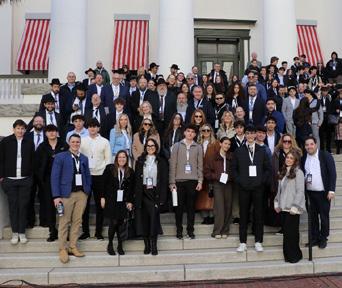
Teach Florida advocates gather outside the Florida State Capitol ahead of meetings with state legislators, Florida Education Commissioner Anastasios Kamoutsas, and staff from Governor Ron DeSantis’ office to advance Jewish community priorities. (Photo courtesy of Teach Florida)
behind the bill.
For families and school leaders like Rabbi Davis, the legislation could determine whether Jewish day schools can grow to meet de-
Part-time Co-Director – private Family Foundation (Mostly Remote) Starting Salary $40-$50 Per Hour A private nonprofit family foundation seeks a highly intelligent, professional, motivated Co-Director.
Responsibilities:
• Research & evaluate nonprofits aligned with the foundation’s mission
• Conduct due diligence and prepare clear recommendations
• Serve as a liaison between the principal and nonprofit organization
•Attend occasional in-person meetings (West Palm beach) + Potential Travel
Qualifications:
• Nonprofit experience
• Excellent communication skills
• Strong research and analytical ability
• Highly organized, discreet and detail-oriented
If you are capable and passionate, we would love to hear from you!
mand or remain constrained by local rules.
“Families want a Jewish education, and thanks to Teach Florida, funding is finally there to make it happen,” Davis said. “Now, the state has an opportunity to make sure schools can open where the children are. That’s what HB 833 is about, giving families access to the education they’ve been waiting for.”
HB 833 is expected to receive a vote on the Florida House floor in the coming weeks before moving to the Senate. Advocates say the legislation could play a defining role in whether Jewish day schools across Florida can expand to meet growing demand – and ultimately shape the future of Jewish education in communities across the state.

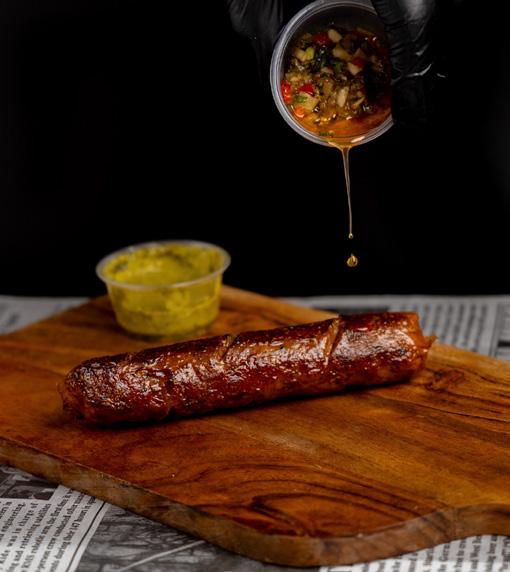










In just four years, a new heartbeat has emerged in the Hollywood community. What began as a vision for excellence has blossomed into a vibrant educational home for 170 students, blending a warm community feel with the academic rigor of the nation’s top institutions.
Our spectacular growth—from just 13 original students to 170 today—is a testament to our mission. We believe every child is a gem to be polished, guided by the principle of Chanoch L’naar Al Pi Darko (educate a child according to their way).
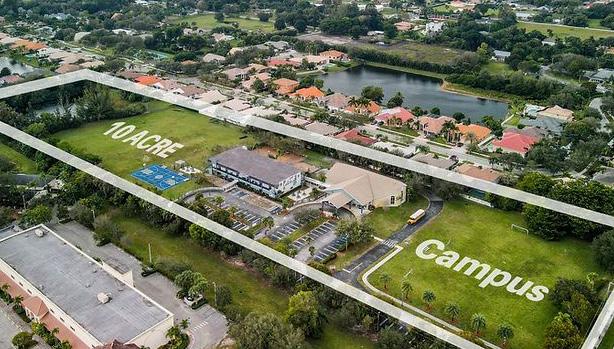
A Premier 10-Acre Campus: Year-Round Engagement Our expansive 10-acre campus offers an unparalleled environment for growth, featuring a state-of-the-art indoor auditorium, professional-grade soccer and football fields, volleyball and basketball courts, and our very own scenic lake.
We maximize these facilities through:
• After-School Programming: Enriching activities that keep students engaged, active, and learning beyond the standard school hours.
• Summer at Camp Davie: When school is out, our campus transforms into a premier summer destination, offering a high-energy, Torah-centered camp experience.
The Best of the Tri-State,
Whether you are a longtime Florida resident or a family relocating from the Tri-State area, Yeshivat Torat Yosef offers a top-tier education starting from Toddlers through 3rd Grade, moving up one year at a time for both boys and girls.
Our curriculum is intentionally curated from the premier schools of the North, ensuring students maintain—and exceed—the high standards they are accustomed to. We are proud to offer a dual track of excellence:
• Limudei Kodesh: A deep, rich curriculum inspired by the finest institutions, such as Mir Yeshiva and Ateret Torah. In keeping with the traditions of Lakewood and Deal, our second graders are already mastering Ta’amim and reading directly from the Torah.
• Secular Studies: A robust academic program designed to challenge and inspire young minds, developed with the help of Magen David and Yeshiva of Flatbush.
At the core of our mission is more than just grades; it is the soul of the child. We believe that Ahavat Hashem (Love for God) is paramount. This isn't just a subject we teach—it’s the atmosphere we breathe. By emphasizing a loving, nurturing environment, we instill a natural, lifelong
connection to Torah and Mitzvot.
Our student body reflects the beautiful tapestry of our community. With a 50/50 blend of Sephardic and Ashkenaz families, our school is a true model of Achdut (unity). We take pride in the fact that our Hanhaga (leadership) is rooted firmly in Truth, guided by a commitment to authenticity and integrity.
As we continue to expand, we want to ensure our doors are open to families across the region:
• Busing Provided: Available from Miami Beach and Surfside all the way through Hollywood.
• Affordability: Our tuition is highly competitive. We accept most grants, including Step Up and ELC (Gold Seal), and offer scholarships to ensure every child has a place.
Whether you are a parent interested in filling out an application or an educator looking to work in a wonderful atmosphere with competitive pay, we invite you to connect with us.
Contact Us:
* Website: toratyosef.org
* Phone: 754-263-3126
* Rabbi David Elbaz

By Rabbi Jonathan Gewirtz
If you’re reading this after Purim, you probably have a number of things in your possession that I’ll be referencing in this column. You see, I’ve noticed that for Purim, many people specifically like to send miniatures. Things like mini bottles of vodka or whiskey that look just like their full-size counterparts, just “cuter,” or even cans of Coke Minis, which, by the way, cost more than full-size cans!
You might find mini candy bars, which some of the major chocolate retailers call, “Fun Size!” What’s fun about having much less chocolate? Why do people enjoy these smaller packages and even pay more for them? Why do they think it makes the Mishloach Manos more appealing?
If you have a small box to send, or an adorable mini trash can, megaphone or car-shaped container, then there might be a practical reason for the miniatures. But still, why the fascination with these items? I decided to investigate and got some interesting answers.
One explanation I found said that people prefer the “mini” cans of soda because they provide portion control. It prevents someone from overdoing it on the drink. Maybe I can hear that but do people seriously have such little willpower that they need to spend more money on less soda? Plus, that doesn’t explain our fascination with travel size products we don’t need to curb, like little bottles of mouthwash, or those adorable tiny toothpastes given
to passengers in premium cabins on airplanes flying internationally.
Another explanation was that these minis give people the opportunity to sample different products like an expensive perfume, without paying a fortune. I get that, but honestly, the teeny bottles of Tabasco sauce I got at a hotel breakfast were not expensive, but so cute I snagged three of them and didn’t even use them on my food.
The truth of the matter is that science understands human beings are drawn to small, miniature things. We are hardwired to find baby-like features attractive and cute. Think puppies, kittens, and tiny jars of Nutella or Heinz ketchup.
When we get these smaller versions of known, full-size products, we are drawn to them. We may collect them without using them, or choose them over their ordinary-looking counterparts even at a price discrepancy. It’s how we are made. There’s a nov-
elty to them, and we go crazy over them. It’s science!
But why? Yes, I know I said it was Science, but to me, that’s always the “how” or “what” of things, not the “why.” You can study things in an empirical way and say, “This is how it is,” but you can’t explain the reasoning, except, in this case, to say, “This is how human beings are.” But that’s not sufficient for my curiosity. I want to know WHY Hashem made us this way.
Now, admittedly, I can’t possibly know why Hashem does anything. But I can hypothesize and try to gain some insight. I applied myself to this question, and came to a thought. We like miniatures because they compress all the complexity of the full-size product into a smaller package. The details on the bottle of whiskey, down to its trademark red wax seal, are enchanting because nothing is lost by shrinking it. It’s got all the potential of its big brother bottle, without the actual size of fluid content.
The famous parable of R’ Yisrael Salanter z”l comes to mind. He spoke of a fellow who gave his son a puzzle which had on it a map of the world. It was complex and had so many pieces he was sure it would take his son hours or days to complete it, especially since the boy didn’t know Geography.
Well, the lad surprised his father when, in a rather short time, he announced he’d completed the puzzle. “But how?” marveled his father. “You don’t know what the map of the world should look

like.” The boy replied that on the other side of the pieces was a second picture. These pieces formed the image of a single person. “When I put the man in order, the world came together too.”
The message is that by per-

fecting ourselves, we perfect the world, and that’s why I think we are enamored with miniatures. We see in them a reflection of ourselves – man as a microcosm, a “miniature” world, with all its complexity and wonder.

Now, it makes sense to me why Hashem would have implanted this appreciation for the small things in mankind, because it gives us the insight to appreciate what each of us can do, and just how complex and full of wonder we can be.
If the next time you looked at a miniature item you reflected on my words and considered how much greatness and potential, as well as meticulous handiwork of your Creator, lies inside of you, well, that would be no small feat.
2026 – All Rights Reserved Did you enjoy this column? Feedback is welcome and appreciated. E-mail info@JewishSpeechWriter.com to share your thoughts. You never know when you may be the lamp that enlightens someone else.


In recent years, South Florida has experienced tremendous growth in its Sephardic Jewish community. With this growth has come a pressing need for learned Rabbanim, teachers, and community leaders who are deeply rooted in the Sephardic halachic tradition. Recognizing this need, a remarkable initiative was launched in 2019 that would eventually become one of the most important centers of Sephardic Torah learning in the region. That initiative became the Ezra Franco Sephardic Kollel, housed in the Edmond J. Safra Synagogue in Aventura.
The vision for the Kollel began with several dedicated communal leaders who shared a deep commitment to strengthening Torah in South Florida. Rabbi Abraham Azancot, who at the time served as the Assistant Rabbi of the Edmond J. Safra Synagogue and today serves as the Rabbi of Magen Avraham in Sunny Isles, joined together with the Head Rabbi of the Safra Synagogue, Rabbi Yosef Galimidi Shlit”a. Together with the synagogue’s President, Ely Levy, and Vice President, David Zonana, they sought to create a true Makom Torah. Their goal was ambitious yet clear: to establish a serious Kollel that would train and produce the future Sephardic Rabbanim who would serve the rapidly expanding communities of South Florida.
Like many great projects, the idea began as a dream. That dream became a reality through the generosity and vision of Mr. Abe Franco of Miami Beach. With

his initial financial support, as well as the support of other generous individuals, the foundation of the Kollel was laid, and the Ezra Franco Sephardic Kollel was officially established. What began as an idea quickly developed into a vibrant center of Torah study, bringing together outstanding young Torah scholars committed to years of serious learning and communal leadership.
At its inception, the Kollel began with six full time Avrechim under the leadership of the Rosh Kollel, Dayan Ephraim Friedman Shlit”a. Dayan Friedman, who also serves as the Dayan of the North Miami Beach Kollel, brought with him tremendous experience in halacha and rabbinic training. Under his guidance, the Kollel began its rigorous curriculum in advanced halachic study.
Among the original Avrechim were Rabbi Abraham Azancot,
Rabbi Yaakov Zakai, Rabbi Ariel Cohen, Rabbi Eliyahu Yosef, Rabbi Meir Benguigui, and Rabbi Ariel Bonan. Each of these scholars brought unique strengths to the Kollel while simultaneously serving the broader community in meaningful ways. Rabbi Yaakov Zakai serves as a Maggid Shiur at Netive Ezra in Aventura, helping to spread Torah learning throughout the community. Rabbi Ariel Cohen serves as the Assistant Rabbi of the Magen David Synagogue in Bal Harbour. Rabbi Eliyahu Yosef serves as the Assistant Rabbi of the Netive Ezra Synagogue in Aventura. Rabbi Meir Benguigui later went on to serve as an administrator for KM Kashrut of South Florida, contributing to the growth of kashrut supervision in the region. Rabbi Ariel Bonan currently serves as a middle school Rebbi at Ohr HaTorah Yeshiva in Hollywood,

educating the next generation of students.
During the early years of the Kollel, the Avrechim dedicated themselves to mastering major areas of halacha. Their completed and were tested in Hilchot Basar b’Chalav, Ta’aruvot, and Ma’achalei Akum, all complex areas of Jewish law requiring deep analysis and practical understanding. The intense study and structured learning environment quickly established the Kollel as a serious center of advanced halachic scholarship.
As the program continued to grow, the Kollel expanded from its original six Avrechim to a group of ten full time scholars. During this stage, they completed and were tested in Hilchot Niddah and Tevillah, two of the most intricate and sensitive areas of halacha that require careful training for future rabbinic leaders. After years of dedicated study, the Kollel reached an important milestone.
In Elul, September 2023, ten Avrechim of the Kollel received Semicha, formal Rabbinic ordination. The Semicha was granted under the auspices of Rabbi Yosef Galimidi Shlit”a, together with the Rosh Kollel Dayan Ephraim Friedman Shlit”a, and Dayan Gideon Ben Moshe Shlit”a, an Av Beit Din in Jerusalem and one of the leading Sephardic halachic authorities of our generation.
Among those who received Semicha were Rabbi Moshe Adjmi, who serves as Assistant Rabbi of the Edmond J. Safra Synagogue, Rabbi Rafael Zaidenberg, who
currently serves as the Kollel Coordinator and plays a central role in the administration and development of the Kollel, Rabbi Mordechai Ivgi, who now serves as a Rebbi at Ohr HaTorah Yeshiva High School, Rabbi Ary Roffe, who serves as the Rabbi of the North Miami Beach Kollel Kahal Sephardi Minyan, and Rabbi Aviad Anidjar.
Today, the Kollel continues to grow and now consists of fourteen full time Avrechim learning daily in the Beit Midrash of the Safra Synagogue. Over the past year several new scholars have joined the ranks of the Kollel, including Rabbi Levy Yischak Cazes, Rabbi Raphael Cremisi, and Rabbi Yosef Pinhasi. Rabbi Raphael Cremisi also serves as the Assistant Rabbi of the Bet Eliyahu Mani Synagogue in Miami Beach, further strengthening the connection between the Kollel and the broader Sephardic community.
For the past two years, the Kollel has been deeply engaged in the study of Hilchot Shabbat, one of the most expansive and challenging areas of halacha. The Avrechim are now only a few months away from completing this major section of study, which will mark another significant achievement for the program.
In addition to the daily learning schedule, the Kollel benefits from special Shimush, practical rabbinic training, including a weekly shiur from HaRav Gideon Ben Moshe Shlit”a. Rav Ben Moshe is a distinguished Talmid of Hacham Ovadia Yosef zt”l and Hacham
Ben Tzion Abba Shaul zt”l, and his guidance provides the Avrechim with direct connection to the authentic Sephardic halachic tradition. Throughout the year, many of the leading Rabbanim of the world visit the Kollel to deliver shiurim and share their wisdom with the Avrechim. The visiting Rabbanim are often deeply impressed and pleased with the high level of Torah scholarship and serious dedication demonstrated by the Avrechim. These visits enrich the learning environment and expose the scholars to a broad range of Torah leadership and scholarship.
The mission of the Ezra Franco Sephardic Kollel remains as strong today as it was at its founding. The Kollel was created with a clear purpose: to produce the next generation of Sephardic Rabbanim who will guide, teach, and inspire the growing Sephardic communities of South Florida. Through years of rigorous learning, practical rabbinic training, and communal involvement, the Avrechim of the Kollel are preparing to carry the torch of Sephardic Torah leadership for decades to come.
What began as a dream in 2019 has become a thriving center of Torah, a true Makom Torah whose influence continues to expand. With continued dedication, leadership, and community support, the Ezra Franco Sephardic Kollel at the Edmond J. Safra Synagogue stands poised to shape the future of Sephardic Jewish life in South Florida.



Sunday to Thursday: 12pm - 10pm Friday: 11am - 3:30pm OPENING HOURS Scan the code to order!



read



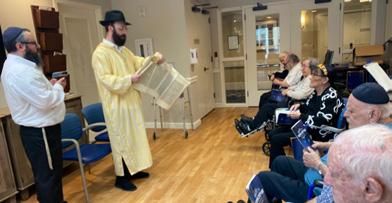
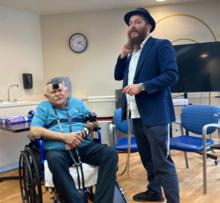
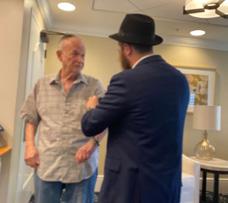
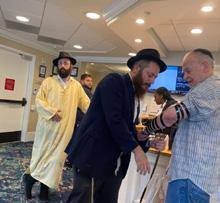
at senior facilities, hospitals and for those who were homebound. They also distributed hundreds of Mishloach
You can now get involved with their Pesach initiatives via ChabadChayil.org/Passover


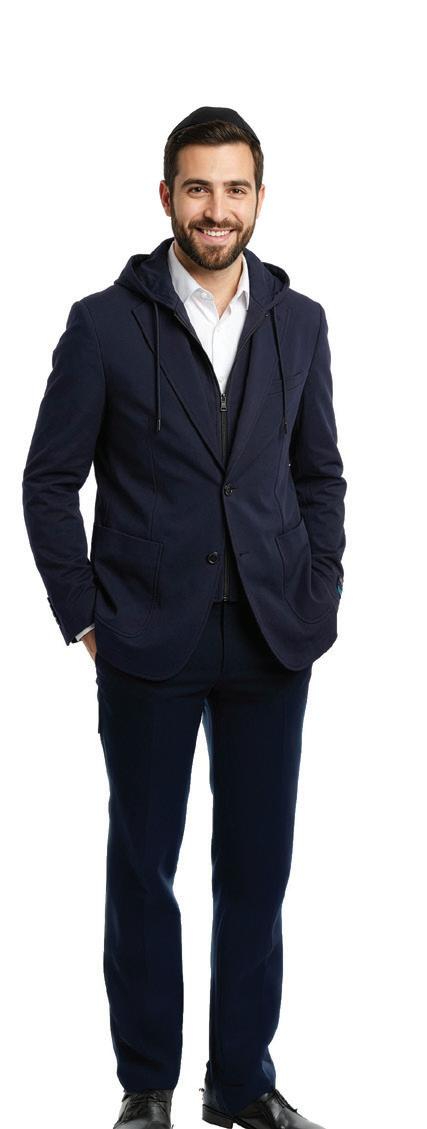
By Yaakov Selavan
As Purim approached, I began another shift at our Emergency Operations Center instead of celebrating the holiday with my children. I had just completed an emergency situational assessment with IDF Northern Command and the Golan Division, and I felt it was important to share directly with you what we were seeing and experiencing in those first critical hours.
It quickly became clear that we are operating in a fundamentally different strategic reality. What had long been a scenario we prepared for has now begun to unfold along Israel’s northern frontier.
The Strategic Shift: From Ambiguity to Confrontation
In our assessment that evening, the scenario we had long anticipated appeared to materialize: Hezbollah had begun to enter the conflict in a more direct way. For communities in the Golan Heights, the implications of this shift were immediate and deeply concerning.
Strategically, Hezbollah faces a high-stakes dilemma—balancing ideological loyalty to its patrons in Tehran against the very real risk of devastating consequences for the organization itself. Analysts and policymakers may debate whether such actions represent symbolic gestures or the opening of a broader northern front. For those of us living along the border, however, the debate is largely theoretical. The operational reality on the ground changed the moment the threat became immediate.
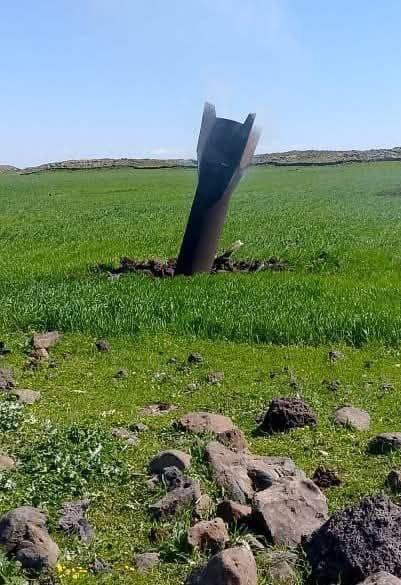
Unlike threats originating from distant arenas such as Iran, launches from southern Lebanon leave virtually no warning time for the communities of the Golan. The distance is so short that the window between launch and impact can effectively be zero seconds. That reality forces us to operate under the strictest safety measures possible, tightening restrictions and procedures to prevent casualties wherever we can.
Resilience on the Frontline: Our Three-Pronged Response
In response to this heightened reality, the Golan Regional Council moved quickly to strengthen resilience across three critical pillars.
Over the past many months, we invested immense effort into identifying and closing protection
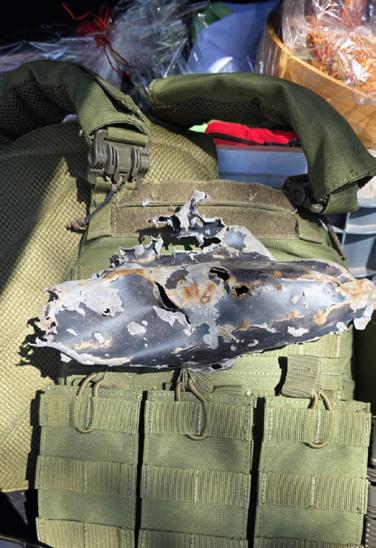
gaps across the Golan. But in a zero-second warning reality, even small vulnerabilities become significant risks. Efforts have accelerated to equip protected spaces with essential medical and emergency equipment and to add additional shelters in communities where the need is most urgent.
War is fought not only on the battlefield but also in the resilience of the home front. Our teams are expanding psychological support services, launching initiatives designed to strengthen community morale, and providing targeted assistance to the families of more than 400 Golan reservists who have been called to duty— many of them defending the very communities in which their families continue to live.
3. Adapted Educational







Our children have already carried the emotional burden of nearly two and a half years of conflict. Security restrictions forced the cancellation of Purim celebrations across many communities— events children had been anticipating for months.
In response, we are working to create adapted educational and community frameworks that provide stability, emotional support, and moments of normalcy even during an uncertain time.

The ripple effects of October 7 continue to shape our reality in ways few could have predicted. What began as a single moment has created a chain reaction felt across Israel’s borders and communities. As we move forward, we know the days ahead may continue to bring difficult challenges. Yet one truth remains constant: knowing that we are not
makes all the
Your friendship and support are more than symbolic. They are part of the invisible shield that helps the Golan remain resilient as Israel’s northern gateway.


\mottikallus@gmail.com https://friendsofgolanheights.com/



Before examining how global media outlets frame the war involving Iran, it is important to understand how the conflict began and how rapidly it escalated. The war did not erupt overnight. Instead, it developed from years of rising tensions between Iran, Israel, and the United States, particularly over Iran’s nuclear program, regional proxy groups, and missile development.
June 2025 – The “Twelve-Day War”
A previous round of fighting between Israel and Iran erupted in June 2025 and lasted twelve days before a ceasefire was brokered by the United States and Qatar. Although the ceasefire held for several months, tensions remained high, and both sides accused the other of preparing for renewed conflict.
February 28, 2026 – The War Begins
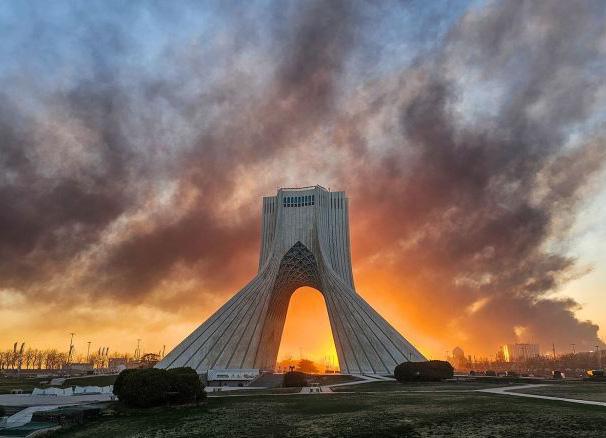
In the early hours of February 28, Israel launched what it described as a pre-emptive military operation against Iran. Explosions were reported across several Iranian cities including Tehran, Isfahan, and Qom. The operation, known in Israel as Operation Lion’s Roar, targeted military infrastructure, government facilities, and senior Iranian leadership.
The United States joined the operation, conducting coordinated strikes against Iranian mili-

tary assets. The joint campaign targeted command centers, air defenses, missile launch sites, and strategic infrastructure across the country.
March 1–2, 2026 – Iranian Retaliation
Iran responded with missile and drone attacks targeting Israe-
li territory and U.S. military bases across the region. Iranian forces also launched attacks on shipping and infrastructure in the Persian Gulf, including strikes near Oman and Qatar.
The conflict quickly expanded into a broader regional crisis. Iran warned shipping vessels to avoid the Strait of Hormuz, one of the world’s most important energy corridors, triggering disruptions in global oil markets.
Within the first five days of the campaign, thousands of military targets had been struck across Iran, and the war had already spread across multiple countries in the Middle East. Civilian casualties were reported in Iran, Israel, and neighboring states, and






global markets began reacting to the escalating instability.
With the conflict now unfolding across land, sea, air, and cyber domains, the war quickly became one of the most consequential geopolitical crises of the decade.
The War in the Media: Different Narratives of the Same Conflict
While the military events themselves are widely reported, the story told to the public varies dramatically depending on the media outlet. News organizations frame events differently depending on editorial perspective, regional context, and political culture.
A comparison of coverage from Al Jazeera, BBC, CNN, The New York Times, Fox News, Axios, and The Daily Wire reveals how the same conflict can be interpreted through very different lenses.
Al Jazeera, headquartered in Qatar, approaches the conflict largely through the lens of humanitarian consequences and regional instability.
Reports frequently highlight the human toll of the war, focusing on civilian casualties, destroyed infrastructure, and the experiences of families caught in the fighting. Coverage often emphasizes the social and economic disruption caused by the war across the Middle East.
Al Jazeera also tends to question the motivations and legality of Western military actions. Many of its reports analyze whether Israeli and American strikes escalate tensions or violate international norms. By foregrounding these questions, the network

situates the war within a broader conversation about power dynamics in the Middle East and the long history of foreign intervention in the region.
For many viewers in the Middle East and the Global South, this framing resonates strongly with historical experiences of geopolitical competition and regional instability.
Major Western liberal media outlets such as BBC, CNN, and The New York Times generally frame the war through a lens of strategic military analysis and international diplomacy.
Coverage from these organizations often focuses on:
• military capabilities
• intelligence assessments
• geopolitical alliances
• diplomatic negotiations
Rather than centering solely on humanitarian consequences, these outlets frequently examine how the conflict fits into the broader global order.
For example, Western cover-
age regularly explores how the war could affect global oil prices, international shipping routes, and energy markets. Discussions about disruptions to the Strait of Hormuz—a key maritime chokepoint for global energy trade— have become a central theme in economic reporting about the conflict.
Another defining feature of Western coverage is the attempt to maintain balance. Reports often quote officials from multiple sides—Iranian, Israeli, American, and international organizations— in order to present a range of perspectives.
Supporters of this approach argue that it reflects professional journalistic standards of neutrality. Critics, however, sometimes claim that excessive emphasis on balance can obscure questions of responsibility and accountability.
Conservative American media such as Fox News tends to frame the conflict primarily as a national security issue as well as an ideo-













logical one.
Coverage often highlights:
• Iran’s missile and drone programs
• its support for regional proxy groups
• threats posed to the United States and its allies
The war is frequently presented as part of a broader struggle between democratic allies and authoritarian adversaries. Fox News commentary programs often emphasize the importance of strong deterrence and decisive military action to counter Iran’s ambitions. Analysts on the network frequently argue that allowing Iran to expand its military capabilities would threaten global stability and American strategic interests. This framing simplifies the conflict into a clearer narrative of opposing camps, making it easier for viewers to interpret the stakes of the war through a moral or ideological lens.
Axios represents a different type of journalism altogether. Rather than focusing on ideological narratives or emotional storytelling, Axios approaches the conflict through policy analysis and insider reporting.
Its coverage frequently centers on:
• behind-the-scenes conversations between political leaders
• internal debates within governments
• policy decisions shaping military strategy
Axios articles often reveal how decisions are made in Washington, Jerusalem, and other capitals during moments of crisis.
Another key feature of Axios reporting is its emphasis on
practical implications. Stories frequently analyze how the war could influence:
• U.S. domestic politics
• congressional debates over war powers
• global energy markets
This style of reporting appeals particularly to readers interested in how geopolitical conflicts affect policy and economics.
The Daily Wire, a conservative digital platform, offers a different perspective on the war: while it reports on military developments, much of its coverage is commentary-driven. Writers and hosts interpret events through ideological frameworks, often portraying Iran as a long-standing adversary of the United States and a destabilizing force in the Middle East.
Articles frequently discuss the war in terms of American national interest, national security, and broader political debates within the United States.
Interestingly, the platform also reflects divisions within conservative circles about foreign policy. Some commentators support aggressive action against Iran, while others warn against deeper American involvement in overseas conflicts. This internal debate illustrates the complexity of political opinion even within ideologically aligned media ecosystems.
The differences in coverage across these outlets are shaped by several key factors.
Each organization speaks primarily to a different audience.
• Al Jazeera addresses viewers across the Middle East and Global South.
• Western outlets target international policy and business audiences.
• Fox News and The Daily Wire focus largely on American domestic viewers.
Political context: Media organizations operate within different political and cultural environments, which naturally influence how conflicts are framed.
Editorial priorities: Different outlets prioritize different aspects of the story—humanitarian impact, strategic analysis, ideological interpretation, or policy implications.
The war involving Iran illustrates how modern conflicts are fought not only on battlefields but also in the media landscape.
• Al Jazeera emphasizes civilian suffering and regional consequences.
• BBC, CNN, and The New York Times focus on military strategy and diplomatic implications.
• Fox News highlights security threats and ideological stakes.
• Axios examines the policy decisions shaping the war.
• The Daily Wire frames the conflict through political commentary and ideological debate.
Each perspective captures part of the story but not the whole picture.For readers trying to understand a complex international conflict, comparing multiple media sources is essential. Only by examining these different narratives side by side can audiences approach a fuller understanding of both the war itself and the powerful role media plays in shaping how it is perceived.









In the month of Adar, special energy filled the halls of Sha’arei Bina. True to the timeless words, החמשב םיברמ רדא סנכנשמ, the school community elevated the mitzvah of increasing joy to a whole new level.
Rosh Chodesh Adar was marked by an inspiring address by renowned speaker Adina Stilerman. She spoke passionately to the students about the unique power and influence of a Jewish woman, encouraging each girl to recognize her inner strength and embrace her role with confidence and pride — like Queen Esther in the Purim story. Her meaningful message was complemented by delicious treats.
Under the leadership of the school’s G.O., our school was transformed into a creative canvas of אוה ךופהנו) a “topsy-turvy”) theme. The imaginative décor set the tone for an unforgettable Spirit Week, and each day brought new enthusiasm and creativity. Kicking off with Sports Day and Homonyms Day — clever wordplay came to life -“see/ sea,” “hymn/him,” and “flour/ flower” in costume form. Students stepped back in time for Decades Day, and collaboration reigned as they displayed class themes, from colorful painters to bikers to senior kallahs. Another highlight was the annual talent show, where students showcased remarkable creativity and confidence.
Chesed remained central throughout the festivities. Students prepared and delivered mishloach manot for members of Friendship Circle, spreading joy beyond the school walls. Groups of girls visited two local nursing homes, singing and bringing warmth and happi-



ness to the elderly residents during this joyous month.
The ruach was contagious as the entire faculty was touched by beautifully prepared mishloach manot packaged by the school’s devoted Parent Council and volunteer parents, whose dedication enhances every school celebration.
The celebrations culminated in
an exciting carnival organized by the 11th grade. The event featured booths, games, prizes, and even an Icee truck, creating lasting memories for students across all grades.
Throughout the month of Adar, the halls of Sha’arei Bina were filled not only with laughter and creativity, but with genuine simcha and heartfelt chesed. The spirit of Purim was not simply celebrated — it was lived.
Sha’arei Bina Torah Academy for Girls is a premier middle school and high school for Orthodox girls in Hollywood, Florida. Enrollment is now open for the upcoming 2026–2027 academic year. For a tour or to apply, please call 954-927-5544 or visit shaareibina.org












1. I-95 Is SUPER Long. Interstate 95 runs almost the entire east coast of Florida — from Miami all the way up to Jacksonville… and then keeps going all the way to Maine!
2. You Can Drive Over the Ocean. The Overseas Highway connects the mainland to the Florida Keys — and parts of it drive right over the water! It feels like you’re floating.
3. There’s a Highway Called “Alligator Alley”. Part of I-75 runs through the Everglades and is nicknamed Alligator Alley — because real alligators live nearby!
4. Highways Have Giant Light Poles At night, Florida highways light up with super tall light poles so drivers can see clearly. Some are as tall as small buildings!
5. Animals Have Secret Crossings. Florida highways have special tunnels and bridges just for animals so they can cross safely without going near cars.
6. Hurricane Evacuation Routes. Some highways are designed to help millions of people leave safely before a hurricane. That’s why you sometimes see special “Evacuation Route” signs.
7. Highways Have Hidden “Grass Scientists”. Along many Florida highways, special plants and grasses are planted on purpose. They help absorb rainwater, prevent flooding, and protect the roads during heavy storms. It’s not just decoration — it’s science!
8. Florida Has HUGE Bridges. The Sunshine Skyway Bridge near Tampa is so tall that giant ships can pass underneath it.
9. Highway Numbers Have Meaning. Even numbers usually go east to west. Odd numbers usually go north to south.

10. Millions of Cars Use Them Every Day. Florida highways are some of the busiest in the country — especially in South Florida!


If you allow the cinnamon sticks to steep for a few minutes in the hot coffee, the flavors will intensify and become even richer.
By Jamie Geller
Ingredients
• 4 cinnamon sticks
• 1/4 cup packed brown sugar
• 32 ounces freshly brewed coffee
• Whipped cream
1. Place ice cubes and 1 cinnamon stick in each of 4 glasses.
2. Stir brown sugar into coffee. Pour 8 ounces of coffee into each glass.
3. Top with whipped cream.
4. Serve with Vegetable Empanadas.

Anxiety ~ Confusion ~ Grief ~ Trauma ~ Stress ~ Self-esteem
Your struggle is not the essence of who you are. Let’s discuss & explore Narrative Exploration for women of all ages. Julie Bernstein, MSW Trained & Supervised (929) 344-2535
Alterations, Dressmaking, including wedding clothes. Phone: (646) 413-4542
The new ‘Noble Wines’ catalog has arrived, featuring our latest selection of premium wines. Request your free copy by mail. Just text or email your address and we’ll deliver it straight to your door. Text: (845) 716-8306 or email: news@noblewinesinc.com
Seeking 5–10k SF warehouse within one hour of Miami port. Must have 1–2 loading docks. Please call Nathan at 845-764-1755.
CLASSIFIED
List your local business, services available, real estate opportunities, Help Wanted, & more!
Basic listing: $10/weekName, number and email address
Enhanced listing: $25/weekUp to 25 words
(additional words $1/each)
Deadline:
Tuesday at 4pm for next week's issue
Contact: andrea@tsfcommunityvoice.com
In-Home Private Pilates for women to strengthen, realign, and ease pain. Personalized sessions and private events + Kosher Healthy Meal Prep. WellnessRena.com 305-404-3904 | WellnessRena@gmail.com
Computer, Laptop, iPad & iPhone Repair 954-367-3215 Free-Pickup-in-Aventura.FL
Coolstar Air Service llc A/C Install & Repair (954) 200-1369 | coolstarair@yahoo.com
IT Tech Support & Low Voltage Services 561-331-1680 | barry@navonpro.com
MOVE TO NORTH FLORIDA
Most affordable housing in the entire state Esformes Hebrew Academy of Ormond Beach
NOW HIRING
• Elementary teacher • Office manager
• School Event Coordinator • Drama & Music, Coach Part-time and full-time positions
Quiet suburb School and shul community EsformesHebrewAcademy.org Email resume to chanidaytona@gmail.com
Bringing Sensitivity To The Mental Health Needs Of The Jewish Community RAFAEL JAMES LCSW PSYCHOTHERAPIST (561) 903-2950
EMAIL: centerforempathyandhealing@gmail.com Florida Medicare & Florida Blue accepted
Top Handyman & Construction 848-318-6976, nikabrmv711@gmail.com
To place a Business Directory/Classified Listing contact: andrea@tsfcommunityvoice.com



For many families, real estate is the cornerstone of generational wealth.
Apartment buildings passed down from one generation to the next. Commercial properties held for decades. A portfolio of residential investments accumulated through discipline and long-term vision.
Real estate has built more multigenerational wealth than perhaps any other asset class. But owning property and preserving wealth are not the same thing.
The families who succeed long term understand that real estate alone does not create stability. Planning does.
Real estate is powerful because it appreciates, generates income and provides leverage. But it is also inherently illiquid.
When a family’s net worth is concentrated in property, wealth may be substantial on paper yet difficult to access in moments of transition.
What happens when:
• A patriarch or matriarch passes away unexpectedly?
• Estate taxes or debts must be paid?
• One child wants to keep the properties while another wants cash?
• Market conditions make selling unattractive?
Without liquidity planning, families may be forced to sell at the wrong time or create internal
By Glen R. Golish
tension among heirs.
Liquidity is not about pessimism. It is about optionality.
In real estate families, inheritance conversations are rarely simple.
If one child works in the business and another does not, should they inherit equally? If a property portfolio cannot be easily divided, how do you avoid conflict?
Multigenerational wealth planning must address not just equal distribution but fair distribution.
Life insurance is often one of the most effective tools in these situations. Properly structured, it can provide liquidity to equalize inheritances without forcing the sale of core properties. It can allow one heir to retain operational control while another receives comparable value in cash.
The goal is to preserve both wealth and family harmony.
Real estate families often focus on appreciation and portfolio value. Yet the true driver of generational stability is income continuity.
Rental income supports life-
style.
It funds reinvestment.
It services debt.
It sustains future acquisitions.
But what protects the family if that income stream is disrupted due to death, disability, or unexpected transition?
At G Wealth we are fundamentally in the income replacement business. Protecting the income engine behind a real estate portfolio is just as important as protecting the properties themselves.
Multigenerational wealth requires coordination.
Ownership structures, LLCs, trusts, buy-sell agreements and beneficiary designations must work together. Estate documents should reflect both family values and practical realities.
Without coordinated planning, families risk:
• Probate delays
• Fees and Expenses
• Internal disputes
• Forced liquidation
• Unnecessary taxation
Jewish tradition places strong emphasis on responsibility, achrayut and preserving peace within the home, shalom bayit. Thoughtful planning is an expression of both.
Perhaps the most important issue for real estate families is not tax efficiency. It is readiness. Is the next generation prepared




4 bedrooms, 3 baths, 1,851sf
$7,800/M


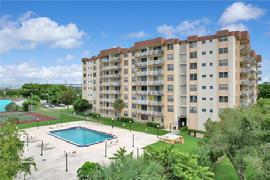
The Olympus- 1-2 bdrms, 1.5-2 baths, 1000-1400sf Multiple Units available Starting at $199K
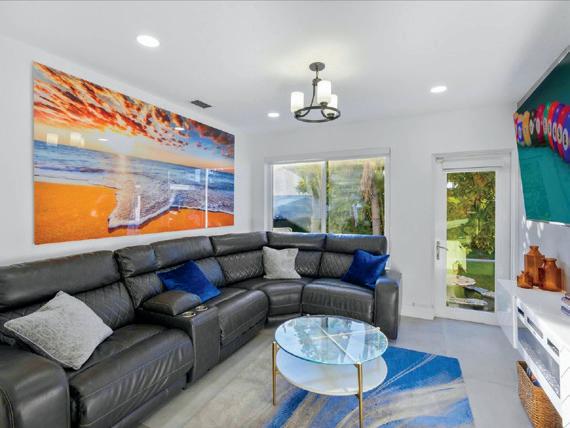
3 bdrms, 2 full baths, Pool, 1,905sf
$4,750/M H O L L Y W O O D
H O L L Y W O O D SOLD
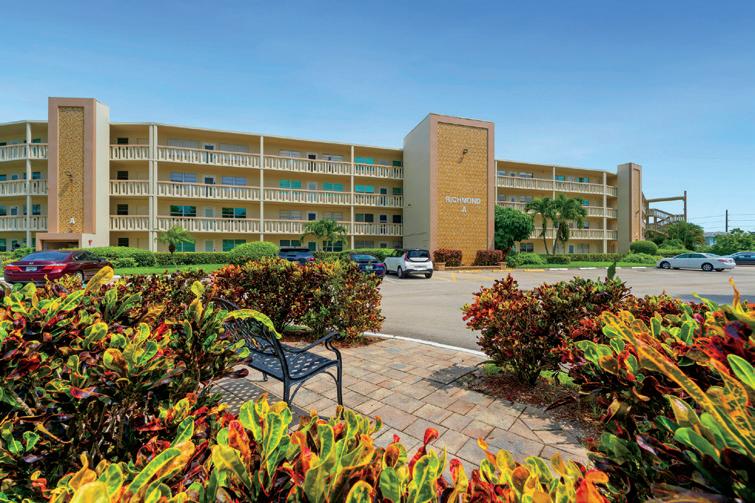
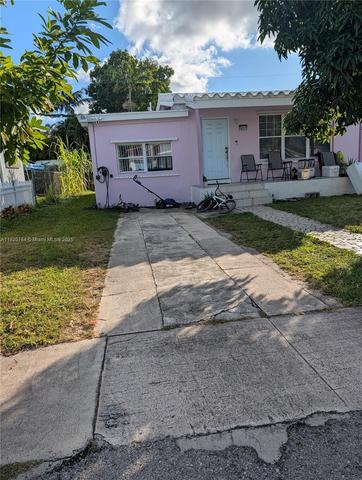
2 bdrms, 2 full baths, 1,000sf $239K
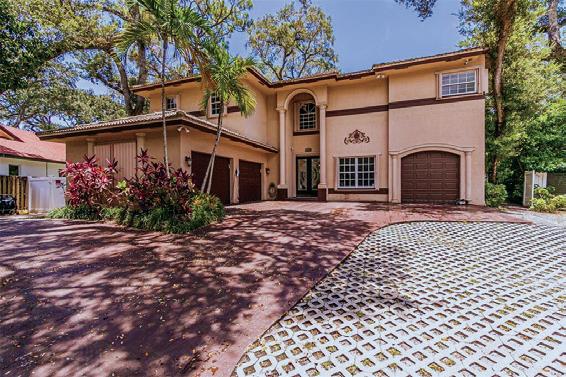
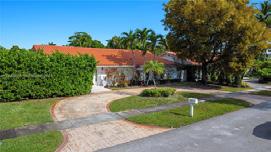
6 bdrms, 3.5 baths, 4,200sf, lot size 14,736sf
$1.995M
RENTED
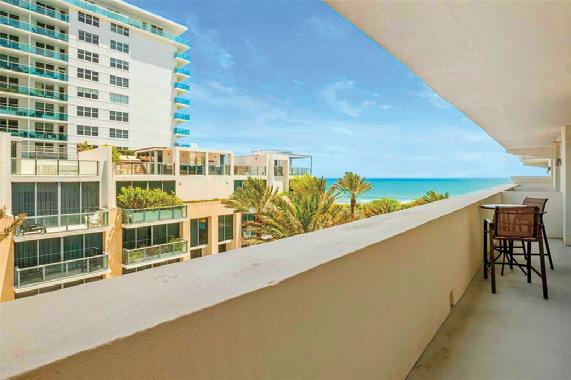
The Spiaggia- 1 bdrms, 2 full baths, 927sf $3,500/M
to manage what you have built?
Do they understand leverage, debt structures, risk management and long-term discipline?
Generational wealth is not simply transferred. It is stewarded.
Families who thrive across generations treat education and governance as seriously as acquisitions.
The most successful real estate families do not necessarily have the most complicated plans. They have the most coordinated ones.
Financial advisors, CPAs, attorneys and insurance professionals must operate from the same blueprint. Investments, estate planning and risk management should reinforce each other.
At its core, generational wealth planning is about four principles: Protect income.
Preserve assets.
Create liquidity.
Transfer intentionally.
Real estate may be the foundation. But strategy is the structure.
Properties can be acquired. Portfolios can grow. Markets will rise and fall.
What determines whether wealth lasts beyond one generation is not just asset value. It is planning, structure and intentional coordination.
For families who have worked decades to build real estate portfolios, the next phase is not accumulation. It is preservation.
Because wealth is not truly gen-
erational until it survives transition.
Please seek qualified legal and tax advice before implementing any planning strategies, in conjunction with guidance from G Wealth Strategies.
















By Shmuel Shayowitz
Over the past week, a few people mentioned how much they enjoyed my “Would You Rather” questions, which I always appreciate hearing (Shout out to AR). One person even said his family has often debated my Would You Rather questions at the Shabbos table for hours. I love hearing that, not because my articles were getting attention, but because the whole premise of my writing is try to get people to think differently about their money and mindset.
Conversely, experience has shown how rare it is for a home to feel like a place where these ideas are welcome. We are all very busy juggling schedules, homework, bills, and exhaustion. So the default script often becomes: study hard, get a job, become a responsible adult. Responsibility matters, but when that is the whole message, children grow up believing life is something you fit into rather than something you can shape. Entrepreneurial thinking is not a gene you are born with. It is a culture, and a culture that can be built at any age.
Long before Amazon became a global behemoth, Jeff Bezos spent his summers working on his grandfather’s ranch in Texas. He has spoken often about repairing windmills, fixing broken equipment, and learning that when something stops working, you don’t wait for someone else to solve it. You figure it out. That ranch did not just teach mechanics, it taught self-reliance and long-term thinking. In his speeches, Bezos has credited those early experiences with shaping his willingness to experiment, tolerate failure, and build a success mindset.
Sara Blakely, founder and owner of Spanx (and minority owner of the Atlanta Hawks), tells a story every parent should borrow. She said that almost every week her father would ask what she failed at that week - and if she had no answer, he would be disappointed. It trained her to connect failure with effort and growth, not shame. Imagine what that does to a child’s confidence! It gives them permission to try, to look silly, and to become resilient.
The Nakash brothers are another example. This iconic Jewish family built the Jordache company into an apparel powerhouse. They used insurance proceeds from a burneddown store to begin manufacturing their own brand of upscale jeans. From there, the Nakash family has gone on to expand their empires into real estate and a myriad of other successful enterprises. That does not come from following a scripted career path, it comes from an upbringing that teaches kids to notice opportunities, handle pressure, and take action.
Granted, most of us are not going to build the next Amazon or Spanx, and that doesn’t need to be the end game. However, incubating children or siblings into dreaming bigger can lead to unthinkable ventures. For some people, that can be as simple as a family side hustle, a small service business, or a rental property project where everyone has a role. The goal may not even be big profits. The achievement, however, is providing children with challenges, responsibilities, and aspirations. Let your kids help track your expenses and see cash flow. Let them sit in on
a call with an attorney or accountant. Let them suggest an idea, test it, and learn what the market says about it.
When kids understand how money is made, they start to actually value it. When siblings learn to collaborate on real tasks, they stop seeing each other as rivals and start seeing each other as partners. These family undertakings can help shape skills, teach them to manage expectations of themselves and others, and help foster a true respect for time.
So this week’s “Would You Rather” question is - Would you rather have your kids learn how to think now and how to shape their own destiny while the stakes are low, or rather have them coast through life and tackle all of those adult challenges later, when the stakes are their mortgage, their marriage, and their quality of life? The best time to build entrepreneurs is not after college in a master’s program … it’s one conversation at a time, at your kitchen table.
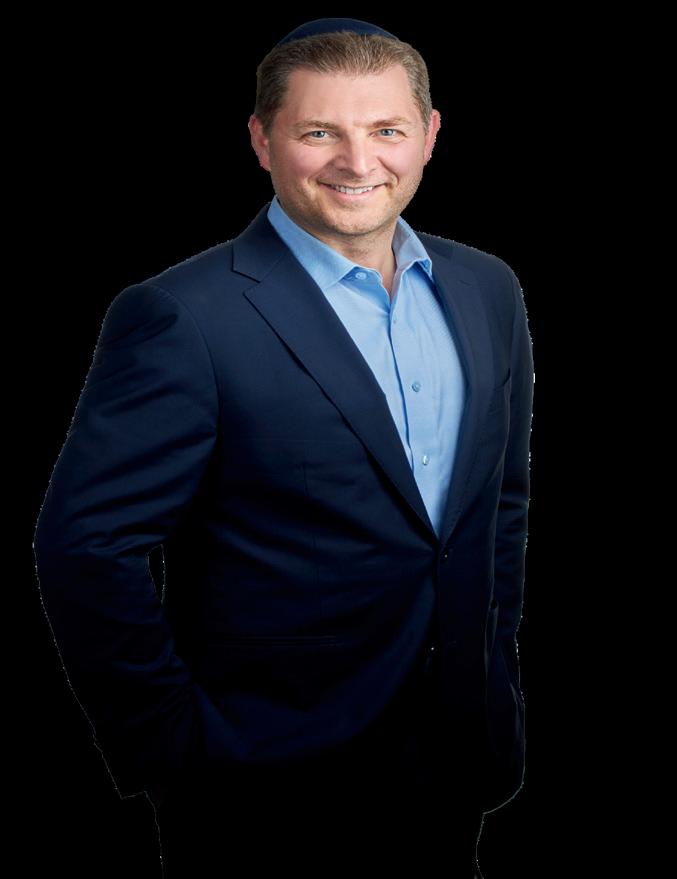
Shmuel Shayowitz (NMLS#19871) is a highly regarded Real Estate & Finance Executive, Writer, Speaker, Coach, and Advisor. He is President and Chief Lending Officer of Approved Funding, a privately held national mortgage banker and direct lender that has facilitated over $3 billion in mortgage funding. Shmuel has over twenty years of industry experience and holds numerous licenses and accreditations, including certified mortgage underwriter, licensed real estate agent, residential review appraiser, and accredited investor, to name a few. Shmuel has successfully navigated through many changing markets and business landscapes, making his market insights and experience well-coveted within the real estate industry. He can be reached via email at Shmuel@ approvedfunding.com.




Nutritional Counseling: Members are eligible for 2 nutritional consultations (up to $125/session) per membership year. Sessions accrue towards allowed therapy count.


Dental Care: Members may submit up to three $100 Sharing Requests per membership year.
United Refuah members can access eligible medical services across 31 care categories, including care you may not realize is eligible.
See Sharing Guidelines for full eligibility details and limits. Some services may require pre-notification prior to care.

Preferred Providers: With over 30 select providers, members pay a low check-in fee. Balances are fully shared, with zero paperwork or billing hassle for the member.

Chiropractic and Acupuncture*: Members are allowed a combined total of 12 chiropractic and/or acupuncture sessions (up to $75/session) per membership year.


Vision: Members may submit a $50 Sharing Request per membership year for refractive eye care.

Mental Health Services*: Testing, counseling, and treatment in connection with a diagnosed mental illness are eligible for up to 12 visits (up to $125/session) per membership year.