Community Voice magazine is not responsible for the Kashrut or services provided by the advertisements. It is up to the consumer to verify the information.
Beyond the Headlines
A weekly glimpse into the Israel you won’t read about in the news
By Sivan Rahav Meir
Test Yourself: Who Is Telling You the Story?
This week’s parashah, Behaalot’cha, is full of complaints, disputes, and grumbling from the people. They want different food. They want to go back to Egypt. Instead of acknowledging all the kindness that has been done for them, they see only what is lacking.
Our Sages ask us to note that most of the time during our journey through the desert, the problem is not an external enemy but our internal state: our unity, our faith, our motivation. When these are absent, it is impossible to keep moving forward.
Last week, a friend sent me a video featuring the Greek Minister of Health being interviewed on Greek television. In case you didn’t see it, this is what he said: “Really, is there a nation like the Jews? These people took a strip of desert land, smaller than half of our Peloponnese Peninsula, and they have a GDP of 500 billion. If you go there, you see that they produce abundance out of nothing. They are at war with Lebanon, with Iran, with Yemen, with Hamas, with Syria, and they have 3% GDP growth! And when they ask who the happiest people in the world are, they are in the top five. And here in our Greece, the weather is perfect, everything is beautiful, and whoever you ask how he is responds: ‘Misery, sadness.’ Stop for a moment: he has rockets on his right, rockets on his left, and he says, ‘How happy I am to live in Israel.’ And
by us? Here, everything is black. Do you have an explanation?” The minister concludes: “There is no explanation. This requires a psychological explanation!”
Beautiful. The problem is that the friend who sent me the video attached the following sarcastic line: “Yay, Micronesia is not alone!”
In other words, tiny Micronesia, the only country that supports Israel, has now been joined by some Greek official. The whole world is against us.
Who made her think that way? Who makes us focus only on negativity, on the criticism directed at us, and not on the deep and widespread appreciation that exists as well? Just like in the parashah: who is telling us the story, and who is providing the interpretation of those events?
I sent her back a few video clips from the past week or so to illustrate my point.
Elon Musk, the richest man in the world, was supposed to visit Israel for the Ministry of Transportation’s Innovation Conference. In the end, he traveled
with Trump to China, but he still made the effort to join from there by video call for half an hour. This is what he said: “I am a big fan of Israel. I think, objectively, you are number one in the world.” Applause was heard in the hall, and he continued: “You achieve incredible results relative to the size of your population. I take my hat off to Israel for its innovation and for everything it does.”
It turned out that my friend and many others had not heard about this event at all. I sent her another clip, this time showing Mathias Döpfner, an important German publisher and the CEO of a media group that owns Bild and Politico, among other outlets. Just two weeks ago, he said in a speech: “Zionism is racism? No. Anti-Zionism is racism! Zionism is a natural response to thousands of years of persecution, expulsion, and genocide. What seems illogical to me is that Zionism is an idea embraced only by Jews. I am a gentile, and I am a Zionist.
Wholeheartedly. With conviction and passion. Israel is our values.”
She hadn’t seen this powerful video either. But there’s more.
In a video that went viral in Britain, Kemi Badenoch, the leader of Britain’s opposition and head of the Conservative Party, discussed antisemitism: “I go to Jewish schools and see security guards outside, and I don’t see that at other schools. I go to Jewish businesses whose windows have been smashed. We need to stop pretending this is not happening. We don’t want the 1930s to come back again.”
Someone interrupted her, saying: “What about attacks on Muslims? Isn’t that important?”
Badenoch was not confused. “The people who died were Jews murdered in a synagogue! Let’s not pretend. This is all about Jews. You can say what you like, but I am not blind. That is my position, and you will not intimidate me. What I am doing is supporting Jews in the face of the ignorance that people like you spread. I will not allow hate to spread in Britain.”
That clip, too, was unfamiliar to my friend. I told her that I would show her one more thing: a new video from the Koum Family Foundation. Jan Koum is one of the founders of WhatsApp. He recently announced an unprecedented philanthropic gift of $200 million to Shaare Zedek Medical Center in Jerusalem. Koum, who is Jewish, explained that the connection to Jerusalem, to medicine, to tradition, and to the future moved him deeply. The donation will be used to build a new, advanced, 24-story inpatient tower, which will be named Koum Shaare Zedek. “This is a statement of hope,” he said.
This time, my friend surprised me. She had heard about it. How? Through the protest of a Tel Aviv City Council member who released a video addressing Jan Koum: “Why are you donating to a religious-haredi institution?” (I hope Koum didn’t see that!)
I have many more examples, but the point had been made. In the parashah and in life, the story begins with us: the information we focus on, and how we interpret it.
In this week’s parashah, after all the harsh complaints, Hashem asks Moshe Rabbeinu to appoint another seventy spiritual leaders and educators to help him educate the people and lift their spirits.
It is worth checking out who is educating us, too.
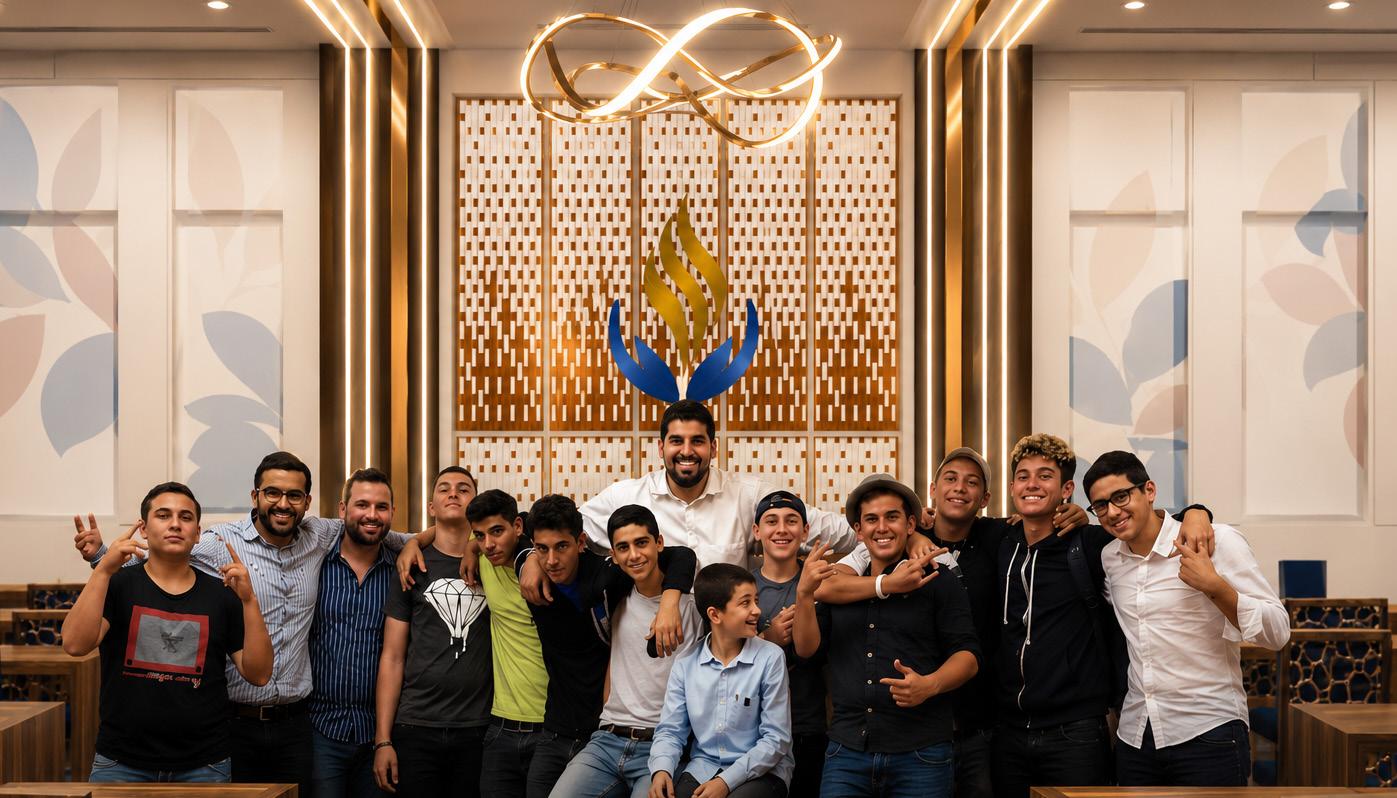
Shorashim’s Next Chapter: Building a Home for Jewish Youth in South Florida
By South Florida Community Voice
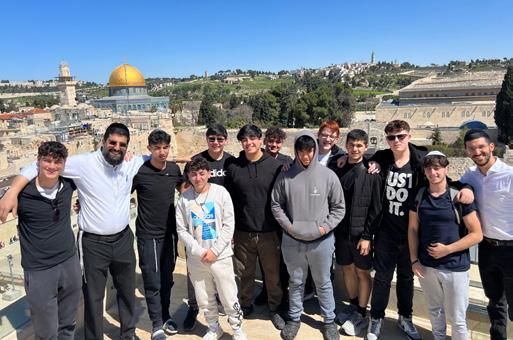
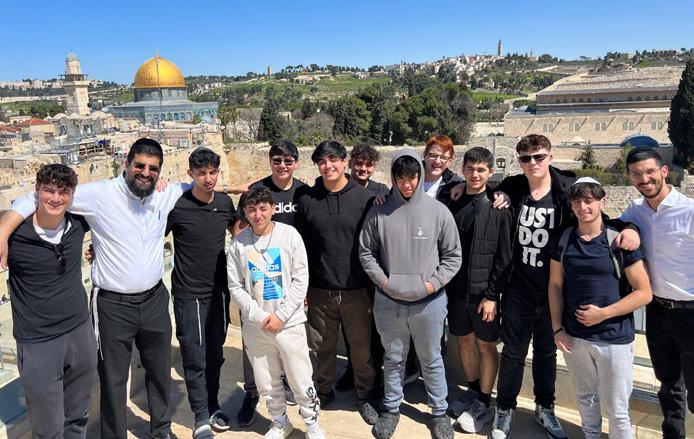
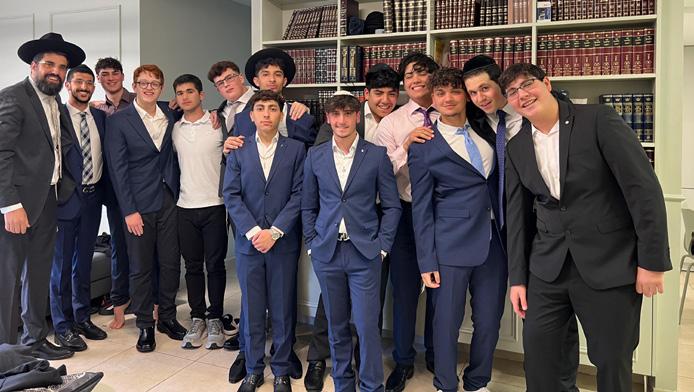
For more than a decade, Shorashim has quietly transformed the lives of Jewish teenagers across South Florida. What began as a small effort to help young Jewish boys stay connected to their heritage has grown into one of the region’s most impactful youth organizations. Now, with a new facility under construction, Shorashim is preparing for its next chapter.
“We’ve been around for about ten years,” explains Rabbi Ofir, one of the organization’s leaders. “But we really began engaging the broader community about four years ago. That’s when people started seeing the growth and impact of what we were doing.”
The name Shorashim means “roots,” and that concept remains at the heart of the organization’s mission.
“The goal has always been to help boys understand their Jewish identity and never forget where they come from,” Rabbi Ofir says. “Many young people are in environments where they don’t always feel connected to Judaism. Shorashim exists to help them stay connected to their roots and develop pride in being Jewish.”
More Than a Youth Program
While some may assume Shorashim is a traditional yeshiva, Rabbi Ofir is quick to explain that it serves a very different purpose.
“We’re not a yeshiva. We’re a nighttime youth program,” he says. “The boys attend their schools during the day and come here afterward.”
The students come from every
background imaginable. Some attend public schools, others charter schools, and some come from Jewish schools. Their family situations are equally diverse.
“We have boys from strong Jewish homes and boys with very little Jewish connection,” Rabbi Ofir explains. “Some come from difficult family situations. Some are struggling with identity, belonging, or finding their place in the world.”
For many, Shorashim becomes much more than an after-school program.
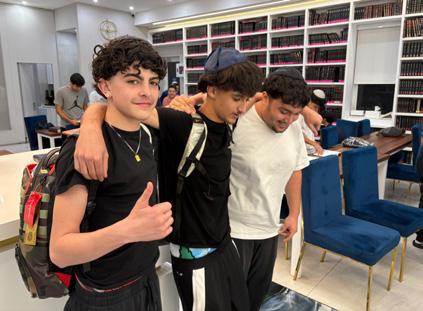
“They feel like this is their home,” he says. “It’s a place where they can escape the pressures of daily life and just be themselves.”
The organization provides far more than educational programming. With a staff of over ten mentors and educators, Shorashim offers Hebrew instruction, bar mitzvah preparation, monthly trips, Shabbatons, recreational activities, sports programs, and nightly meals prepared by a chef.
“We want every boy who walks through our doors to know there’s someone here for him,” Rabbi Ofir says. “Someone to talk to. Someone to guide him. Someone who genuinely cares.”
Transforming Lives
Over the years, Shorashim has helped more than 100 boys transition from public schools into Jewish schools and yeshivas. Yet Rabbi Ofir believes the true impact goes far beyond statistics.
“The numbers are wonderful, but what really matters are the lives being changed,” he says.
He recalls a mother who recently came to the center looking for one of the rabbis.
“She told us that her son had started keeping Shabbat,” Rabbi Ofir remembers. “After watching him for several weeks, she decided to keep Shabbat with him because she didn’t want him doing it alone.”
Stories like these have become increasingly common.
“When you inspire a teenager, you often inspire an entire family,” he says. “The influence spreads beyond the individual child.”
Shorashim’s leadership intentionally focuses on youth because of the unique opportunity to help young people discover their identity.
“Teenagers are searching for meaning,” Rabbi Ofir says. “They’re looking for belonging, purpose, and direction. If we can help them develop a strong Jewish identity during those years, it can shape the rest of
COMMUNITY NEWS
their lives.”
Outgrowing Their Space
The organization’s rapid growth has brought with it a new challenge: space.
When Shorashim moved into its current building approximately four and a half years ago, many believed it would meet their needs for years to come.
“Rabbi Edry actually predicted that we’d outgrow it,” Rabbi Ofir recalls with a smile. “Most people thought he was crazy. But here we are.”
Today, classrooms are filled, recreation areas are crowded, and parking has become a constant challenge.
“The boys kept telling us the same thing,” he says. “They wanted more space. The gym was packed. The game room was packed. Every area was reaching capacity.”
After years of growth, leadership realized it was time to think bigger.
Building for the Future
Located near Sterling Road in Hollywood, the new Shorashim campus represents a significant investment in the future of Jewish youth in South Florida.
The facility is being designed specifically around the needs of the students and community members it serves.
“We’re not trying to create a traditional institutional building,” Rabbi Ofir explains. “We’re creating a place that feels welcoming, energetic, and exciting for young people.”
The new campus will feature expanded learning spaces, a significantly larger gym, recreation areas, gathering spaces, and facili-
ties designed to support both youth and young adult programming. One unique aspect of the project is its broader vision.
“This isn’t only for teenagers,” Rabbi Ofir says. “We want to serve young adults, newly married couples, and members of the community who are looking for a place to connect.”
The new facility will include multiple prayer spaces to accommodate different traditions and styles of worship, reflecting Shorashim’s philosophy of meeting people where they are.
“Our goal is to serve the people,” he explains. “If there’s something that helps someone connect more deeply to Judaism, we want to provide it.”
Looking Ahead
The future plans extend far beyond classrooms and programming.
Rabbi Ofir envisions youth sports leagues, expanded fitness facilities, community events, young adult programming, and additional opportunities to bring Jewish youth together in a positive environment.
A new 2,000-square-foot gym, expanded game rooms, and event spaces are all part of the vision. At its core, however, the mission remains unchanged.
“We always tell parents the same thing,” Rabbi Ofir says. “I’d rather have a teenager spending time here, surrounded by positive influences and mentors, than out on the streets looking for direction elsewhere.”
For Shorashim, the new building is more than just additional square footage. It is a statement about the future of Jewish life in South Florida and a commitment to ensuring that the next generation remains connected to its roots.
As Rabbi Ofir puts it, “Our job is simple: to help every Jewish child know where they come from, be proud of who they are, and always have a place they can call home.”
Florida Families Deserve Facts, Not Fear on Scholarship Programs
By Melissa Glaser
For thousands of Florida families, scholarship programs are not political abstractions. They are the reason parents can access schools that meet their children’s academic, emotional, and individual needs.
That is why the lawsuit challenging Florida’s scholarship programs is so concerning.
This legal challenge threatens programs that have expanded educational opportunity for families across our state. At a time when parents are asking for more flexibility, more options, and learning environments where their children can thrive, this lawsuit seeks to limit those choices.
Opponents often frame school choice as an attack on public education. That framing ignores the lived reality of families. Supporting educational opportunity and supporting public schools are not mutually exclusive. Florida families understand that children learn differently, families face different challenges, and no single educational model works for every child. That is exactly why scholarship programs have gained such broad support.
These programs serve families from a wide range of backgrounds, income levels, and communities across Florida. For some, scholarships provide access to specialized academic support. For others, they make safer learning environments or values-aligned education financially possible. For many families, they provide options that other-
wise would be entirely out of reach.
For Jewish families, these programs have helped make high-quality Jewish education more affordable at a time when tuition costs remain a significant burden. But this conversation is much bigger than any one community. Educational choice has become a mainstream priority because families across Florida are seeking solutions that reflect their children’s real needs.
That reality was evident during Teach Florida’s recent community briefing on the lawsuit, where parents and community members came together seeking clarity about what is at stake. The overwhelming engagement reflected something important: families are paying attention.
As Professor Nicole Stelle Garnett of Notre Dame Law School noted during the discussion, scholarship programs are about expanding freedom and opportunity for families, not preserving systems for their own sake.
And as Professor Avi Helfand, Senior Legal Advisor to Teach Coa-
lition, explained, educational funding that reaches families through independent parental choice is consistent with both sound legal principles and the public good.
But beyond the legal arguments lies a much simpler truth: parents deserve options.
Educational choice is no longer a niche policy issue. It is a mainstream expectation among families who want the ability to make the best decisions for their children.
This lawsuit may unfold in the courts, but the broader question is one Floridians have already answered.
Families want choice. They want flexibility. They want opportunity.
And they should not have to fight for the freedom to choose what is best for their children.
Melissa Glaser is Executive Director of Teach Florida, the state advocacy branch of Teach Coalition, which works to advance safe, affordable, and quality Jewish day school education across Florida
Emotional Intelligence
By Menachem Dahan, Psychotherapist - Bay Harbor Islands
There is no shortage of good ideas in circulation. Podcasts, books, TED talks, online courses, and countless other mediums have made sophisticated thinking about the human mind more accessible than at any other point in history. A person sitting in their car during a commute can absorb, in thirty minutes, a genuinely illuminating explanation of why anxiety works the way it does, what early experiences tend to shape adult behavior, or how certain thought patterns sustain depression long after the circumstances that produced it have passed. The information is not superficial. Much of it reflects decades of serious research and clinical experience, distilled into something a person can actually use. And in many cases, it is the entry point into real and lasting change.
And yet, knowing all of it does not automatically produce that change. For a significant number of people, the gap between understanding something clearly and actually living differently because of it becomes its own source of frustration, and eventually, of shame. They know what they should do. They know, often in considerable detail, why they are not doing it. They can articulate the logic of their own stuckness with real sophistication. And still, something does not move. The conclusion most people draw from this is that something is wrong with them specifically. That the ideas work for other
people. That if the insight was genuine and the logic was sound, the change should have followed naturally, and the fact that it has not is evidence of some personal deficiency. That narrative tends to produce its own momentum. The person begins to feel like they are failing at the very process of trying to get better, which adds a new layer of weight on top of whatever they were already carrying. It is one of the more quietly painful cycles a person can find themselves in.
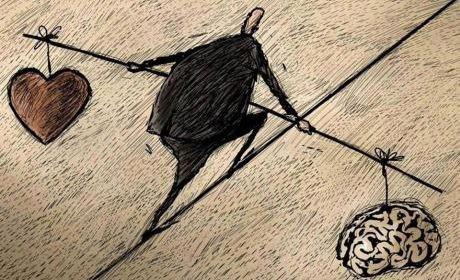
But that conclusion misunderstands something fundamental about how a human being actually works. It holds the intellect responsible for a task it was never designed to complete on its own.
Intellect and emotion are not two versions of the same thing, with one being more disciplined or more evolved than the other. They are not competing for the same territory, where the stronger one wins and determines
behavior. They operate in genuinely different areas, oriented toward different things, gathering different kinds of information, and moving by entirely different rules. Treating them as though they are equivalent, or as though one should simply override the other, tends to produce exactly the frustration described above.
Intellect is the capacity to reach outward. It takes in the world on its own terms, traces causes and consequences, and works with a meaningful degree of detachment from the self. When a person examines a situation and asks what is actually happening here or reads something that reframes how they understand their own behavior, that is intellect doing real and important work. It provides clarity. It creates distance from reactivity. It makes it possible to see a pattern from outside of it, which is a genuine and significant thing. Intellect is also how a per-
Sunday to Thursday: 12pm - 10pm Friday: 11am - 3:30pm OPENING HOURS Scan the code to order!
COMMUNITY NEWS
son builds skills, absorbs frameworks, and begins to construct a different way of relating to their experience. The tools that come through learning, whether they are cognitive techniques, communication strategies, or new ways of interpreting old events, are real tools. They matter. They do actual work in a person’s life when applied with consistency and care.
The limitation is not that intellect is weak. It is that intellect is, by its nature, oriented outward. It reaches toward something external, examines it, and draws conclusions. Even when it turns toward the self, it tends to examine the self from a certain remove, the way one might study an in-
teresting problem. That quality is what makes it useful for understanding. It is also what makes it genuinely insufficient for certain kinds of inner work.
That said, intellect and emotion are not operating in entirely separate worlds. They have a real relationship. When a person has genuinely internalized an idea, not just encountered it but worked with it over time, that understanding can do something meaningful in the middle of an emotional experience. It can create just enough space between the feeling and the response to allow the person to slow down. It can keep someone from being completely overtaken by what they are feeling, which is itself
a significant and often underappreciated form of progress.
The capacity to recognize what is happening, to name it, to situate it within a larger understanding of oneself does not dissolve the feeling, but it can soften its grip enough that the person remains present rather than swept away. Intellect, in this sense, is a genuine partner to emotional work. It simply cannot replace it. What it cannot do, regardless of how well developed it is, is reach into the feeling itself and resolve what is living there. It can hold the space. It cannot do the work that has to happen inside it.
Emotion operates differently. It is not reaching outward but registering inward. When the
world makes contact with a person, emotion is what happens before deliberation begins, before language is applied, before the mind has a chance to evaluate or frame anything. It gathers everything the person has ever been, the accumulated weight of conscious memory and subconscious experience, and produces an immediate and deeply personal sense of what this moment means. Not what it means in general. What it means to this person, in this body, shaped by this particular history.
Emotion is not primarily interested in what is logical. It does not pause to weigh evidence before arriving at its response. Its response is the evidence, as far
as it is concerned. Evidence of what the person has learned, often very early, about what is safe and what is threatening, about what they deserve and what they should expect, about where danger tends to come from, and about what has to be done to manage it. The emotional response is not an error in the system. It is the system doing exactly what it was built to do, which is protect the person based on everything it knows about them.
This distinction matters enormously when a person is trying to change. Intellect can identify a pattern with real precision, explain its developmental origins, construct a compelling argument for why a different response
would serve the person better, and lay out a clear and reasonable path forward. It can do all of that with genuine care and accuracy and still leave the underlying feeling completely untouched, because the feeling was never operating on logic in the first place. It was operating on something older and more personal, something that has its own reasons, even when those reasons are not visible from the surface.
Understanding this is not an argument for abandoning the pursuit of good ideas. It is simply an honest account of what ideas can and cannot reach on their own, and therefore what else is needed alongside them.
When a feeling persists despite
every rational reason it should not, that persistence is itself meaningful. It is not the person failing to apply what they know. It is a part of the person that has not yet been met, that is still carrying something it has not yet been given the space to put down.
The work of personal growth, at a certain depth, requires turning toward that. Not to be overtaken by it, not to let it make every decision unchecked, but to go inward far enough to understand what it is actually communicating. To ask, with real seriousness, what this feeling knows about the person that the person has not yet allowed themselves to fully see or acknowledge. That question, and the genuine willingness to stay with it, tends to reach places that correct information alone cannot.
This is also where the work of emotional growth, including what happens in a therapeutic relationship when it is functioning well, differs from learning in the conventional sense. A good therapeutic process does not simply offer explanations or even techniques, though it often involves both of those things seriously and usefully. It creates conditions in which a person can actually encounter themselves. Not the version of themselves they have constructed for the world, or even the version they privately prefer to identify with, but the fuller, more complicated, less edited version that is actually driving much of what they do.
In that kind of space, with the right support and the right degree of safety, a person can begin to do something that is much harder than acquiring new information. They can begin to probe the parts of their experience that have been informing their behavior without ever quite being examined. They can develop real skills for working through what comes up, not as theory but as lived practice. And they can do this in a relationship with another person, which itself turns out to matter in ways that are difficult to replicate through solitary learning.
None of this diminishes what ideas contribute. The frameworks people encounter through reading, listening, and learning are often exactly what makes it possible to begin. They provide language and orientation. They explain why something is happening in a way that removes shame from it and makes it legible. They offer concrete skills for navigating moments that would otherwise feel impossible. They create the conditions under which a person can begin to take themselves seriously as someone capable of growth. All of that is real. The idea here is not that ideas are insufficient and therefore not worth pursuing. It is that they are one part of a larger process, and mistaking them for the whole process tends to leave a person stuck in a cycle of trying harder to think their way to a place that also requires feeling their way there.
The deepest personal growth tends to happen at the intersection of both. A person brings what they have come to understand about themselves into genuine contact with what they are actually feeling, and in that meeting something becomes possible that neither alone could produce. The insight gives shape to the feeling. The feeling gives weight and reality to the insight. Together they begin to move something that had been fixed in place for a long time.
The person who has read the right books, listened to the right conversations, genuinely absorbed the right ideas, and still finds themselves stuck has not done anything wrong. They have not failed. They have arrived, perhaps without realizing it, at the place where the next layer of the work begins. That layer is less about learning new ideas, and more about being willing to feel what is already there. Less about finding a better explanation and more about turning toward the experience itself, with honesty and without judgment, and taking seriously what it has to say.
Ideas open the door. They are indispensable for that. But walking through it requires a different kind of willingness entirely, one that no idea, however good, can substitute for.
Menachem Dahan is a psychotherapist in South Florida. mdahanpsychotherapy.com
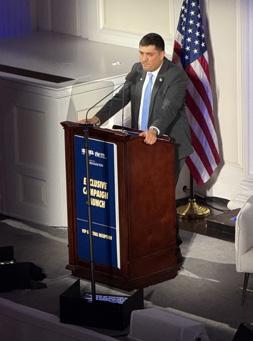
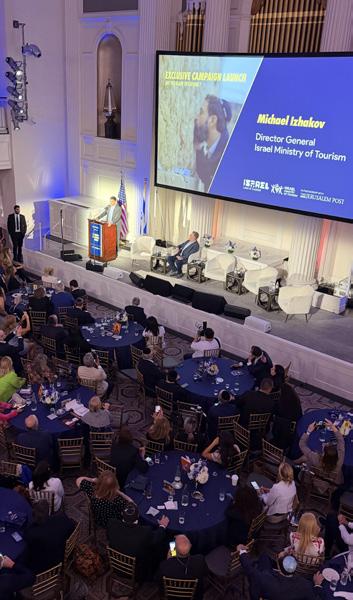
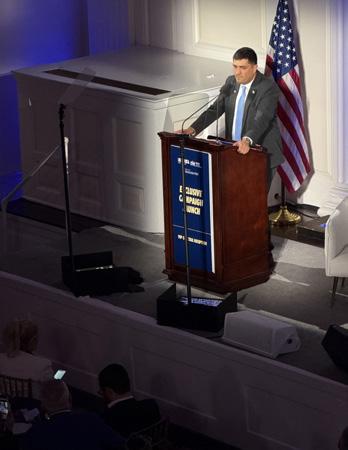
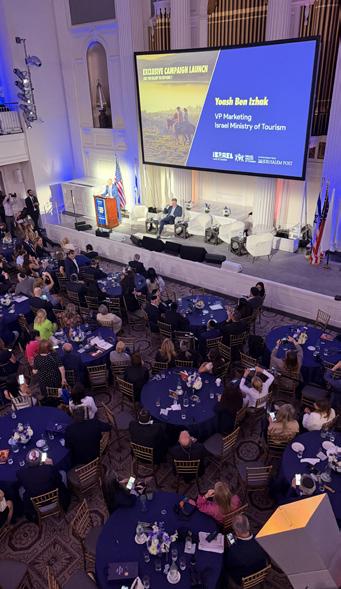
I Am Israel: A New Campaign Invites the World to Experience Israel’s Heartbeat
At a pivotal moment for Israel and for Jewish communities around the world, the Israel Ministry of Tourism is sending a clear and powerful message: Israel is open, Israel is alive, and Israel is waiting to be experienced.
The Ministry of Tourism, whose mission includes promoting tourism and increasing economic activity connected to travel, continues to focus on bringing visitors to Israel and strengthening the country’s tourism industry. That mission stood at the center of the new campaign, titled “I Am Israel.”
The campaign is more than a tourism initiative. It is a call to reconnect people with the land, the culture, the history, and the spirit of Israel — not only through headlines or political discussions, but through real moments, real people, and the living beauty of the country itself.
Speakers emphasized that even during difficult times, Israel has not paused its vision for the future. The country continues to invest in its people, its communities, its technology, its culture, and its ability to welcome visitors from across the world. The message was one of resilience: Israel is not waiting for “the day after.” Israel is already building, growing, and looking ahead.
The campaign seeks to remind people that Israel cannot be fully understood from a distance. It must be walked, tasted, heard, and felt. From the stones of Jeru-
salem to the quiet waters of the Kinneret, from music and food to innovation and faith, Israel offers a story that no other country can tell — a story thousands of years
old, yet still unfolding every day. One of the central themes of the evening was that tourism to Israel is not simply a transaction. It is a connection of the soul. Visitors do not only see sites; they step into history. They meet a people whose strength is matched by their warmth, whose resilience is matched by their joy, and whose
COMMUNITY NEWS
identity remains deeply rooted even in challenging times.
The speakers also addressed the responsibility of those in tourism, media, and community leadership. They described them as “architects of connection” — people who help others move beyond the headlines and experience Israel for themselves. The campaign is designed to cut through the noise and invite people to discover the Israel that continues to build, dream, dance, and welcome.
The launch also carried a strong message of partnership between Israel and North America. As the United States approaches its 250th anniversary of independence, the event celebrated the enduring bond between Israel and America and expressed hope that
the relationship will continue to grow stronger for generations to come.
At its heart, “I Am Israel” is about showing up. It is about visiting, encouraging others to visit, investing, supporting, and becoming part of Israel’s ongoing story. As one speaker shared, after repeated trips to Israel, one truth becomes clear: once Israel becomes personal, it stays with you.
The campaign’s message is simple but powerful: Go see Israel for yourself. Walk its streets. Meet its people. Feel its history, culture, energy, and spirit. Find your own Israel.
You have not enough Humanizer words left. Upgrade your Surfer plan.
RABBI EZRIEL WILHELM
Running Into a Halacha Problem
At his annual checkup, Dovid Weiss expected to hear the usual report: his blood pressure was fine, his cholesterol was acceptable, and everything was more or less in order. Instead, after reviewing the results and performing a thorough examination, his doctor leaned back in his chair and gave him some straightforward advice.
“You need more exercise,” the doctor said. “You’re spending too much time sitting. I strongly recommend that you start going for a morning jog every day.”
Dovid knew the doctor was right. Between work, family responsibilities, and his evening learning seder, there wasn’t much time left for physical activity. Determined to improve his health, he agreed to follow the doctor’s recommendation.
That evening, after returning home, he went online and ordered a pair of running shoes along with some comfortable jogging clothes. Feeling motivated, he shared the news with his chavrusa during their nightly learning session.
“That’s great,” his chavrusa said. “But when are you planning on jogging?”
“Early in the morning,” replied Dovid. “I’ll go before Shacharis. That’s the only time that really works for me.”
His chavrusa paused
“Are you sure that’s allowed?” he asked. “The Gemara in Brachos (14a) teaches that a person should not involve himself in his own affairs before davening.
Going for a jog sounds like a personal activity.”
Dovid had never considered that possibility. On one hand, he was trying to improve his health. On the other hand, he certainly did not want to begin his day in a way that conflicted with halacha.
The next day, he called the Refuah B’Halacha Center hotline.
After listening carefully to the question, the Rav explained that although the Gemara discourages engaging in personal activities before davening, exercising for health purposes is different when it is genuinely necessary and there is no practical alternative time to do it.
The Rav explained that maintaining one’s health is part of serving Hashem. When exercise is needed so that a person can remain healthy and better fulfill his responsibilities in Avodas Hashem, the activity is not
viewed merely as a personal pursuit. Rather, it becomes part of preparing oneself to serve Hashem properly. Therefore, in such circumstances, one may exercise before davening (Tefillah K’Hilchasah 1:23, citing Rav Pinchas Sheinberg zt”l).
However, the Rav added an important condition. Before beginning his jog, Dovid should first recite Birchos HaShachar and the other morning brachos (Revivos Ephraim 5:39).
The Rav also emphasized that he must carefully monitor the time. His exercise routine should never cause him to miss Sof Zman Krias Shema or Sof Zman Tefillah (Minchas Chen 4:1).
Relieved to have clear guidance, Dovid thanked the Rav for his time and clarification.
That night, after finishing his evening seder, he headed home a bit earlier than usual. There was
COMMUNITY NEWS
no point ordering running shoes and making plans if he wasn’t going to get enough sleep!
A New Morning Routine
The next morning, as the sun began to rise, Dovid laced up his new sneakers, he said brachos, and headed out for his first jog. Thanks to a simple phone call, he was able to begin a healthier lifestyle while ensuring that his new routine remained firmly within the framework of halacha.
At the Refuah B’Halacha Center, we are here to provide guidance for real-life challenges, big and small. Whether it’s a question about Shabbos, kashrus, or navigating difficult personal situations, our experienced Rabbunim are ready to listen and advise.
If you ever find yourself wondering about a medical halacha question — big or small, serious or just something that’s been on your mind — remember that you don’t have to figure it out alone. The Refuah B’Halacha Center is here to help, with experienced rabbanim available to guide you through even the most sensitive or confusing situations.
We are here Sunday through Friday 8:00 am till 10:00 pm and erev Shabbos 10 minutes before candle lighting.
Refuah B’Halacha Hotline: 732 755 0851 or email us at www.refuahbhalacha.org
Kiruv Mission:
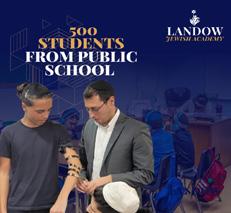
Landow Jewish Academy is a kiruv school dedicated to the belief that every Jewish child should have Elite Academics and a school that inspires a love for Judaism We are committed to ensuring that financial concerns, fears about academic quality, or inadequate facilities never hinder a Jewish neshema from receiving a Jewish education
90% of LJA students previously attended public schools Why do they make the switch? At LJA, we provide an exceptional academic experience alongside a heartfelt love for Torah, Israel, and a deep pride in being Jewish
K-5TH GRADE PASSING SCORES
Culture of Student Growth
We are committed to building students from their strengths and developing them through their weaknesses
We discover the passions of our students and develop them as a partner Whether they are launching their own LLC, designing fashion lines, producing podcasts, creating original music or art, or participating in clubs, athletics, and extracurriculars, these experiences are not just an addition to their education they are the key element that enables our students to truly thrive
6TH GRADERS PASSING THE PERT COLLEGE
Operation Inspiration: Wok the Wok
By Rabbi Jonathan Gewirtz
When it comes to the practice of our Judaism, people often say it’s important to walk the walk, not just talk the talk. This means that it’s not enough to know the right things to do, or even to discuss and be a proponent of doing those things. Instead, you have to actually do them. Talking the talk means you know what’s right. Walking the walk means it’s serious enough to you that you take action and do it.
I recall a friend’s sister said she was looking to marry someone who was going to be sitting and learning. She said, “But that means sitting, and LEARNING.” Just “being” in Kollel, without actually sitting there steeped in Torah study was not what she wanted. The people just in it for the reputation of being a “learner,” but who actually spend more of their time in the coffee room or walking around schmoozing, are not sincere enough about the elevated status of learning Torah.
The ones who are willing to put in hours of toil and study even when they could be in a dozen other places, who care about what they’re doing and see the value in it, those are the ones who truly appreciate what it means. They will walk the walk by staying in the Bais Midrash even when everyone else is running out to see the President, an eclipse or rainbow, or a visiting friend.
I heard that when R’ Shmuel Berenbaum z”l was on a plane to Israel once, it was diverted to Cyprus, where there was a lot of
military activity going on. Everyone on the plane was staring out the windows, trying to catch a glimpse of the action, but R’ Shmuel’s head was down in his Gemara. That was more exciting than anything else.
I’m sure that while you’re following my train of thought about acting on the correct behaviors, you’re also wondering what happened to my ability to spell.
The title of this piece is Wok the Wok, which sounds like a Chinese cooking show. Did I let my spellcheck take over and revise the way “walk” is spelled? No, my friend, I can assure you it was a very deliberate spelling.
I’m a big believer that when we see things, they are meant to convey messages to us. Some people will ignore them as just normal occurrences, but some people will look for ways to find meaning in whatever they experience, as I have been advocating for decades. Well, one evening, I was shopping in a local supermarket
and my wife asked me to order some food for her. They have a full fast-food menu and they prepare things like sandwiches, salads, burgers, and yes, Chinese dishes too.
When you order, you can watch the food being made before your eyes. As I was watching the clock in order to make it to Shul, I was very aware of when they began and prepped my order. I saw them sauté the vegetables, add the sauce, pack the rice, and cook the chicken. I was waiting for them to combine everything and finally place it in the container, but they didn’t do it right away.
Instead, I saw them use a long-handled utensil to turn on a water faucet, filling the wok they had just used. It had a scrubbing surface of some sort at the end of the long handle, and they deftly swished it around the wok, getting off the remnants of the food they had just prepared. They then tipped the wok over, spilling the water out, and did it one more time. I kept wanting them to just pack my food so I could leave, but they took the time to wash out the wok, making it available for the next order.
As I stood there, I realized that Chinese food uses a lot of sticky sauces, and if they didn’t strike while the iron - or whatever nonstick metal woks are made of –was hot, it would be a lot harder to clean later. It reminded me of Teshuva. When we do something wrong, and we all do, what is our next step? Do we try to pretend
it never happened? Do we deny it? Or do we instead acknowledge what we did and try to repent? Our best bet is to get rid of the stain on our souls before it sets in and gets harder to remove. If we wipe off the superficial schmutz as soon as possible, it will be easier to remove than if we wait. That can apply to being lazy about doing the right things too. If we act fast, we can overcome the procrastination before it becomes a habit.
My experience taught me that not only should we want to walk the walk, but if we wok the wok –meaning acting with zerizus and an awareness of what procrastination does - we’ll quickly be fresh and clean and ready for whatever comes next.
2026 – All Rights Reserved
Did you enjoy this column? Feedback is welcome and appreciated. E-mail info@JewishSpeechWriter.com to share your thoughts. You never know when you may be the lamp that enlightens someone else.
Palestinian Authority’s Continued Payments to Terrorists Must Be Exposed, Says Pro-Israel Group
The Israeli Foreign Ministry has sharply criticized the Palestinian Authority (PA) following reports that the PA continues financial payouts to incarcerated terrorists and the families of slain terrorists. A recent Israel Foreign Ministry social media post declared “Palestinian Authority continues its blood-money policy.”
“The Israeli government is correct for long condemning this “pay-for-slay” system,” stated Moshe Phillips, chairman of Americans for a Safe Israel (AFSI). “This is a direct incentive for violence against Israeli citizens. The men paying these terrorists are the very ones Chris Van Hollen and others seem to think are interested in leading a peaceful Palestinian State. The PA leadership is not interested in peace.”
According to reports verified by the Israeli NGO Palestinian Media Watch (PMW), the PA’s Minis try of Finance recently disbursed grants to three “fighting sectors”. These “sectors” include terrorists held in Israeli facilities, those operating in various regions, and the relatives of deceased terrorists.
The PA’s choice to prioritize funding for violent terrorists, including those that targeted families and their children, over civil infrastructure demon strates a systemic refusal to abandon terrorism says AFSI.
“This entrenched pro-terrorism stance is highly unlikely to change, particularly given current Palestinian societal trends,” explained AFSI’s Phillips. “Jailed Fatah terrorist Marwan Barghouti—who is serving multiple life sentences in an Israeli prison for orchestrating deadly terror attacks during the so-called Second Intifada— received the highest number of votes in Fatah’s internal election earlier this month.” Fatah is the dominant political faction within the Palestinian Authority.
remains deeply committed to honoring and rewarding violence,” stated Moshe Phillips, chairman of Americans for a Safe Israel (AFSI).
About Americans For A Safe Israel: Established in 1970, Americans For A Safe Israel (AFSI) is one of the oldest and most influential pro-Israel organizations in the United States. Its advocacy and educational campaigns serve as a potent counterweight to the rising tide of an -
“The persistent paying of Palestinian Arab terrorists and the political supremacy of a convicted terrorist leader like Barghouti reinforce a dangerous truth: the Palestinian political establishment
When Zev Stern moved his family to South Florida, he wasn’t just witnessing Hollywood’s rapid growth—he was helping shape the community that was part of it.
Originally from New Jersey, Zev and his wife, Rachelle, purchased their home in Emerald Hills in 2015. For several years, they traveled back and forth while business obligations kept him up north. Eventually, shortly before the lockdown, they made the full move.
“We loved being in Hollywood,” Zev said. “Our children are in the local schools, we embraced the community, and we really felt connected here.”
Over the last few years, Zev has watched Hollywood transform from what he describes as a “small community” into one of the nation’s fastest-growing Jewish neighborhoods.
“The growth has been remarkable,” he said. “Hollywood has expanded in every direction—from north of Griffin Road to West Hollywood, The Lakes, and The Hills. It’s become one of the most
vibrant Jewish communities.”
Of the growth South Florida has seen, Hollywood has probably gotten a huge percentage of it.”
But Zev’s own story in the community is not only about where he lives. It is also about the unique business he helped build: a full-service cigar lounge, coffee shop, bar, event space, and members’ clubhouse designed to be upscale, welcoming, and community-minded.
From Real Estate to Cigars
Before entering the cigar lounge business, Zev spent 25 years in real estate development. His partners, Dennis Okunyade and Rob Gardner however, came from the cigar world.
“My partner Dennis has been in the cigar industry for over 20 years,” Zev explained. “He is the true cigar aficionado.”
Dennis began years ago with a small cigar kiosk at the old Hard Rock Casino, long before the famous guitar-shaped hotel was built. Over the years, he became well known in the cigar industry and helped develop cigar retail and lounge concepts throughout the area.
Zev’s other partner Rob is a former Marine and is also deeply connected to cigars. Together, the three saw an opportunity to create something more than a traditional cigar shop.
“They had the cigar background,” Zev said. “I brought my real estate development experience. We bought the building, designed it, renovated it, and grew the concept from cigar retail into a full-blown cigar lounge.”
More Than a Cigar Store
What makes the lounge stand out, Zev explained, is that it was built as a full experience. Located within The Smoking Gun at 6970 Stirling Road, the lounge is divided into distinct spaces designed to serve different audiences.
At the front of the store is Davie Beverage Company, a working coffee shop and bar, completely separate from the cigar area. Guests can come in for coffee, beer, wine, or conversation without being surrounded by smoke.
“We have phenomenal coffee,” Zev said. “People really rave about it. We have iced coffees, cappuccinos, lattes, espressos — the full coffee experience.”
Davie Beverage Company also carries more than 100 beers from around the world, including a large stout collection, which Zev says pairs especially well with cigars. In addition, all wines served at the lounge are kosher, giving Jewish guests another layer of comfort when enjoying the experience.
“All of our wines are kosher, and we try to make the space comfortable and accommodating for Jewish clientele as well as non-Jewish clientele,” he said.
The cigar side of the business, True Believer Lounge, is just as carefully curated. Zev says the lounge carries more than 300 facings, including mid to high-end cigars, limited releases, rare finds, and brands that are difficult to get
elsewhere.
“We are not a run-of-the-mill cigar store,” he said. “Because my partner has been in the industry for so long and knows so many people we have access to cigars that are nearly impossible to find.”
A Speakeasy-Style Members’ Lounge
Beyond the retail space lies a speakeasy-style members’ lounge that serves as the heart of the experience.
Members receive discounted rates and can use private lockers to store cigar boxes and personal bottles of hard liquor, which the lounge does not sell but allows members to keep in their own lockers. The result is a private clubhouse feel, where guests can enjoy their cigar of choice, their drink of choice, and conversations with like-minded people.
“It’s really a social experience,”
Zev said. “People come together to relax, enjoy the flavors, pairings, and conversation. That’s what makes cigar culture unique.”
The lounge features comfortable seating for socializing as well as large TVs for sports games, boxing matches, fight nights, and any other events requested by members. It also functions as an event space for corporate gatherings, private groups, car shows, motorcycle meets, synagogue groups, and veteran-focused programming.
“We’ve had corporations rent the space, people come in, mingle, smoke, have a drink, and enjoy the environment,” Zev said. “We wanted to create a place where people could connect,” Zev said. “The cigars are part of it, but the relationships are what make it special.”
Why Davie/Hollywood?
Although many people associate the lounge with Hollywood, Zev clarifies that the business is technically in Davie, right on the Hollywood border.
“Sometimes the address shows up as Davie, sometimes as Hollywood,” he said. “But we are right on the border.”
For Zev and his partners, the location made sense because they all live in the area. The building itself also offered something rare: independence.
“It’s a stand alone building,” Zev said. “We have ample parking, we can do events, and we don’t have to worry about bothering neighbors. It’s our own spot.”
Owning the building also allowed Zev to design the space properly. The cigar lounge has its own ventilation, air conditioning,
COMMUNITY NEWS
and air-scrubbing system, while the humidor is self-contained with ideal temperature and humidity for the cigars.
“The smoking area is separate, the humidor is separate, and the coffee shop and bar have no smoking,” he said. “Someone can come in with a child and sit for coffee without being around smoke.”
A Jewish-Friendly Lounge With a Community Feel
While cigars and coffee may draw people through the door, community is what Zev believes keeps them coming back.
“We are family-owned and operated,” Zev shared. “My partners and I are like family, and giving back to the community is important to us.”
The lounge has already hosted shiurim, pre-Yom Tov gatherings, and community events, including pre-Pesach programming. The concept is simple: guests can come for meaningful Torah and conversation, and afterward those who wish can stay, relax, and enjoy a cigar in the lounge.
That community focus continues with events as well. One example of that community focus came on May 31, when Rabbi Daniel Lapin—often referred to as “America’s Rabbi”—visited the lounge for a book discussion and signing following Shavuos.
Zev also noted that the lounge is open to partnering with organizations that support Israel, the IDF, veterans, and other meaningful causes.
“We are Jewish-friendly, accommodating, and community-minded,” he said. “But at the same time, it’s also just a fun place to be.”
Built Slowly, With Room to Grow
The lounge opened in March of last year, and while Zev says the business is still young, the response has been encouraging.
“It’s a new business, and every new business takes time to build,” he said. “But our members seem to like it, and the response has been very positive.”
As for future growth, Zev says they are looking into opening additional locations.
“Slow and steady is my motto. We’ll do it at the right time and in the right place.”
For now, Zev and his partners are focused on continuing to build the lounge as a destination — not just for cigar enthusiasts, but for people looking for conversation, community, events, and a comfortable place to unwind.
As Hollywood and Davie continue to grow, Zev hopes the True Believer Lounge and Davie Beverage Company will grow alongside them—not simply as a business, but as a place where people gather, connect, and build community. As he puts it, “It’s not just a cigar store. It’s an experience.”
“Never Ever Again:” From a Familiar Refrain to a Harsh Reality
By Dr. Chaim Botwinick
Since October 7th 2023, the world has experienced a tsunami of open anti-Semitic hatred, unsurpassed since the Holocaust.
This explosion was like flipping on a light switch or the blast of lightning bolt. It was fast, immediate and relentless.
On October 8th, less than twenty-four hours following the horrendous genocidal Hamas massacre of innocent civilians living in southern Israel, we began to see an intensity of anti-Semitism and Jew-hatred in virtually every segment of our society. It was as if the entire world was preparing for this defining moment, just waiting for this attack to happen so they could explode with violent anti-Semitism, Jew-hatred and anti-Israel hatred on the streets and college campuses with demonstrations, protests, outright violence and propaganda.
Many historians, sociologist and geopolitical experts feel that anti-Semitism and Jew-hatred has always existed. This is a fact. Since time immemorial Jew-hatred was always fomenting just below the surface. But following October 7th, the below-the-surface hatred exploded in a loud violent and public way.
Not only did the progressive left blame Israel for the Hamas aggression, they also expressed hatred and hostility toward Jewish supporters of Israel because of their assumed “privilege.” Af-
ter the horrific slaughter of 1,200 innocent Israelis at the Nova Music Festival and surrounding kibbutzim, the world lashed out at Israel and Jewish communities around the world.
Equally disconcerting was the silence from most of the world, reminiscent of the deafening silence during the Holocaust. How is it possible? How and why did such a thing occur? And what can Israel do in the future to prevent such atrocities from reoccurring?
To be very clear, anti-Semitism flourishes today because of deeply-rooted historical stereotypes, religious prejudice and the need to use Jews as scapegoats during times of political, social and economic upheaval. It is a prejudice that morphs to fit contemporary
anxieties and fears.
Deeply troubling, is the new spin on this ancient hatred, that of portraying the Jews as “colonialist occupiers” and “aggressors” and that the Palestinians and even Hamas terrorists are the “oppressed.”
This flagrant distortion is most noticeable on college campuses, where students are motivated (and paid) to chant “Free Free Palestine” or “From the River to the Sea” with most of them not even knowing what these ridiculous slogs mean.
Logic would dictate that these progressive, left-leaning students would march in support of anyone they define as a “victim” yet with the explosion of propaganda showing Palestinian terrorists as the “victims” and the Jews as the
• DINE-IN
• SUSHI PLATTERS
• CATERING SETUP
• LIVE SUSHI STATION
• DELIVERY & PICKUP 10% DISCOUNTIF YOU BRING IN THE COMMUNITY VOICE MAGAZINE
oppressor,” the entire situation is distorted,
Another dilemma I cannot understand or reconcile is why these anti-Semitic and anti-Israel protests do not denounce the brutal Iranian regime that oppresses women in a truly horrific fashion as well as executing and torture anyone who stands up in protest. Where are the women’s rights and civil rights activists? How come the streets of New York, Berlin, Toronto, Italy, France and Chicago are silent when it comes to the Iranian mullahs?
This double standard flies in the face of moral clarity, dignity, and civility, and supports the theory that these acts of violence are being financed by wealthy individuals and governments since many of these protesters are bored, disenchanted with their lives and in search for a cause. It’s probably more about the paycheck than any core political beliefs or opinions.
But the question still remains: is it possible to stop this hatred or are we destined to continually battle it as we have for millennia? I believe the time for passivity is over. We must now demonstrate our unswerving resolve to combat this growing evil by any means possible.
This includes:
Increasing and intensifying our education of the public by disseminating communications and public information and marketing campaigns to teach the historical truth;
Boycotting of products, businesses and services of companies that do not publicly condemn anti-Semitism, anti-Israel and Jewish-hatred;
Fighting darkness with light. Rather than responding with protests, fear or defining Jewish identity through victimhood, we must increase Jewish pride, perform acts of goodness and confidently spread Judaism;
Holding politicians accountable at the ballot box;
Passing legislation that makes it a federal crime to publically demonstrate against a religion or race;
Establishing a Jewish community red alert defense mechanism not unlike the Jewish Defense League of the 60’s and 70’s; and Urging everyone to seriously consider making aliyah.
Moving Forward
The mantra of “Never Ever Again” must mean exactly what it suggests that our community must never ever tolerate or accept acts of anti-Semitism. It is hightime for our Jewish community to fight this evil with strength, commitment and resilience. In addition to publically sharing Jewish values and highlighting our shared humanity through acts of goodness and kindness, by showing unapologetic Jewish pride and focusing on our divine purpose to bring light to the world, we will build positive relationships and demonstrate to the world, that our Jewish community will never again tolerate
this evil hatred.
Will it be easy? Absolutely not. But if we move forward aggressively and assertively on this path, our adversaries will soon learn over a short period of time that our Jewish community, albeit small in numbers, can roar like lions and do battle against the cowardice of societal evil through practical security, quite diplomacy, displaying Jewish pride and holding those who support or commit acts of anti-Semitism accountable for their actions.
We have the resources, the power; and, the capacity to fight anti-Semitism. Above all, we have bitachon and emunah in HaShem that will prevail in this important mission.
Needed is a true, sincere and uncompromising sense of urgency supported by unswerving, committed and dedicated leadership.
Together, we can do this!
Am Yisrael Chai
About the Author:
Dr. Chaim Botwinick is a senior executive coach and an organizational consultant. Her served as president and CEO of the central agency for Jewish education in Baltimore and Miami; in addition to head of school and principal for several Jewish day schools and yeshivot. As an influencer, he has published and lectured extensively on topics relating to education, strategic planning and leadership development. He is the co-founder of LEV Consulting Associates and host of the Chinuch Horizons podcast series. Dr. Botwinick is the Author of Think Excellence, Brown Books, 2011
Remembering Rabbi Dovid Bryn: A South Florida Legend
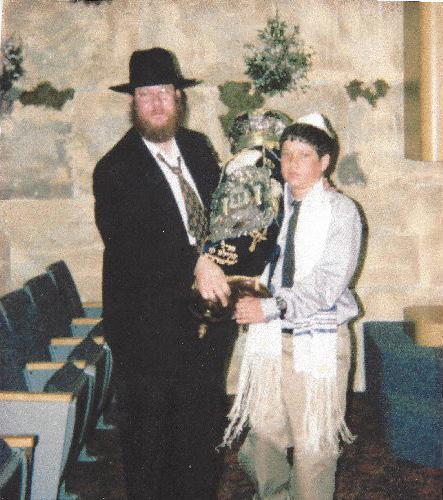
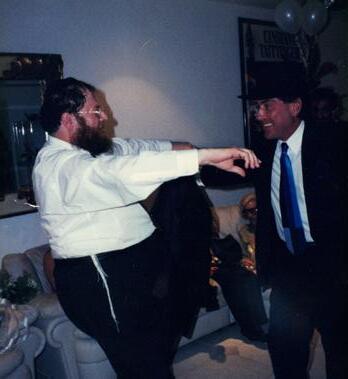
Thursday, 6 Iyar - April 23, 5786 (2026), marks the 24th Yohrtzeit (anniversary of passing) of South Florida Legend, the beloved Rabbi Dovid Bryn zt”l, founder of Chabad Chayil & the California Club Shul. Mostly known for his unending acts of kindness and genuine love for every human being, he is truly missed by all who knew him.
Some rabbis are known for their gigantic shuls and temples, but Rabbi Bryn had a much bigger Shul, one not bound by walls. His shul was in the flea markets, soccer fields of the JCC & in people’s homes. His Sunday afternoon would be spent in a teenager’s living room with a pair of Teffillin and a group of friends. His Shul was in the community’s hearts.
Rabbi Bryn was a Chabad rabbi and Shliach emissary of The Rebbe to North Miami-Dade, whose life was tragically cut short at age 40 by Marfan syndrome, a condition that affects the body’s connective tissue. For over a quarter of a century, Rabbi Bryn – the son of Holocaust survivors - courageously battled the fatal disease that decimated his heart, yet managed to minister to, counsel and inspire tens of thousands of Jews and nonJews alike.
Rabbi Bryn fed the hungry and poor, counseled the sick and the troubled - all with great courage, fortitude and self-sacrifice. He arranged marriages, taught Torah and ethics to thousands, bridged the interfaith gap by working closely with people and clergymen of all faiths … he was the living embodiment of kindness and bravery. Some might be troubled by the
by Rabbi Moishe Kievman | Chabad Chayil
precariousness of constantly living on the edge of existence, but the rabbi’s overflowing concern for others left no room for worry over his own well-being. He lived the equivalent of 120 years of good in a third of the time.
One friend commented on RabbiDovidBryn.org, which was created to remember the legendary
Chassid, ‘If he could breathe, then he would talk to others about G-d’s good, the beauty of a Mitzvah, or life’s bright spots. If he could walk, then he would go to share life with others and show positive perspective as it should be seen. If he could drink, then he would toast L’Chaim to all things positive and constructive. If he could sing, then he
Joshua Lawrence
Michael Wohl w RDB
would. If he could do, then he did. He showed strength not owned by men who appear stronger. He showed love that is only written about. He lived a full life of treating others as one would treat themselves. When I need an example of the unrelenting power of love, I think of him.’
For the past 24 years, we’ve been getting together for an annual Farbrengen, to say a l’chaim, reminisce about the good times shared together and, most important, to talk about how his chesed - his loving kindness for every human being could be emulated.
Please join us Thursday, April 23, 2026, at 8:30pm, for an hour-long Farbrengen & inspiration. There will be Yohrtzeit Services at 7:30pm, followed by the Farbrengen both taking place at Chabad Chayil, 2601 NE 211 Ter, in the Highland Lakes section of West Aventura. The entrance is on NE 26th Ave, in the temporary location behind the new building. The Farbrengen will also be broadcasted on Facebook Live as well as YouTube Live. It will also be shown live at RabbiDovidBryn.org.
That morning Shacharit Services will be at 9:00am, followed by a quick trip to Mt Sinai Cemetery on Opa Lo a to say Tehillim at his resting place. To view or share photos or experiences of this remarkable man, please visit RabbiDovidBryn.org. You can also learn about the new Chabad Chayil center being built in his honor, by calling 305-770-1919 or visiting the website. To dedicate a part of the new building or even 1 square foot for $180 visit ChabadChayil. org/Build.
Please dedicate this day to doing an extra Mitzvah, by going out of your way to doing someone a favor. You can be his hands and feet, in making this world a better place. Think global, but act local! Don’t push it off for tomorrow, do something today! And you will have a tremendous part of bringing healing to a wounded world; making it a better place for all, one good deed at a time, until the world reaches perfection, with the coming of Moshiach. May that happen today!
About the author:
Rabbi Kievman together with his wife are the ambassadors of The Rebbe to Highland Lakes and West Aventura, FL. They are the founders of Gan Chabad Preschool, your local CTeen & CKids chapters, CHAP - an afterschool program for Jewish children in Public Schools and direct Chabad Chayil. He’s the rabbi at The Family Shul and can be reached at (305) 770-1919 or rabbi@ChabadChayil.org. You can also support the community with your partnership at ChabadChayil. org/Partner.
Photos: Credits: The archives at RabbiDovidBryn.org
WE BUY COINS
Excellent Prices Paid
KIDS ZONE KIDS ZONE
DID
YOU KNOW THAT...
FACTS ABOUT RACE CARS
Race cars can go super fast. Some race cars can drive over 200 miles per hour, depending on the type of race car and track.
Formula 1 cars are very light. F1 cars are built to be as light and strong as possible so they can accelerate, brake, and turn quickly. F1’s 2026 rules are also making the cars smaller and lighter.
Race car tires are special. Race tires are made to grip the track tightly, especially during fast turns.
Pit stops are very quick. In Formula 1, teams can change all four tires in just a few seconds. McLaren set an F1 pit stop record of 1.80 seconds in 2023.
Race cars have wings and special shapes. These help push the car down toward the track, giving it more grip.
Drivers wear fire-resistant suits. Drivers wear special suits, gloves, shoes, and helmets to help protect them from fire and crashes.
NASCAR also explains that fire suits are an important part of driver and pit-crew safety.
Race cars do not use regular car keys. Many race cars start with buttons, switches, or special controls.
The engine gets very hot. Race cars need cooling systems to help keep the engine from overheating.
Race car drivers train like athletes. Drivers need strong bodies, quick reactions, and lots of focus.
Every second matters in racing. A tiny mistake can change who wins the race.
KIDS ZONE KIDS ZONE
UNSCRAMBLE THE FOLLOWING WORDS RELATED TO RACE CARS
1. RCAE 2. RACTK
NEGNIE
RITES
HLEMET
RDVIER
RIPSLOE
GLOVSE
TIP SOPT
SDNOCES
I never heard of deli rolls until I hit the kosher Shabbos scene. It was apparent that everyone I visited knew how to make them. So I figured I’d better learn if I wanted to be really kosher. I found out later that the dish has no real connection to Judaism, no mystical powers or deep significance. It just seems to have become a Shabbos standard in many homes. For a hint of sweetness, brush the deli roll with duck sauce instead of egg.
Deli Roll
By Jamie Geller
Ingredients
• 1 sheet frozen pastry dough defrosted
• ⅓ cup deli mustard
• 4 ounces ¼-pound sliced pastrami
• 4 ounces ¼-pound sliced turkey
• 4 ounces ¼-pound sliced corned beef
• 1 egg beaten well
• 2 tablespoons sesame seeds
Preparation
1. Preheat oven to 350°F. Lightly grease a 12 x 15-inch cookie sheet with non-stick cooking spray.
4. Place meats over sheet in layers, first pastrami, then turkey and corned beef.
5. Roll dough as for a jelly roll, place seam side down and brush with beaten egg.
6. Sprinkle with sesame seeds.
7. Bake, uncovered, at 350°F for 45 minutes to 1 hour, until slightly browned and flaking. Let stand 5 minutes before slicing and serving.
Jamie Geller is the Chief Media and Marketing Officer at Aish. She is also a bestselling cookbook author, celebrity chef, television producer, and businesswoman. She’s the author of eight cookbooks and the founder of Kosher Media Network.
BUSINESS DIRECTORY & CLASSIFIED
List your local business, services available, real estate opportunities, Help Wanted, & more!
Basic listing: $10/weekName, number and email address
Enhanced listing: $25/weekUp to 25 words (additional words $1/each)
Deadline: Tuesday at 4pm for next week's issue
2 bedrooms, 2 baths, 841sf $309K
4 bdrms, 2 full baths, 1,754sf $799K
2 bdrms, 2 full baths, 1,000sf $239K
4 bedrooms, 3 baths, 1,851sf $7,800/M
Five Questions Every Business Owner Should Ask Before It’s Too Late
By Glen R. Golish
Business owners spend most of their time focused on growth. Revenue. Employees. Customers. Operations.
But some of the most important questions have nothing to do with next quarter’s numbers.
At G Wealth Strategies, we find that the most successful business owners are the ones who regularly step back and ask bigger questions about their future, their family and the long-term health of the business.
1. What Are My Goals as a Business Owner?
Before discussing investments, retirement plans or insurance strategies, start with the most important question: Why did you build the business?
For some, the goal is financial independence. For others, it is creating a family legacy, supporting a community or building something that can be passed to future generations.
Every planning decision should align with that vision.
2. Who Depends on the Success of My Business?
Most owners immediately think of their spouse and children. But the circle is often much larger.
Business partners, employees, vendors and even extended family members may depend on the continued success of the company.
Understanding who relies on the business helps clarify what protections need to be in place if something unexpected happens.
3. Am I Doing Enough to Retain Key Employees?
Many businesses are built around a small group of talented individuals.
The loss of a key employee can create disruption that is difficult and expensive to replace.
Competitive compensation matters. But increasingly, thoughtful benefit programs, retirement plans and long-term incentive strategies play an important role in attracting and retaining top talent.
Your people are often your greatest asset.
4. Do I Know What My Business Is Actually Worth?
Surprisingly, many owners have never had a formal business valuation.
Yet for most entrepreneurs, the business represents their largest asset.
A current valuation can help with succession planning, retirement planning, estate planning and partner transitions. Without knowing what the business is worth, it becomes difficult to make informed decisions about its future.
5. Is My Buy-Sell Agreement Properly Funded?
Many business owners have legal agreements in place but never revisit them.
A buy-sell agreement should address events such as death, disability, retirement or the departure of an owner. Just as important, it should be properly funded so the agreement can actually function when needed.
An unfunded agreement may create more problems than solutions.
A
Final Thought
Jewish tradition teaches the value of hachana, preparation. The strongest businesses are not simply those that grow. They are the ones that prepare for the unexpected while remaining fo-
cused on the future.
Asking the right questions today can help protect everything you have worked so hard to build tomorrow.
About the Author:
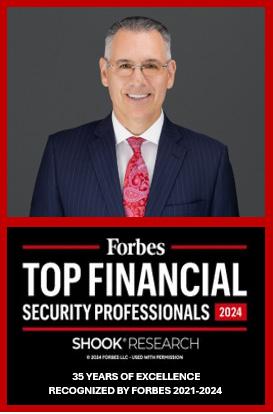
Glen R. Golish is the Founder and CEO of G Wealth Strategies and a Forbes-recognized Top Financial Security Professional. He works closely with families on comprehensive financial and estate planning, including cross-border considerations for those navigating U.S. and Israeli planning needs.
Important Disclaimer:
Please seek qualified legal and tax advice before implementing any planning strategies, in conjunction with guidance from G Wealth Strategies.
Contact Information:
3010 N. Military Trail, Suite 318, Boca Raton, FL 33431 Office: 561-869-4600 | Cell: 561-239-9400 | www.gwealthstrategies.com
Be Careful What You Wish For, You Might Just Get It
A few years back, a woman I was working with received unexpected news that changed her life. A relative she had not been particularly close to had passed away and left her a substantial inheritance. It was not “life-changing” money by Wall Street standards, but it was certainly meaningful enough to have a big impact. Enough to eliminate debt. Enough to seek real opportunities. Enough to substantially change things. “My prayers have been answered!” she told me.
The calls started almost immediately. A cousin with a business idea. A friend with a sure-thing investment tip. A husband with a lifestyle upgrade, he had been quietly waiting for permission to pursue. Within eleven months, the money was gone. Not stolen. Not lost in a market crash. Just dissolved … into decisions that felt reasonable one at a time, but catastrophic in aggregate. For years, she had prayed for financial relief. She got it. But she wasn’t ready for it.
There is a scene in the movie Evan Almighty that has resonated with me ever since I saw it. A woman is sitting alone at a restaurant, holding back her tears. Her husband has lost his mind and started to build an ark because ‘God’ commanded him to do so. She was quietly praying under her breath and couldn’t understand why God would allow this chaos into their home. In fact, her prayers for the past few months had been for family bonding, because she felt everyone drifting. A server at the diner - who turns out to be ‘God,’ rhetorically asked her the following: “If
By Shmuel Shayowitz
someone prays for patience, do you think God gives them patience - or does He give them the opportunity to be patient? If they pray for courage, does He give them courage - or the opportunity to be courageous? If someone prayed for the family to be closer, do you think God zaps them with warm fuzzy feelings - or does He give them opportunities to love each other?”
I never thought of it that way. We spend enormous energy in business and in personal finance focused on the destination - the deal, the raise, the windfall, the breakthrough. We set goals. We visualize outcomes. We build vision boards and business plans. And sometimes, remarkably, we get exactly what we asked for. But then we discover that getting it and being ready for it are two entirely different things. The inheritance arrives before the financial discipline. The business succeeds before the operator is built. The investment closes before the investor develops the temperament to hold it through turbulence. The promotion lands before the leader has grown into the role. This is not bad luck. This is precisely the curriculum. In fact, it’s exactly what we wished for in the first place.
What we are really asking - whether we articulate it this way or not - is not the outcome itself but the transformation the outcome demands. The money is not the answer. The money is the test of whether you have become the answer. This is why lottery winners statistically return to their prior income level within a few short years. It is why
businesses that scale too fast collapse under their own weight. It is why financial relief, without financial maturity, is simply a delayed crisis. God does not zap you with financial wisdom. He gives you the opportunity to develop it.
That opportunity is always closer than you think, dressed in the mundane decisions of an ordinary day and an ordinary week. You are not waiting for the opportunity to change you. You are changing right now, in the direction of your daily choices, whether the opportunity has arrived yet or not. Our sages say, a person is placed in this world as if amid a great trial, not to be handed what he seeks, but to be forged by the pursuit of it. The destination was never the point. The person you become in the pursuit of it is. Science and Kabbalah are in rare and precise agreement on this: transformation precedes receipt. Become first. The rest follows. The wish was never the problem. The only question worth asking is whether you are becoming someone worthy of the answer.
Shmuel Shayowitz (NMLS#19871) is a highly regarded Real Estate & Finance Executive, Writer, Speaker, Coach, and Advisor. He is President and Chief Lending Officer of Approved Funding, a privately held national mortgage banker and direct lender that has facilitated over $3 billion in mortgage funding. Shmuel has over twenty years of industry experience and holds numerous licenses and accreditations, including certified mortgage underwriter, licensed real estate agent, residential review appraiser, and accredited investor, to name a few. Shmuel has successfully navigated through many changing markets and business landscapes, making his market insights and experience well-coveted within the real estate industry. He can be reached via email at Shmuel@approvedfunding.com.
BUILT ON CARE. STRENGTHENED BY STRUCTURE.
What is “Usual and Customary Rates”, and how would that affect care eligibility?
Eligible medical expenses are shared using usual, customary, & reasonable rates — generally based on 150% of published Medicare rates or other fair and typical pricing benchmarks for that service. This helps protect the sharing community from excessively inflated healthcare costs.
Members maintain flexibility to choose providers worldwide rather than being restricted to a network, and the vast majority of providers are comfortable accepting these pricing benchmarks. If a provider’s pricing exceeds the eligible sharing amount, United Refuah can still share up to the eligible amount for that service — unlike many insurance plans, where out-of-network services may receive little or no reimbursement.
With much Siyata D’shmaya , the balance of flexibility, member responsibility, and sustainable sharing is part of what helps keep the United Refuah strong for all members.