


































































© The South Florida Community Voice Magazine. All rights reserved. Reproduction in printed or digital form in whole or in part in any form without prior written permission is prohibited. The publisher reserves all right to edit all articles for clarity, space and editorial sensitivities. Submissions cannot be returned to sender. The South Florida Weekly Magazine is not responsible for the cash flow of any advertised product or service that appears in these pages. The South Florida Community Voice Magazine assumes no responsibility for the content of articles or advertisements in this publication, nor for the content of books that are referred to or excerpted herein.
Community Voice magazine is not responsible for the Kashrut or services provided by the advertisements. It is up to the consumer to verify the information.


By Sivan Rahav Meir
50 Years Since the Entebbe Rescue
Shai Gross, known to many as “the child from Entebbe,” was hijacked to Entebbe as a child together with his parents. Now, as the Jewish people mark 50 years since the miraculous rescue operation, Shai says it is important to pay attention to the dates and events that shape our lives. That is why he held a special kiddush of thanksgiving in his home last Shabbat.
For Shai, the occasion was an opportunity to thank God for the life he and his family were given, and to remember the heroism of the soldiers who risked their lives to save them, foremost among them Yoni Netanyahu.
Since October 7, the memories of Entebbe have returned to him with new force. He sees a direct line between the hostages who were held in Entebbe and the hostages who were held in Gaza: people who encountered absolute evil and came to understand that we are on the side of light, of Judaism, of holiness. They endured shattering trauma, yet emerged strength-

ened and filled with meaning.
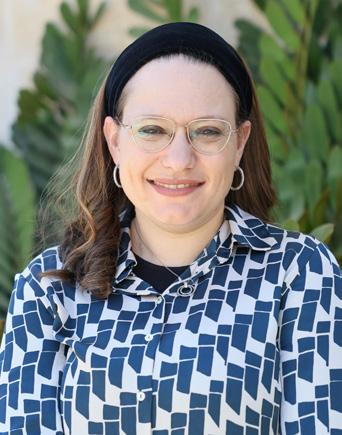
This year, Danielle Aloni joined the gathering as well. Danielle was kidnapped to Gaza together with her daughter, Emilia, and she shared a message of hope, faith, and resilience.
For Shai, this year was also a moment of closure. A few days ago, he traveled to Entebbe to reconstruct it all. He returned, as an adult, to the old Entebbe airport, where he celebrated his sixth birthday during the hijacking.
And so, Shai says, even more significant than all the official state ceremonies marking 50 years since the operation, he says that his family’s own “Entebbe Shabbat” became a source of strength, especially in these challenging days. “We remembered how proud and grateful we are to be part of the Jewish people,” he said.
Renana and Tamar, two Israeli travelers visiting the city of Trondheim, Norway, spent an extraordinary Shabbat in a place where Jewish life is quietly beginning to reawaken.
The synagogue in Trondheim was founded 100 years ago and is considered the northernmost synagogue in Europe. The Jewish community there was almost completely destroyed in the Holocaust, but today, people are slowly returning to their Judaism.
Once a month, the entire community gathers for a full Shabbat together, with prayers and meals led by Norway’s rabbi, Rabbi Yoav Melchior, who travels there especially for the occasion. One of the biggest challenges is the sun: in Trondheim, at this time of year, it barely sets. The community brings in Shabbat early, and Havdalah is made only on Sunday.
During Shabbat, Renana and Tamar met Ben, a Jew who had grown very distant from Jewish life. After October 7, however, he felt deeply alone, and today he has become one of the leaders of the community.
They also met Kelly, who recently decided to begin observing the laws of family purity and going to the mikveh. But because there is no mikveh in Trondheim, she flies each time to Oslo, the capital. The community is also trying to connect the next generation. That Shabbat, there were seven children in the synagogue, which for this community, is a large num-

ber, and they sang Anim Zemirot at the end of the morning prayers. It was deeply moving.
It was striking to see a large, beautiful synagogue that was almost empty. And yet those who have started coming back sit for hours through the Shabbat
prayers with open siddurim. The rabbi and cantor keep announcing which page they are on, and the worshippers make a real effort to follow and participate. They feel they are making progress: just a year ago, many of them did not know how to pray at all. Today,
they even have a Zoom class about prayer.
The community members were deeply moved to meet visitors from the Land of Israel. Everyone wanted to speak with Renana and Tamar about Israel, and most of them dream of making Aliyah and living a full Jewish life there.
When Shabbat ended, something especially moving happened. The community members said they would meet again in another month, but then one woman asked what would happen on Rosh Hashanah. They want a minyan. They want a shofar. They need to learn about the holiday.
It is remarkable: while most of us are still in the middle of June, one Jewish woman in Trondheim is already preparing for Rosh Hashanah.

This incident took place a few years ago, but it feels especially relevant today, when airport disruptions have become almost a matter of course.
Chezi Adler and his group were in London when their flight back to Israel was suddenly canceled. A canceled flight is never pleasant, but their situation was far more complicated: Chezi was traveling with residents of a hostel for adults with autism — people who need constant care, supervision, and a calm, structured environment. The cancellation came after the group had already checked in, handed over their suitcases, and reached the end of what had been a successful trip.
They stood in the airport with no one to turn to. The airline sent them from place to place, without offering any real solution. As the hours passed, the pressure only grew. For a person on the autism spectrum, functioning in a crowded airport filled with noise, stress, and uncertainty can be extremely difficult.
And then, seemingly out of nowhere, some good people noticed them and began to help. Before long, the group — 13 people in all — found themselves in the Goldberg home. For three days, they were hosted in a spacious home by a family whose hearts were even more spacious. There were comfortable beds, matching linens, large towels, hot falafel waiting for them when they arrived exhausted from the airport, a beautiful
Shabbat, and warm support until their new flight on Sunday.
In the haftarah of Parashat Balak this week, we read: “He has told you, O man, what is good, and what God requires of you: only to do justice, to love kindness, and to walk humbly with your God.”Chezi was left with one question: Who among us would open our home to strangers with autism? And one more thought: Who ever said the British are cold?
That week, in London, he said, they met the children of Avraham Avinu.




HERZLIYA, Israel/ ATLANTA, Georgia - A new luxury hotel, The Yacht, has opened at Herzliya Pituach Marina, introducing a large-scale waterfront property designed to serve both leisure and business travelers along Israel’s Mediterranean coast.
The hotel, part of the Fattal hotel group portfolio, was designed by Israeli architect Ilan Pivko and draws inspiration from nautical design. Its structure features tiered decks, wide balconies, and open views of the marina and Mediterranean Sea.
The Yacht includes 325 guest rooms and suites across 12 categories, offering a range of accommodations for couples, families, groups, and business travelers.
On-site amenities include two restaurants serving contemporary Mediterranean cuisine, a 50-meter outdoor swimming pool, and a spa that is expected to open in a later phase with wellness offerings and sea views.
The property also includes flexible meeting and event spaces, including a ballroom for up to 400 guests and rooftop venues overlooking the marina, designed for conferences, receptions, and private events.
Located just north of Tel Aviv, Herzliya Pituach is known for its beaches, marina, and concentration of hotels, restaurants, and business centers. The addition of The Yacht further expands the area’s capacity to accommodate international tourism and corporate travel.
“The Yacht offers travelers a new way to experience Israel’s Mediterranean coastline. It reflects a broader trend in demand


for waterfront destinations and internationally oriented travel experiences among Southern U.S. travelers,” said Lorin Maugery, ConsulDirector of the Israel Ministry of Tourism, U.S. Southern Region.
For more information: Fattal Hotels – Hotels and Vacation Packages in Israel and Worldwide (https://www.fattal.co.il/)



















By Menachem Dahan, Psychotherapist - Bay Harbor Islands
Listening tends to get filed under social virtues. The qualities of a good friend, a good therapist, a wise mentor. It shows up on lists of qualities worth cultivating, offered as advice in relationships and workplaces. At its core, though, it is a form of receiving, and receiving is what human beings are doing for most of their lives.
All day, a person is taking in. Thoughts arise without invitation. Feelings surface without warning. Emotions move through the body before the mind has had a chance to name them. The words and expressions of the people around them land in ways that are sometimes welcome and sometimes not. The world is constantly arriving, in large ways and small ways, and in the face of that arrival, a person has a continuous choice: to let what is coming actually land, or to begin pushing back against it before it does.
Most people, even those who consider themselves good listeners, know the experience of finding themselves already formulating a response in the middle of someone else’s sentence. The other person is still speaking, still trying to express something, and yet internally, the listener has already left. They are composing, preparing, and assembling what they want to say. This is so common that it barely registers as a problem. It is just how conversations tend

to go. But something important is happening here about the relationship between receiving and the self.
This tendency is not a character flaw. It is a natural response to something very human. The moment something is expressed that creates tension with what a person believes, feels, or wants to be true about themselves, there is an instinct to move. To respond. To resolve. Sometimes this comes from feeling genuinely threatened, from sensing that something just said reflects on them in a way they need to correct. But often it is simpler than that. Something in them just wants to be in the room too. There is a pull toward placing oneself alongside what is being said, to make sure that what is true from where they stand also has a presence in the exchange.
The tension feels like something that cannot simply be left alone, not always out of fear, but out of a kind of aliveness, a need to participate, to be heard, to exist in the conversation as a full person and not just a receiver.
And so the push happens. Not always out loud, not always in words, but internally. A counterargument forms. A reframing begins. A defense assembles itself. All of this is happening while the other person is still speaking, while the moment is still open, while there is still something being offered that has not yet been fully received.
Genuine listening requires the capacity to sit with that tension without urgency. To let something land, even when it is uncomfortable, even when it seems to challenge something,
and to trust that the self can hold it without needing to immediately expel it. This is not passivity. It is not agreement. A person can listen fully and still disagree, still respond, still push back when the time comes. But the quality of what they give back will be entirely different if it comes from a place of having actually received, rather than from the place of someone who was never really there to begin with.
This capacity, the ability to sit with tension without urgency, is not just the price of being a good listener in conversation. It shows up everywhere. It is woven into what it means to move through a human life.
Tension is often treated as a signal that something is wrong. A sign that peace has been disrupted and needs to be restored. When a person feels tension, there is a cultural script that tells them to examine their circumstances, identify the source of the problem, and eliminate it. The goal, implicitly, is a life with as little friction as possible. And while there is wisdom in reducing unnecessary suffering, the deeper issue is that tension itself is not the enemy.
The human experience is, by its nature, a story of tension. It is the story of drive and desire meeting a reality that does not bend to will. It is ambition brushing up against limitation. It is the image a person holds of themselves encountering the messiness of who they actually are when things are not going well. It is love existing alongside frustration, hope alongside fear, certainty alongside doubt. These
tensions are not malfunctions. They are the texture of being alive.
To live well is not to eliminate that tension. It is to find a kind of peace within it. Not a peace that pretends the tension is not there, not a peace purchased through avoidance or distraction, but a peace that does not treat tension as an emergency requiring immediate action. That kind of peace can only take root when a person genuinely understands, not just intellectually but in their bones, that tension is not an indictment. It is not evidence that something is broken or that life has gone wrong. It is simply what happens when a real person moves through a real world with real stakes.
Once a person stops treating every moment of discomfort as a problem to be solved, something shifts. The guard comes down. The need to immediately correct, to respond, to reassert, loosens its grip. And in that loosening, real receiving becomes possible.
This is what genuine confidence actually is. Confidence is not the absence of doubt. It is not the unshakeable belief that one is capable, lovable, or right at all times. That is not confidence; it is rigidity, and it is fragile in ways that tend to become visible at the worst moments.
Real confidence is a trust in the self that is deeper than whatever is happening on the surface. It is the knowledge that the part of a person that is experiencing the doubt, the discomfort, the challenge, is not the whole of who they are. The self is larger than any single wave moving through it.
A person who genuinely trusts that can afford to let the waves arrive. They do not have to fight them off or outrun them. They can sit with them long enough to actually feel them, to let them pass, and to respond from somewhere more grounded than the momentary pressure of the tension itself.
Presence works in the same way. Many people try to achieve presence by eliminating all distraction, as if being fully here means having a completely quiet mind with no competing pulls in any other direction. They treat presence as something that can only exist once the conditions are right, once the mind is settled, once the to-do list is handled, once the noise quiets down.
But that standard makes presence nearly impossible, because the conditions are almost never perfectly right. The mind wanders. Other things press in. A beautiful moment contains, alongside the beauty, some small worry or passing thought that does not belong there and yet arrives anyway.
Presence is not found by ridding the moment of tension. It is found by releasing the expectation that the moment has to be clean. A person who can be here, fully here, even while something in them is also pulling elsewhere, is more present than someone who is waiting for the distractions to stop before they allow themselves to arrive.
The more conditions a person places on a moment before they will permit themselves to be in it, the further away that moment
becomes. Presence is not a reward for achieving stillness. It is a choice made in the middle of everything.
All of this, the listening, the confidence, the presence, the capacity to receive what life is actually offering, circles back to the same underlying movement. It is the willingness to let what is arriving actually arrive. Not because what is arriving is always right or always welcome or always easy to hold. Sometimes it is not. Sometimes what arrives is deeply uncomfortable, genuinely threatening, or simply unwanted.
But a person who can hold that without urgency, who can stay open long enough to actually receive what is there, is a person
who is genuinely connected. Connected to the people in their life. Connected to their own inner world. Connected to the moments they are living through rather than the edited version of those moments they would prefer to be living through.
When a person can truly receive, they can truly give. Not because they have suppressed what they wanted to say, but because they have let the other thing fully land first. What comes back from that place is different. It is more precise, more honest, and more useful, because it is responding to what actually happened rather than to the threat of what might happen if nothing is said.
The rhythm between receiving
and giving, between holding and expressing, between listening and speaking, is not just a social skill. It is the rhythm of real connection. A person who can live inside that rhythm, who can sit with the tension long enough to actually receive what there is, is someone who is genuinely present in their relationships, genuinely grounded in themselves, and genuinely alive to the life they are actually living. That is what listening really is. A way of being in the world.


BOCA RATON, FL — Hatzalah South Florida brought together an exceptional panel of medical professionals, public safety leaders, and families touched by tragedy for an evening dedicated to protecting South Florida families from some of the most serious emergencies they face throughout the year.
Hosted at Boca Raton Synagogue, Protecting Our Families
This Summer is part of Hatzalah South Florida’s ongoing series of community wide safety and education programs, addressing critical topics including water safety, hot vehicle tragedies, heat-related illness, environmental emergencies, and the growing risks associated with bicycles, scooters, and e-bikes.
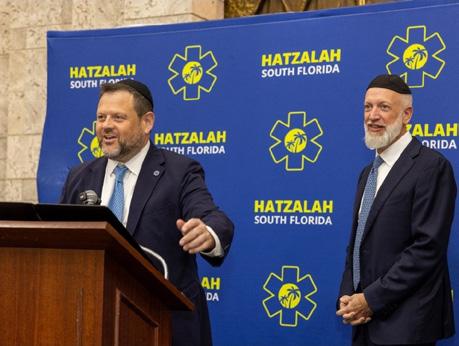
Rabbi Efrem Goldberg of Boca Raton Synagogue opened the evening by speaking about the responsibility communities have to safeguard their families through knowledge, vigilance, and engagement. He challenged attendees to view safety as a shared responsibility among parents, schools, institutions, and neighbors.
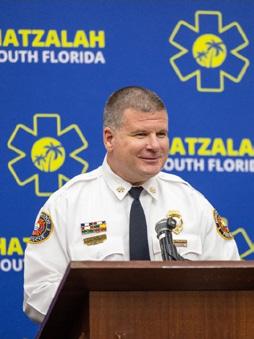
Captain David Moss of the Palm Beach County Sheriff’s Office discussed roadway safety and the increasing dangers posed by e-bikes, scooters, and distracted driving. He emphasized the importance of cooperation among law enforcement, first responders, educators, and families.
Among the most emotional presentations was that of Mrs. Nechama Tauber, who shared the
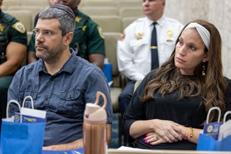


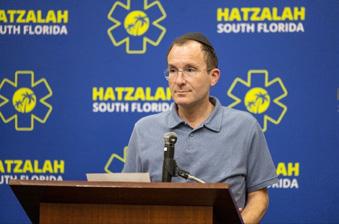
heartbreaking story of her son, Sholom Tauber a”h, who tragically lost his life after being left in a hot vehicle. Speaking with

remarkable courage and honesty, Mrs. Tauber transformed an unimaginable personal tragedy into a powerful message about vehicle safety, emphasizing awareness and vigilance while reminding attendees that these heartbreaking incidents can affect families from all walks of life. She also urged every school and institution to implement attendance notification systems that immediately identify when a child has not arrived at their destination and promptly alert parents, stressing that such safeguards can provide a critical layer of protection and potentially save lives. Her presentation served as a powerful reminder that prevention often depends on simple systems, constant vigilance, and a community-wide commitment to protecting children.
The audience was equally moved by Mrs. Sarah Dorsky, mother of Dina Dorsky a”h, whose deeply personal presentation focused on water safety and the devastating impact water-related emergencies can have on families. Drawing not only from her family’s tragic experience with Dina’s drowning, but also from her engagement with water safety professionals, Mrs. Dorsky shared practical guidance for parents and caregivers. She emphasized the importance of properly se-
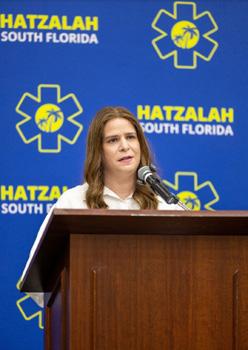
cured pool fences, active supervision, and the need for parents to be physically present in the water with young children rather than relying on observation from the poolside. Mrs. Dorsky also discussed the dangers associated with flotation devices such as puddle jumpers, explaining that they can create a false sense of security for both children and parents and may leave young children unable to properly right themselves if they fall face down in the water. She further stressed that parents should never permit playdates at homes with pools or other bodies of water unless there is constant adult supervision and properly secured pool safety fencing in place. Combining heartfelt testimony with actionable recommendations, she reminded attendees that vigilance, layers of protection, and constant awareness remain among the most important safeguards around water.
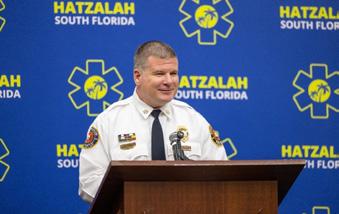
Providing the first responder perspective was Deputy Fire Chief Michael Moser of Hollywood Fire Rescue. Drawing upon more than 25 years of emergency response experience, Chief Moser shared lessons learned from countless rescues and emergencies. His
presentation focused on beach safety, pool safety, and the unique hazards associated with South Florida’s waterways and coastline. One of his central messages was simple but powerful: respect the water. Whether at a pool, lake, beach, or ocean, Chief Moser emphasized that respecting the power and unpredictability of water is essential to staying safe.
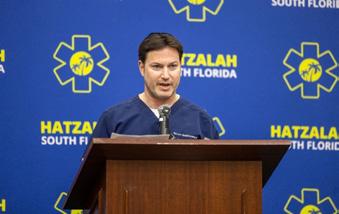
Dr. Yoram Gutfreund, Medical Director of Hatzalah South Florida and a respected emergency physician, delivered a comprehensive presentation on heat-related illness, dehydration, and environmental emergencies. Drawing on decades of frontline medical experience, Dr. Gutfreund provided practical guidance for recognizing warning signs and responding appropriately when emergencies occur.
Hatzalah South Florida Board member and veteran First Responder Chaskel Bennett skillfully guided the evening’s presenters and discussion. Bennett reminded attendees that while Hatzalah responders stand ready to answer emergency calls around the clock, an equally important part of the organization’s mission is bringing critical safety information direct-
ly to the community.
“Our responsibility does not begin and end with an ambulance response,” Bennett said. “If the information shared tonight helps a family recognize a danger, make a safer decision, or respond more effectively during an emergency, then we have accomplished something meaningful.”
The evening reflected Hatzalah South Florida’s commitment to serving the community beyond emergency response. Through public education initiatives, an ongoing series of community awareness programs, CPR and first aid training courses, and partnerships with medical professionals, public safety agencies, hospitals, and community leaders, the organization continues to promote important conversations about protecting families and strengthening community safety.
The event was sponsored by Delray Medical Center.
The gathering was dedicated to the memory of Dina Dorsky a”h, whose legacy continues to strengthen efforts to educate, inform, and protect families throughout South Florida.
While the focus was on risks often associated with the summer season, Dr. Gutfreund emphasized that many of these dangers are year-round concerns in South Florida. Whether involving water safety, vehicle safety, heat-related illness, or roadway hazards, the evening’s message was clear: informed communities are stronger communities, and knowledge remains one of the most valuable tools families can carry with them every day.
By Yeshayahu (Yishy) Bick
(Also published in Hebrew in ramatgannet.co.il, and in Givatayimnet.co.il newspaper in Israel)
The State of Turkey, once a friend of Israel, has become an enemy since President Erdoğan rose to power. President Erdoğan is a highly talented yet ruthless man who deals with his rivals using dictatorial methods. Erdoğan shuts down media outlets that oppose him. He “fabricates legal cases” against his opponents and sends them to prison. Erdoğan has led Turkey into economic collapse (as well as Northern Cyprus, which is tied to the Turkish currency). Erdoğan is deeply religious and a member of the Muslim Brotherhood.
Erdoğan dismantled the close ties that once existed between Turkey and Israel (the Israeli and Turkish air forces used to train together intensively). Turkish workers and construction companies once arrived in Israel in large numbers. Turkish Airlines, the national carrier, landed in Israel dozens of times a day, and Istanbul’s airport served as a major connection hub for flights from Israel to the rest of the world. Hundreds of thousands of Israelis regularly traveled to inexpensive vacation packages in Turkey’s fivestar hotels. All of this ended, and political relations turned into bitter rivalry.
I asked a Turkish friend how Erdoğan manages to win so many votes despite the severe economic situation. My friend told me about his elderly parents, who once had to spend an entire day traveling to a hospital to receive medication,
whereas today a doctor visits their home once a month, brings their medication, and checks their health. He also told me that Erdoğan is building schools in every settlement, ensuring that everyone receives an education, even if, and especially when, it is extreme religious education. Turkey is becoming increasingly radicalized religiously. This is how Erdoğan secured a powerful grip on the Turkish throne.
Let us recall the founder of the Turkish Republic, General and President Mustafa Kemal Atatürk (after whom Turkey changed its name). Atatürk transformed a decadent, declining state into a modern, Western republic. He introduced revolutionary reforms such as establishing Sunday as the day of rest instead of the Muslim Friday, abolishing the Arabic script, and adopting the Latin
alphabet. Atatürk established a secular constitution and created a constitutional court to protect secularism. The army was tasked with safeguarding secularism. Atatürk decided to align Turkey with Europe rather than Asia. Admiration for Atatürk became a personality cult, especially after his death. Every office displays his picture, and in many places there are statues or at least busts of him.
Erdoğan fears canceling Atatürk’s reforms or dismantling his personality cult, yet slowly and methodically he is changing the constitution. The army is no longer the guardian of secularism; on the contrary, senior officers now openly display religious devotion.
After this background, let us examine Turkey’s current situation and its relations with Israel.
Israel joined an energy alliance with the United States, Greece, and Cyprus to build an economic corridor from India to Europe (IMEC). Cyprus will serve as a relay station, and Greece as the gateway to Europe. Turkey had always aspired to be the energy corridor, and now it is out of the game.
This bypass also leaves Egypt outside the energytransfer system, making the Suez Canal less relevant. American backing signals to energy companies that there is political and diplomatic support. Erdoğan is furious at the alliance forming before his eyes. Turkey has no energy resources of its own in the Mediterranean, and Erdoğan attempted to declare parts of the Mediterranean as Turkish territorial waters. The strong alliance between Greece, Cyprus, and Israel limits his ability and undermines his leverage. The region is saturated with geopolitical power struggles, and Turkey has been left off the playing field. If that were not enough, the new geopolitical reality forces Turkey to increase its energy expenditures by $14 billion per year. Turkey has a historic conflict with Greece. The Turkish army was once the largest and strongest in the region. The Greek army does not come close to Turkey’s strength, and therefore the alliance with the Israeli military strengthens Greece’s security and its resistance to Erdoğan’s moves. Erdoğan’s escalating rhetoric is causing Greece to change its defense posture. The Greek Air Force is shifting from patrol
and reconnaissance flights to attack missions and rapid aerial response. The Israeli Air Force trains with the Greek Air Force, and Israeli infantry units train on Greek Cypriot soil. Greece is purchasing Israeli drones for defense and attack.
Erdoğan planned a coup in Syria and the removal of President Assad with the help of the terrorist alShar’a. The coup was intended to bring the Turkish army closer to Israel’s border and directly threaten Israel. Israel surprised Erdoğan and within days destroyed the Syrian army and its military arsenal. The IDF pushed the confrontation line with Turkey away from Israel’s border to a new line inside Syria.
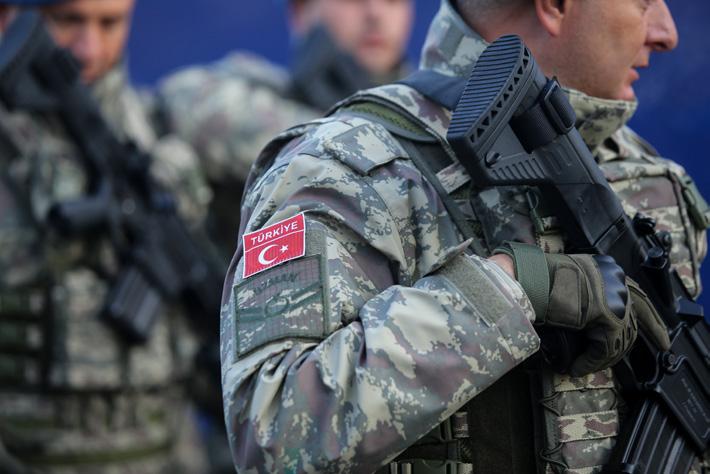
The war in Iran made it clear to the Turks who the strongest military power in the Middle East is, and Erdoğan is boiling with anger. Erdoğan built a diverse military industry intended to turn Turkey into a regional power. Over the past two decades, Turkey’s military industry has become a thriving sector supplying most of the Turkish army’s needs and exporting equipment abroad. The Turks produce advanced UAVs, suicide attack drones, precision missiles, defense systems (such as the “Steel Dome”), advanced cyberwarfare systems, fighter jets, warships, and submarines. Some of the aircraft and vessels are autonomous, and Turkish industry makes extensive use of artificial intelligence. Turkey is becoming a weapons superpower.
Erdoğan established a military base in Somalia with the intention
of controlling the BabelMandeb strait. Israel forged an alliance with Somaliland and is building a military base and runways there.
The crisis in the Strait of Hormuz led Erdoğan to plan an oil pipeline from Saudi Arabia to Syria and Turkey, and from there to Europe. Israel is also planning a land corridor to transport oil through Jordan to the port of Haifa. Incidentally, the Turkish land corridor is essentially a revival of the old Hejaz railway, which also passed through Israel during Ottoman rule.
The frequent clashes between Turkey and Israel worry Mediterranean countries that fear a war may break out between the two states. Turkey launched joint air exercises with the Egyptian Air Force right under Israel’s nose. The aerial drill follows a naval exercise between the two armies held a few months earlier. It appears that military and political security agreements are being formed between Turkey and Egypt. It is worth rereading the article I wrote about the Egyptian army’s buildup in Sinai in blatant violation of the peace agreement with Israel.
The Turkish opposition and Turkish exiles claim that Erdoğan is preparing for war with Israel.
Turkey is not only slamming the door on Israel, it is becoming a tangible threat.
Dr. Yeshayahu (Yishy) Bick yishybick@ gmail.com June 15, 2026
Rivka cradled her newborn baby and smiled. After months of anticipation, countless doctor appointments, and many tefillos, she had finally given birth to a healthy baby on Friday afternoon.
As the sun slowly began its descent toward the horizon, Rivka realized that she would be spending Shabbos in the maternity ward. Although being away from home on Shabbos was not ideal, she felt grateful that everything had gone well and that she and her baby were healthy.
A short while later, the nurse assigned to her for the weekend shift entered the room.
“Hi, I’m your nurse for the next couple of days,” she said warmly.
The nurse was exceptionally kind. She carefully explained everything, answered every question patiently, and made Rivka feel comfortable.
As she listened to the nurse speak, Rivka assumed that she was not Jewish as it didn’t seem that she was. The thought crossed her mind that if she needed anything over Shabbos, she could simply ask the nurse.
As the nurse finished introducing herself and headed toward the door, she suddenly turned around.
“Oh, by the way,” she said with a smile, “my Hebrew name is Shandel.”
Rivka’s jaw nearly dropped.
“Your Hebrew name?”
“Yes,” the nurse replied. “I’m Jewish.”
She then shared a little about

her Jewish background and family before stepping out to continue her rounds. The room suddenly felt very quiet. Just moments earlier, Rivka had assumed she could freely ask the nurse to do whatever was needed over Shabbos. Now everything seemed much more complicated.
How could she ask a Jewish nurse to perform melachah for her? Then she remembered something. During her pregnancy, her doula had given her a number. “If you have any questions,” the doula had told her, “call the Refuah B’Halacha Center. They deal with any situation, all the time.”
Rivka quickly located the number and called. Explaining the situation to the Rav. “The nurse is Jewish,” Rivka explained. “I just had a baby today. What do I do if I need something over Shabbos?”
The Rav carefully explained the halachah.
A woman who has given birth is considered a choleh sheyesh bo sakanah during the first seventy-two hours after childbirth. Because her health and recovery are still considered matters involving potential danger, melachah that is necessary for her care may be performed even by another Jew when needed.
However, the Rav explained, whenever possible, the melachah should be done with a shinui—an unusual manner of performing the act—as stated in Shulchan Aruch (Orach Chaim 330:14).
The Rav further explained that this applies to things that are genuinely necessary for the mother’s medical care and recovery. However, melachos that are not directly needed for the mother’s health should preferably not be performed by a Jewish nurse.
For example, routine paperwork or reports that are not crucial to the mother’s immediate medical needs should ideally be handled by a non-Jewish staff member if one is available.
“If you have the opportunity,” the Rav advised, “gently explain to the nurse that she is Jewish and should avoid unnecessary melachah on your behalf. If something truly is needed for your care and no non-Jewish nurse is available, then the necessary actions should be done with a shinui when possible.” (Shemiras Shabbos K’Hilchasah 40:8).
Rivka thanked the Rav and hung up.
Still, she felt uncomfortable.
How was she supposed to have this conversation?
The nurse was caring, professional, and busy. Bringing up Shabbos observance seemed awkward.
When the nurse returned, Rivka gathered her courage and gently explained what the Rav had told her.
To Rivka’s surprise, the nurse listened attentively.
Then something remarkable happened.
The nurse smiled.
“I understand exactly where you’re coming from,” she said.
She explained that although she did not have a strong religious background, she appreciated what Rivka was trying to do.
“Why don’t you help me?” she
suggested. “You’ll tell me what should or shouldn’t be done and how. We’ll work together.”
Then she said words that Rivka would never forget.
“I’m a Yid and you’re a Yid. If you have to keep Shabbos, then I have to keep Shabbos too. I’m no different than you.”
Rivka felt a lump in her throat.
Throughout the rest of Shabbos, they worked together respectfully and thoughtfully. The nurse made every effort to avoid unnecessary melachah and was genuinely interested in understanding the halachos that applied.
What had begun as a potentially uncomfortable conversation became an unexpected moment of Jewish connection.
In a busy maternity ward, surrounded by the sounds of newborn babies and hospital activity, two Jewish women from very different backgrounds found common ground through the Kedusha of Shabbos.
Rivka will remember that special Shabbos years to come—the joy of her newborn child, the gratitude she felt for a successful delivery, and the warmth of the hospital staff.
But perhaps most memorable of all were the words of a nurse named Shandel:
“I’m a Yid and you’re a Yid.”
At the Refuah B’Halacha Center, we are here to provide guidance for real-life challenges, big
and small. Whether it’s a question about Shabbos, kashrus, or navigating difficult personal situations, our experienced Rabbunim are ready to listen and advise.
If you ever find yourself wondering about a medical halacha question — big or small, serious or just something that’s been on your mind — remember that you don’t have to figure it out alone. The Refuah B’Halacha Center is here to help, with experienced rabbanim available to guide you through even the most sensitive or confusing situations.
Refuah B’Halacha Hotline: 732 755 0851 or email us at www.refuahbhalacha.org
Our Rabbanim
R’ Yaakov Forchheimer shlit”a
R’ Noach Isaac Oelbuam shlit”a
R’ Shmuel Fuerst shlit”a
R’ Uri Deutch shlit”a
R’ Micha Cohen shlit”a
R’ Moshe Zev Feldman shlit”a
R’ Baruch Hirshfeld shlit”a
R’ Daniel Neustadt shlit”a
R’ Avrohom Yaged shlit”a
We specialize in:
Mental health
Shabbos
Treatment issues
Hospital stays
Fertility
Kashrus
We are here Sunday through Friday 8:00 am till 10:00 pm and erev Shabbos 10 minutes before candle lighting.
Annual Bonei Zion Prize is awarded to English-speaking Olim who have made significant contributions to the State of Israel JERUSALEM (June 22, 2026): Eight outstanding Olim from English-speaking countries have been named recipients of the 12th Annual Sylvan Adams Nefesh B’Nefesh Bonei Zion Prize. The prestigious award recognizes exceptional individuals whose professional achievements, community leadership, and contributions have made a lasting impact on Israeli society and helped strengthen the State of Israel.
The honorees include: Naomi Stuchiner, Founder, Beit Issie Shapiro, in the field of Community & Non-Profit; Dr. Philip Klipstein, Senior Principal Scientist, R&D Division, SCD (SemiConductor Devices Ltd.), in the field of Science and Medicine; Rabbanit Chana Henkin, Founder & Chancellor, Nishmat, in the field of Education; Ami Baran, Head, Israel Athletics Association, in the field of Culture, Art & Sports; and Danielle Abraham, Co-Founder & Executive Director, Volcani International Partnerships & ReGrow Israel, in the field of Global Impact; and Barak Swarttz, Content Creator and Founder of GRIT for Good, in the field of Young Leadership.
This year’s Special Recognition Award is being presented to Amb. Ron Dermer, former Israeli Ambassador to the United States and former Minister of Strategic Affairs. One of Israel’s most


influential diplomats and strategic advisors, Dermer played a central role in strengthening the U.S.-Israel alliance, advancing the historic Abraham Accords, and shaping Israel’s national security and foreign policy during some of the nation’s most consequential moments. His decades of public service reflect the transformative impact of Olim on Israel and the Jewish world.
This year’s Lifetime Achievement Award is being presented to Prof. Marta Weinstock-Rosin, a pioneering neuropharmacologist, and developer of the groundbreaking Alzheimer’s drug Exelon. Her decades of trailblazing research and innovation have had a profound global impact on neuroscience and medicine, and her personal journey embodies resilience, vision, and the extraordinary contributions of Olim to Israel and the world.
“The annual Bonei Zion Prize continues to shine a light on the remarkable contributions Olim are making to Israeli society,” said Rabbi Yehoshua Fass, Nefesh B’Nefesh Co-Founder and Execu-
tive Director. “Each of this year’s recipients exemplifies the values of dedication, innovation, and Zionism, and together they are a living embodiment of the vitality and strength that Aliyah continues to bring to the State of Israel.
The Prize is sponsored by Sylvan Adams, President of the World Jewish Congress Israel Region, one of Israel’s most notable philanthropists and a leading voice in the global Jewish community. A Nefesh B’Nefesh Oleh himself, who made Aliyah a decade ago, Sylvan is deeply committed to support the growth and future of the State of Israel. Showcasing Israel’s achievements and the extraordinary contributions of its people to the world is central to his mission, making the Bonei Zion Prize a natural extension of that commitment.
“Each year, the Bonei Zion Prize reminds us of one of Israel’s greatest strengths: the extraordinary people who choose to build their lives here and, in doing so, help build the future of the Jewish state,” said Sylvan Adams, President of the World Jewish Con-
gress Israel Region. “In the wake of the immense challenges Israel and Jewish communities around the world have faced over the past year, these stories of commitment, resilience, and contribution carry even greater meaning. At a time when we are working to encourage greater Aliyah and strengthen Israel through the vision of bringing one million new Olim to Israel, these honorees embody the very best of what Aliyah represents. Their achievements across science, education, sports, social impact, and global leadership are a powerful testament to the immeasurable contributions Olim continue to make to Israeli society and to the Jewish people as a whole.”
Hundreds of Olim from English-speaking countries includ-
ing Australia, Canada, New Zealand, South Africa, the United Kingdom, and the United States, have been nominated for this prize, reflecting the breadth of talent, leadership, and impact found throughout Israel’s Anglo-Oleh community.
Recipients were selected by a distinguished panel of committee members in the following categories: Science & Medicine; Community & Non-Profit; Education; Global Impact; Culture, Art & Sports; Young Leadership; Special Recognition; and Lifetime Achievement. Together, this year’s honorees represent the diverse ways Olim are helping shape Israel’s future.
For more information about the prize and its recipients, visit: WWW.BONEIZION.ORG.IL

About Nefesh B’Nefesh (www.nbn.org.il)
Founded in 2002, Nefesh B’Nefesh is dedicated to addressing the evolving national needs of the State of Israel through four key pillars: Aliyah, National Service, National Development, and Zionist Education. Each of these pillars is strengthened by expanded services designed to benefit the broader community. In partnership with Israel’s Ministry of Aliyah and Integration, The Jewish Agency for Israel, Keren Kayemeth LeIsrael, and JNF-USA, Nefesh B’Nefesh’s comprehensive support and social services have successfully empowered nearly 100,000 North American Olim to integrate into Israeli society, achieving an impressive 90% retention rate. This ensures their long-term commitment to building meaningful lives in Israel and contributing to the nation’s growth.
For Media Contact: David Weissmann | davidw@gova10.com | +972 58-7955088

There is a Gemara in Taanis which has bothered me for many years. In it, (23a) R’ Yochanan tells us that all his life, Choni HaMaagal (of-circle-in-the-sand-untilit-rains-fame) was bothered by the posuk in Tehillim which says, “Shir HaMaalos, b’shuv Hashem es shivas Zion, hayinu k’cholmim – A song of ascents, when Hashem returned the captivity of Zion (from Babylonia), we were like dreamers.”
Apparently, R’ Yochanan knew that Choni HaMaagal was bothered by the meaning of this verse. Was it possible for someone to physically sleep for seventy years, the amount of time of the Babylonian exile? Does a person ever dream of a period of time that in their dream spans seventy years? I’m not sure how R’ Yochanan knew it, but it bothered me that this bothered Choni so much that “his whole life this verse pained him.”
We are very familiar with expressions and phrases in the Torah which seem like hyperbole, or which need explanation. Why did this bother Choni so much that Hashem had to make him fall asleep for seventy years, as the Gemara there relates happened? Why could he not merely accept it was allegorical or contained a hidden meaning? [Author’s note: If you thought Washington Irving’s story of a man in the Catskill Mountains who slept for twenty years and woke up in a world very different from the one he left behind, was original, it’s more likely that he had a Jewish neighbor who
By Rabbi Jonathan Gewirtz
learned Meseches Taanis.]
So, every time I’ve learned this Gemara, it’s made me wonder about this. Recently, I heard a tragic story which gave me a further source for an idea I’d had. Let me start with what I came up with. I didn’t find any commentaries who agreed with me, so I could very well be wrong. The Ben Yehoyada suggests that something needed to be accomplished by Choni’s sleeping for seventy years so Hashem drove him to ask the question, which would lead to his physically (and unnaturally) sleeping for that long.
My approach is much more pragmatic. Seventy years, which was the amount of time we were in Bavel after the first Bais haMikdash was destroyed, correlates to the lifespan of a human being, as it says in Tehillim, “The days of our years in them is seventy years…”
My thought here was that Choni was wondering: Can a person really go through an entire lifetime oblivious to the fact that he is just like a dreamer? This world
is like a passing dream. The things we see and experience aren’t real. They are scenarios created by Hashem to test our mettle and help us grow. If I were Choni, my wonderment would grow and pain me every time I saw people forgetting about Hashem and thinking this world was concrete on its own. How can you remain in your slumber?! You’re approaching the end of your life; do you not yet see that this is all make-believe?!
And that’s where this terrible story came up. On June 13, 2026, a woman in Brazil decided to go bungee-jumping. That’s where people have an elastic rope tied to themselves, then jump or, as in this case, are propelled off a bridge or tall structure. They freefall for a time, and then are stopped short of hitting the ground or the water by the bungee cord. It’s thrilling, exciting, and people record the event for posterity.
In this case, the three men involved in this operation seemingly forgot to connect the rope to her. When they tossed her from 130 feet in the air, there was nothing to stop her fall. The woman survived the fall but passed away hours later from her injuries.
I wondered what she thought about as she fell. She probably imagined this was the greatest time of her life. She was really living! She was getting the rush of adrenaline as she filmed her freefall for her friends to watch later, except she didn’t live to tell the tale. If she was unaware that the rope had not been secured, she would have gone through the en-

























tire fall without realizing the situation she was truly in. She, like someone in a dream, would have had no idea of the actual harm that was about to befall her at the end of her journey.
And that, I think, is what bothered Choni HaMaagal. That a person could live an entire life chasing “the dream.” The dream of honor, wealth, pleasure, which will ultimately lead them to a very ignoble end. When they reach the end of their rope, they will have nothing to cushion the fall if they haven’t realized that this world is intended for us to achieve and accomplish eternal things. If they don’t realize the peril of missed opportunities and not having a se-

cure connection to Hashem, then, when they finally grasp the severity of their plight, it will sadly be too late.


WE OPEN THE DOOR TO WHEREVER YOU WANT TO GO

2026 – All Rights Reserved
Did you enjoy this column? Feedback is welcome and appreciated. E-mail info@ JewishSpeechWriter.com to share your thoughts. You never know when you may be the lamp that enlightens someone else.
From Muscular Dystrophy and Spina Bifida to heart conditions and cancer, we’re there for it all.
Whatever the diagnosis, no matter the crisis, Chai Lifeline is there to support children and families through their most challenging moments. From individualized case management and hospital visits to home-based support, insurance advocacy, after-school programs, and unforgettable summers at Camp Simcha, our programs provide guidance, relief, and connection when everything feels uncertain.
Because no one should face illness or crisis alone.
Learn more at www.chailifeline.org/southeast
or call us at 305-956-9990





Sunday to Thursday: 12pm - 10pm Friday: 11am - 3:30pm OPENING HOURS Scan the code to order!


By R’ Yisroel Broocker (M Div)
Not too long ago, I was introducing myself to a man in my community, and his wife interrupted.
“Sir? Did I just hear you tell my husband you are a somatic practitioner? Can you please explain to him what that means? I’ve been trying to get him to come try a class, and he’s not interested.”
Her husband looked at me, uneasily.
“You’re not one of those breath-work guys, are you?”
I laughed and responded, “Breath is important in every kind of somatic modality, but my focus is helping people learn how to befriend their nervous systems.”
“Still too ‘woo-woo’ for me,” he replied.
“You look like someone who appreciates cars. Have you ever driven a manual stick-shift?”
“Of course, that’s how I learned to drive.”
“Imagine your nervous system is like the transmission of a car. Some people have automatic transmissions, and they are able to regulate their emotions relatively easily. Other people - like myself - have manual transmissions that will overheat if we don’t consciously learn how to downshift them.”
This got his attention.
“So, how do you downshift?”
“Most people get upset about being upset. Downshifting means taking my foot off the accelerator, and engaging the clutch - mindfully noticing what it feels like inside my body. The more rooted I stay in my physical senses, the less I get stuck ruminating on why I feel so hurt and upset, and who I should blame for it.”
The man’s wife looked at him expectantly, waiting for his response.
“That sounds infuriating.”
“That’s where the breath-work comes in,” I said, laughing out loud, and giving him a fist-bump.
As we parted ways, the wife quietly said to me, “Keep talking to my husband.”
The word Somatic comes from the Greek root Soma, relating to the body, and the truth is: the human body is as “woo-woo” as it gets, and our species has marveled at it since the dawn of time.
Far more than just a car - the Body is actually a Merkava, a chariot, for the Soul to find expression, and perform its Divine Service in this world.
Rabbi Yosef Gikatilia z”l explains the word Merkava also comes from the word “morkav,” composite, and that the human body is composed of four Elements: Fire, Air, Water, and Earth.
The heat of our minds, the air in our lungs, the rivers in our veins - all of these elements find their grounding in the physical experience of this Present Moment. When we take time to get into the physical “Earth” of our bodies at this time and place, it allows for the “snow globe” of our complicated inner worlds to settle down, and we can take a wider, more expansive view of things.
If that’s too “woo-woo,” take a deep breath and enjoy your Present Moment.
Much gratitude for letting me take up part of it.
R’ Sruli Broocker is a musician, “multimedia evolutionary,” and certified somatic practitioner who has spent over 20 years weaving together Jewish mysticism, creativity, and embodied healing. Find out more and book your session at: somaticjoy.com






Isn’t
the
As headlines around the world proclaimed a breakthrough between Iran and the West, many observers rushed to analyze what a new agreement could mean for the region. But according to Jonathan Harounoff, journalist, author, and former spokesperson at Israel’s Mission to the United Nations, the first thing people need to understand is that there is no deal—at least not yet.
Speaking with South Florida Community Voice, Harounoff cautioned against reading too much into recent announcements, describing the current framework as little more than a starting point for future negotiations.
“This isn’t a deal,” Harounoff said. “It’s a memorandum of understanding. It’s not even an agreement in its final form. What exists right now is essentially an understanding to begin discussing the possibility of a deal sometime in the coming months.”
For Harounoff, who is concluding a two-year tenure at the United Nations this summer, the development reflects both the opportunities and limitations of diplomacy in dealing with the Islamic Republic.
“I generally believe there’s value in negotiation,” he explained. “People sitting around a table trying to solve problems is always preferable to violence. The challenge is understanding who you’re negotiating with and what their objectives are.”
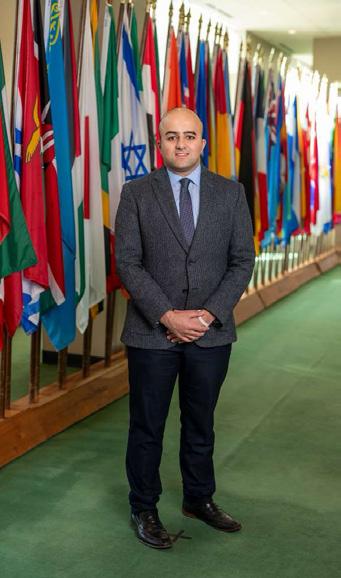
One perspective often missing from international discussions, Harounoff believes, is that of the Iranian people themselves.
An Iranian by heritage, Harounoff maintains close relationships with members of the Iranian diaspora as well as individuals still living inside Iran. He says many are watching the negotiations with deep concern.
“For many Iranians, this MOU is a memorandum of little understanding,” he said. “Their future is being discussed, but their voices are largely absent from the conversation.”
According to Harounoff, many Iranians fear that a future agree-
ment could ultimately strengthen a regime they view as responsible for decades of repression, economic hardship, and political persecution.
“There’s certainly a range of opinions,” he noted. “Some people understand that compromise is often necessary in international affairs. But I would say the dominant feeling is concern—concern that any agreement leaves the current regime intact while failing to address the suffering of ordinary Iranians.”
When asked how such an agreement would be approved inside Iran, Harounoff pushed back against the assumption that parliament or elected officials would play a decisive role.
“Ultimately, if the Supreme Leader wants something to happen, it’s going to happen,” he said. “This isn’t a democracy in the way Western countries understand democracy.”
While Iran maintains formal institutions and governing bodies, Harounoff explained that power remains concentrated among a small group of political and military leaders, particularly within the Supreme Leader’s inner circle and the Islamic Revolutionary Guard Corps.
“There are councils and approval mechanisms,” he said. “But op-
position voices are systematically marginalized. Real power is held by a very small group.”
One of the most debated questions surrounding Iran is whether the current regime can survive long term.
Harounoff believes future unrest is inevitable.
“If you look at the Islamic Republic’s 47-year history, it’s been marked by wave after wave of popular uprisings,” he said.
He pointed to the protests following the death of Mahsa Jina Amini in 2022, as well as repeated demonstrations fueled by economic hardship and government corruption.
“All it takes is one spark,” Harounoff said. “One event, one incident, one crisis that suddenly releases years of frustration and resentment.”
At the same time, he cautioned against expecting immediate action from ordinary citizens.
“People often ask why Iranians don’t rise up during times of war,” he explained. “But when missiles are flying and families are trying to survive, people are focused on protecting their loved ones. That doesn’t mean the anger disappears.”
The conversation also touched on speculation surrounding tensions between Israel and the United States over Iran policy.
Harounoff dismissed sugges-
tions of any significant rupture between the two allies.
“Like any close relationship, there are disagreements,” he said. “Different leaders sometimes have different ideas about tactics. That’s normal.”
What remains unchanged, he noted, is the shared strategic goal of preventing Iran from obtaining nuclear weapons.
“The relationship between Israel and the United States is much bigger than any individual administration,” Harounoff said. “It’s built on decades of cooperation and shared interests.”
As negotiations continue, Harounoff believes observers should focus less on dramatic headlines and more on the realities on the ground.
The current memorandum may eventually lead to a formal agreement—or it may collapse entirely. Either way, he argues that understanding the nature of the Iranian regime, the concerns of the Iranian people, and the broader regional implications is essential.
“There’s a tendency to view diplomacy as either a success or a
failure,” he said. “The reality is often far more complicated. What’s happening right now is not the end of a process. It’s the beginning of one.”
After leaving the United Nations on July 1, Harounoff plans to focus on writing and consulting. He is currently working on a second book examining lesser-known stories surrounding Iran’s 1979 Islamic Revolution while continuing to expand his communications firm, Noff Media.
Reflecting on his time at the UN, he expressed hope that the organization can return to its original mission of fostering dialogue and preventing conflict.
“In an ideal world, international institutions would play a leading role in resolving these disputes,” he said. “My hope is that they can become more focused on building bridges and addressing the many challenges facing the world today.”
For now, however, Harounoff’s message remains clear: despite the excitement surrounding recent developments, there is no final agreement yet—and the most important chapters of this story have yet to be written.

Strategic Planning is one of the most essential requirements in your school’s “toolbox” in order to keep your school focused, vision-driven and on a critical path towards the future. Not having one, is like going on a journey without a destination or roadmap.
For decades many of our Jewish day schools and yeshivot have experienced dramatic and in select cases traumatic stresses and strains resulting from economic, communal and leadership disruptions.
As these schools experienced a return to a level of operational normalcy, many are faced with a host of significant organizational leadership challenges such as a realignment of curricula, teacher and student recruitment strategies, new marketing and fundraising challenges, parent engagement and a posture which takes short and long-range planning more seriously.
Although many of our day schools and yeshivot are resilient, it is unrealistic to expect that all of them are able to proactively and successfully transition from disruption mode to successful normality without some form of institutional re-envisioning, restructuring or realignment. These demands often require proactive leadership including a deep-dive into a rigorous and comprehensive assessment of a school’s programmatic and operational viability, effectiveness and sustainability, as well the school’s vision
not, it should)
By Dr. Chaim Botwinick
for a path forward.
As we know, disruptions can impact virtually every aspect of a school….from schedules, curricular offerings and policies to student progress, faculty availability, supervision and effectiveness; from parental engagement and interaction to financial stability and Board leadership. These challenges are in addition to the myriad of additional concerns including the impact on the social and emotional health and wellbeing of our school’s teachers, administrators, students and parents.
As our schools attempt to respond to these exigencies, they are challenged to realign and redirect their expectations, modes of operation and direction. This is especially the case for those schools that have the ability and capacity to engage in scenario planning or strategic planning, but are stuck in the same-old
same-old mode of operation or philosophy.
One effective approach to responding to these emerging realities or crises is by inspiring schools to engage in a strategic assessment and planning process. This process affords school lay and senior professional leadership the opportunity to more closely identify and examine areas of concern requiring immediate attention versus those that will require more long-term targeting.
For some day schools and yeshivot, engaging in strategic planning is viewed as a luxury. This may be due to the fact that many strategic planning processes fail and end up collecting dust on shelves due to poorly planned and/or inadequate implementation or execution strategies. By the same token, the majority of schools that have successfully engaged in a well-designed and developed strategic planning processes have reported remarkably positive outcomes….especially those schools with clear, focused and concise vision-driven implementation plans and measurable outcomes.
More often than not, school leaders become overwhelmed by the enormity of a particular task and therefore opt to plan in a vacuum or by default. It’s definitely easier. But as we know, “easier” does not always produce quality or better long-term sustainable results or outcomes.
When considering a strategic planning process for your school,

it should not be limited to every aspect of the school’s programs or operation. In fact, it would serve the school well to only identify specific priority areas of concern which require immediate attention or alignment. These will drive a school’s decision-making process and set the stage for realignment and clear policy setting.
Several of the more recent specific macro-level challenges which I have observed in many schools include:
• Reviewing and realigning student academic expectations, growth and performance, especially for those students with exceptionalities and who required remediation;
• Attracting and retaining high quality faculty and staff;
• Reviewing and assessing the manner in which the school responds to student and faculty social and emotional concerns;
• Aligning and realigning student and parent outreach, recruitment and placement efforts;
• Creating new and meaningful high-impact ‘parent-school’ partnerships;
• Reviewing and assessing the school’s organizational structure and table of organization in order to ensure more effective quality performance, efficiency and impact;
• Assessing the impact of the school’s fundraising, marketing and communications efforts; and
• Ensuring high impact volunteer and board recruitment, training and development.

As indicated, a school’s proactive commitment to a strategic planning process does not necessarily require that the school conduct a whole-school or schoolwide planning process. Alternatively, the school may opt to focus on those high impact and high priority front-burner challenges that are defined, endorsed and validated by the school’s administration, hanhalla and board. These areas of concern vary from school to school, depending upon need, bandwidth, sense of urgency and leadership required to direct and oversee a credible planning process. It is also important to note that the timeframe for completion of a strategic planning process should not exceed four-months. Schools should not wait any longer than necessary in order to begin implementing critically important programs, policies and initiatives. Therefore, a time-frame and management of
the process is essential.
So, where does a school begin? First and foremost, it is essential that the school establish a governing body, responsible for strategic planning design and oversight. The group should be comprised of school constituents which have a vested interest in the school and who buy-into the concept of strategic planning. The group typically includes school board and professional leaders, teachers, parents, donors and community-at-large representatives. Many schools engage an outside facilitator with expertise and experience in strategic planning in order to help guide and oversee the planning process. Critical to the success of the facilitator will be the trust and confidence the committee has in this individual (or individuals) as well as their familiarity with the cultural and demographic nuances of the school and its constituent population (hashkafa).














The first step in addition to establishing the oversight committee, is for the school to determine or validate its vision and mission. This takes place through in-depth reflection with the school administration, board and constituents. Once a consensus is reached, the vision and mission statements serve as a foundation upon which to create the strategic planning process.
The vision statement is viewed as the anchor point of any strategic plan. It outlines what the school would like to ultimately achieve and gives purpose to the existence of the school. A well written and developed vision statement should be short, simple and specific to the school, leaving nothing open for interpretation. It

describes the school’s desired future. It is an image of the ideal and an expression of optimism.
The mission statement may be a bit lengthier. It describes why the school exists – what the school believes; who it serves and what it aims to accomplish. The statement should be succinct and a guide to the actions of the board, administration and faculty. A mission statement should truly inspires the essence of the school.
Since it is likely that most Jewish day schools and yeshivot have maintained and preserved their vision and mission, it would not be necessary for this writer to expand upon this phase of the planning process. Nevertheless, it is prudent for the school to review and validate these statements with an eye towards editing or
modifying nuanced changes resulting from a fresh review of the school’s current status, philosophy and direction.
The next phase of the school’s strategic planning process involves the introduction of a SWOT Analysis.
A SWOT analysis which is an acronym or strengths, weaknesses, opportunities and threats is one of the most powerful exercises in a school’s strategic planning toolkit. In the absence of conducting a whole-school strategic plan, the SWOT analysis which is used to assess the school’s current position before deciding on a new strategy, may be applied to discrete priority areas of concern.
For example, in light of the number of new and existing students in the school who require




some form of remedial academic intervention, the school may want to revisit the manner in which it provides remedial services to students with exceptionalities. By doing so it must look at the school’s strengths in this area, its weaknesses; as well as opportunities that may now exist to improve this service. And finally, a clear identification of threats are in order. They represent barriers or obstacles that prevent the school from moving forward effectively with a specific remediation program….such as qualified remedial personnel, program affordability, scheduling, or financial support etc.
Once these variables are documented and understood more fully, the committee is in a far better position to develop a strategic di-
rection in order to respond to this evolving need.
Another example…….the school is in dire need of trained and experienced faculty. The school is just not attracting the most qualified Judaic and general studies faculty. In addition, the school is struggling with ways in which to encourage and improve the retention of its faculty.
A SWOT analysis helps provide the committee with four discrete perspectives regarding this challenge strengths ( what does the school do well in the areas of teacher recruitment and retention? what unique resources can the school draw upon? and what do others see as the school’s strength in this area?); weaknesses (what can the school improve? where does the school have fewer

resources? what are others likely to see as weaknesses?); opportunities (what opportunities are open or are available to the school in order to enhance and improve its human resources condition? what trends could the school take advantage of? and how can the school turn its strengths into opportunities?) And finally, threats (what threats can harm the school? what is the school’s competition doing in this area? and, what threats do the school’s weaknesses expose?).
This exercise, irrespective of areas to be targeted, provides the committee or board with a more expansive perspective regarding the need; and therefore helps guide the committee to formulate a series of strategies, goals and objects which will constitute the
• DINE-IN
• SUSHI PLATTERS
• CATERING SETUP
10% DISCOUNTIF YOU BRING IN THE COMMUNITY VOICE MAGAZINE
• LIVE SUSHI STATION
• DELIVERY & PICKUP
Playfully Sophisticated, Tastefully Bold

school’s plan moving forward. A systematic and systemic review and analysis infuses the planning process with a more “granular” perspective regarding the challenges which are anchored in real time empirical data.
Once the SWOT analyses is complete, the committee will then be in a far better position to develop a series of strategies for the Action Plan. These strategies become the core of the planning process and sets the stage for what will become a clear, concise and robust roadmap for the school’s future.
As the committee proceeds to formulate its Action (Implementation) Plan, it may want to consider using a SMART outline to set the right goal. Each goal should be specific, measurable, attainable, relevant and time-based. By using this outline, the committee maintains an approach and a structure which is easier to follow and which divides goals into its five important discrete domains.
Once the committee is ready to articulate specific strategies and goals, it may consider using one of the numerous planning templates now readily accessible for public use via a wide variety of sources.
Irrespective of the type of template used, it is essential that the Action Plan include the following components:
• Strategies and SMART goals
• Expectations/Objectives
• Desired outcomes
• How Outcomes will be Measured
• Required Resources (human and material)
• Timetable for Implementation

• Ongoing Formative and Summative Review and Assessment
Mapping-out strategies, goals, and objectives can only be as effective as their implementation. Keep in mind, as just indicated, that the majority of strategic plans fail due to an inability for the school to execute the plan effectively. It is therefor essential for the school to establish an implementation governing entity which will be responsible for plan implementation, oversight and evaluation.
Once the Action Plan is in final draft form, it should to be shared with all school stakeholders – including all faculty and staff, parents. Board members and donors. In the spirit of the belief that “people support what they help to create” the successful launch of the action plan will also determine its success. The launch should include focus group presentations, community debriefings, and the dissemination of the Plan via social media platforms and the
school’s website. It must be viewed as an organic document, subject to continuous changes, modifications and improvement as well as evolving realities in the school and in the community which the school serves. Remember, it’s all about continuous alignment and realignment.
The purpose of this article is to inspire day school leadership to think proactively about strategic planning as a critically important strategic tool or roadmap for school growth, development and direction.
As Jewish day school and yeshiva leadership begin to assess and realign their direction, new realities (i.e. demographics, financial condition, student population, and teacher workforce and school culture) against a backdrop of recent challenges and restrictions, they will also encounter a variety of opportunities which warrant serious review and consideration. Aligning or realigning a school’s
programmatic and/or operational goals and objectives with new realities in the absence of serious strategic planning, will not fully maximize the tremendous power and efficacy of serious planning. Strategic planning must therefore be viewed as a powerful vehicle for reimagining a school’s direction and potential impact. It also helps navigate environmental change in a manner that is nonthreatening, inclusive and above all, systemic and systematic.
Today, our day schools and yeshivot are well positioned to proactively move forward using strategic planning approaches as a viable (and at times indispensable) option for growth and development.
In the final analysis, every Jewish day school and yeshiva, irrespective of disposition or hashkafa will need to determine the most effective route for it to pursue as it wrestles with future evolving concerns and realities.
In light of these unanticipated realities, now, more than ever may be the most opportune time for our schools to restart, reboot and recharge their direction with fresh thinking, strategy, creativity and proactive leadership.
(For more information about designing and conducting a Strategic Plan for your Jewish day school/yeshiva, or to request a one-time complimentary consultation, feel free to contact Dr.

Chaim Botwinick, Co-Founder, LEV Consulting Associates (305) 794.0854) or ChinuchHorizons@ gmail.com)
Brief Biography:
Dr. Chaim Botwinick is an organizational consultant and executive coach specializing in education, strategic planning and leadership development. As an influencer in education, he has served as president and CEO for the central agencies for Jewish education in Baltimore and Miami; in addition to head of school and principal for a variety of day schools and yeshivot. He is co-founder of LEV Consulting Associates and producer/host of the Chinuch Horizons podcast series. Dr. Botwinick has published extensively on topics relating to school change and improvement and is the author of Think Excellence, Brown Books, 2011.

1. Submarines can travel underwater for months without coming to the surface.
2. Some submarines are longer than a football field.
3. Submarines use sonar to “see” underwater by sending out sound waves.
4. The first working submarines were built hundreds of years ago, long before modern engines.
5. Submarines can go very deep, where sunlight cannot reach.
6. Nuclear submarines do not need regular fuel stops because
their reactors can last for many years.
7. Submarines have special air systems that help create oxygen for the crew.
8. Life on a submarine is very organized, because space is tight and everyone has a job.
9. Submarines are used for science too, helping explore the ocean floor and study sea life.

10. Some deep-sea submarines have discovered shipwrecks, underwater volcanoes, and strange sea creatures.


By Jamie Geller
I love how pesto brightens any dish, it’s a true kitchen work horse. Once you have a batch of pesto you can even freeze it and make dinners like this in minutes.
Ingredients
• 2 cups packed basil leaves
• 3 cloves garlic smashed
• 3 tablespoons pinenuts
• 1 teaspoon kosher salt
• ½ cup extra virgin olive oil
• 1 tablespoons extra virgin olive oil
• 4 boneless skinless chicken breasts, about 2-pounds, cut into 1-inch pieces
• 1 cup pesto
• 2 9-ounce packages Japanese style noodles, cooked according to package directions and drained

1. In a food processor, combine basil, garlic, pine nuts and salt. Pulse a few times to chop. With processor running, slowly add olive oil, stopping occasionally to scrape down the sides. Process until combined but still slightly chunky. Set aside.
2. Heat oil in a large sauté pan over medium low heat. Add chicken and cook 8 to 10 minutes or until browned and cooked all the way through. Add pesto and simmer 1 to 2 minutes. Toss with pasta to evenly coat noodles. Divide between 4 shallow bowls.
Jamie Geller is the Chief Media and Marketing Officer at Aish. She is also a bestselling cookbook author, celebrity chef, television producer, and businesswoman. She’s the author of eight cookbooks and the founder of Kosher Media Network.


































By Glen R. Golish
For many business owners, the company they have built represents their largest asset. It may be worth more than their home, retirement accounts and investment portfolio combined.
Yet surprisingly, many owners do not know what their business is actually worth.
Even more concerning, many businesses have buy-sell agreements that have never been updated or properly funded.
At G Wealth Strategies, we often find that these two issues are closely connected.
Ask most business owners what their company is worth and you will often hear very different answers.
Some base the value on revenue.
Others use what a competitor sold for.
Some simply estimate what they hope the business is worth.
The reality is that a business valuation should be based on objective analysis and reviewed periodically as the company grows.
A valuation affects nearly every major planning decision including:
• Retirement planning
• Succession planning
• Estate planning
• Partner buyouts
• Business continuity strategies
Without a current valuation,

owners are often making important decisions based on assumptions rather than facts.
Many business owners have a buy-sell agreement sitting in a file cabinet that has not been reviewed in years.
The agreement may have been drafted when the company was worth $2 million.
Today it may be worth $20 million.
The document still exists but the funding often does not.
This creates a significant problem.
If one owner dies unexpectedly, do the remaining owners actually have the liquidity needed to pur-
chase that ownership interest?
Or will the family of the deceased owner suddenly become business partners with people they never intended to work with?
A buy-sell agreement is only as effective as its ability to be executed when needed.
One of the most common funding tools for buy-sell agreements is life insurance.
When properly structured, life insurance can provide immediate liquidity at exactly the moment it is needed.
Rather than forcing surviving owners to borrow money, sell assets or negotiate under pressure, the insurance proceeds can provide the funds necessary to complete the buyout according to the terms of the agreement.
The goal is not simply to create a legal document.
The goal is to create a workable solution.
In Jewish tradition, we often speak about hachana, preparation.
The strongest plans are created before they become urgent.
A properly valued business combined with a properly funded buy-sell agreement helps protect owners, families, employees and business partners alike.
It creates clarity during a time that might otherwise be filled with uncertainty.
Most business owners spend years building value. Far fewer spend time planning how that value will be transferred if something unexpected happens. Knowing what your business is worth is important. Having a funded plan for what happens next may be even more important.
Because the true test of a business plan is not how it performs when everything goes right. It is how well it protects everyone involved when life does not go according to plan.
About the Author:
Glen R. Golish is the Founder and CEO of G Wealth Strategies and a Forbes-recognized Top Financial Security Professional. He works closely with families on comprehensive financial and estate planning, including cross-border considerations for those navigating U.S. and Israeli planning needs.
Important Disclaimer: Please seek qualified legal and tax advice before implementing any planning strategies, in conjunction with guidance from G Wealth Strategies.
Contact Information:
3010 N. Military Trail, Suite 318, Boca Raton, FL 33431 Office: 561-869-4600 | Cell: 561-239-9400 | www.gwealthstrategies.com
Investment Advisory Contact: Yosef Benson yosef@gwealthstrategies.com, 786-376-3548
Property & Casualty Insurance Contact Rafi Benzaquen rafi@gwealthstrategies.com, 516-476-6742
When the Knicks finally won the championship, I found myself in an unusual position. I’ve been a loyal Nets fan ever since moving to New Jersey more than twenty-five years ago, yet I grew up completely obsessed with the Knicks. Like so many kids in New York, I lived through the heartbreaks, the near misses, and the constant hope that next year would finally be the year. So while they may be a rival today, I couldn’t help but appreciate what this championship really represented. It wasn’t just a great season. It was the culmination of years spent building a great culture.
It reminded me of Phil Jackson’s book, Eleven Rings: The Soul of Success. Most people remember Jackson as the coach who won eleven championships. I remember him as the coach of the team I hated to watch play the Knicks when Jordan and company would roll into town. I also remember him as someone who understood that winning is rarely about talent alone. He brought out the best in his players, always.
Throughout the book, he shares eleven leadership principles that he employed and deployed to help him achieve success throughout his career. After thinking about them, I realized they all point back to four simple mindsets that apply just as much to business, investing, and life, as they do to basketball.
The first is leading with purpose rather than ego. Jackson talks about leading from the heart, benching the ego, and allowing each player to discover their own destiny. Great leaders (and individuals) don’t try to control every outcome or prove that they are the smartest person in the room. They create an environ-
By Shmuel Shayowitz
ment where other people can thrive. I see the same thing with successful entrepreneurs. The ones who consistently build wealth aren’t trying to impress anyone. They are simply focused on making good decisions over long periods of time. Ego chases headlines. Purpose plays the long game.
The second mindset is trusting systems over emotion. Jackson believed freedom came from structure. His famous’ triangle offense’ wasn’t just configuration. It gave players confidence because everyone understood their role. Financial success works exactly the same way. Budgets, automatic savings, disciplined investing, annual financial reviews, and strategic real estate acquisitions may not be exciting, but systems remove emotion from decision-making. Most fortunes aren’t built by brilliant decisions. They’re built by ordinary decisions repeated consistently.
The third mindset is staying present while remaining malleable. Jackson encouraged mindfulness through consciousness, teaching his players to become fully engaged in the moment while remaining flexible enough to deal with the unexpected. Markets change. Interest rates move. Real estate cycles come and go. Successful people don’t panic every time circumstances shift. They adjust without abandoning their long-term vision. Flexibility isn’t weakness. It’s resilience.
Finally, Jackson believed that relationships always outperform transactions. Turning ordinary moments into something meaningful, leading with compassion, keeping your eye on something bigger than
the scoreboard, and ultimately surrendering the “me” for the “we” all point toward the same truth. Success is never a solo accomplishment. Every meaningful achievement in my own career has come through trusted relationships. Whether it’s helping a family purchase their first home, guiding an investor toward building long-term wealth, or watching a client become a lifelong friend, the greatest returns have never appeared on a balance sheet alone.
Looking back, maybe that’s why Phil Jackson won eleven championships while so many talented coaches won far fewer. He wasn’t obsessed with winning games. He was obsessed with building people. The championships simply became the natural outcome.
The same is true for all of us. Build your character before your portfolio. Build your systems before your wealth. Build your relationships before your reputation. If you focus on becoming the kind of person who deserves success, the results have a funny way of eventually catching up.
Shmuel Shayowitz (NMLS#19871) is a highly regarded Real Estate & Finance Executive, Writer, Speaker, Coach, and Advisor. He is President and Chief Lending Officer of Approved Funding, a privately held national mortgage banker and direct lender that has facilitated over $3 billion in mortgage funding. Shmuel has over twenty years of industry experience and holds numerous licenses and accreditations, including certified mortgage underwriter, licensed real estate agent, residential review appraiser, and accredited investor, to name a few. Shmuel has successfully navigated through many changing markets and business landscapes, making his market insights and experience well-coveted within the real estate industry. He can be reached via email at Shmuel@ approvedfunding.com.