








A Sefer Torah written in your parents’ name, a beautiful Mikvah serving your kehilla, a stunning Aron Kodesh gracing your bais medrash, or building expansion with your family’s name proudly displayed for generations; a million dollars can turn any into reality, the only question is what you’ll choose. Commit to not talk during davening and give yourself, and your shul, a shot at something historic.










































































© The South Florida Community Voice Magazine. All rights reserved. Reproduction in printed or digital form in whole or in part in any form without prior written permission is prohibited. The publisher reserves all right to edit all articles for clarity, space and editorial sensitivities. Submissions cannot be returned to sender. The South Florida Weekly Magazine is not responsible for the cash flow of any advertised product or service that appears in these pages. The South Florida Community Voice Magazine assumes no responsibility for the content of articles or advertisements in this publication, nor for the content of books that are referred to or excerpted herein.
Community Voice magazine is not responsible for the Kashrut or services provided by the advertisements. It is up to the consumer to verify the information.

By Sivan Rahav Meir
Lost Boy
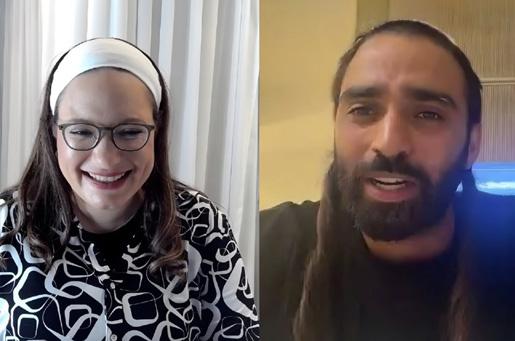
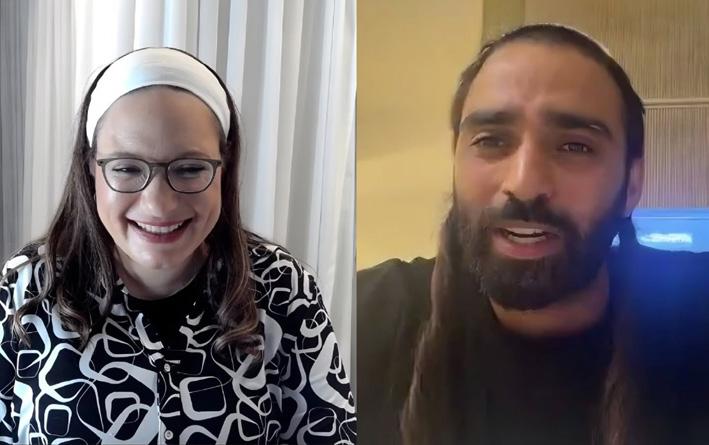
My most recent guest at the weekly Mitchadshot workshop was Noam Simchi, the man who last Friday afternoon, found Yuval Kogan, the four-year-old who had gone missing last Thursday in the dunes near Ashkelon. Did you see the footage of him crying out, “Abba, thank You!” as he held Yuval in his arms?
We had the pleasure of getting to know him a little better. He is 27 years old and discovered the Breslov Hassidic movement at the age of 14. From the teachings of Rebbe Nachman of Breslov he learned that we are all brothers, and so when he heard that Yuval was missing, he felt as though his own little brother had disappeared.
Noam owns a horse farm called “Ahavat Hashem”(Love of God). He and his friends joined the search. After hours of combing the area beneath the blazing sun, they were exhausted and had found nothing. Then they themselves lost their way — and it was precisely then that they suddenly found Yuval under a tree, as if he had been waiting for them.
We talked about Rebbe Nachman’s Stories, in which there is always something lost that must be found. Noam, too, set out on horseback in search of something precious that had been lost—and he found it.
He is deeply moved that his simple, wholehearted words of faith have now reached millions of
people. At the same time, he insists that this story is not about him. Thousands of volunteers joined the search, and countless people prayed. He does not know why he was privileged to be the one who found Yuval.
How remarkable that he found the boy just before Shabbat. What a Shabbat Noam must have experienced afterward!
Amid all the headlines and upheaval, a modern-day hassidic tale unfolded here on Friday.
A Few More Bricks in the Beit Hamikdash
This past Tisha B’Av, I learned a lesson in innocence, sincerity and simple faith.
Chani Canterman, a Chabad emissary, invited me to visit a very special place: Camp Gan Israel–Friendship Circle, a summer camp for children with special needs. Children come from around the world to attend this unique program, and each camper is paired with a dedicated counsellor. Chani asked me to speak to the group on Tisha B’Av, when the usual outings
He quoted Rebbe Nachman: “There is no despair in the world at all,” and “The whole world is a very narrow bridge.”

and activities are not possible.
The fast had begun. The counsellors turned off the lights, and we sat in the darkness by candlelight. Two girls came into the hall late, tears streaming down their faces.
Alarmed, I asked them what had happened.
“The Beit Hamikdash was destroyed,” they replied.
I was stunned.
I asked the children why the Beit Hamikdash had been destroyed and what we could do to rebuild it. Their answers amazed me.
One boy said that the next day, he would try not to complain and would smile at his counsellors instead. That, he said, would be his “brick” in rebuilding the Beit Hamikdash.
Another girl said that she prays from a siddur and asked if she could pray into the microphone. I handed it to her, and she repeated the same words again and again:
“Love your neighbor as yourself. Love your neighbor as yourself.” That was her prayer.
I felt as though I had stepped into a Chassidic story.
One child after another spoke about acts of kindness and love. Then one boy stood up and embraced his counsellor, who cares for him devotedly, day and night.
“We learned about ahavat chinam—unconditional love—so now I am doing ahavat chinam. Michal, thank you.”
They stood there, holding one another. Then more children came forward to hug their counsellors— and one another.
Thank you to the counsellors and campers of Camp Gan Israel–Friendship Circle for the privilege of building a few more bricks in the
Beit Hamikdash together. With Love
“Love” is one of the words that appears most frequently in this week’s Torah portion, Eikev. Again and again we are asked to love, or are told that God loves us: “to walk in all His ways and to love Him,” “Only in your fathers did the Lord delight to love them,” “And it shall be, if you listen diligently to My commandments which I command you today - to love the Lord your God.”
Rashi explains here a fundamental principle: “Whatever you do - do it out of love, and honor will eventually come.” We are supposed to observe the Torah and mitzvot not in order to receive reward, honor, or any benefit, but out of love. When we work from love, all the rest will come naturally.
This portion is so fitting for these hot August days, for summer vacation. In the most crowded and pressured, and sometimes a bit oppressive days — show love to others and remember that we are loved. Even when there’s tension, even when it’s hot and annoying, love is there, at the foundation of the relationship.
“And you shall eat, be satisfied, and bless.” These words that appear in this week’s Torah portion are the source for Birkat HaMazon, the prayer recited after eating a meal with bread. In fact, before and after eating, we stop to acknowledge, bless, and thank God. Here is a beautiful explanation of this mitzvah from Rabbi Aharoni Bernstein:
“It is worthwhile to listen to the story that food is telling us. The
presence of God in the plate in front of us is both astonishing and uplifting.
“These feelings begin with the blessing before we eat. The plate is full of colorful food, the stomach is grumbling, but we pause first, in order to offer thanks. This sudden delay before attacking the food grants us the heroic power of restraint.
“After eating, when we want to quickly continue on our way, we pause again in order to bless. Birkat HaMazon teaches us to look back, to honor and to thank God for the favor of providing us with food.
“Birkat MaMazon teaches us that delayed gratification is supremely gratifying. When we sanctify eating, we discover that food is the bridge that connects us to God. Eating becomes a profound event, much more than just an opportunity to refuel. Keep this in mind the next time you sit down to eat.”
Have you noticed the mezuzah on the doorway of the room you are in right now? Take a moment to look at it.
Rabbi YY Jacobson writes: “At first glance, the mezuzah seems like a one-time mitzvah. You affix it to the doorpost once, and you are done. That is why it is so easy to overlook its purpose and forget it is there. But a mezuzah is not merely a charm or a source of blessing. It is meant to remain present in our awareness at all times. It is a mitzvah that never ends.
“The mezuzah stands at the entrance, on the boundary between the home and the outside world. Inside it are two sacred passages:

‘Shema Yisrael’ and ‘Vehaya im shamo’a.’
“It accompanies you each time you enter and each time you leave. It reminds you of what truly matters, what is eternal and what is fleeting. It reminds you that life has a purpose. This awareness is especially important at moments of transition. As you leave your home, the mezuzah sends you out into the world with a reminder: Instead of being swept away by the rush of life, remember that you have a mission, a role and a purpose.
“But perhaps the more important moment is when you return. Home is where we face the challenges, tensions and triggers that arise between people who live together. Just before walking through the door, it is worth kiss-
ing the mezuzah and asking yourself: What do I want to bring into my home, and what do I want to leave outside?
“The mezuzah reminds me that the Divine Presence dwells in this home. The bonds we build here are not meant merely to help us survive the daily routine. They are meant to create something greater and holier. The mezuzah reminds us that we are entering our own sanctuary.”
This is an opportunity to have our mezuzot checked, particularly if they have not been inspected recently, to make sure they are kosher.
It is also an opportunity to check whether we are truly noticing the mezuzah—and paying attention to what it has to teach us.

After posting the above, I received the following astonishing response from a student at the Nefesh Yehudi student organization in Haifa. After reading about the importance of the mezuzah she decided to check whether hers was kosher. To her surprise, instead of finding a parchment containing the passages of the mezuzah, she discovered a piece of paper with Russian writing on it. “I don’t know what is written here,” she wrote, “but it is clearly not what belongs inside a kosher mezuzah,” and she immediately went out and bought herself a new, kosher mezuzah.
Translated by Yehoshua Siskin and Janine Muller Sherr
Want to read more by Sivan Rahav Meir?
Google The Daily Thought or visit sivanrahavmeir.com



“With one hand, the EU imposes sanctions on a law-abiding civil society organization, while with the other, it acts in violation of the law.”
July 20, 2026 – Against the backdrop of the return of Israeli communities to northern Samaria, a new illegal compound has been discovered in Area C. The Regavim Movement has exposed a new recreational compound and public park built in 2025 in the village of Silat ad-Dhahr in northern Samaria. Part of the compound is located on Israeli state land in Area C, near the renewed community of Sa-Nur.
Constructed less than a year ago, the compound includes an impressive entrance gate, a broad access road, benches, a pergola, playground equipment and a lightconstruction utility structure. According to official signage at the site, the planning and construction of the compound and access
road were funded directly by the European Union.
The site was discovered during a routine field inspection conducted to assess the condition of state land and governance in the area, against the backdrop of recent steps to restore and expand Israeli communities in northern Samaria. Upon further investigation, Regavim’s regional coordinator learned that the project was constructed without permits and in violation of existing agreements. The illegal compound is part of a broader pattern of encroachment on open areas and state land in a region that the State of Israel abandoned for two decades in an attempt to achieve a peaceful resolution of the Arab Israel conflict.
Roi Druker, Regavim’s Judea and Samaria Regional Director, said:
“The facts on the ground do not lie. Wherever there is no Israeli

presence and no settlement, a vacuum is created that leads to rampant encroachment and an enormous loss of state land. This is an unprecedented act of audacity by the European Union, which imposes sanctions with one hand while, with the other, violates international law and Israeli jurisdiction in Area C.
“It is time to stop looking the other way. It is time to look the problem in the eye, and to demand that both the Palestinian Authority and its European benefactors live up to their obligations and obey the law. We demand that the enforcement authorities and the Civil Administration act immediately to demolish the illegal compound and restore governance and order to the northern Samaria region.”
For interviews, please contact: Naomi Kahn, Director of Regavim’s International Division, at +972-52-238-1039.



5 Weekday Pants
8 Weekday Shirts
3 Shabbos Shirts
Davening Jacket
Blazers
Weekday Shoes Shabbos Shoes Weekday Belt Weekday Hat
Boys: Starting from $89 | Men: Starting from $99
Washable Dress Pants
Boys: 4 for $120 | Men: 4 for $140
4 Way Stretch Pants
Starting From: Boys: 3 for $135 | Men: 3 for $150
Wool Dress Pants
3 for $209
Boon Dash Non-Iron Shirts
Boys & Men: 20% off when you buy 3 or more
By Stephen M. Flatow
In the first installment of this series, we learned that Israel is unlike the United States in one fundamental respect: the entire country is a single electoral district. Israelis do not elect members of the Knesset from local constituencies. Instead, they vote for political parties.
That naturally raises the next question.
If Israelis are voting for parties rather than individual candidates, who decides who actually serves in the Knesset?
The answer is the party list. Before an election, every political party submits an ordered list of candidates. The order matters enormously.
If a party ultimately wins 25 seats, the first 25 candidates on its list generally enter the Knesset. Candidate number 26 does not.
To Americans, this can seem odd. We are accustomed to campaigns centered on individuals. We vote for a particular candidate, not for a list prepared in advance.
In Israel, however, a voter is making two decisions at once. First, which party best represents his or her views. Second, whether that party deserves enough support to send as many of its candidates as possible to the Knesset.
How do candidates reach the list?
The answer depends on the party.
Some parties hold primaries in

which party members vote on the order of candidates. Others rely primarily on the party leader. Still others use committees or a combination of methods.
As a result, internal party politics often begins months before Israelis ever cast a ballot.
Candidates compete vigorously—not only against rival parties, but also against fellow party members seeking a higher place on the list. A difference of just a few positions can determine whether someone serves in the Knesset or remains on the sidelines.
Then comes another uniquely Israeli concept: the electoral threshold.
Israel does not award seats to every party that receives votes.
Instead, a party must receive a minimum percentage of the nationwide vote to qualify for representation in the Knesset. Today, that threshold is 3.25 percent.
If a party falls below it, the result is dramatic.
It receives no seats.
Thousands of votes may have been cast for that party, but none translate into representation in the Knesset.
That reality shapes Israeli politics in important ways.
Small parties frequently debate whether to run independently or join forces with like-minded allies. Party leaders sometimes merge lists before an election to avoid splitting votes. In other cases, candidates abandon one party for another they believe

has a better chance of clearing the threshold.
American elections have strategic voting as well. But in Israel, the threshold makes those calculations especially important.
Some voters support the party they most admire.
Others ask a different question: Will my preferred party actually make it into the Knesset?
That concern can influence voting in the final days of a campaign, especially when polls show a party hovering just above or just below the threshold.
This also explains why Israeli
polls receive so much attention. They are not simply measuring which party is ahead. They may determine whether an entire political movement enters the Knesset—or disappears from it altogether.
In the coming weeks, you will undoubtedly read headlines reporting that one party has gained two seats while another has lost three.
Remember that these are projections based on national vote totals, not victories in individual districts.
The next time you read about a

party “crossing the threshold” or occupying a “realistic spot” on a party list, you’ll understand that these are not technical details.
They are central to how Israeli democracy functions.
Next time, we’ll examine one of the biggest surprises for American observers: Israelis do not directly elect their prime minister. In fact, the leader of the largest party may never become prime minister at all.


(Also published in Hebrew in ramatgannet.co.il, and in Givatayimnet.co.il newspaper in Israel)
By Dr. Yeshayahu (Yishy) Bick
The pyromaniac sets fires and then rushes to present himself as the firefighter who can extinguish them.
Such is Qatar. Qatar ignites “fires” in the form of various conflicts around the world, and then hastens to offer itself as a mediator to calm tensions and promote peace. In doing so, its adversaries become dependent on its goodwill and vast wealth.
This is how Qatar financed Hamas in Gaza and Hezbollah in Lebanon, and then offered itself as a mediator between Israel and Hamas in Gaza. It is clear to all that Qatar is a deceitful mediator whose true ambitions are influence and political power.
I will not repeat Qatar’s global involvement and influence, made possible by its immense wealth, I have already done so in my previous articles.
This time, I will present the woman behind all of Qatar’s maneuvers: Sheikha Moza bint Nasser AlMissned, known simply as Sheikha Moza. Her father was exiled by Qatar’s ruler, and she brokered peace between her father and the Qatari leader by agreeing to marry the ruler’s son, Hamad bin Khalifa AlThani, as his second wife.
Sheikha Moza is highly educated, calculating, cunning, and possesses impressive persuasive abilities within Qatar’s maledominated Arab society. She is also tall, striking, impeccably groomed, and resembles a Western fashion
model. Today she is 66 years old and still maintains a commanding presence.
Sheikha Moza built her power carefully and consistently. First, she convinced her husband to depose his father (while the father was abroad, the son informed him that he had no reason to return to Qatar). In doing so, Moza exacted revenge on her father’s enemy.
Once her husband became Qatar’s ruler, he allowed his wife to run the emirate with a firm hand and to dictate Qatari policy.
Next, Moza persuaded her husband to relinquish power and transfer it to her son, Sheikh Tamim bin Hamad AlThani. This ensured that control would remain in her hands and that no other son of her husband would inherit the throne in the future. Tamim and his mother share a deep bond, and he obeys her completely.
With great sophistication, Sheikha Moza developed Qatar’s global bribery strategy. Qatari bribery became an art form. She invested vast sums in global centers of influence, such as American universities , from which future U.S. leaders will emerge. Under her direction, Qatar purchased football clubs whose fans serve as Qatar’s best ambassadors.
Moza’s clear agenda is the spread of Islam worldwide according to the ideology of the Muslim Brotherhood.
She established the Al Jazeera network, which broadcasts news and programs across the globe and
is second only to the BBC. The network’s “investigations” have become a tool for blackmailing leaders, especially in the Arab world.
Moza developed Qatar’s mediation policy, turning Qatar into a powerful instrument of influence. She built relations with Israel while simultaneously funding Hamas. After October 7, Qatar demanded to mediate between Israel and Hamas, with the clear goal of protecting and preserving Hamas’s power.
Moza and Qatar endanger world peace through obsessive scheming. Moza resembles a puppettheater operator pulling the strings and controlling the show.
On July 9, 2025, I wrote an article titled “Qatar Holds the Hostages.” I wrote: “…From the above, one can conclude that if it wished, Qatar could demand that Hamas immediately release all the hostages! The sensible conclusion is that Qatar has no interest in releasing the hostages. Qatar seeks to exhaust Israel!”
I do not understand why Israel , the regional and military superpower , does not demand that Qatar return all the hostages within a few days.
Qatar has three oil ports through which it exports all its petroleum products. A threat to strike these ports would compel Qatar to act decisively to secure the hostages’ release.
Indeed, in early September 2025, Prime Minister Netanyahu ordered missile strikes on Qatar
aimed at targeting a gathering of Hamas leaders. The order was given against the recommendation of Mossad chief Dedi Barnea, who insisted Qatar should not be harmed.
Three weeks later, all our hostages were released, after Qatar demanded that Israel “apologize for the strike and promise it will not happen again.” Netanyahu wisely apologized (likely only verbally) and even credited President Trump, who appreciates recognition and success.
On March 22, 2026, I again wrote an article titled “Qatar Is the Head of the Snake.” I wrote: “Qatar operates and funds venomous propaganda against Israel. Qatar organizes Muslim demonstrations
worldwide under the wellknown slogan: ‘From the river to the sea, Palestine will be free.’ Israel, the new regional superpower, must once again threaten Qatar with missile strikes and damage to its remaining oil assets in order to stop this malicious propaganda. Such a threat is a cheap, quick, and highly effective solution.”
There is also another way. Qatar has a strong opposition that seeks to replace the regime and establish diplomatic relations with Israel.
Israel should support the opposition and organize a change of government in Qatar. Regime change is a simple and inexpensive way to eliminate Qatar’s harmful propaganda.
A new government could create new ties and invest Qatari capital in Israel in exchange for the protection of the regional superpower , Israel. What the Gulf states, such as Dubai understand, the Qatari emirate will also understand.
I have ended all my articles on Qatar with the same sentence: “And again, like the ancient senator Cato, who concluded every speech in the Greek Senate with a call to destroy Carthage , Greece’s enemy , I call to destroy Qatar’s power (the modern Carthage, or ‘Qatargo,’ metaphorically) if it continues to harm Israel.”
Dr. Yeshayahu (Yishy) Bick yishybick@ gmail.com July 20, 2026

As the Principal of a day school, I was once asked at a panel if I would encourage my child to become a teacher. I described how it’s one of the most rewarding careers that I could imagine, but we as a community are responsible for many of the challenges which teachers face. The first is obvious: any conversation about recruitment needs to think about paying competitive rates to educators, while making sure that the school budget allows tuition to remain accessible to families. Within South Florida, there is an added challenge that rising housing prices have created an entry barrier to the geographic region, even if the annual salary seems strong. Thankfully, lay leaders and professionals understand these financial realities, and we have seen some creative solutions around the country.
But there’s a second reality that is not only being ignored but is actually being perpetrated: how we speak about educators. When I decided to become a teacher, I was aware that I was entering a profession that society often affords less prestige than careers like medicine or law. What I did not know is that I would now be scrutinized by parents at the Shabbos table. My husband is a dentist and has patient reviews online, so it’s not that he’s immune from the court of public opinion, but the people speaking about me are those who live in my neighborhood. I was recently listening to a podcast which argued
that good people don’t go into politics because of the smear campaigns, and a lightbulb went off. We are doing the same to teachers as we dissect their choices.
That being said, it’s deeply painful watching your child either not enjoying school or, even worse, having the feeling that your child is being picked on by a teacher or by the school. I often say that the best professional development I ever experienced was having children. Understanding what it is like to be the parent and to see it through a child’s eyes drastically shaped how I look at education and my approach towards the classroom. When parents speak about teachers and schools, I understand it’s coming from a place of just wanting our children to be successful. So how do we balance protecting the dignities of teachers while also advocating when necessary?
Communicate - but to the right people. Parents should advocate for their kids. The school can only respond if they know there’s an issue. The problem is not that parents are speaking up, the problem is to whom and where. If there is a problem with the experience of your child, go to the school. Teachers often appreciate when parents go directly to them, but sometimes that can be difficult, depending on the issue. But complaining on a class WhatsApp or talking at the Shabbos table serves little purpose and, I would argue, clearly violates the laws of lashon hara.
Assume intentions are good. I have only met one educator in my years as an administrator and a parent who I think didn’t like children. Others - even ones I ultimately let go - did like and care about their students, even if I thought their approaches were misguided. When a teacher is struggling, it is rarely because they don’t care about students. One example that happens often: a teacher has a class that they do not have the tools to control - either because the class is too large, the class has numerous students with behavioral needs, or the teacher is unequipped in classroom management techniques. The teacher is struggling, and the child (or children) who emerge as most challenging are highlighted. It is miserable for the child, the parents, and the teacher. This situation has a lot to unpack, but for our purposes I want to highlight - it’s important to not vilify the teacher.
Say thank you. I was recently in a conversation with friends who made an offhanded remark that a certain teacher doesn’t care what the parents think, and I almost spit out my drink. It is extremely rare that I meet a teacher who doesn’t care what the parents or students think. Obviously, there is a spectrum of how much stake we put into others’ opinions, but it is more often than not extremely painful to a teacher when they receive a critical email or they hear parents have been complain-
ing about them. I remember vividly an email from about 8 years ago in which a parent asked that I not be their child’s teacher. I read the email right before I was going to sleep, and I didn’t sleep for days after. (I think it’s worth noting: I also tell teachers to be kind in how they write about students because the same way they don’t like receiving a critical email, it’s difficult for a parent to read a critical email about their child.) Teachers do care what we think—which means our encouragement matters just as much as our criticism. Very few parents and students write thank you letters, even when they are thankful.
If you are grateful about a teacher’s approach, take the time and tell them. It’s nice to participate in the collective Chanukah gift, but it’s important to also take the time and write to the teachers why you’re grateful.
Don’t pick on the little things. Teachers make many decisions throughout the day, which means that sometimes teachers are going to make mistakes. Obviously there are mistakes that are worse than others, but there may be times that a comment could have been nicer, or the grading took too long, or the wrong paper was sent home. I’m not excusing the mistakes, but let’s just keep in mind
that we’re human and mistakes are going to happen. We all worry about the future of Jewish education. We ask why fewer young people choose to become teachers and what we can do to strengthen our schools. Some of the answers require budgets, fundraising, and strategic planning. But one answer is available to every one of us this Friday night. We should begin by making sure that around our own Shabbos tables, teachers are spoken about with the dignity the profession deserves.

By Scott Singer
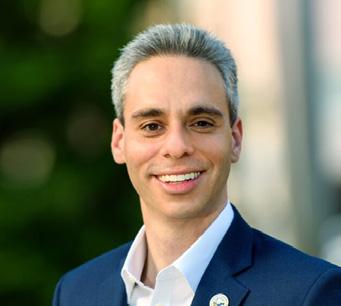
The decisions made in Washington over the next few years will shape the future of our country for generations to come. From the economy and national security to public safety, America’s relationship with Israel, and the rising cost of living, the challenges facing our nation require thoughtful, experienced leadership grounded in common sense and proven results.
This election is about more than choosing a representative. It’s about choosing someone who understands our community, shares our values, and has demonstrated the ability to lead, solve problems, and deliver results.
That is why I’m running to represent Florida’s 25th Congressional District.
This campaign is deeply personal to me because this isn’t simply where I chose to live—it’s where my story began.
I was born in this district. I grew up here. Today, my wife and I are proud to be raising our family here. This community shaped who I am, instilled the values of hard work and service, and gave me opportunities that I have never taken for granted.
Serving this community has been one of the greatest honors of my life.
Over the past twelve years on the Boca Raton City Council, including eight years as mayor, I had the privilege of working alongside residents, businesses, and community leaders to make our city stronger. Together, we kept taxes
low while maintaining exceptional city services. We supported our law enforcement officers and prioritized public safety. We reduced unnecessary bureaucracy, encouraged economic growth, attracted new businesses, created jobs, and invested responsibly in our parks, infrastructure, and neighborhoods—all while protecting taxpayers.
Those weren’t simply promises—they were results.
That experience has reinforced an important lesson: good government isn’t about political rhetoric. It’s about listening, making sound decisions, building consensus, and always remembering who you work for.
Washington needs more leaders with that mindset.
Families today are feeling the pressure of higher costs. Small businesses continue to face unnecessary regulations. Antisemitism has reached deeply troubling levels, and America’s commitment to Israel and our democratic allies must remain steadfast.
These challenges deserve representatives who have successfully managed budgets, balanced
competing priorities, and delivered meaningful results—not just talked about them.
If given the opportunity to serve in Congress, I will work every day to strengthen our economy, protect taxpayers, support our law enforcement officers, secure our border, stand firmly with Israel, combat antisemitism, and ensure that government works for the people it serves.
I don’t claim to have all the answers, but I do bring a record of leadership, accountability, and delivering results. I believe those experiences can help make a positive difference in Washington.
Most importantly, I want to continue serving the community that has given so much to me and my family.
Florida’s 25th Congressional District isn’t just where I live.
It’s where I was born.
It’s where I was raised.
It’s where my family calls home. And it’s the community I will always fight for.
Early voting begins August 8 and runs through August 16, from 7:00 a.m. to 7:00 p.m. Election Day is Tuesday, August 18.
Every vote will matter.
I would be grateful for the opportunity to earn your support, your vote, and the privilege of representing Florida’s 25th Congressional District in Congress.
Together, we can continue building a stronger economy, safer communities, greater opportunity, and a brighter future for the next generation.




Landow Jewish Academy is a kiruv school dedicated to the belief that every Jewish child should have Elite Academics and a school that inspires a love for Judaism We are committed to ensuring that financial concerns, fears about academic quality, or inadequate facilities never hinder a Jewish neshema from receiving a Jewish education.
90% of LJA students previously attended public schools Why do they make the switch? At LJA, we provide an exceptional academic experience alongside a heartfelt love for Torah, Israel, and a deep pride in being Jewish.
AVERAGE OF READING AND MATH



We are committed to building students from their strengths and developing them through their weaknesses.
We discover the passions of our students and develop them as a partner Whether they are launching their own LLC, designing fashion lines, producing podcasts, creating original music or art, or participating in clubs, athletics, and extracurriculars, these experiences are not just an addition to their education they are the key element that enables our students to truly thrive
One of the most common Jewish stereotypes is that we control everything from the media to the banks to the weather. While it is true that there have been Jews, like R’ Chanina ben Dosa, or further back, Eliyahu HaNavi, who had some sway over whether or not it rained, we don’t control the weather in the normal sense. Our actions do draw consequences as we say in the parshios of Shema, but we don’t exercise precise control.
If only we controlled the media, that would be amazing, because there is so much hatred out there against Jews that if we controlled them, we might have a lot less anti-Semitism. As for the banks, there have been numerous powerful and knowledgeable Jewish bankers whose success caused jealousy. The Rothschilds come to mind, for example, but they didn’t control ALL the banks.
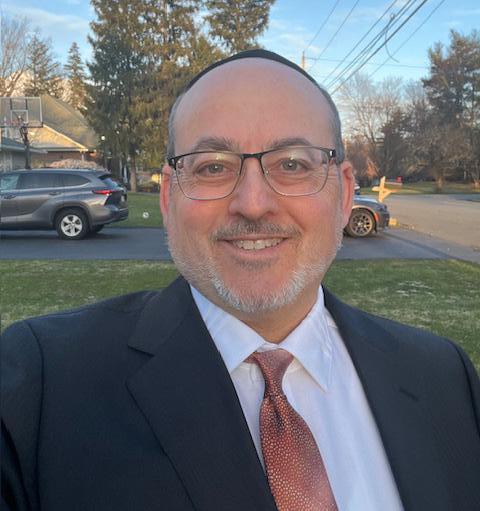
However, I recently found a great connection between Jews and banks and wanted to share it with you.
I was logged into my online bank account, and the bank, which is always looking for new business, offered me some investing guidance and opportunities. It showed me what it projected my net worth as being. I thought that was a bit presumptuous, as the amount they showed me was less than I even had in my account.
The other thing is that this bank only knows what they see. Since their savings account rates are miniscule, any savings I have
By Rabbi Jonathan Gewirtz
goes to another bank which pays many times what they do in interest. So, they might consider my net worth to be something much different than the actual, simply because they have no idea what I possess in other locations. Their educated guess is grossly skewed by the fact that they only have their own limited perspective.
There’s a famous urban legend about a couple from California who came to Harvard University and wanted to dedicate something in memory of their deceased fifteen-year-old son. They suggested perhaps dedicating a building. Noting their frugal clothing and demeanor, the Harvard staffer made light of their offer and treated them rudely. He laughingly told them that a building would cost $300,000.
The man turned to his wife and said, “Is that all? We might as well open our own school.”
The story goes that this couple, Leland and Jane Stanford, whose clothing did not communicate their means, did just that, returning to California and establishing
Stanford University.
Research has shown that though they did go to Harvard, it was to get ideas for their own university, not to donate, but the moral of the story is the same. The person they met with had no idea what wealth they truly possessed, but treated them as paupers by gauging their worth by looks alone, sitting in an office away from their home, and making assumptions based solely on their clothing.
That’s what happened to me with my bank, and sadly, all too often it’s what happens with Jews, especially the ones who are the closest to the seat of world power, those who keep Torah and Mitzvos. Sometimes, in our zeal to ensure compliance with the mitzvos of Hashem, and the standards Klal Yisrael has imposed, we underestimate someone’s value based on our limited vision.
The famous story of the fellow who heard that Hashem missed the Lechem HaPanim and asked his wife to bake challa for Hashem each week is an example. The man put the bread in the Aron Kodesh each Friday, and on Sunday it was gone. He was ecstatic that Hashem accepted their gift and kept going.
One day, the rabbi saw him put the bread in the Ark and asked what was going on. Hearing the man’s tale, he made light of it, and correctly identified that the Shamash had been taking the breads all along. He told the shocked donor that he’d made a ridiculous mistake, thinking that

Hashem eats his bread.
A well-known Kabbalist and Gadol came to the rabbi that week and told him to prepare for his death. The simple faith of that man had been a tremendous source of Nachas to Hashem, and now that was taken away. The rabbi was trying to defend Hashem’s honor, but by tearing down His child, he did just the opposite. When we look at others, we must realize we don’t see all they possess or offer to Hashem. Even if they don’t conform to the look or standards we believe are important, we have no way to accu-
rately judge them. If we try, we will not only fail miserably, but we could cause great harm.
That woman who doesn’t cover her hair; that man who comes to shul dressed in his basketball shorts; the cultural Jew who never learned enough to live completely according to the Torah; these are people we must be careful with, because we only see the surface, not the hidden treasure that may lie beneath. Certainly, then, we must also be careful with our peers, even when we see shortcomings.
We don’t know the struggles
they’ve had or the strides they’ve made. We just see a bit of the picture, and that’s not enough for a full decision. The best bet would be to imagine people have more to them than meets the eye, and consider how much Hashem loves them for what they do and are. That’s how we will avoid making foolish assumptions, and you can take that to the bank.
© 2025 – All Rights Reserved
Did you enjoy this column? Feedback is welcome and appreciated. E-mail info@ JewishSpeechWriter.com to share your thoughts. You never know when you may be the lamp that enlightens someone else.








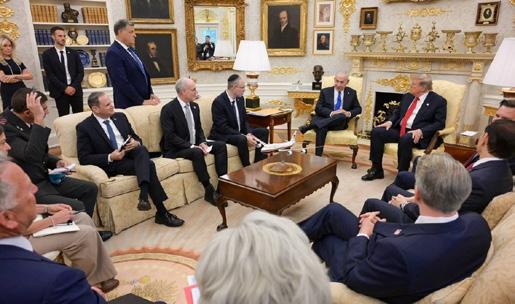
Prime Minister Benjamin Netanyahu emerged from a private meeting with President Donald Trump describing it as “excellent” and “one of the best meetings we’ve ever had.”
The closed-door White House discussion lasted approximately 90 minutes and marked the first face-to-face meeting between the two leaders since the current war with Iran began. Vice President JD Vance and Secretary of State Marco Rubio were among the senior American officials who participated. The White House later described the talks as “positive and productive.”
Despite the positive language, the meeting produced no publicly announced agreement on the most important question facing the United States and Israel: what should happen next with Iran?
Both leaders remain committed to preventing Tehran from obtaining a nuclear weapon. However, they appear to have entered the meeting with at least some differences over whether the next stage should emphasize renewed military action, additional pressure or another attempt at negotiations.
The result was a public display of unity—but no clear announcement about the next move.
The meeting was unusual from the beginning.
Unlike many previous encounters between Netanyahu and Trump, reporters and television cameras were not permitted inside. The two leaders did not hold
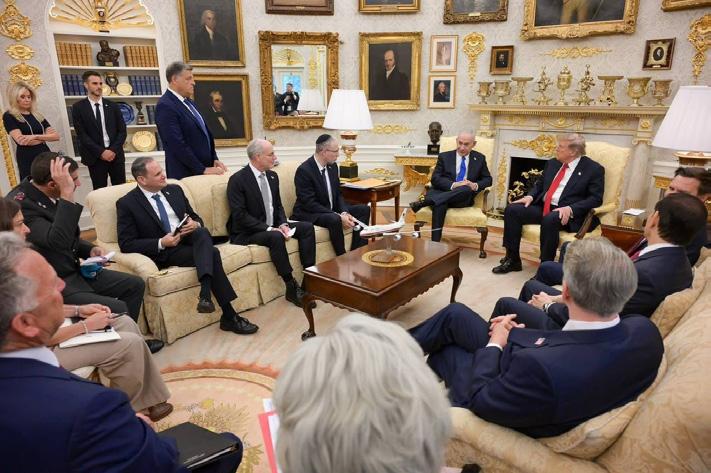

a joint press conference or participate in the traditional Oval Office photo opportunity.
Israeli political analyst Amit Segal wrote before the meeting that Netanyahu’s office was not disappointed by the lack of cameras. There had been concern that the encounter could develop into a public confrontation similar to Trump’s tense televised meeting with Ukrainian President Volodymyr Zelenskyy.
Instead, the private format allowed the two leaders to discuss their disagreements without cre-
ating what Trump has previously called “great television.”
The decision also reflected the sensitivity of the moment. Trump and Netanyahu have worked closely together, but their relationship has experienced growing strains as the Iran war has continued and failed to produce the quick, decisive outcome once anticipated.
Hours before their meeting, Trump publicly pushed back against Netanyahu’s suggestion that he needed to brief the president on new Israeli intelligence concerning Iran’s heavily fortified underground facility known as Pickaxe Mountain.
Trump said the United States already knew exactly what was happening at the site and did not require Netanyahu to explain it. The remark revealed some irritation, but both sides sought to
emphasize their cooperation after the private discussion ended.
Iran dominated the meeting.
Netanyahu arrived in Washington seeking to convince Trump that Tehran continues to act in bad faith and remains determined to rebuild its nuclear and missile capabilities.
Trump, however, has continued to speak positively about the possibility of diplomacy. Before meeting Netanyahu, he said the United States had held “good” and productive discussions with Iran.
At the same time, Trump repeated that American military action remained possible if Iran refused to reach an acceptable agreement. He specifically mentioned underground nuclear facilities, bridges and power plants as potential targets, while saying he hoped attacks on that infrastructure would not become necessary.
This leaves the American strategy deliberately uncertain.
Trump wants to preserve the possibility of negotiations, but he also wants Iran to understand that the United States could escalate quickly if diplomacy fails.
Netanyahu’s position is that Iran cannot be allowed to use negotiations as a way to delay action, reduce international pressure and quietly reconstruct its military capabilities.
The two leaders agree on the destination. Neither wants Iran to possess a nuclear weapon.
They may still disagree over the safest and most effective route for getting there.
Netanyahu’s Quiet “I Told You So”
According to Segal’s analysis, Netanyahu entered the meeting
with an unspoken message for Trump: Israel warned that the previous diplomatic approach would not work.
Netanyahu had expressed doubts about negotiations with Tehran but supported Trump’s decision to pursue them. That support was not universally shared within the Israeli government, where some ministers favored a more immediate and aggressive military strategy.
The negotiations did not produce the expected result.
For Netanyahu, that failure strengthens the argument that Iran will only respond to sustained pressure and the credible threat of military action.
However, Segal argued that Netanyahu was not necessarily arriving in Washington to drag Trump into another war.
Netanyahu had already made an extensive case for a wider military campaign during an earlier meeting. According to Segal, the Israeli presentation included a vision of rapidly destroying Iran’s missile program, encouraging a popular uprising and creating the possibility of political change in Tehran.
That outcome did not materialize.
Trump’s diplomatic approach also failed to resolve the threat.
The latest meeting was therefore not simply another sales presentation. It was an acknowledgment that neither leader’s preferred strategy had produced a complete solution.
Segal reported that Israel was prepared to outline two broad options.
The first would involve return-
ing to major military action.
Under that approach, Israel and possibly the United States would strike Iran’s remaining nuclear assets, enriched uranium stockpiles, energy infrastructure and other strategic targets.
The objective would be to make it significantly more difficult for Tehran to rebuild its nuclear and missile programs.
The second option would avoid an immediate return to war.
Instead, the United States and Israel would maintain maximum pressure through economic isolation, enforcement measures and a refusal to accept a weak diplomatic agreement.
Segal described this alternative as holding the line: no new agreement, but no immediate return to full-scale war.
The difficulty is that Trump has rarely shown patience for prolonged confrontations without a clear resolution. His approach often involves turning sharply toward either escalation or a deal.
An indefinite blockade or containment strategy may therefore prove difficult to sustain.
Following the meeting, no decision between these possible paths was announced.
Netanyahu said the conversation reflected partnership, mutual support and a shared commitment to preventing a nuclear-armed Iran. But the prime minister also indicated that the ultimate decision regarding America’s next move belongs to Trump.
Trump later said that his meeting with Netanyahu had been positive.
The White House used similar language, describing the discus-
sion as productive. Netanyahu’s assessment was even more enthusiastic.
Yet the absence of a concrete announcement is significant.
There was no declaration of renewed military action. There was no announcement of a new agreement with Iran. There was no detailed explanation of what would trigger an American or Israeli attack.
The meeting appears to have improved the atmosphere between the two leaders without resolving the underlying strategic dilemma.
That may have been the immediate objective.
Netanyahu needed to demonstrate that the alliance remained strong despite recent disagreements. Trump needed to show that he retained control over American policy and would not be pressured publicly into another military commitment.
Both leaders achieved those limited goals.
The larger issue remains unresolved.
Gaza, Lebanon and the Abraham Accords
Iran was not the only subject discussed.
The White House had indicated that the agenda would also include Gaza, the framework agreement involving Israel and Lebanon and the possibility of expanding the Abraham Accords.
Israel recently agreed to allow a multinational stabilization force to enter limited parts of Gaza under Trump’s broader plan for the territory. The decision

was viewed as a gesture toward the American president ahead of Netanyahu’s visit.
The long-term future of Gaza remains uncertain.
Major questions remain about security, governance, reconstruction and the role of international forces. Israel wants to prevent Hamas or another armed organization from rebuilding its military control. The United States is seeking a framework that could reduce direct Israeli involvement while introducing a new security and political arrangement.
The two leaders also discussed Lebanon and efforts to prevent Hezbollah from rebuilding its position along Israel’s northern border.
Another major American goal is expanding the Abraham Accords, potentially through a future normalization agreement between Israel and Saudi Arabia.
Such an agreement would be a historic achievement for both
Trump and Netanyahu. But progress is likely to depend on developments in Gaza, Lebanon and the broader confrontation with Iran. Trump and Netanyahu remain close allies, but their relationship is no longer without visible tension.
Netanyahu has long viewed Trump as one of the most supportive American presidents Israel has ever had. Trump recognized Jerusalem as Israel’s capital, moved the American Embassy there, recognized Israeli sovereignty over the Golan Heights and helped broker the Abraham Accords.
Netanyahu has repeatedly praised those achievements. However, the Iran war has created new pressures.
Trump appears increasingly focused on avoiding an open-ended conflict that could consume American military resources and damage his domestic political standing.
Netanyahu remains focused on ensuring that Iran does not use diplomatic delays to recover from military losses and rebuild the ability to threaten Israel.
Trump wants a decisive resolution.
Netanyahu wants a durable security outcome.
Those goals are not necessarily incompatible, but the timeline and strategy required to achieve them may differ.
Netanyahu’s visit also took place against the background of Israeli politics.
Israel is approaching an election scheduled for October 27, and Netanyahu is seeking to strengthen his public image as the leader best equipped to manage the relationship with Washington and protect Israel from Iran.
A warm meeting with Trump helps Netanyahu argue that he remains influential in the White House, despite reports of disagreement and tension.
Netanyahu has also strengthened his internal position within Likud.
While he was traveling abroad, the party’s Central Committee approved a proposal allowing him to reserve eight positions among the top 29 candidates on Likud’s Knesset slate.
The decision gives Netanyahu influence over roughly one-third of the party’s realistic parliamentary list. It allows him to reward loyal allies, recruit new candi-
dates and limit the power of internal rivals.
The development demonstrates that Netanyahu is managing two campaigns simultaneously: Israel’s conflict with Iran and his own political future.
Trump also faces domestic considerations.
The continuation of the Iran war has raised concerns inside the United States about military costs, the security of American forces and the possibility of another prolonged conflict in the Middle East.
Those pressures may partly explain Trump’s continued interest in negotiations, even while he threatens further attacks.
The meeting also came amid renewed regional danger.
On July 28, the U.S. military said it had intercepted multiple Iranian ballistic missiles aimed at American forces in the Middle East. The attack followed a pause in direct hostilities and renewed fears of a broader escalation.
The missile attack demonstrated why the Trump-Netanyahu discussion could not remain theoretical.
Iran continues to possess the ability to threaten American troops, Israeli cities and regional infrastructure. Any new American or Israeli strike could bring additional retaliation.
The conflict is therefore not simply about nuclear facilities.
It is also about missile defenses, American military readiness, en-
ergy infrastructure and the ability of both sides to absorb another round of attacks.
The meeting ended with warm words but without a final answer.
Trump and Netanyahu reaffirmed their shared commitment to stopping Iran from developing nuclear weapons. They also discussed Gaza, Lebanon and regional normalization.
But they did not publicly choose between renewed war, prolonged pressure or another diplomatic initiative.
That may explain why both leaders were comfortable describing the meeting as a success.
They improved their relationship without committing themselves publicly to a specific course of action.
For Netanyahu, the meeting demonstrated that he still has direct access to the American president and remains a central figure in Washington’s Middle East policy.
For Trump, it showed that he can maintain support for Israel while preserving his freedom to negotiate—or strike—on his own timetable.
The central question remains unanswered.
Will the United States and Israel return to military action, attempt to contain Iran indefinitely or pursue another agreement backed by the threat of force?
The meeting took place behind closed doors.
The next decision may not.
By Dr. Chaim Botwinick
As we know, there are numerous definitions for the term excellence. They include words like brilliant, superior, outstanding, distinct, high quality, etc. But, when referring to education and the schooling of our students, these definitions become more specific, precise, focused and defining.
First and foremost, it is important to note that Jewish day school and yeshiva excellence is not an even playing-field.
There are Jewish day schools and yeshivot that define educational excellence through a wide array of diverse lenses; and, there are those institutions that view excellence through a very specific and prescribed set of standards, assumptions and understandings.
Each school, group of schools, or school community has its own set of philosophical and hashkafa standards, practices and boundaries which define the education they provide. For example, there are those institutions that define educational excellence by offering an amalgamation, balance or confluence of high quality limudei kodesh and limudei chol. And, there are those that focus more exclusively on limudei kodesh. Very few if any schools focus almost exclusively on general studies at the expense of Judaic studies. Otherwise, there would be no need for these institutions.
So what does excellence in our Jewish day schools and yeshivot actually look like and how is it cre-
ated and measure?
Painting a Portrait of Excellence
Most Jewish day schools and yeshivot balance dual curricula and prepare students to lead successful lives in both the secular and within the Jewish world.
The core dimensions of excellence in these institutions can be divided into four discrete categories.
They include: academic rigor, character development, community connection and critical inquiry.
1. Academic Rigor is the blending general studies (STEM, humanities, arts and sciences) with Judaic studies (Torah, History, Navi, TaNach, Talmud and Hebrew language);
2. Character Development focuses and emphasizes excellent middot and derech eretz, as well as personal growth and development, including participation in a vari-
ety of chesed initiatives;
3. Critical Inquiry: encourages student learning through chavruta study in order challenge one another to analyze multiple perspectives, and challenge assumptions that engage in critical thinking as it related to Jewish law, philosophy and values; and
4. Community Connectedness inspires students to engage in communal projects, participate in Israel travel, educational experiences in Eastern Europe, summer camping programs and delving deeper into Jewish history through experiential learning.
These four broad categories are just a few of the many challenges and opportunities our day schools and yeshivot offer our students and community.
There are a variety of unique characteristics which are very specific to Jewish day schools and yeshivot. But the one which stands out the most, relates to the long term impact many of these institutions have on adult Jewish attitudes, behaviors and involvement.
An integral part of day school and yeshiva excellence is not only academic in nature but affective as well.
Studies consistently demonstrate that Jewish day school students outperform national averages in reading, math and college readiness. This may be due to small class sizes, high expectations, and
a culture that respects learning and scholarship.
In Judaism, learning is not just a means to a career – it is a sacred value and a reverence for limud which permeates the secular classroom as well.
In Jewish day schools, students learn to grapple with complex texts early. A child who can navigate a page of Talmud at age ten is not intimidated by the classics or calculus at age sixteen. The skills are transferable. Critical analysis, debate, attention to detail, inferential thinking and comfort with ambiguity are all part of the evolving skill-set which day school students learn to navigate at an early age. Although the dual curriculum is often very demanding, it is a strength. Students learn to master time management, mental switching and intellectual stamina that their peers in single-curriculum schools rarely develop. They often learn that hard work is normal and even expected.
Excellence in a Jewish day school and yeshiva also means…. menschleckiet. Being a good decent person who exhibits exemplary character, middot tovot and derech eretz is not extracurricular, it is in fact the curriculum.
In the final analysis, excellence in our day schools and yeshivot is not accidental or incidental. It is rather the result of intentional communities such as dedicated teachers and faculty, sacrificing parents, and a student body that understands and appreciates the fact that they are part of something larger than themselves.
It is also important to note that day school students learn that they
are an integral part of a 3,000 year mesorah or a vital link in a chain of responsibility for each other and for the world; and that chesed projects, and tefilla give academic learning a moral anchor.
According to PRIZMAH, a nationally recognized Jewish communal organization responsible for day school research, development, and teacher training, it is well know that our Jewish day schools and yeshivot promote and inspire excellence through their very construct. To be sure, they offer a rigorous dual-curriculum that pairs elite secular education with immersive Judaic studies and foster intellectual curiosity, critical thinking and a strong moral framework, shaping well rounded students who are deeply connected to their heritage and prepared to be future leaders of our Jewish community.
Finally, another aspect of day school and yeshiva excellence is the institution’s ability and capacity to infuse ethics and values into daily life; and empower students to become ethical and responsible leaders who give back to their respective communities as they grow and mature.
The importance of giving tzedakka, and performing acts of chesed in the community are viewed as critically important values which today’s day schools continuously inspire, promote, celebrate and support.
Day schools of excellence engage professional leadership that align the school’s specific hashkafa with clear, measurable graduate
profiles and desired outcomes. They are also goal-oriented and ensure that the standards of the school are aligned with the school’s values, mission and philosophy as well as vision statements.
Continuous professional development and collaborative curricular planning that keep educators intellectually stimulated and focused on instructional quality are all critically significant characteristics which help us define and exemplify educational excellence.
So far, we have focused on those critical characteristics or factors which are attributed to a school’s support and pursuit of excellence. Nevertheless, there are a variety of schools in our orbit which have unfortunately failed to achieve levels of educational excellence due to a variety of reasons and extenuating circumstances.
These factors which hinder or prevent excellence from being realized are as follows:
Schools fail to achieve inequities in funding, teacher burnout, and an overemphasis on standardized testing over critical thinking.
When day schools prioritize rote memorization and conformity, they stifle natural curiosity. This rigid approach often leaves students ill-equipped to confront the challenges and complexities of the real world.
Issues such as grade inflation and poor classroom management also lower academic baselines and provide students with a false academic standing.
Ultimately, true excellence requires a paradigm shift that promotes and supports critical thinking as an essential requirement to helping students and schools thrive.
Finally, it is important to note that school leadership churn and a constantly rely on new educational fads which destroy curriculum coherence. This leaves teachers overwhelmed and unable to master new, helpful classroom teaching methods and pedagogic strategies.
Other factors which inspire failure include high professional turnover rates of teachers and senior school leadership, a lack of focused curricular goals, expectations and objectives and fuzzy metrics.
It is also essential that to understand that if school leadership, faculty, parents and board do not hold

themselves to a higher academic standard, than the school will slump into academic mediocrity. This holds true for both Judaic and general studies.
Moving Forward
In the final analysis, given the competitive nature of our schools, most of our day school and yeshiva communities today will hopefully strive to create and maintain high standards of academic rigor. This is evident through their curricula and the personnel they engage to lead their schools, including their proactive responses to students with exceptionalities (an important topic for another post)
As our Jewish day schools and yeshivot evolve into the future, they will be challenged to become the “best they can be”. At the end of the day, their success will all de-
pend on one fact – leadership and the survival of the fittest. This reality will require a clear vision, a sense of urgency, a newfound respect for the impact of AI technology and an ability to transcend complacency and mediocrity.
About the Author
Dr. Chaim Botwinick is an organizational consultant and senior executive coach. He served as president/ ceo of the central agency for Jewish education in Baltimore and Miami and head of school/principal for a variety of Jewish day schools and yeshivot. As an Influencer, Dr. Botwinick has lecture extensively on topics relating to strategic planning, organizational development and leadership training. He is co-founder of LEV Consulting Associates and producer/host of the Chinuch Horizons podcast series. Dr. Botwinick is author of Think Excellence, Brown Books, 2011.







By Menachem Dahan, LMHC - Bay Harbor Islands
Certain themes come up again and again in clinical work, often regardless of what a person originally came in to address. One of the most consistent involves emotions. Not any particular emotion, but a more basic confusion about what emotions are and what a person is supposed to do with them. People express this in different ways. Some feel embarrassed or weak for being affected by things the way they are. Others are not sure how to find a balanced approach, whether to lean into what they are feeling or push through it, and what either of those even really means. That confusion shapes a lot of what gets in the way, and clearing it up even partially makes a real difference.
Three things sit at the center of that confusion: what emotions actually are. Whether being an emotional person is a sign of weakness. And what a person can do with emotions that seem to get in the way of the life they are trying to live.
Emotion is the most deeply personal experience a person has. Unlike thinking, which reaches outward and tries to make sense of the world on its own terms, emotion works from the inside out. When a person makes contact with the world around them, something registers. Not just what is happening, but what it means to them specifically, filtered through everything they have ever lived through.

Their history, their fears, their sense of what is safe and what is not, their understanding of what they deserve and what to expect. All of that is gathered up in a single moment and produces what a person feels. It is not chosen. It is not calculated. It simply arrives, carrying everything the person is with it.
That is what makes emotion the hardest of all human experiences to sit with. It is not abstract. It does not arrive at a comfortable distance. It lands directly in the body, in the chest, the stomach, the throat, and it does not wait for a person to be ready. And because it is so immediate and so personal, it carries a quality that most people find genuinely difficult, which is vulnerability. Vulnerability means that something real is exposed. That a person can
be affected. That the world has gotten through to them in some way, and that is visible, at least to them. For many people, that feeling is not just uncomfortable. It is frightening. It can feel like a loss of control, or worse, like evidence that something is wrong with them.
That discomfort is made significantly worse by the image most people project to the world. A kind of permanent composure and imperviousness, always calm, always collected, never visibly shaken. It can feel like evidence of weakness that anything is capable of affecting a person so deeply when everyone around them seems to be moving through life untouched. Strength, in its most surface-level definition, looks like the person nothing gets to.
That image is not real. People are not immune to things being frightening, painful, sad, or worrisome. They never have been. The image is a social performance, and most people know it, even if they do not say so out loud.
The trouble is that some people encounter that performance and take it literally. They conclude that this is not just how people present themselves but how they actually live and then hold themselves to that standard privately. If only someone who genuinely cared would tell them otherwise. That this is just something people do, partly understandable and partly a little absurd, but ulti-














mately a way of moving through the world that has very little to do with how anyone is actually doing on the inside. It is not the way to live an actual life. And it is not a fair standard to measure oneself against.
The capacity to feel, the fact that things matter enough to a person to move them, are not flaws in the human design. It is one of the most distinctly human things about a person. The ability to feel is deeper and more complex in human beings than in any other being on this planet. Emotions are what happens when a conscious person with a real history and real experiences moves through the world, and things actually matter to them.
As for the idea that being emotional is a sign of weakness, consider two people facing the same difficult moment. On the surface, the person who shuts it down and performs with composure might look stronger. But what they are actually doing is carrying something unexamined, spending energy keeping a door closed that will eventually need to be opened. One person is engaging with the full reality of what it means to be human. The other is hiding from it. The stronger of the two is not difficult to identify.
So the question becomes what actually to do with emotions. Both extremes present real difficulties. There is the person who operates as though emotions do not exist, who permits themselves feelings only in the most extreme circumstances, who has decided that tears are reserved for the gravest
of losses and that everything else should be handled without visible response. And then there is the person on the other end, who is entirely ruled by emotional experience, for whom nothing can be worked through, and anything overwhelming simply cannot be dealt with. Neither is actually engaging with what the emotion is trying to communicate.
Emotions are the self speaking. They are a signal that something in this moment matters, and the more useful orientation is toward understanding what that something is. Beneath the surface of daily functioning, the getting-through-life mode that most people operate in most of the time, there is a deeper part of the person that registers what actually matters to them. That part speaks up when it needs to. When it does, the options are to dismiss it and continue fighting it indefinitely or to turn toward it and try to understand what it is saying. The first path is exhausting and costs more than expected over time. The second leads toward a life where a person is no longer at war with themselves.
Listening to an emotion does not mean being consumed by it. It does not mean letting it run the show. It means taking it seriously enough to ask what it is pointing toward, and then finding a way to engage with it that neither denies its reality nor surrenders all decision-making to it. The emotion is real. The goal is not to erase it but to understand it well enough that it stops running things by default.
In practical terms, that process
involves three general parts.
The first is acceptance. Not acceptance as passive resignation, but acceptance as an honest acknowledgment that something is actually happening inside the person. Without it, any effort at change becomes primarily about managing the discomfort of something that has not been acknowledged rather than actually addressing it. When a person tries to change something they have not yet accepted, the goal shifts. It becomes less about actually changing and more about feeling better about something that has been pushed aside. When change comes from genuine acceptance, it can finally address the thing itself.
The second is regulation. Before a person can do meaningful work with what they are feeling, the intensity of the experience often needs to come down enough to make that possible. This is where the body becomes important, and not in an incidental way. The body is the back door to the self. It is where the self is actually operating and expressing itself, where emotion lives physically before it is ever named or understood. That is why body-based approaches, slowing the breath, grounding physical sensation, and releasing tension work as well as they do. They are not distractions or coping tricks. They are direct access to where the experience is actually happening. Calming the body genuinely calms the person, because in a very real sense they are the same thing. It does not resolve anything on its
own, but it creates enough space for the next step.
The third is the actual work of understanding. Getting into what is really going on and why. Recognizing, honestly, what these personal and often tender parts are that, when they make contact with the world, produce the feelings a person is trying to navigate. This part is often uncomfortable. It requires looking at things that have been easier to avoid. It is painful in the way that real honesty about oneself tends to be painful. But it is what stands between a person and a life where they are no longer fighting themselves every day.

Some people are more natu-
rally attuned to their emotional experience, and some are less so. That carries no judgment either way. Emotional attunement is a tool, the way intellect is a tool, and people differ in how naturally they reach for it. Nobody treats varying levels of intellectual ability as a character flaw. The same applies here. There is no weakness in feeling deeply, and there is no strength in feeling nothing.
The only real cost belongs to those who have decided that the image they show the world must also be the truth of their inner life. The daily effort of denying the parts of oneself that get hurt, feel small, or are moved by things must be genuinely tiring. To keep

performing indifference toward one’s own experience, to insist that nothing matters when something clearly does, takes more energy than most people realize.
The feelings do not go anywhere in the meantime. They stay exactly where they were left, waiting for the person to be ready to turn toward them. And when that person is finally ready, they find that what was waiting there was not as dangerous as it seemed from a distance. It was just a part of them that needed to be met.



Yossi Dagan: “After October 7, there is no place for illegal construction along the seam line — this is a real and immediate security threat.”
July 22, 2026 – The Regavim Movement and the Samaria Regional Council have petitioned the Jerusalem District Court, demanding the demolition of an illegal residential compound built in an enclave between the Green Line and the separation barrier in western Samaria.
Regavim and the Samaria Regional Council filed an urgent administrative petition against the defense minister, the minister in the Defense Ministry, and enforcement authorities in Judea and Samaria, demanding immediate enforcement action against development and construction work on an illegal residential compound and a new horse farm east of the city of Taybeh near t Sal’it in Samaria. The petition reveals that construction of the compound is ongoing. Since Regavim’s first appeal against the compound the site has continued to expand; in recent months additional lots have been fenced off, and new mobile structures have been placed on the site. According to Regavim, this case represents an unusual and dangerous phenomenon involving the exploitation of a geographic “noman’s land”: the compound is located in an area defined as Area C, which is under full Israeli control, but it lies west of the separation barrier and adjacent to the Arab

Credit:Regavim

city of Taybeh in the Sharon region. As a result, the geographic route of the security fence diverges from the diplomatic seam line, creating a huge enclave that enforcement authorities on both sides of the “green line” have ignored for years. In addition to the compound that
Credit:Regavim
is the subject of the petition, there are other illegal structures and agricultural projects in the area. The petition describes this as “a failure that creates a real vacuum in the seam-line area and provides fertile ground for construction offenses and, no less, a security risk.”
Regavim sharply criticized the prolonged foot-dragging by enforcement authorities, who did not respond to any of their appeals over the past year. Regavim’s petition notes that negligence on the ground has led to the loss of the ability to use fast-track tools, such as an “order for the removal of new structures,” because people have already taken up residence in the illegal the structure. The petition argues that this is a serious failure that should be defined as an unreasonable abdication of law enforcement. Regavim is therefore asking the court to order the respondents to exercise their authority, implement the demolition orders, open a criminal investigation against the offenders, and disclose their identities in order to pursue full legal
proceedings.
Roi Drucker, Regavim’s Judea and Samaria Regional Coordinator:
“Over the past two years, we have witnessed a dramatic change in Judea and Samaria and a significant assumption of responsibility by the State of Israel after years of lawlessness. However, there are still many areas that remain “out of sight, out of mind,” and the time has come to enforce the law there as well.”
Yossi Dagan, head of the Samaria Regional Council, said:
“This petition is an expression of our responsibility, of genuine concern for the security of our residents. This enclave along the seam line has become a no-man’s land, and while the enforcement authorities turn a blind eye and

do not even respond to appeals, the offenders are enjoying a frenzy of illegal construction in the very heart of Area C, which is under full Israeli control.
“One of the important lessons of October 7 is that “innocent civilian activity” along the seam line is an ideal launching pad for terrorism.We cannot allow illegal construction along the seam line in Samaria— this is a real security threat to residents and security forces, and fertile ground for crime and terrorism that impacts the entire State of Israel. We must not turn a blind eye to these weak links in the chain.”
For interviews, please contact: Naomi Kahn, Director of Regavim’s International Division, at +972-52-238-1039.

The Florida Health Care Association’s Annual Conference and Trade Show in Orlando brought together nursing-home administrators, healthcare professionals, vendors, and industry leaders for several days of education, exhibitions, and networking.
The conference program included continuing-education sessions, major membership meetings, legislative and regulatory updates, award ceremonies, specialized professional training, and an extensive trade show. Attendees could earn up to 24 continuing-education contact hours, with additional hours available through the assisted-living program. (fhcaconference.org)
Among the attendees was Yossi Mizrachi of Lakewood, New Jersey, who sells durable medical equipment, commonly known as DME, to nursing homes. Attending the convention for the first time, Mizrachi described it as relaxed, enjoyable, and especially valuable for building relationships.
“I came to meet some existing clients, but I also had the opportunity to connect with potential customers, manufacturers, and vendors face-to-face,” Mizrachi said.
Mizrachi estimated that approximately 200 members of the Jewish community attended, including professionals from Boca Raton, Miami, Orlando, New Jersey, other parts of the country, and even Israel.
The growing Jewish presence was visible throughout the convention. A temporary shul offered Shacharis, Mincha, and Ma’ariv, along with Daf Yomi materials. Kosher breakfast, lunch, and dinner were also provided, sponsored by Specialty RX.
Mizrachi noted that only a few years ago, Jewish attendees struggled to gather a minyan and had to arrange their own kosher food. Today, the shul and dining area have become important gathering places where Jewish professionals can daven, eat, net-
work, and support one another.
One of the convention’s most meaningful moments occurred when Mizrachi met a salesman from a major medical manufacturer and learned that the man’s mother was Jewish. A friend had brought tefillin, allowing the man to put them on for the first time in his life.
For Mizrachi, the gathering offered more than professional opportunities. It demonstrated how the growing Jewish presence in the healthcare industry is creating stronger business relationships, community connections, and meaningful Jewish experiences.



S h a b b a t P a c k a g e s - G r e a t
v a l u e , a m a z i n g c h o i c e s , y o u ’ l l
t r u l y f e e l a t h o m e
D a i l y d i n n e r t a k e o u t - Ta k e


2
h o m e a f r e s h f a m i l y d i n n e r f r o m
o u r r o t a t i n g m e n u .
P a r t y p l a t t e r s - E n h a n c e a n y
g a t h e r i n g w i t h a d e l i c i o u s
d i s p l a y
A w i d e v a r i e t y o f p l a t t e r s
D i n e I n , Ta k e o u t , o r D e l i v e r y -
F r o m o u r a u t h e n t i c I s r a e l i
m e n u !
C a t e r i n g - W e c a t e r w i t h c a r e ,
w e c a t e r w i t h l o v e C o n t a c t u s
t o g e t a q u o t e










1. Sunscreen doesn’t work immediately. It takes about 15–30 minutes after applying sunscreen before it starts protecting your skin.
2. SPF 30 is stronger than you think. SPF 30 blocks about 97% of the sun’s UVB rays, while SPF 50 blocks about 98%. No sunscreen blocks 100%.
3. You need more sunscreen than most people use. An average adult needs about 1 ounce (a shot glass full) to cover their entire body.
4. Sweating washes away protection. Even “water-resistant” sunscreen should be reapplied every 2 hours, or sooner after swimming or heavy sweating.
5. You can get sunburned on cloudy days. Up to 80% of the sun’s UV rays can pass through clouds.
6. You lose water even if you don’t feel sweaty. Your body is constantly losing water through breathing, skin, and normal body functions—even in the shade.
7. Feeling thirsty means you’re already behind. Thirst is one of your body’s first signs that you need to drink more water.
8. Fruit can help keep you hydrated. Watermelon, cucumbers, oranges, and strawberries are made up of more than 90% water.
9. Cold water isn’t absorbed faster— but it feels better. Your body absorbs cold and room-temperature water at about the same rate, but cold water can be more refreshing on a hot day.

10. Sunscreen and water are the perfect summer team. Sunscreen protects your outside, while drinking water helps protect your inside by keeping your body cool and working properly.



By Jamie Geller
CRUST
• 1 1/2 cups graham cracker crumbs
• 6 tablespoons butter, melted 3/4 stick
• 2 tablespoons sugar
• Pinch salt
LAYERS
• 1 pint strawberry ice cream slightly softened
• 1 pint vanilla ice cream slightly softened
TOPPING
• 3 large egg whites :room temperature
• 3/4 cup sugar
• 1/8 teaspoon cream of tartar
• 1 teaspoon vanilla extract
SAUCE
• 16 ounces frozen unsweetened strawberries thawed, undrained
• 1 tablespoons lemon juice
• 1-2 tablespoons sugar

CRUST
1. Preheat oven to 350F.
2. Combine graham cracker crumbs, butter, sugar and salt, mix well and press into 9-inch-diameter pie pan with 1 1/2-inch-high sides.
3. Bake until edges begin to darken, about 8 minutes. Cool completely.
1.Layer the softened strawberry ice cream into the crust. Freeze for 30 mins. Layer the vanilla ice cream on top. Freeze until firm (1 hour+).
SAUCE
1. Simmer the strawberries, their juice, lemon juice, and sugar in a small saucepan for 8 minutes
until slightly thickened.
2. Chill completely before serving.
TOPPING
1. Whisk egg whites, sugar, and cream of tartar in a heatproof bowl over a pot of simmering water until the sugar dissolves and it reaches 160°F. Remove from heat and whip on high speed until stiff, glossy peaks form (about 5-7 minutes). Blend in vanilla.
2. Spread the glossy meringue over the frozen ice cream.
Optional: Use a kitchen torch to lightly toast the meringue for a beautiful “Toasted Marshmallow” look. Freeze until ready to serve, and top with the chilled strawberry sauce!
Jamie Geller is the Chief Media and Marketing Officer at Aish. She is also a bestselling cookbook author, celebrity chef, television producer, and businesswoman. She’s the author of eight cookbooks and the founder of Kosher Media Network.


By Glen R. Golish
The first few years of retirement can shape the rest of your financial life.
That may sound dramatic, but it is true.
When people are still working, market volatility is uncomfortable but often manageable. There is still a paycheck coming in. There may still be time to recover. New contributions may continue going into retirement accounts.
But retirement changes the equation.
Once you begin taking money out of your portfolio, market downturns can become more serious. If investments decline early in retirement and you are also withdrawing money for living expenses, the portfolio may have less time and less capital to recover.
This is often called sequence of returns risk.
In simple language, it means that the order of market returns matters.
Two retirees may earn the same average return over time, but the person who experiences poor market performance early in retirement may face a very different outcome from the person who experiences poor returns later.
At G Wealth Strategies, we believe this is one of the most important risks retirees need to understand.
The issue is not whether markets go up and down. They always do.
The issue is whether your income plan forces you to sell invest-

ments at the wrong time.
Imagine needing monthly income while your portfolio is temporarily down. If the only available source of income is selling investments, you may be locking in losses just to pay normal expenses.
That is why liquidity matters.
A thoughtful retirement plan may include safer assets for nearterm spending, growth assets for long-term needs and income sources that are not directly dependent on daily market movement.
The goal is not to avoid all risk.
The goal is to match the right assets with the right time horizon.
Money needed next month should not be invested the same way as money needed ten years from now.
This kind of planning can help retirees stay calm during volatility.
It can also help prevent emotional decisions, such as selling during fear or taking too much risk while chasing returns.
In Jewish life, preparation is a recurring theme. We prepare before Shabbat. We prepare before the holidays. We prepare for major life events.
Retirement deserves the same preparation.
A final thought:
The first five years of retirement are not just the beginning of the journey. They may help determine how durable the journey will be. Because retirement planning is not only about getting to retirement.
It is about making sure your money can stay retired with you.
About the Author: Glen R. Golish is the Founder and CEO of G Wealth Strategies and a Forbes-recognized Top Financial Security Professional. He works closely with families on comprehensive financial and estate planning, including cross-border considerations for those navigating U.S. and Israeli planning needs.
Important Disclaimer: Please seek qualified legal and tax advice before implementing any planning strategies, in conjunction with guidance from G Wealth Strategies. Contact Information:
3010 N. Military Trail, Suite 318, Boca Raton, FL 33431
Office: 561-869-4600 | Cell: 561-239-9400 | www.gwealthstrategies.com
Investment Advisory Contact: Yosef Benson yosef@gwealthstrategies.com, 786-3763548
Property & Casualty Insurance Contact Rafi Benzaquen rafi@gwealthstrategies.com, 516-476-6742





By Shmuel Shayowitz
This past Sunday, I had the privilege of delivering the keynote address at Ezrah’s Bergen County Career Summit. Ezrah does incredible work helping people with fiscal planning, budgeting, job placement, resumes, and interview preparation. Its success has inspired organizations around the country. As I looked around the packed room, I wondered aloud why a mortgage and real estate guy was selected to speak at a career summit. I explained that every day of my career, I am being interviewed. Every cold call, every meeting, and every client conversation begins with the same question: why should someone choose me, trust me, and give me a chance?
That is what everyone in the room had in common. Some were employed but wanted more opportunity, responsibility, or income. Others were entering the workforce and needed to promote themselves well enough to be noticed. My attitude was that my speech needed to be much more than just job interviewing tips. To get something that you don’t have, you need to become someone who you are not yet. And that requires more than a polished resume or a strong interview. It requires becoming the kind of person who is ready for the opportunity being pursued.
I learned that lesson the hard way. About twenty years ago, when I thought I was reaching the pinnacle of my career, the market crashed, and all that I had built came down with it. In the weeks and months that followed, I had to
do plenty of soul-searching. I had to ask myself not only what I needed to do next, but who I needed to become next. That distinction changed everything. Strategies can be adjusted, businesses can be rebuilt, and careers can be redirected, but none of it lasts unless the person transforms first.
At the Summit, I shared four pillars that helped reshape my life personally and professionally: identity, strategy, relationships, and beliefs. Identity comes first because you cannot market, lead, or promote yourself if you do not know who you are. Your title is not your identity. Your setback is not your identity. Your salary, job status, or business volume is not your identity. You must understand your strengths, your values, and the standard you expect from yourself, especially when circumstances are not cooperating.
Then comes strategy. Ambition without a plan is just wishful thinking. You need direction, targets, and a willingness to adjust when the market, employer, or opportunity changes. And you need to have a plan and take action. After that come relationships, because almost no one succeeds alone. People open doors, offer perspective, make introductions, and sometimes believe in you even before you believe in yourself. But relationships only work when built with sincerity, consistency, and value, not when you suddenly need something.
The final pillar is belief. That means mindset, conviction, and faith. You need to believe that
you can improve, recover, and become more valuable. You also need to understand that belief is not passive. We are required to put in 101 percent effort toward what we are trying to accomplish. We prepare, pursue, strategize, learn, ask, follow up, and keep pushing. Then, and only then, after doing everything within our control, we recognize that the result is in God’s hands, and that everything He does is for the good.
Perhaps the real secret to success in life is learning never to act or react out of fear, scarcity, or a sense of lack. Fear makes us smaller. Scarcity makes us thoughtless. Lack makes us desperate. Instead, our driving force must always be love and faith. Love gives us clarity, and faith gives us courage. When our decisions come from love for what matters, faith in what is possible, and trust in God’s plan, we stop chasing outcomes and start becoming the person capable of receiving what is meant for us.
Shmuel Shayowitz (NMLS#19871) is a highly regarded Real Estate & Finance Executive, Writer, Speaker, Coach, and Advisor. He is President and Chief Lending Officer of Approved Funding, a privately held national mortgage banker and direct lender that has facilitated over $3 billion in mortgage funding. Shmuel has over twenty years of industry experience and holds numerous licenses and accreditations, including certified mortgage underwriter, licensed real estate agent, residential review appraiser, and accredited investor, to name a few. Shmuel has successfully navigated through many changing markets and business landscapes, making his market insights and experience well-coveted within the real estate industry. He can be reached via email at Shmuel@ approvedfunding.com.






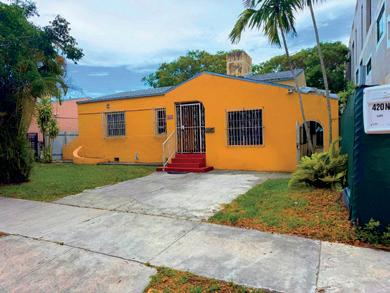











Understanding the Guidelines for Pre-Existing Conditions*

A HealthShare is designed to help members share in unexpected medical needs. To keep sharing fair and sustainable, expenses related to pre-existing conditions are subject to sharing limitations.*
United Refuah reviews each application before membership is confirmed and clearly documents how much can be shared for any known pre-existing conditions. In general, there is no sharing in the first year, up to $25,000 per condition per year in years 2 and 3, and standard sharing beginning in year 4. Some conditions may have lifetime sharing limits, which are clarified and documented at enrollment.
This structure allows individuals with pre-existing conditions to join when appropriate, with clear expectations from the outset, while helping protect the long-term strength of the sharing community.


MONTHLY CONTRIBUTION
Single: $199
Couple: $349
Family (3-6): $499
$50 each additional member