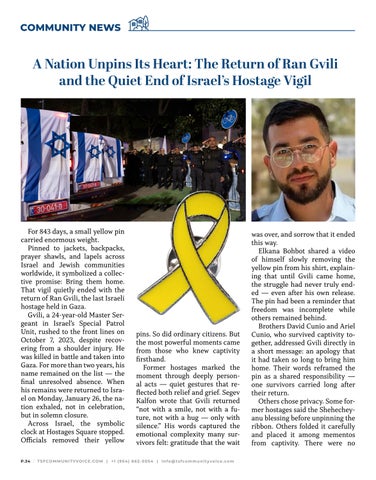
A Nation Unpins Its Heart: The Return of Ran Gvili and the Quiet End of Israel’s Hostage Vigil
For 843 days, a small yellow pin carried enormous weight.
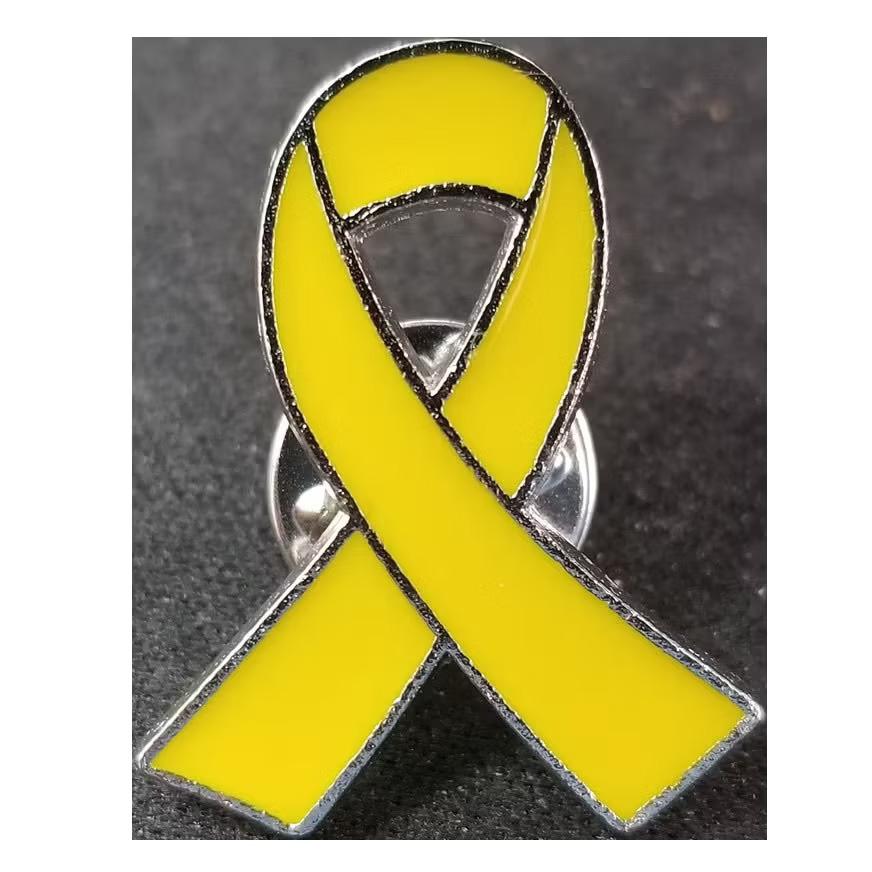
Pinned to jackets, backpacks, prayer shawls, and lapels across Israel and Jewish communities worldwide, it symbolized a collec tive promise: Bring them home. That vigil quietly ended with the return of Ran Gvili, the last Israeli hostage held in Gaza.
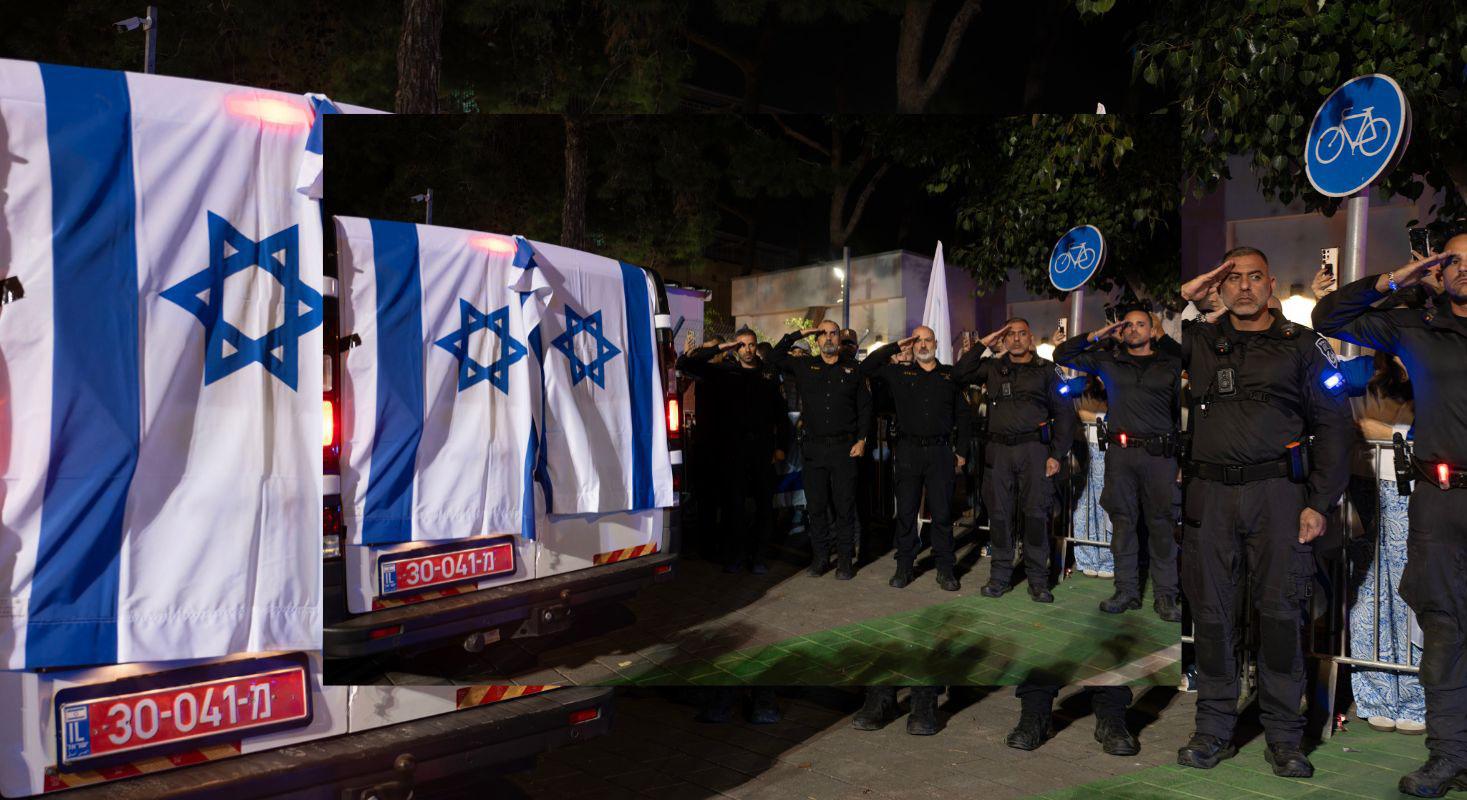
Gvili, a 24-year-old Master Ser geant in Israel’s Special Patrol Unit, rushed to the front lines on October 7, 2023, despite recovering from a shoulder injury. He was killed in battle and taken into Gaza. For more than two years, his name remained on the list — the final unresolved absence. When his remains were returned to Israel on Monday, January 26, the nation exhaled, not in celebration, but in solemn closure.
pins. So did ordinary citizens. But the most powerful moments came from those who knew captivity firsthand.

was over, and sorrow that it ended
Elkana Bohbot shared a video of himself slowly removing the yellow pin from his shirt, explaining that until Gvili came home, the struggle had never truly ended — even after his own release. The pin had been a reminder that freedom was incomplete while others remained behind.
Across Israel, the symbolic clock at Hostages Square stopped. Officials removed their yellow
Former hostages marked the moment through deeply personal acts — quiet gestures that reflected both relief and grief. Segev Kalfon wrote that Gvili returned “not with a smile, not with a future, not with a hug — only with silence.” His words captured the emotional complexity many survivors felt: gratitude that the wait
Brothers David Cunio and Ariel Cunio, who survived captivity together, addressed Gvili directly in a short message: an apology that it had taken so long to bring him home. Their words reframed the pin as a shared responsibility — one survivors carried long after their return.
Others chose privacy. Some former hostages said the Shehecheyanu blessing before unpinning the ribbon. Others folded it carefully and placed it among mementos from captivity. There were no
cheers, no declarations of victory. Only quiet acknowledgement.
By the time Gvili was returned, all Israeli hostages taken on October 7 had been accounted for — some alive, many not. The yellow pin, once a symbol of urgency, had become a marker of endurance. Removing it did not erase memory; it signaled a transition from waiting to mourning, from public demand to private healing. Israeli leaders echoed this tone. President Isaac Herzog called Gvili a hero who “went out to save lives and finally returned to his country, his family, and his land.” Around the world, Jewish communities removed their pins in unison — not because the story no longer mattered, but because

this chapter had closed.
The yellow pin was never just metal and enamel. It was a prayer made visible, a demand for accountability, and a thread that bound strangers together in

shared responsibility. Its removal does not mean forgetting. It means remembering differently. The vigil is over. The obligation to remember — and to protect life — remains.