Community Voice magazine is not responsible for the Kashrut or services provided by the advertisements. It is up to the consumer to verify the information.
WEEKLY IMPACT & VOLUNTEER RECAP
SUPPORTING HUNDREDS OF FAMILIES IN OUR COMMUNITY EVERY WEEK
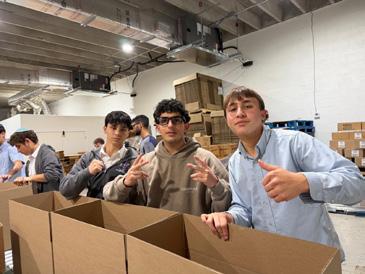
Every Thursday, dedicated volunteers come together to pack and prepare food for families throughout our community.
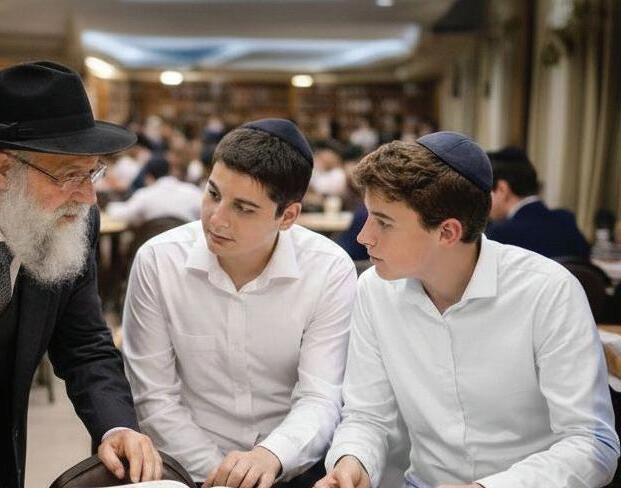
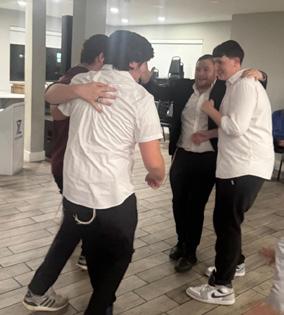
This past week, the KYHS high school boys joined us and did an incredible job helping pack Shabbos boxes for hundreds of families. Their time, energy, and commitment helped ensure that families can go into Shabbos with dignity, stability, and peace of mind.
Behind every box is a family who depends on this support. What may seem like a simple package represents security, relief, and the ability for parents to provide for their families. This work is only possible because of the strength of our volunteers who give their time and our donors who make this all possible.
We are currently looking for additional volunteer drivers to help deliver packages. Volunteer drivers play a critical role in ensuring families receive their food on time and with dignity.
To sign up as a volunteer driver, message: 754-247-6673
To volunteer or learn more email: volunteer@tomcheishabbosflorida.org
Beyond the Headlines
A weekly glimpse into the Israel you won’t read about in the news
By Sivan Rahav Meir
A Mindset of Joy
We are in the month of Adar, a time of extra joy as it states, “When Adar enters, we increase our joy.” But how do we do that?
Our Sages offer a very practical answer in the Gemara. They take the famous verse at the end of Megillat Esther, “For the Jews there was light and joy and gladness and honor,” and turn it into concrete guidance for daily life. They explain:
“Light” refers to Torah.
“Joy” refers to festivals.
“Gladness” refers to circumcision.
“Honor” refers to tefillin.
In other words, the true light in the world is found in Torah study; joy is expressed in the way we observe our festivals, with enthusiasm and anticipation; the gladness of a Jew is the covenant of brit milah, and honor is the laying of tefillin.
Joy, then, is not a fleeting pleasure that fades as quickly as it appears. Real joy connects us to something eternal. It is grounded in simple, practical actions: mitzvot and good deeds that anchor us in purpose.
During the month of Adar, you are invited to cultivate this mindset and consciously add authentic joy to your life.
Seeing What Is Hidden
Shabbat at my parents’ home in Herzliya. On Shabbat morning, Rabbi Yehuda Botman of the Oneg Shabbat shul shared a thought
that stayed with me.
“I want to speak about three hidden presences,” he began. “The first is Moshe Rabbeinu. He does not appear in Parashat Tetzaveh, which we just read. It is the only portion, from the time he is born until his passing, in which his name is absent. On the surface, it seems as if the Torah erases him, diminishes him. But in truth, he is more present than ever. The reason for his absence is that after the sin of the Golden Calf, when the Jewish people faced destruction, Moshe was willing to be erased entirely from the Torah for their sake. His absence is a reminder of his immense love for us.
“The second hidden Presence is God. In Megillat Esther, which we will read on Purim next week, God’s name does not appear even once. At first glance, He seems entirely absent from the story. But if one looks more deeply, He is the central figure, the director.
He guides the unfolding events of the Megillah, weaving together all the twists and seemingly unrelated details into a story of meaning and salvation.
“The third hidden presence is our unity. On the surface, especially these days, we appear deeply divided. A few days ago, I was sitting next to a young man in a doctor’s waiting room. From the slogans on his T-shirt, it was clear what he thought about people like me… But then we began to talk, and we found it hard to stop. The sense of brotherhood between us may seem hidden, but only on the surface. It is there. We simply have to look more closely.”
May we merit to invest the effort to peel away the outer layers, and see all that is hidden from our eyes.
Building Our Castle
Parashat Tetzaveh is filled with mitzvot and practical instructions, details that can sometimes feel technical and demanding. I once heard a story that changes the way you read those details.
It was a hot day in a quarry. Three workers were hewing stones with heavy hammers.
“What are you doing?” someone asked the first.
“I’m cutting stones,” he replied, simply describing the task in front of him.
“And you?” they asked the second.
“I’m earning a living,” he answered. He saw the purpose: pro-
viding for his needs.
Then they turned to the third worker. “What are you doing?”
He looked up, his eyes shining. “I’m building a palace.”
All three were right. But the third understood the larger picture, the meaning behind the effort. He saw how every small action, every detail of daily work, becomes part of something far greater. In the end, the little things we do are what build a palace.
Five Thoughts for This Shabbat, Shabbat Zachor
This week’s Torah portion is Parashat Tetzaveh, the eighth portion in the Book of Shemot (Exodus).
Much of the parashah focuses on the garments of the Kohen Gadol, the High Priest. The Torah places great importance on dignified, even regal, appearance. Some commentators suggest that today, our Shabbat clothes are the equivalent of the “garments of the High Priest.” On this holy day, we dress more festively in order to express its uniqueness and honor.
This Shabbat, the one before Purim, is called Shabbat Zachor, the Shabbat of Remembrance. It is customary to go to shul to hear the additional Torah reading, which begins: “Remember what Amalek did to you on the way, when you left Egypt…” Already at the time of the Exodus, Amalek attacked us. Haman, the villain of Megillat Esther, is a descendant of Amalek. This annual reading serves as a reminder of our ongoing struggle against evil.
Our commentators explain that Amalek is not only an ancient nation. In a deeper sense, it represents the inner enemy, the force within our minds and hearts that seeks to weaken, confuse, and cause us to forget who we are and what we are meant to become. It is this constant doubt and inner distortion that we are commanded to erase.
After Shabbat, a full and eventful week lies ahead: Monday is the Fast of Esther, Tuesday is Purim, and Wednesday is Shushan Purim, Purim in Yerushalayim.
RELAX MORE trav l s
The perfect summer recharge is close to home. Spend more time in the pool, at the beach, and sleeping in. Just pack your bag and unwind. Whether you join us for shabbos or during the week, experience a quiet, restful staycation.
Escape from the everyday, without the jetlag.
The Orthodox Union Launches Revolutionary AI-Powered Torah App
OHRBIT personalizes Torah study, fostering growth and consistentlearningforusersofallages
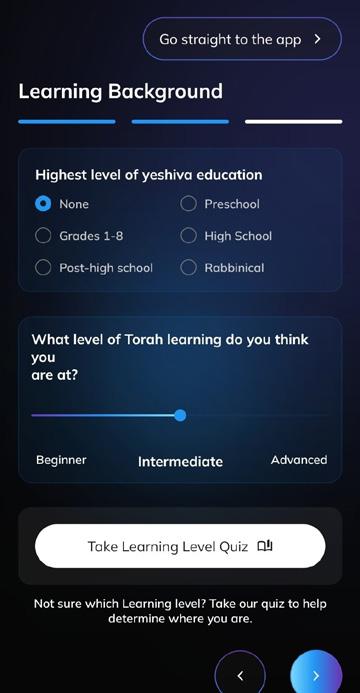
When cutting-edge AI meets millennia of Torah wisdom, new possibilities emerge. The OU’s Torah Initiatives Department has launched OHRBIT, a free, AI-powered app that brings Torah learning to users in a personalized, accessible way, and helps them to grow consistently and meaningfully.
Using AI to tailor Torah study to individual interests and abilities, OHRBIT presents a major opportunity to encourage people to learn more Torah and more people to learn Torah . While designed with young professionals and college students in mind, OHRBIT is suitable for learners of all levels and offers a flexible, user-friendly approach to Torah learning.
OU National Director of Community Engagement Rabbi Simon Taylor says the app’s name was carefully chosen to reflect its purpose:
“OHRBIT is meant to convey the idea of having all of Torah learning within one’s reach,” he says. “It combines ohr (light) with bit (tech), symbolizing the fusion of technology and Torah. Users can engage with the app however they choose; some may want a quick dose of daily inspiration, while others may prefer to explore specific topics in depth or learn on a more advanced level. It really depends on what kind of learning you’re seeking.”
OU Director of Jewish Media,
Publications and Editorial Communications Rabbi Gil Student adds, “The project is an opportunity to take the best of technology that has transformed industries and use it to transform Torah learning.”
OHRBIT is funded by an anonymous donor who was a close friend of OU Executive Vice President Rabbi Moshe Hauer, zt”l. Recognizing AI’s potential to spread Torah knowledge, the donor approached the OU and other organizations with his idea.
“Rabbi Hauer, zt”l, offered for us to take the lead, and brought together stakeholders operating in the same space,” says Rabbi Taylor. “We brought in an AI strategist, and together, built a plan to turn our vision into reality. We wouldn’t be here today without the donor. His gift has been such a bracha and we’re so appreciative of his passion and commitment to bring this project to the Jewish people.”
From All Daf to All Parsha, the OU’s Torah Initiatives team has launched nine mobile apps, including this newest one.
“We’re honored that the donor entrusted us with building the application,” says OU Director of Product Development Shelomo Dobkin. “This project isn’t just for the public; it has taught us a great deal internally about emerging technology. It’s an exciting endeavor because we’re exploring new tools, staying at the forefront of innovation, and seeing how this can benefit the Jewish people.”
NEW IN MIAMI!
Bais Medrash Of South Miami is designed for young men who are ready to grow, thrive, and develop the skills of a strong, confident Yeshiva bachur—both in learning and in life one boy at a time.
Whether post–high school or completing their final years of Yeshiva study, students benefit from a personal Rebbe relationship, combining over 50 years of rabbinic experience with a dynamic team of young, energetic Rabbeim. Together, they bring proven leadership skills from community building and advanced educational systems for teens.
The Bais Midrash is located in a beautiful, luxurious campus with high-end amenities, and luxurious dorms, creating an environment that supports focus, growth, and excellence.
Rosh Yeshiva Rabbi Avshalom Baskin
Rabbi Baskin studied in Yeshivas Ohr Yisroel in Eretz Yisrael and Yeshiva Beis Moshe Chaim in Miami, earning a Master’s in Religious Education.
A seasoned mechanech and former post–high school rebbe, he serves as rabbi to the Israeli community in Orlando, authors Torah and chinuch seforim, and delivers widely followed shiurim. He is known for his warmth, passion, and commitment to helping talmidim grow into confident, connected adults.
Rabbi Hershel D. Becker
Served as a congregational rabbi in Miami for over thirty years. With his open, easy-going manner and deeply caring approach, he has earned a reputation as a renowned Jewish educator, engaging orator, and beloved spiritual mentor. Through his teaching, he provides meaningful resources that spark animated discussion, offering practical Torah-based guidance for building and strengthening interpersonal relationships.
And other young dynamic Rabbeim...
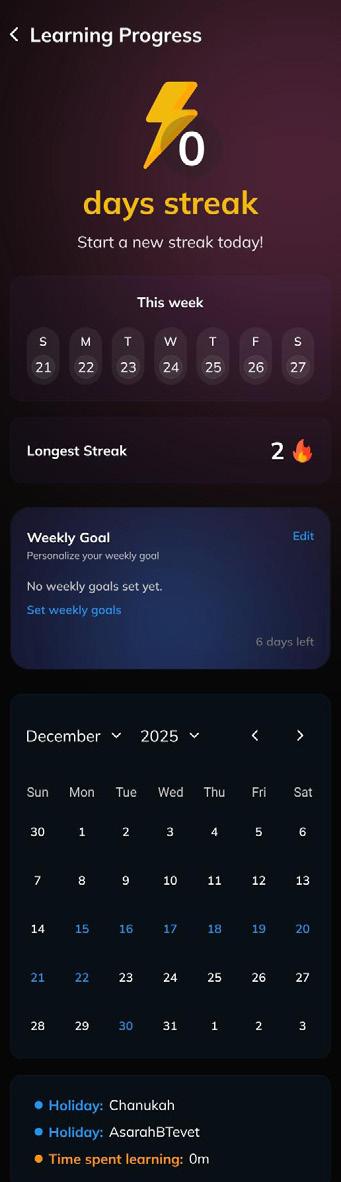
As the OU’s first AI-powered app, OHRBIT blends the personalization of Spotify and Amazon, the interactivity of ChatGPT, and the gamified learning style of Duolingo to gather user preferences and deliver content tailored to individual learning approaches.
“Users can choose to complete a profile when they first log in, postpone it, or skip it altogether,” notes Dobkin. “As they interact with OHRBIT’s chatbot, the app learns their learning level, preferred content, and favorite teachers. Requests for specific topics or materials gradually inform future recommendations, allowing the app to continually adapt to each user’s interests and learning style over time.”
Users can access text, audio and video, schedule and track their learning, set reminders and objectives, and celebrate achievements. Rabbi Taylor emphasizes that while OHRBIT includes a virtual Beit Midrash, it is not a substitute for in-person learning.
“This is absolutely not meant to replace learning in a Beit Midrash, studying from a real Gemara, for example, or with a real chavruta,” he says. “Nothing can, or should, do that. However, in terms of interacting with it as a daily companion that personalizes your learning according to your skills and interests, it’s very chavruta-like.”
OHRBIT’s trusted content comprises hundreds of thousands of hours of OU shiurim spanning decades, as well as vetted content from partner organizations including The Rabbi Sacks Legacy Trust,
OpenDor Media, and Britain’s United Synagogue, among many others.
“This app will search all those sources for material tailored to users’ personal tastes and interests while also featuring trending content on a particular day,” says Rabbi Student. “Our goal is to whet users’ appetites around other topics, and expand their preferences, inspiring them to grow on their own. OHRBIT might challenge a user, for example, to explore a different topic or teacher. The aim is to broaden people’s horizons, not by pushing them, but by offering gentle encouragement.”
To keep users engaged, OHR-
BIT offers gamification features like daily challenges, and streaks, which celebrate consecutive days of learning.
While Rabbi Taylor strongly believes in AI’s revolutionary capacity to advance Yiddishkeit, he stresses the necessity of shielding against potential dangers.
“As a community, we need to determine how we are going to safeguard and protect children and adults from the dangers of AI,” he says. “People are fixated on that, as we should be.”
Rabbi Student explains that OHRBIT includes mental health guardrails, such as prompting users to seek professional help for certain searches, as well as protections against misuse.
“This is a Torah learning app,” he stresses. “We want to stay focused on our goal, which is to serve as an on-ramp for people with questions about Judaism. We want to serve users in the best way that we can.”
OU Executive Director and Chief Operating Officer Rabbi Dr. Josh Joseph sees in OHRBIT a new way to illuminate the digital age with Torah.
“Just as light flows into the streets and meets anyone who passes by, the ‘ohr’ (light) of OHRBIT brings Torah directly to the learner, wherever they are,” he says. “That is its gift: to reach those seeking it – and even those not yet seeking – and spread the light of Torah farther than ever before.”
Download the OHRBIT app on your smartphone or visit www.OHRBIT.ai.
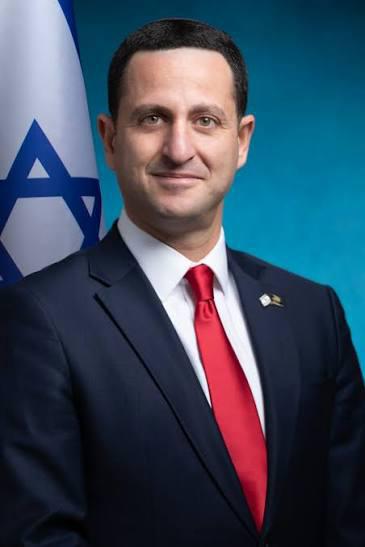
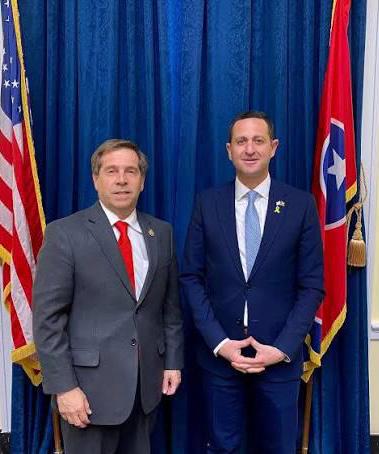
A Conversation with MK Ohad Tal
In Dialogue with Motti from South Florida Community Voice
Motti (SFCV): MK Tal, thank you for sitting down with us. I want to start at the beginning. You grew up in Eilat — what shaped you before politics ever entered the picture?
Ohad Tal: Thank you, Motti. It’s great to be here. Yes, I grew up in Eilat — I like to call it the Miami of Israel. Beautiful beaches, tourism, a very open atmosphere. I grew up in a traditional family. Not fully religious, but with strong Jewish values. As I got older, I became more observant.
There’s one moment I always remember. As a child, I read a book about the destruction of the Second Temple. When I reached the part describing the Romans burning the Temple, I couldn’t continue. I threw the book and started crying. I remember thinking, “If we were exiled for 2,000 years and now we’re back in our land — just as the prophets promised — then this must mean something.”
That moment pushed me toward Jewish learning and eventually yeshiva.
From Tank Commander to Jewish Educator
Motti: Before public life, you served in the army and then spent many years in education. That’s quite a journey.
Tal: Yes. I served as a tank commander and fought in Gaza, including in Jabalia during Operation Defensive Shield. Like many Israelis, my early adulthood was
shaped by security realities.
After the army, I worked in high-tech for two years. But I realized quickly — it wasn’t fulfilling. I wanted purpose. So I went into Jewish education and stayed there for about 20 years.
My last position was as head of World Bnei Akiva, working in 34 countries, connecting young Jews to their identity and to Israel. That was my life — until Bezalel Smotrich “ruined it” by asking me to enter politics. (laughs)
Entering the Knesset
Motti: Be honest — did you ever imagine yourself in the Knesset?
Tal: Never. I followed politics closely. I knew all the names. I watched the debates. But I didn’t want to be in it. Politics can be ex-
hausting and polarizing.
This is my first term. I was elected in October 2022. And what a time to enter — judicial reform protests, and then October 7th and two and a half years of war. It’s been intense.
Sovereignty and Security
Motti: One of the areas you’ve focused on is strengthening Jewish presence in Judea and Samaria. For many of our readers in Florida, that’s a topic they hear about but may not fully understand. What’s the bigger picture?
Tal: The bigger picture is security and long-term vision. For decades, Israeli policy was shaped by the Oslo framework. Infrastructure investment was limited. Illegal construction in Area C was widespread.
In the last few years, we’ve made a major shift — building infrastructure, authorizing communities, investing in roads.
After October 7th, it became very clear: security is not theoretical. Jewish presence in key areas matters. It’s not just ideology — it’s strategic depth.
Cost of Living and Economic Reform
Motti: Let’s talk economics. Many Americans making aliyah feel Israel is still very “socialist.” You describe yourself as a free-market believer. Where does Israel really stand?
Tal: Israel was founded by so-
COMMUNITY NEWS
cialists — that’s true. But today, we’re much more market-oriented. And we need to continue that shift.
I’m currently leading reforms in two major areas:
First — the dairy market. Three companies control most of the market. Prices are high. Competition is limited. We’re working to open the market.
Second — the banking sector. We have very few banks. That means limited competition and higher costs. We’re pushing reforms to allow new banks to enter the system.
Despite two years of war, our economy is strong — low unemployment, strong currency, tech investment growing. But we must reduce regulation and increase competition.
And honestly? We need more olim from America bringing business culture and free-market thinking.
Israel and America — A Strategic Alliance
Motti: Here in South Florida, support for Israel is strong. But sometimes it feels like support depends on who’s in power in Israel. Does that concern you?
Tal: Very much. Support for Israel should not depend on which government is in office.
I’m concerned about trends on both sides in America — the progressive left becoming more hostile to Israel, and some voices on the right becoming isolationist or even drifting into antisemitic narratives.
That’s dangerous.
Motti: So let’s flip the question — why should Americans care about Israel beyond emotional connection?
Tal: Because it’s strategic.
Israel provides more actionable intelligence to the U.S. than all NATO countries combined. That saves American lives and billions of dollars.
Israeli defense technologies are manufactured in the U.S., creating American jobs.
Israel fights Iran, Hezbollah, Hamas — forces that openly chant “Death to America.” We are on the front line.
America First should not mean America Alone. Strong alliances protect American interests.
The Role of the American Jewish Community
Motti: What role do you see for American Jews in this moment?
Tal: A crucial one. The Jewish
COMMUNITY NEWS
community must fight extremism on both sides — the extreme left that disconnects from Israel, and the extreme right that distorts the alliance.
Political leaders should feel that supporting Israel is politically beneficial, not risky.
October 7th — A Personal Reality
Motti: We can’t not talk about October 7th. Where were you?
Tal: My family lives in the south. My 84-year-old father had to run from synagogue while terrorists were shooting nearby.
Every Israeli knows someone killed, wounded, or kidnapped. It’s personal.
For years, we wanted to believe peace could be achieved through concessions, economic incentives, walls. October 7th shattered that illusion.
Iran had built forces around us — Hezbollah in Lebanon, militias in Syria and Iraq, Hamas in Gaza, Houthis in Yemen.
The goal wasn’t harassment. It was annihilation.
By God’s grace and through enormous sacrifice, we pushed back. We’ve weakened Iran’s regional network. We’ve strengthened alliances.
If the Iranian regime eventually falls, it will change the Middle East entirely.
We have no issue with the Ira-
nian people — only with a regime that chants “Death to Israel” and “Death to America.”
Closing Thoughts
Motti: Final thought — after everything Israel has gone through, where do you see the country heading?
Tal: Israel has always turned tragedy into growth. We are resilient. We are innovative. We are purposeful.
As I felt as a child reading about the destruction of the Temple — there is meaning to our return. There is responsibility.
And I believe we will emerge stronger.
GoforIsrael Investment Conference Comes to Miami
Leading Global Investors to Meet Israel’s Most Innovative TechnologyCompanies
TEL AVIV, Israel, and Miami FL, February 11, 2026 - The International Investment Conference GoforIsrael, one of Israel’s longest running platforms connecting global capital with Israeli innovation, will hold its first U.S. edition in Miami, at the Fontainebleau Hotel, on March 16, 2026. Organized by Cukierman & Co. Investment House and Catalyst Funds, the event will bring together toptier investors, leading Israeli technology companies, founders, and corporate decision-makers.
GoforIsrael is considered one of the most influential and prestigious business conferences in Israel, with 32 successful editions to date. “Israel’s innovation ecosystem continues to deliver world-class companies in sectors the world urgently needs - AI, cyber, defense and life sciences,” said Edouard Cukierman, Managing Partner at Catalyst Funds and Chairman of Cukierman & Co. Investment House. “GoForIsrael was built to turn that innovation into real outcomes: investment, strategic partnerships and longterm relationships. Bringing the conference to Miami for the first time connects U.S. and global investors with curated Israeli deal flow in a single day, in a city that has become a natural gateway between Israel, the U.S. and Latin America.”
This year’s conference will focus on breakthrough Israeli inno-
vation in leading industries :Life Sciences (Biotech, Medtech & Pharma), High Tech (AI, Cyber, Defense, Fintech, E-sports), Food & Agri-Tech, with 40 Israeli startups: Civan Lasers, Catalyst Investors’ Club, Speedata, Venocare, Arbe, Caps Medical, Cell-Lipo, Curalife, Cytora, Tri Logical, Playermaker, CAPS Medical, Picodya, Nina Medical, Naya, Radiflow, Nanose Medical, Ortho Treat, Remedy Cell, Solveat & more.
The event will be opened by President Isaac Herzog and will
include a full day of panels: Building the Miami-Israel Medical innovation bridge, the key success factors of Israeli high-tech, Israel’s global leadership in aesthetics and Medtech, M&A opportunities for Israeli companies and the Image of Israel Abroad - alongside curated networking and one-onone meetings throughout the day.
Speakers include Eyal Ofir, Global Head of M&A - IBM, Steven Meiner, Mayor of Miami Beach, David Blumberg, Managing Partner - Blumberg Capital, Brett Mock, Chairman - NPM International, Dr. Laurent Choppe, Managing Partner - Cukierman & Co. Life Sciences, Hanan Friedman, CEO - Bank Leumi, Dr. Uri Geiger, Managing Partner - Accelmed.
For Further information: Aron Pacifici, Marketing Manager GoforIsrael, Aron.p@cukierman.co.il, +972 587 856 689
Media Contact: Omer Hochbaum, Positive Communications, Omerh@gopositive.co.il
Credit Shai Shviro
Credit Shai Shviro
Operation Inspiration: The Next Best Thing
Artificial Intelligence is poised to take over. Or so they say. Computers are getting “smarter” and more able to simulate human thought and analysis than ever before. And the technology is improving exponentially.
Someone gave me an article to read on the subject, from an expert in the field, and his comments were alarming. Not that AI needs to be stopped, but that we need to be able to adapt to the new technology and the changes it will bring. I decided to give it a look.
The same friend who gave me the article recommended a specific program to use. He has used it in his business for all sorts of business analysis and found it amazing. I went to the website he mentioned and began to play around with the software. You can ask it anything you want, though it probably can’t give you the winning lottery numbers in advance. But you put in your information or request in plain English and it spits out a response within moments.
I decided to try something. I upload a number of my Operation Inspiration columns. Ok, the number was something north of 500, so it was a big number. I then asked it to choose a selection of them and group them by topics for a book. The interaction wasn’t perfect and it took a few minutes of back and forth clarifications, but within an hour or so, I had a basic manuscript with a nifty index.
I’ve been putting off publish-
By Rabbi Jonathan Gewirtz
ing another book because of the effort involved, but the AI made it easy. So maybe keep an eye out at bookstores for my next installment! But that’s not what I’m writing about.
The next fun little project I tried was based on its having “read” all my columns. I asked the AI to write a column in my style with a certain prompt. I described something that happened to me which I wanted to write about. The machine took a moment or two and then provided me with a full column of close to 900 words. As I read through it, I was struck by the nuances of my writing it had picked up that I, myself, wasn’t fully aware of. My daughter read it and felt it was uncanny how it captured my “voice.”
But you know what? When I read through it, I could tell that it wasn’t really me. It was close; it was similar; it sounded like me, and just might be the next best thing - but it’s not me. And I learned a few things from this
experience.
First of all, if someone else can sound like me, that means sometimes I could also just be “sounding like me” and not being genuine. I want to be sure that when I’m saying or doing something, I’m really there, not just going through the motions. People like to dress the part, with clothes that make them seem special. It could be religious garb, intended to show how close they are to Hashem, or designer gear which implies their wealth and power. AI is still artificial, but I don’t have to be.
Second of all, it’s interesting to see how people can be fooled. I’m sure that someone else who read that would suppose it was me writing. They might even comment that they liked my point or my wit, and tell me it was my greatest column ever! But they’d be wrong.
There’s such an abundance of information these days that it’s easy for people to get the wrong idea. They could read Torah that’s not from a genuine source, and chas v’shalom be misled. They could absorb ideas and philosophies that are antithetical to what Hashem wants, but they sound good so people accept them. They could think someone is being kind, and not see the lurking ulterior motives. We need to be on guard to make sure we’re finding the truth, and not be quick to accept everything we hear or read as fact, just like the column which sounded like me was not me at all.
COMMUNITY NEWS
And, if I could tie this into the holiday of Purim, let’s consider this. Haman imagined himself to be someone he was not. His arrogance and ego made him create grandiose ideas that led to his downfall. While he saw himself as invincible, that all came to a crashing halt in one moment at the party of Esther. He was not the all-powerful individual he thought, because his foundation was based on someone else’s whims. The great and mighty Haman was still little Memuchan the barber. All that he concocted to feed his ego was built on nothingness, and this should be a warning for us not to fall into a similar trap.
Mordechai, on the other hand, was humble. He did what he was supposed to at each moment.
When he was honored by being led on the king’s horse, it meant nothing to him. He went right back to his sackcloth and sitting on the ground in the king’s courtyard. He was real; not artificial. The lesson here is to be yourself, to do what you can with your
talents, and not try to be something you’re not. Be your best –not the next best thing.
2026 – All Rights Reserved
Did you enjoy this column? Feedback is welcome and appreciated. E-mail info@ JewishSpeechWriter.com to share your thoughts. You never know when you may be the lamp that enlightens someone else.
Sunday to Thursday: 12pm - 10pm Friday: 11am - 3:30pm OPENING HOURS Scan the code to order!
YALDEI
The Ebb and Flow of Jewish Communal and Personal “Defining Moments”
By Dr. Chaim Y. Botwinick
A defining moment is an important transformative event or decision that molds andshapes our character, life trajectory and/ or career.
These decisions or events can be divided into two distinct and at times overlapping and interrelated broad categories - personal and communal.
There are defining moments that impact communities as a whole and those that are very specific to individuals.
The Communal Domain
Throughout history, our Jewish communities have experienced a wide array of defining moments from the akeida to receiving the Torah at Har Sinai; from yetziat mitzrayim, the splitting and crossing of the Red Sea to our sojourn in the midbar and entry into Eretz Yisrael; from the destructive ravages of concentration camps to the establishment of the State of Israel; and, from the victory of the Six Day War to the bloody massacre of October 7th.
These are just a select few of the countless communal defining moments in history which have impacted our Jewish people and community over the centuries.
Each one of these events (and many others) have left an indelible and permanent impact on our Jewish community in ways which are very evident today and at times unimaginable.
Defining Moments is a term or phrase which is used interchangeably with terms or words such as turning points, game-changer, milestones or watershed moments, to name a few.
They are very powerful events in time which can be life altering and transformative and which move us in a variety of directions. Just think of the examples in history which I just offered and how they each changed the face of history, our destiny and our mesorah
My dear father z”l once said that when these moments happen or occur, we never really know for certain if or how they will impact our lives or future generations. It is therefore imperative that we view these events Byad HaShem (through the hands of God) and that each of these moments in time are accompanied by a set of reasons or circumstances which are far beyond our human ability or capacity to decipher, understand, explain or even comprehend.
It is therefore imperative that we minimize the time and energy we expend looking for answers as to why these events (moments) occur but rather focus more of our attention on ways in which these
moments mold, shape and inform our attitudes, behaviors as well as bitachon and emunah in HaShem and in His miraculous wonders and nissim.
There are numerous communal defining moments in Jewish history which have tested our resilience, bitachon and emunah. And, there are many that just slip under the radar by us not really knowing, recognizing or appreciating their occurrence or impact until years or generations later.
One Jewish communal defining moment which we as a people consistently experience is in our daily tefillot, when HaShem took us out of mitzrayim and when we crossed the Yam Suf (Red Sea). We are in fact reminded of these miraculous momenst twice daily in our tefillot and of course on Chag Pesach and when reciting kiddush This was indeed one of the most amazing transformative defining moments (for Bnai Yisrael) in history.
The challenge this suggests however relates to how often we as a people and as a community make a conscious effort to truly reflect or think about these miraculous moments consistently, every day and throughout our lives, especially when reciting a bracha or tefillot.
We all know that after a period of time, these events or moments get swallowed up, eclipsed and adsorbed by other mundane events
in our daily lives and activities.
Then there are other defining communal moments which have caused irreparable communal trauma such as the impact of the Holocaust on those survivors who experienced the horrors of Nazi death camps of Europe.
Unfortunately, many of us know of survivors who are tormented and reminded of this trauma every day of their lives. They continuously think, reflect and are painfully reminded of this horrible defining moment in their lives.
For many, this traumatic defining moment brought many of them closer to Judaism, bitachon and emuna. But as we know, there are sadly many others who unfortunately distanced themselves from religiosity, or their relationship to HaShem.
Friends, as an educator, I never ever pass judgment on these beautiful members of our Jewish community. There is no right or wrong, at-least from this writer’s perspective. This is but another example of the profound ebb and flow of defining moments in our lives and community.
The Personal Domain
As we go through life and our private personal journeys, all of us experience a variety of defining moments which can be extremely positive and exhilarating, or somewhat negative.
As an example, they may include, but not be limited to the bar/bat mitzvah, brit or beautiful birth of a child or grandchild, the sad passing of a parent or loved-one, the blessed celebration of an engagement or a marriage; the day you passed the Bar or Smicha exam to the moment your child repeated his first precious words or took his first steps; and the day you or your spouse were offered that dream job.
These are all personal defining moments, the memories and impact of which are permanently embedded in our minds, hearts, thoughts and psyche forever.
What makes these moments so important and defining are their short and long term impact on our lives – how they impact our individual decision making, value judgments, demeanor, character, dispositions and relationships.
The
Kollel of Bais Medrash of Miami Beach
Elul Zman
At the end of the day, we are all products of our environment and experiences. Each of us have a very special and unique set of characteristics which define who we are.
The one challenge however which makes us even more unique, in addition to being created in the image of HaShem, is how these moments in time impact our relationship with HaShem and again to one another.
As we know, in Judaism, nothing in the world happens by accident or by coincidence. To be sure, all defining moments are ordained through the will of HaShem and we are all recipients of His good graces.
Finally, as suggested, what may
be a defining moment for one person, may not necessarily be as defining for another. This also holds true for numerous events we experience throughout our lives.
It is therefore imperative that we understand, appreciate and respect our defining moments; we should never take these moments for granted and we should always keep in mind that life is fleeting and fragile.
Finally, defining moments teaches us to always be mindful and to express haKarat haTov (gratefulness) on a daily basis, and to always try to live positive moments to their fullest.
As we move into the future, it is our hope and prayer that acheinu bnai yisrael will be blessed with
positive defining moments that are permanently embedded and anchored in yirat shamayim, ahavat yisrael, ahavat chesed and ahavat chinam.
About the Author
Dr. Chaim Y. Botwinick is a senior executive coach and an organizational consultant. He served as president and CEO of the central agency for Jewish education in Baltimore and in Miami; in addition to head of school and principal for several Jewish day schools and yeshivot. As an Influencer, he has published and lectured extensively on topics relating to education, resource development, strategic planning and leadership development. Dr. Botwinick is co-founder of LEV Consulting Associates and creator/host of the Chinuch Horizons podcast series. He is Author of “Think Excellence: Harnessing Your Power to Succeed Beyond Greatness”, Brown Books, 2011
CLIPPER & COMB BARBERSHOP
Hours
S: 10AM - 4PM
M-TH: 9:30AM - 7PM
F: 9:30AM - 2PM CLOSED ON
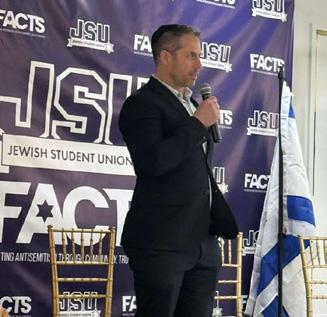
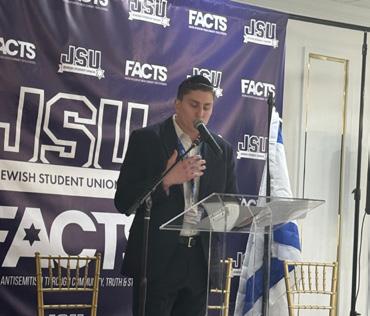
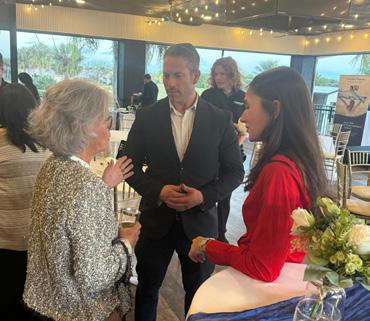
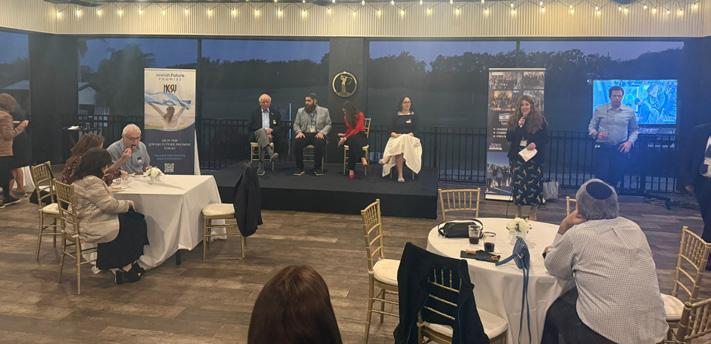
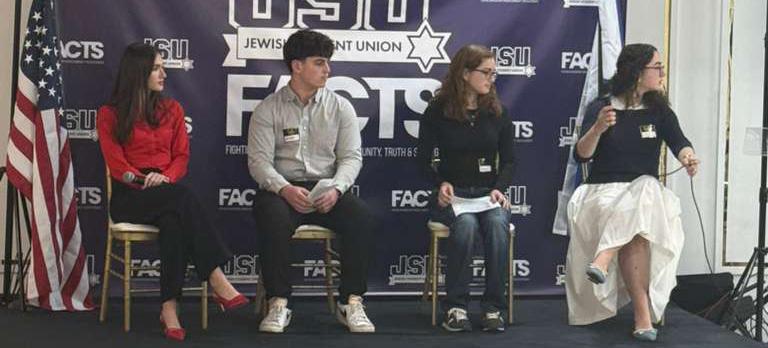
JSU Facts Summit Brings Together Students, Educators, and Donors in Boca Raton
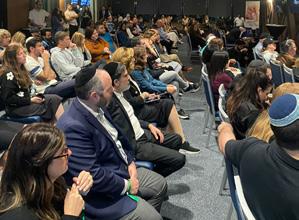
A powerful evening of Jewish identity, education, and advocacy unfolded last night in Boca Raton as NCSY hosted its JSU Facts Summit, bringing together students, community leaders, and donors for an inspiring and thought-provoking night.
About NCSY and JSU
NCSY is one of the most respected and longstanding Jewish youth organizations in the world. Founded in 1954 under the auspices of the Orthodox Union (OU), NCSY has spent seven decades connecting Jewish teenagers to their heritage, their people, and their faith. Operating across North America and beyond, NCSY runs hundreds of programs each year — from Shabbat experiences and summer trips to Israel, to mentorship initiatives and community events — all with the mission of inspiring and empowering Jewish youth. NCSY has touched hundreds of thousands of young Jewish lives over its history, and its alumni include community leaders, rabbis, educators, and engaged Jewish families across the globe.
JSU, which stands for Jewish Student Union, is one of NCSY’s most impactful and far-reaching brands. What makes JSU unique is its model: rather than reaching only the students who are already engaged in Jewish life, JSU brings Jewish programming directly into public high schools and non-Jewish private schools — meeting students exactly where they are.
JSU clubs operate on school campuses during school hours and after school, creating a welcoming, low-barrier space where any Jewish student can explore their identity, ask questions, and find community. For many students, a JSU club at their public school is their first meaningful connection to Judaism and Jewish peoplehood — and for some, it becomes a transformative gateway into a lifelong Jewish journey.
Together, NCSY and JSU form a powerful continuum of Jewish engagement, reaching students from all backgrounds and levels of observance, and ensuring that no Jewish teenager falls through
the cracks simply because of where they go to school.
The Evening Unfolds
The Boca Raton summit featured Tessa Veksler, a former JSU student, who took center stage to lead an engaging question-and-answer session with attendees. Veksler’s presence carried a special significance — as a product of the very program being celebrated, she offered a firsthand perspective on how JSU shaped her Jewish identity and empowered her as a young person navigating the world. Her candid conversation with students created an atmosphere of authenticity
and connection, reminding the room of why these programs matter on a deeply personal level. Adding another dimension to the evening, Ilan from SSI joined the program to give students a sobering but essential look at the realities of college campus antisemitism. Drawing from real experiences and current trends, Ilan walked students through what they can expect when they arrive on campus and — crucially — how to respond. His portion of the evening was both eye-opening and empowering, equipping the next generation with the tools and confidence they need to stand strong in their Jewish identity when they face hostility in higher education.
The night closed on a stirring note as Rabbi Mark Rose delivered a passionate and ambitious call to action directed at the donors in the room. Rabbi Rose spoke to the critical importance of supporting Jewish students across all educational settings — whether they attend day schools, private schools, or public schools. But perhaps the most striking moment of the evening came when Rabbi Rose unveiled JSU’s bold growth vision: to expand the program from the 40,000 students it currently serves to 100,000 students within the next three years. The announcement drew the room’s attention sharply into focus, framing the evening not just as a celebration of what JSU has accomplished, but as a rallying cry for what is still possible — and what is urgently needed.
A Movement Worth Supporting
The numbers tell a compelling story. JSU already reaches 40,000 students across day schools, private schools, and public schools — a remarkable footprint by any measure. But Rabbi Rose’s vision of 100,000 students reflects a recognition that the moment demands more. With antisemitism surging on college campuses and in communities across the country, the window of time to reach young Jewish students before they leave high school and enter that environment has never been more precious. Doubling and then some the reach of JSU in just three years is an audacious goal — and it is one that will require
significant donor investment, communal will, and organizational expansion.
The JSU Facts Summit served as a reminder that the work of NCSY and JSU extends far beyond any single program or event. It is about building a generation of young Jewish men and women who know who they are, know their history, and are prepared to face the challenges ahead — on campus and beyond. For the donors in the room last night, Rabbi Rose’s message was clear: the resources you provide today are what stand between a Jewish teenager and a future in which they face the world alone. With a goal of 100,000 students on the horizon, the time to act is now.
KIDS ZONE KIDS ZONE
PURIM! DID YOU KNOW THAT...
1. Ahasuerus is widely identified with Xerxes I. Many historians link King Achashverosh to Xerxes I, who ruled the Persian Empire from 486–465 BCE.
2. The Persian Empire was enormous. The Megillah says 127 provinces — and that’s historically accurate. The Achaemenid Empire stretched from India to Ethiopia — the largest empire in the world at the time.
3. Persia had a highly organized postal system. Royal decrees (like Haman’s letters) were delivered by mounted couriers across the empire. Herodotus even praised their speed.
4. Persepolis was a real royal capital. The palace setting of the story likely reflects the grandeur of Persepolis, whose ruins still stand in modern-day Iran.
5. The Jews were in Persia after the Babylonian exile. The Purim story happens after Nebuchadnezzar II destroyed the First Temple. Many Jews had not yet returned to Israel.
6. Persian law “could not be revoked.” This detail in the Megillah matches real Persian practice — royal decrees were considered irreversible, which is why a second decree had to be issued.
7. Esther becoming queen was politically plausible. Persian kings were known to take wives from across their empire — not just Persian nobility.
8. There are Greek sources about Xerxes’ lavish feasts. The 180-day party described in the Megillah fits the reputation recorded by Greek historian Herodotus.
9. Purim is not mentioned in the Torah. It was established later as a rabbinic holiday based on historical events recorded in Megillat Esther.
10. The story reflects real geopolitical tension. During Xerxes’ reign, Persia was in conflict with Greece (including the famous Battle of Thermopylae). The empire was politically unstable — which may explain palace intrigue like Haman’s rise.
KIDS ZONE KIDS ZONE
Find 2 of the same birds
UNSCRAMBLE THE FOLLOWING WORDS RELATED TO PURIM
2. NMAHA
GEIMLALH
HANTASMEANH
NUSHSHA
OGGREGR
SIVHAT
IMRUP
AICHEDROM
RETHES
HSAOCHSRAEV
MEGILLAH
GROGGER
VASHTI
SHUSHAN
Overnight Brisket, AKA, wake up to the smell of dinner.
It’s 8 am and dinner is ready! Oh poor you, you worked so hard! NAH . . . you slept like a baby knowing that dinner was cooking itself while you slumbered.
Low oven temp and a long slow cook session ensures that this brisket is tender and not dried out. Be sure to use a whole brisket with fat on it, or a second-cut brisket (also known as the deckel). This will guarantee a moist, juicy, and savory end result. A first cut brisket will just be stringy.
Ingredients
• 3 large onions thinly sliced
• 3 whole heads of garlic sliced in half to reveal the cloves
• 1 whole brisket fat on or 2 second cut briskets, such as Grow and Behold brisket
• Kosher salt
• Freshly cracked black pepper
• 1 cup dry red wine
• 3 cups beef or chicken broth
• 1 cup crushed tomatoes optional
Overnight Brisket
By Jamie Geller
Preparation
1. Preheat oven to 225°F.
2. Layer sliced onions and garlic in a large roasting pan or Dutch oven. Season brisket with salt and pepper.
3. Place brisket on top of onions and garlic. Pour red wine, broth and tomatoes, if using, into pan. Cover food directly with a layer of parchment (foil will leech onto your food) and then seal tightly with foil.
4. Roast at 225°F for 10 hours.
5. Gently transfer brisket to a cutting board to cool before slicing. While brisket is
cooling, strain onions and garlic from pan juices, being sure to press all juices out. Skim fat off of pan juices and reduce pan juices stove top until it coats the back of a spoon.
6. Slice brisket across the grain and transfer back to braising pan. Store in refrigerator for up to 3 days or freeze for 1 month (freeze reduced braising liquid separately).
7. Reheat brisket, covered in a low oven at 250°F, until hot. Serve with reduced pan juices.
Jamie Geller is the Chief Media and Marketing Officer at Aish. She is also a bestselling cookbook author, celebrity chef, television producer, and businesswoman. She’s the author of eight cookbooks and the founder of Kosher Media Network.
Your struggle is not the essence of who you are. Let’s discuss & explore Narrative Exploration for women of all ages. Julie Bernstein, MSW Trained & Supervised (929) 344-2535
SEAMSTRESS
Alterations, Dressmaking, including wedding clothes. Phone: (646) 413-4542
Wine News!
The new ‘Noble Wines’ catalog has arrived, featuring our latest selection of premium wines. Request your free copy by mail. Just text or email your address and we’ll deliver it straight to your door. Text: (845) 716-8306 or email: news@noblewinesinc.com
Seeking 5–10k SF warehouse within one hour of Miami port. Must have 1–2 loading docks. Please call Nathan at 845-764-1755.
BUSINESS DIRECTORY &
CLASSIFIED
List your local business, services available, real estate opportunities, Help Wanted, & more!
Basic listing: $10/weekName, number and email address
Enhanced listing: $25/weekUp to 25 words
(additional words $1/each)
Deadline:
Tuesday at 4pm for next week's issue
Contact: andrea@tsfcommunityvoice.com
In-Home Private Pilates for women to strengthen, realign, and ease pain. Personalized sessions and private events + Kosher Healthy Meal Prep. WellnessRena.com 305-404-3904 | WellnessRena@gmail.com
Coolstar Air Service llc A/C Install & Repair (954) 200-1369 | coolstarair@yahoo.com
IT Tech Support & Low Voltage Services 561-331-1680 | barry@navonpro.com
MOVE TO NORTH FLORIDA
Most affordable housing in the entire state Esformes Hebrew Academy of Ormond Beach
NOW HIRING
• Elementary teacher • Office manager
• School Event Coordinator • Drama & Music, Coach Part-time and full-time positions
Quiet suburb School and shul community EsformesHebrewAcademy.org Email resume to chanidaytona@gmail.com
Bringing Sensitivity To The Mental Health Needs Of The Jewish Community RAFAEL JAMES LCSW PSYCHOTHERAPIST (561) 903-2950
EMAIL: centerforempathyandhealing@gmail.com Florida Medicare & Florida Blue accepted
Top Handyman & Construction 848-318-6976, nikabrmv711@gmail.com
To place a Business Directory/Classified Listing contact: andrea@tsfcommunityvoice.com
COMMUNITY NEWS
SEEKING A WICKED SMART POLISHED NJP (NICE JEWISH PERSON)
Part-time Co-Director – private Family Foundation (Mostly Remote) Starting Salary $40-$50 Per Hour A private nonprofit family foundation seeks a highly intelligent, professional, motivated Co-Director.
Responsibilities:
• Research & evaluate nonprofits aligned with the foundation’s mission
• Conduct due diligence and prepare clear recommendations
• Serve as a liaison between the principal and nonprofit organization
•Attend occasional in-person meetings (West Palm beach) + Potential Travel
Qualifications:
• Nonprofit experience
• Excellent communication skills
• Strong research and analytical ability
• Highly organized, discreet and detail-oriented
If you are capable and passionate, we would love to hear from you!
Contact information: Truecausellc@gmail.com
Rethinking Retirement: How the 3-Bucket Strategy Creates Stability, Growth and Flexibility
By Glen R. Golish
Retirement is not a single moment. It is a phase of life that may last 25 or even 30 years. Yet many people plan for retirement as if it were a short chapter rather than a long-term journey.
One of the most practical ways to think about retirement income planning is through what is often called the 3-bucket strategy. While the idea is simple, when implemented correctly, it can provide structure, flexibility and peace of mind throughout your later years.
The core concept is straightforward: instead of viewing retirement savings as one large pool of money, you divide assets into three distinct “buckets,” each designed to serve a specific time horizon and purpose.
Bucket One: Money for Now
The first bucket is designed to fund the early years of retirement. typically the first 8 to 10 years. This is often the most active phase of retirement. Travel, hobbies, family experiences and long-delayed goals tend to occur during this period.
Because this bucket is intended to fund immediate lifestyle needs, it should emphasize liquidity and stability. Cash equivalents, shortterm bonds, high-yield savings accounts or conservative fixed-income strategies often play a role here.
The purpose of this bucket is not high growth. It is protection and access. It allows retirees to draw income without worrying about market fluctuations disrupting their lifestyle.
Bucket Two: Money for Later
The second bucket is designed for the middle years of retirement. Roughly years 10 through 20. This is when spending patterns may moderate but income needs remain consistent.
Assets in this bucket can be structured with a balanced approach. The goal here is moderate growth while maintaining risk awareness. Investment-grade bonds, dividend-paying equities and certain annuity strategies may be appropriate.
This bucket often serves as a replenishment source. Over time, funds from Bucket Two may be transferred into Bucket One as needed, ideally after markets have had time to recover from volatility.
Inflation protection becomes especially important here. The money intended for later years must continue to grow in order to preserve purchasing power.
Bucket Three: Money for Much Later
The third bucket is intended for the final stage of retirement. Typically 20 or more years down the road. This bucket may ultimately
help fund healthcare needs, longterm care considerations or provide a legacy for the next generation.
Because this money may not be needed for a decade or longer, it can be invested with a more growth-oriented strategy. Diversified equities, index funds, real estate investment strategies and certain longevity-focused annuity contracts may play a role.
The purpose of this bucket is long-term resilience. Healthcare costs and longevity risk are two of the greatest uncertainties in retirement. This bucket exists to address them.
How the Buckets Work Together
The power of the 3-bucket strategy is not in the labels. It is in the coordination.
For example, a retiree with $10 million in savings and $450,000 in annual expenses might allocate assets across the three buckets based on lifestyle, risk tolerance and guaranteed income sources such as Social Security or pensions.
Bucket One provides near-term income. Bucket Two grows and replenishes. Bucket Three compounds for longevity and legacy.
As time passes, funds shift forward. From growth to income. In a deliberate and disciplined way.
Where Life Insurance Fits
A critical but often overlooked component of retirement planning
4 bedrooms, 3 baths, 1,851sf
$7,800/M
The Olympus- 1-2 bdrms, 1.5-2 baths, 1000-1400sf Multiple Units available Starting at $199K
3 bdrms, 2 full baths, Pool, 1,905sf
$4,750/M H O L L Y W O O D
H O L L Y W O O D SOLD
2 bdrms, 2 full baths, 1,000sf $239K
6 bdrms, 3.5 baths, 4,200sf, lot size 14,736sf
$1.995M
RENTED
The Spiaggia- 1 bdrms, 2 full baths, 927sf $3,500/M
REAL ESTATE & FINANCE
is income replacement and liquidity protection.
Life insurance, when structured properly, can serve as a complementary asset within this framework. It can provide tax-efficient liquidity, protect surviving spouses, offset market losses at death and preserve retirement assets for heirs.
In holistic planning, retirement income, investments, estate planning and insurance should not operate independently. They should function as an integrated system.
We are fundamentally in the income replacement business. Retirement planning is not simply about accumulating assets. It is about ensuring those assets convert into sustainable income and protected legacy.
A Strategic Perspective
The 3-bucket approach is not the only retirement strategy but it offers clarity. It forces retirees to think beyond a single allocation model and consider time segmentation, risk management and liquidity planning.
Retirement lasts decades. Asset allocation should evolve accordingly.
By structuring assets intentionally, protecting the near term, balancing the mid-term and growing the long term, retirees can navigate market cycles with greater confidence.
At G Wealth we coordinate properly with life insurance, investments and estate planning, this strategy can help ensure that retirement is not only secure but generationally impactful.
About the Author Glen R. Golish is the Founder and CEO of G Wealth Strategies and a Forbes-recognized Top Financial Security Professional. He works closely with families on comprehensive financial and estate planning, including cross-border considerations for those navigating U.S. and Israeli planning needs.
Important Disclaimer
Please seek qualified legal and tax advice before implementing any planning strategies, in conjunction with guidance from G Wealth Strategies. Contact Information
On Tuesday night, February 24, 2026, President Trump stood in front of Congress and gave his first State of the Union Address of his second term. It was the kind of speech that half the country watches like a sporting event, and the other half pretends not to care about.
Earlier that day, a client of mine called me excitedly as he was walking through a house he’s renovating. He told me it was looking great and that I should get my appraiser there immediately. The place looked ready at first glance. Fresh paint, new floors, and bright lighting. But the contractor interrupted him and said, “Before you get too enthusiastic, we need to do a full walkthrough.” They opened a utility closet and found a slow leak that was potentially corroding the basement. That’s exactly why the State of the Union matters. It forces a walkthrough. You don’t get to judge just based on the paint job, you need to look behind the walls, you need to identify what’s working and what’s not, and you signal what needs to happen next.
The Constitution does not demand theatrics, but it does demand reporting. “From time to time,” the president must give Congress information on the state of the union and recommend measures he thinks are necessary. It is part audit, part agenda, part persuasion. It forces a leader to put stakes in the ground, and it forces everyone listening to confront the question - are we improving, stag-
nating, or drifting?
Trump leaned into the numbers, as he always does. He said inflation is at its lowest level in five years, mortgage rates are at their lowest point in four years, and housing transaction closing costs are down about $5,000 on average since he took office. He pointed to gas prices below $2.30 in most states, and he highlighted stock market records and unfathomable foreign investment into the United States. Maybe you agreed with his enthusiasm, or maybe you were rollingyour eyes. Either way, people crave a reckoning, and the pageantry, including guests in the chamber, is designed to make the delivery feel convincing and magnanimous. Classic Trump.
But here’s what struck me. We demand these updates from presidents and CEOs, yet most people never deliver one to themselves. We are two months into this new year, and plenty of good people are already off track. It’s not because they are lazy, it’s moreso because they never paused to define what “on track” even means. They have goals in their head, tasks on autopilot, and a vague hope that everything will work out as they hope. But as I often say, hope is not a strategy.
So borrow the model. Give yourself your own State of the Union this week. Sit down and look at the basics of your life with honesty. What is your personal inflation - meaning what has quietly crept up in your life that costs more than it should? What is
your interest rate - meaning what challenge is costing you time or money? And what is your investment trajectory - meaning are you building anything that will pay you dividends later, or are you just earning and spending in an endless loop?
Do the same with your business and your family. In business, revenue is not the only metric. Cash flow, margins, and receivables tell the real story. In a household, the numbers matter, but so does the room’s temperature.’ Are you present, or just busy? Are you funding a future, or just financing a lifestyle? A State of the Union is not meant to shame anyone. It is meant to replace confusion with direction openly and transparently. Once you acknowledge the truth, you can adjust accordingly, eliminate what is hurting you, invest with intention, and set priorities that your surroundings will actually respect.
Shmuel Shayowitz (NMLS#19871) is a highly regarded Real Estate & Finance Executive, Writer, Speaker, Coach, and Advisor. He is President and Chief Lending Officer of Approved Funding, a privately held national mortgage banker and direct lender that has facilitated over $3 billion in mortgage funding. Shmuel has over twenty years of industry experience and holds numerous licenses and accreditations, including certified mortgage underwriter, licensed real estate agent, residential review appraiser, and accredited investor, to name a few. Shmuel has successfully navigated through many changing markets and business landscapes, making his market insights and experience well-coveted within the real estate industry. He can be reached via email at Shmuel@ approvedfunding.com.
Nutritional Counseling: Members are eligible for 2 nutritional consultations (up to $125/session) per membership year. Sessions accrue towards allowed therapy count.
Dental Care: Members may submit up to three $100 Sharing Requests per membership year.
SO MUCH MORE THAN WELL VISITS
United Refuah members can access eligible medical services across 31 care categories, including care you may not realize is eligible.
See Sharing Guidelines for full eligibility details and limits. Some services may require pre-notification prior to care.
Preferred Providers: With over 30 select providers, members pay a low check-in fee. Balances are fully shared, with zero paperwork or billing hassle for the member.
Chiropractic and Acupuncture*: Members are allowed a combined total of 12 chiropractic and/or acupuncture sessions (up to $75/session) per membership year.
Vision: Members may submit a $50 Sharing Request per membership year for refractive eye care.
Mental Health Services*: Testing, counseling, and treatment in connection with a diagnosed mental illness are eligible for up to 12 visits (up to $125/session) per membership year.