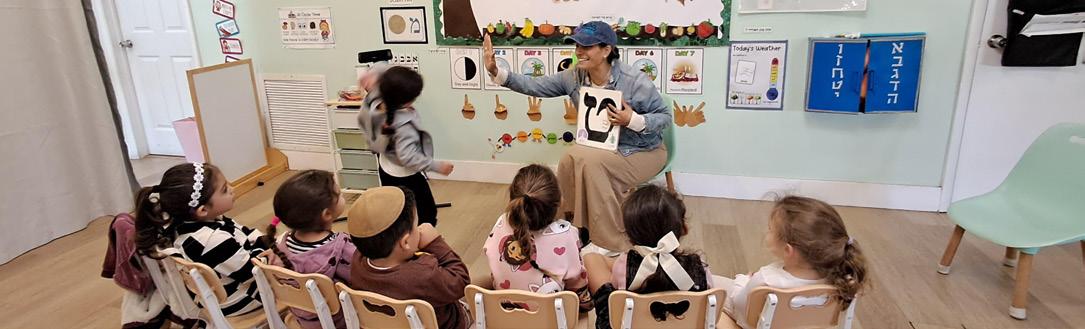
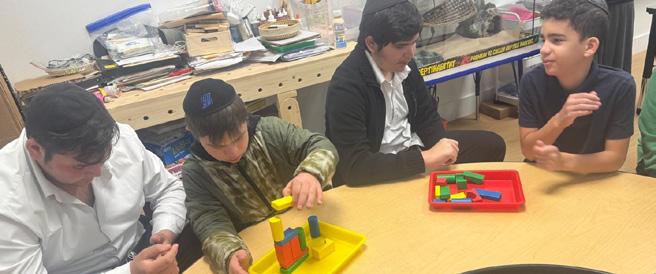
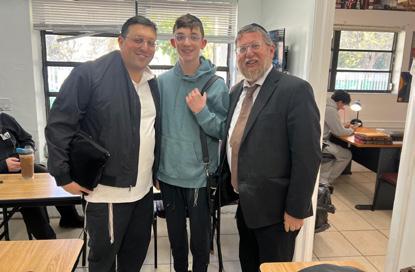
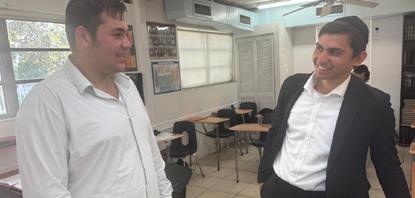
Bais Medrash Of South Miami is designed for young men who are ready to grow, thrive, and develop the skills of a strong, confident Yeshiva bachur—both in learning and in life.
Whether post–high school or completing their final years of Yeshiva study, students benefit from a personal Rebbe relationship, combining over 50 years of rabbinic experience with a dynamic team of young, energetic Rabbeim. Together, they bring proven leadership skills from community building and advanced educational systems for teens.
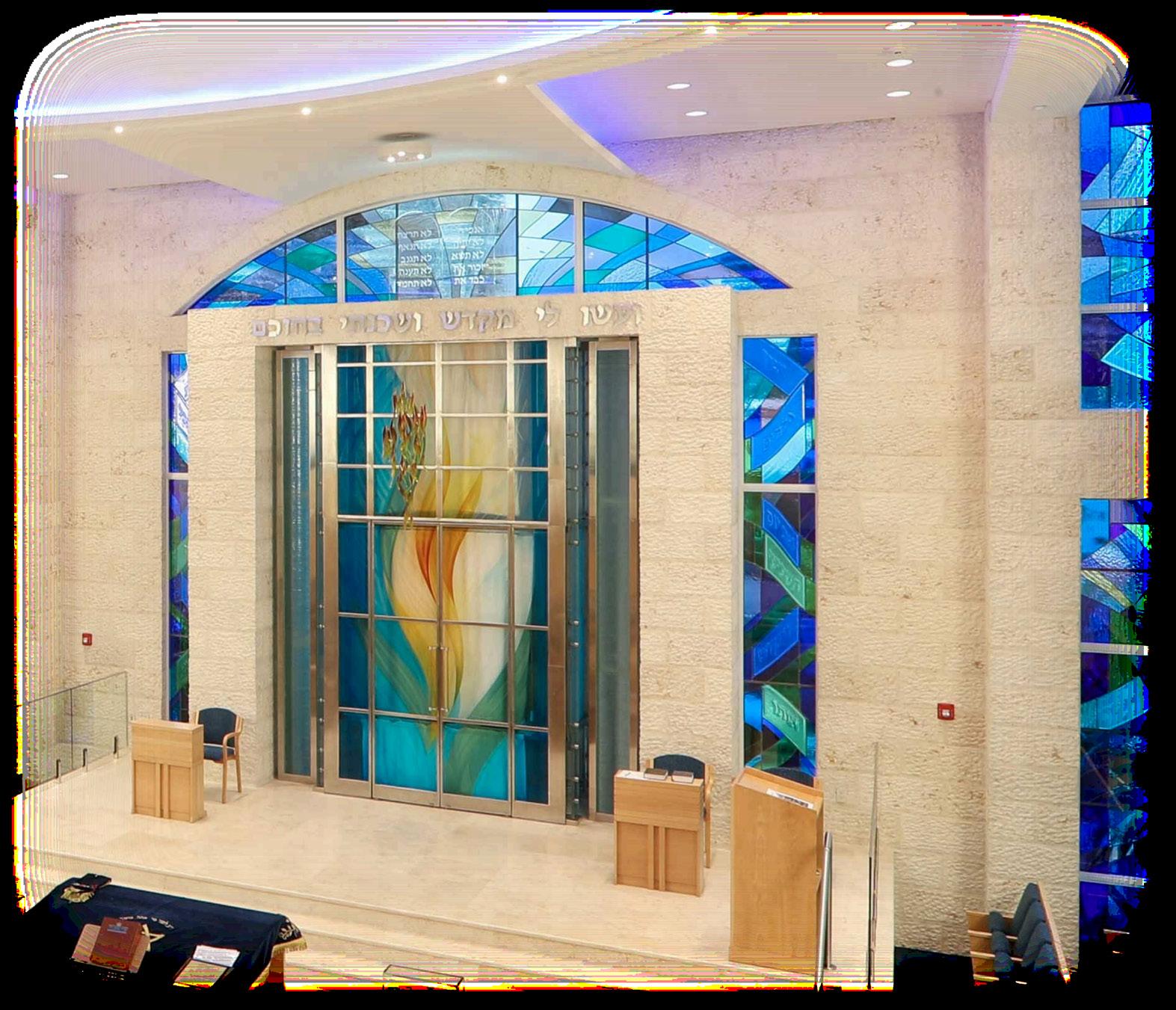
The Bais Midrash is located in a beautiful, luxurious campus with high-end amenities, creating an environment that supports focus, growth, and excellence.
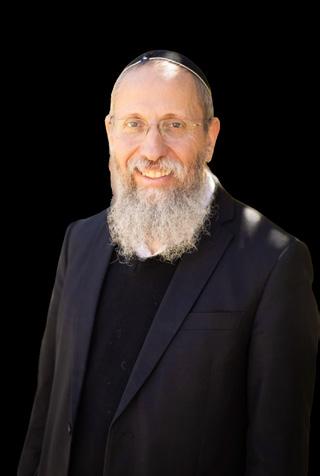
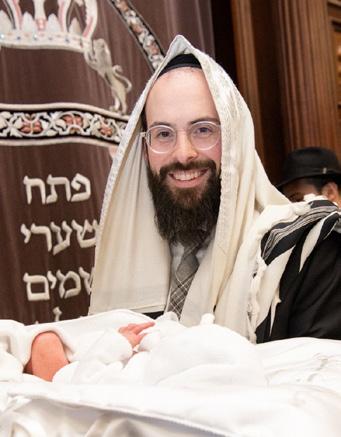
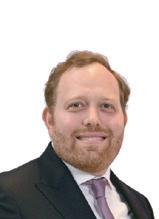
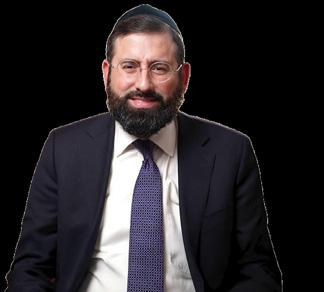
Rosh Yeshiva Rabbi Avshalom Baskin
Rabbi Baskin studied in Yeshivas Ohr Yisroel in Eretz Yisrael and Yeshiva Beis Moshe Chaim in Miami, earning a Master’s in Religious Education. A seasoned mechanech and former post–high school rebbe, he serves as rabbi to the Israeli community in Orlando, authors Torah and chinuch seforim, and delivers widely followed shiurim. He is known for his warmth, passion, and commitment to helping talmidim grow into confident, connected adults.
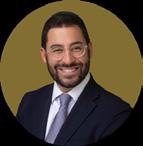
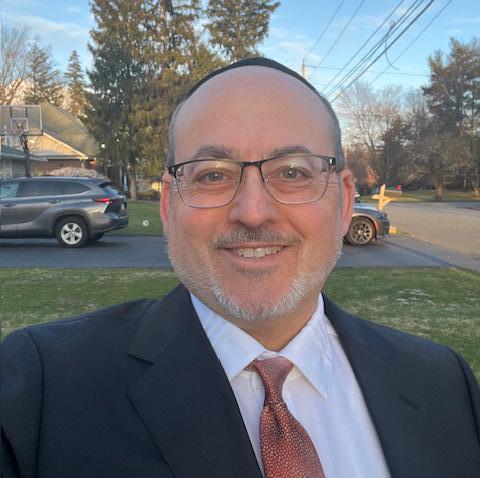
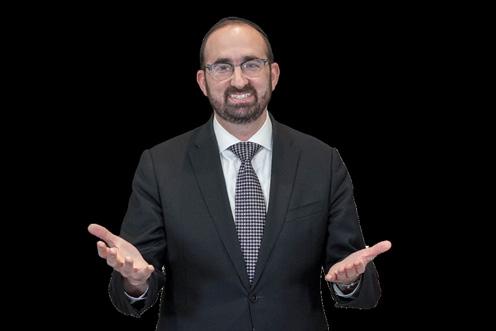
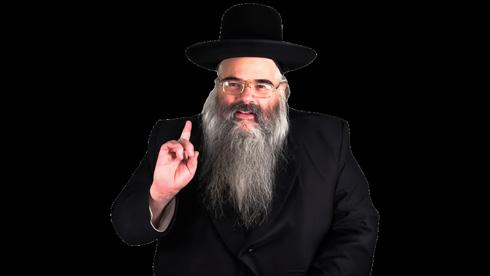
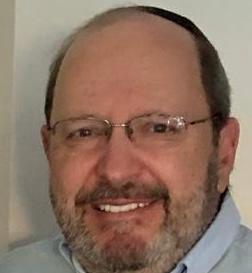
Rabbi Hershel D. Becker
Guest Speaaker
R a v Yo s e f Z v i R i m o n
Monday February 23
7:30 PM
Then and Now:
Providence in the Purim Story and Megillat HaTekuma - Jewish National Revival Post October 7th
Light bites will be served
The lecture is open to the whole community
Rav Rimon is one of Israel’s leading rabbinic and public figures His visionary work has powerfully impacted Jewish communities both inside and outside Israel He combines rigorous scholarship with tremendous sensitivity to contemporary ethical, educational and social challenges
In 2005, Rav Rimon founded JobKatif to enable Israeli evacuees from Gush Katif to find jobs and settle in Israel. Today that initiative ( renamed "La’Ofek") works to rehabilitate sidelined Israelis such as Ethiopians, lone soldiers and youth at risk. On October 7th, Rav Rimon became “the Soldiers’ Rabbi” tirelessly visiting bases and front lines, organizing help for immediate physical needs and giving moral clarity and spiritual strength to soldiers, their wives and families as well as providing practical answers to thousands of difficult Halachic questions.
While continuing his work as a Posek, author and teacher, Rav Rimon recently founded Kuma to help widows of fallen soldiers rebuild their lives Rav Rimon has received numerous national honors including the Jerusalem Prize in 2023 and serves on Israel’s Health Service Committee for Pharmaceutical Drugs bringing ethical and Halachic perspectives to Government decision making Rav Rimon is Chief Rabbi of Gush Etzion, Rosh Yeshiva of Lev Academic Center ( JCT), President of the World Mizrachi Movement and is founder of Sulamot (which provides innovative Jewish educational and social initiatives to thousands of children, educators and families) and La’Ofek. He is married to Rabbanit Sharon and they are parents of 8 daughters and 5 sons-in-law
Be
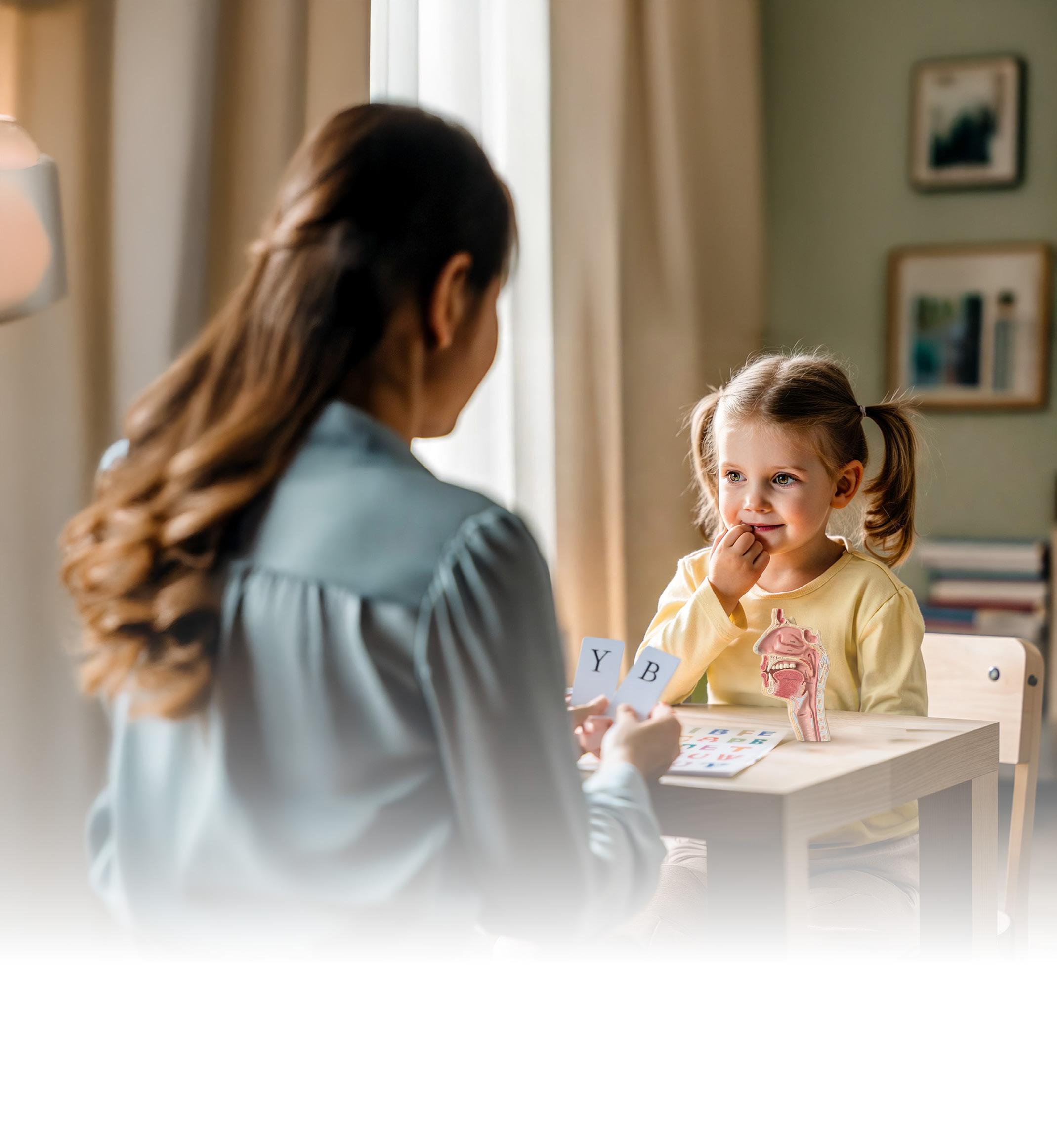
T TI’s Dual-Degree SpeechLanguage Pathology Program
Community Voice magazine is not responsible for the Kashrut or services provided by the advertisements. It is up to the consumer to verify the information.
Bais Medrash Of South Miami is designed for young men who are ready to grow, thrive, and develop the skills of a strong, confident Yeshiva bachur—both in learning and in life.
Whether post–high school or completing their final years of Yeshiva study, students benefit from a personal Rebbe relationship, combining over 50 years of rabbinic experience with a dynamic team of young, energetic Rabbeim. Together, they bring proven leadership skills from community building and advanced educational systems for teens.
The Bais Midrash is located in a beautiful, luxurious campus with high-end amenities, creating an environment that supports focus, growth, and excellence. And other young dynamic Rabbeim...
Rosh Yeshiva Rabbi Avshalom Baskin
Rabbi Baskin studied in Yeshivas Ohr Yisroel in Eretz Yisrael and Yeshiva Beis Moshe Chaim in Miami, earning a Master’s in Religious Education. A seasoned mechanech and former post–high school rebbe, he serves as rabbi to the Israeli community in Orlando, authors Torah and chinuch seforim, and delivers widely followed shiurim. He is known for his warmth, passion, and commitment to helping talmidim grow into confident, connected adults.
Rabbi Hershel D. Becker
Served as a congregational rabbi in Miami for over thirty years. With his open, easy-going manner and deeply caring approach, he has earned a reputation as a renowned Jewish educator, engaging orator, and beloved spiritual mentor. Through his teaching, he provides meaningful resources that spark animated discussion, offering practical Torah-based guidance for building and strengthening interpersonal relationships.
Beyond the Headlines
A weekly glimpse into the Israel you won’t read about in the news
By Sivan Rahav Meir
Everyone Is an Emissary
I had the privilege of spending last Shabbat in New York at Chabad’s International Conference of Shluchos (women emissaries). You could spend hours hearing what each shlucha does and you still wouldn’t reach the end.
I heard from the shlucha in the Caribbean about opening the first Jewish kindergarten. I heard from the shlucha in Taiwan about building the first mikveh. I listened with tears as the shlucha from Kiryat Malachi described a groundbreaking school for children with disabilities. I heard from the shlucha in Berdychiv, Ukraine, about helping Jews make aliyah under fire. And then the shlucha who works with new immigrants in Jerusalem turned to me, eager to share a story about bar mitzvah celebrations for elderly Holocaust survivors who never had one at age thirteen, while next to her stood the shlucha from an Atlanta campus, where they are confronting antisemitism and anti-Israel protests.
It’s overwhelming, in the best sense. How do you even sum it up? And what does it mean for ordinary people like us, who aren’t heading out this morning to rescue Israeli backpackers lost somewhere in the Far East, but are simply trying to manage the morning rush at home and at work?
The answer came at the moment the group gathered.
Rabbi Mendel Kotlarsky, who oversees the shlichut network, said: “The Lubavitcher Rebbe didn’t send only them. In fact, everyone is a shaliach. Here you see women who live their mission 24/7. But I’m asking everyone to take this idea and translate it into their own life. Maybe not 24/7— but do you have 24 minutes a week? You don’t need to fly across the world; maybe you can invite a neighbor for a Shabbat meal; start a small Torah class; notice the elderly woman living alone in your building. The whole world is
meant to be one great gathering of shlichut.”
May we merit it.
Perseverance Pays Off
Eliran Bitan recently completed the daily Rambam study cycle, and immediately began again from the start.
The Rambam, Maimonides, organized the Torah’s laws into a single monumental work: the Mishneh Torah, also known as HaYad HaChazakah (The Strong Hand). It is comprised of 14 volumes (the numerical value of yad is 14), encompassing Jewish law in virtually every area of life. How does a person build a “strong hand”? The answer is simple: by training it daily, even when it’s inconvenient, even when the motivation isn’t there. A muscle is built through steady exertion, not through a one-time burst of effort. And this is true not only in Torah, but in every meaningful endeavor. Torah isn’t acquired in a day; it is acquired day by day.
The Lubavitcher Rebbe established structured paths for
COMMUNITY NEWS
learning HaYad HaChazakah: one chapter a day on a three-year cycle, or three chapters a day to complete it in one year. Either way, the foundation is the same: consistent, daily commitment, the way any strength is built.
At first, Eliran found it tedious to learn halachah day after day. But over time, he discovered that there are no shortcuts, and that perseverance is everything. In reserve duty, at work, and under the pressures of everyday life, what carries a person forward is the ability to keep going. It is a commitment, but one that anyone can make.
Purpose, he came to understand, is not found only in the completion of a project, but in the person one becomes through dedication to it, and through the daily “training” it requires.
And so, it is not only the hand that is strengthened. A person builds a strong backbone, a strong heart, eyes trained to see others generously, and muscles of faith that grow sturdier with time. On a broader level, that same daily discipline helps shape the resilience of a community and a nation.
Today there are many apps, websites, and, of course, books that make daily Rambam study
and other forms of daily Torah learning accessible. Readers are invited to launch a daily practice of learning in their lives today.
Five Points on Parashat
Mishpatim:
After a sweeping sequence of formative events: the enslavement in Egypt, the Ten Plagues, the Exodus, the splitting of the Red Sea, and the revelation at Har Sinai, we arrive at a parashah that feels entirely different. Instead of dramatic narrative, Parashat Mishpatim is filled with laws and commandments that speak directly to everyday life. Out of the Torah’s 613 mitzvot, the parashah includes 53.
The topics dealt with in this parashah are strikingly wideranging: labor relations; family life; relationships between neighbors; charity; festivals; kashrut; sensitivity to the poor, the orphan, and the widow; repaying debts; entering the Land of Israel and much more. This is because the Torah is Torat Chaim—a Torah of life. It addresses all areas of living, not only lofty spiritual moments.
Toward the end of the parashah, Moshe reads words of the Torah aloud to the people, and they proclaim the famous, foun-
dational phrase: “Na’aseh v’nishma,” We will do, and we will hear. First we do, and only afterward do we listen. The Jewish people begin with action, with commitment to the mitzvot. That is our secret: doing. Only then comes discussion, interpretation, learning, and understanding.
Rabbi Jonathan Sacks explains the essence of the parashah this way: “The one-time experience of the revelation at Har Sinai must be translated. Our task in life is to turn experience and inspiration into careful attention to detail, to turn the ‘wow’ into laws. That is how the message becomes timeless.”
Rabbi Adin Steinsaltz adds a powerful insight: “We are used to lifting our eyes heavenward when we speak about God, but Parashat Mishpatim teaches us that He is present as well in the bill we pay, in the apple we eat, and in the way we treat the parking attendant.” This is where revelation settles into reality, and where holiness takes up residence in the details of daily life.
Interview with Rabbi Elan Segelman, Rabbinic Director PUAH USA
Q: For readers who may not know, what is PUAH and what problem does it exist to solve?
PUAH exists at the intersection of halacha, medicine, and the human experience. Fertility treatment is among the most emotionally complex areas of modern medicine, and for Jewish couples it carries profound halachic questions alongside deep personal pain. PUAH was created to ensure that couples are never forced to choose between medical excellence and halachic integrity, and never left to navigate this journey alone.
We provide clear and authoritative halachic guidance, trusted medical direction and referrals, close collaboration with physicians and fertility centers, and ongoing personal accompaniment throughout the process. We also help connect couples to financial assistance and mental health support. Fertility treatment is often extraordinarily expensive, and part of our commitment to the couples we serve is ensuring that financial burden does not become an added barrier on an already overwhelming journey.
Q: You’re not only a rabbi, but deeply embedded in the medical world. Why is that dual fluency so essential?
Fertility medicine is highly technical and evolves at an extraordinary pace, especially in an era of rapid innovation and emerging AI-driven technologies.
NIGHT GREEN on the
THE LAUNCH OF PUAH’S FLORIDA
For couples navigating treatment, halachic questions are not theoretical; they arise in real time, alongside complex medical decisions.
At the same time, the sheer volume of information available online has made it increasingly difficult to distinguish between what is reliable, outdated, or simply incorrect. Couples are often overwhelmed by conflicting medical advice and halachic interpretations, with little way to assess what can be trusted.
As part of my role at PUAH, I remain closely engaged with the medical landscape, continually reassessing how new technologies and treatment protocols intersect with halachic principles. This work requires ongoing collaboration with leading physicians as well as sustained consultation with gedolei Torah, so that advances in medicine can be proper-
ly understood and applied within a halachic framework. That dual fluency allows PUAH to serve as a trusted, reliable resource, medically and halachically, providing guidance that is current, responsible, and worthy of the confidence couples place in us.
SUNDAY, FEBRUARY 22ND • TOPGOLF POMPANO
Q: Many people assume infertility is a “private” issue. You seem to frame it as a communal responsibility.
Infertility is profoundly isolating, and silence only deepens that isolation. Judaism has never viewed building a family as a purely private matter, it lies at the heart of the continuity of Am Yisrael. When individuals or couples struggle in this area, the impact is personal, but the responsibility is communal.
A healthy community ensures that no one faces this journey alone. That means having a coordinated support system in place: clear halachic guidance, trusted medical expertise and referrals, meaningful financial assistance, and emotional support throughout the process. This is precisely what PUAH exists to provide. It is not an act of chesed alone; it is a communal obligation.
Q: What does halachic supervision in a fertility lab actually look like in practice?
Halachic supervision in a fertility lab is both a technical and a human endeavor. On a practical level, it involves rigorous verifi-
cation protocols, identity confirmation at every critical step, and meticulous documentation, all designed to protect yichus and ensure that there is absolutely no possibility of a mix-up involving genetic material.
At the same time, these procedures are often lengthy and emotionally taxing. Our mashgichot are trained not only to oversee the technical process, but also to provide a steady, reassuring presence for patients during moments that can be deeply stressful. Their role helps safeguard both the halachic integrity of the process and the dignity and emotional well-being of the individuals undergoing treatment.
Q: PUAH works with physicians across the country. How do doctors respond to rabbinic involvement?
When rabbinic involvement is done properly, physicians welcome it. Doctors are deeply invested in their patients’ outcomes and peace of mind. Once they see that PUAH’s involvement is professional, consistent, and medically literate, it quickly becomes a true partnership rather than an intrusion.
Many physicians now reach out to us proactively, not because they are required to, but because they see the difference it makes. Patients supported through PUAH are more informed, more grounded, and more confident in the process, which ultimately benefits both the patient and the medical team.
Q: How do you balance strict halachic fidelity with compassion for couples in pain?
That framing assumes a tension that doesn’t actually exist. Halacha is not an obstacle to compassion; very often, it is the path through it. Couples are sometimes unaware that halacha itself contains guidance that is both rigorous and deeply humane.
The real question is not, “How can we be lenient?” but rather, “What does halacha genuinely require in this situation, and how do we accompany this couple as they live that halacha with dignity and support?” When halacha is properly understood and responsibly applied, it does not stand in opposition to compassion; it gives it structure, direction, and meaning.
Q: What is the most common misconception couples have when they first reach out to PUAH?
One of the biggest misconceptions is that PUAH is the organization you call only after everything else has failed. In reality, it should be one of the very first calls a couple makes, just as early as any medical consultation.
PUAH is here from the very beginning of the fertility journey and at every step along the way. Early guidance can shape medical decisions, prevent unnecessary complications, and give couples clarity and confidence from the outset. We don’t step in at the end of the process; we walk with couples from their first questions through every stage that follows.
Q: PUAH has expanded rapidly across regions. What has guided that growth?
The need is enormous, and much of it begins with a lack of education and awareness. Many individuals and couples simply don’t know when to reach out, what questions to ask, or that support even exists. One of PUAH’s central pillars is education, because informed couples are empowered to seek guidance earlier, often preventing avoidable complications later in the process.
At the same time, our growth is deliberate. We expand into a region only when we can build real infrastructure: well-trained mashgichot, trusted physicians and fertility clinics, and a strong working relationship with local rabbinic leadership. That combination ensures that when PUAH arrives in a community, it brings not just a name, but a fully functioning system of care.
Q: Fertility treatment can strain marriages. Does PUAH address that dimension?
Absolutely. Infertility is far more than a medical challenge, it reaches into the very foundation of a marriage. It affects intimacy, emotional connection, financial stability, and a couple’s faith and sense of trust. When ongoing testing, invasive procedures, and powerful hormonal treatments are added to the mix, the strain can become overwhelming to carry alone.
That is precisely why PUAH exists. Our role is to help relieve the distress and share the burden,
ensuring that couples are supported not only medically and halachically, but as partners navigating this journey together with guidance, care, and dignity.
Q: If you could change one thing about how the Jewish world talks about infertility, what would it be?
Education and sensitivity. One in six couples struggles with infertility, yet there remains a widespread lack of understanding about what infertility actually entails and how it affects people’s lives.
Education matters because awareness changes behavior—it helps people know when to speak, when not to speak, and how to of-
fer support without causing unintended harm. With sensitivity, it can be as simple as pausing before commenting. The kinds of remarks that are sometimes made still shock me: “You must be saving so much since you don’t have tuition to pay for,” or, “You already have one or two children—why are you worried about having more?”
If we educate better and speak more thoughtfully, we create communities that are safer, kinder, and more supportive for those navigating this journey.Finally, what does success look like for you and for PUAH?
Q: Finally, what does success look like for you and for PUAH?
Success means that couples no
longer feel they are navigating this alone. In a very practical, handson way, it looks like couples knowing exactly who to call, what questions to ask, and having trusted guidance at each step - medically, halachically, and emotionally.
When the right support and information are in place early and consistently, couples are better positioned to make informed decisions and move forward with confidence. That is what success looks like for PUAH: being present, accessible, and effective in helping couples reach their goals.
For more information on PUAH’s Florida Branch, please reach out to our Regional Director, Rabbi Dovid Bogopulsky at rdb@ puahfertility.org
The Governor of the Bank of Israel
The Governor of the Bank of Israel is the economist appointed to lead the central bank of the State of Israel (every country has a central bank that manages its monetary policy). The Governor is selected by the government and appointed by the President for a five-year term.
The Governor is responsible for the interest rate in the economy, exchange rates, foreign currency reserves, and the gold reserves that back the local currency, the New Israeli Shekel (NIS). Under the Governor’s authority are also the Supervisor of Banks (who ensures banks do not collapse) and the Chairman of the Securities Authority (the stock market).
The current Governor is Prof. Amir Yaron, who took office on December 24, 2018. At the time of his appointment, the dollar exchange rate was 3.7 NIS per USD. Today, the rate stands at 3.09 NIS, a 17% decrease. Furthermore, when he took office, an ounce of gold cost approximately $1,300. Today, an ounce of gold is valued at approximately 5,600 NIS, representing a fourfold increase in value during the Governor’s tenure.
Over the years, the Governor has frequently purchased US dollars, and today, Israel’s reserves stand at approximately $235 billion! The entire Israeli economy relies on a single currency: the US dollar, which is defined as a “fiat” currency with no physical backing. While it is true that gold does not yield interest like dollars or bonds, gold is more stable.
Central banks around the world buy gold to secure their currencies.
The great United States holds reserves of about $260 billion, nearly the same as Israel, but with the glaring difference between 10 million Israeli citizens and 350 million American residents. The United States is in debt exceeding its annual income. It is not for nothing that Trump works to improve the economic balance, though without much success. In the U.S., there is a growing fear of political interference and damage to the independence of the Federal Reserve.
In Israel, our national debt is about 60% of our GDP, an excellent status for any country in the world.
So why did Israel’s credit rating drop?
Because Israeli journalists from the anti-government camp whispered in the ears of the credit rating agencies (guess what...).
About a year ago, at the Jerusalem Post conference in the U.S., the Governor delivered a speech sharply criticizing the government’s conduct. The attendees, including senior U.S. economic officials and representatives from credit rating agencies, heard this criticism, and indeed, Israel’s credit rating was subsequently lowered.
Returning to the exchange rate: the falling value of the U.S. dollar is endangering Israel’s reserves.
If the Governor had purchased gold for at least a quarter of those reserves, we would be a country with financial reserves exceeding those of the United States!
Why does the Governor act in a way that harms the national treasury?
Why doesn’t he lower the interest rate? Lowering the rate would stimulate the economy. In a case of “demand inflation,” one restrains the economy with
COMMUNITY NEWS
high interest. But here, we are facing “supply inflation” (due to the war), and there is no need for a “crazy” interest rate that hurts every household while enriching only the banks and credit companies.
The state set deficit targets suitable for our wartime situation, and in practice, the deficit is even lower! Despite the war, the Israeli economy is growing in a manner worthy of global appreciation.
Does the Governor have political rather than professional goals? For example, to interfere with the government’s functioning and cause citizens, struggling
under the burden, to be angry at the elected government? Perhaps to influence them to vote against the government in the elections?
Does the Governor belong to the bureaucratic “Shadow Government” (the Deep State)? Is he acting out of non-professional motives? I fear that is indeed the case.
Supreme Court Justice Isaac Amit, who appointed himself President, defined the “Magnificent Seven” who should run the country: the President of the Supreme Court, the head of the Mossad, the head of the Shin Bet, the Police Commissioner, the IDF Chief of Staff, the Governor of
the Bank of Israel, and the State Comptroller.
If these positions are manned by power-hungry and irresponsible bureaucrats whose only desire is to run the state instead of the elected leadership, the result is suffering for the citizens due to power struggles between the bureaucracy and the government.
Therefore, all “Magnificent Seven” positions must be positions of trust, bureaucrats who function with the government for the benefit of the citizens, rather than serving the foreign agendas of opposition parties.
Dr. Yeshayahu (Yishy) Bick yishybick@ gmail.com | January 30, 2026
Leave No Memory Behind
Kosher at Heart
Mr. Feldman was never the type to complain.
At 62, he still walked to shul every morning, rain or shine. He carried his own groceries, insisted on climbing the stairs instead of taking the elevator, and brushed off his wife’s gentle nudges to “take it easier.”
“I’m just getting older,” he would say with a smile.
But lately, something felt different.
The walk to shul had become harder. Not painful—just heavier. By the time he reached the steps, he needed to pause, hand gripping the railing, breath catching up to him. At first, he blamed the cold air. Then the shoes. Then the long davening.
Until one morning, halfway through Shemoneh Esrei, the room began to spin.
He didn’t faint, but he knew something wasn’t right.
The Doctor dance
A visit to his primary doctor led to a referral. An echocardiogram followed. Then a cardiologist sat across from him, speaking gently but directly.
“You have severe aortic valve stenosis,” the doctor said. “Your valve is too narrow. It’s not opening the way it should.”
Mr. Feldman blinked. “Valve?”
The doctor smiled. “Think of the heart like a house with doors. Every time your heart beats, a door opens to let blood flow forward, and then closes so it doesn’t go backward. One of your doors has become stiff—almost stuck. Your
heart has been working overtime to push blood through a space that’s too tight.”
That explained the breathlessness. The dizziness. The exhaustion he had been quietly carrying.
“And what happens now?” Mr. Feldman asked.
The answer surprised him.
“We replace the valve.”
Heart valve replacement sounds dramatic, but it is more common than many people realize. Thousands of patients each year undergo valve surgery, often after years of gradual symptoms that are easy to dismiss.
Valves can fail for several reasons. Sometimes they become narrowed with age and calcium buildup. Sometimes they become leaky, allowing blood to flow backward. In other cases, infection damages the valve, or a person is born with an abnormal valve that wears out earlier in life.
When the valve can no longer be repaired, replacement becomes necessary—not to improve comfort, but to save the heart from eventual failure.
Still, Mr. Feldman had questions. Important ones.
“What kind of valve?” he asked. “Where does it come from?”
The doctor explained the options: a mechanical valve that could last a lifetime but would require lifelong blood thinners, or a biological valve made from animal tissue—most commonly pig or cow—that functions naturally and usually does not require long-term anticoagulation.
Mr. Feldman exchanged a glance
with his wife.
“A pig valve?” he asked, hesitating.
The cardiologist nodded. “It’s very common. These valves are treated and prepared for medical use. They’re safe, effective, and have been used for decades.”
The call
That night, Mr. Feldman called the Refuah B’Halacha Center.
The question wasn’t theoretical. It was deeply personal.
Is this permitted? Is it considered benefit from something non-kosher?
The answer was calm and reassuring. The use of animal tissue in life-saving medical treatment is permitted by the vast majority of poskim. There is no act of eating, no prohibition of benefit in this context, and above all, preserving life overrides these concerns. The rav further explained, a foundational ruling in Shulchan Aruch (Yoreh Deah 155:3). There, the halacha states that even a patient who is not in mortal danger may benefit from an issur derabbanan for medical purposes, such as by smearing it on the body. This is permitted when it is clearly for healing and not done in a normal manner of benefit. Here, the case was far more serious. Not only was there no benefit in the sense of eating or even smearing, but the valve was being implanted internally and solely to heal a dangerous heart condition. And where there is real danger, the halacha is clear that even eating an issur would be permitted if necessary. Certainly,
COMMUNITY HEALTH
then, the implantation of medically processed tissue—without any act of consumption—could not be considered forbidden.
Mr. Feldman felt the knot in his chest loosen—not from the valve, but from the fear.
The surgery and recovery
The surgery went smoothly.
Weeks later, he noticed something he hadn’t felt in a long time: ease.
The walk to shul no longer required strategic pauses. The stairs felt manageable again. His heart, freed from pushing against a stubborn door, beat steadily and confidently.
One morning, after davening, he lingered by the bimah a little longer than usual.
“I didn’t realize how much my world had shrunk,” he said quietly to a friend. “You adapt. You slow down. You think it’s normal. Until it isn’t.”
Heart valve disease is often silent at first. But when symptoms appear, they are a message the body cannot afford to ignore.
At the Refuah B’Halacha Center, we are here to provide guidance for real-life challenges, big and small. Whether it’s a question about Shabbos, kashrus, or navigating difficult personal situations, our experienced Rabbunim are ready to listen and advise.
If you ever find yourself wondering about a medical halacha question — big or small, serious or just something that’s been on your mind — remember that you don’t
have to figure it out alone. The Refuah B’Halacha Center is here to help, with experienced rabbanim available to guide you through even the most sensitive or confusing situations.
Refuah B’Halacha Hotline: 732 755 0851 or email us at www.refuahbhalacha.org
We are here Sunday through Friday 8:00 am till 10:00 pm and erev Shabbos 10 minutes before candle lighting.
Operation Inspiration: Signs of the Times
By Rabbi Jonathan Gewirtz
When posting notices, it is important to understand the nature of your audience. For example, posting a note in clear, plain English on the door of a school, that the class for English as a Second Language students is canceled, may not have its intended result. Sometimes, you know your audience VERY well, like the sign on the hotel wall which read, “In case of fire, please exit building BEFORE posting on Social Media.”
Well, I was in a Yeshiva in Israel and saw a sign which caught my eye by being different. It’s not uncommon in a place of Tefila to find a sign which says, “Assur L’Daber B’ais haTefila u’Krias HaTorah – It is forbidden to speak (words not relating to prayer) during davening and Torah reading.” Even though most of us know this is a halacha, it’s one that many consider a suggestion, when possible, and when not inconvenient to your discussion about business, sports, or your mother-in-law.
Therefore, the signs are intended to get people to be more aware of their surroundings; tuned in to the fact that they are in Hashem’s space, where we should not be talking and laughing about our private stuff, nor even speaking words of Torah at the wrong time. But the sign I saw in Jerusalem was different.
It did not allude to any prohibitions. It didn’t say, “Thou Shalt Not…” Instead, it read, “In this place, we do not speak during davening time, or during Krias HaTorah.” Do you see the difference? It’s a nuance, but a very crucial one.
When trying to get people to act in a certain way, there are various ways to do it. In some cases, it could be by trying to scare them. “If you don’t brush your teeth, they will all fall out and you won’t be able to eat apples anymore!” or maybe, “If you have a smartphone, Hashem will not let you into Gan Eden.” For some people, scare tactics work. Sometimes, you get people to obey by telling them the rewards. “If you finish your vegetables, you can have ice cream for dessert.” “If you are honest, Hashem will reward you with wealth.” That also works for some people.
Then there’s another thing. People like to fit in. They will follow societal clues to avoid being looked at negatively by others. Someone who might tell a certain joke or use “colorful” words with his buddies, will usually not do so when sitting at a table with his in-laws or rabbi. If he would normally pick up the bone of his steak and gnaw it until it’s bare, he might think twice before doing that at a business dinner.
It even extends to religious behavior. Someone might make sure
to put on his jacket and hat for benching when he is in public, even if at home he’d say Birkas HaMazon in his pajamas. He might use a bencher in public, rather than mumbling from memory. More than that, even if it’s something that isn’t wrong, he won’t do it where others don’t. Someone who isn’t makpid on Chalav Yisrael, for example, might opt for a candy bar which is Chalav Yisrael when he’s around people who are careful. He doesn’t want to feel inferior to them, even if he doesn’t believe in what they’re doing as strongly as they do.
Which is where I grasped the brilliance of this sign. It isn’t appealing to a person’s Yiras Shomayim. If they were truly reverent of Hashem and aware of His presence, they wouldn’t need a sign to tell them to be silent and pay attention to the tefilos. I often notice at a speech or chuppa that people have to shush others to keep them quiet. Well, if each person was aware of where they were and how to behave appropriately, they wouldn’t need to be shushed. They would be quiet on their own.
Instead, the sign appealed to people’s personal desire to fit in with the crowd, and to be considered one of the gang. If nobody here is talking, but I do, then I’m going to be an outcast. Therefore, I’ll control myself due to my desire to be popular and not “weird.”
What this means, then, is that the atmosphere we each create around us can be a premier motivator for others to improve. If we don’t use or condone vulgar
speech, the people around us won’t use it. If we don’t complain and ooze negativity, those in our surroundings won’t either. If we value Torah and chesed, and model those behaviors, then the people we interact with are more likely to gravitate towards those, especially
when we find like-minded people with whom to join, so there’s a larger group doing the right thing. We all know what the issues surrounding us are, and by doing our part to control them and push ourselves in the right direction, the odds are we’ll pull others up along-
side us, and make this world a better place for everyone involved.
2026 – All Rights Reserved
Did you enjoy this column? Feedback is welcome and appreciated. E-mail info@ JewishSpeechWriter.com to share your thoughts. You never know when you may be the lamp that enlightens someone else.
5
Early Access and Discounts for the TAT Pocket Device
Big Discounts on Naki Audio Devices
What Better Way to Show Your Hakaras Hatov than to Partner with us
THE MOST POWERFUL DOLLAR YOU WILL EVER SPEND
In
Historic Recognition: YATAR Approved as Official Emergency Response Organization in Israel
In a historic decision signaling both recognition and trust, National Security Minister Itamar Ben-Gvir has officially designated YATAR as a recognized national emergency response organization. The announcement marks the first approval of a new emergency organization in Israel in many years, underscoring the evolving security landscape and the growing need for specialized rapid response capabilities.
The designation grants YATAR full standing authorization to respond to national emergencies and operate with authorities similar to other established emergency response agencies. For the organization’s leadership and volunteers, the recognition represents the culmination of years of operational service, community partnership, and field-proven success.
Founded as a specialized counterterrorism and rapid response unit, YATAR operates primarily using All Terrain Vehicles, allowing its teams to reach areas often inaccessible to conventional emergency and security vehicles. The unit, staffed entirely by trained volunteers, is known for its ability to deploy quickly in challenging terrain, including border regions, remote landscapes, and high-risk operational environments.
YATAR teams frequently operate in coordination with the Israel Defense Forces and the Israel Border Police, assisting in counterterror operations, infiltration prevention, search and rescue missions,
and emergency response scenarios where speed and mobility are critical.
Security experts have increasingly emphasized the importance of agile response units capable of navigating complex and unpredictable operational conditions. YATAR’s ATV-based deployment model has positioned the organization as a vital support force during time-sensitive missions where rapid access can mean the difference between life and death.
Over the years, YATAR volunteers have participated in numerous security and rescue operations across Israel’s borders and sensitive regions, often serving as the first to arrive in areas where traditional forces require additional time to mobilize. Their contributions have strengthened national security efforts while providing critical support to frontline responders.
“This recognition is deeply meaningful to every volunteer who has dedicated countless hours to protecting Israeli communities,” said a YATAR representative. “It is also a testament to the trust placed in us by Israel’s security leadership and the communities we serve.”
The organization emphasized that the achievement would not have been possible without the steadfast support of donors, partners, and community members both in Israel and around the world. YATAR leadership extended heartfelt appreciation to supporters who believed in the organization during its formative years, helping to build and equip a unit that now holds national emergency status.
“Our supporters have been partners in every step of this journey,” the organization noted. “Their commitment enabled us to train
volunteers, deploy lifesaving equipment, and expand our operational capabilities. This milestone belongs to them as much as it belongs to our team.”
Despite the milestone recognition, YATAR leaders stress that their mission is far from complete. Instead, they view the official designation as the beginning of a new and expanded chapter in the organization’s development.
“The threats facing Israel continue to evolve, and so must we,” the representative said. “This recognition strengthens our ability to respond, but it also deepens our responsibility. We remain committed to innovation, training, and readiness so we can continue protecting lives wherever we are needed.”
As Israel continues to confront complex security challenges across multiple fronts, YATAR’s newly formalized role positions the organization to expand its operational reach while reinforcing the country’s emergency response infrastructure.
For YATAR’s volunteers and supporters, the announcement stands not only as a recognition of past achievements, but as a promise of continued service, resilience, and dedication to safeguarding the people of Israel.
CHABAD CHAYIL
Over 200 Military Chaplains, Service Members & Their Families Gather for Aleph Military Symposium at The Shul in Bal Harbor
The Largest Gathering of Jews in US Military offers a weekend of Connection, Community and ProfessionalSkillsforJewsinUniform
From February 11-15, 2026, the Shul in Bal Harbor will host over 200 Jewish military chaplains, active duty and reserve service members, and their families. The 19th Annual Aleph Military Symposium will convene for the largest professional gathering of Jews in the US armed forces. Hosted by the Aleph Institute, which endorses over 50 chaplains, this weekend will provide professional training and community building opportunities for Jewish troops, who will experience a communal Shabbat dinner, joyful prayer services, and opportunities to ask questions to rabbis and experts in Jewish law and practice.
“This conference ensures that every Jewish service member has the support they need to serve their country and their faith with excellence,” said Chaplain, Major Rabbi Elie Estrin, Director of Aleph Military Programs. “It’s an opportunity for participants to sharpen their skills and build meaningful connections with chaplains and fellow Jewish service members.”
The symposium convenes at a critical time, just weeks after Aleph Institute’s endorser Rabbi Sanford Dresin testified before the Presidential Commission on Religious Liberty, where he documented how in hundreds of cases, the Aleph Institute intervened to help
Jewish service members overcome systemic challenges in the religious accommodation system— from denied access to kosher food to restrictions on Sabbath observance—to ensure that they can maintain their faith while serving.
The symposium will feature sessions such as practical guidance on maintaining halachic observance during deployment, navigating religious accommodations, how Jewish ethics addresses AI and autonomous warfare, and responding to antisemitism in the ranks. Dedicated programming for military spouses addresses topics including maintaining equilibrium during deployments and successful military relationships.
Participants use the symposium to build meaningful friendships with fellow Jews in uniform. Following the events of October 7, when Jews in the military reported an increase in antisemitism within the ranks, many describe feeling isolated, like they are the only Jew in their unit or base, making Aleph’s support even more critical.
Staff Sergeant Benjamin Craig, a U.S. Marine, arrived in Okinawa believing he was the island’s only Jew. After connecting with an Aleph-endorsed chaplain who taught him the basics of Judaism and began mentoring him, Craig embarked on a journey from minimal Jewish knowledge to observance of Shabbat and kashrut, and recently celebrated his marriage to a Jewish woman, herself a member
of the National Guard.
“Aleph is dedicated to supporting Jews in all branches of the US military and from all affiliation levels,” said Estrin. “Whether it’s helping soldiers access kosher food on a deployment in the Middle East or supplying a Pesach seder for Jews at a base in Guam, Aleph wants every Jew in the military to know they’re not alone,” said Rabbi Estrin.
WHAT: 19th Annual Jewish Military Symposium
WHEN: Feb 12-15, 2026
Thurs: 8am - 5pm Workshops
Fri: 8am - 2pm Workshops 5pm Group Photo Sat: 7pm - 9pm Social Events
Sun: 8am - 2pm Workshops
WHERE: The Shul, 9540 Collins Ave, Surfside, FL 33154
MORE INFO: https://alephmilitary.org/symposium
CONTACT: Jacob Scheer | jacob. scheer@chabad.org | 201-400-9615
ABOUT THE ALEPH INSTITUTE: Founded in 1981, the Aleph Institute is the primary organization providing spiritual, emotional and practical support for the approximately 15,000 Jews serving in the U.S. armed forces serving in 650 bases in 50 countries and their families. Aleph Institute is associated with the Chabad movement, and draws inspiration from the Rebbe, Rabbi Menachem M. Schneerson who taught that Jews separated from traditional Jewish communities should have access to religious resources. From care packages to chaplaincy services, Aleph ensures that Jewish service members maintain their faith and identity while serving our country. For more information, please visit https://alephmilitary.org/ about-us/about-aleph/
Sunday to Thursday: 12pm - 10pm Friday: 11am - 3:30pm OPENING HOURS Scan the code to order!
HaKarat HaTov: An Often Overlooked Jewish Value
By Dr. Chaim Y. Botwinick
I recently had the honor and good fortune to hear HaRav Zev Cohen, shlit’a who delivered a fascinating drasha at our Shabbat minyan.
HaRav Cohen who was a Shabbat guest for our community, is the Rav of Adas Yeshurun and Rosh Kollel of the Choshen Mishpat Kollel in Chicago.
In addition to imparting several brilliant Torah insights, the challenge which resonated with me the most was his focus on the concept of HaKarot HaTov – gratitude and appreciation. In fact, his D’var Torah was so powerful and on-point that I did not stop reflecting upon the topic since that Shabbat. This therefore became the impetus for this article.
I will not attempt to repeat his D’var Torah, since I cannot possibly do justice to his erudite presentation. But what does follow is a brief personal perspective regarding the value of HaKarat HaTov and the challenges it presents regarding the manner in which we interpret, model and teach about gratitude, gratefulness and appreciation to our Jewish community and to our school-age children, young adults and their families. Expressing gratitude, thankfulness and appreciation may be one of the most critically important,
overlooked and taken-for-granted Jewish values one can imagine. According to many rabbinic and Torah scholars, it ranks as one of the top character traits in our sphere of influence. To be sure, HaKarat HaTov or being “makir tov” is such a universal value that it is understood and often respected by virtually every segment of our community and society.
As we know, a person who is makir tov to someone for doing him/ her a favor or expressing ones appreciation to another, should be a natural extension of our respect and civility for one another.
That being the case, I ask the question, if this midda, and character trait is so central to who we are as a people, why is this value so allusive or absent from our repertoire of behavior towards one another?
As an educator, school consultant and teacher, I shy away from painting with broad brush stroke assumptions, especially as they relate Jewish communal conditions. This includes one-size-fits all generalizations or scenarios.
Having said that, we are now beginning to experience in our respective communities an accelerated lack of derech eretz, exacerbated by a disregard for our ability to be thankful, appreciative or to express gratitude to one other.
This condition may sadly exist for several primary reasons - the lack of modeling on the part of parents, and the failure of many schools and educational institu-
tions to focus on the topic with their students. Moreover, the benign neglect for Hakarat HaTov, has unfortunately become a mirror image or reflection of societal entitlement and self-indulgence which overlooks, disregards or marginalizes the critical importance of being makir tov, thankful and appreciative or to express one’s sincere and heartfelt gratitude.
How often do we hear our children utter the words “thank you very much” or, “I sincerely appreciate it” or “I am very grateful to you because……. (fill in the blanks). And, on a more spiritual level, how many of our children and students (and even adults) actually express and feel a true sense of gratitude to HaShem during the recital of brachot and our tefillot.
This sad reality is symptomatic of a condition which should and can be corrected with an appropriate level of awareness, modeling and education.
References to Hakarot HaTov in the Torah
Expressions of HaKarat HaTov has its origins deeply embedded in our Jewish tradition and history.
Although this value is not explicitly described or detailed in our Torah, there are numerous examples which emphasize appreciating daily life, by recognizing divine favor and avoiding taking kindness for granted.
COMMUNITY NEWS
As an example, in the Torah, Leah’s gratitude to HaShem is expressed when she names her fourth son Yehuda… meaning “I will praise” or “express gratitude” – showing gratitude to HaShem even during periods of personal disappointment and profound sadness.
The concept of HaKarat HaTov suggests that good exists throughout the world, but our true challenge is recognizing and appreciating it.
Parashat ki tavo teaches us how to cultivate the midda of HaKarat HaTov so that we as a people might increase our ability to be grateful for what we have and even experience.
The Shira which we just recited in our Torah reading, is yet another example of how we as a Jewish people are thankful to HaShem for his wonders and miracles.
More often than not, we do not always recognize the tremendous gifts we receive from HaShem and that most of the time we take these precious gifts for granted.
This is exemplified in Birkat HaGomaeil when we thank HaShem for helping us avert danger or when we survive or circumvent a dangerous condition or situation. Here too we express our gratitude to HaShem for his omnipresent protection.
Other examples include eating the Hillel (korach) sandwich on Pesach which combines morror (bitter herbs) with sweet charoset, symbolizing the confluence of sweetness together with bitterness….thereby signifying the positive during times of bitterness and that there are aspects of our life which overshadow times of sadness and that we must never-
theless be thankful for the positive (irrespective of sadness).
Finally, we see clear examples HaKarat HaTov through the story of Yoseph whose gratitude was evident in spite of his imprisonment and betrayal. In fact, he never became bitter about his hardships. This was one of the many beautiful examples of being makir tov which HaRav Cohen beautifully described in detail in his Shabbat drasha.
Implications for Parents and Our Schools
At first blush, one may posit that teaching and modeling HaKarat HaTov to children and students is obvious and should represent a natural extension of our communal and familial responsibility.
Having said that, it may not be as easy or as obvious as one may think. If it was, we would not be yearning for this important midda and we would be experiencing many more people who exhibit or display HaKarat HaTov.
Friends, please note that this
article is not intended as mussar, but rather as an expression of a deep disappointment in our middot which requires serious introspection and attention.
The teaching and modeling of HaKarot HaTov or how we normalize being makir tov, requires a commitment, and an unswerving level of understanding. It also requires a level of sensitivity to all of the wonderments and great events surrounding us and how we respond to these events.
The great Baal Shem Tov is quoted as saying that on a daily basis, we are all surrounded by goodness, positivity and remarkable miracles. Unfortunately, most of us cannot recognize them and therefore take them for granted. The challenge is therefore to always seek them out and in doing so we aspire to be grateful or thankful for them.
Another final example of HaKarat HaTov which relates to our relationship to HaShem is when we recite the Birkat Hamazon. Here to, we must never take the
abundance of food we consume for granted.
At the end of the day, it is imperative that our Jewish day schools and yeshivot in partnership with parents begin to focus on this critically important midda.
In the home, this includes how parents express their gratitude towards each other and to one another in the presence of their children. The words and expressions of gratitude which parents use and the deeds they perform are very impressionable.
With regard to the role of schools, it is imperative that we teach and model the importance of HaKarat HaTov by continuously reminding our students as well as faculty, to always be thankful,
grateful and appreciative to one another on the human level and to HaShem on the spiritual level. This may require teaching our students greater awareness of the tefillot they recite, and the variety of ways in which being makir tov not only builds good middot and character, but also benefits those we are thanking.
Our challenge as educators is to instill in our children the ability to internalize about the gifts from HaShem that surround us and the good deeds and acts of kindness bestowed on us by others.
My mother of blessed memory would always say…“a sincere and heartfelt thank you or an expression of appreciation with a bright smile goes a long way”
Friends, it really does. May we all be blessed to perform good deeds for one another; and may we always be thankful, grateful and appreciative for what others do for us.
About the Author:
Dr. Chaim Y. Botwinick is a senior executive coach and an organizational consultant. He served as president and CEO of the central agency for Jewish education in Baltimore and in Miami; in addition to head of school and principal for several Jewish day schools and yeshivot. As an Influencer, he has published and lectured extensively on topics relating to education, resource development, strategic planning, and leadership development. Dr. Botwinick is co-director of LEV Consulting Associates and creator and host of the Chinuch Horizons podcast series. He is author of Think Excellence, Brown Books, 2011.
VISITING?
E v e r y t h i n g y o u n e e d t o
f e e l n o u r i s h e d a n d h a p p y
w h i l e o n v a c a t i o n .
A
e v a r i e t y o f p l a t t e r s a v a i l a b l e .
D i n e i n o r d e l i v e r y - f r o m o u r
a u t h e n t i c I s r a e l i m e n u !
C a t e r i n g - W e c a t e r w i t h c a r e , w e
c a t e r w i t h l o v e C o n t a c t u s t o g e t a
q u o t e
• DINE-IN
• SUSHI PLATTERS
10% DISCOUNTIF YOU BRING IN THE COMMUNITY VOICE MAGAZINE
• CATERING SETUP
• LIVE SUSHI STATION
• DELIVERY & PICKUP
RELAX MORE trav l s
The perfect summer recharge is close to home. Spend more time in the pool, at the beach, and sleeping in. Just pack your bag and unwind. Whether you join us for shabbos or during the week, experience a quiet, restful staycation.
Escape from the everyday, without the jetlag.
Beis Medrash • Shul • Shabbos and Yom Tov Amenities
Kosher Dining and Room Service • Watersports Roo op Pool • Kosher Cabana Service • Waterfront Gym O n s i te Fe a tu re s
Th e A l t air H ot el .c o m
KIDS ZONE KIDS ZONE
YOU KNOW THAT...
FACTS ABOUT MEDICAL CLOWNS DID
1. What Is a Medical Clown?
A professional performer trained to work safely inside hospitals.
2. They Work With Permission
Before entering a room, they check with staff and families.
3. Special Hand Cleaning They must follow strict hygiene rules, just like the medical team.
4. They Read the Room
If a patient wants quiet, they can be calm instead of silly.
5. Improvisation Experts
Most of what they do is made up on the spot.
6. Tools in a Tiny Bag
Many carry music makers, bubbles, stickers, or magic
7. Courage Helpers They sometimes walk with kids to procedures to make them feel brave.
8. Laughter Has Science Behind It Smiling and laughing can lower stress in the body.
9. Every Visit Is Different
What works for one child might not work for
10. A Serious Job
Even though it looks funny, it requires training, teamwork, and heart.
KIDS ZONE KIDS ZONE
CODING GAME
Find the correct way
UNSCRAMBLE THE FOLLOWING WORDS RELATED TO MEDICAL CLOWNS
LIMES
RETLAUGH
SDSENKIN
POTISLAH
CISUM
LONLABO
ERBAV
A father sent his son Moishe to bring mishloach monos to his rebbe. The rebbe smiles and says to him, "Oh, what a nice mishloach monos, tell your father he didn' t need to give such nice mishloach monos." Moishe answers him, "I already told him."
. What was Queen Esther 's royal gown made of ? POLY-ESTER. What is Haman's grandson's favorite album? When ziedy was hung!
Be careful when driving on Purim. There are a lot of drunk men… and their wives are driving.
Brought to you by Uncle Benjy, author of Laughter is the best medicine: Kosher and Jewish jokes for the whole family, volumes one and two, and Jewish Joke Book for Kids, volumes one and two, available on Amazon; search “Uncle Benjy ” on Amazon.
Shawarma Brisket
By Jamie Geller
Flavor your brisket with shawarma seasoning and serve it in a pita for the ultimate shawarma sandwich
Ingredients
• 1 4-pound 2nd cut brisket
• ¼ cup Jamie Geller Shawarma Seasoning
• 3 tablespoons extra virgin olive oil such as Colavita (divided)
• 1 large spanish onion
• 12 cloves garlic
• 1 tablespoon honey
Preparation
1. Preheat oven to 350°F.
2. Rub brisket with shawarma seasoning. Heat a large sauté pan, coated with 2 tablespoons evoo, over medium heat.
3. Sear brisket on both sides until golden (about 5-7 minutes per side).
4. Place brisket in a 9×13” baking dish.
5. Add remaining tablespoon evoo to sauté pan. Add onions and sauté for 10 minutes,
until onions soften and start caramelizing.
6. Scatter onions over brisket, add garlic and drizzle honey. Cover tightly and bake for 3 hours.
7. Allow to cool before slicing. Preferably store in fridge overnight.
8. Slice against the grain and reheat in sauce or shred brisket and serve stuffed in a pita with tahini and Israeli salad.
Jamie Geller is the Chief Media and Marketing Officer at Aish. She is also a bestselling cookbook author, celebrity chef, television producer, and businesswoman. She’s the author of eight cookbooks and the founder of Kosher Media Network.
BUSINESS DIRECTORY & CLASSIFIED
CUSTOM MADE FOOT ORTHOTICS
Low bulk, dynamic and comfortable. Excellent for balance, sports & pain relief. Adults & Children
Alterations, Dressmaking, including wedding clothes. Phone: (646) 413-4542
Wine News!
The new ‘Noble Wines’ catalog has arrived, featuring our latest selection of premium wines. Request your free copy by mail. Just text or email your address and we’ll deliver it straight to your door.
Text: (845) 716-8306 or email: news@noblewinesinc.com
Seeking 5–10k SF warehouse within one hour of Miami port. Must have 1–2 loading docks. Please call Nathan at 845-764-1755.
Top Handyman & Construction
848-318-6976, nikabrmv711@gmail.com
BUSINESS DIRECTORY & CLASSIFIED
List your local business, services available, real estate opportunities, Help Wanted, & more!
Basic listing: $10/weekName, number and email address
Enhanced listing: $25/weekUp to 25 words (additional words $1/each)
Deadline:
Tuesday at 4pm for next week's issue
Contact: andrea@tsfcommunityvoice.com
In-Home Private Pilates for women to strengthen, realign, and ease pain. Personalized sessions and private events + Kosher Healthy Meal Prep. WellnessRena.com 305-404-3904 | WellnessRena@gmail.com
Service llc A/C Install & Repair (954) 200-1369 | coolstarair@yahoo.com
IT Tech Support & Low Voltage Services 561-331-1680 | barry@navonpro.com
MOVE TO NORTH FLORIDA
Most affordable housing in the entire state Esformes Hebrew Academy of Ormond Beach NOW HIRING
• Elementary teacher • Office manager • School Event Coordinator • Drama & Music, Coach Part-time and full-time positions
Quiet suburb School and shul community EsformesHebrewAcademy.org Email resume to chanidaytona@gmail.com
Bringing Sensitivity To The Mental Health Needs Of The Jewish Community
RAFAEL JAMES LCSW PSYCHOTHERAPIST (561) 903-2950
EMAIL: centerforempathyandhealing@gmail.com Florida Medicare & Florida Blue accepted
To place a Business Directory/Classified Listing contact: andrea@tsfcommunityvoice.com
Why Life Insurance Planning Matters Before Making Aliyah A Strategic Tool for Flexibility, Protection, and
Cross-Border
Planning
For families considering Aliyah, most financial planning conversations focus on taxes, residency, retirement accounts and investments. These are critical topics and rightly so. Yet one of the most overlooked and most powerful planning tools often receives far less attention: life insurance.
When structured properly, life insurance is not just protection against the unexpected. It is a source of flexibility, liquidity and stability, especially for families navigating a cross-border transition.
At G Wealth Strategies, we often find that reviewing and positioning life insurance before Aliyah can materially improve a family’s financial options after the move.
Life Insurance as a Planning Tool, Not Just a Policy
Many people think of life insurance only in terms of death benefits. In reality, modern life insurance can play several roles in a comprehensive financial plan.
Before Aliyah, life insurance should be analyzed alongside assets, income and long-term goals to answer key questions:
• Is the current coverage still appropriate?
• Does the policy structure support future flexibility?
• Will the policy function effectively across borders?
Life insurance that is thoughtfully integrated into a broader plan can help families adapt to uncertainty while preserving control.
Why Timing Matters Before Aliyah
By Glen R. Golish
Aliyah is a moment of transition and transitions are precisely when flexibility matters most.
Once residency changes, access to certain financial products may be limited. Tax treatment can shift.
Planning opportunities that exist before the move may no longer be available afterward.
Reviewing life insurance before Aliyah allows families to:
• Adjust coverage levels while income and residency are still stable
• Ensure policies are issued and structured under favorable conditions
• Align beneficiaries and ownership with updated estate plans
Early planning is not about locking decisions in. It is about keeping options open.
Liquidity Without Forced Decisions
One of the most common challenges families face after Aliyah is liquidity.
Real estate, retirement accounts and long-term investments may represent substantial wealth but they are not always easily accessible. Life insurance can provide immediate liquidity at critical moments without forcing the sale of assets at the wrong time.
This can be especially important for families with:
• Significant real estate holdings
• Closely held businesses
• Assets spread across multiple jurisdictions
Liquidity is not about predicting loss. It is about ensuring stability regardless of timing.
Estate Planning Across Borders
Aliyah often triggers a review of estate documents and life insurance should be part of that conversation.
Policy ownership, beneficiary designations and trust structures may need to be coordinated with U.S. and Israeli considerations. A policy that was appropriate years ago may no longer align with a family’s current structure or goals.
From a Jewish perspective, planning is an expression of responsibility, achrayut. Ensuring that loved ones are protected and that transitions occur with clarity supports shalom bayit, peace within the family.
Protection Against the Unexpected During Transition
The years surrounding Aliyah can involve career changes, new business ventures and adjustments in income. Life insurance can help protect against the financial impact of these uncertainties.
Proper coverage ensures that even if plans change, families are not forced into reactive decisions during periods of stress.
This is not about pessimism. It is about resilience.
REAL ESTATE & FINANCE
Reviewing What You Already Have
Many families already own life insurance policies but have not reviewed them in years.
Before Aliyah, it is important to:
• Confirm coverage amounts still reflect current needs
• Understand how policies perform over time
• Ensure premiums and benefits remain sustainable
Sometimes the right plan involves keeping what exists. Sometimes it involves adjustments. The key is intentional review rather than assumption.
Coordination Is Key
Life insurance should never be evaluated in isolation.
At G Wealth Strategies, we review insurance as part of a co-
ordinated process alongside tax planning, estate planning and investment strategy. We work closely with CPAs and attorneys to ensure that policies support the broader financial picture rather than complicate it.
The goal is simplicity, clarity and alignment.
A Final Thought
Aliyah is a meaningful and life-changing decision. Financial planning should support that journey, not distract from it.
Life insurance, when structured thoughtfully and reviewed at the right time, can provide families with flexibility, protection and peace of mind, especially during periods of transition.
For families considering Aliyah, reviewing life insurance before the
move is not an afterthought. It is an essential part of preparing well.
About the Author
Glen R. Golish is the Founder and CEO of G Wealth Strategies and a Forbes-recognized Top Financial Security Professional. He works closely with families on comprehensive financial and estate planning, including cross-border considerations for those navigating U.S. and Israeli planning needs.
Important Disclaimer
Please seek qualified legal and tax advice before implementing any planning strategies, in conjunction with guidance from G Wealth Strategies.
Contact Information
3010 N. Military Trail, Suite 318, Boca Raton, FL 33431 Office: 561-869-4600 | Cell: 561-239-9400 www.gwealthstrategies.com
A client recently described a nightmare situation they had just gone through, where the boiler in one of their buildings failed. It was a brand new boler that was just replaced last year. Obviously, the heat was out, and the tenants were freezing, frustrated, and calling every two minutes.
The boiler manufacturer blamed the installer. The plumber pointed back to the unit and the old building with other structural issues that could have led to this failure. A well-meaning but extremely frugal relative insisted they could help troubleshoot and offered doit-yourself solutions for the following week. Advice came from every direction, but accountability and direction came from none. As hours passed, the building remained cold, and the temperatures continued to drop.
That story stuck with me because it highlights a common mistake people often make under pressure. When urgency rises, people tend to gather opinions rather than appoint governance. They confuse information with progress. In reality, the more voices involved without a clear decision-maker, the slower and more threatening the outcome becomes. In this case, heat is not a luxury, it is a necessity. Every delay increases liability, chaos, and potential damage. What that situation demanded was not consensus, but competence. It necessitated one professional with the authority to diagnose, decide, and act.
Around the same time, a client came to me facing a very different issue. They had become trapped in
By Shmuel Shayowitz
an extraordinarily expensive cash advance loan for their business. It was the kind of financing that provided quick relief but, in reality, was quietly suffocating their cash flow. Their financial advisor recognized the danger and immediately sent them to me. Before we spoke, however, the client had already consulted multiple mortgage “experts” who each offered different solutions.
When I reviewed the situation carefully, it became clear where the other solutions were falling short and destined to fail. Some focused only on quoting low interest rates, others fixated on getting the loan amount they needed, but none actually looked at the qualifying documentation to get it done. I explained precisely where their proposed solutions would fail and why. I also encouraged the client to return to those mortgage people and challenge their assumptions. The goal was not blind trust, but informed guidance. I needed them to understand that my advice was genuine and rational.
They did exactly that. The answers they received confirmed what I had spelled out. The solutions that sounded promising on the surface would not survive scrutiny. The loan options proposed were dead on arrival and would never happen. At that point, clarity replaced confusion, and they were ready to move forward in full faith. The process is now underway to unwind a horrible loan that was actively harming both the business and the people behind it.
The contrast between these two situations is instructive. In the
boiler case, no one was empowered to lead, and the problem just lingered. In the financial case, one trusted advisor identified the risk, the client allowed for proper analysis, and decisive action followed. In both cases, time mattered. In both cases, delays carried consequences.
There is a tendency to believe that frugality, crowdsourcing advice, or waiting for unanimous agreement reduces risk. Often, it does the opposite. Real risk increases when no one is accountable for the outcome. Progress requires a qualified professional who understands the entire system, not just one component of it.
Whether the issue involves mechanical systems or financial ones, the principle remains the same. When the stakes are high, clarity beats consensus. Action, guided by expertise, prevents small problems from becoming irreversible ones. Don’t let too many voices leave you in the cold - trust, confirm, and then move forward quickly.
Shmuel Shayowitz (NMLS#19871) is a highly regarded Real Estate & Finance Executive, Writer, Speaker, Coach, and Advisor. He is President and Chief Lending Officer of Approved Funding, a privately held national mortgage banker and direct lender that has facilitated over $3 billion in mortgage funding. Shmuel has over twenty years of industry experience and holds numerous licenses and accreditations, including certified mortgage underwriter, licensed real estate agent, residential review appraiser, and accredited investor, to name a few. Shmuel has successfully navigated through many changing markets and business landscapes, making his market insights and experience well-coveted within the real estate industry. He can be reached via email at Shmuel@ approvedfunding.com.